
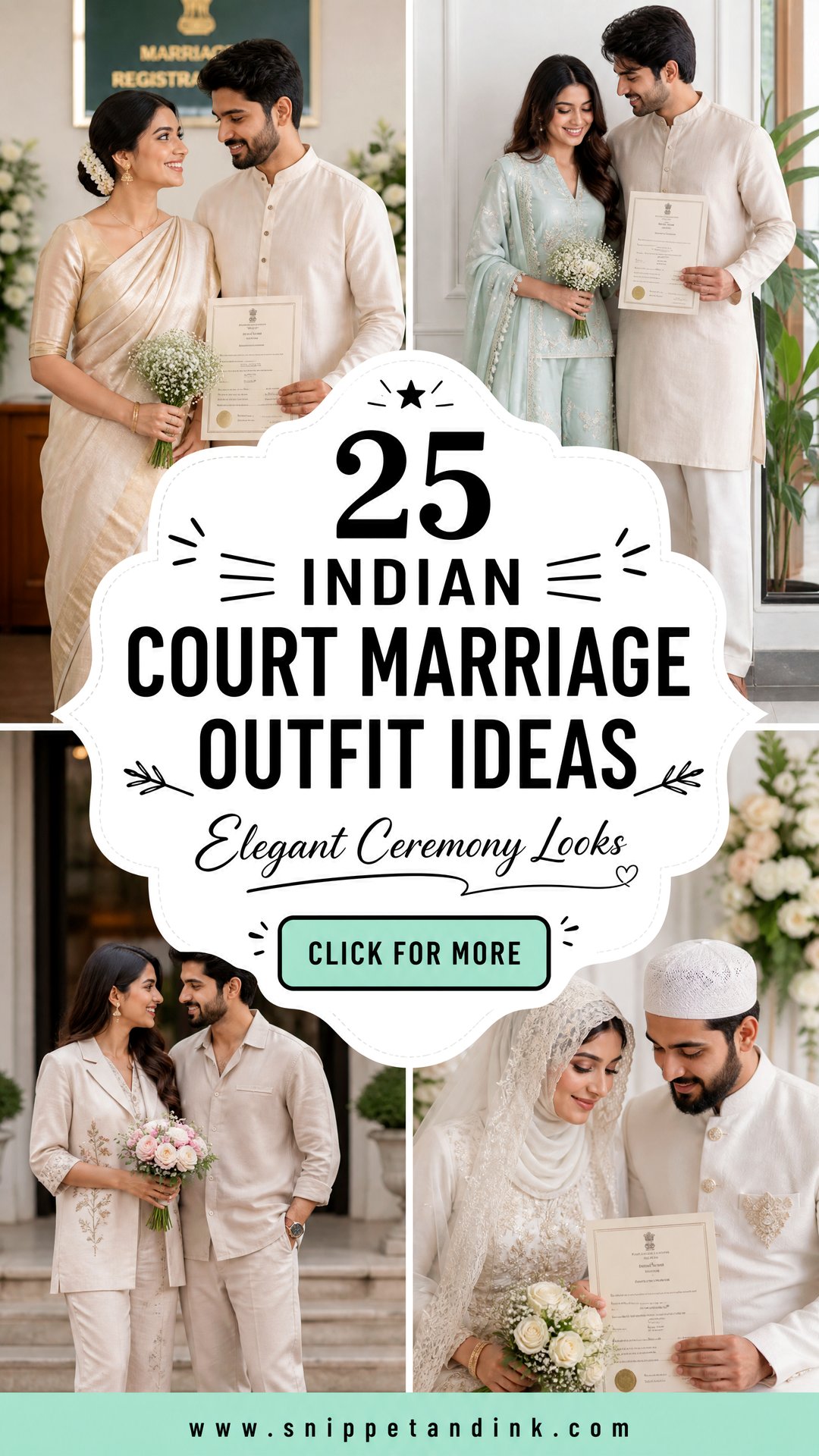
A court marriage is short on ceremony and long on waiting. There is usually a queue, a small room, a desk where you sign, witnesses to organise and a few photographs on the steps afterwards. I style these brides differently from a mandap wedding: the outfit still has to feel like a wedding, but it must let you sit on an office chair, lean over a register and walk between floors without fuss. Light sarees, neat salwar suits, simple lehengas and tailored Indo-western sets all suit the occasion, with jewellery that has some meaning rather than weight. Below are twenty-five outfits for a registered wedding, classic, regional and modern, each with the detail I’d check first.
What the Registrar’s Office Asks of Your Clothes
Couples usually give notice at the office weeks before the date, so you’ll know the day well in advance. That is enough time for a tailor, and I’d use it. Then plan the outfit around what the day physically involves.
You may wait on hard chairs for a while, sometimes in a warm corridor. You’ll sit at a desk and lean forward to sign, often more than once, as will your witnesses. Rooms are small, so a wide skirt or long trail will be stepped on. Many older court buildings have stairs and no lift.
So I check three things at the fitting: can she sit for an hour without the waist cutting in, can she lean over a desk without the pallu or dupatta sliding into the ink, and can she climb stairs in the hem and shoes. An outfit that passes those three will be fine.
Bring a structured bag big enough for the paperwork folder and ID, or give those to a witness. A tiny potli won’t hold documents, and you don’t want to juggle a file in your wedding photos.
1. Simple Silk Saree Court Marriage Outfit
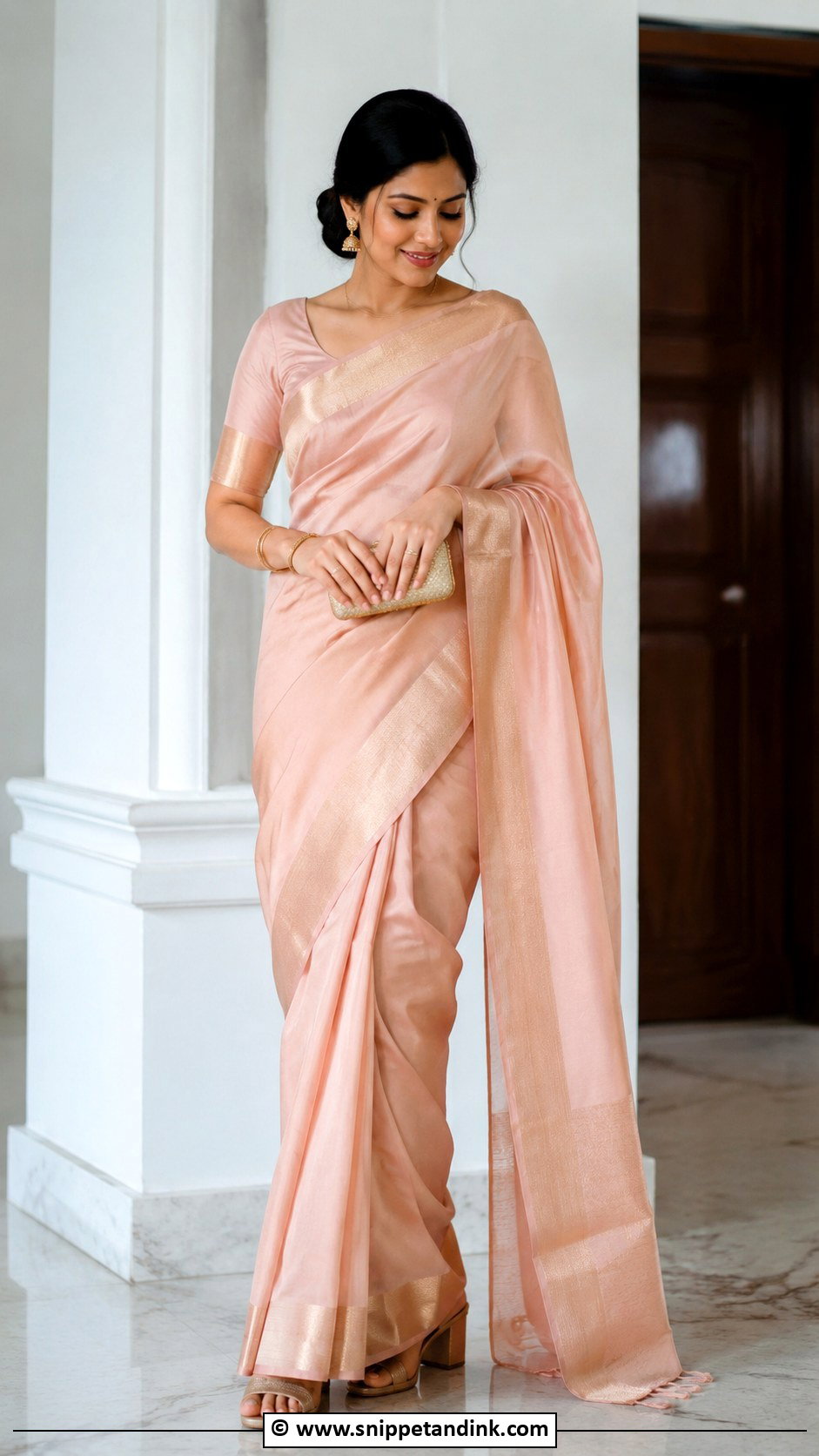
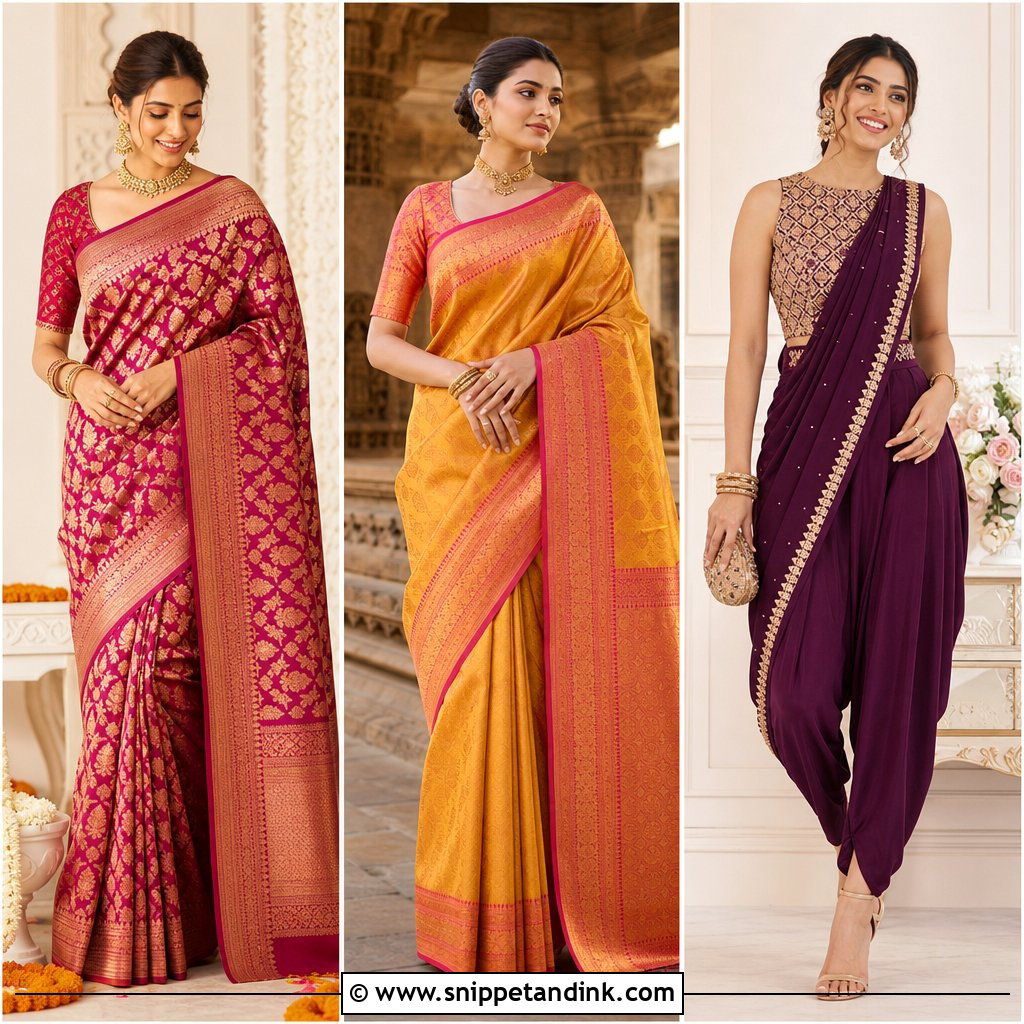
A light silk saree is the outfit most families feel comfortable with, and it still looks like a wedding without the bulk of a bridal drape. Soft Kanjivaram, Chanderi or a light Banarasi in blush, ivory, mint, gold or red all work. I’d pin the pleats at the waist and the pallu at the shoulder, because you will bend over a desk to sign more than once. Small jhumkas, a fine chain and a few bangles are enough. Block heels or embroidered flats are kinder on courthouse stairs, and a sleek bun stays tidy all day.
2. White Saree Court Marriage Outfit
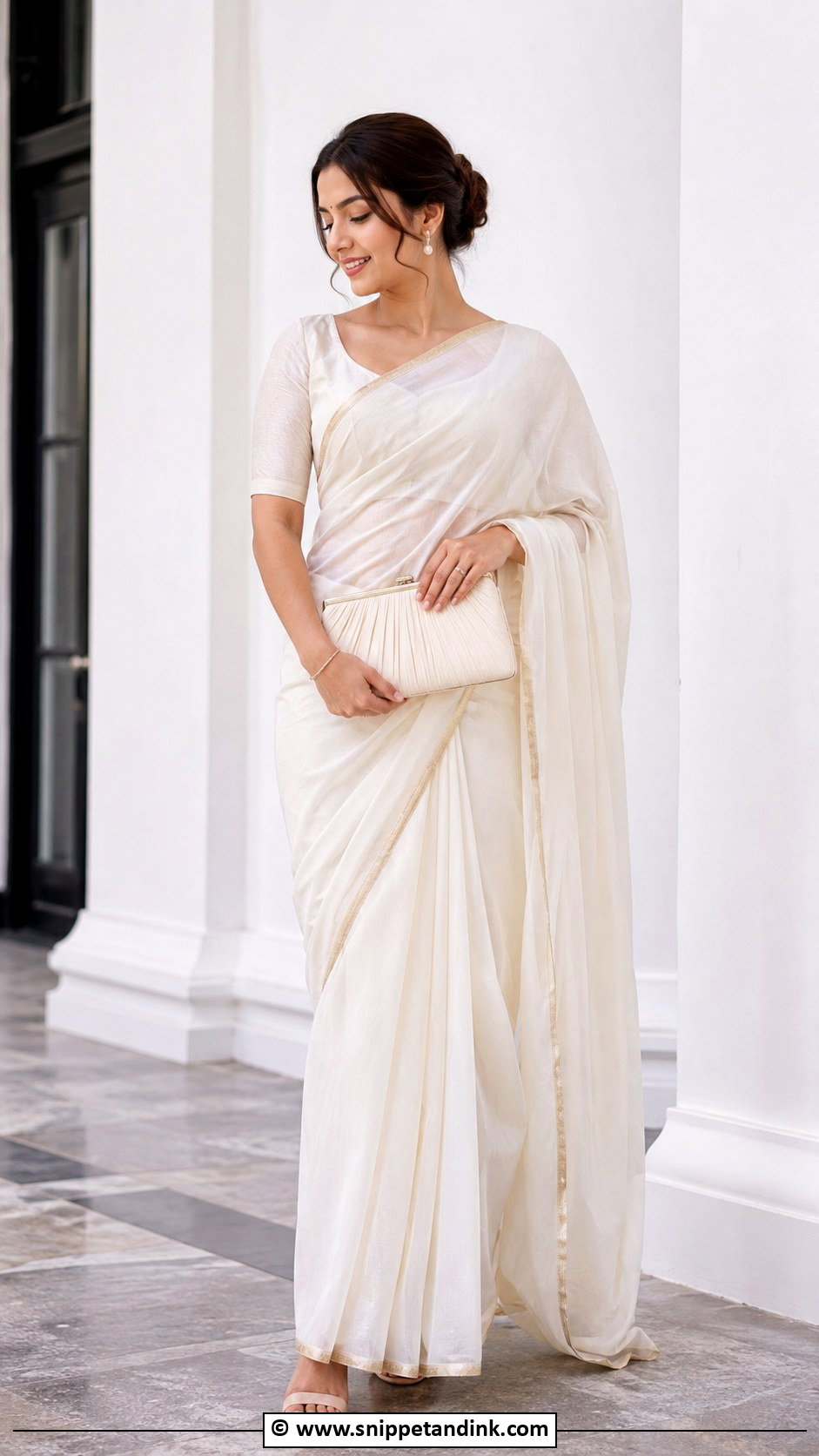
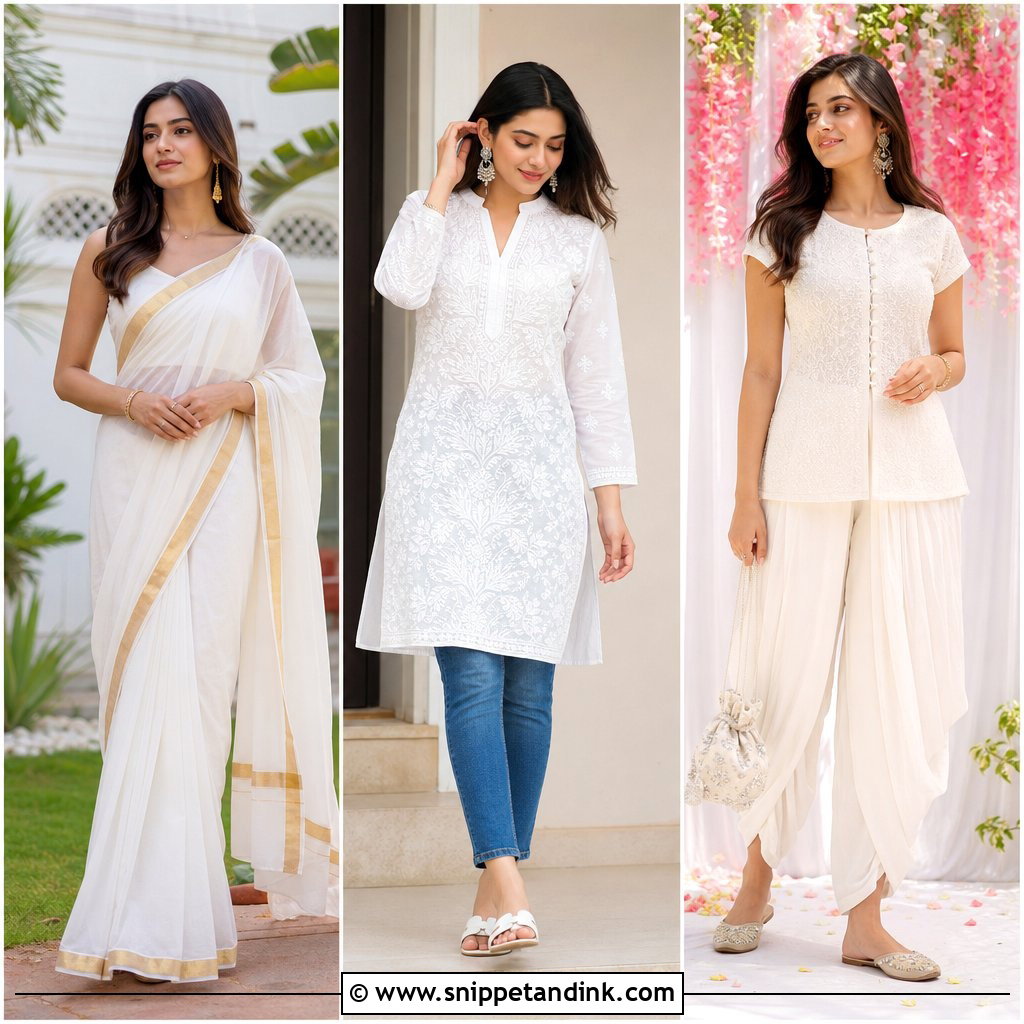
White and ivory sarees look calm and modern, and they suit an office setting because they read formal without being loud. Choose ivory, pearl or off-white with a gold border, lace, chikankari or a soft woven texture. Pure white can look grey under fluorescent tubes, which is why I lean brides toward a warmer ivory. Gold jewellery, a small bindi and nude makeup bring warmth back to the face. Blouse choice sets the mood: sleeveless reads minimal, high-neck reads refined. Fresh flowers in the hair add a bridal touch.
3. Red Saree Court Marriage Outfit
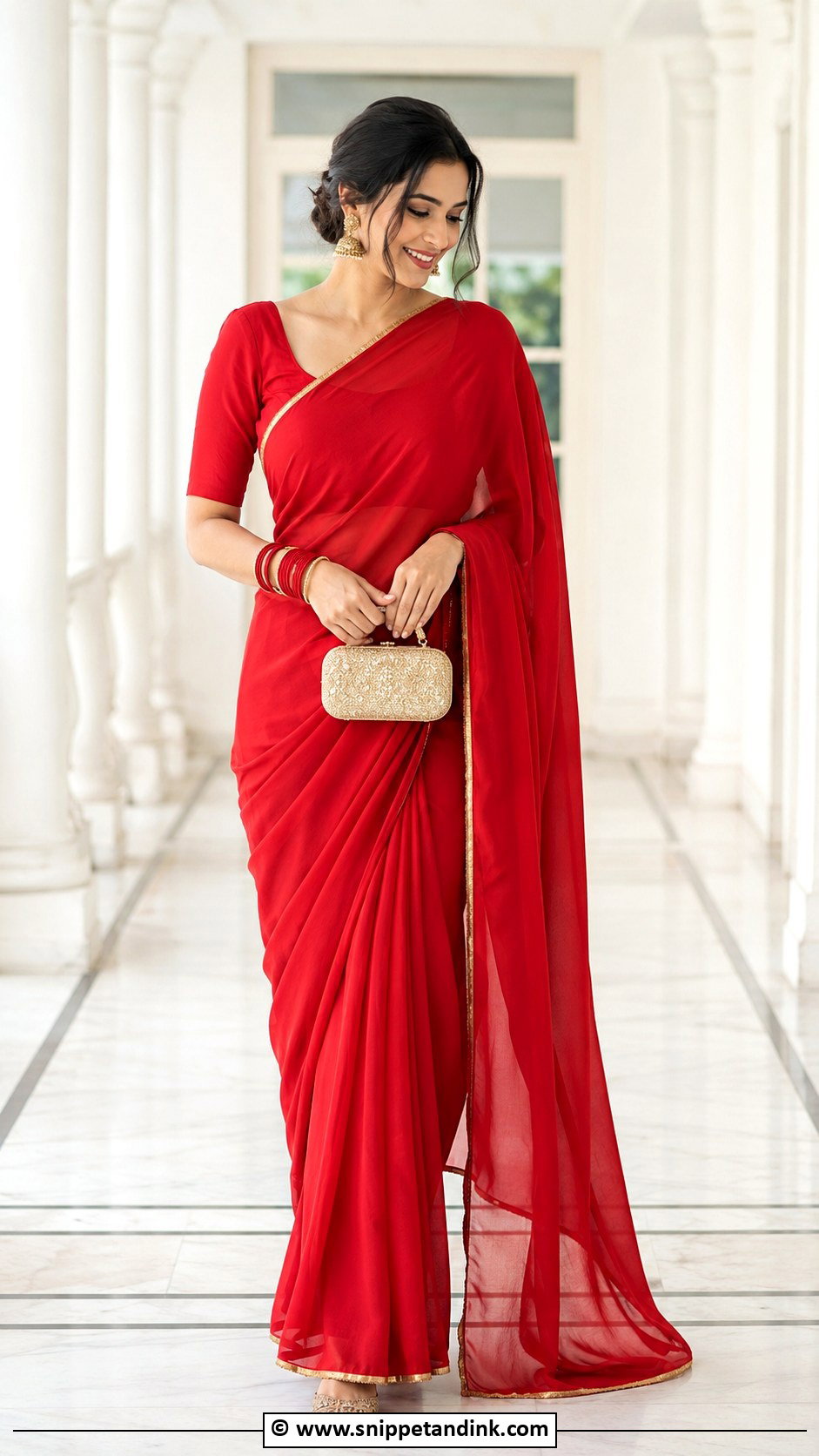
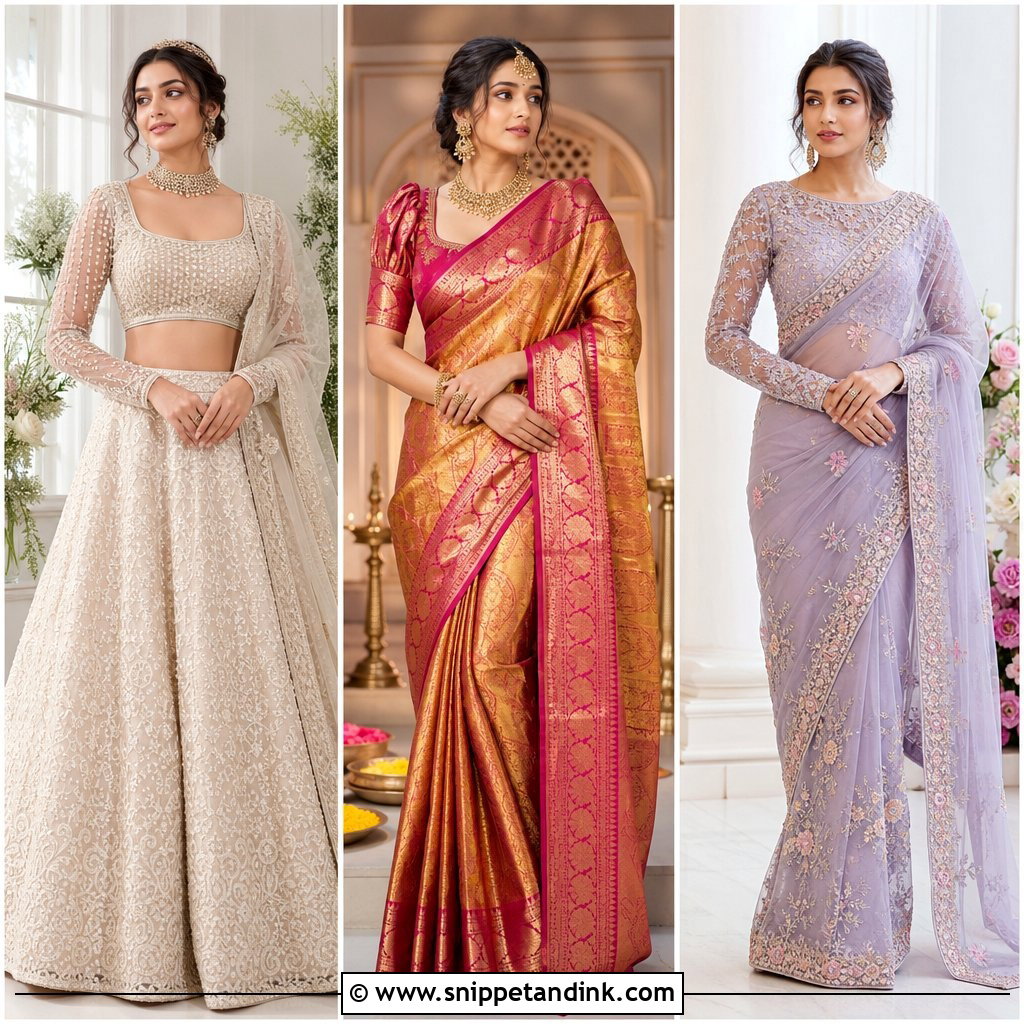
Red is still the colour most Indian families recognise as bridal, and a lighter red saree lets you keep that meaning at a registry office. Georgette, silk, organza or crepe with a neat border is enough; a heavy bridal saree is overkill here. Sindoor red, maroon and wine all photograph warmly. Keep the blouse comfortable at the armhole, since you’ll sit with your arms on a desk while forms are checked. Gold earrings, glass bangles and a small clutch finish a wedding look that still feels intimate.
4. Pastel Saree Court Marriage Outfit
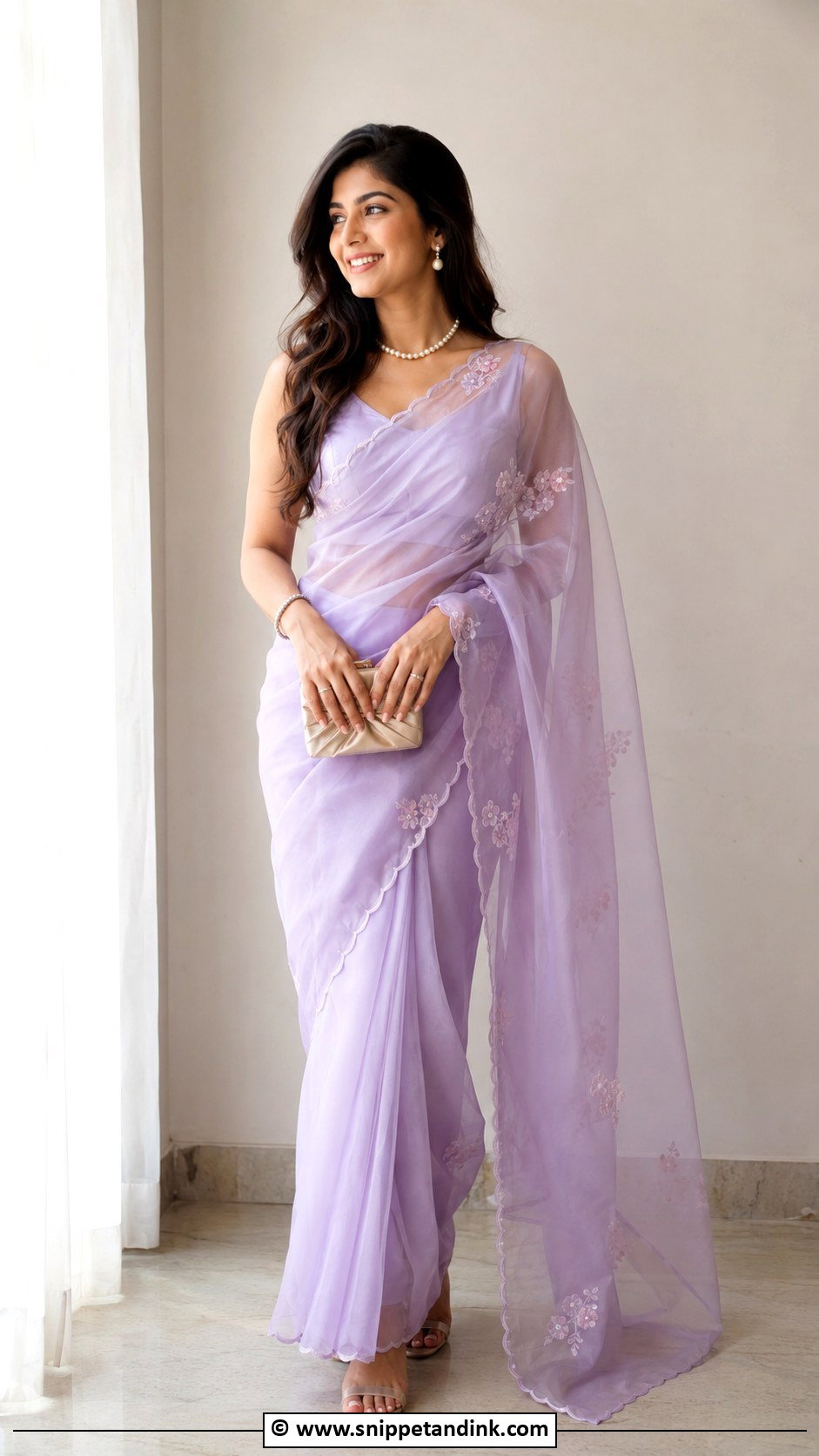
Pastel sarees suit daytime registrations and photograph freshly outdoors. Powder blue, blush, lavender, sage, peach and champagne are all good choices in organza, chiffon, georgette or tissue silk. Organza is crisp and holds its shape, but it creases sharply when you sit; chiffon and georgette recover better after an hour in a waiting room. A clean blouse, pearl earrings, dainty bangles and a structured mini bag finish it. Dewy makeup suits the lightness of the drape.
5. Banarasi Saree Court Marriage Outfit
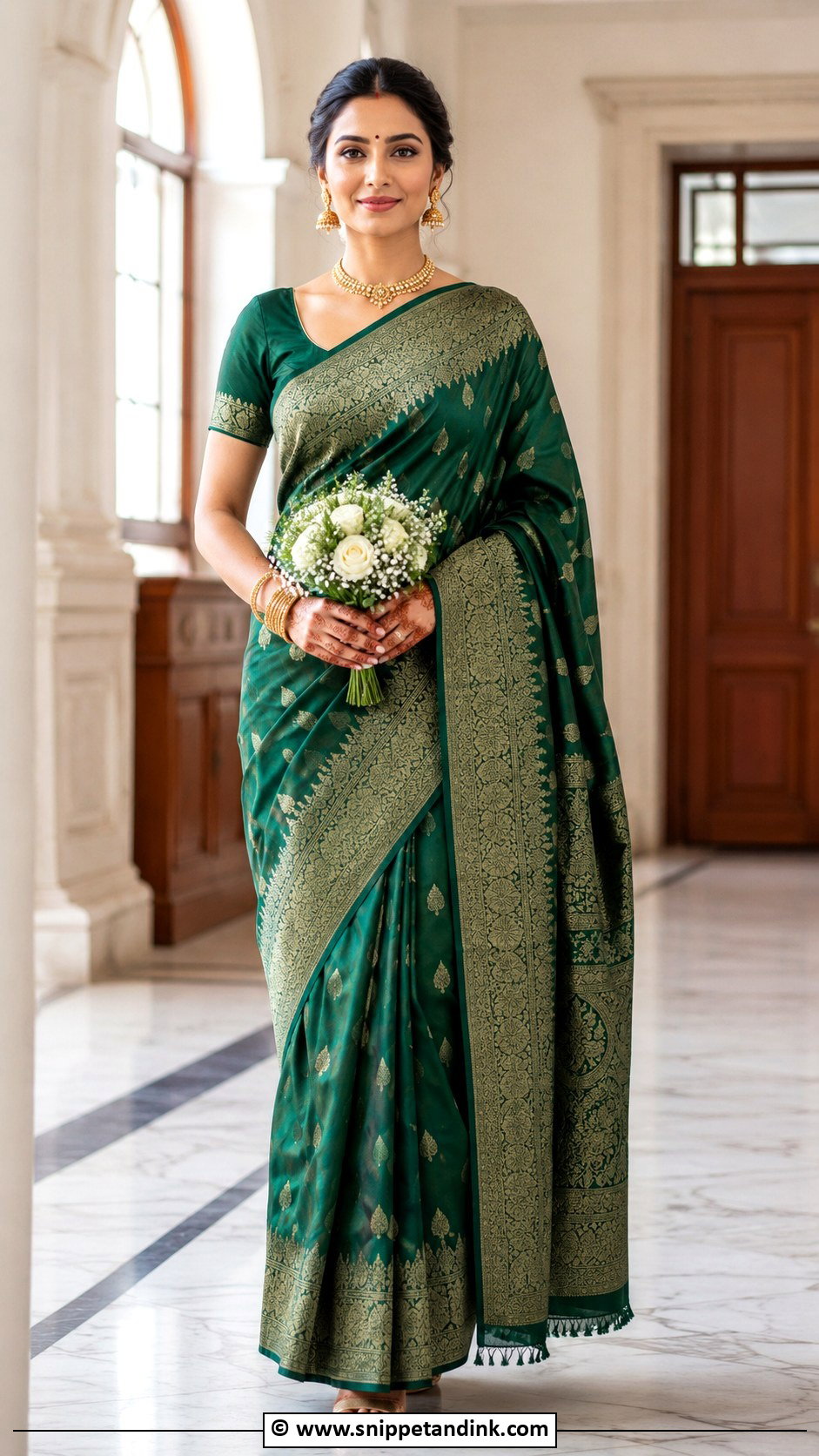
Banarasi brings a ceremonial richness to even the plainest registry office. For a court wedding I’d pick a lighter weave rather than a heavy bridal one, both for comfort and because you’ll wear it again at festivals. Emerald, rani pink, royal blue, maroon or gold read strongly; pastel Banarasi feels softer and more modern. If the zari is heavy, skip the layered necklaces and let the saree carry the look with gold studs or jhumkas, a few bangles and a neat bun.
6. Chikankari Suit Court Marriage Outfit
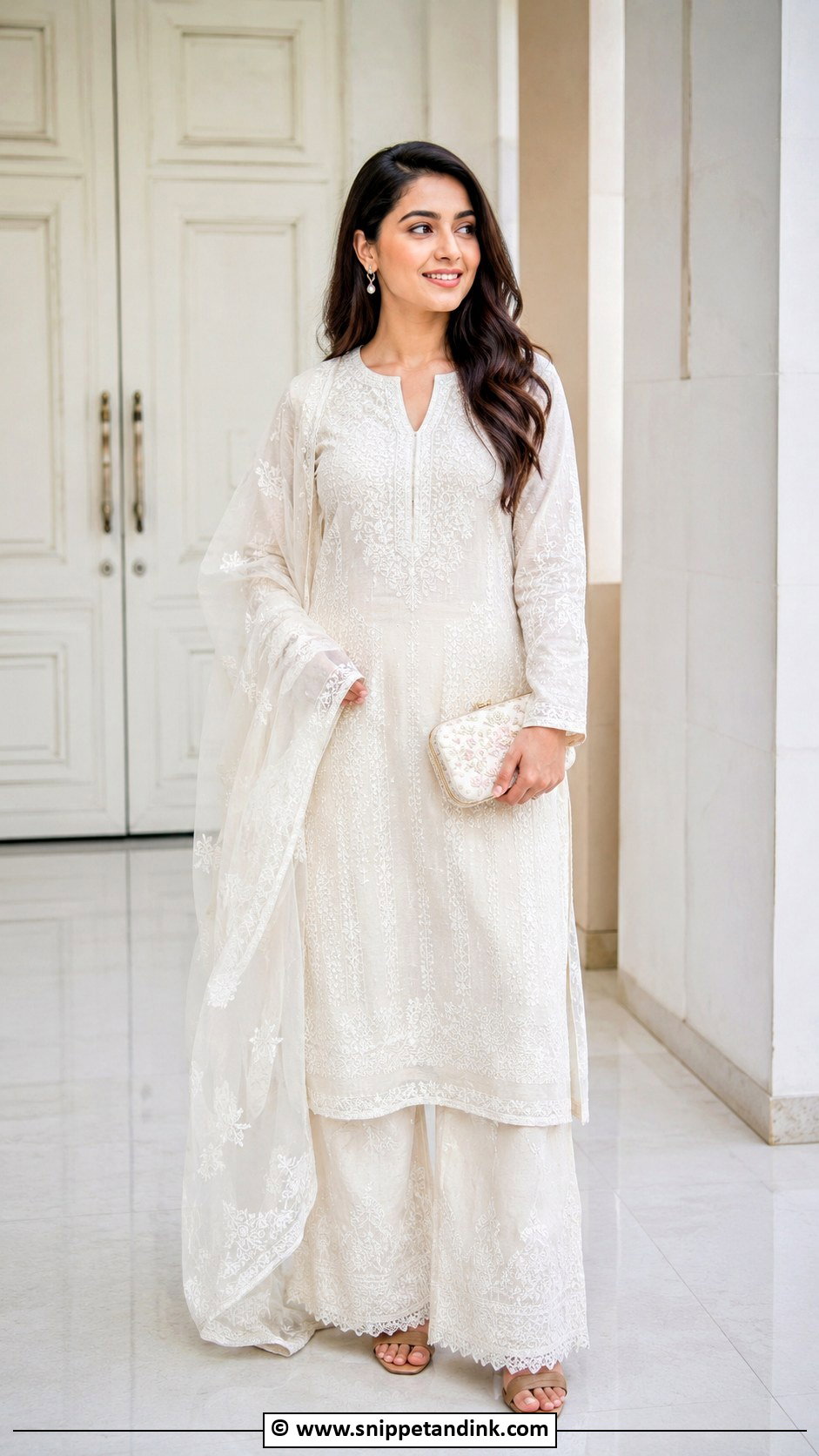
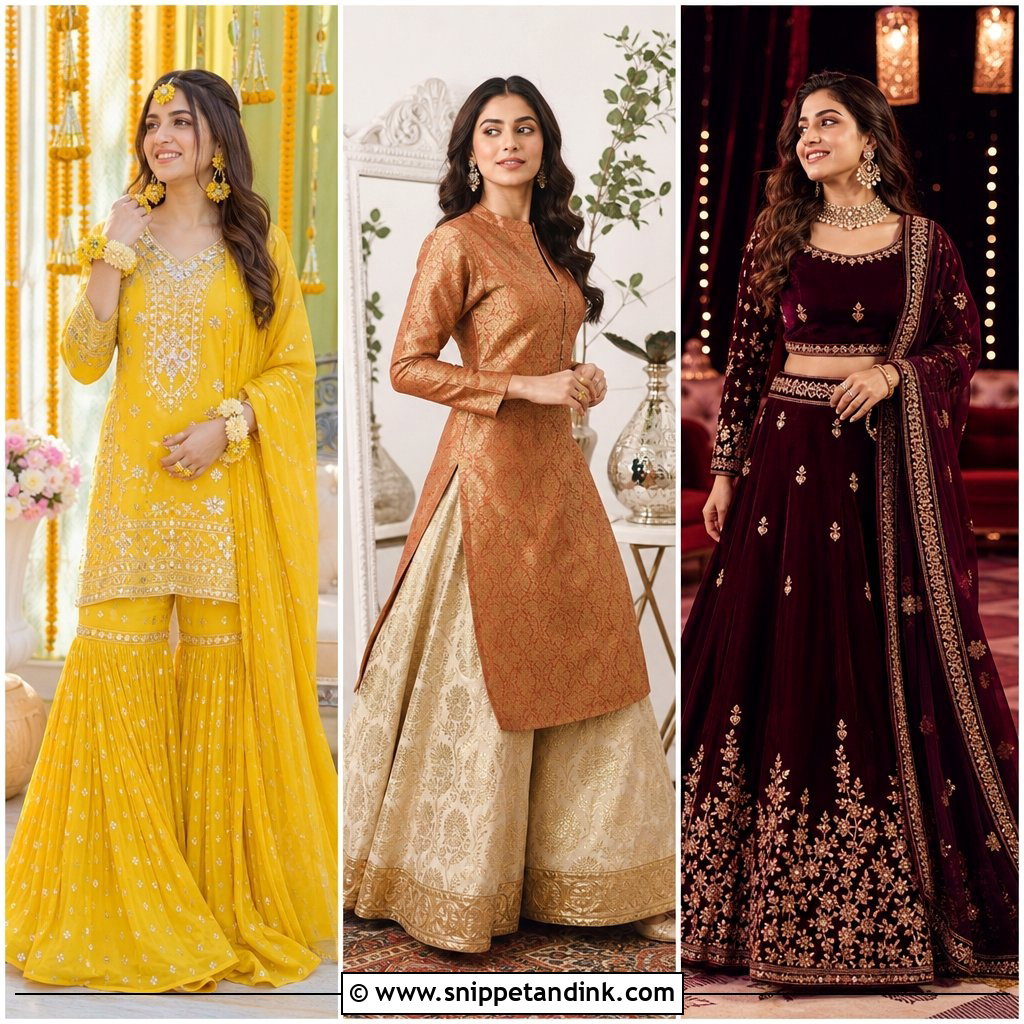
Chikankari is my first suggestion for summer registrations, because the fine cotton or georgette base breathes in a stuffy waiting room. A straight kurta, palazzo set or anarkali in white, ivory, blush, lavender or pale yellow all work. Pearl earrings, nude sandals and a small embroidered potli finish it. Drape the dupatta over one shoulder and pin it, so it doesn’t fall across the register while you sign. Choose a well-lined piece; cheap chikankari can be sheer in daylight photos.
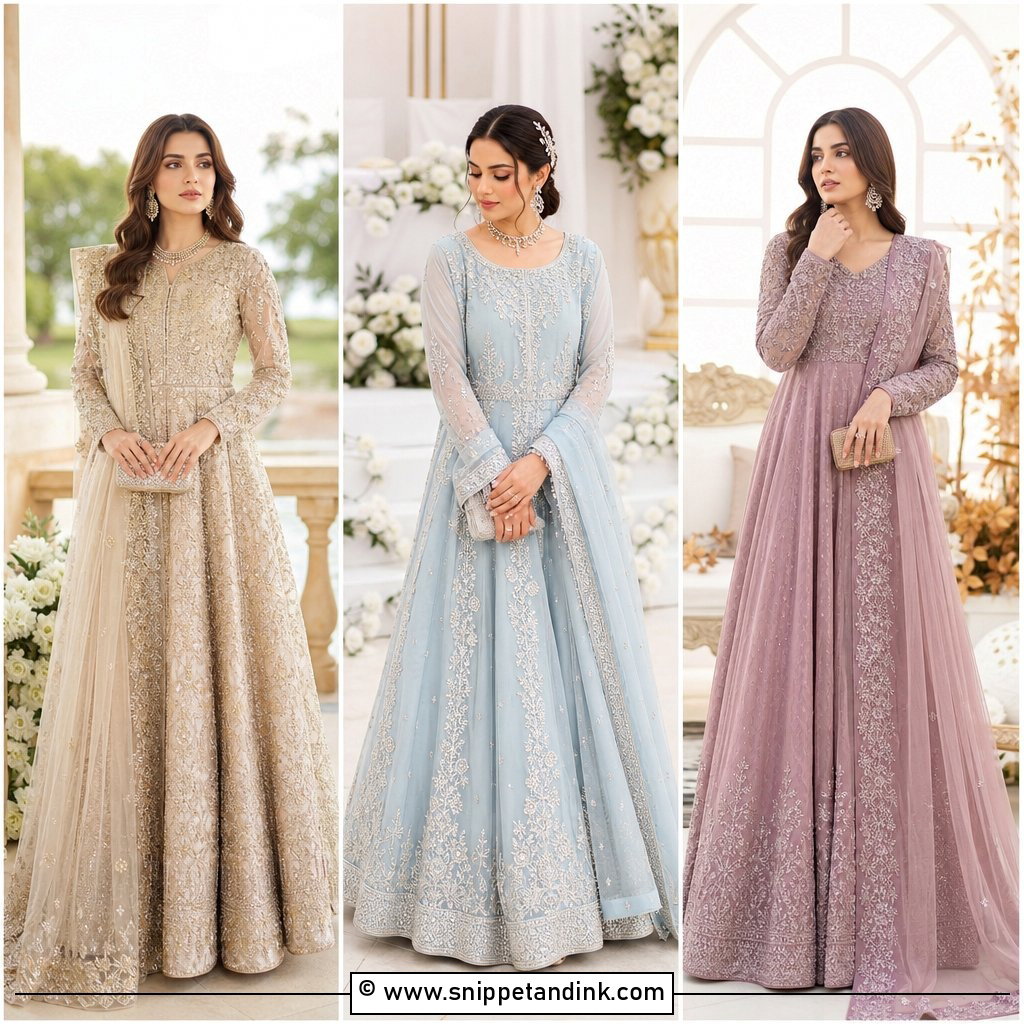
7. Anarkali Suit Court Marriage Outfit
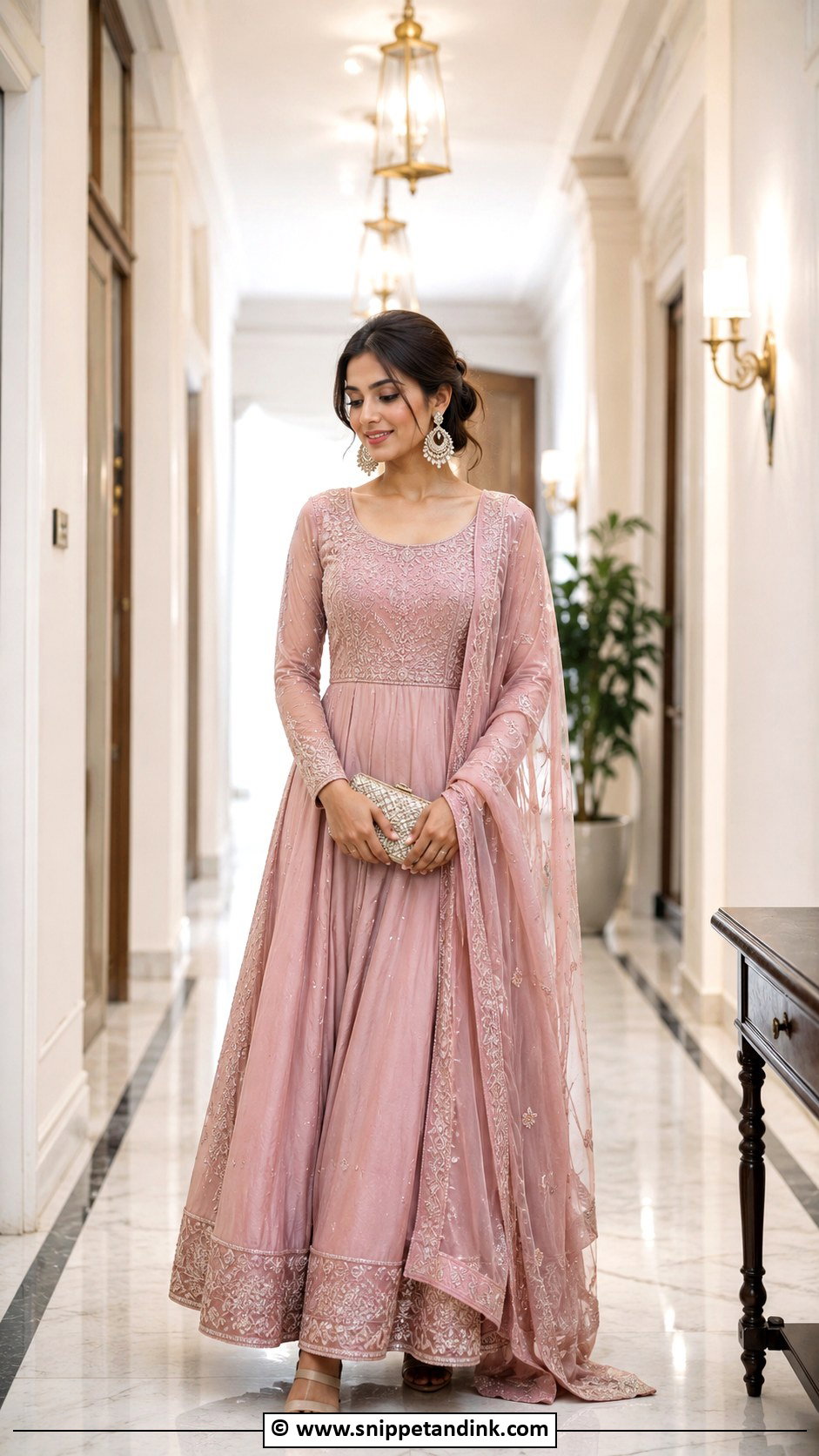
An anarkali suit is graceful and needs no managing, which is exactly what a busy court day calls for. Floor or calf length in georgette, silk, cotton silk or chanderi, with soft embroidery, gota patti or zari borders. Pastels for daytime; wine, emerald, navy or rust for an evening ceremony. Floor-length anarkalis catch on stairs, so I’d have the hem finished just above the shoe. Juttis or block heels, statement earrings and a neat dupatta complete it.
8. Sharara Suit Court Marriage Outfit
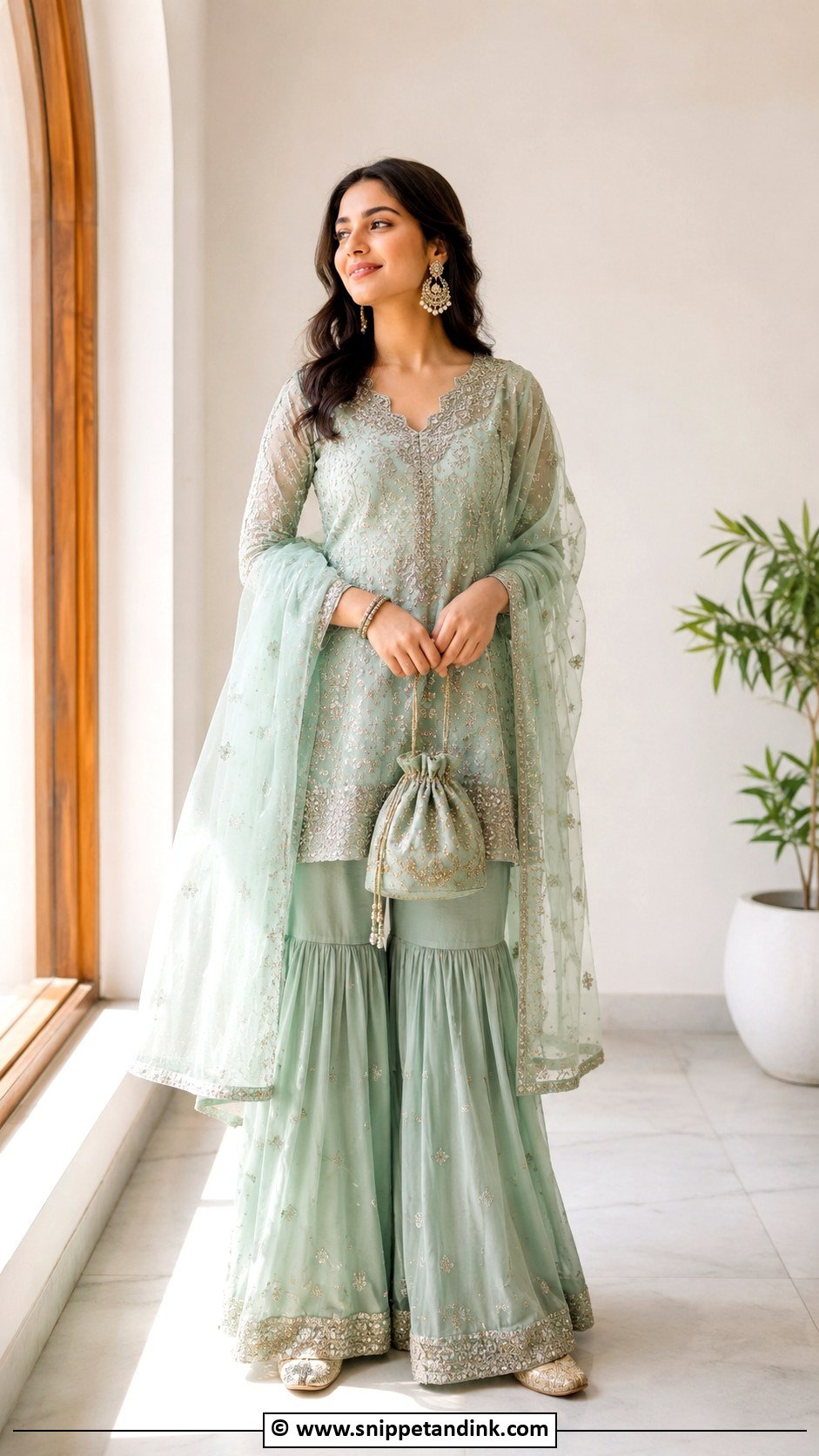
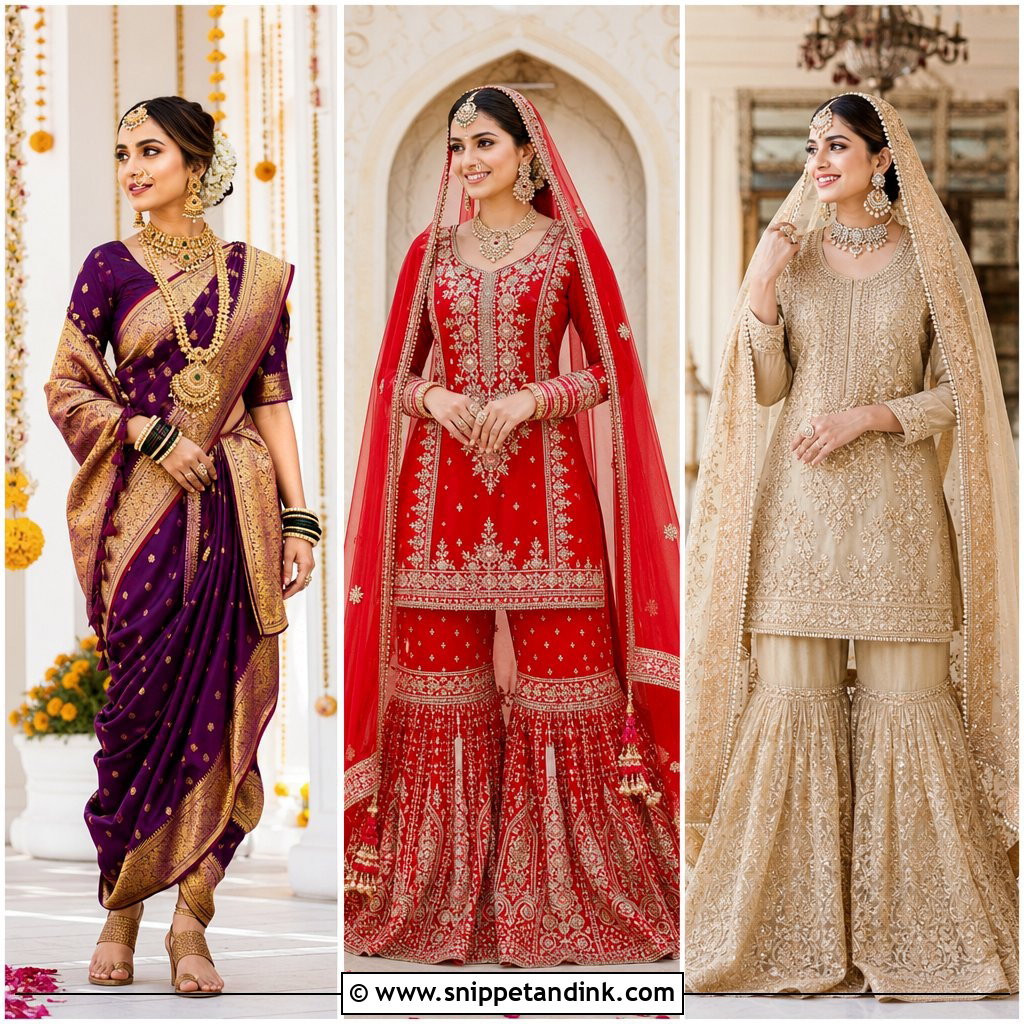
A sharara gives you movement and a little drama while the short kurta keeps everything practical. Silk, georgette, crepe or organza in ivory, rose, mustard, mint or deep green. Keep embroidery small: zari motifs, sequins or thread work. Wide sharara legs can be a lot of fabric on a narrow staircase, so hold them as you climb. Chandbalis, soft curls and embellished flats balance it. A good middle ground between a straight suit and a lehenga.
9. Palazzo Suit Court Marriage Outfit
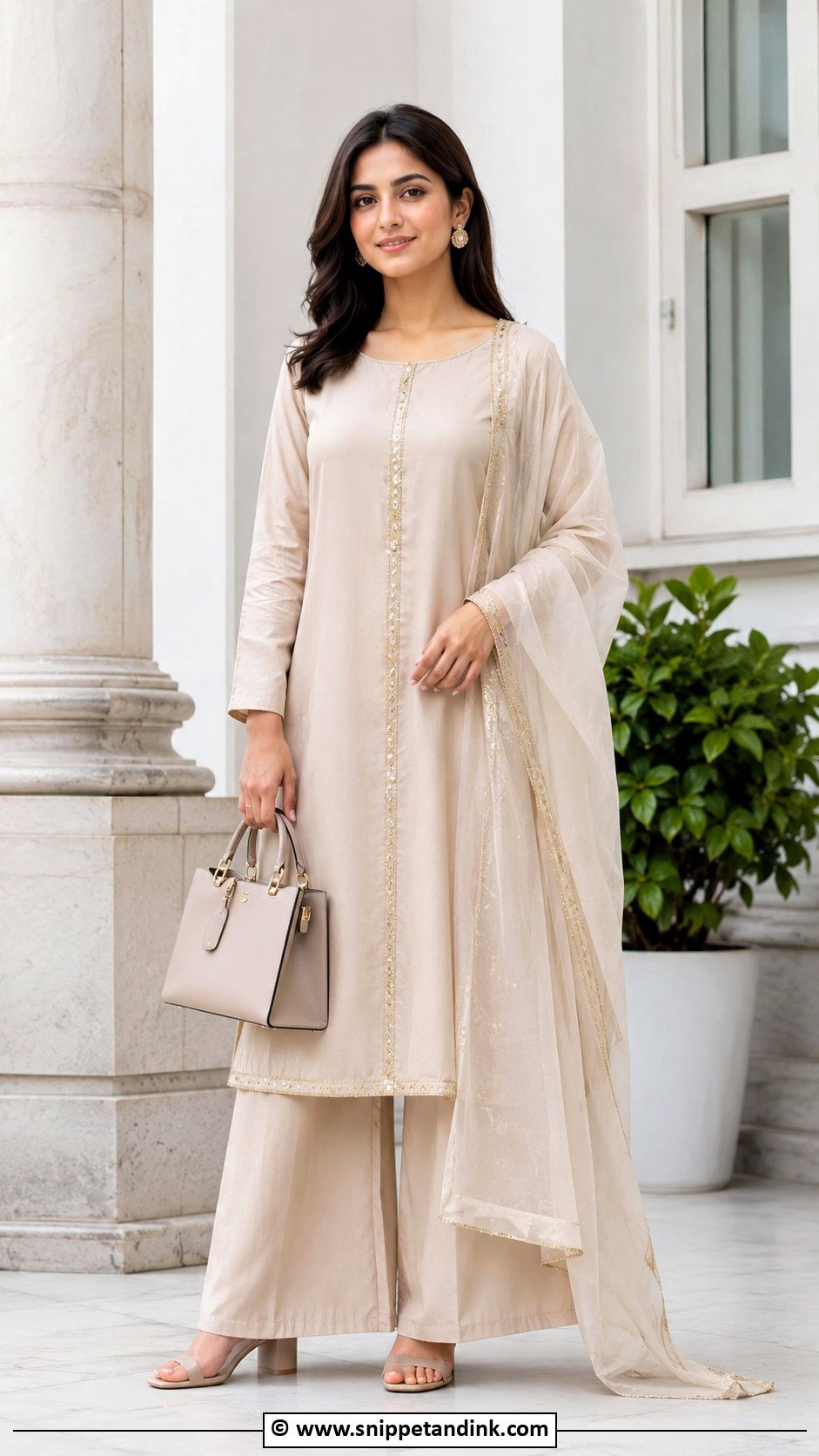
Palazzo suits are among the easiest Indian court marriage outfits to wear, because nothing restricts you when you sit, walk or sign. A straight kurta with wide-leg palazzos and a light dupatta, in silk blend, cotton silk, crepe or chanderi so it looks dressy rather than casual. Soft gold jewellery, block heels and a clean handbag keep it polished. The wide leg suits most body types, and you’ll wear the set again long after the wedding.
10. Lehenga Court Marriage Outfit
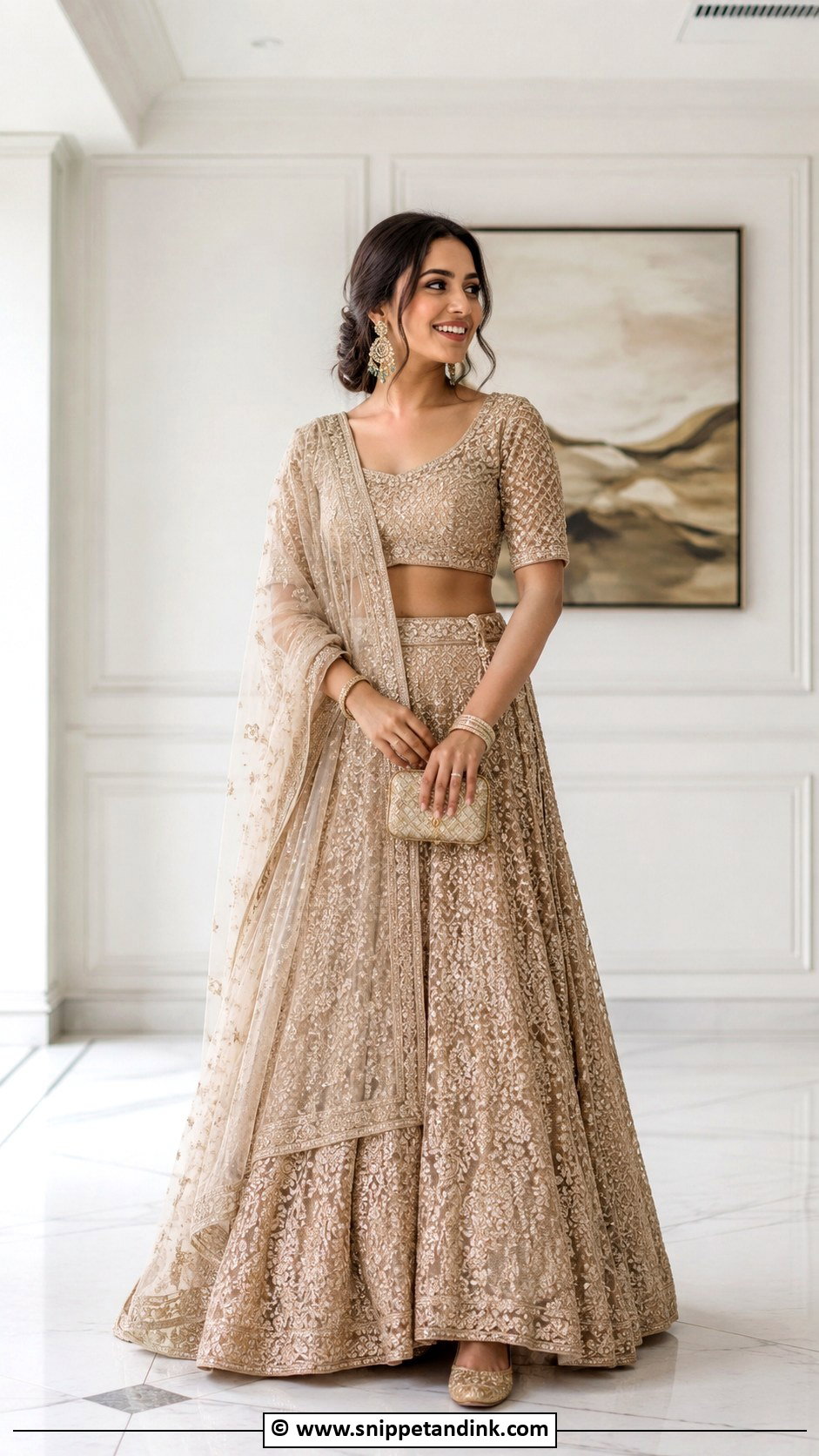
A lehenga can work at a court wedding if it is light. I’d choose a minimal skirt in organza, georgette, raw silk or cotton silk with a fitted blouse and a soft dupatta, never a heavy can-can-supported bridal skirt that fills an office corridor. Pastel, ivory, blush, sage or muted gold suit a registered ceremony. Simple earrings, bangles and a small clutch. Choose juttis or a comfortable heel; stilettos on old court floors are a real slipping risk.
11. White Lehenga Court Marriage Outfit
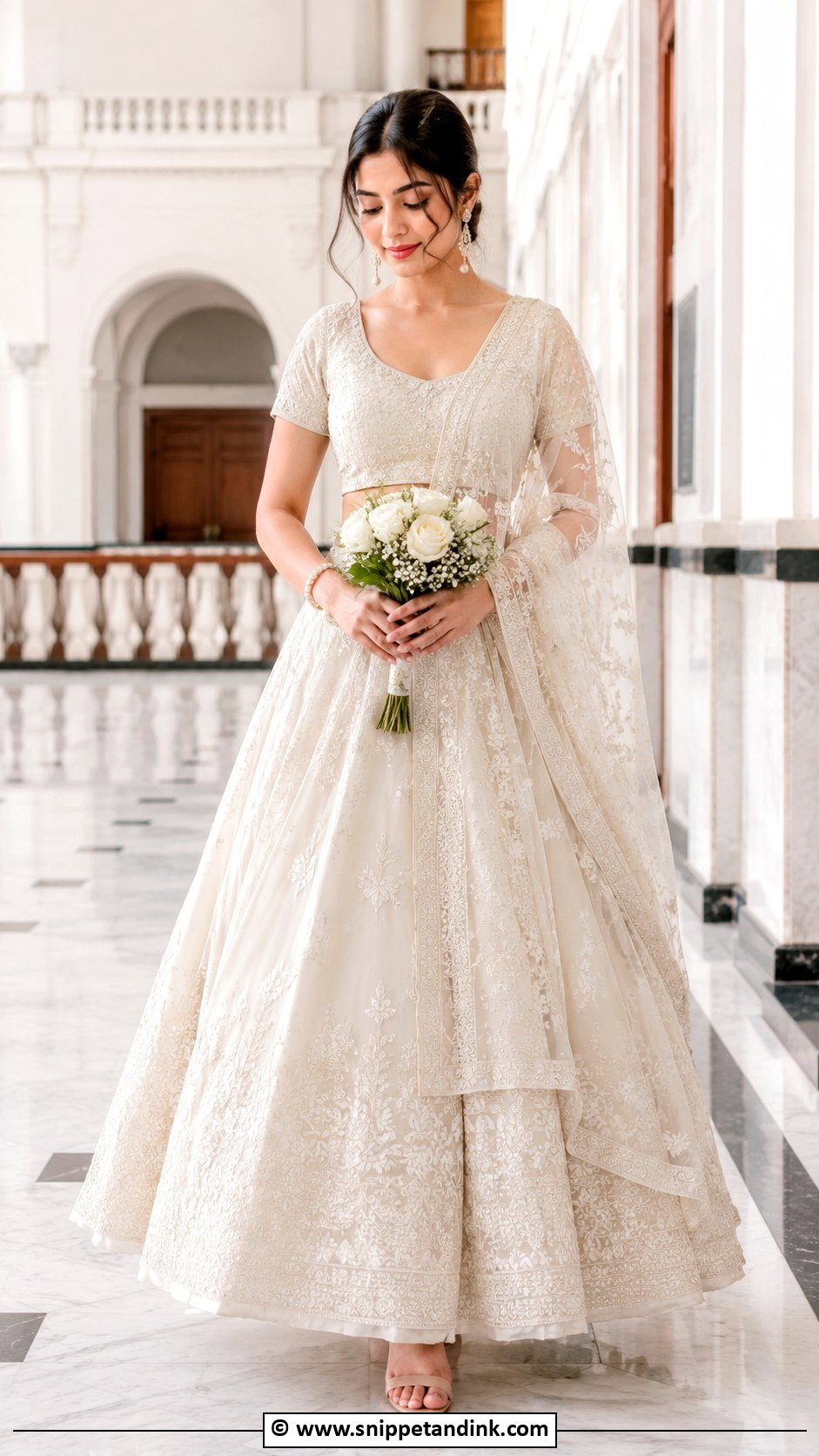
An ivory, pearl or cream lehenga is warmer and kinder to most skin tones than stark white. Thread work, pearl embellishment, chikankari or tonal embroidery keep it special without looking too grand for a court. A matching dupatta, soft gold or pearl jewellery and natural makeup suit it. Sleek bun, low ponytail or soft waves all work. White hems pick up dust on courthouse floors, so lift the skirt as you walk and keep the long portraits for clean ground outside.
12. Pastel Lehenga Court Marriage Outfit
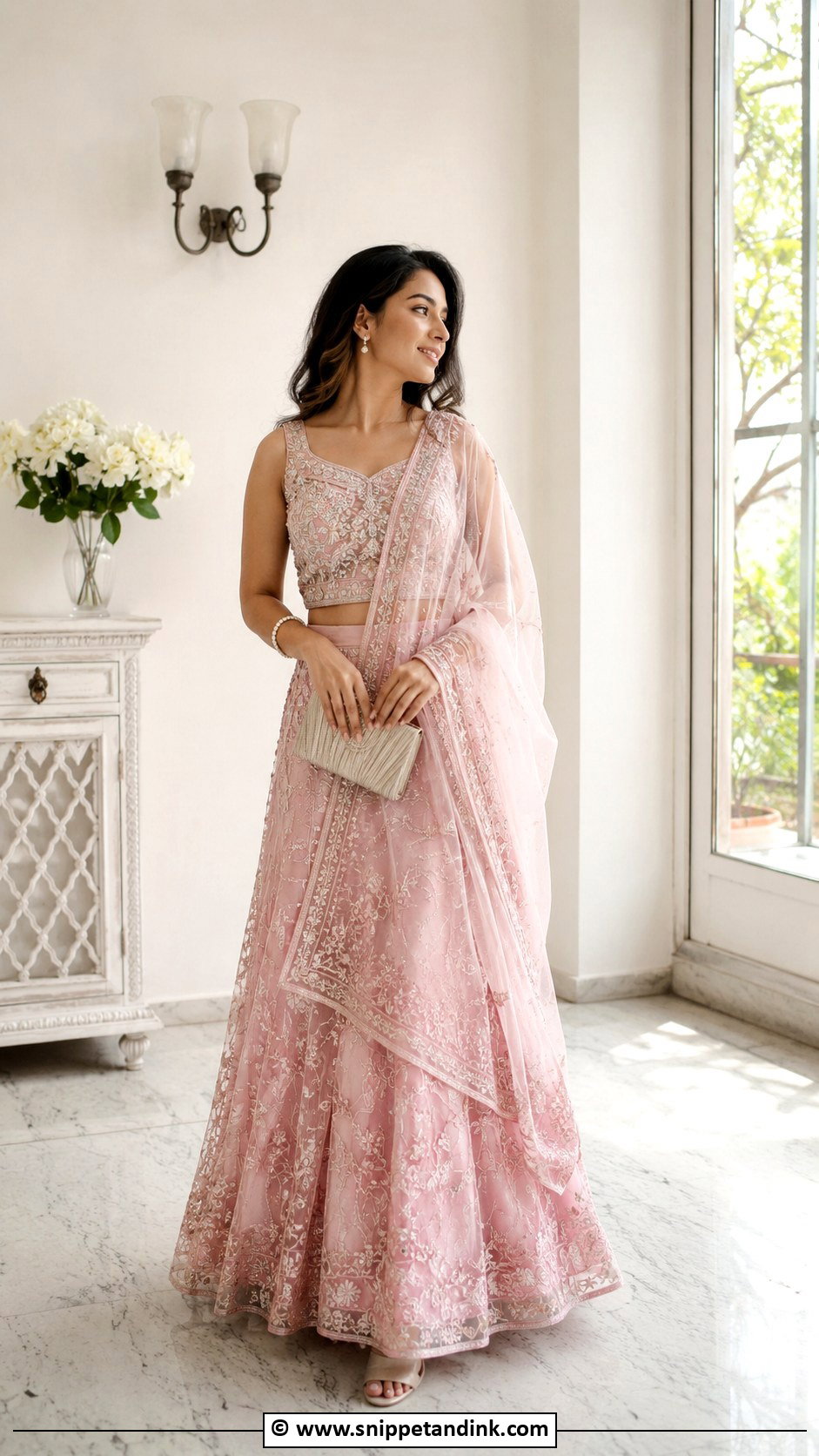
Pastel lehengas look romantic in daylight. Blush, lavender, powder blue, peach, mint and champagne all photograph freshly. Choose a light skirt with subtle embroidery, a comfortable blouse and a dupatta pinned securely at two points. Pearl earrings, a fine bracelet and a small clutch keep it refined. This is a good choice if a lunch or small family gathering follows the registration, since it is festive enough for both.
13. Kurta With Dupatta Court Marriage Outfit
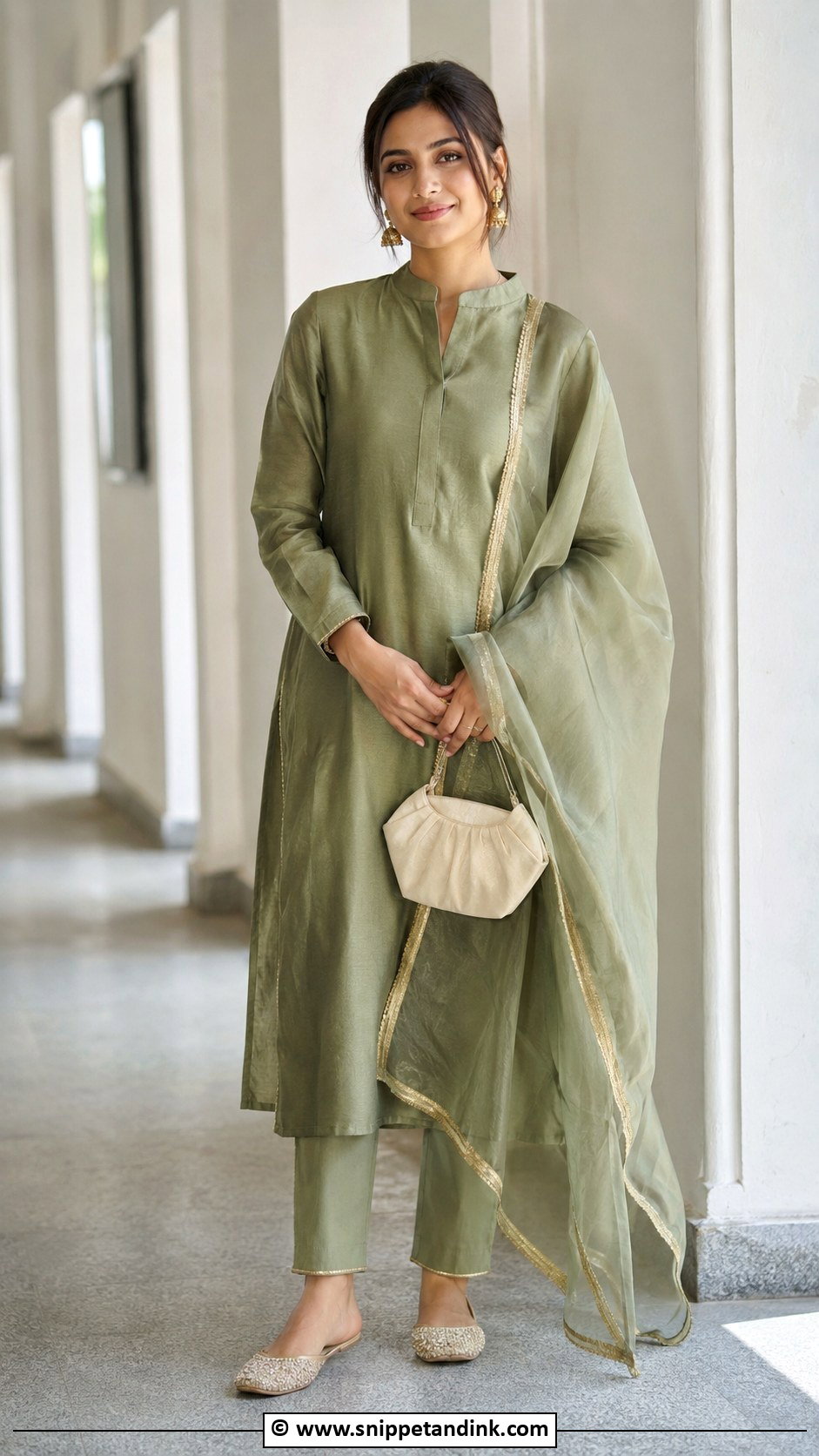
The plainest option here, and often the most sensible: a well-tailored kurta in silk, chanderi, cotton silk or crepe with trousers, churidar or cigarette pants. The dupatta is what makes it ceremonial, so spend on that piece. Soft shades suit daytime; jewel tones feel more festive. Juttis, small earrings and a neat handbag. Tailoring is everything with a simple kurta, and I’d always have the side slits and sleeve length adjusted rather than wear it straight off the rack.
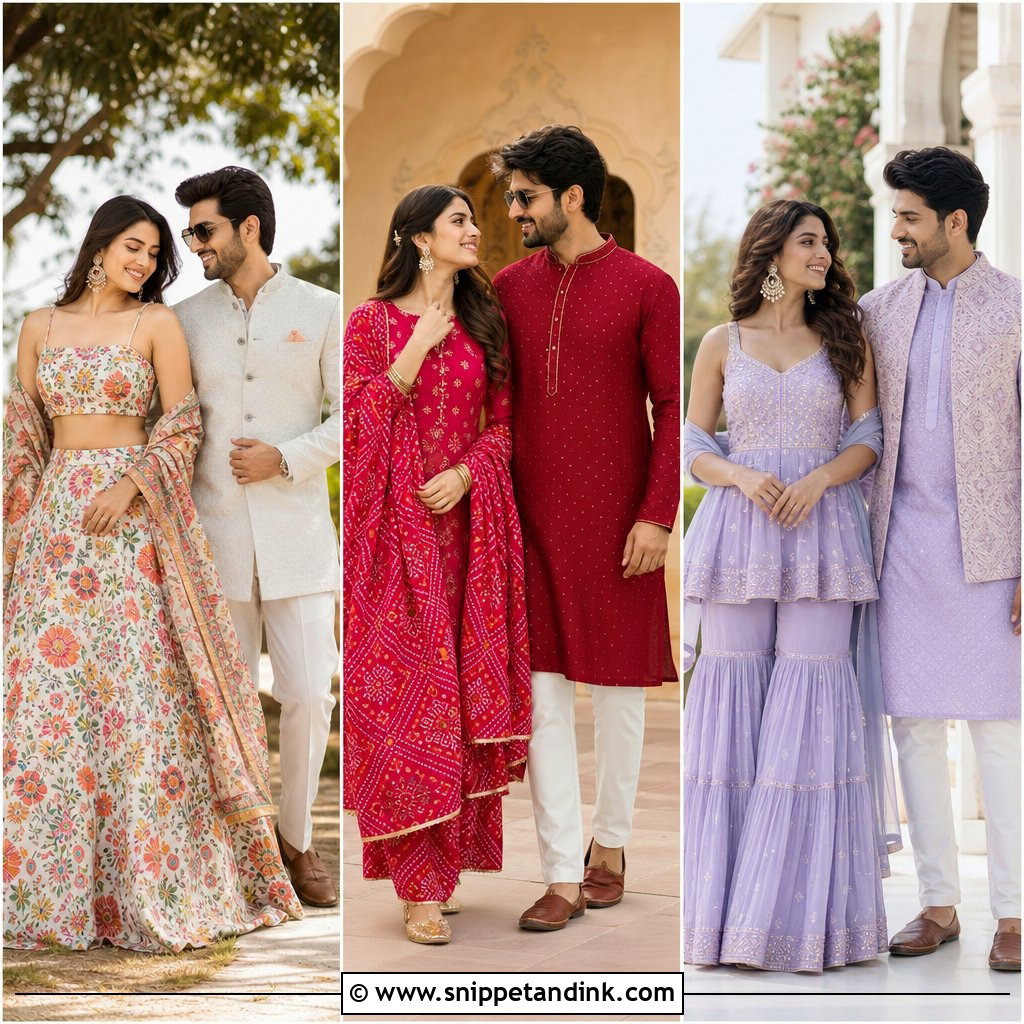
14. Indo Western Court Marriage Outfit
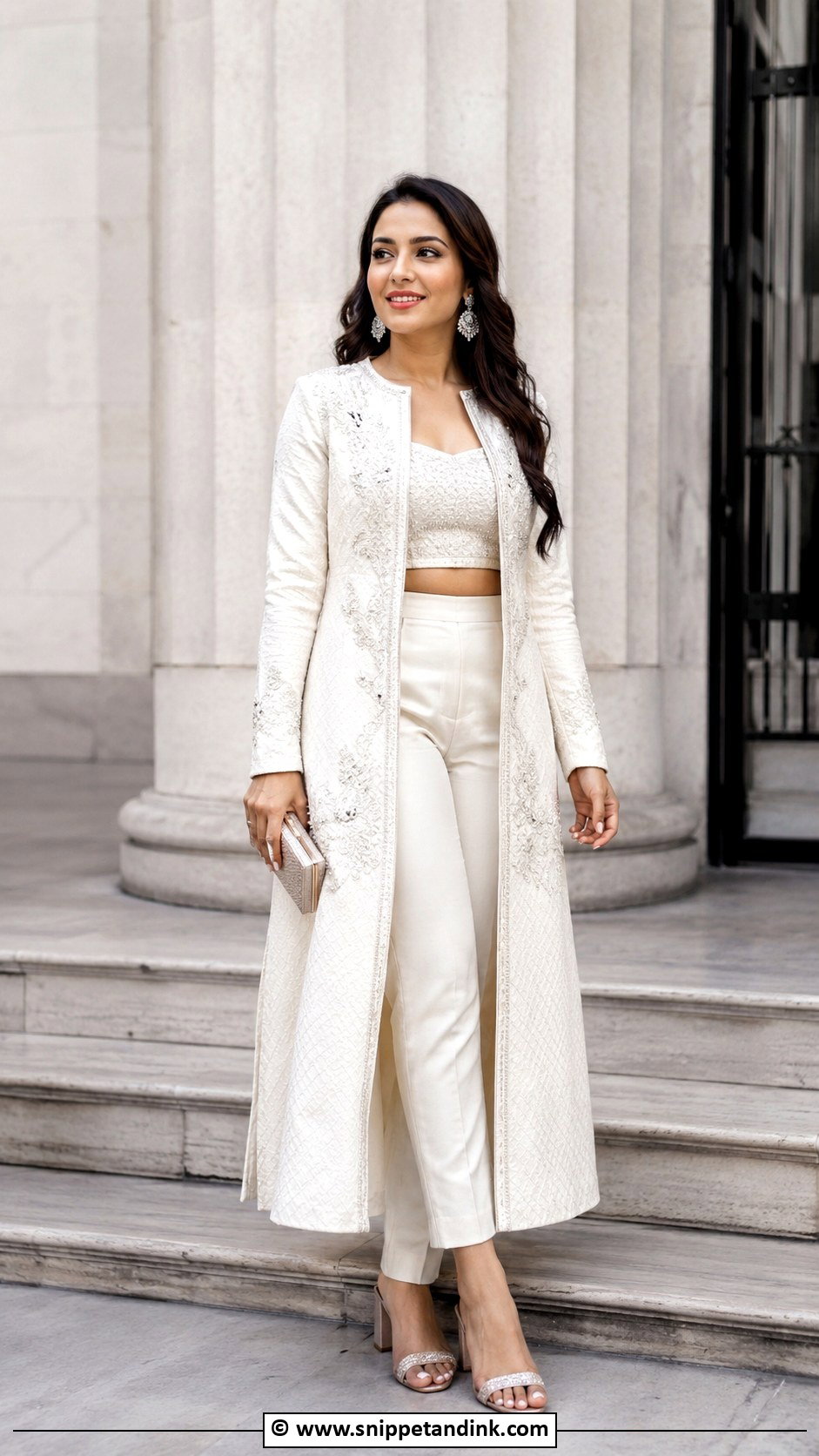
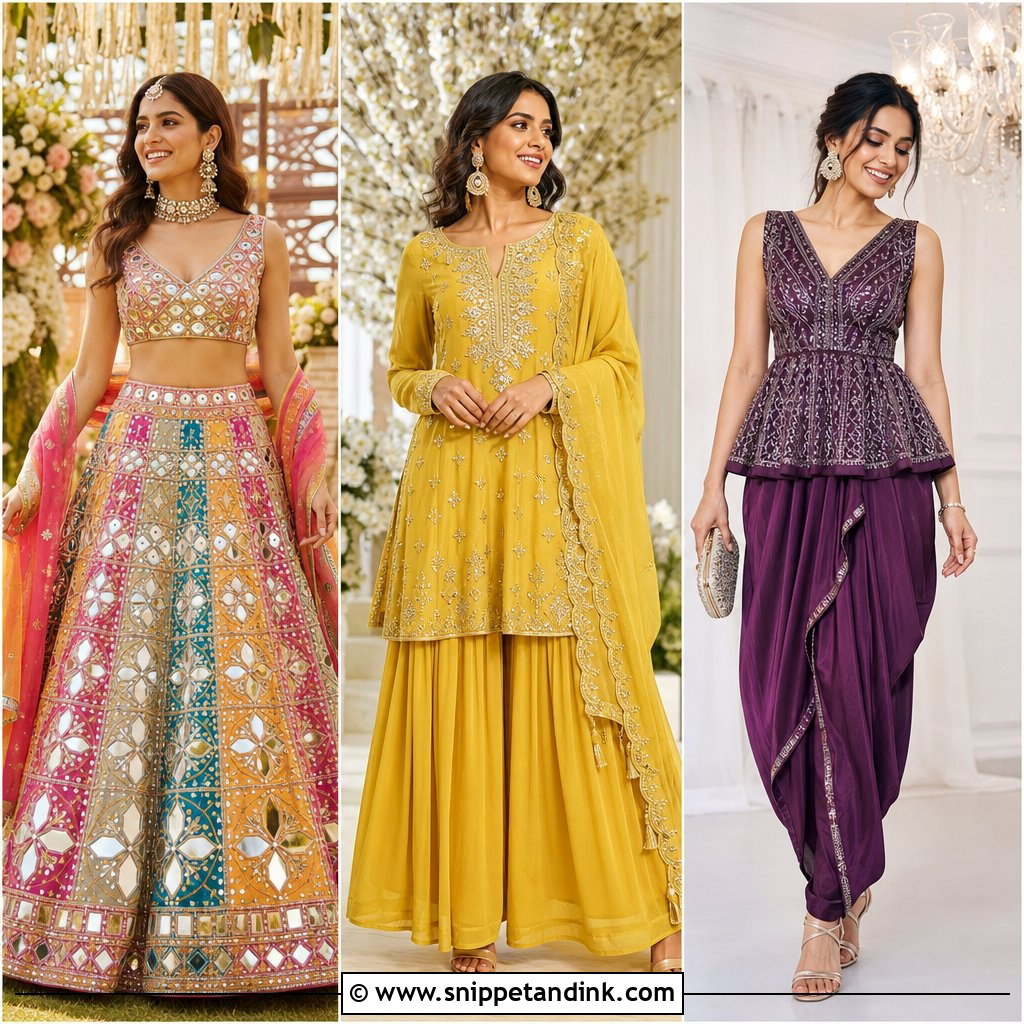
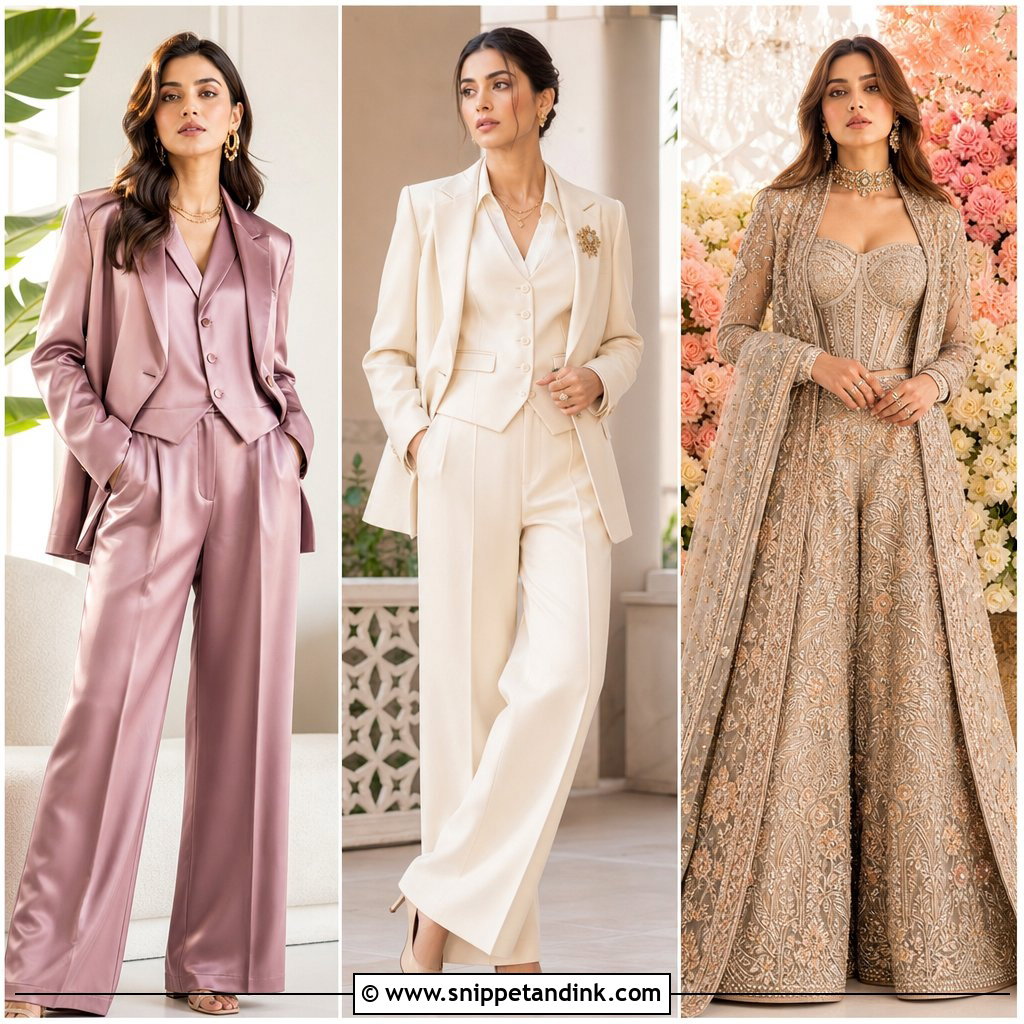
An Indo western court marriage outfit suits city brides who want something modern. A long jacket with cigarette pants, a crop top with a draped skirt or a structured kurta with a cape-style dupatta all work. Keep it elegant rather than experimental, as the registrar’s office is a formal space and family will be present. Neutrals, pastels and muted metallics work best. Sleek earrings, block heels and a compact clutch. Embroidery or draping keeps the Indian link.

15. Blazer Saree Court Marriage Outfit
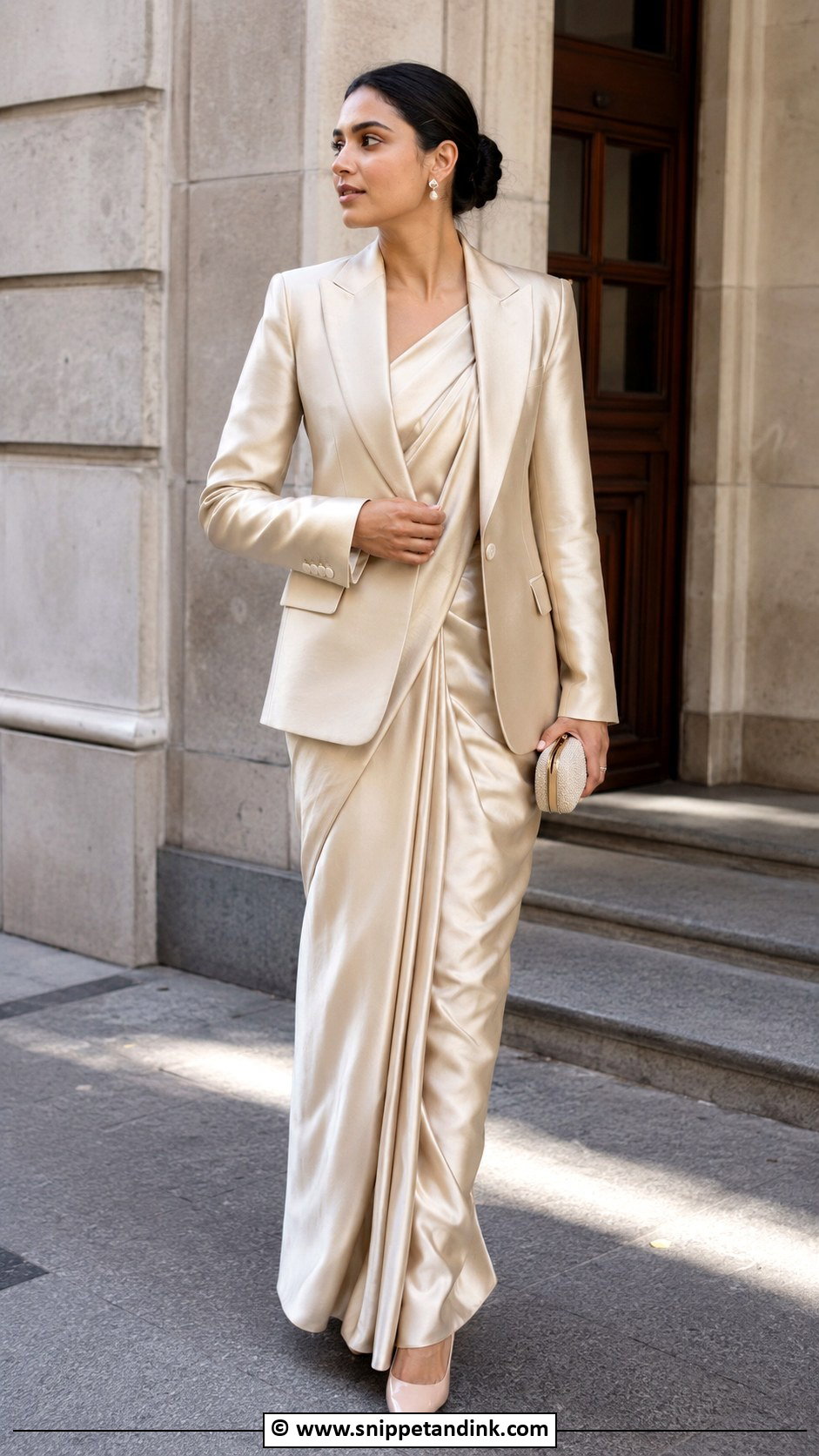
A blazer over a saree is sharp and suits brides who like tailoring. Start with satin, crepe, chiffon or georgette, then add a structured blazer in a matching or contrast shade: ivory, beige, blush, black, navy or champagne. The blazer replaces the pallu’s job, so I tuck or pin the pallu flat underneath and keep the pleats neat. Minimal jewellery, pointed flats or heels and a sleek bun. It looks confident in full-length photographs on the courthouse steps.
16. Co Ord Set Court Marriage Outfit
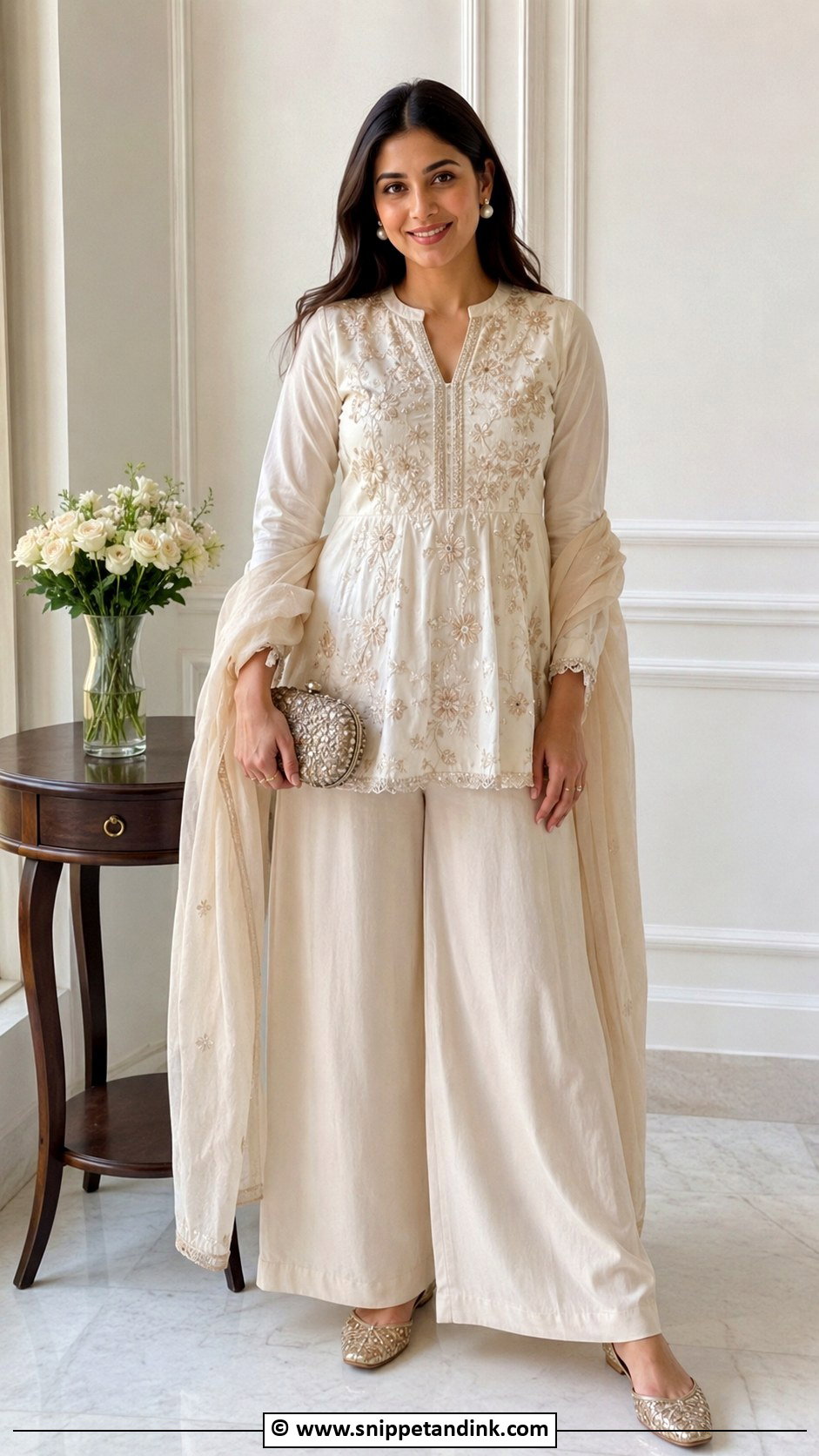
A co-ord set needs richer fabric to look like wedding wear, so I choose silk blends, brocade, chanderi or crepe rather than cotton. A long kurta with pants, a peplum with sharara pants or an embroidered tunic with wide trousers all work. Ivory, sage, dusty rose, champagne or teal keep it soft. Earrings, a clutch and dressy flats complete it. A bride who dislikes draping tends to love it, and you can wear the two pieces separately afterwards.
17. Salwar Kameez Court Marriage Outfit
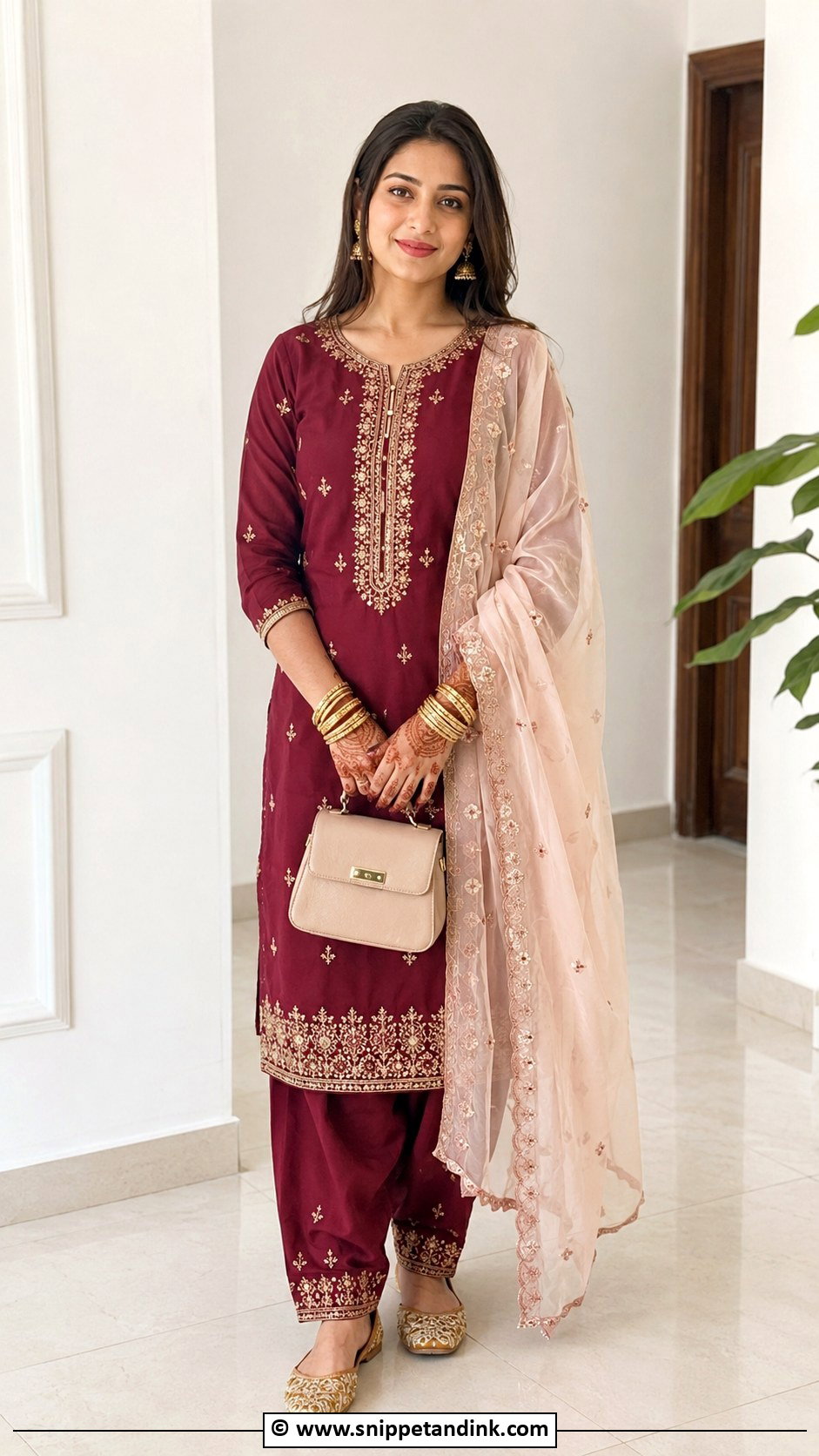
A salwar kameez is familiar and comfortable, and it handles long waits better than almost anything else. Choose the bottom you are easiest in: salwar, churidar or straight pants. Embroidered necklines, fine borders or a detailed dupatta add festivity without weight. Ivory, rose, maroon, mustard, emerald or powder blue all work. Juttis, a few bangles and a neat hairstyle. It also gives modest coverage, which some families prefer for a formal government office.
18. Punjabi Suit Court Marriage Outfit
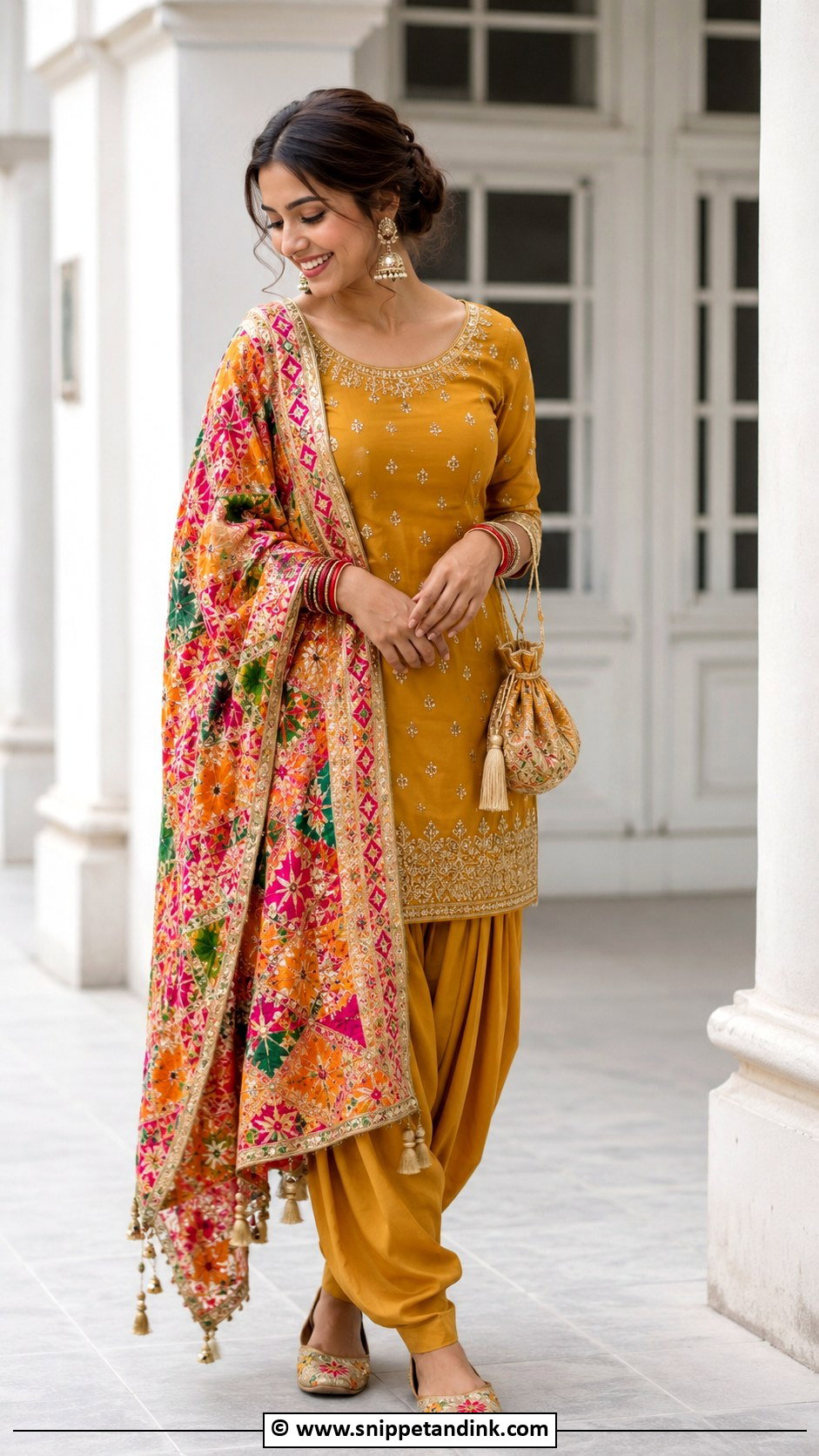
A Punjabi suit brings warmth and cheer to a plain registry room. A short or mid-length kameez with salwar and a good dupatta, with phulkari, gota work, mirror accents or light embroidery. Fuchsia, mustard, coral, green and royal blue feel joyful; pastels feel softer. Juttis, jhumkas and a tidy clutch. Phulkari dupattas can be heavy, so I pin them at the shoulder rather than leaving them loose.
19. South Indian Saree Court Marriage Outfit
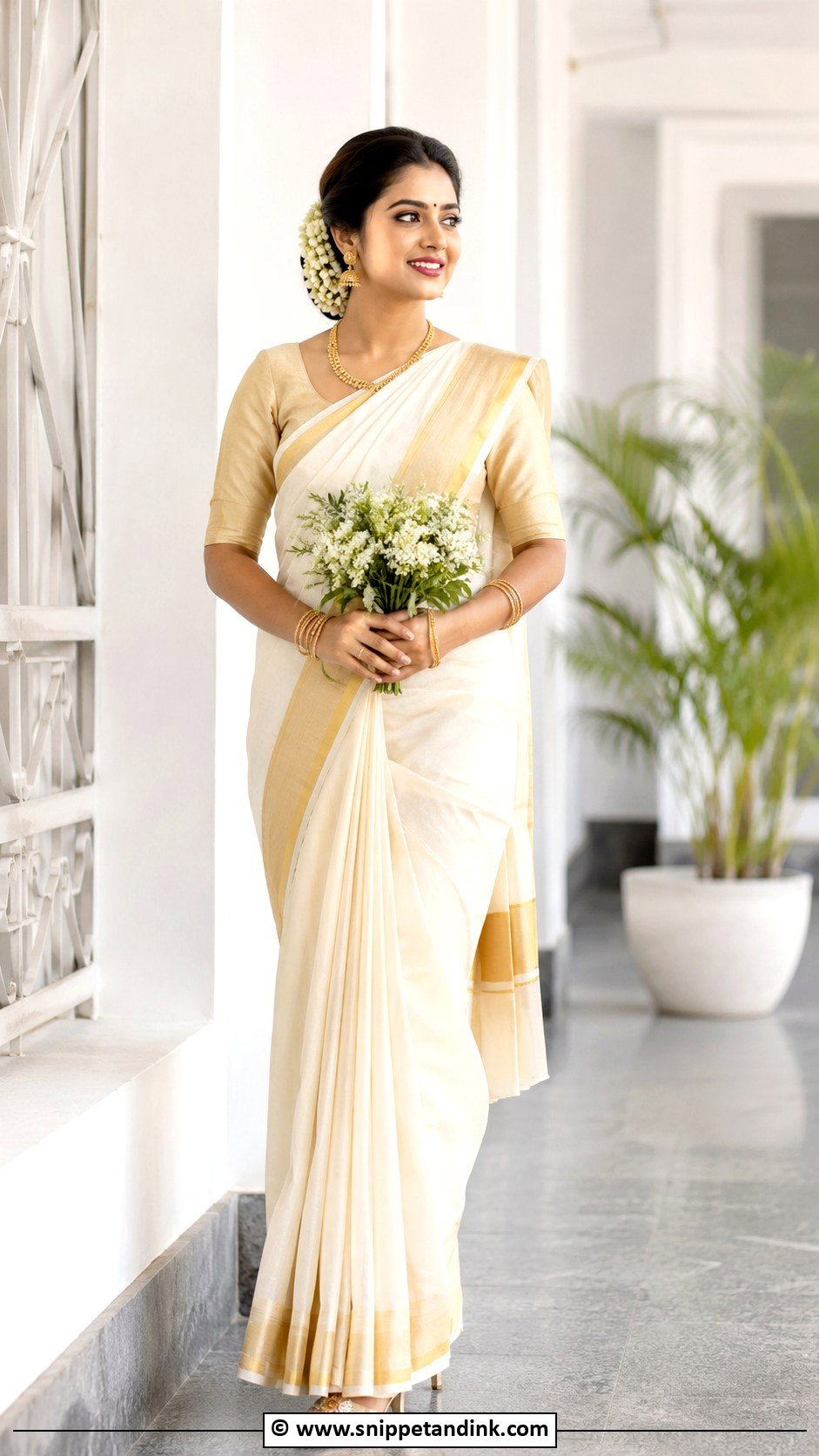
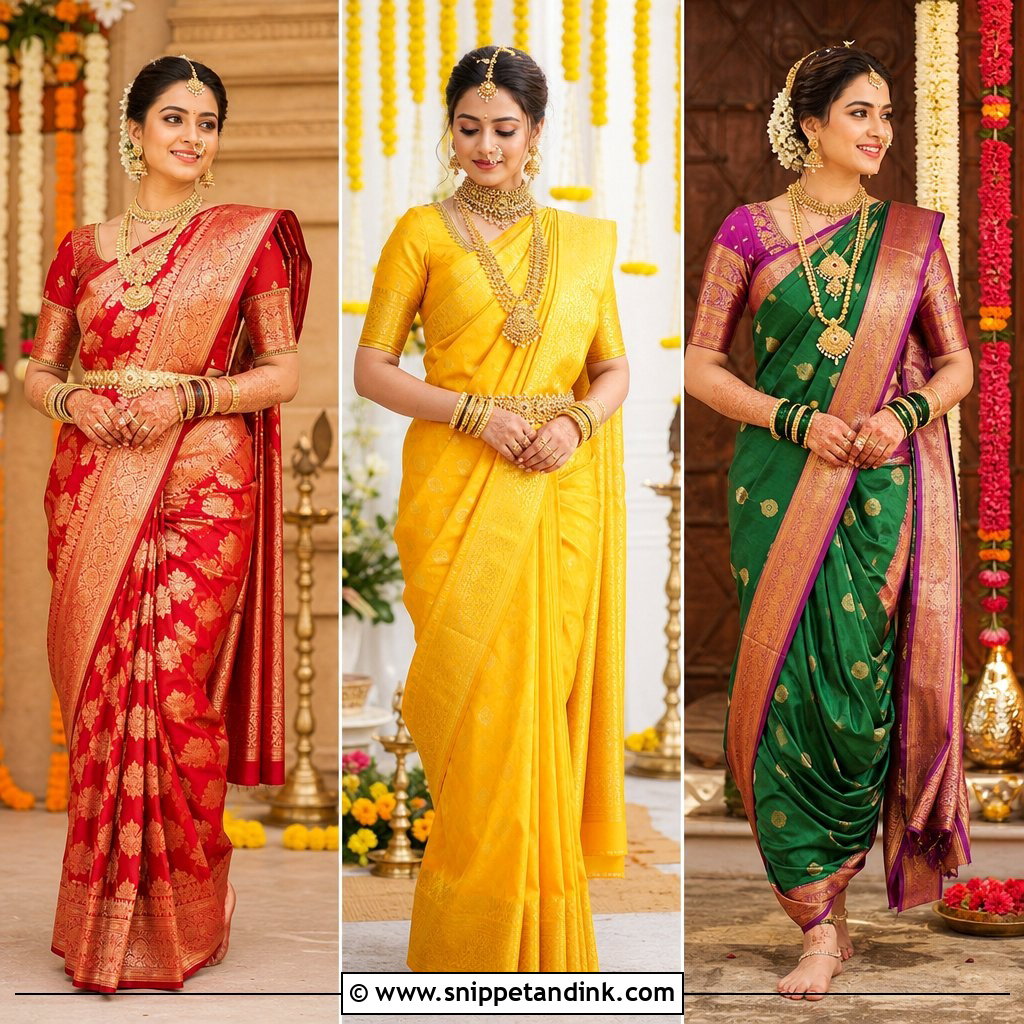
A South Indian silk saree brings strong ceremonial presence. Choose a lighter Kanjivaram, Mysore silk, Uppada or cotton silk with a traditional border, in gold, cream, turmeric yellow, temple red, emerald or pink. Mysore silk is softer and lighter than Kanjivaram, which I’d suggest if you’ll be on your feet for hours. Temple-style earrings, glass bangles and fresh jasmine finish it. Pin the drape securely, as there may be walking between offices.
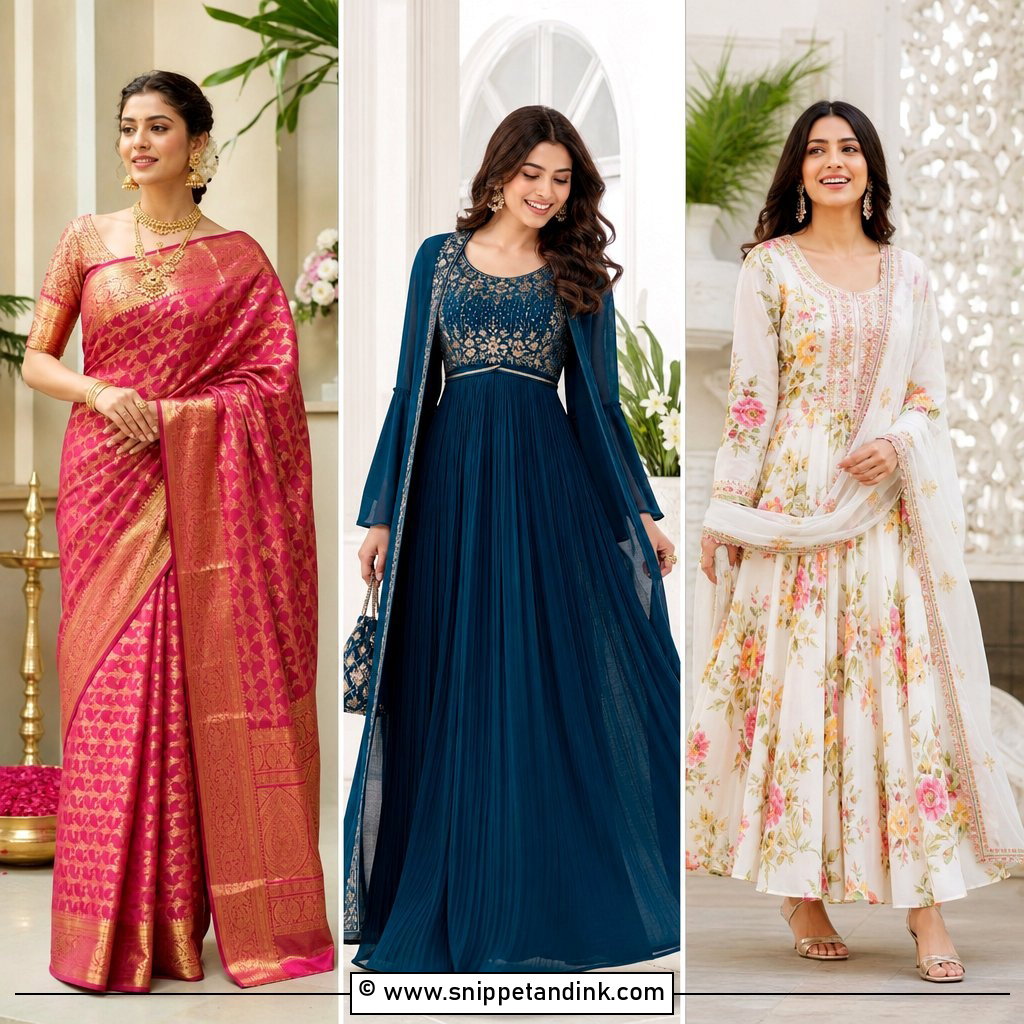

20. Bengali Saree Court Marriage Outfit
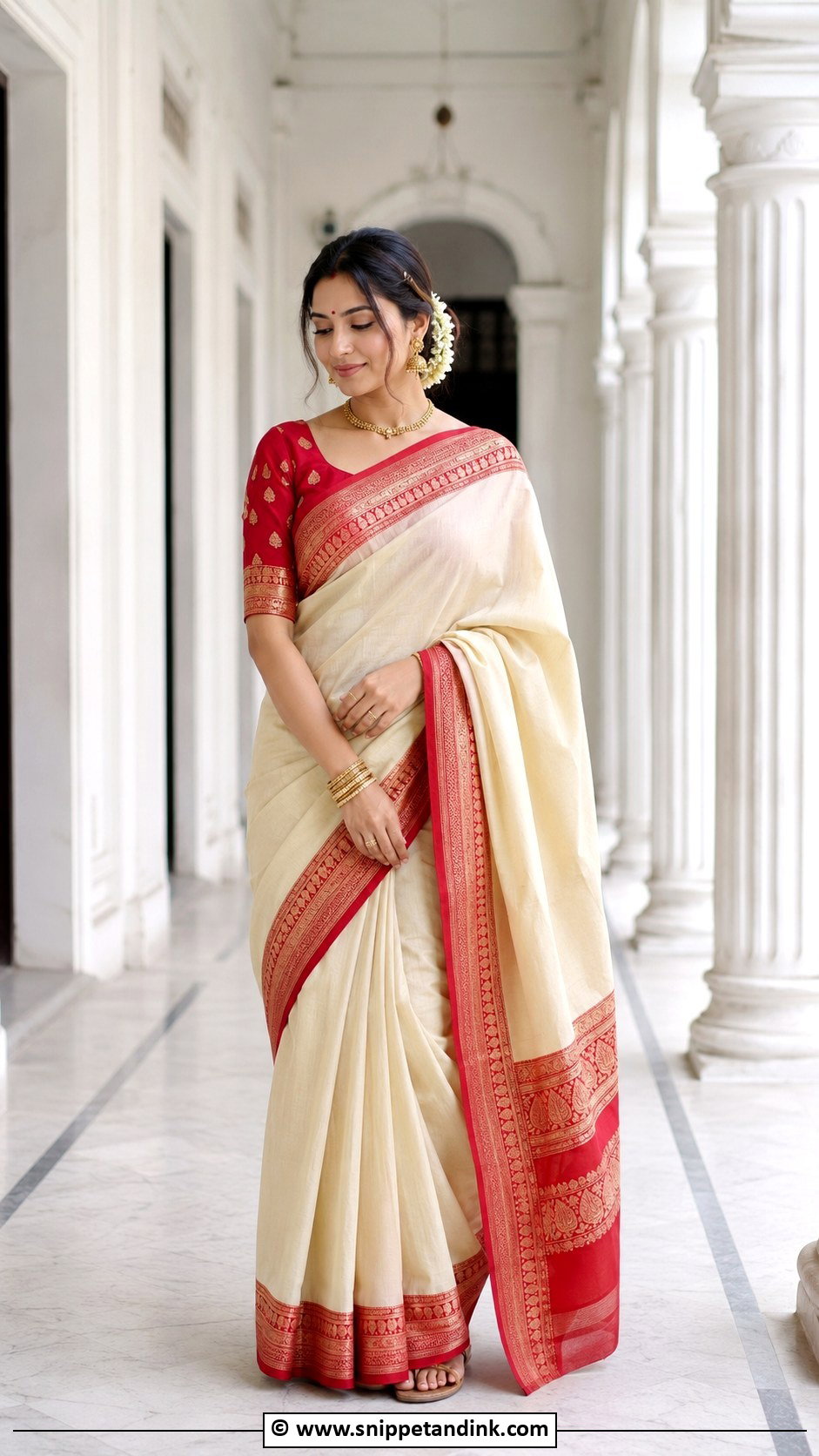
The white or ivory saree with a red border is the classic Bengali bridal pairing, and it suits a registry wedding well. Soft silk, tant, garad or a light Banarasi all work. Tant is crisp cotton and holds pleats neatly, but it creases when you sit for long, so iron it the morning of. Pair it with a red blouse, gold jewellery and a small bindi. Delicate earrings instead of a heavy necklace if you want it simpler. Comfortable sandals or low heels for the court.
21. Maharashtrian Saree Court Marriage Outfit
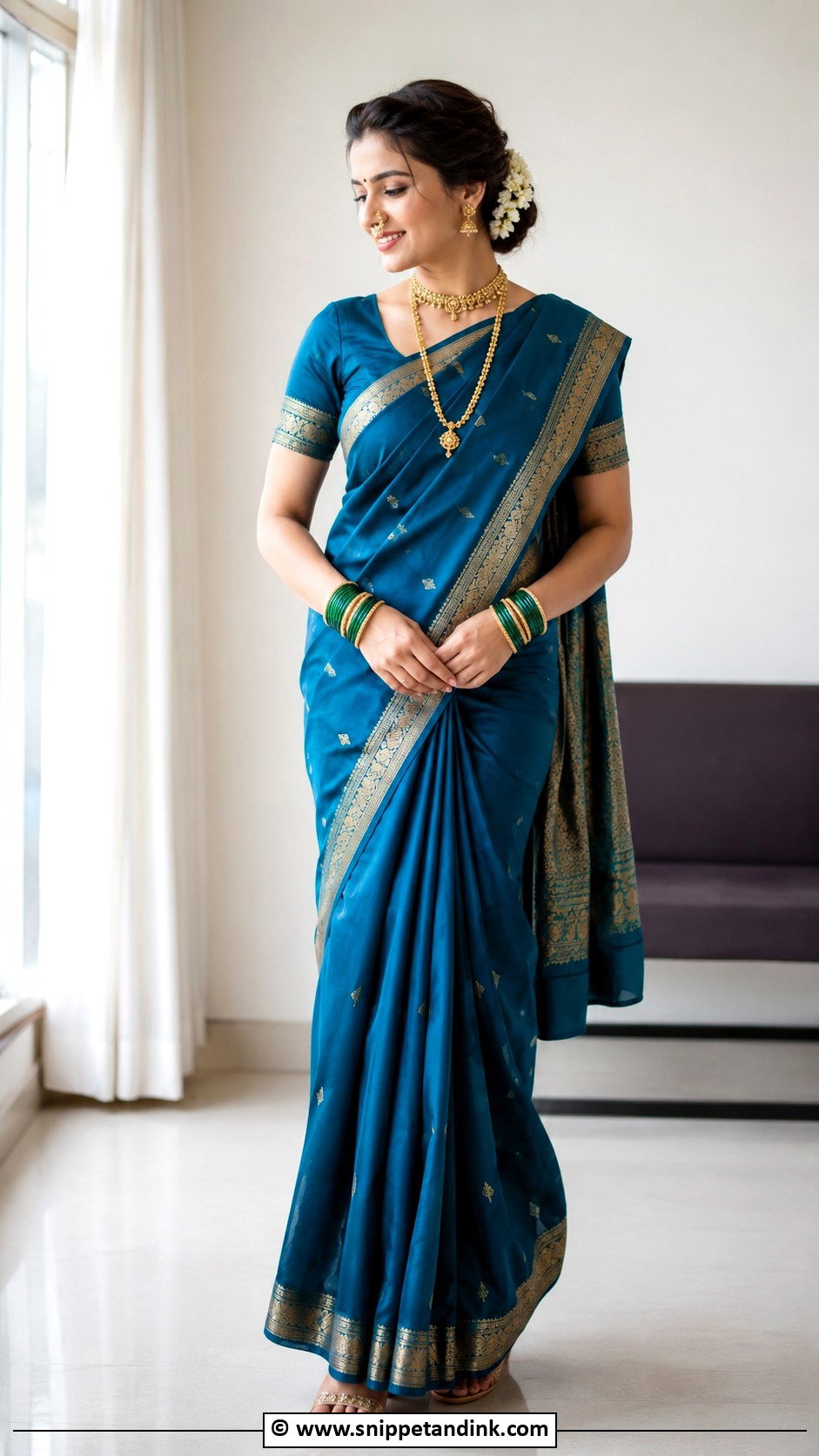
A Paithani-inspired saree, a silk saree or a nauvari drape gives a Maharashtrian bride her regional identity. Nauvari takes practice to wear and walk in, so only choose it if you are used to it; otherwise a six-yard saree with Maharashtrian styling is easier. Purple, green, mustard, red and peacock blue all suit Paithani borders. A traditional nath if you like, with the rest of the jewellery restrained. A bun with flowers, glass bangles and comfortable sandals finish it.
22. Gujarati Saree Court Marriage Outfit
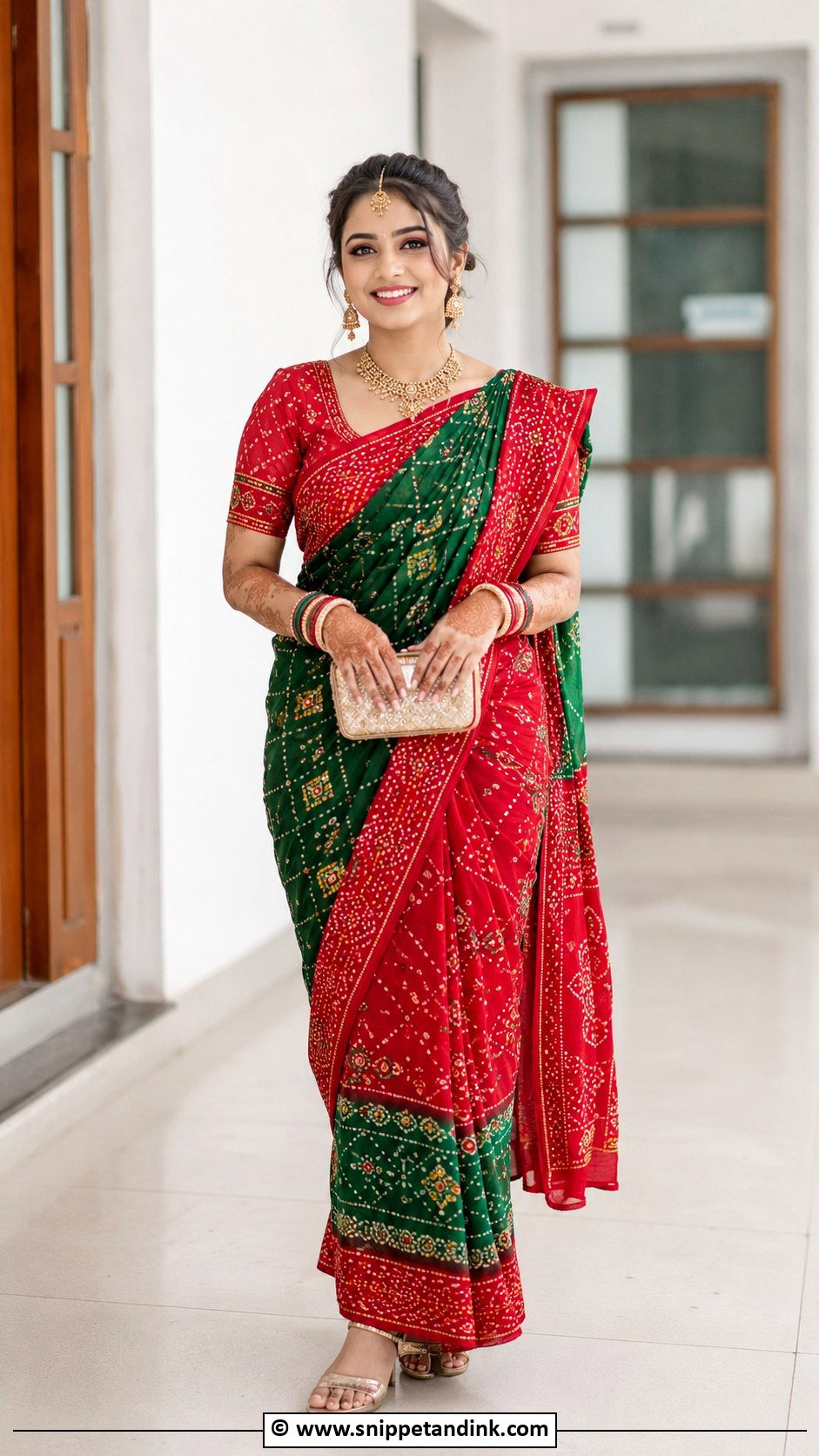
A Gujarati saree can be a lightweight bandhani, a patola-inspired weave, silk or georgette in red, green, yellow, pink or ivory. The seedha pallu drape brings the pallu over the right shoulder to the front, showing off the border. It needs firm pinning at the shoulder and a secure blouse, because the front-falling pallu can slide when you lean forward to sign. Gold earrings, bangles and a small bindi finish a clear traditional silhouette.
23. Muslim Nikah Court Marriage Outfit
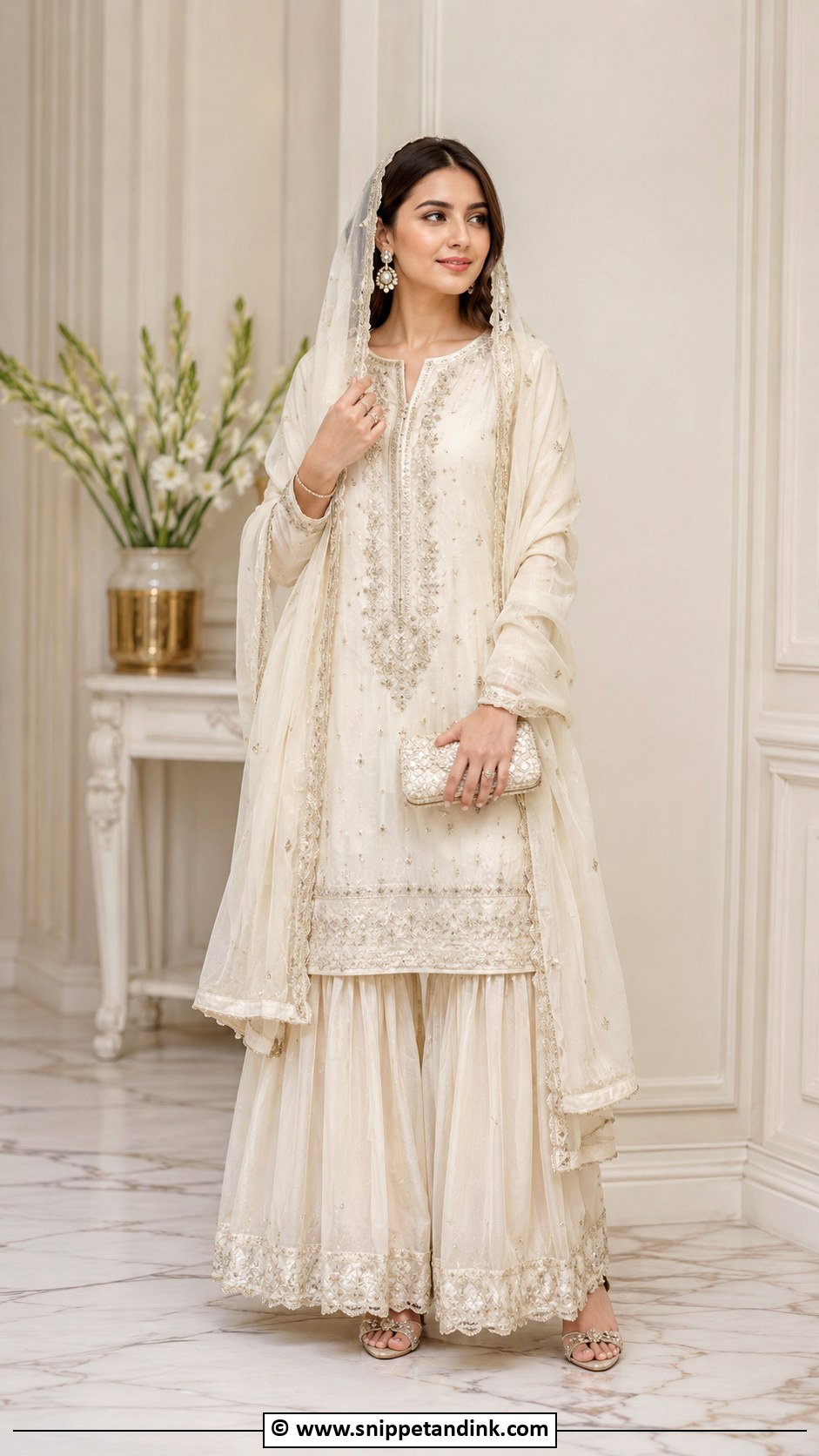
A Muslim nikah court marriage outfit is usually modest and refined: a long anarkali, sharara set, gharara suit or embroidered kurta with a matching dupatta. Ivory, emerald, blush, champagne, dusty blue and deep maroon all suit it. Soft zari, pearl work or thread embroidery keep it light. If you’ll wear the dupatta over your head, I pin it to the hair with small pins at the crown so it stays put when you look down at the register. Delicate earrings, comfortable heels and a small clutch.
24. Christian Indian Court Marriage Outfit
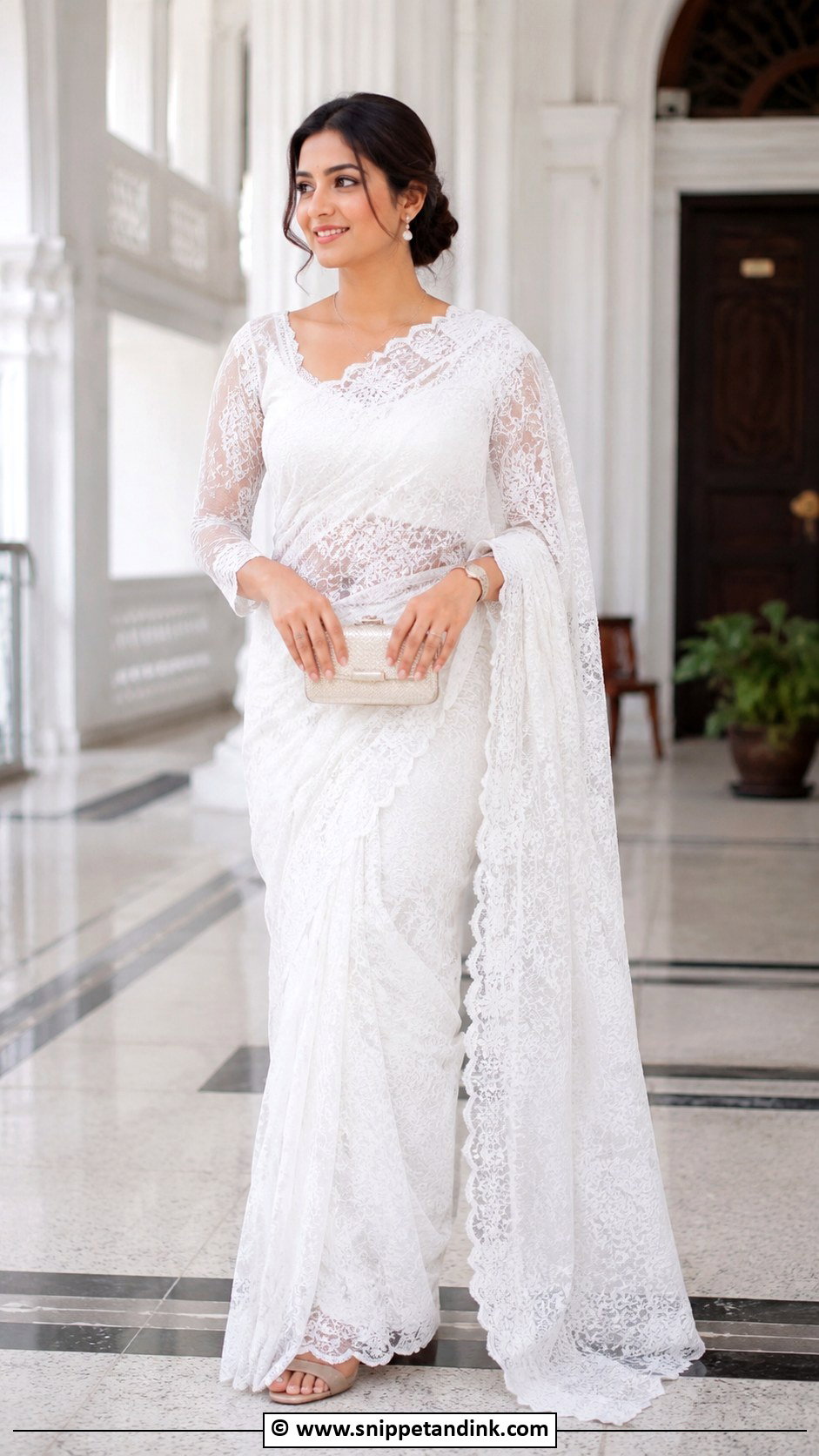
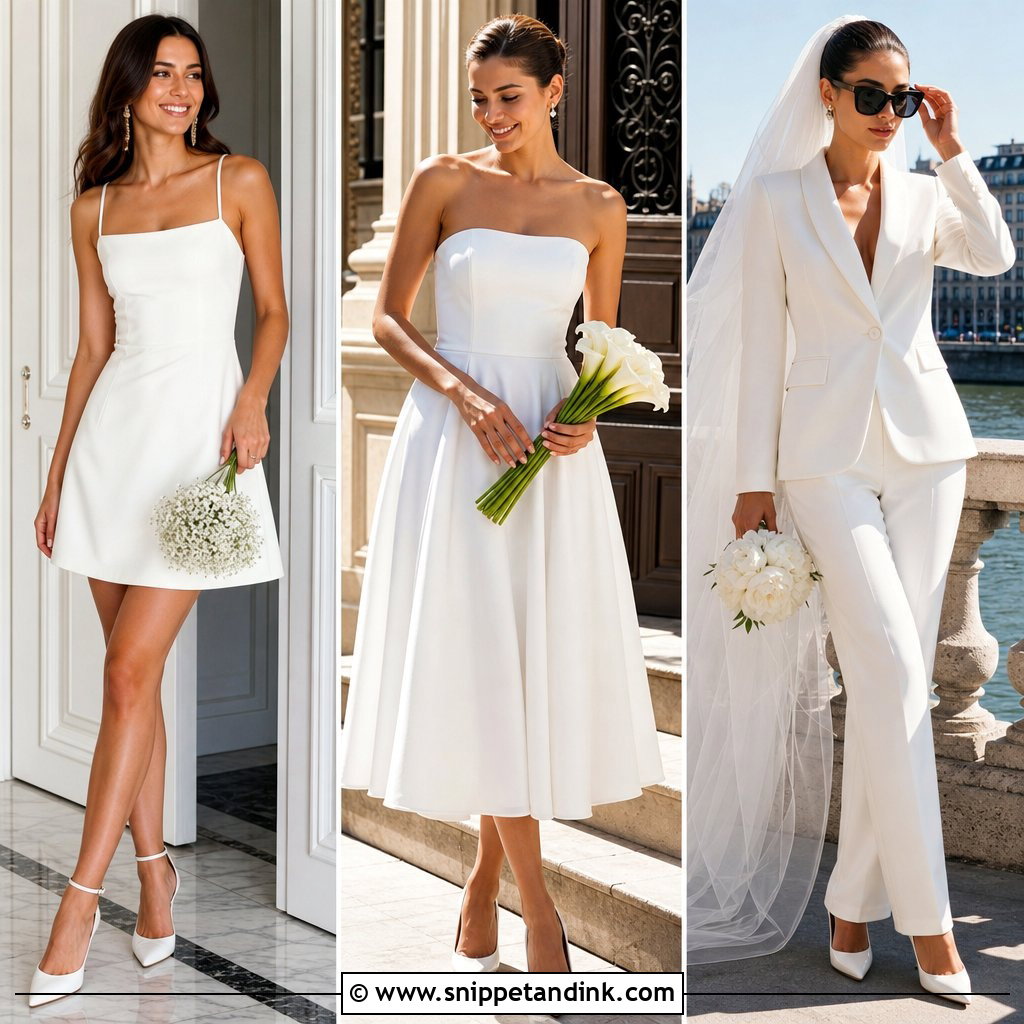
For a Christian Indian bride, a white midi dress, a lace saree, an ivory gown or a pearl-toned kurta set all work at a registry. A white saree with lace borders or a chikankari suit keeps it Indian; a dress keeps it Western. If you choose a dress, check the hem when seated, because a short dress rides up at a desk. Nude heels, small pearl earrings and a simple clutch. Keep it minimal and calm.


25. Groom Court Marriage Outfit
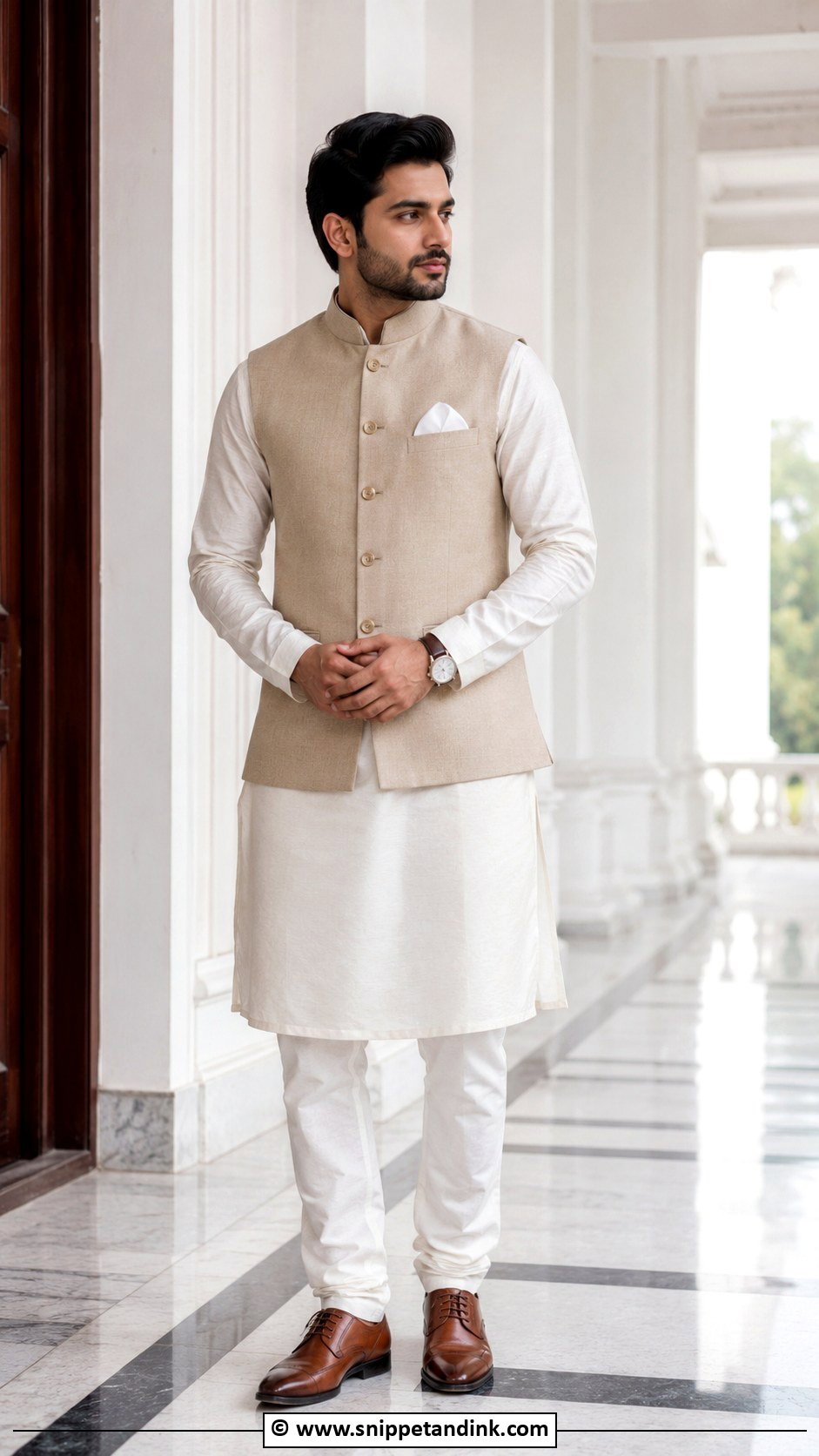
The groom should look as considered as the bride. A tailored kurta pajama with a Nehru jacket is reliable for a traditional ceremony, and a bandhgala suit, linen suit or blazer with trousers suits a modern one. Ivory, beige, navy, charcoal, pastel blue and muted green are the safest shades, picked to sit with the bride’s colour. Clean shoes, a watch and a pocket square with Western tailoring. Fit decides it: a simple kurta that fits well looks better than an expensive one that doesn’t.
Will Your Colour Survive Office Lighting?
Most registry rooms are lit with overhead tubes, which give skin and fabric a flat, slightly greenish cast. Very pale pastels and stark white can lose their colour entirely, while mid-tone shades like rose, mustard, emerald or wine hold up better.
My advice is to accept that the signing photos are documentation and plan the real portraits elsewhere. A garden, a nearby heritage building or even good window light at a restaurant will show the outfit as it truly looks. If you can, take a quick phone photo of the fabric under bright office lighting at work or home before you buy; it shows you how it will read in that room.
Makeup matters here too. Overhead light deepens shadows under the eyes, so a little more brightening under the eyes and a touch of colour on the cheeks helps the face hold up in those signing shots.
Shine is the other thing to watch. Satin, tissue and heavy zari bounce overhead light straight back into the lens and can blow out to white patches in phone photos. A matte silk or a textured weave keeps its detail far better in a small, brightly lit room, so if you are torn between two fabrics, that is a fair tiebreaker.
A Registry Wedding Still Deserves a Proper Outfit
A court wedding is simple, but the clothes can still carry meaning. Sarees, lehengas, suits, co-ord sets and Indo-western looks all work as long as they are easy to sit, sign and walk in. I’d choose breathable fabric, pin every drape securely, wear shoes made for stairs and keep jewellery from distracting from the moment. Above all, wear what makes you feel calm and like yourself when you put the pen to paper.
You'll Like These Ideas:




Leave a Reply