
Bridal separates solve a problem I meet constantly in fittings: a bride whose top half and bottom half are different sizes, or who loves one gown’s bodice and another’s skirt. With a top and a skirt, you control neckline, sleeve, waist placement and skirt shape independently. Done one way, the pair passes for a traditional gown; done another, it looks nothing like one. Many pieces can also be worn again afterwards, which a gown rarely can. The combinations below run from lace and tulle to lehengas and convertible overskirts, each with the fitting detail I’d keep an eye on.
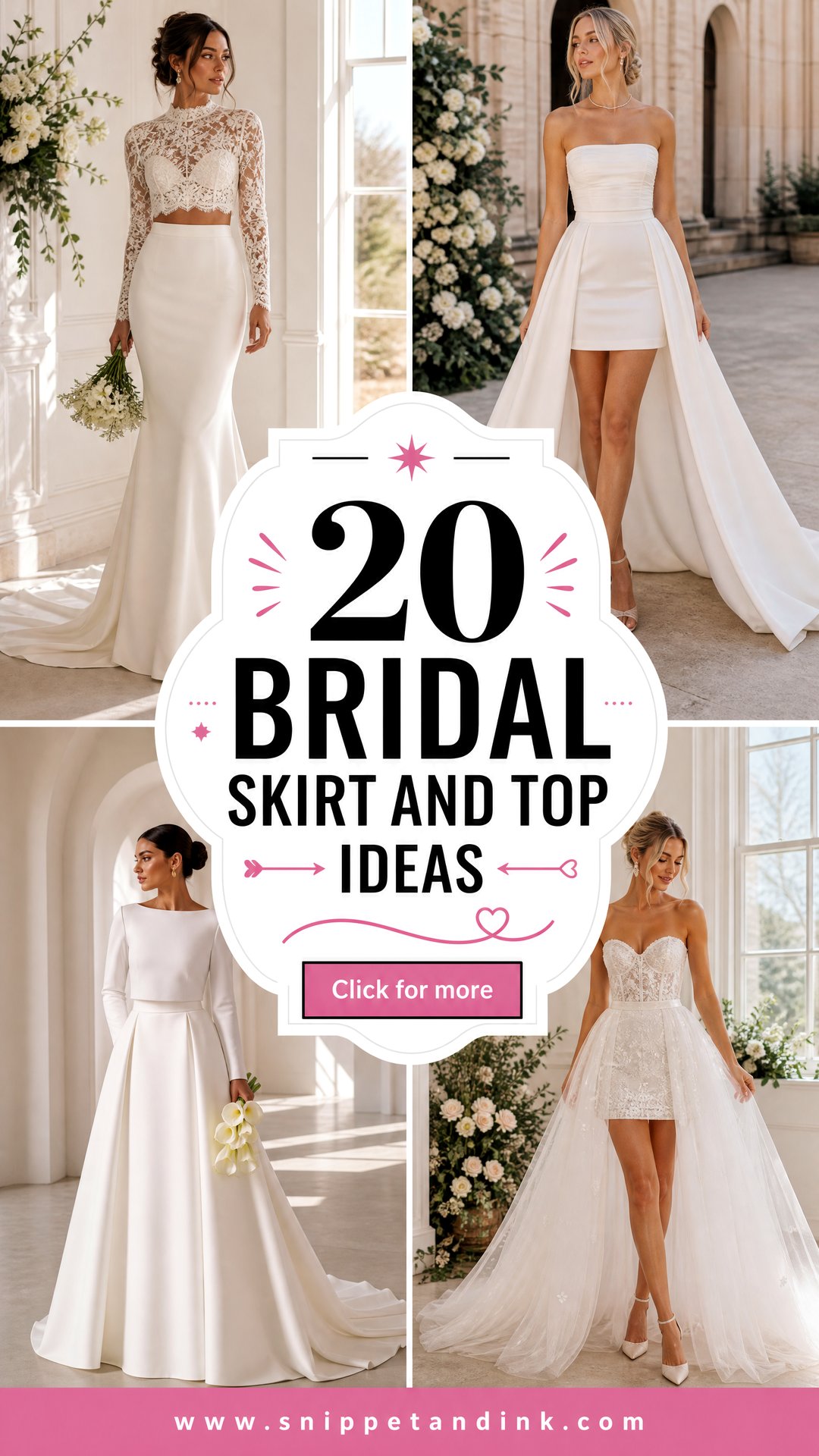
Where a Top and Skirt Beat a Gown, and Where They Don’t
The big advantage is sizing. A gown is cut from one pattern, so a bride whose bust and hips sit in different sizes ends up paying to have half of it rebuilt. Separates are bought and altered one piece at a time, which usually means smaller alterations.
The weak spot is the join. Every top and skirt meet somewhere, and that line moves when you lift your arms, lean over to sign the register or sit down to eat. At fittings I have brides raise both arms over their heads and twist. If the top rides up and shows a gap you didn’t plan, it needs more length, or the skirt needs a higher waist.
The other risk is colour. Ivory from one maker and ivory from another rarely match, and the difference shows most in satin and crepe. If your pieces come from different places, order swatches first and compare them in daylight before committing to either.
1. Lace Crop Top and Tulle Bridal Skirt
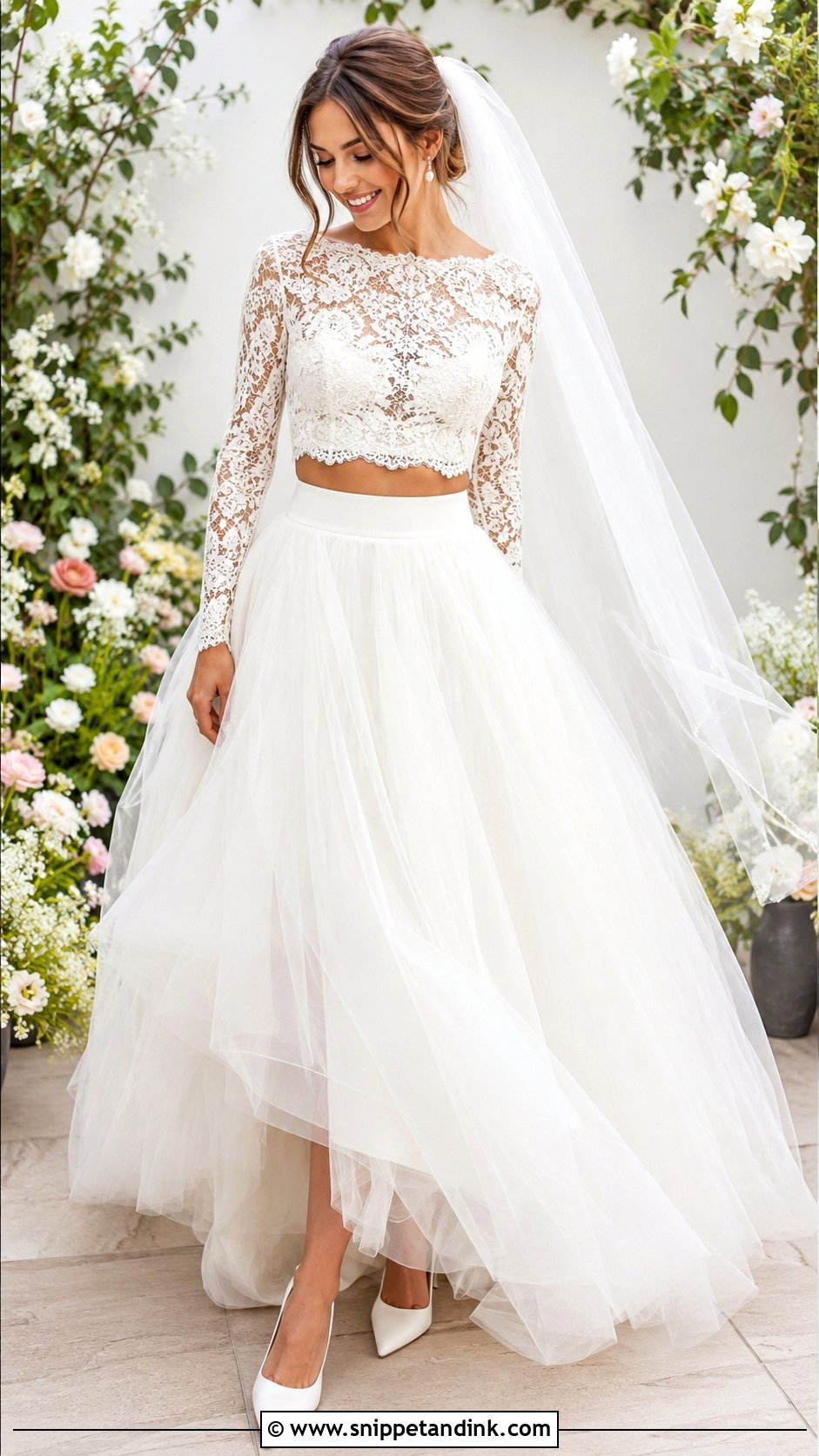
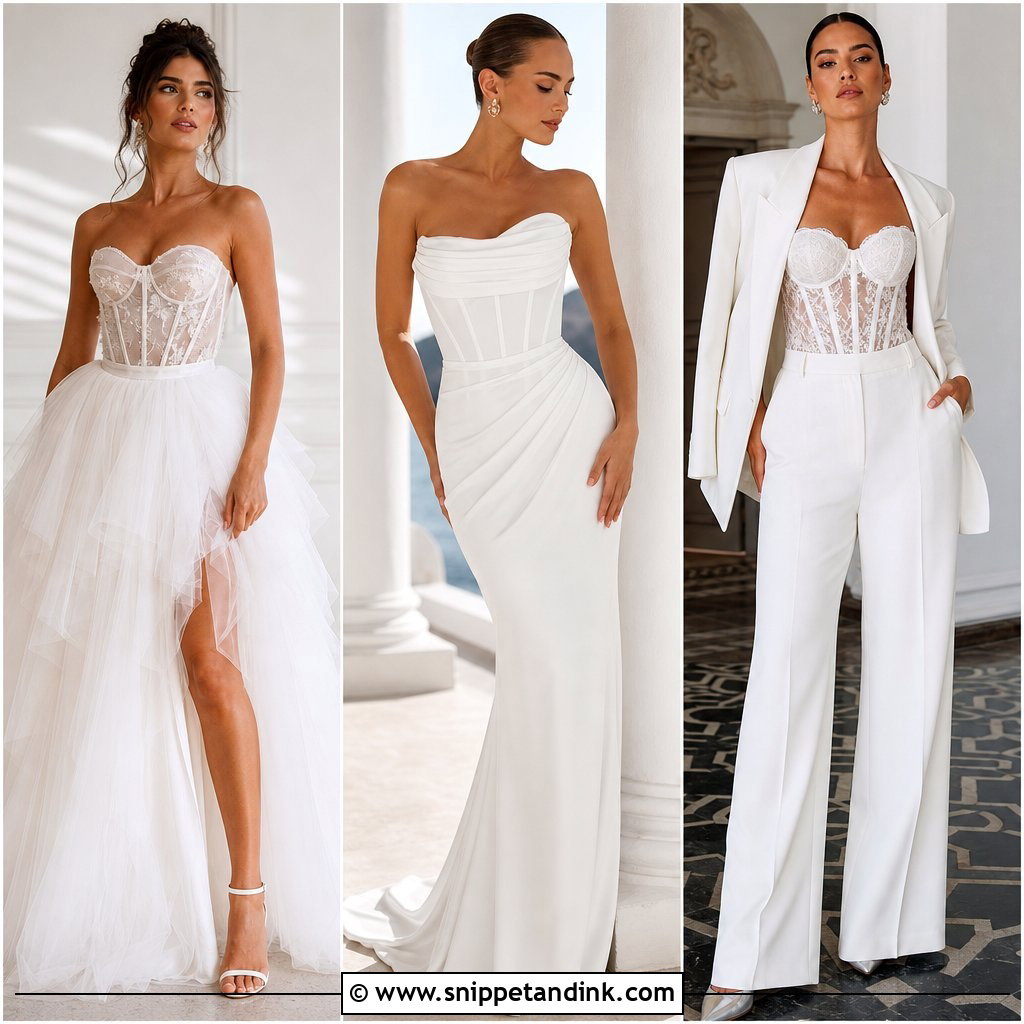
A lace crop top over layered tulle is the gentlest way into separates, because from a few metres away it still reads as a romantic gown. I’d choose a lined top with scalloped edges and set the skirt waistband high enough to meet or just overlap it; a strip of skin only looks deliberate when it’s even all the way round. Tulle volume is the thing to adjust to your height. Several layers swamp a petite frame, while a taller bride can carry extra layers and a sweeping train. Pearl drops and a fingertip veil keep it soft.
2. Satin Halter Top and Bias Cut Bridal Skirt
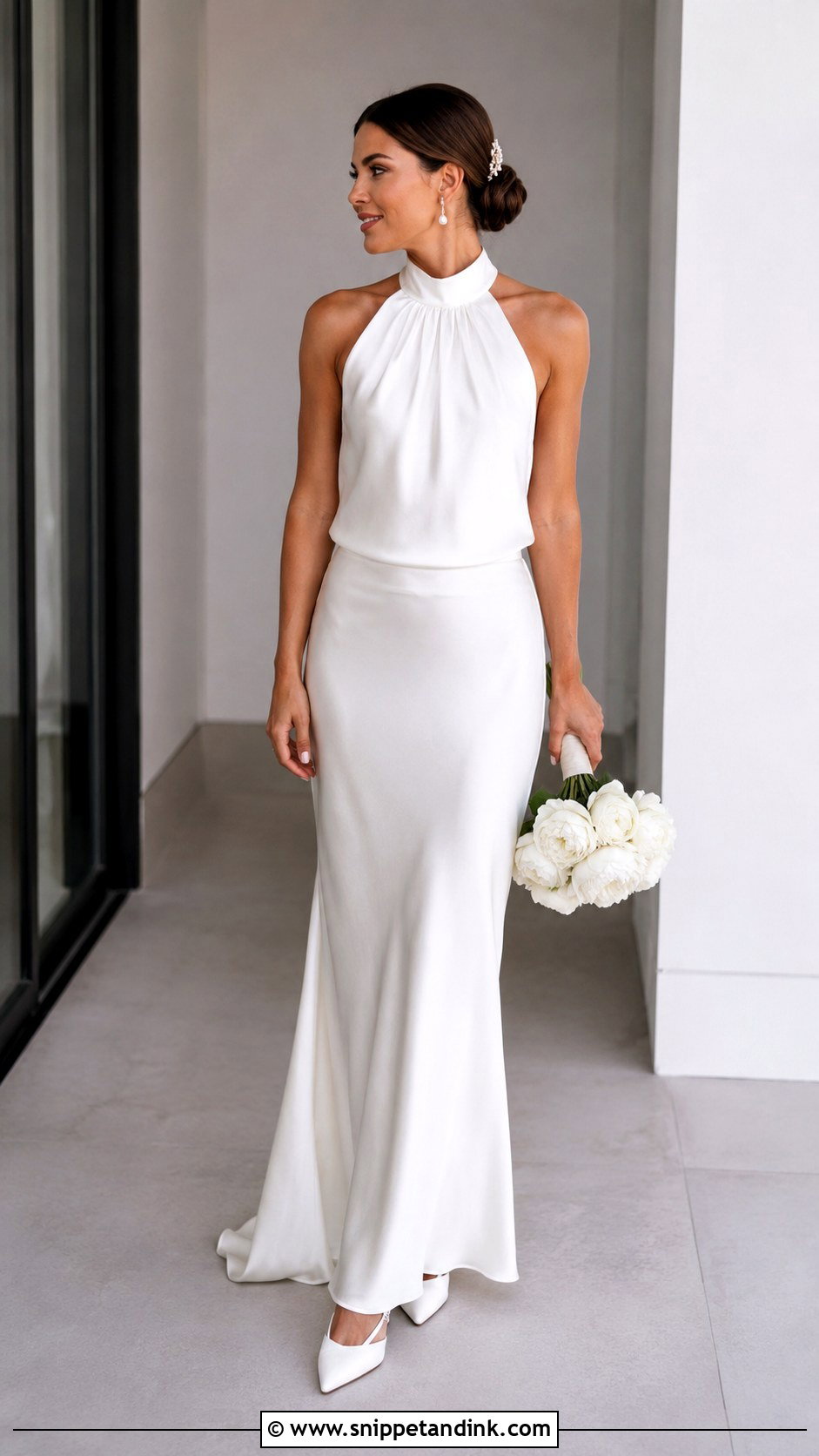
Satin separates in matching fabric are the closest you’ll get to a sleek gown while keeping two pieces. A draped halter over a high-waisted bias-cut skirt follows the body without gripping it. The risk is shade. Satin reflects light, so two whites that look identical on hangers can show a visible step at the waist once you’re standing in sun. Buy both pieces from the same fabric if you can, and if not, check them together by a window. Sculptural earrings and a polished bun suit the halter, and a tailored satin jacket adds cover for the ceremony.
3. Corset Top and Ball Gown Bridal Skirt
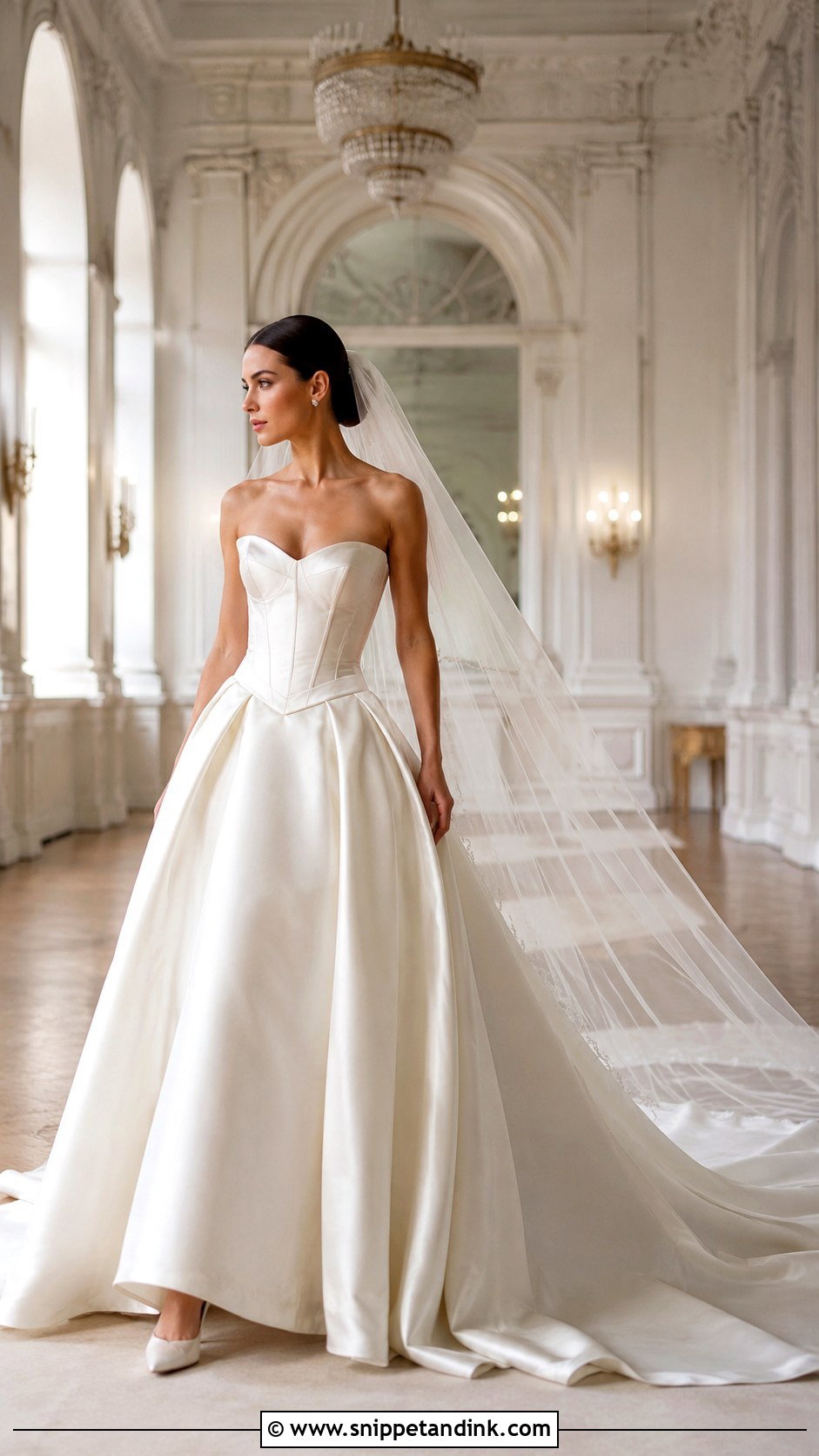
A structured corset with a full ball gown skirt gives you the drama of a big gown with a far easier fitting, because the corset is fitted to your torso alone and the skirt is hemmed alone. A pointed waistline hides the join, since the tip of the corset sits over the skirt band. If the corset shows boning or heavy lace, keep the skirt in plain mikado or satin. I ask for built-in cups and a lace-up back, which leaves room to adjust if your weight shifts a little before the wedding. A detachable train makes dinner and dancing much easier.
4. Long Sleeve Lace Top and Crepe Bridal Skirt
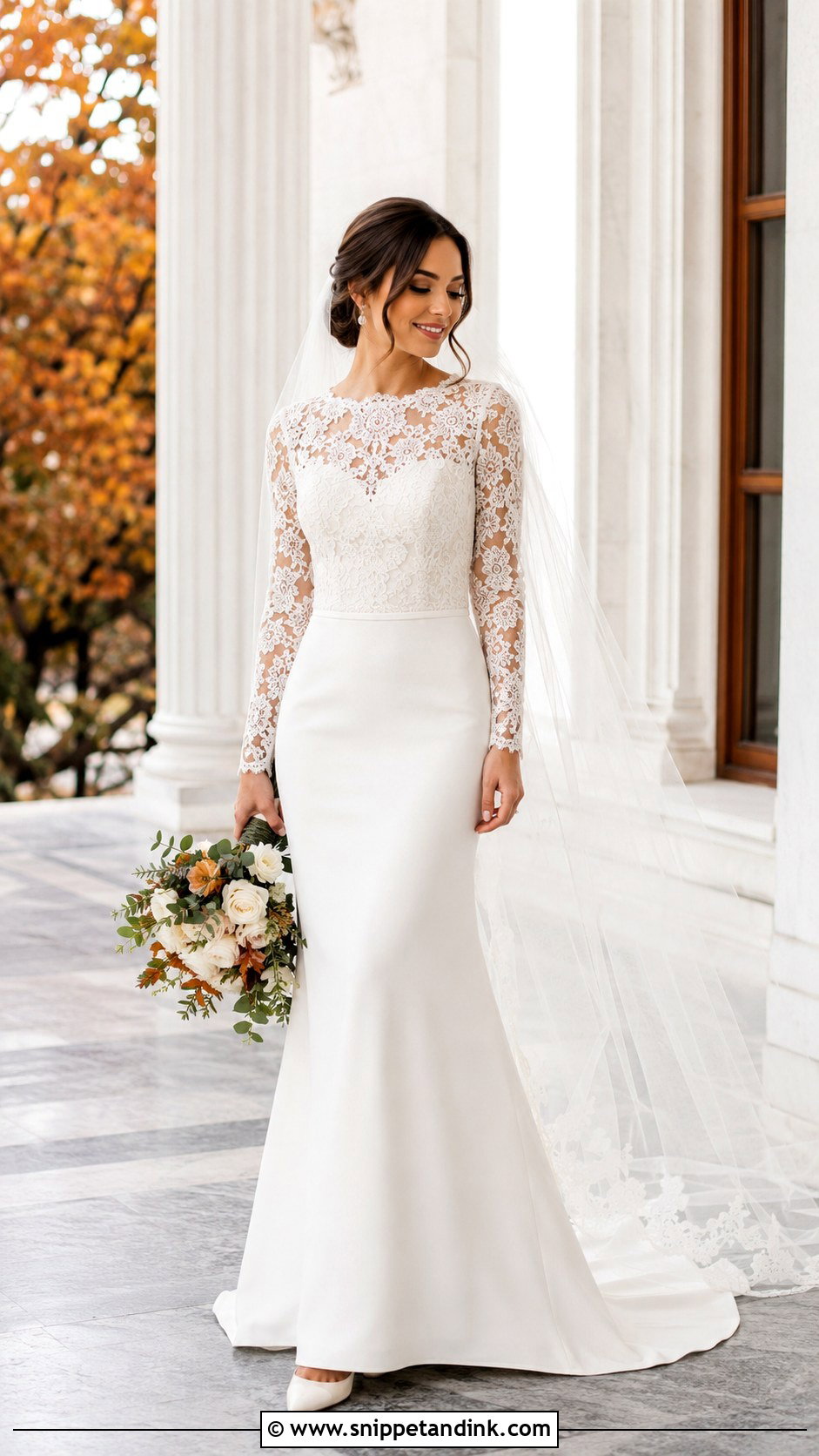
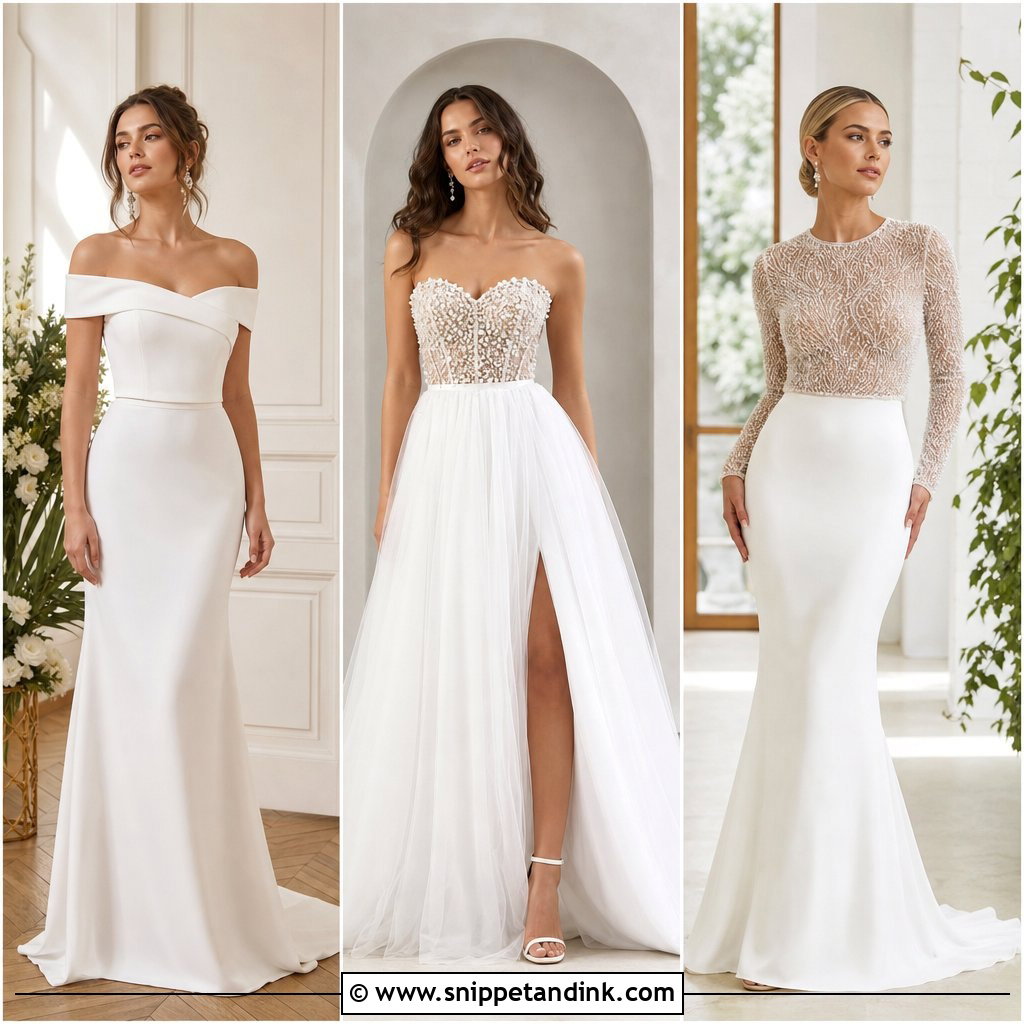
Long lace sleeves with a clean crepe skirt suit a cooler season and give coverage without heaviness; the contrast of textured lace and plain crepe needs no beading at all. Sleeve fit is what I check most. Lace sleeves without stretch pull across the back of the arm when you hug or raise a glass, so I have brides reach forward and up before anything is finalised. Stretch crepe on the skirt helps with sitting. A chapel veil lengthens the line, and covered buttons down the back finish it.
5. Off Shoulder Top and A Line Bridal Skirt
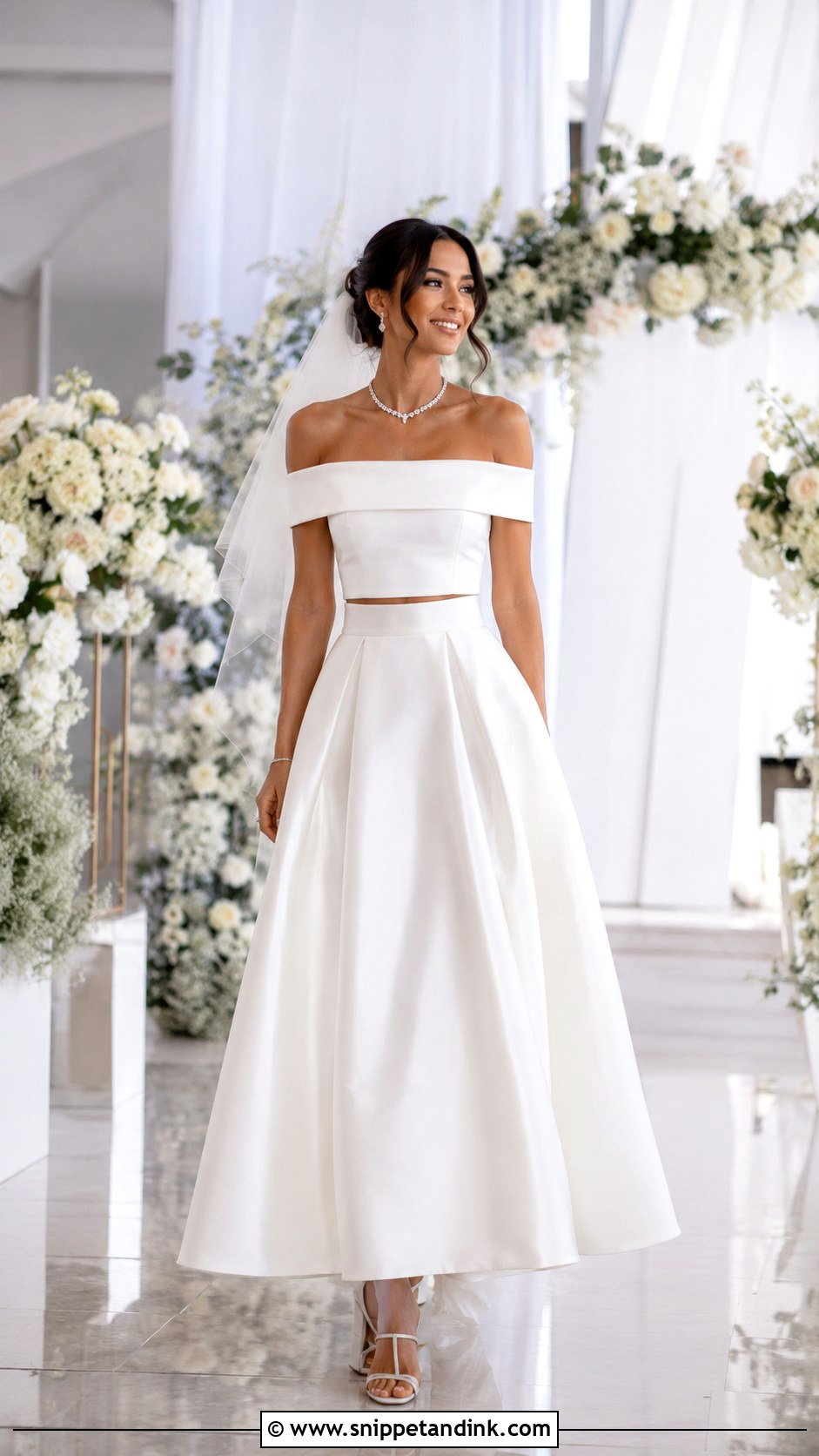
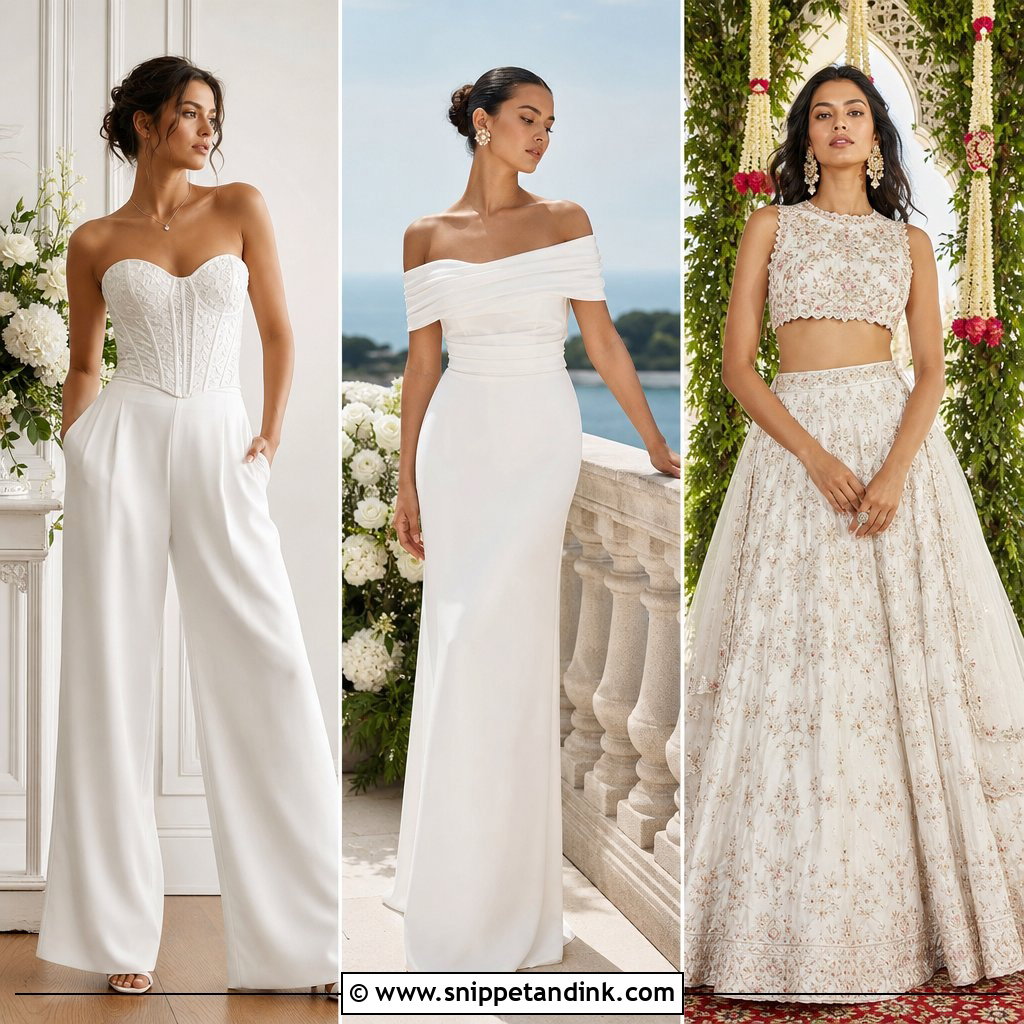
An off-shoulder top over an A-line skirt flatters a lot of figures, since the top frames the shoulders and the skirt skims the hips. The neckline is the whole engineering problem. It needs internal structure or a silicone grip band to stay put, yet if it sits too tight across the upper arm you won’t be able to lift your arms for a hug. That balance only gets found in alterations, so plan on at least two fittings. Satin feels formal, chiffon moves better outdoors, and soft waves keep the attention on your shoulders.
6. Beaded Top and Chiffon Bridal Skirt
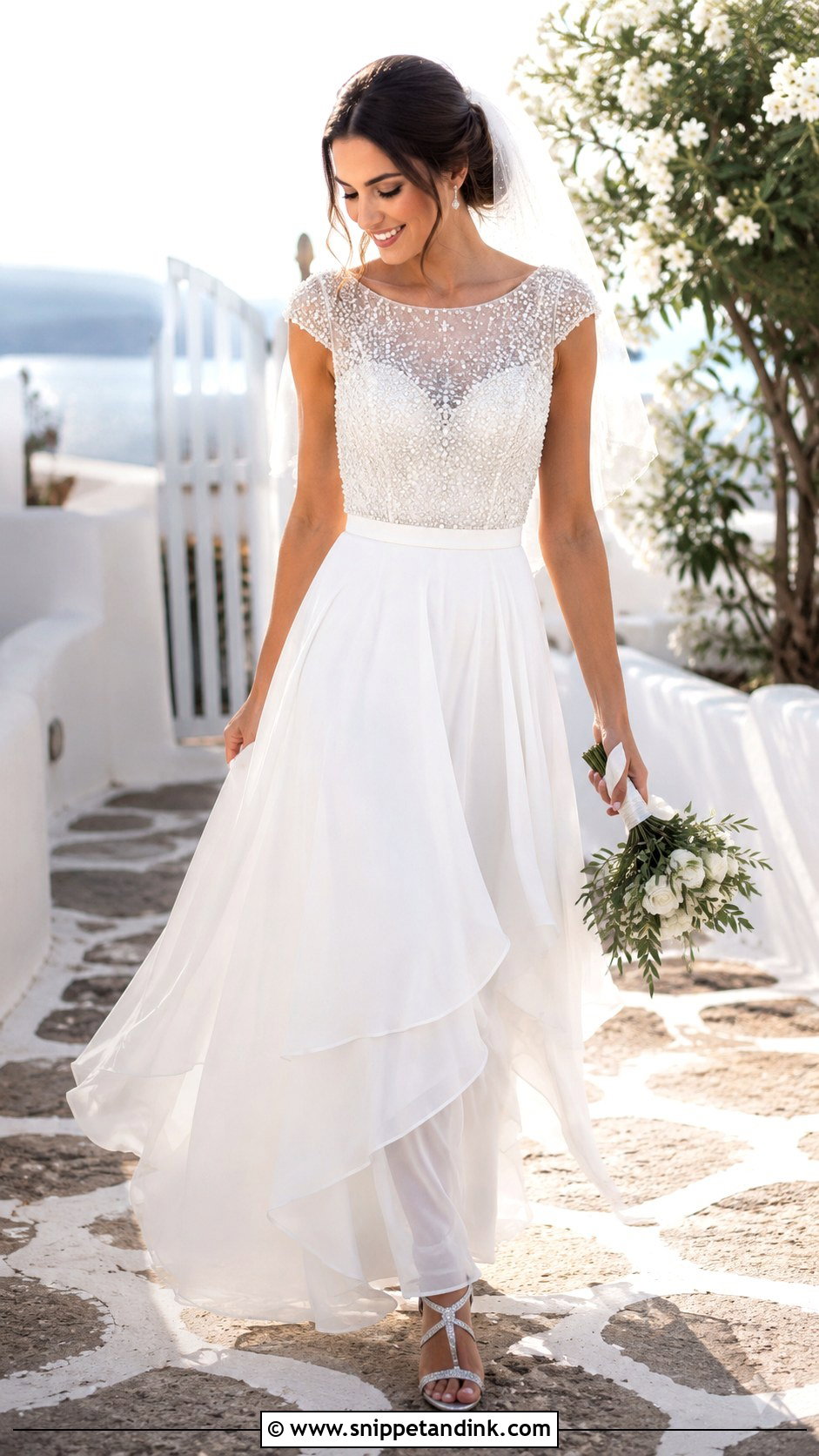
A beaded top needs a light skirt underneath, and chiffon works because it moves in the opposite way to stiff beadwork. Pearls, crystals or fine sequins on a fitted sleeveless top are plenty. The practical issue is abrasion. Beads along the lower edge rub and snag chiffon every time you sit, so I ask for a narrow satin waistband on the skirt to take that contact. Metallic sandals and small crystal studs are enough while the bodice does the sparkling.
7. Peplum Top and Fitted Bridal Skirt
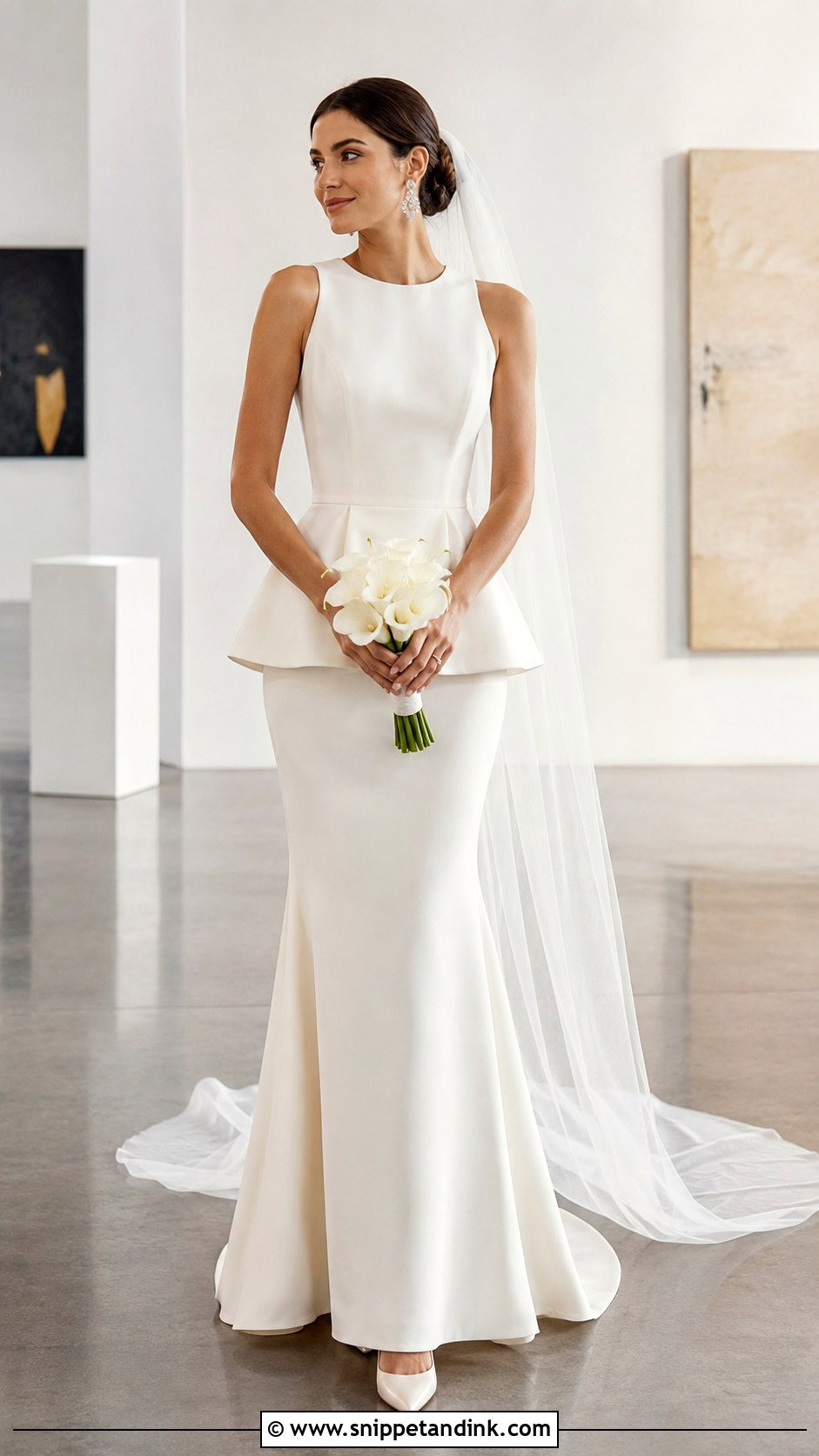
A peplum top is the separates choice for a bride who wants a strong shape but no visible midriff. The flare from the natural waist covers the skirt band entirely, which also hides any small difference in shade between the pieces. Pair it with a straight or trumpet skirt in matching crepe. Bulk is the fit detail to watch: the skirt has to lie flat beneath the peplum, so I’d ask for a slim facing at the skirt waist instead of a thick band. Keep jewelry minimal and hair sleek so the silhouette leads.
8. Pearl Top and Organza Bridal Skirt
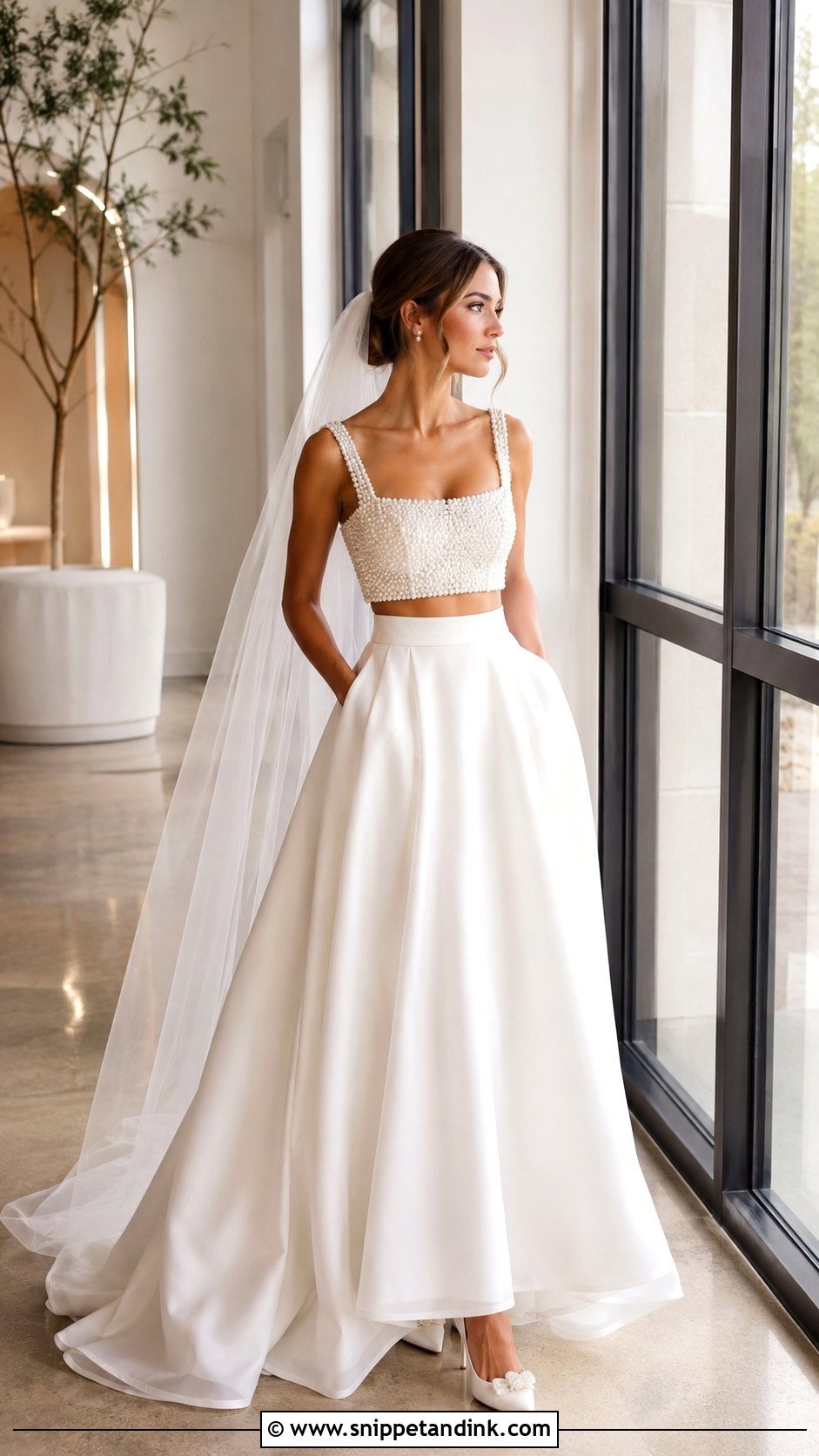
Pearls scattered over a simple cropped bodice, with a crisp organza skirt below, catch light in a soft, low-key way. Organza is stiff and its volume pushes outward, so a close-fitting top stops you from looking boxy. Pockets in an organza skirt are a joy but add bulk at the hip; ask for the pocket bags to be cut from lining fabric. For more coverage, a longer bodice or a sheer organza jacket with pearl buttons can be worn for the ceremony and taken off later.
9. Square Neck Top and Pleated Bridal Skirt
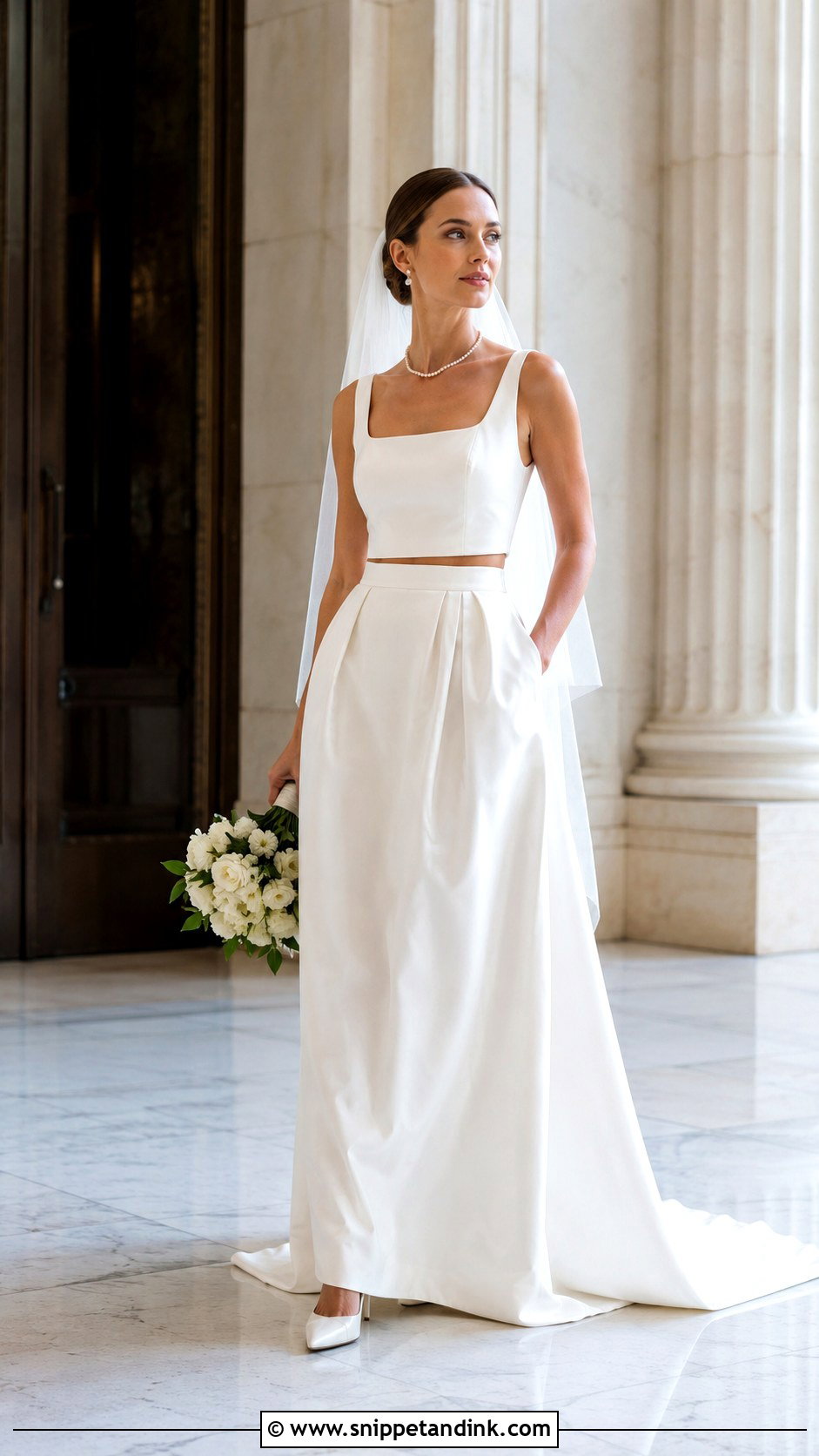
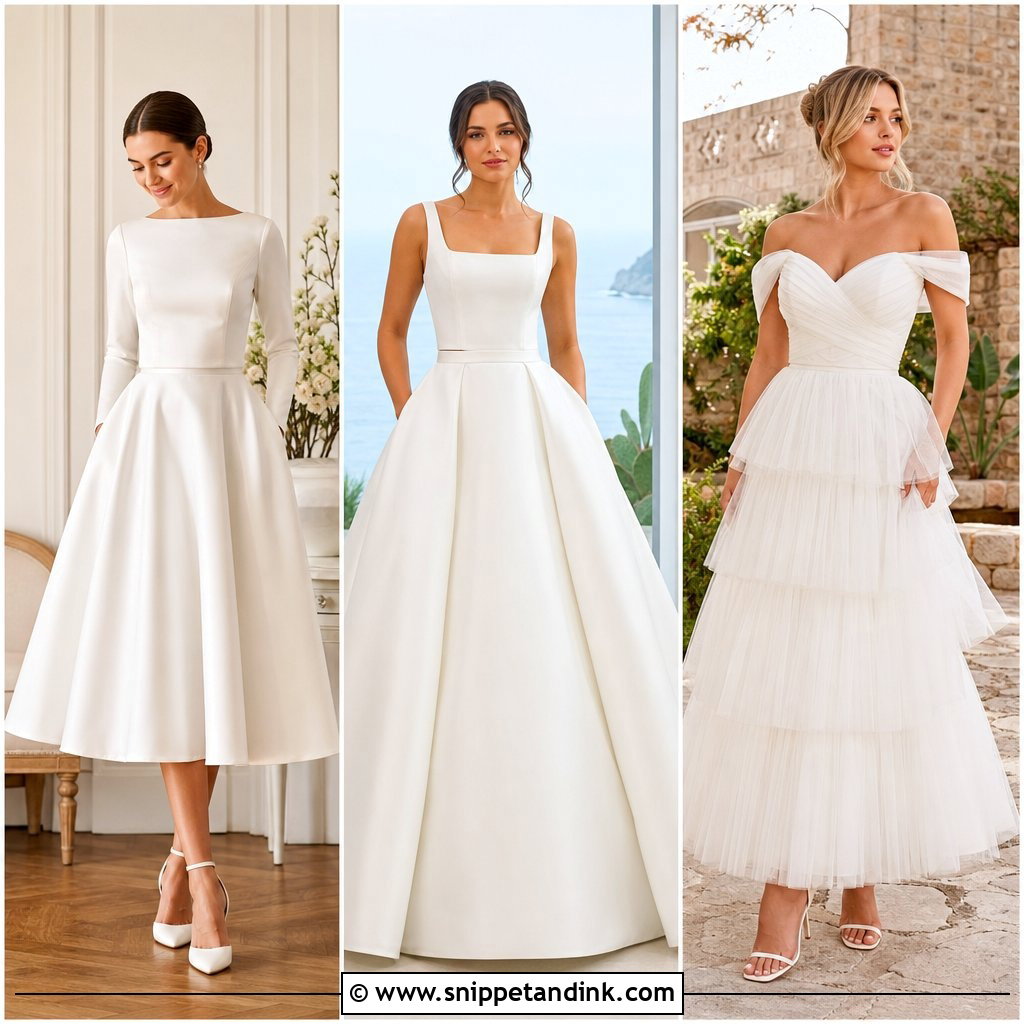
A square-neck top over a pleated skirt is clean and quietly modern, and I like it for courthouse and minimalist daytime weddings. Mikado or crepe on top keeps the neckline crisp, while wide pleats give the skirt fullness without fuss. Pleats do open and shift at the hip when you sit, so have them stitched down a few inches from the waist. A fuller bust needs wider straps and internal support with a square neck, or the corners pull outward. A single strand of pearls and pointed heels are all the styling it wants.
10. One Shoulder Top and Slit Bridal Skirt
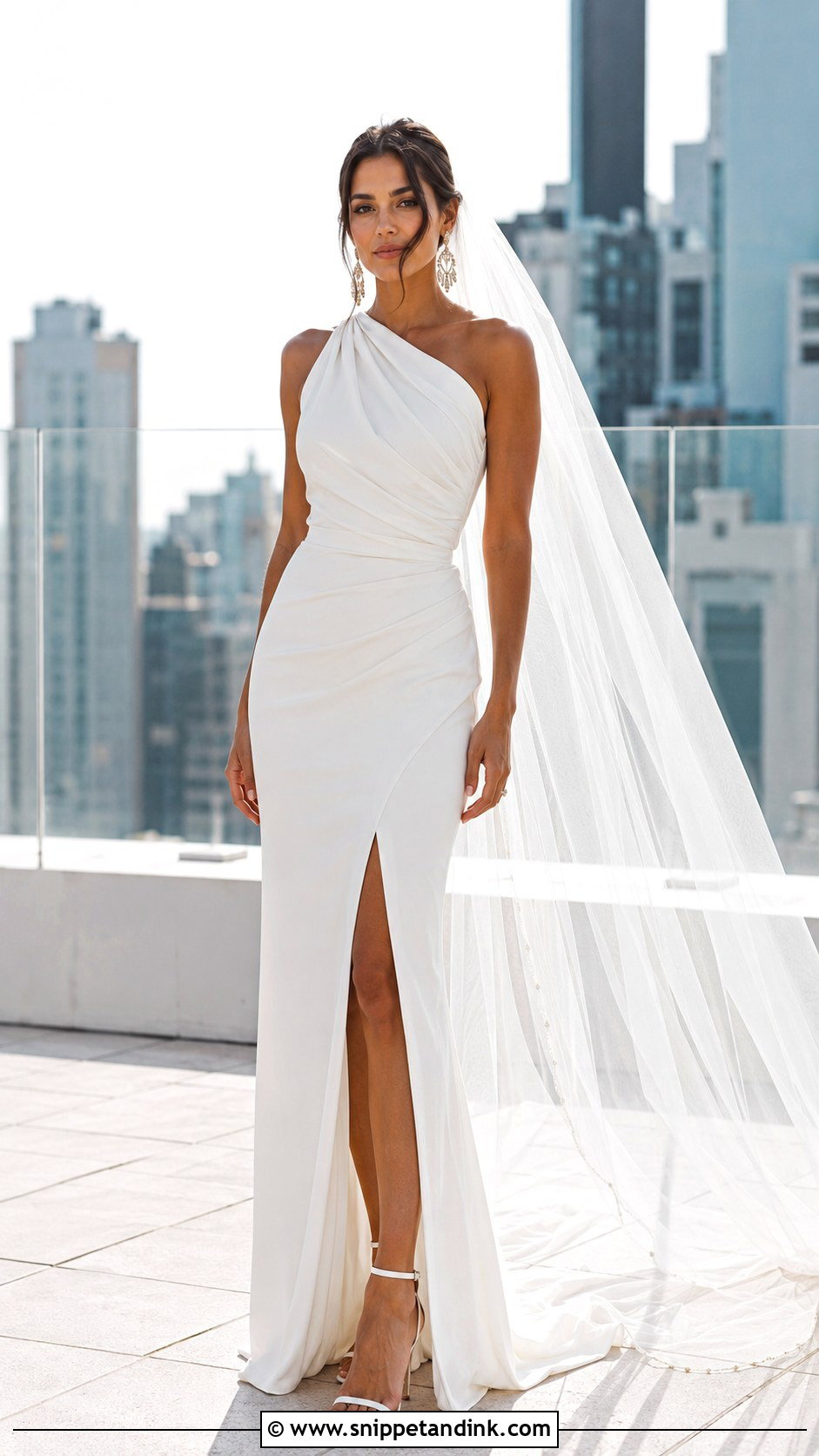
A one-shoulder top and a slit skirt give you asymmetry and plenty of attitude. The top has to support the bare side properly, usually with boning or an internal band, or it slides by the second hour. Keep the slit controlled, and ask your tailor to mark it while you’re sitting, not standing. A slit that looks right in the mirror can open far higher once you sit down. Skip the necklace, wear bold earrings, and choose a long plain veil for the ceremony that comes off for the reception.
11. Bridal Shirt and Full Satin Skirt
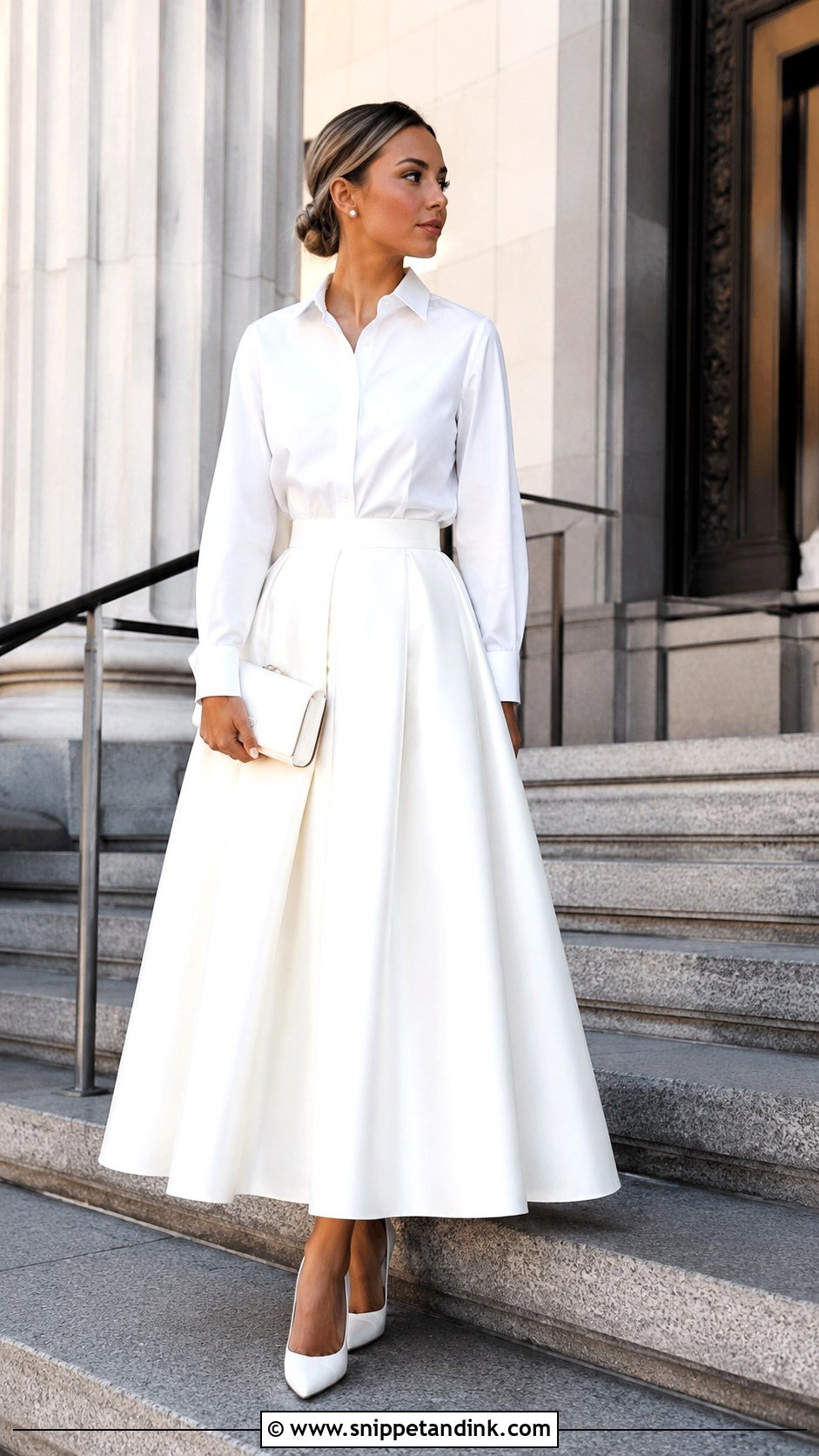
A crisp bridal shirt tucked into a full satin skirt is a confident alternative to a gown, particularly for a courthouse wedding or a bride who wants modest coverage. Silk or satin with covered buttons and a neat collar looks deliberate rather than borrowed. The tuck is what I watch. A shirt that’s too long bunches inside the waistband, so I have it shortened to just below the hip bone. Keep the sleeves buttoned for the ceremony and roll them for the party. If you add a belt, match it to the skirt so it doesn’t cut you in half.
12. Bridal Blazer Top and Satin Skirt
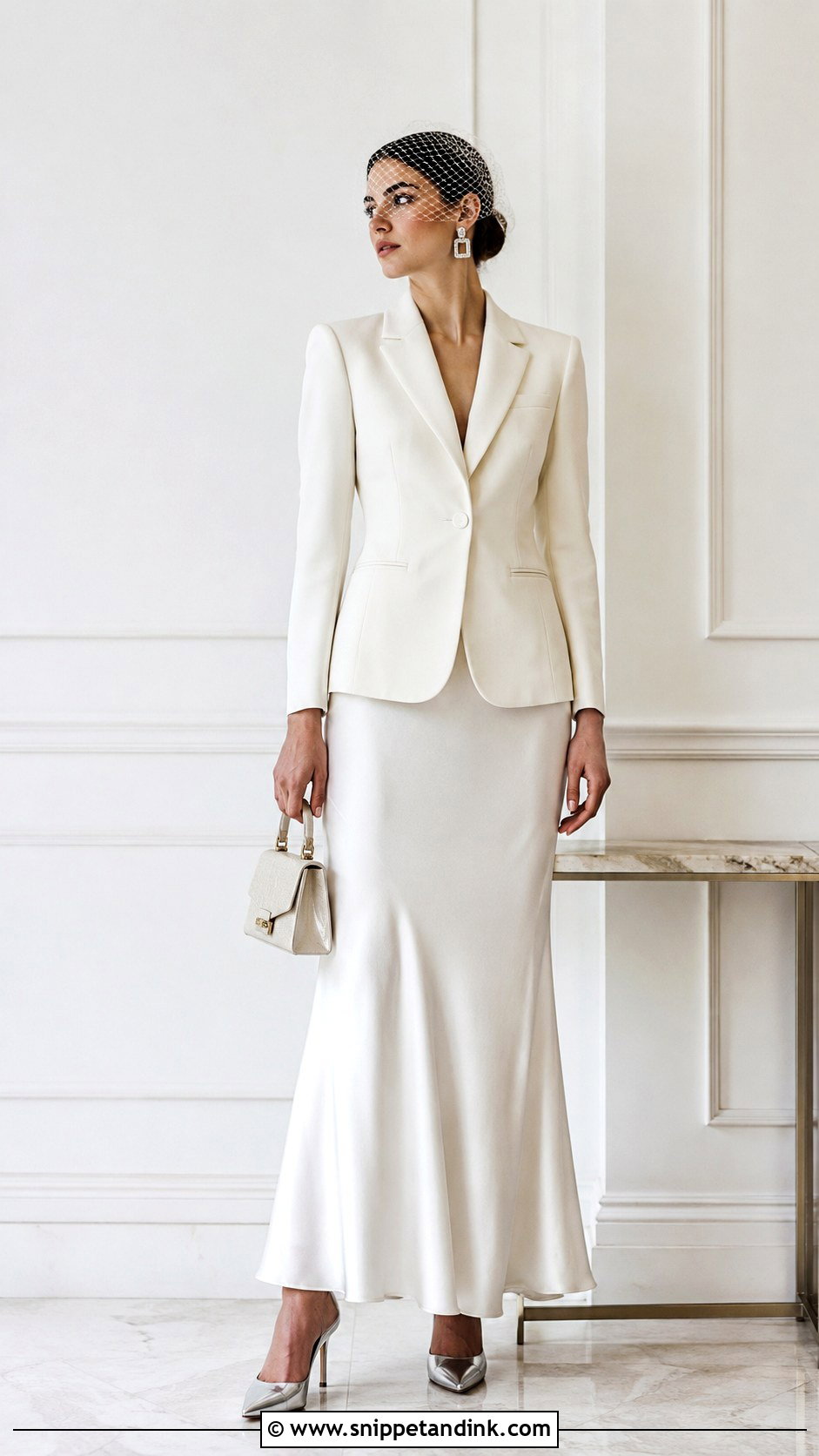
A fitted white blazer worn as a top looks sharp with a fluid satin skirt, and it suits civil ceremonies and cooler weather. Choose one with a secure closure and a shaped waist, and wear a camisole or lace bralette underneath for coverage. Blazers are the piece most likely to clash in shade, because suiting whites are often cooler than bridal ivories, so hold the two together before you buy. Slicked-back hair suits the tailoring, and a birdcage veil adds an unmistakably bridal note.
13. Cape Top and Bridal Lehenga Skirt
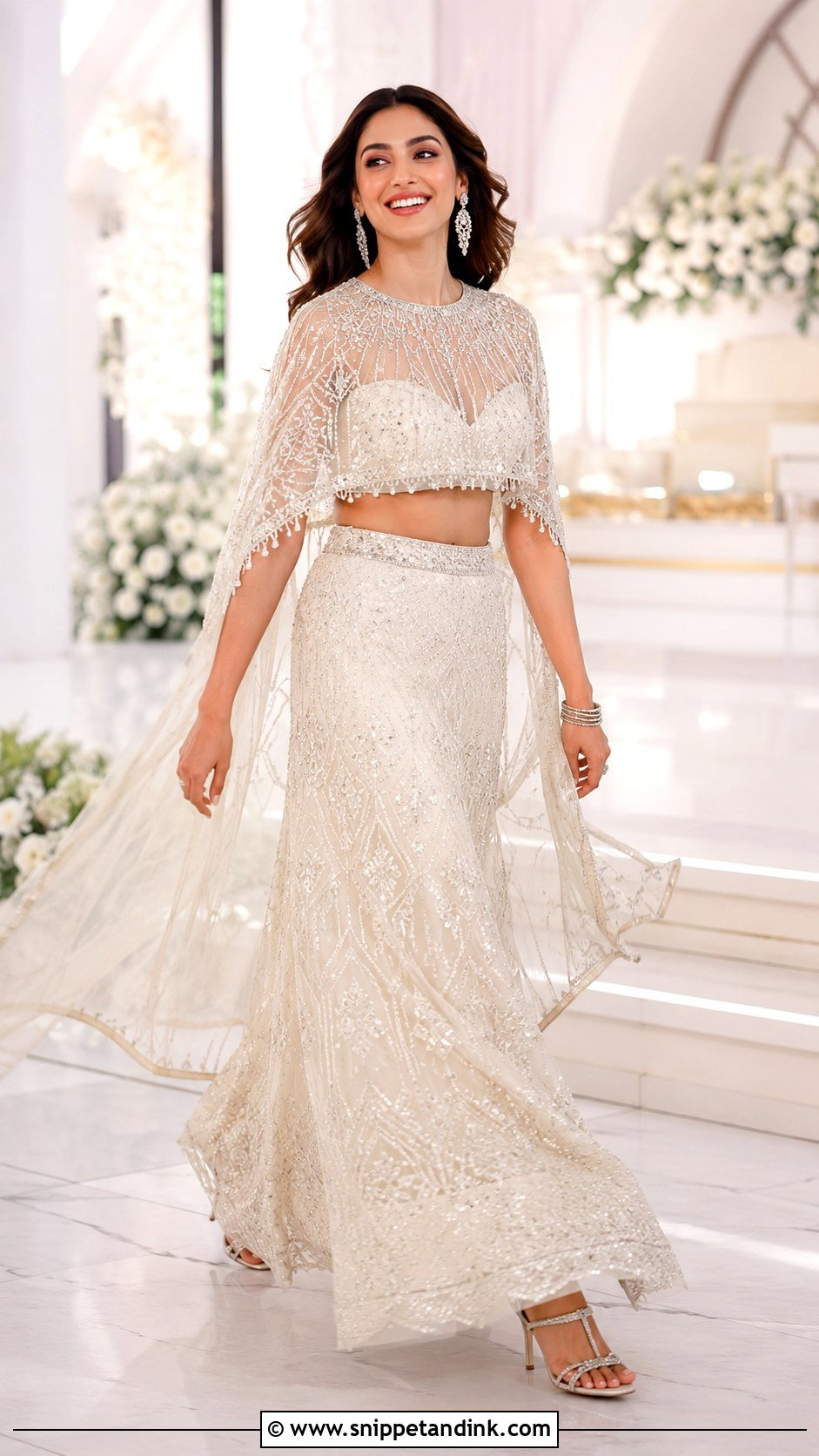
A cape top over a lehenga skirt gives you movement and coverage, and the cape can stand in for a dupatta so your hands stay free. A fitted blouse with a sheer or lightly worked cape falling from the shoulders sits well over a silk, net or organza skirt embroidered at the hem. I’d keep this for receptions, sangeet celebrations and modern ceremonies, since some traditional rites still call for a dupatta over the head. If both pieces carry embroidery, repeat one motif or thread colour so they look made together. Capes lift with every arm movement, so make sure the skirt waistband sits securely under the blouse.
14. Embroidered Blouse and Silk Bridal Lehenga
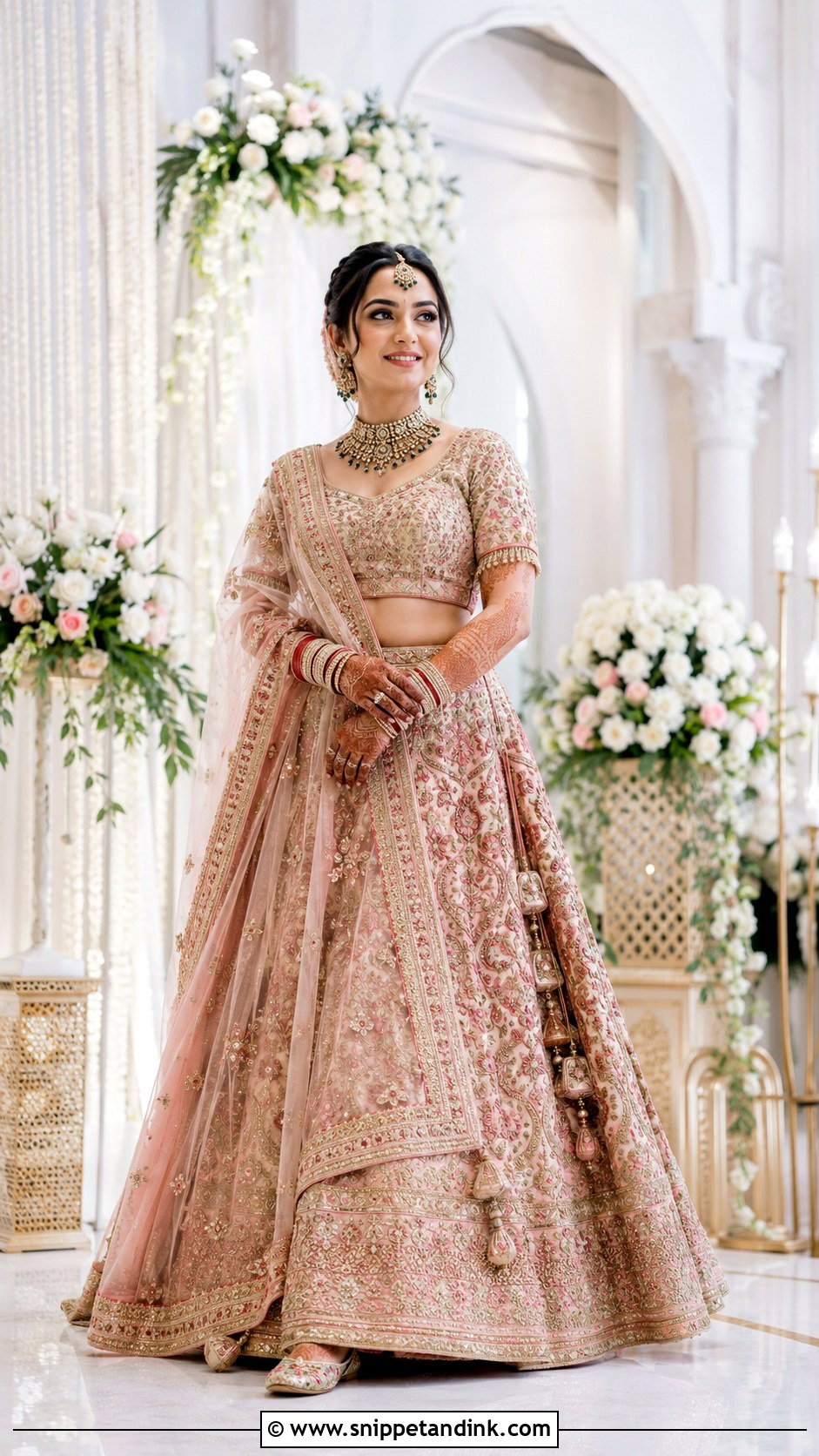
An embroidered blouse with a silk lehenga is the most traditional pairing here. Detailed threadwork or metallic accents on the blouse balance a skirt with a wide border, and the dupatta goes over one shoulder or over the head for the ceremony. Weight is my main concern. A heavily worked silk lehenga hangs from your waist all day, so ask for a soft can-can or interlining that spreads the load and a waistband with a wide, firm facing. Repeat one embroidery colour in the jewelry or dupatta to pull the outfit together.
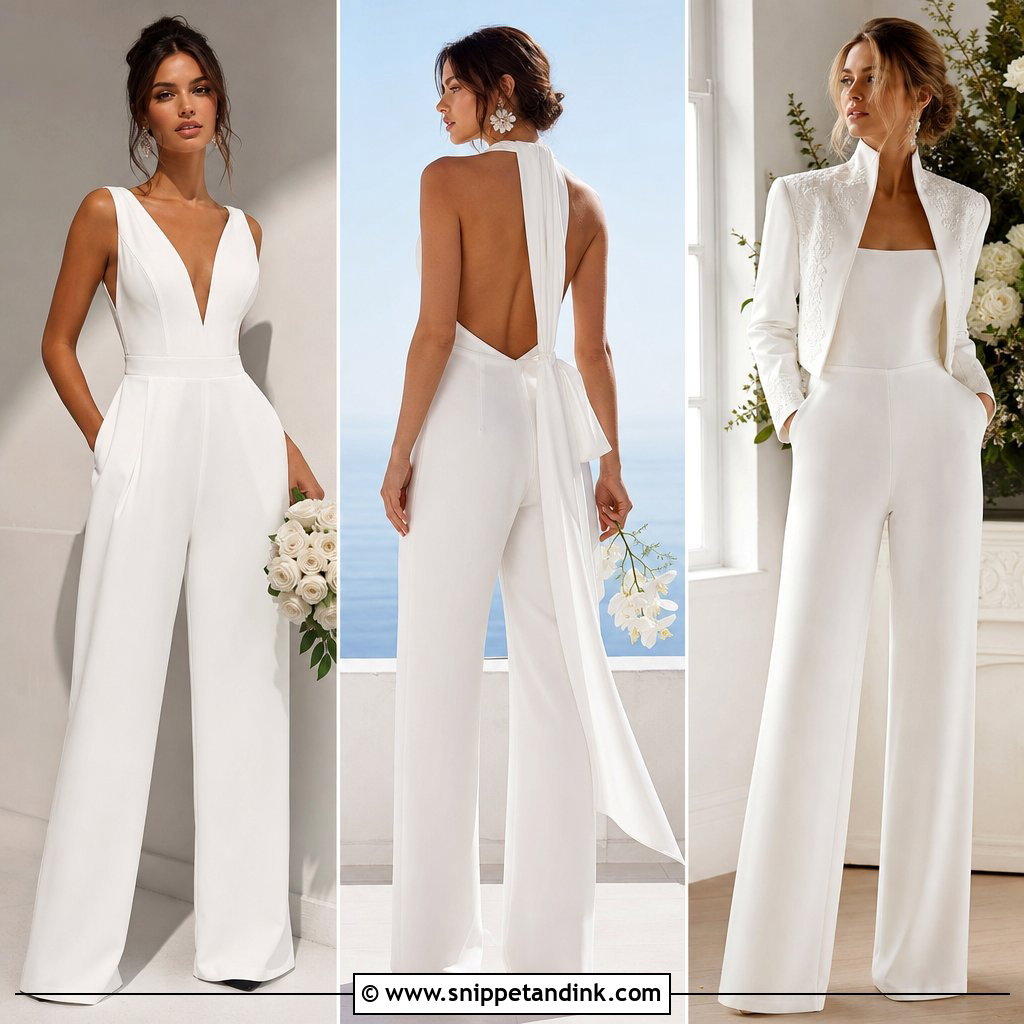
15. Sequin Top and Georgette Bridal Skirt
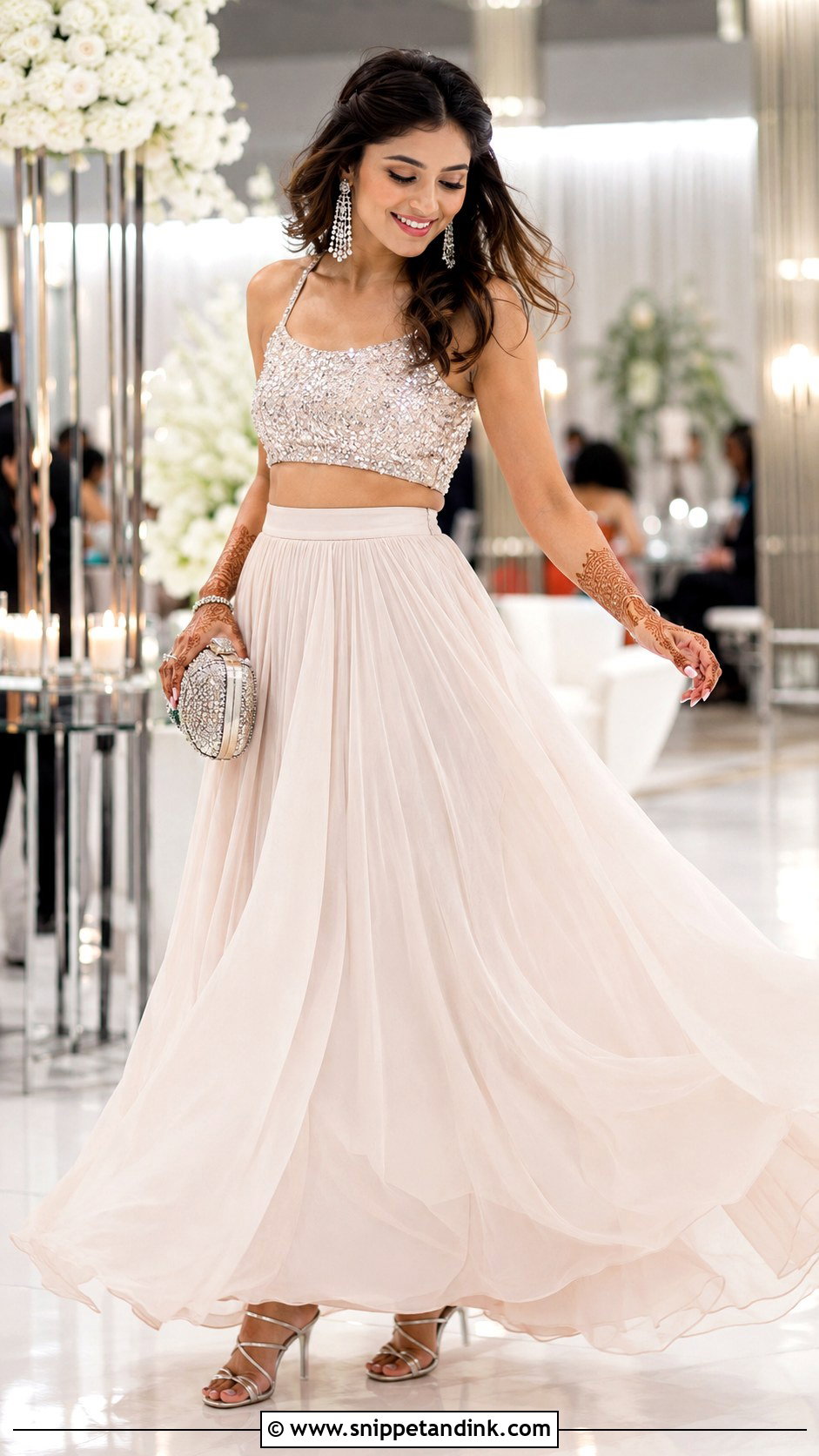
When the dance floor matters most, a sequin top with a georgette skirt gives you sparkle without weight. Georgette sways and shakes out creases well. Line the top properly so sequins don’t scratch, and keep the skirt mostly plain or add a narrow sequin border to tie the two together. The lower edge of the top is where trouble starts, because exposed sequin threads catch georgette when you sit and pull it into snags. A bound hem on the top avoids that. A secure ponytail survives a sangeet; loose curls rarely do.
16. Velvet Top and Brocade Bridal Skirt
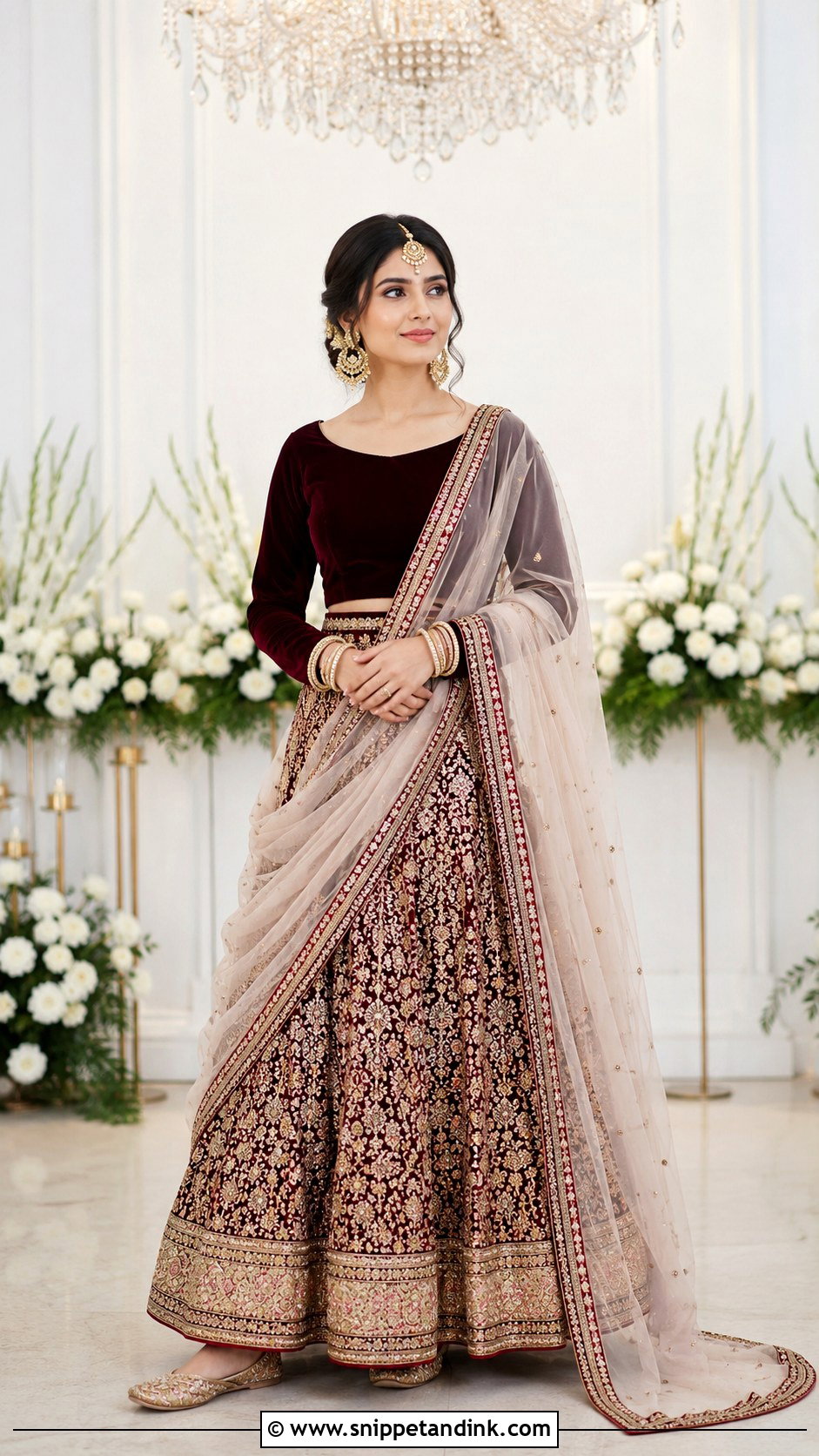
For winter, velvet over brocade gives warmth and real depth. A fitted velvet blouse with long or elbow sleeves pairs with a coordinated brocade lehenga skirt that picks up one shade from the top. Both fabrics carry visual and actual weight, so I keep neckline embellishment light and choose a sheer dupatta. Velvet warms up fast indoors, which is why I insist on a breathable cotton lining in the blouse. Brocade has no give at all, and an evening of sitting will tell you if the waistband is even slightly tight, so fit it carefully.
17. Floral Applique Top and Layered Bridal Skirt
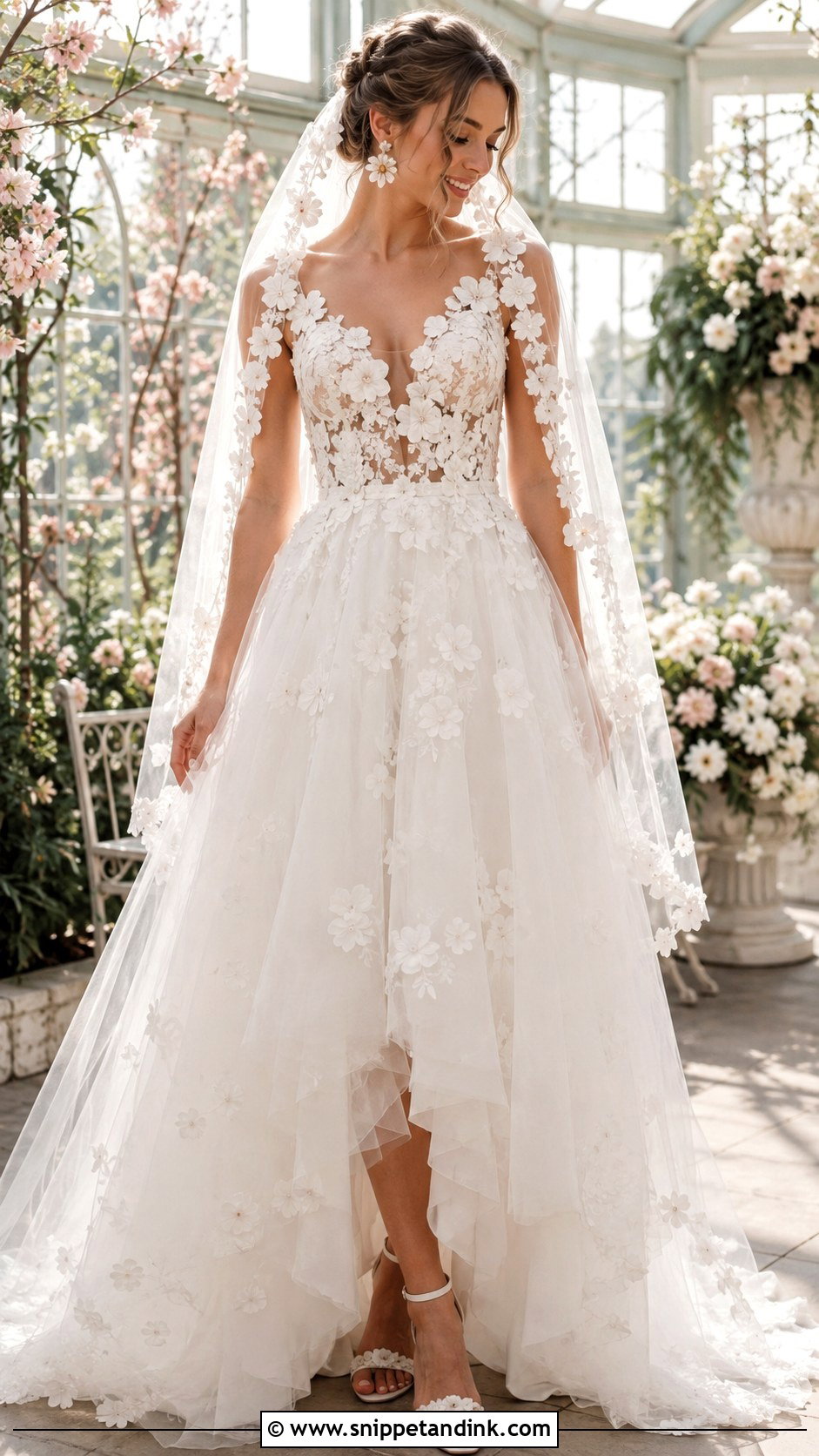
Three-dimensional appliqués look like a garden pinned to the dress, and the trick is placement. Concentrate them on the top around the neckline or sleeves, then let a few scatter onto the tulle or organza skirt, thinning out toward the hem. Raised flowers at the inner arm or waist get crushed when you sit or hug, and some scratch, so keep those areas flat or use soft, flexible appliqués there. Loose waves and a veil edged with tiny blossoms carry the theme into spring and conservatory weddings.
18. Bandeau Top and Detachable Overskirt
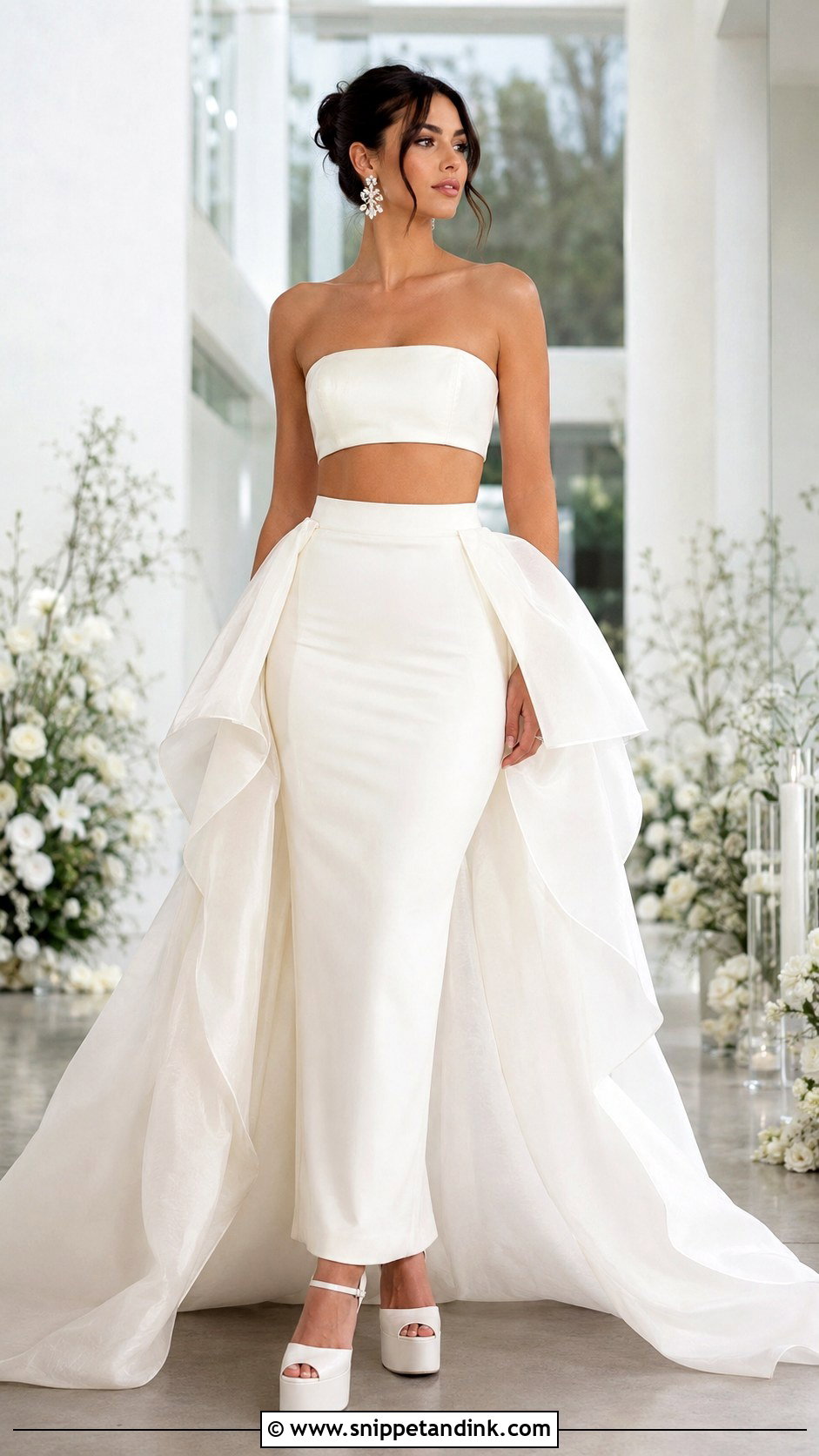
A bandeau top over a fitted skirt, plus a detachable overskirt, gives you two looks from one outfit: full and formal for the aisle, streamlined for the party. Start with a structured strapless top and a matching column or mini. Strapless bandeaus depend on internal boning and a grip band, so add detachable straps for dancing if you have any doubt. Test the overskirt closure at alterations. It should lie flat, release in seconds and leave no ridge at the waist under the bandeau.
19. Boat Neck Top and Maxi Bridal Skirt
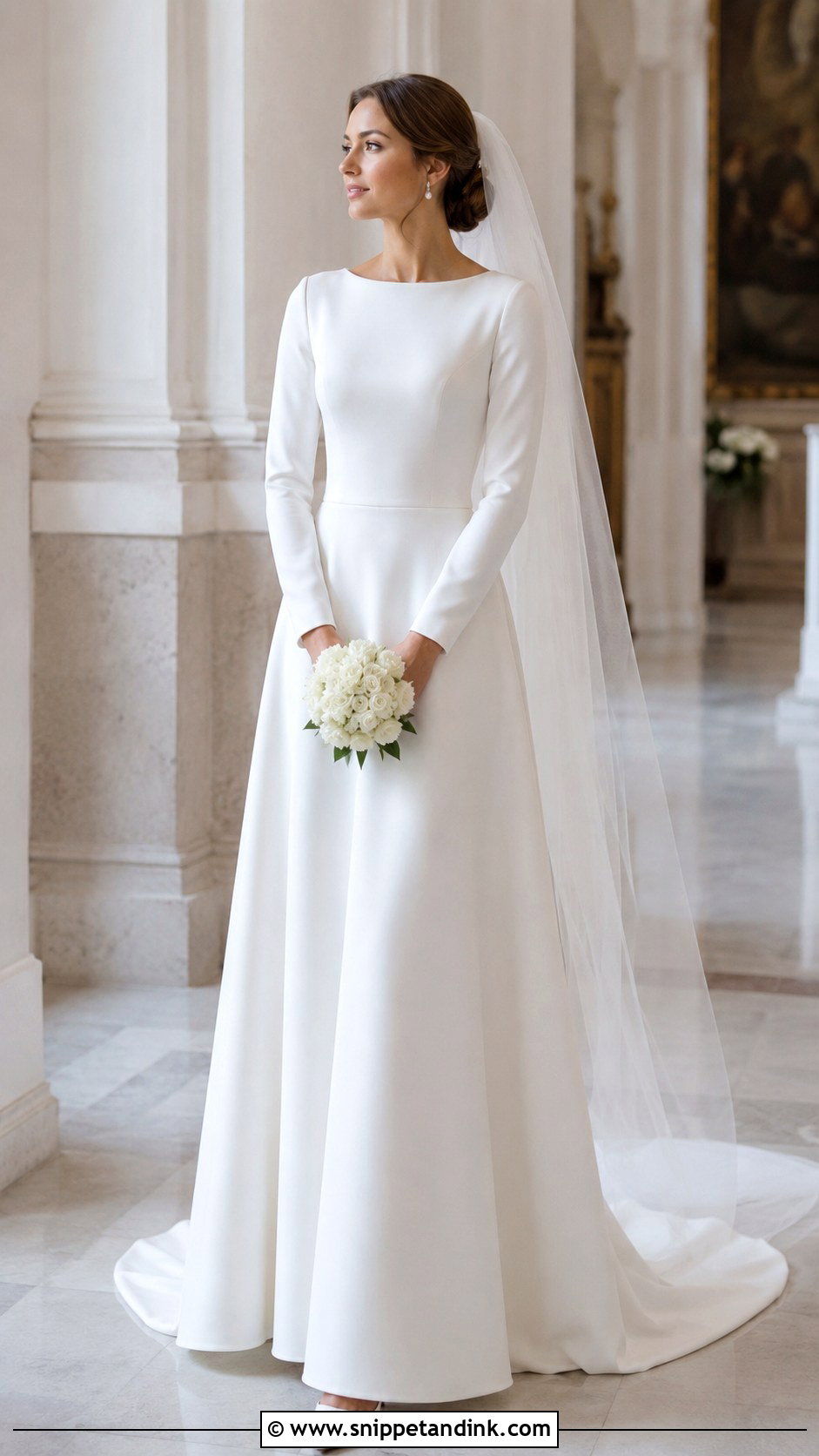
A boat-neck top with a flowing maxi skirt is the modest, understated option. Three-quarter or full sleeves in crepe or fine lace, a high-waisted A-line skirt and a small train look classic with pearls and a low chignon. The wide neckline shows the collarbone while covering far more than a strapless cut. Boat necks slip off the shoulder easily, so a lingerie strap keeper is worth asking for. At the waist, avoid thick seams: let the top overlap the skirt slightly, or finish both edges flat so nothing ridges through.
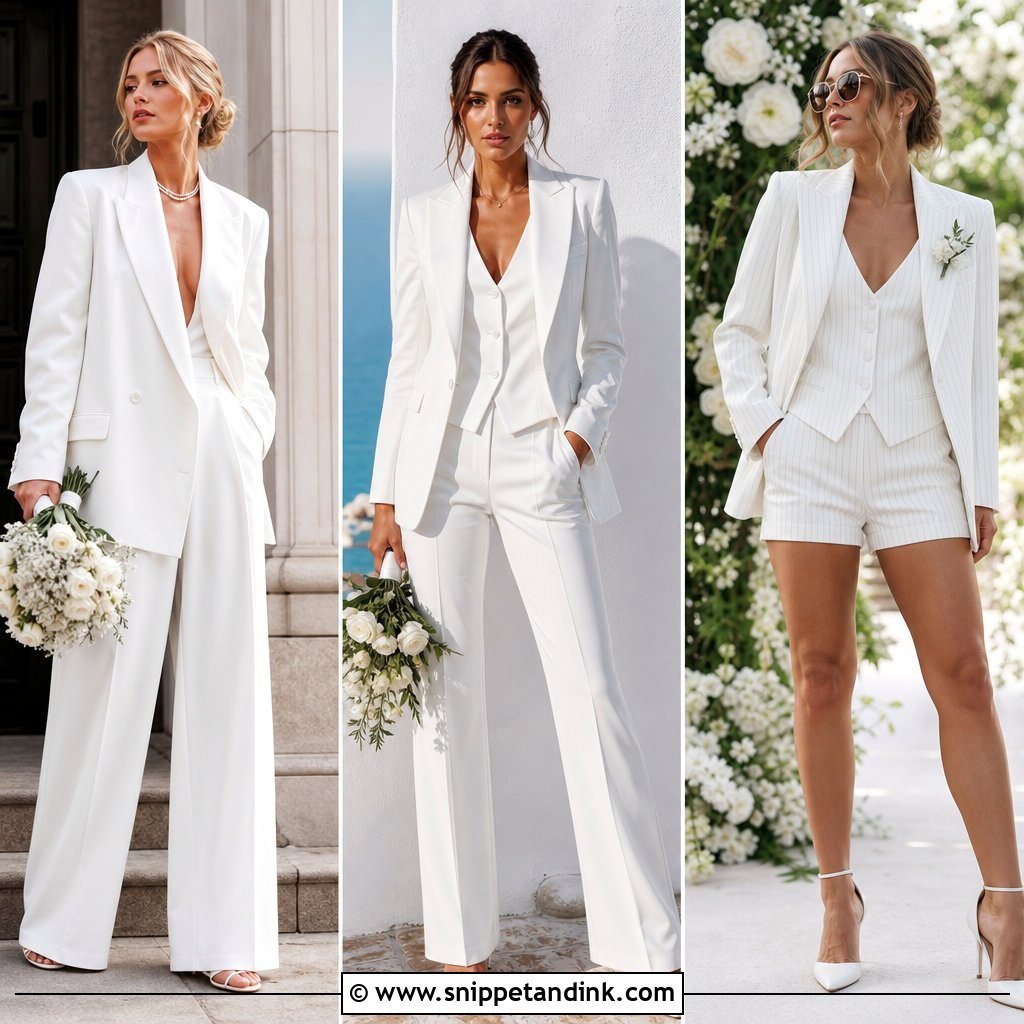

20. Mini Bridal Skirt and Tulle Overskirt
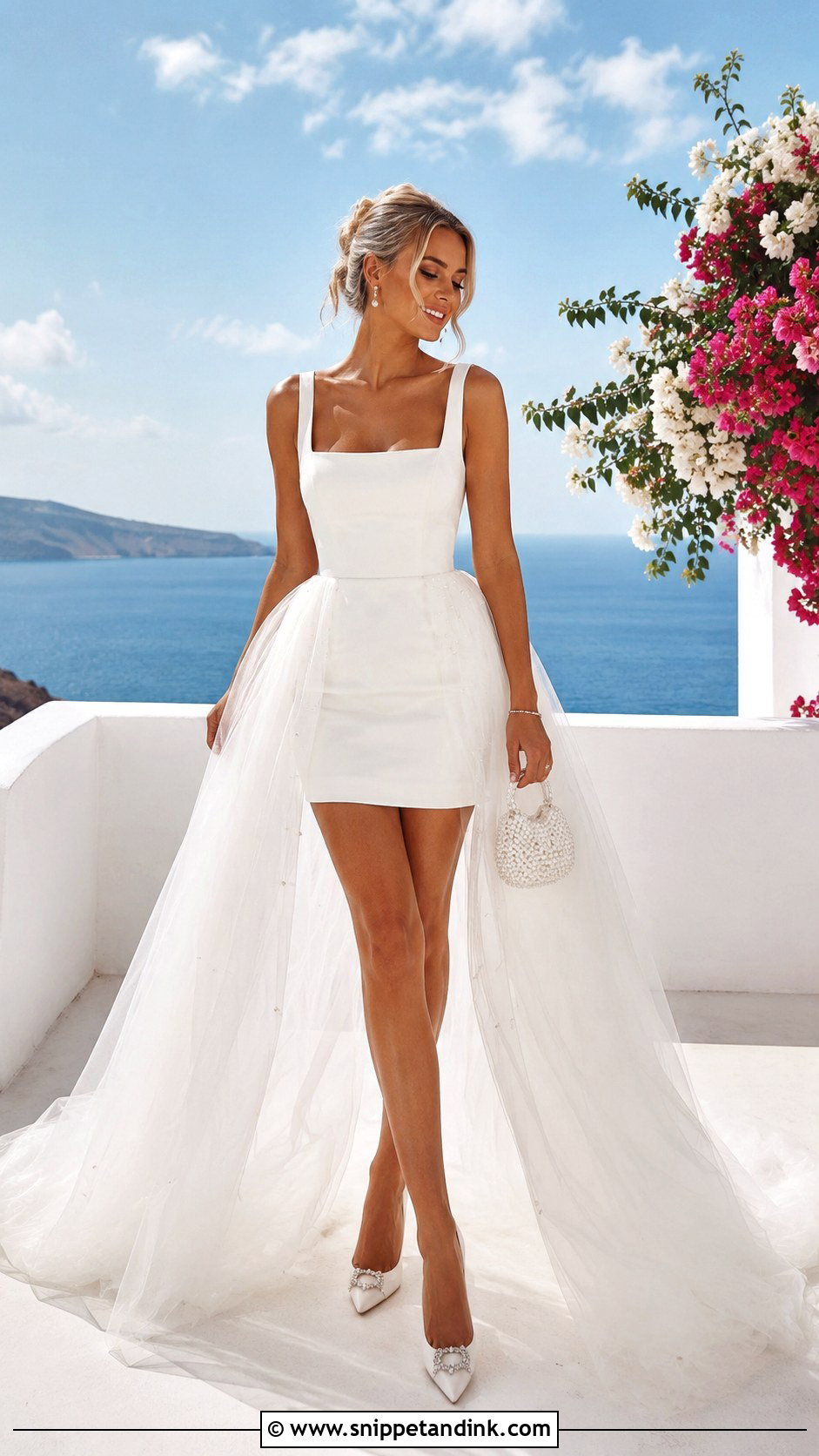
A mini under a removable tulle overskirt is the playful take on the convertible idea. Pair the mini with a structured corset or lace bodice in the same shade, add a sheer floor-length overskirt for the ceremony, then take it off for the reception. Sit down in the mini during fittings. Lengths that look fine standing ride up a long way when seated, especially in photos shot from a low angle. Built-in shorts solve most of that, and a high ponytail suits the shorter shape.
Taking Off the Overskirt Between Ceremony and Reception
Convertible separates sound simple until you’re trying to undo hidden hooks in a corridor while the room waits. A little planning makes the switch quick:
- Practise the removal at your final fitting with whoever will help you on the day. Small hooks and snaps are fiddly with fresh nails.
- Decide where the overskirt goes afterwards. A large garment bag and one named person to carry it stop it ending up crushed on a chair.
- Allow ten to fifteen minutes, more if you’re also changing shoes or letting your hair down.
- Look at the base skirt on its own. Once the overskirt is gone, it’s what everyone sees, so it needs its own neat hem and a press.
Which Pieces Get a Second Life?
A quiet benefit of separates is that some pieces really do get worn again. A silk shirt, a white blazer or a lace top goes straight back into your wardrobe with trousers or jeans. Full skirts are harder, since floor-length satin and tulle don’t suit many later occasions, although a satin skirt can often be shortened into a midi.
Dyeing works on natural fibres like silk far better than on polyester satin, which resists most household and professional dyes. Ask a specialist cleaner before trying it, and store anything you keep in a breathable cotton bag rather than plastic.
Two Pieces That Read as One Outfit
Every one of these combinations works once the fit is right and the two whites match. Think about the venue and how much moving around your day involves, then let alterations handle support and a smooth waist. Keep shoes practical and jewelry in proportion to the neckline. Separates are at their best when they look as if they were always one outfit and still let you feel like yourself.
You'll Like These Ideas:



Leave a Reply