
A suit can carry a wedding just as well as a gown, and it asks something different of you: precision. With a skirt you can hide a loose seam in the folds. With trousers and a blazer, every centimetre at the shoulder, waist and hem shows. The ideas below run from classic ivory pantsuits and skirt suits to relaxed linen for a beach, plus a few with trains, tulle or beading for brides who still want ceremony drama. Suits now turn up at courthouse weddings, black-tie receptions and as second looks, so start with your venue, season, shoes and how much coverage you want, then compare.
Bridal Label, Made to Measure or a Menswear Tailor?
Where you buy a wedding suit changes how much tailoring it needs. Bridal labels cut suits for a bust and waist and usually offer ivory in a shade that matches their veils. Made-to-measure takes longer, often several weeks to a few months, but you choose the fabric and lapel. A menswear tailor can cut beautifully for a woman, though I’d make sure they’re used to adding bust darts and shaping the waist, or the jacket will hang straight like a borrowed one.
Whichever route you take, these are the fit points I check first:
- The shoulder seam ends at your shoulder bone, with no dent below it.
- The sleeve reaches the wrist bone with arms relaxed.
- The buttoned jacket lies flat with no pulling across the bust.
- The trouser hem touches the top of your wedding shoe in front and falls a little longer at the back.
Shoulders are the hardest thing to alter, so buy for the shoulder and tailor everything else.
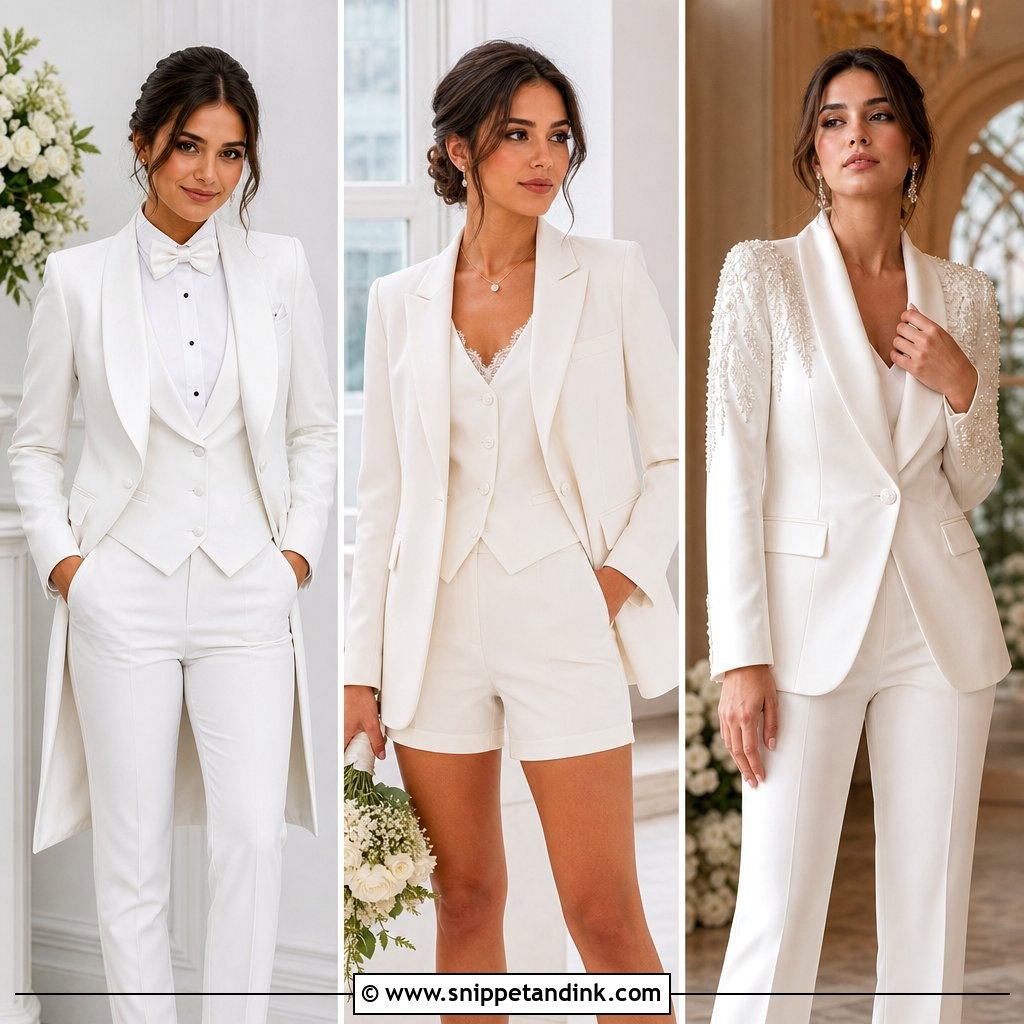
1. Classic Ivory Wedding Suit
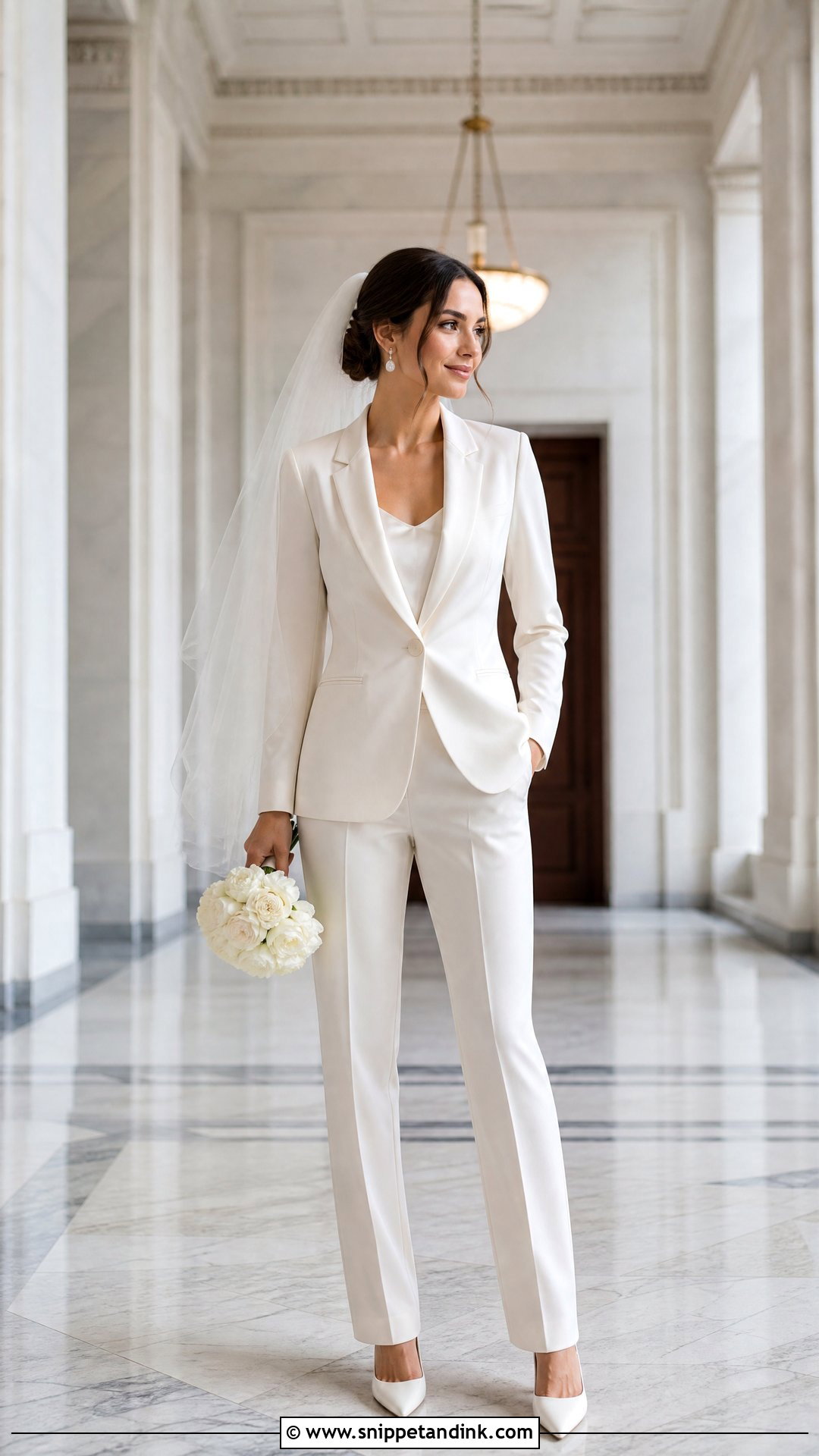
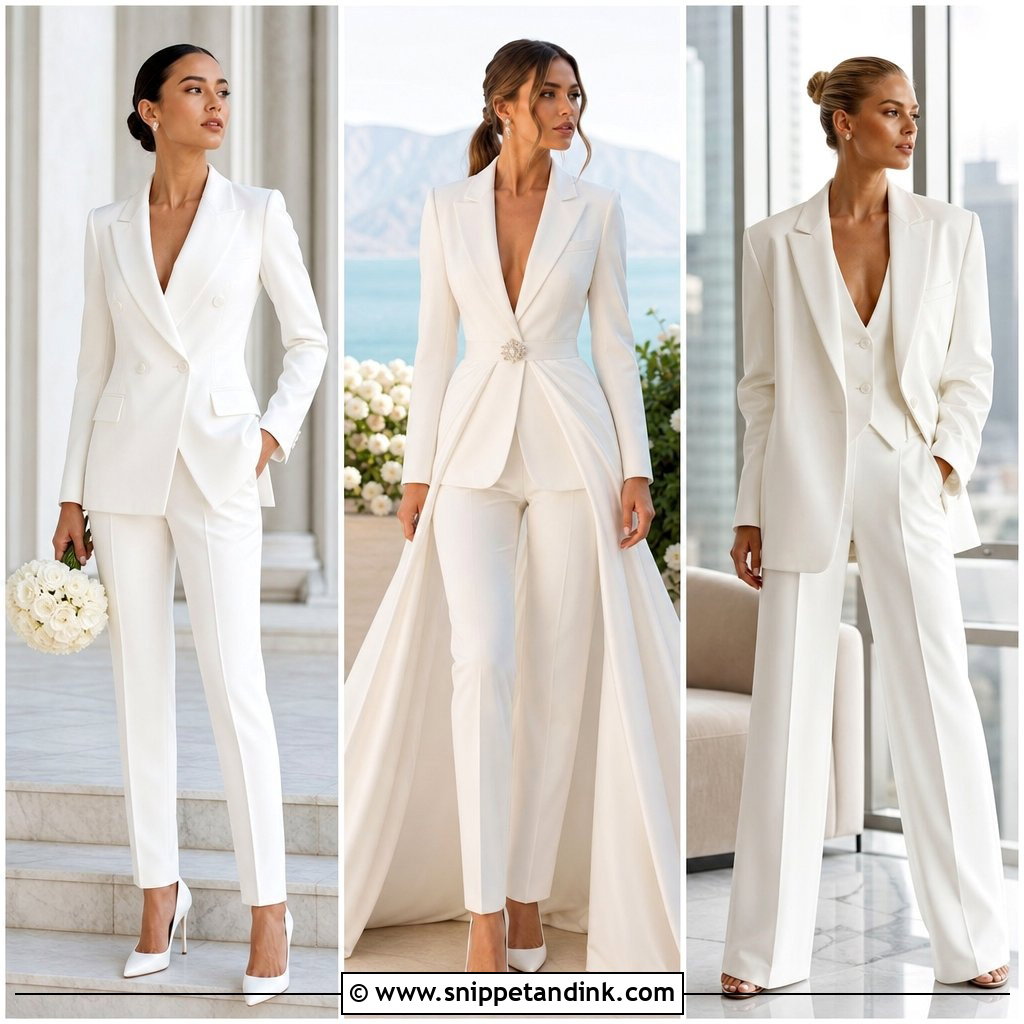
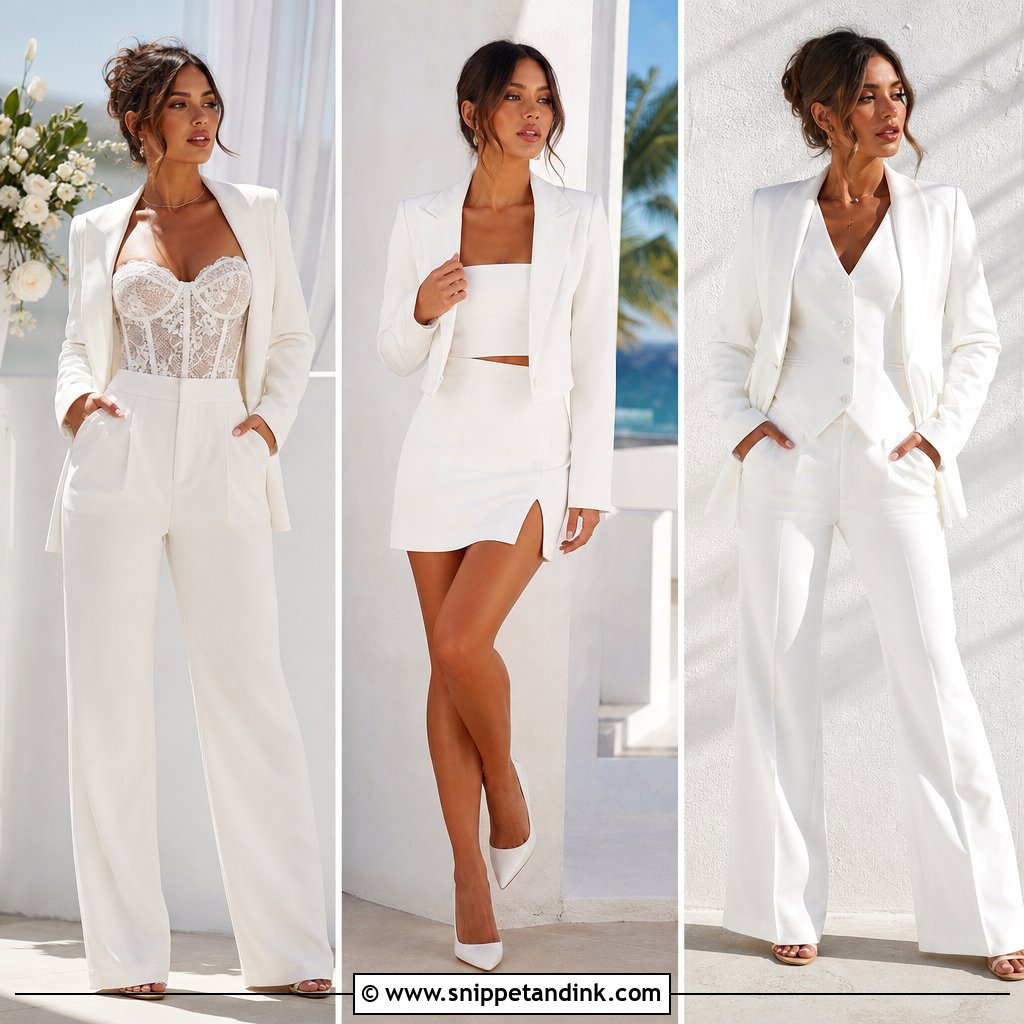
Ivory is the safest place to start, because it forgives skin tones that bright white can wash out. I go for a single-button blazer with softly defined shoulders and straight or gently tapered trousers, then a silk camisole or satin shell in the same ivory underneath. Match the shades in daylight; two ivories from different makers rarely agree. Pointed pumps, pearl earrings and a fingertip veil keep it bridal. Spend the money on sleeve and hem alterations. On a plain suit, that’s the difference between bought and made for you.
2. White Double-Breasted Wedding Suit
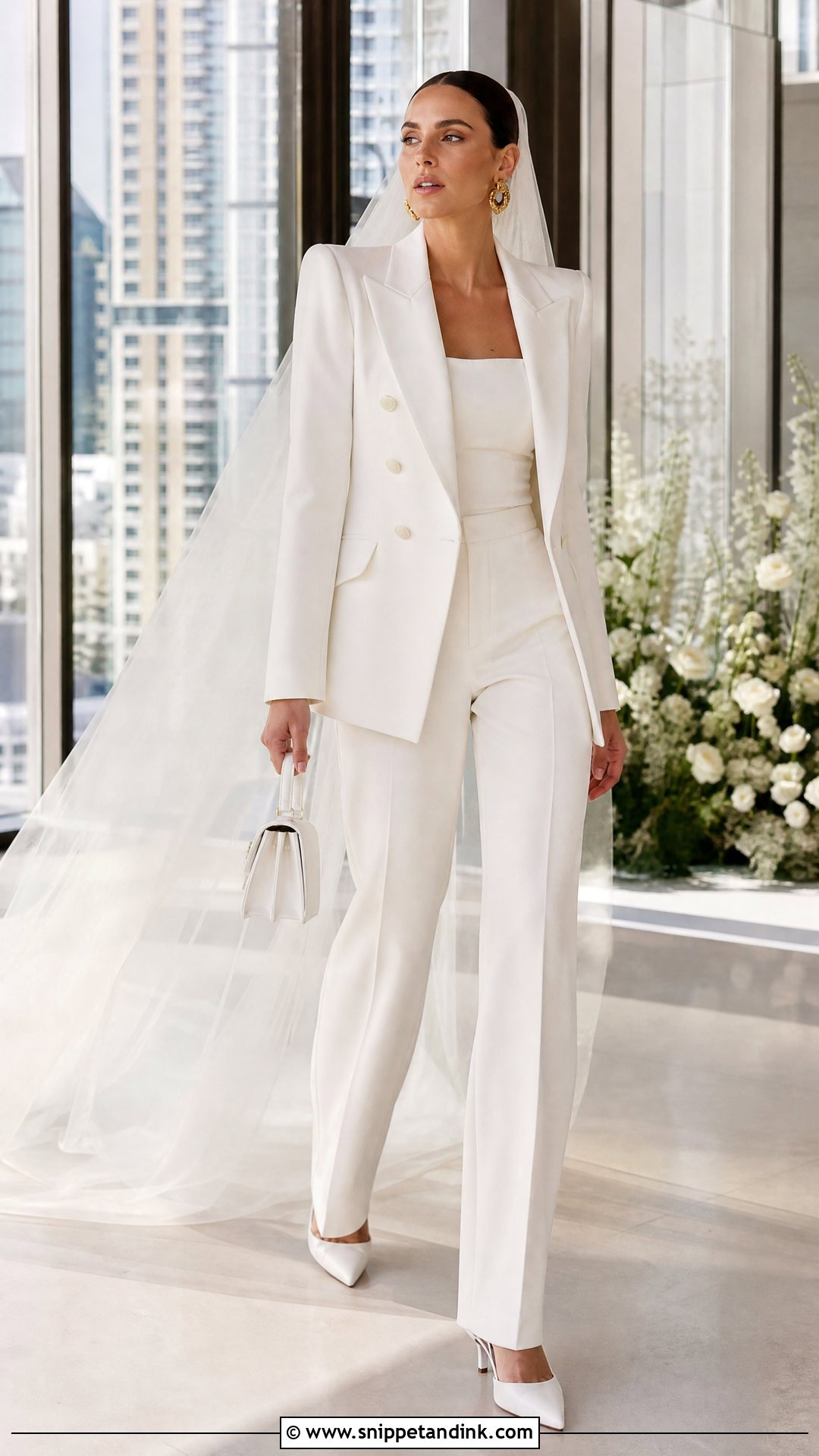
Double-breasted jackets look formal because of the overlap, and that overlap is also what makes them unforgiving at the bust. Button it in the fitting room and look sideways: if the front pulls into an X shape, size up and take in the waist. A white double-breasted wedding suit with covered buttons looks softer than one with gold hardware. A smooth bodysuit keeps the line clean underneath. Choose a fabric with some weight, since thin white suiting shows every undergarment. A narrow cathedral veil under a low bun adds the traditional note for city hotels and civil ceremonies.
3. Satin Lapel Wedding Tuxedo
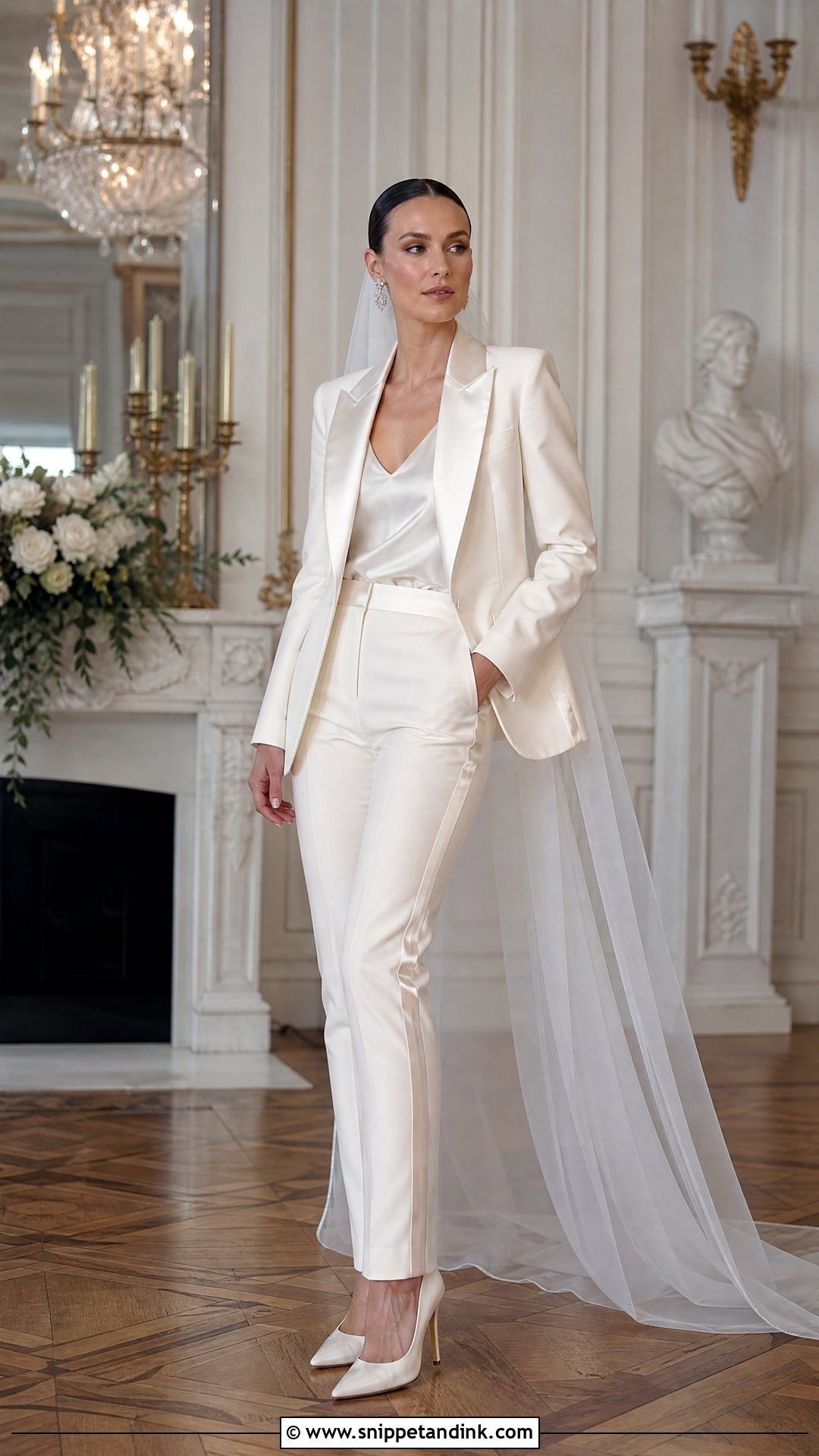
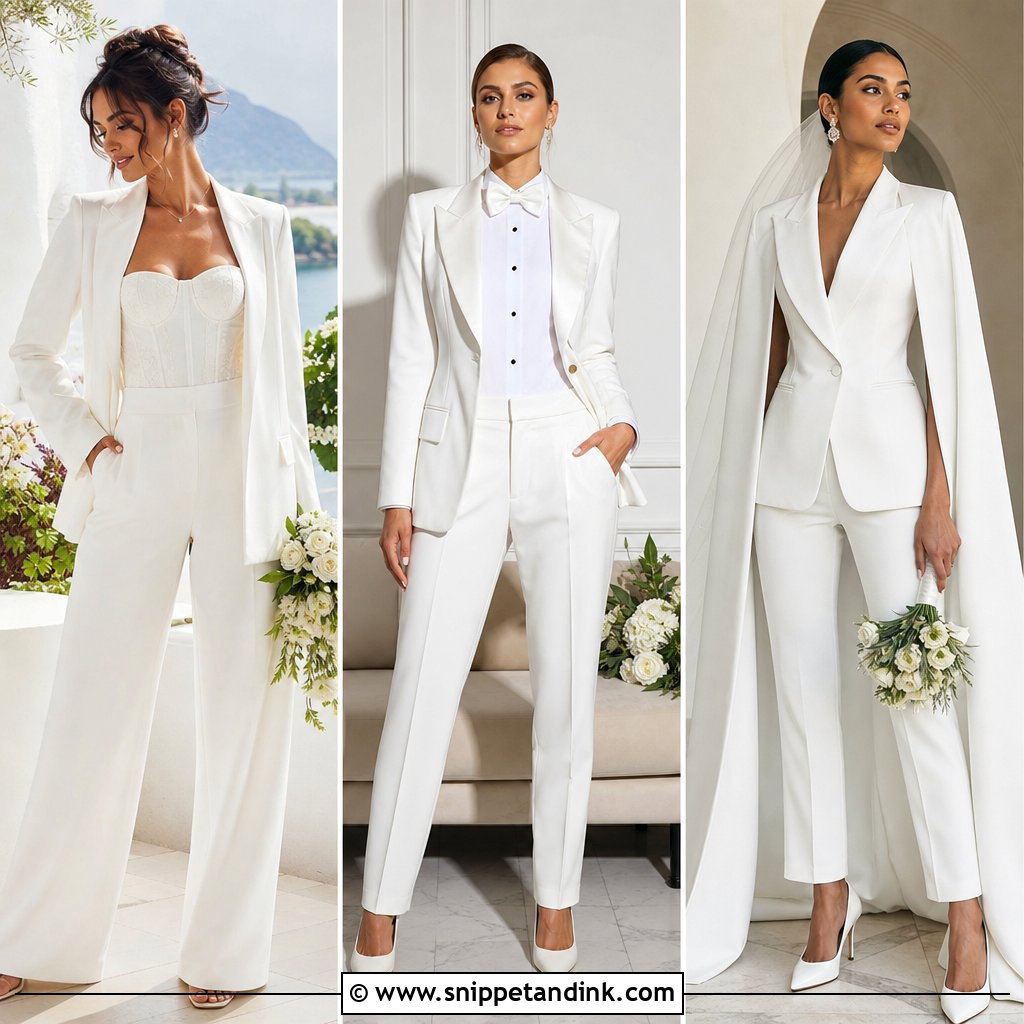
Satin lapels are the tuxedo’s signature, and in an evening room they catch candlelight against the matte jacket. I pair an ivory or bright white jacket with matching trousers and a draped silk camisole. Black pumps give contrast; ivory ones keep it monochrome. A satin side stripe on the trouser is the traditional formalwear detail worth asking for. Add crystal drops, a low sleek ponytail and a raw-edge veil. Ballrooms, galleries and black-tie receptions are where this one belongs.
4. Lace Wedding Suit
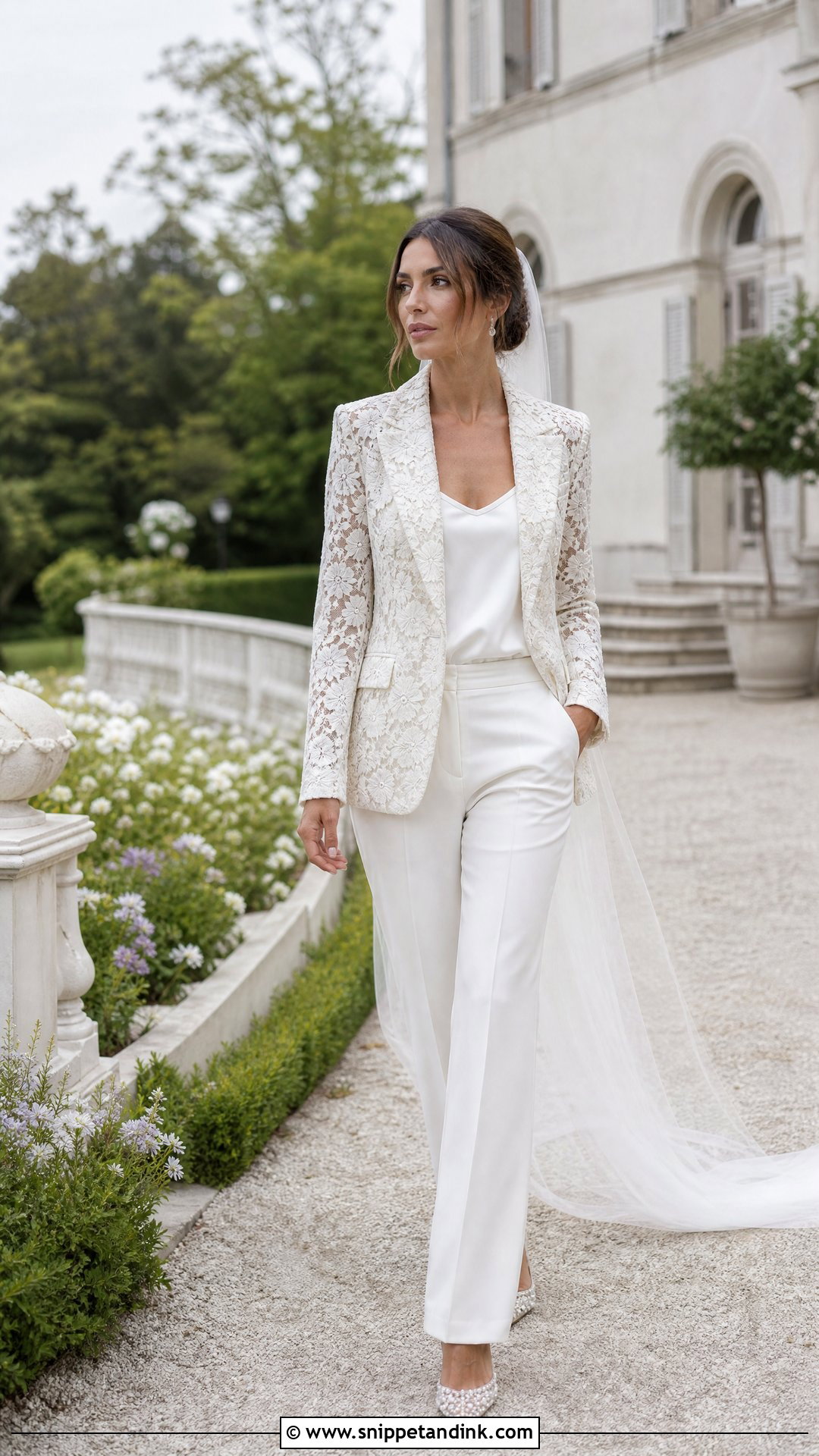
Lace softens tailoring, but it has to be handled with restraint. One way is a fitted lace blazer, lined, over smooth crepe trousers. The other is a plain ivory jacket with a lace top and lace-trimmed trousers. Never mix two lace patterns; in photographs they read as a clash rather than texture. Lace is also stiffer than it looks, so check that the jacket sleeves bend at the elbow without pulling. Long lace sleeves and a high neck give coverage for churches and historic estates.
5. Wide Leg Wedding Suit
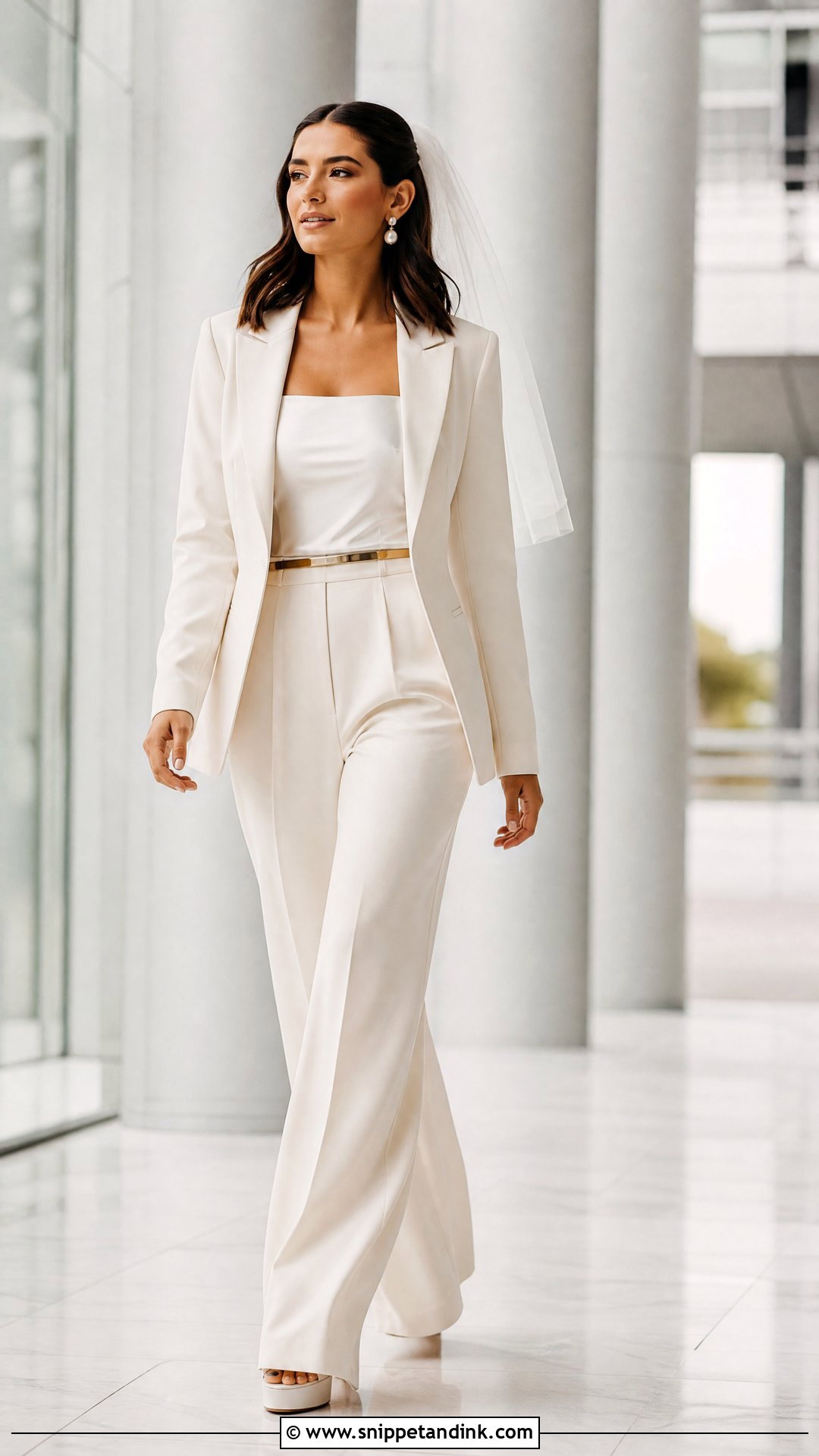
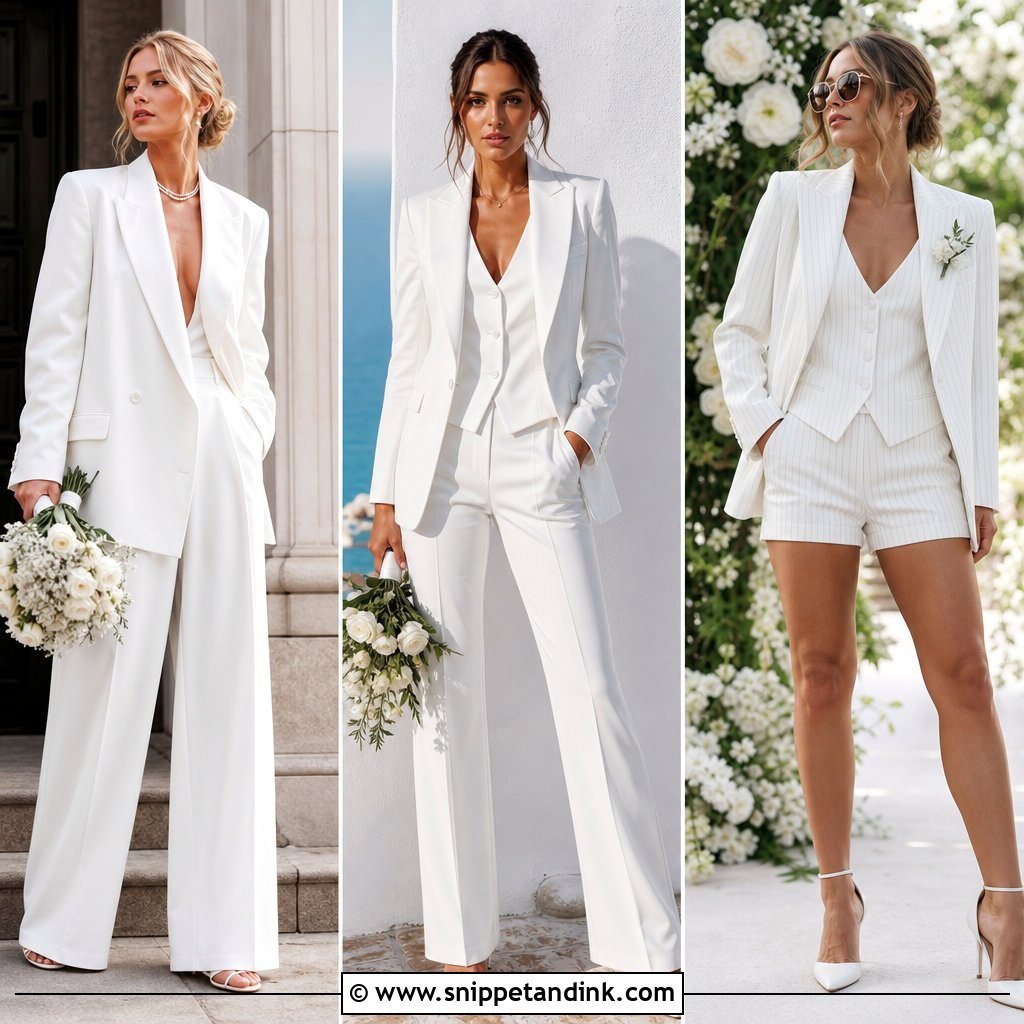
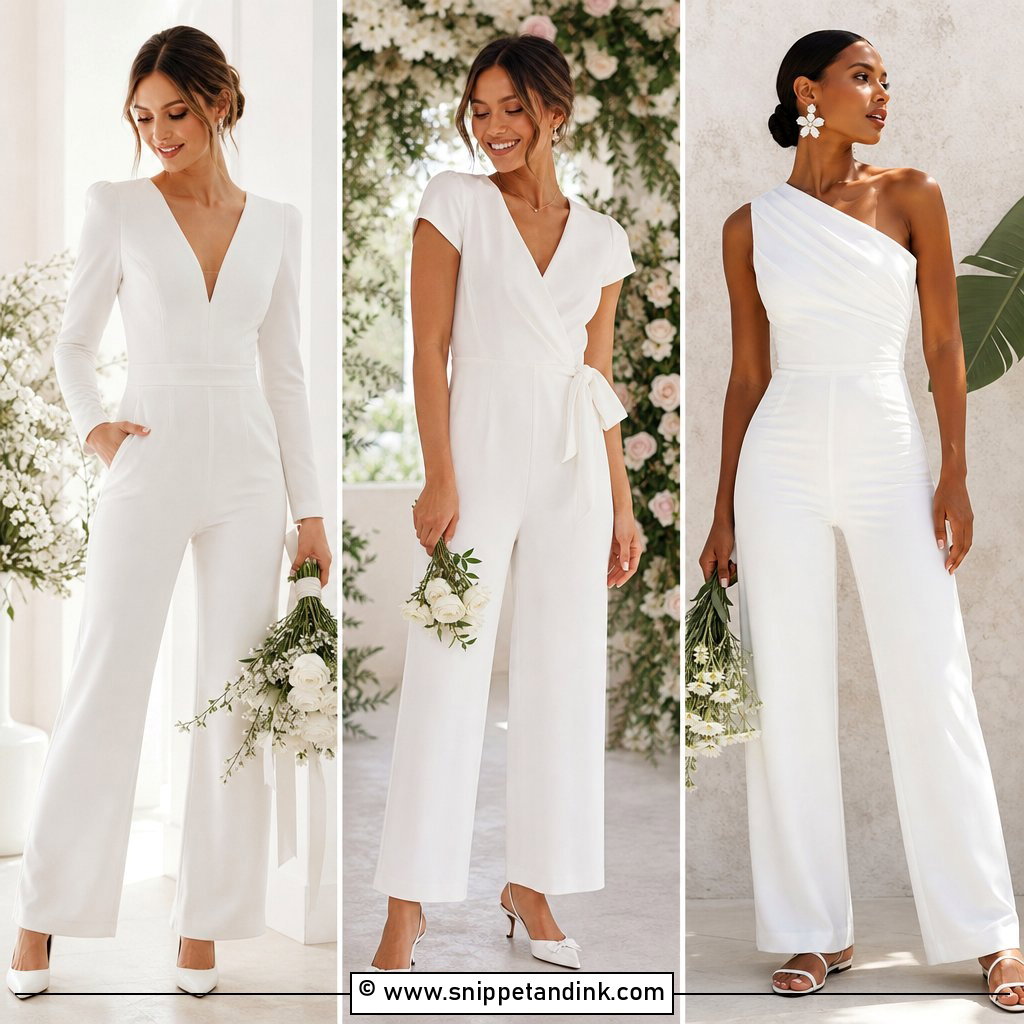
Wide-leg trousers move when you walk, which gives a suit some of the sway of a skirt. High-waisted ivory pants with a blazer that ends at the hip balance the fuller leg. Platform heels give height without the shoes showing much. Here’s the part I’m strict about: the hem should almost touch the floor in your actual wedding shoes, so those shoes come to every fitting. A slim metallic belt and a shoulder-length veil finish it. The defined waist suits most body shapes.
6. Corset Wedding Suit
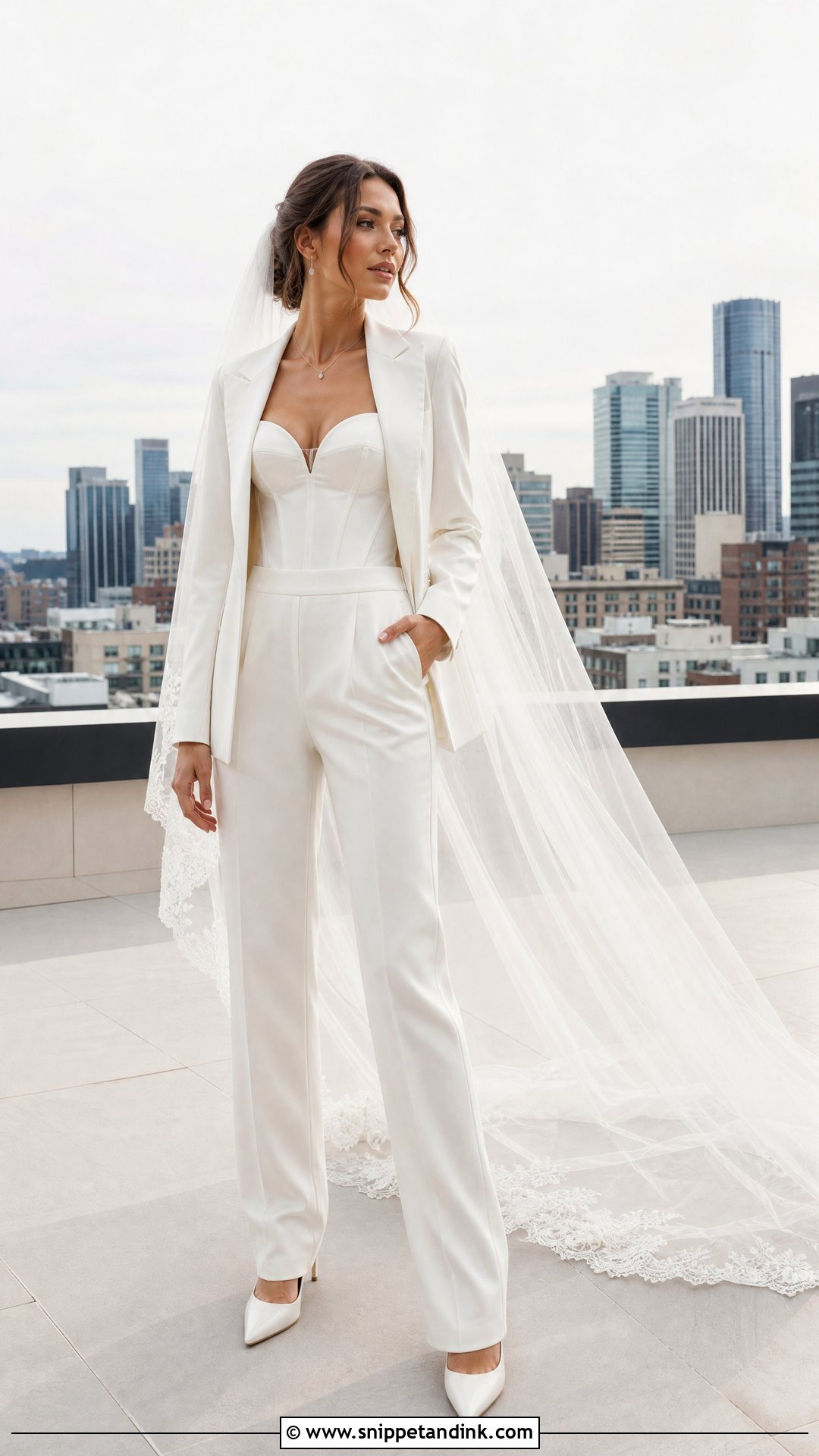
Pairing a boned corset with a blazer gives you two looks in one: jacket open for the ceremony, closed for portraits, off for the dance floor. Match the corset in satin or crepe to the suit, and choose high-waisted trousers so the corset sits over the waistband, not on top of it. A properly boned corset should let you breathe and bend at the hip; if it leaves marks after ten minutes, it’s too small. Detachable sleeves or a mesh layer add coverage. Rooftops and lofts suit the attitude.
7. Cape Blazer Wedding Suit
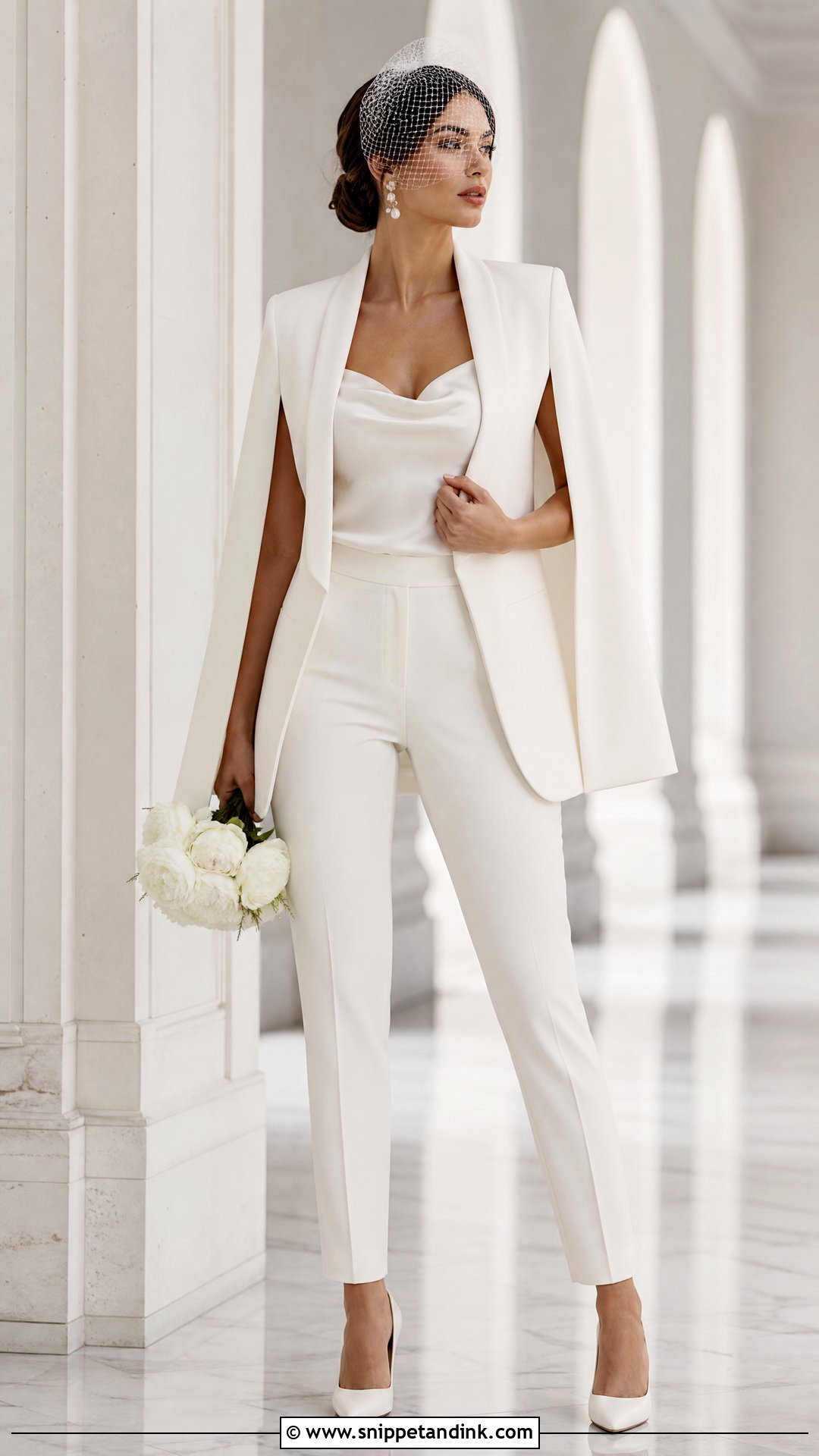
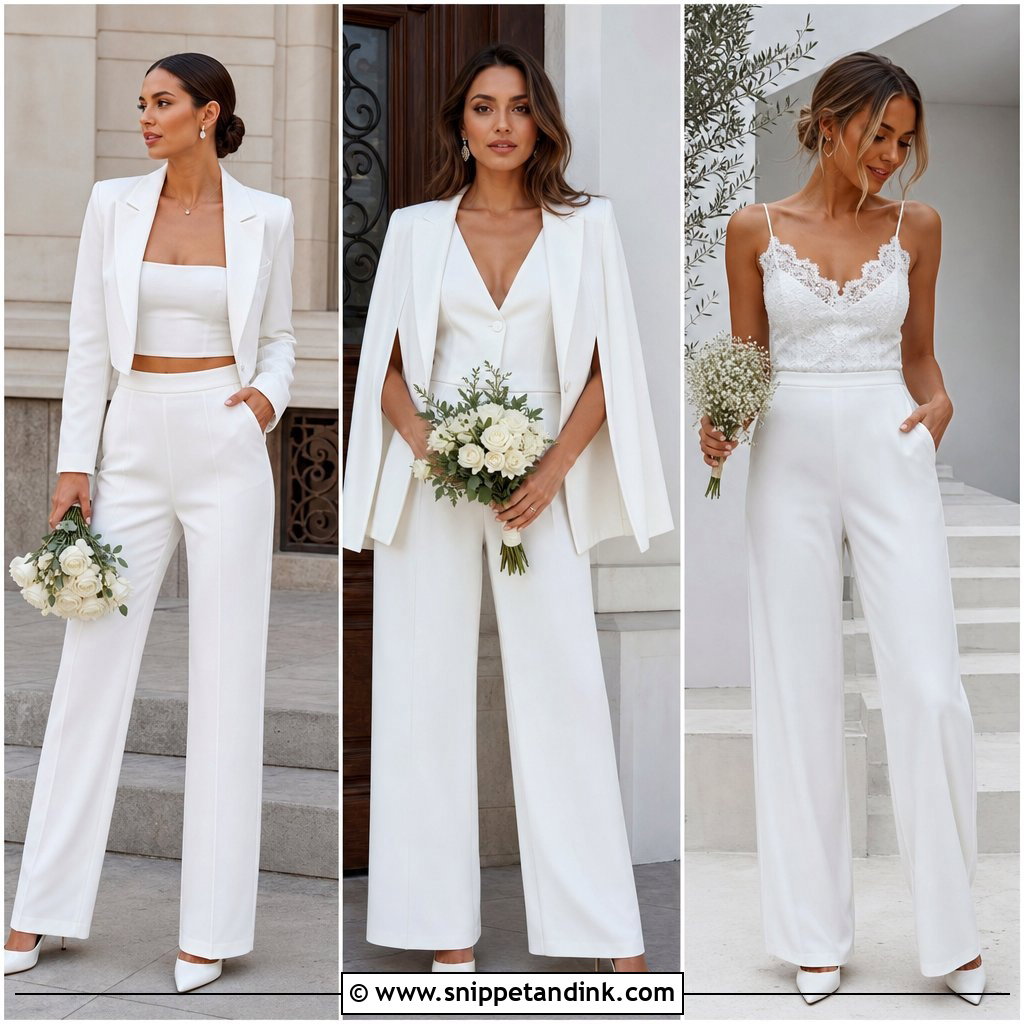
Cape blazers are dramatic, and they free up your arms so your bouquet and bracelets stay in view. Wear one over a fitted camisole and slim cigarette trousers. Because the cape is the focal point, I usually drop the long veil and use a birdcage or a simple headband. The fit check is at the shoulder: the cape should hang straight down from the shoulder point, not slide backward or bunch. On a petite frame, a cape that falls past the hip can swallow you, so keep it shorter.
8. Wedding Suit With Detachable Train
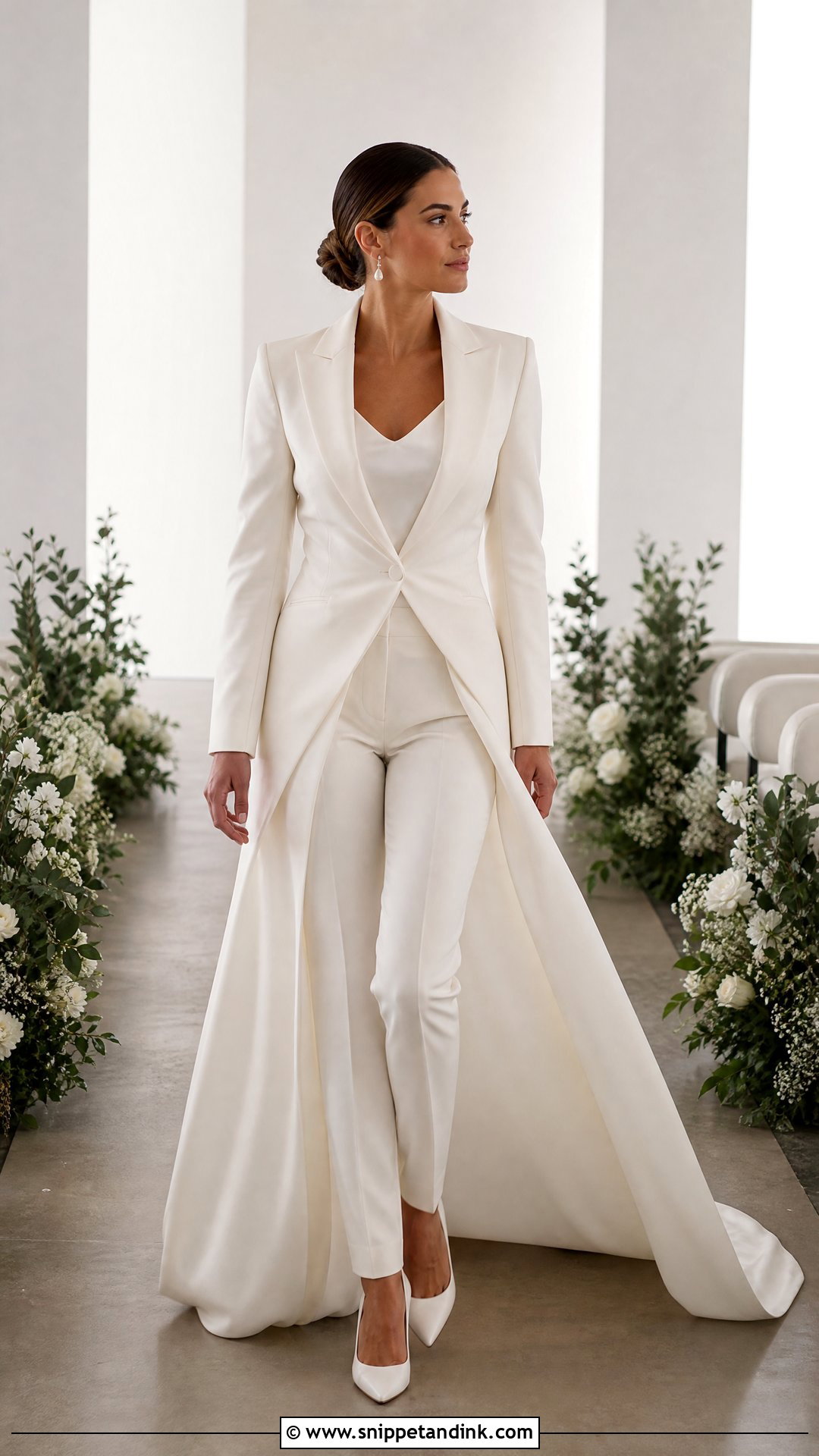
Do you love trousers but still want an aisle moment? A detachable train gives you both. Start with a fitted ivory blazer and slim trousers, then add a crepe or satin train that fastens at the waist. The engineering matters more than the fabric. I have tailors sew a hidden belt or snaps into the trouser waistband so the weight of the train doesn’t drag the trousers down at the back. Keep jewelry simple and remove the train after portraits for the reception.
9. Wedding Suit With Tulle Overskirt
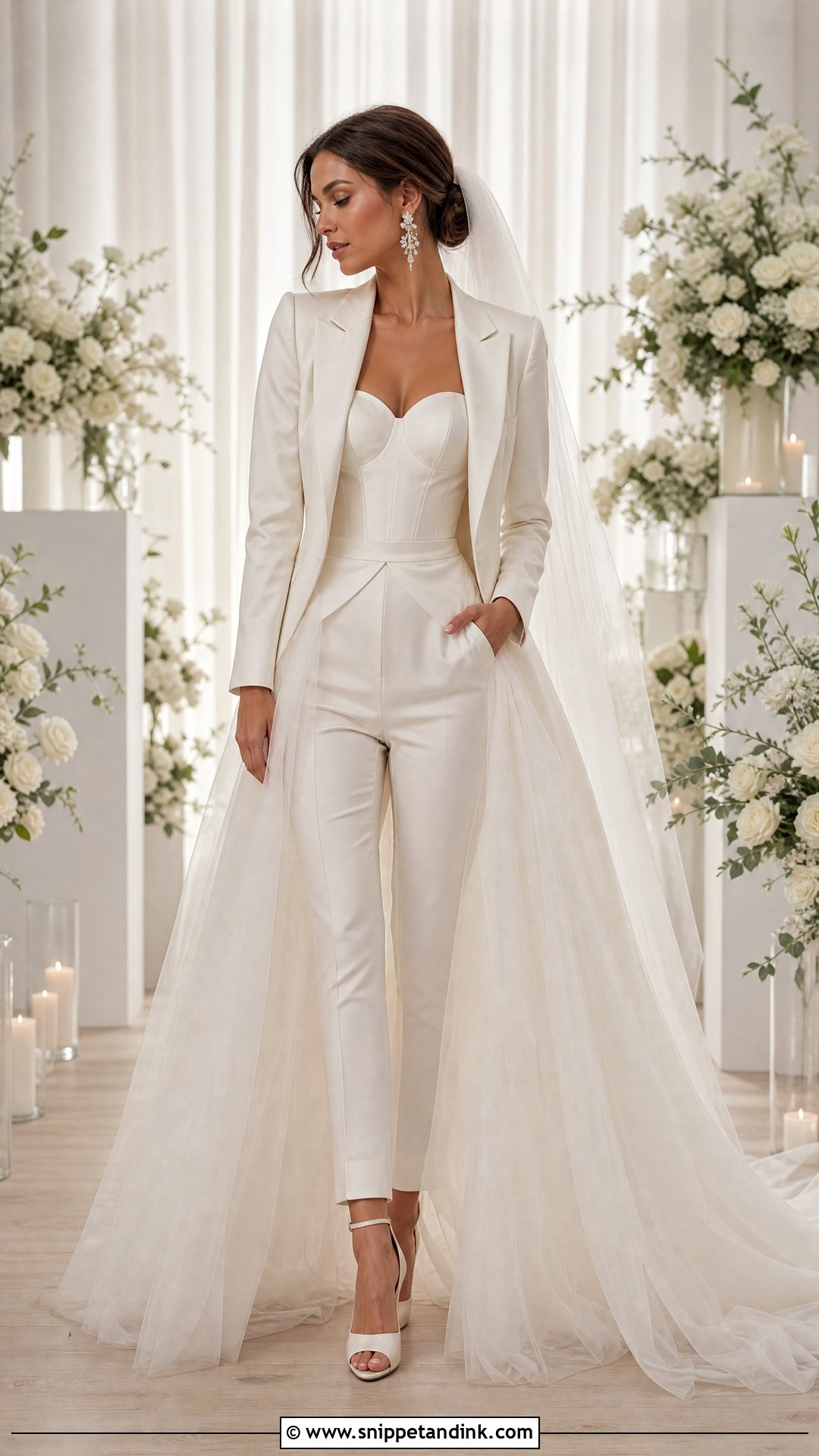
An open-front tulle overskirt turns a pantsuit into something close to a gown, and the trousers still show as you walk. Pair slim trousers with a structured bustier and blazer, then fasten the skirt at the natural waist. Tulle comes in many whites. Hold it against the suit in daylight before ordering, because a bright white overskirt over a creamy ivory suit looks grey in photos. Remove the overskirt after the ceremony and you’re in a comfortable reception outfit.
10. Peplum Wedding Suit
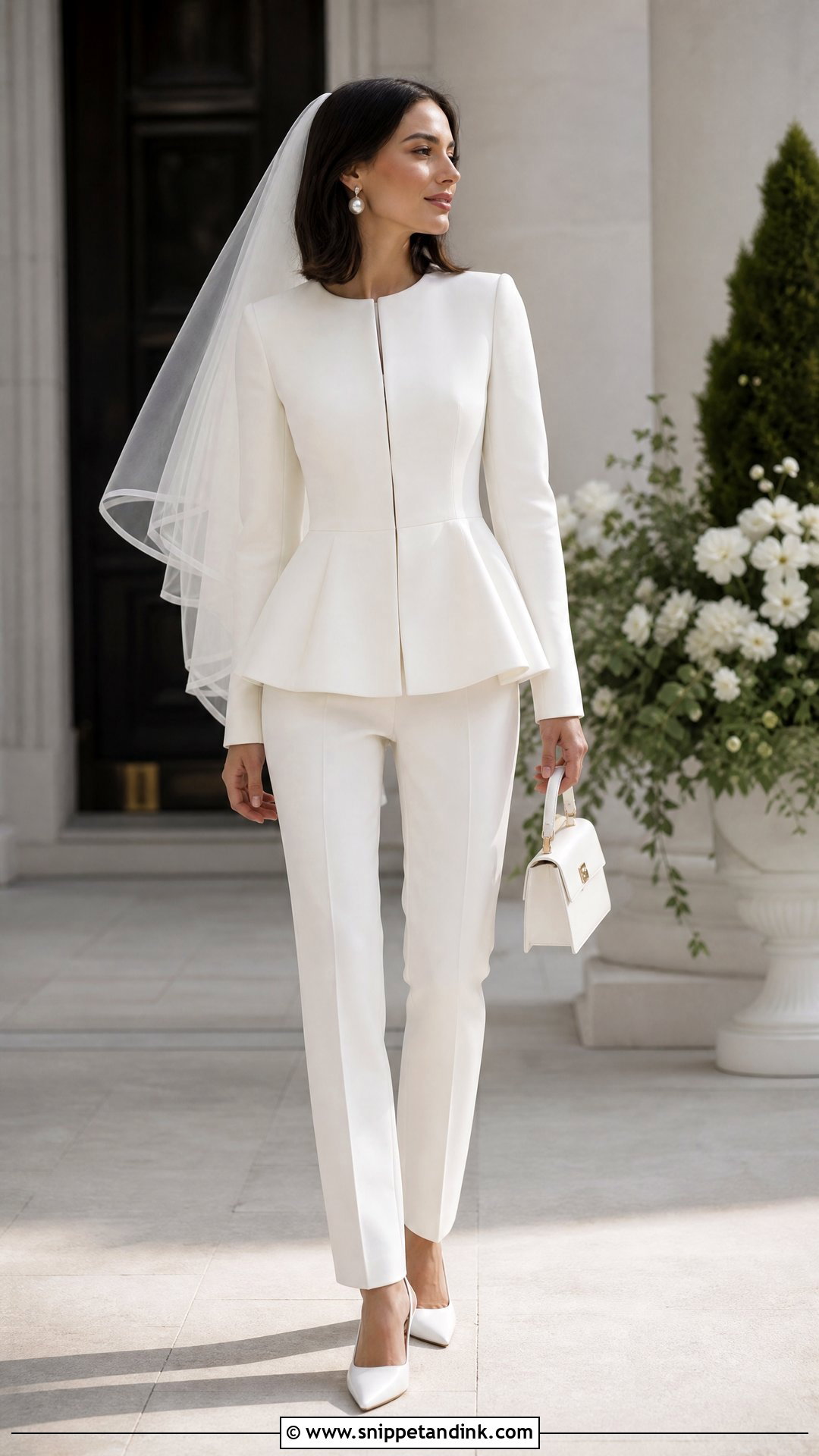
A peplum jacket adds shape at the waist and a little volume over the hip. Where it starts matters: a peplum that flares at your natural waist balances the body, while one that starts lower adds bulk at the widest point. Fuller hips suit a softer, unstructured flare; straighter frames can take a sculpted one. A collarless neckline leaves room for pearl earrings, and narrow trousers keep the bottom half clean. It’s a strong daytime and indoor option.
11. Pencil Skirt Wedding Suit
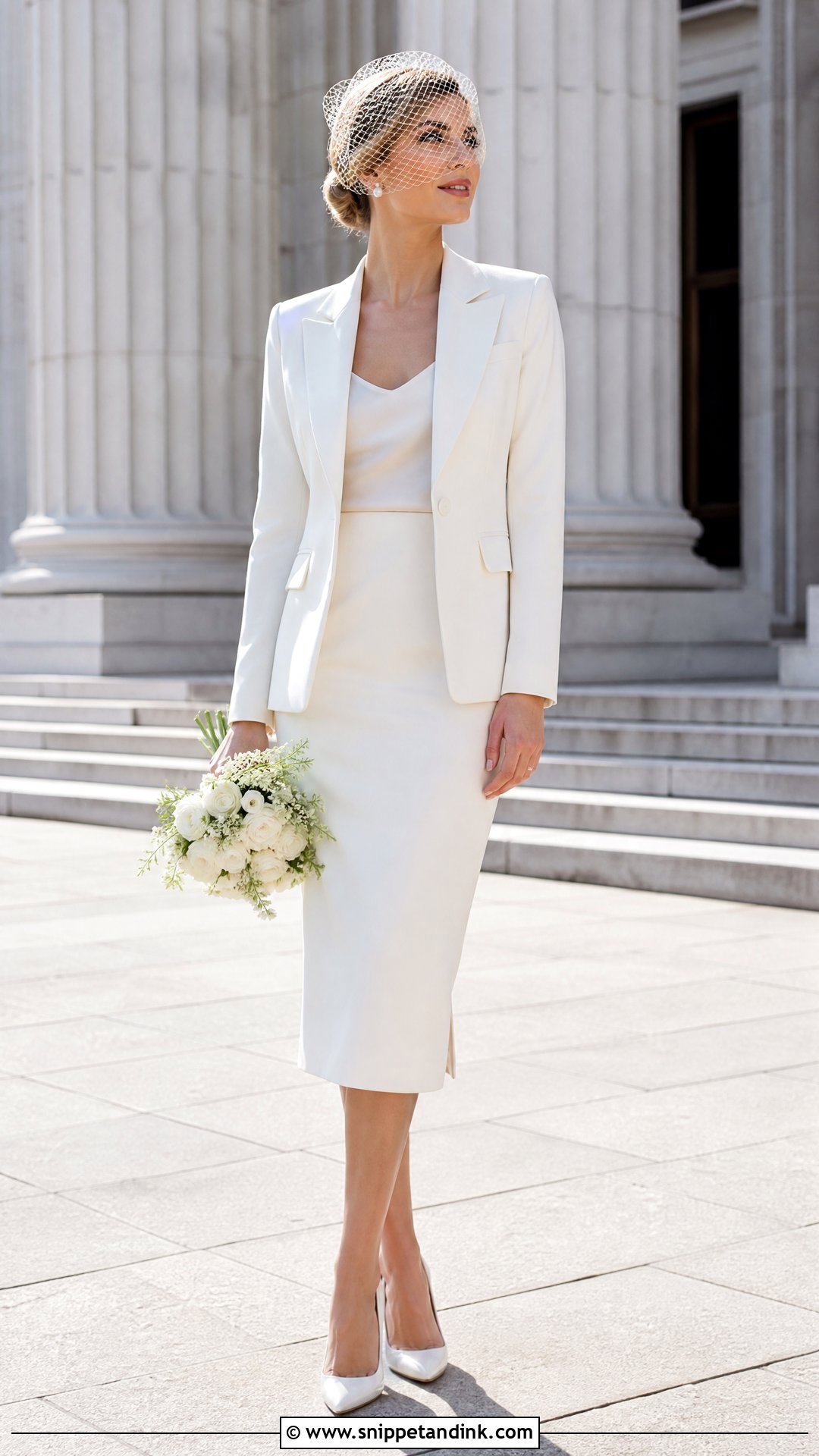
The skirt suit is the oldest form of bridal tailoring, and it still looks right. Pair a knee-length or midi ivory pencil skirt with a fitted blazer and a silk camisole or high-neck lace shell. Check the back vent before anything else. Without one, you’ll take tiny steps and struggle to sit or climb into a car. Pointed slingbacks lengthen the leg, and a birdcage veil leans vintage. Civil ceremonies and small daytime venues suit it.
12. A-Line Skirt Wedding Suit
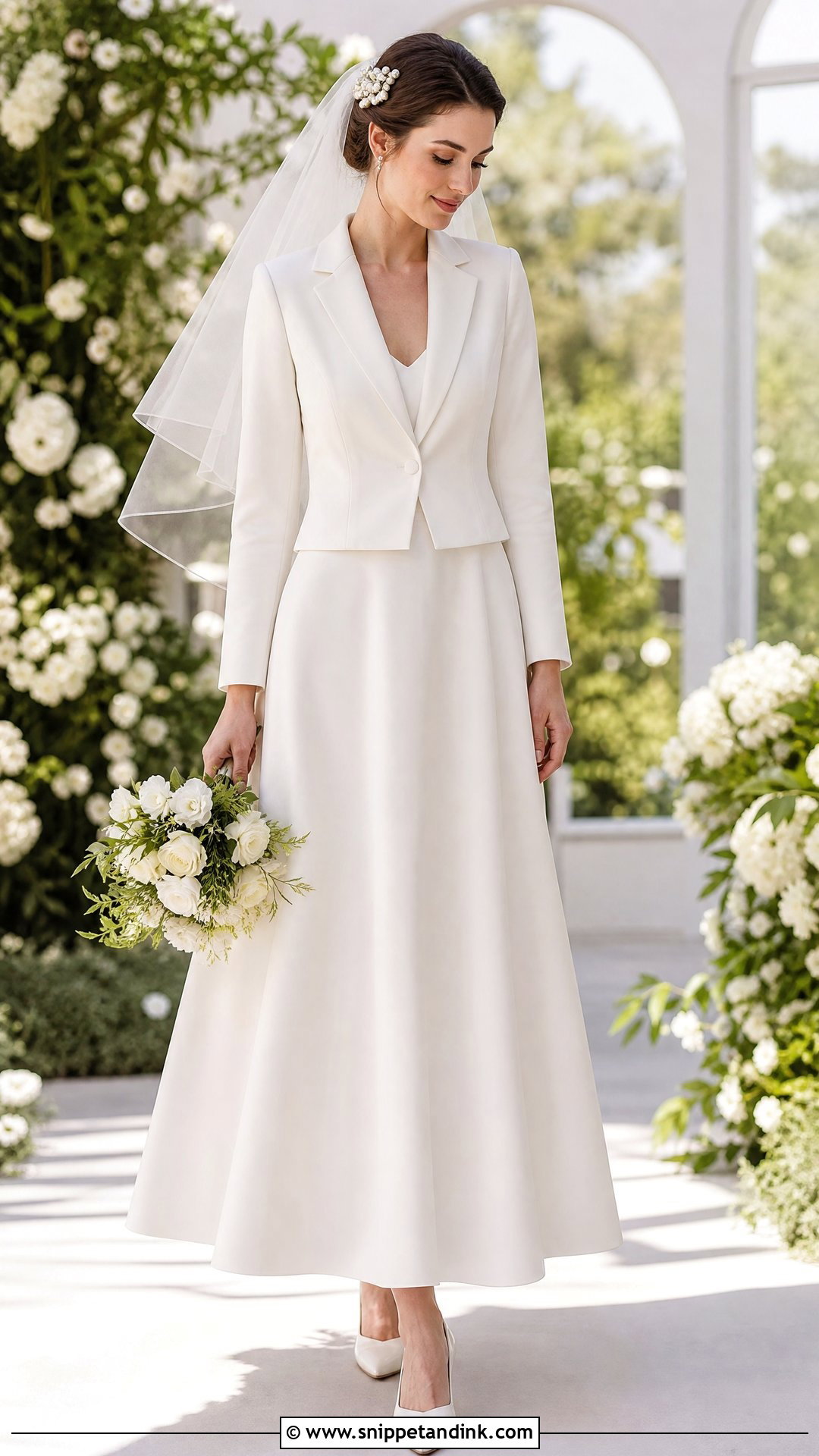
An A-line skirt gives a suit some swing, and a waist-length blazer keeps the waist visible. Fabric controls the mood: structured mikado holds a full shape for drama, while lightweight crepe falls softer and moves more. Choose a veil that ends above the widest point of the skirt so the two don’t fight. A satin shell and a pearl hair comb complete it. Garden ceremonies and daytime venues work well for this one.
13. Bridal Shorts Suit
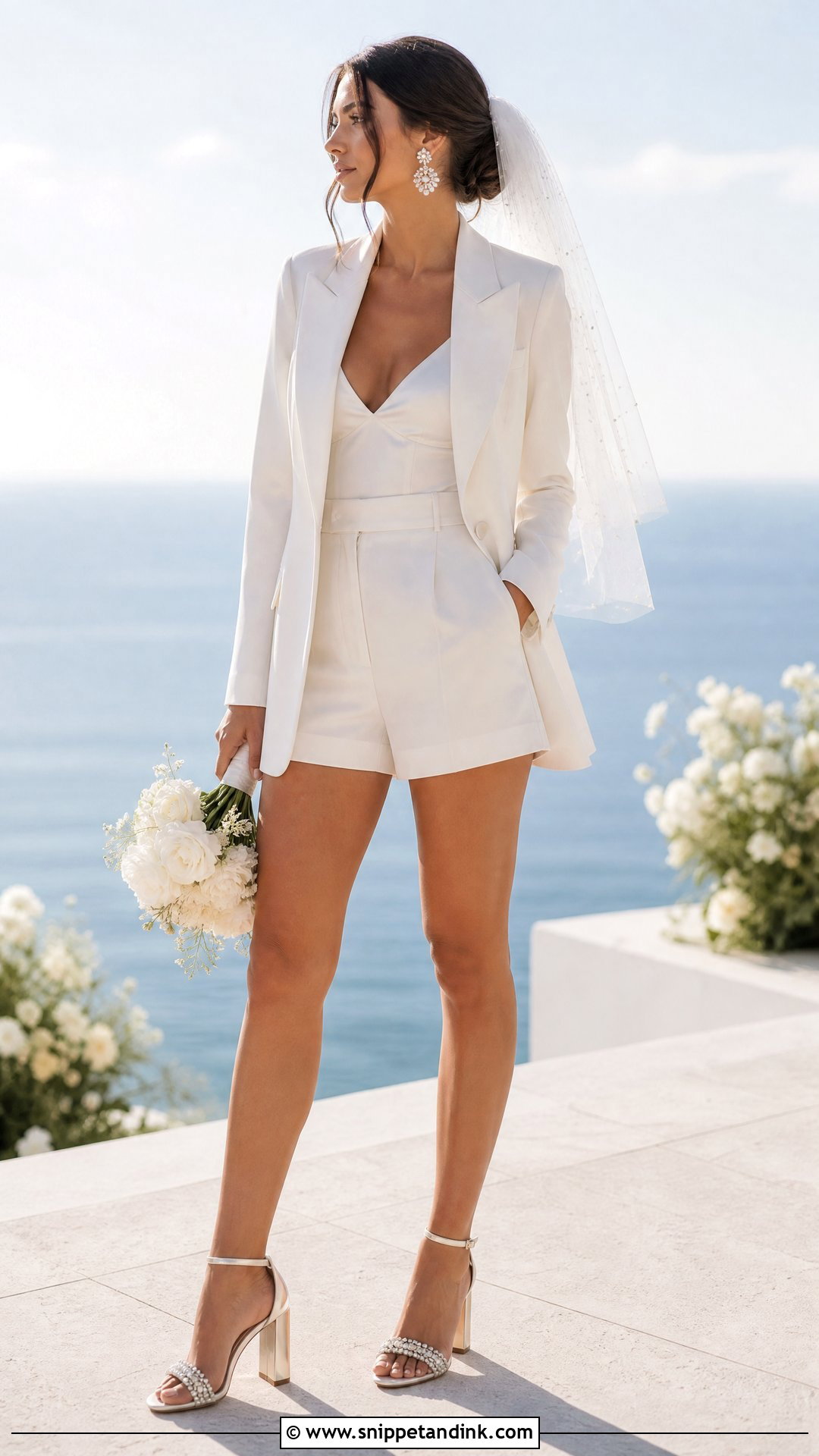
A bridal shorts suit is the most practical outfit on this list for heat, and also the hardest to get right. The shorts must be long enough to sit in comfortably; I have clients sit on a low chair and check where the hem rides up. Mid-thigh with a longline blazer keeps the proportions balanced. Crepe, linen blend or matte satin all keep the line sharp. Add block-heel sandals, a short veil and statement earrings for beaches, courthouses or a reception change.
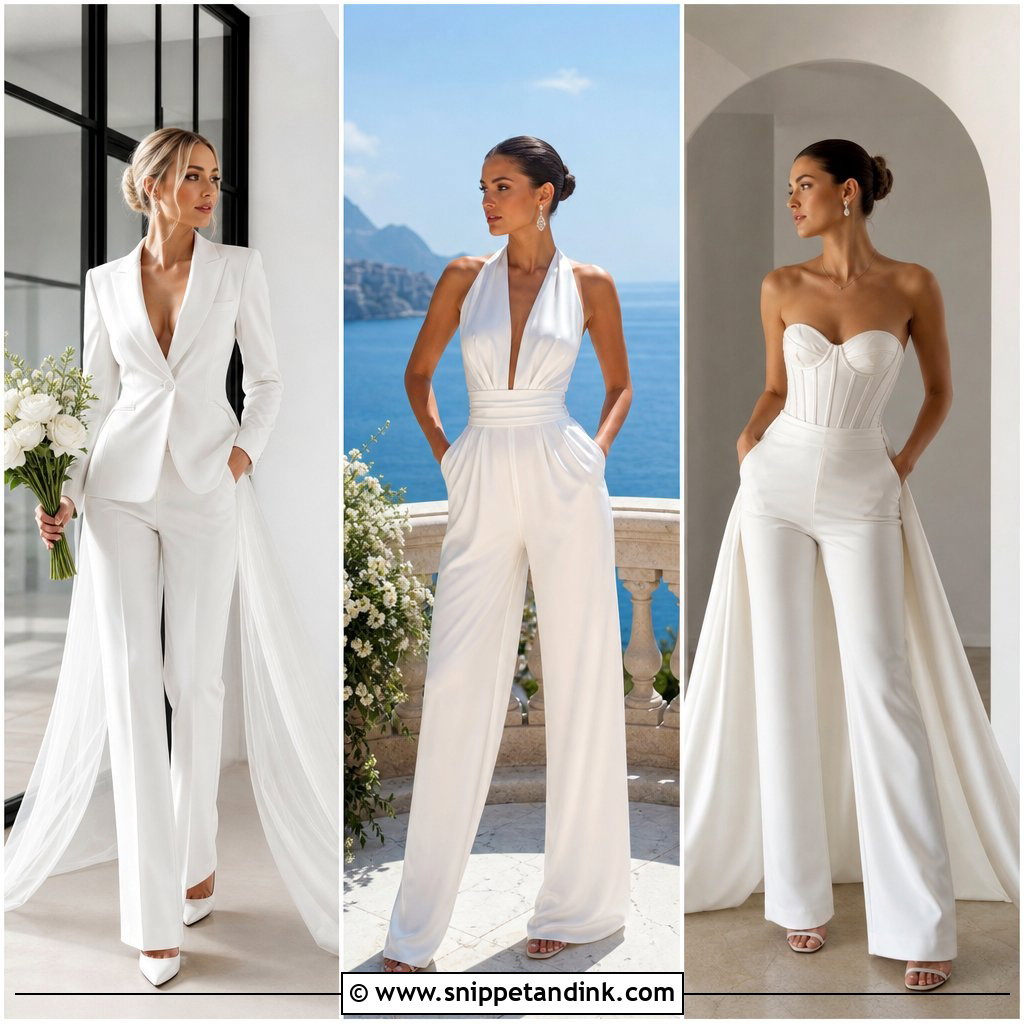
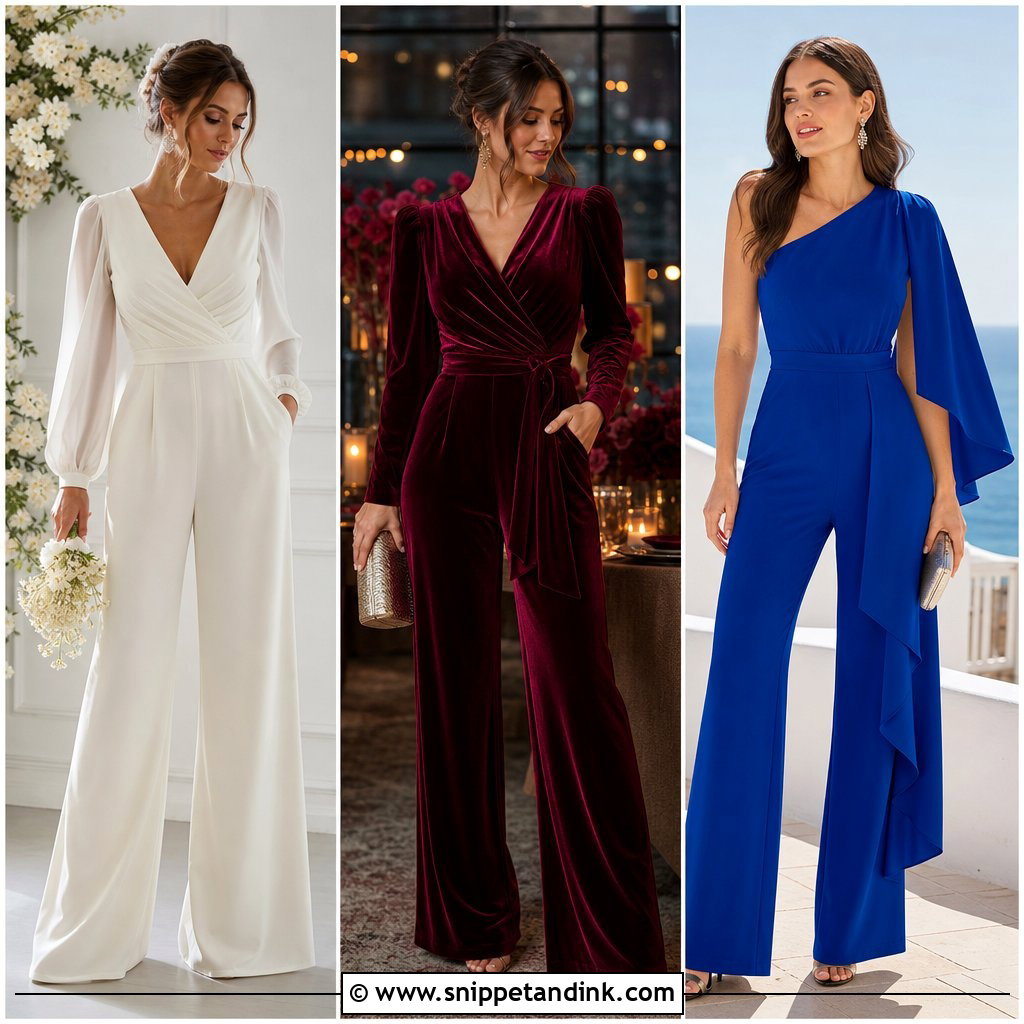
14. Three Piece Wedding Suit
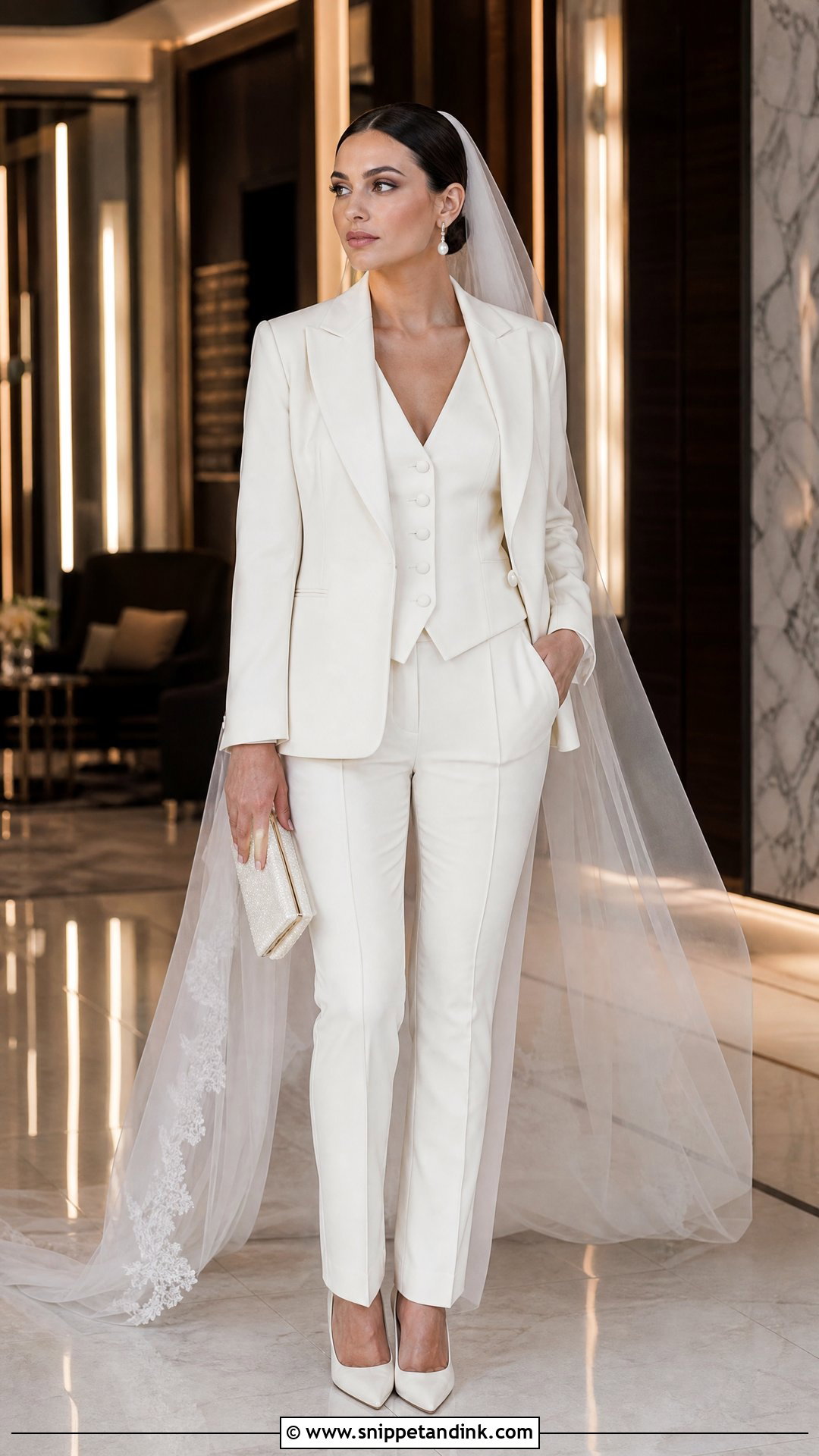
Three pieces give you three outfits. Wear the blazer, waistcoat and trousers for the ceremony, then remove the jacket and dance in the waistcoat. A curved neckline and covered buttons on the waistcoat make it look bridal rather than office. The fit test is the waistcoat hem: it should cover the trouser waistband with no gap when you raise your arms. Pearl drops and pointed heels finish it for formal city weddings.
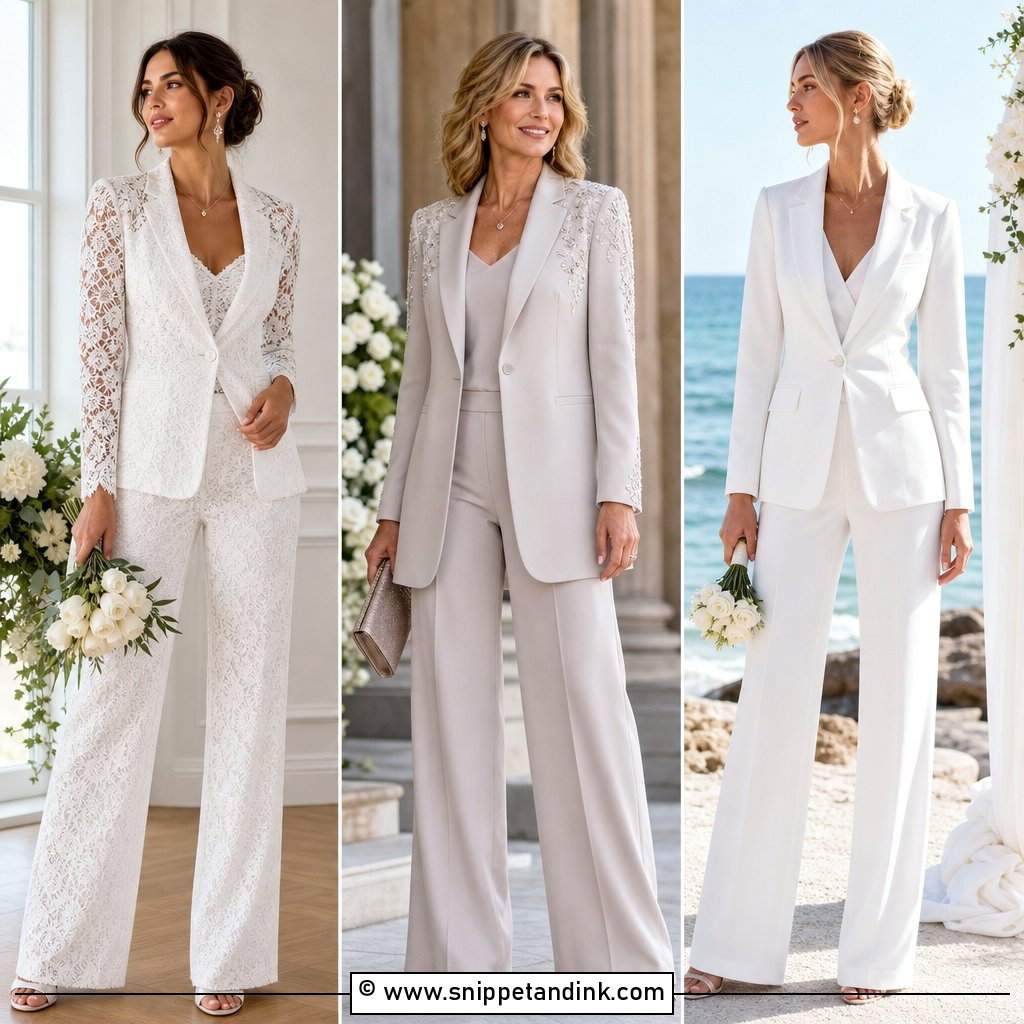
15. Sleeveless Wedding Suit
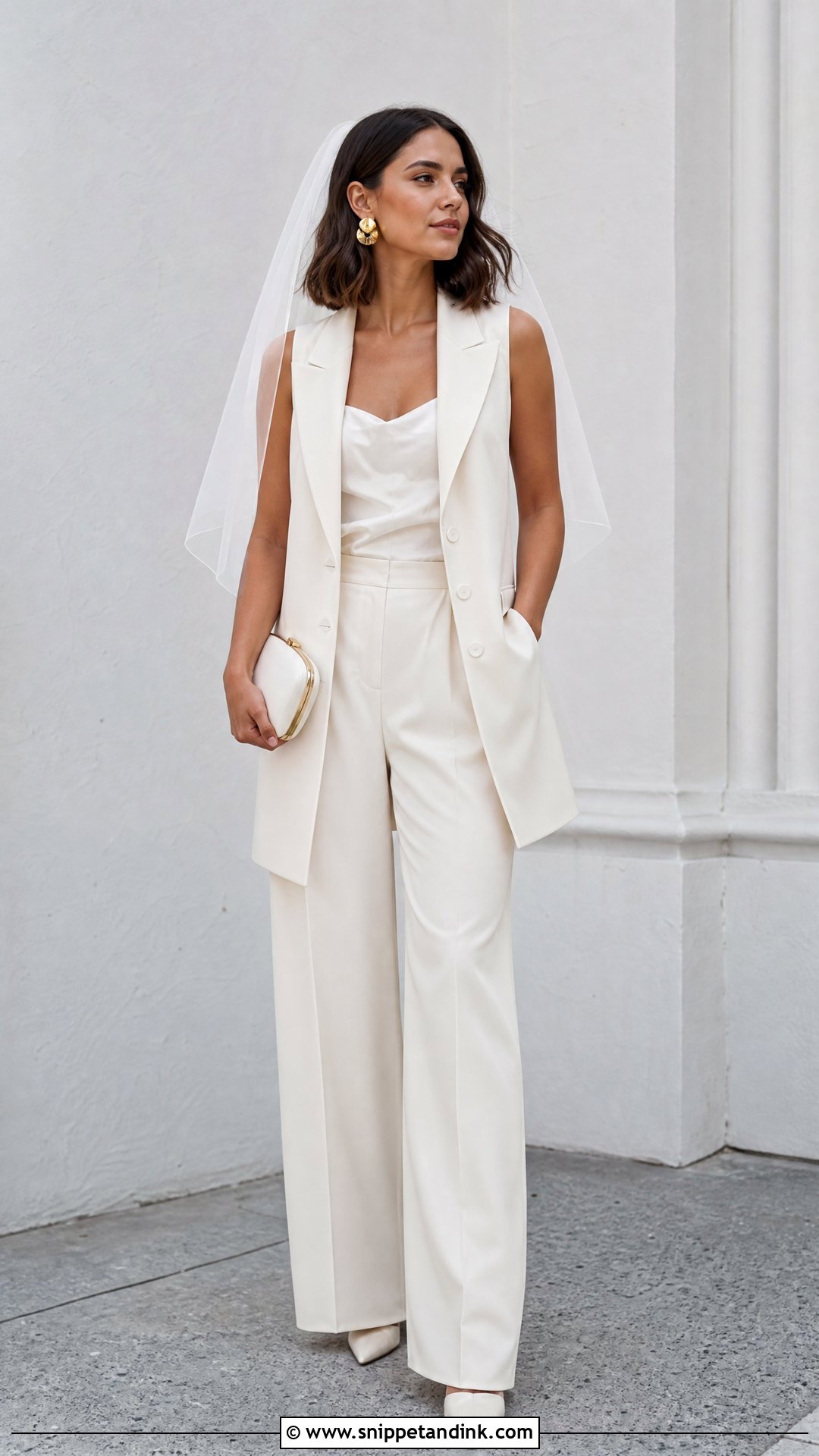
A longline vest instead of a jacket keeps the tailoring and drops the sleeves. It works buttoned on its own or with a satin camisole under it. Armholes are the weak point of any sleeveless suit. They should sit close enough that nothing shows when you lift your bouquet, but not so tight they cut into the skin. Mules or polished flats keep it modern. For a cool ceremony room, bring a matching blazer to remove later.
16. Cropped Blazer Wedding Suit
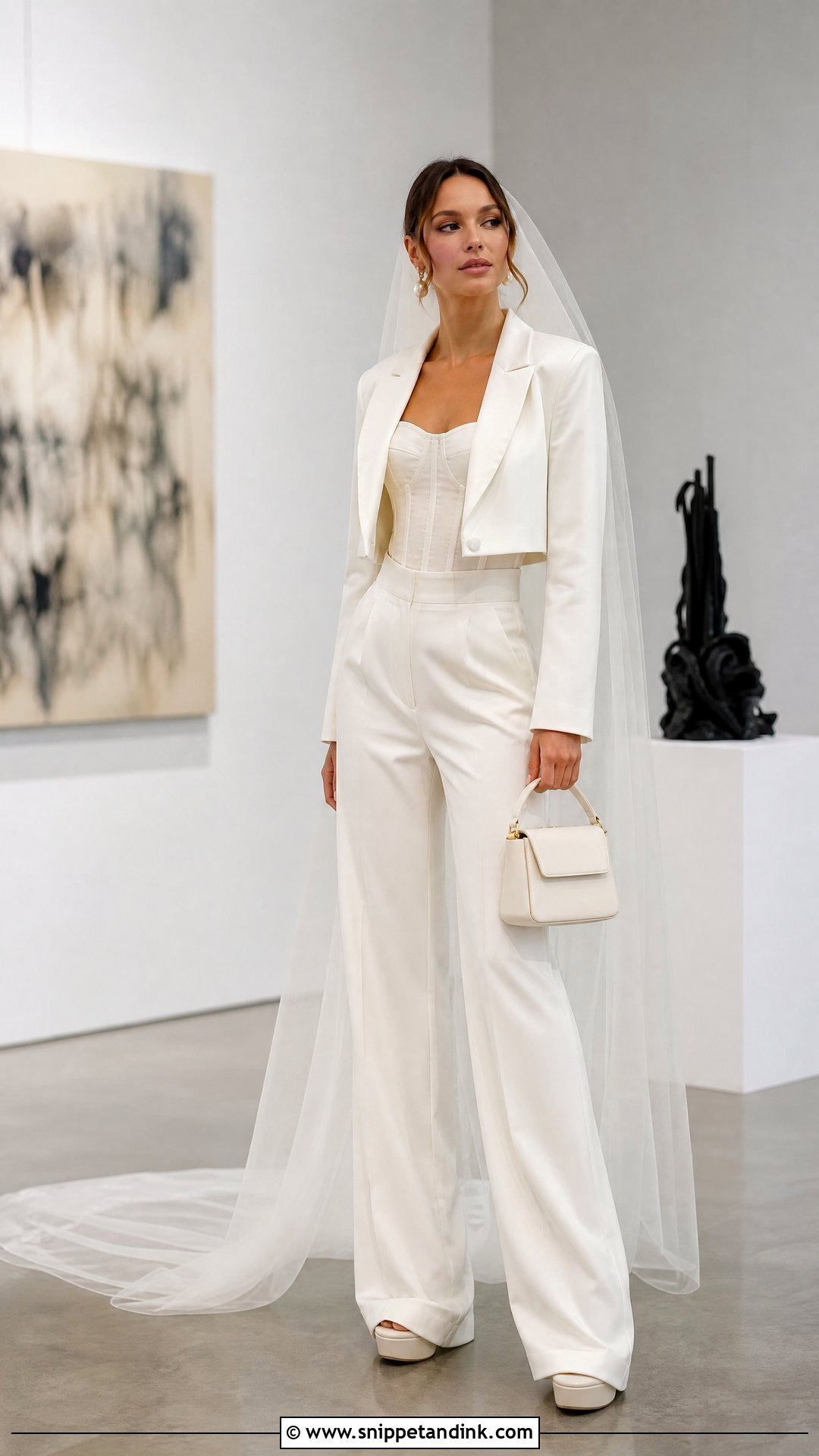
A cropped blazer pulls the eye to the waist. Wear it with high-rise trousers, so only a sliver of midriff shows, or with a matching corset for full coverage. I want the jacket to end at the natural waist, not at the widest part of the ribcage, which makes the torso look boxy. Keep the fabric consistent across both pieces. A long veil makes a striking contrast with the short jacket, and platform heels finish it.
17. Oversized Wedding Suit
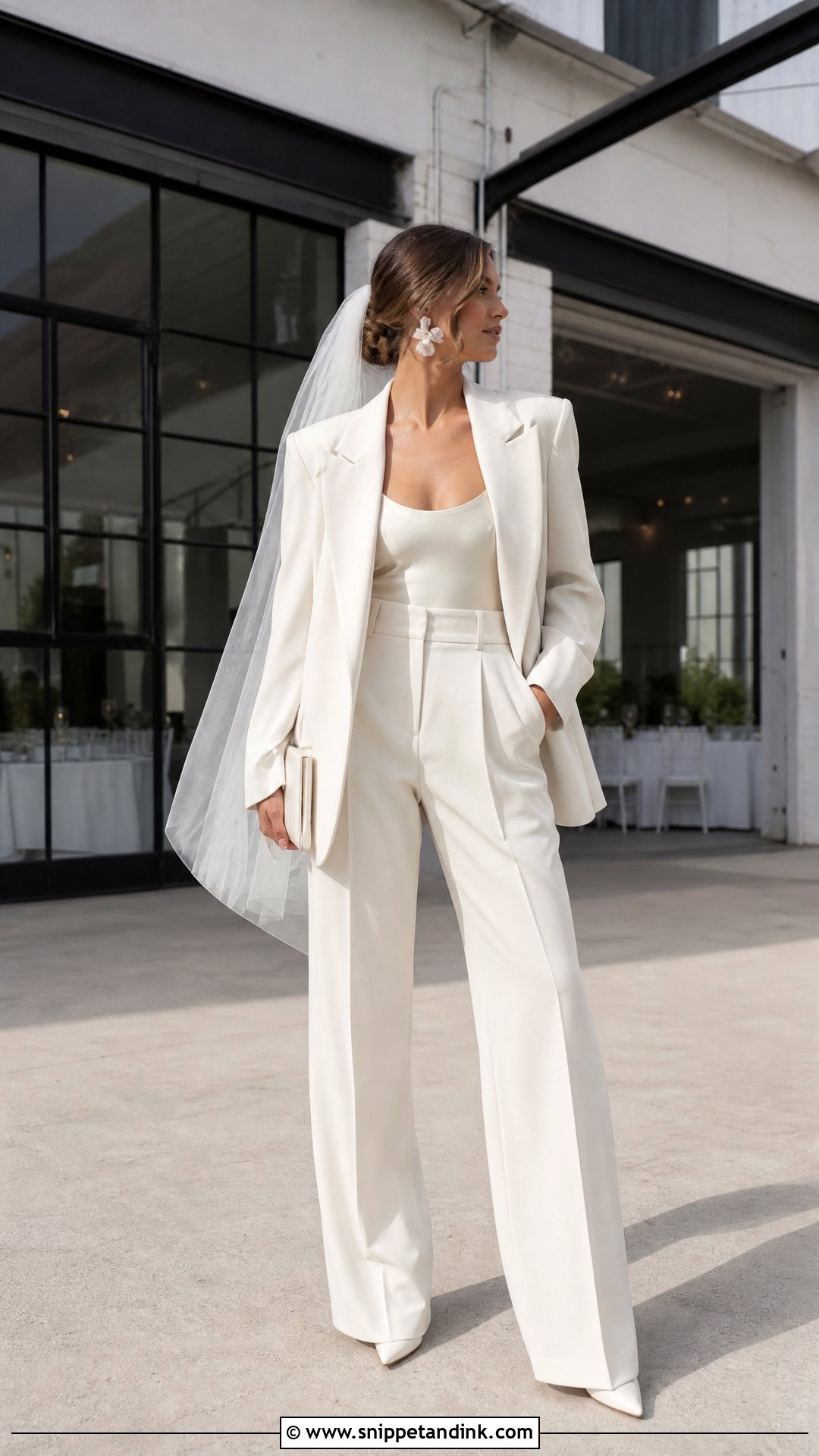
Oversized tailoring only works when it’s oversized on purpose. Choose an ivory blazer with strong shoulders that still sit near your own, then add high-waisted trousers with a fluid leg. A fitted silk bodysuit underneath gives the contrast that stops the look turning shapeless. On petite brides I keep the jacket a little shorter and the trouser rise higher to save leg length; taller brides can wear the longer jacket and a pooled hem. Galleries and industrial spaces suit it.
18. Collarless Wedding Suit
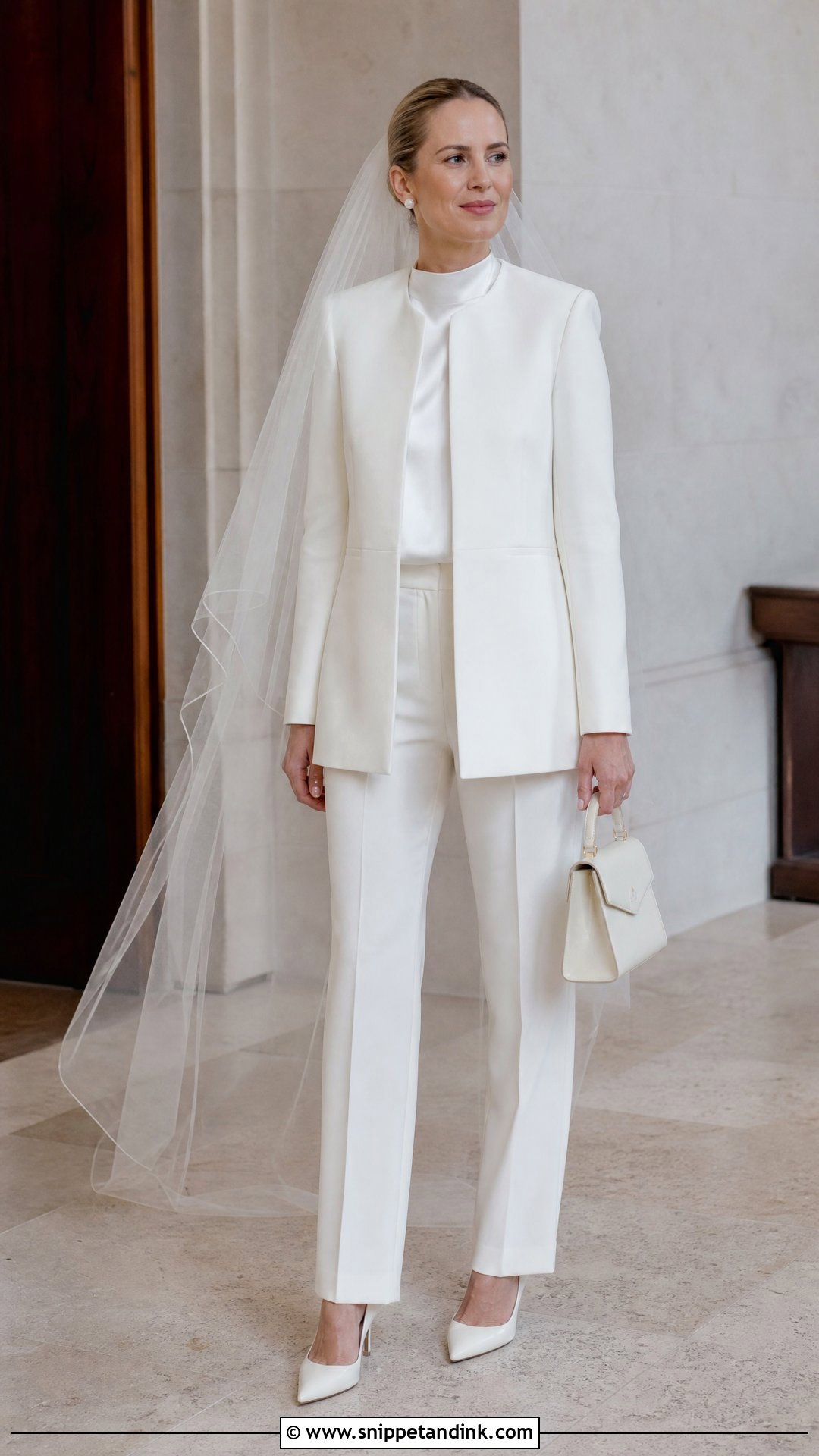
Without lapels, there’s no structure to draw the eye, so the shoulder and jacket length carry everything. I check that the shoulder seam lands exactly at the shoulder bone and that the jacket ends where it flatters your hip. Wear a high-neck satin shell or a minimalist bodysuit underneath. Textured crepe or a subtle jacquard adds depth without pattern. A sheer fingertip veil and pearl studs suit courthouse weddings and intimate dinners.
19. Beaded Wedding Suit
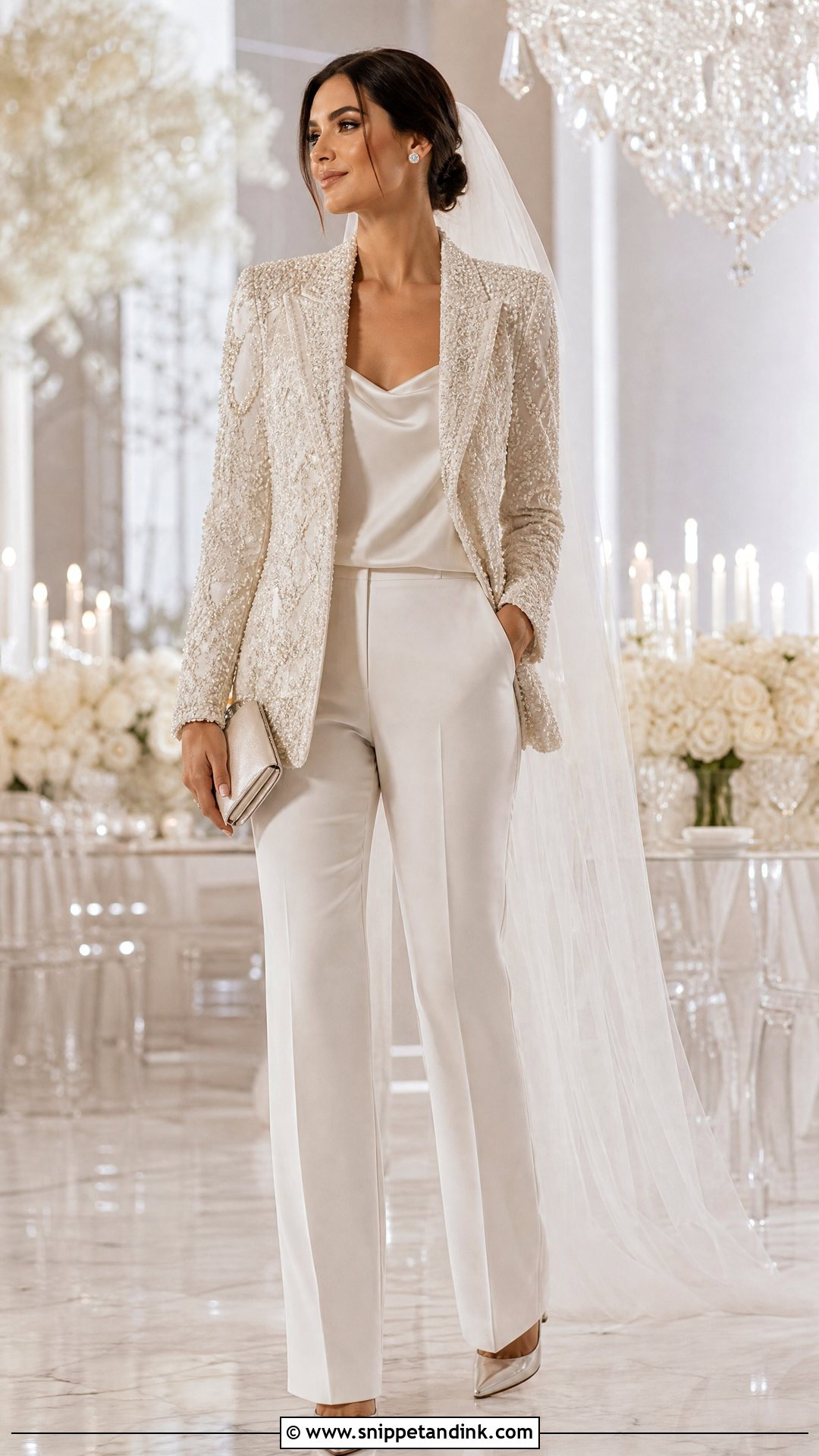
Beading on a blazer gives you evening sparkle without a heavy gown. Pair the decorated jacket with plain crepe trousers and a simple satin camisole so it doesn’t get busy. Beadwork snags easily on tulle, so a plain veil is the safer pairing, and I always rub the sleeve against the veil at the fitting to see if anything catches. Check the inside, too: exposed thread knots can scratch bare arms. Metallic heels and small studs complete it.
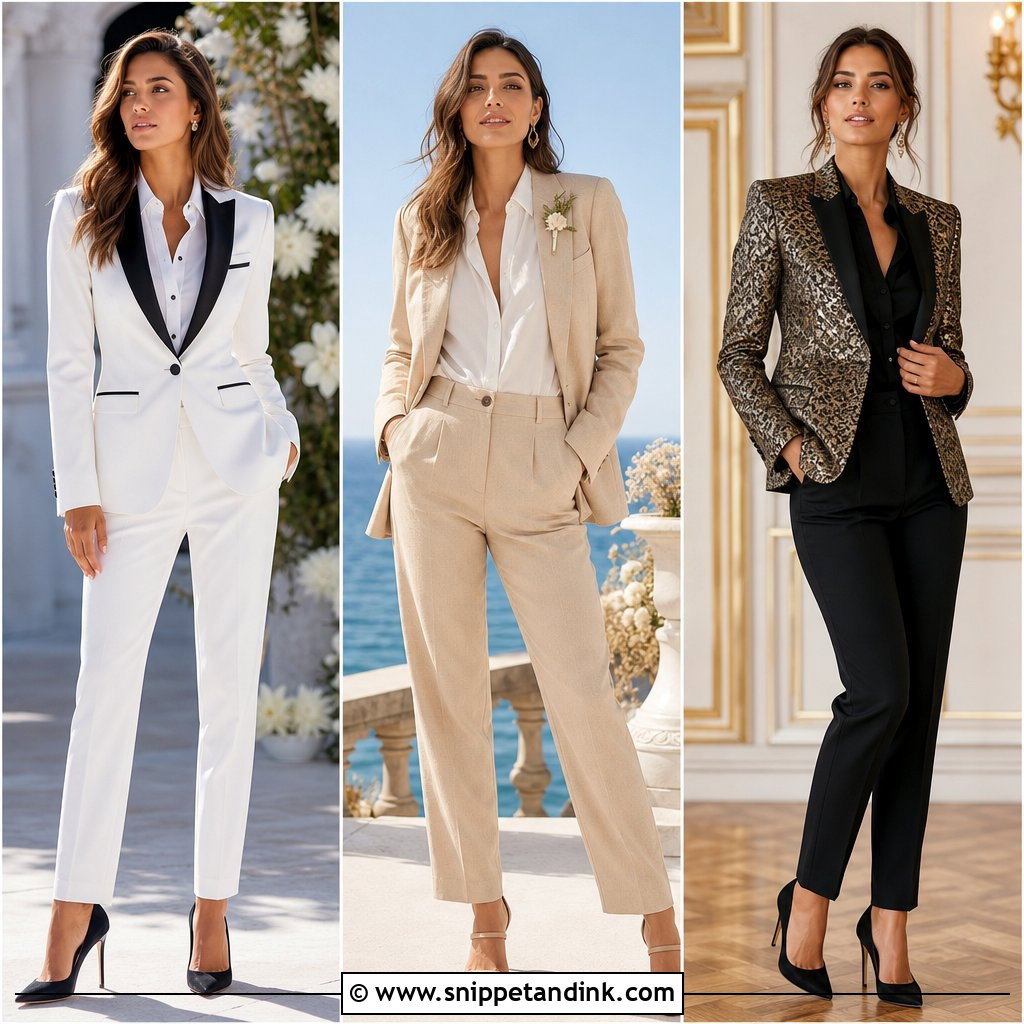

20. Pearl Embellished Wedding Suit
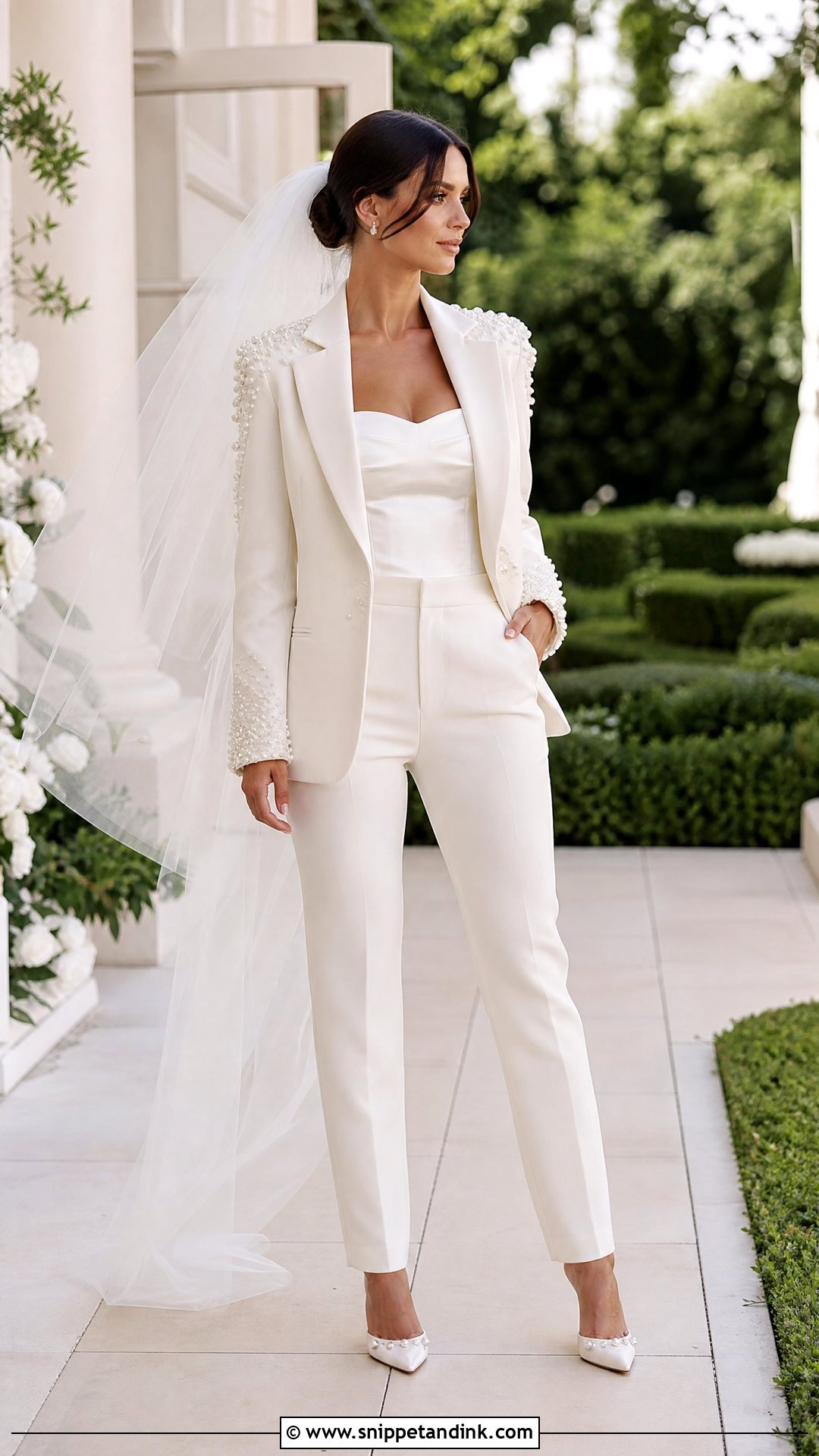
Scattered pearls on the shoulders, lapels or cuffs give a suit a clearly bridal detail. Keep everything underneath smooth, a plain camisole or strapless bodysuit, so the pearls lead. Don’t repeat pearls on every accessory; one echo in the earrings or shoes is enough. Pearls sewn near the collar can catch a veil, so attach the veil beneath a low hairstyle and test the two together. Ballrooms, garden venues and civil ceremonies all suit it.
21. Floral Embroidered Wedding Suit
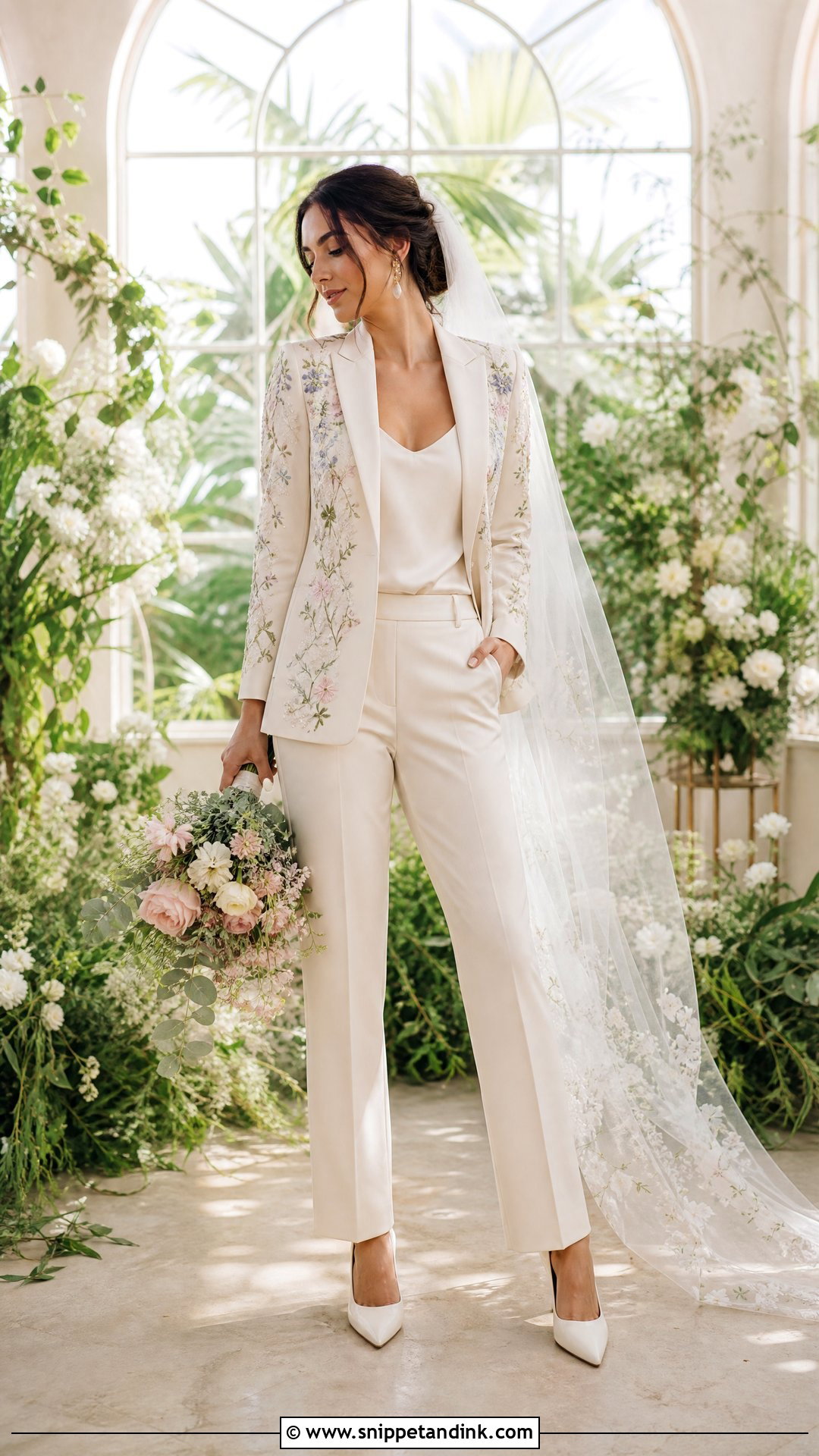
Embroidery adds color and handwork, with tonal flowers, pastel vines or small botanical motifs on a white or ivory blazer. Keep the trousers plain and the camisole in the suit’s base shade. You don’t need to match the bouquet exactly to the embroidery; picking up one shade from the thread looks more natural than a full match. A plain veil avoids a fight with the jacket. Outdoor celebrations and greenhouse venues are where this style feels most at home.
22. Blush Wedding Suit
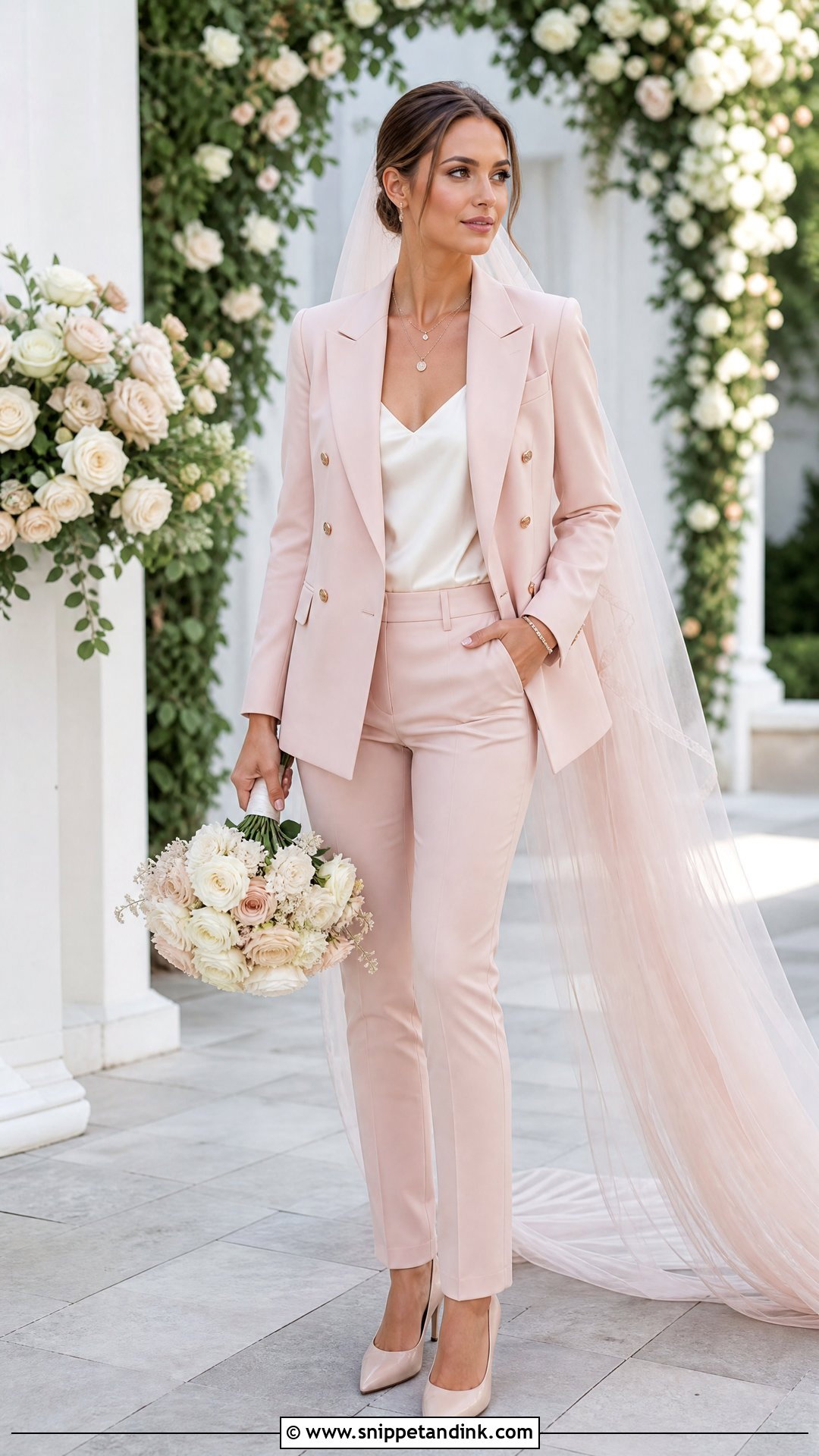
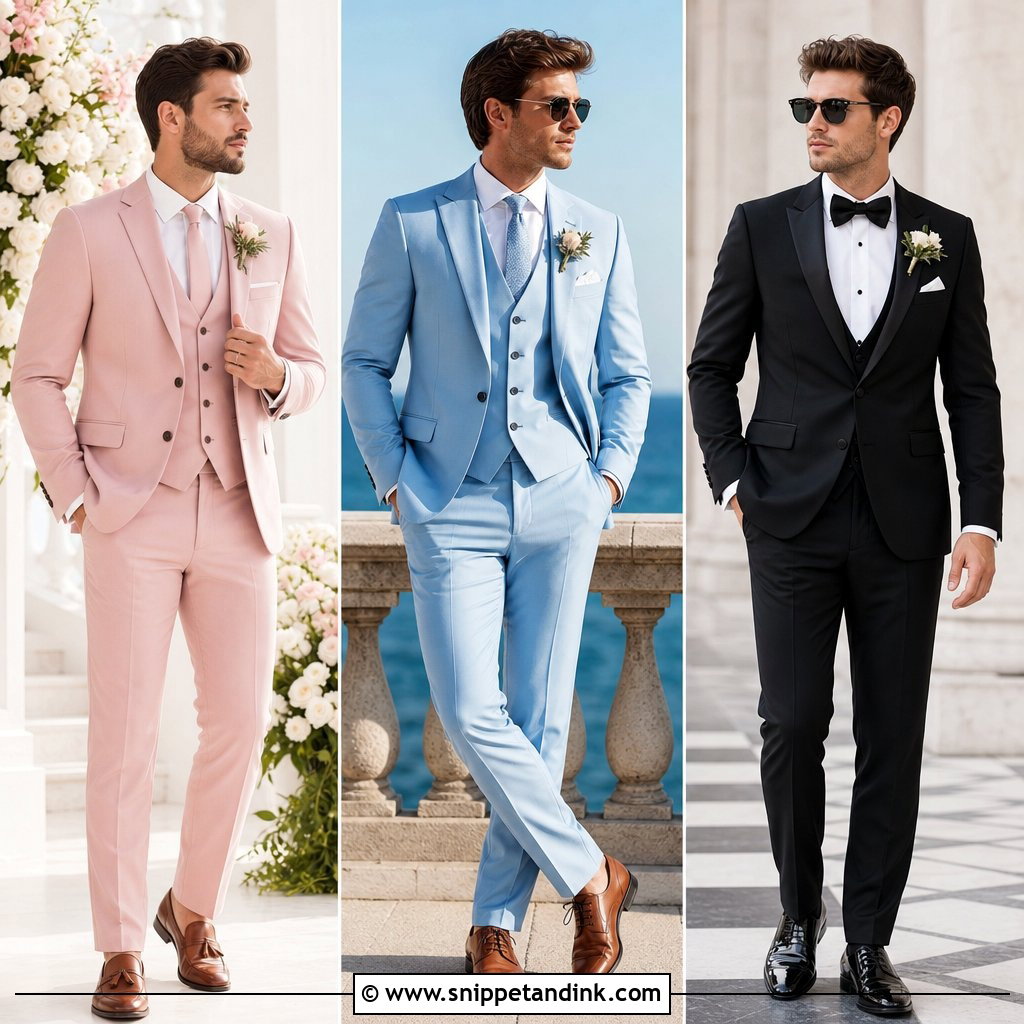
Blush gives color without abandoning softness. Pale pink, rose-beige and soft champagne all qualify, worn with an ivory satin top. The catch is undertone: some pinks lean peach and some lean lilac, and they look very different under indoor lights versus daylight. I check the fabric by a window and under warm bulbs before ordering. Neutral pumps, rose-gold jewelry and a cream bouquet tie the palette together.
23. Black Wedding Tuxedo
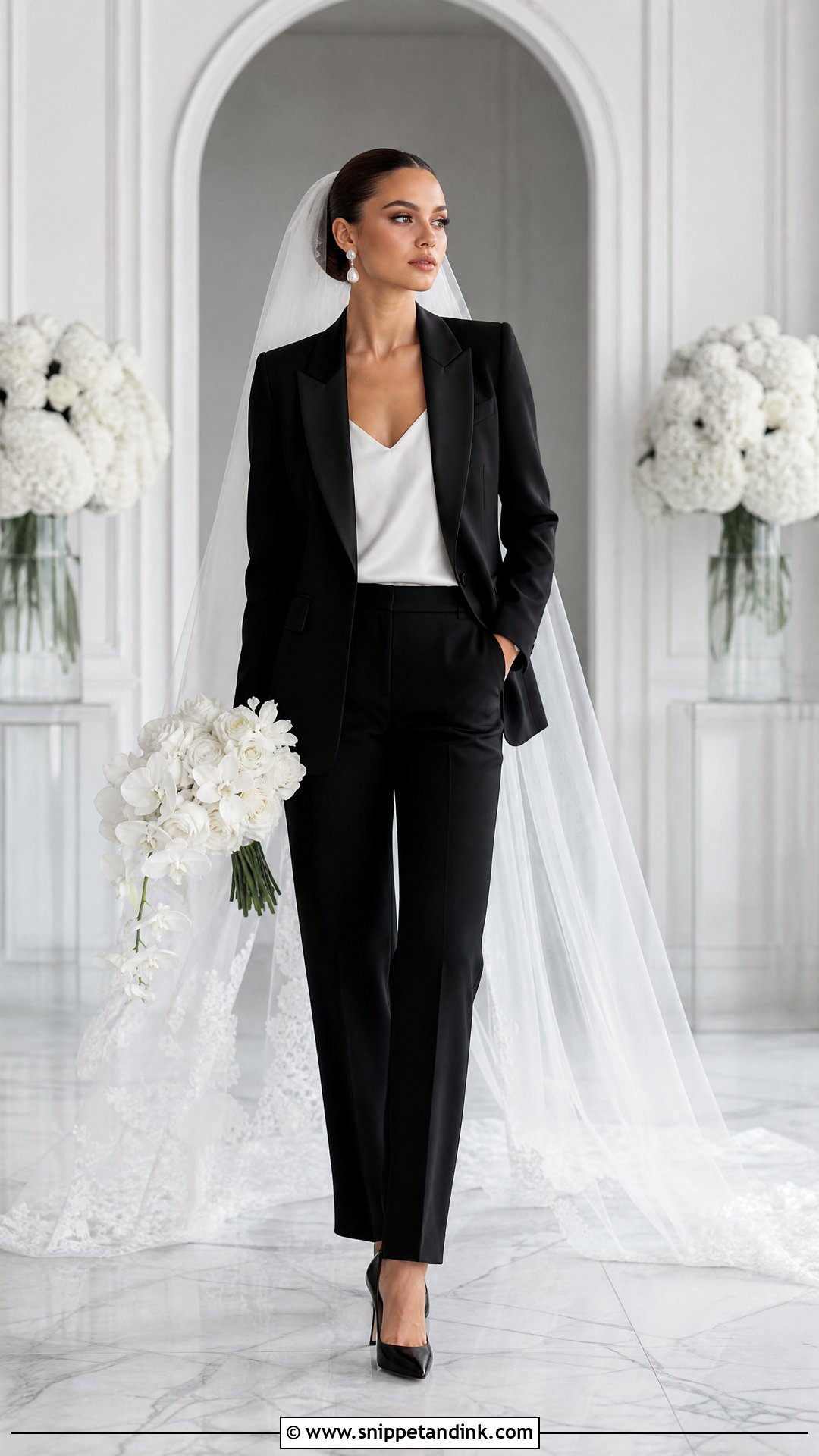
A black tuxedo is the boldest bridal choice here, and it needs a bride who already feels at home in dark tailoring. Choose a sharp jacket with satin lapels, matching trousers and an ivory camisole or crisp white shirt. Buy every piece from the same maker, since blacks from different suppliers shift toward blue or brown in photos. A white cathedral veil makes a striking contrast; a black bow or headband is the minimal alternative. Save it for evening and black-tie venues.
24. Linen Destination Wedding Suit
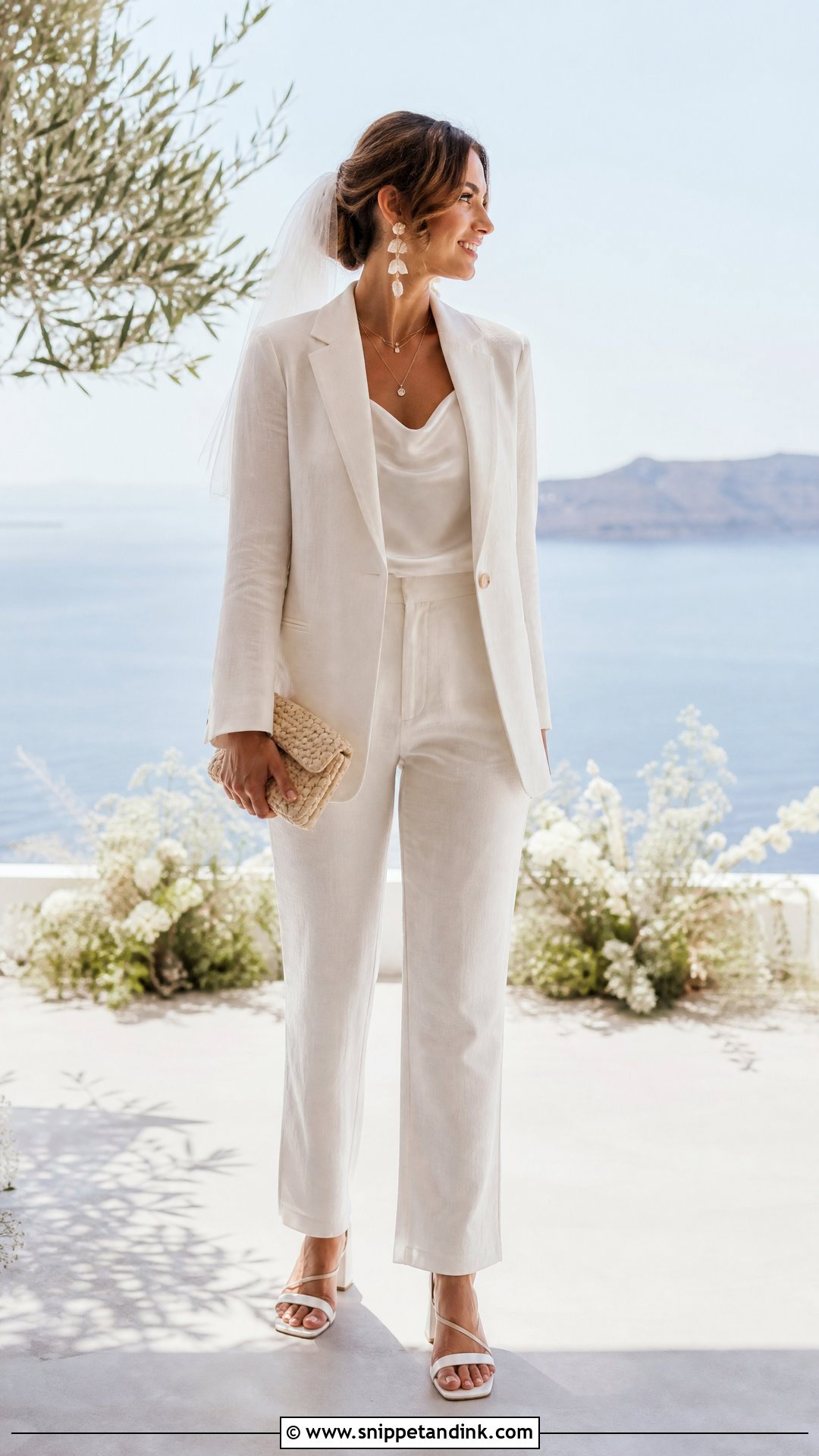
Linen breathes in heat, which makes it the obvious beach fabric, and it also wrinkles the minute you sit. A linen blend keeps the texture and holds its shape better than pure linen. Pair an ivory blazer with relaxed trousers and a cotton or silk camisole. I hem these slightly shorter than a city suit so sand and uneven paths don’t catch the fabric. Block heels or flat leather slides, a woven clutch and a short veil that won’t sail away in the wind complete the look.
25. Velvet Winter Wedding Suit
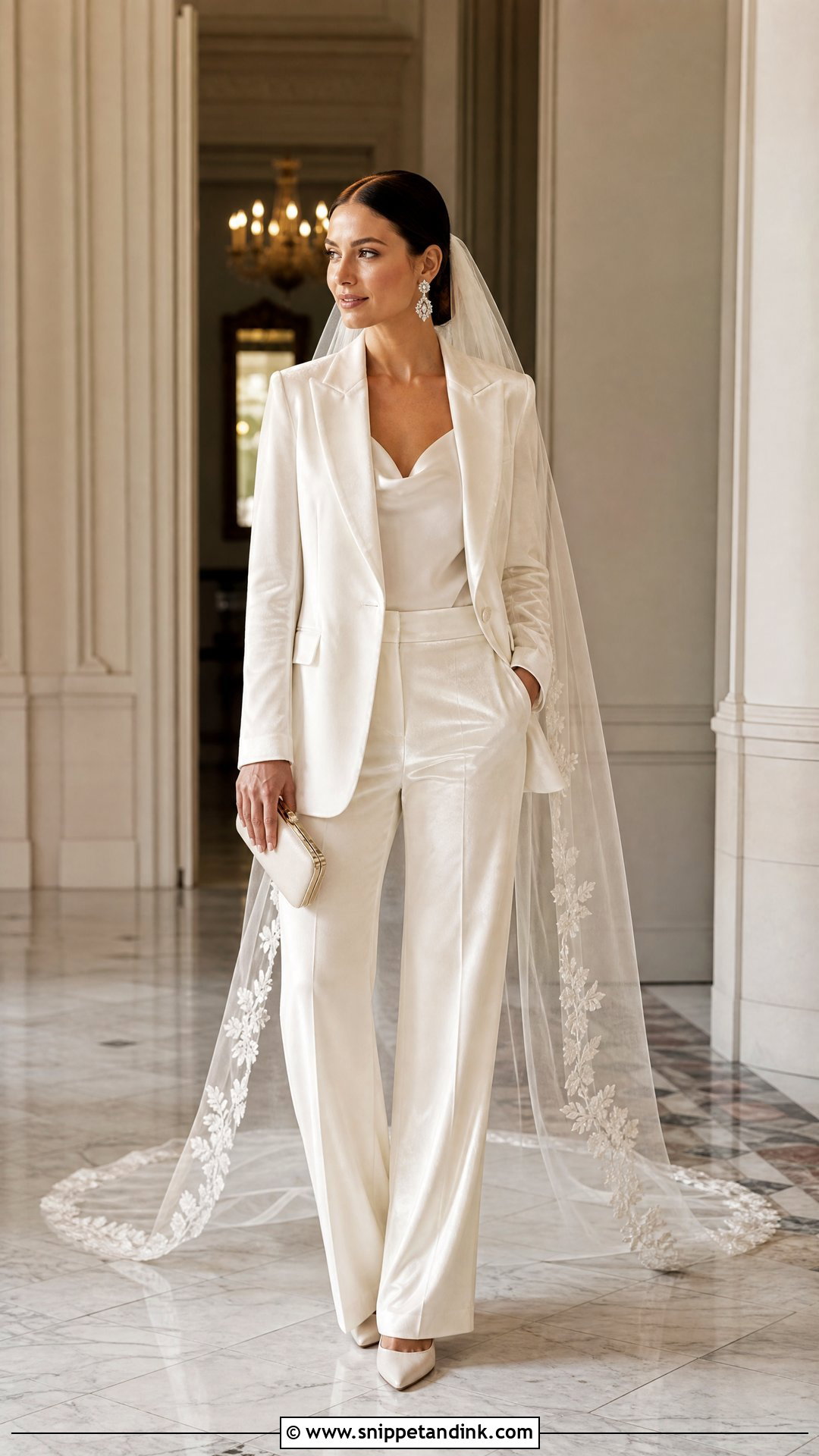
Velvet is the winter suit fabric, warm and rich in ivory, cream, emerald or midnight blue. Pair the blazer and trousers with a smooth satin camisole so the texture isn’t overwhelming. Velvet pile has a direction, so a jacket and trousers cut from different rolls can look like two shades. Buy the pieces together. Add a chapel veil and a faux-fur stole or wool coat for outdoor photos. Historic hotels and evening ceremonies suit it best.
Pairing a Veil and a Bouquet With Sharp Tailoring
A veil against a fitted jacket behaves differently than against a gown. Tulle clings to wool crepe and catches on beading, so I pin the comb low, just above the nape, and choose soft English net or a raw-edge tulle that slides off the shoulders. A veil that ends at the jacket hem or below the knee looks deliberate; one that stops halfway down the back looks unfinished.
Bouquets need to shrink a little, too. A big cascade hides the jacket’s waist and the line of the trousers. A compact posy or a single-stem arrangement held low keeps the tailoring visible.
When Family Expects a Gown
Some brides worry a suit will disappoint relatives. In my experience, the reaction depends on how bridal the look reads at a glance. A veil, an ivory or white palette and one traditional detail, like pearls, lace or a train, signal wedding immediately. Show close family a fitting photo early so the first time they see it isn’t the aisle.
The Suit That Fits Your Shoulders Is the Right One
Tuxedos, wide-leg pantsuits, lace sets, skirt suits and detachable trains all live under the same idea: tailoring that fits. Start with the silhouette you feel most at ease in, then put your effort into alterations and fabric matching. Bring your wedding shoes and undergarments to every fitting so the hem and bodice settle correctly. In plain crepe, embroidery or velvet, a suit that fits at the shoulder will look right at the altar and still feel good at midnight.
You'll Like These Ideas:




Leave a Reply