
Bridesmaid hands end up in far more photos than anyone expects: holding bouquets, fastening the bride’s buttons, raising a glass during the toasts. That’s why I treat a bridal party manicure as part of the styling rather than an afterthought. The sets that work best are quiet ones, sheer bases, short tidy shapes and one small detail, because they sit beside the bride’s nails without competing. Nobody needs to wear exactly the same thing. What matters is that the group shares a colour family and a finish, so the close-ups look planned. Below are twenty designs I’d put on a bridal party, with what I watch for on each.
Gel, Dip or Regular Polish for a Bridesmaid Set
The design matters less than whether it lasts until the last dance. For most bridal parties I recommend gel. It’s cured under a lamp, so it’s dry when you leave the salon, and it typically holds two to three weeks without chipping. That covers the rehearsal dinner, the wedding and any brunch the day after.
Regular polish is cheaper and easy to do yourself, but it needs hours to harden fully and tends to chip at the tips within a few days. If a bridesmaid goes this route, I’d tell her to paint the evening before, not the morning of, and keep the bottle in her bag. Dip powder lasts well but builds a thicker nail, which can look bulky on short natural nails.
Press-ons are a fair compromise for a bridesmaid who lives far from the others or can’t get an appointment. Size them carefully so no tip overhangs the sidewall, prep the natural nail with a dehydrator, and use glue rather than adhesive tabs for a long day. Whichever route each person takes, I’d ask everyone to send the bride a photo of the finished set a day ahead, so a mismatch can be fixed before the morning.
1. Pink French Tip Bridesmaid Nails
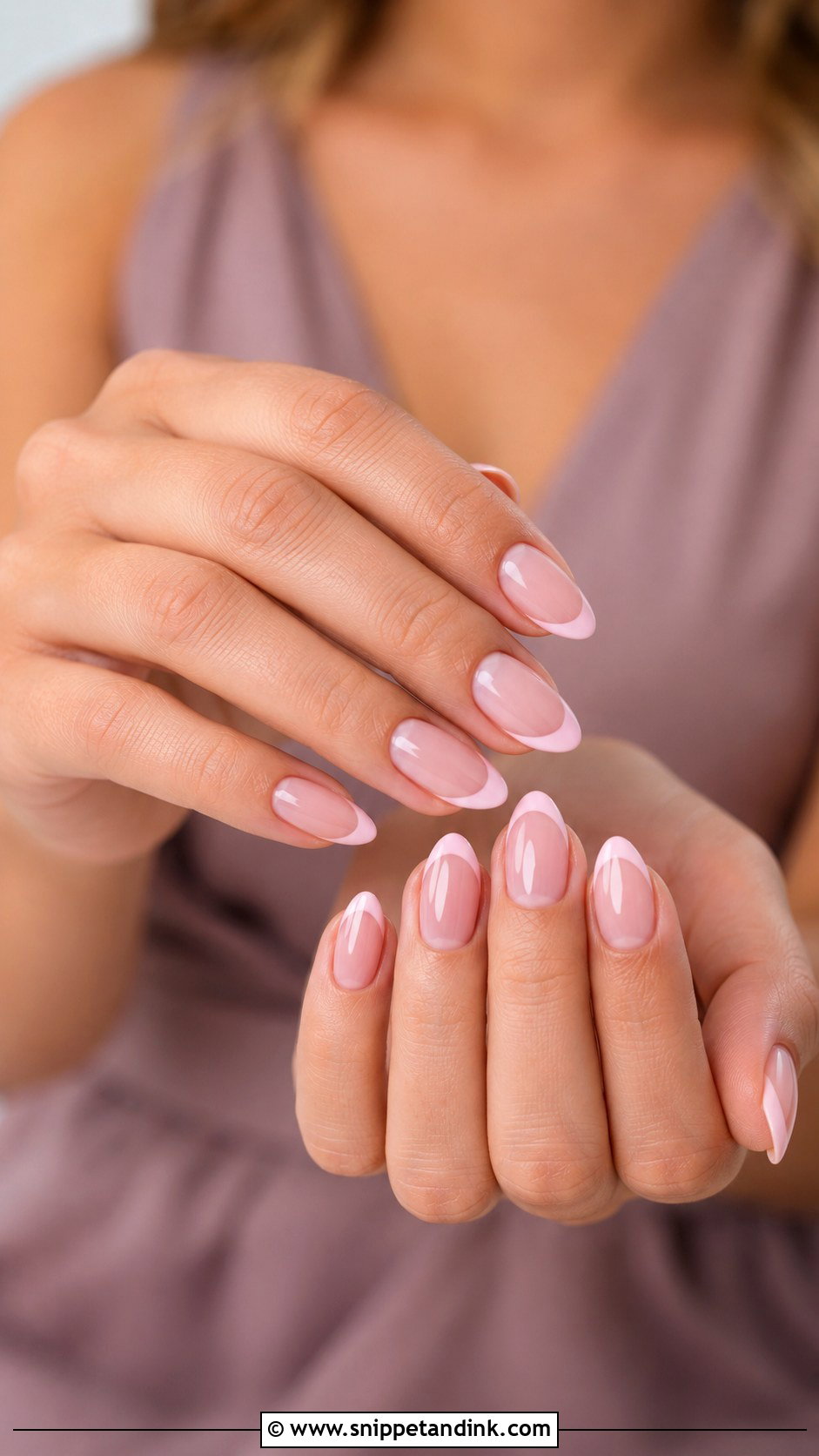
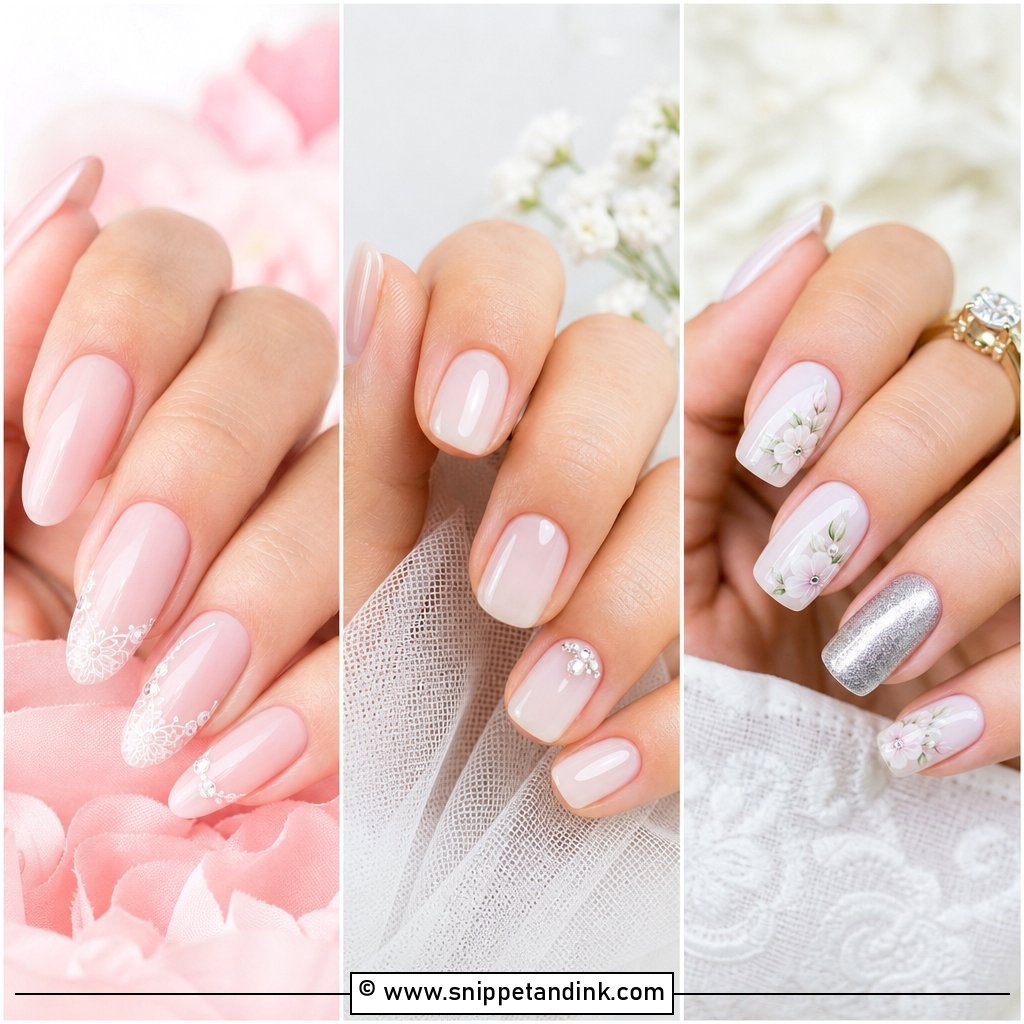
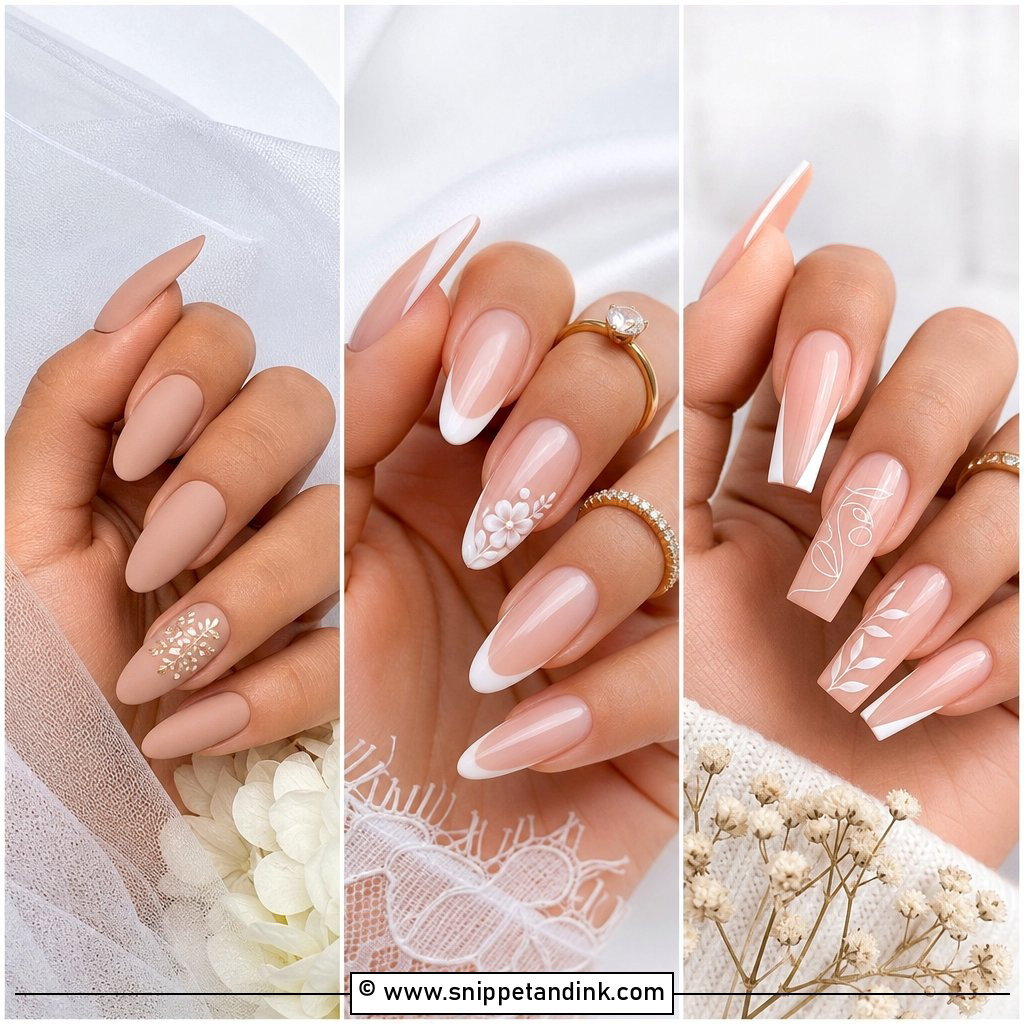
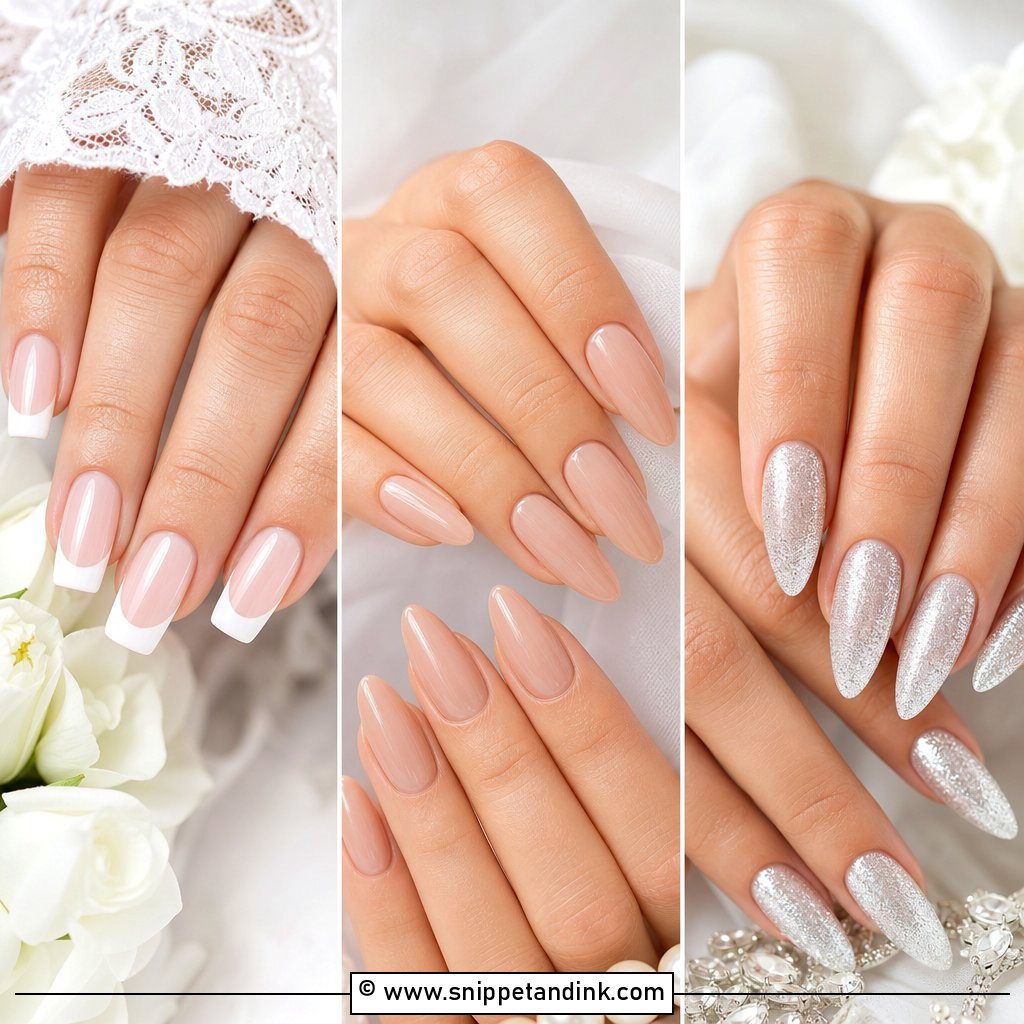
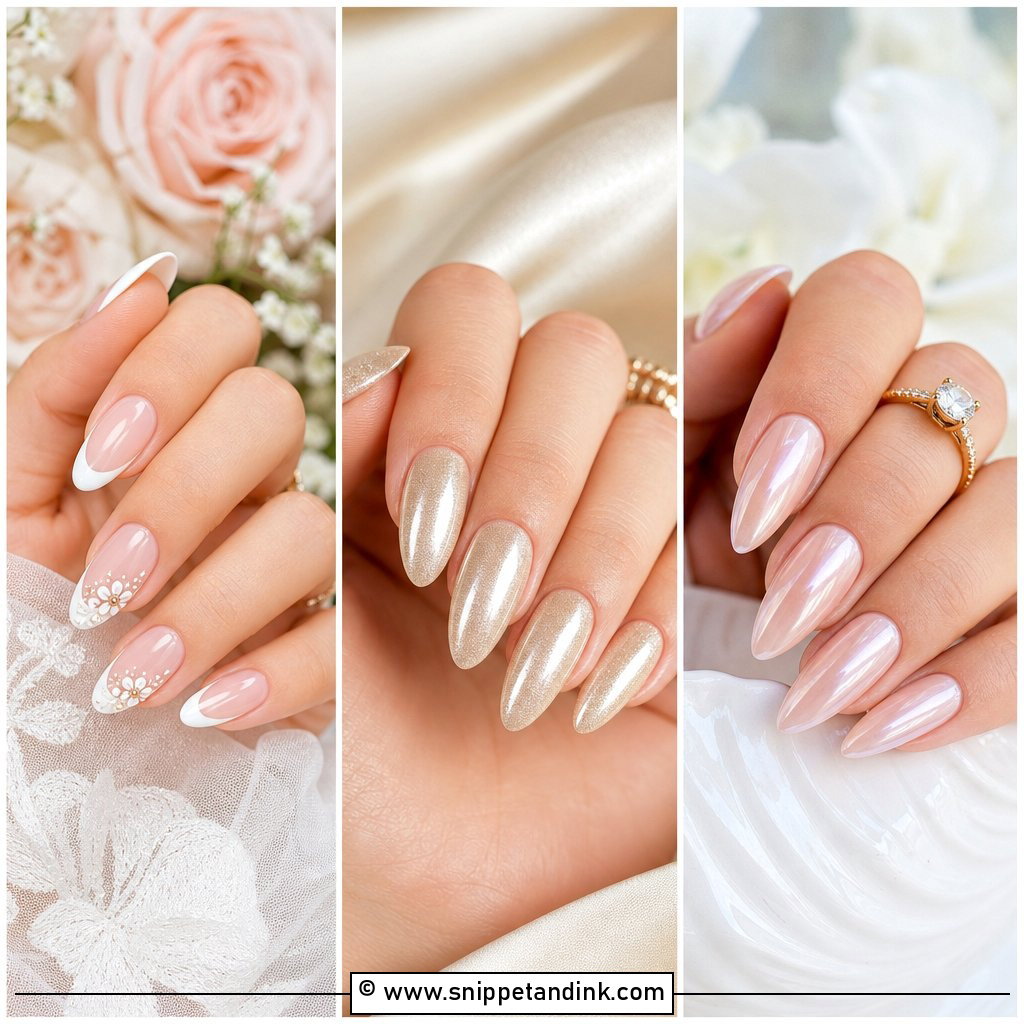
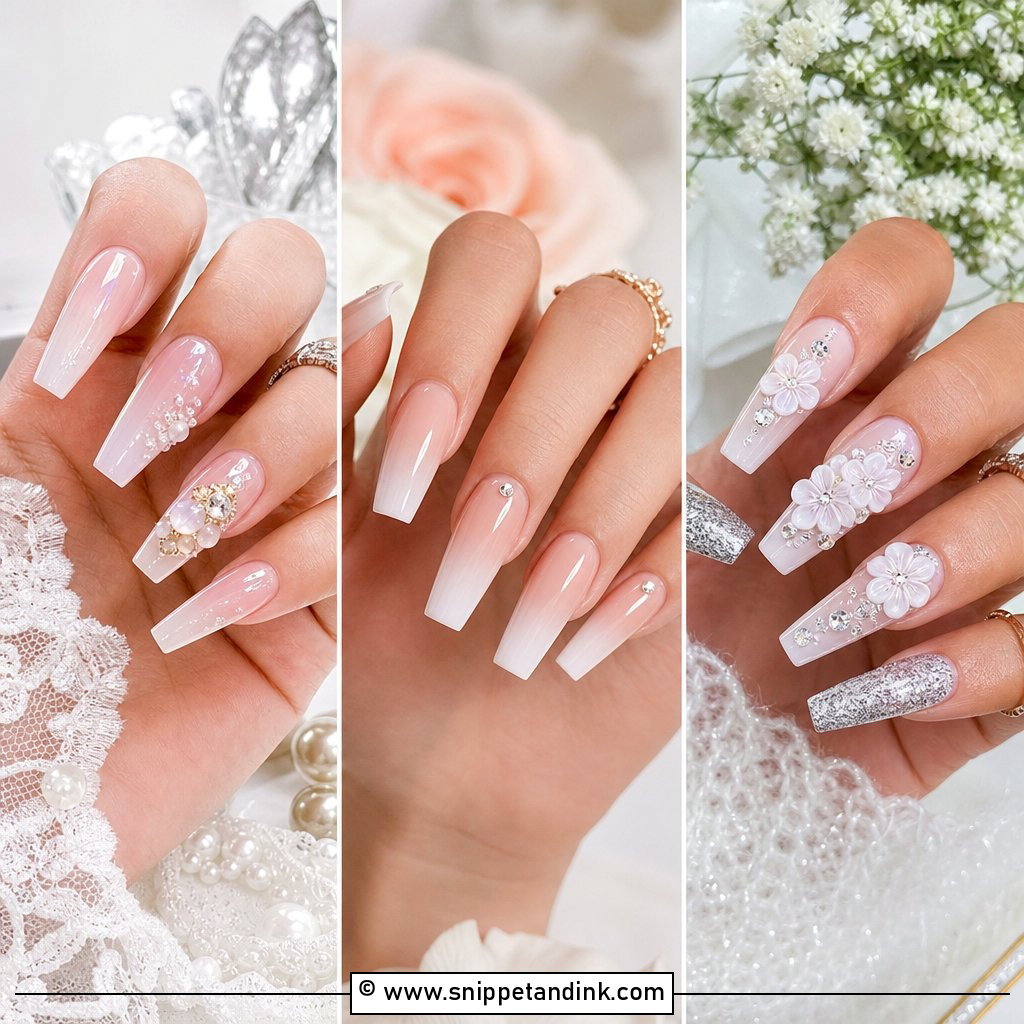
A pink French tip is the set I’d suggest when the bride wants classic but not plain. I start with a sheer blush base, then paint a pale pink smile line rather than white, which reads softer next to rose bouquets. Line thickness is the thing to decide in advance: a thin line looks current, a medium one looks traditional. It sits well on almond, oval and short square shapes. The hard part on a short nail is keeping the smile line symmetrical across ten fingers, so I’d go to a tech who does French work regularly. A pearl top coat is optional; plain high gloss holds up better.
2. Milky White Bridesmaid Nails
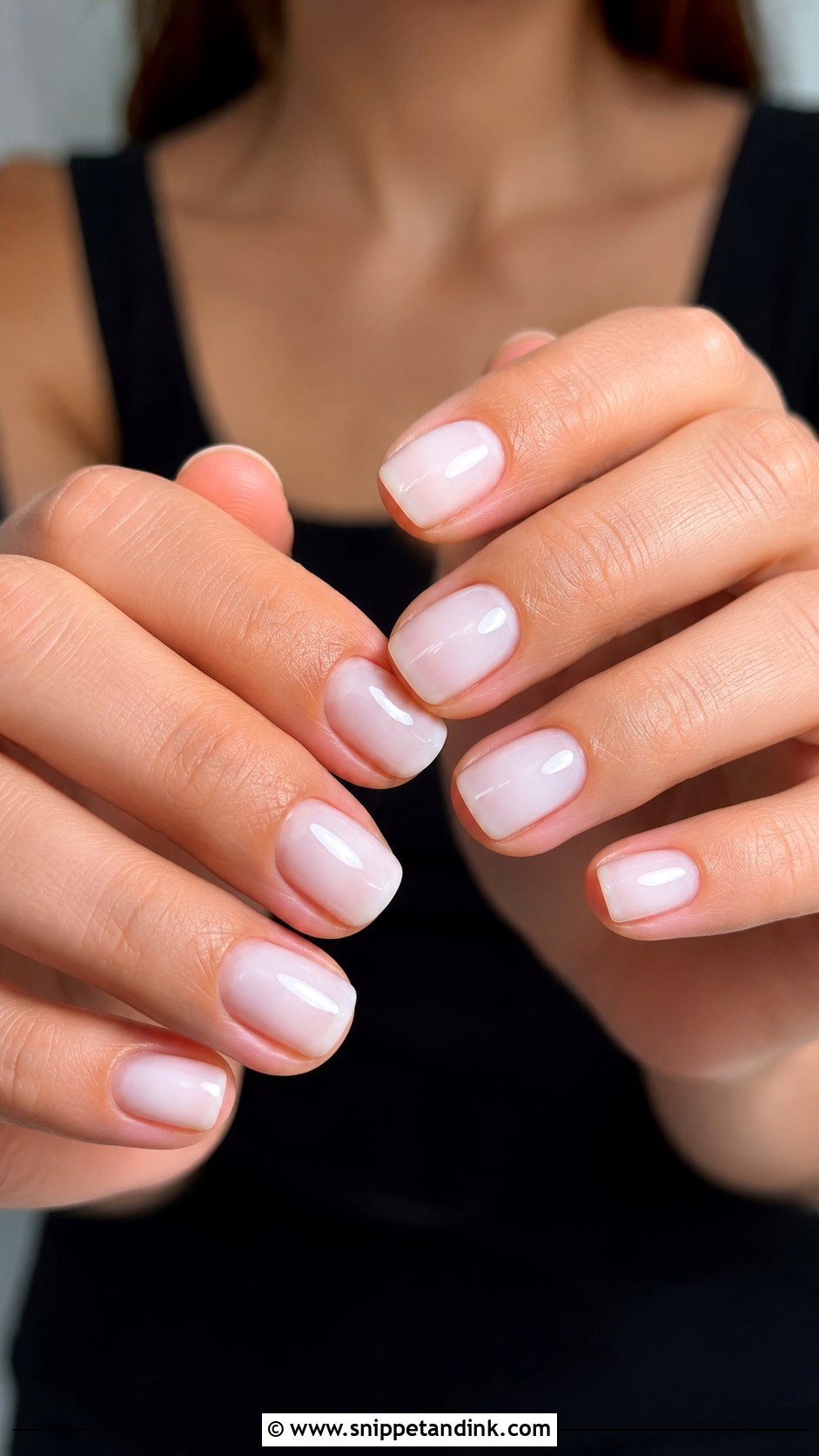
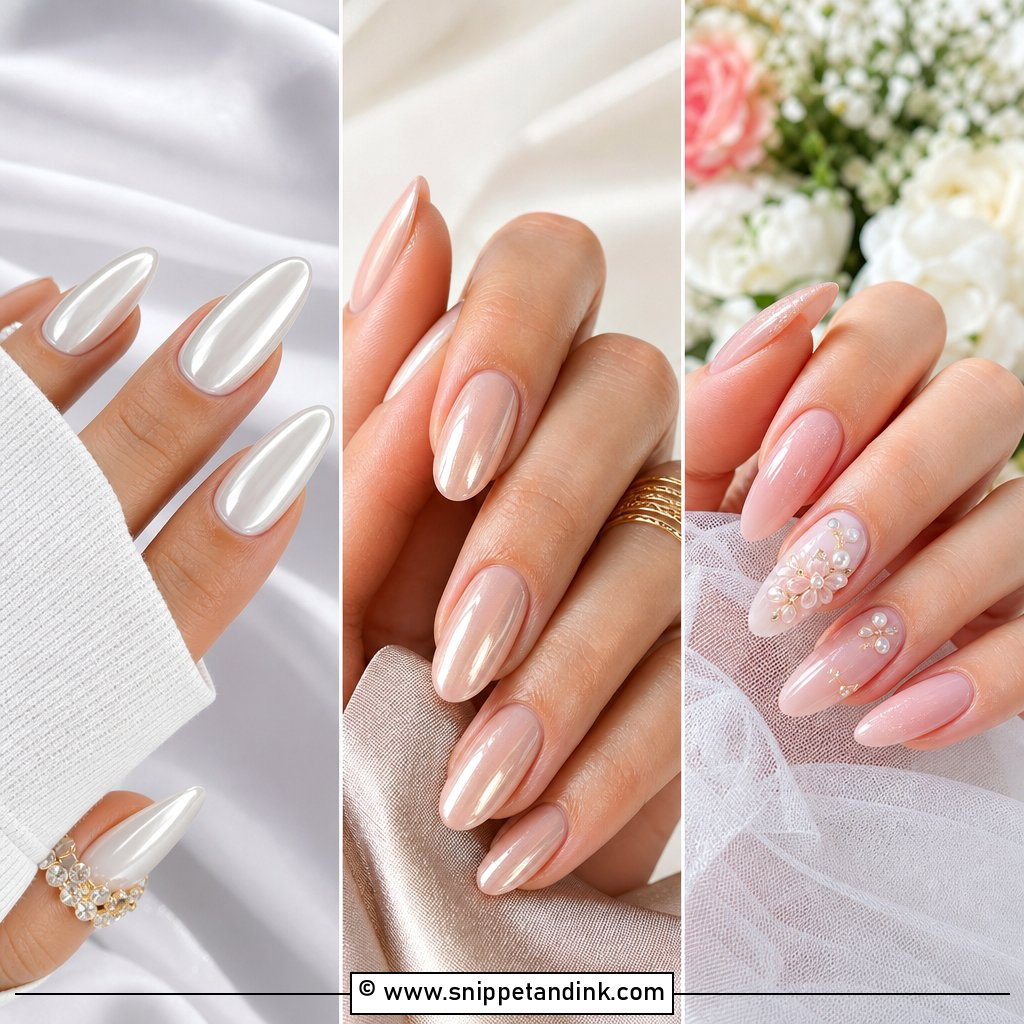
Milky white is softer than solid white, which can look chalky in photographs. The good versions are layered: two or three thin coats of a translucent milky gel, so the nail looks smooth and slightly cloudy rather than painted. One heavy coat streaks. I’d keep these short to medium. They go with any dress fabric, and they make tired, ridged nails look healthier, which is a real advantage for bridesmaids who don’t usually have manicures.
3. Nude Chrome Bridesmaid Nails
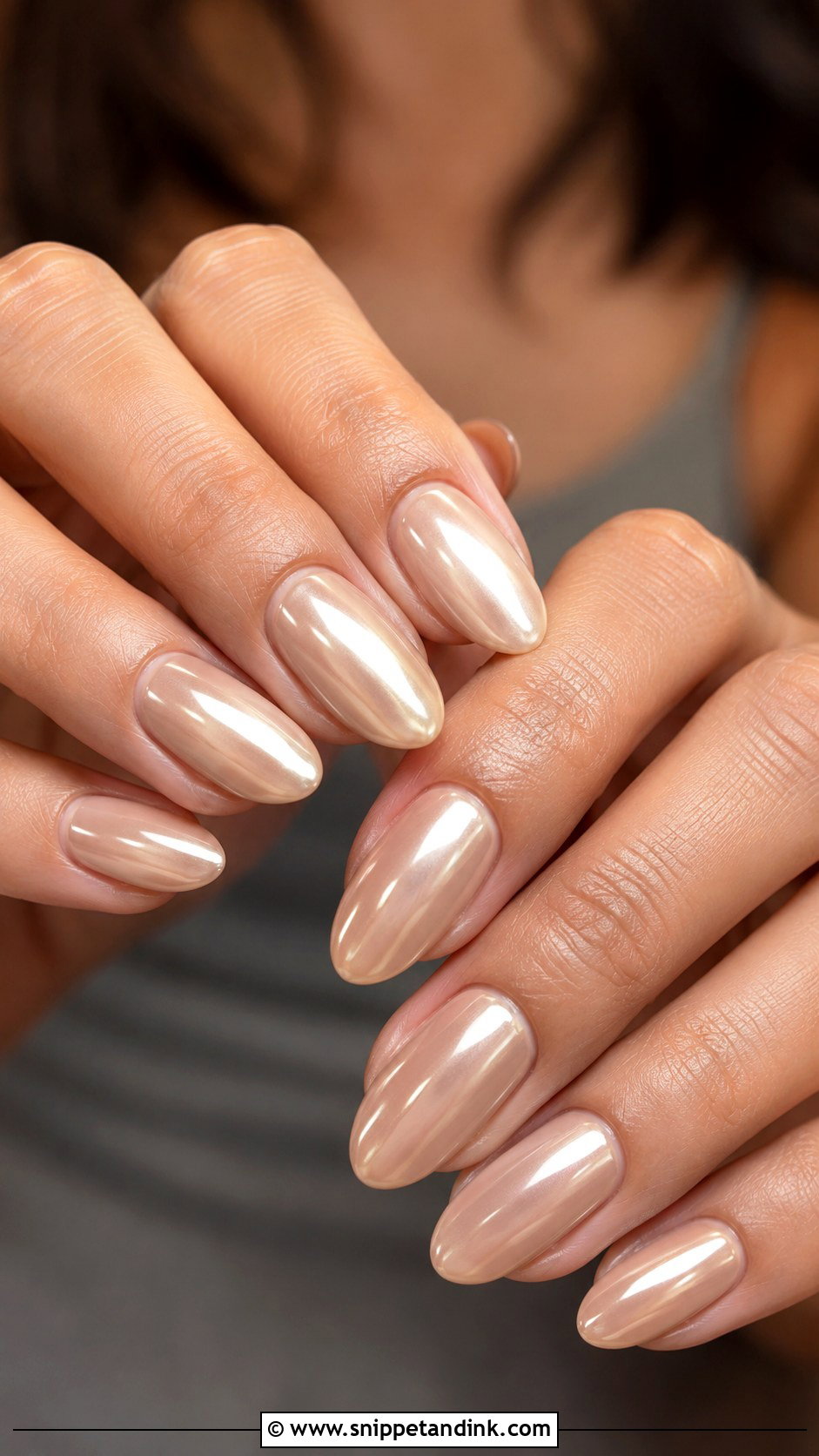
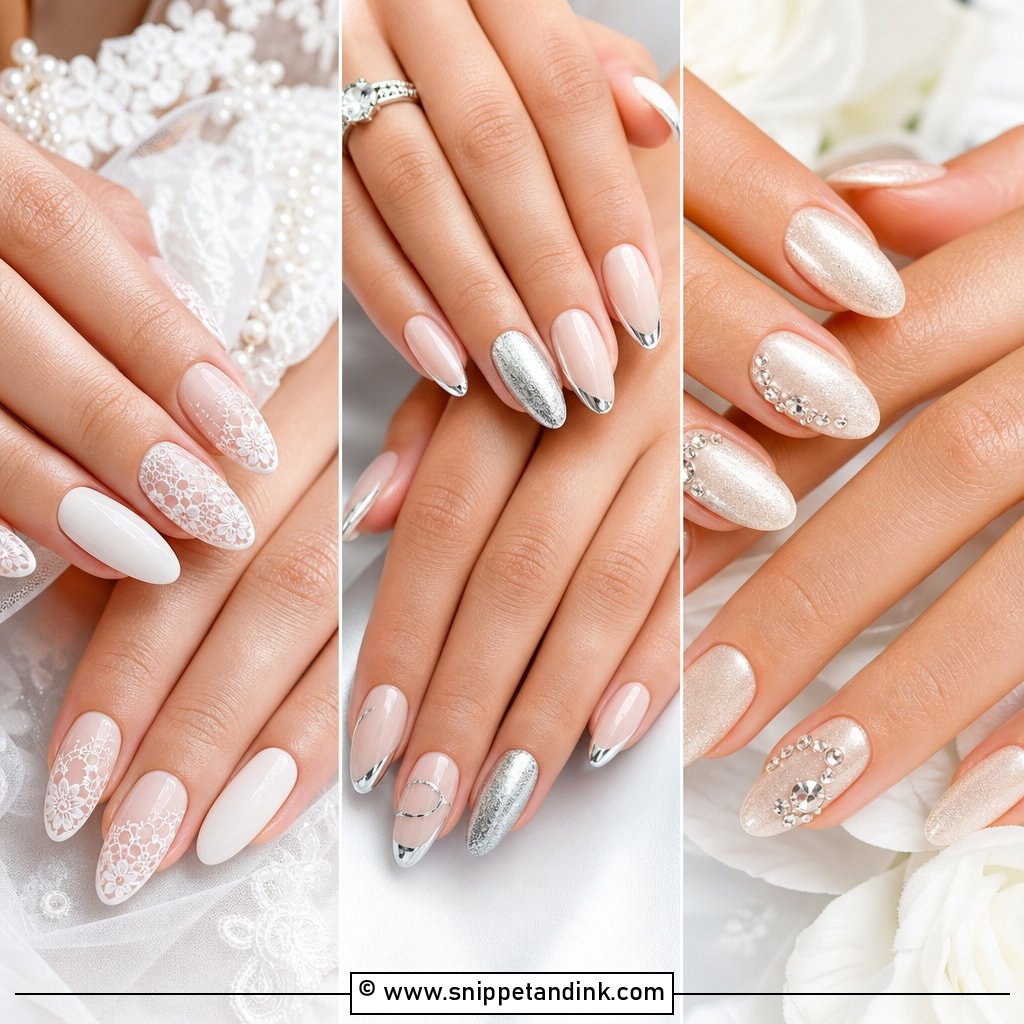
Chrome over nude is the modern pick in this list. I rub the powder over a no-wipe top gel so it grips, then seal it with a second layer; skip that seal and the chrome scuffs off at the free edge within a few days. Pick each bridesmaid’s nude separately, beige, blush, caramel or rosy, rather than one shade for the whole group. Almond and oval shapes keep the reflective finish looking soft. Champagne chrome suits formal weddings; for something minimal, ask for a barely-there glazed finish. It catches light without pulling focus from the bride’s hands.
4. Blush Pink Bridesmaid Nails
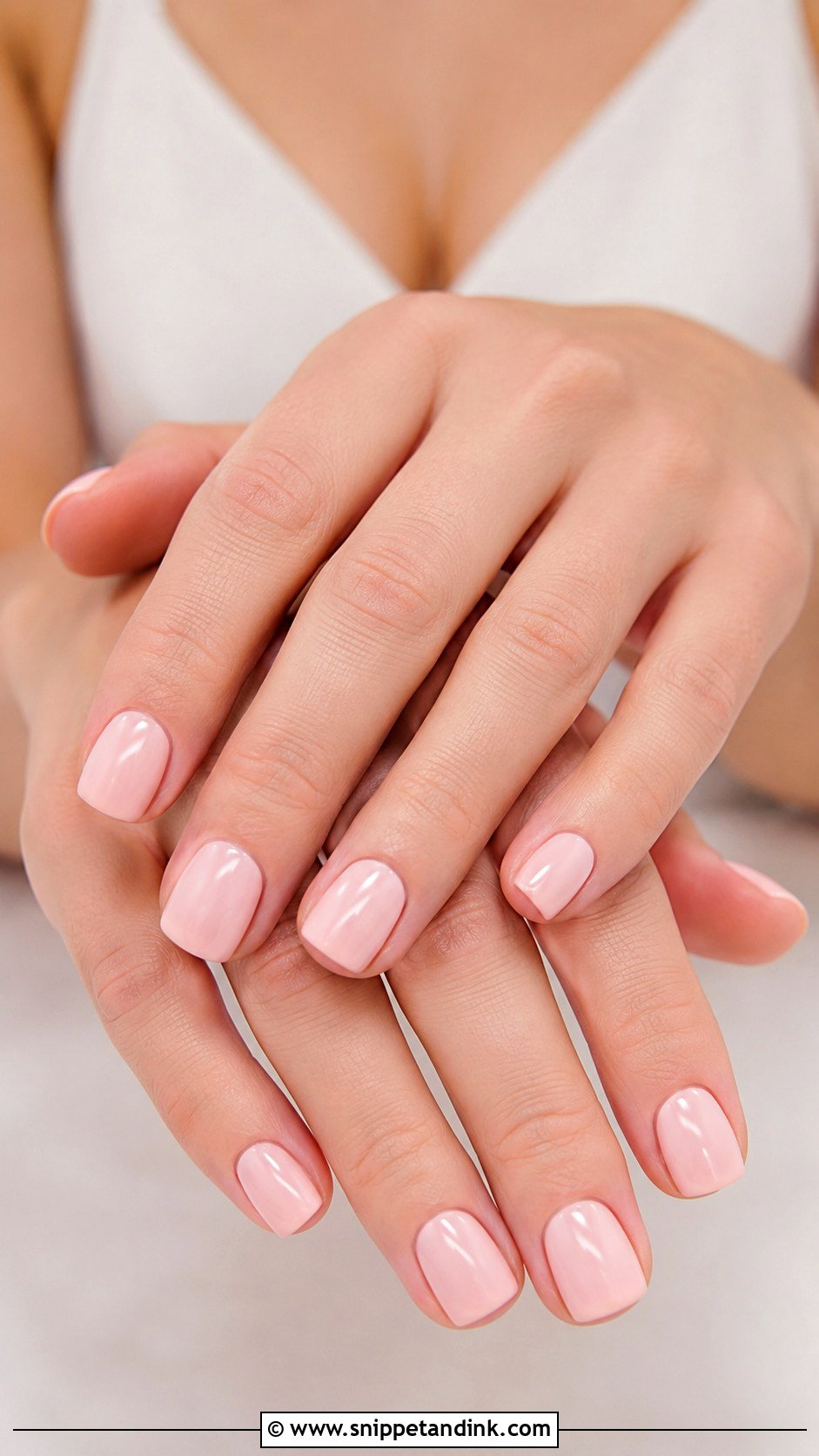
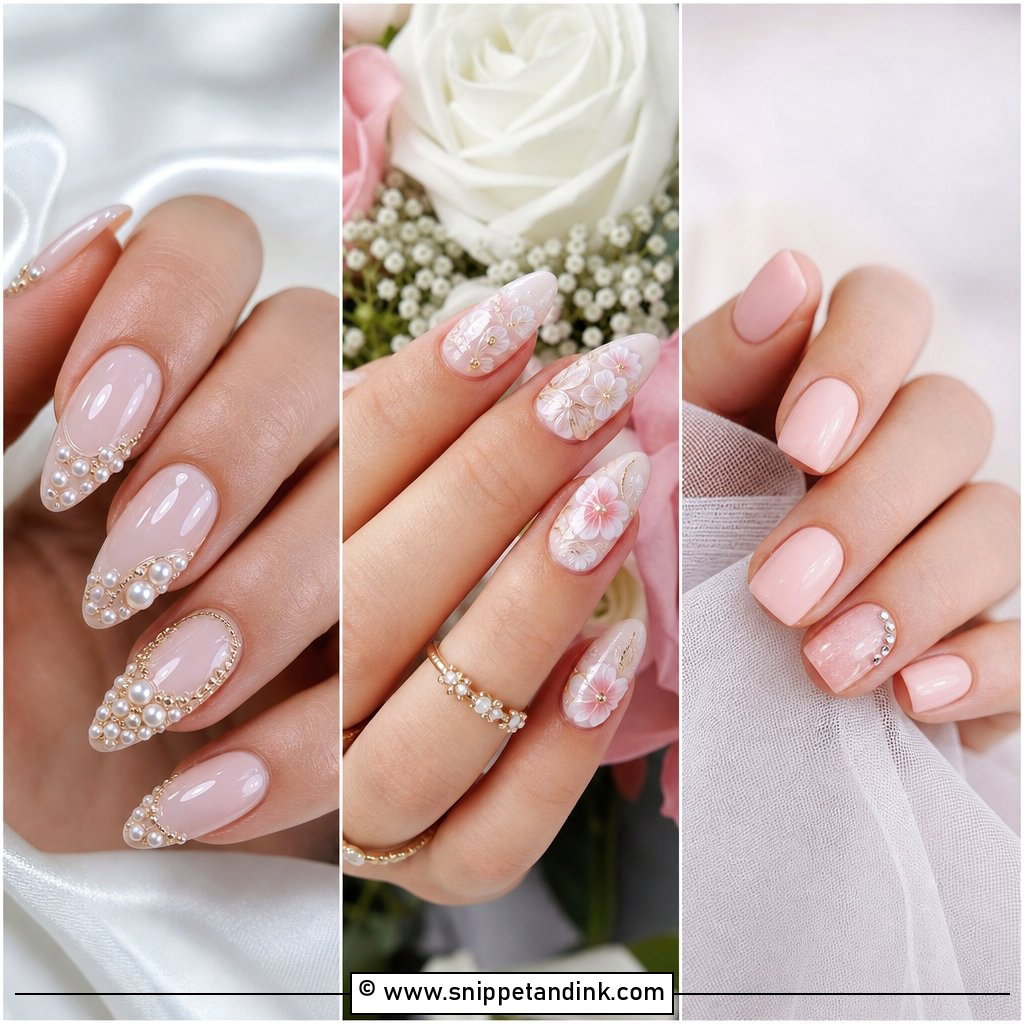
If bridesmaids are wearing different dress colours, blush is the shade I’d reach for to tie them together. It sits comfortably beside sage, champagne, dusty blue, lavender and navy. On short nails I use a creamy blush; on longer nails a sheer jelly blush keeps the length from looking heavy. A satin top coat is pretty but marks more easily than gloss, so for a long wedding weekend I lean toward gloss.
5. Micro French Bridesmaid Nails
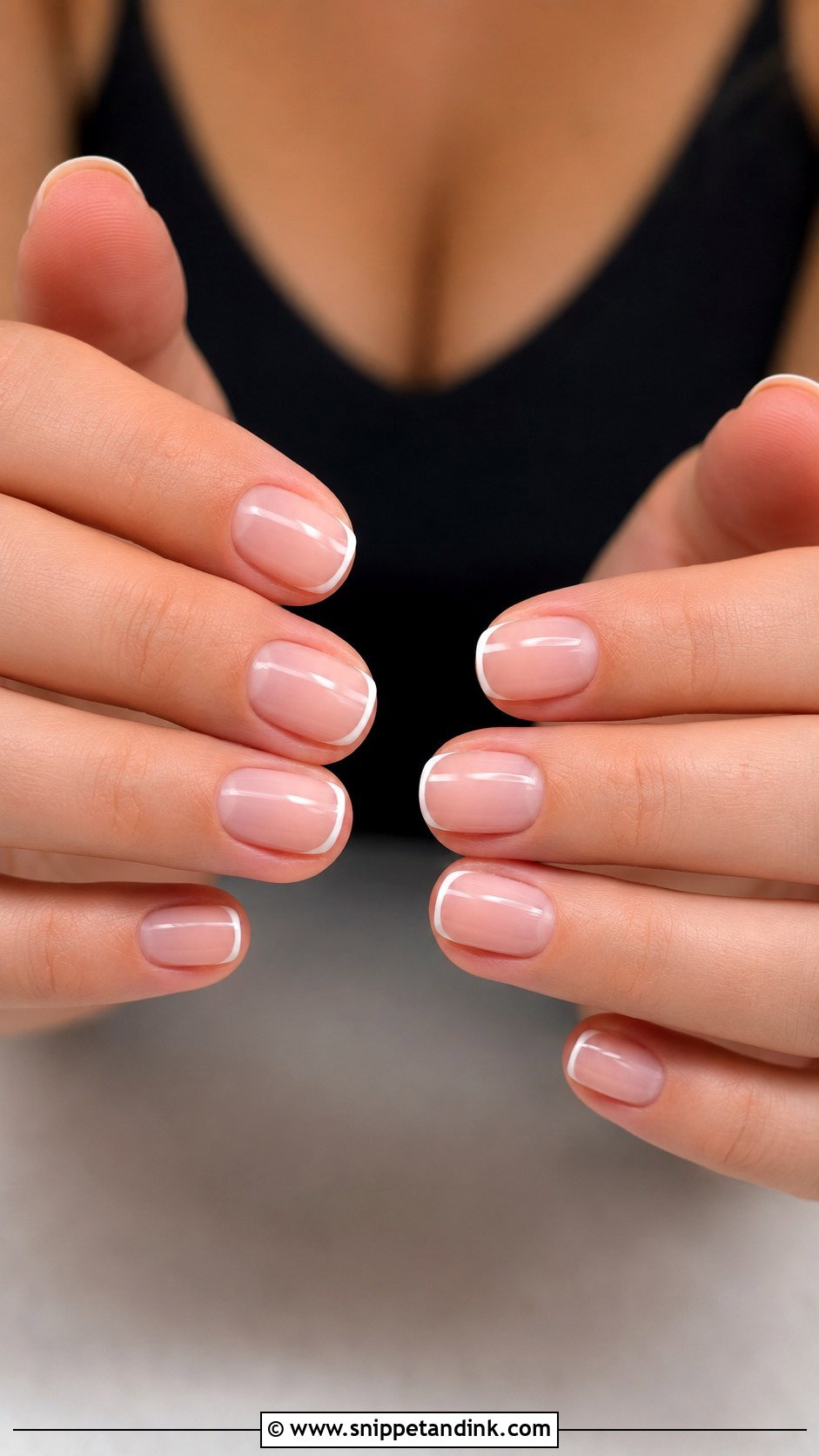
The micro French is my answer for short nails. A standard tip takes up too much of a short nail and makes it look stubby; a hairline tip gives definition without crowding the nail bed. The base can be nude, pink or milky, and the tip doesn’t have to be white; ivory or champagne looks softer. It’s a precise design, and I paint it with a long striper brush in one pass. Because the line is so fine, each bridesmaid can have a slightly different base and the group still looks coordinated.
6. Pearl Accent Bridesmaid Nails
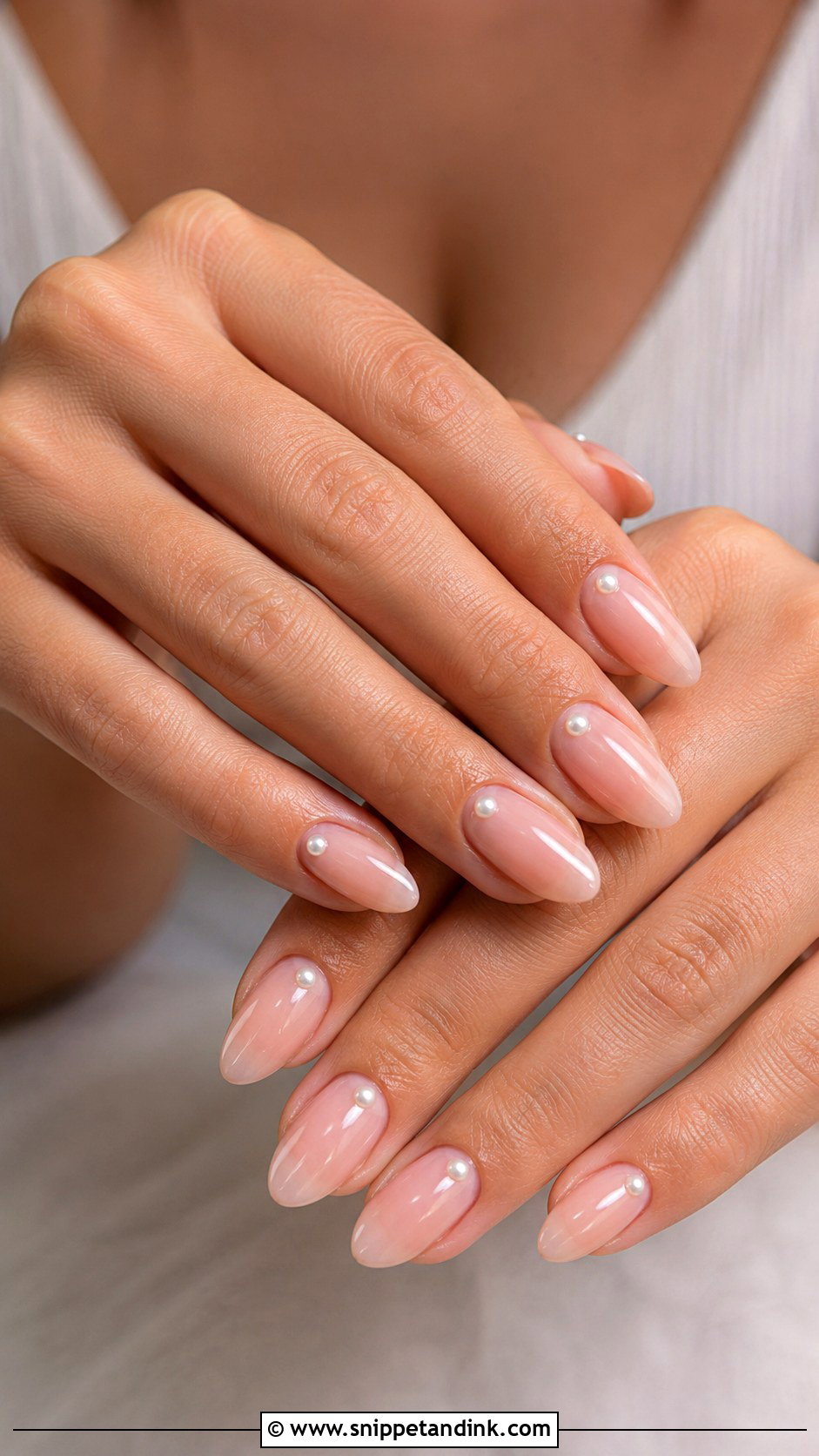
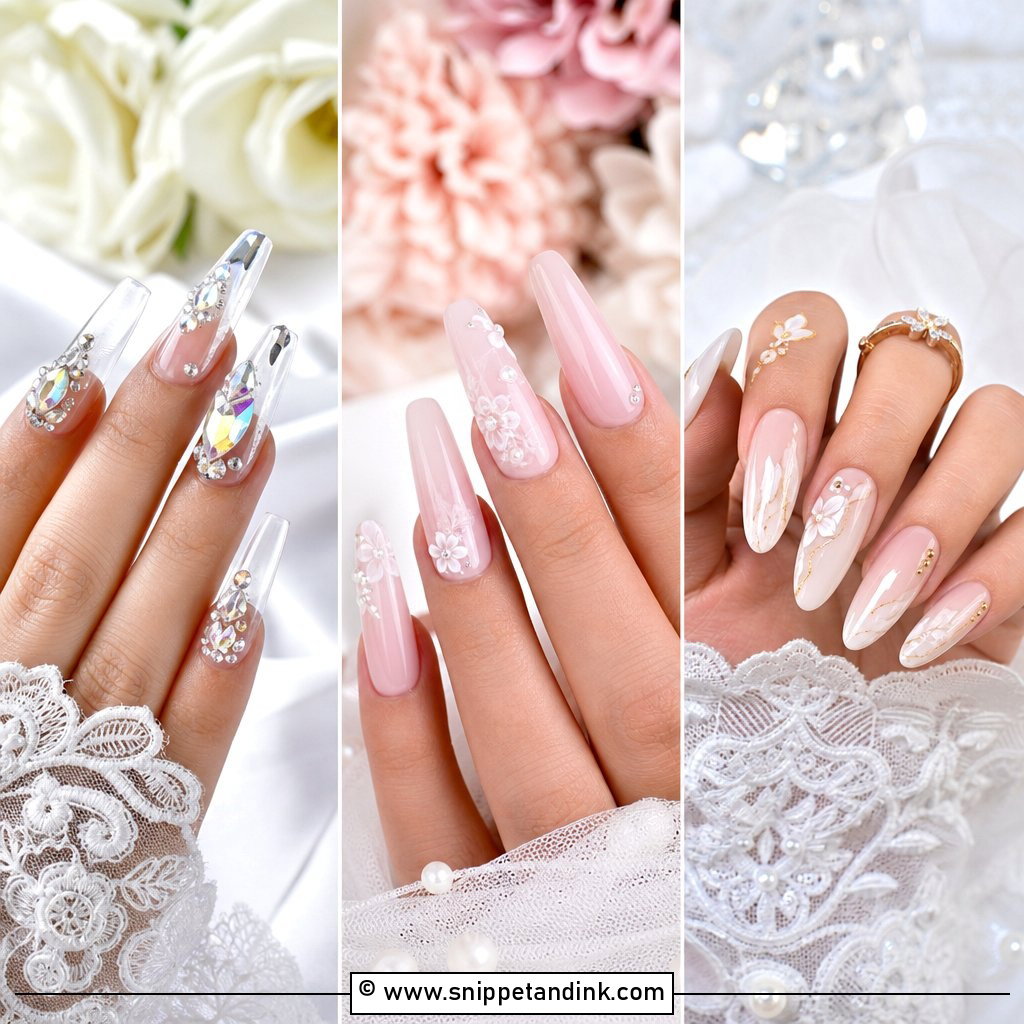
Pearls are where I see bridesmaid sets go wrong most often. A pearl on every nail looks costume-like; one tiny flat-back pearl near the cuticle of each ring finger looks considered. I always use flat-back pearls, because rounded ones snag hair, tights and dress chiffon. They need to sit in a bed of builder or top gel, with the top coat brought up around the edges, or they pop off when someone grabs her bag. Pearl jewellery and satin dresses suit this design best.
7. Floral Accent Bridesmaid Nails
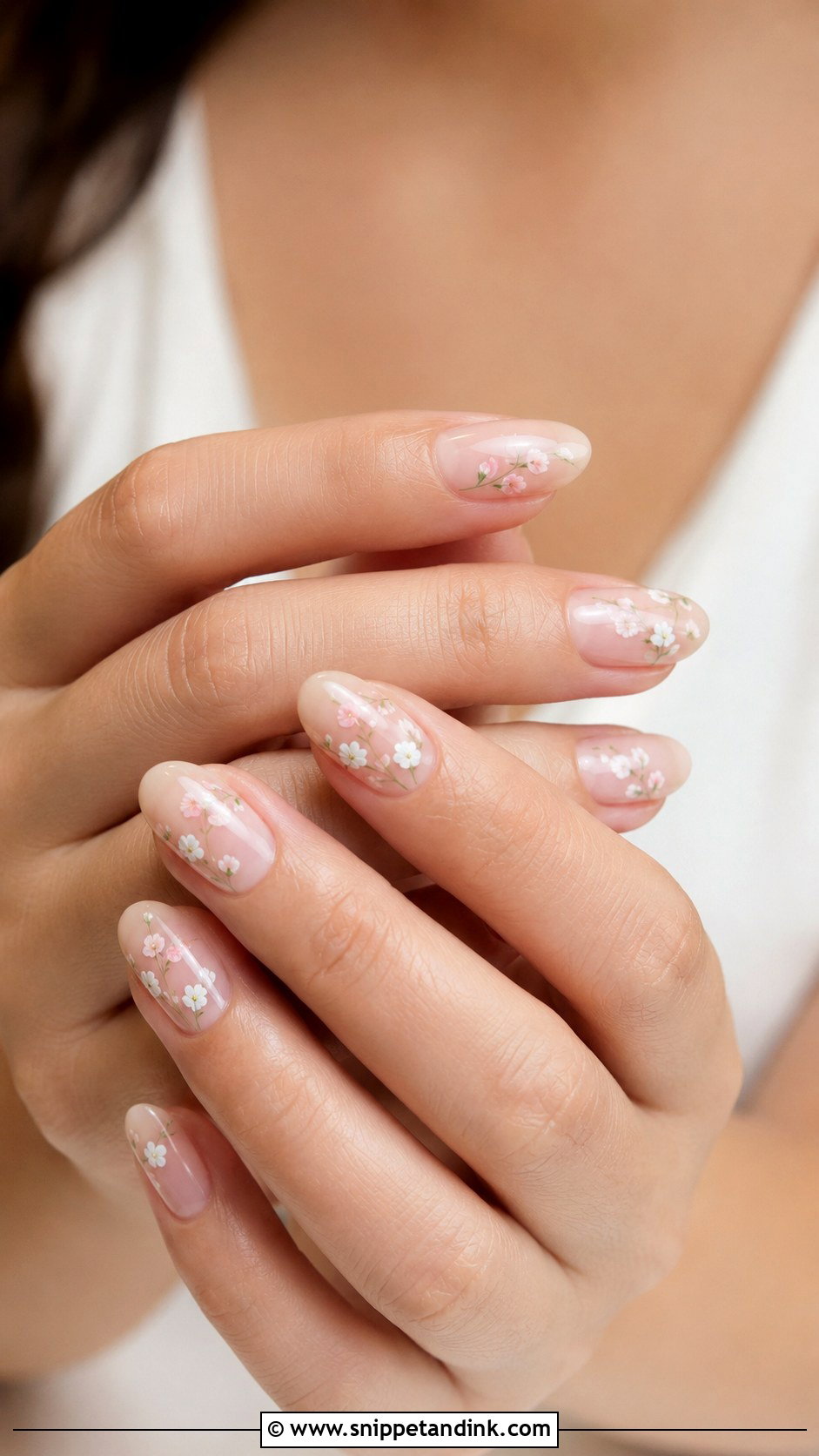
Floral accent bridesmaid nails suit garden ceremonies, but only if the art stays small. I paint florals on two accent nails per hand, never all ten, over a sheer nude or milky base. Tiny five-dot flowers in white, pink or sage are easier to repeat across a whole bridal party than hand-painted roses, which take time and vary from nail to nail. If you can, bring a photo of the actual bouquet so the colours echo it. An almond shape and a gloss finish keep it fresh.
8. Champagne Glitter Bridesmaid Nails
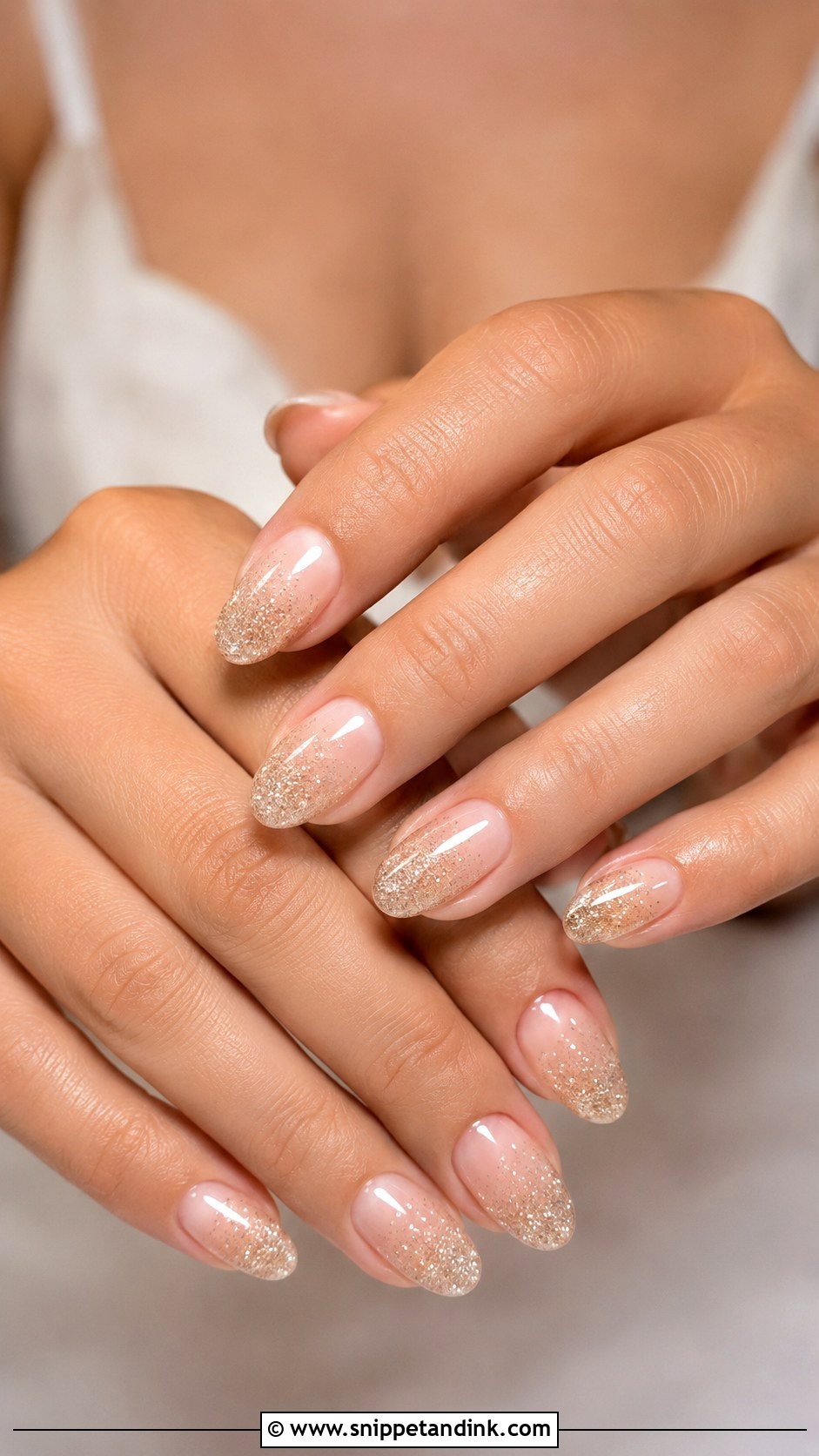
Champagne glitter is softer than silver or gold, which makes it a good evening option for neutral and blush dresses. Glitter size matters most: fine, flat glitter sits smooth under a top coat, while chunky glitter leaves a gritty surface that catches on fabric. For a quieter look, fade it from the tip or the cuticle instead of covering the whole nail. Oval or squoval shapes keep it classy. Glitter is also the hardest finish to remove, so warn bridesmaids it’ll need a proper soak-off afterward.
9. Dusty Rose Bridesmaid Nails
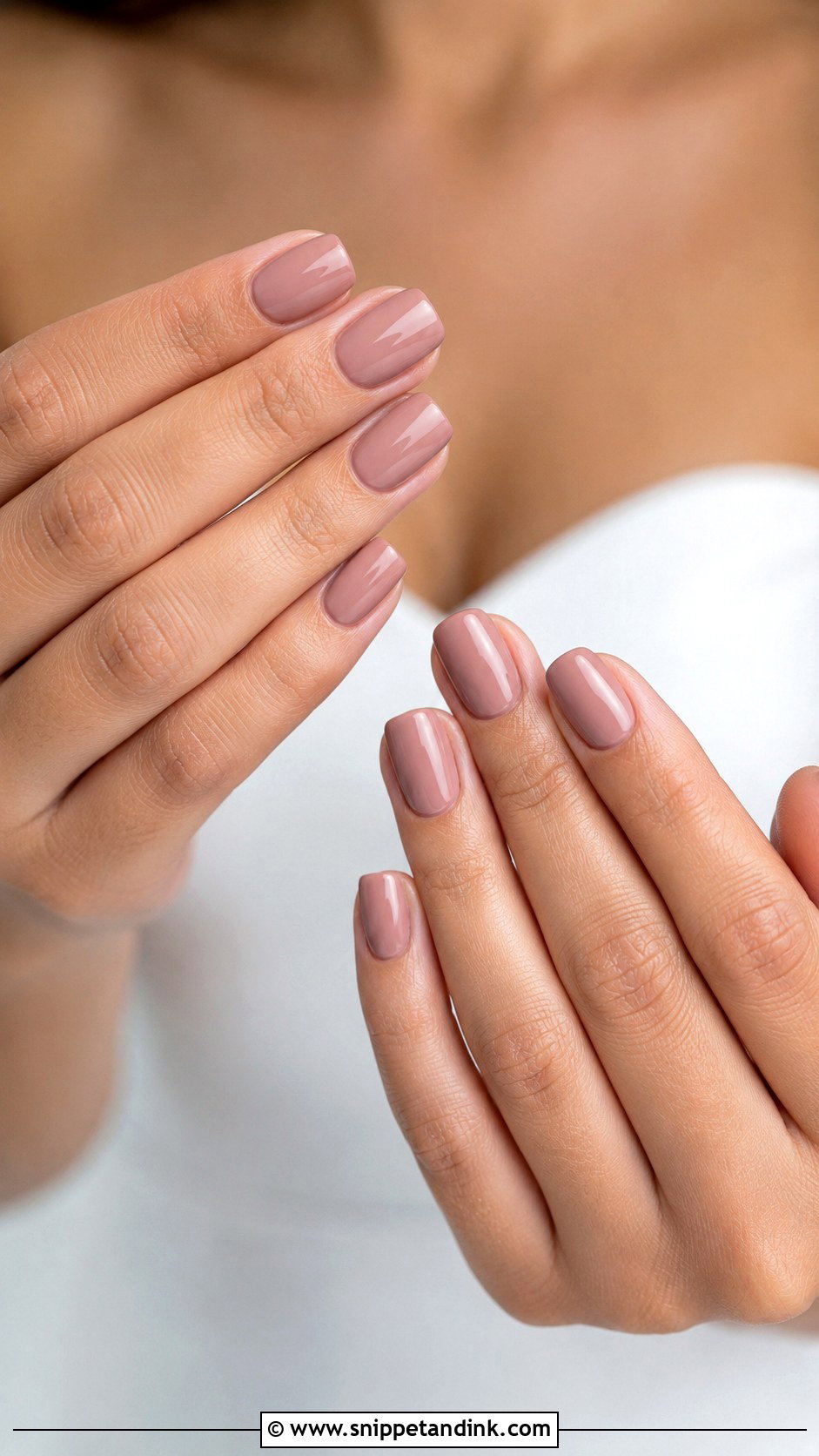
Dusty rose has more depth than blush, and it’s my choice for muted or vintage palettes and autumn weddings. It sits well against mauve, burgundy, champagne, sage, navy and taupe dresses. A creamy gel looks neat on short square nails; a sheer version keeps almond nails lighter. If you want a detail, one fine metallic line is plenty. This is also a shade bridesmaids genuinely keep wearing after the wedding, which I count as a point in its favour.
10. Sage Green Bridesmaid Nails
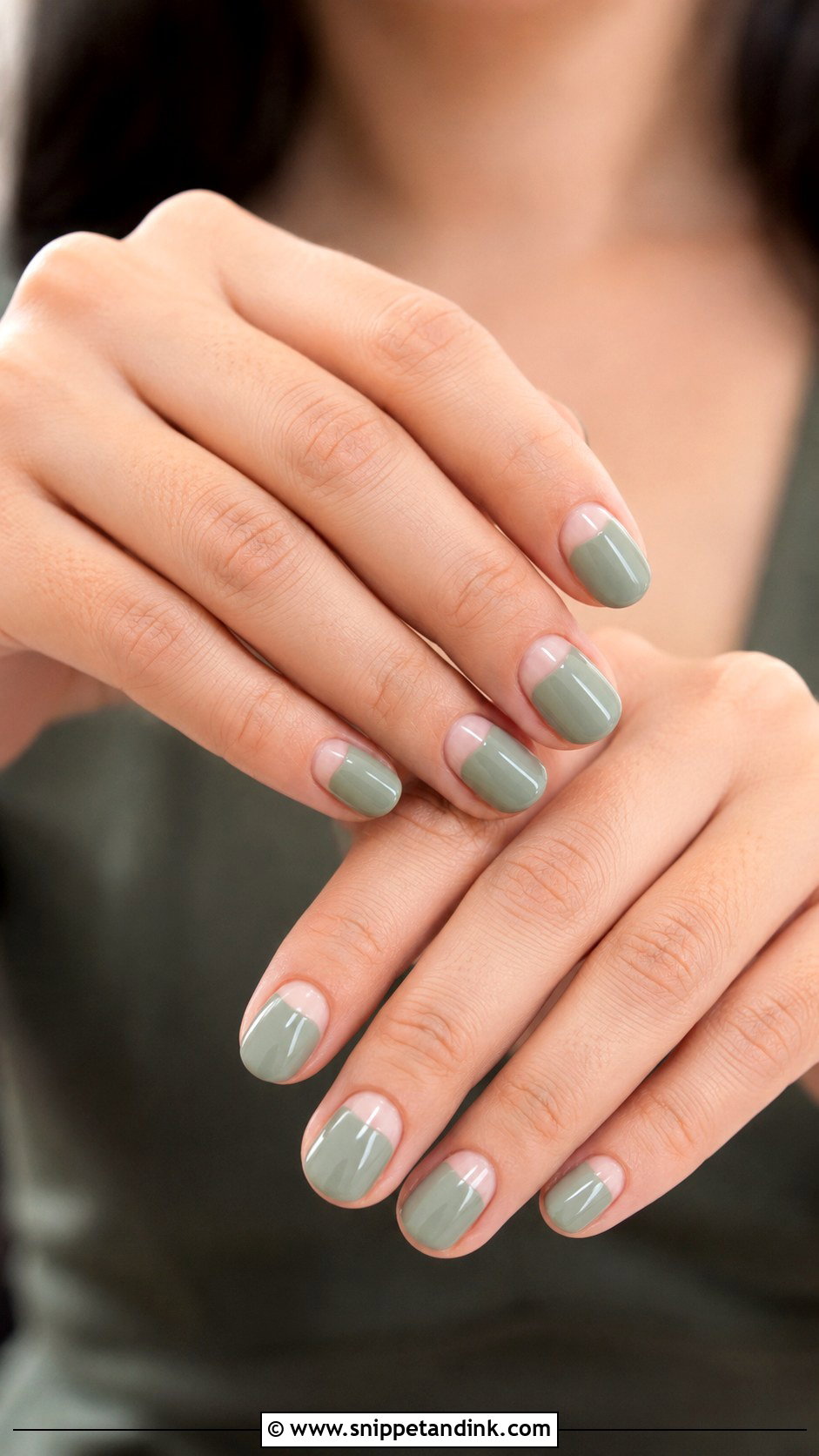
Sage green is the colour I’d suggest when the bride wants coordination but not pink. Muted sage reads calm against ivory flowers and eucalyptus bouquets. A full sage nail can look heavy on longer lengths, so I often pair it with nude negative space or a thin sage tip. One caution: some greens look grey under warm indoor lighting, so check the swatch next to your skin in the light you’ll actually be in.
11. Lavender Bridesmaid Nails
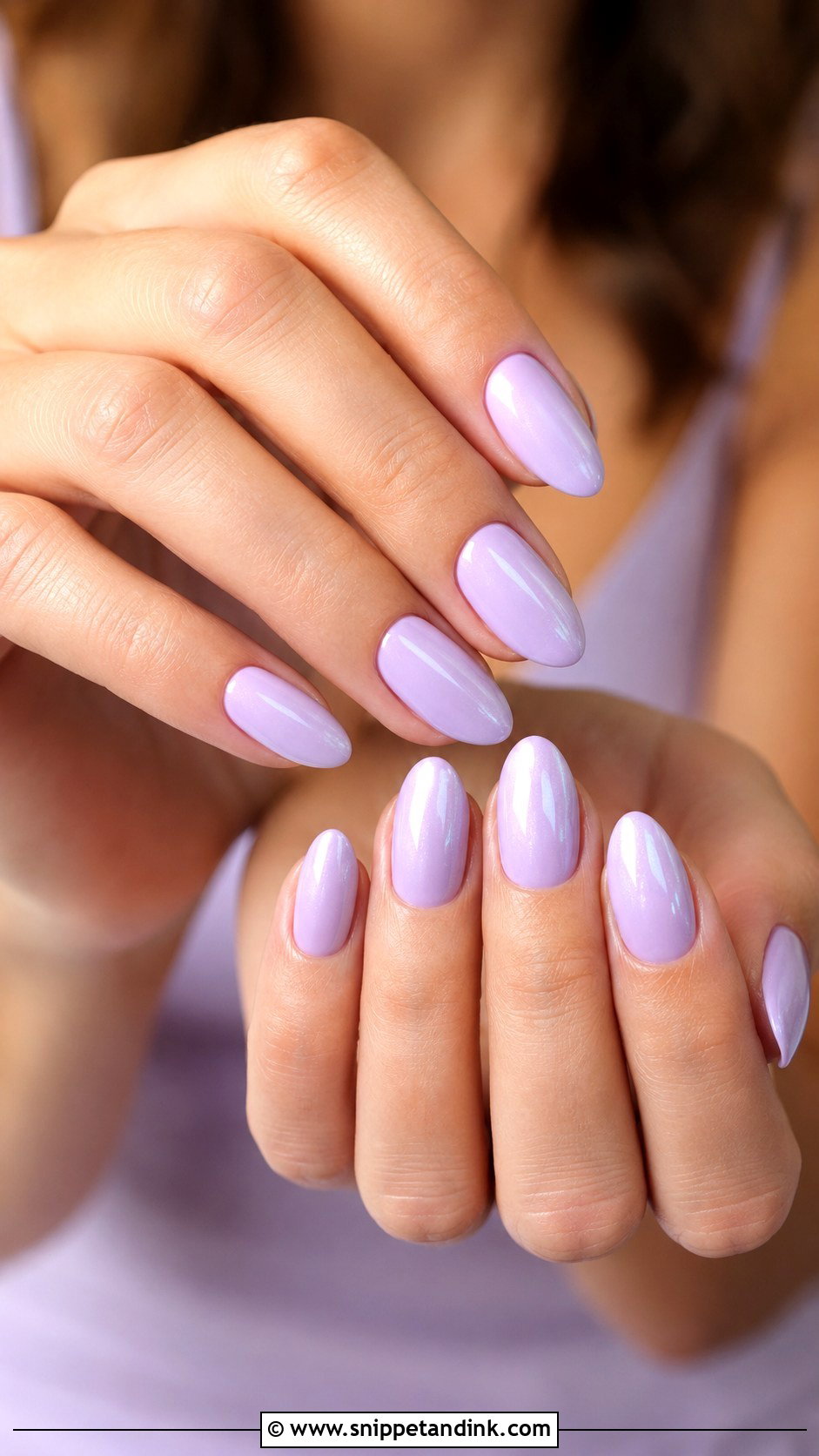
Lavender is playful, and I’d keep it for spring and summer, with lilac, silver or pale blue dresses. Sheer lavender gives a wash of colour; creamy pastel lavender reads stronger. Pastels are notoriously streaky in regular polish, which is one reason I prefer gel for them. Full colour, a lavender French tip or a soft ombre all keep it wedding-appropriate. Oval and almond shapes flatter it most.
12. Mauve Bridesmaid Nails
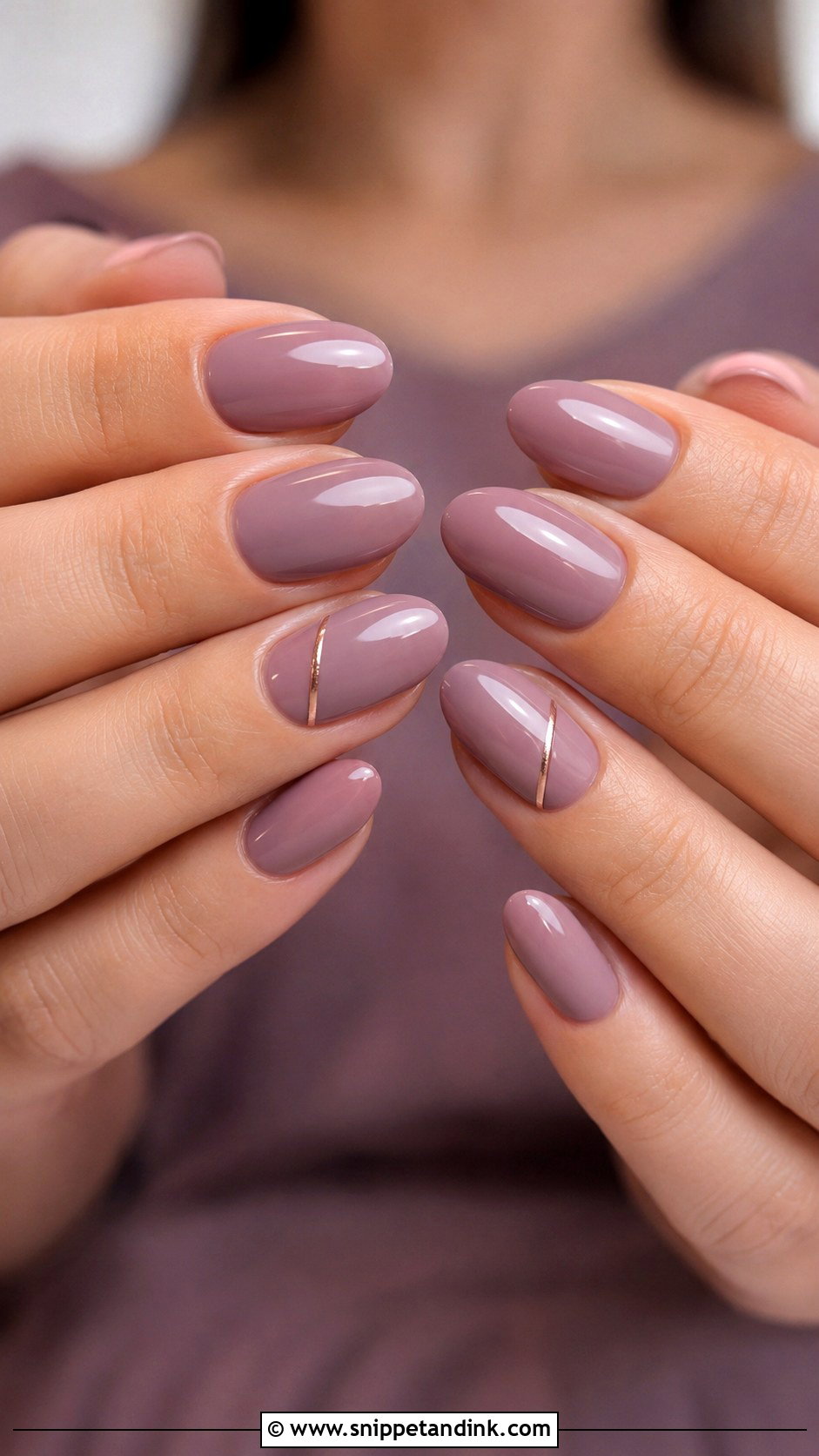
Mauve sits between pink, purple and taupe, so it solves the problem of blush being too pale and burgundy too dark. It suits autumn weddings and dresses in dusty rose, plum, champagne, navy or grey. Glossy mauve looks crisp on short nails, while a sheer overlay softens longer ones. A thin rose gold line or tiny pearl is enough detail. It’s the shade I find most flattering across very different skin tones in one group.
13. Soft Ombre Bridesmaid Nails
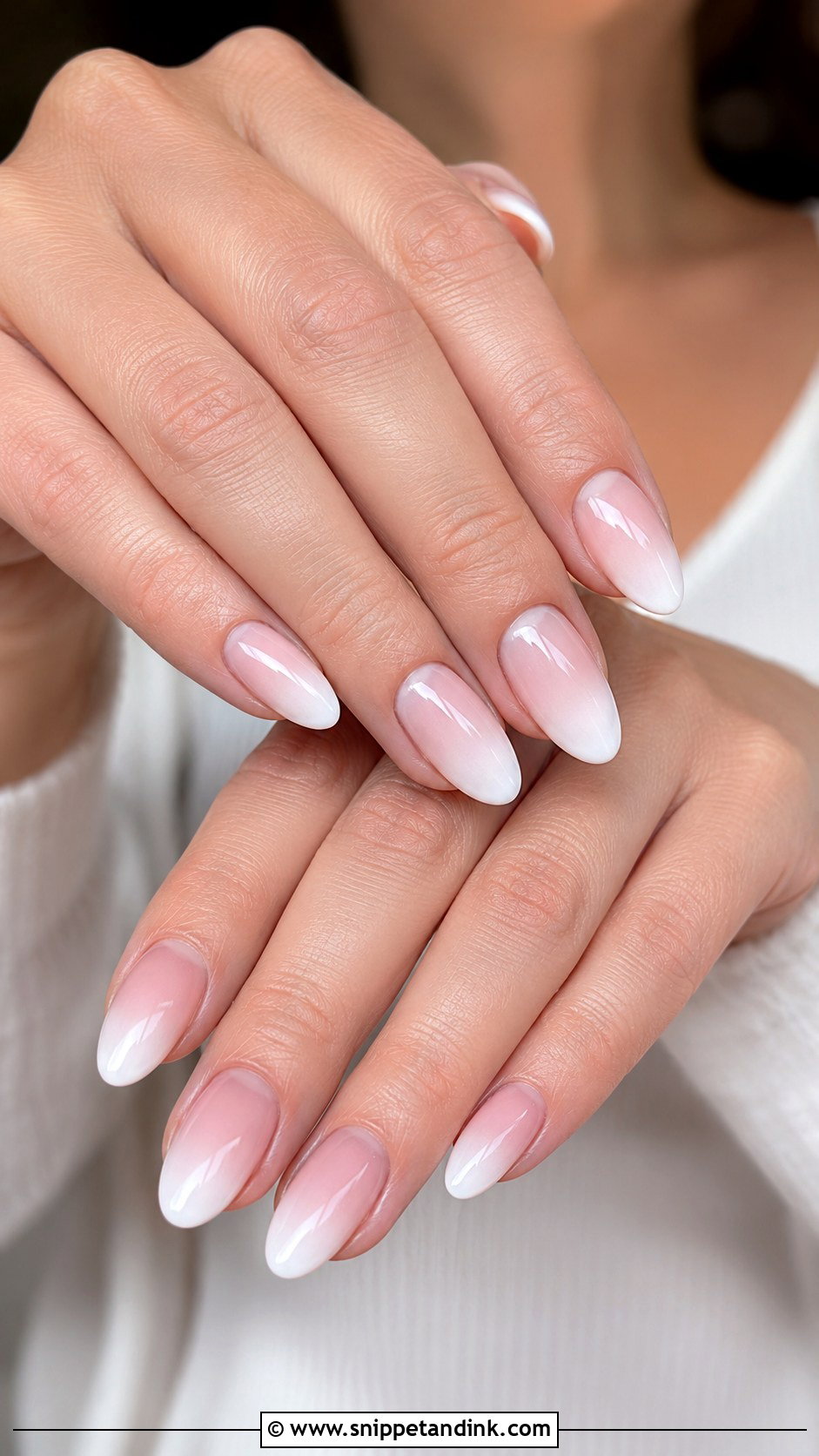
Ombre gives the French effect without a visible line, which forgives an uneven nail length across a bridal party. The classic fade goes from sheer pink or nude at the cuticle into soft white at the tip. I build it with a sponge or a thin layer of gel blended with a dry brush, and the blend line is where I check quality: a visible band means it was rushed. Nude-to-champagne suits warm palettes; pink-to-milky-white suits cool ones. Keep it subtle and high gloss.
14. White Swirl Bridesmaid Nails
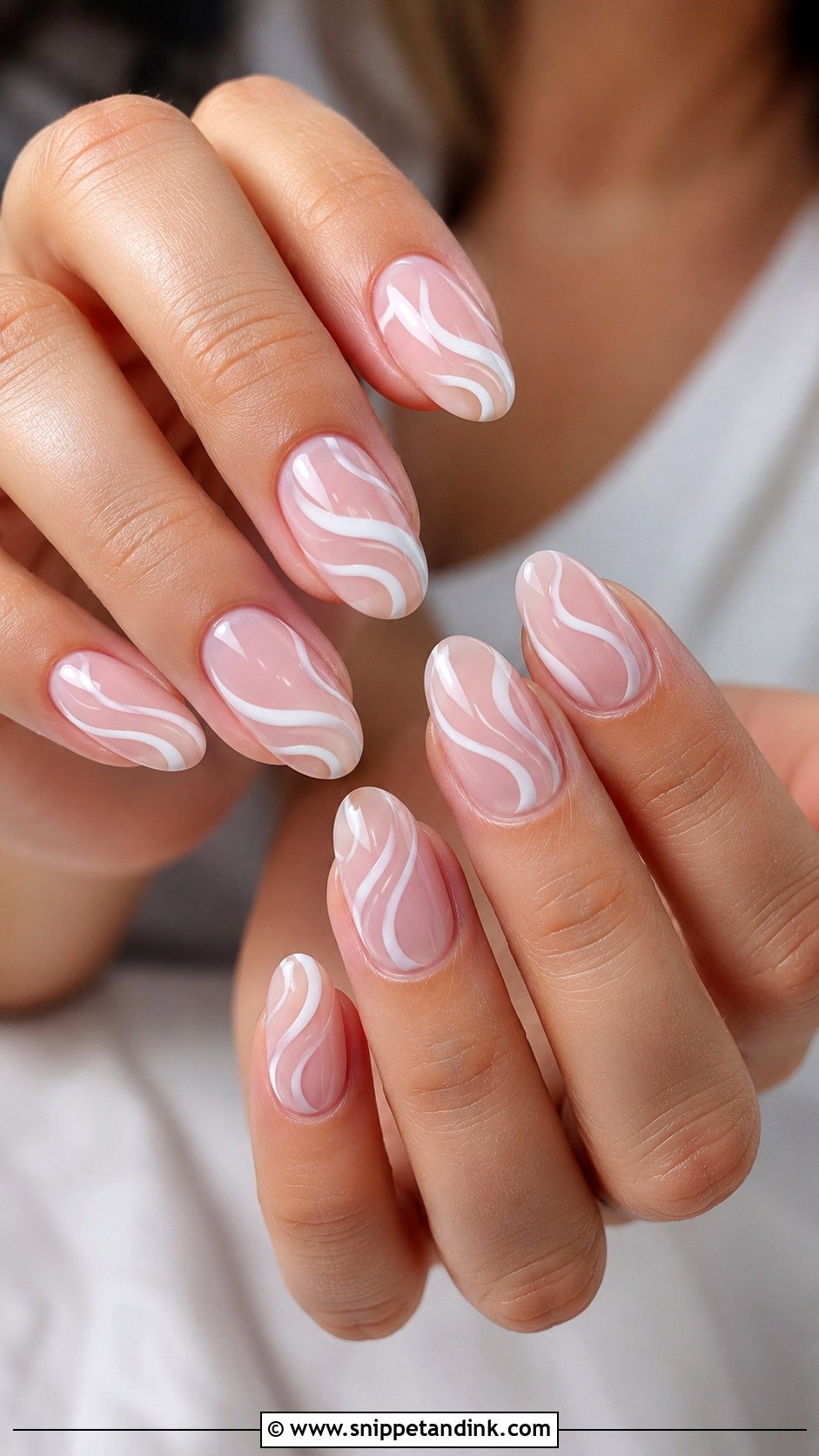
White swirl bridesmaid nails are for the bridesmaid who wants a little art without anything literal. Thin white lines over a nude or sheer pink base give the nail movement. Spacing is everything; thick, crowded swirls look busy and date quickly. I keep two or three fine lines per nail at most. Minimalist dresses and pearl jewellery suit it, and short almond or medium oval nails show the lines best.
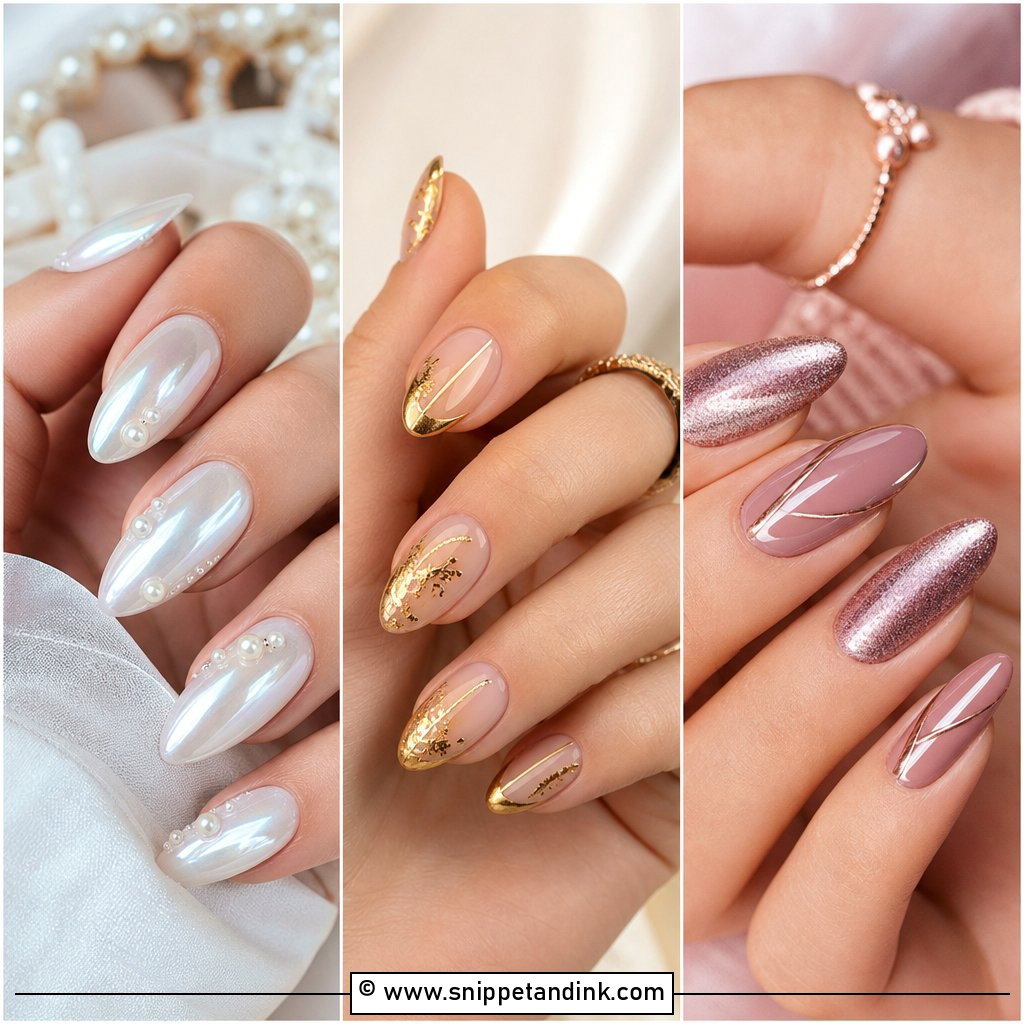
15. Rose Gold Bridesmaid Nails
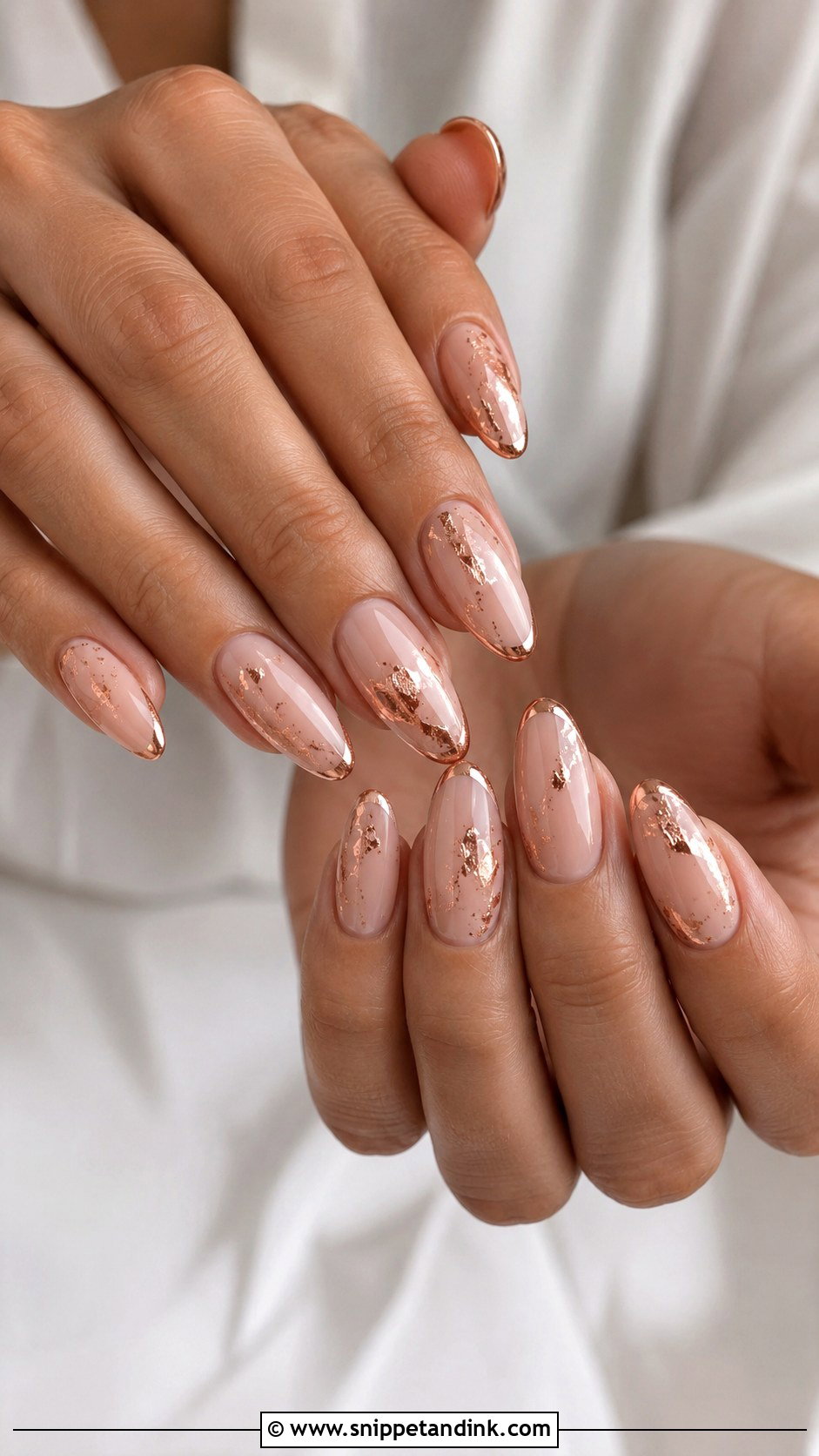
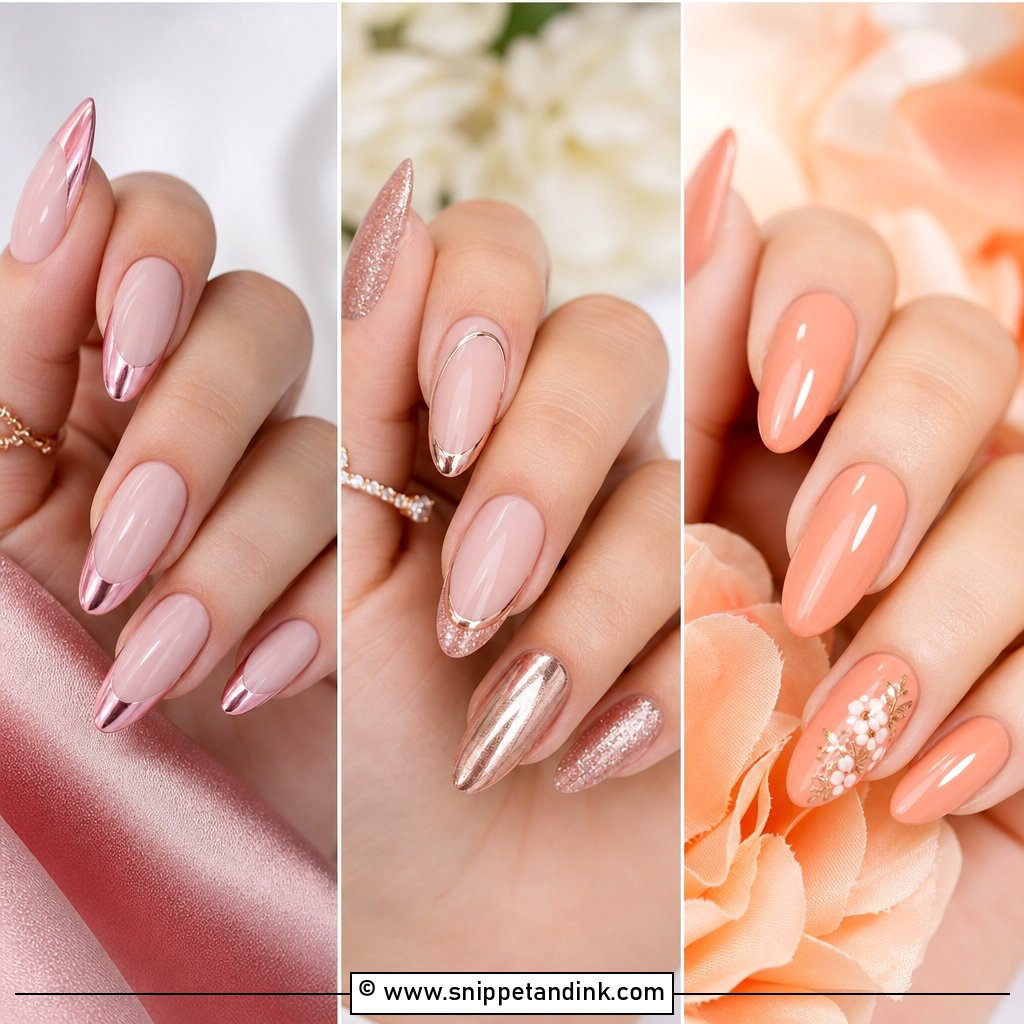
Rose gold is warmer than silver and softer than yellow gold, so it suits evening receptions and champagne, mauve or ivory dresses. I’d choose one technique, foil, a fine shimmer or a rose gold tip, rather than combining them. Before committing, check the bridesmaids’ jewellery: rose gold nails next to yellow gold rings look slightly off in close-ups. Minimal art keeps the group cohesive.
16. Baby Blue Bridesmaid Nails
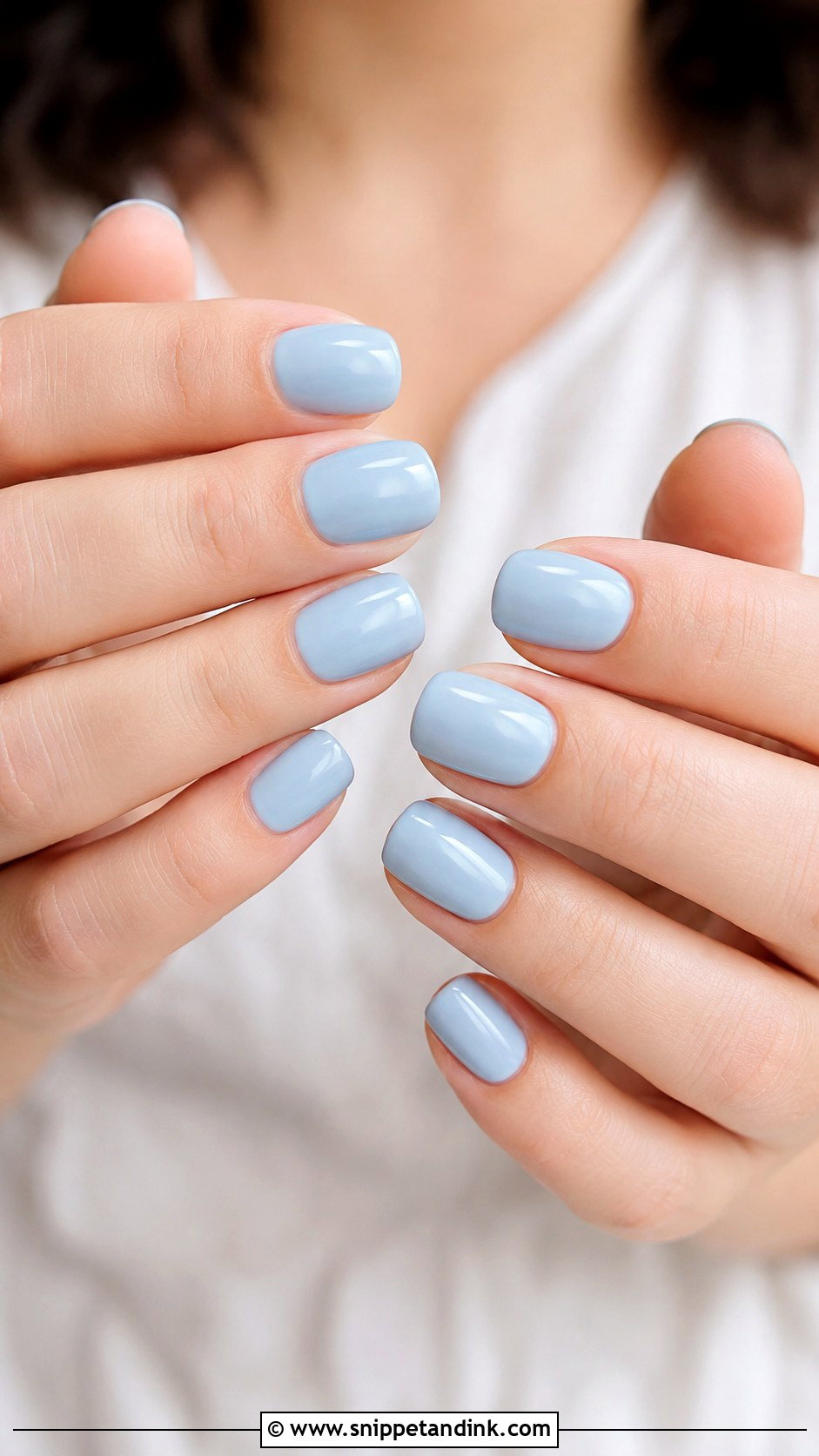
Baby blue is fresh for spring, summer and coastal weddings, especially with white flowers and silver jewellery. Creamy baby blue looks clean on short nails; a sheer blue tint is subtler. A safer way to bring it in is baby blue French tips over a nude base, which reads as a nod to the colour rather than a full statement. I’d steer away from bright, saturated blues; they read as holiday nails rather than bridal party nails.
17. Burgundy Bridesmaid Nails
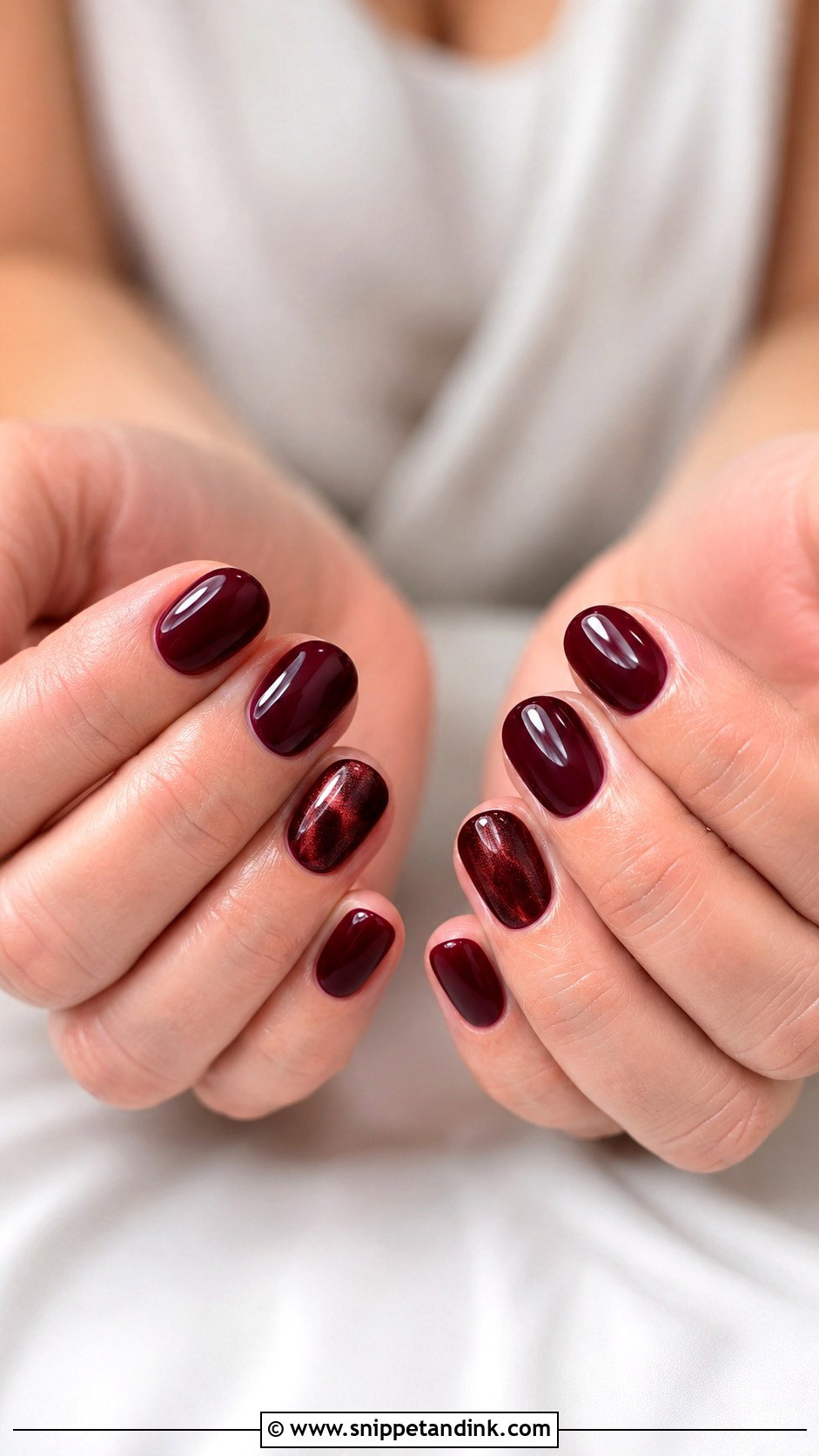
Burgundy belongs to autumn and winter weddings and suits deep red, navy, emerald, black and gold-toned dresses. I keep it short or medium, because long dark nails dominate a photo of hands holding a bouquet. Dark polish also shows every chip and every flooded cuticle, so the application has to be clean. A velvet cat-eye finish adds depth for formal evenings; a burgundy tip over nude is a softer way in. Skip extra art.
18. Short Nude Bridesmaid Nails
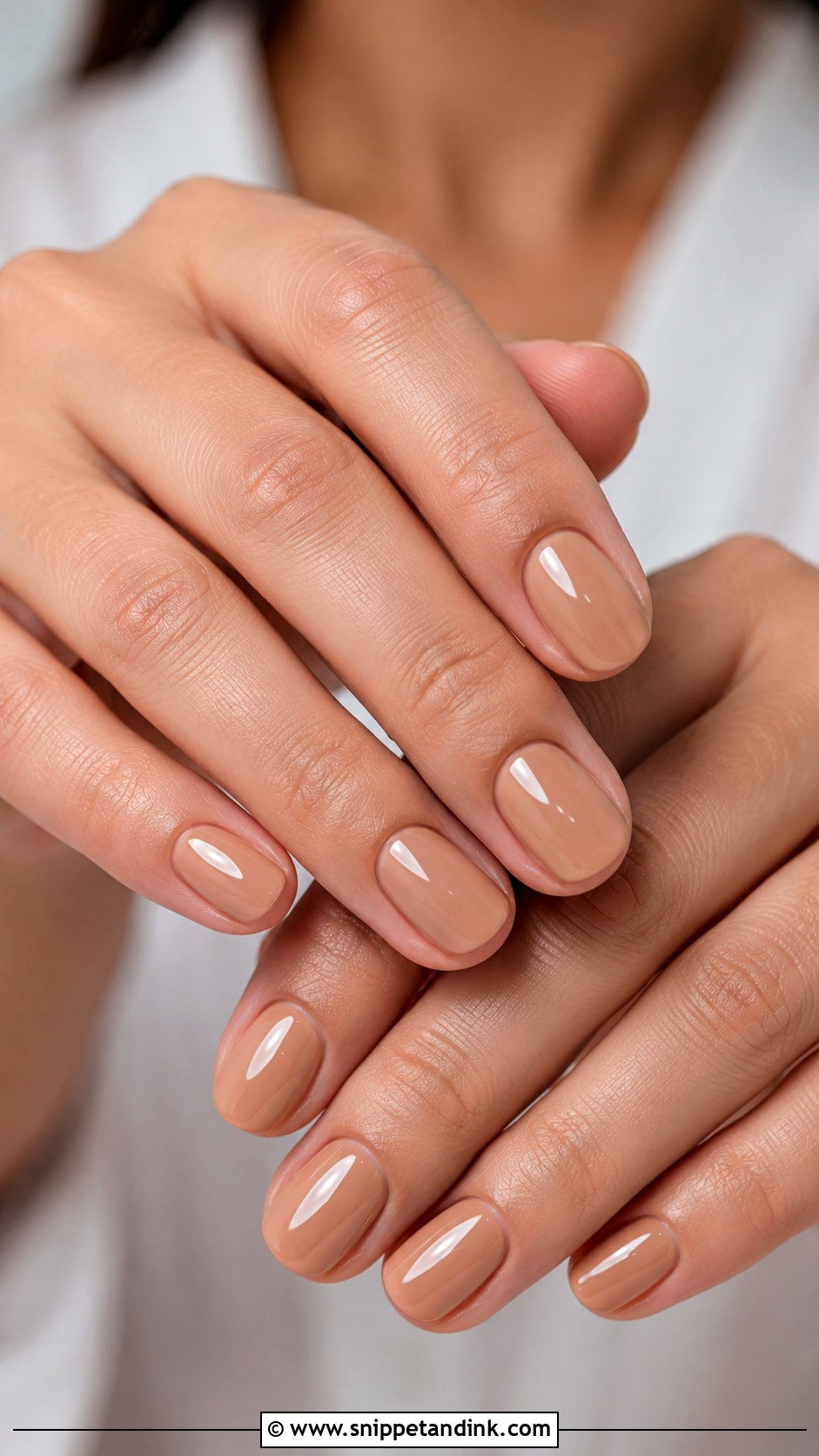
Short nude nails are the most practical set here, and the trick is matching the nude to the person. Fair skin usually suits soft pink beige, medium skin looks good in peachy nudes, and deeper skin tones glow in caramel, mocha or cocoa. A single nude chosen for the whole group always washes someone out, which is why I swatch each bridesmaid individually. High gloss makes short nails look healthy. Add a very thin French line if the bride wants a detail.
19. Gold Foil Bridesmaid Nails
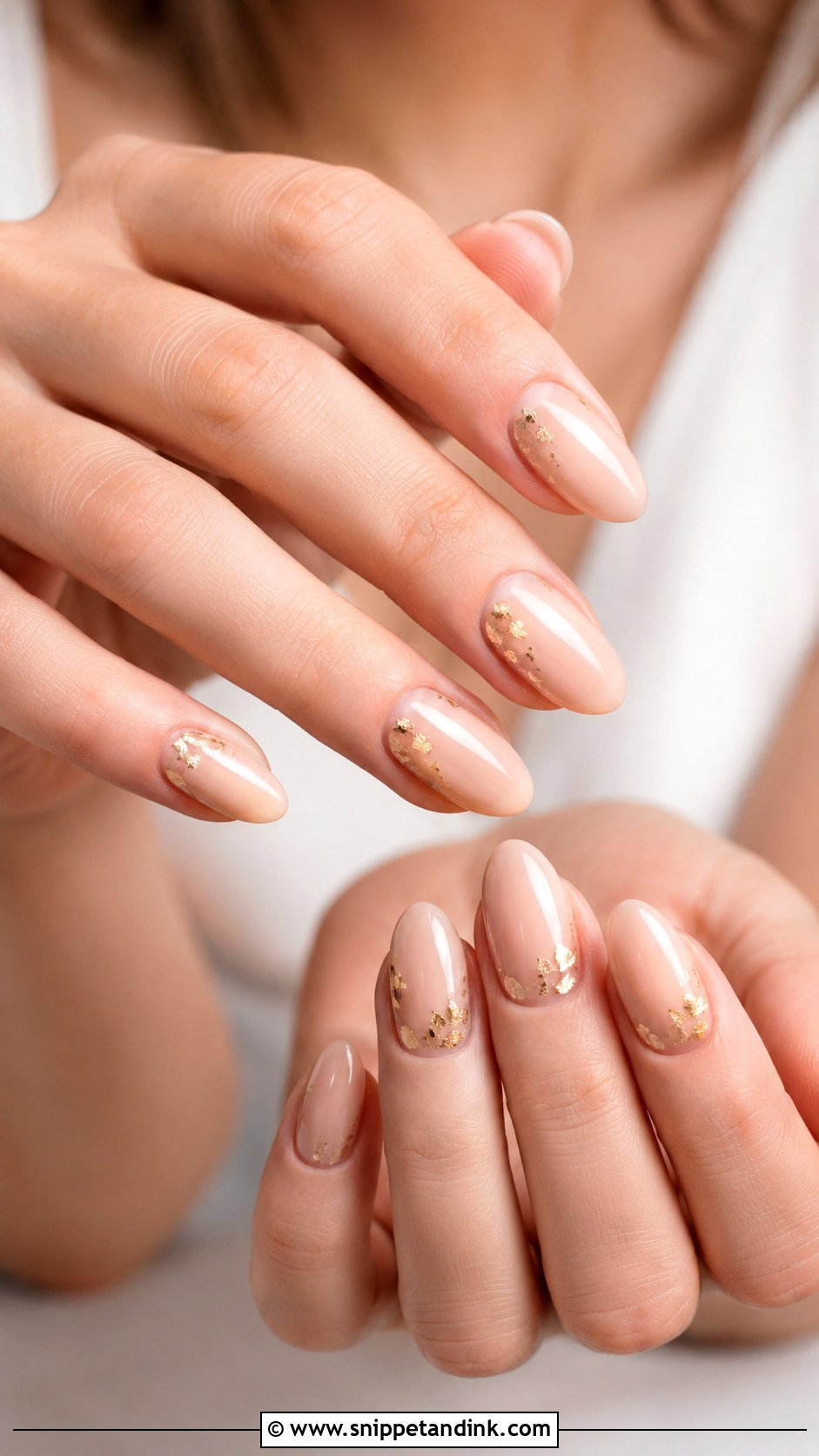
Gold foil works because it’s scattered: a few flakes near the cuticle or sidewall over a sheer nude, blush or milky base. Heavy foil across every nail looks festive in the wrong way. I press foil into a tacky layer, then seal it with a thick top gel so the edges don’t lift and catch. It’s a smart choice for mismatched neutral dresses, since the gold pulls the group together, and it pairs naturally with warm autumn florals and gold jewellery.
20. Clear Gloss Bridesmaid Nails
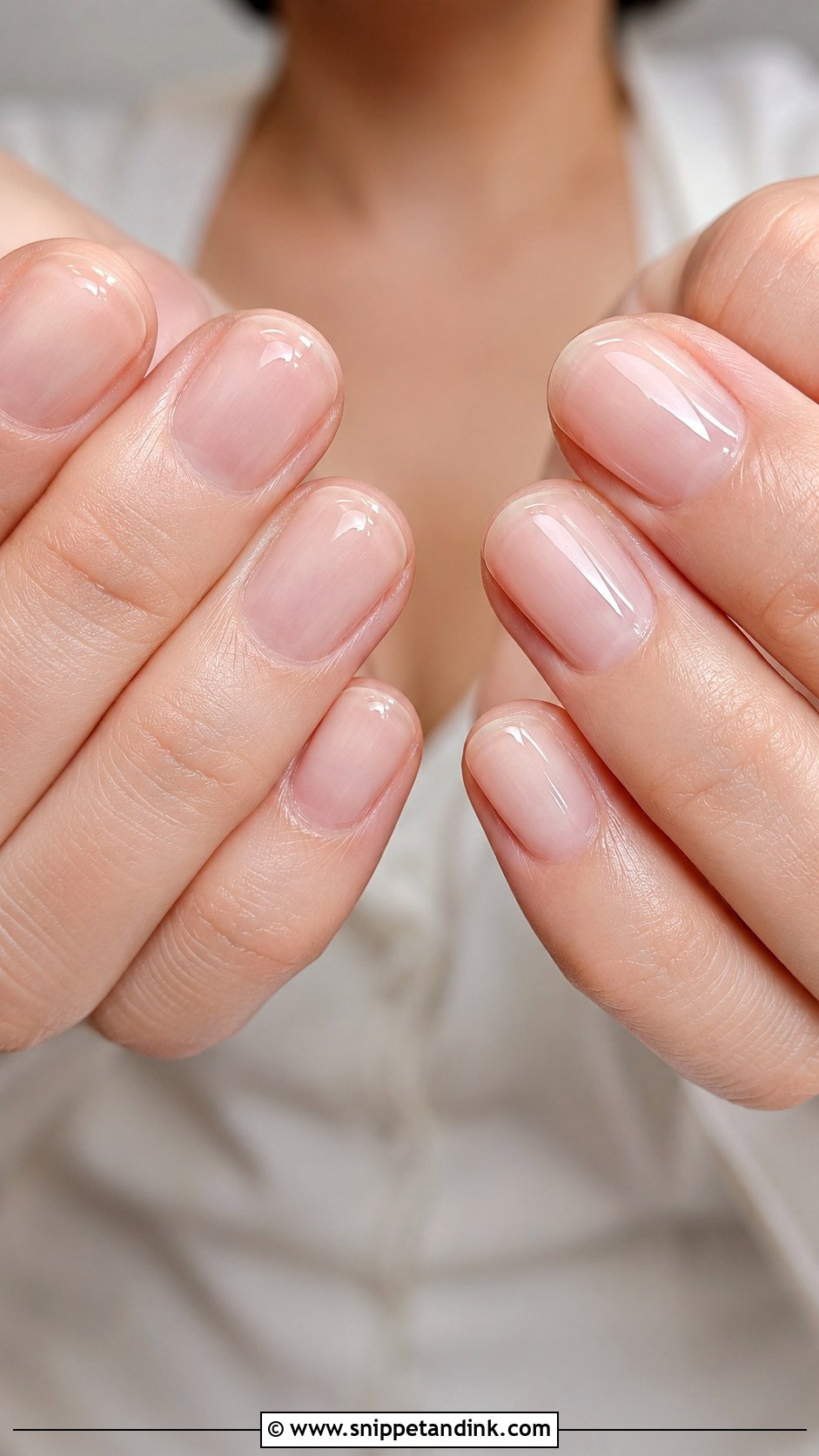
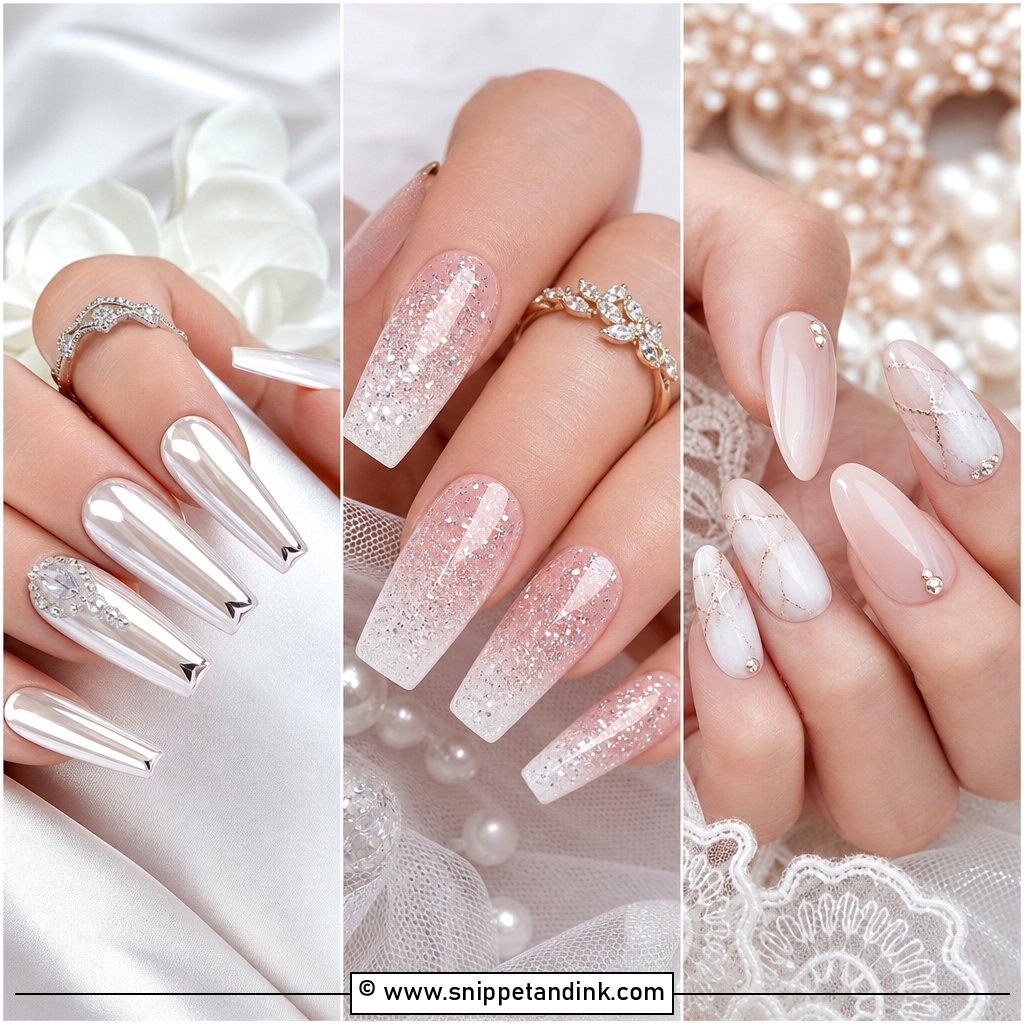
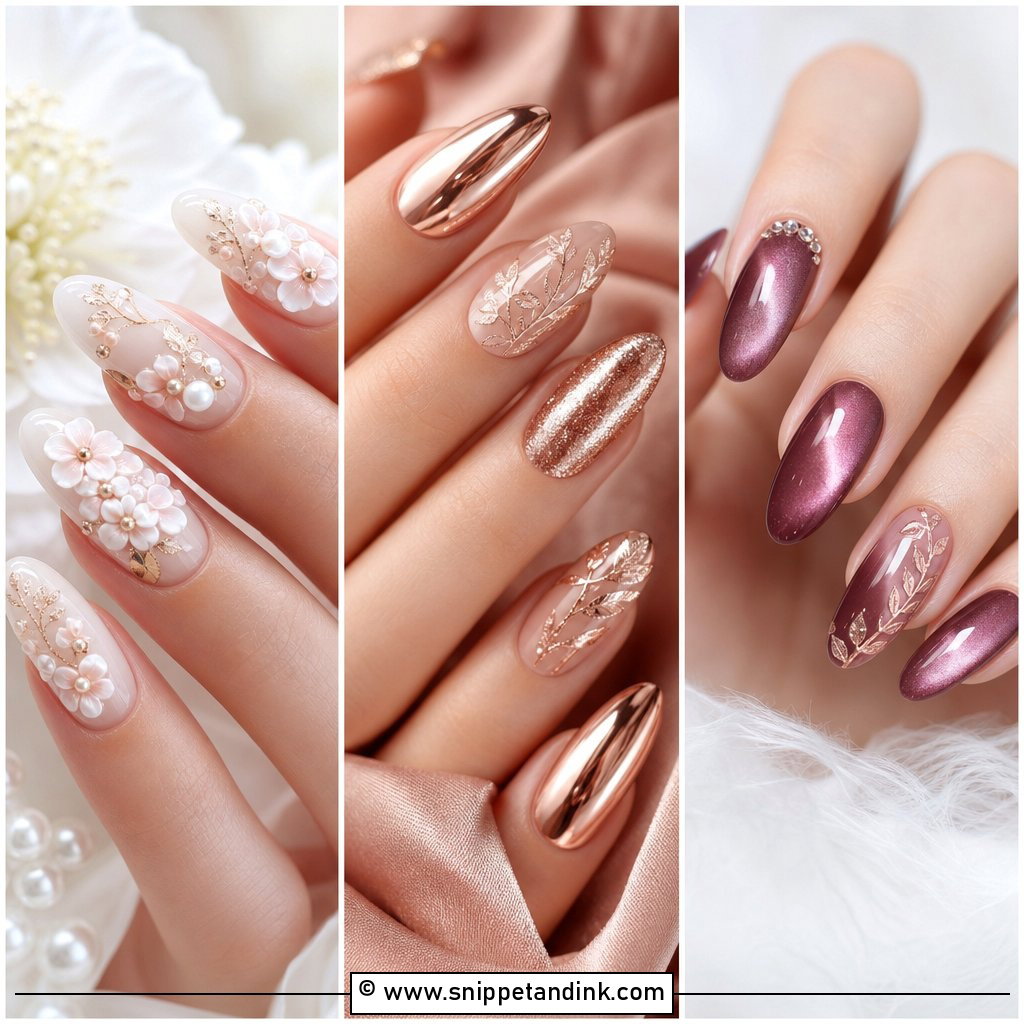
Clear gloss is not bare nails. The work is in the prep: shaping, cuticle care, light buffing, a strengthening base and a high-shine clear or sheer pink top coat. For bridesmaids who never wear polish, this is what I’d recommend, and it suits every length and skin tone. If the nails are ridged or uneven, a thin builder gel overlay smooths the surface. Done well, it looks like very healthy natural nails, which in close-up ring shots is often the most flattering result.
Hands Get Photographed Up Close All Day
A photographer will capture hands around the bouquet, the rings and the champagne glasses. What shows up in those close-ups is rarely the design; it’s dry cuticles, a flooded edge or one chipped thumb. In the week before the wedding I’d ask bridesmaids to do a few small things.
- Use cuticle oil every evening; it keeps the skin around gel from looking ragged in macro shots.
- Wear gloves for washing up and cleaning, because hot water and detergent are what lift gel at the edges.
- Book the appointment one to three days out, so the set is fresh but any problem can still be fixed.
- Hold off on self-tan until after the manicure, or wipe the nails straight away; tan stains the skin around the nail orange.
A small fix kit for the day
I tell every bridal party to bring a fine nail file, a tube of nail glue and a clear top coat in one bag. A torn nail can be filed smooth in a minute, and a lifted corner can be glued down so it stops catching. A spare press-on in a matching shade is worth having if the set is long; it can cover a broken nail until the reception is over.
What a Bridal Party Should Agree On Before the Salon
The best bridesmaid nail designs are the ones that still look neat on the second day. Soft neutrals, blush, milky white, fine French lines and a single small accent work because they stay quiet beside the bride. Colour is welcome too when it echoes the dresses or the season. My advice is simple: before anyone books, the bride shares three things with her bridesmaids, the colour family, the length and the finish. Each nail tech can then adjust the shade to the person, and the hands in every bouquet shot will look like they belong together.
You'll Like These Ideas:


Leave a Reply