
Ombre is one of the few manicures I can put on a bride, her bridesmaids, both mothers and a nervous groom’s sister on the same morning, and have every set look right. The fade carries no hard line, so it reads polished in photos without pulling focus from the ring or the bouquet. It can stay classic in pink and white, go modern with chrome, or pick up the season through blush, champagne, lavender or pearl. Length matters less than people think: short square nails look tidy and practical, almond and coffin shapes add drama. These are the twenty fades I paint most often for weddings, and what I’d tell you before each one.
One Ombre Across the Whole Wedding Party, Without Cloning It
Ombre is the easiest way I know to coordinate everyone’s hands, because the same base can be dialed up or down. I usually give the bride the fullest version and let everyone else wear a quieter echo of it.
- Bride: the full fade, her chosen shape, plus any chrome, pearl or crystal detail.
- Bridesmaids: the same base and the same tip color, but plain gloss and their natural length, so twelve hands don’t look like a uniform.
- Mothers of the couple: a sheer version of the base with only a hint of fade, on short rounded nails that suit everyday life.
- Guests: anything but a milky white fade, which reads as bridal; blush, peach or lavender are kinder choices.
For a group appointment, send me everyone’s numbers early and plan about an hour per person for gel. Book it the day before rather than the morning of, so nobody is sitting under a lamp while the hairstylist is waiting.
1. French Ombre Wedding Nails
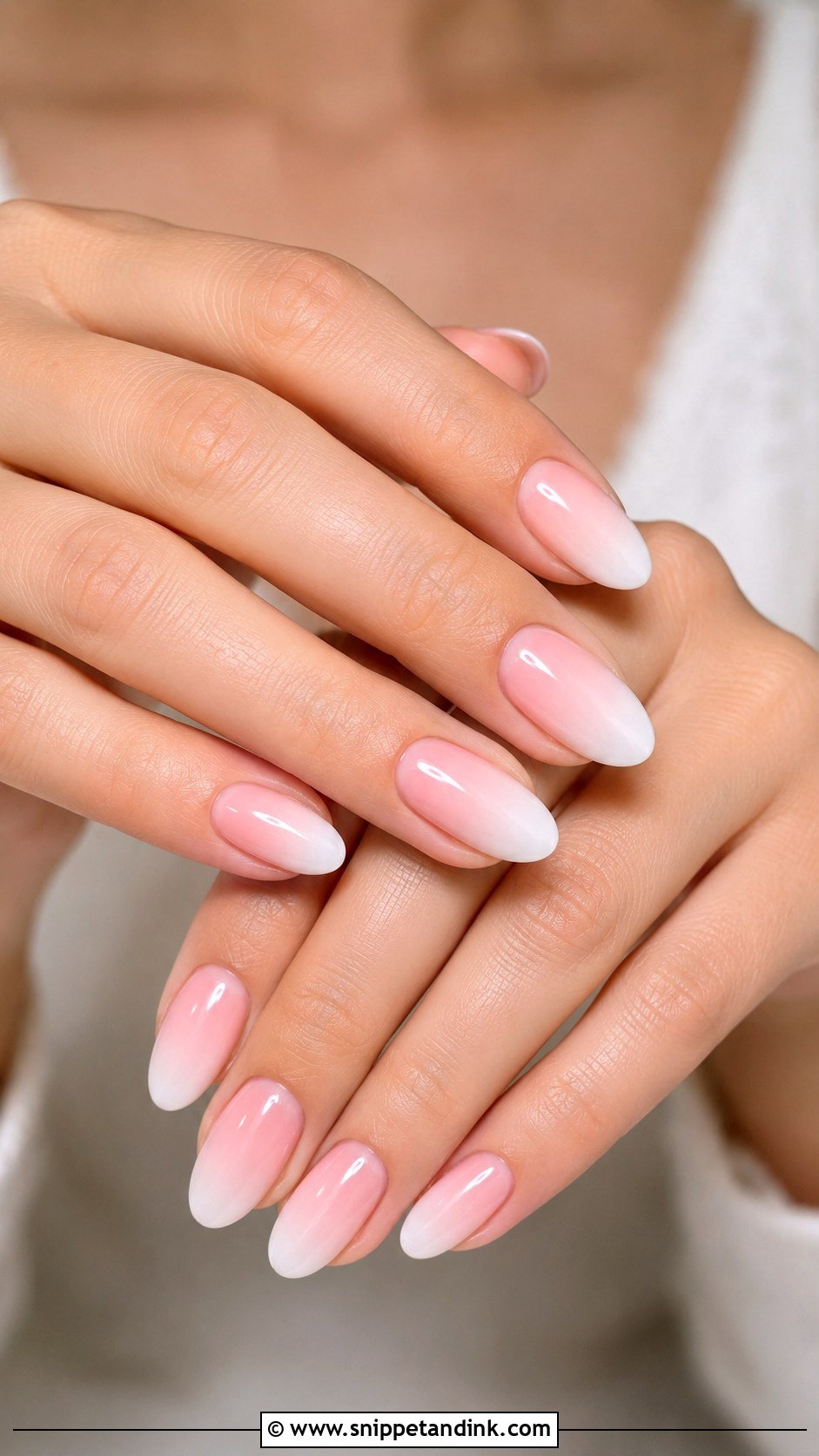
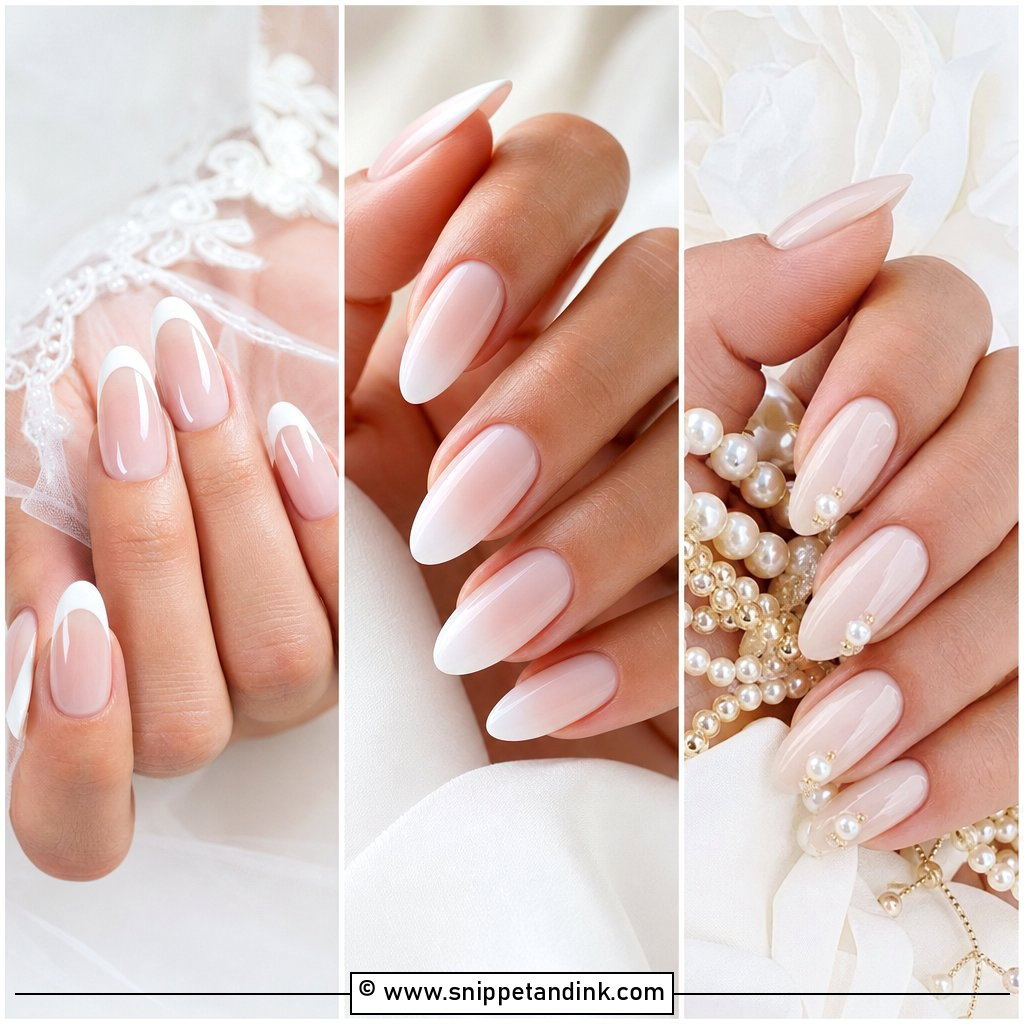
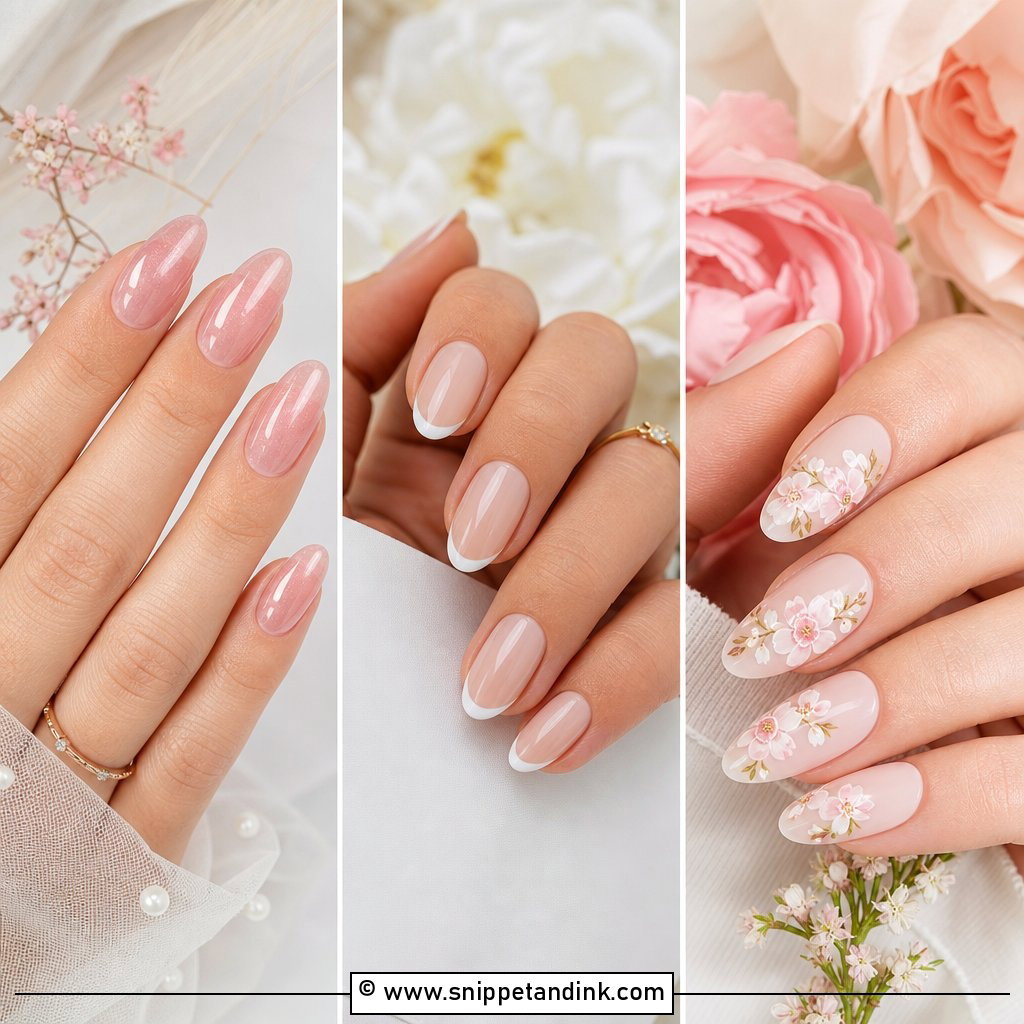
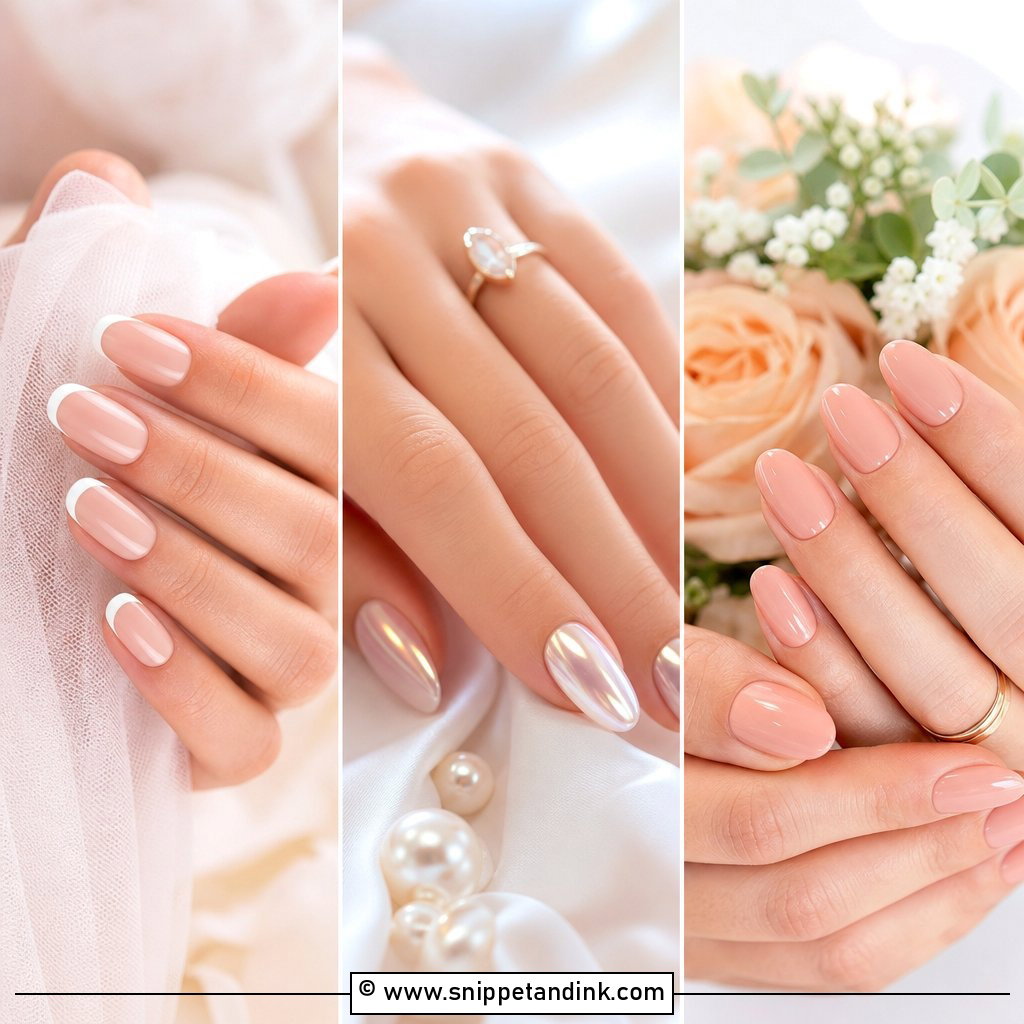
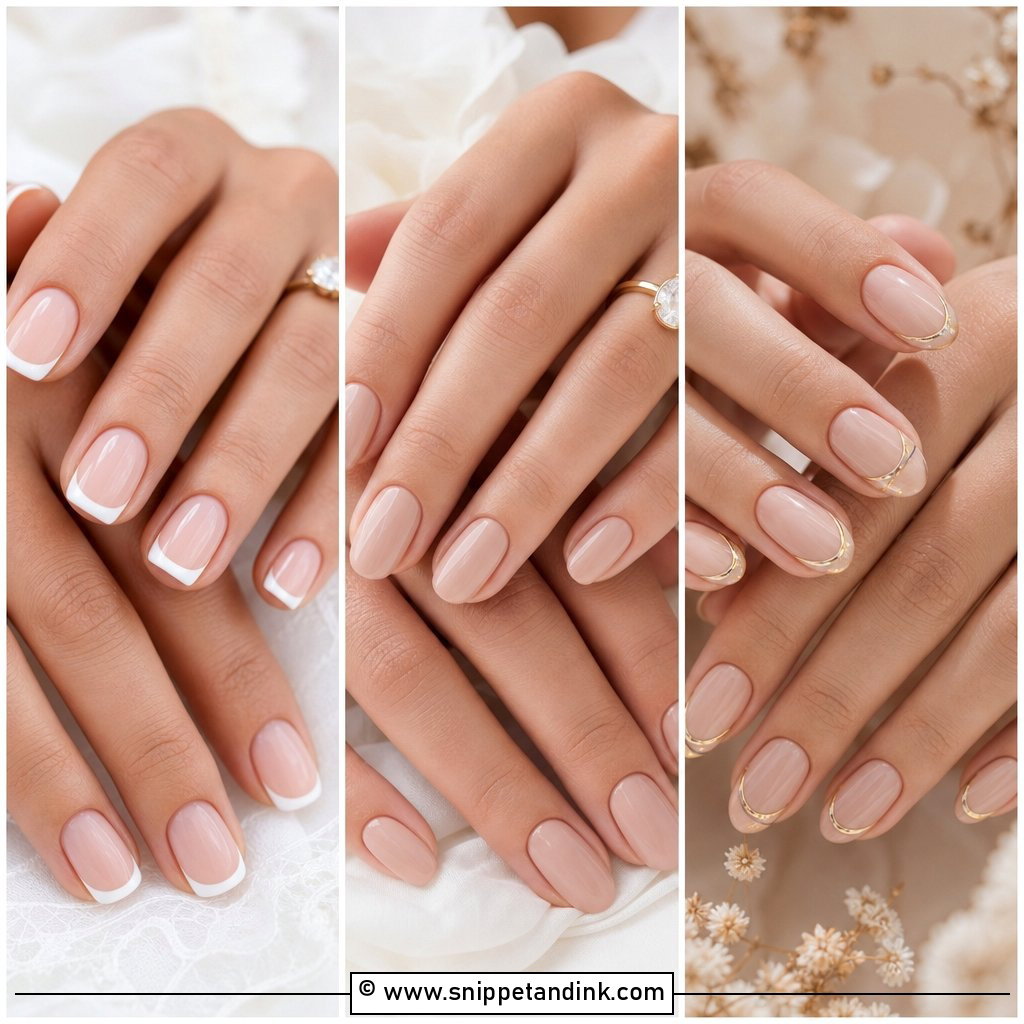
Think of this as a French manicure with the edge rubbed away. A nude or pale pink base melts into soft white at the free edge, which looks smoother and more natural than a painted smile line, and it’s far more forgiving as nails grow. I like it on a medium almond, which lengthens the fingers without feeling theatrical. Ask for a sheer base, a milky white fade and a glossy top. It’s polished enough for the bride and quiet enough that bridesmaids can wear the same thing.
2. Pink And White Ombre Wedding Nails
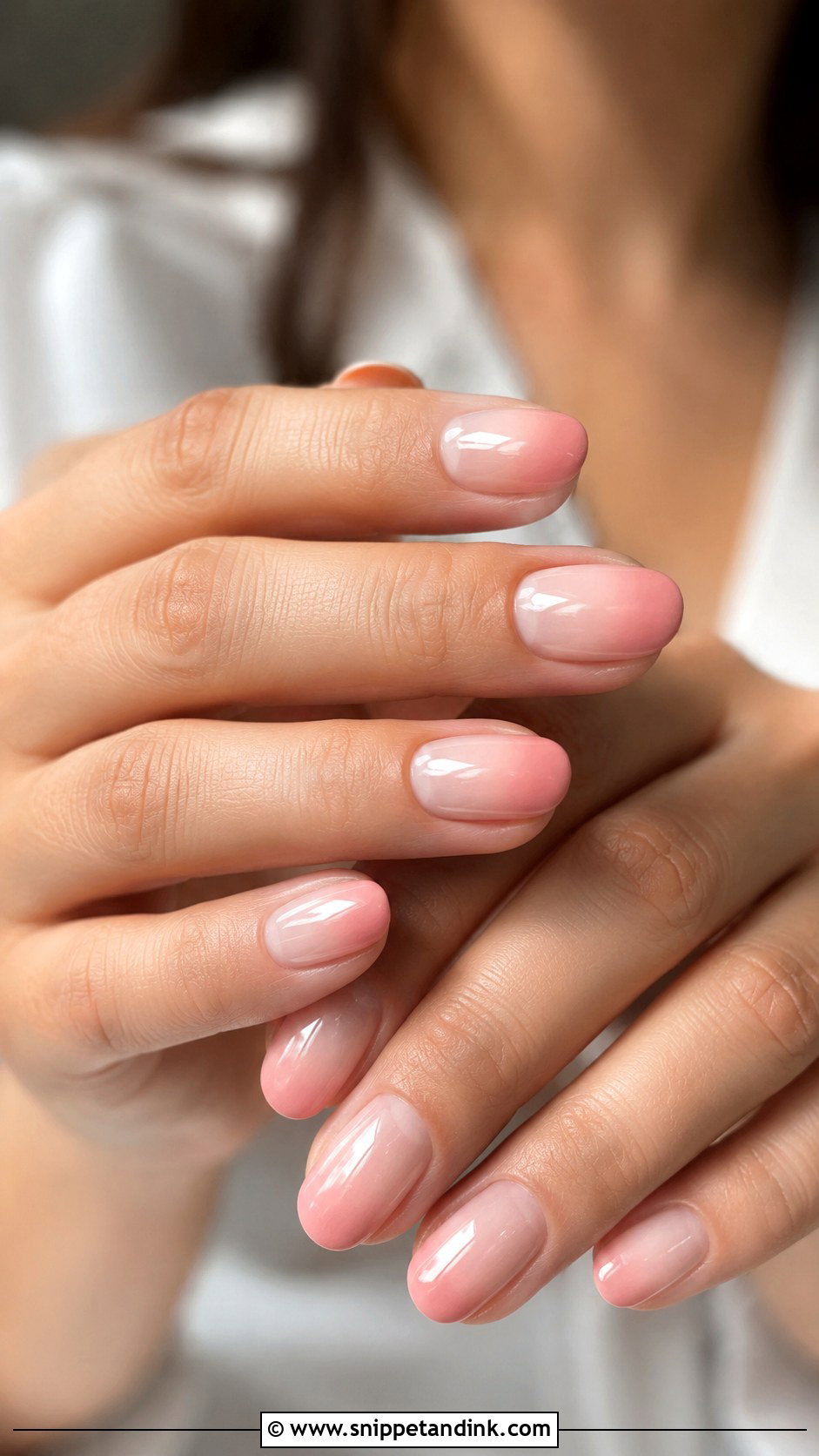
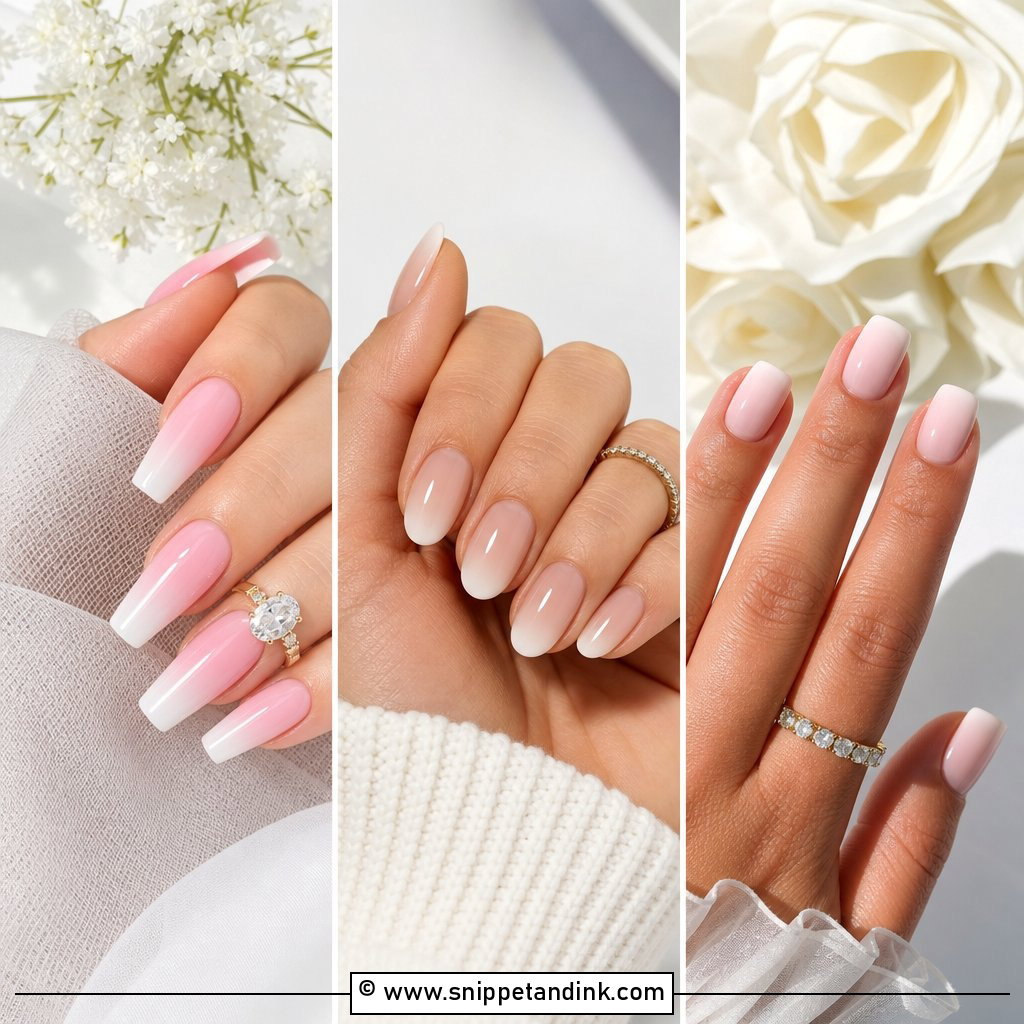
Pink and white is the combination I can adjust most finely. The pink can run from a cool baby shade to a warmer blush depending on your skin, and the white keeps it bridal. For a see-through look I use a translucent pink; brides with ridged or uneven nails usually do better with a creamy pink builder gel, which levels the surface and gives coverage. A thin shimmer layer is optional. It’s the safest choice on this list for close-up ring photos, because nothing on the nail competes with the stone.
3. Milky White Ombre Wedding Nails
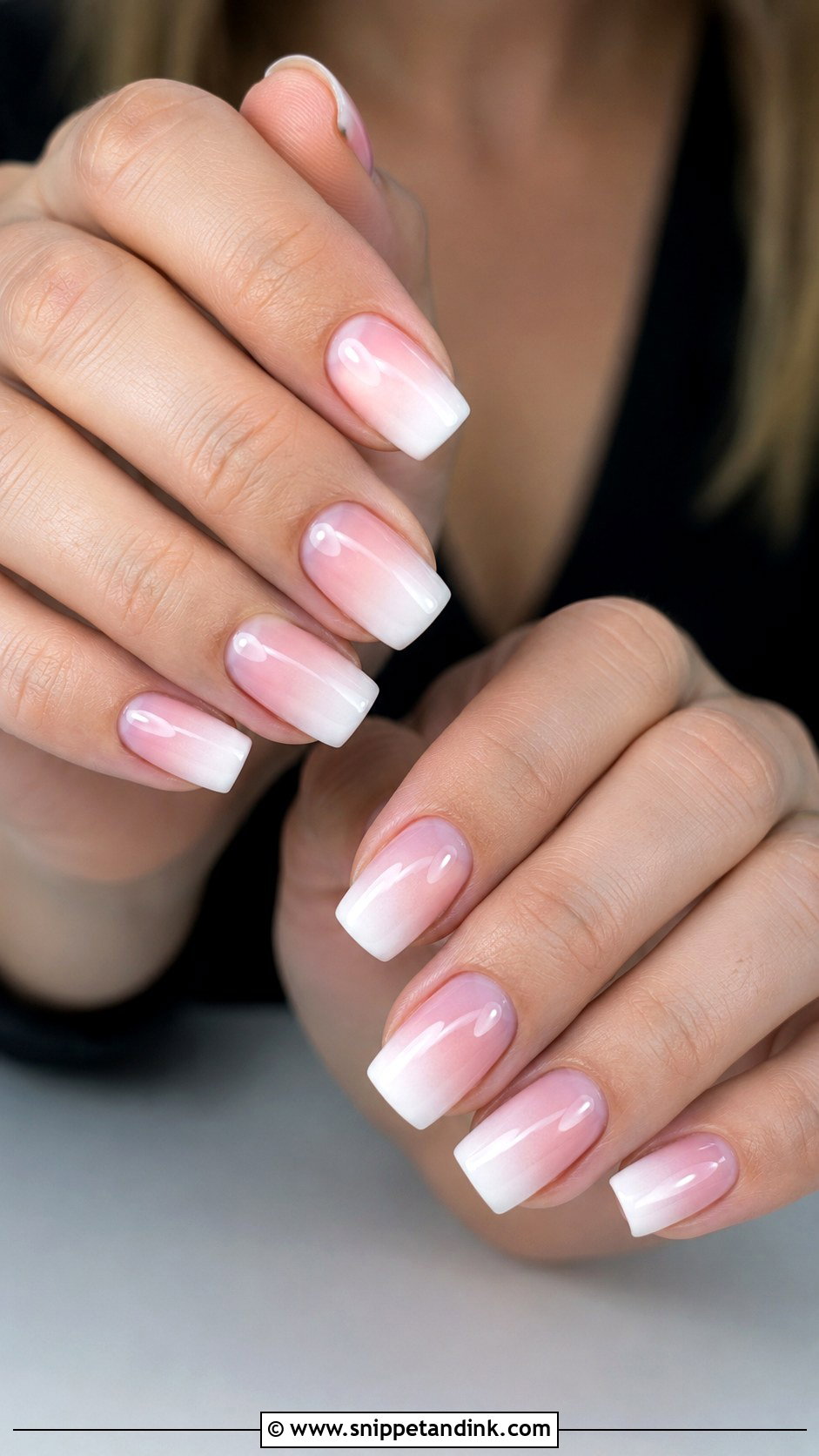
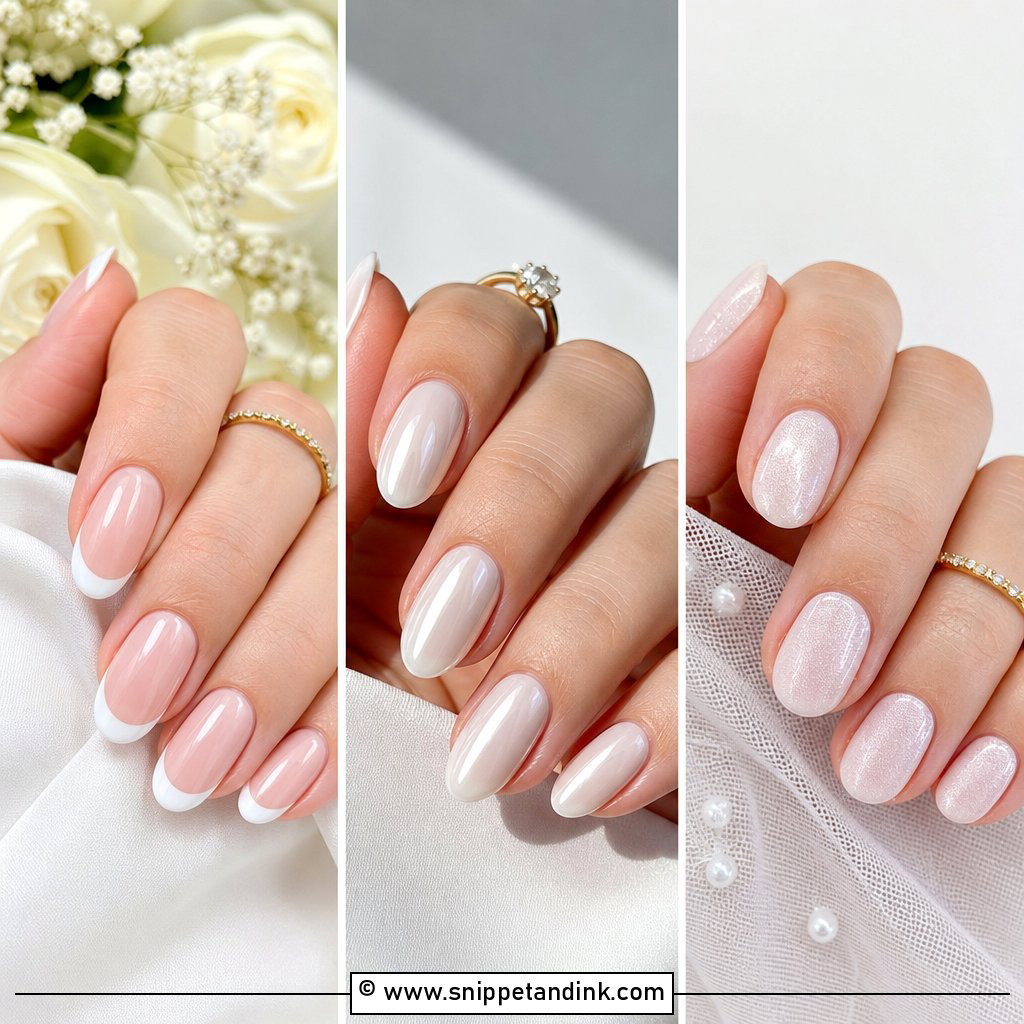
Bright white can look stark on the hand. Milky white ombre wedding nails solve that with a cloud-like fade from a sheer nude or milky pink base into a creamy tip. I build it in thin coats so it stays translucent, since one heavy coat of white goes flat. It sits naturally with minimalist gowns, sleek buns and pearl details, and it needs no art to look finished. Short ovals keep it practical; long almonds make it more formal.
4. Nude Ombre Wedding Nails
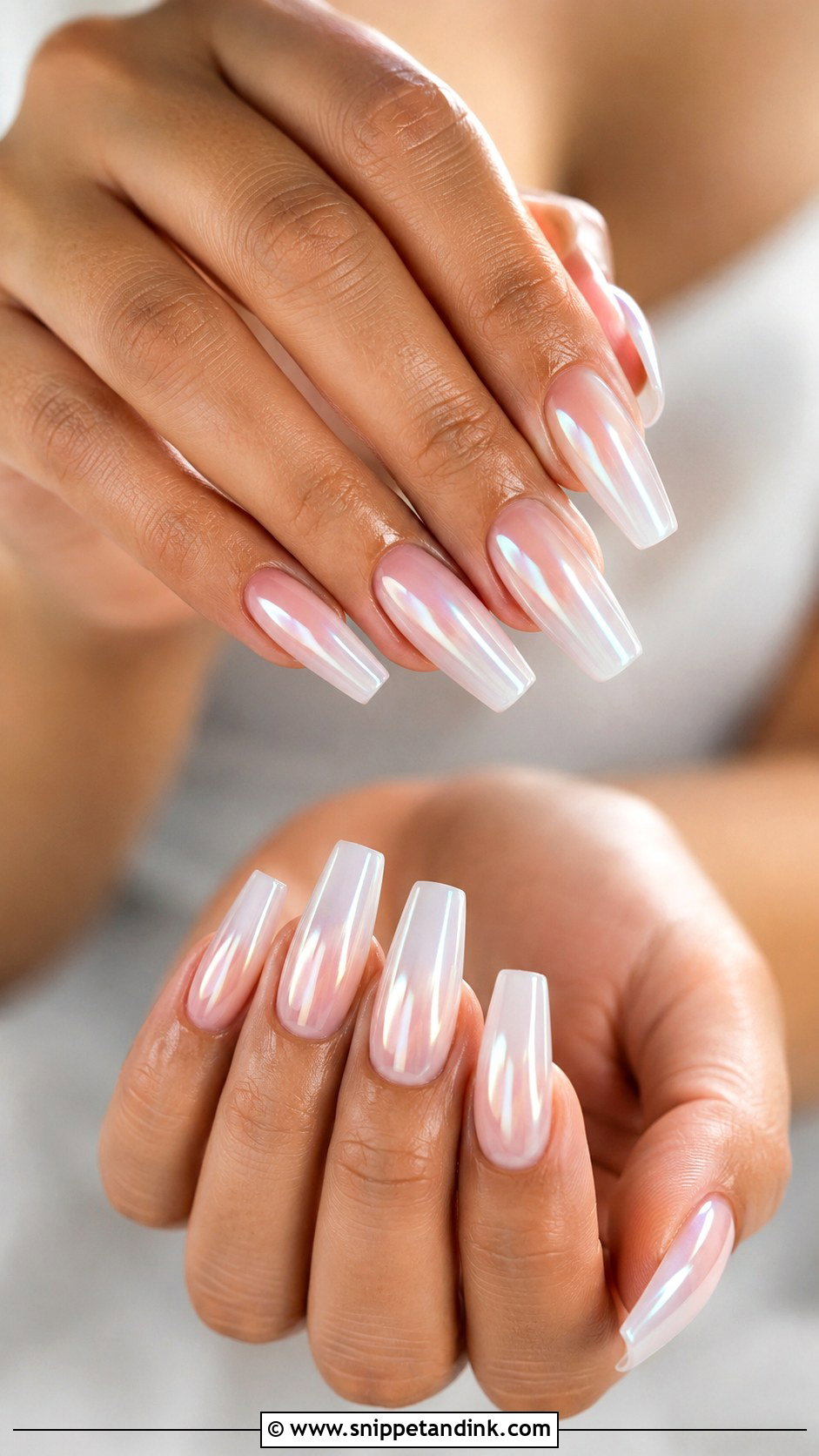
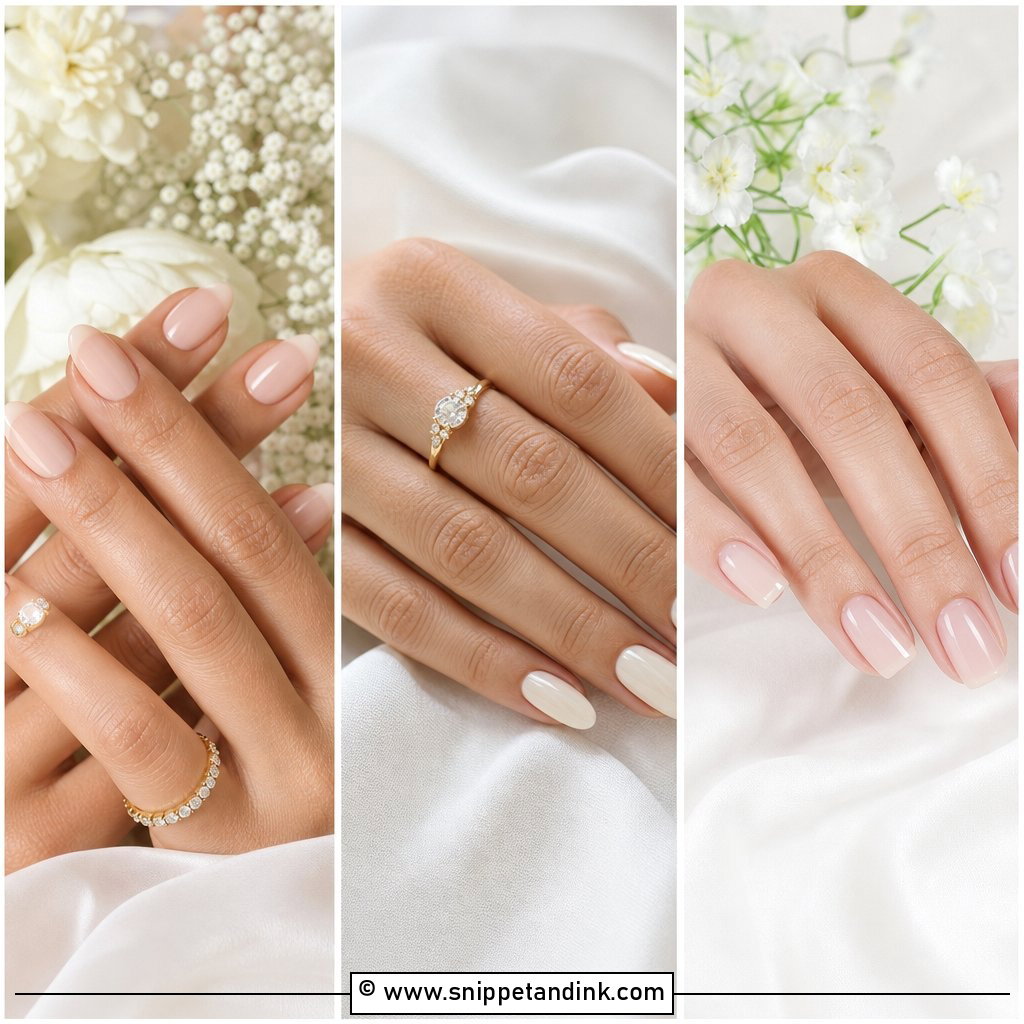
Getting a nude fade right is mostly about undertone. The gradient can start from beige, caramel, taupe or a soft pink nude and lighten toward the tip, and it goes with every dress color and metal. Warm skin tends to suit a peachy nude; cool skin usually looks better in rose beige or a soft mauve. A nude that’s slightly off makes fingers look grey or sunburnt, so I test two shades on your nails before choosing. Keep the shape simple, almond or soft square.
5. Blush Ombre Wedding Nails
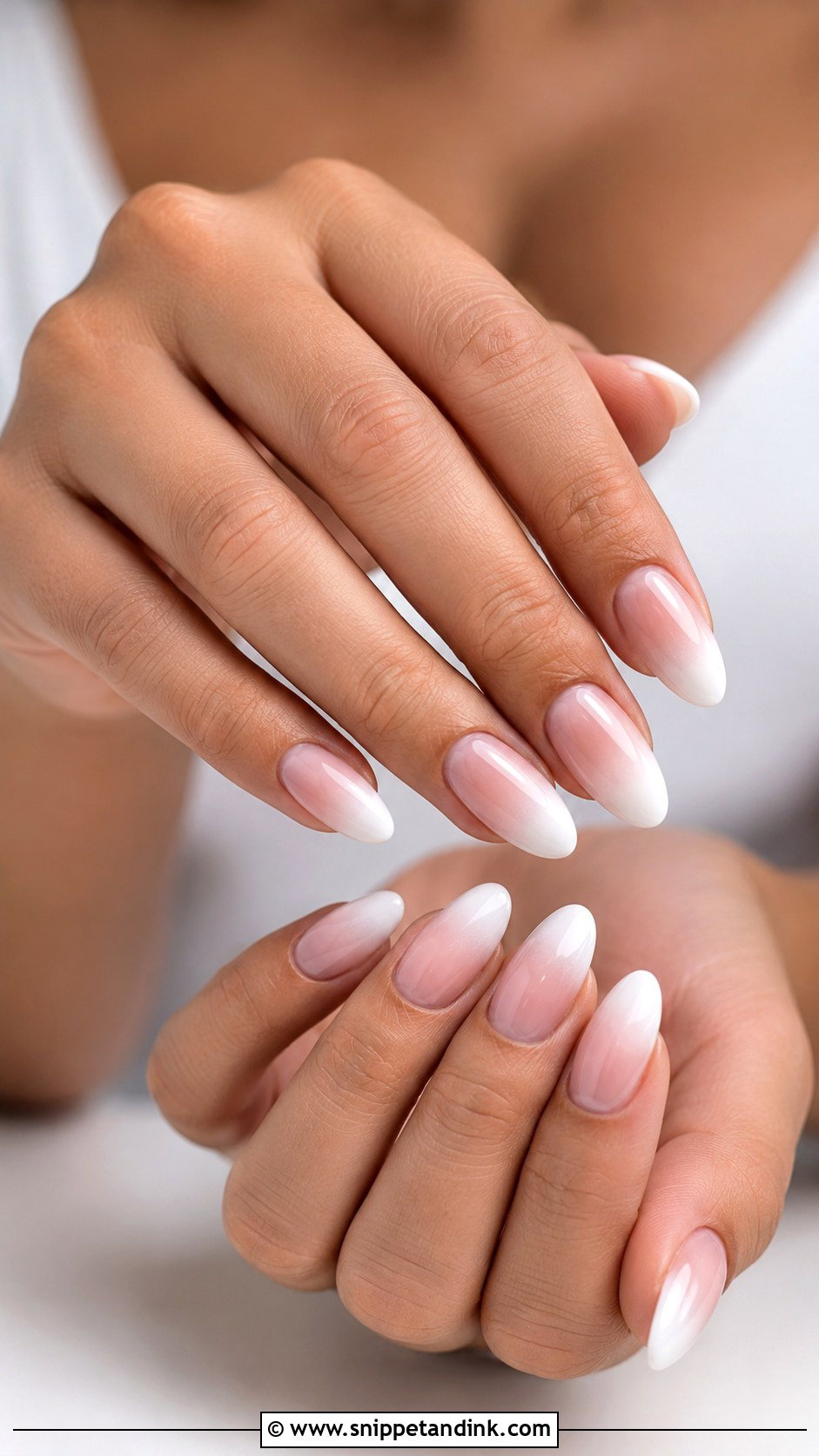
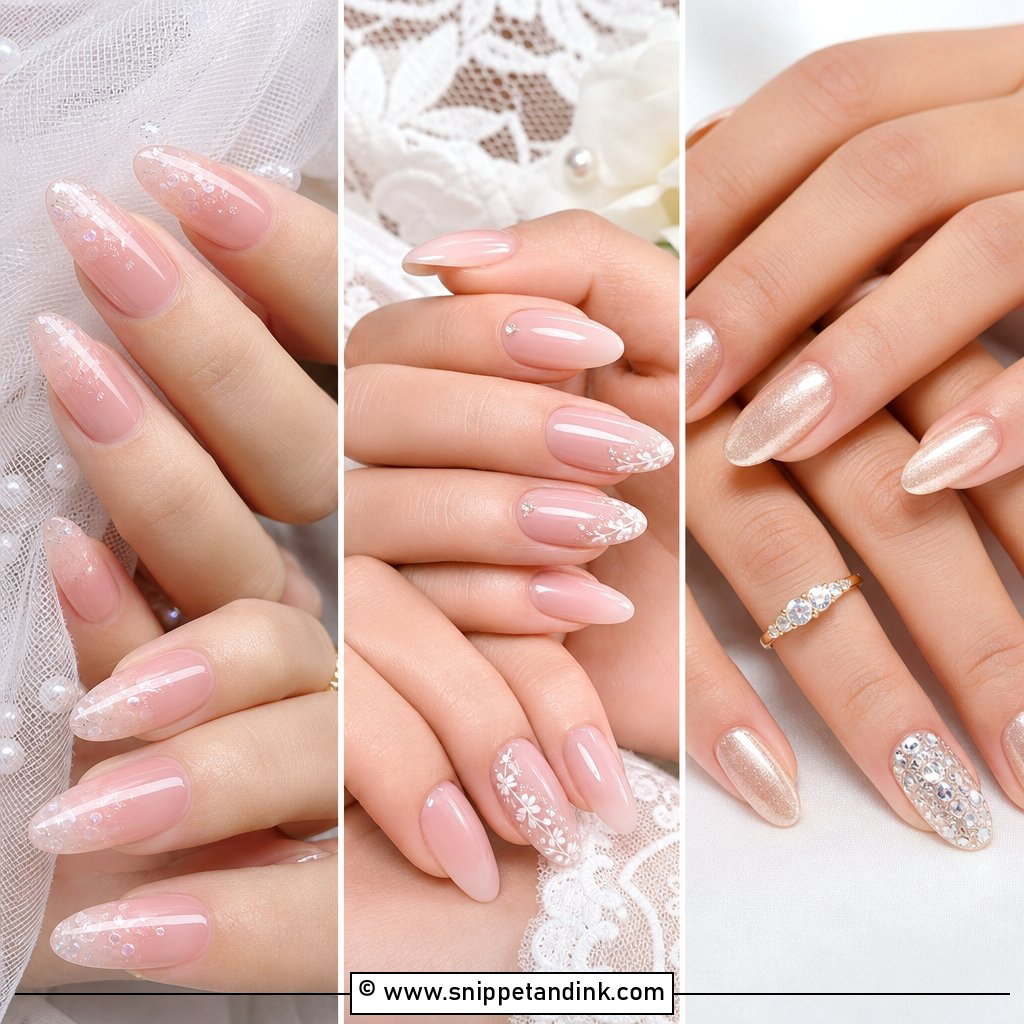
I describe blush ombre as bridal makeup for the hands. A sheer nude or pale pink base deepens into warmer blush at the tips or center, and it reads romantic without being loud, which suits spring dates, garden ceremonies and floral palettes. I apply it as a sheer wash rather than an opaque cream; washes look like flushed skin, while thick color looks painted on. A glossy top keeps the surface smooth enough to catch light in photos.
6. Glitter Ombre Wedding Nails
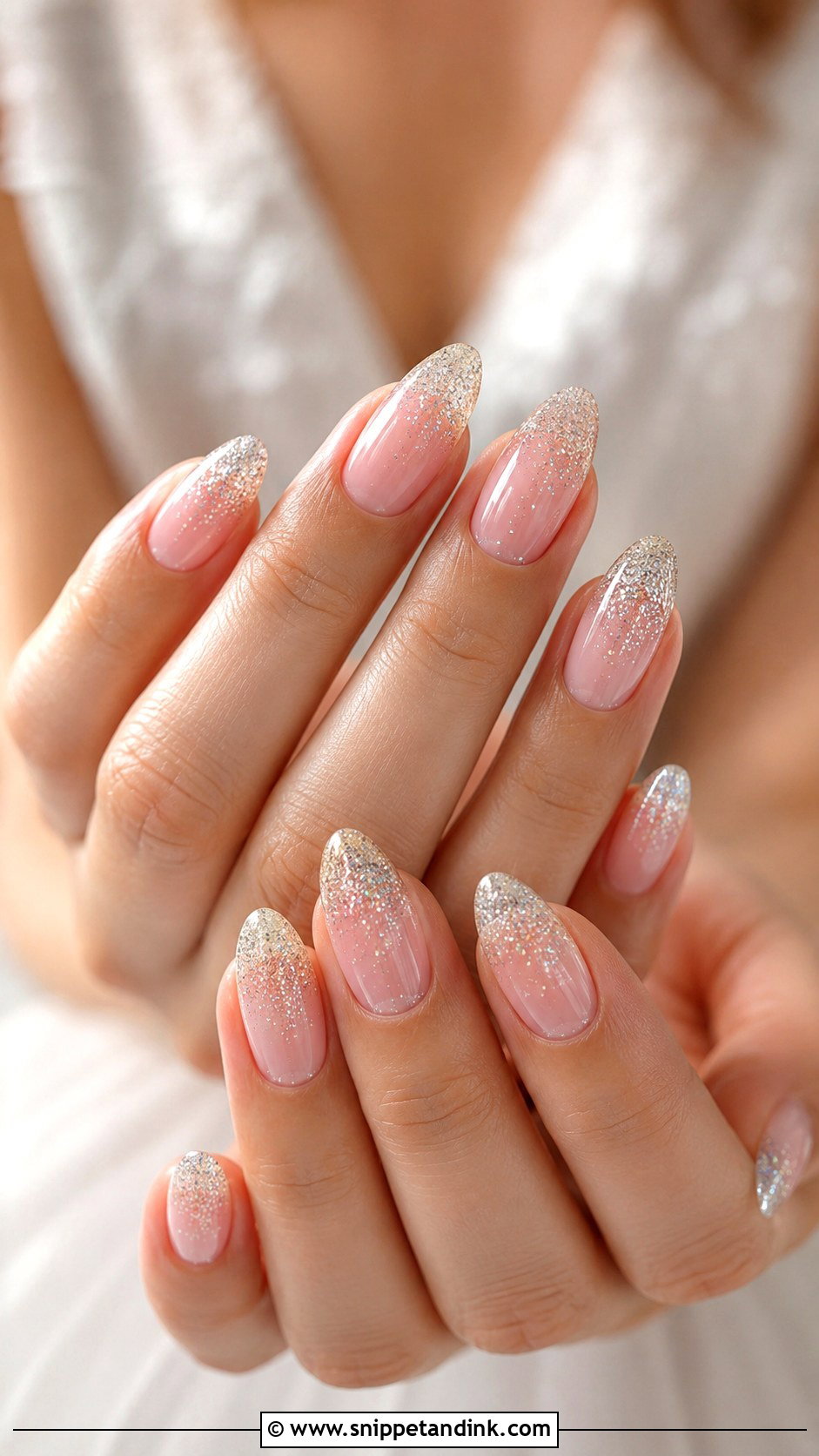
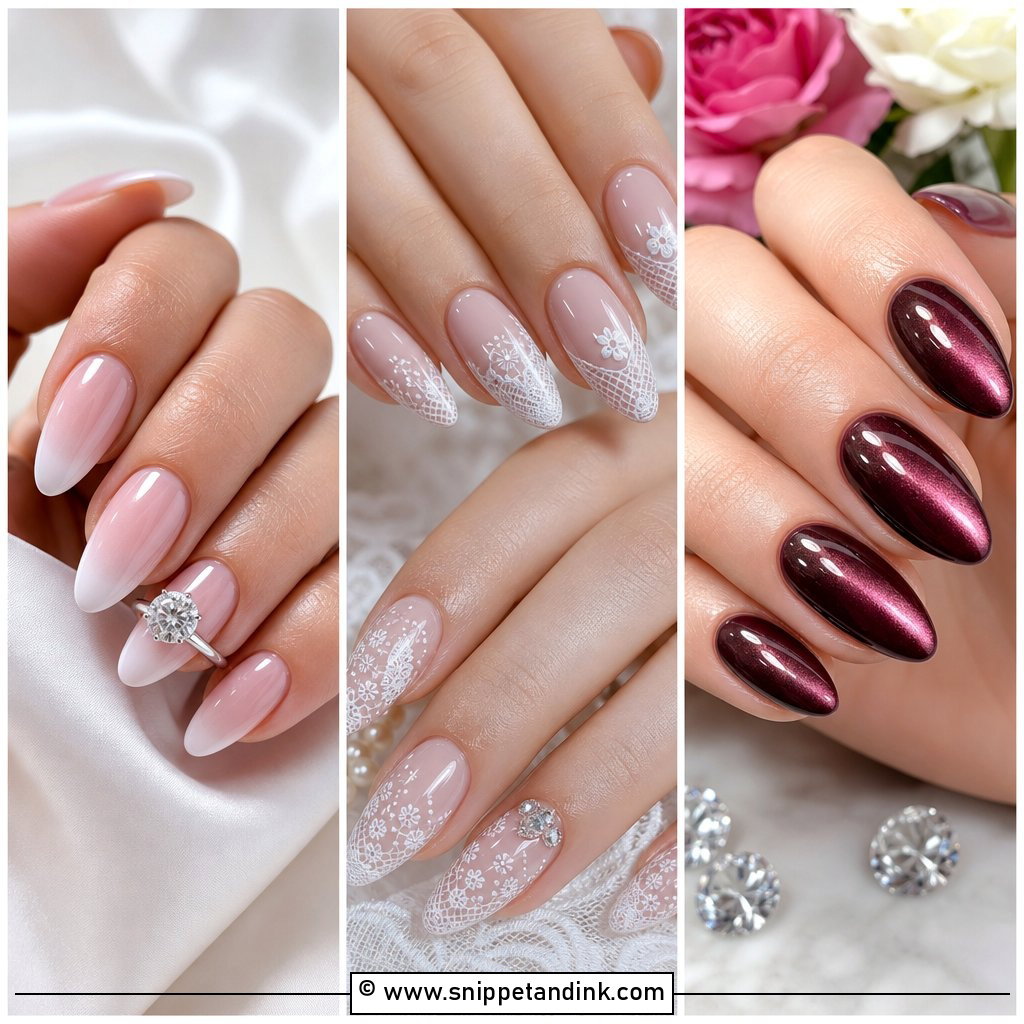
Sparkle works at a wedding when it’s placed, not poured. Glitter ombre wedding nails concentrate shimmer at the tip or the cuticle and let it thin out across the nail, so the set stays balanced. Silver reads icy; champagne reads warm. I only use fine glitter for brides, because chunky pieces create texture that shows in macro shots and catches on tulle. The base can be nude, blush or milky. Almond and oval soften the sparkle, and coffin makes it more formal.
7. Champagne Ombre Wedding Nails
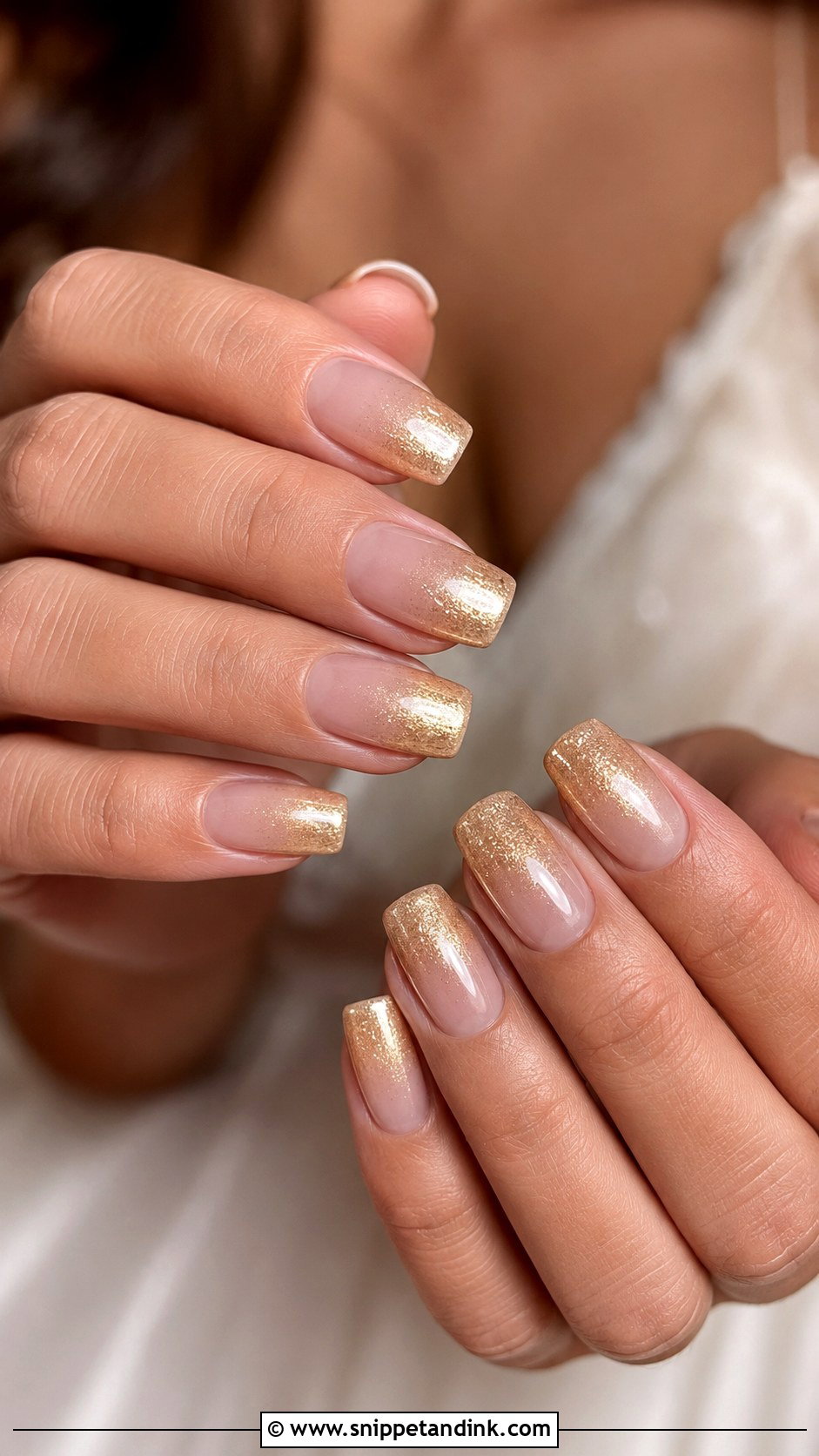
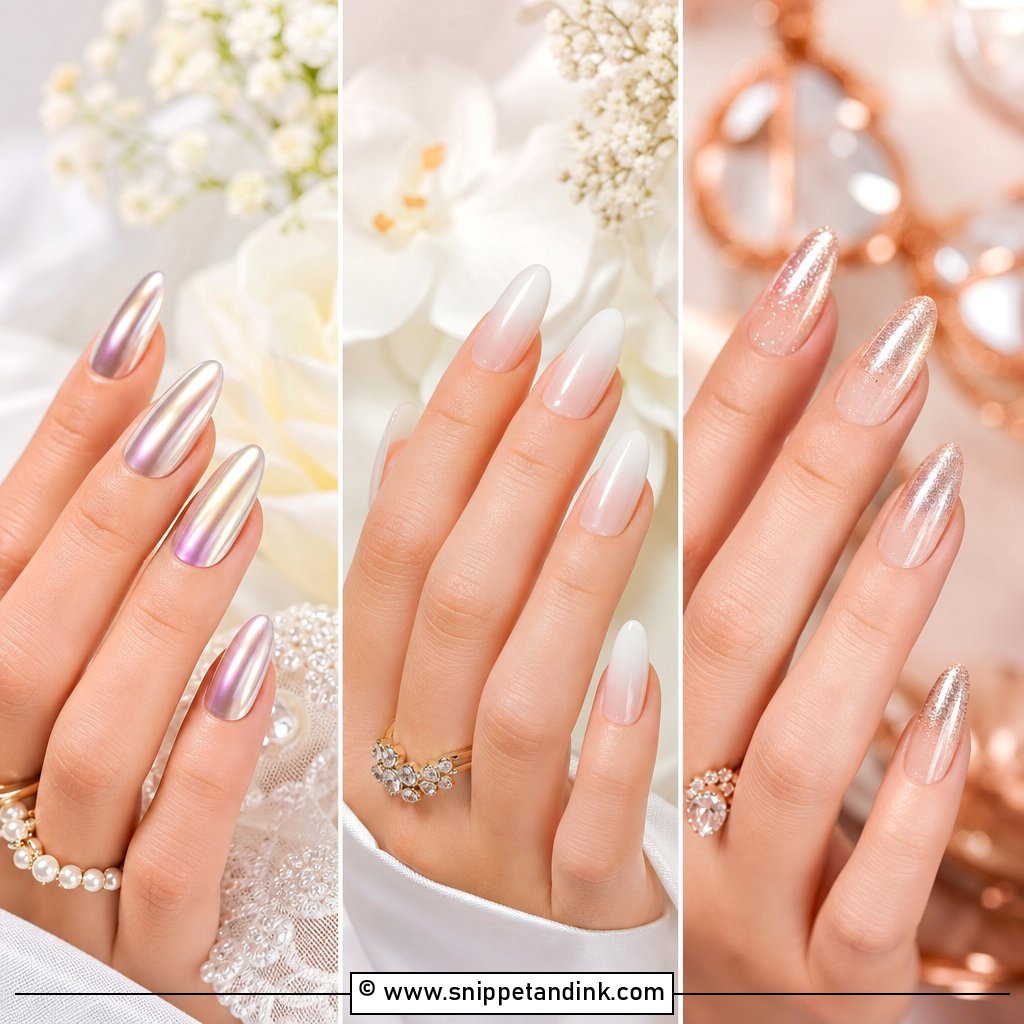
A nude or blush base fading into soft champagne gold gives warmth without the brassiness of yellow gold. The shimmer has to be finely milled, otherwise it breaks up the blend. Champagne sits well beside ivory gowns, gold jewelry and neutral bridesmaid dresses, and the light it adds is flattering on most skin tones. I’d keep it to a medium almond or squoval and choose glossy or satin over heavy glitter. Satin finishes do show fingerprints and dull a little faster, so I usually seal with gloss for the day itself.
8. Pearl Ombre Wedding Nails
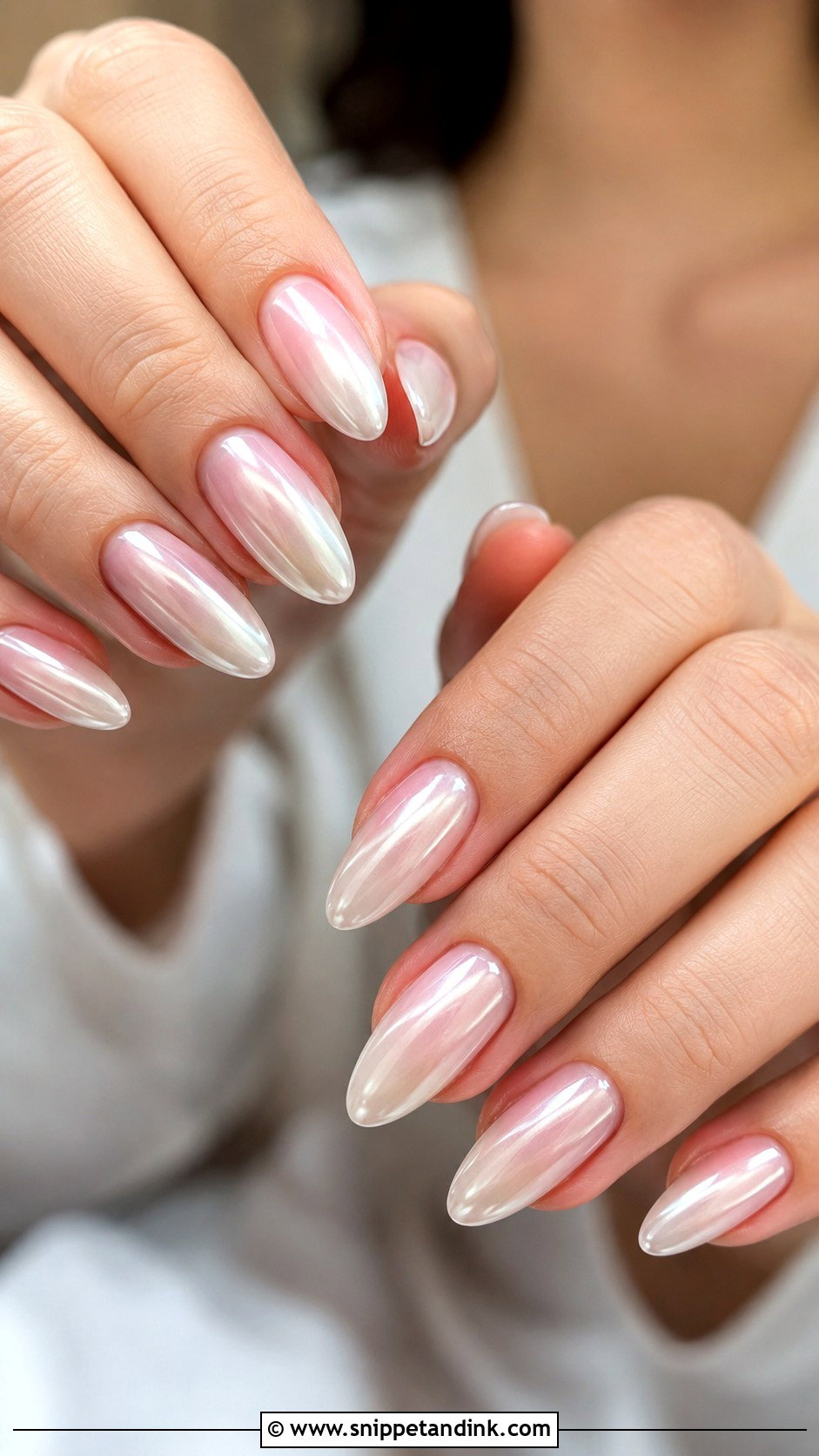
Pearl starts with a sheer pink, nude or milky fade and finishes with a pearly white sheen, often a chrome powder buffed gently over the top coat. Because it’s far softer than full chrome, it stays wearable from ceremony through to the last dance. It pairs naturally with pearl earrings, pearl veils and beaded bodices. Medium almond shows it off best. The thing to watch is coverage: I buff the powder lightly so the fade underneath still shows.
9. Chrome Ombre Wedding Nails
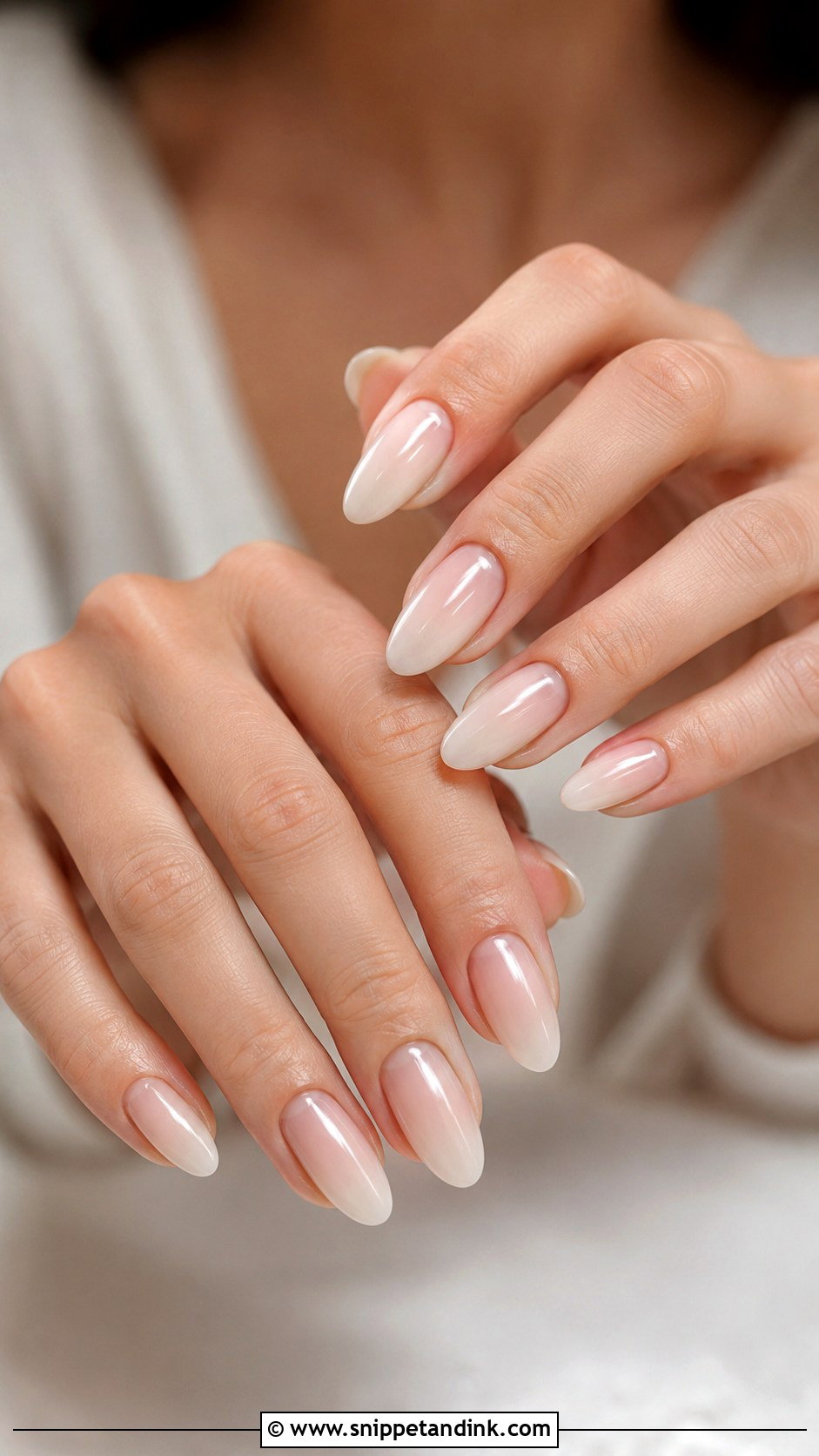
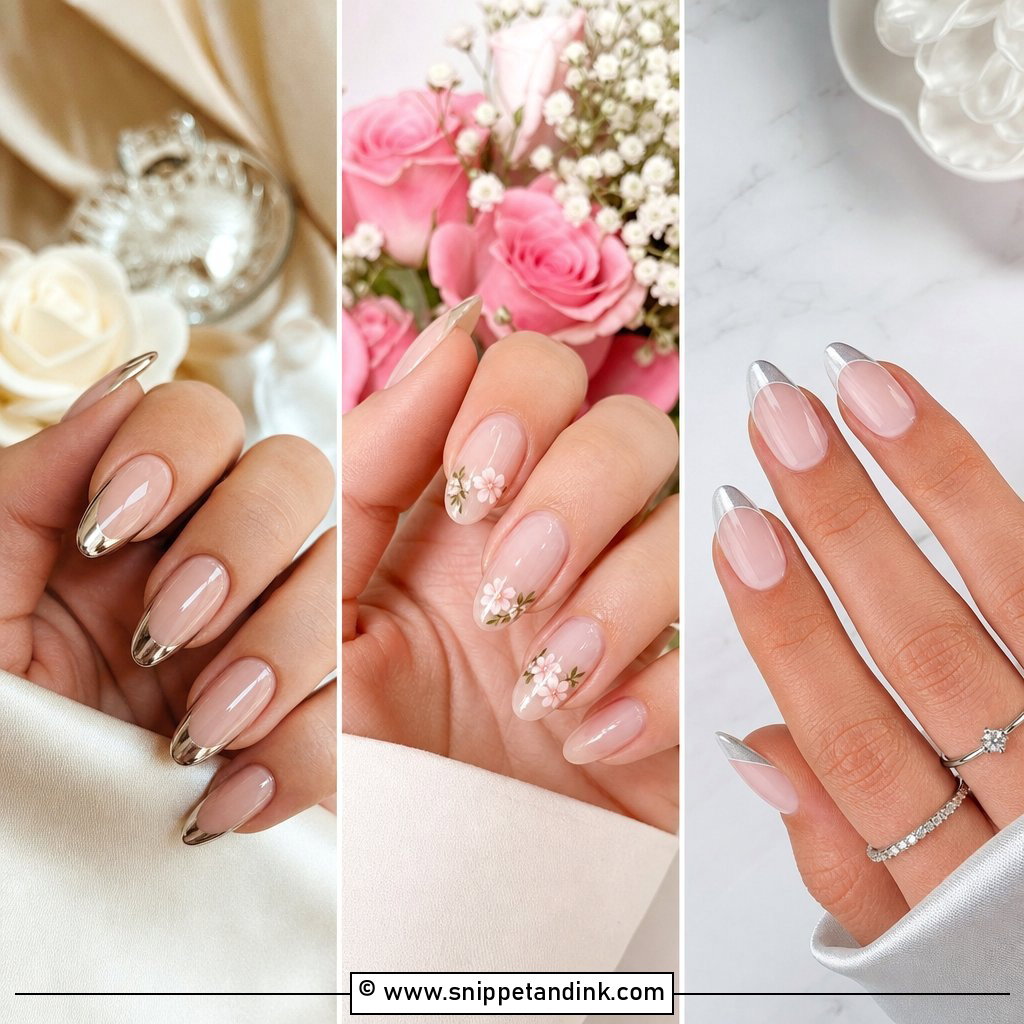
Chrome over a fade gives a modern glow, but bridal chrome should look sheer and pearly rather than metallic. I layer a soft white or pink chrome over a nude, pink or white ombre base and stop well short of a silver mirror finish, which flashes hard on camera and makes the nails the loudest thing in the picture. It suits clean silhouettes and simple jewelry, since it adds interest without any extra art. Almond or ballerina shapes give it a refined line. Ask for the free edge to be sealed carefully; chrome chips first at the tips.
10. Baby Boomer Ombre Wedding Nails
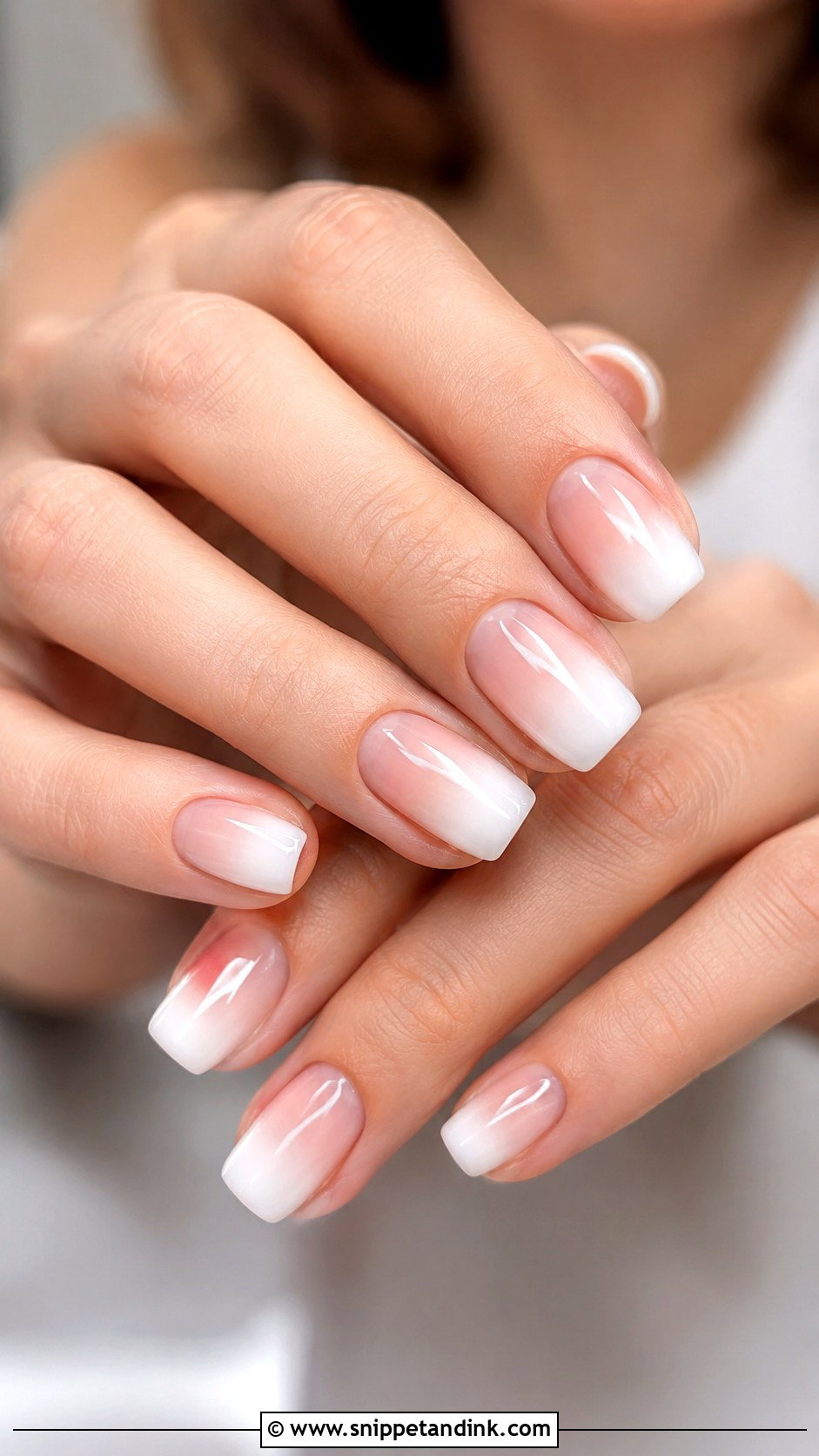
Baby boomer is simply the trade name for a pink-to-white gradient, and it began as an acrylic technique, with pink and white powders blended on the brush. Today I do it in acrylic or gel. It gives the elegance of a French with a softer, airbrushed finish, and it ages well in photographs because it doesn’t follow a trend color. A sheer pink or nude base and a soft white tip on a medium almond or square keeps it polished. A whisper of shimmer is the only extra I’d add.
11. Short Ombre Wedding Nails
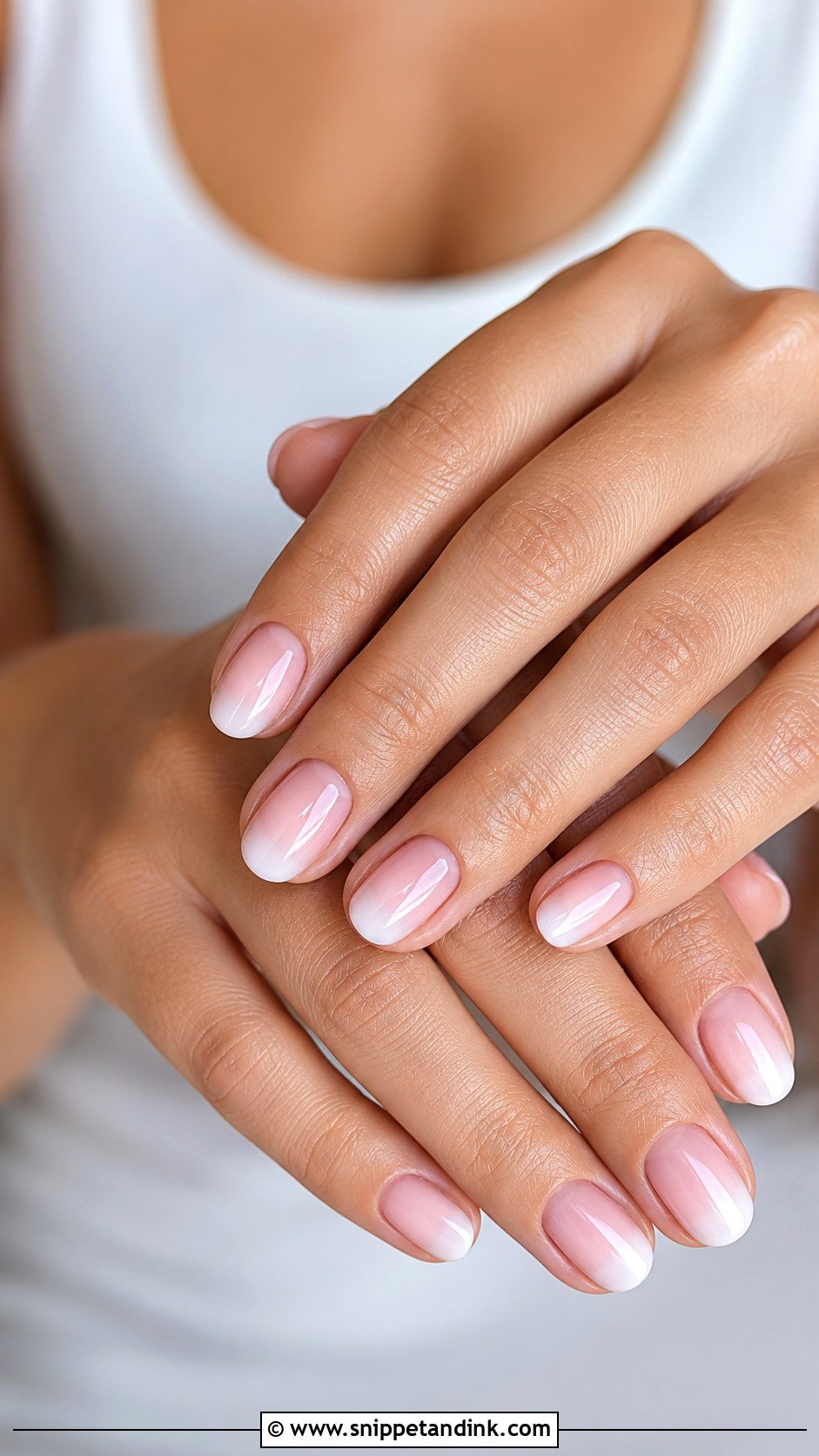
Length isn’t what makes a bridal manicure elegant. A soft gradient makes short nails look cleaner and slightly longer, especially in sheer pink, nude, milky white or beige, which visually extend the nail bed. Soft square or rounded edges keep the set practical for the wedding day and honeymoon. Keep the fade delicate and the glitter away from the tips; a dense band at the end chops the nail visually.
12. Almond Ombre Wedding Nails
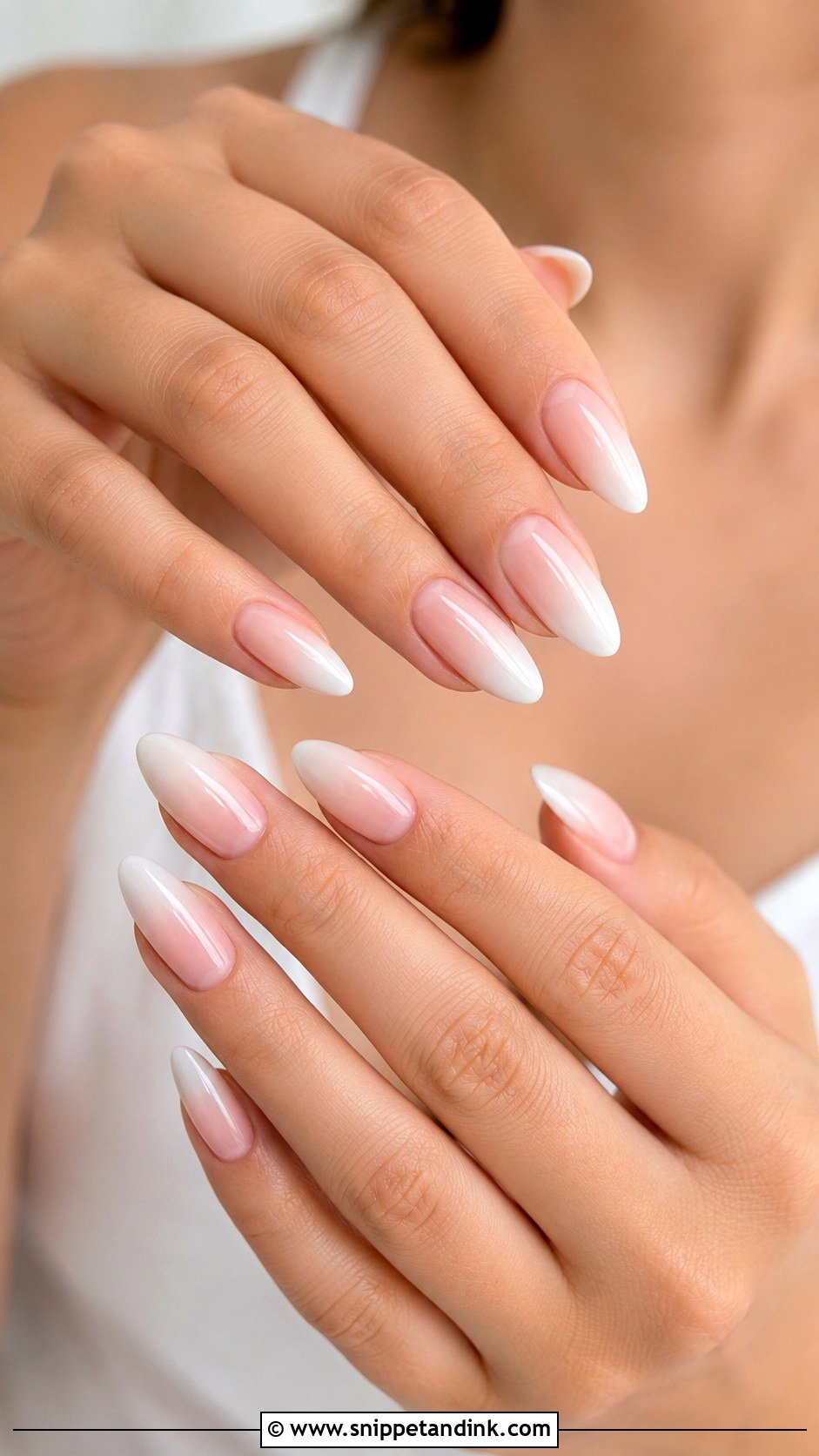
The tapered sides of an almond make fingers look longer, and the curved tip gives the blend a natural path to follow. Pink and white, nude and white, blush with milky cream, and pearl all work on it, without needing a long extension. It matches the softness of lace, tulle and draped fabric. When I file almonds for brides, I balance both sidewalls by eye from the fingertip, because a lopsided almond is the first thing a camera finds.
13. Coffin Ombre Wedding Nails
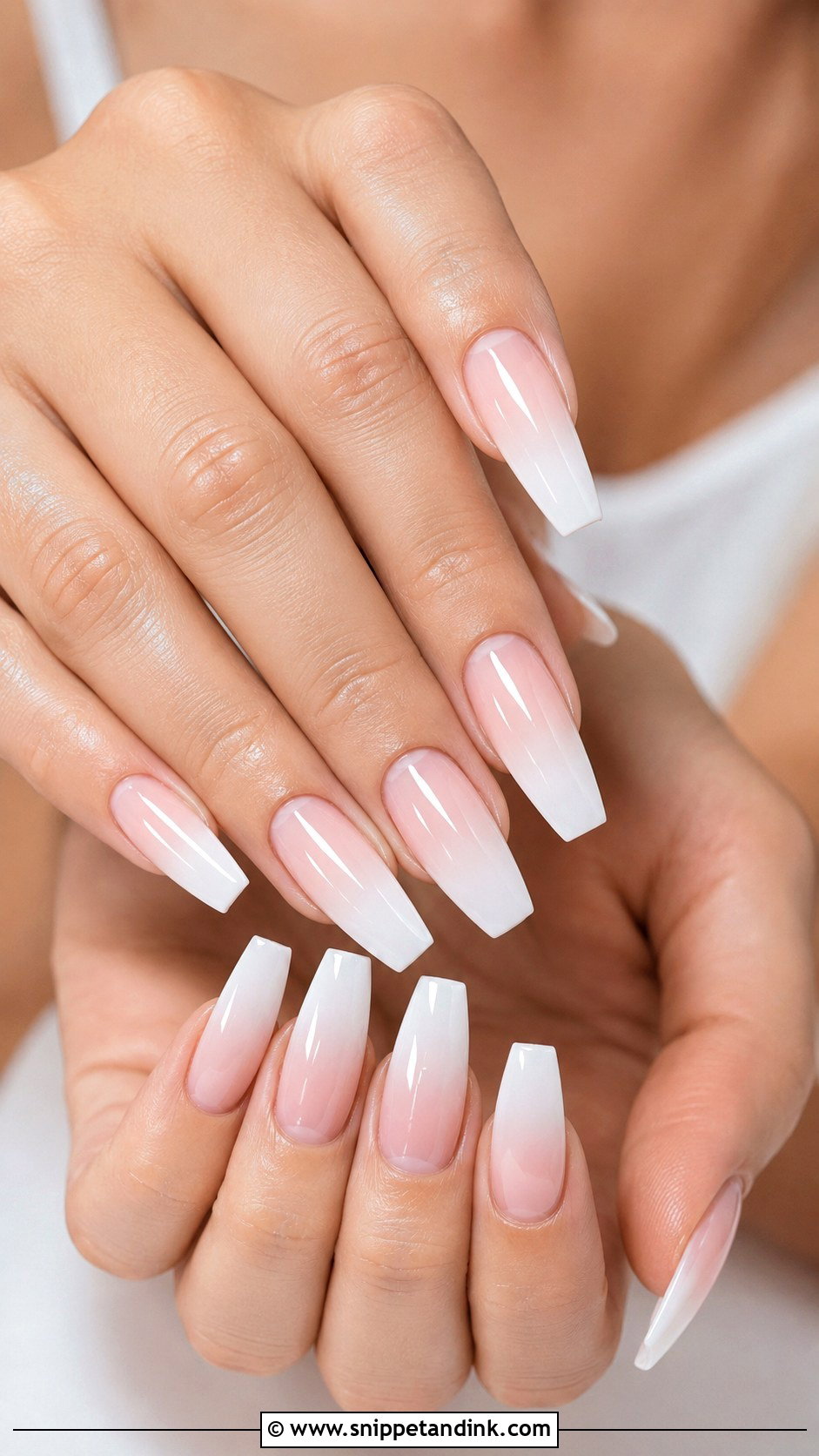
Coffin, sometimes called ballerina, is the dramatic shape here: tapered sides and a flat tip that feel structured beside modern gowns and formal beauty looks. Because the shape already says a lot, I keep the colors gentle, pink and white, nude and champagne, or milky white with a subtle shimmer fade. Medium length is much easier to live with than extra long, and it still photographs as glamorous. The flat corners take the knocks, so I keep them slightly softened.
14. Square Ombre Wedding Nails
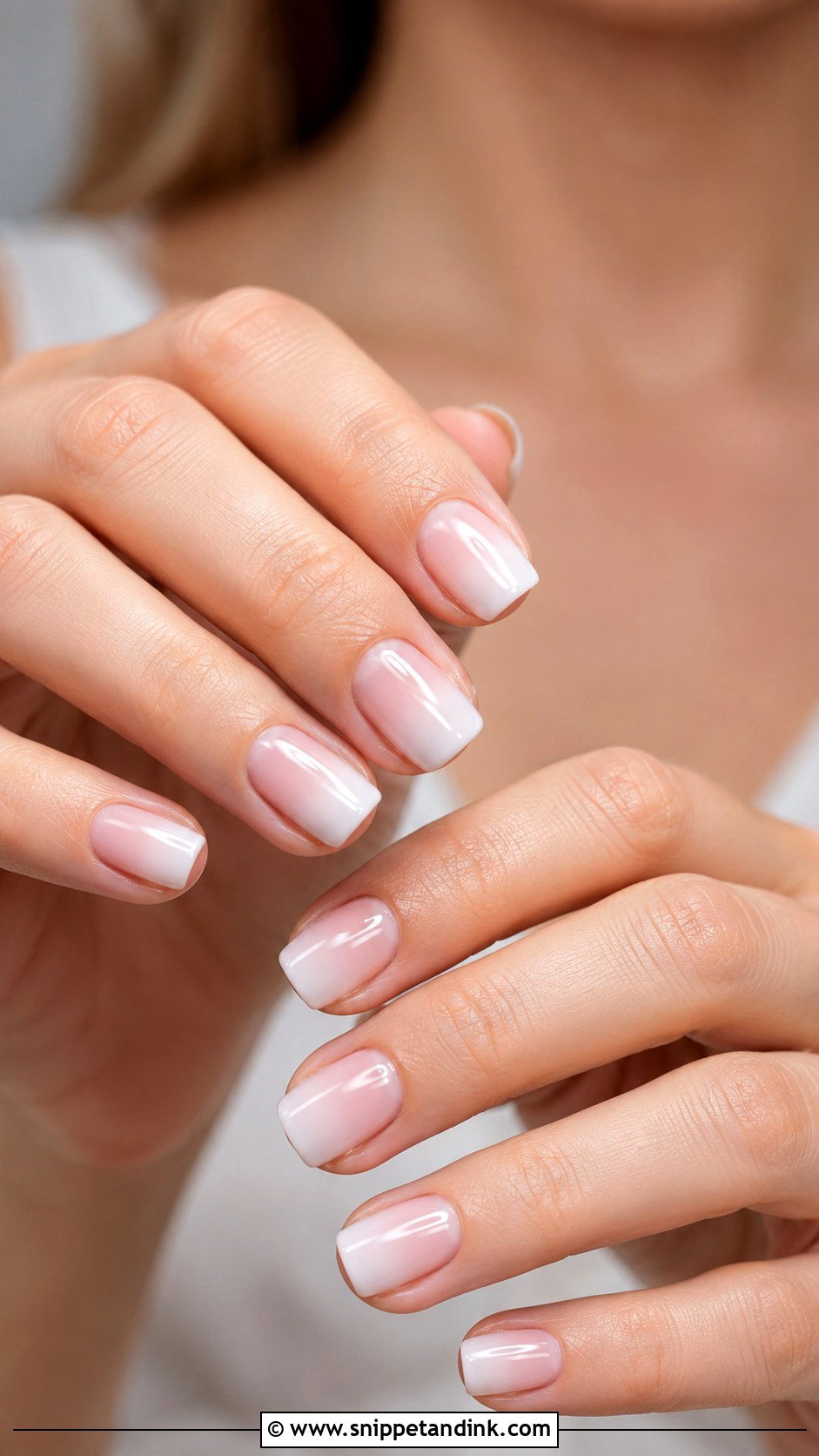
Square suits short to medium nails because the straight edge gives structure without length. Pink and white is the classic fade on it; nude beige, milky white and blush work too. Most of my brides end up in a soft square rather than a sharp one, since rounded corners are gentler on the eye and far less likely to catch on lace sleeves or a veil. It’s an easy shape to maintain if the wedding is followed by a long trip.
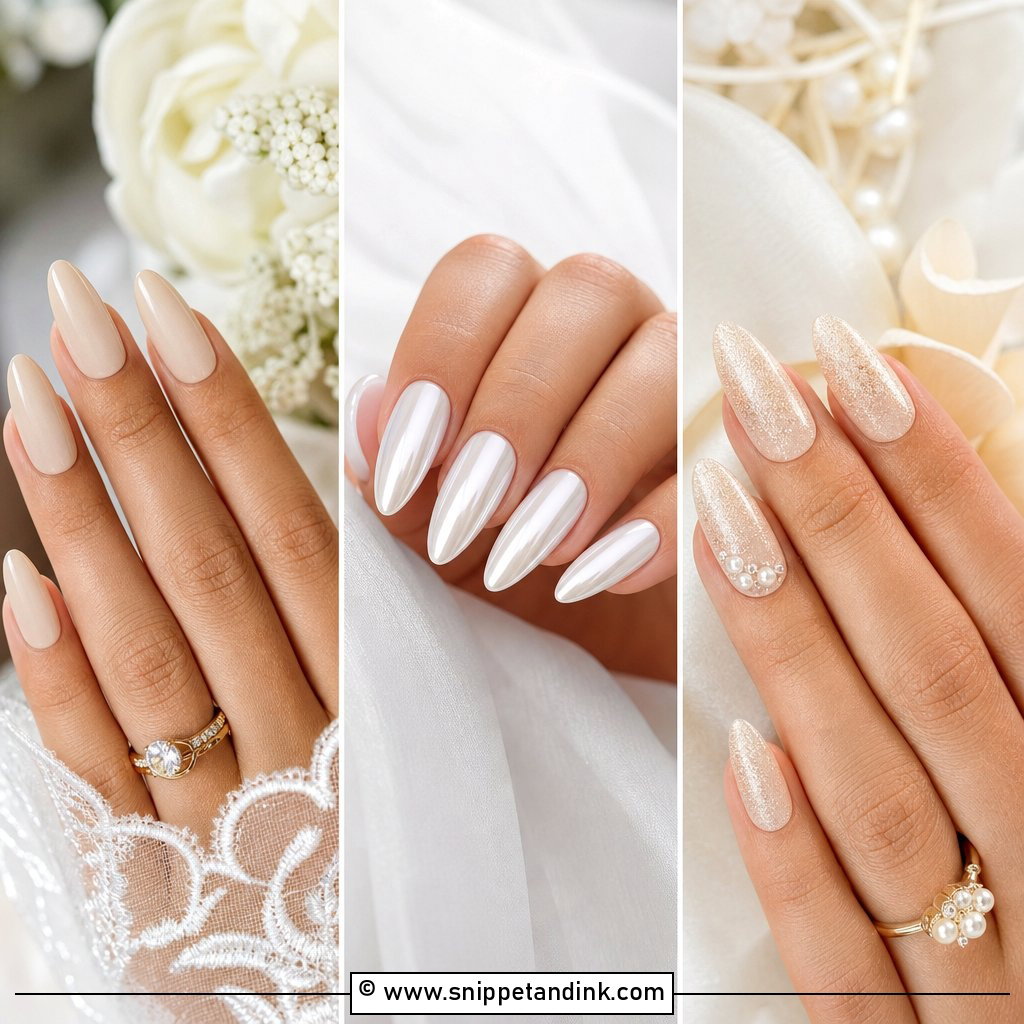
15. Rose Gold Ombre Wedding Nails
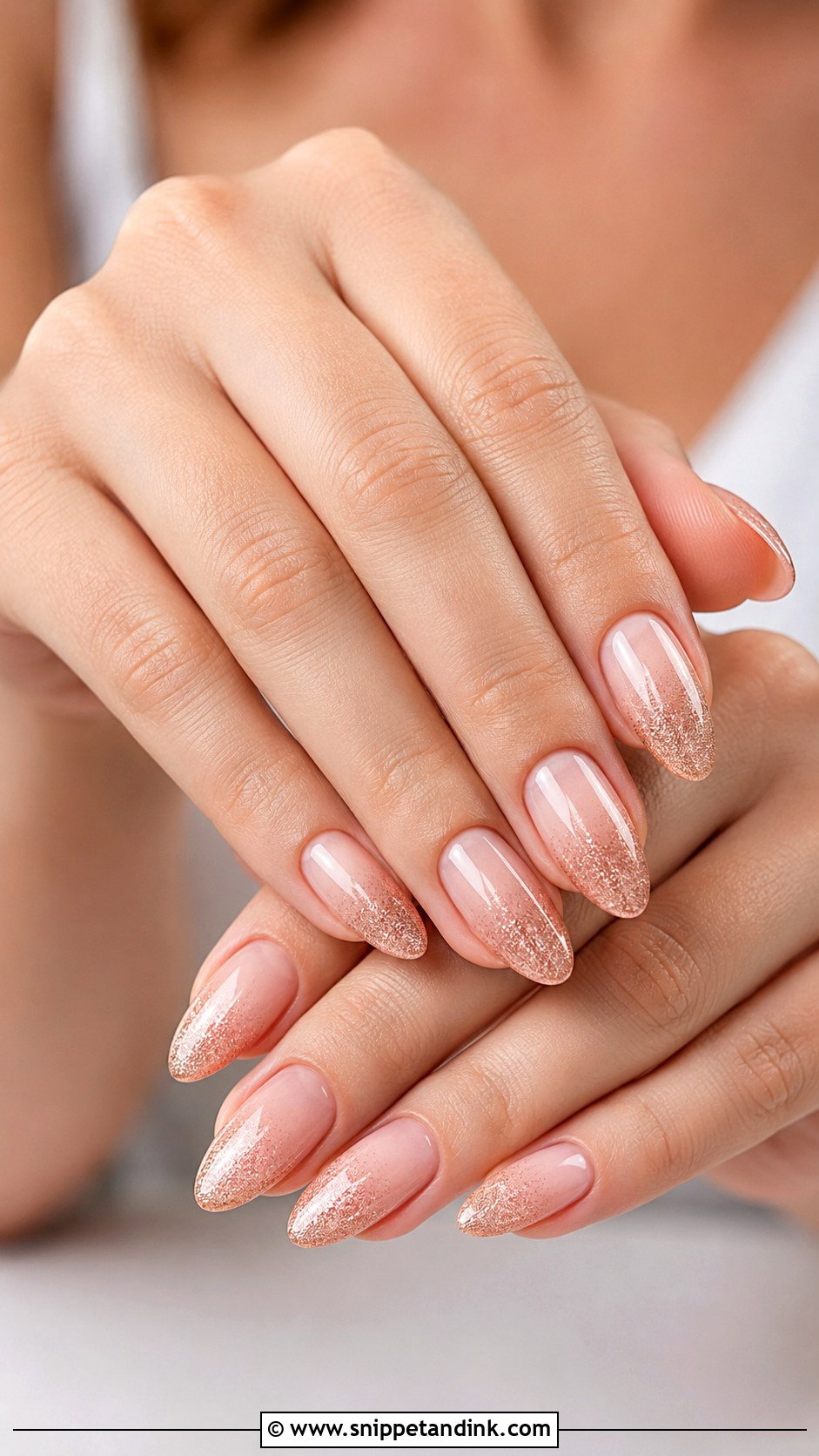
For a palette of dusty rose, mauve or warm neutrals, a nude, blush or soft pink base blending into a rose gold shimmer fade ties the hands to everything else. It pairs naturally with rose gold jewelry and glowy makeup. Fine shimmer looks refined; large glitter looks like a party. The fade can start at the tips, which is classic, or rise from the cuticle, which feels newer. Almond and oval soften it, and coffin turns it up.
16. Lavender Ombre Wedding Nails
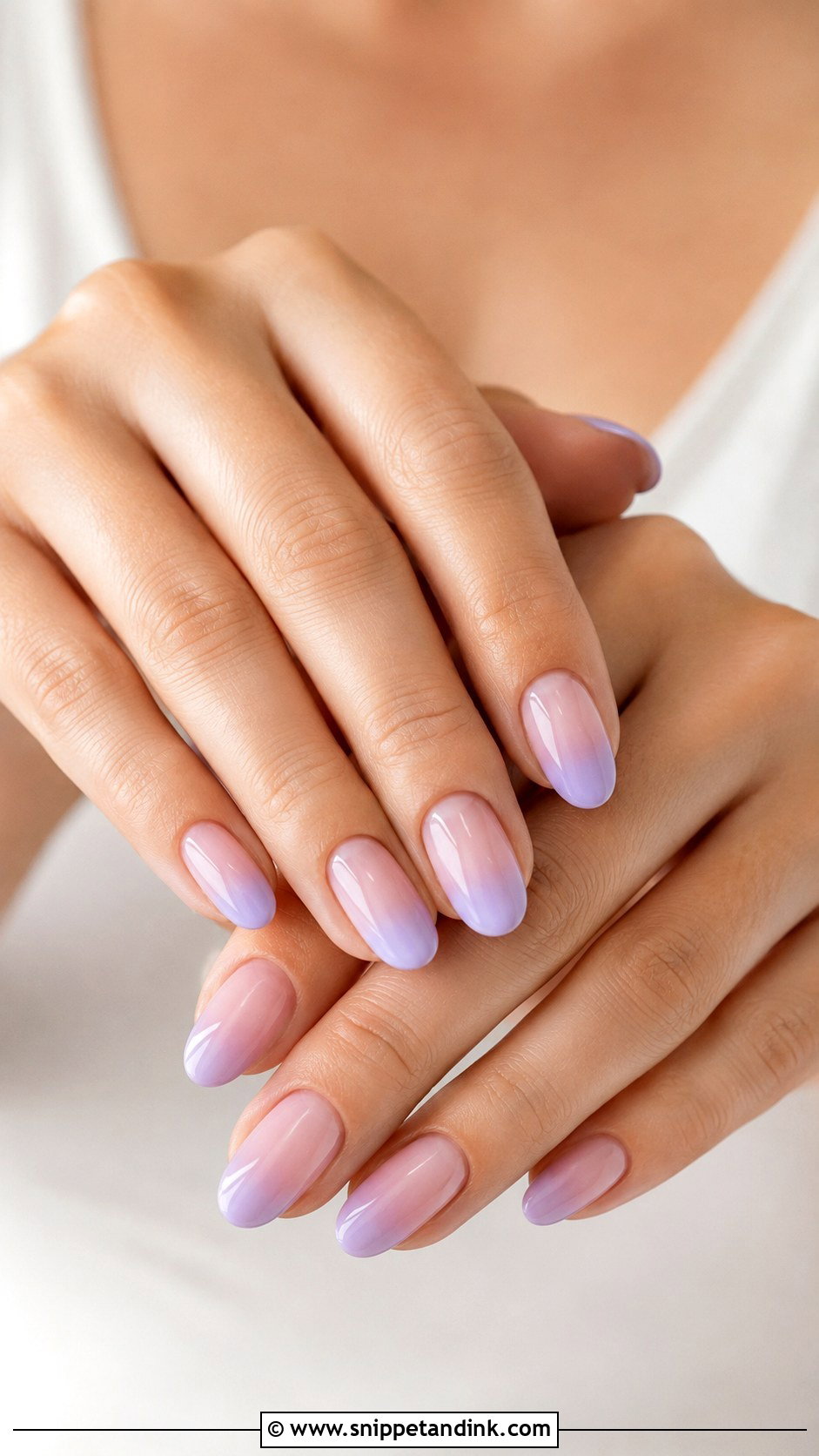
A fade from sheer pink or nude into pale lavender gives a pastel hint that still reads soft. It’s one of my favorite bridesmaid sets for spring, and it pairs well with silver jewelry, cool-toned bouquets and grey or lilac palettes. Keep the lavender sheer. Saturated purple under warm reception bulbs can turn muddy, which pale lilac doesn’t. Gloss keeps it fresh, a pearl top coat adds glow, and short ovals or medium almonds suit it best.
17. Blue Ombre Wedding Nails
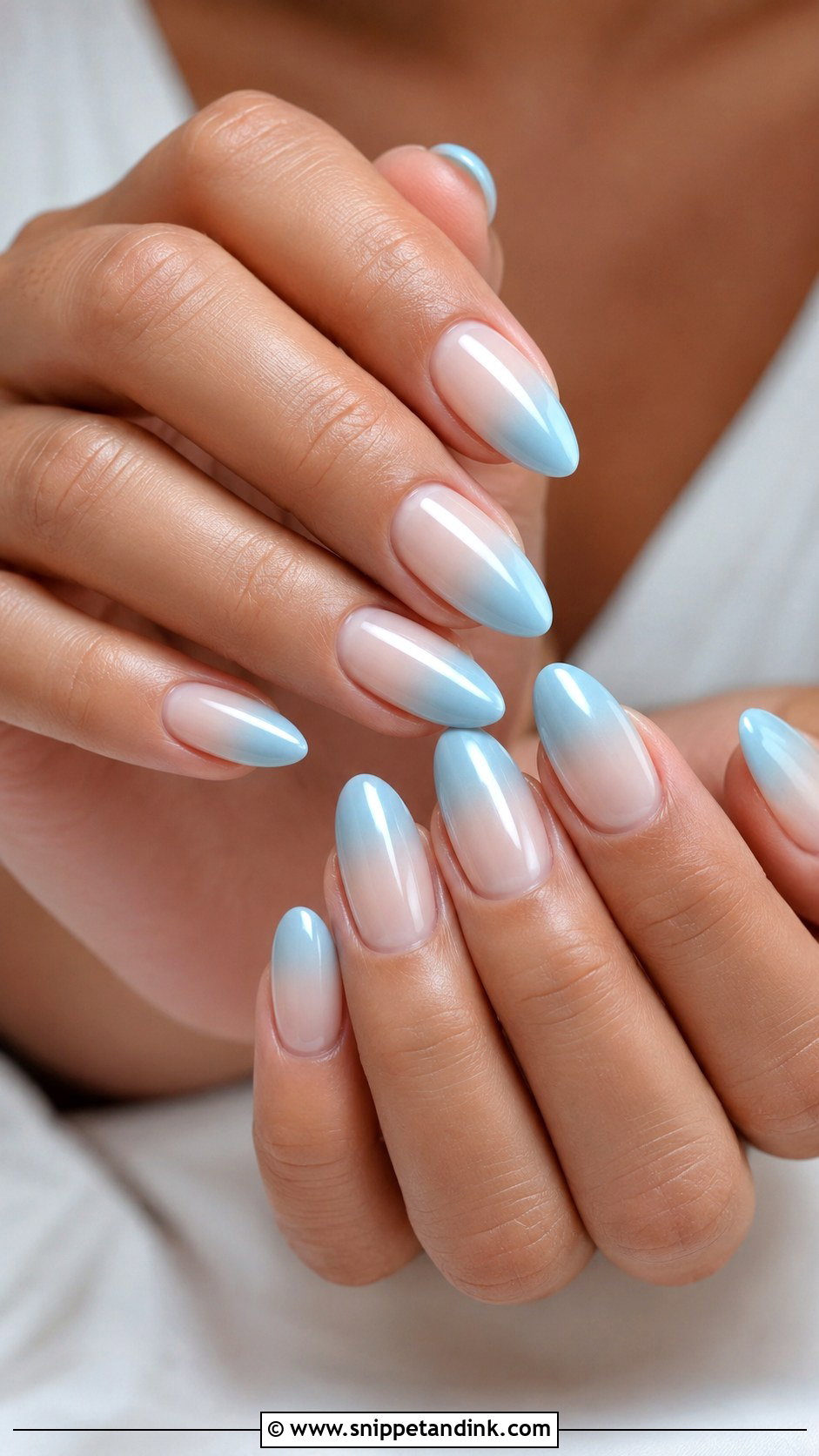
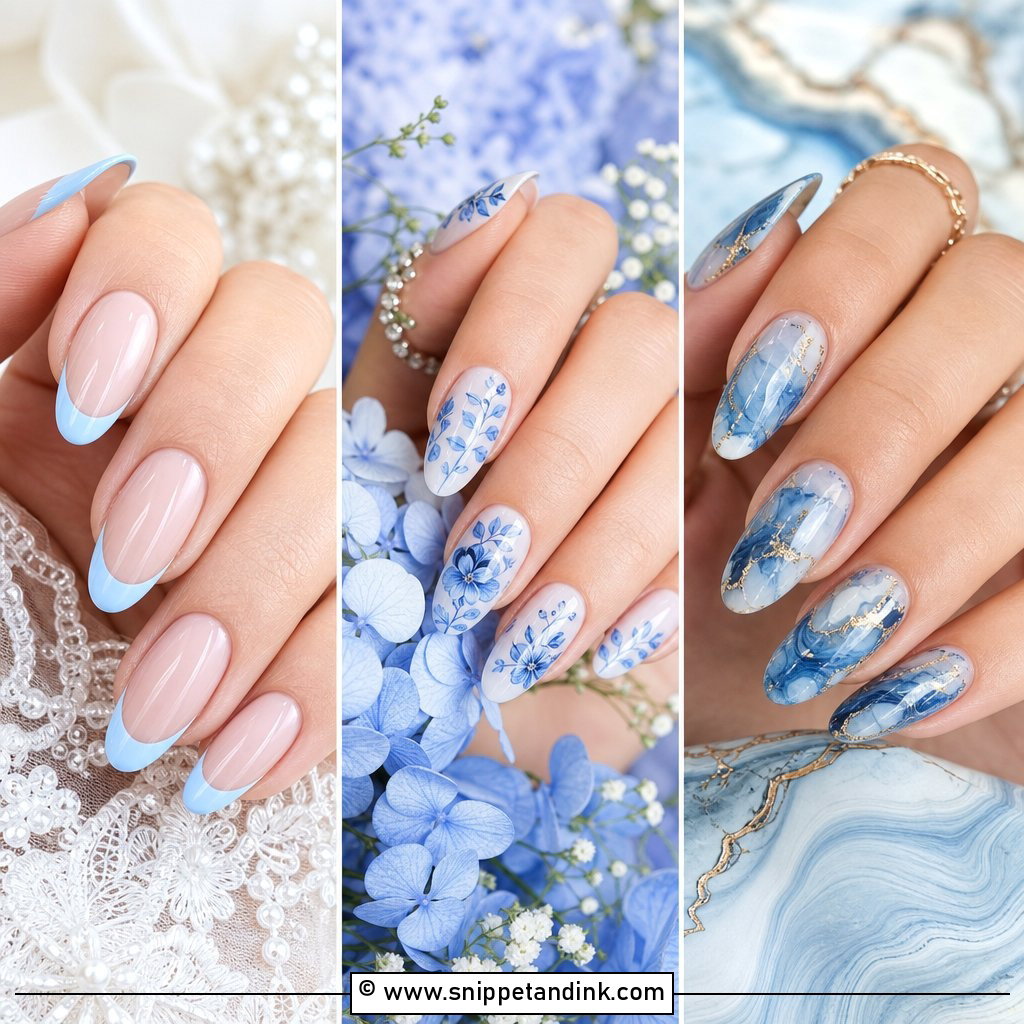
Pale blue blended from a nude or milky base into baby blue tips is a quiet way to carry something blue. Bold blue tends to read as a fashion manicure rather than a bridal one, so I keep it sheer. It fits coastal and summer weddings and suits bridesmaids in blue, silver or grey dresses. A faint pearl sheen or tiny shimmer makes it feel more bridal. Almond or oval keeps the color graceful.
18. Peach Ombre Wedding Nails
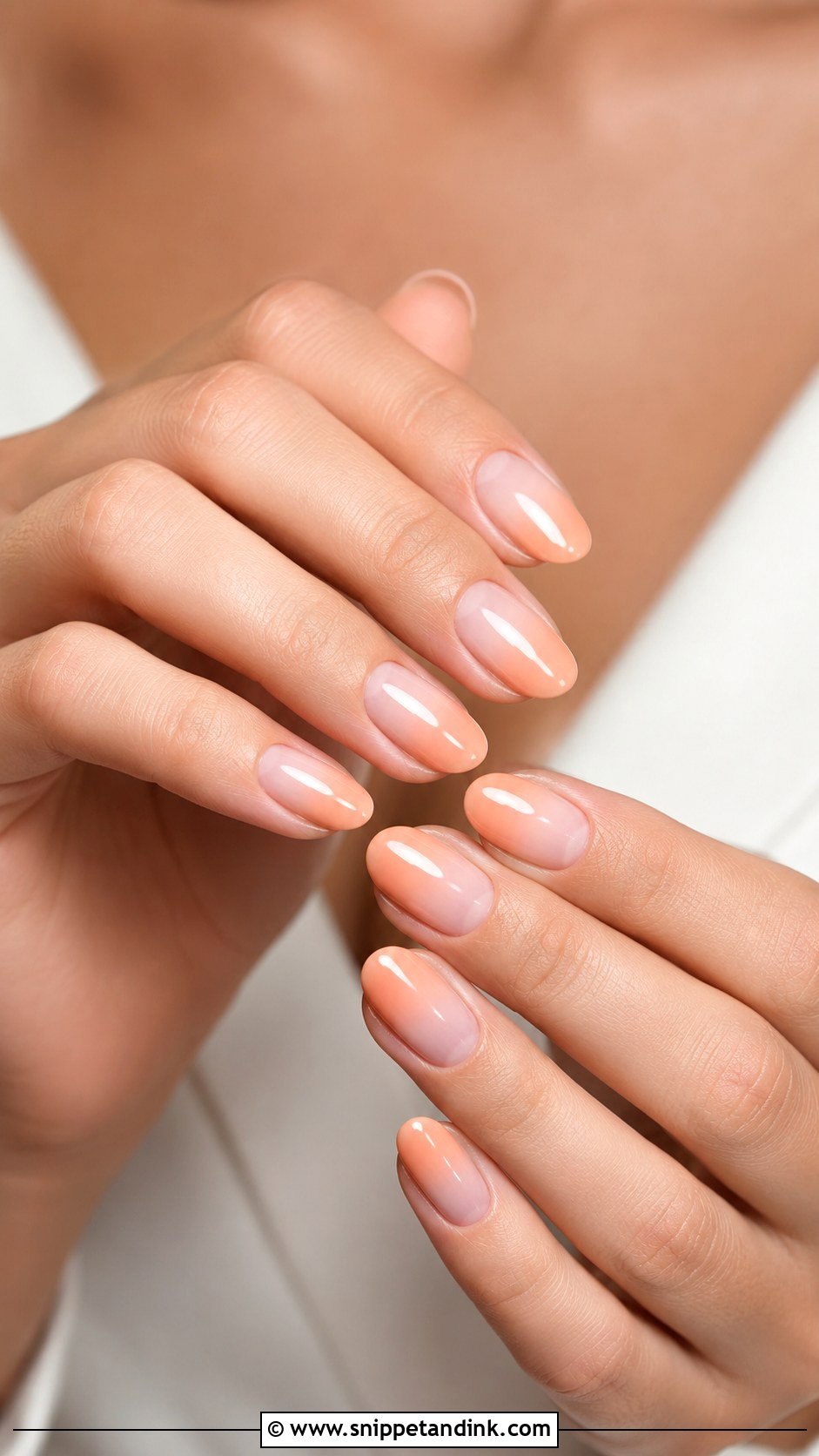
When pink feels too cool and white too traditional, peach is where I go. A sheer nude fading into a soft peach tip gives the hands a healthy glow and suits spring and summer, ivory dresses, warm bouquets and gold jewelry. I tune the shade from pale apricot to soft coral against your skin and the wedding palette. Sheer and smooth is the rule; once peach goes opaque it starts to look orange.
19. Floral Ombre Wedding Nails
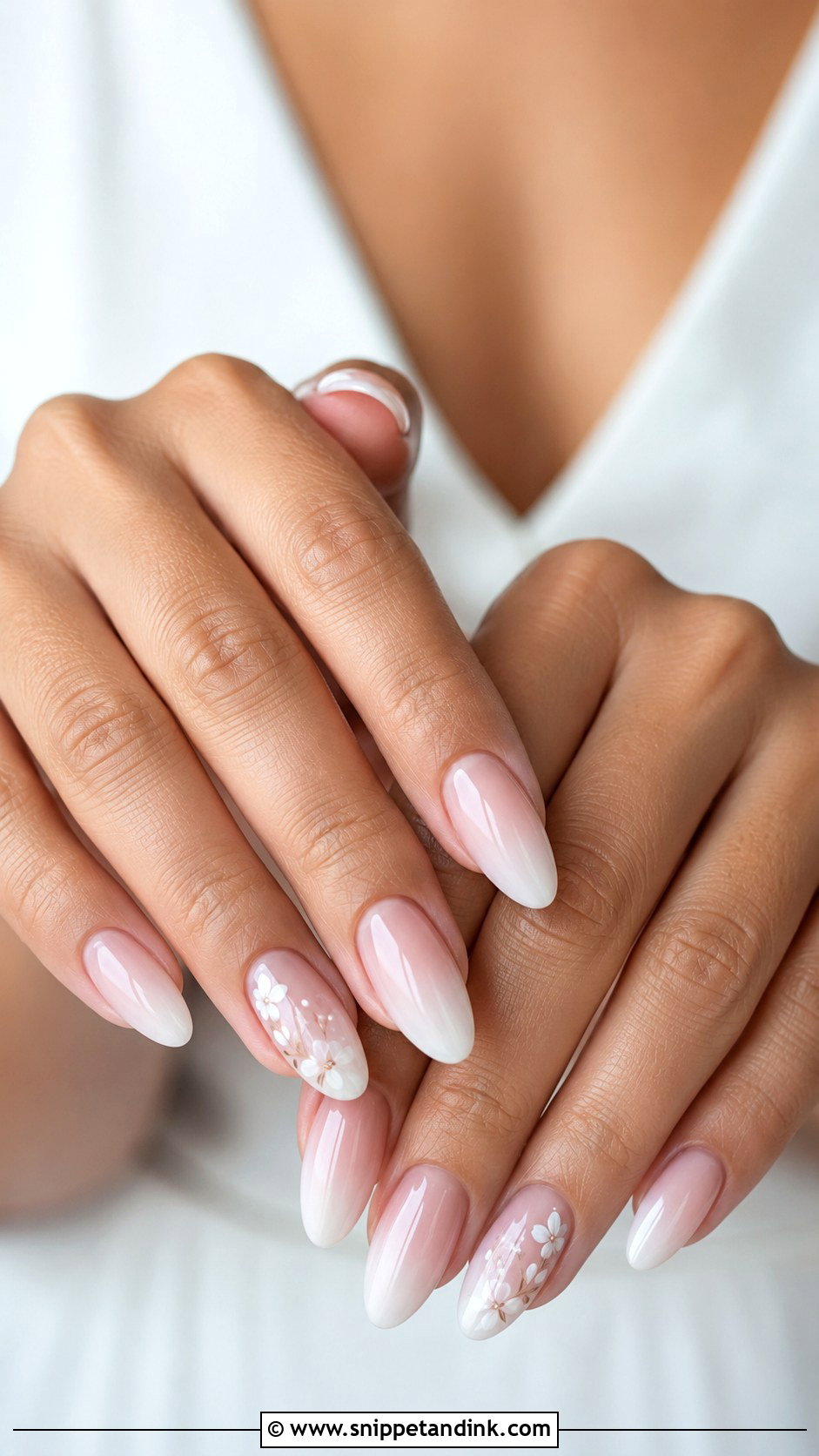
Restraint is the whole technique here. I lay a pink and white, nude and milky, or blush and cream fade, then hand-paint tiny white, blush or pastel flowers on one or two accent nails only. Painted flowers sit flat under top coat; raised 3D acrylic flowers look pretty but catch on hair and fabric all day, so I rarely use them on brides. It suits garden and outdoor ceremonies, and curved almond or oval shapes echo the petals.
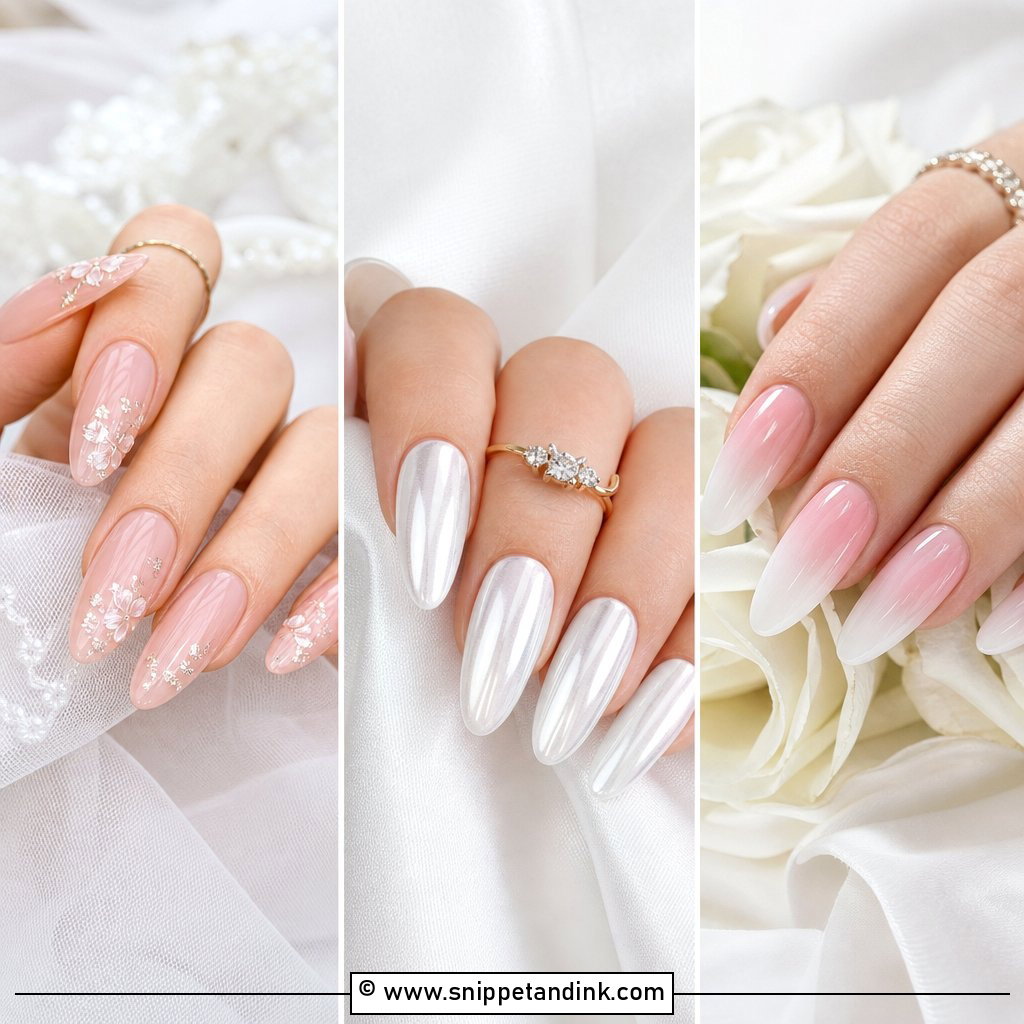
20. Rhinestone Ombre Wedding Nails
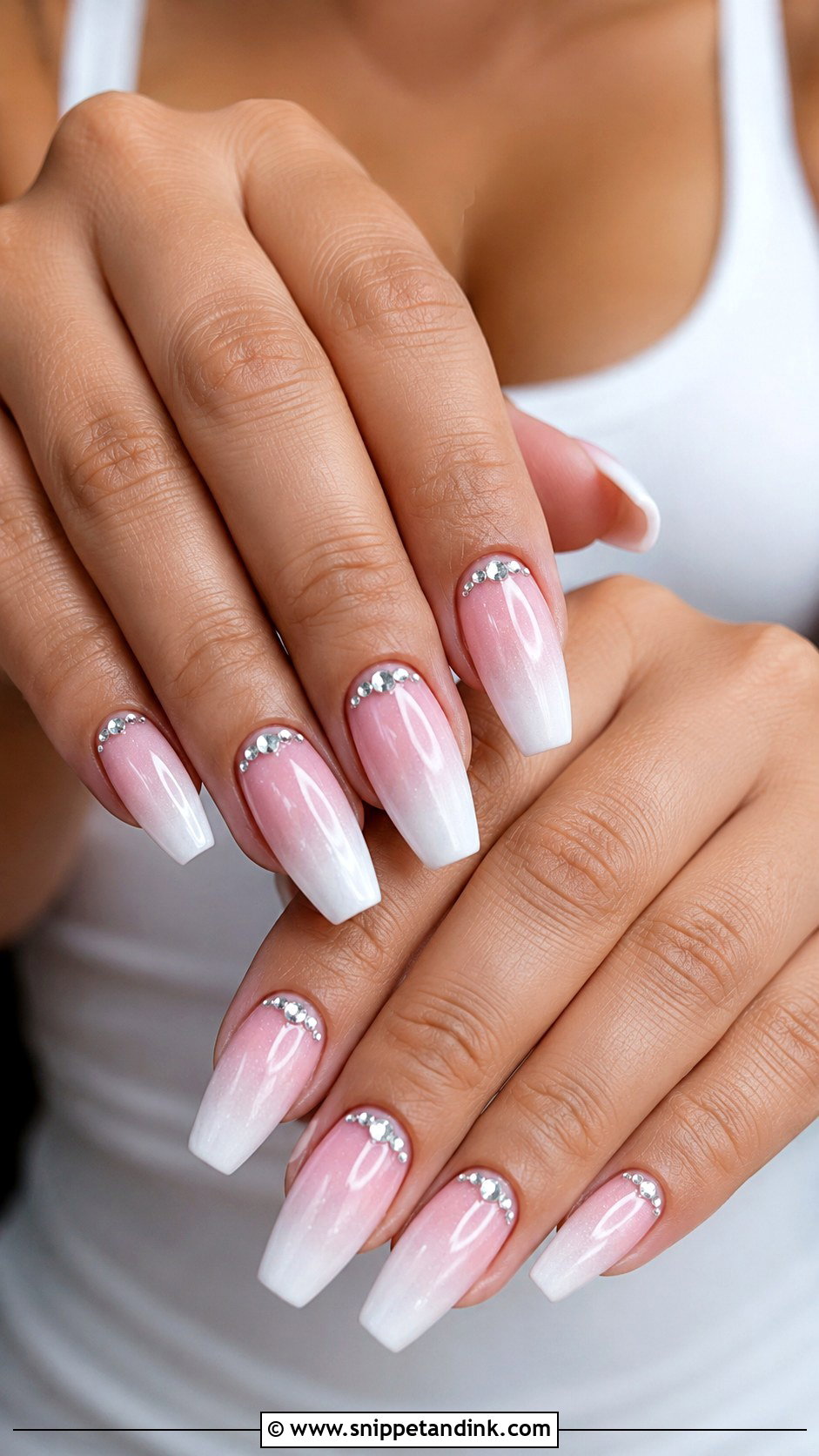
Crystals need a plan more than any other detail. Rhinestone ombre wedding nails usually pair a soft pink, nude or white fade with small stones near the cuticle or along one accent nail. I place them low on the nail, where they’re less likely to snag a veil, and set them in gel so they don’t pop off. Clear crystals match any metal and echo a beaded or crystal-trimmed gown. Tiny stones look refined; large gems feel like costume. Medium almond, oval or coffin gives enough room.
Press-On Fades for Destination Weddings and Last-Minute Bridesmaids
Not everyone can reach a salon the week of a wedding, especially when the ceremony is abroad. A custom press-on set, painted in advance and sized to each nail, is a reasonable answer. I make them in gel on soft tips, so the fade is just as smooth as a salon set.
Making press-ons last through the day
- Push back cuticles and buff the shine off the natural nail; glue won’t grip a glossy surface.
- Wipe each nail with alcohol to remove oil, and wait for it to dry fully.
- Size every nail before gluing; if you’re between two sizes, take the smaller and file the edge to fit.
- Use nail glue rather than adhesive tabs for a wedding; tabs are easy to remove but can let go after a few hours of hugging and dancing.
- Press each nail at an angle from the cuticle down and hold for thirty seconds, so no air is trapped underneath.
To take them off, soak your fingers in warm soapy water or a little acetone and let the glue soften. Prising them off dry takes the top layer of your own nail with it. Glued press-ons generally hold for several days to a couple of weeks, depending on prep and how hard you are on your hands.
Does the Blend Disappear at Arm’s Length?
Every fade above can be kept classic, pushed modern with chrome, pearl or champagne, or given personality through blue, lavender, peach, a few painted flowers or a scatter of crystals. What decides it is your dress, your jewelry, your colors, the length you can live with and how the set sits next to everyone else’s hands in the group photos. Bring two or three clear reference photos to a trial, and check the blend from arm’s length as well as up close. If you can’t see where one color stops, it’s done properly.
You'll Like These Ideas:


Leave a Reply