
A plain manicure is the hardest kind to fake. With no art or glitter to distract, every uneven cuticle and lumpy coat shows, especially in the ring close-up every photographer takes. So the looks below are less about color and more about prep, shape and a smooth finish. They suit short natural nails as happily as almond extensions, and these wedding manicures will carry you from the rehearsal dinner to the honeymoon without a refill. Here’s what I’d weigh up with each one.
Testing a Shade Against Your Ring and Dress Fabric
Neutral shades shift more than bright ones depending on what sits next to them, so I never choose a bridal nude or white from the bottle alone. I ask brides to bring the engagement ring, a scrap of dress fabric if the shop will part with one, and a photo of the bouquet. Then the test goes like this:
- Two or three shades are painted directly onto one nail each, cured and top-coated, because wet and dry color differ.
- We look at them beside the fabric in daylight from a window, not under salon lights.
- Then I hold your hand next to the ring. Yellow gold warms a beige, while platinum makes cool pinks look cleaner.
Whichever shade wins in that window light usually wins in the photos too.
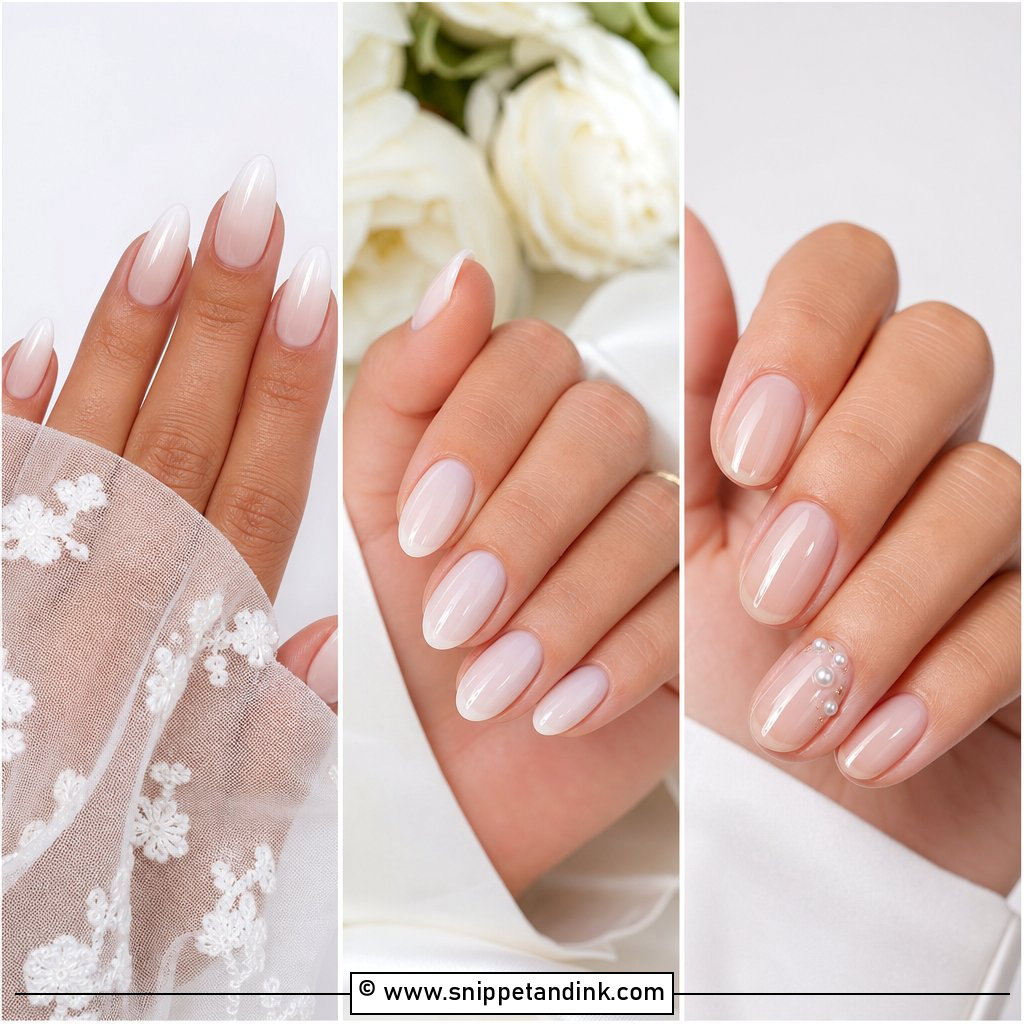
1. Milky White Wedding Nails
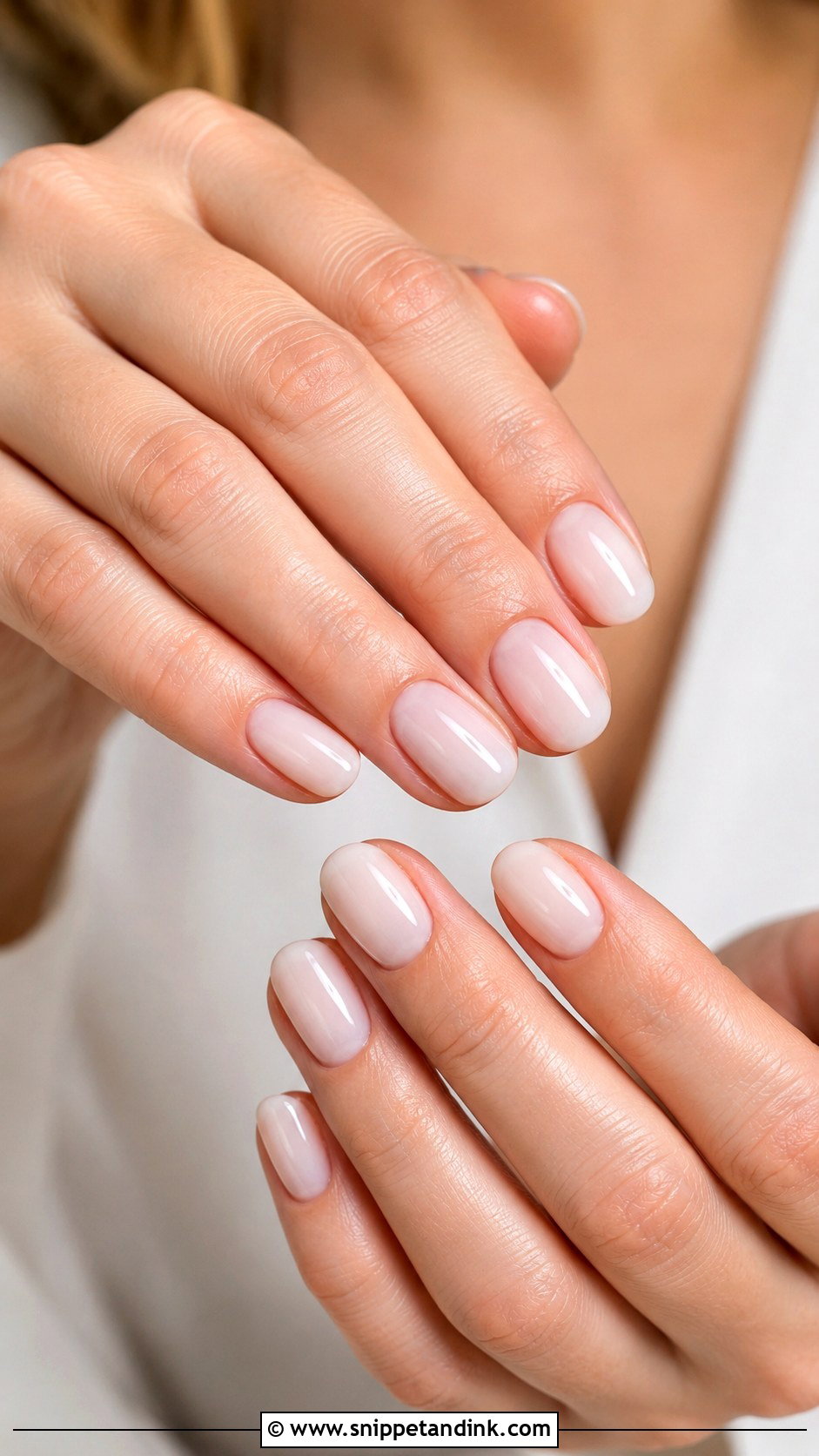
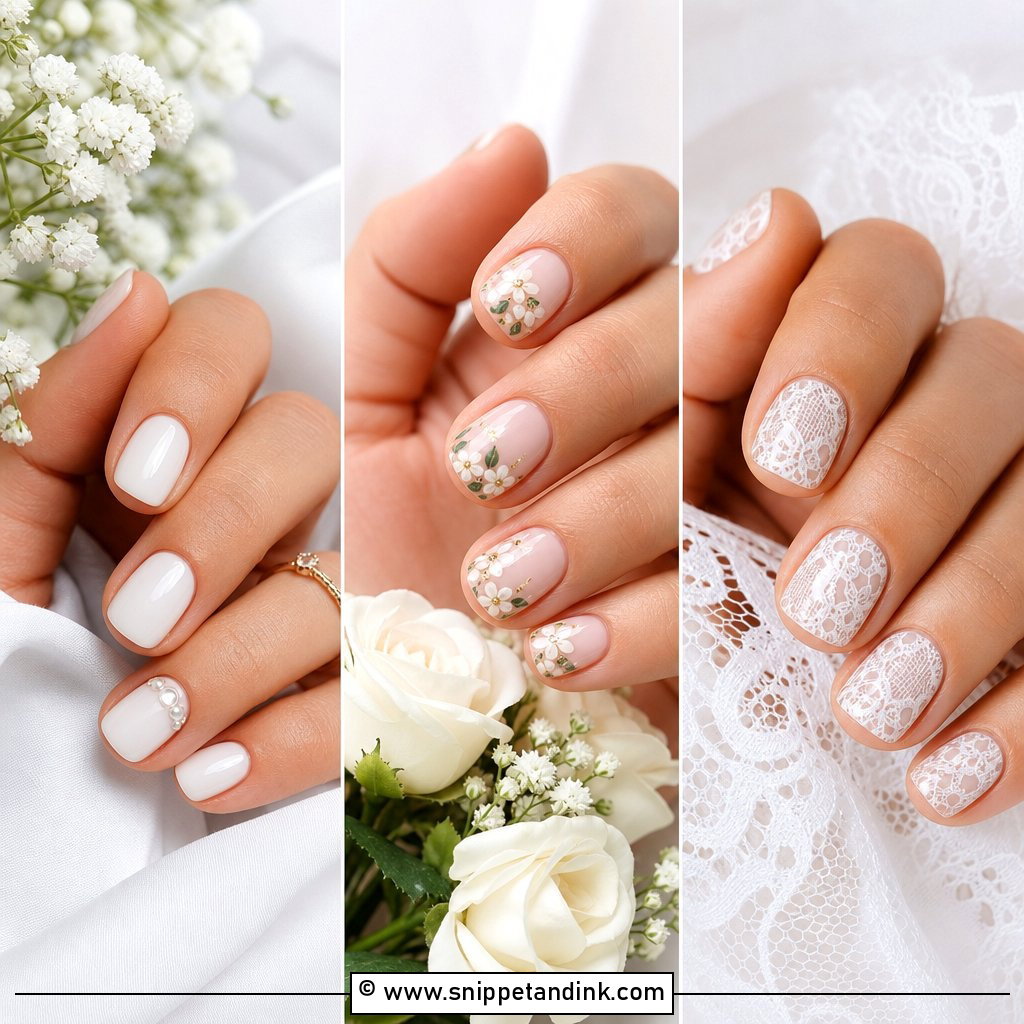
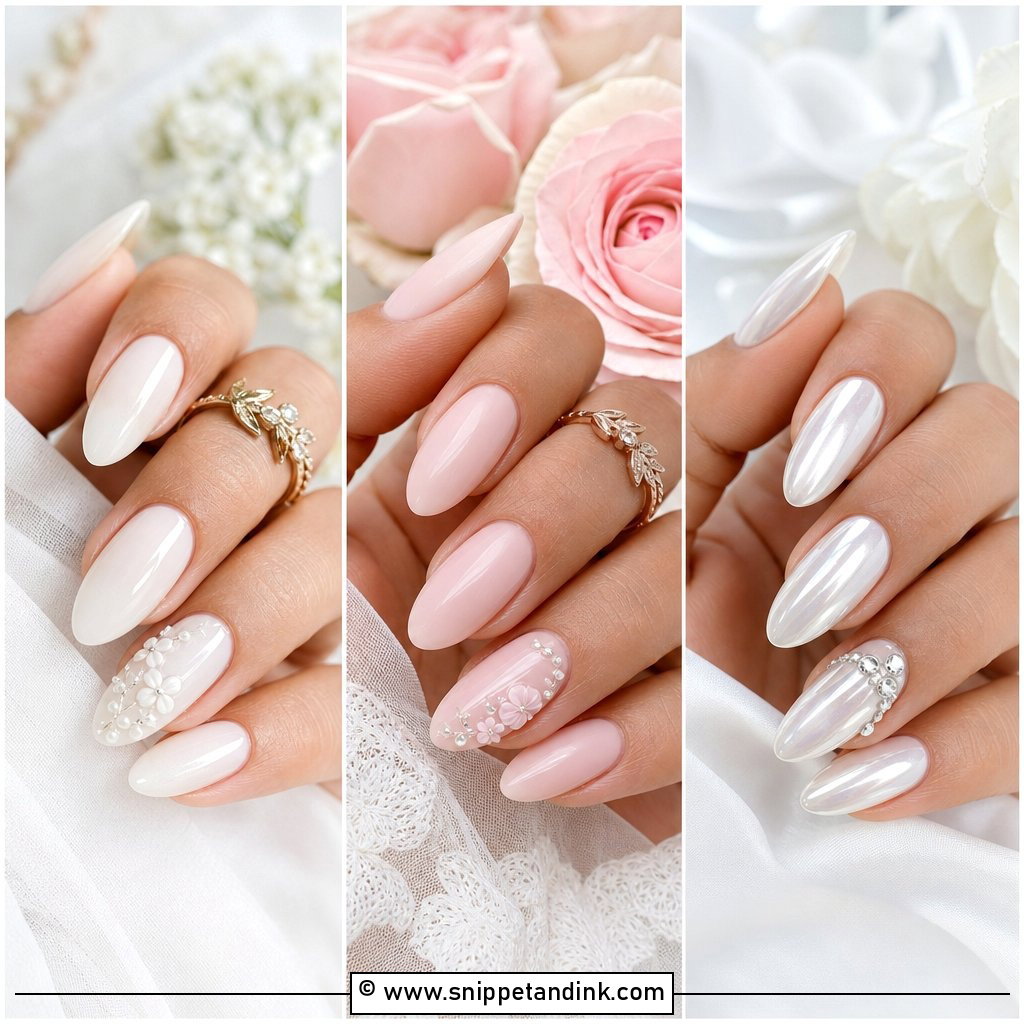
Milky white is the shade that asks the most of the person applying it. Sheer white gel streaks easily, so I lay two thin coats rather than one thick one and let each self-level for a few seconds before curing. A little natural nail shows through, which keeps it soft rather than stark. It sits well on short square, oval and medium almond shapes. With an ivory dress, ask for a creamier milk, since a blue-toned white beside ivory satin makes the dress look yellow.
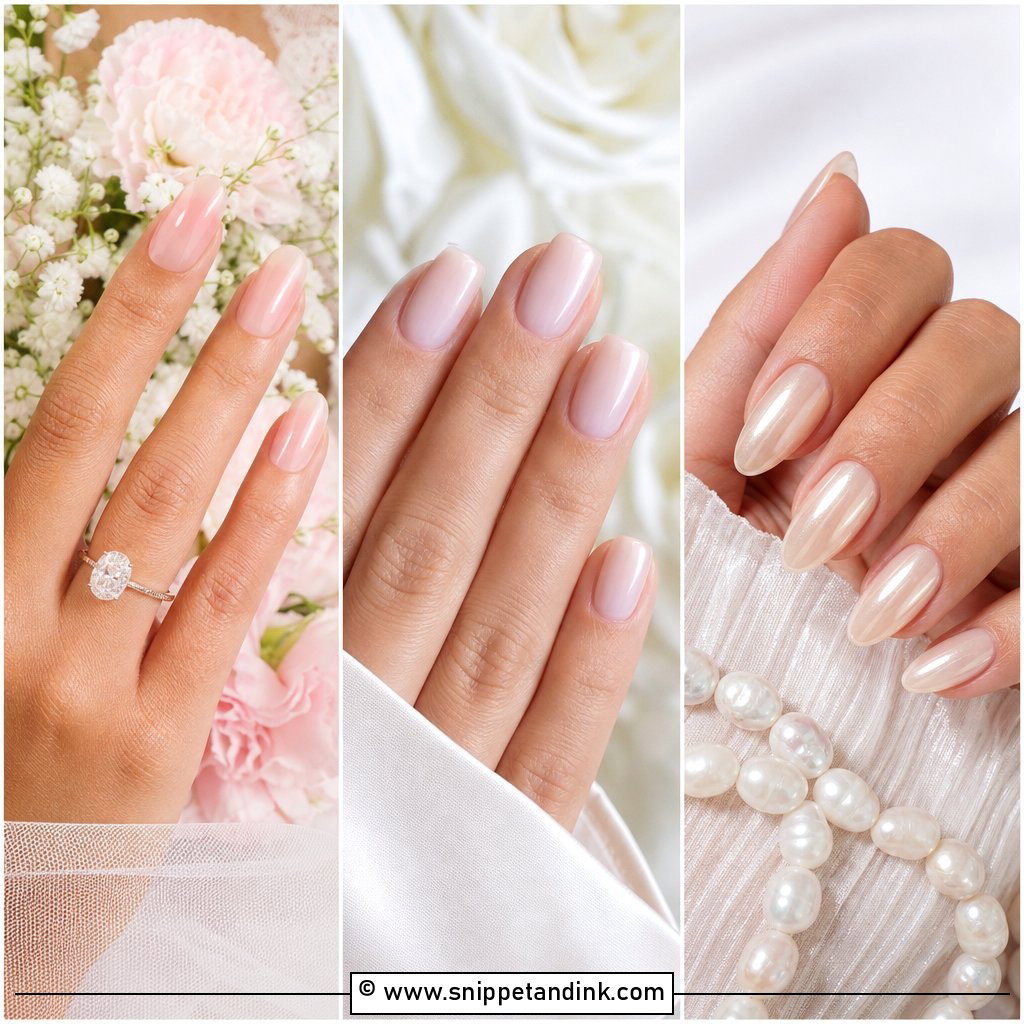
2. Sheer Pink Wedding Nails
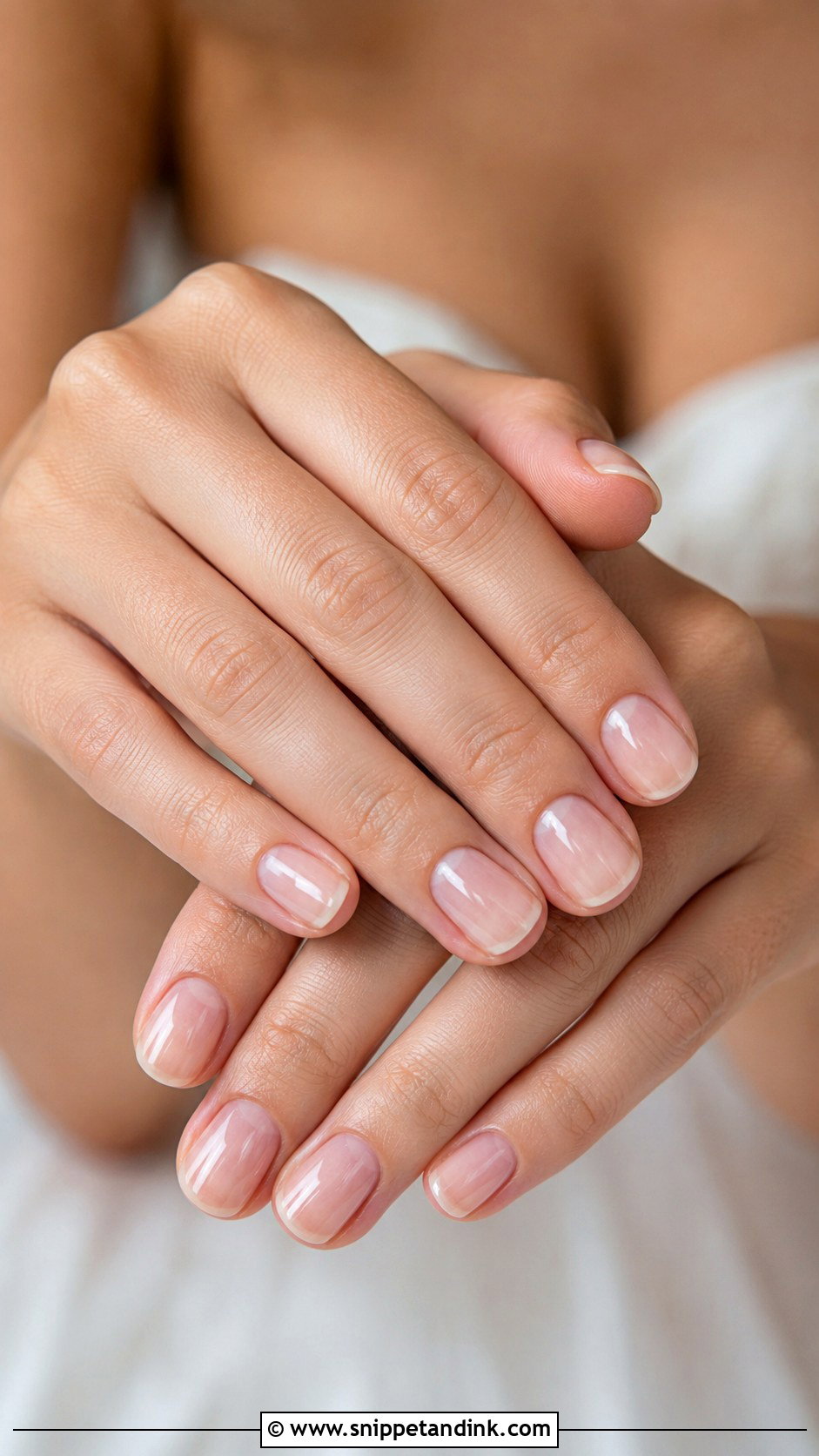
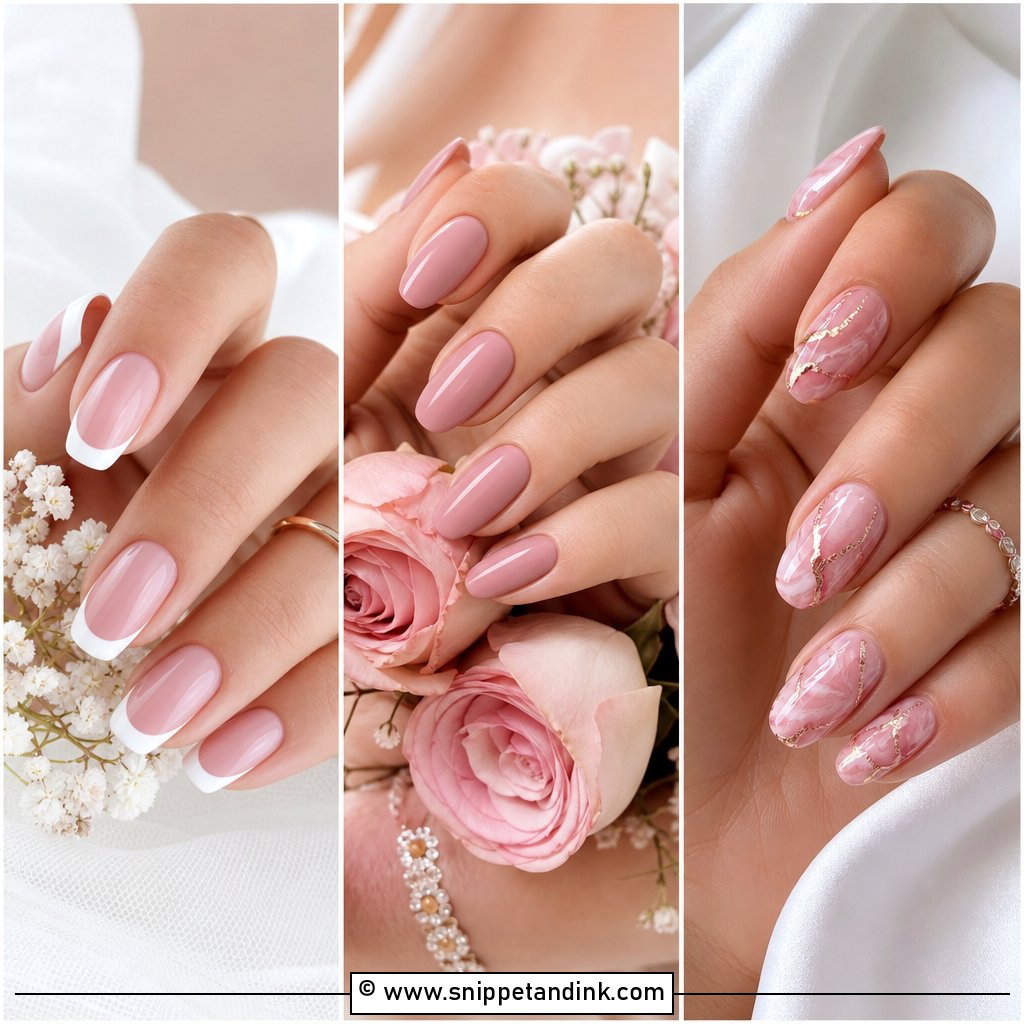
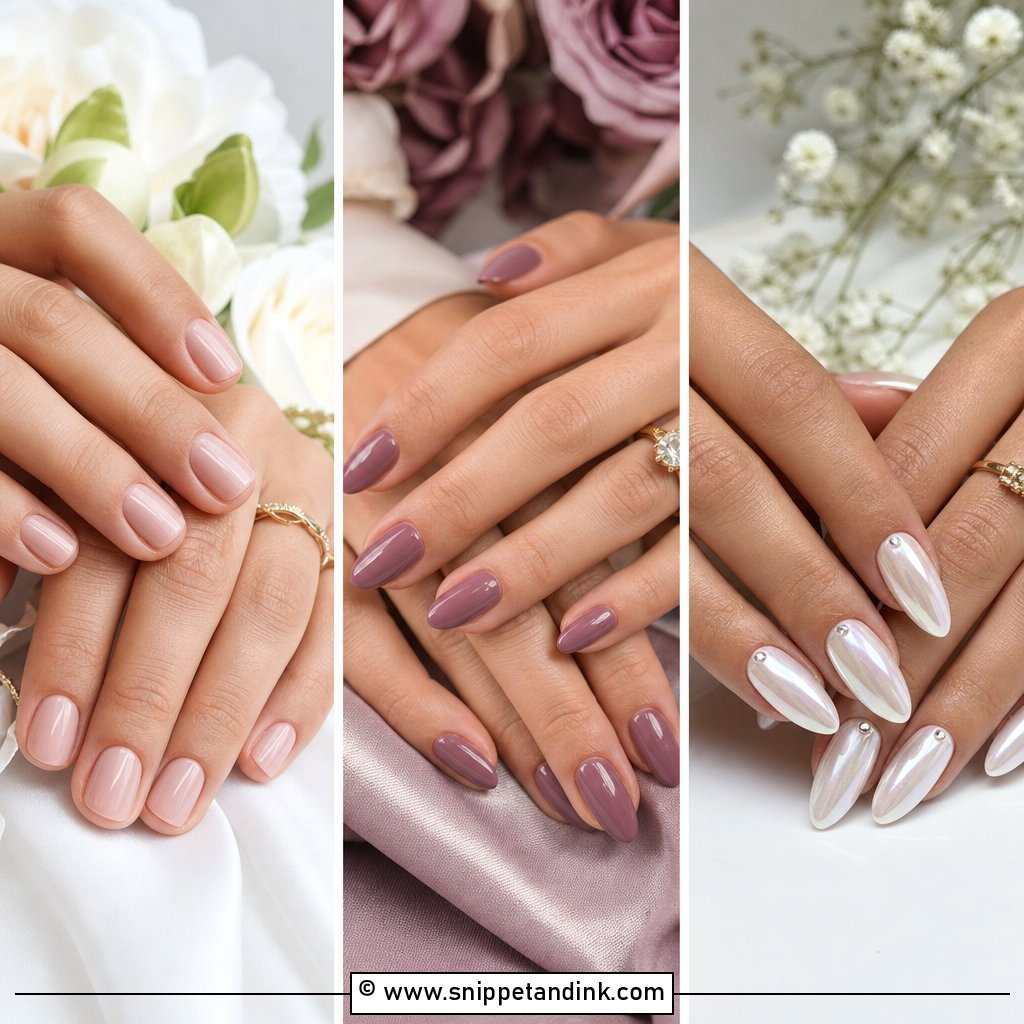
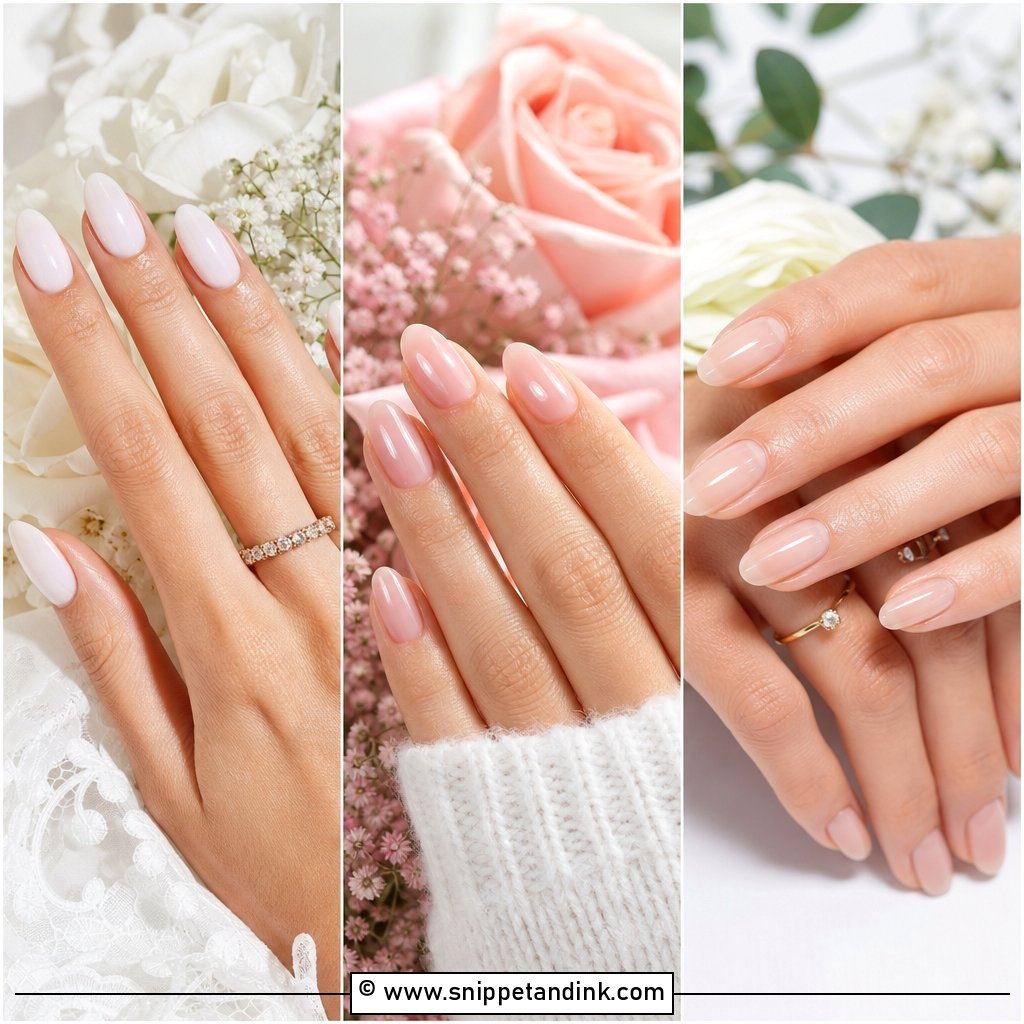
Sheer pink is the shade I’d call safest in bridal work, because it warms the nail bed while looking like your own nails on a good day. In ring photos it reads polished without pulling focus from the stone. Cool baby pinks suit pale, pink-toned skin; rose pinks suit warmer complexions. Thin, even layers matter here, because sheer color pools at the cuticle and shows every bump. Keep the shape simple, oval or almond.
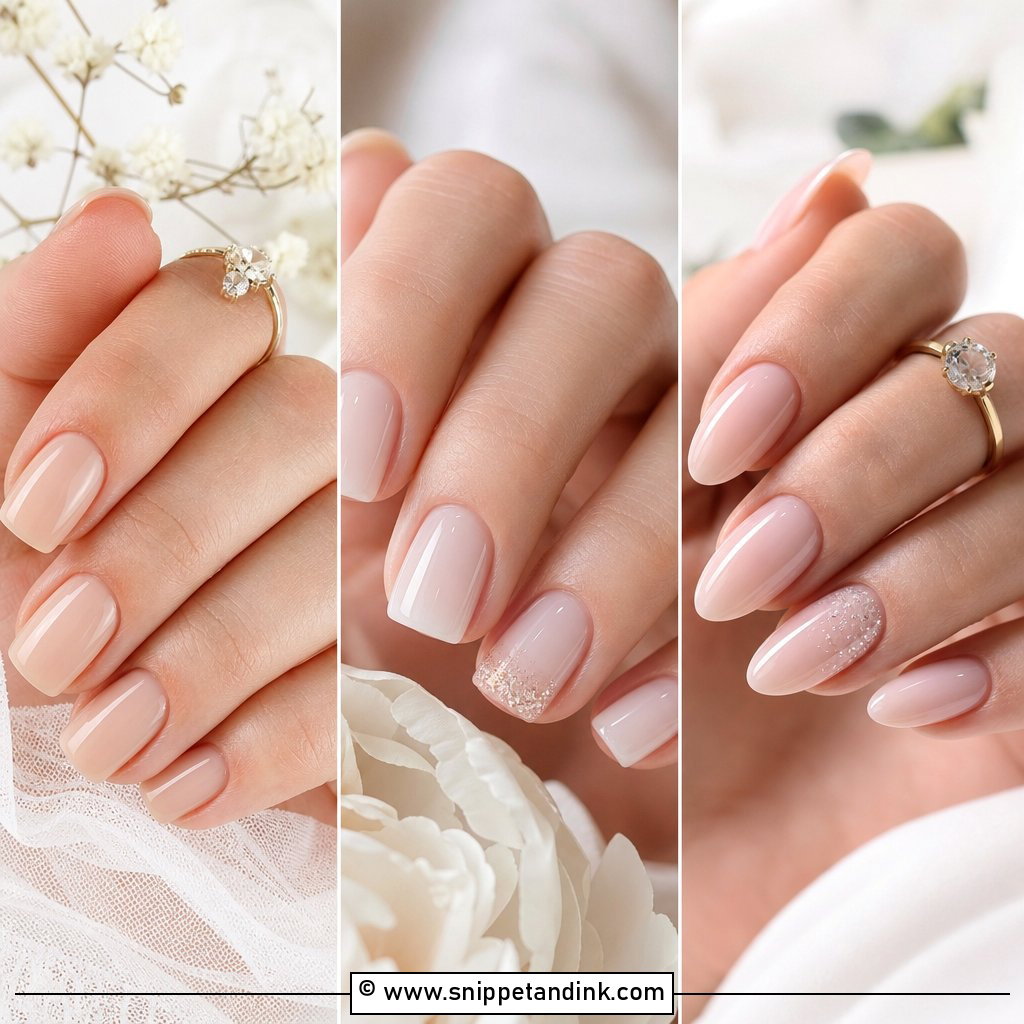
3. Nude Wedding Nails
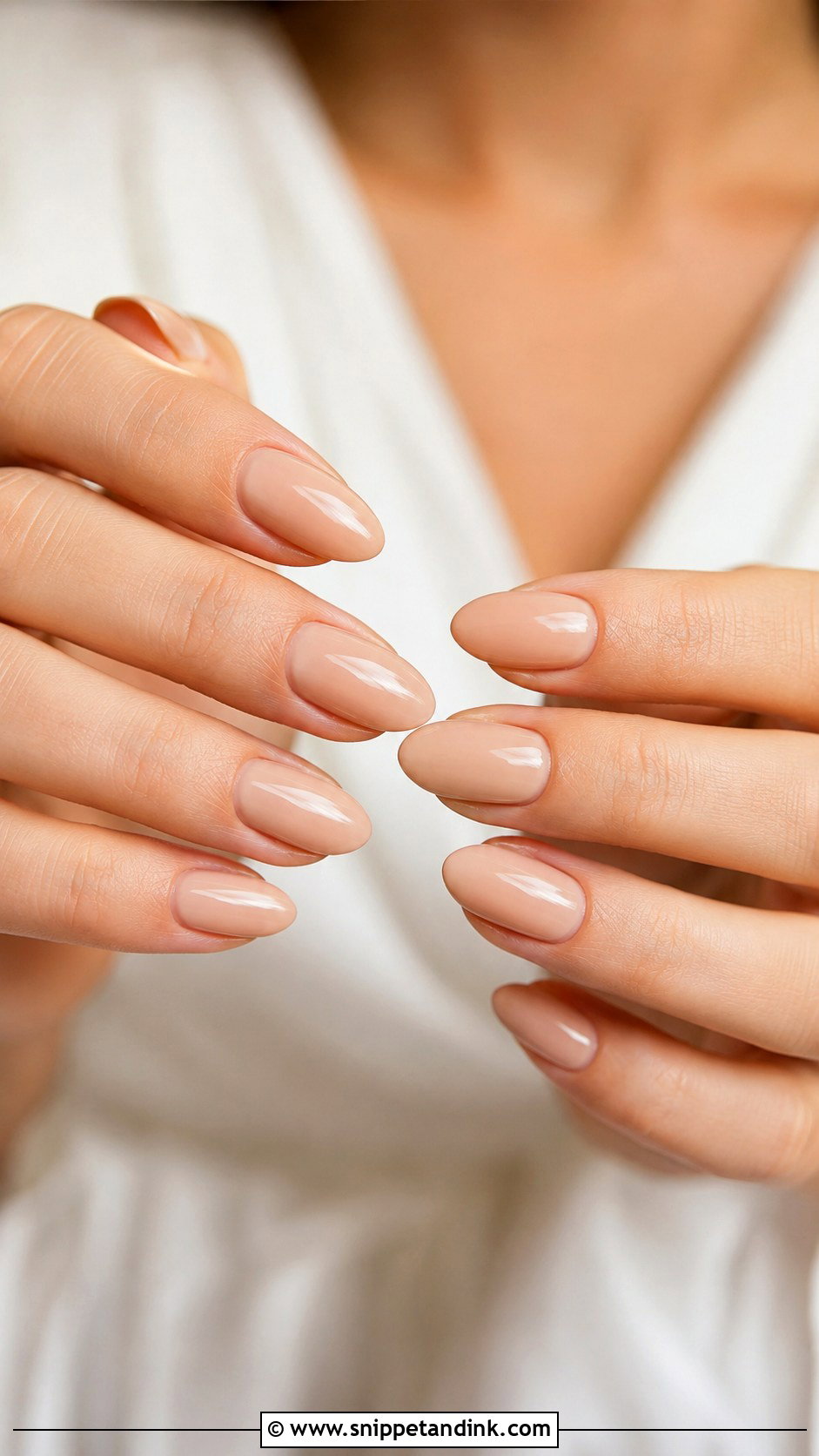
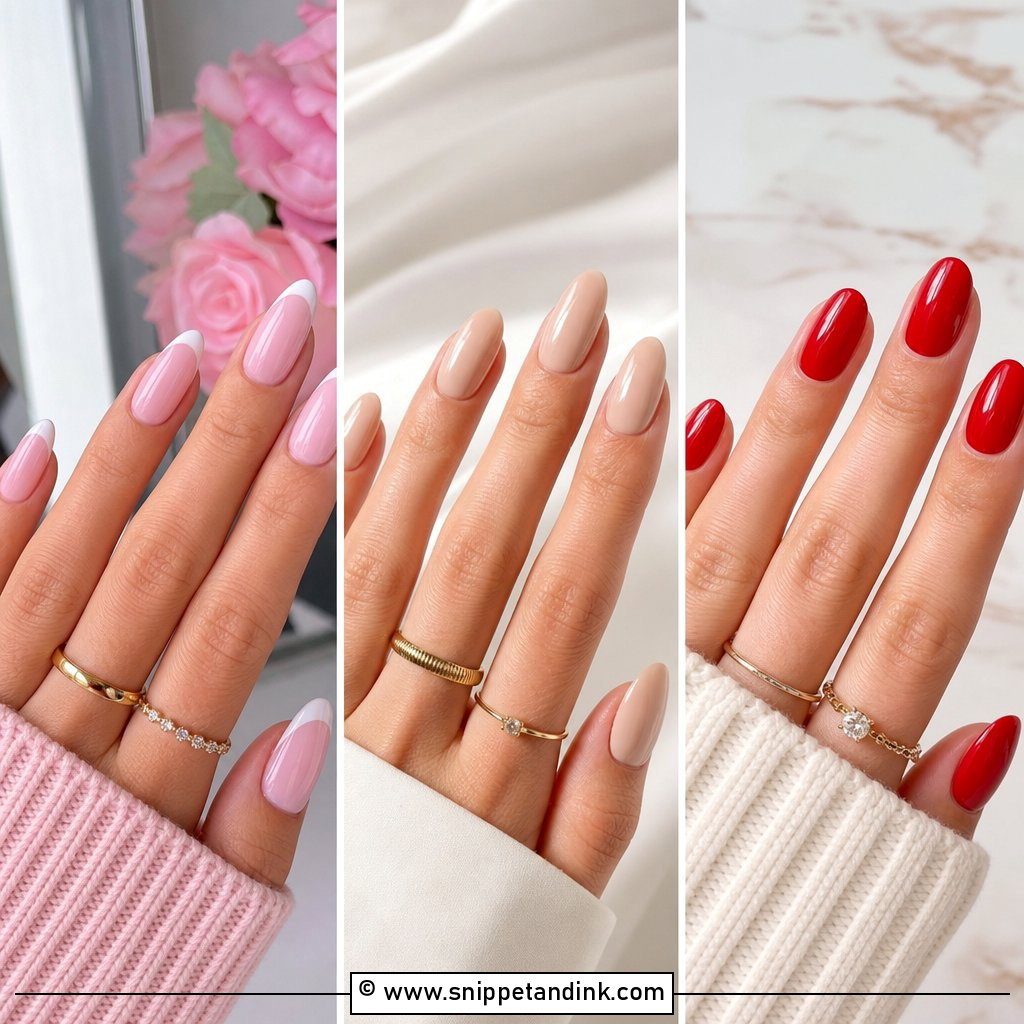
Picking a nude is mostly about undertone, not depth. A nude too pale for your skin makes fingers look washed out, and one too pink reads as a bandage. Fair skin often suits soft beige pinks, medium skin peachy nudes, and deeper skin caramel, cocoa or warm taupe. I swatch on the nail itself, never trusting the bottle, because the wet color is rarely what dries. Get it right and the fingers look longer. It’s also the easiest shade for bridesmaids and guests to match.
4. Ivory Wedding Nails
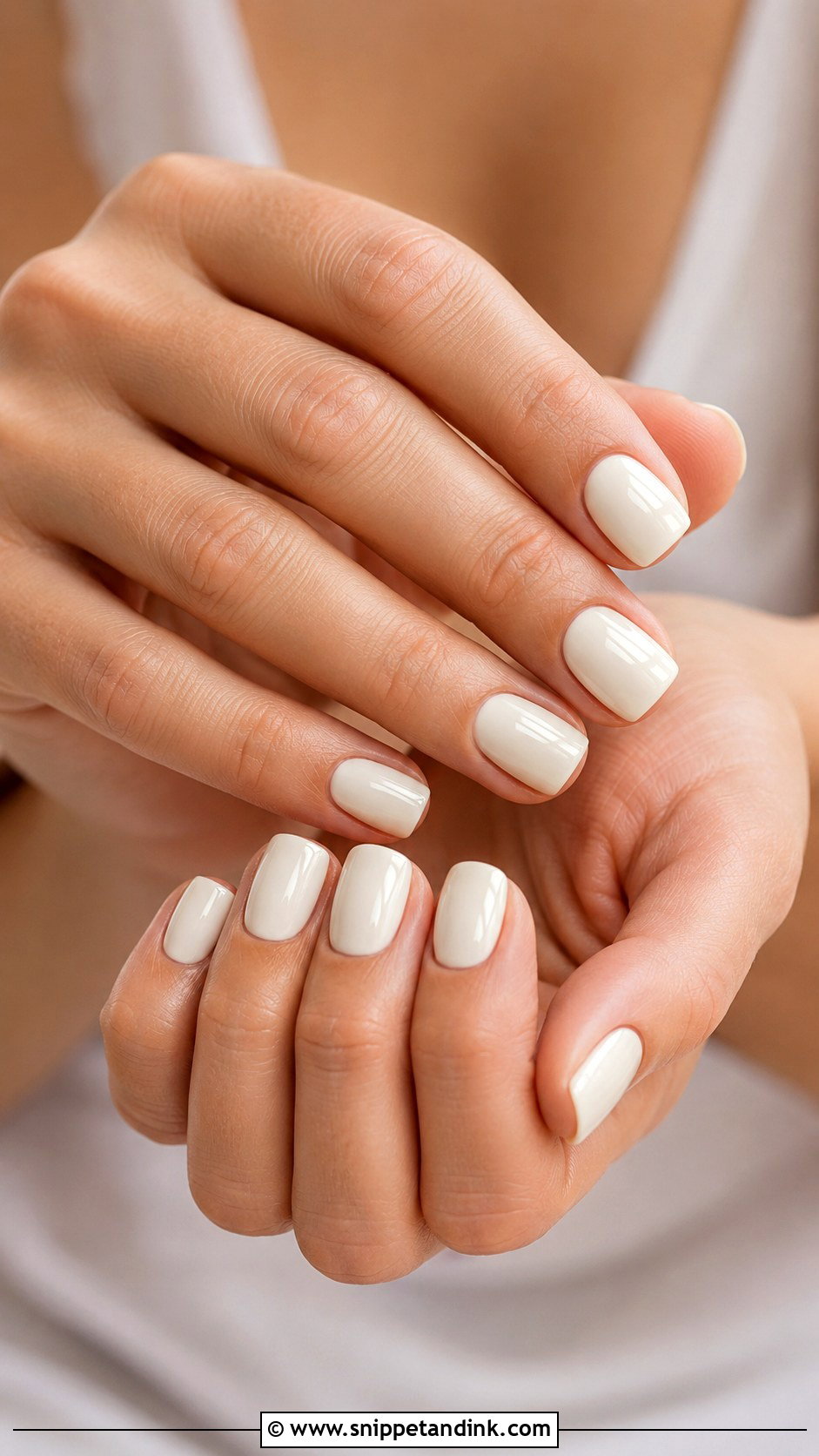
Ivory sits between stark white and bare nude, and it’s my go-to for brides in ivory or champagne satin. It defines the nail in photos without the hard contrast of white. On uneven or ridged nail beds, I lay a sheer builder base first and file it smooth, because cream shades show every ridge underneath. That one step is what makes a plain set look expensive. A short oval or soft square keeps it classic.
5. Soft White Wedding Nails
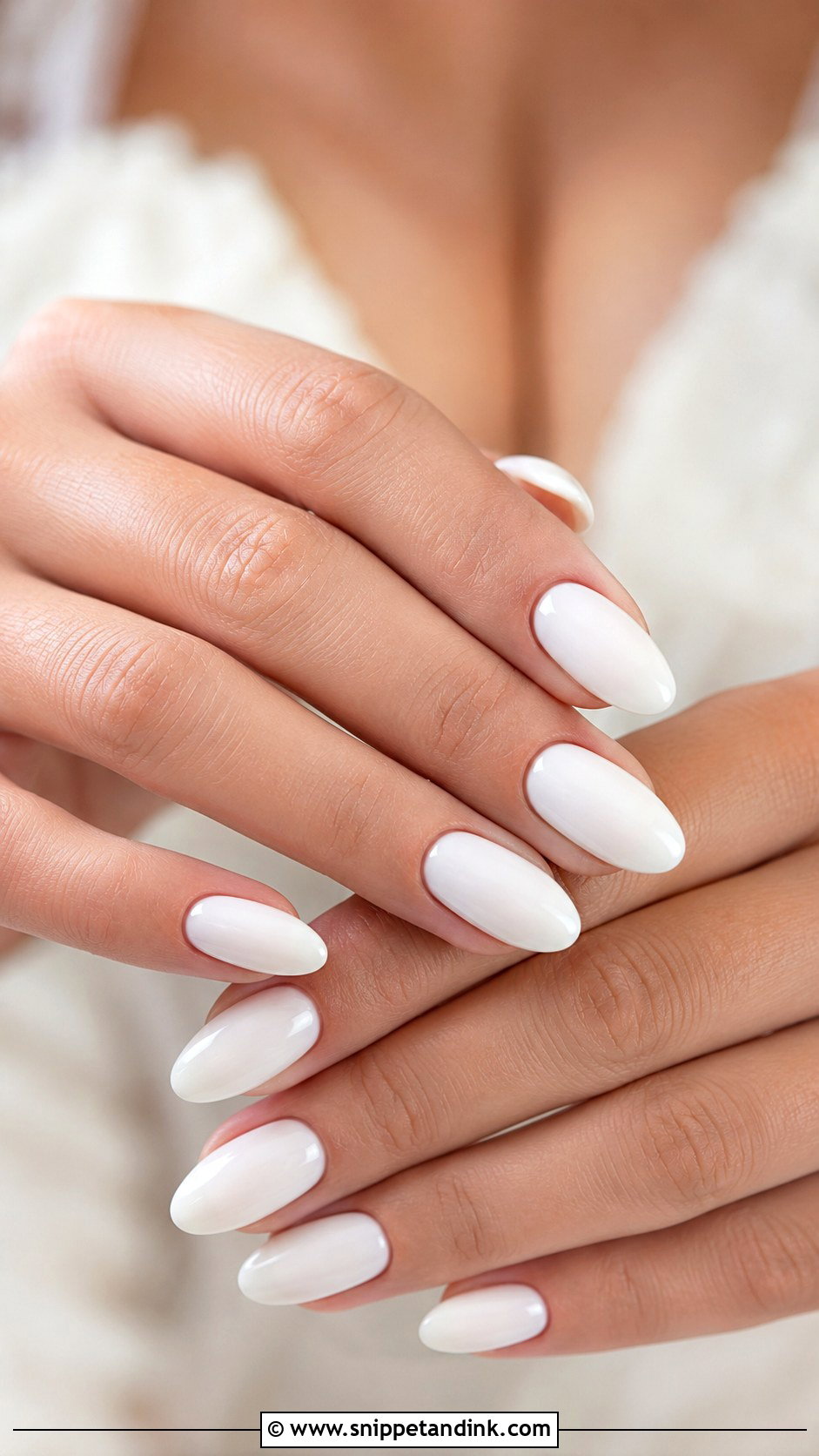
Soft white has more coverage than milky white, so it looks clean from every angle, even across a room. The risk is chalkiness: a flat, paint-like white can look like correction fluid on camera. I look for a white with a creamy or slightly translucent base and seal it with a high-gloss top coat. Medium almond gives it a dressier feel; short square keeps it practical. Opaque whites show chips more than sheer ones, so I’d only do this one in gel.
6. Blush Pink Wedding Nails
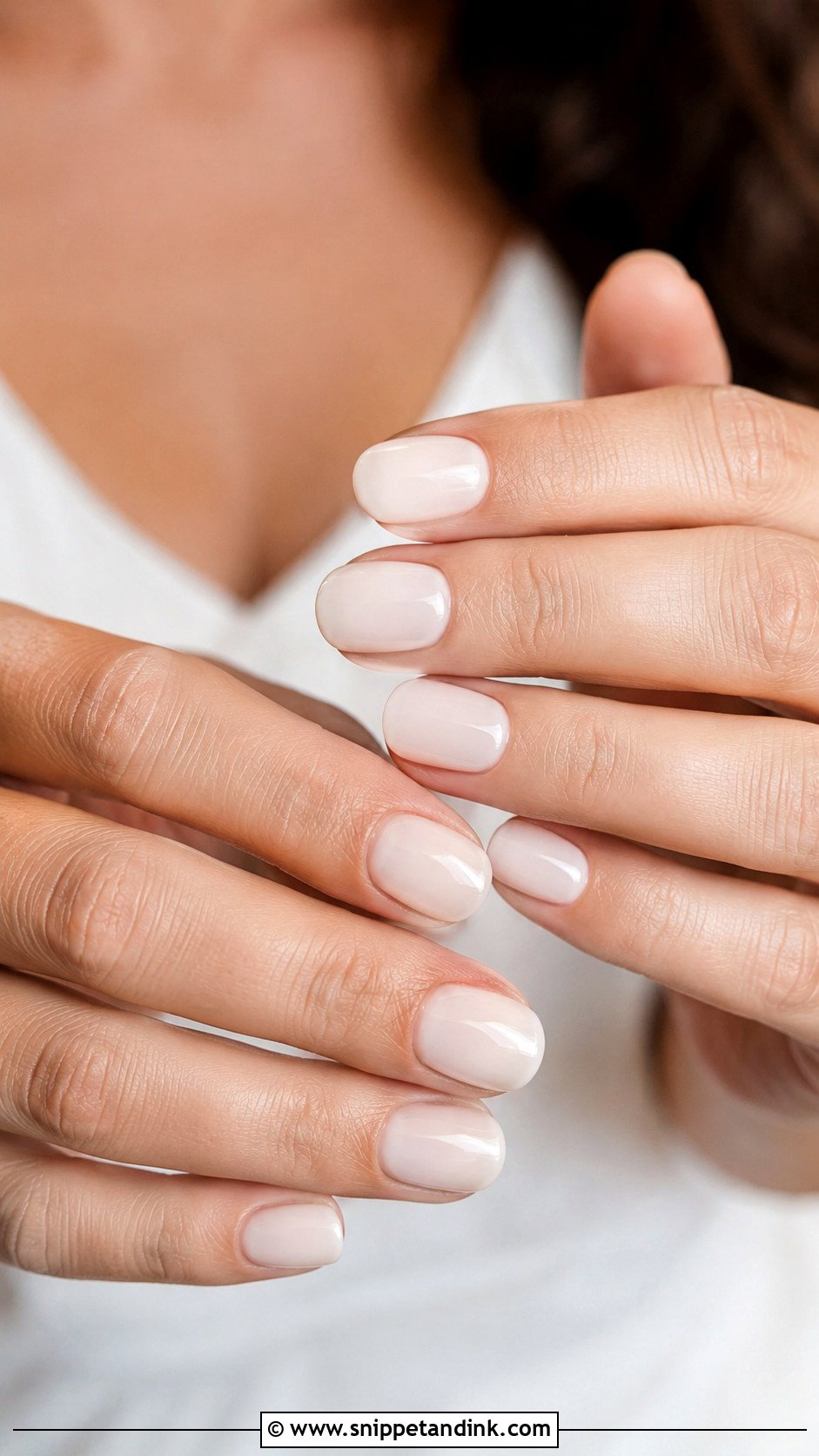
Blush gives a rosy tone that still counts as plain while looking more finished than nude. A sheer blush looks natural, a cream blush gives a fuller salon look. Warm undertones suit a peachy blush; cool undertones suit one with a slightly blue base. Almond and oval keep it delicate. It’s a natural fit for a spring garden ceremony, though I’d hold a swatch against the bouquet too, because blush can fight with coral flowers.
7. Clear Gloss Wedding Nails
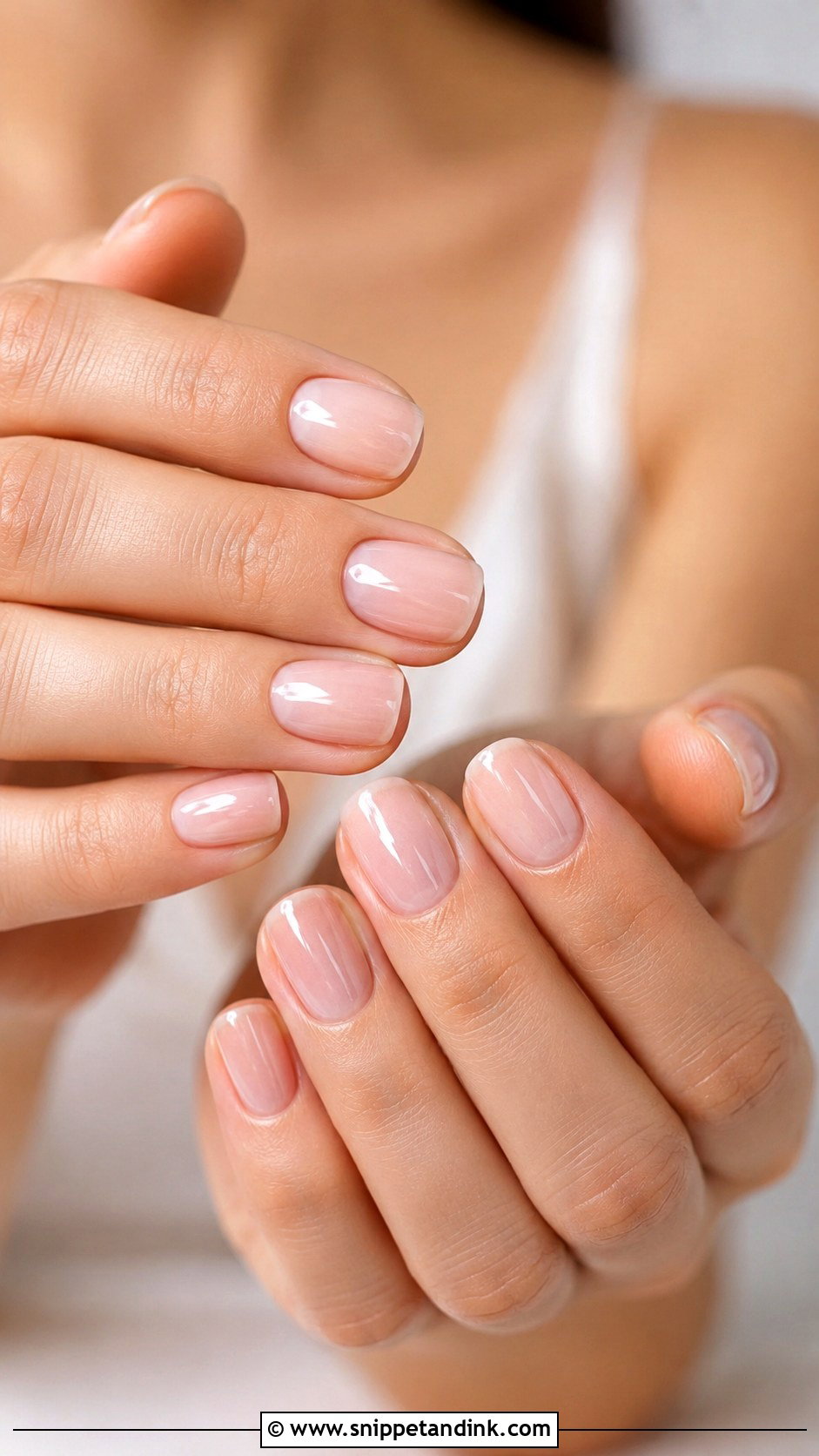
Clear gloss shows the nail itself, so prep is the whole job. I push back and tidy the cuticles, shape every edge evenly, and buff the surface only lightly, since over-buffing thins the nail. A clear builder gel adds strength and fills small ridges while staying invisible. It’s the choice for brides who rarely wear polish and would feel odd in color. Short nails look best this way, and it leaves your ring as the only sparkle on the hand.
8. Pale Beige Wedding Nails
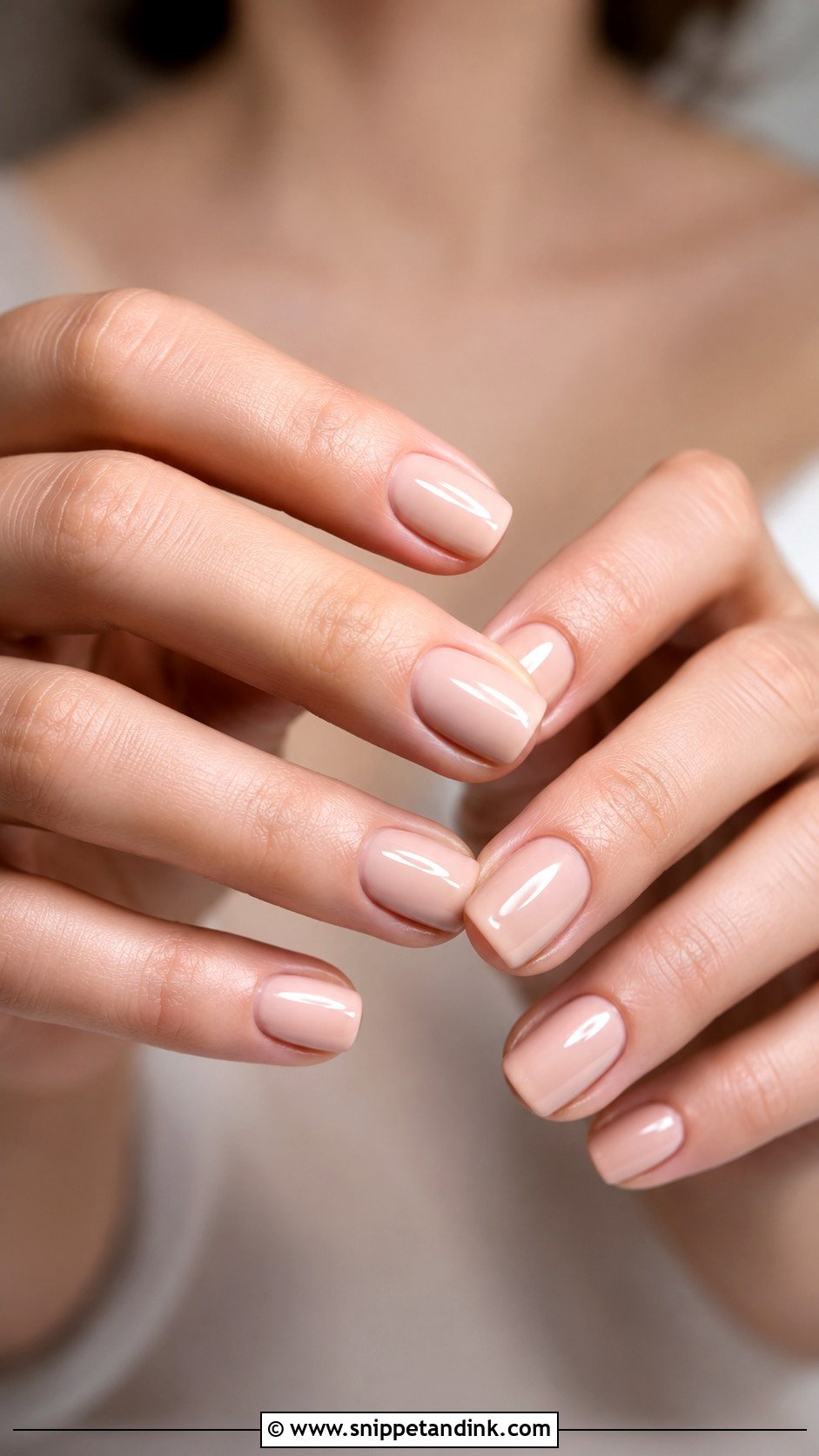
Pale beige suits a bride who doesn’t feel like herself in pink. The shade lives or dies by its undertone: too yellow and it looks sallow, too gray and it looks dull. I aim for a balanced beige roughly one step lighter than your skin. It pairs naturally with champagne dresses and gold jewelry. Gloss is essential, because beige goes flat without it, and a thin gel overlay smooths the surface so the nails look naturally perfected.
9. Oat Milk Wedding Nails
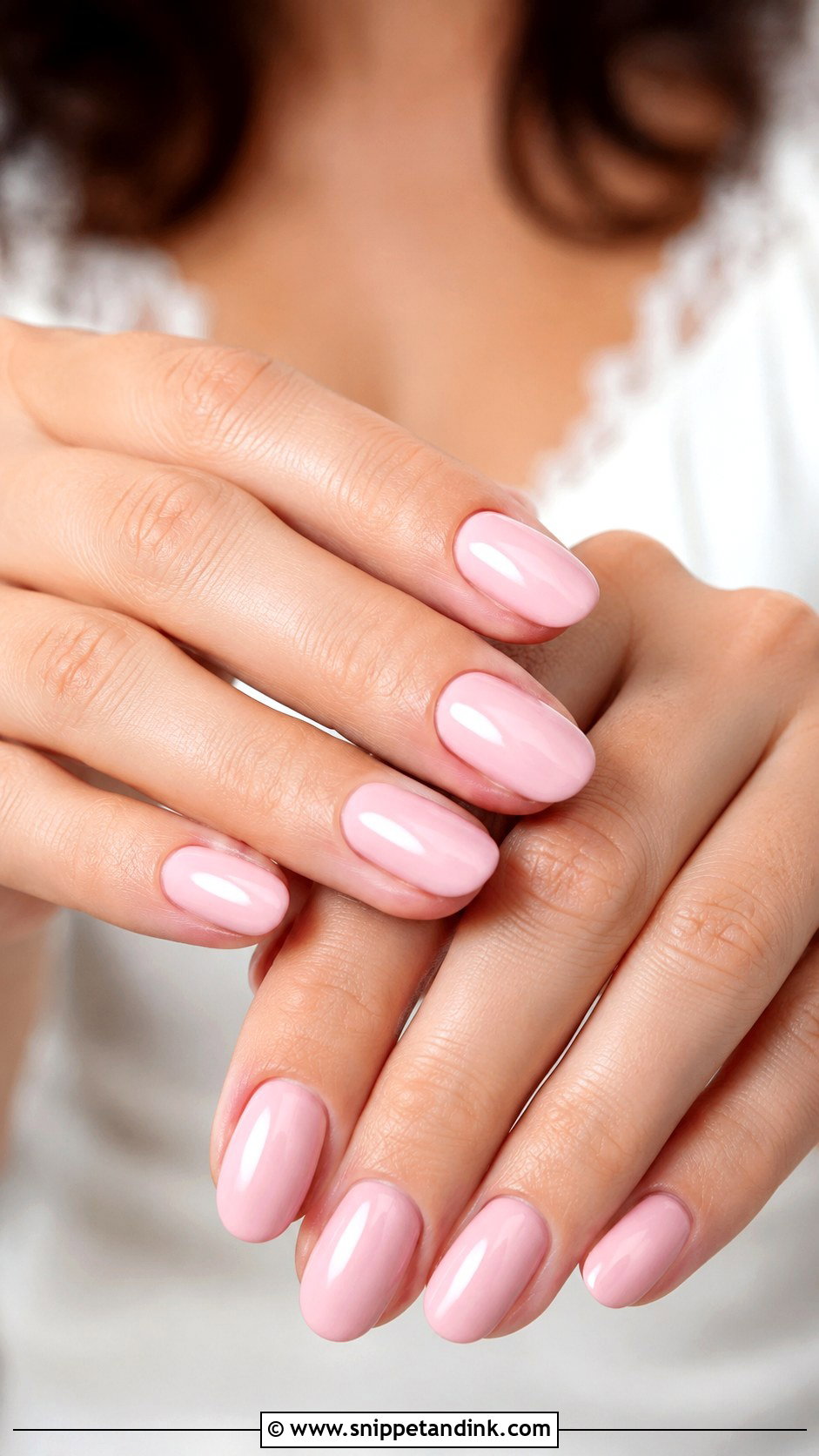
Oat milk sits between milky white and nude, with a creamy warmth that suits ivory dresses and neutral palettes. Applied thin, it lets a little natural nail show through and stays soft. Thick coats turn it opaque and slightly muddy. Short oval and medium almond both work. A high-shine top coat gives polish, while a satin top coat looks more natural, though satin finishes pick up marks from hand cream and makeup faster over a long day.
10. Baby Pink Wedding Nails
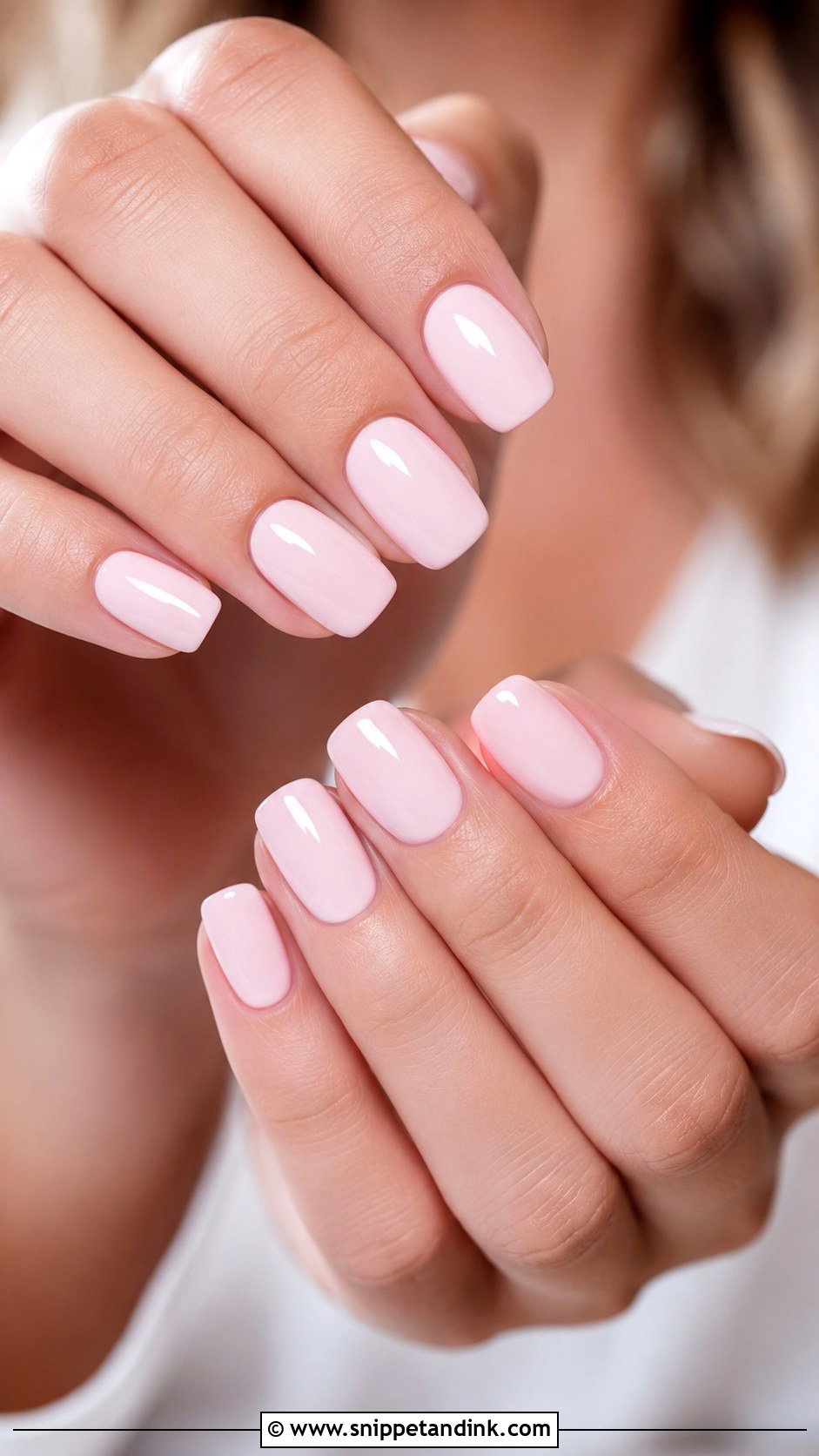
Baby pink is brighter than sheer blush, and the line between bridal and bubblegum is thin. I steer away from fully opaque pinks and build a creamy or sheer formula in two coats instead. A short squoval shape keeps it neat, while almond softens it. Bridesmaids can match it without fuss, and it flatters white, ivory and champagne gowns alike.
11. Pearl White Wedding Nails
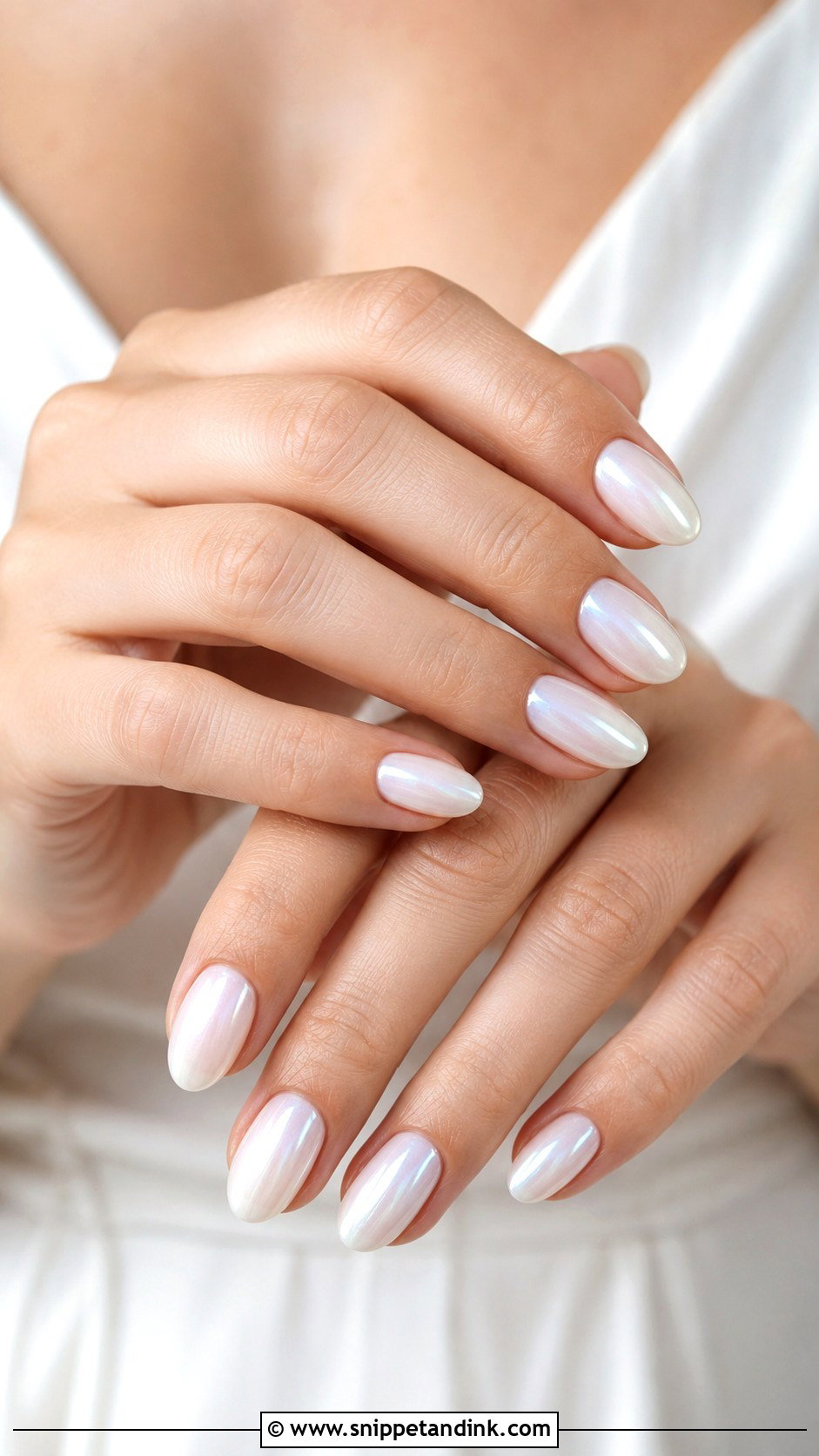
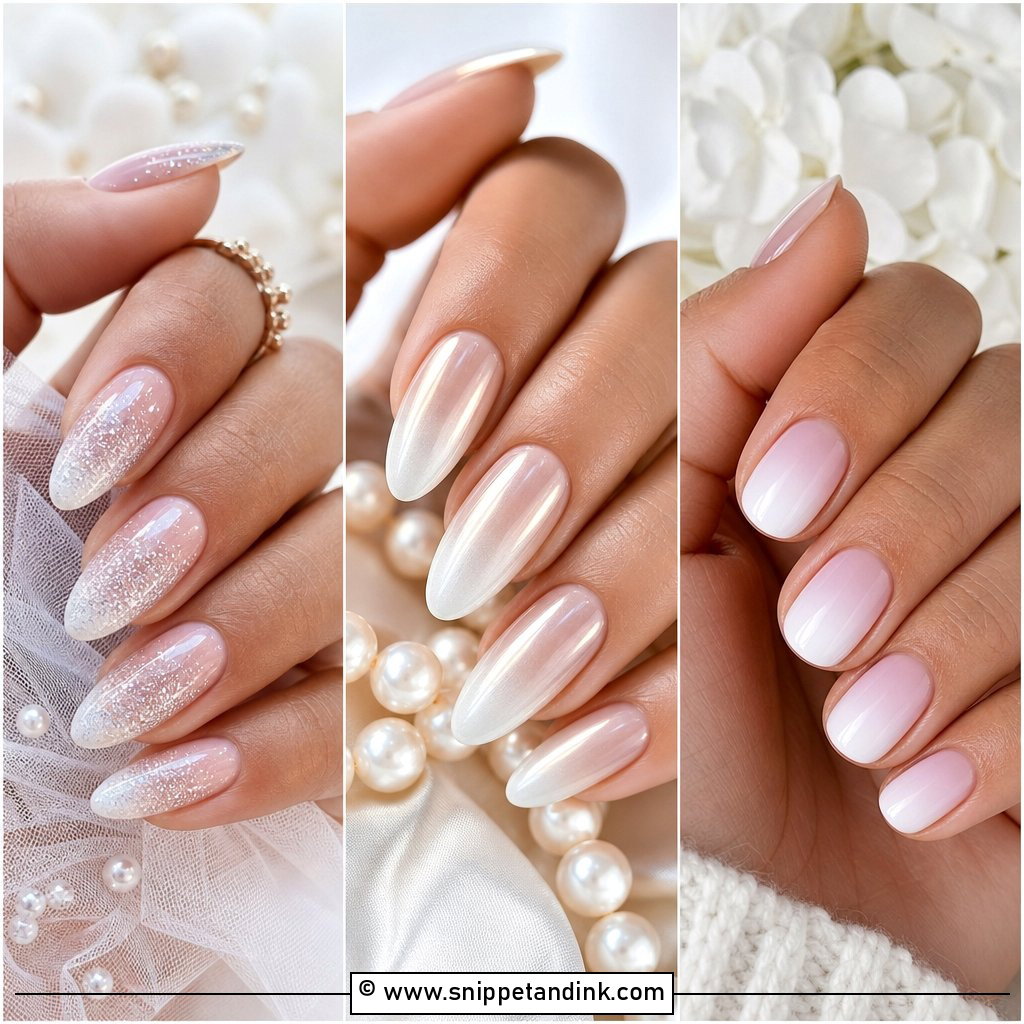
Pearl white has a soft glow that catches light without glitter. The effect usually comes from a pearl pigment or a fine chrome powder buffed over a sheer white base. The danger is frostiness, which dates a manicure fast, so I keep the effect light and rub the powder in sparingly. A sheer pearl on oval or almond nails looks the most refined. It sits naturally beside pearl earrings and satin, and close-ups of the bouquet and rings show it at its best.
12. Micro French Wedding Nails
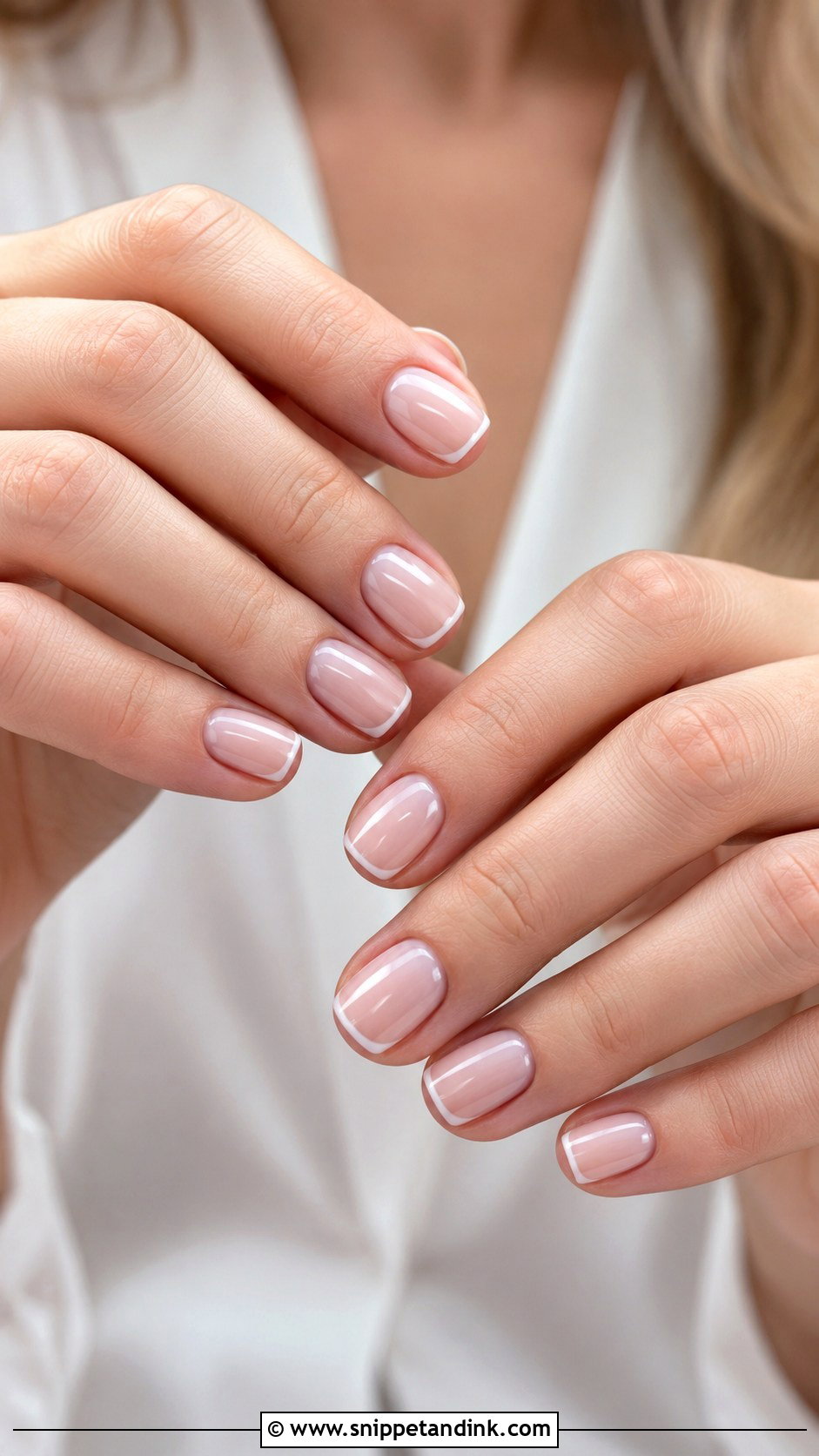
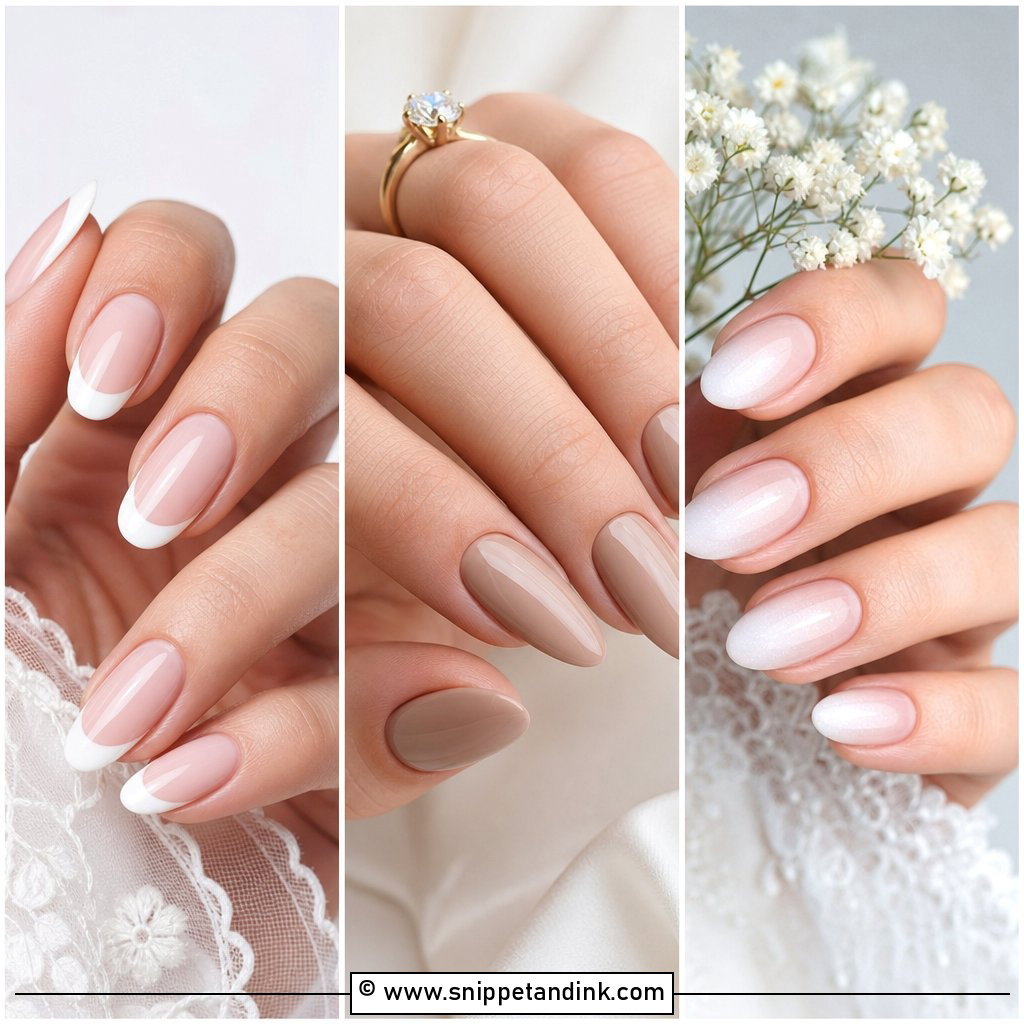
Micro French wedding nails take the classic tip down to a hairline. The base is usually sheer pink, nude or milky, with a very fine white line along the free edge. I paint that line with a long, thin liner brush and follow the natural smile line, which lengthens the nail without the strong contrast of a traditional French. Short square, squoval and almond all suit it. For a gentle overall look, ask for an off-white tip rather than bright white.
13. Nude French Wedding Nails
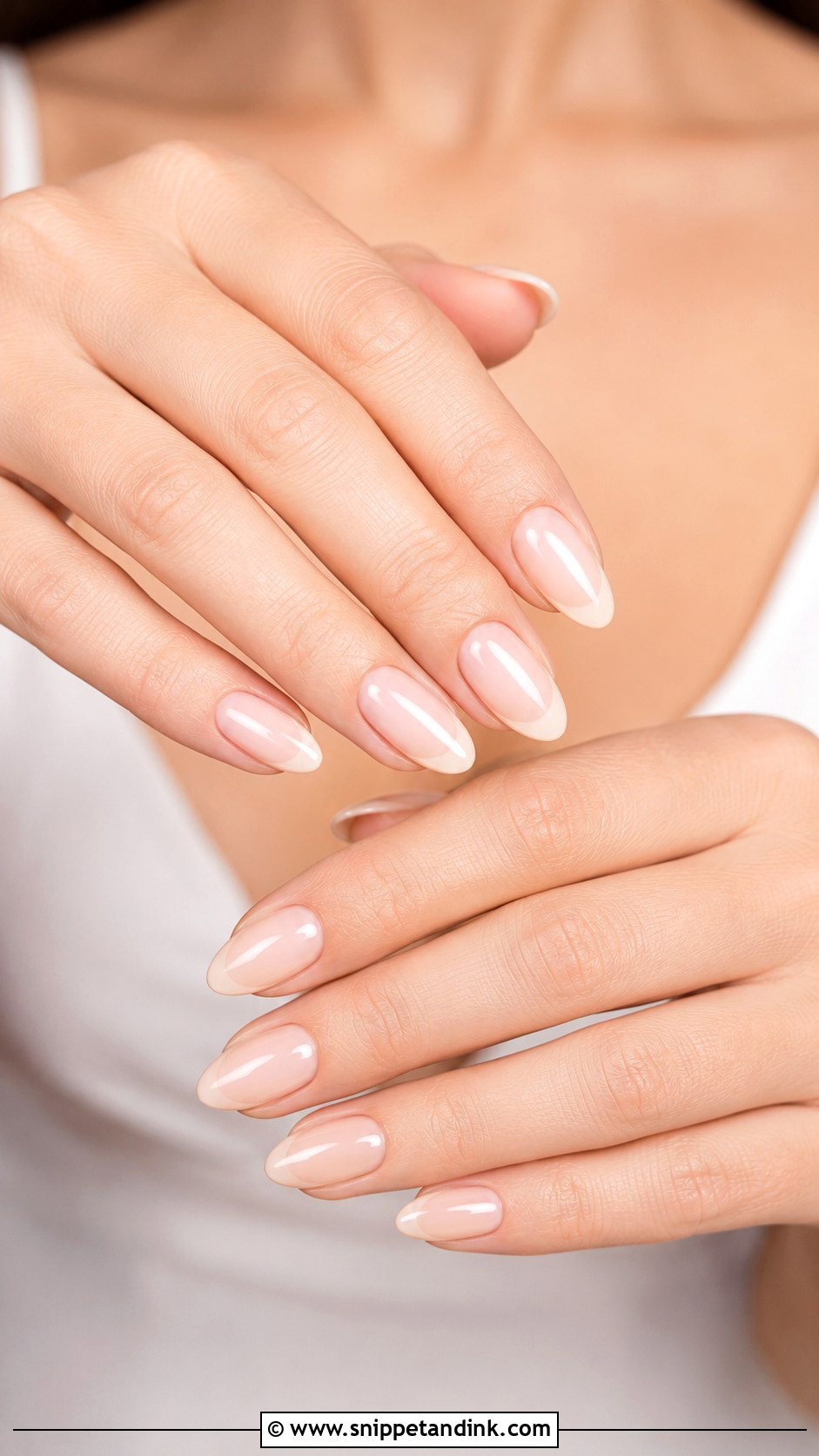
A nude French swaps white tips for beige or creamy off-white, so the tip blends instead of standing out. It needs some length to show, which is why it reads best on longer almond nails. I match the base close to your natural nail color, then keep the tip only one or two shades lighter. Go further and it starts to look like an ordinary French. It sits quietly beside a modern gown and a simple veil.
14. Short Plain Wedding Nails
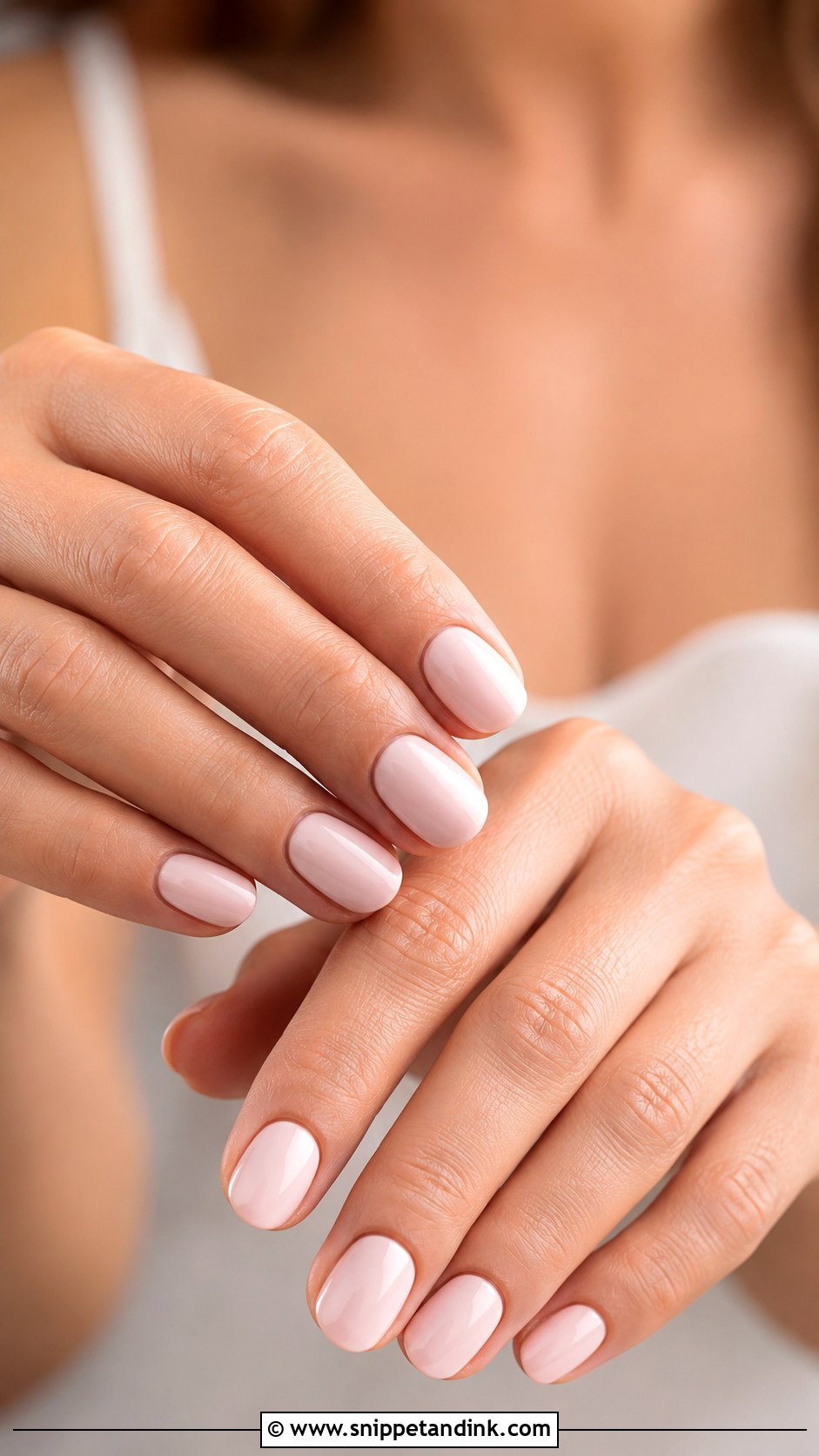
Short nails are the most comfortable choice for a day of hugging, holding a bouquet and fastening tiny buttons. They look bridal when the shape is even across all ten and the color goes on smooth. Milky white, sheer pink, nude beige and soft ivory all suit short lengths. I’d go squoval or rounded. Most of my time goes into cuticle care and a glassy top coat, the two details that make short nails look intentional rather than casual.
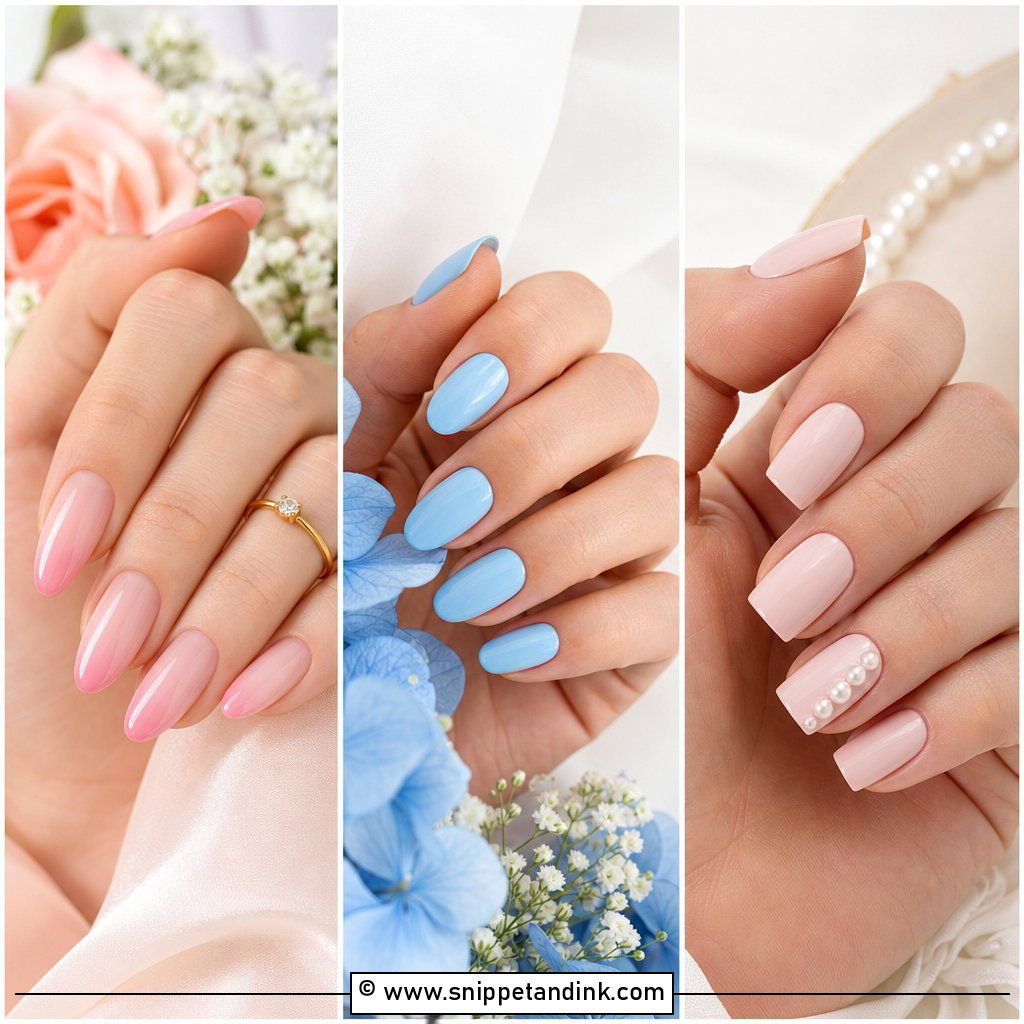
15. Almond Plain Wedding Nails
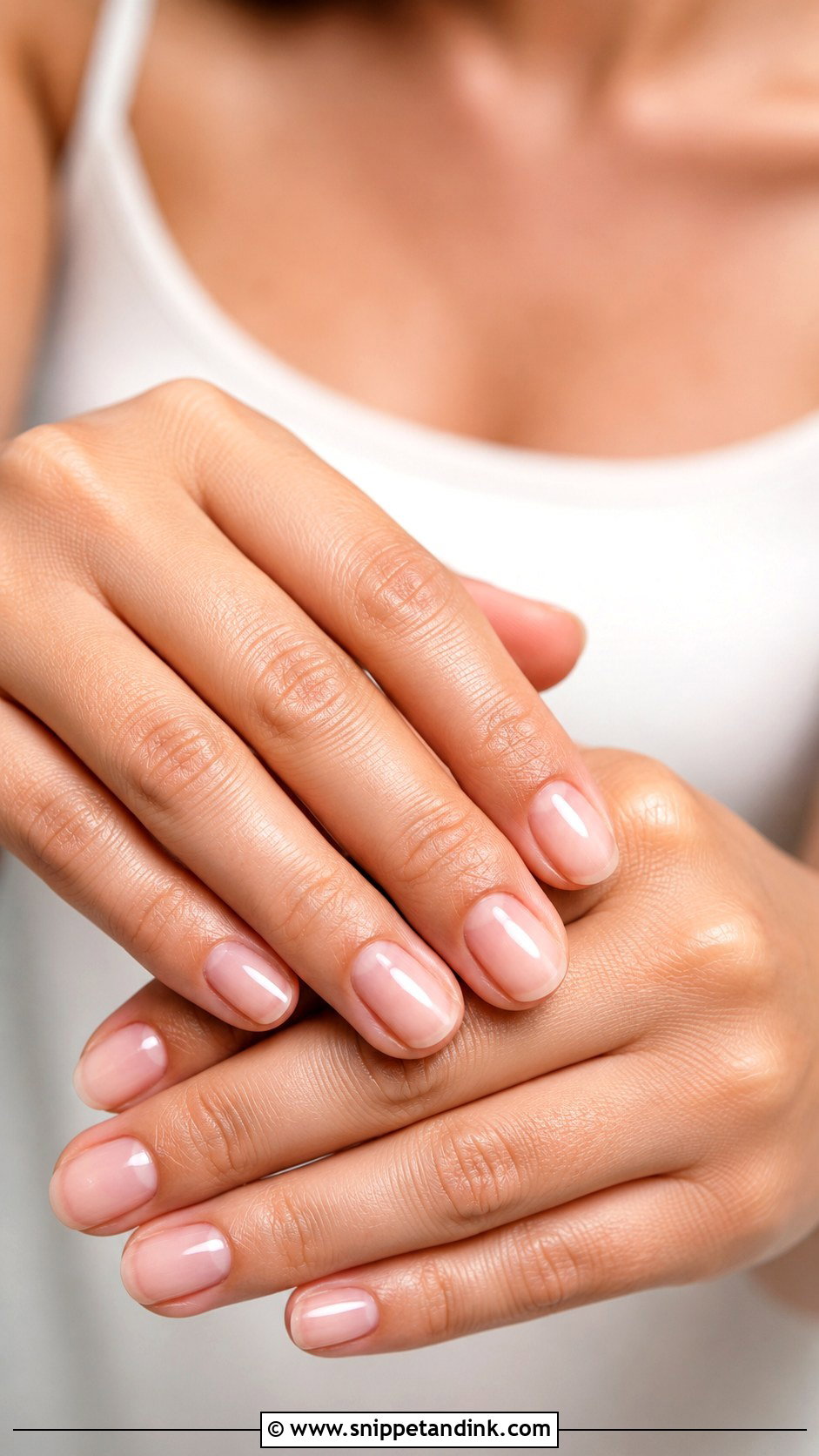
Almond tapers toward the tip, which visually lengthens the fingers. The shape does a lot of the work, so the color can stay simple. Medium length is the balance I suggest to brides who want elegance without feeling clumsy. On short natural nails, a thin builder gel or soft gel extension creates the shape while staying light. Almond tips can snap at the narrow point, so I build a little extra strength at the apex. They look graceful wrapped around flower stems or lifting a veil.
16. Square Plain Wedding Nails
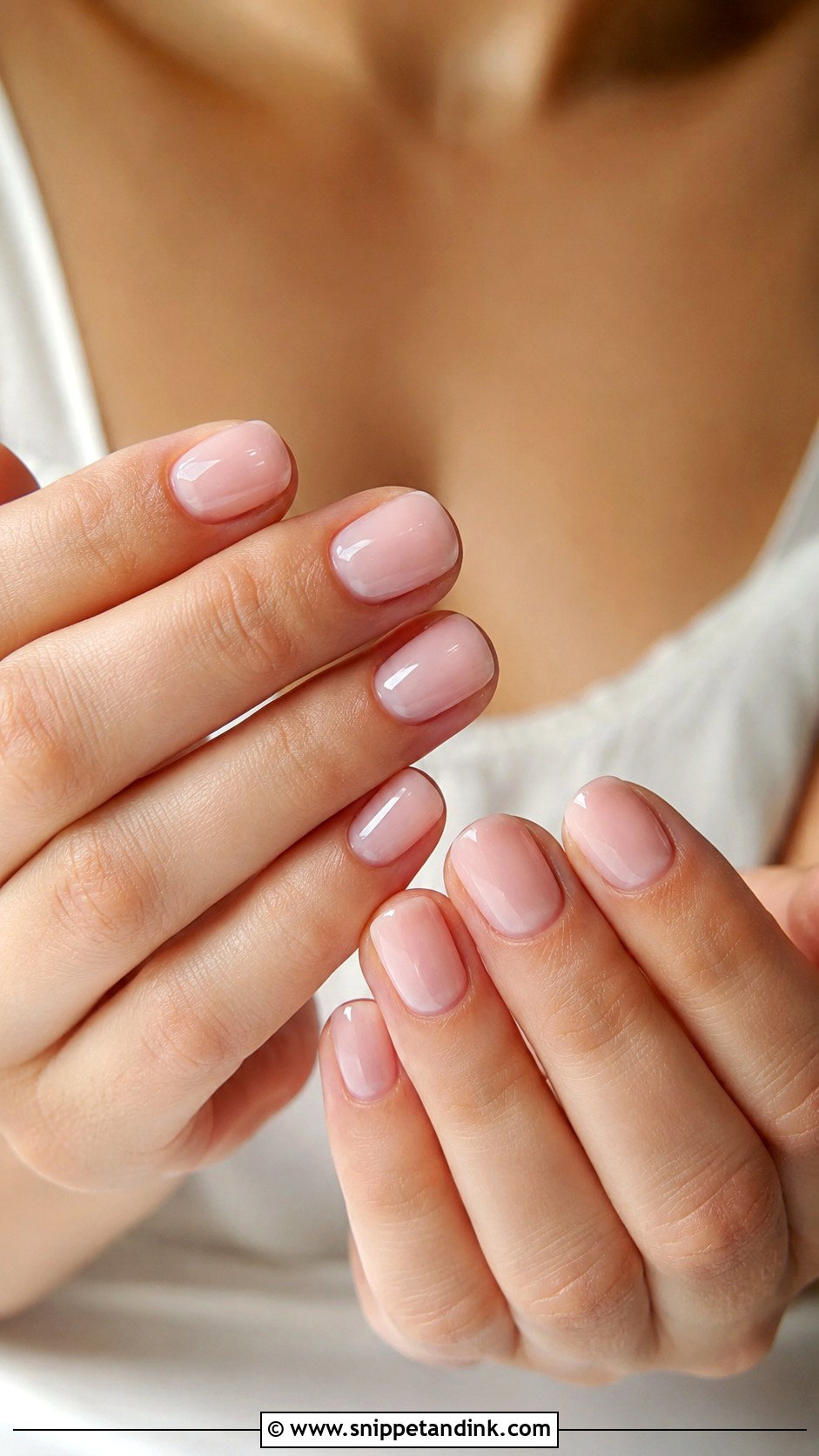
Square nails feel structured and suit minimalist dresses. Short or medium is the length to aim for; long square edges catch on lace and tulle. I file the corners slightly round, into a squoval, so they don’t snag fabric or chip at the sharp point. Nude, milky white, pale pink and ivory all sit well on this shape. A glossy top coat is non-negotiable on a flat edge, because the straight line shows any dullness.
17. Oval Plain Wedding Nails
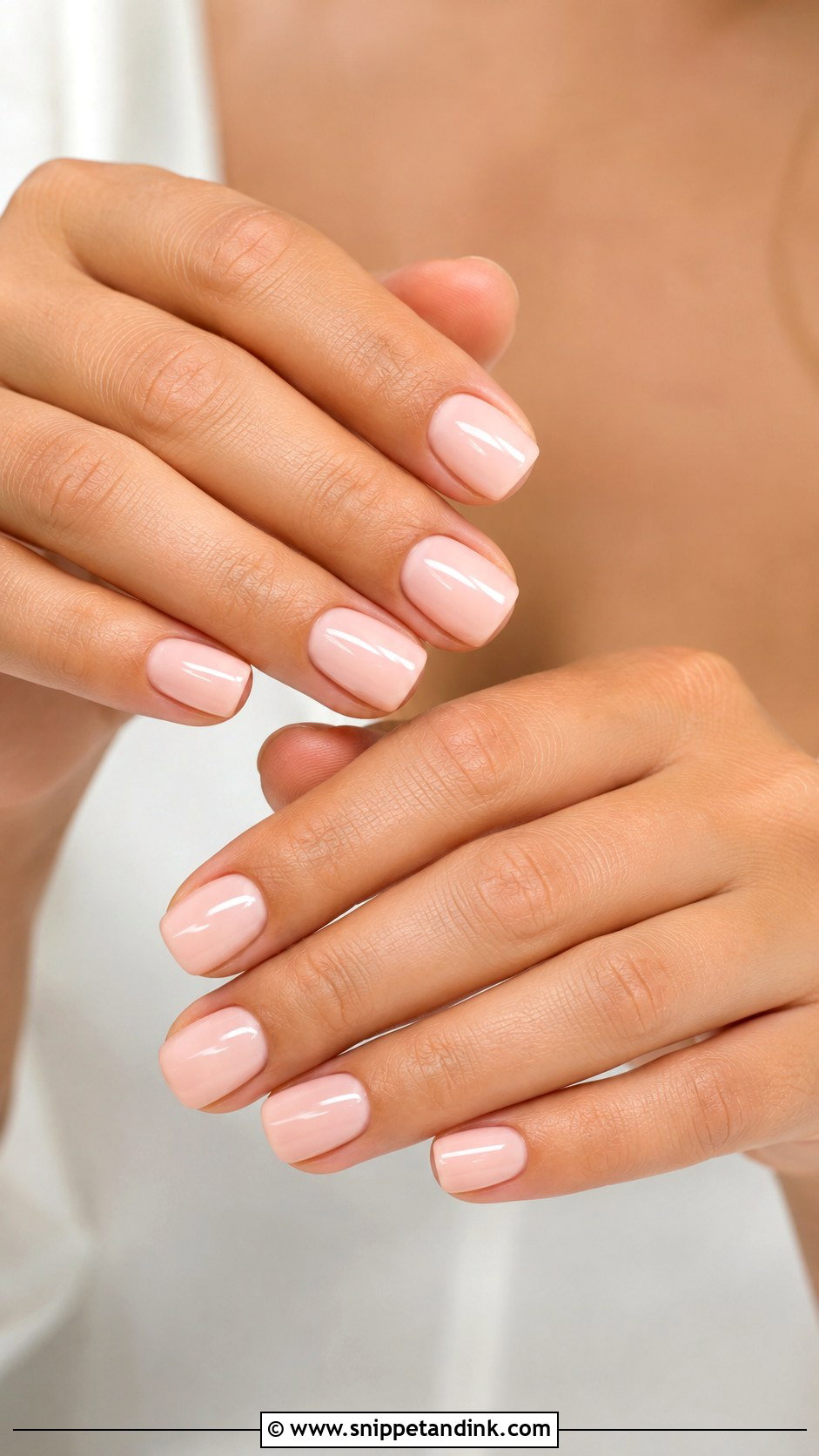
Oval follows the curve of the fingertip, so it suits nearly every hand. It makes shorter nails look slimmer and more delicate, which is why I suggest it to brides with wide nail beds. Sheer pink, creamy nude, ivory and milky white all sit well on it. Of all the shapes here, it’s the least likely to look dated when you open the album years from now. Keep the color soft and the finish glossy.
18. Glossy Nude Wedding Nails
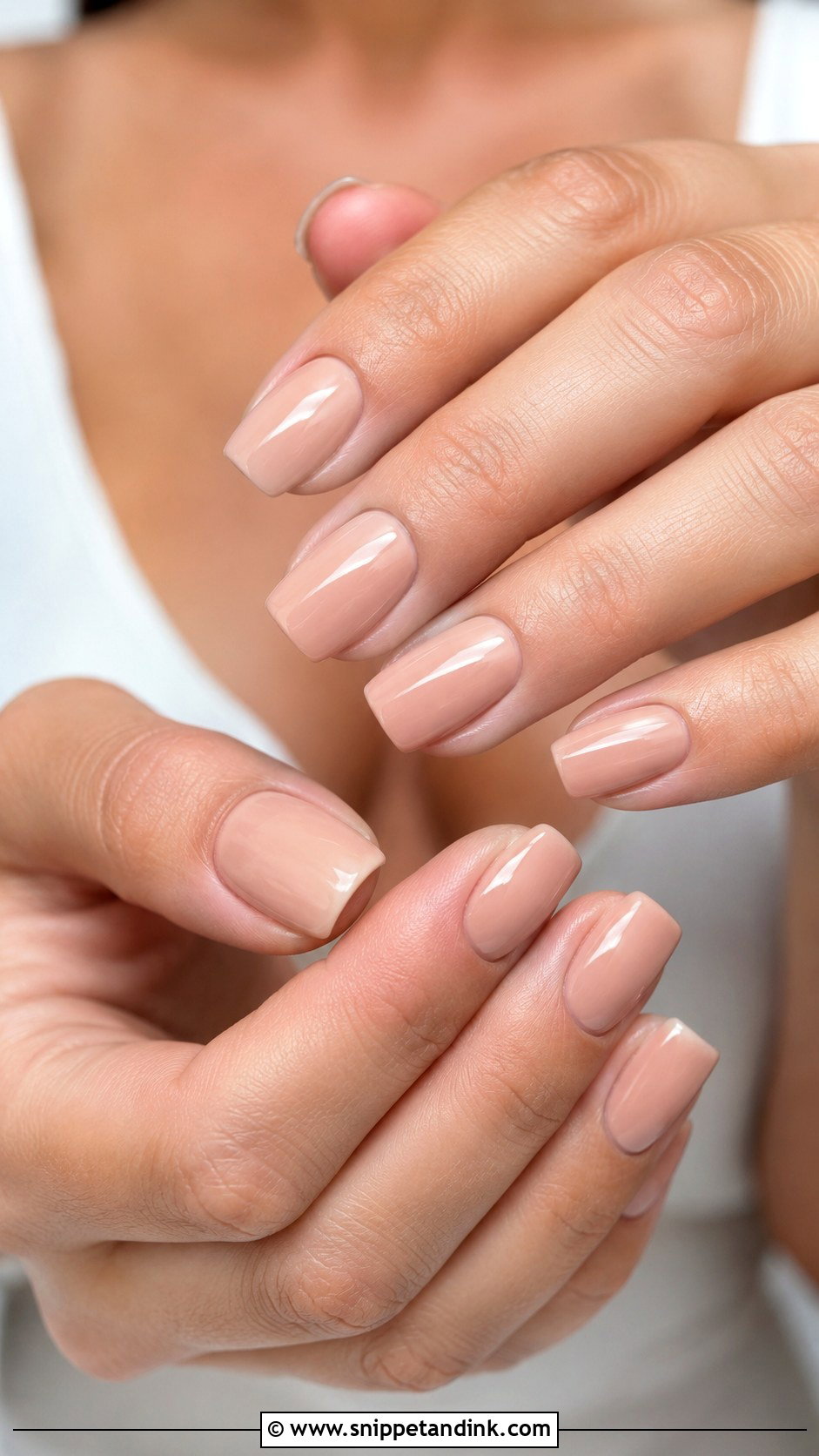
Glossy nude relies on reflection. A nude gel under a glassy top coat looks clean and professionally finished, and that shine is what stops nude going flat in photos. The shade should blend with your skin while giving a hint of contrast, usually somewhere among warm beige, soft peach and rosy nude. Every outfit of wedding week will match it, from the rehearsal dress to the going-away look.
19. Barely There Wedding Nails
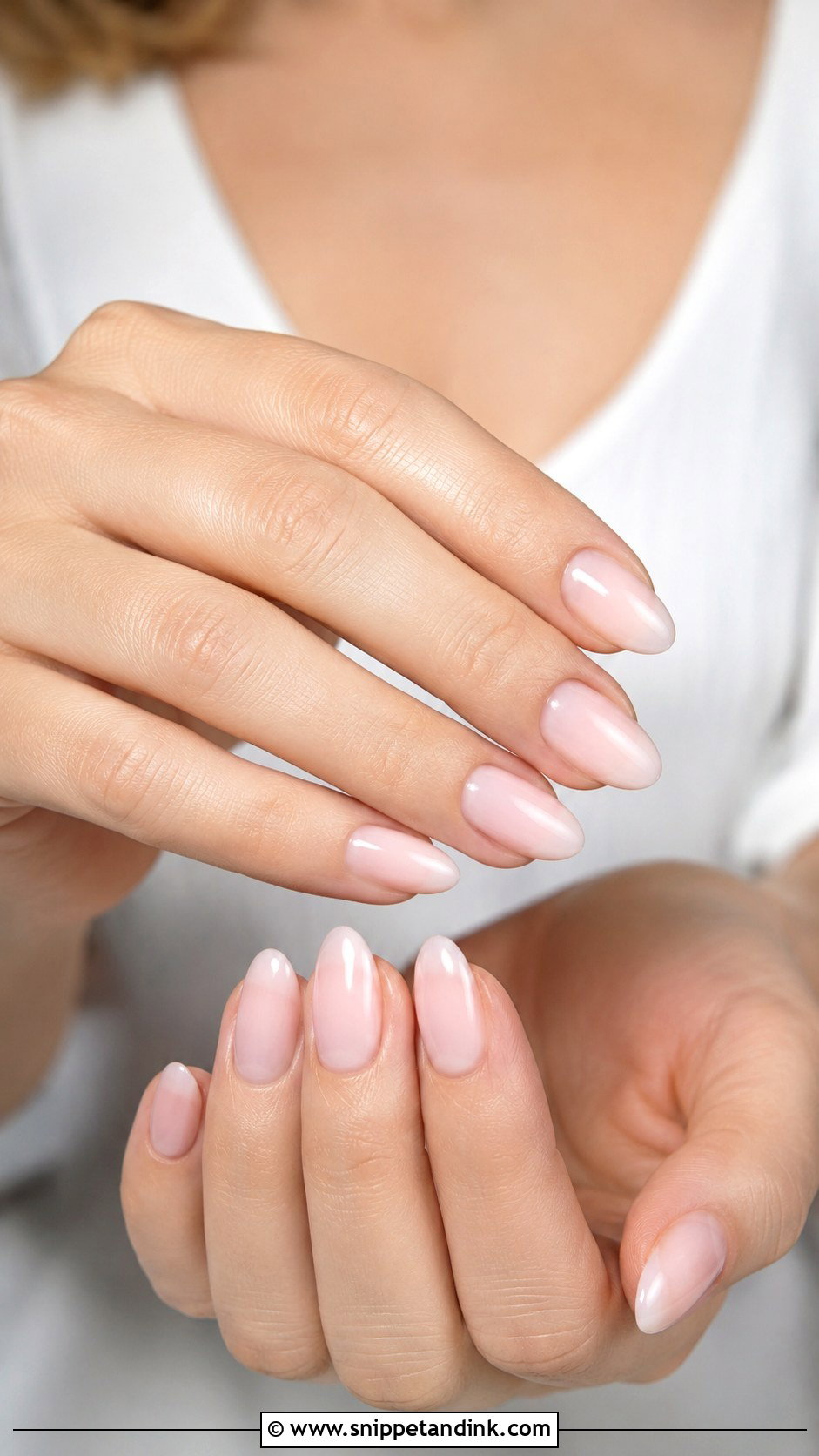
Barely there means a sheer nude, soft pink or translucent beige that looks like your own nails, only smoother. I suggest it to anyone in a heavily detailed dress, since the hands shouldn’t compete with beading. Thin, glossy layers are the whole technique, and a strengthening base or sheer builder gel gives a healthy look without thickness. Short oval or squoval keeps it natural. Lifting at the cuticle is obvious through such a sheer finish, so book this one close to the day.
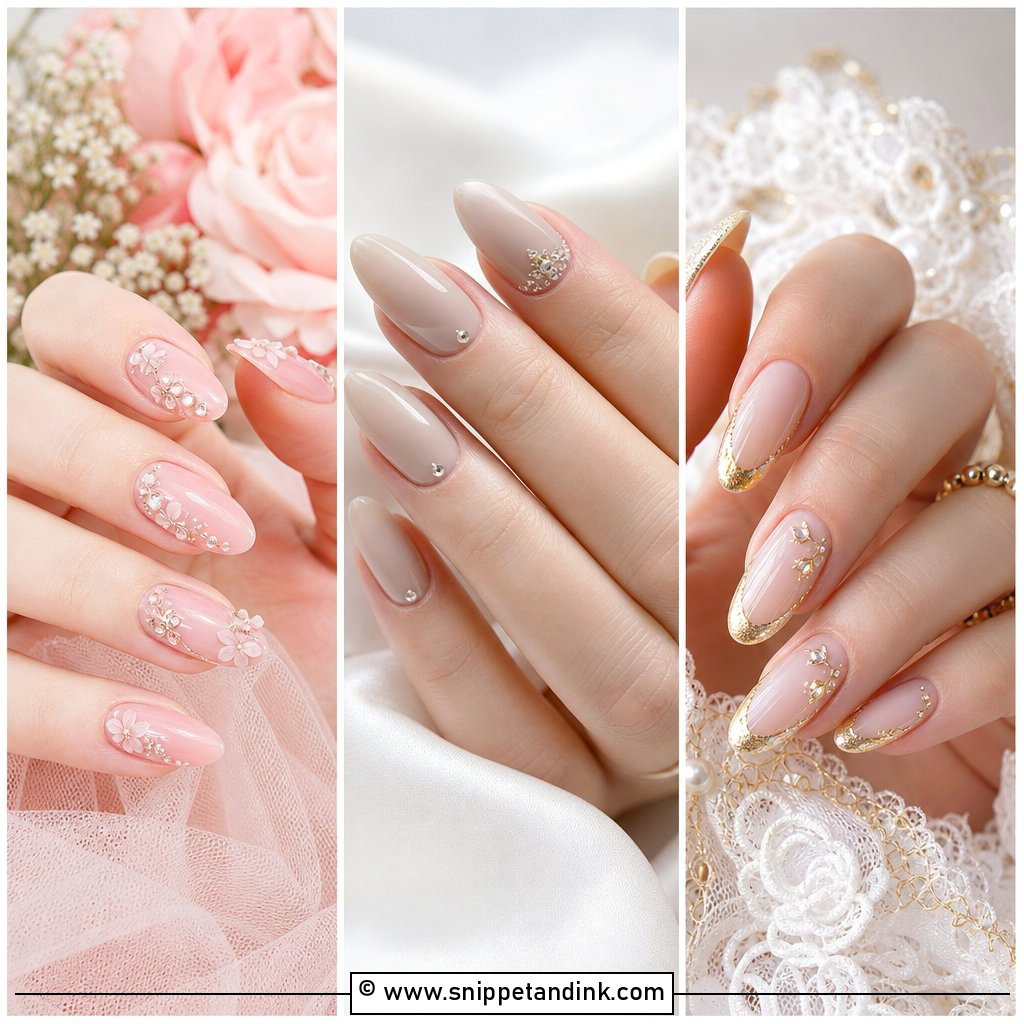
20. Champagne Nude Wedding Nails
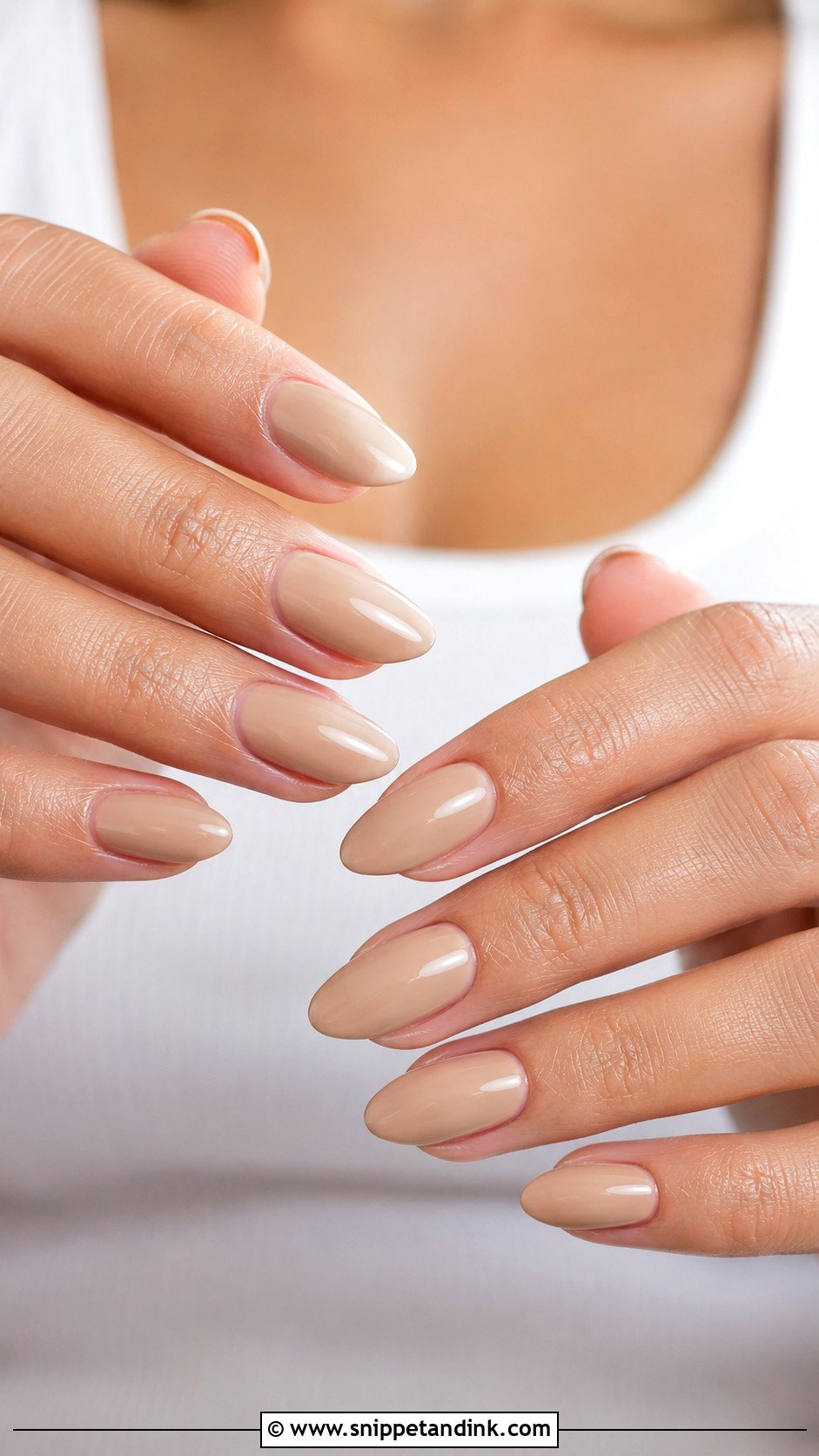
Champagne nude is softer than gold and warmer than beige, so it matches champagne dresses and warm-toned jewelry. I keep it creamy rather than glittery to stay plain. A pearly top coat can add a gentle glow, but only a thin one. Medium almond and short oval both suit it. The warm tone is especially kind at fall weddings and candlelit evening receptions, where cooler whites can turn gray.
Sheer Shades Hide Chips, Opaque Whites Don’t
How a plain manicure ages over a week matters when you’re wearing it to the rehearsal, the wedding and the first days of a honeymoon. Sheer shades are forgiving: a tiny chip at the tip or a sliver of regrowth at the cuticle barely shows through translucent color. Opaque whites and creams are the opposite, and a hairline chip on solid white is visible across a dinner table.
That’s why I book gel or builder gel two to three days before the wedding. It leaves time for any lifting to show up and be fixed, while keeping regrowth minimal. Regular polish is better done the day before, since it starts chipping within days.
Cuticle Oil, Rubber Gloves and the Final Week
Much of a plain manicure’s look comes from the skin around the nail. I ask brides to oil their cuticles every night for a few weeks beforehand, because hydrated cuticles don’t need cutting at the appointment, and freshly cut cuticles can look red in close-ups. Wear rubber gloves for dishes and cleaning in the last week too, since hot water and detergent dry the skin and loosen gel at the edges.
After the honeymoon, have gel soaked off properly rather than peeled. Peeling lifts layers of the nail plate with it, and that thin, bendy nail takes months to grow out.
Smooth Coats and Tidy Cuticles Do the Real Work
Plain nails succeed on details nobody names: smooth coats, tidy cuticles and a shade matched to your dress and skin. Milky white and ivory read classic, sheer pink and blush read softer, and nude and beige shades look modern. When you’d like a little shape without decoration, micro French, almond nails or a glossy nude are easy places to start. Bring your swatches to the appointment and let the manicure stay quiet while your ring does the talking.
You'll Like These Ideas:


Leave a Reply