
Few bridal designers capture 1990s romance the way Catherine Rayner did. Her gowns are known for structured bodices, sculpted basque waists, silk, long trains and dimensional fabric roses, and they have since become sought-after vintage pieces that are collected as much for their design as for wearing. Below are twenty ways to wear her look, some built around named originals and some around new dresses that borrow the same shapes. With each one I’ve noted the veil, shoes, jewelry and flowers I’d put with it, plus what to watch for if the gown is thirty years old. Originals are scarce and individually sized, so I’d keep an open mind about a well-made modern version.
Questions to Put to a Seller Before Buying a 1990s Original
Most of her gowns now change hands through vintage dealers, resale sites and private sellers, and you often can’t try one on first. I treat every listing as a set of questions to be answered, not a photo to fall for.
- Ask for flat measurements: bust, waist, hip, and nape to hem. Size labels from that decade run small next to modern sizing, and a gown altered for its first bride may no longer match its label at all.
- Ask how much seam allowance is left at the side seams and center back. That tells you whether a seamstress can let it out, or only take it in.
- Request daylight photos of the underarms, the hem, the back fastenings and the inside of the bodice. Yellowing, perspiration marks and frayed hem edges show up there first.
- Ask how it has been stored. A gown kept folded in a plastic bag can carry permanent crease lines and a yellow cast, while one boxed with acid-free tissue usually fares better.
- Ask about smell. Damp or smoke in silk is hard to remove fully, and it isn’t obvious from photographs.
If the answers are vague, take that as an answer. A good seller of vintage bridal expects these questions and is glad to reply.
1. Catherine Rayner Louisa Rose Wedding Dress
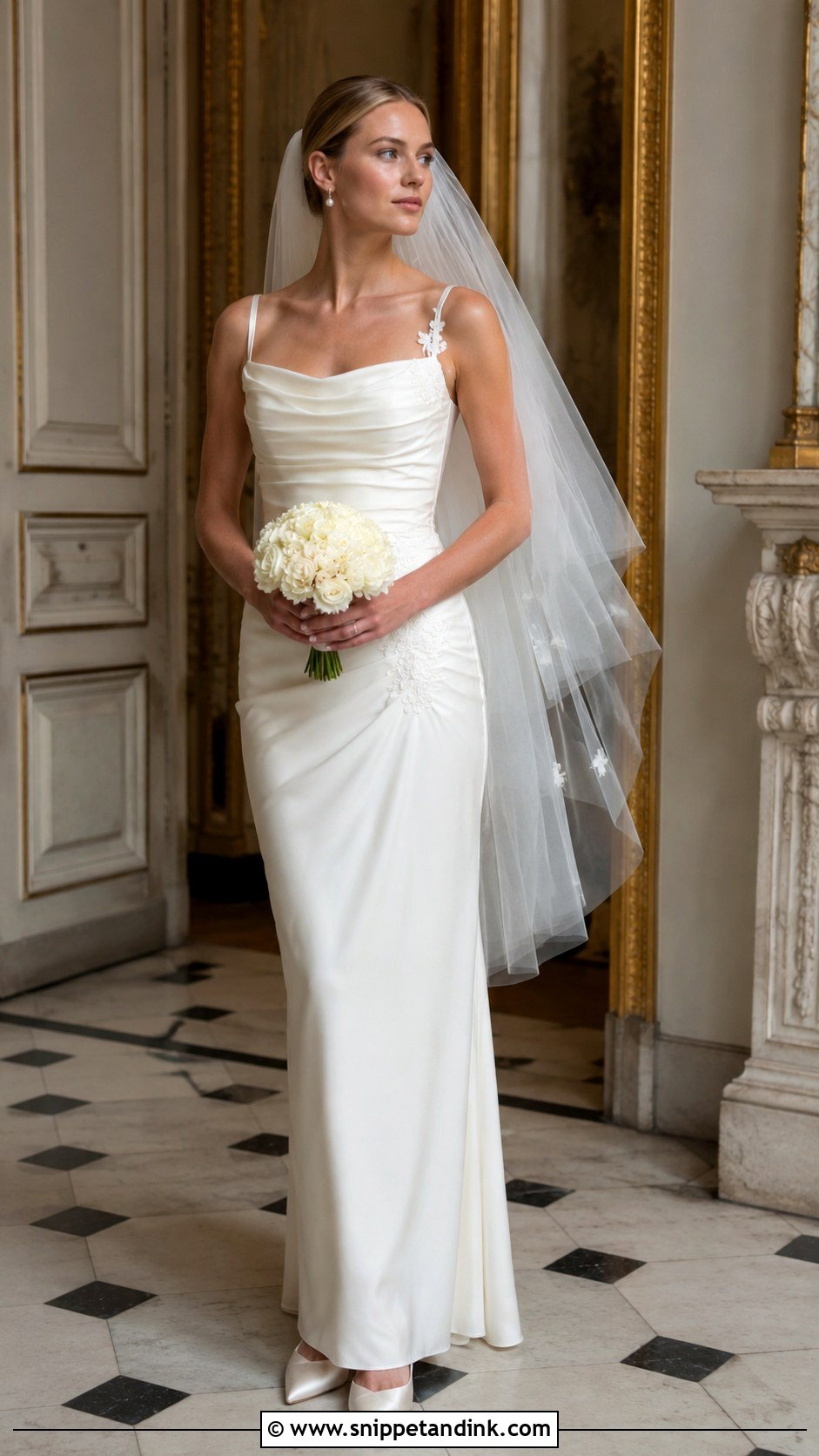
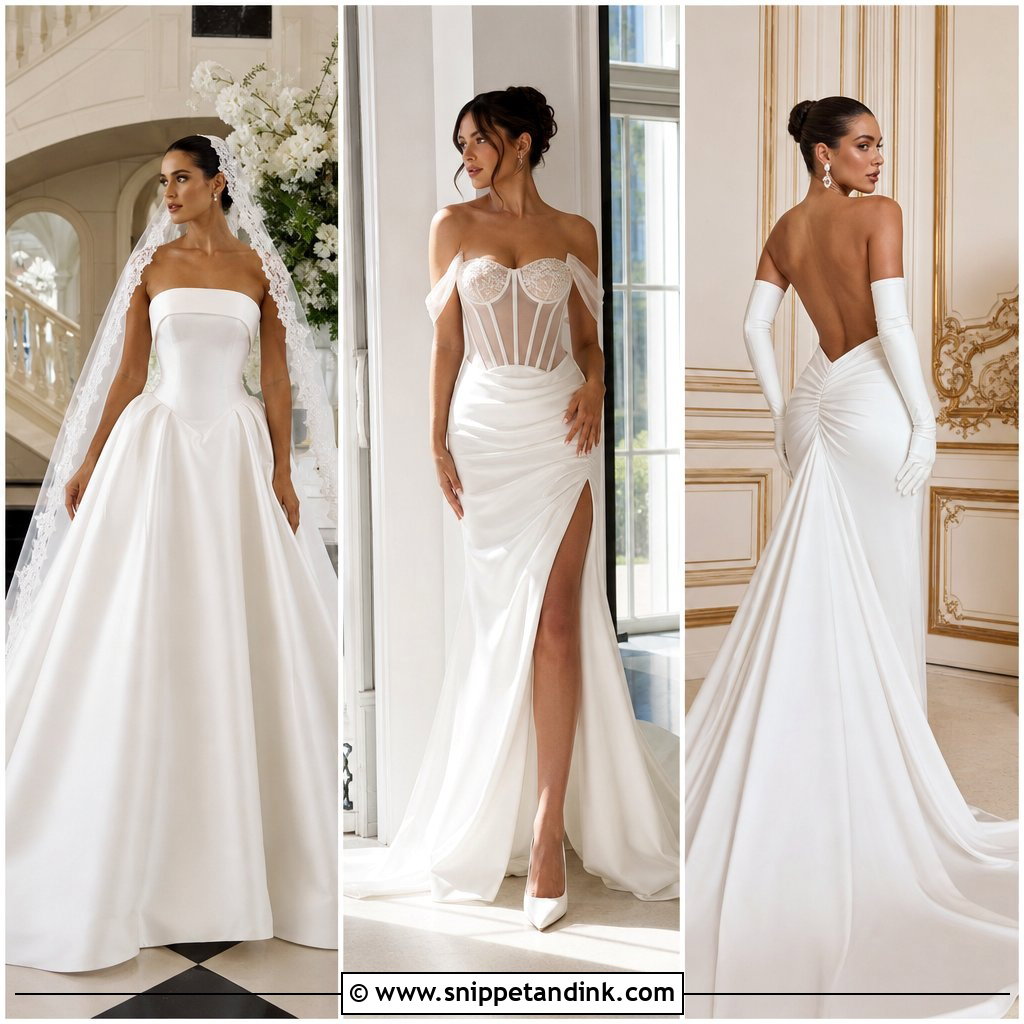
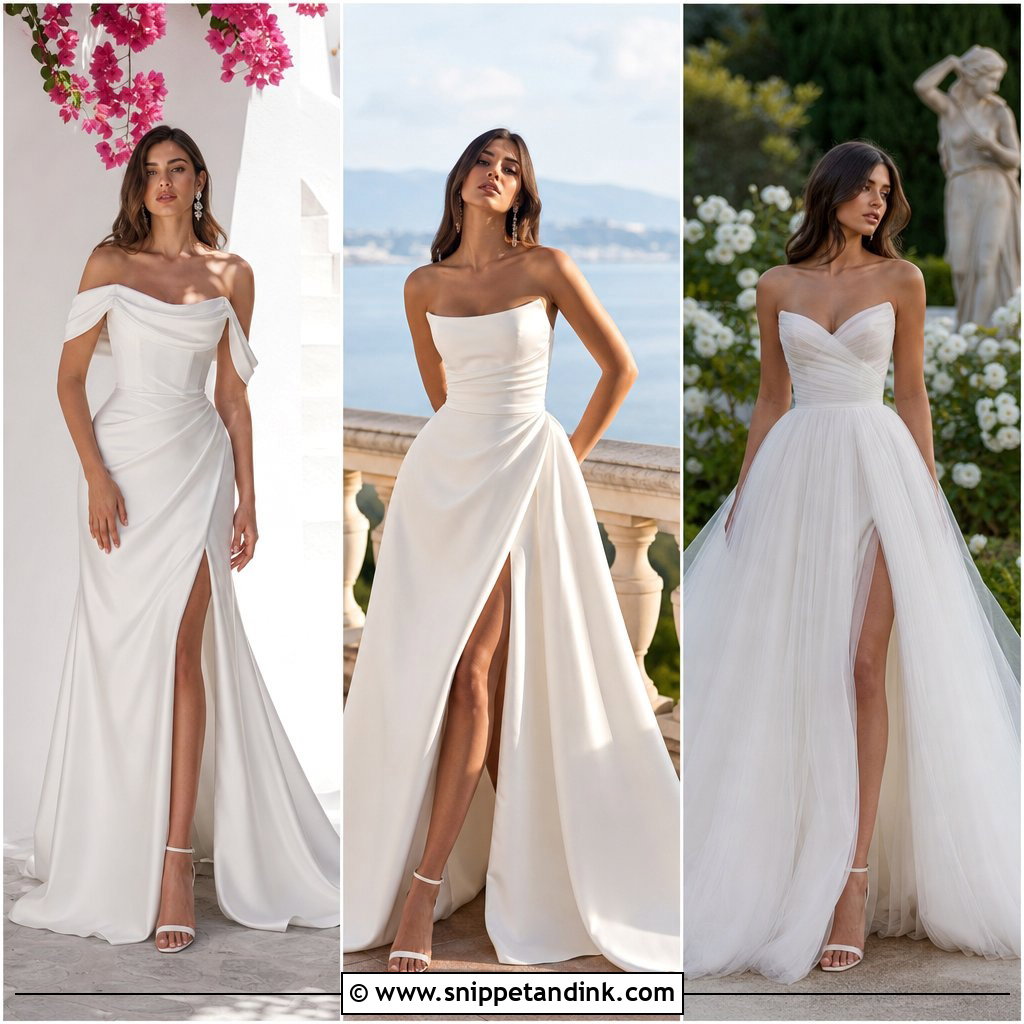
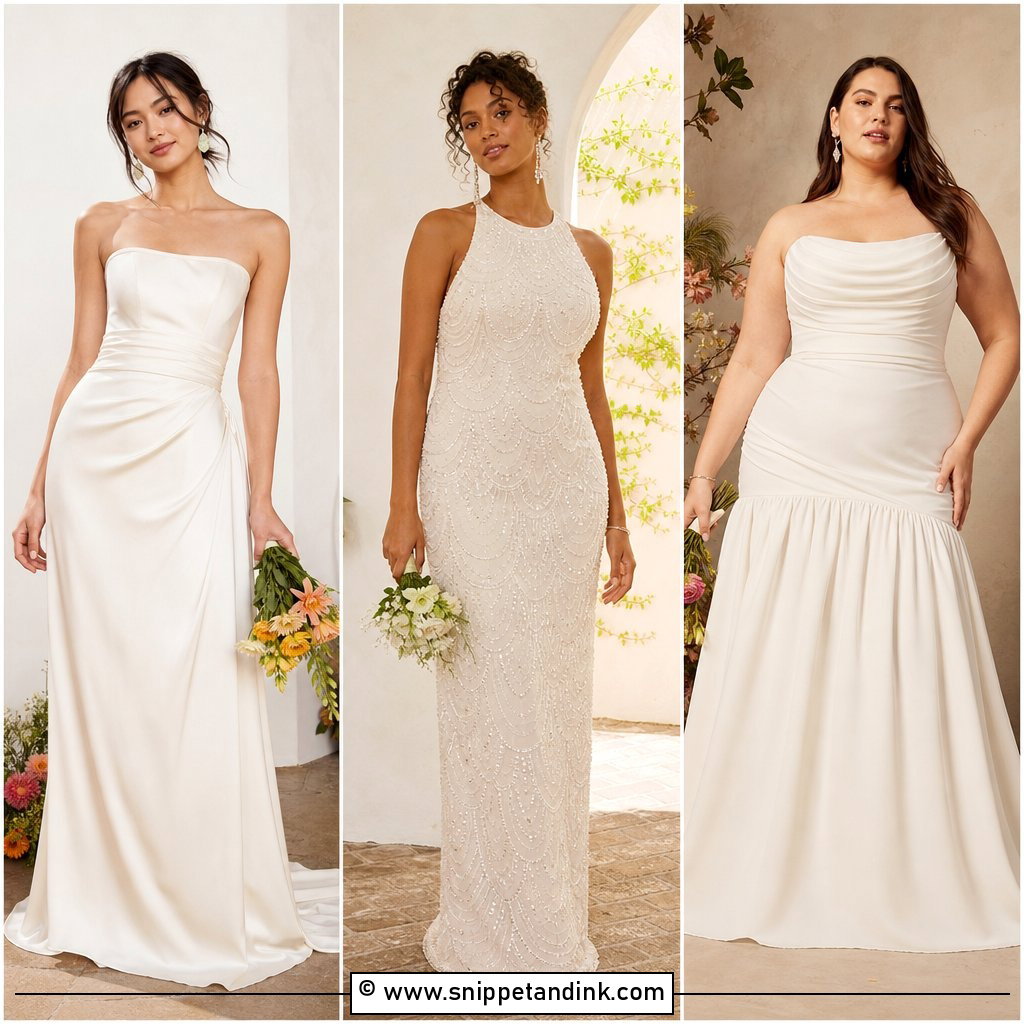
The Louisa Rose is about line before decoration. Its straight silhouette and carefully placed ruching lengthen the body without feeling tight, and that figure-friendly drape is what made the Louisa shape one of her most recognizable. A fingertip tulle veil leaves the detail visible, and pointed ivory satin pumps add height without changing the mood. I’d keep the jewelry to pearl drops and a slim bracelet, with a compact bouquet of white roses and a low bun or twisted chignon. Leave off any big necklace. On a gown where the bodice is sculpted, a pendant only sits on top of the shape and breaks it.
2. Catherine Rayner Cafe Au Lait Wedding Dress
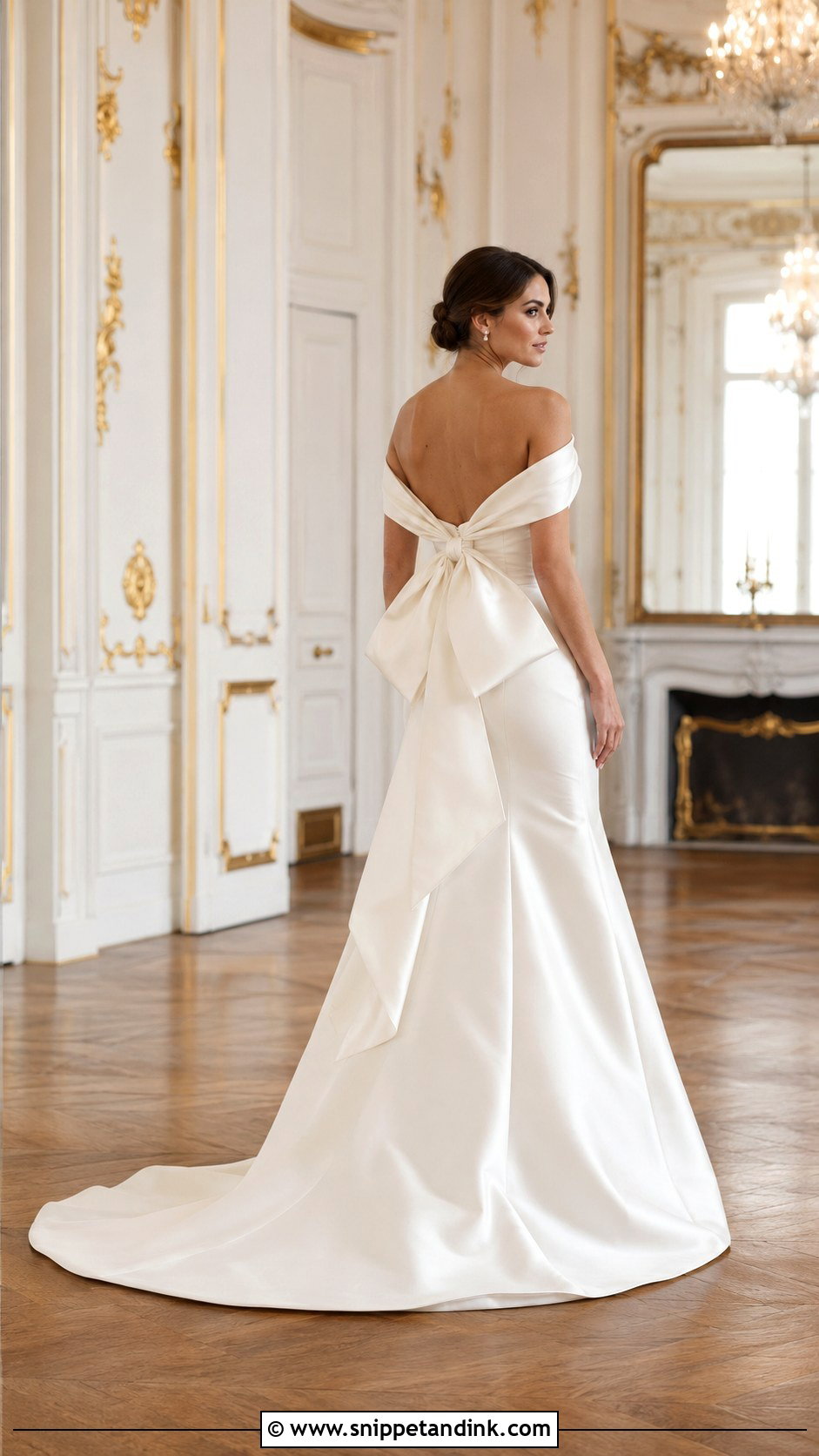
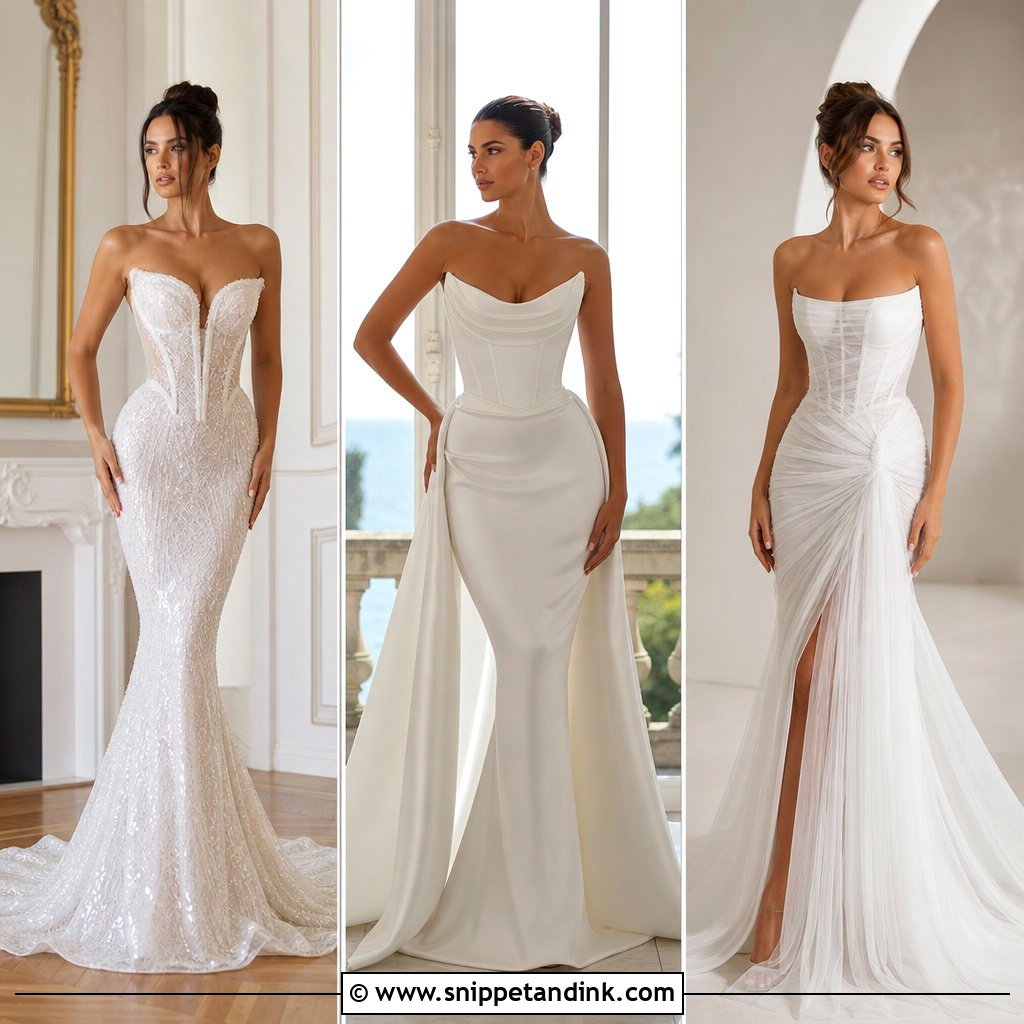
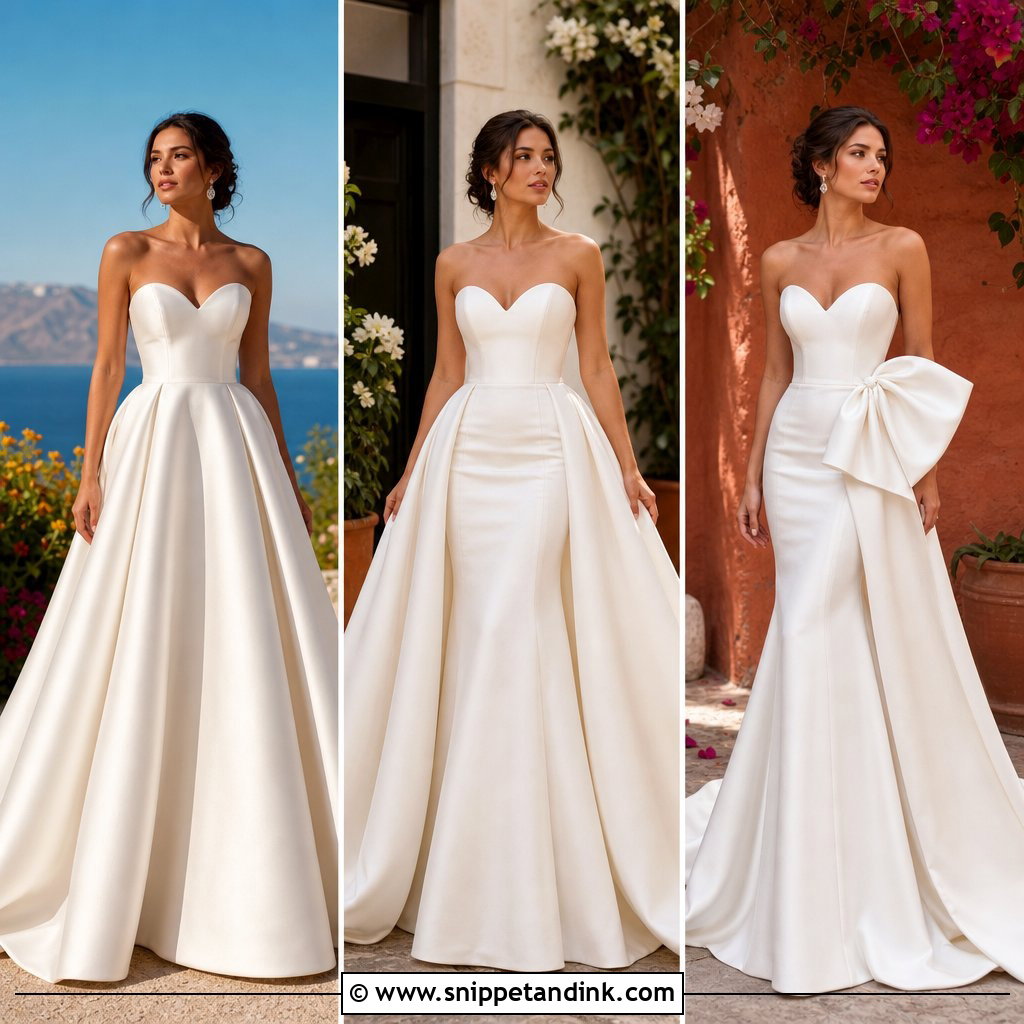
For a dramatic entrance, the Cafe au Lait pairs a plain structured silk body with one couture gesture: a defined basque waist, a narrow skirt and an oversized back bow that flows down into the train. Everything else should get out of that bow’s way. I’d anchor a sheer cathedral veil beneath a smooth bun so the bow shows through, and choose pointed ivory heels and crystal studs. Long-stem calla lilies or orchids echo the clean lines, and luminous skin with a rose lip suits a ballroom or museum setting. A bow this size has to be bustled with care. Ask your seamstress to bustle the train beneath it, so the loops never crush the silk.
3. Catherine Rayner Lily Wedding Dress
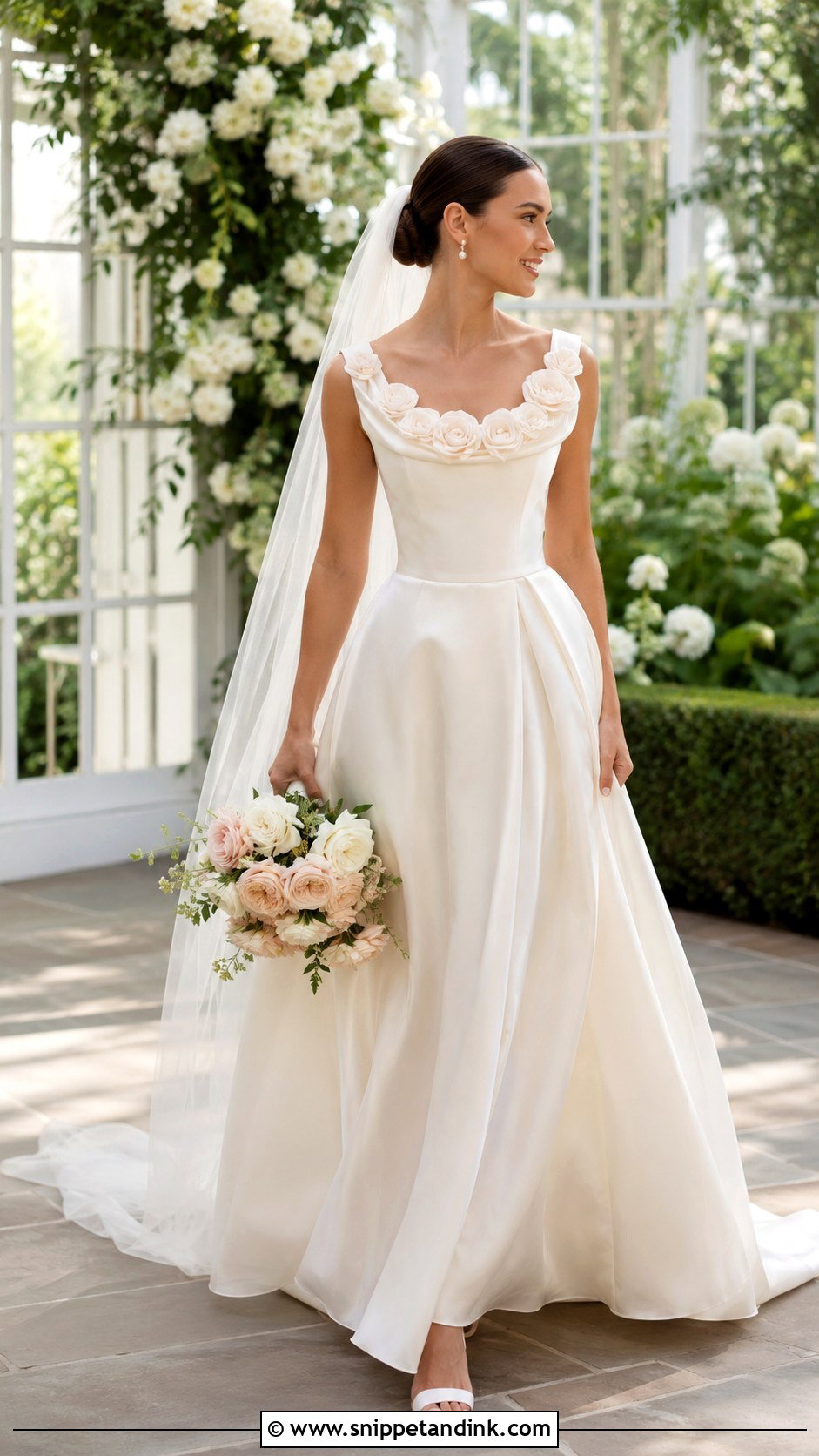
Soft rosettes around a romantic neckline make the Lily a flower-led look, and the trick is not adding more flowers on top. A narrow raw-edge veil gives movement without competing with the trim, and simple ivory slingbacks with small pearl earrings keep the balance. Hair can go into brushed waves or a loose French twist, depending on how much shoulder you want to show. I’d carry garden roses, sweet peas and ranunculus in ivory and pale blush, with the stems wrapped in silk ribbon. If you’re hunting for an original, compare the seller’s measurements against your own rather than trusting the size label. Surviving Lily gowns are few, and each one was made to a particular bride’s body.
4. Catherine Rayner Daphne Wedding Dress
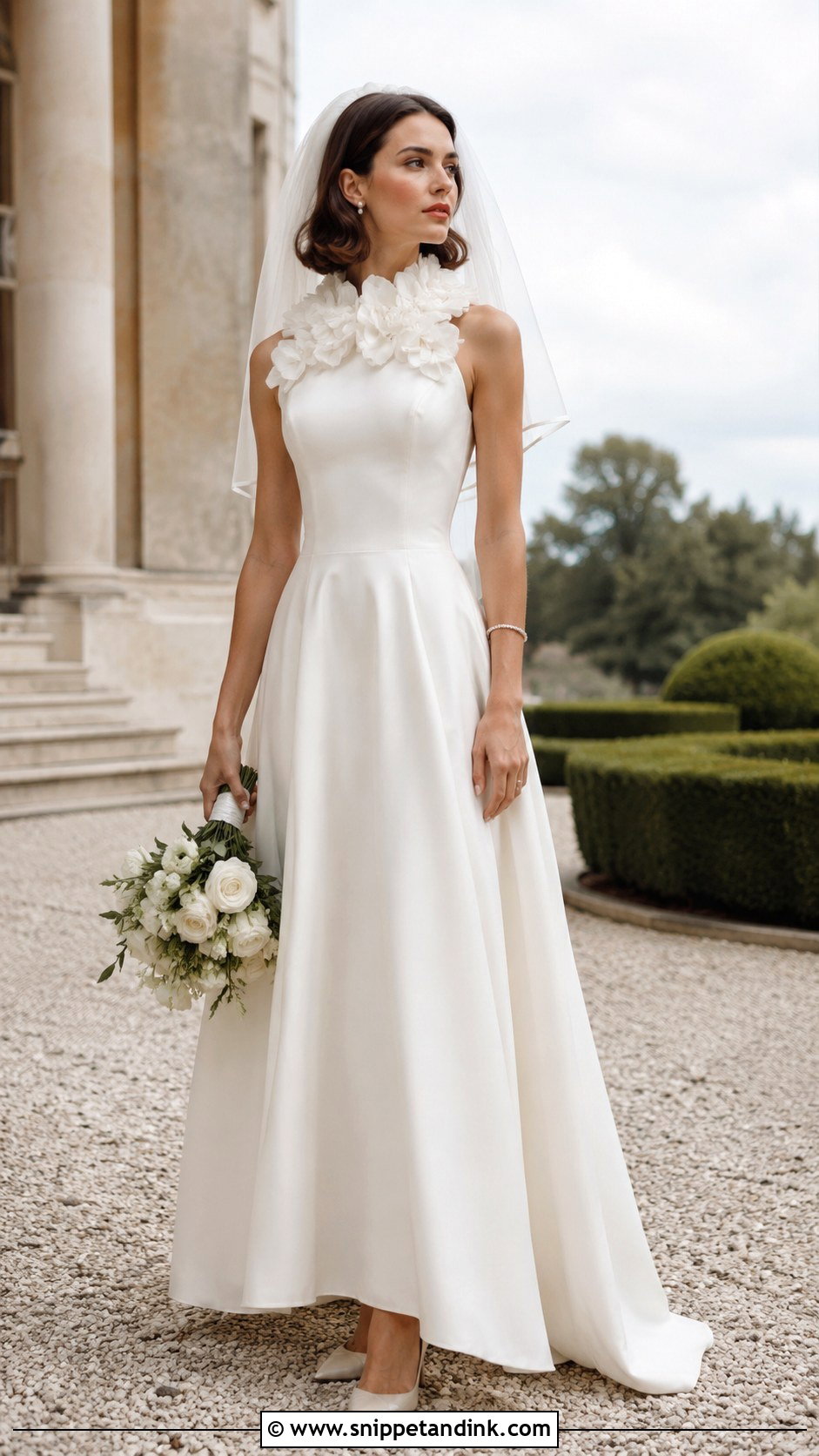
Romantic, sculptural and nostalgic all at once, a Daphne look leans on dimensional rosettes, a fitted bodice and a softly dramatic skirt. A shoulder-length veil with minimal gathering keeps the neckline the main attraction, and plain satin pumps are wiser than embellished shoes when the dress already carries statement flowers. For jewelry, pearl studs with one heirloom bracelet or a fine chain featuring a small pendant is plenty. A sleek updo frames the floral neckline, and a few curled face-framing pieces stop it from looking severe. Fabric roses this deep can flatten in storage. Before you wear one, ask whether they’ve been padded and reshaped, because a crushed rosette shows clearly in close-up photos.
5. Catherine Rayner Grand Finale Wedding Dress
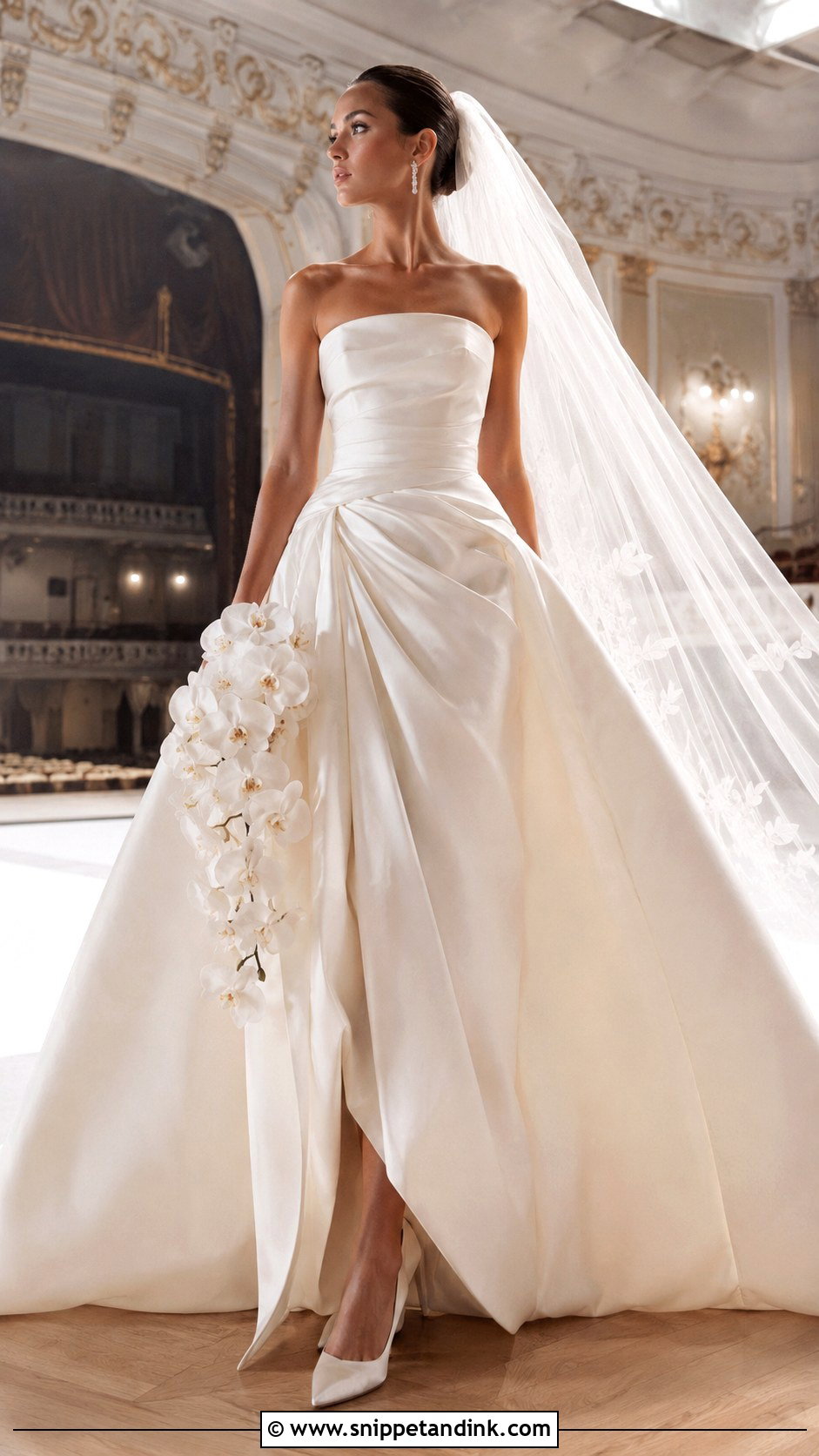
Grand Finale is a name that asks for confidence, so let the gown lead and keep the extras refined. A chapel-length veil in plain silk tulle sits well under a structured updo, with closed pointed ivory heels at a height you can actually stand in for the whole evening. Diamond or crystal drops bring some evening sparkle; skip the necklace if the neckline already has detail. A cascading bouquet of white orchids and trailing greenery follows the gown’s movement, and softly contoured makeup with a neutral rose lip finishes it. I’d put this one in a formal hotel or a house with a long aisle, where a big silhouette has room to arrive.
6. Catherine Rayner Treselle Wedding Dress
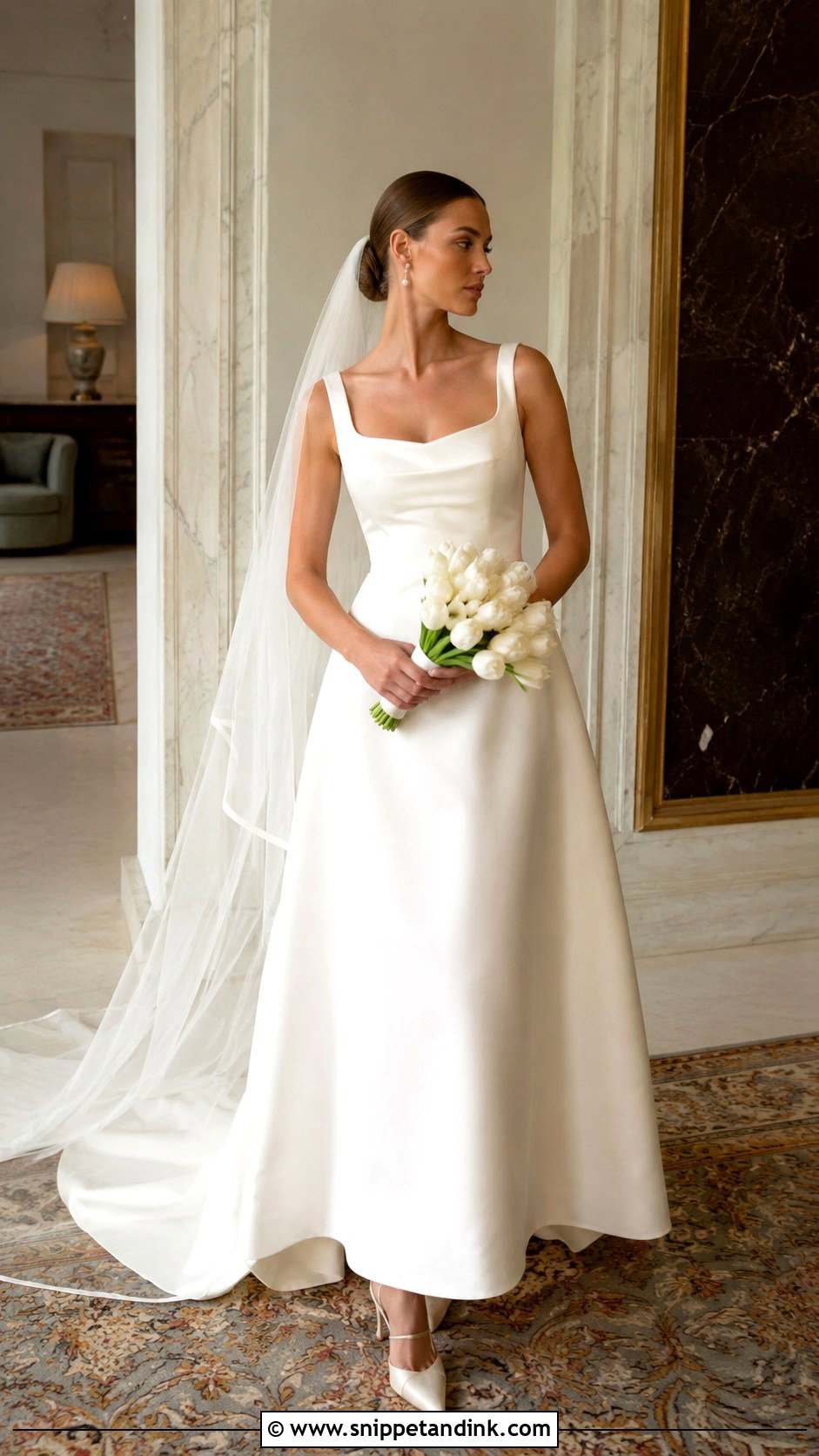
Treselle works as the quiet foundation for a polished vintage outfit, so the styling should stay clean enough to show off the cut and fabric. Start with a lightweight fingertip veil with a narrow satin edge, and choose pointed ivory pumps or low slingbacks depending on the hem length. Pearl and crystal cluster earrings add texture without tipping into ornate. A smooth low chignon with a sharp side part nods to the 1990s, and white tulips give the bouquet a simple shape. For a cold day, add a cropped ivory silk jacket you can remove indoors. Check that the jacket’s sleeves don’t drag on the gown’s bodice when you lift your arms; silk on silk catches more than you’d think.
7. Catherine Rayner Rosette Wedding Dress
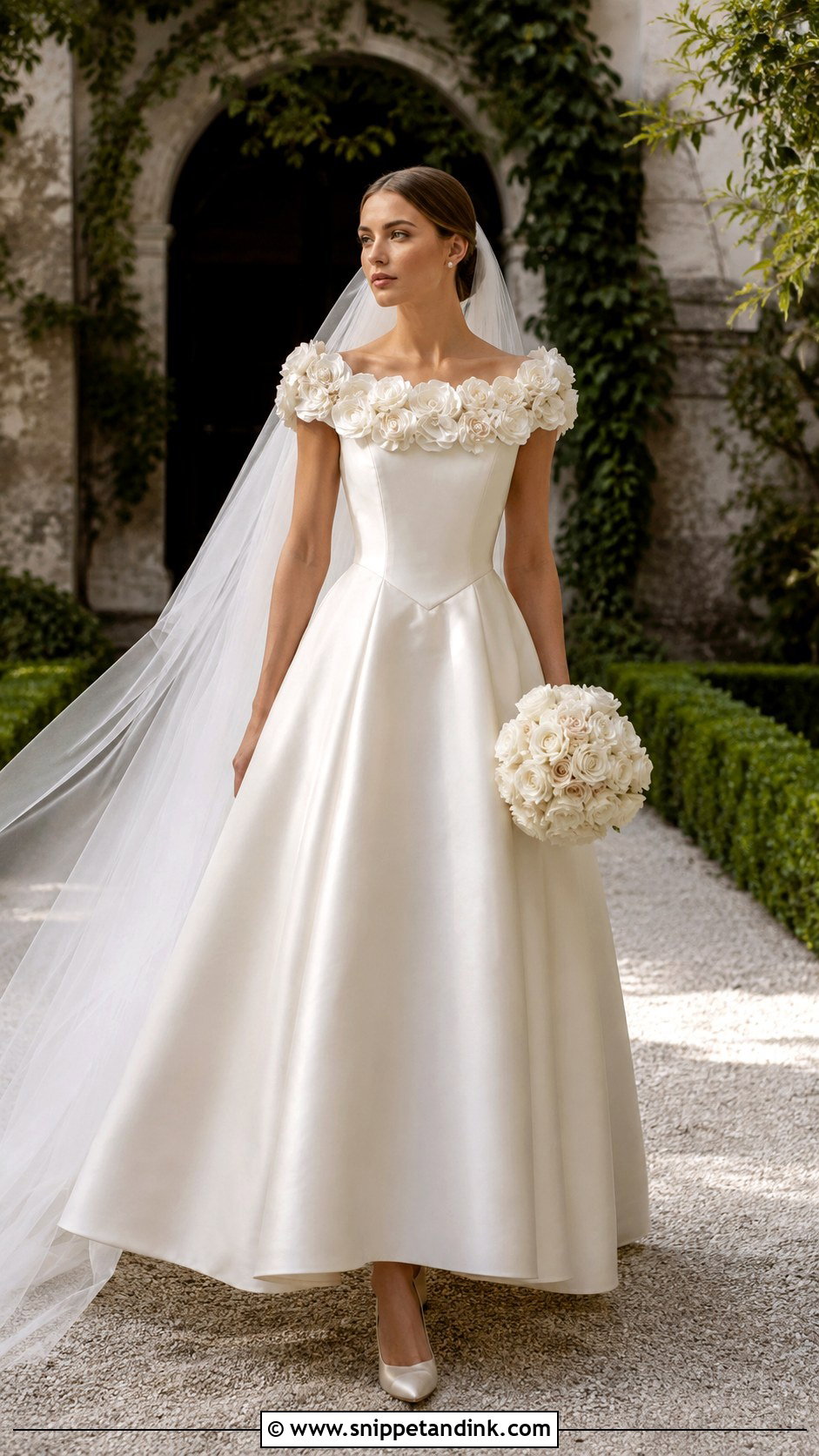
Fabric roses are the detail most people connect with her gowns, and on a rosette dress they gather at the neckline, shoulders or waist. With that much going on, everything else should stay restrained. I’d attach a plain cathedral veil low beneath the hair, then add ivory satin pumps, pearl studs and a slim vintage watch or bracelet, with a neat French twist to show the floral construction. In the bouquet, use white roses at a different scale from the dress rosettes so they don’t look like a matched set, plus a few trailing sweet peas. If you can’t find an original gown, a basque-waist satin dress with fabric roses added by a skilled seamstress gets surprisingly close to the mood.
8. Catherine Rayner Basque Waist Wedding Dress
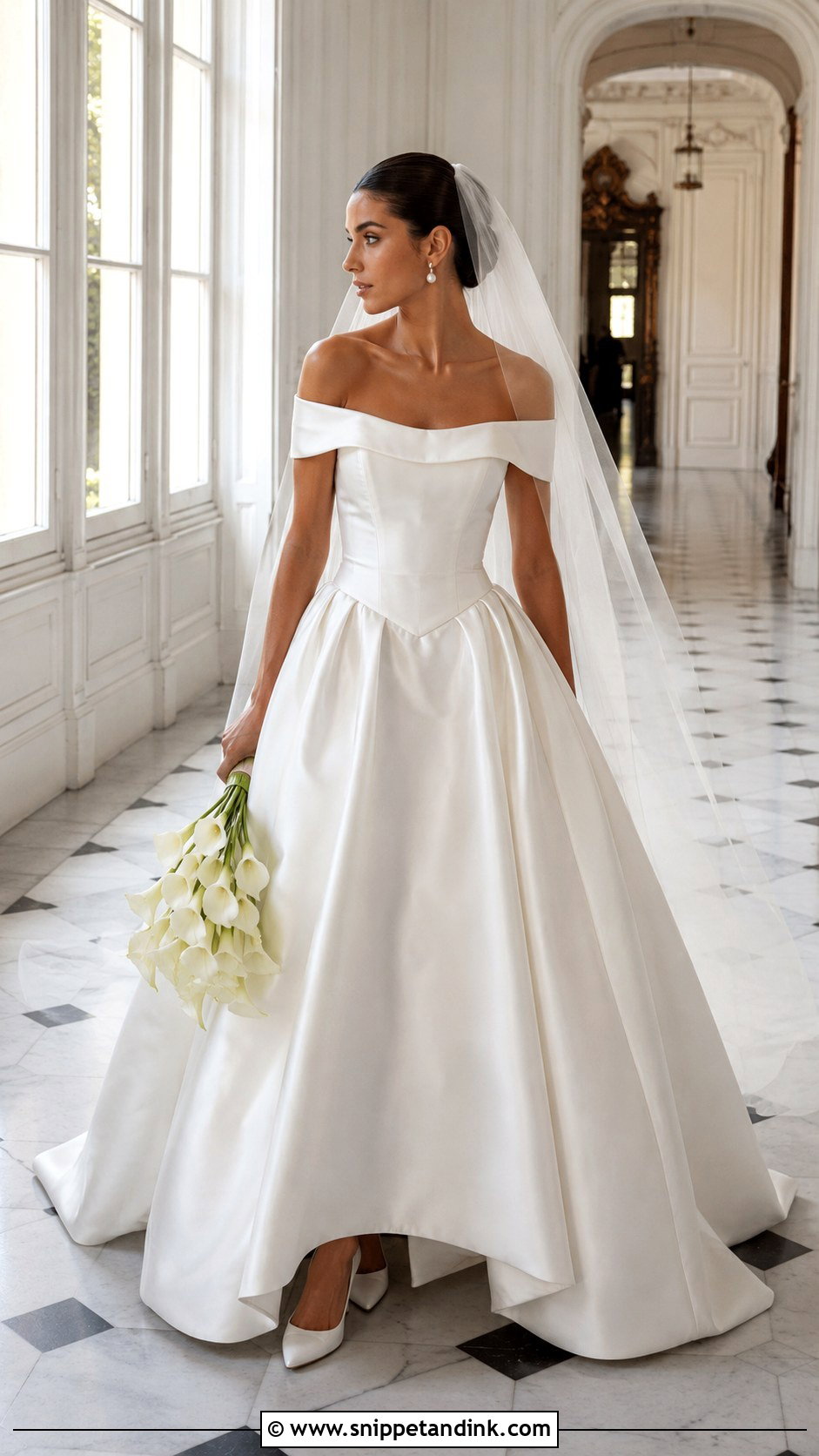
The pointed basque waist is the backbone of this whole aesthetic. It defines the waist and then drops into a straight, fit-and-flare or full skirt. I’d build around it with a smooth shoulder-length veil, pointed pumps and pearl earrings, plus calla lilies or white roses in a structured bouquet. Never add a wide belt here; it sits right across the V-shaped seam and cancels it out. A low bun suits an off-the-shoulder or strapless neckline, and if you want coverage, detachable satin sleeves can be made to match. The point of the basque has to land on your center line. Supportive boning fitted properly is what keeps it there, rather than tightening the zip.
9. Catherine Rayner Off Shoulder Wedding Dress
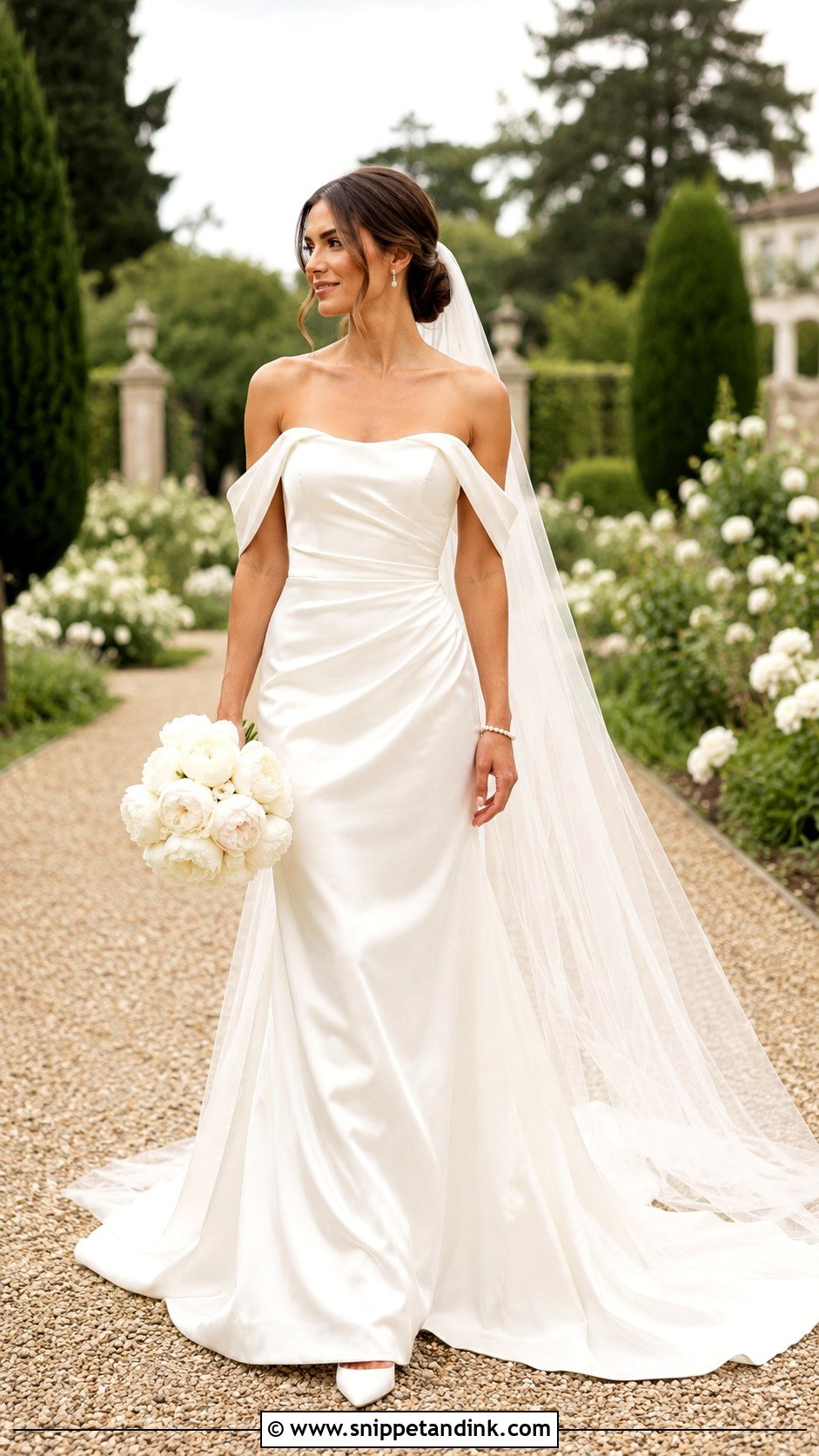
Off the shoulder, a structured satin gown loosens up. The neckline frames the collarbones and leaves room for delicate jewelry, though it looks just as good with none. Pearl drops, a slim tennis bracelet and ivory pointed heels suit it, with a long plain veil sheer enough that the shoulder line still shows through. Choose a polished bun, a loose low twist or half-up waves depending on the venue’s formality, and carry white peonies and garden roses. At fittings, I ask brides to lift the bouquet, wave and hug. Off-shoulder bands restrict how high your arms go, and a seamstress can add a little ease or an inner stay to keep them comfortable without changing the look.
10. Catherine Rayner Strapless Wedding Dress
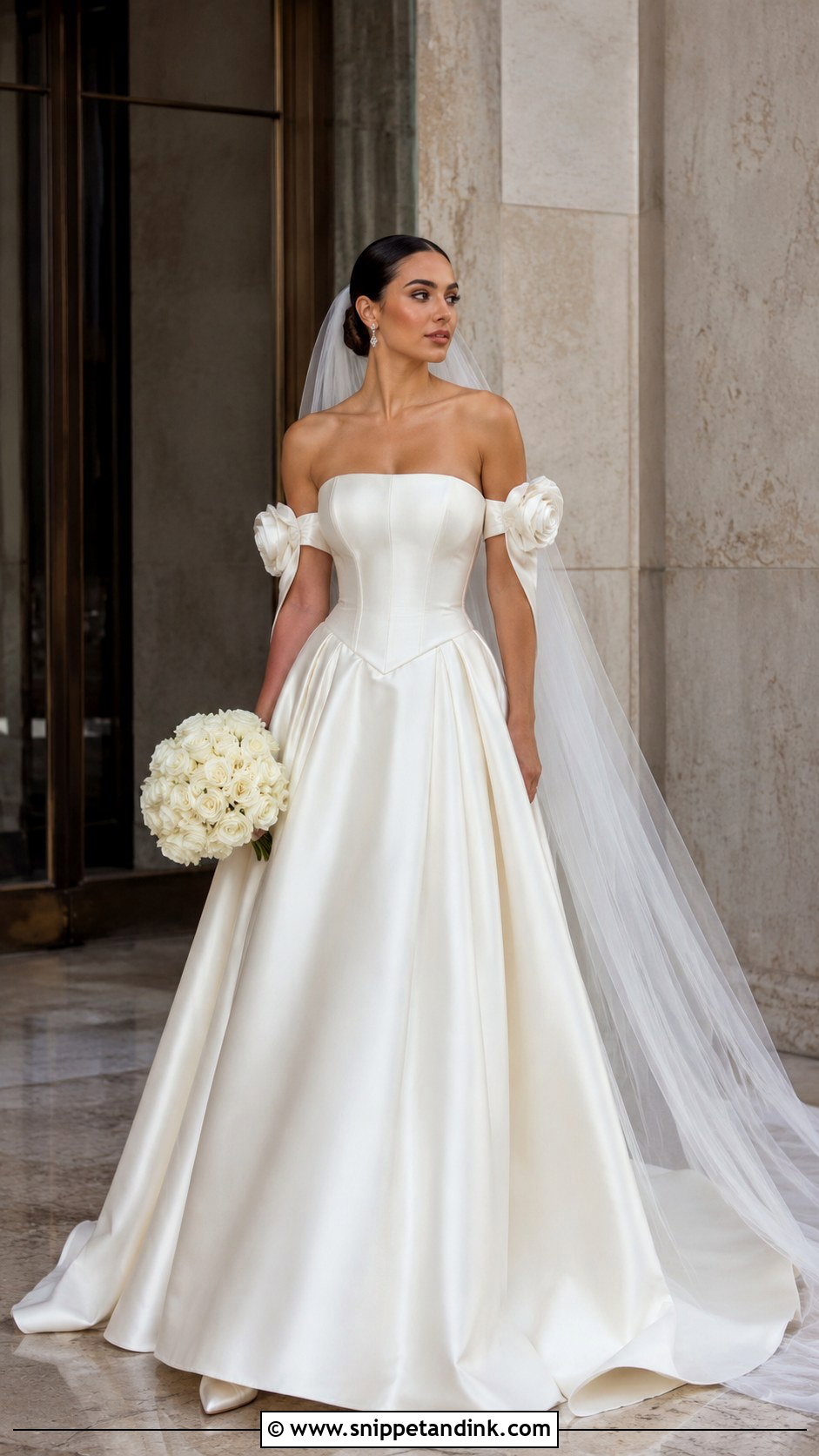
Strapless with clean lines is the most flexible way to wear this designer’s shapes. Start with a structured bodice and a basque or gently curved waist, wear a soft cathedral veil for the ceremony and take it off to show the full gown at the reception. Crystal-and-pearl earrings light the face, and one delicate bracelet is enough. Ivory satin pumps with a stable heel and a cushioned insole will see you through the day, with a smooth chignon or brushed Hollywood waves. If you’d like a second look, a seamstress can make detachable off-the-shoulder drapes or rosette sleeves to match. On an original, ask that they attach with small hooks to the lining, never stitched through the outer silk.
11. Catherine Rayner Silk Satin Ball Gown
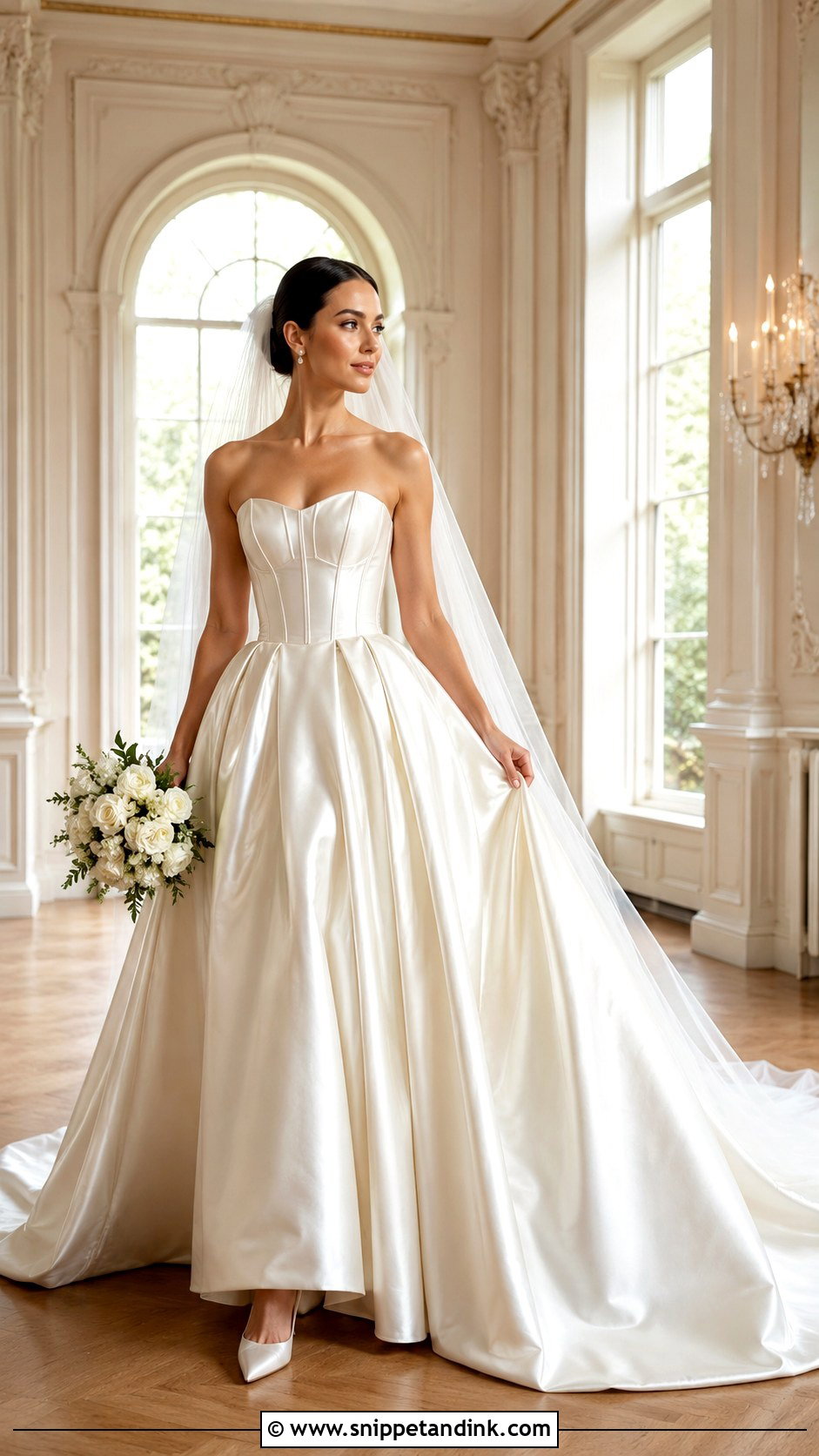
Silk satin has a soft shine that makes a full ball gown look luxurious in a bright room. A fitted corseted bodice, a defined waist, a full skirt and a sweeping train give the strongest vintage effect. Balance all that volume with a simple chapel veil instead of layered tulle. Pointed satin pumps disappear under the skirt, and pearl button earrings with a thin diamond bracelet are enough. A smooth updo keeps the silhouette controlled, with white roses, lisianthus and a little greenery. Silk satin shows every pull and wrinkle, so alterations and steaming matter enormously. Steam it from the inside with the steamer kept moving; held still on silk, it can leave water marks.
12. Catherine Rayner Silk Dupion Column Dress
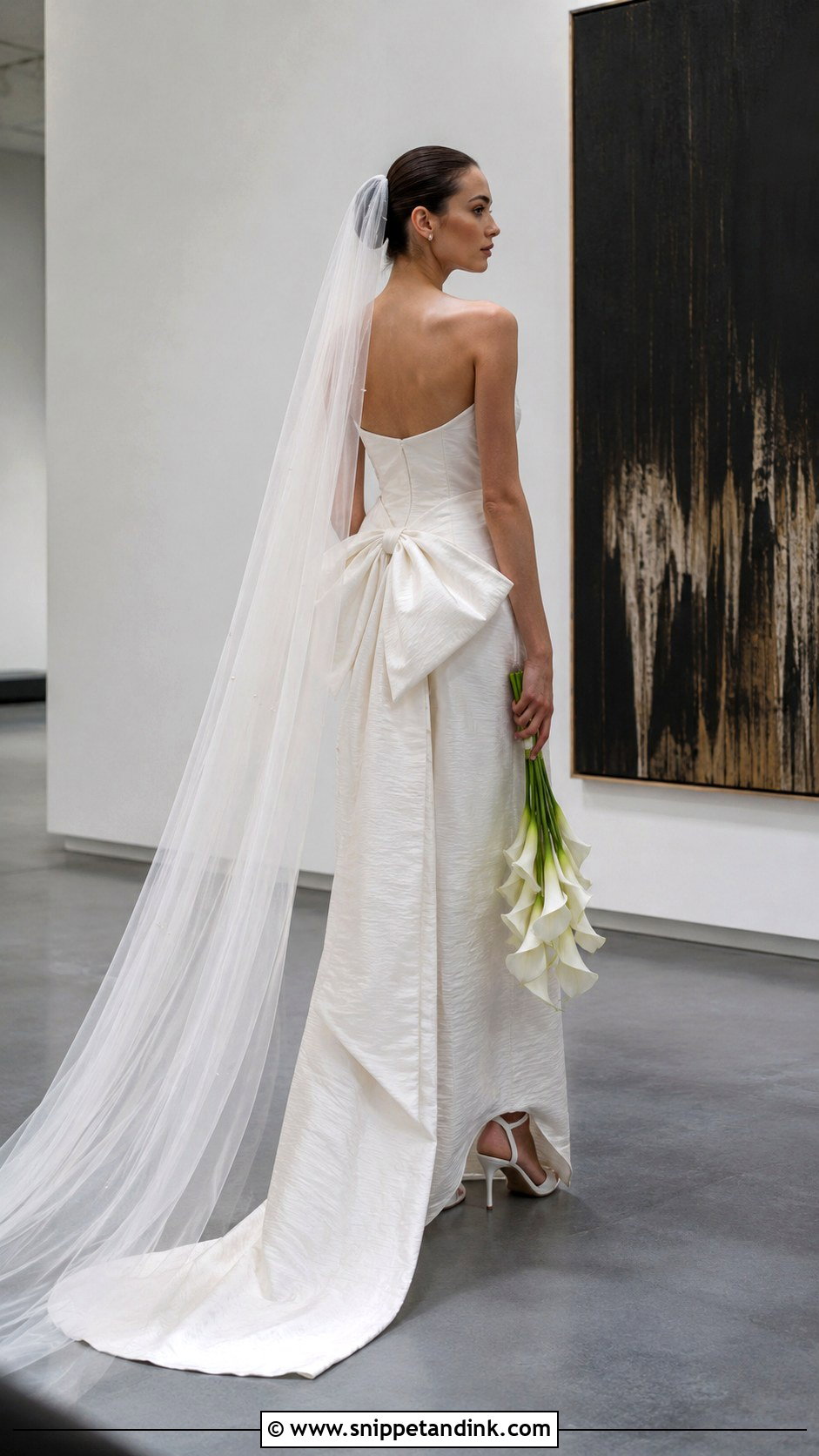
Silk dupion has a slubbed, slightly irregular weave, so a column in it has texture without any lace or beading. The dress should skim the body with enough structure to hold its shape from every angle, and an oversized detachable back bow or sculptural bustle gives it a dramatic rear view. A narrow cathedral veil under a minimal bun lets both the fabric and the bow show. Ivory slingbacks are steadier than stilettos under a narrow skirt; small diamond studs and one pearl ring keep the jewelry quiet. Long calla lilies follow the vertical line. Dupion creases sharply and the creases are slow to drop, so hang it the night before and keep it off the car seat.
13. Catherine Rayner Ruched Wedding Dress
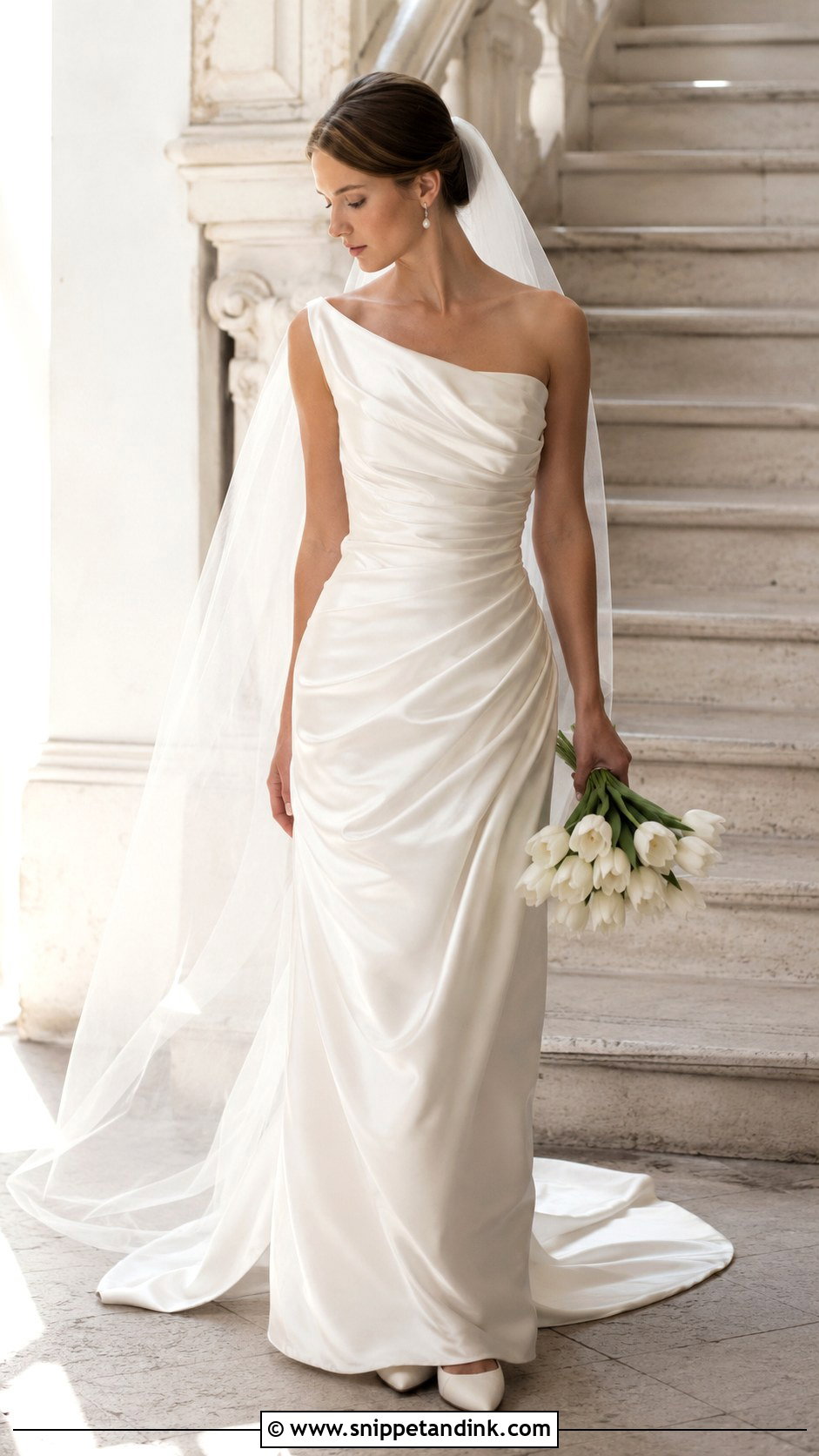
Well-placed ruching softens a dress while drawing a smooth line through the bodice and skirt. The Louisa showed how draping could shape a streamlined silhouette rather than simply decorate it. For a ruched look of your own, choose an asymmetrically draped satin gown with a modest train and a clean neckline, then a plain fingertip veil, ivory kitten heels and pearl drops. A low twisted bun echoes the fabric’s movement, and a compact bouquet of tulips or roses keeps the waist on show. Skip belts and elaborate gloves, as any horizontal line cuts across the drape. When ruching pulls rather than falls, the cause is usually the underwear or a lining cut slightly too small, and both are fixable.
14. Catherine Rayner Bow Back Wedding Dress
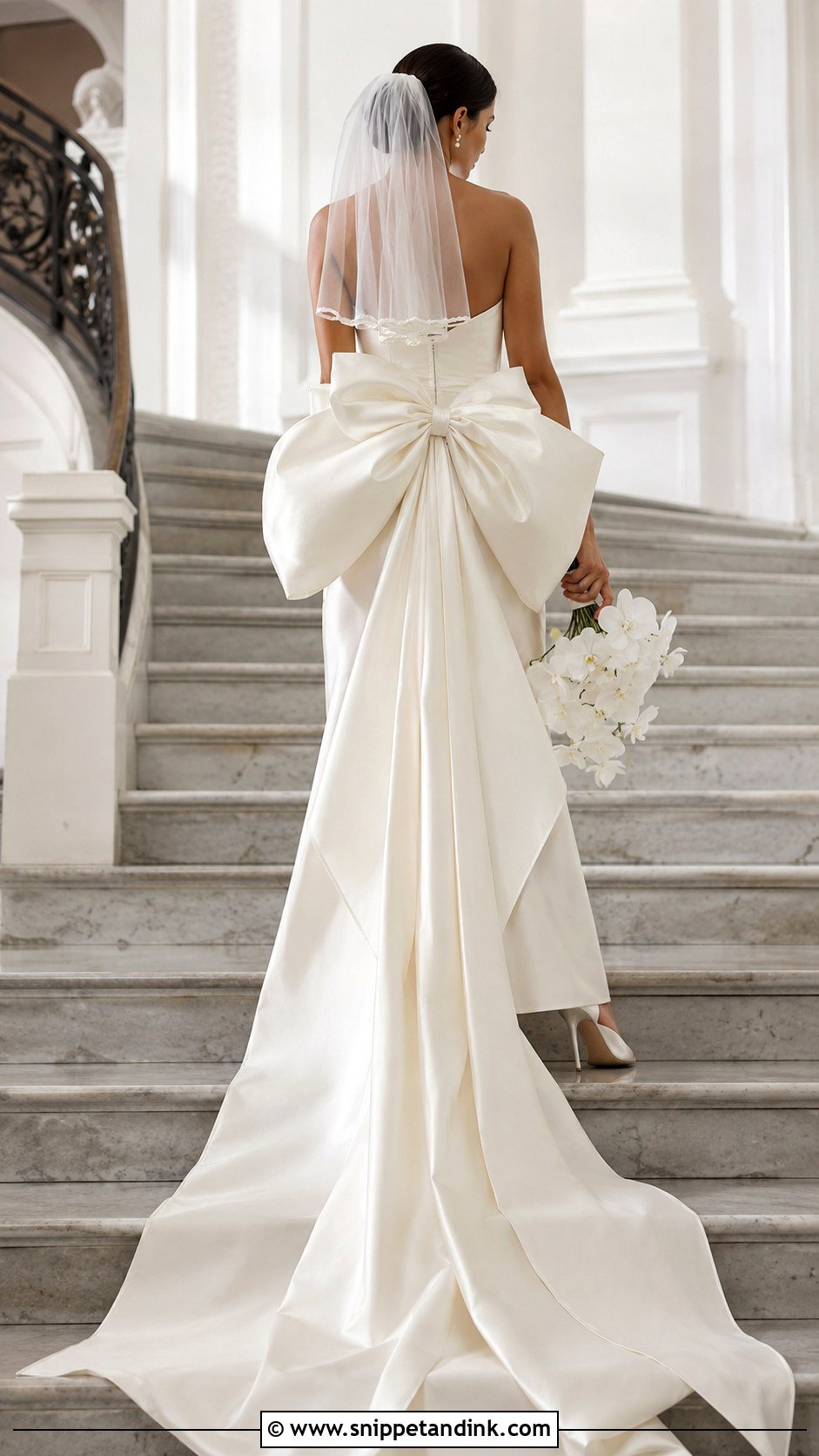
Picture turning toward the aisle with an oversized silk bow flowing down into the train behind you. On a bow-back gown the rear view is the event, so the front can stay quiet. Choose a sheer veil that stops above the bow, or a cathedral veil light enough to show it through. Simple ivory pumps, small pearl earrings and an updo let guests follow the construction from neckline to waist, and a compact bouquet of orchids or calla lilies avoids adding bulk at the skirt. The bustle needs real thought here. A discreet under-bustle usually works best, because hooks placed through the bow will crush it within the first hour of the reception.
15. Catherine Rayner Cathedral Train Wedding Dress
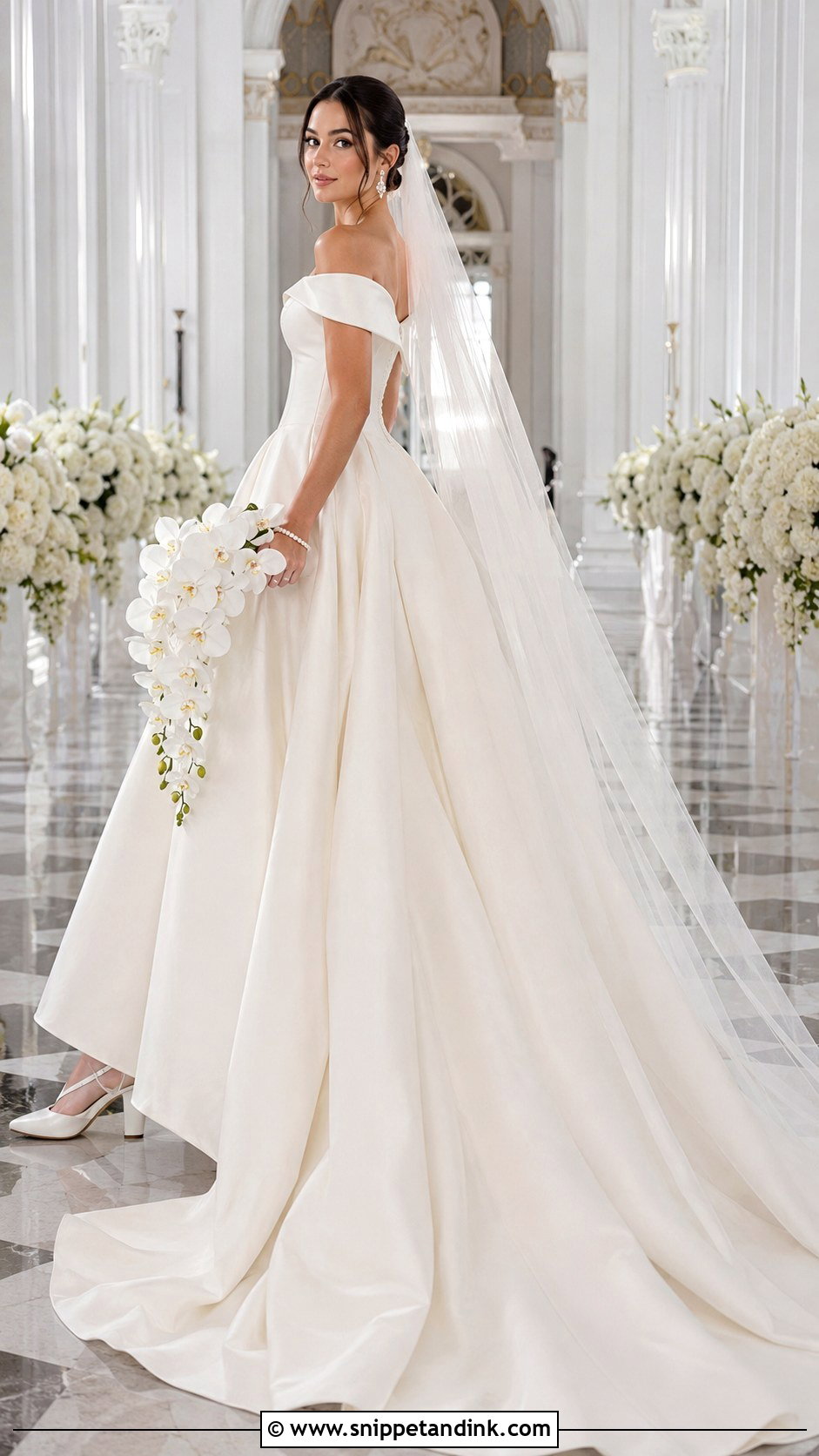
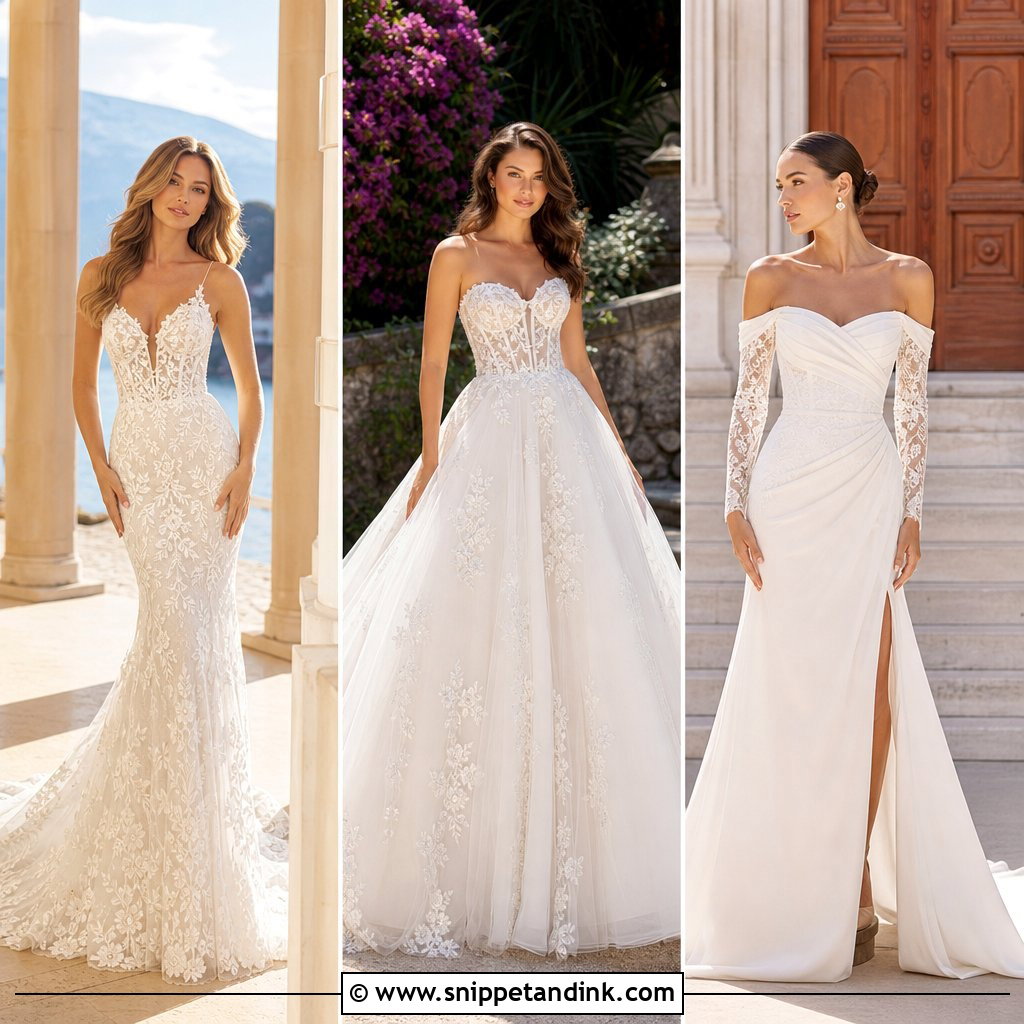
A cathedral train makes a structured gown fully formal. I’d choose a silk satin ball gown with an off-the-shoulder bodice, a basque waist and controlled skirt volume, and a cathedral veil that runs just past the train for a layered effect behind you. Block-heel pumps are much steadier under a long hem than narrow stilettos, and crystal drops with a small pearl bracelet are enough sparkle. Secure the hair in a low bun so the veil’s weight sits comfortably through the ceremony. Keep the bouquet narrow near the waist, a medium cascade of orchids and white roses. Before the day, practice turning, sitting and walking with the train, then have a firm bustle fitted for the reception.
16. Catherine Rayner Pearl Wedding Dress
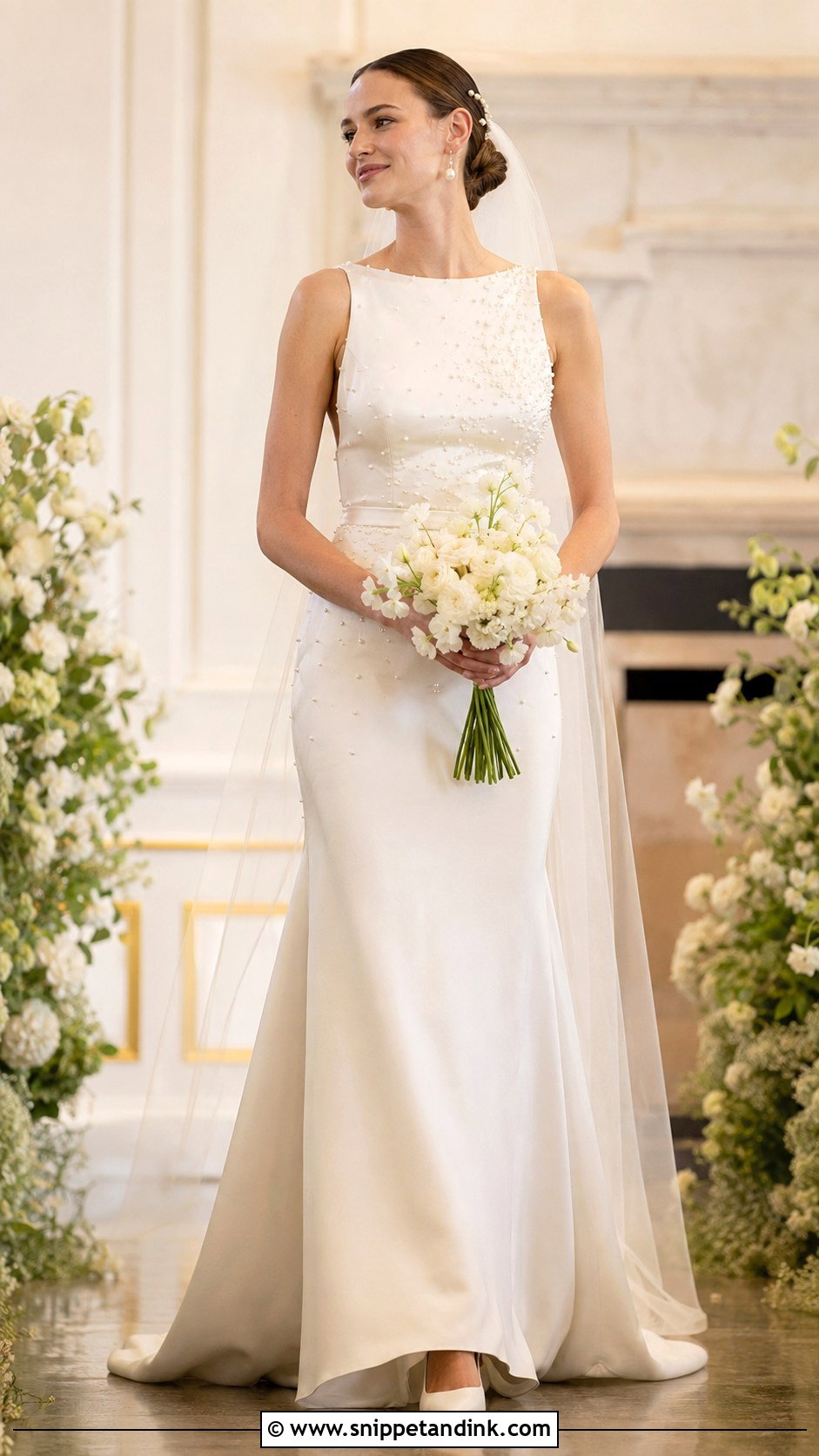
Pearls give a romantic silhouette a gentle glow, and the best versions concentrate hand-applied pearls around the neckline or waist instead of scattering them everywhere. A plain silk-tulle veil keeps that beadwork visible. Pearl drop earrings are the obvious match, but pick a slightly different size from the dress pearls so it doesn’t look over-coordinated. Ivory satin slingbacks and a small structured bag suit it, with a softly curled chignon and only a few pearl pins at the back. Carry sweet peas, ranunculus and roses wrapped in ivory ribbon. On an older gown, check the thread before the wedding. Pearls sewn decades ago can hang by a worn strand, and a quick restitch beats hunting for one on a dance floor.
17. Catherine Rayner Long Sleeve Wedding Dress
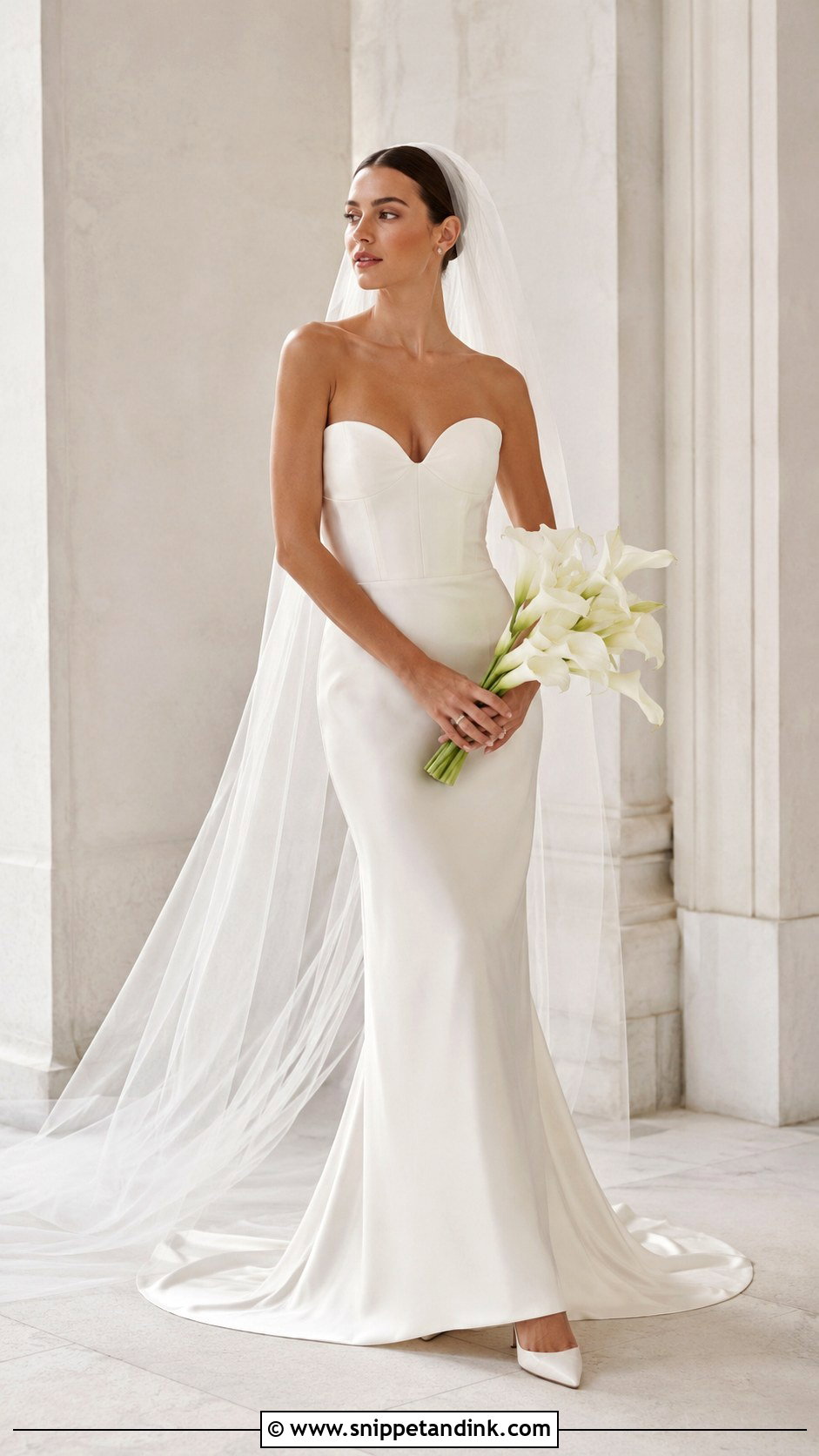
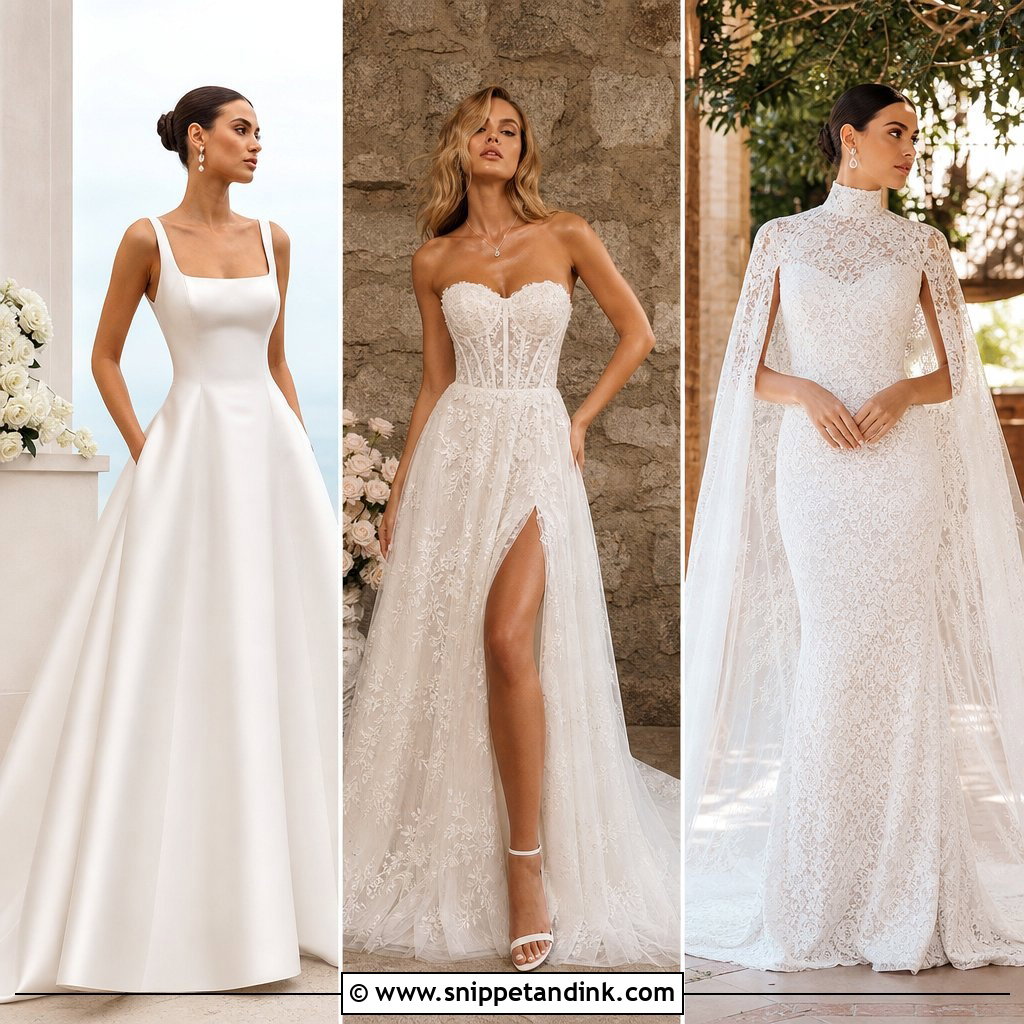
Long sleeves suit cool weather or a bride who wants coverage, and they pair well with a sculpted satin body. Fitted silk or lace sleeves, a neat shoulder and narrow cuffs keep the streamlined, romantic mood, with a basque waist and gently full skirt below. A plain chapel-length veil, pearl studs and closed ivory pumps finish it, with a clean low bun or braided chignon. White anemones, roses and dark foliage give seasonal contrast. If the gown is an original, talk to a specialist before anyone removes, replaces or resizes sleeves. Old seams may have little allowance left, and silk that has been folded for decades can split along its creases when stressed.
18. Catherine Rayner Blush Pink Wedding Dress
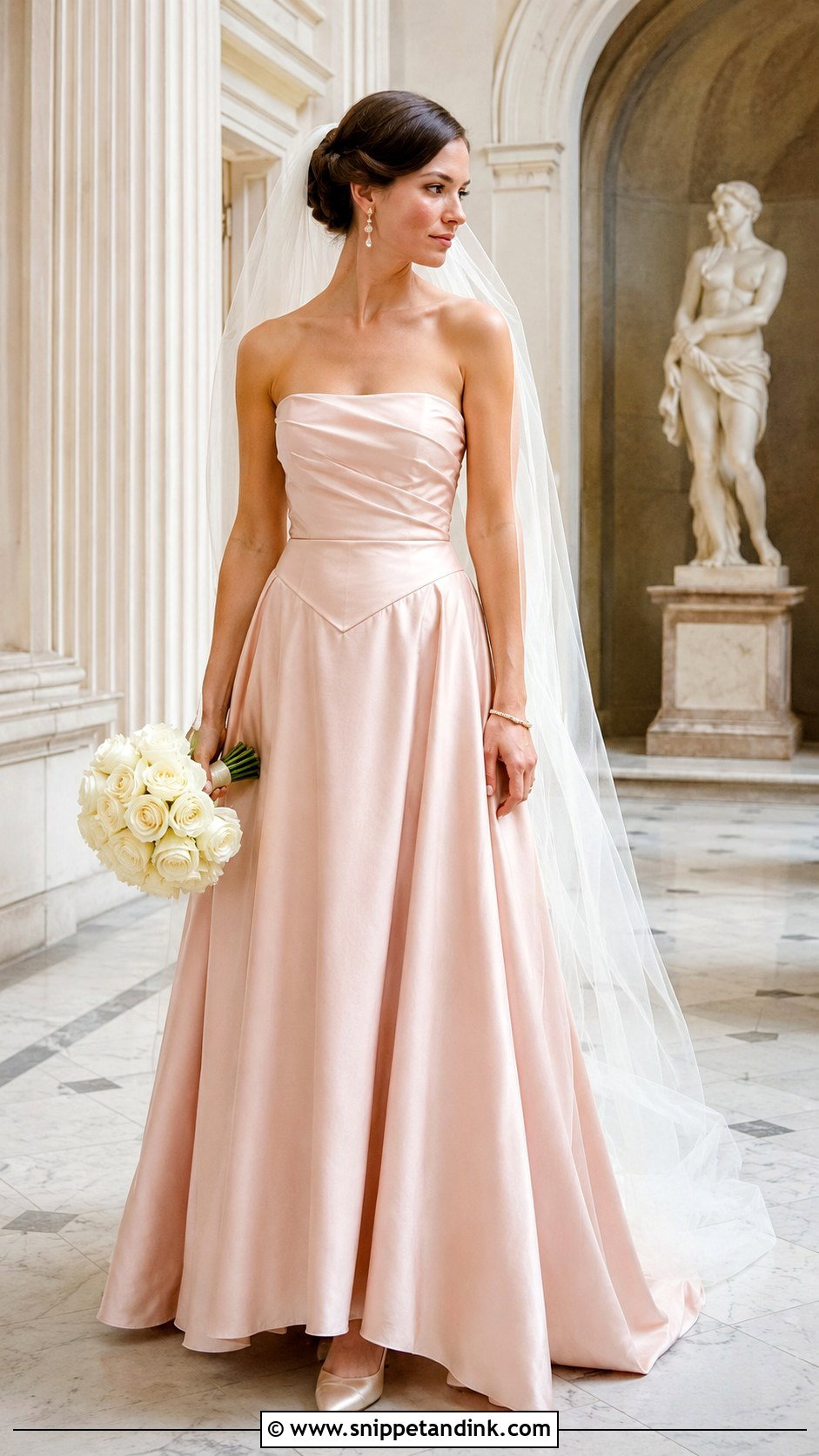
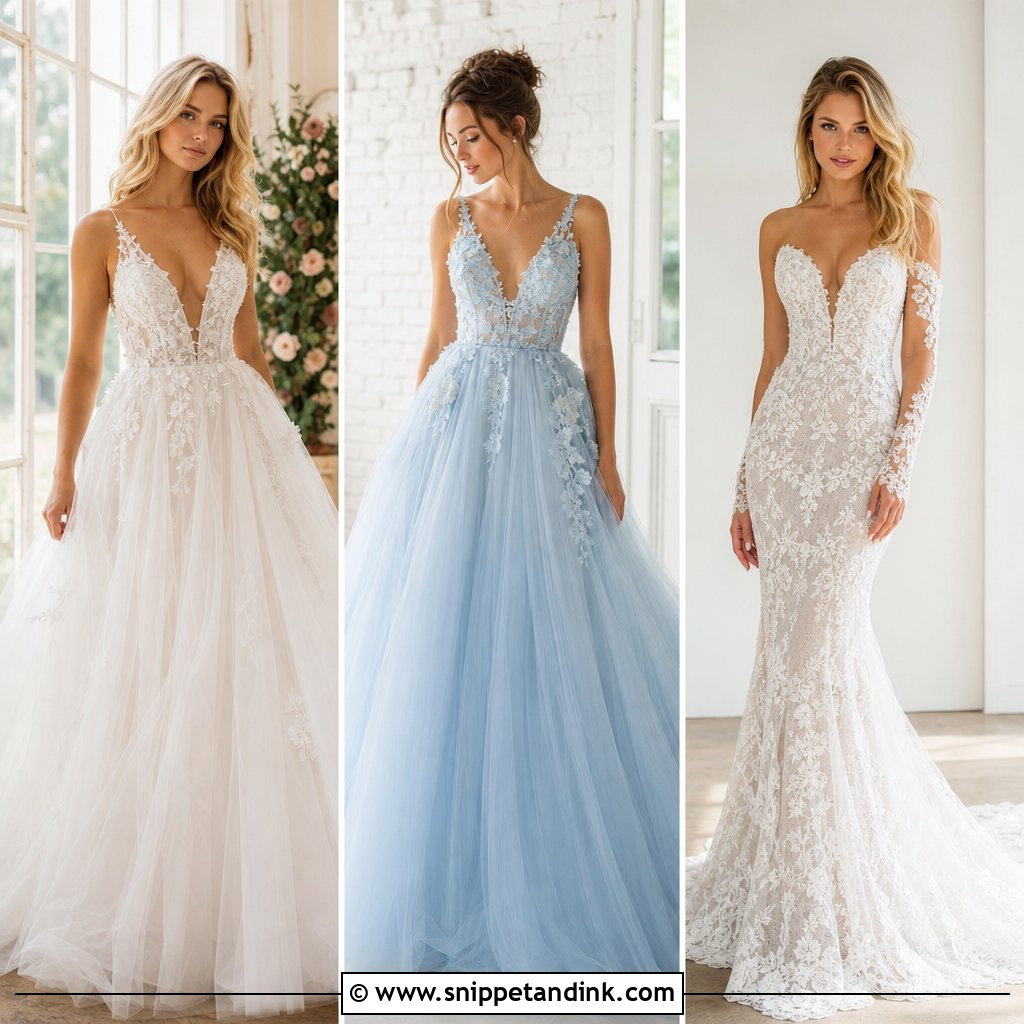
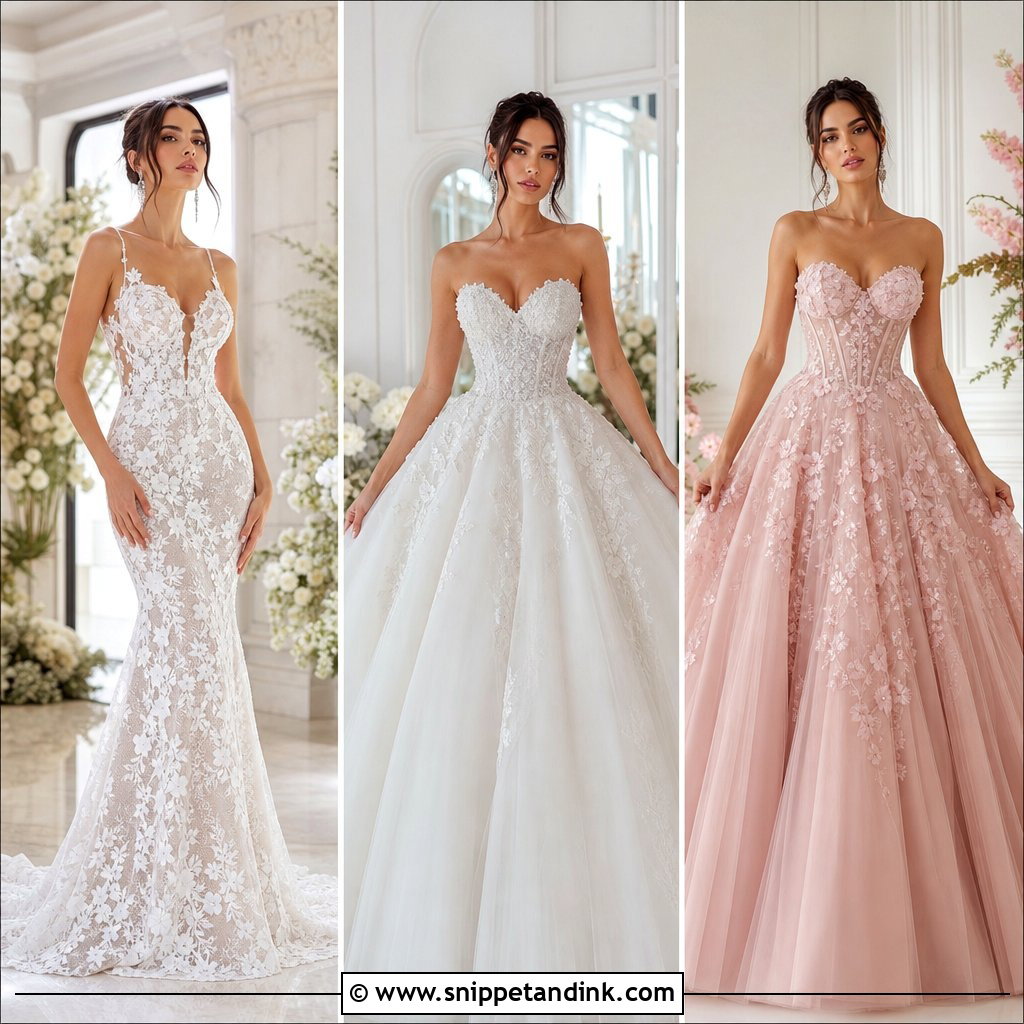
Pale blush satin is one of the more distinctive colors associated with her work, and it’s a lovely alternative to ivory that still reads as bridal. Style a blush strapless gown with a structured bodice, basque waist and softly flared skirt, and choose a sheer ivory veil so there’s a slight contrast rather than an exact match. Champagne satin pumps, rose-gold earrings and a pearl bracelet carry the palette, with softly waved hair in a low bun and ivory roses with pale pink sweet peas. Keep makeup in cool rose tones instead of heavy bronzer, which turns muddy against pink. See the gown in daylight before deciding; blush can drift toward peach or toward grey depending on the light.
19. Catherine Rayner Minimal Wedding Dress
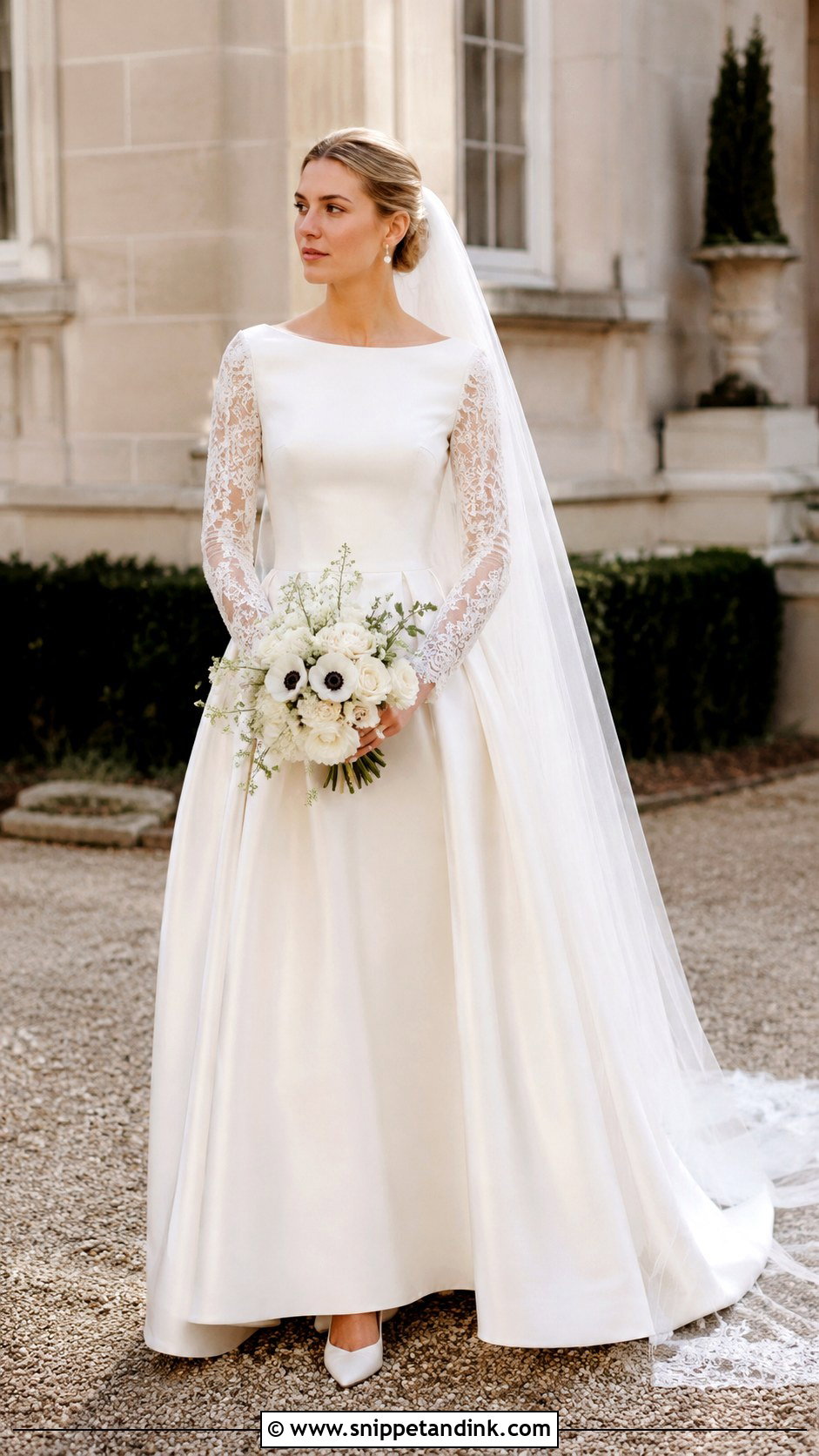
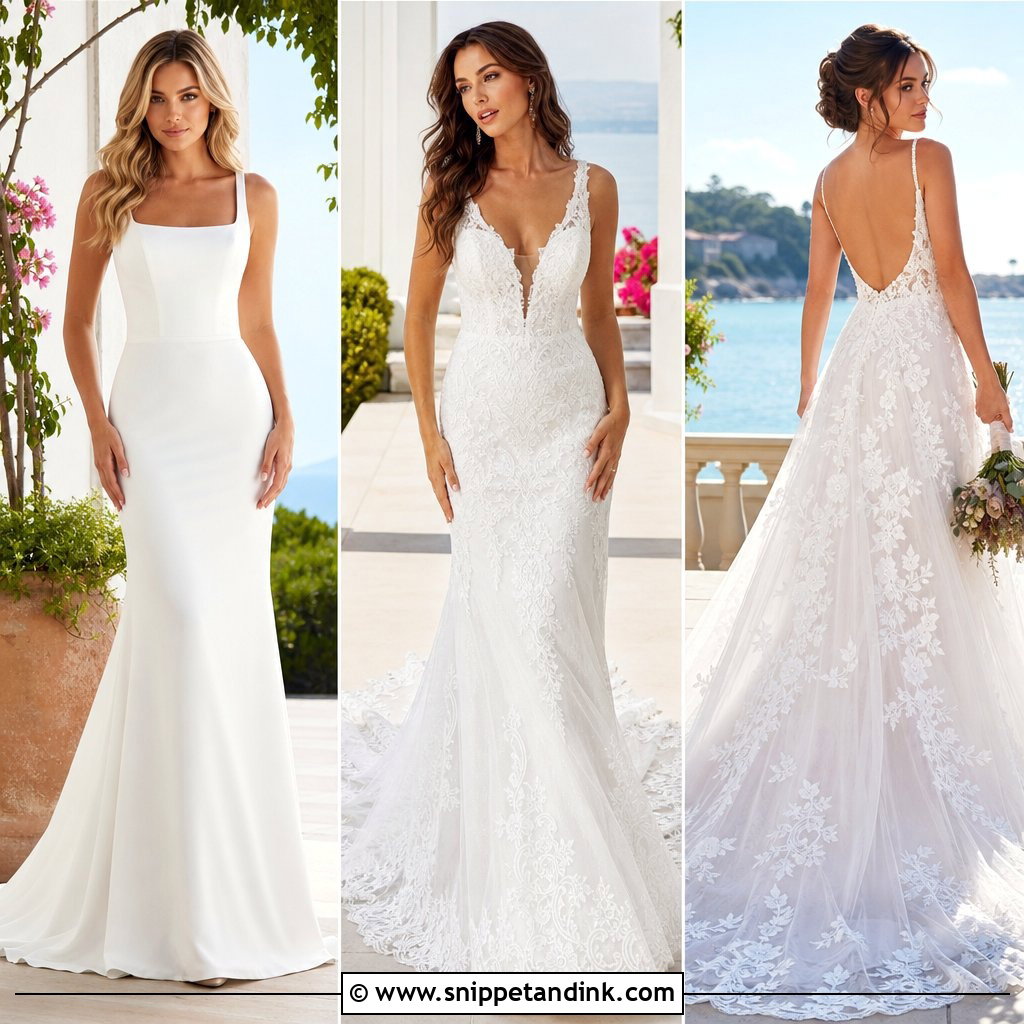
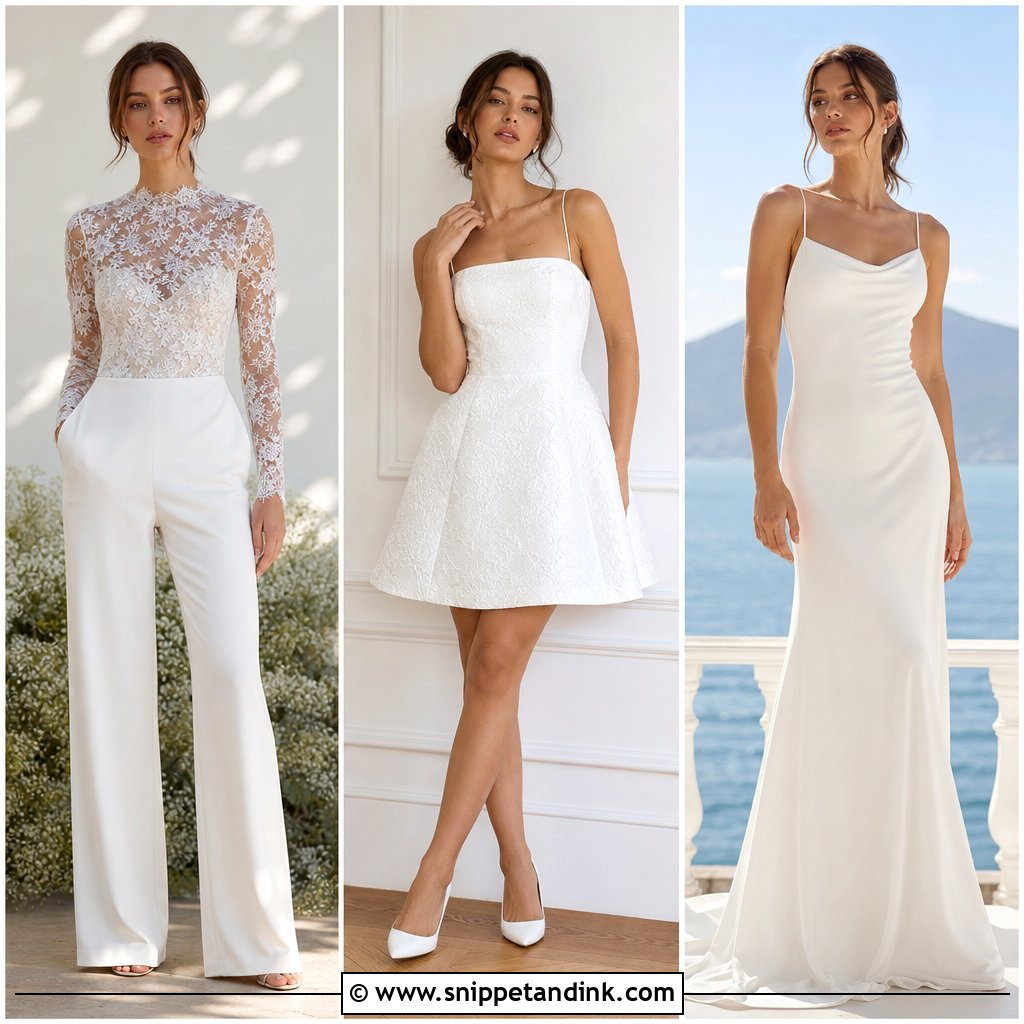
Not every version needs rosettes or bows. A minimal take focuses on good fabric, precise seams and fit: an ivory silk column with a modified sweetheart neckline, a lightly structured bodice and an understated train. Add a single-layer cathedral veil, pointed slingbacks and small diamond studs, with a sleek center-parted bun and a sculptural bouquet of calla lilies. Skip necklaces, belts and ornate hairpieces. The money goes into alterations instead: hem, waist, bust and train placement, all exact. Minimal dresses expose small errors, and a bust seam a little off center is obvious when there’s nothing else to look at. It suits a courthouse, gallery or city hotel.
20. Catherine Rayner Reception Wedding Dress
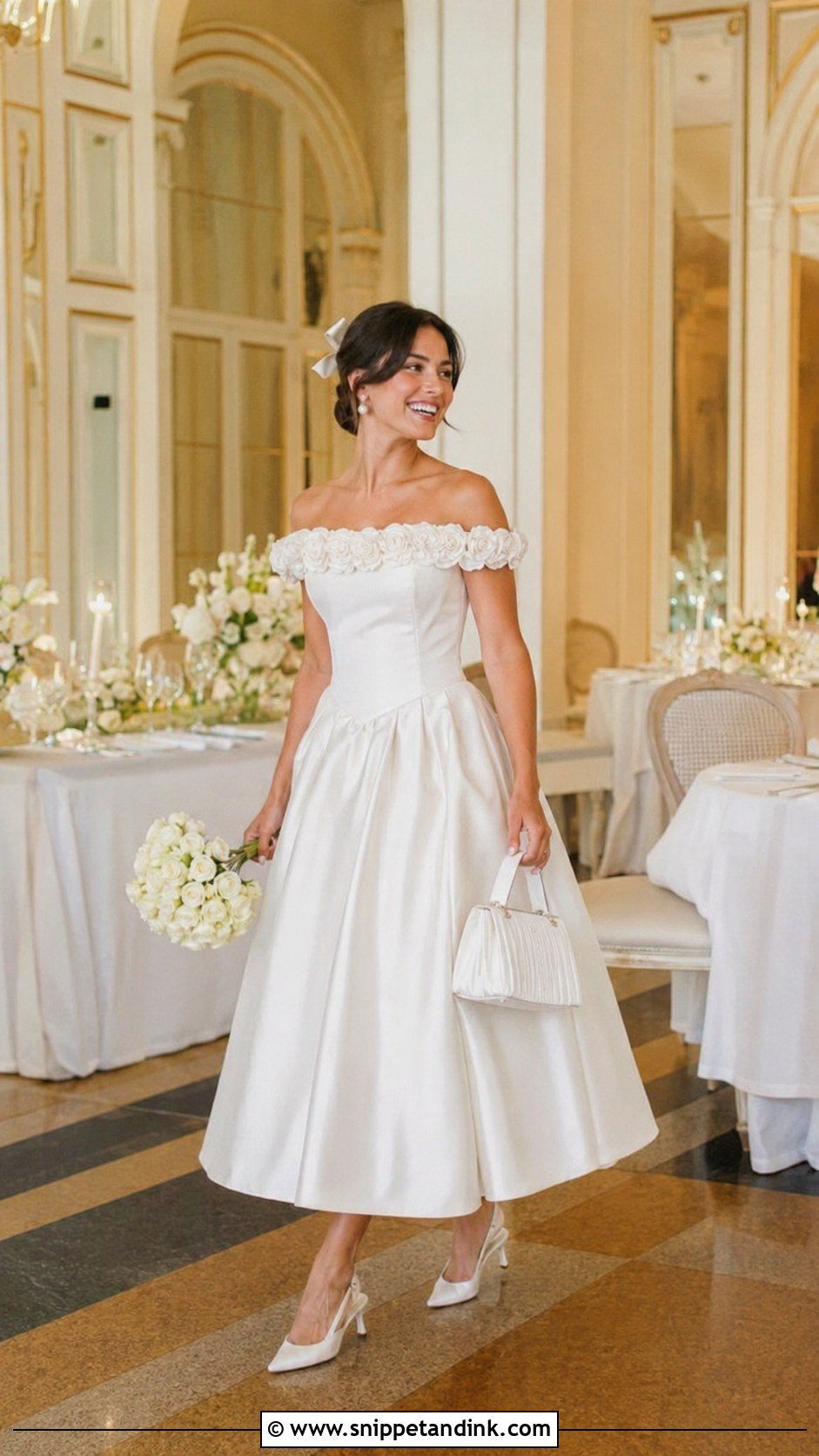
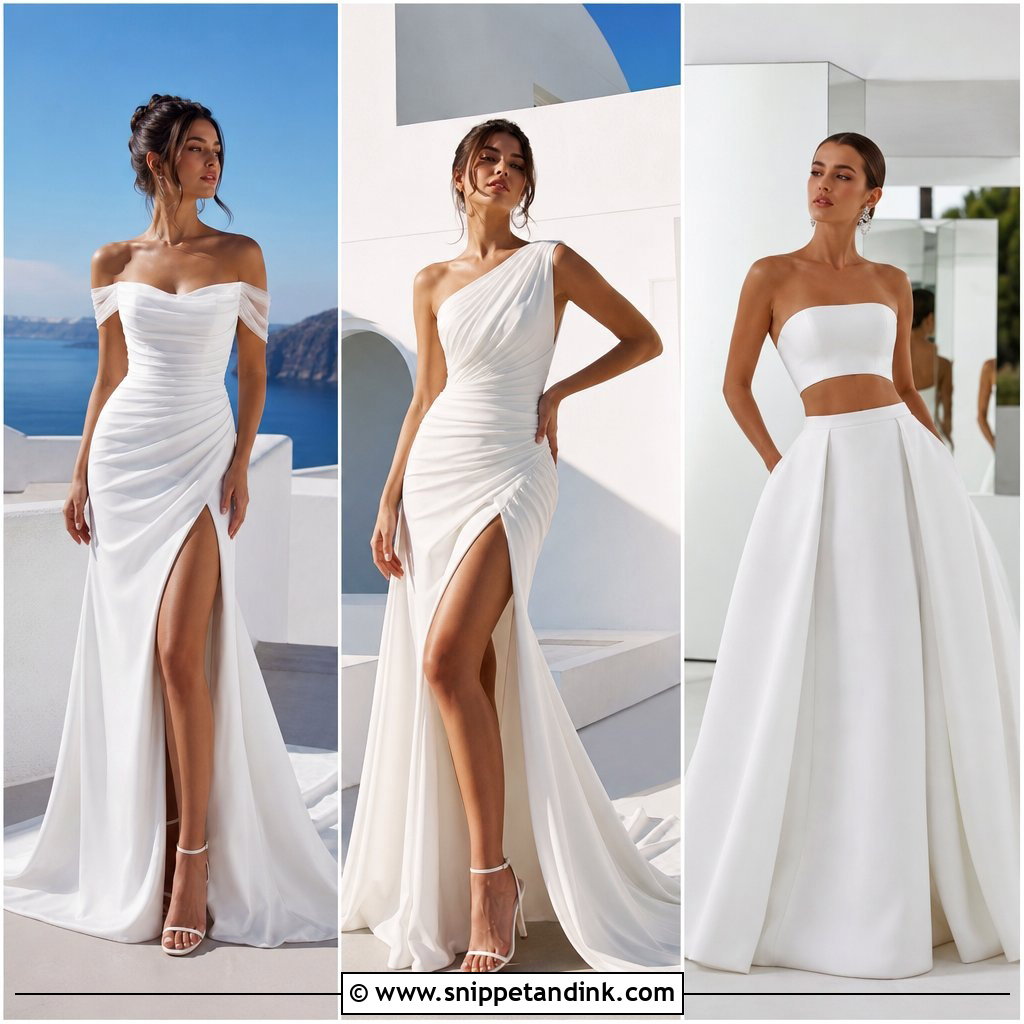
A reception look in this style should keep the vintage romance and let you move. Think of a shortened satin gown with a fitted basque-waist bodice, off-the-shoulder rosette trim and a tea-length or ankle-length skirt, with ivory slingbacks or low block heels that show beneath the hem. Pearl earrings and a small structured bag are practical finishing touches. Replace the ceremony veil with a silk bow, a floral comb or a short birdcage veil, and let the hair stay up or come down into soft waves later. Carry a tiny bouquet for entrance photos and then free your hands. I’d never cut down a rare original for this. Commission a separate dress in her spirit instead.
Bringing Thirty-Year-Old Silk Back to Life
An original that arrives a little tired can usually be revived, but slowly, and by the right people. Give yourself several months between buying it and the wedding, because cleaning, repair and alterations each take their own turn.
Cleaning
Take it to a cleaner who specializes in bridal and vintage garments, and say what the fabric is. Old champagne and sugar spills often look invisible at first and turn brown as they age, so point out anything faint. Never try household bleach or a stain pen on aged silk; it can leave a pale patch that no one can match.
Repairs and alterations
Have loose rosettes, pearls and hooks secured before the fitting work begins. A seamstress used to vintage will test a hidden seam before pressing or restitching, since old silk can be weaker than it looks. Ask her to keep any fabric she removes. It is often the only perfect color match you will ever find for a later repair.
Afterwards
Store it the way it should have been stored the first time: cleaned, padded with acid-free tissue at the folds and the rosettes, and kept in a breathable box somewhere cool and dry.
Rosettes, Bows and a Seamstress Who Knows Old Silk
Her bridal looks pair romantic detail with real structure. Rosette necklines, basque waists, rich silk, sculptural bows and long trains form the base, and the accessories are what make each gown personal. Choose a veil that reveals the important details instead of hiding them, keep jewelry in proportion, wear shoes you can stand in, and use an experienced bridal seamstress whenever old fabric is involved. Originals are hard to find, so stay open to well-made alternatives built on her silhouettes. From the streamlined Louisa to the dramatic Cafe au Lait, the shapes still feel fresh three decades on.
You'll Like These Ideas:


Leave a Reply