
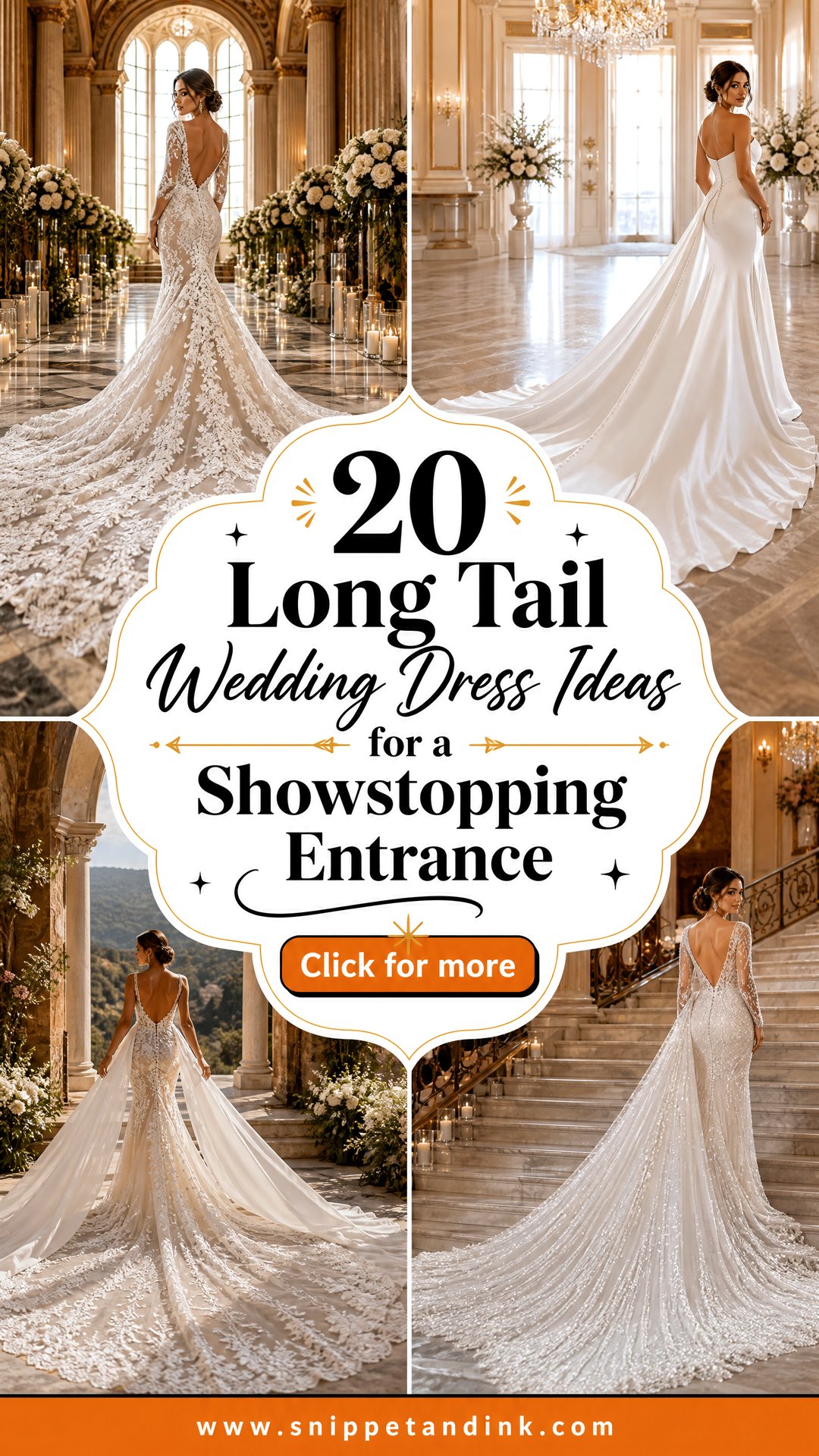
A long train decides the mood of a wedding dress more than most brides expect. The same fabric that looks regal on a cathedral-length train can feel modern on a clean crepe one and soft on layers of tulle. Cathedral and semi-cathedral trains make the entrance; detachable trains give you your legs back for the reception. Before any of that, I ask about the venue: how wide the aisle is, what the floor is made of, whether there are stairs, and what season it is. The veil, shoes, jewelry and hair all need to work around the dress’s sweeping back detail rather than compete with it. The looks below cover lace, satin, tulle and crepe, each finished the way I’d style it.
Matching Veil Length to a Long Train
The question I’m asked most with long trains is what to do about the veil. My rule is simple: the veil should end clearly before the hem of the dress or clearly after the end of the train. When a veil stops at the same point as the train, the two edges blur together in photos and the veil looks like a mistake.
- A cathedral veil a little longer than the train gives the classic long line down the aisle. It suits ball gowns and plain satin or crepe.
- A fingertip or waltz veil keeps the train visible on its own. I choose this when the train has lace, appliqués or a bow worth seeing.
- A plain cut edge works over a detailed train; a lace or beaded edge works over a plain one. Two detailed edges on top of each other compete.
- Ask whether the veil can be removed after the ceremony without disturbing your hair, so it comes off before the bustle goes up.
Bring the veil, or one close to it, to a fitting and stand in front of a long mirror holding a hand mirror, or ask someone to photograph you from behind. Proportions you can’t see in a front mirror show up immediately in that shot.
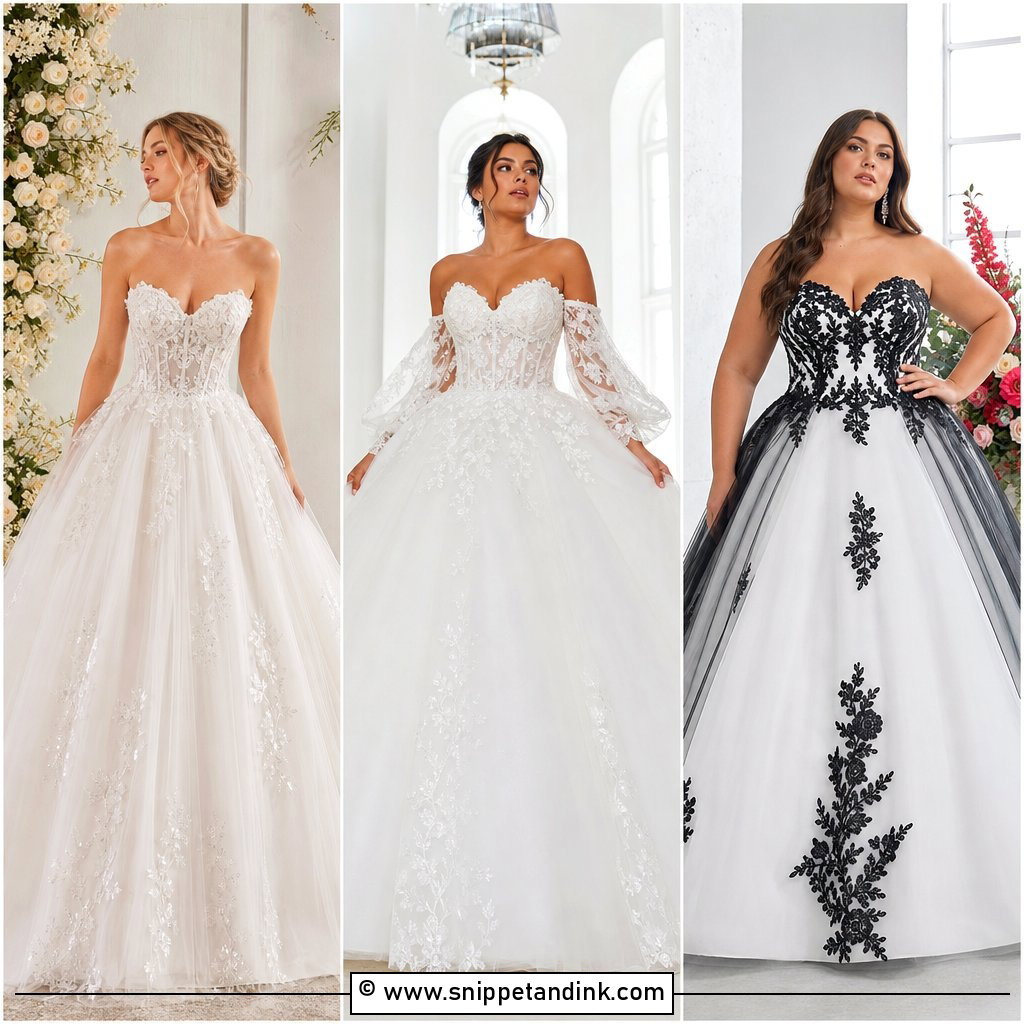
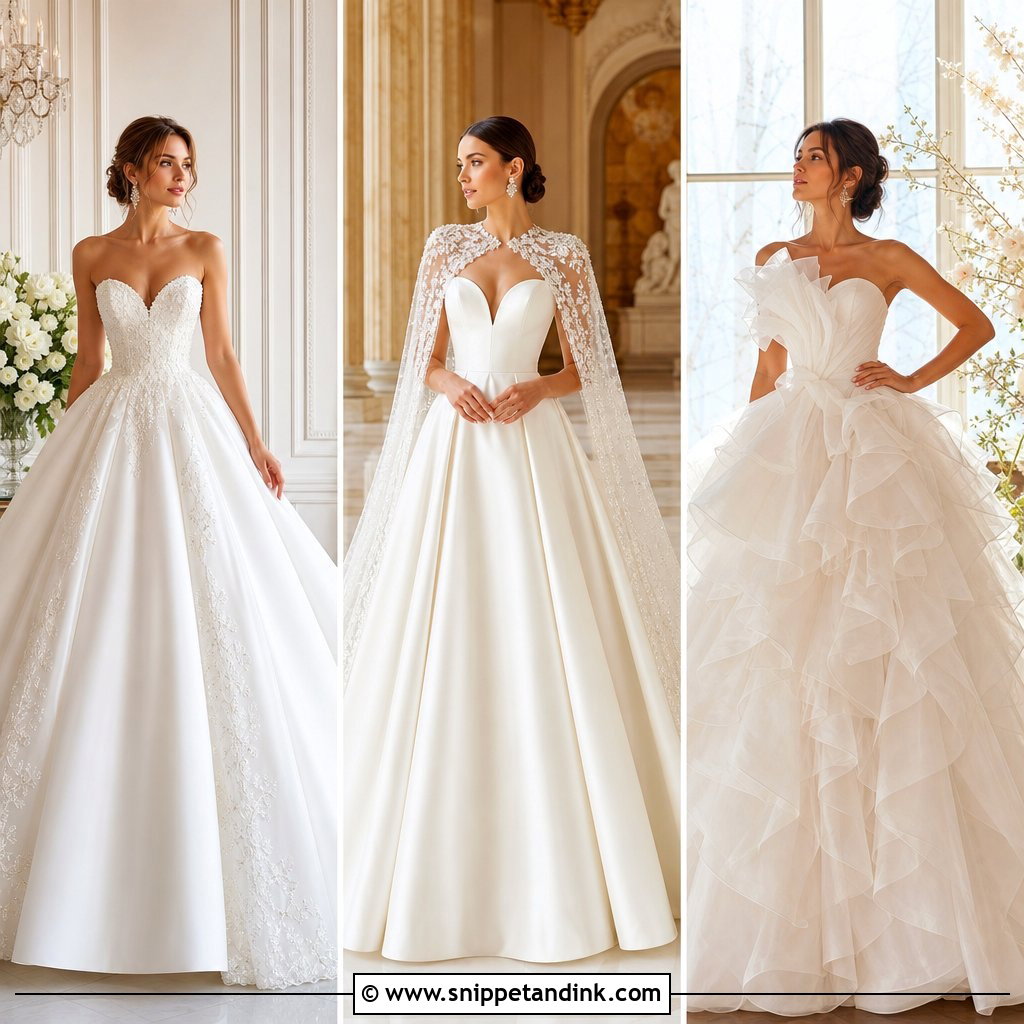
1. Cathedral Train Ball Gown Wedding Dress
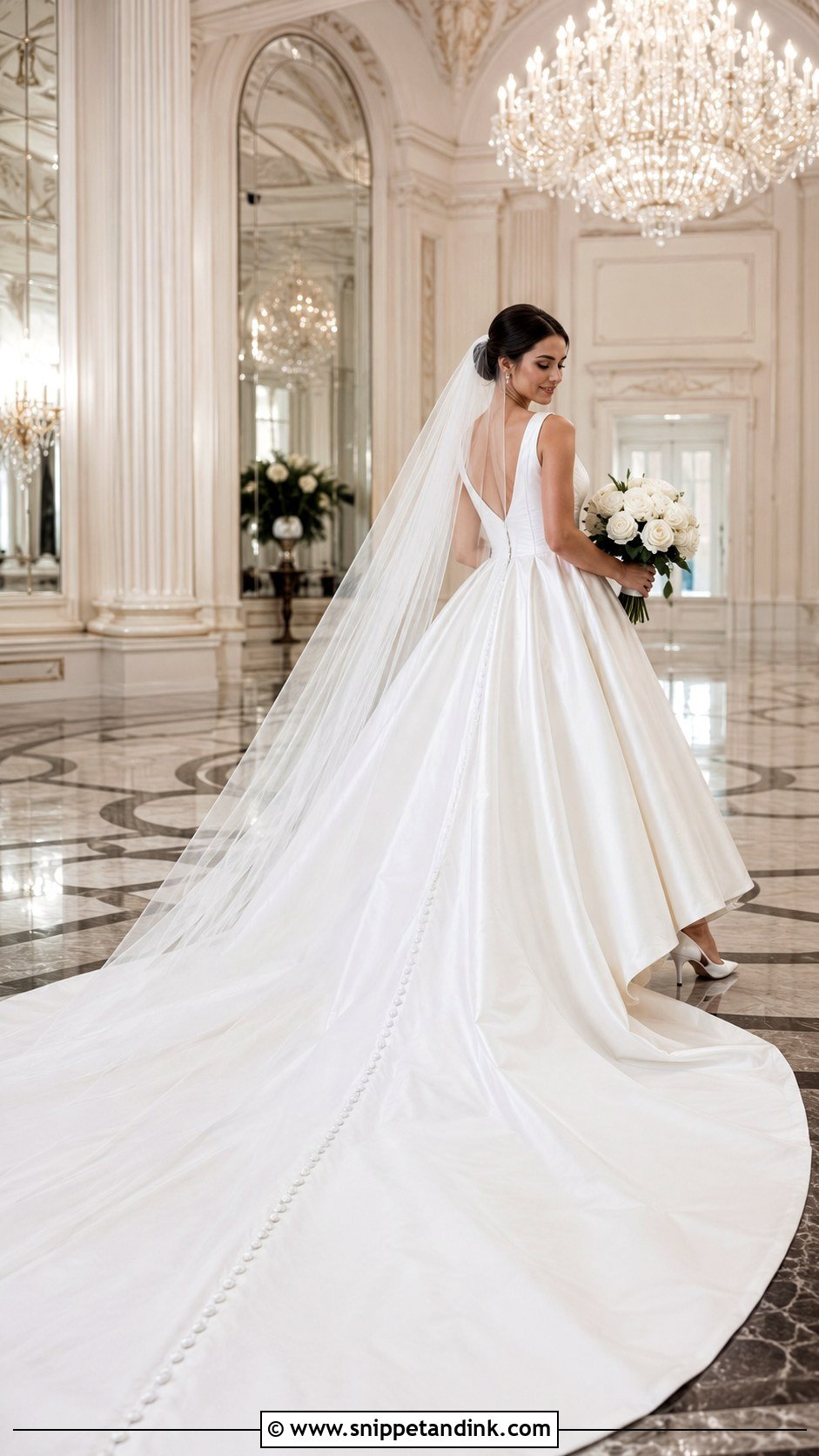
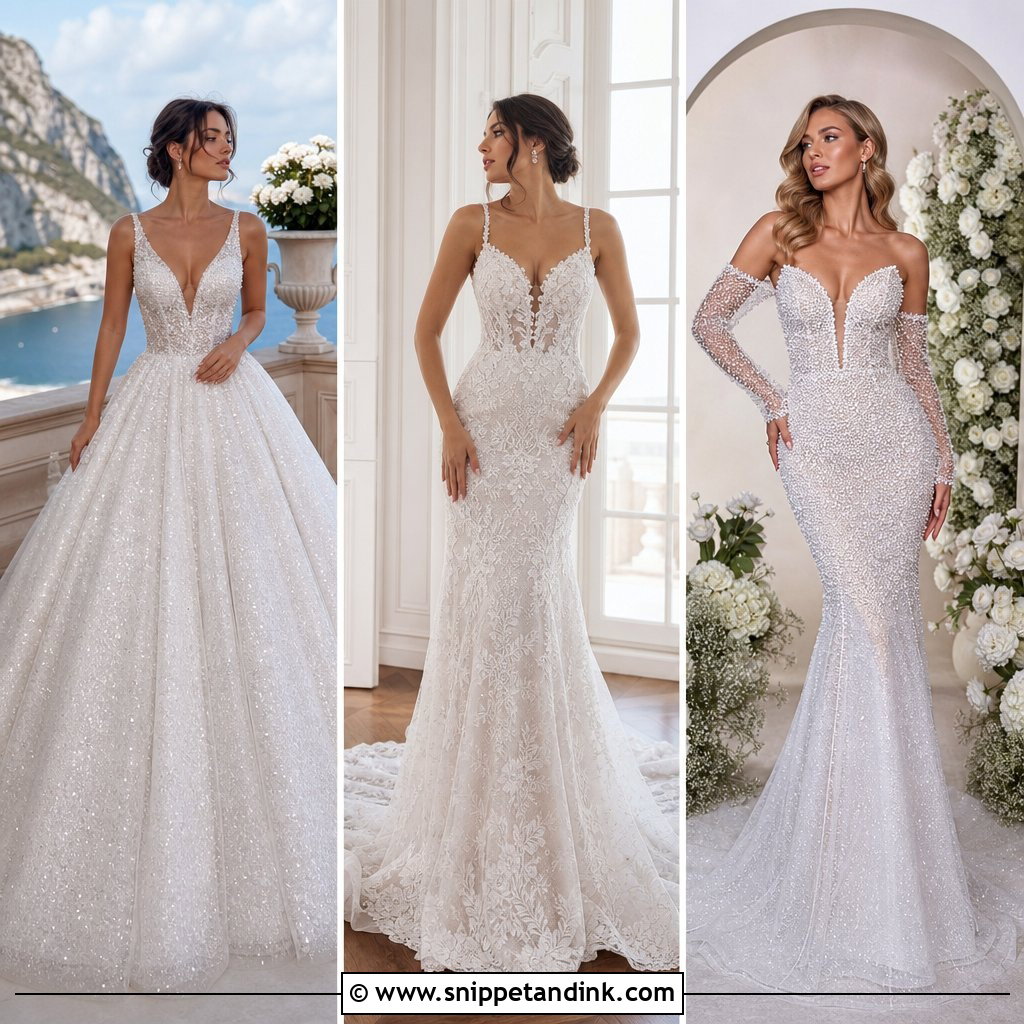
A ball gown with a cathedral train is the most formal shape there is, and it needs room. A structured bodice, defined waist and full satin or layered tulle skirt carry it, and the train should spread smoothly behind you without heavy decoration breaking its shape. I like a cathedral veil that runs a little beyond the train, so the two read as one long line in photos from the back of the aisle. Crystal studs, a fine bracelet and ivory pointed heels are enough, with a low chignon or a waved updo and a rounded bouquet in white and pale green. Save this one for a ballroom, a large estate or a church with a wide aisle; in a narrow room it simply piles up.
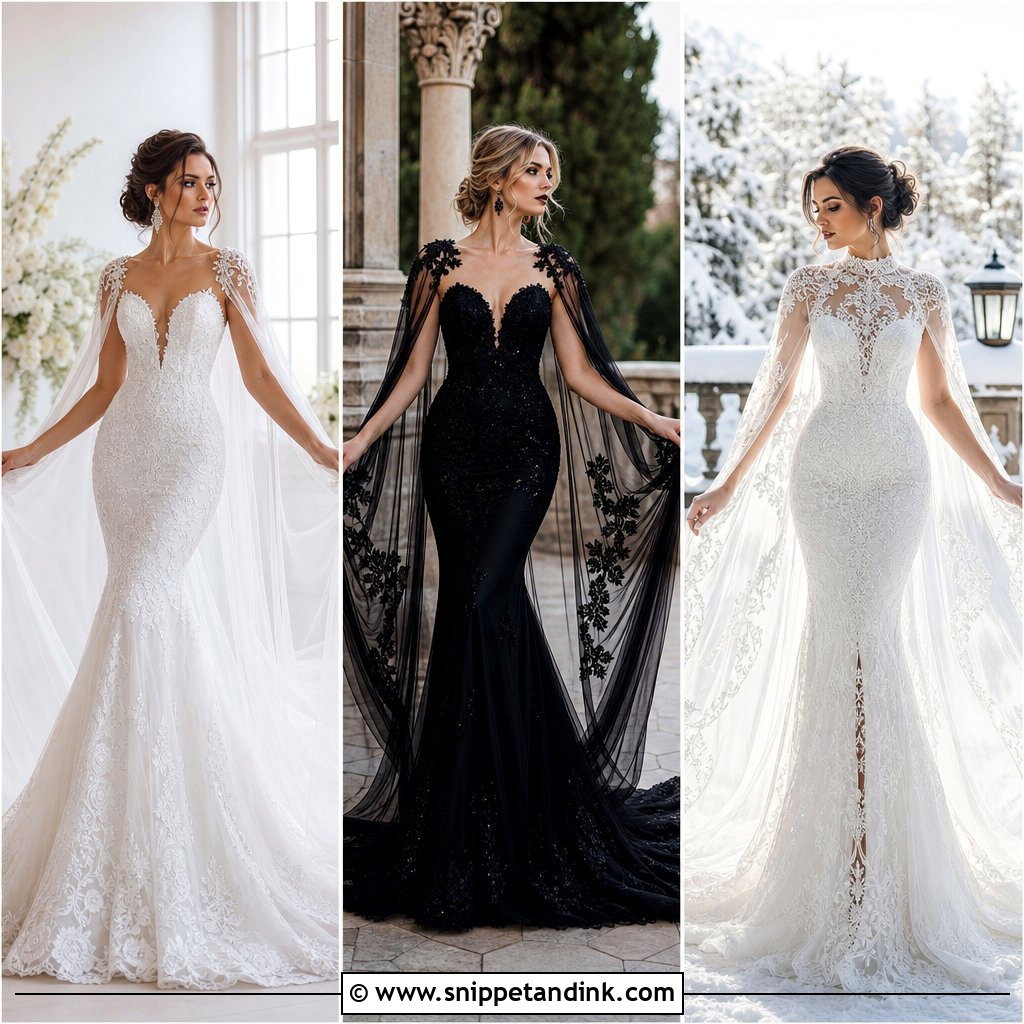
2. Lace Mermaid Wedding Dress With Long Train
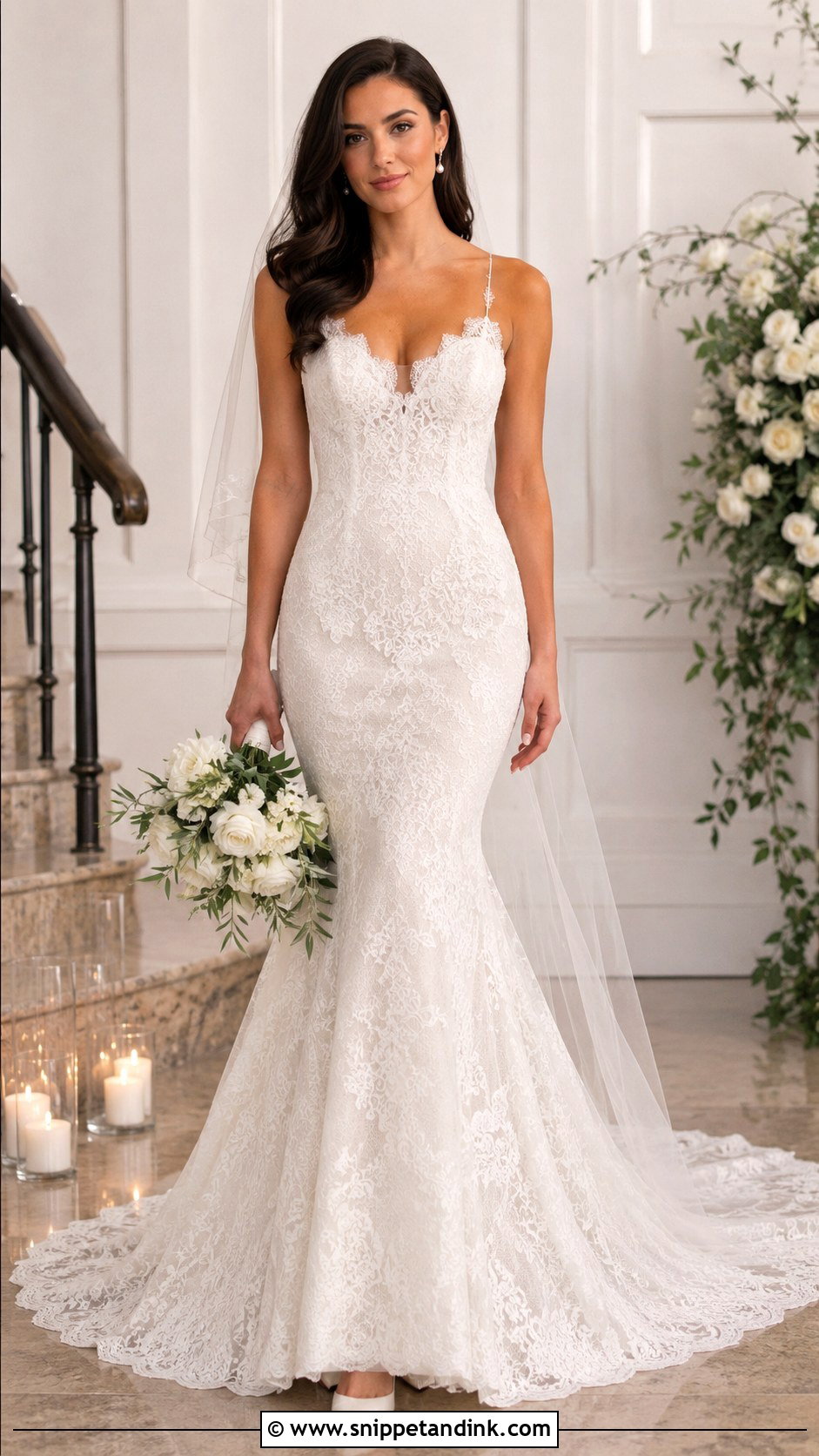
The lace mermaid is fitted to the knee, so the long train is what gives it softness and movement. Supportive internal structure and lace motifs placed along the curves of the body make the difference between sculpted and squeezed. A scalloped lace edge on the train adds texture without beading. Keep the veil plain tulle so the lace still shows from behind. Pearl drops, a slim bracelet and pointed satin pumps finish it, with Hollywood waves or a sleek side-parted bun and loose white roses with greenery. Sit and walk at every alteration appointment. A secure bustle is not optional with this one, because a close skirt plus a long train is hard to manage once the dancing starts.
3. Satin A-Line Wedding Dress With Long Train
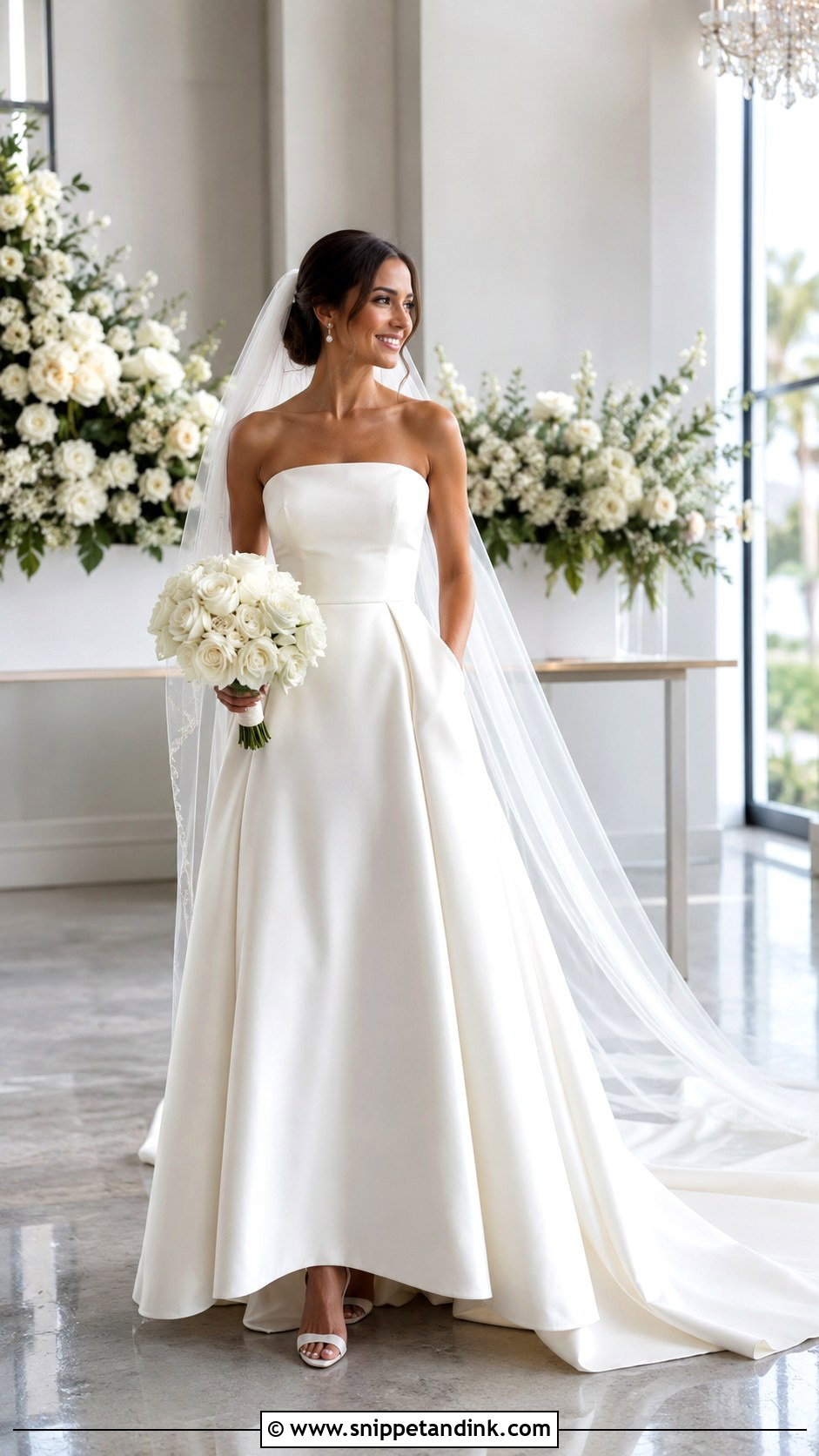
Satin on an A-line is the version I suggest when a bride wants a long train but not a big skirt. The fitted bodice and gradual flare suit most figures, and the surface has a soft sheen that looks expensive. Look for a softly structured waist, hidden pockets (worth asking about) and a chapel or semi-cathedral train. A fingertip or cathedral veil with a narrow satin edge ties in, along with pearl earrings, a fine pendant and ivory block heels you can stand in all day. A low bun and white roses complete it. Satin creases in transit and marks with water, so plan how the dress travels and who steams it on arrival. Keep drinks well away while you dress.
4. Long Sleeve Wedding Dress With Cathedral Train
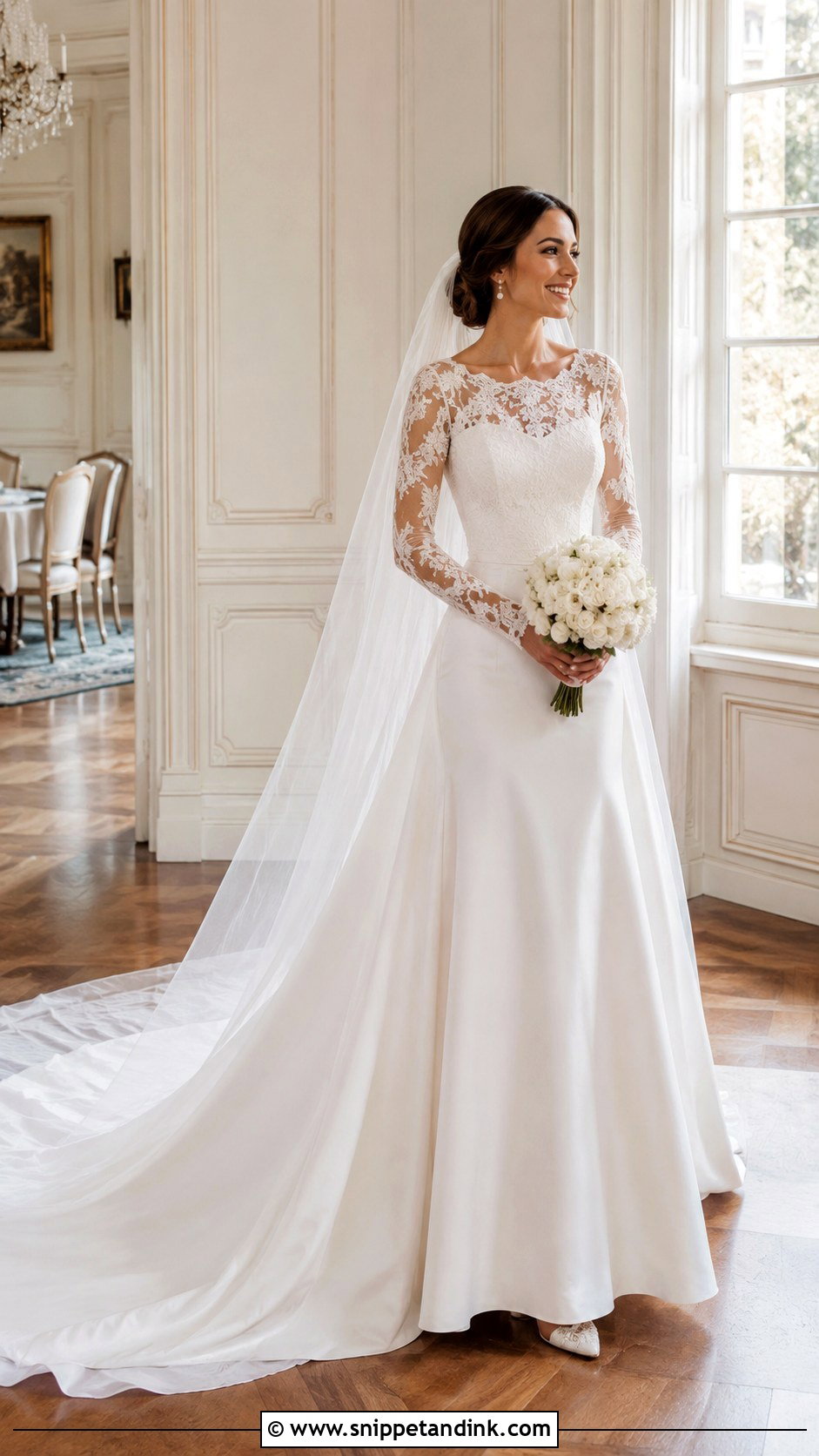
When coverage and drama matter equally, long sleeves with a cathedral train cover both. Illusion sleeves with lace appliqués look soft; lined crepe or satin sleeves look cleaner and more modern. A fitted bodice and a gently structured skirt keep it balanced, and a sheer veil without heavy edging lets the sleeves and train show. Small pearl earrings, closed-toe heels and a compact bouquet suit it, with a low bun to show an illusion back or covered buttons. I see it chosen most often for autumn and winter. Ask the seamstress to check three things together: how far you can lift your arms, where the cuffs sit, and whether the bustle holds the train’s weight.
5. Strapless Wedding Dress With Long Train
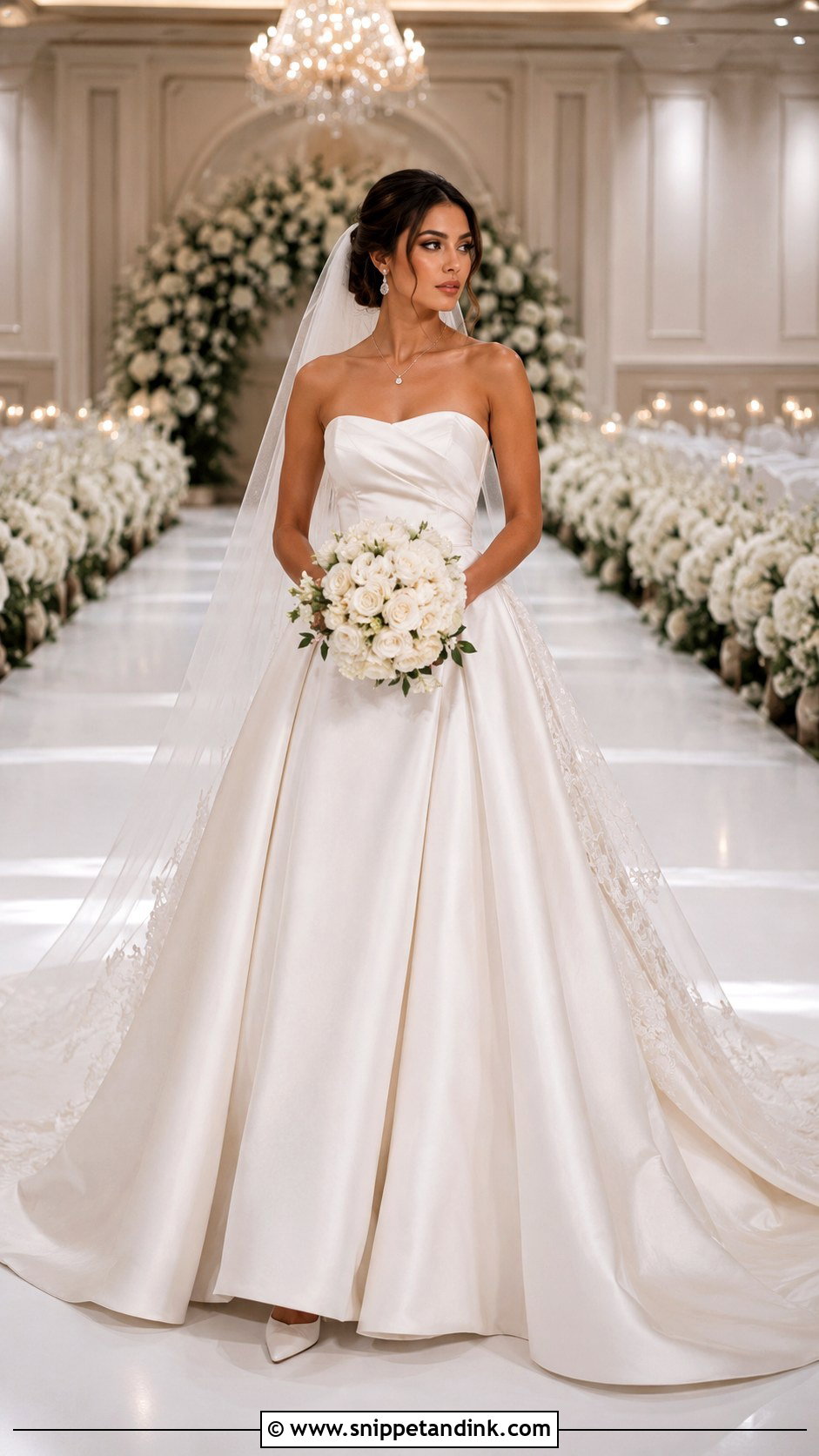
Bare shoulders above a long train make a strong contrast. Everything depends on the bodice. It needs real corsetry, clean seams and a neckline that suits your shape: straight or gently curved for a classic line, sculpted for a more fashion-led look. A cathedral veil, fine drop earrings and a subtle tennis necklace balance the open shoulders, with ivory pumps under a satin, Mikado or tulle skirt. An updo or glossy shoulder-length waves frame the neckline. At fittings I have brides move, sit and raise both arms. If you catch yourself pulling the dress up, the bodice isn’t fitted yet; a strapless gown should stay put without help.
6. Off Shoulder Wedding Dress With Long Train
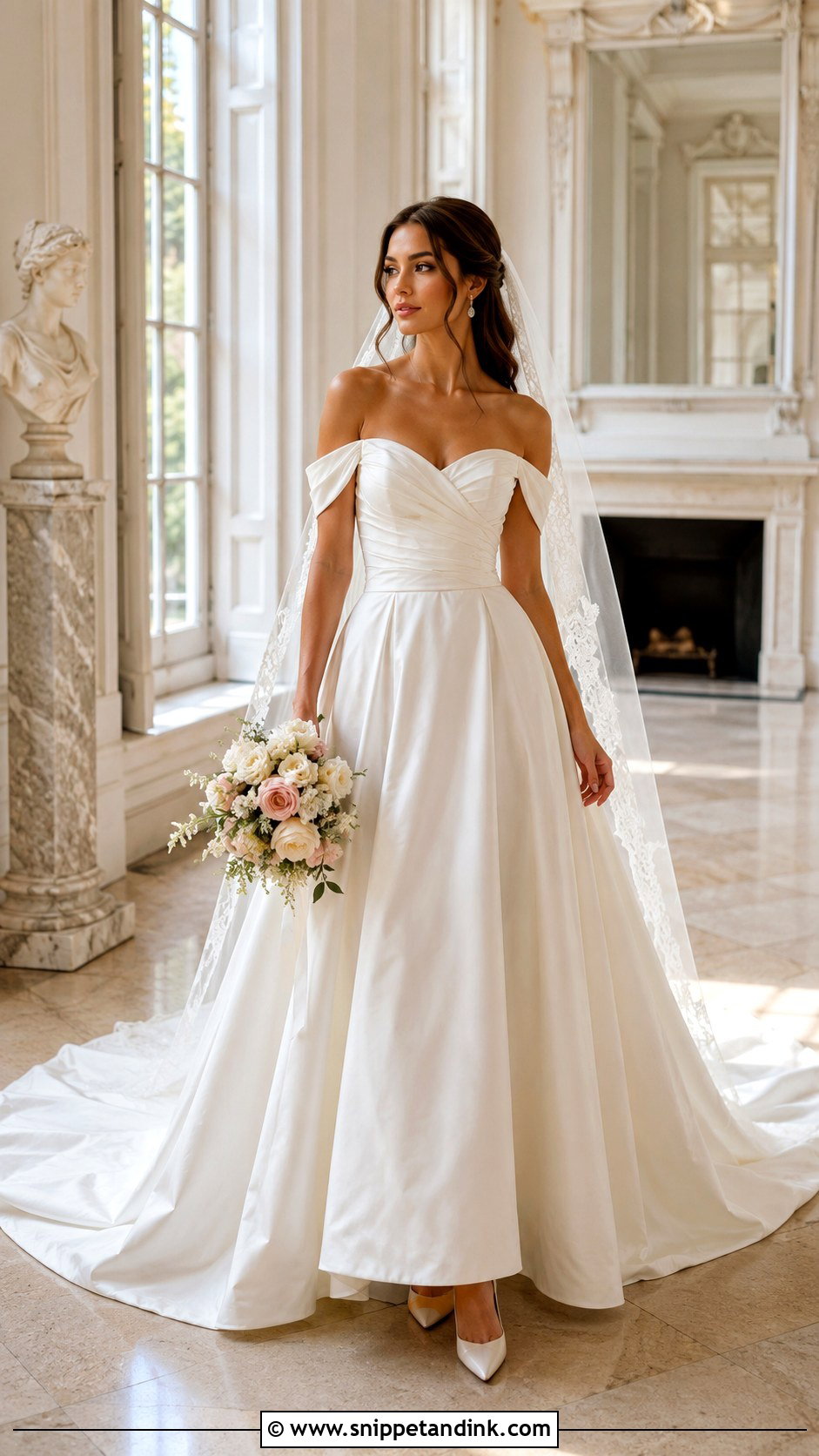
Off-shoulder sleeves frame the collarbone, and with an extended train, the dress feels romantic from front and back. A fitted bodice over a flowing A-line or ball gown skirt keeps the proportions balanced. Detachable off-shoulder straps give you more movement later in the day. Match the veil to the dress: a plain cathedral veil for an embellished gown, a lace-edged one for plain satin. Teardrop earrings, a fine bracelet and comfortable pointed heels suit it, along with a loose low bun with a few face-framing pieces and a soft bouquet in white, blush or pale peach. The off-shoulder band should hold you without pinning your arms, so test it holding the bouquet at chest height.
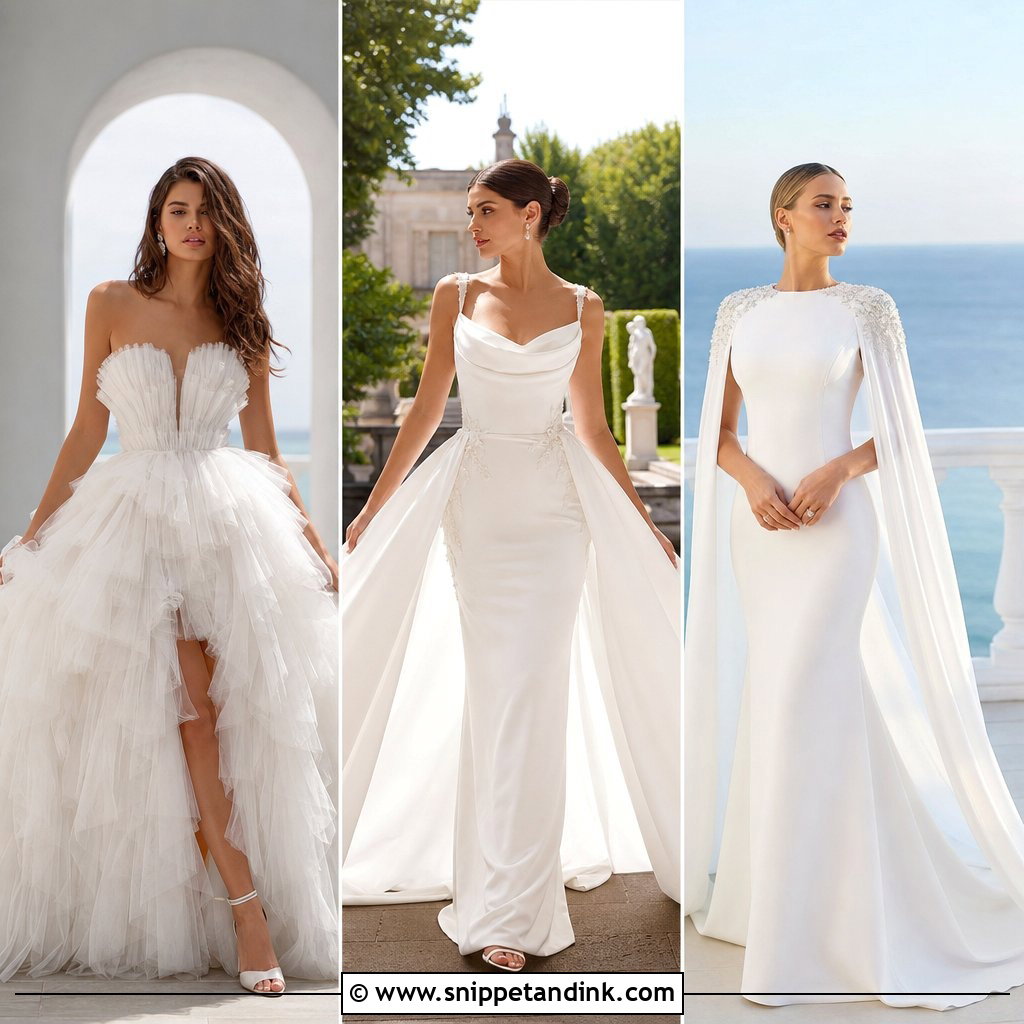
7. Minimalist Crepe Wedding Dress With Long Train
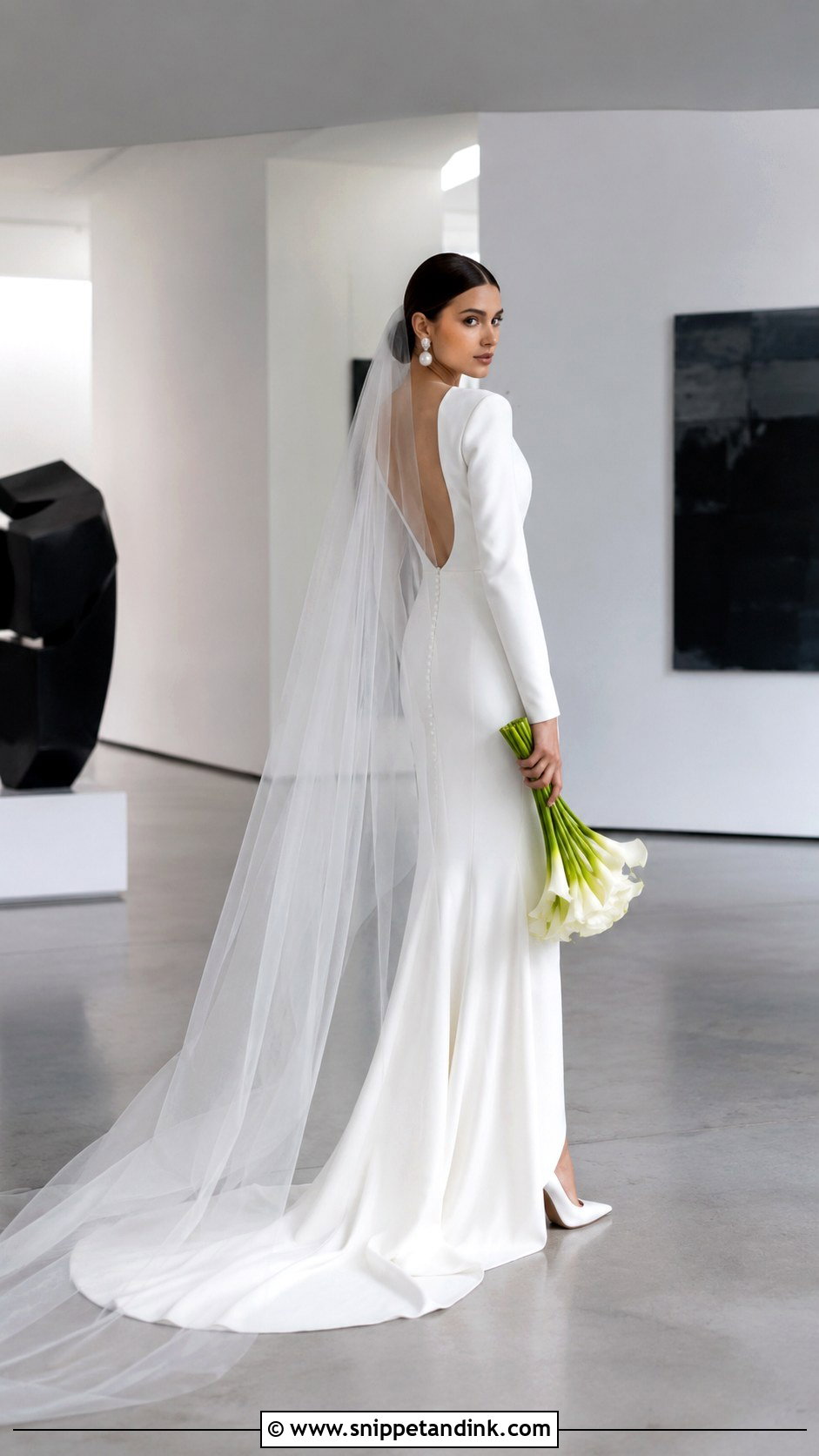
Clean lines make a long train look even more dramatic, because there is nothing else to look at. A minimalist crepe dress depends on tailoring rather than lace or crystals: a column, fit-and-flare or understated A-line with a smooth bodice and a train that falls straight from the skirt. Covered buttons down the back are the only decoration it needs. A sheer cathedral veil, sculptural pearl earrings and sleek ivory pumps suit it, with a center-parted low bun and calla lilies. Crepe follows the body closely, so I insist on smooth, invisible undergarments at every fitting. It looks most at home in a gallery, on a rooftop or anywhere with strong architecture behind you.
8. Detachable Train Wedding Dress
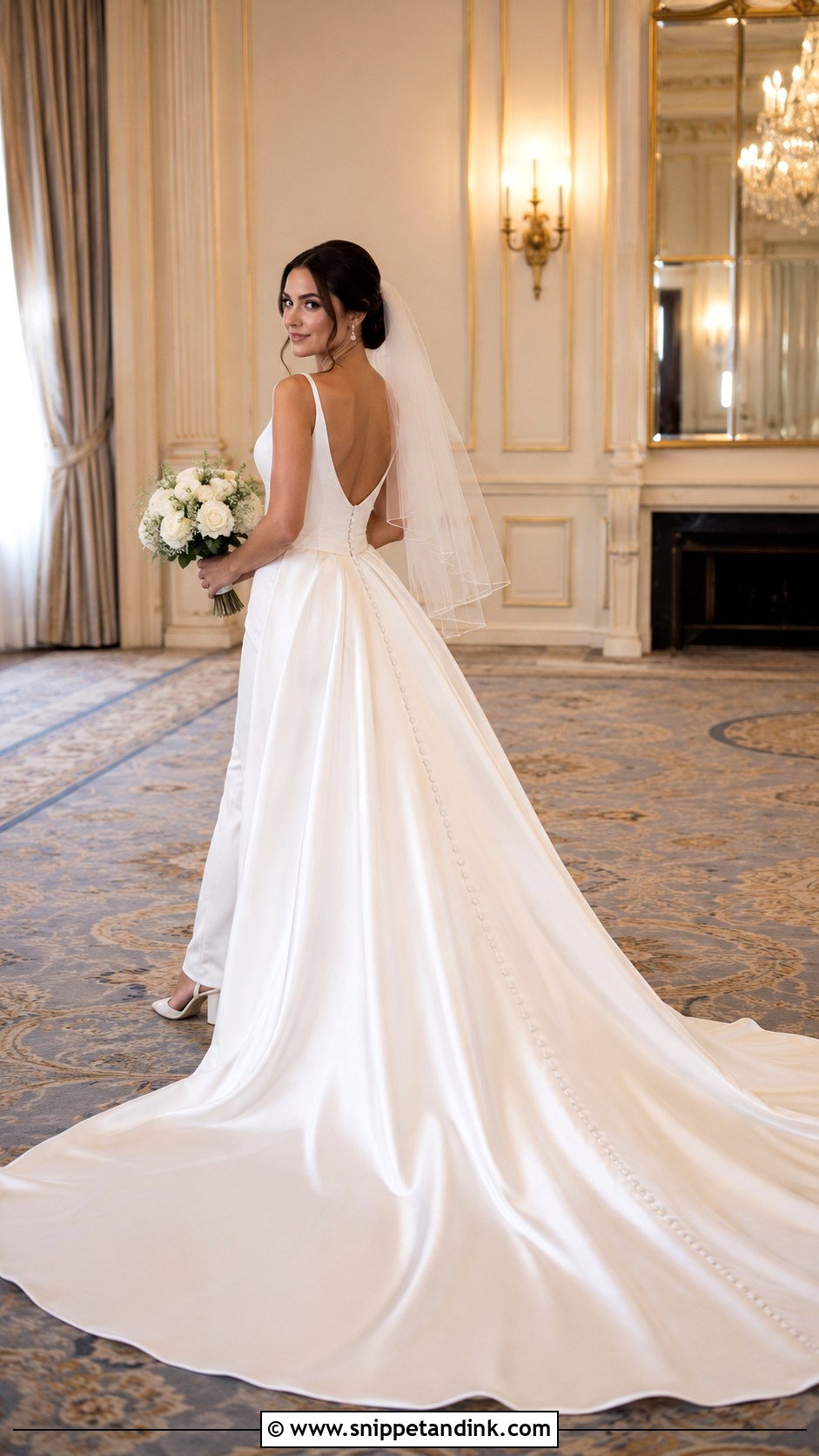
A detachable train gives you the ceremony drama and then your freedom back. It might attach at the waist, along a back seam or under a removable overskirt, leaving a lighter dress for dancing. The two parts should be made in matching fabric and embellishment so they look designed together. A fitted crepe gown with a satin train looks modern; a lace dress with a tulle overskirt feels softer. A simple veil, pearl earrings and supportive block heels suit both versions, with a low bun or soft waves. Practice taking the train off with your helper before the day. Hooks hidden behind lace are easy to miss, and you want them invisible in photos and secure while you walk.
9. Bow Train Wedding Dress
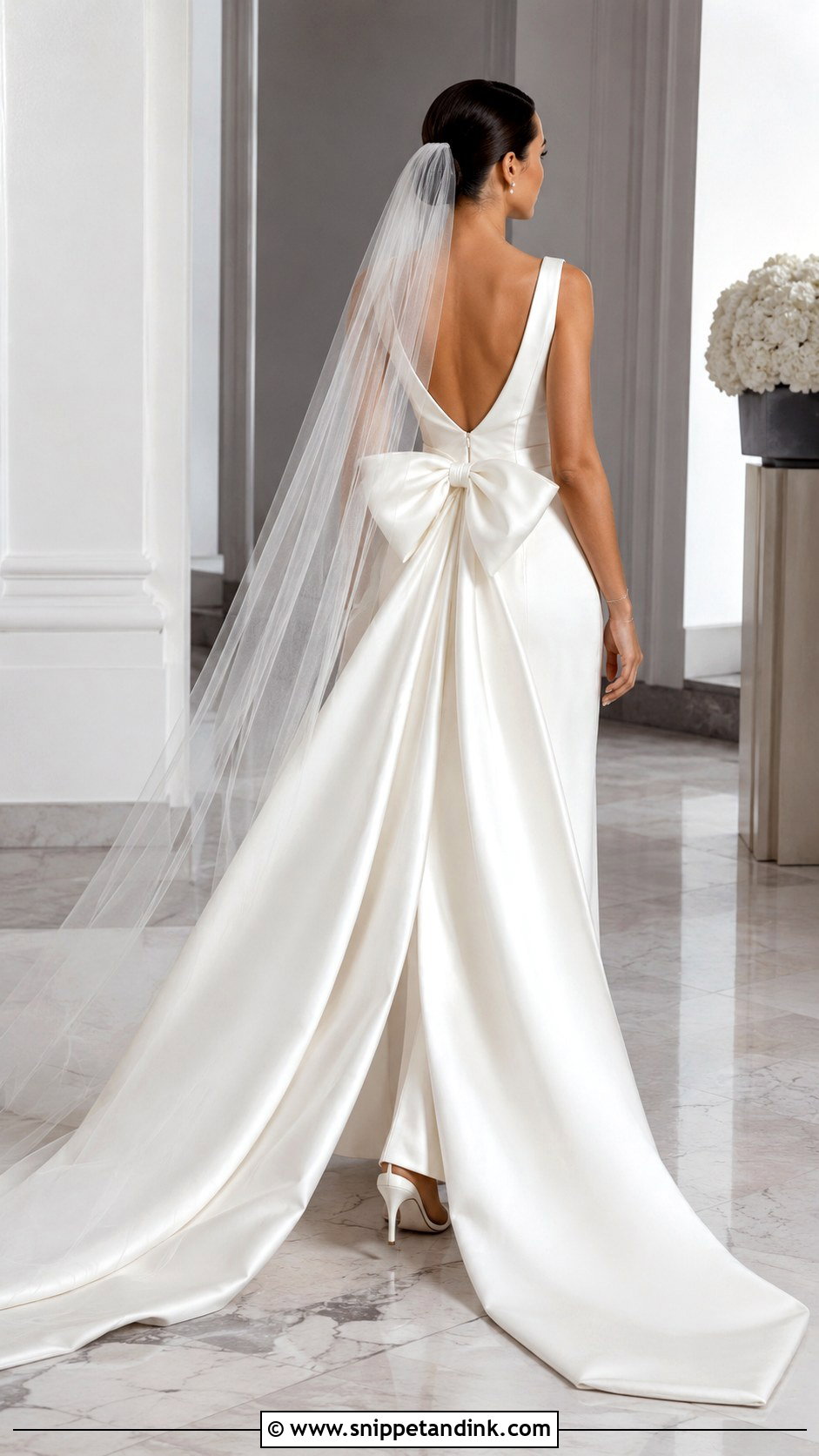
A large bow at the back can be where the train begins, with flowing panels or a full train falling from it. It suits a structured satin bodice on a clean A-line, column or fit-and-flare. Because the bow is the focal point, keep jewelry to pearl studs and a slim bracelet, with pointed ivory heels. A sheer veil can sit above the bow for the ceremony, but its comb must not flatten the loops; I usually place it higher on the head than normal. A sleek bun or polished ponytail keeps it modern. Ask your seamstress to take photos of the back at each fitting. A bow that sits slightly off-center is hard to see in a mirror and obvious in every aisle shot.
10. Floral Appliqué Wedding Dress With Long Train
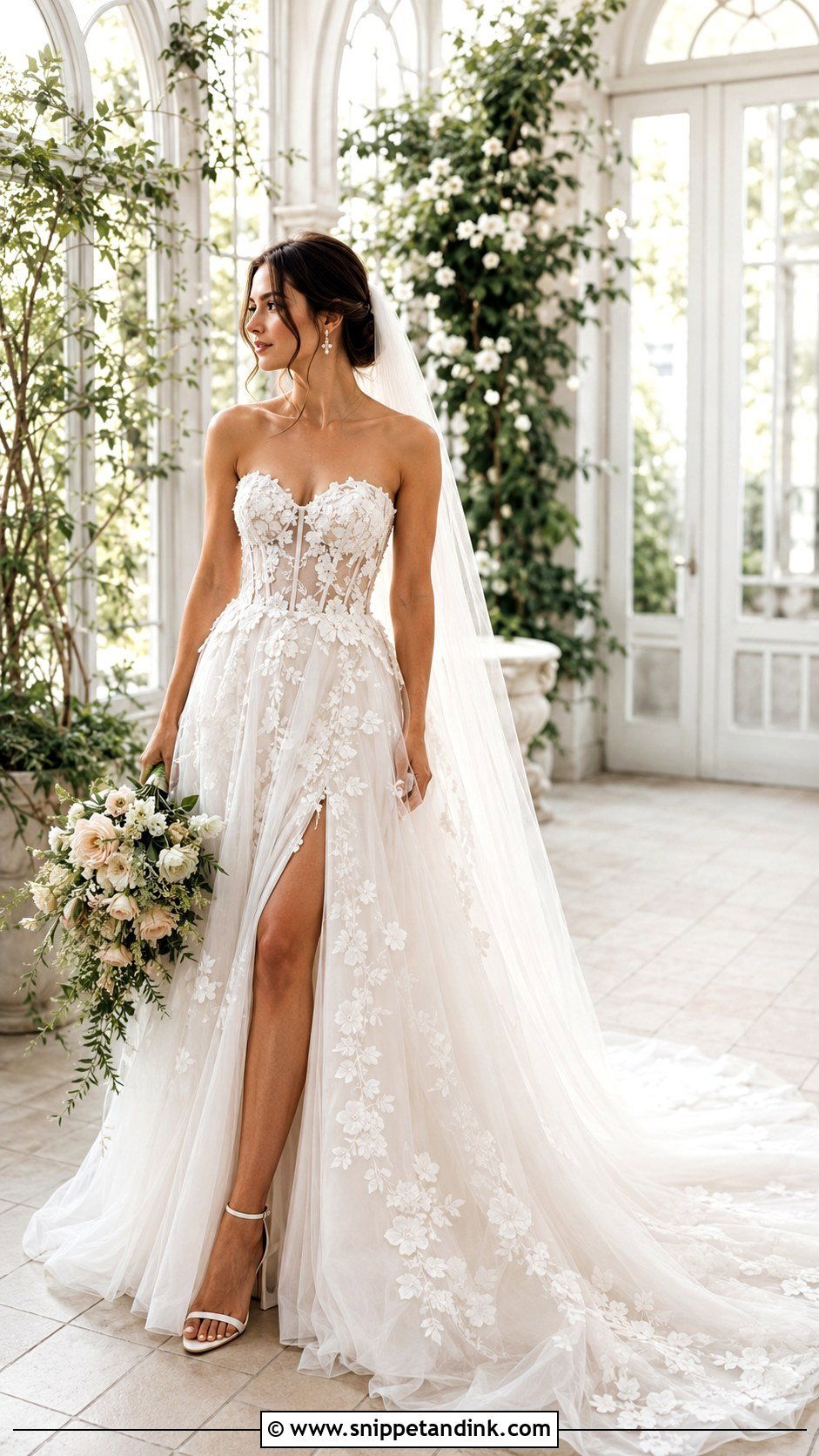
Dimensional flowers make a long train worth looking at from the back of the room. I’d choose a gown where the flowers start on the bodice and scatter more thinly down the skirt and train, rather than covering everything at the same density. An illusion neckline or corset bodice keeps the top light, and a layered tulle train moves softly. A plain veil lets the raised flowers show. Floral pearl earrings, ivory sandals and a loose garden bouquet finish it, with soft waves or a textured low bun. Check the flowers near the hem closely. They take the most wear and can catch on the veil, so make sure they are stitched down firmly and plan a wrist loop or bustle for portraits.
11. Beaded Wedding Dress With Long Train
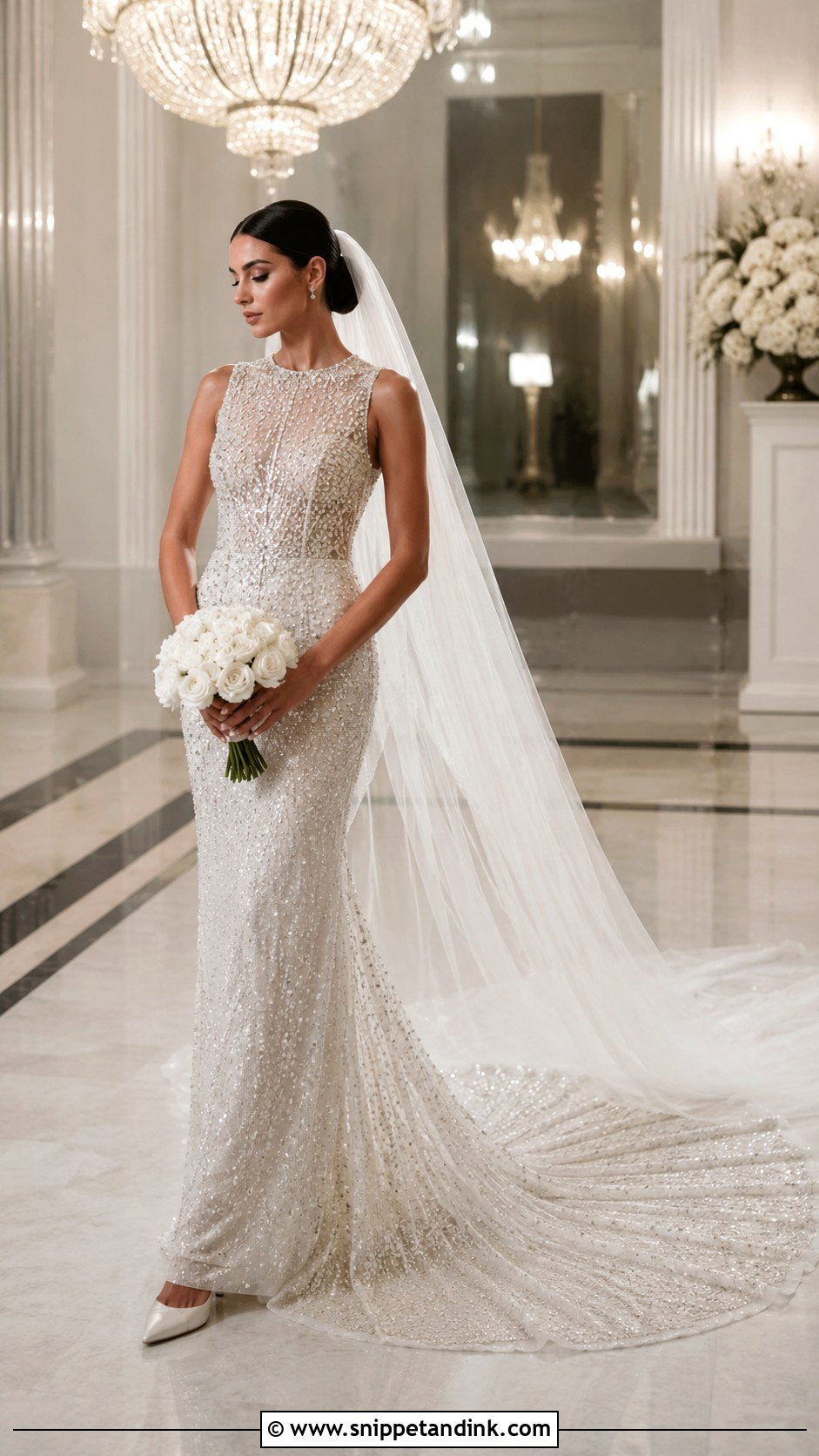
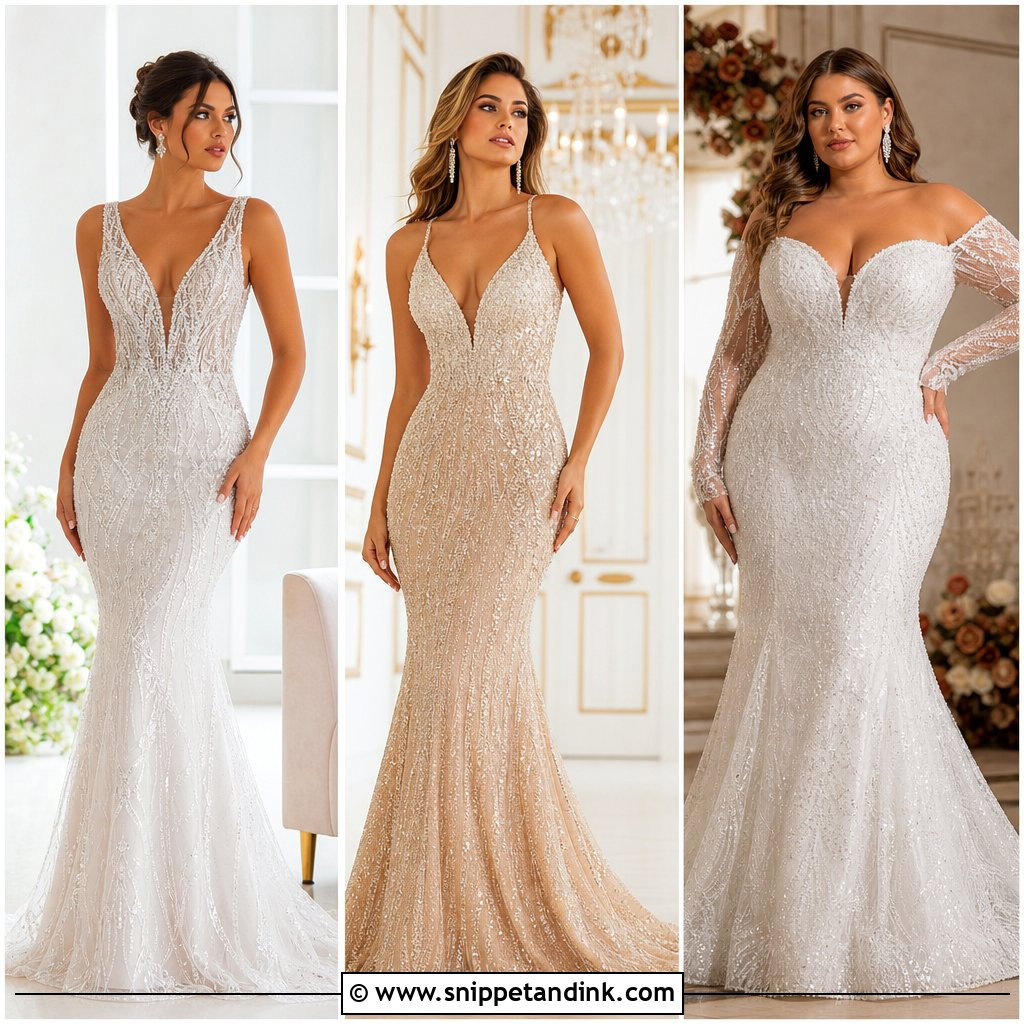
Beading catches light every time the train moves, which suits an evening ceremony with candles or low lighting. Beadwork running in vertical lines, scattered crystals or botanical patterns that follow the silhouette look most deliberate, on a fitted sheath or soft A-line that keeps the weight in check. Because the gown already sparkles, I’d choose a simple tulle veil, small crystal earrings and smooth satin heels, with a sleek low bun or side-swept waves and a compact white bouquet. A beaded train is heavy. Pick the gown up by the train at your first fitting to feel it, ask for a strong bustle with several points, and run a hand along the arms and waist for beads that scratch.
12. Basque Waist Wedding Dress With Long Train
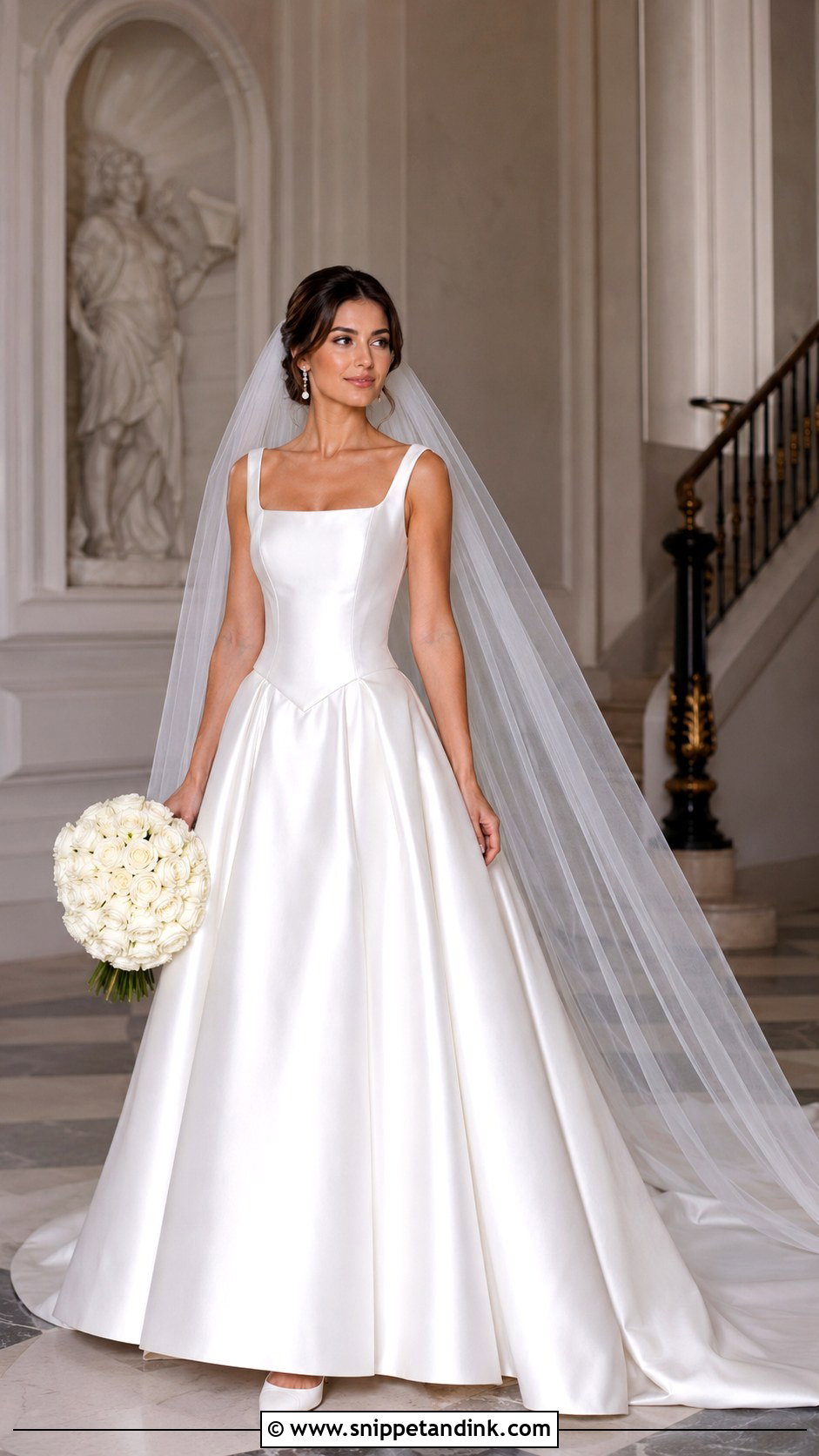
A basque waist dips to a point at the front, which makes the torso look longer before the dress opens into a full skirt and train. Structured satin, Mikado and layered tulle hold that point crisply. The bodice can be strapless, square or off-shoulder, depending on how much coverage you want. A cathedral veil, pearl drops and classic ivory pumps suit it, with a sculpted updo and a rounded bouquet of white roses or peonies. Sit down at every fitting. The point of the waist should stay flat rather than buckling, and it should start low enough that your torso doesn’t look squashed when you stand.
13. Square Neck Wedding Dress With Long Train
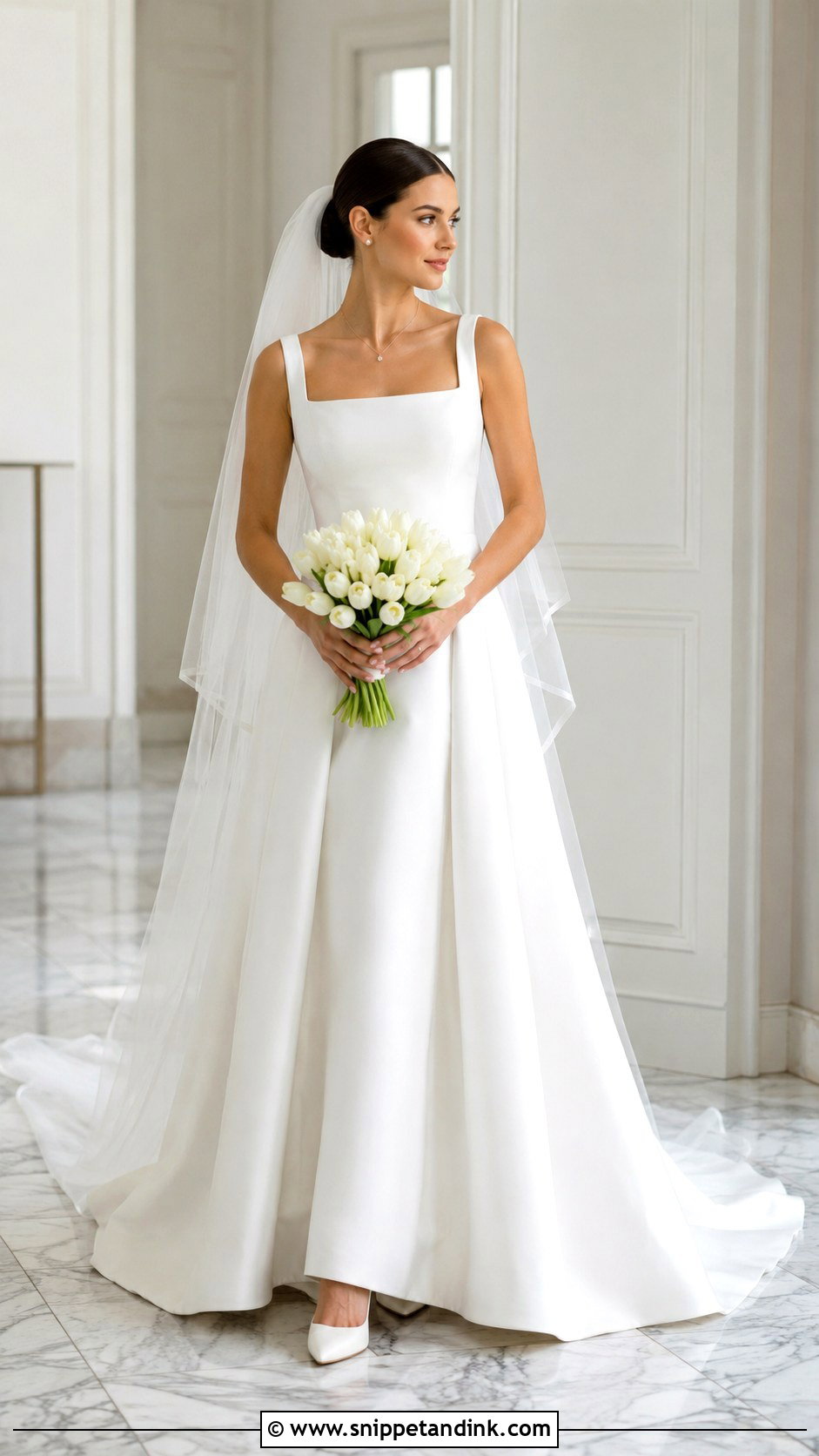
Square necklines add a little vintage structure, and they work on satin A-lines, fitted crepe and lace dresses with wide straps or sleeves. The bodice needs supportive seams and a neckline high enough that you feel secure sitting and leaning forward. A sheer cathedral veil softens the straight lines without covering them. Pearl or diamond studs, a short pendant and low pointed heels keep it practical. A neat low bun keeps the neckline open, while shoulder-length waves feel more relaxed, and white tulips or roses suit the clean shape. The front stays quiet; the train is what makes people turn as you pass.
14. High Neck Wedding Dress With Long Train
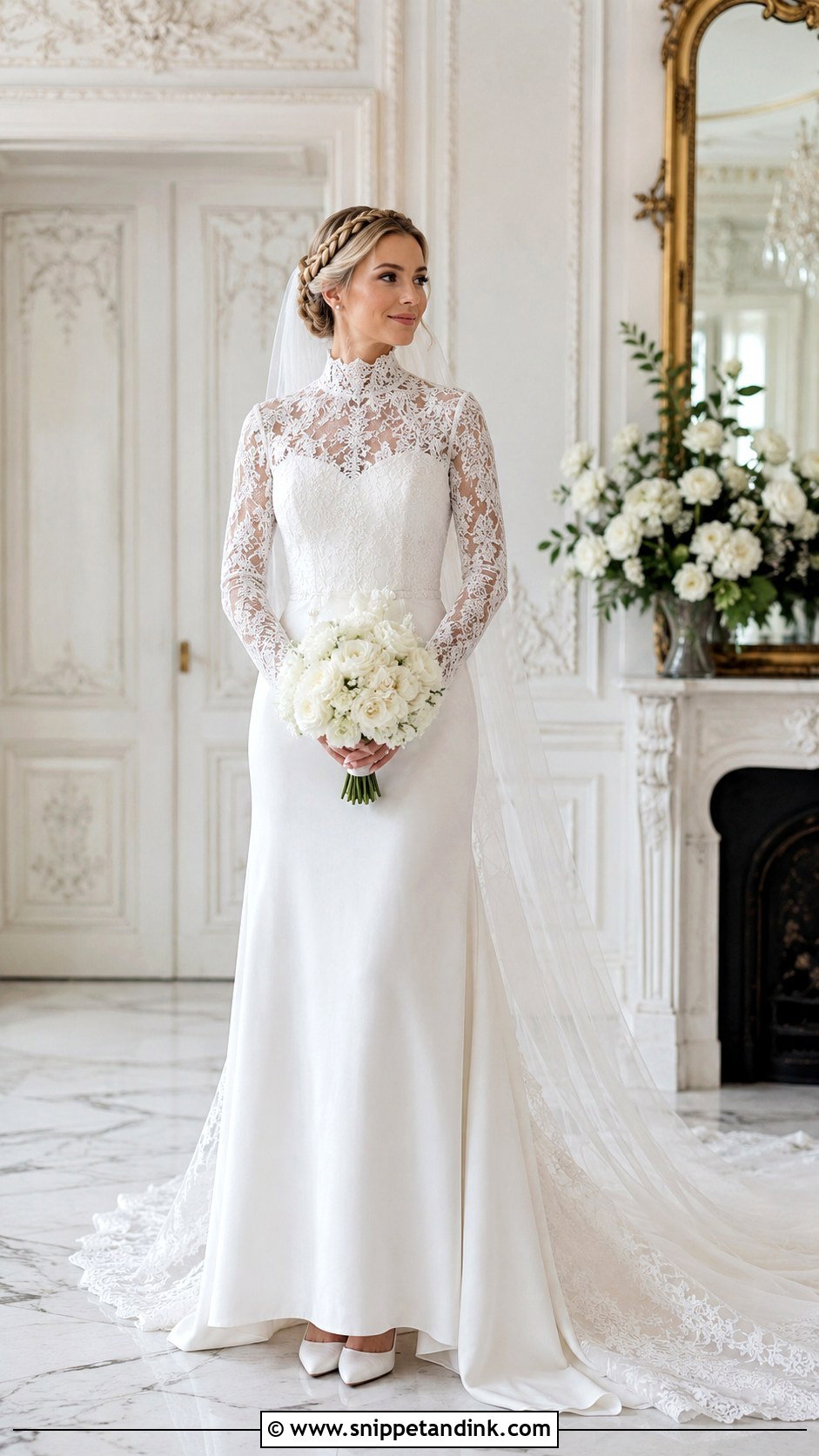
A high neck covers the top half, so the train is where the drama goes. Delicate illusion lace keeps it light; smooth crepe makes it tailored. The skirt can stay fitted through the hips or open into a soft A-line. Skip the necklace and wear small pearl or crystal earrings. A low bun, braided chignon or sleek ponytail shows off the collar and the back, and the veil should attach beneath the hairstyle so it doesn’t bunch at the neck. Closed-toe satin heels and a structured white bouquet complete it. I watch brides turn their heads and raise their arms at the fitting. After several hours, a collar that rubs even a little becomes the thing you notice most.
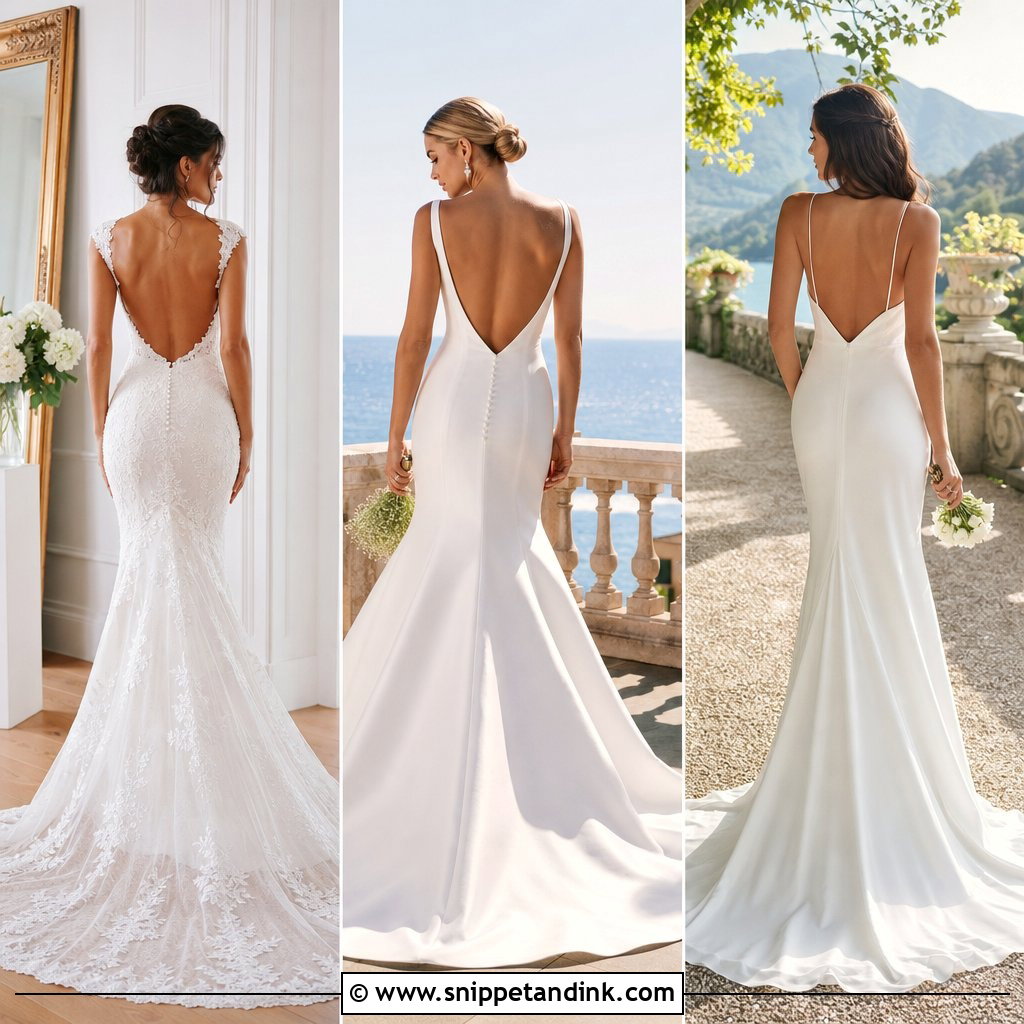
15. Corset Wedding Dress With Long Train
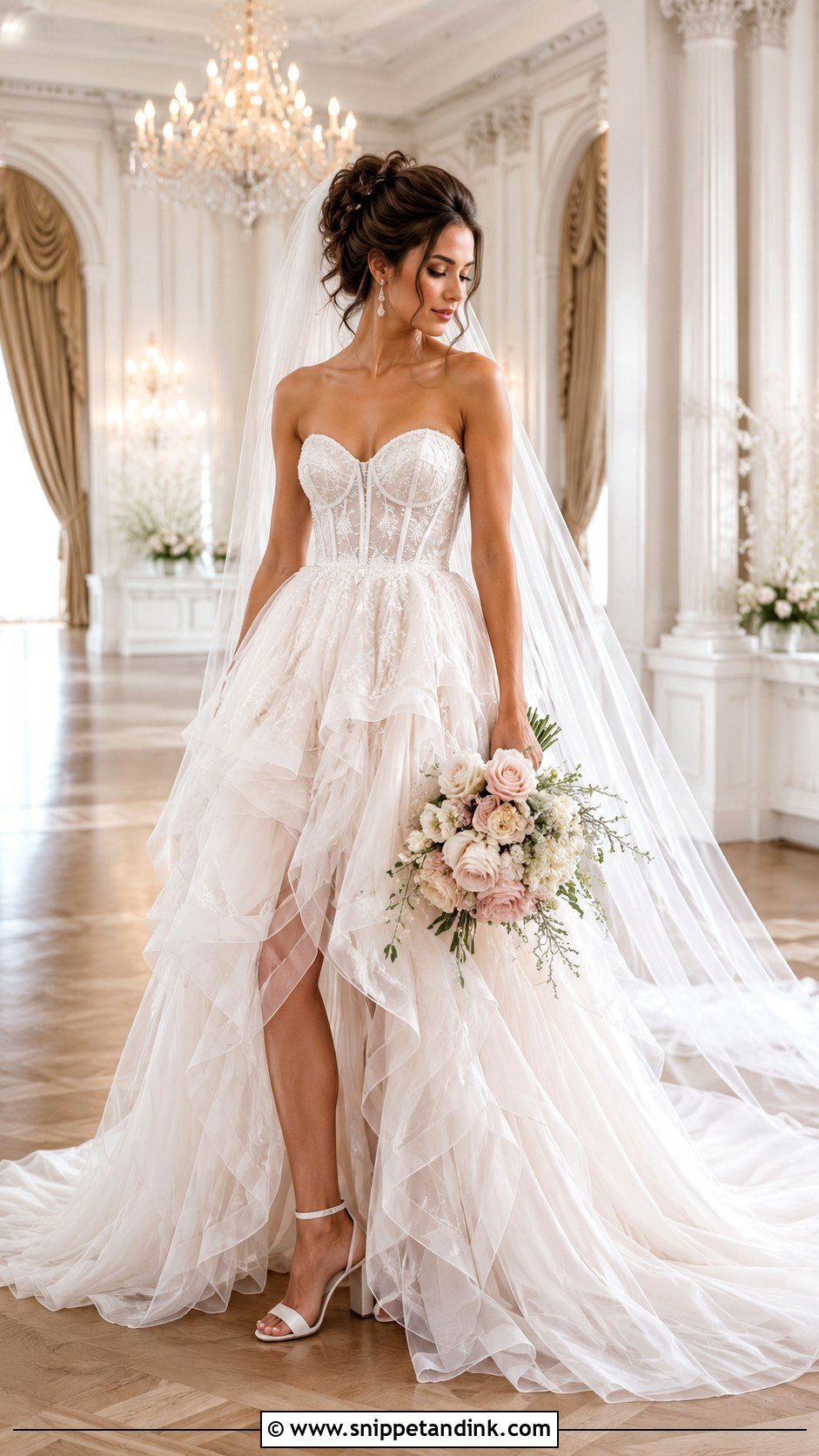
A visible corset with a sweeping train is structured at the top and soft below. Supportive boning, properly placed cups and a waist that’s snug but lets you breathe come first. A partly exposed corset suits a tulle A-line; a fully lined bodice looks more traditional. A simple cathedral veil, delicate drops and ivory pumps or block-heel sandals finish it, with a textured updo so long hair doesn’t catch on hooks or lace, and loose white and blush flowers. Wear your intended undergarments to every fitting and sit for several minutes at a time. Then ask the seamstress whether the train’s weight drags the bodice backward; if it does, the support can be adjusted.
16. Plus Size Wedding Dress With Long Train
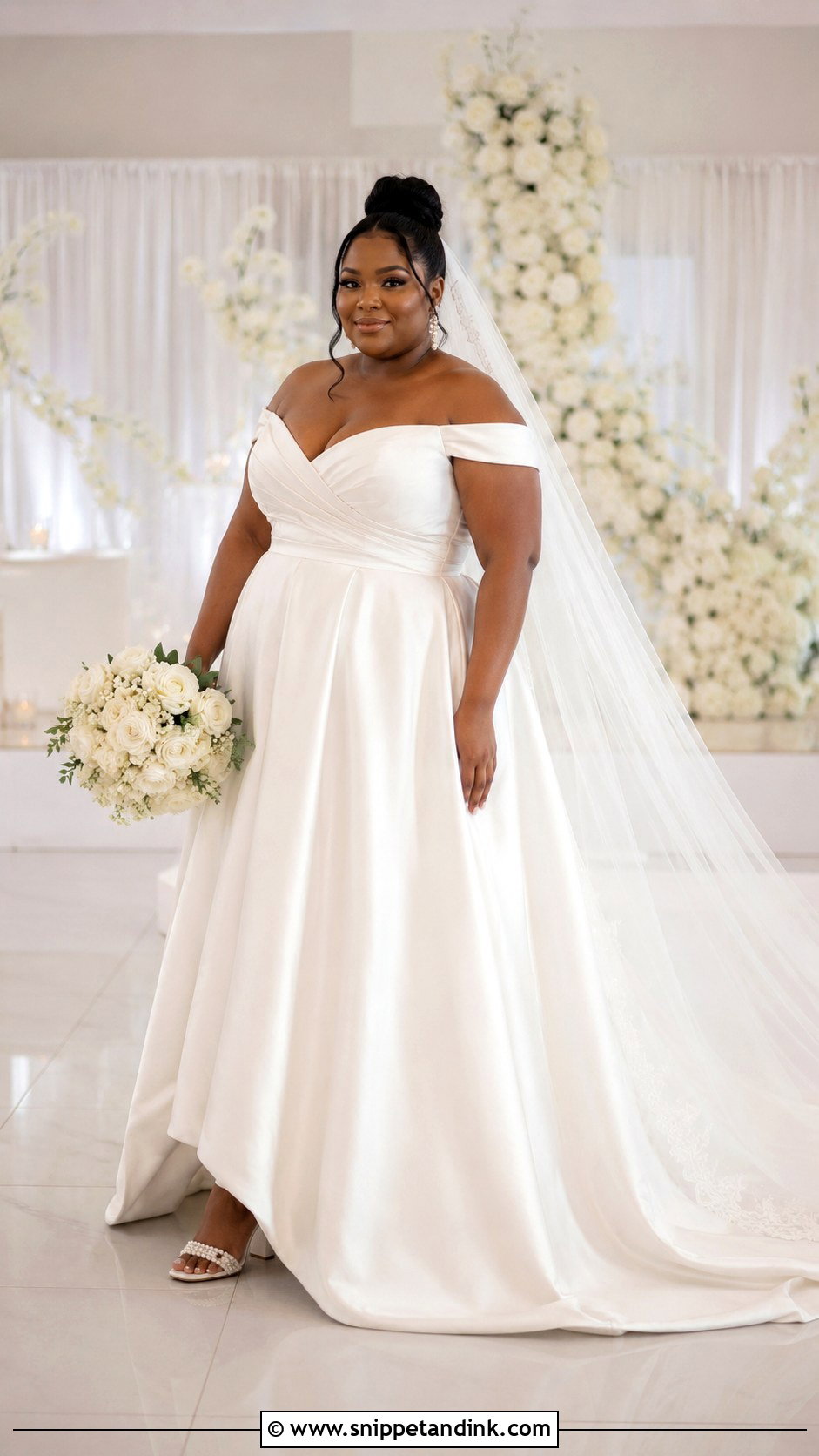
Plus-size brides have every option here: A-line, ball gown, fit-and-flare or a structured sheath, chosen by how you want the dress to move. Wide straps, supportive sleeves, corsetry and good seaming add comfort and a smooth fit. Choose the train length for the venue, and don’t assume a long train has to feel heavy; a light tulle or chiffon train weighs very little. A secure veil comb, statement earrings and supportive heels or embellished flats suit it, with a lifted updo or swept waves and a bouquet scaled to your height. Look for a salon that carries samples in your size so you’re not trying to imagine fit, and trust alterations over the label.
17. Petite Wedding Dress With Long Train
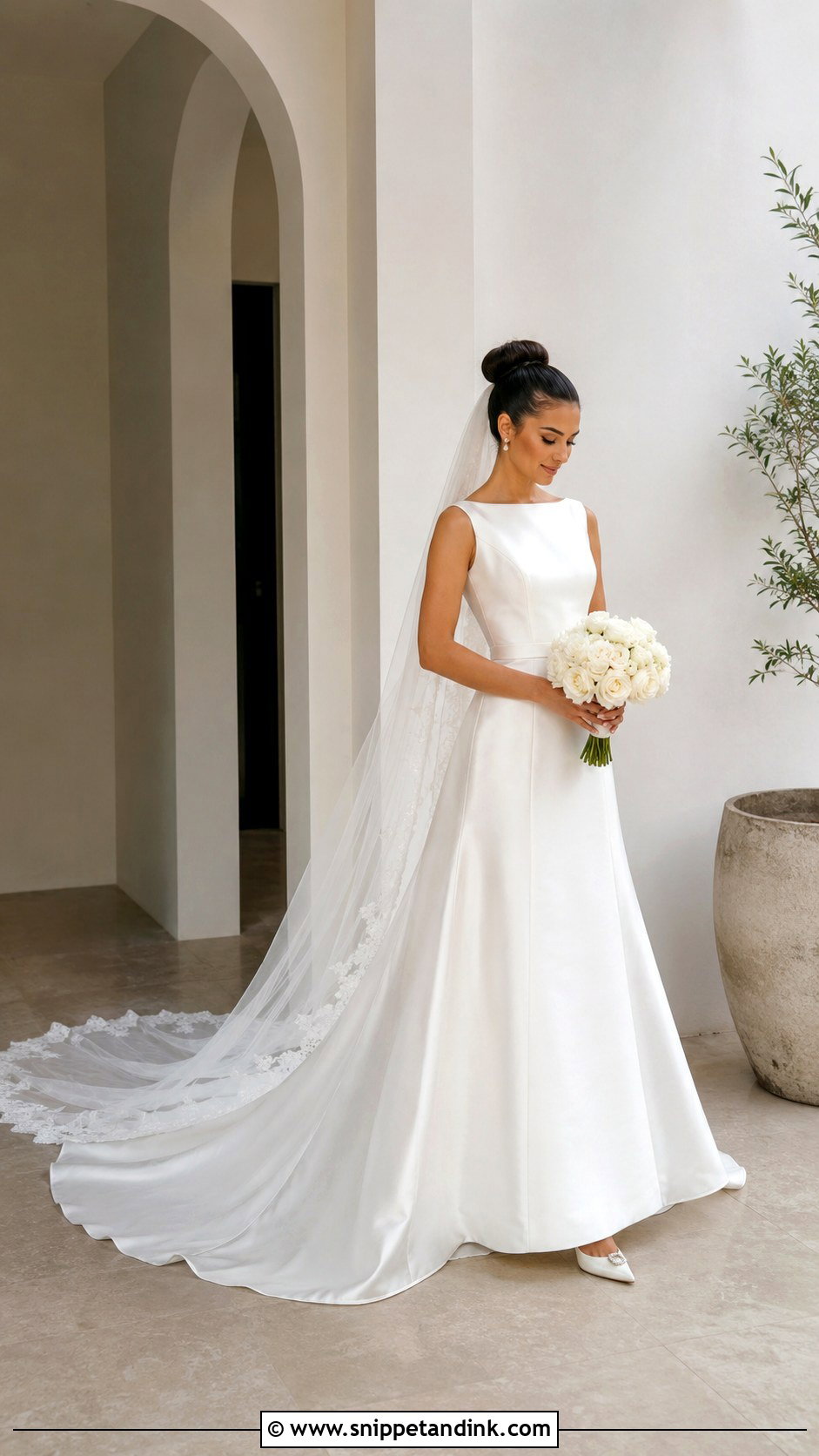
Petite brides can carry a long train well, as long as the proportions are adjusted. A high empire seam or a very full skirt can overwhelm a shorter frame, so I’d start with a clean A-line, a sheath or a fitted trumpet. Vertical seams, one consistent fabric and a defined natural waist help create length. A narrow cathedral veil works better than a very wide one. Pointed heels, small earrings and a compact bouquet keep the scale right; a high bun adds height, while soft waves feel relaxed. Ask the seamstress to adjust the whole dress, not just the hem. The width of the train and where the embellishment falls may need moving too.
18. Beach Wedding Dress With Long Train
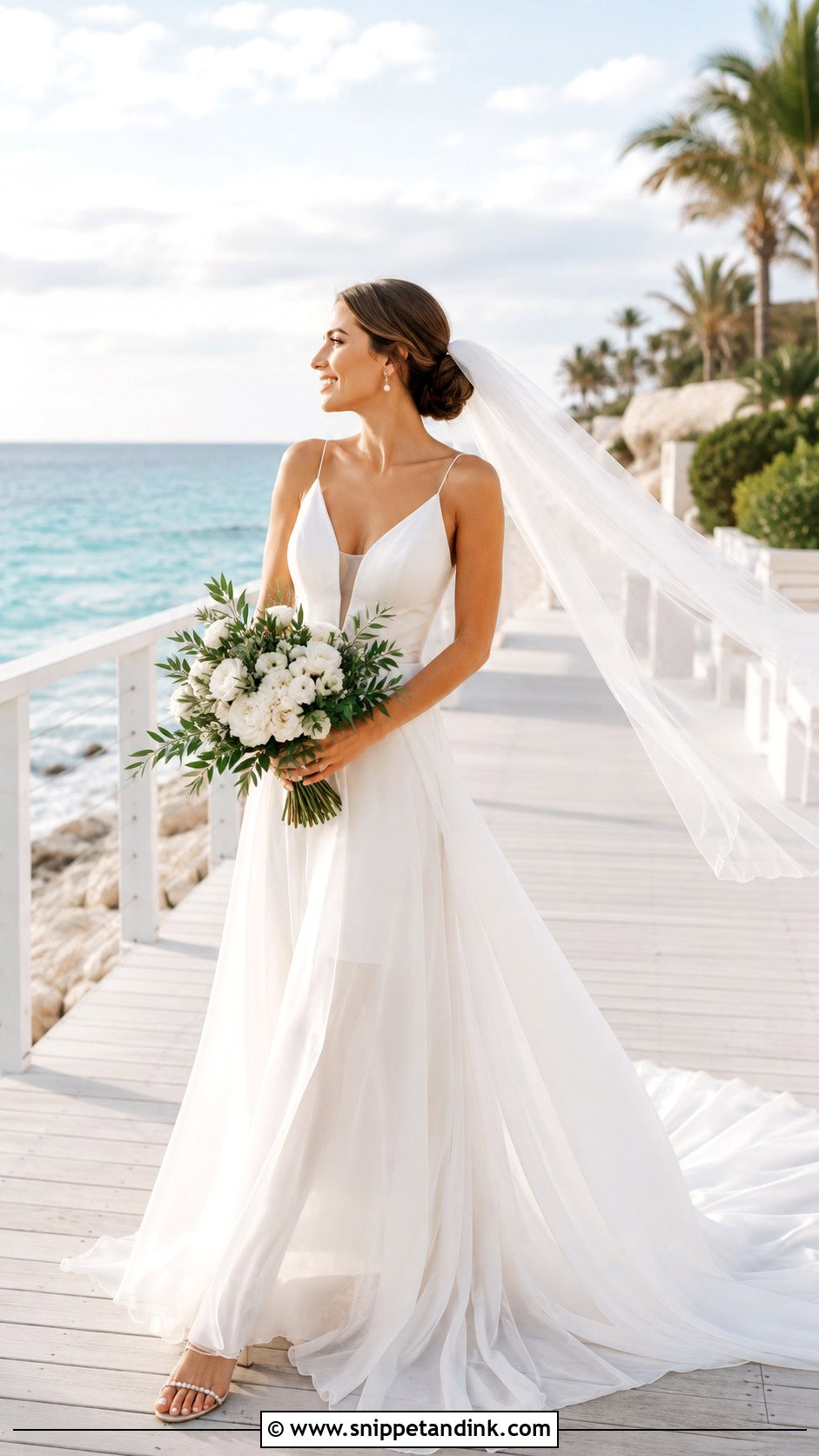
A long train can work on a beach if the fabric is light. Chiffon, soft tulle, organza or lightweight crepe move in the wind; dense satin with several underskirts just drags and holds damp sand. A flowing A-line or relaxed sheath avoids bulk. I’d seriously consider a detachable train for the walk across uneven ground and the reception. Pearl drops, flat bridal sandals and a loose low bun that can handle a breeze suit it, with a simple fingertip or airy cathedral veil without heavy edging and white flowers with fresh greenery. Put down a clean aisle runner if you can, and have someone lift the train between photos. Keep it off wet sand and rocks.
19. Garden Wedding Dress With Long Train
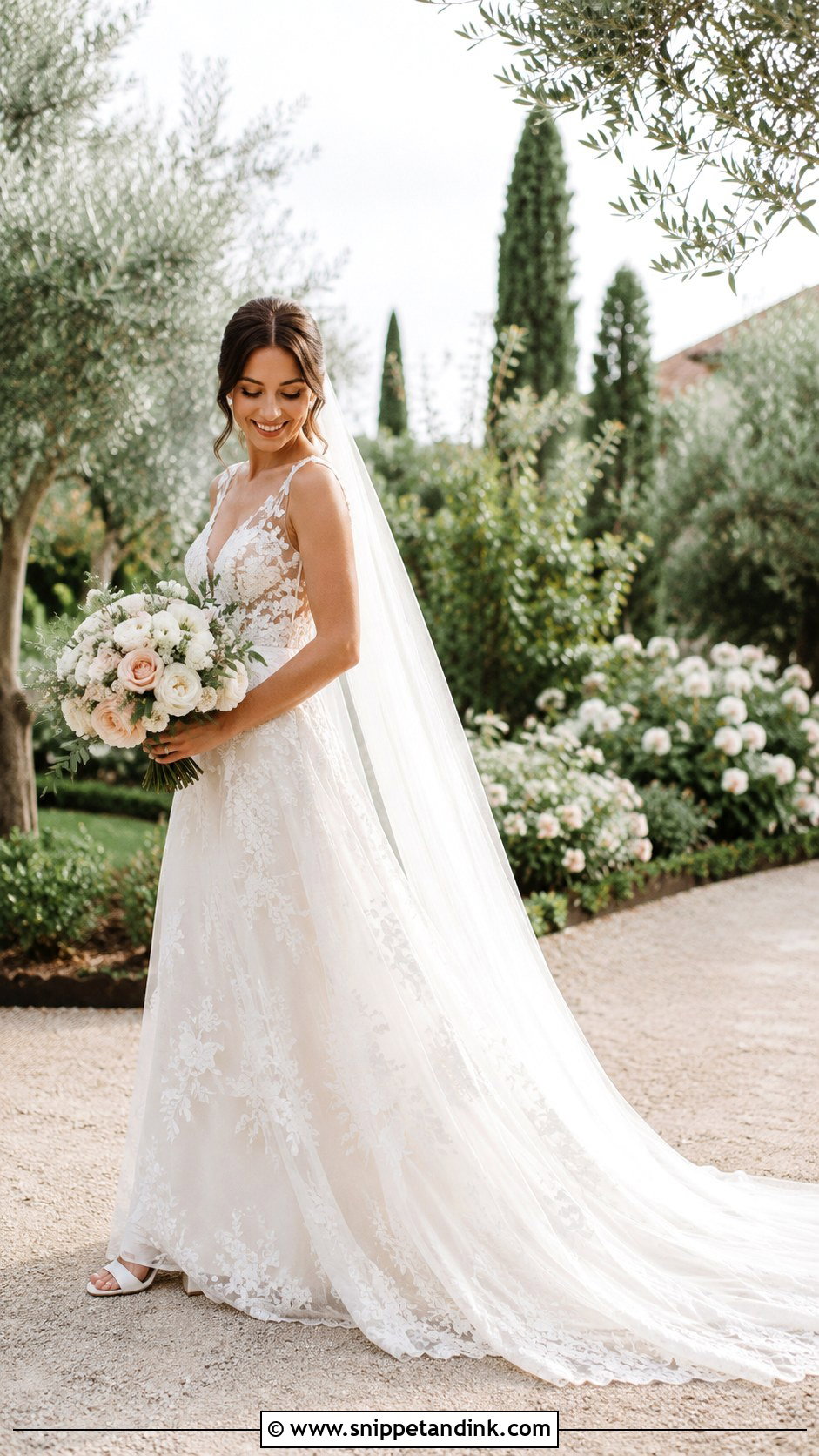
Gardens suit a soft, flowing train. Floral lace, scattered appliqués or embroidered tulle on an A-line or gentle fit-and-flare look at home there. A chapel or semi-cathedral length gives visible movement and is still manageable outdoors, unlike a very wide royal train. A plain veil, pearl earrings and block heels that won’t sink into lawn finish it, with soft waves, a braided updo or a textured bun and a seasonal bouquet in white, blush, lavender or pale blue. Ask the venue what the aisle surface is before you settle on train length. Gravel and grass both damage hems, so plan a bustle and a discreet wrist loop for the portraits.

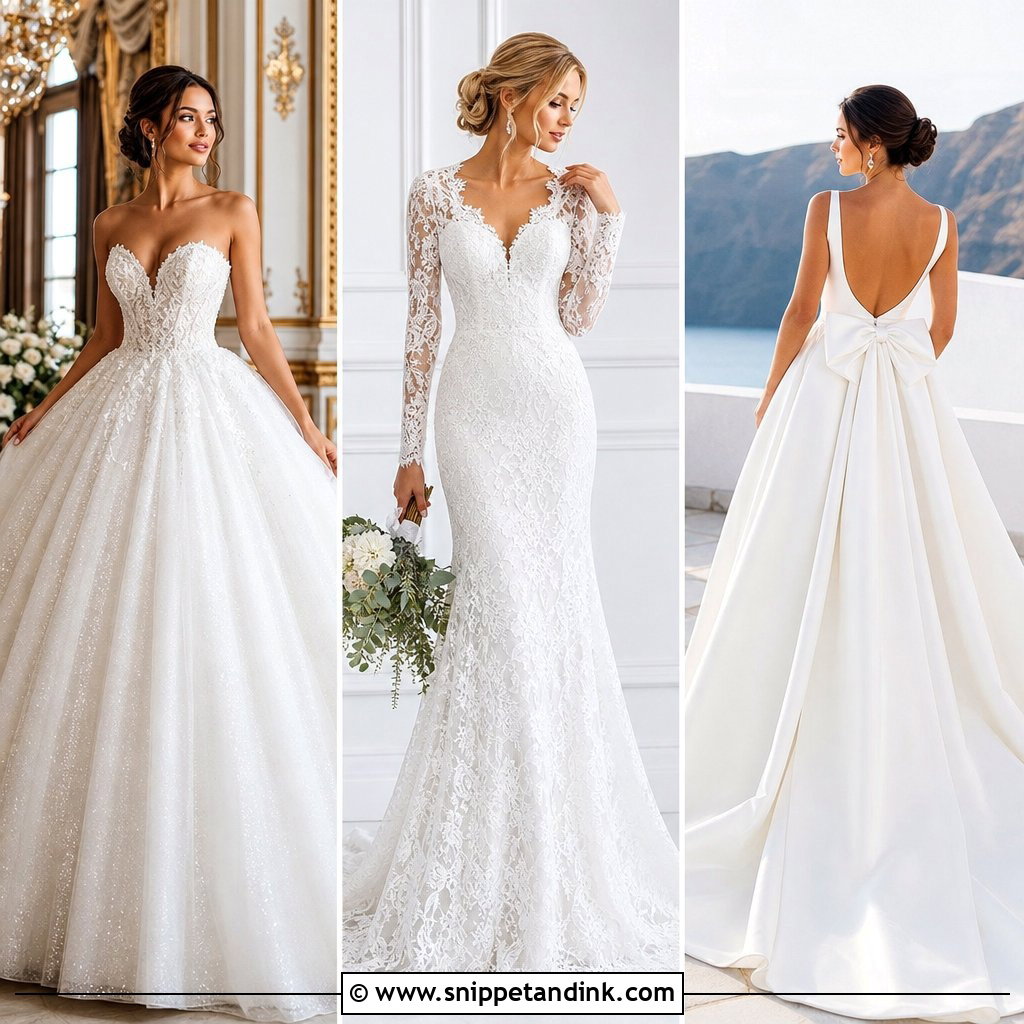
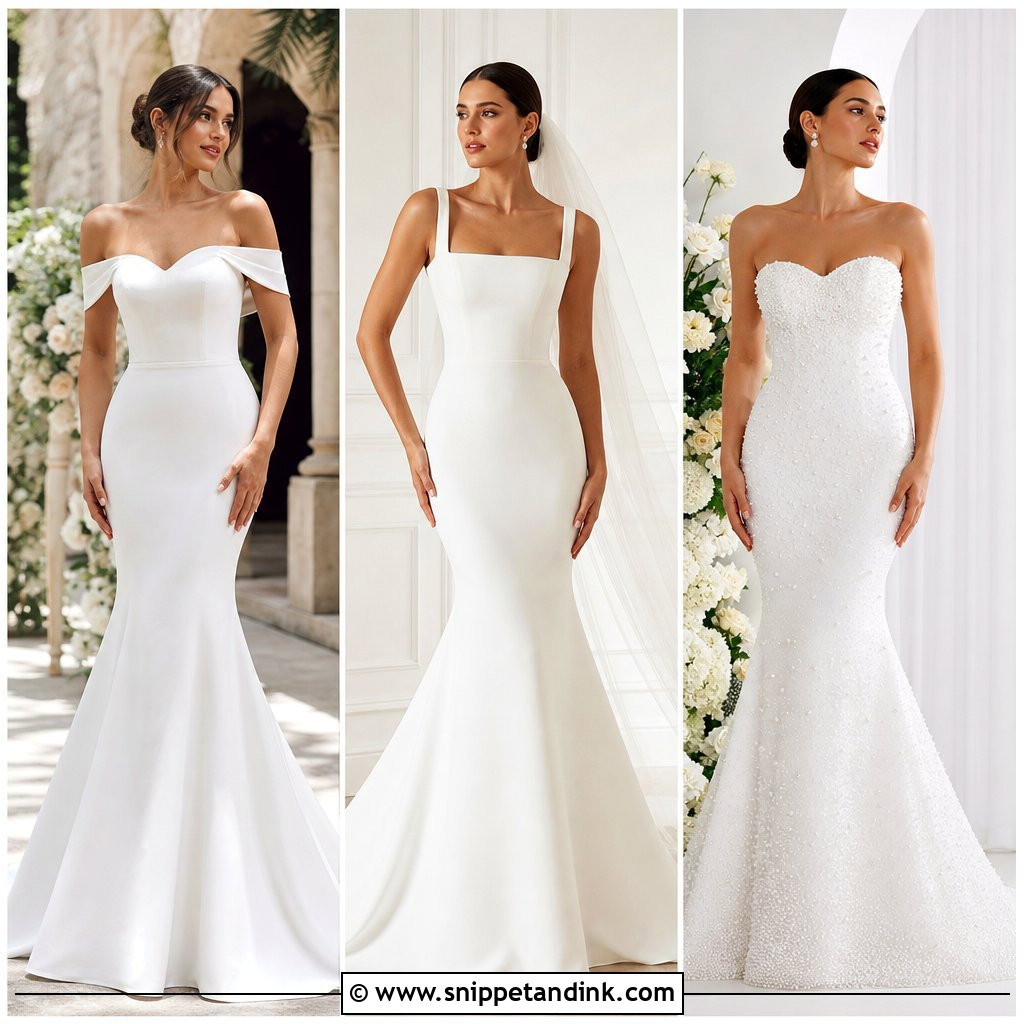
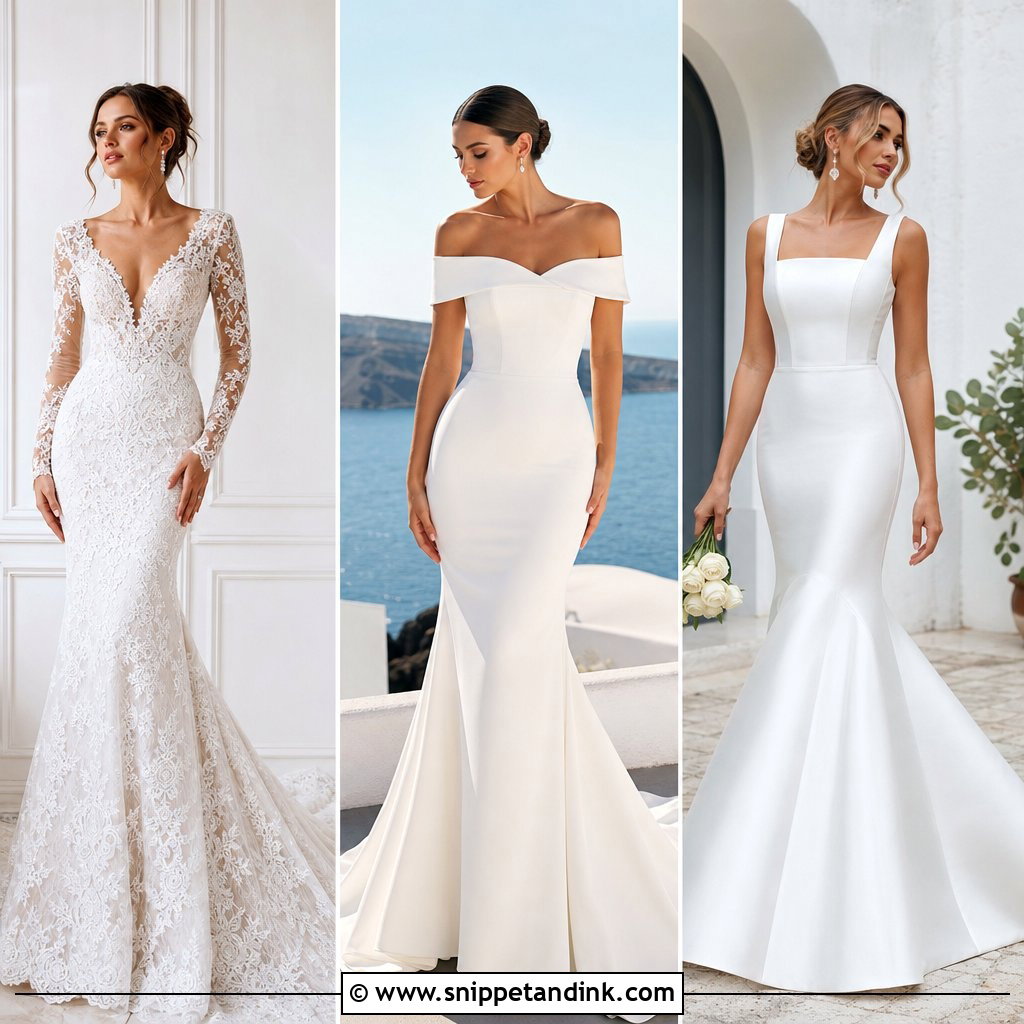
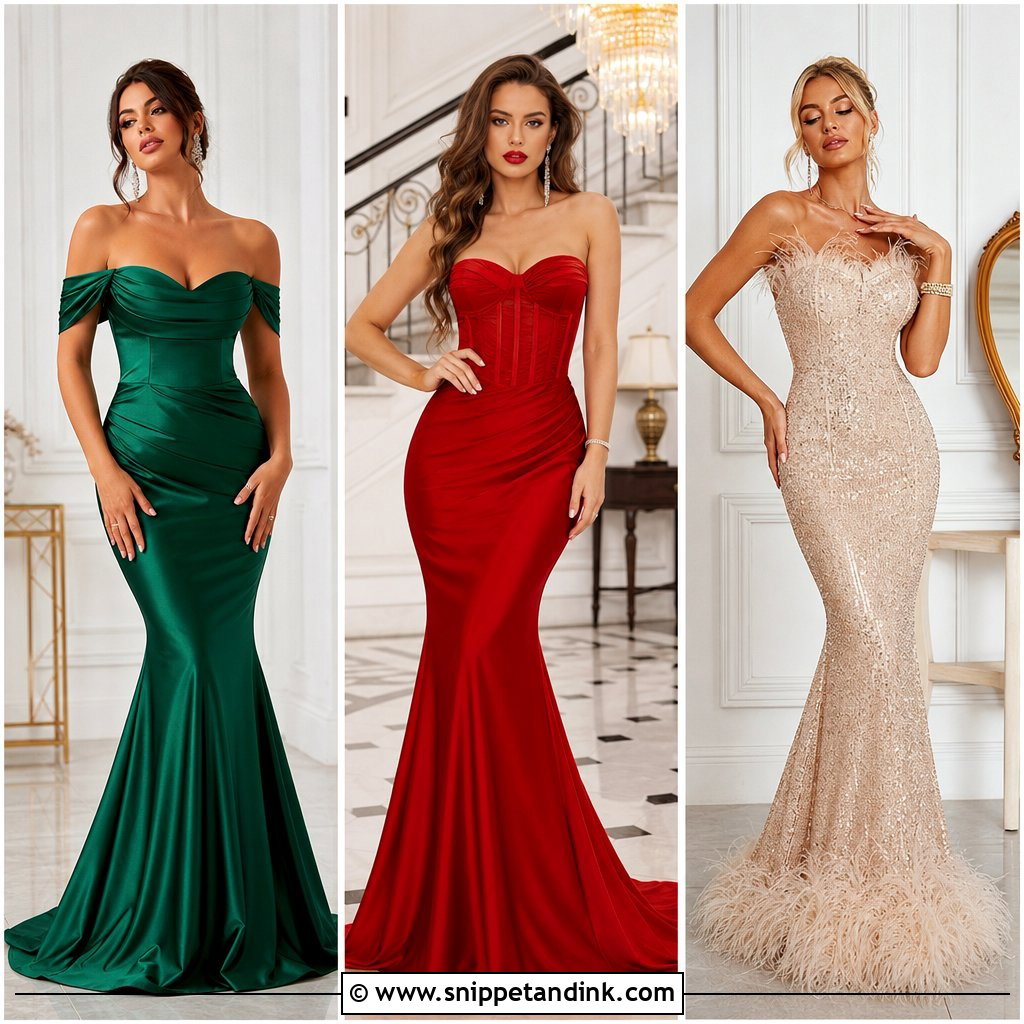
20. Colored Wedding Dress With Long Train
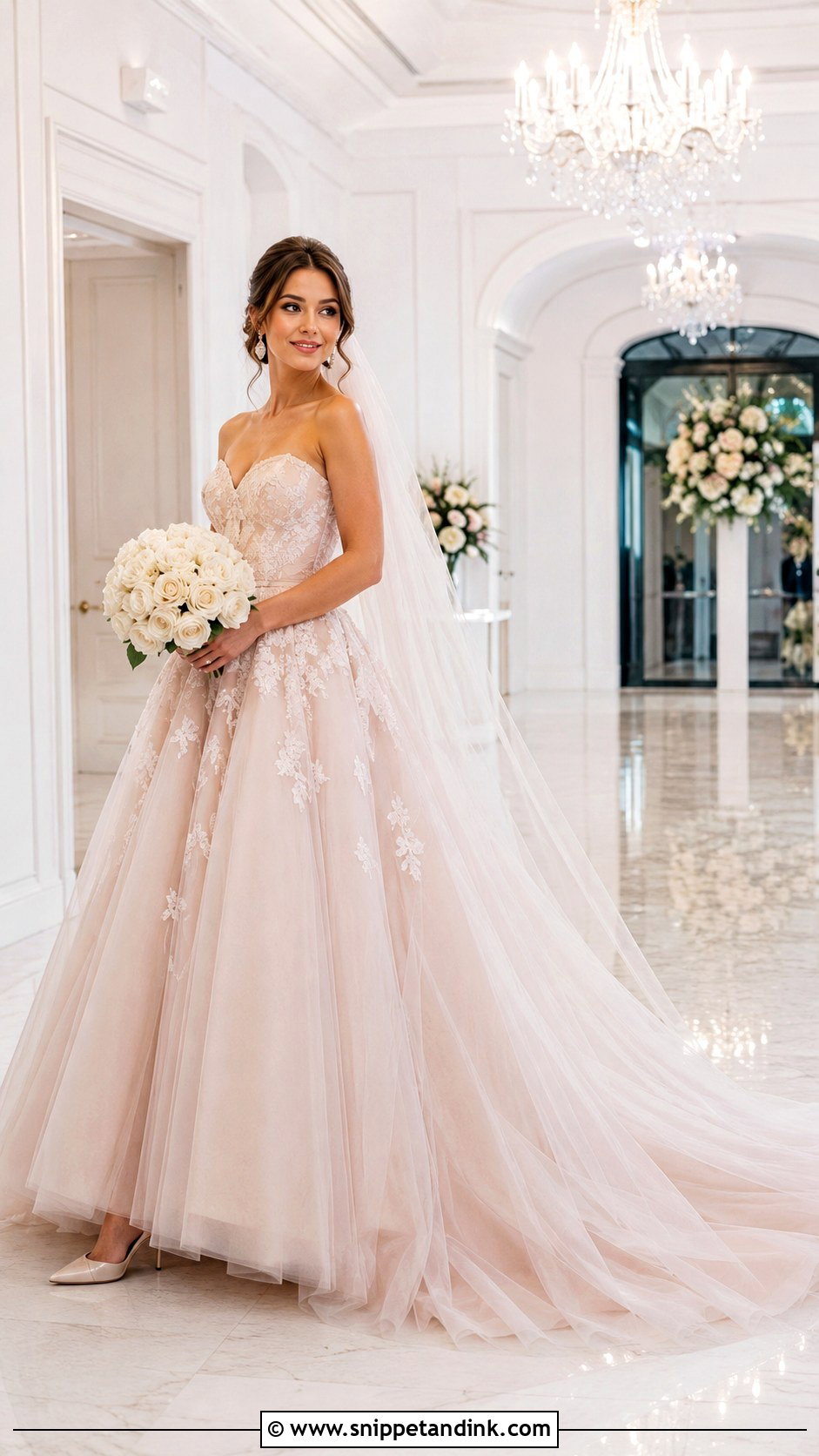
A softly colored dress makes the long-train silhouette feel personal. Champagne, blush, pale blue, silver and faint floral tints all still read as bridal. Choose a shade that suits your skin tone and look at it both indoors and outside; some blushes go grey in shade, and some champagnes turn yellow under warm bulbs. A colored tulle ball gown feels romantic; a champagne satin A-line looks sleek. Neutral ivory or metallic heels, understated earrings and a veil matched to the gown’s undertone suit it, with a polished bun or brushed waves. Keep the bouquet simple. Get fabric swatches before buying accessories, because “ivory,” “nude” and “champagne” can look very different side by side.
Over, Under or Ballroom: Three Ways to Bustle a Long Train
Once the ceremony and portraits are over, the train has to be lifted off the floor. The bustle is sewn in during alterations, and the type you pick changes how the back of your dress looks for the rest of the night.
Over bustle
Sometimes called an American bustle. Loops or hooks on the train are lifted up and fastened onto buttons at the back of the skirt, creating soft drapes. It’s quick to do and suits satin and lace, but heavy beaded trains can pull on the attachment points.
Under bustle
Also known as a French bustle. The train is folded under and tied with ribbons inside the skirt, which gives a fuller, layered look at the back. The ribbons are usually color-coded or numbered, which is the only way a helper can do it correctly in a hurry.
Ballroom bustle
Many attachment points spread across the skirt lift the train so the dress looks like a floor-length gown without one. It’s the neatest result and the slowest to set up, so I’d only suggest it with a helper who has practiced. For light chiffon or tulle trains, a simple wrist loop is often enough.
The Altar Turn and the Walk Back Up the Aisle
Turning to face your partner and then walking back out are the moments a long train tangles. Before the recessional, your helper should straighten the train while everyone is looking at the couple. When you turn, step around rather than pivoting on one foot, so the train swings with you instead of wrapping around your ankles. Walk back up the aisle a touch slower than feels natural; the train needs a moment to follow, and those are the photos everyone keeps.
Walk, Sit and Dance Before You Sign Off the Train
A sweeping train works with nearly every bridal style, body and venue, as long as it’s planned. Start with a silhouette that feels supportive, then think about how the train will move during the ceremony and later at the reception. Fabric, embellishment, veil, shoes and jewelry should work together instead of pulling attention in different directions. Raise bustling, detachable options, aisle width and outdoor surfaces at your fittings, not the week before. Then walk, sit, turn and dance in the dress before approving the final alterations. A beautiful long-train dress should give you the entrance and still let you feel like yourself all night.
You'll Like These Ideas:




Leave a Reply