
Original doesn’t have to mean strange. Most of the brides I style want one thing about the dress that nobody else in the room would have chosen, and the rest simply needs to fit and move well. The gowns below get there in different ways: sculpted satin, flowers that look grown rather than stitched on, coloured embroidery, convertible layers, separates and reworked vintage. I’ve noted the shoes and accessories that let each one breathe, and where a design asks more of you at fittings. Before you fall for a dramatic feature, think about your venue, the season and how you dress on an ordinary Saturday, because that’s usually the best predictor of what you’ll still like in the photos.
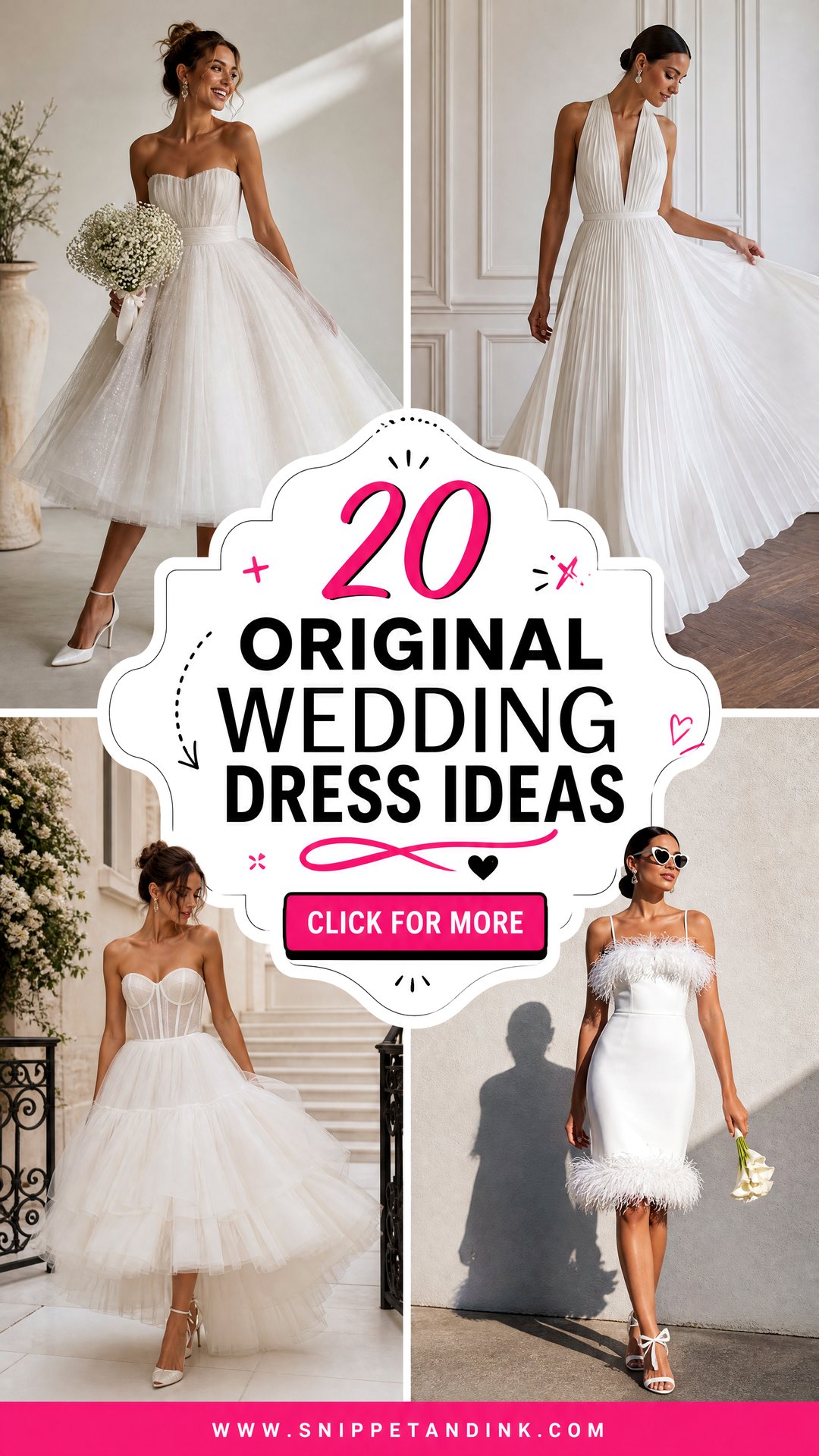
How Unusual Can a Dress Be Before It Stops Feeling Like You?
The brides who regret an original dress rarely regret the idea. They regret having three ideas in one gown. So before appointments, I ask each bride to name the single feature she’d fight for, the bow, the colour, the cape, and to accept that everything else should support it.
A few checks I use to tell real love from a passing crush:
- Screenshot the dress, then look again in two weeks. If the feature still makes you smile, it’s yours.
- Ask someone to stand across the shop while you turn slowly. Unusual details should read clearly from a few metres away, which is where most guests will see you.
- Open your own wardrobe. If you live in clean lines, a gown covered in feathers will feel like fancy dress by the third hour.
- Think about the venue floor. Trims, tiers and long panels behave differently on gravel, sand and carpet.
1. Basque Waist Satin Wedding Dress
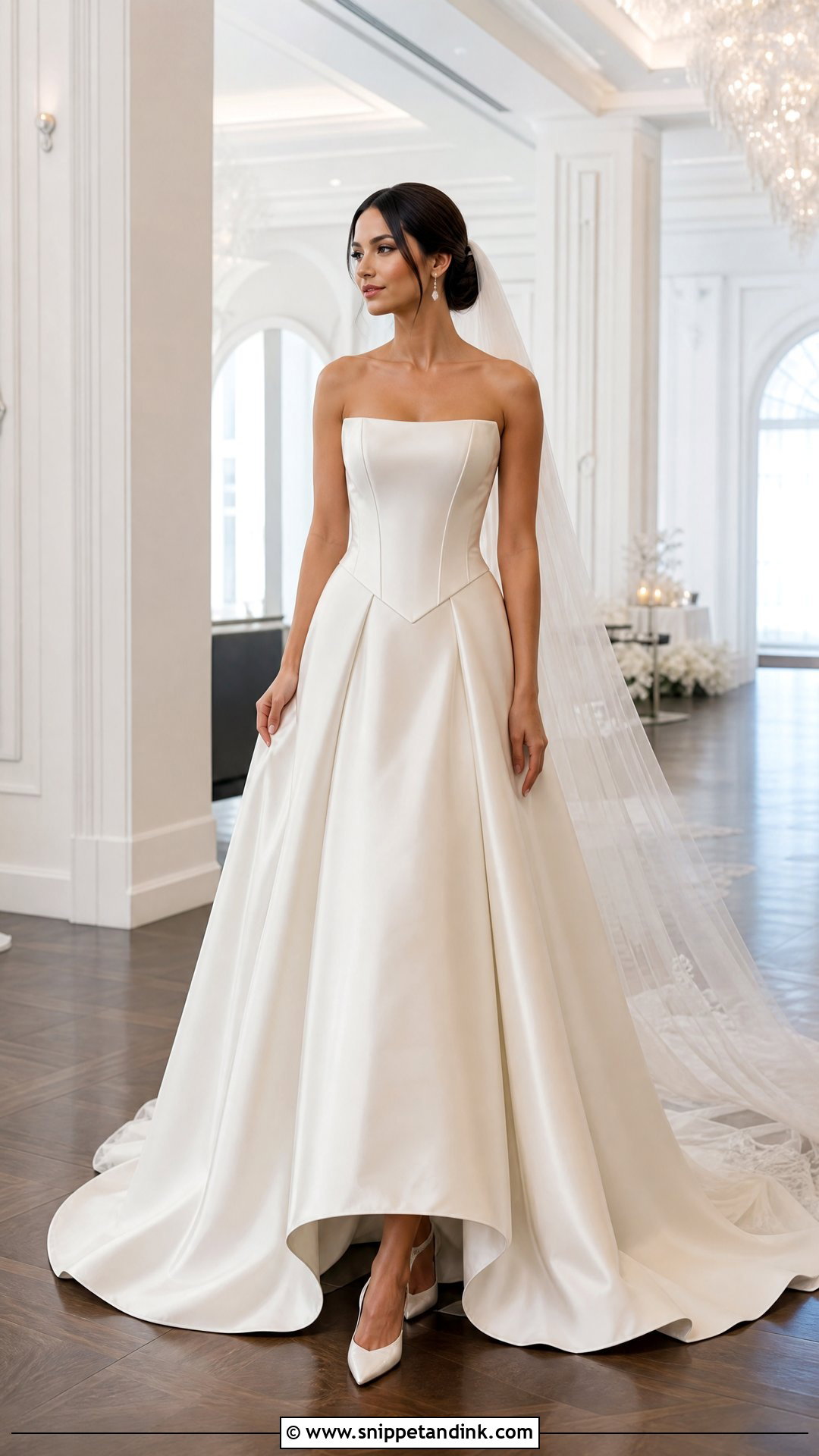
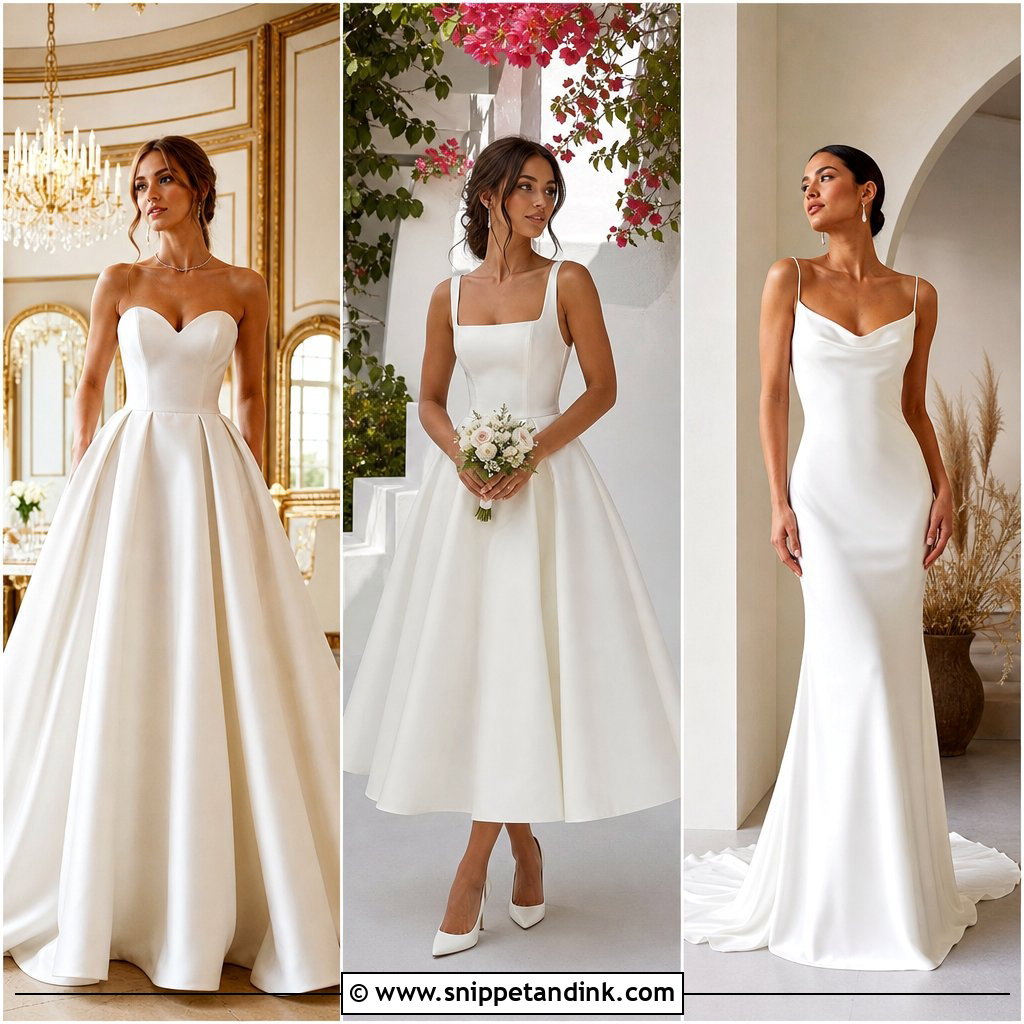
A Basque waist gives plain satin a distinctive shape with no embellishment at all. The point should be gentle, and the skirt should be an A-line that glides; duchess satin is heavy, so a skirt that’s too stiff ends up looking like a lampshade. Covered buttons down the back are all the detail it needs, with pointed slingbacks, pearl drops and a plain cathedral veil. Keep the bouquet compact. The fitting detail I fuss over is where that point lands. Too low and it digs into your lap every time you sit; set correctly, it lengthens the torso and stays comfortable through dinner.
2. Floral Appliqué Wedding Dress
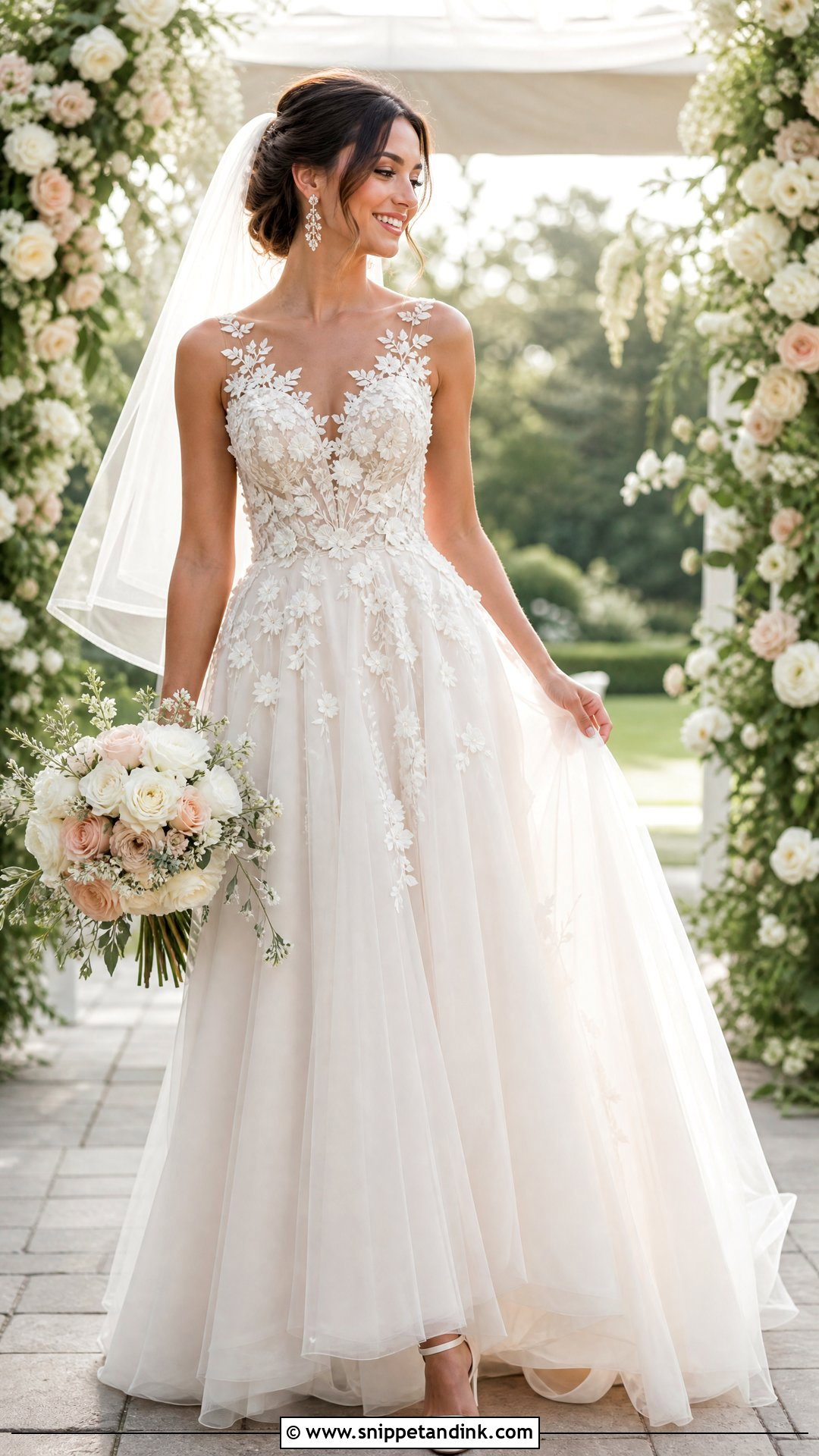
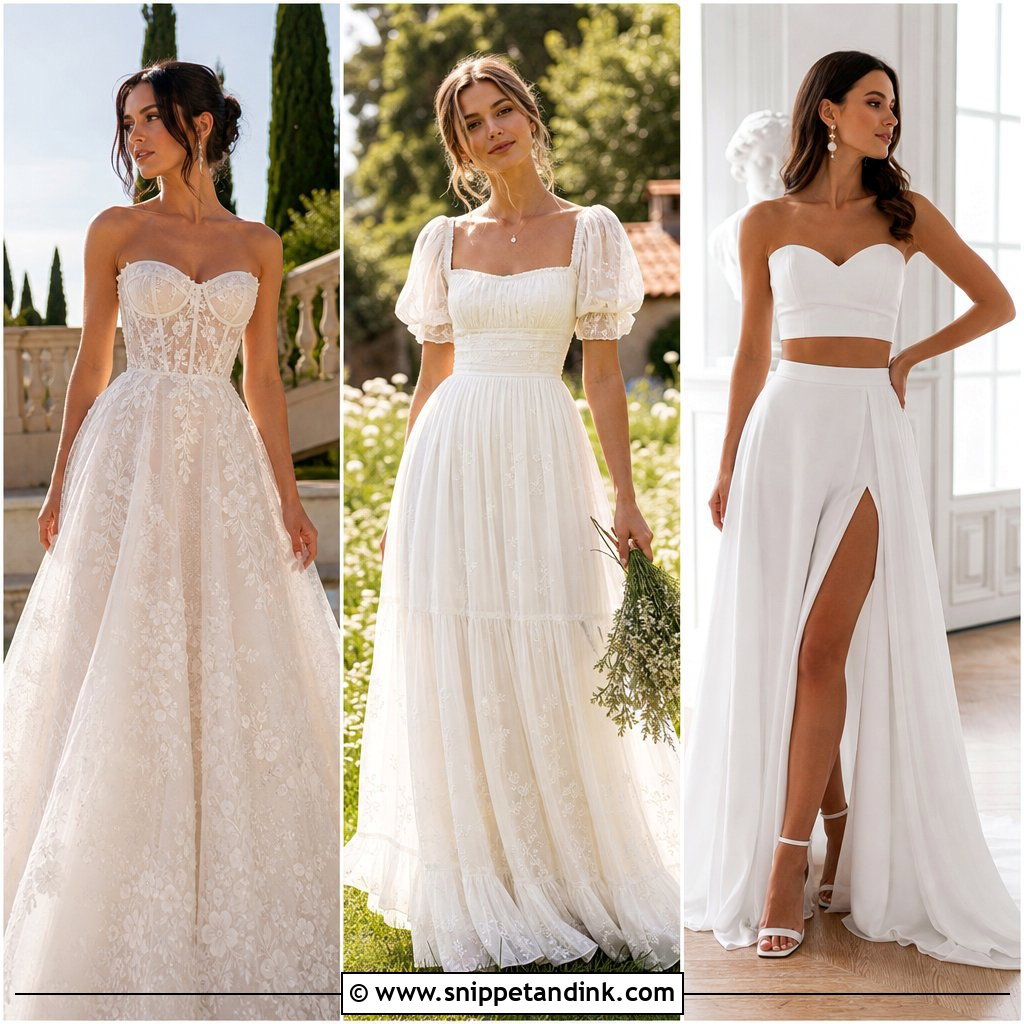
Picture flowers that seem to grow up a sheer neckline and scatter down a layered skirt. Appliqué feels original when the blooms vary in size and spacing; a repeated, evenly spaced motif looks off the roll. An illusion-lined bodice gives coverage, and a flowing A-line keeps the texture from getting heavy. I’d wear satin block heels for grass, small crystal earrings and a clean-edged fingertip veil, so the veil doesn’t snag on raised petals. Keep the bouquet to one or two colours. If you want something personal, a few embroidered flowers for a birth month or a family garden can be added by a skilled seamstress.
3. One-Shoulder Wedding Dress
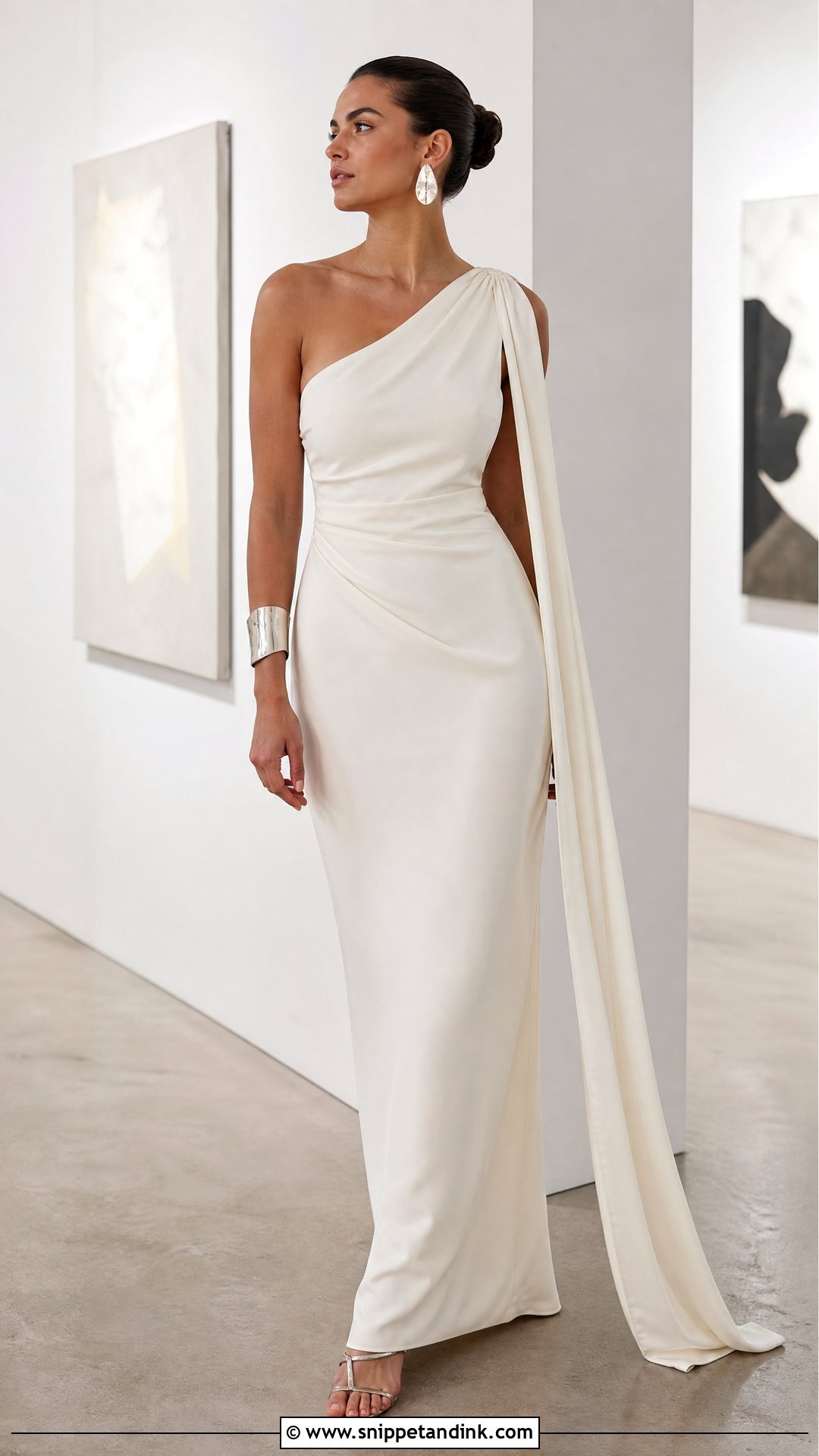
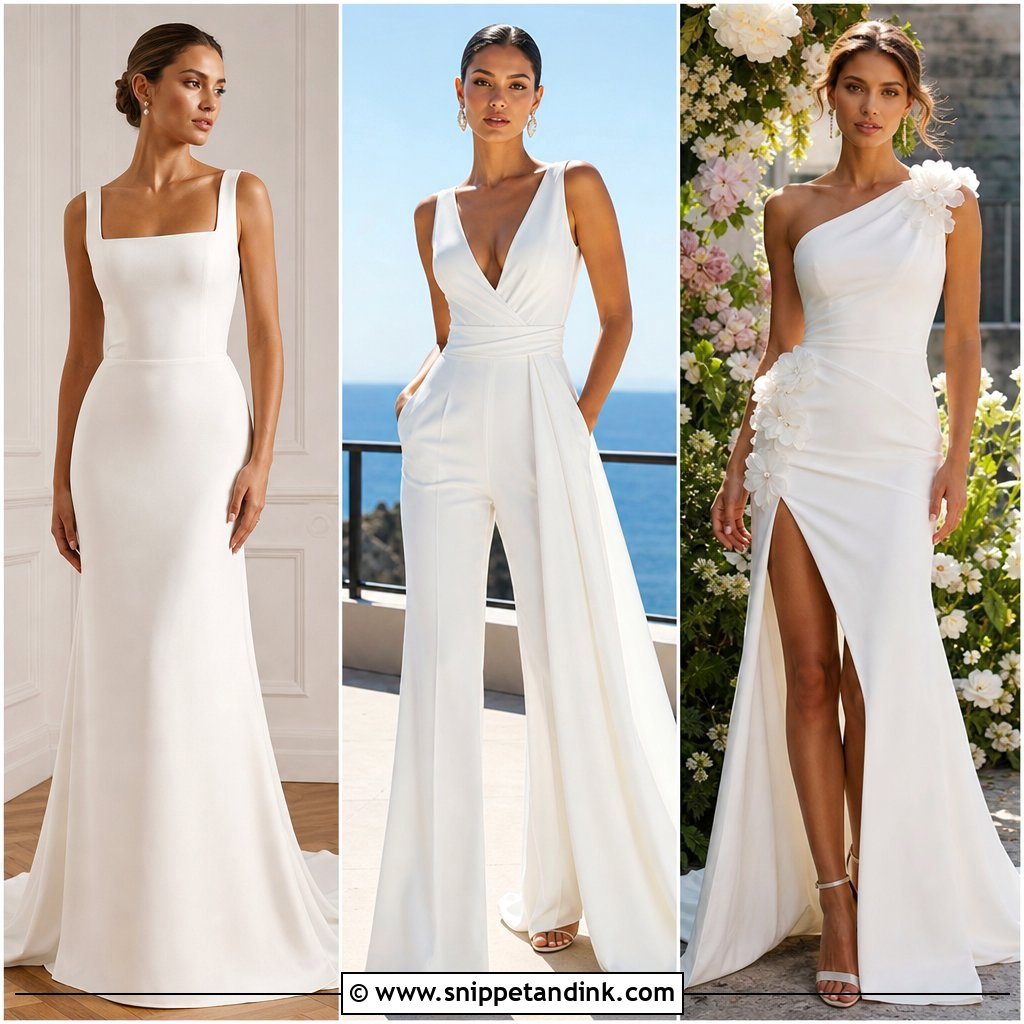
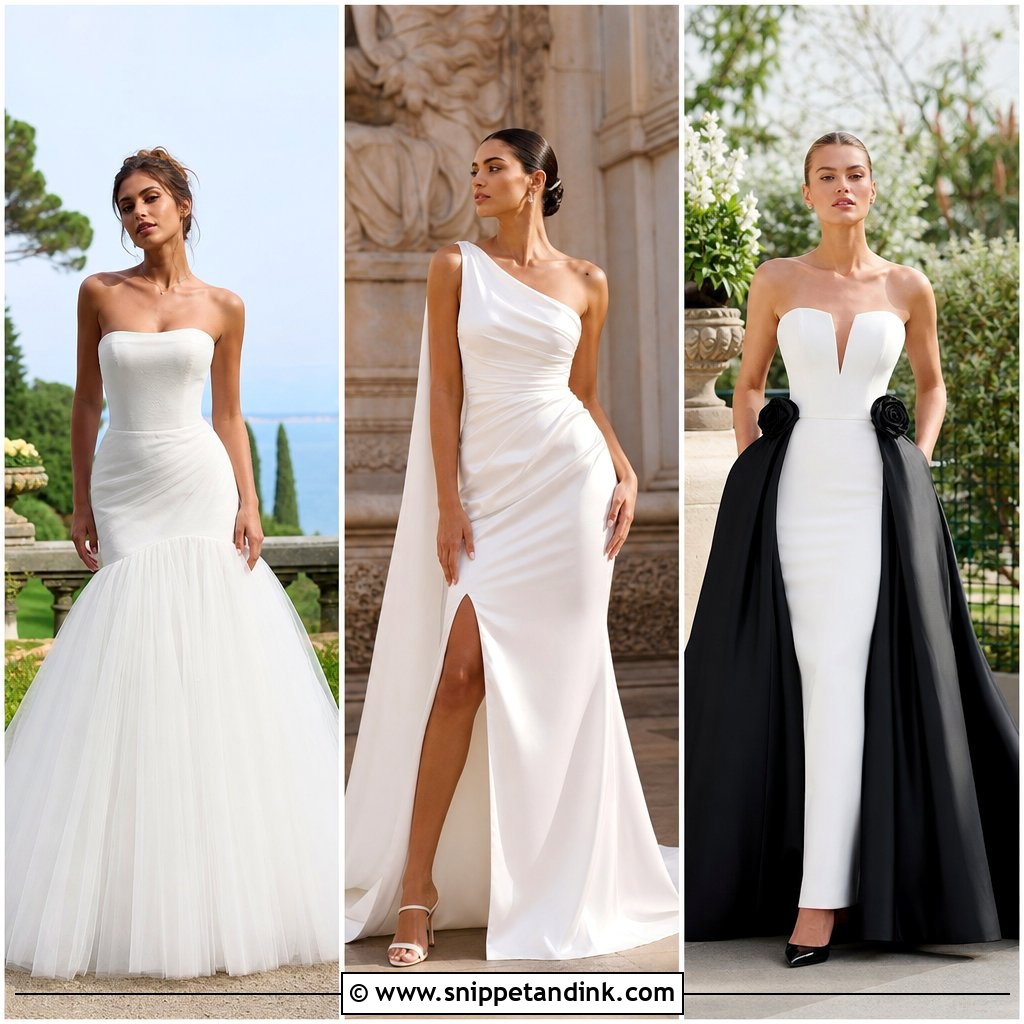
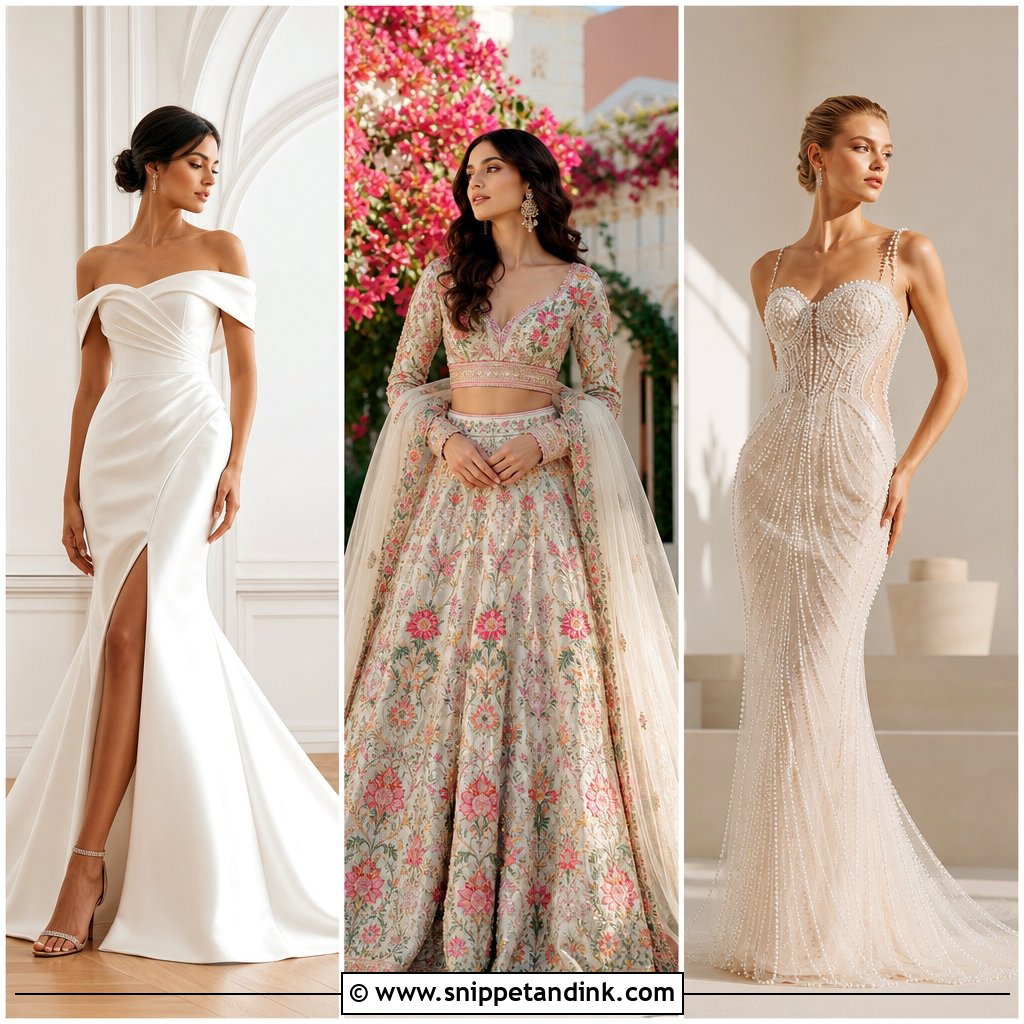
One bare shoulder is enough interest on its own, so I keep everything else very quiet. Matte crepe with soft draping across the bodice and a fitted column skirt is the cleanest version. A detachable shoulder scarf can trail behind like a light train and replaces a traditional veil. Wear one statement earring on the open side, a sculptural cuff and metallic low heels, with the hair swept back. My worry with any one-shoulder gown is slip. Without hidden boning and a firm waist stay, the bodice rotates toward the strap as you move, so check the construction before you check anything else.
4. Cape Sleeve Column Wedding Dress
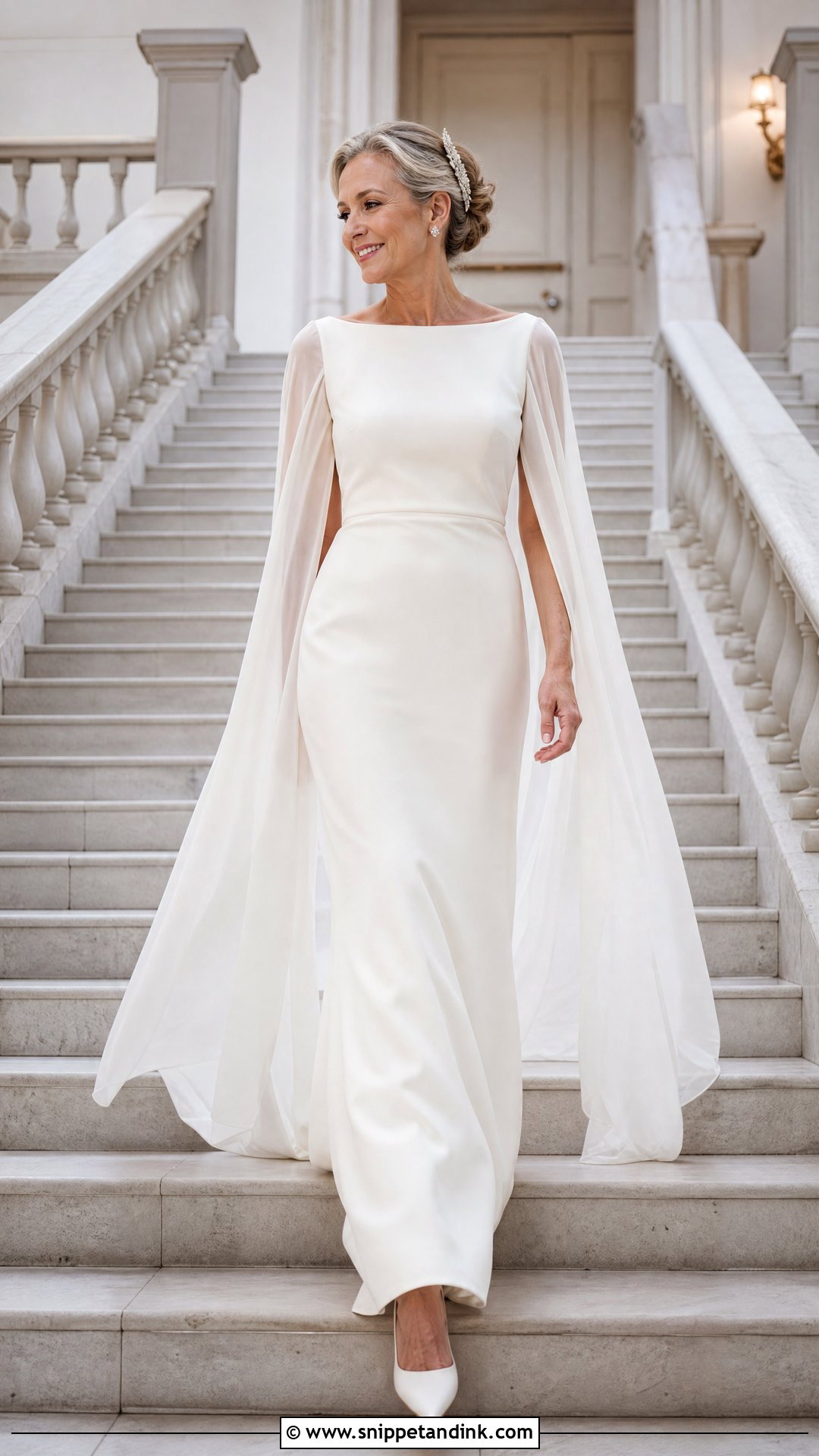
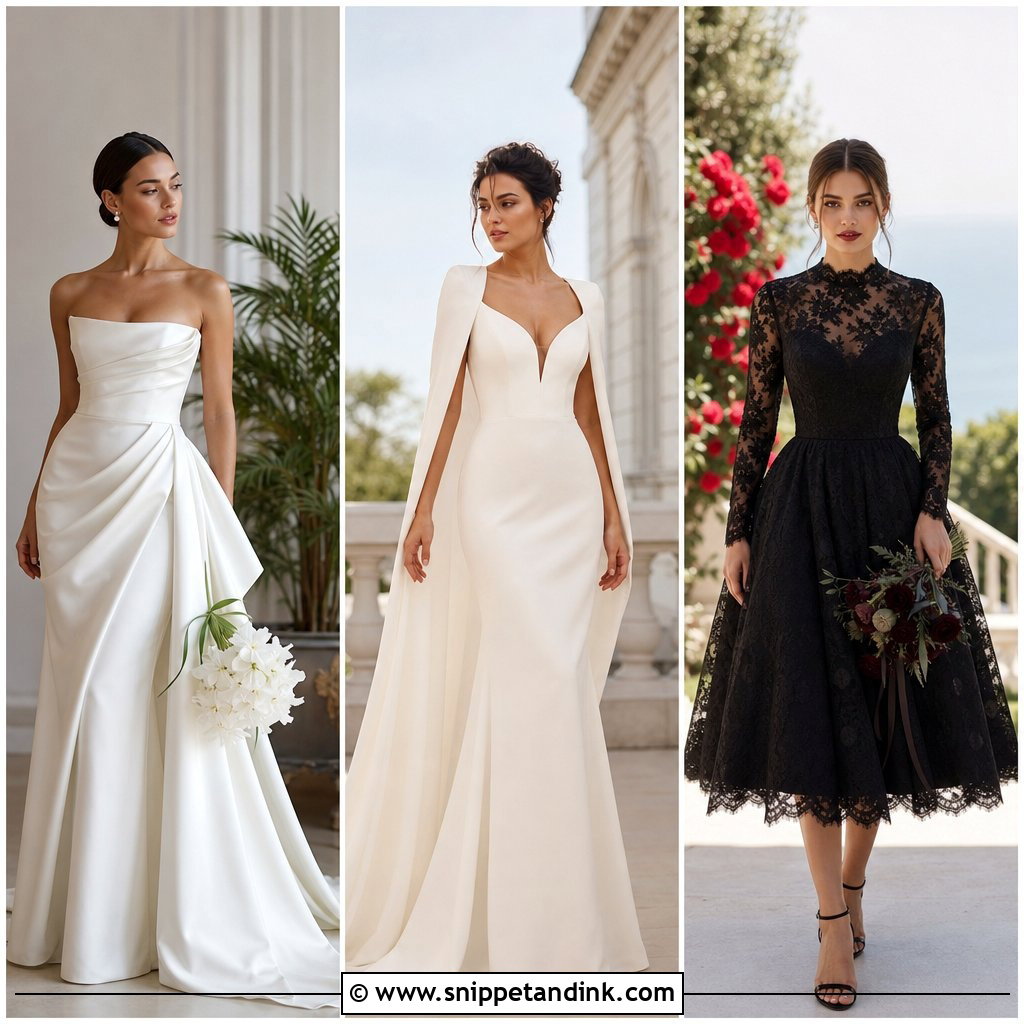
Cape sleeves give a column gown drama and movement without a conventional train. The dress itself can stay almost bare: fluid crepe, a bateau neck and a lightly shaped waist. Sheer chiffon panels falling from the shoulders frame the body and come alive when you walk, especially on stairs. Pointed pumps, studs and a narrow metallic comb finish it. I’d skip a long veil, since chiffon panels and tulle together tend to tangle. Ask whether the cape can detach; heavy chiffon panels get in the way at the dinner table and on the dance floor.
5. Tea-Length Tulle Wedding Dress
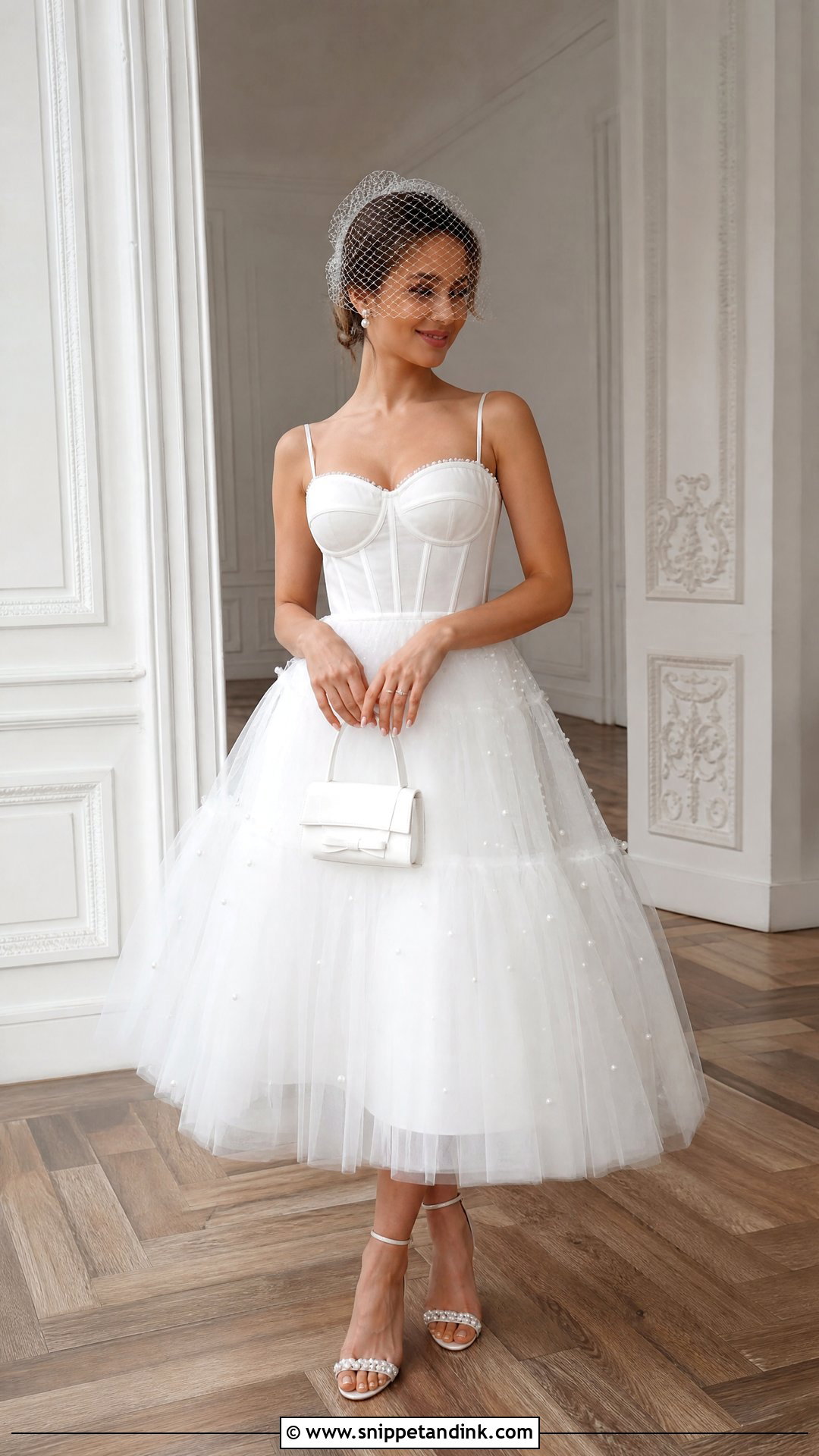
Tea-length feels vintage and a bit playful, and it’s honestly practical for city ceremonies and smaller rooms where a train would just get stepped on. A fitted corset-style bodice over several soft tulle layers, ending between knee and ankle, with a scatter of tiny pearls, keeps it light. The short hem puts your shoes on show, so this is the one look where I’d spend on embellished ankle-strap pumps. A birdcage veil and a small structured bag complete it. Have the hem length decided with your actual shoes on; half an inch changes how the whole skirt sits.
6. Two-Piece Lace Wedding Dress
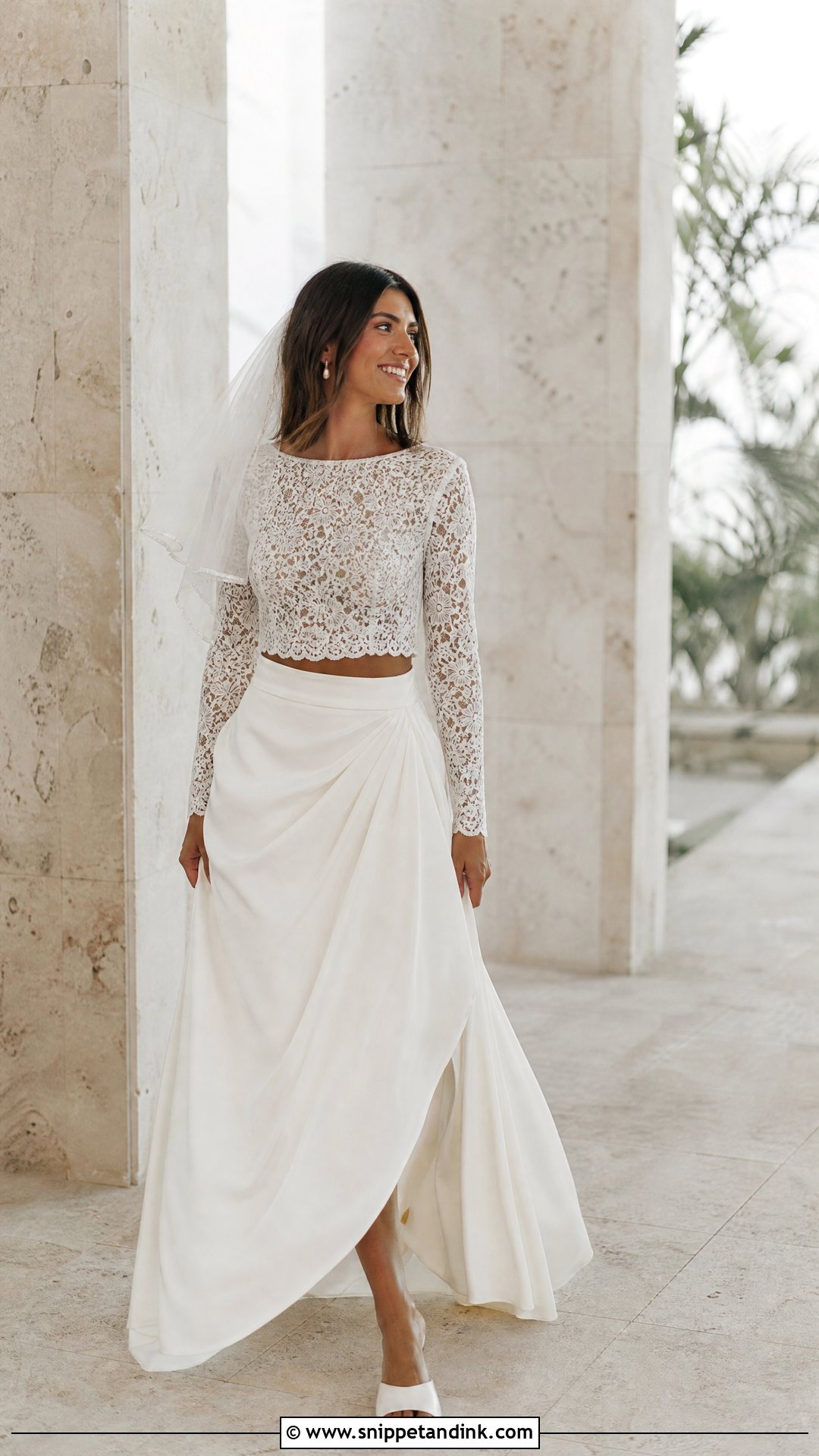
Two-piece looks give you the shape of a gown with much more freedom. A lined lace top over a high-waisted silk or crepe skirt, with a narrow gap or none at all, reads polished; a bateau or square neck keeps the top neat. I like ivory mules, pearl hoops and a shoulder-length veil here. The real advantage comes later in the night, when the skirt can be swapped for tailored trousers without changing the top. Keep both pieces in the same shade family. Ivory lace beside a whiter silk looks like two different shopping trips, and the mismatch is obvious next to your face.
7. High-Neck Victorian Wedding Dress
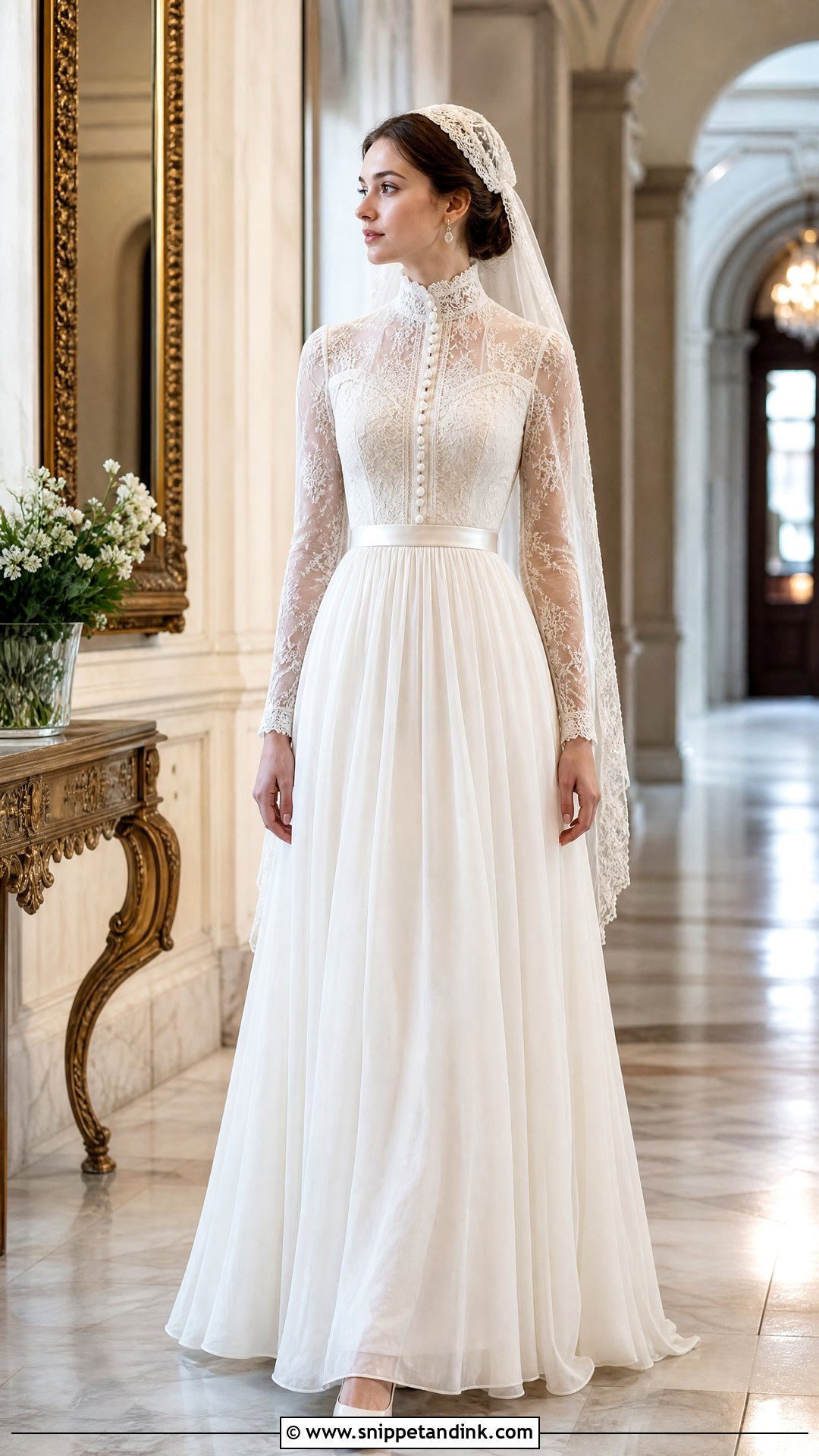
A high neck can feel romantic instead of stiff if the fabric stays light. I’d look for a gown with a lace mock neck, fitted long sleeves and a soft chiffon skirt, with a solid lining through the bodice and sheer lace only at collar and cuffs. A Juliet cap veil worn low suits it, along with velvet or satin pumps and small antique-style earrings. A narrow ribbon at the waist adds a little definition. This is a natural fit for autumn and winter. Resist extra ruffles; one intricate lace pattern carries the look, and two start to fight.
8. Oversized Bow Wedding Dress
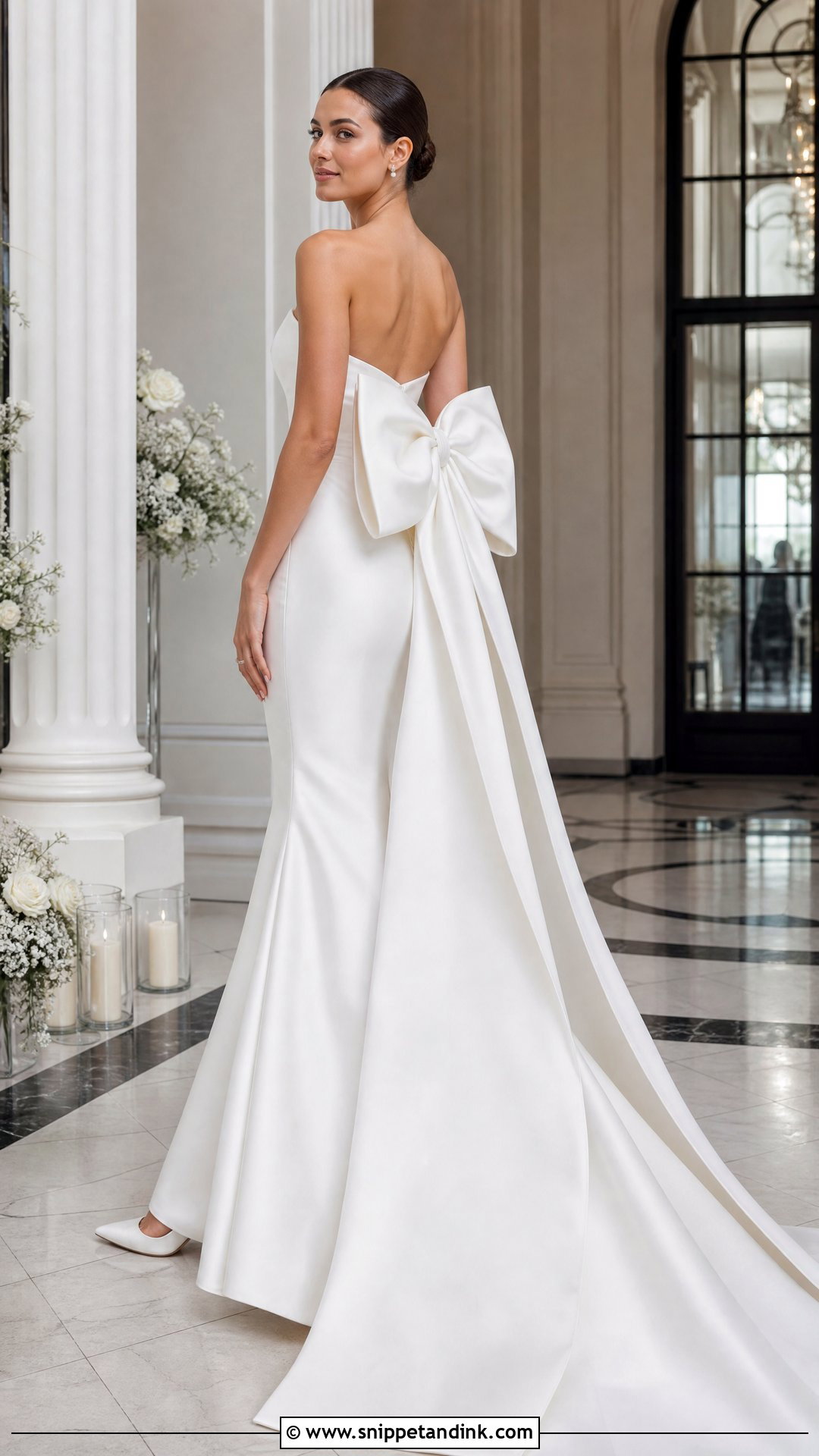
A single oversized bow can carry a whole gown, provided nothing else competes with it. Start with a strapless or square-neck satin fit-and-flare and attach the bow at the back waist so its tails run into the train. Then keep the rest restrained: pointed satin heels, modern pearl studs and a smooth low bun. A short veil or none at all stops the back from looking crowded. Practically, I insist the bow is detachable. Sitting on a large satin bow through dinner flattens it, and it’s much easier to dance without one.
9. Pleated Chiffon Wedding Dress
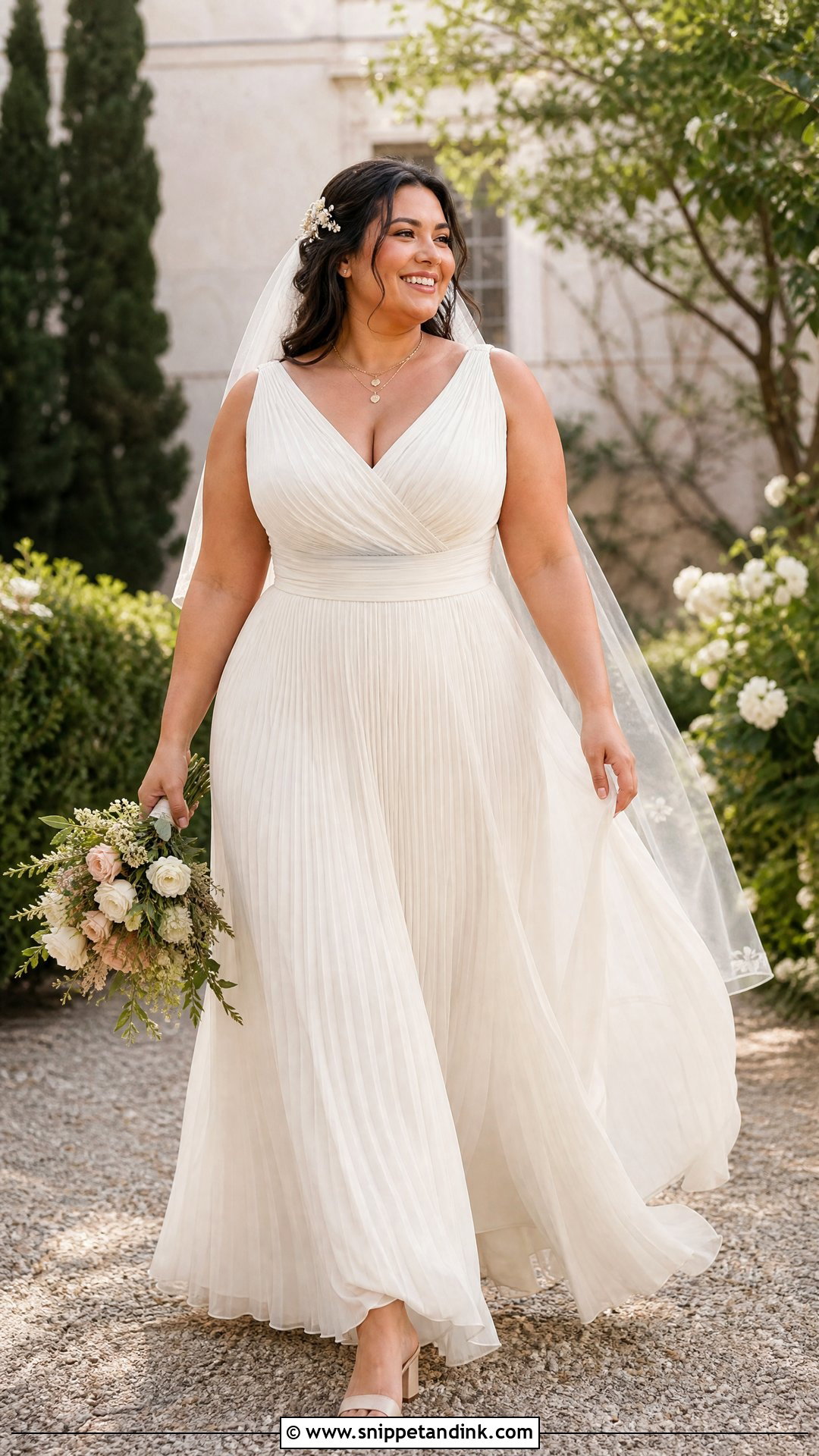
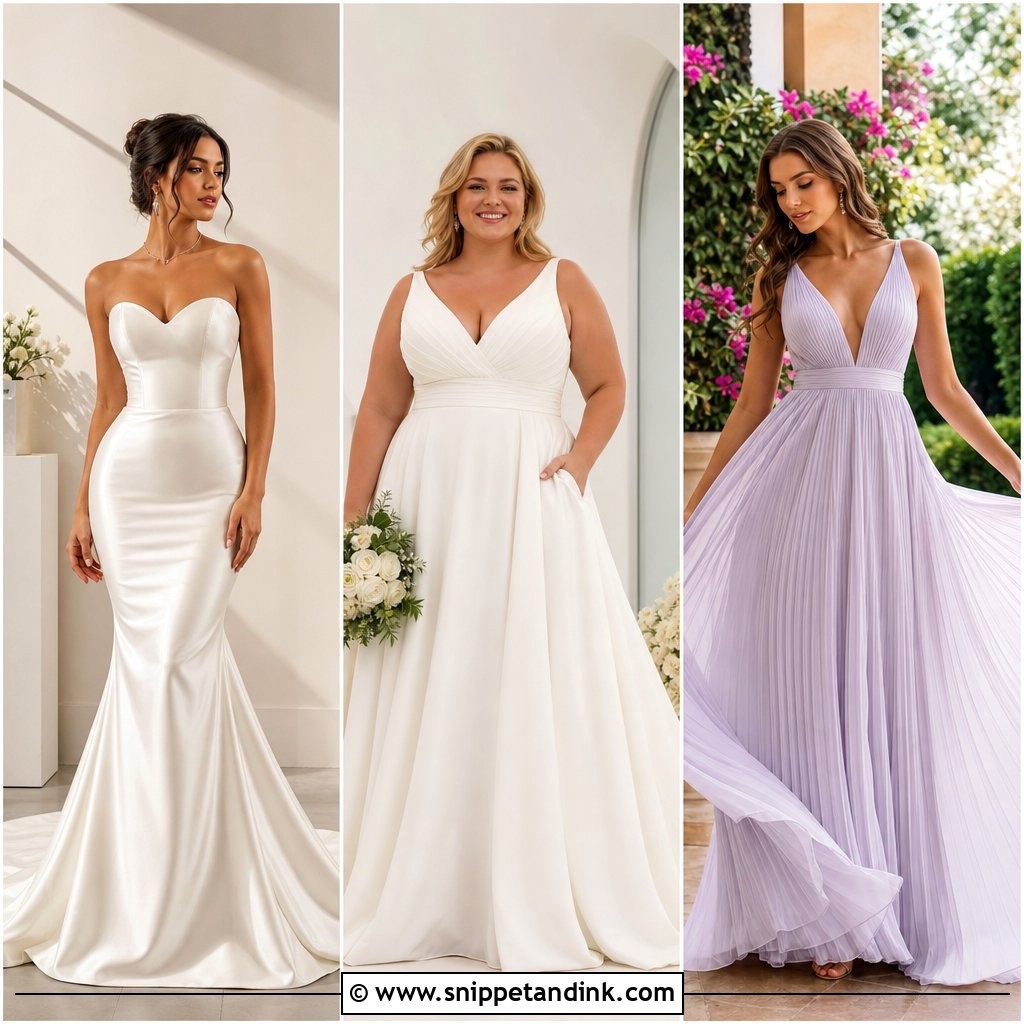
Fine pleats bring texture without beading, and chiffon pleats move with every breath of wind, which is exactly why they work at beach and garden weddings. A softly gathered bodice, a defined waistband and a modest V or crossover neck keep it relaxed. Low block heels, delicate layered necklaces and a veil ending near the waist suit the flow, with a loose updo and a few small floral pins. Chiffon is slightly transparent, so I always check the lining outdoors in full sun, not just in the shop. A proper lining keeps the finish smooth without losing the lightness.
10. Square-Neck Corset Wedding Dress
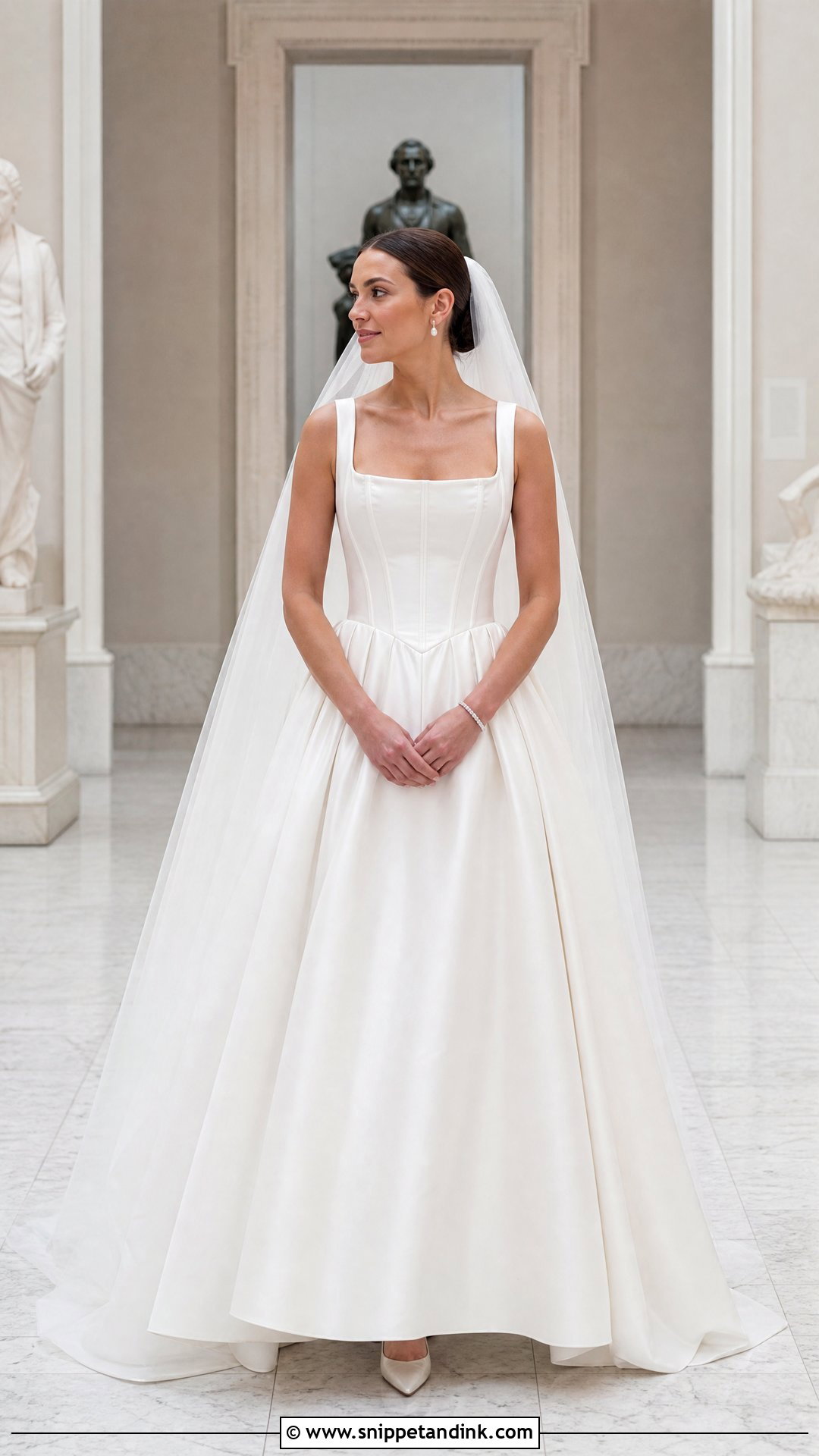
A square neckline frames the collarbones and gives a corseted wedding dress a clean, balanced look. I prefer a bodice with visible seamwork, proper boning and wide straps over a deeply cut neckline. Underneath, a full silk skirt with subtle gathers or inverted pleats. Closed-toe pumps, pearl earrings and a long, minimally edged veil are all it needs. The shape adapts to most figures as long as the bodice proportions are cut for you rather than straight off the sample. At alterations, sit down and raise your arms. A good corset supports you; it shouldn’t stop you breathing through the speeches.
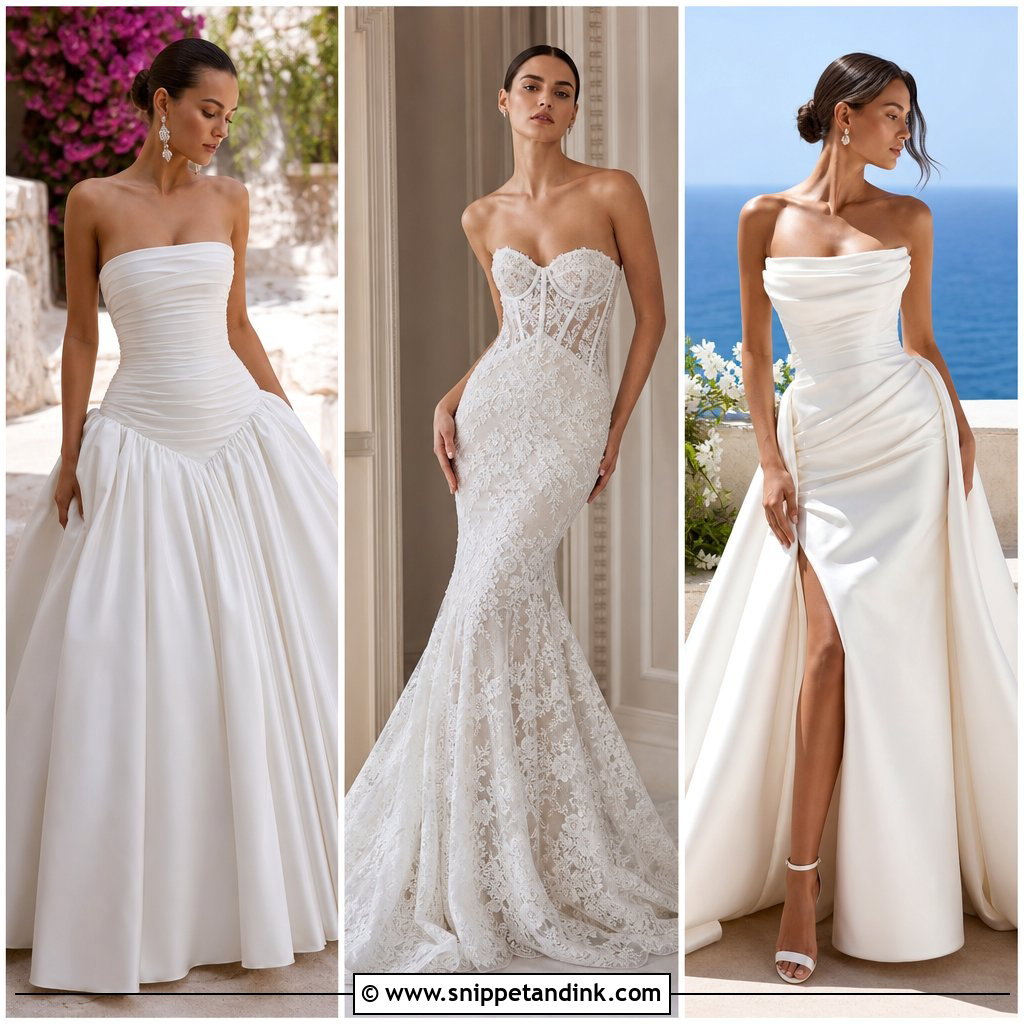
11. Drop-Waist Tulle Wedding Dress
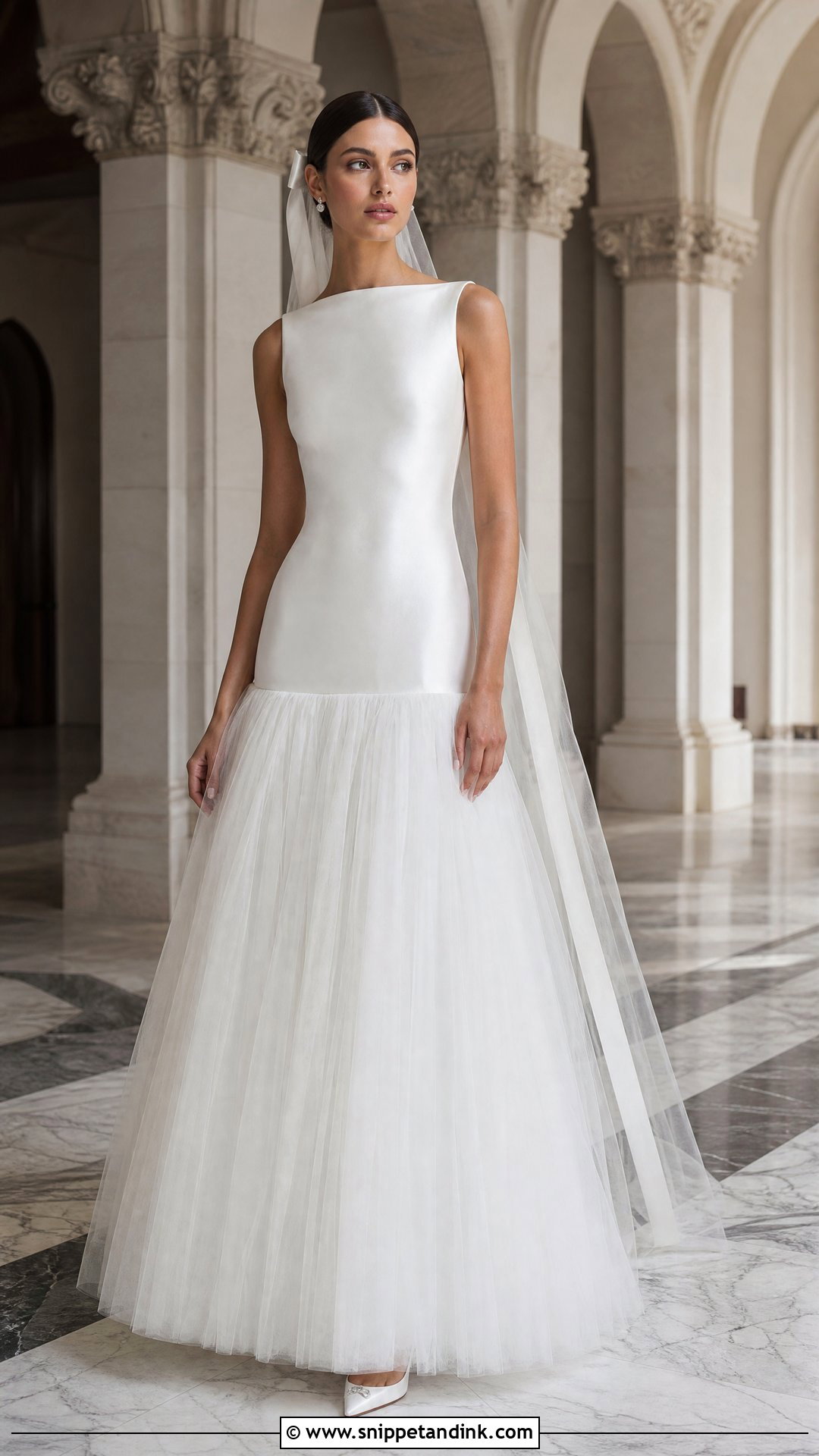
The drop waist runs a long, smooth satin bodice down toward the upper hip before tulle bursts out below it. That contrast between structure and softness is what makes it feel fashion-led rather than traditional. Slim kitten heels, crystal studs and a narrow ribbon-edged veil keep it sharp, and a compact bouquet won’t hide the waistline. Waist placement changes everything here, so I have brides try several lengths before deciding. A slightly higher drop tends to suit shorter frames, while a longer bodice plays up height. If the hips feel tight when you sit, the drop is too low or too narrow.
12. Colorful Embroidered Wedding Dress
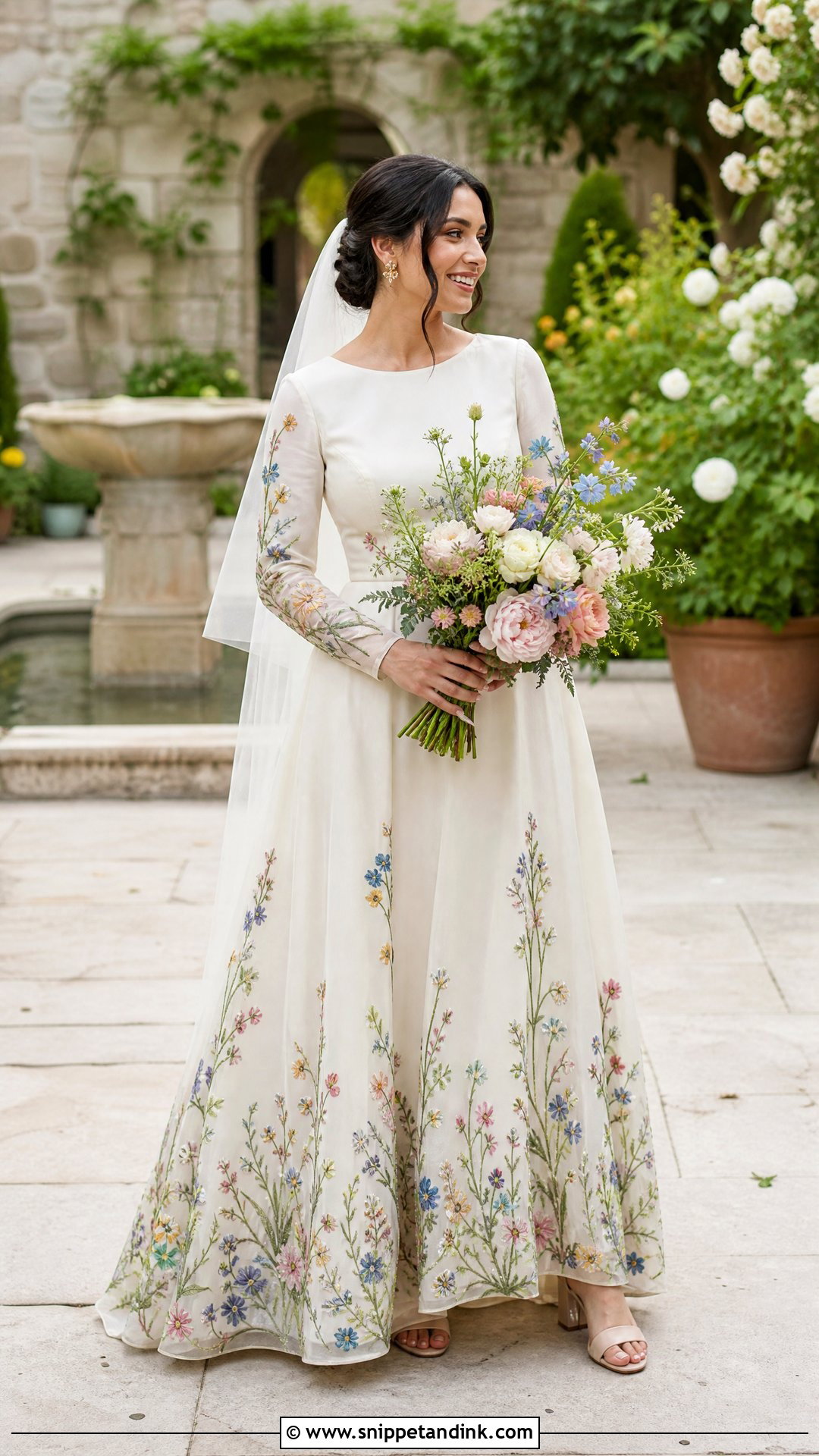
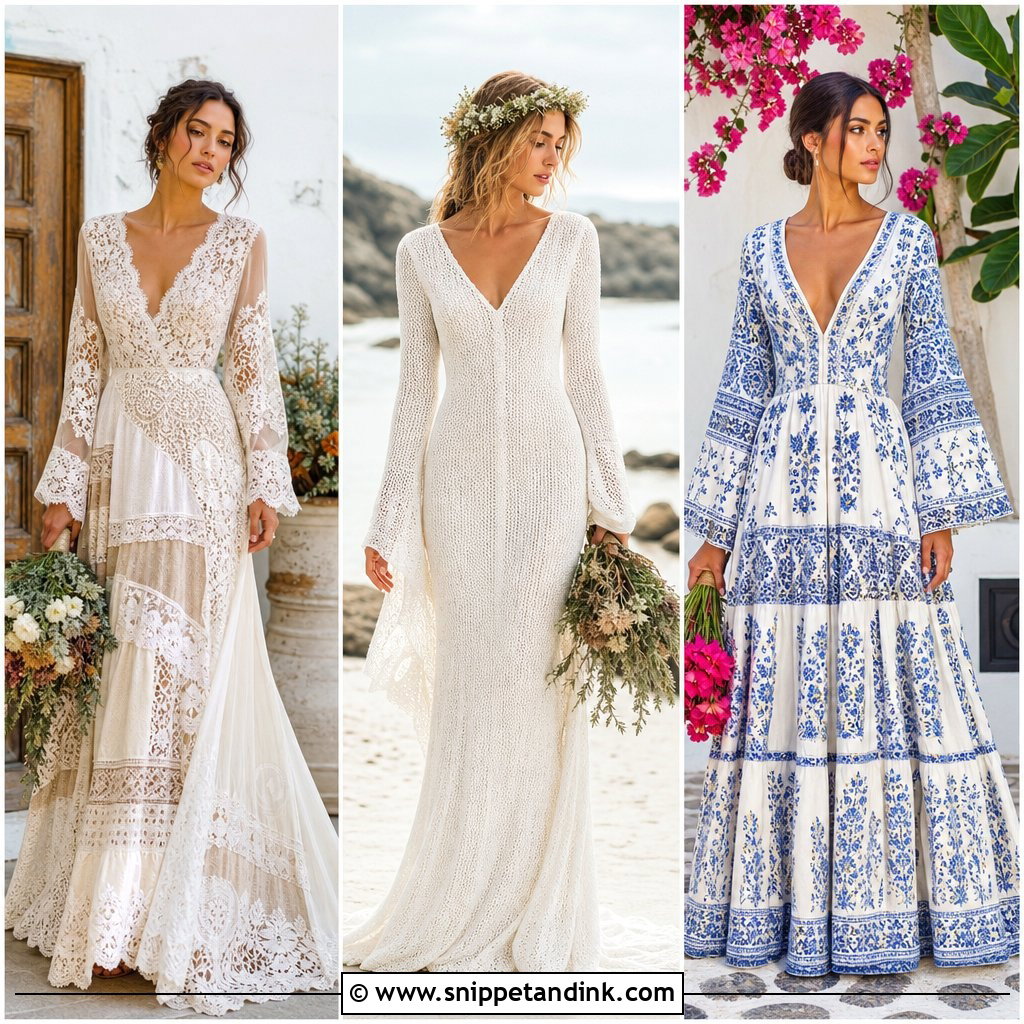
Colour in the embroidery is one of the most personal changes you can make while keeping an ivory base. I’d concentrate the stitching at the hem, sleeves or back of an A-line rather than spreading it evenly, since a little colour reads as intentional and a lot reads as costume. Muted blue, soft green, dusty pink or gold thread all work. Keep the shoes neutral, the earrings simple and the tulle veil plain so the stitching stays visible, and pick one or two thread colours for the bouquet. Custom motifs can stand for a home state or a family flower. Always ask for a full-size stitch sample and look at it in daylight before the order is placed.
13. Pearl Beaded Slip Wedding Dress
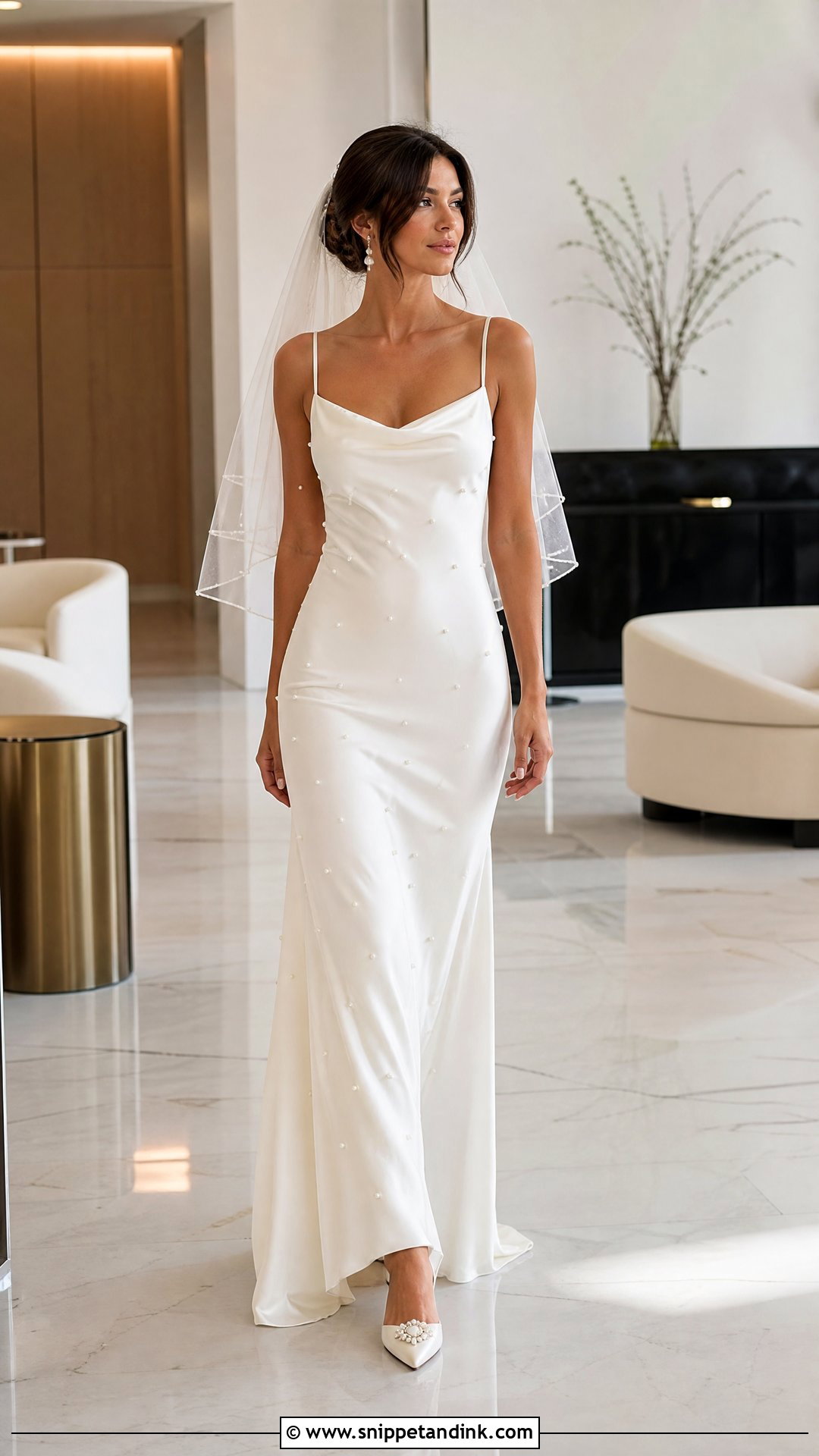
Scattered pearls turn a plain slip into something nobody else will be wearing. Look for bias-cut satin with a gently draped neck, delicate straps and pearls clustered at the bodice before thinning toward the hem. Pointed mules, pearl drops and a sheer elbow veil keep it light. Bias satin is unforgiving: it skims when it’s fitted well and clings to every seam when it isn’t, so I’d budget for an experienced alterations specialist and smooth, line-free underwear. Adjustable straps help set the neckline exactly. For a cold arrival, a tailored white coat covers you without hiding the dress all evening.
14. Detachable Overskirt Wedding Dress
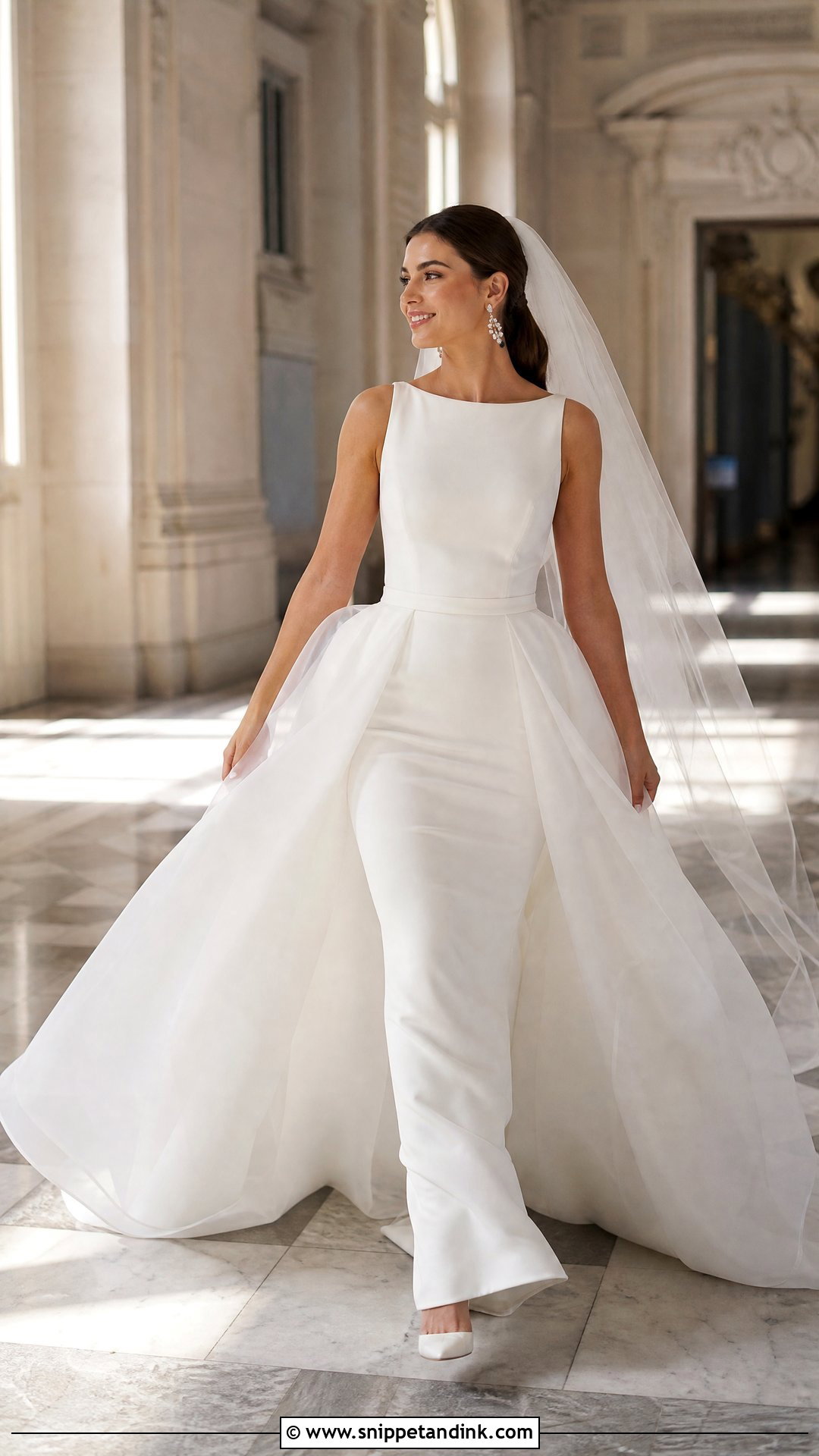
An overskirt turns one dress into two looks. Underneath sits a fitted crepe gown with a clean neckline and a little stretch; on top, a full organza or satin skirt fastened at the natural waist for the ceremony, worn with a long veil and crystal earrings. After the photos, both skirt and veil come off. What I check first is the fastening, which should lie flat and disappear from every angle, including from behind. Practise removing it at a fitting with whoever will help on the day. The overskirt should look like it belongs to the base dress, matched in colour and finish, not an afterthought pinned on.



15. Crochet Lace Wedding Dress
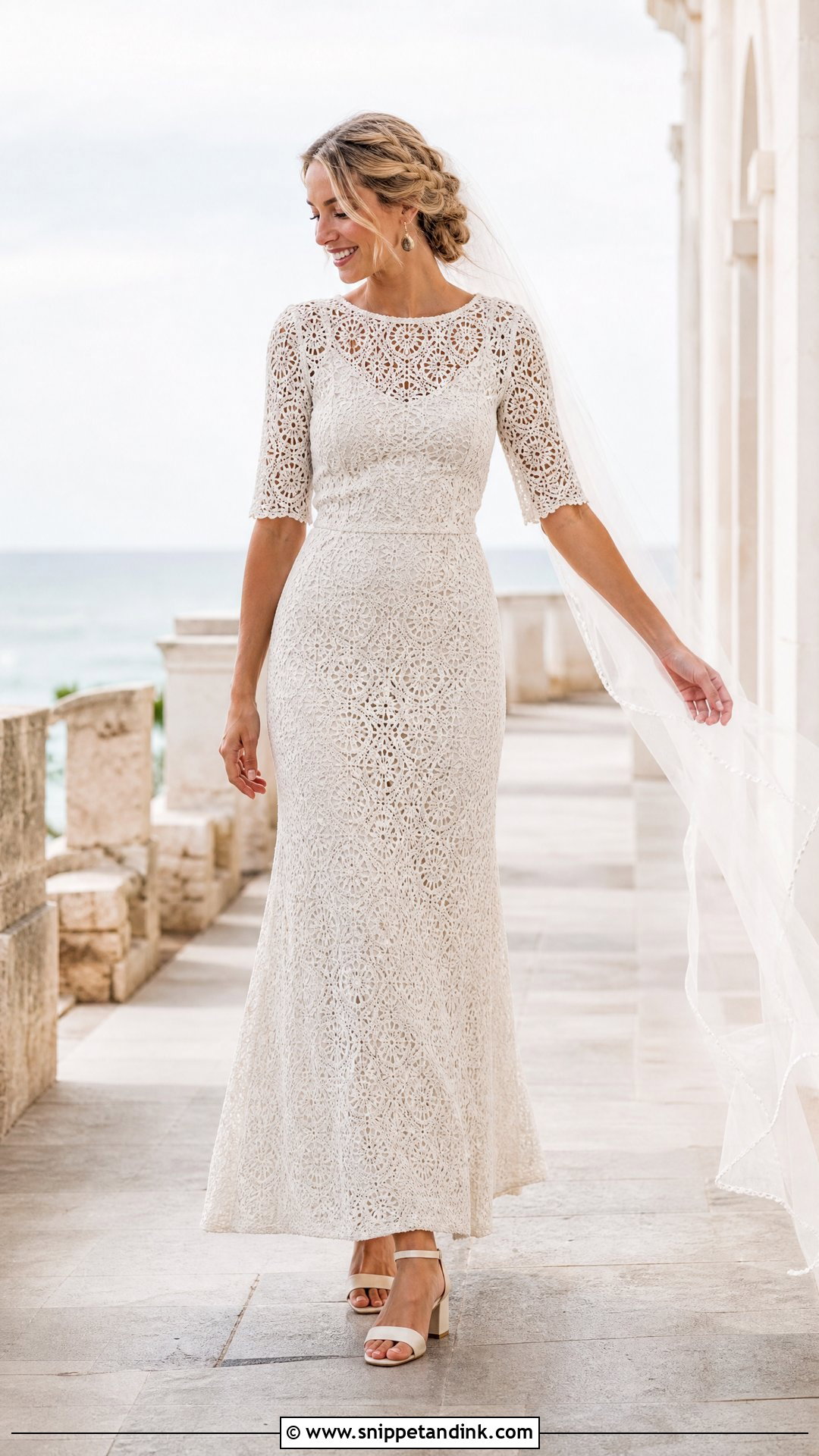
Crochet-style lace feels handmade, which is why it suits outdoor, coastal and desert weddings so well. A lined, fitted bodice with long or elbow sleeves and a softly flared skirt is the classic cut, and bigger motifs look modern beside a simple neckline. Leather or satin block heels, textured gold earrings and a raw-edge veil keep it relaxed; a loose braided updo suits it without tipping into theme. The detail I check is pattern matching. Large motifs need to line up across seams, and a mismatch at centre back is very hard to miss. A lining in your skin tone or matching ivory keeps the texture visible.
16. Metallic Jacquard Wedding Dress
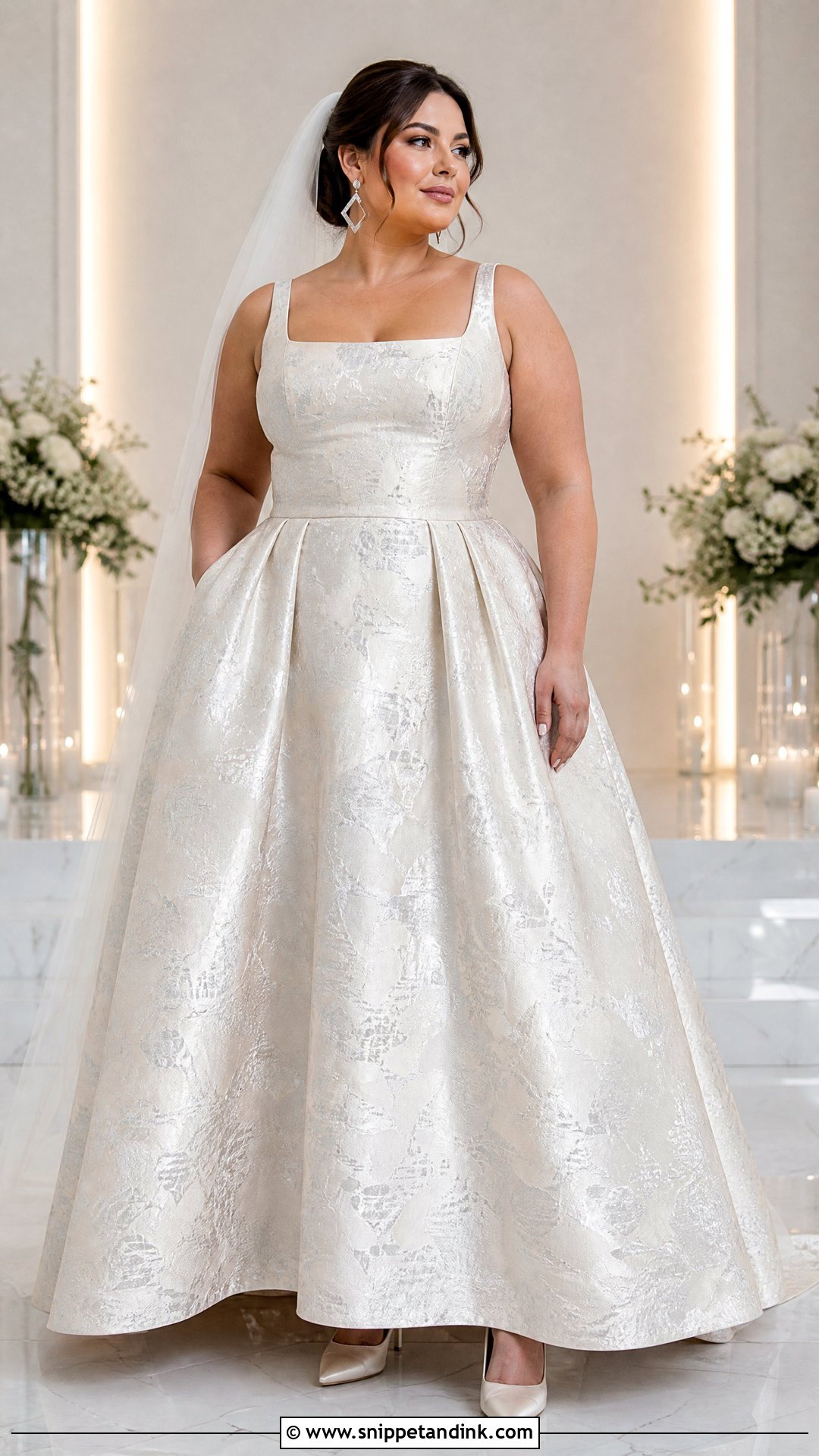
Metallic thread woven into jacquard gives depth without a single crystal. A structured gown with a square neck, fitted waist and full skirt shows the pattern best, and silver, pale gold or pearl tones should look woven in rather than printed on. Keep the shoes understated, the earrings small and the veil short of the train. Evening venues with clean, bright lighting bring the metallic out. Jacquard is stiff and holds its shape, so check that the skirt gives you enough room to stride. Hidden pockets can be set into the side seams without breaking that architectural line.
17. Draped Halter Wedding Dress
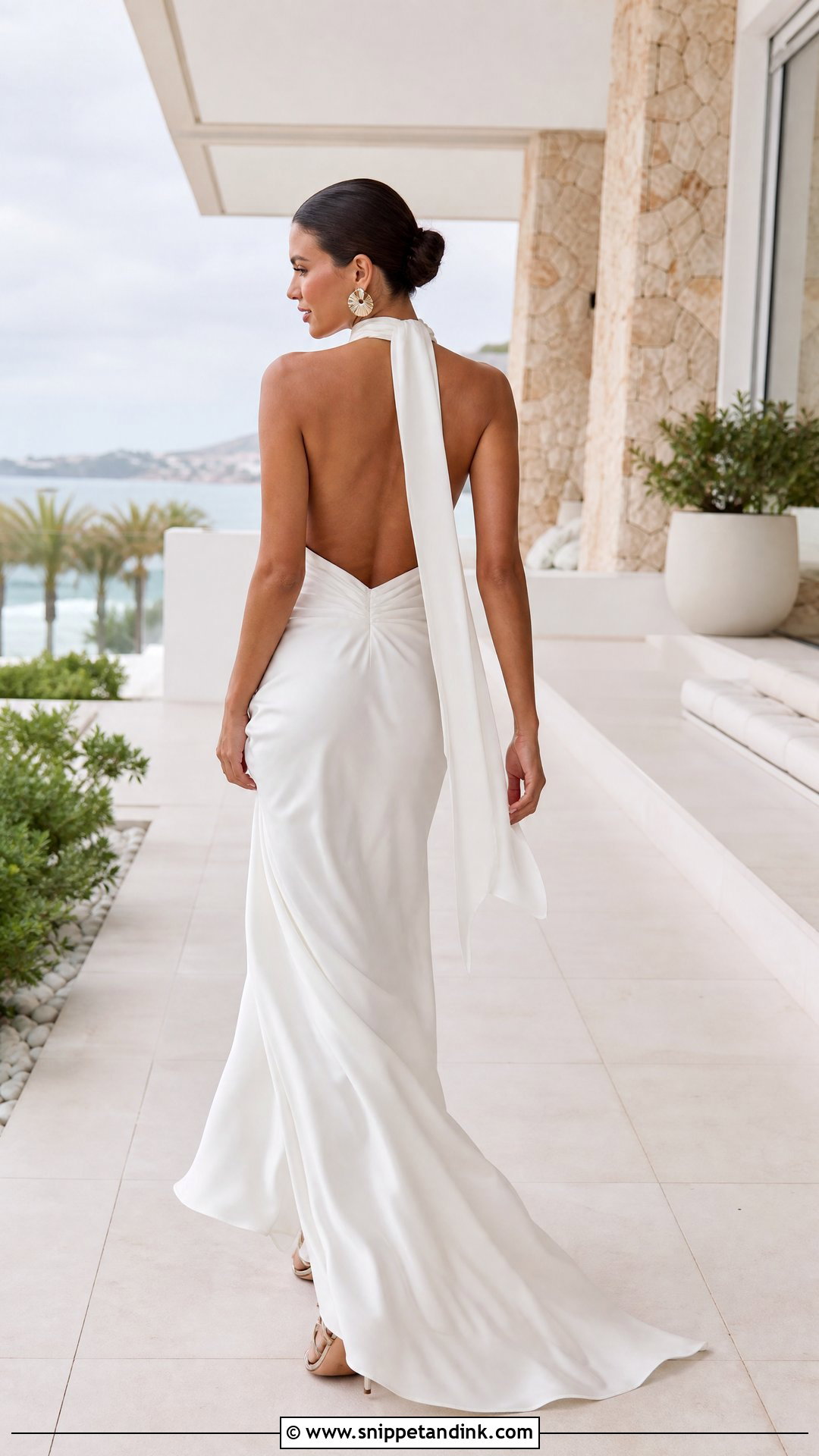
A draped halter shows off the shoulders and is a sleek alternative to strapless construction. Fluid silk with soft draping at the neck, a defined waist and an open or gently cowled back suits beaches, resorts and summer venues. A narrow detachable scarf at the neck adds movement. Low metallic sandals, sculptural earrings and a bun or ponytail keep the neckline clear. Halters are less forgiving than they look, though, because the neck carries the weight. I check that the strap lies flat and doesn’t pull when you turn your head or bend to greet a guest, and that the skirt allows a full stride.
18. Feather Trim Midi Wedding Dress
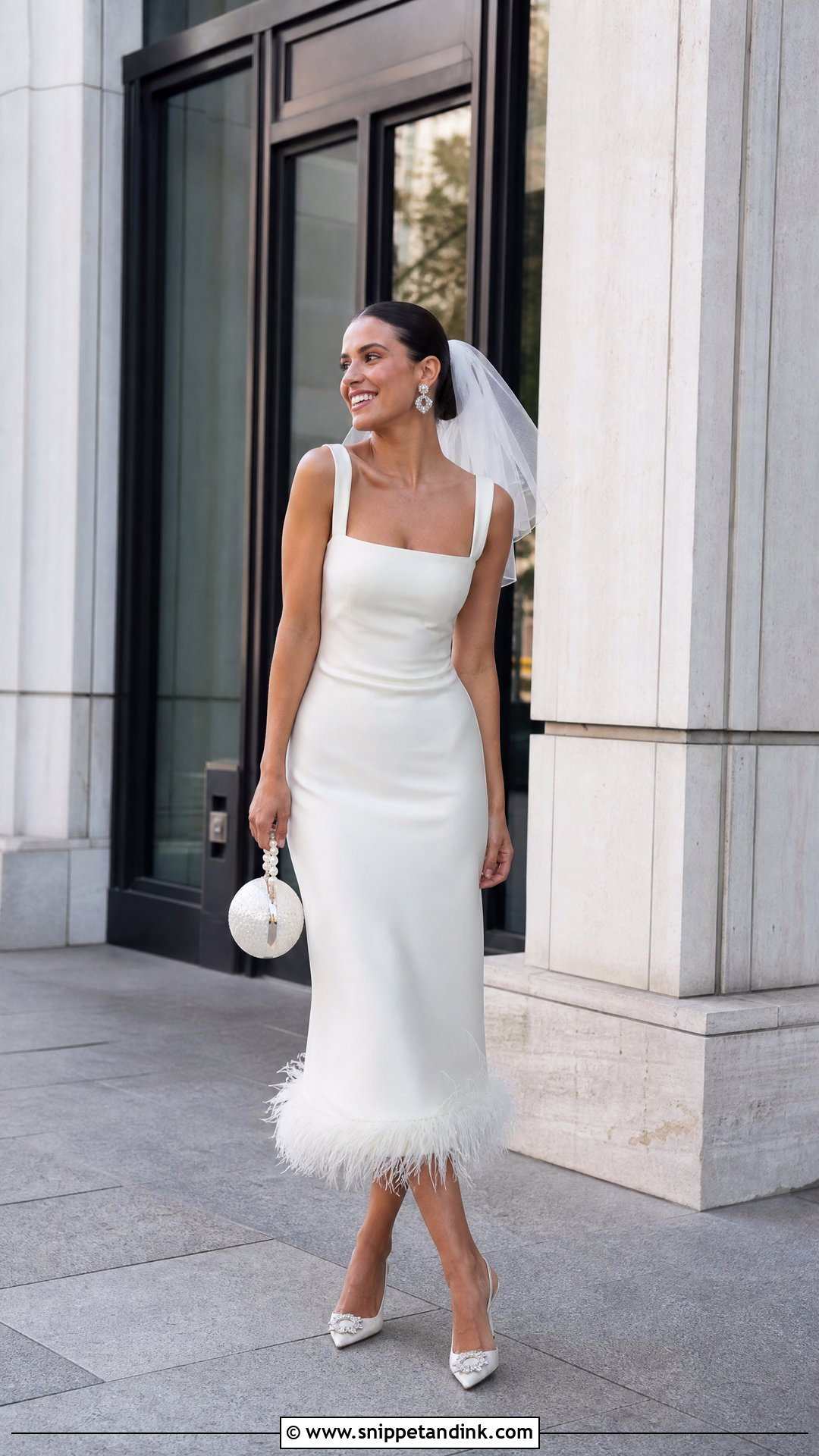
A feather-trimmed midi is the most playful dress on this list and works best for city ceremonies, smaller celebrations or a reception change. Keep the base clean, crepe or satin with a straight neck and supportive straps, and put the soft feather trim only at the hem or cuffs. Crystal slingbacks, a compact pearl bag and statement earrings suit it, plus a short veil for a clearly bridal note. Feathers shed and catch, especially on stairs and rough flooring. A removable feather band is the practical choice, and lighter, neatly spaced plumes look refined where dense ones tip into costume.
19. Convertible Jumpsuit Wedding Dress
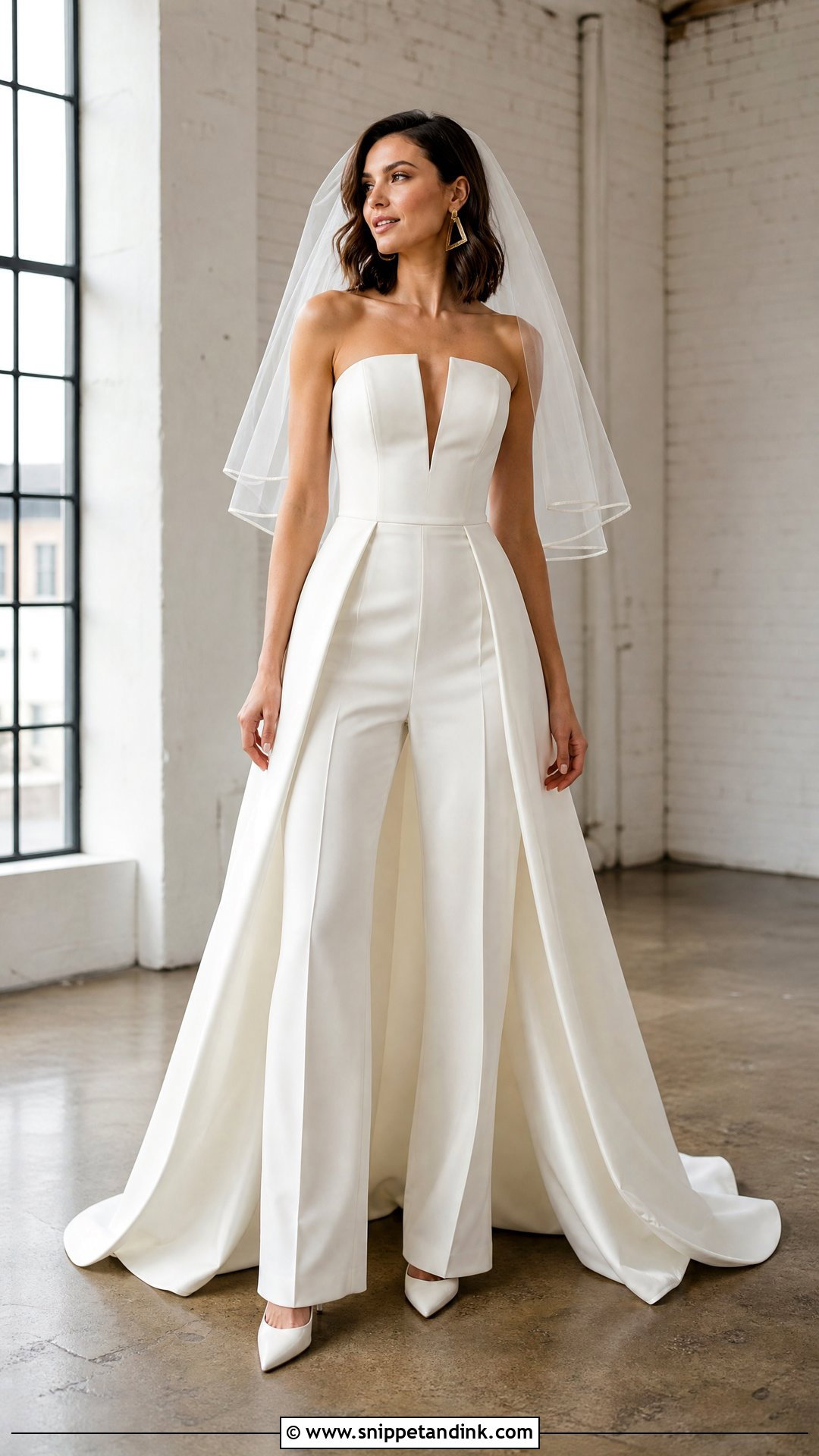
Jumpsuits with a detachable skirt give you tailoring for the party and a proper entrance for the ceremony. The base is a structured ivory jumpsuit with a fitted bodice and wide trousers; a wraparound overskirt opening at the front keeps the trousers and shoes in view. Pointed heels, a shoulder-length veil and geometric earrings suit lofts and contemporary venues. When I hem the trousers, I do it in the wedding shoes, so they skim the floor without dragging. The overskirt must attach securely, and both pieces should be cut from the same fabric lot, otherwise the tones drift apart in flash photos.


20. Redesigned Vintage Wedding Dress
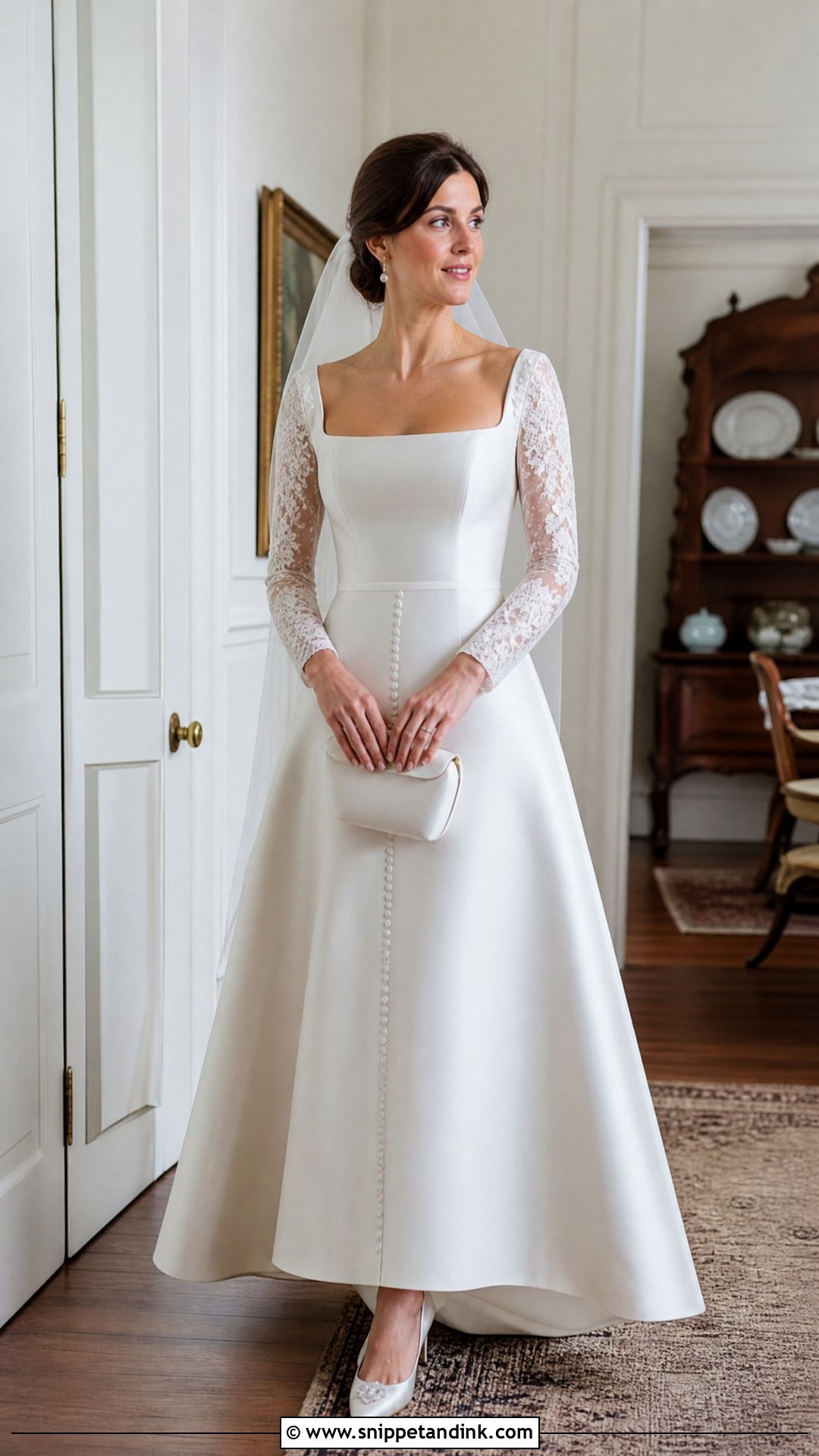
Redesigning a family or secondhand gown is often the most original route of all. I’d keep one recognisable feature, perhaps the lace sleeves, covered buttons or an embroidered skirt, and update the neckline, lining, waist or train around it. Modern pointed pumps, simple earrings and a clean veil let the vintage piece stand out. A structured clutch can carry a scrap of the original fabric or a family keepsake. Old seams and lace are often weaker than they look, so find a tailor who handles older textiles. Photograph the gown before anyone cuts, and keep every offcut.
Three Routes to a One-Off Dress, and the Calendar Each One Needs
Original details come from somewhere: an alteration, a made-to-order change or a fully custom piece. Each takes a different amount of time, and the timings below are typical rather than fixed, since every maker works differently.
Altering a ready gown
Adding pockets, a detachable bow, a few appliqués or a new strap can usually happen within normal alterations, which most seamstresses start around two to three months before the wedding. It’s the quickest and usually the most affordable route, but ask early, because extra work means extra fittings.
Made-to-order with changes
Most designer gowns are ordered several months ahead, and production alone can take four to six months. Requests like coloured thread, a different neckline or added sleeves often extend that, and hand embroidery adds weeks. I’d place these orders nine months or more out where possible, and get every change written onto the order.
Fully custom or a reworked heirloom
Custom gowns and heirloom redesigns need the longest runway, often close to a year, because there’s a pattern, a toile and several fittings. With an older dress, have it assessed first. Some fabrics are too fragile to recut, and it’s far better to learn that before you’ve planned the whole look around it.
Your Saved Favourites Probably Share One Detail
A dress that breaks the usual formula still has to support your body and suit the room you’re marrying in. From architectural satin and coloured embroidery to convertible layers and reworked vintage lace, every gown here does something a little unexpected. Save the ones that stop you scrolling, then look for what they have in common: a neckline, a waist position, a fabric or a level of decoration. Take that list to your appointments rather than a designer name. And at every one, walk and sit in the dress. If it’s memorable but you can’t enjoy dinner in it, it isn’t the one.
You'll Like These Ideas:




Leave a Reply