
Most brides I dress settle the gown first and treat the veil as an afterthought, then realize it’s the piece that shows in nearly every photo taken from behind. A custom veil fixes that, because you control the length, the tulle and the one detail that makes it yours. Stitched names, cathedral lengths, pearl tulle and plain modern edges are all being requested right now, and every one of them can work. What decides it is how the veil sits with the back of your gown, your hairstyle and the room you’re marrying in. Below are the ideas I talk brides through most often, with what each one needs to look right.
How Much Time a Custom Veil Really Needs
Custom veils take longer than most brides expect. A simple cut-edge veil can be made fairly quickly, but anything embroidered, beaded or trimmed by hand usually needs two to three months, and timelines vary from maker to maker, so ask before you fall for a design. I tell brides to order once the gown is chosen and its exact color confirmed, but before the final fitting, so the veil arrives in time to try on with the altered dress.
Silk tulle or nylon tulle
Silk tulle is soft, falls close to the body and has a natural warm tone, but it costs considerably more and creases more easily. Nylon and polyester tulle are crisper, hold a fuller shape and come in more shades. For a long veil meant to pool and flow, silk behaves better. For a puffy blusher or a veil carrying heavy embroidery, a firmer tulle supports the work without sagging.
Measuring for length
Length is measured from where the comb will sit, not from the top of your head. Wear your wedding shoes, have someone hold a tape at the comb point and let it fall down your back to where you want the veil to end. Then take that number to the maker along with these:
- A fabric swatch or a clear daylight photo of your gown
- Photos of the back of the dress, including the train
- Your planned hairstyle, so the comb is set up for it
- The exact spelling, dates or handwriting for any embroidery
1. Embroidered Name Custom Veil
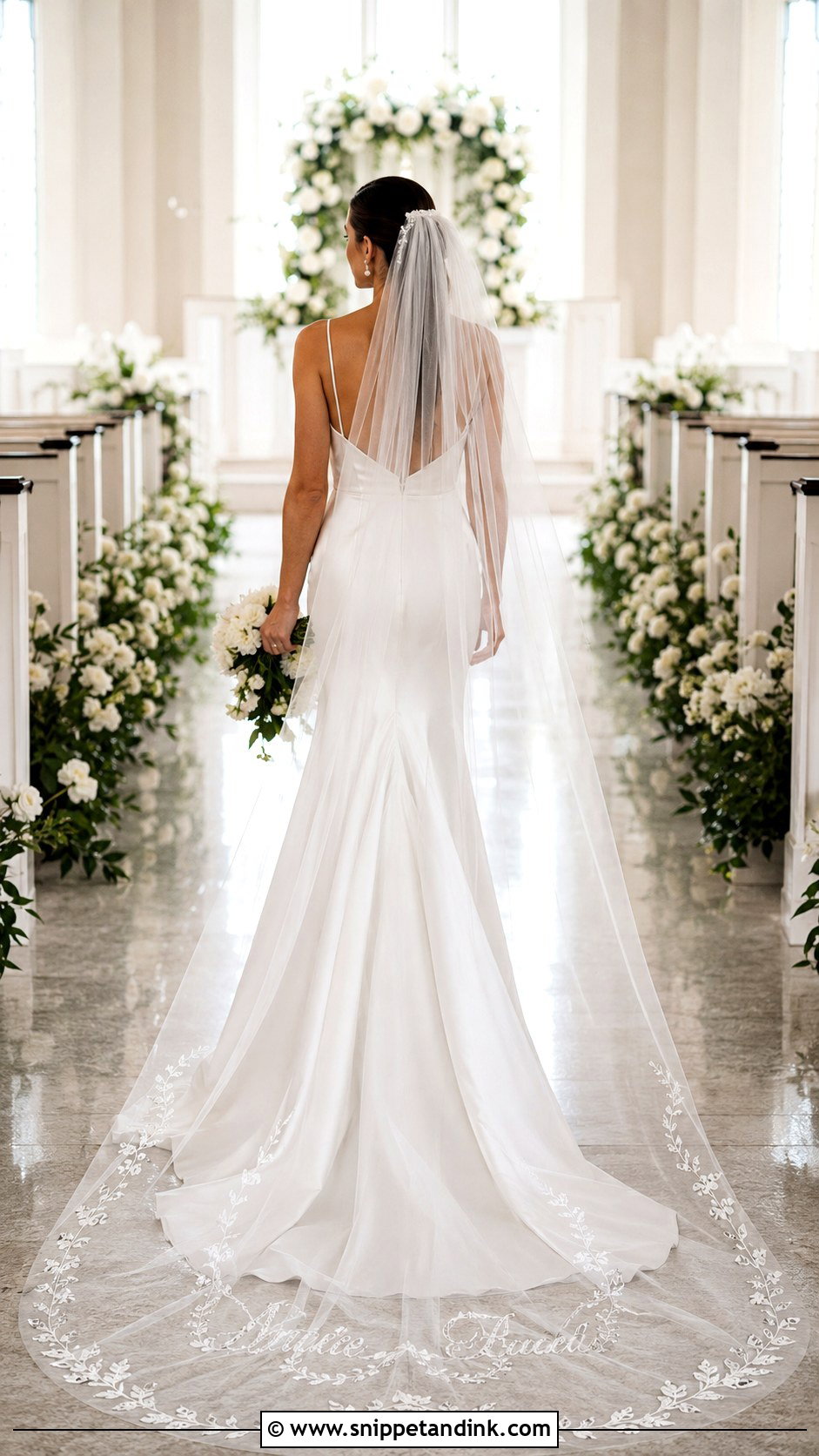
Stitching a name along the lower edge works when the lettering is sized for the distance it will be seen from. On the train, letters need real height to read in a ceremony photo; under the comb they can be tiny, because only you will know they’re there. I usually suggest ivory or champagne thread that sinks into the tulle, and save pale blue, silver or gold for wording that’s meant to be noticed. Ask whether the maker backs the embroidery, since unbacked stitching on fine tulle can pucker. Plain crepe, satin and slip gowns give the lettering room, so keep earrings small.
2. Wedding Date Custom Veil
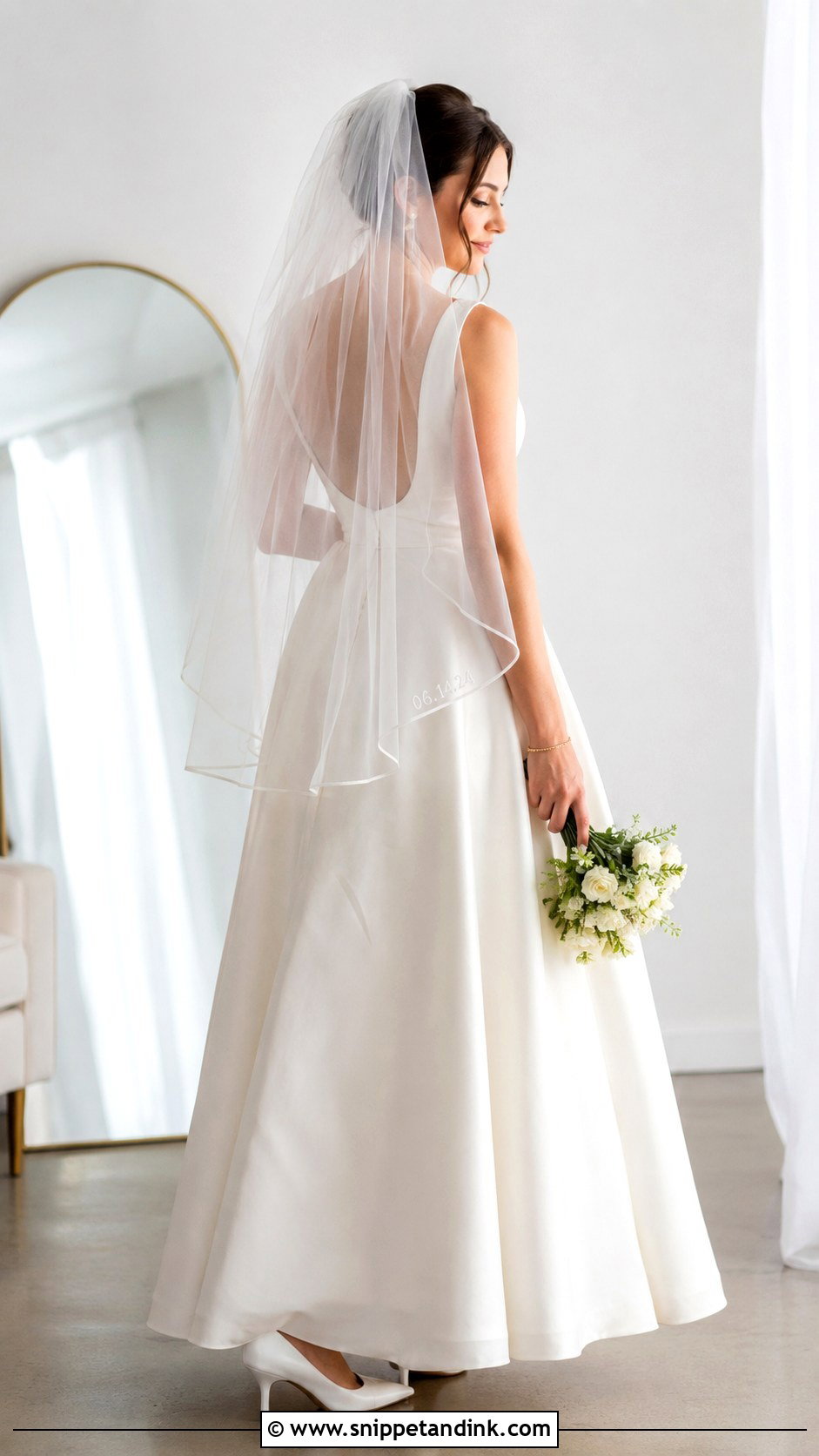
Dates are the easiest embroidery to get right because they’re short. Plain numerals read cleanly at a distance. Roman numerals look more formal but run long, so write out the full string before you commit. I like a date tucked under the comb as a private keepsake, or stitched at the very end of a cathedral veil where the photographer catches it during the walk. With a heavily beaded gown, keep the stitching small and the edge plain cut. Satin, mikado and off-the-shoulder lace all suit it, and the date is what makes the veil worth keeping afterwards.
3. Handwritten Message Custom Veil
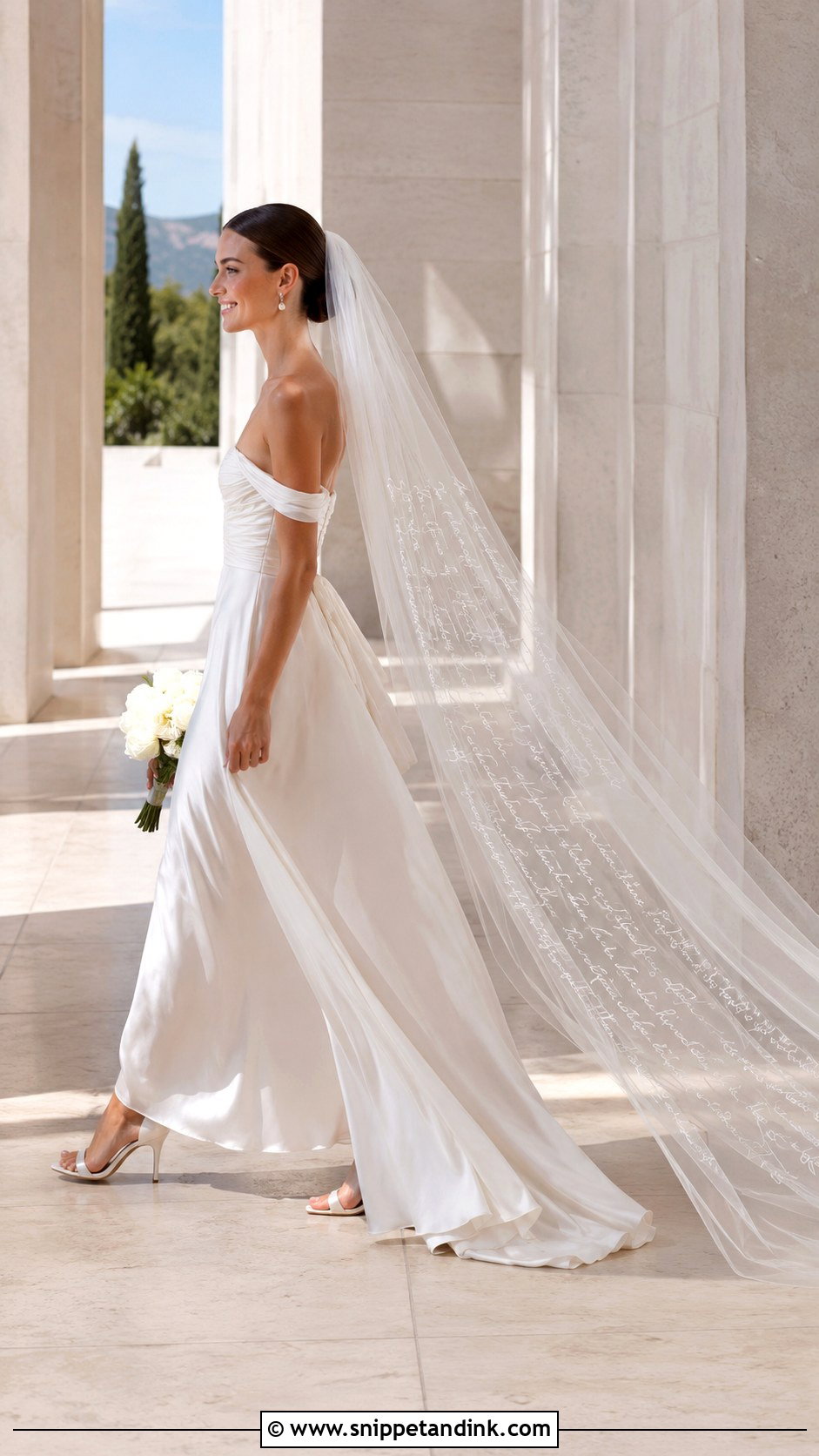
To get real handwriting onto tulle, the maker scans the note and digitizes it into a stitch file. Send a clear scan written in dark pen on white paper; thin or shaky strokes lose detail once they’re stitched, and a confident, slightly larger hand comes out best. Keep it to a short line from your vows or a note from your partner, placed on the lower train or side edge where it can be photographed laid flat. Soft tulle and organza gowns suit it. Thread matched to the dress keeps it delicate, and pale blue doubles as your something blue.
4. Pearl Custom Veil
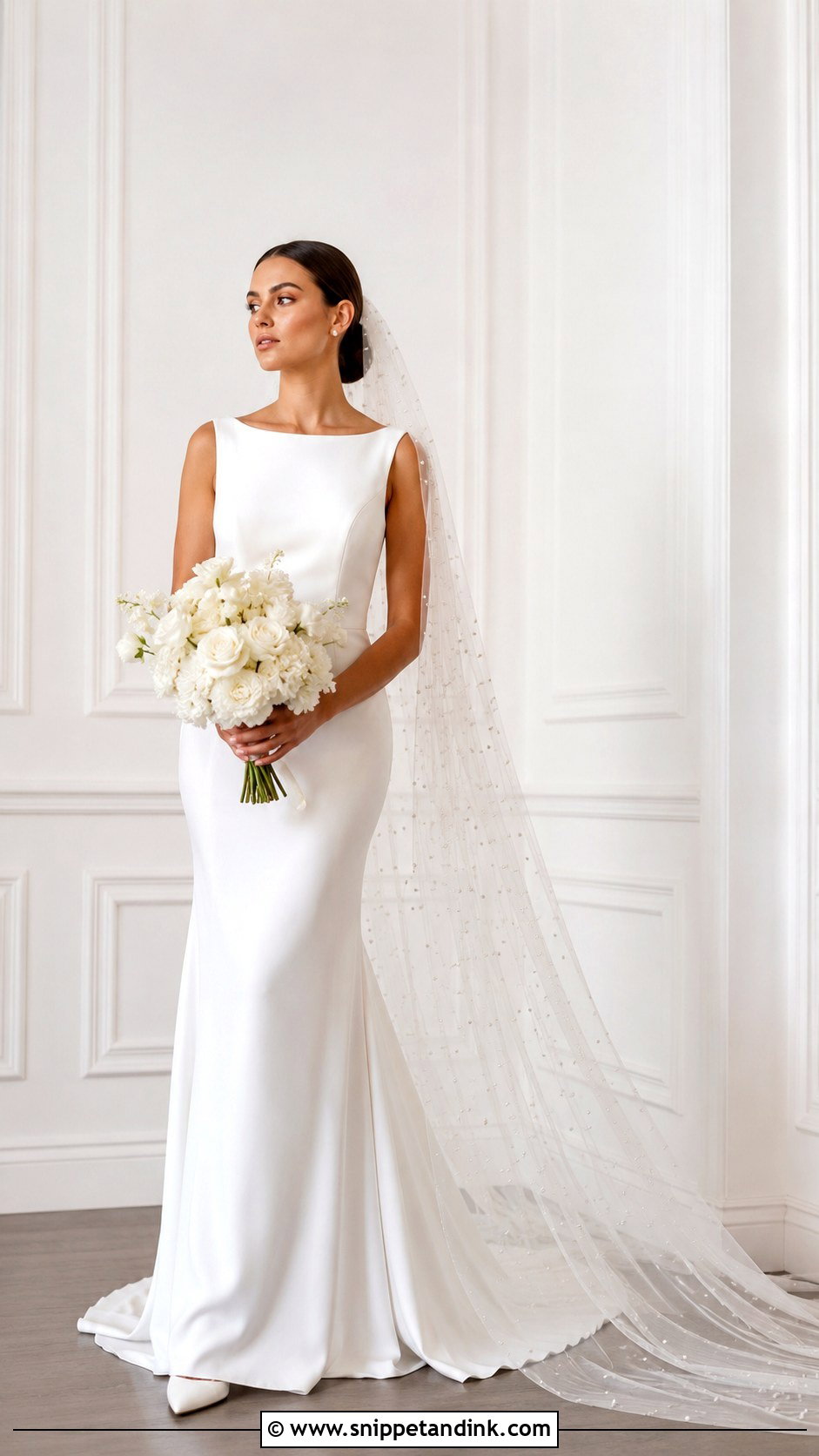
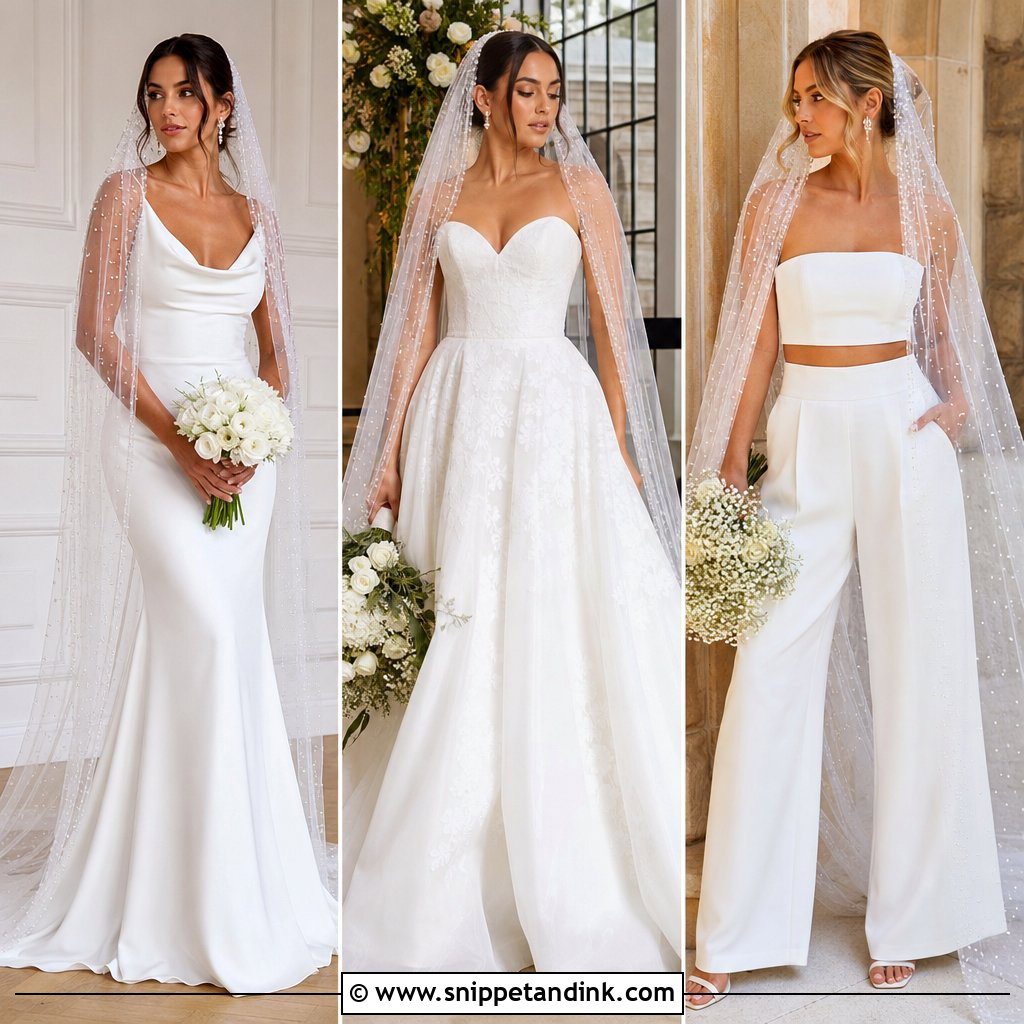
Pearls add weight, and that’s the first thing I check. A pearl-heavy hem pulls the tulle straight down, which looks sleek on a long veil but can drag a short one off the comb. Tiny scattered pearls stay airy; larger ones look more fashion than tradition. You can cluster them near the comb and fade them toward the hem, or space them evenly over the whole veil. If your gown has pearl beading, take a swatch to the maker and match both size and shade, because a bright white pearl beside an ivory one looks like a mistake.
5. Floral Embroidery Custom Veil
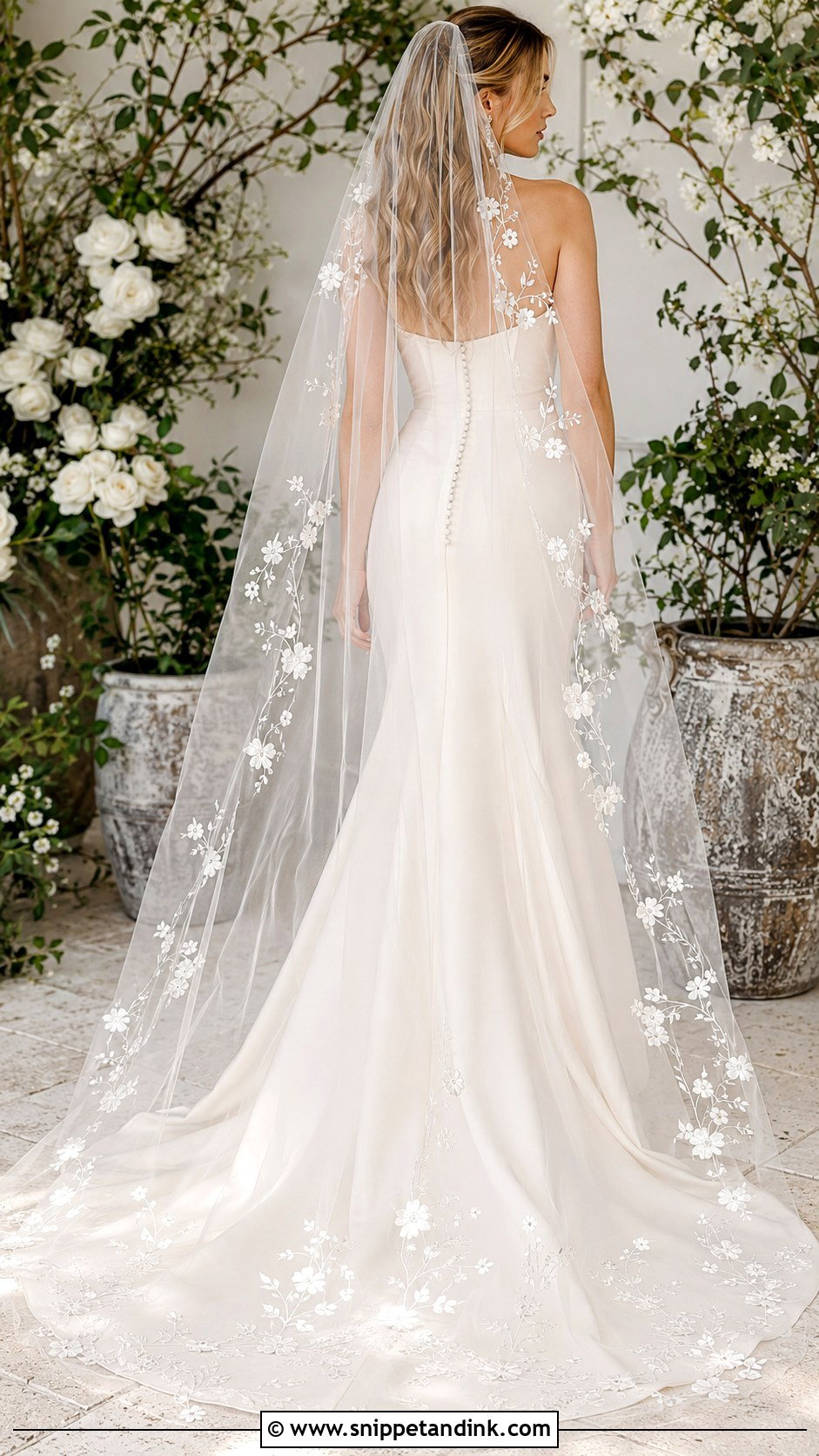
Flowers stitched around the lower edge look modern. Flowers scattered over the whole veil look romantic, and they also make it noticeably heavier and pricier, since embroidery time is most of the cost. Plain gowns gain the most here because the veil becomes the artwork on the back view. Let the upper tulle stay sheer so your hairstyle still shows through. I’d link the motif to your bouquet by shape or color rather than copying the flowers exactly. A-line, corset and square-neck gowns with a soft updo carry it well.
6. Lace Edge Custom Veil
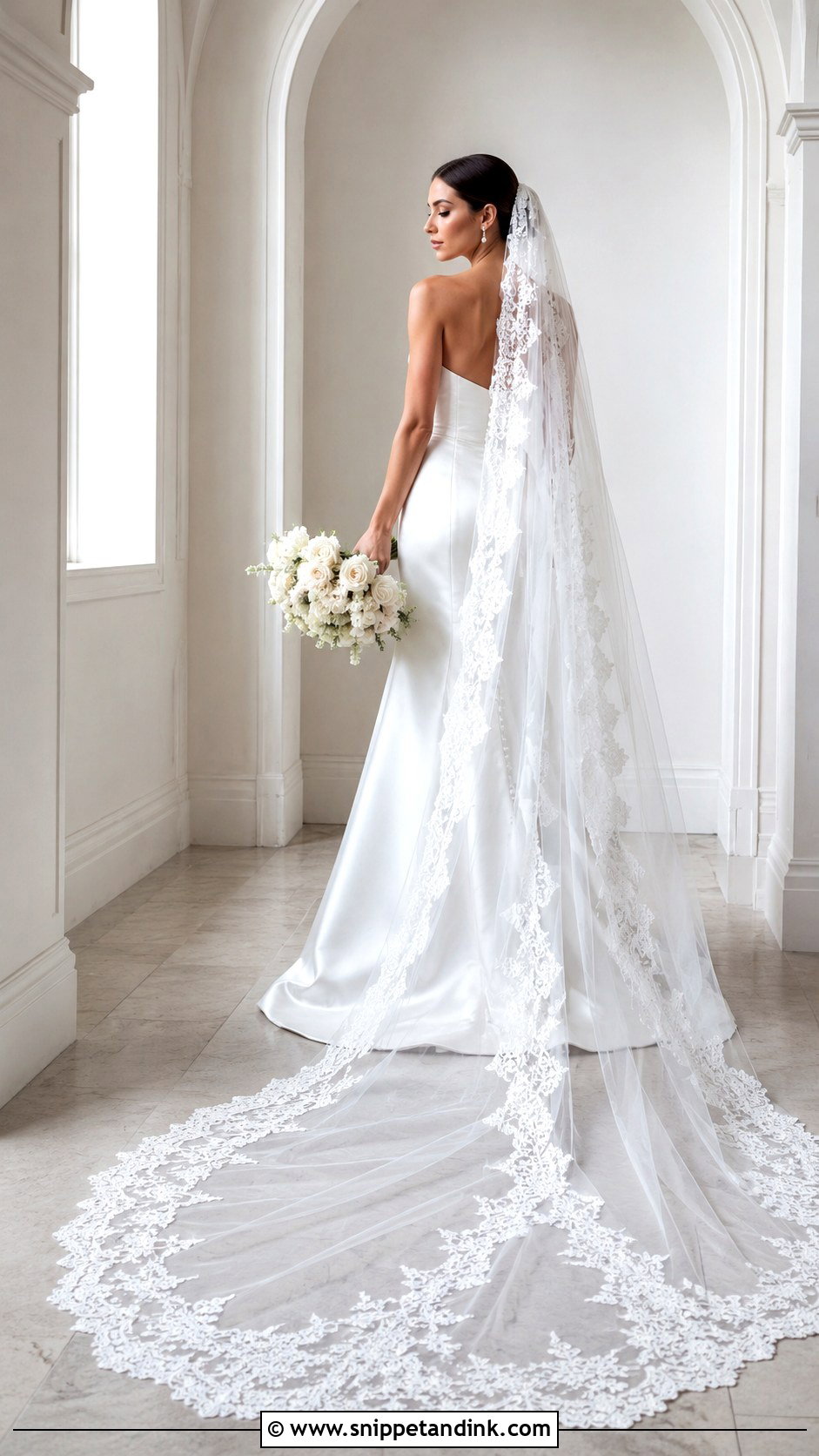
Lace edging only looks fresh when it’s chosen with the gown in hand. You can match it to your dress, reuse lace from a family gown, or pick a delicate Chantilly-style trim for a soft border. On a lace gown the trap is two patterns at different scales fighting each other, so I’d either echo the dress motif or go much finer. On satin or crepe, the lace is where the romance comes from. It can run along the bottom, frame the whole veil, or be cut into scallops that show well from behind.
7. Cathedral Custom Veil
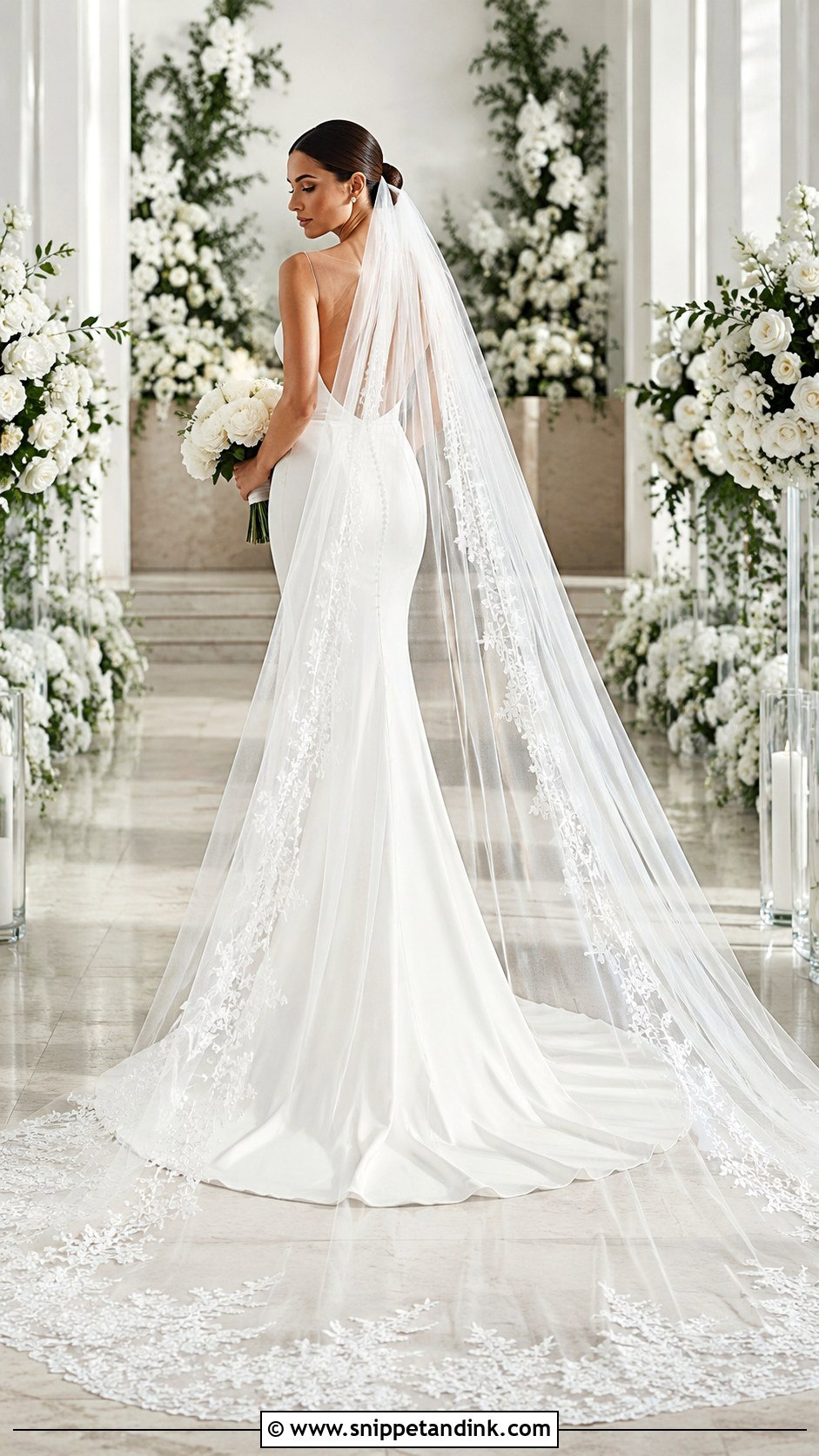
A cathedral veil runs past the train, often somewhere around nine or ten feet, and that length is both the drama and the work. The comb needs a structured base to grip, usually a bun or a firmly pinned section, because the weight pulls backward all day. Outdoors it will catch the wind, so someone in your party should know how to lift and settle it. On a long aisle it sweeps behind you the way people picture; in a small room it mostly piles up. Fitted, mermaid, ball and column gowns all take it. Keep jewelry quiet so the length does the talking.
8. Fingertip Custom Veil
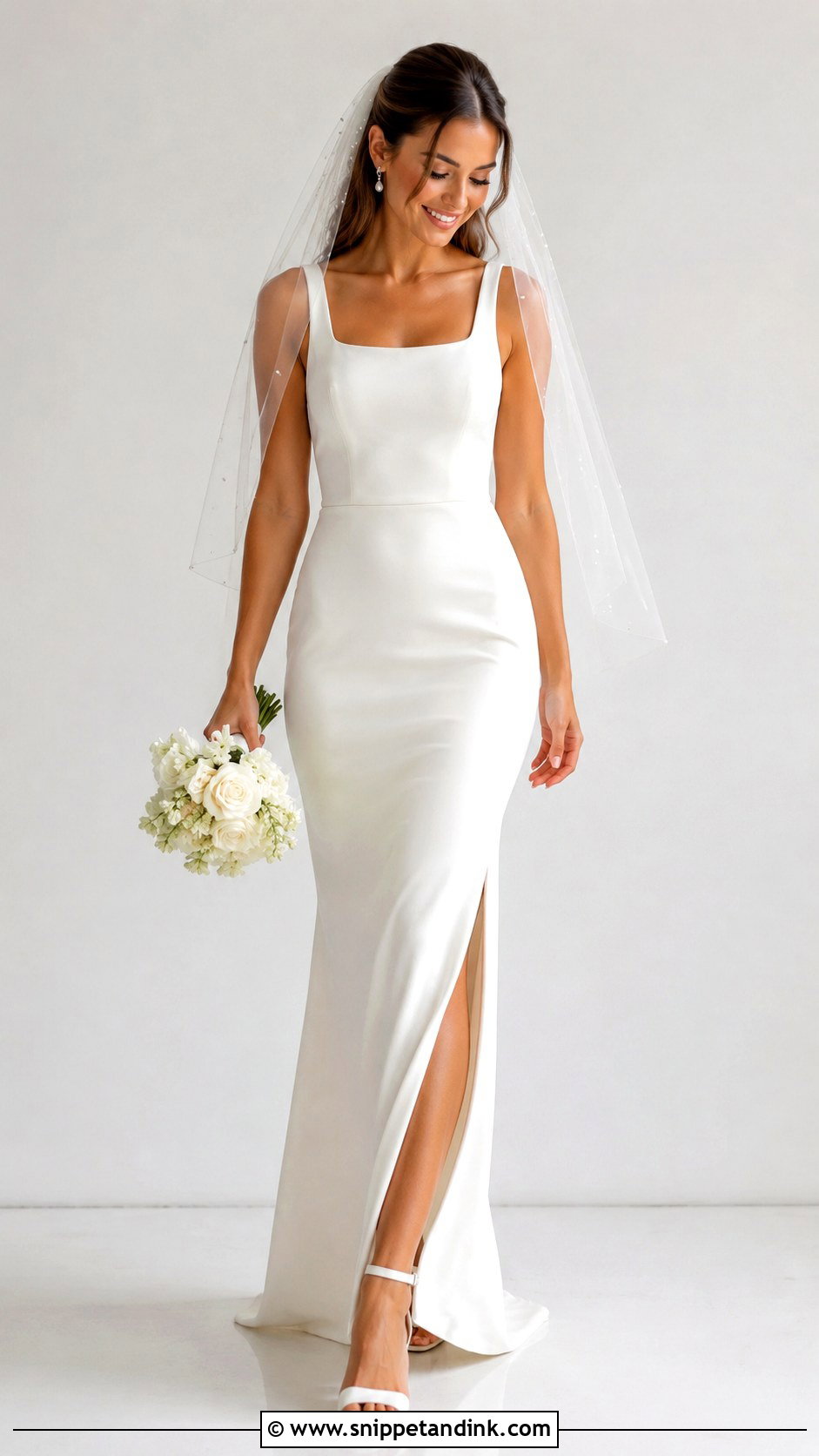
Fingertip length ends roughly where your hands fall at your sides. It’s the length I suggest most to brides who’ll be hugging people, dancing or keeping the veil on all evening, because it moves in photos without needing a helper. Pearls, lace edging, initials or a slim satin ribbon are all easy ways to personalize it. It’s also the right call when your gown has a detailed train you don’t want hidden under tulle. Sheath, tea-length, A-line and fitted gowns take it well, and a half-up style gives the comb something to hold.
9. Blusher Custom Veil
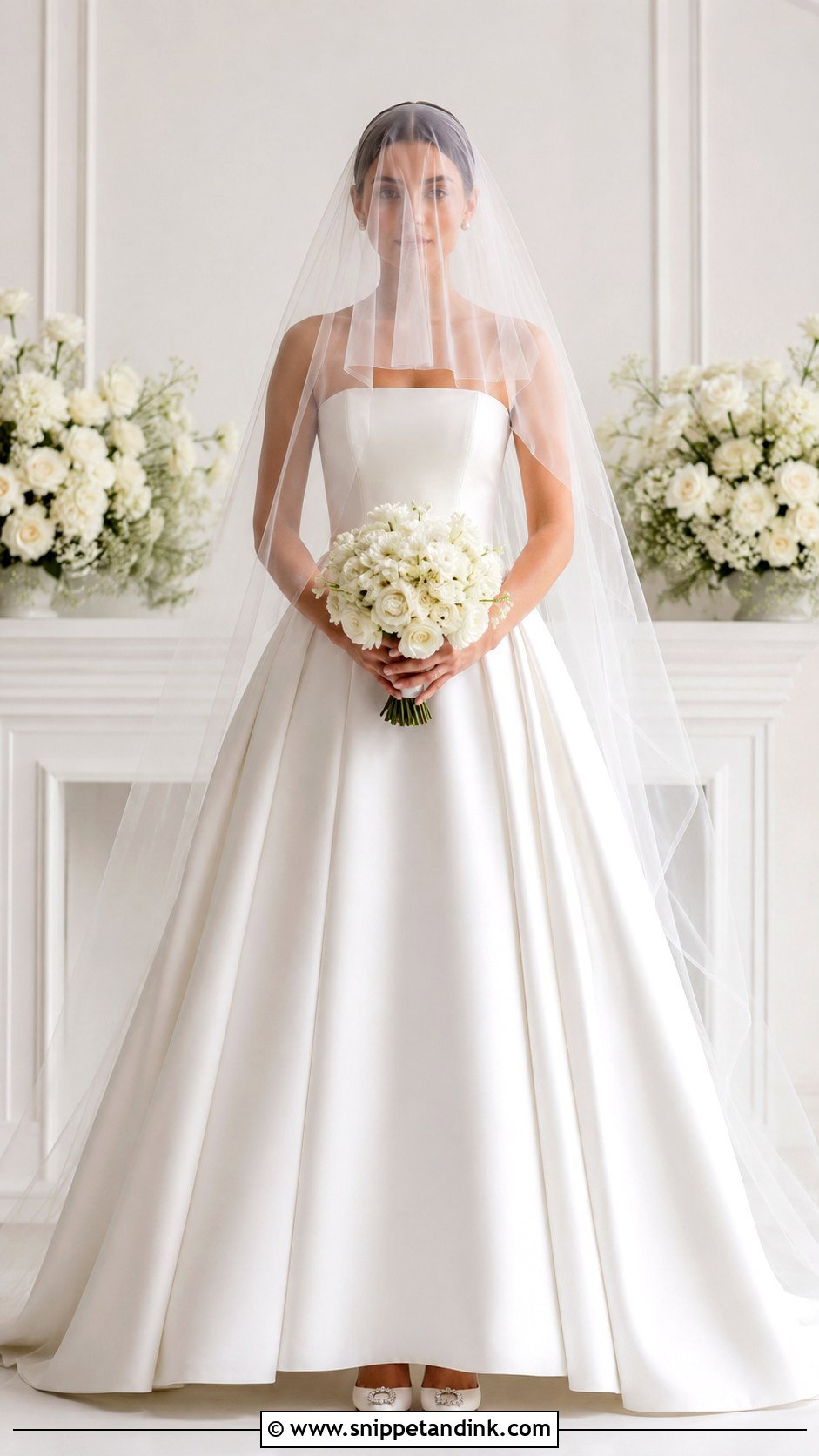
The blusher is the layer that comes over your face, and its length matters more than its decoration. Too short and the edge flips up; too long and it tangles with your bouquet. Keep it light, perhaps with tiny pearls, a narrow trim or initials near the edge, so it drapes softly and you can still see the aisle. It’s the simplest way to get a ceremony reveal moment without a dramatic veil. I always have the bride practice lifting it back once before the day, because it’s fiddlier than it looks. A low bun gives the comb a steady base, and afterward it sits back as a second layer.
10. Bow Custom Veil
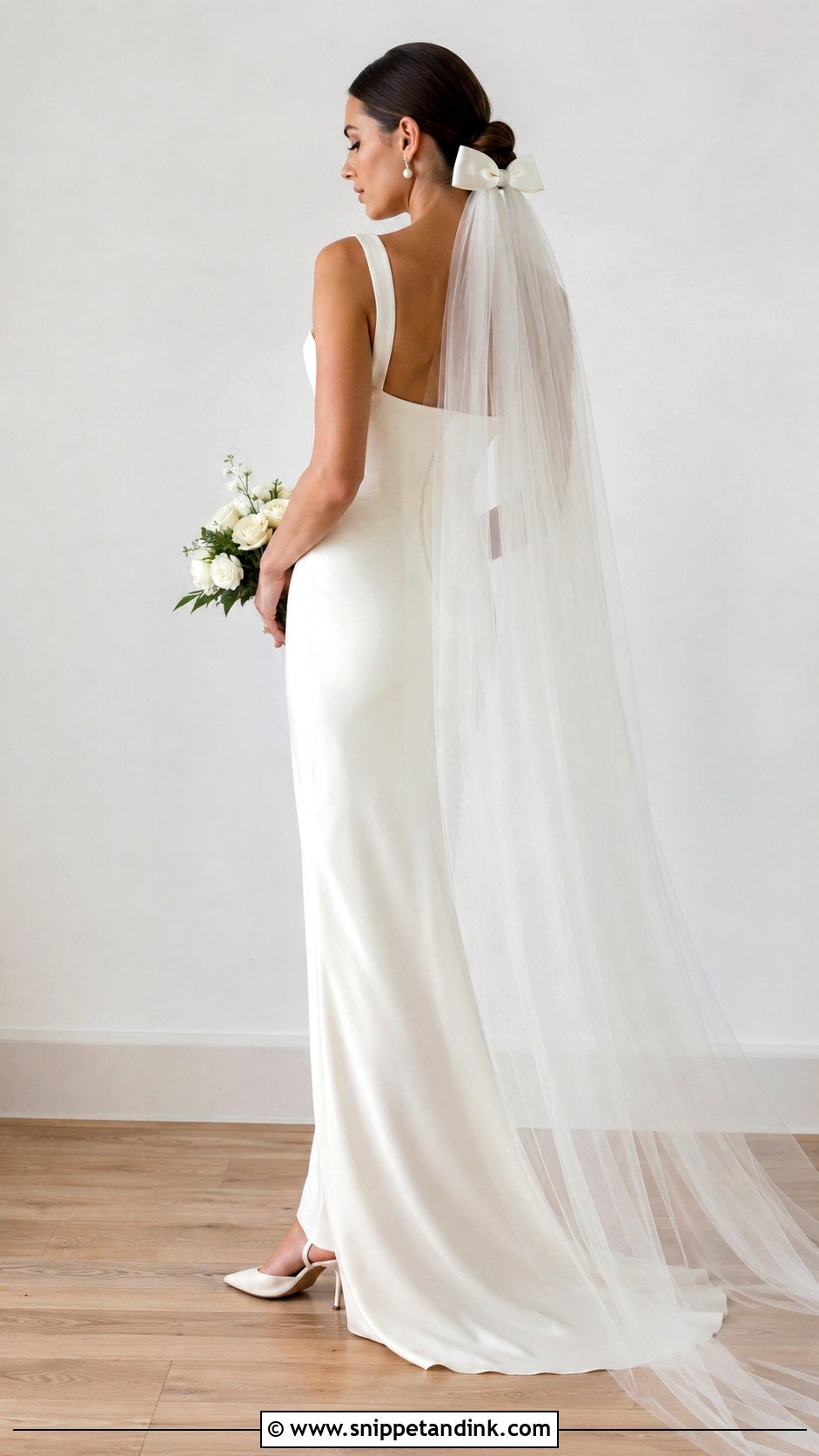
A bow changes where the eye lands, so placement is the real decision. At the comb, it frames the crown. At the back of a low bun, it reads as part of the hairstyle. Satin bows hold their shape; organza is lighter but can go limp in humidity. I often suggest making the bow removable so it can come off after the ceremony. If the dress already has bows, match the fabric or the scale, and keep the veil underneath plain tulle at about fingertip length. Anything fussier and the back of your head starts to look crowded.
11. Blue Embroidery Custom Veil
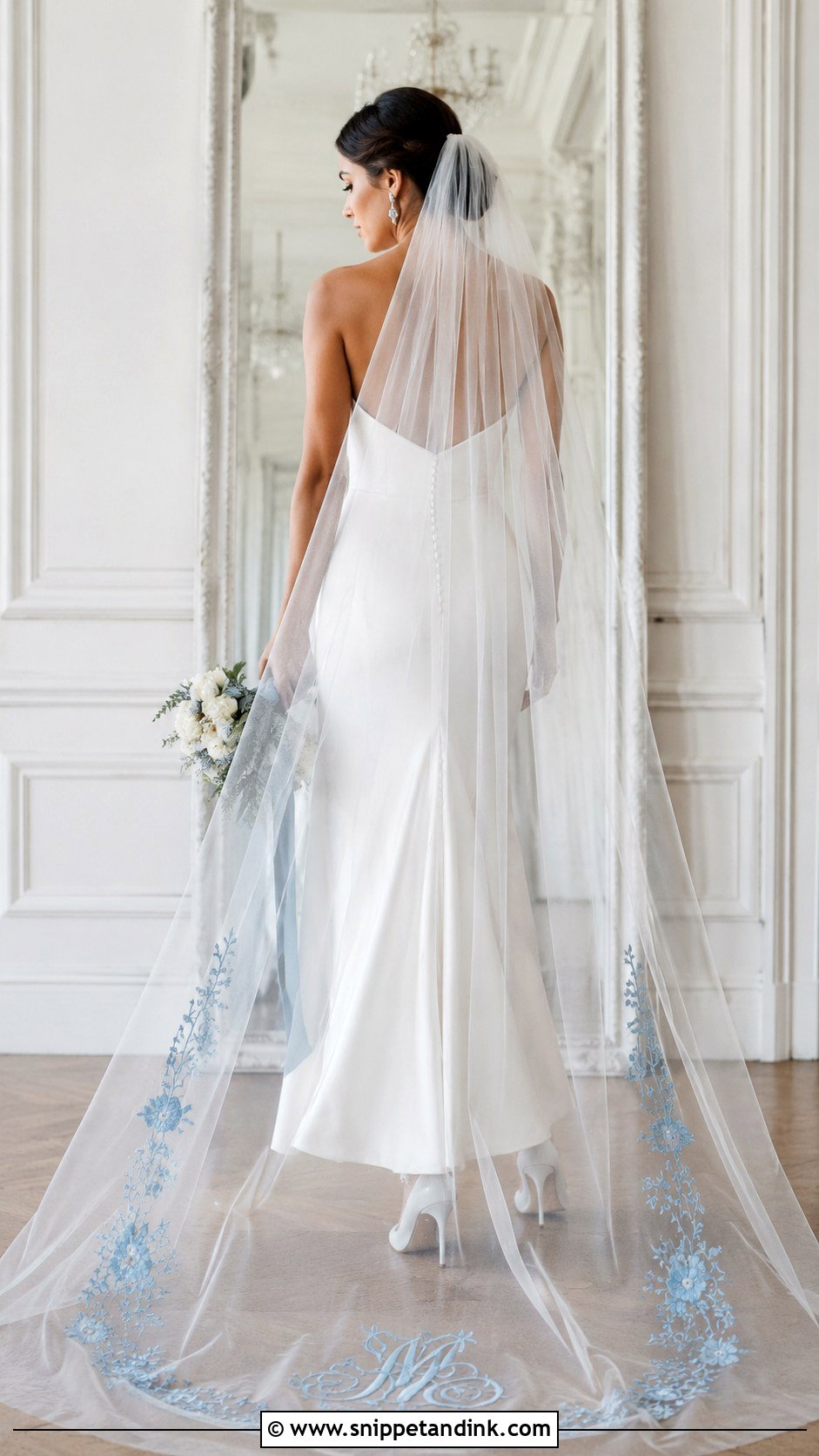
Blue thread is the quietest way to carry something blue. Use it for initials, a date, a short phrase or a fine border. Pale blue reads almost grey from across a room, so if you want it seen, put it near the hem or along one side where the light falls on it. For a secret, stitch it under the comb or inside the blusher. It sits best against ivory dresses, clean satin and soft lace. I’d echo the blue once more, through earrings, shoes or a bouquet ribbon, and then stop.
12. Colorful Floral Custom Veil
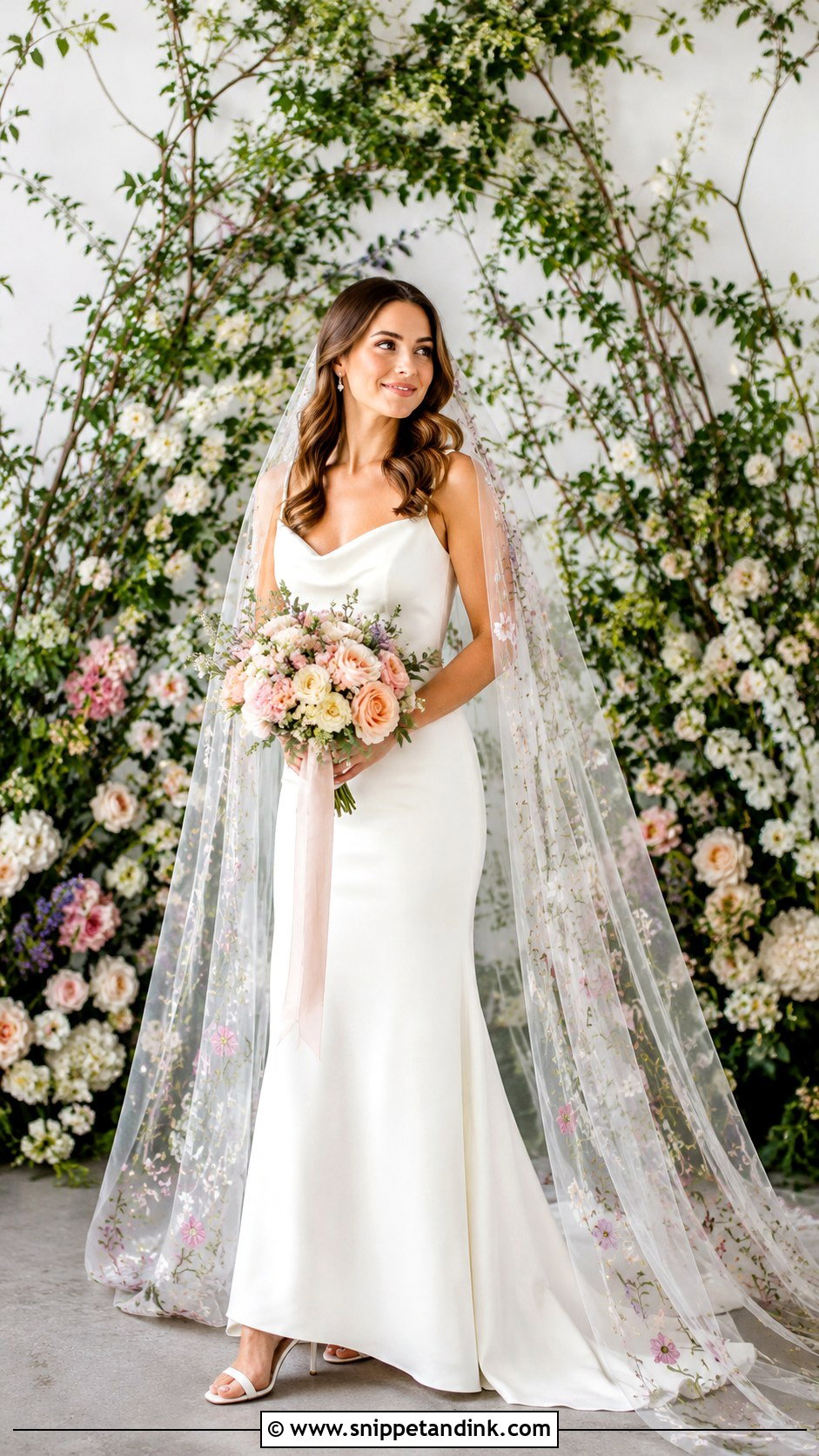
Colored embroidery is the most personal idea here and the easiest to get wrong. Pastel thread stays soft, while brighter thread turns the veil into a fashion piece, and next to a busy gown it can tip into costume. I’d pair it with plain ivory satin, crepe, tulle or a minimal corset dress. Birth-month flowers or blooms from your bouquet give the colors a reason to be there. Ask the maker for a thread sample stitched on your actual tulle, because color shifts on sheer fabric once your skin and dress sit behind it. Garden and outdoor ceremonies suit it best.
13. Rhinestone Custom Veil
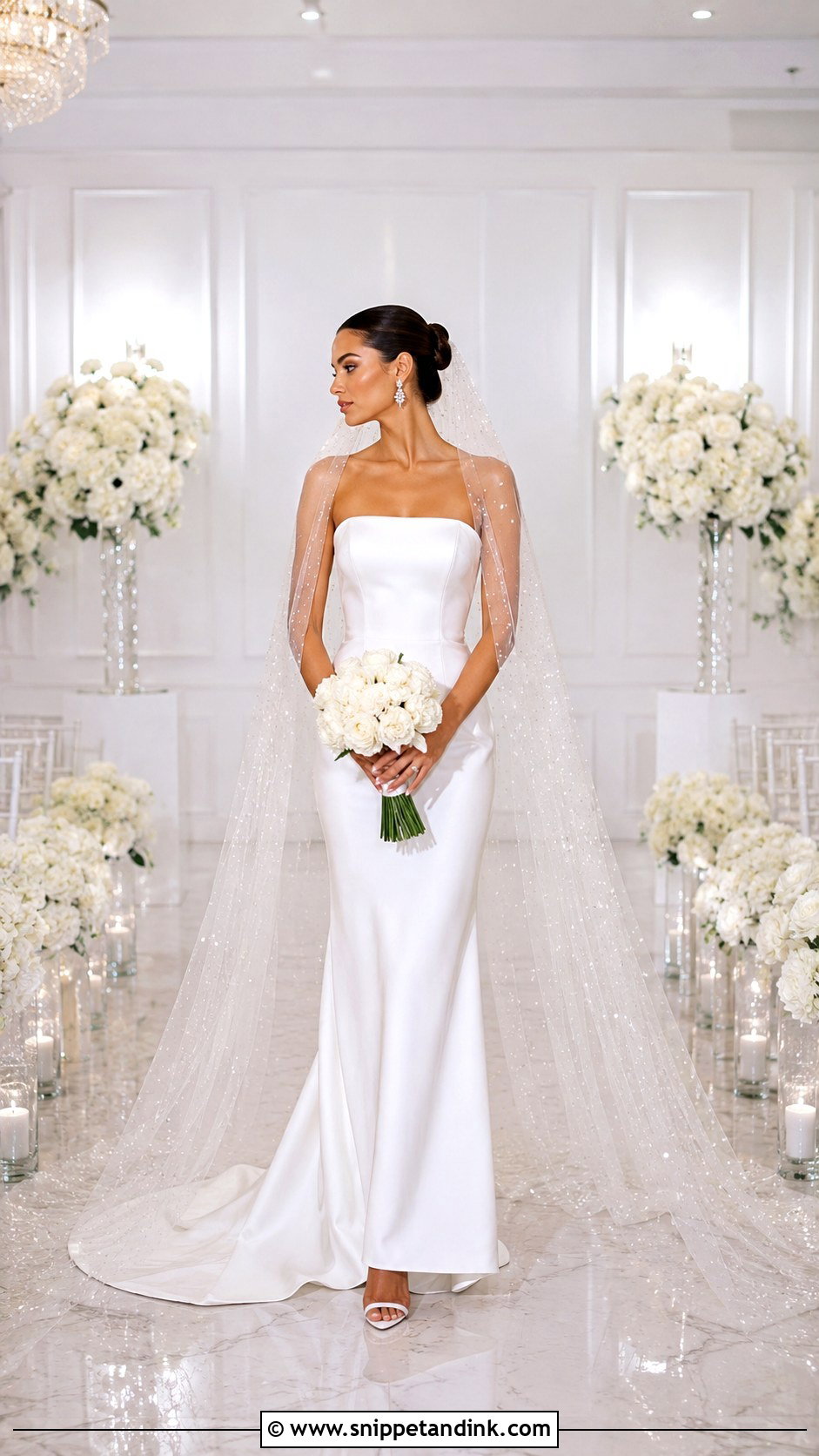
Crystals catch flash and sunlight far more than they catch the eye in a fitting-room mirror, so a design that looks subtle at the fitting can look busy in photos. Stones scattered through the tulle shimmer as you move; a rhinestone border reads as a sharper outline. If your gown is already heavily beaded, cut the placement back by half. Chapel and cathedral lengths show sparkle best because it trails along the floor behind you. Check that the stones are sewn or securely set. Glued crystals can pop off when tulle gets crushed in a car.
14. Satin Trim Custom Veil
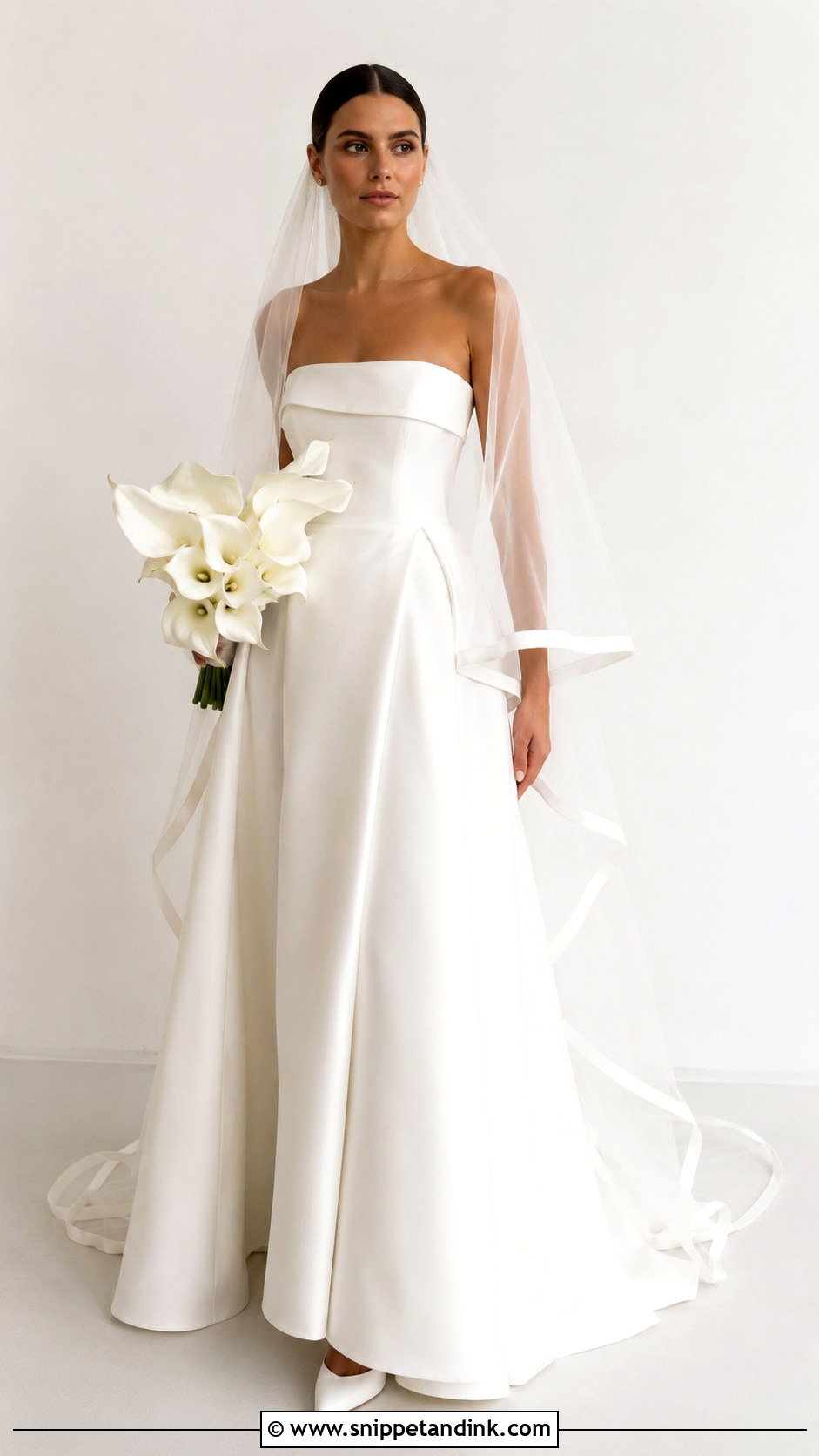
Satin trim gives tulle a defined edge, so the outline of the veil actually shows in photos instead of melting into the background. A thin ribbon stays delicate, and a wider band looks graphic and modern. What I watch is color: satin reflects light differently from tulle, so even a matched ivory can look whiter on the trim. Hold a sample against your gown in daylight before ordering. Satin, mikado, crepe and off-the-shoulder gowns suit it, as do brides who want detail without lace or sparkle.
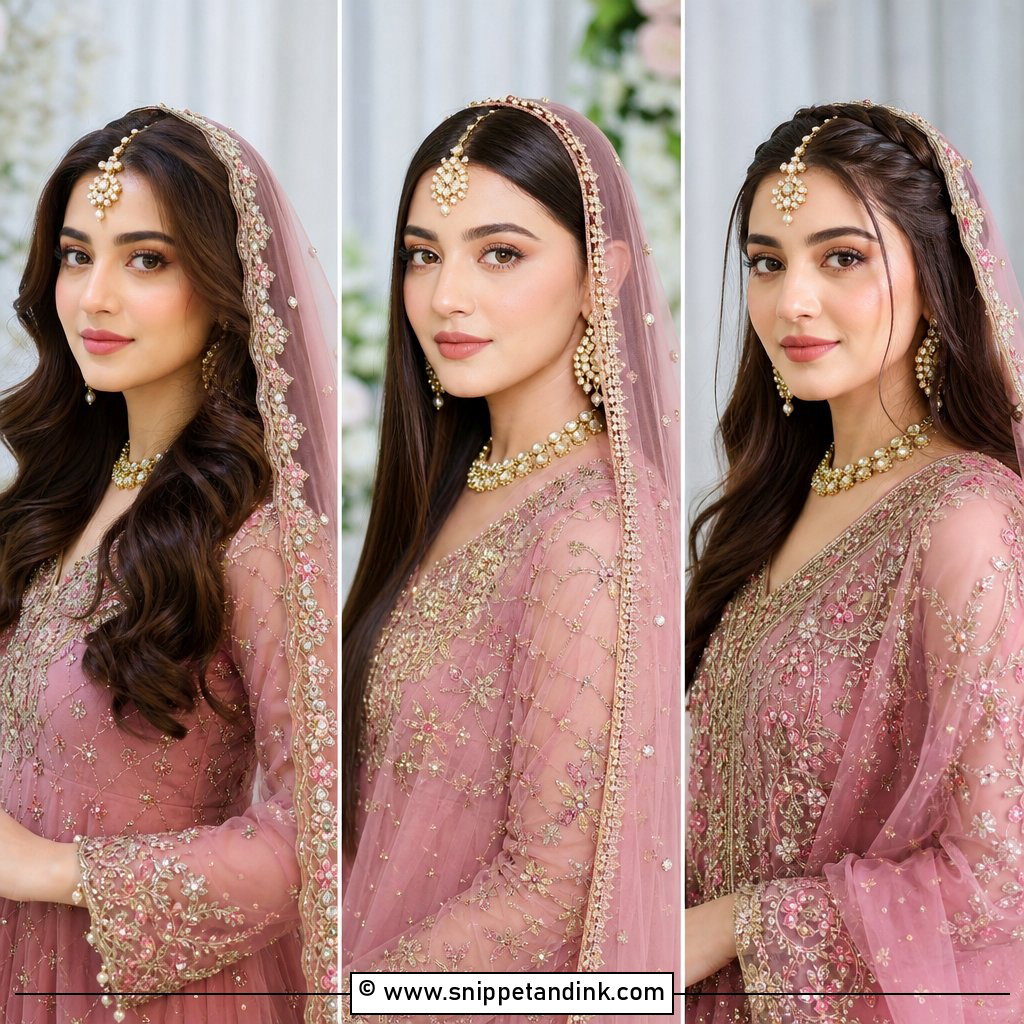
15. Ruffle Edge Custom Veil
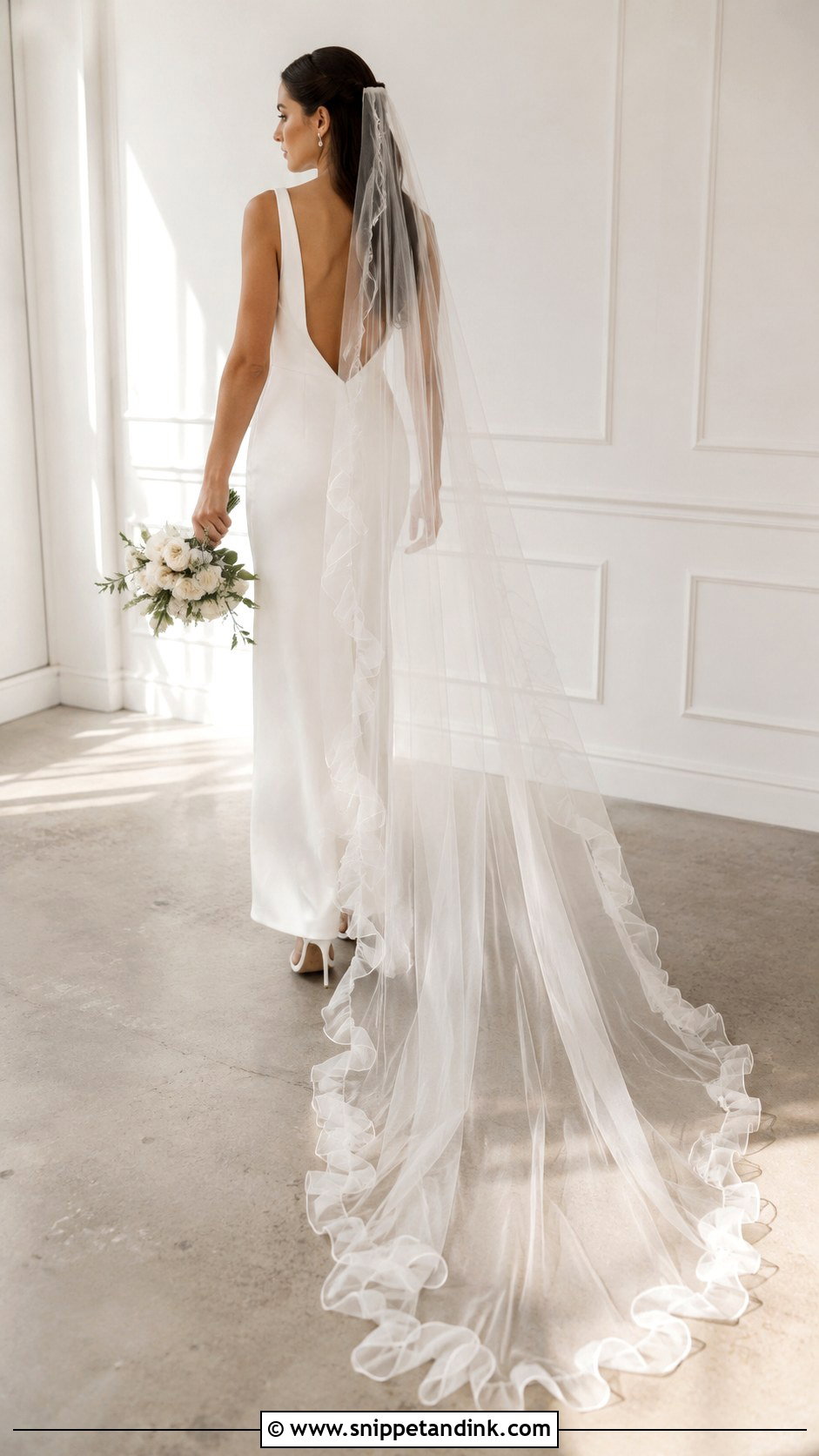
A ruffled edge adds movement and soft volume with no embroidery at all. Narrow ruffles stay delicate. Fuller ones look dramatic and add weight to the hem, which helps a long veil hang straight. Give it chapel or cathedral length so the ruffle has room to ripple. I’d only pair it with a plain gown, a column, strapless sheath or square-neck crepe, because ruffles on both dress and veil compete for the same attention.
16. Scalloped Edge Custom Veil
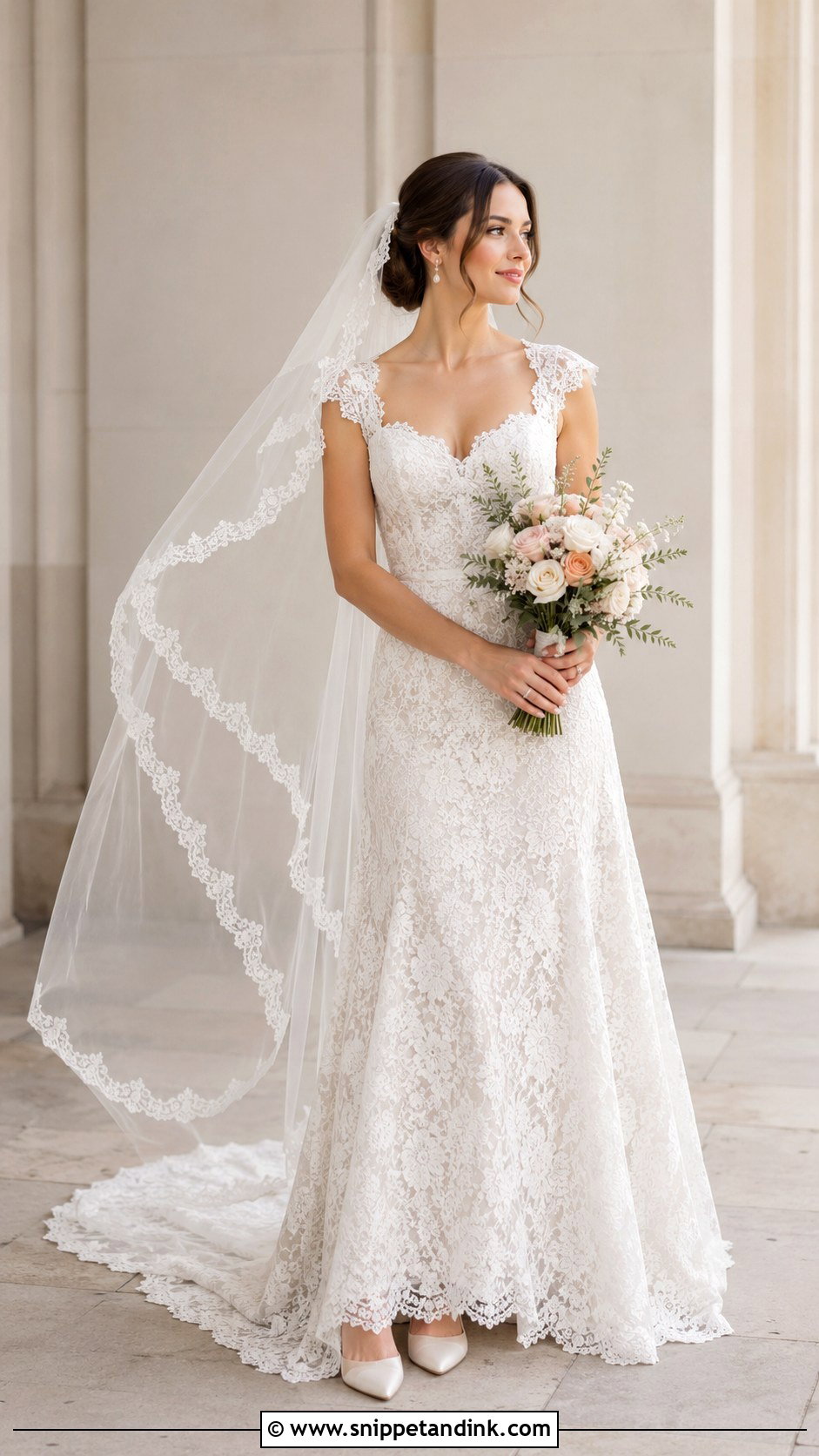
Scallops give the veil a finished border that’s romantic without being ornate. They can be cut lace, embroidery or shaped trim, and the embroidered version is the lighter, cleaner option. From behind, the curve frames the dress, so it suits fingertip, chapel and cathedral lengths. Lace gowns, vintage-inspired dresses, sweetheart necklines and A-line silhouettes pair with it naturally. I check that the scallop size relates to the lace on the dress, since tiny scallops beside large motifs look mismatched. Soft curls or a low bun keep it gentle.
17. Monogram Custom Veil
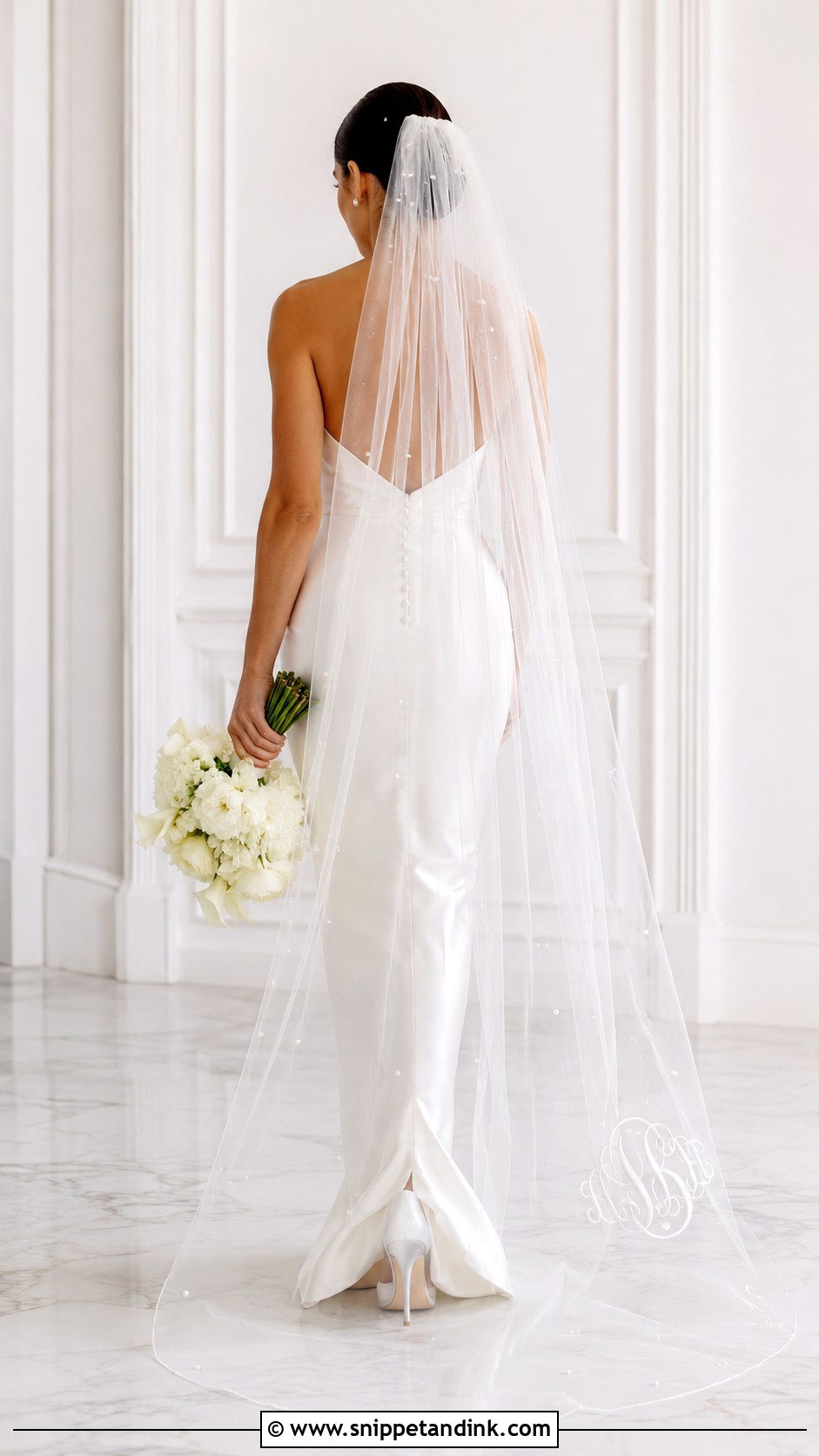
Monograms look tailored, which is why I point brides with structured outfits toward them. Your initials, shared initials or a married monogram can sit in a lower corner, along the edge or under the comb. Small ones look classic; large ones become the focal point. Tone-on-tone thread is quiet and metallic thread is formal. Confirm the letter order with the maker in writing, because traditional monograms put the surname initial in the center and that catches people out. Satin, modern ball gowns and minimalist dresses suit it, and it frames well as a keepsake later.
18. Family Lace Custom Veil
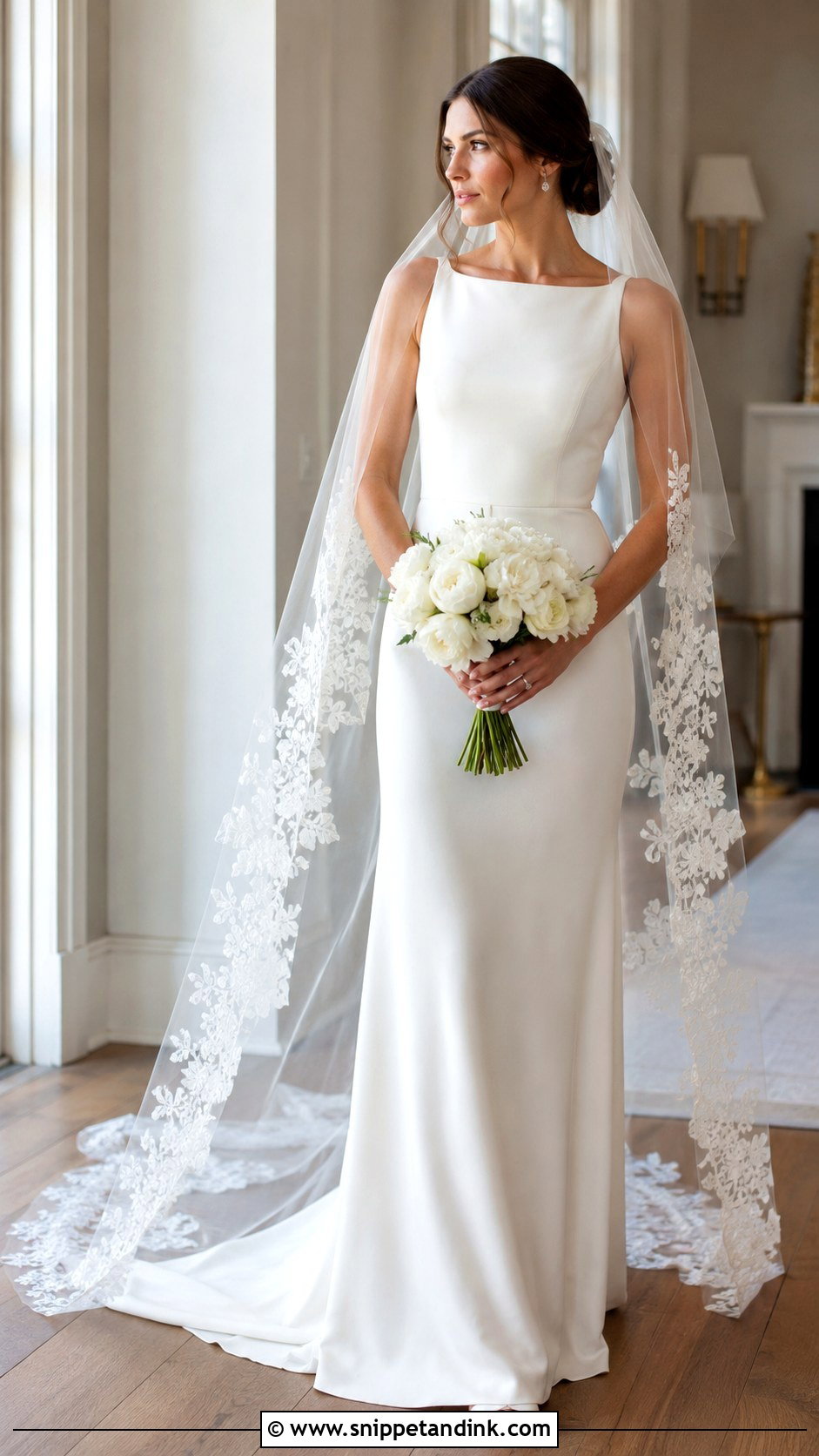
Heirloom lace is where a skilled seamstress matters most. Old lace is often yellowed, brittle or a different white from your gown, so she may tint the new tulle to match or use the lace only as cut appliqué pieces. Lace from a mother’s or grandmother’s dress can become trim, a motif near the comb or a small hidden patch. If it’s fragile, keep it away from the hem where it will be stepped on. Simple gowns give the heirloom room to be noticed. Hand the lace over early. It can’t be replaced if something goes wrong.
19. Star Custom Veil
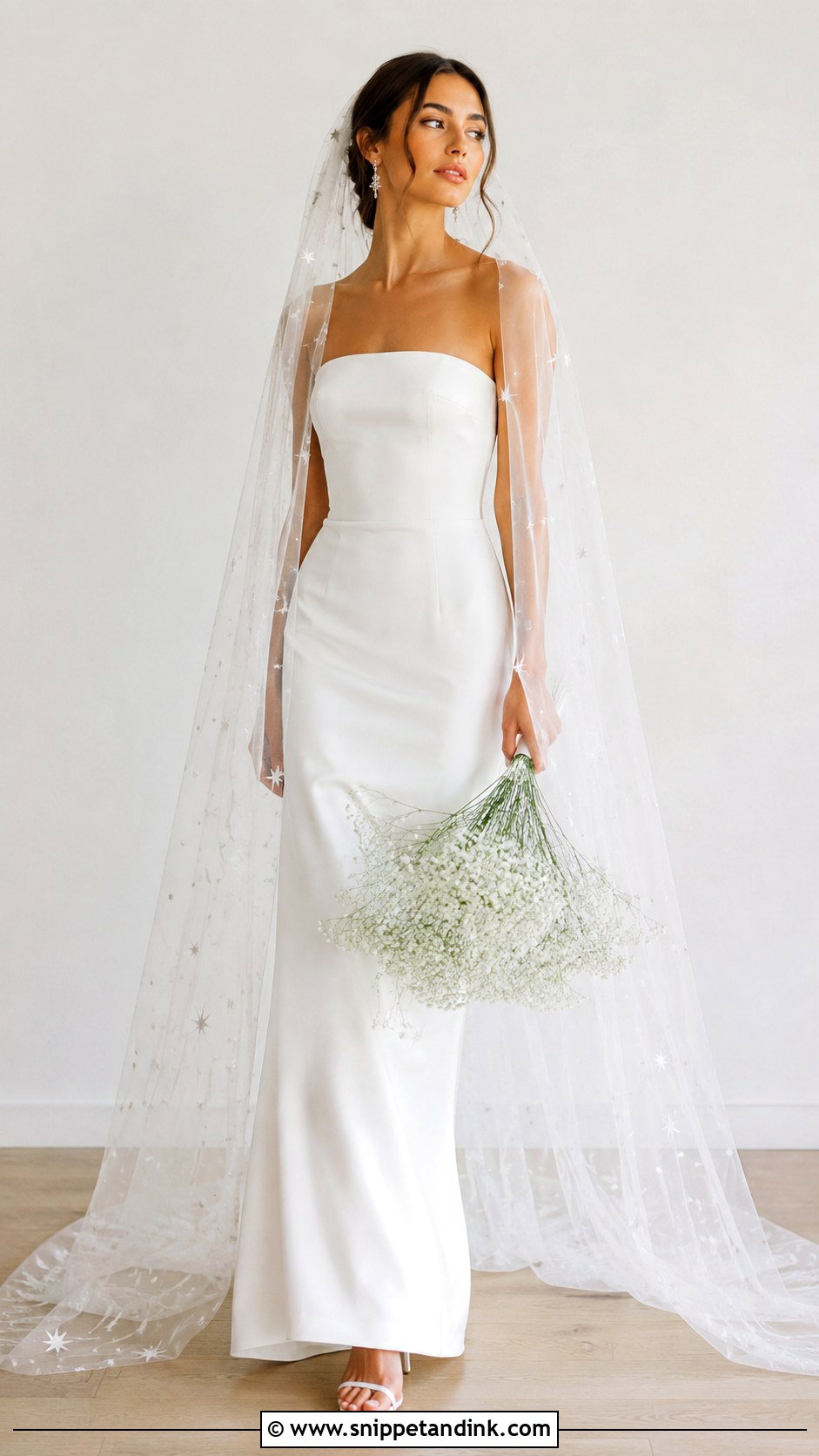
Stars are small motifs, so spacing does the work. Spaced wide, they look like a night sky; packed close, they look like a printed pattern. Embroidered stars, crystal stars or silver thread all work, though silver needs a cool-toned gown to sit right, and beside deep ivory it can look grey. I’d add more toward the hem so the detail trails in photos. Sleek gowns, tulle skirts, strapless and corset styles carry it, and silver accessories with a soft updo finish the idea. Evening and outdoor ceremonies suit it best.
20. Butterfly Custom Veil
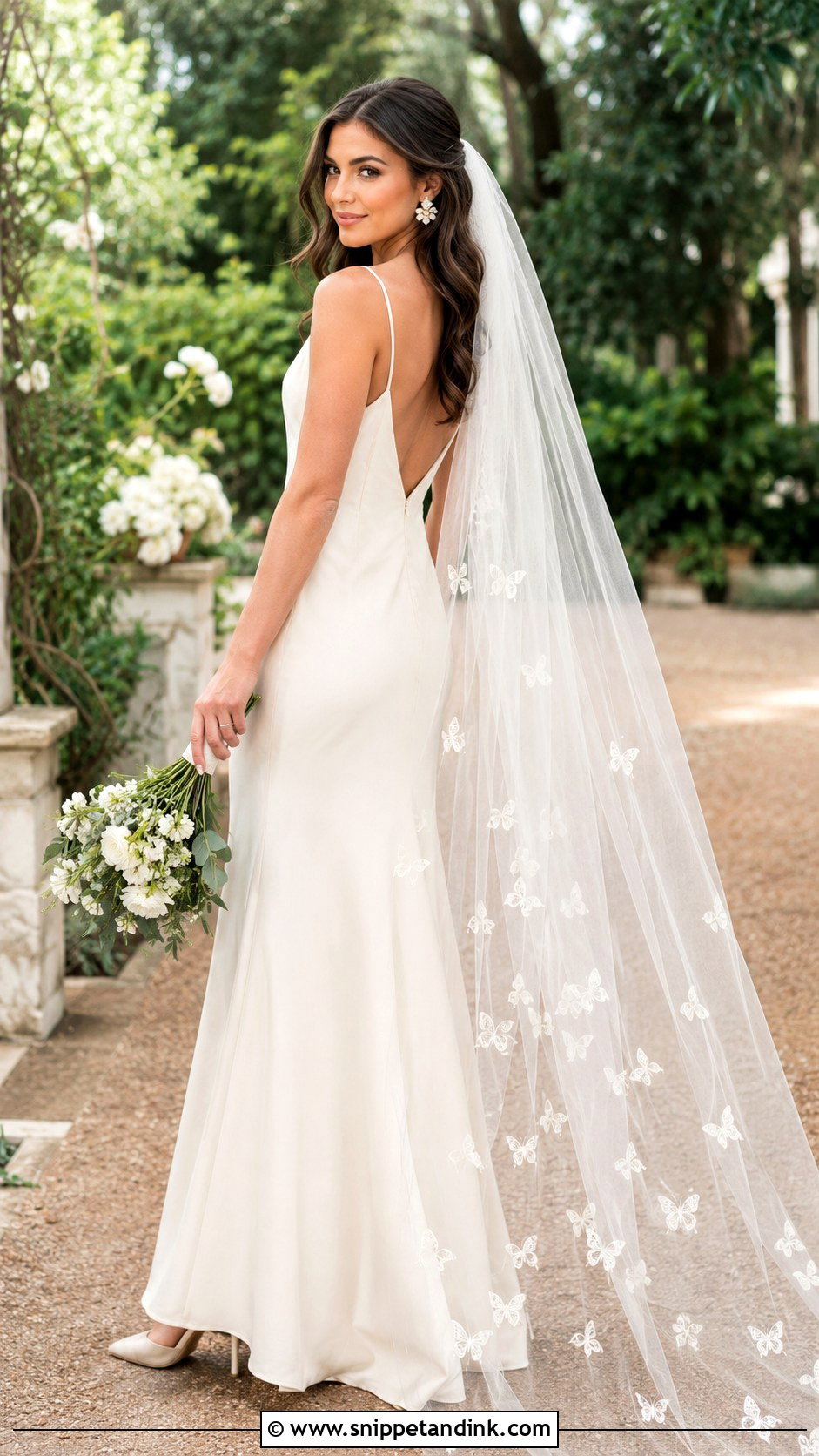
Butterflies look best when they appear to be moving, so ask for varied sizes and angles rather than identical motifs set in a grid. Put them near the hem, scatter them across the tulle, or mix them with small florals. Keep the scale delicate, because large butterflies start to look like a fabric print. The dress should be plain, an A-line, tulle, strapless or fitted crepe gown, so the veil carries the story. Many brides choose butterflies as a sign of change, and guests read it that way without any explanation.
21. Minimalist Custom Veil
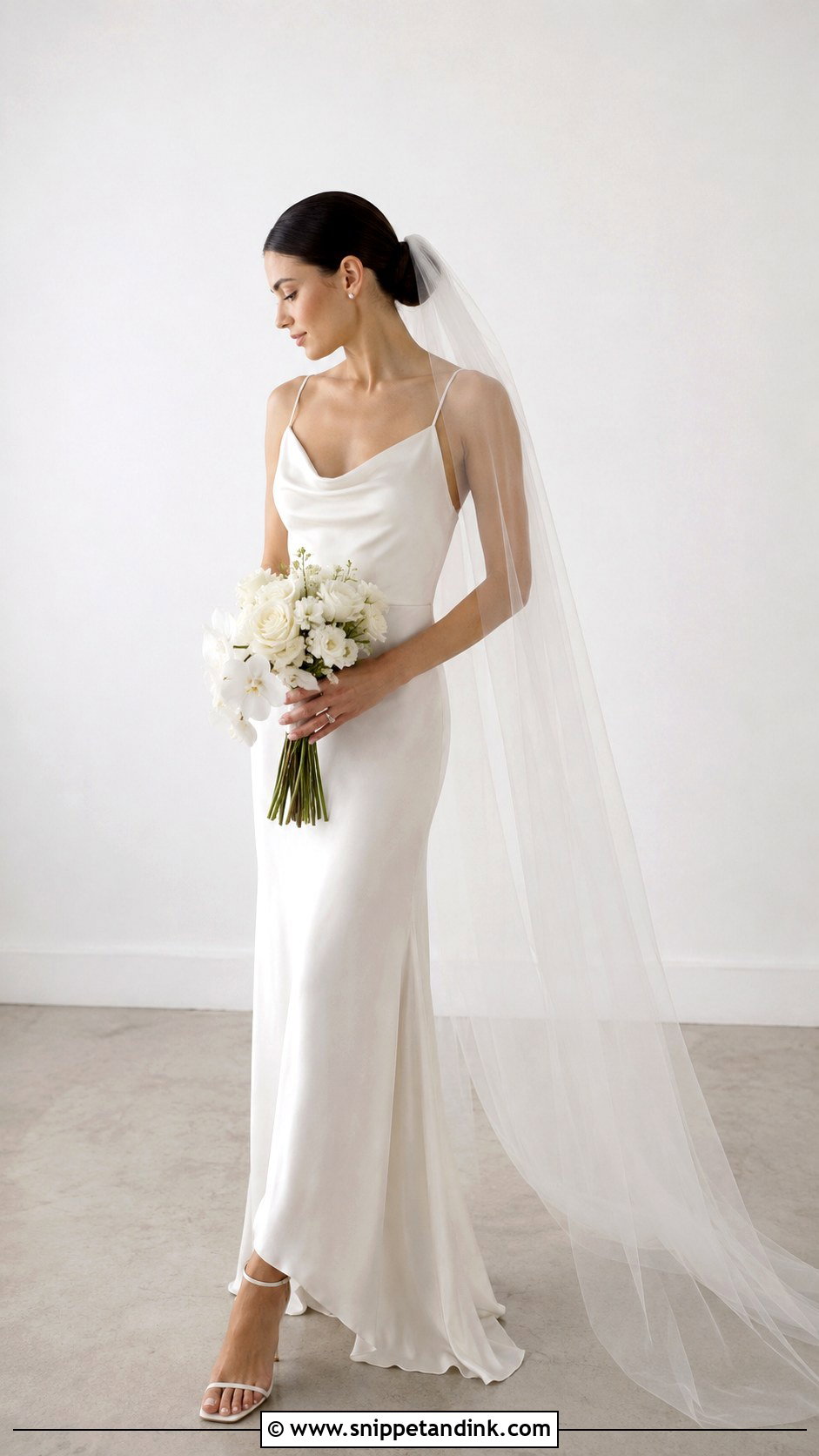
Custom doesn’t have to mean decorated. Here the personal part is the exact length, the precise tulle shade, where the comb sits and a clean raw edge. Shade matters more than people expect: white, diamond white and ivory tulle look nearly identical in the shop and obviously different beside a gown, so I test a sample against the dress itself. Slip, crepe, square-neck, high-neck and structured gowns suit it. A chapel or cathedral length still feels dramatic with no embellishment at all.
22. Vintage Birdcage Custom Veil
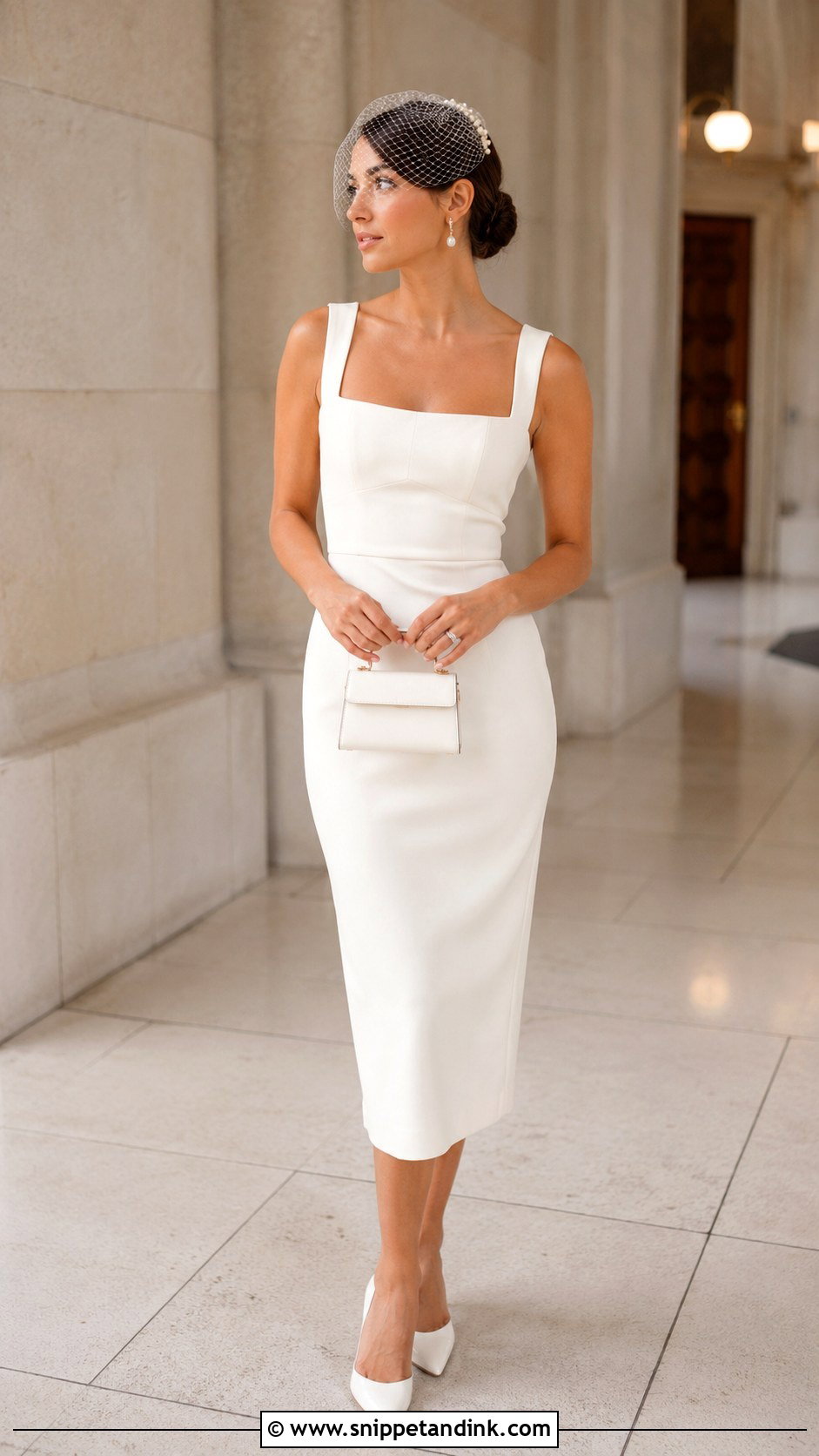
A birdcage is short netting that covers part of the face, usually made from Russian or French netting rather than tulle, which gives it that open diamond grid. It’s the veil I suggest for courthouse weddings, receptions and outfit changes, and it looks right with tea-length dresses, tailored suits, satin midis and column gowns. Pearls, small bows, floral appliqués or a tiny comb detail personalize it. Because it sits over the eyes, makeup has to be neat, and very long false lashes can catch on the net. A low bun, soft waves or a side part all hold it securely.
23. Juliet Cap Custom Veil
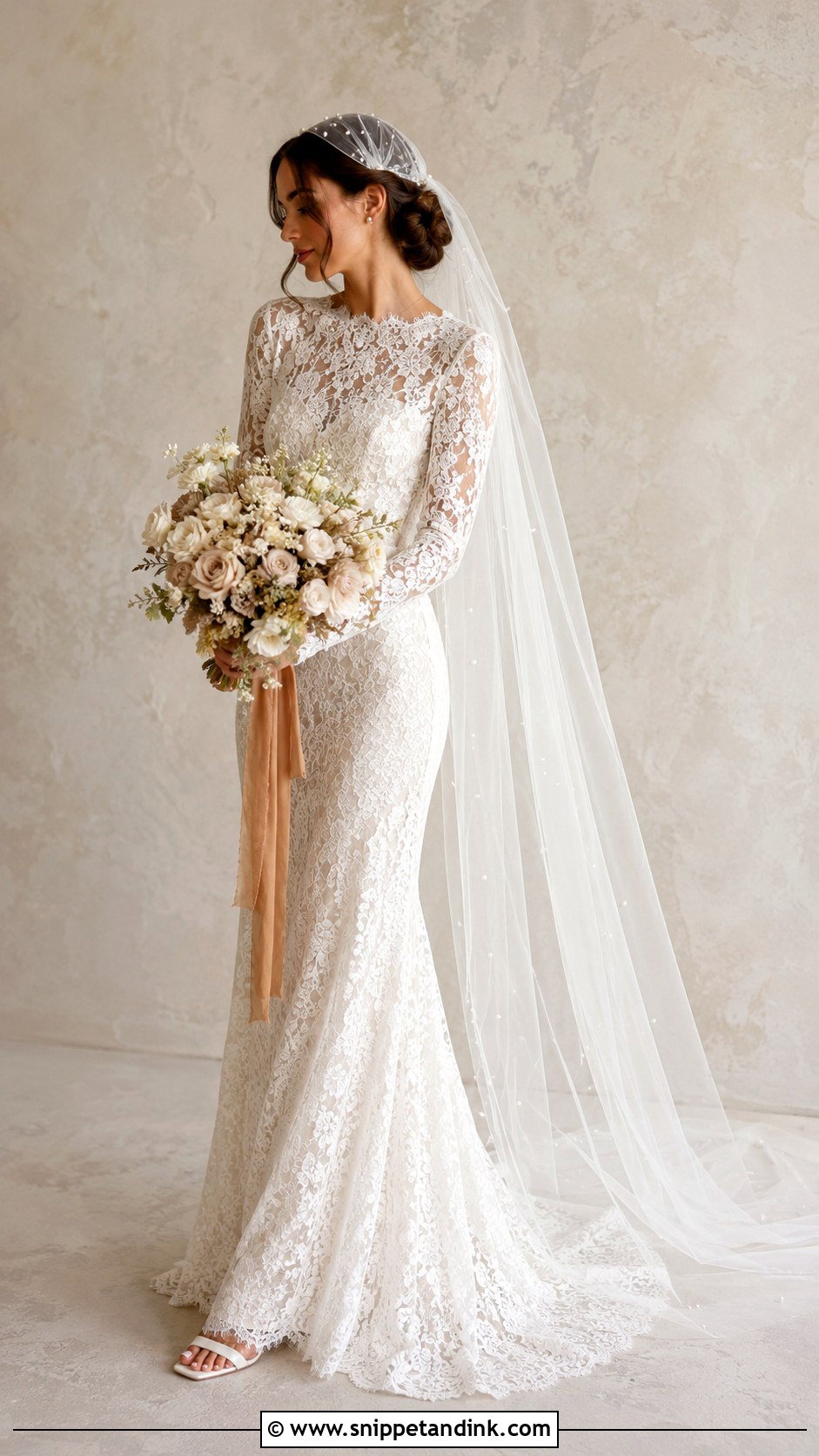
The Juliet cap custom veil sits over the crown like a fitted cap, so fit is everything. Loose, it slides back; too tight, it bunches. Book the fitting with your hair done the way you’ll wear it on the day. Lace, pearls, embroidery or fine beading can be worked into the cap itself. Long sleeves, lace gowns, silk slip dresses and bohemian silhouettes suit it, with loose waves or a low textured bun underneath. Because the cap is already a strong shape, I keep every other accessory very plain.
24. Detachable Custom Veil
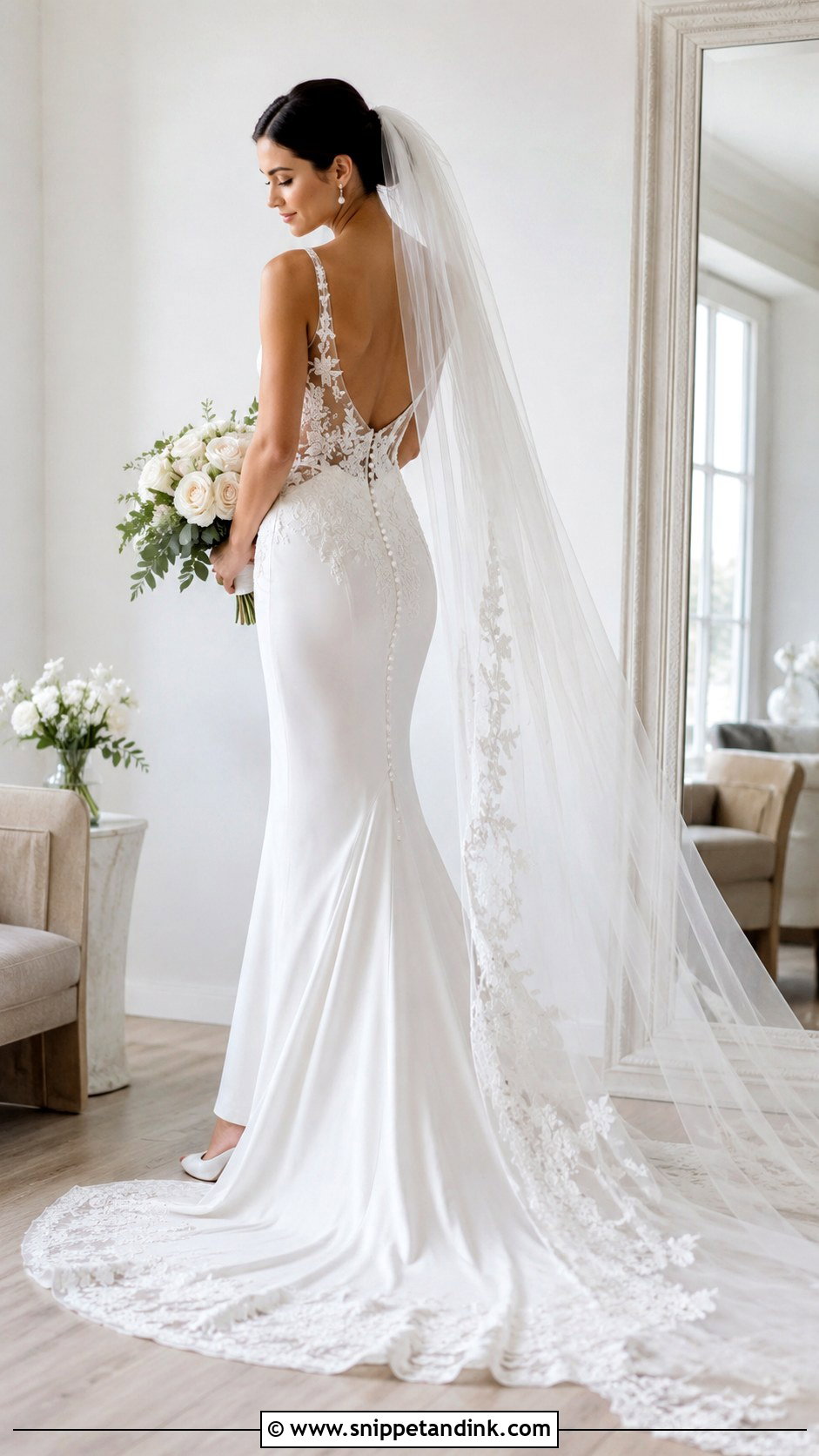
A detachable veil gives you drama for the ceremony and freedom for the reception. It can be a long cathedral layer that lifts off, a removable blusher, or a veil attached to a bow, comb or cape piece. The attachment is where these fail: snaps and hook-and-loop strips can tug at hair or leave a visible tab. Test it with your hairstylist before the day and make sure one person knows exactly how it comes off. It makes sense with gowns that have detailed backs, trains or structured bodices you’ll want seen later.
25. Veil With Matching Bridal Outfit Details
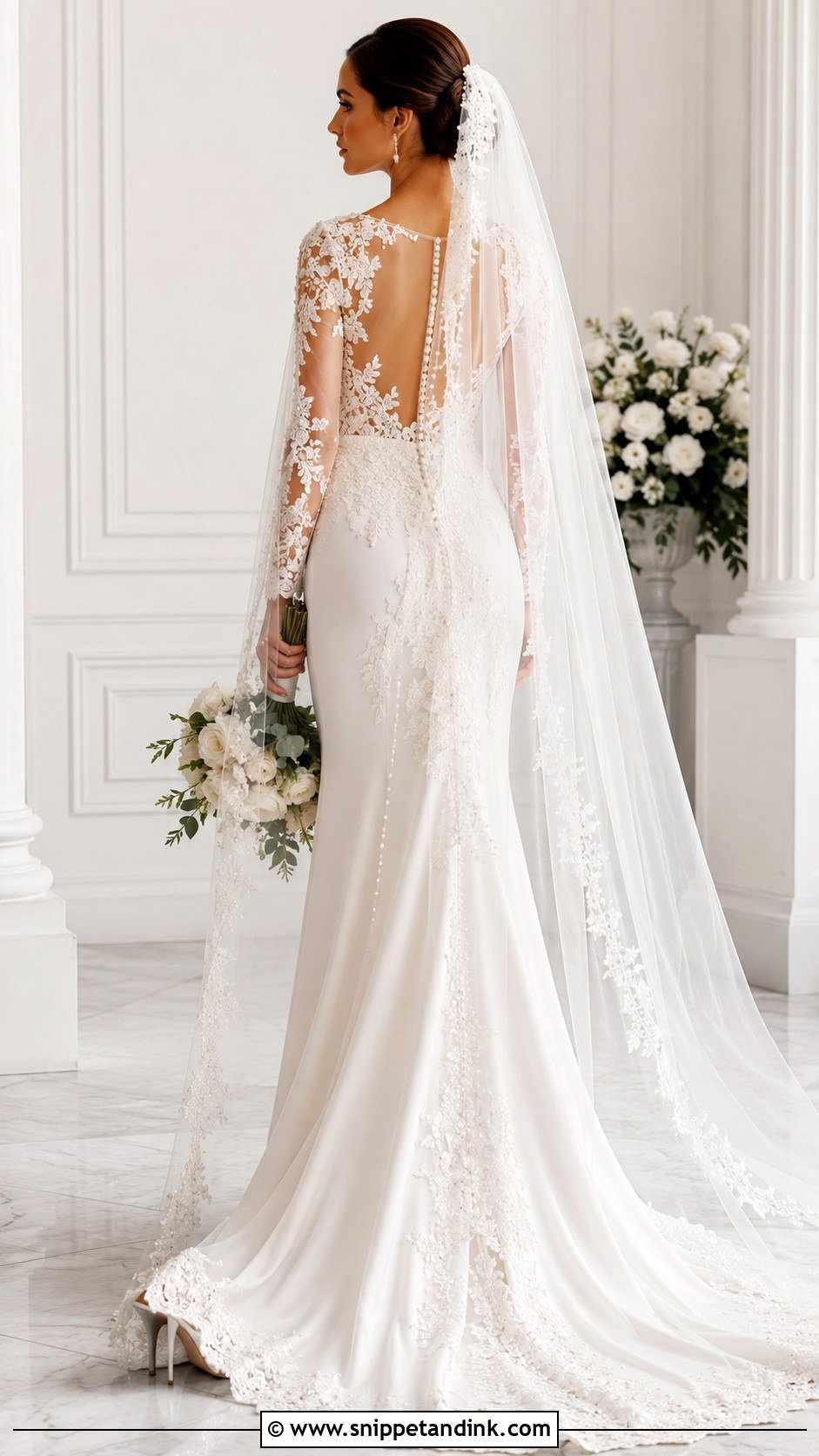
Echoing the gown in the veil makes the two look designed together. You can repeat lace, pearls, embroidery, flowers, satin trim or beading. The rule I follow is simple: a heavily detailed gown gets one element repeated lightly, and a simple dress lets the veil carry more. Bring fabric swatches, photos of the back of the dress and any trim samples when you order. It’s also worth asking the bridal shop whether they can save offcuts from your alterations, since that’s the closest match you’ll ever get.
Where the Comb Sits Decides How the Veil Behaves
I place the comb before the hair is finished, not after. High on the crown, the veil frames your face and stands away from your back. Tucked under a low bun, it falls closer to the body and looks more relaxed. Fine or silky hair needs a small teased or braided base for the comb teeth to grip, plus a couple of crossed pins over the comb. Combs sewn into custom veils are usually small, so tell your hairstylist which veil you’re wearing well before the trial.
Wind, chairs and the first dance
Outdoors, long veils lift like sails. Have a bridesmaid or your planner ready to gather it, and let the photographer use the wind rather than fight it. When you sit down for dinner, lift the veil over the chair back or take it off, because sitting on tulle for hours snags it. If you plan to dance, decide when it comes off, ideally with the person who put it in.
Putting the Veil Away Without Crushing the Embroidery
Tulle creases, and pearls or heavy stitching press marks into the layers if the veil is folded tightly. After the wedding, hang it overnight so it relaxes, then roll it loosely around acid-free tissue or lay it flat in an archival box. Skip plastic bags, which trap moisture and can yellow fabric over time. If it needs refreshing for a later photo session, steam it gently from a distance; a hot iron will melt synthetic tulle almost instantly.
Your Veil Should Carry One Idea, Not Six
The veil worth ordering is the one tied to your dress and to something you’ll want to remember. Initials, a date, handwriting, pearls, lace or flowers can each make it yours, as long as you pick one or two and let the gown breathe. Look at the full outfit from behind before you settle length, trim and placement, because that’s the view guests see the longest. Get that right and the veil stops being an accessory and becomes the part of your outfit people ask about.
You'll Like These Ideas:


Leave a Reply