
A dessert tower gives you height on the table and spreads the serving work across dozens of small pieces instead of one cake that someone has to slice in the kitchen. I build them from cupcakes, macarons, cream puffs, mini cakes, cheesecakes and plenty of things that were never meant to be stacked, so the real questions are always structural: what holds its shape at room temperature, what travels, and what guests can pick up with one hand. Below are twenty towers I’d happily put on a reception table, with notes on how each one behaves once it leaves the bakery.
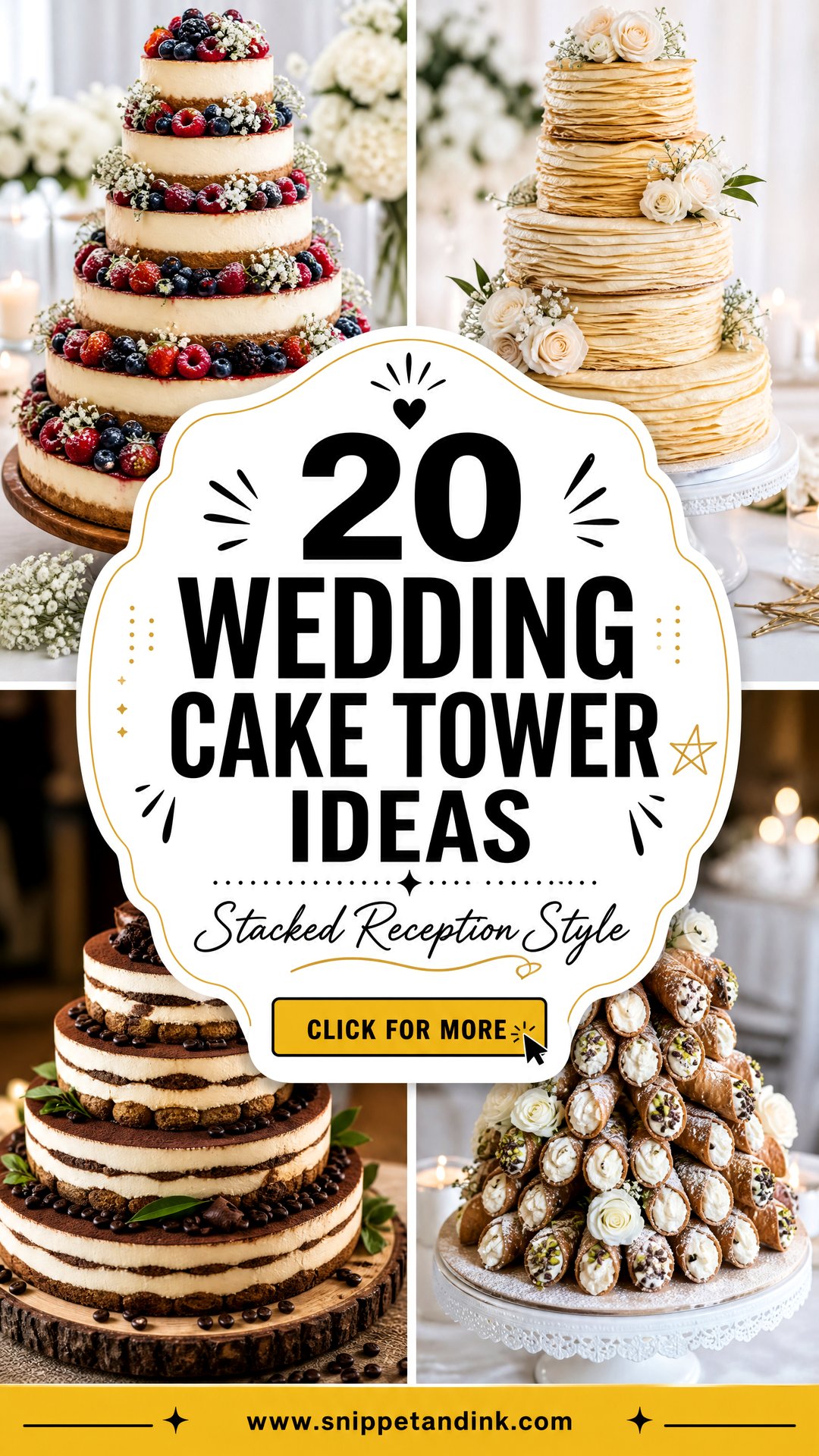
Counting Pieces Before You Fall for a Stand
The first number I ask for is the guest count, and the second is whether the tower is the only dessert. If it is, plan on roughly one and a half pieces per guest for small items like macarons, cake pops and cream puffs, because people take two of the little ones. Cupcakes, mini cakes and slices of pie count closer to one per guest. Add a few percent for breakage in transport.
That number decides the stand, not the other way round. A three-tier acrylic cupcake stand holds far fewer pieces than most couples assume, so for a large wedding I often build the tower for show and keep a matching tray in the kitchen to refill it. Ask your baker how many pieces each tier holds before you buy or rent anything.
- Mixing three or four dessert types? Reduce each to about half a piece per guest, since people sample.
- Serving a plated dessert as well? The tower becomes a treat, and one piece per two guests is usually enough.
- Late-night station after a long reception? Sturdy items like donuts and brownies get eaten; delicate pastries get left.
1. Wedding Cupcake Tower
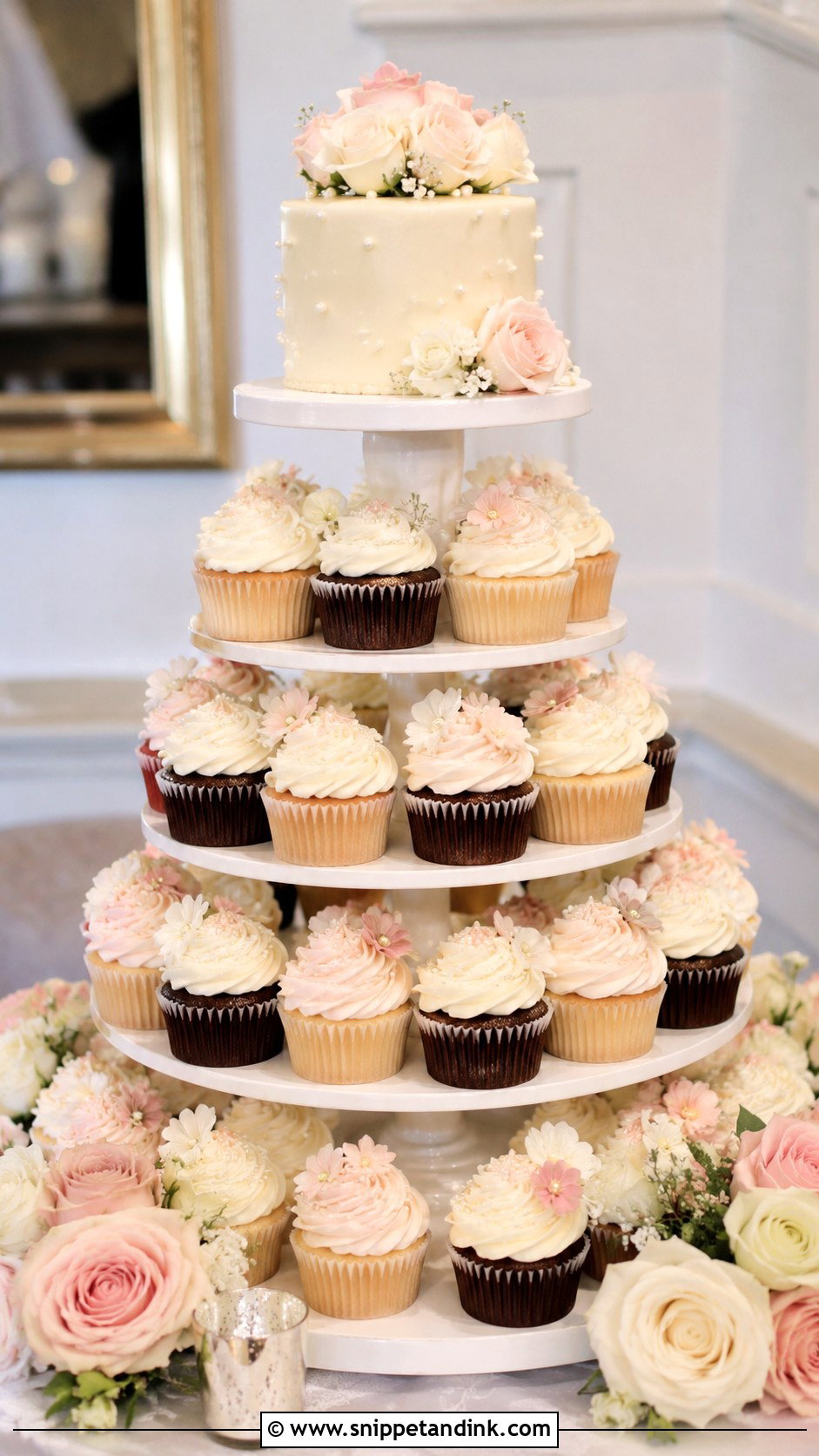
Cupcakes are the most forgiving tower I make. A six-inch cutting cake on the top tier keeps the knife photo, and the cupcakes below can run in two or three flavors without the display looking busy. I bake into foil-lined or greaseproof wrappers, because plain paper cups go translucent and blotchy once the butter in the sponge seeps through, and that shows on a tall stand. Match the buttercream to your colors rather than the wrappers, then tuck a few fresh stems between tiers so the gaps look planned.
2. Wedding Macaron Tower
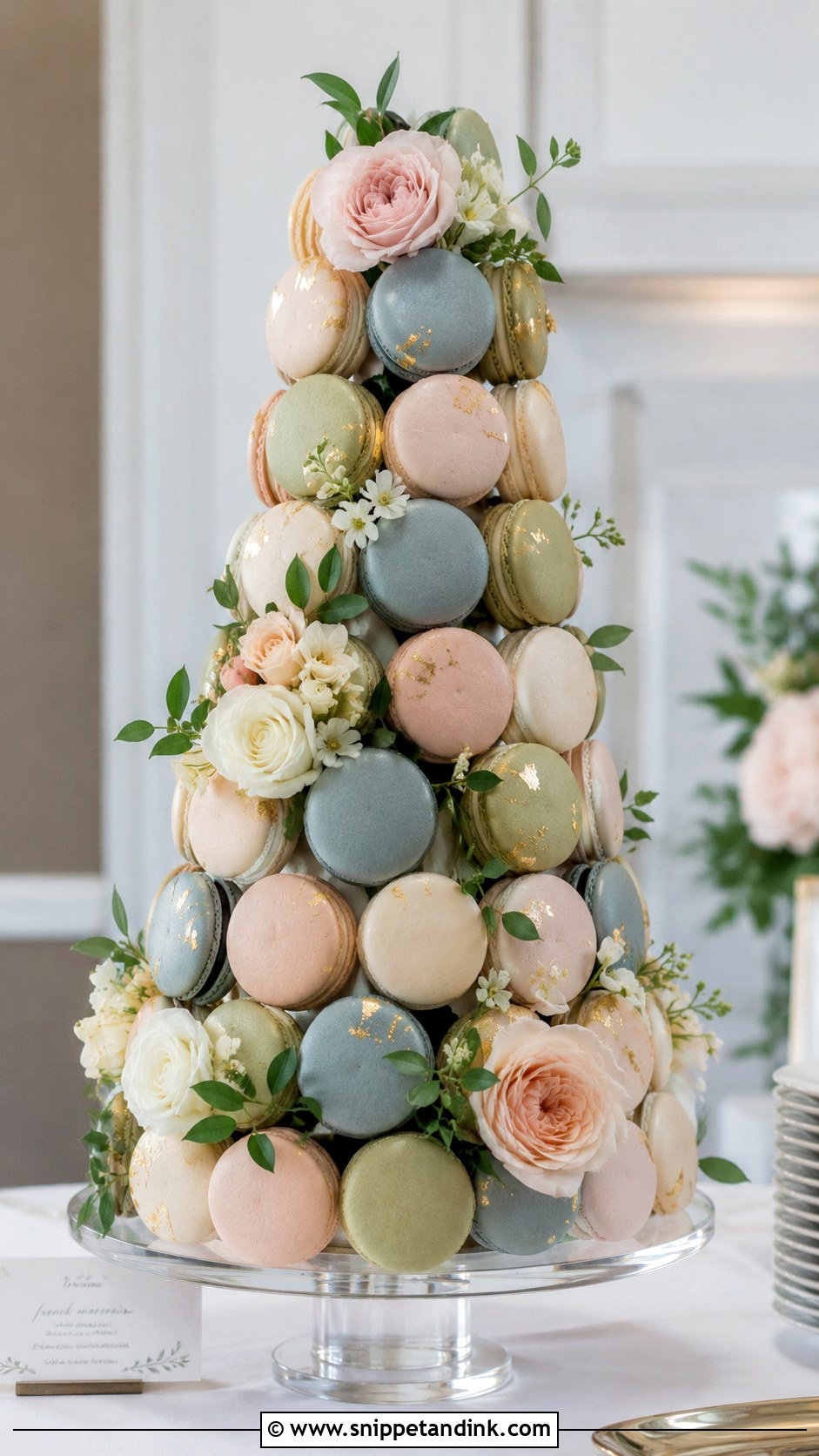
Macarons give a crisp, sculptural cone, and they hold up better than people expect because the shells are mostly sugar and almond. The weak point is the filling: buttercream and ganache soften in a warm room, and the shells start sliding on a steep cone after an hour or two. I usually stack them on a styrofoam cone with a tiny dot of melted chocolate or a toothpick behind each one. An ombre from ivory to blush or sage reads well from across the room. Keep a tray of backup desserts nearby, since most guests take two.
3. Wedding Croquembouche Tower
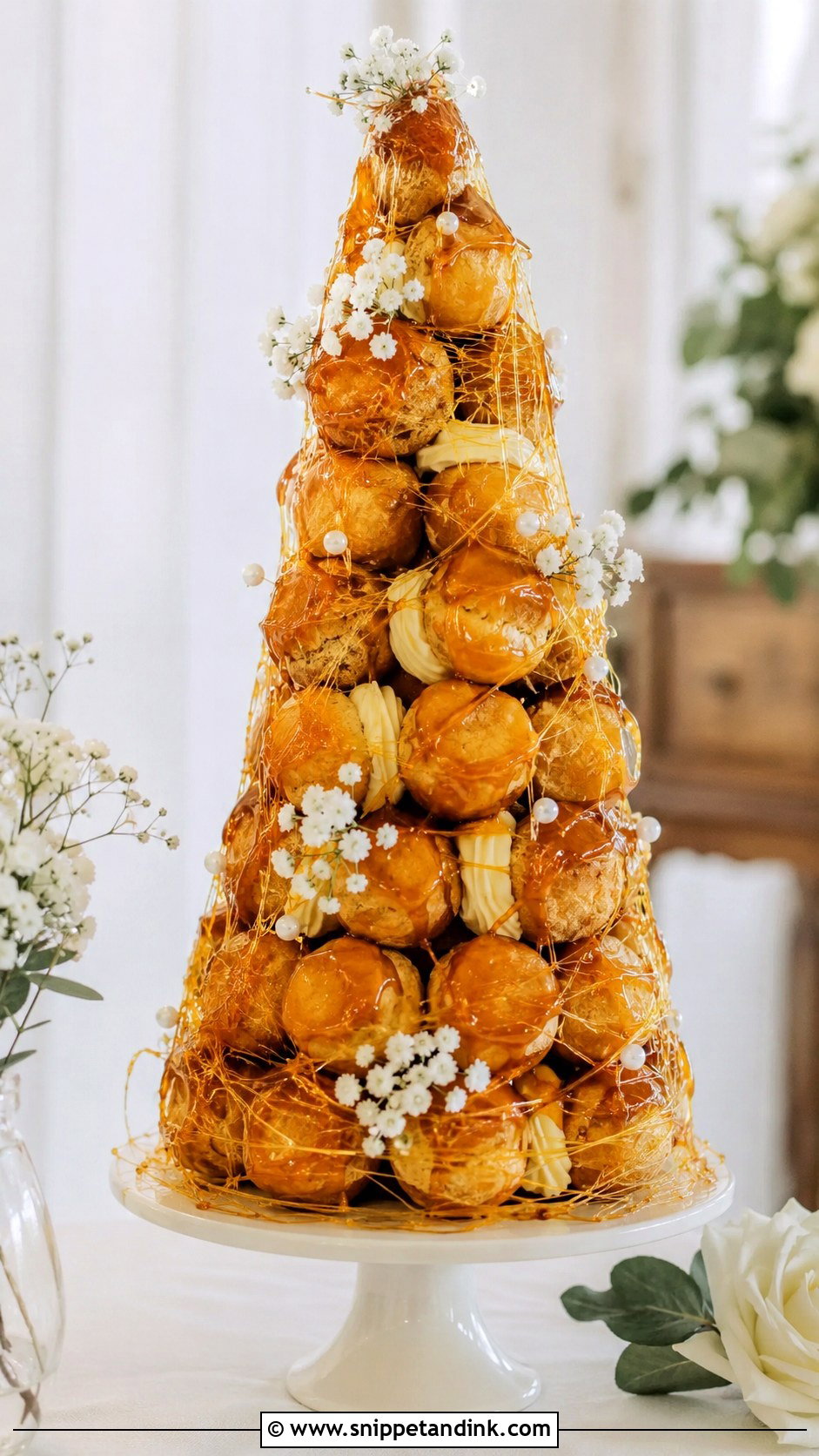
Croquembouche is cream puffs glued into a cone with hot caramel, and it is the tower I’d least want a friend to attempt at home. Caramel is hygroscopic, so in a humid room it pulls moisture from the air and turns sticky, and the cone can begin to lean within a few hours. That’s why I assemble it as close to the reception as the venue allows and keep spun sugar off until the final minutes. A few pearls or sugared almonds are enough decoration; the glossy texture does the rest.
4. Wedding Donut Tower
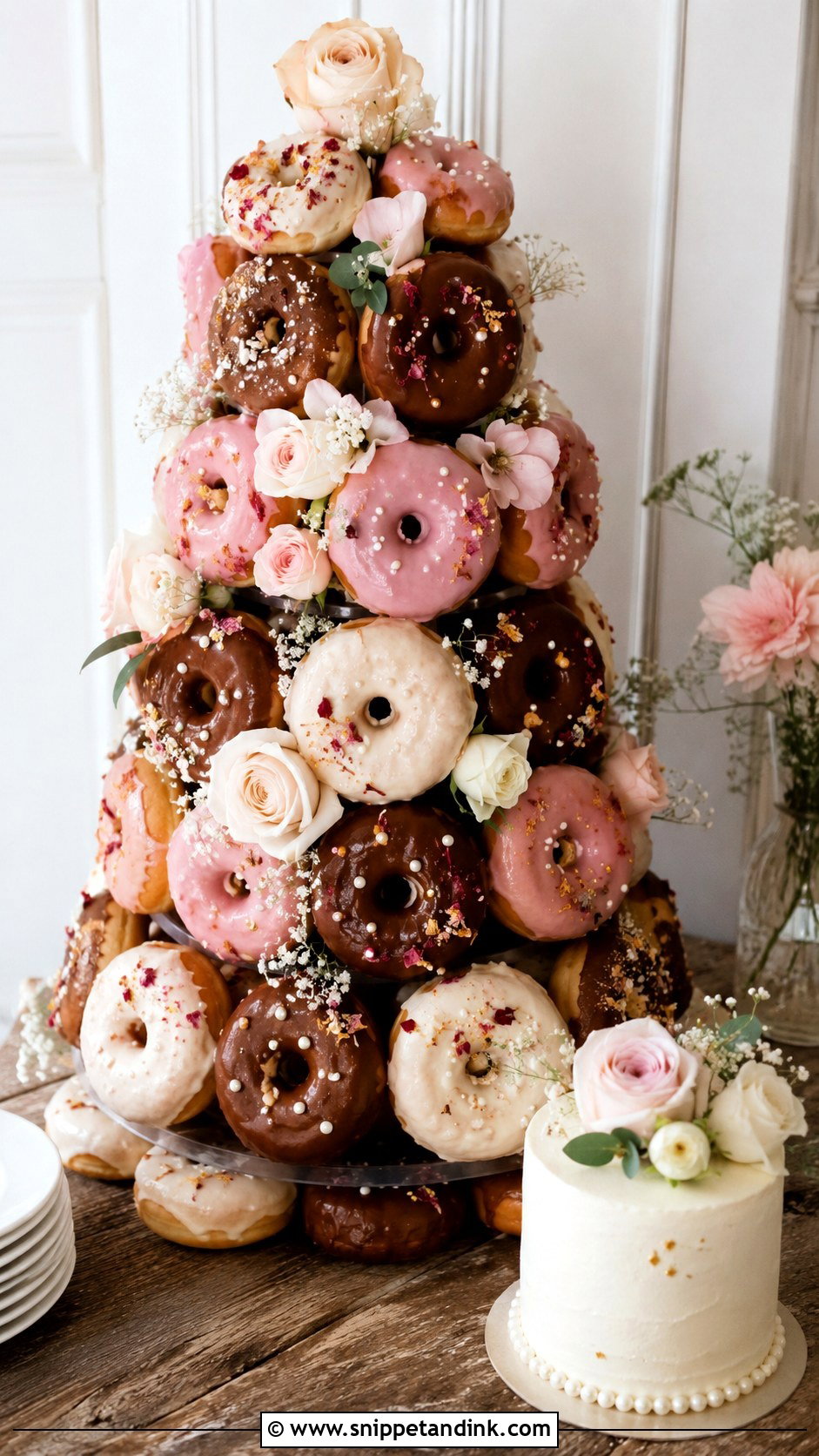
Donuts are cheap, sturdy and genuinely eaten, which is more than I can say for some showpiece cakes. Glazed rings sit well on a peg board or a cone, and a small cutting cake can crown the top. The glaze is what keeps the display looking finished, so I keep to two or three colors: a white vanilla glaze, a pale strawberry pink and a dark chocolate. Sprinkles migrate and bleed in humidity, so I’d rather use dried petals or a scatter of edible pearls for brunch weddings and late-night stations.
5. Wedding Mini Cake Tower
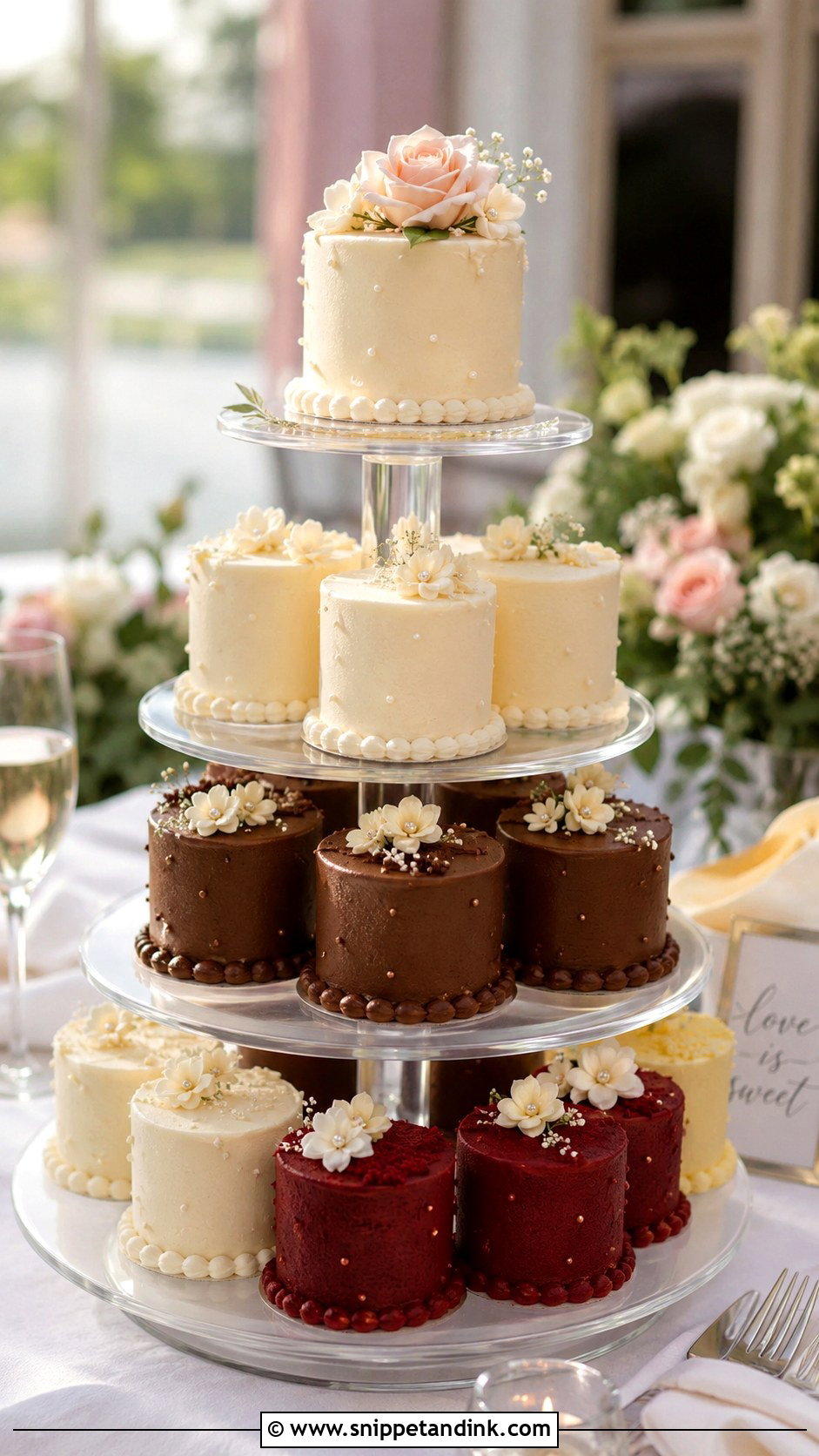
Mini cakes are small layer cakes, each one filled, crumb-coated and finished like a full tier, which is why they cost noticeably more than cupcakes. You’re paying for the labor of thirty or sixty little cakes rather than one. In return each guest gets a whole cake, and I can vary the inside flavor (raspberry vanilla, mocha chocolate, lemon, almond with cream cheese) while every outside matches. Stagger them on acrylic risers or mismatched vintage plates so the tops sit at different heights.
6. Wedding Cheesecake Tower
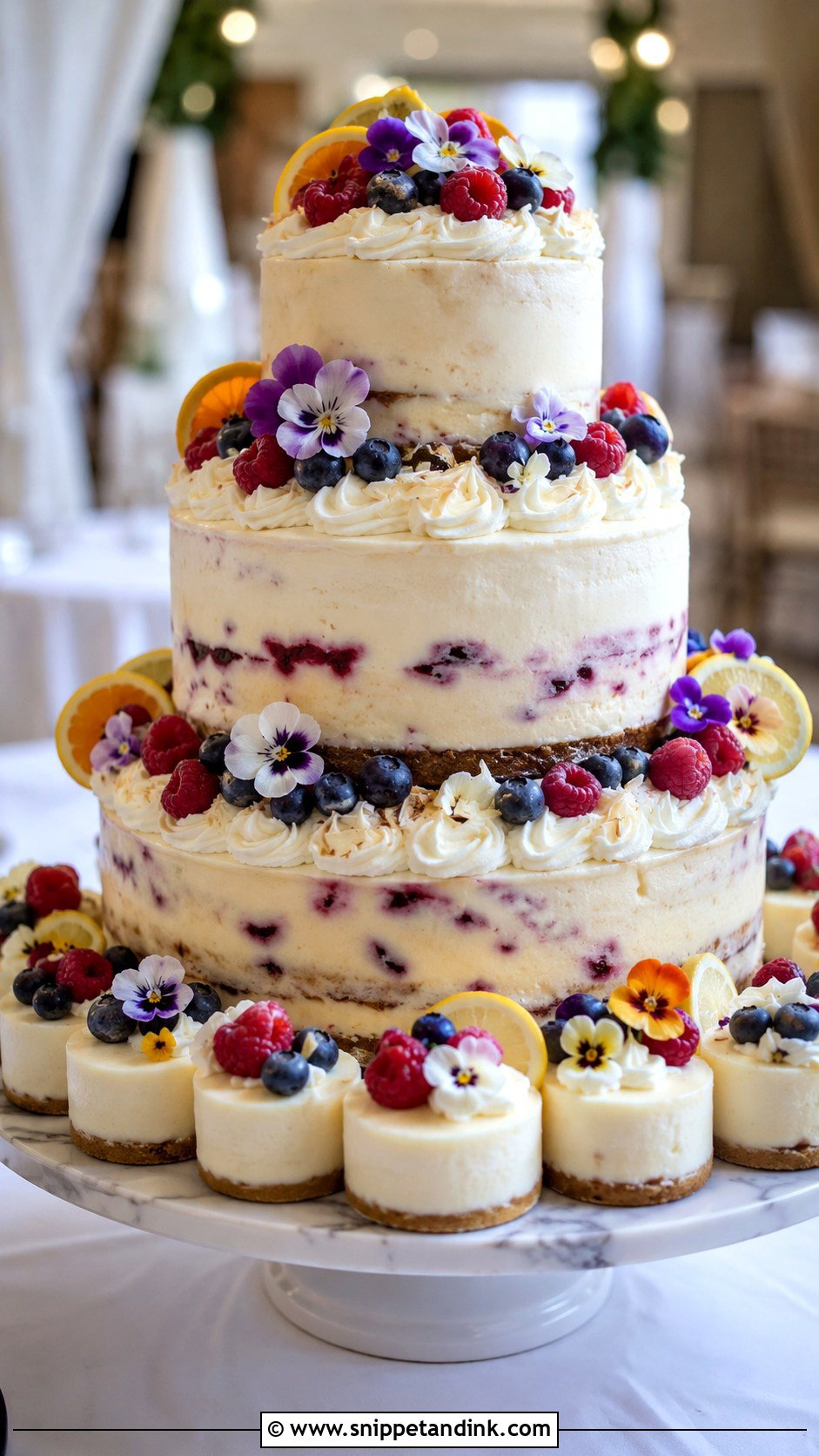
A wedding cheesecake tower is dense and heavy, and that weight is the first thing I plan around. Stacked cheesecakes need cake boards and dowels under every layer exactly like a tiered sponge, or the bottom tier cracks under the load. Mini cheesecakes on separate tiers avoid the problem altogether. New York, raspberry swirl, lemon and salted caramel all sell well. Decoration stays light because the cake is already rich: a few berries, some citrus slices or a dusting of sugar. Couples who dislike frosting usually love this one.
7. Wedding Cake Pop Tower
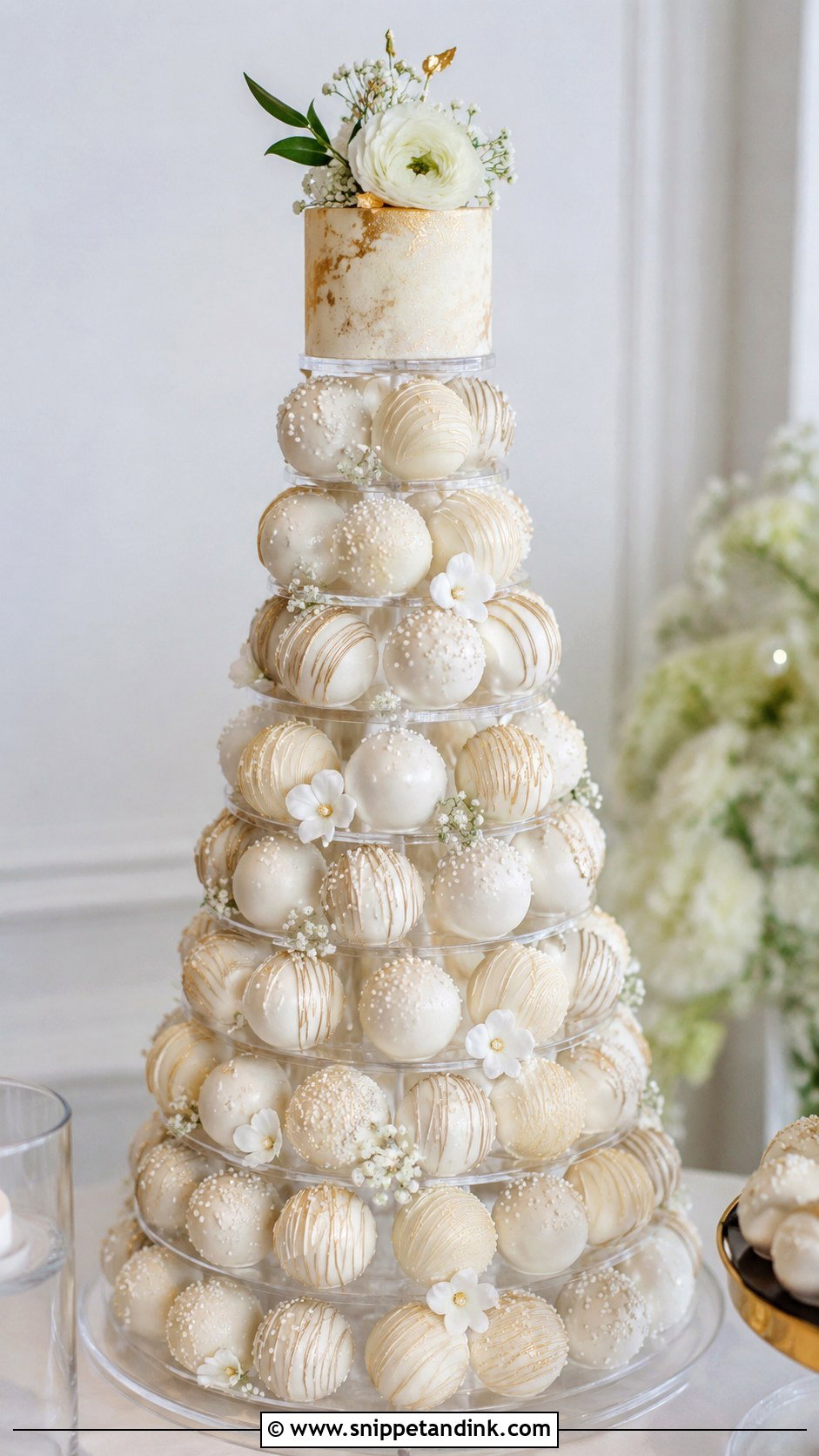
A wedding cake pop tower hides a lot of hand work. Every pop is crumbled cake bound with frosting, rolled, chilled and dipped, and a coating that is too thick cracks once the cold center warms and expands. I let mine come close to room temperature before dipping for that reason. Upright in a cone they read as a single shape; arranged around a small cake they look more like a table centerpiece. White chocolate, blush or ivory coatings with a fine drizzle keep them grown-up, and nobody needs a plate.
8. Wedding Petit Four Tower
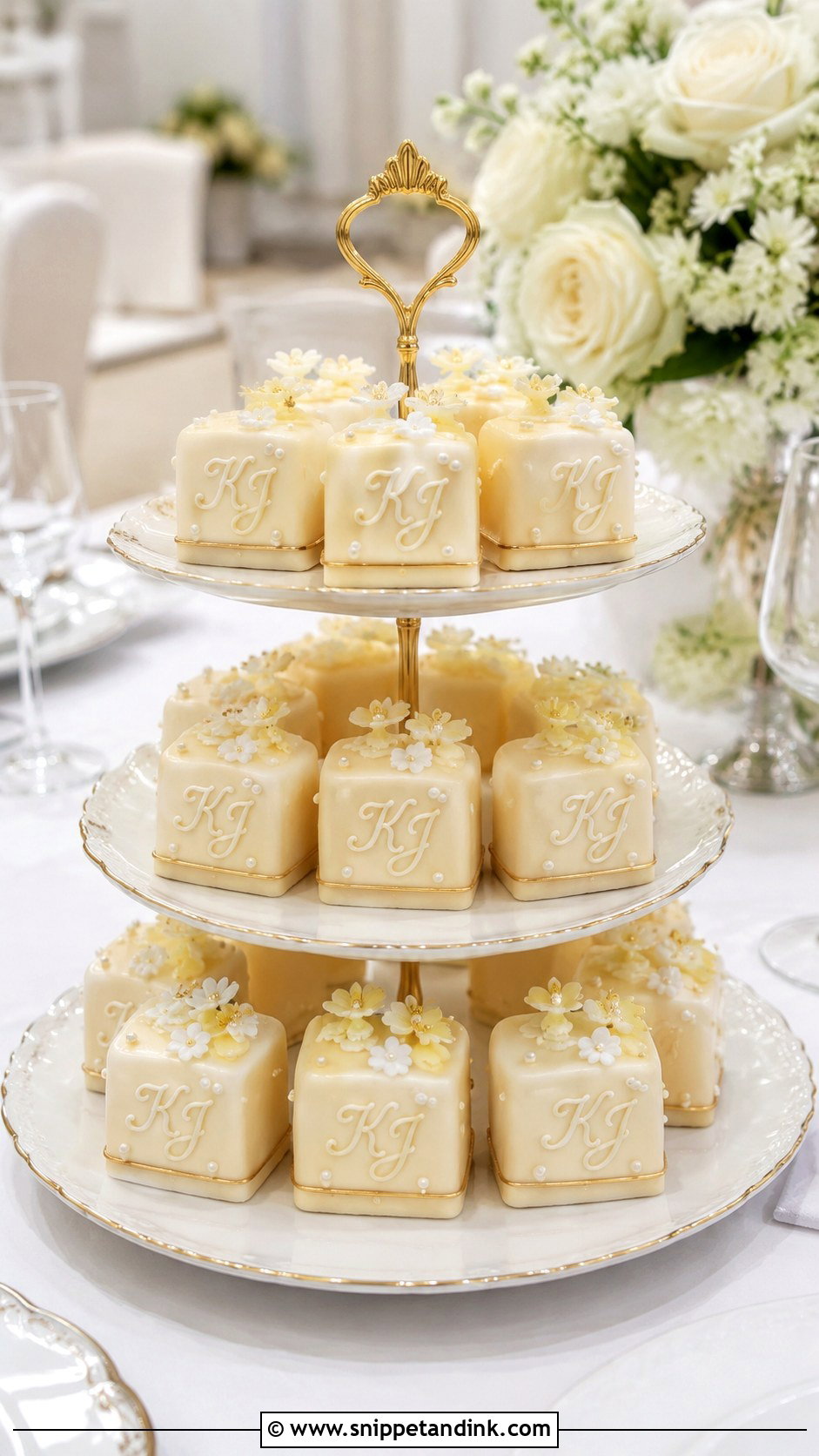
Petit fours are small squares of layered sponge poured over with a thin fondant glaze, and they suit a formal reception or an afternoon tea wedding. The glaze is temperamental: too warm and it runs off thin enough to show every crumb, too cool and it sets lumpy. When it’s right, the squares stack in neat rows that look tailored. Almond, vanilla, lemon and raspberry fillings keep them light. A piped initial or a single sugar flower on top is plenty, and portion control comes built in.
9. Wedding Brownie Tower
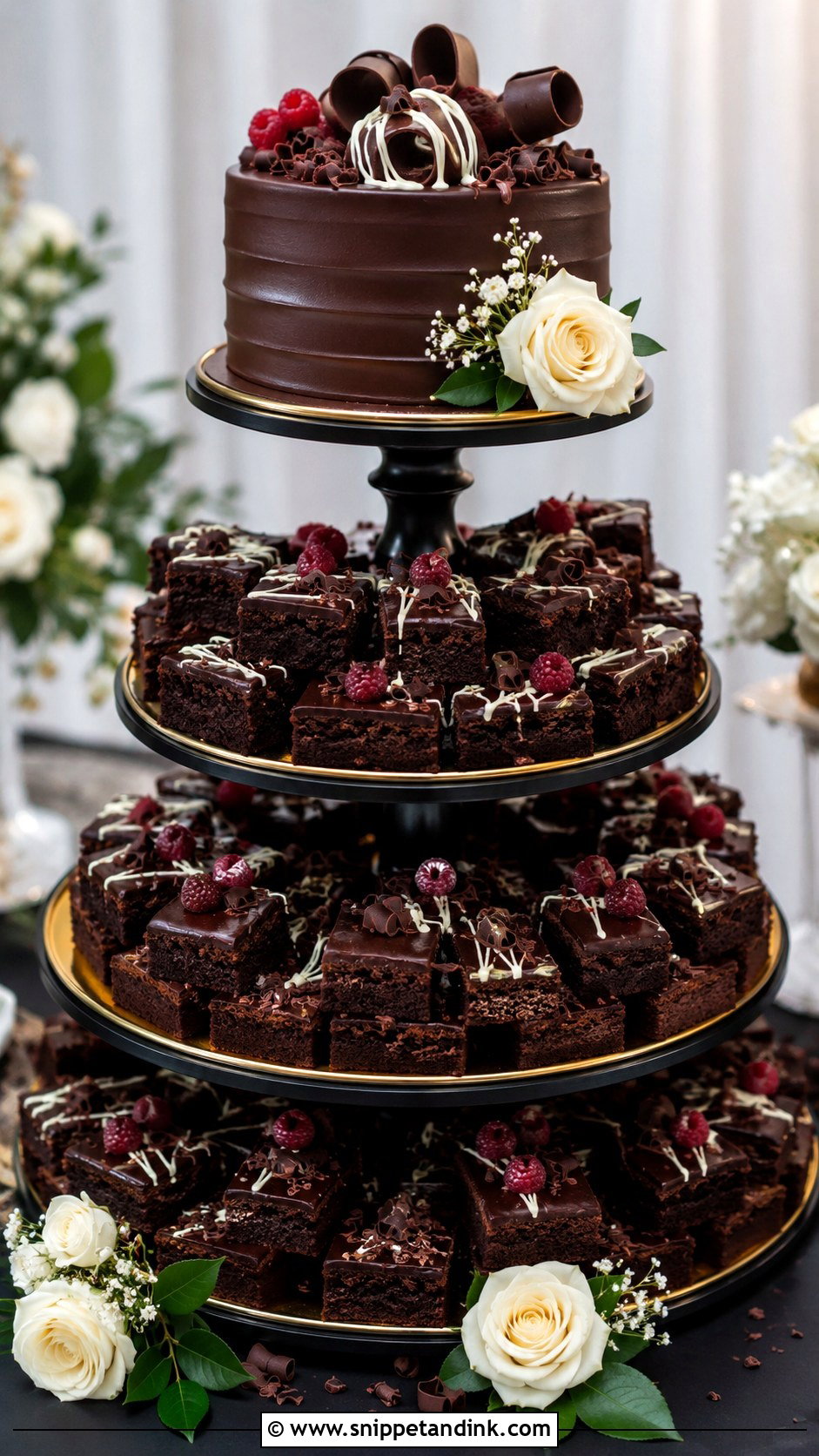
A wedding brownie tower lives or dies on clean cuts. I chill the slab before slicing and wipe a hot knife between every cut, because ragged brownie edges make the whole display look like a bake sale. Stack the squares on tiered plates, put a small chocolate cutting cake on top and add a little glossy ganache. Mixing fudge, cheesecake swirl, raspberry and salted caramel brownies gives guests a reason to come back. It suits evening receptions and fall weddings, when nobody minds something rich.
10. Wedding Cookie Cake Tower
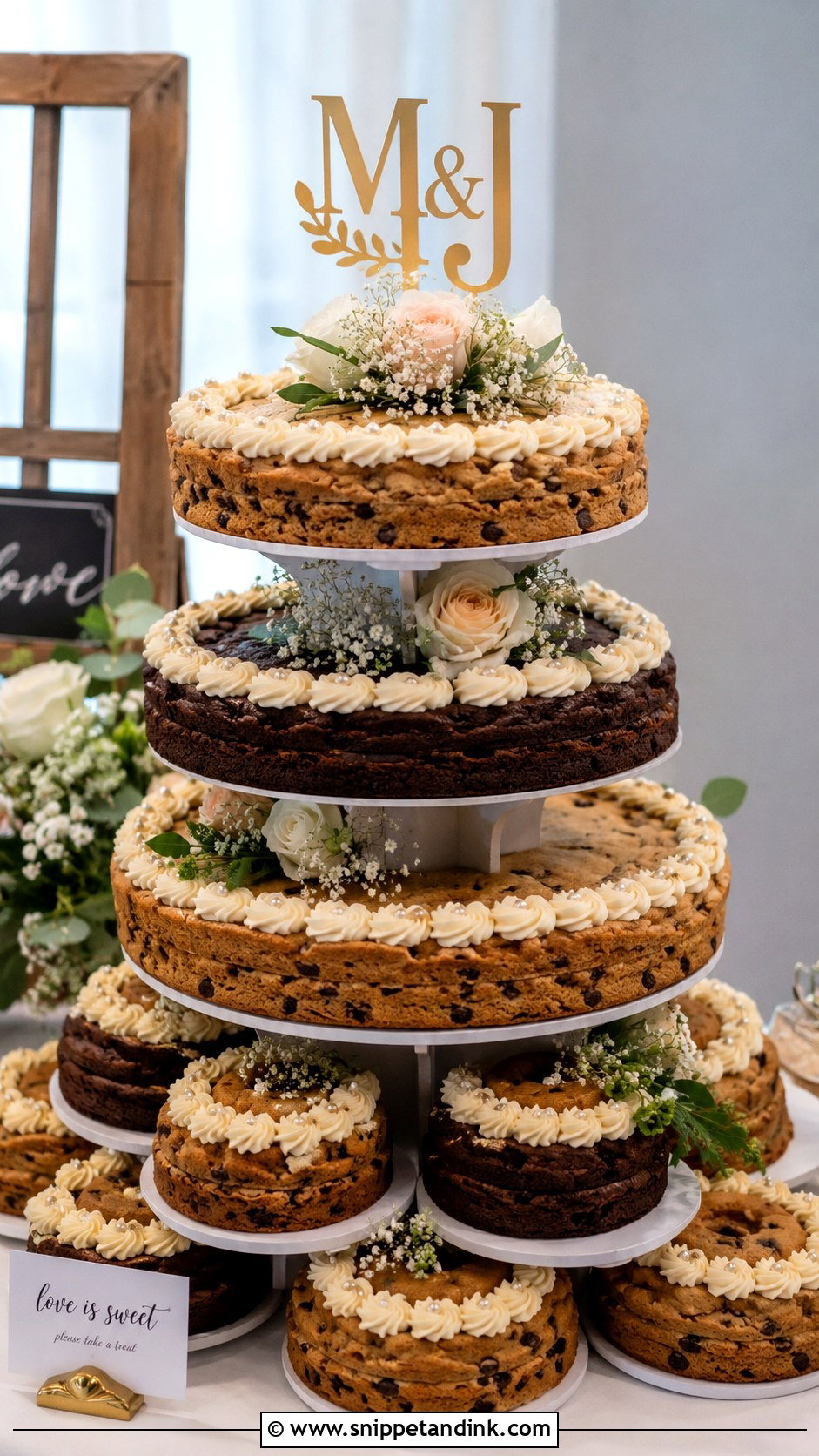
A wedding cookie cake tower stacks large baked cookie rounds with buttercream between them. The thing couples rarely expect is how hard a thick cookie layer is to cut cleanly at the reception, so I bake the layers a little underdone to keep them soft for slicing. Chocolate chip, sugar cookie, snickerdoodle and double chocolate are the reliable flavors. A smooth or softly piped border, a few fresh flowers and a monogram topper make it look like a reception centerpiece instead of a birthday treat.
11. Wedding Bundt Cake Tower
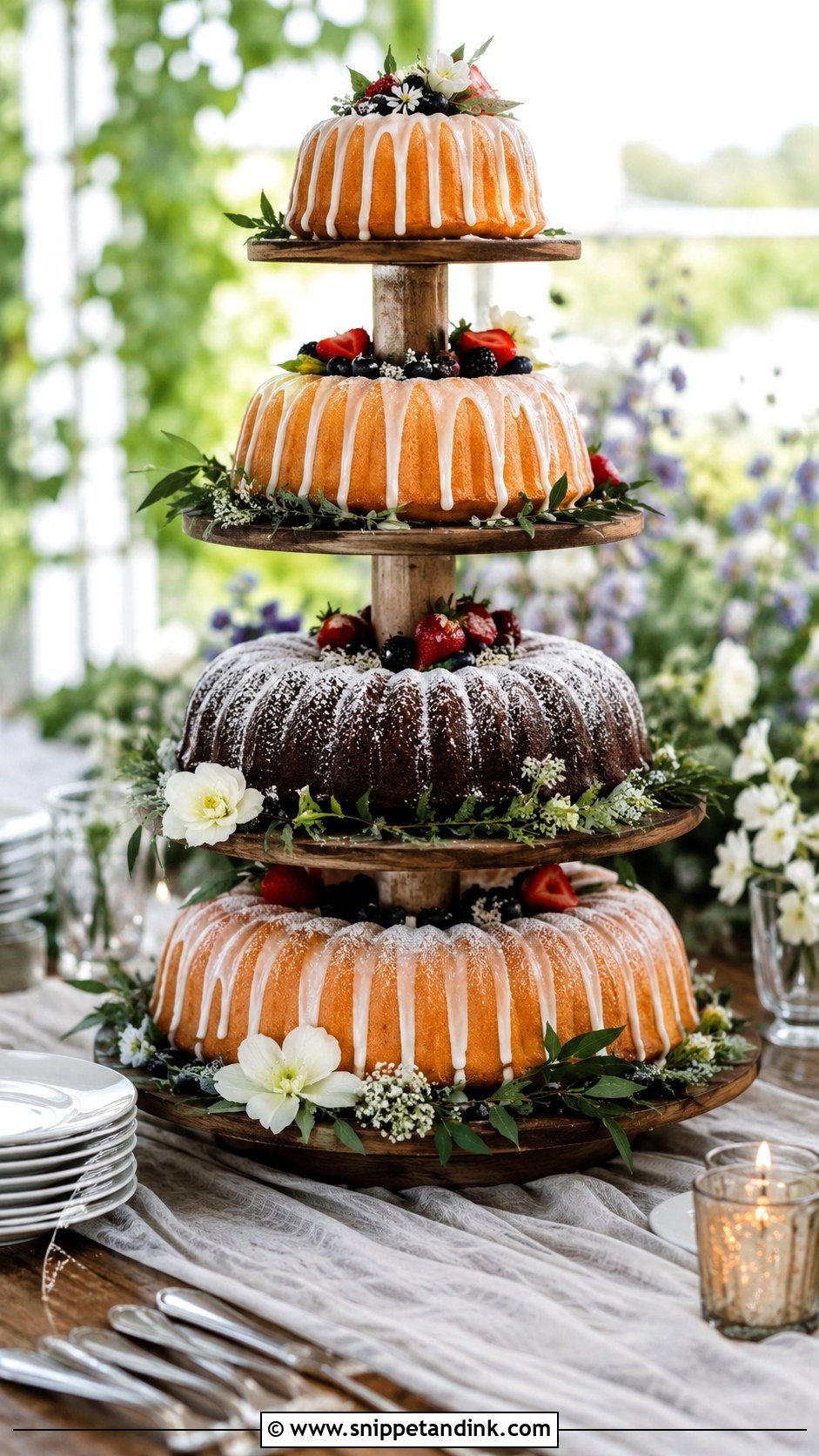
Bundt cakes come out of the pan with their own ridges and curves, so they need almost nothing on top. I pour a thin glaze rather than a thick icing, because a heavy coat fills the grooves and flattens the shape you’re paying for. Stack graduated sizes on a strong stand or ring a large top cake with minis. Vanilla almond, lemon, chocolate and carrot are good choices. Berries and greenery around the base soften it, and it settles naturally into rustic or garden receptions.
12. Wedding Crepe Cake Tower
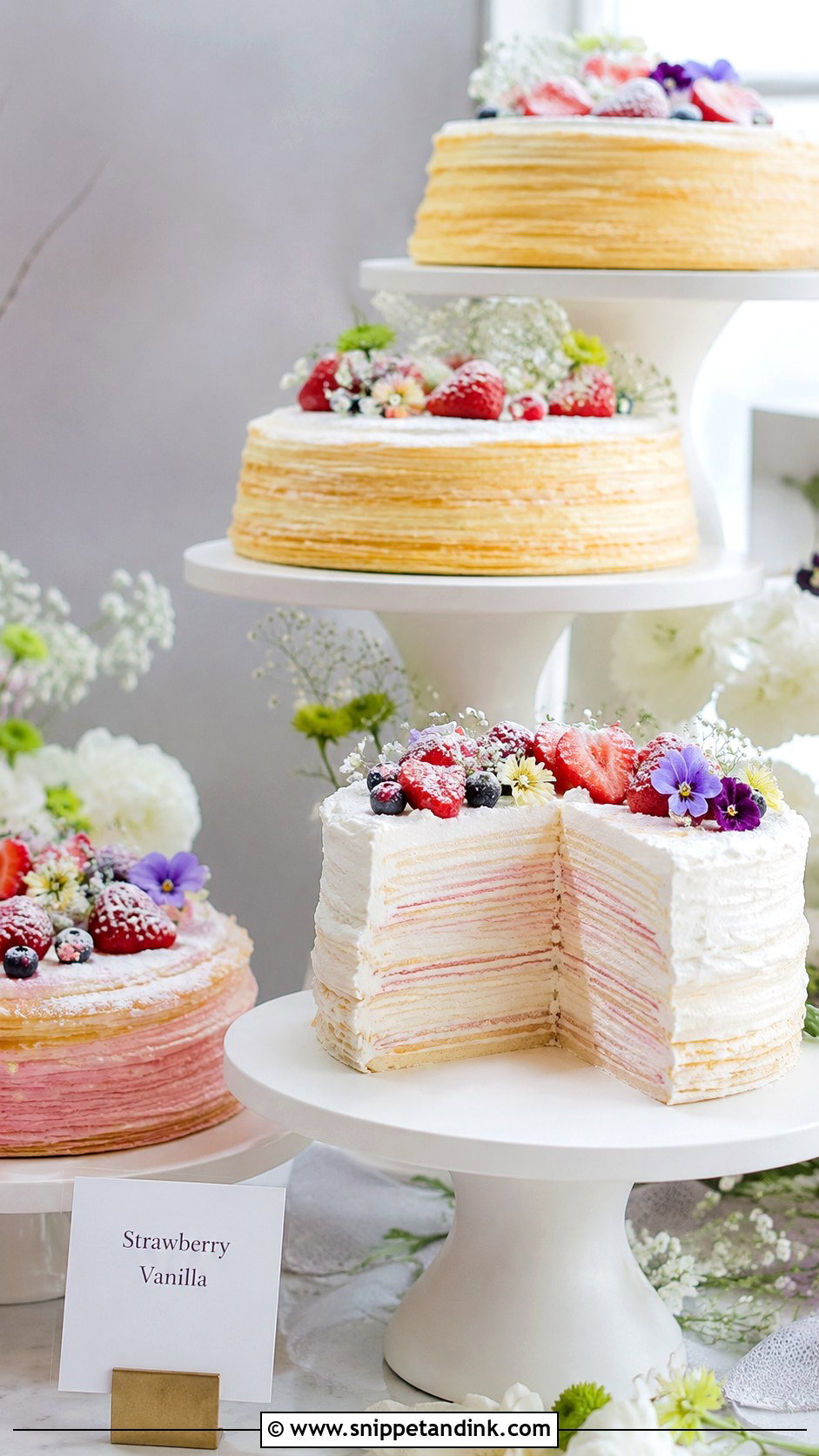
A crepe cake is twenty or more paper-thin crepes layered with pastry cream, and the stripes only show once it’s sliced. That cream is the reason I keep this one indoors and chilled until the last possible moment; in a warm tent the layers start sliding against each other within the hour. For height, use graduated crepe cakes or minis on tiered stands. Vanilla, matcha, chocolate, lemon and strawberry are the flavors I make most. A dusting of sugar and a few berries finish it.
13. Wedding Pavlova Tower
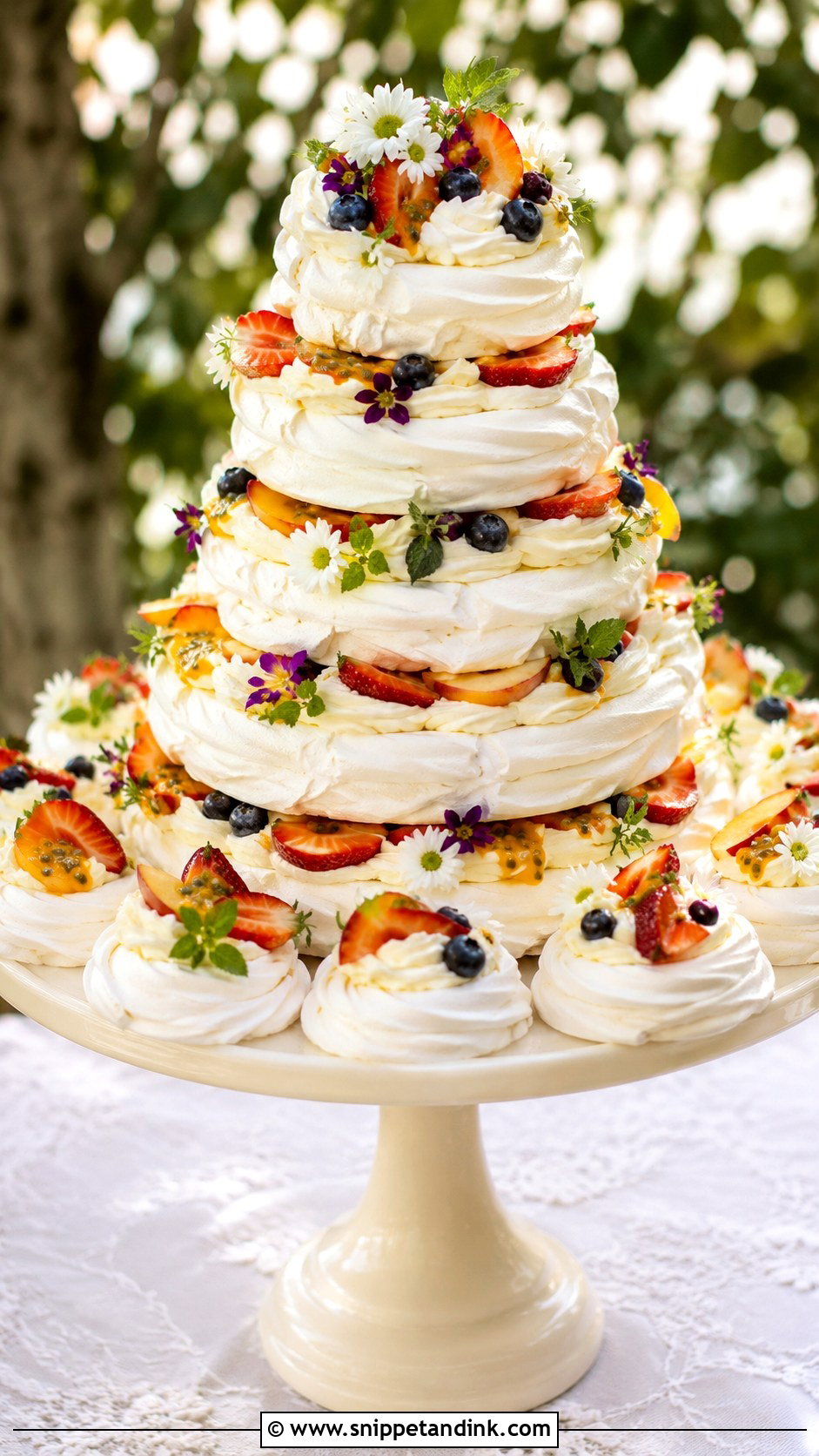
Pavlova pairs a crisp meringue shell with a marshmallow center, and both start to break down the moment cream and fruit touch them. I build the meringue rounds ahead but layer the cream and fruit on site, usually within an hour of serving, and I warn couples that a pavlova in high humidity goes tacky even before it’s assembled. Berries, passion fruit, peaches and citrus bring color. Keep the cream plain white and let a few loose petals do the rest.
14. Wedding Tiramisu Tower
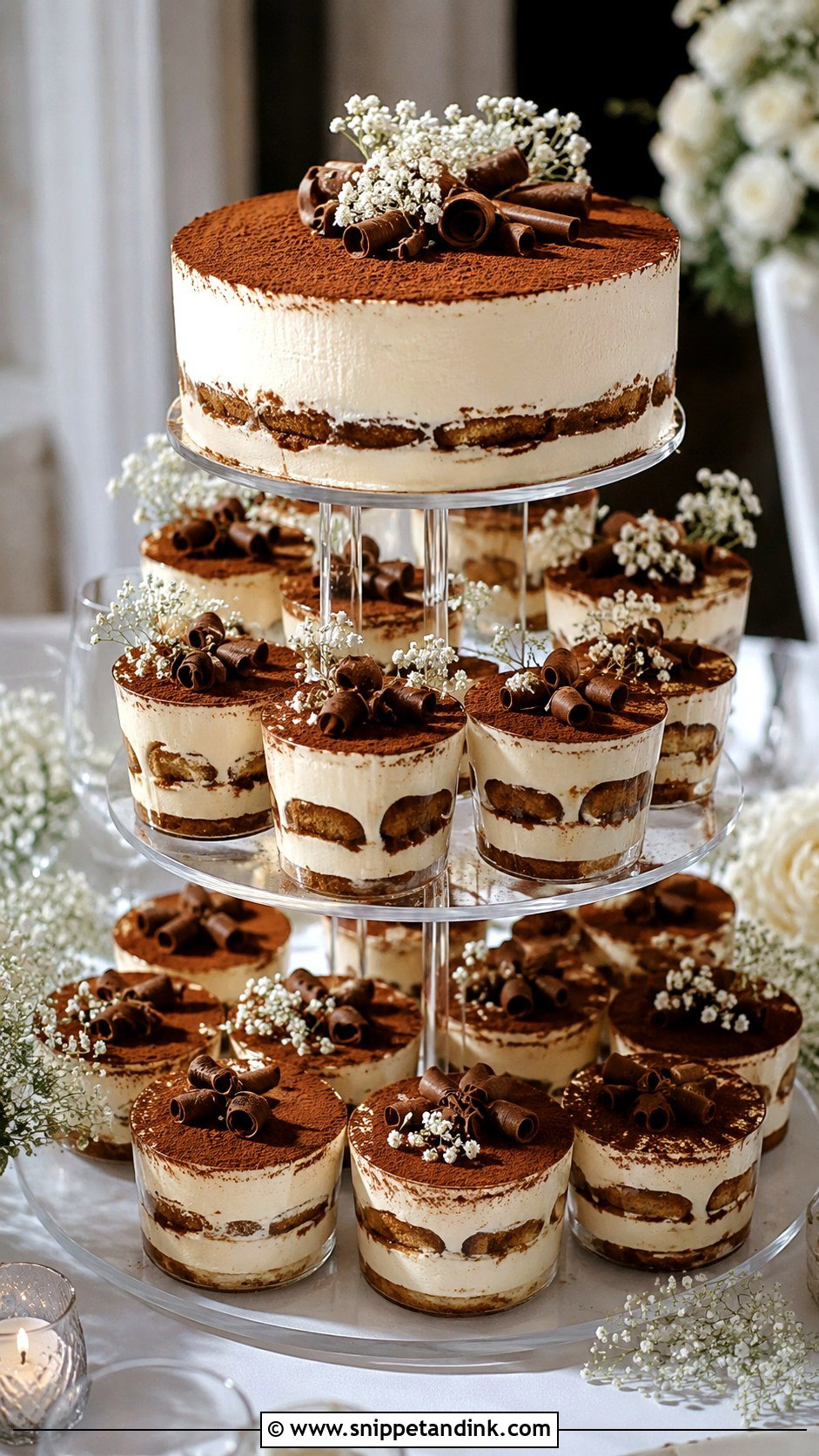
A wedding tiramisu tower is soaked ladyfingers and mascarpone cream, which means it has no structure of its own and must stay cold. I build it in individual cups or set rings for that reason, and the cups stack safely on clear tiers. The cocoa dusting goes on right before it leaves the fridge, since cocoa absorbs moisture and turns blotchy. Clean edges, a few chocolate curls and small white flowers keep it formal. Plan for an indoor reception with access to refrigeration.

15. Wedding Pie Tower
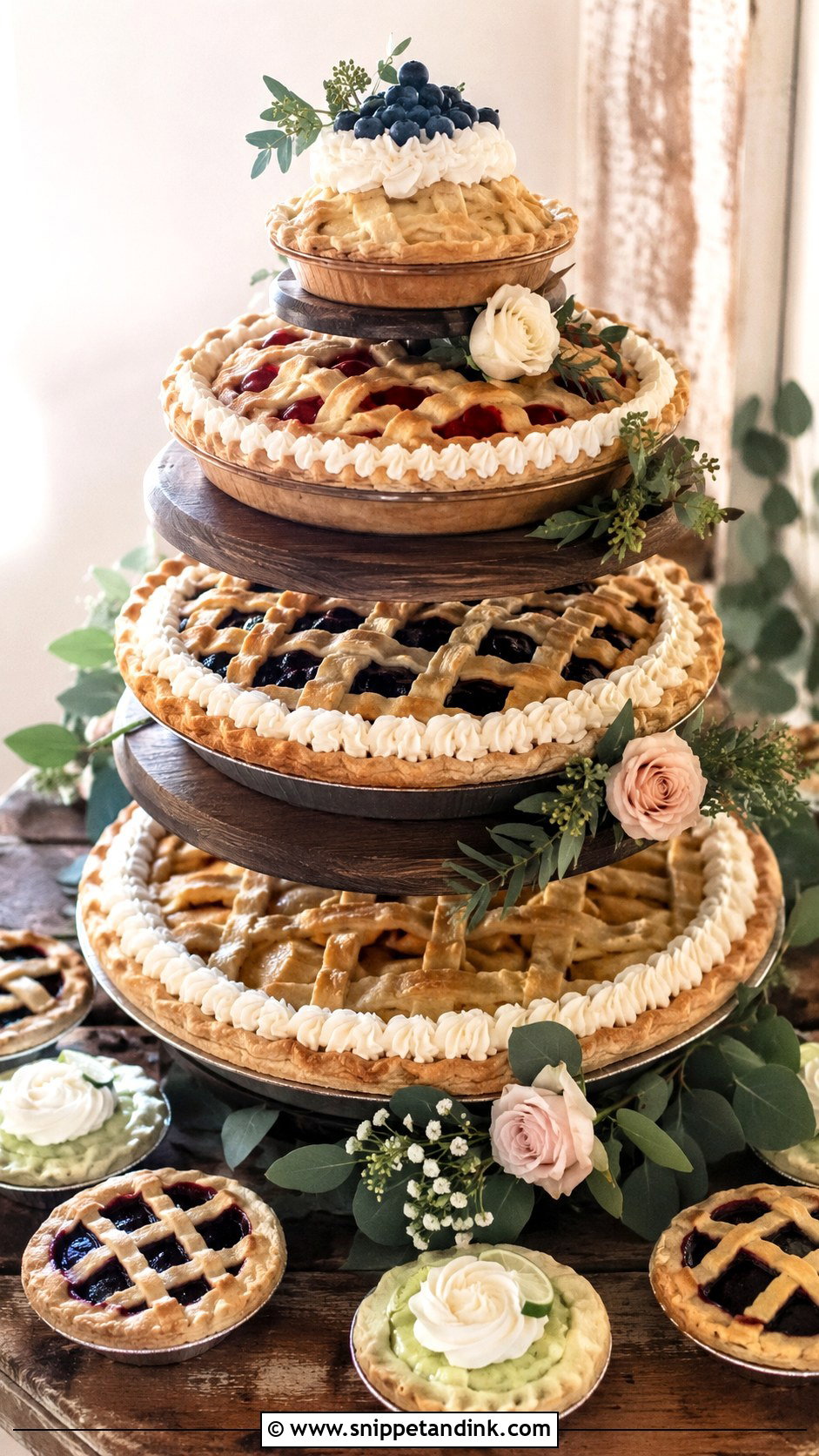
Pie towers suit barns, gardens and family-style dinners where the dessert should feel homemade. Fruit pies with a lattice or crumb top travel better than cream or meringue pies, which weep and slide on a tiered stand. Apple, cherry, blueberry, pecan and mixed berry are the ones I’d stack; key lime is better served chilled from a separate table. Mix whole pies with hand pies so guests can grab one, and add a small cutting cake if you still want the classic photo.
16. Wedding Madeleine Tower
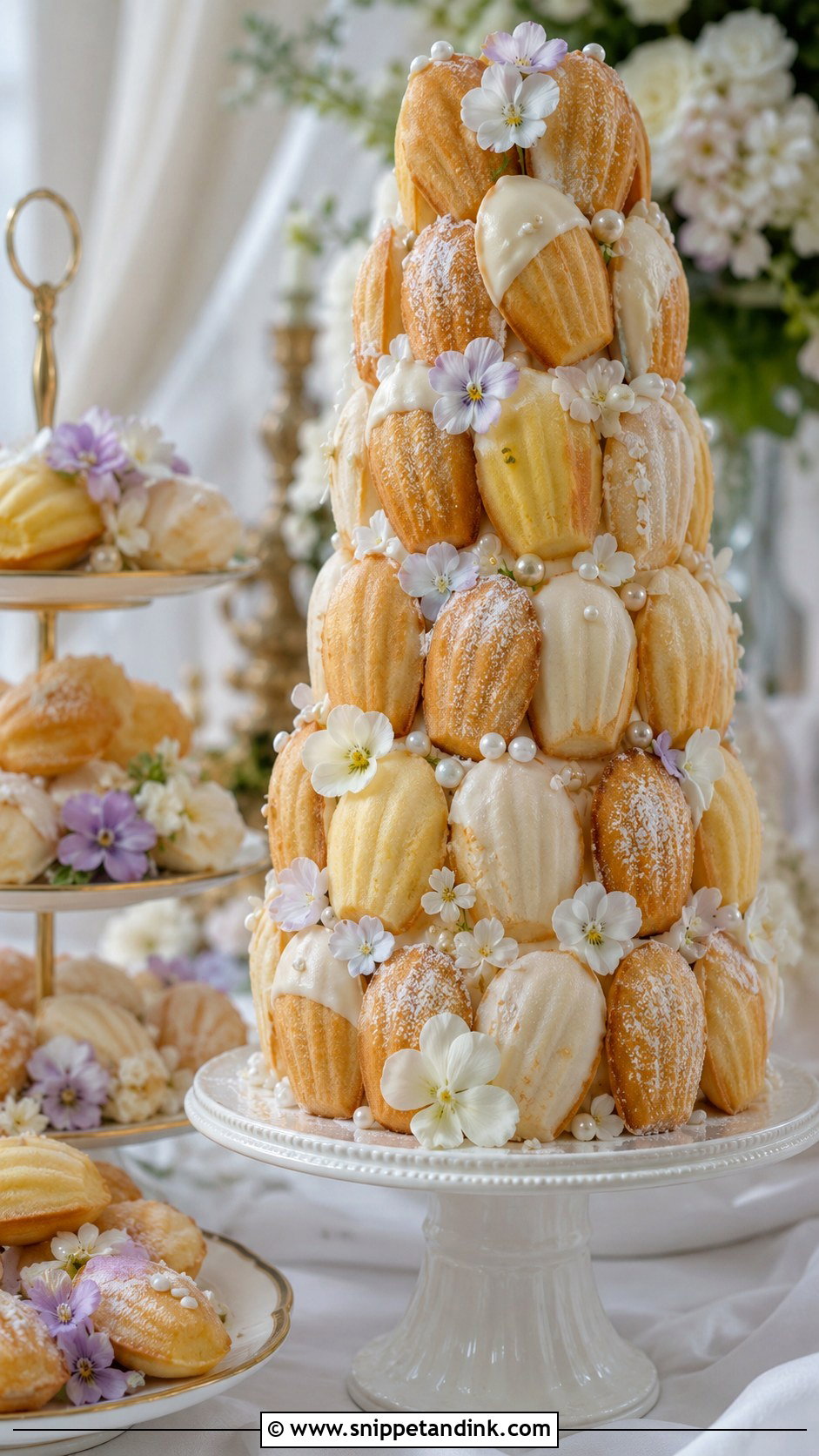
Madeleines are little shell-shaped sponges, and they taste best the day they’re baked because they stale faster than almost any other cake on this list. I bake them as close to the wedding as I can and dip or glaze them only that morning. They look refined in a tall cone or on layered plates. Lemon, vanilla, almond, orange and chocolate-dipped madeleines all work, and a thin ivory glaze or white chocolate tips are enough to dress them up. They belong at tea-style receptions and small celebrations.
17. Wedding Cannoli Tower
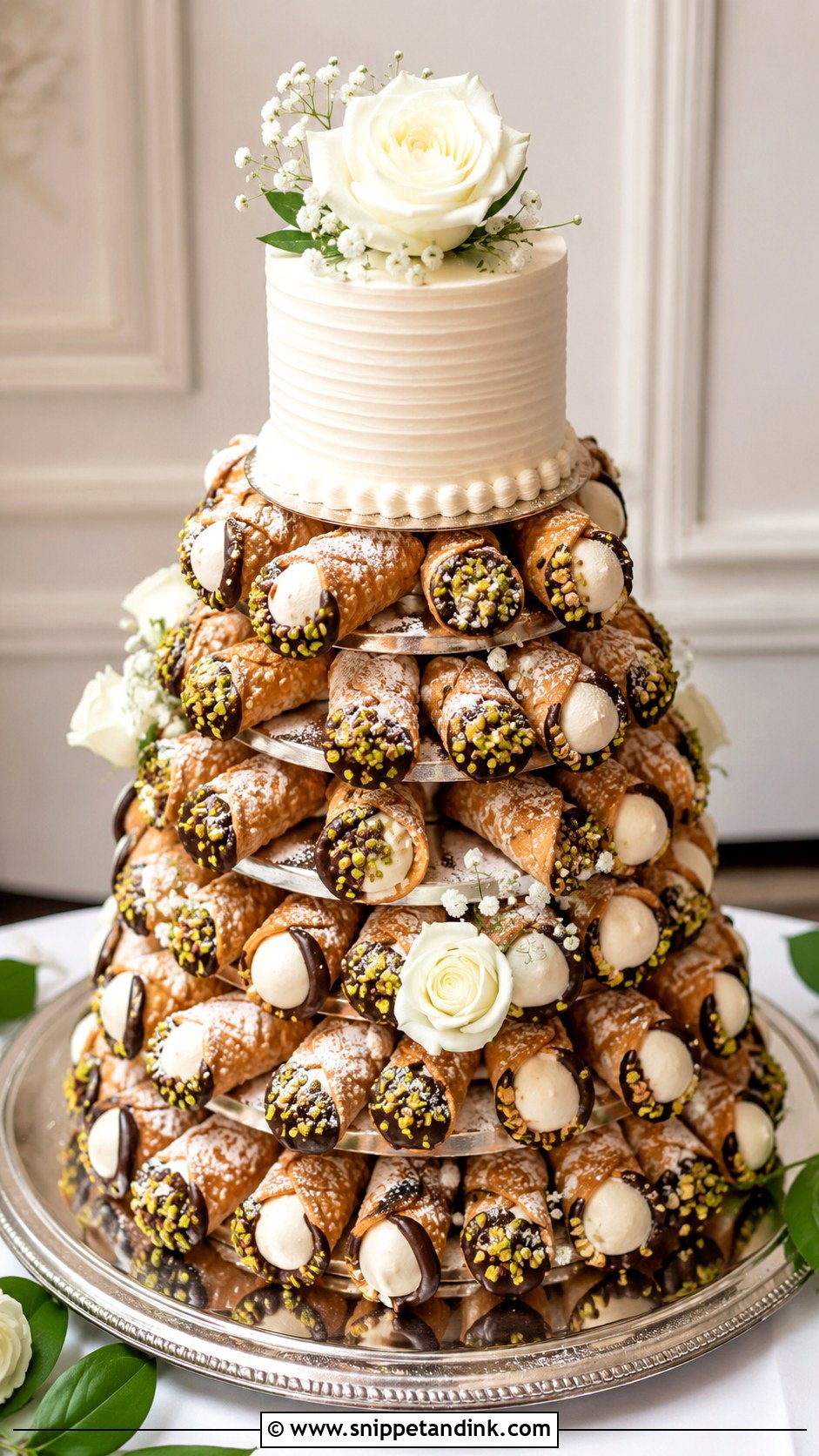
Cannoli shells go soft once the ricotta filling touches them, often inside half an hour, so I pipe them on site and keep the filled ones moving onto the stand in small batches. A circular stand or a cone both work. Classic ricotta is always popular, and chocolate chip, pistachio and citrus fillings give variety. Dip the ends in chopped pistachio or chocolate and finish with powdered sugar right before guests arrive. It’s a crisp, bakery-style tower with real personality.
18. Wedding Eclair Tower
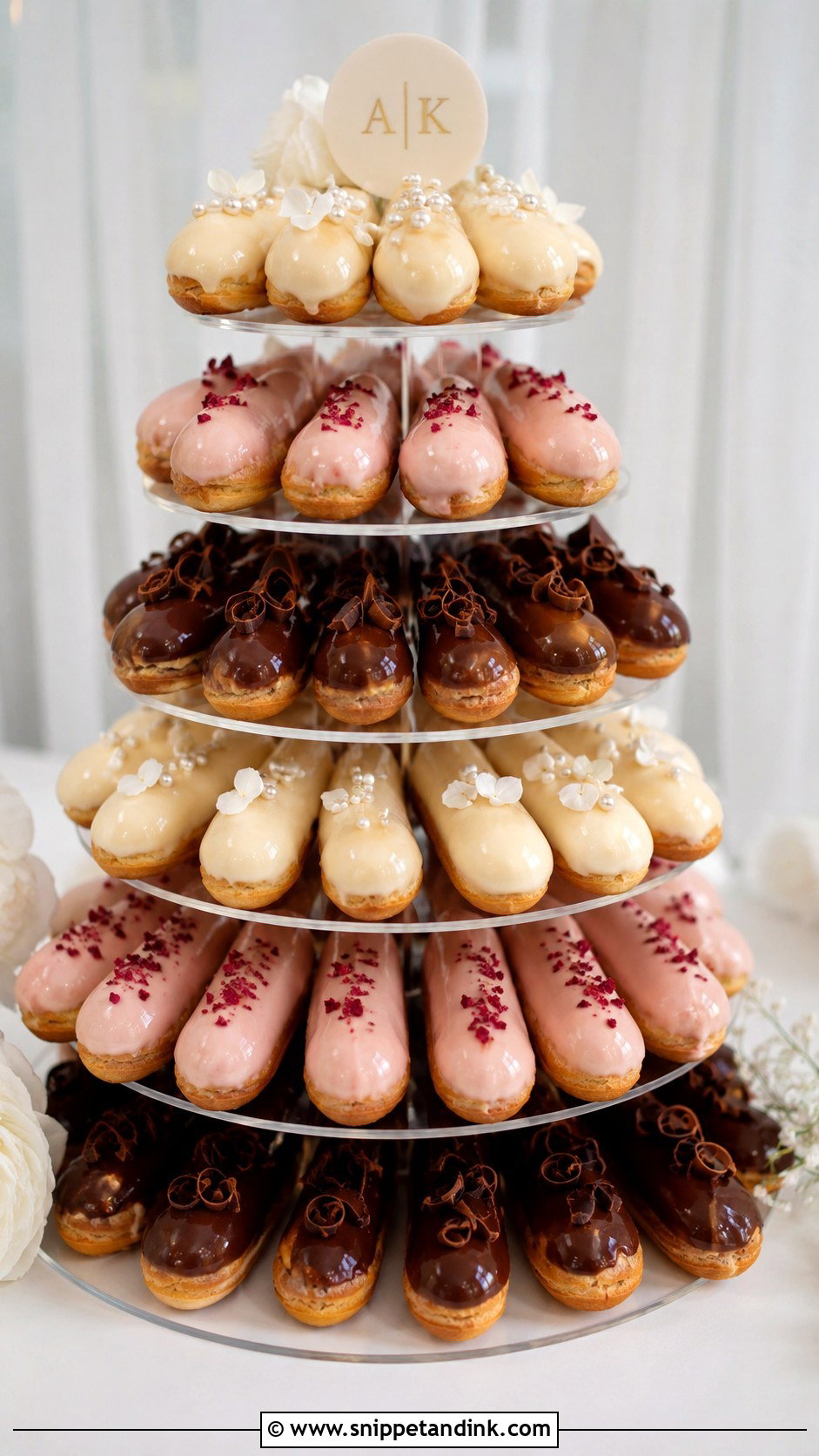
Eclairs stack in neat rows because of their long shape, which gives a sleek, linear look that suits modern rooms. The glaze on top is where I spend the time: a fondant glaze sets smooth and glossy, while a plain chocolate one can dull and bloom if the room is warm. Vanilla, chocolate, raspberry and coffee creams fill them well. Ivory, blush or soft gold accents keep it restrained. Each eclair is a single pastry, so serving takes no knives and no staff.
19. Wedding Trifle Tower
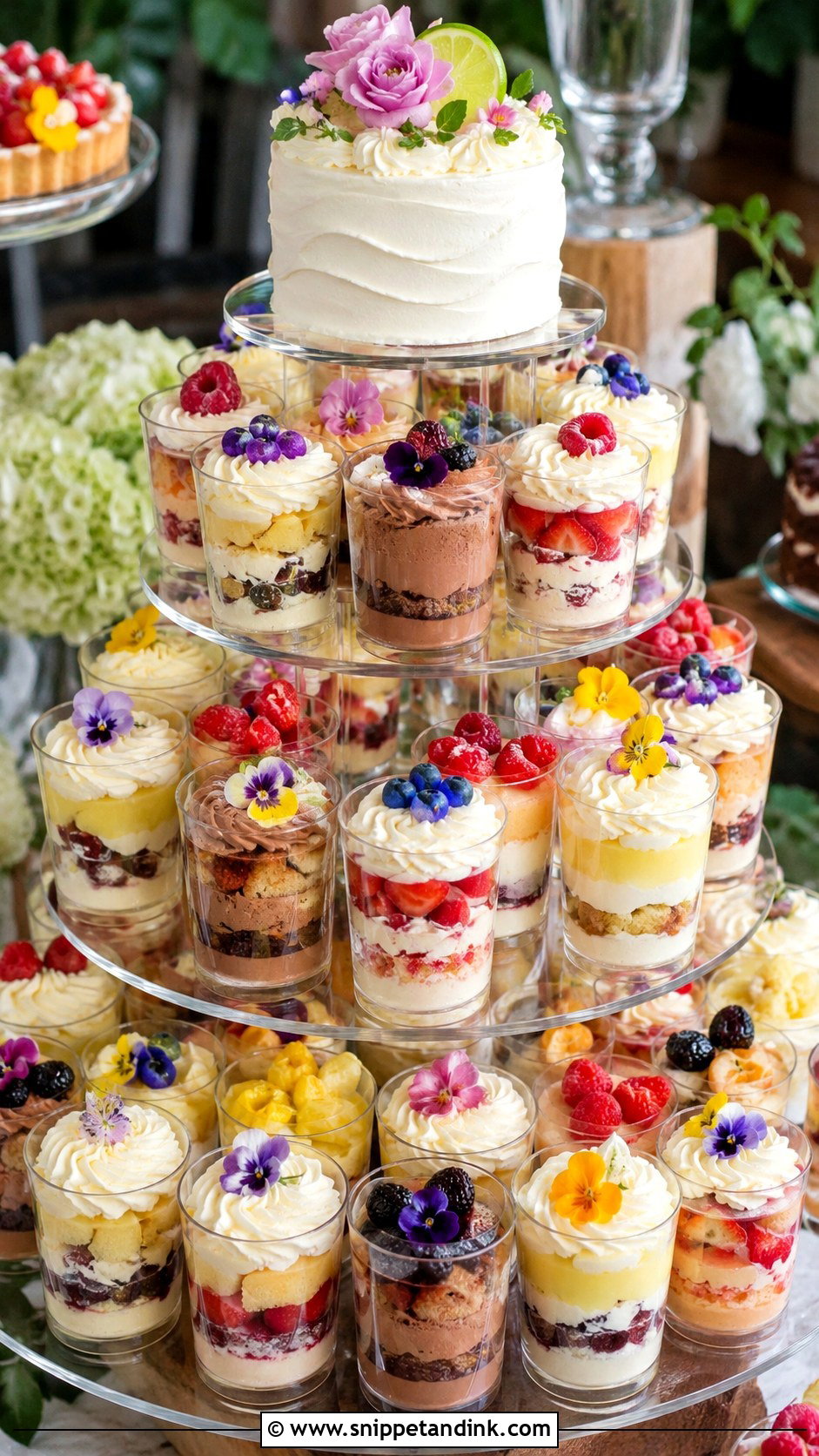
Trifle in clear cups puts the cake, cream and fruit on show, so the layers have to be neat. I pipe the cream rather than spoon it, which keeps clean lines against the glass instead of smears. Vanilla with berries, chocolate with mousse, lemon with cream and almond with cherry all layer well. Mini cups on tiered acrylic stands are easier to serve and keep cold than one large bowl. Top with a little whipped cream and fruit, and add a small cake at the peak if you want a true tower shape.



20. Wedding Sheet Cake Tower
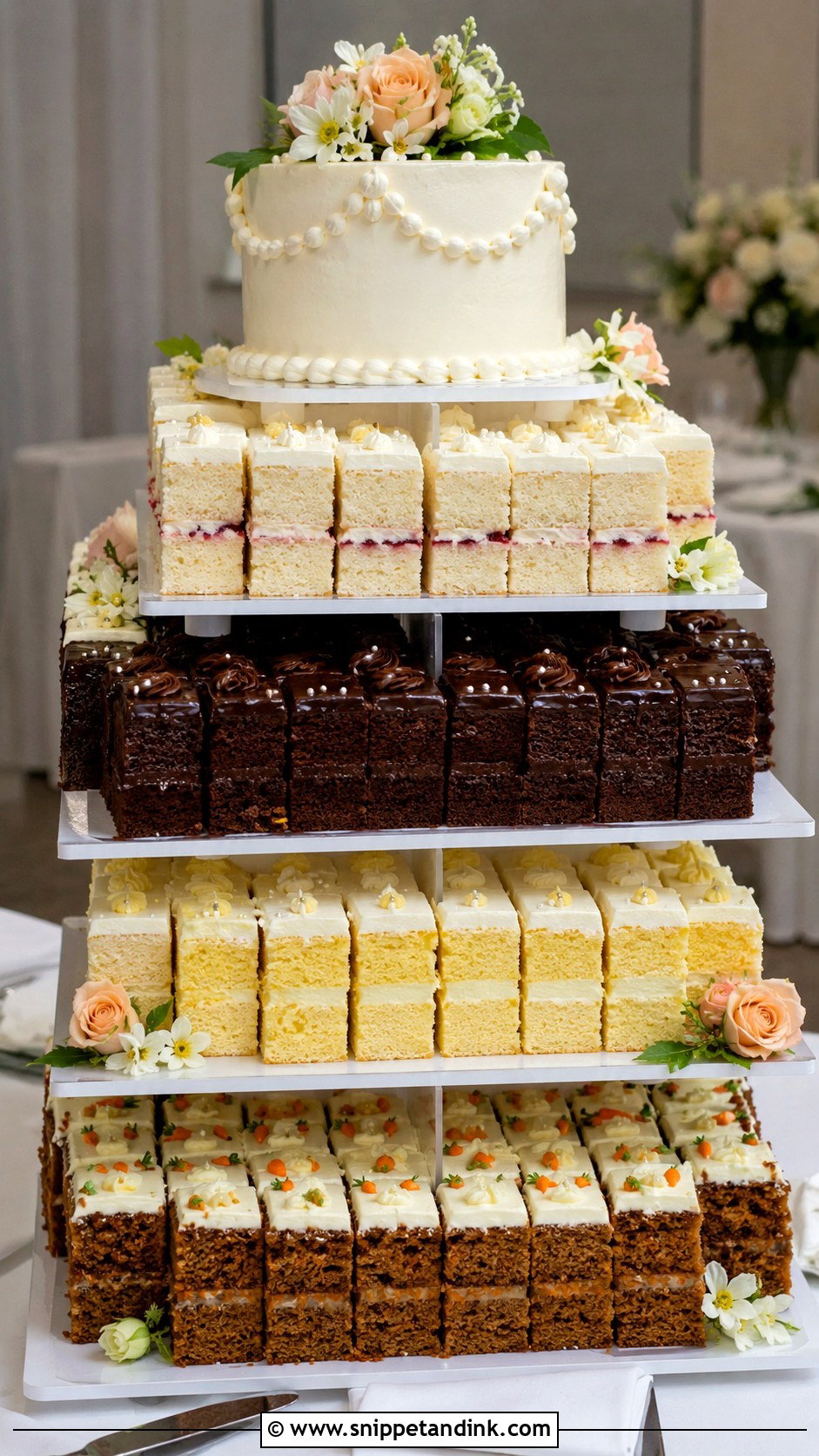
A wedding sheet cake tower is my honest recommendation for large guest counts on a tight budget. Sheet cake is the cheapest cake per serving to bake, and cut into clean squares on tiered trays it stops looking like a kitchen backup. Vanilla raspberry, chocolate ganache, lemon, carrot and almond all cut neatly. I pipe a small rosette on each square so they read as finished pieces, and a little cutting cake on top keeps the ceremony of the first slice.
Heat, Humidity and the Last Hour Before Guests Arrive
Almost every tower failure I’ve seen comes from the room, not the recipe. Cream fillings, mascarpone and fresh whipped cream should not sit out much beyond two hours, and in a warm marquee I’d cut that shorter. Caramel, meringue and macarons react to humidity rather than heat, going sticky or soft even in a cool room if the air is damp.
What I check on site
- The table is level and won’t be bumped by a dance floor or a serving door.
- The tower sits out of direct sun and away from candles, heaters and the photo booth lights.
- Fragile items (cannoli, pavlova, croquembouche) go together on site, not in the van.
- Someone at the venue knows who refills the stand and when the cutting cake gets sliced.
If your reception is outdoors in summer, choose from the sturdy end of the list: donuts, brownies, Bundt cakes, fruit pies and cookie cakes hold up for hours. Save the cream-filled pastries for an air-conditioned room.
Fitting a Dessert Tower to Your Reception Room
A tower works when the dessert suits the room it’s served in. Cupcake, macaron and mini cake towers feel closest to a classic cake; croquembouche, pavlova, cannoli and eclairs are more of a showpiece; brownies, pies, sheet cake squares and cookie cakes are comfort food. Count your guests, check how warm the room will be, choose a stand that can carry the weight and ask your baker exactly when setup happens. Get those right and the tower becomes one of the things guests remember about the reception.
You'll Like These Ideas:





Leave a Reply