
Decorated cookies are the part of a dessert order I most enjoy designing, because they travel further than the cake. They go home as favours, sit on plates as place cards, fill welcome bags and turn up as late-night dessert bites. What separates a good set from a random tray is a plan: one palette, a few shapes that repeat, and the right icing for how the cookies will be served. Below are 25 designs I’d bake for a wedding, with notes on how each one is iced, how it holds up and where it tends to go wrong.
Royal Icing and Buttercream Do Very Different Jobs
The first question I ask a couple isn’t about design. It’s how the cookies will be used, because that decides the icing.
- Royal icing dries hard and smooth. It can be stacked, bagged, posted and handled, which makes it right for favours, place cards and welcome bags. Fine lettering and lace are only really possible in royal icing.
- Buttercream stays soft. It tastes richer and looks bakery-style, but it smudges in a bag and softens in a warm room. Use it for cookies served on a platter the same day.
- Glaze is a middle ground: thinner and quicker than royal icing, good for simple dipped cookies, but too soft for detailed piping.
For a winter dessert table, royal icing has an extra advantage: cold weather doesn’t affect it the way it affects buttercream. The thing to watch is condensation. Bring boxes from a cold car into a warm venue and leave them closed until they reach room temperature, or moisture forms on the icing and the colours can spot.
1. Frosted Wedding Dress Cookies
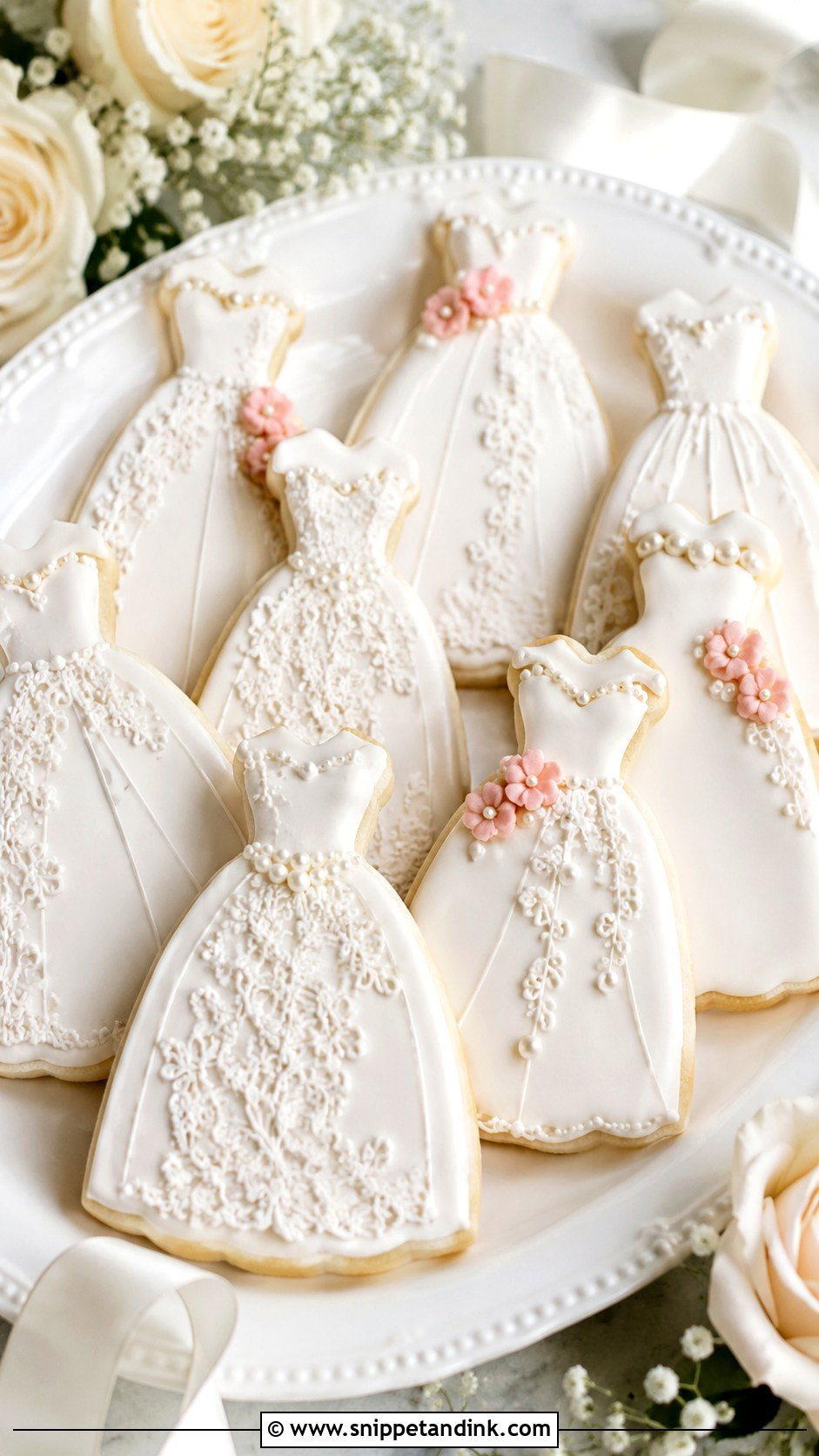
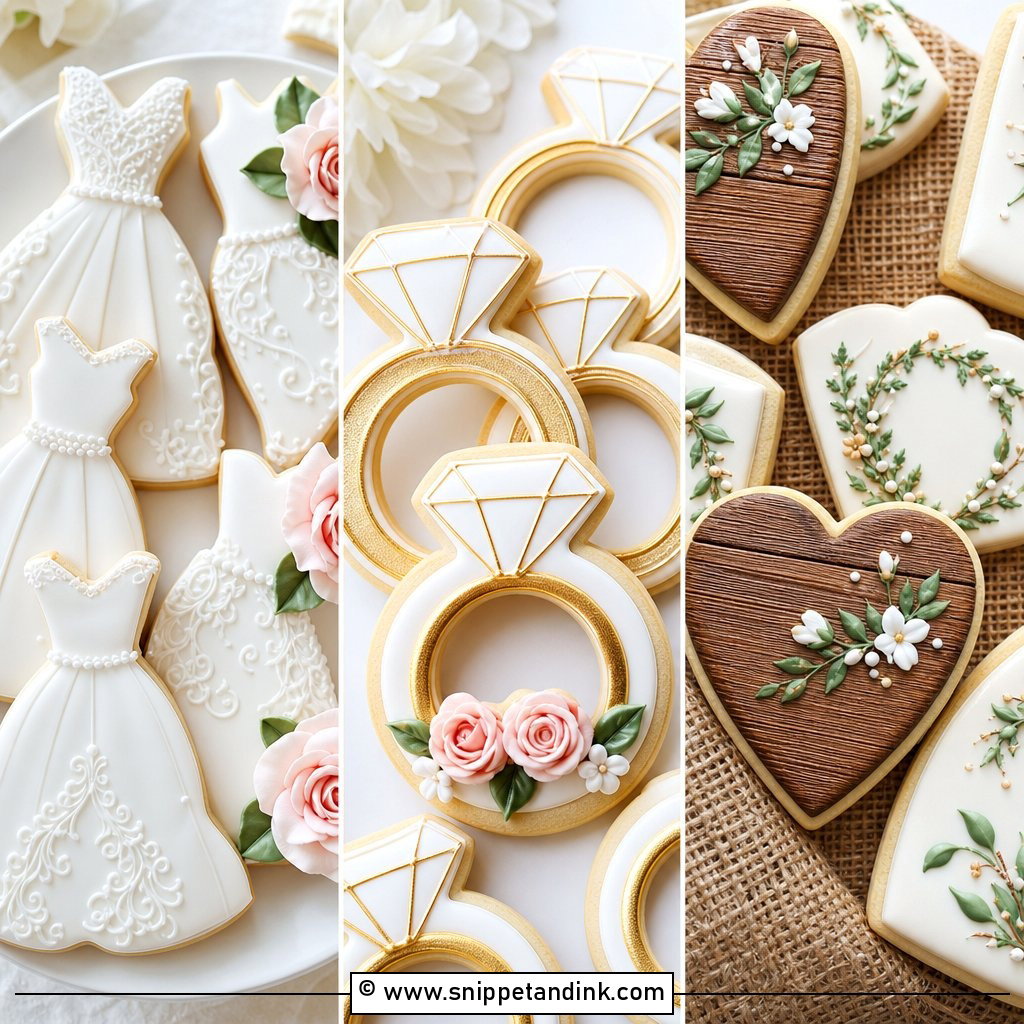
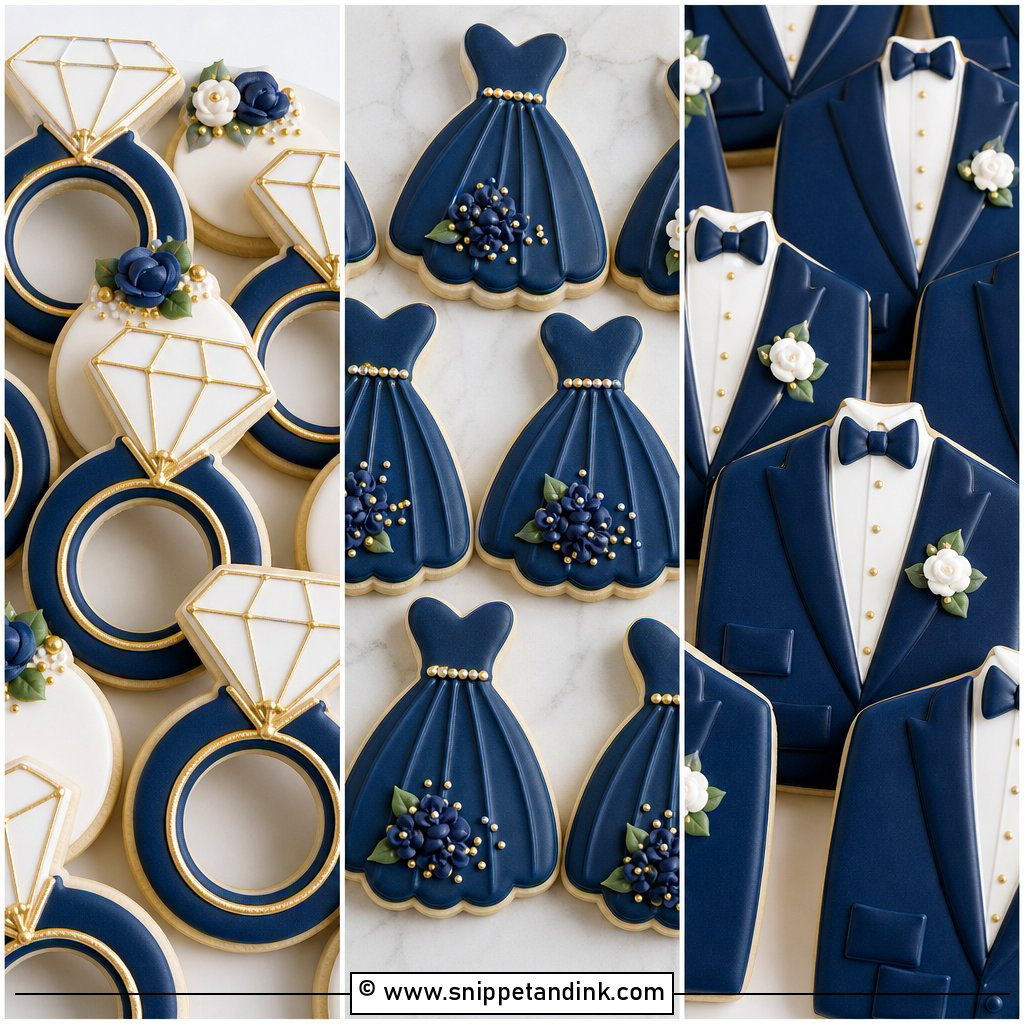
A dress silhouette needs no explanation on a favour table. I flood the bodice and skirt in white royal icing, let it crust, then pipe lace, pearl dots or ruffles on top so the texture stands proud of the base. The shape should stay simple; a cutter with a complicated train breaks at the narrow points. Ivory, champagne or blush detailing can pick up the wedding colours, and a light brush of edible shimmer on the skirt is plenty. They suit showers, getting-ready boxes and favour bags equally.
2. Frosted Tuxedo Cookies
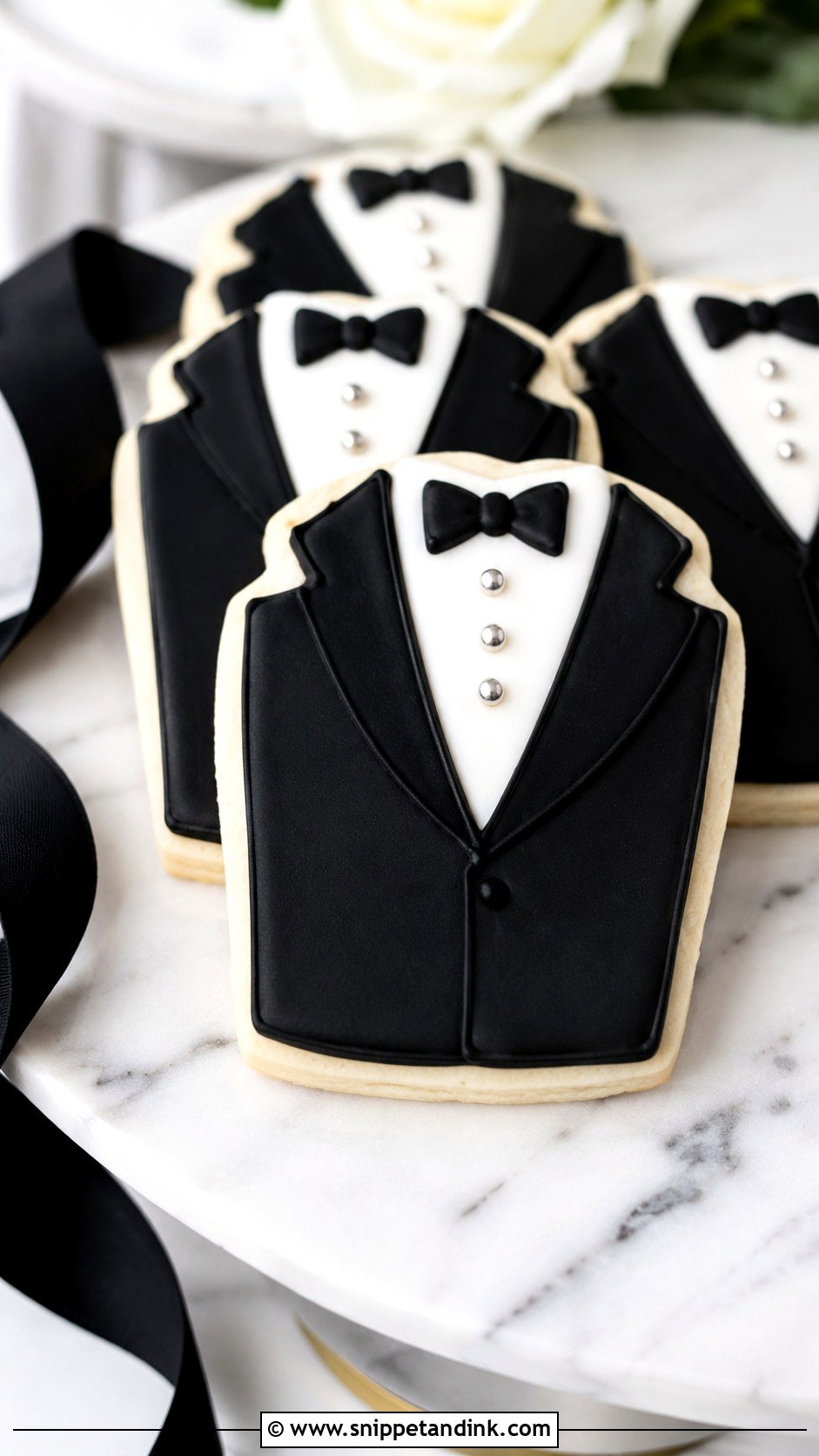
Frosted tuxedo cookies pair naturally with dress cookies, though they hold their own on a formal table. The jacket, bow tie, buttons and white shirt front have to be crisp. Black icing is the tricky part: it bleeds into neighbouring white if the white isn’t dry, so I flood the shirt first, let it crust for several hours, then add the black. Black icing also tastes bitter when it’s made with a lot of colouring, so I start from a cocoa-darkened base. Clean lines matter more here than on any other design.
3. Frosted Monogram Wedding Cookies
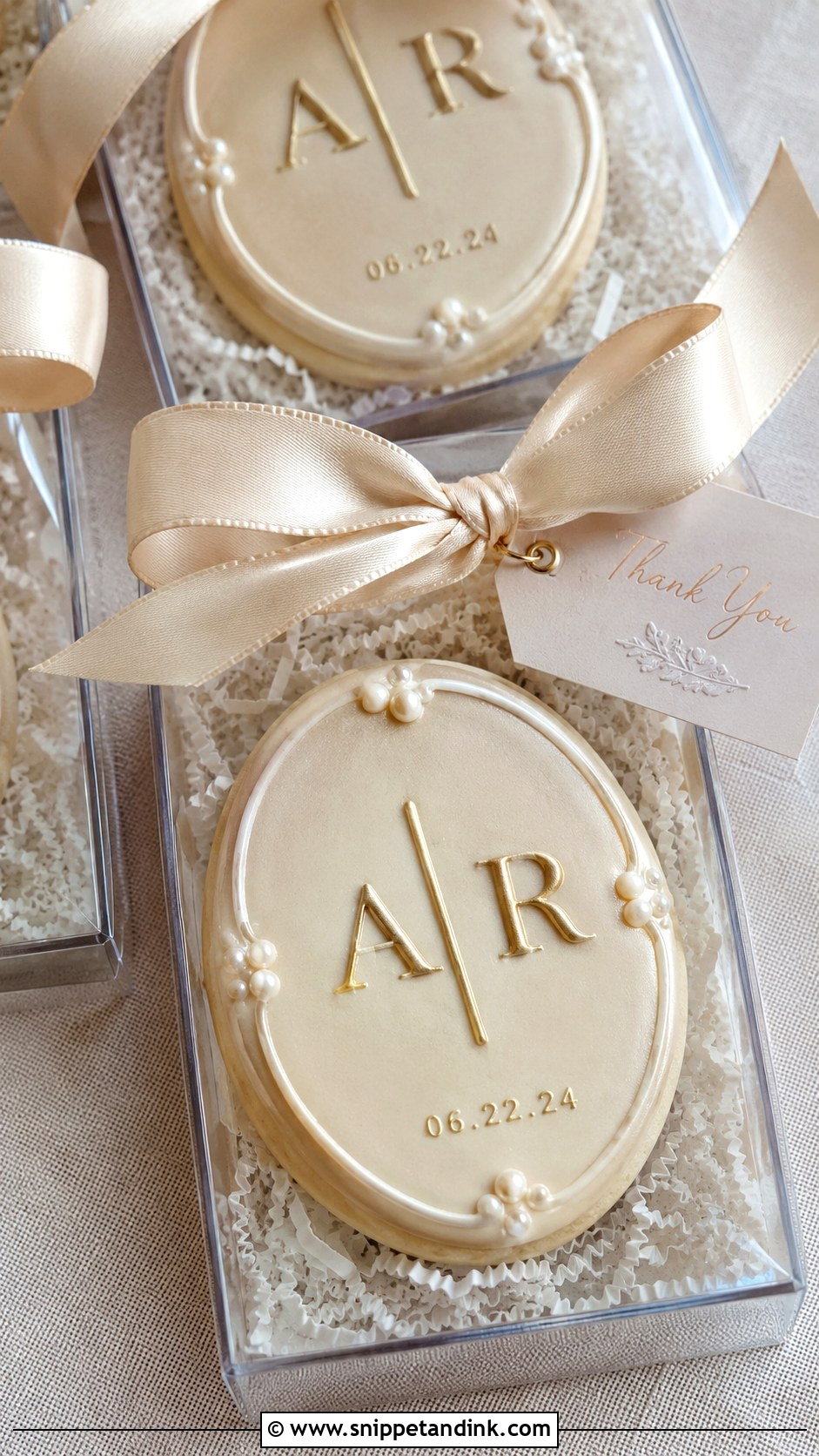
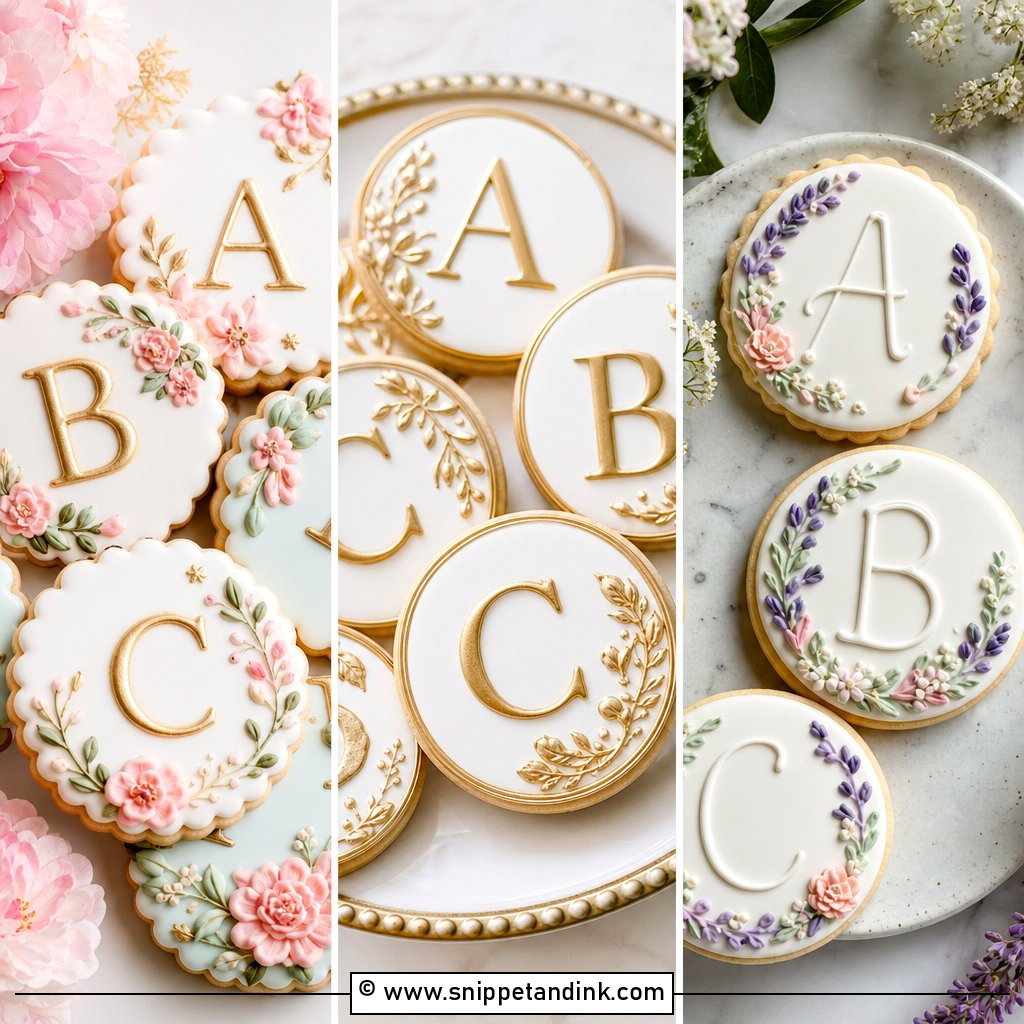
A monogram turns a plain round or plaque into something made for this couple. Initials, a date or a shared last initial all fit. My rule is one base colour, one accent and one lettering style; mixing scripts on a small cookie looks cluttered. Gold lettering on ivory reads formal, while blush, sage or dusty blue grounds feel softer. Monogram cookies also pack well, as a solid shape with no fragile points survives being bagged and carried home.
4. Frosted Heart Wedding Cookies
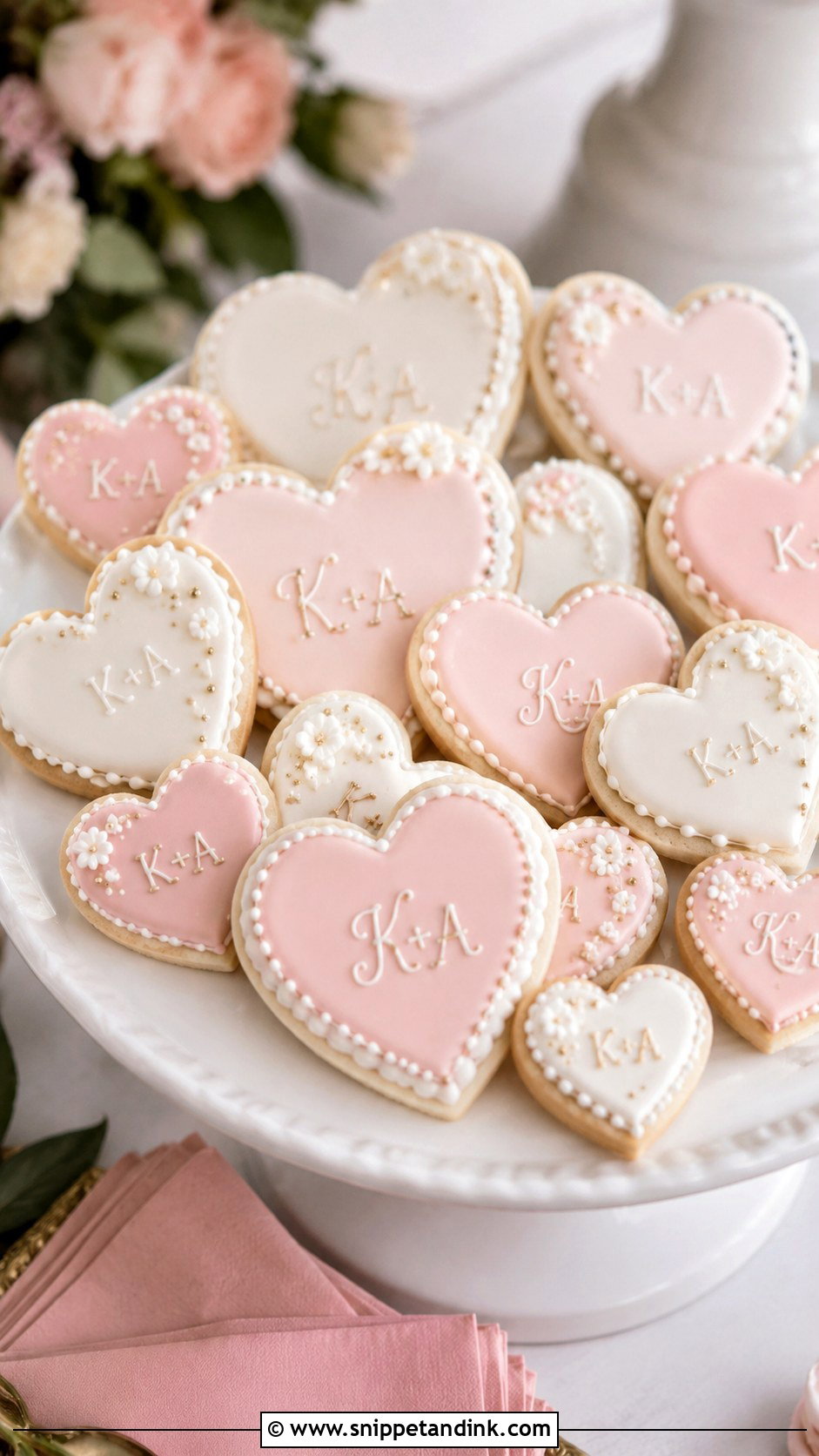
Hearts are the most efficient shape to bake in volume. They cut cleanly, spread evenly and decorate quickly, which matters when the order runs into hundreds. Leave them plain white with a fine piped border, or add initials, florals, pearls or lace. I’d steer couples away from bright red, which looks like Valentine’s Day on a wedding table. Ivory, blush, taupe and dusty pink feel more like a wedding.
5. Frosted Floral Wedding Cookies
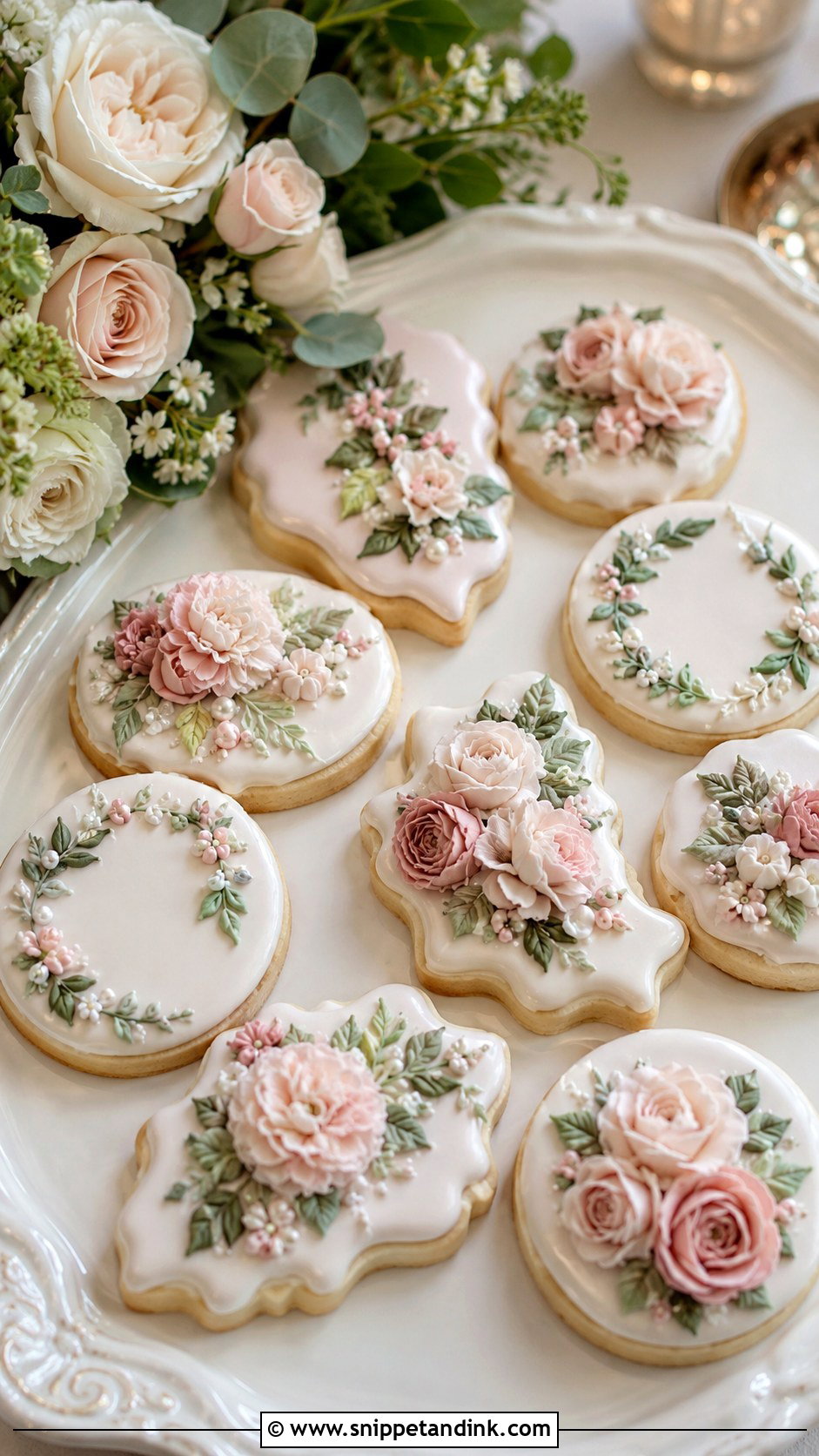
Floral cookies work best when they borrow from the actual bouquet. I ask for the florist’s flower list early and pipe simplified versions of two or three blooms: roses, peonies or small wildflowers over a dry base. Piped flowers made ahead and left to dry can be set on top for a raised effect that shows up in photos. White flowers on sage or beige feel earthy; pastels on white feel delicate. Mixed with monograms and hearts, they complete a set.
6. Frosted Engagement Ring Cookies
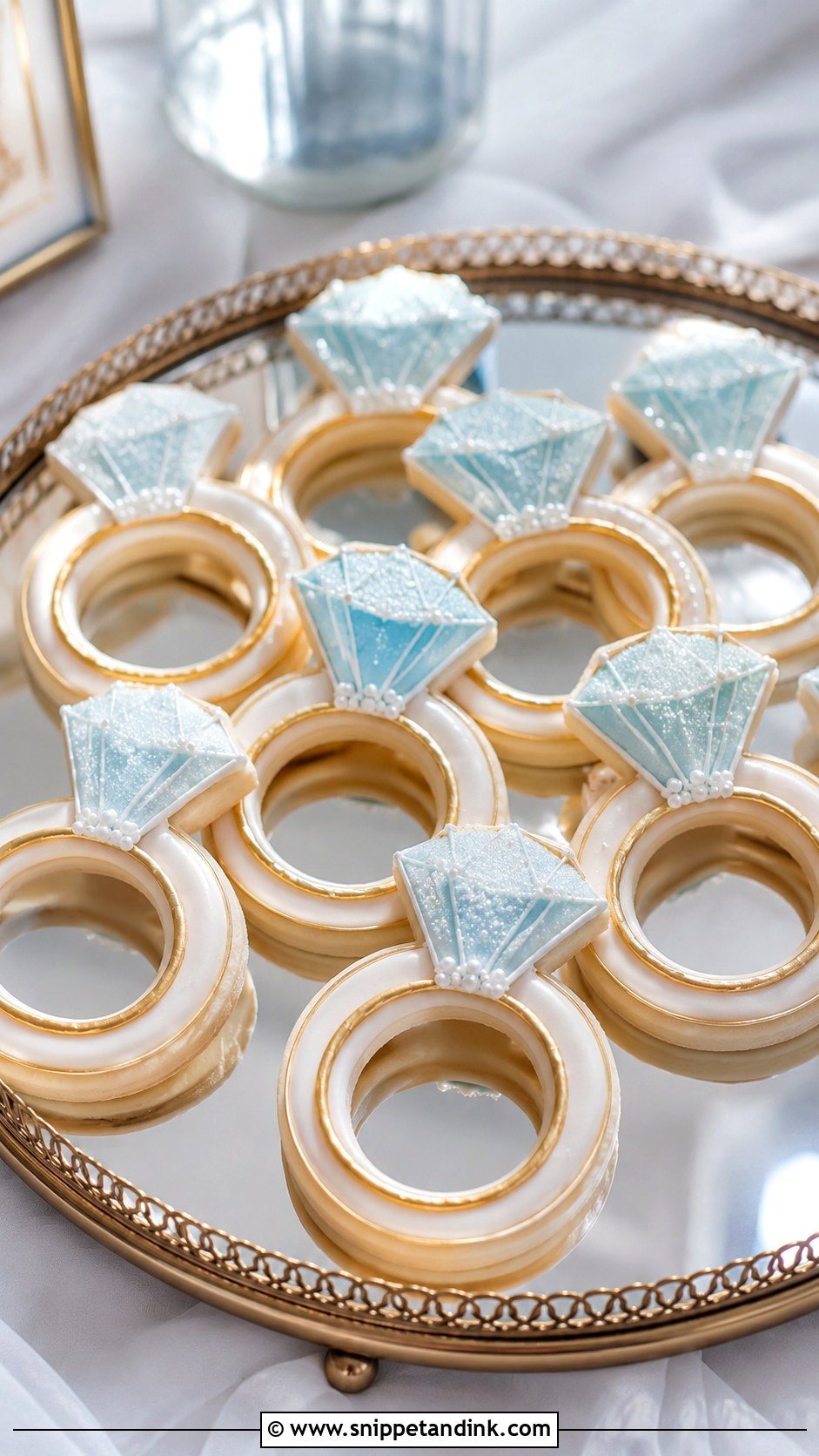
Frosted engagement ring cookies need contrast between the band and the stone, or they read as a blob. I flood the band first, then the gem in white, ivory or pale blue, and add metallic details once both are dry. Edible lustre dust brushed onto the stone gives sparkle. A thin piped outline around the gem lifts it visually. Keep the shape plain so it doesn’t look cartoonish, and they’re right for engagement parties and showers too.
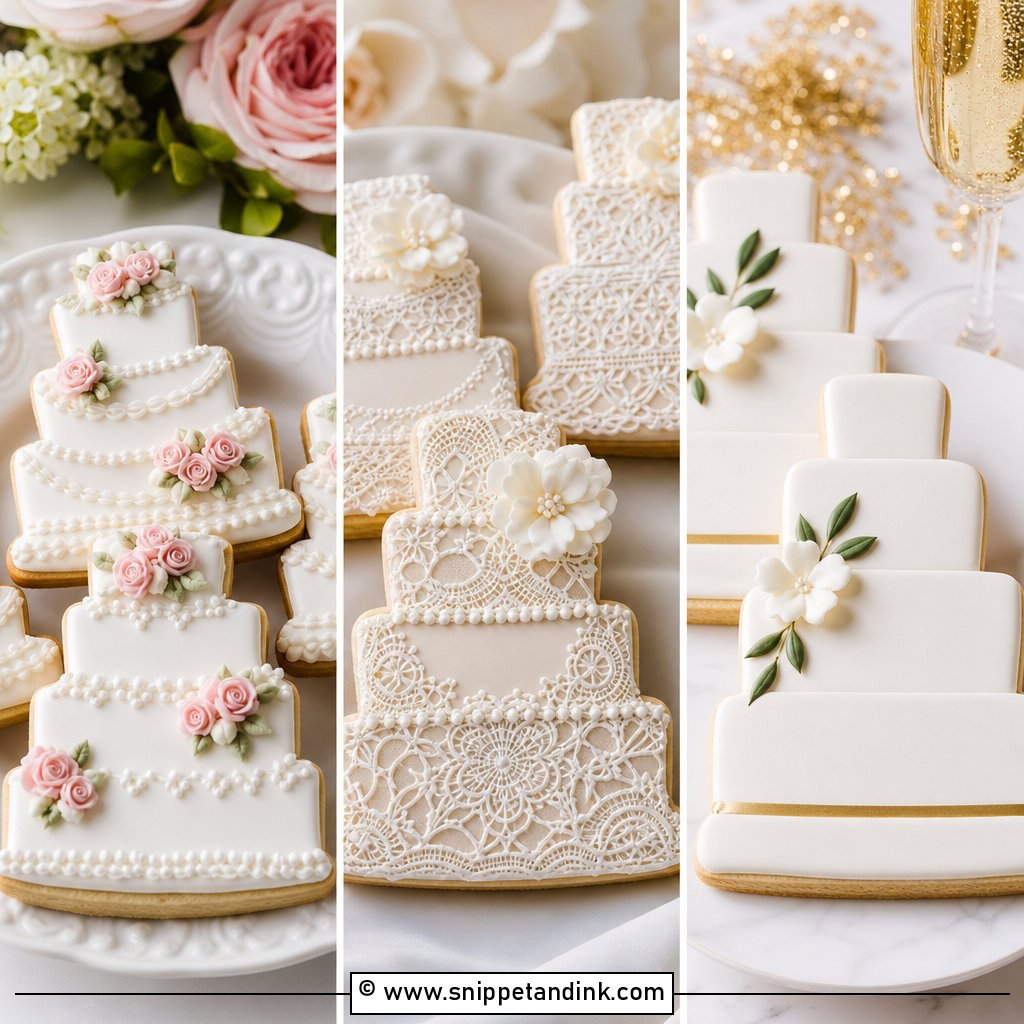
7. Frosted Wedding Cake Cookies
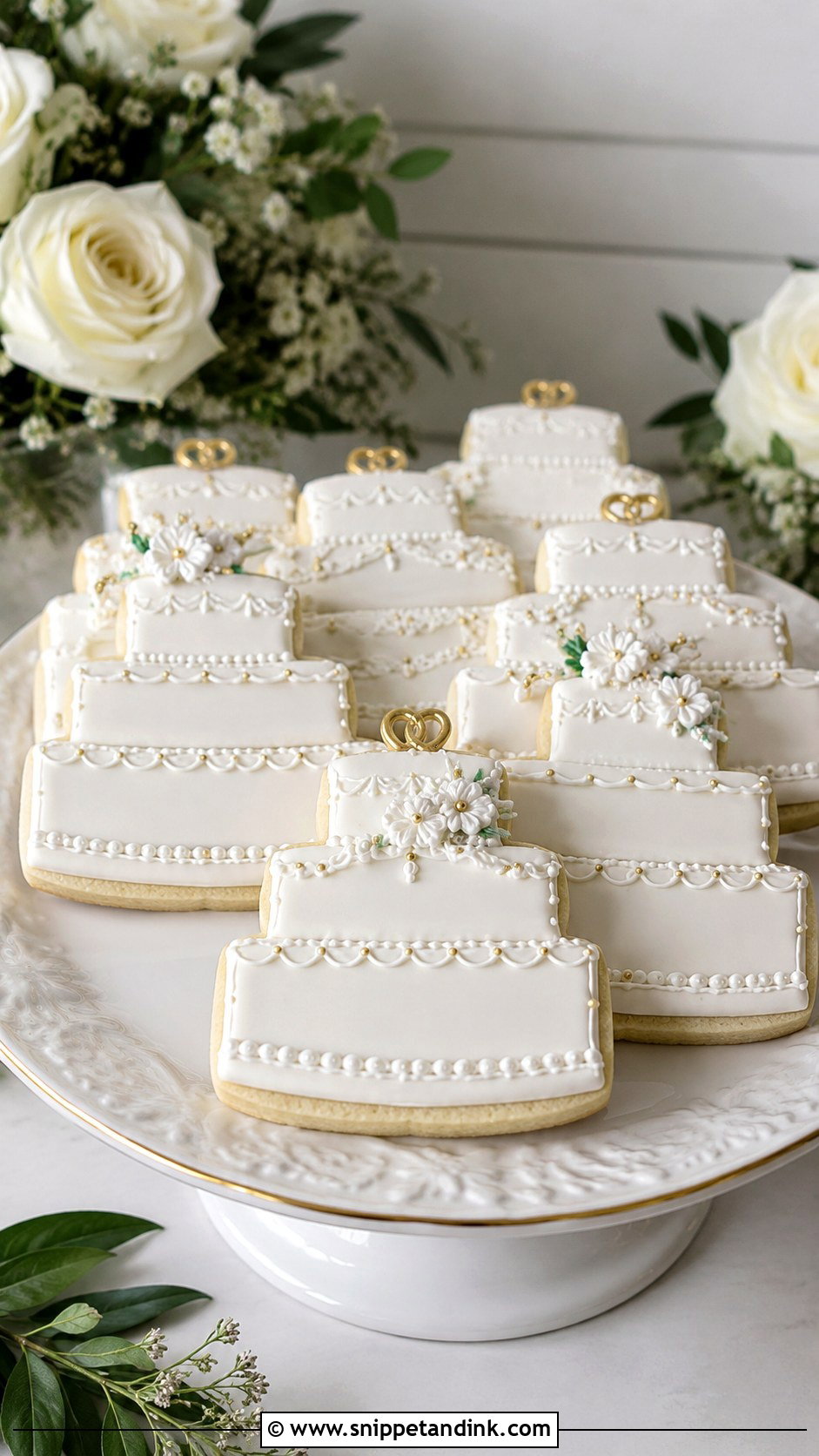
Tiered cake cookies let the cookies mirror the real cake on a smaller scale. I copy one or two elements from the cake design, such as the piping pattern or a flower, rather than the whole thing, because a three-tier design shrunk onto a cookie gets crowded. Smooth white flood with fine borders and a few pearls works well. Keep each tier clean and separated by a piped line. They photograph nicely next to the cake itself.
8. Frosted Champagne Bottle Wedding Cookies
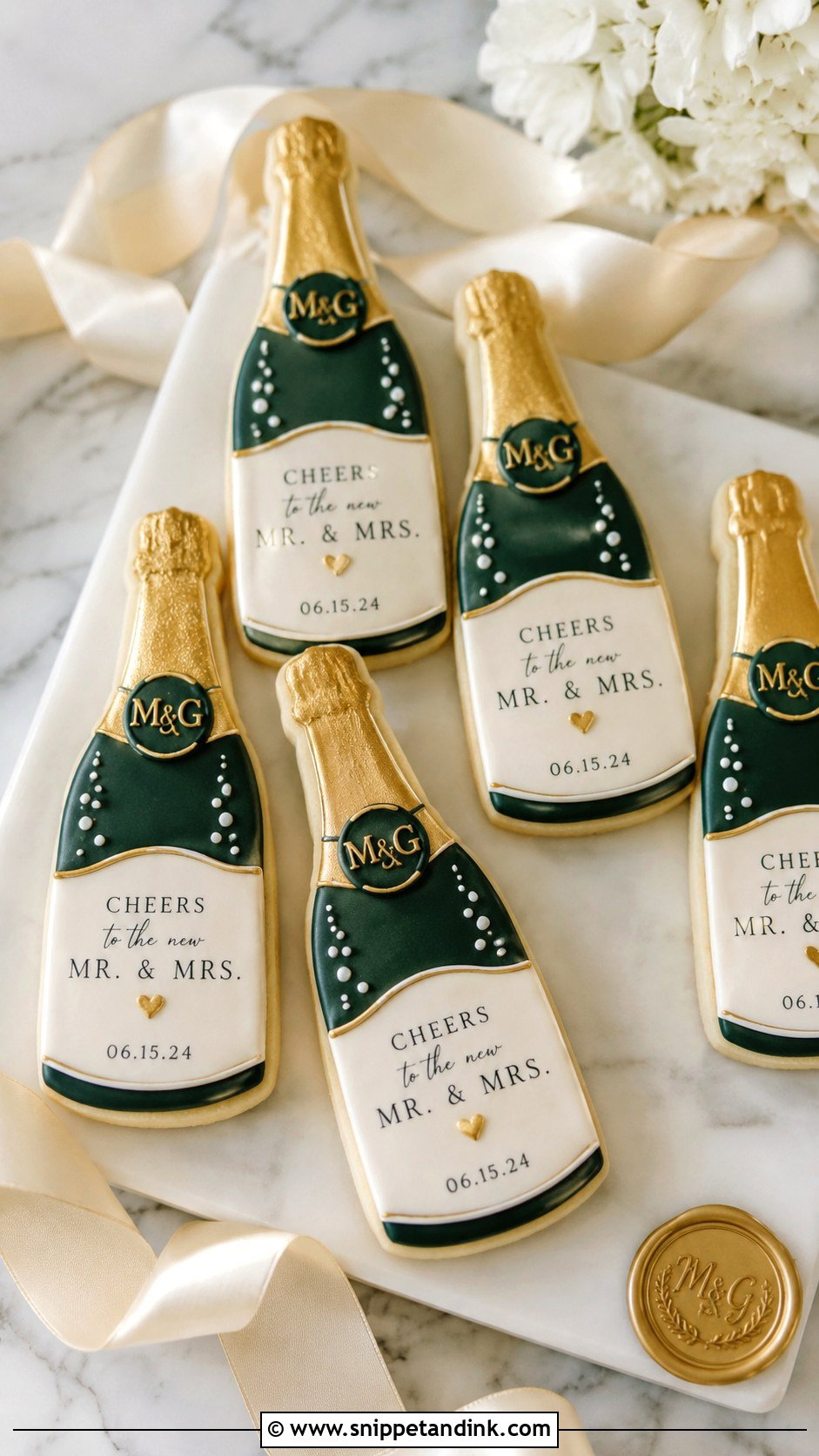
Bottle cookies are festive without being silly if the label is designed like stationery. I avoid real brand names and work with the bottle shape, a foil-effect label and the couple’s initials or a short toast. Deep green, ivory and gold royal icing gives the classic look. The long narrow neck is the weak point and snaps in transit, so I bake bottle cookies slightly thicker. They suit welcome bags and engagement parties.
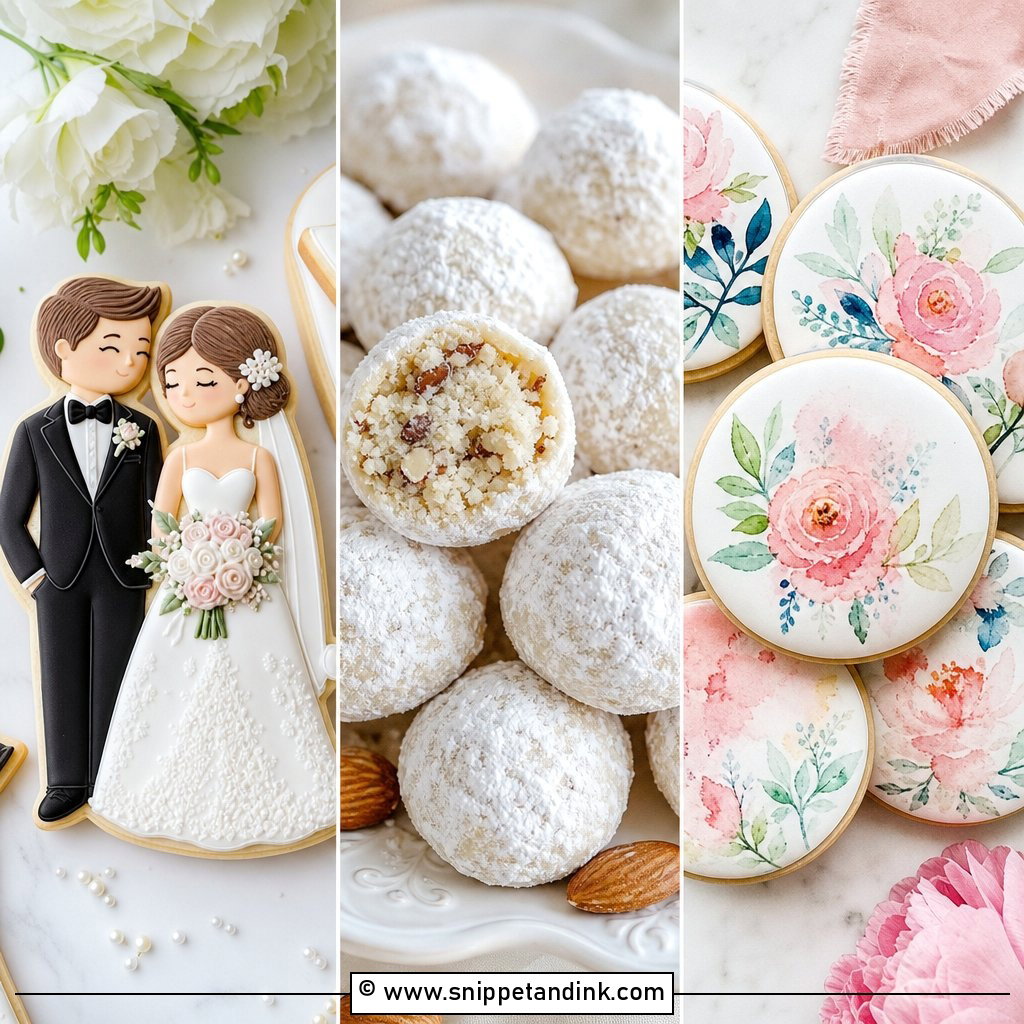
9. Frosted Bride And Groom Cookies
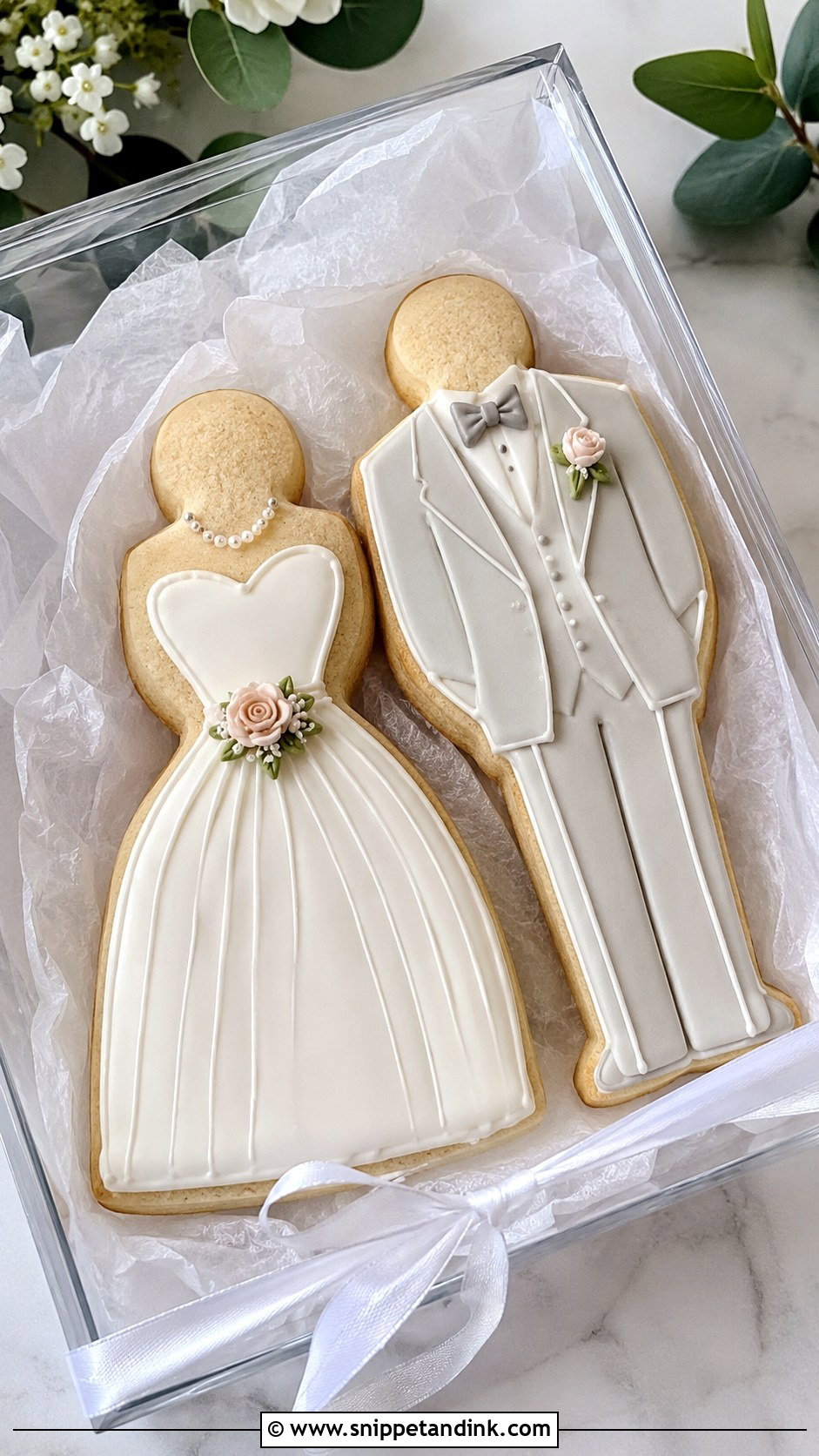
A matched pair, one in a gown and one in a suit, makes a personal favour. Skin tones, hair colour and outfit details can be adjusted to look like the couple, but the fewer tiny details, the better they read. I mix custom skin tones from a small number of food colours and test them on a dried scrap before flooding. Package each pair together in a clear box with a ribbon.
10. Frosted Lace Wedding Cookies
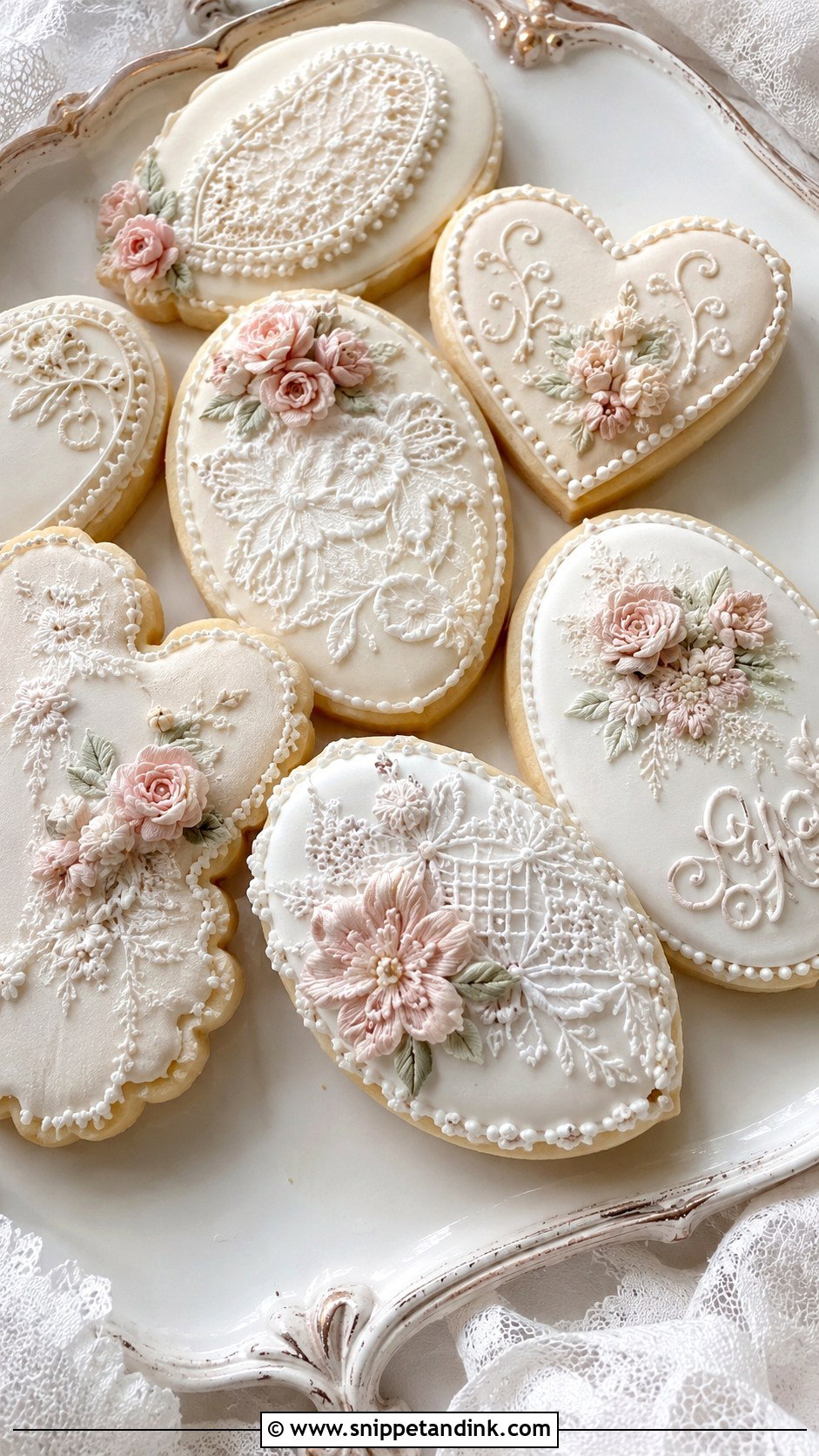
Lace can be piped freehand, done with brush embroidery or stencilled with an airbrush or palette knife. Stencilling is fastest and most even across a large order; brush embroidery is the softest and most hand-made looking. The pattern needs space. Dense lace across the whole cookie looks busy, while open lace with visible base around it looks refined. Oval, heart, plaque and dress shapes suit it best, and it fits vintage or classic weddings.
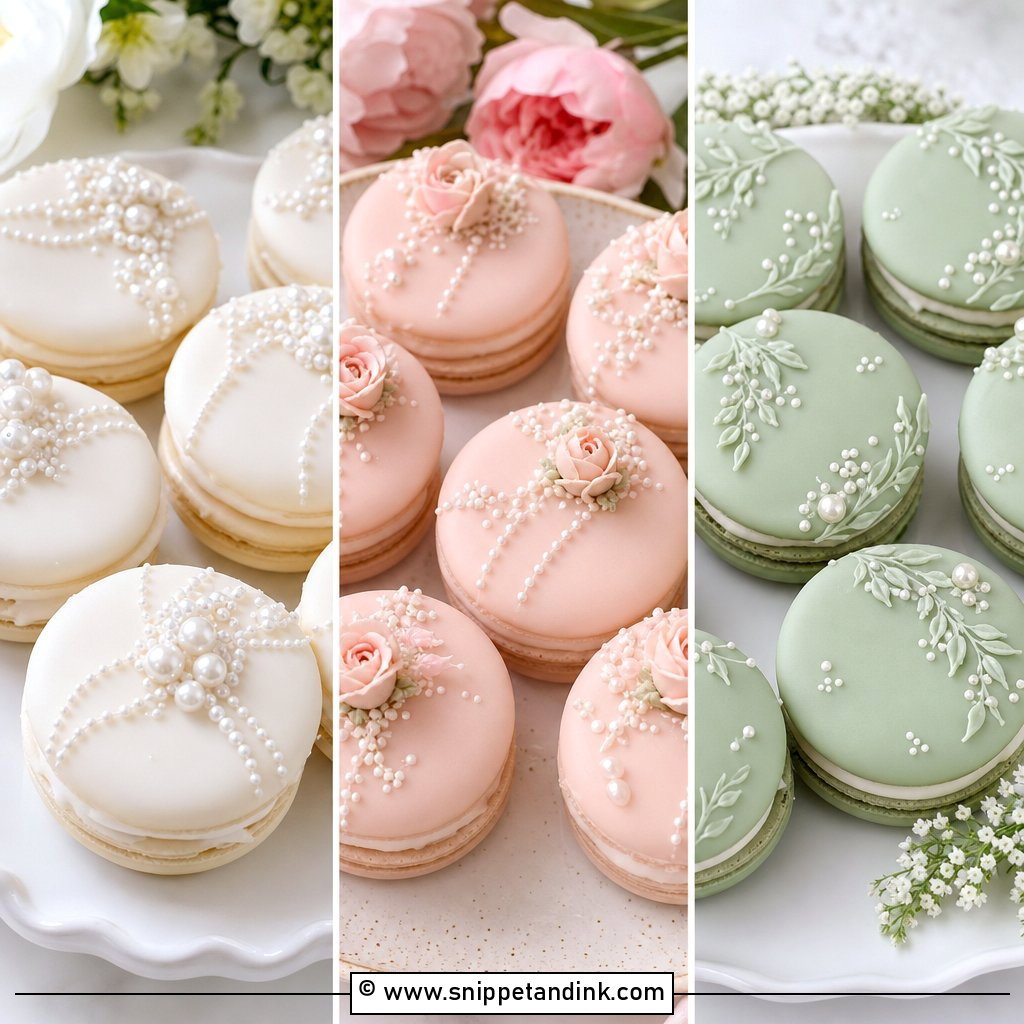
11. Frosted Pearl Wedding Cookies
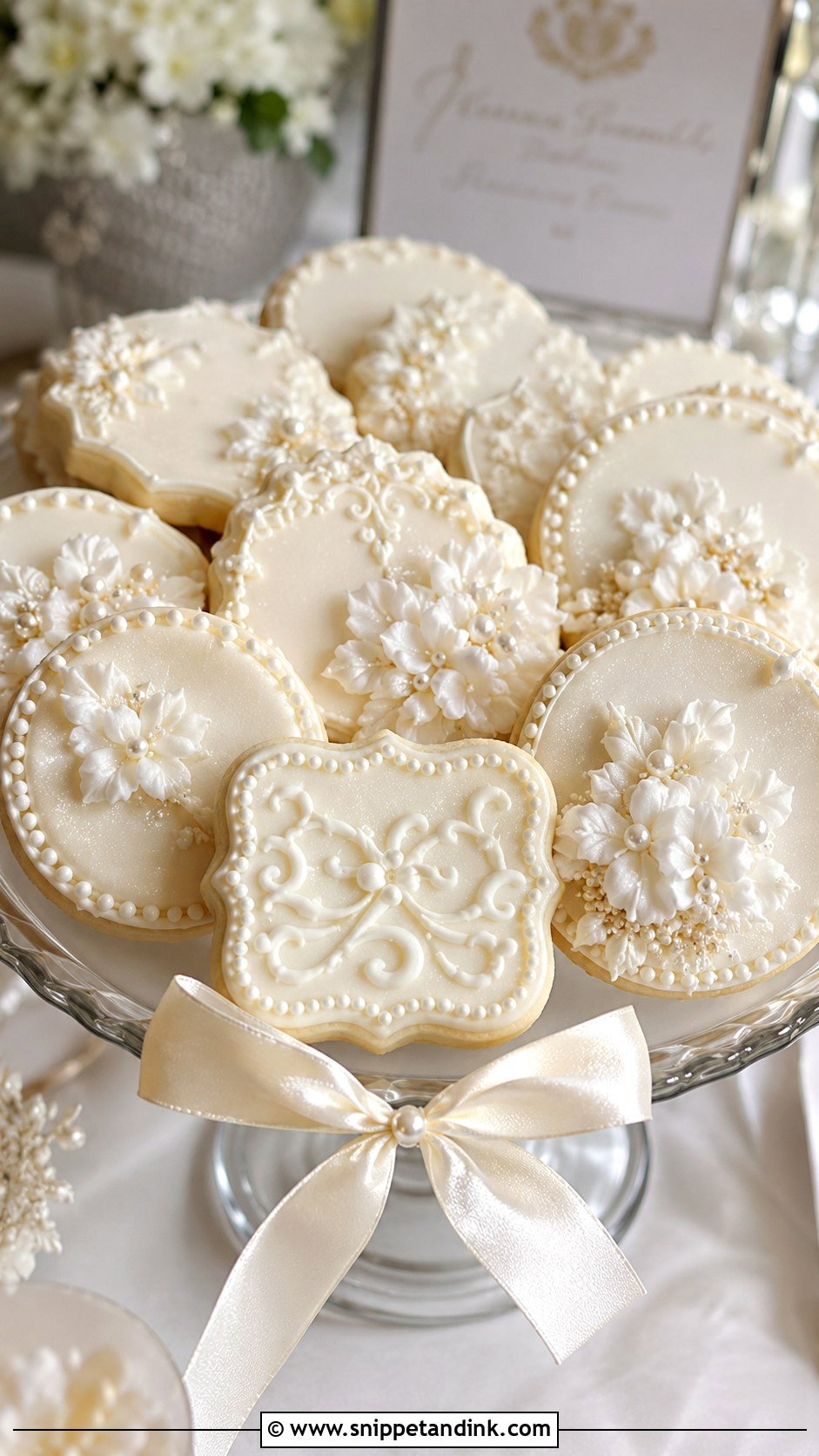
Pearls add texture without needing artwork. I pipe tiny dots of stiff royal icing or set edible pearl sprinkles into wet icing so they bond. Placed with purpose, as a border, a cluster or a corner accent, they look modern; scattered everywhere, they look like a craft project. White, ivory, champagne, blush and pale grey bases suit them. One warning for favours: hard sugar pearls are crunchy, so tell guests with sensitive teeth or braces.
12. Frosted Marble Wedding Cookies
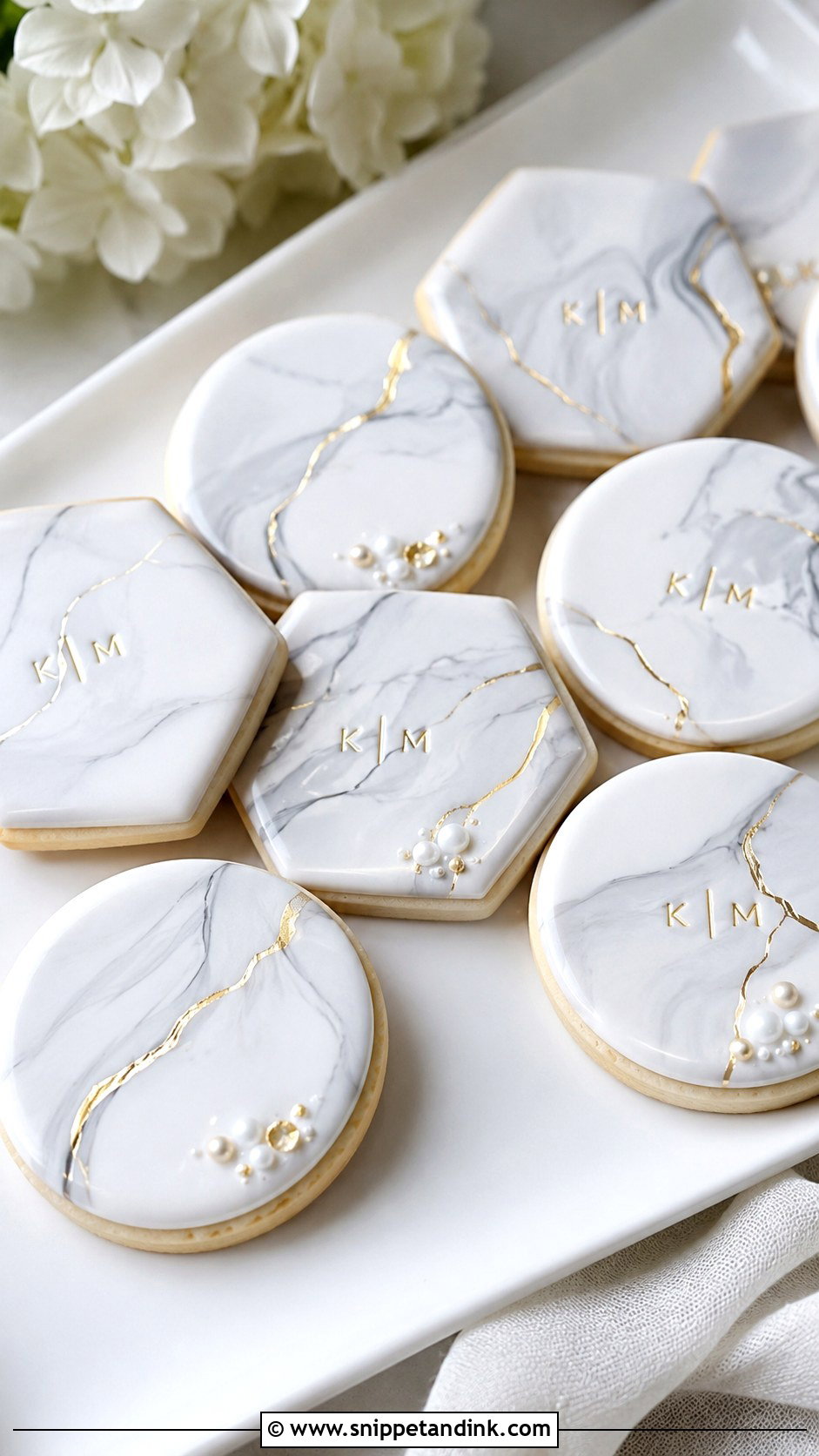
Marble comes from dropping lines of grey, ivory, blush or beige icing into wet white flood and dragging a scribe through it. Each cookie comes out slightly different, which gives a handmade set. Timing is everything: drag too late and the colours sit on top instead of blending. Add a fine gold line or a small monogram once it’s dry. Rounds and hexagons suit the pattern, and the rest of the decoration should stay minimal.
13. Frosted Gold Wedding Cookies
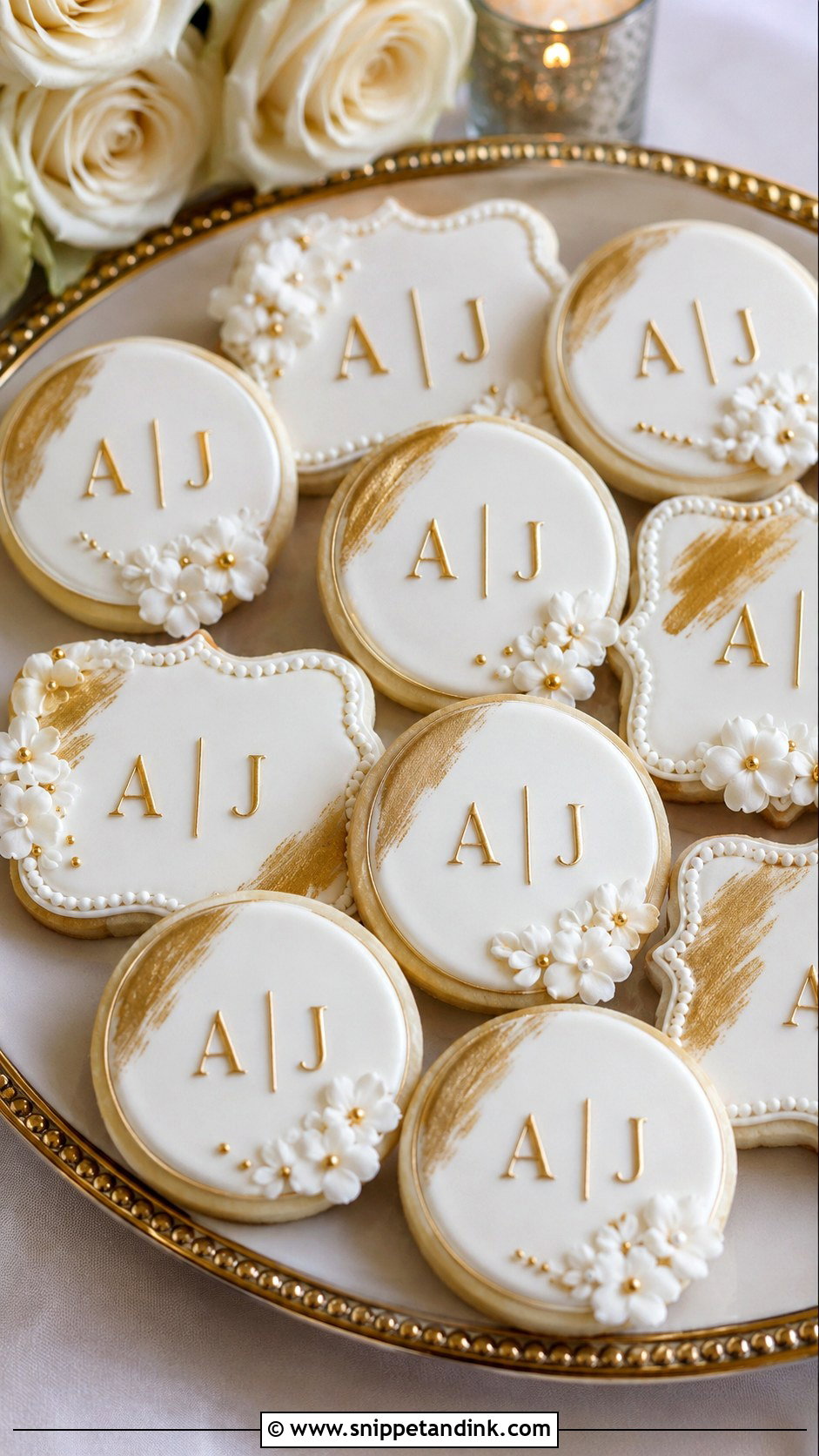
Gold is painted on, usually as edible gold lustre dust mixed with a few drops of clear alcohol or extract. Not every metallic dust sold for baking is edible; some are labelled only as non-toxic and meant for display, so check the label before you order or DIY. Restraint works best: painted edges, initials or fine lines on white or ivory. Gold suits blush, sage, black, navy and champagne palettes. Simple shapes keep the metallic detail clean.
14. Frosted Blush Wedding Cookies
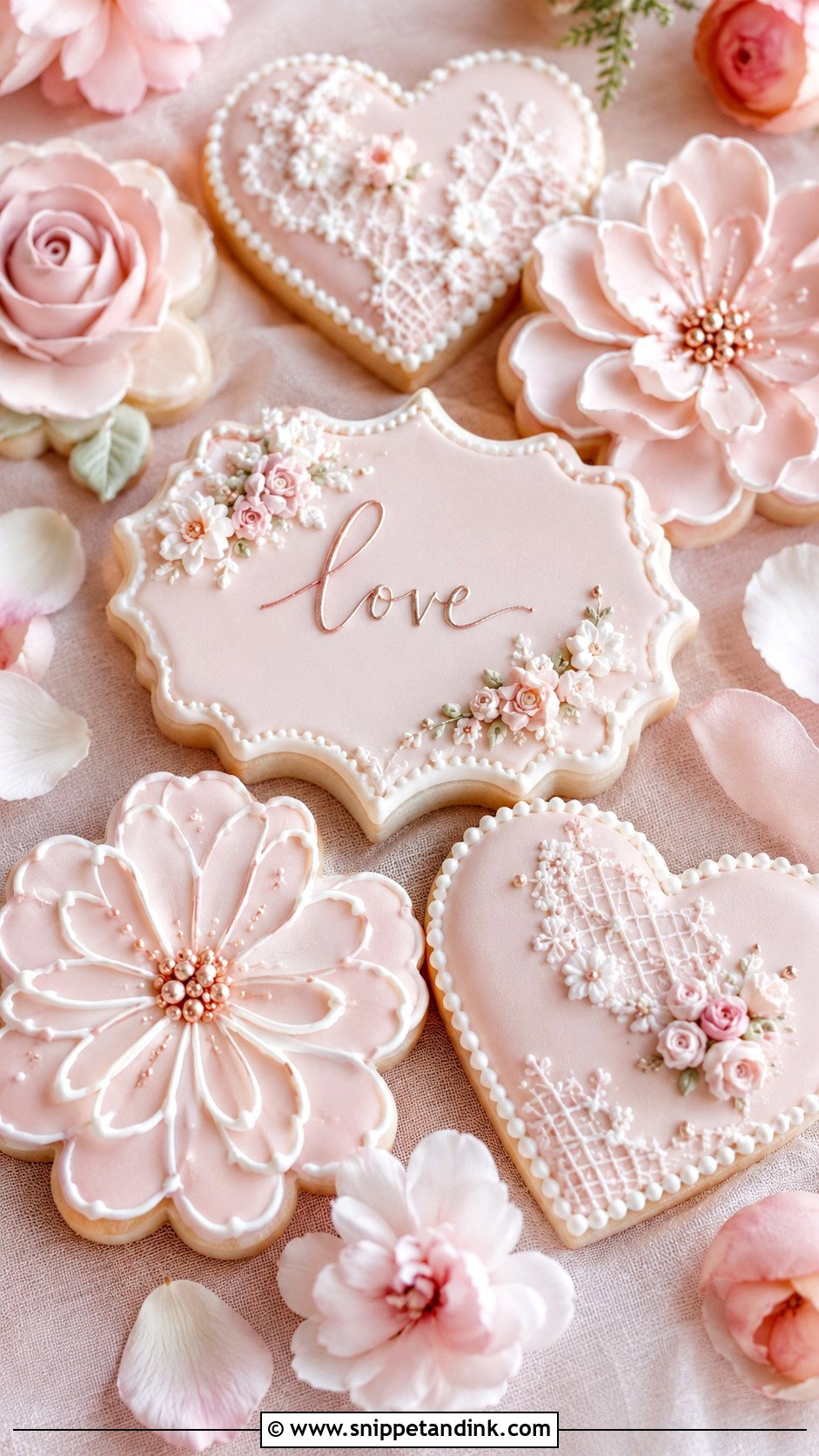
Blush is the easiest colour to match to floral palettes. I mix it a shade lighter than the sample, because pink icing darkens slightly as it dries. White lace, pearl dots or small flowers work over a blush base. It sits well beside ivory, rose gold, sage, taupe and soft brown. Keep the tone muted; a bright candy pink makes the cookies look like a birthday order.
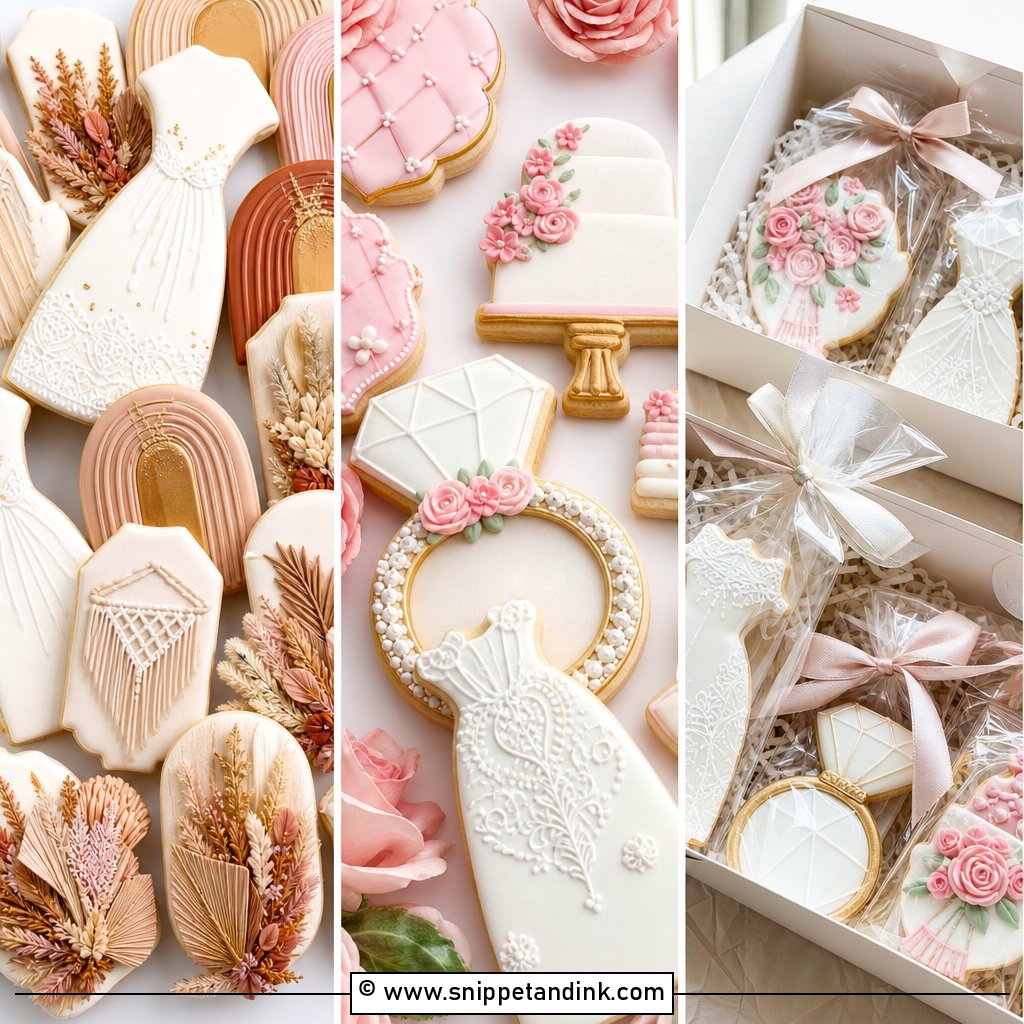
15. Frosted Sage Green Wedding Cookies
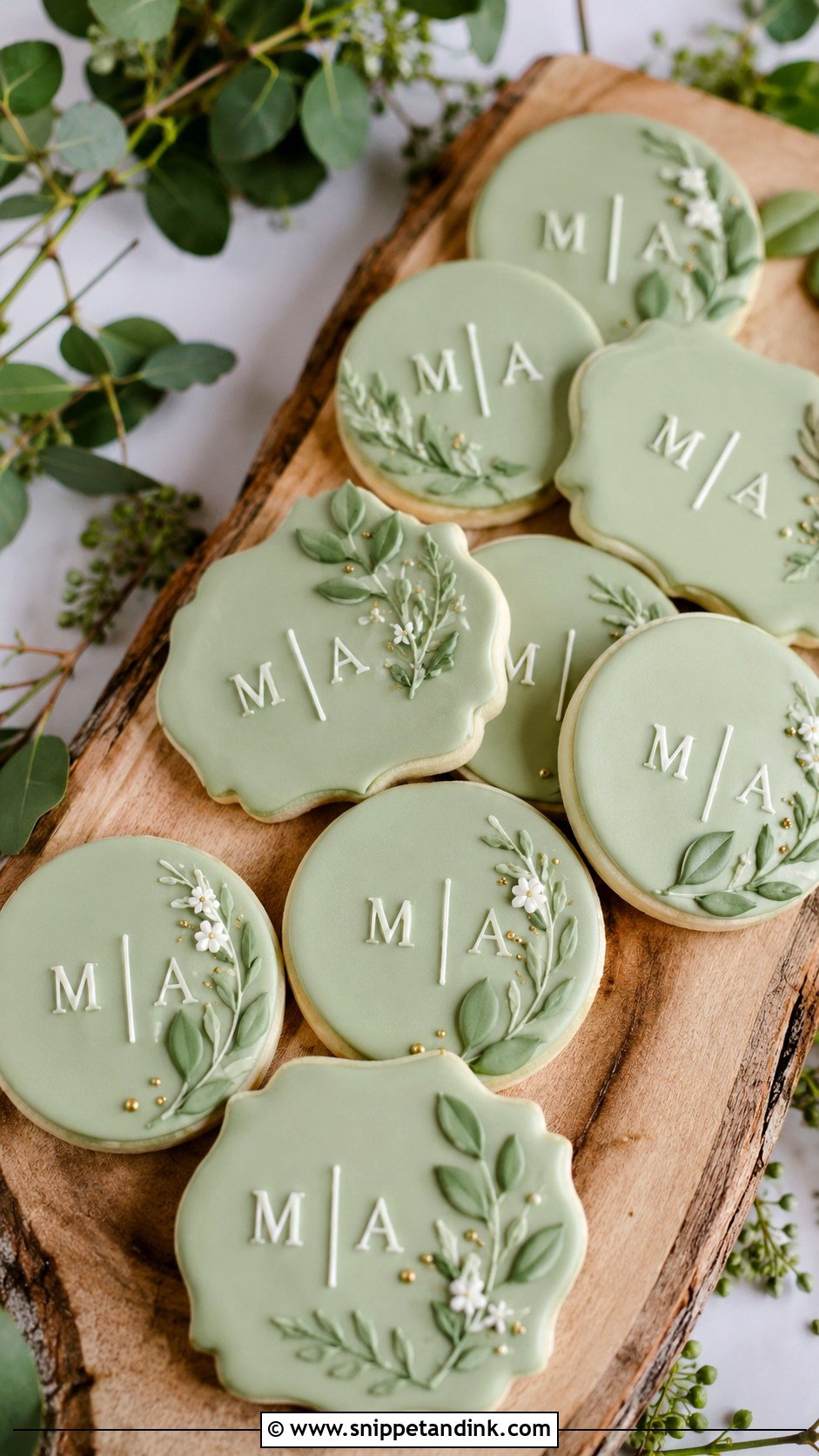
Sage suits greenery-heavy weddings. Green icing is tricky: a little too much yellow turns it lime, and too much blue makes it teal. I mix sage with a touch of black or brown to grey it down. White flowers, gold details or piped eucalyptus leaves work on top, and the colour pairs with beige, cream, dusty blue and peach. It suits rounds, plaques, botanical shapes and place card cookies.
16. Frosted Dusty Blue Wedding Cookies
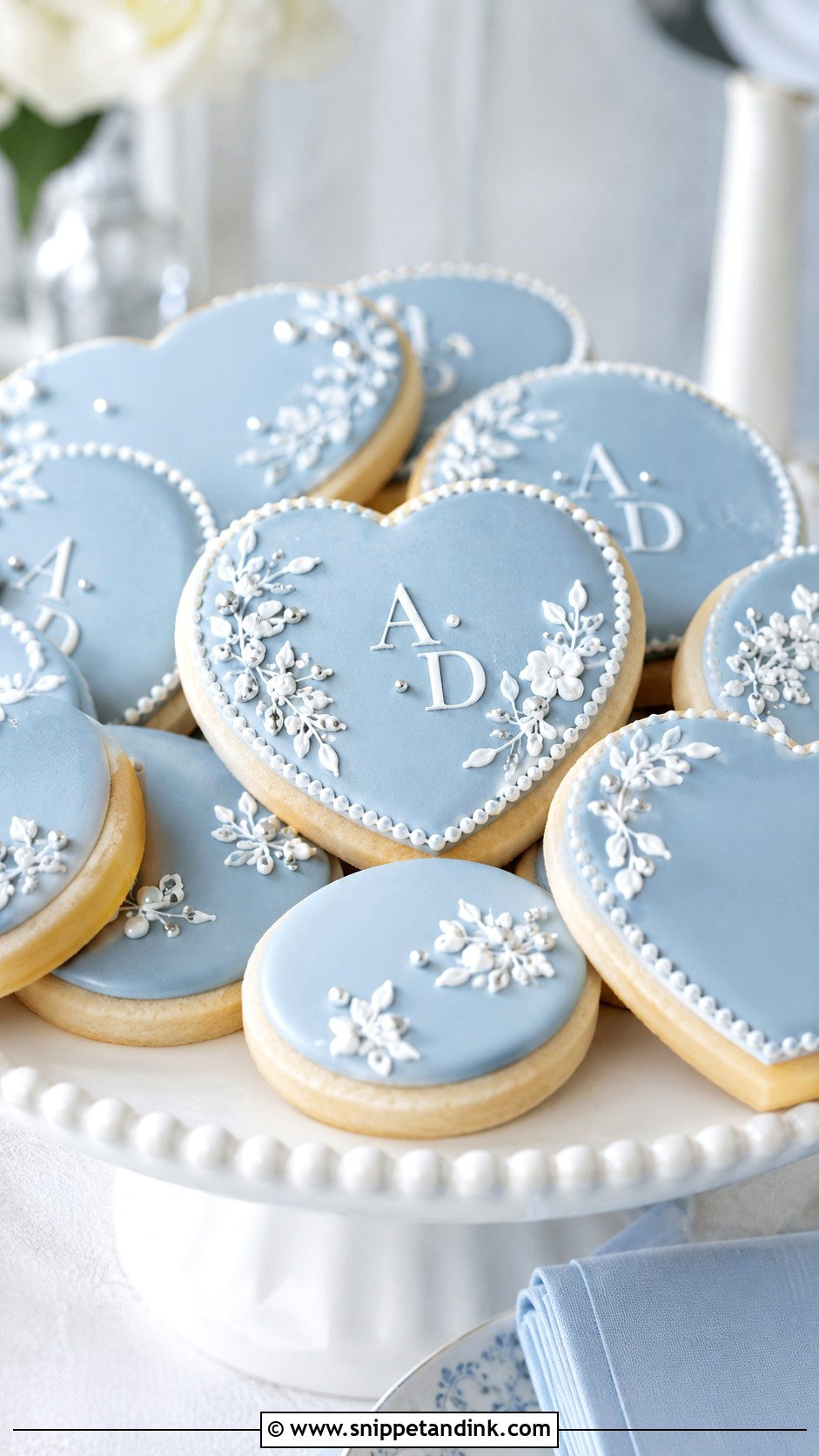
Dusty blue sits nicely in coastal palettes, winter weddings without holiday styling and classic ballroom settings. It’s another colour that needs greying down, or it reads as baby blue. White florals, pearl borders, silver details or navy lettering all work on top. In a mixed set beside ivory and soft grey cookies, it gives the table some depth. Keep the decoration light so the colour does the work.
17. Frosted Boho Wedding Cookies
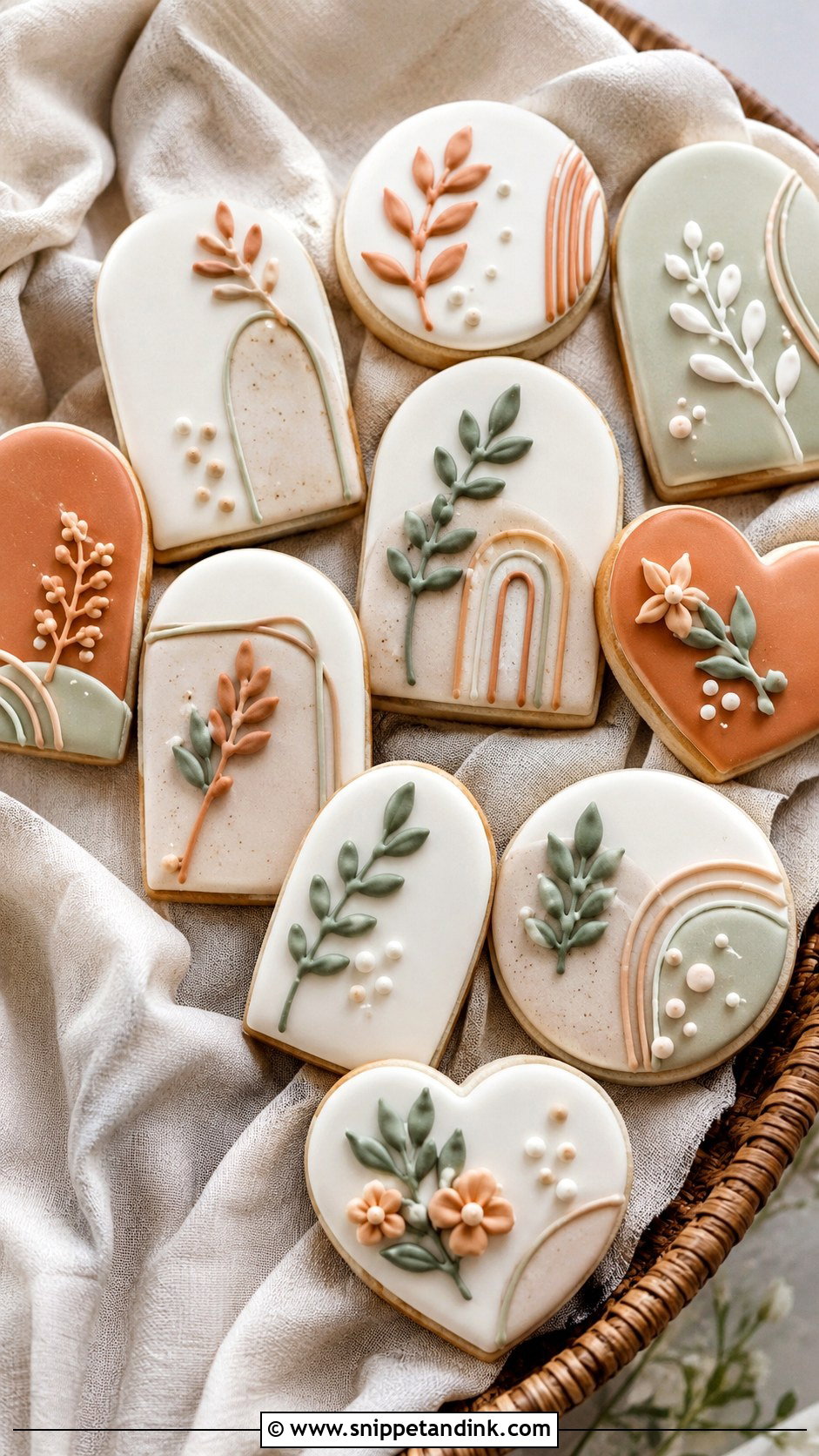
Boho cookies use earth tones: terracotta, cream, beige, rust, muted peach and soft sage. I matte the finish by skipping shine and letting the icing dry slowly. Arches, circles, hearts and plaques with simple leaves, abstract lines or sun motifs suit the style. Repeating the same three or four colours across every cookie is what keeps the set from looking random. They fit outdoor, desert and barn weddings.
18. Frosted Rustic Wedding Cookies
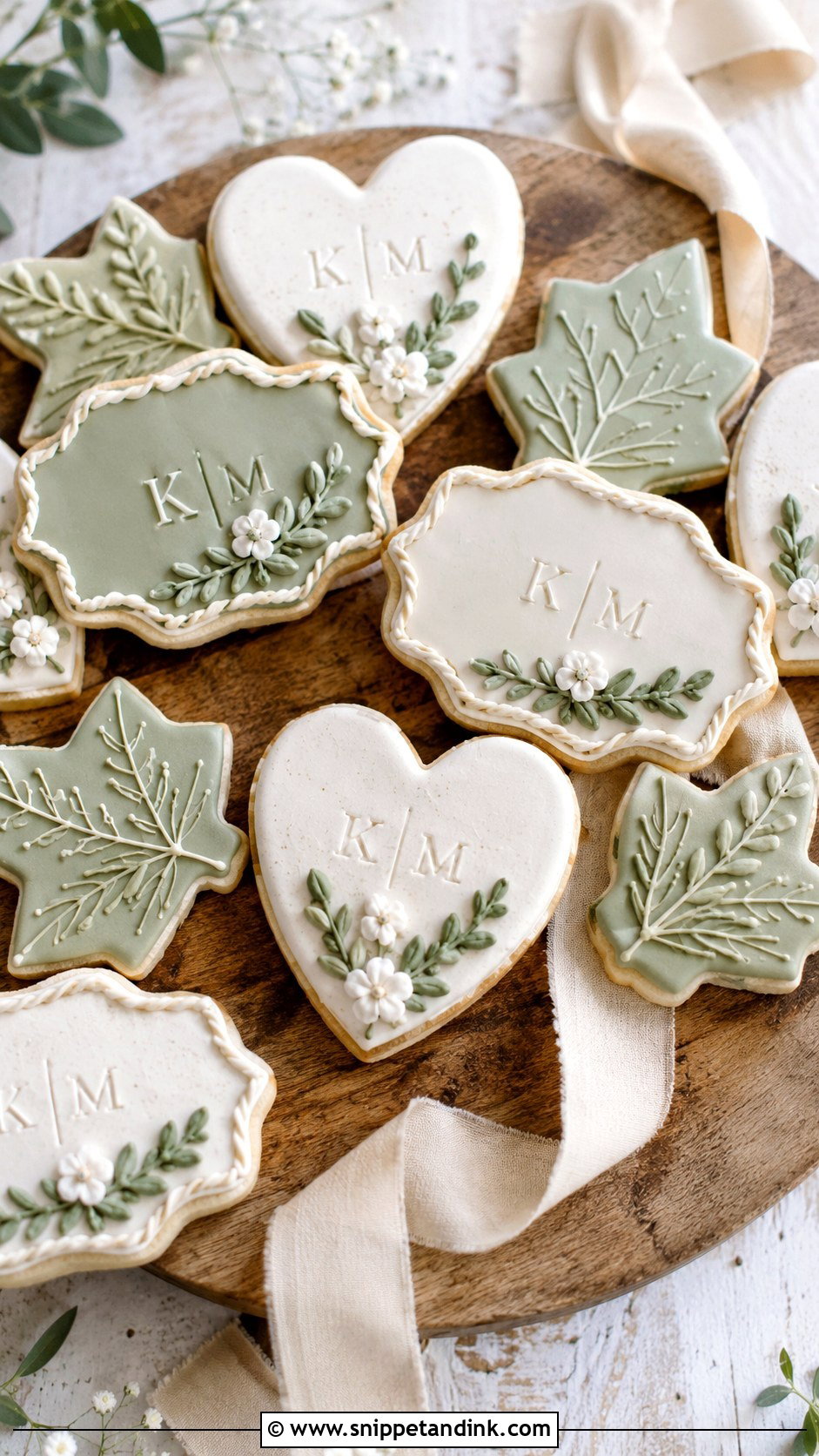
Rustic cookies use ivory, beige, soft brown, sage and muted florals on shapes like hearts, jars, sign plaques and leaves. A buttercream finish or slightly textured royal icing gives the hand-made look. Buttercream doesn’t set hard, so these cookies can’t be stacked or bagged tightly and need to stay cool on a warm day. Small flowers, greenery, twine-effect piping or initials add detail. Clear bags with a plain ribbon finish the favour.
19. Frosted Minimalist Wedding Cookies
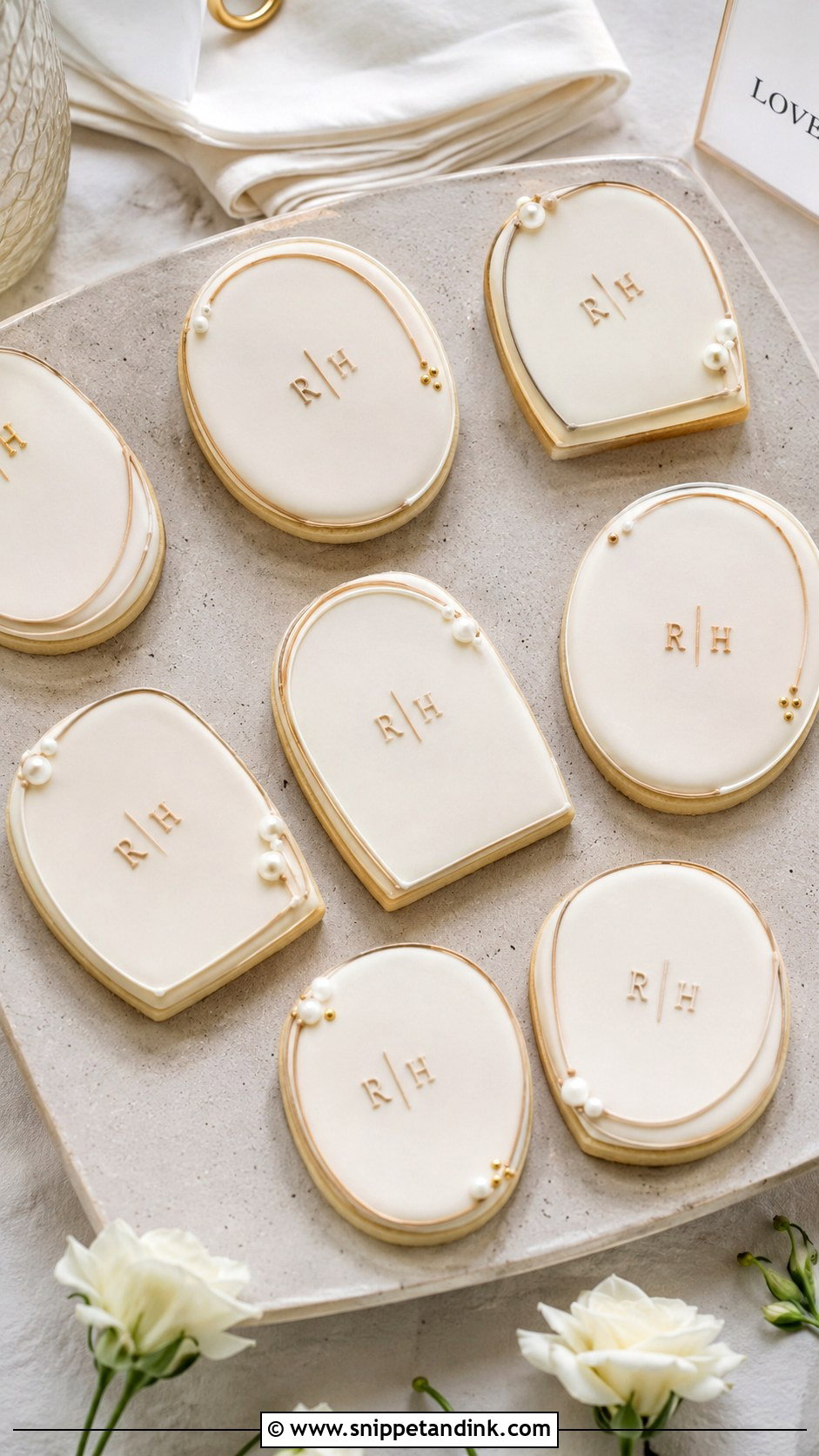
Minimal cookies show every flaw, so the base has to be perfect: a smooth flood, no craters, no air bubbles. I pop bubbles with a scribe while the icing is wet and dry the cookies under a fan to set a glossy surface. One detail is enough, such as a small monogram, a pearl border or a fine gold line. Keep the palette to white, cream, beige and gold. They’re also the quickest to make in large batches.
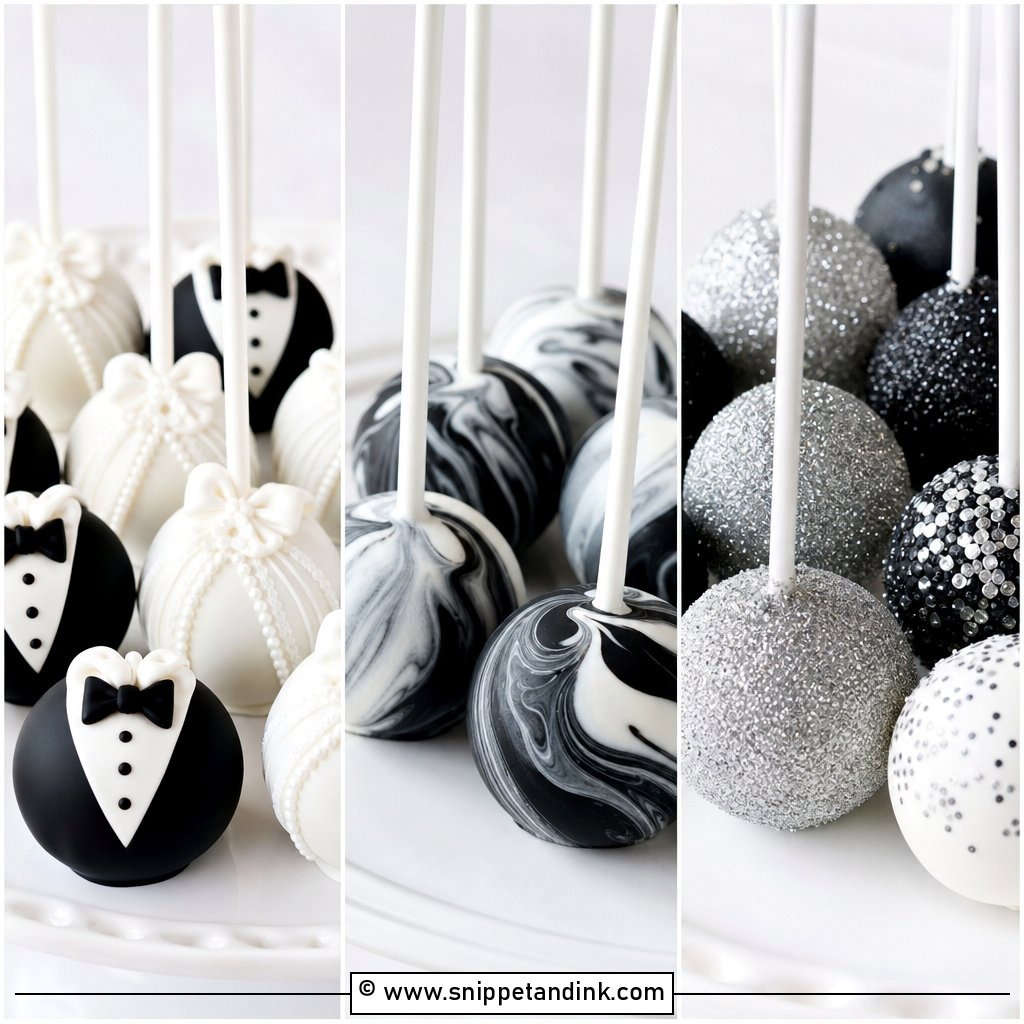
20. Frosted Watercolor Wedding Cookies
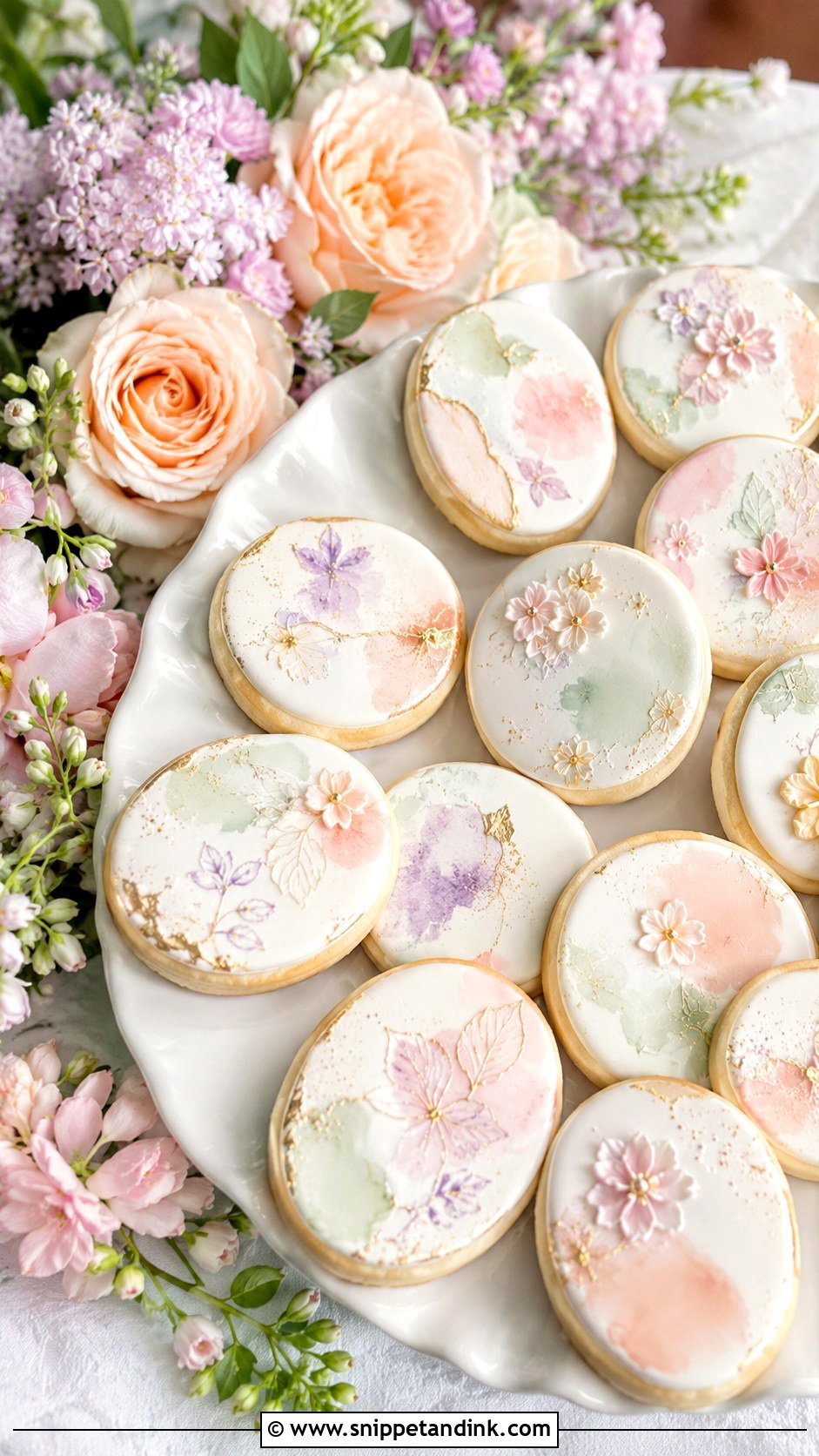
Watercolour effects are painted onto fully dried royal icing using food colouring thinned with clear alcohol. The base must be completely dry, overnight at least, or the brush dissolves the surface and leaves pits. Blush, lavender, peach, sage, dusty blue and pale yellow work for wedding palettes. Light washes and soft blending keep it airy. A simple flower or monogram over the top can finish it, and round, oval and plaque shapes give the best surface.
21. Frosted Place Card Wedding Cookies
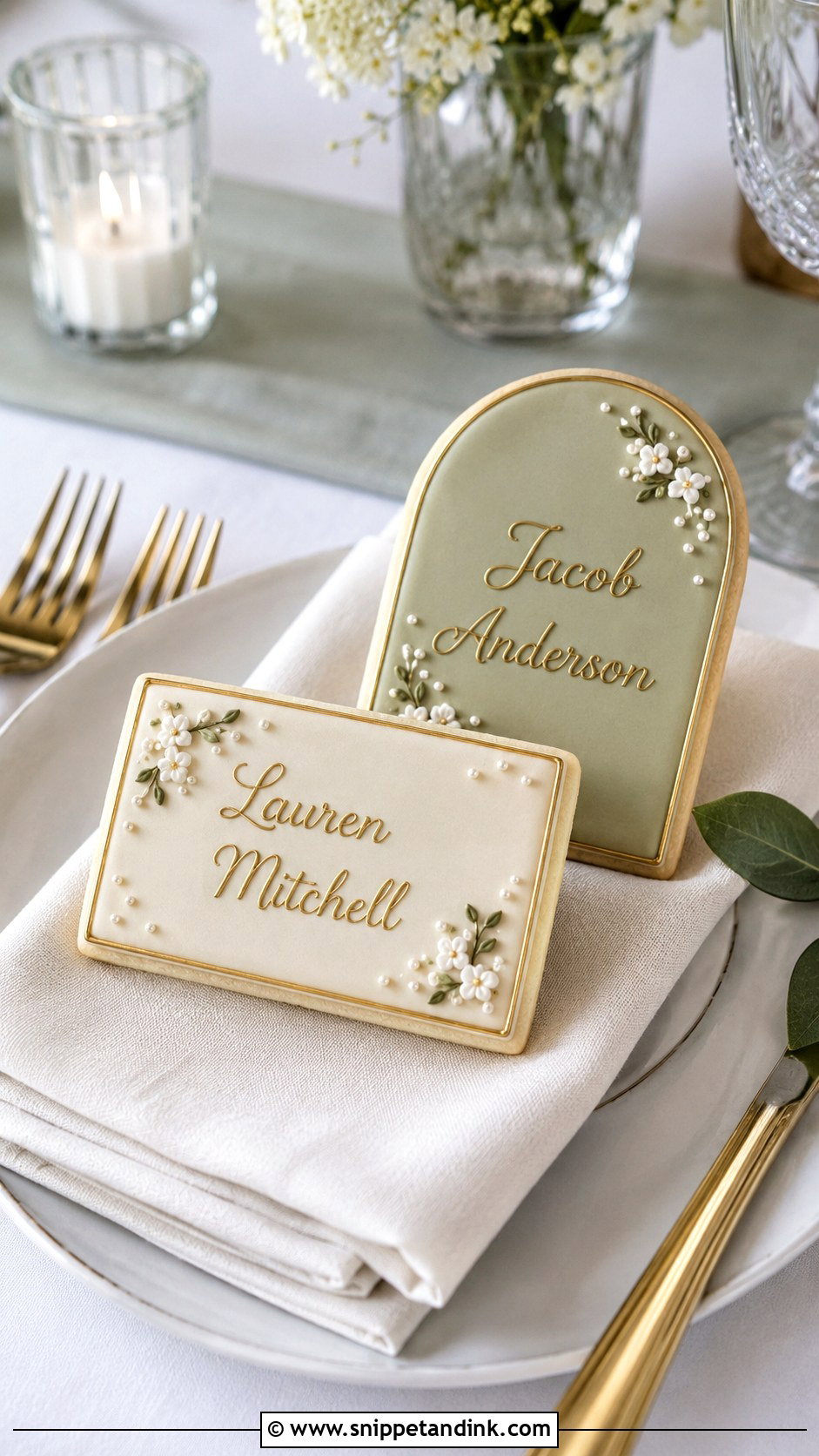
Place card cookies do two jobs: they show each guest their seat and go home as a favour. Rectangles, arches, plaques and ovals give enough room for readable names. I need the final guest list with exact spellings well before baking, and late changes are the biggest risk with this design. Pipe or hand-letter names in a colour that contrasts with the base, and keep any decoration to the edges. Set on a folded napkin, they replace paper cards completely.
22. Frosted Bridal Shower Cookies
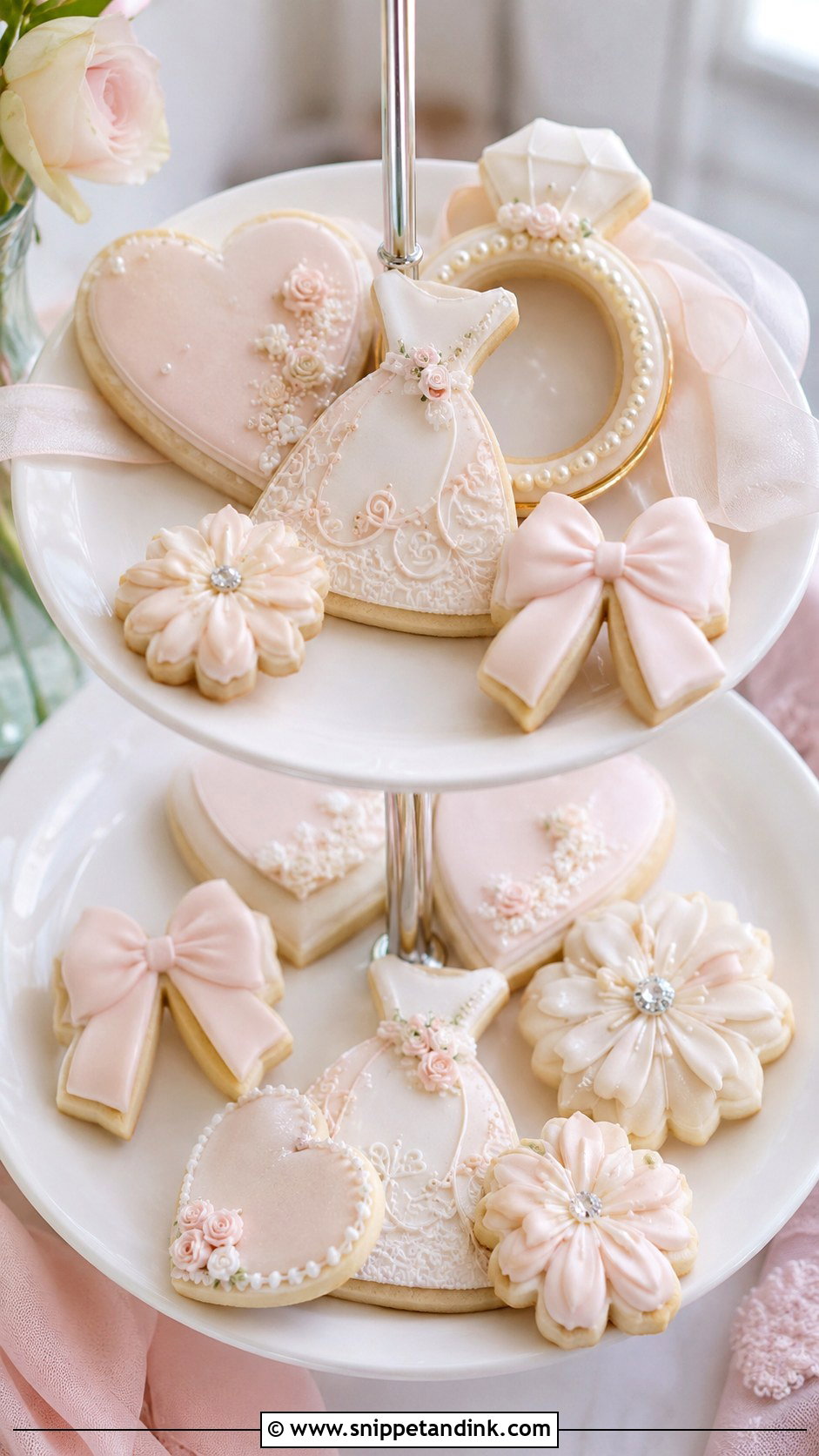
Shower cookies can be more playful than reception favours: dresses, rings, hearts, flowers, bows, cakes and plaques with short messages. Blush, ivory, lavender, peach and sage keep the set soft. Buttercream texture, royal icing detail, edible pearls or small flowers all suit the party. For a display, I mix three or four shapes and repeat the colours so the tray looks planned.
23. Frosted Wedding Favor Cookies
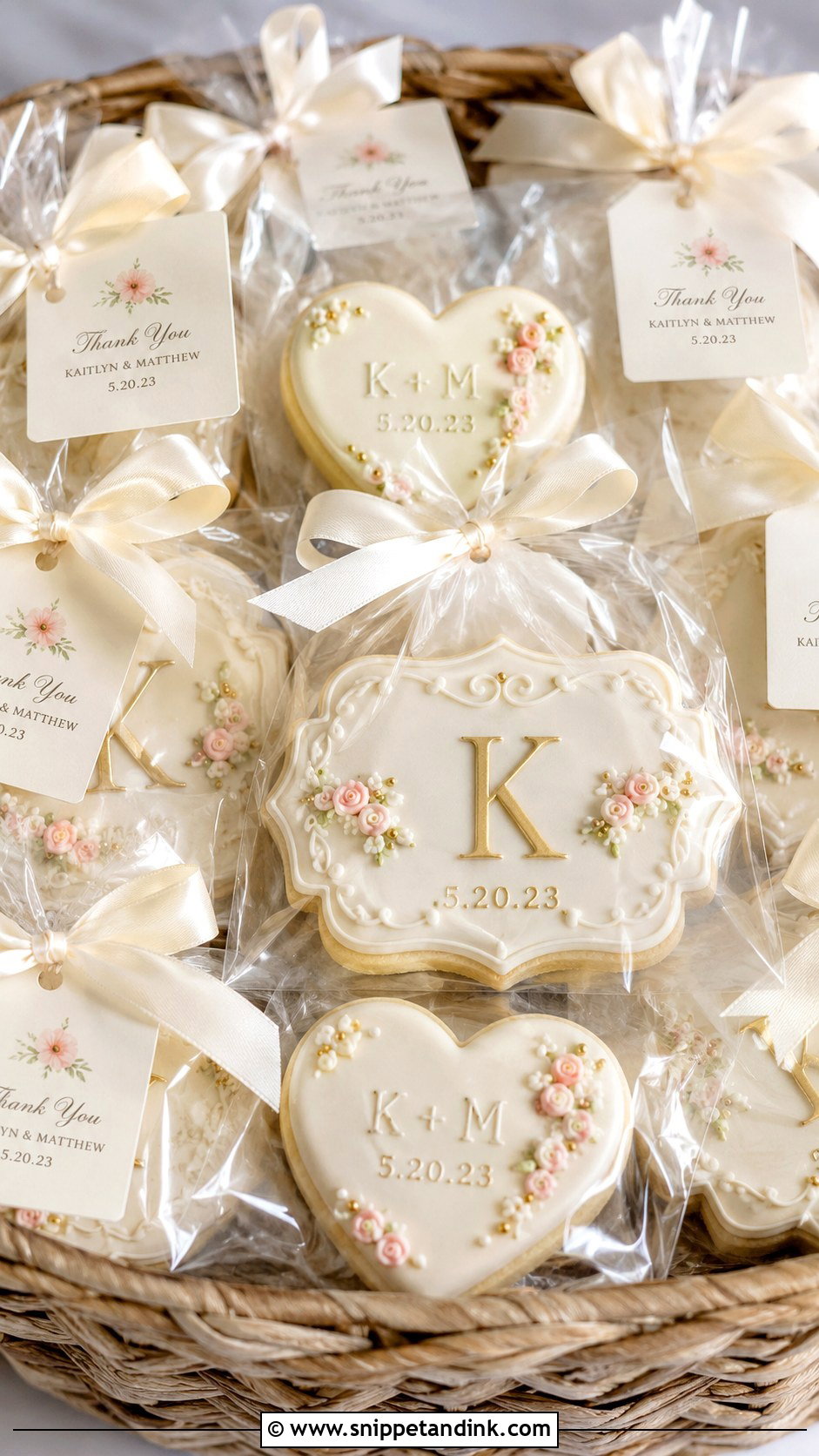
Favours have to travel, so sturdiness comes before ornament. Hearts, circles, plaques, monograms and cake shapes have no thin points to snap. Royal icing is the right finish because it dries hard; I let favours dry for a full day before heat-sealing them in cello bags, since any softness traps moisture and the icing goes blotchy. Add initials, a date or a small floral accent. A favour that arrives home in one piece is the one people actually eat.
24. Frosted Wedding Cookie Box
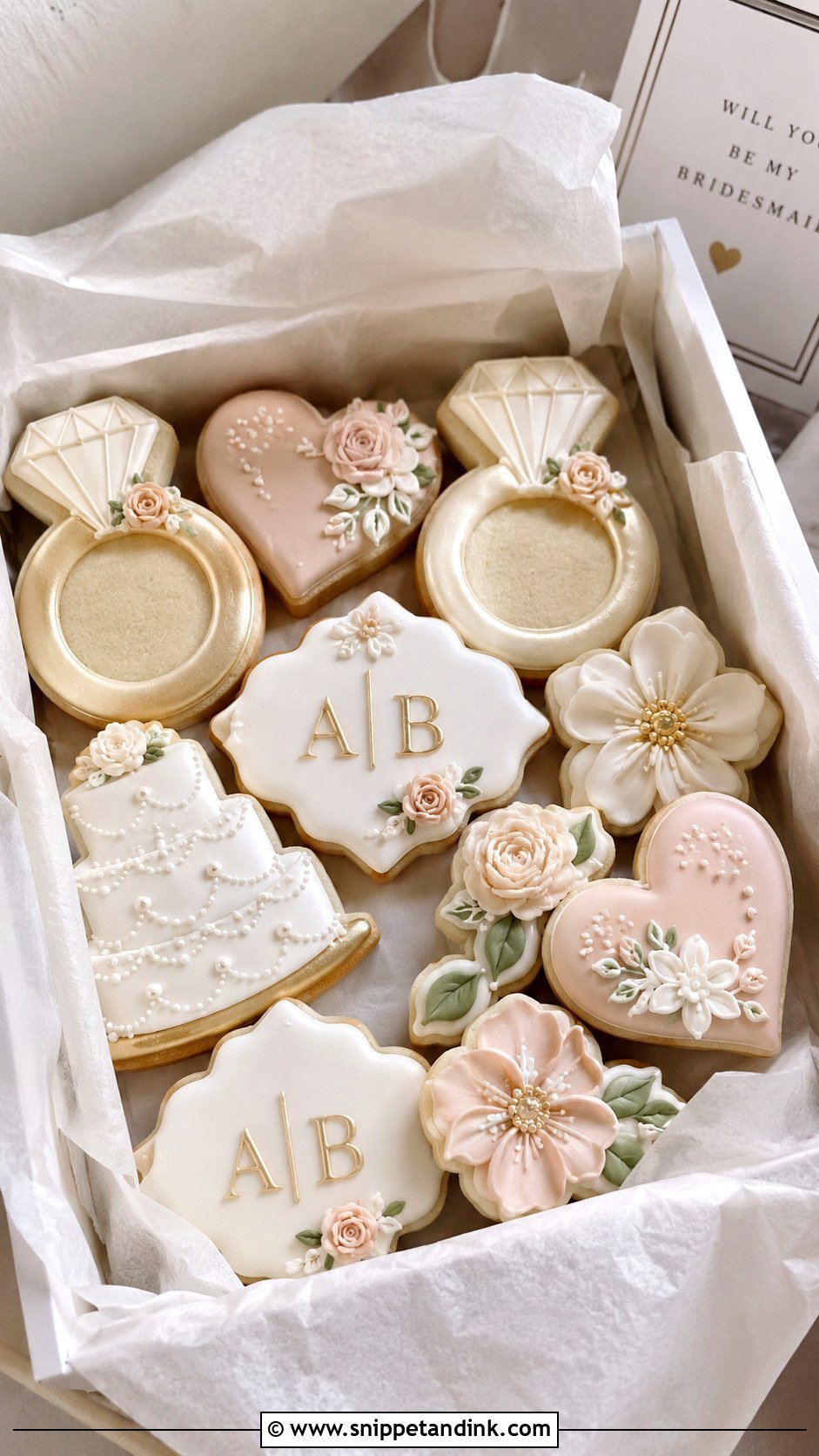
A cookie box gives guests a small assortment rather than one treat, which suits welcome bags, bridal party gifts and hotel baskets. Fill it with several small cookies in matching colors: a heart, a ring, a monogram, a flower and a mini cake. Variety without clutter comes from a single palette with repeated details. Smaller cookies pack more securely and look generous in a group. Line the box with tissue so nothing slides.
25. Frosted Wedding Cookie Platter
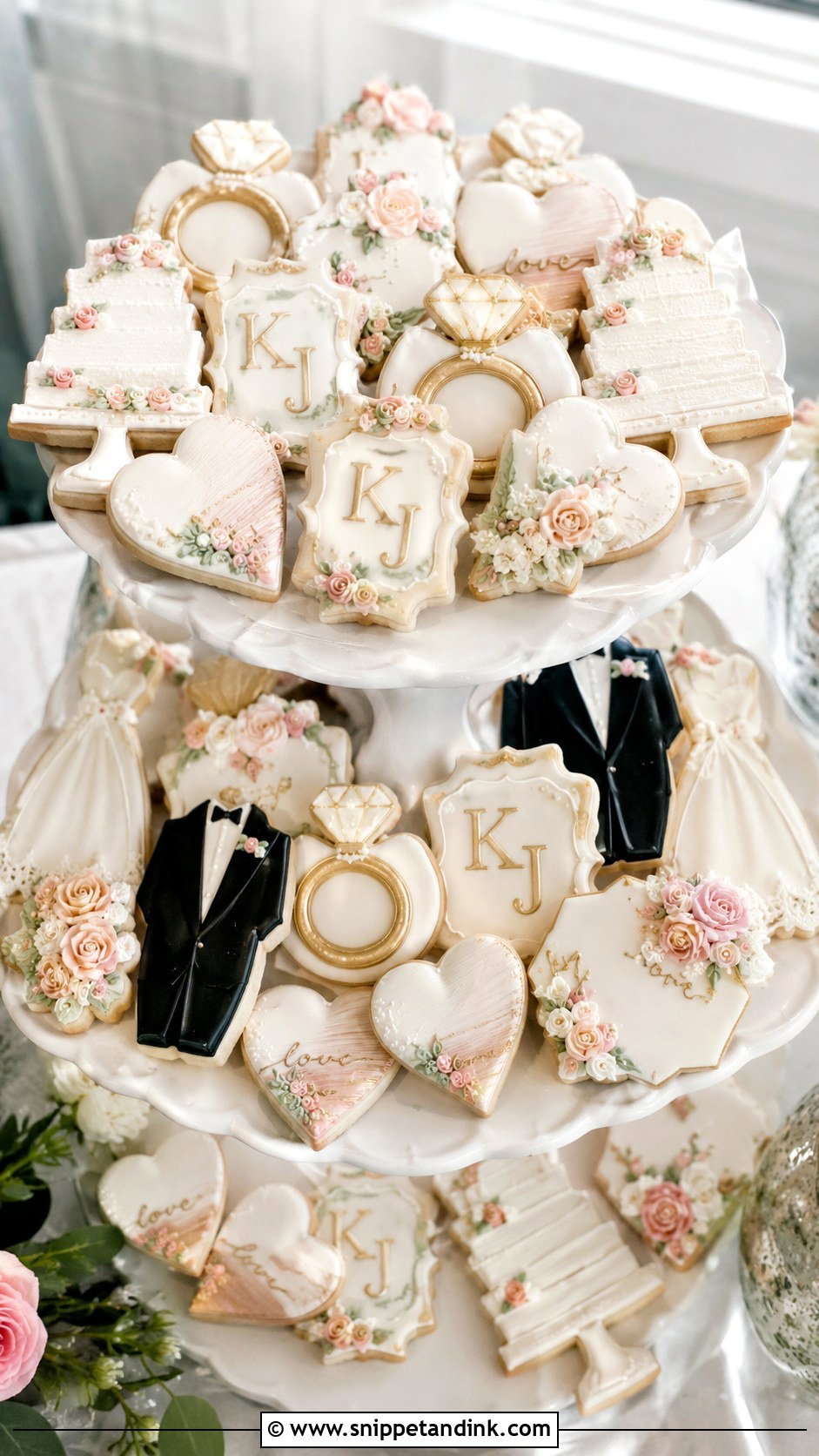
A platter makes cookies part of the dessert table rather than individual favours. Hearts, rings, florals, dresses, tuxedos, monograms and cake shapes can share one palette. I place larger cookies in the centre and smaller ones round the edge, and use cake stands or tiers for height. Guests get to choose, so a mix of flavours helps. Limit the colours and repeat icing finishes so it looks deliberate.
Working Backwards From the Wedding Date
Decorated cookies take far longer than people expect, mostly because of drying time between layers of icing. Custom cookie makers often book up months ahead in wedding season, so reach out as soon as your palette is settled.
- Two to three months before: book the order, share your colours, flowers and stationery, and agree on shapes.
- Four to six weeks before: finalise the count and send the exact guest list if you’re ordering place cards.
- One to two weeks before: cookies are baked and decorated. Royal iced cookies keep well for around two weeks once heat-sealed.
- A day or two before: final drying, bagging and labelling.
Decorated cookies can also be frozen in sealed bags well ahead of time. Thaw them still sealed, so any condensation forms on the bag and not on the icing.
Label what’s inside
Favours leave the venue without a menu card beside them. A small tag listing the main allergens, such as wheat, egg, dairy and any nuts, means guests with allergies don’t have to guess. Ask your baker whether gluten-free or nut-free cookies are made in the same kitchen, and say so on the tag.
One Palette, Four Shapes, Repeated Across the Table
Cookies are small, but they can match the flowers, echo the dress, carry initials, show guests their seats or go home as the favour. A set looks connected to the wedding when the palette is decided first and the shapes follow. Royal icing gives crisp detail and travels well; buttercream gives a softer bakery finish but needs cool storage. Plan how the cookies will be served and packed before choosing a design, and the rest falls into place.
You'll Like These Ideas:


Leave a Reply