
Pavlova is the dessert I get asked about by couples who are tired of sugar paste. It’s a crisp meringue shell with a soft marshmallow middle, piled with whipped cream, fruit and curd, and it eats far lighter than a frosted sponge after a long dinner. Fruit-forward cakes and meringue towers are showing up across current wedding dessert trends, with berries, passionfruit and stacked tiers leading the way. It is also one of the least forgiving things I make for a wedding, because meringue hates humidity and cream has a clock on it. Below are twenty ways to serve one, with what I’d watch for on each.
Why I Assemble Every Pavlova at the Venue
A pavlova doesn’t travel finished. The meringue shells are baked ahead, cooled slowly in the oven and stored in airtight containers, where they keep their crunch for a few days. The moment whipped cream touches them, the clock starts. Cream softens meringue from the inside, and within a few hours the base turns chewy and starts to weep.
So the shells, the cream and the fruit travel separately, and I build the pavlova on site, usually within an hour or two of serving. Refrigerating it after assembly doesn’t help either; a fridge is a humid box, and the shell goes soft faster in there than on the table.
- Ask your baker whether they assemble on site, and who does it if they leave before the cutting.
- Check the venue has a cool spot and a fridge for the cream and fruit until assembly.
- Rainy days and coastal venues soften meringue sooner, so plan to serve earlier.
1. Tiered Pavlova Wedding Cake
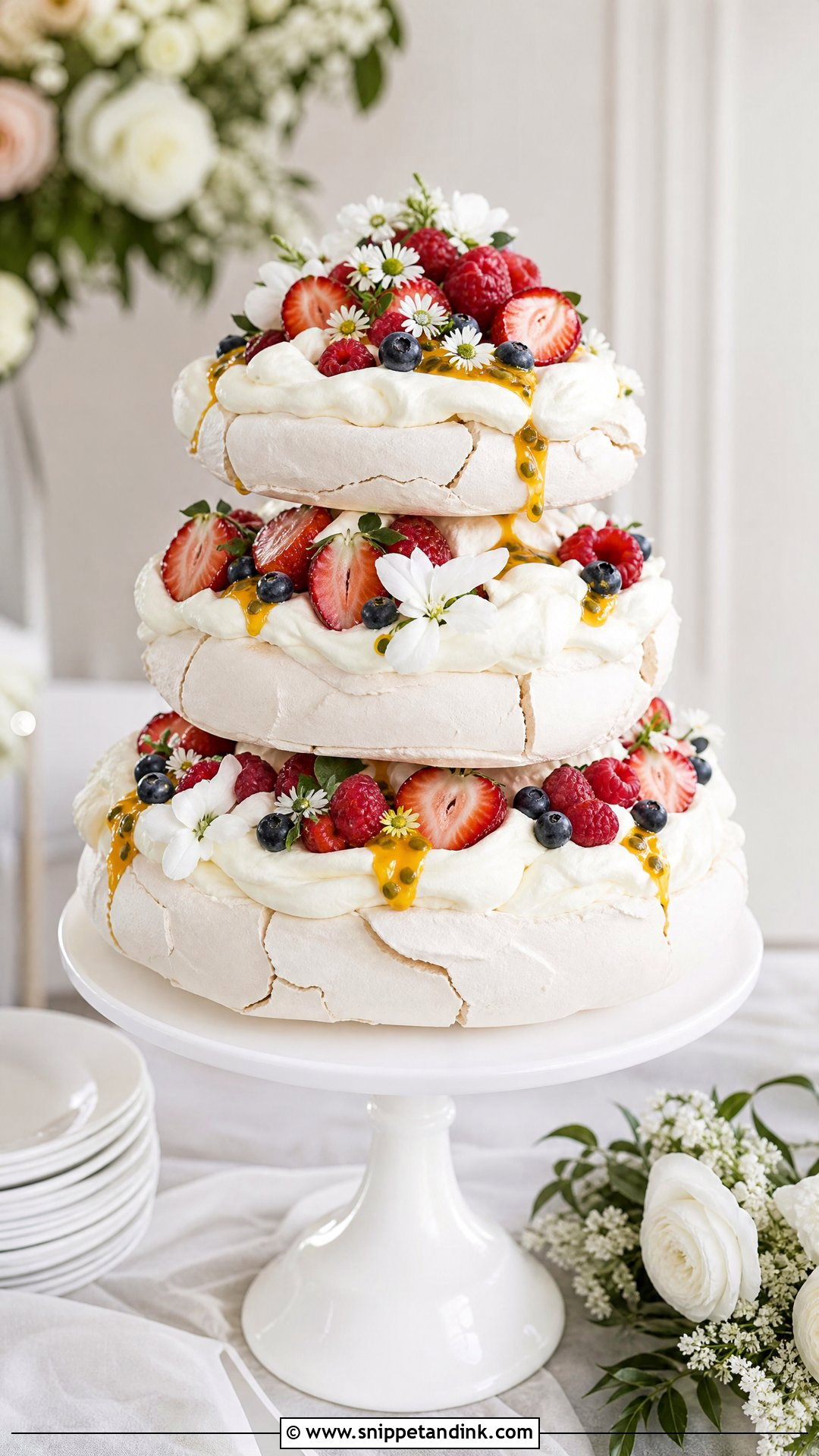
A tiered pavlova gives you the height of a wedding cake, but I never stack meringue directly on meringue. Each disc is kept separate, then layered with cream at the venue, usually two or three tiers at most, because the bottom disc carries everything above it and will crack under too much weight. Strawberries, raspberries and blueberries fill the gaps, and a thread of passionfruit or berry coulis finishes it. Expect a slightly organic shape. That’s the nature of the dessert.
2. Berry Pavlova Wedding Cake
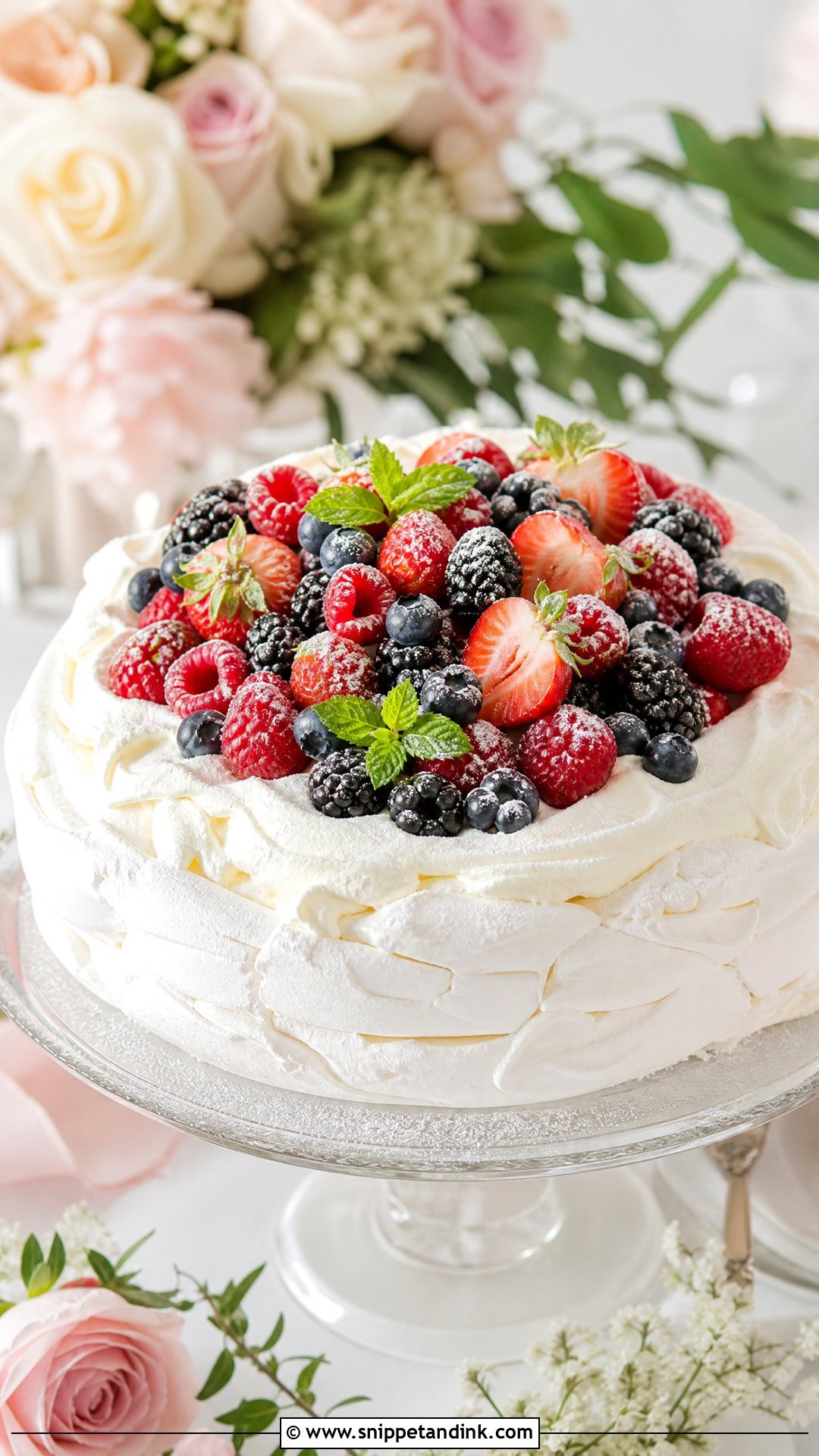
Berries are the safest topping on this list, and that’s why I suggest them first to nervous couples. They hold their shape on cream, they don’t bleed much juice, and the reds and blues sit sharply against white meringue. I place them in loose clusters rather than rows, since rows draw the eye to any gap. A dusting of icing sugar looks polished, but add it at the very last minute; it dissolves into wet fruit within twenty minutes or so.
3. Passionfruit Pavlova Wedding Cake
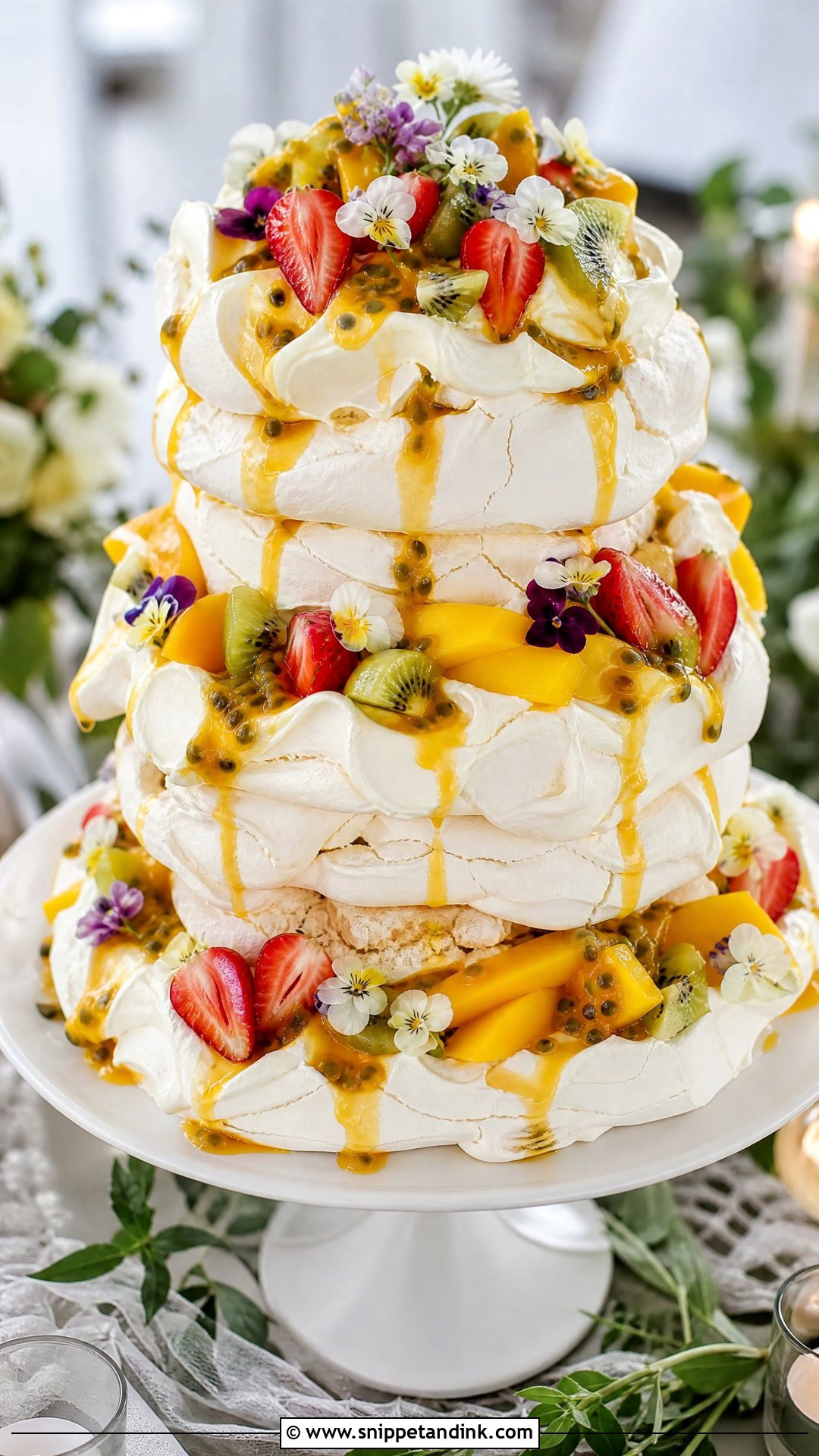
Passionfruit cuts straight through the sweetness of meringue, which is why it’s the classic pairing. The pulp is acidic and runny, so I spoon it on at the end and let it drip over the edges instead of pooling on the cream, where it slowly thins it. Pale cream, golden pulp and a little mango, kiwi, or strawberries make a balanced plate. Beach and warm-weather receptions suit it best.
4. Floral Pavlova Wedding Cake
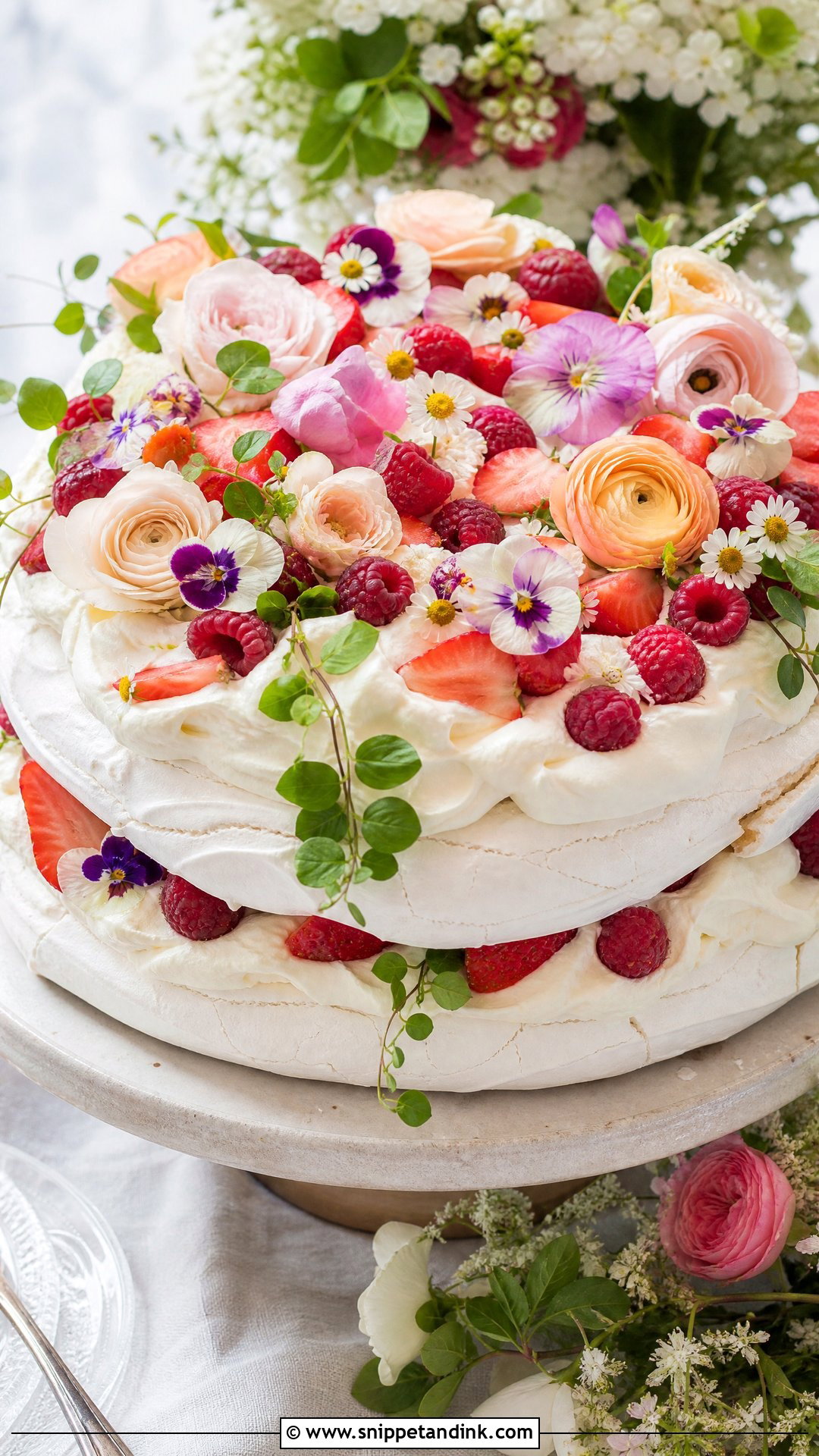
Flowers on a pavlova should be edible or confirmed food-safe, and they should stay accents. Pansies, violas, chamomile and small rose petals sit well on cream; thick stems pressed into soft meringue will crack the shell. I keep blooms to the top and one side so guests can still see the fruit. It’s a natural match if your centrepieces use the same colours.
5. Mini Pavlova Wedding Cake Tower
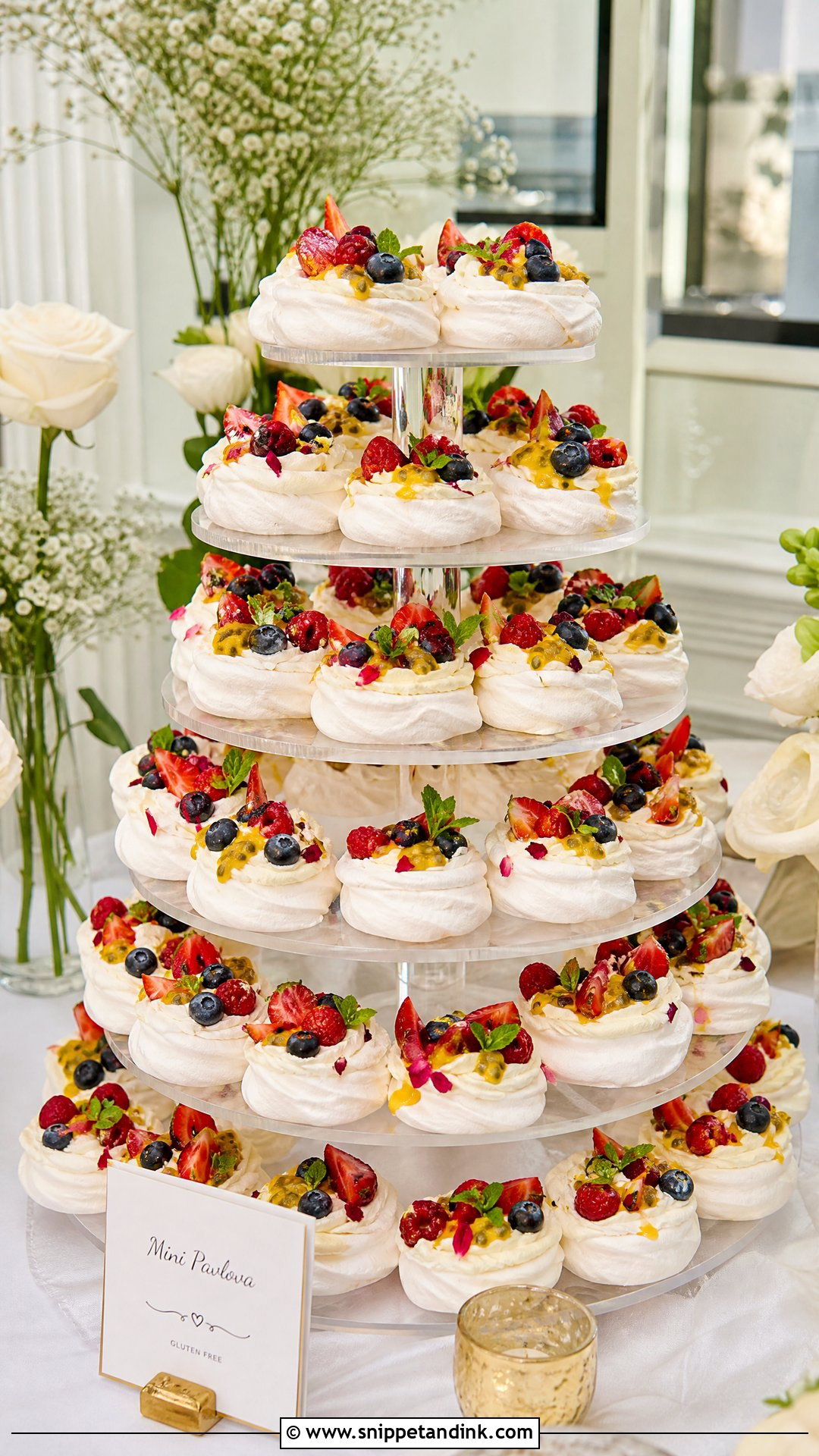
Minis are my honest recommendation for most large weddings. A mini pavlova wedding cake tower gives the drama of height with none of the slicing problems, because every guest gets a whole nest. Small shells also keep their crunch longer than a big one does once cream goes on. Acrylic stands or tiered plates hold them, and berries, curd and a petal on each keep the tower consistent.
6. Single Layer Pavlova Wedding Cake
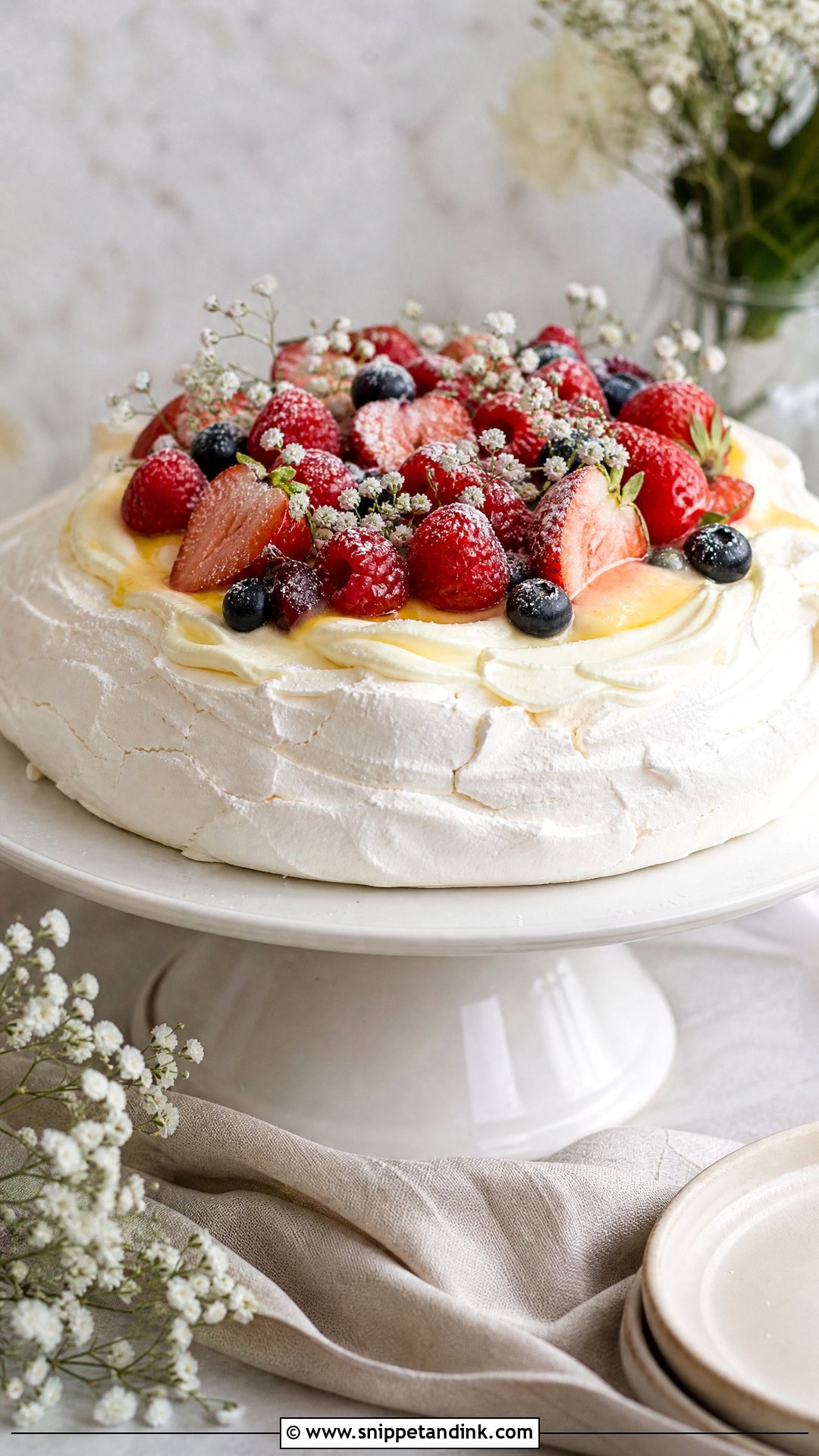
One wide disc can look just as finished as a tall cake. It has room for cream, curd, berries, herbs and flowers, and it’s the easiest pavlova to assemble right before serving, which keeps the shell crisp. Intimate weddings, courthouse dinners and rehearsal meals suit it. A clean white stand and plenty of fruit give it presence without height.
7. Rustic Pavlova Wedding Cake
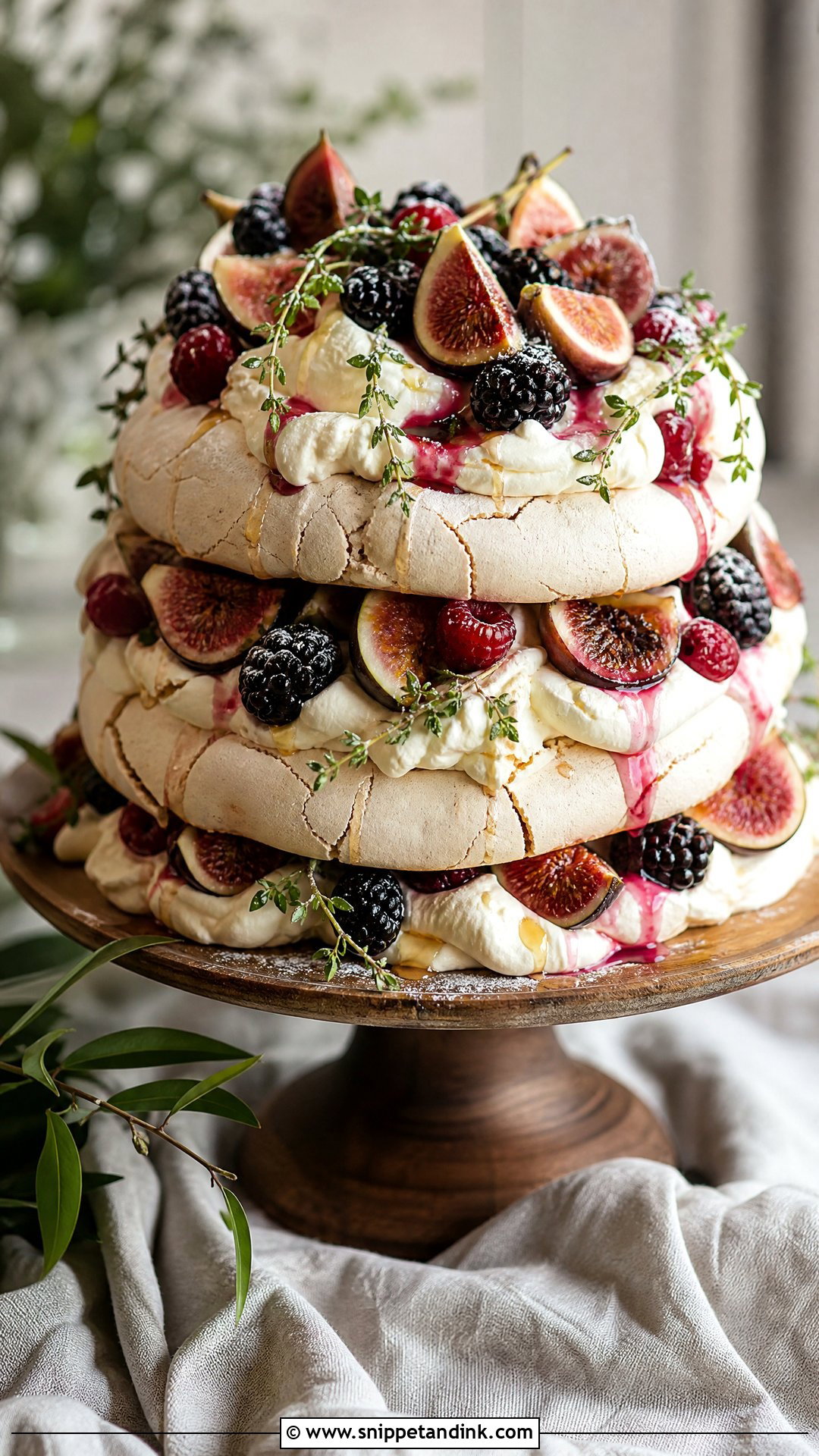
A rustic pavlova is the most forgiving style, because cracks are part of the look. Meringue nearly always cracks as it cools, and here nobody has to hide it. Figs, berries, herbs and a drizzle of honey or fruit syrup give it warmth. It belongs on a wooden board at a barn, vineyard or backyard reception. Loosely spread cream is fine; slumped cream isn’t, so keep it chilled until assembly.
8. Modern Pavlova Wedding Cake
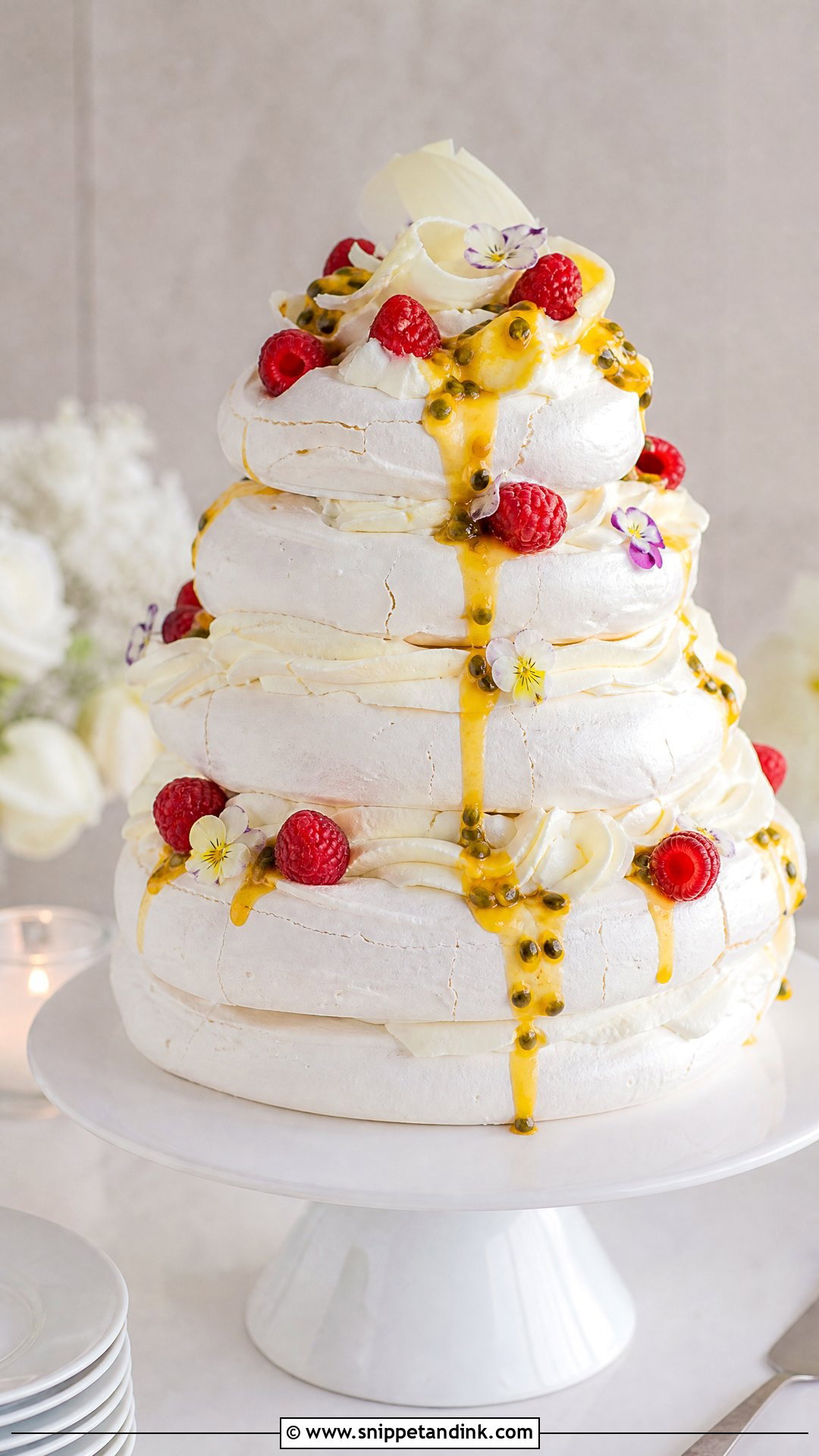
The modern version is all about restraint: neat meringue rounds, smooth cream, a tight colour palette and one or two hero toppings, such as raspberries with passionfruit or figs with blackberries. Neatness is harder with meringue than with sponge, so I pipe the shells to a template and bake them low and slow to keep them pale. White, pale gold and deep berry suit loft and city venues.
9. Summer Pavlova Wedding Cake
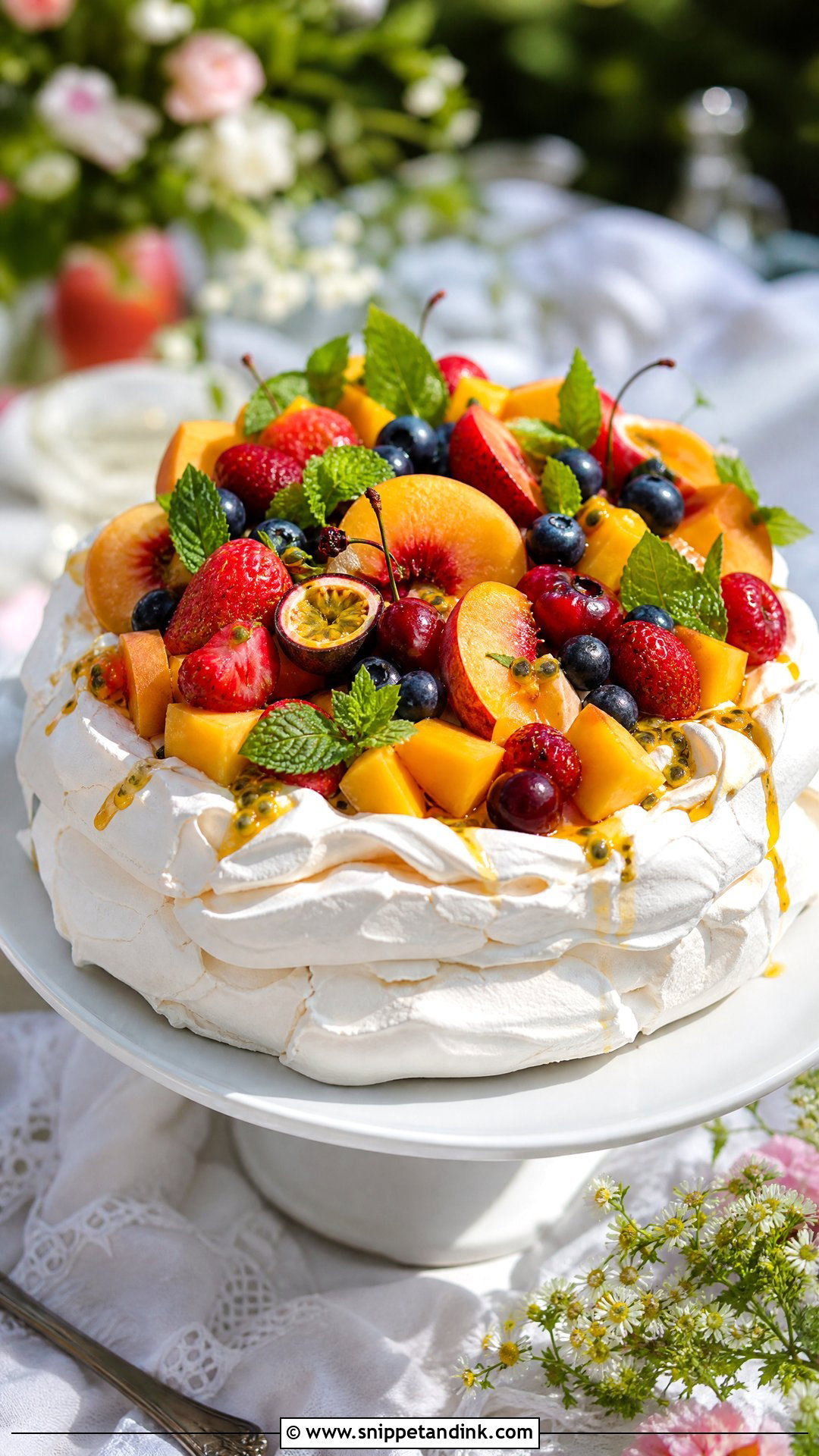
Summer is when pavlova is most tempting and most at risk. Heat and humidity soften meringue fast, and the cream starts to weep in a hot tent. Strawberries, peaches, cherries, mango and kiwi all look generous against white, but juicy stone fruit releases liquid, so I slice it at the venue. Keep the cream chilled, top the pavlova as late as possible, and serve it before the dancing, not after.
10. Spring Pavlova Wedding Cake
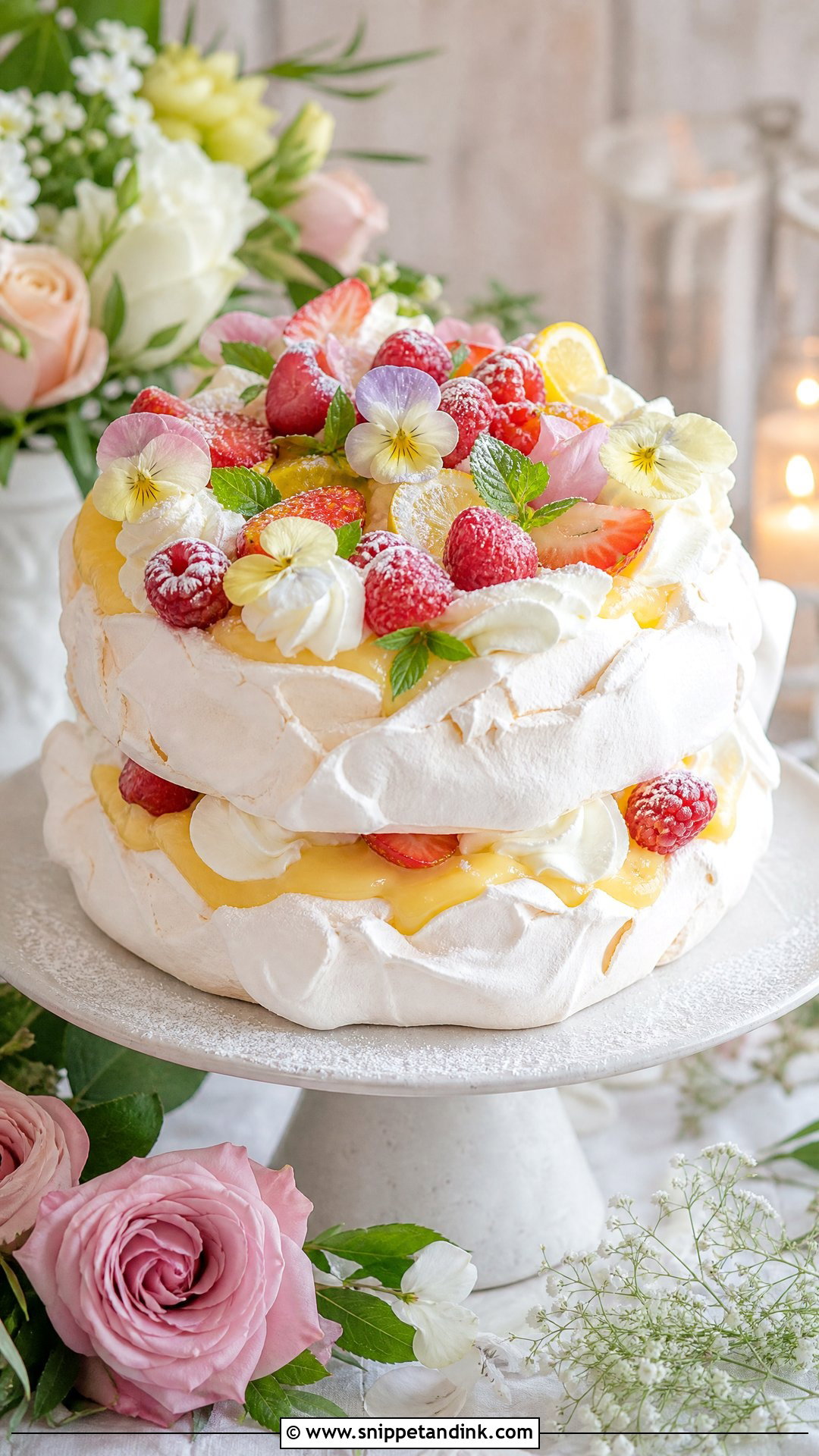
For spring, I lean on lemon curd, strawberries, raspberries, small blossoms and a few mint leaves. A two layer pavlova with fruit tucked between the discs gives enough height for display while looking light. Pastel stands and linens complement it. Curd is my favourite spring addition, since it’s thick enough to act as a moisture barrier between cream and shell.
11. Fall Pavlova Wedding Cake
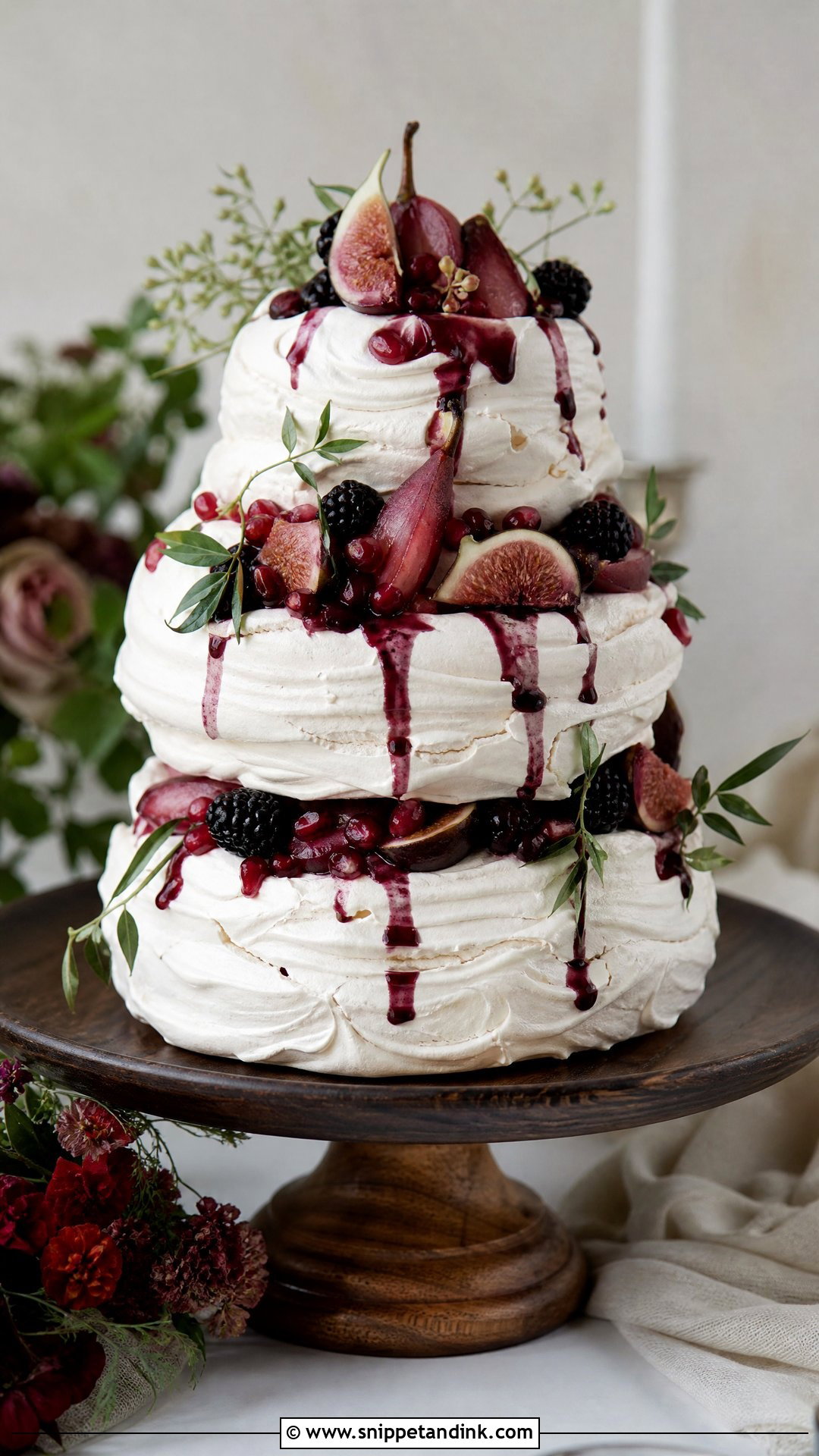
Autumn pavlovas get their character from the fruit: figs, poached pears, blackberries, pomegranate seeds, spiced plum or caramelised apple. Poached fruit should be drained well, as syrup soaks straight into meringue. A lightly spiced or vanilla cream adds warmth without fighting the shell. Set it on wood or a stone platter. It’s lighter than a spice cake, which guests appreciate after a heavier autumn menu.
12. Winter Pavlova Wedding Cake
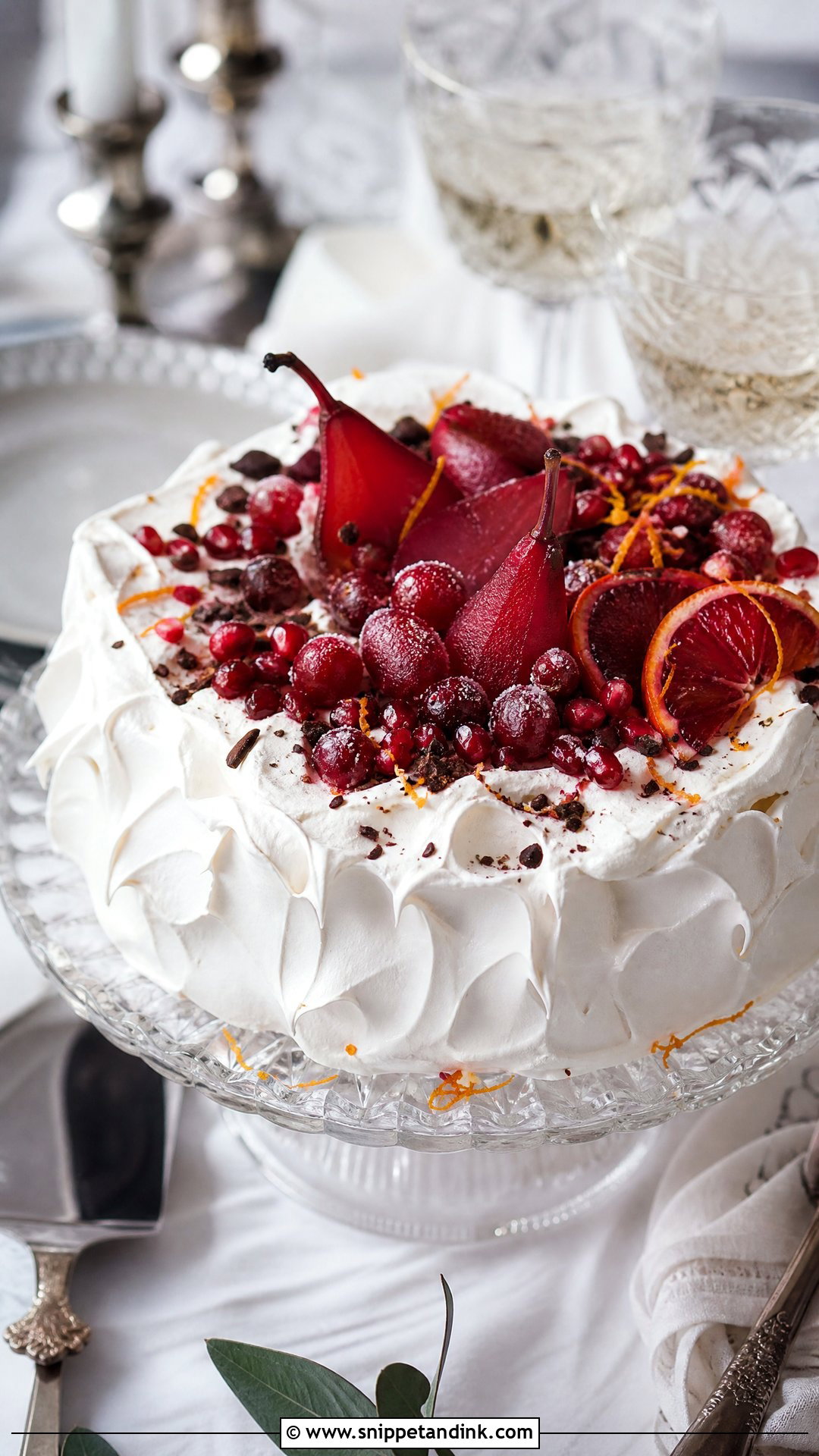
A winter pavlova wedding cake leans on fruit that’s actually in season: pomegranate, citrus segments, poached pears, glazed cranberries or freeze-dried berry powder for colour. Winter is quietly the best season for pavlova, because indoor heating keeps the air drier than a summer marquee. Dark chocolate shavings or orange zest add depth. The white shell already looks frosty, so the fruit just has to add contrast.
13. Tropical Pavlova Wedding Cake
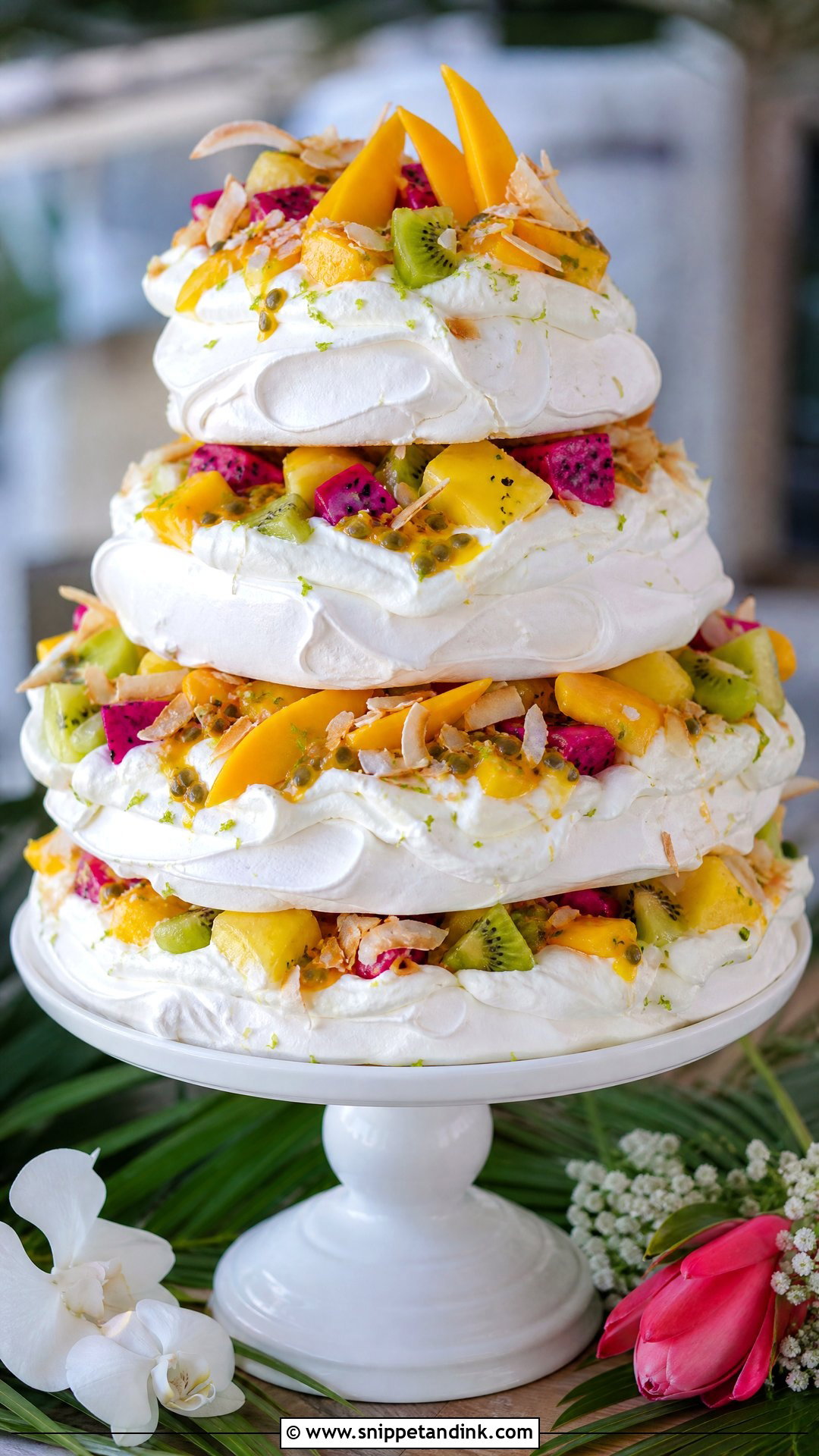
Mango, passionfruit, pineapple, kiwi, dragon fruit and toasted coconut all suit a destination wedding. Two cautions from the kitchen: fresh pineapple and kiwi carry enzymes that thin whipped cream if they sit on it for long, so I add them last, and resort kitchens are often humid, which means meringue shells must stay sealed until assembly. Lime zest sharpens the whole plate. Arrange fruit in neat clusters so it doesn’t look heaped.
14. Lemon Pavlova Wedding Cake
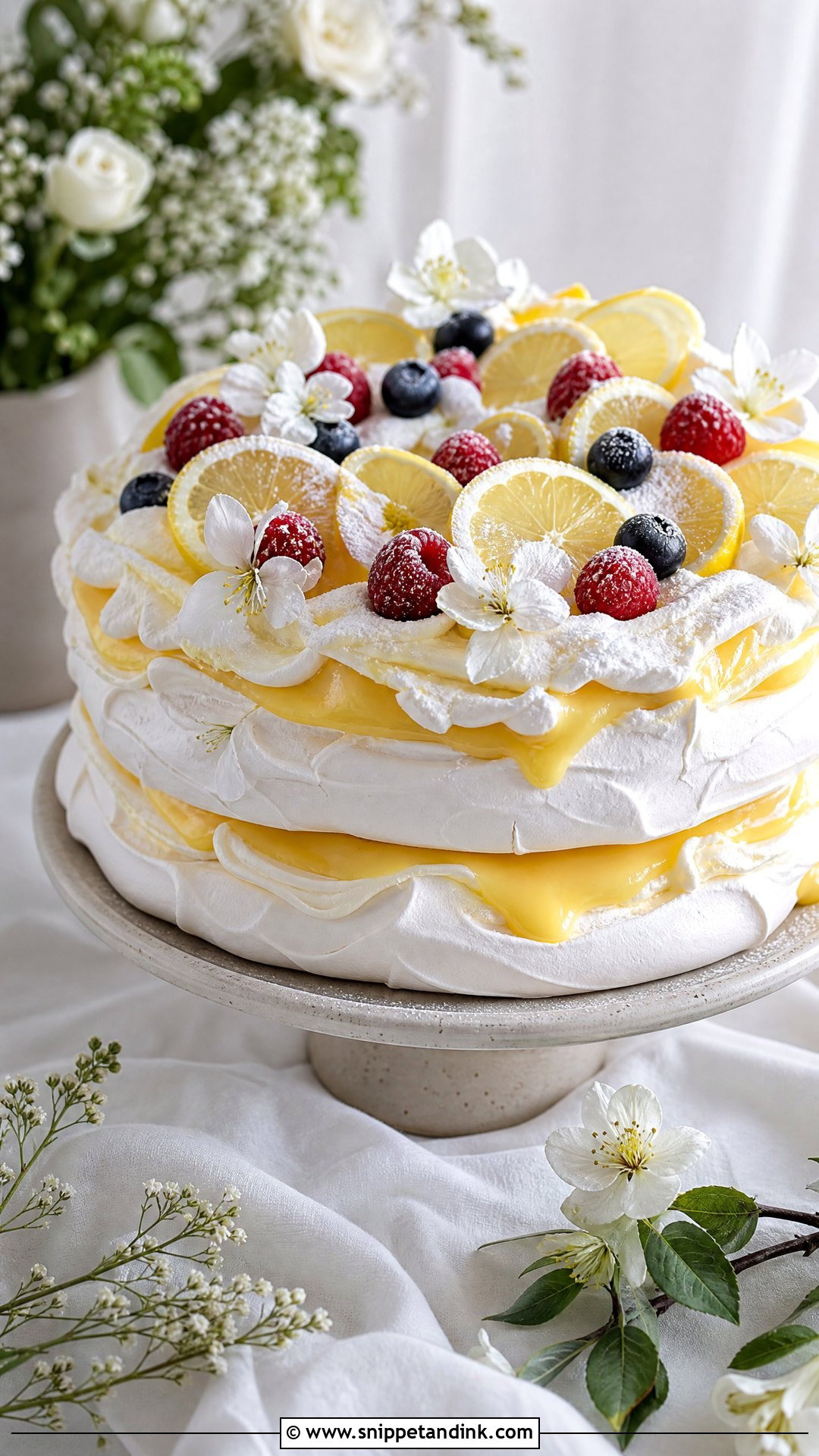
Lemon pavlova is my pick for couples who don’t like very sweet desserts. Lemon curd brings colour and tartness, and its thickness helps protect the shell from the cream. It works as two stacked discs or one wide centrepiece with lemon slices, berries and a few flowers. The pale yellow reads well against white cream in photos. It tastes clean after a rich main course.
15. Chocolate Pavlova Wedding Cake
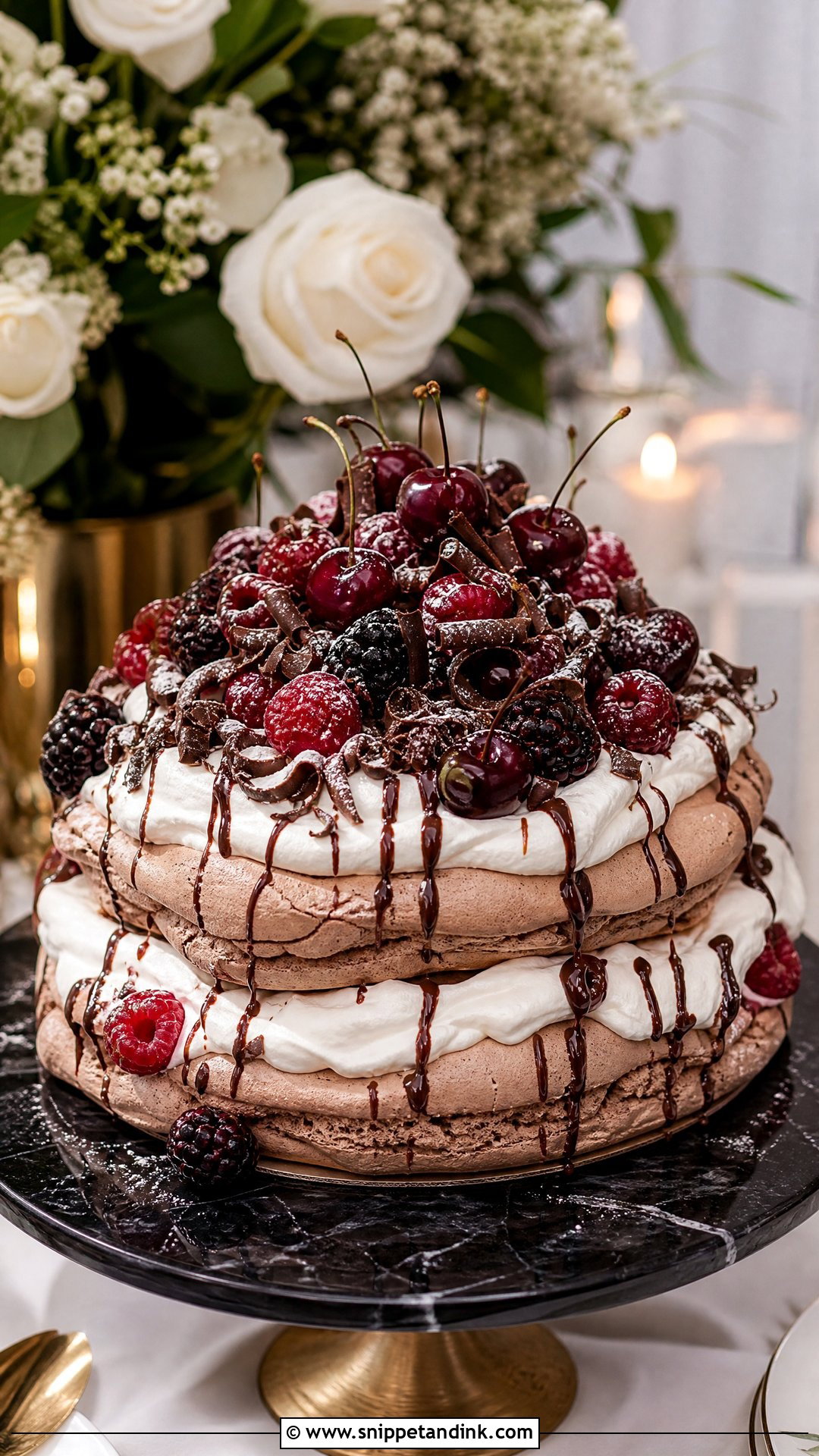
Cocoa folded into the meringue gives a soft brown shell with a fudgy centre, and it pairs well with cream, chocolate curls and a thin drizzle. I keep ganache off it; a heavy ganache sinks into meringue and makes it soggy within an hour. Raspberries, cherries and blackberries cut the richness. It suits evening receptions and darker colour palettes, and it’s the one I suggest to guests who think pavlova sounds too light.
16. Pink Pavlova Wedding Cake
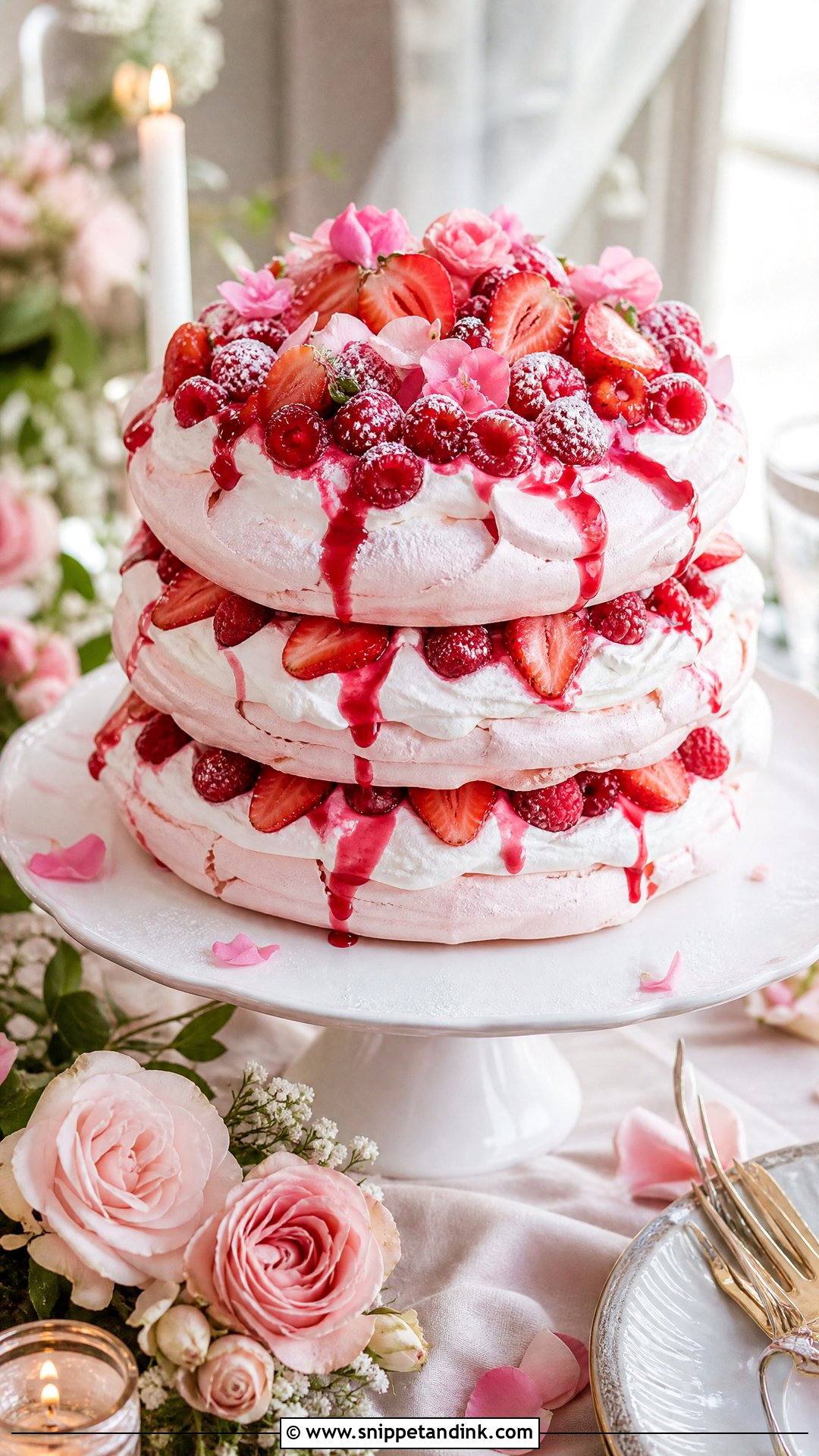
Pink can come from berry cream, raspberry coulis, strawberries, blush petals or a meringue lightly tinted with colour or freeze-dried fruit powder. Powder is my preference, since liquid colour can stop the egg whites from whipping to full volume. Let white cream show between the pink so it stays bridal. A three layer version suits spring and garden weddings.
17. White Pavlova Wedding Cake
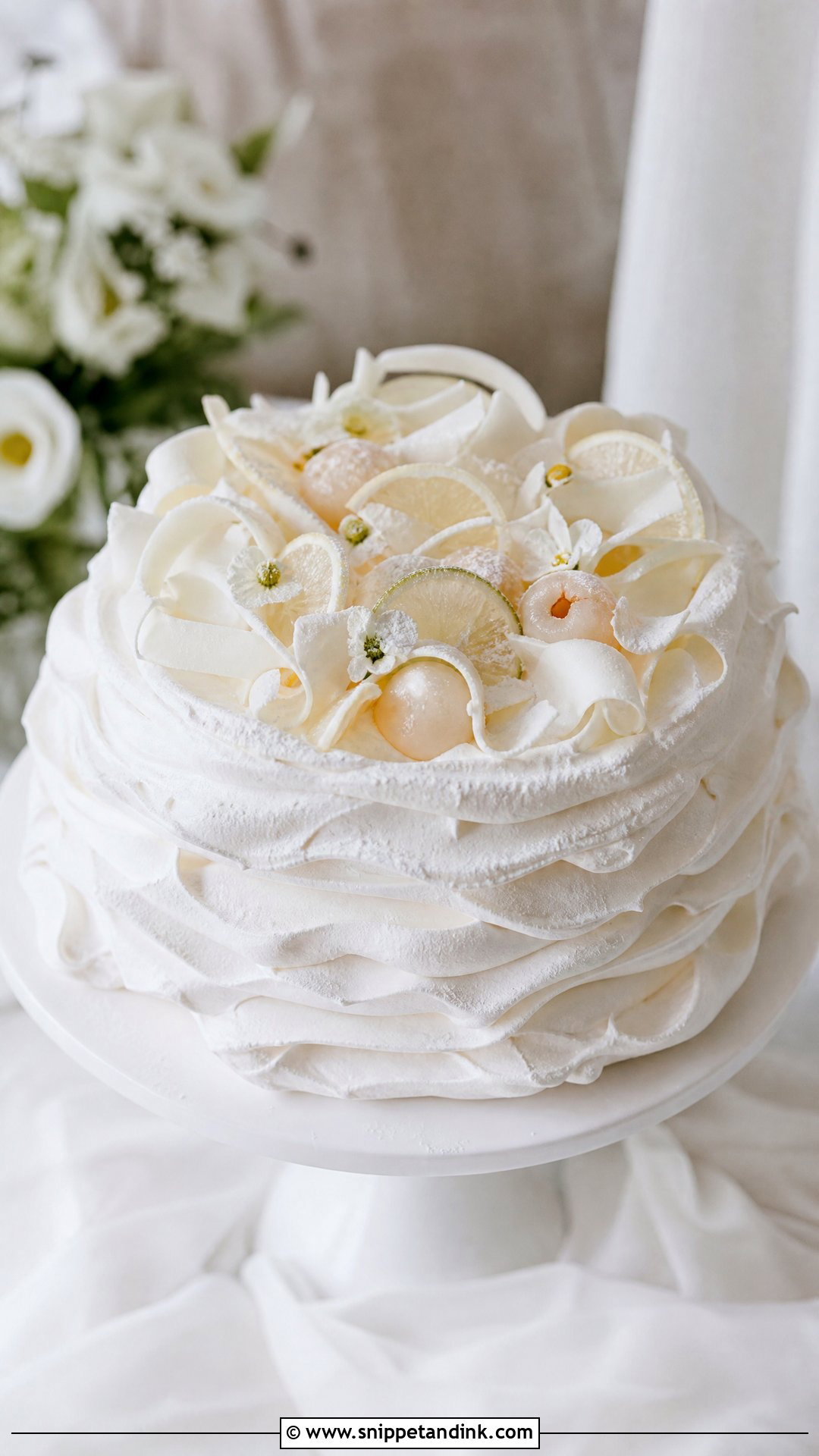
An all white pavlova relies on texture, since colour isn’t doing any of the work. White strawberries, lychee, peeled citrus, coconut flakes, white chocolate curls and small white flowers keep the palette clean. I bake these shells at a lower temperature so they don’t take on an ivory tinge. Swirled cream and crisp meringue edges create the interest. It fits minimalist and formal venues.
18. Boho Pavlova Wedding Cake
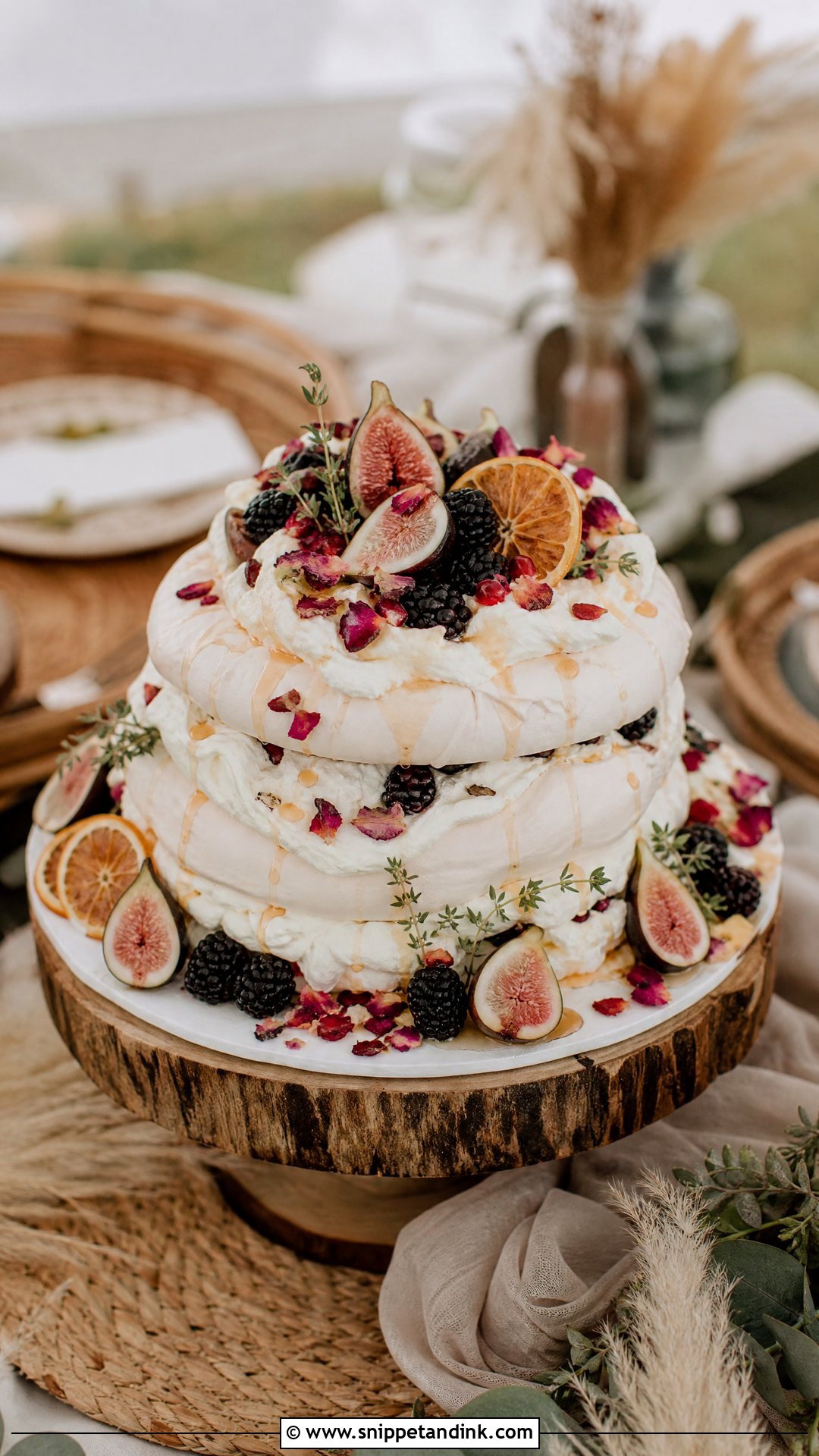
The boho pavlova is stacked meringue with cream, figs, berries, dried citrus, herbs and a few petals, set on a wood slice or ceramic stand. Dried citrus is useful here: it adds colour without releasing juice. I’d still resist heavy decoration, because pavlova’s shape is its charm. Outdoor, desert and backyard weddings suit it, as long as there’s shade.
19. Elegant Pavlova Wedding Cake
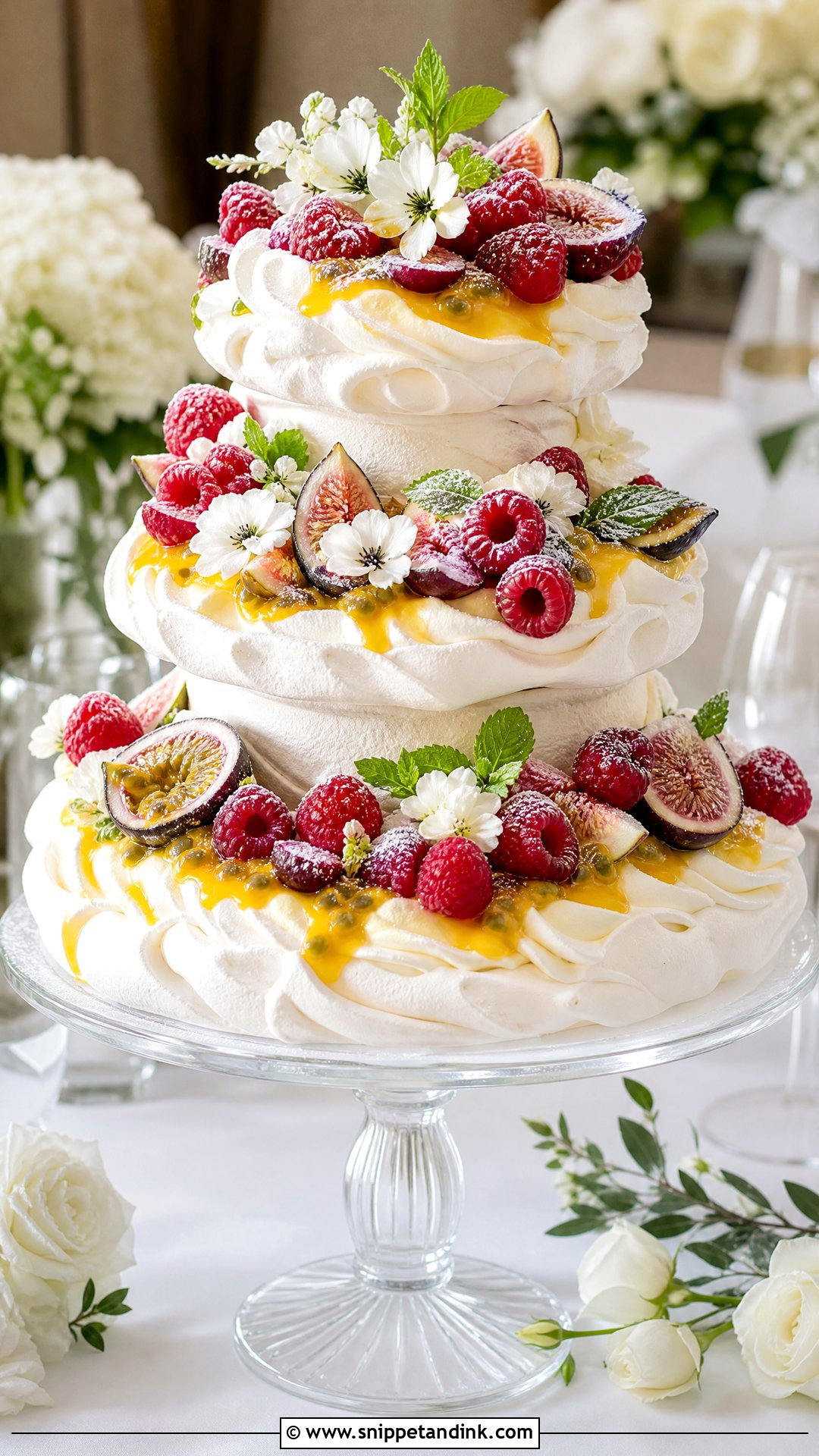
Elegance with pavlova comes down to control: even meringue layers, cream that looks soft but holds its line, and a few well chosen toppings such as raspberries, figs, passionfruit and white flowers with a fine dusting of icing sugar. A tall white or glass stand formalises it. Ballroom and estate venues can carry it, provided the room is air conditioned. Serve it soon after it’s finished; the polish doesn’t last long.

20. Pavlova Wedding Dessert Table
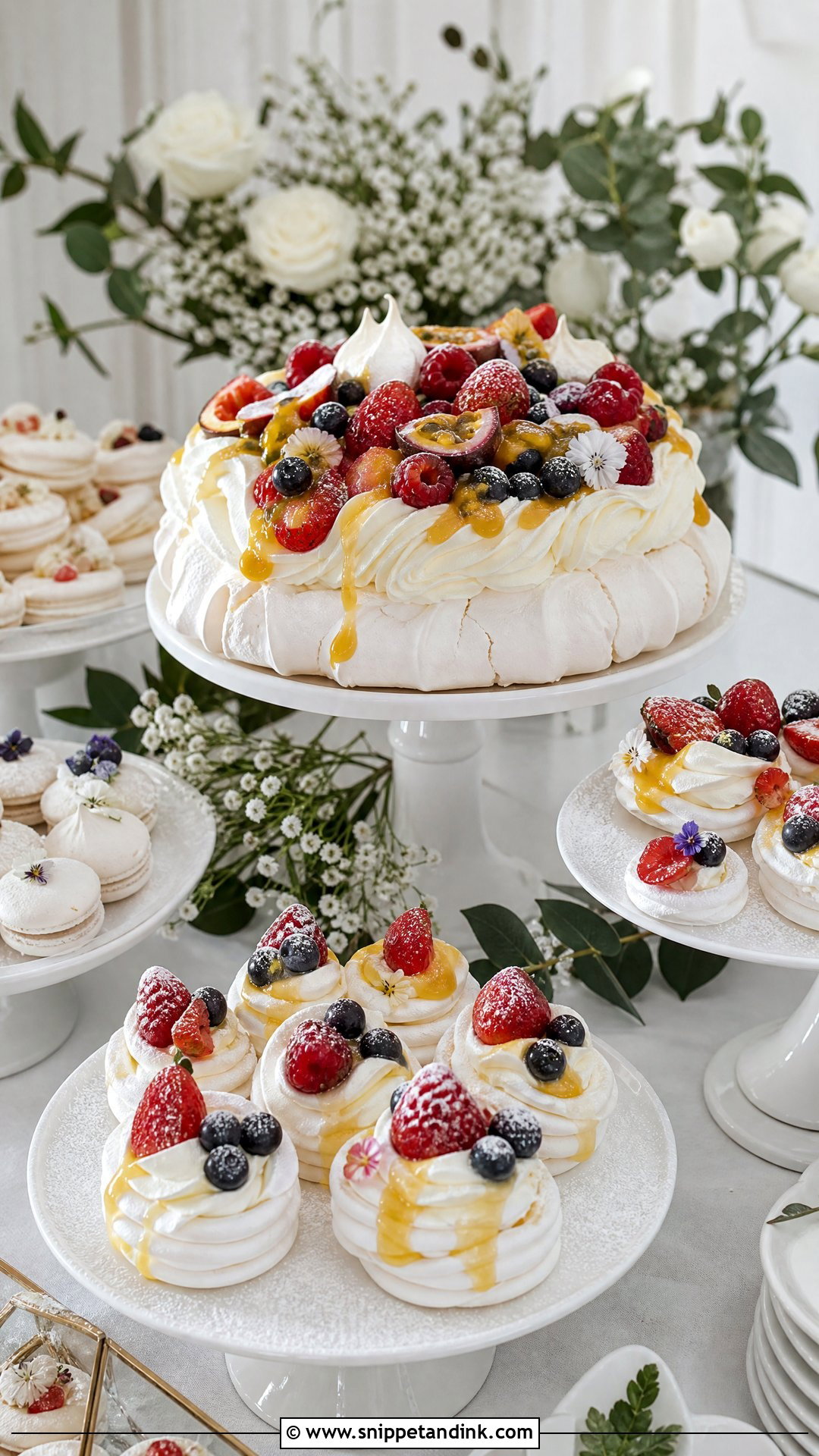
A pavlova wedding dessert table solves most of pavlova’s problems at once. One centrepiece for the cutting, then mini pavlovas, meringue nests, fruit bowls, cream and curd for guests to help themselves. Repeat the same berries, flowers and stands so the table looks deliberate. Guests choose their own portions, and small pieces keep their crunch far better than wedges cut from a large shell.
Cutting and Serving It Without a Collapse
Pavlova shatters when you cut it. There’s no way around that with a knife, and a tall tiered pavlova cut in front of guests ends up as a lovely, messy heap. Many of the couples I work with do a small cutting pavlova for the photo, then serve guests from minis or from wide single discs plated in the kitchen.
Portions are generous by eye but light by weight, so caterers usually plan one mini per guest or a wedge from a large disc that serves eight to ten. A serrated knife dipped in hot water gives the cleanest edge you’ll get.
Guests With Allergies or Diets
Meringue is egg whites and sugar, so pavlova is naturally free of wheat flour, which makes it a good choice for gluten-free guests, provided the cornflour and toppings are checked. It isn’t suitable for anyone avoiding eggs. Coconut cream can replace dairy cream for dairy-free guests, though it softens faster in heat. Aquafaba meringue exists for vegans, but it’s more fragile, so I’d only use it for minis.
Is a Pavlova Right for Your Reception?
Pavlova suits couples who want a dessert that feels fresh and a little unexpected, and who are comfortable with something that won’t look identical from hour to hour. It can be rustic, tropical, seasonal or formal, depending on the fruit and the stand. What decides success is timing. The meringue, cream and toppings have to come together close to serving, ideally on site, by someone who knows how the shell will behave in your room. Plan for that, and it will taste as good as it looks.
You'll Like These Ideas:










Leave a Reply