
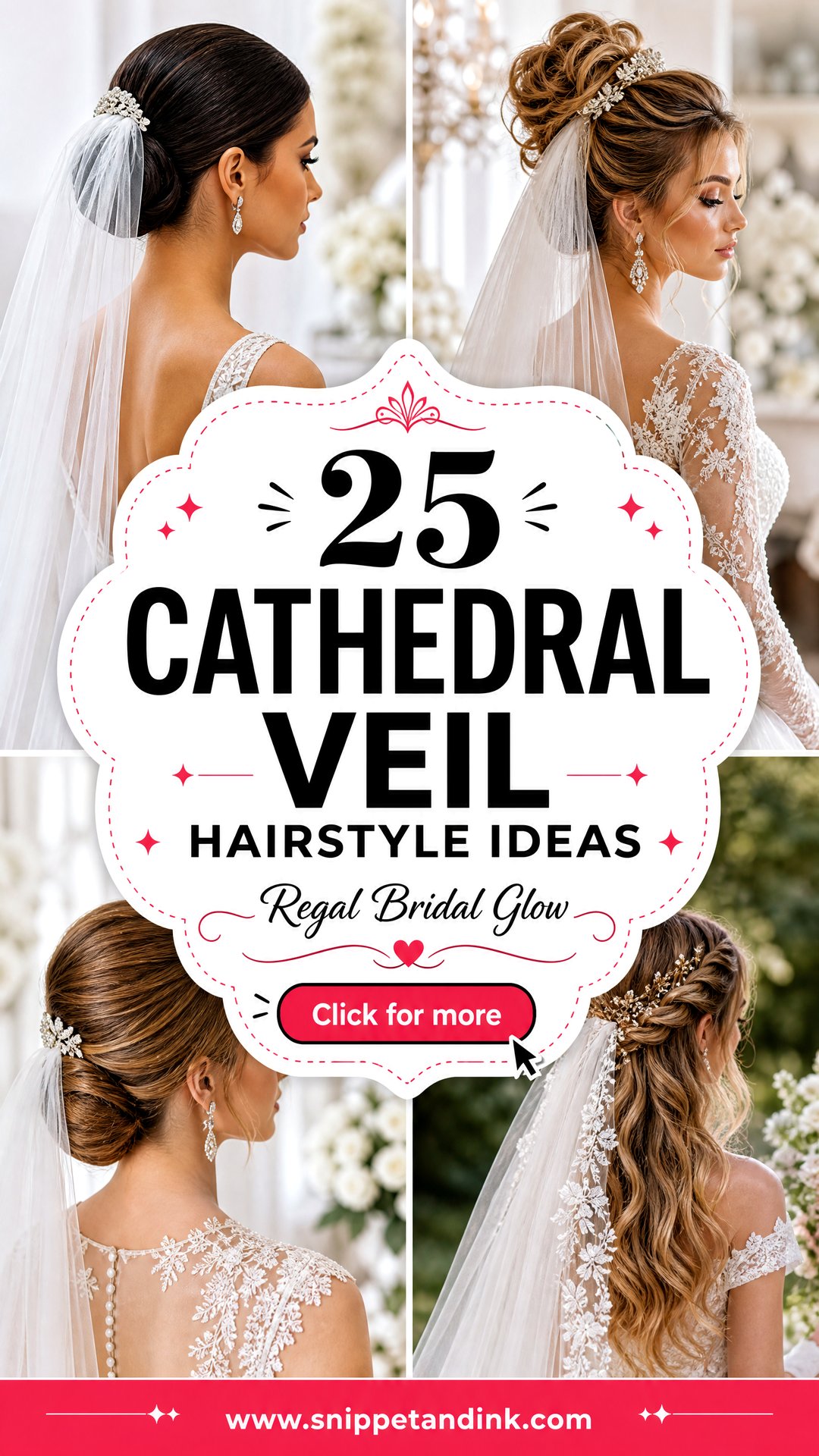
A cathedral veil runs well past the end of the train, and that length is exactly what makes it hard on hair. Every extra foot of fabric is weight hanging off one small comb, pulling backward the whole time you stand, walk and turn for photos. So the style underneath has a job beyond looking pretty. Low buns, loose waves and braided updos can all work, as long as there’s a firm spot for the comb to grip that much gorgeous tulle. Below are 25 styles I’d pair with a long veil, with notes on where the comb goes and what each one needs to hold.
Building a Hidden Grip the Comb Can Bite Into
A cathedral veil usually runs somewhere around nine to ten feet, sometimes more, and the comb holding it is only a few inches wide. Most veil failures I see come from hair that’s too clean and smooth, not from the veil itself. Freshly washed, silky hair lets a comb slide right out. So the base is the first thing I plan, before I even pick the style.
- Wash the day before, not the morning of. Second-day hair has more grip.
- At the spot where the comb will sit, I cross two bobby pins in an X, or make a short row of them, and the comb’s teeth slide in against the pins.
- For extra hold, a U-pin or two goes through the comb into the base, hidden under the veil.
- A light dry texture spray at the roots of the anchor point helps on fine or slippery hair.
Placement changes the look as much as the hairstyle does. A comb at the crown gives a fuller, taller shape at the back. Directly above a low bun is the most secure spot and lets the veil fall in a straight line. Under the bun shows off the hair and works well with high updos. Tell your stylist where you’d like it before the trial, so she can build the style around that point.
1. Low Chignon With Cathedral Veil
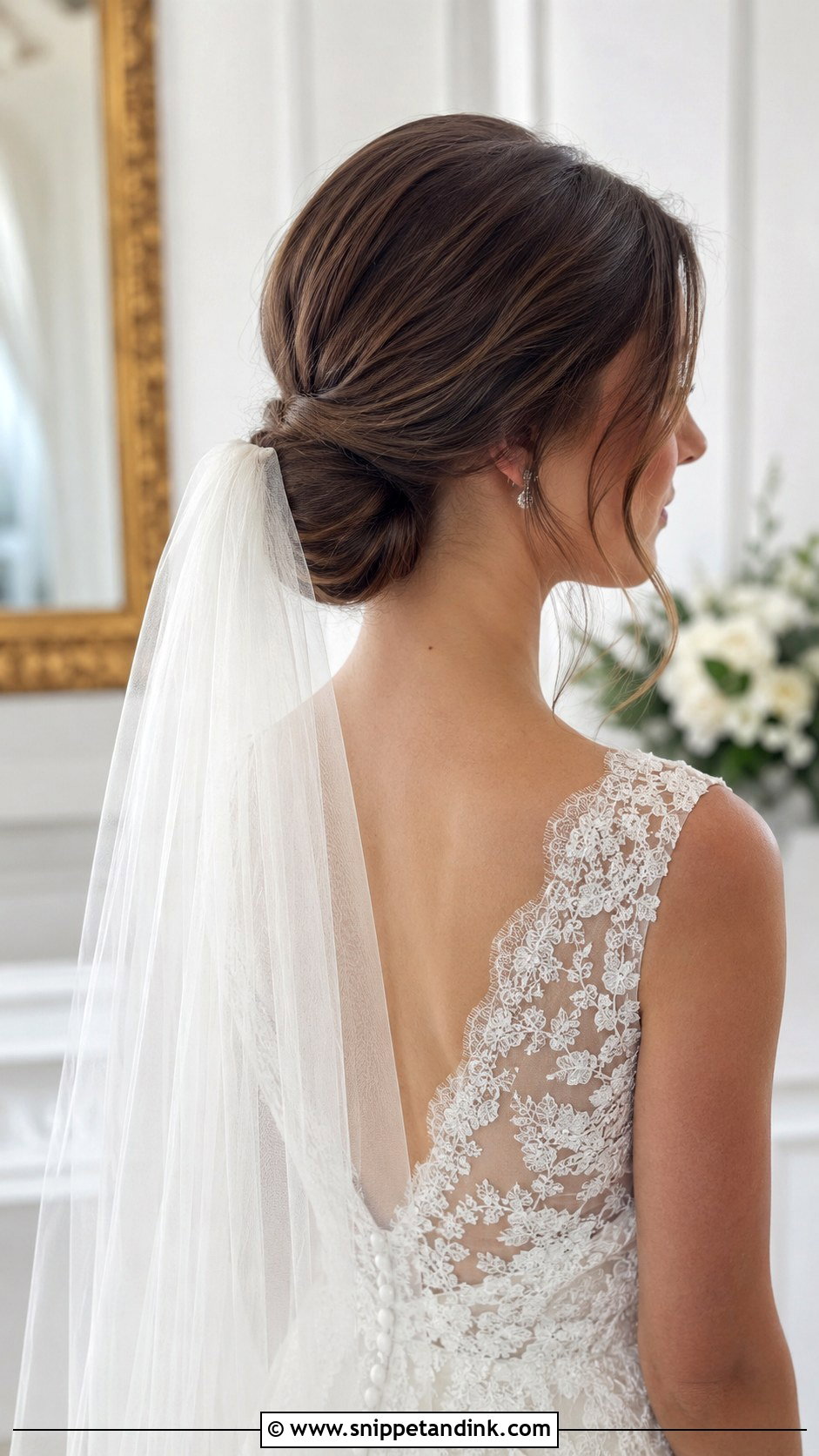
If I had to name the most reliable partner for a cathedral veil, it would be the low chignon. The coil sits at the nape, so the comb slides in just above it and the bun itself acts as a wall the veil leans against. That’s why it holds through a long church service without the comb creeping. I leave a couple of soft face-framing pieces out, curled slightly back so they don’t stick to lip gloss. From behind, with tulle falling straight down from the knot, it’s hard to beat.
2. Sleek Low Bun With Cathedral Veil
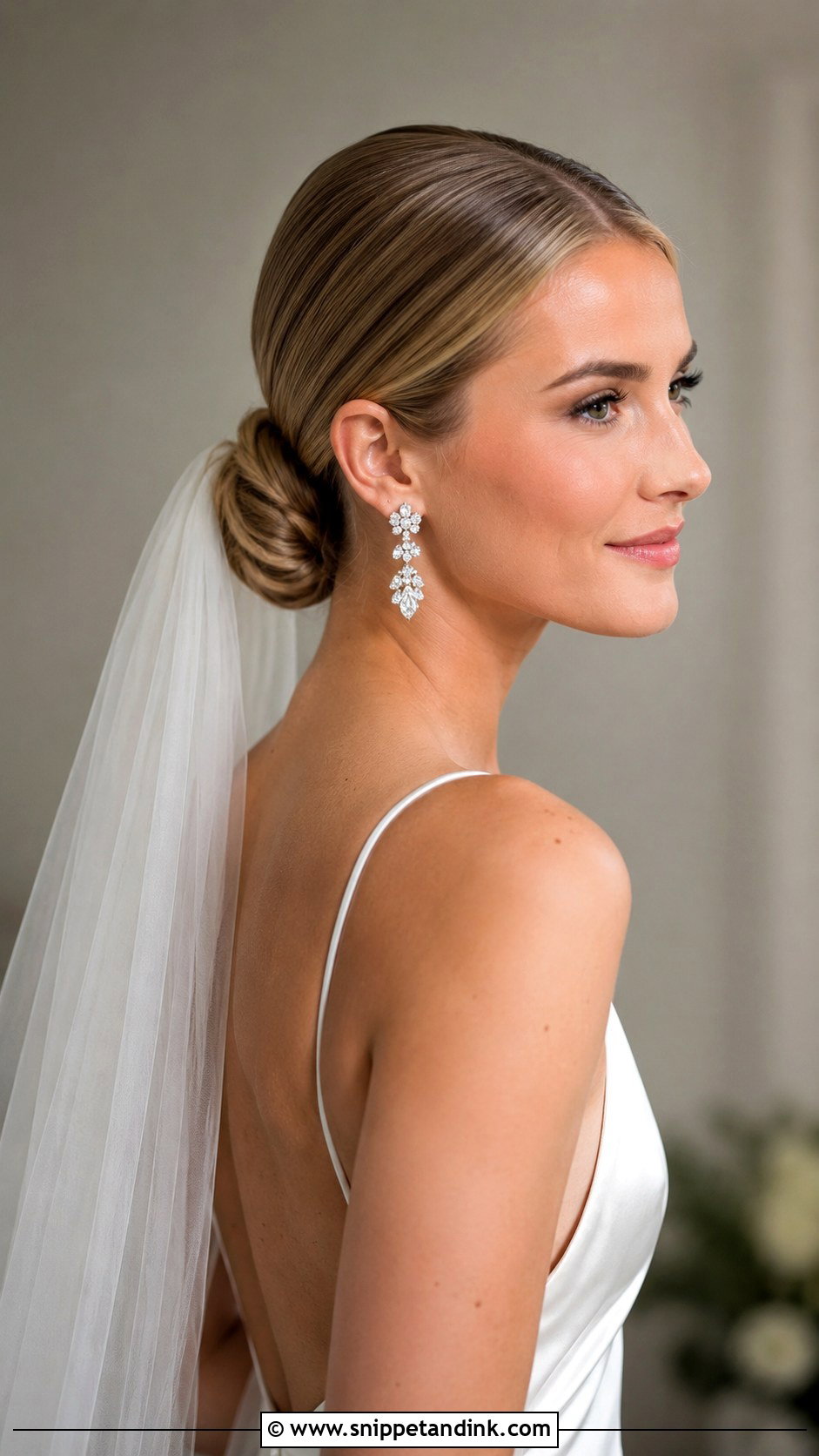
A smooth low bun with no flyaways gives a cleaner, more modern contrast against all that tulle. The tight gather is a good anchor, but slick hair is also slippery, so I build a small grid of crossed pins above the bun before the veil goes in. Statement earrings work well here since nothing covers the ears. It suits nearly any face shape. My one caution: if you have very fine hair, too much gel can make the scalp show at the crown in flash photos, so I use a light cream and a smoothing brush instead.
3. Half-Up Half-Down With Cathedral Veil
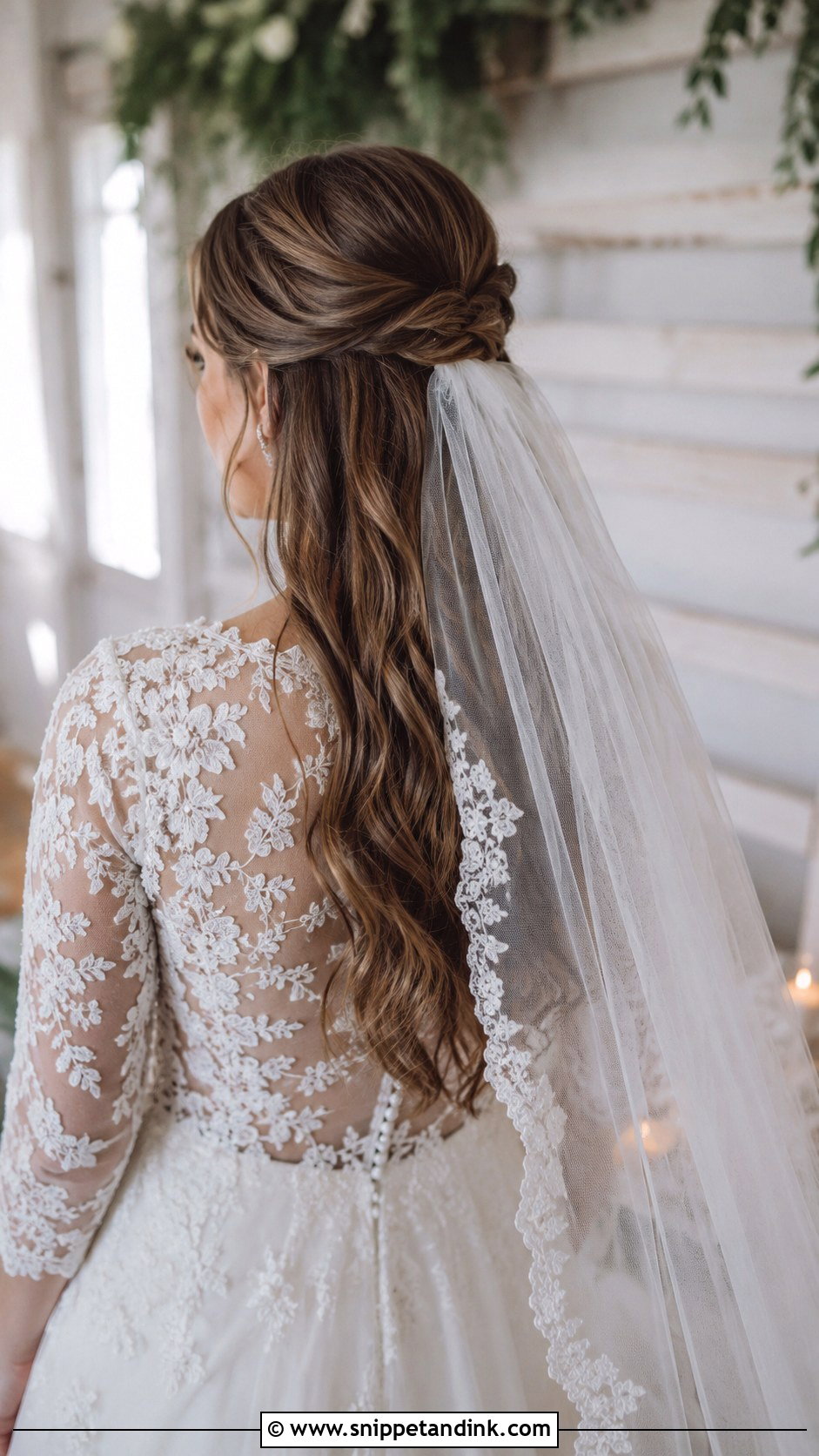
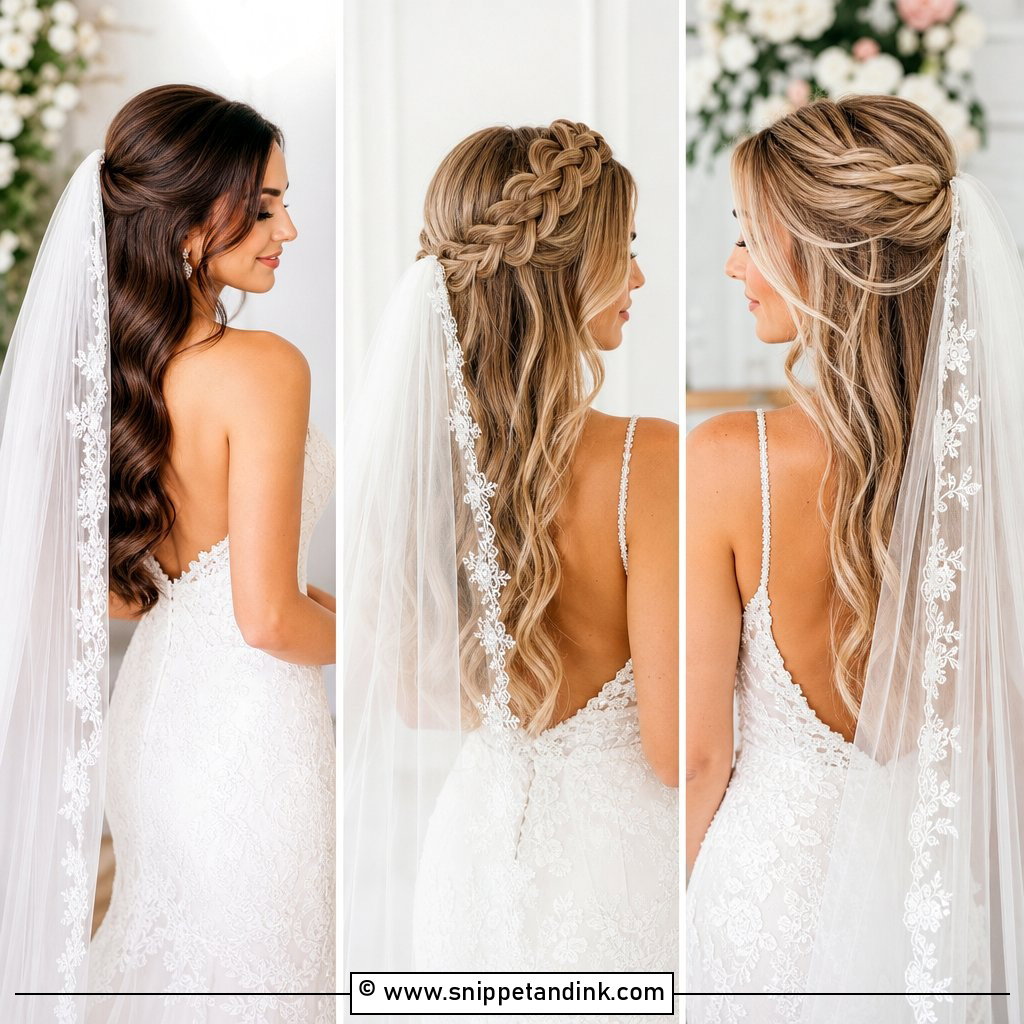
Half-up styles keep hair off your face while showing length below, and they’re the most common request I get from brides who don’t feel like themselves in an updo. The top section gets twisted or knotted, and the veil comb goes directly above that knot so it has something solid to push against. Waves underneath add movement. The honest trade-off: with a cathedral veil, the loose lengths can tangle in the tulle when you turn your head, so I curl the ends away from the face and set them well.
4. Loose Romantic Waves With Cathedral Veil
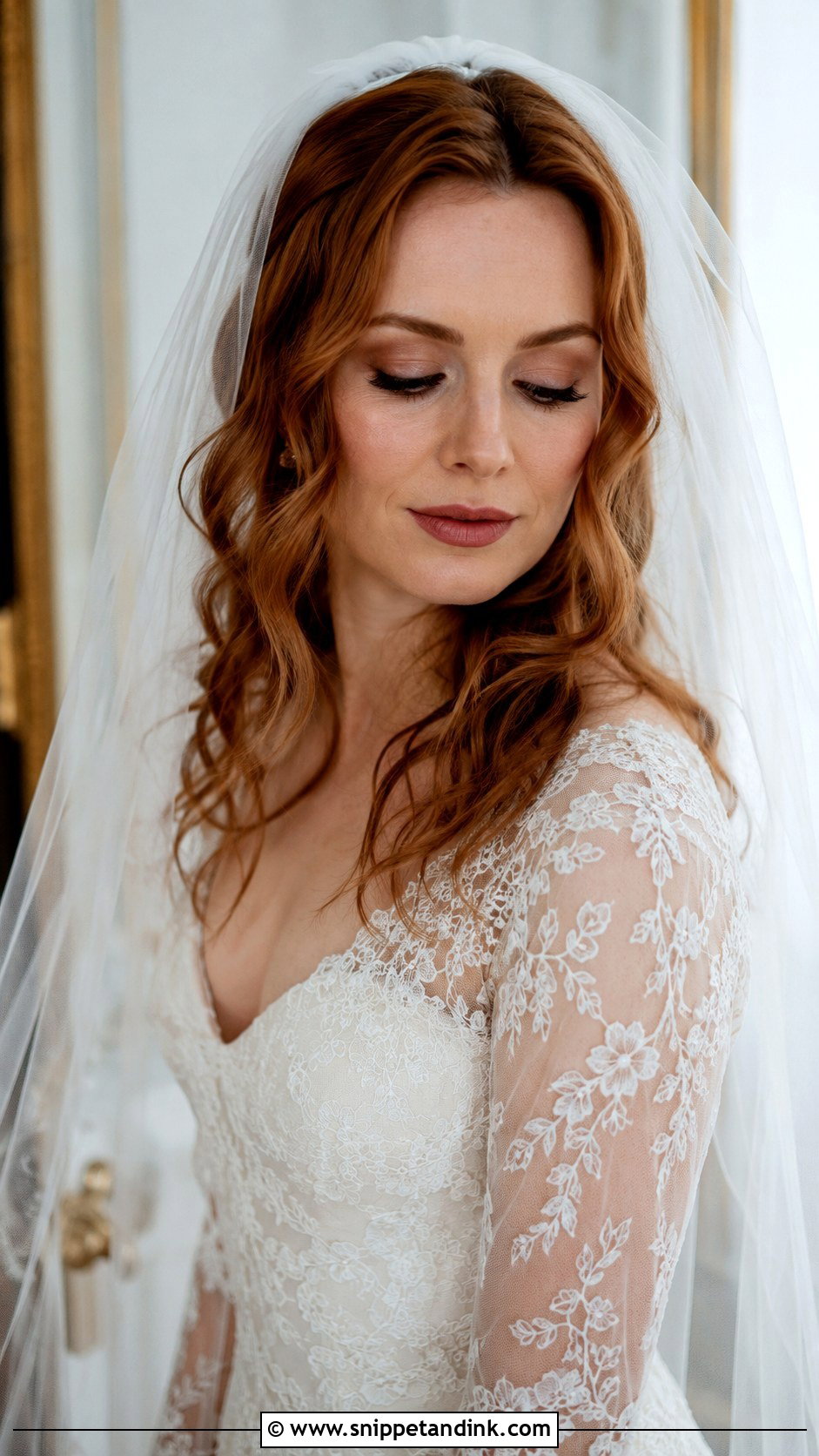
Loose waves under a sheer veil are the classic image most brides carry in their heads. The difficulty is that the comb has nothing to hold except loose hair, which is the weakest base on this list for a long, heavy veil. I solve that by tucking a hidden mini anchor, a small pinned twist or crossed bobby pins, under the top layer at the crown. Then the comb sits high and the waves fall freely. A flexible hold spray keeps curls touchable. Outdoors in wind, this one needs a helper keeping an eye on the veil.
5. Voluminous High Updo With Cathedral Veil
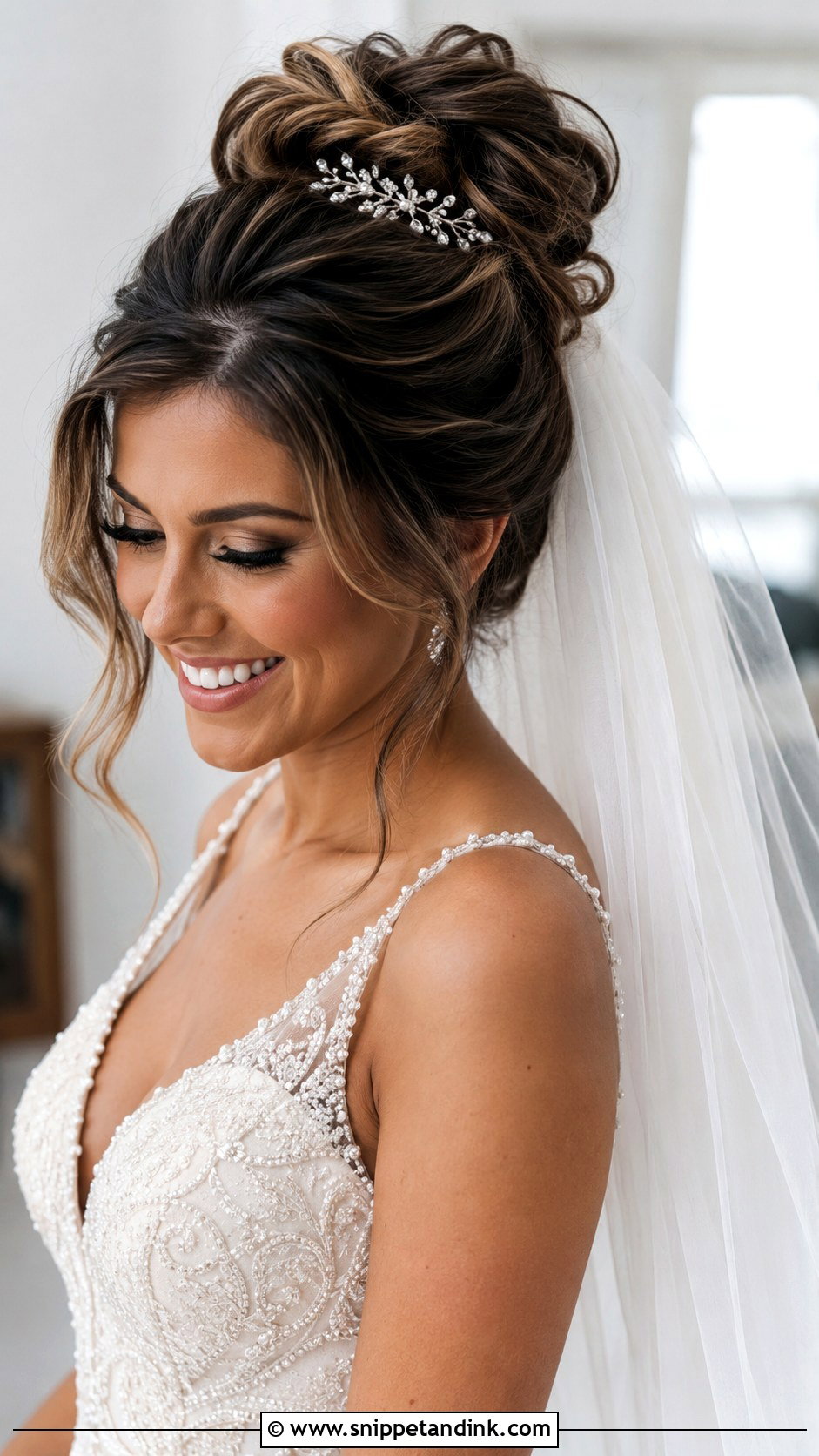
Height at the crown balances the length trailing behind, so a full high updo gives a regal, queen-like presence that suits long necks and structured gowns. I build volume with backcombing at the root, then gather the hair into a textured knot. For a cathedral veil, the comb usually goes under the updo rather than on top, which keeps the silhouette visible and stops the veil from flattening the volume. A small jeweled pin near the base finishes it. Heavier beaded veils pair particularly well, since the updo can bear the load.
6. Slicked-Back Ponytail With Cathedral Veil
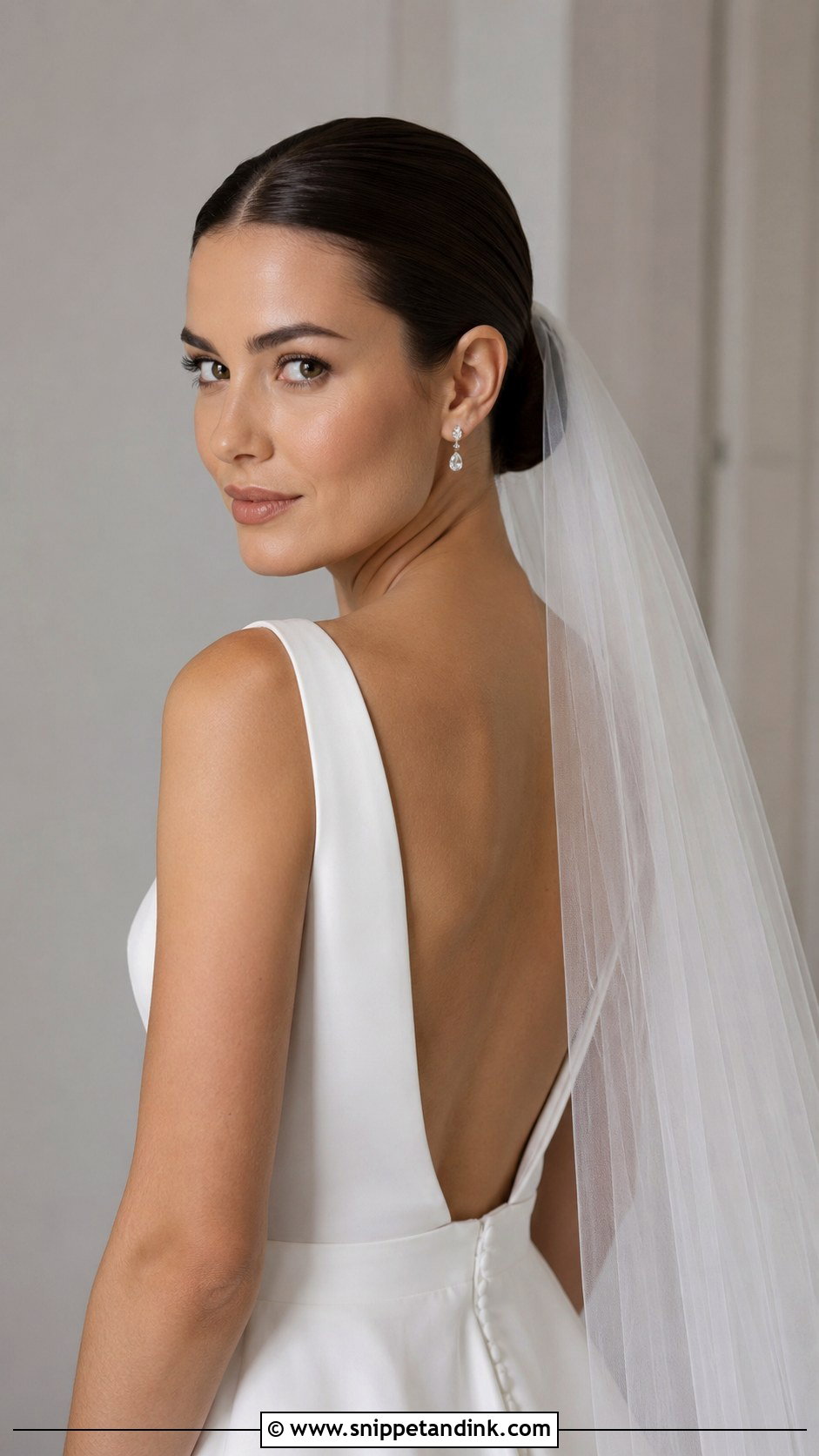
A slick ponytail is the most fashion-led look here, and against a long cathedral veil it reads sharp and graphic in photos. Every strand gets pulled back and secured with an elastic, then I wrap a small section of hair around the base to hide it. The veil comb goes just above the pony, into a few crossed pins hidden under the smooth top. A light shine spray gives gloss without stiffness. Skip it if you get headaches from tight styles; ten hours of tension on the scalp is real.
7. Braided Updo With Cathedral Veil
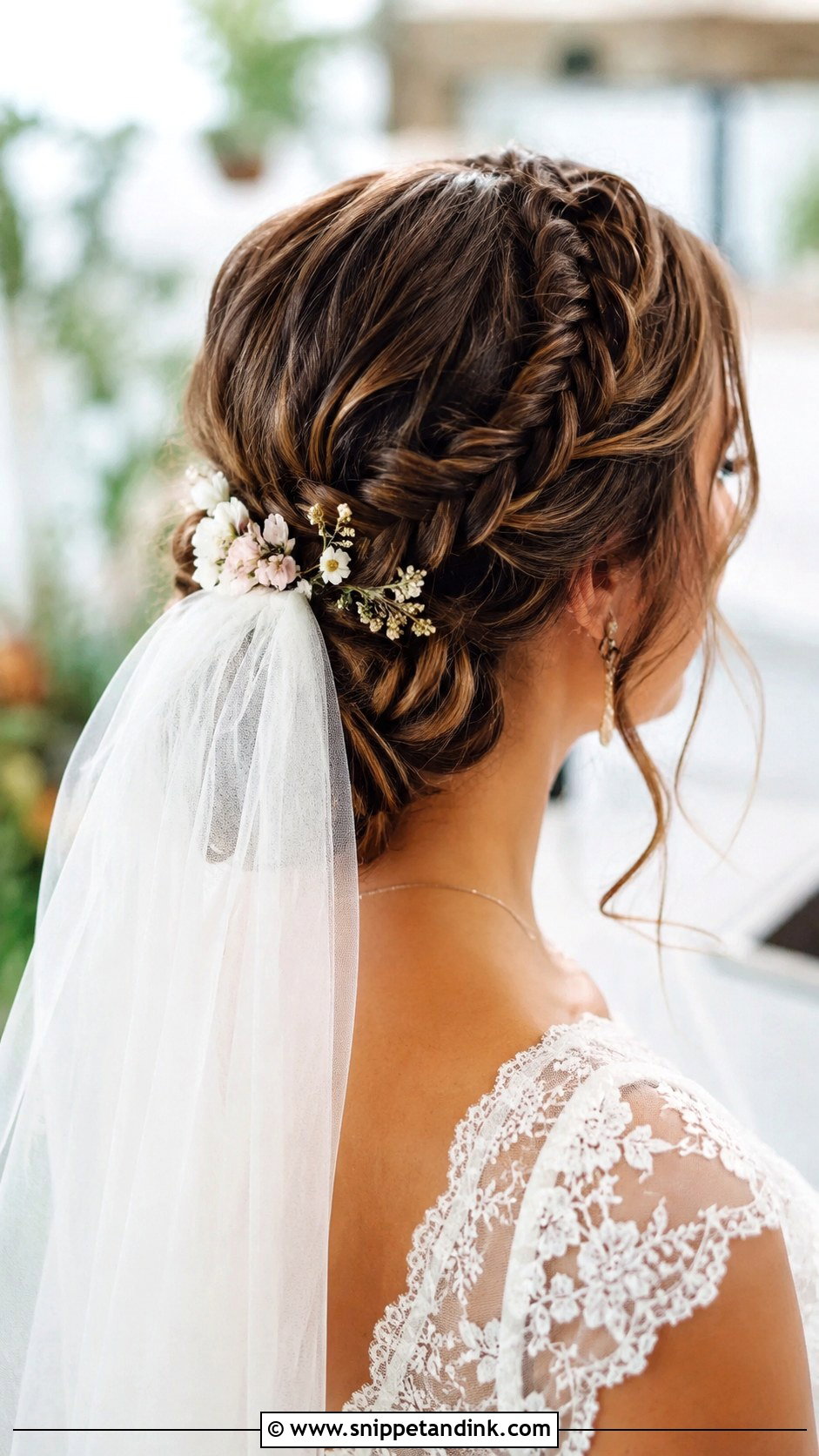
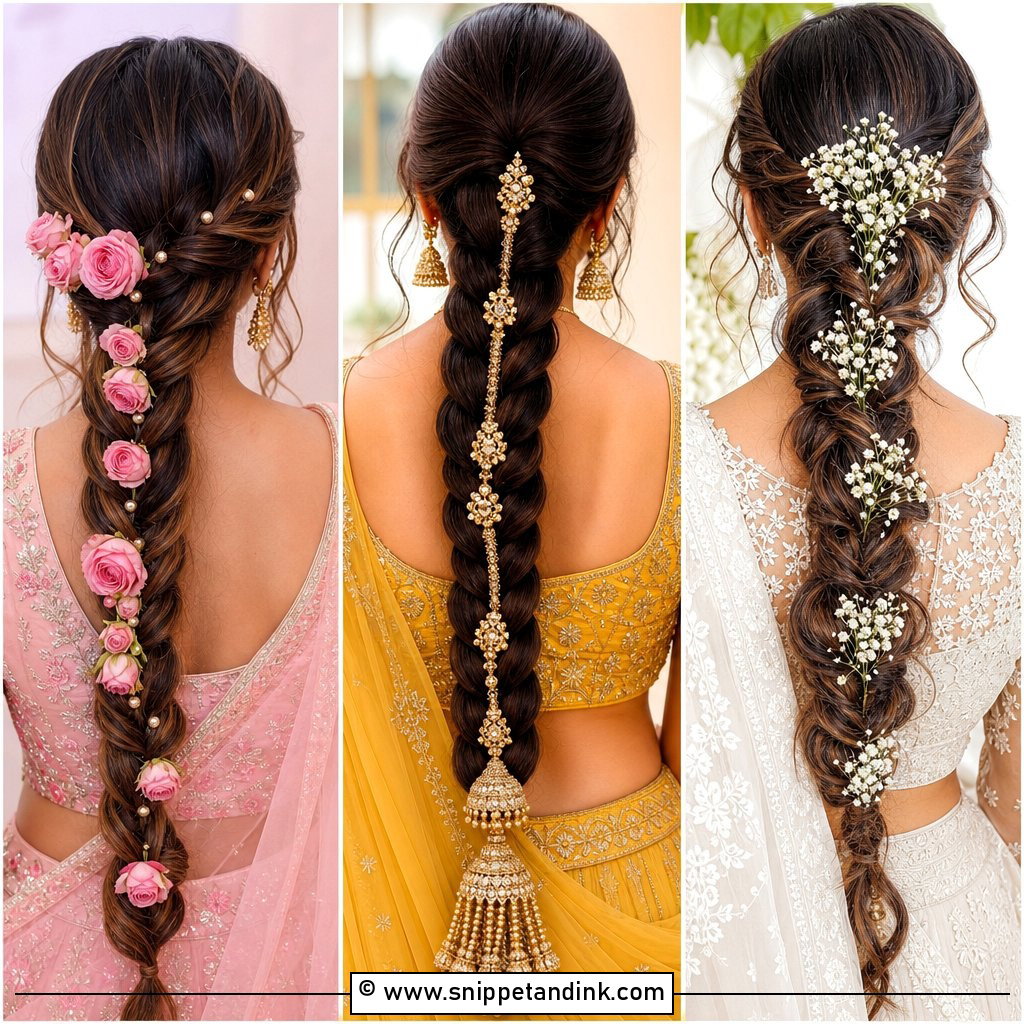
Braids are, mechanically, the strongest base for a heavy veil, because the comb’s teeth catch in the woven sections instead of sliding through smooth hair. Fishtail or Dutch braids wrapped into a low bun give texture and a firm grip. I pull a few soft pieces out around the face for balance. Small flowers can be tucked into the braids, though I’d pick blooms that tolerate hours out of water, like waxflower or baby’s breath, since delicate petals wilt fast against warm skin.
8. Low Bun With Side Part and Cathedral Veil
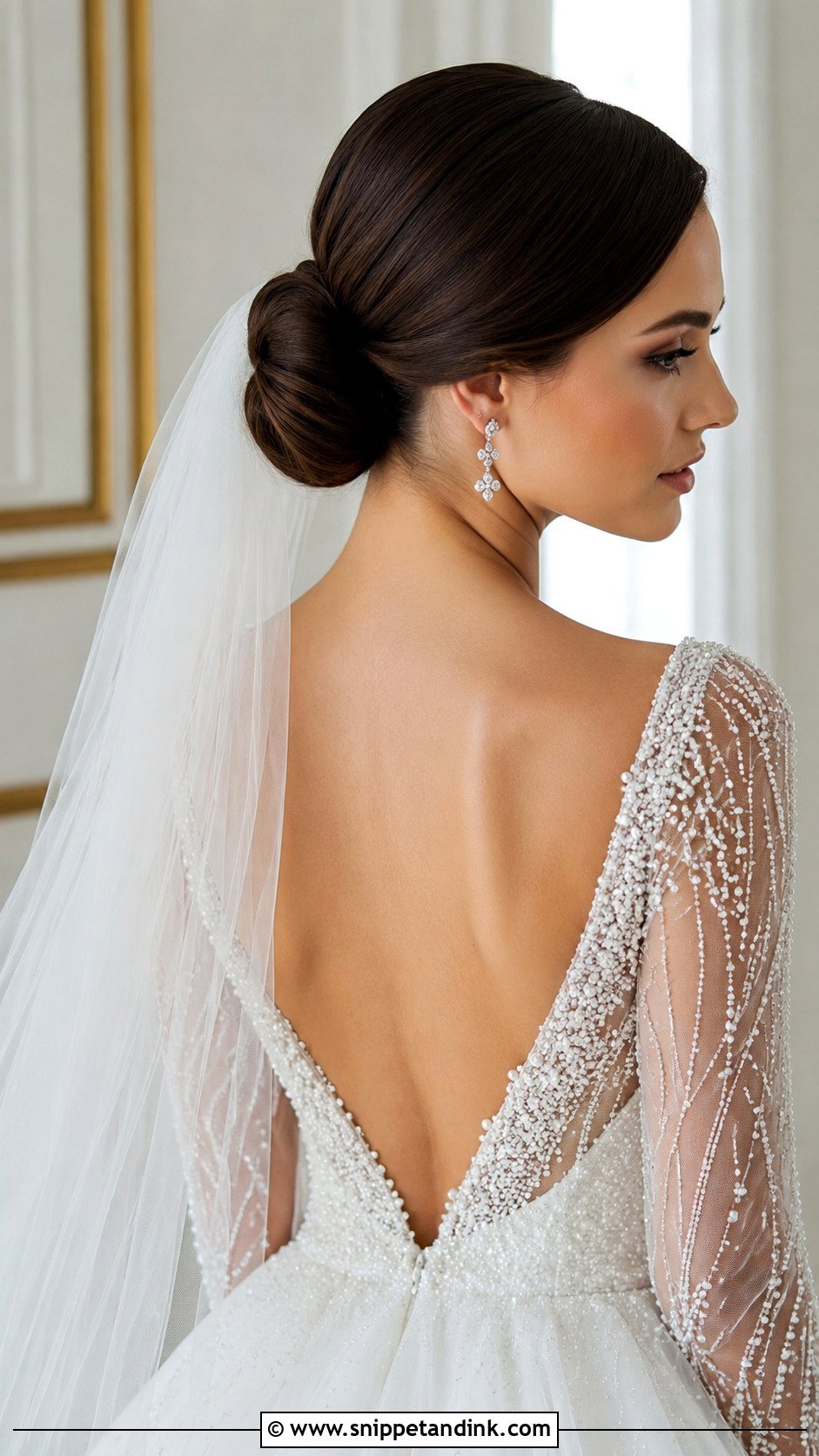
A deep side part gives a classic low bun a slightly retro glamour. I sweep the hair to one side and gather it into a smooth knot at the nape, offset a little toward the heavier side. The veil comb then sits behind the bun, centered on the head rather than the bun itself, so the tulle falls straight. Shine serum on the sweep keeps it glossy. Ballrooms and evening receptions suit this one, and it lasts well into the night if the part is set with a little heat first.
9. Textured Bun With Cathedral Veil
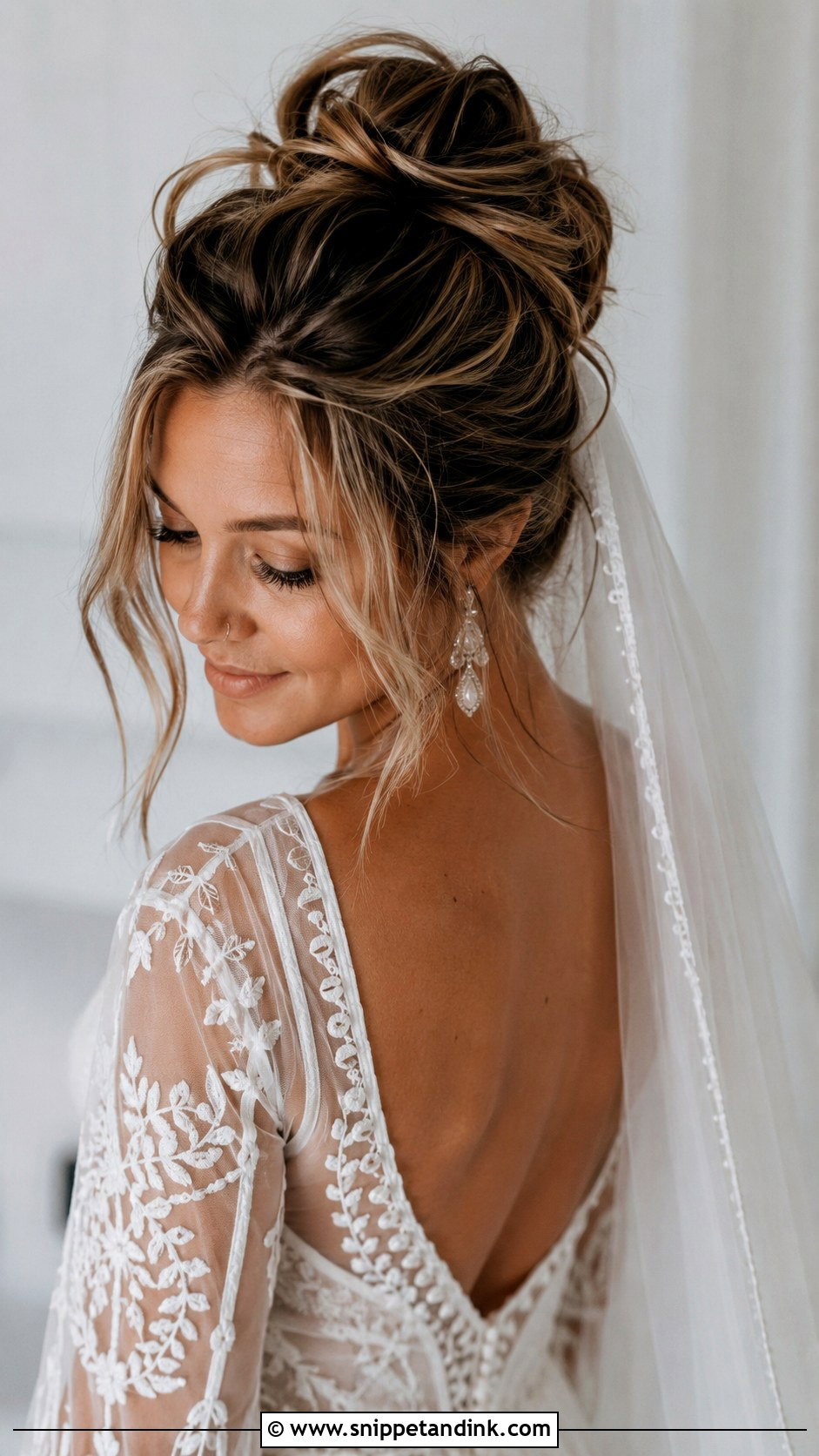
A textured bun looks relaxed, and that relaxed look actually helps with a heavy veil: texture gives the comb something to bite. I add soft waves first, then gather the hair into a tousled knot and loosen a few pieces. The lived-in finish suits outdoor weddings. Here’s what I check: the knot needs to be pinned tightly underneath even if it looks loose on the surface, or the weight of a long veil will drag the whole bun downward within the first hour.
10. Bridal Bun With Hair Accessory and Cathedral Veil
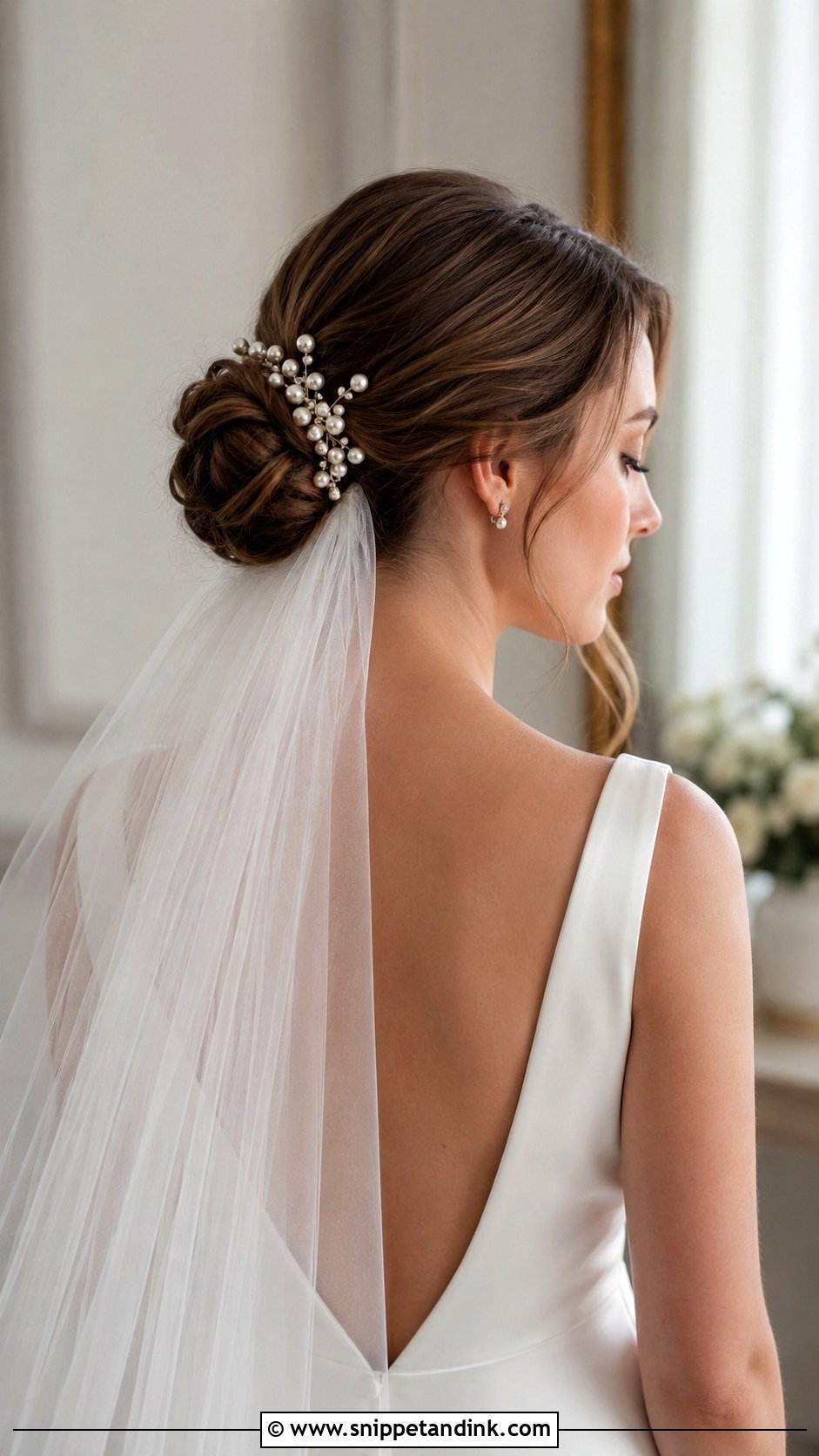
A comb, a few jeweled pins or a slim vine can lift a simple bun, and it doubles as camouflage for the veil comb. I style a smooth low or mid bun and place the accessory right where the veil attaches, so the two pieces read as one. Pearls feel classic; crystals give more sparkle under reception lighting. Plan the accessory so it still looks finished when the veil comes off, because that’s how you’ll be seen for the rest of the night.
11. Curly Updo With Cathedral Veil
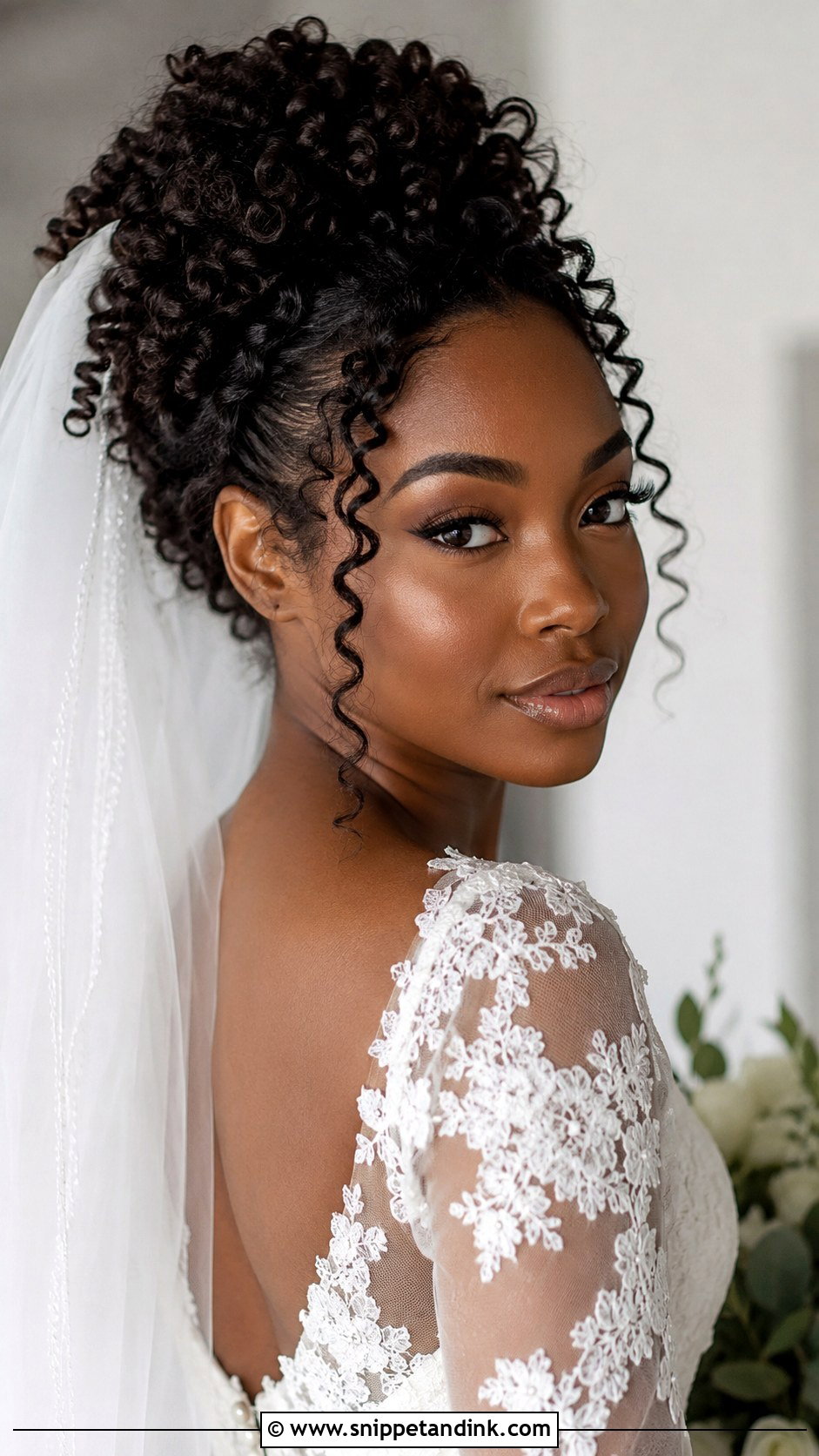
Curls make a great base for a cathedral veil, because natural texture grips a comb far better than straightened hair does. I gather the curls into a full knot or pinned crown and let a few coils spring loose around the face. Defining cream keeps them hydrated and bouncy. All curl patterns can do this, though tighter coils often need fewer pins and more gentle shaping. The comb goes into the base of the updo, and I usually add a couple of U-pins through it for extra hold.
12. Side Swept Curls With Cathedral Veil
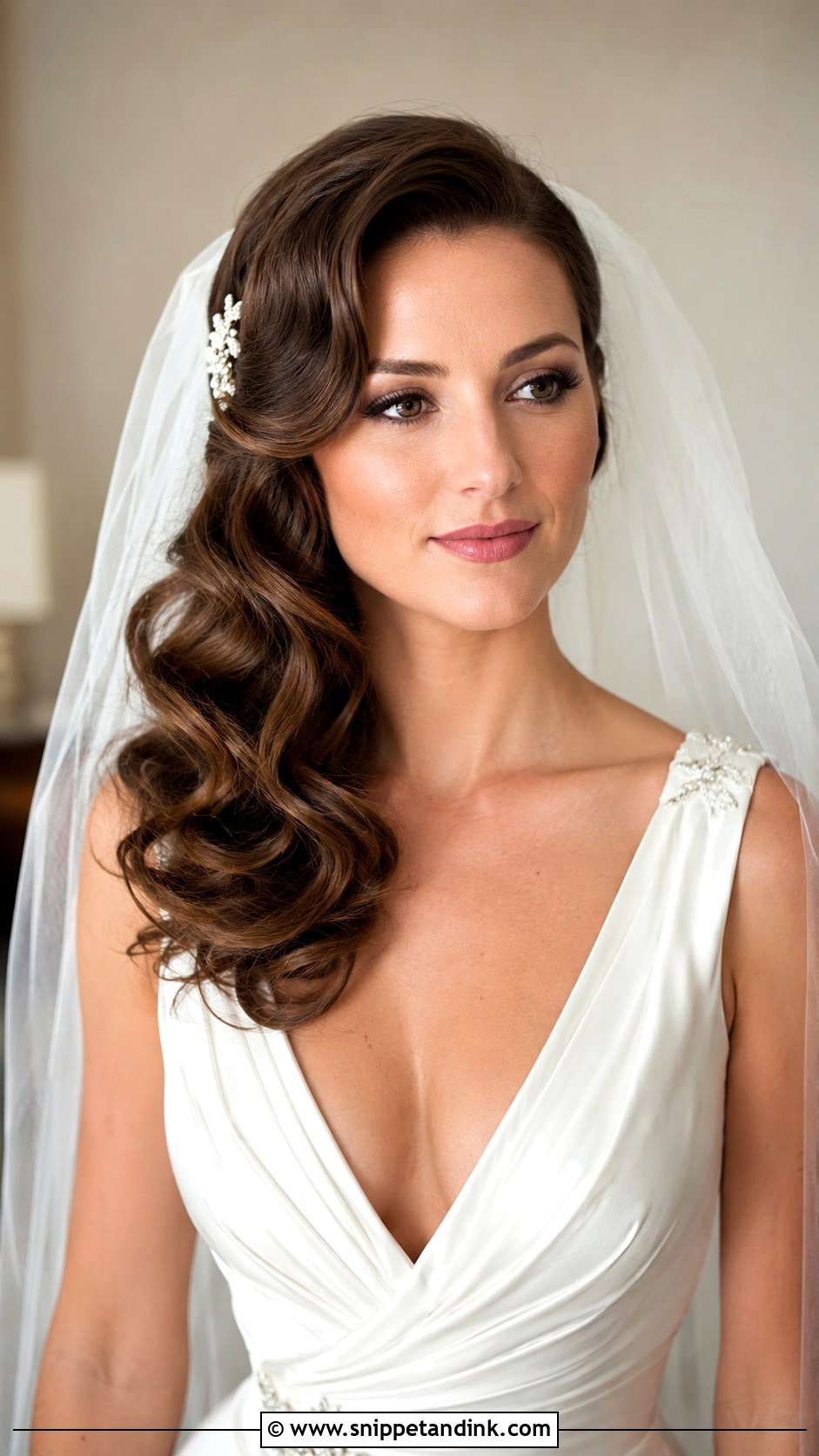
Side-swept curls draped over one shoulder have an old Hollywood feel. I curl the hair generously, sweep it to one side and pin it discreetly behind the ear. Then the veil attaches on the opposite side of the crown so the overall shape balances. A decorative pin can sit where the hair is gathered. Watch out for one thing in particular: curls on a single shoulder get crushed by bouquet arms and hugs, so I set them firmly and brush them out lightly only at the end.
13. French Twist With Cathedral Veil
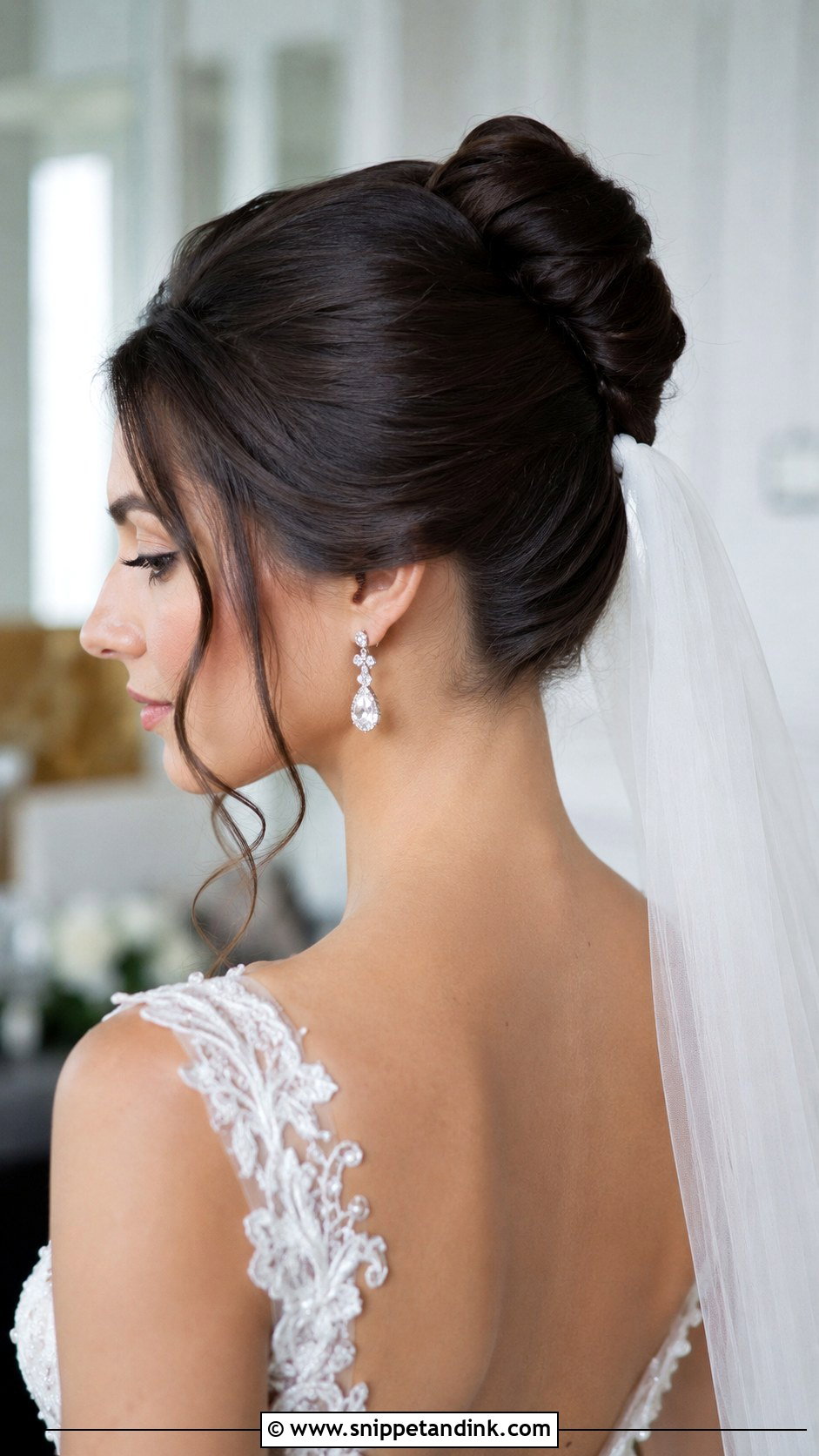
A French twist folds the hair into a vertical roll, and it gives one of the cleanest bases for a cathedral veil. I usually tuck the comb at the top of the twist, where the hair is thickest and holds best. Soft tendrils around the face keep it from feeling severe. It’s a classic for formal ceremonies, pairs well with statement earrings, and holds firmly all day. Very short or heavily layered hair can struggle to form a smooth roll, so I sometimes add a small padding piece.
14. Boho Braided Half-Up With Cathedral Veil
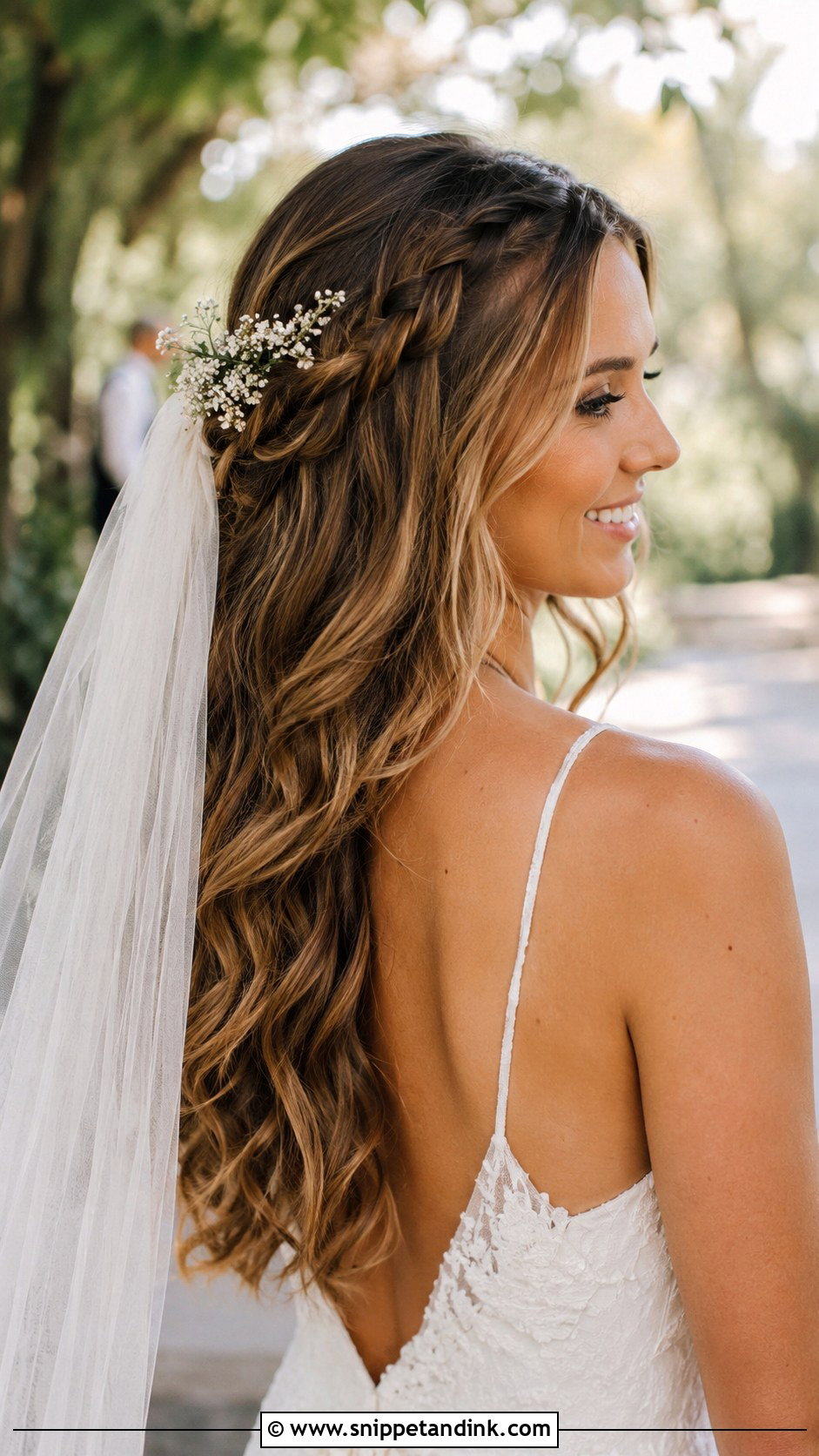
Small front braids pinned back into a half-up shape, with waves left loose, give a relaxed garden or beach feel. The braids do double duty: they frame the face and give the veil comb a solid row to grip. Tiny flowers or greenery can be tucked in. The veil sits just above the pinned section. Beach brides should plan for wind, because loose length plus a cathedral veil is a lot of fabric and hair moving at once.

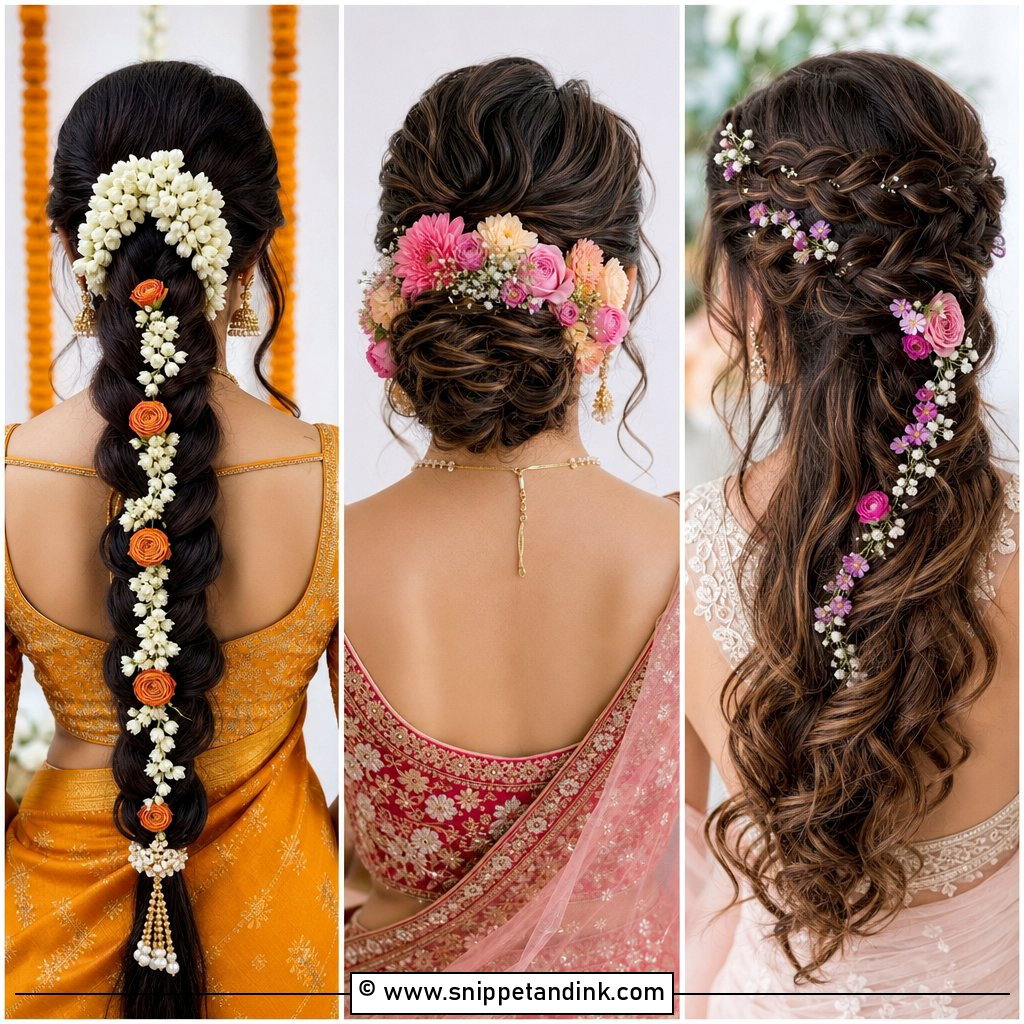
15. Sleek Straight Hair With Cathedral Veil
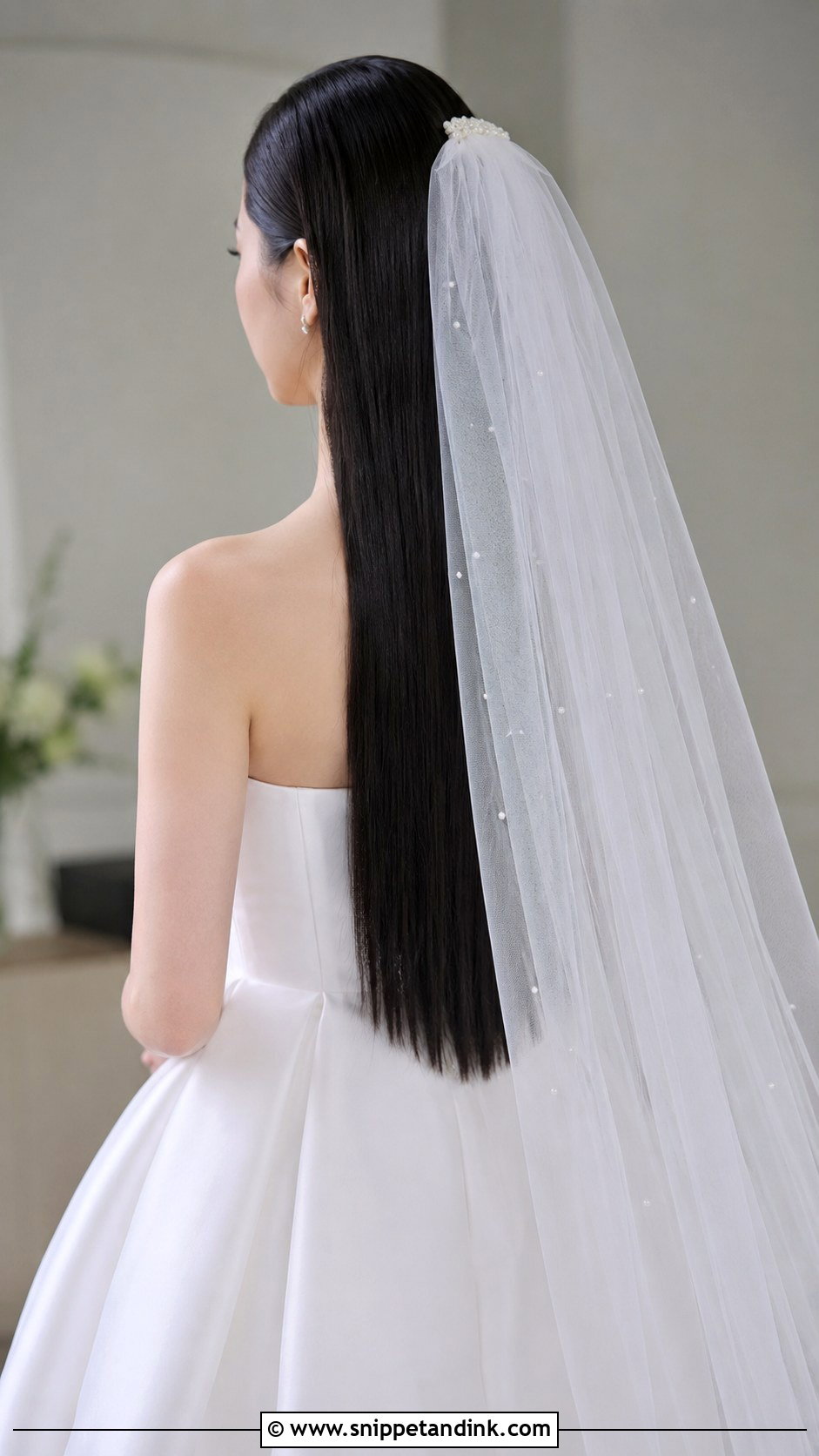
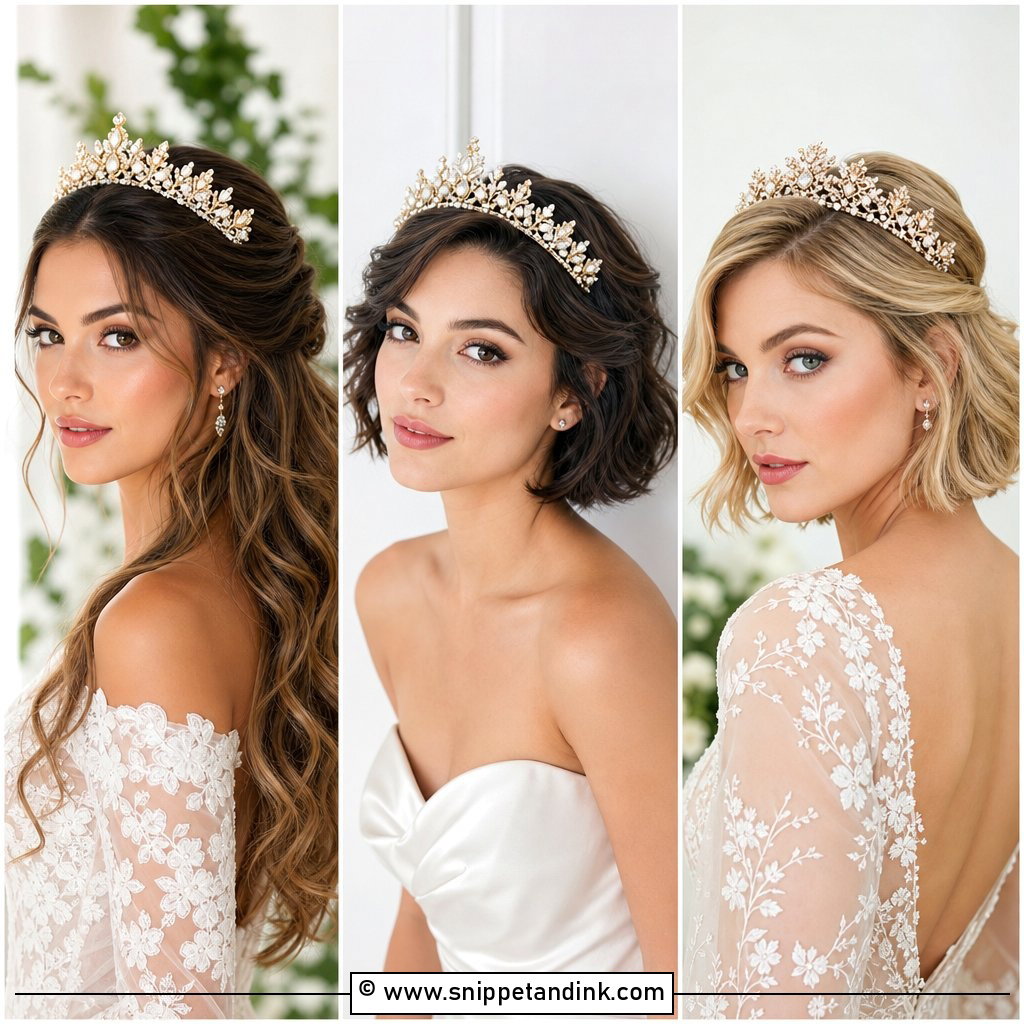
Sleek, straight hair is the hardest base on this list to anchor a long veil to, which surprises people. Freshly flat-ironed hair is slippery, and a heavy veil will slide straight out. My workaround is a small hidden section at the crown that I backcomb lightly and secure with crossed pins, so the comb has something to hold under the smooth surface. Shine spray gives the mirror finish. When it works, it’s very clean and modern, with hair and tulle falling side by side.
16. Low Knot With Pearls and Cathedral Veil
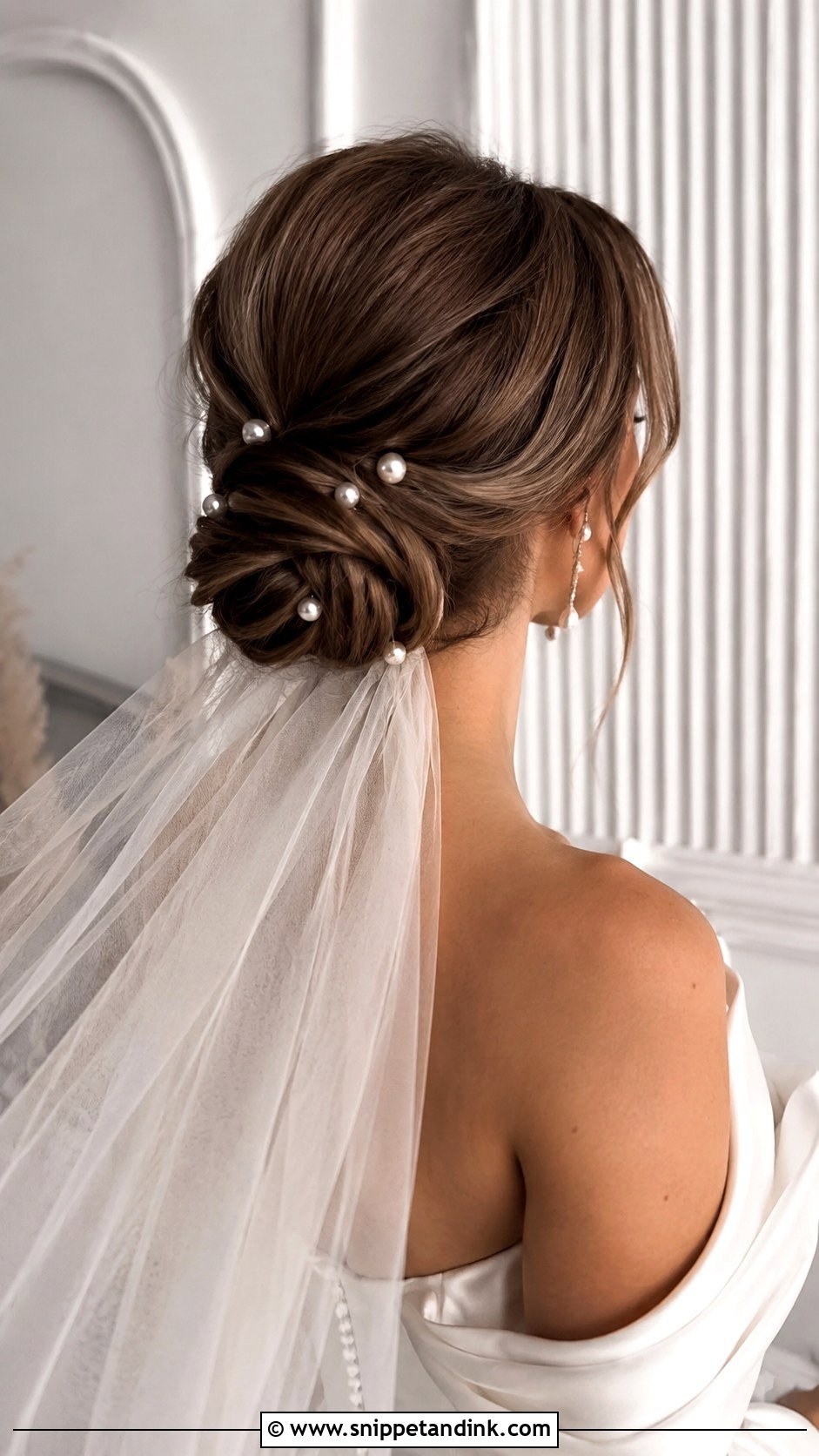
Pearl pins scattered through a low knot add a soft gleam that suits sheer tulle. I gather the hair into a smooth knot at the nape, then place pearl accents around and through it. Formal weddings suit this one. The veil goes just above the knot. I keep the pearl placement a little asymmetric, since an even ring of pins can look like a costume, and I leave a few strands loose around the face.
17. Twisted Updo With Cathedral Veil
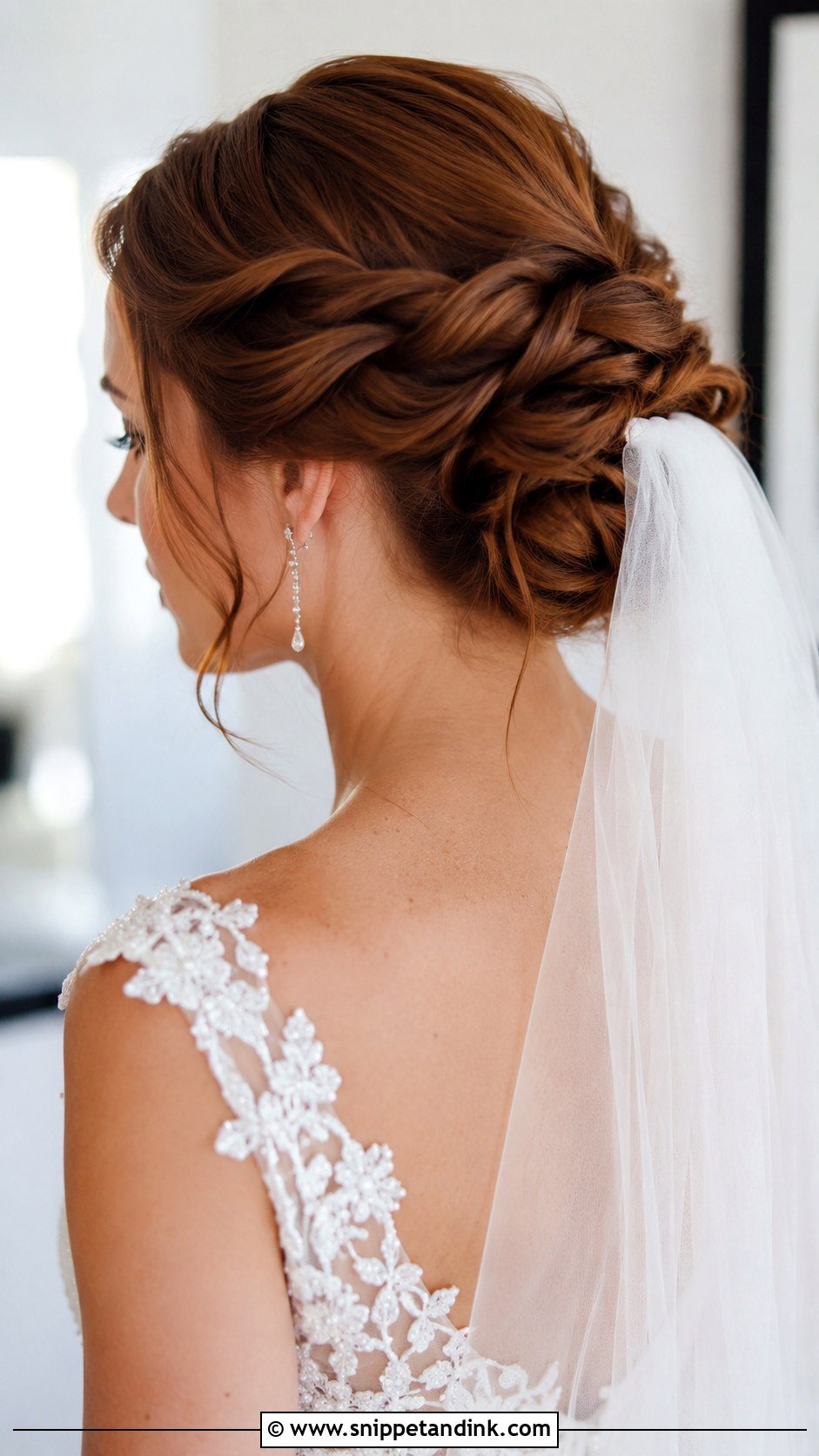
Twisting sections from each side toward the back and pinning them into a sculpted knot gives texture and a secure base. Each twist locks the next, which is why this style holds a heavy veil so well. It works for formal and relaxed weddings alike. I pull a few pieces loose for softness and place the comb right inside the updo for stability. Medium to long hair is ideal; very fine hair may need a little volumizing powder so the twists don’t look thin.
18. Crown Braid With Cathedral Veil
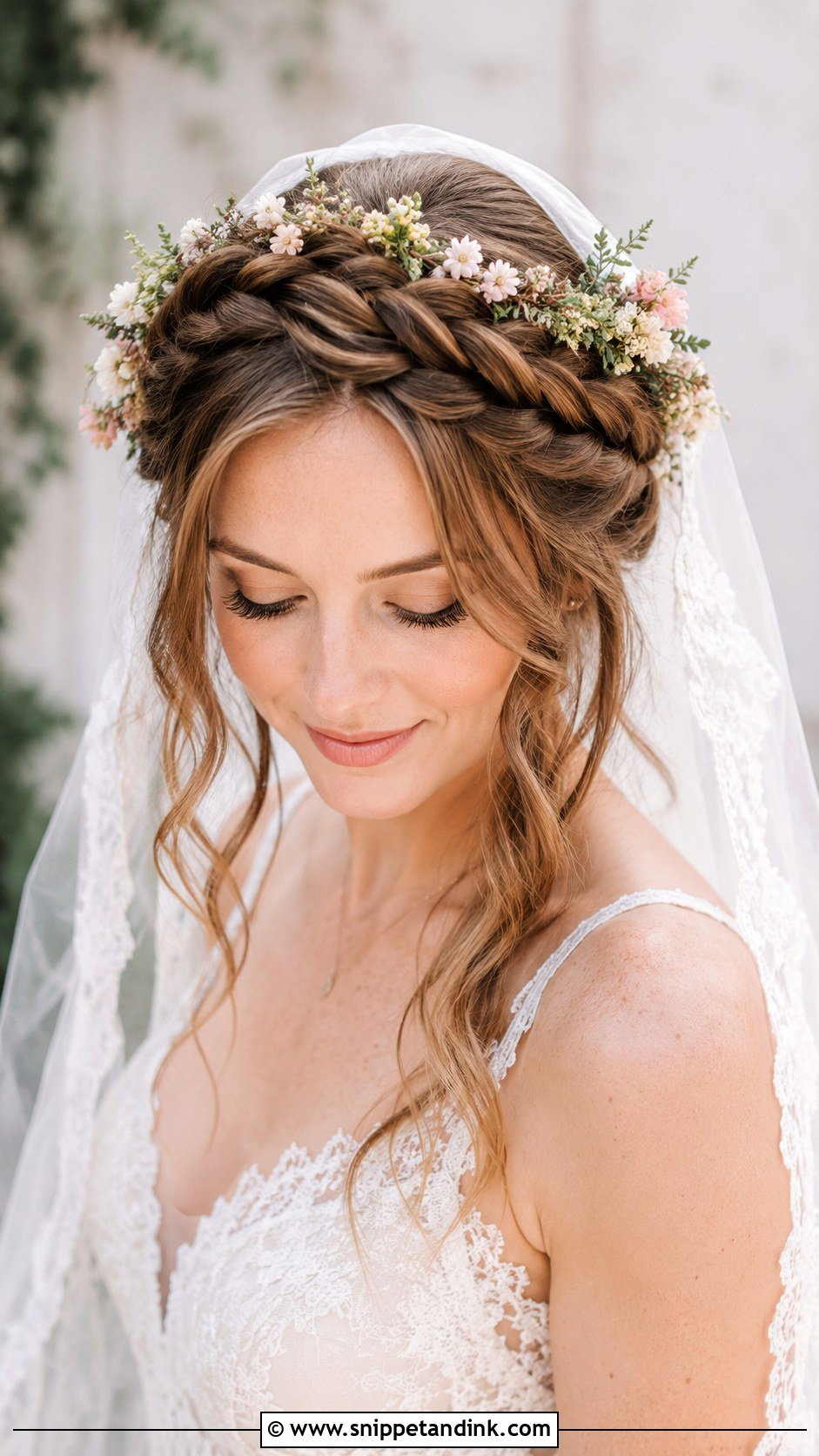
A crown braid wraps around the head like a halo and frames the face in an open, airy way. The braid gives the comb a strong grip. I often slide the veil underneath the back of the braid so the tulle seems to flow out of it. Delicate flowers tucked in add a fairytale touch. Garden and outdoor ceremonies suit it best. It needs hair at least past the shoulders, and layered hair can poke out of the braid, so a little pomade on the ends helps.
19. Wavy Lob With Cathedral Veil
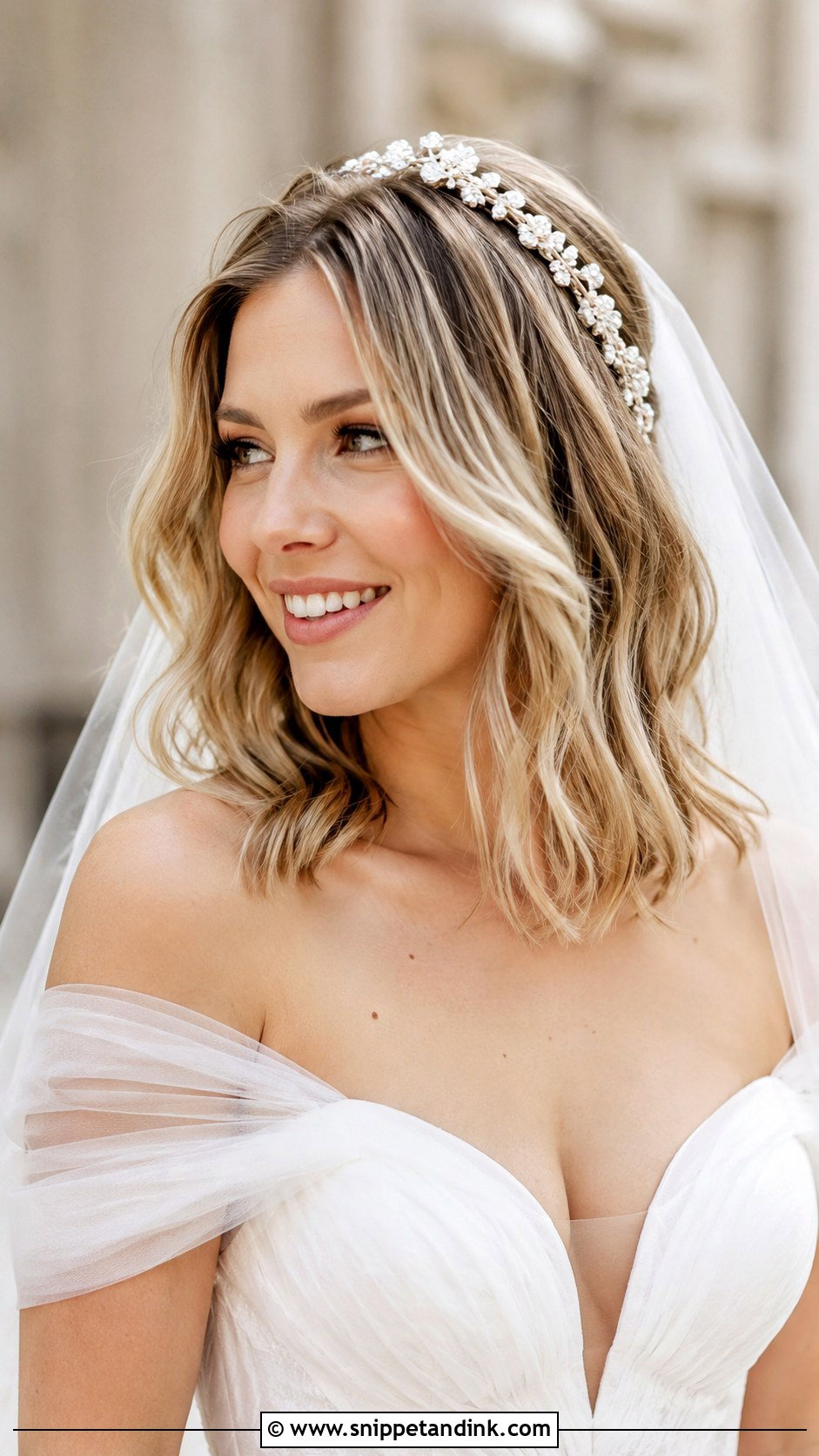
You don’t need long hair for a cathedral veil. On a shoulder-length lob, I add soft, bent waves and anchor the comb at the crown into a hidden pin base, since there’s no bun to hold. The contrast of short hair with all that tulle looks bold and modern. The practical limit is weight: there’s less hair to anchor into, so a lighter single-layer veil is a far better match than a heavy beaded one, which will tilt backward on a short cut.
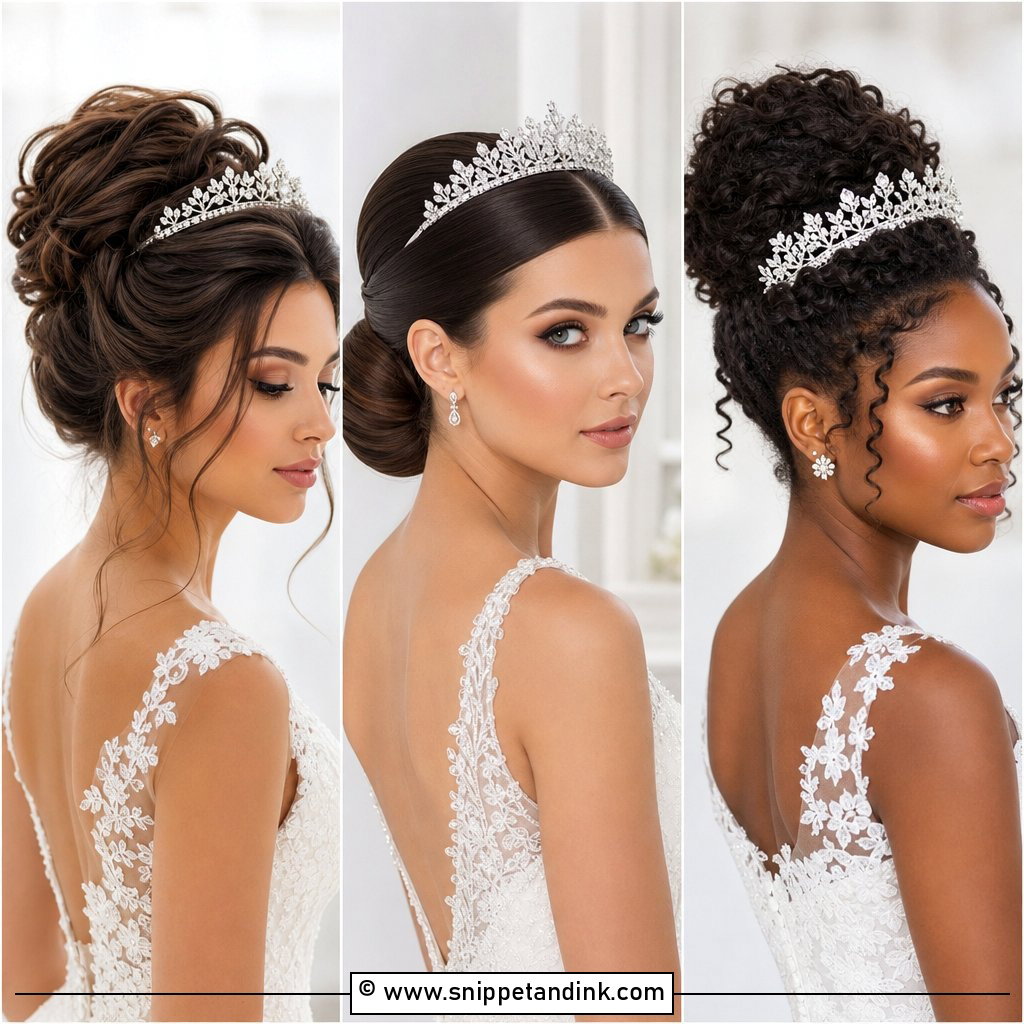
20. Vintage Finger Waves With Cathedral Veil
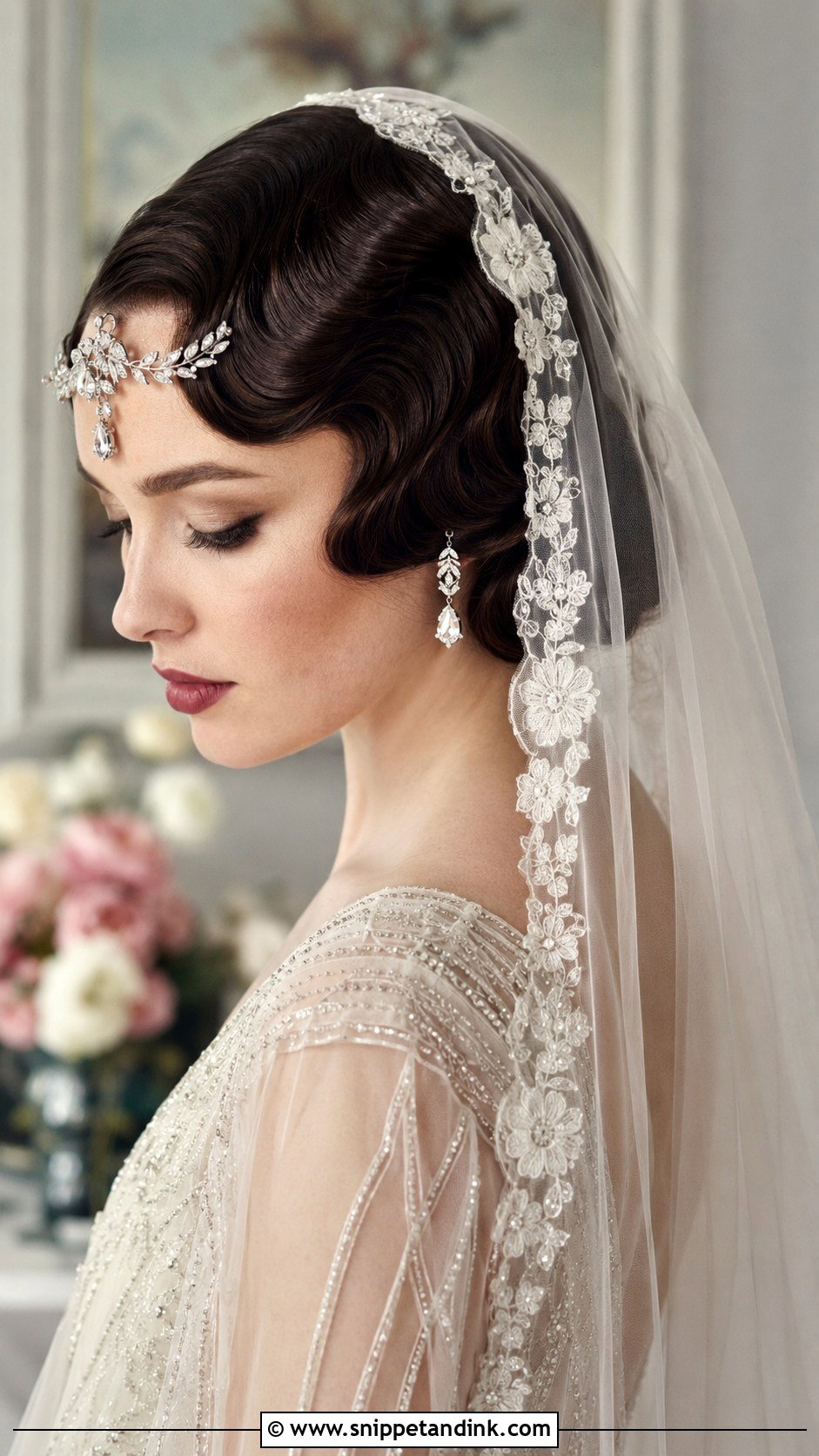
Finger waves are sculpted S-shaped waves set close to the head, giving a strong vintage look. It’s a skilled technique: I set the waves wet with gel and a comb, then let them dry or set with heat. The structured shape contrasts with soft tulle. The veil comb goes in behind the waves, never through them. Pair with vintage-inspired jewelry to complete the era. Do a trial for this one; it takes practice and suits shorter or bobbed hair best.
21. Messy Bun With Cathedral Veil
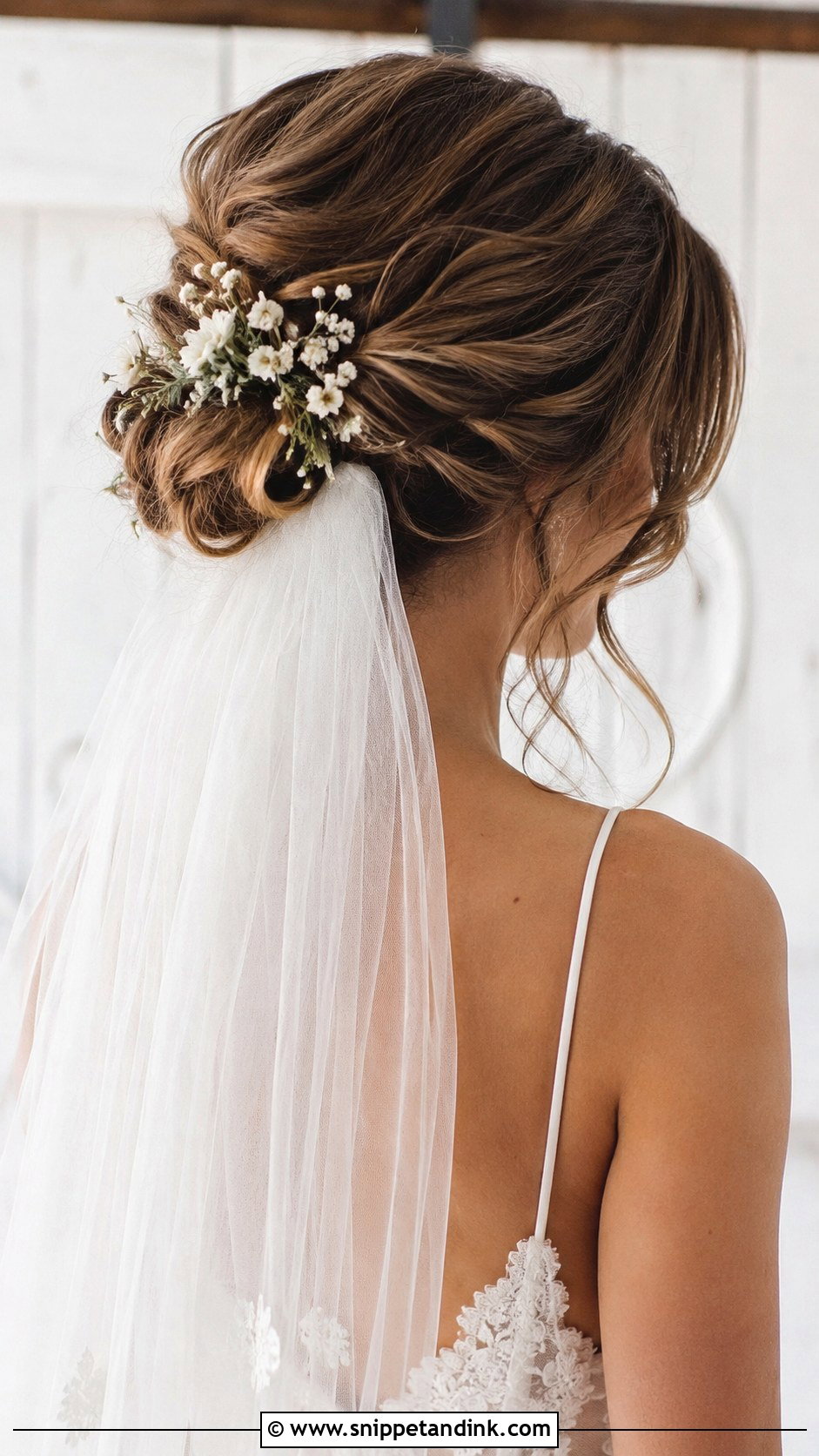
A messy bun looks easy, but on a wedding day the mess has to be planned or it simply falls. I gather the hair into a loose knot, pin the base tightly underneath with crossed pins, and only then pull out soft pieces on the surface. That order matters: loosen first and the bun has no structure left to hold a long veil. Waves added beforehand give grip. The veil flows from beneath the knot, and small blooms can finish it if you like.
22. Sleek High Bun With Cathedral Veil
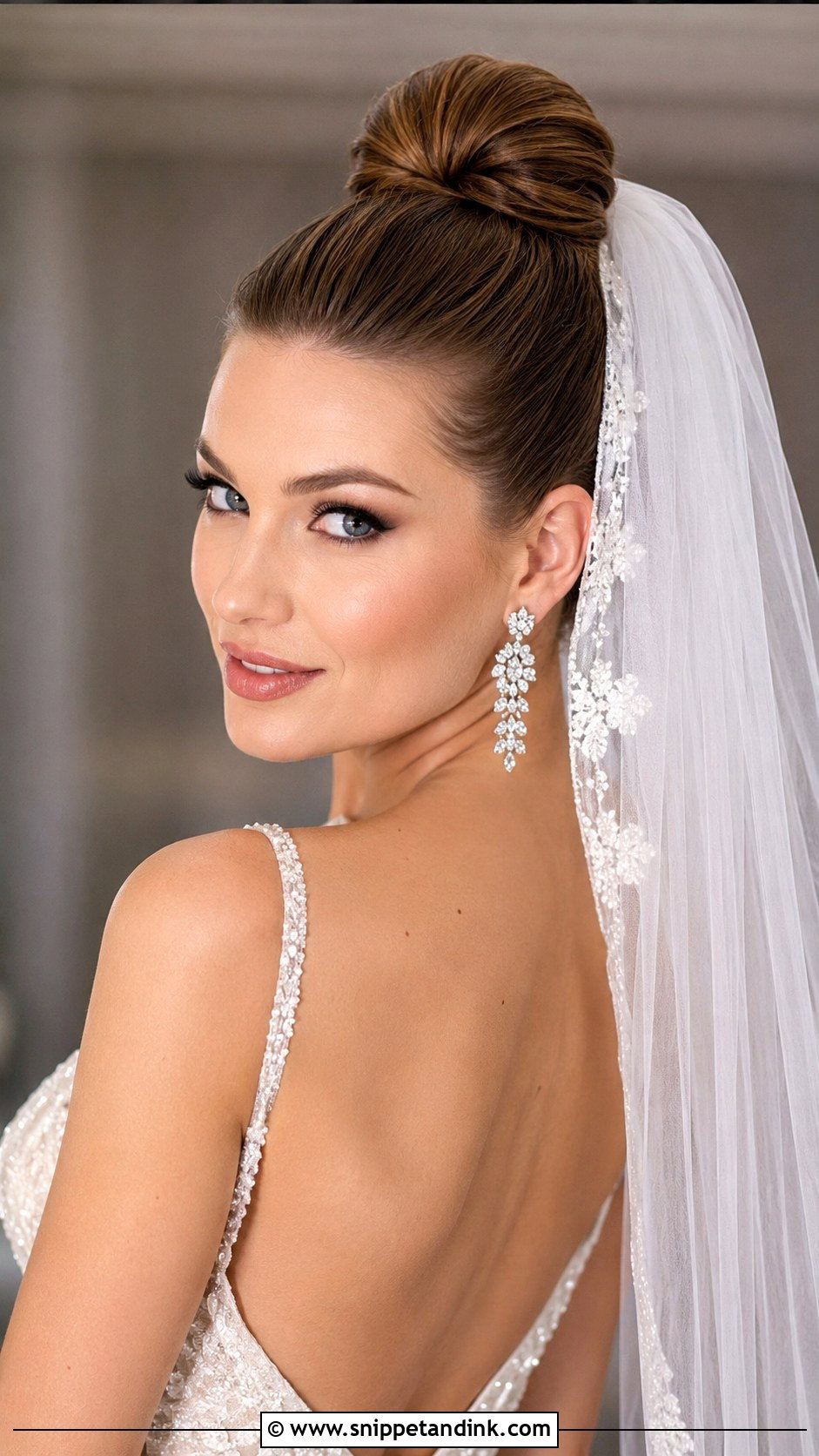
With the bun sitting right at the crown, the comb goes just underneath it, and the tulle drapes from the bun itself. That gives a ballet-like line and shows off a long neck. It’s dramatic in a formal venue. The risk is leverage: a heavy veil hanging from that high point pulls backward on the scalp for hours, and some brides end up with a headache by dinner. Test it at your trial with the actual veil, and if it aches after twenty minutes, drop the bun lower.
23. Loose Braid With Cathedral Veil
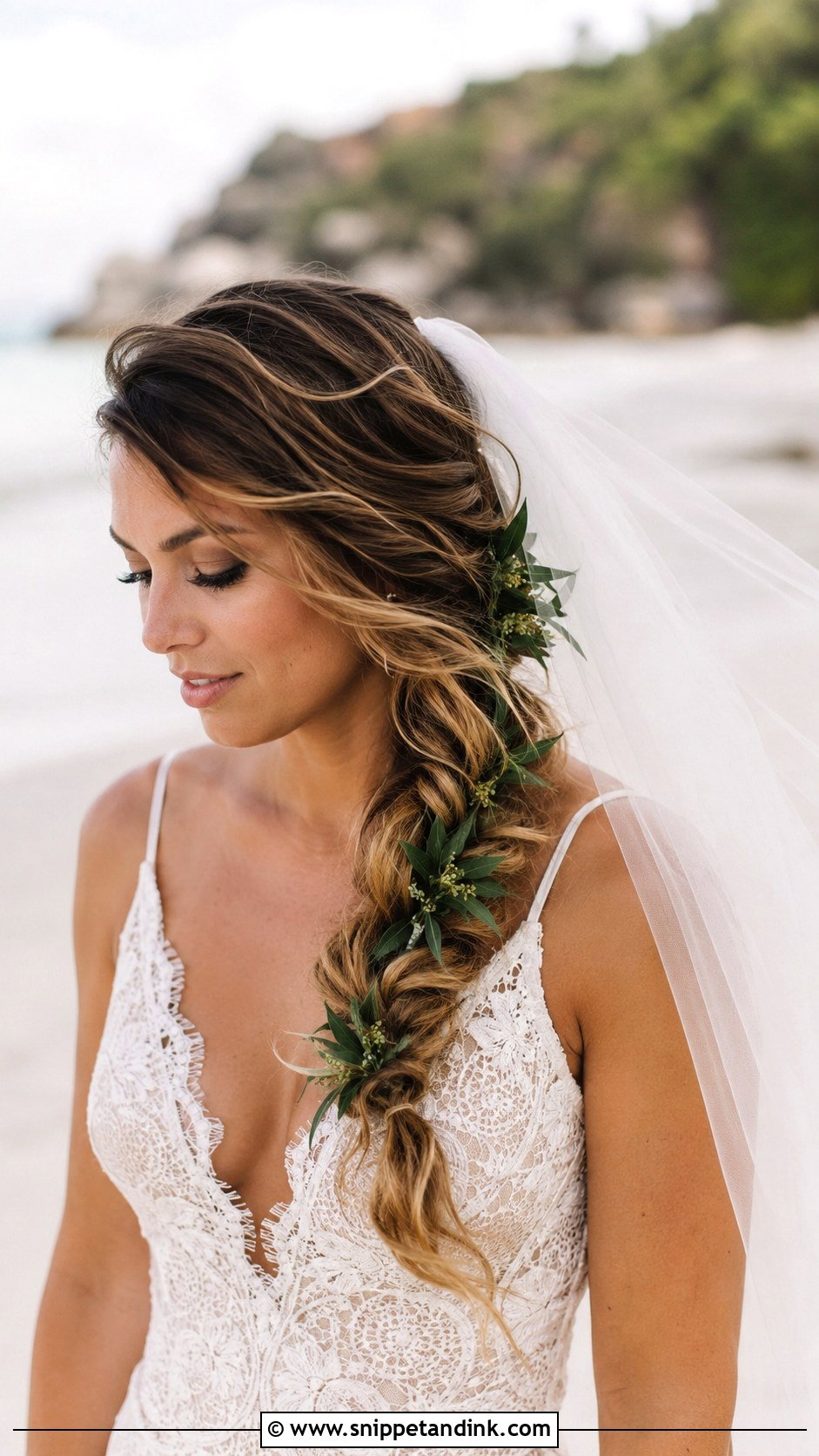
A loose braid over one shoulder looks unfussy, but it’s actually the trickiest pairing with a cathedral veil, because the veil falls down the back while the braid sits in front. I braid loosely, pancake the sections for fullness, and anchor the comb at the crown into a small pinned section, since there’s no bun behind to hold it. Garden and beach weddings suit it. It needs hair to at least mid-back to look full; clip-in wefts fill out a thin braid well.
24. Twisted Low Bun With Cathedral Veil
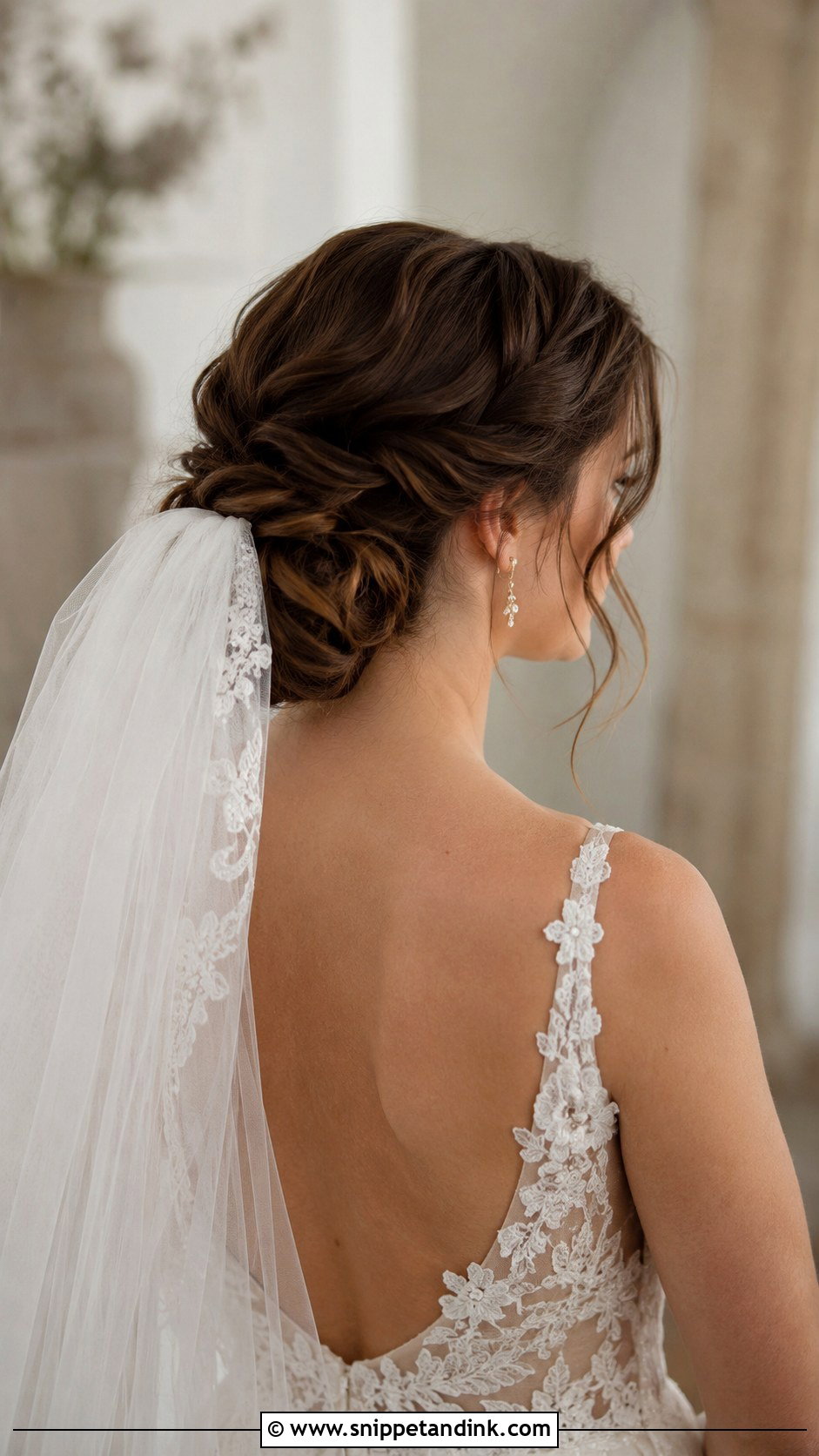
Twisting each section before coiling it into a low knot gives the bun ridges, and those ridges are what make it such a good anchor: the comb teeth settle between them instead of skating across a smooth surface. It reads formal in a cathedral and relaxed in a barn, depending on how tight I keep the twists. A few loose pieces around the face soften it. The comb goes just above the coil. Under sheer tulle the texture still shows from behind, which matters, because the processional is mostly photographed from the back.
25. Half-Up Bun With Cathedral Veil
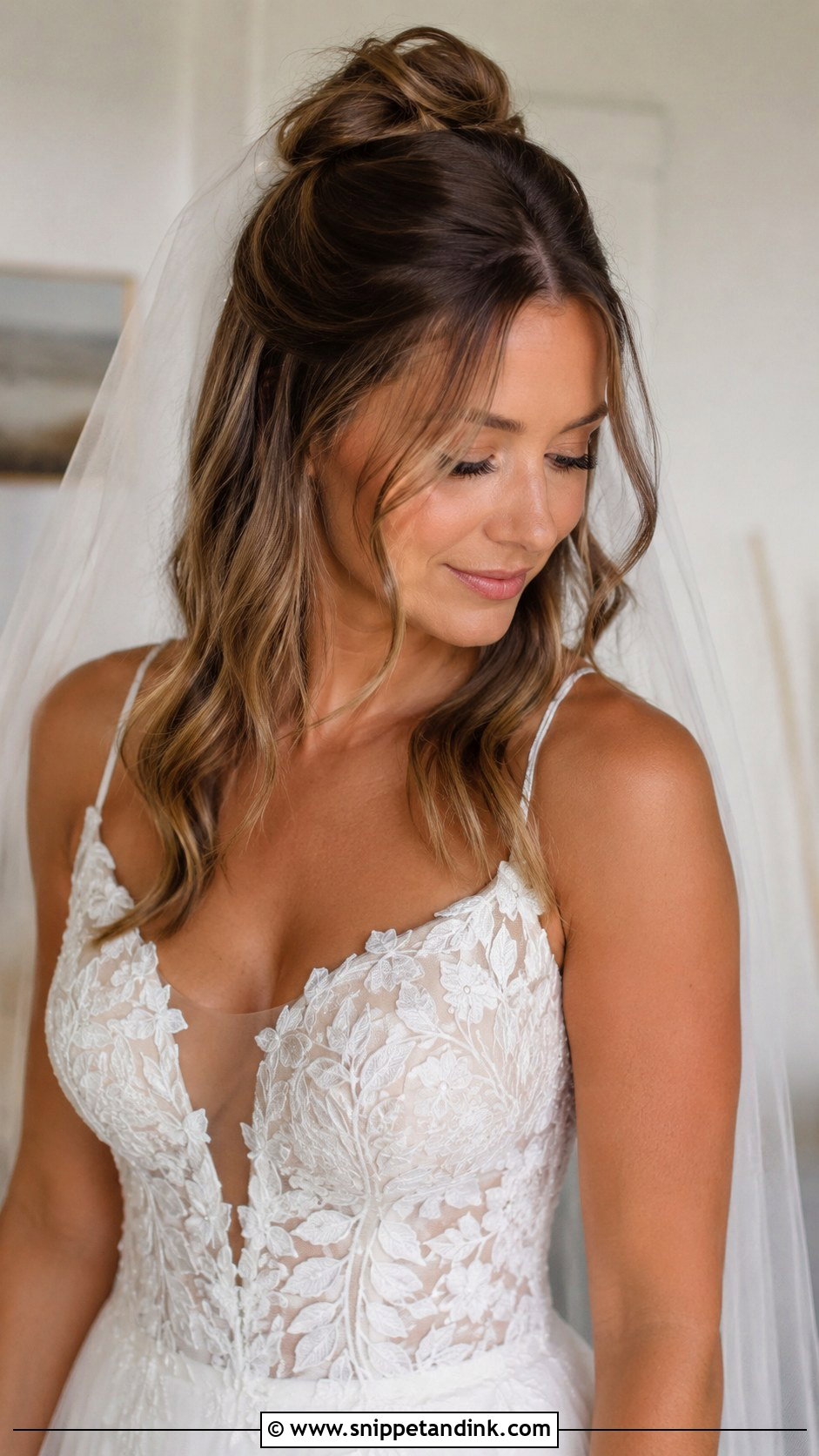
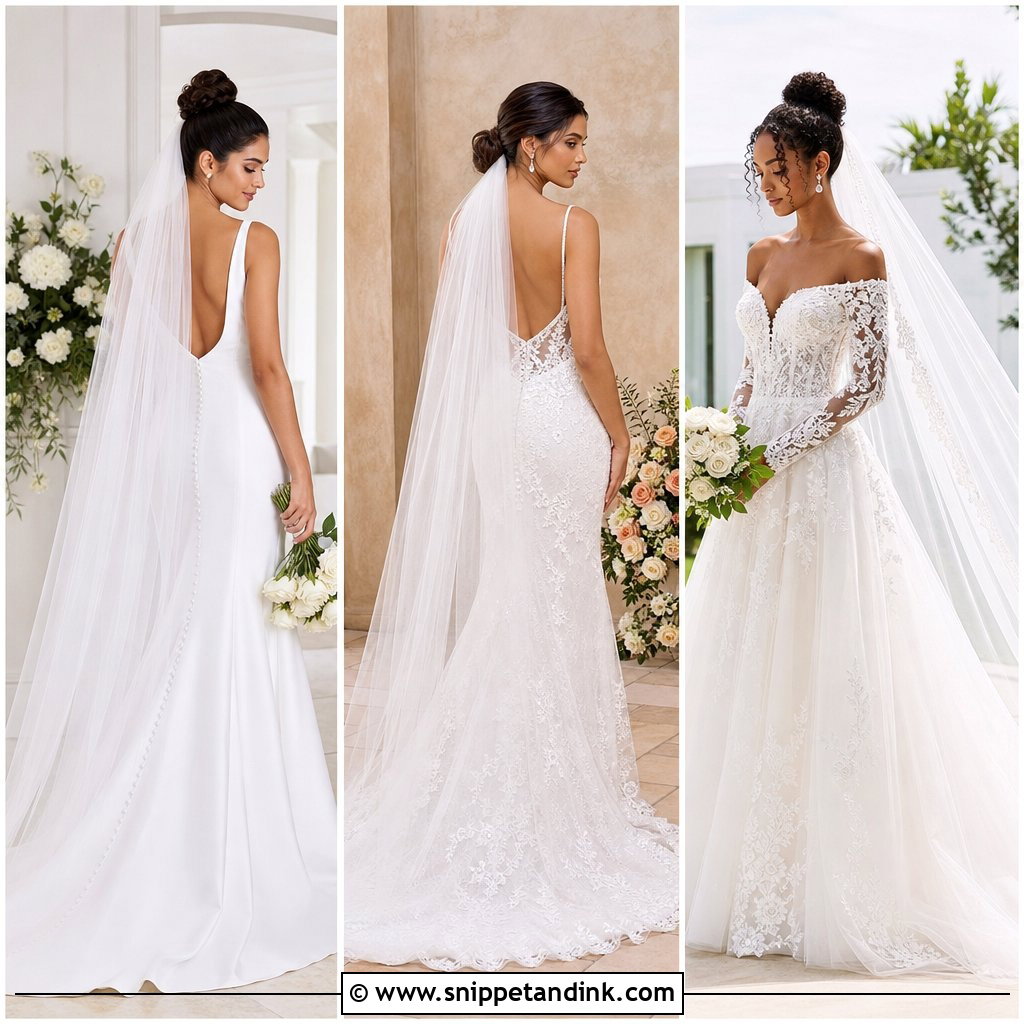
Of the half-up options, the half-up bun is the one I trust most under a heavy veil, since the knot gives the comb a firm wall to push against while the rest of the hair stays loose. I keep the knot small, roughly the size of a walnut, so the veil doesn’t sit on a lump. Waves below add movement. If your hair is thick and heavy, I’d pin the knot with a few extra U-pins underneath; the loose lengths pull on it all day.
Wind, Stairs and Sitting in a Long Veil
A long veil behaves differently once you’re moving. Stepping out of a car, climbing church stairs or sitting at the head table all put a sudden tug on the comb. I always show brides how to gather the veil over one arm before sitting or walking up steps, which takes the weight off the hair entirely. Outdoors, even a light breeze can lift a cathedral veil into a sail. Ask a bridesmaid or your planner to handle it during the processional, and if your venue is exposed, choose a slightly heavier tulle that floats less.
Removing the Veil Without Wrecking Your Style
Most brides take the veil off after the ceremony or the portraits, and that’s when the style can collapse if no one planned for it. Have someone you trust slide the comb out gently, in the direction it went in, after removing any U-pins first. Pulling straight back tears pins out with it. Then check the anchor spot: a few crossed pins may now show, so a quick re-pin or a small accessory over the spot keeps the style finished for the reception. I always leave a little kit with spare pins, a comb and travel hairspray for exactly this moment.
The Veil Is Only as Secure as the Hair Under the Comb
Every style in this list can carry a cathedral veil if the base under the comb is built properly. Updos and braids give the most security for beaded or layered tulle; loose waves and sleek hair need hidden help. The step most brides skip is wearing the real veil at the trial. Bring it, or something of the same weight, then walk, sit and turn your head in it for a few minutes. If anything shifts, that’s the moment to fix it, not on the church steps.
You'll Like These Ideas:






Leave a Reply