
Blood red is not the easy route, and the brides who ask me for it usually know that. Done carelessly, a deep red gown tips into costume. Done with care, in deep crimson satin, oxblood velvet or ruby lace, it looks like the most personal dress in the room. The styling has to keep it bridal: a veil, polished shoes, restrained jewelry. Gothic weddings, autumn ceremonies, candlelit ballrooms and city registry offices all suit it. Below are 25 shapes I’d consider, from full ball gowns to plain columns, with the fitting and fabric notes I’d give a bride trying them on.
Oxblood, Garnet or Cherry? Matching the Red to Your Skin
Not every red suits every bride, and the difference is the undertone. Blue-based reds, like garnet, oxblood and wine, lean cool. Orange-based reds, like brick, poppy and tomato, lean warm. True blood red sits slightly cool, which is why it flatters so many people, but in pale fabric or bright light it can drift either way.
At a first appointment I hold two swatches under the chin by a window. If the cool red makes your skin look clearer and your teeth whiter, stay cool. If it makes you look grey or tired, try something warmer. Dark skin often looks rich in either; very fair skin with pink tones usually does better in a blue red than an orange one.
- Match your lipstick to the dress undertone, not just to red in general.
- Check the dress in daylight and under warm indoor light, since tungsten bulbs push red toward orange.
- Velvet looks darker than satin in the same dye, so compare actual fabrics, not photos.
1. Blood Red Ball Gown Wedding Dress
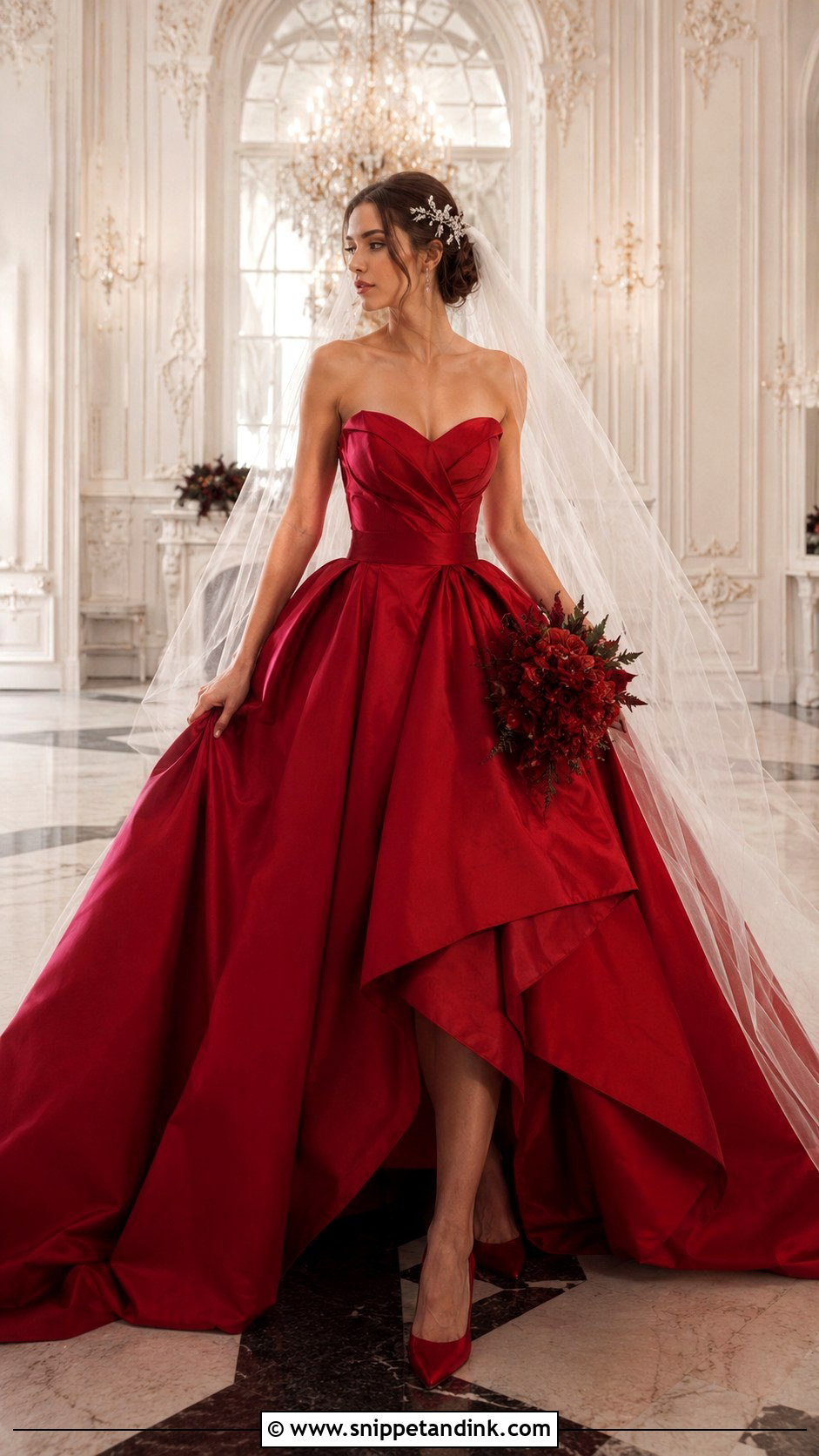
A full ball gown in blood red needs the right space. In a grand hall or a historic house it looks regal; in a small room it overwhelms everything. A structured corset-style bodice keeps the waist defined, and satin or layered tulle gives the skirt its movement. I keep the accessories pale here, so a crystal comb and an ivory veil soften the mass of color around the face. Red or ivory pointed heels both work.
2. Blood Red Lace Wedding Dress
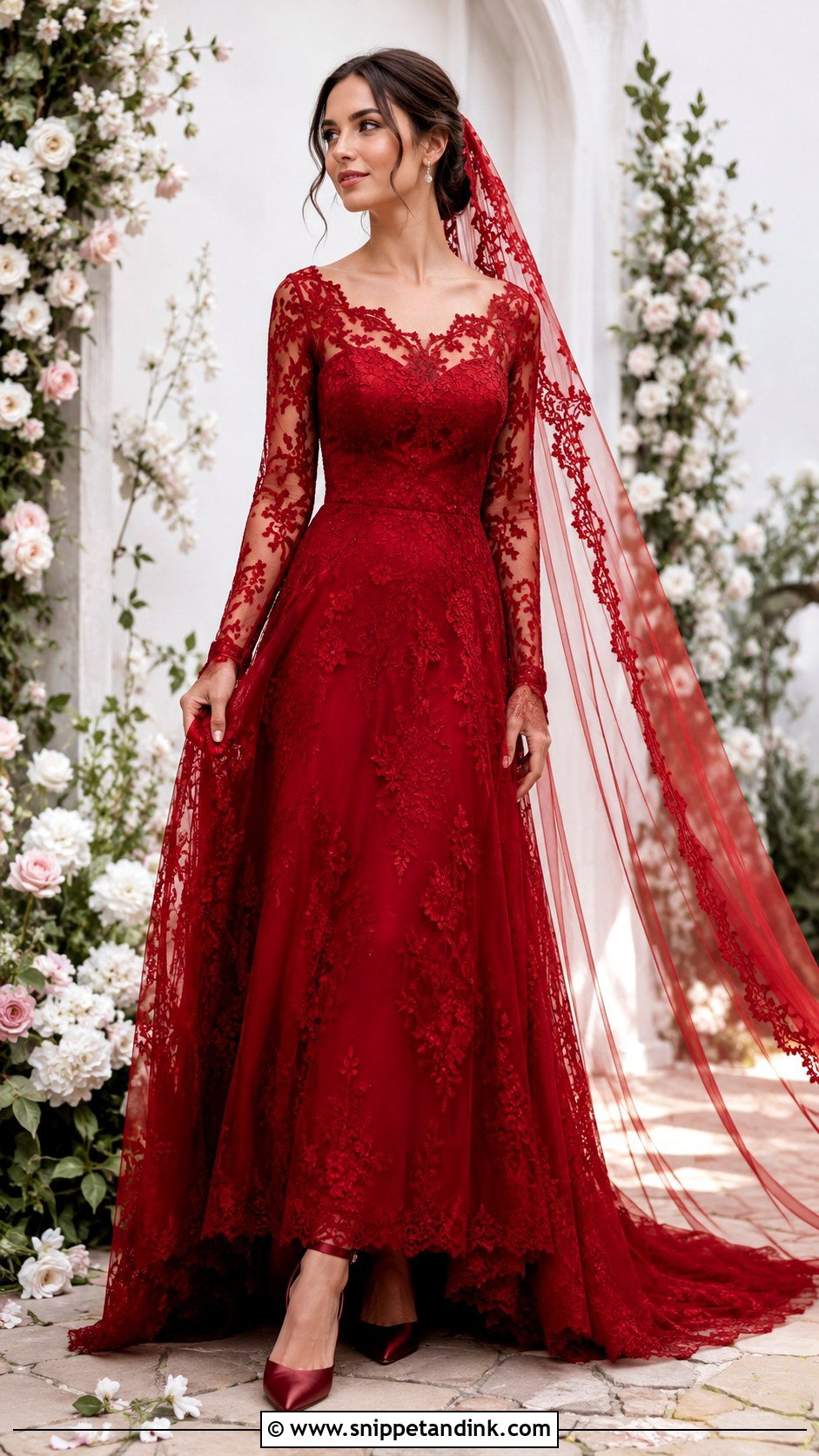
Lace softens red more than any other fabric, because the holes in the pattern let light and lining show through. That lining is the big decision. A nude lining makes the lace motifs pop and reads lighter; a matching red lining makes the whole dress richer and darker. Ask to see both if the shop can arrange it. Long lace sleeves, a soft train and a smooth low bun keep it romantic, and a lace-edged veil ties it together.
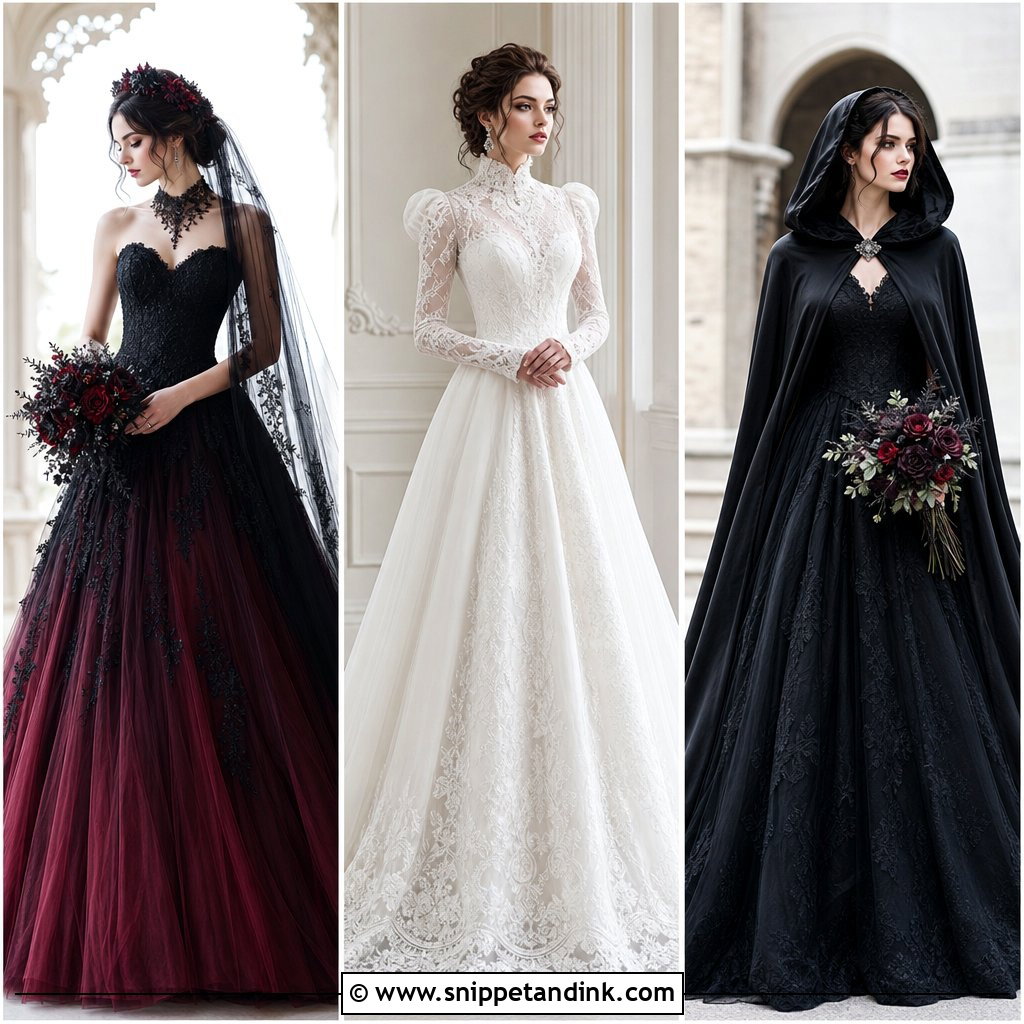
3. Blood Red Mermaid Wedding Dress
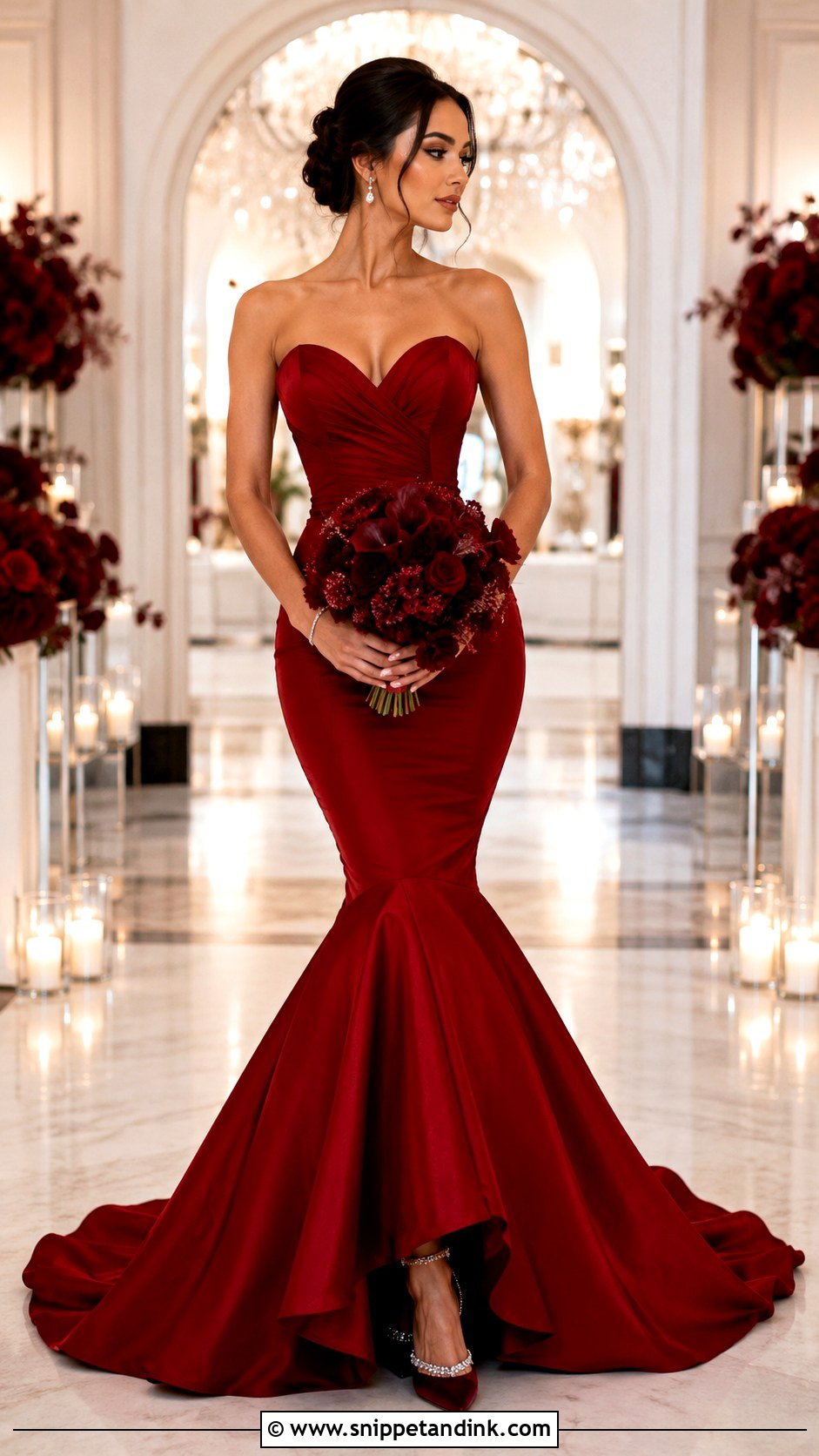
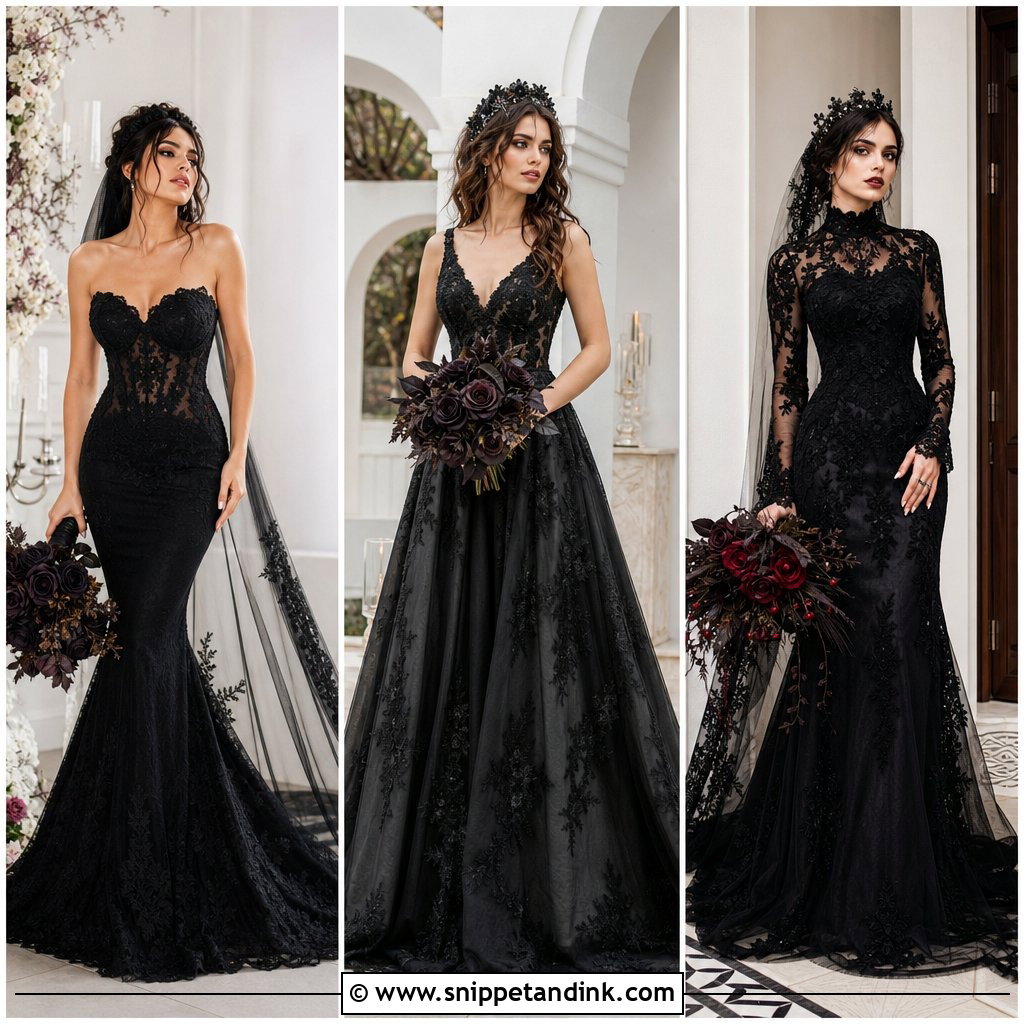
A deep red mermaid suits a bride who loves a sculpted silhouette and is comfortable being looked at, because the color and the fit both draw attention to the body. Stretch crepe is the forgiving option; satin shows every line. Long sleeves push the mood toward gothic; a sweetheart neckline pushes it toward red carpet. Keep the bouquet structured and compact so it doesn’t break up the line.
4. Blood Red Velvet Wedding Dress
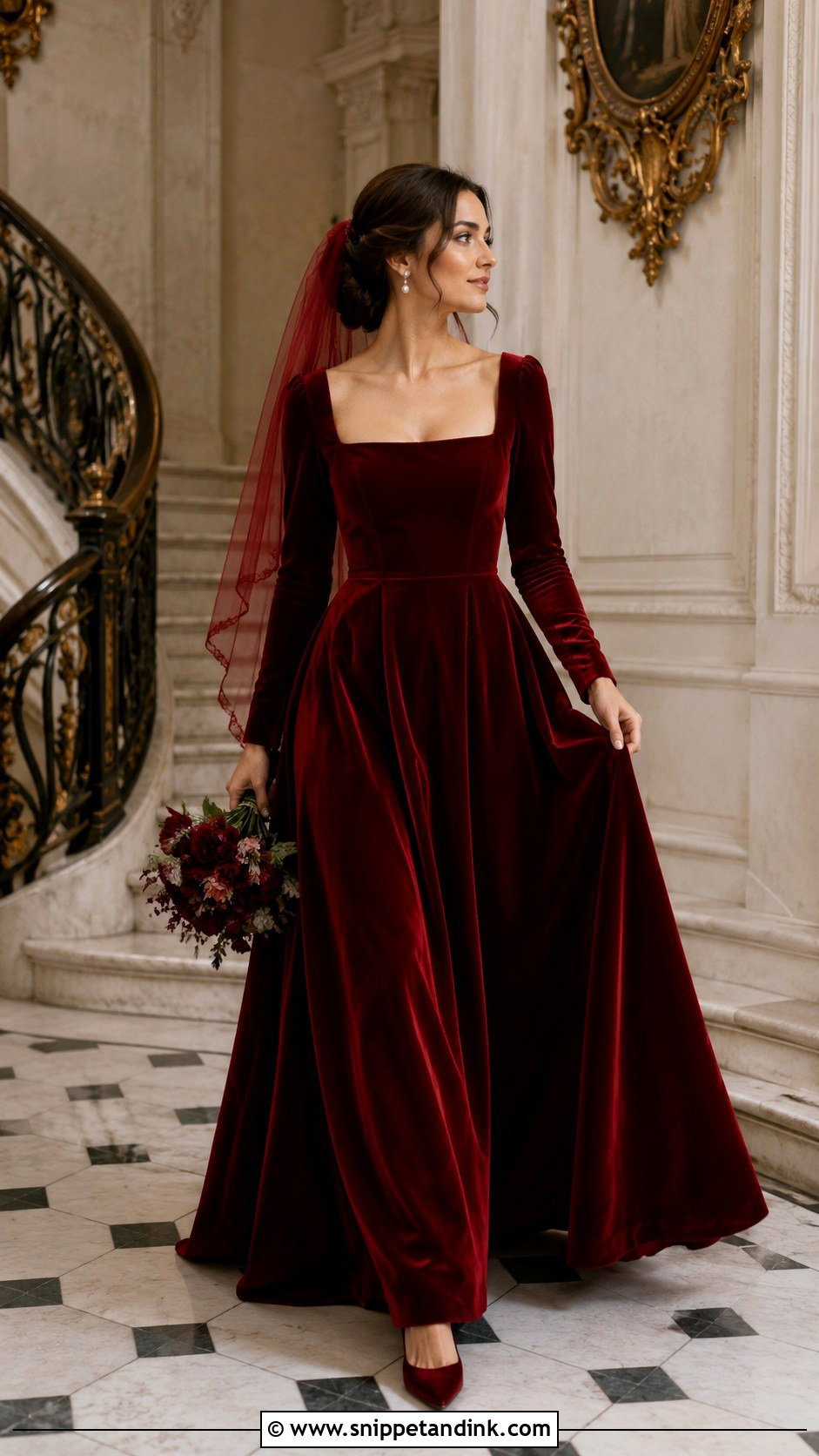
Velvet is my favorite fabric for this color. Its pile absorbs light, so the red looks almost black in the folds and glows where the light hits, which gives depth no flat fabric can. It’s warm, too, so I only recommend it from late autumn to early spring. Velvet marks easily under pressure; don’t sit on the skirt for long before the ceremony and don’t let anyone steam it from the front. Pearl earrings and closed-toe heels suit its weight.
5. Blood Red Satin Wedding Dress
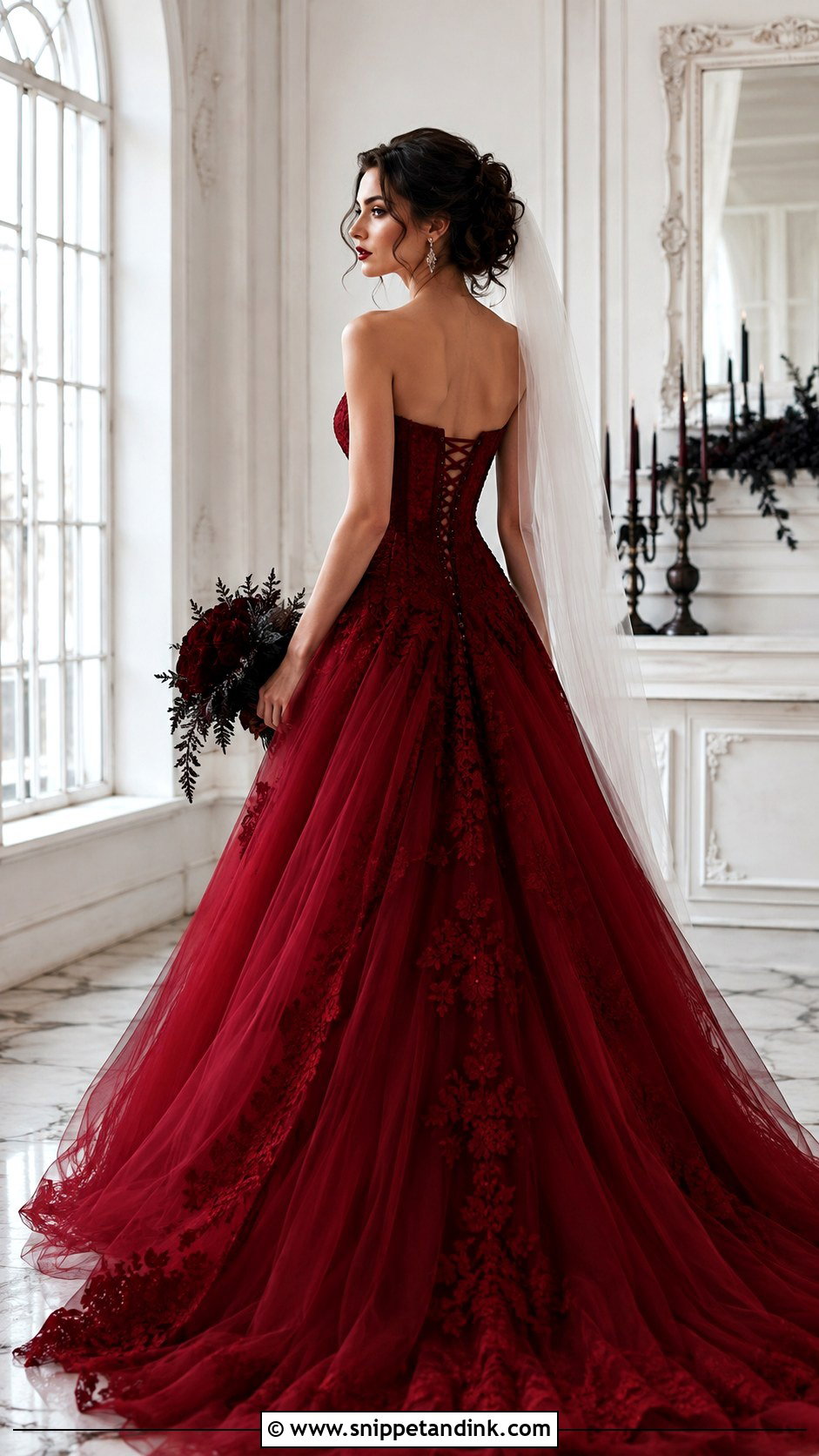
Satin gives red a clean, wet-looking shine. A bias-cut satin dress flows and clings, so it’s best for a slim, relaxed shape; a structured satin gown stands away from the body and feels formal. Red satin creases visibly across the lap when you sit, so steam it on the morning and stand where you can. A long cathedral veil is the quickest way to make a red dress read unmistakably bridal.
6. Blood Red A Line Wedding Dress
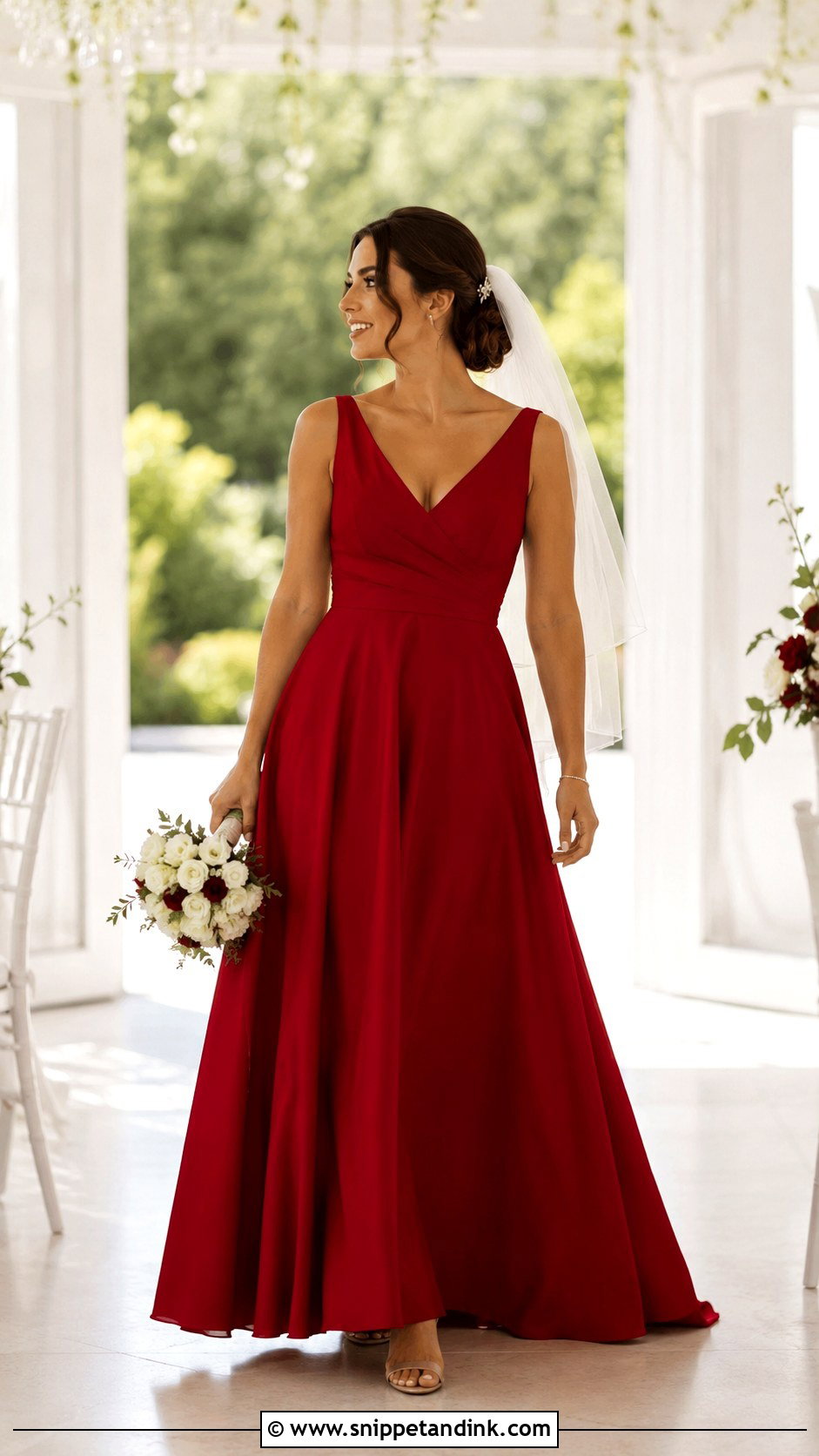
The A-line is where I start anyone nervous about the color. The shape is familiar and flattering on most figures, which leaves room for the red to be the only unusual thing. Chiffon moves, satin holds structure, lace adds romance. A V-neck lengthens the torso. Block heels and a classic veil, and it works indoors or out.
7. Blood Red Corset Wedding Dress
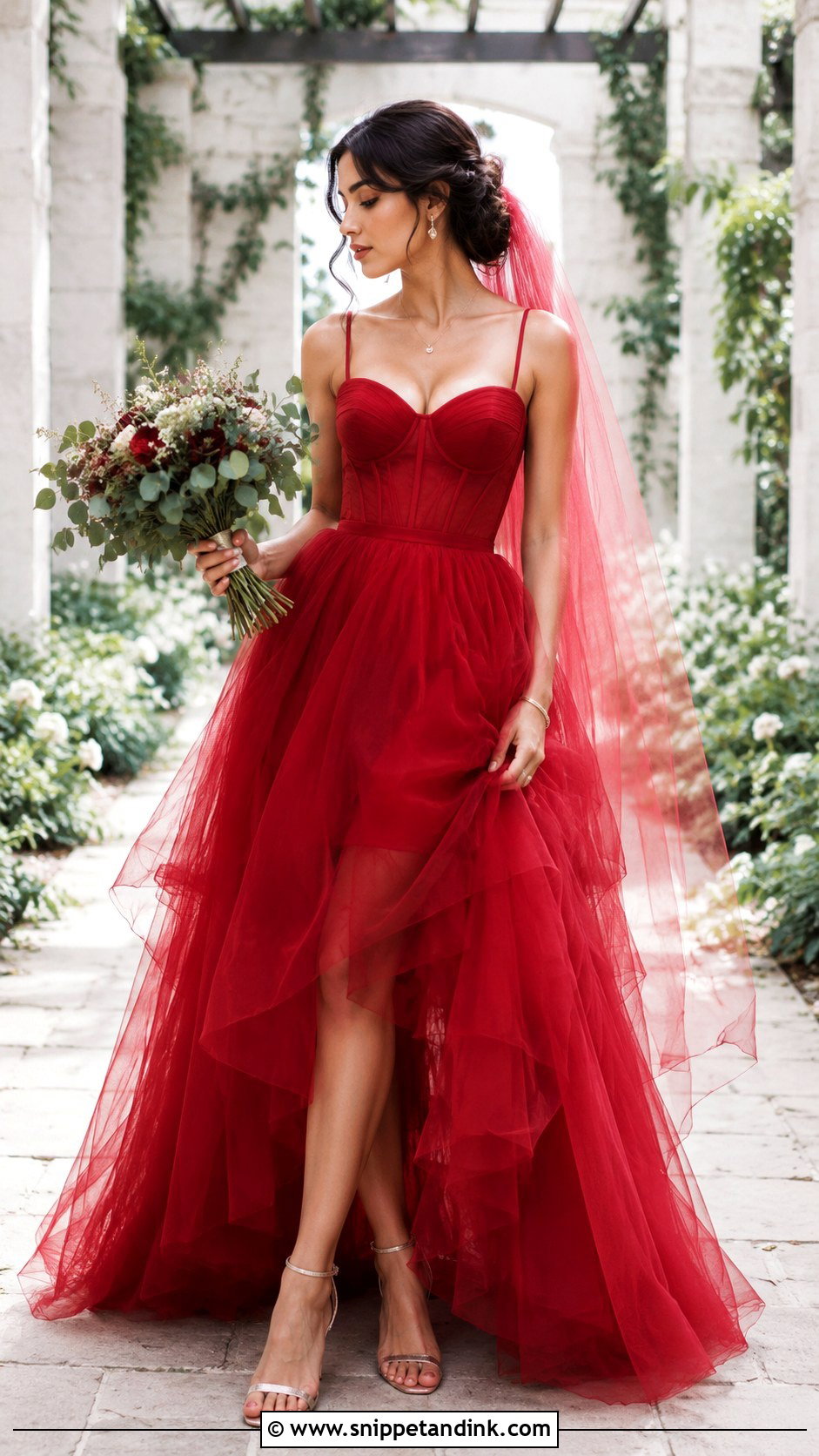
A corset bodice gives red a strong shape and keeps the dress anchored, which matters with heavier fabrics. Visible boning reads dramatic; internal boning gives the same support with a cleaner look. A lace-up back can be adjusted on the day if your weight shifts with nerves, which is a real practical advantage. It suits gothic, vintage-inspired, or romantic weddings. Keep jewelry minimal so the bodice is the focus.
8. Blood Red Off Shoulder Wedding Dress
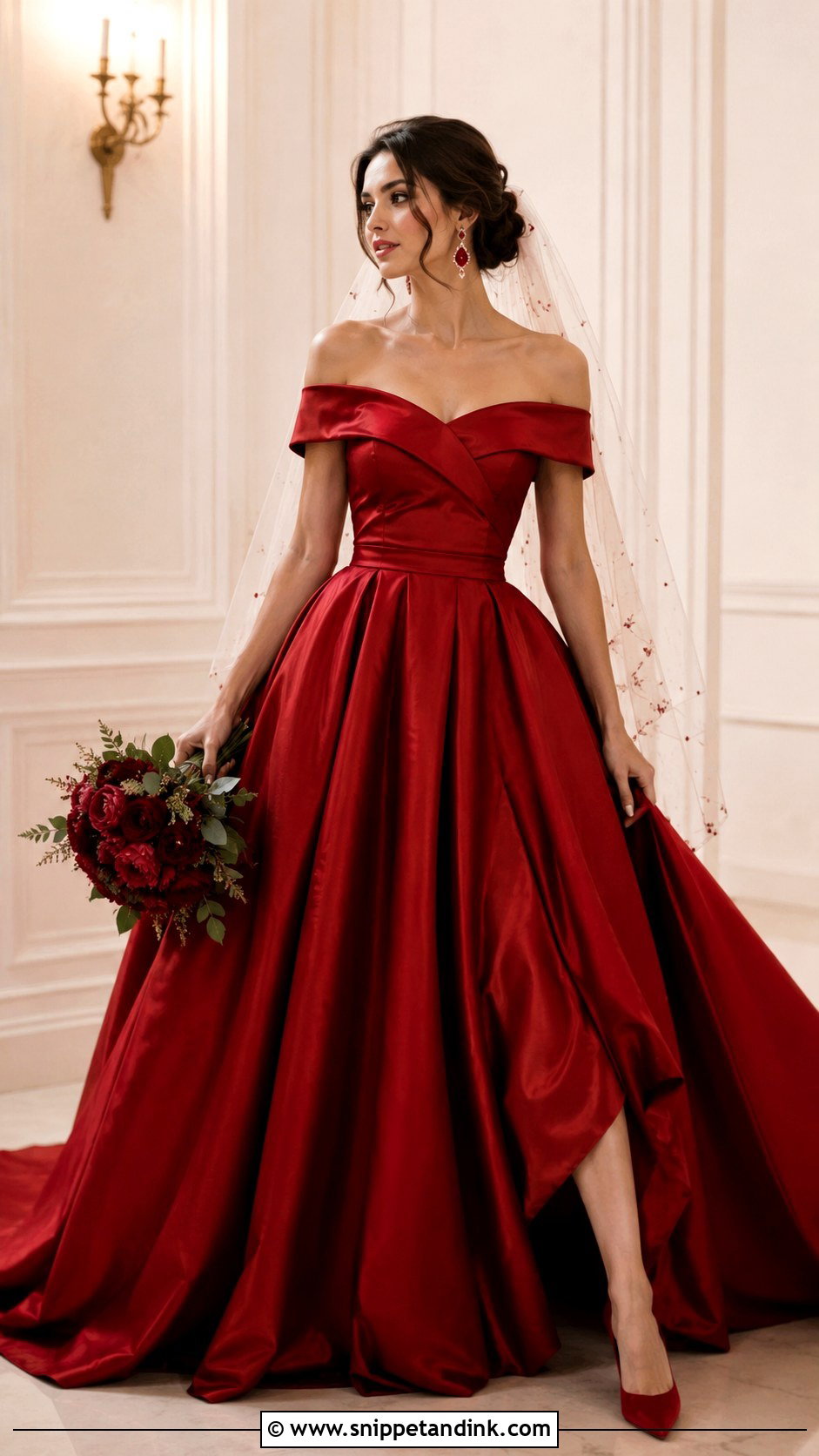
Off-shoulder lets the skin break up the block of color, which is useful on a dark dress. It frames the collarbones and makes room for statement earrings with no necklace. The fitting challenge is the band: it needs inner grip tape or it slides down during dancing. Satin reads refined, tulle adds volume. Have the veil attached so it falls behind the shoulders, not over them.
9. Blood Red Long Sleeve Wedding Dress
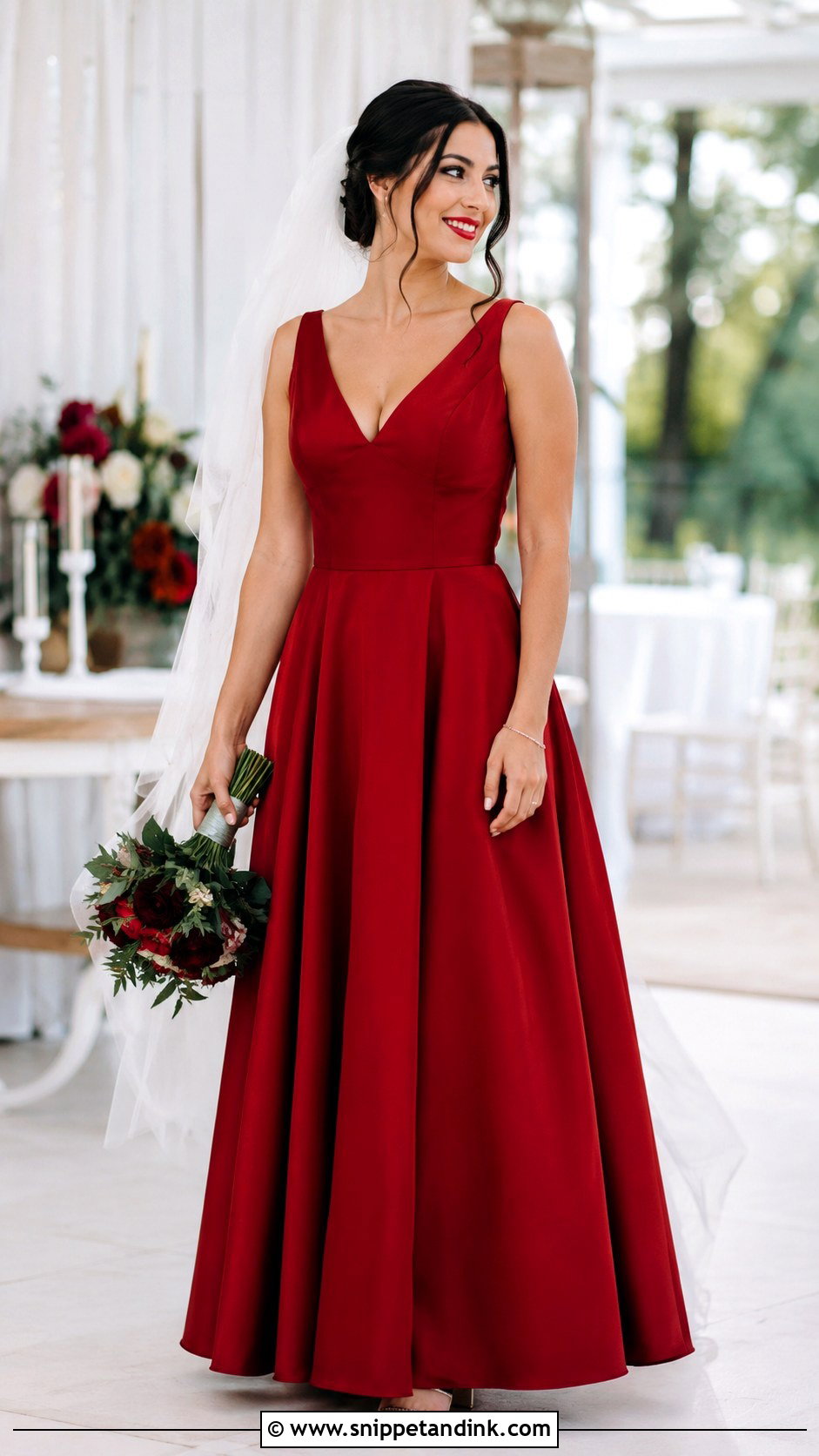
Sleeves change the mood of a red dress completely. Sheer lace sleeves feel delicate and let some skin through; fitted satin or velvet sleeves are formal and almost medieval. A high neckline with long sleeves is the most regal combination. If you’re marrying in a cold church or in winter, this is the practical choice. Keep the hair smooth and the earrings small.
10. Blood Red Tulle Wedding Dress
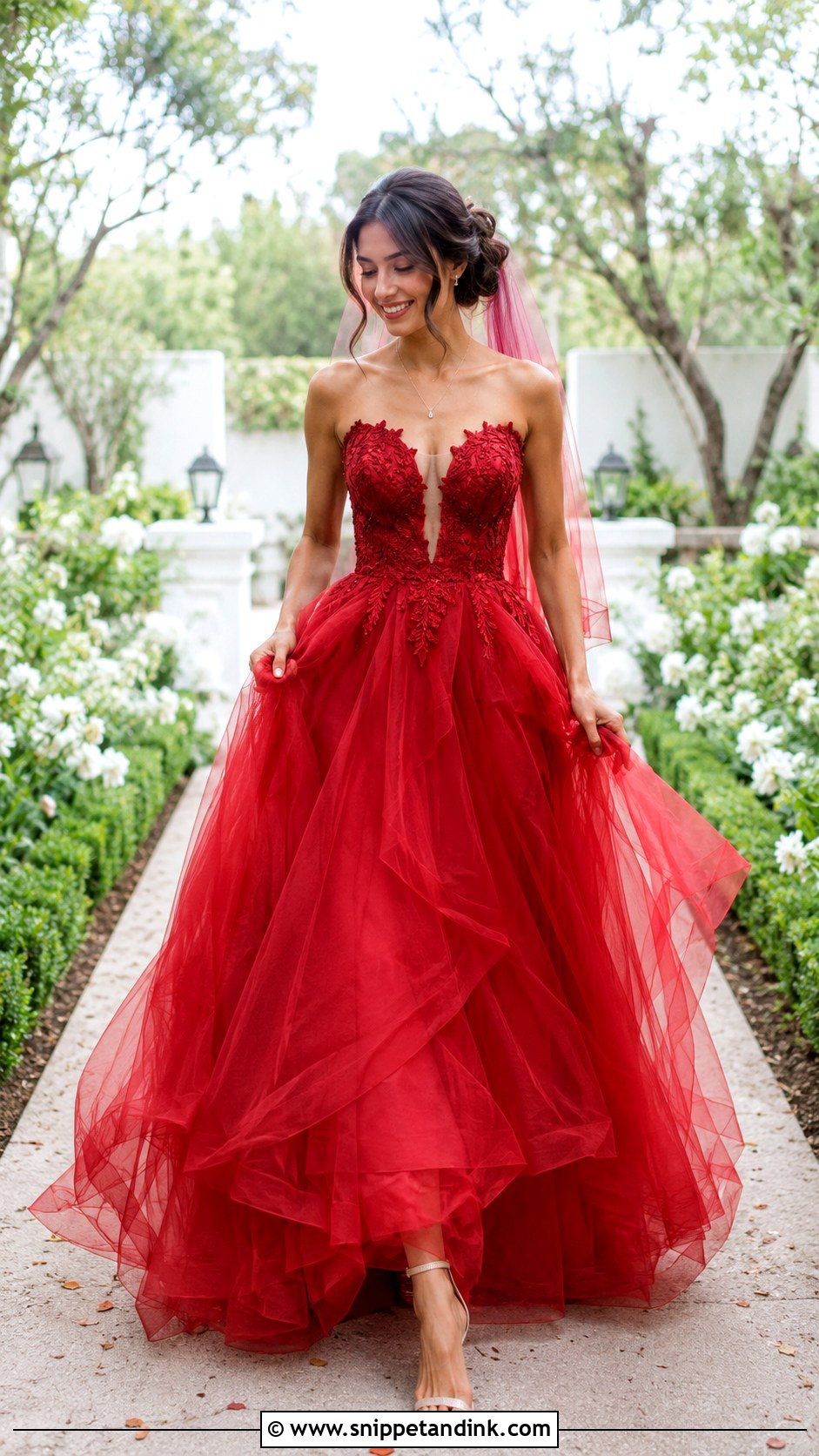
Layered tulle diffuses the red, so a tulle gown looks softer and lighter than satin in the same dye. Layering a slightly paler tulle over the lining makes it lighter still. Tiered skirts add movement. With this much volume, keep the bodice simple. It suits outdoor ceremonies and editorial-style portraits, but be aware that red tulle can bleed dye if the hem gets wet on grass.
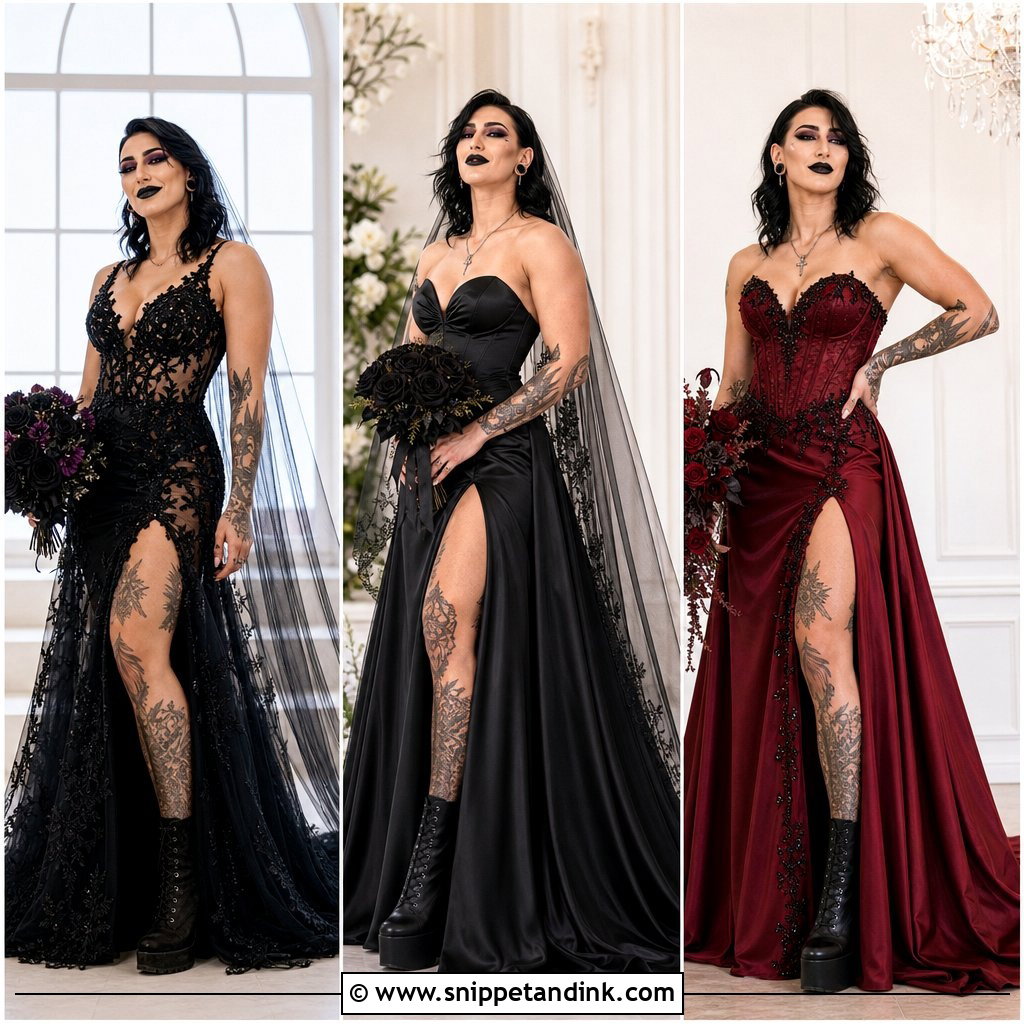
11. Blood Red Gothic Wedding Dress
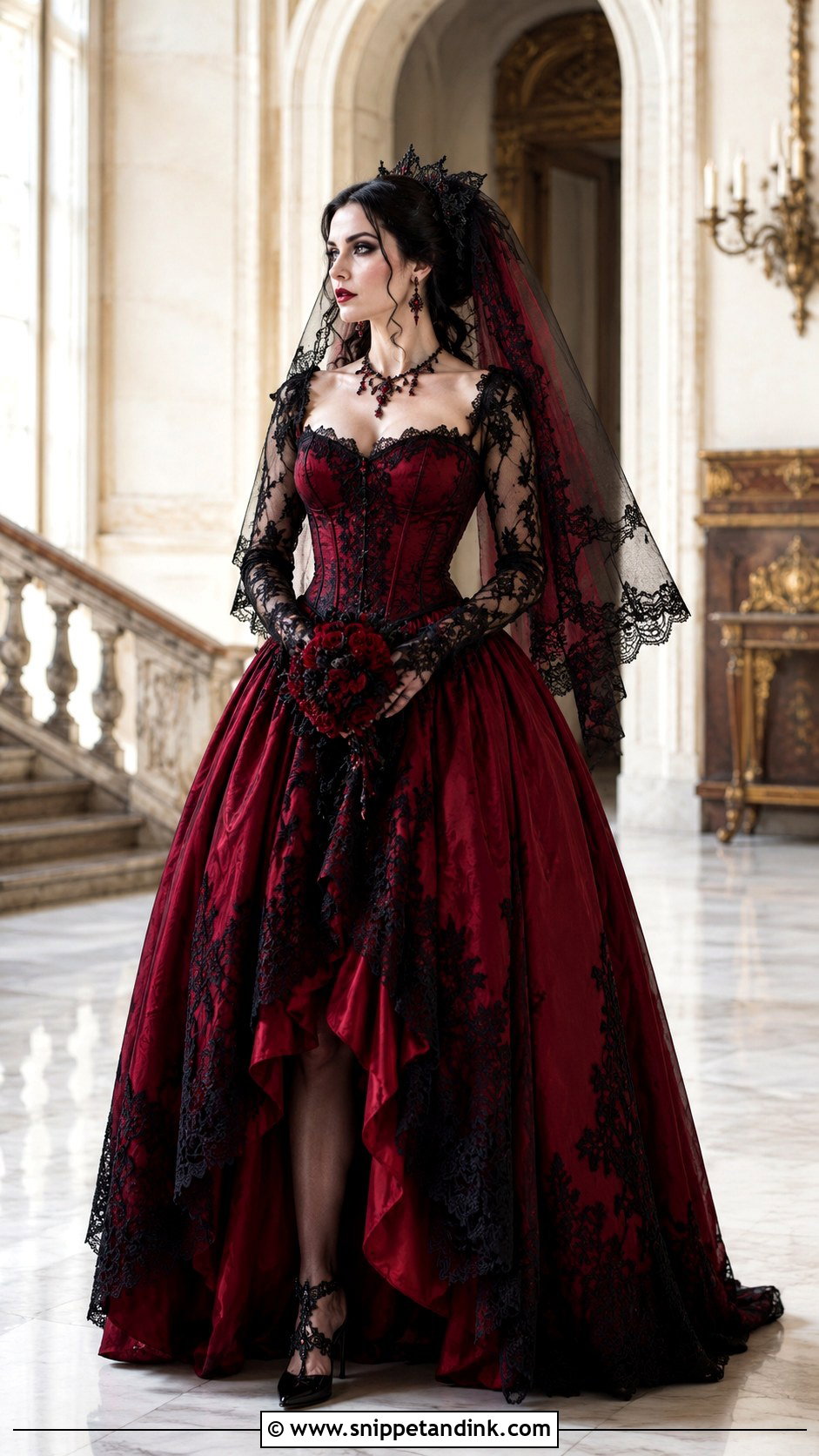
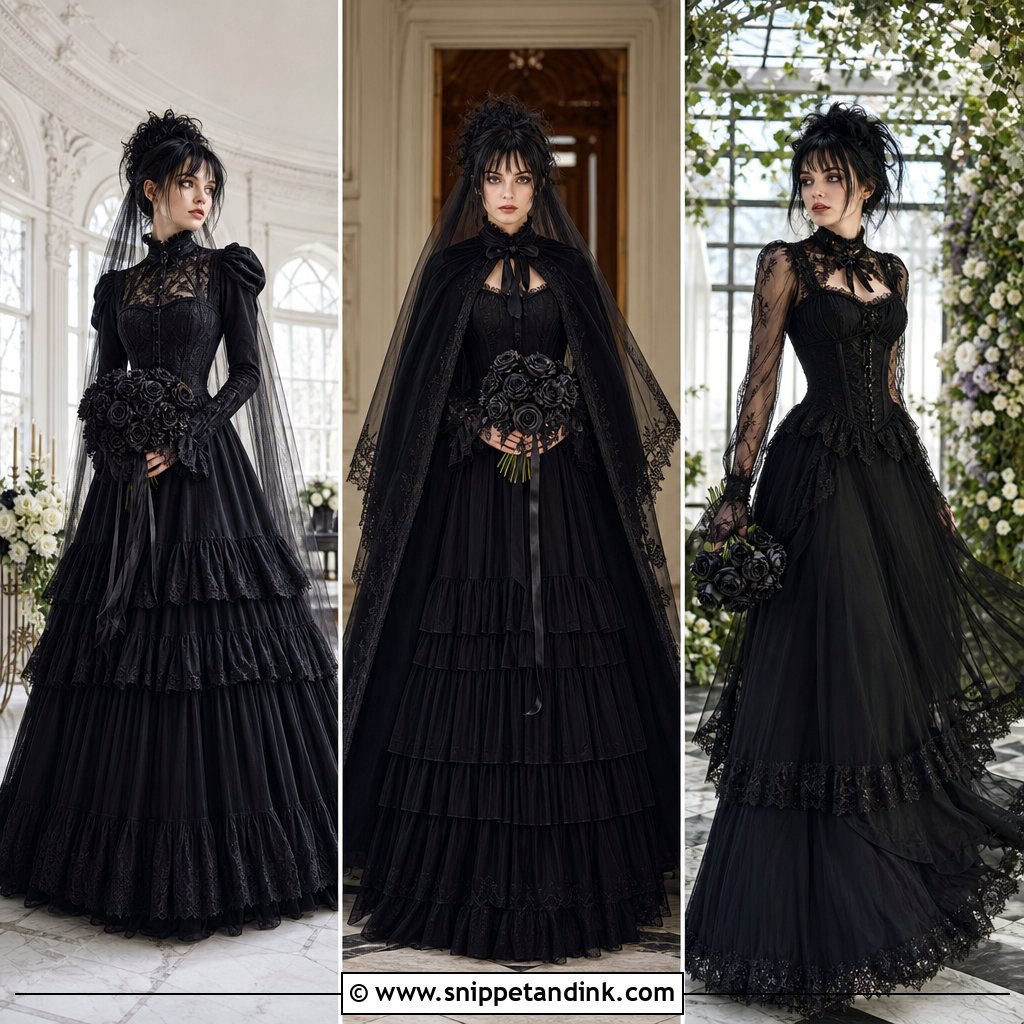
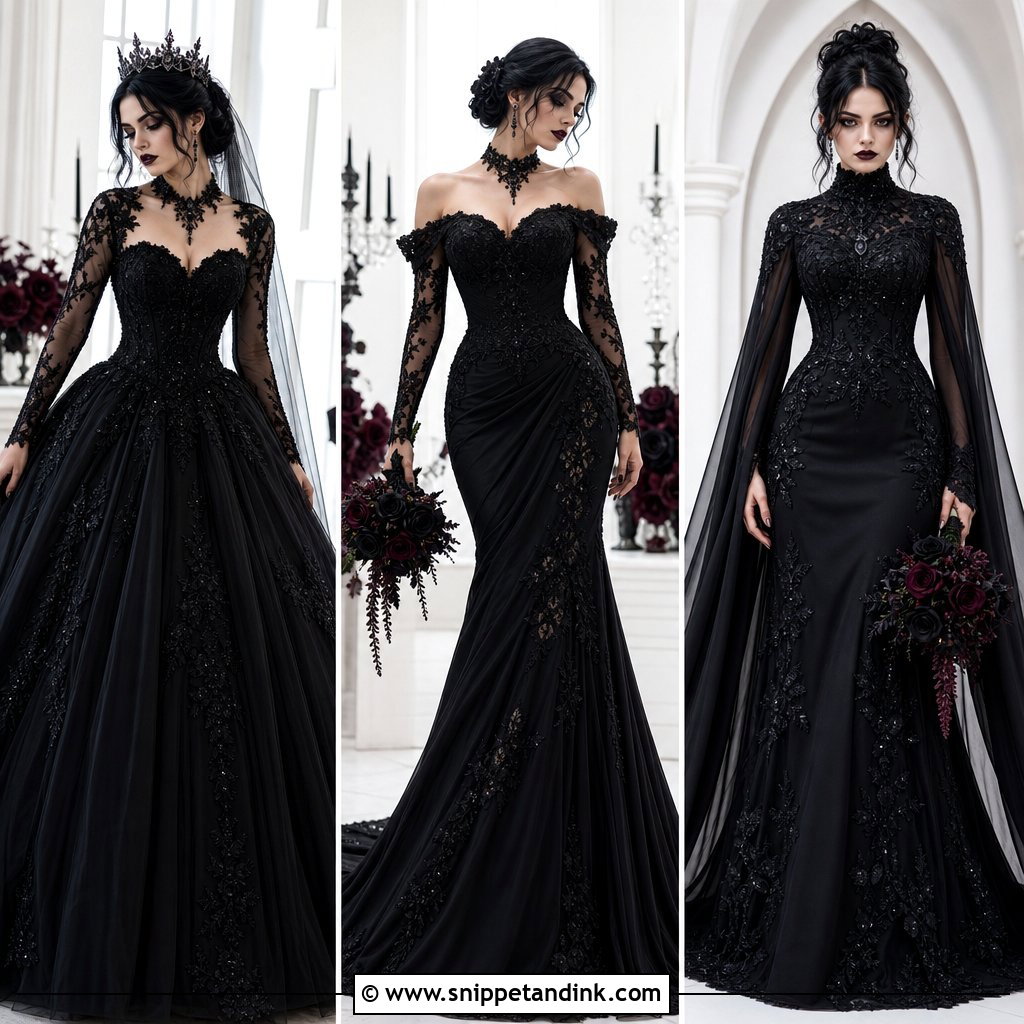
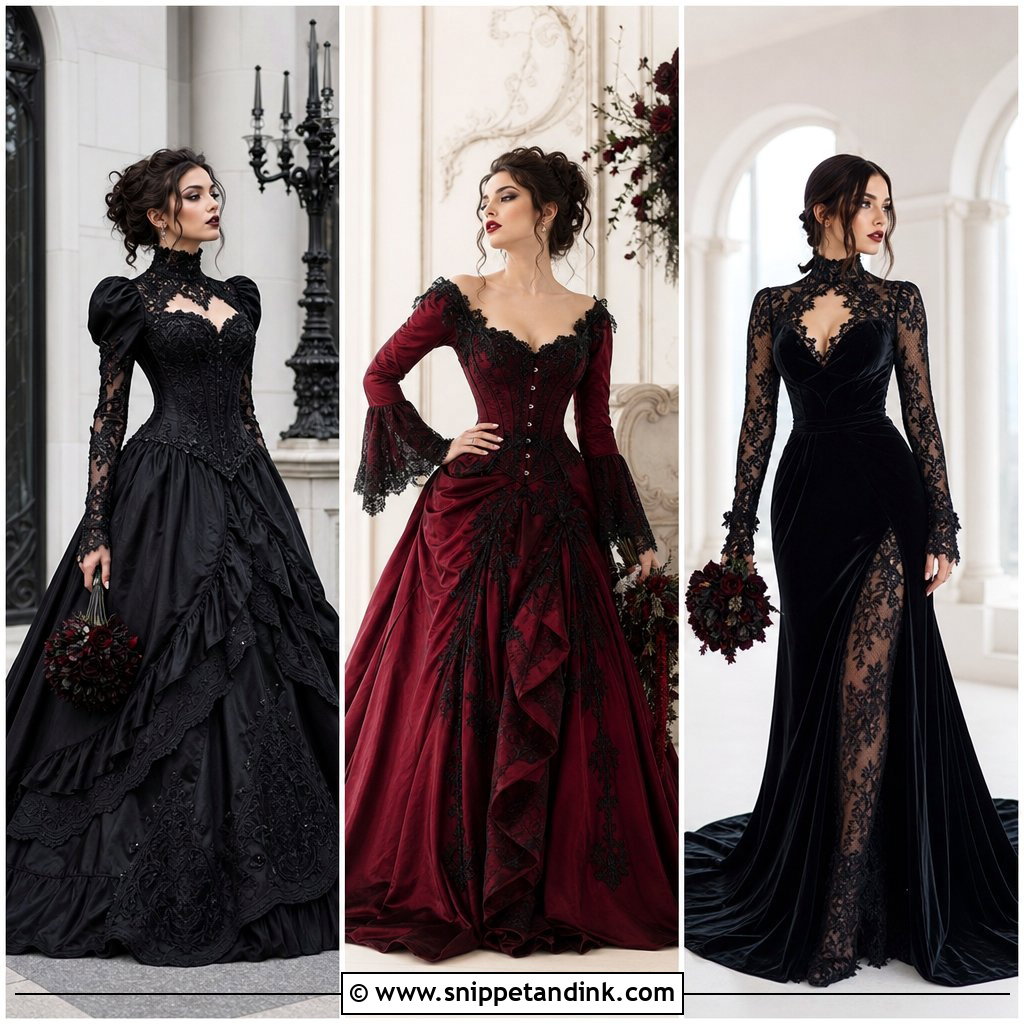
Gothic styling depends on one or two strong details, not ten. I pick from black lace overlay, corset bodice, high neck or long sleeves and stop there. Black or deep red shoes and antique-style jewelry carry the theme; a dark bouquet with greenery adds texture. Historic venues and candlelit evening ceremonies are its natural home. What usually goes wrong is accessories bought separately that don’t quite match the dress red, so bring a fabric swatch shopping.
12. Blood Red Black Wedding Dress
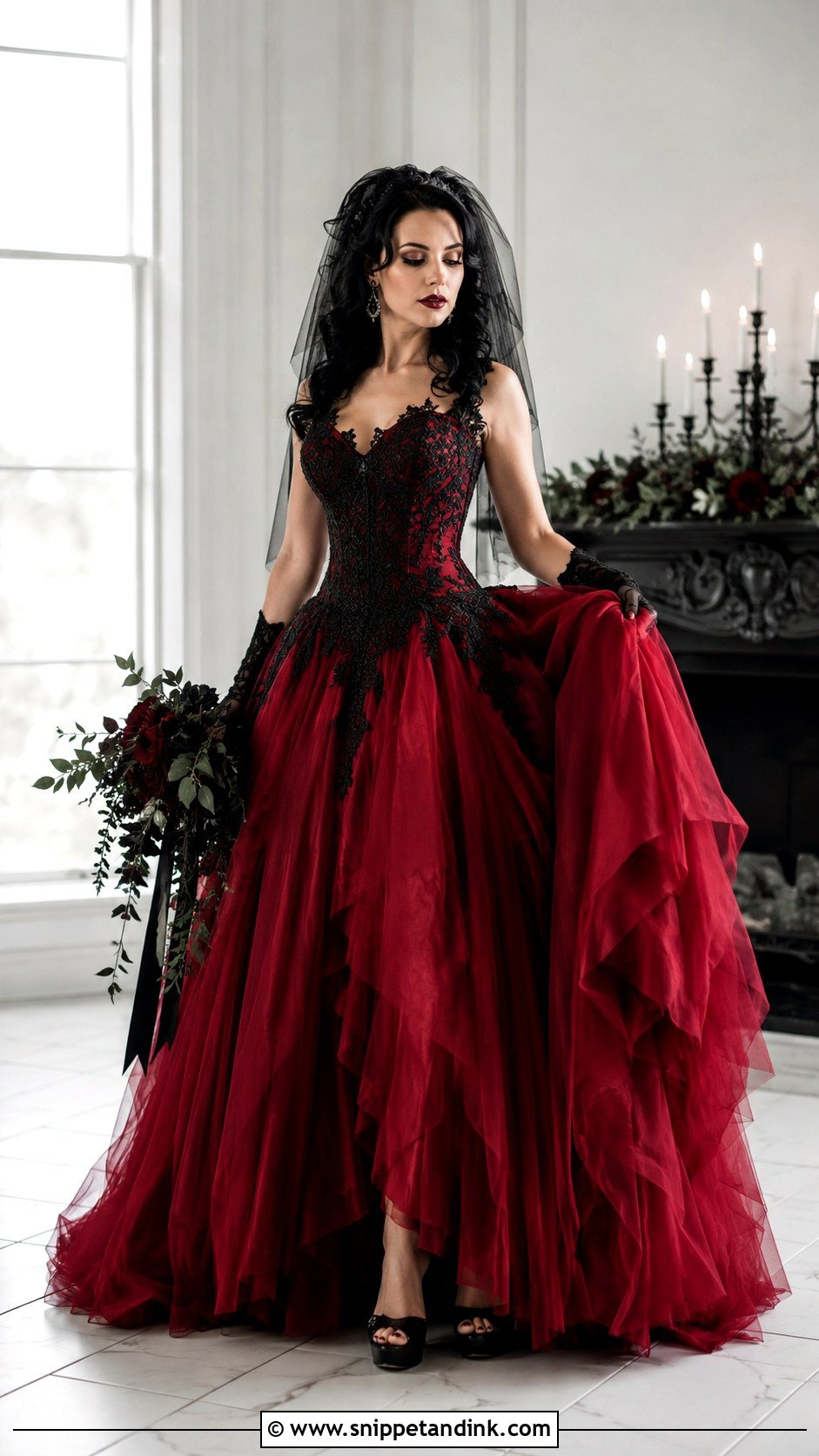
Red with black gives the most contrast of any idea here. A red gown with black lace detail looks layered; a black bodice with a red skirt looks bolder. Keep the silhouette clear, a mermaid, A-line or ball gown, and let the colors do the rest. A black veil sharpens it, silver or pearl jewelry keeps it from feeling heavy. I’d stop there, because more detail on a two-color dress looks busy quickly.
13. Blood Red High Low Wedding Dress
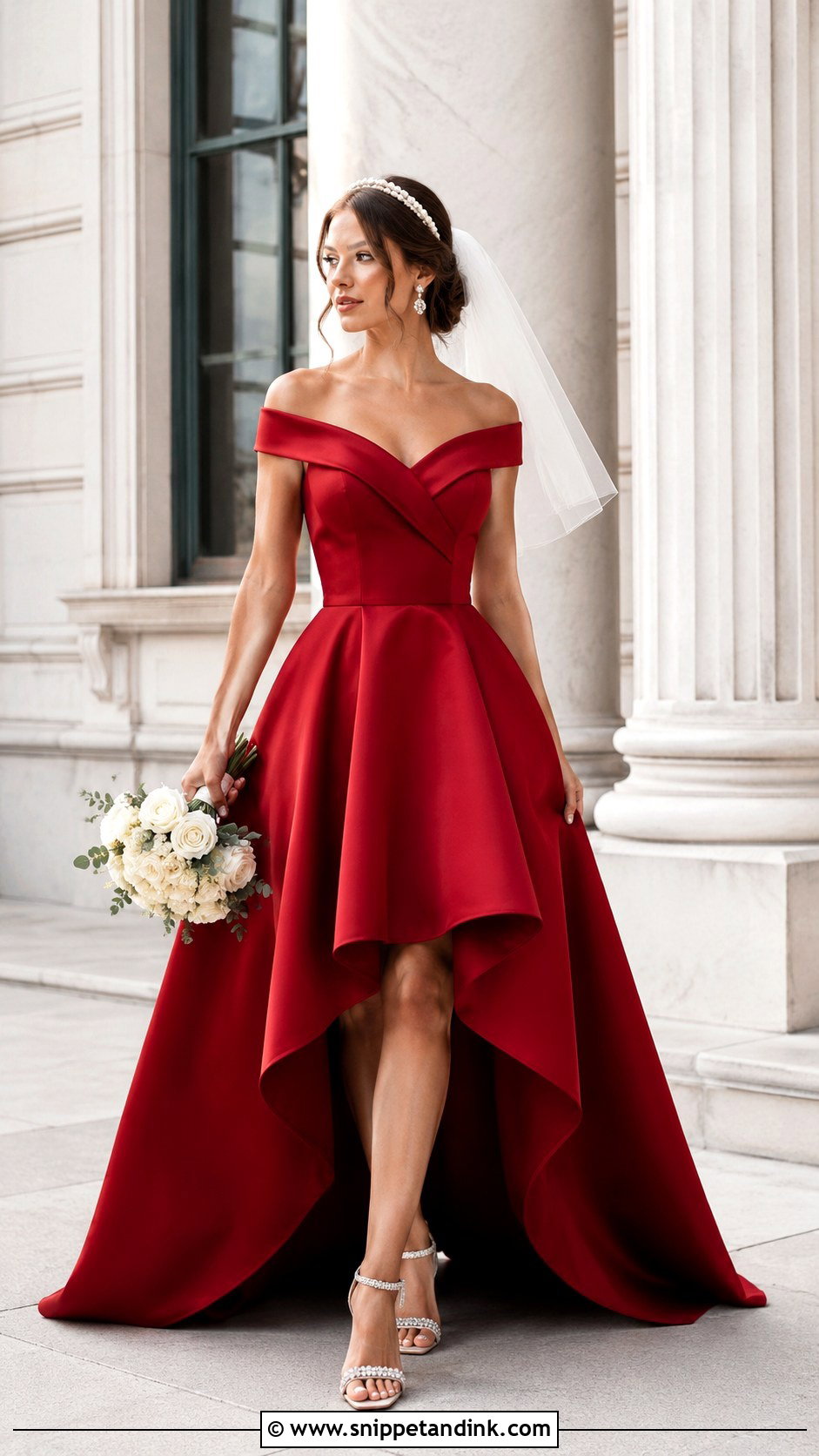
High low hems make walking and dancing simpler and put your shoes on show, so invest in the shoes. The longer back keeps a bridal outline. Structured satin looks modern; layered tulle looks softer. Be careful with the hem angle. Too steep and it reads as a prom dress, so I prefer a gentle dip. Good for city hall weddings and reception changes.
14. Blood Red Tea Length Wedding Dress
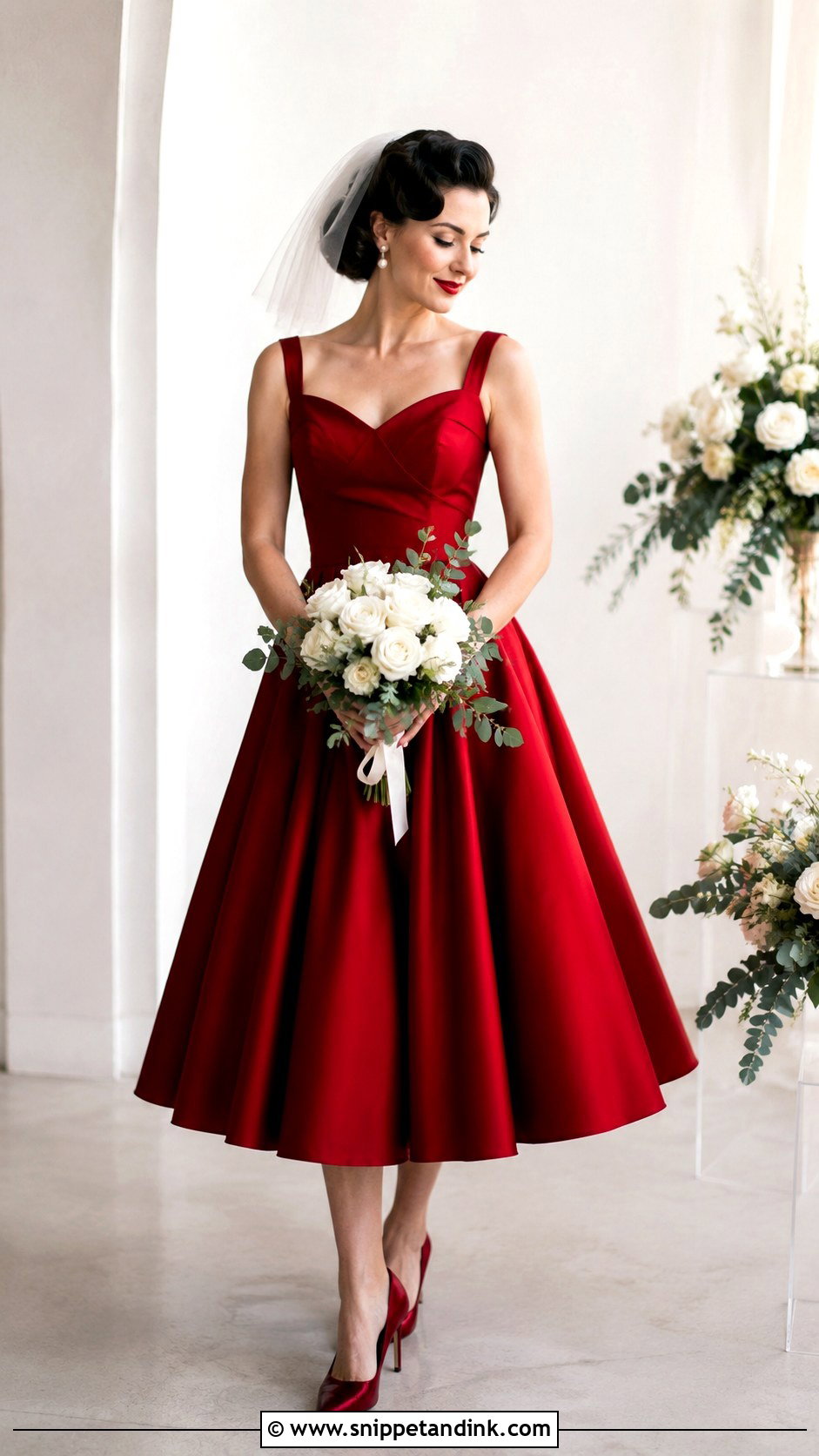
Tea length red is a little 1950s and a lot of fun. The hem between knee and ankle gives freedom to dance and walk, and a full skirt over a petticoat holds that period shape. Pointed heels, pearl earrings, a short veil and gloves complete it. It suits small ceremonies and courthouse weddings, where a long gown would feel too much.
15. Blood Red Simple Wedding Dress
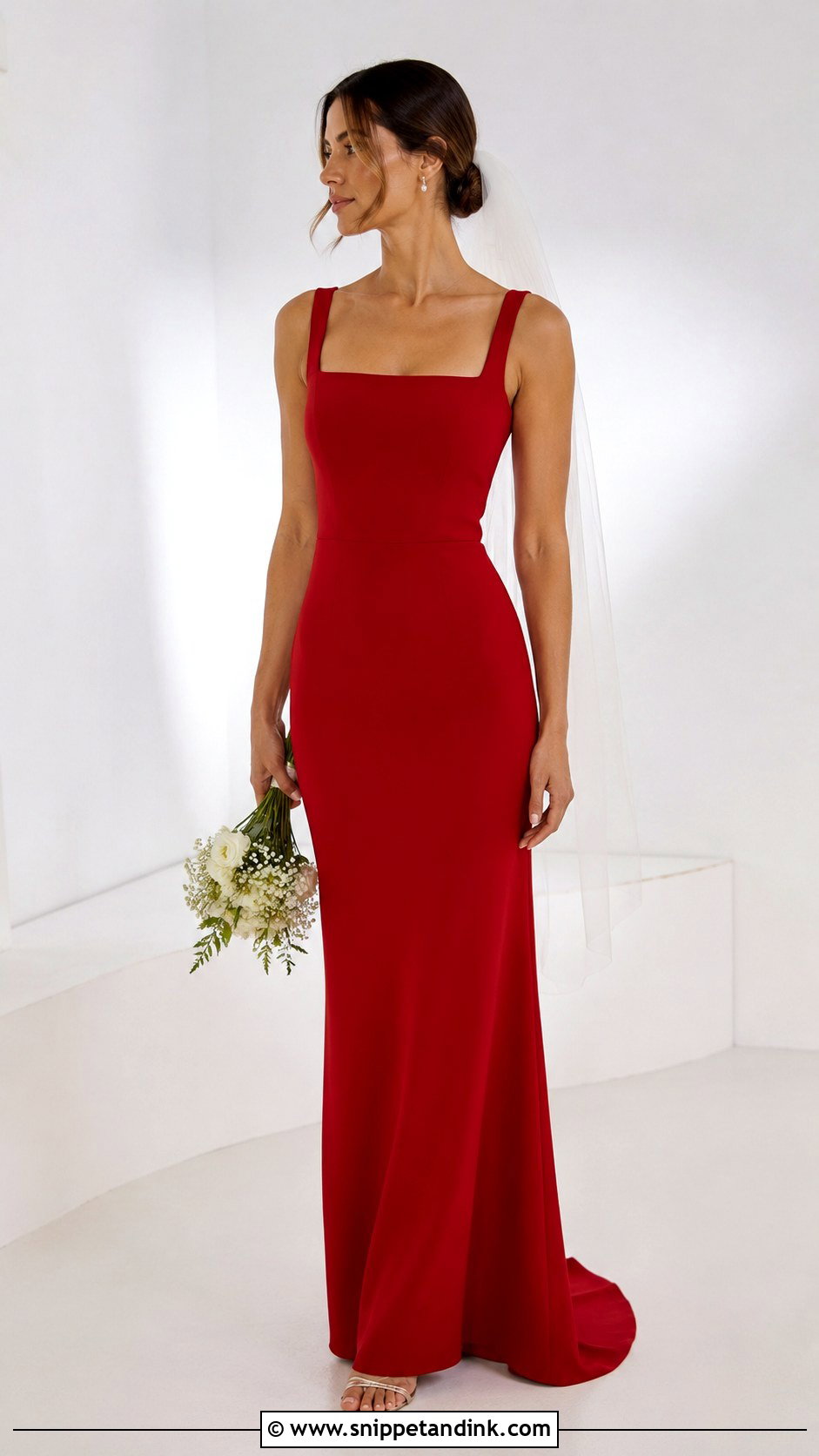
A plain red dress depends entirely on fit and fabric, because there’s nothing to distract the eye. Clean crepe, a satin slip or a minimal A-line all work. Spend the money on tailoring: a red column that pulls at the hips looks cheap in photographs; one that skims the body looks very expensive. A square neck or long clean sleeves keep it modern. Low bun, small earrings, soft veil.
16. Blood Red Beaded Wedding Dress
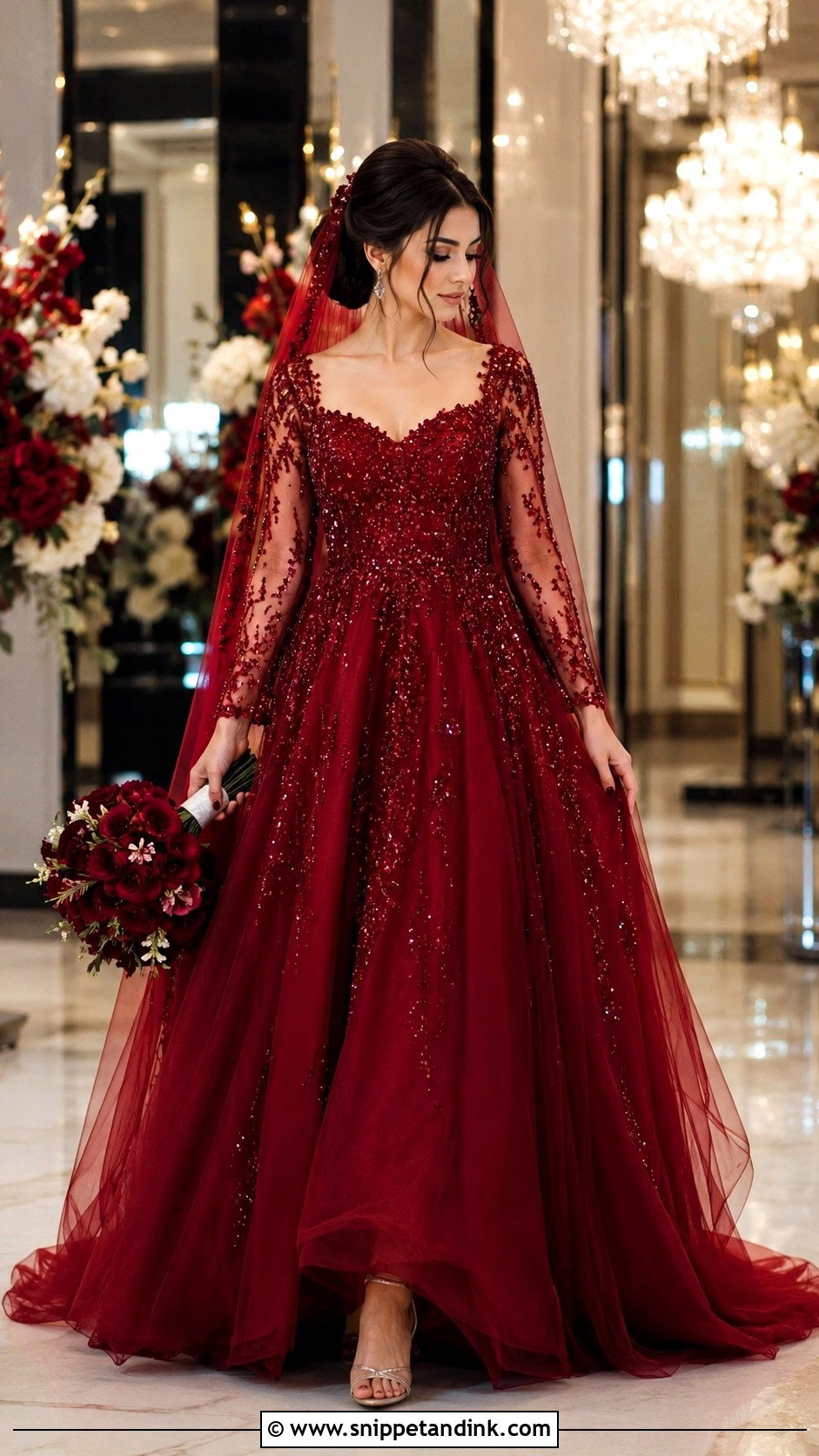
Beading on red should have one focus, the bodice, the neckline or the whole gown, and not all three. I usually suggest tonal red or garnet beads rather than silver, which can look like a party dress against red. A fitted beaded gown reads formal; beaded bodice with a soft skirt is more romantic. It’s at its best in evening light.
17. Blood Red Floral Wedding Dress
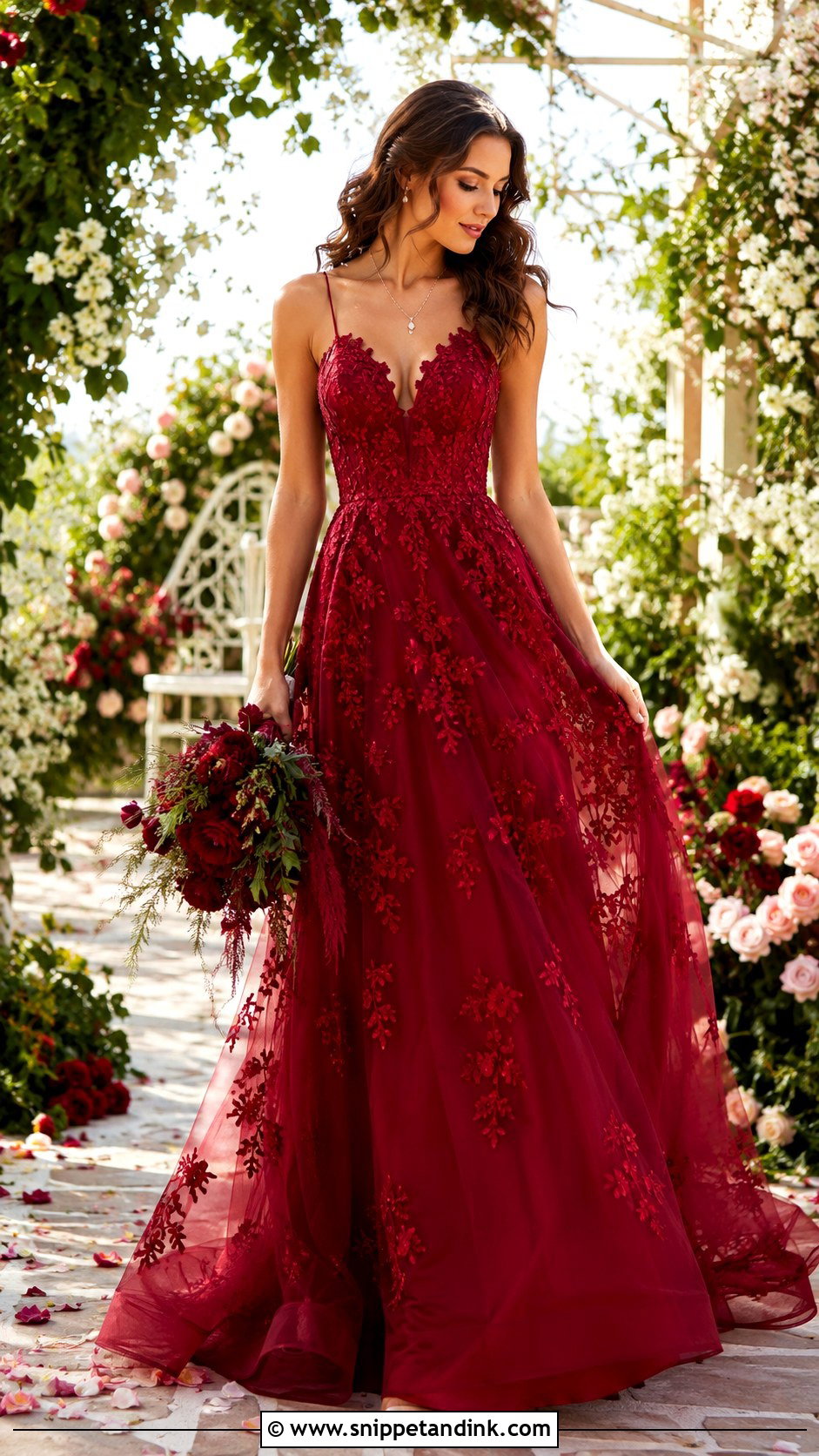
Floral embroidery or appliqué softens a dramatic red without changing it. Tonal flowers, darker red on red, are subtle and rich; blush or ivory flowers are more romantic and stand out from a distance. It suits garden weddings and spring or autumn ceremonies. Choose the base shape by comfort: A-line for movement, fitted for drama.
18. Blood Red Cape Wedding Dress
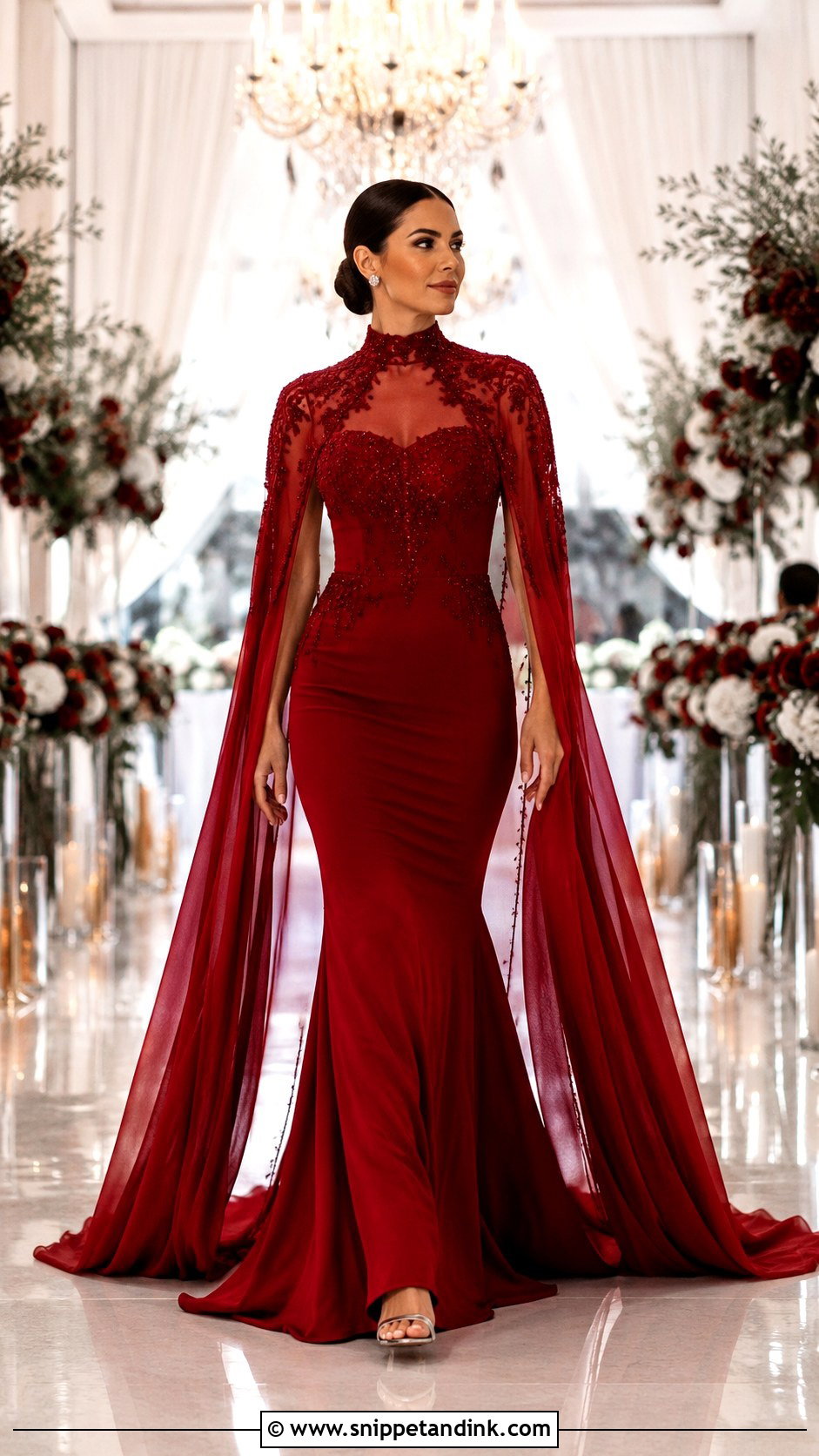
A cape replaces the veil and gives movement as you walk. Long and sheer over a fitted crepe dress looks modern; lace over lace looks softer. Capes attach at the shoulders or neckline, so any necklace will fight with the fastening. They look dramatic in outdoor portraits but need a wind plan, so have the photographer and a bridesmaid ready to arrange the fabric between shots.
19. Blood Red Strapless Wedding Dress
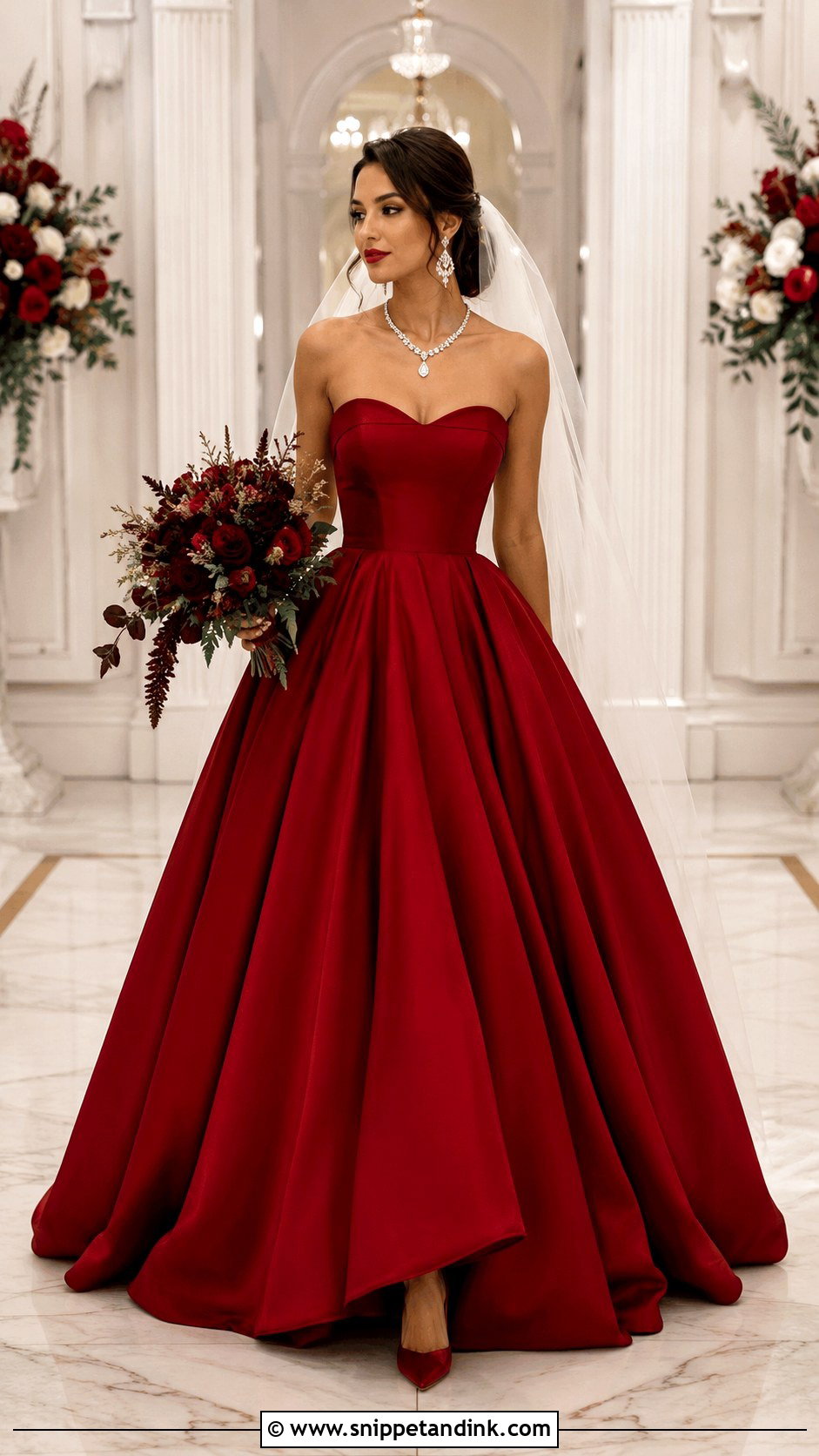
Strapless in red feels bold because so much color sits right next to bare skin. A sweetheart neckline is romantic; a straight one is modern. Internal structure is everything, because a strapless bodice that doesn’t fit snugly gets hitched up all night. A full skirt keeps it traditional; a fitted one makes it sleek. Statement earrings or a fine necklace, depending on how bare the neckline feels to you.

20. Blood Red Halter Wedding Dress
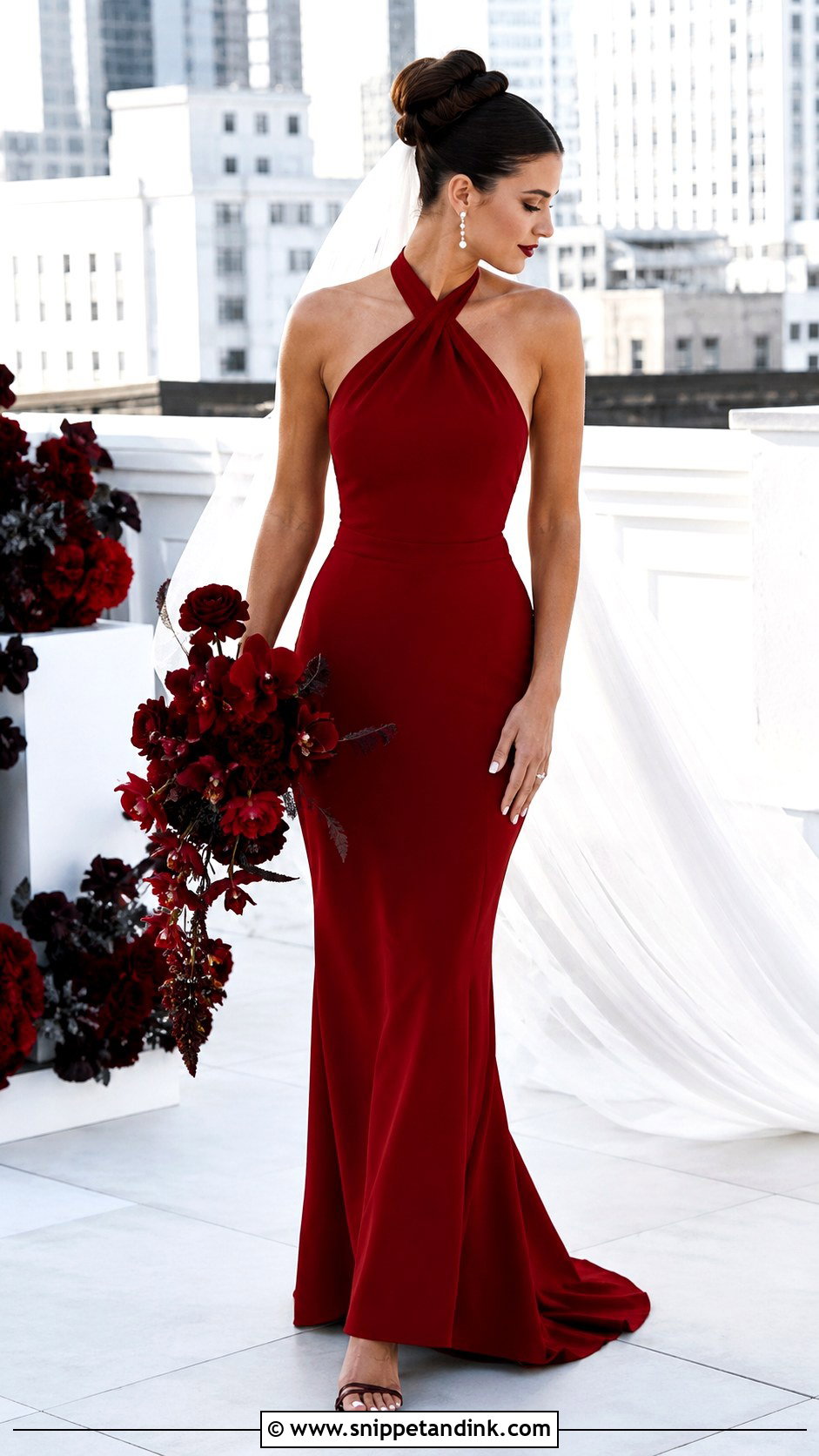
A blood red halter wedding dress draws attention to the shoulders and works on column, mermaid and A-line shapes. Satin and crepe keep the neckline crisp. The weight of the skirt hangs from the neck, so a heavy satin halter can tug after a few hours; I ask for a supportive inner bodice. Updo, drop earrings, no necklace, and a veil attached low.
21. Blood Red Square Neck Wedding Dress
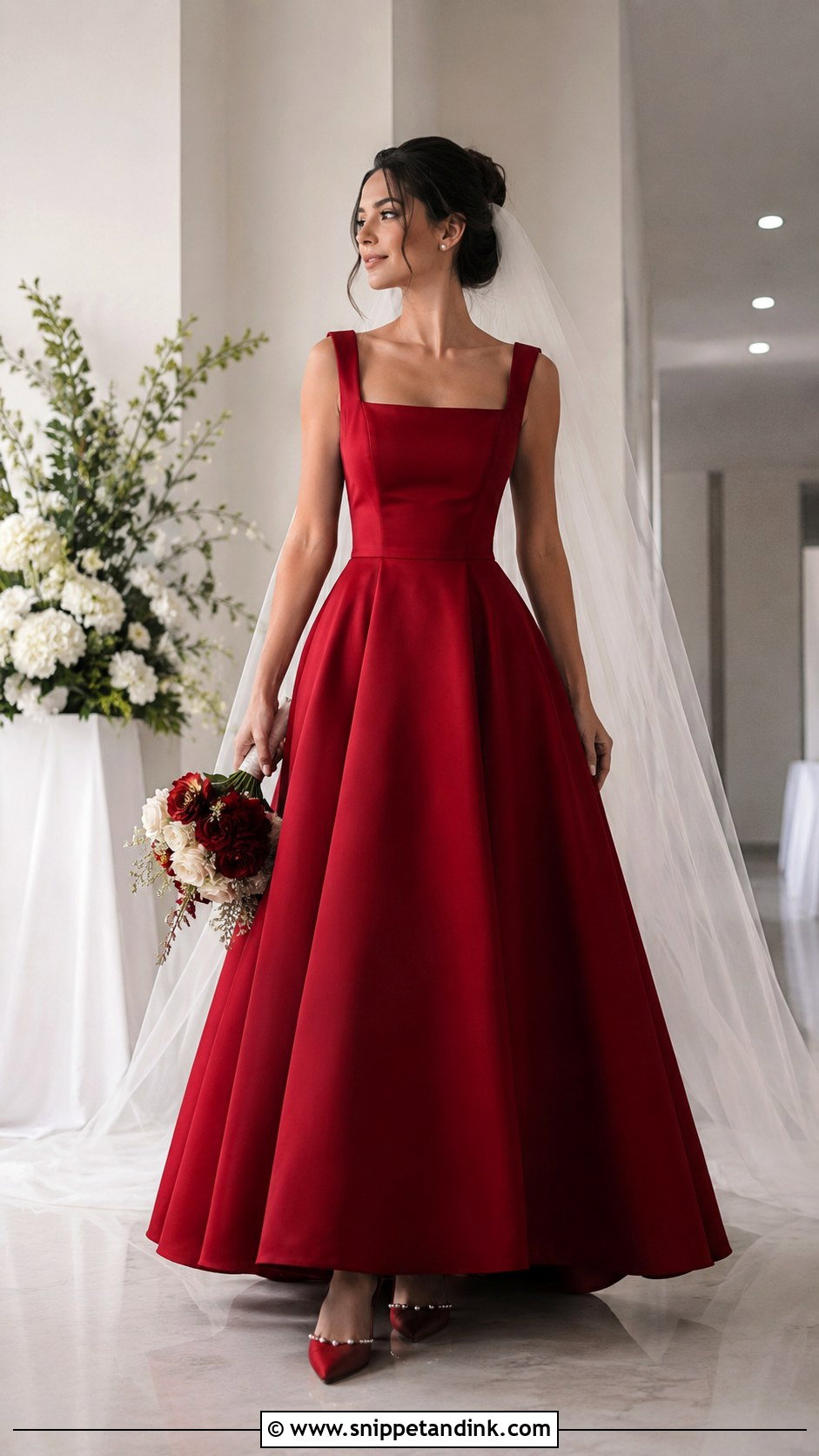
A square neckline gives red a crisp frame and stays modern without trying hard. A fitted bodice with an A-line skirt is the balanced option; a sleek column is minimal. Long sleeves make it formal; wide straps suit warm weather. Pearl studs, pointed heels and a smooth veil are enough.
22. Blood Red Boho Wedding Dress
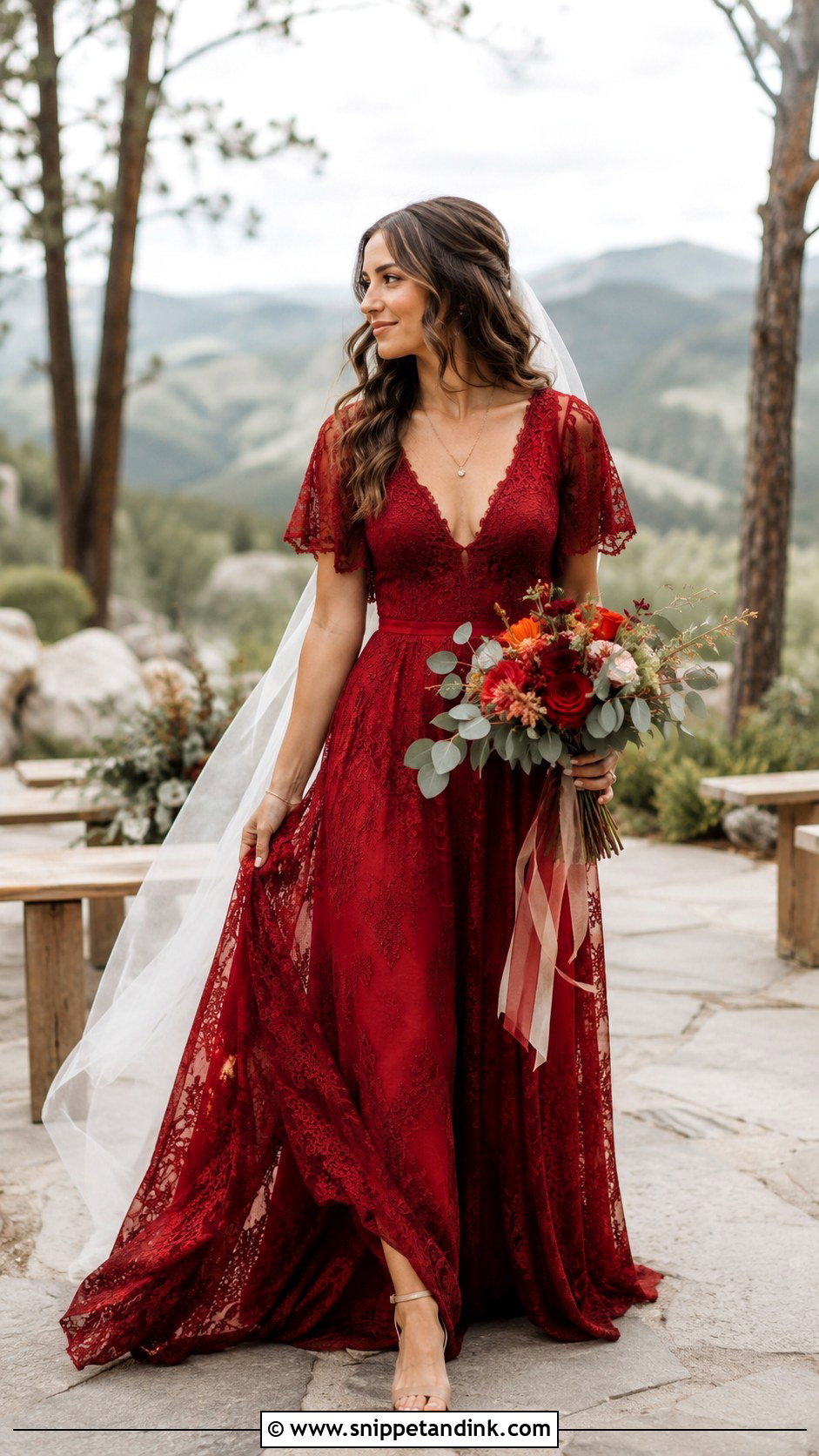
Boho red should drape, not stand. Soft lace, flutter sleeves and a flowing skirt let you move all day. Deep red in loose fabric can look heavy in bright midday sun, so I’d pick a slightly lighter weave or a lace with more openwork for an outdoor summer setting. Loose waves, sandals or block heels, delicate gold jewelry and a flower comb.
23. Blood Red Vintage Wedding Dress
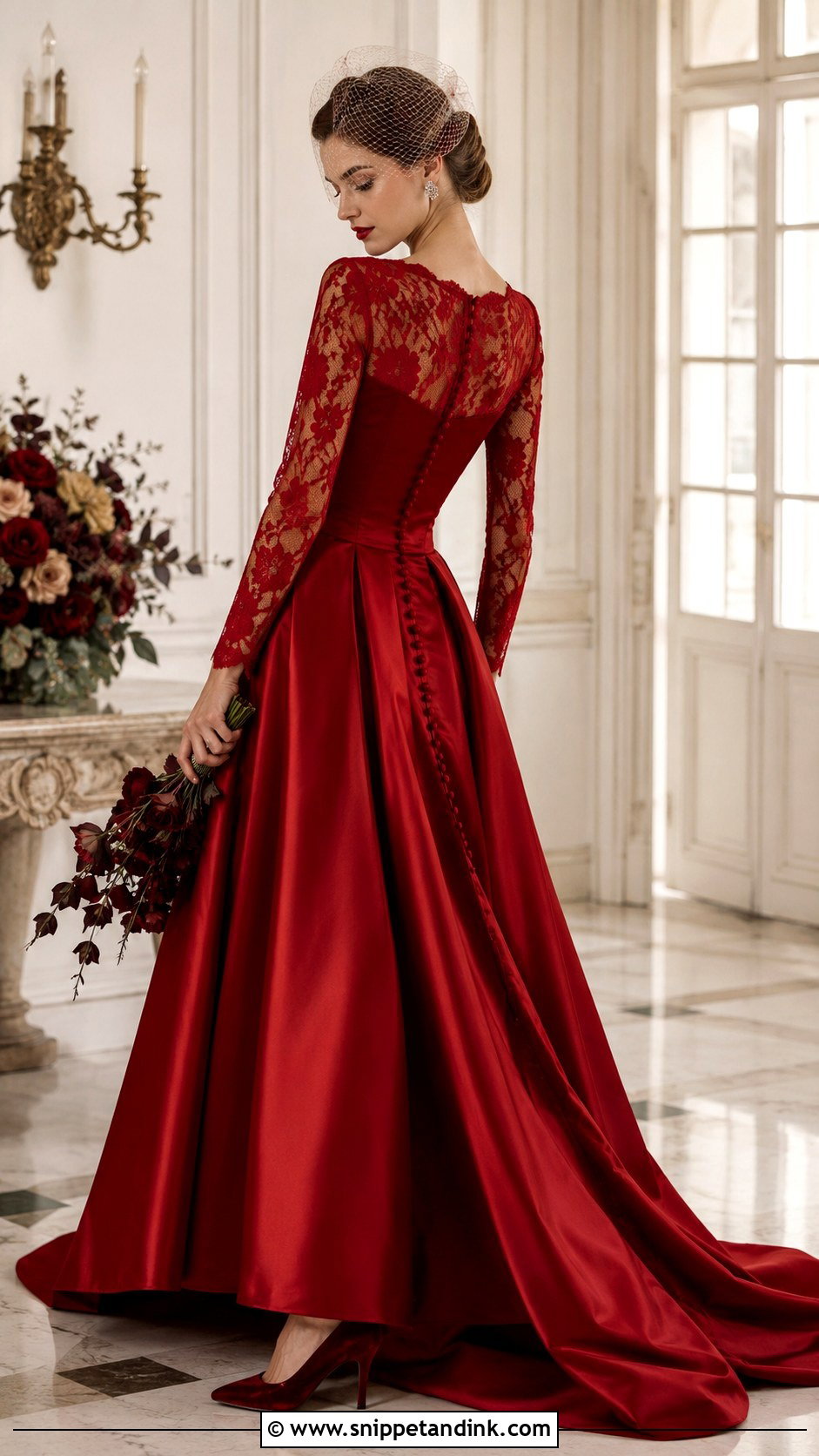
Vintage red can borrow from old Hollywood, Victorian details or mid-century shapes, but it works best when you choose one era and commit. A bias-cut satin gown is 1930s; lace sleeves and covered buttons are Victorian; a tea length skirt is 1950s. Mixing all three looks like a costume shop. A birdcage veil suits the 1940s and 1950s. A red lip only works if it matches the undertone of the dress, so take a swatch to your makeup trial.
24. Blood Red Two Piece Wedding Dress
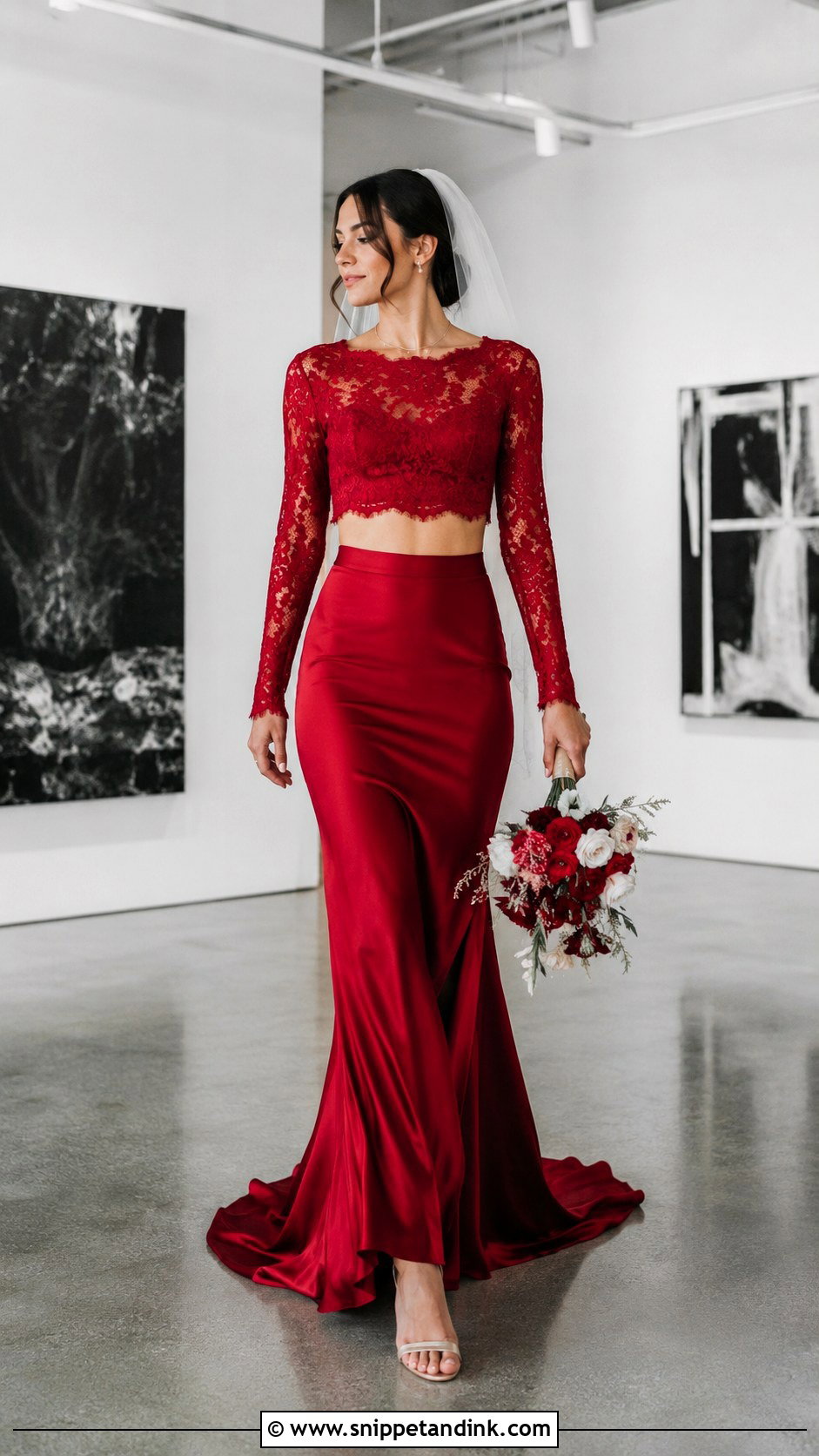
A two-piece is the most fashion-forward option here, and the most reusable: the top and skirt can be worn separately later. A structured crop top gives support; a long skirt with a small train keeps it bridal. Check the gap between top and skirt while you sit and raise your arms, because a crop that’s fine when standing may show more than you’d like at dinner. Satin, crepe, lace or tulle all work.
25. Blood Red Reception Wedding Dress
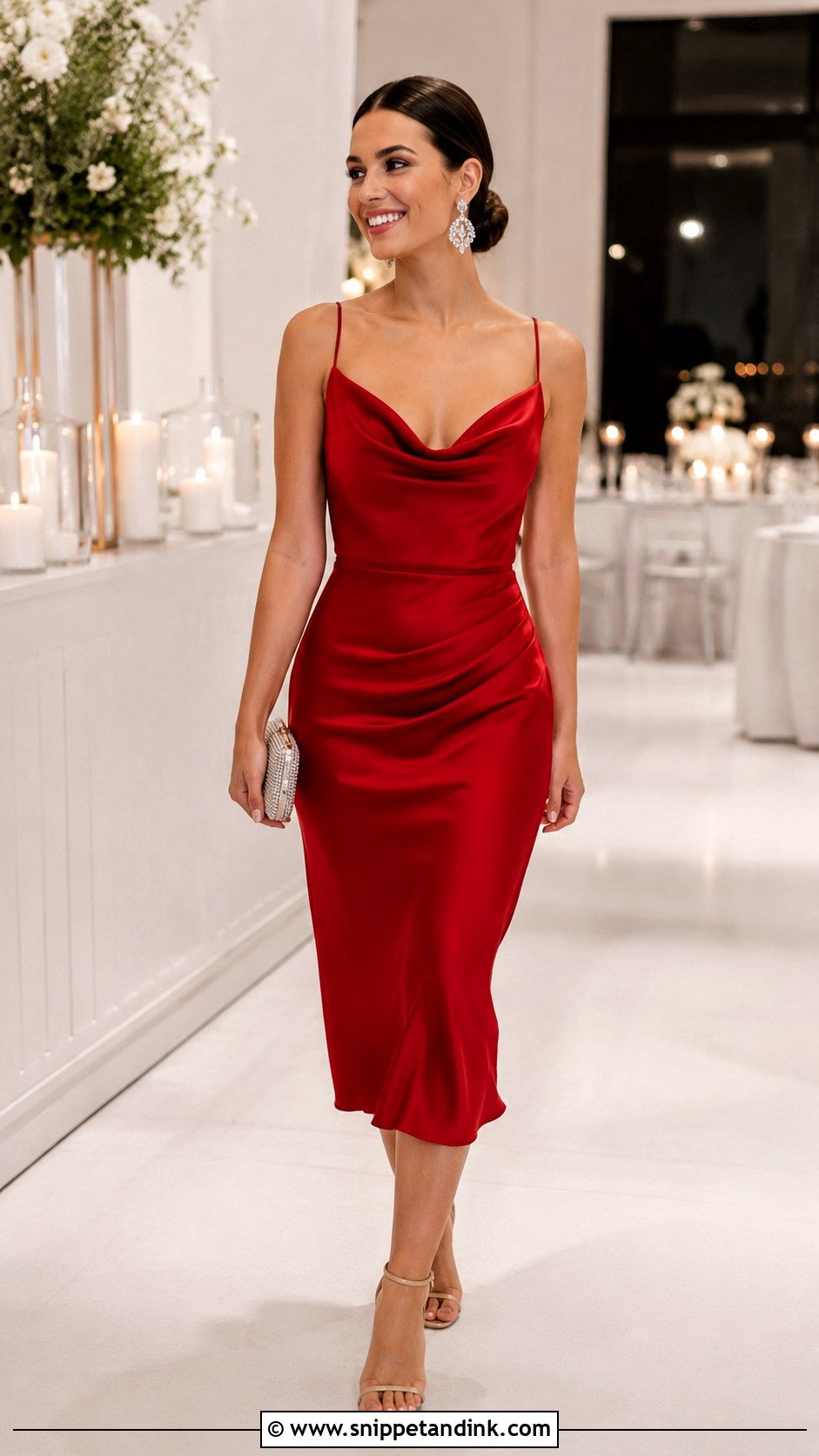
A red reception dress is the surprise change I suggest most often to brides who want red but whose family expects white for the ceremony. Choose something easier to move in: a satin midi, beaded mini, high low gown or red slip. If your ceremony gown is already red, make the second dress lighter in shape, not color, so the change still reads. Comfortable heels and sparkly earrings for the dance floor.
Red Dye Can Rub Off: What I Check on a Colored Gown
Colored bridal fabrics, especially deep reds, can transfer dye. It’s called crocking, and it shows up on pale shoes, ivory veils, a groom’s white shirt, or your own skin where the dress rubs under the arms.
Before buying, I rub a damp white cloth on an inside seam allowance. If pink comes off, ask the shop whether the fabric has been colorfast tested, and plan around it: dress shields under the arms, and a darker or tonal veil rather than bright white. Rain and sweat make transfer worse, so an outdoor summer wedding is where this matters most.
- Ask whether the dress is made to order in red. Colored gowns often are, which can add weeks to the delivery time.
- If bridesmaids are wearing red too, order from one dye batch or the shades won’t match.
- Store it away from pale fabrics and out of sunlight, which fades red faster than ivory.
After the wedding, tell the cleaner it’s a deep dyed fabric before they start. Some spot treatments lift red unevenly and leave a paler patch, so a professional who tests a hidden seam first is worth finding.
Wearing Deep Red Without It Looking Like a Costume
A red wedding dress works when everything around it agrees: the shape, the fabric, the veil, the venue and the light. Start with the silhouette you’re most comfortable in, then match the red to your skin, then style the rest to keep it bridal with an ivory or tonal veil and plain shoes. Gothic, vintage, minimal or boho, the dress should look like your choice and not a theme you’re wearing.
You'll Like These Ideas:


Leave a Reply