
Most brides arrive at their first appointment with a folder of screenshots pulling in six directions. Naming the mood first gives a stylist like me something to work with, because the mood decides the silhouette, the fabric and every accessory after it. Each look below is built head to toe: gown, veil, shoes, jewelry and the small finishing details. Treat them as starting points rather than formulas. A classic gown with modern earrings works, and so does a plain dress under a dramatic veil. What I’d hold you to is comfort over a long day and a look that makes sense in the room you’re marrying in.
Testing an Aesthetic in the Fitting Room, Not Just on a Mood Board
A mood board shows a gown on a model standing still. In the fitting room I want to see how it behaves on you, moving, sitting and reaching. So before you fall for one dress, test the aesthetic itself with a few simple checks.
- Bring shoes close to the heel height you plan to wear. Hem length and the way a skirt falls change with every bit of lift.
- Sit down in every gown you shortlist. Satin creases across the lap, boning presses into the ribs and a mermaid skirt bunches at the knee, and a chair shows you all of it in seconds.
- Raise both arms and hug someone. Long sleeves, off-shoulder straps and fitted lace reveal their limits right there.
- Try a veil with each silhouette. A cathedral veil changes the proportions of a column far more than it changes a ball gown.
- Look at each option from the back and in daylight from a window, not only under the mirror spotlights.
I also ask brides to try one shape they’re sure they’ll hate. Someone who walks in set on lace sometimes leaves in plain crepe, and the reverse happens too. The mood you name is a direction; the body in the mirror gets the final say.
1. Classic Satin Ball Gown Bridal Look
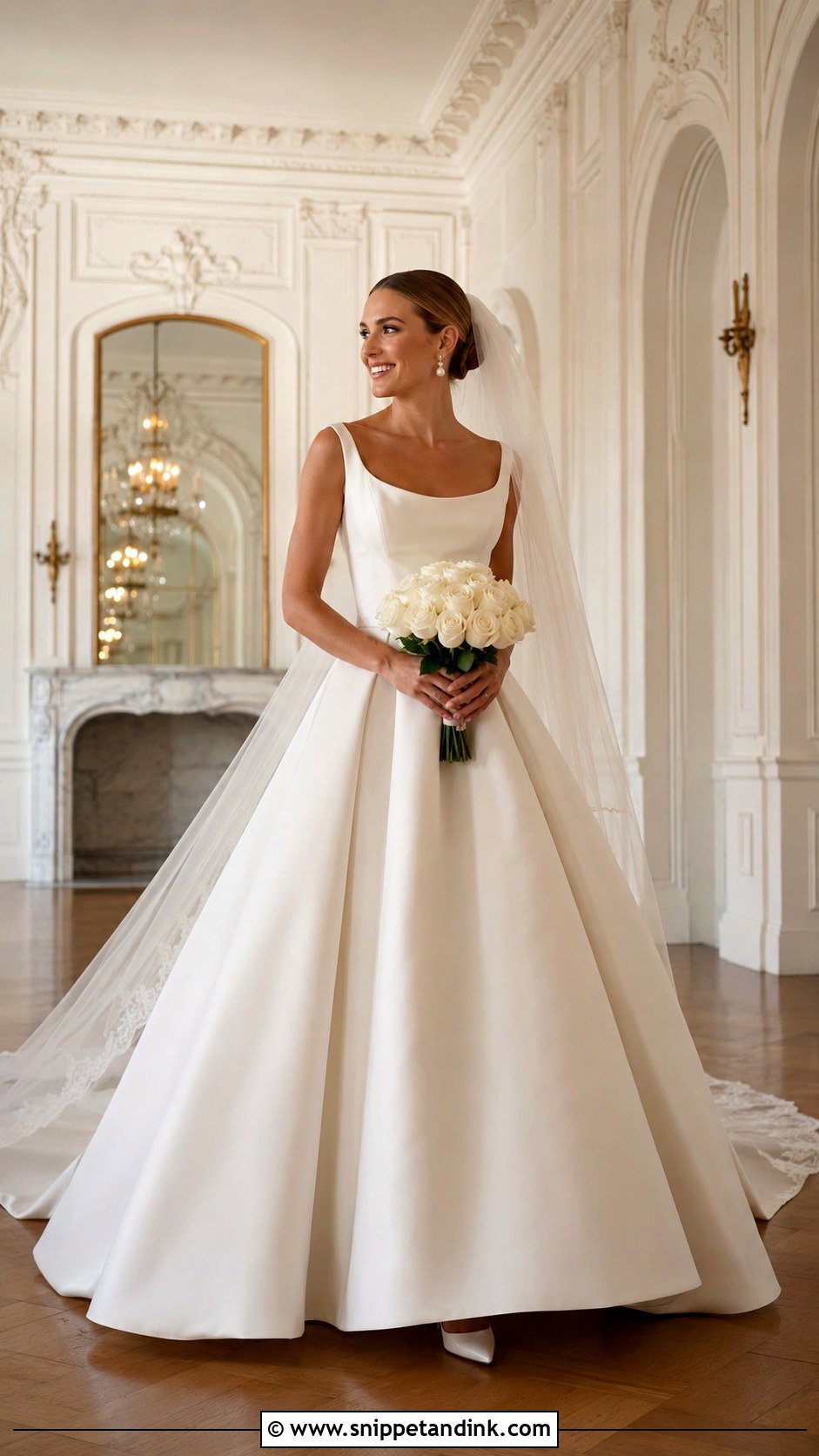
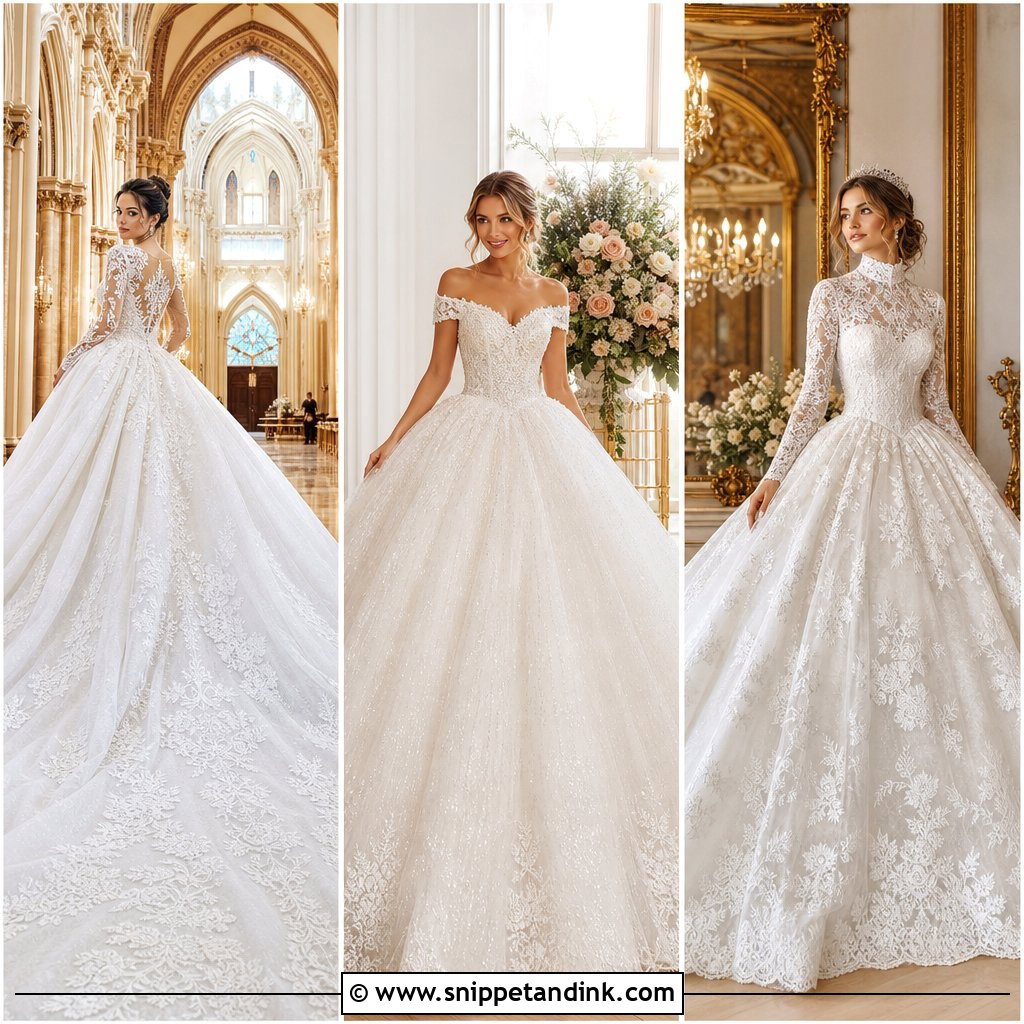
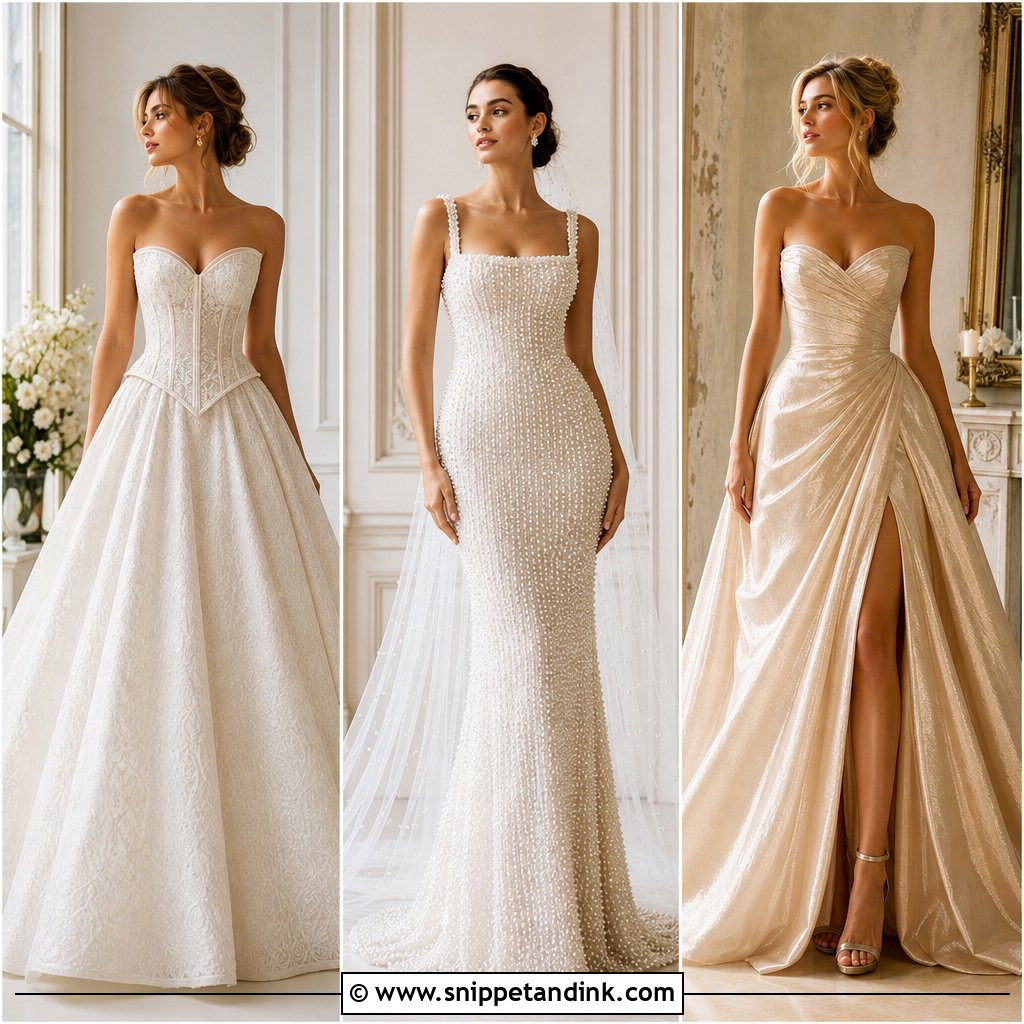
Satin ball gowns read as formal from the back of a ballroom, and they’re the shape I reach for when a bride wants photographs that won’t date. Ask for a structured bodice, a softly curved neckline, a defined natural waist and a full skirt in luminous satin or Mikado. If you’ll sit through a long dinner, I steer toward Mikado; it’s stiffer and holds its shape, while a soft duchess satin creases across the lap within the first hour of sitting. The fabric carries the look, so skip heavy decoration. A fingertip or cathedral tulle veil with a narrow satin edge, pearl studs, a fine tennis bracelet and ivory pointed pumps keep it refined. Add a rounded bouquet of white roses or peonies with wrapped stems and a low chignon. Ballrooms, formal hotels and historic estates suit it best.
2. Minimalist Column Bridal Gown Look
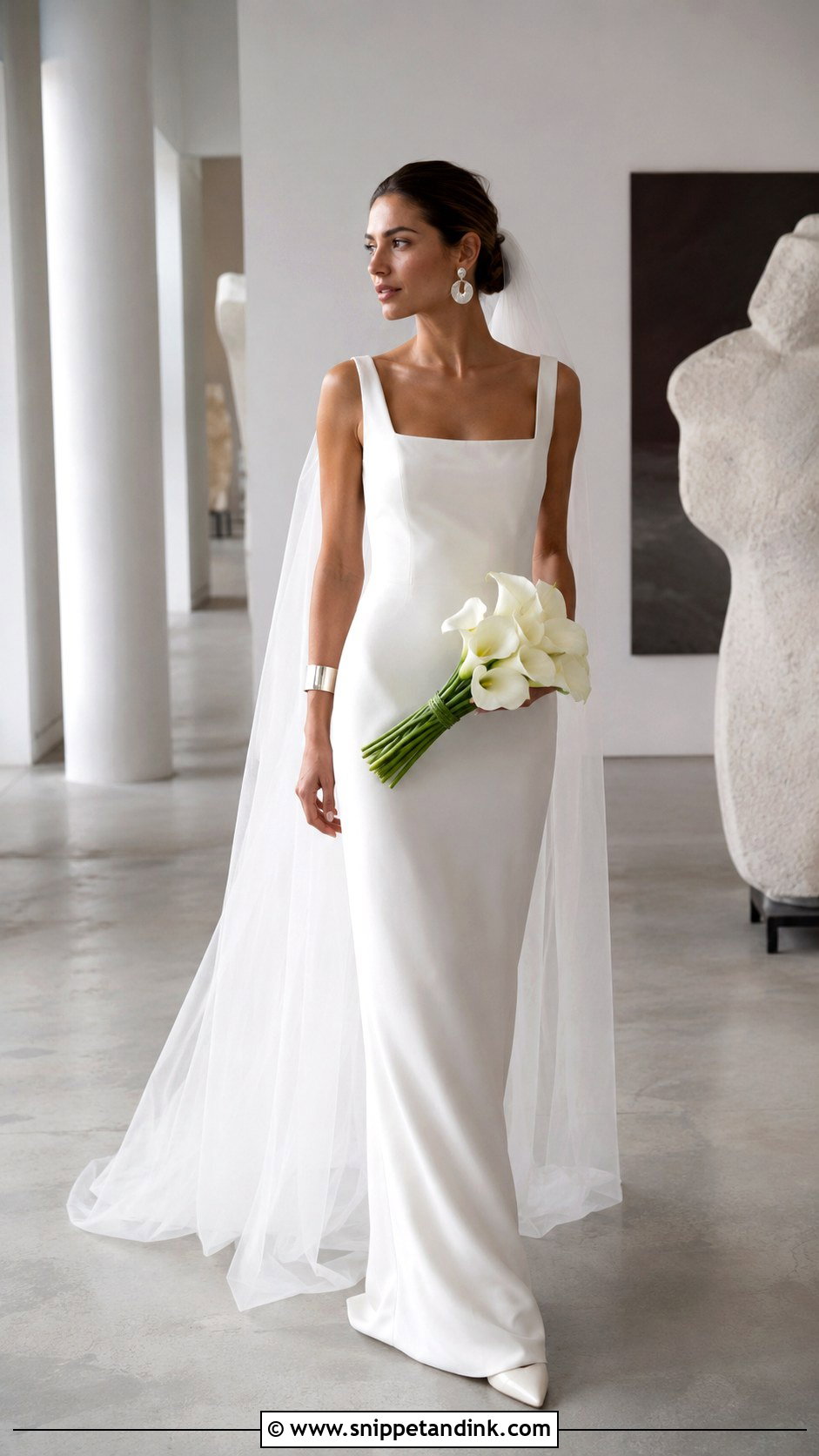
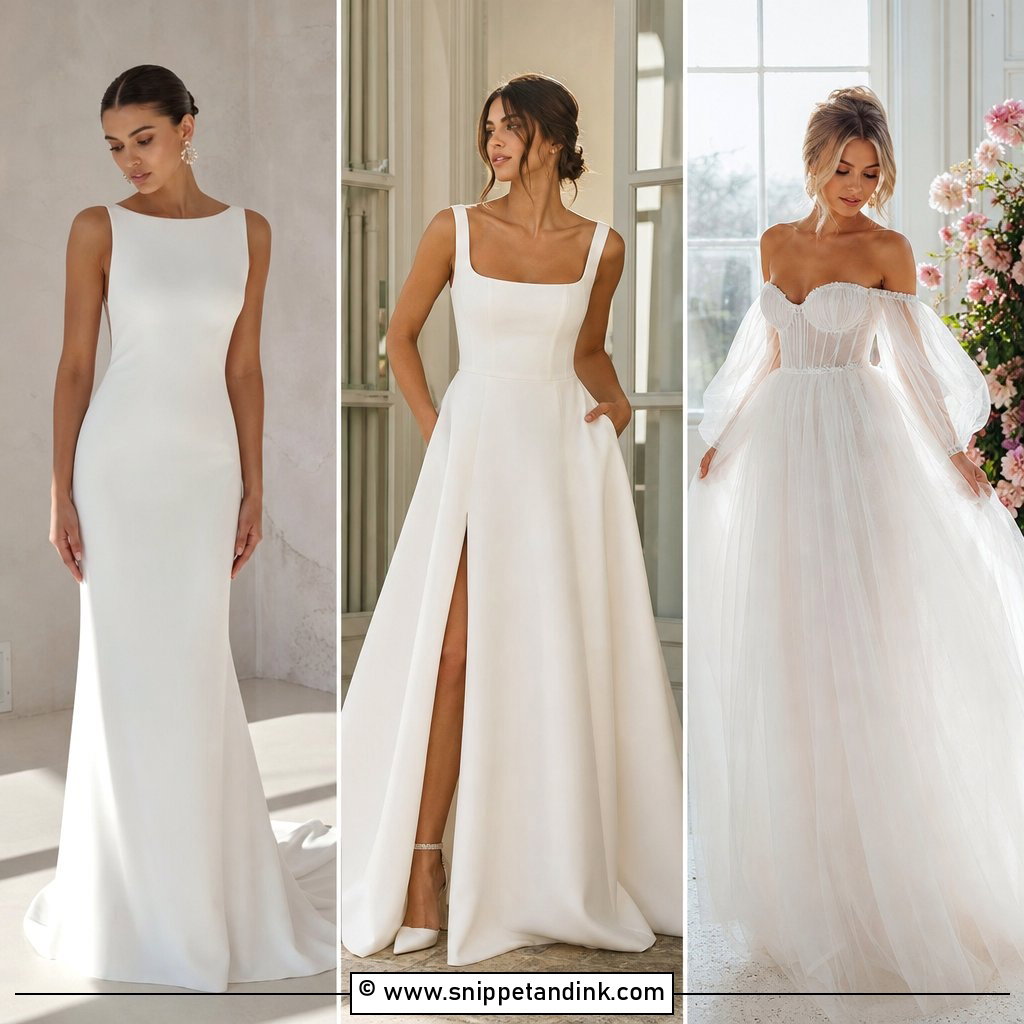
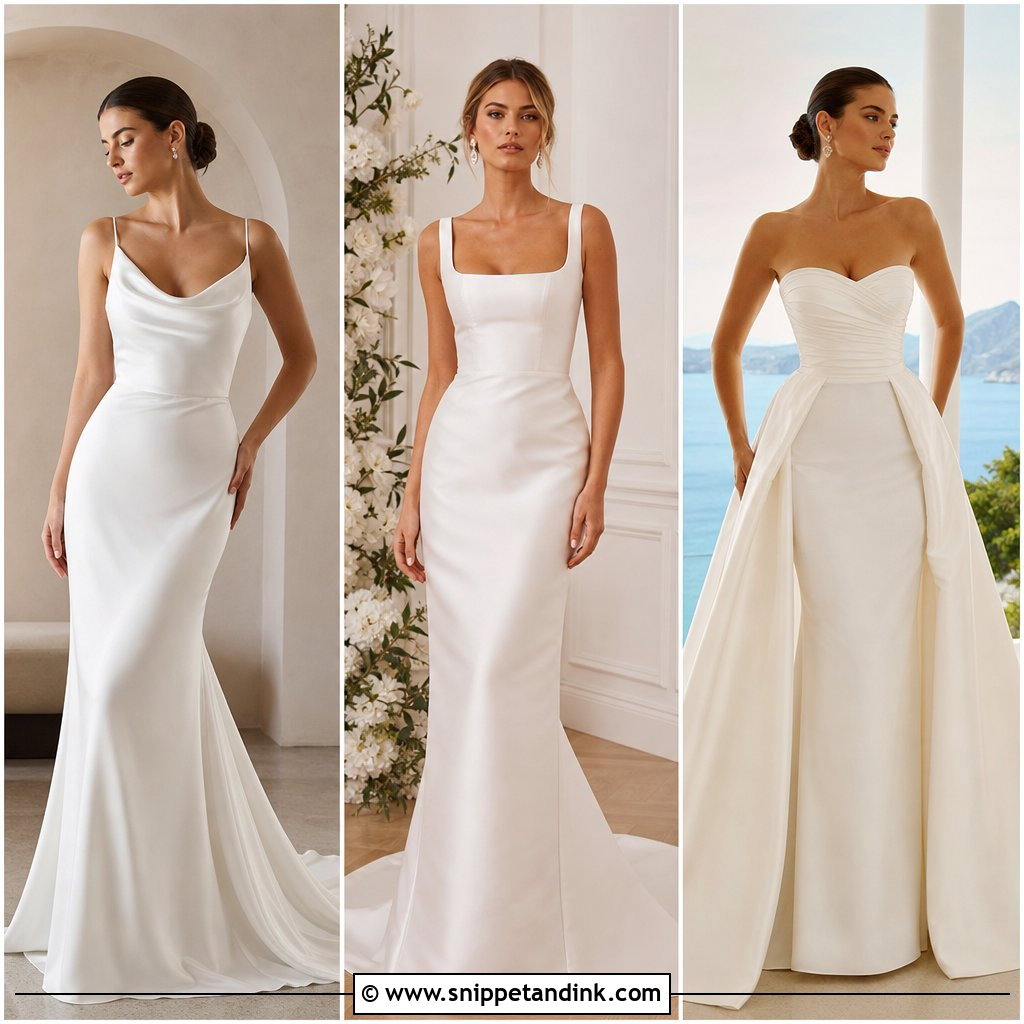
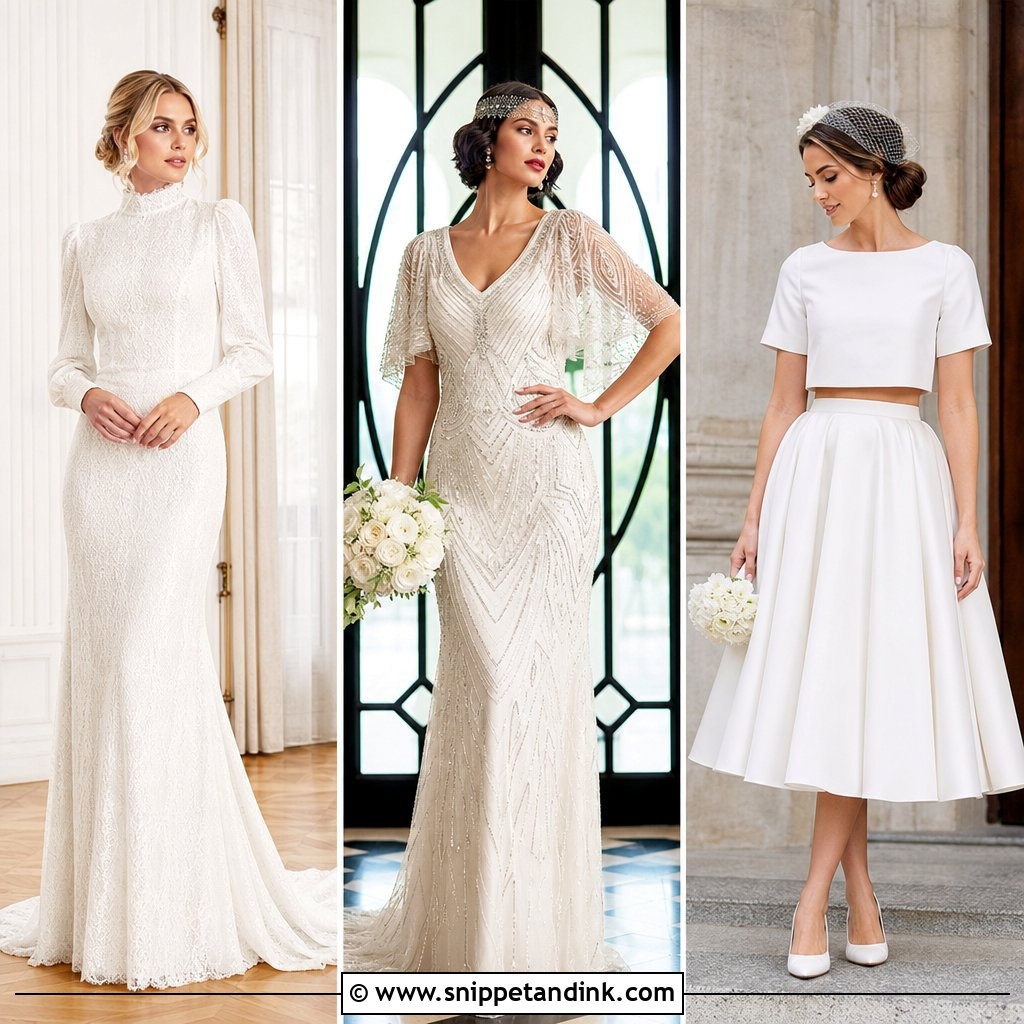
A column gown hides nothing, which is why I fit it more carefully than any other shape. In silk crepe or heavy satin it makes one long, unbroken line, and any pulling at the seat or rippling along the side seams shows straight away. Look for a square, bateau or softly draped neckline, with quiet seaming doing the shaping instead of embellishment. Crepe is kinder if you’re worried about lines underneath; satin shows everything. Sleek pointed pumps or barely-there ivory sandals, sculptural earrings and a smooth metal cuff give it a modern edge. Swap the ornate veil for a plain chapel-length or shoulder-length one, carry a compact bunch of calla lilies, and keep the hair straight, in a clean bun or in polished waves. Galleries, city venues and small ceremonies are its home.
3. Romantic Lace A-Line Bridal Gown
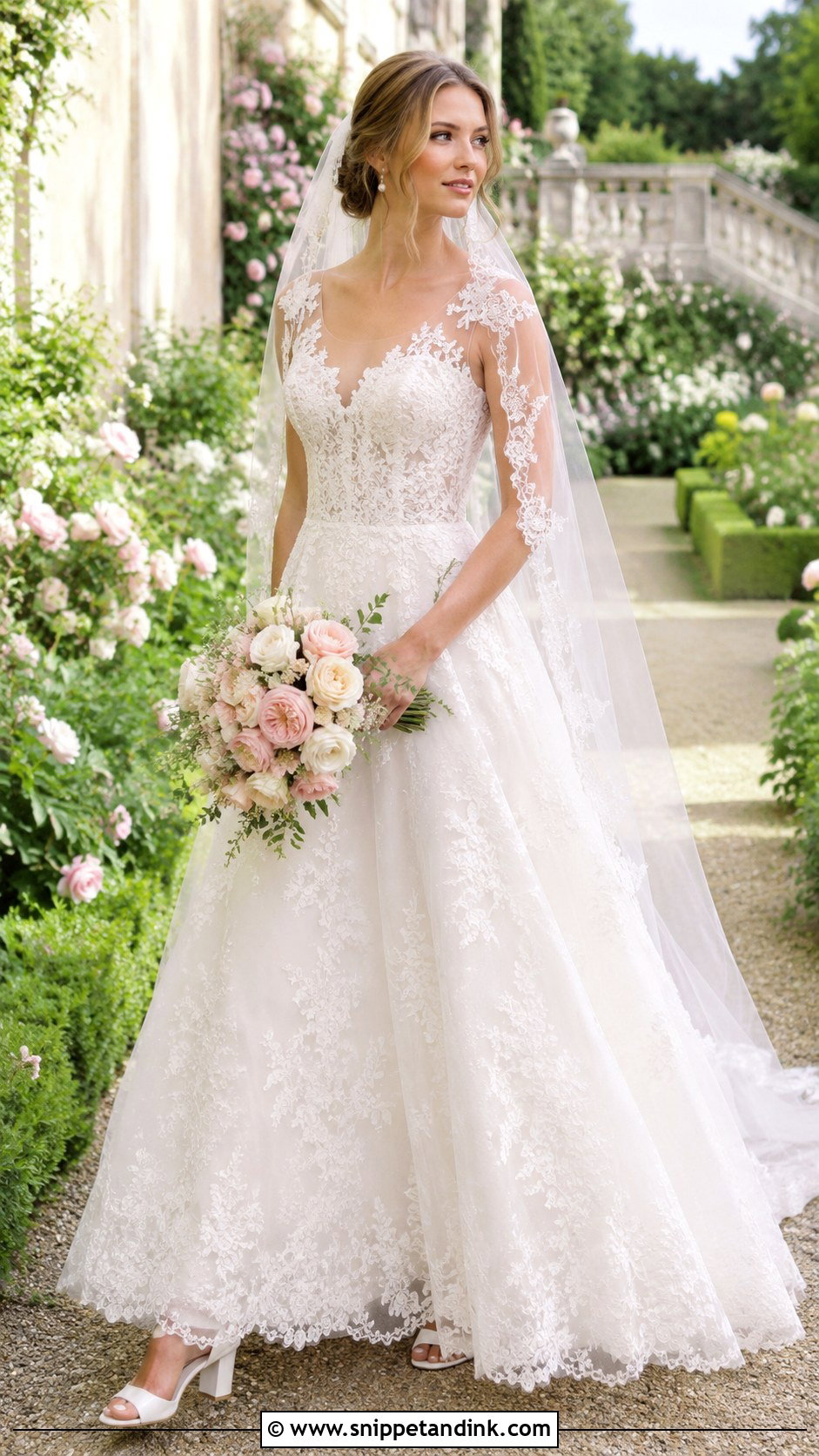
Of every shape I style, the lace A-line suits the widest range of bodies, because the skirt skims the hips while the fitted bodice does the shaping. Look for floral lace over a comfortable lining and a sweetheart or soft V-neckline; illusion straps give real support if you’re fuller in the bust. Ask whether the lace is hand-placed at the seams. Cheaper construction cuts straight through the motifs, and you’ll spot it in close-up photos. Your veil should echo the lace without copying it, or the two patterns blur together. Pearl drops, a small pendant and ivory block-heel shoes keep you steady on a lawn. A loose updo with face-framing pieces and garden roses, ranunculus and greenery suit vineyards, gardens and country houses.
4. Victorian High Neck Bridal Gown Look
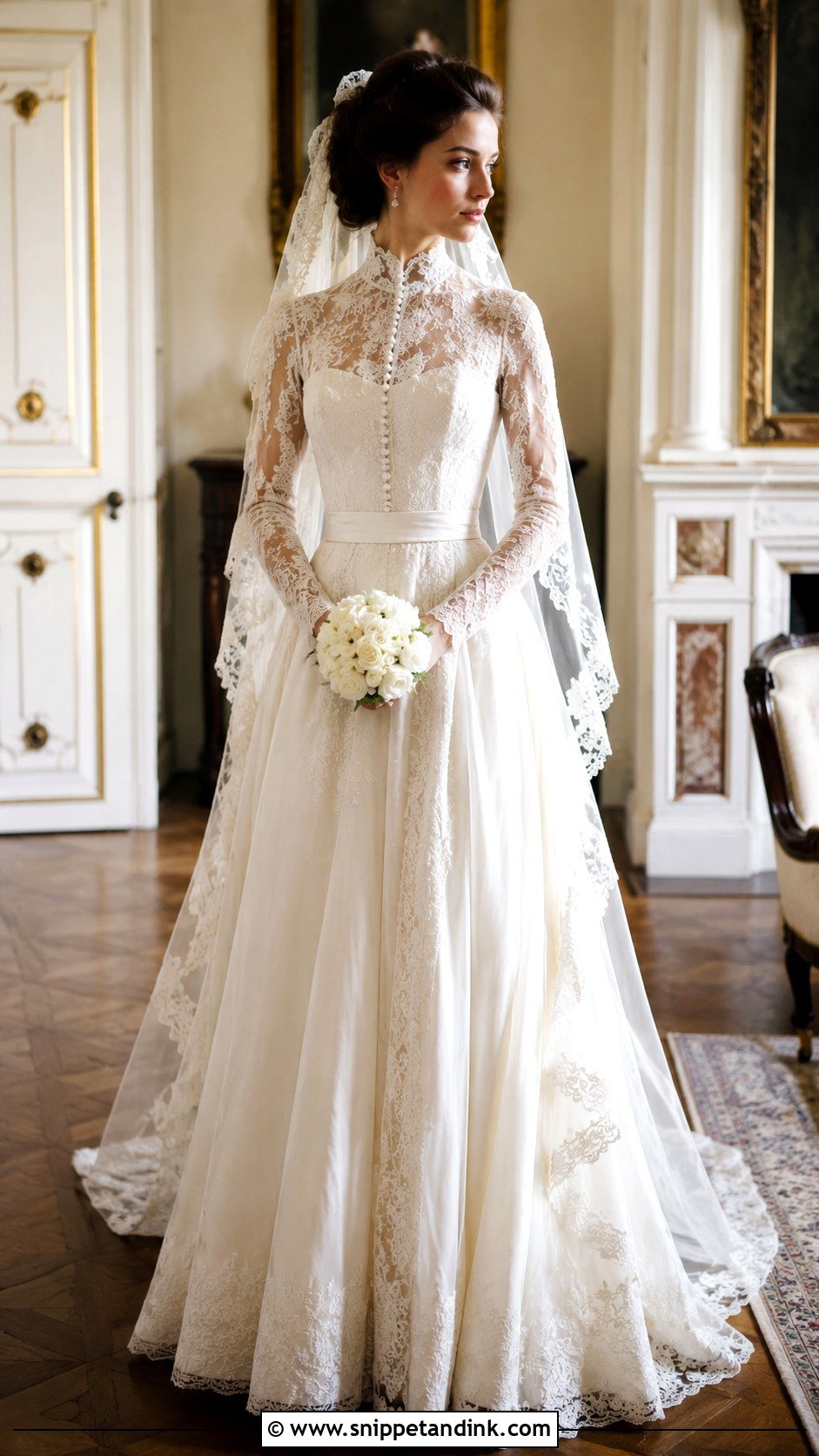
High necks and fitted long sleeves need more fittings than almost anything else I dress. Choose ivory lace with a defined waist and a flowing A-line or softly gathered skirt; a stiff, heavily boned skirt is what tips this look into costume. Covered buttons down the back and at the cuffs are the period detail worth keeping, but a long row of them takes time to fasten, so have someone practise on the morning. In the fitting, raise your arms. Tight lace sleeves cut in at the armhole the moment you hug someone or lift a bouquet. Vintage-style pearl earrings, ivory pumps and a lace-trimmed cathedral veil under a neat low bun complete it, with white roses and trailing greenery in hand. Keep the makeup fresh so the neckline stays the focus in historic homes, libraries and autumn ceremonies.
5. Boho Chiffon Bridal Gown Look
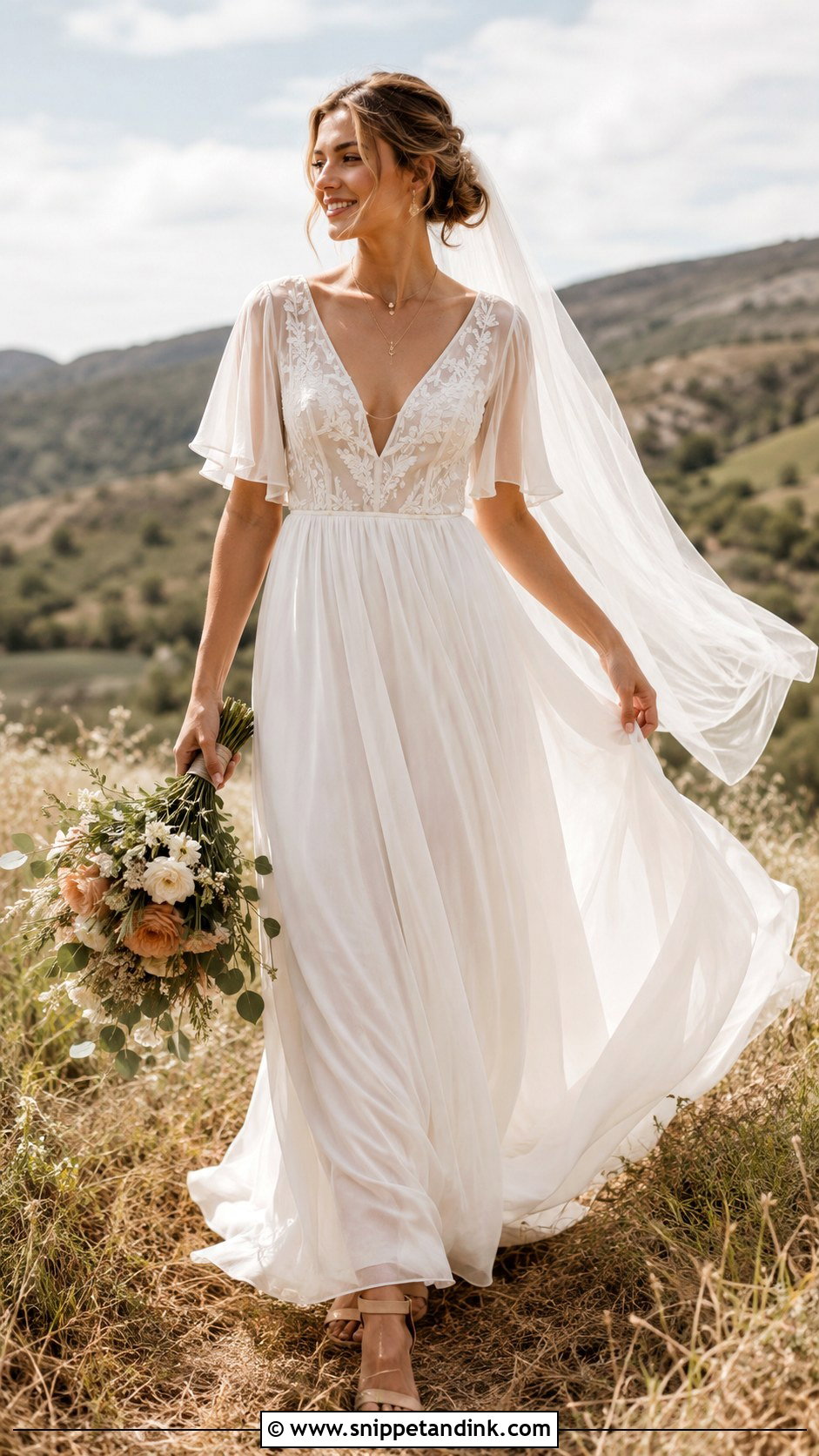
Chiffon moves with every breeze, which is the whole appeal outdoors. It also snags on bark, brambles and rough decking, so I ask boho brides to picture the actual ceremony path before committing to a long hem. An empire waist or relaxed A-line with flutter sleeves, a lace-trimmed bodice or subtle embroidered panels keeps it easy to wear. Leave out big volume so the skirt moves freely over grass, sand or uneven ground. Neutral block-heel sandals, fine gold earrings and a thin layered necklace sit right with it, and a soft tulle veil, floral pins or a chiffon cape adds movement. Carry loosely tied seasonal flowers with airy greenery in woodland, desert, barn or destination settings.
6. Fairytale Tulle Ball Gown Bridal Look
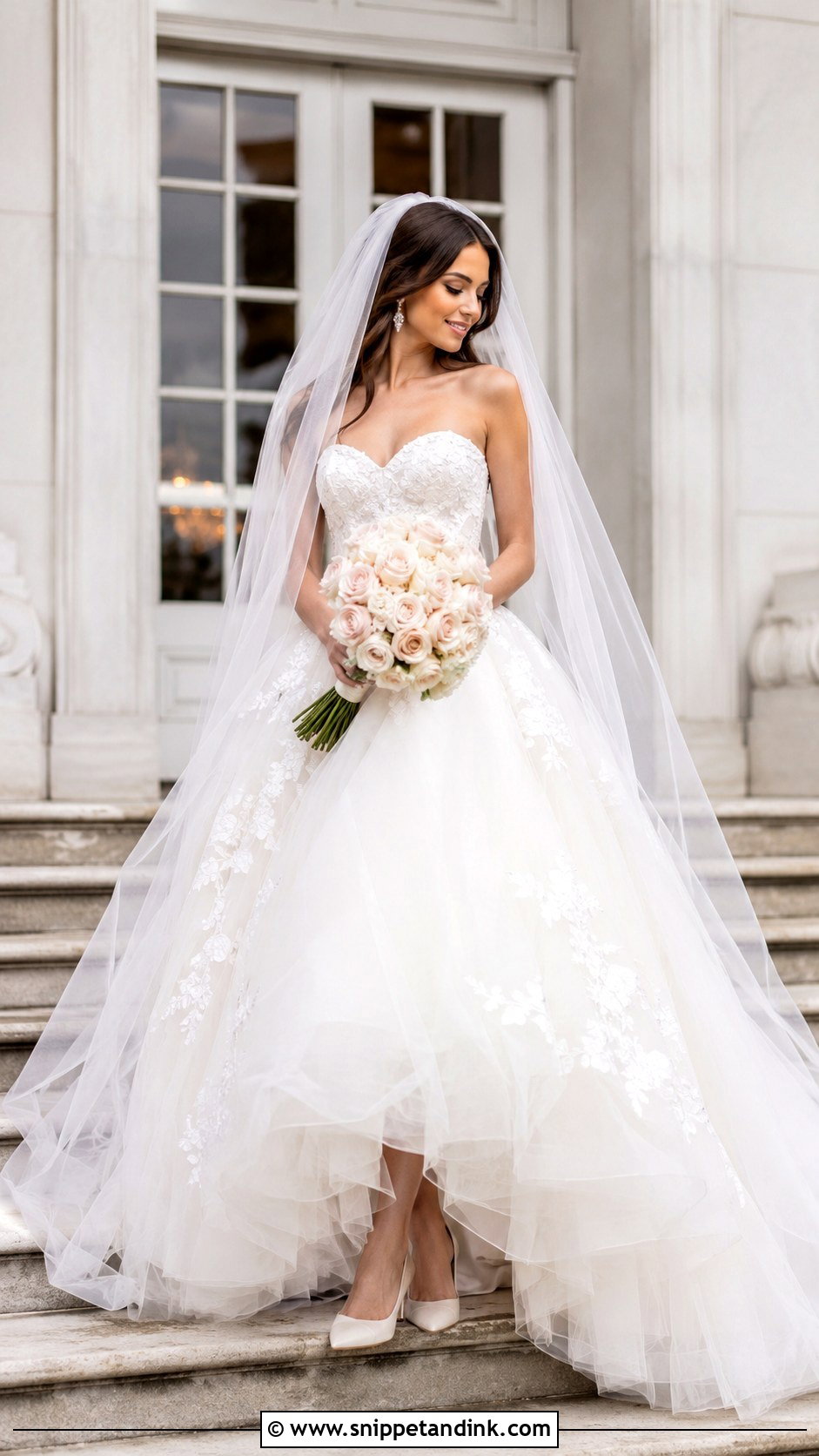
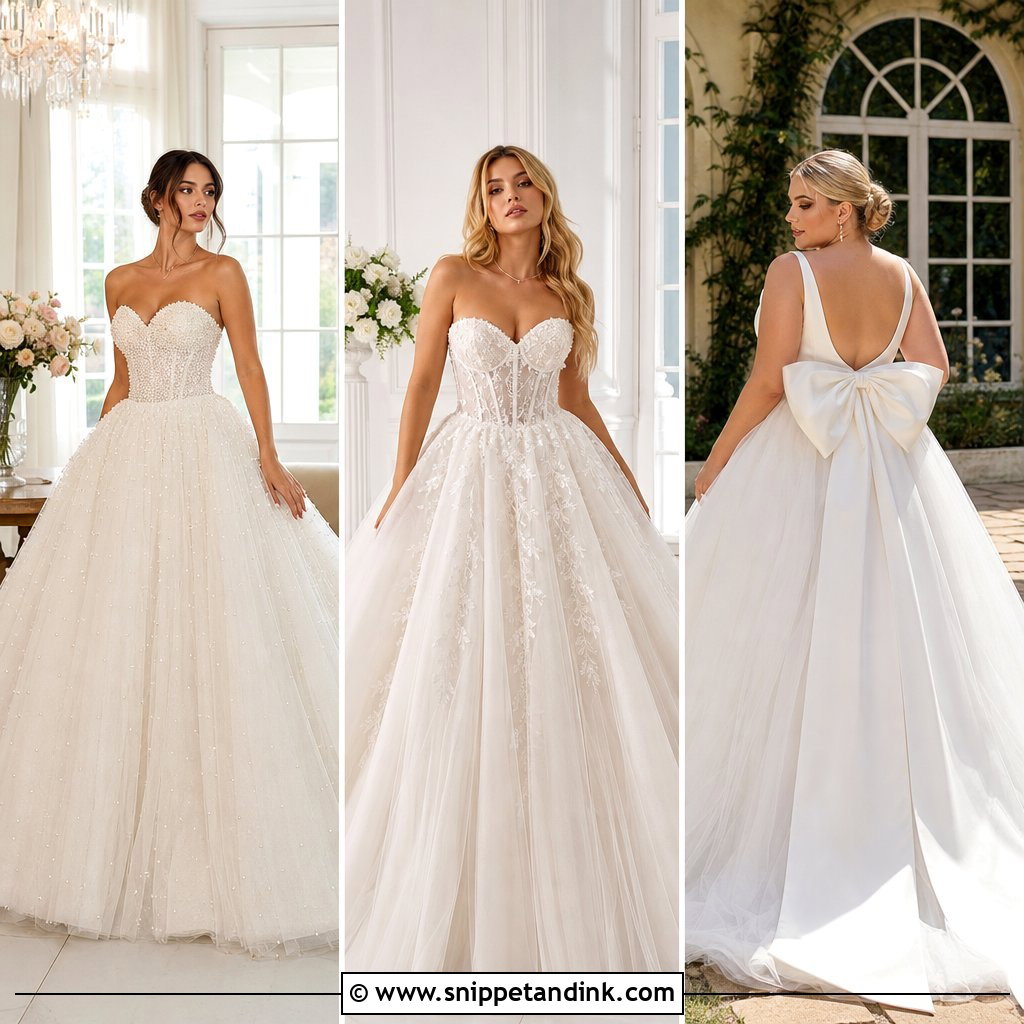
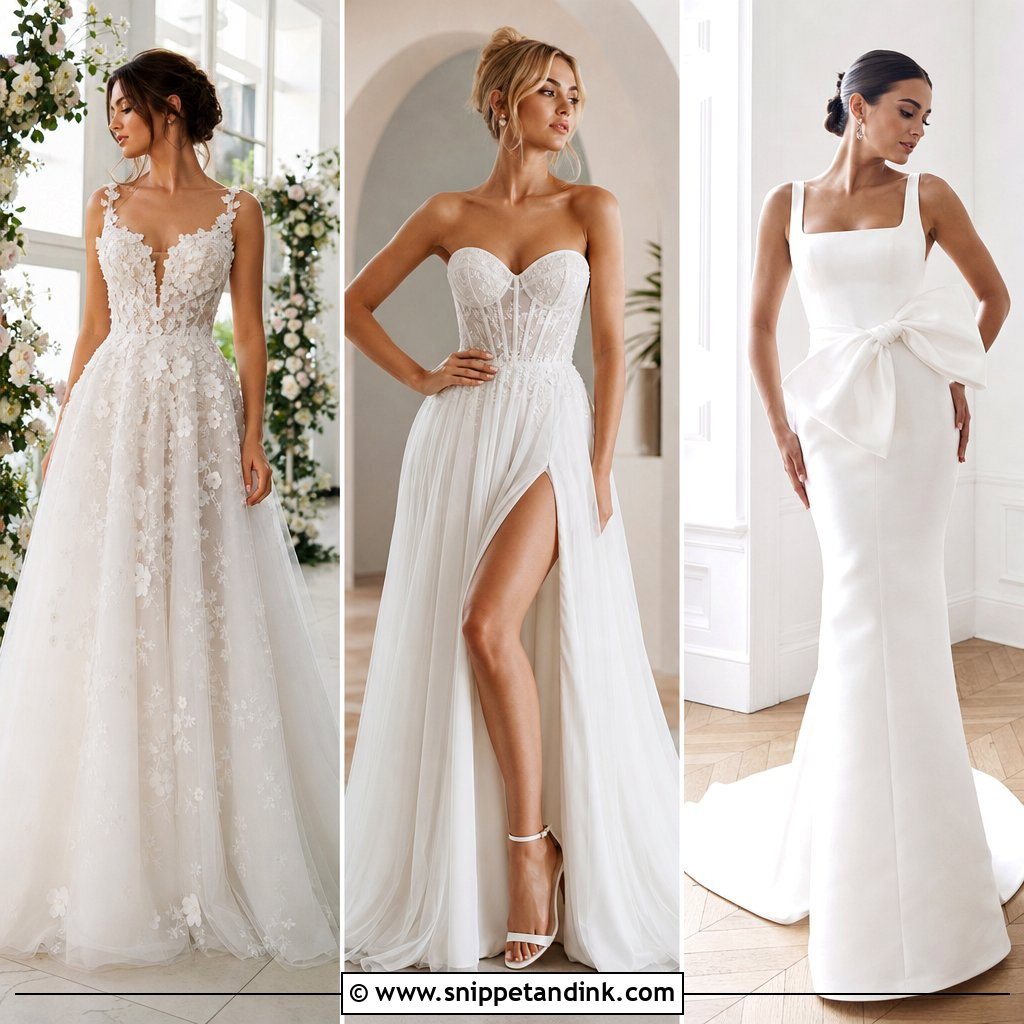
Tulle gives you ball-gown volume at a fraction of the weight of satin, which you’ll appreciate once the dancing starts. Look for a fitted bodice with a soft sweetheart neckline, light corset structure and a skirt built from many fine layers, with delicate floral appliqués or scattered crystals for dimension. The trade-off is fragility. Soft tulle catches on heels, buckles and chair legs, and a skirt this full needs a bustle plan, so I raise it at the first fitting rather than the last. A long sheer veil, crystal drop earrings and ivory heels hidden under the skirt round it out, and a polished half-up style holds the veil comb securely. Pale roses, sweet peas and trailing flowers belong with it in castles, formal gardens and anywhere with a staircase that gives the skirt room.
7. Old Hollywood Satin Mermaid Bridal Gown
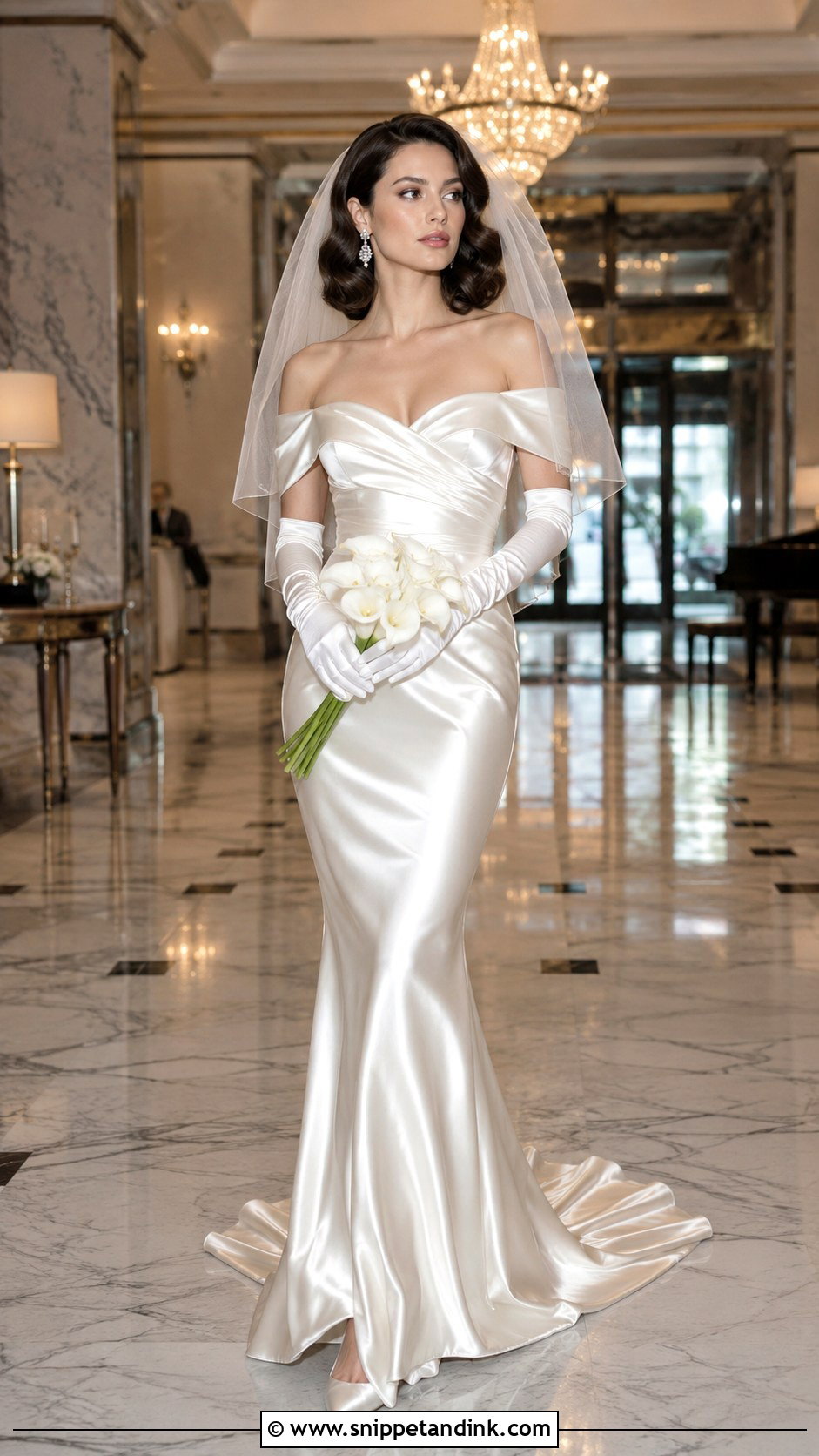
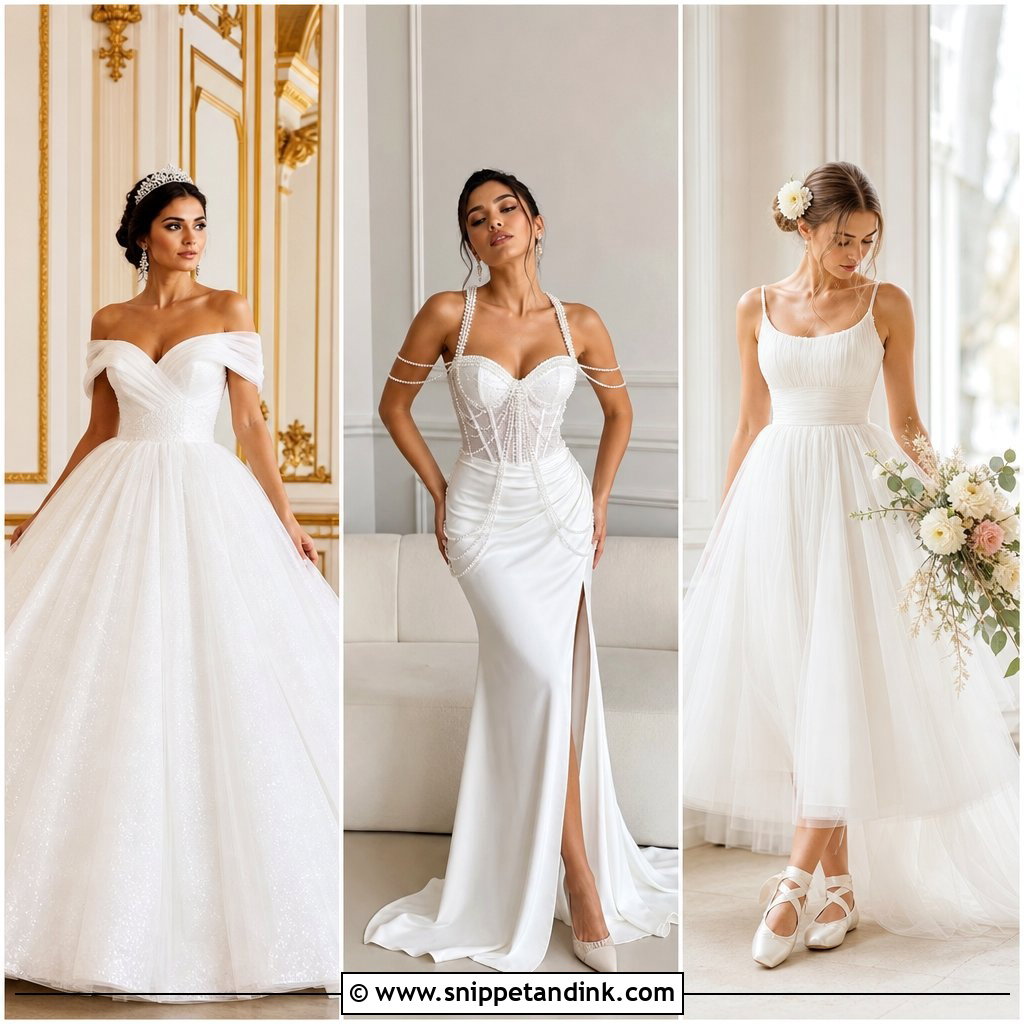
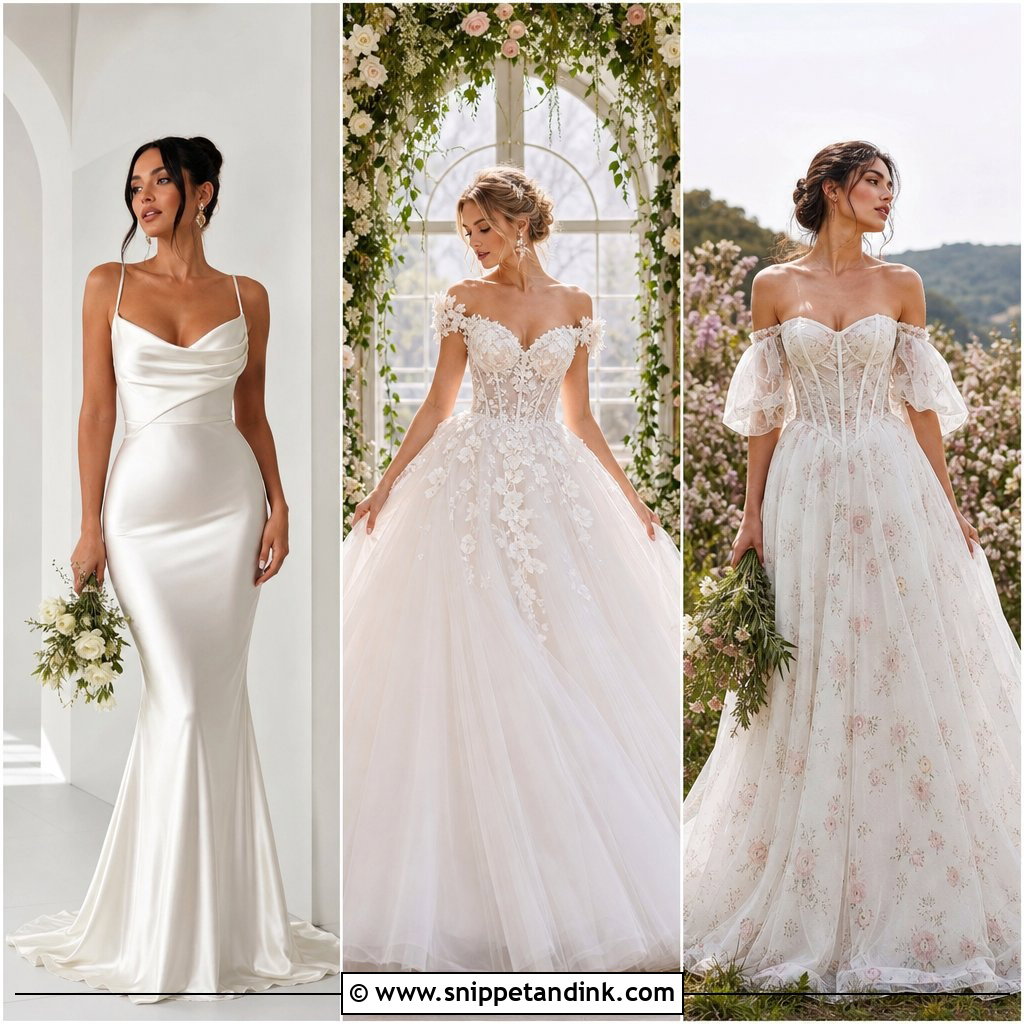
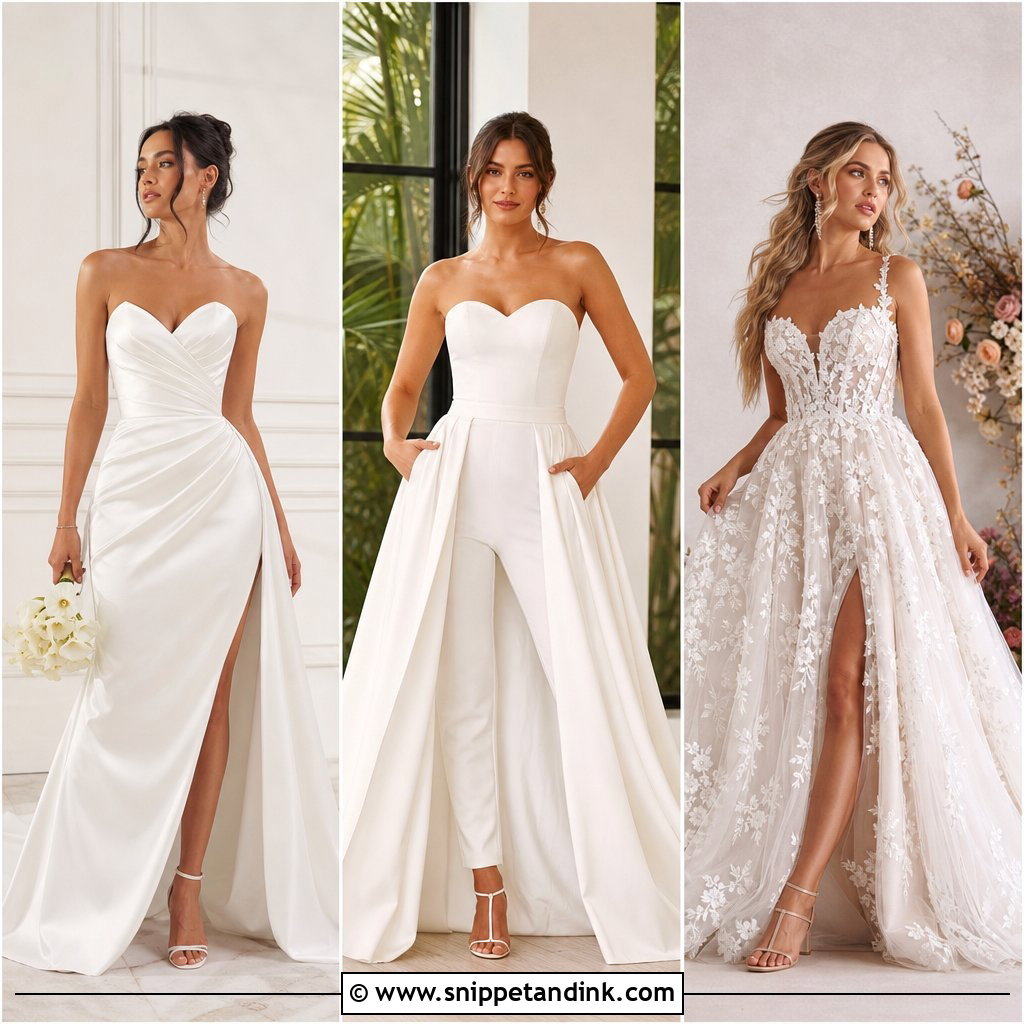
Glossy satin, sculpted curves and polished accessories define an Old Hollywood bridal look. The cut is a mermaid or fit-and-flare with a draped neckline, fitted waist and a skirt that opens below the hips or knees. Where the flare starts matters more than the label: a knee-level flare shortens your stride and makes stairs slow, so I always have brides climb a step in the fitting room. Silk satin reflects light gorgeously, though it also shows every crease and water mark. Elbow-length gloves suit the ceremony; slip them off before the rings or ask your tailor to open the ring-finger seam. Crystal earrings, a sleek bracelet, pointed satin pumps, side-parted waves or a structured low bun and white calla lilies finish a look made for theaters, mansions and evening receptions.
8. Floral Appliqué Garden Bridal Gown
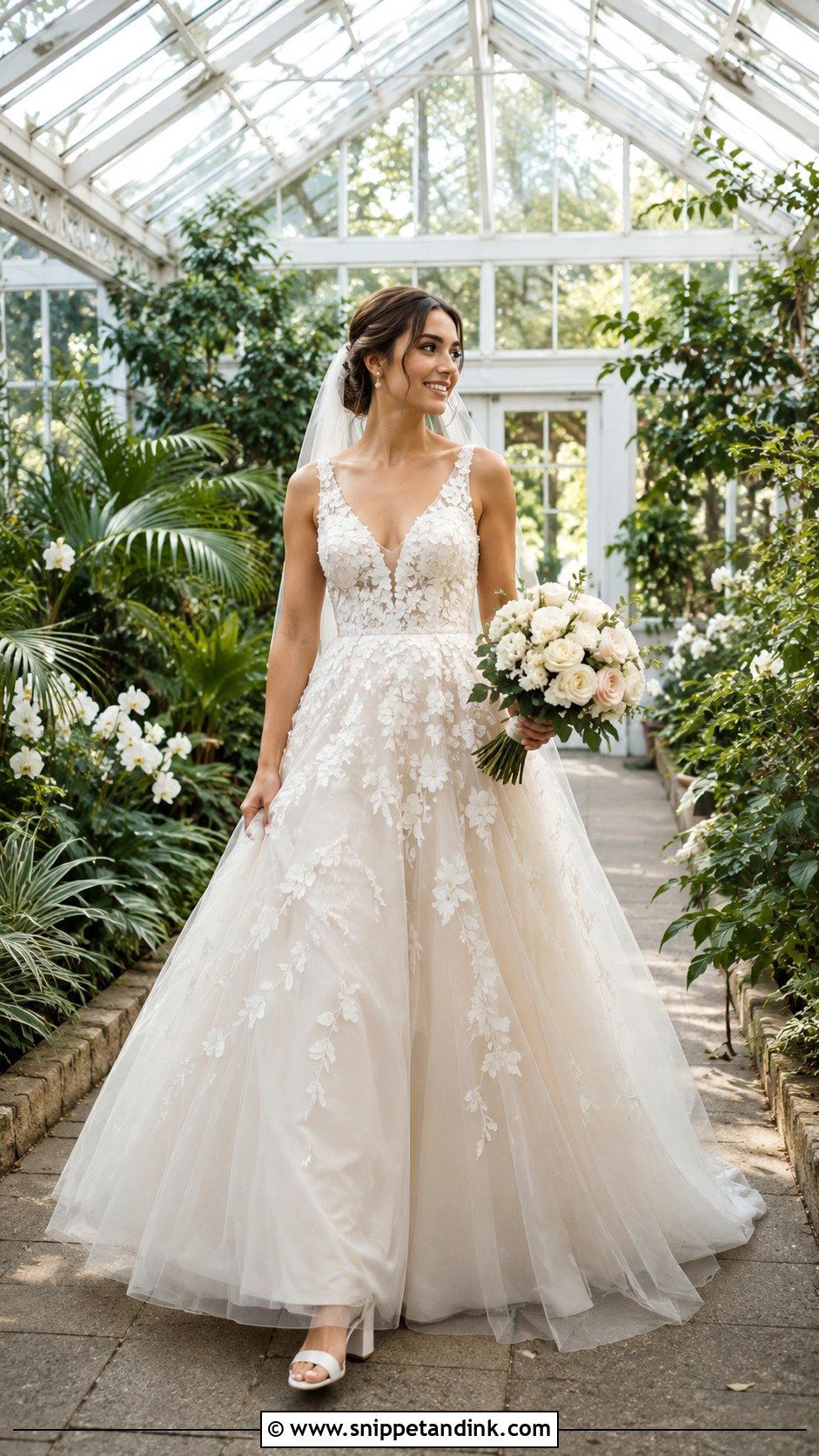
Three-dimensional petals and embroidered vines give a garden gown texture from neckline to hem, and the more texture the dress has, the less everything else should do. Pick a tulle A-line or ball gown where the appliqués thin out toward the hem; heavy flowers low on a soft skirt drag the tulle and catch on whatever you walk past. A lined bodice covers more, while sheer sleeves feel lighter. Pearl studs, a thin bracelet and ivory block heels are enough, and a plain veil without lace keeps two patterns from fighting. A loose bun with a few small floral pins and a bouquet that repeats one or two flowers from the gown tie it together in greenhouses, conservatories and spring gardens.
9. Regal Long Sleeve Bridal Gown Look
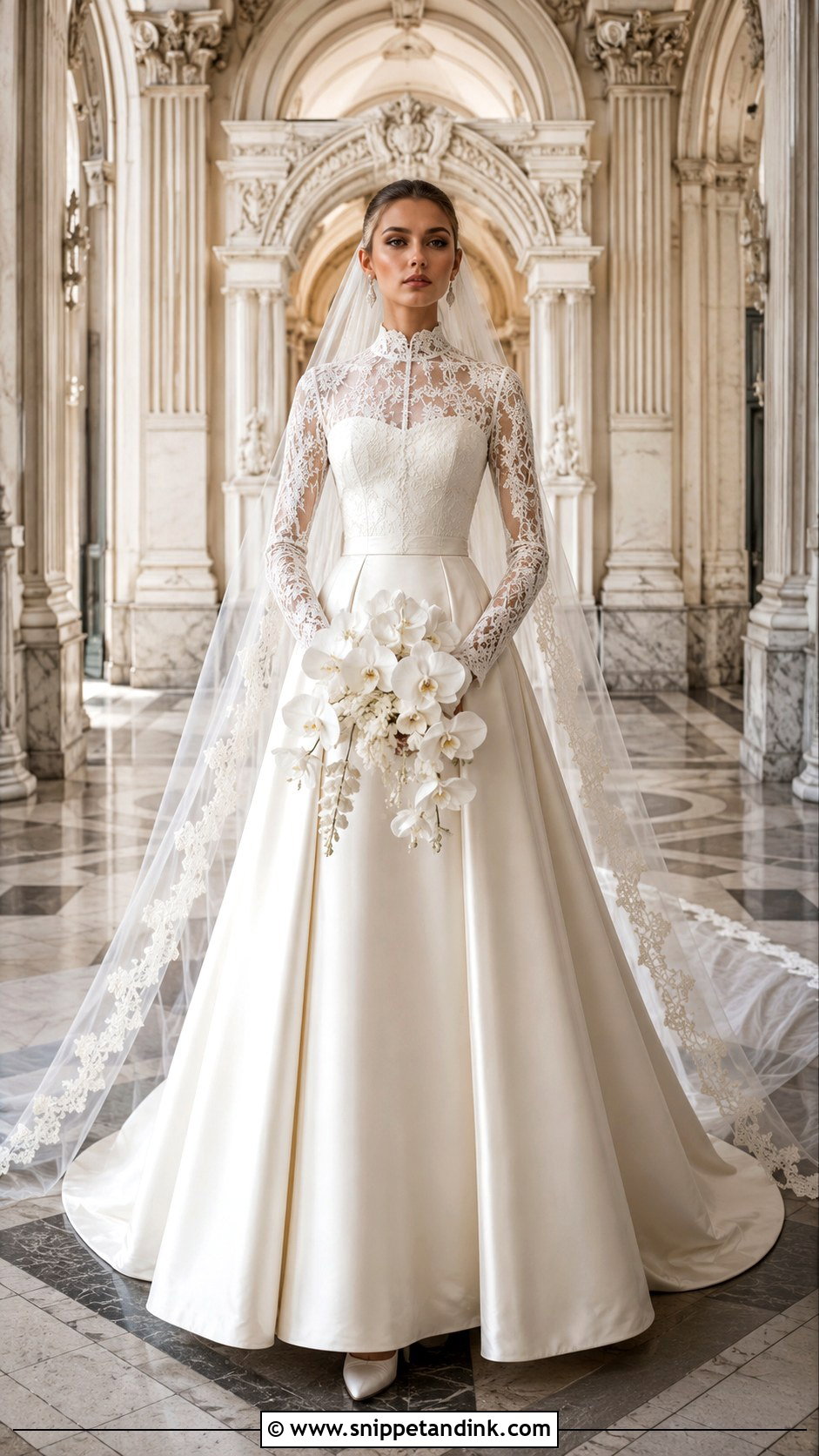
Long sleeves give a gown a stately balance, and they’re my first suggestion for winter weddings and ceremonies that ask for coverage. Look for a structured A-line or ball gown, a defined waist and a bateau, V or modest sweetheart neckline. Lace sleeves read romantic. Satin or crepe sleeves look cleaner and more formal but have no stretch, so they need room cut in at the elbow or you’ll feel them every time you raise a glass. A cathedral veil and neat chignon add height for the aisle, with pearl-and-crystal earrings, a slim bracelet and closed-toe ivory pumps. If the neckline is detailed, leave the necklace at home. A symmetrical bouquet of white roses, orchids or lilies suits cathedrals, historic estates and formal halls.
10. Coastal Silk Slip Bridal Gown Look
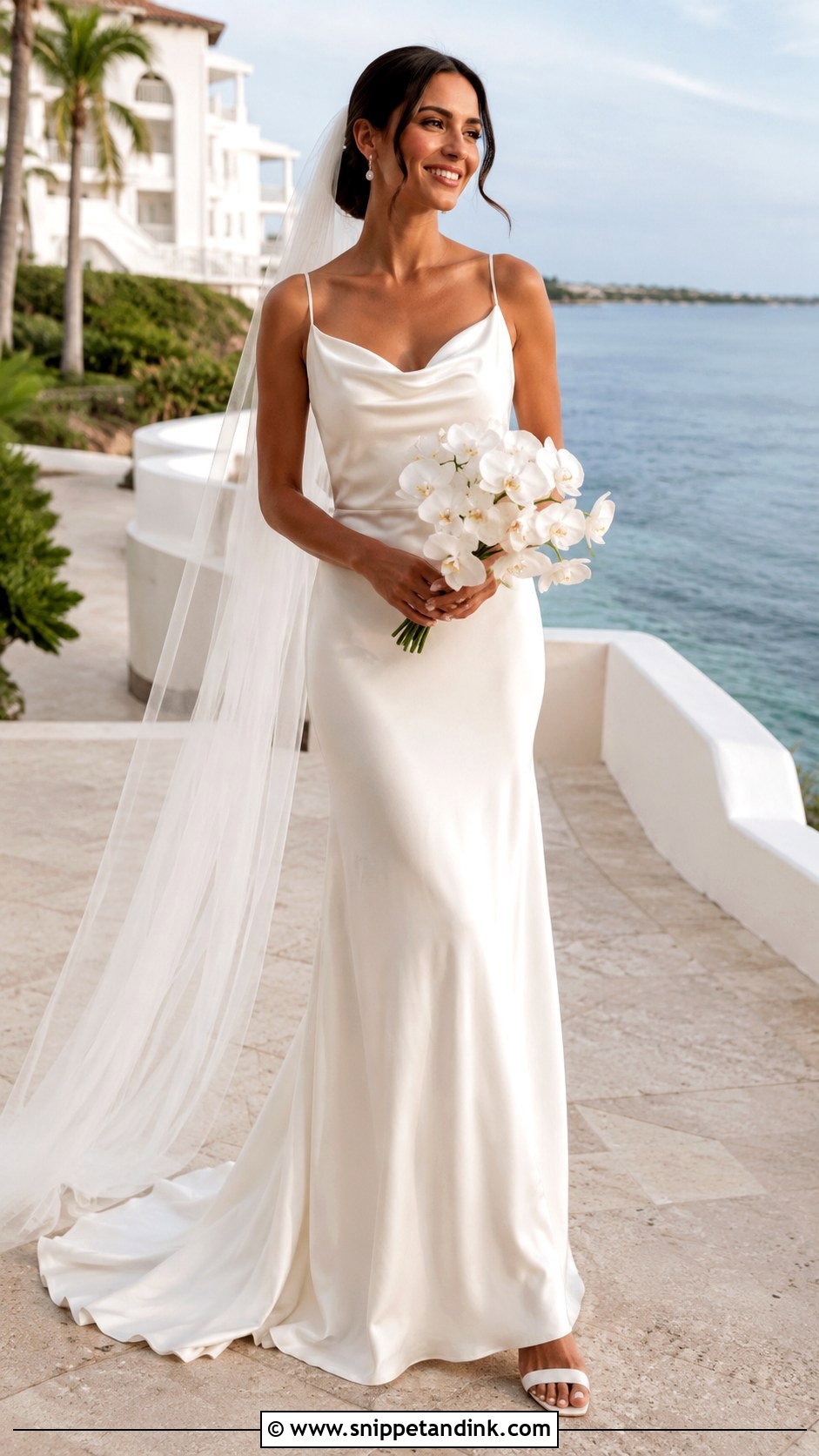
Bias-cut silk is the most comfortable gown on this list and the least forgiving. Cutting on the bias makes the fabric drape and cling, so it shows underwear lines, and silk satin darkens wherever it meets sweat or sea spray. I fit these over the exact shapewear the bride will wear on the day, never over whatever she happened to have on. A soft cowl neckline, low back or fine straps keep it light. Pearl drops, a fine bracelet and low block-heel sandals manage a boardwalk or firm sand. A plain lightweight veil or sheer bridal scarf moves nicely in the breeze but needs firm pinning on a windy shore. Wear a simple bun or loose natural waves and carry white orchids with greenery at a waterfront resort or small destination wedding.
11. Cottagecore Puff Sleeve Bridal Gown
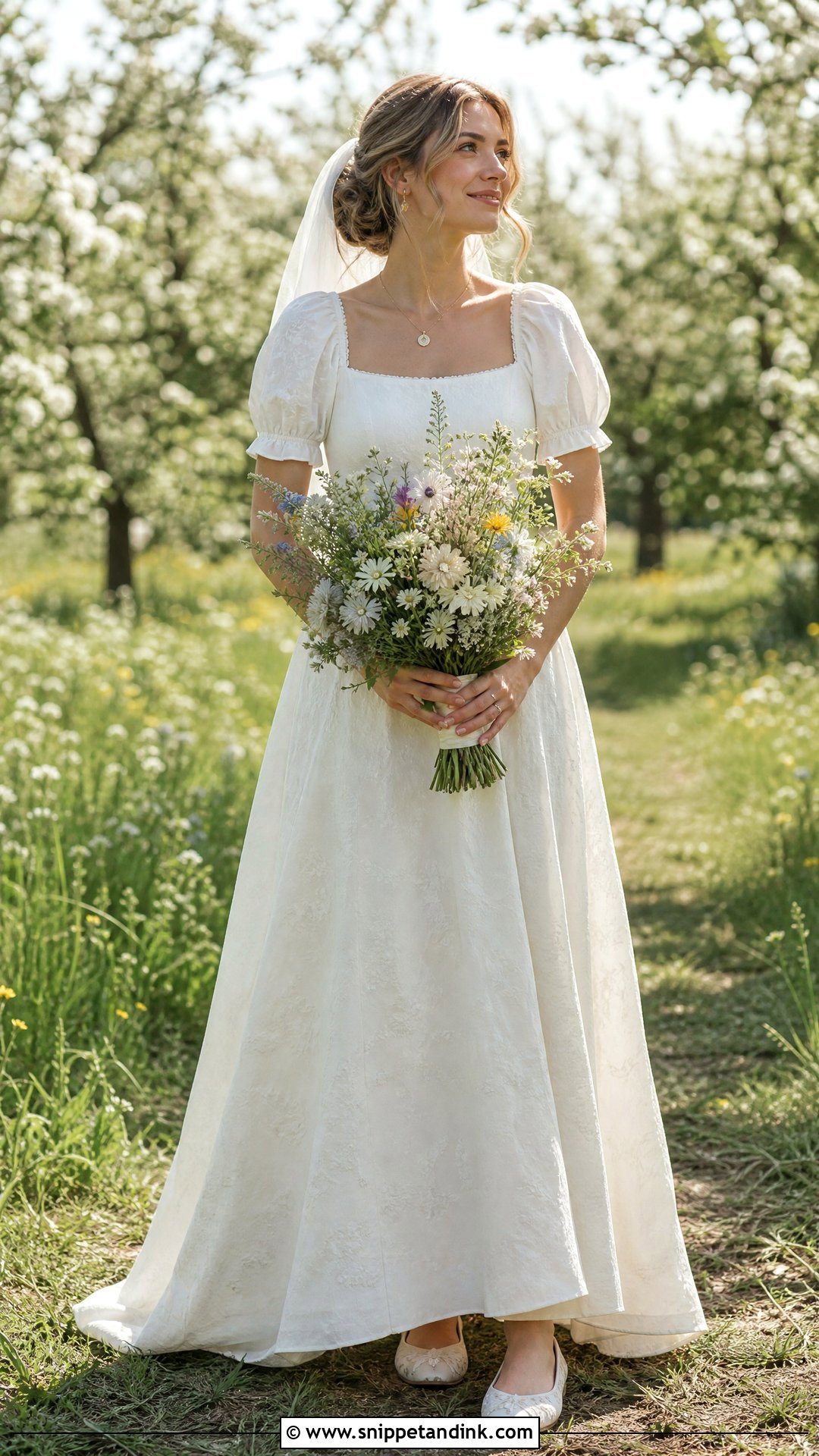
A cottagecore bridal look pairs soft structure and vintage touches with a love of being outdoors. Choose an A-line with short puff sleeves, a fitted bodice and a flowing skirt in lace, cotton blend or light organza. Puff sleeves need internal support, a tulle lining or a sleeve head, or they sag flat by evening; feel inside the sleeve when you try one on. A square neckline takes a tiny pendant or a single strand of pearls. Ivory block heels, embroidered flats or low heels handle orchard paths, and a short veil, floral headband or ribbon-tied hairstyle keeps things gentle. Carry daisies, sweet peas, garden roses and greenery in a hand-tied bunch.
12. Art Deco Beaded Bridal Gown Look
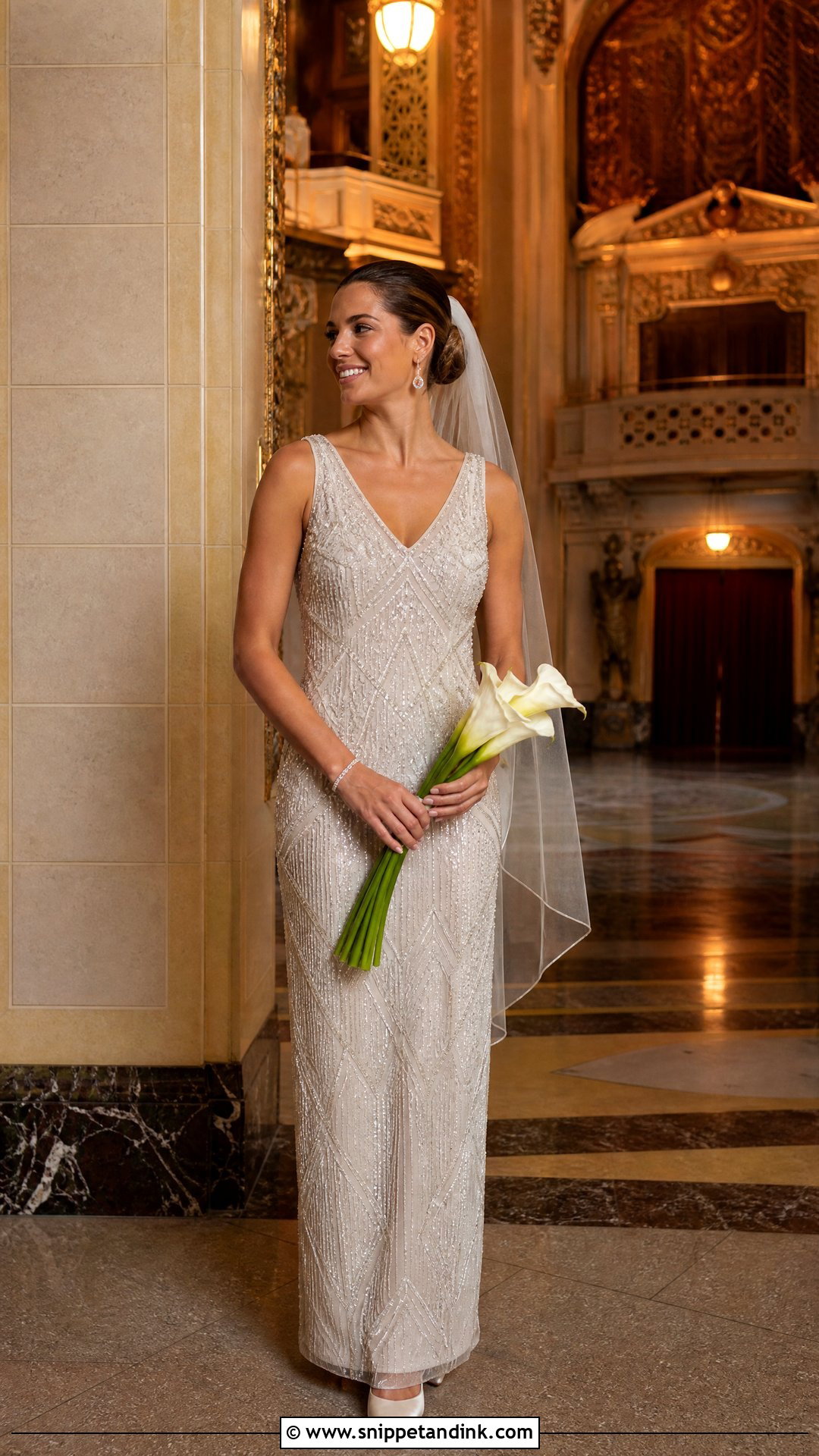
Geometric beading gives a gown its Art Deco character, and since the dress already sparkles, the rest should stay streamlined. Choose a fitted sheath or gently flared shape with symmetrical beadwork, linear patterns or carefully placed crystals, and a V or bateau neckline to lengthen the line. Heavy beading adds real weight, so I check how the gown hangs from the shoulders and whether the straps dig in after twenty minutes of standing. Beads also snag tulle, another reason to keep the veil plain and fingertip length. Crystal studs, a slim metallic bracelet and ivory or silver-toned pointed pumps are plenty. A beaded comb holds a low wave or bun, and a narrow bouquet of white orchids or calla lilies suits restored hotels, theaters and evening receptions.
13. Coquette Bow Bridal Gown Look
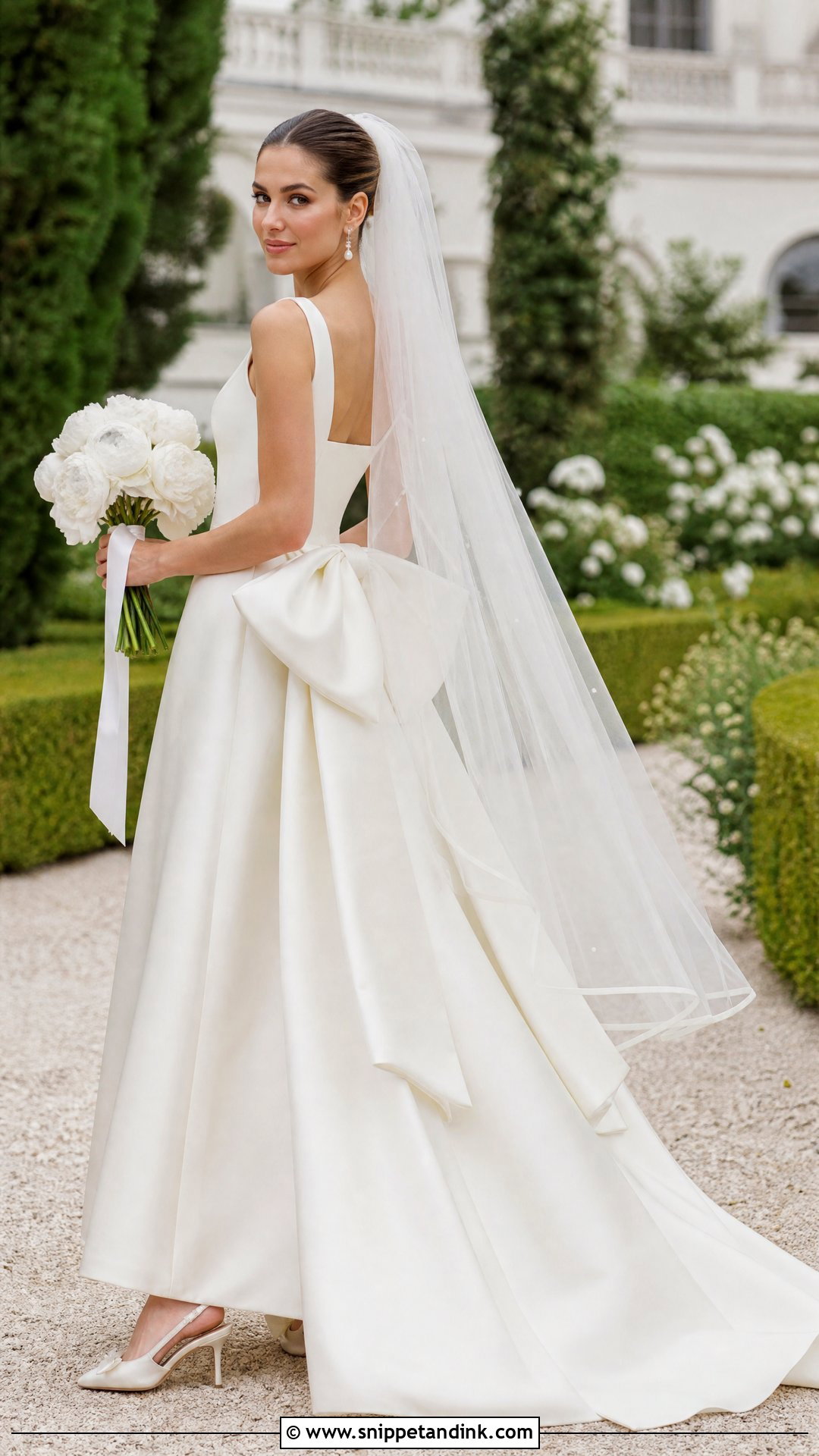
One bow is charming. Five bows look like a party dress. Start with a clean satin or organza gown with a structured bodice and full A-line skirt, then place a single noticeable bow at the waist, neckline, shoulders or back. Satin bows tend to flatten as the day goes on, so ask whether the bow is interfaced or stitched into shape; a stiffened one still has its loops in the last dance photos. Pearl earrings, ivory slingbacks and a narrow ribbon tied around white flowers suit it. A sheer chapel veil can sit beneath a soft bun with a small bow comb. With an oversized back bow, end the veil above it or let it run well past the train, never stop right on top of it.
14. Quiet Luxury Basque Waist Bridal Gown
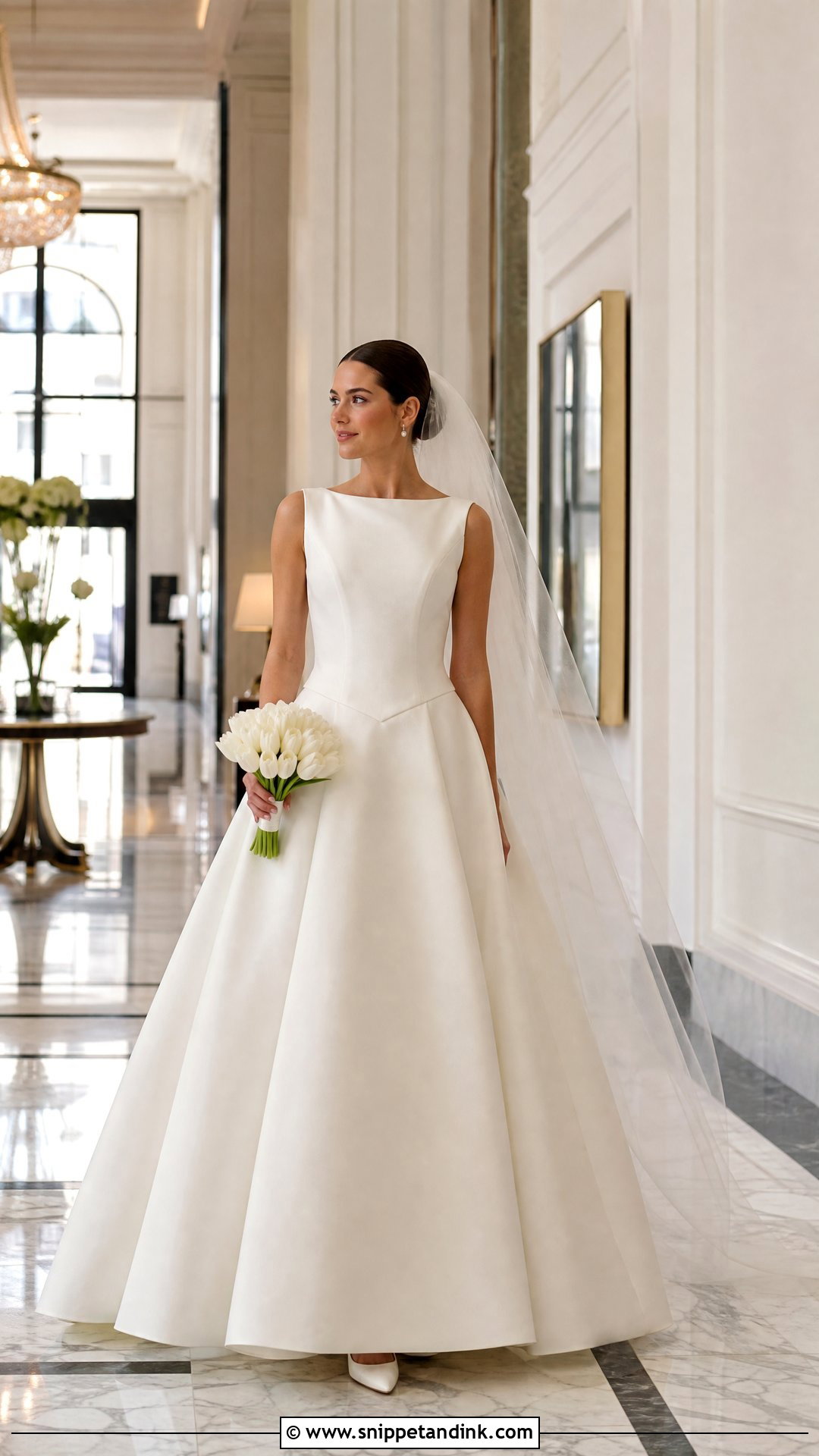
The Basque waist dips below the natural waistline into a point, and it only flatters when the bodice is properly boned and matched to your torso length. Set too low on a short torso, that point shortens the legs instead of lengthening the line, so I mark its position at the first fitting rather than trusting the sample. Below it, the skirt falls smooth in satin, Mikado or silk faille, with minimal decoration so cut and fabric carry the look. Pearl button earrings, a slim bracelet, pointed pumps and a plain cathedral veil with a clean edge keep it uncluttered. A sleek bun or polished half-up style shows off the bodice. Carry a compact bouquet of white roses or tulips with no trailing greenery in luxury hotels, formal estates and museums.
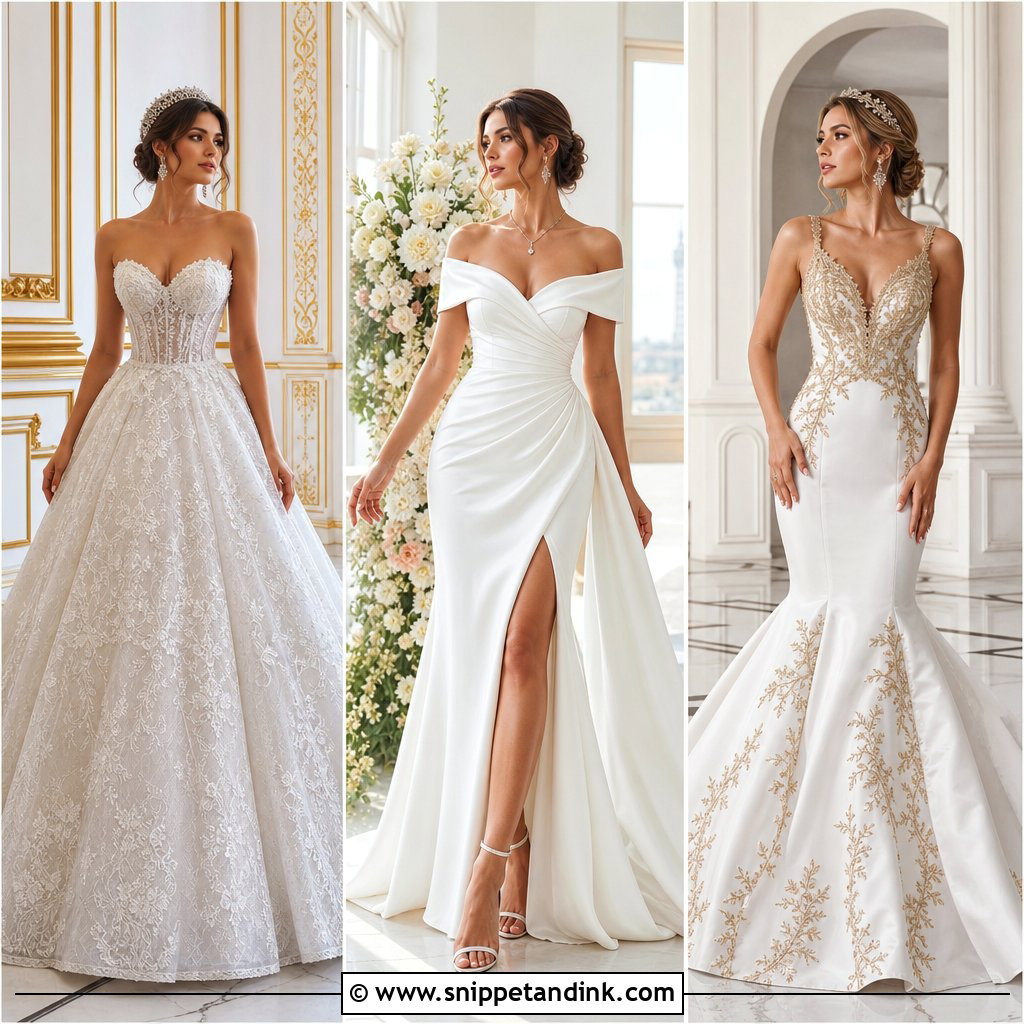

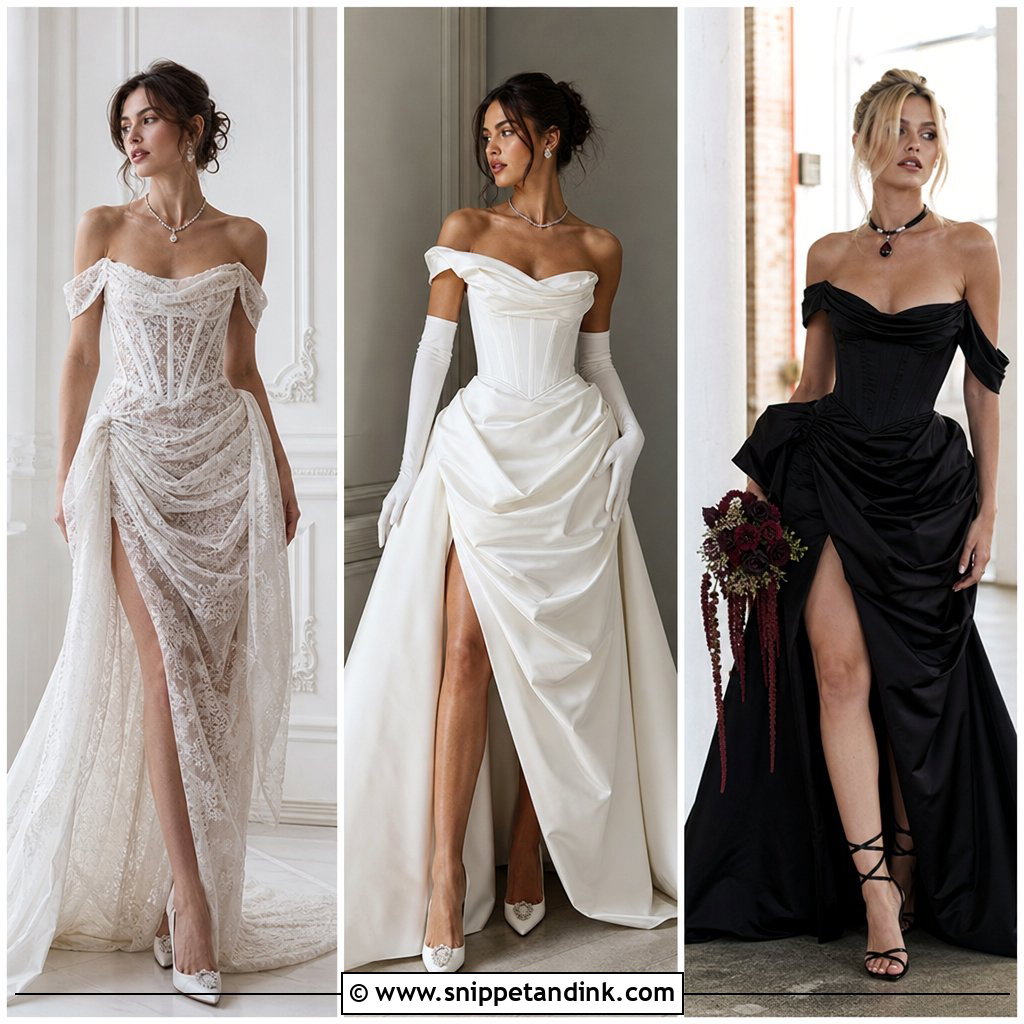
15. Sculptural Modern Bridal Gown Look
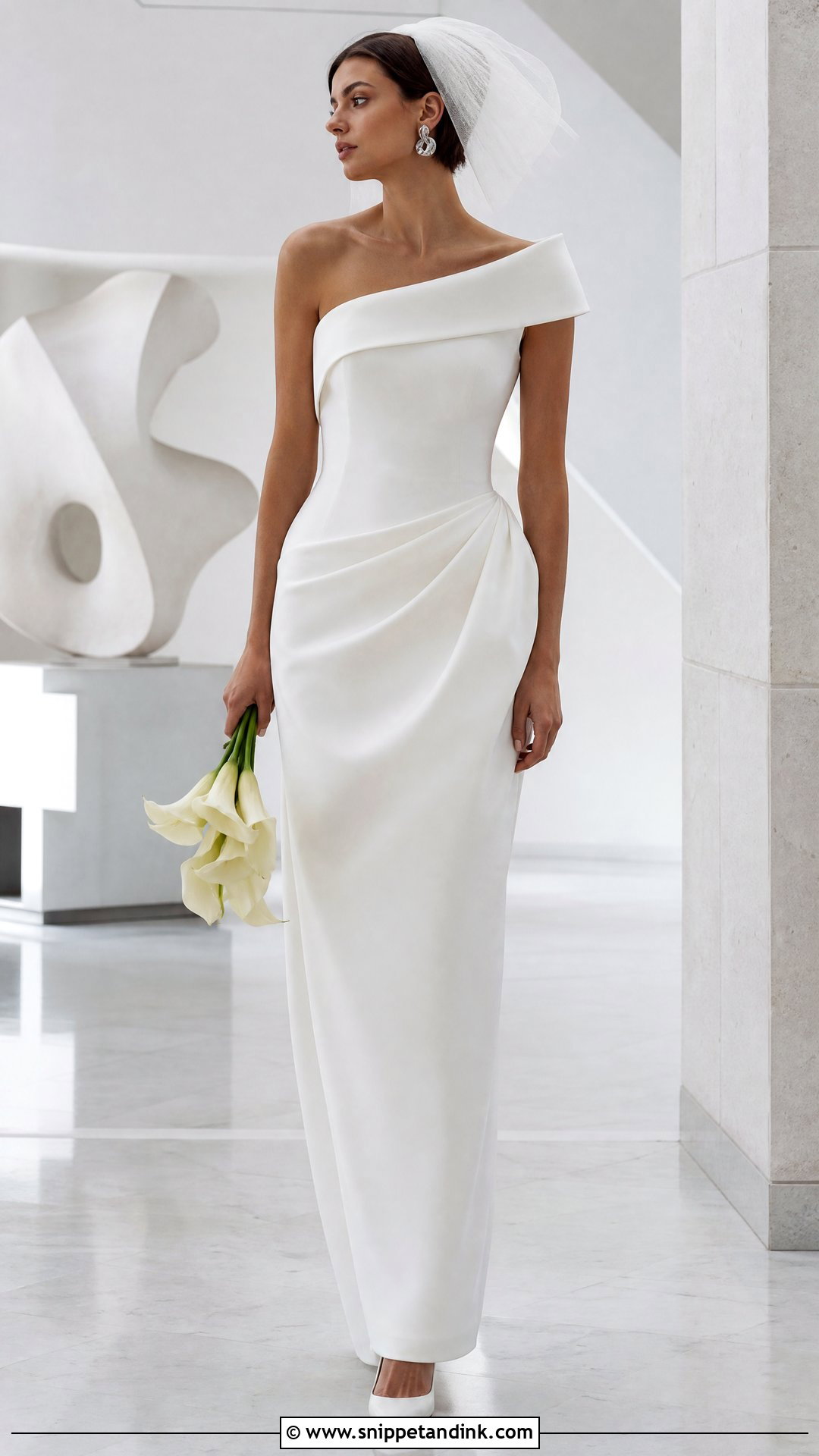
Draping and architecture turn a white gown into a fashion piece. Choose a column, trumpet or asymmetric A-line silhouette with a folded neckline, gathered hip, curved overskirt or sculpted shoulder. The fabric has to be substantial. Heavy crepe, double-faced satin and Mikado hold a fold; lighter cloth collapses and the shape disappears in photos. Bold metal earrings, a structured mini bag for portraits and clean pointed heels fit the mood. Let the neckline be the focal point and skip the necklace. A short sculptural veil or an extra-long plain one creates deliberate contrast, and a sleek bun with a few anthuriums or calla lilies finishes it for galleries, rooftops and contemporary buildings.
16. Celestial Shimmer Bridal Gown Look
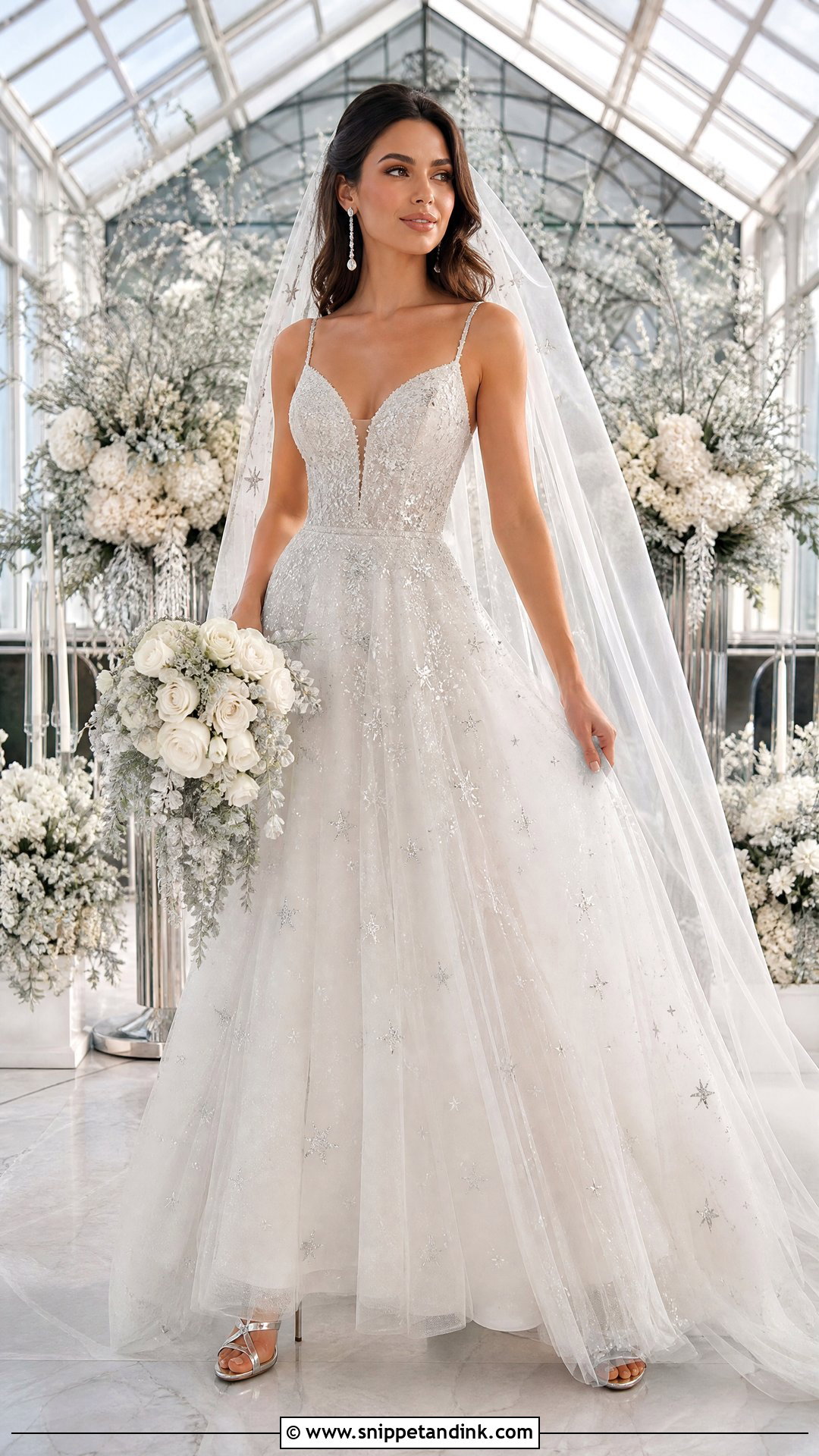
Scattered sequins, star-shaped embroidery or fine metallic thread make tulle glow without the weight of crystals. A fitted bodice over a flowing A-line skirt balances structure and movement. Under flash and evening string lights, sequins flare much brighter than they do in a bridal shop, so I take the gown into a dim corner and shine a phone torch on it before a bride commits; you want starlight, not glitter. Crystal drops, delicate silver-toned heels and a sheer veil with light scattered shimmer complete it. Leave the necklace off if the bodice already catches light. A low twisted bun with a small crystal comb, white flowers and silvery greenery suit evening ceremonies and glass conservatories.
17. Blush Color Bridal Gown Look
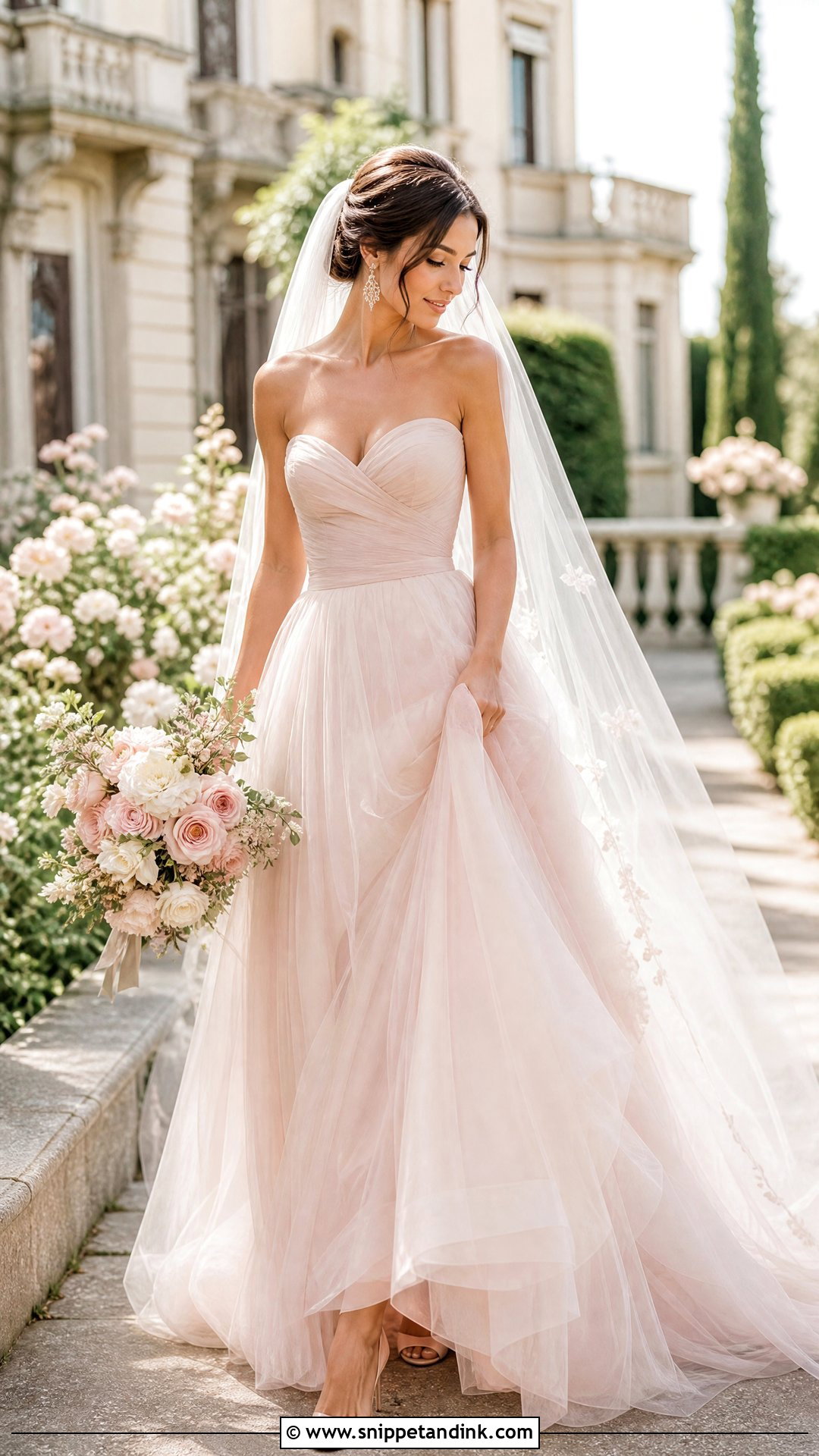
Blush reads clearly bridal when the shade is pale and the silhouette is full. Pale pink, champagne-blush or rose-tinted tulle, satin or embroidered organza works best as an A-line or ball gown; in a slim cut the same color can pass for a bridesmaid dress. Hold the fabric against your bare face in daylight before deciding. A cool pink can wash out olive skin, and in my experience a warmer champagne-blush usually sits better on most complexions. Ivory shoes, rose-gold earrings and a veil in matching blush or light ivory keep the tones together. A loose updo or polished waves suit the soft color, and white, cream and pale pink flowers give the bouquet some definition against the gown in gardens and bright ballrooms.
18. Pearl Embellished Bridal Gown Look
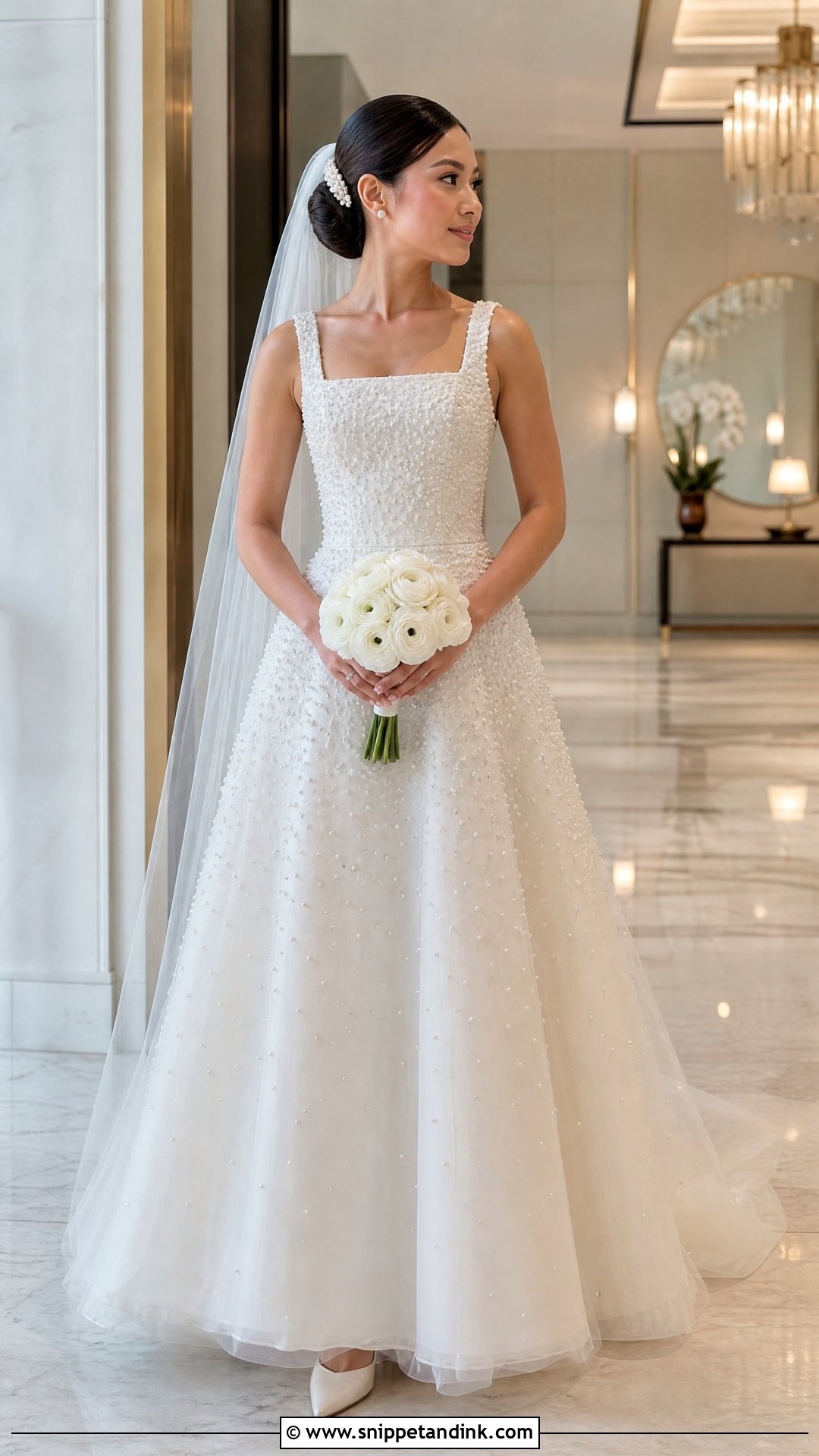
Pearls glow rather than sparkle, so they suit brides who find crystal too bright. Choose a fitted A-line, column or ball gown with pearls across the bodice, sleeves or upper skirt; clustered placement looks more refined than pearls everywhere. Before buying, I turn the bodice inside out to check the pearls are stitched individually. Pearls strung on one long thread can lose a whole row if a single stitch catches on a bracelet. Wear simple studs or small drops rather than a matching set, with ivory pointed pumps and a plain tulle veil. A pearl comb in a low bun or half-up style adds one more detail. A compact bouquet of white ranunculus and roses suits upscale hotels, country clubs and clean, lightly decorated rooms.
19. Gothic Lace Bridal Gown Look
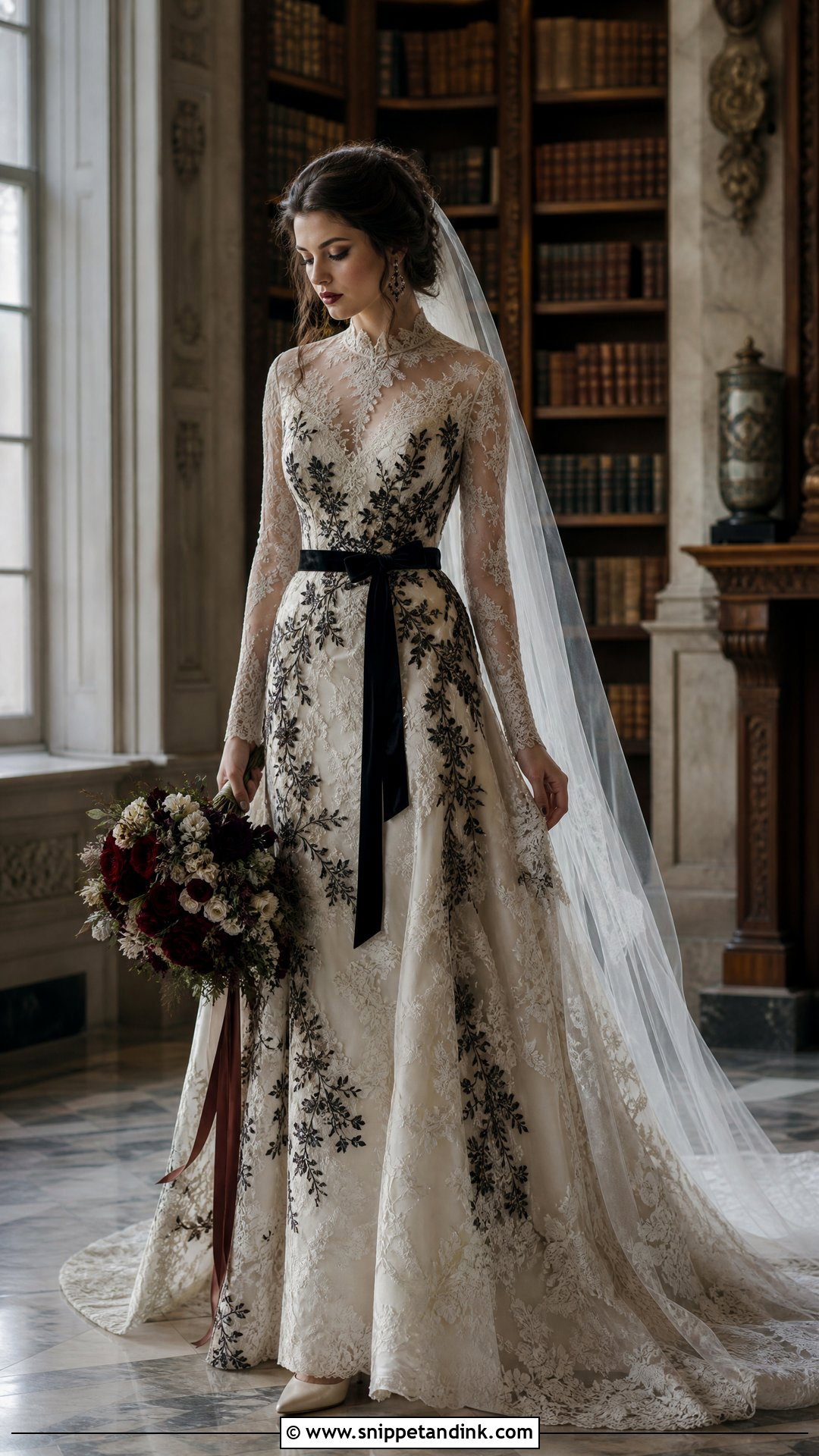
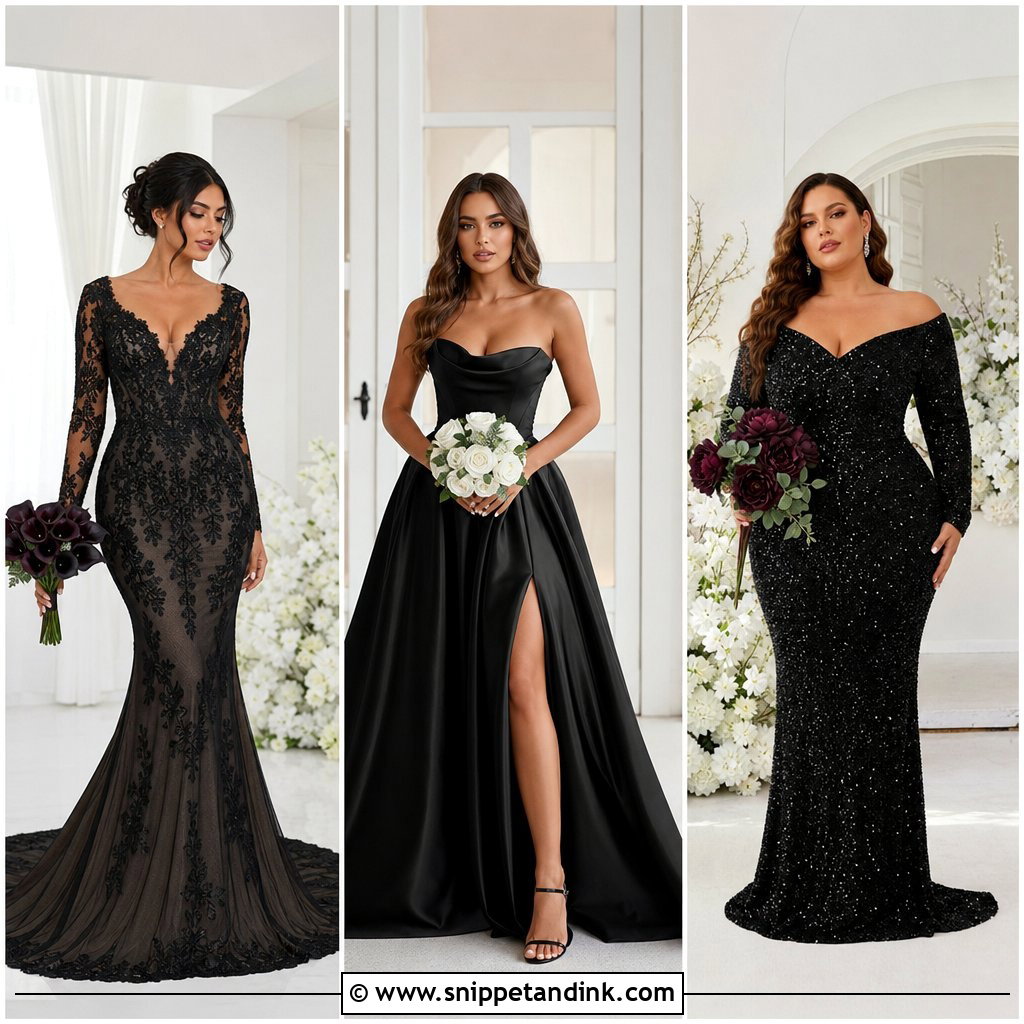
A gothic bridal aesthetic can feel mysterious without a black gown. Ivory, silver-white or soft gray with intricate lace, a fitted bodice, long sleeves and a sweeping skirt sets the tone, and black velvet ribbon at the waist or dark floral embroidery adds controlled contrast. A full black lace gown over a structured lining is the bolder route. If you go dark, tell your photographer early: black lace loses its pattern in shadow and needs light placed on it. Antique-style earrings, closed-toe pumps and a long plain veil in a coordinated shade suit it, with a braided low bun or polished waves. Burgundy and ivory flowers with dark greenery belong in castles, old mansions and autumn evenings.

20. Convertible Overskirt Bridal Gown Look
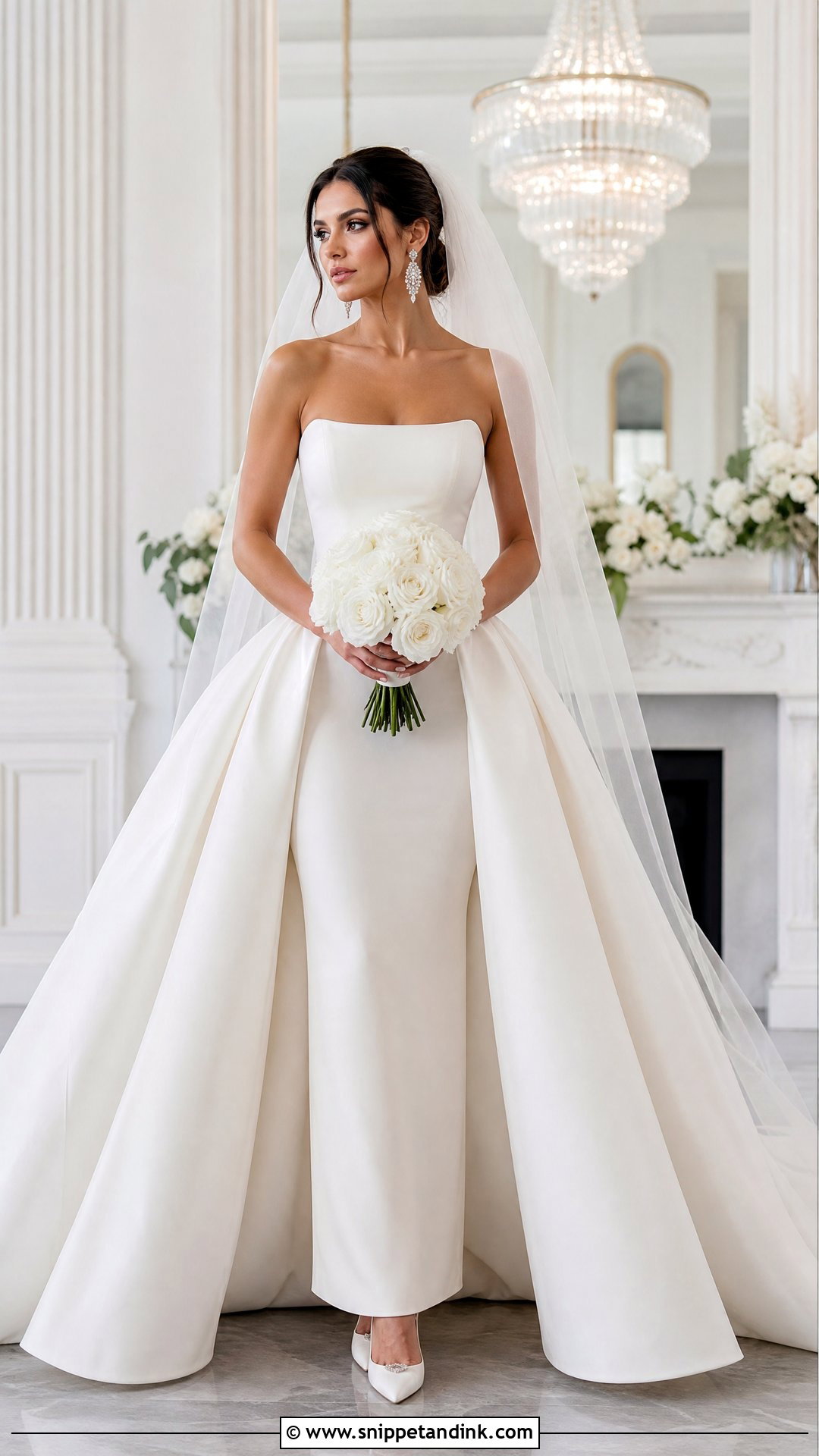
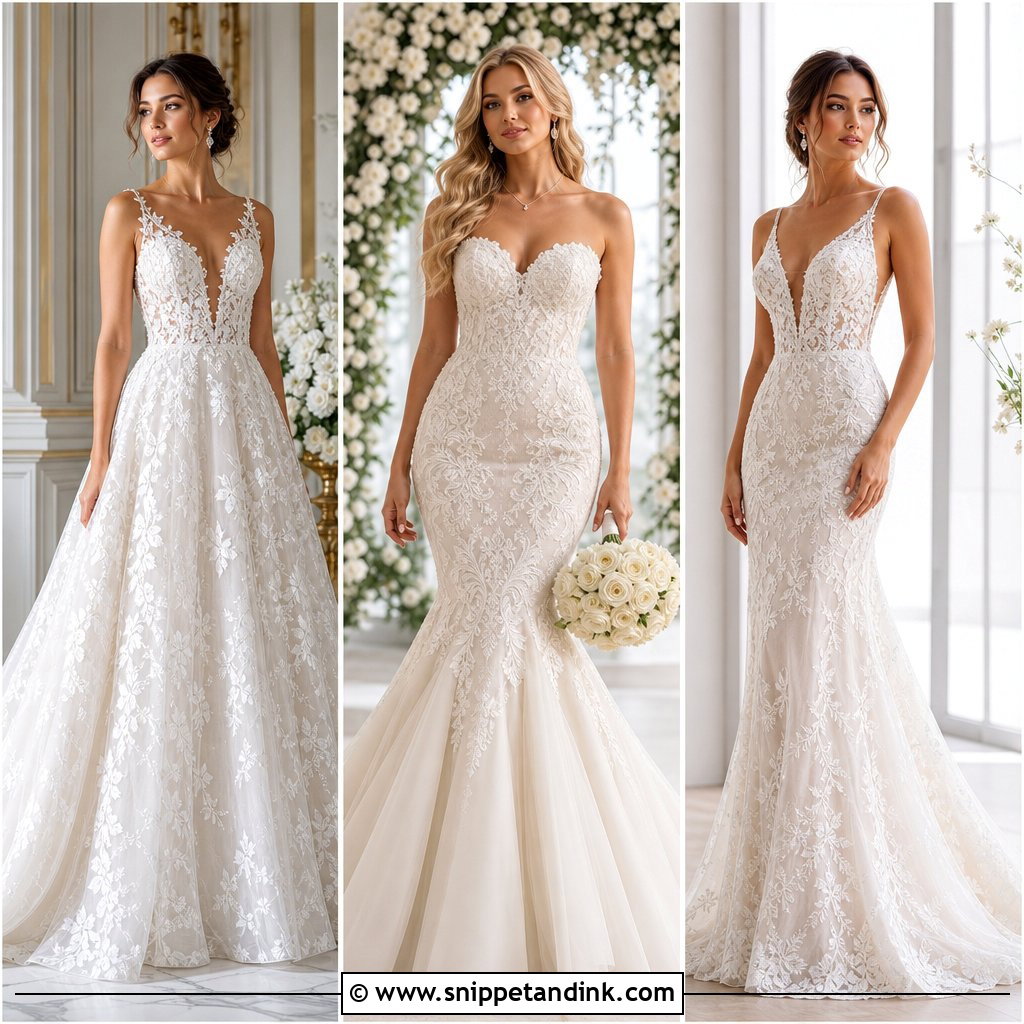
A detachable overskirt gives you a formal ceremony silhouette and an easier one for dancing. Start with a fitted column, sheath, or mermaid gown in crepe, satin or lace, then add a full overskirt fastened at the waist so it reads as an A-line or ball gown down the aisle. The fastening is where these go wrong. Hooks hold better than snaps and hidden buttons are slow, so I have brides rehearse the change with whoever will help on the day. It should take a few calm minutes in a side room, not a tug in the hallway. Pair the full look with a cathedral veil, statement earrings and pointed ivory heels, then remove veil and overskirt after photographs. A sleek bun, delicate bracelet and structured bouquet work with both versions.
Satin, Crepe, Tulle and Lace After a Full Day of Wear
Most of these aesthetics are really fabric decisions, and fabric decides how you look at the end of the reception, not only at the top of the aisle. These are the warnings I give at every first appointment.
Satin and Mikado
Soft satins crease wherever you sit and mark easily with water. Mikado and faille are stiffer and keep their shape through a long dinner. Either way, have a steamer on hand before portraits.
Crepe
Crepe barely wrinkles and moves well, but it’s honest about fit and shows whatever is underneath. Wear your final shapewear to your second fitting so the alterations are cut around it.
Tulle and chiffon
Both are light enough to dance in, and both snag. Keep the skirt away from velcro, rough heel straps and sequinned bridesmaid dresses, and pack small scissors so a pulled thread gets trimmed rather than tugged.
Lace and beadwork
Good lace is durable, but beading adds weight at the shoulders and catches on veils. I always ask the shop for a few spare beads or pearls in a small envelope so a lost one can be sewn back before the photos.
The Calendar Behind a Gown That Fits on the Day
Made-to-order gowns commonly take several months to arrive, and alterations need their own window after that. Timings vary by designer and shop, but this is the rhythm I plan around.
- Roughly nine to twelve months out: shop and place the order, earlier if you want a custom change to the design.
- When the gown arrives: a first fitting with your wedding shoes and undergarments, so the hem and bodice are set correctly from the start.
- Two to three months before: the main alterations and the bustle, which needs testing with the person who will fasten it.
- The last few weeks: a final fitting, then collect the gown pressed and keep it hanging in its breathable bag until the morning.
Rush orders exist, though they usually cost extra and leave no slack if a fitting goes badly. If your date is close, sample and off-the-rack gowns skip the wait entirely and still leave time for proper alterations.
One Word for the Mood, Then the Fittings
Your aesthetic should say something about you and still cope with the venue, the season and the length of the day. Silhouette, fabric, shoes, flowers and hair all have to agree for any of these looks to hold together. Settle on one word for the mood, then try at least three silhouettes, because a shape that looks right on a hanger can look quite different on your frame. Put construction, ease of movement and good alterations ahead of trends. The gown that still feels like yours at the end of the night is the one people remember.
You'll Like These Ideas:




Leave a Reply