
I get asked to dress a cake at most of the weddings I do flowers for, and it is the smallest arrangement of the day with the most rules attached. Flowers on a cake sit out of water for hours, touch food, and get photographed closer than any centerpiece. Garden parties, ballrooms, barns and backyard dinners all suit a floral cake, but the stems, the frosting and the season decide what actually works. Here are twenty looks I’d put on a cake table, with what I’d watch for on each one.
Flowers I Keep Off the Frosting, and the Ones I Trust
Florist flowers are grown to look good, not to be eaten, and many are treated with pesticides. So my rule is simple: no raw stem goes into a cake and no petal that isn’t edible touches the part that gets served. Stems are wrapped in floral tape and set in food-safe picks, and anything risky sits on a small barrier disc instead of the frosting.
Reliable out of water
- Garden and spray roses: hold shape for hours and come in almost any color.
- Orchids: some of the longest-lasting cut flowers I use on a cake.
- Ranunculus and lisianthus: light for their size, so they don’t drag buttercream.
- Culinary lavender, pansies, violas and chamomile: edible, so they can touch the cake.
Only on a barrier, or in sugar
- Hydrangea, delphinium and sweet pea: toxic if eaten, and hydrangea wilts fast without water.
- Calla lily and anthurium: contain irritating sap; keep them high on picks.
- Lily of the valley, foxglove and oleander: I don’t put these anywhere near food at all.
1. Wedding Cake With Fresh Roses
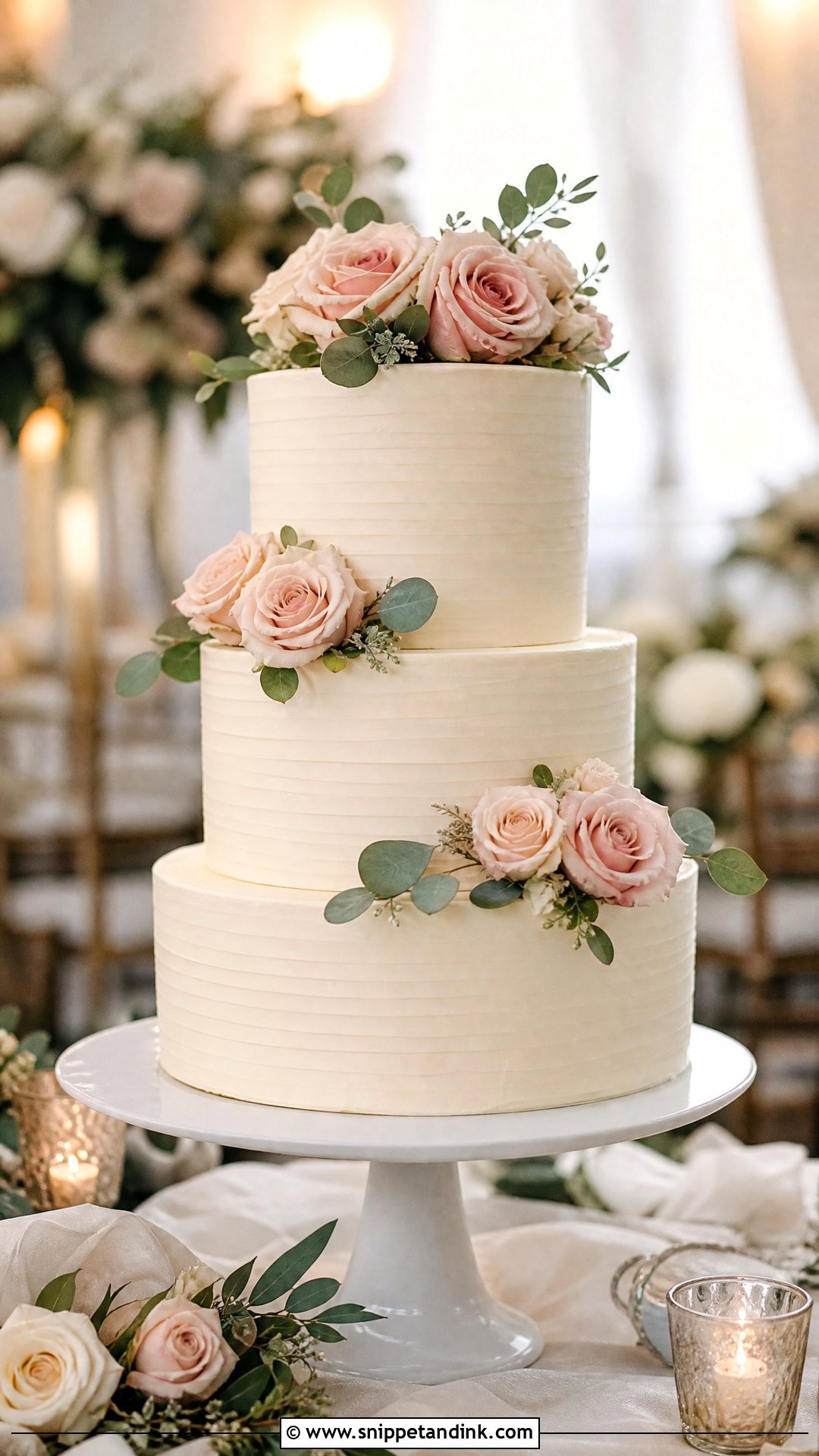
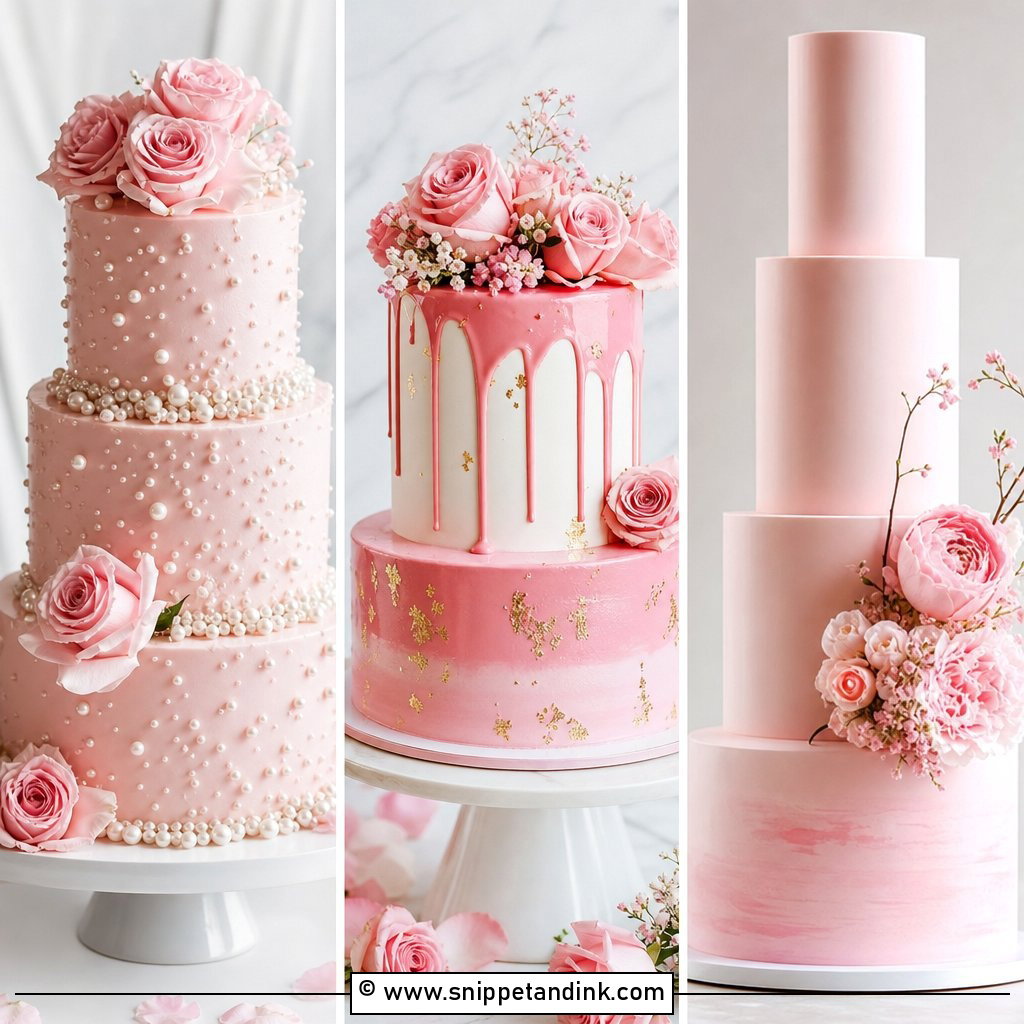
Roses are my safest cake flower. They hold their shape out of water longer than most blooms, and garden roses in blush, peach or ivory open nicely against white buttercream or fondant. I wrap each stem in floral tape and seat it in a food-safe pick so nothing raw goes into the cake. A cluster on top, a diagonal cascade or small groups at the tier joins all work. Give the baker and me the same color notes so the cake matches the bouquet, keep the piping quiet and let a little greenery soften the edges.
2. Pressed Flower Wedding Cake
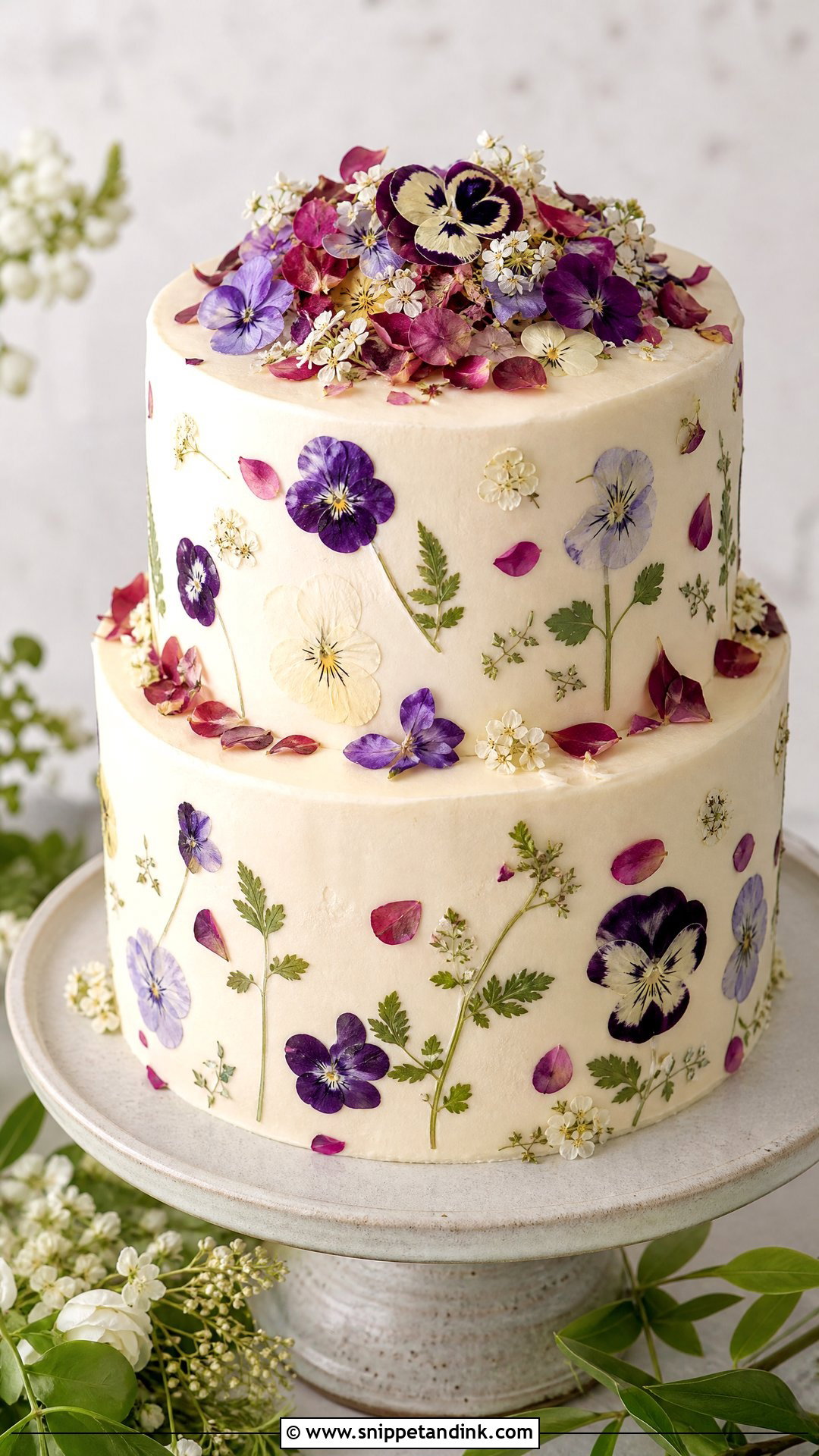
Pressed flowers are laid flat against the frosting, like a botanical print, and they have to be edible because they are eaten with the slice. Pansies, violas, chamomile and small rose petals press well and hold some color. A smooth buttercream helps them sit flat. Pressing takes days, so this needs planning weeks ahead, not the night before. Up close it reads as handmade, which suits a small reception where guests come right up to the table. Keep the cake shape plain so the petals stay the feature.
3. Wildflower Wedding Cake
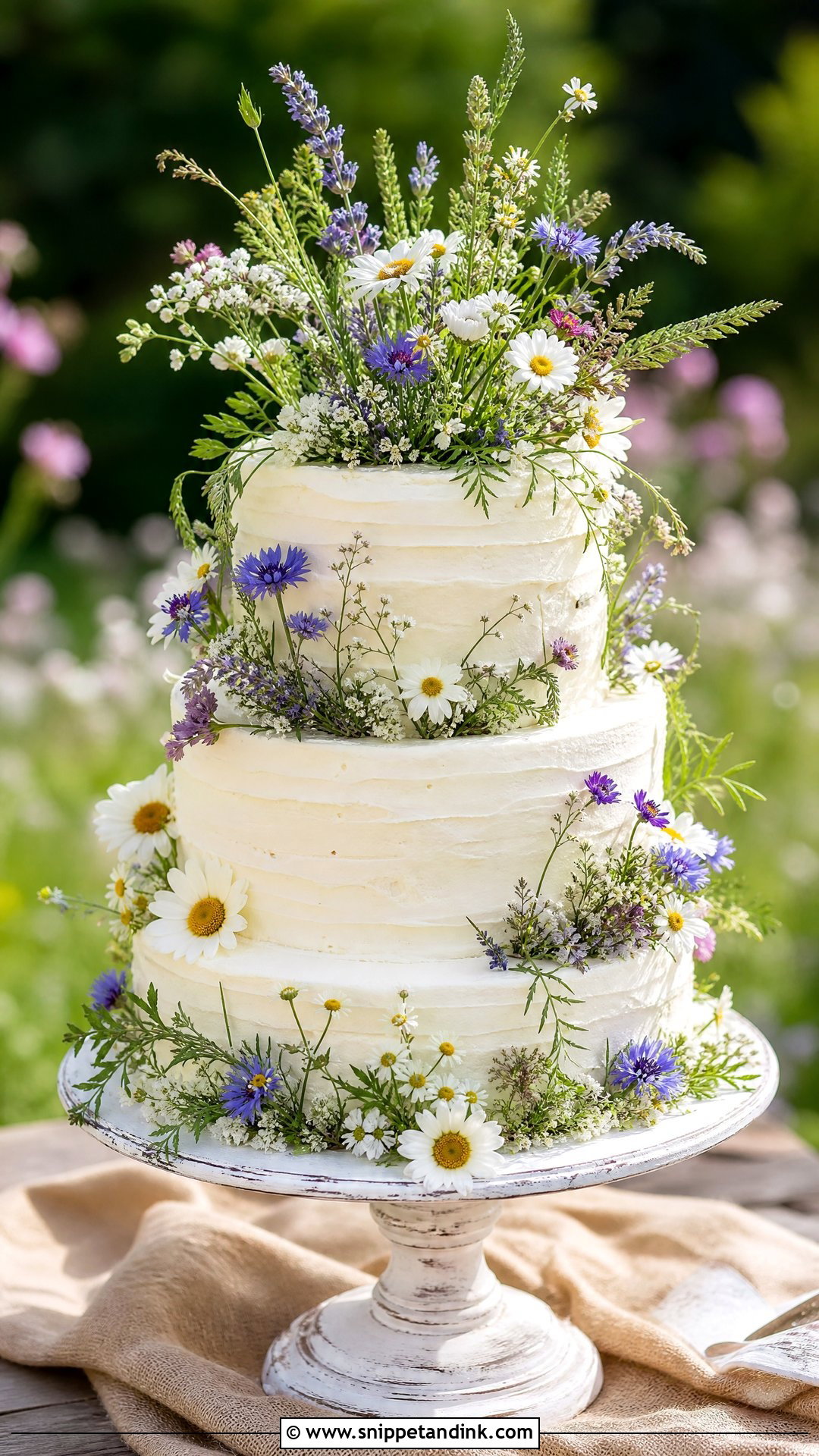
A wildflower wedding cake looks fresh-picked, but true meadow flowers often wilt within an hour out of water. For cake work I choose sturdier stems in that loose style: chamomile, small daisies, lavender, cornflowers and wiry bits of greenery. Buttercream gives the soft finish this look needs. Scatter them lightly over each tier or gather them in tiny clusters like miniature bouquets, and pull the colors from your actual wedding flowers so it reads as planned. Natural daylight flatters it most.
4. White Wedding Cake With Flowers
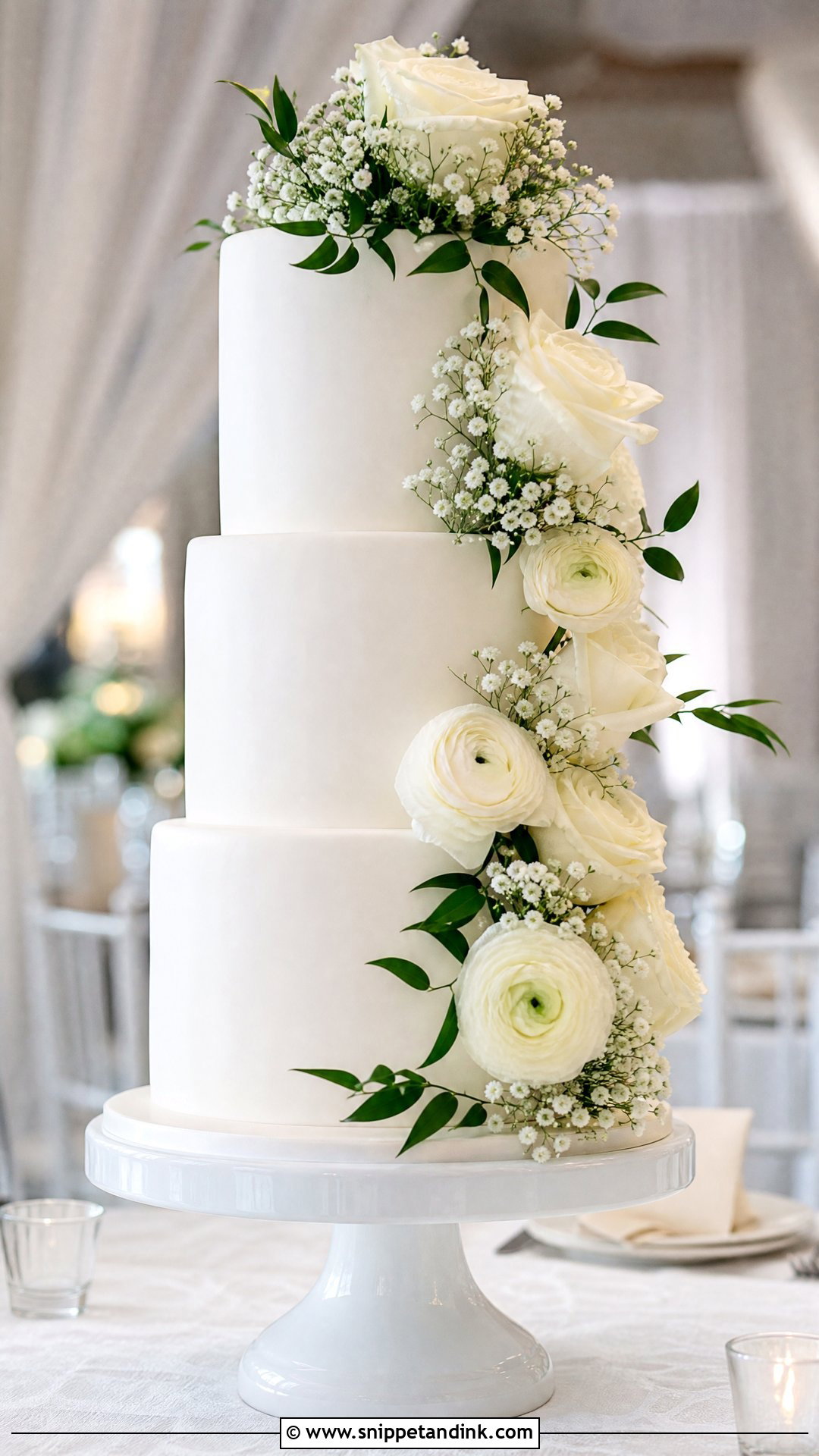
White cakes are the easiest canvas I work with, because the flowers carry all the color and texture. For a tonal look I’d use ivory roses, white ranunculus and a little baby’s breath. For contrast, blush peonies or deep pink roses. Blue hydrangea looks pretty in photos but drinks heavily and slumps quickly out of water, and it shouldn’t touch the frosting, so I’d use it on a base ring with a barrier. Fondant gives a formal finish, buttercream a warmer one, and either sits quietly when the room already has a lot going on.
5. Buttercream Wedding Cake With Flowers
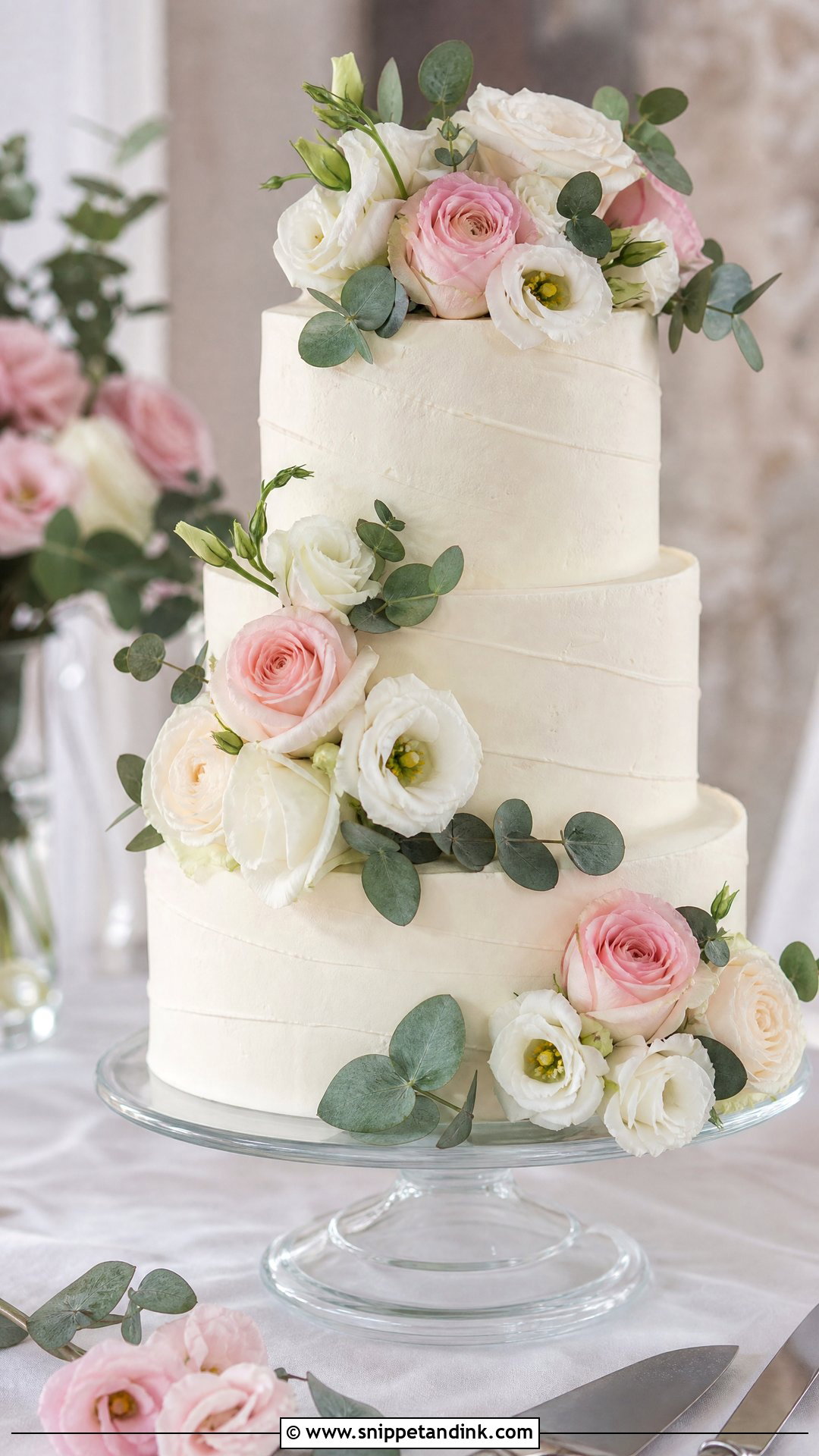
Buttercream is soft, which helps and hurts. Stems slide in easily, but heavy blooms tilt and drag the frosting once the room warms up, so I keep cake flowers small and wire them into picks rather than relying on the buttercream to hold them. Smooth finishes feel modern; a lightly textured spatula finish feels more relaxed. Roses, ranunculus and lisianthus are good choices because they are light for their size and keep their petals. Arrange them in small, balanced groups and keep the colors gentle.
6. Three Tier Wedding Cake With Flowers
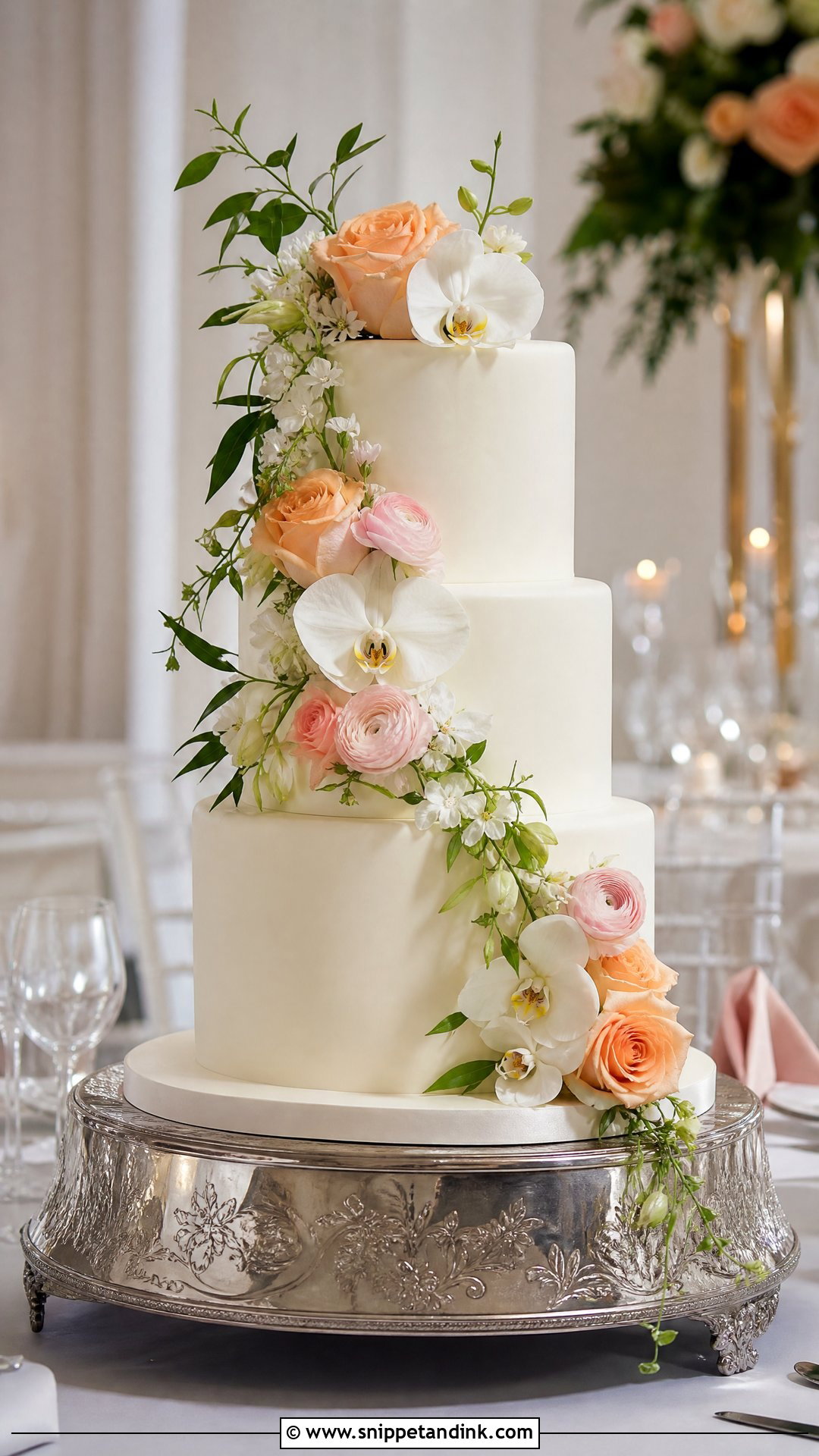
A three tier wedding cake with flowers gives me room to build a proper line, usually a soft diagonal from top to bottom or small clusters at each tier. Three tiers has presence without swamping the table. Roses, orchids, peonies and seasonal blooms all work here, and plain white or ivory frosting lets colorful flowers carry the design. For a modern feel I use fewer stems and leave clean space so the tier shape reads. More flowers also mean more contact points to protect, so I plan picks and barriers for each spot.
7. Small Wedding Cake With Flowers
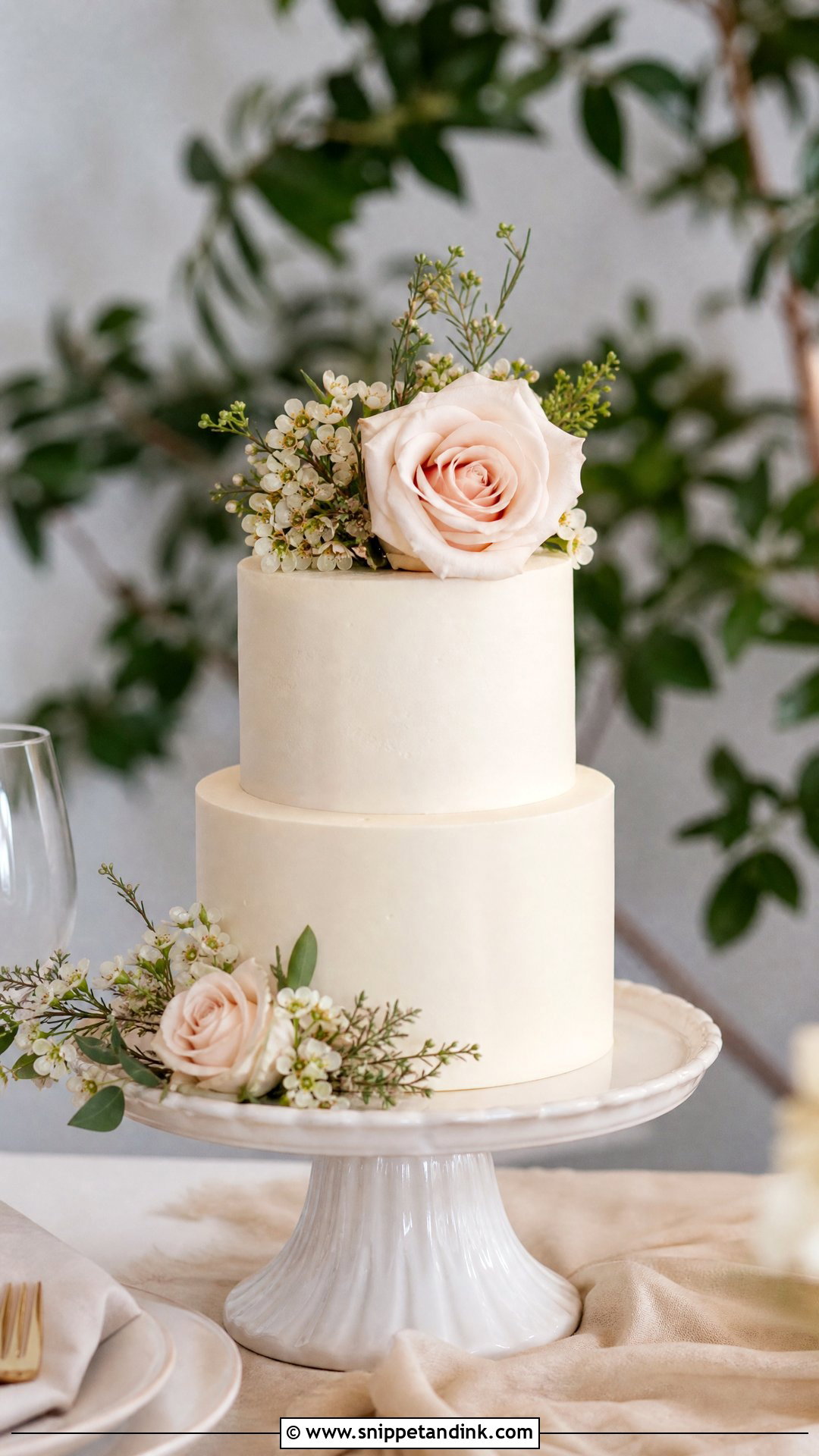
Small cakes need small flowers. A big garden rose on a six-inch cake looks like it’s about to tip it over, so I scale down to spray roses, sweet peas or a single ranunculus with a sprig of greenery. A cluster on top, a ring at the base or pressed blooms on the sides is enough to make it feel finished. I suggest this for elopements, courthouse weddings and receptions with other desserts. Put it on a tall stand so it still holds its own on the table, and it stays affordable.
8. Semi Naked Wedding Cake With Flowers
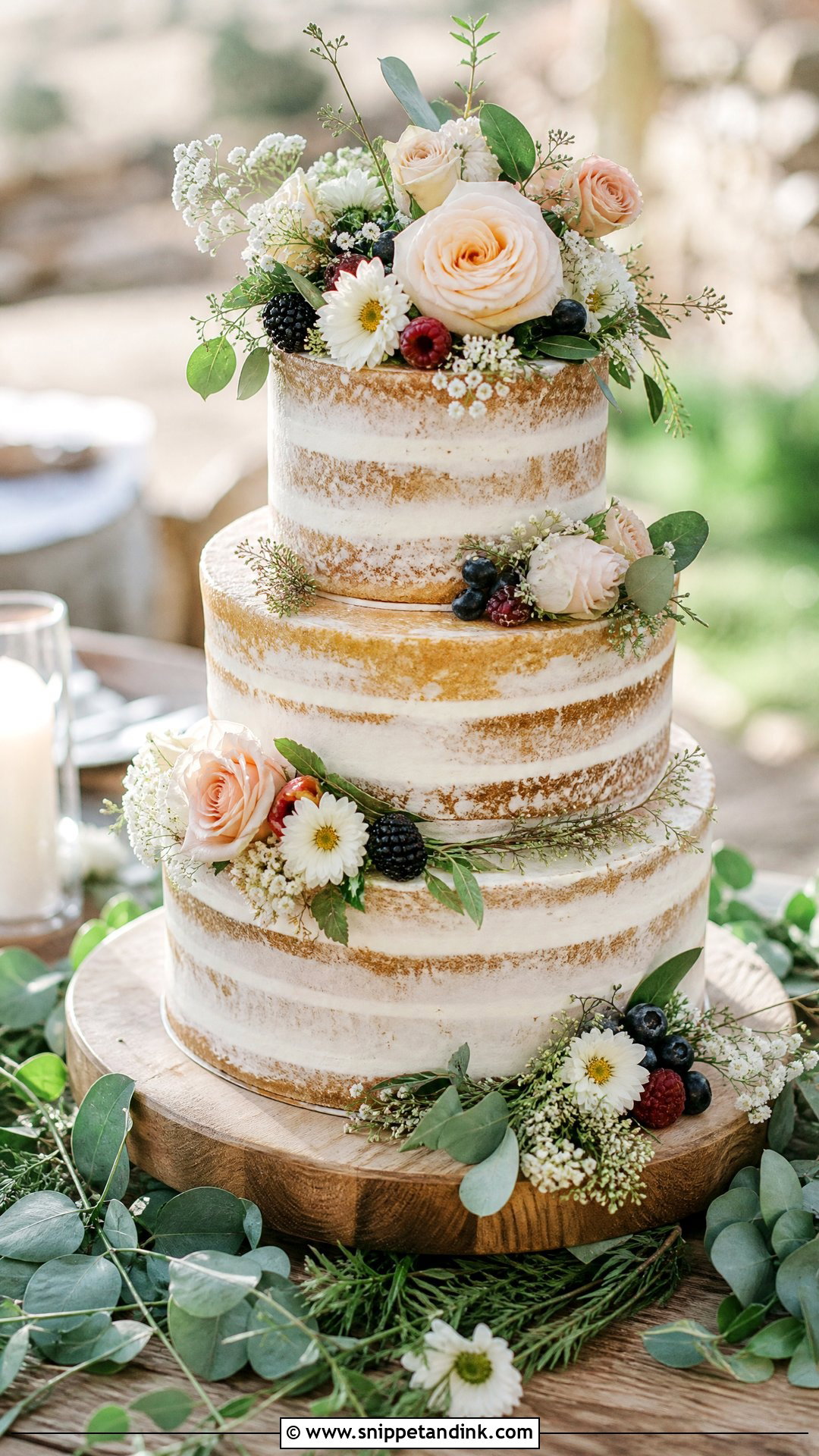
Semi-naked cakes show the sponge through a thin scrape of buttercream, so every flower sits right next to exposed cake and the hygiene rules matter more. I use picks for every stem and keep berries and blooms in separate spots so juice doesn’t stain the petals. Roses, small seasonal flowers and greenery give movement. It suits barn, garden and summer outdoor weddings. Because the frosting is so plain, the flowers must look freshly placed, which means they go on at the venue, not in the bakery.
9. Floral Cascade Wedding Cake
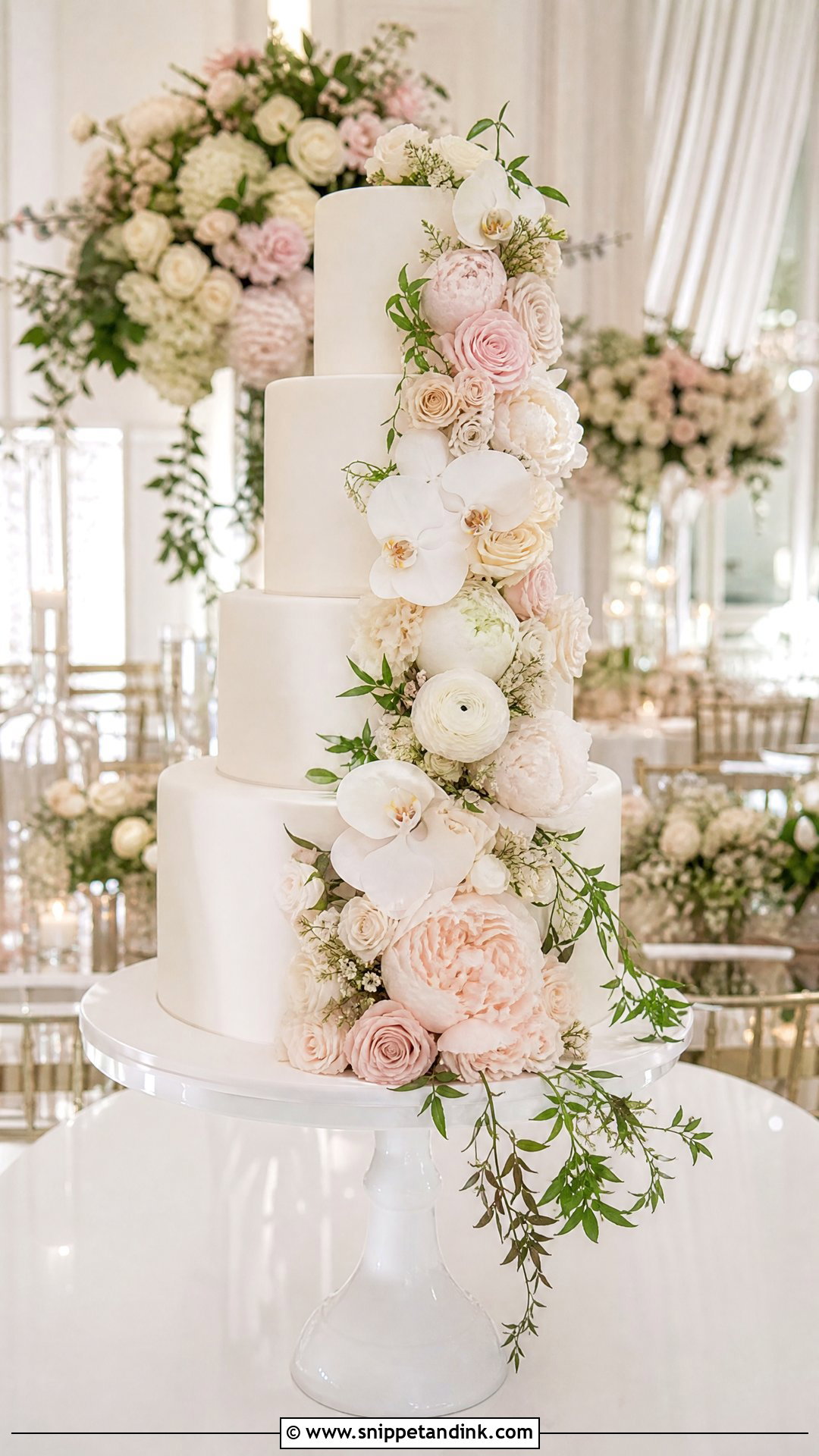
A cascade is the cake equivalent of a trailing bouquet, and it needs the same structure. I build the line on wired picks and sometimes a hidden support so the flowers don’t pull down the side of the tiers, which they will in a warm room if they rest on frosting alone. Roses, orchids, peonies and ranunculus give fullness, with greenery for shape. Keep the base plain in white, ivory or pale blush. It looks strongest on a tall cake of three or four tiers, where the flowers have room to fall.
10. Sugar Flower Wedding Cake
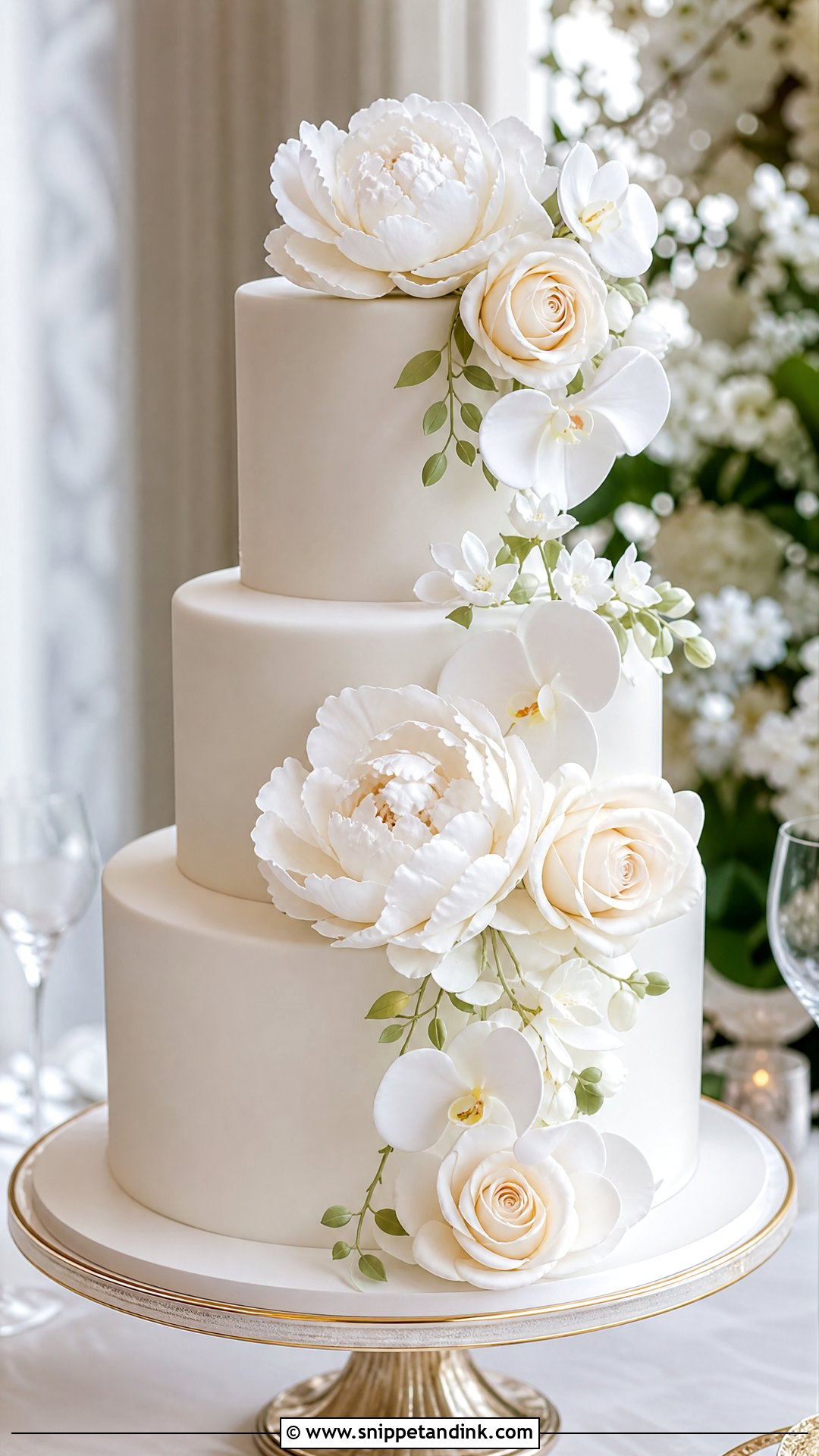
Sugar flowers are made petal by petal from gum paste by the cake artist, not by me, and they are the answer whenever fresh blooms won’t cooperate: out of season, toxic, too delicate or too expensive to import. They don’t wilt, and the color can match the bridesmaid dresses exactly. Peonies, roses, orchids and cherry blossoms are all possible. The handwork makes them costly, and humidity can soften them, so they need dry storage until setup. On clean fondant tiers they look like keepsakes.
11. Boho Wedding Cake With Flowers
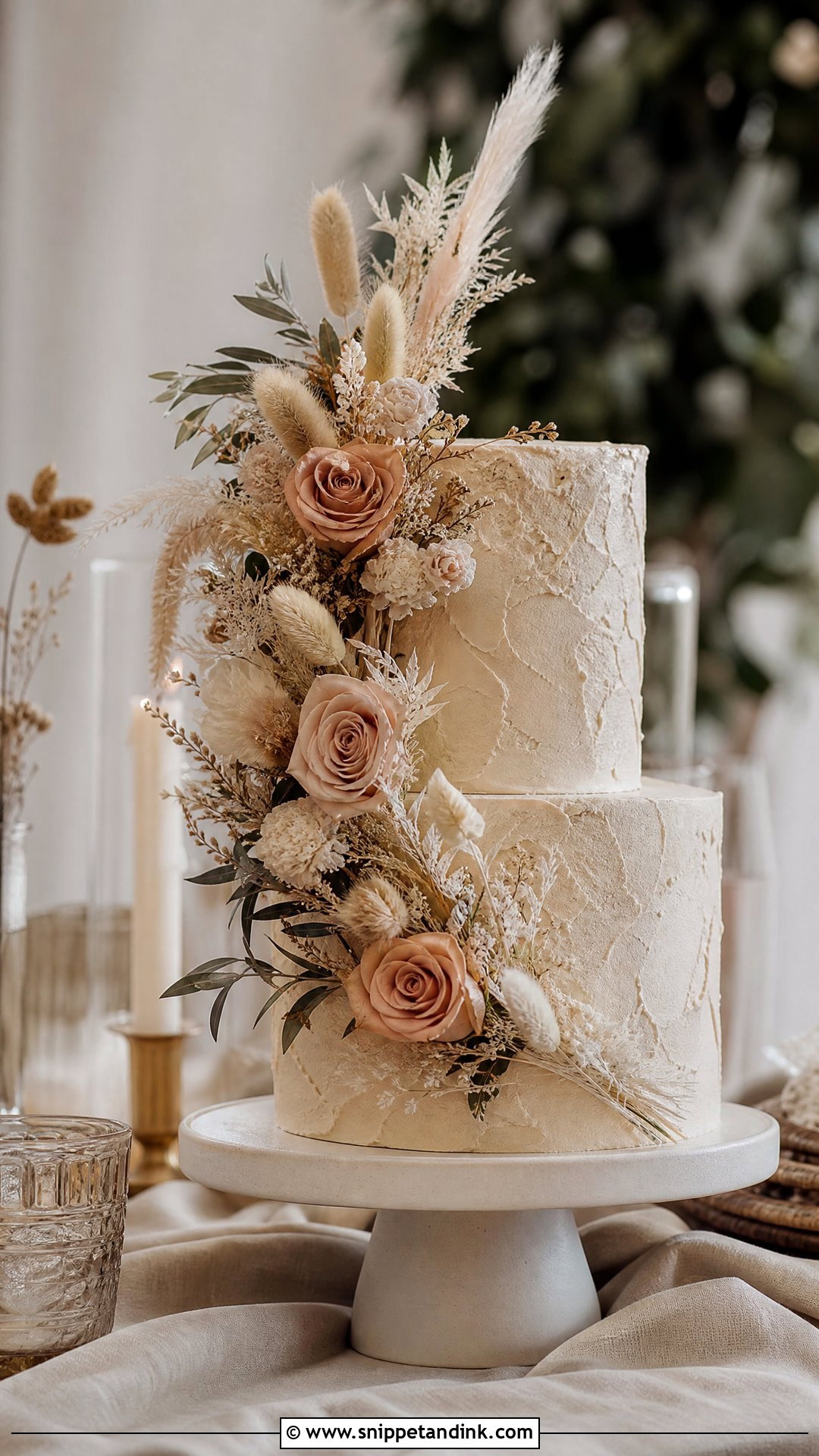
Boho cakes lean on dried flowers and pampas grass, and those need more caution than people assume. Dried stems are dusty and pampas sheds, so I put them on a small barrier disc or keep them to the cake stand rather than pushing them into the frosting. Fresh soft roses and muted greenery can sit closer. Loose, asymmetric placement suits the style: a crescent on the top tier, a wrap around the base or a lean to one side. Warm ivory, caramel and dusty blush tie it together, with a textured buttercream for a handmade finish.
12. Modern Wedding Cake With Flowers
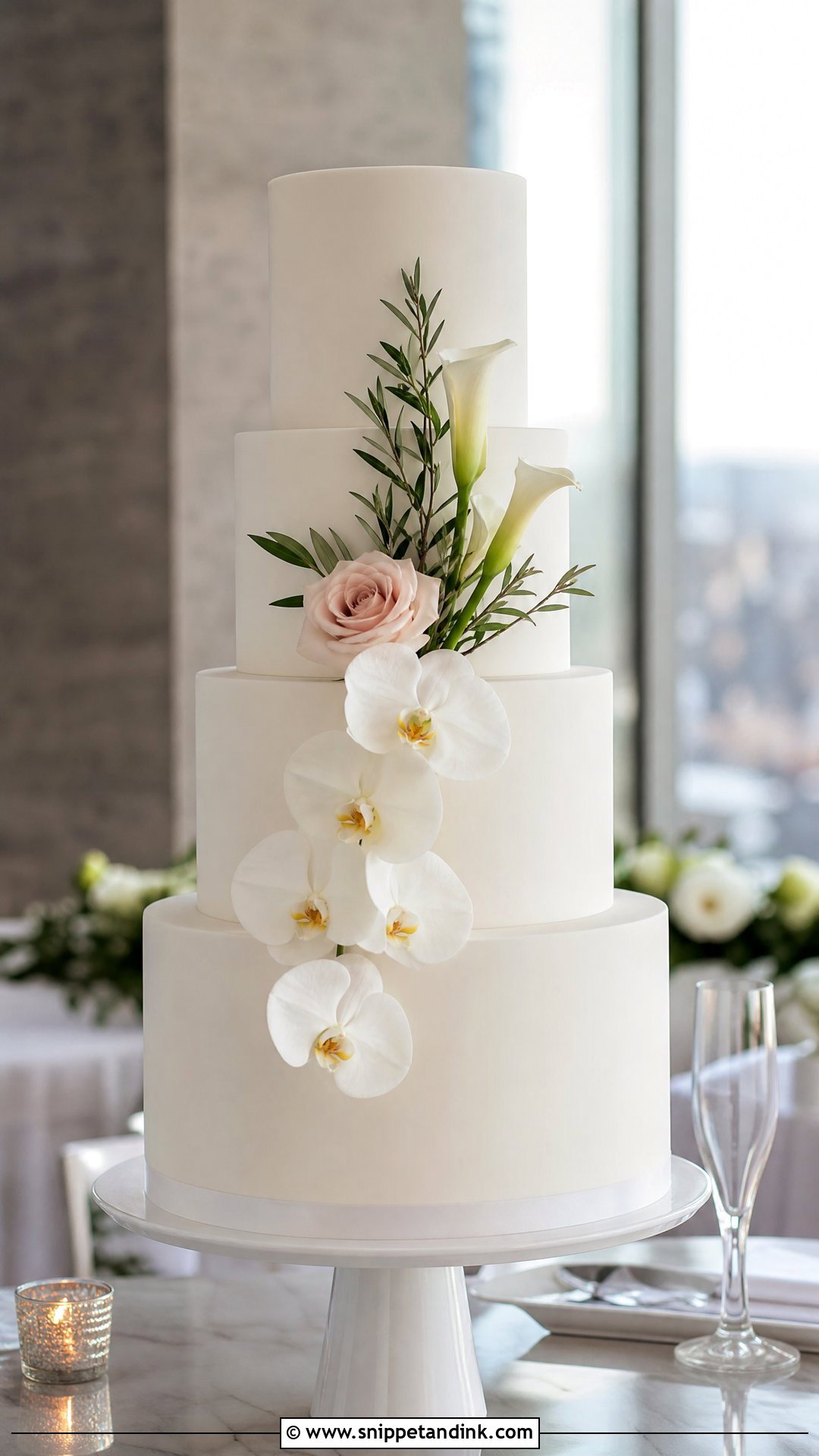
Modern floral cakes are about restraint. One sculptural arrangement or a few stems, set with space around them, on smooth fondant with sharp edges and a white or single-color base. Orchids and anthuriums do this well, but anthuriums and calla lilies both irritate if eaten, so I place them on picks well above the frosting or ask the baker for sugar versions. Keep the stand plain and skip extra decoration. The flowers should sit on the cake like a piece of art on a wall, which suits gallery and city venues.
13. Rustic Wedding Cake With Flowers
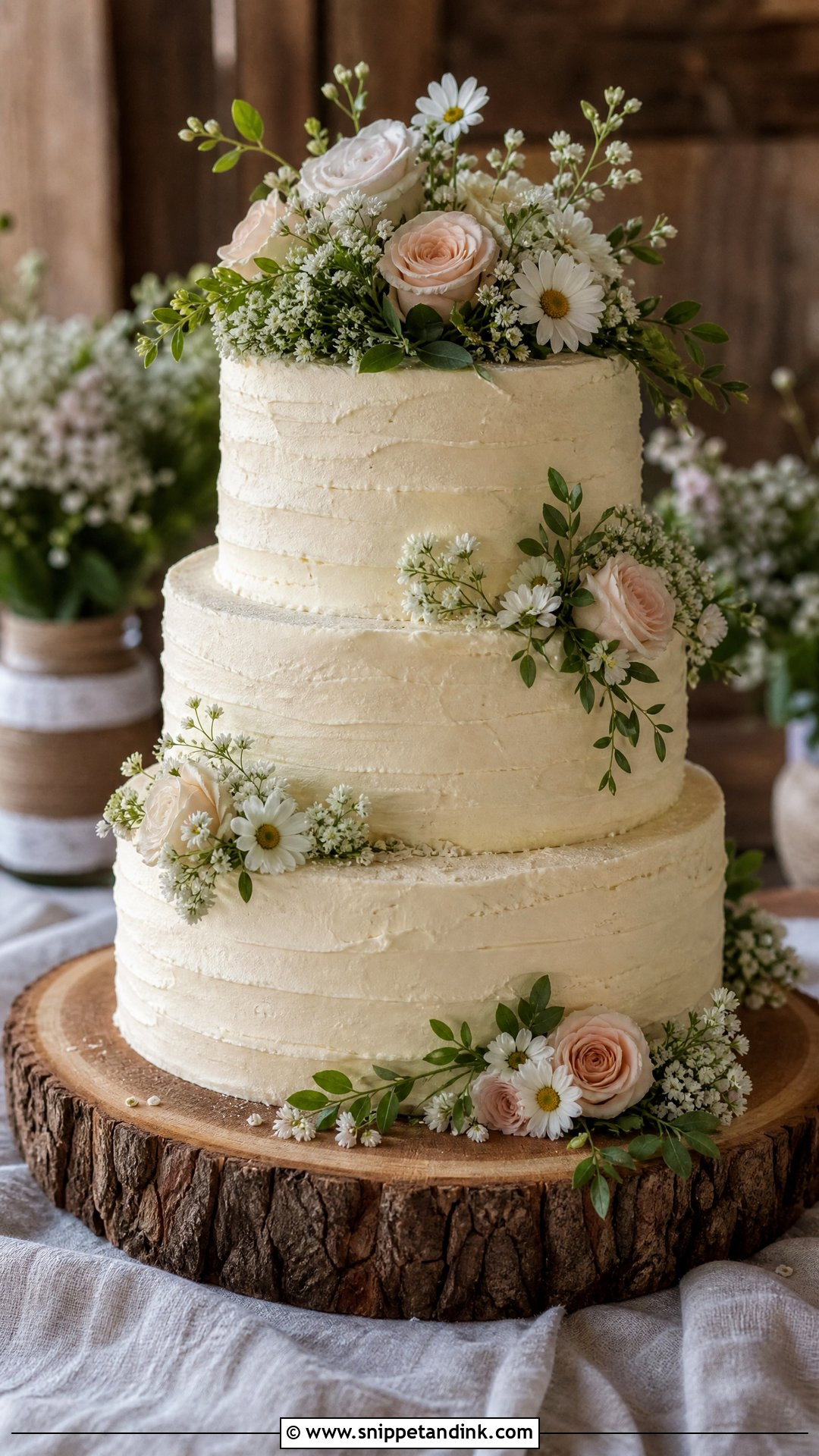
Rustic cakes look best when the flowers look like they came from a field, not a cooler. Daisies, small roses, wildflowers and loose greenery against buttercream or a semi-naked finish fit barns, farms, lodges and backyard receptions. I let a few stems sit slightly off-center and leave some frosting texture showing. A wood slice, ceramic stand or white pedestal changes how casual it feels. Cream, sage, blush and warm peach are the colors I keep coming back to here.
14. Garden Wedding Cake With Flowers
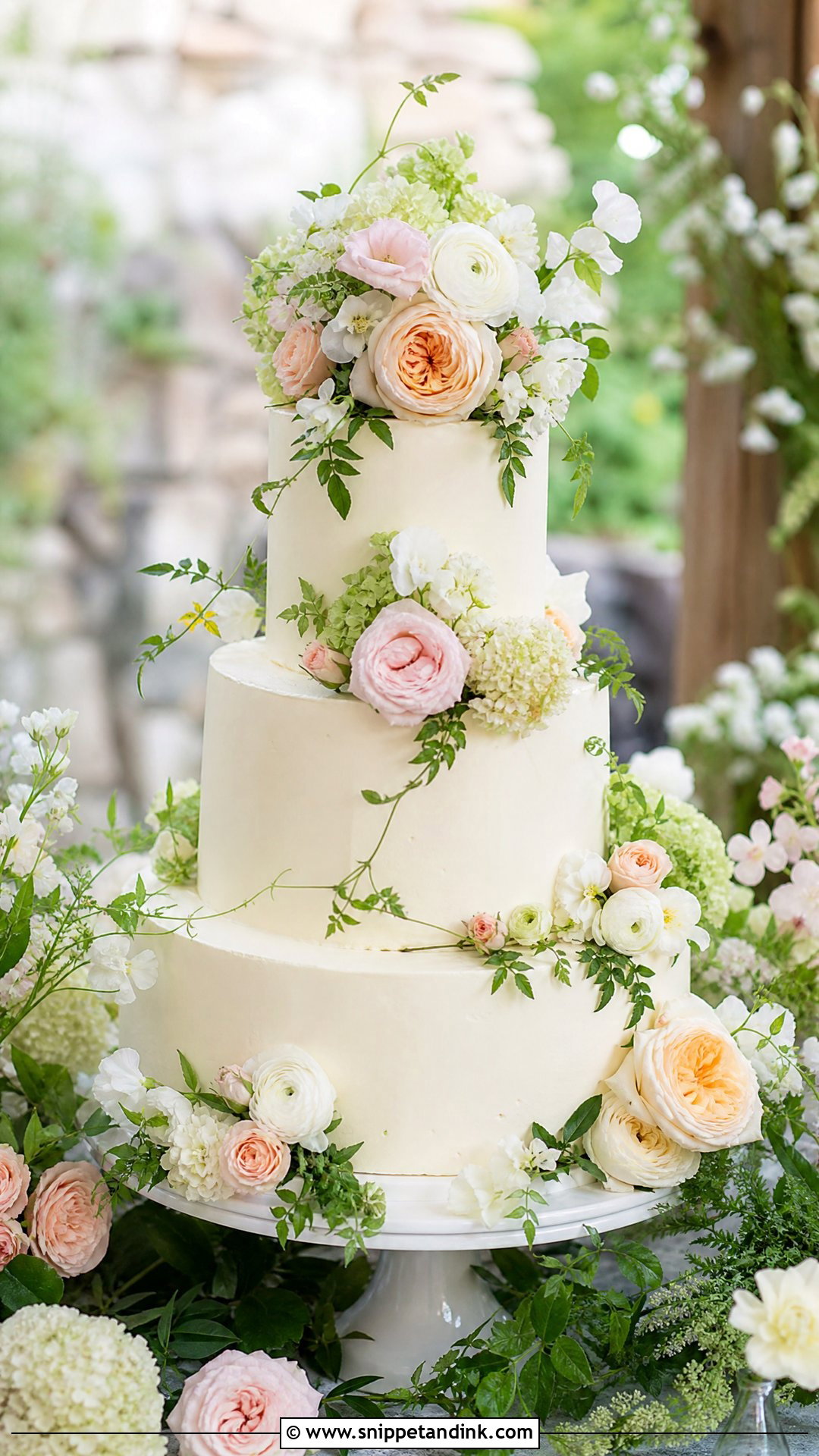
Garden cakes should look as though the flowers grew around the tiers. Roses, ranunculus and trailing greenery carry this well; sweet peas look wonderful but wilt fast and their seeds are toxic, so they go on last and sit in picks. Buttercream feels natural, fondant more formal. Pastels are the default, though deeper pinks and greens make it richer. I usually carry the same flowers onto the cake table itself, so the cake sits inside an arrangement rather than beside one.



15. Orchid Wedding Cake
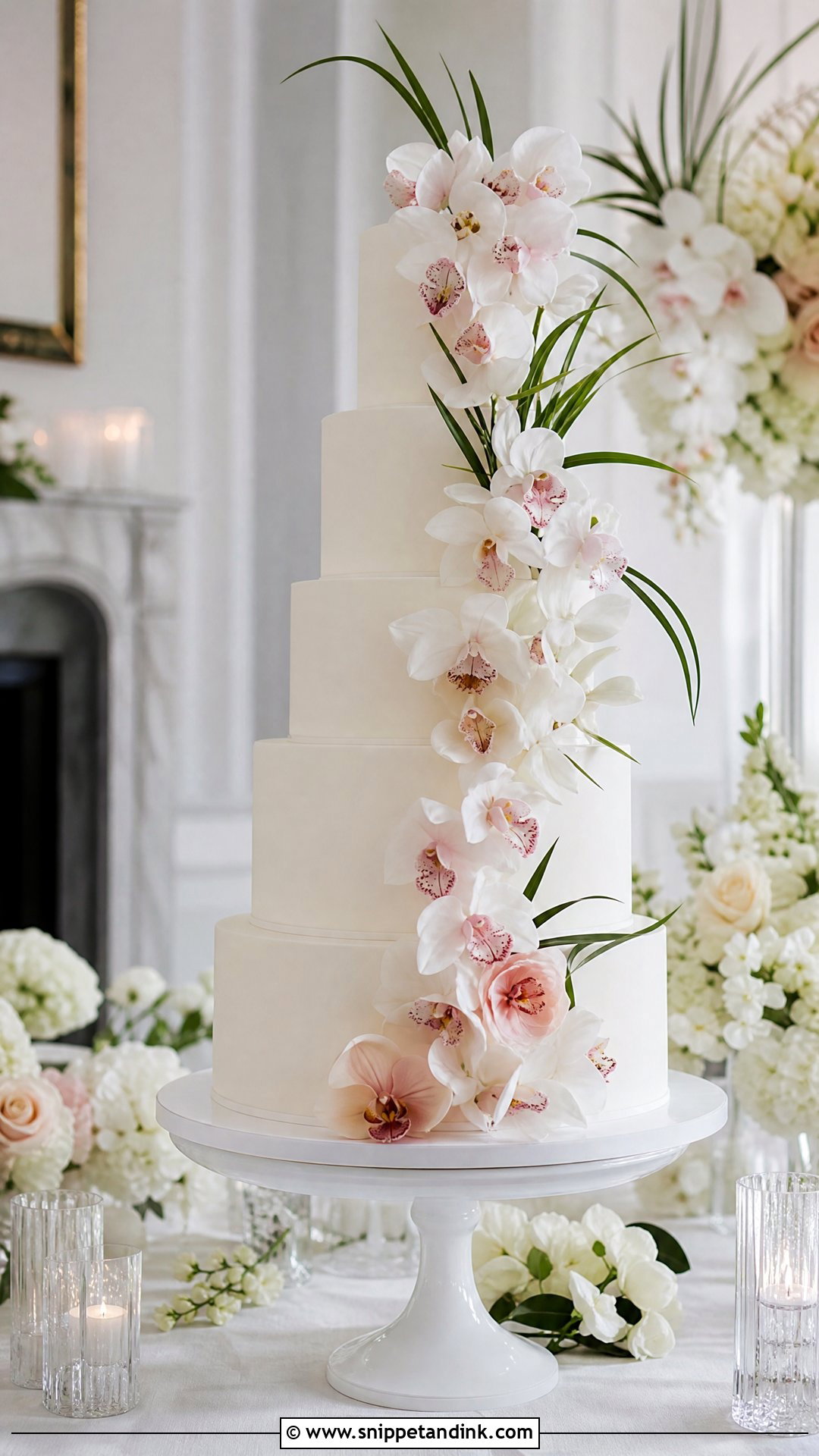
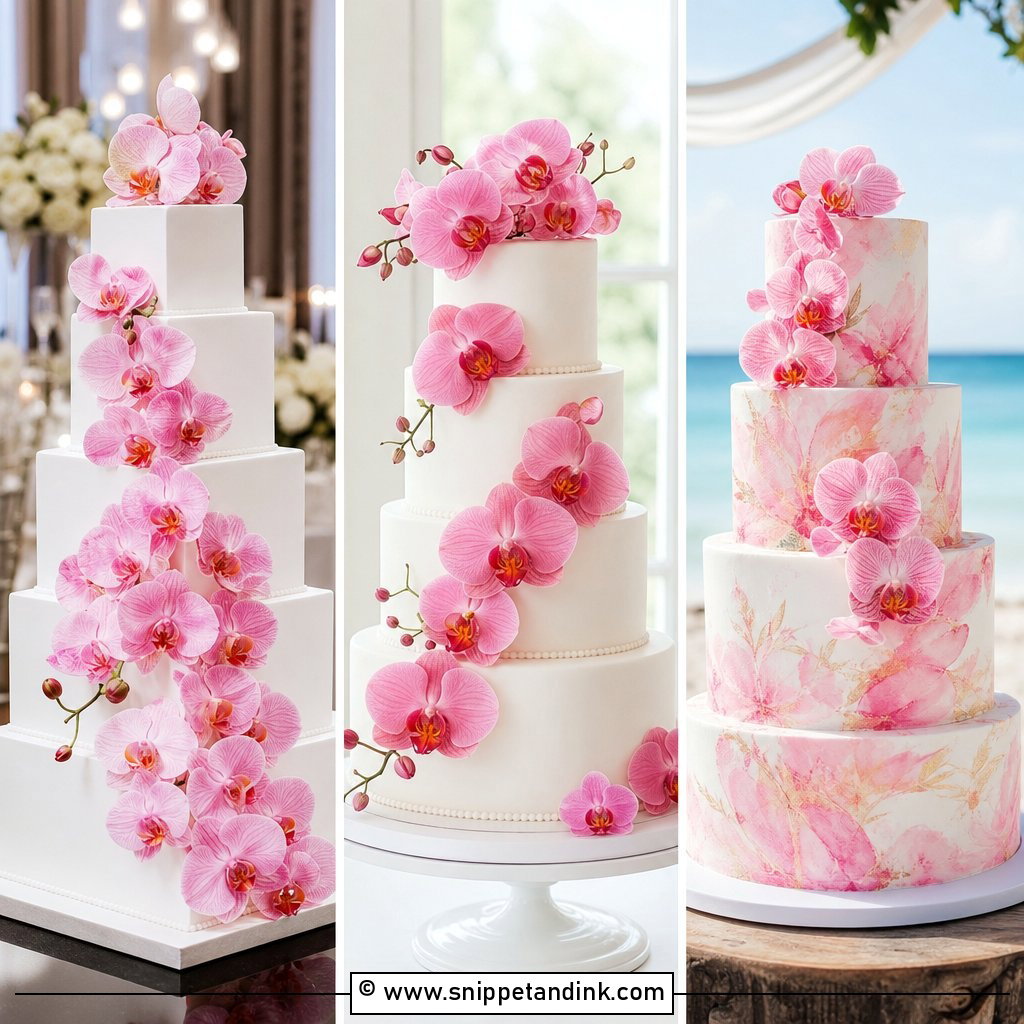
An orchid wedding cake is one I’m always happy to dress, because cut orchids last out of water far longer than most blooms. White or blush orchids sit softly against white frosting, while purple or fuchsia add stronger color. Their arching sprays give natural movement, so a single cascade down one side or a few blooms between clean tiers is enough. They handle warm weather well, which helps at beach and summer receptions. Keep other decoration minimal and pair them with smooth buttercream or fondant.
16. Peony Wedding Cake
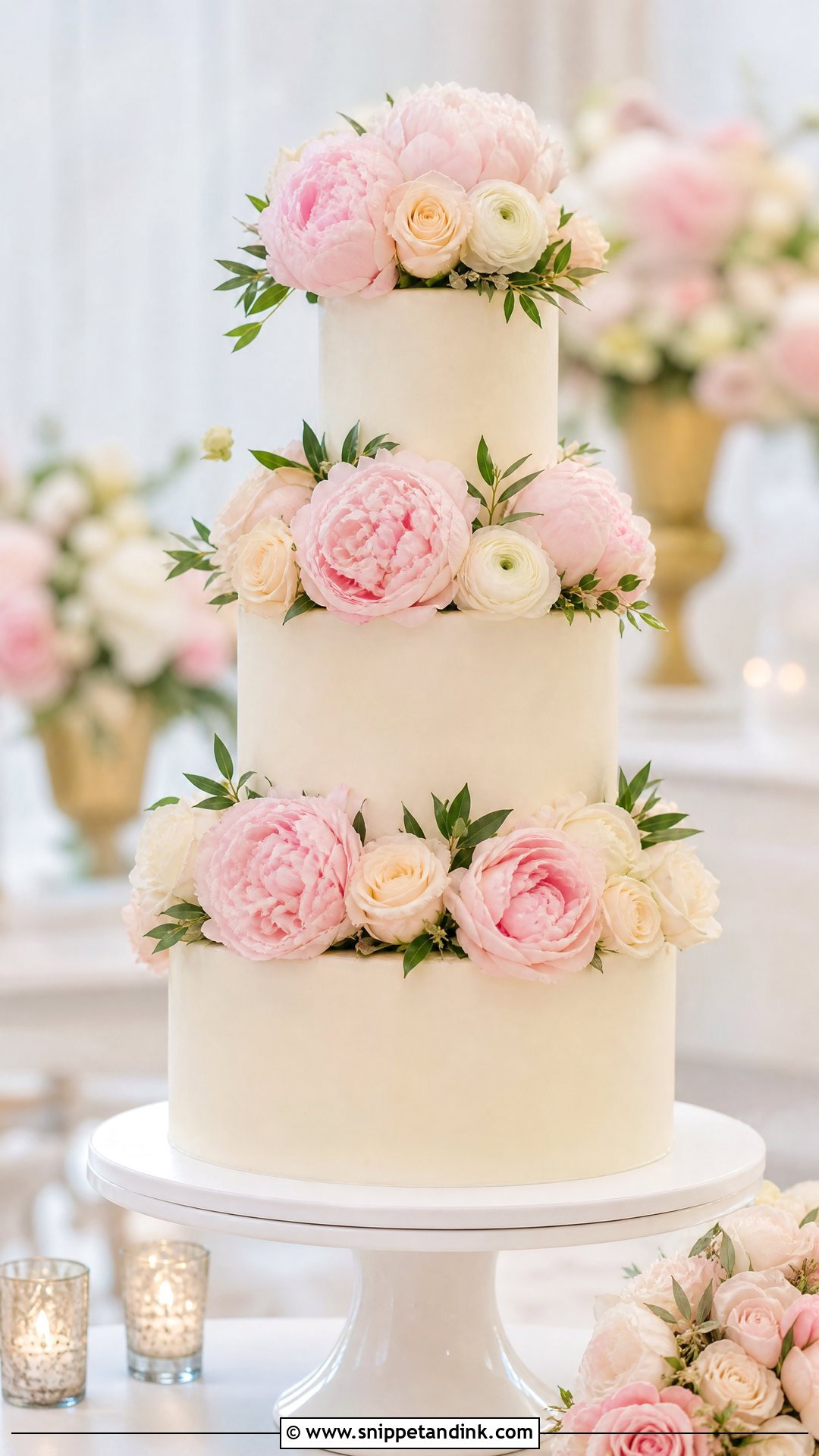
Peonies are heavy, full and short-lived in the market, so availability is the first thing I check. Their main season is late spring into early summer; outside it they get scarce and costly, and that’s when I’d suggest sugar peonies instead. A single large cluster suits a small cake, while a tall cake can take a fuller arrangement with roses, ranunculus and greenery. Open peonies drop petals as they warm, so I place them in tight bud-to-half-open stages. Smooth white, ivory or blush frosting lets their volume carry the design.
17. Sunflower Wedding Cake
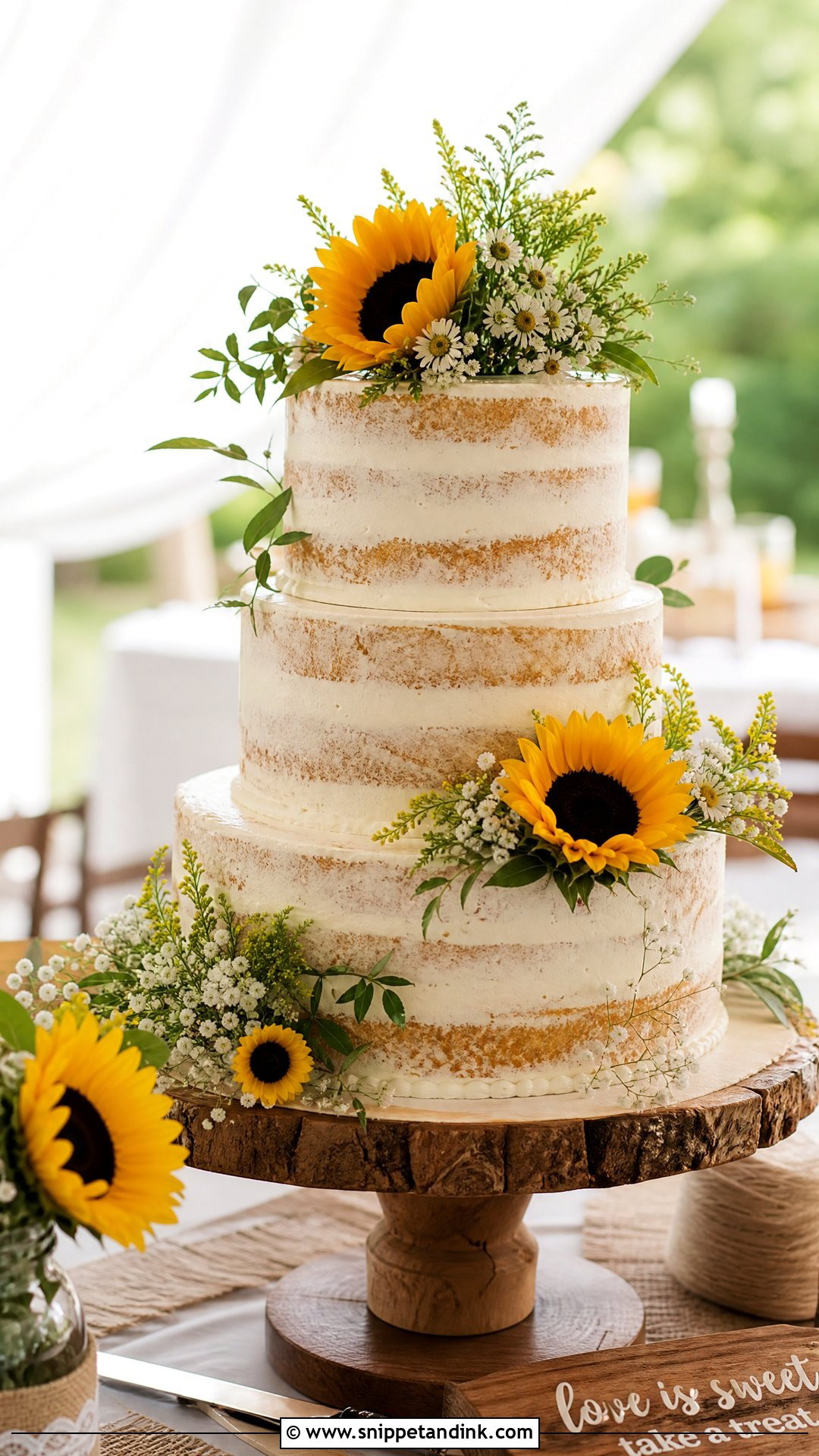
A sunflower wedding cake is cheerful, but sunflower heads are heavy and the stems are thick and hairy, so I cut them very short and support them in a pick or on the stand instead of in the cake. They suit summer, barns and yellow palettes. White buttercream, a semi-naked finish or soft beige frosting balances the strong yellow, and small white flowers or a bit of baby’s breath soften it. A top cluster, a base ring or a diagonal line all work without much else on the cake.
18. Lavender Wedding Cake
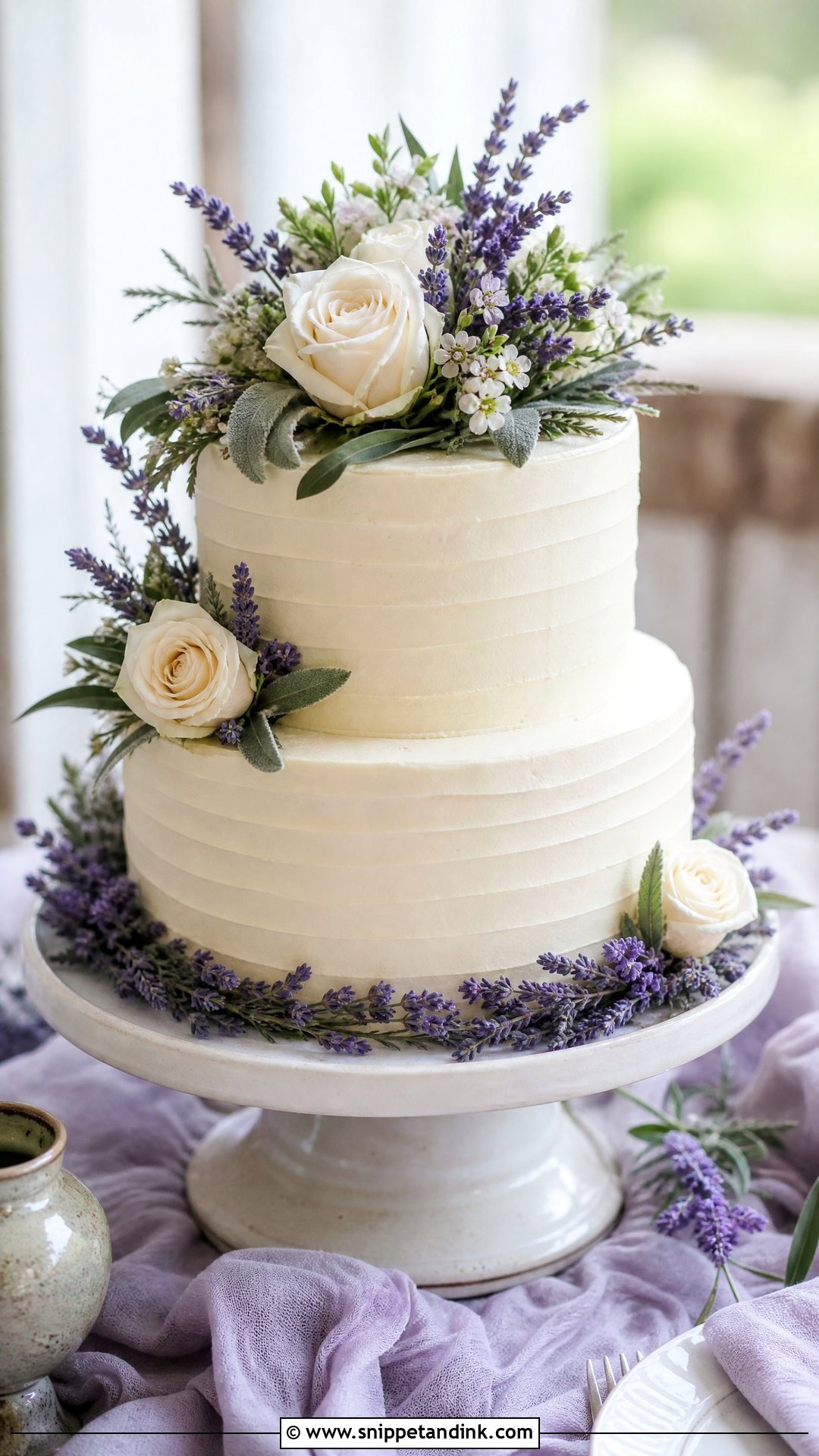
A lavender wedding cake can use culinary lavender, which is edible, and that makes it one of the easier flowers to place near frosting. The fine spikes add texture without bulk. I tie small bundles for the base of each tier or tuck sprigs into a top arrangement with roses or small ivory flowers. White buttercream, pale lilac frosting or a honey accent all suit it. Keep to ivory, lilac, sage and cream, which suits gardens and countryside venues in spring or summer.
19. Blue Flower Wedding Cake
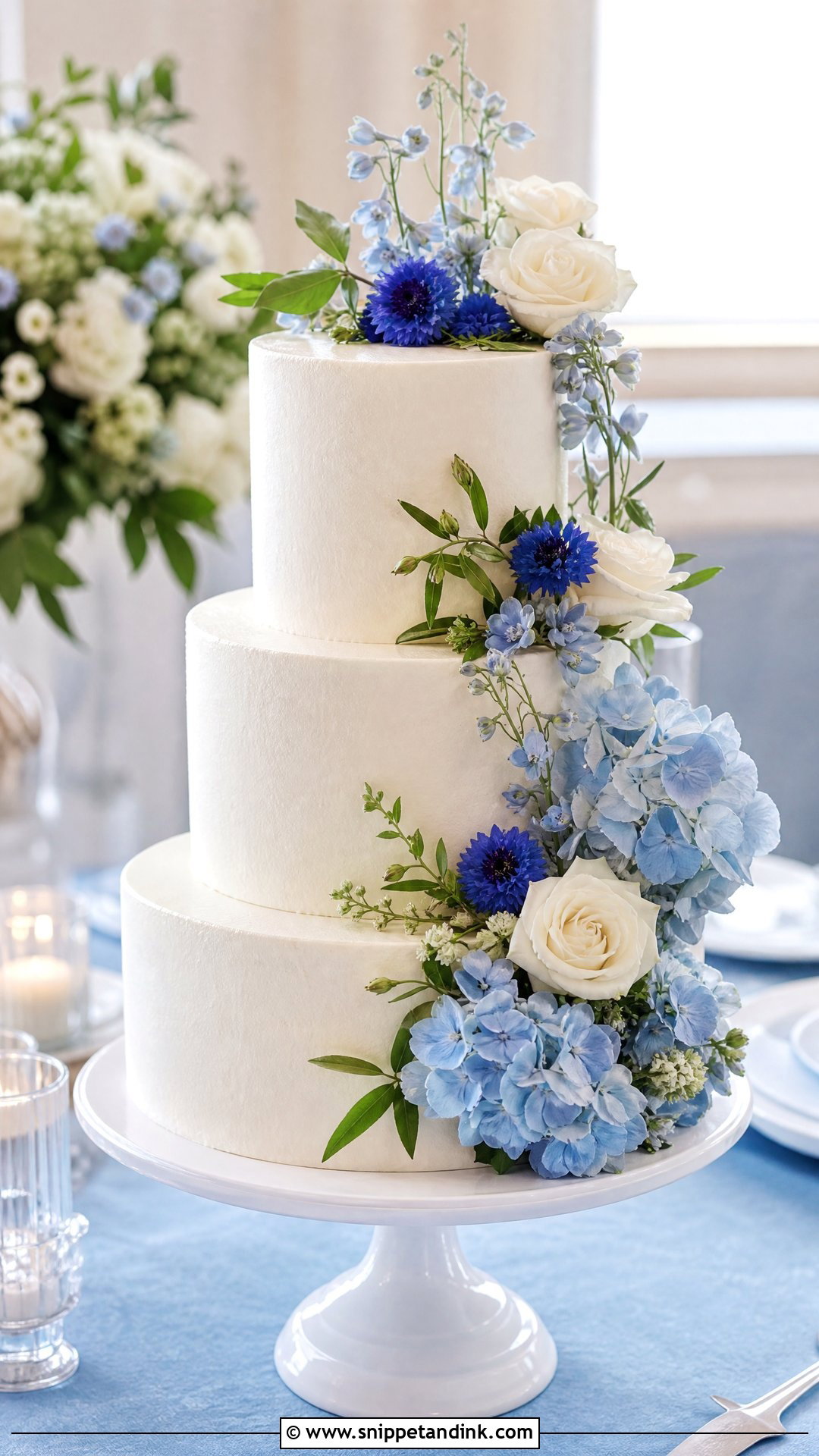
Blue is a hard color to find in nature, which is why blue flower cakes lean on a short list: hydrangea, delphinium and cornflower. Delphinium and hydrangea are both toxic if eaten, so on a cake I’d use them only on a barrier, keep cornflowers for anywhere that touches frosting, or move to pale blue sugar flowers. White, ivory or very pale blue frosting pairs best. A base ring, a top cluster or a soft cascade down one side keeps the blue balanced, with greenery and white blooms to freshen it.




20. Floral Painted Wedding Cake
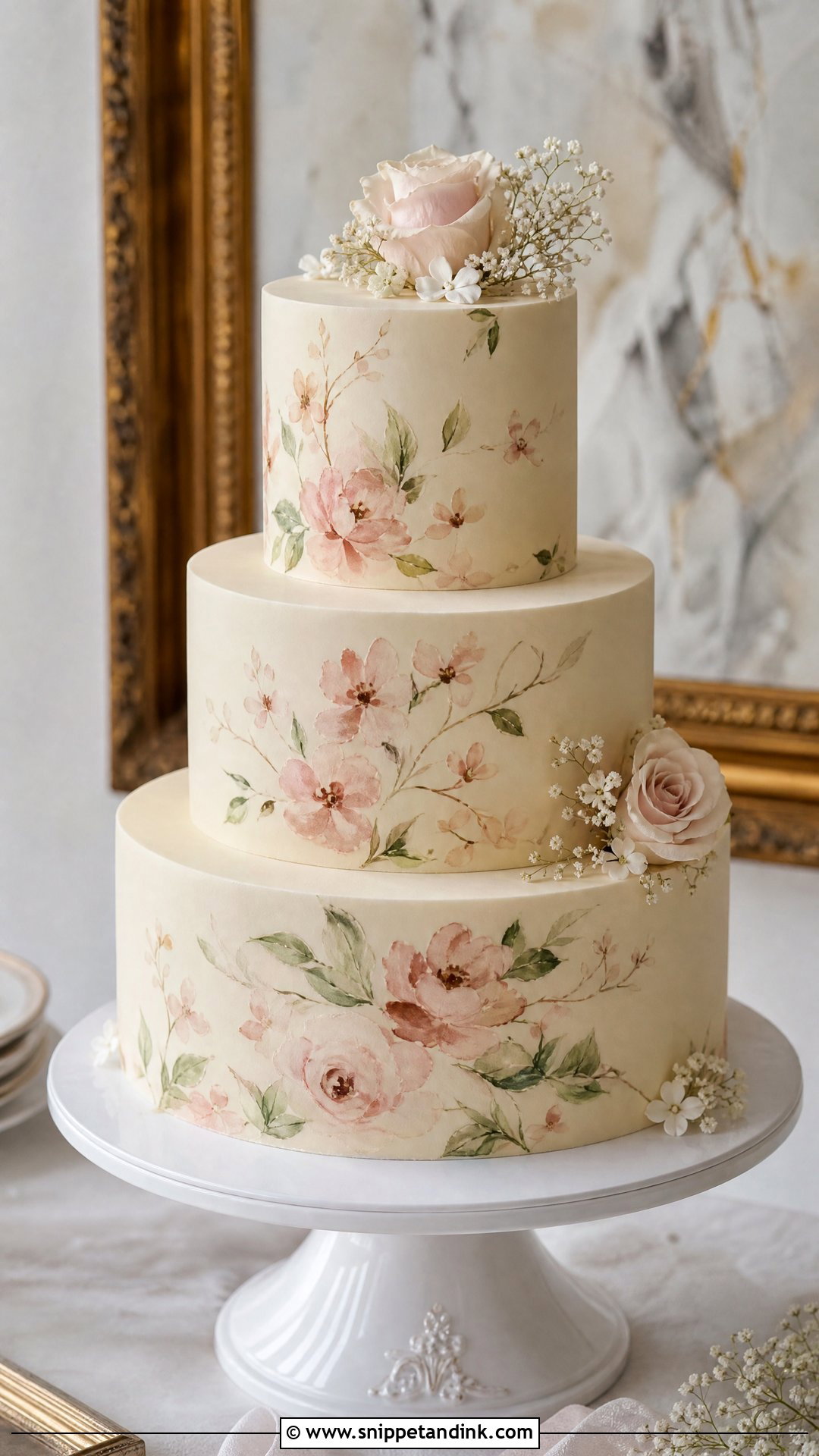
A floral painted wedding cake puts the flowers in the cake artist’s hands, painted on buttercream or fondant with edible color. The style can lean watercolor, vintage, modern or botanical depending on the brushwork. It is the right call when you want flowers without many fresh stems near food. I usually add one small fresh or sugar arrangement on top, picked from the bouquet palette, to connect the painting to the room. Indoors, where guests can study it closely, it really comes into its own.
Handing Off Between Florist and Baker at the Venue
The cake flowers are usually my last job of the setup, and they only go on once the cake is in its final spot. Moving a dressed cake knocks petals off and can shift tiers, so I ask the baker to send a setup time and wait for it. I bring cake flowers as a separate, labelled order, already wrapped and on picks, which keeps the work at the cake table to a few minutes.
- Agree in writing who supplies the cake flowers. When both the baker and the florist assume the other one is doing it, nobody brings them.
- Send the baker the exact stems and colors a few weeks out so the frosting and any sugar flowers match.
- On a hot day, keep the cake flowers in water in a cool room until the last possible moment.
- Tell the caterer to lift off every flower and pick before cutting, and to discard the frosting underneath any non-edible bloom.
If the venue can’t give a stable cool spot for the cake, that is when I’d switch to sugar or painted flowers. They cost more in labor but won’t wilt, sweat or drop pollen on the frosting.
Bring Your Bouquet Recipe to the Cake Tasting
Start with the bouquet. Once that recipe is set, the cake flowers should borrow its colors and one or two of its stems, scaled down to suit the tiers. Match them to the season and the venue too, since a cake in a hot tent needs tougher flowers than one in an air-conditioned ballroom. If you want fresh blooms, ask your baker and florist together how stems will be wrapped, where they’ll sit and who removes them before cutting. If you want full control of color and shape, sugar flowers or painted florals are the reliable alternatives. Bring your favorite photos to the tasting.
You'll Like These Ideas:







Leave a Reply