
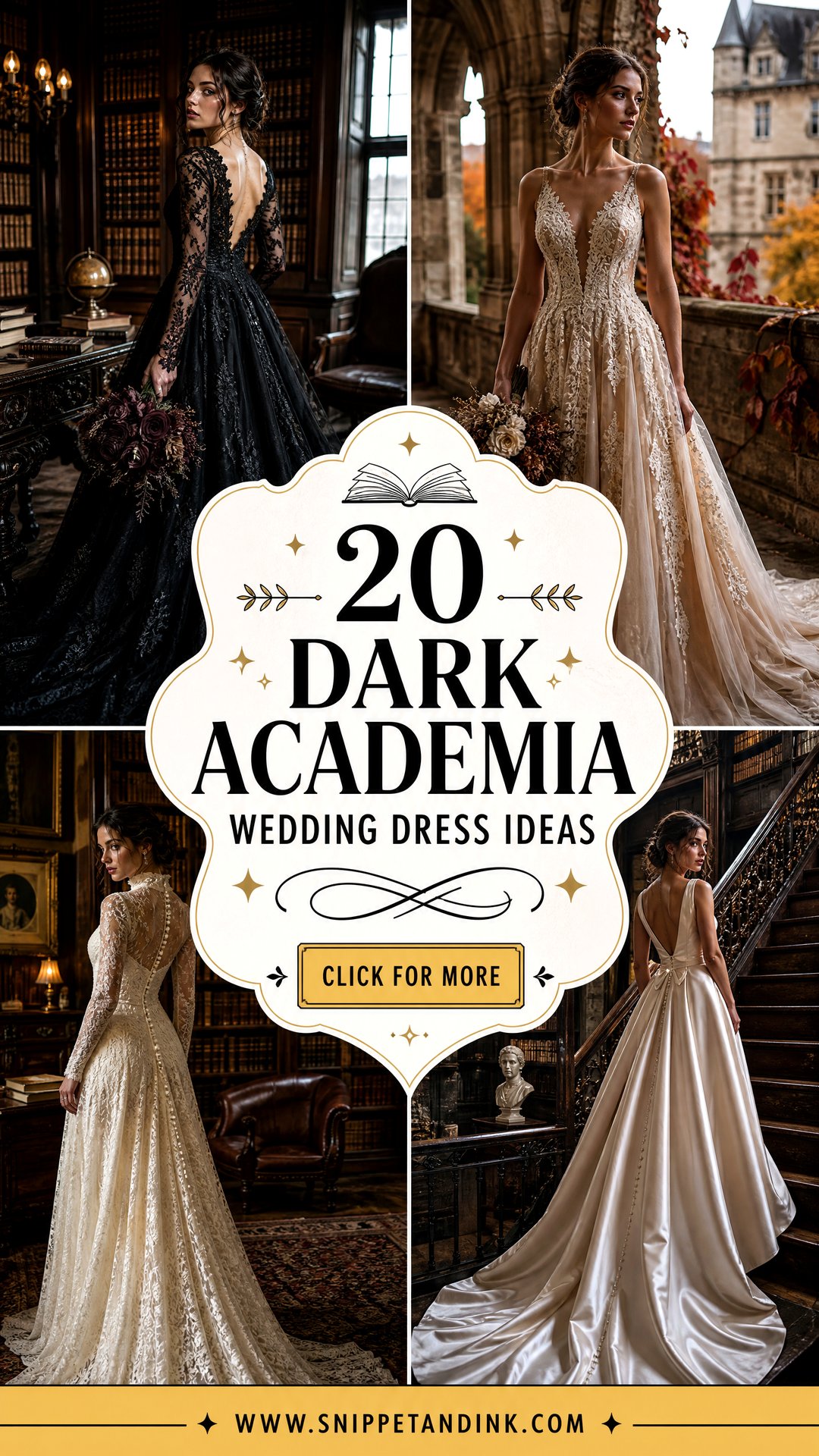
Dark academia borrows from old libraries, oil paintings and stone colleges, and in a wedding gown it comes down to a handful of things: antique lace, structured bodices, high collars, long trains and a palette of ivory, black, burgundy or forest green, all with a sense of moody elegance. The risk I watch for with every bride who brings me this mood board is costume. A gown stays bridal when the silhouette, fabric, shoes, veil and jewelry all point the same way and nothing is there just to signal a decade. Fabric weight matters too: breathable lace for a mild day, velvet only when it’s properly cold. Below are twenty complete looks, from a manor ballroom to a small library ceremony.
How Many Period Details Can One Gown Carry?
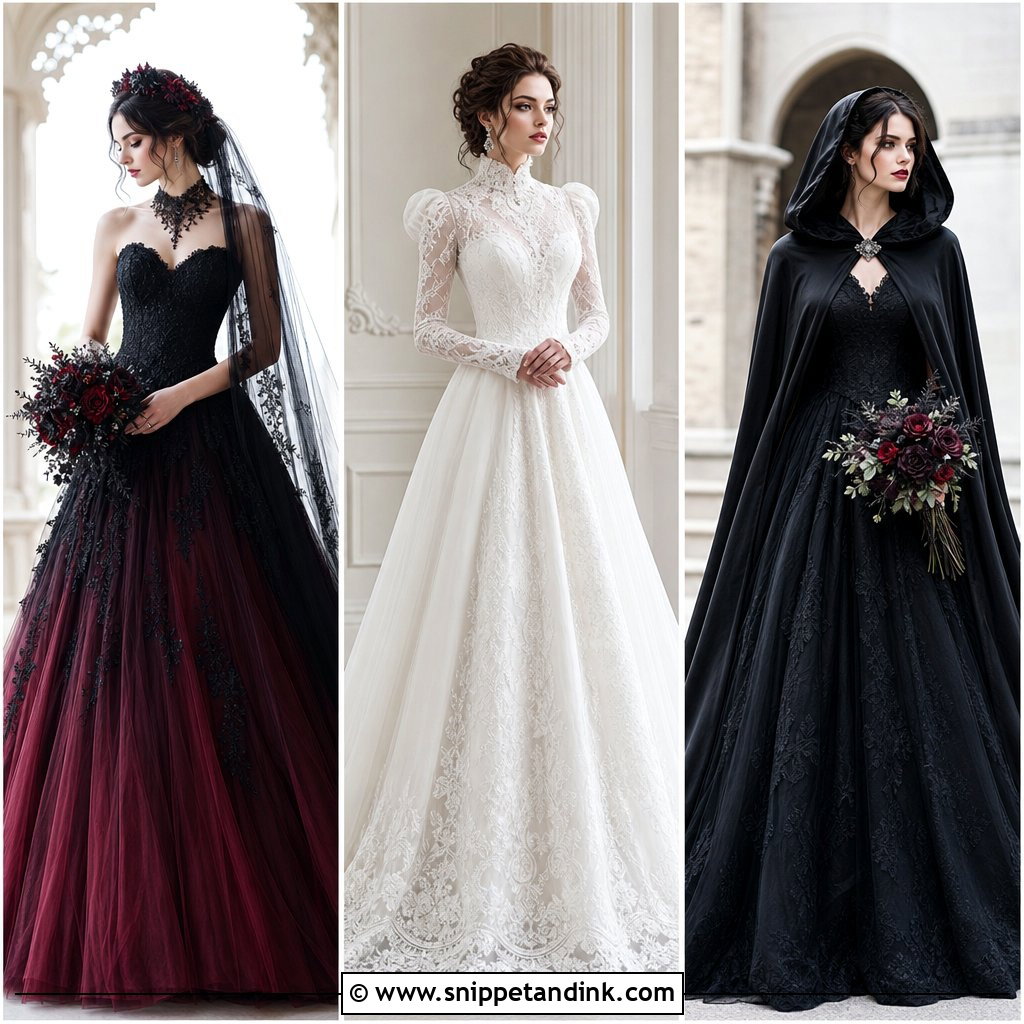
When I build a dark academia look, I count the historical references. A high collar is one. A cameo is another. Add lace-up boots, gloves, a corset and a cape to the same bride and you are at six, and that’s the point where guests start reading it as a theme rather than a wedding dress.
My working rule is one clear period feature on the gown, one in the accessories, and everything else modern and well cut. That might be a Victorian collar with plain satin shoes, or a simple column dress with an heirloom brooch. The restraint is what makes the reference look intentional.
Match the fabric to the month
- Velvet: cold weather only. It holds heat and gets heavy fast in a warm room.
- Satin and crepe: work most of the year, and a lined crepe breathes better than duchess satin.
- Lace on tulle: the most forgiving in mild weather, and long sleeves in it are bearable in early autumn.
- Organza and chiffon capes: light enough for a mild day, though chiffon blows around outdoors.
1. Black Lace Dark Academia Wedding Dress
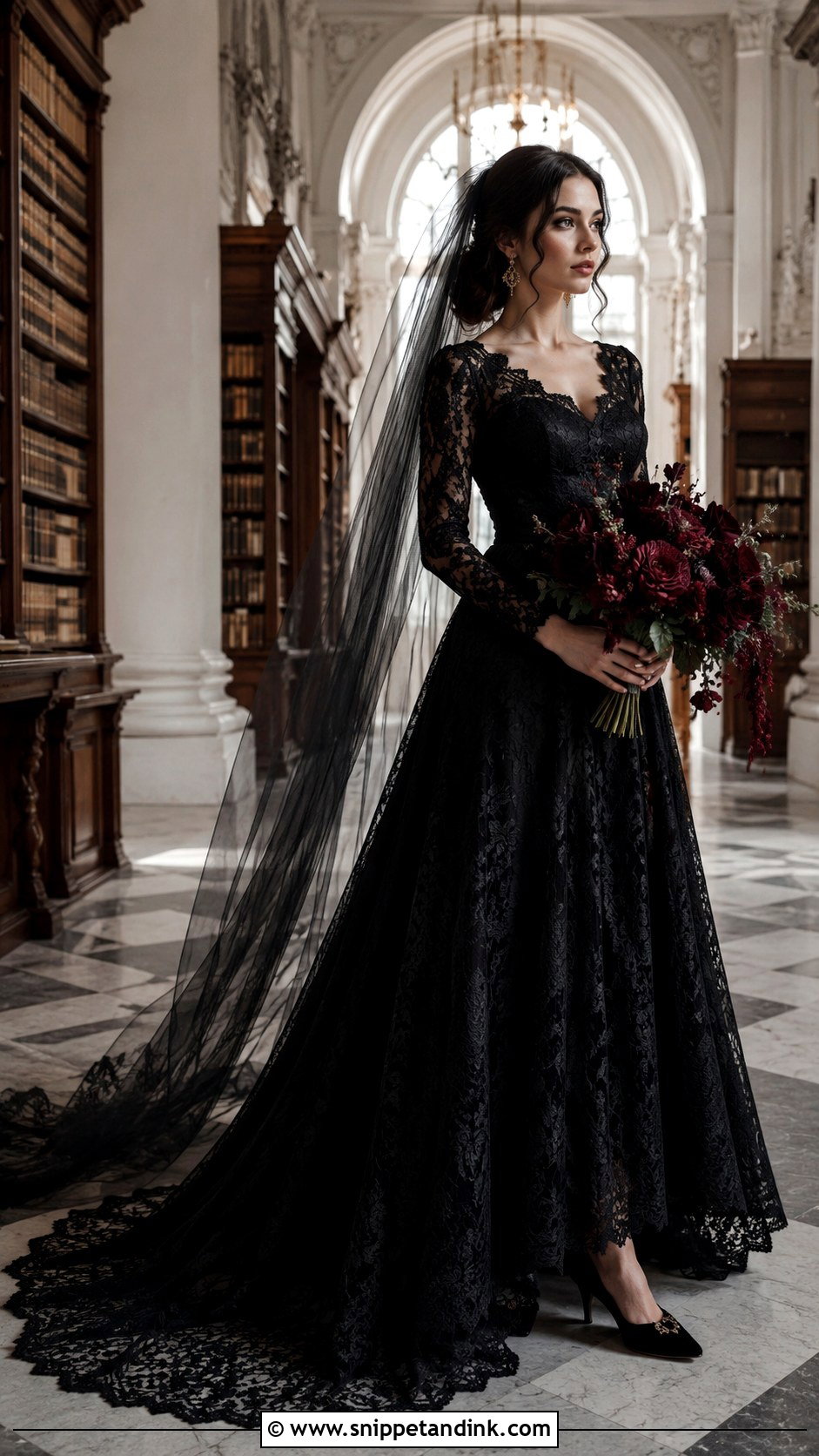
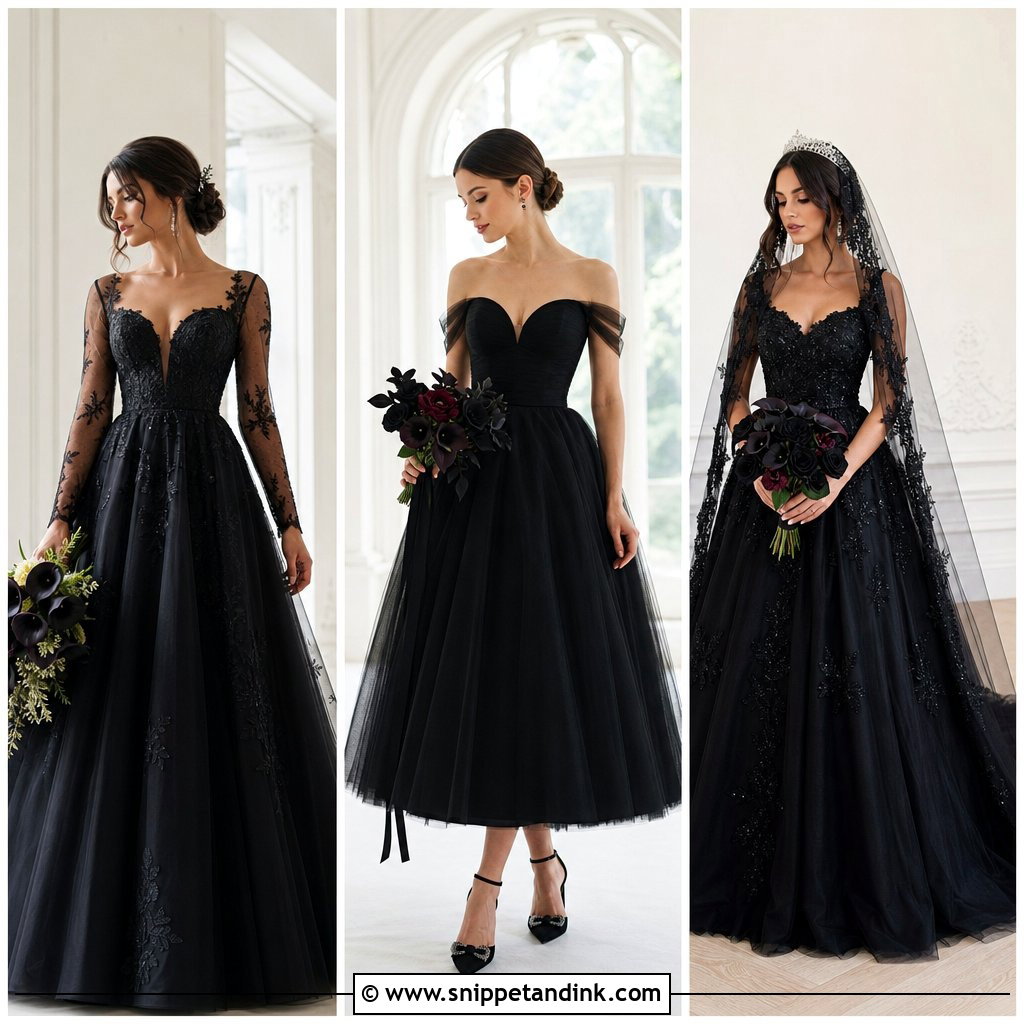
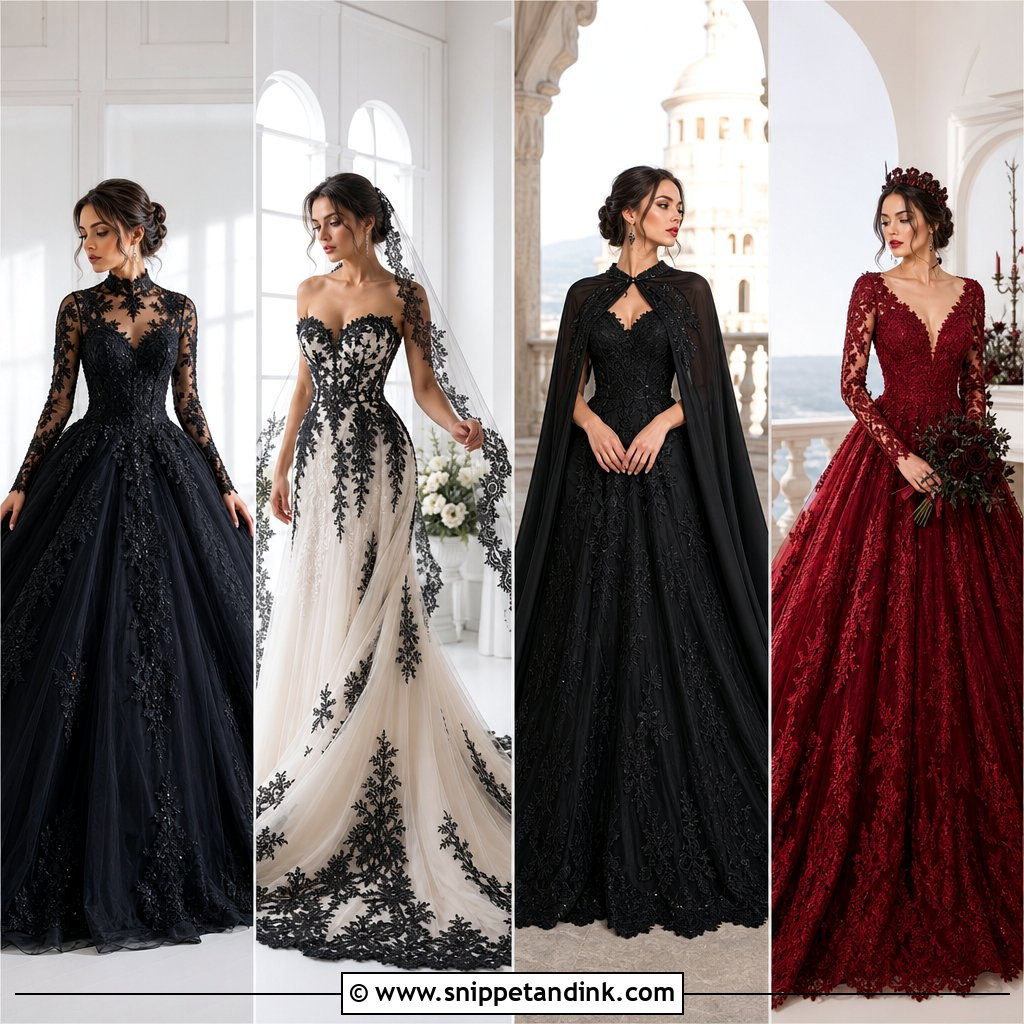
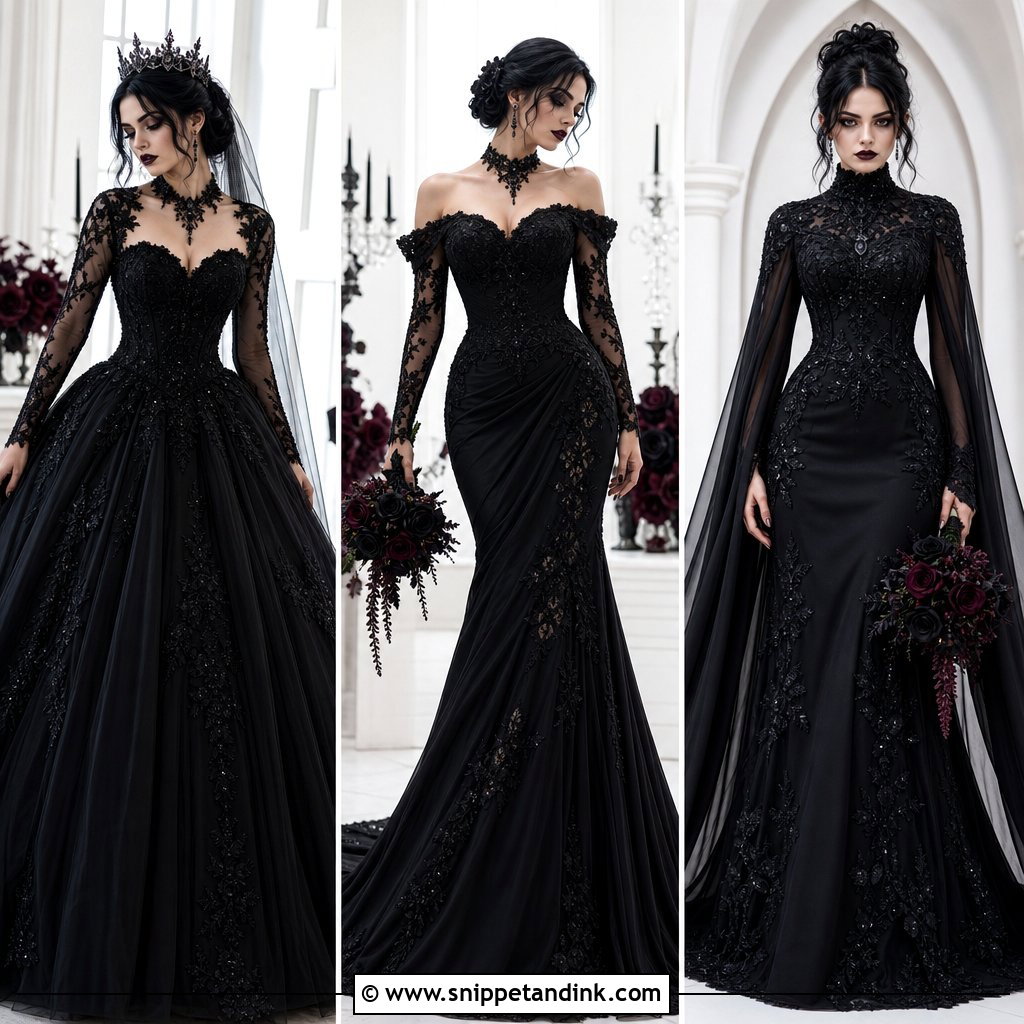
Black lace is the look most people picture first. I’d put it on an A-line or softly fitted shape with long illusion sleeves, a boned bodice and a sweeping train. Floral lace reads romantic; geometric lace reads sharper. Black velvet pumps or pointed ankle boots, a cathedral-length black tulle veil, antique gold drops, a velvet ribbon on the bouquet and a low twisted bun complete it, with softly defined eyes and a muted berry lip. Look at the lining before you fall for the lace. Black lace over black lining flattens into one dark mass in a dim hall, while a nude or grey underlay lets the pattern show.
2. Ivory Victorian Dark Academia Wedding Dress
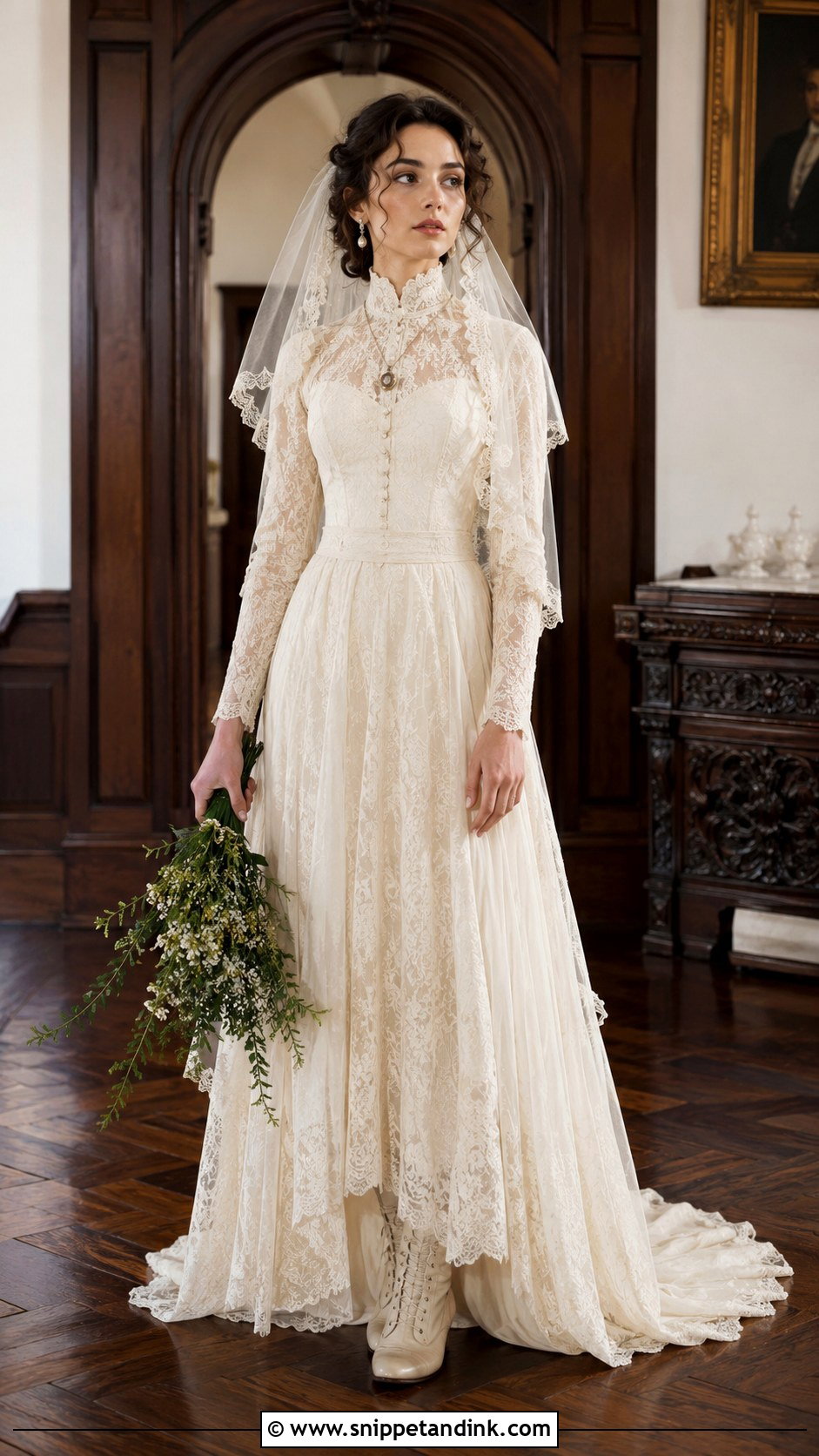
Ivory keeps the gown traditionally bridal while the period details carry the mood. An ivory Victorian-inspired gown with a high lace neckline, fitted sleeves, covered buttons and a natural waist looks right in a wood-panelled room, as long as the skirt is a flowing A-line rather than a bustle. Ivory lace-up boots with a block heel, a fingertip veil with a narrow lace edge, pearl drops, an antique locket and a loose chignon with small gold pins finish it. Cream flowers with greenery and a few burgundy stems deepen the colour. Ask how many buttons run down the back. Twenty loops take a helper several minutes, which is worth knowing when you plan the morning.
3. Black Velvet Dark Academia Wedding Dress
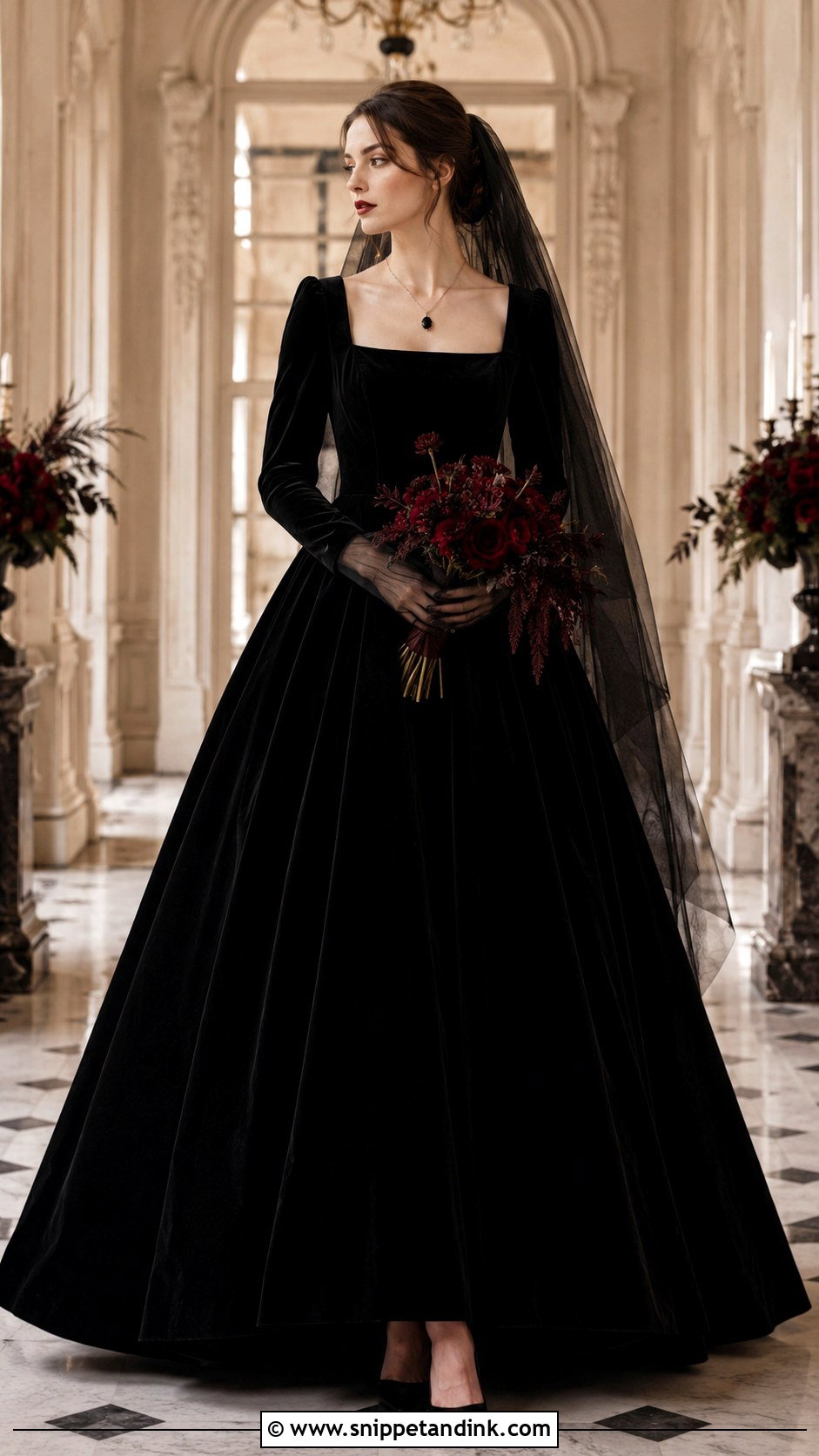
Black velvet has more depth than any other fabric on this list, and it’s also the heaviest. I’d only suggest it for a properly cold wedding. Choose a structured square neckline, a fitted bodice and a full skirt cut so it still swings when you walk; long sleeves make it stately, a lower back adds a modern note. Polished black block heels, sheer black gloves, a plain tulle veil, a garnet pendant, fine gold earrings and dark red flowers tied with black ribbon complete it, with a smooth low bun. Velvet crushes where you sit. Steam it from the inside the night before, and expect some marking on the skirt after the ceremony.
4. Champagne Lace Dark Academia Wedding Dress
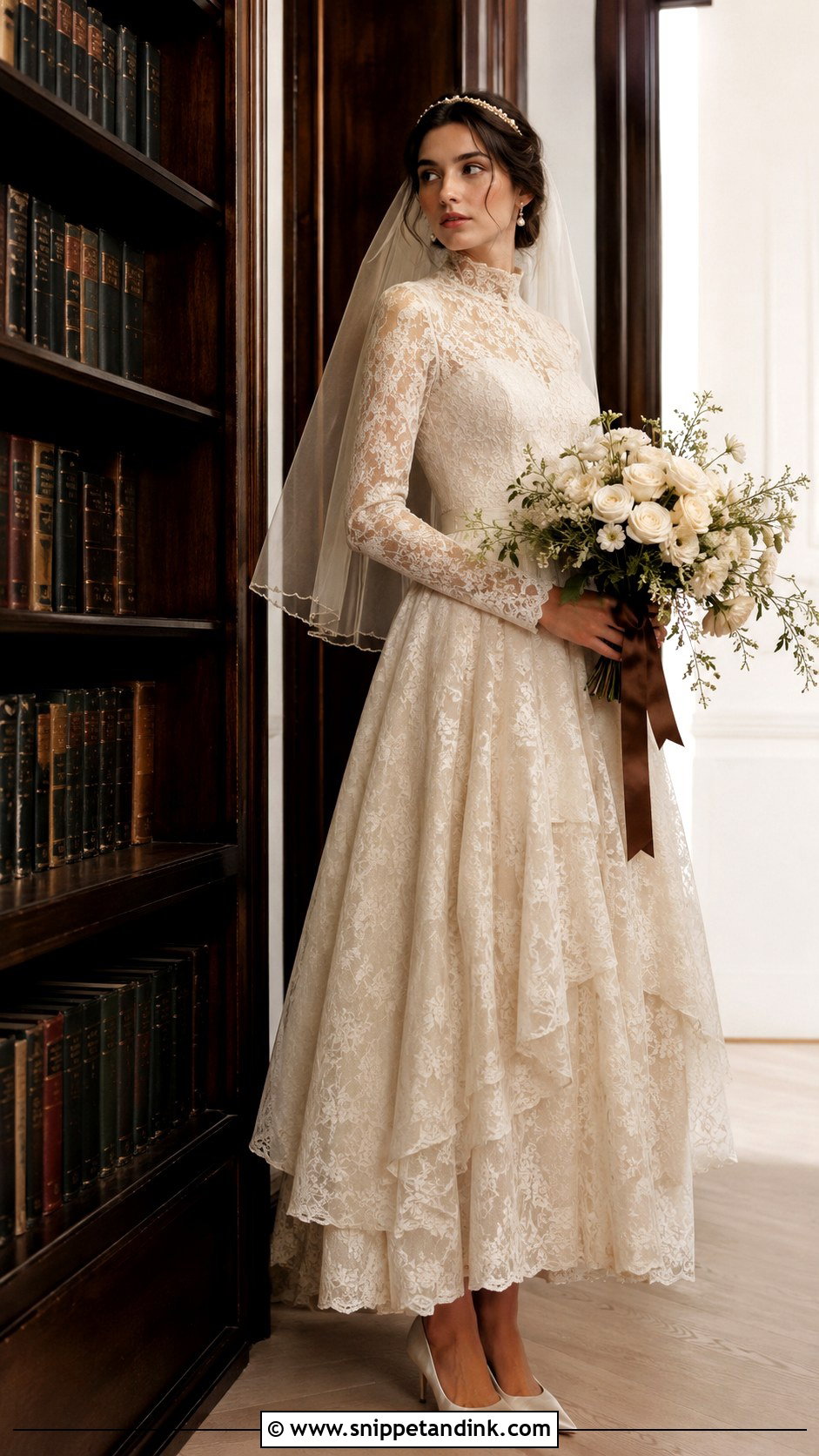
Champagne lace is warmer than white and still unmistakably bridal. The trick is the underlay: beige or pale gold beneath the lace makes the pattern visible, where an ivory lining can wash it out. A fitted bodice with full sleeves and a gently layered skirt from the natural waist works well. Champagne satin pumps, a slim metallic headband and an elbow veil suit it, and I like jewelry that looks gathered over time, pearl earrings with a small brooch at the waist rather than a matching set. Cream roses with dried foliage and brown ribbon add contrast. Hold the dress against your skin in daylight. On some complexions champagne glows, and on others it reads beige.
5. Corset Dark Academia Wedding Dress
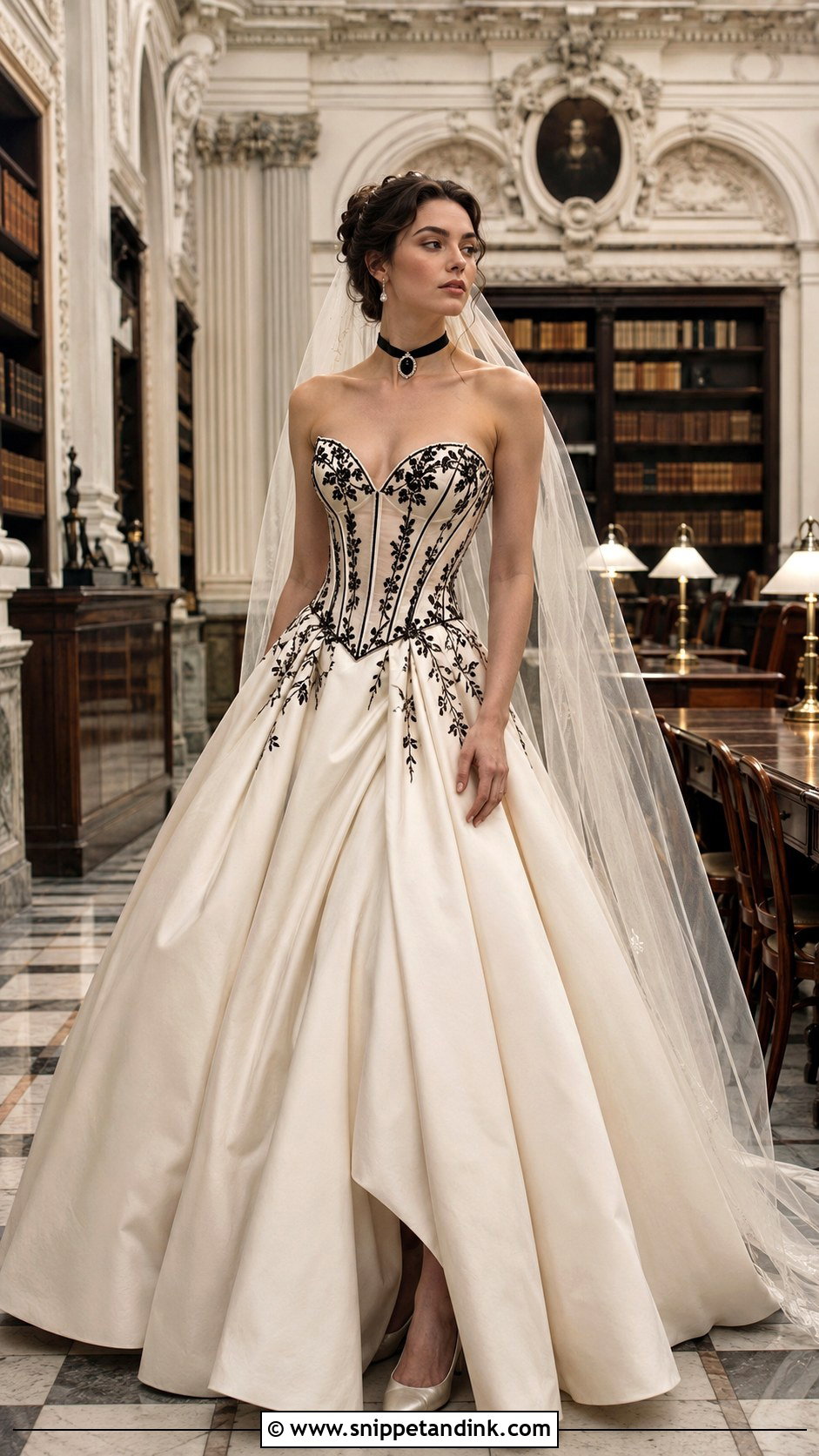
Corsetry brings both structure and the historical reference. Visible boning, a softly curved neckline and real support are what to look for, with a full tulle or satin skirt for an hourglass balance. Ivory with black embroidery gives the strongest contrast, though black and muted champagne also work. Pointed satin heels, a long sheer veil and a velvet ribbon choker with a small pendant are enough jewelry; let the bodice lead. A sleek bun or controlled waves keep lines clean. Alterations here are about the bust, waist and hem, and I tell brides honestly that a corset shouldn’t be fitted on an empty stomach. Eat before the fitting, as you will on the day.
6. High Neck Dark Academia Wedding Dress
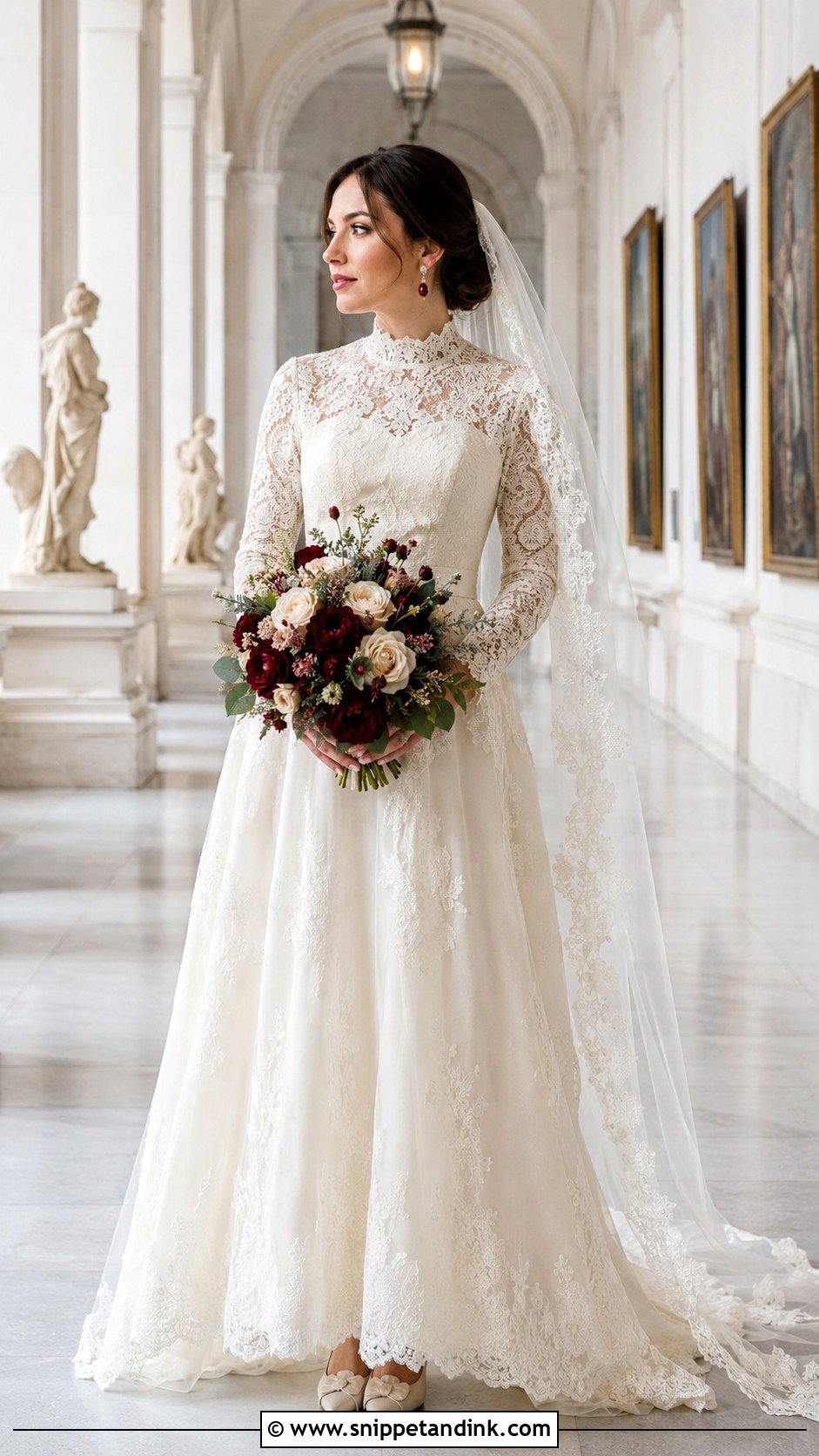
A high collar with fine lace or quiet embroidery is the scholarly option. Pair it with fitted sleeves and a clean column or A-line skirt; ivory is traditional, black is dramatic and deep cream feels antique. Lace-up ankle boots or low pointed pumps are comfortable on stone floors. Skip the necklace and go with small pearl or garnet earrings. Secure a lace-edged chapel veil beneath a neat chignon so the collar stays visible from the front. A compact bouquet in burgundy, cream and green finishes it. I’d only steer someone away from this if they run warm, because a high lace neck and long sleeves give heat nowhere to go.
7. Long Sleeve Dark Academia Wedding Dress
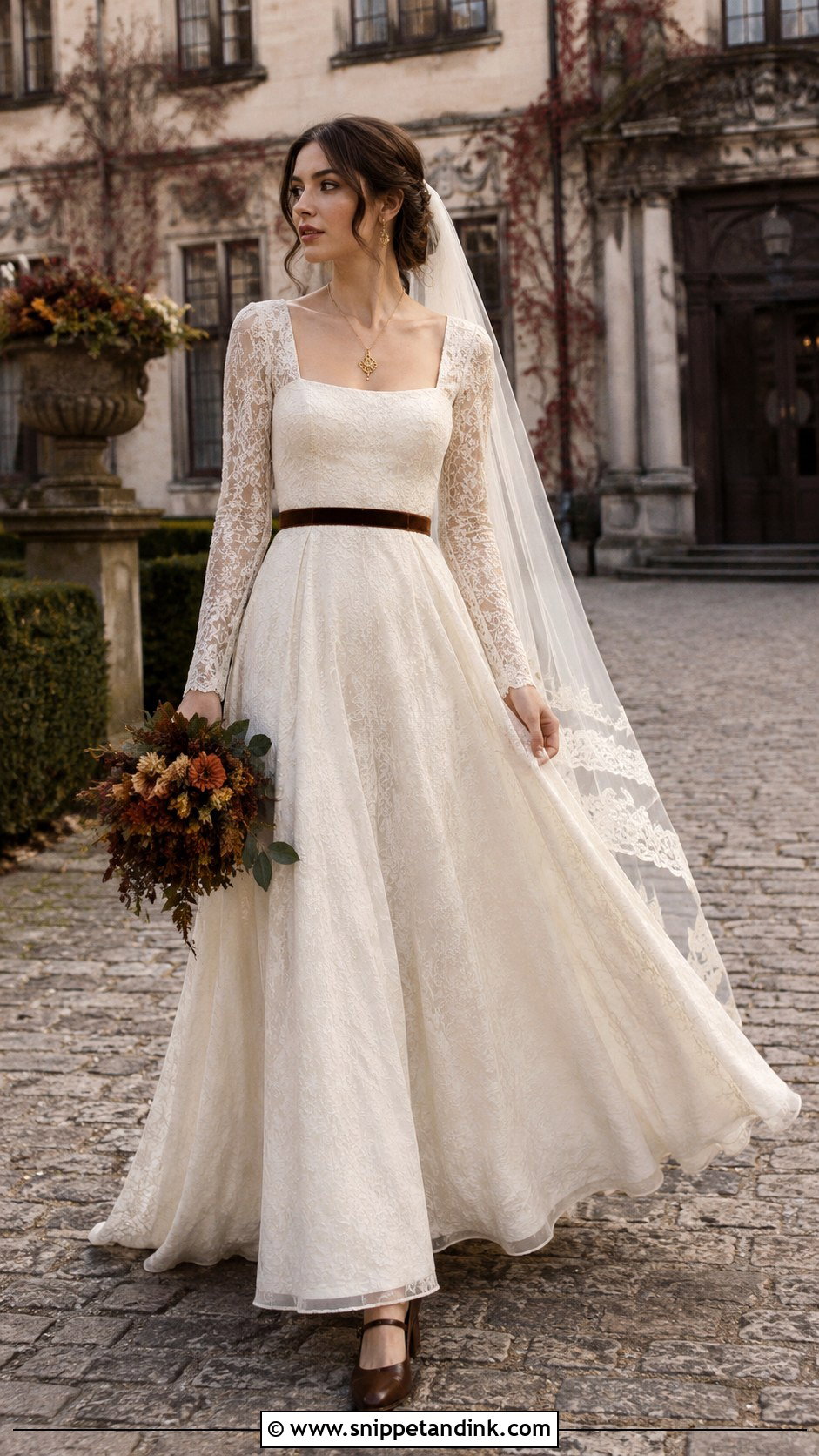
Long sleeves suit a portrait-heavy aesthetic, and the sleeve type sets the tone: fitted lace is delicate, a bishop sleeve is soft, slim crepe is minimal. A deep ivory A-line with a square neckline blends vintage influence with modern simplicity. Dark brown leather heels, a narrow velvet belt, a chapel veil with a plain edge, antique gold earrings and a signet-style ring bring in the academic note without crowding the dress. Half-up waves keep it relaxed. Change the fabric weight and outer layer and this one works in any season, which is why I often suggest it for brides marrying outside autumn.
8. Black And Ivory Dark Academia Wedding Dress
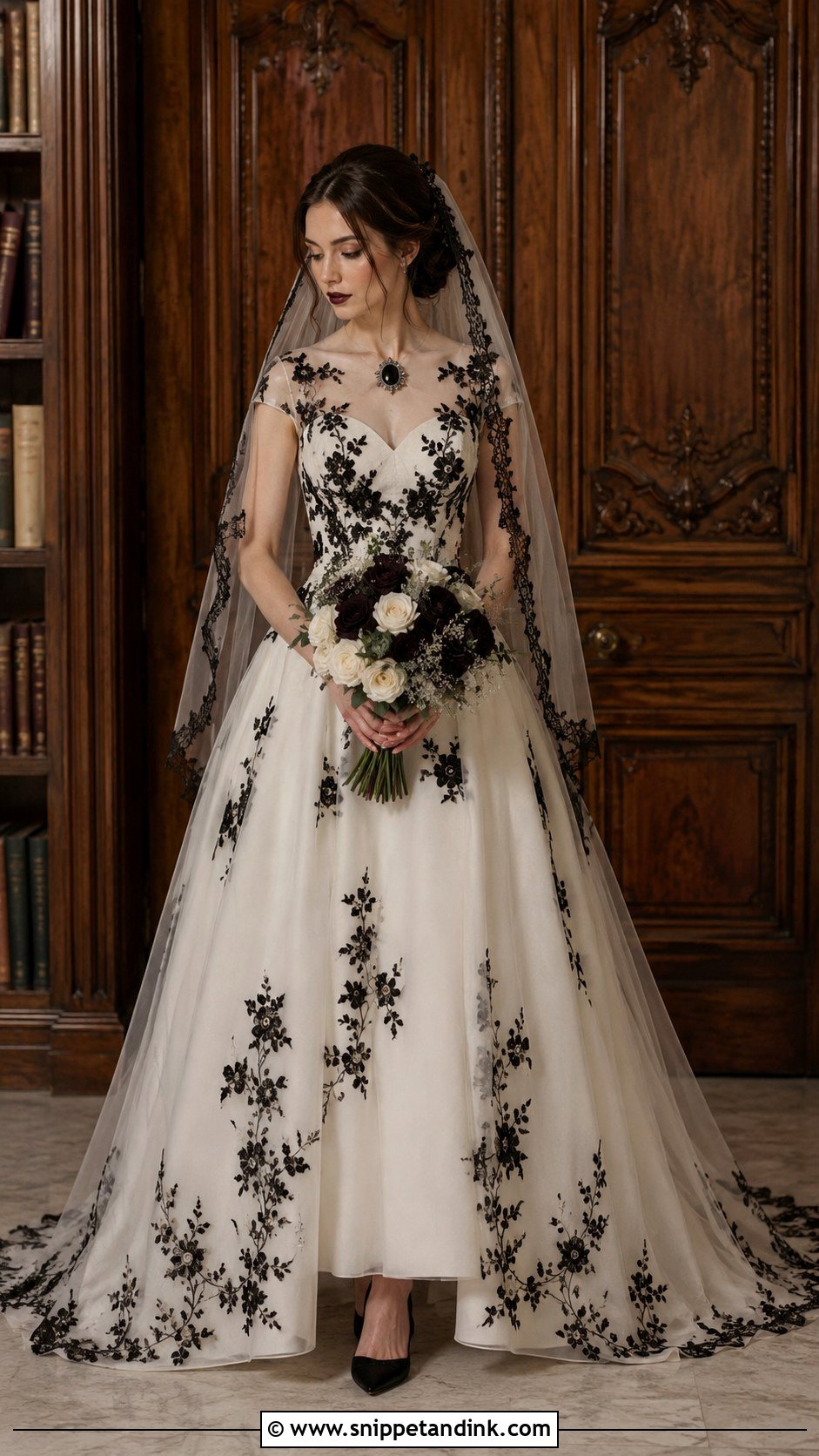
Black appliqué on an ivory gown gives you contrast while keeping the dress clearly bridal. Place it along the bodice, sleeves or hem, and keep the skirt an A-line so the details have room. Black velvet pumps and a sheer ivory veil with a narrow black border tie it together. Choose one statement piece, an antique onyx brooch for example, and keep earrings and rings small. A smooth low bun gives the veil a clean backdrop. Ivory flowers with dark foliage and a two-tone ribbon finish it. One practical point: black thread on ivory tulle can show through when pressed against the skin, so ask whether the appliqué is lined.
9. Burgundy Dark Academia Wedding Dress
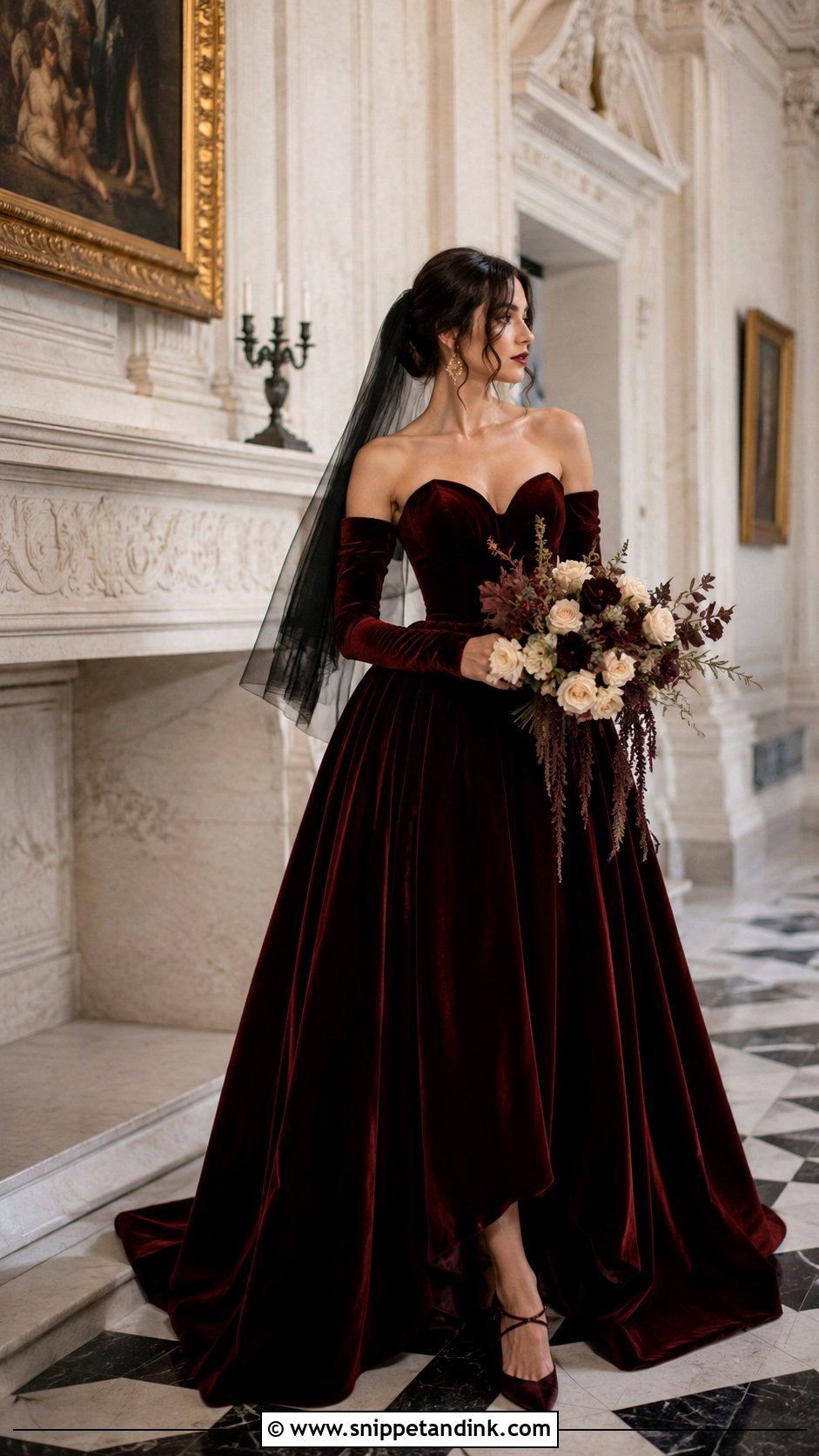
Burgundy is warmer and more personal than black. A velvet or satin gown with a fitted waist and full skirt carries it formally, and an off-shoulder neckline with detachable sleeves gives you two looks. Dark brown or black heels, antique gold earrings and a pendant with a deep red stone suit it. A black tulle veil makes it moodier; a burgundy veil makes it tonal. Finish with a loose low bun and cream flowers with dark greenery and plum accents. Coloured gowns are usually made to order, and dye lots vary, so I always ask for a fabric swatch before the order goes in.
10. Forest Green Dark Academia Wedding Dress
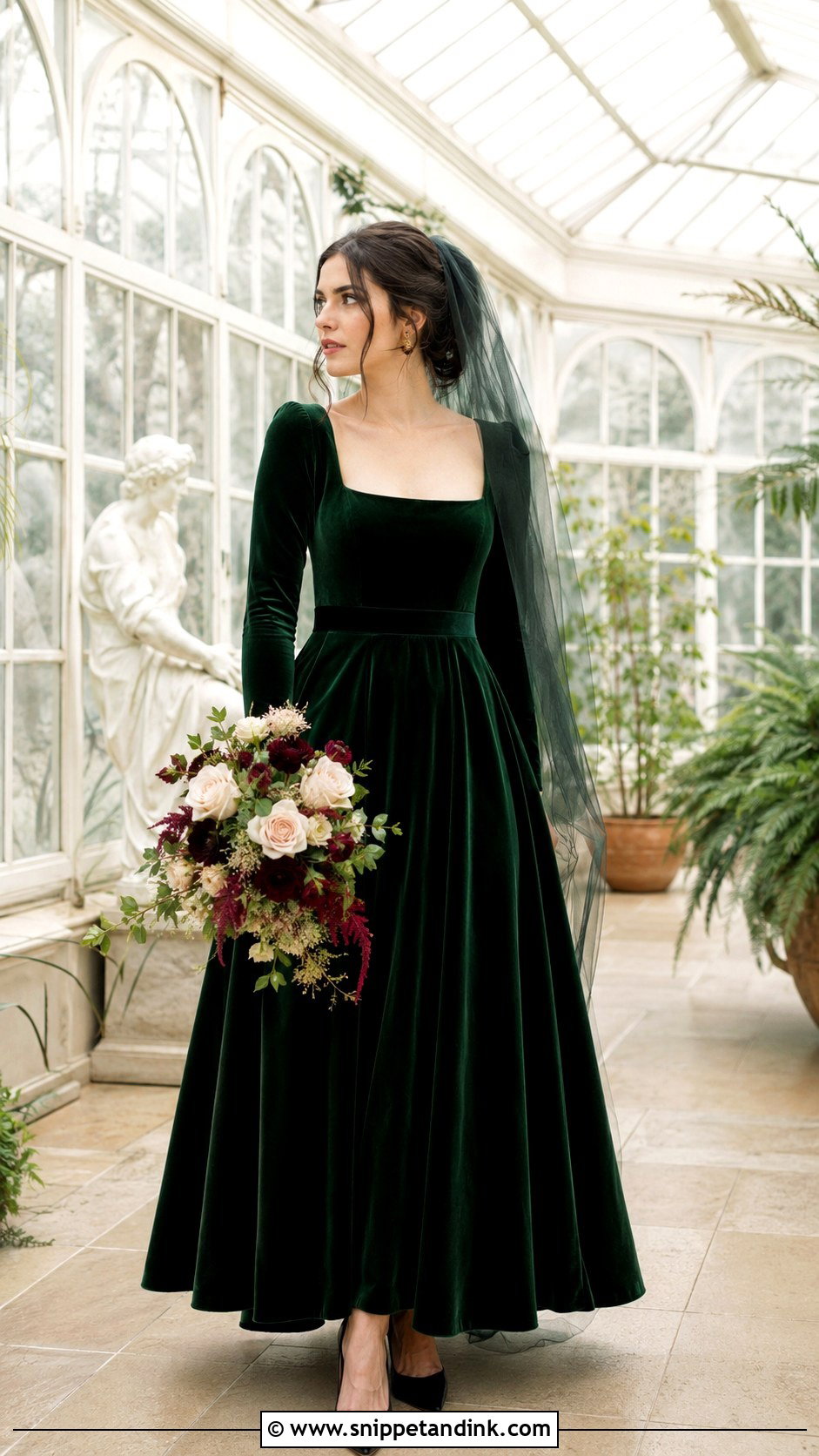
Forest green connects to the ivy-covered side of dark academia, and it surprises guests in a good way. Matte satin or soft velvet with a square neckline, long sleeves and a floor-length skirt look rich next to black pointed pumps and a narrow black velvet ribbon at the waist. Antique gold earrings, a small hair comb and a sheer green or black veil, plus cream flowers with trailing greenery and a few burgundy stems, link the dress to the room. A braided low bun adds a quiet historical touch. Deep green photographs very dark in low light, so if the venue is dim, tell your photographer you’re wearing it.
11. Edwardian Dark Academia Wedding Dress
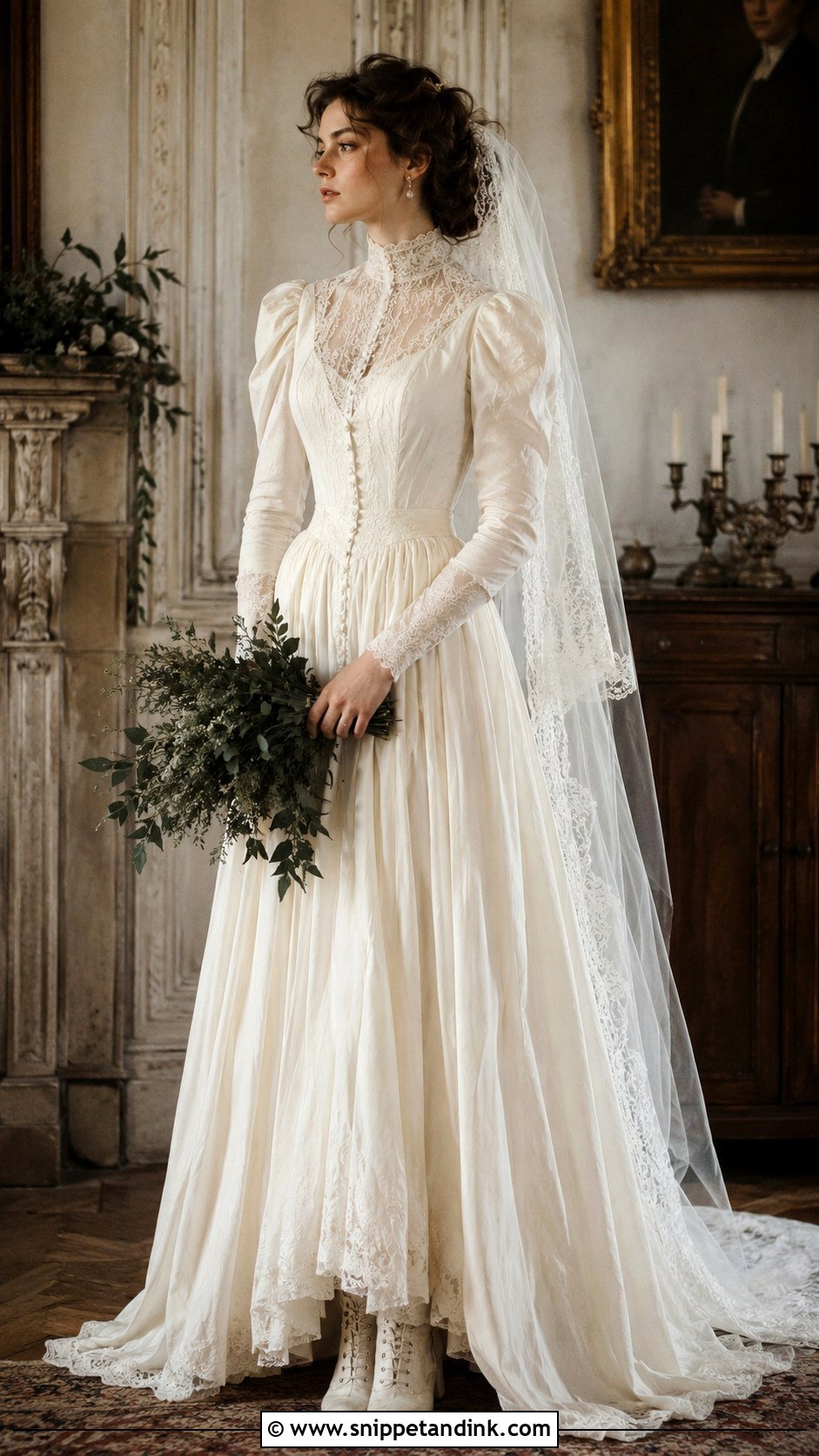
An Edwardian-inspired wedding outfit is softer than Victorian: a raised neckline, slightly puffed shoulders, fitted cuffs and a skirt that falls smoothly over the hips. Pintucks, covered buttons and light embroidery give the period feel without fancy dress. Cream lace-up boots, pearl earrings and a small antique-style watch pinned at the waist suit it, with a light lace veil under a soft rolled updo and a bouquet of ivory blooms, eucalyptus and brown velvet ribbon. Keep makeup fresh with a rosy lip. This is the most daytime-friendly dress here, and the one I’d pick for a garden ceremony at a historic house.
12. Satin Dark Academia Wedding Dress
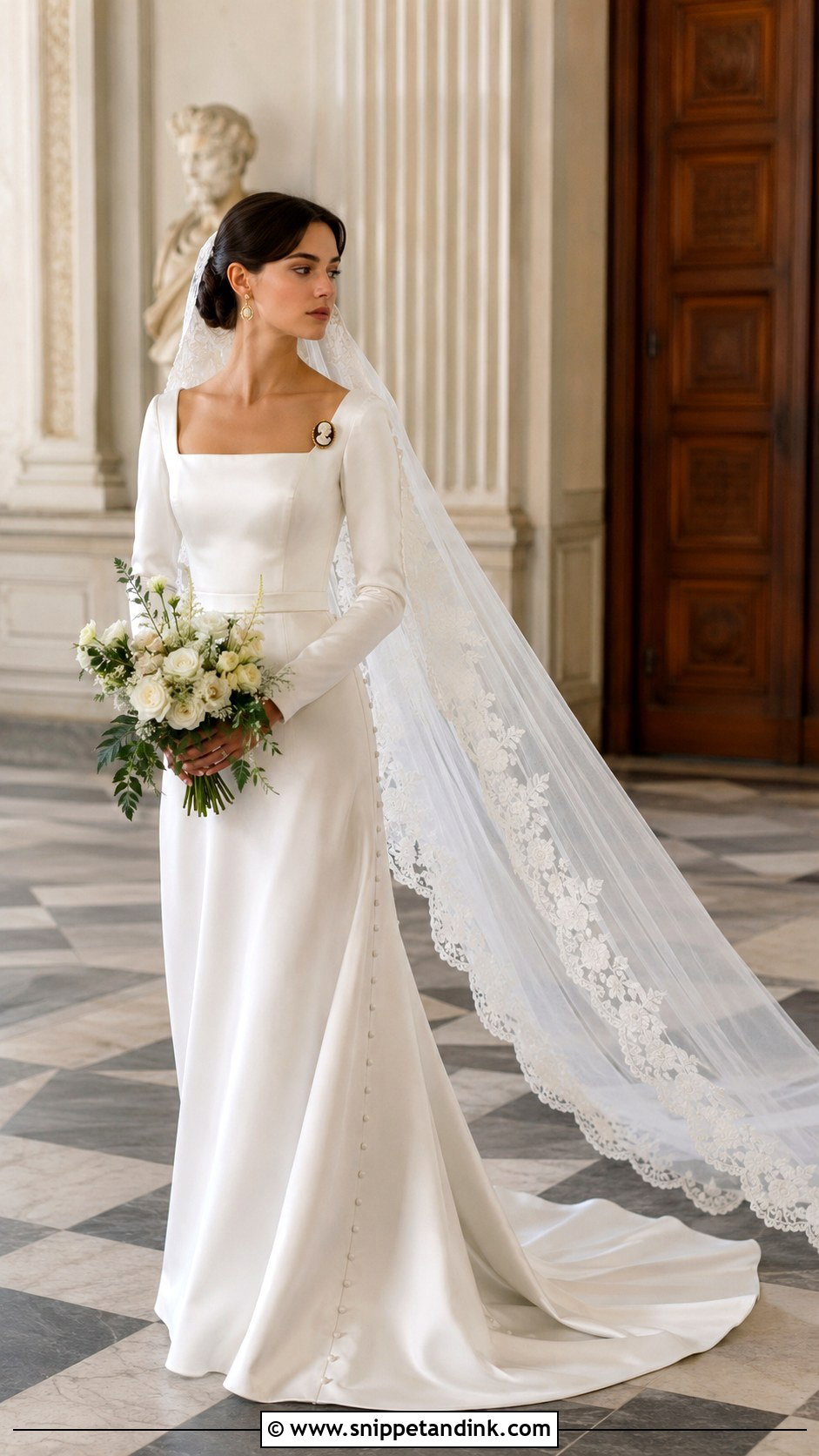
Satin is the cleanest canvas for the accessories to do the talking. I’d choose an ivory or black gown with a square neckline, fitted waist, long uninterrupted skirt and covered buttons down the back. Pointed velvet pumps and a lace cathedral veil add texture; antique gold earrings, a cameo brooch and a dark bouquet ribbon bring the academic mood. A low sculpted bun and a muted rose lip finish it. Satin shows every crease and every water mark, so keep a cloth away from it at dinner. Minimal brides who still want a vintage, literary and slightly mysterious wedding aesthetic tend to land here.
13. Tea Length Dark Academia Wedding Dress
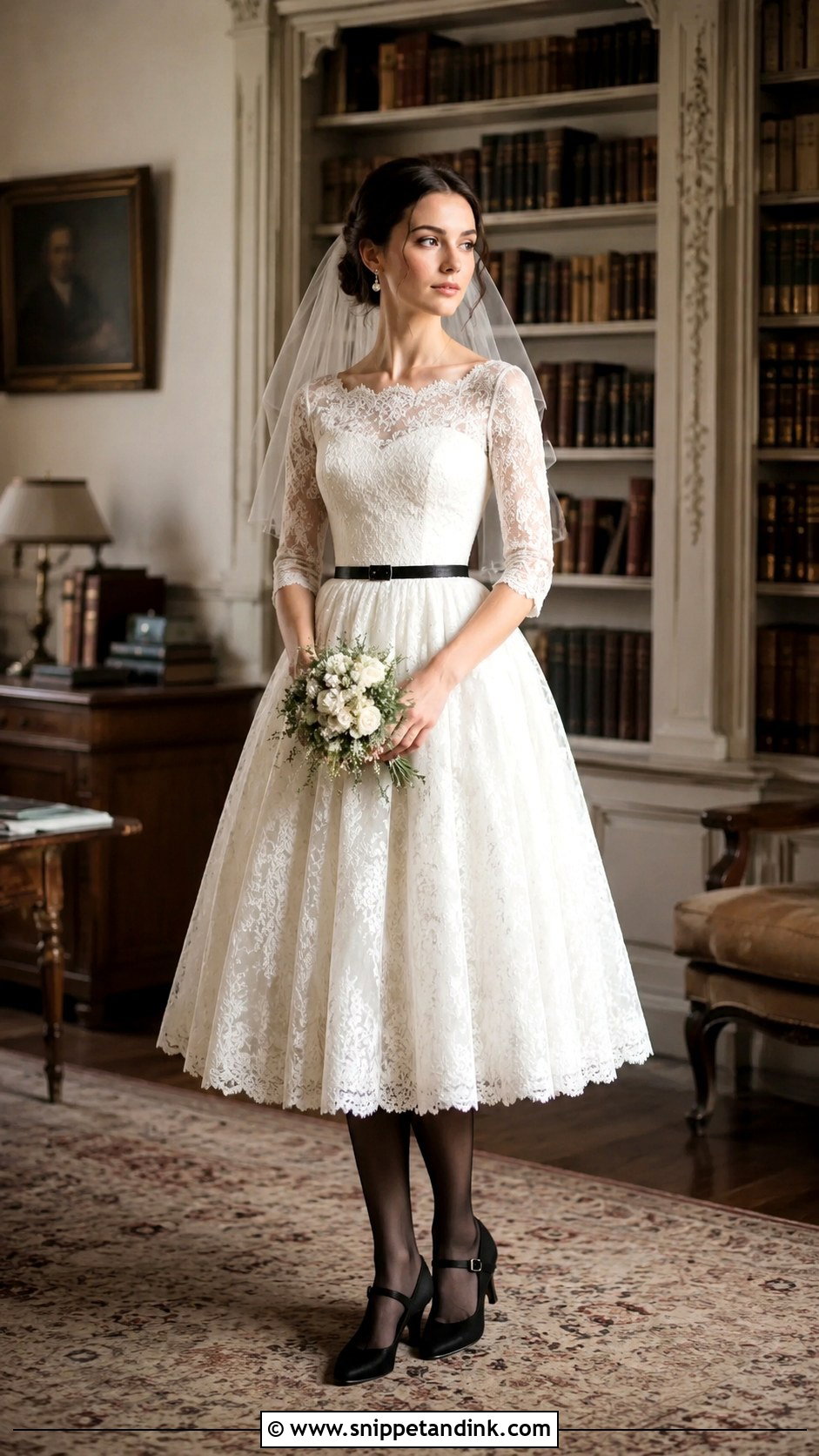
Tea length shows off the shoes, and here they matter. An ivory lace dress with a fitted bodice, three-quarter sleeves and a full skirt below the knee looks right with black velvet Mary Janes, sheer stockings, pearl earrings and a birdcage or shoulder veil. A narrow black belt links the waist to the shoes, and a small bouquet of cream and burgundy flowers keeps it in scale. Soft pinned waves suit the length. I suggest this to brides at courthouses and small restaurants, where a train would be dragged across a busy floor. Check the hem in your shoes; tea length should sit at mid-calf, not on the knee.
14. Puff Sleeve Dark Academia Wedding Dress
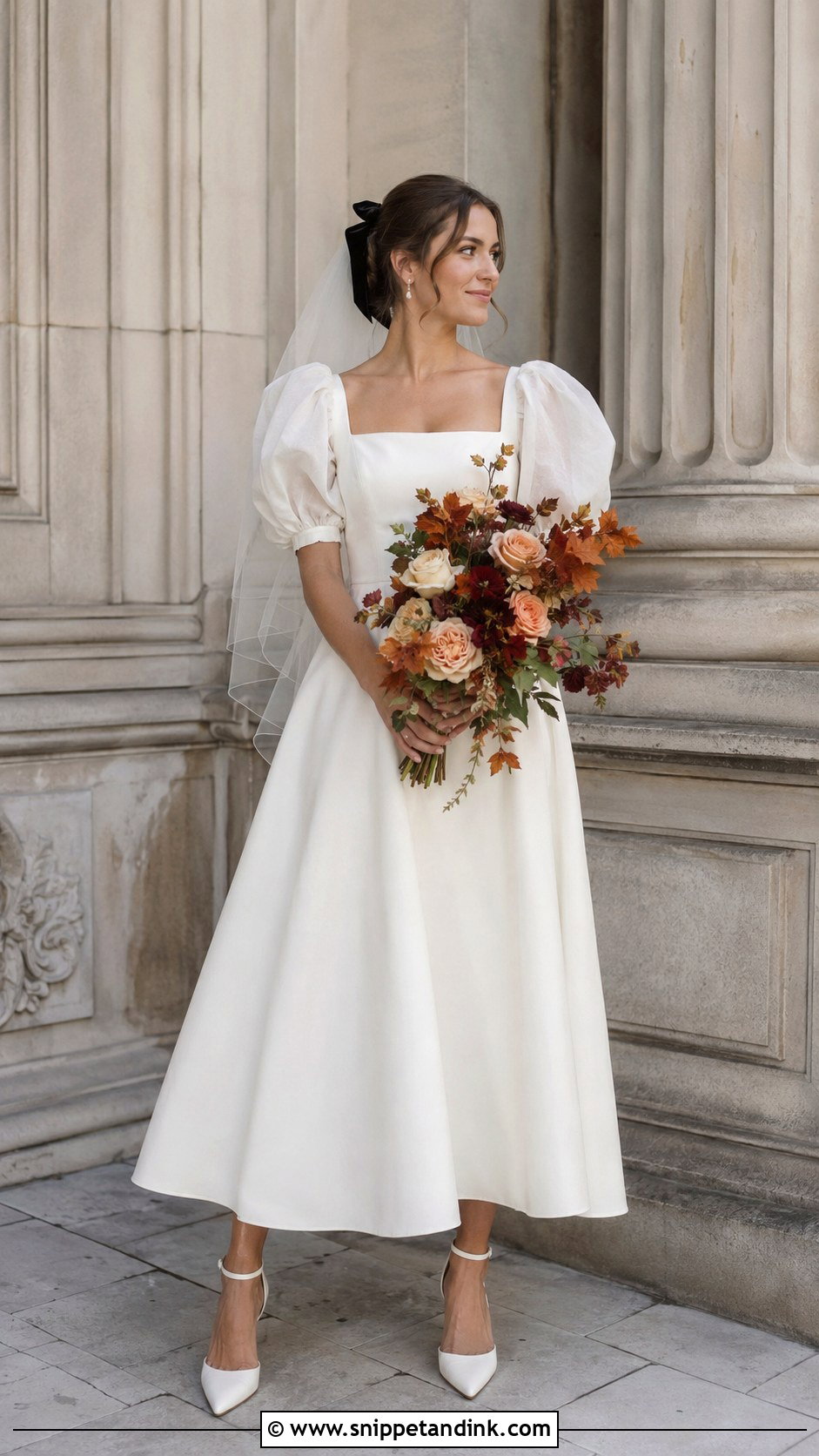
Puff sleeves are romantic when the volume is controlled. Sheer organza or lace, gathered at the shoulder and tapering to a fitted cuff, with a square neckline and defined waist, keeps them from swamping you. Ivory satin heels, a chapel veil and a small velvet bow under a low ponytail or bun complete it. Choose fine drop earrings and no big necklace. White flowers with burgundy leaves and a dark trailing ribbon add contrast. Organza puffs flatten if they’re packed tightly, so travel with the dress hung and the sleeves stuffed with tissue. Detachable sleeves give a cleaner reception look if you want one.
15. Cape Dark Academia Wedding Dress
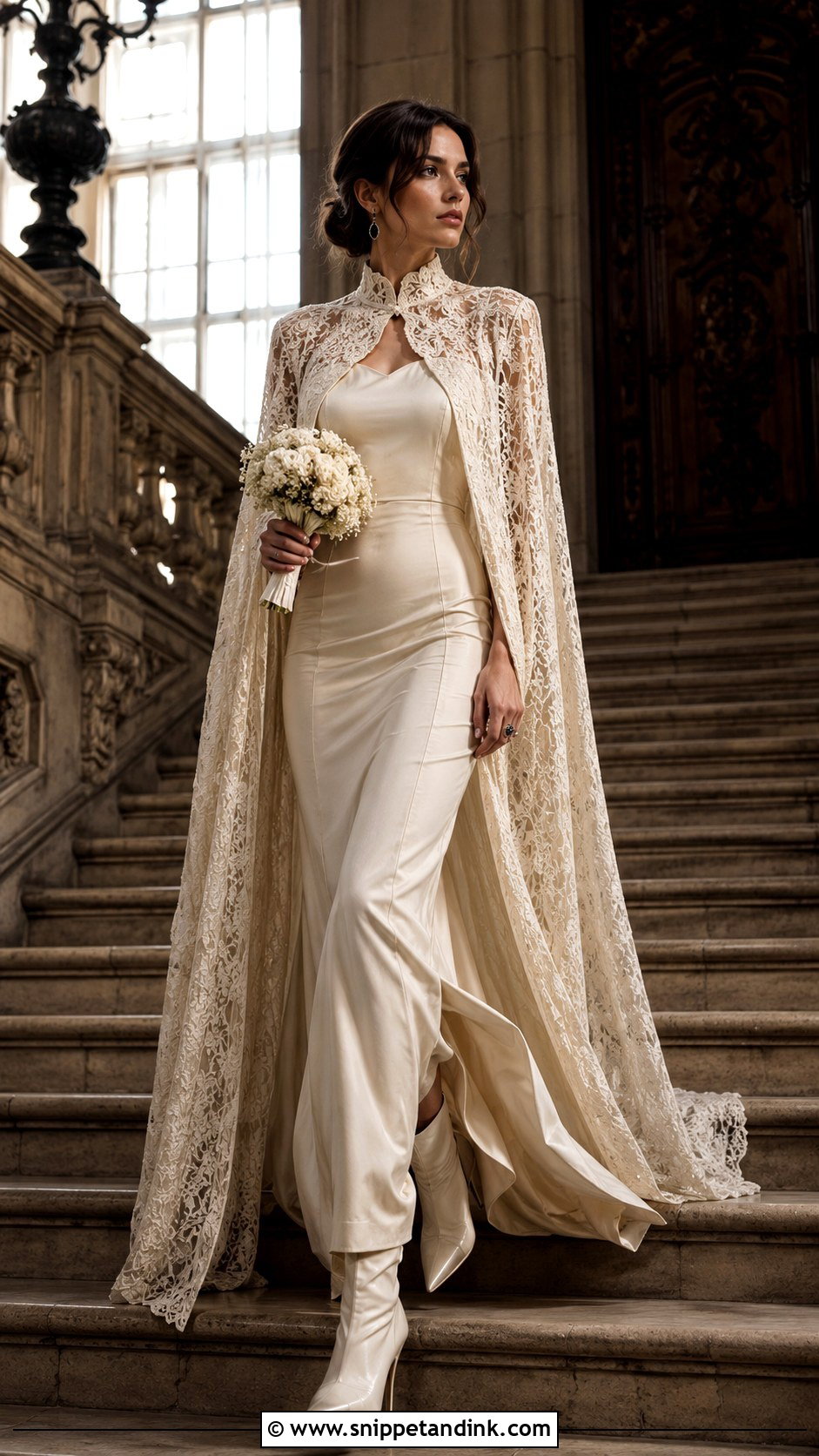
A cape can replace the veil entirely and moves far more dramatically on a staircase. Start with a streamlined ivory, black or champagne gown and add a floor-length cape in lace, chiffon or light velvet. A high collar is formal; a simple clasp leaves the front visible. Pointed ankle boots or stable block heels, small gemstone earrings and one antique ring are enough. A polished low bun keeps the collar neat. Outdoors, carry a compact bouquet so the cape doesn’t catch in the stems. I check the clasp with every cape I style, since a long one can pull back on the throat when you turn quickly.
16. Black Tulle Dark Academia Wedding Dress
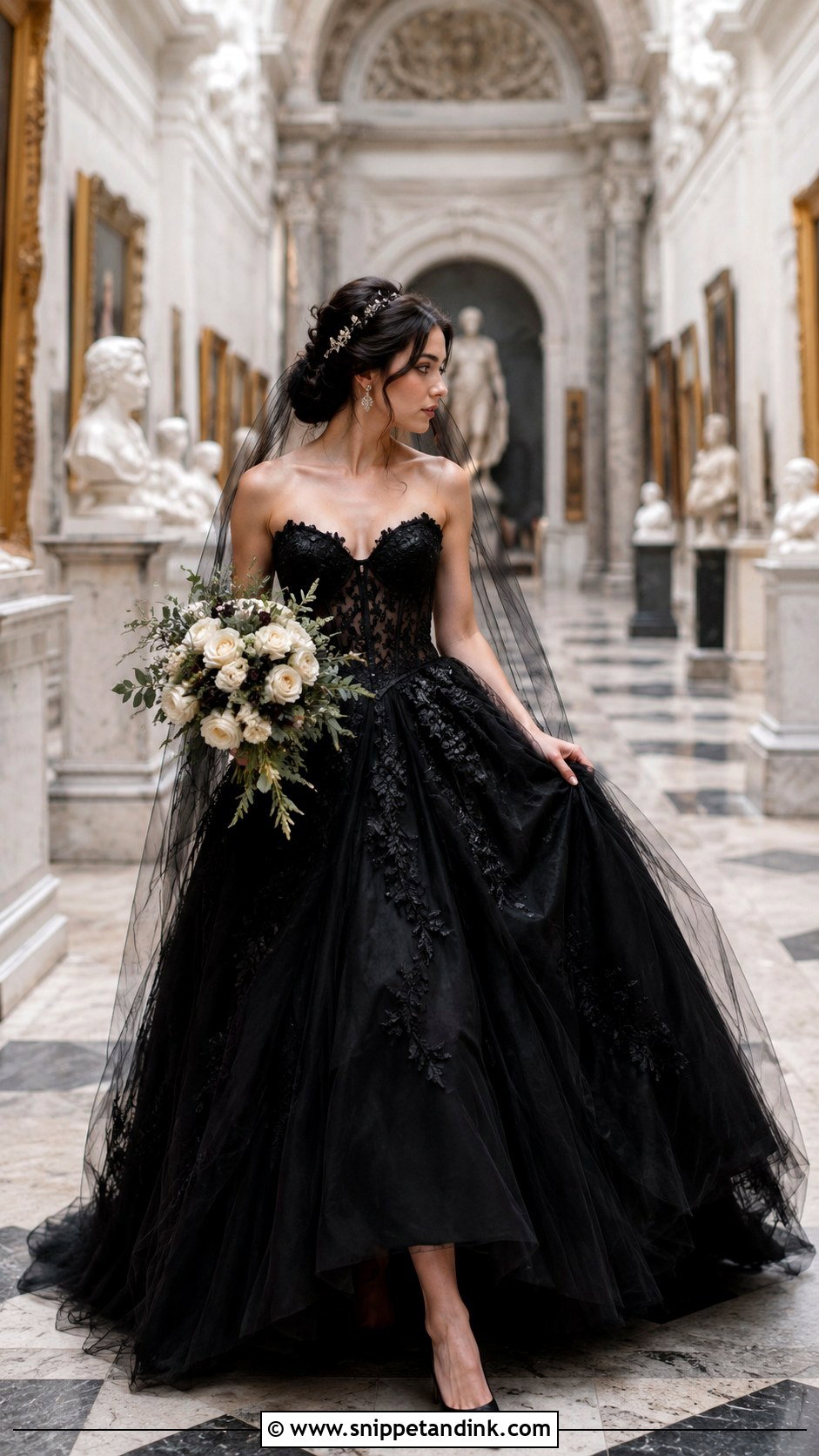
Black tulle can float instead of looming, provided the bodice underneath is properly built. A structured corset top, natural waist and soft layered skirt carry it, and subtle black floral appliqué adds depth without covering the whole dress. Black satin pumps, a sheer fingertip veil and silver or antique gold jewelry suit it. A ribbon at the waist helps if the transition from bodice to skirt looks soft. Waves gathered low with two small jewelled pins and a bouquet of cream blooms and dark greenery lighten the overall effect. Black tulle catches every speck of lint and pet hair, so keep a lint roller with whoever is helping you dress.
17. Ivory Dress With Black Cape
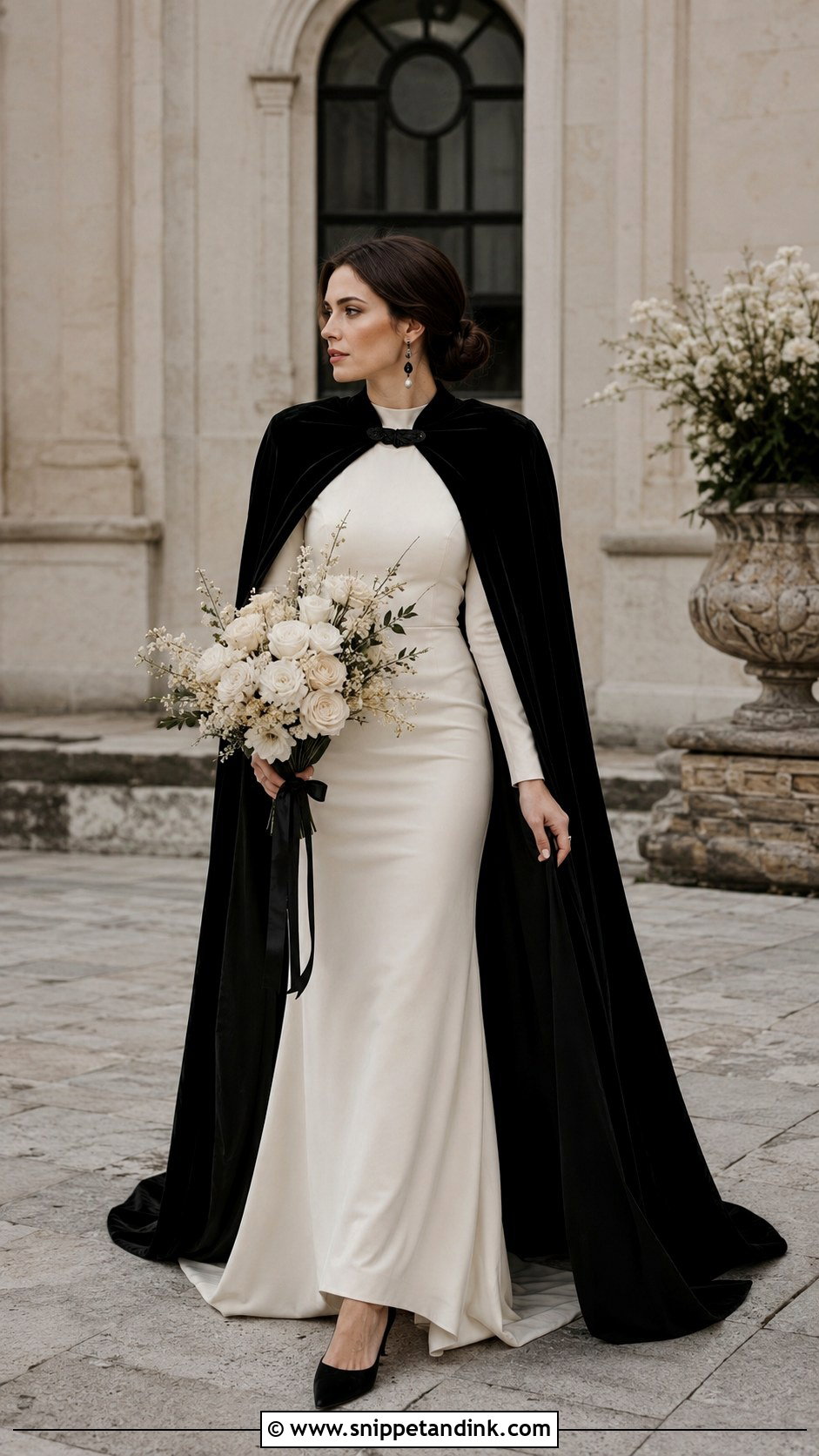
Could a traditional ivory gown still carry the mood? Yes, if you add a sweeping black cape over it. Choose a plain long-sleeve dress with a clean neckline so the cape is the feature, in sheer black lace for romance or matte velvet for cold weather. Black pointed heels, pearl and onyx earrings and an ivory bouquet tied in black ribbon complete it. A low bun keeps the collar smooth and lets the fabric hang evenly. It gives you the drama for the ceremony and portraits, then a lighter look at the reception without a second dress.
18. Vintage Beaded Dark Academia Wedding Dress
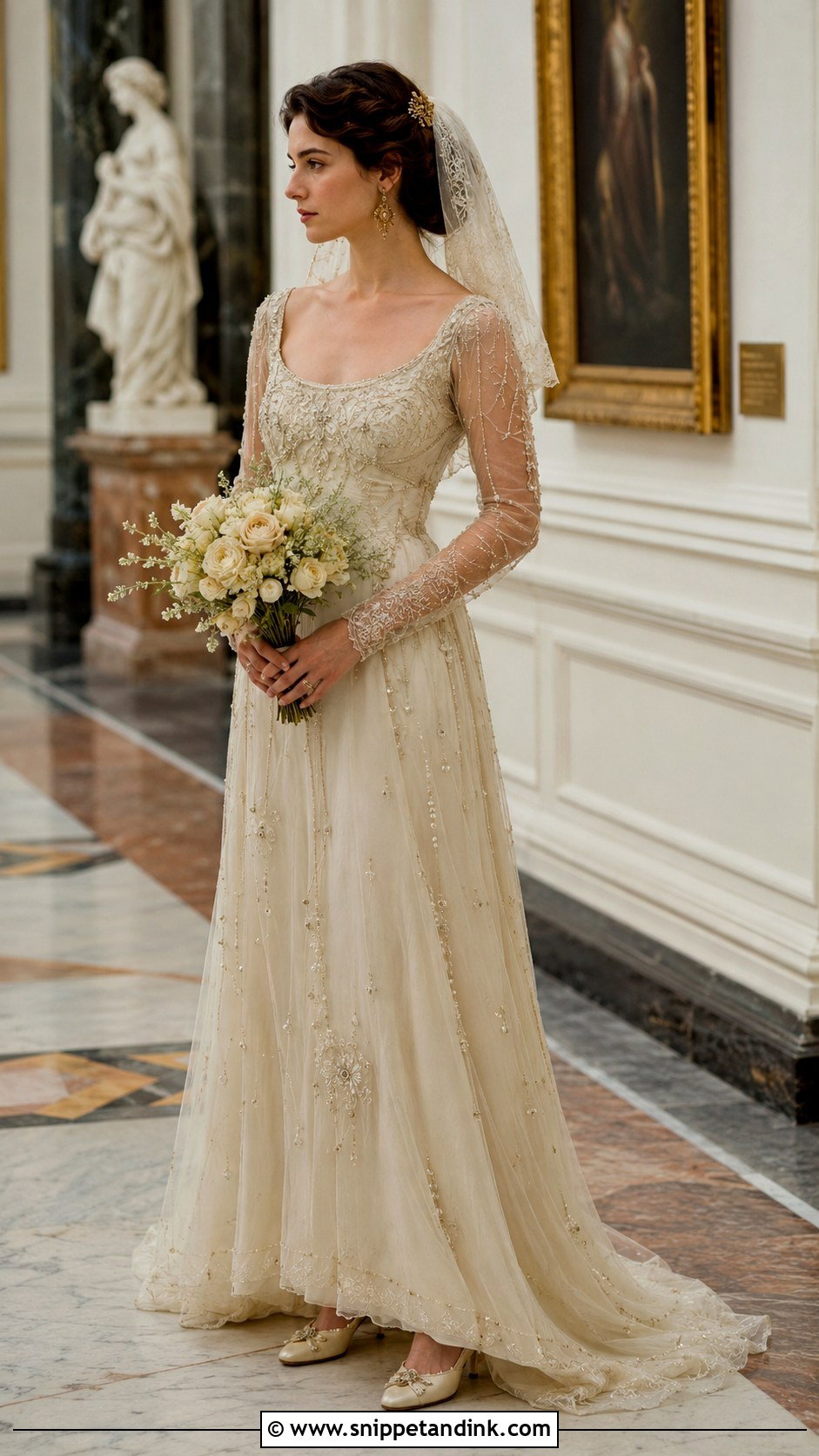
Fine beading and restrained metallic embroidery can make a gown feel like something kept in an archive. A cream or muted gold dress with long sheer sleeves, a fitted bodice and a flowing skirt is the base. Art Deco beading is structured; scattered botanical motifs are softer. Low metallic heels, a short lace veil and antique gold earrings are enough, and a small satin clutch holds what you need. Skip embellished shoes or a big necklace. Beaded gowns are heavy at the hem and shoulders, so I always have brides wear one for at least ten minutes at the fitting before they decide.
19. Plus Size Dark Academia Wedding Dress
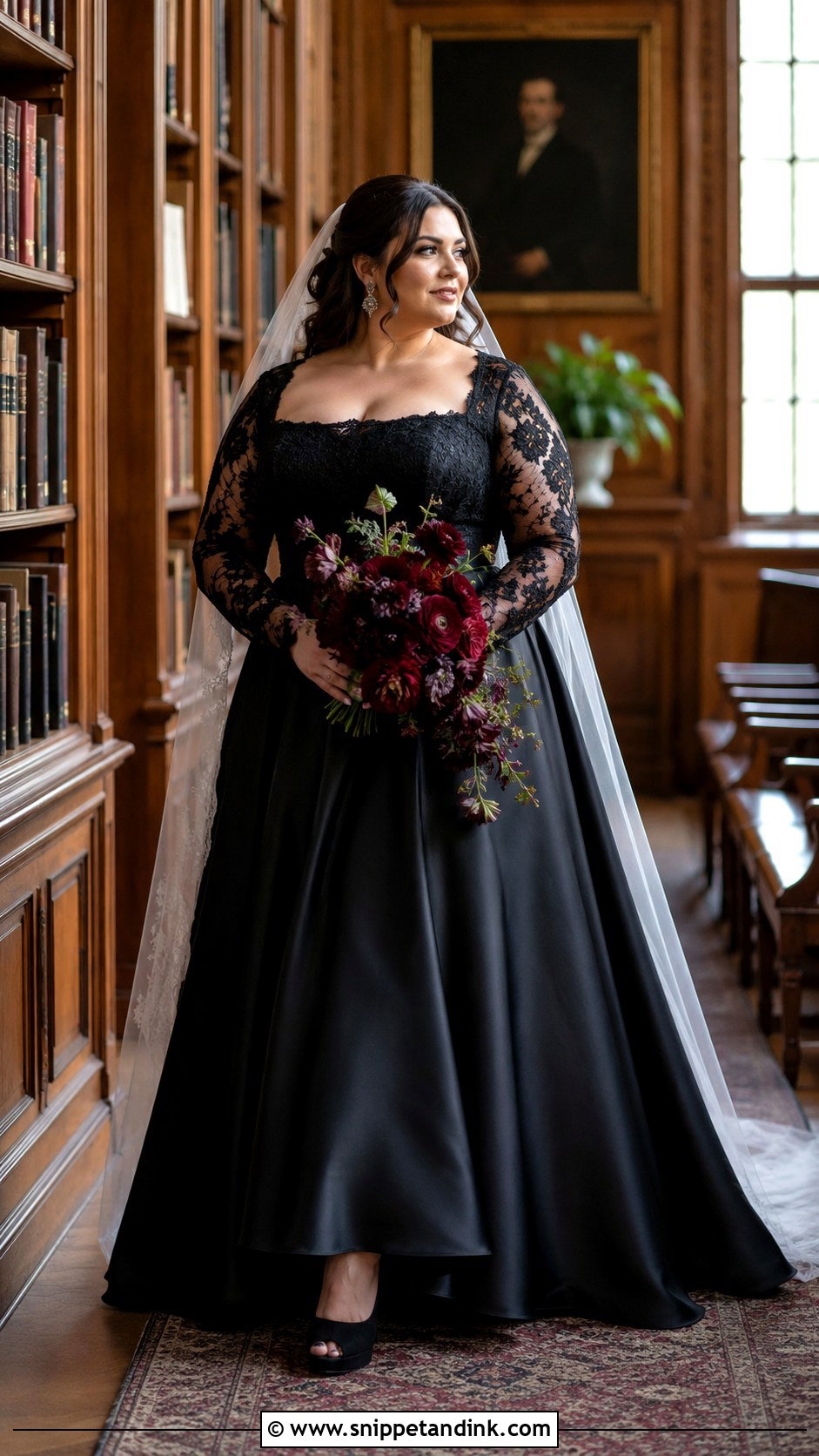
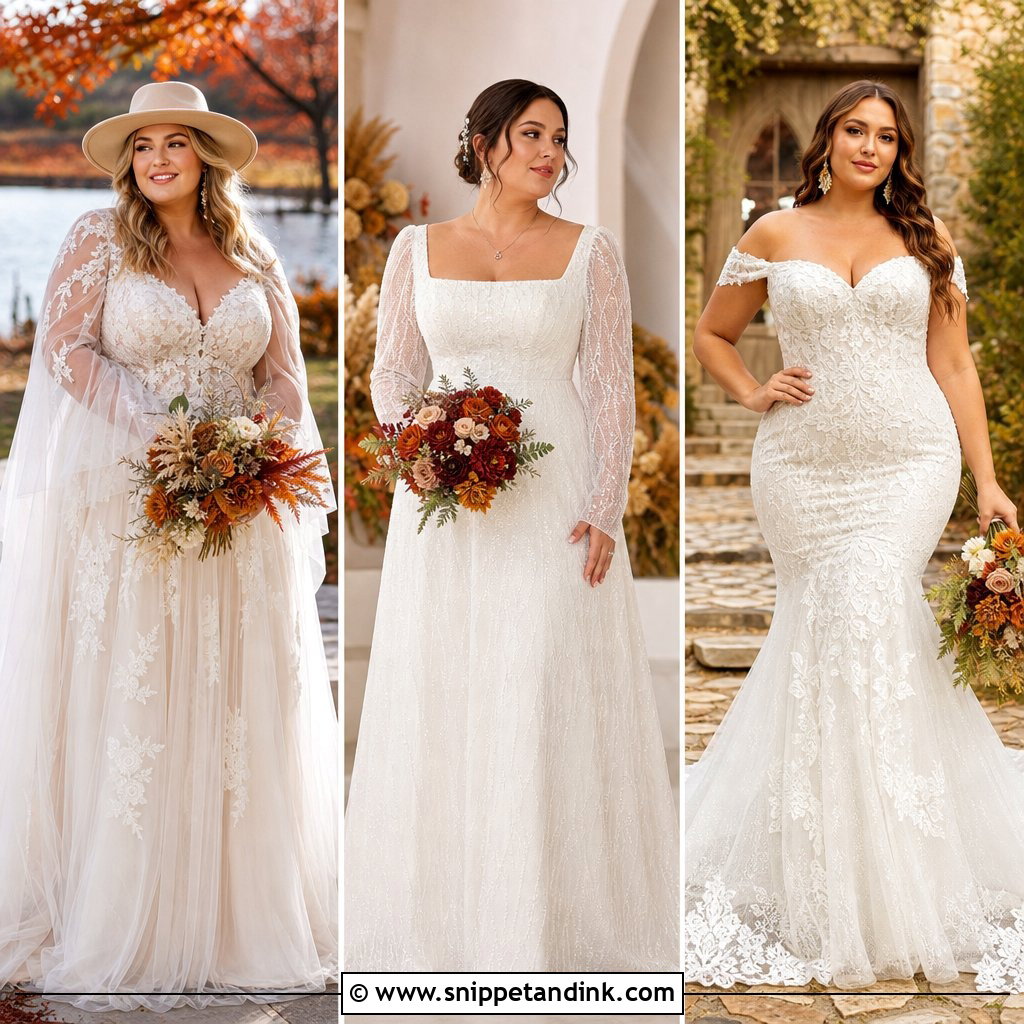
For plus-size brides, the aesthetic starts with support and proportion, not with rules about what to avoid. An A-line with a structured bodice, defined waist and long lace sleeves cut to fit smoothly is a reliable base; a square or soft V neckline frames the face, and a flowing skirt is easy to walk and sit in. Black, ivory, champagne or deep burgundy all work. Add stable block heels, a chapel veil and earrings big enough to be seen beside your hair. A velvet ribbon can define the waist, but it should rest, not squeeze. Bring your real underlayers and shoes to every fitting, because they change how lace sleeves sit.
20. Simple Dark Academia Wedding Dress
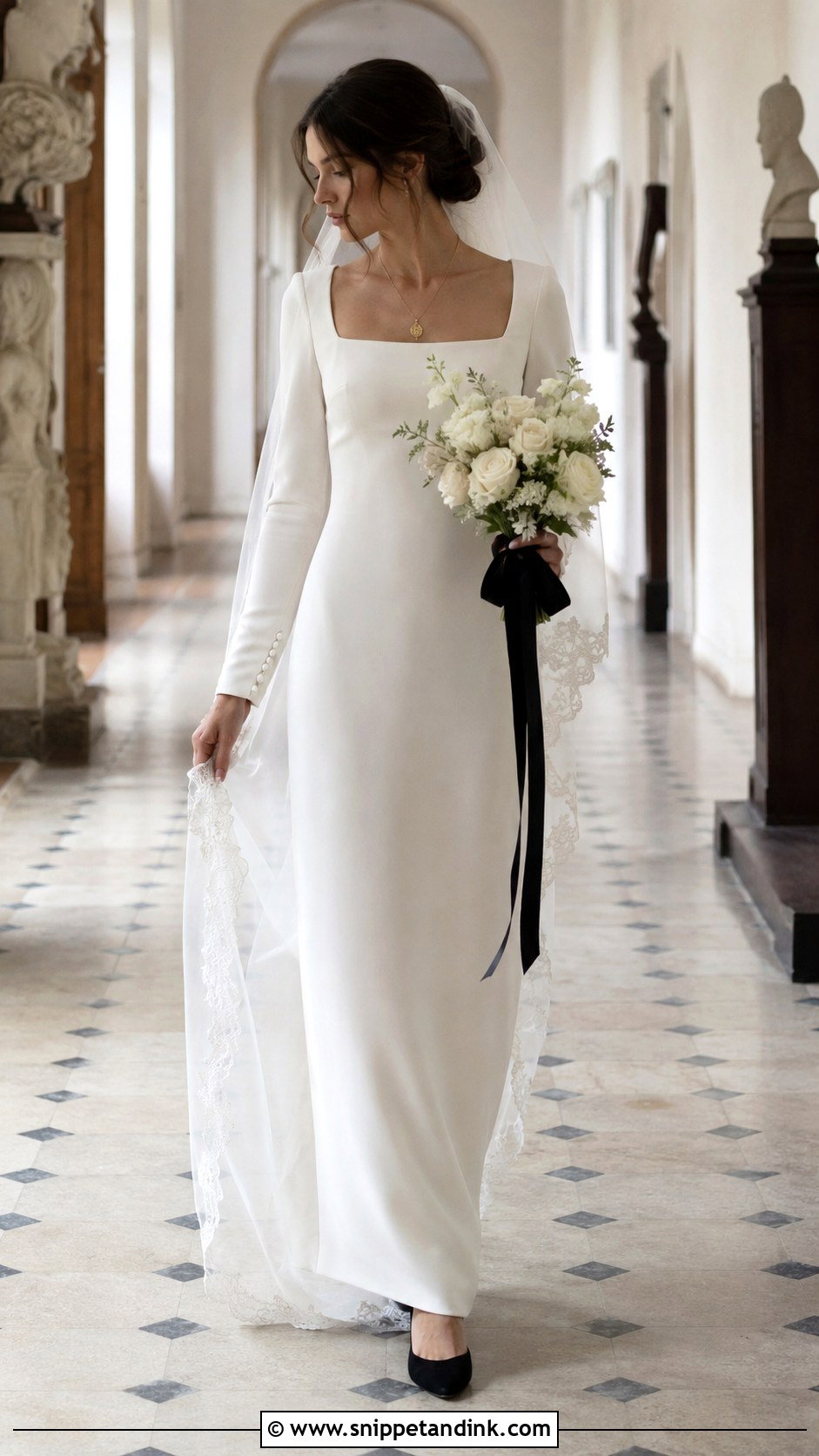
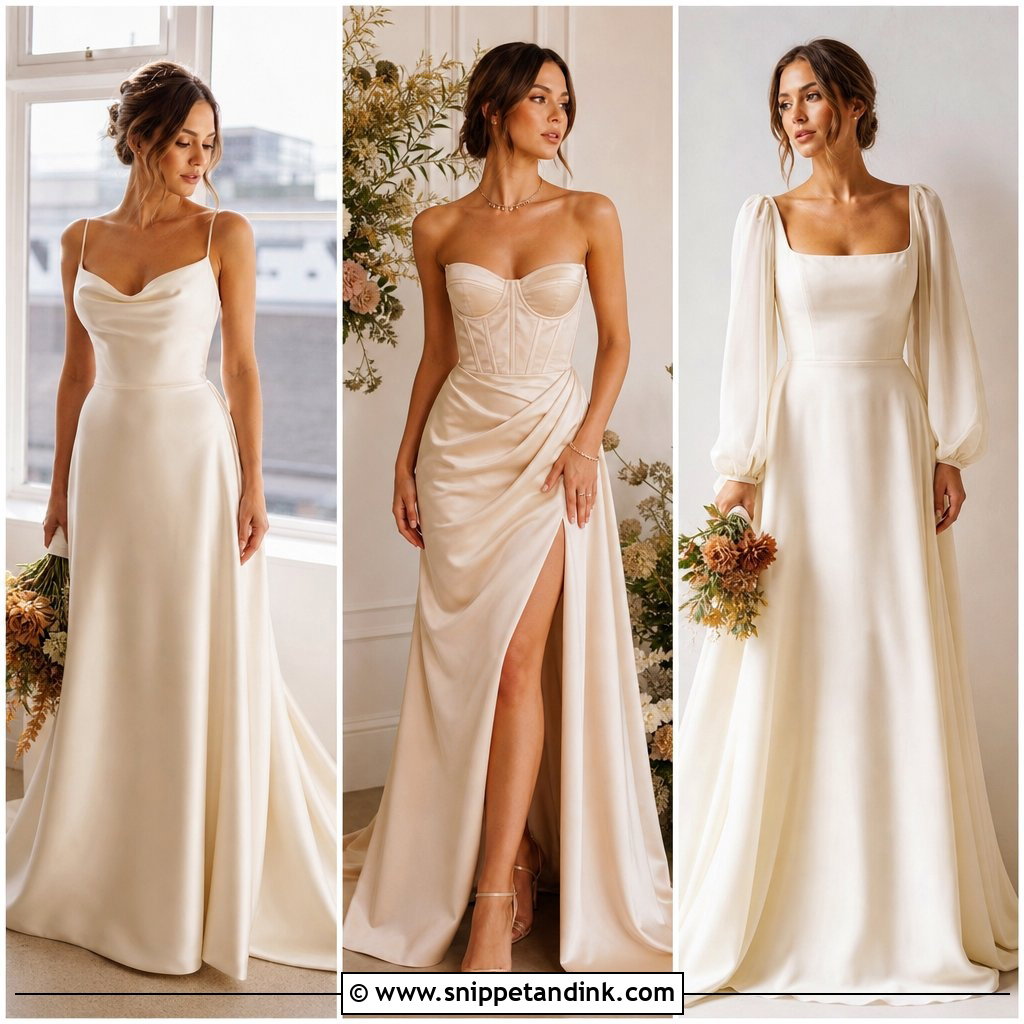
You don’t need heavy lace or a huge skirt to get the look. A simple crepe or matte satin column with long sleeves, a square neckline and covered back buttons carries it through shape and colour alone. Black velvet pumps, an antique gold pendant, a fingertip veil with a narrow lace edge and a dark ribbon around the bouquet bring in the contrast. A low bun or a soft waved ponytail with pearl earrings finishes it. In a small venue with tight aisles, this is the dress I’d choose. It also leaves room for heirloom jewelry to stand out instead of competing with the gown.
Black and Jewel-Tone Gowns Behave Differently
A dark wedding dress is not just a white dress in another colour. It is ordered, worn and photographed differently, and I walk every bride through these points before she commits.
Ordering
Many designers will make a sample style in black, burgundy or green on request, but it is usually a special order, so it can take longer than ivory and may not be returnable. Ask for a swatch of the actual fabric, since colour on a screen and colour on cloth rarely match. If you need a matching veil or sash, order them together so they come from the same dye lot.
Low light
Libraries, chapels and candlelit halls are dim, and dark fabric absorbs light. Black velvet and deep green can lose all their detail in photos unless the photographer knows to expose for the dress. Tell them early, and plan a few portraits near a window or in open shade, where the lace and texture will show.
What shows on dark fabric
Deodorant marks, face powder, pet hair, lint and the pale dust off stone floors all show on black far more than on ivory. Put deodorant on well before you dress and let it dry, keep a lint roller and a soft clothes brush in the getting-ready room, and expect the hem to look grey by the end of the night. A specialist cleaner can deal with that afterwards; don’t scrub it on the day.
Two Strong Details Are Usually Enough
Black lace, ivory satin, burgundy velvet, high collars, corsets and capes can each carry this aesthetic on their own. Start with a shape that supports your body and suits the venue, then add shoes you can stand in, a veil or cape that agrees with the neckline, and a bouquet that picks up the gown’s darkest note. Resist putting every dramatic idea into one outfit; one or two well-chosen details look more deliberate than ten. And trust the fabrics and colours you keep coming back to. That’s usually the version of the look that feels like you.
You'll Like These Ideas:


Leave a Reply