
The high-low gown from the “November Rain” video is still the reference brides bring me when they want romance with an edge of rebellious rock glamour. Its trick is contrast: a short, leggy front against a long, theatrical back. Below are twenty ways to get that effect now, from short lace dresses with sweeping trains to satin minis with removable overskirts. Because the name points to late fall, I’ve also styled each one with the sleeves, boots, capes and closed shoes that make a cold, possibly wet wedding day manageable. Some are close to the 1990s original; others only borrow its proportions.
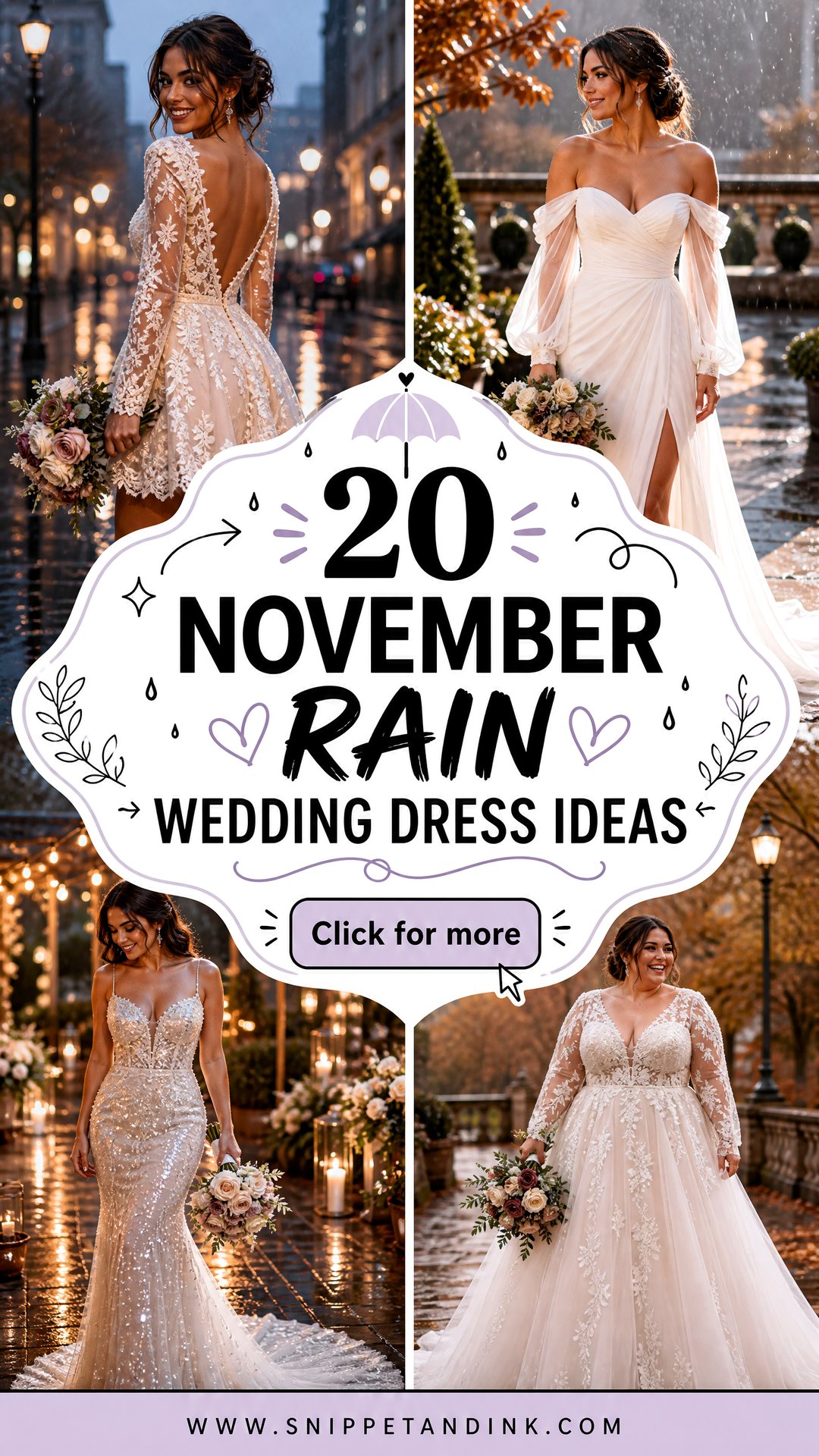
Where Should the Front Hem Stop?
The height of the front hem decides whether a high-low gown looks deliberate or accidental, and it’s the measurement I spend longest on at fittings. Stand in your wedding shoes in front of a full-length mirror and try these points:
- Mid-thigh: the boldest and closest to the video. It needs confidence and usually tights in cold weather, and it rides up when you sit.
- Just above the knee: the most wearable for most heights. It shows the shoes and keeps the drama.
- Mid-calf at the front: a gentle curve. Good for conservative family settings or if you prefer to keep your legs covered.
Then sit down. A short front can climb several centimetres when seated, so I always check the length on a chair before the hem is cut. Look at it from the side as well: the curve from front to back should look smooth and continuous.
1. November Rain High-Low Wedding Dress
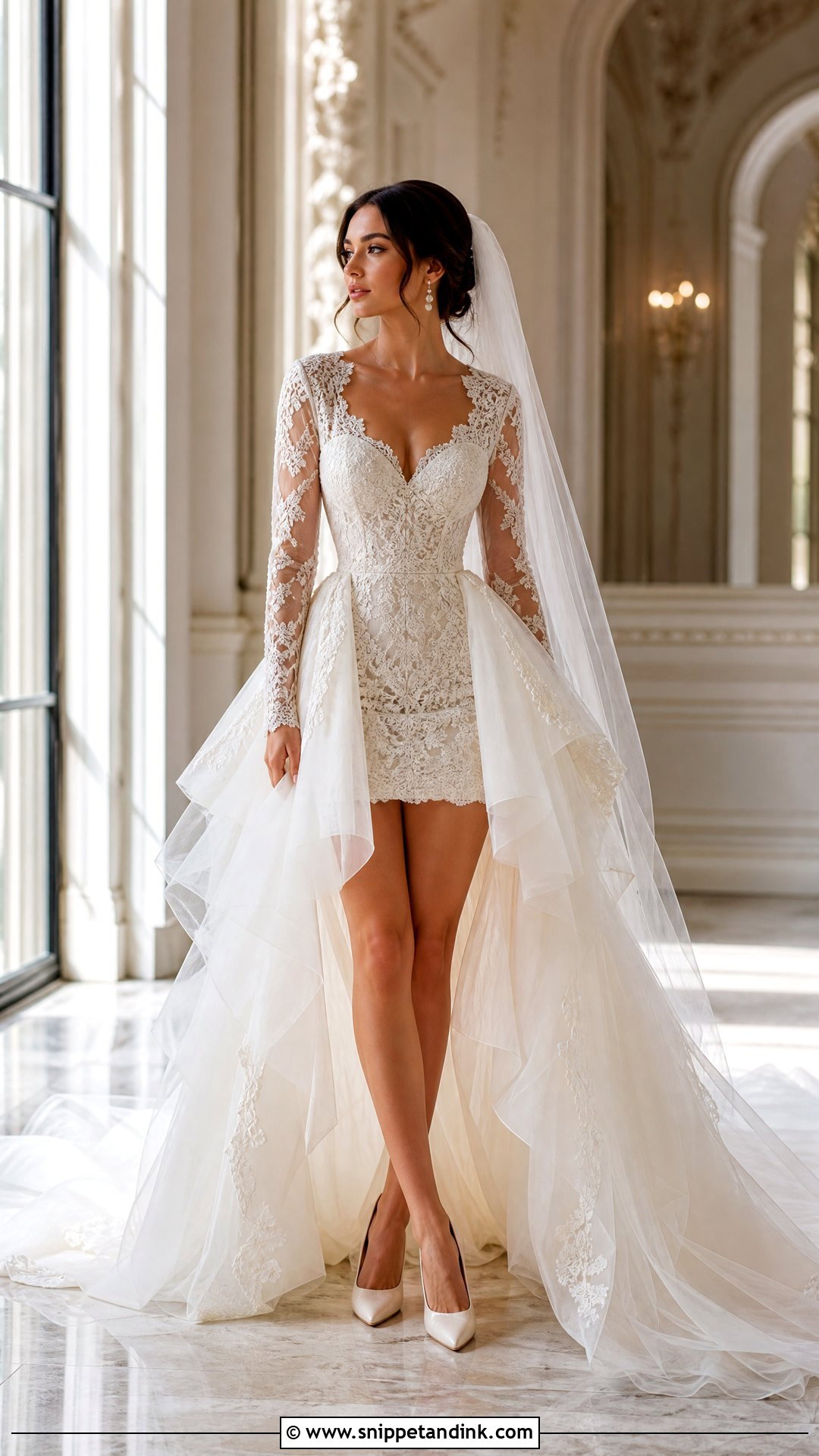
This is the closest read of the original: a fitted mini-length front falling into a full, floor-sweeping back. Soft tulle layers give movement without weight, and a lace bodice with fitted long sleeves brings the romance. Pointed ivory pumps, pearl drops and a full fingertip veil finish it, with white roses and trailing greenery that won’t fight the hemline. The part I study at a fitting is the side seam. The hem has to rise in a smooth curve from back to front; if it steps up abruptly at the hip, the dress looks like two garments sewn together. Get that curve right and the short front makes walking and dancing far easier than a full-length gown.
2. November Rain Lace Mini Wedding Dress
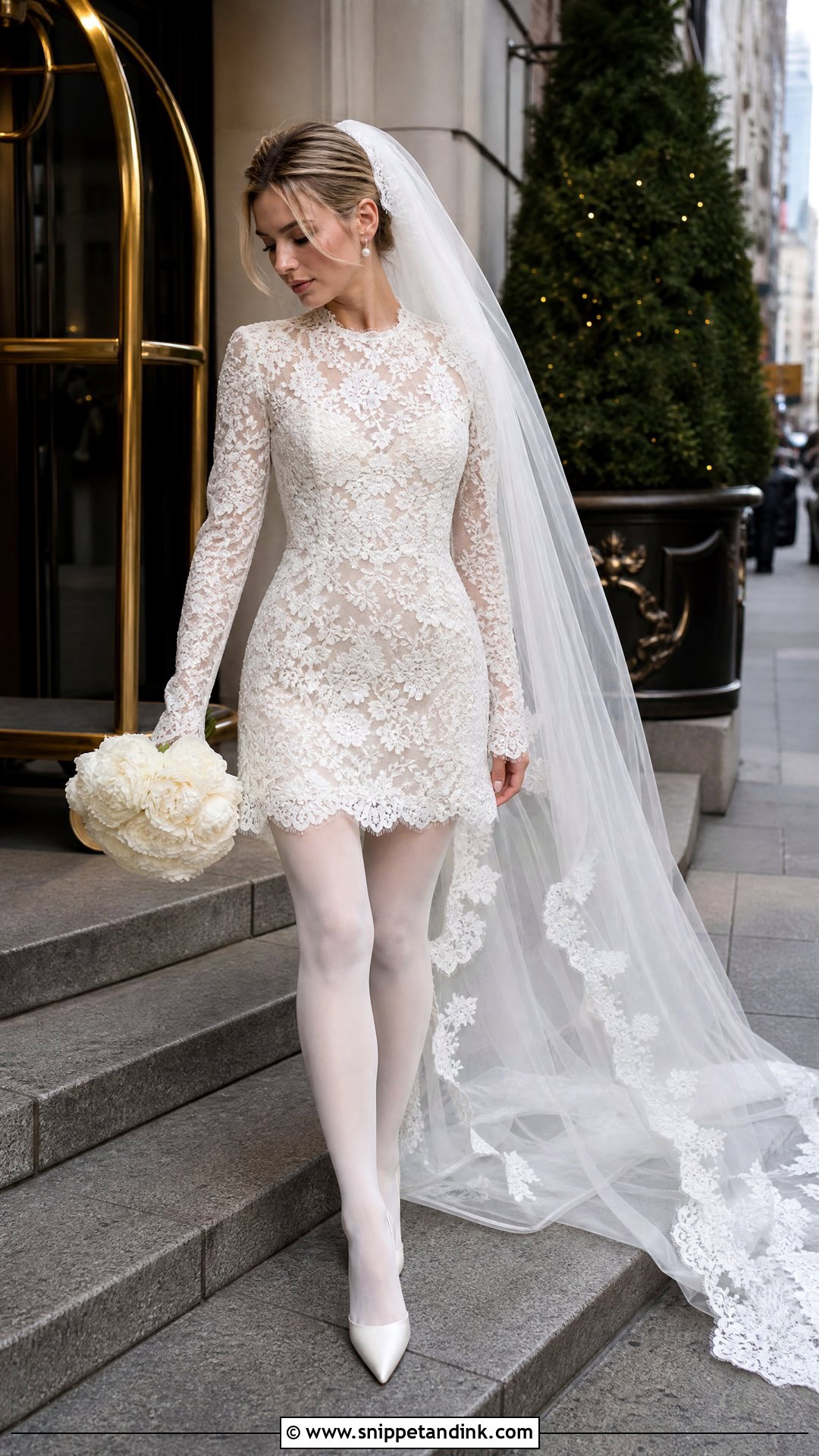
Start with a fitted lace mini and build everything else around it. Floral lace, lightly padded shoulders and sheer fitted sleeves give a quiet 1990s nod. In November I put brides in sheer ivory tights with satin pointed pumps, partly for warmth and partly because bare legs go blotchy and pink in cold air, which shows in close photos. A cathedral veil balances the short hem and makes it read as bridal. Crystal earrings, a structured white clutch and ivory roses complete it, plus a tailored bridal coat for travel between venues. It suits a city hall or a small, lively wedding.
3. November Rain Wedding Dress With Detachable Train
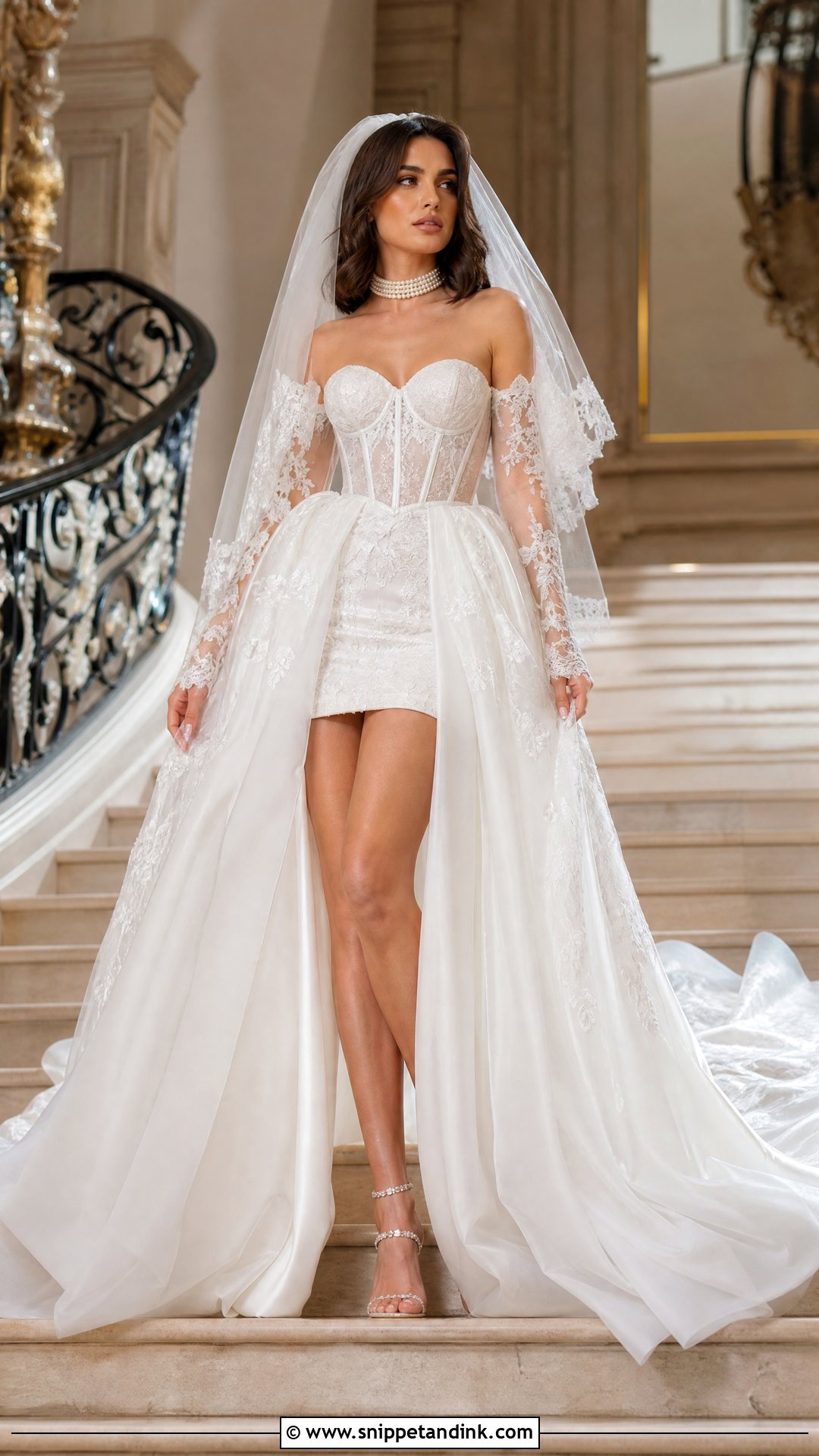
Two looks, one dress. A structured ivory mini with a corset-style bodice and long lace sleeves is the base, and a full tulle or organza train attaches at the waist for the ceremony. Crystal-embellished heels, a pearl choker and a shoulder-length veil complete the first look. After the ceremony, the train comes off and you’re ready to dance. What I check: that the attachment sits flat at the natural waist with no ridge showing through the bodice, and that the train fabric is dyed or matched to the dress, since ivory tulle and ivory lace are rarely the same ivory. On a wet day, being able to unhook the train before crossing a damp car park is worth a lot.
4. November Rain Corset Wedding Dress
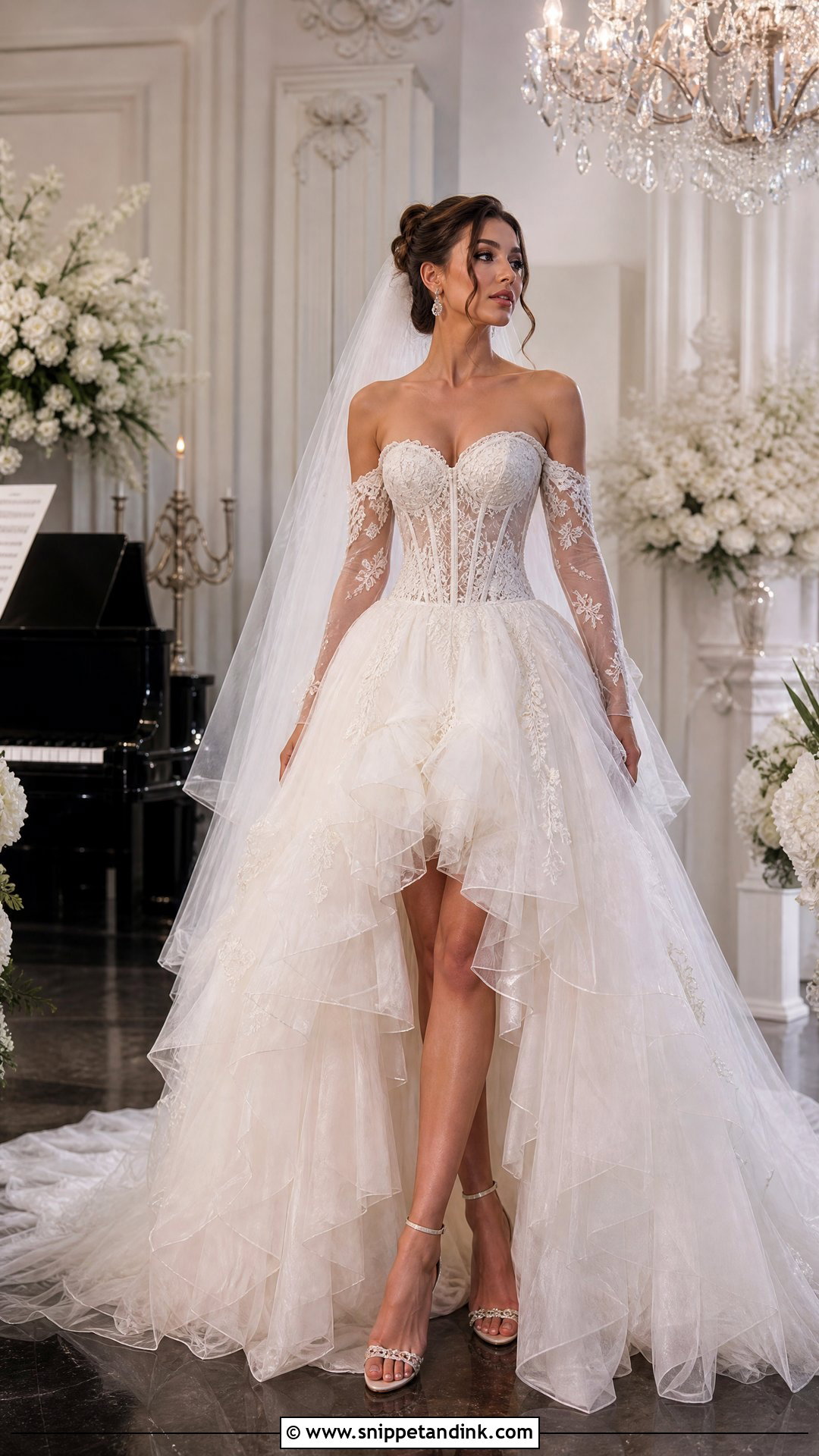
Corsetry gives this theme its stage-ready side. Choose an ivory bodice with visible boning, lace appliqués and a soft sweetheart neck, over a high-low tulle skirt that shows the legs in front and falls into a generous train behind. Detachable sheer sleeves add romance without restricting your arms. Metallic ivory heels, crystal studs and a layered veil set under soft curls complete it, with white roses and a few deep red accents. Boning is unforgiving if it’s cut for your standing measurements only. I always ask a bride to sit and lift her arms at the fitting, because a bodice that’s comfortable upright can press into the hips once seated for dinner.
5. November Rain Long-Sleeve Wedding Dress
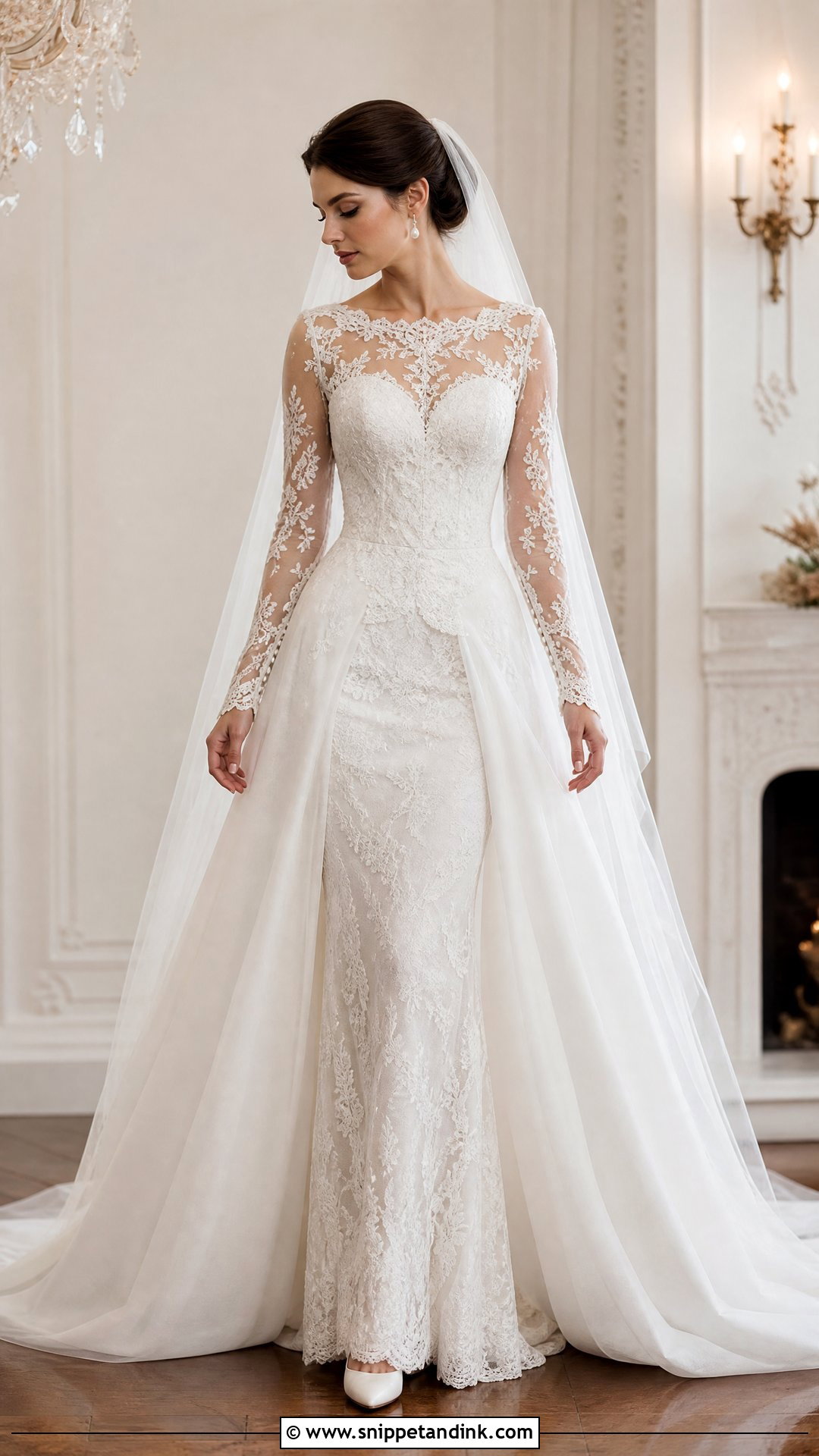
Long sleeves feel right for a late-fall ceremony, and they let you keep the high-low drama while covering more. I’d pair a short fitted underdress with illusion lace sleeves and an overskirt that opens at the front. Floral appliqué, pearl buttons or lightly puffed shoulders make the early-1990s link. Closed satin pumps, pearl earrings and a chapel veil keep it classic. For outdoor pictures, a cropped ivory faux-fur jacket keeps you warm while showing the skirt’s shape. Pearl-button cuffs are slow to fasten, so plan for whoever dresses you to need an extra ten minutes. Historic hotels and ballrooms suit it best.
6. November Rain Satin Wedding Dress
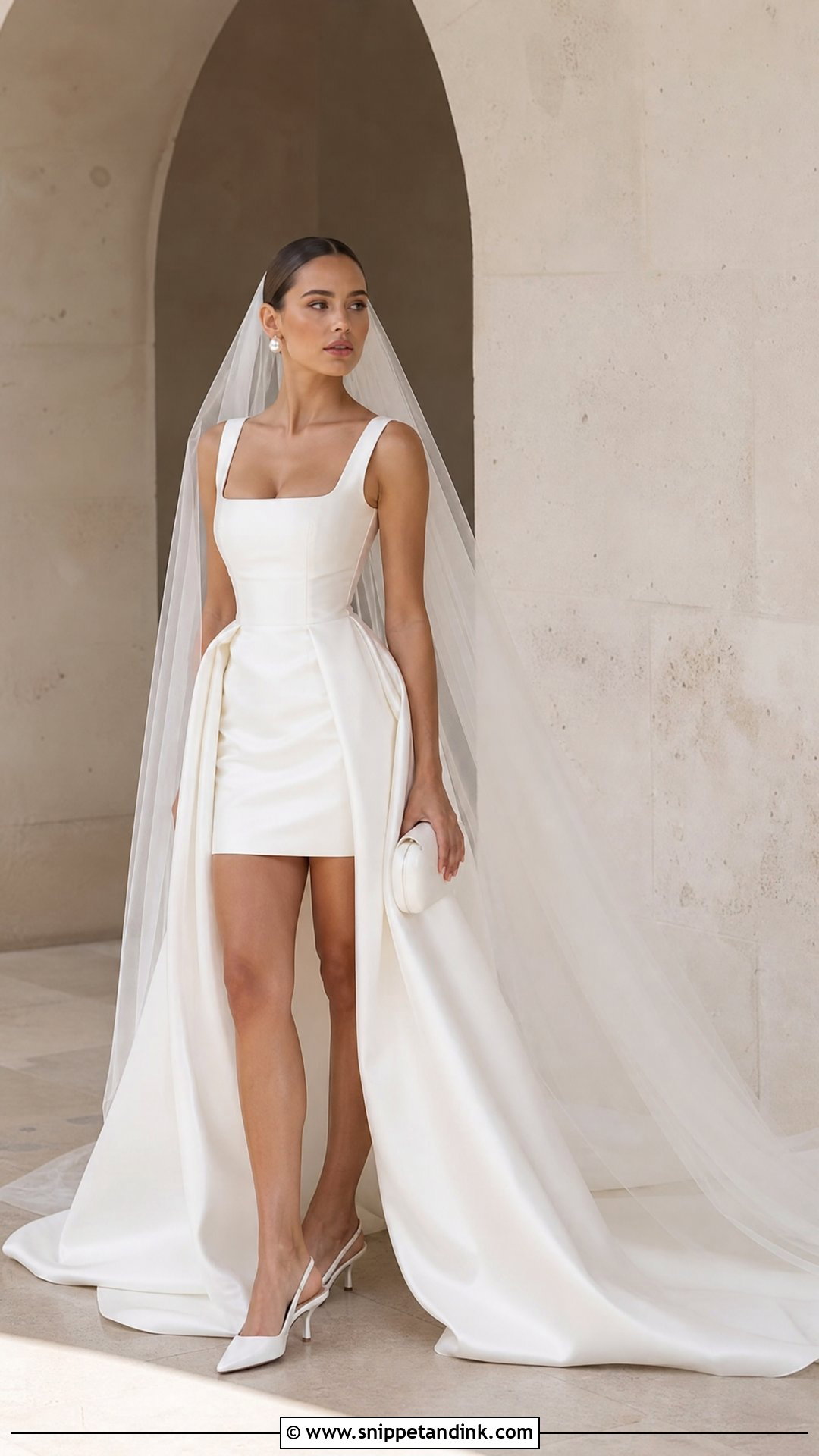
Satin makes the silhouette cleaner and more modern. A structured satin mini with a square neck and fitted waist sits under a detachable satin overskirt with deep pleats and a long train, open at the front to show the shorter dress. Pointed slingbacks, sculptural pearl earrings, a sleek satin clutch and a plain cathedral veil with a narrow satin edge keep the polish going. Satin has a downside I always mention: it marks easily. Raindrops can leave visible spots on some silk satins, and a crease from sitting in the car will show. Bring a clean white cloth, and keep the train bustled until you’re indoors. A neat low bun keeps the focus on the neckline and waist.
7. November Rain Tulle Wedding Dress
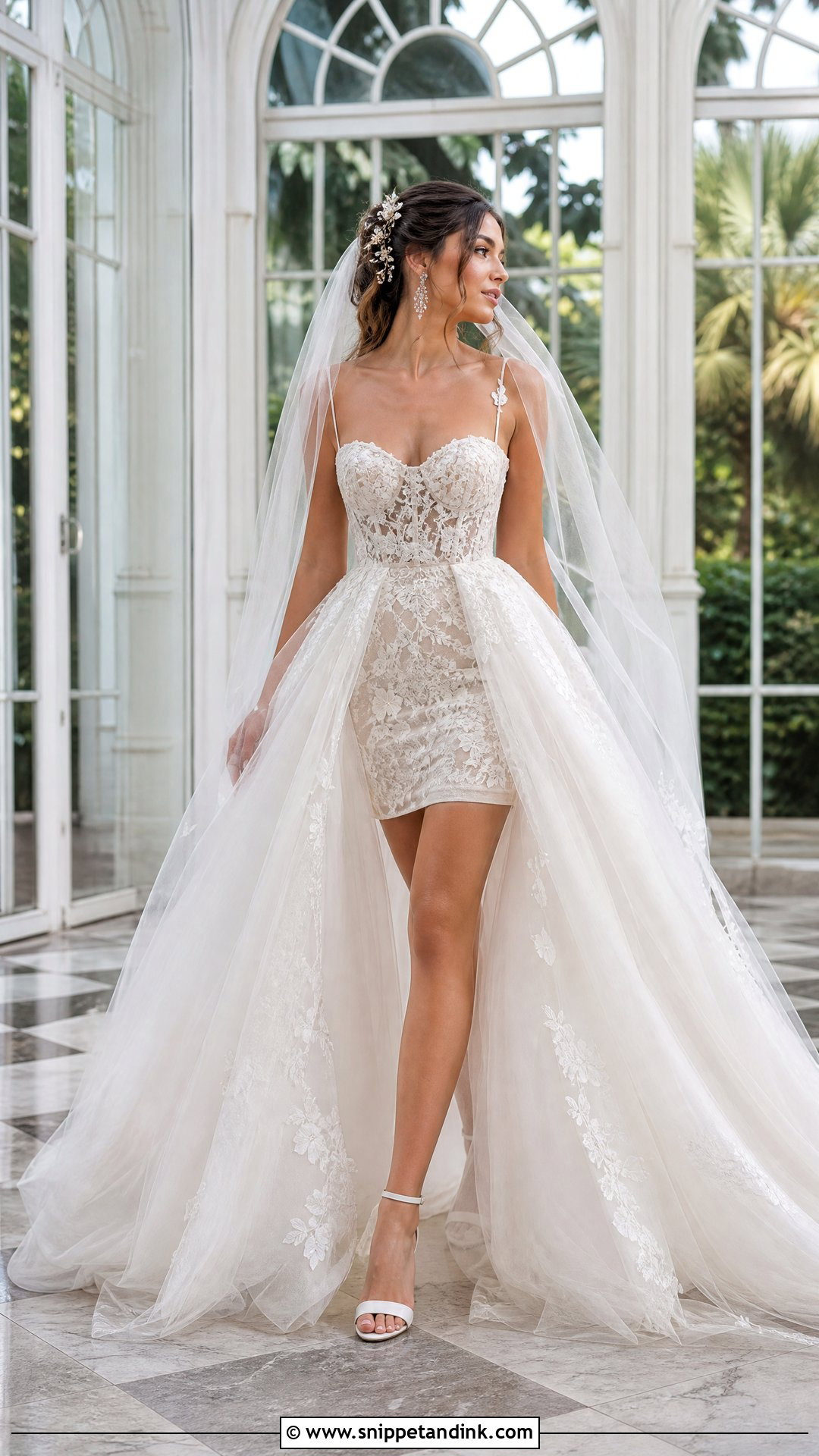
Tulle turns the high-low shape soft and light. A fitted lace mini forms the base, with a full tulle overskirt growing gradually into a sweeping train; a slightly asymmetric front opening shows off the shoes as you walk. Ivory ankle-strap heels, floral hairpins and a sheer cathedral veil, with small crystal drops or pearl studs instead of a necklace, finish it. Tulle moves wonderfully in walking portraits, but it also snags on rough flooring and catches on velcro and jewelry. A bustle or detachable waistband saves the train from being trodden on during the first dance. Conservatories and garden rooms suit it.
8. November Rain Off-Shoulder Wedding Dress
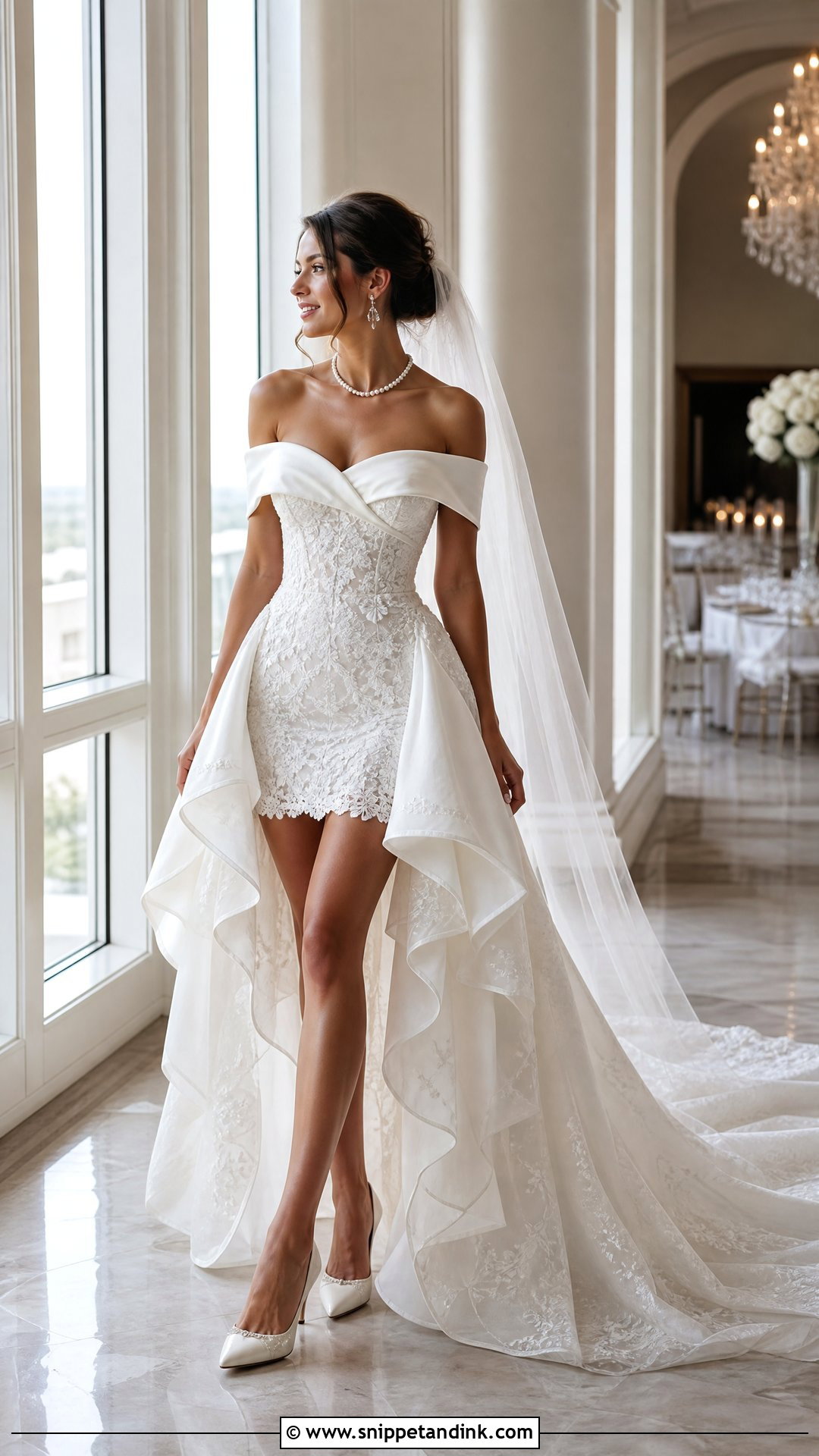
An off-shoulder neckline softens the bold proportions. Select a fitted lace mini with a folded neckline or small off-shoulder sleeves and a layered high-low skirt with volume behind. Pointed ivory heels, a fine pearl necklace and drop earrings complete it, and a long sheer veil set beneath a loose updo keeps the shoulders on show. Off-shoulder bands need silicone grip tape inside them, or they creep upward every time you hug someone. November weather is unpredictable, so I always have an ivory wrap or fitted cape ready for the walk outside. It’s a good option for anyone who finds high-neck lace too formal.
9. November Rain Puff-Sleeve Wedding Dress
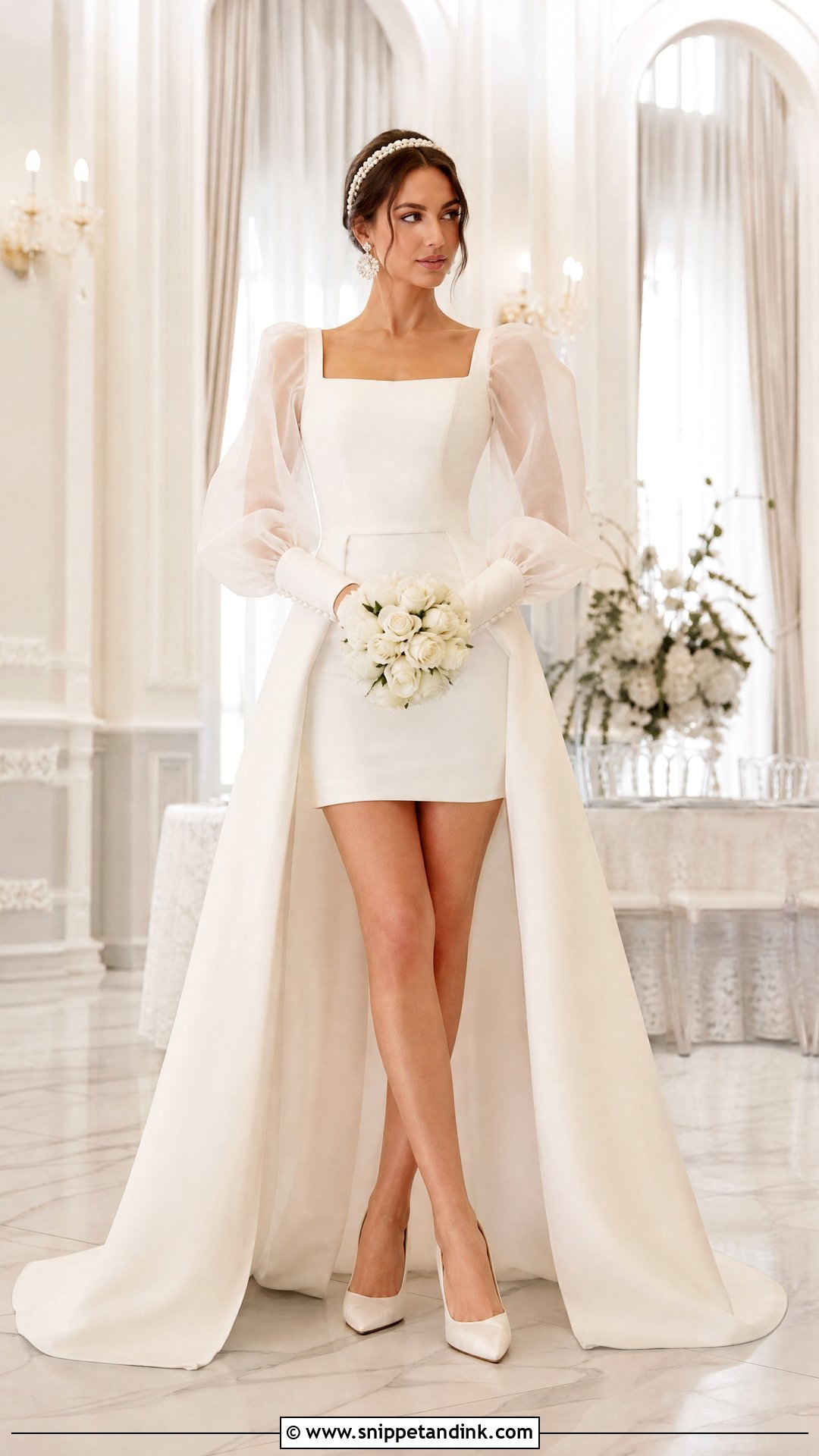
Puff sleeves look back to vintage bridal and give the shape an editorial edge. Choose a short ivory dress with a defined waist, square neck and sheer organza sleeves tapering at the wrist, with a removable overskirt starting at the sides and widening into a broad train. Streamlined satin pumps, a pearl headband and small crystal earrings keep the rest quiet, and a compact bouquet of white roses keeps the proportions tidy. Organza sleeves flatten if they’re packed tightly, so I travel the dress with tissue rolled inside each puff. The bodice has to stay closely fitted here; if it’s loose, the sleeves and train together overwhelm the frame. This is the version with the most obvious video reference.
10. November Rain Ruffled Wedding Dress
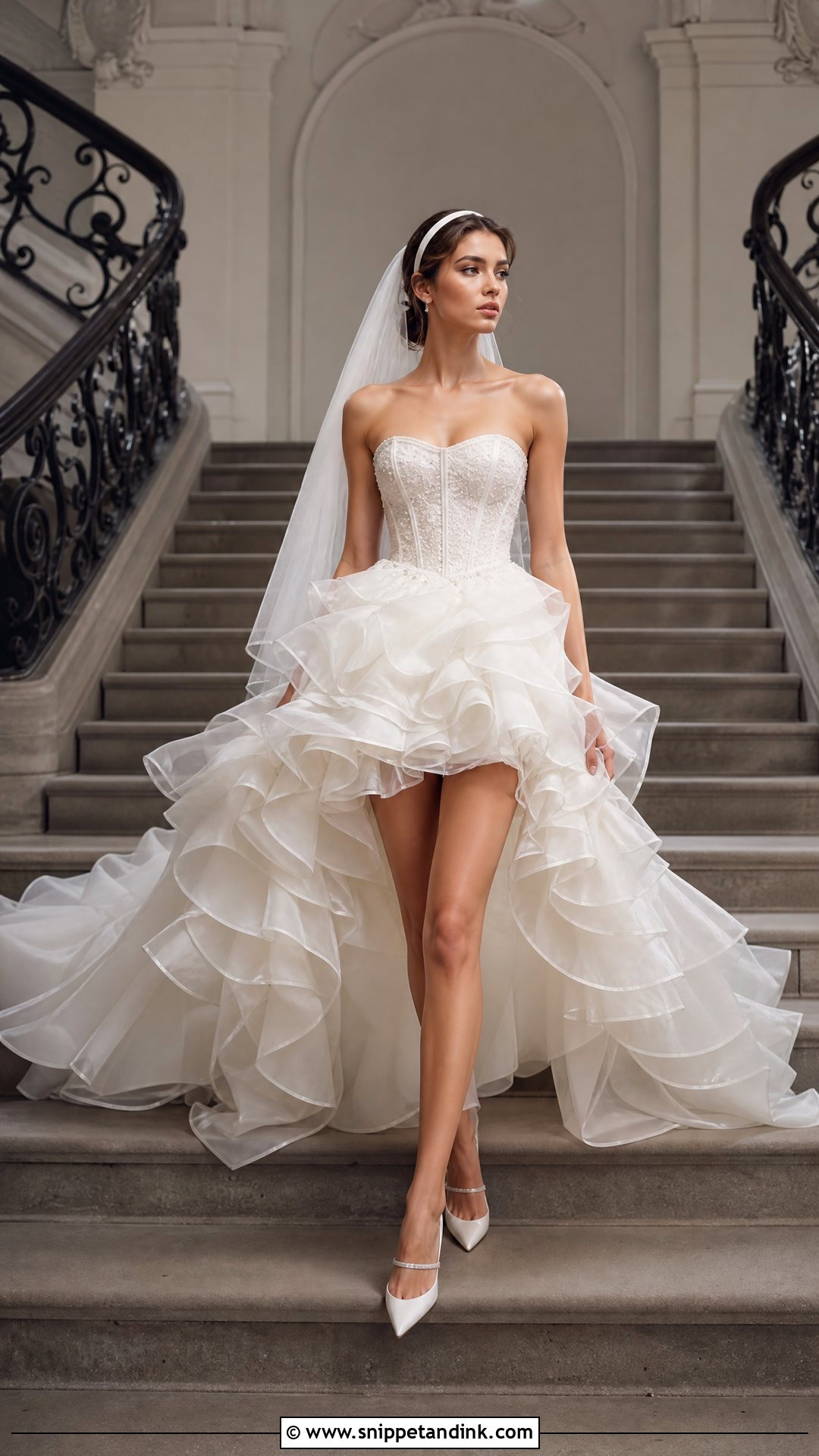
Cascading ruffles bring back the movement that made the original memorable. Start with a fitted mini with a clean bodice and lightly structured waist, then add an overskirt of tiered organza ruffles rising at the front and flowing into a layered train. With that much detail in the skirt, the rest should be plain: pointed pumps, crystal studs, a narrow ribbon headband and a veil without lace edging. Scale the tiers to your height. Fine, close-set ruffles suit a petite frame, while taller brides carry deeper tiers. A wide aisle or a grand staircase shows the train at its best.
11. November Rain Mikado Wedding Dress
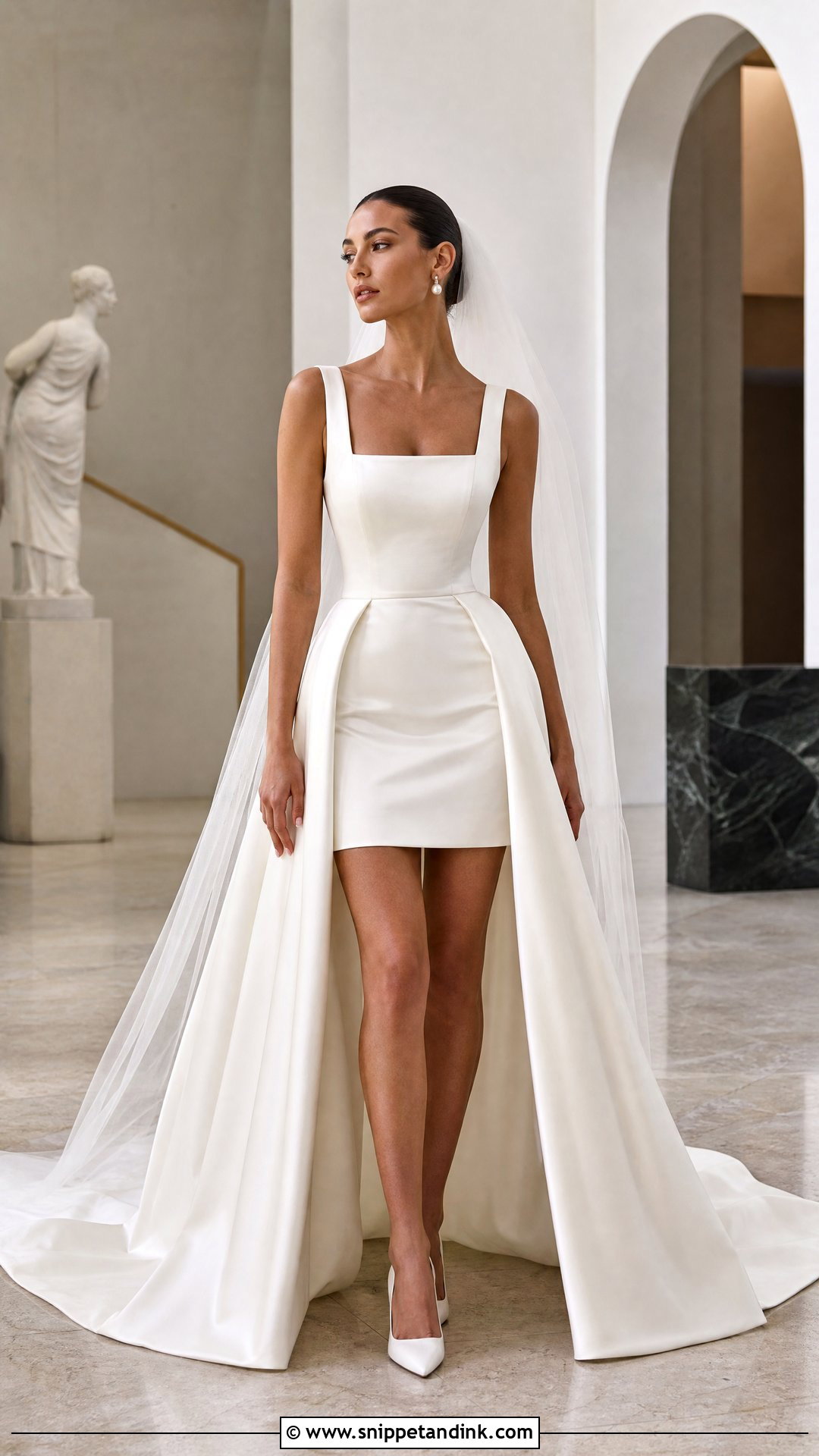
Mikado fabric holds a crisp, architectural shape without needing layers of tulle underneath. Choose a sleeveless mini with a structured bodice, wide straps and a clean square neck, then add a matching open-front overskirt with box pleats and a long train. Pointed satin pumps, pearl-and-crystal earrings and a long veil with a plain edge suit its sharp lines, as does a polished bun or smooth ponytail. Mikado is heavier than it looks, and box pleats can crease into a hard line where you sit. I steam the pleats at the venue and ask brides to sit on the overskirt as little as possible before the ceremony. A tailored ivory coat ending above the overskirt join keeps you warm between locations.
12. November Rain Pearl Wedding Dress
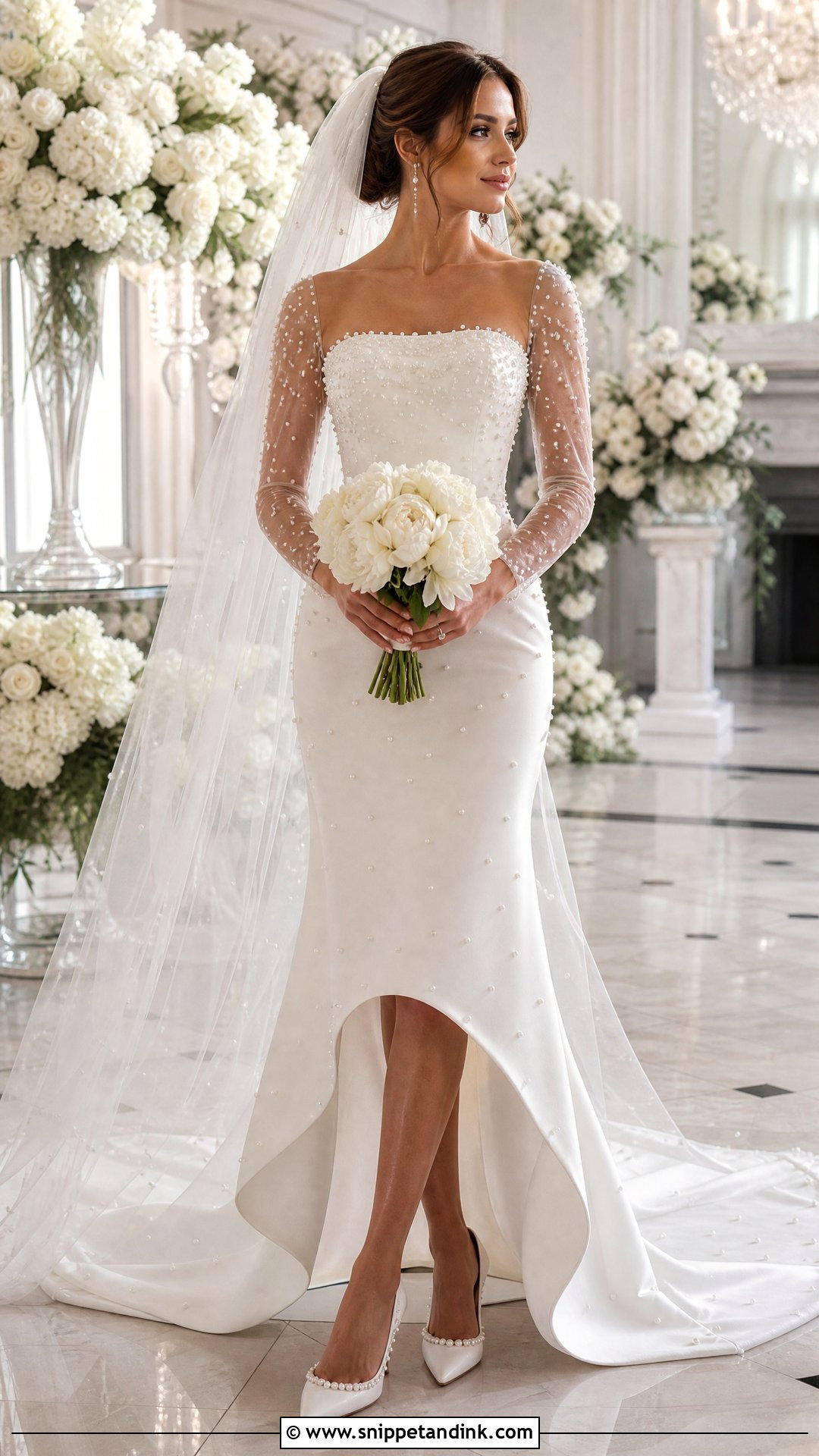
Pearls add delicate texture to a bold shape. Scatter them across the bodice, sheer sleeves and upper skirt of a fitted high-low dress, and keep the long train lightly decorated so it flows. Pearl-trimmed pumps, simple drops and a sheer veil dotted with matching pearls tie it together; skip a heavy necklace. Before the wedding, I run my hand over every embellished area to find loose threads. Hand-sewn pearls work loose at points of friction, especially around the waist, the cuffs and wherever the train fastens, and a missing row is visible in close-ups. It suits bright ballrooms and refined indoor rooms.
13. November Rain Sequin Wedding Dress
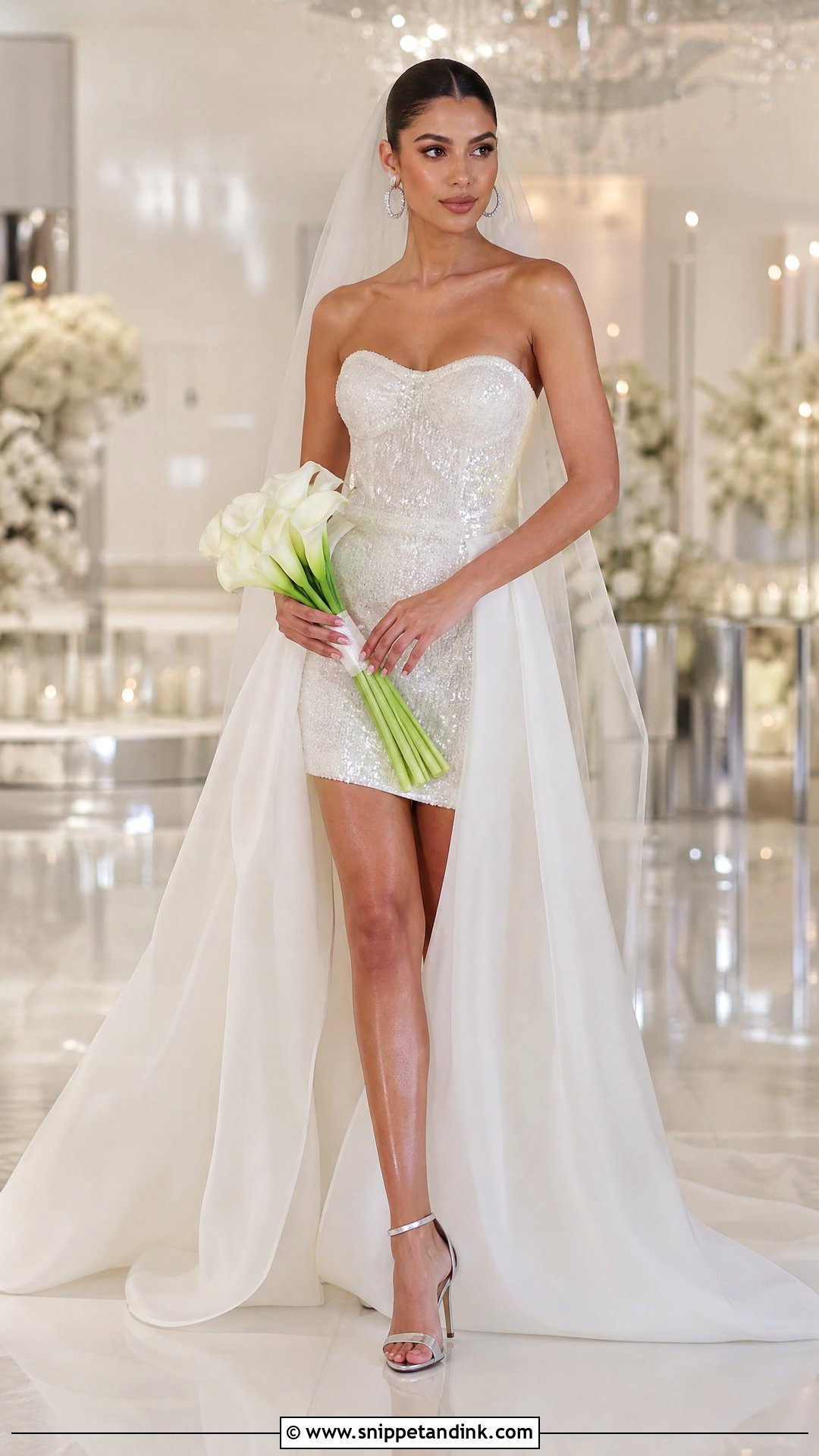
Sequins bring out the stage side of the theme. Choose an ivory mini covered in fine tonal sequins, not large reflective discs, under a plain organza overskirt with an open front and sweeping train to soften the sparkle. Metallic silver heels, small crystal hoops and a plain cathedral veil keep it clean, with white roses or calla lilies. The contrast between the shimmering short dress and airy overskirt gives depth without tipping into eveningwear. Sequins scratch the inner arm, so I ask for a soft lining along the side seams. For warmth, a satin-lined faux-fur jacket protects the sequins from rough outerwear. It shines at an evening ceremony.
14. November Rain Bridal Boots Wedding Dress
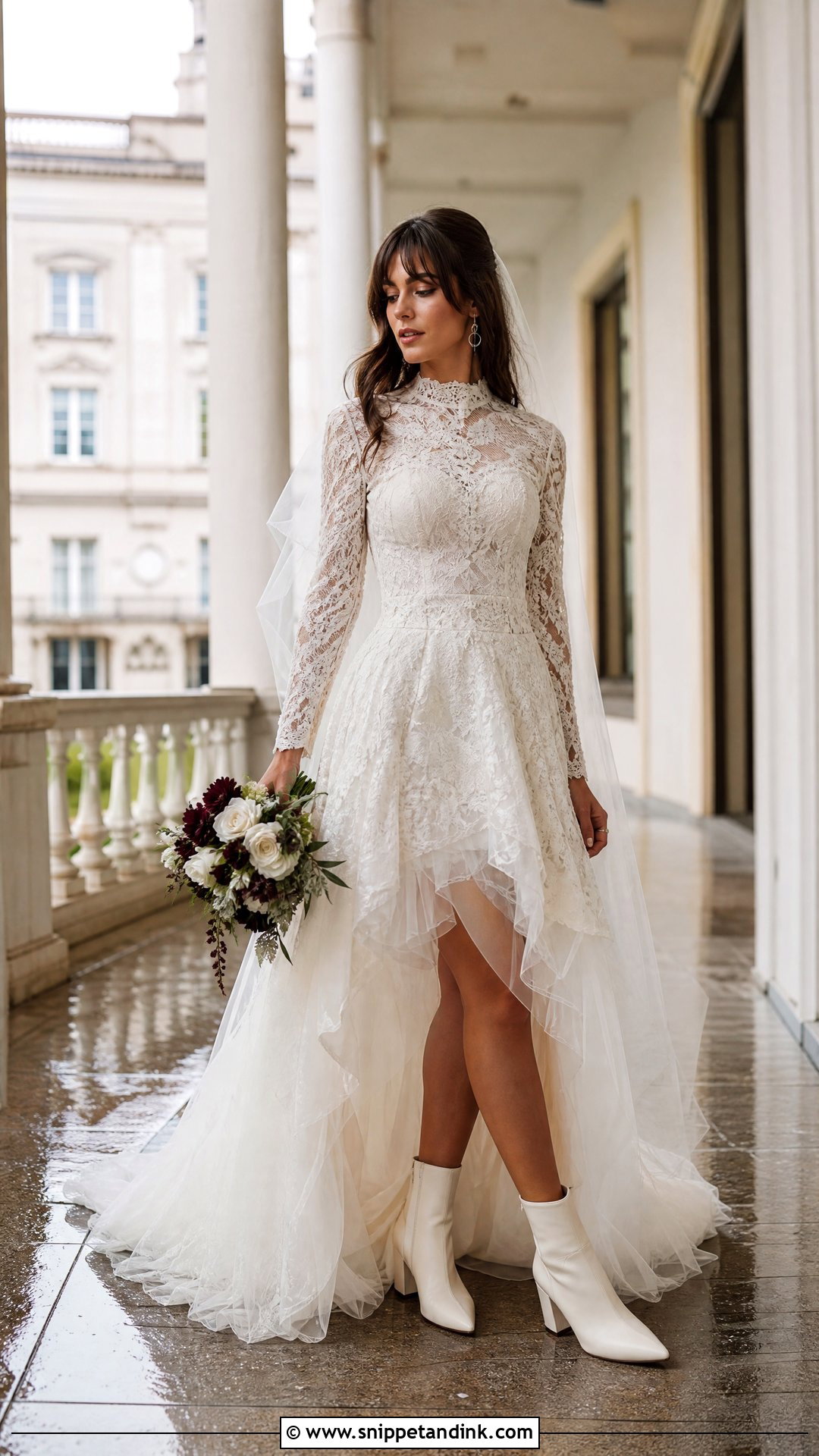
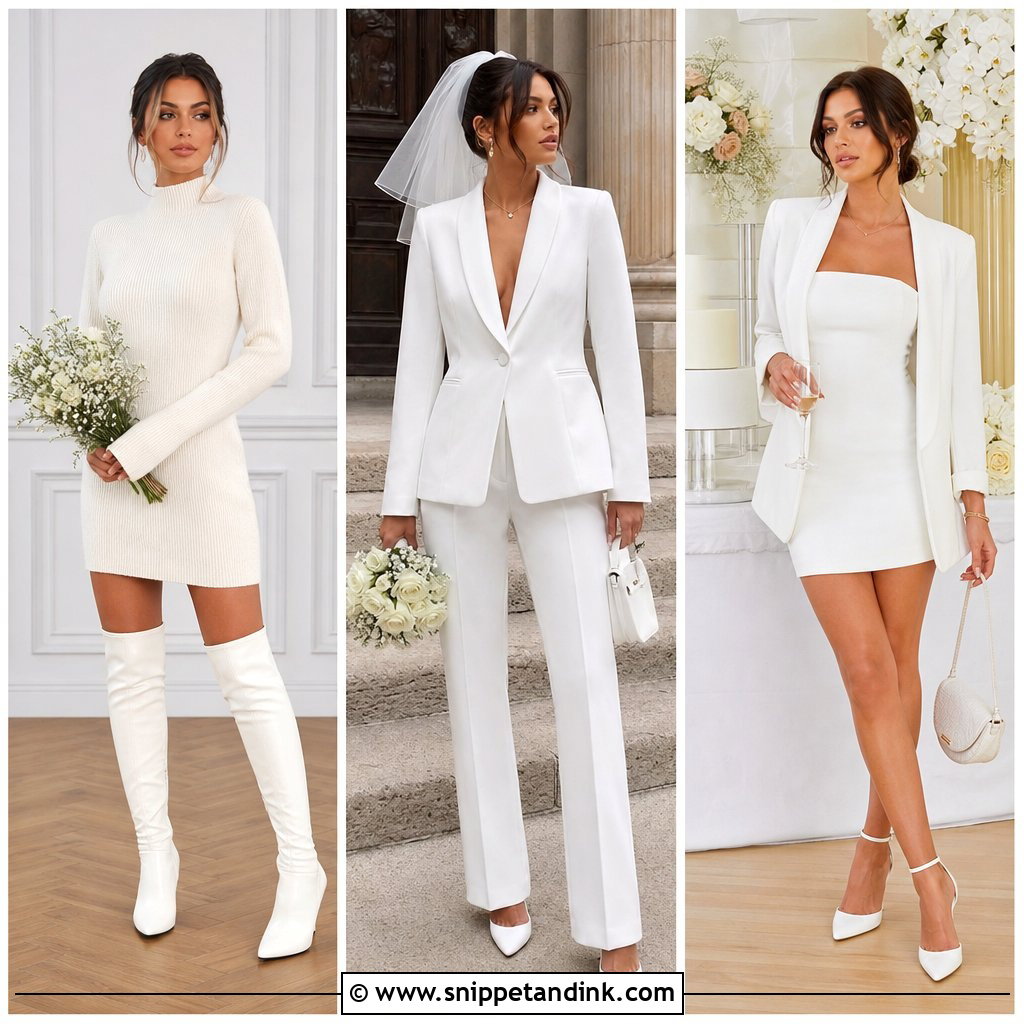
Bridal boots make the short front practical and push the rock reference further. Wear a lace high-low dress with a fitted bodice, long sleeves and a layered tulle train, and add sleek ivory ankle boots with a pointed toe and a comfortable block heel. Skip heavy buckles and dark hardware, which pull the outfit away from the bridal palette. Silver drops, a soft veil and white flowers with burgundy accents complete it. Since the boots are on full view, the shaft has to fit closely at the ankle; a loose shaft looks sloppy beneath a short hem. On wet grass or damp stone, boots give far more grip and support than pumps.
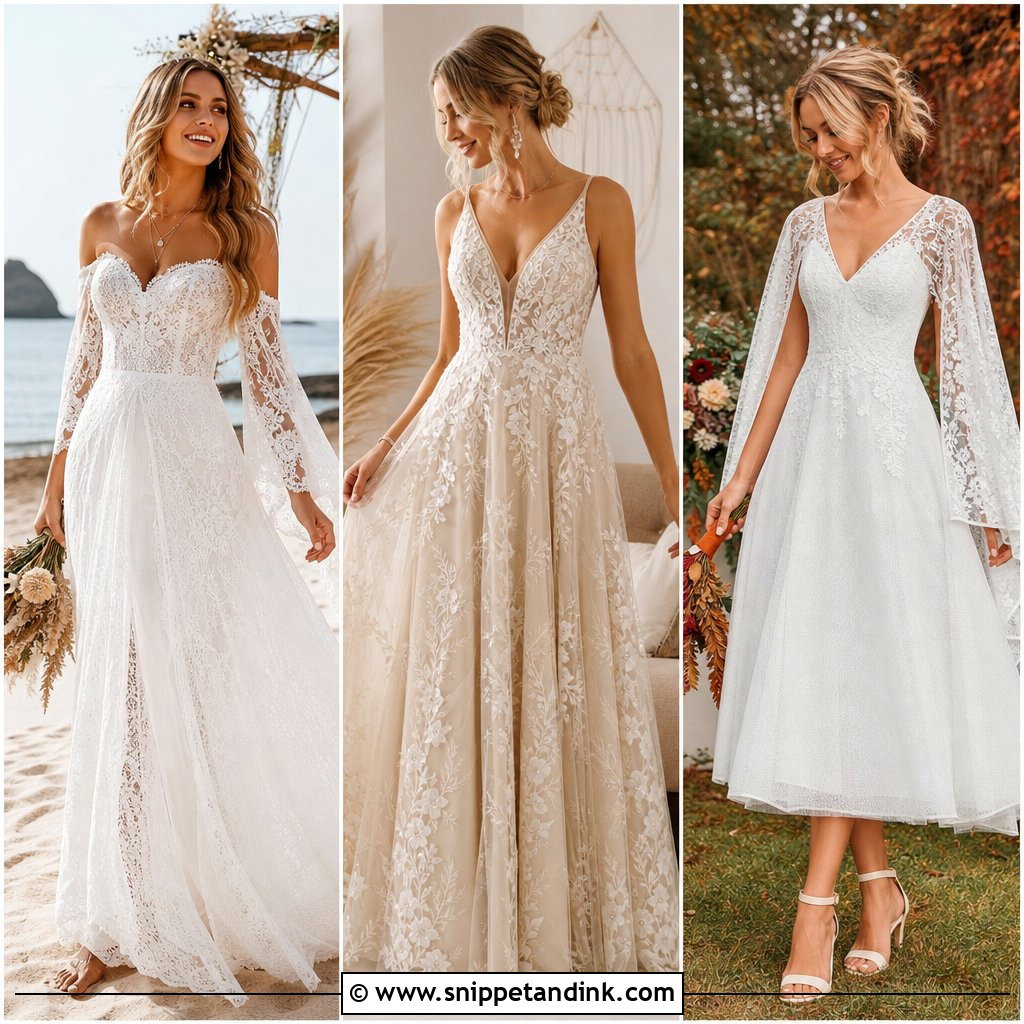
15. November Rain Wedding Dress With Bridal Cape
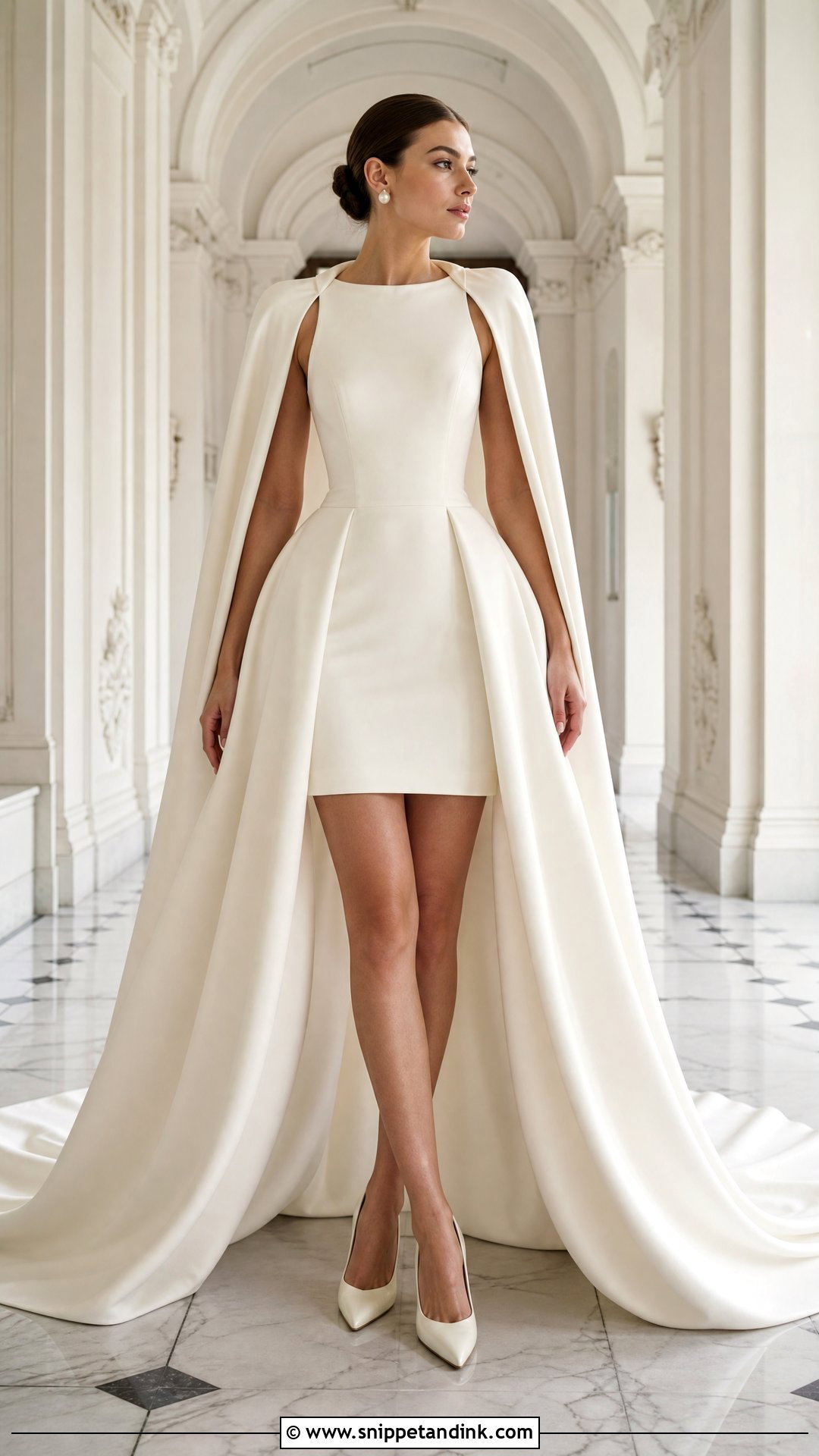
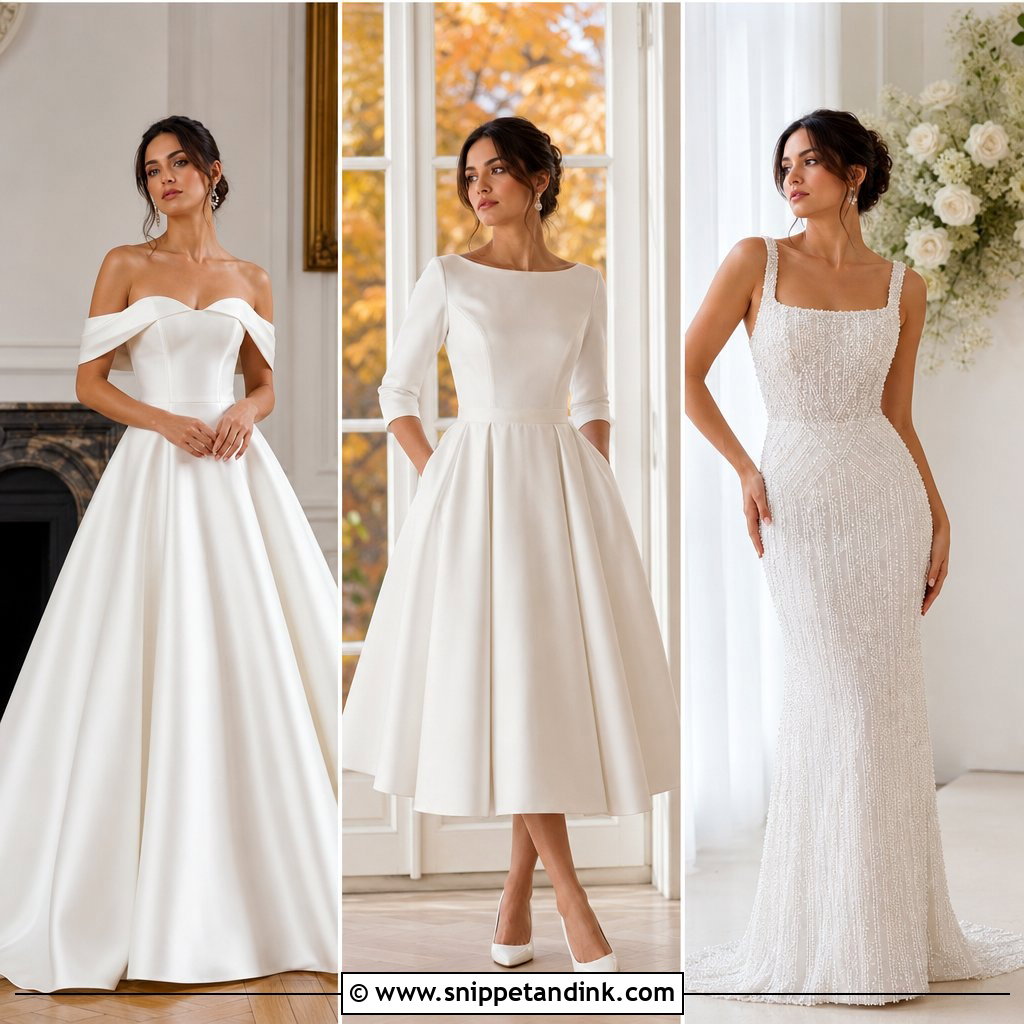
A bridal cape adds cold-weather cover without hiding the high-low shape. Begin with a sleeveless ivory mini and a structured detachable overskirt with a long train. Use a sheer lace cape for the ceremony, or a lined crepe one when you need real warmth, fastened neatly at the neck and ending just above or slightly beyond the train. Closed pumps, pearl earrings and a sleek low bun are enough. I’d drop the veil if the cape has a hood or detailed shoulders; two sheer layers tangle each other constantly in wind. This one handles outdoor portraits, chilly hallways and unheated historic venues.
16. November Rain Black And White Wedding Dress
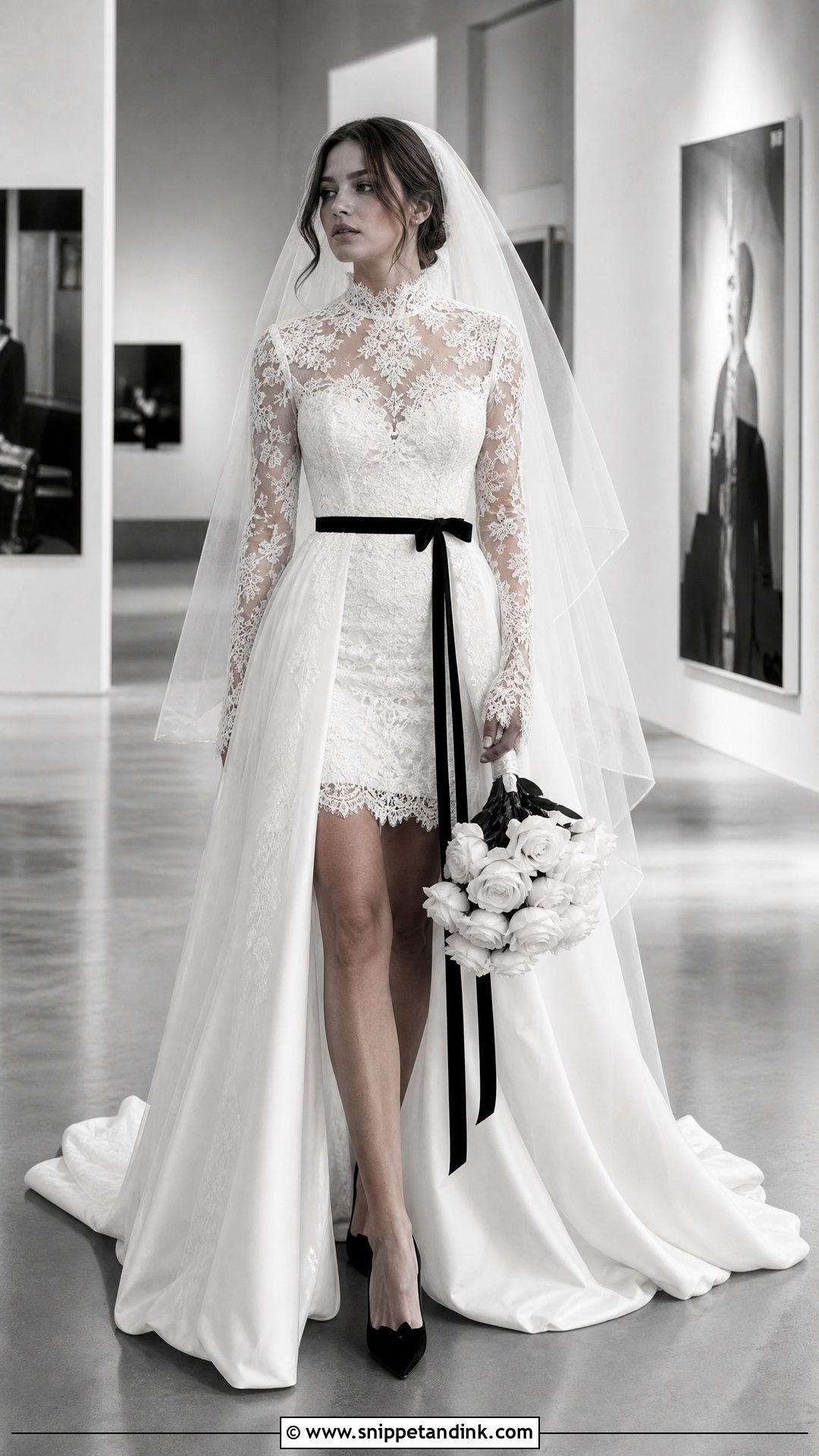
Black accents push the mood toward rock and roll while the dress stays bridal. Select an ivory lace mini with fitted sleeves and a full white overskirt, then bring in black through a narrow velvet waist ribbon, pointed black pumps and a small bow in the hair. A white cathedral veil keeps it ceremony-ready, and white roses tied with black ribbon finish it. Limit the black to two or three places; scattered everywhere, it breaks the outfit into pieces. Velvet ribbon can bleed dye onto ivory when damp, so I test a scrap with a wet cloth beforehand. Charcoal or pewter gives softer contrast if pure black feels too stark.
17. November Rain Vintage Wedding Dress
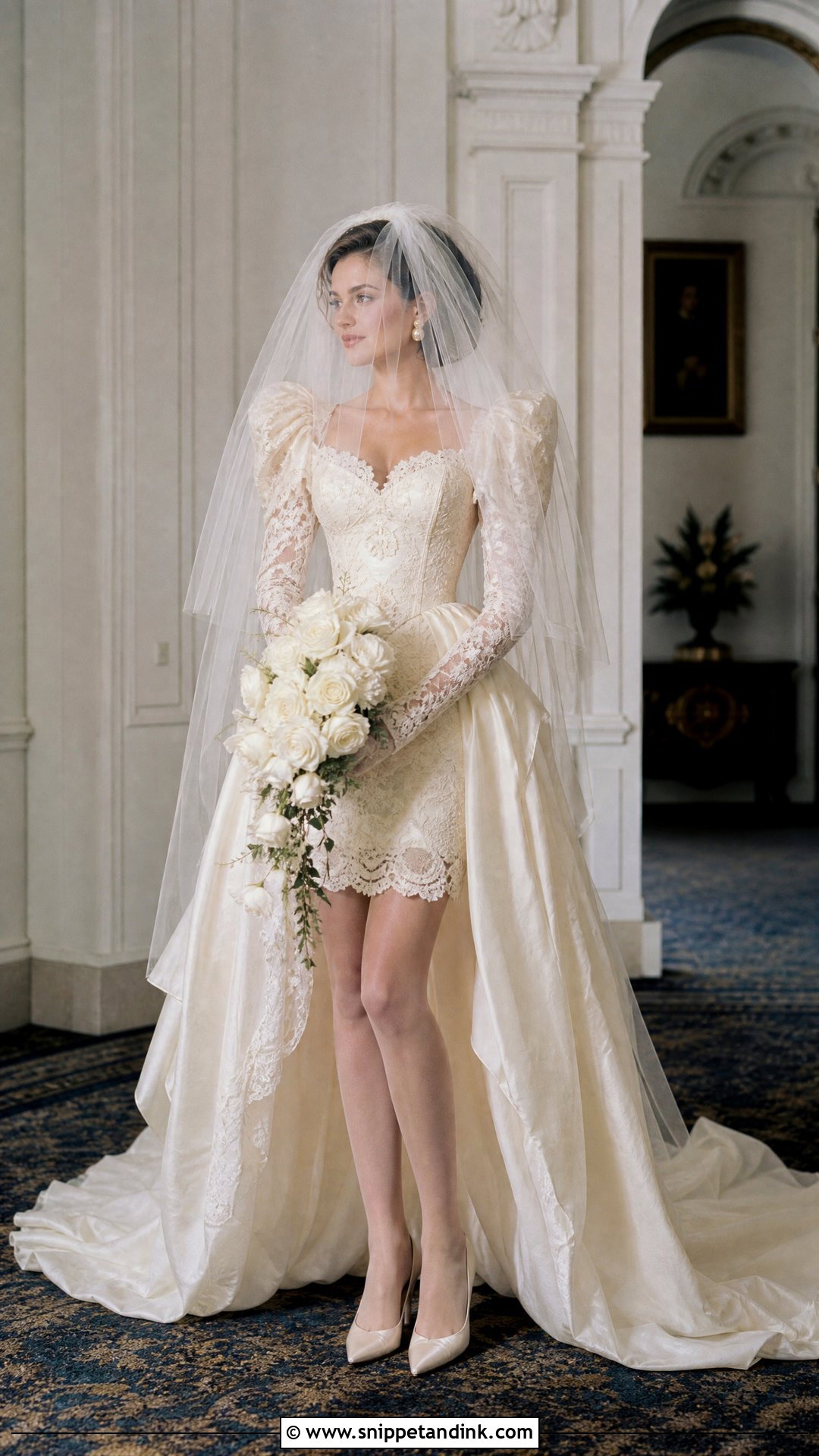
Vintage pieces can carry the period mood without looking like costume. Search for a short lace gown with a basque waist, fitted bodice and lightly puffed long sleeves, then have a matching overskirt created from tulle or organza to create the train. Pointed satin pumps, pearl drops, a full fingertip veil, soft curls and classic roses complete it. With a genuinely old dress, the first step is a bridal tailor’s inspection of seams, lining, closures and lace before any alterations, because aged lace can tear when it’s let out. Old ivory rarely matches new fabric, so aim for a complementary tone in the overskirt rather than an exact match.
18. November Rain Plus-Size Wedding Dress
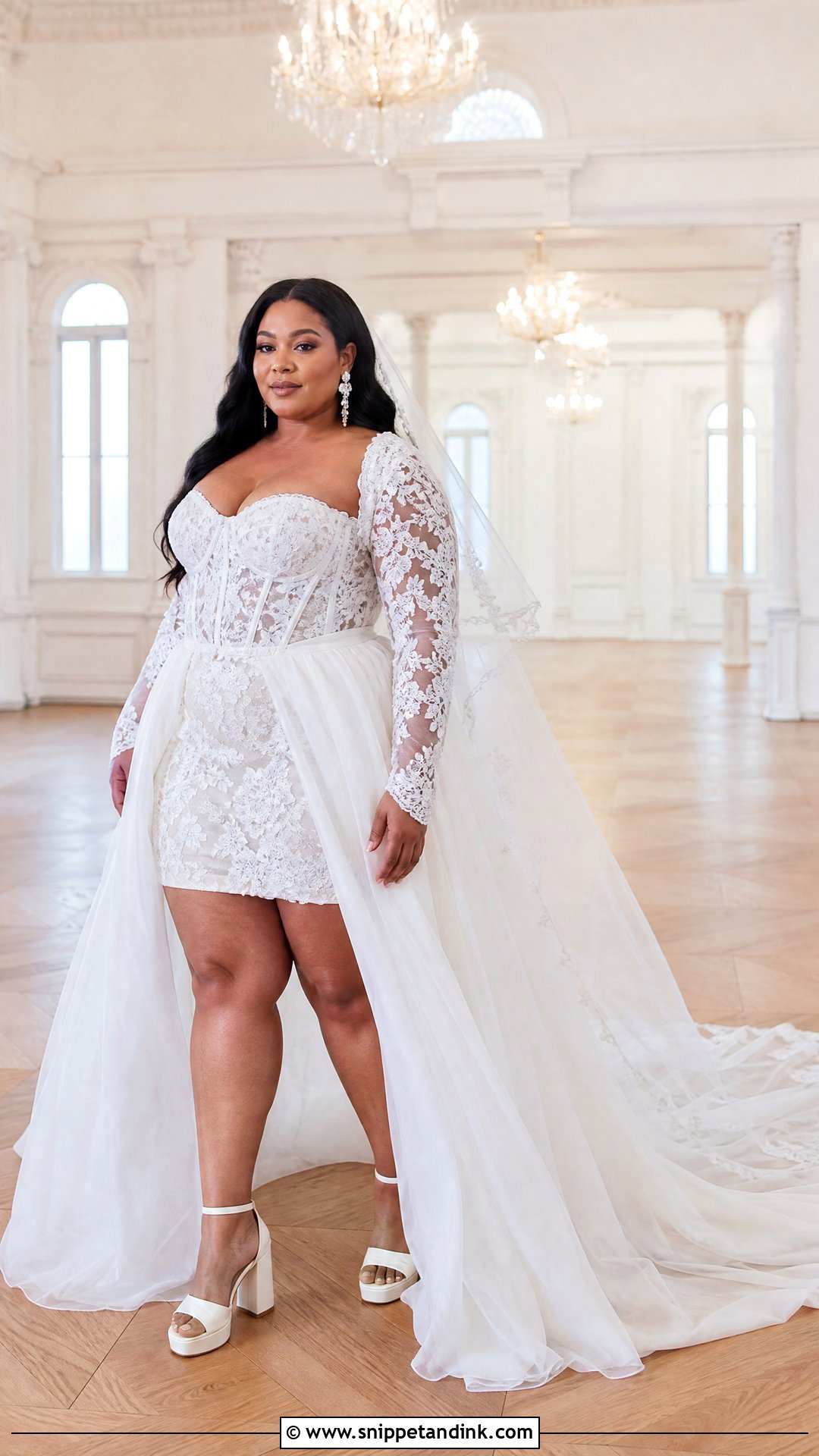
For a plus-size bride, support comes first and the high-low shape is built on top of it. I’d choose a corset-lined mini with wide straps or fitted lace sleeves, with the waist set where you’re most comfortable, not where a size chart puts it. A lightweight detachable overskirt opening at the front should fall smoothly over the hips, with flat fastenings and evenly spaced pleats so the waistband doesn’t add bulk. Supportive block heels, statement earrings and a cathedral veil reaching past the train finish it. Book a fitting where you walk, turn, sit and dance in the dress; a structured bodice must let you breathe and eat comfortably for the whole evening.
19. November Rain Reception Wedding Dress
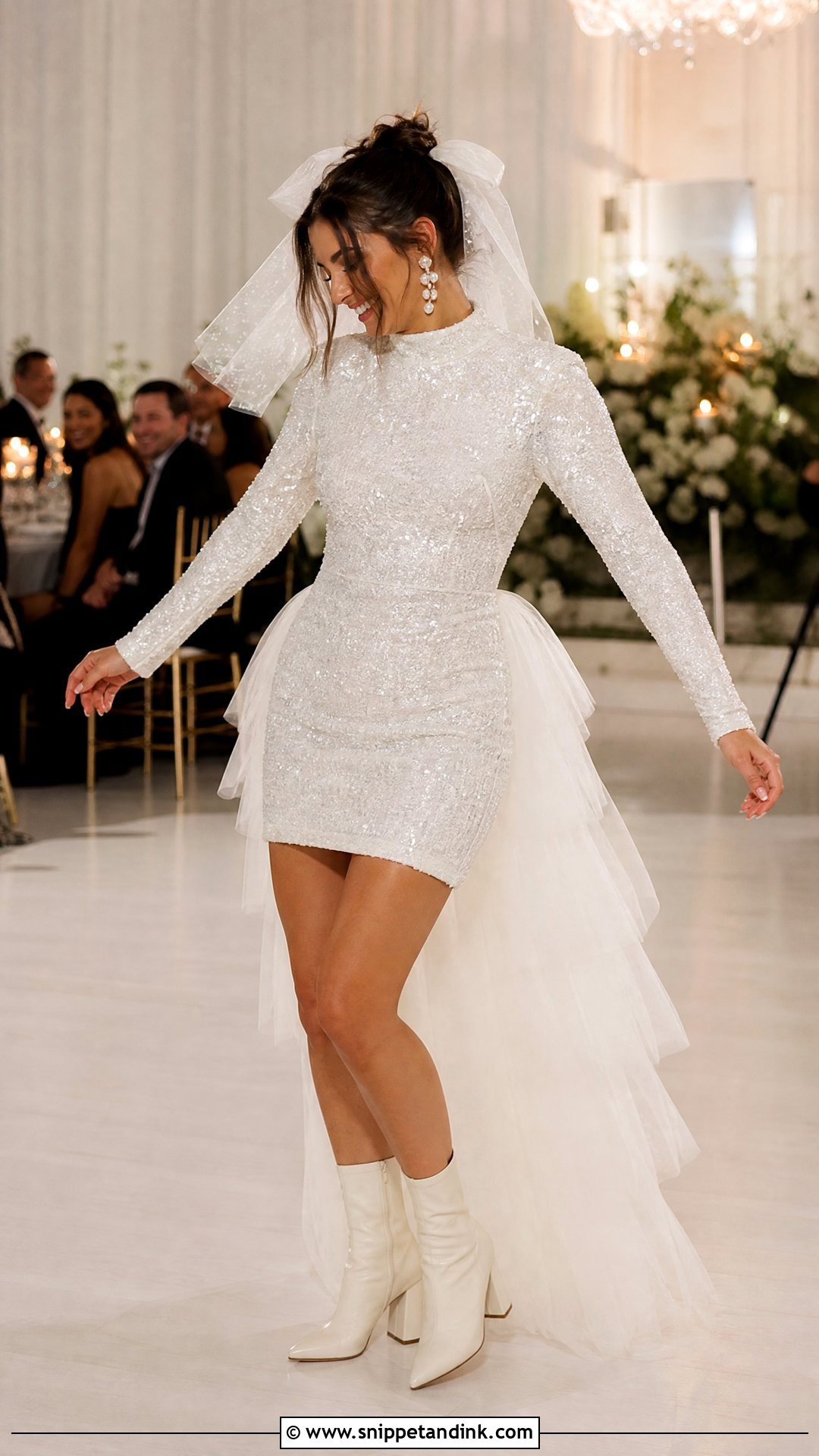
A reception dress lets you keep the theme while losing the weight of a train. Choose a fitted lace or sequin mini with long sleeves and a small detachable bustle at the back, worn with ivory ankle boots or block-heel pumps, crystal earrings and a small hair bow. Swap a cathedral veil for a short tulle veil or a pearl headband before the dancing starts. The mini echoes the front of the ceremony gown without repeating it. Link the two outfits through matching lace, pearl details or the same shoe color, so the change feels planned rather than random. Allow about twenty minutes for the switch, and a cropped faux-fur jacket for leaving the venue.
20. November Rain Modern Wedding Dress
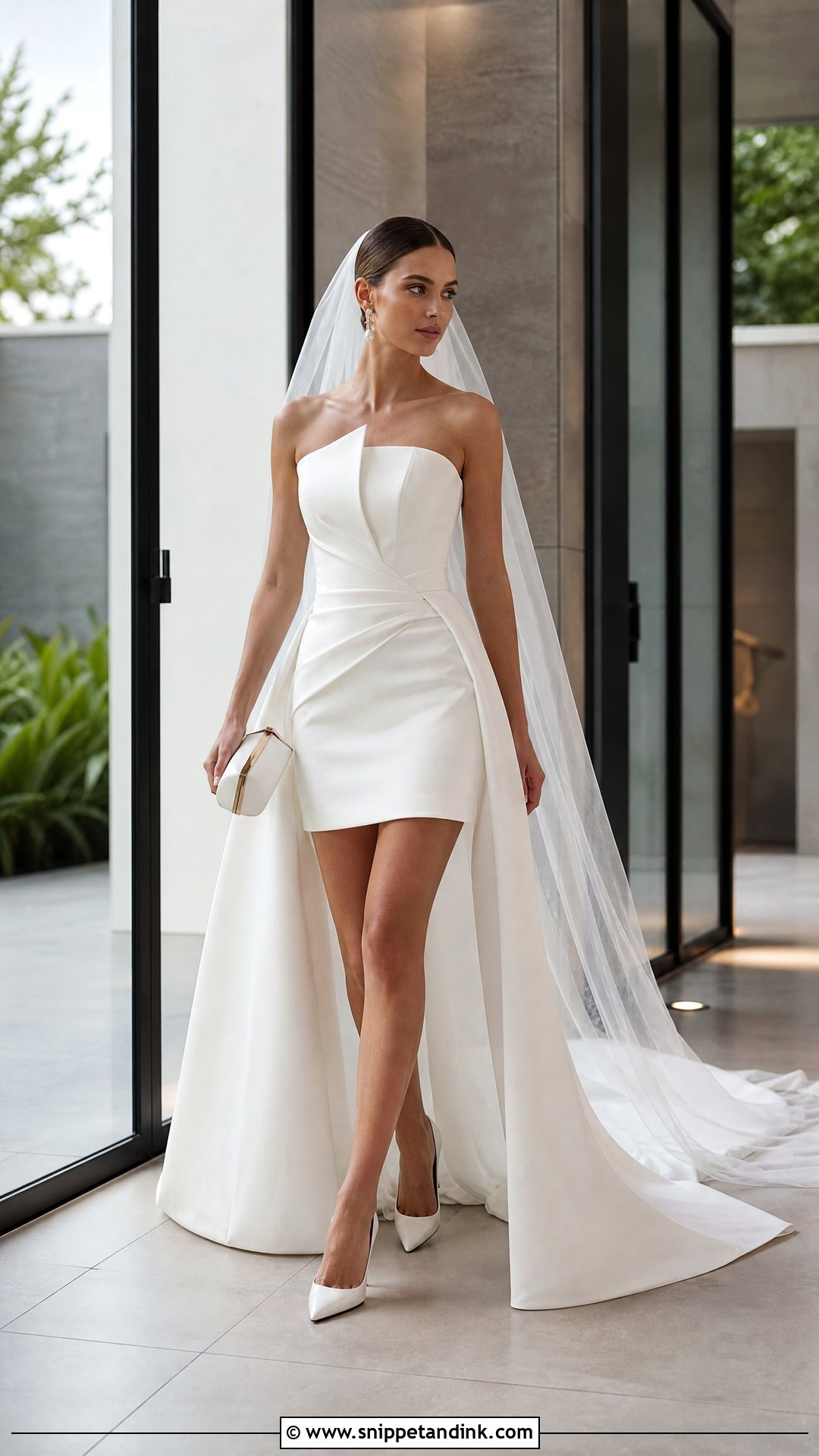
Proportion alone can carry the reference. Select a minimalist crepe mini with a sculpted neckline and asymmetric draping, plus a smooth detachable overskirt that curves away from the front into a clean chapel train. Sharp pointed pumps, geometric pearl earrings, a plain cathedral veil, a structured ivory clutch and a polished low bun keep it current. Leave out lace, ruffles and heavy embellishment. Crepe shows every seam and every bit of puckering, so this is the version where I’d spend extra on a skilled seamstress. Done well, the gap between the short dress and the long train does all the talking, and nobody will think you copied the video.
How Detachable Overskirts Actually Fasten
Many of these looks depend on an overskirt that comes off after the ceremony, so it pays to understand the hardware before you buy. Most are fastened in one of three ways: a separate waistband that hooks or buttons over the dress, a row of snaps sewn inside the bodice seam, or loops and hidden buttons. Waistbands are the easiest to get on and off alone; snaps sit flattest; buttons look neatest but take longest.
Practise the switch at your final fitting with the person who will help you on the day. Have them take the skirt off and put it back on twice. If they struggle in a calm fitting room, they will struggle more in a busy corridor.
If It Really Does Rain in November
- Bustle the train or unhook the overskirt before going outdoors. Wet tulle grows heavy and grey along the hem and rarely dries clean the same day.
- Pick a clear umbrella, so your photographer can still shoot through it.
- Spray suede or satin shoes with a water and stain repellent a few days before, and keep a pair of flats in the car.
- Pack a small towel and a white cloth for drying hands before touching the dress.
- Ask your photographer for an indoor portrait plan as a backup, so nobody is improvising in the rain.
Rock Drama That Still Works on a Cold, Wet Day
Every outfit here relies on the same tension between bridal volume and a short, practical front. A high-low hem, a lace mini base or a detachable train creates the shape; fabric and tailoring decide how comfortable you’ll be in it for ten hours. Lean romantic with pearls, lace and long veils, or lean rock with boots, sequins and black accents. In November, sleeves, capes, faux-fur jackets and closed shoes earn their place. Whatever you choose, make every layer belong to one outfit, and leave time for professional alterations so the dress is secure when you walk, sit and dance.
You'll Like These Ideas:


Leave a Reply