
Ivy is one of the few botanical motifs that actually suits the way a gown is built. Vines climb, so the embroidery can follow a seam, wrap a waist or trail off a shoulder, and that sense of direction is what gives these dresses their botanical romance. Leaves can be stitched flat, cut from lace, raised into 3D appliqué or worked in green thread. Below are twenty ivy looks, from a quiet slip with vines only at the neckline to a ball gown covered in sculpted leaves, plus capes, veils and a reception mini. With every one, I’ve noted the shoes, jewellery and bouquet that let the foliage show rather than bury it, because the most common styling mistake with this theme is adding more greenery on top of a dress that already has plenty.
Reading the Embroidery Before You Fall for the Gown
Two ivy gowns can look identical online and feel completely different in person. When I go through a shortlist with a bride, I look at how the leaves were made and where they sit before I look at anything else.
- Flat machine embroidery is light and durable but can look printed from a distance. Ask to see it up close in daylight.
- Lace cut into leaf shapes and hand-placed gives softer edges and moves with the fabric. Check how the motifs meet at side seams.
- 3D appliqué leaves have shadow and depth, but they add weight and snag on veils, hair pins and jewellery with prongs.
- Coloured thread such as sage or olive looks different under warm shop lights. View it outdoors before ordering.
Then look at direction. Ivy that follows a seam, curves around the waist or runs diagonally across the hips works with your shape. Vines scattered at random can look like a print, and a heavy cluster on one hip pulls the eye there all day. Hold the gown up at a full-length mirror and squint: whatever you notice first is what every photo will notice first.
1. Embroidered Ivy A-Line Wedding Dress
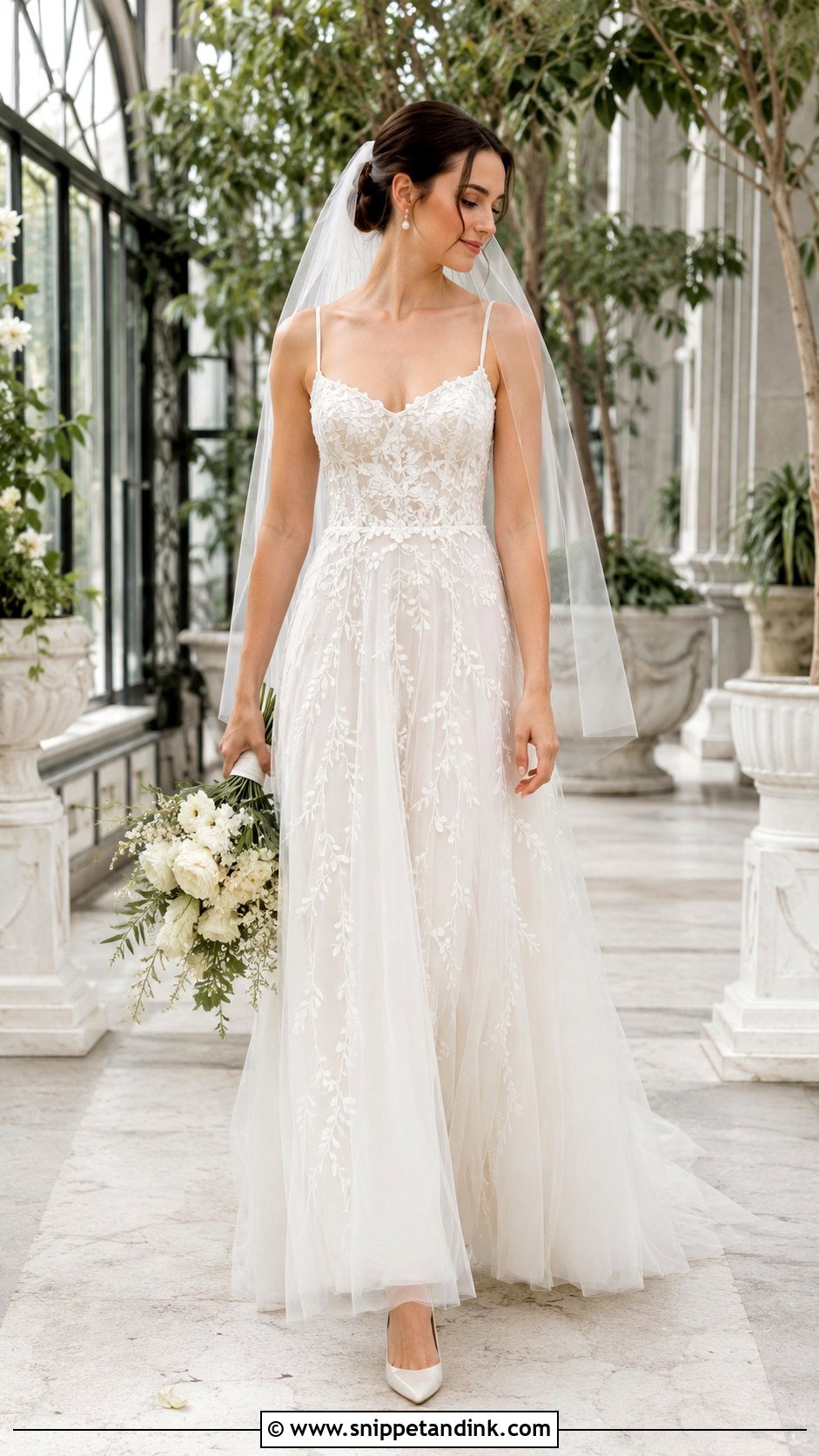
This is the gentlest way into the theme. The vines start at the neckline and thin out as they travel down the skirt, so the heaviest detail sits near your face where it gets photographed most. Tulle or organza keeps the A-line light. The lining matters more than people expect: white embroidery over a champagne or pale ivory lining stands out, whereas over a white lining it almost vanishes. I’d add pointed satin pumps, pearl drops, a low textured bun and a fingertip veil that ends above the embroidery on the skirt. Keep the bouquet loose and mostly white, with only a little greenery, so it doesn’t merge with the gown in photos. It sits very naturally in a conservatory or estate garden.
2. Long Sleeve Ivy Lace Wedding Dress
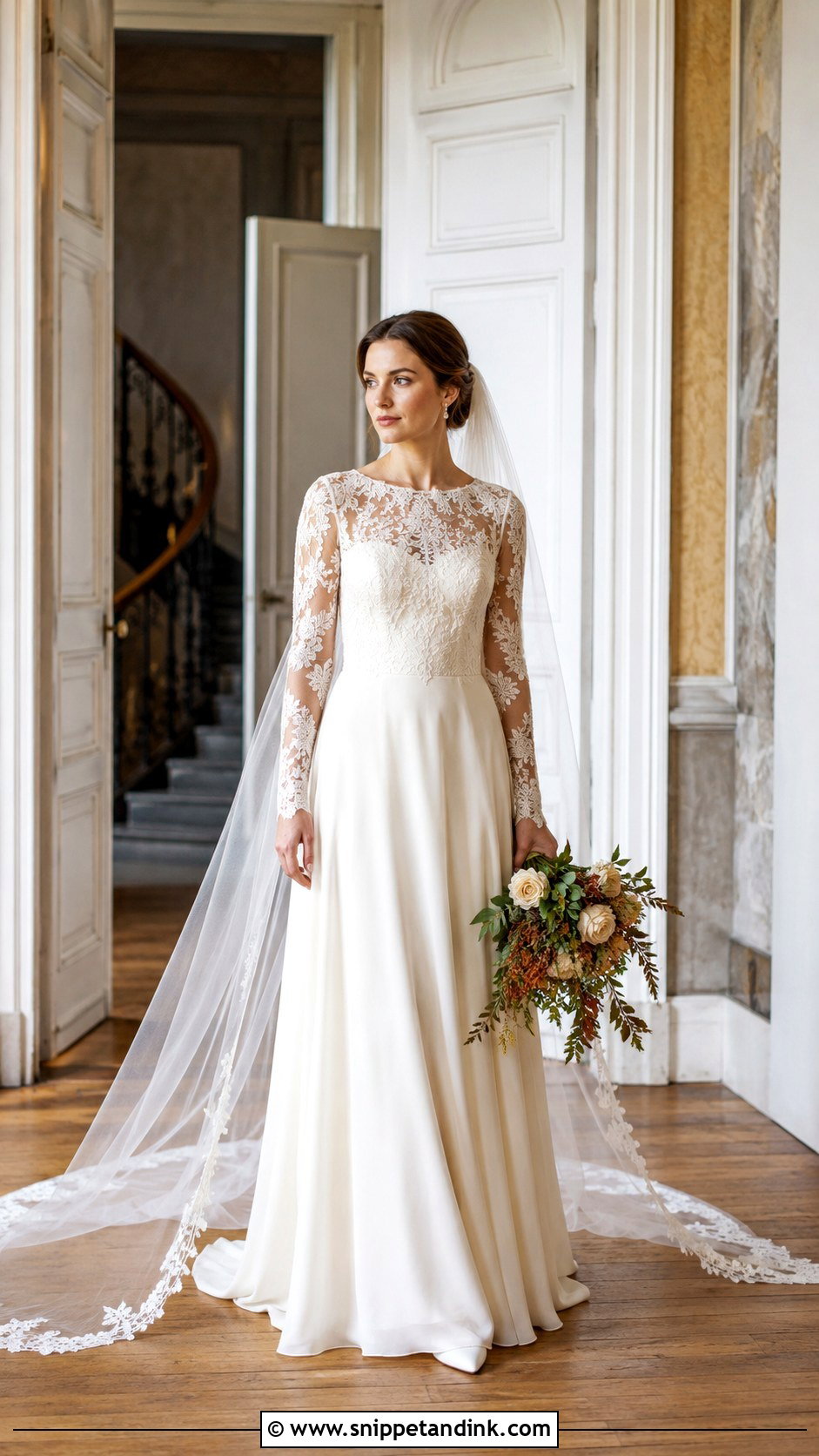
Leafy lace on sheer sleeves is warmer than it looks and gives coverage without heaviness. Look for lace that continues across the bodice and fades into a fluid chiffon or crepe skirt. The thing I check first is whether the lace motifs are matched at the shoulder seam; on cheaper gowns the leaves get cut off abruptly where sleeve meets bodice, and it shows in every close-up. A defined waist stops all that texture from swamping you. Closed-toe ivory heels, small crystal earrings and a polished chignon keep things neat, with a plain cathedral veil edged in narrow lace. White roses, hellebores and eucalyptus make a bouquet that suits autumn and winter, especially in a historic house or hotel.
3. 3D Ivy Ball Gown Wedding Dress
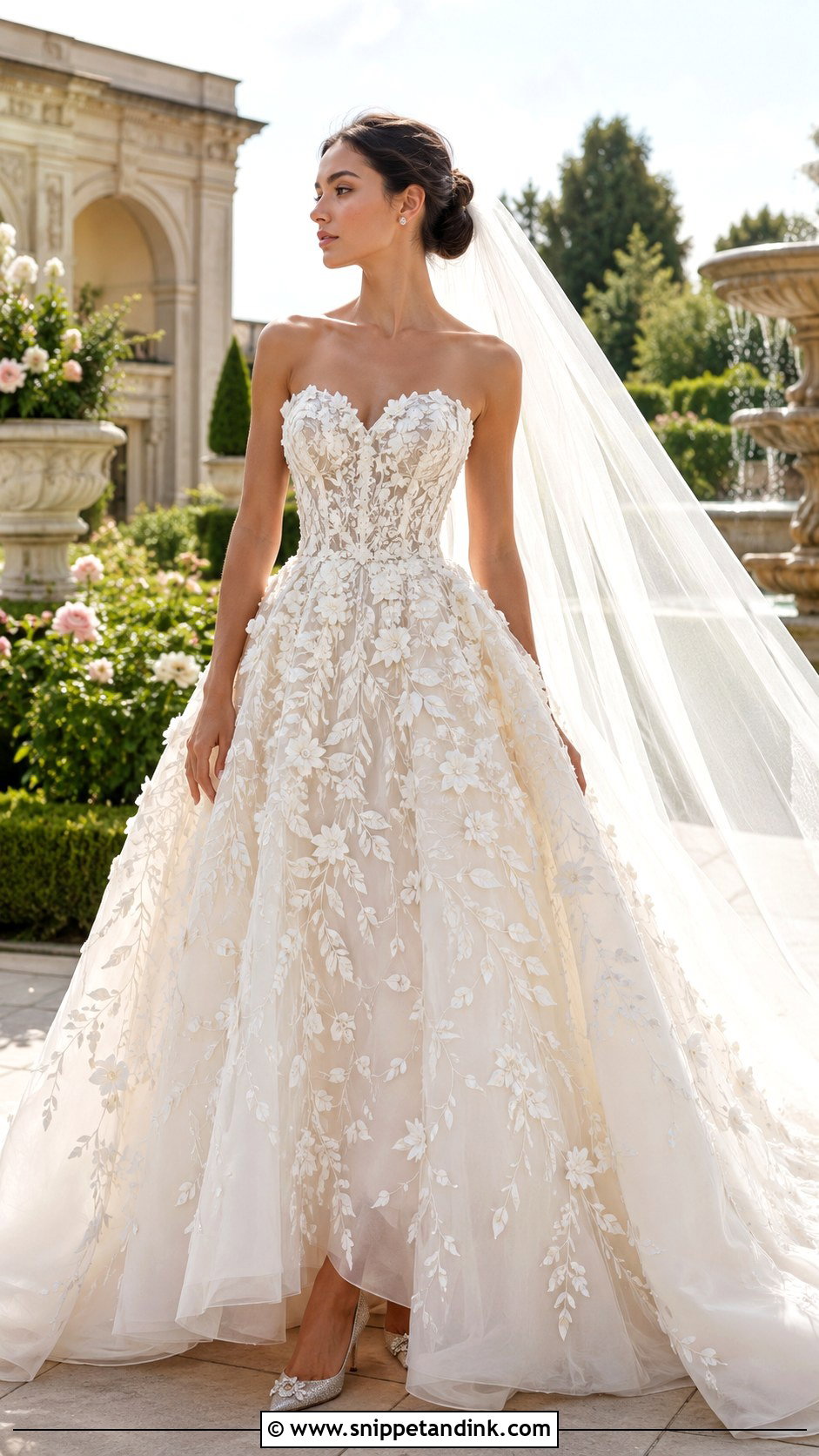
Sculpted 3D leaves catch light and shadow in a way flat embroidery never does, which is why this gown makes such an entrance. Keep the neckline clean, either strapless or softly curved, and insist on lightweight tulle layers underneath, because appliqué adds real weight and a heavy base turns the skirt stiff. Raised leaves also snag on lace veils and beaded jewellery, so I pair this one with a plain long veil pinned beneath a high bun, simple studs and a slim tennis bracelet. Crystal-trimmed heels add a little sparkle at the hem. The bouquet should be compact and all white. Any extra greenery fights with the leaves on the skirt and the whole look turns busy.
4. Ivy Corset Wedding Dress
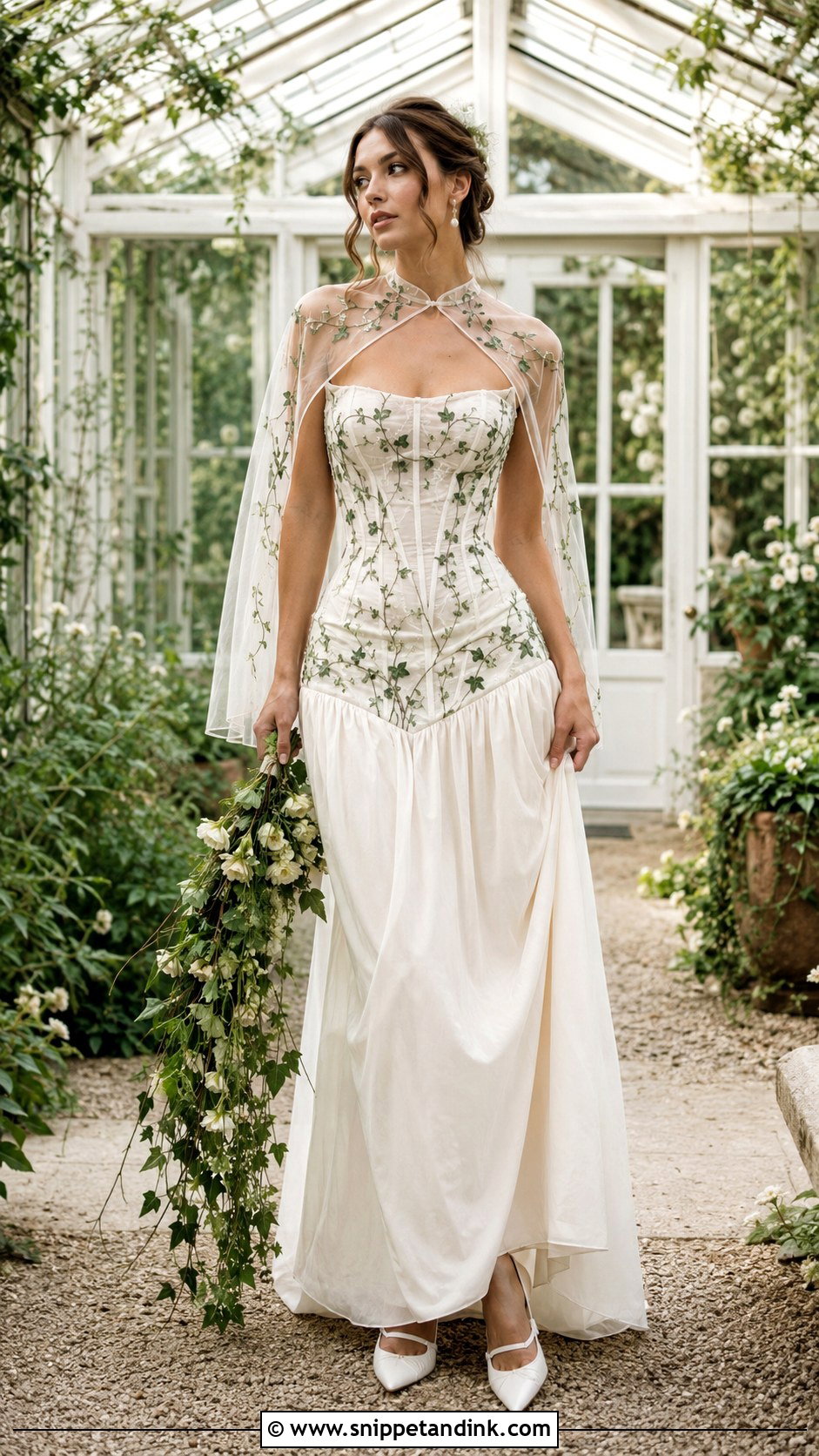
A visible corset gives the theme a firm structure, and it’s where embroidery placement really shows skill. On a good bodice, the leaves curve around the waist and follow the boning channels instead of running in stiff vertical lines across them. Pair it with a soft A-line or drop-waist skirt so structure on top meets movement below. Slingback heels, a delicate pendant and pearl earrings work, with a loose updo and a few face-framing pieces to soften the bodice. For ceremony coverage, a sheer topper embroidered with matching vines comes off easily afterwards. I’d choose a narrow, slightly cascading bouquet, since it echoes the way the vines run.
5. Ivy Slip Wedding Dress
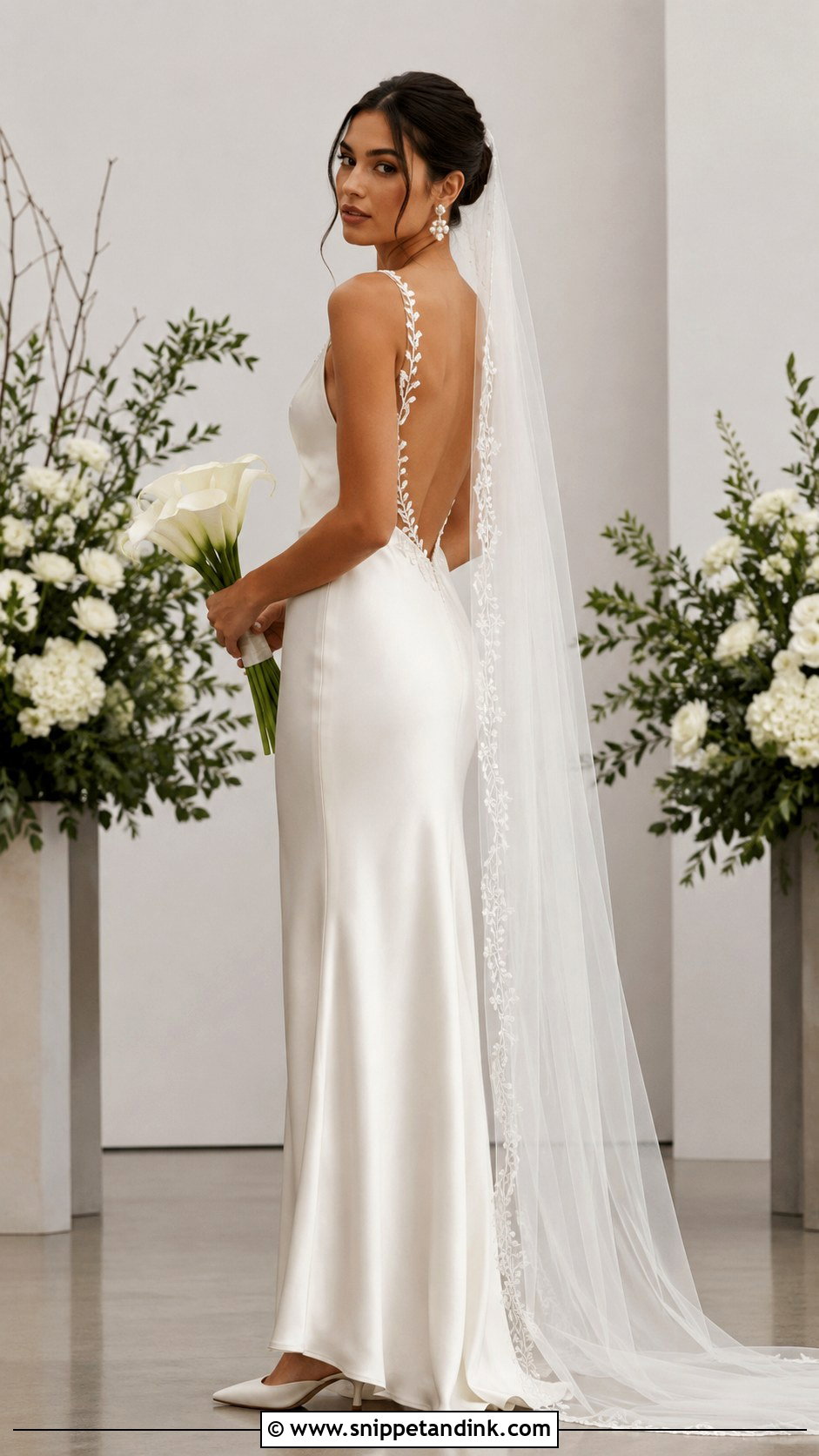
Botanical bridal can be minimal. The trick on a bias-cut silk or satin slip is limiting the vines to one area, such as the neckline, a side seam or the edge of an open back. Embroidery on bias-cut fabric is technically tricky because the cloth stretches, so ask how the stitching has been stabilised; poorly backed embroidery puckers once the dress is on. Ivory kitten heels, a small satin clutch and sculptural gold or pearl earrings suit the clean shape, with smooth waves or a neat low bun. A narrow floor-length veil with tiny leaves at its edge carries the theme quietly. Calla lilies or white tulips keep the bouquet as pared back as the dress. It’s a good choice for an intimate ceremony or a relaxed destination wedding.
6. Boho Ivy Wedding Dress With Bell Sleeves
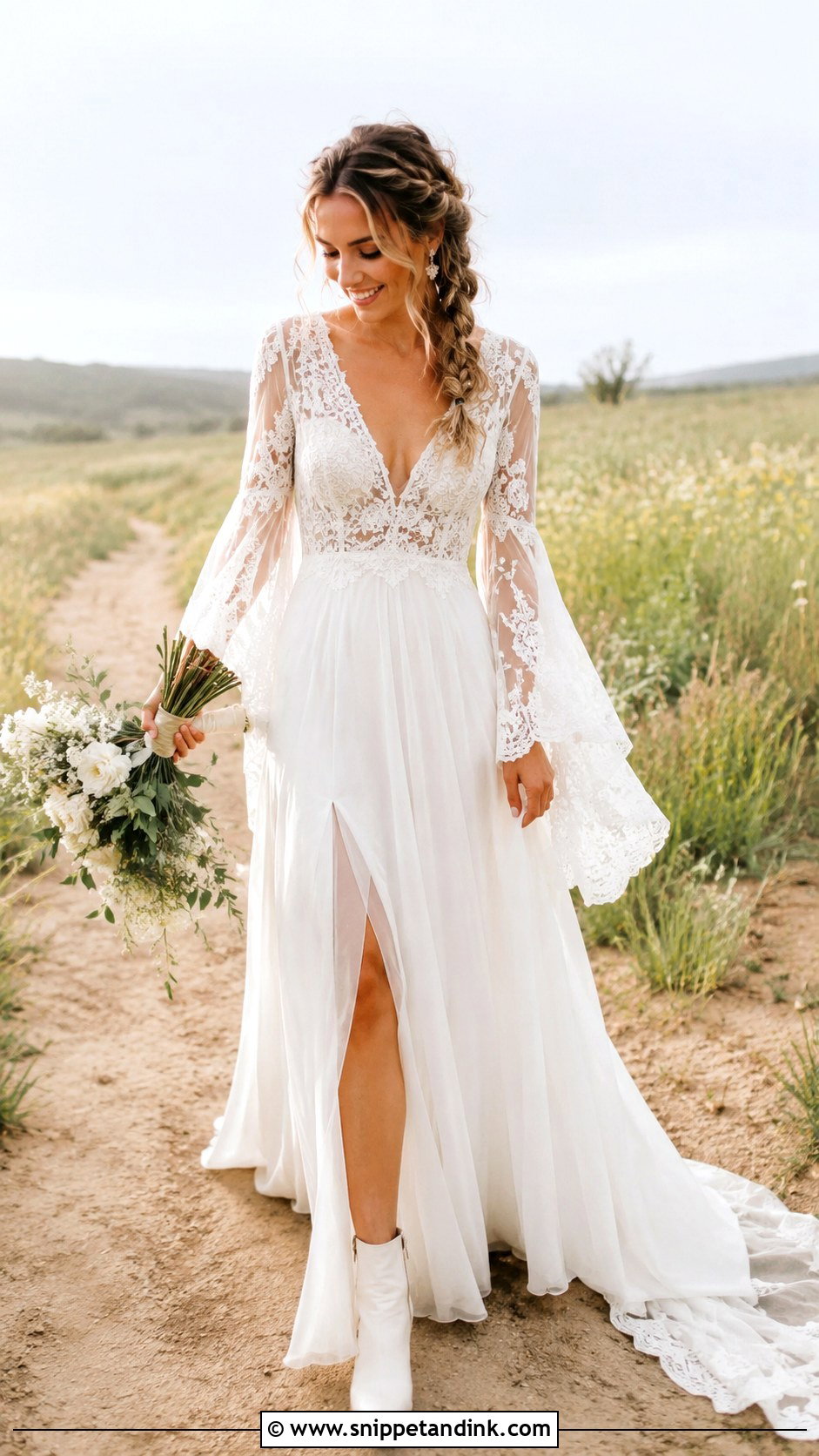
Bell sleeves give this gown its loose, easy character, and they move every time you lift your arms. Choose lightweight lace with a defined waist, an open neckline and vines running from the shoulders down into the skirt, finished with a modest train. Be honest with yourself about the sleeves, though: wide bell cuffs drag through food at dinner and catch on bouquet stems, so I usually suggest a slightly shorter or narrower cut than the sample. Block-heel sandals or bridal ankle boots handle grass and gravel. A loose braid or softly pinned waves, small floral earrings and a veil fixed below the hair keep the sleeves visible. Carry white blooms with ferns and a little trailing foliage.
7. High Neck Ivy Wedding Dress
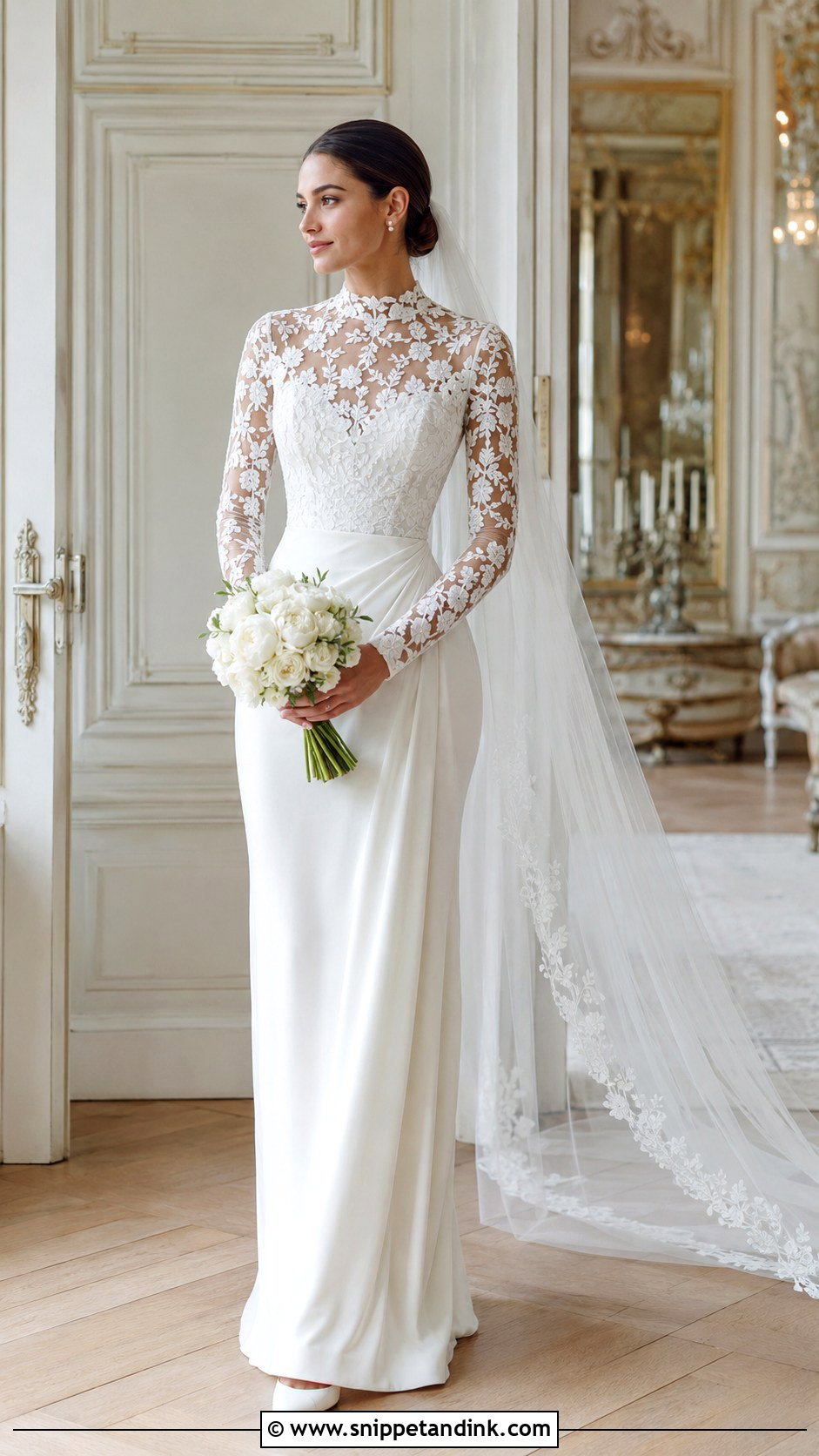
A high neck covered in vine lace has a strong vintage feel, and the neckline does all the jewellery work for you. Look for sheer illusion fabric over the throat with long sleeves and a fitted waist, then a smooth satin or softly pleated skirt so the lace doesn’t take over the whole gown. Pearl studs only, no necklace. Pointed pumps, a classic low bun and a chapel veil tucked under the hair complete it. The detail I test at fittings is the collar: illusion mesh around the throat should sit flat without pulling when you turn your head. White peonies and ranunculus with very little greenery make a soft bouquet. It’s at its best at a formal autumn wedding or a period-style venue.
8. Off Shoulder Ivy Wedding Dress
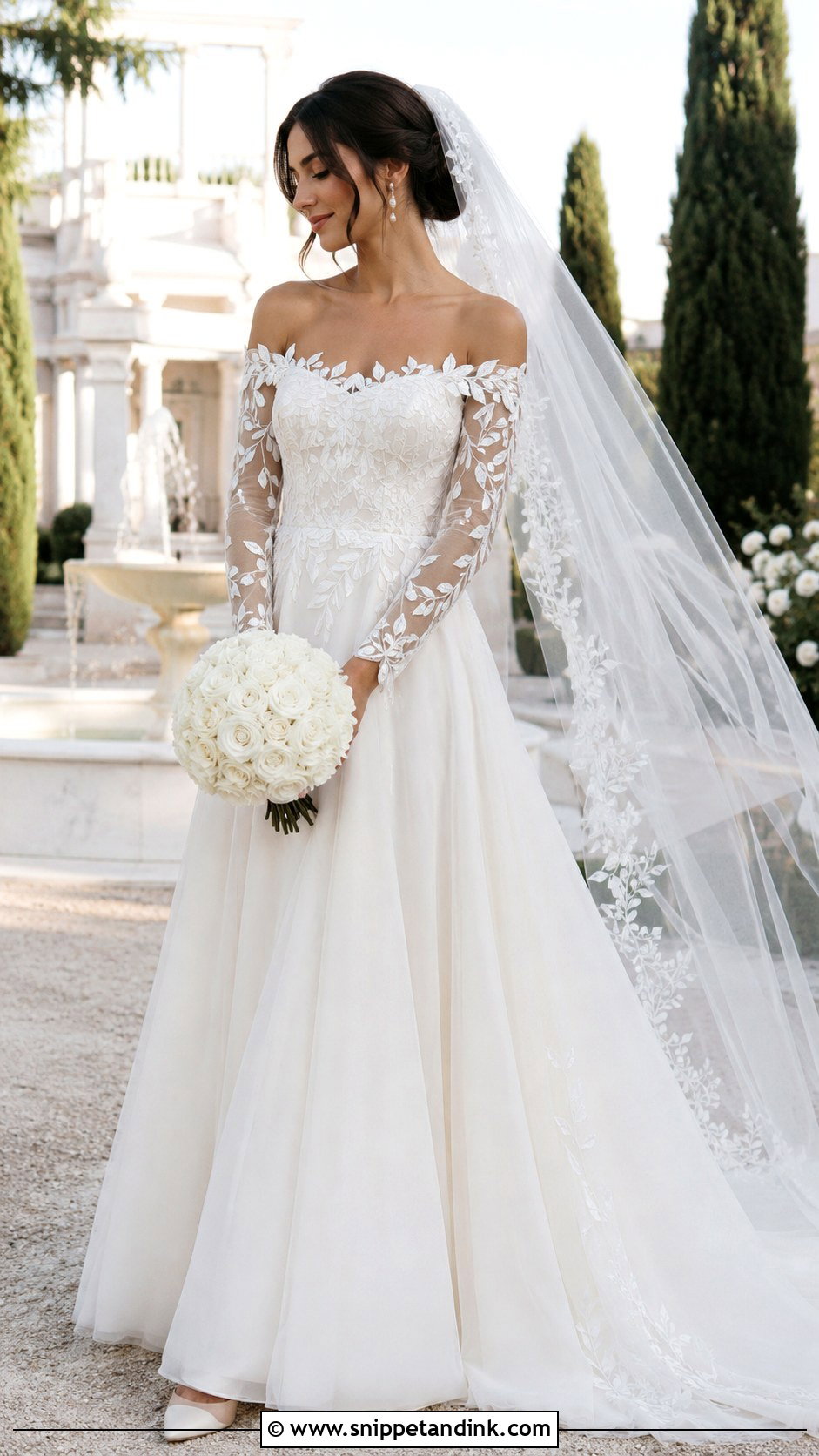
Vines traced along an off-shoulder neckline frame the collarbones well, and they can continue onto sheer fitted sleeves or detachable straps. A flowing A-line is easier to move in; a fitted mermaid looks more sculpted but restricts your stride. Brides often don’t realise off-shoulder sleeves stop you raising your arms fully, so do a quick test hug at every fitting. Pearl drops, ivory heels and a smooth low bun or polished ponytail keep it clean, and a fine cathedral veil placed beneath the hair leaves the shoulders bare. A rounded bouquet of white roses with minimal foliage is enough. Spring and early autumn suit it best, because bare shoulders get cold fast outdoors.
9. Tea Length Ivy Wedding Dress
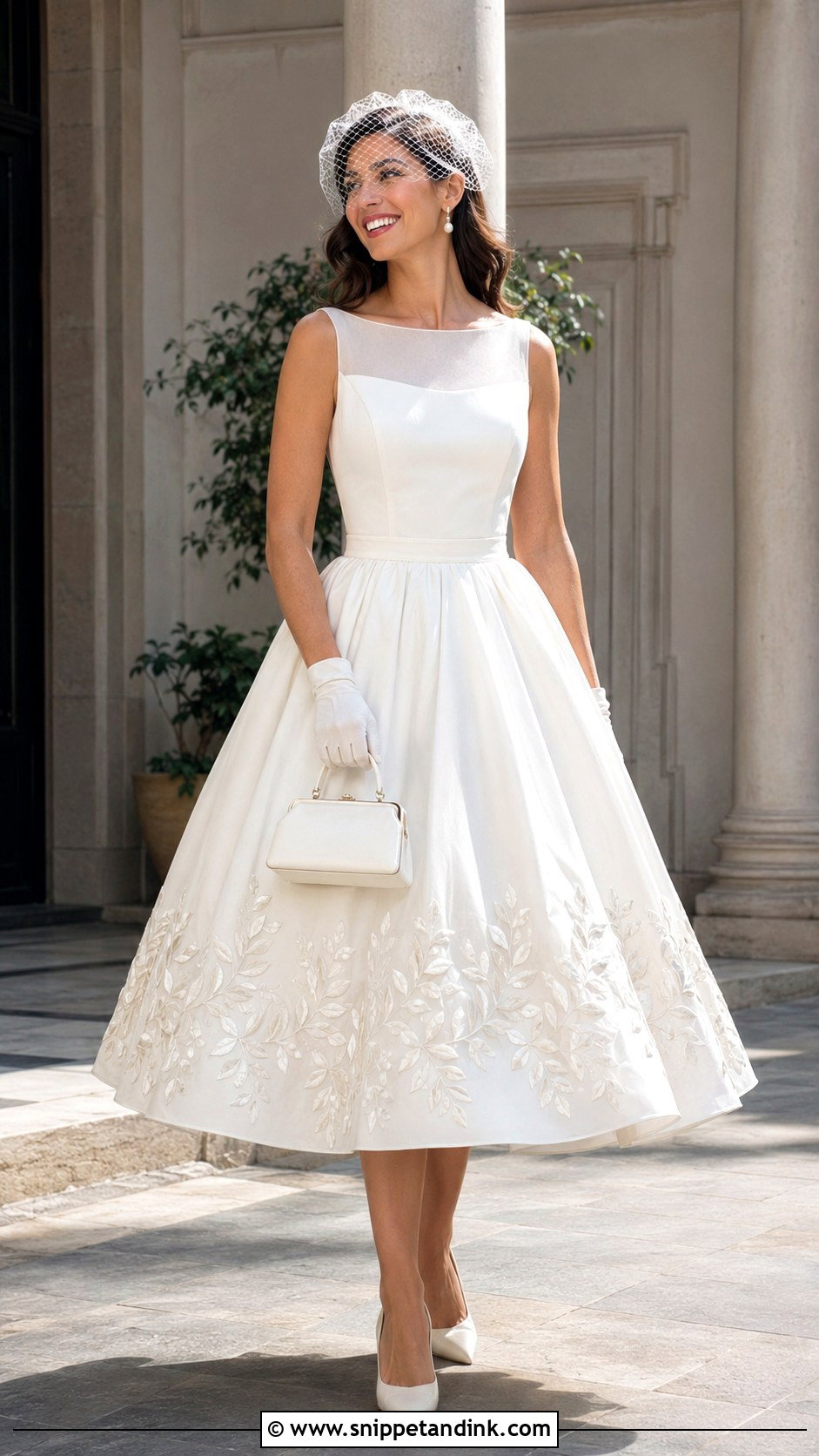
Tea length shows off your shoes, which changes how you plan the whole outfit. Embroidered leaves gathered around the hem draw the eye down, so the shoes need to be good; scattered appliqués over the full skirt are a lighter option. I’d choose pointed pumps, slingbacks or polished bridal flats, then pearl studs and short gloves, with a structured mini bag for a gently retro mood. Soft waves or a neat bun work with a birdcage veil or a simple bow. Keep the bouquet small to suit the shorter shape. The hem must be dead level, because embroidery at the hem exaggerates any unevenness. It’s practical for a courthouse ceremony or a daytime party with lots of dancing.
10. Green Ivy Embroidered Wedding Dress
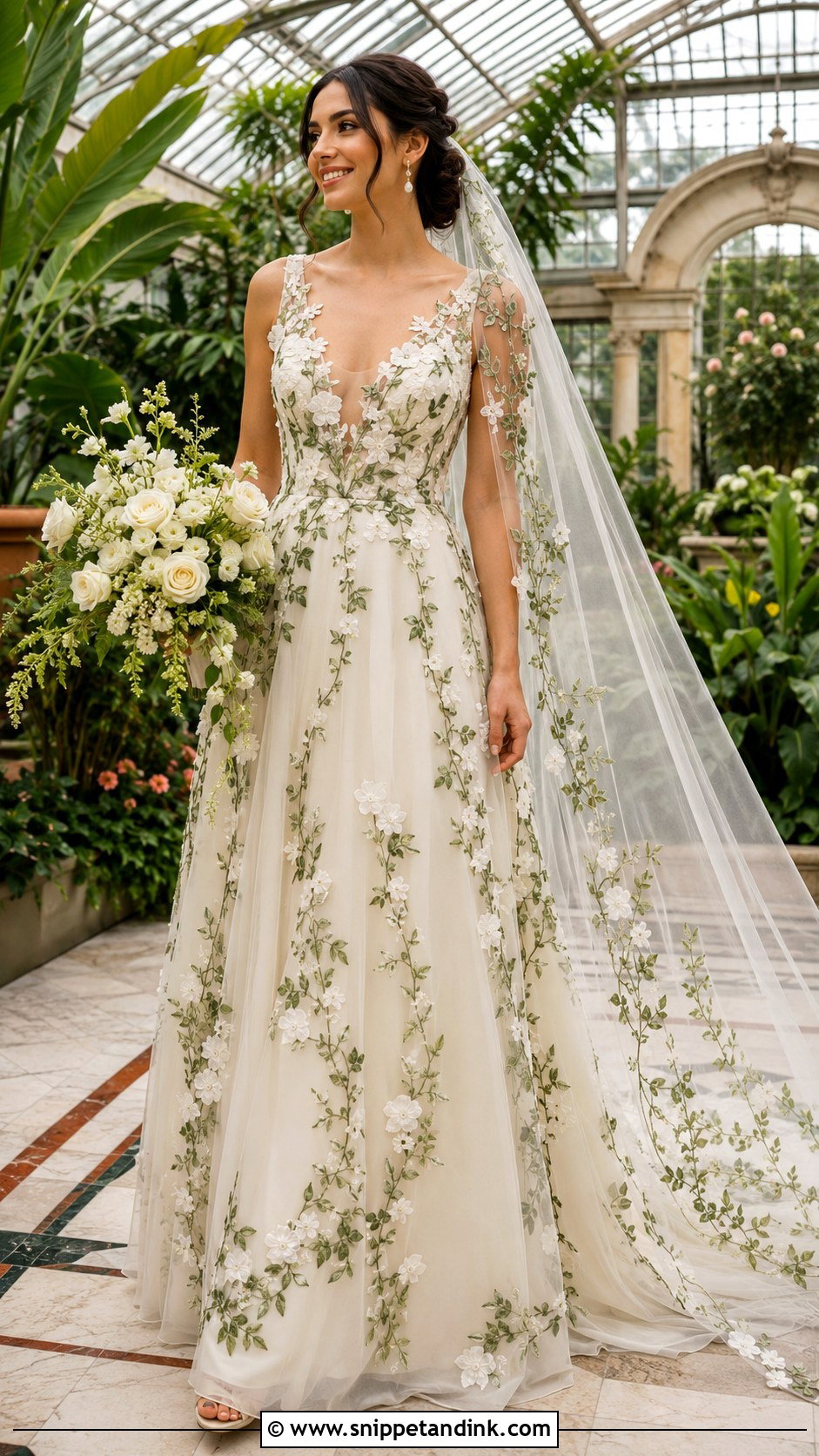
Green thread is the most literal take on ivy, and the shade decides whether it reads as bridal. Muted sage, olive or moss vines over an ivory or champagne base with muted sage tones look refined; bright leaf green tends to look like a costume. I ask to see the embroidery in natural daylight before ordering, because indoor shop lighting shifts green thread noticeably. Scattered white flowers among the leaves add depth. Neutral satin heels, small emerald or pearl earrings and a veil with embroidered corners keep it cohesive, along with a low textured bun. Your bouquet should be mostly white with only a few green stems. It suits a botanical garden or woodland setting naturally.
11. Ivy Wedding Dress With Sheer Cape
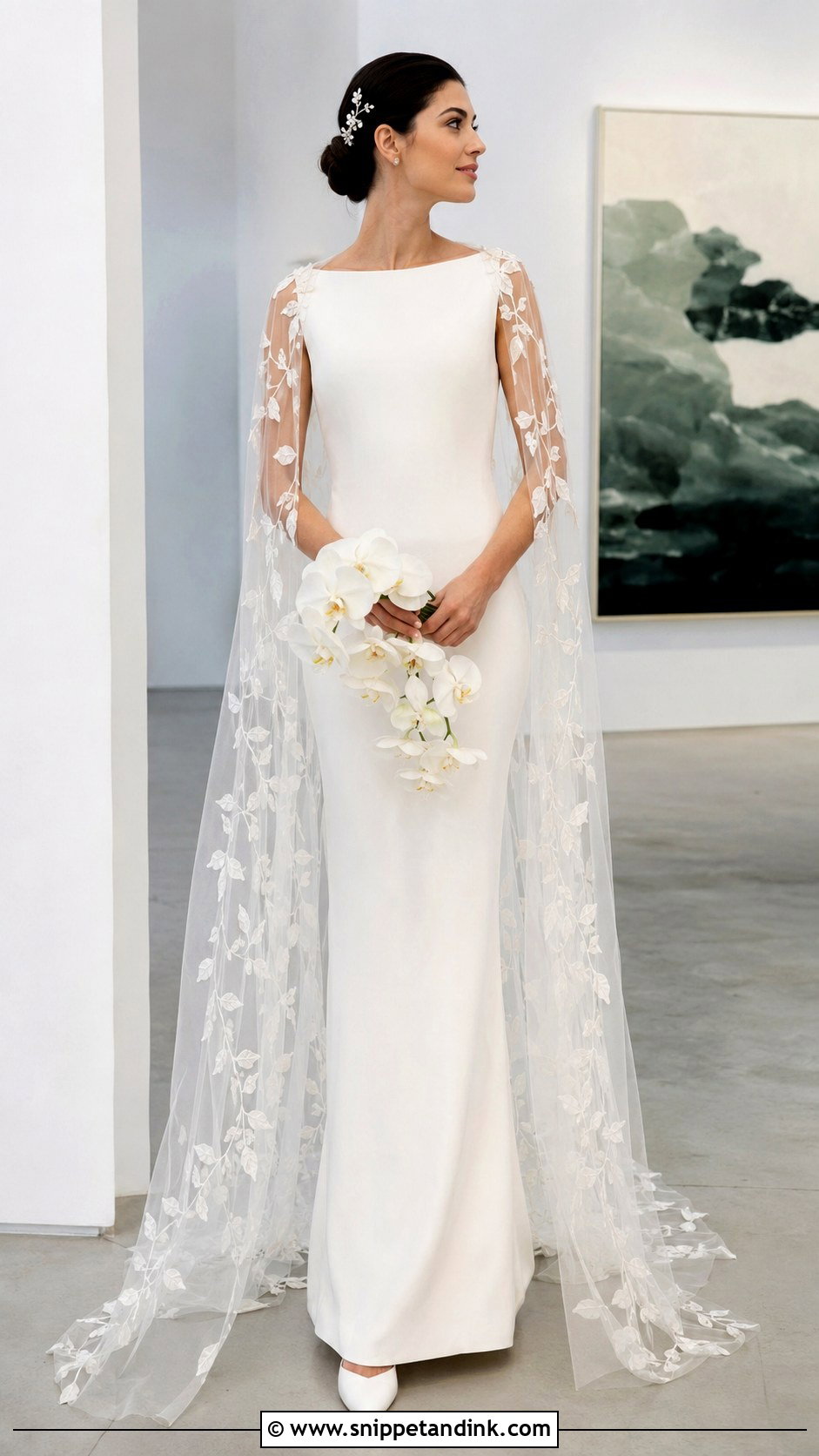
A cape is the simplest way to add ivy to a plain gown, and I like it when the dress underneath is deliberately plain. Start with a clean crepe, Mikado or satin column, then layer a floor-length tulle cape with climbing leaves. The sheer tulle keeps the silhouette visible from every side. Skip the veil, since the cape already gives you length. A crystal hair comb, pointed heels, minimal earrings and a sleek bun or smooth waves finish it. The point to check is how the cape fastens: hooks at the shoulders are steadier than a single neck tie, which can pull backwards when the train is stood on. After the ceremony it comes off to reveal a sleek reception dress.
12. Ivy Wedding Dress With Detachable Sleeves
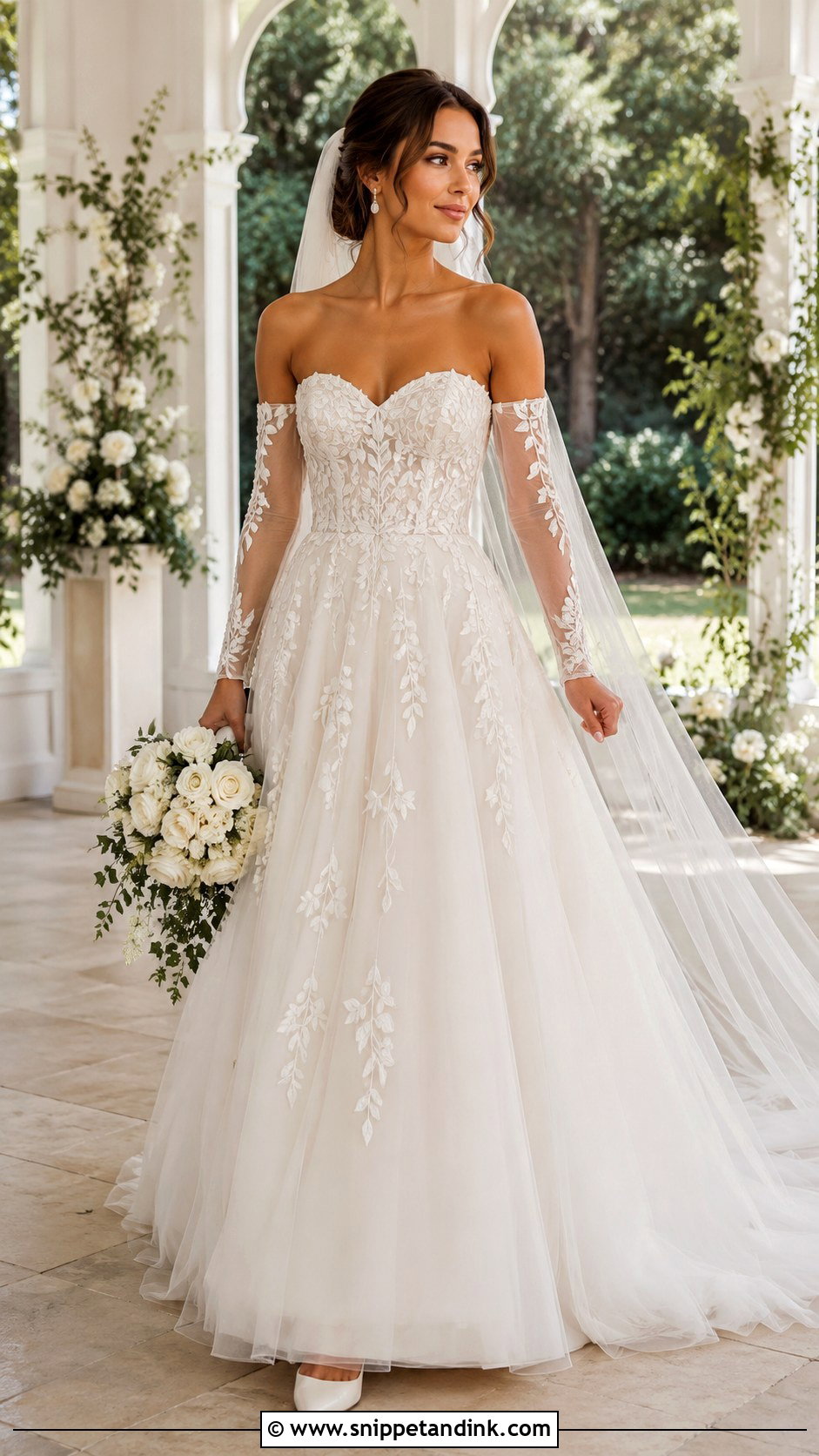
Detachable sleeves let one gown cover a cold ceremony and a warm dance floor. Choose a strapless or sleeveless base with fitted sheer sleeves embroidered to match the bodice. The leaves on the sleeves should be cut from the same lace or worked in the same thread as the gown; sleeves added later from a different source rarely match in colour. A structured A-line or soft ball gown gives them a solid base. Satin pumps, a fine bracelet, pearl drops and a loose updo keep the shoulders on show, with a plain fingertip veil. A medium bouquet of white flowers and soft greenery supports the theme without copying the embroidery too closely.
13. Mermaid Ivy Wedding Dress
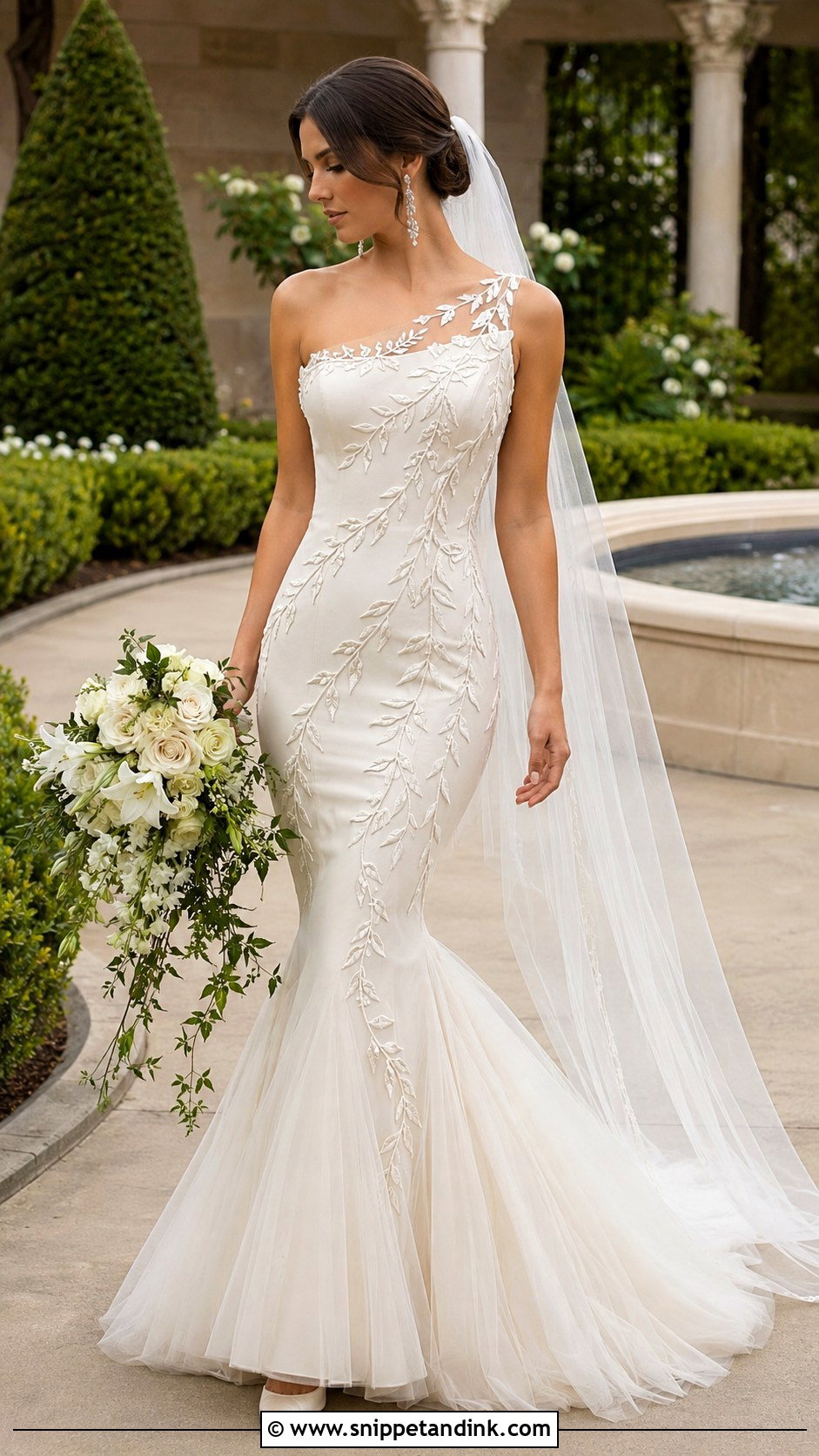
Diagonal vines are the secret to a good ivy mermaid. They follow the body’s natural curves across the bodice and hips, which flatters far more than a pattern running straight up and down. Ideally the embroidery thins out near the knee so the flared skirt in tulle, lace or satin feels like a release. Mermaids restrict movement at the knee, so I ask brides to climb a step and sit down before the hem is set. Pointed heels you can actually walk in, long drop earrings and a side-parted low bun suit the shape. A plain chapel veil or one edged with tiny leaves keeps it from getting busy, and a slightly cascading bouquet won’t hide the fitted line.
14. Square Neck Ivy Wedding Dress
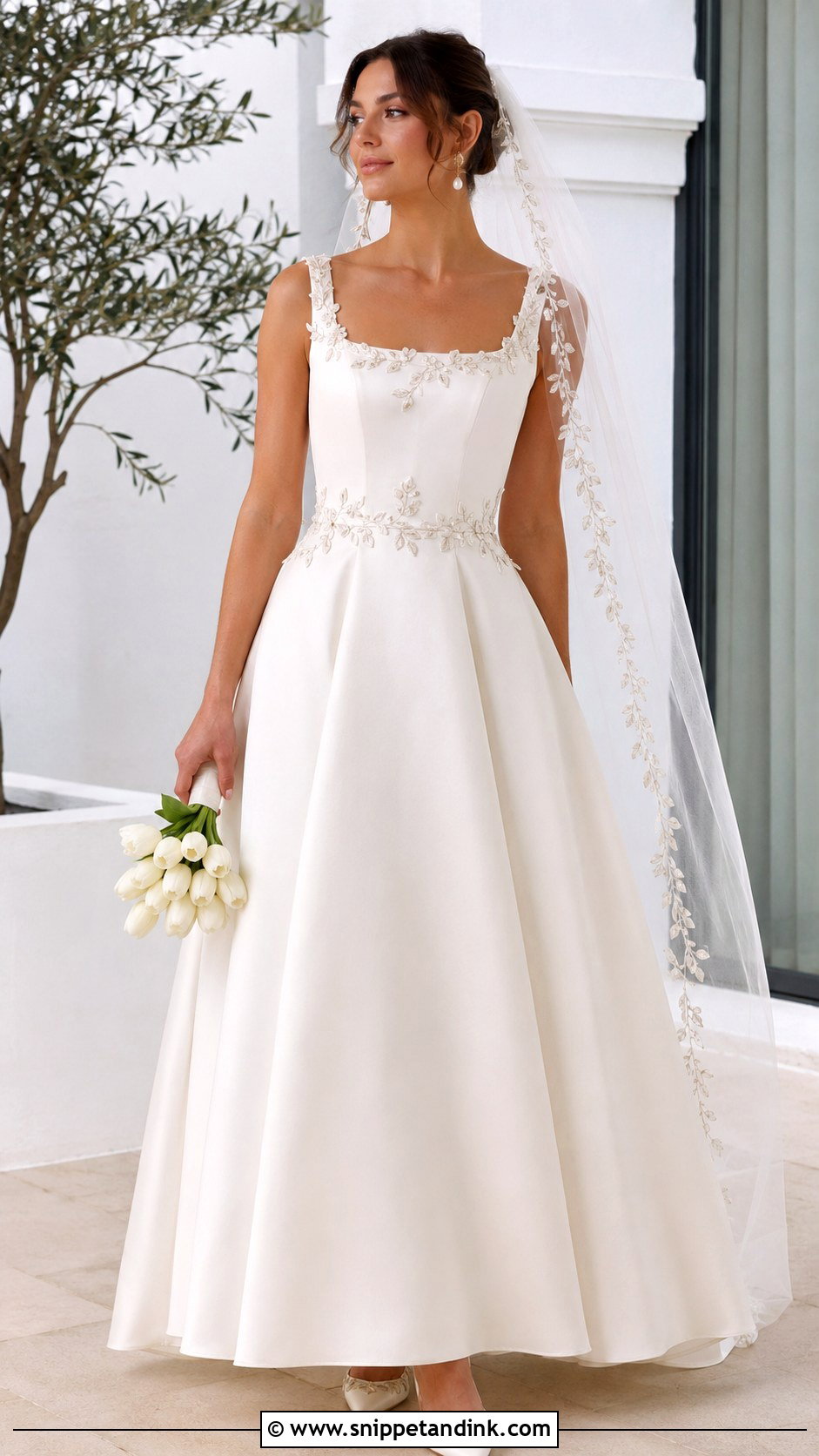
Square necklines give embroidery a clear frame, so the delicate botanical embroidery can trace the neckline, straps and waist without competing with anything. A flowing A-line keeps it classic; a fitted crepe skirt makes it more contemporary. Watch the top edge: square necks gap when you lean forward unless the seamstress adds a little stay tape. Low pointed heels, pearl-and-gold earrings and a thin bracelet work well. Tuck soft waves behind the ears, or choose a neat bun for formality. A veil with a few leaves near the hem, rather than all over, keeps things calm. White anemones or tulips in a compact bunch suit the crisp lines.
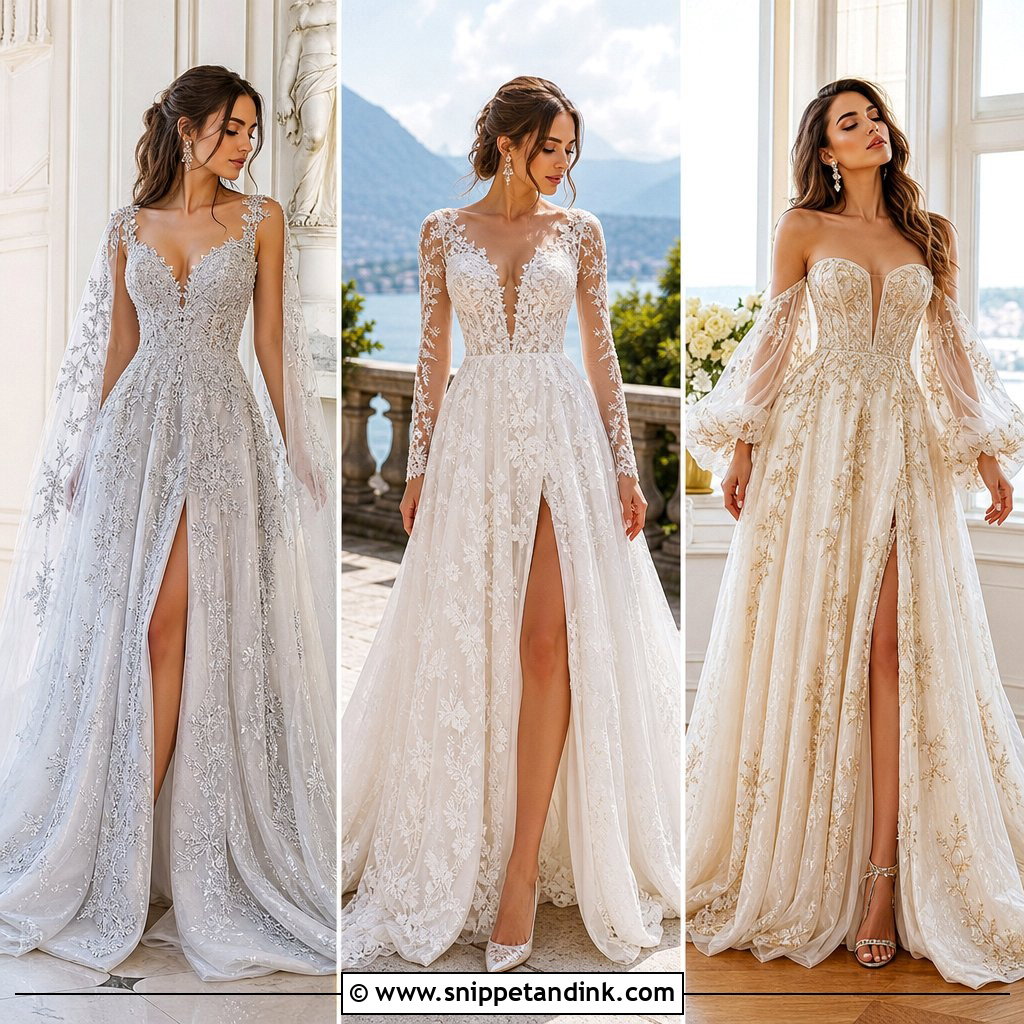
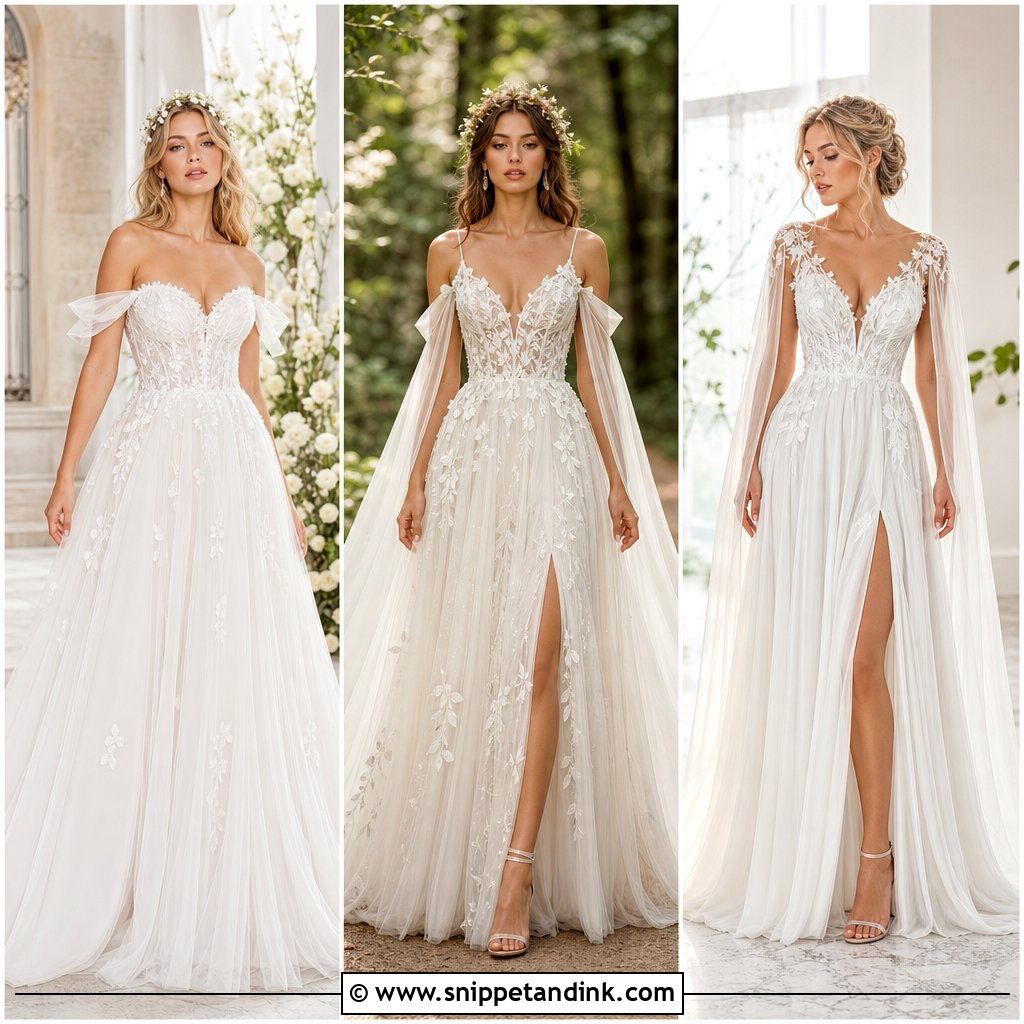
15. Basque Waist Ivy Wedding Dress
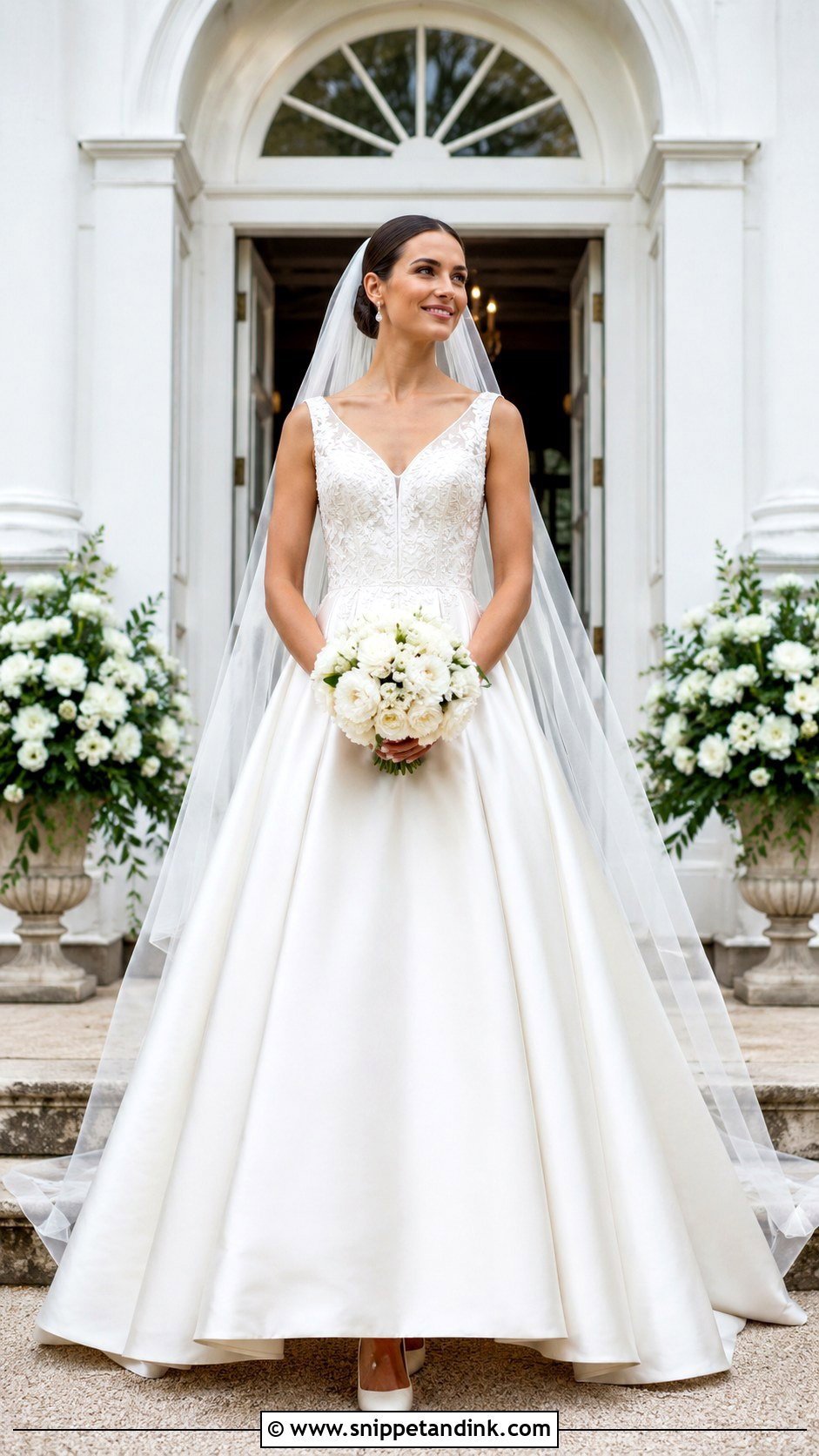
The basque waist dips into a V below the natural waistline, lengthening the torso, and ivy vines that follow that curved seam make the shape look deliberate. From there they lead into a full tulle or satin skirt. I always check that the point lies flat when the bride sits; if it folds, the bodice needs adjusting. Elegant pumps, pearl earrings and a narrow bracelet keep the styling classic. A polished bun shows off the structured bodice, while soft half-up waves relax it. Add a long plain veil that falls beyond the train without covering the embroidery. A classic white bouquet with limited greenery suits an estate or a grand indoor venue.
16. Satin Ivy Wedding Dress With Embroidered Veil
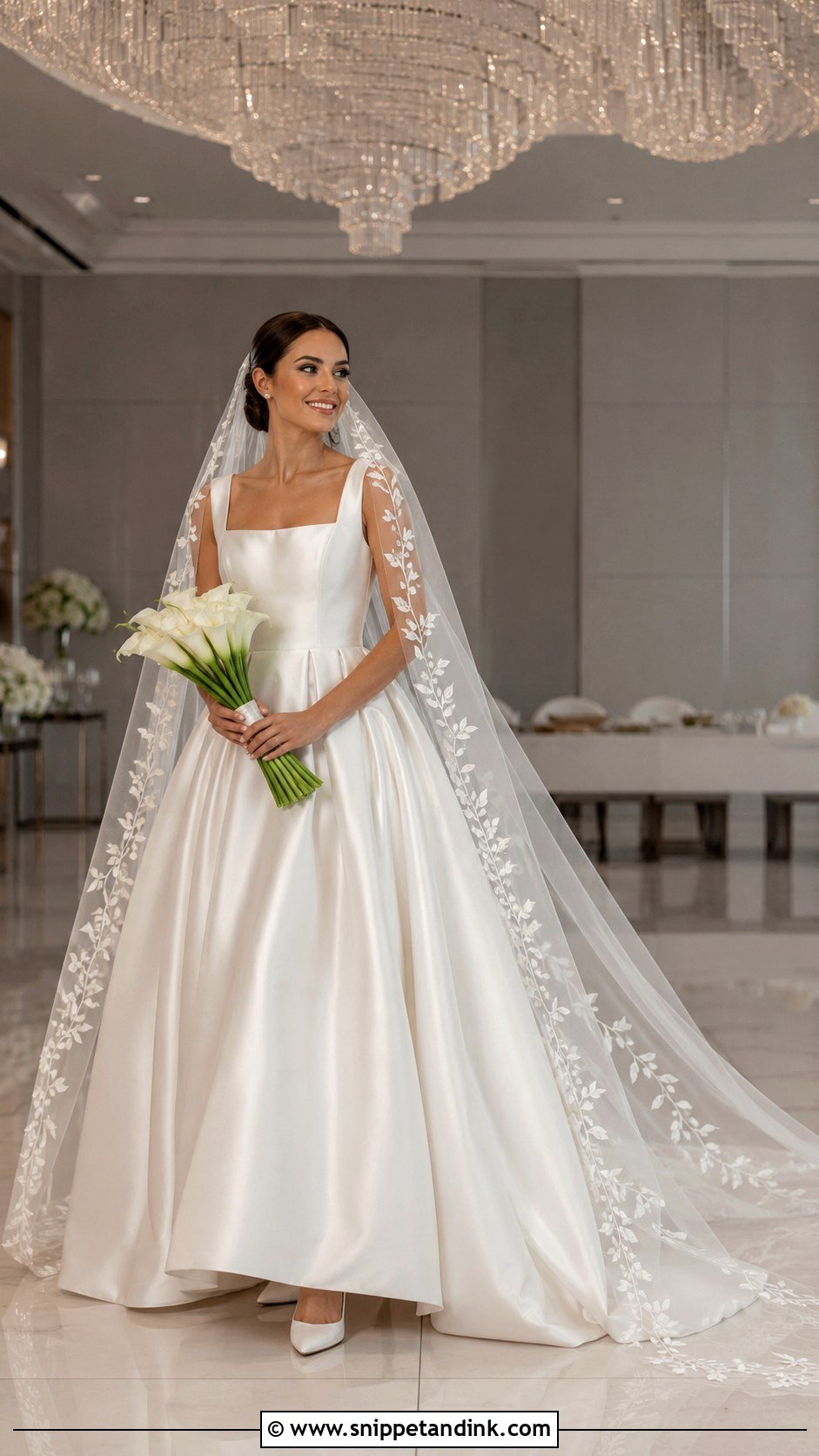
If you love a clean gown, let the veil carry the theme instead. A smooth satin column, A-line or ball gown with minimal seams stays sleek, and a cathedral veil bordered with winding ivy, small blossoms or tonal white vines gives all the interest from behind. That’s useful, because guests see your back for most of the ceremony. Weighted embroidery on the veil edge also helps it fall straight rather than blowing about. Satin pumps, diamond or crystal studs and a sleek low bun complete it; skip the necklace unless the neckline is very open. Carry a structured bouquet of white roses or callas. It works for a ballroom, a gallery or a hotel.
17. Cottagecore Ivy Wedding Dress
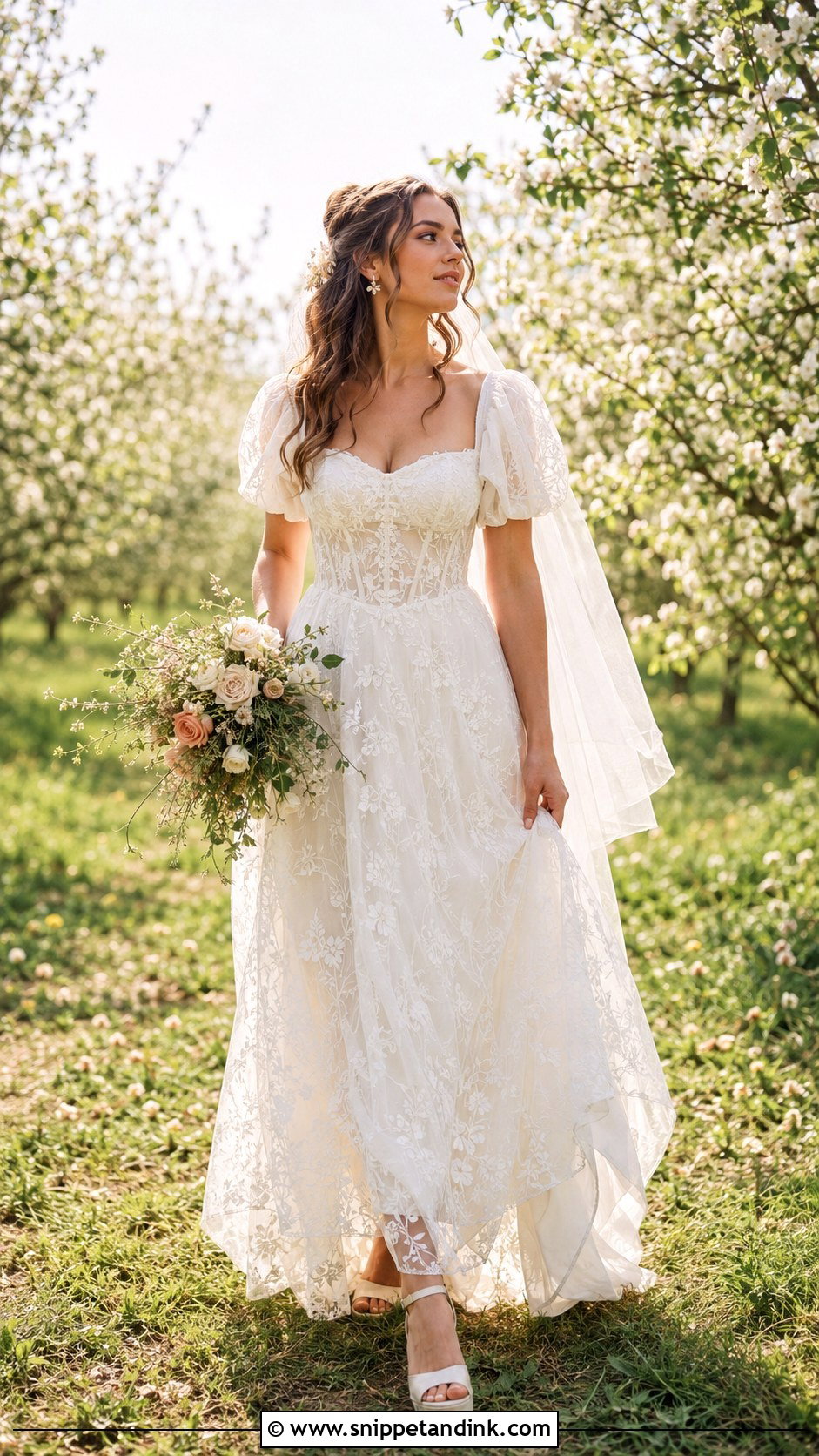
A cottagecore ivy wedding dress should look a little homespun, in the best sense. Puff sleeves, a softly fitted bodice and small vines scattered over tulle or cotton lace give it that countryside feel, with a square, scoop or sweetheart neckline. Cotton lace creases more than synthetic lace, so expect some softening by the evening and don’t fight it; it suits the style. Block heels, embroidered flats or neat ankle boots handle grass. Tiny floral earrings, loose waves or a braided updo with a delicate comb, and a light fingertip veil keep it bridal. A hand-tied bunch of seasonal white flowers suits an orchard, farm or garden.
18. Plus Size Ivy Wedding Dress
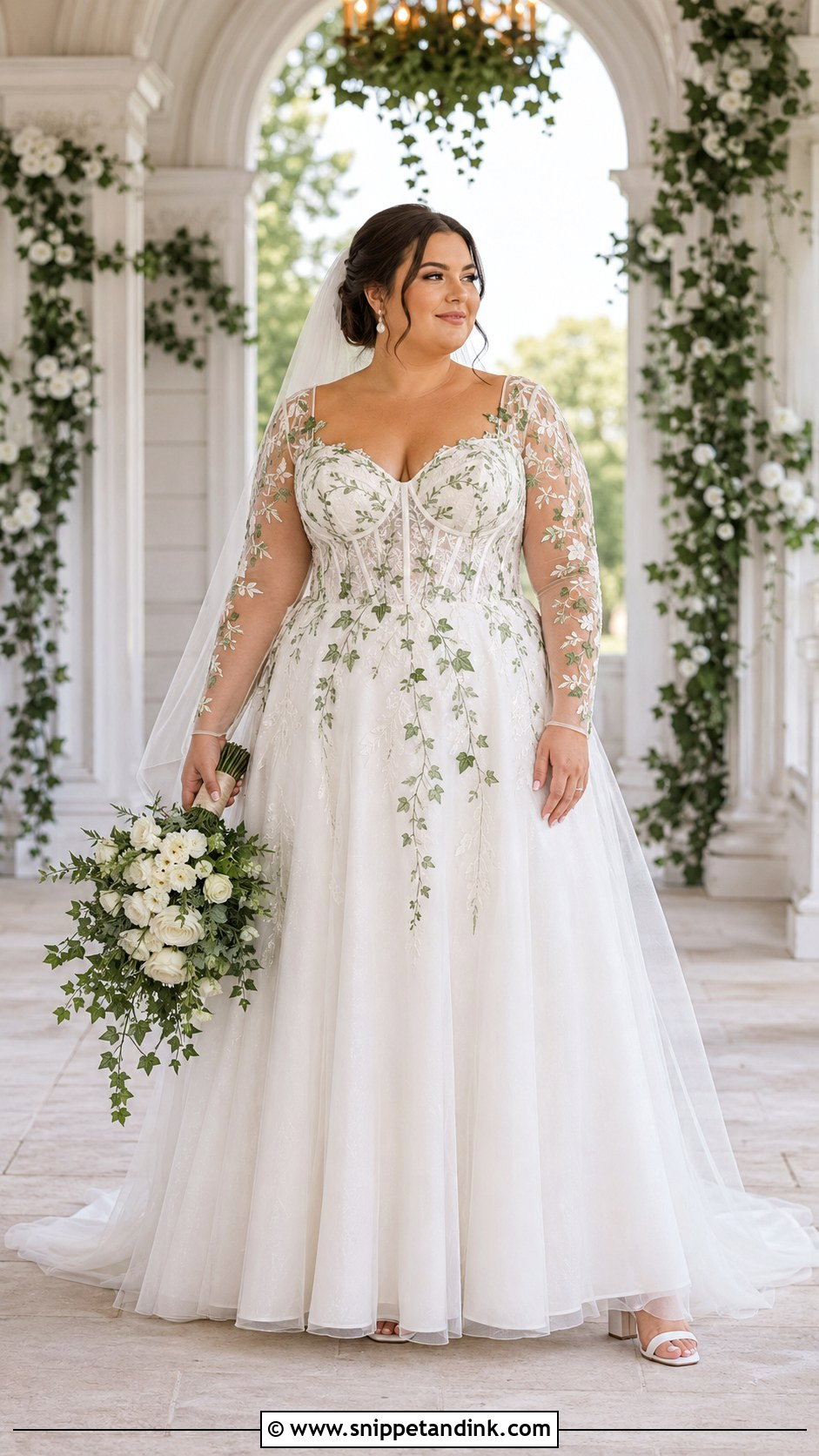
Support comes first in a plus-size gown, and embroidery should work with the structure rather than decorate over it. An A-line with a structured bodice, defined waist and softly layered skirt is my usual starting point. Vertical or diagonal vines create a long line across the gown; a dense cluster in one spot draws the eye there instead. Wide straps, sheer sleeves or an off-shoulder neckline can be chosen for coverage, but ask about internal support such as a built-in corset or cups, since that matters more than the neckline. Block heels, pearl earrings and a low bun or swept-back waves are comfortable for hours. A light veil and a medium bouquet keep the proportions right, and professional alterations make the biggest difference of all.
19. Petite Ivy Wedding Dress
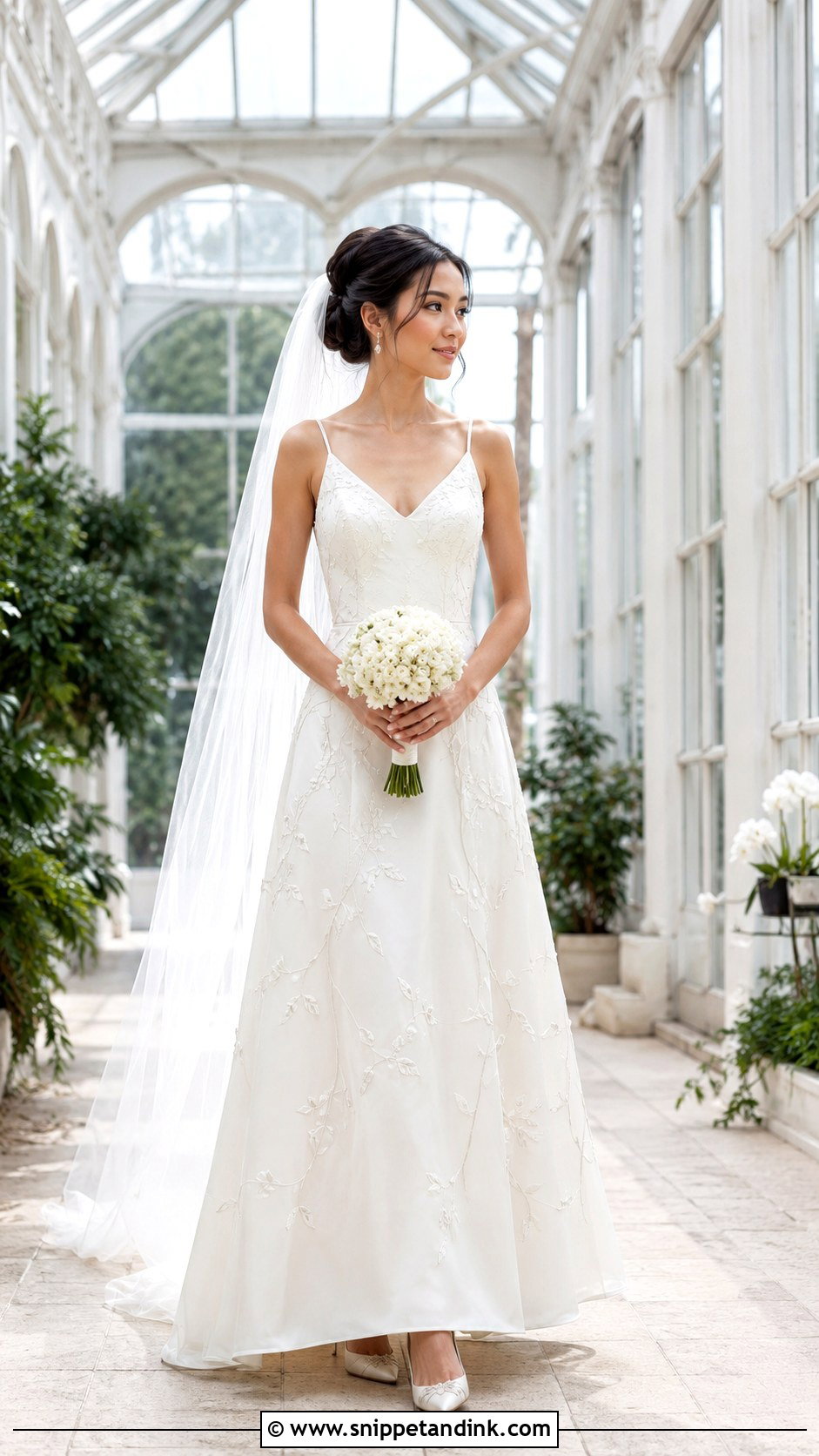
Scale is everything for a petite bride. Small embroidered leaves and narrow climbing vines suit a shorter frame, while oversized appliqués take over the dress. A streamlined A-line, fitted column or soft sheath gown is easier to wear than a very wide skirt. A natural or slightly raised waist lengthens the leg line. Pointed-toe heels, delicate earrings and a compact bouquet stay in proportion, with a high bun or a soft half-up style. A fingertip or chapel veil is long enough. The hem is the tricky part: shortening a gown can cut through embroidery near the bottom, so ask whether the seamstress will take the length from the waist instead to keep the vines intact.
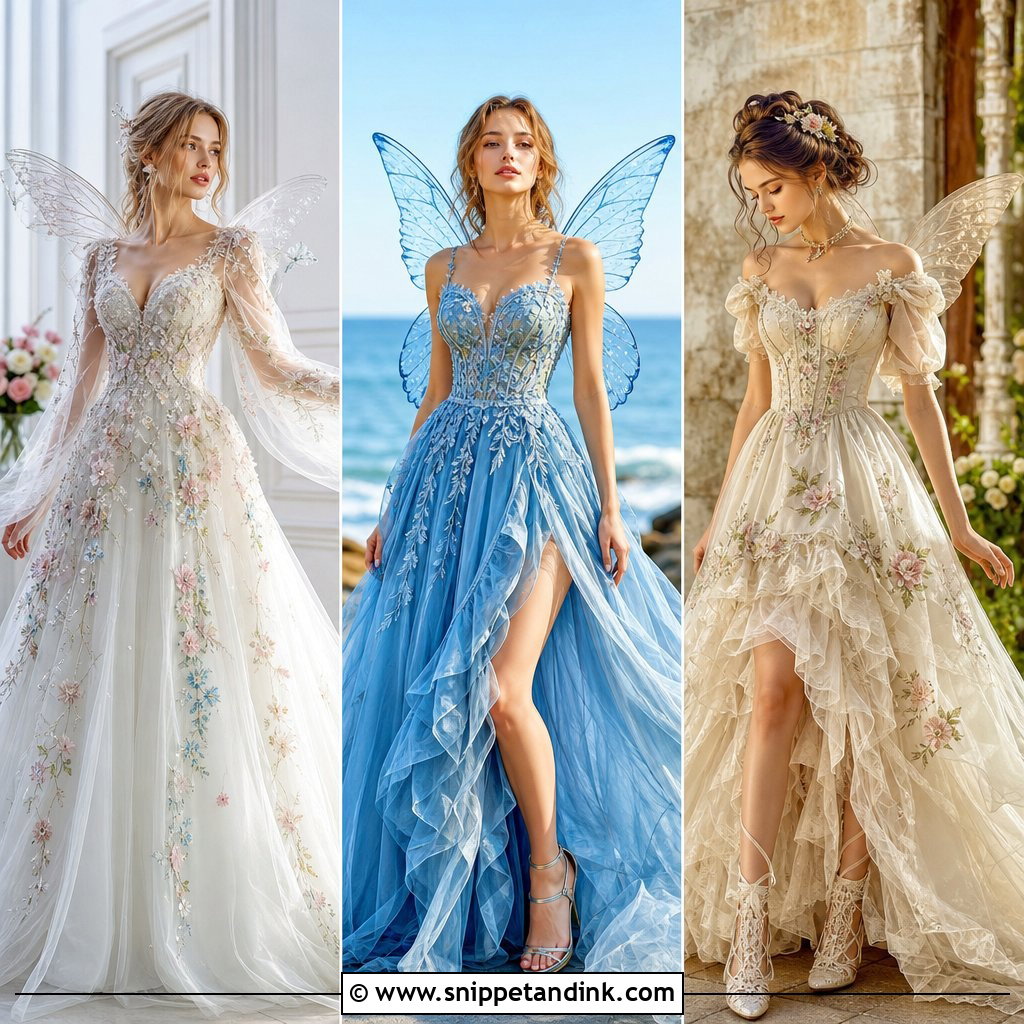

20. Ivy Mini Wedding Dress
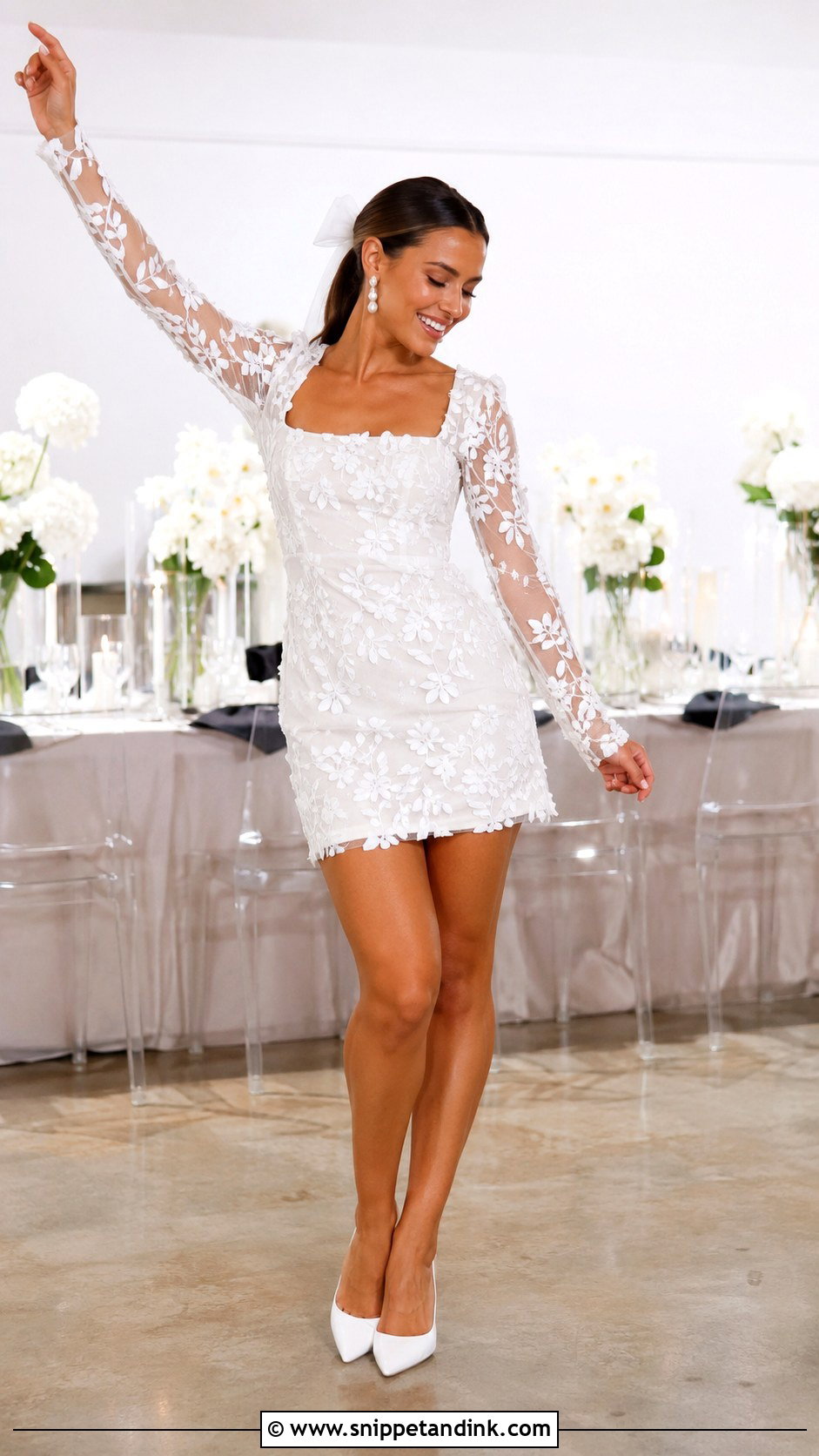
A reception mini is the playful end of the theme and gives you real freedom on the dance floor. Look for a structured mini with dimensional leaves, vine embroidery or tonal appliqués across the bodice and skirt. A square neckline, a strapless shape or long sheer sleeves balance the short hem. Raised leaves rub against bare legs when you sit, so I always ask brides to sit down in a 3D mini before buying one. Pointed pumps, embellished flats or block heels suit dancing. Pearl statement earrings, a small satin bag and a polished ponytail or high bun look fresh, with a short bow or floral comb instead of a long veil. It continues the botanical theme from the ceremony gown.
Ordering and Altering a Gown Covered in Vines
Embroidered gowns usually take longer to make than plain ones, and they cost more to alter. Many bridal designers quote several months for production, and hand-placed appliqué or custom thread colours can stretch that further, so start shopping around nine months to a year ahead if you can. Leave two to three months for alterations at the end.
Why alterations cost more here
When a seamstress takes in a side seam or shortens a hem, any leaves crossing that line have to be lifted off by hand, the seam adjusted, and the appliqués stitched back on so the vine still looks continuous. It is careful, slow work. Ask for a quote at the first fitting, and ask whether spare lace or appliqués came with the gown, because those extras are what make invisible repairs possible.
Should the bouquet have real ivy in it?
It can, but use a light hand. A few trailing stems tie the flowers to the dress; a big cascade of ivy hides the very embroidery you paid for. Ivy sap irritates some people’s skin, so ask your florist to wrap the stems well in ribbon. Hold the bouquet slightly away from the bodice for the first photos too, since fresh greenery can leave a faint mark on pale embroidery thread if it’s pressed against it for hours.
A Few Vines or a Whole Climbing Garden?
The right amount of ivy depends on how much you want the dress to talk. A trail of vines can give a minimal gown just enough texture, while green threadwork, dimensional leaves and an embroidered cape say a great deal more. Think about the season, the venue and what you’ll be walking on before you settle on fabric, train and sleeves. Choose shoes for the full day and jewellery that stays quieter than the embroidery. And at every fitting, sit, walk and lift your arms. An ivy gown that moves with you will always look more natural than one that only looks right standing still.
You'll Like These Ideas:


Leave a Reply