
Fall is the season where I can finally put brides in real fabric. Crisp air, turning leaves and low golden light let you wear sleeves, heavier satin and layered skirts that would wilt a bride in July. The shapes I keep pulling for autumn clients are lace, sculpted draping, corseted waists, fuller skirts, capes and anything with texture you can see from the back row. A woodland ceremony, a vineyard, a barn and a ballroom each ask for something different, so start with the setting and let the gown suit it rather than costume it. Before you fall for a dress, think through four practical things: how warm it is, how you move in it, how it photographs in low light and how comfortable it stays by the last dance. The looks below cover the whole outfit, from shoes to veil.
Counting Back From an October Date
Autumn brides are often surprised by how early they need to start. Most made-to-order bridal gowns take several months to arrive after you order, and alterations need their own window after that. The exact numbers vary by designer and shop, so ask yours for their current lead time in writing, but this is roughly the rhythm I plan around for a fall wedding.
- Nine to twelve months out: shop and order. For an October date, that usually means the winter before.
- Three to four months out: the gown arrives and you try it on to confirm size and any changes to sleeves or neckline.
- Two to three months out: the first alteration fitting. Bring the exact shoes, underwear and any slip or shapewear you plan to wear.
- Four to six weeks out: second fitting for hem, bustle and fine adjustments.
- One to two weeks out: final fitting and collection. Practice the bustle with the person who will do it on the day.
Sleeves add time. Adding detachable sleeves, a cape or a custom overskirt often means extra fabric ordered from the designer, which can take weeks on its own. If you are under six months away, look at sample sales and ready-to-wear gowns, which can be bought off the rack and still altered in time.
1. Long Sleeve Lace Autumn Wedding Dress
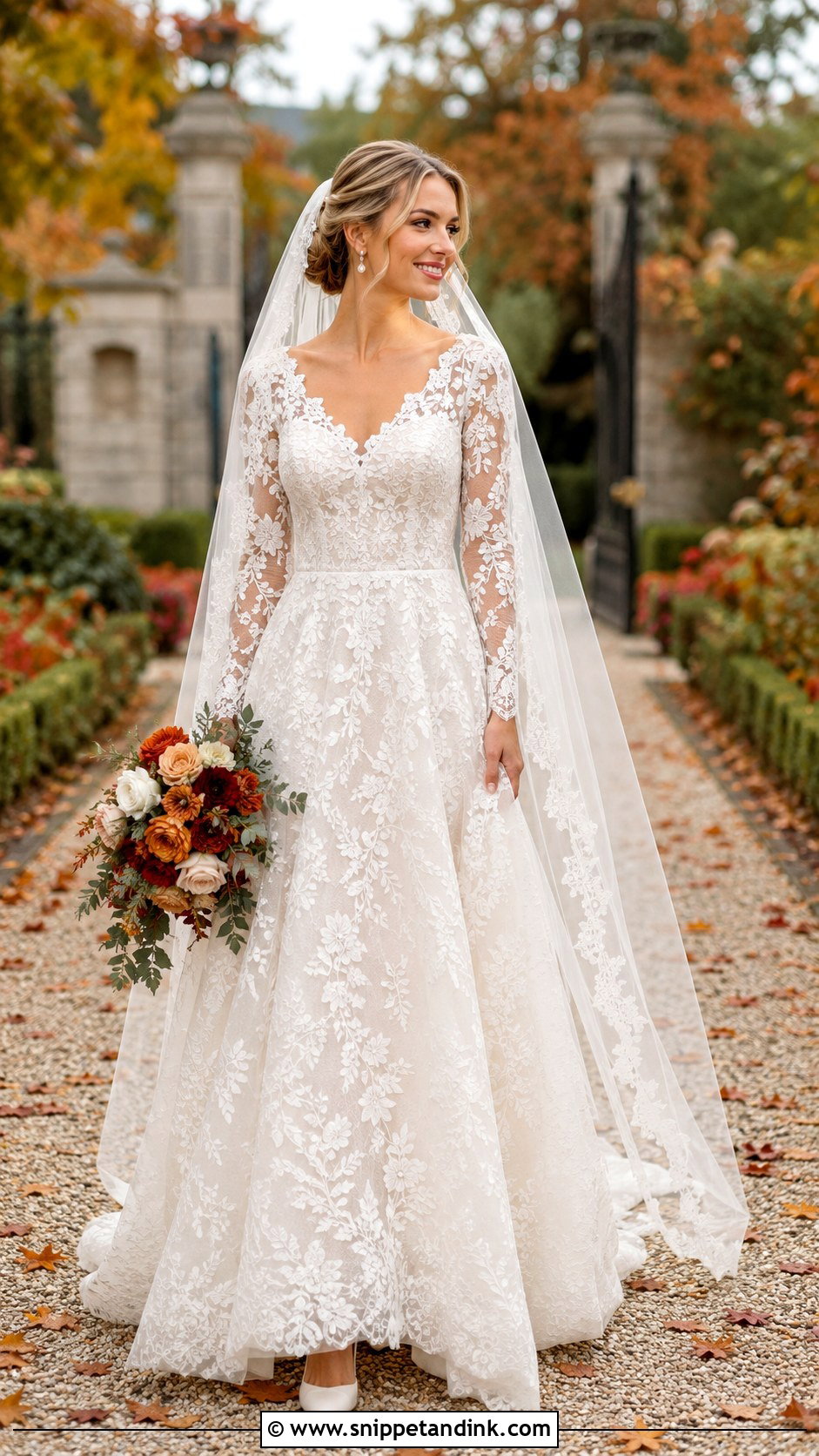
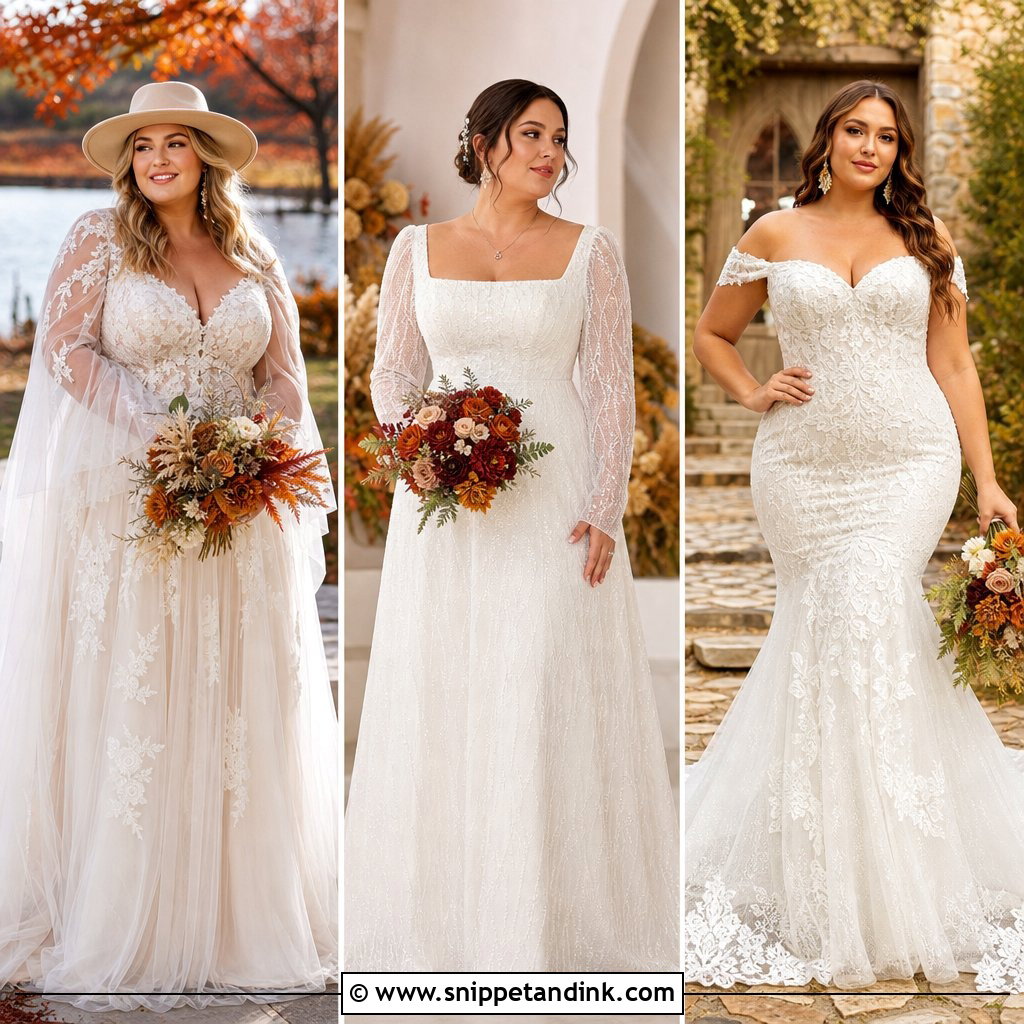
Lace sleeves are the obvious fall choice, and for good reason: they cover the arms without much weight. What I check first is the lining. A gown with sheer sleeves and an unlined back can feel colder than you expect at an outdoor ceremony, so an ivory lining through the body earns its place. Choose an A-line with a fitted bodice, defined waist and soft layered skirt, and pick botanical lace over anything that looks like leaves on purpose. Pointed satin pumps, pearl drops and a fingertip veil edged in matching lace complete it, with a loose low bun to show the sleeves. Bring an ivory wrap for outdoors and slip it off before portraits.
2. Satin Ball Gown Autumn Wedding Dress
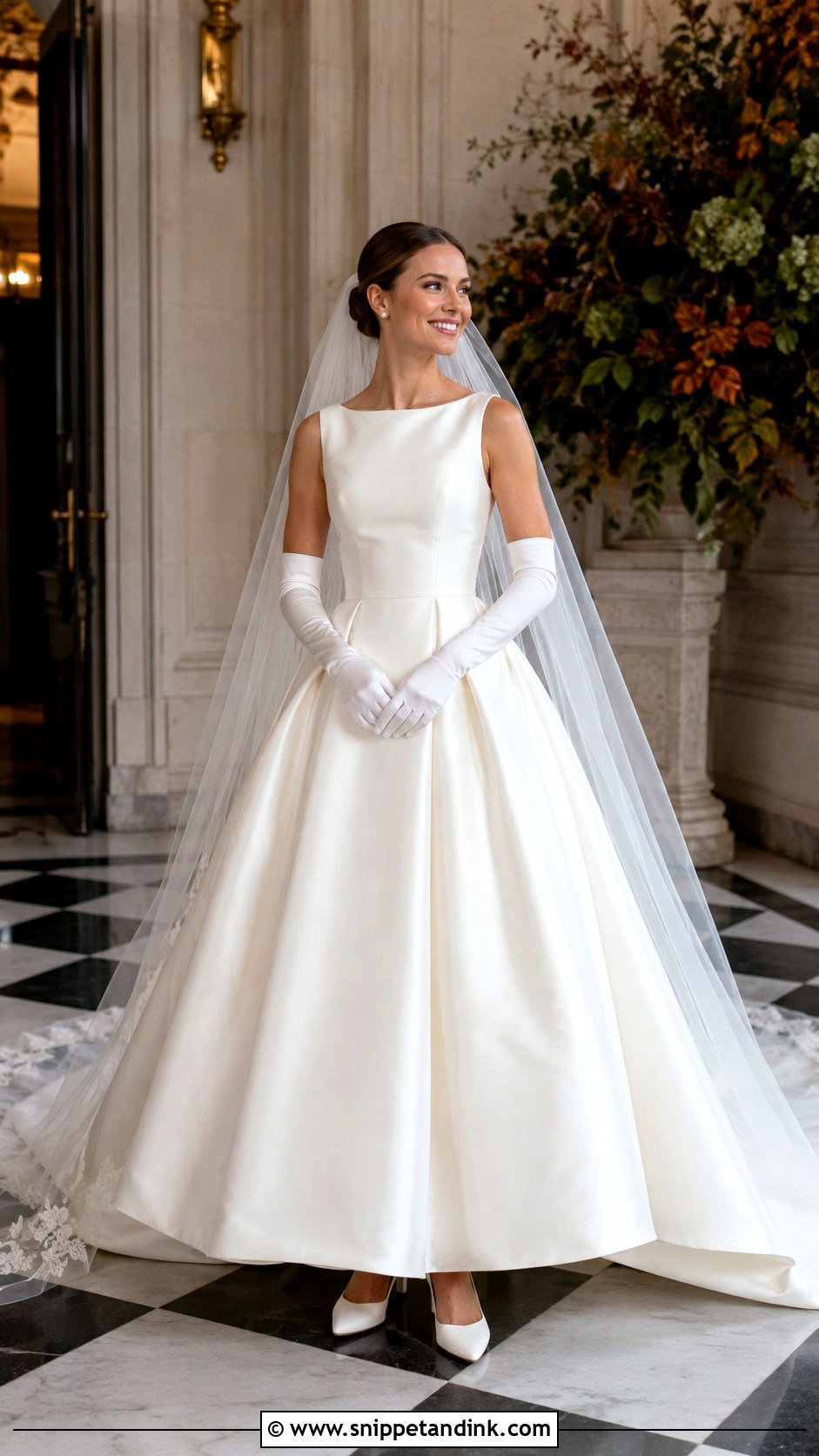
Satin and low autumn sun were made for each other. The fabric catches the light as you walk, and a structured ball gown gives you real warmth around the legs. Look for a strapless or portrait neckline over a supportive corset, a natural waist and a full skirt with pockets. Ivory, soft white and pale champagne all sit well against foliage. Instead of heavy jewelry, I’d pair it with elbow-length gloves, pearl studs and a plain cathedral veil. Closed-toe block heels grip stone paths and lawns. If your shoulders are bare, a fitted satin bolero for the outdoor moments keeps goosebumps out of the photos. Ballrooms, manors and grand hotels suit it best.
3. Off Shoulder Crepe Autumn Wedding Dress
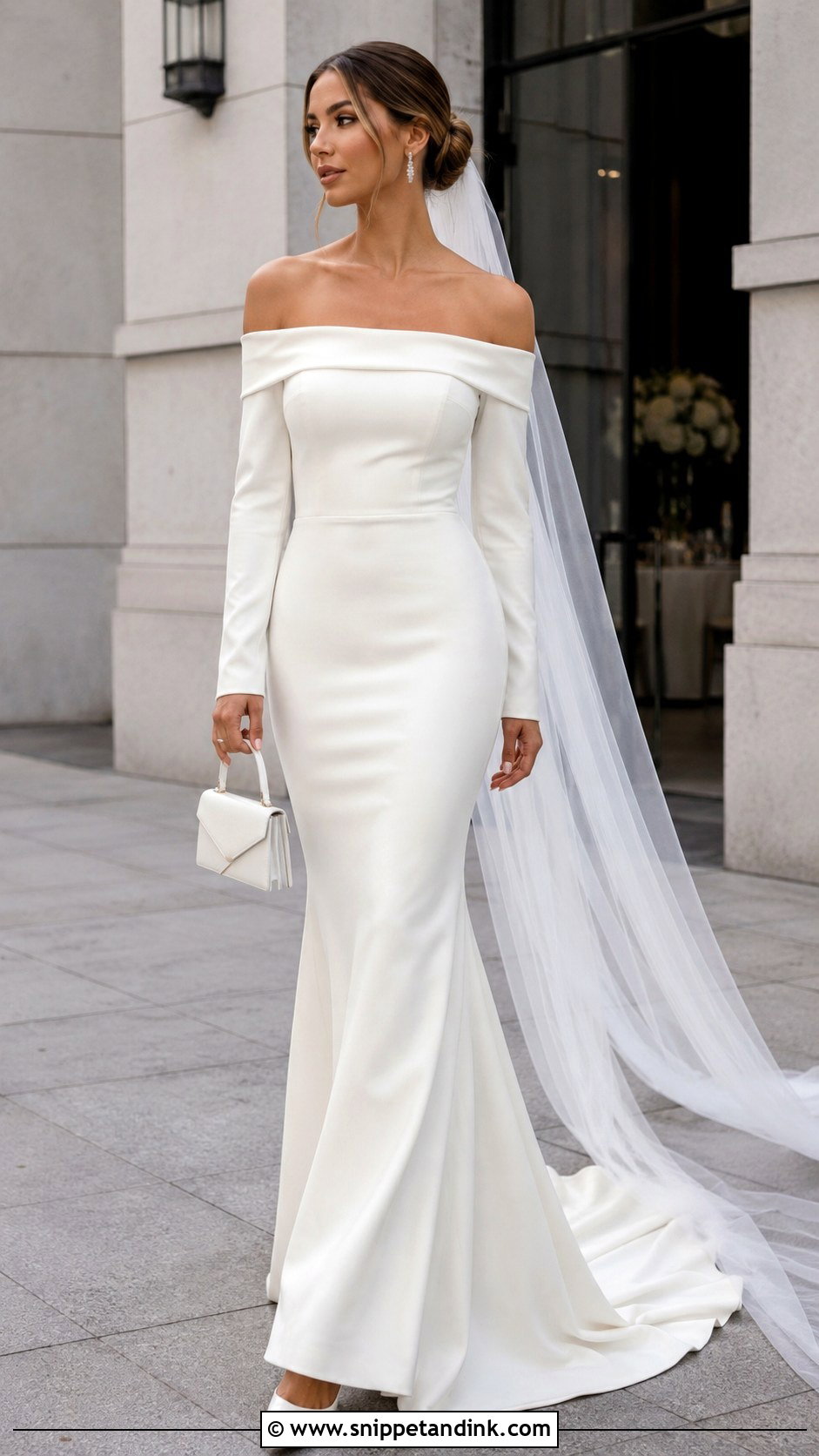
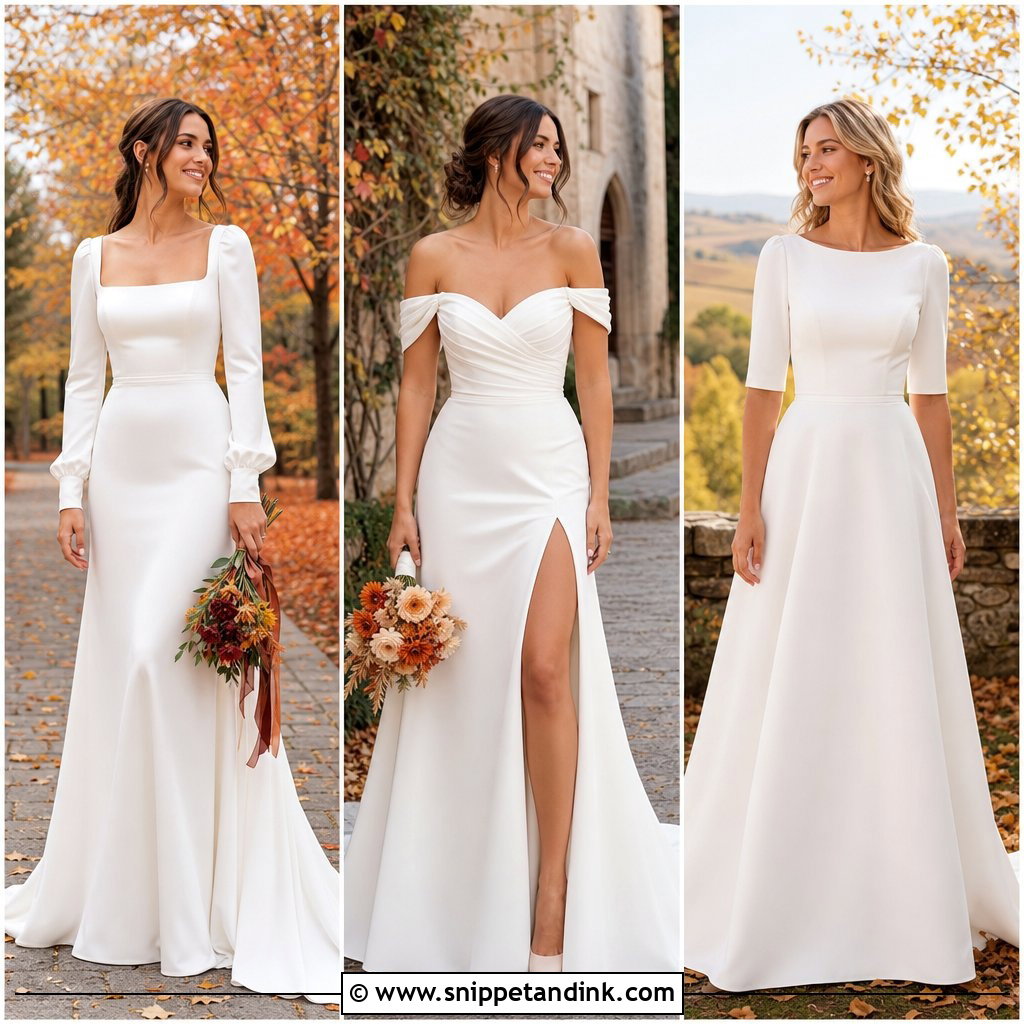
Crepe is honest fabric. It has no shine to hide behind, which is exactly why minimalist brides love it, and also why it needs weight. A thin crepe looks flimsy outdoors in cold wind; a substantial stretch crepe hangs straight and moves with you. An off-shoulder neckline with long fitted sleeves balances openness and coverage, over a fitted bodice and gently flared skirt. Finish with a sleek chignon, crystal earrings, ivory pointed pumps and a long plain veil, plus a structured mini bag. City venues, galleries and minimalist hotels are its home. Have the hem cut precisely to your shoes, because crepe that pools at the floor bunches around the feet with every step.
4. High Neck Lace Autumn Wedding Dress
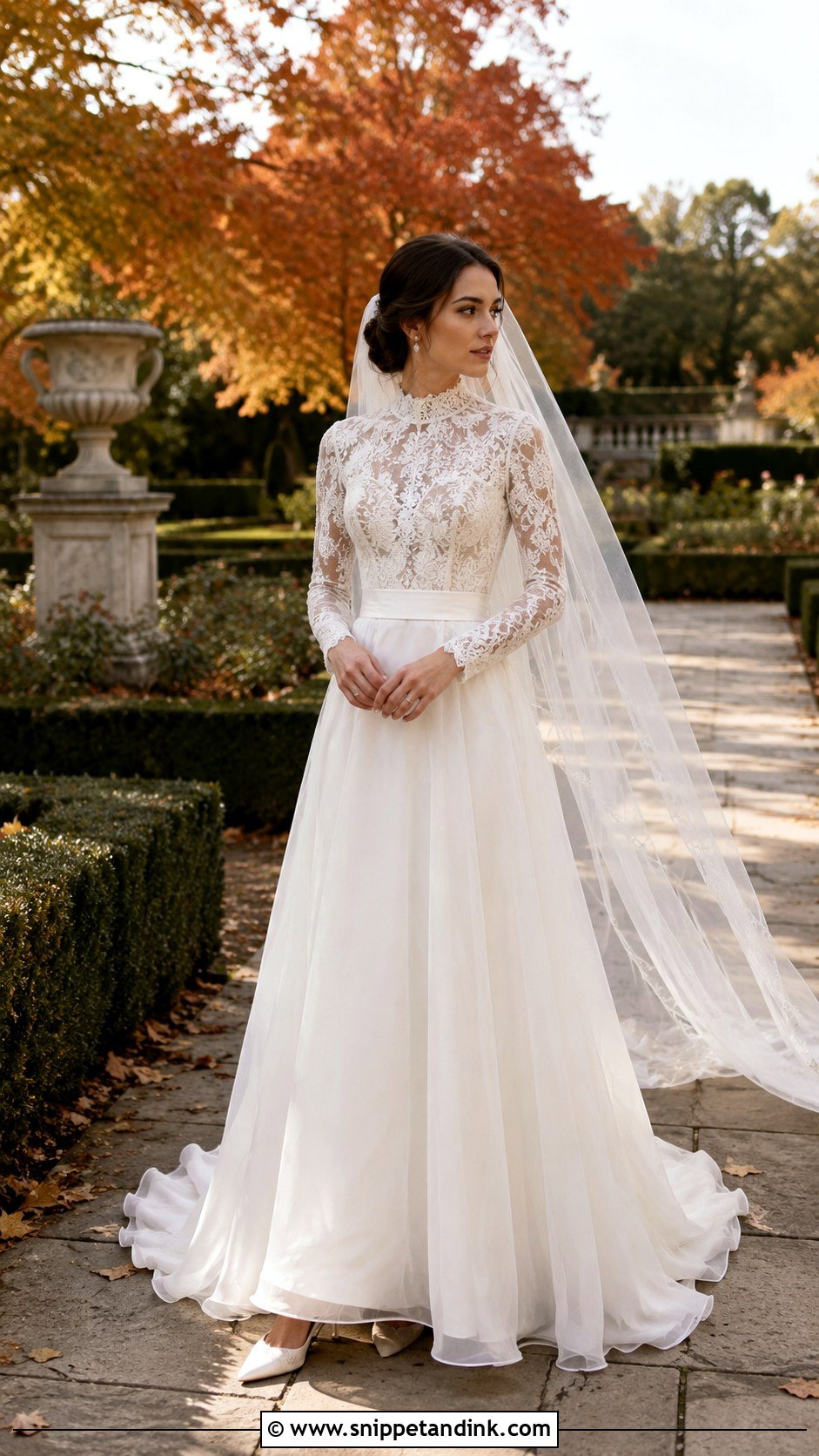
For a cold morning ceremony or a formal church, a high lace neck does a lot of work: it frames the face and keeps you warm. The risk is heaviness. If the bodice and sleeves are lace, the skirt should be lighter, in chiffon or organza, or the whole dress starts to feel like armor. Fine florals look more current than big motifs. Wear a polished bun or braided updo to keep the collar visible, add small pearls, a narrow satin belt and closed-toe kitten heels, and leave the necklace at home. I attach a sheer cathedral veil below the bun so it gives length without covering the lace at the neck.
5. Basque Waist Autumn Wedding Dress
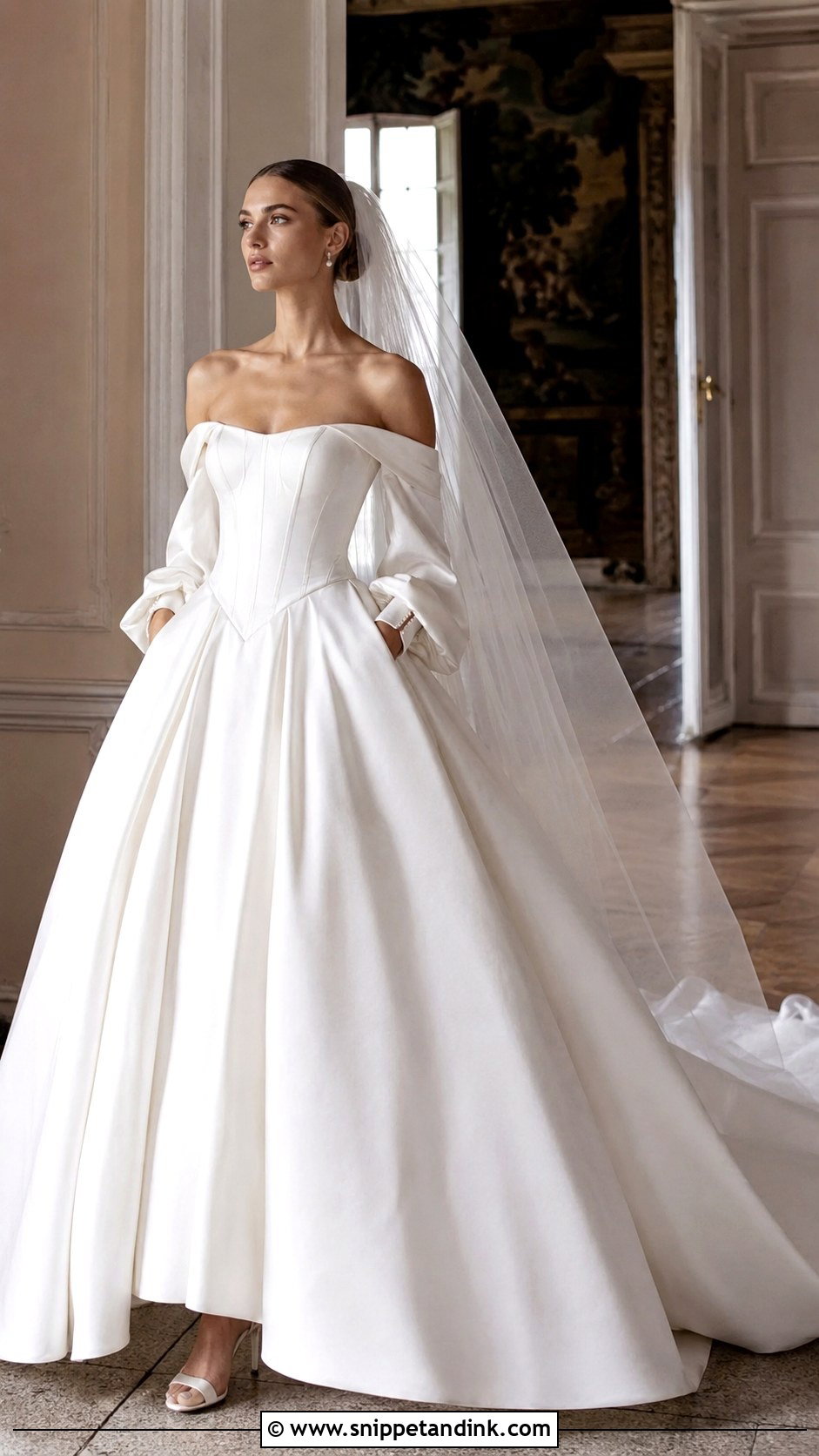
The V-shaped waist of a basque waist gown lengthens the torso before the skirt flares out, and it looks its sharpest in satin or mikado. That point is also where fit problems show up. When you sit, the tip of the V presses into the stomach if the bodice is cut too long, so I always have the bride sit, walk and do a small dance step at the fitting before anything is finalized. A corseted bodice with good internal support, wide straps or detachable off-shoulder sleeves, a smooth veil, pearl buttons and satin block heels keep the rest calm. Opera gloves or an ivory capelet add warmth for historic estates and candlelit receptions.
6. Floral Applique Tulle Autumn Wedding Dress
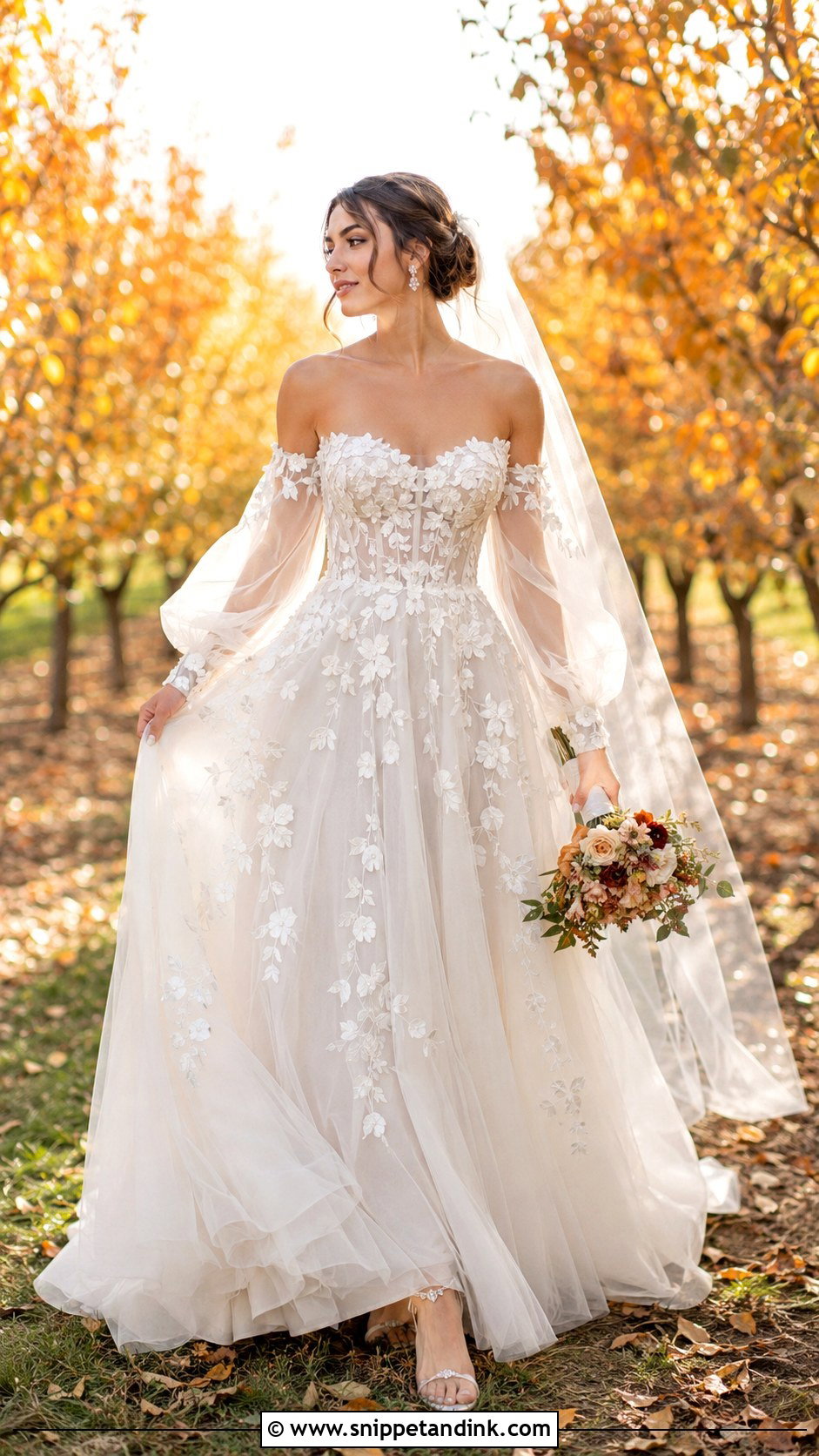
Three-dimensional flowers on a tulle gown echo a garden going to seed in the best way. On a floral applique tulle gown, I like the appliques clustered on the bodice and thinning out down the skirt, so the eye travels downward. Ivory, cream and a whisper of blush give depth while staying bridal. Raised appliques do snag on veil combs and bracelet clasps, so keep the veil plain and soft, and check that every flower is stitched down at its petals as well as its center. A lined corset adds support and detachable sheer sleeves adjust to the temperature. Delicate earrings, comfortable heels, a half-up wave and a compact bouquet finish it for orchards, botanical venues and estates.
7. Minimalist Silk Autumn Wedding Dress
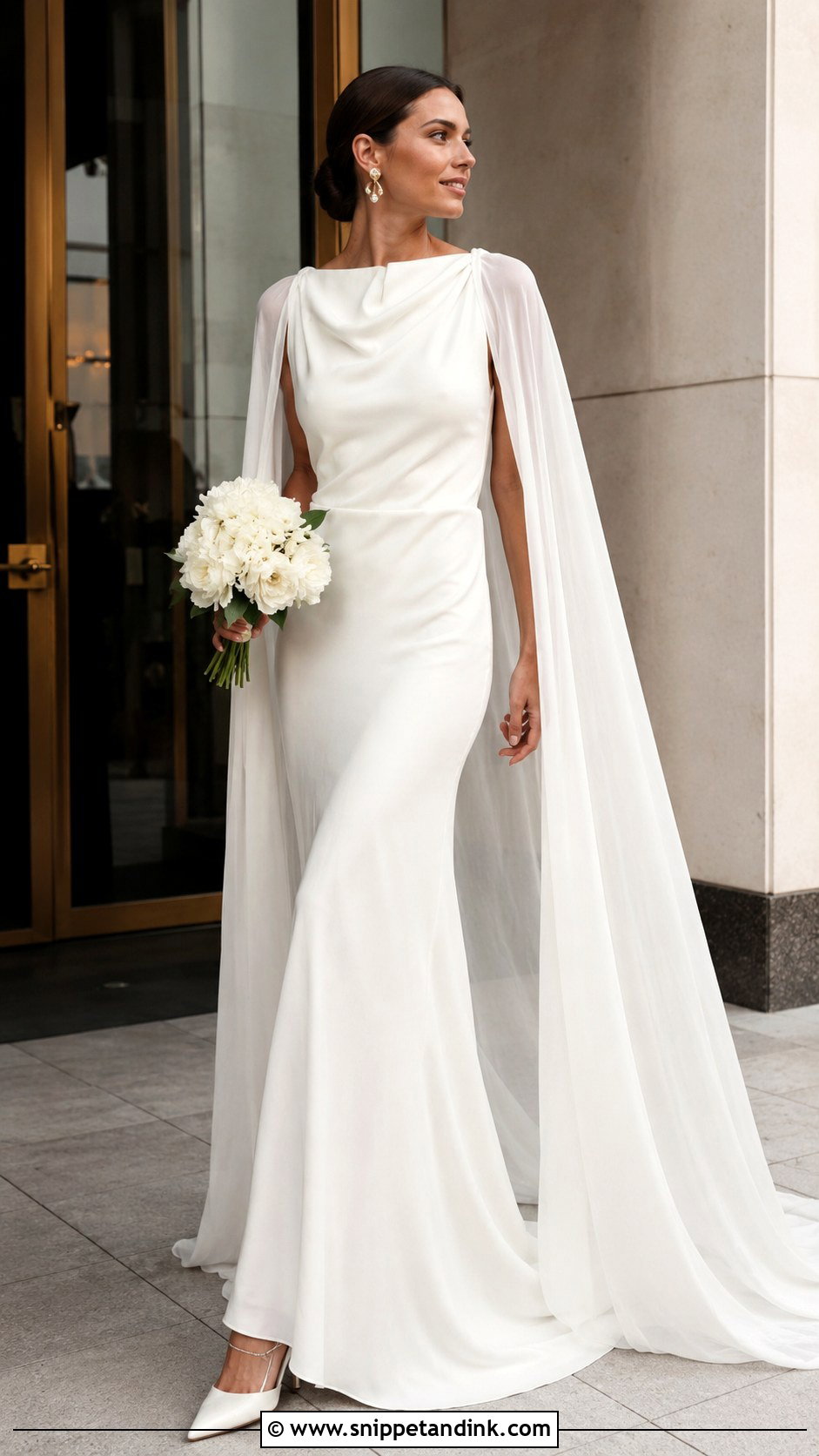
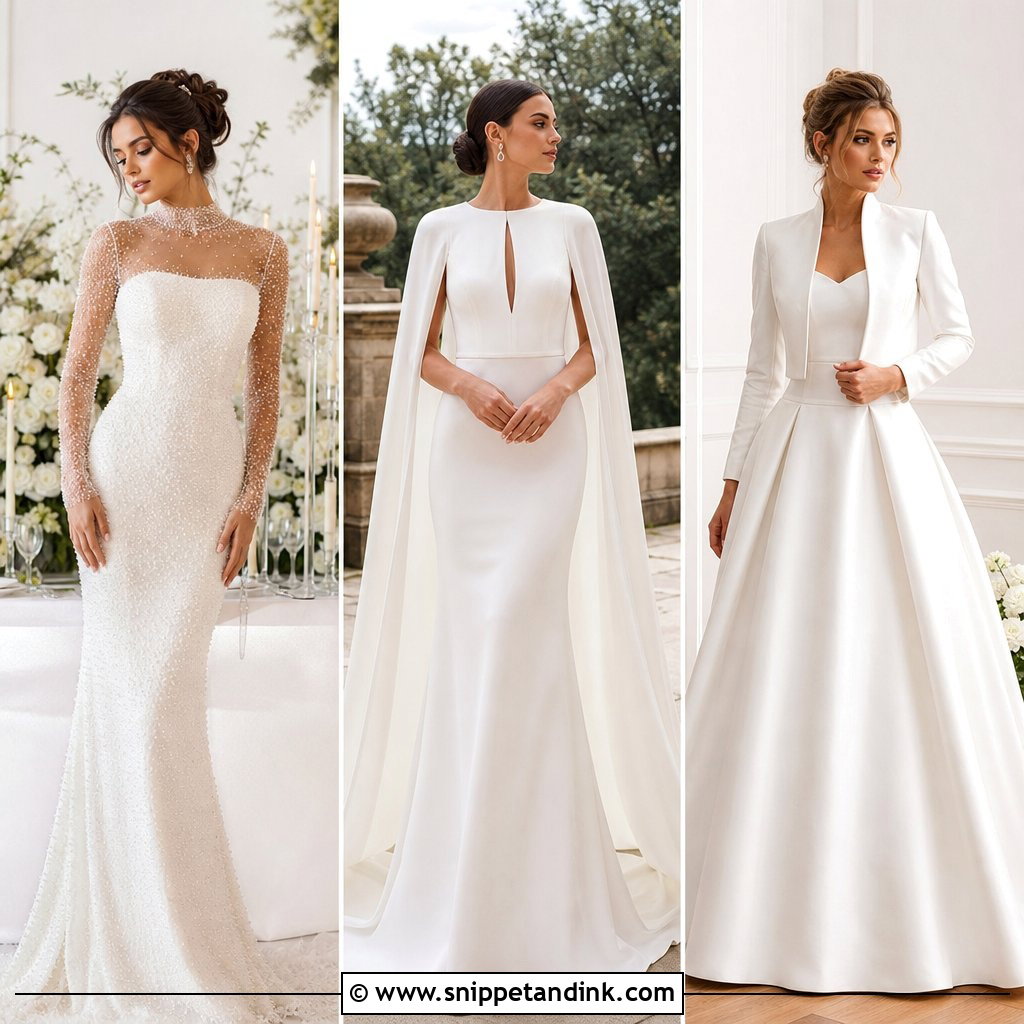
A plain silk column depends entirely on fabric and tailoring, and there is no forgiveness in either. Heavier silk satin hangs and keeps warm; thin silk clings, wrinkles and shows every seam and fold. Choose a softly draped neckline and plan proper undergarments for every fitting. A long silk scarf or sheer cape adds coverage for a cool evening without breaking the clean shape. Pointed slingbacks, sculptural earrings and a compact bouquet are all it needs, with smooth hair, a low knot or controlled waves. Restaurants, art spaces, city hotels and small estates suit this kind of quiet.
8. Cape Sleeve Autumn Wedding Dress
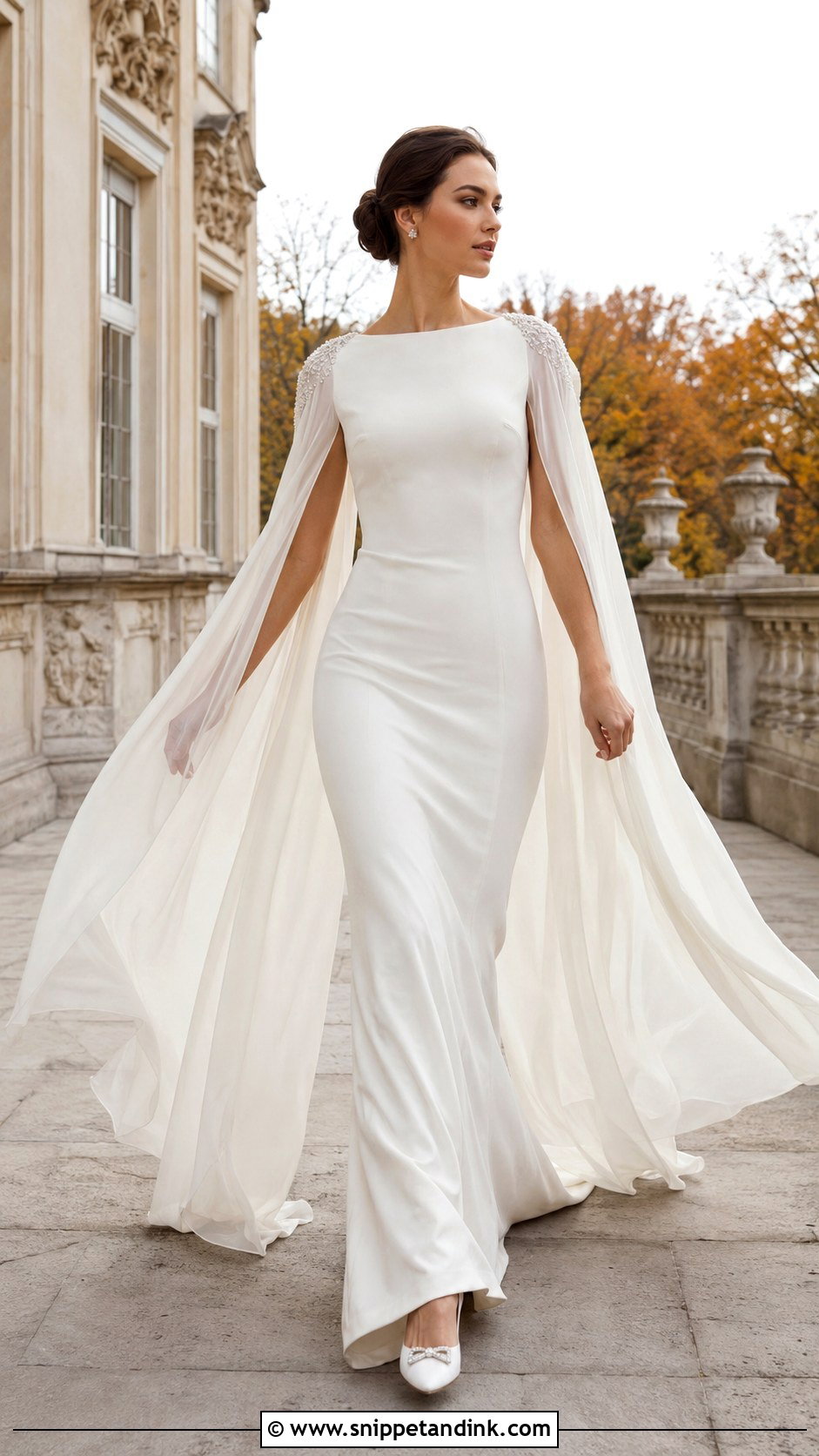
A cape replaces the veil and gives you movement down the aisle. Start with a simple fitted gown in crepe, satin or mikado and add a detachable cape at the shoulders: floor-length chiffon feels light, while lace or heavier satin keeps you warmer in November. The fastening is what I test hardest. Snaps or hidden hooks let a bridesmaid unclip it in seconds before dinner; anything sewn on means wearing it all night. Pair it with crystal studs, a sleek bun and closed-toe heels, and skip a big necklace. If you also want a veil, go short and plain so the two don’t tangle. Staircases, tree-lined paths and wide terraces show it off.
9. Square Neck Mikado Autumn Wedding Dress
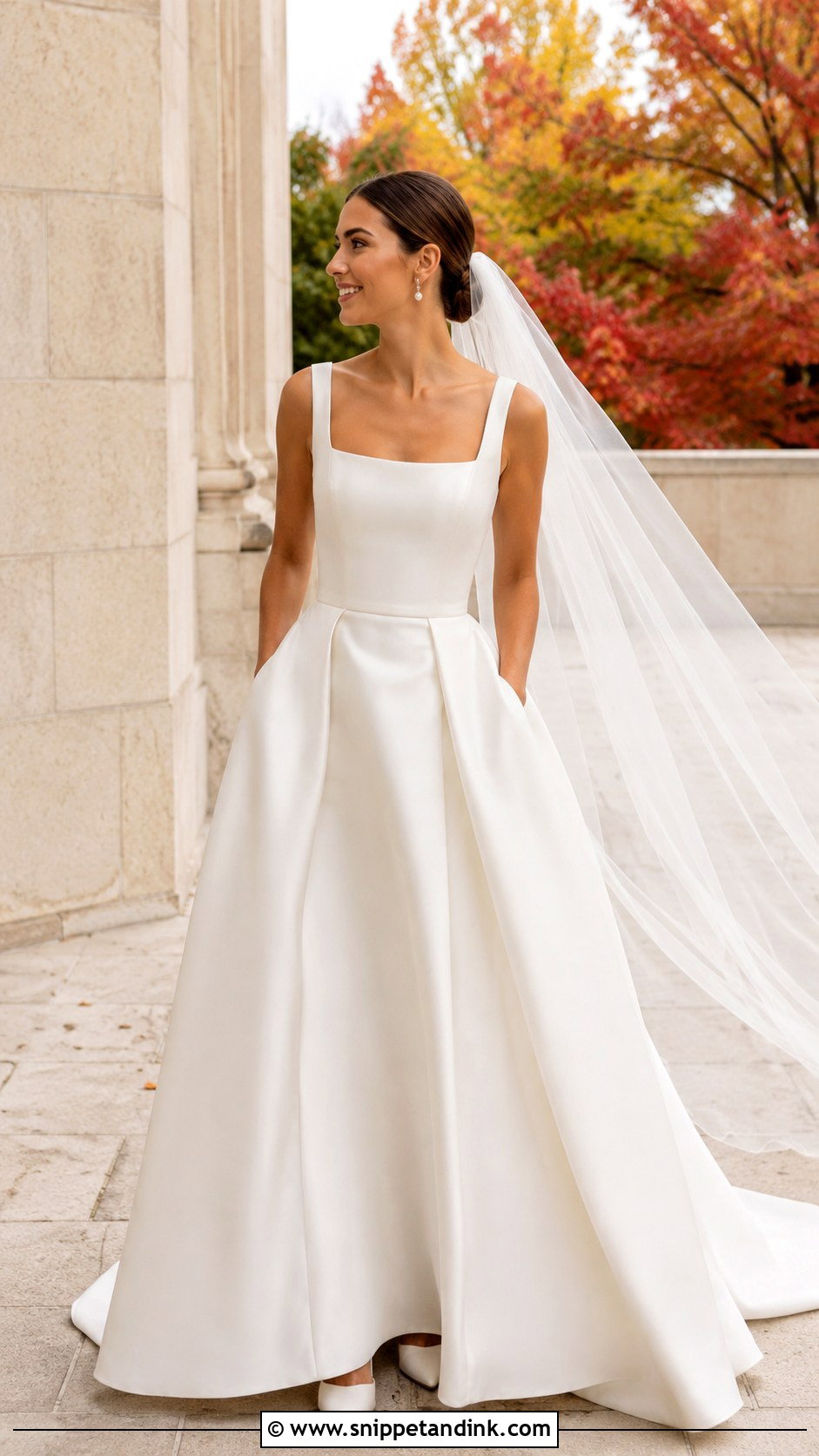
Wide straps are underrated. A square neckline on mikado opens the collarbones, but those straps carry the bodice all day, which makes this one of the most comfortable structured gowns I fit. Pair the neck with a fitted bodice, defined waist and full A-line skirt. Mikado holds its shape against an autumn landscape. Add pearl drops, a smooth cathedral veil and pointed block heels, with a low bun to keep the square line clear and a small wrap for between photos. Pockets are welcome if they don’t pull the skirt out at the hip. Because the bodice alters so precisely, it suits a wide range of figures.
10. Corset Bodice Autumn Wedding Dress
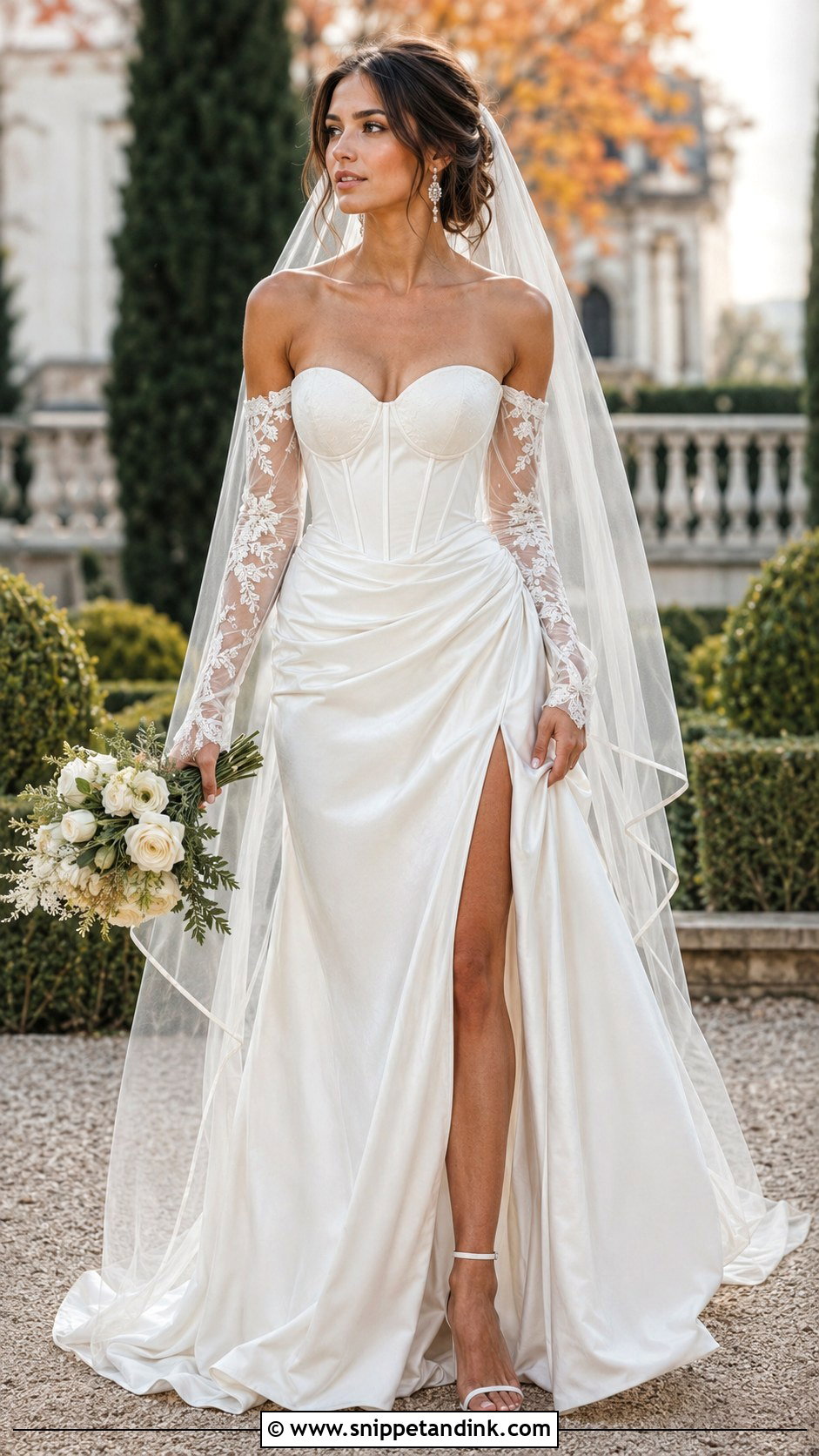
A corset bodice reads romantic rather than revealing when the lining and fit are right. I look for a soft curved neckline, visible seaming and real boning over a flowing satin or tulle skirt. Detachable long sleeves in lace, sheer tulle or smooth satin turn one dress into two looks. Finish with a ribbon-edged veil, crystal earrings, ivory ankle-strap heels and soft waves or a relaxed updo. At fittings, raise your arms, sit down and take three deep breaths. If you feel the boning dig under your ribs or at the top of the hip, it needs adjusting, because that ache only grows after dinner. Manor houses, barns and formal gardens suit it.
11. Boho Bell Sleeve Autumn Wedding Dress
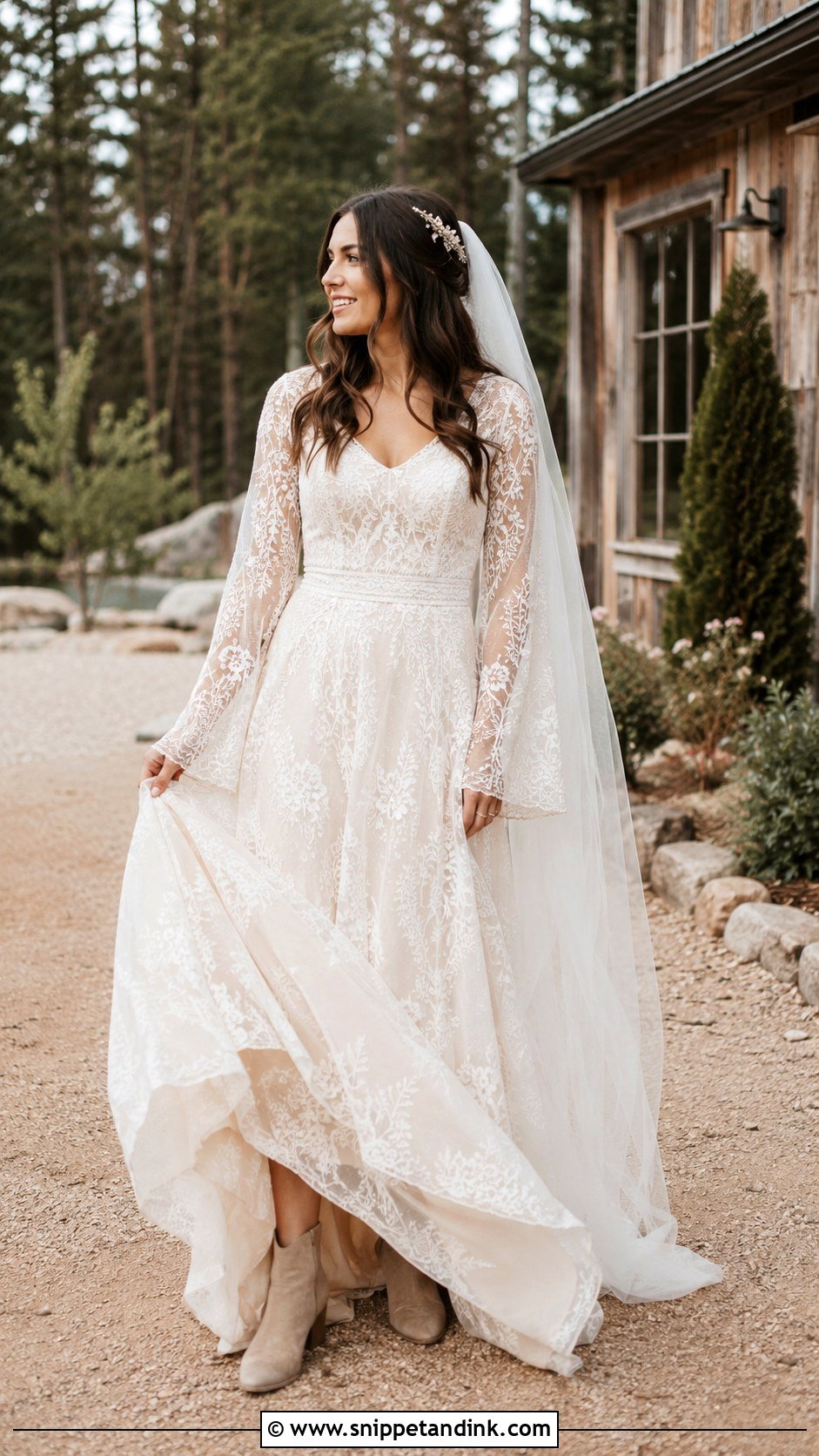
For a forest or barn wedding, a looser gown with lace bell sleeves fits the setting. Layered lace on an A-line or softly fitted shape, with a comfortable lining and defined waist, gives coverage without the stiffness of a structured gown. One practical note: wide sleeves trail into food and catch on chair backs, so ask about a discreet thumb loop or a sleeve that ends at the wrist rather than past the fingertips. Ivory ankle boots, a narrow floral comb and a chapel-length veil complete it, and a loose braided updo survives a breeze. Keep it to one or two rustic accessories, not a whole theme.
12. Vintage Tea Length Autumn Wedding Dress
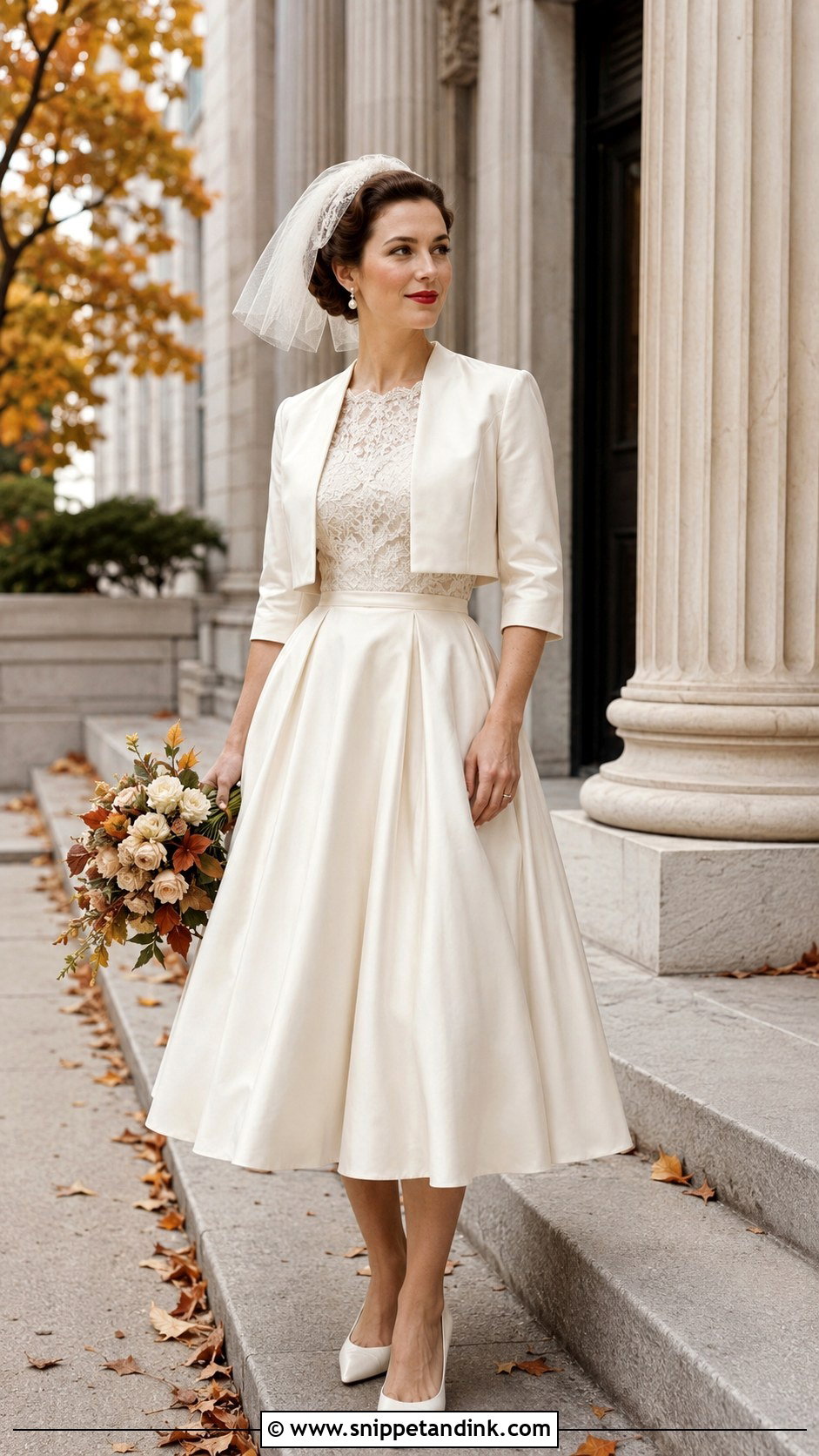
Tea length gives you movement and puts your shoes in every photo. Choose a fitted lace or satin bodice with three-quarter sleeves and a full skirt ending between knee and ankle. It suits courthouse ceremonies, daytime receptions and small celebrations. Ivory pointed pumps, pearl earrings and a short birdcage or fingertip veil keep the vintage feel, with a cropped fitted jacket for warmth. Soft waves and a classic red or rose lip with otherwise natural makeup suit the mood. Shoes will be seen from every angle, so buy a pair you can stand in and wear them around the house for a week. It also makes dancing far easier.
13. Champagne Satin Autumn Wedding Dress
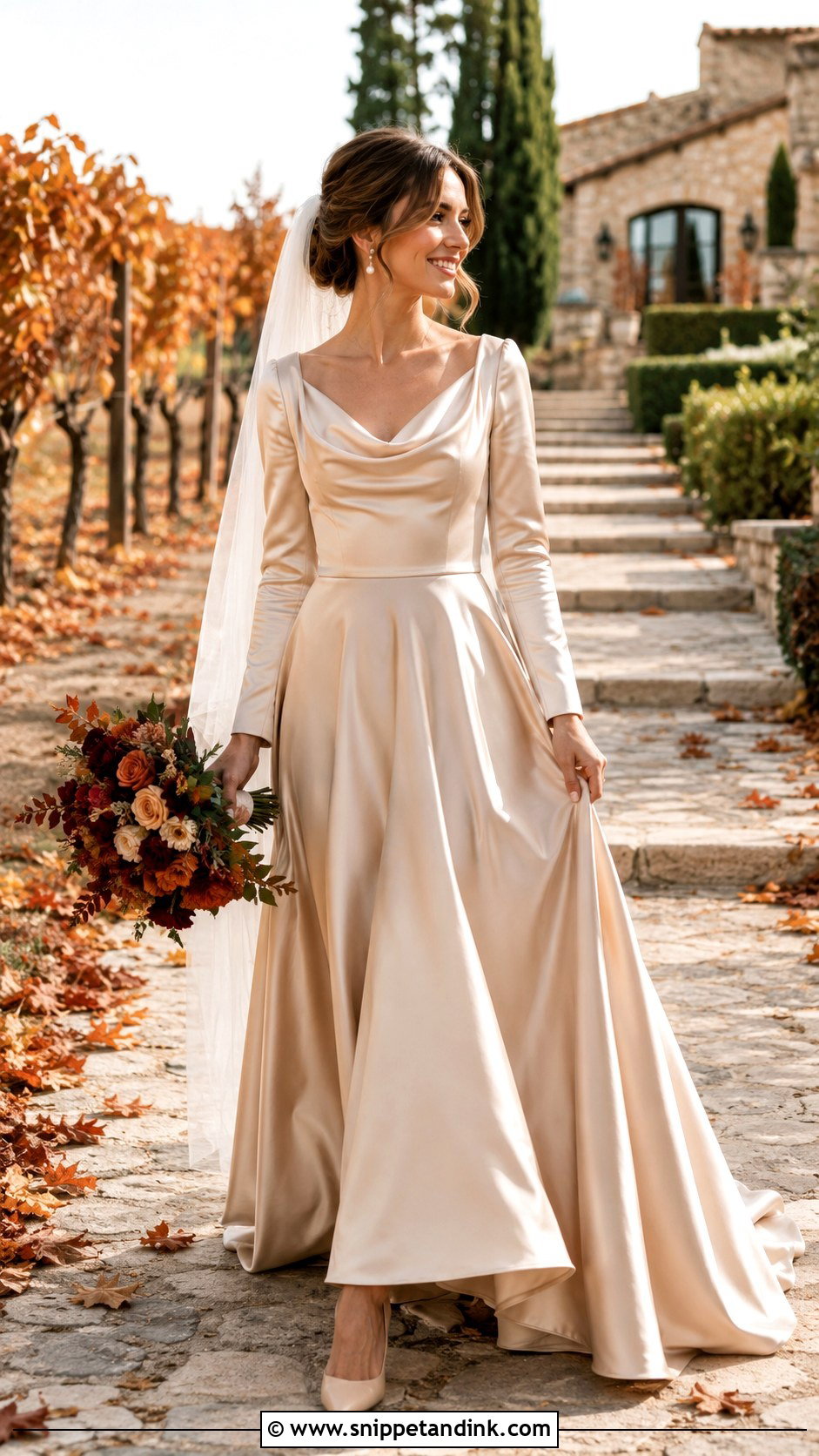
If bright white drains your complexion, champagne is the fix, and against copper leaves, old stone and wood it looks warm rather than dated. Fabric names hide a huge range, though. One shop’s champagne is nearly beige, another’s close to gold, and shop lighting flatters both. I take swatches to a window and hold them under the bride’s face in daylight before deciding. An A-line with a draped bodice, long sleeves and a gathered skirt suits the color. Add neutral satin heels, warm-toned pearls and a sheer ivory veil, and avoid matching every accessory exactly; slight tonal variation looks richer. Vineyards, country estates and mountain venues suit it.
14. Pearl Beaded Autumn Wedding Dress
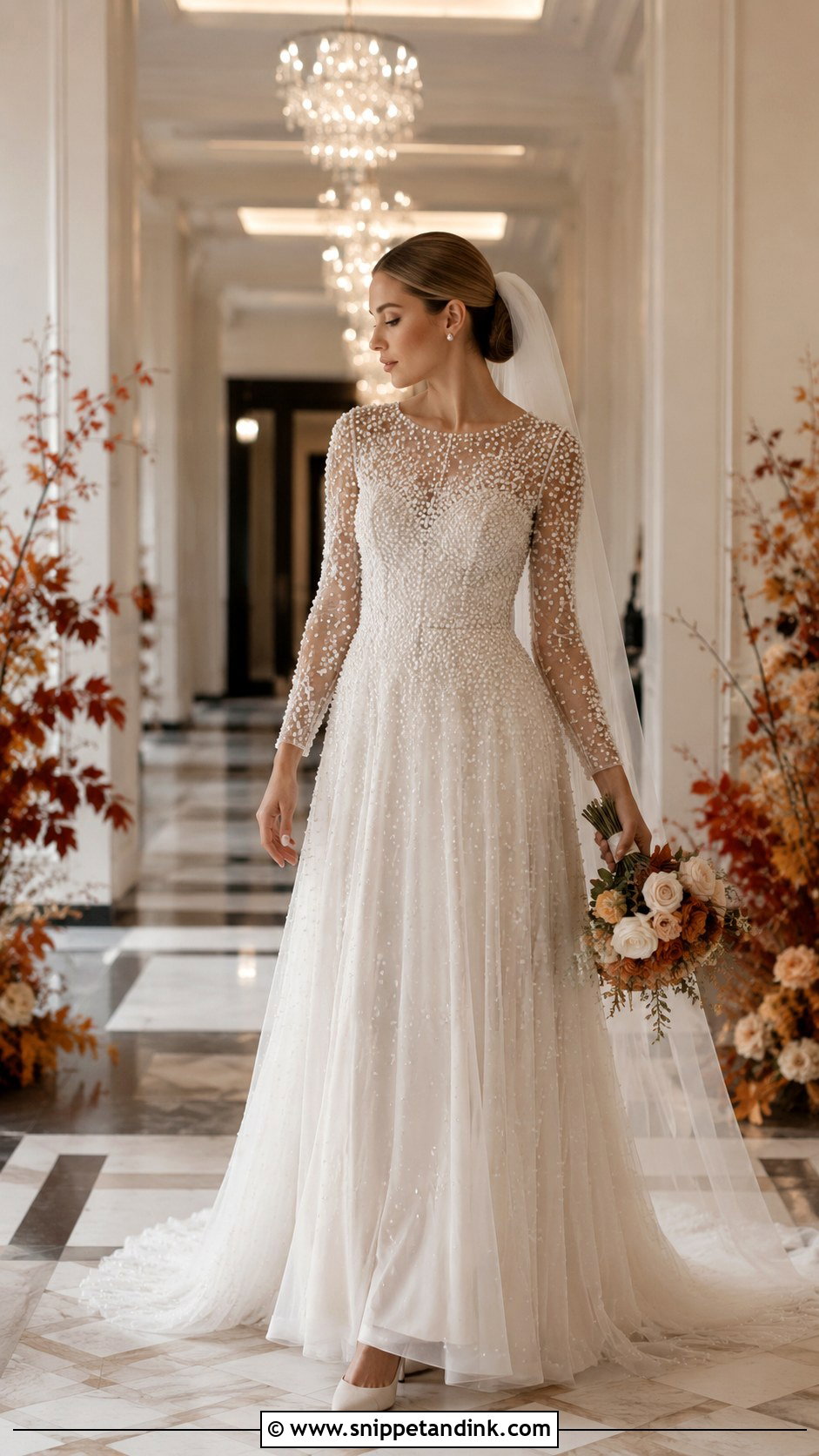
Pearl beading catches light softly instead of sparkling, which suits autumn’s low sun. Choose a fitted bodice with scattered pearls, sheer long sleeves and a flowing tulle or crepe skirt. Beading under the arms is my main concern: it rubs the inner arm and catches the veil, so ask for it to stop short of the underarm seam. A plain tulle veil, pearl studs, ivory heels and a polished chignon keep loose hair from snagging. For an outdoor ceremony, carry a wrap or cape rather than putting a coat over raised beads, which can crush or pull them off. It holds up under daylight and indoor lighting, at formal hotels and evening celebrations alike.
15. Drop Waist Autumn Wedding Dress
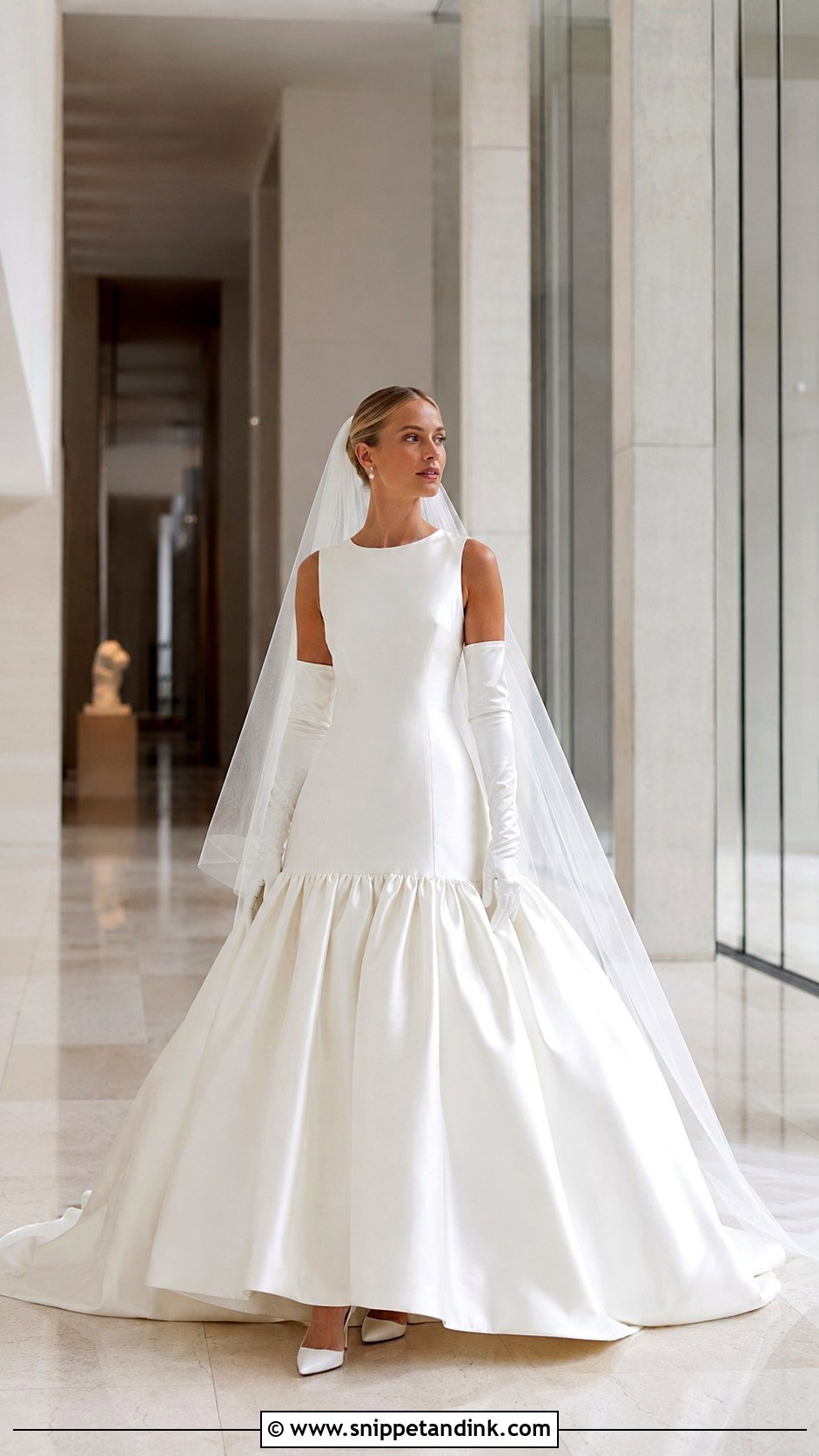
A drop waist runs the bodice down over the hips before the skirt opens, and it is a fashion-forward cut with the impact of a ball gown. It needs structured satin or mikado to hold the long bodice flat all day. Here is the honest trade-off: a seam at the hip changes how you sit, and on a short torso the skirt can start too low and shorten the legs. I check it from the front, side and back, sitting and walking, before anyone commits. A strapless neck with detachable gloves, fitted sleeves or a light cape handles the cold. Small earrings, satin pumps and a long plain veil keep it clean for modern ballrooms and museums.
16. Velvet Trim Autumn Wedding Dress
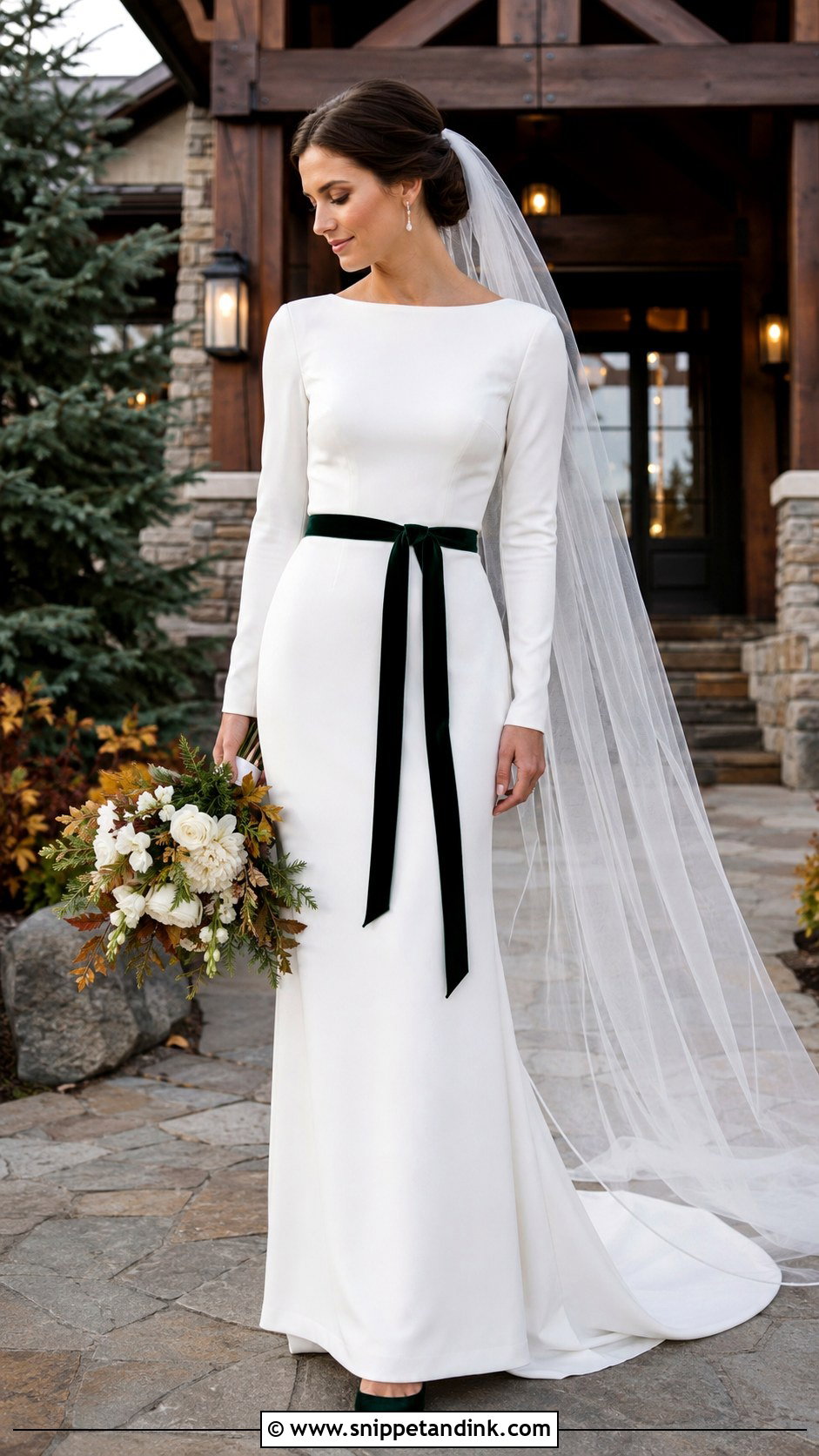
Velvet is the most seasonal texture there is, but a fully velvet gown is hot and heavy, so I use it as a trim. Start with ivory satin or crepe and add velvet through a narrow waist ribbon, covered buttons, removable cuffs or a structured bow. Deep ivory velvet looks tonal; forest green or black makes a modern contrast. Velvet crushes and marks when pressed, so store trims flat and steam them from the back, never iron the pile. One or two accents is the limit. Velvet pumps, small earrings and a clean tulle veil complete it, ideally on a fitted long-sleeve gown for a late autumn wedding in a lodge or historic hotel.
17. Detachable Overskirt Autumn Wedding Dress
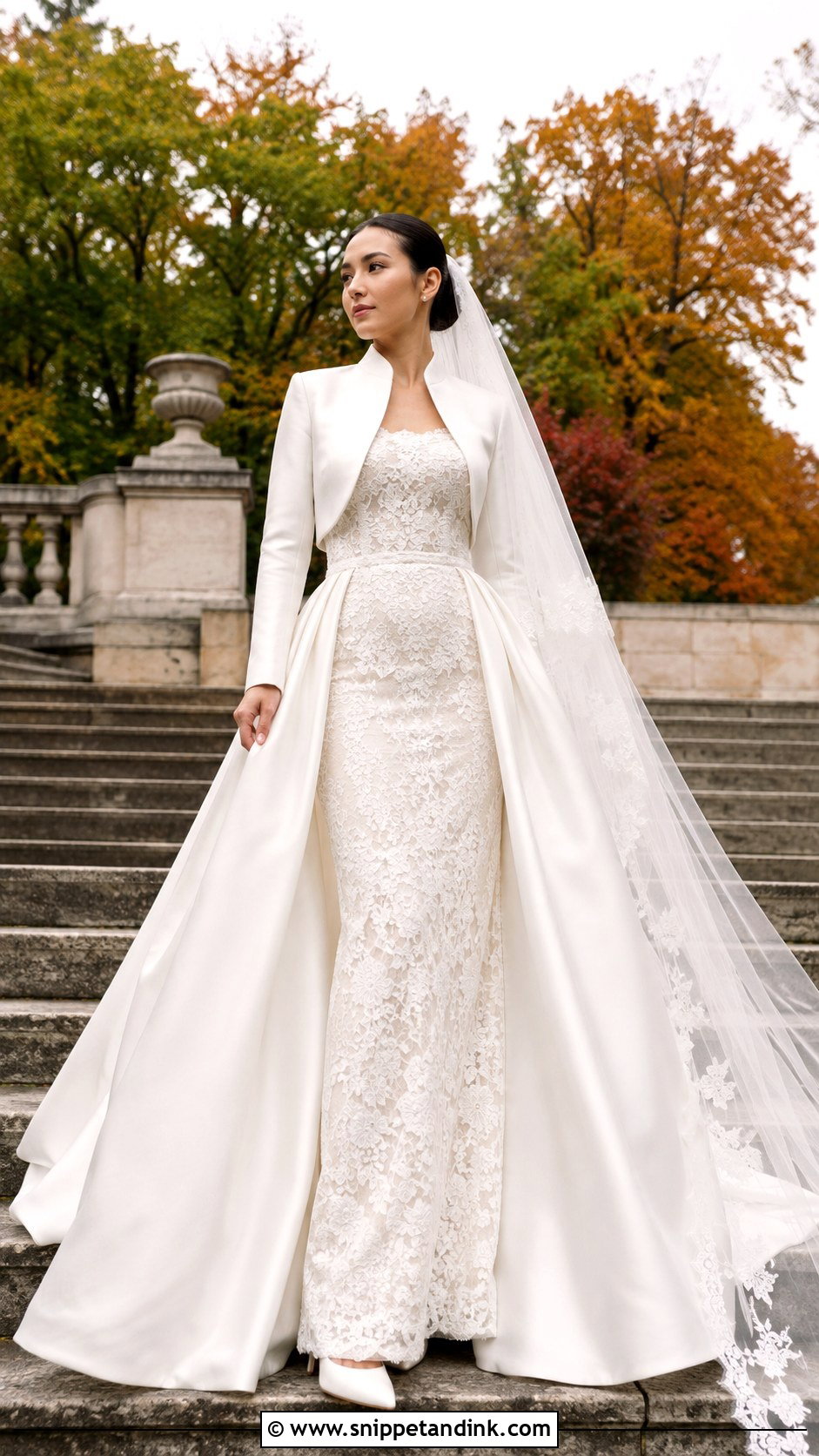
Why pick between a dramatic aisle dress and something you can dance in? A fitted crepe or lace gown with a detachable overskirt gives you both: full satin or tulle for the ceremony, then a sleek column or fit-and-flare underneath for the party. Practice the removal with whoever will help you. If it takes two people and five minutes in a cold bathroom, the fastening is wrong. Pair the ceremony look with a cathedral veil, crystal studs and closed-toe heels, then switch to a short veil or jeweled comb afterward. A removable bolero handles outdoor photos, which suits fall days that swing between cool gardens and warm halls.
18. Plus Size A-Line Autumn Wedding Dress
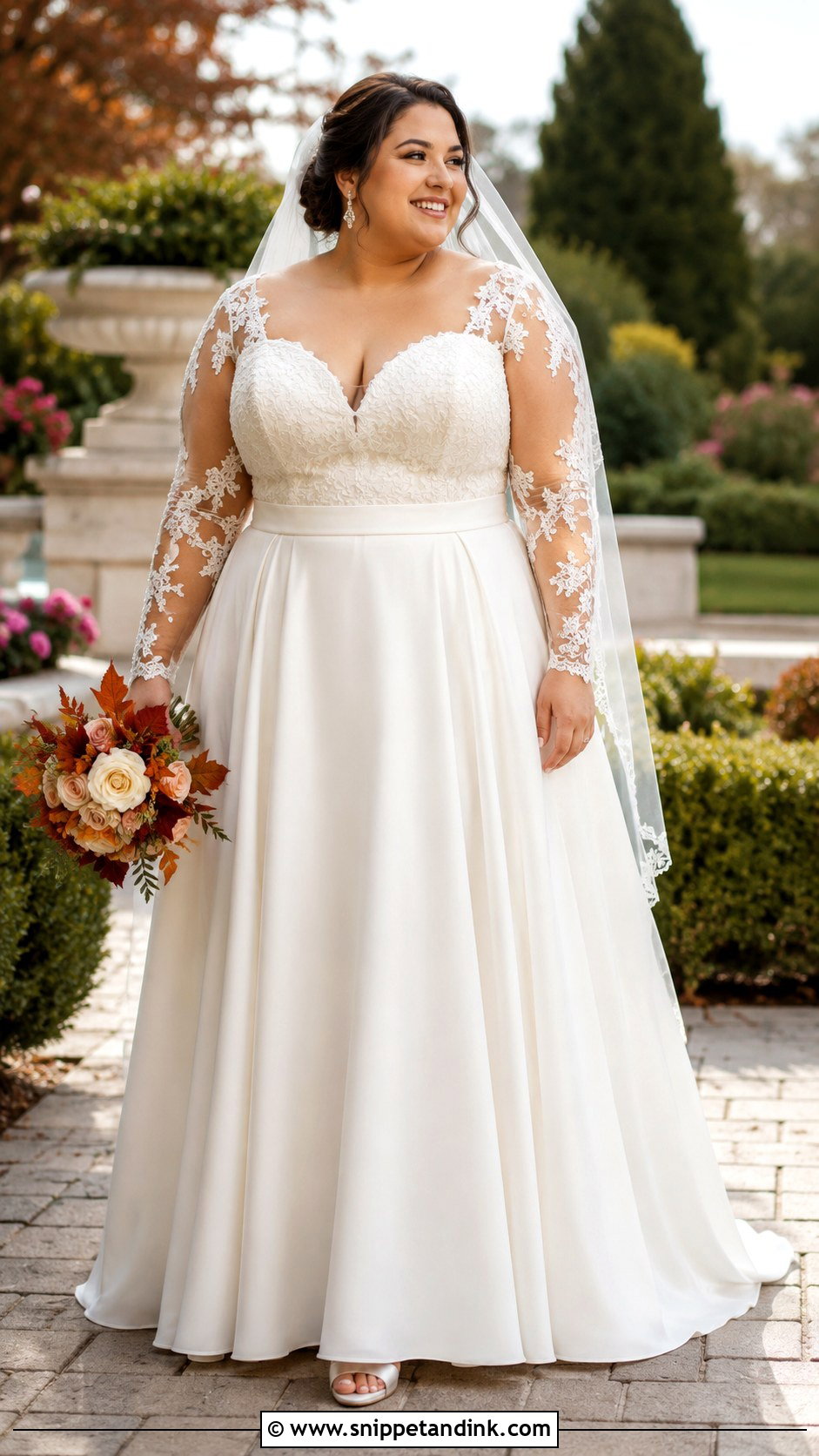
For plus-size brides, structure inside the dress matters more than tight alterations outside it. A built-in corset or well-boned bodice does the shaping so the outer fabric can fall smoothly. Choose wide straps, a V-neck or sweetheart neckline and a skirt falling from the natural waist, with long lace sleeves or a crepe bolero for coverage. Stable block heels, drop earrings and a fingertip veil set behind the shoulders complete it, and a defined waist seam or narrow satin belt gives a focal point. Order by your current measurements, not the size you hope to be, and work with a tailor experienced in bridal. You should be able to breathe, sit, hug and dance without thinking about it.
19. Petite Column Autumn Wedding Dress
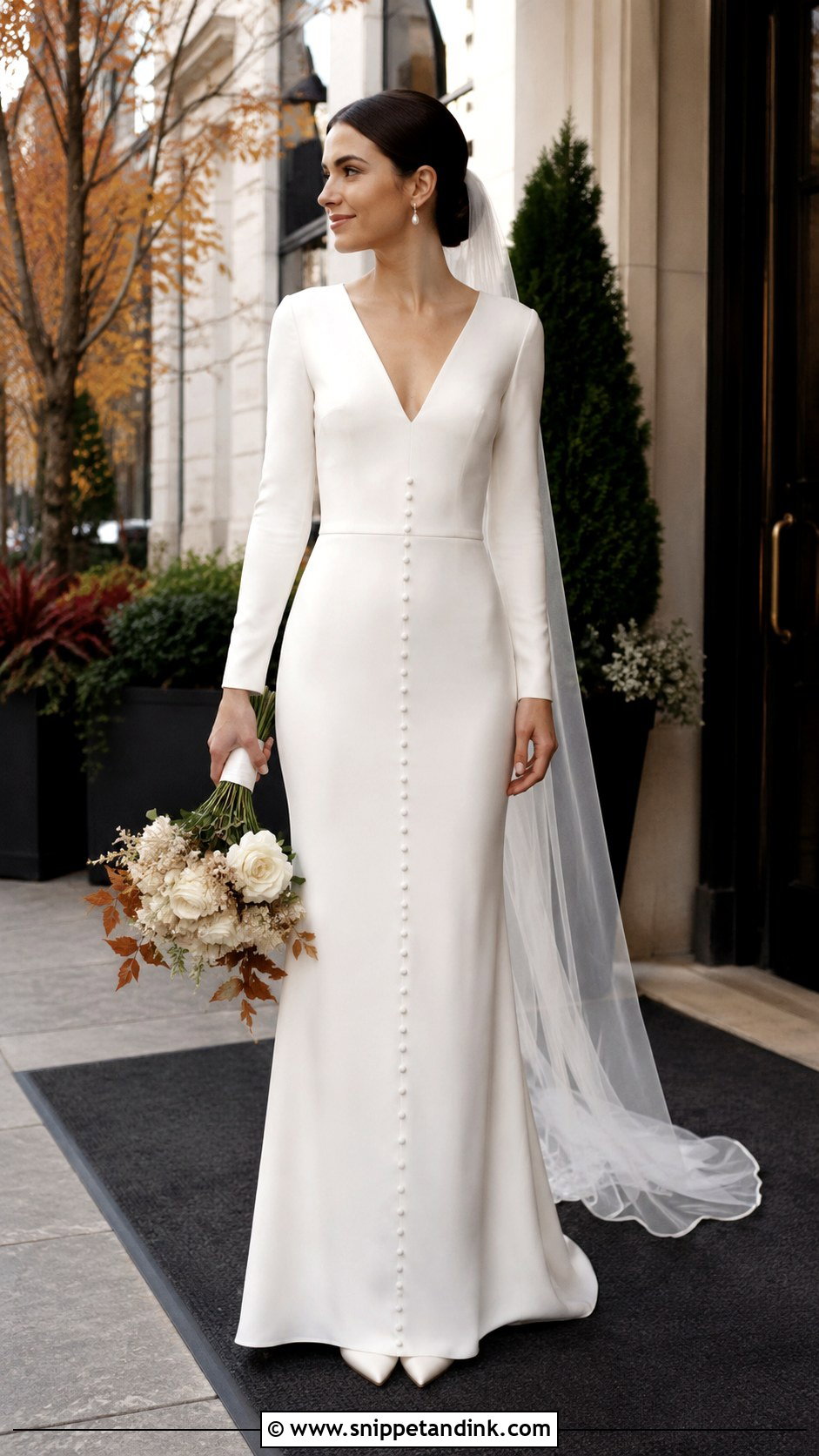
On a petite frame, less fabric looks taller. A column gown with a defined waist, narrow skirt and vertical details like covered buttons or seam lines draws the eye up. A modest V or square neck keeps the upper body open, and fitted long sleeves give fall coverage. Pointed heels close to the dress color, small drops and a narrow chapel veil keep the line long. Wide lace borders and big appliques cut you across the middle, so avoid them. Hemming a lace or appliqued hem is skilled work, because the motif has to be moved up rather than chopped, so find a seamstress who does it often. A low bun adds a little height.
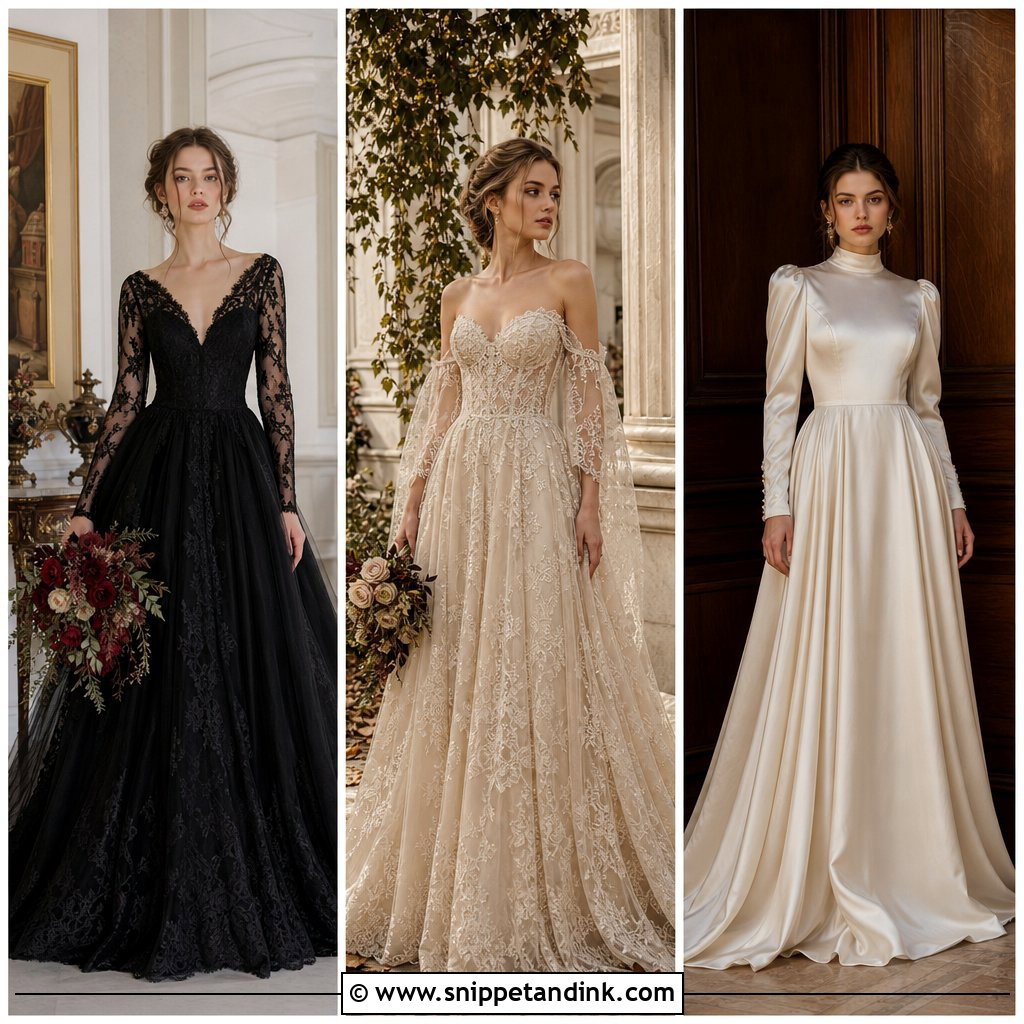
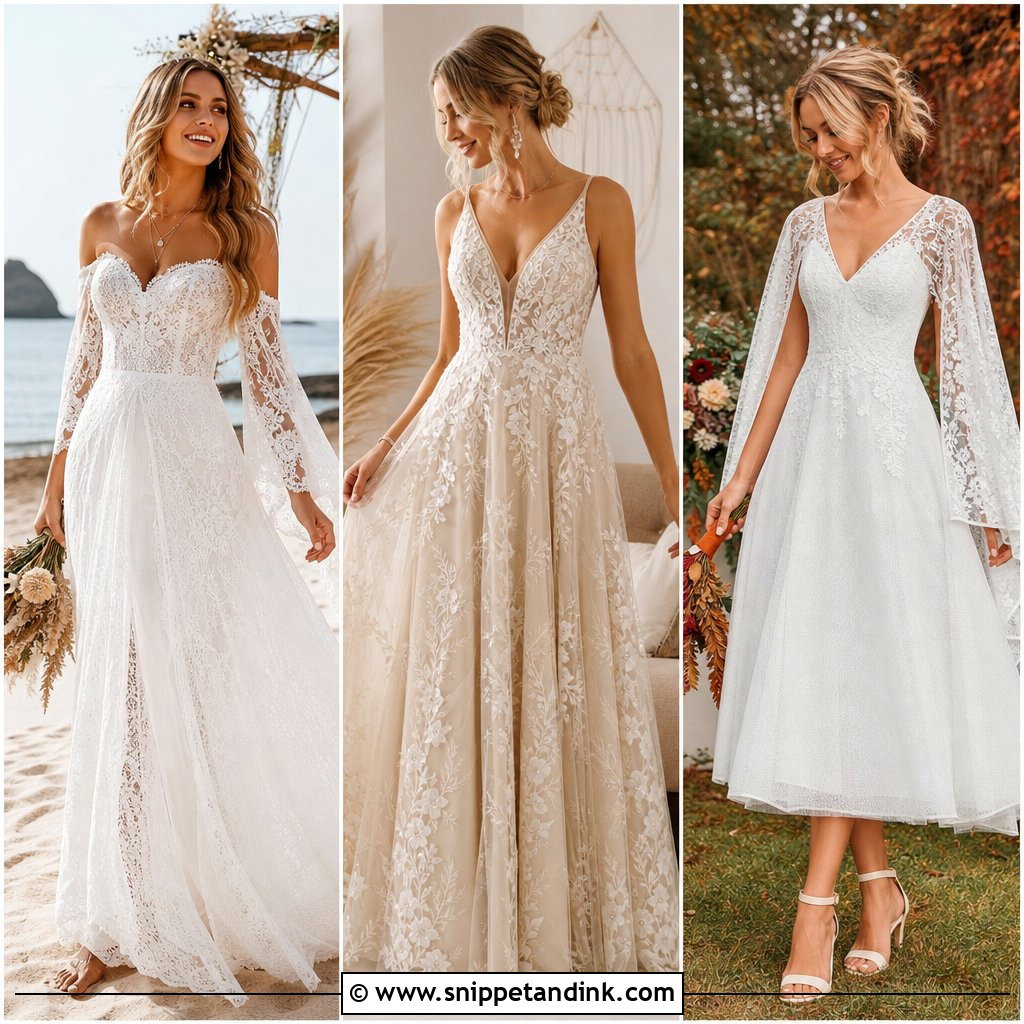
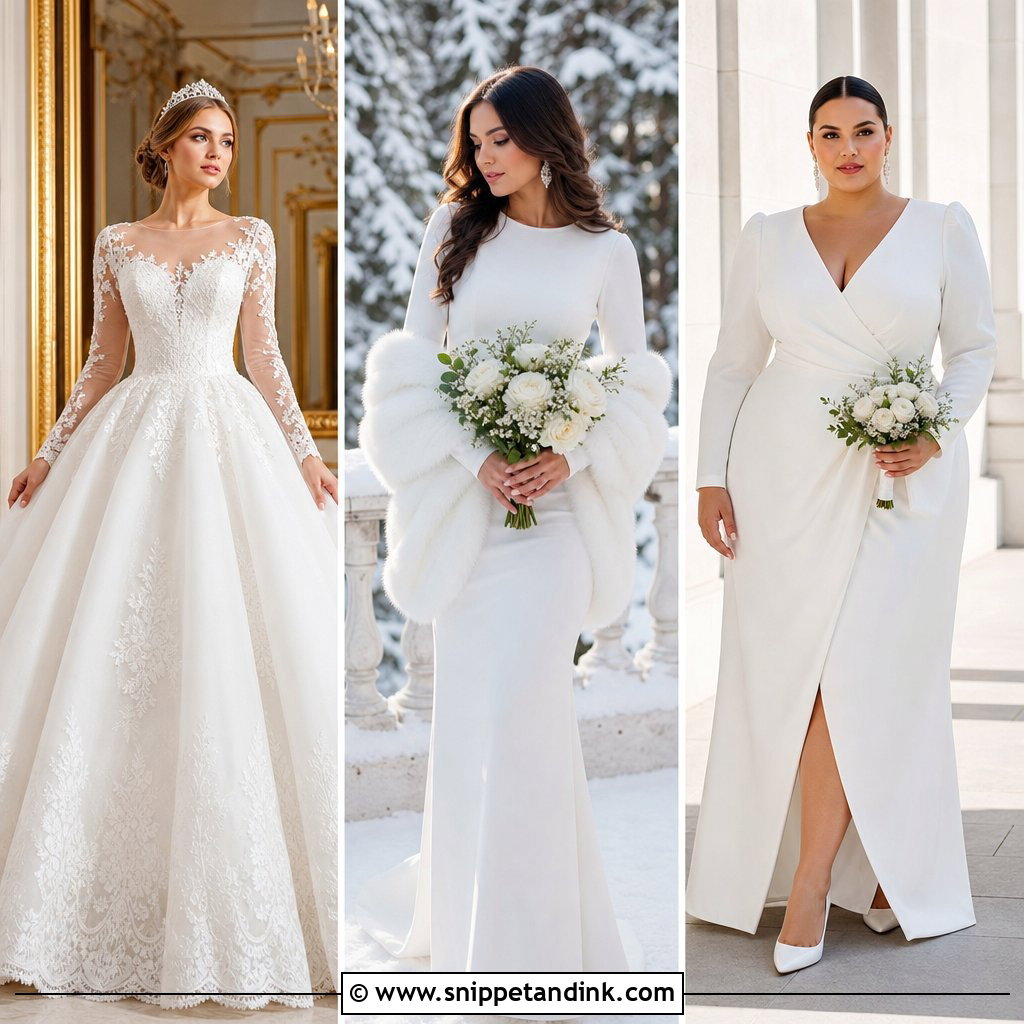
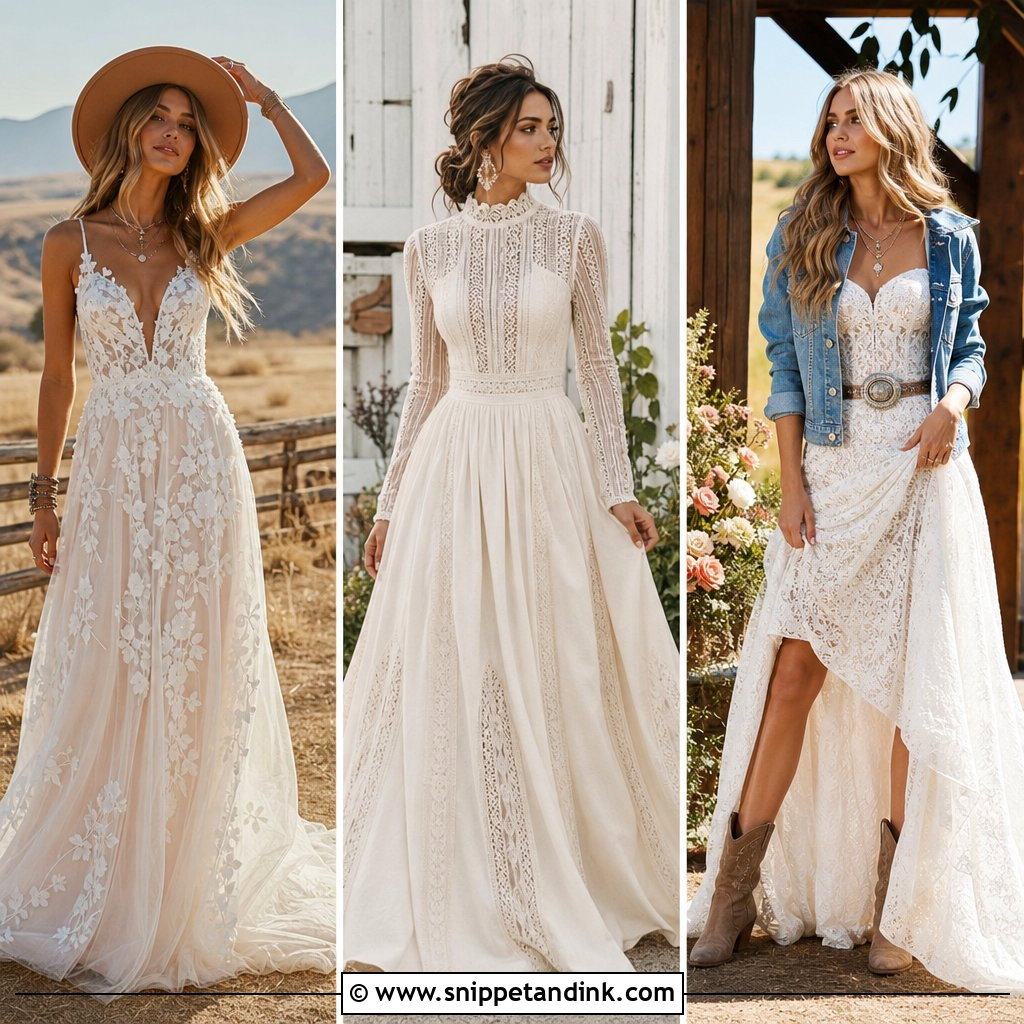
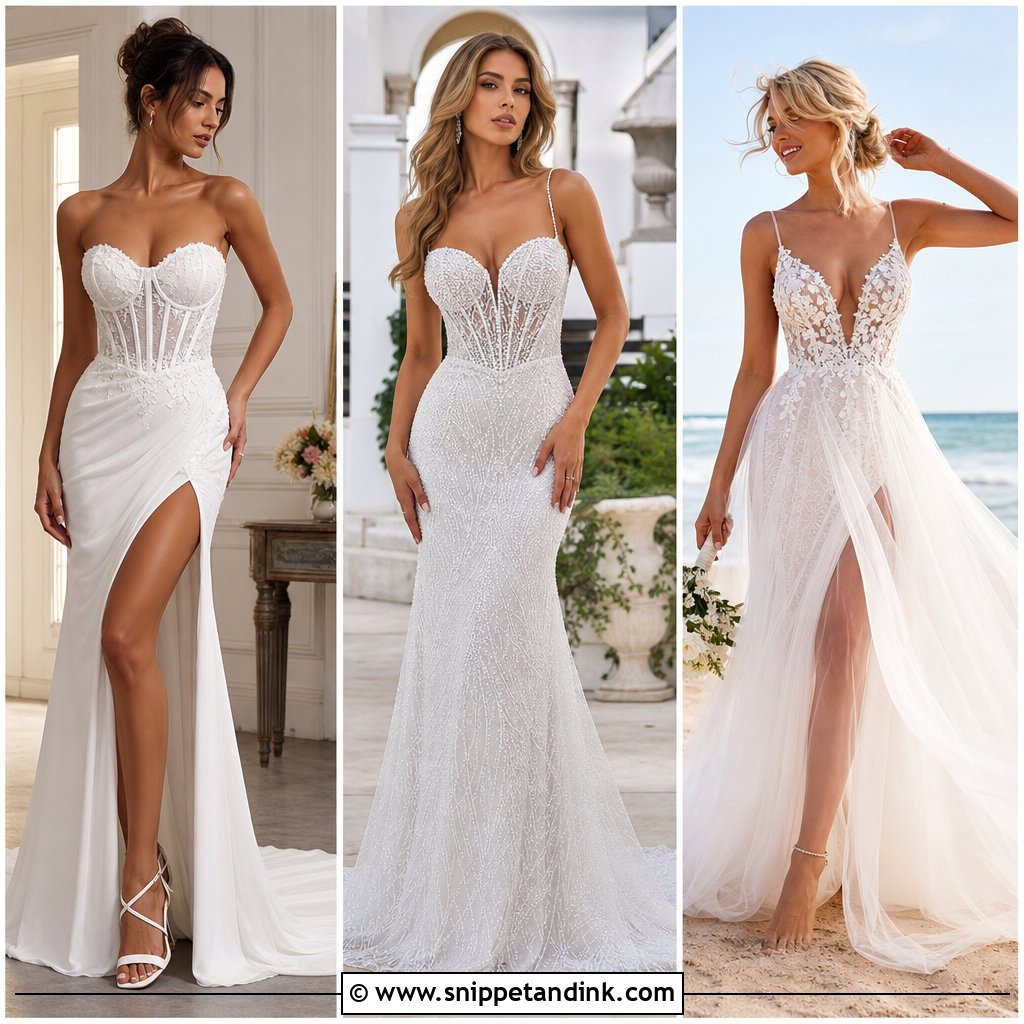
20. Long Sleeve Floral Autumn Wedding Dress
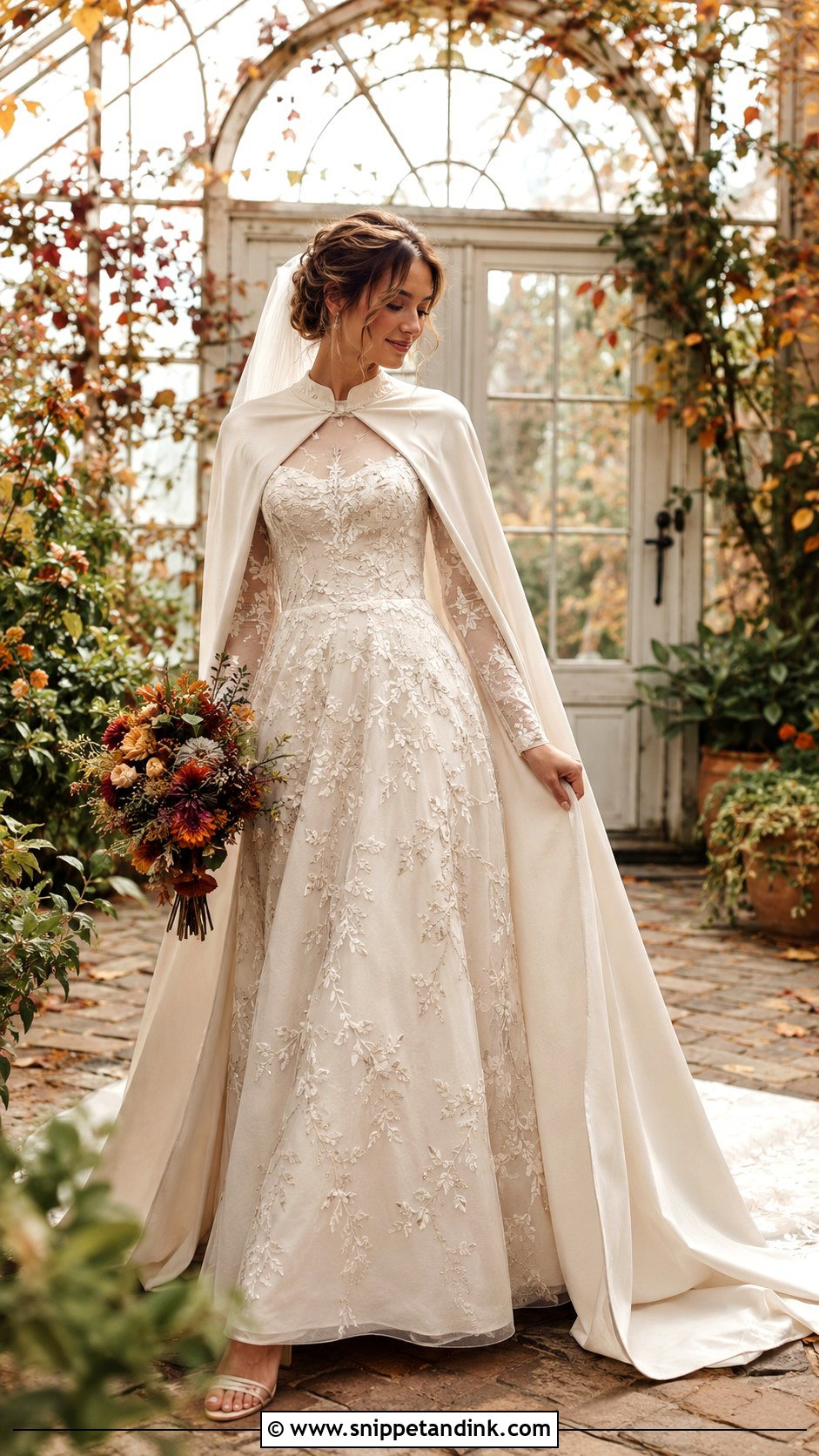
Tonal embroidery ties a gown to the landscape without turning it into a theme. On a long-sleeve gown, I prefer ivory vines, leaves and blossoms over colored motifs if you want a traditional finish. A fitted bodice and soft A-line skirt give the surface room to show. Keep everything else plain: a simple veil, neutral block heels, small earrings and a softly gathered updo. For colder portraits, a solid ivory cape adds warmth without competing with the stitching. Orchards, gardens, woodland clearings and greenhouses suit it, and it brings interest to a plain indoor ceremony room too.
Thermals, Stoles and a Muddy Hem After the Ceremony
A fall wedding can start mild and end close to freezing, and the photos will show if you are cold. Shoulders hunch, hands go red and smiles get tight. I plan warmth in layers that come off in seconds.
Under the gown
A thin flesh-toned thermal slip or seamfree thermal leggings disappear under a full skirt and make an outdoor ceremony far more bearable. Check them at a fitting, since even a fine layer changes how a fitted bodice closes.
Over the gown
A faux fur or wool stole, a tailored ivory coat or a cape can be handed to a bridesmaid just before the photographer starts. Keep anything with a rough lining away from lace and beading, and hand warmers tucked in a pocket or bouquet wrap help cold fingers look natural around the stems.
At the hem
Wet leaves and lawns stain the bottom few inches of an ivory gown faster than anything else. A bustle that lifts the train for walking outdoors helps, and a stain left alone is easier for a specialist cleaner to remove than one scrubbed with water at the venue. Get the gown professionally cleaned within a few weeks, before soil and grass marks set.
Your Venue Sets the Fabric, You Set the Rest
Fall gives brides more to work with than any other season: sleeves, satin with real weight, structured crepe, layered lace, capes and shoes you can actually walk on leaves in. Let the venue tell you how formal to go, but don’t let a theme overrule your taste. At every try-on, sit, walk, raise your arms and wear something close to your planned heel. Then think about how quickly each layer goes on and comes off when the temperature drops after sunset. A column, a floral gown or a satin ball gown can all work. Good tailoring is what makes any of them feel like yours.
You'll Like These Ideas:


Leave a Reply