
Sleeves change a gown more than any other single detail I fit. They frame the shoulders, balance a big skirt, quiet down a very fitted bodice and give the camera something to find when you’re holding a bouquet. They also carry most of the comfort story, because an arm that can’t lift is the first thing a bride notices at the reception. From lace illusion sleeves to plain satin cuffs, today’s long sleeve gowns show up in ballrooms, gardens, city halls and cold beaches alike. Below are 25 sleeved looks, each styled as a complete outfit with veil, shoes and jewelry, plus what I’d check on each one before you commit.
Raise Your Arms at Every Fitting
The first thing I do when a bride steps out in a sleeved sample is ask her to lift both arms as if she’s hugging someone taller. Sleeves that look perfect with arms at your sides can lock you in place once you move, and the bodice will often ride up with them. That one gesture tells me more about the fit than any mirror.
Mobility comes mostly from the armhole, not the sleeve. A higher, closer armhole actually lets the arm move more freely, while a low, roomy armhole drags the whole side seam up when you reach. Sleeves cut on stretch tulle or stretch lace forgive a lot; satin and mikado forgive almost nothing.
What I check before signing off
- Length at the wrist bone with your arm bent, because sleeves pull up an inch or more when you hold a bouquet.
- A finger’s width of ease around the bicep, so the fabric doesn’t print every crease when you sit.
- Cuff buttons on elastic loops rather than fabric loops, so you can get your hand through without a helper.
- The shoulder seam sitting on your actual shoulder point; if it drops, the sleeve twists toward your back.
- Your engagement ring against the cuff edge, since lace scallops and tulle snag easily on prongs.
Bring the shoes and undergarments you plan to wear from your second fitting onward. Sleeve length and bodice fit both shift slightly with a different bra or heel height, and it’s far easier to adjust once than twice.
1. Lace Long Sleeve Wedding Dress
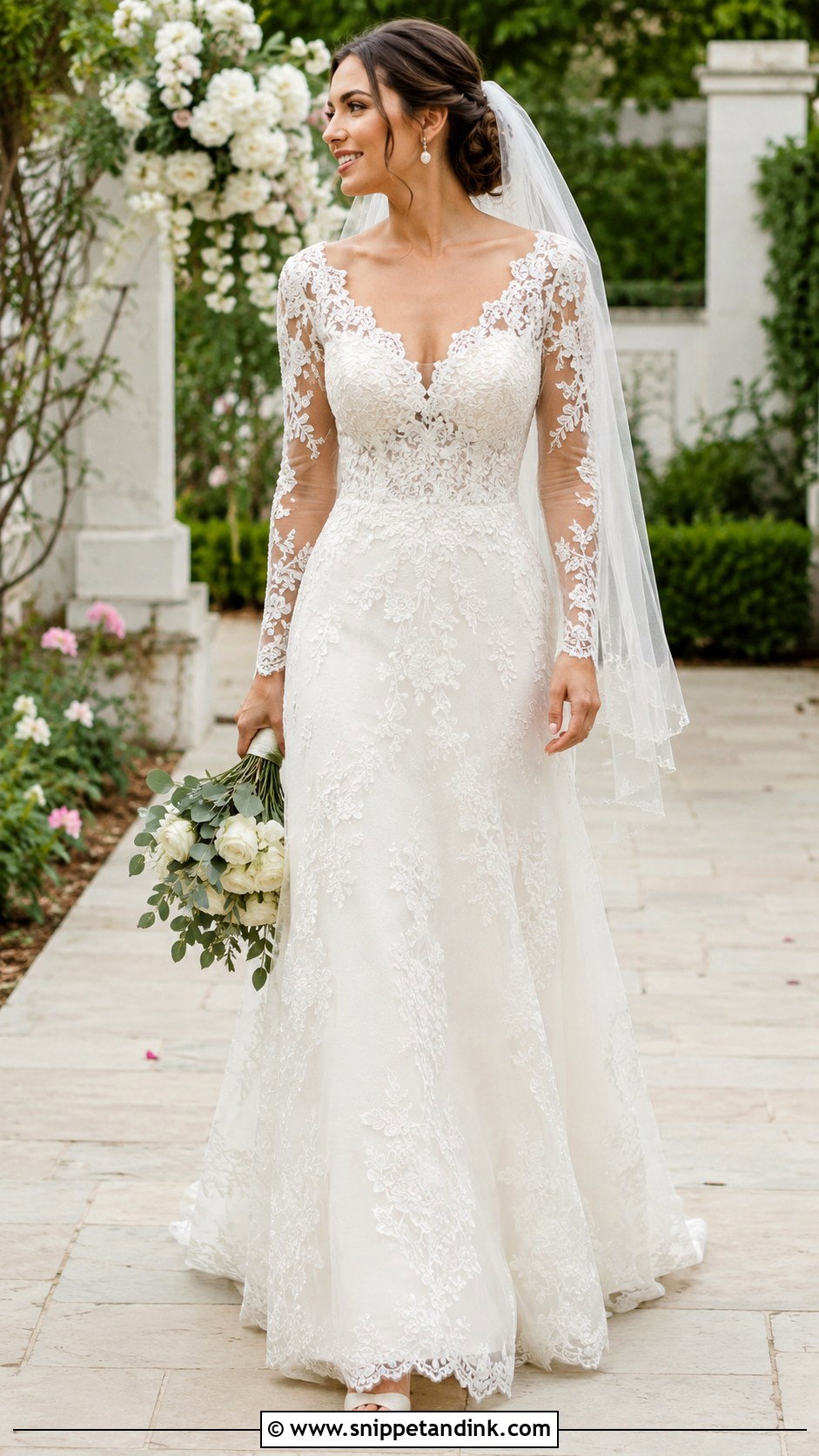
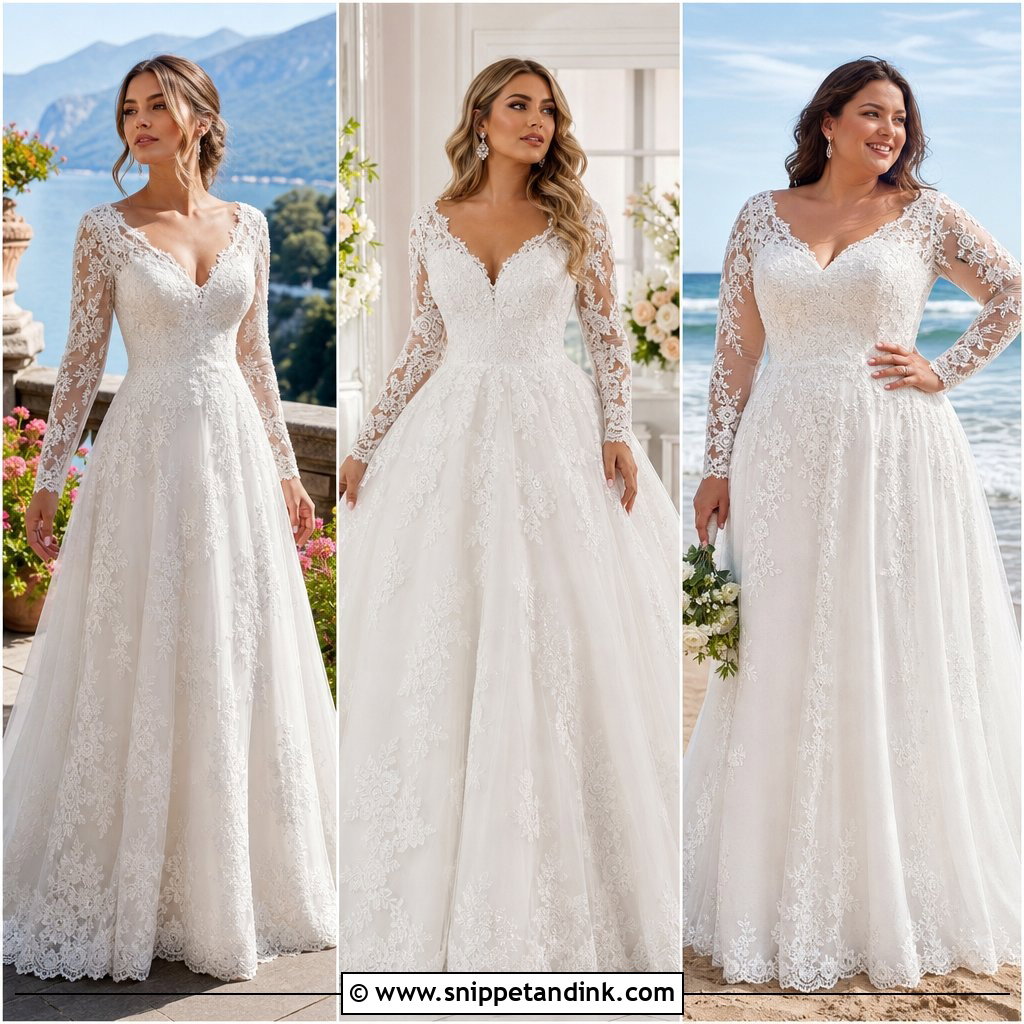
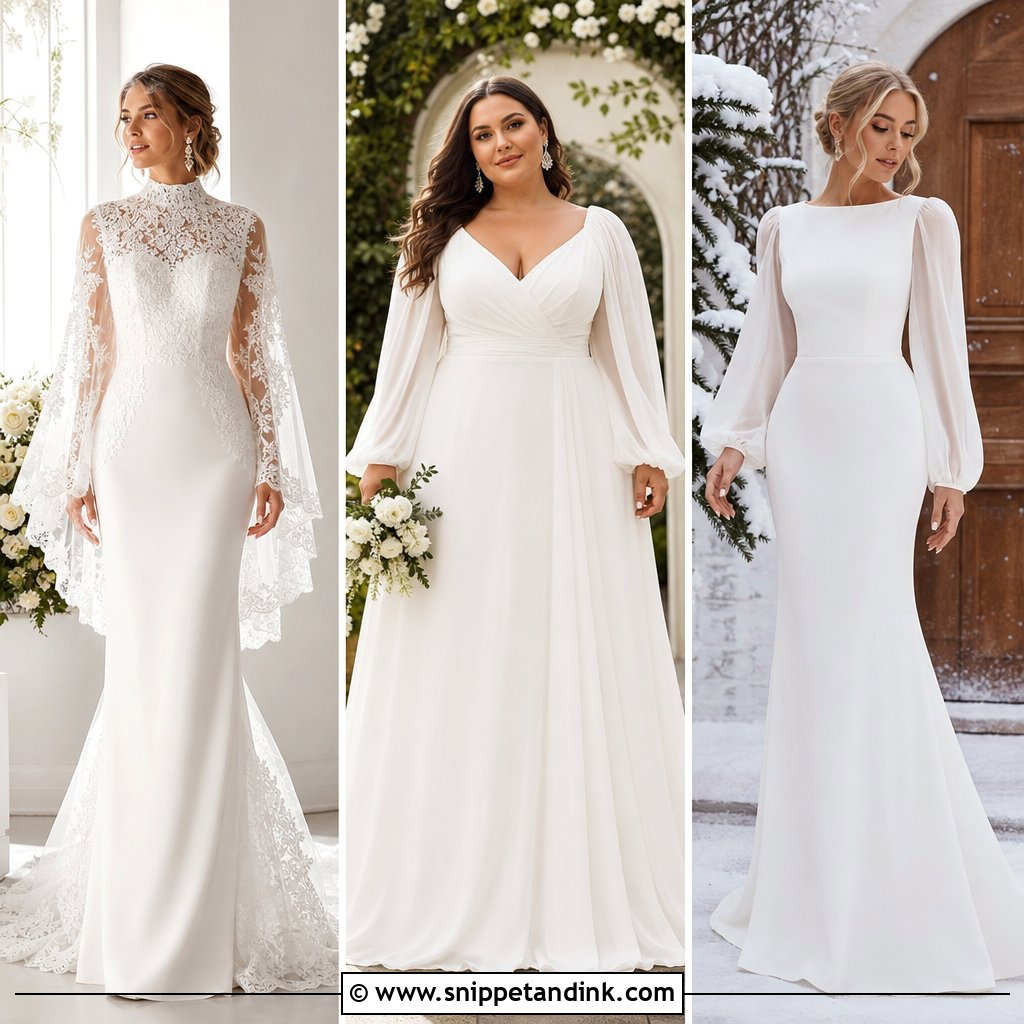
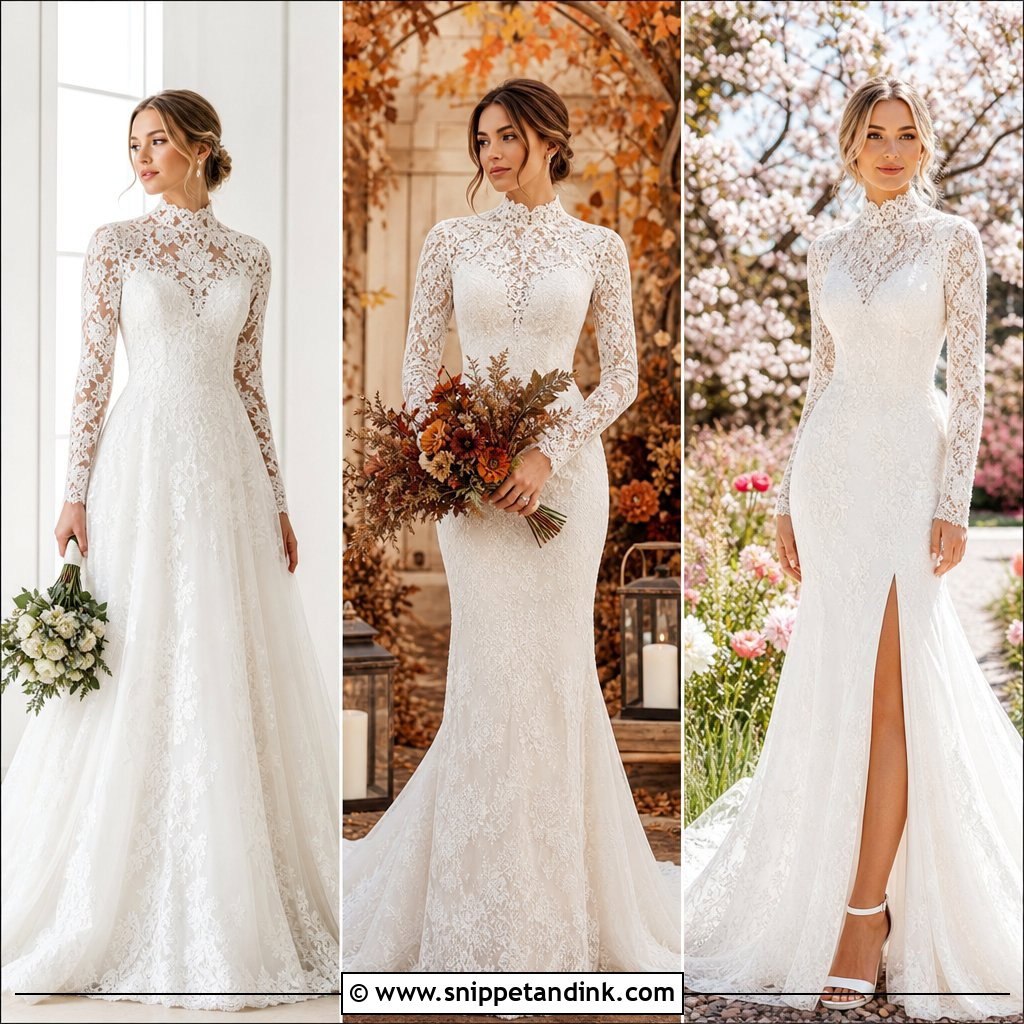
Lace is the sleeve I see brides reach for first, and it earns that spot because the pattern hides small fit flaws that a plain fabric would show. Most lace sleeves sit on a stretch tulle base, so ask what the base is: a nude base lets the motifs read clearly on camera, while an ivory base turns the whole arm paler. Pair it with a fitted bodice, a sweetheart lining and an A-line or fit-and-flare skirt. Pearl drops, a fingertip veil and ivory pointed heels keep the outfit in one family, and soft makeup leaves the lace as the main event. One honest warning: scalloped cuff edges catch on ring prongs, so try your engagement ring on during the fitting.
2. Satin Long Sleeve Wedding Dress
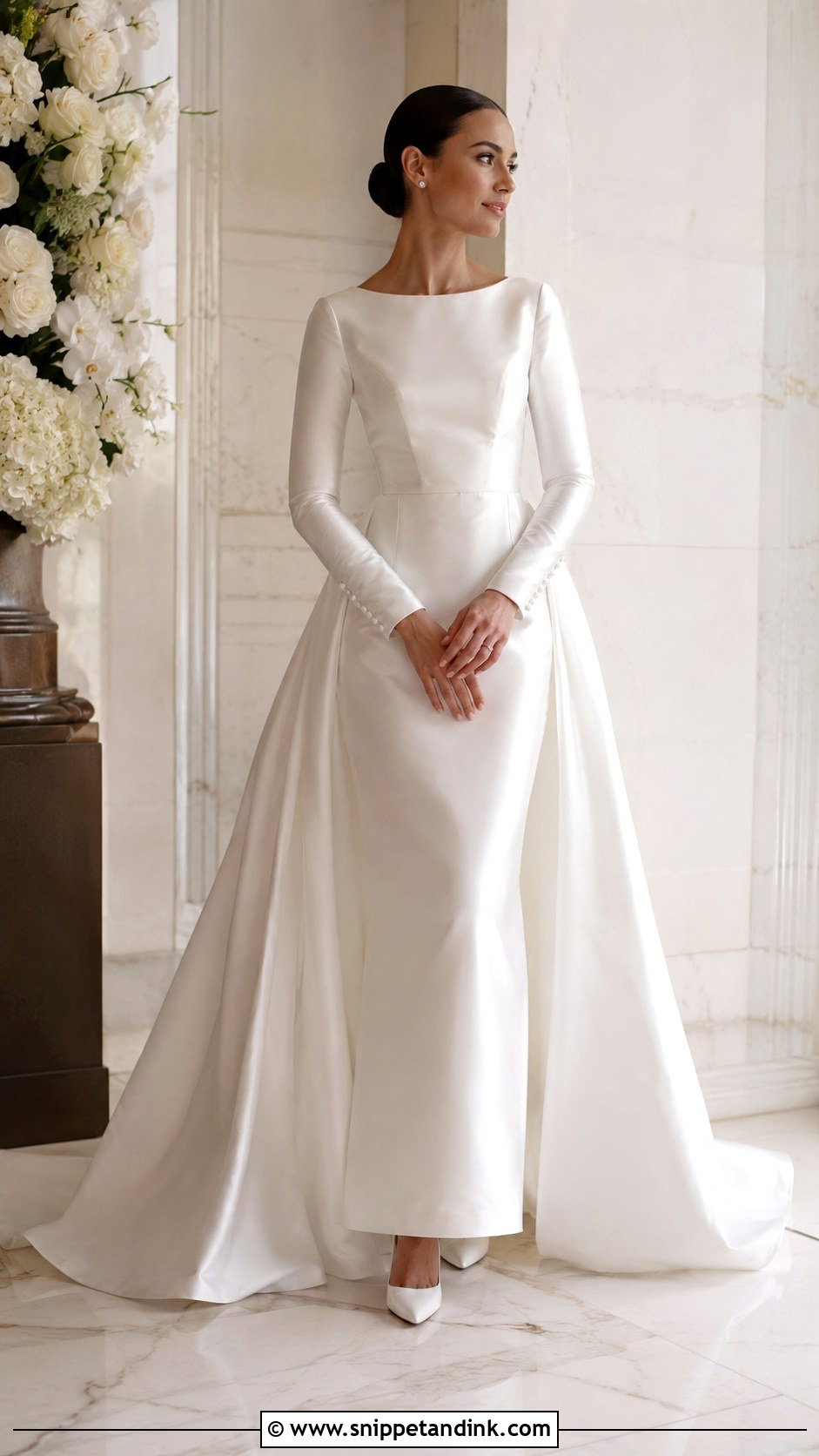
Satin is the least forgiving sleeve fabric I work with. It reflects every pull line, so a sleeve that’s a touch too tight across the bicep shows a row of creases the moment you bend your arm. When the tailoring is right, though, a structured bodice, covered buttons and a slim or A-line skirt look expensive with almost nothing added. A high neck reads formal; a V softens it. Satin pumps, diamond or crystal studs, a sleek low bun and a long plain-edged veil finish the outfit. Ask your seamstress to fit the sleeves with your arms bent, not just hanging.
3. Crepe Long Sleeve Wedding Dress
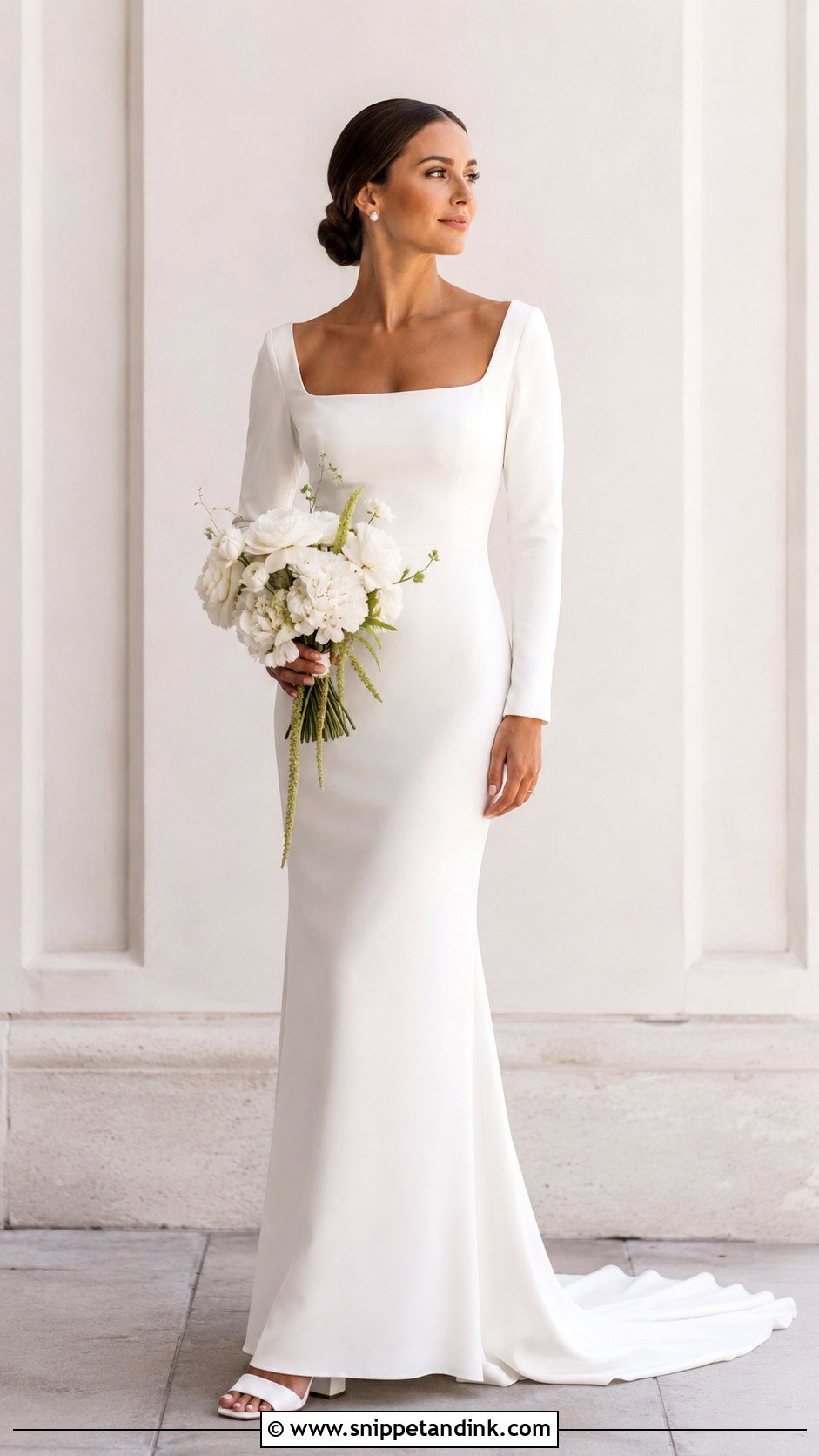
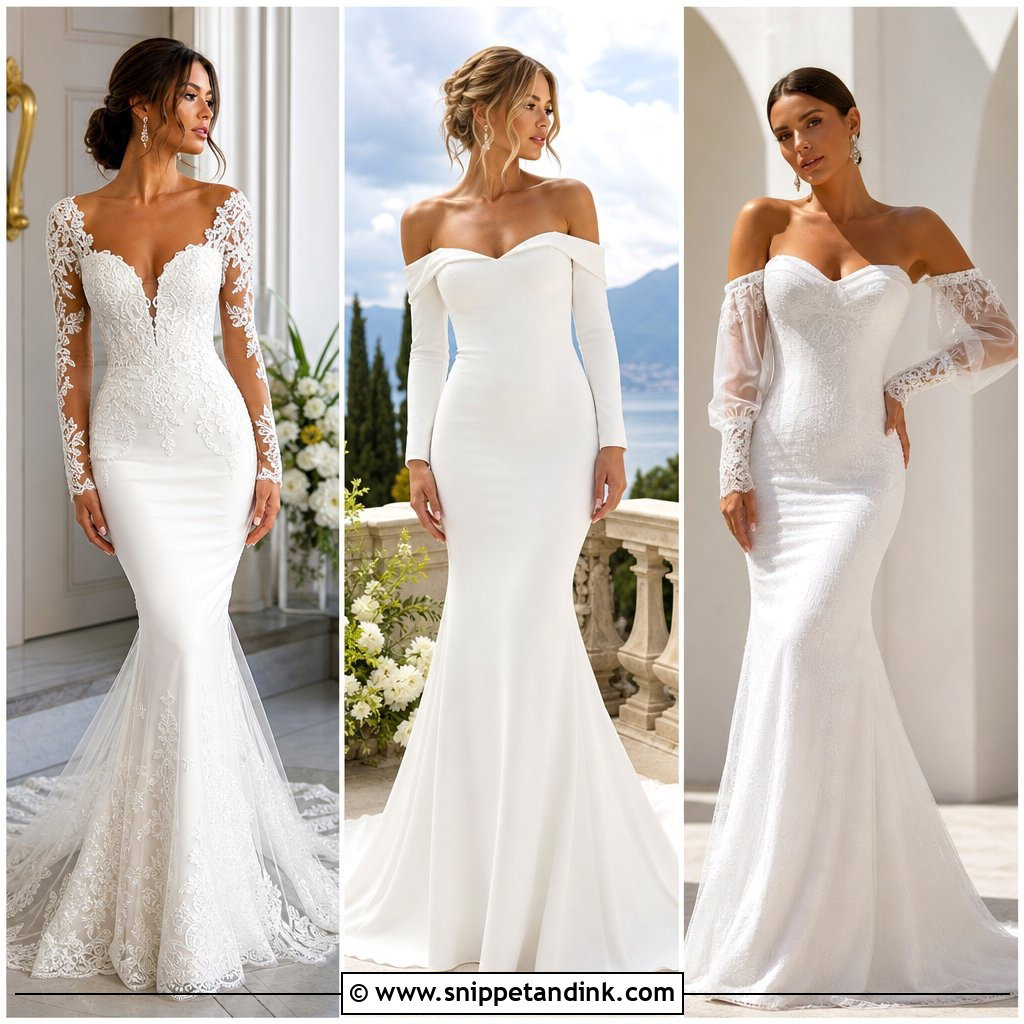
Crepe is my pick for a bride who wants clean lines without shine. It has a soft, weighty drape that skims rather than clings, and it shows seam placement more than texture, so the construction has to be neat. A fitted sheath or mermaid silhouette with long sleeves makes the shape do all the work. A square or bateau neckline, or an open back, adds the interest. I’d finish it with pearl studs, white block heels, a smooth chignon and a structured bouquet. Because there’s no lace to hide behind, check that the sleeve ends exactly where you want it on the wrist.
4. A Line Long Sleeve Wedding Dress
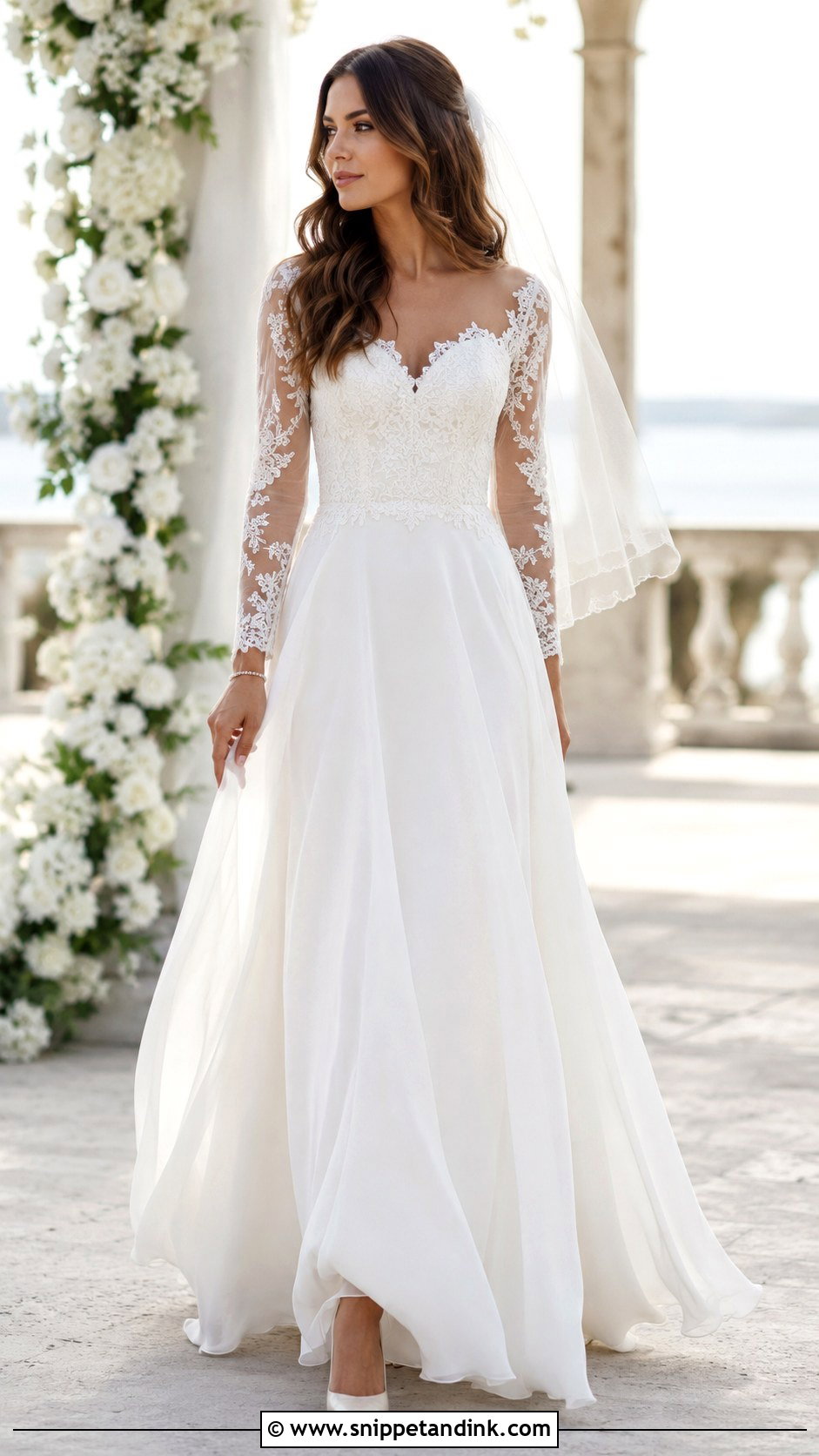
The A-line is the shape I suggest when a bride has no idea where to start. The bodice marks the waist and the skirt falls away from the hips, so you get movement without carrying the weight of a ball gown. Its sleeve fabric decides the mood more than anything else: lace reads romantic, satin reads tailored, sheer tulle keeps it light. Style it with a waist-length veil, a thin bracelet, loose waves and ivory heels you can actually stand in for ten hours. It suits nearly every venue and season, which is exactly why it’s easy to overlook in a shop full of drama.
5. Ball Gown Long Sleeve Wedding Dress
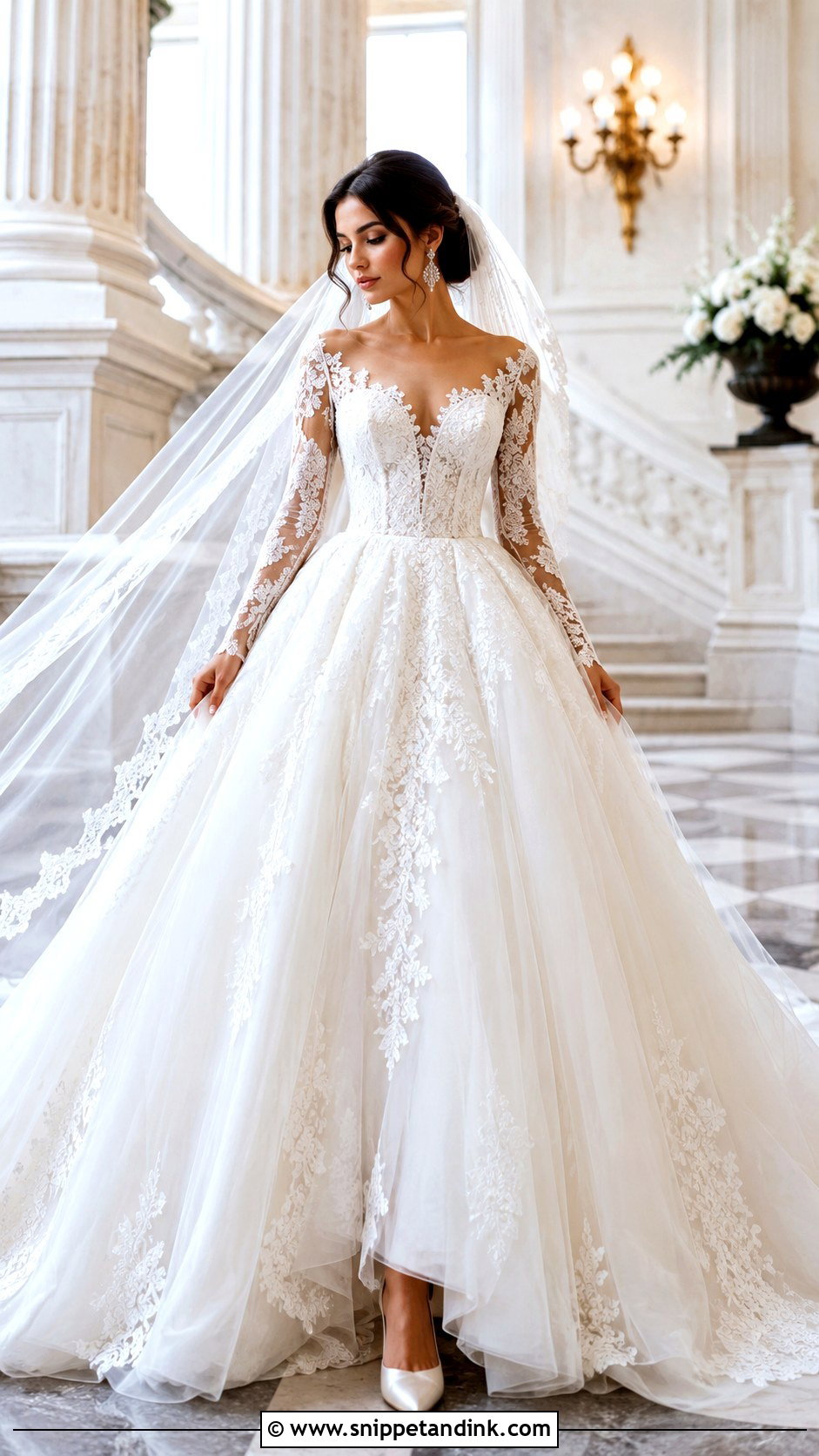
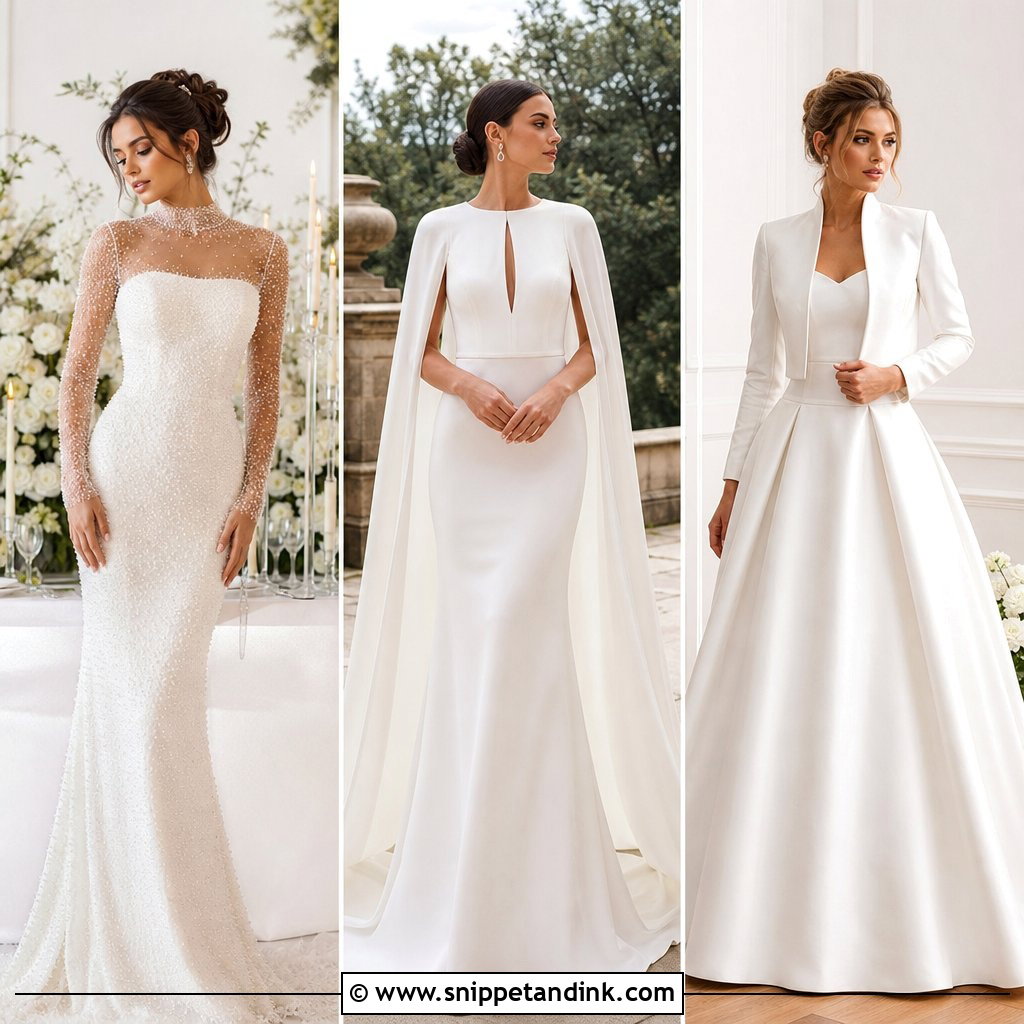
A full ball gown skirt can swallow a petite bride, and long sleeves are what pull the proportion back. They add visual weight at the top so the volume below looks intended rather than overwhelming. A fitted bodice in lace, beading or satin anchors the waist. For a grand entrance, I’d add a cathedral veil, crystal earrings and classic heels, but keep the jewelry modest if the skirt is heavily worked. This shape belongs in formal rooms and large estates. Plan for the weight: a layered skirt plus sleeves gets warm by the first dance, so ask about a bustle that lifts the hem off the floor.
6. Mermaid Long Sleeve Wedding Dress
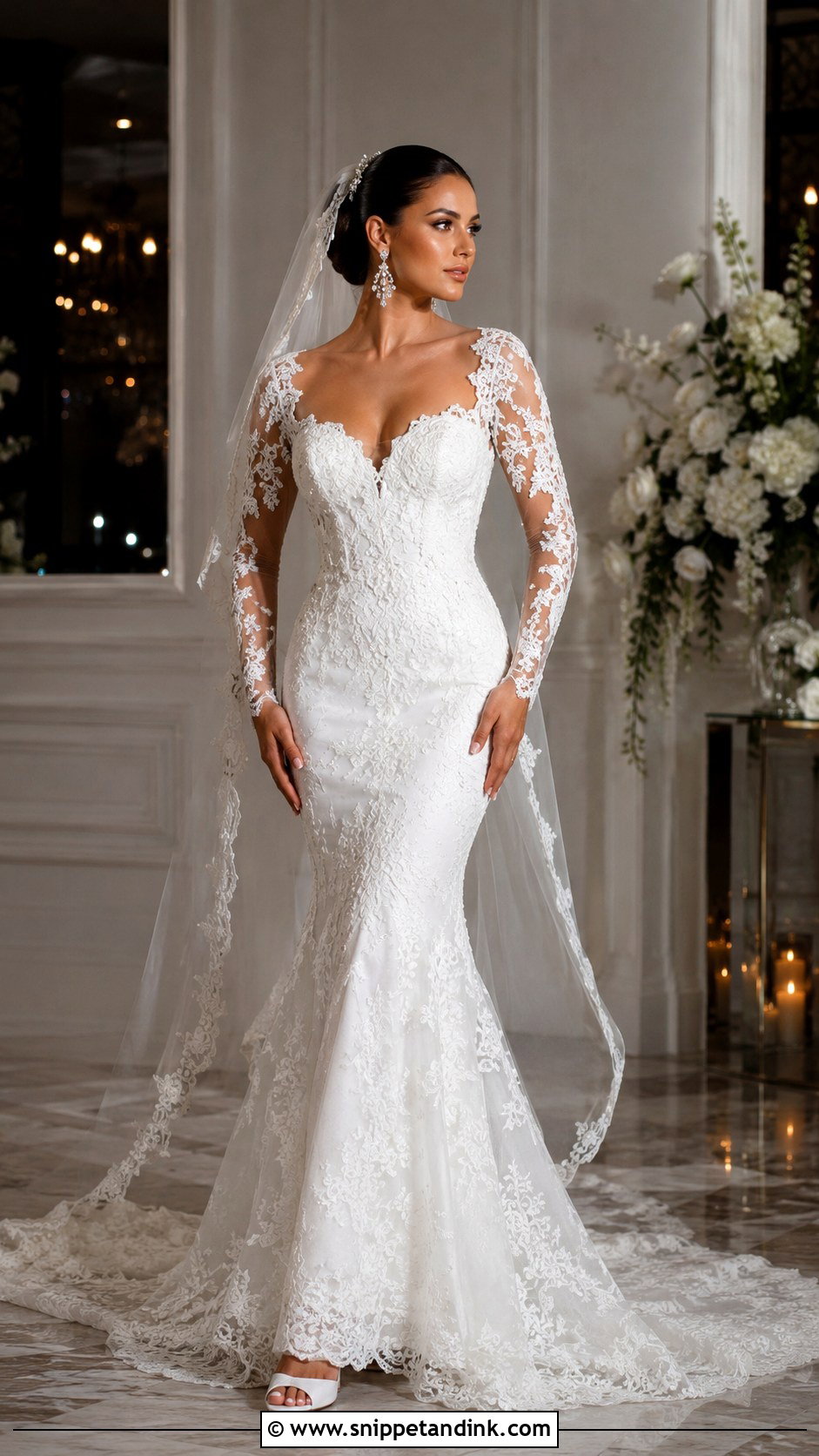
The mermaid fits close through the bodice, waist and hips and then flares near the knee, which gives a sculpted line with a big finish. Sleeves soften that shape, especially in lace, crepe or stretch satin. Where the flare starts matters more than brides expect: set too low, it makes walking a shuffle and stairs a project. I always have brides sit and climb a step in the sample. Style it with a long veil, statement earrings and plain heels hidden under the hem, plus a smooth updo that keeps the neckline and sleeves clear for evening portraits.
7. High Neck Long Sleeve Wedding Dress
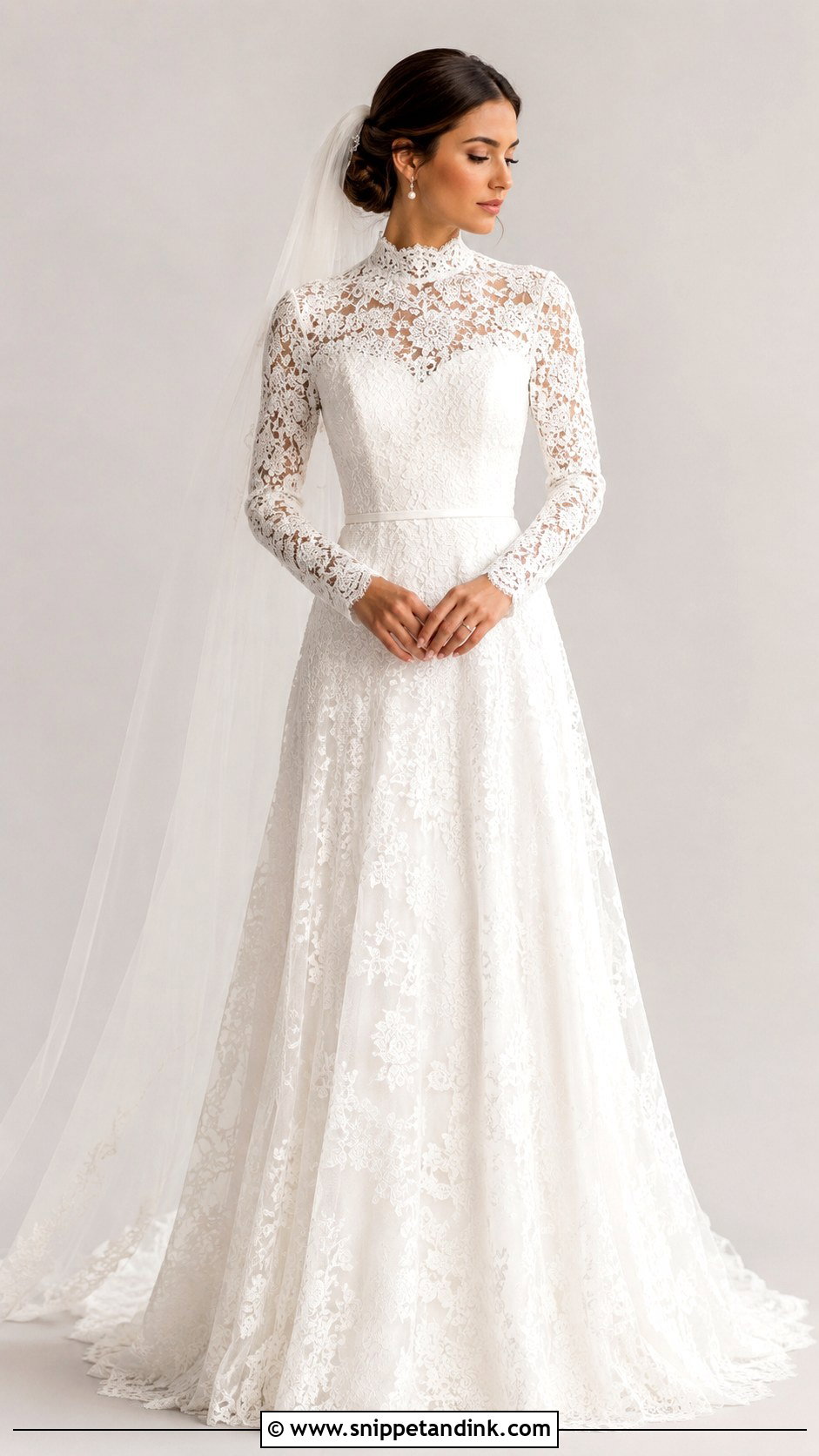
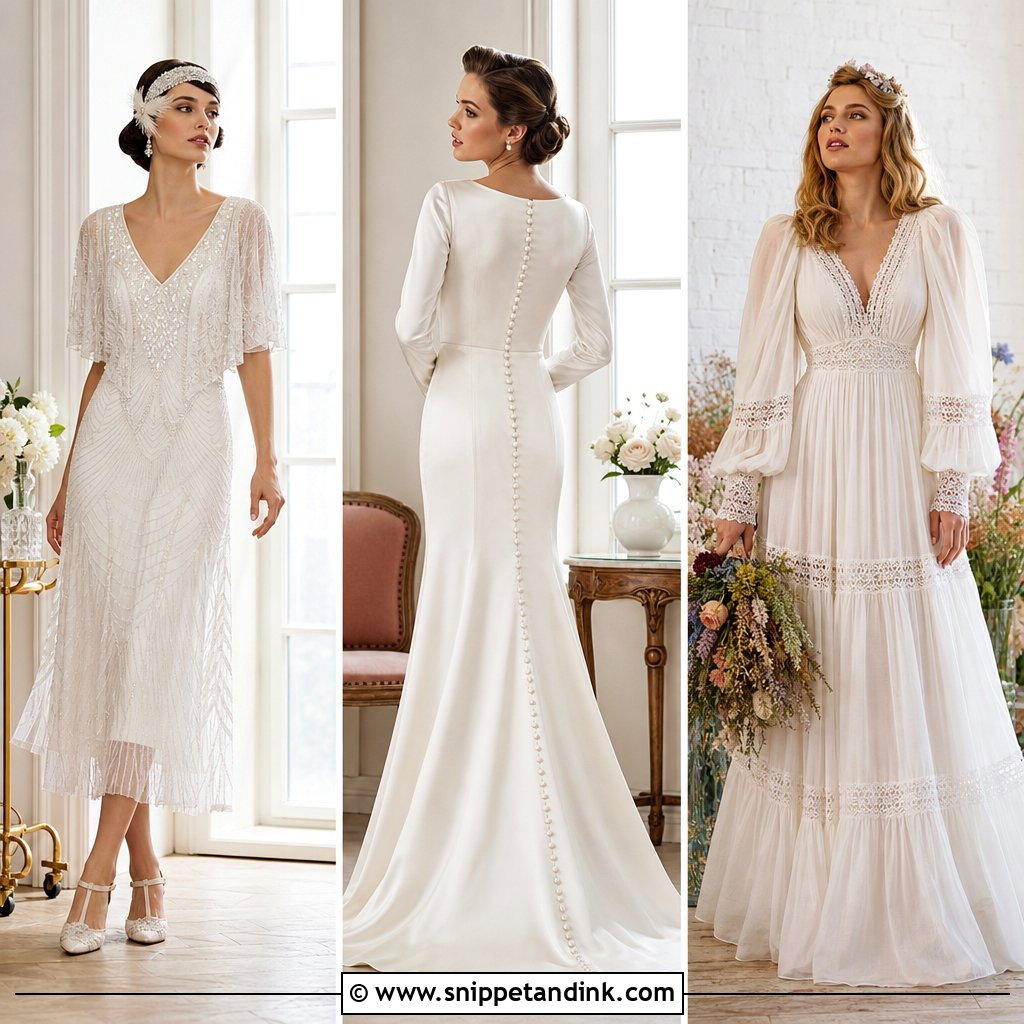
A high neck with long sleeves frames the face and turns the shoulders into the focus. In lace it leans vintage; in crepe or satin it looks clean and modern. Skip the necklace entirely, because the neckline already does that job, and choose small pearl earrings with a low bun and a veil tucked under the knot. The detail I check first on this style is the neck closure. If it sits even slightly snug, you’ll feel it every time you turn your head, so ask for a finger’s width of ease. It’s a natural fit for cool-weather ceremonies and brides who want full coverage, and the side profile is where it really shows.
8. Illusion Long Sleeve Wedding Dress
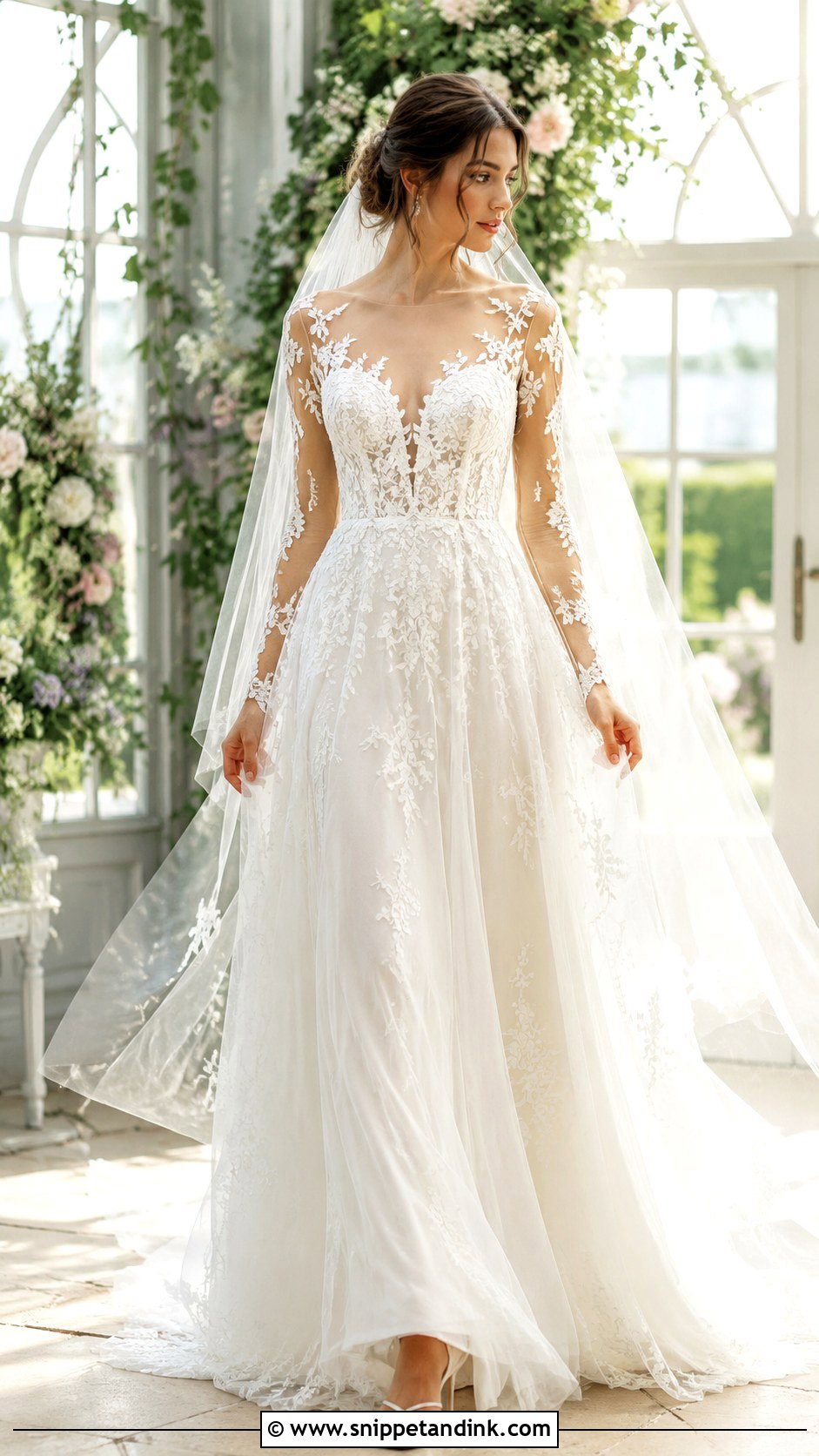
Illusion sleeves put lace appliqué or beading on sheer tulle so the detail looks like it’s floating on your skin. They feel far lighter than a lined sleeve, and the sheer panel can carry on across the neckline, back or shoulders. Tulle also tears more easily than people think; a bracelet clasp or bouquet wire can snag it, so I keep wrists bare with this one. Barely-there earrings, a sheer veil and plain heels let the sleeve pattern lead. If the appliqué is bold, pare the accessories down further. It’s a strong option for spring, fall and indoor receptions where you want detail without heat.
9. Off Shoulder Long Sleeve Wedding Dress
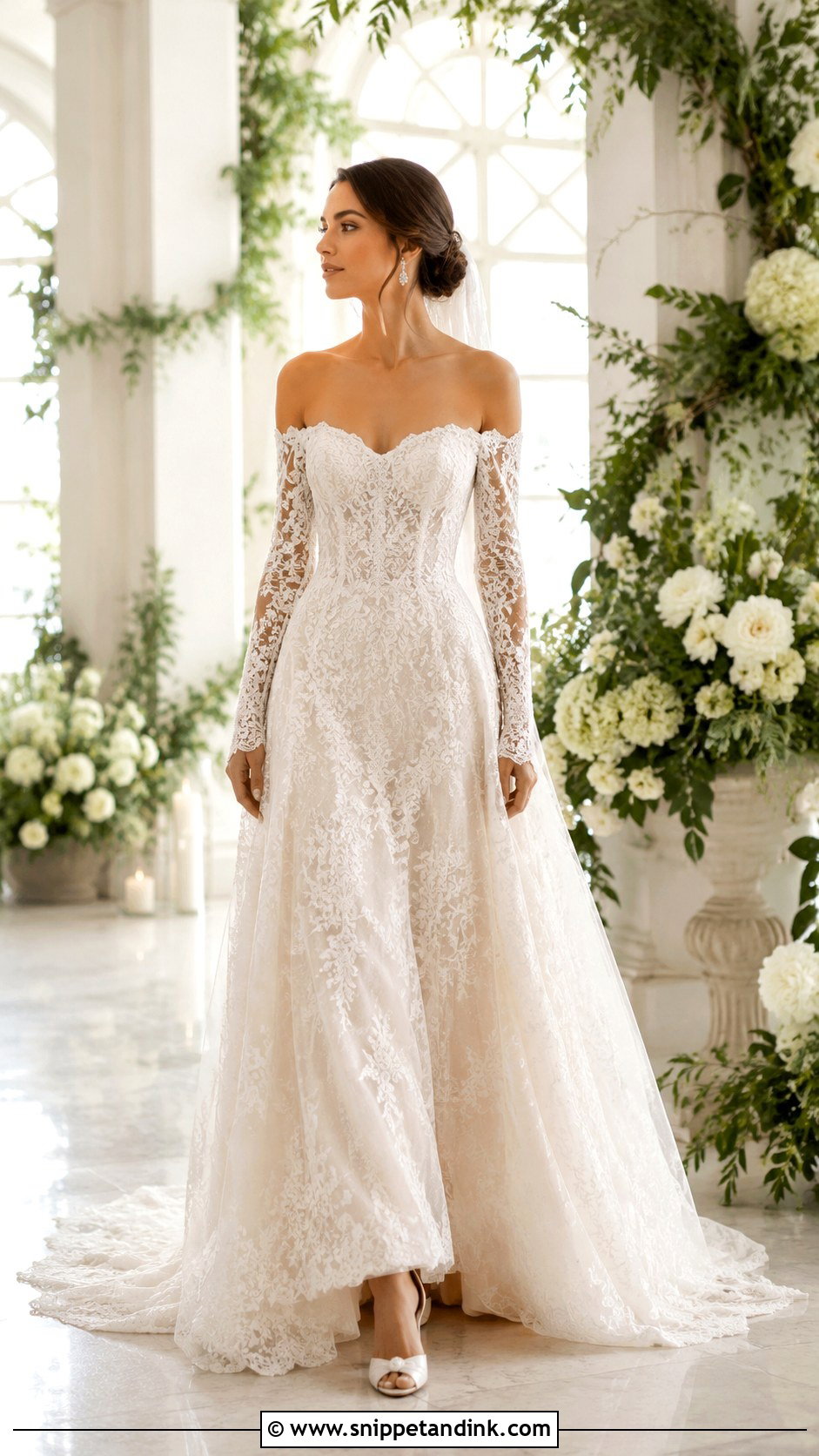
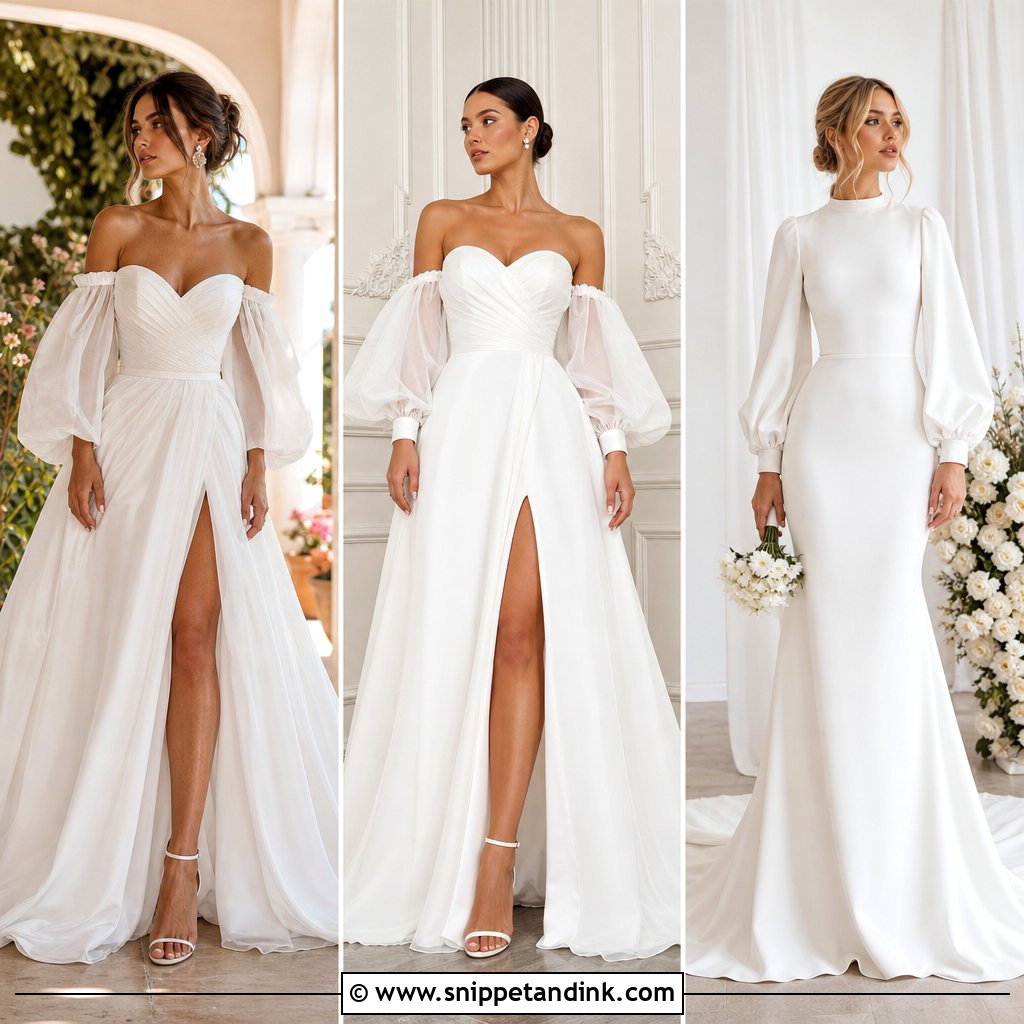
Showing the collarbone while covering the arms is a flattering trade, and the off-shoulder sleeve does exactly that. The catch is movement. Because the sleeve sits below the shoulder joint, it pins your upper arms down slightly, and lifting them to hug guests or dance can pull the whole neckline up. Ask for a stretch lace or a sleeve set with a little give at the back. Lace makes it dreamy; satin or crepe makes it sharper. Drop earrings, a simple veil and a low hairstyle keep the neckline open, and I’d leave the neck bare unless the chain is very fine.
10. Square Neck Long Sleeve Wedding Dress
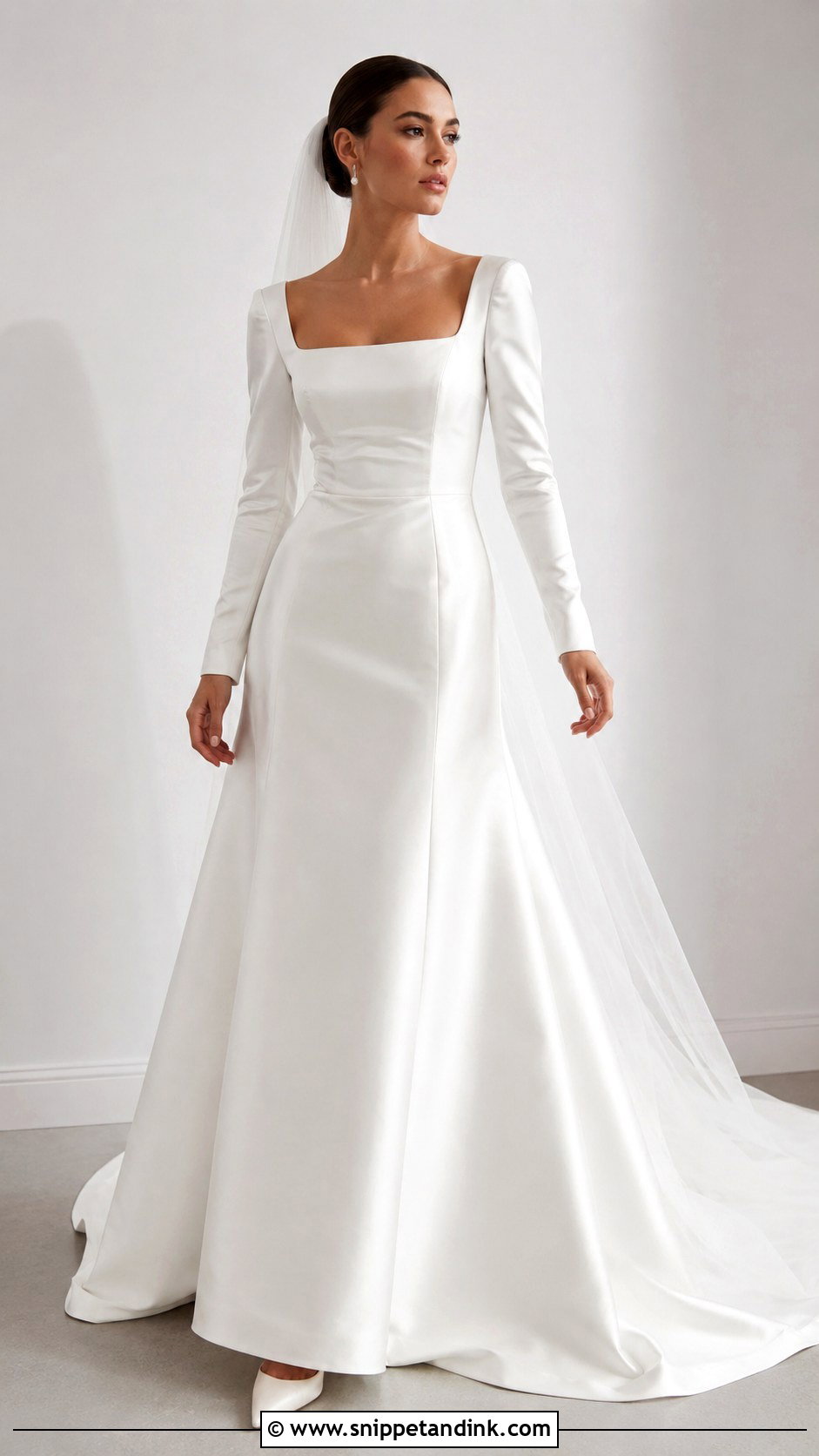
Straight lines across the chest give a square neck structure that softer necklines don’t have. It works in satin, crepe, mikado or lace, and pairs equally with an A-line, sheath or ball gown skirt. With fitted sleeves, the result looks current without chasing a trend. Pearl earrings, a sleek bun and pointed heels keep it polished, and a veil with no heavy trim stops the top half from getting busy. Watch the corners of the neckline in a fitting: if they gape when you lean forward, a small tuck at the strap fixes it far more cleanly than tape.
11. V Neck Long Sleeve Wedding Dress
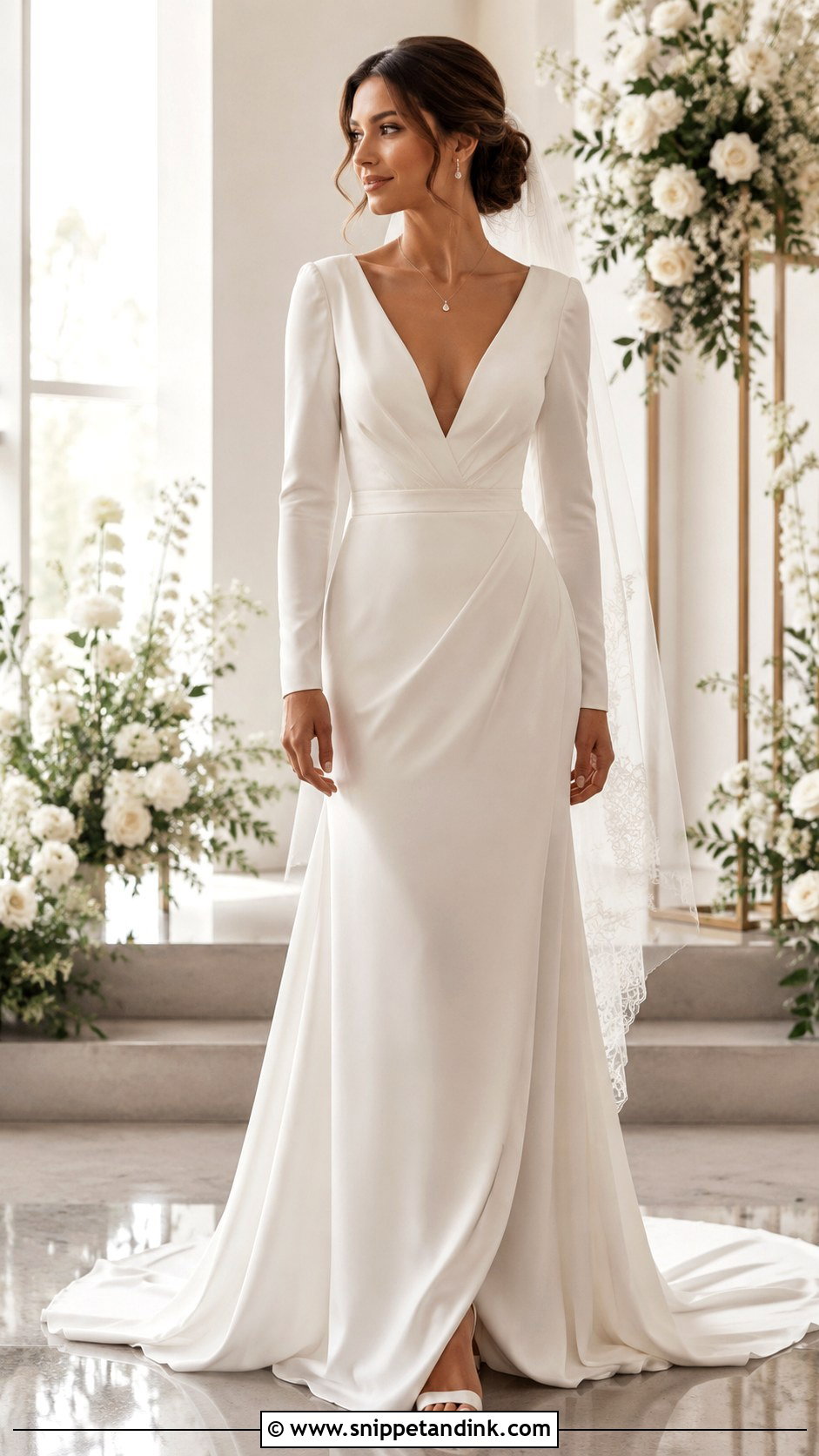
The V neck gives you sleeve coverage with an open neckline, and it lengthens the upper body on almost any silhouette from A-line to mermaid. Lace softens the V; crepe sharpens it. Keep the pendant delicate and the earrings small so the veil and neckline aren’t fighting for attention, and stay in nude or ivory shoes. A deep V needs planning: illusion mesh across the gap or boning at the edges keeps it in place when you sit, bend or hug. I’d rather add mesh than rely on tape for a long day.
12. Open Back Long Sleeve Wedding Dress
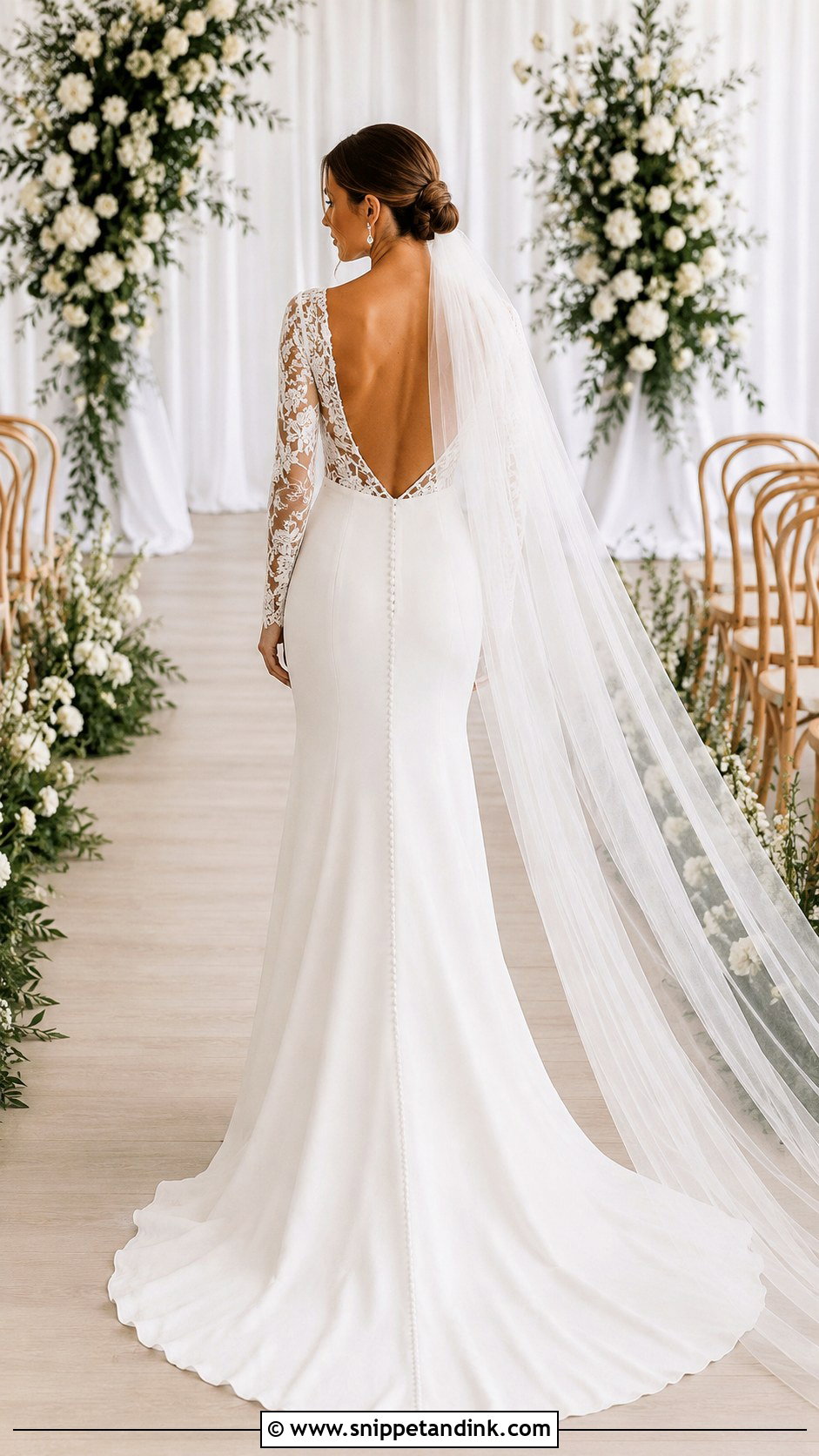
Covered arms with a bare back is a contrast I love styling, because the gown looks modest walking in and memorable walking away. Lace sleeves with a button-lined scoop back read romantic; crepe with a deep open back looks sleek and modern. A low bun, simple earrings and a sheer veil keep the back visible, and a back necklace is optional. Sort out undergarments before your first alteration, not after. A low back changes what bra or cups will work, and the bodice is fitted around whatever you wear that day.
13. Boho Long Sleeve Wedding Dress
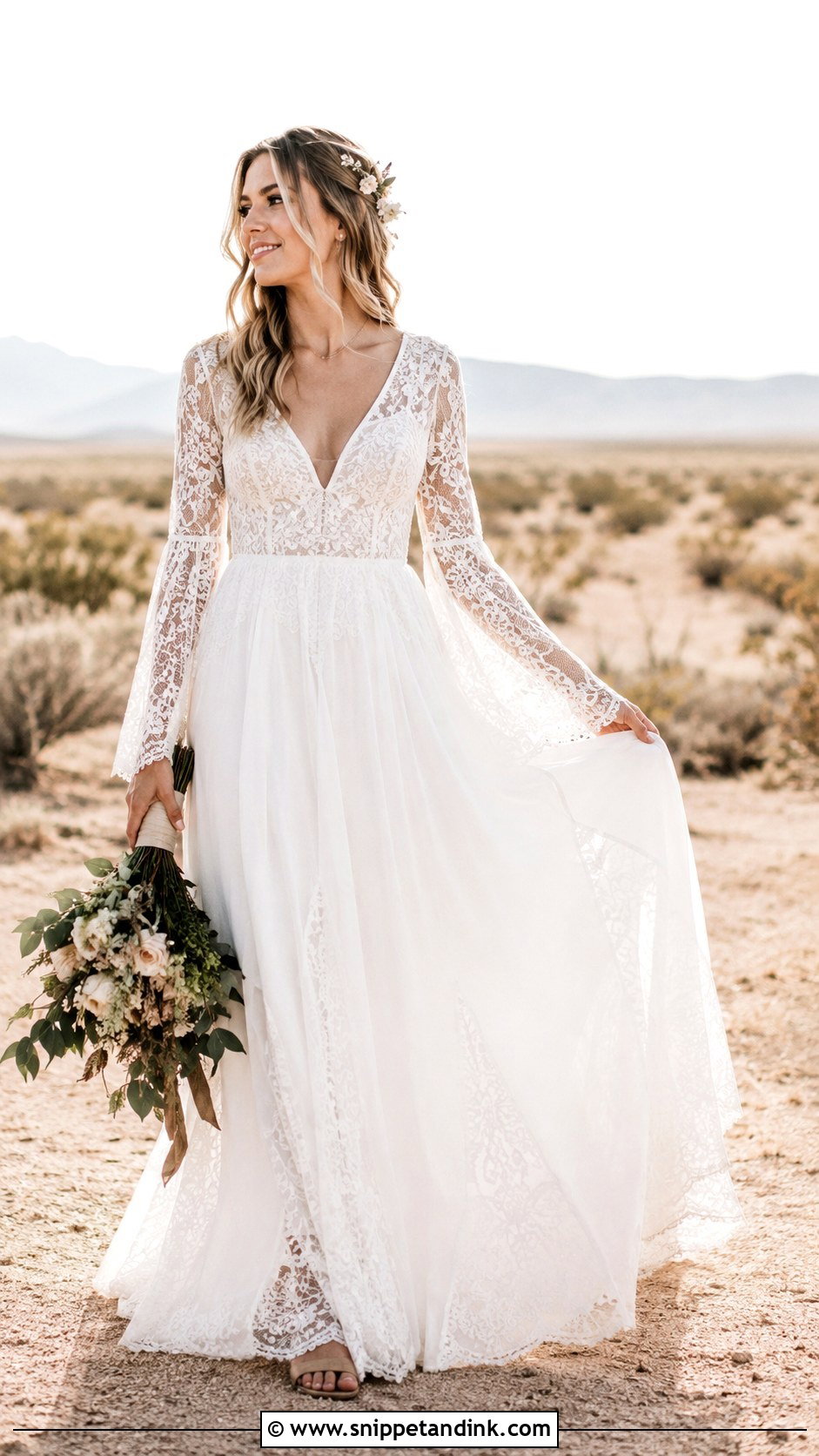
A boho gown should look relaxed, but it still has to be built well. Soft lace, flowing chiffon, bell sleeves and a light A-line skirt are the usual pieces. Bell sleeves are worth testing before you buy: they swing into cake, candles and the guest book, so some brides have them shortened slightly at the hem. Pair the gown with loose waves, floral hair pins, sandals or block heels and a bouquet heavy on greenery, and leave out anything that feels formal. It suits outdoor, desert, beach and rustic venues. A sheer sleeve keeps it wearable in warmer weather, and fabric that moves will always look better here than fabric that stands up on its own.
14. Vintage Long Sleeve Wedding Dress
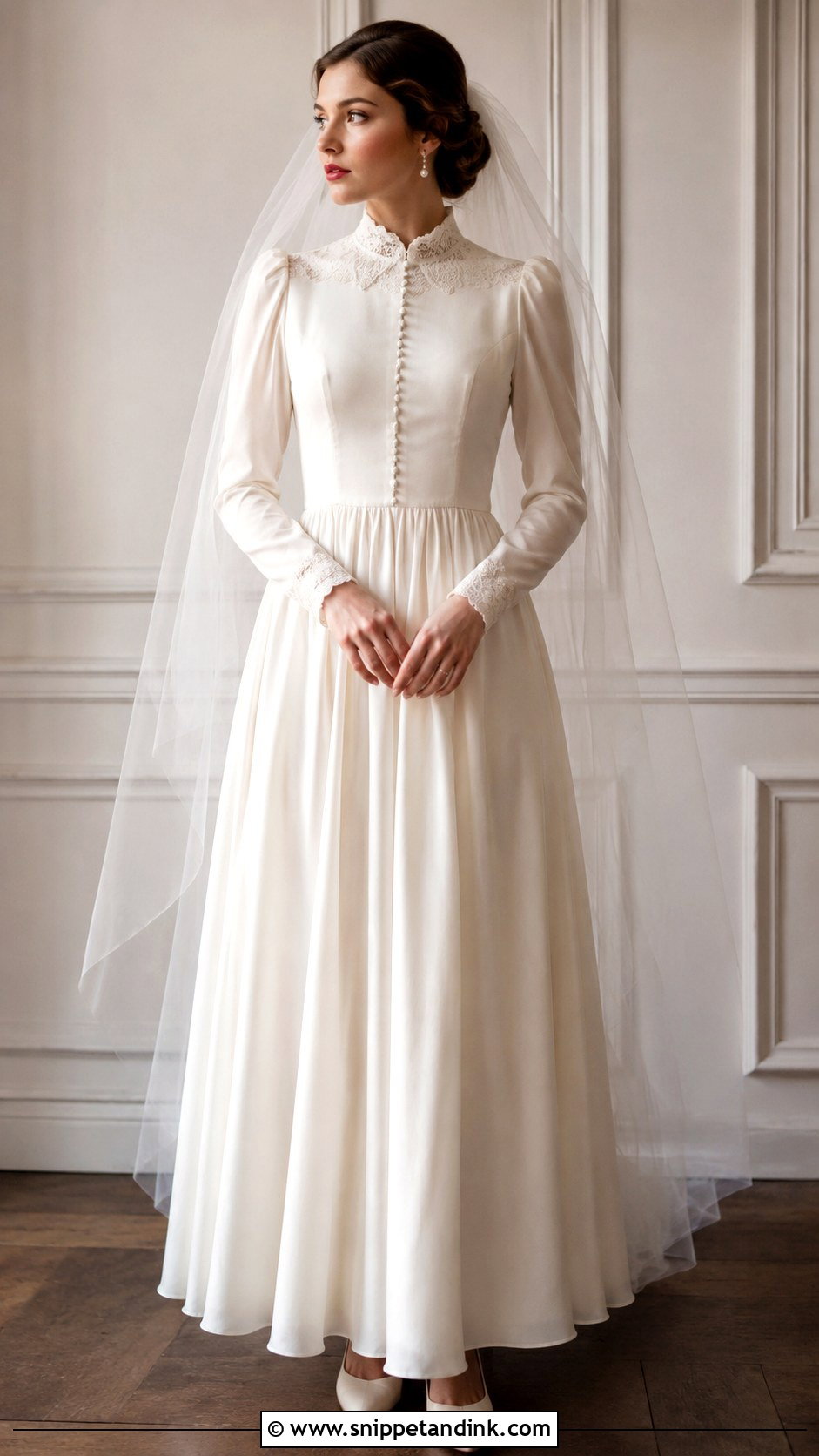
Vintage sleeves can point to old Hollywood, Victorian detail or 1970s romance, and the silhouette decides which. Lace collars, covered buttons, bishop sleeves, soft satin and fine embroidery are the usual cues. Tea length reads retro; a full-length lace gown reads formal. Pearl earrings, a short or classic tulle veil, ivory heels and a red or rose lip complete it. The rule I hold to is one era per outfit. Once a 1940s veil meets a 1970s sleeve, it starts to look like a costume rather than a choice.
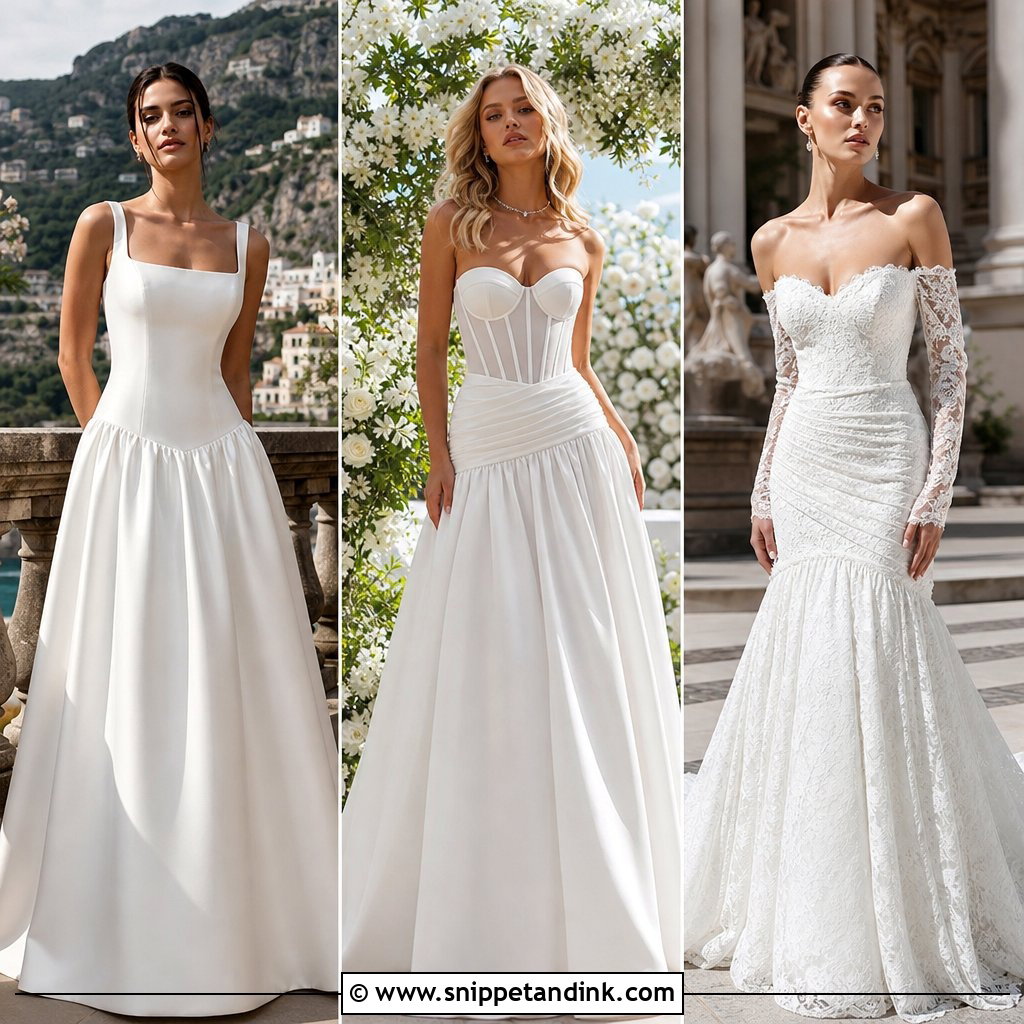
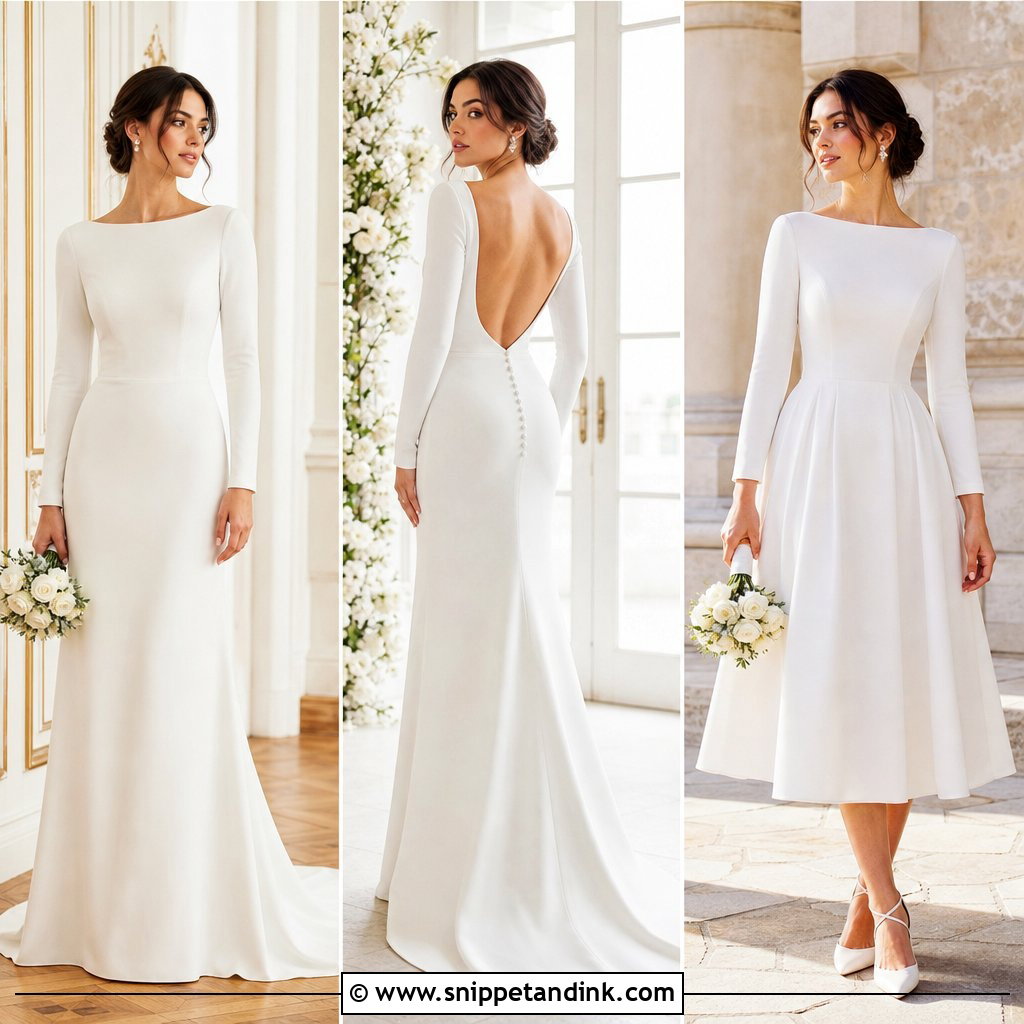
15. Modest Long Sleeve Wedding Dress
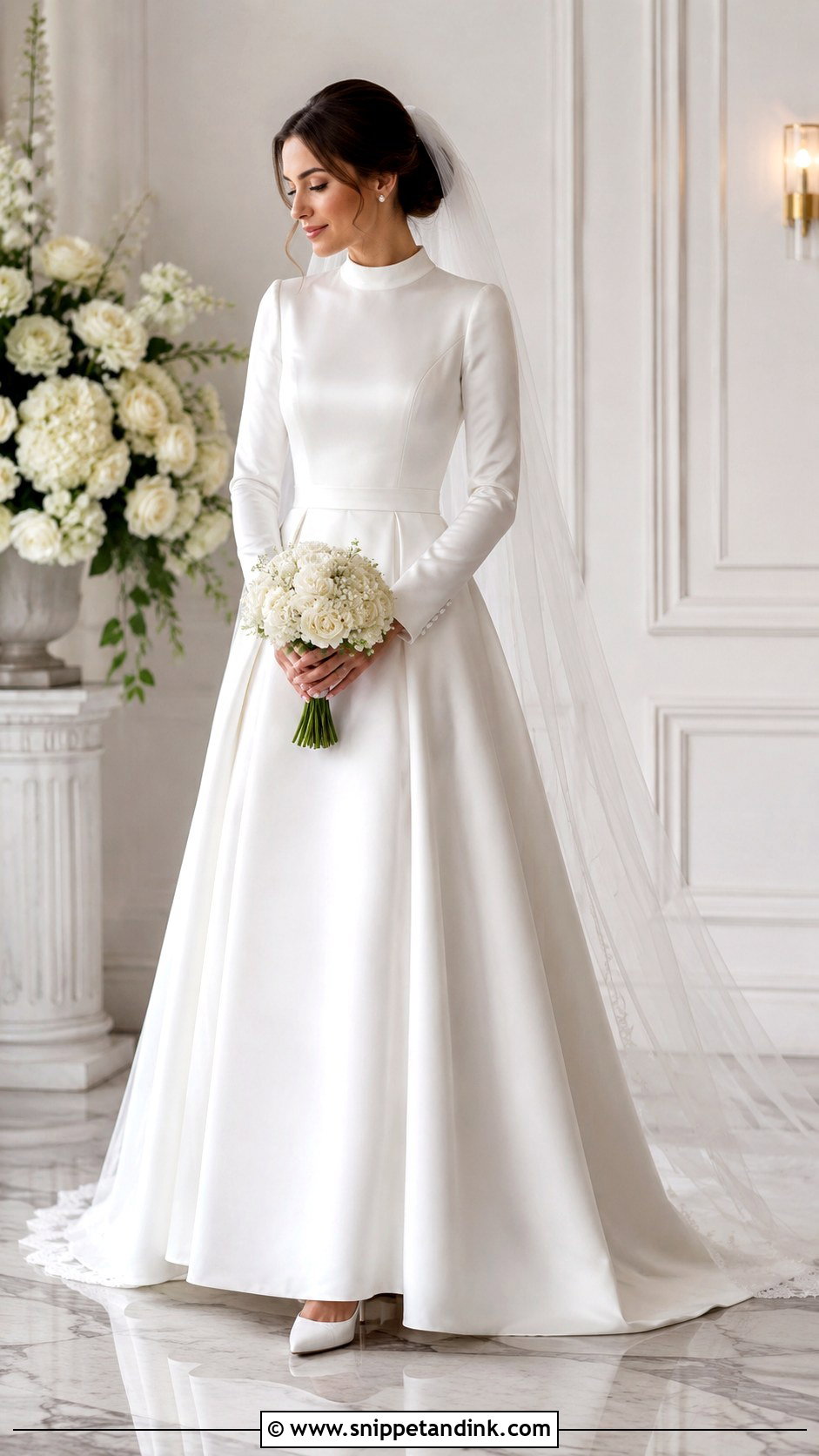
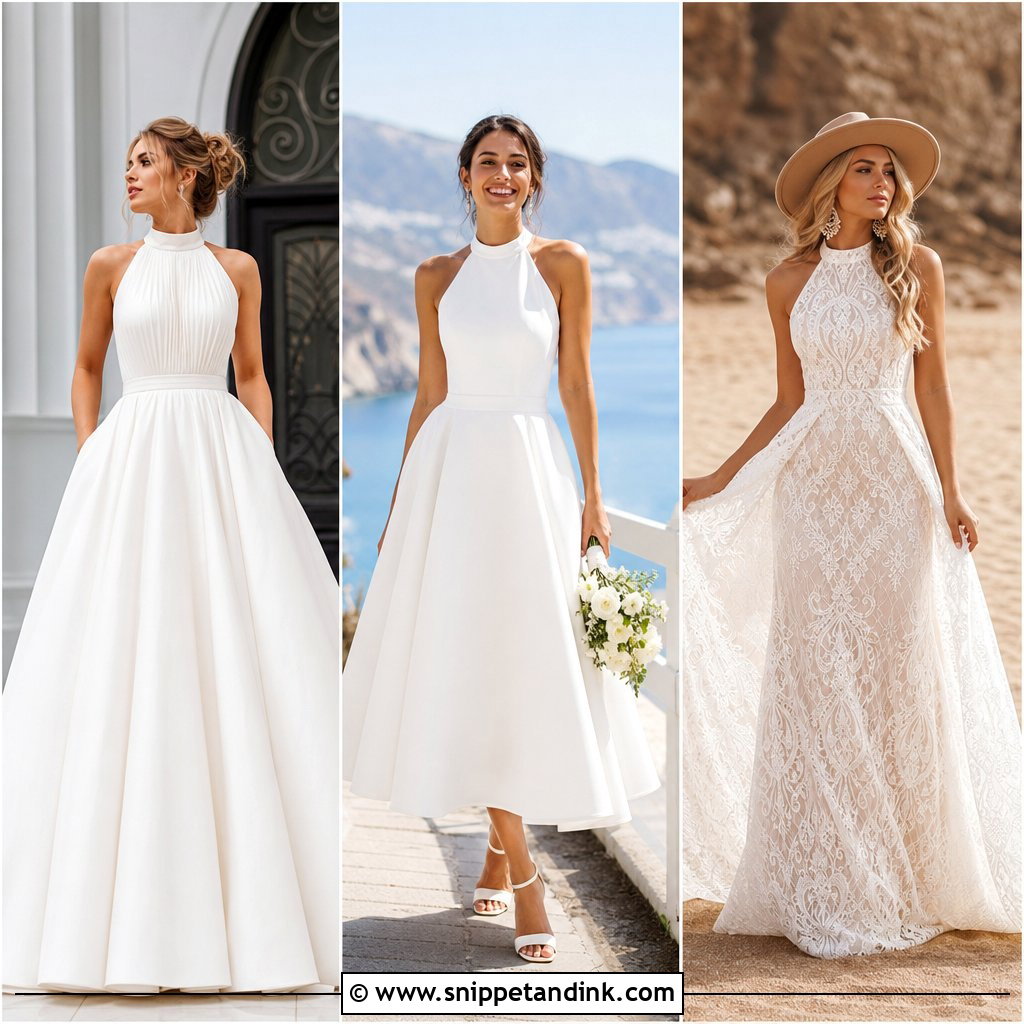
Coverage doesn’t have to look plain. A modest gown gets its interest from covered buttons, embroidery, pleating or a defined waist, built on higher necklines, lined sleeves and a secure bodice. Satin, crepe, lace and chiffon all work depending on the season. Style it with pearl studs, a long veil, closed-toe heels and a neat updo. In my fittings, the thing that matters most here is that nothing shifts: a modest bride shouldn’t spend the day tugging a neckline up or a sleeve down, so test it seated, hugging and dancing before the final pickup.
16. Minimalist Long Sleeve Wedding Dress
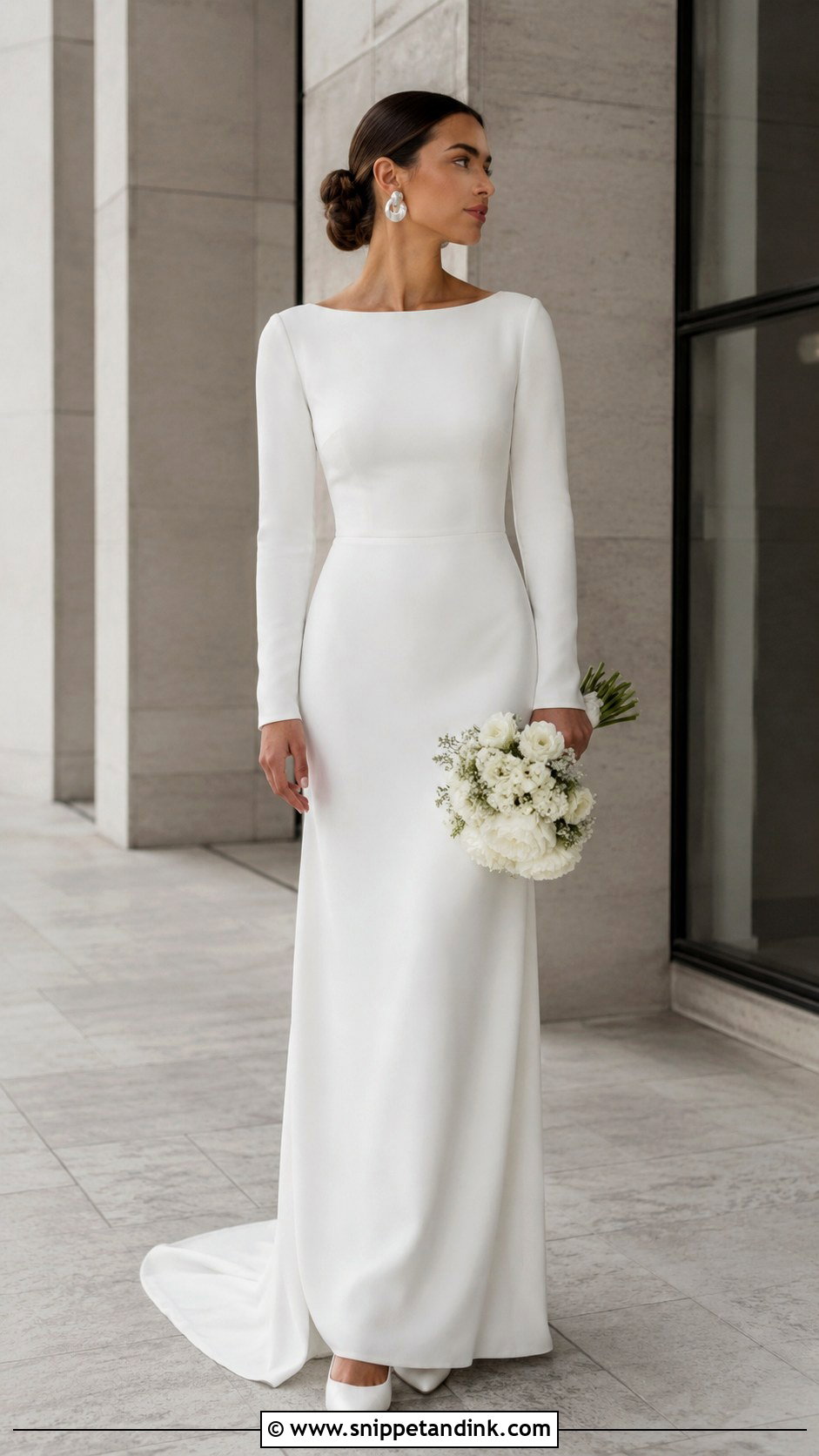
With no lace or sparkle to carry it, a minimalist gown lives or dies on seams, neckline and fabric weight. Crepe, satin and mikado are the materials I trust for this, cut as a sheath, column or A-line with fitted sleeves. Sculptural earrings, a simple veil, polished heels, a low bun and a small bouquet keep everything in proportion. It fits courthouse ceremonies, galleries and city venues especially well. Expect to spend more of your alteration budget here, because a plain gown shows every millimeter of a poor hem.
17. Beaded Long Sleeve Wedding Dress
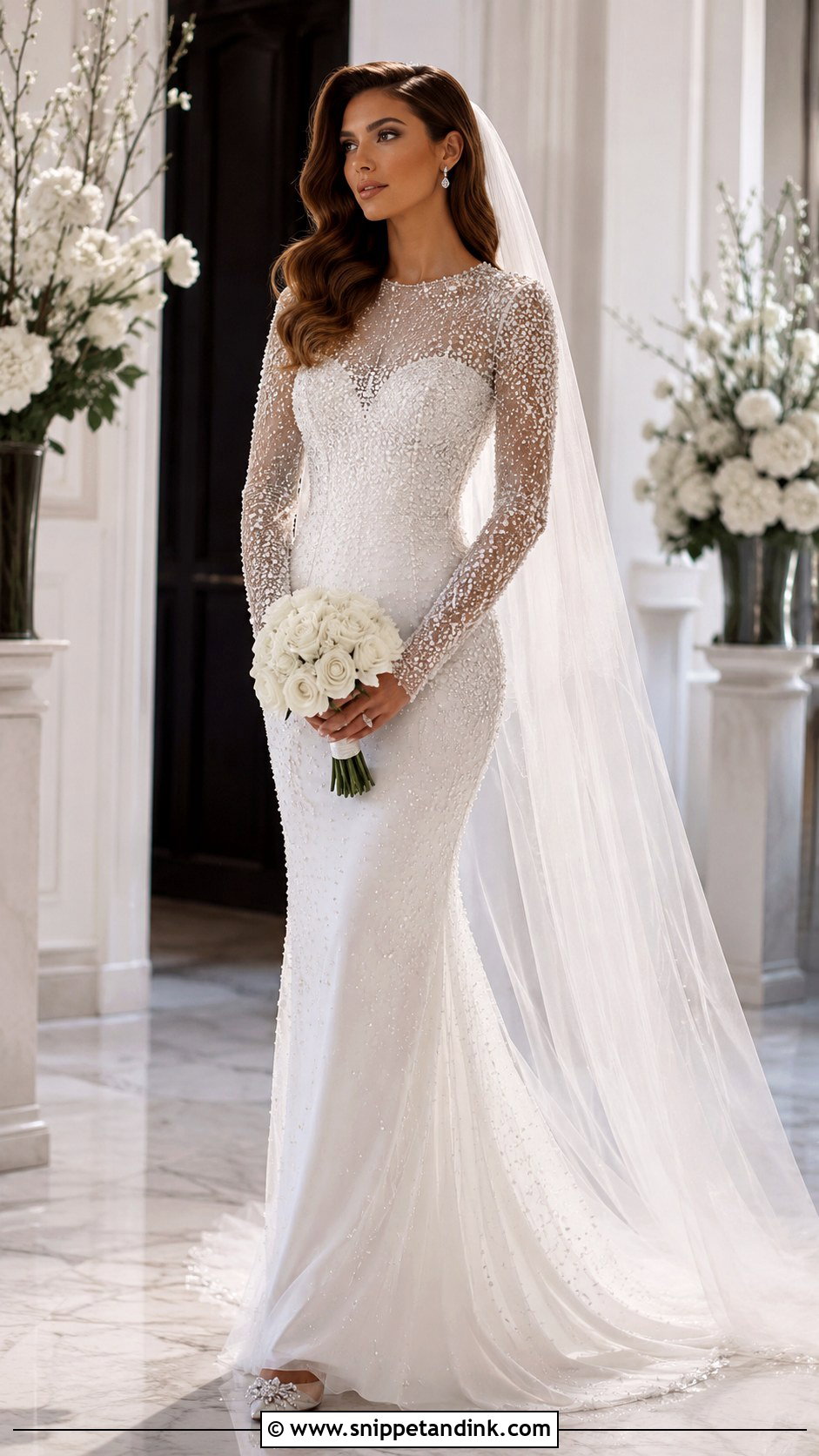
Beaded sleeves give you shimmer without any extra jewelry, as tiny pearls, crystals, sequins or linear beadwork catch light every time you move. Evening receptions and formal rooms suit them best. Choose a fitted or A-line shape depending on how much drama you want, then keep it to small crystal earrings, a plain veil and simple heels. A soft updo or side-parted waves finish the look. Beaded sleeves are heavy, and that weight pulls on the shoulder seam over the day; I check that the sleeve is anchored at the shoulder and not hanging off the armhole stitching alone.
18. Floral Long Sleeve Wedding Dress
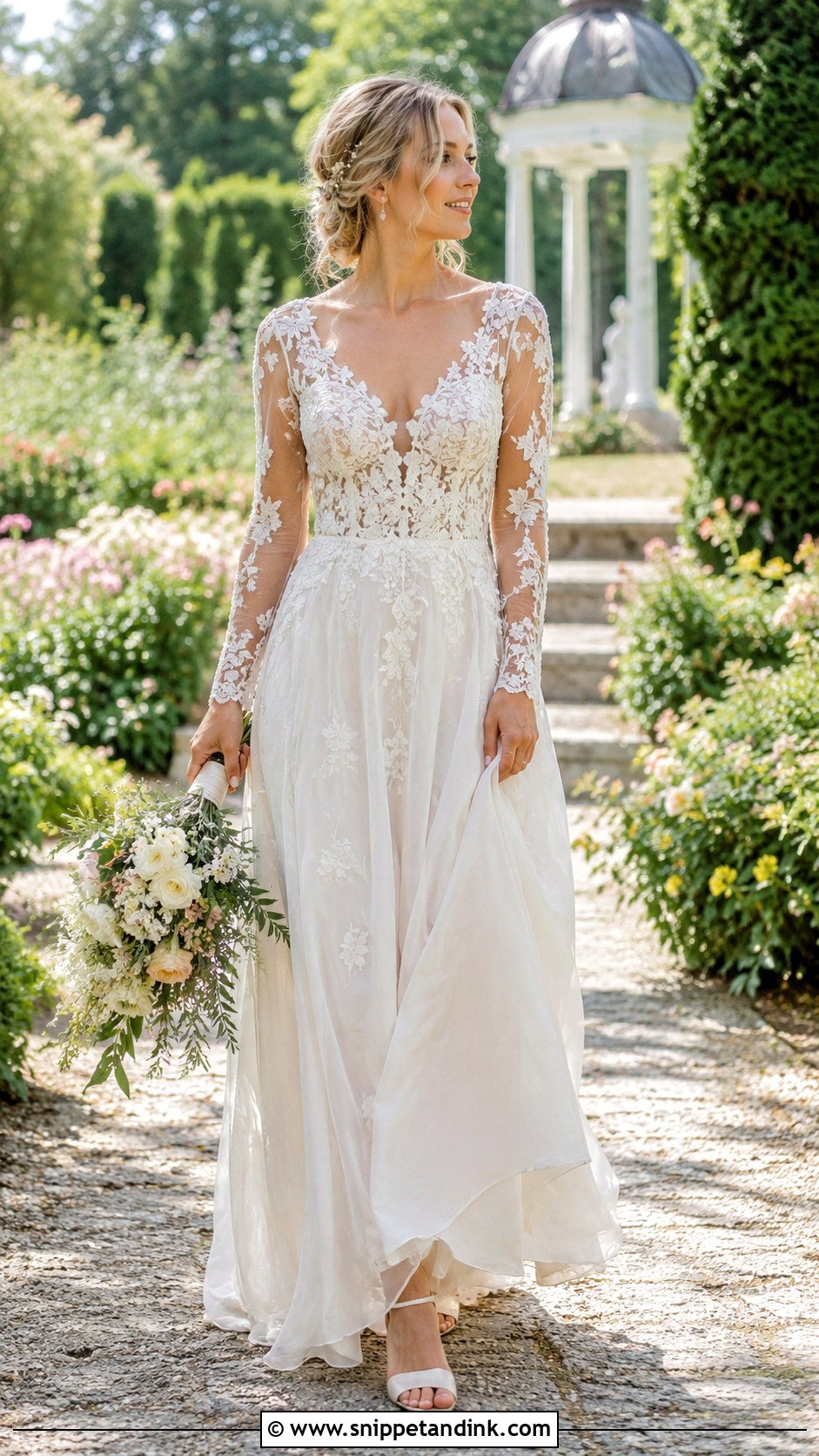
Floral detail can come as lace, embroidery, appliqué or small 3D petals, and each one needs a different veil. With large dimensional flowers, keep the veil plain so the two layers don’t flatten each other. With delicate embroidery, a soft lace-edged veil can work. Sheer sleeves with scattered motifs and a skirt that moves easily feel the freshest. Add floral hair pins, delicate earrings, ivory heels and a loose bouquet. It suits gardens, spring dates and outdoor ceremonies. 3D petals crush under a heavy coat or car seatbelt, so plan how you’ll travel.
19. Tulle Long Sleeve Wedding Dress
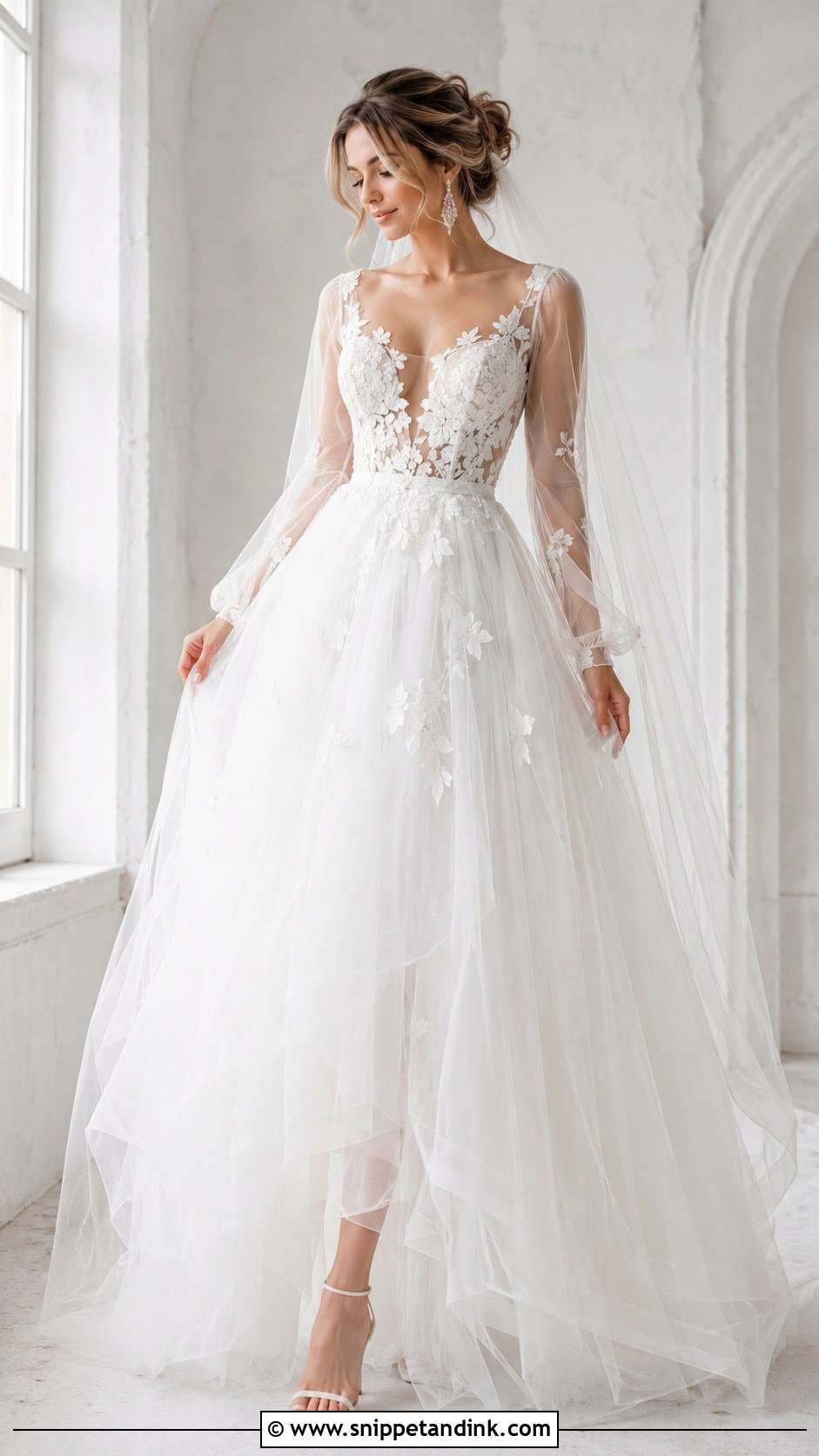
Tulle gives volume without stiffness, which is why it shows up most in A-line and ball gown shapes. Long sleeves in sheer, lace-covered or dotted tulle keep the top as light as the skirt. Delicate earrings, a soft veil, classic heels and a loose updo or soft curls all match that airy feel. The thing I watch with tulle is bulk at the waist: too many layers gathered into one seam add inches you didn’t ask for. Good dressmakers fan the layers or cut them shorter underneath so the skirt floats instead of puffing.
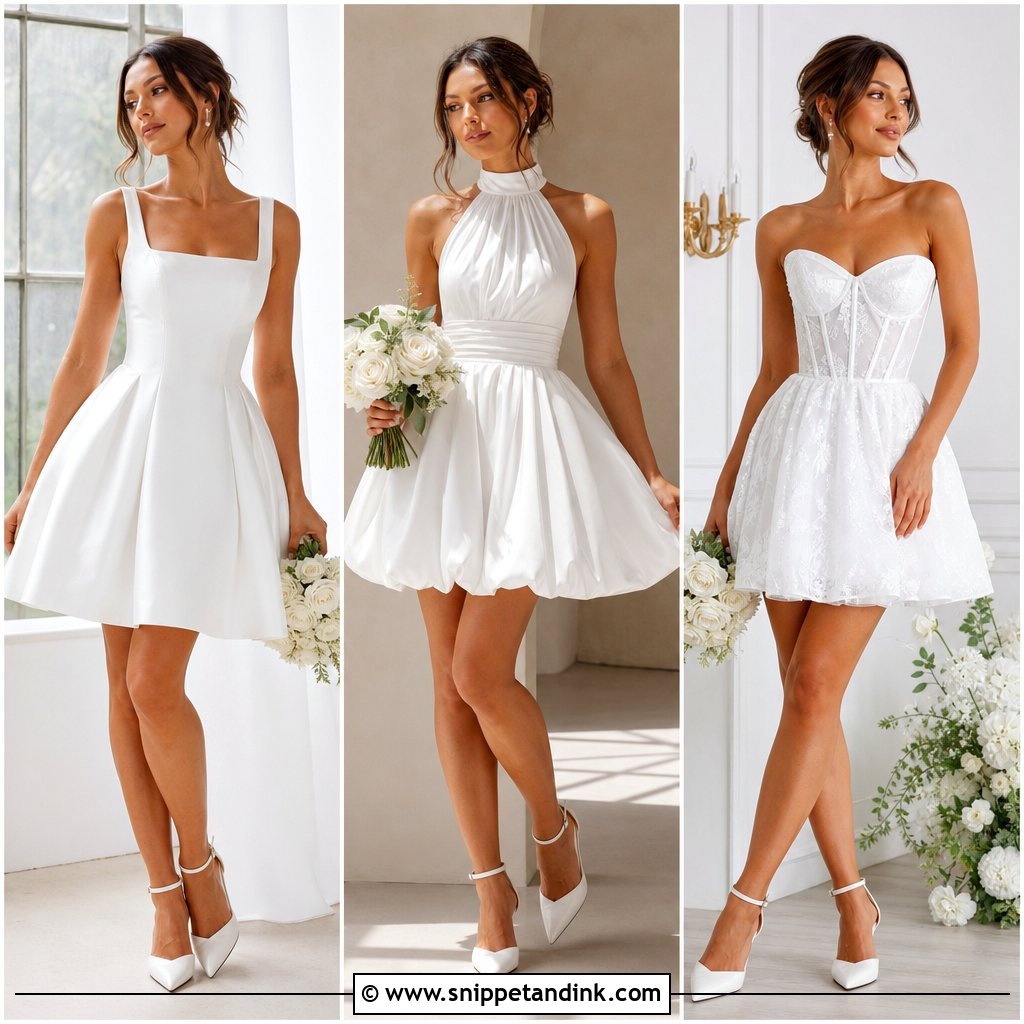
20. Chiffon Long Sleeve Wedding Dress
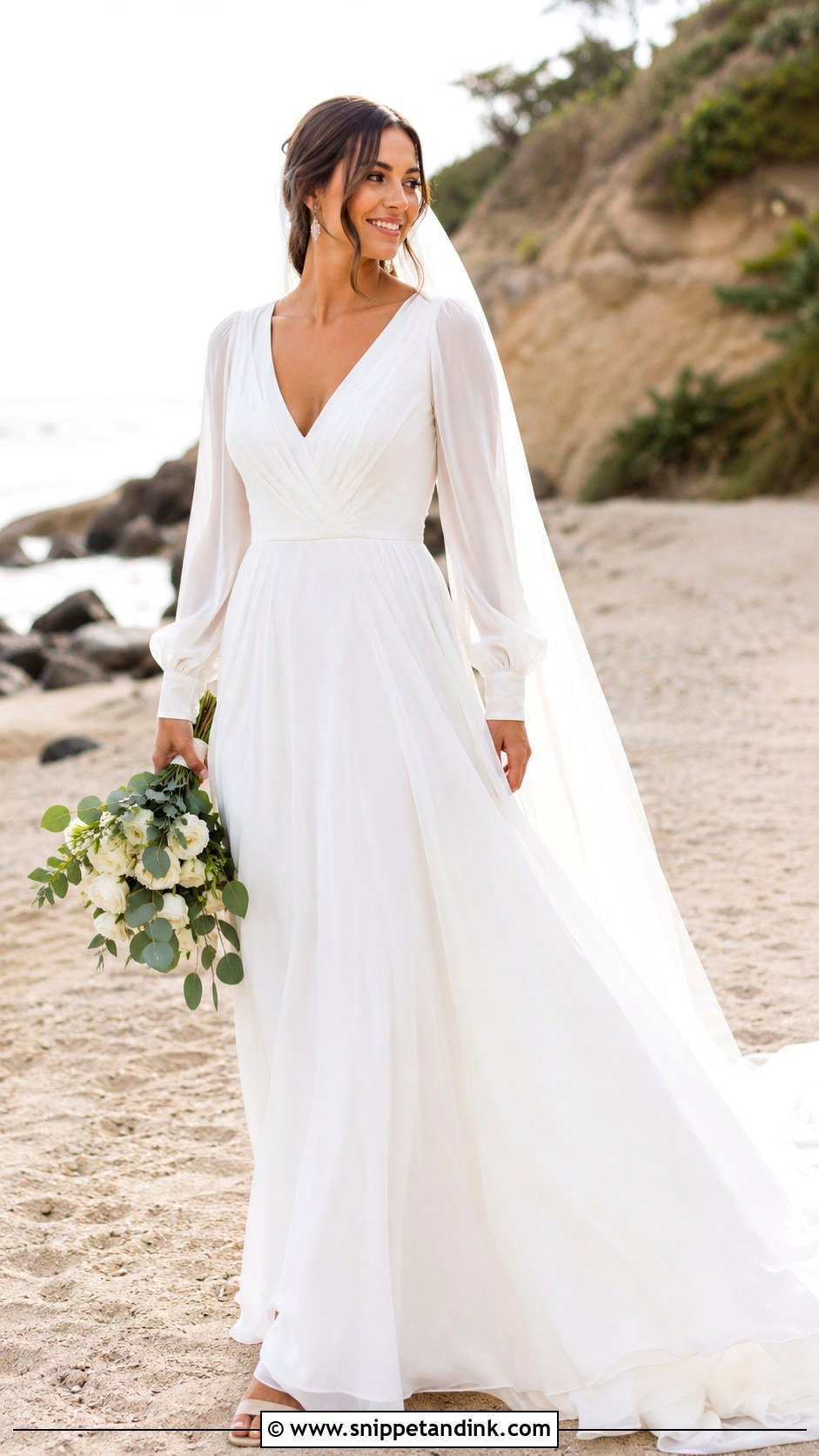
Chiffon is soft, light and easy to wear for hours, which makes it my first suggestion for relaxed ceremonies and warm months. Chiffon sleeves can be sheer, gathered or slightly billowy, and they move with every gesture. An empire waist, a wrap bodice or an A-line skirt suits the fabric. Pair it with low block heels, delicate earrings, loose hair and a light veil or comb. Chiffon frays and snags more easily than satin, so a quality lining and a hem cut to your actual shoe height are not optional.
21. Winter Long Sleeve Wedding Dress
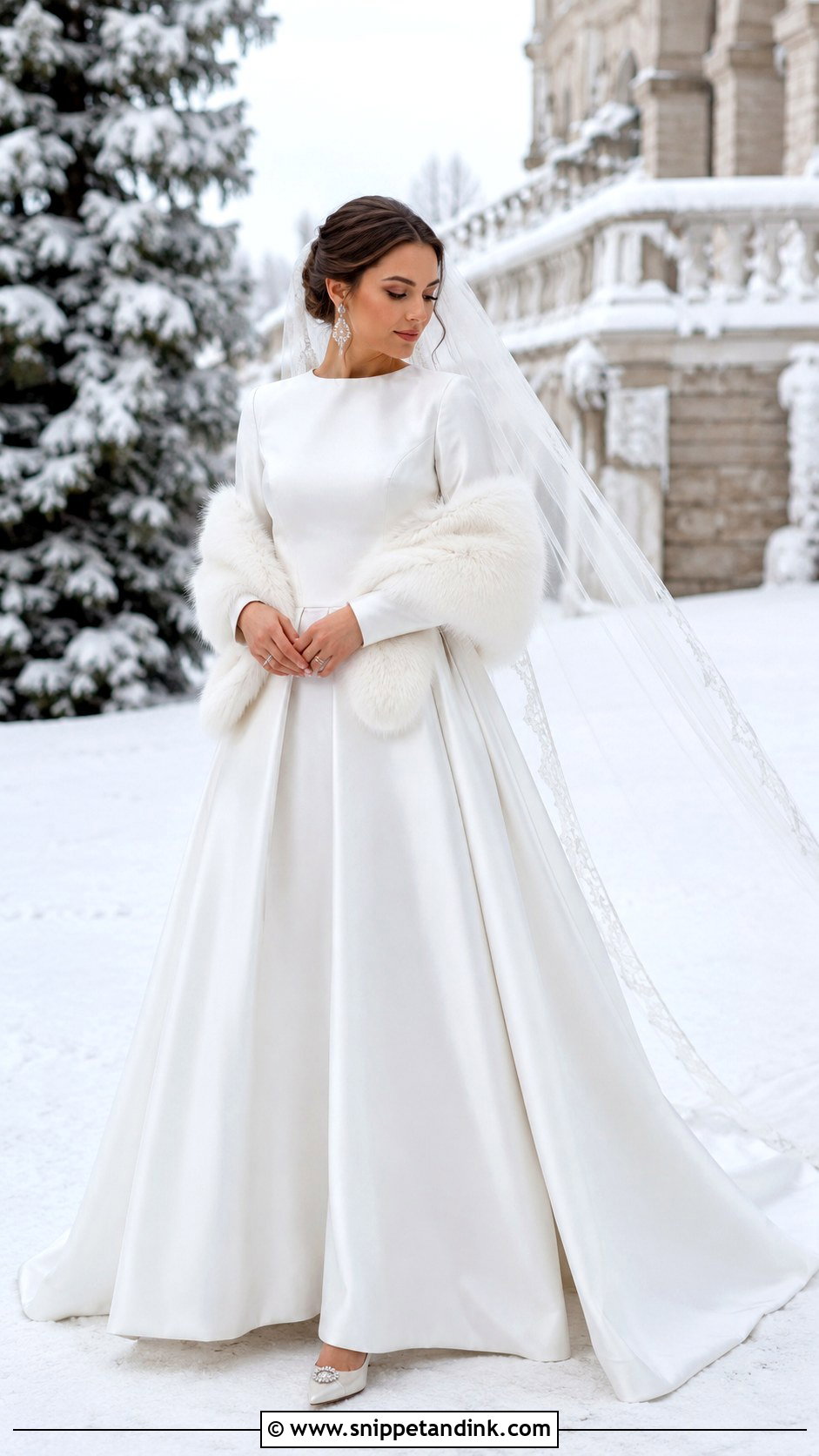
A winter long sleeve wedding dress has to keep you warm without adding bulk, and fabric choice does most of that. Satin, mikado, crepe and lined lace hold heat far better than unlined tulle. A high neckline, fitted sleeves and a fuller skirt give a polished cold-weather shape. Closed-toe heels, pearl or crystal earrings and a long veil add drama, and a faux fur wrap or tailored coat covers outdoor portraits. Ivory, silver and champagne accents keep the palette quiet. Dry winter air makes tulle veils cling with static, so pack a small anti-static spray.
22. Beach Long Sleeve Wedding Dress
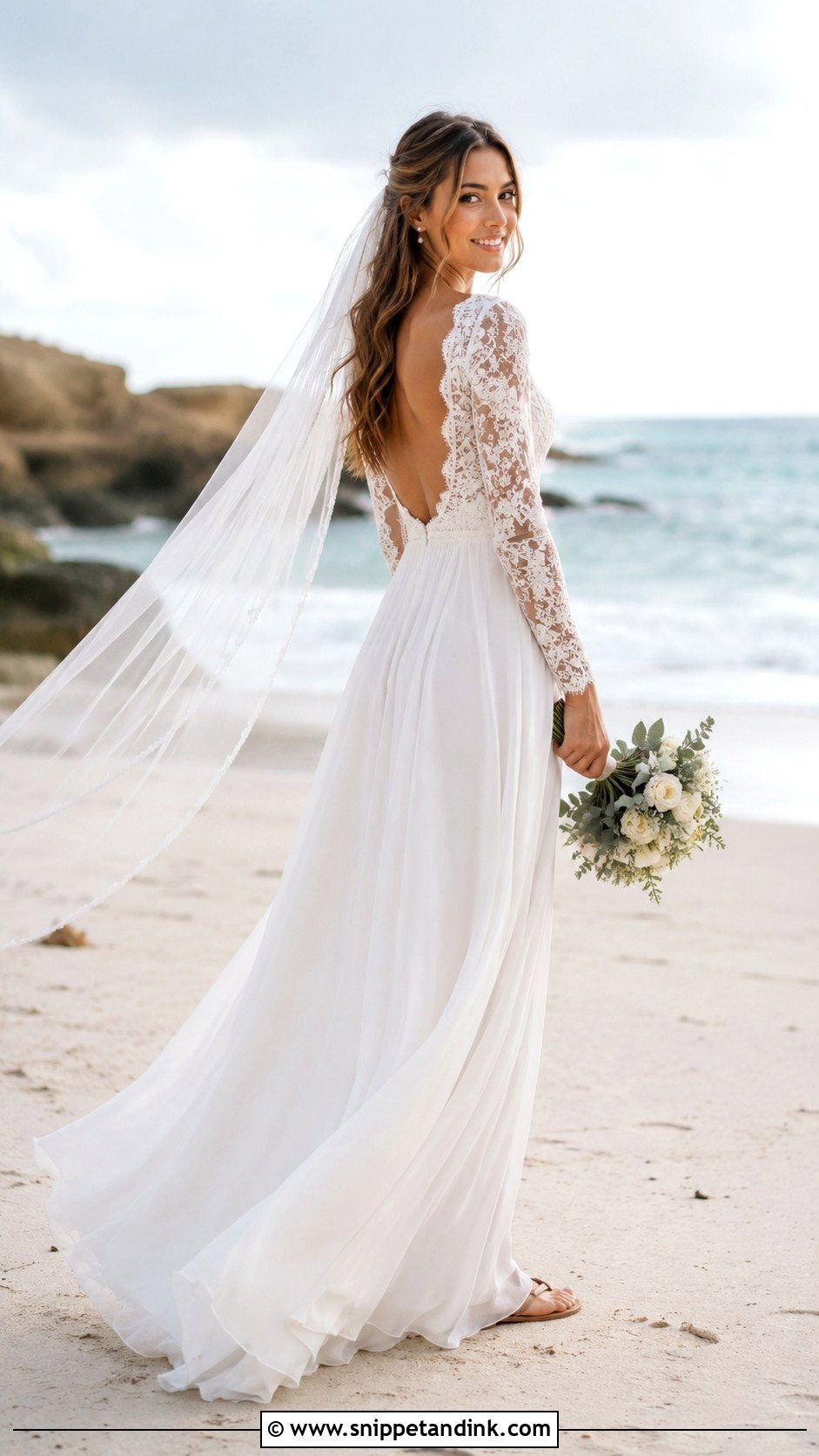
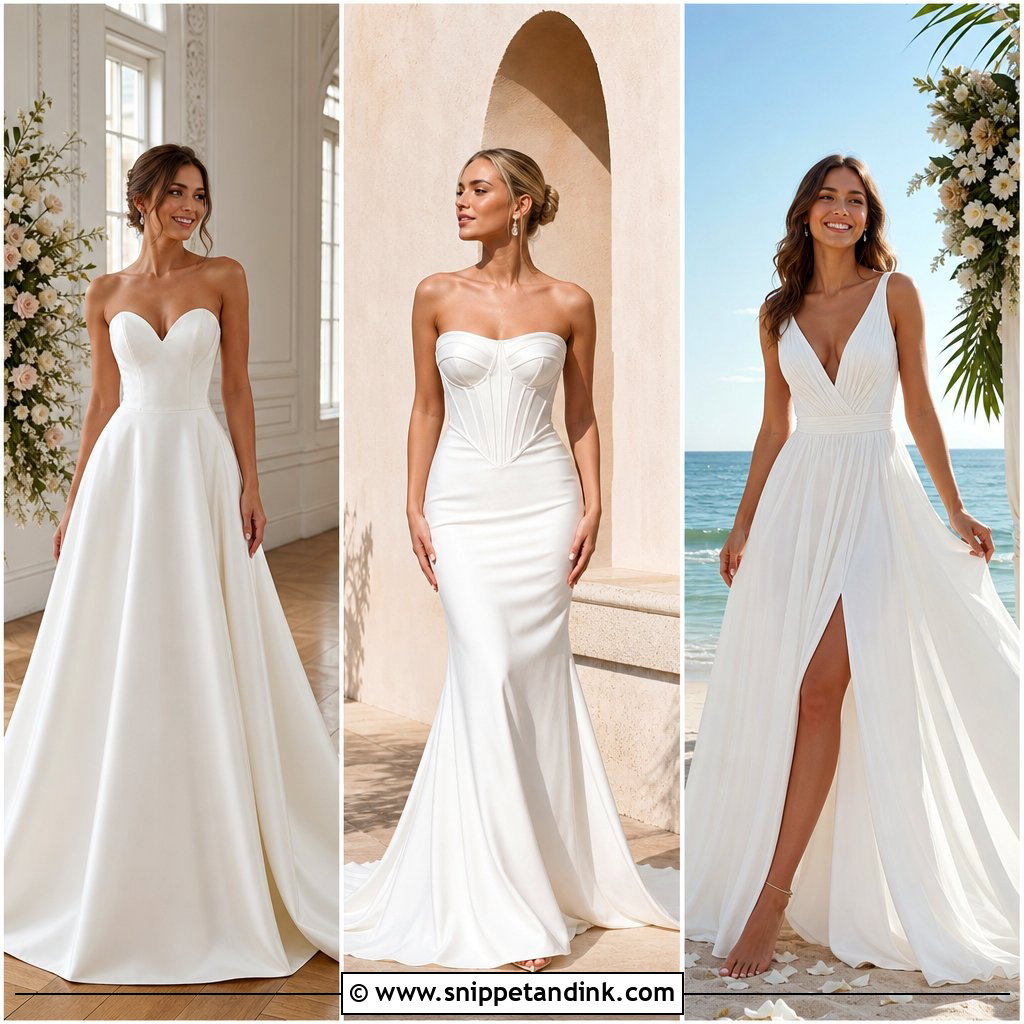
Heavy satin and thick beading are the wrong call on sand, and I say that to every beach bride who falls for one in a cool shop. Chiffon, soft lace or lightweight crepe breathe better, and sheer sleeves with an open back keep the gown relaxed. Flat sandals, pearl studs, loose waves and a short or weighted veil cope better with wind than a long sheer one. A bouquet of white flowers and greenery keeps it simple. Skip a long train unless it bustles or detaches, because wet sand stains the hem within minutes.
23. Courthouse Long Sleeve Wedding Dress
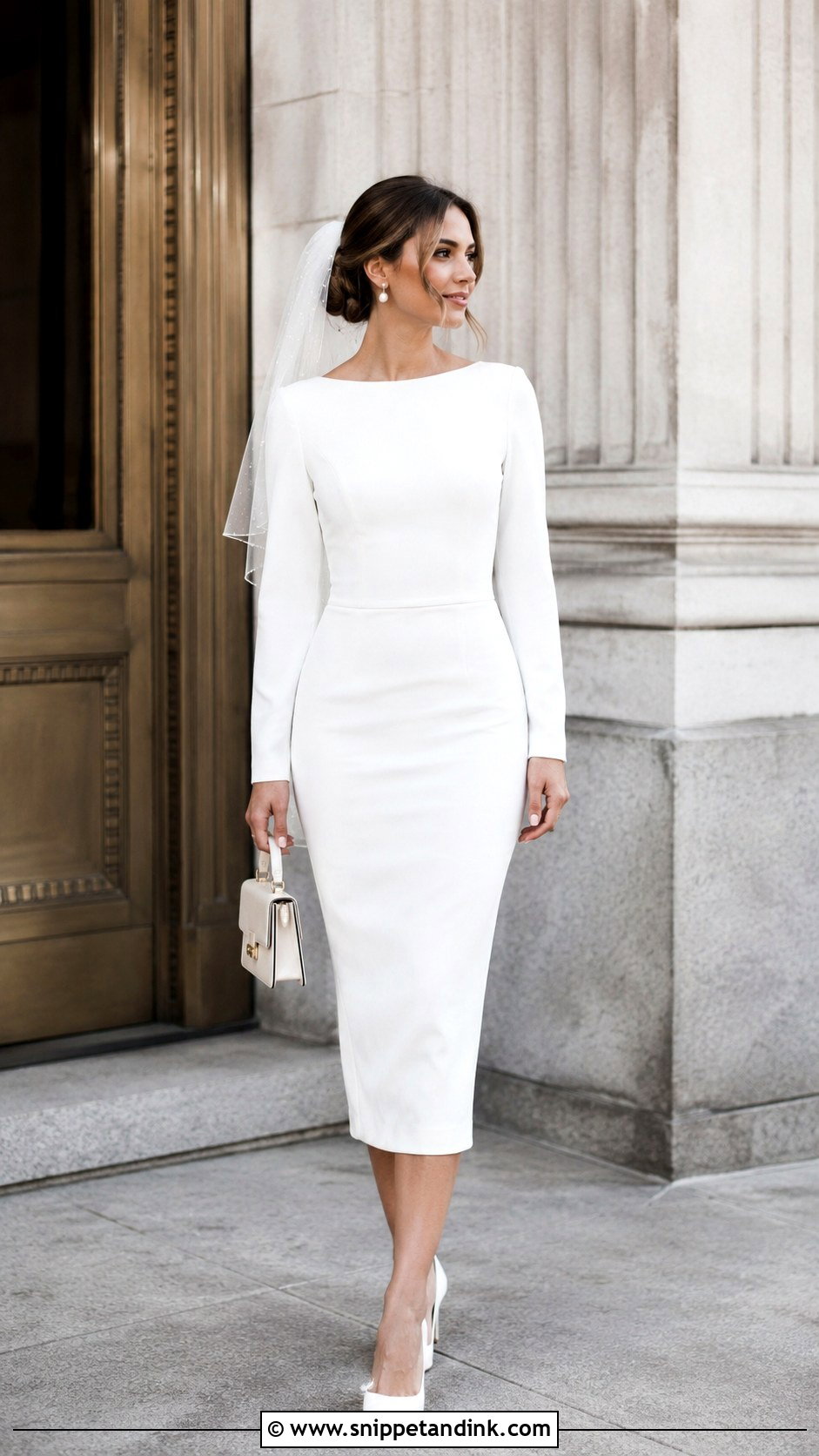
City hall calls for polish without ceremony-scale formality. A short satin dress, a tailored crepe midi or a sleek column gown all suit it, and long sleeves keep the look grown-up. Pointed pumps, a structured mini bag, pearl earrings and a short veil or hair bow complete it. Courthouse lighting is usually flat and overhead, so a fabric with some sheen tends to photograph with more life than matte crepe. A dress you can rewear with a blazer later is a smart buy for a small, low-key ceremony.
24. Plus Size Long Sleeve Wedding Dress
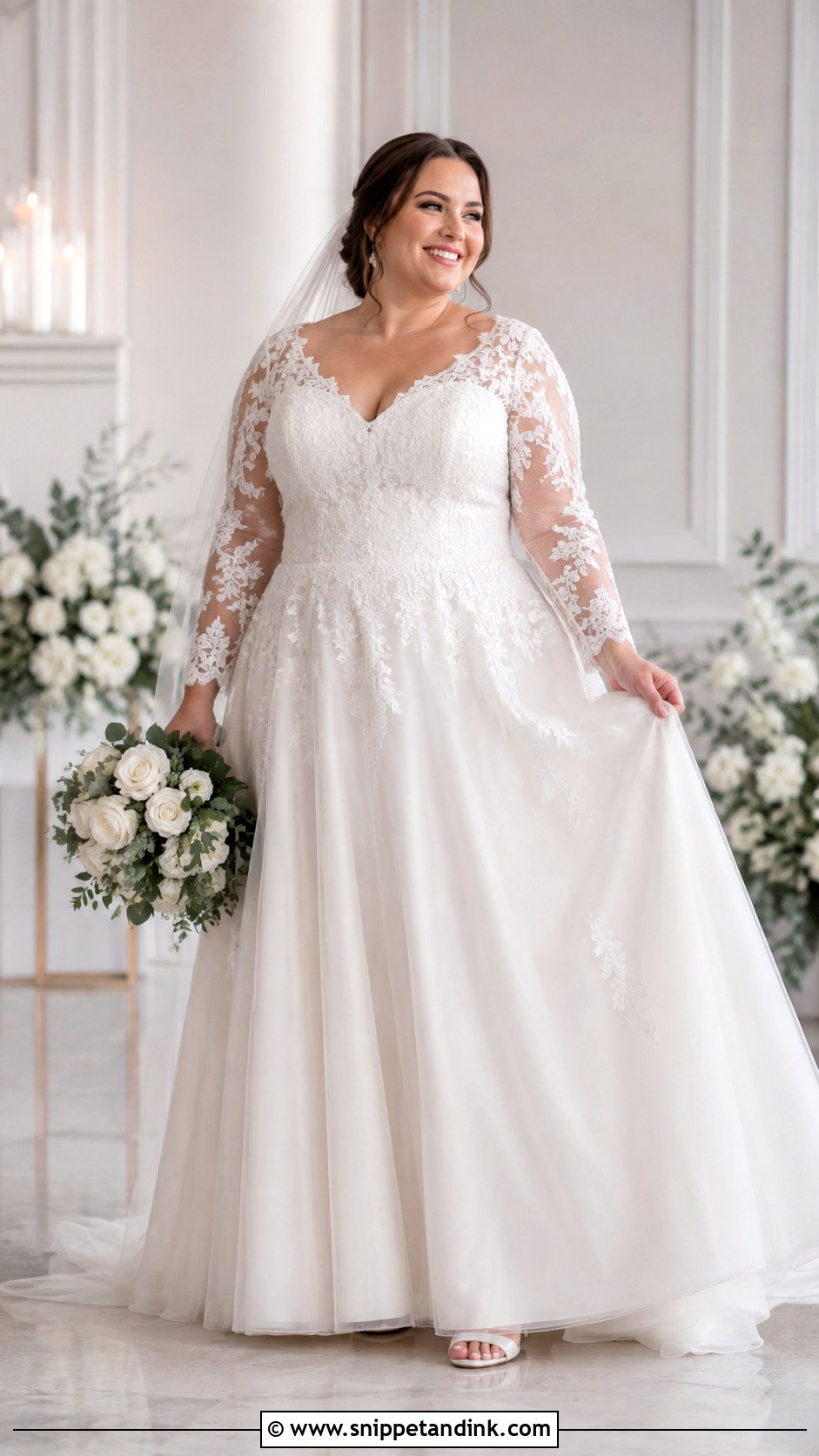
For plus size brides, sleeves are often where off-the-rack gowns fail first, since sample sleeves are cut narrow and stretch only so far. A-line gowns, structured ball gowns, wrap bodices and fit-and-flare shapes all work; the difference is in the lining, seam placement and sleeve ease. Lace sleeves soften the line and crepe sleeves sharpen it. Comfortable block heels, a veil that matches the dress mood and jewelry close to the face finish it. Ask early whether extra sleeve fabric is available, because letting out a lace sleeve is often impossible without it.
25. Detachable Sleeve Wedding Dress
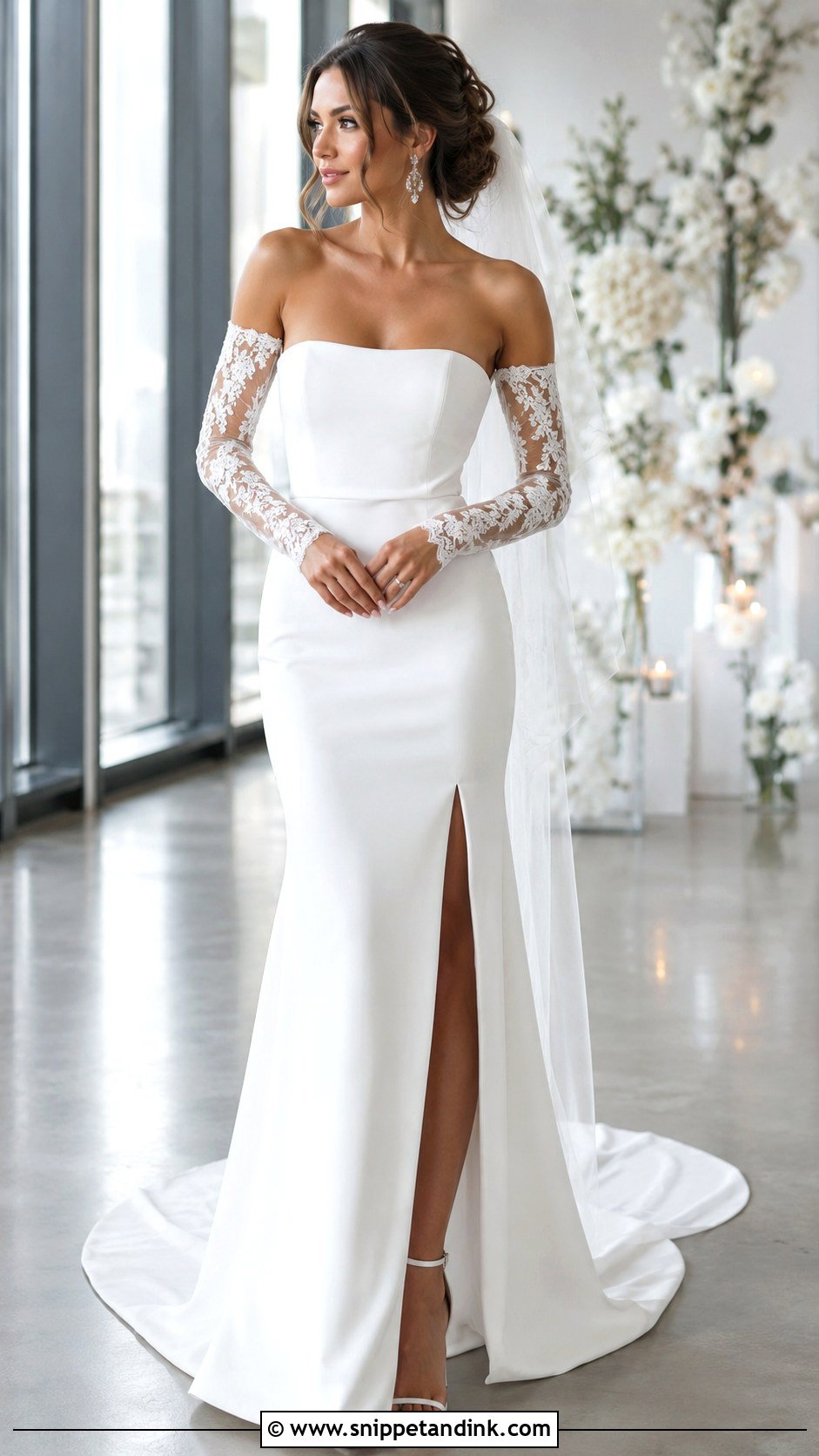
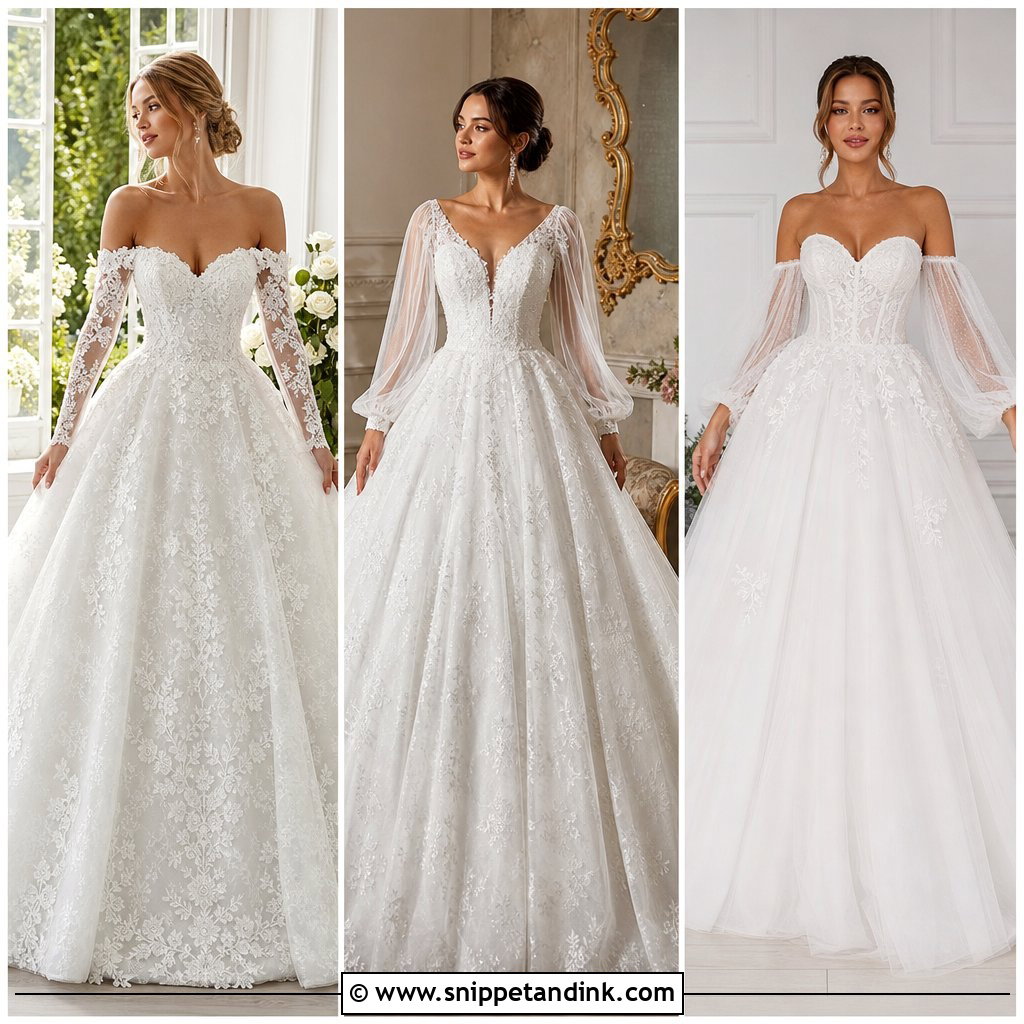
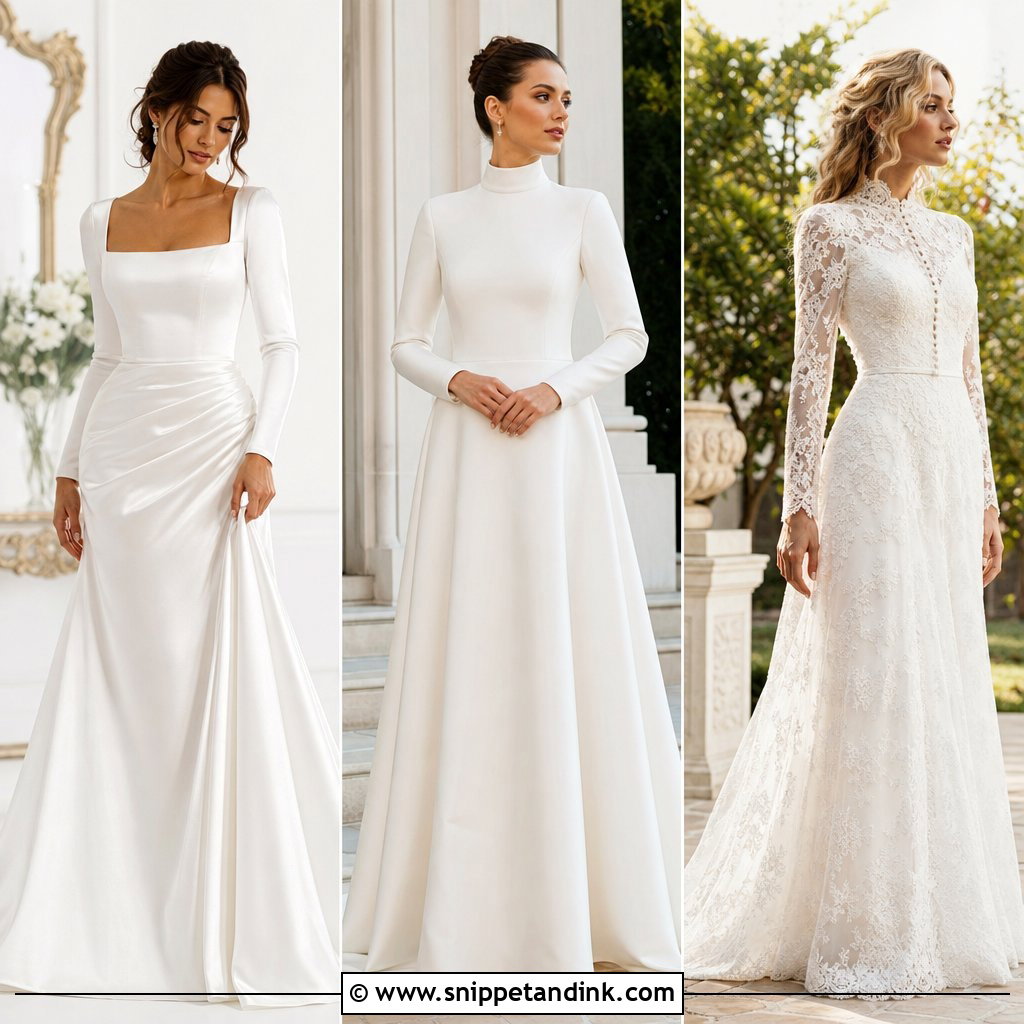
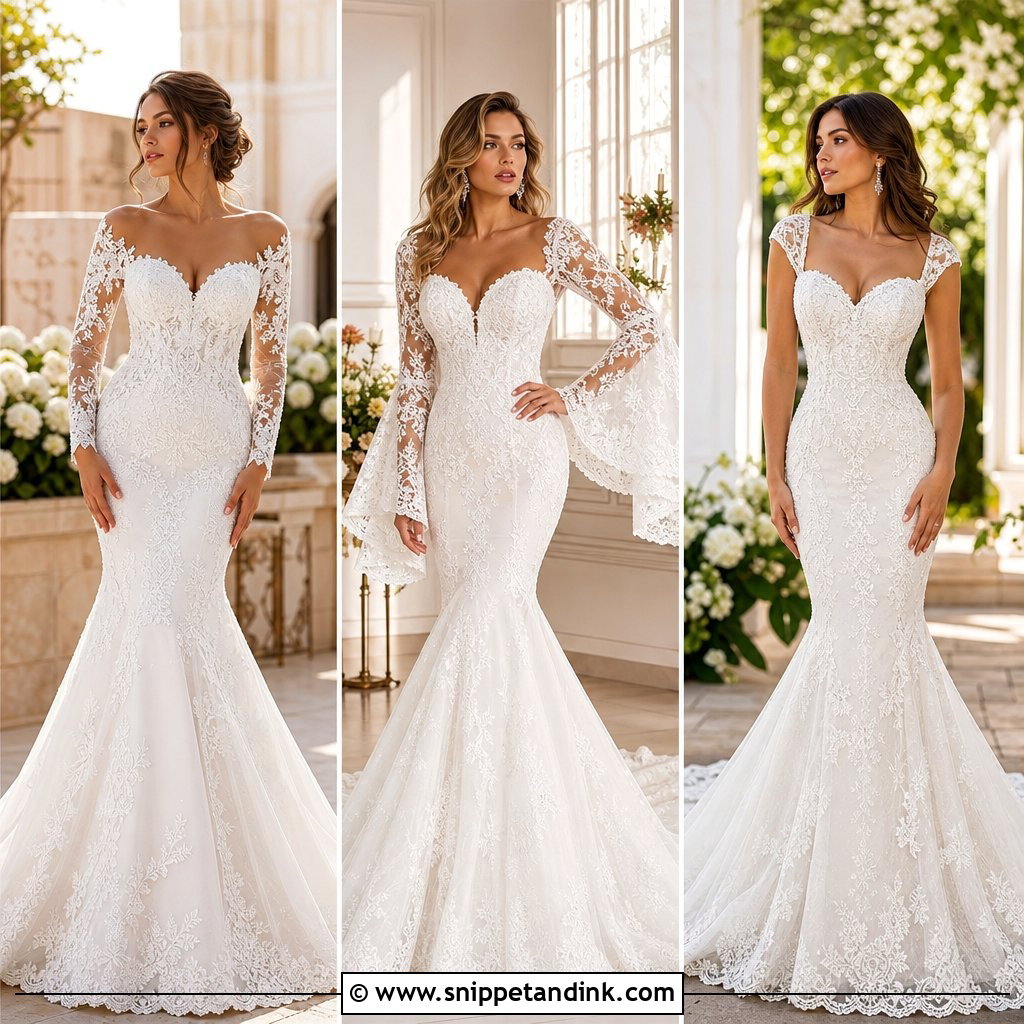
Detachable sleeves give you two looks from one gown: full coverage for the ceremony, then bare arms for the party. They come as button-on sleeves, off-shoulder pieces, bolero toppers or sheer overlays, in lace, satin or crepe. Wear the ceremony version with a veil and polished heels, then swap in statement earrings or a fun hair accessory later. Practice the switch with whoever will help you, because tiny loops and hooks are hard to manage with nervous hands. Look closely at the attachment points in person too; they should disappear, not pucker.
Cuffs, Foundation and Cake: What Sleeves Go Through by Midnight
Long sleeves sit right where everything happens. They brush the bouquet stems, rest on the table, reach into the cake and hug every guest who’s wearing makeup. By the end of the night the cuffs are usually the dirtiest part of the gown, and on a pale lace sleeve that shows.
A few small habits keep them clean. Get dressed after your makeup is finished and set, and slide your arms in with a light scarf over your face if the neckline is high. Let your hand lotion soak in for a good while before you dress, since oil marks on satin cuffs rarely lift. For the cake cutting, a quick push of the cuff toward the elbow keeps lace out of the buttercream.
A small kit for the sleeves
- White chalk or a white stain stick for foundation marks on lace, tested first on a hidden seam allowance.
- Clear nail polish to stop a small tulle snag from running.
- A few spare elastic loops and a needle threaded in ivory for a popped cuff button.
- Blotting papers, because touching your face with a cuff is the habit that marks it most.
After the wedding, have the gown cleaned within a few weeks, before invisible stains like sugar or sweat turn yellow. Point out the cuffs and underarms to the cleaner specifically. Store it flat or loosely folded in acid-free tissue, with tissue rolled inside each sleeve so the lace doesn’t crush along a hard crease.
Which Sleeve Fits Your Fall Date?
Long sleeves cover more range than most brides expect, from a plain crepe column to a beaded ball gown. Lace softens, satin sharpens, crepe streamlines and illusion tulle floats. Start from your venue and the weather, then let fit settle the rest: shoulders, arms, bust and waist all need tailoring before a sleeve looks easy. If you try on only one thing at your next appointment, lift your arms, sit down and hug someone. The gown that still feels right after all three is usually the one.
You'll Like These Ideas:



Leave a Reply