
An elopement asks more of your hair than a ballroom ever will. You might be standing on a cliff edge at sunrise, walking a muddy trail in your dress, or sitting in a convertible between locations, and there’s often no stylist waiting at the second stop. When I plan elopement hair, I’m thinking about wind direction and hours in the open air as much as the shape in the photos. The 20 styles below run from loose waves to pinned buns and braids, and with each one I’ll tell you how it behaves outdoors and who it suits.
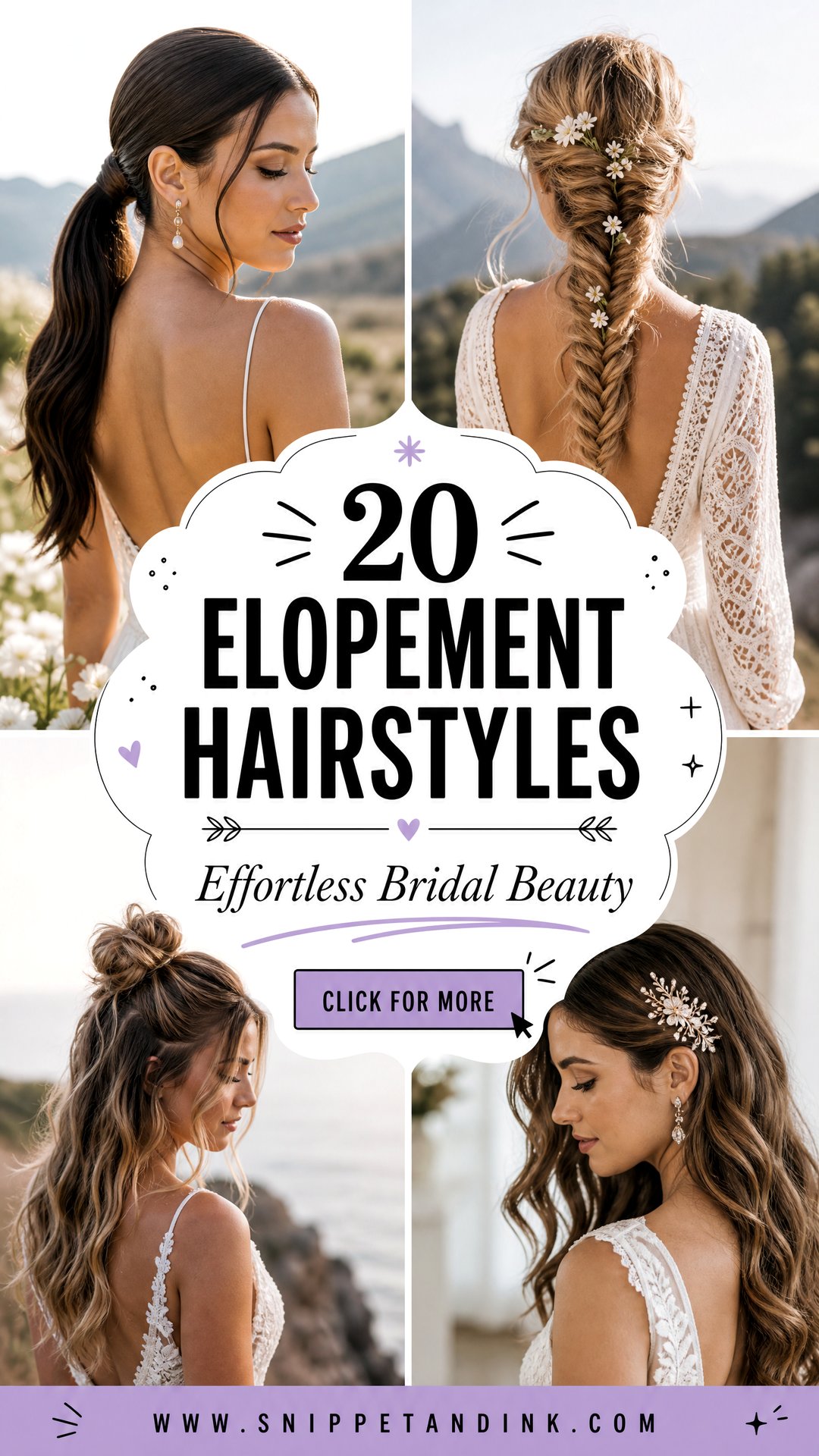
Hair That Has to Hike, Ride and Stand in the Wind
Before you fall for a picture, think about the day around it. At many elopements the stylist leaves after the first look, and plenty of couples do their own hair in a cabin or hotel bathroom. So I start with three questions: how long you’ll be outdoors, how you’ll travel between spots, and who will fix things if they move.
- Exposed coast, open ridge or desert: choose a nape-level style like a low bun, chignon or braided bun. Anything loose will spend the day across your face.
- Forest, garden or a sheltered valley: loose waves and half-up styles behave well because the trees break the wind.
- A long hike in: braids beat pins. A braid relaxes as you walk; a pinned updo can loosen and drop.
- Rain in the forecast: skip vintage waves and any heat-set curl. Braids and smooth buns shrug off drizzle.
If you’re doing it yourself, practice the style at least twice, once on day-old hair and once on freshly washed hair, so you know which one holds better for you. Most people find that second-day hair grips pins far better.
1. Loose Romantic Waves
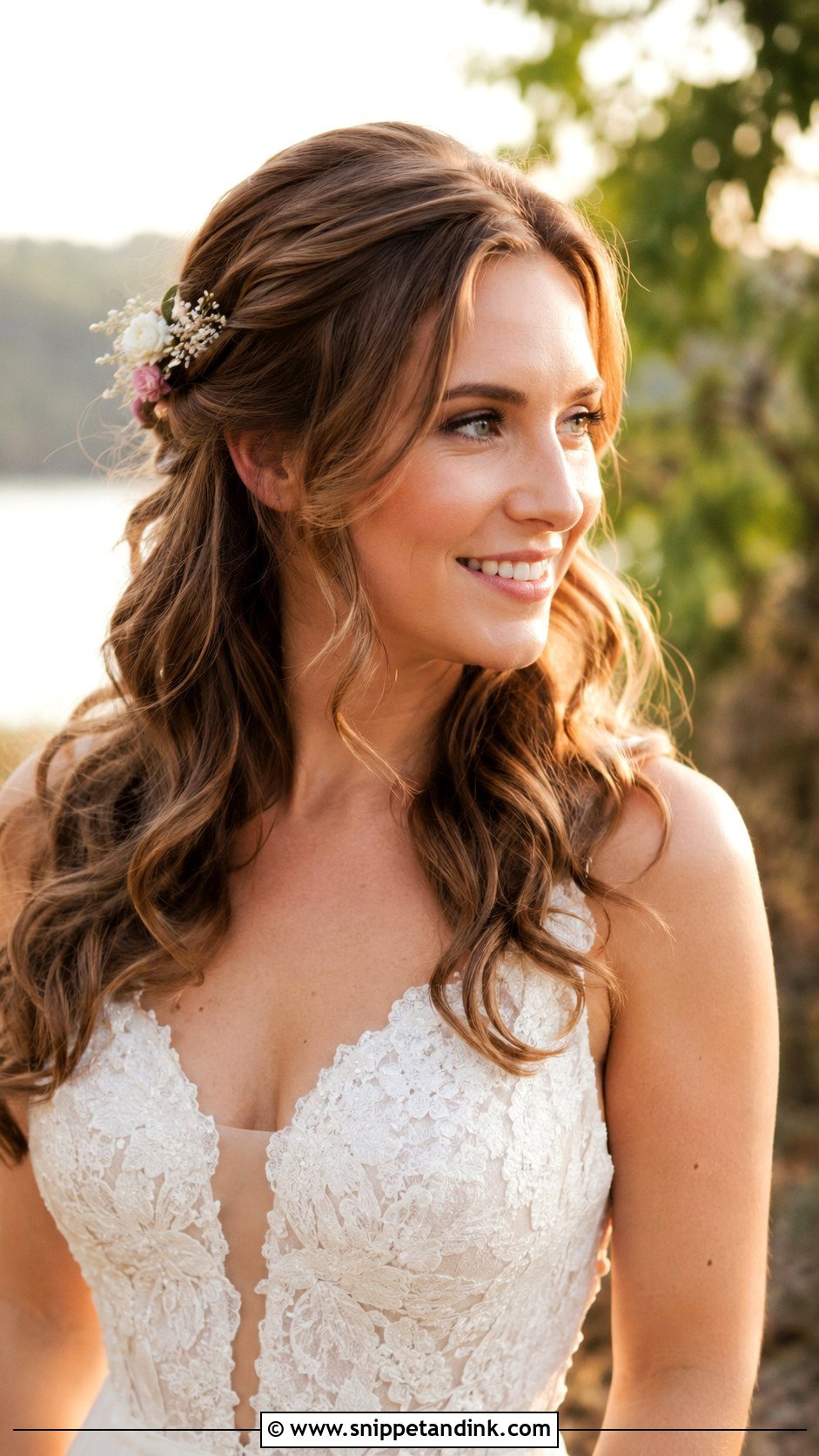
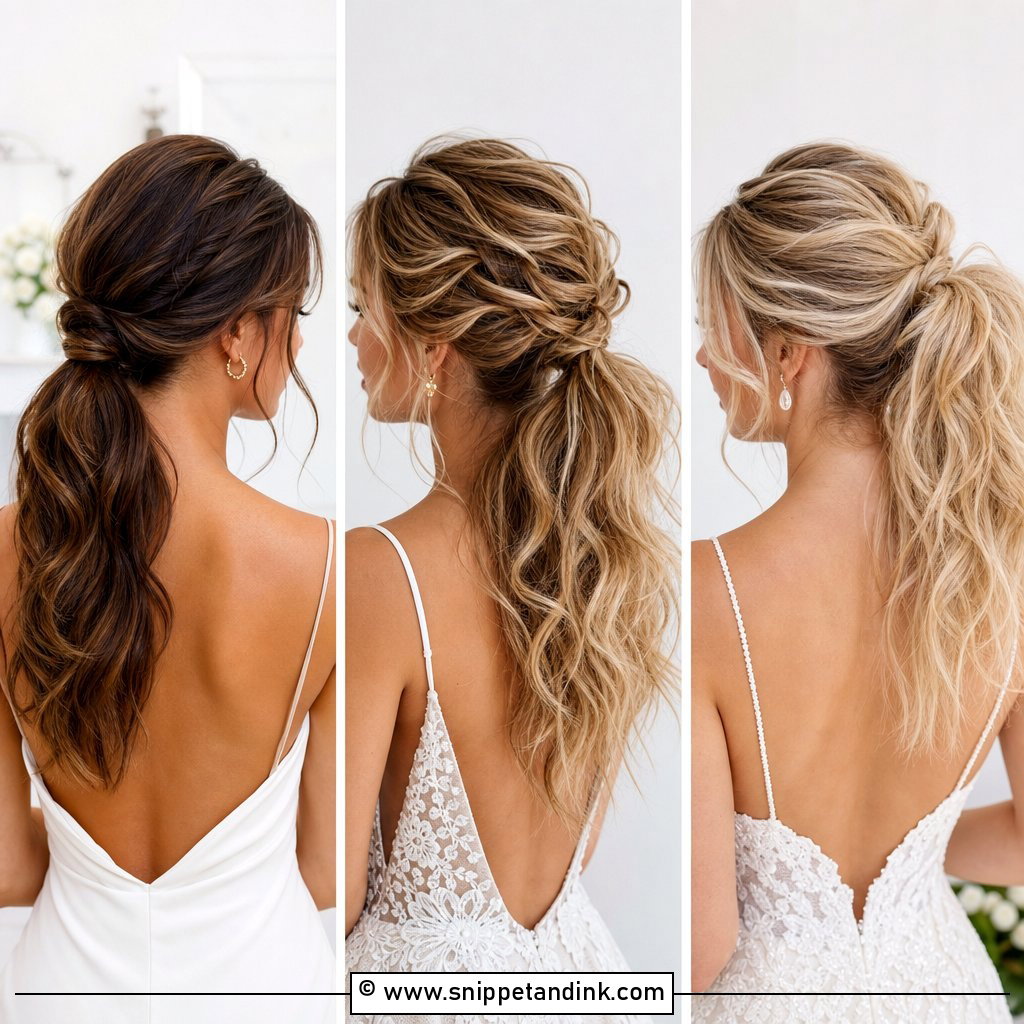
Waves are the style I get asked for most, and the one that needs the most honest planning. A wand curl on long or medium hair looks soft and moving in the breeze, but humidity will relax it by mid-afternoon, so I set each curl and let it cool completely before brushing it out with fingers. A light texture spray gives grip without the crunch of a strong hairspray. If you tuck a small floral pin behind one ear, anchor it with a crossed pair of bobby pins underneath so the wind can’t lift it out.
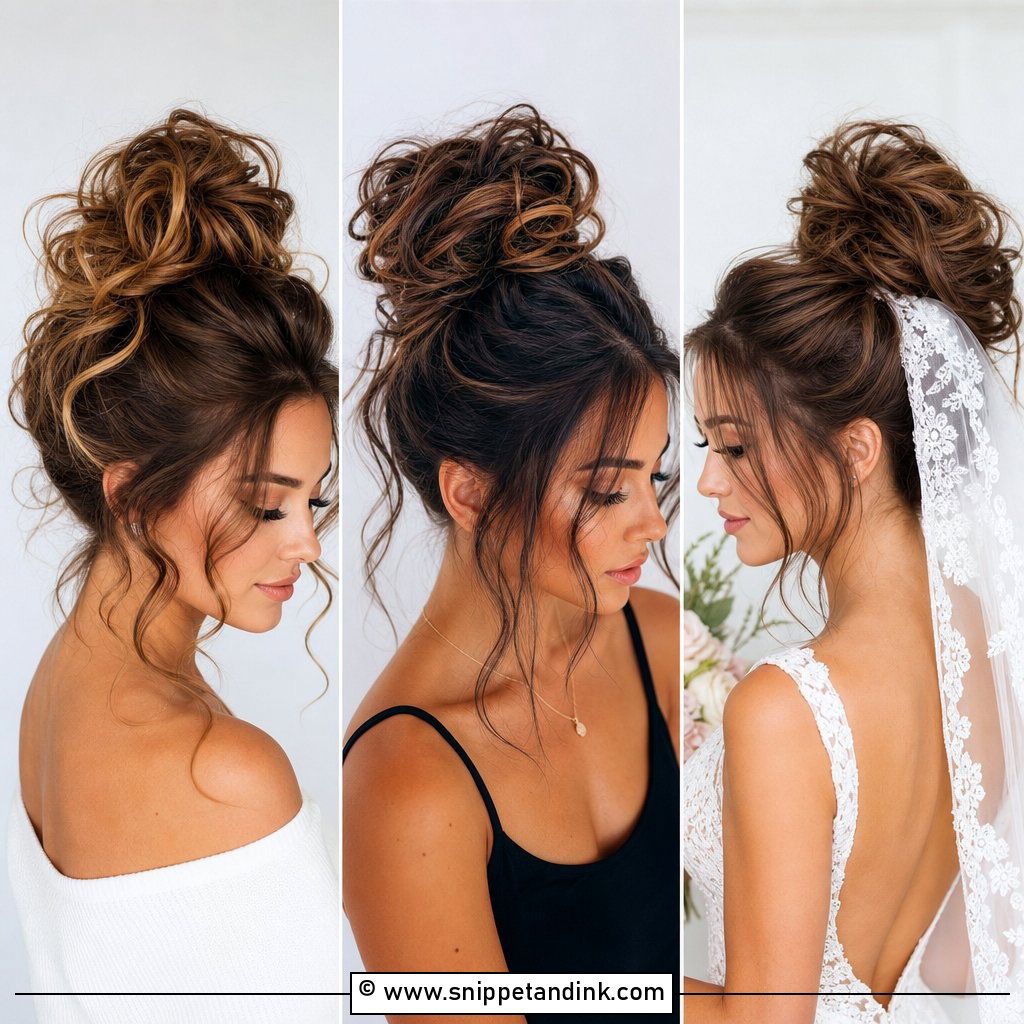
2. Low Messy Bun
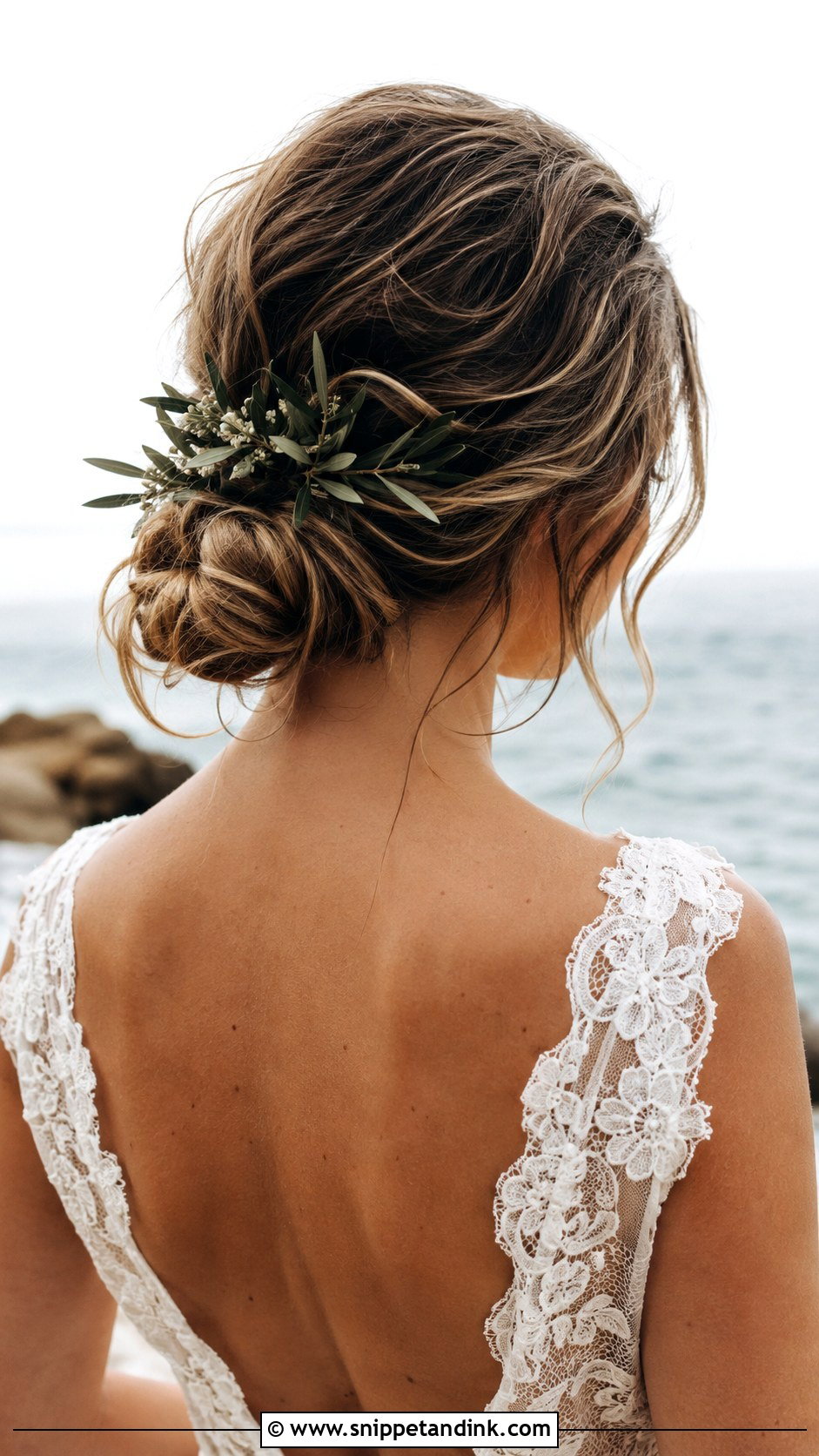
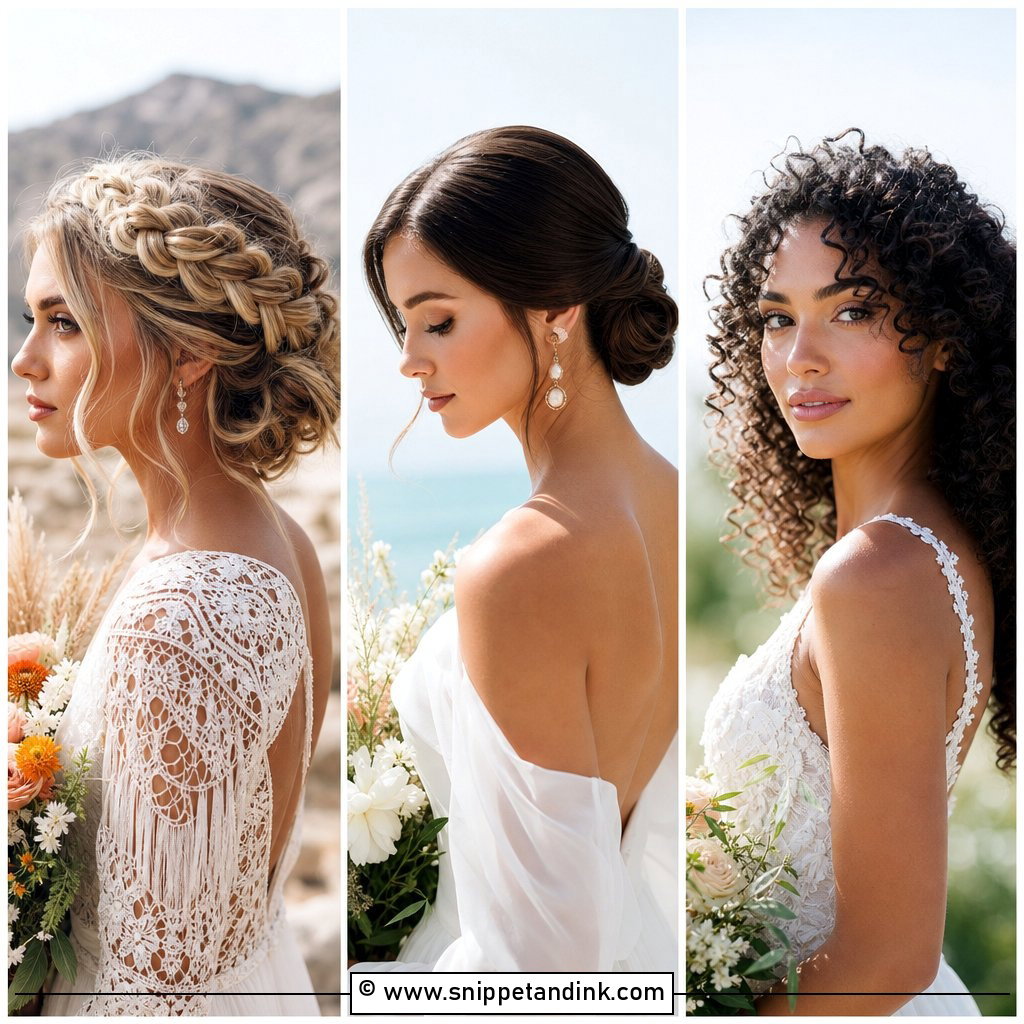
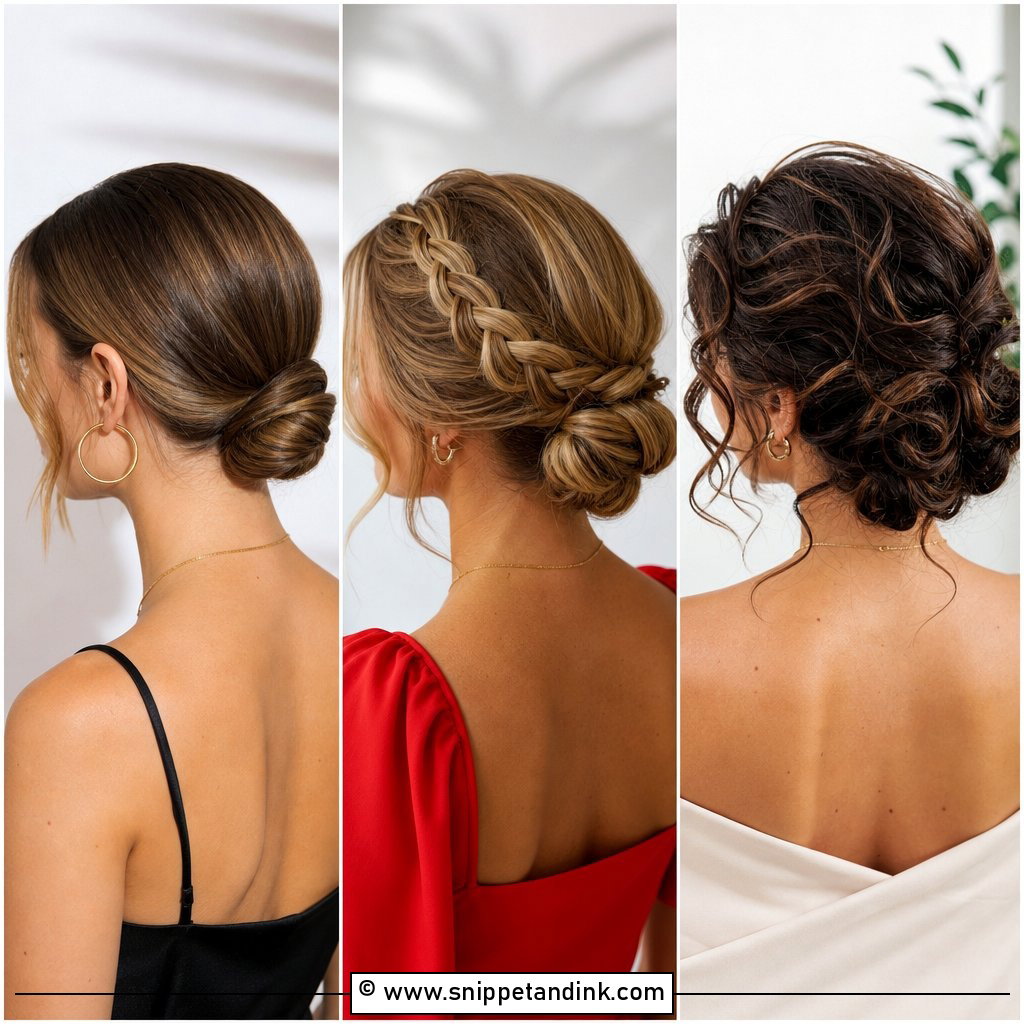
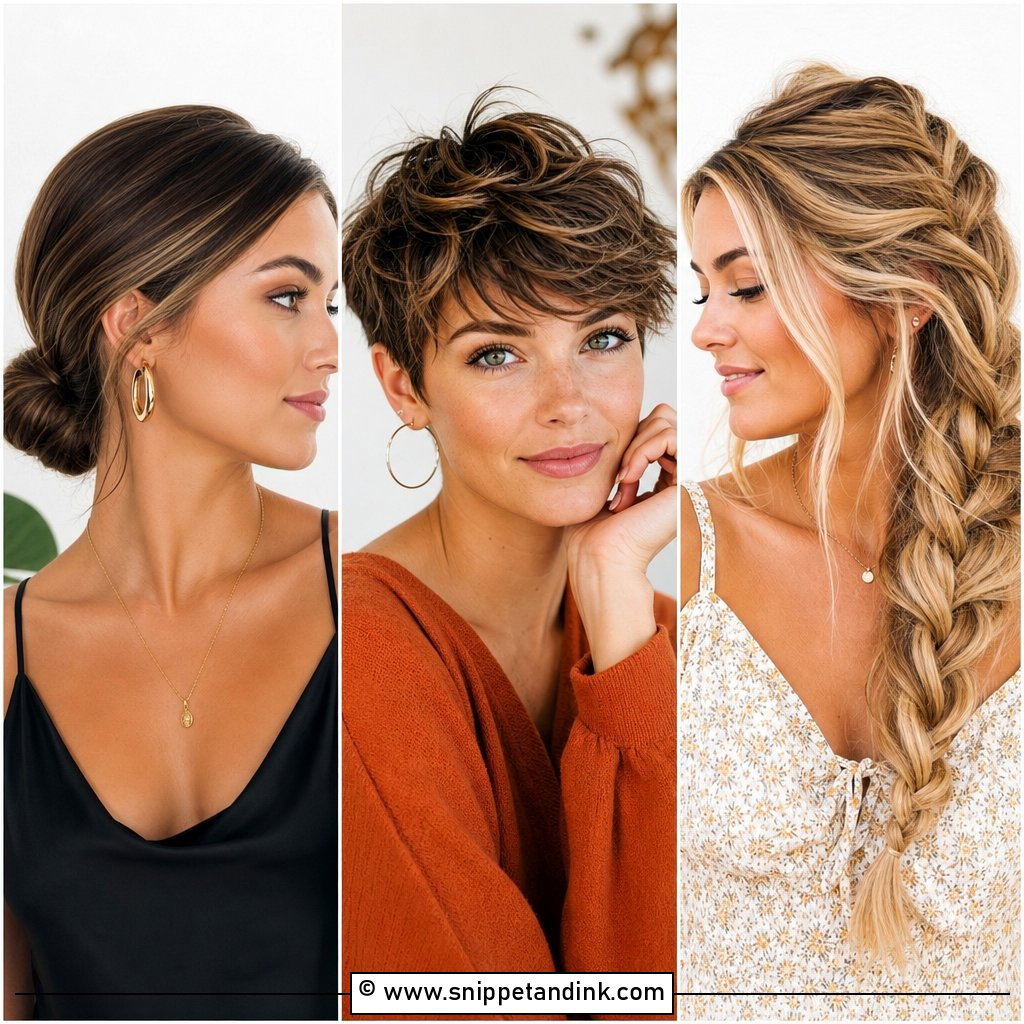
On a windy day, this is the style I reach for first. A low bun sits under the wind rather than in it, and because the knot rests at the nape, you can lean back against a rock or a car seat without crushing it. I twist the hair loosely, pin it into a soft shape and pull a few face-framing pieces out last. Those pieces will blow around, which usually looks good in pictures, but keep them shorter than chin length if you hate hair in your lip gloss. It also takes a veil comb or a sprig of greenery easily.
3. Half-Up Half-Down With Waves
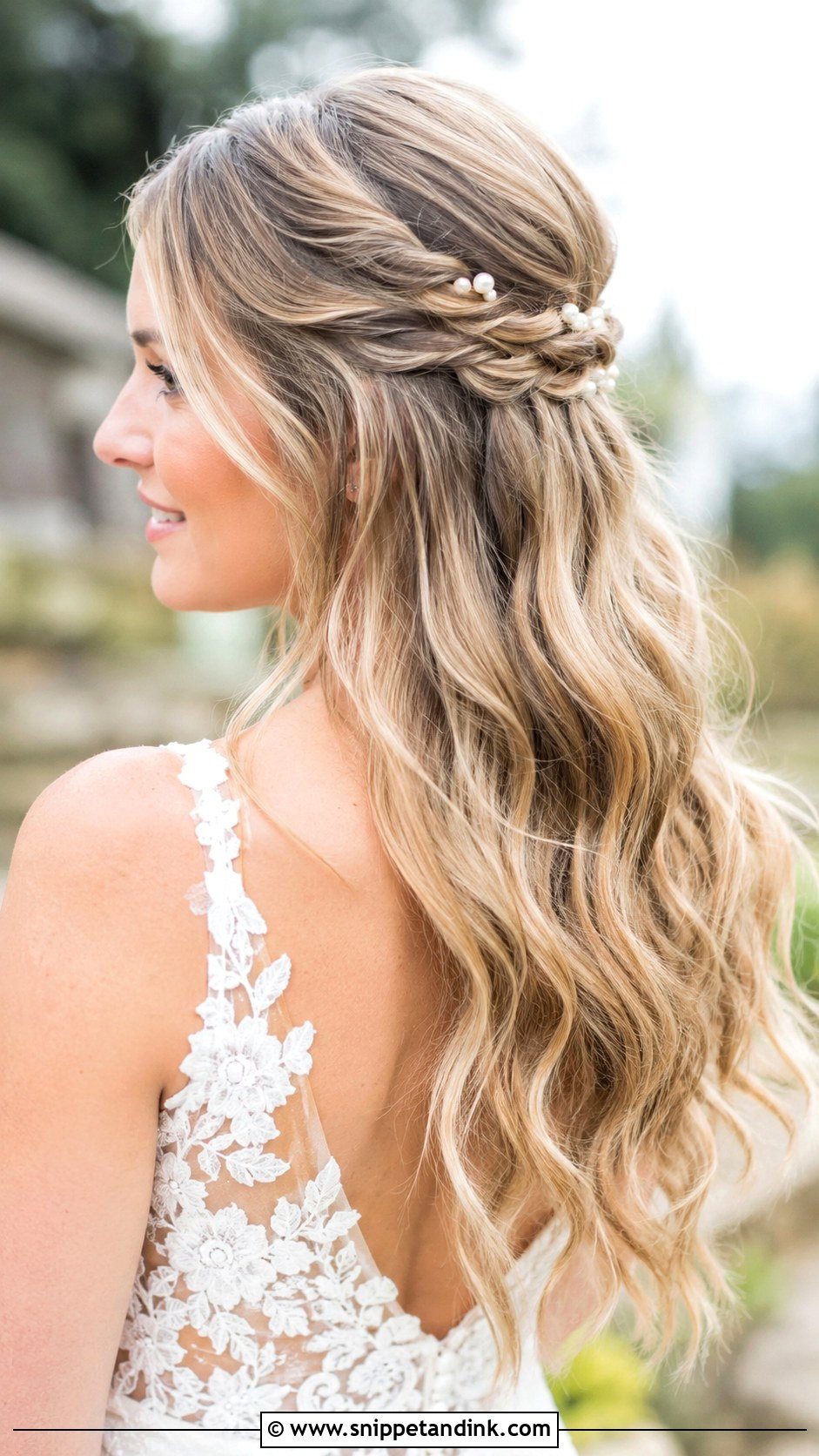
Half-up waves give you the movement of loose hair with the face kept clear, which matters more than people think when the wind turns. I secure the top section with a twist or small clip and tease the crown gently for lift before pinning. The weak point is the lower half: on very fine hair the waves drop within a couple of hours, so I’d prep with a volumizing mousse at the root and curl in smaller sections. Pearl pins or a thin hair vine sit nicely along the twist.
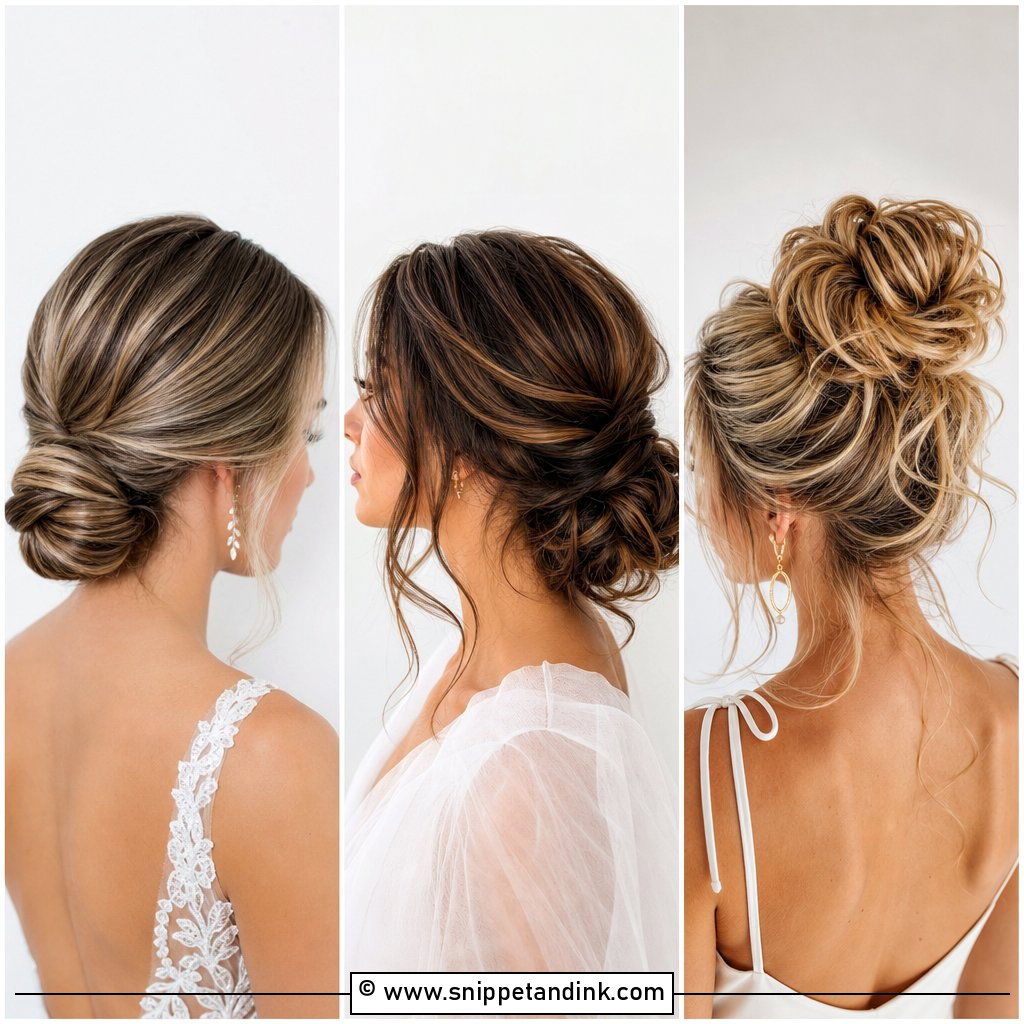
4. Soft Low Chignon
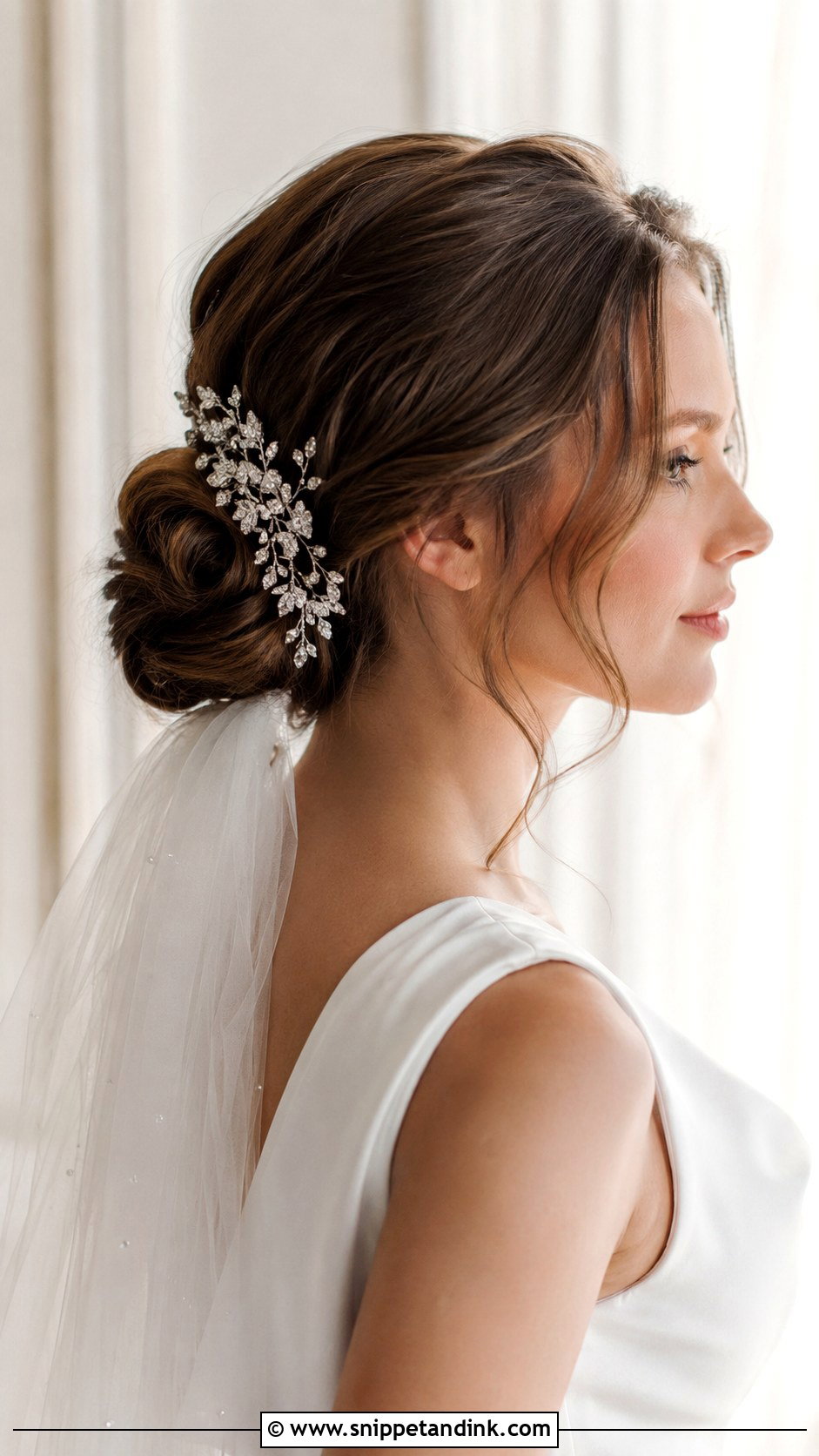
A low chignon is the quiet, polished choice, and it handles weather better than most styles in this list. I build it on a small, tight ponytail base hidden underneath, then wrap and pin the knot loosely around that anchor, so it looks soft but can’t slide. A few tendrils around the face stop it reading severe. It sits well under a veil or with a jeweled comb tucked above it, and it suits brides with medium to long hair who want something calm and refined.
5. Braided Crown
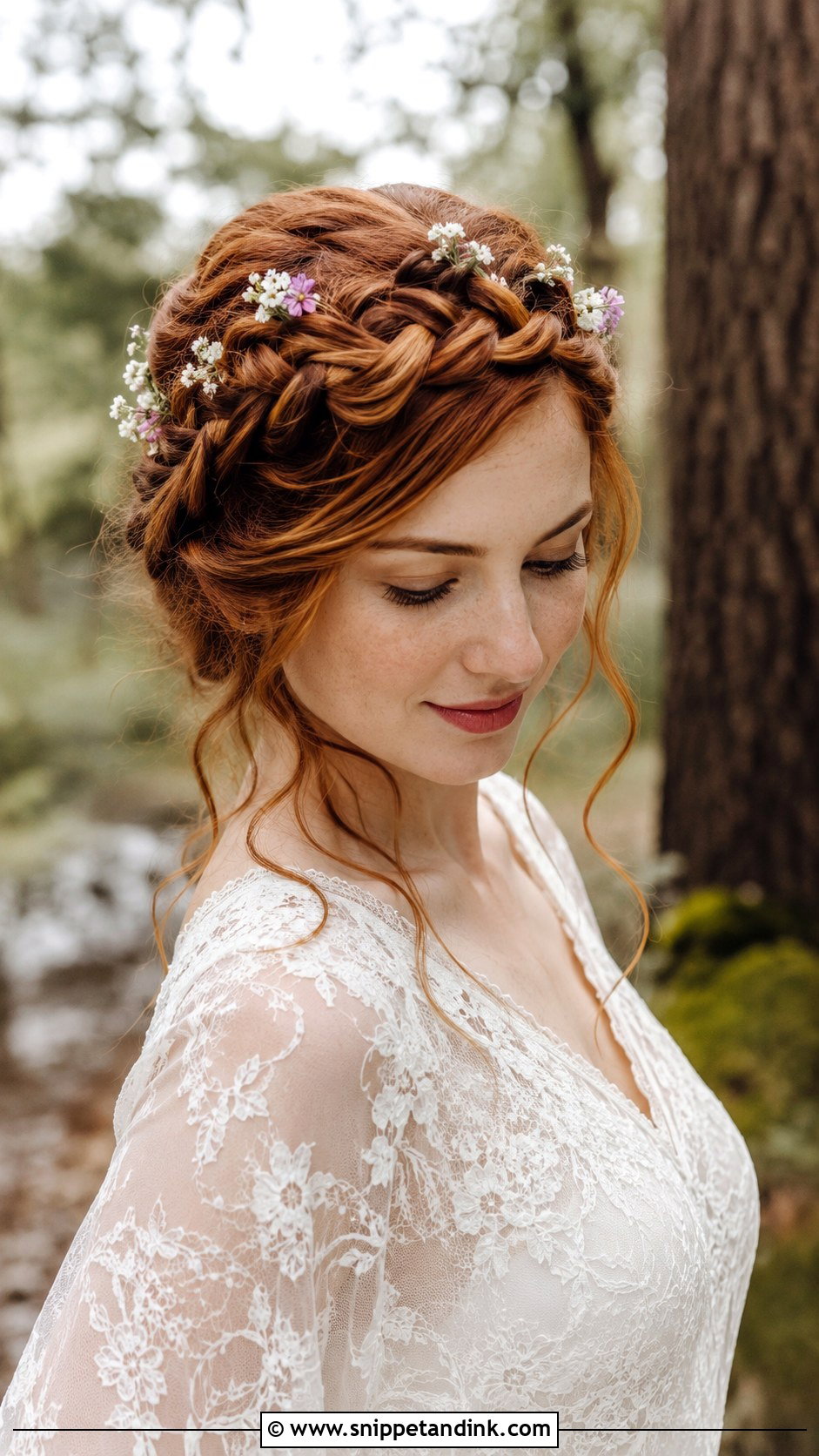
A braided crown is about as secure as long hair gets, which is why I suggest it for forest and mountain elopements where you’ll be hiking between spots. I braid a section along each side and pin both across the top so the pins disappear into the weave. Thick hair makes a fuller halo; very fine hair can look thin when pulled across the head, so I sometimes add a clip-in braid for body. Tiny flowers or baby’s breath can go straight into the plait, and the rest of the hair can stay down or go into a low bun.
6. Sleek Low Ponytail
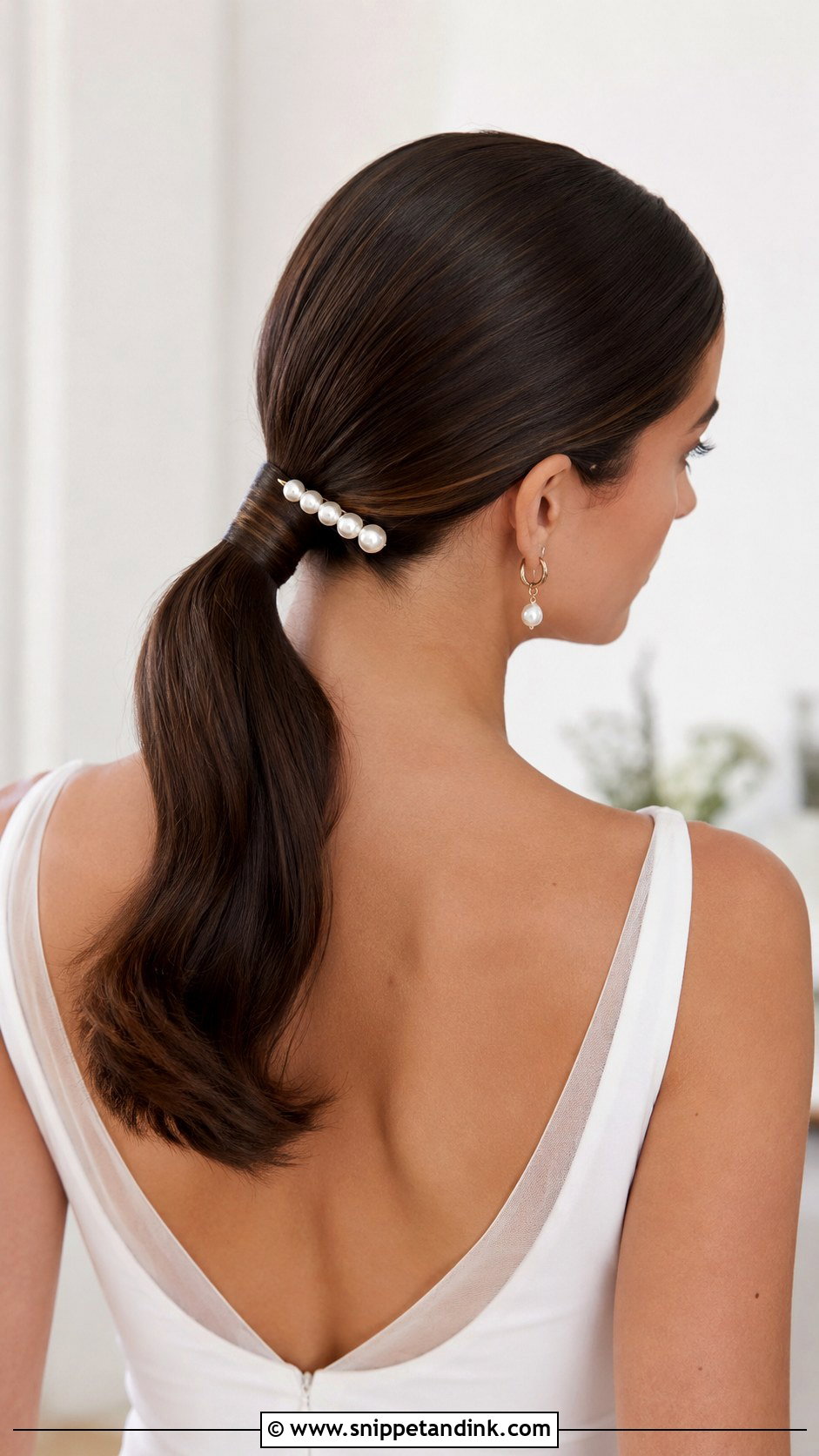
Clean lines and zero flyaways in the face: a sleek low ponytail is the most practical shape here for a windy spot. I smooth the hair with a little shine serum, secure it low at the nape and wrap a strand around the base to hide the elastic. It suits both city hall elopements and long outdoor days. One caution: very sleek styles show every bump, so I brush it in sections and set the elastic with the head tilted slightly down, which stops a gap forming at the nape when you look up for photos. A pearl barrette is the only accessory it needs.
7. Tousled Updo With Tendrils
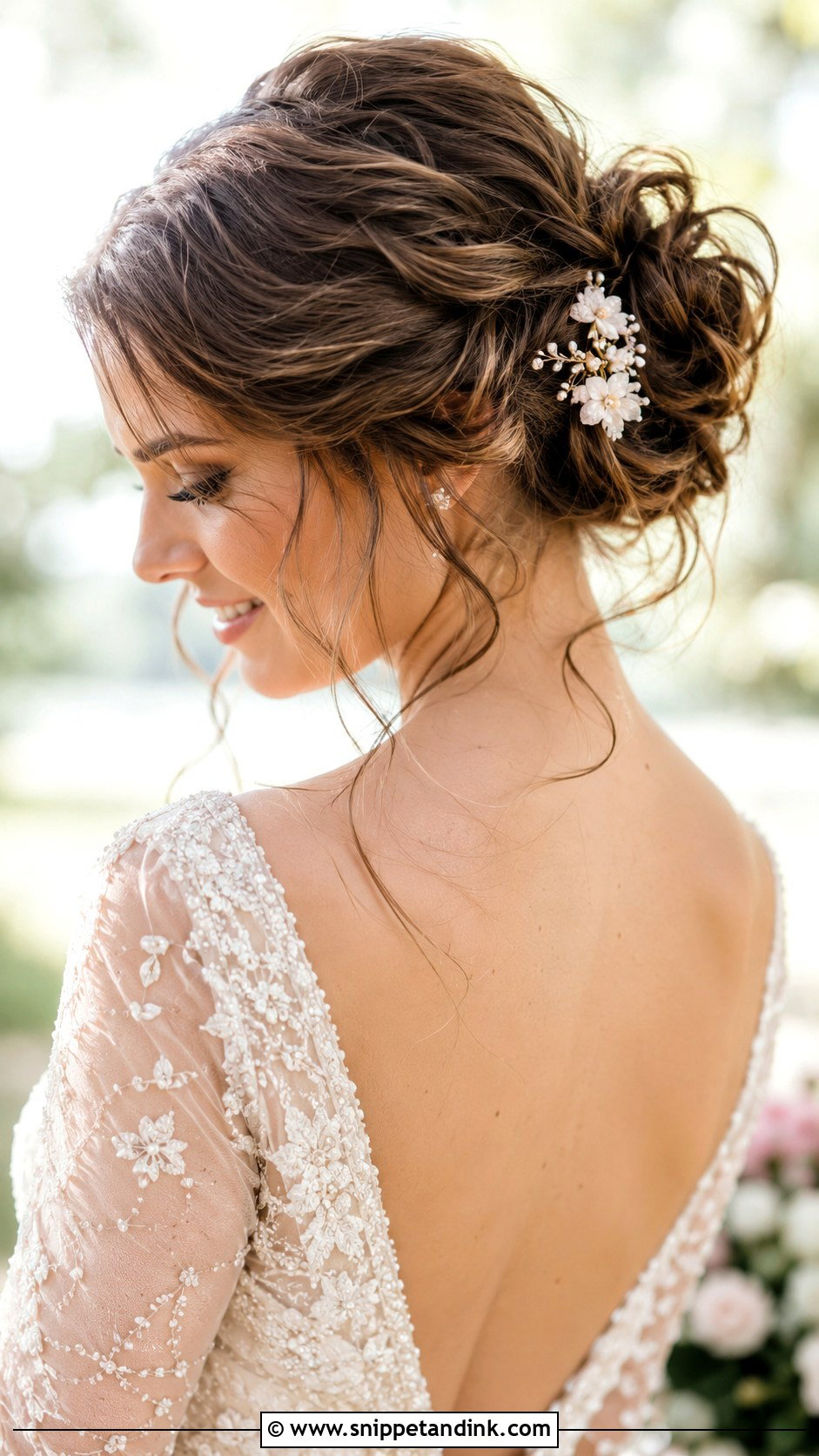
This is the updo for brides with long or medium hair who want volume and a little mess. I gather the hair up loosely and pin it in a relaxed, uneven shape, leaving soft pieces at the face and neck. The trick is to texturize first with dry texture spray, because clean, silky hair slides out of a loose updo within an hour. In soft evening light it reads airy and romantic. A small floral accent or jeweled pin finishes it, placed off-center rather than in the middle.
8. Boho Braided Half-Up
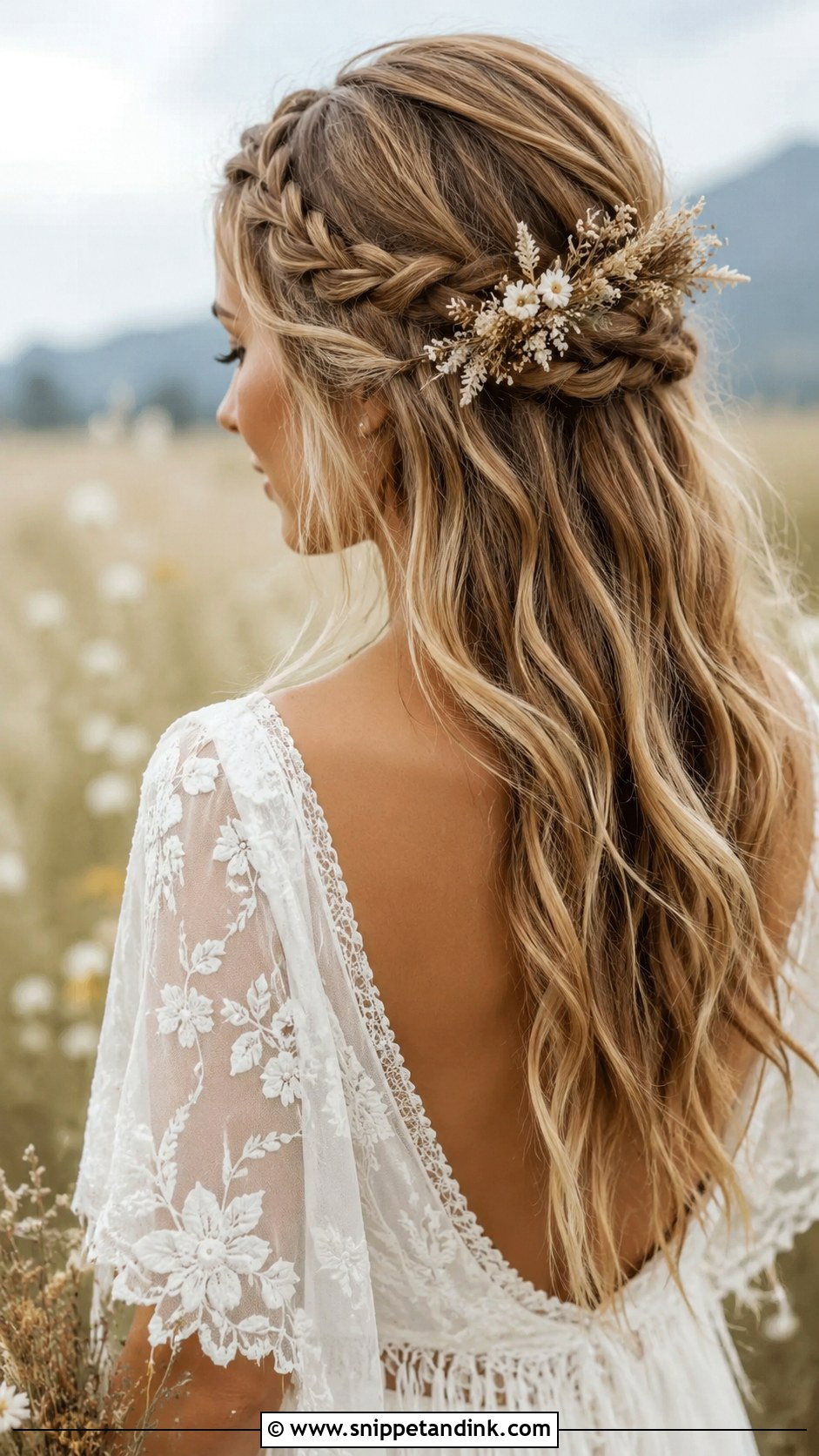
Free-spirited brides tend to like a boho braided half-up: loose waves underneath, with one or two small braids pulled back from each side and joined in a soft twist or clip. I pancake the braids gently afterwards to widen them, which makes them look fuller and hides the elastics. It suits beach, desert and wildflower settings. Dried flowers are a good choice to tuck in here because they don’t wilt in heat the way fresh blooms do.
9. Natural Curls Worn Loose
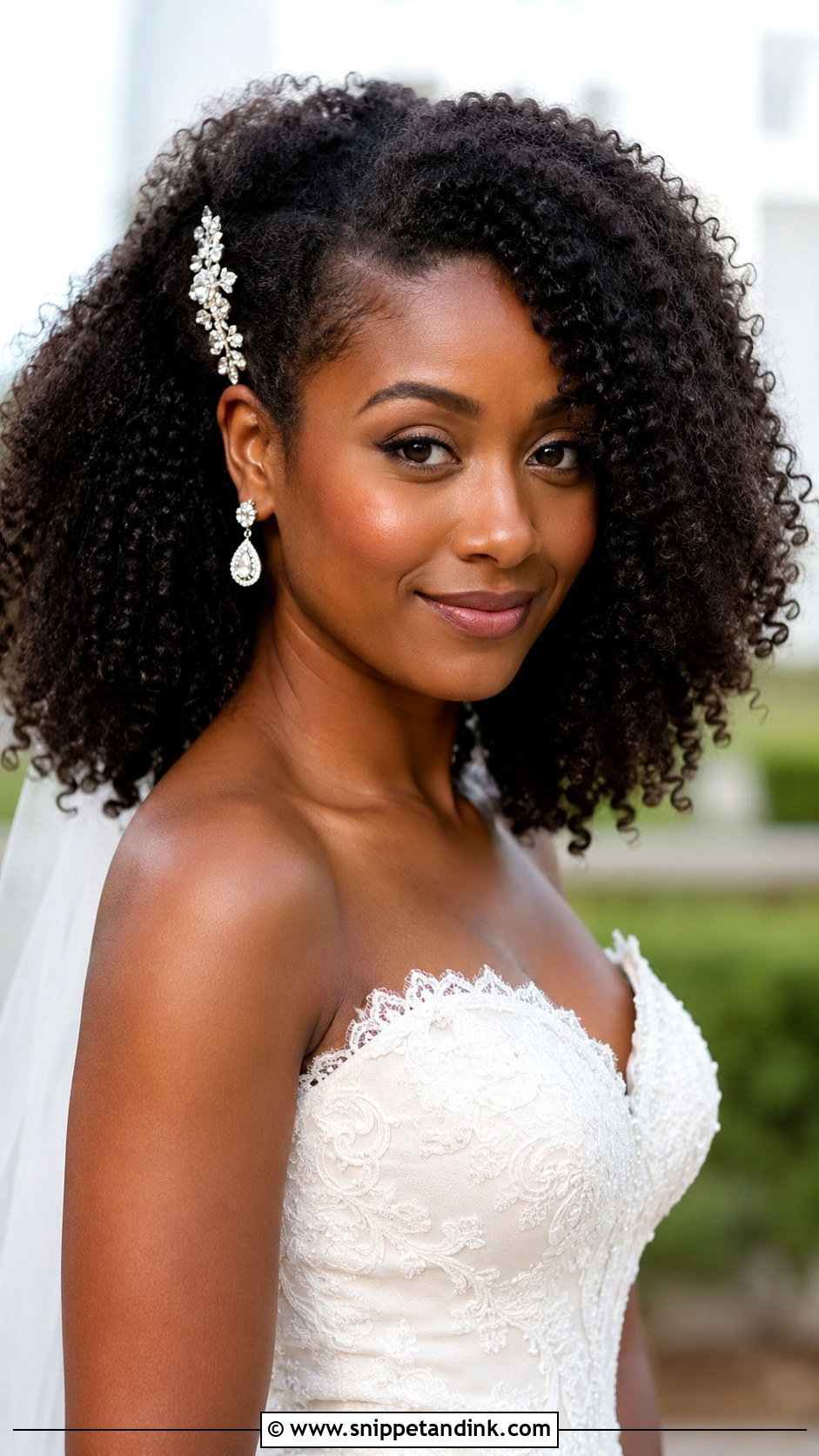
Natural curls worn loose are often the most comfortable choice, and I’d never ask a curly bride to fight her texture for a mountaintop. I define with a curl cream on wet hair, diffuse on low heat, and leave the cast alone until it’s fully dry before scrunching it out. Shrinkage is real in humid air, so plan for curls a little shorter than at your trial. A decorative pin tucking one side back gives the face some definition, and the style needs almost nothing during the day.
10. Twisted Low Bun
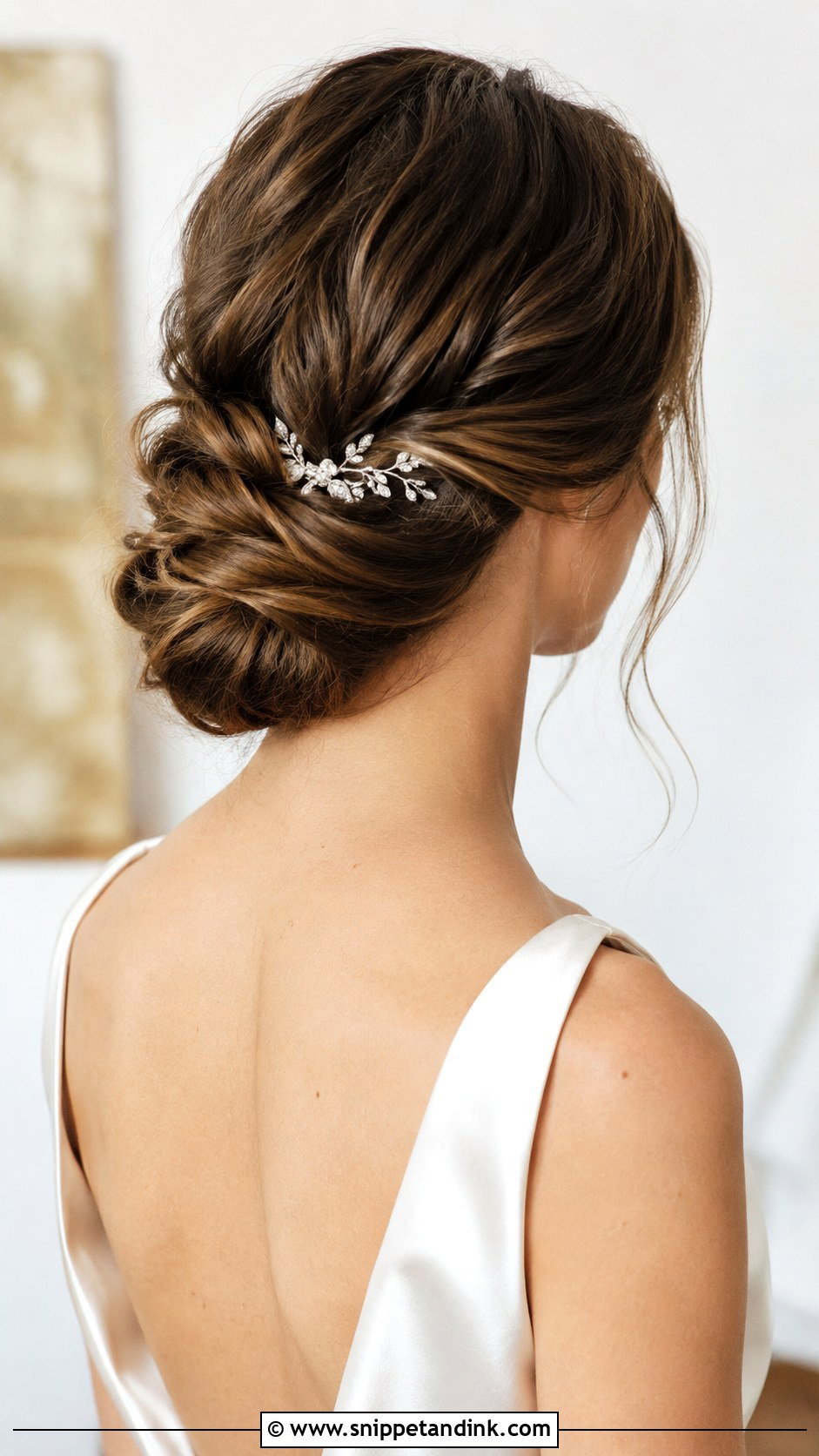
A twisted low bun adds texture to the classic nape knot. I twist sections back from the hairline toward the nape and gather them into a loose knot, so the twists catch light and keep the bun from looking flat. Secured low and firmly, it handles a gusty headland well. It pairs with a veil, a comb or a few flowers. My only warning is for very short layers: they spring out of twists, so I set them with a little pomade before I start.
11. Flower Crown With Loose Hair
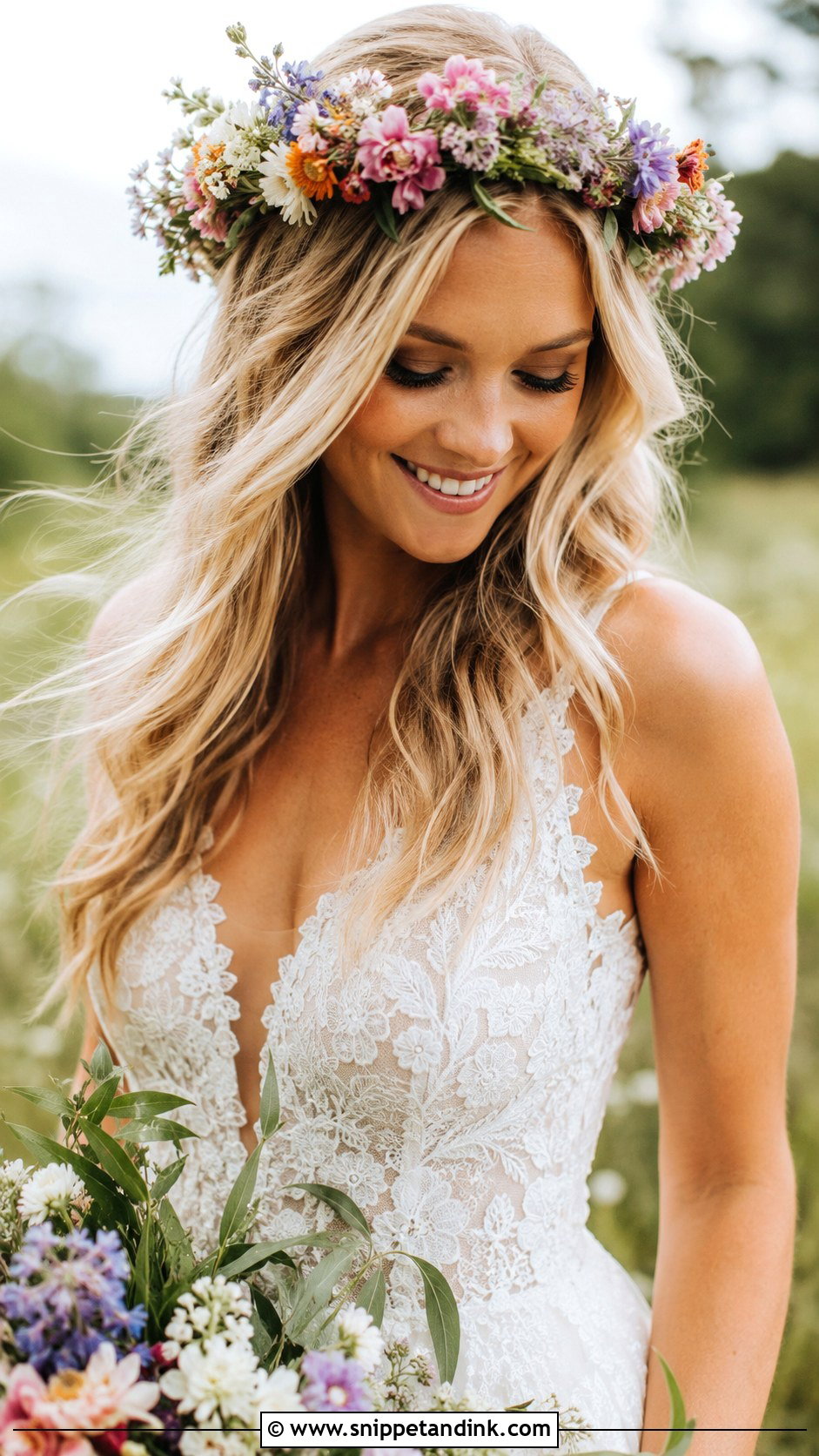
A flower crown over flowing hair is the picture most people have of an elopement, but it needs some engineering. Real blooms are heavy, so I pin the crown through the hair at four points, not just rest it on top, and I ask florists to keep stems thin and wire short. Keep the hair down in soft waves or your natural texture, and match the flowers to your bouquet. In a meadow or forest it looks festive and relaxed. On a very windy cliff, I’d skip it; even a pinned crown can tilt.
12. Pinned-Back Vintage Waves
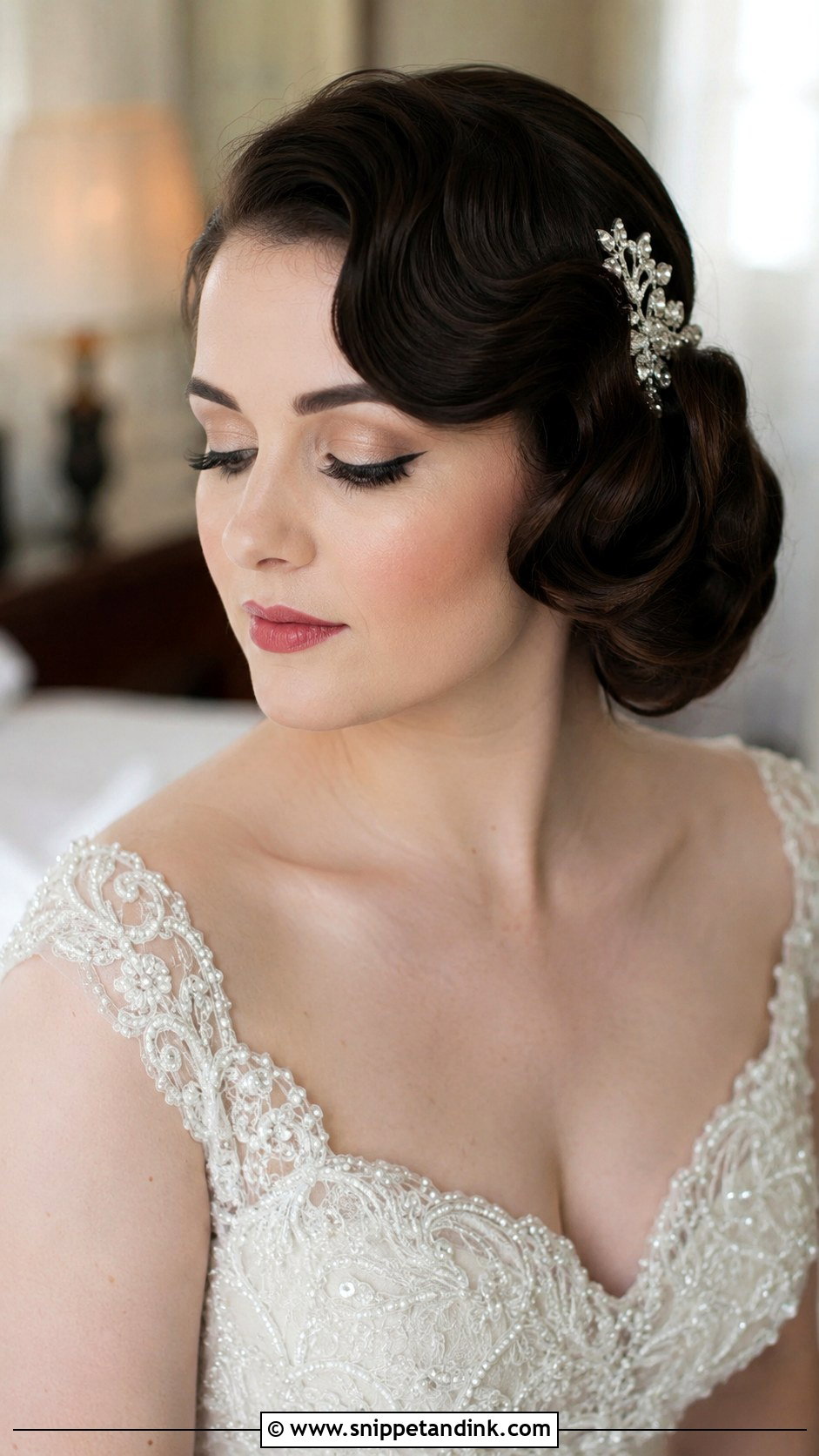
Pinned-back vintage waves bring old-Hollywood shape to a city elopement or an indoor ceremony. I set defined curls with an iron, brush them into one smooth wave and pin one side back so the face is open. This style hates wind and rain; the sculpted wave pattern is the first thing to collapse outdoors, so I’d keep it for sheltered venues. A sparkling pin or vintage comb and statement earrings complete it nicely with a classic gown.
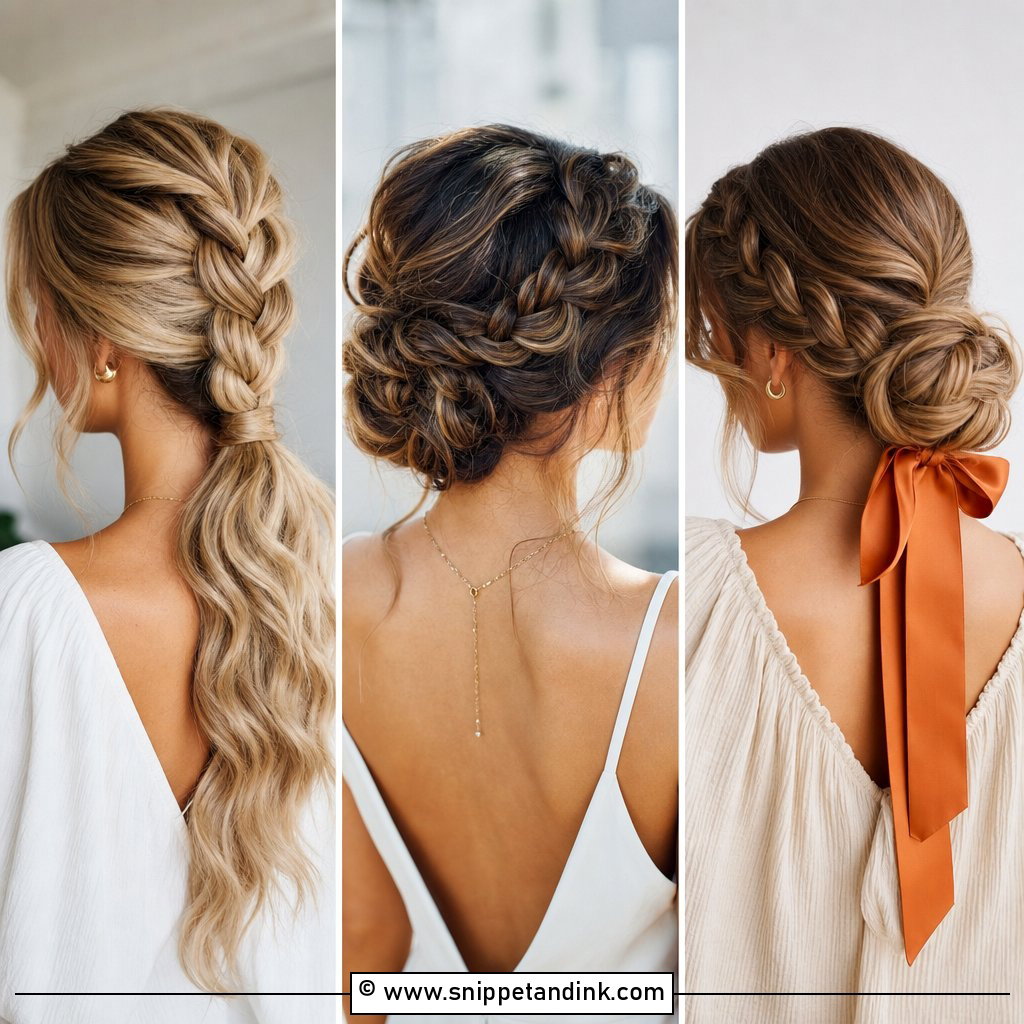
13. Fishtail Braid
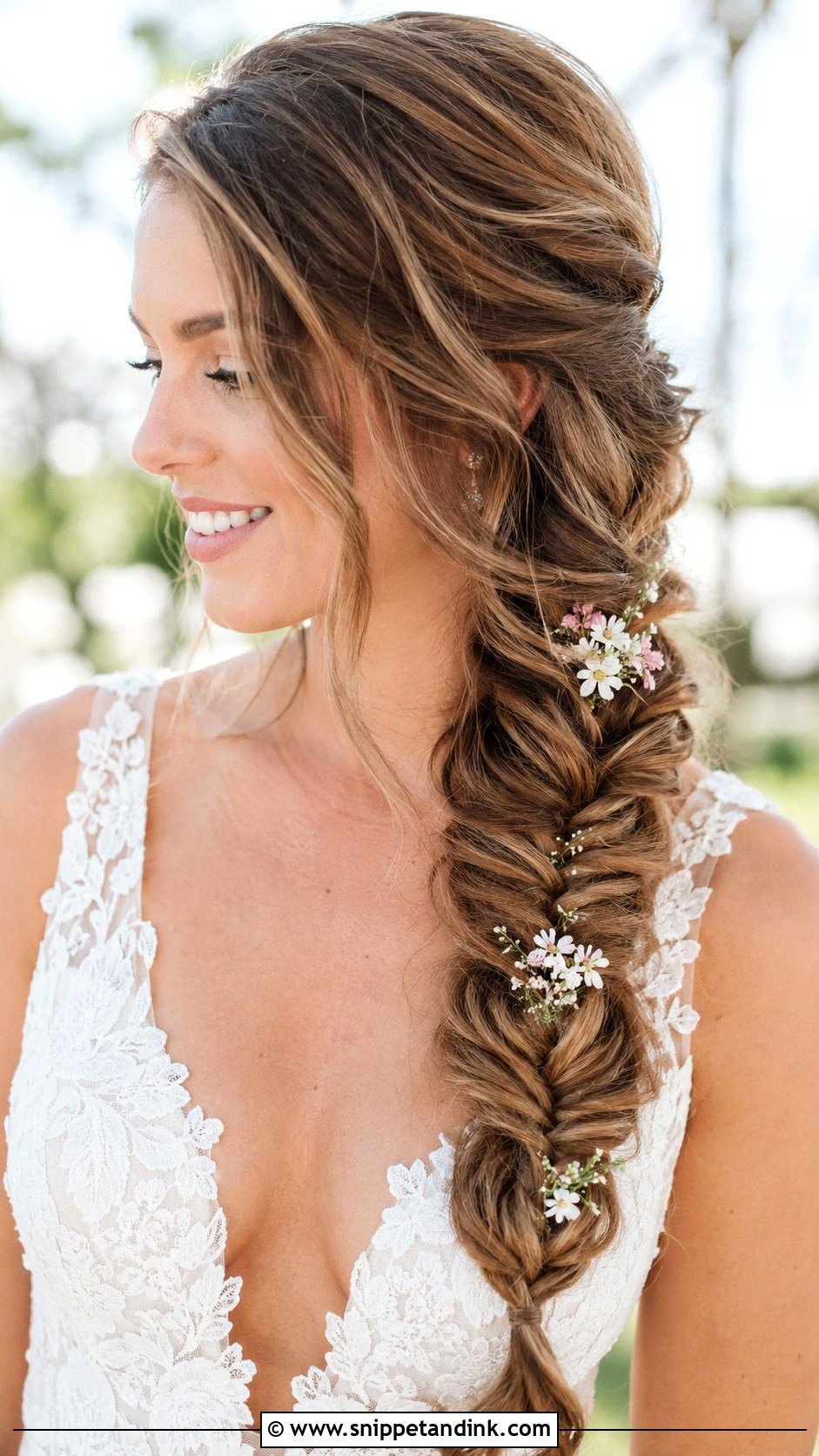
A fishtail braid takes longer to weave than a standard plait, but it holds better because the sections are so small. I sweep the hair to one side, braid it over the shoulder and gently pull the edges wider for volume. It needs long hair to look right; shoulder-length hair makes a short, stubby fishtail. Leave a few face-framing pieces loose and tuck small flowers along the braid if you like. On a breezy hike, very little moves.
14. Slicked-Back Pixie
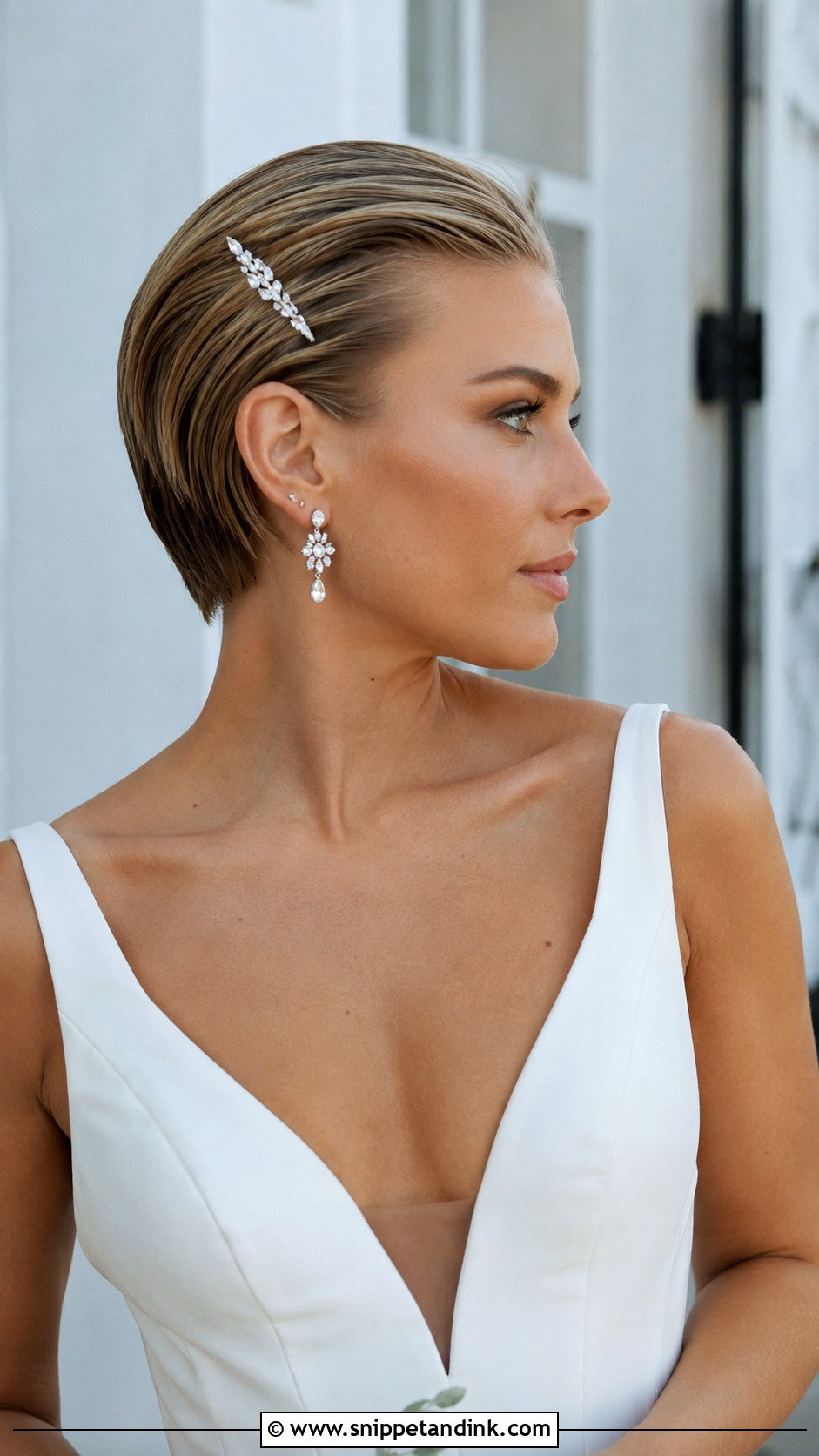
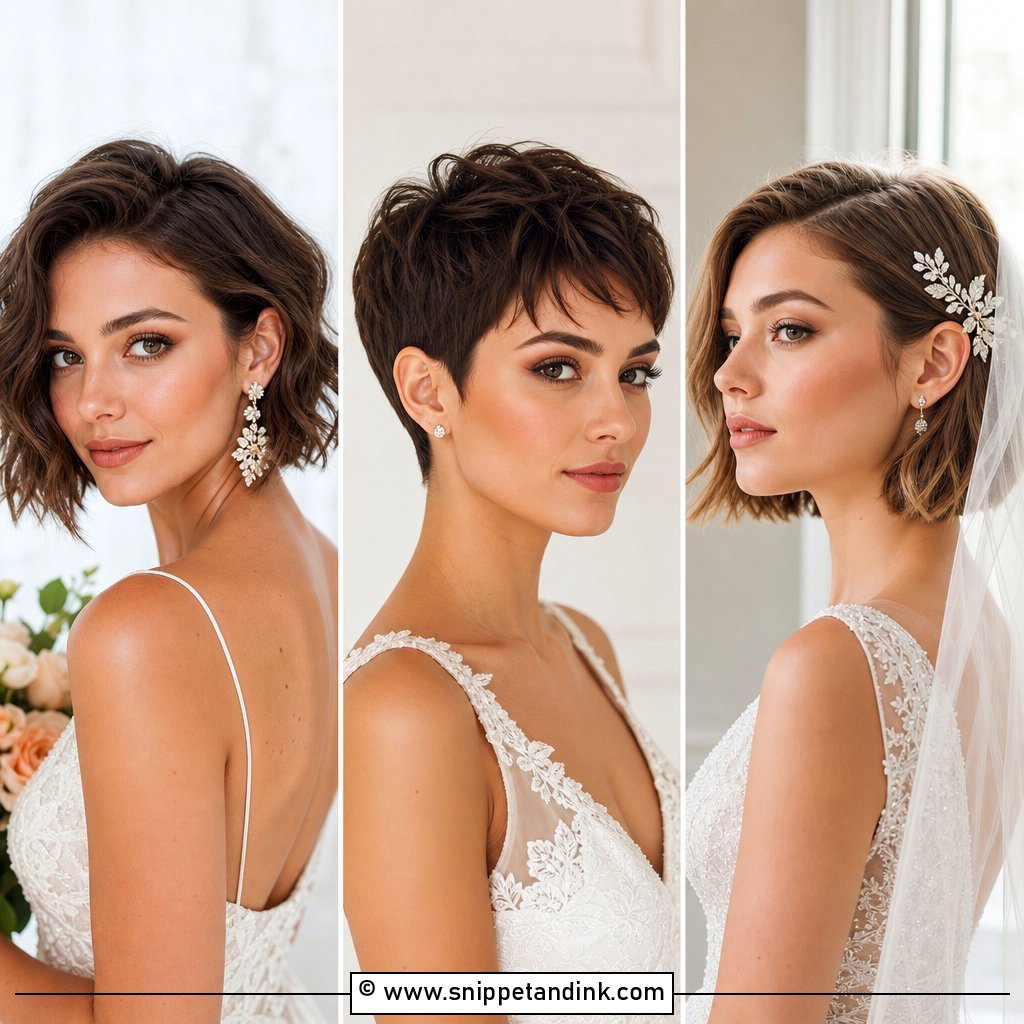
Short-haired brides often get overlooked, and a slicked-back pixie is a strong answer. I smooth the hair back with pomade or gel for shine and hold, which shows off your features and leaves room for statement earrings or a small headpiece. It is genuinely windproof. The thing to plan is product: gels can flake on dark hair as they dry, so I use a cream pomade on darker shades. A jeweled clip at the temple adds a feminine detail.
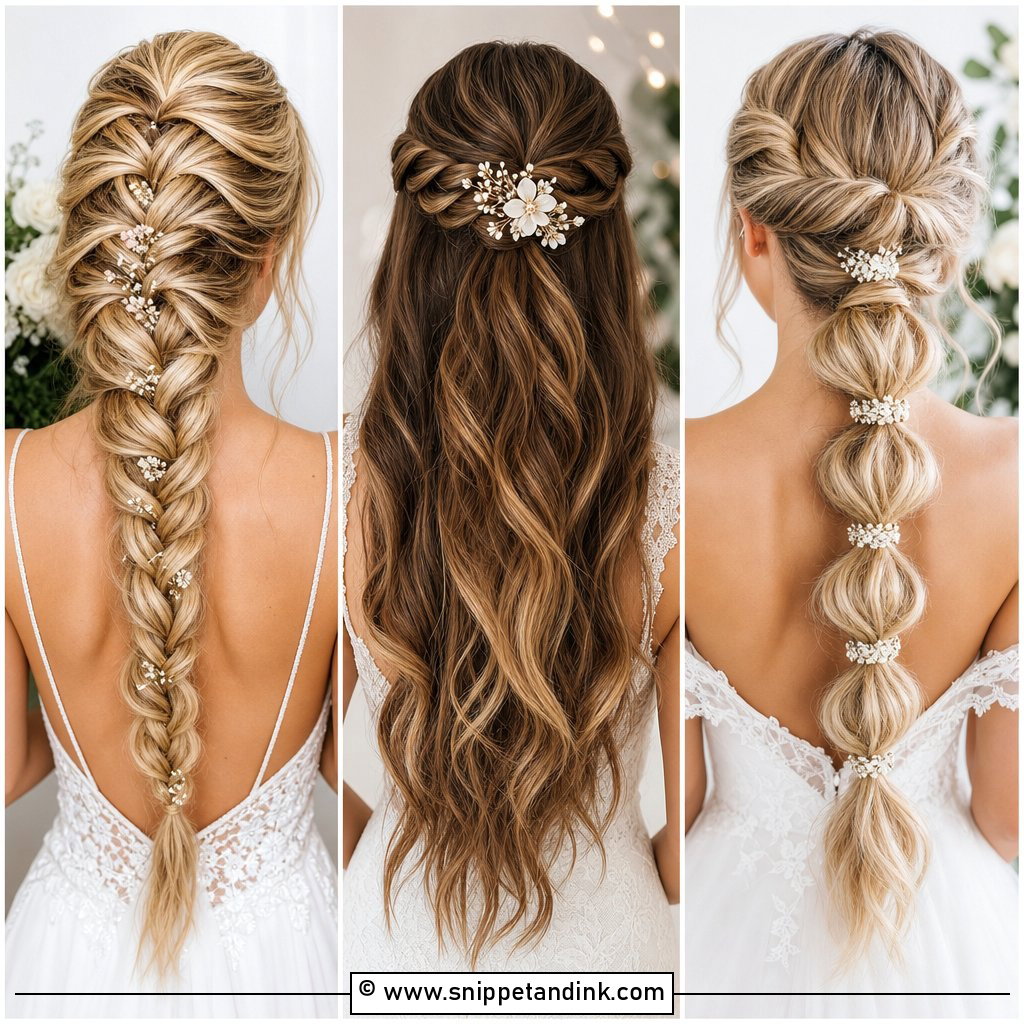

15. Loose Side Braid
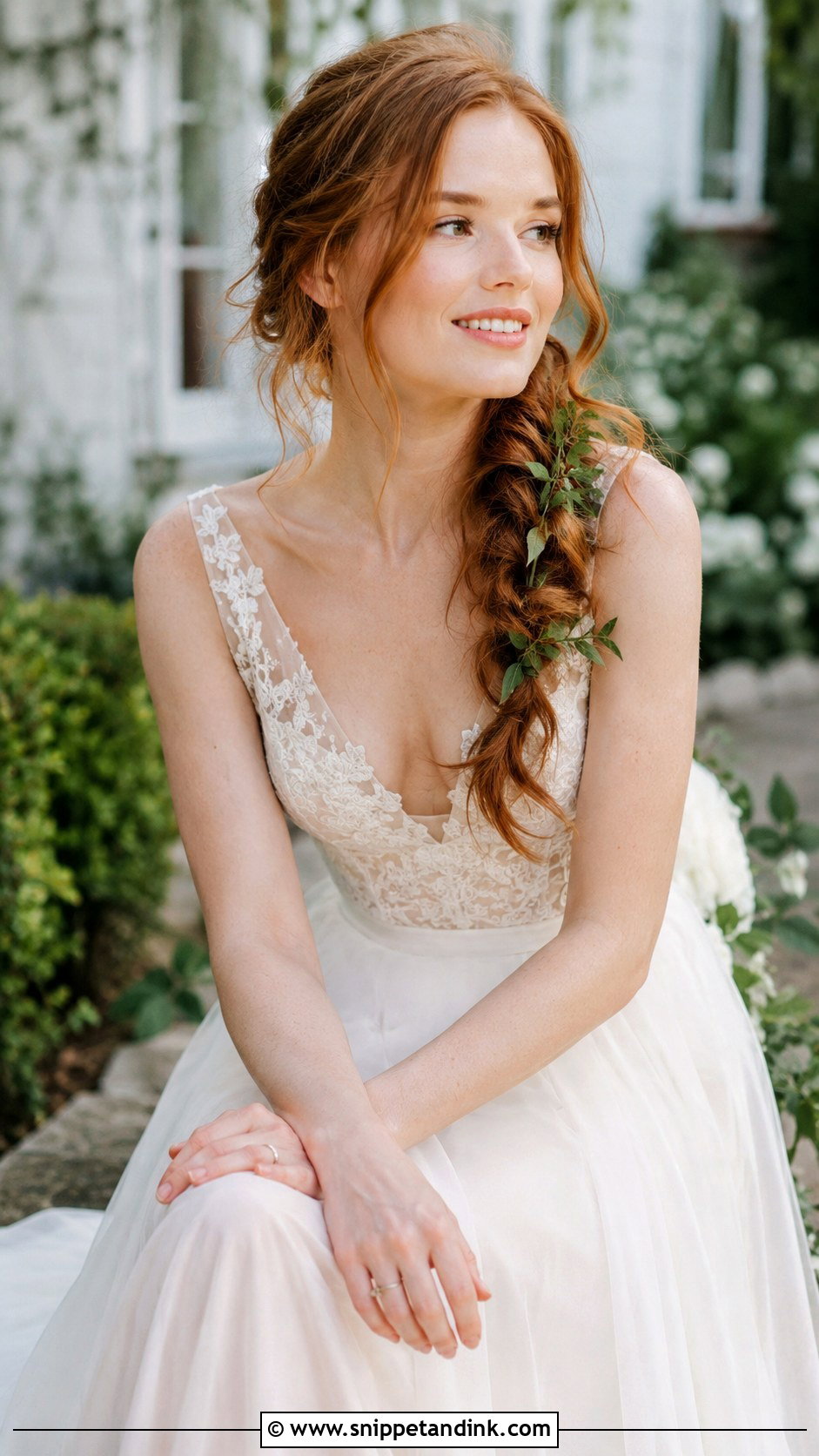
A loose side braid gives you texture without committing to a full updo. I sweep the hair over one shoulder, braid loosely and tug the sections out for a relaxed shape, leaving wispy pieces free at the face. The braid handles wind well. Do decide which side faces your partner during the ceremony, because the braid should sit on the side the camera sees most. Delicate flowers or greenery can be woven in to match your setting.
16. Sleek Bun With Center Part
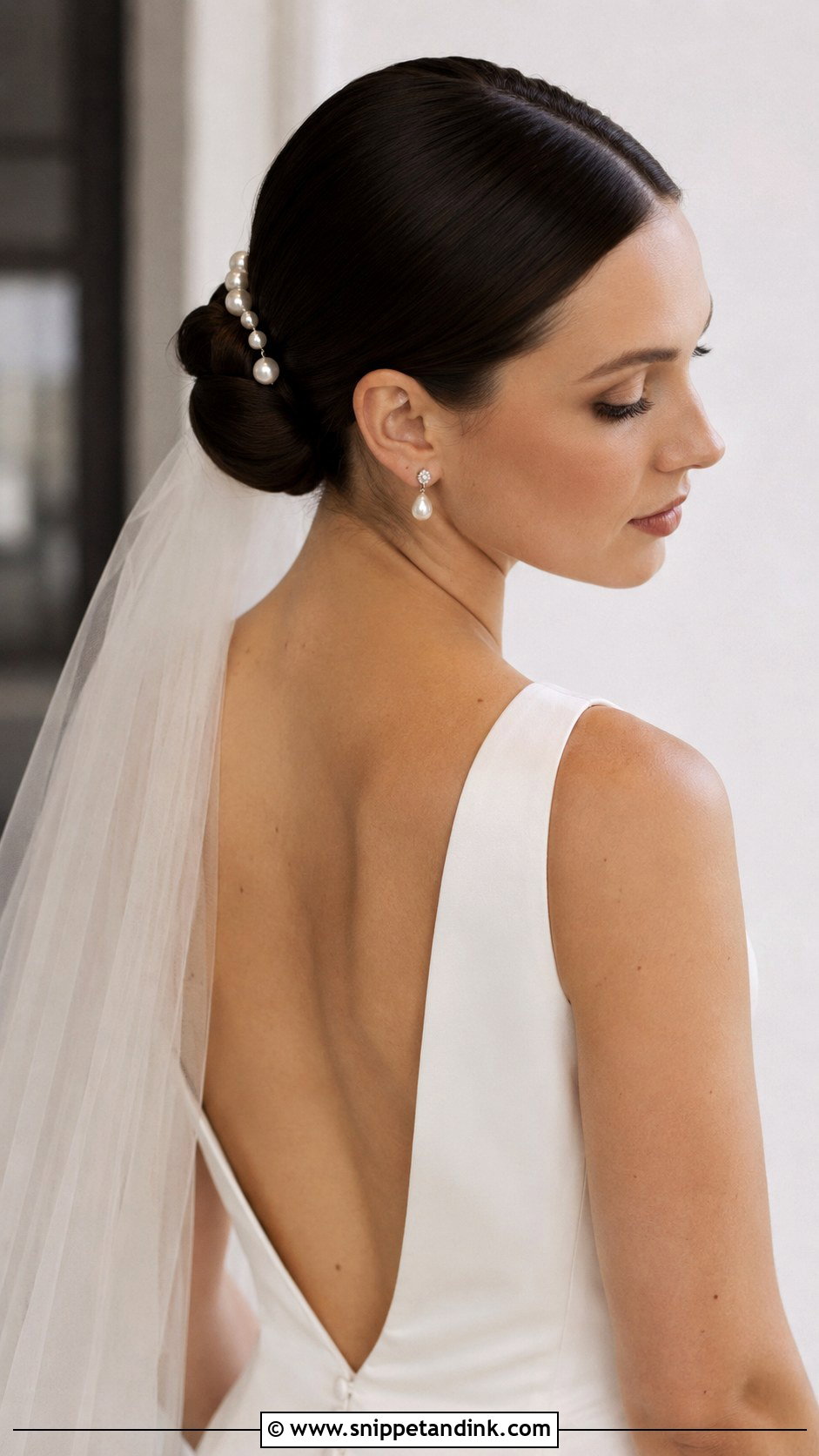
Minimalist brides like this one, and I do too for veils: the smooth surface lets a veil comb sit flat. I take a precise center part, smooth the hair back with shine serum and set a low, tidy bun. Because nothing is loose, it lasts all day without touch-ups. A center part is less forgiving on an uneven hairline or cowlick, though, so I check that at the trial and sometimes offset it slightly. Small pearl pins add a little detail.
17. Half-Up Top Knot
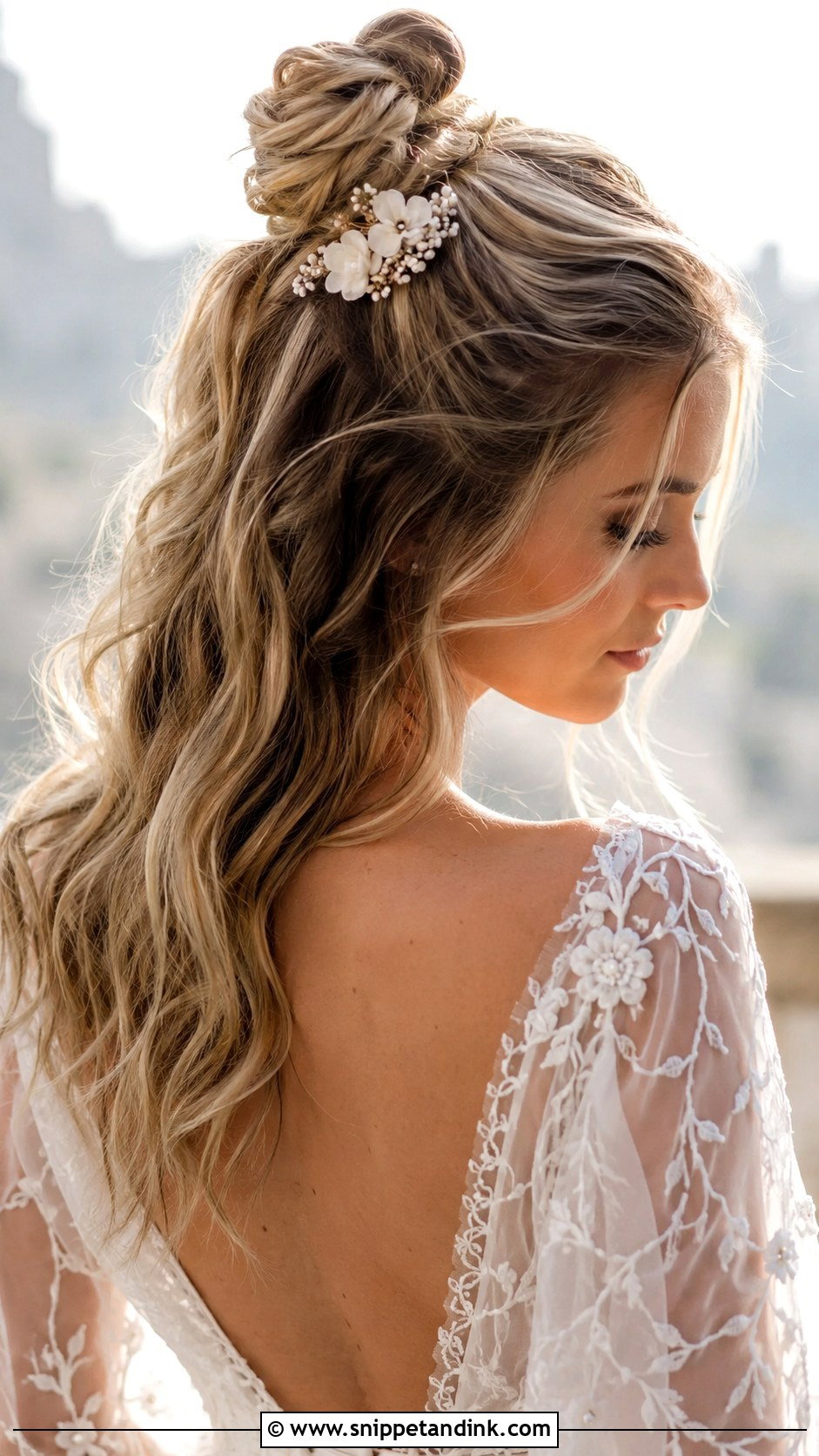
The half-up top knot feels younger and more casual than most styles here. I tease the crown slightly, gather the top section into a small knot at the crown and leave the lower half in loose waves. It works on most lengths and keeps hair off your face. If you’re wearing a veil, I’d place it under the knot, not over it, so it doesn’t fight the height. A tiny floral pin is plenty.
18. Textured Bob With Soft Waves
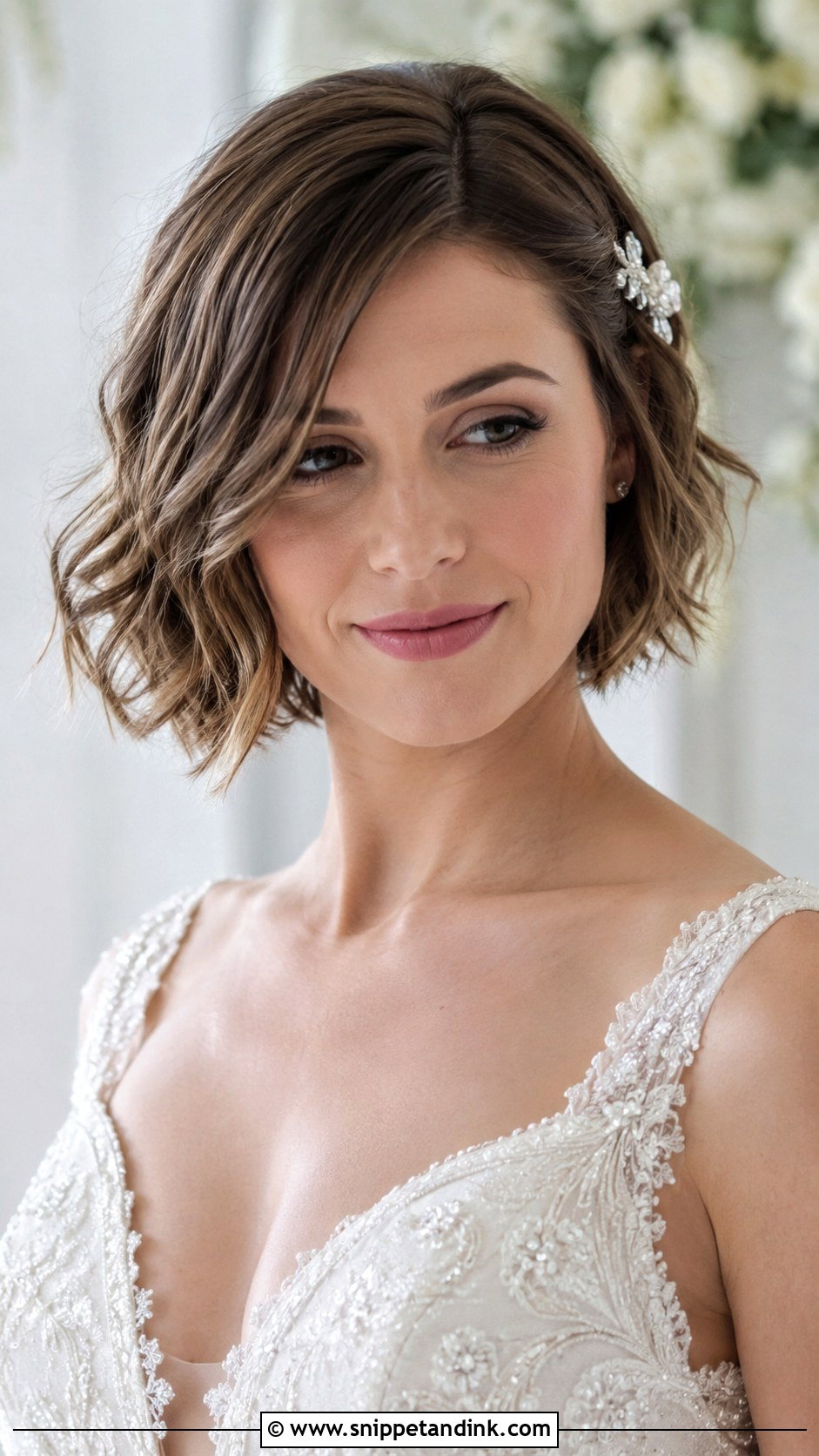
A textured bob with soft waves suits brides with short hair who still want movement. I add gentle bends with a wand, leaving the ends straight so it doesn’t turn into ringlets, then tousle with my fingers. One side tucked back with a decorative pin gives polish. It holds well outdoors, and if the wind messes it up, a quick shake usually puts it back.
19. Braided Low Bun
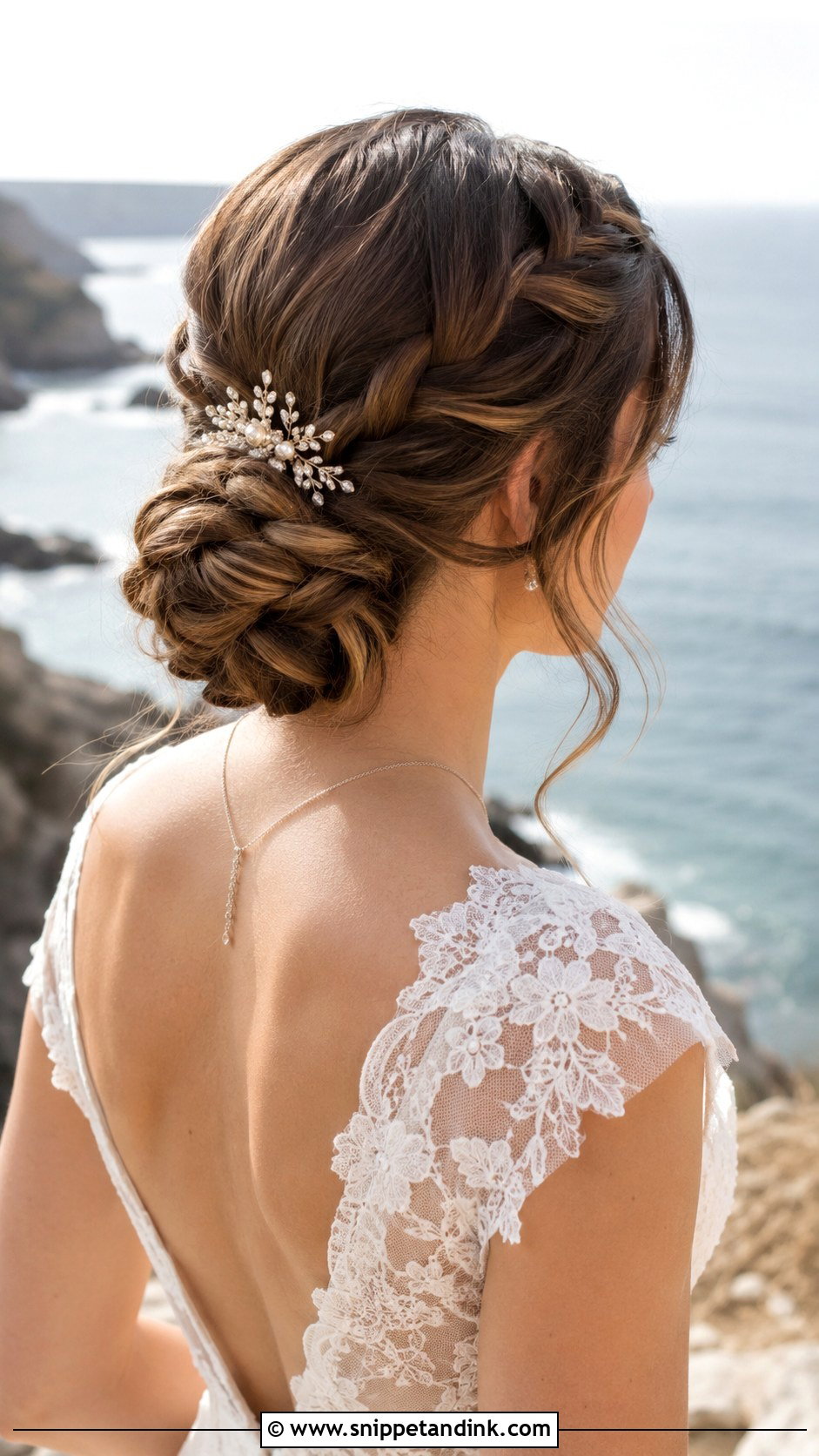
A braided low bun is one of my most reliable elopement styles. I braid several sections first, then coil and pin each braid into a loose knot at the nape, so the pins lock into the woven texture instead of sliding through smooth hair. The detail shows up well in close-up photos, and the shape handles cliffside and beach wind exceptionally. Leave a few soft pieces at the face, and add a floral accent or jeweled pin to finish.
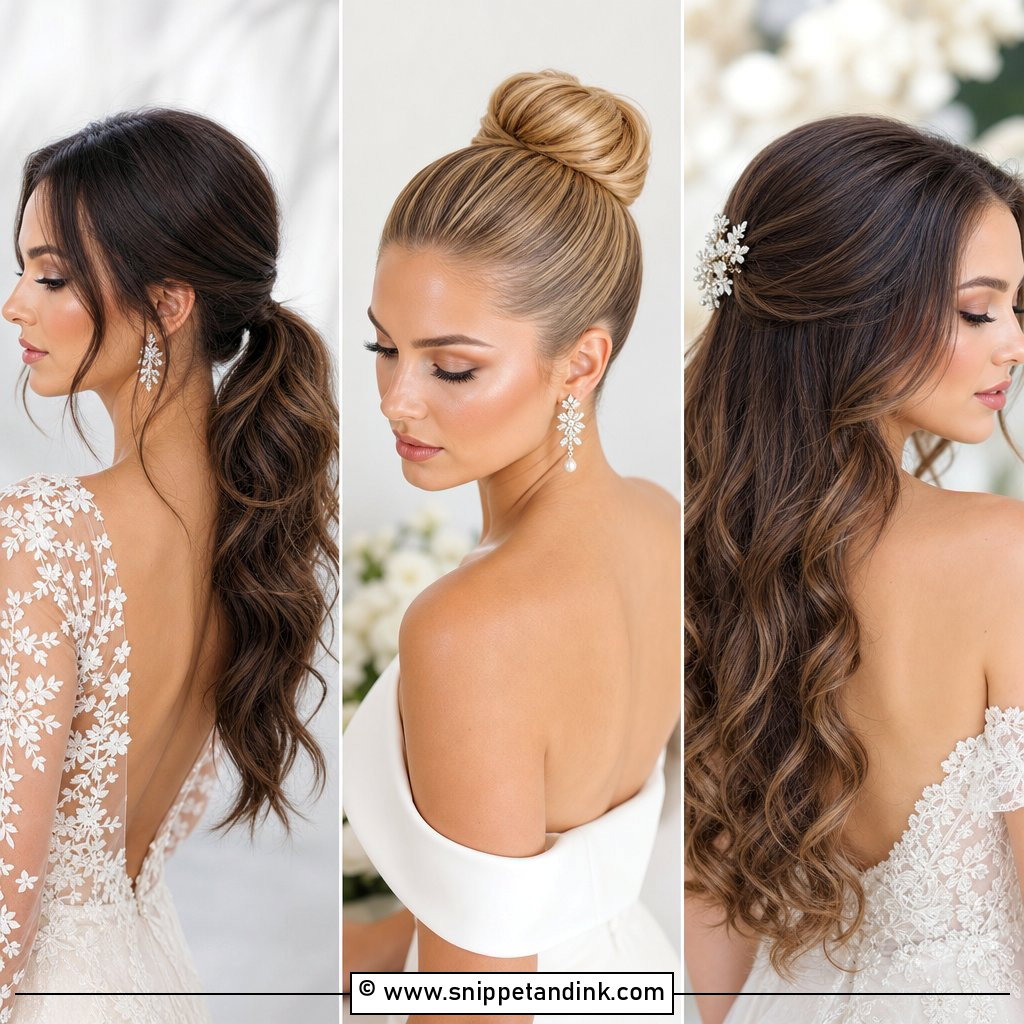
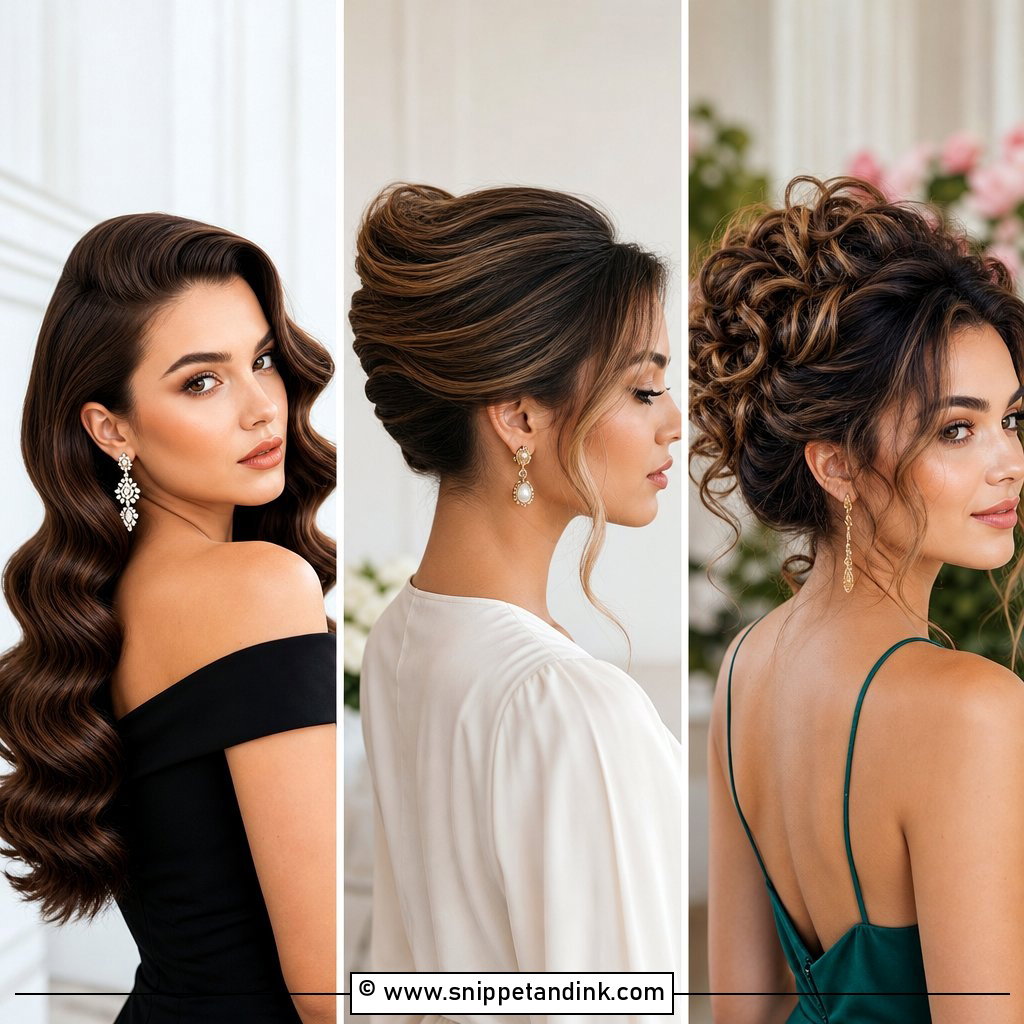
20. Wavy Hair With Side Comb
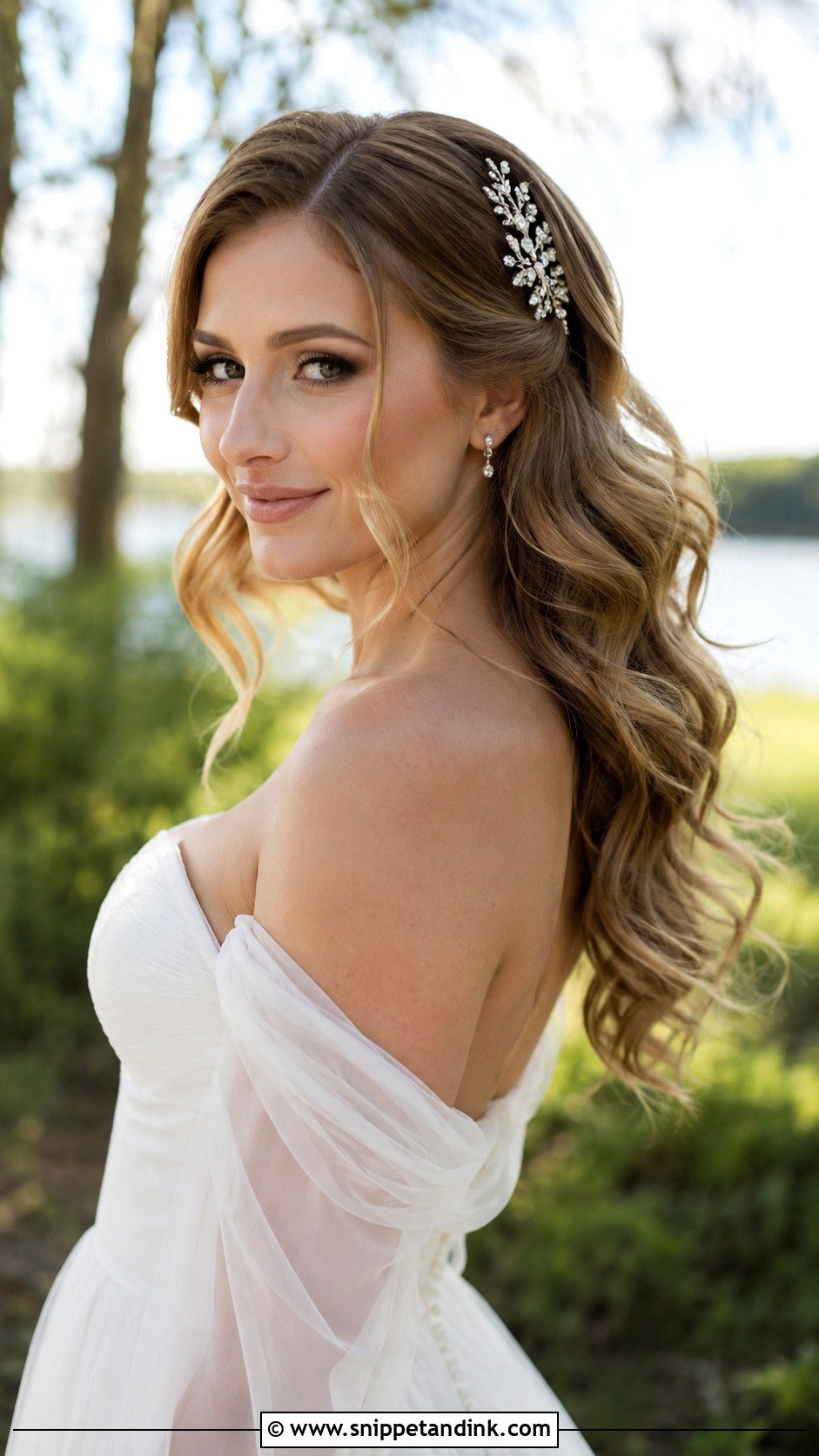
Sometimes the simplest version works best. Wavy hair with one side swept back under a decorative comb keeps the face clear while the rest flows. The comb needs something to grip, so I put a small twist or a pair of crossed pins under it first. It suits nearly every hair length and face shape. Of all the loose styles here, this is my pick for brides doing their own hair, because the comb hides any uneven sectioning.
What I’d Pack in the Backpack for Hair Repairs
When I can’t come along for the whole day, I send couples off with a small kit and a few instructions. It all fits in a zip pouch in a jacket pocket.
- Bobby pins in your hair color, plus a few U-pins for a bun that starts to sag.
- A mini flexible-hold spray, not a strong one. You’ll want to touch it up and still move it.
- Two clear elastics and a small tail comb for re-parting.
- Blotting papers and a tiny bit of anti-frizz cream for the hairline.
- A silk scrunchie to protect waves or curls on the drive between locations.
Quick fixes on the trail
If a bun slides, don’t pull it out. Push it back up and slide a U-pin through it into the base, then a crossed pair of bobby pins below it. If waves have dropped, twist a few face pieces around a finger and hold them for a minute while you walk. If the wind has turned everything into a tangle, a low ponytail tied with a ribbon still looks deliberate in photos, and nobody will know it wasn’t the plan.
One more thing: ask your photographer to shoot the close-up portraits early, while the hair is fresh, and save the wide landscape shots for later when small changes won’t show.
Which Style Will Still Be There at Sunset?
For an elopement, I’d rank styles by how long you’ll be outdoors and how far you’re walking, then by how they look. Low buns, braids and chignons survive almost anything; loose waves and vintage sets need sheltered spots or a quick fix. Personal touches like fresh flowers, pearl pins or a comb work best once they’re secured properly. Pick the style you can forget about once you’re standing in front of your partner.
You'll Like These Ideas:


Leave a Reply