
Dressing a bride for an elopement is a different job from dressing her for a ballroom. There’s often no changing room, no one to bustle a train, and the ceremony spot might be a rock ledge, a beach or a registry office with a queue outside. So I start with the ground, the weather and how the dress will travel, and only then talk silhouette. A short dress at city hall can feel every bit as bridal as a flowing gown on a mountain, as long as you can walk, sit and pose in it without fuss. The 20 Elopment Wedding Dress Ideas below run from minimalist to vintage, seasonal and size-inclusive, with the practical notes I’d give a bride for each one.
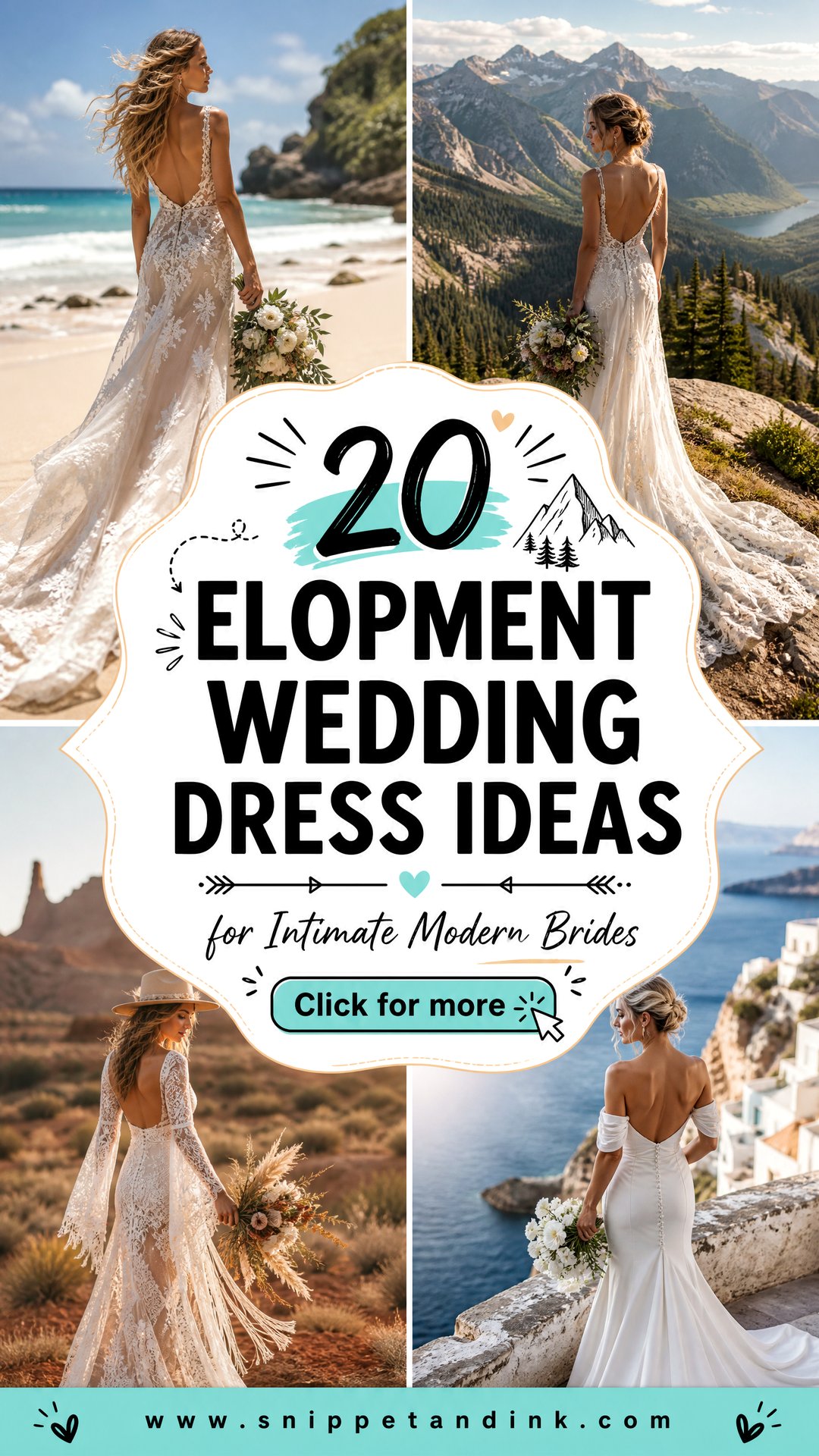
Sand, Gravel or Wet Grass Will Decide Your Fabric
Most elopement photos are taken outdoors, and the surface underfoot affects a dress more than the weather does. I ask a bride to describe the exact spot, then rule fabrics in or out from there.
- Beach: chiffon and crepe shed sand when you shake them. Tulle and heavy lace hold it, and so does any hem that drags.
- Rock and trail: a short train or ankle hem, nothing with loose threads or delicate beading near the floor. Lace and tulle snag on brush.
- Wet grass or fields: silk and satin show water marks; polyester crepe dries cleaner. Raise the hem slightly if the grass will be damp.
- City pavement: almost anything works, but a long hem picks up grime from steps and kerbs fast. Midi and tea lengths stay cleaner.
If you’re torn between two dresses, take a scrap of the fabric or a photo of the hem to the spot, or at least picture yourself kneeling there for a portrait. That usually settles it.
1. Courthouse Elopement Wedding Dress
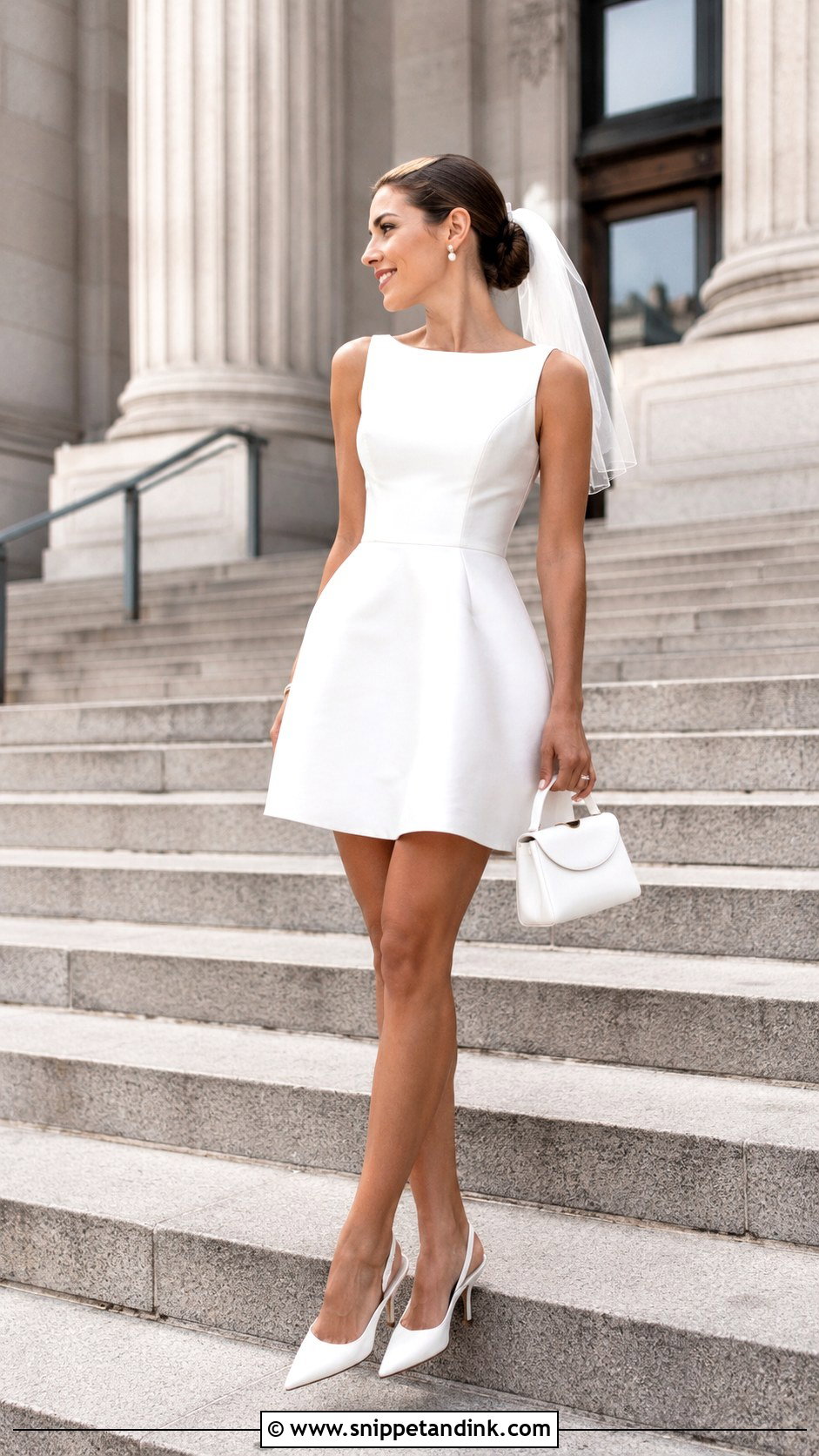
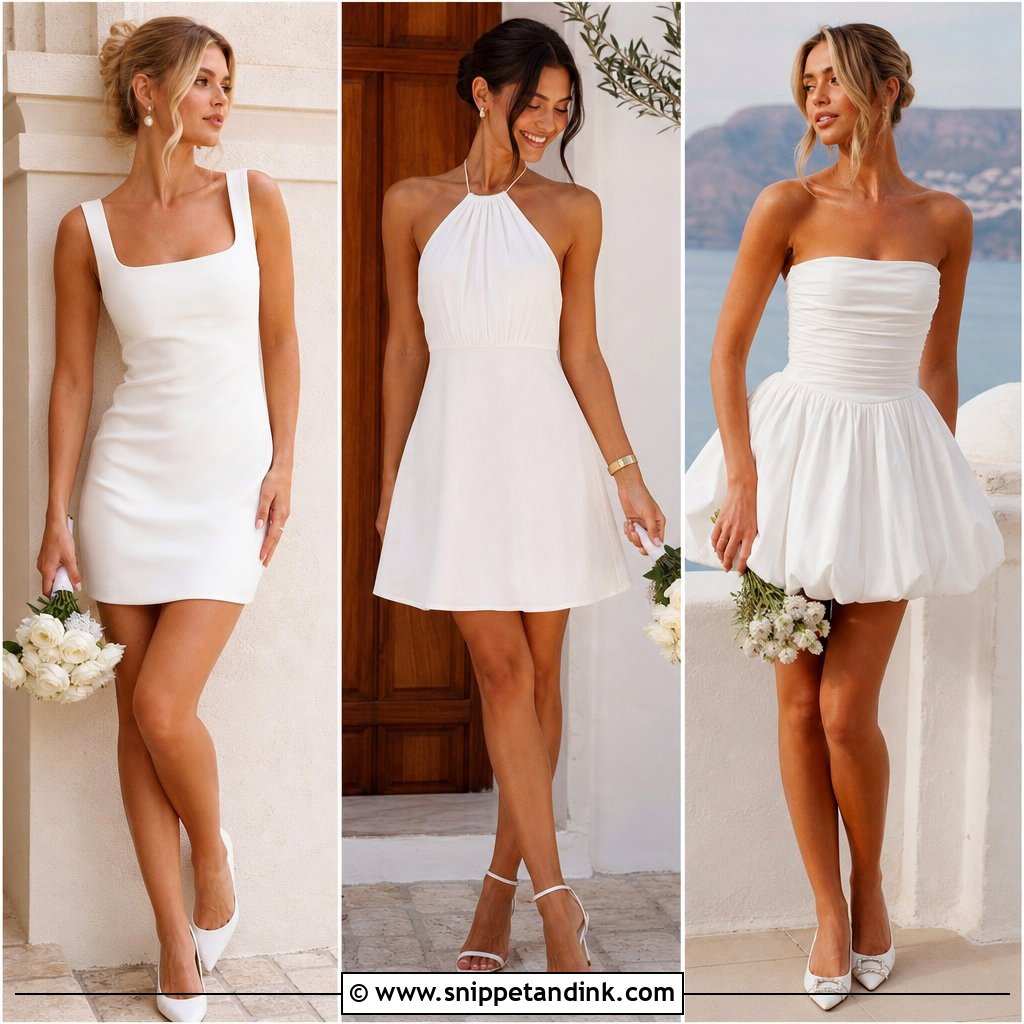
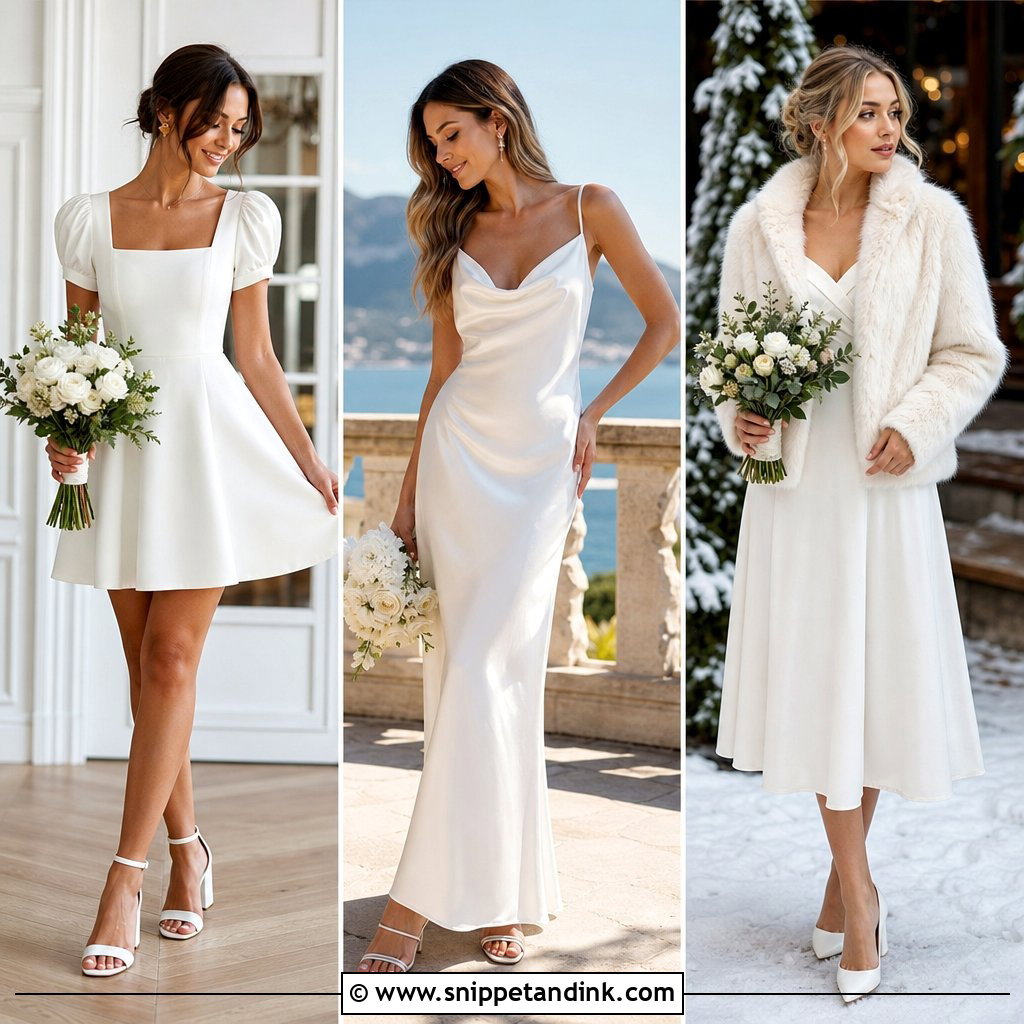
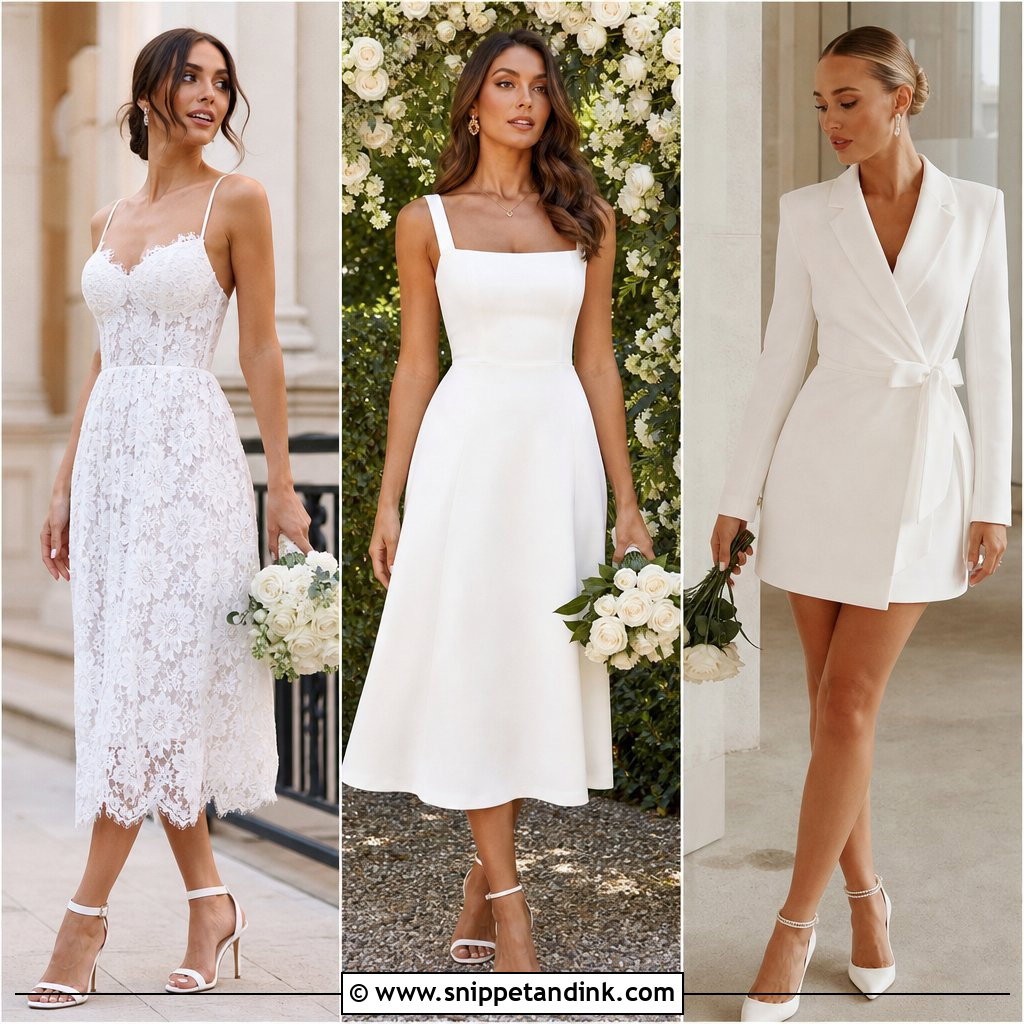
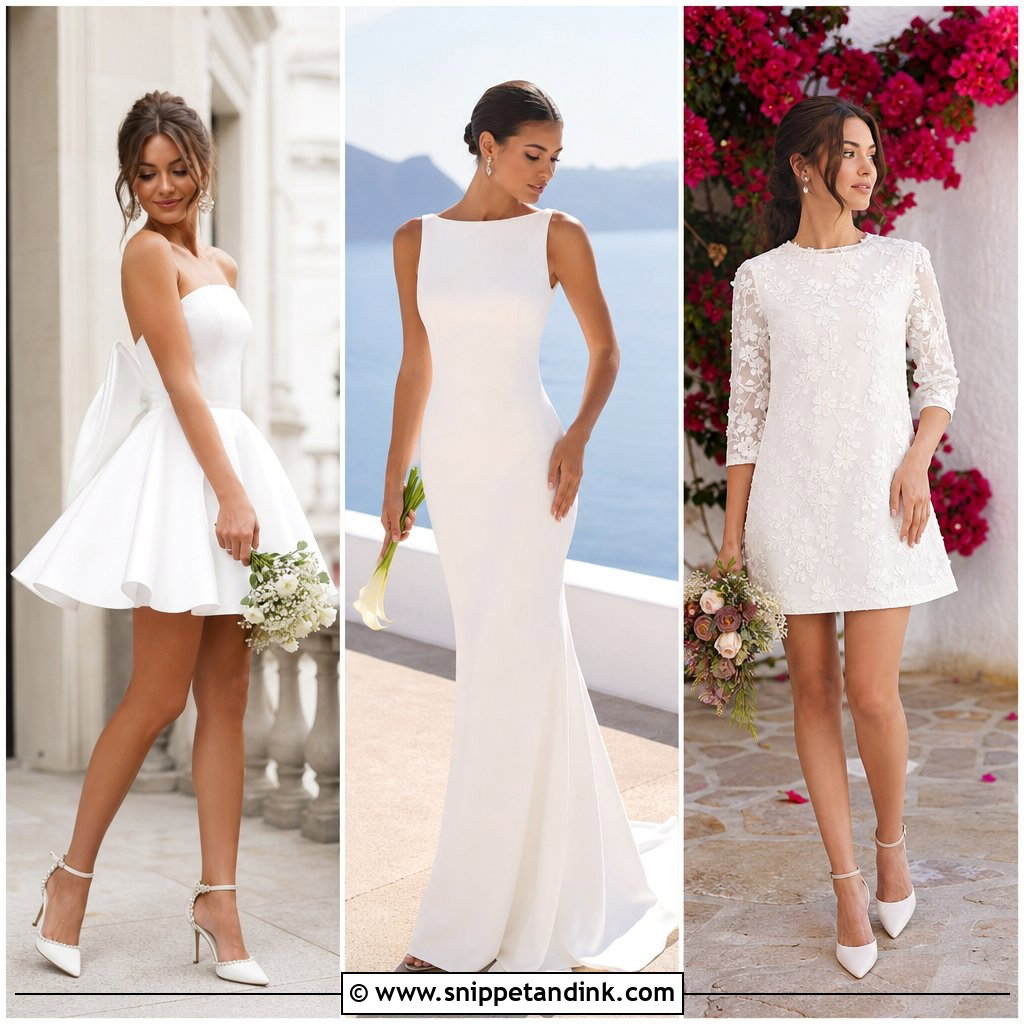
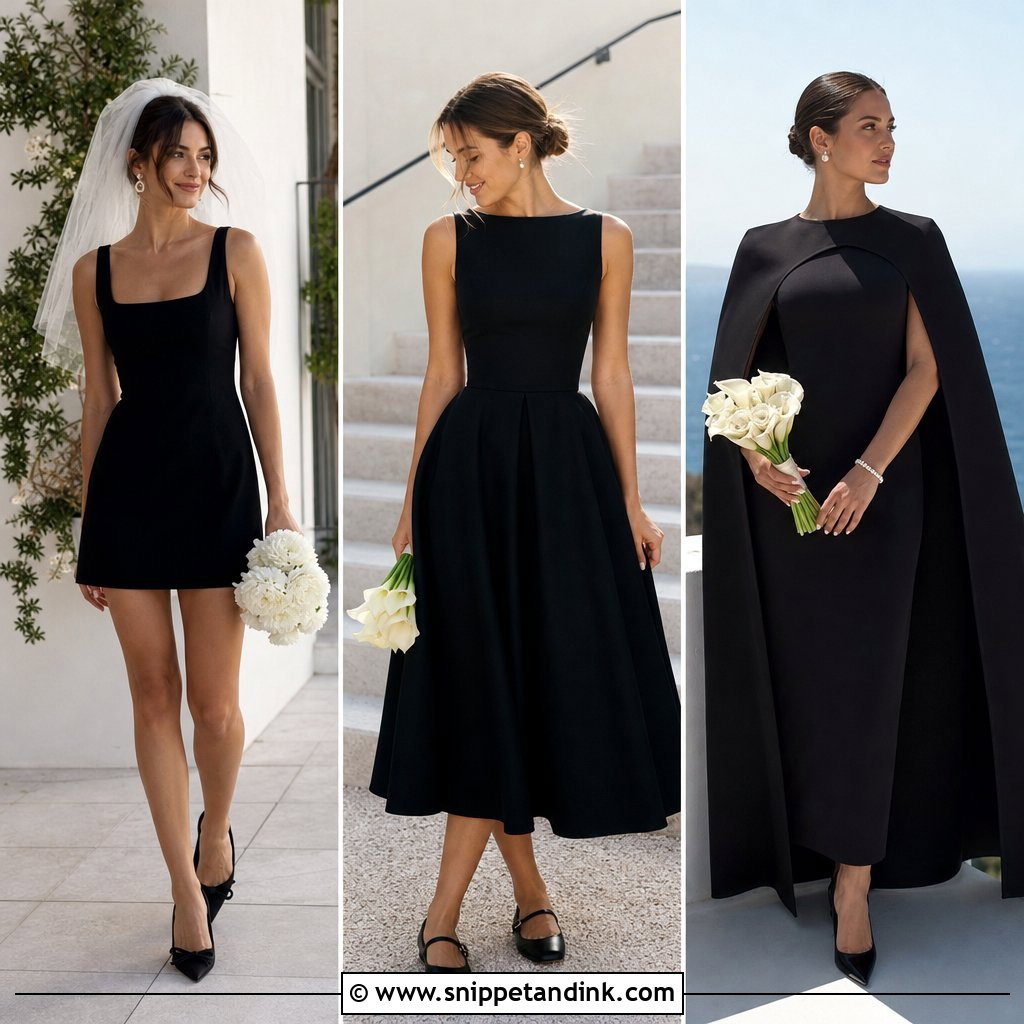
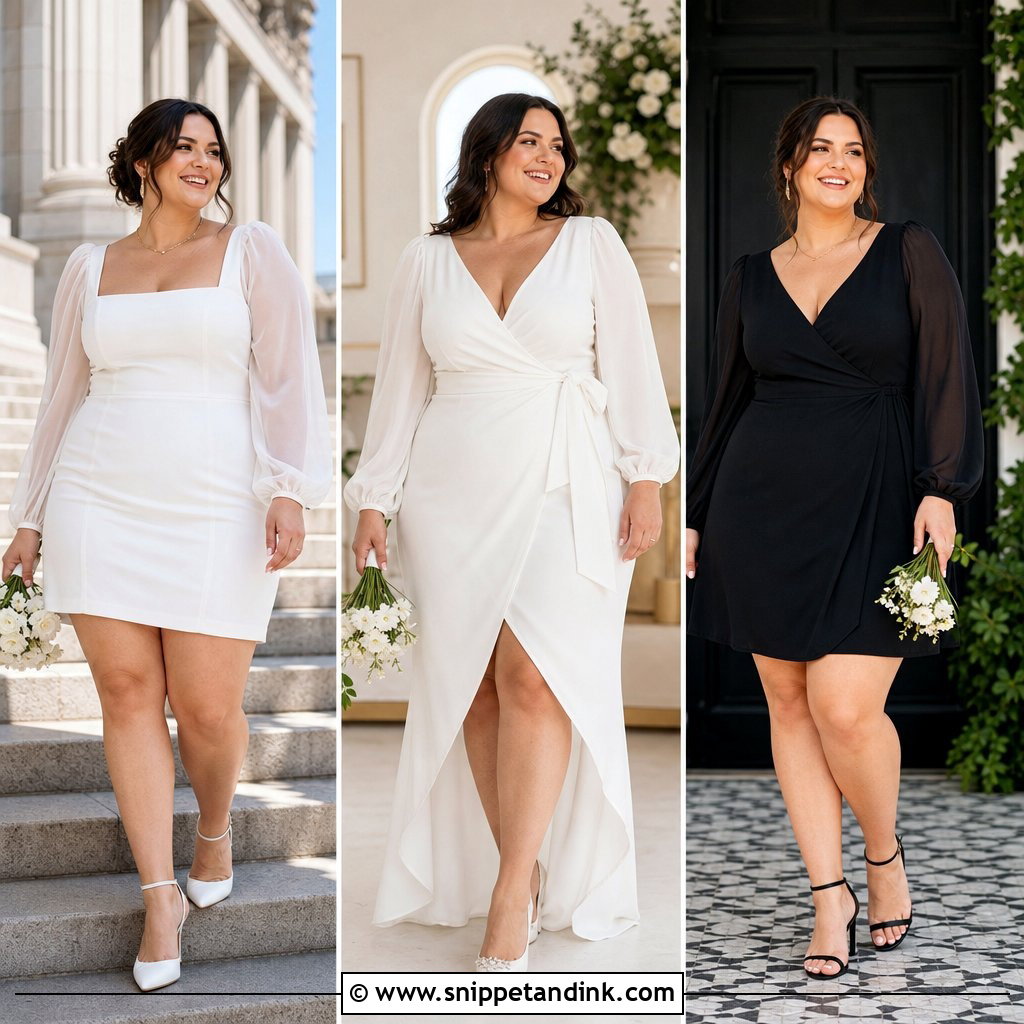
For a courthouse ceremony I like a structured white mini, because it reads as bridal straight away without looking like you got lost on the way to a ballroom. Crepe, satin or Mikado in a clean A-line or tailored sheath holds its shape through a long wait in a corridor. Covered buttons, a square neck or a small bow are enough decoration. Wear pointed pumps or slingbacks you’ve already walked a city block in, and add pearl earrings, a structured mini bag and a short veil or padded headband. A cropped blazer covers you in cooler weather. Plenty of brides wear this dress again, which is a nice bonus.
2. Satin Slip Elopement Wedding Dress
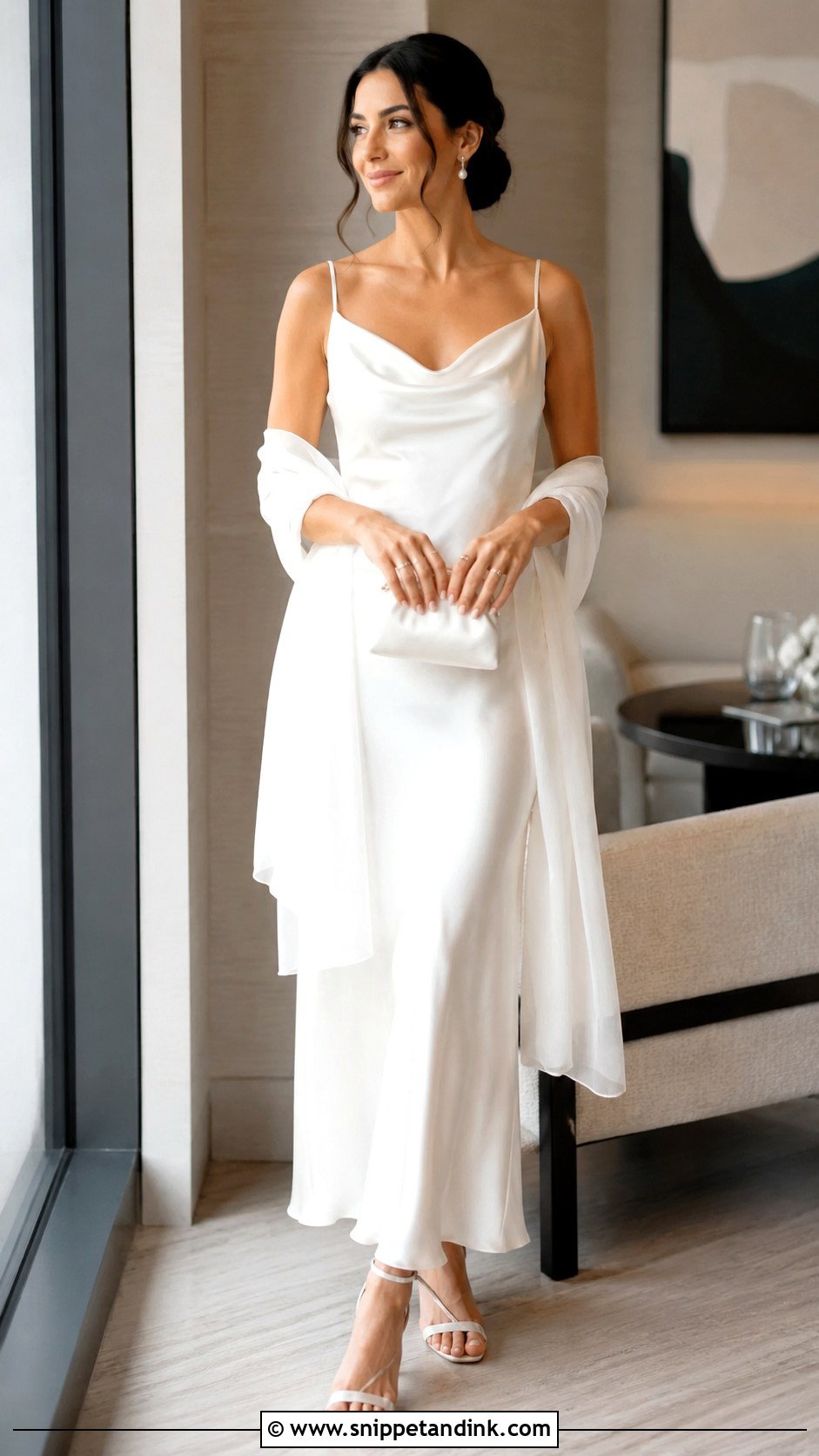
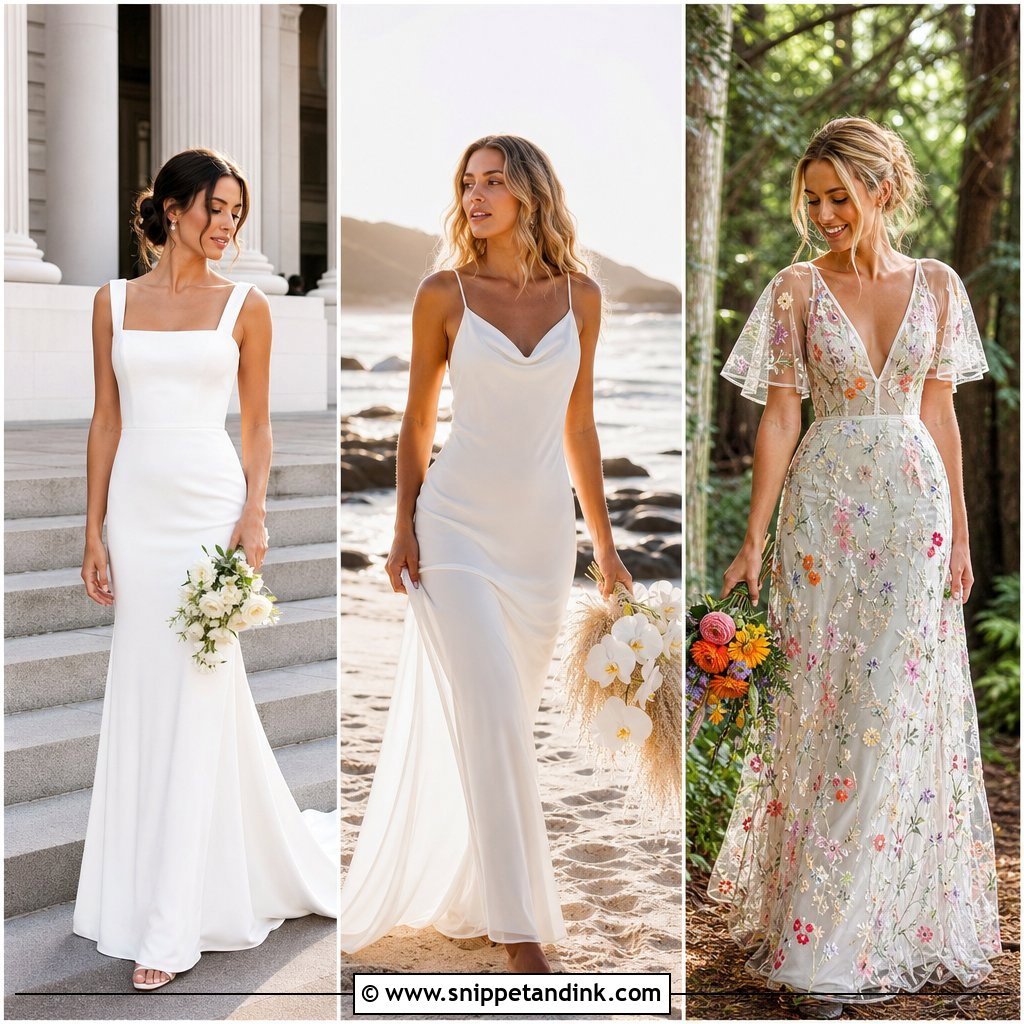
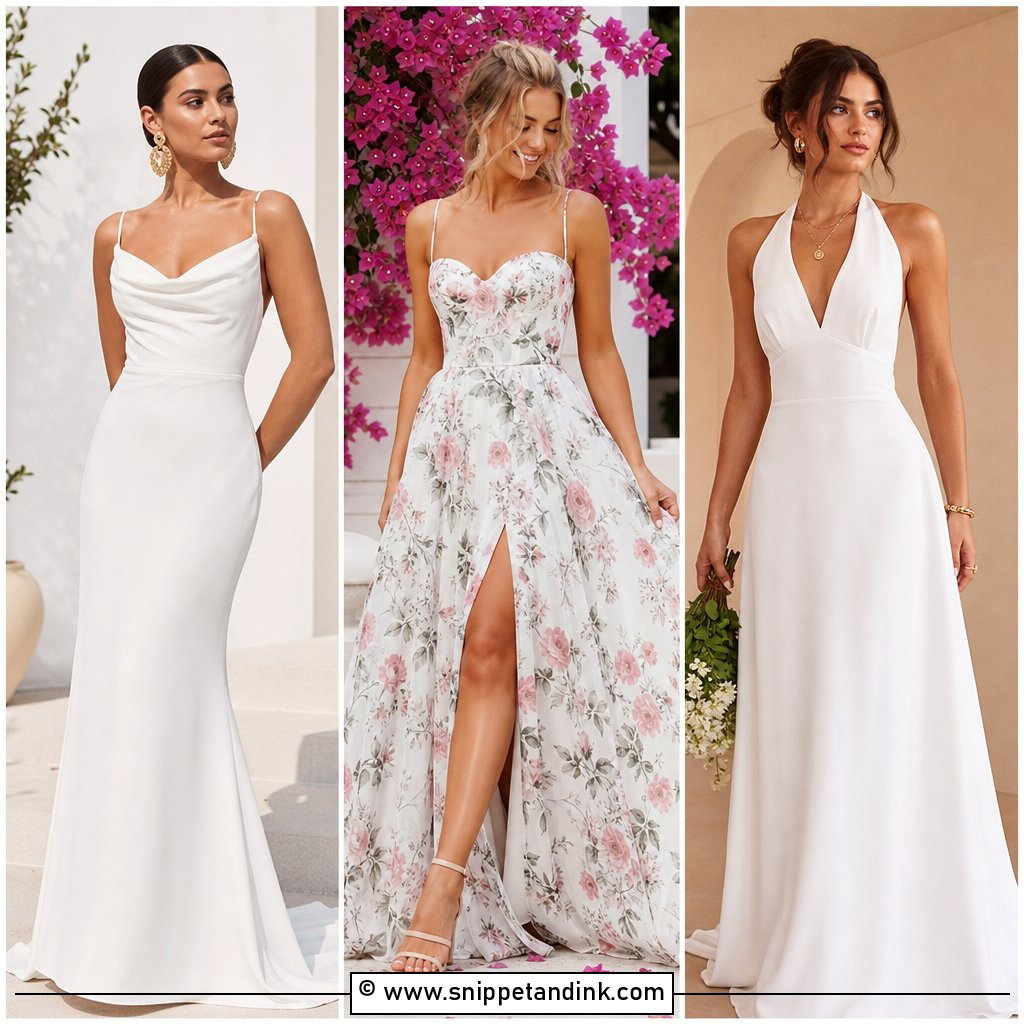
Satin slips look simple, but they’re the least forgiving dress on this list. Bias-cut satin shows every line underneath, so smooth, no-line underwear isn’t optional, and it marks with water spots if you’re caught in drizzle. The upside is how it catches low outdoor light. I’d choose a cowl neck for a looser ’90s feel or a straight neck for something cleaner. Ankle-strap heels or pointed ballet flats, pearl drops and a small satin clutch keep it light. Pack a chiffon shawl for cool evenings. A sleek bun, soft waves or a simple comb veil all suit it.
3. Lace Midi Elopement Wedding Dress
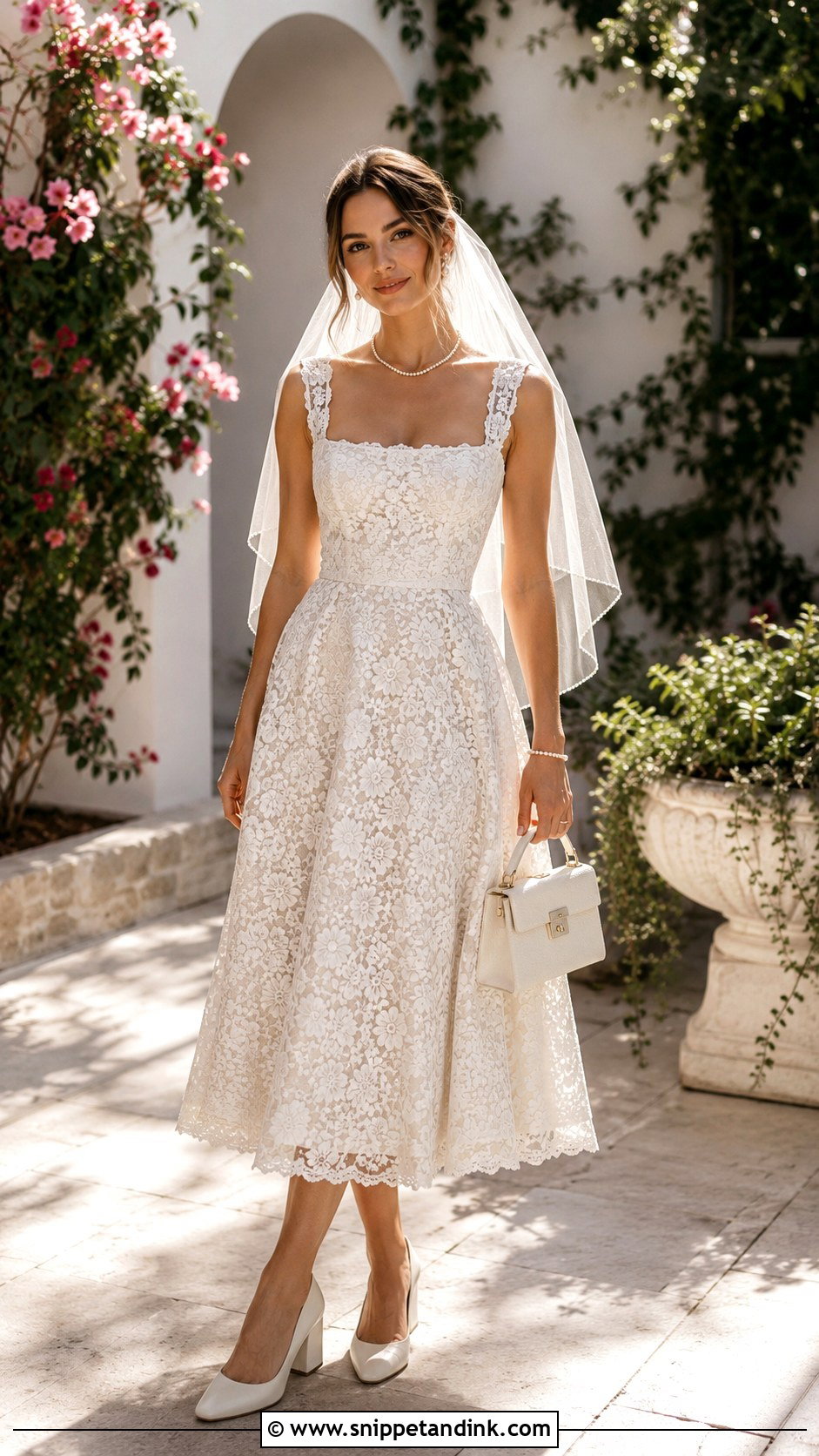
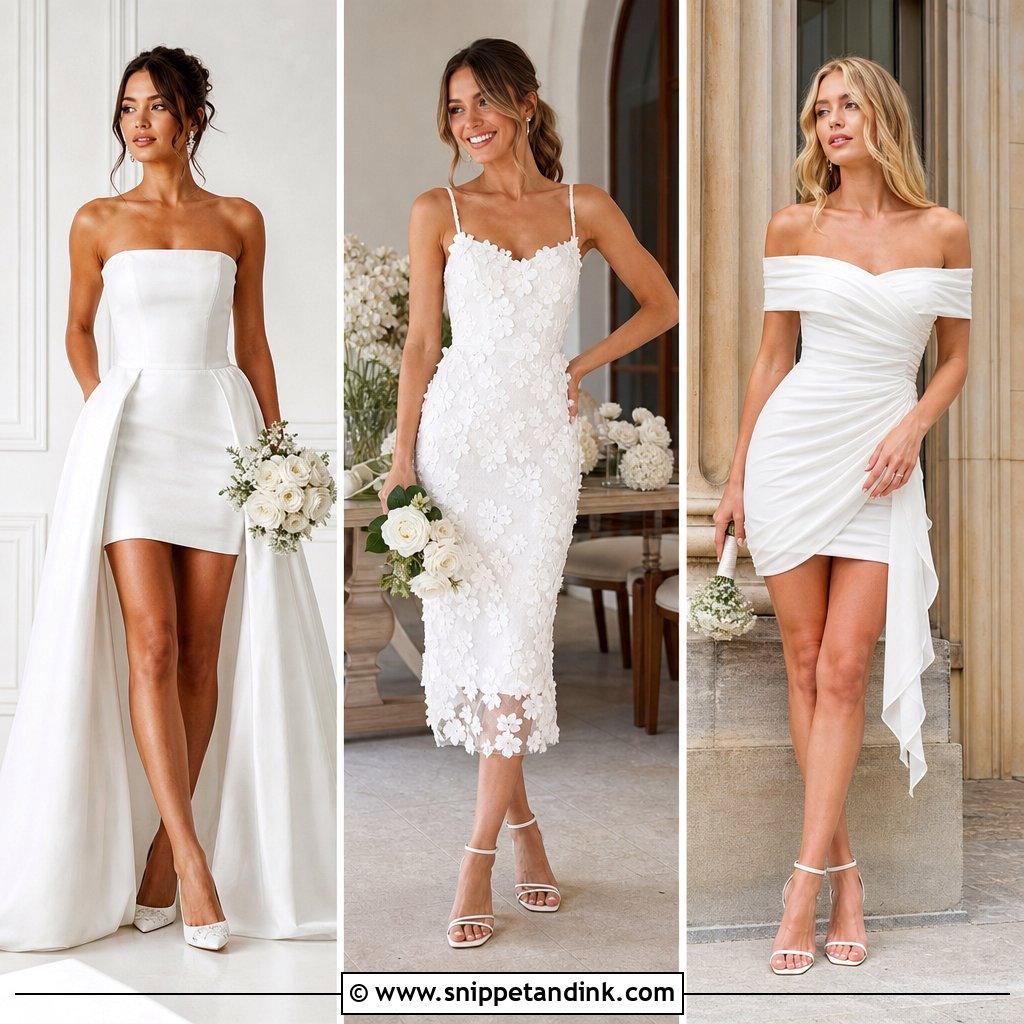
Lace reads as bridal at any length, and a midi hem means you’re not lifting your skirt over every curb. A fitted bodice with an A-line skirt gives you room to move; a column feels more modern. I always look at the lining before the lace: a nude lining makes the pattern stand out sharply, while an ivory one softens it, and that changes how the dress photographs more than people expect. Floral lace suits gardens, geometric lace suits the city. Ivory block heels, a top-handle bag and a fingertip veil are plenty. If the lace is busy, keep the jewellery quiet.
4. Beach Elopement Wedding Dress
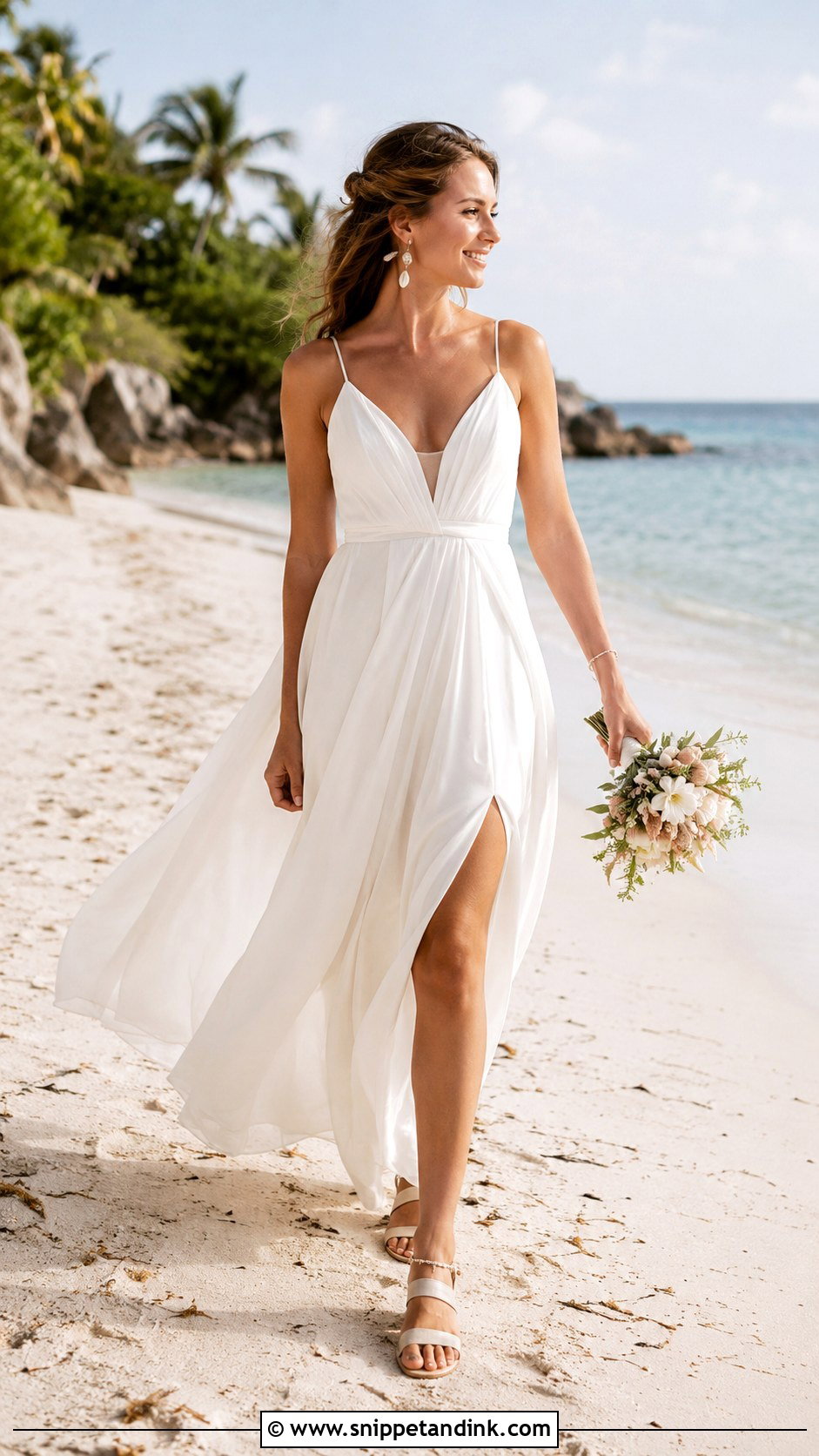
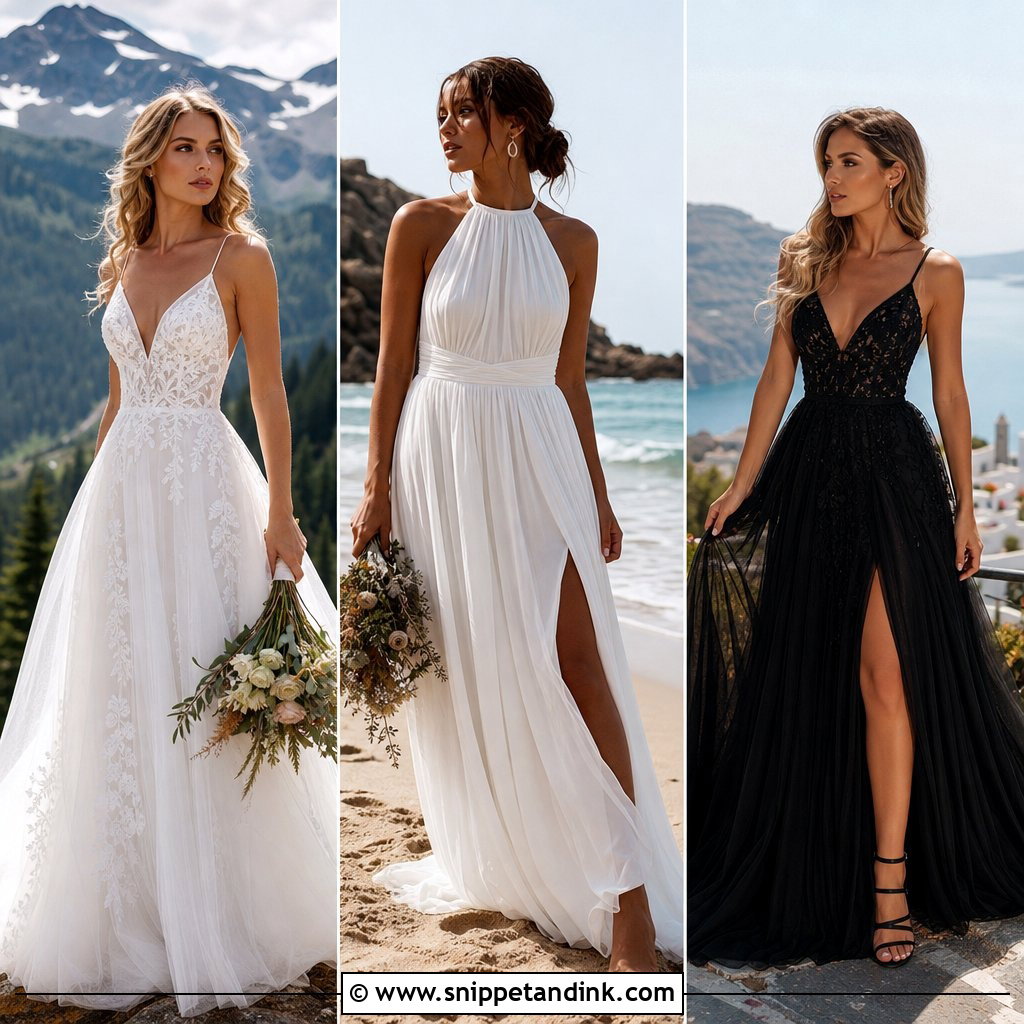
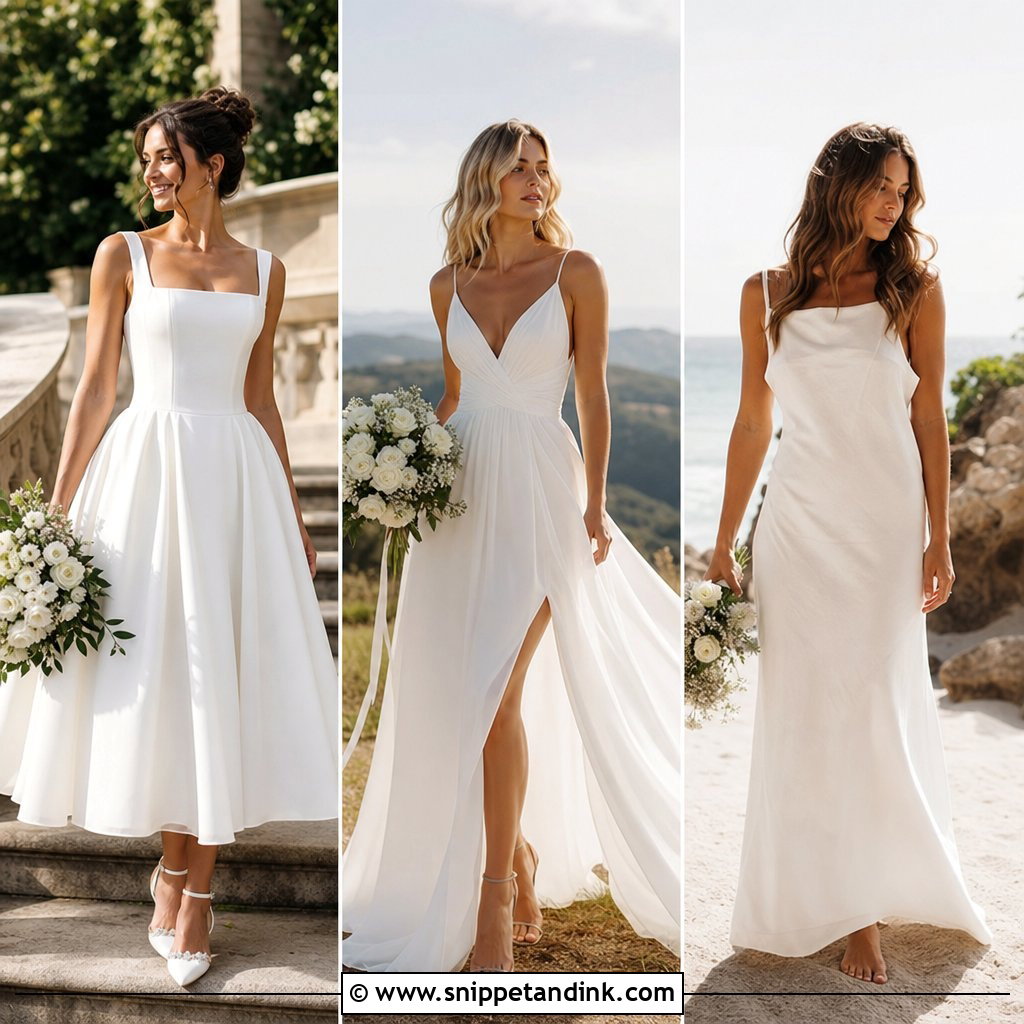
Sand is hard on a wedding dress. Tulle and heavy beading trap it, and a long structured train drags half the beach along behind you. I put beach brides in chiffon or soft crepe with a simple A-line skirt that ends at or just above the ankle, so it skims the sand instead of collecting it. Thin straps, a halter or an off-shoulder bodice all work, depending on how much support you need. Go barefoot or wear flat sandals; low block heels only make sense on a boardwalk. A flower comb or short veil copes with wind far better than a cathedral length, and your hair needs pinning for humidity whatever style you choose.
5. Mountain Elopement Wedding Dress
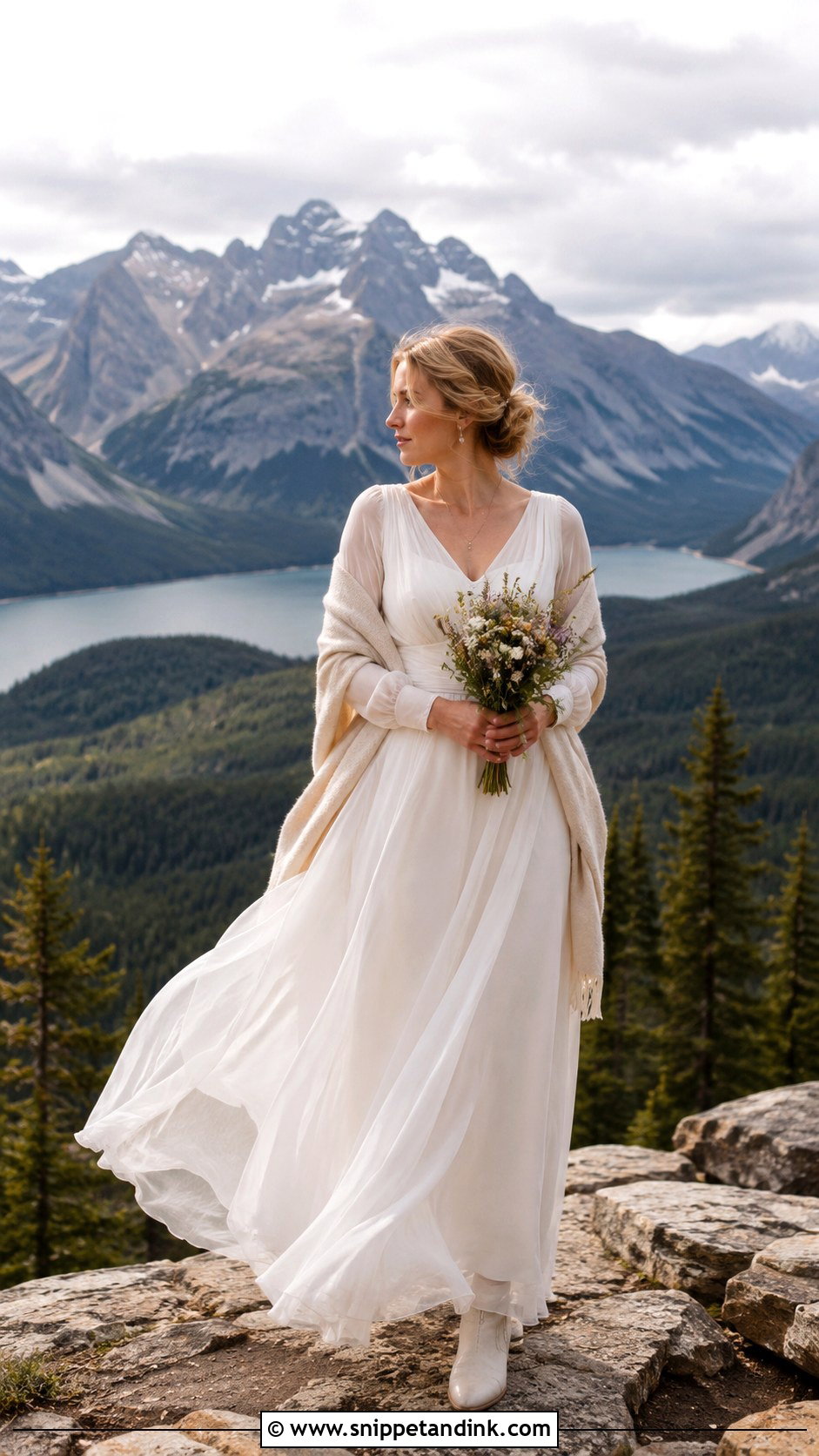
Mountain weather changes fast, so a mountain dress has to cope with cold, wind and rock underfoot. A flowing chiffon, tulle or light crepe A-line with a short sweep train looks dramatic against the view without catching on every stone. Long sleeves or a lined bodice help at altitude. I’d never put a mountain bride in heels: supportive ankle boots under the skirt are what keep you upright on loose ground, and thermal shorts or nude leggings sit unseen beneath a full skirt. Bring a wool wrap or fitted jacket for between photos. Keep jewellery minimal and pin the hair firmly. Hike in other clothes and change near the ceremony spot.
6. Boho Elopement Wedding Dress
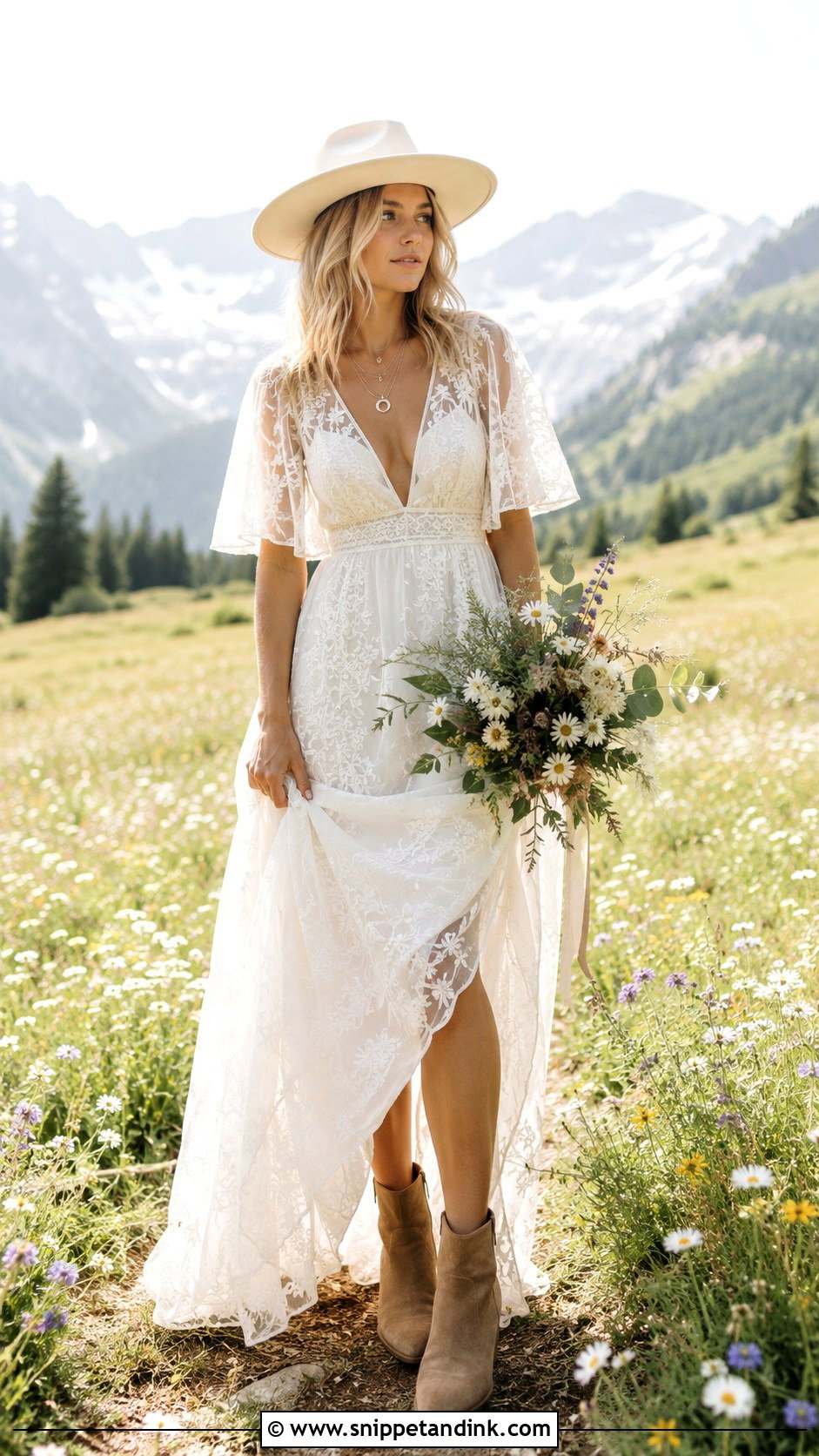
Flutter sleeves, an open back and a relaxed lace gown give you the bohemian feel without much structure to manage. I prefer soft crochet lace or embroidered tulle here because both pack well and shrug off creases. An empire waist or gently flared skirt moves easily on a desert trail or through a meadow. Match the shoes to the ground: suede ankle boots, flat woven sandals or low western boots. Layered fine necklaces, small hoops and a dried or wildflower bouquet finish it. A wide-brim ivory hat can stand in for a veil, though it shades the face, so tell your photographer early. Loose hair or a textured braid suits the mood.
7. Long Sleeve Elopement Wedding Dress
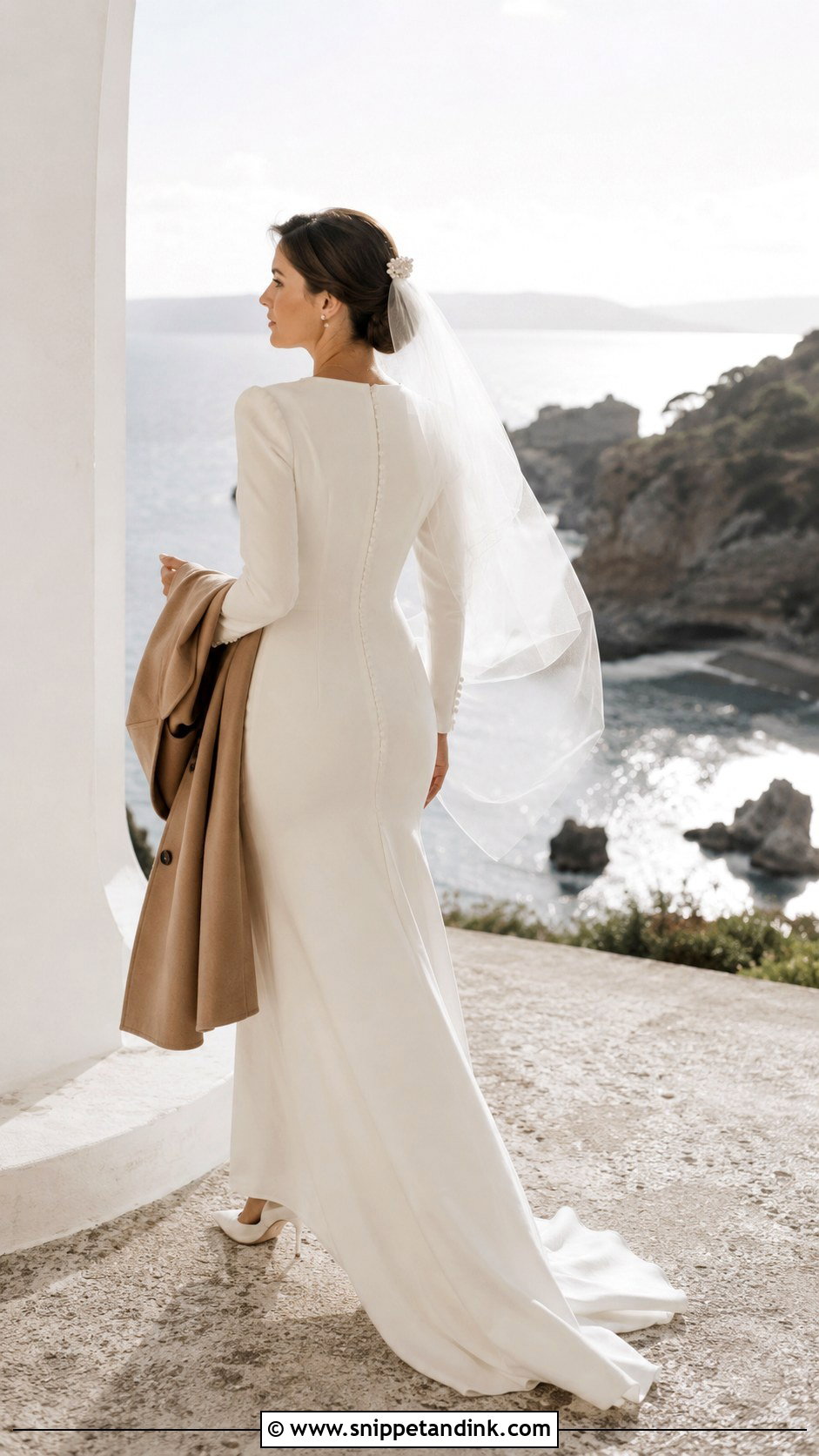
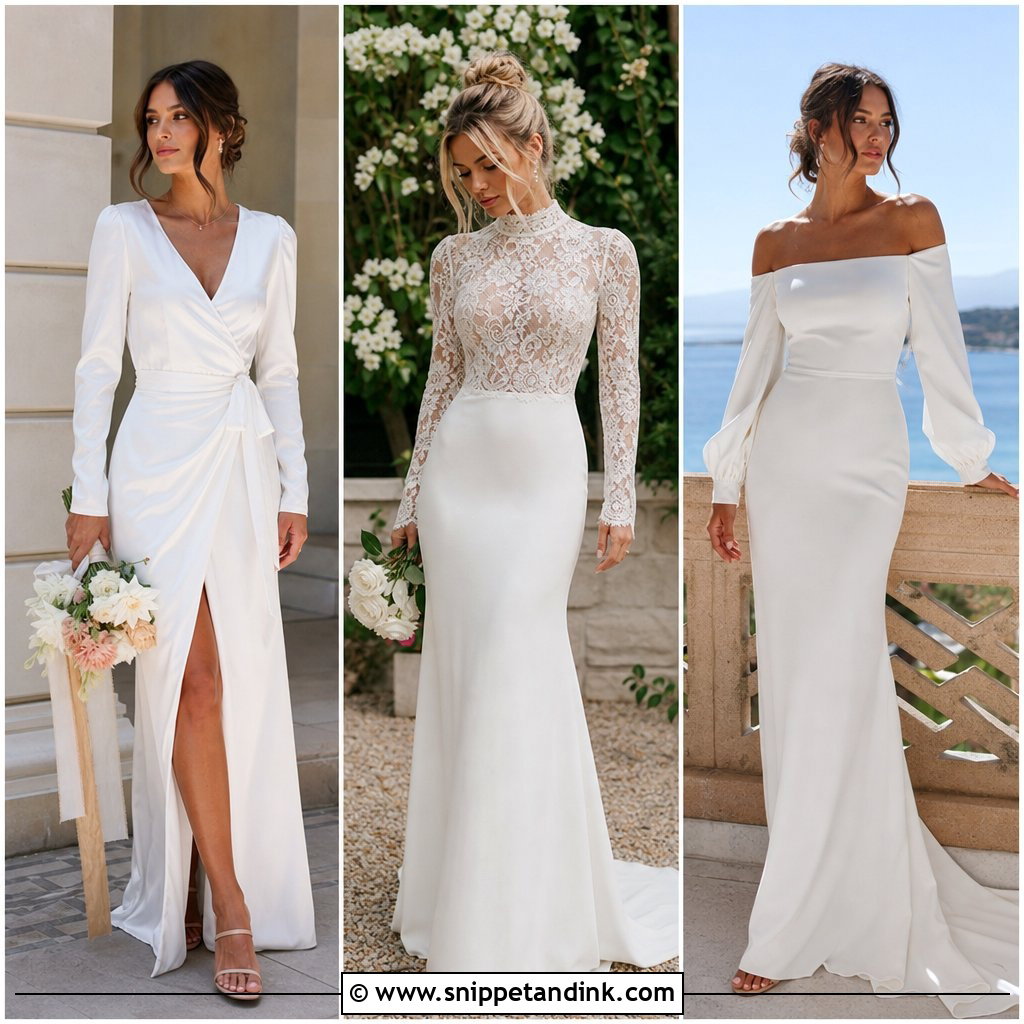
Long sleeves earn their place in autumn, winter and cold coastal wind. A fitted crepe gown with plain sleeves looks minimal; lace or sheer sleeves soften it. My fitting check is simple: lift your arms as if you’re putting them round your partner’s neck. If the back seam pulls or the sleeve rides up past the wrist, the sleeve needs more ease at the underarm. A column, sheath or modest A-line works depending on how far you’ll walk. Closed-toe heels, pointed flats or sleek ankle boots, pearl studs and a low bun with a comb veil finish it. Bring an ivory, camel or soft grey coat.
8. Short Lace Elopement Wedding Dress
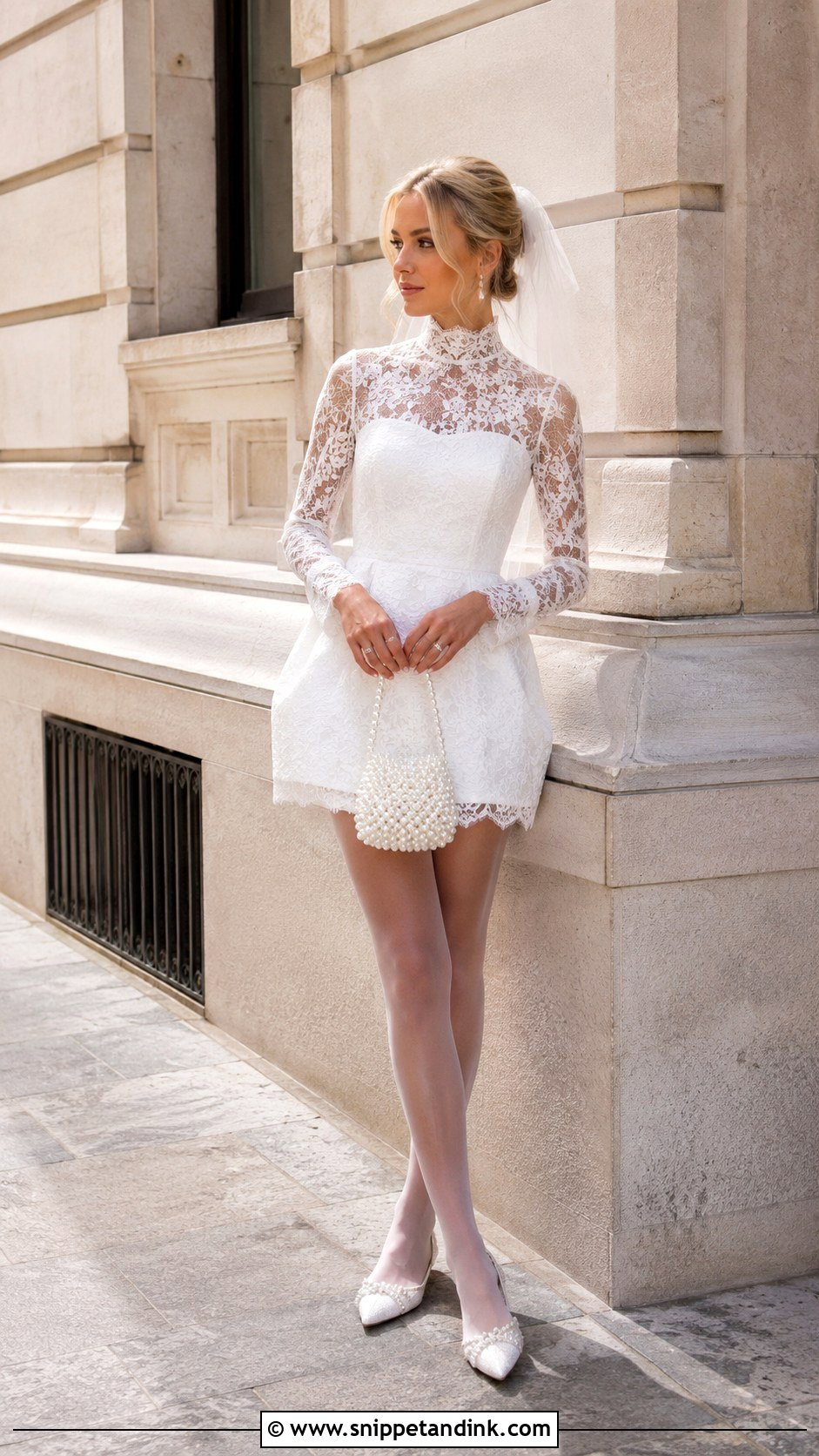
A short lace dress needs enough body to hold its shape, otherwise it collapses into something that looks like a nightdress by the afternoon. I look for a mini or knee-length cut with a lined, slightly structured skirt. A high neck balances the shorter hem; a sweetheart or off-shoulder neckline feels softer. Because everyone’s eye drops to your legs and feet, the shoes matter more than usual: slingbacks, embellished flats or low block heels, tested on stairs and grass first. A pearl mini bag and a short tulle veil make it clearly bridal. Sheer tights and a cropped coat carry it into cooler months.
9. Tea Length Elopement Wedding Dress
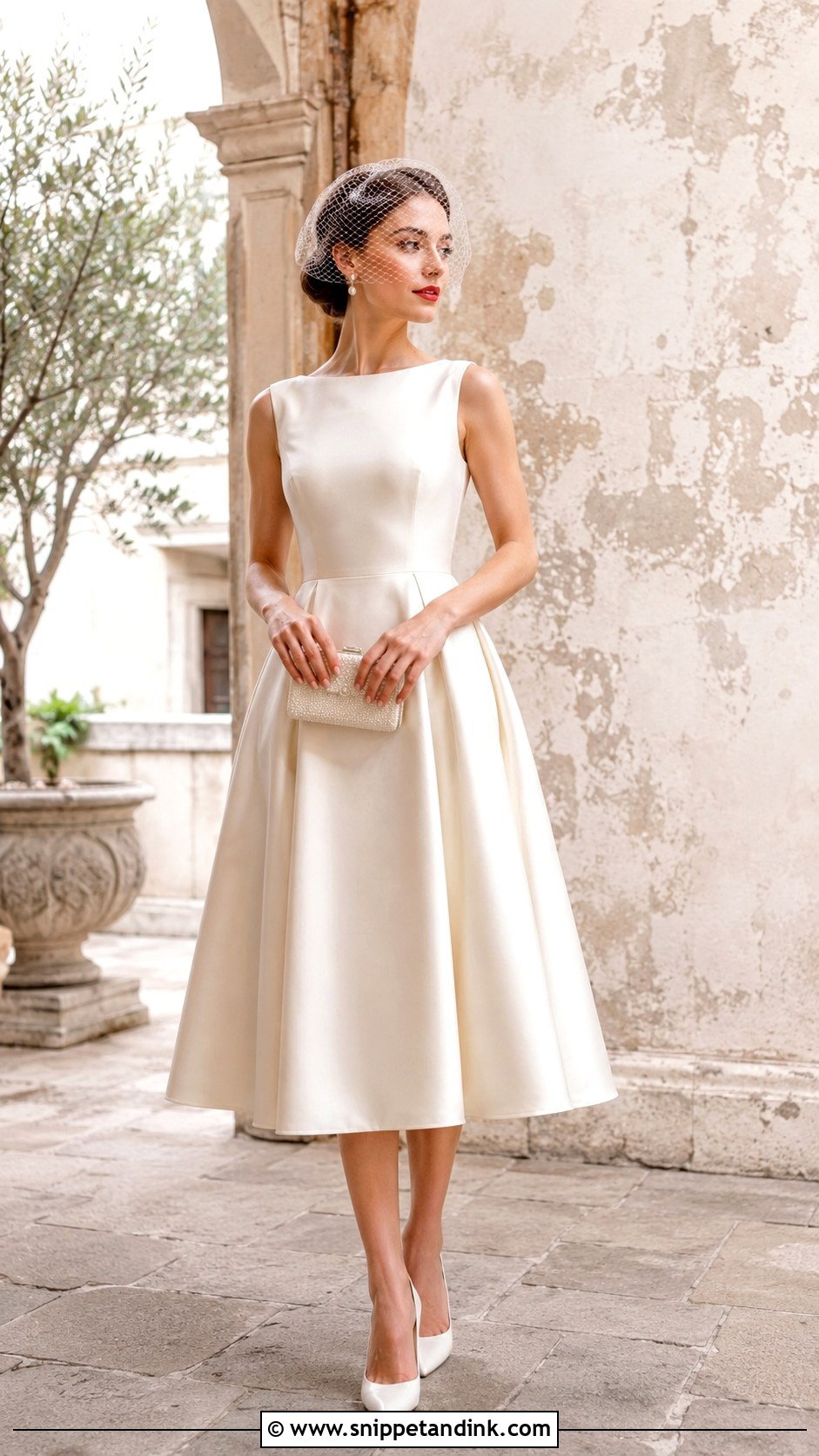
Tea length falls somewhere between knee and ankle, and getting that exact spot right is the whole trick. Too high and it looks like a cocktail dress; too low and it cuts the leg at its widest point. I usually pin it a hand’s width above the ankle bone and adjust from there with the bride’s actual shoes on. A fitted bodice and softly structured skirt in satin, organza, lace or light Mikado suits the vintage feel. Pointed pumps or low block heels, pearl earrings, a box clutch and a birdcage veil finish it. A light petticoat adds shape if you want it; leave it out for a looser skirt.
10. Off The Shoulder Elopement Wedding Dress
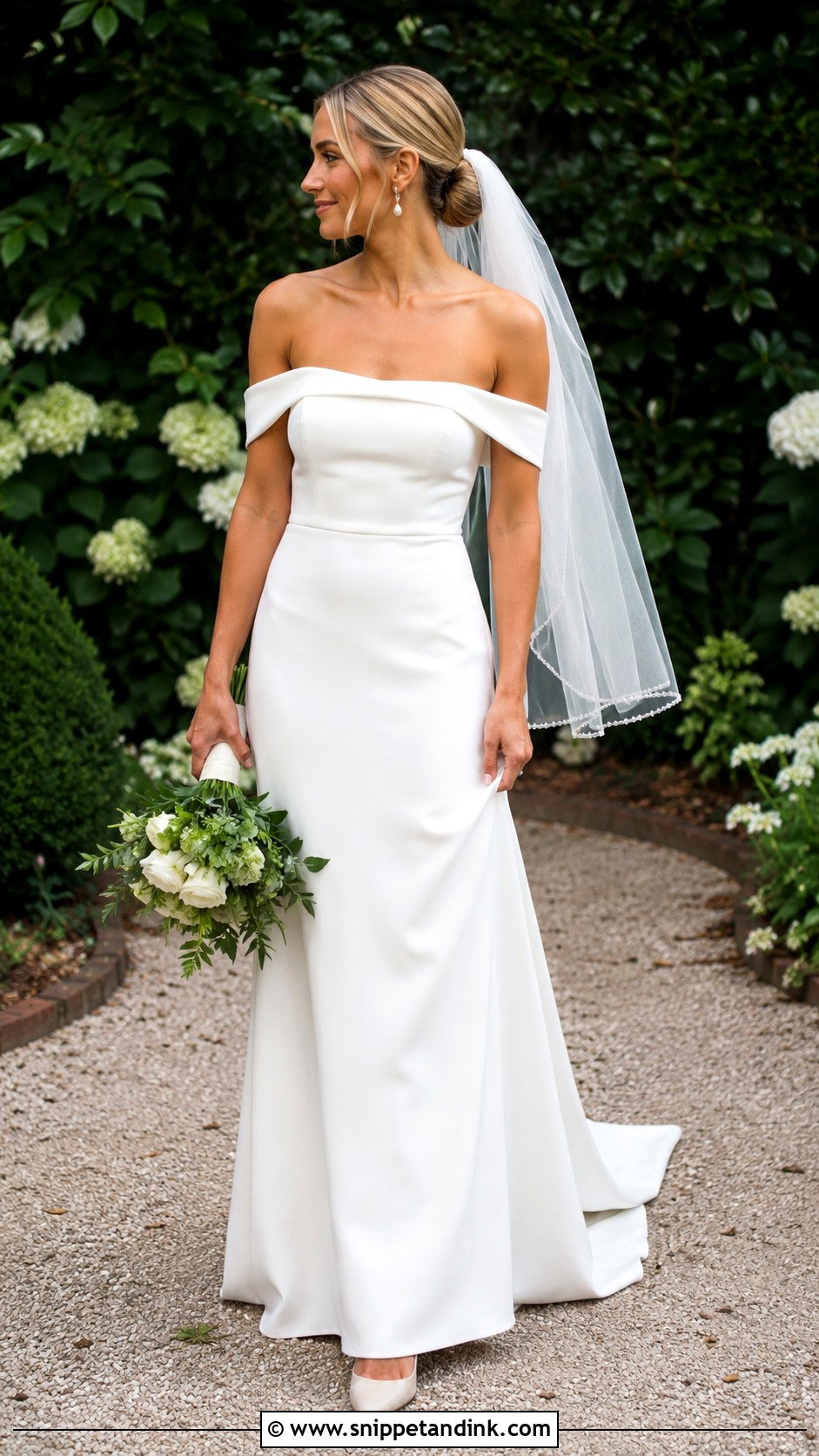
Off-the-shoulder necklines frame the collarbones nicely, but they move. The test I run is a hug: if the band slides when you wrap your arms around someone, it needs taking in or a silicone grip strip sewn inside. A crepe column looks modern; a chiffon A-line moves more freely outdoors. Drop earrings, a fine bracelet, and a low bun or side-swept waves keep the neckline clear. Pointed heels suit pavement, block heels suit grass. Attach a fingertip veil below the hair so it doesn’t cover the shoulders. Bring a light wrap you can slip off before portraits.
11. Square Neck Elopement Wedding Dress
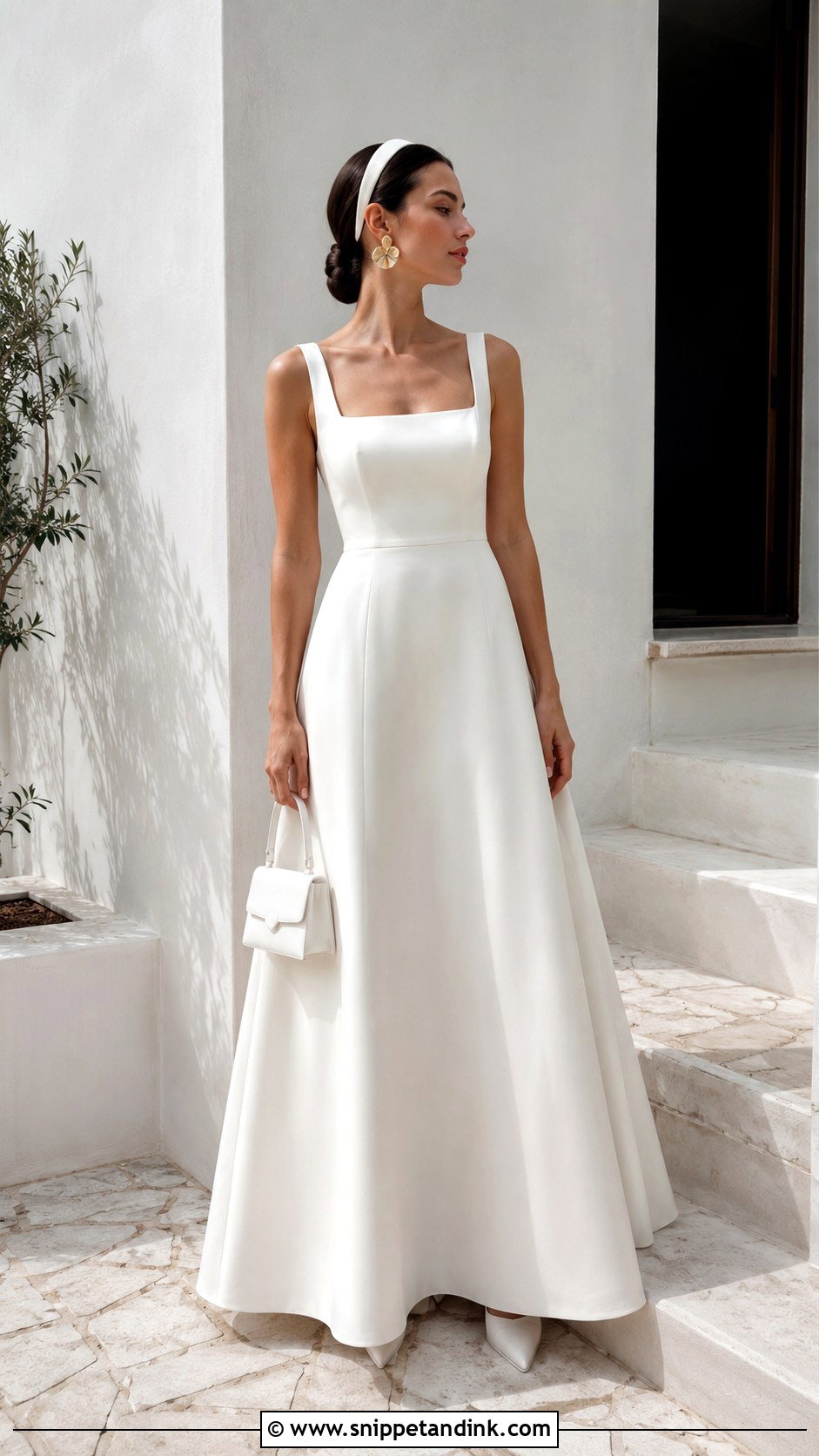
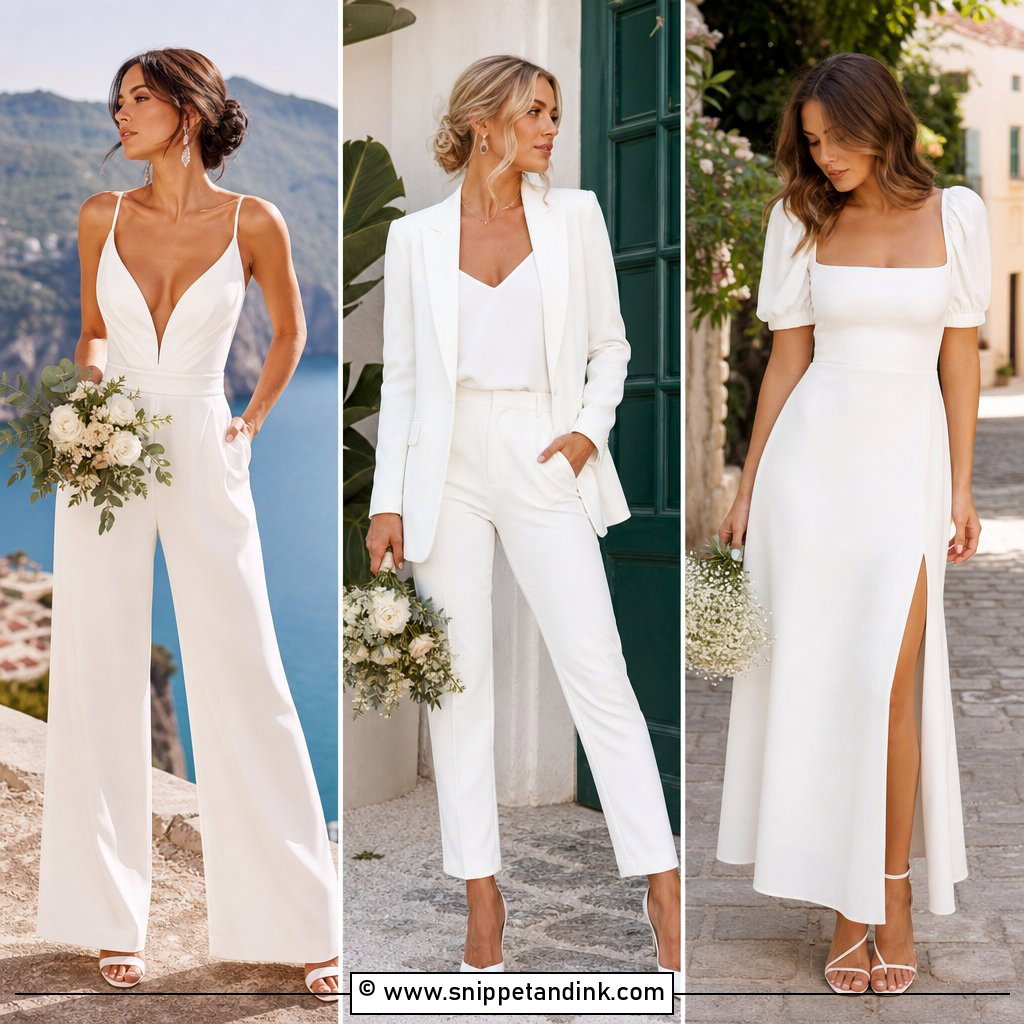
A square neck is clean and architectural, and it suits brides who like modern simplicity. Wide straps, fitted sleeves or a corset-style bodice all work with it; an A-line skirt balances the shape, while a slim column suits the city. If you want more support, ask for internal boning and built-in cups, since square necks can gape when you lean forward. Sculptural earrings, a sleek top-handle bag and pointed shoes keep the lines sharp. I’d skip the necklace altogether. A short veil or a minimalist headband echoes the straight neckline in courthouses, galleries and modern hotels.
12. Halter Elopement Wedding Dress
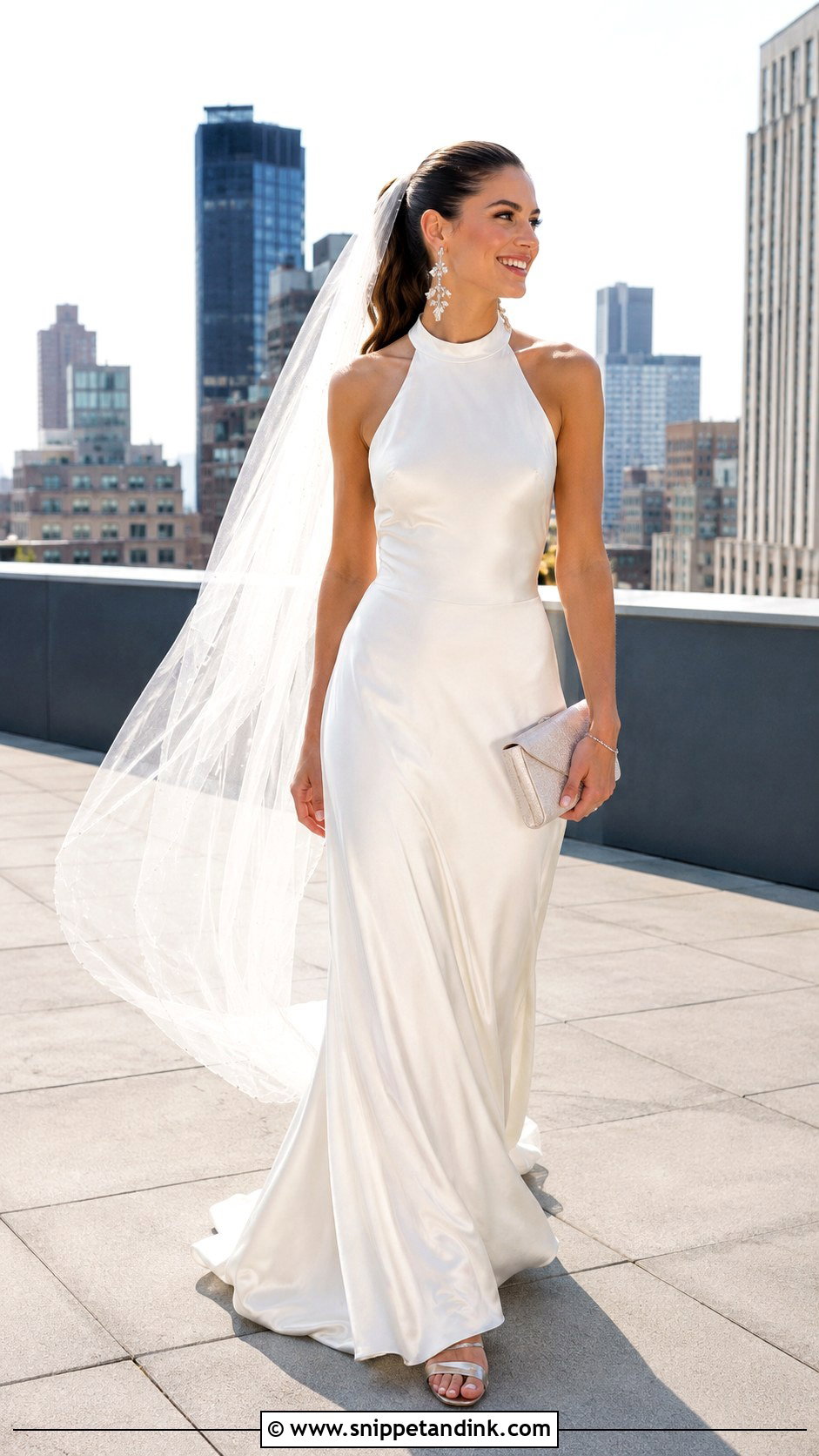
Halters suit warm weather and rooftop ceremonies because they leave the shoulders and back cool. The neck strap carries the weight of the bodice, though, so if it’s thin and the fabric is heavy, you’ll feel it by the second hour. I’d go for chiffon if you want ease, satin or crepe for polish. Wear your hair in a low bun or high ponytail so it doesn’t sit on the halter tie. Statement earrings, a slim bracelet and metallic or ivory sandals are enough; necklaces crowd the shape. Fashion tape is a backup, not a fix. The bodice should fit properly on its own.
13. Backless Elopement Wedding Dress
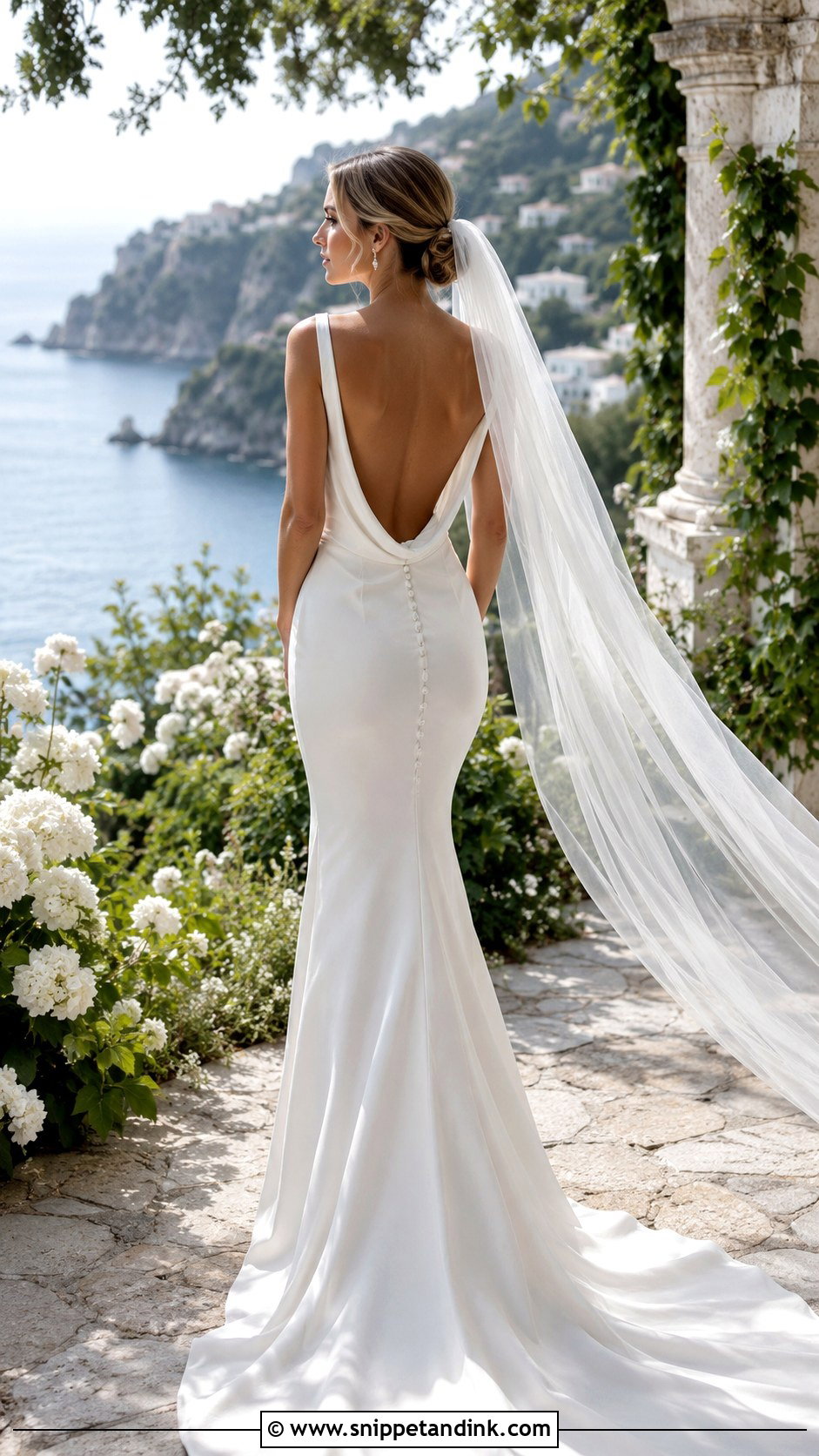
A backless gown keeps the front simple and saves the drama for the back, which matters a lot in elopement photos since many are taken walking away from the camera. The support question comes first. Adhesive cups, a low-back bodysuit or support sewn into the dress to match the exact cut are your options, and I’d test each one by sitting, walking and bending forward before you buy. Buttons, a lace panel or a draped cowl give the open back some detail. A low bun, small earrings and a veil attached below the hair keep the back visible. Minimal heels or flats suit coastal and garden settings.
14. Minimalist Column Elopement Wedding Dress
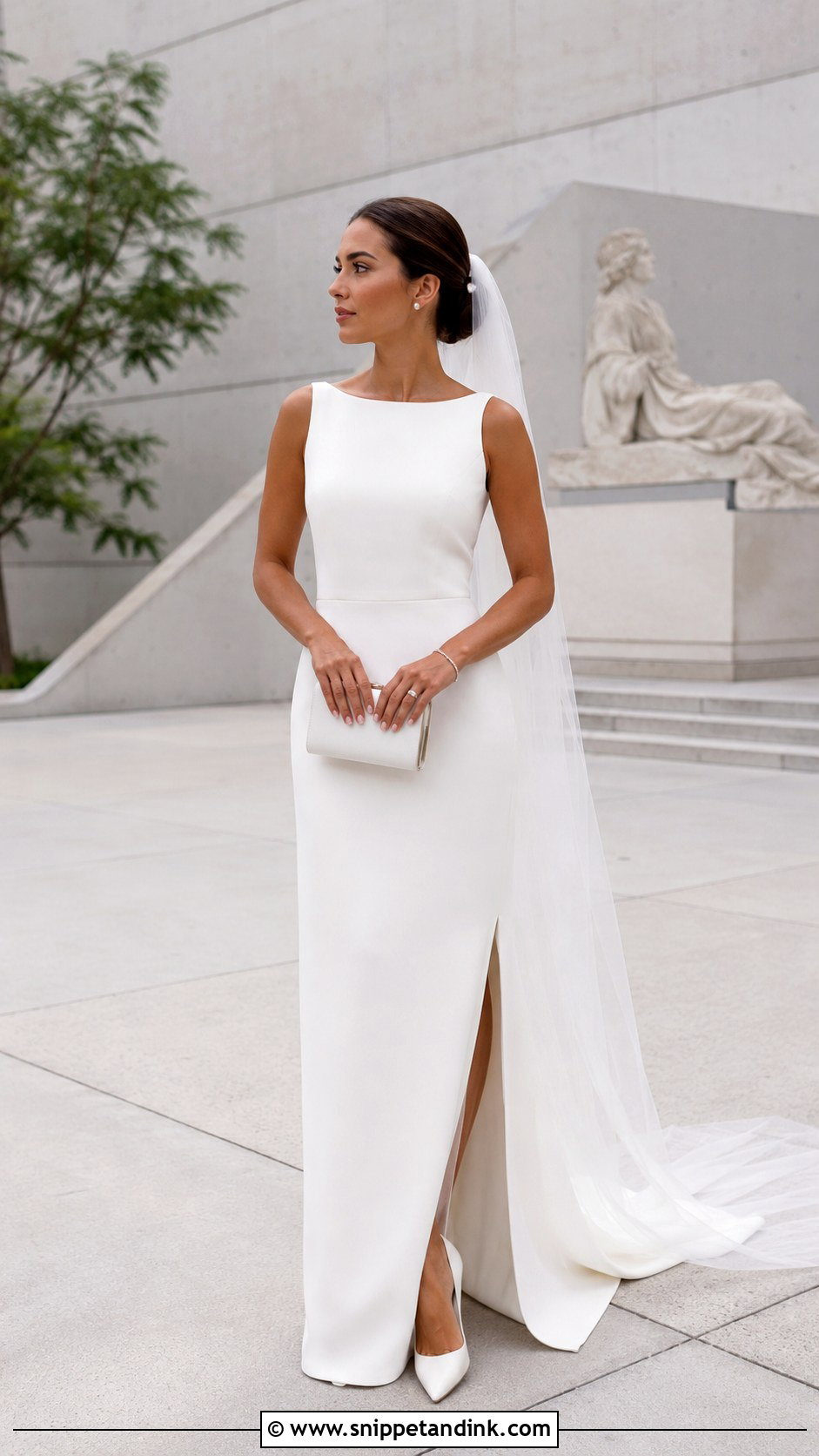
Minimal columns rely on fabric and fit alone, which means every alteration shows. Smooth crepe, matte satin or silk with a bateau, scoop or straight neckline and precise tailoring is what you’re paying for. A small side slit helps with walking on stairs. The hem needs to suit both your shoes and the floor you’ll stand on; a column that pools on a stone step looks sloppy, so I hem it to just kiss the floor in the shoes you’ll actually wear. Pointed pumps, pearl studs and a structured clutch finish it. Choose a simple veil or a sculptural hair clip for city hall, museums or rooftops.
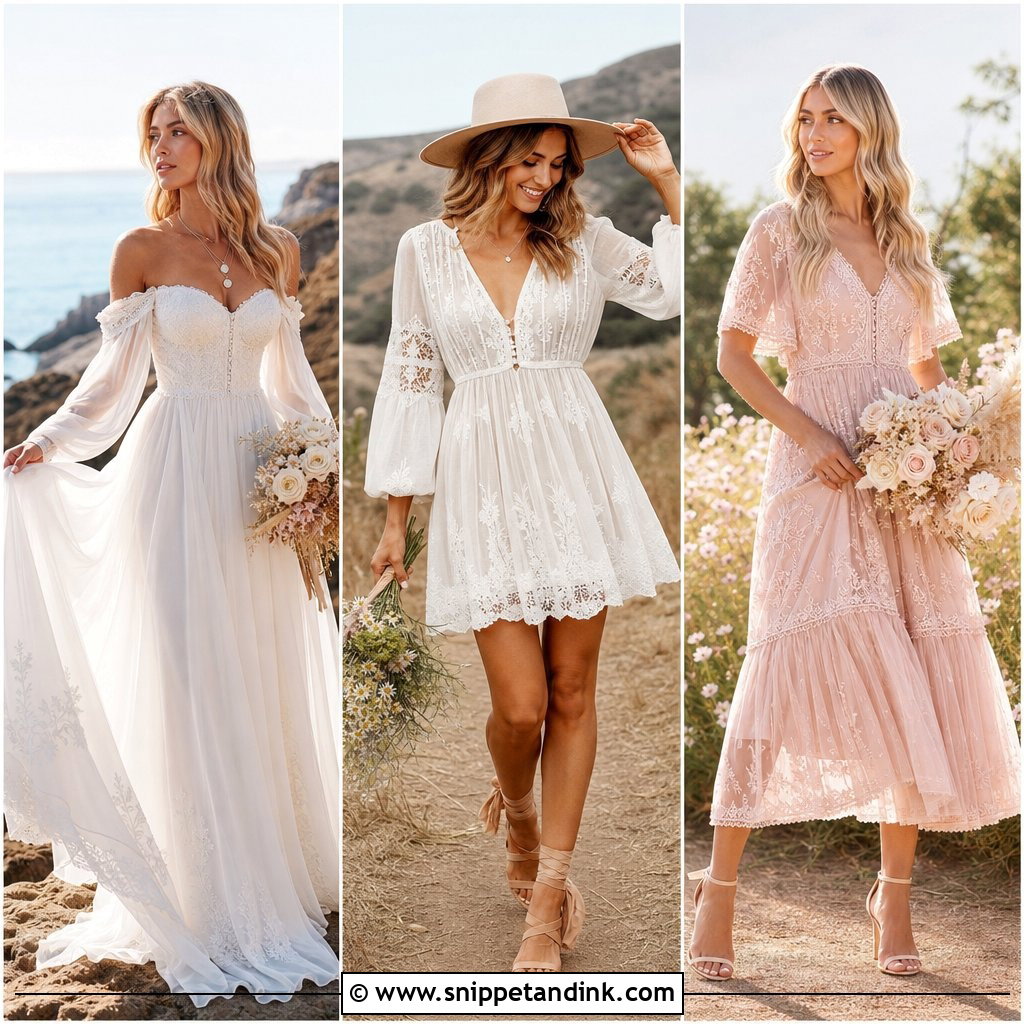
15. Floral Elopement Wedding Dress
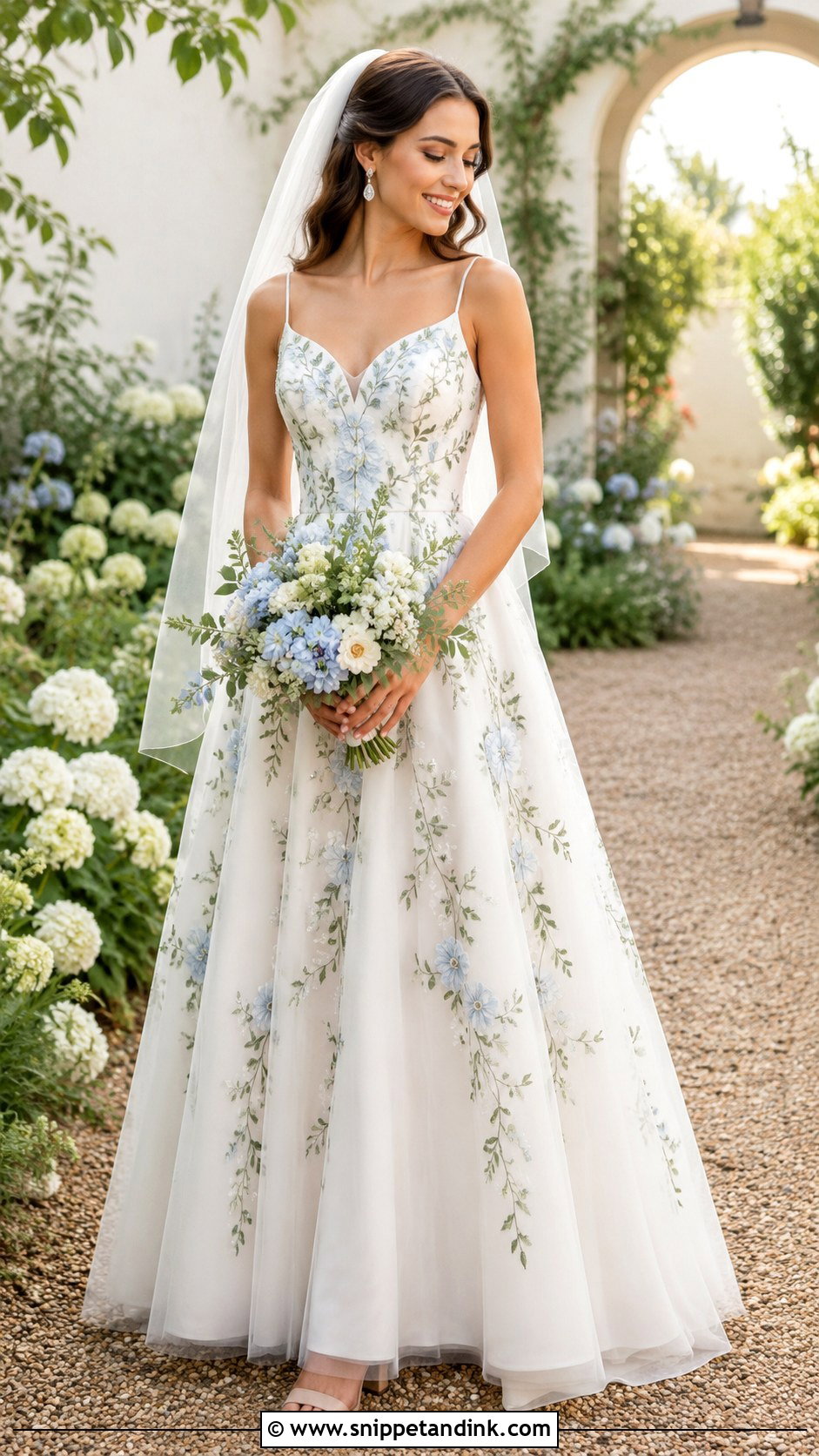
An elopement dress doesn’t have to be plain or bright white. Embroidered flowers, dimensional appliqués or a subtle botanical print sit naturally in gardens, forests and fields. Tonal ivory embroidery feels traditional; pale blush, blue or green details feel more personal. If your gown has coloured embroidery, I’d pull one shade into the bouquet or the shoes and leave everything else neutral, because two or three competing accents make it look busy. Neutral block heels or flats, small gemstone earrings and a sheer plain veil let the fabric do the work. Check the appliqués aren’t stiff enough to scratch on a long walk.
16. Winter Elopement Wedding Dress
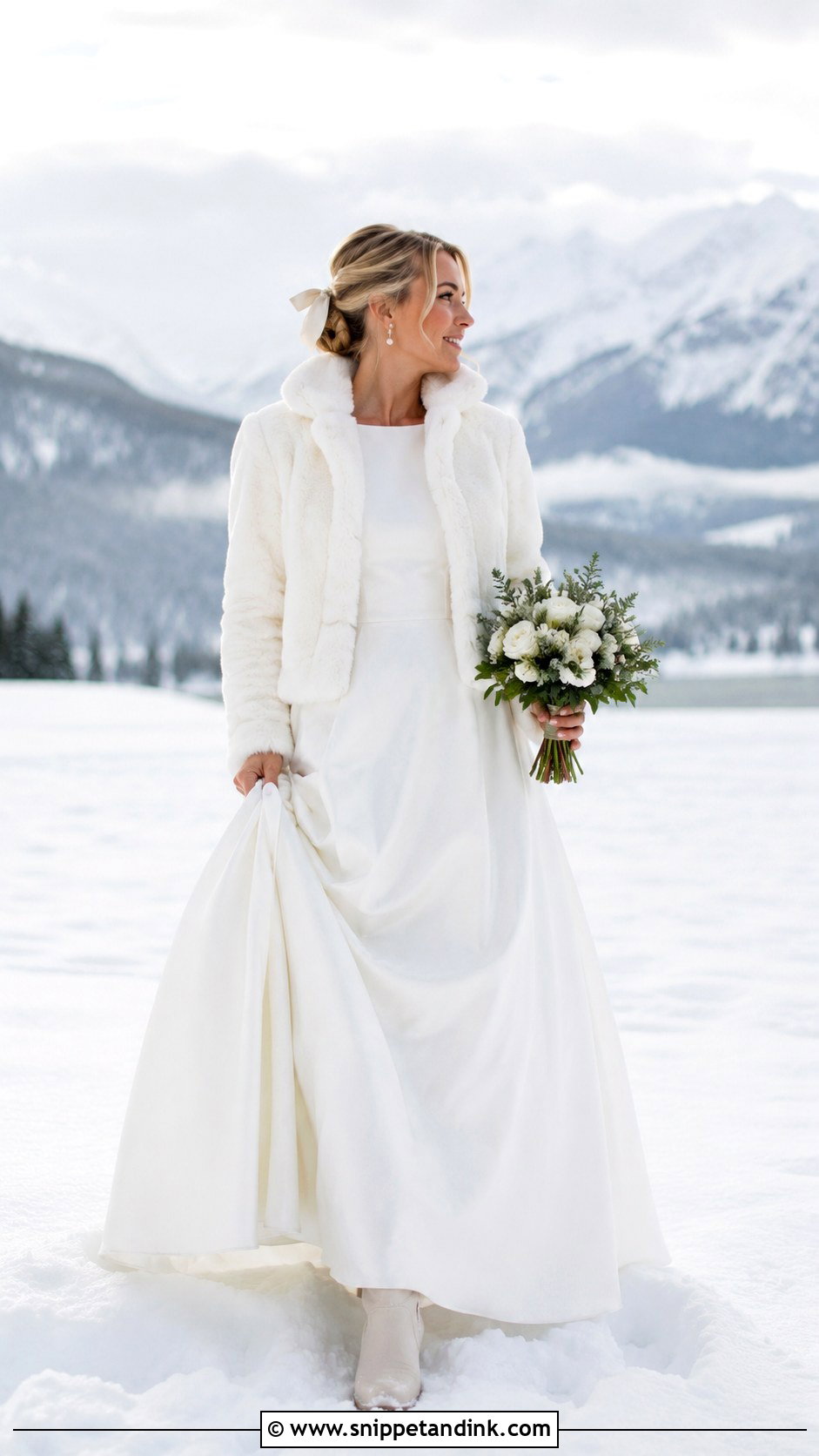
Snow makes a winter elopement look magical, but cold is the bigger concern than looks. Start with a long-sleeve crepe or satin gown in a sheath or A-line. Thermal layers, warm tights or leggings under the skirt are fine; no one sees them. Waterproof boots matter more than pretty ones, since wet suede shoes go dark and your feet go numb within minutes. Add pearl earrings and a fitted faux-fur jacket, wool cape or tailored coat. A short train you can lift easily is safer on snowy ground than a long one. Bright white, soft ivory, champagne and pale silver all hold up in snowy light.
17. Summer Elopement Wedding Dress
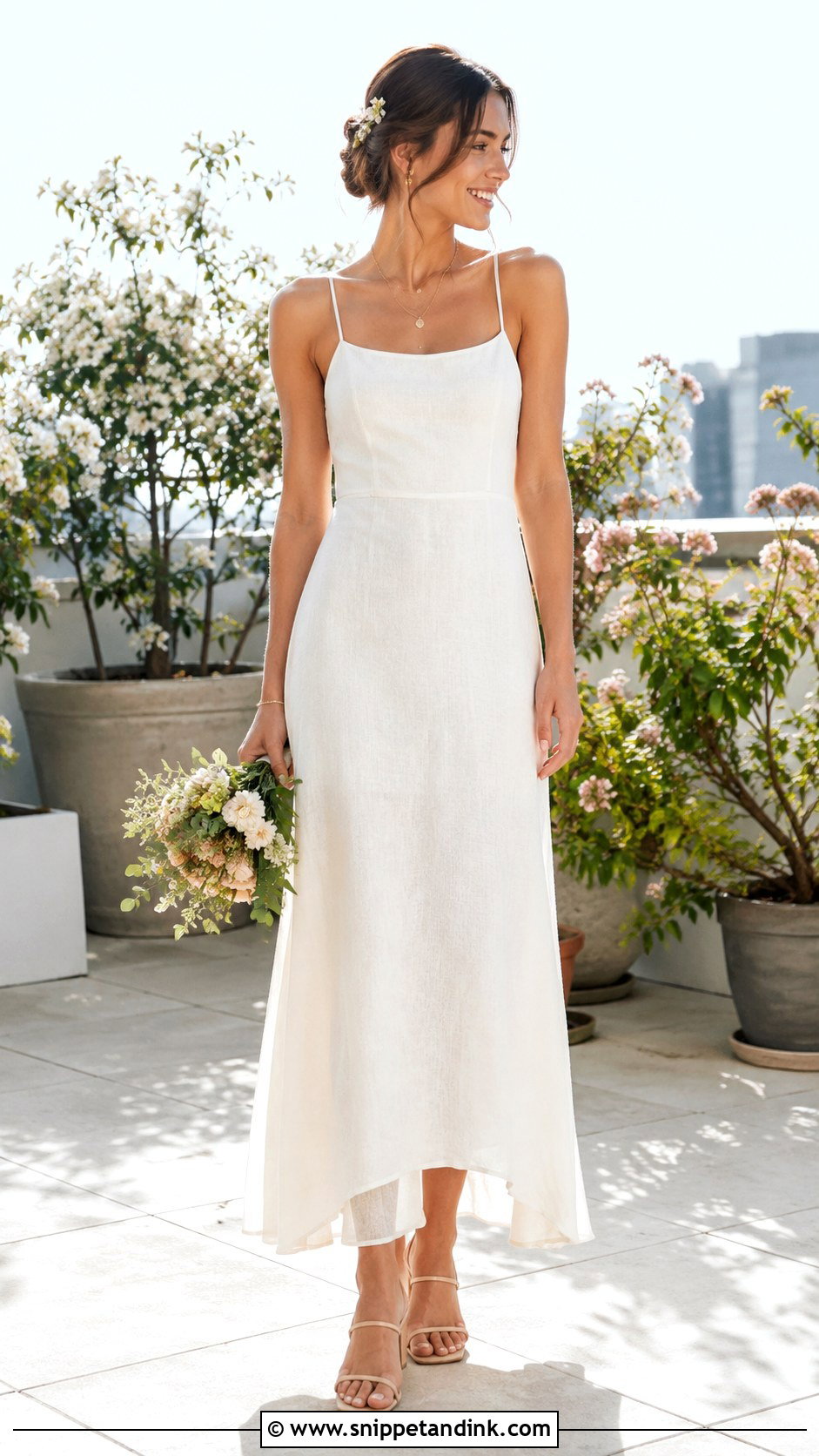
Heat changes my priorities completely. Breathable fabric, a cotton or silk lining and a cut that doesn’t cling are more important than any detail. Chiffon, cotton lace, silk or a linen blend keeps you cooler; polyester satin traps heat. Linen does crease, so either accept the creases or skip it for something smoother. Thin straps, a sleeveless square neck or a halter with a flowing midi or ankle skirt suits beaches, deserts and rooftops. Flat sandals or low block heels and light gold or pearl jewellery are enough. Hold the dress up to direct sunlight before you buy it; thin white fabric can turn see-through.
18. Plus Size Elopement Wedding Dress
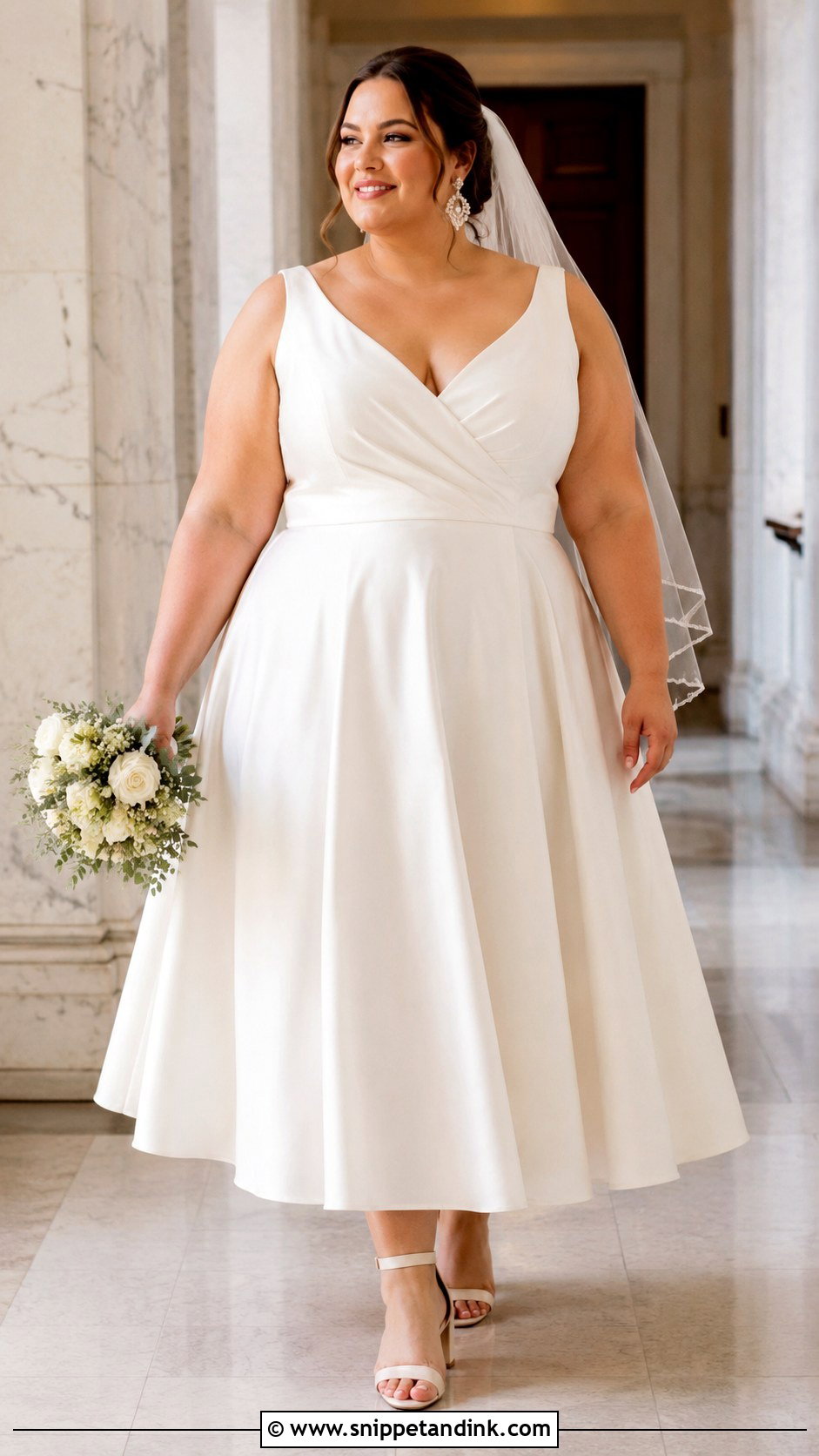
A well-fitted elopement dress should support your body and let you move freely, not hide your shape. Wrap bodices, structured A-lines, fitted crepe dresses and softly draped columns are all worth trying. What makes the biggest difference is what’s built in: wide straps, internal boning, cups and a firm lining make a dress comfortable for hours without changing how it looks. Fit to your body, not the number on the label, and expect to alter. Sit, walk and lift your arms at every fitting. Block heels or embellished flats, statement earrings and a veil in proportion to the dress finish it.
19. Petite Elopement Wedding Dress
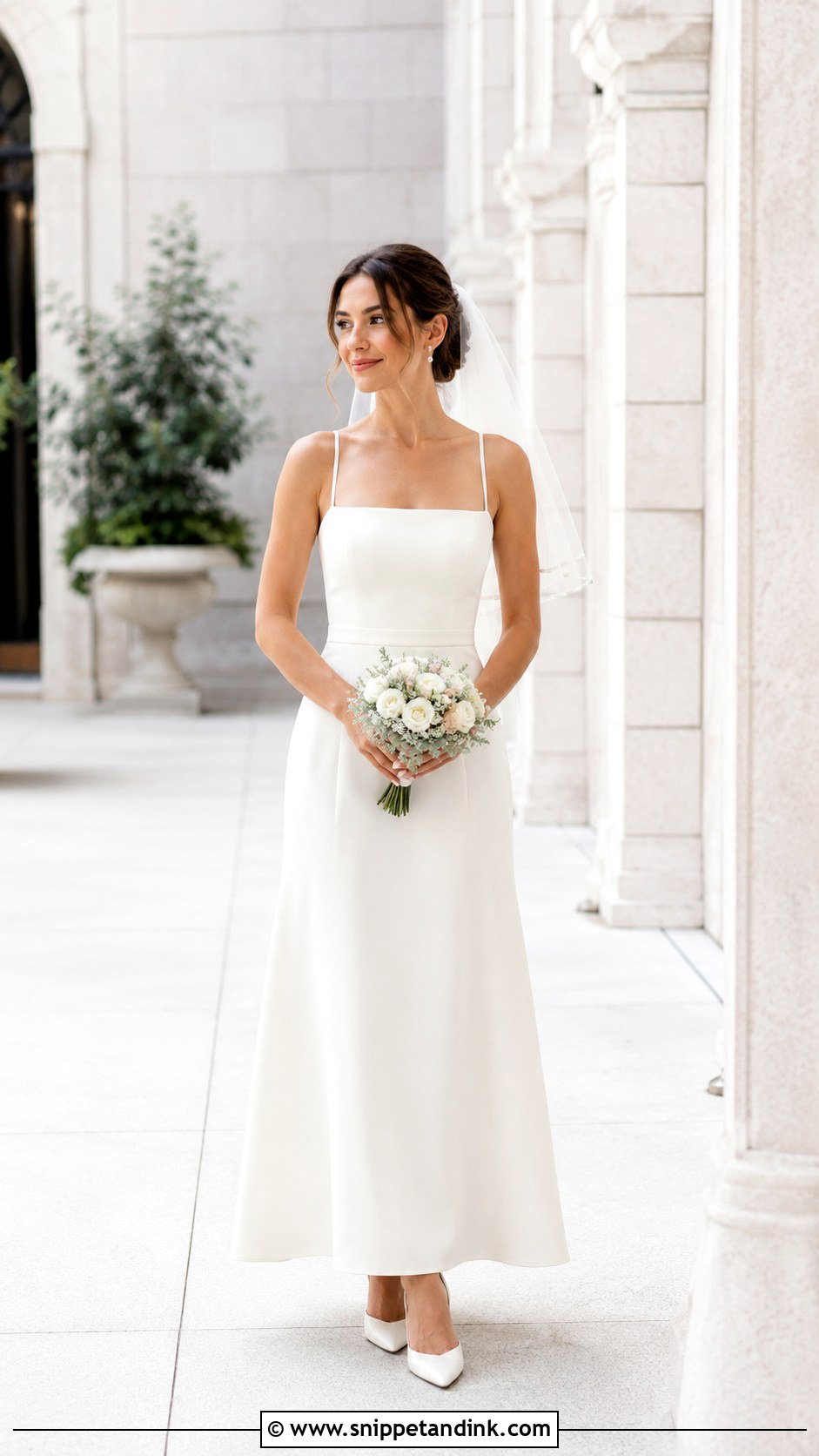
On a petite frame, excess fabric is the enemy. A high waist, a clean column, a fitted mini or a narrow A-line keeps the dress from swamping you. I’d go ankle length to show your shoes, or have a full-length gown hemmed precisely so it doesn’t pool. Pointed-toe heels or flats lengthen the line, and a short or fingertip veil keeps proportions balanced; an extra-wide veil can swallow a small frame. Avoid oversized bows or sleeves unless they’re deliberate. A tailor used to bridal work can move straps, shorten the bodice and raise the waist, which usually changes the look more than switching dresses.
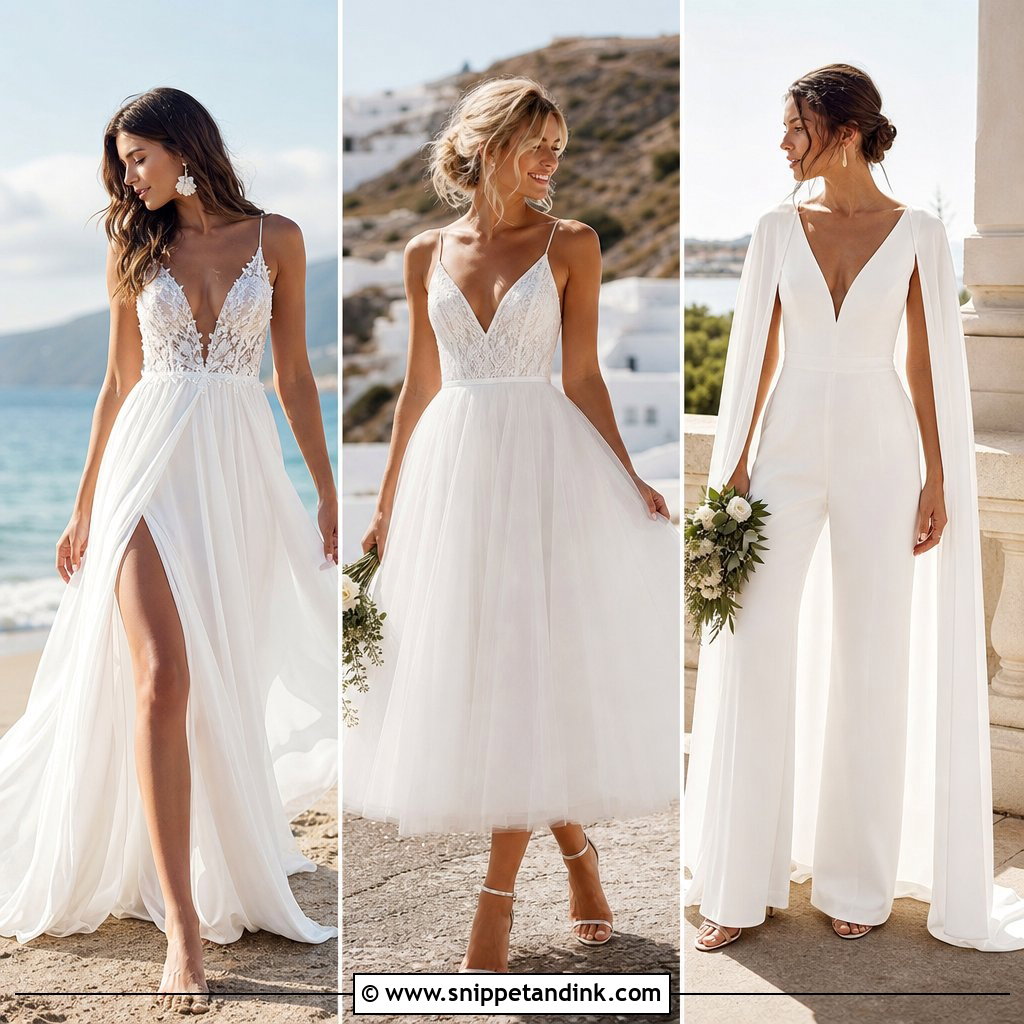



20. Maternity Elopement Wedding Dress
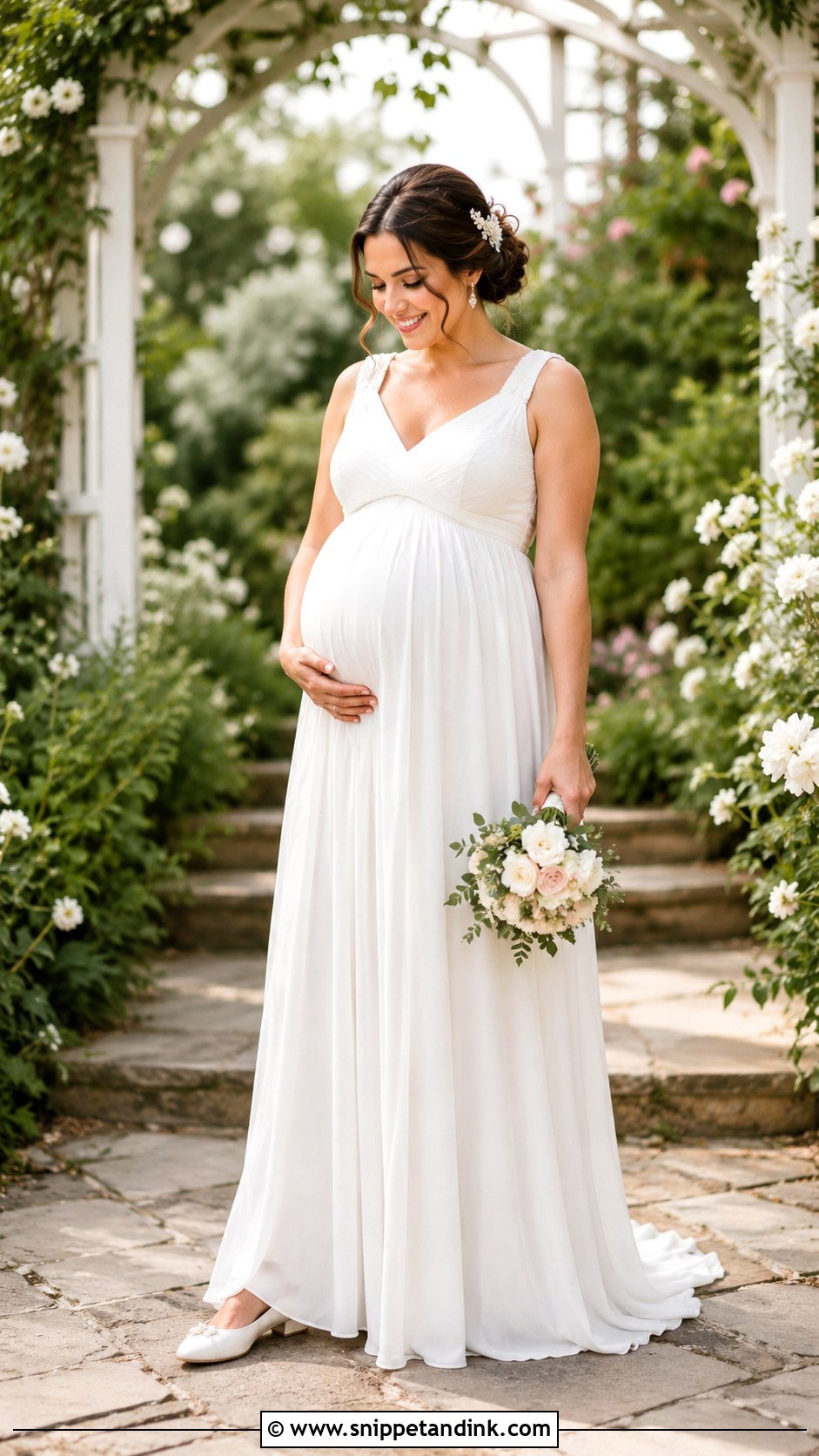
For a pregnant bride, the dress has to allow for a body that might change between the final fitting and the ceremony. An empire-waist gown, stretch crepe, a wrap or gathered chiffon all sit comfortably over a bump. Look for a breathable lining, some give at the seams and straps that work with a supportive bra. I schedule the last alteration as close to the date as the seamstress allows, and I’d leave a little ease in the bust and waist. Cushioned flats, low block heels or sandals with adjustable straps help if your feet swell. Skip rigid waistbands and heavy skirts. A light veil or floral comb keeps it fresh.
Getting a Wedding Dress Onto a Plane, Into a Car or Up a Trail
Travel is the part of an elopement wardrobe brides tend to leave until the last week. I’d never check a wedding dress in the hold. Carry it on in a breathable garment bag, folded in thirds with acid-free tissue in each fold so the creases stay soft. Some cabin crews will hang it if there’s room, but don’t count on that. A slim column or slip folds much smaller than a full tulle skirt, which is worth weighing up if you’re flying.
Pack a small handheld steamer and test it on the inside of the hem before you go, since some synthetic satins can water-spot. Crepe and chiffon usually relax after a short steam or a hanging session in a steamy bathroom. Linen and silk need longer.
Zipping up with nobody around
Without a bridal party, think about who’s getting you into the dress. A long row of buttons or a corset back is hard to do alone, and your partner may be busy getting dressed too. Ask your photographer whether they’re happy to help, or choose a zip with a loop on the pull so you can manage it with a ribbon threaded through. Practise once at home in the actual dress. Keep a few safety pins, fashion tape and a lint roller in your bag, and change into the dress close to the spot rather than hiking in it.
Dressing for the Place You’re Actually Standing
An elopement dress follows your plans more than any tradition. The location, weather, travel and how far you’ll walk should decide the silhouette before anything else does. A short courthouse dress and a flowing mountain gown are equally bridal; the shoes, undergarments and layers are what make either one wearable. Get the fit right and test it on the ground you’ll be standing on, then forget about it and enjoy the ceremony. From lace midis to clean columns and maternity gowns, there’s a dress here for every body and setting.
You'll Like These Ideas:


Leave a Reply