
Romantic doesn’t have to mean old-fashioned. The romantic gowns I like best right now pair one soft element with one clean one: a structured corset under drifting tulle, plain satin with a ribbon-edged veil, floral lace cut into a sharp modern shape. That balance keeps the dress from tipping into costume. Before you fall for a silhouette, think about where you’re marrying, the season and how much you plan to move, because tulle in a garden and satin in a ballroom behave very differently. Small things finish the picture: pearl earrings, sheer gloves, a ribbon at the nape. Here are 20 gowns styled from head to toe, each with the fitting note I’d give you at the appointment.
Bring Three Photos, Not Thirty, to Your First Appointment
A screenshot folder of a hundred gowns tells a consultant very little. Pick three images you keep coming back to and, for each one, say out loud what you love about it: the neckline, the way the skirt moves, the colour of the lining. That gives the stylist a pattern to work from, and it often reveals that you love one detail rather than a whole dress.
- Say your budget at the start, including alterations, so you aren’t shown gowns you can’t buy.
- Wear or bring the underwear you plan to wear, or something close, and shoes at roughly your wedding heel height.
- Bring one or two people whose taste you trust. A large group tends to talk you out of what you liked.
- Try at least one silhouette you think won’t suit you. Romantic gowns surprise people more than any other kind.
1. Basque Waist Lace Wedding Dress
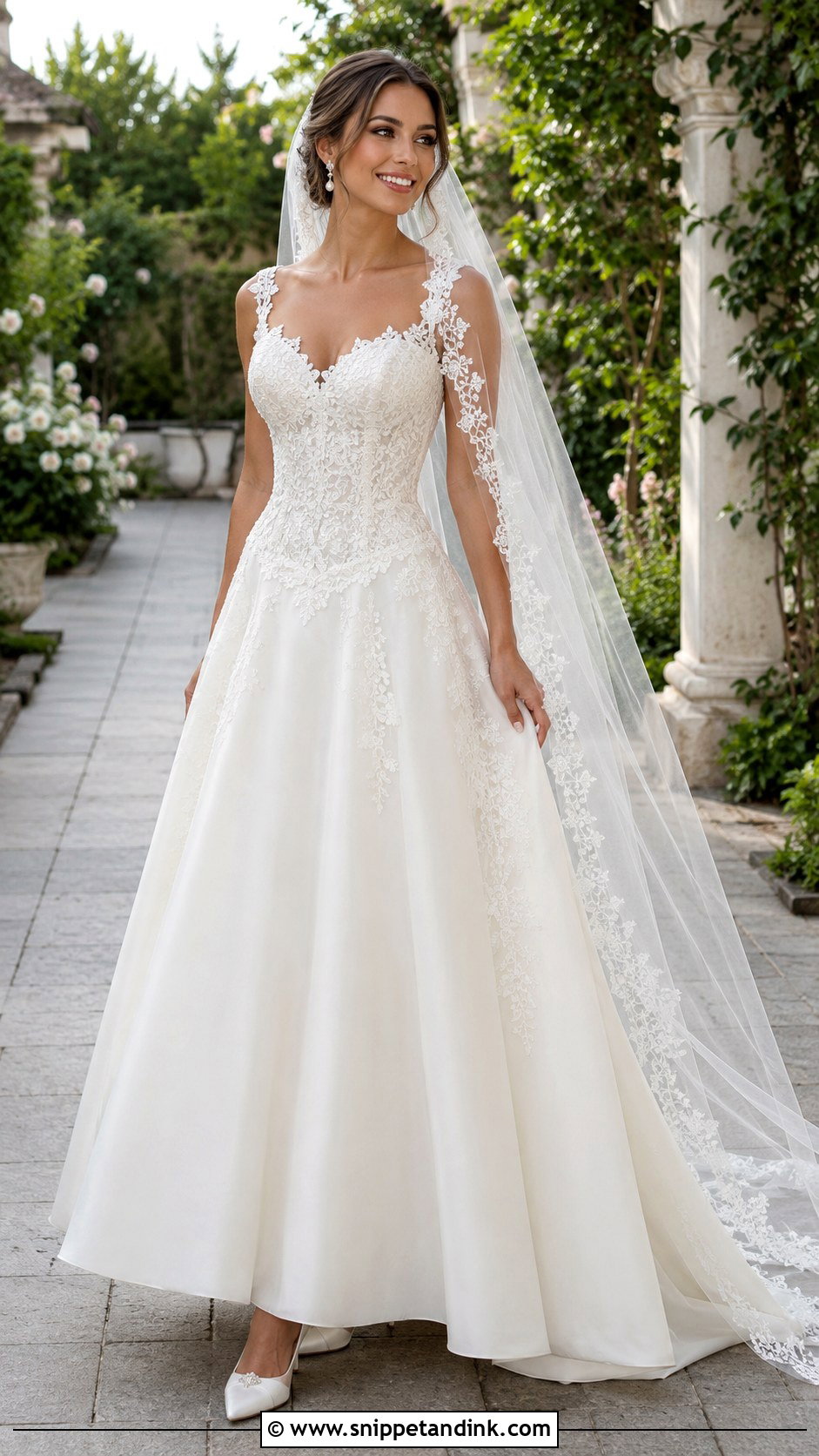
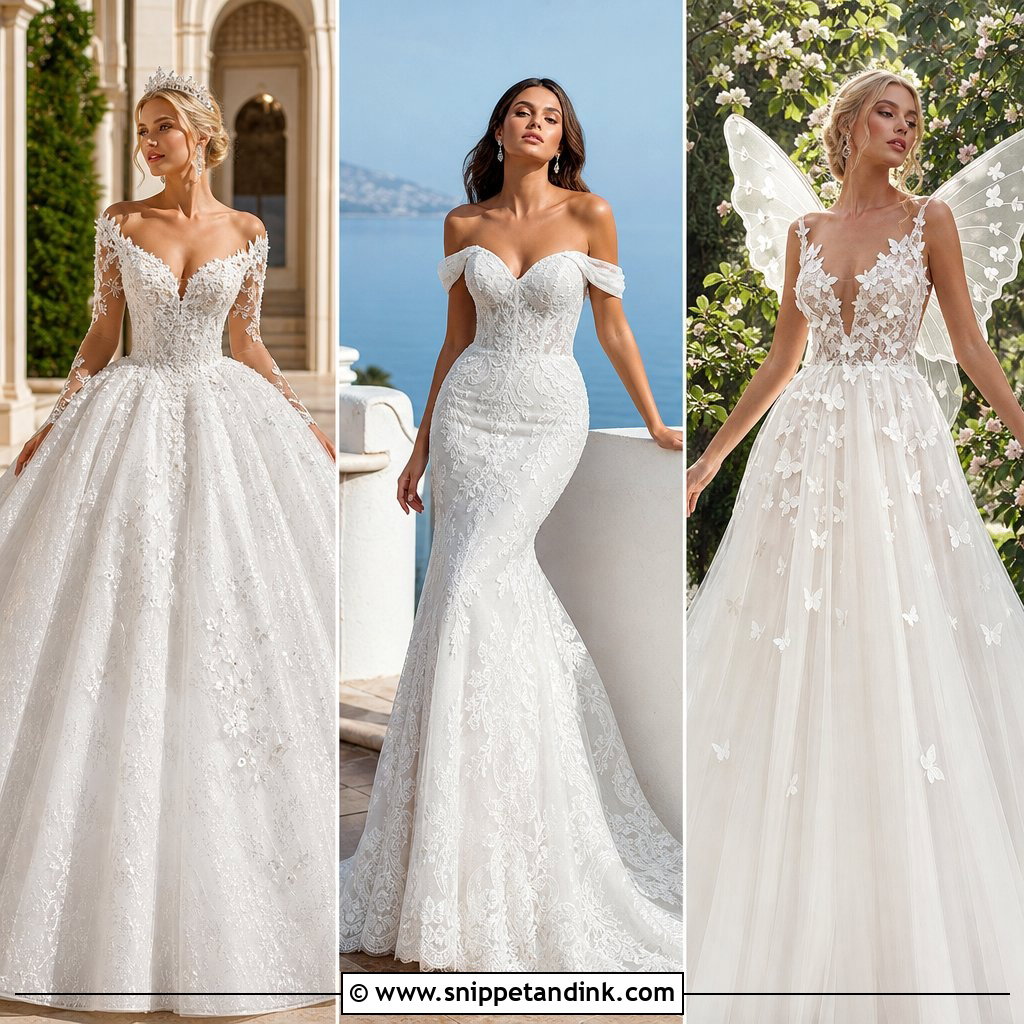
A Basque waist lace wedding dress uses a V-shaped point below the natural waist to lengthen the torso, which pairs well with the softness of floral lace. Light boning in the bodice and a full A-line skirt keep it balanced. Choose lightweight lace over ivory lining so the construction shows without weight. A cathedral veil with a fine lace edge, pearl drops and pointed satin pumps finish it, with a relaxed low bun. The detail to watch is where the point lands. Too low and it cuts your legs short; your tailor should set it so the V draws the eye down the centre, not across the hips.
2. Off Shoulder Satin Ball Gown Wedding Dress
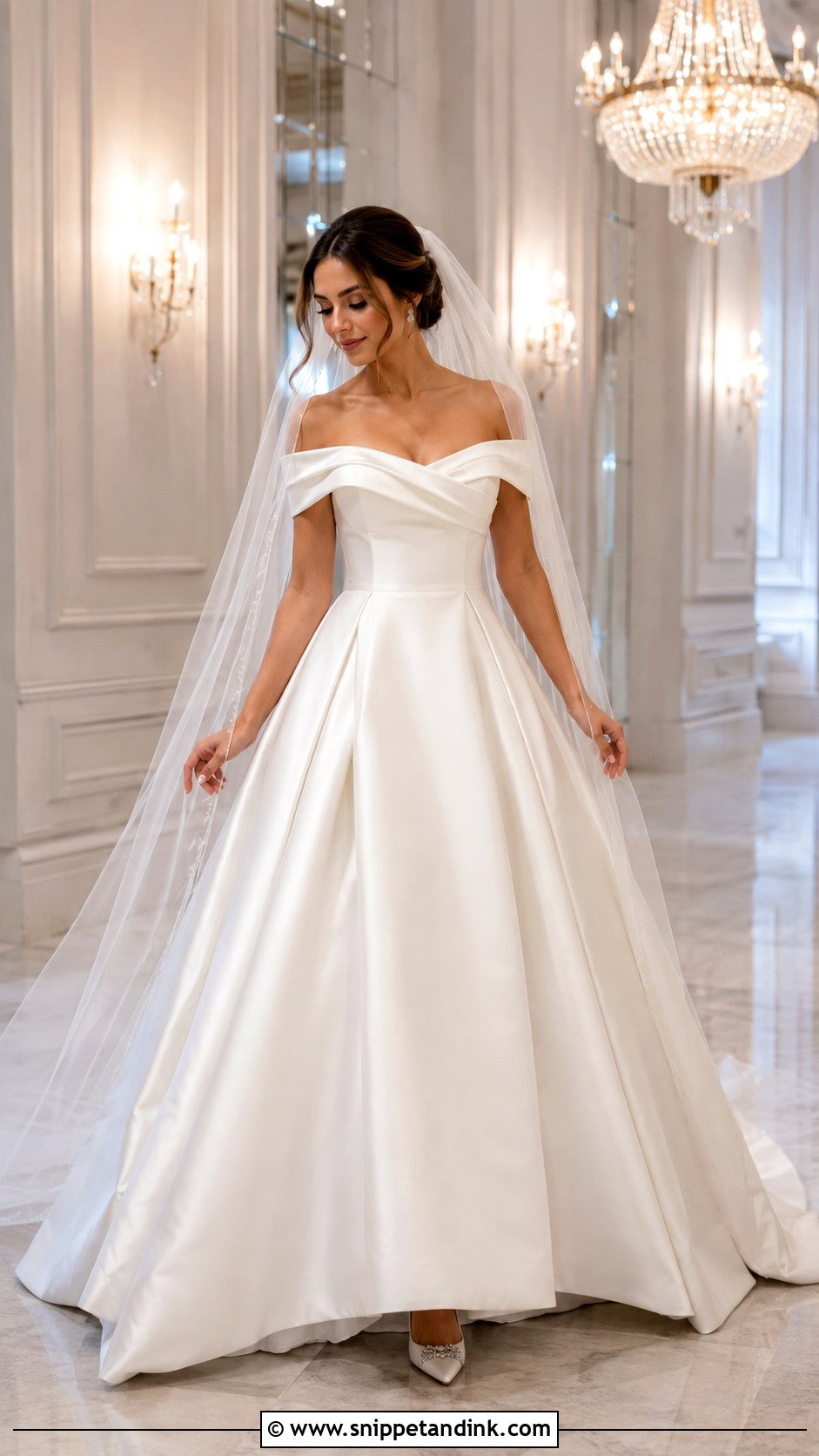
Satin and an off-the-shoulder neckline give a ball gown drama without a single bead. The bodice has to do the holding, so it should stay up on its own while your arms hang loose; if you find yourself tugging it in the fitting room, it isn’t fitted yet. A softly draped neckline frames the collarbones and the wide skirt does the rest. A sheer fingertip veil, crystal studs and a chignon keep the shoulders clear. Satin reflects every bit of light, so look at it by a window as well as under the salon spotlights, where almost any satin looks good.
3. Square Neck A-Line Wedding Dress
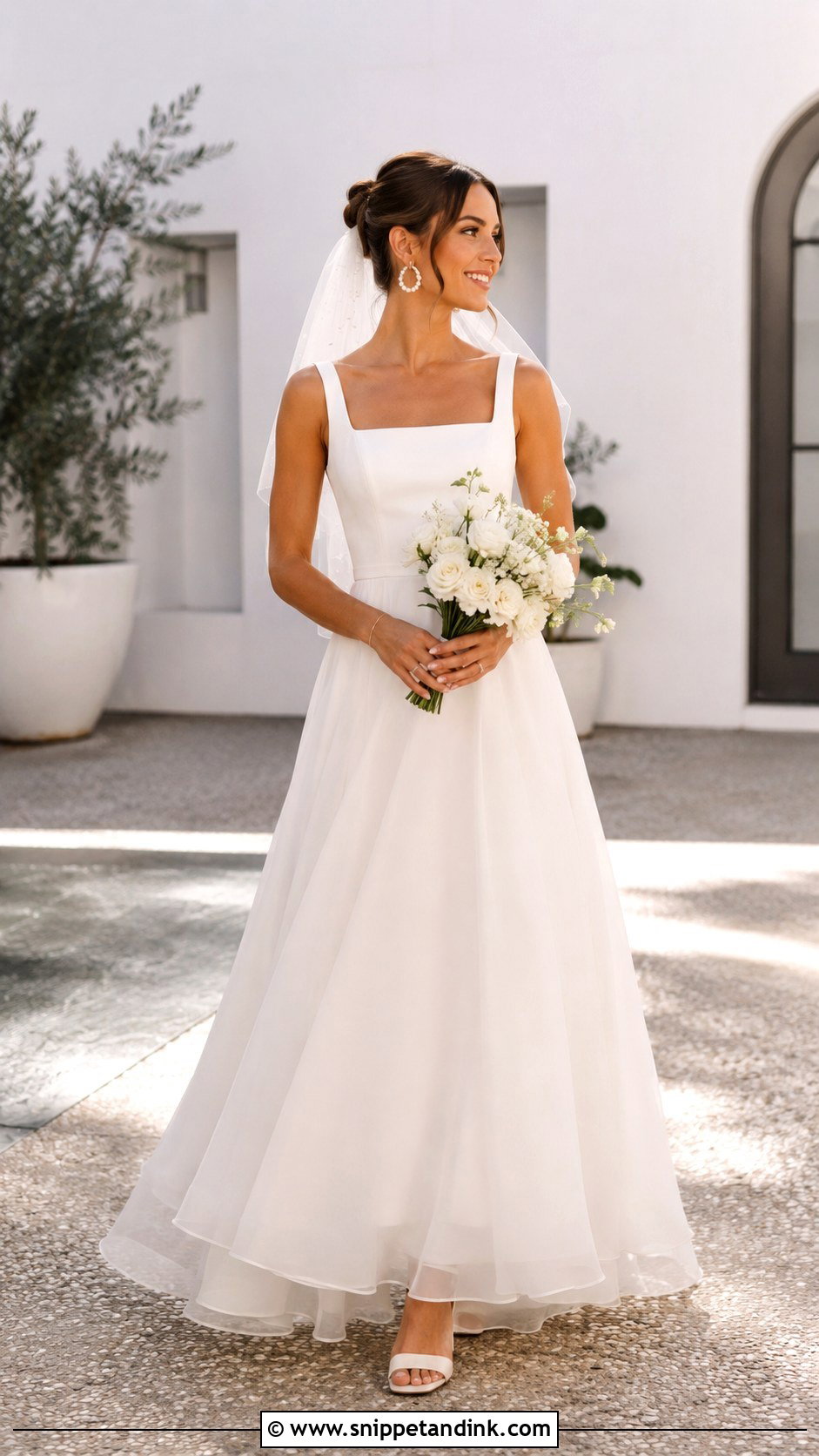
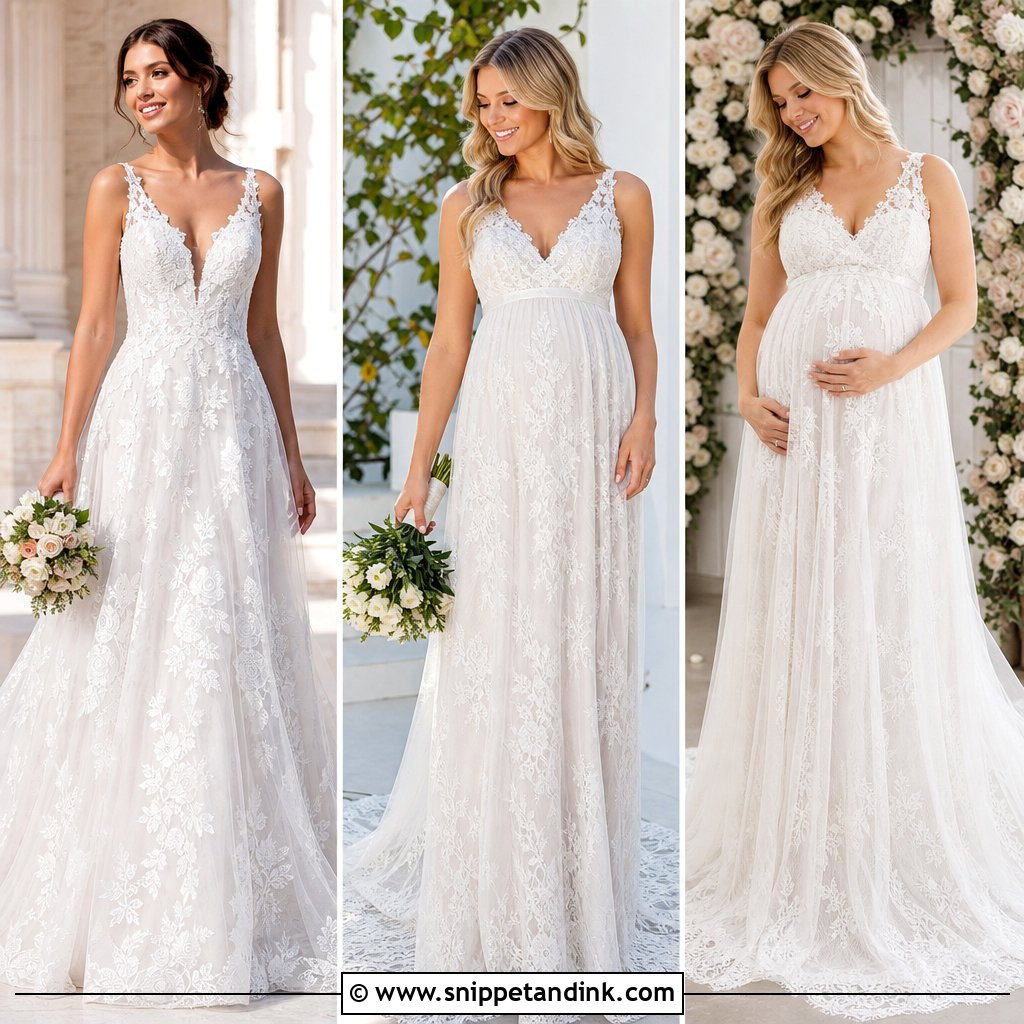
Square neck and A-line is the combination I’d call the most broadly flattering in this list: the neckline frames the face, and the skirt skims the hips without clinging. Wide straps and a natural waist give support without sleeves. Matte crepe looks modern; an overlay of lace or organza softens it. For a garden, block-heel sandals stay steady on grass and gravel. Tie a low ponytail with a narrow ivory ribbon for an easy romantic touch. Raise your arms in the fitting room, because square necks tend to gape at the corners if the straps are set too wide.
4. Sheer Long Sleeve Floral Wedding Dress
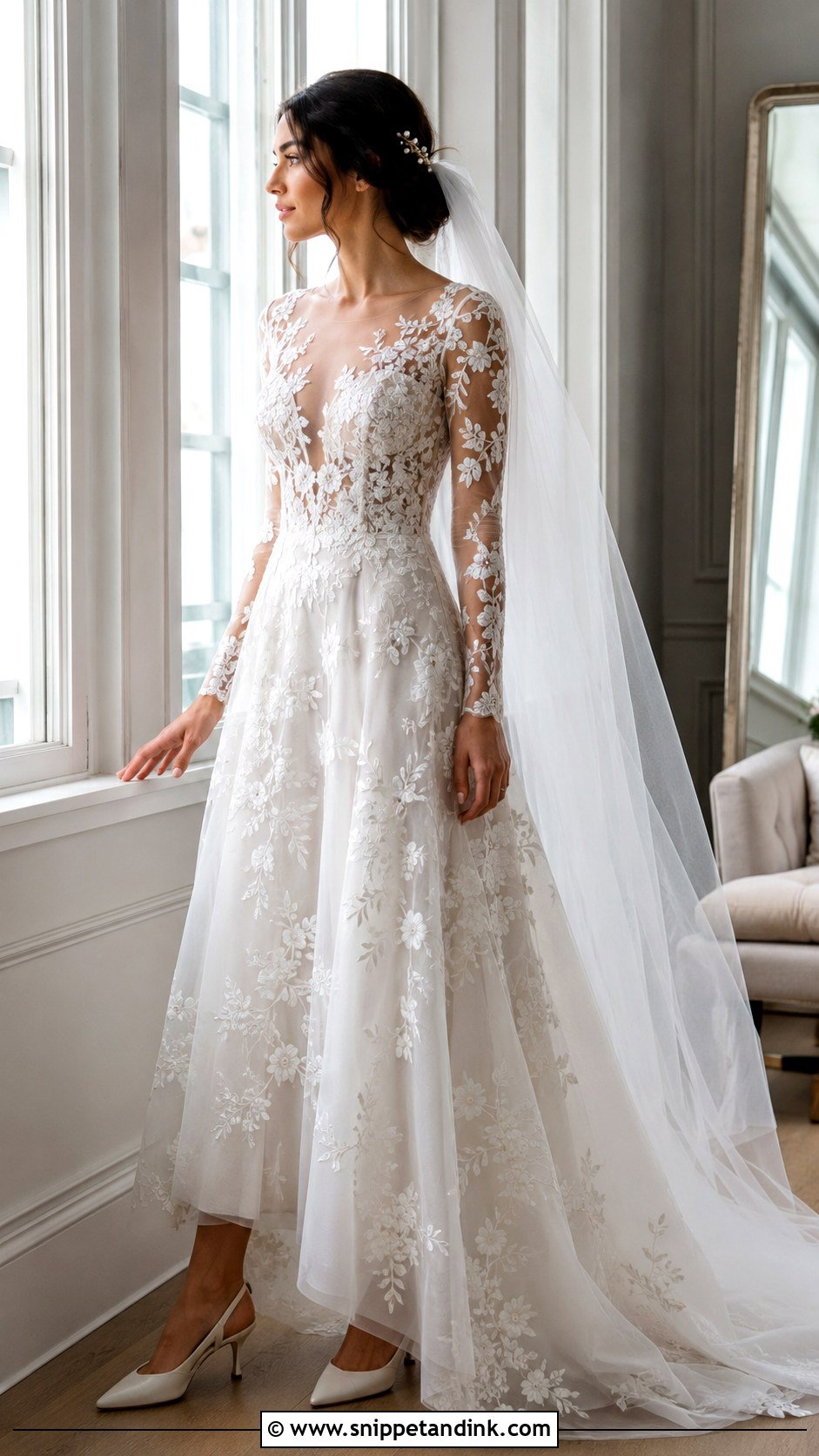
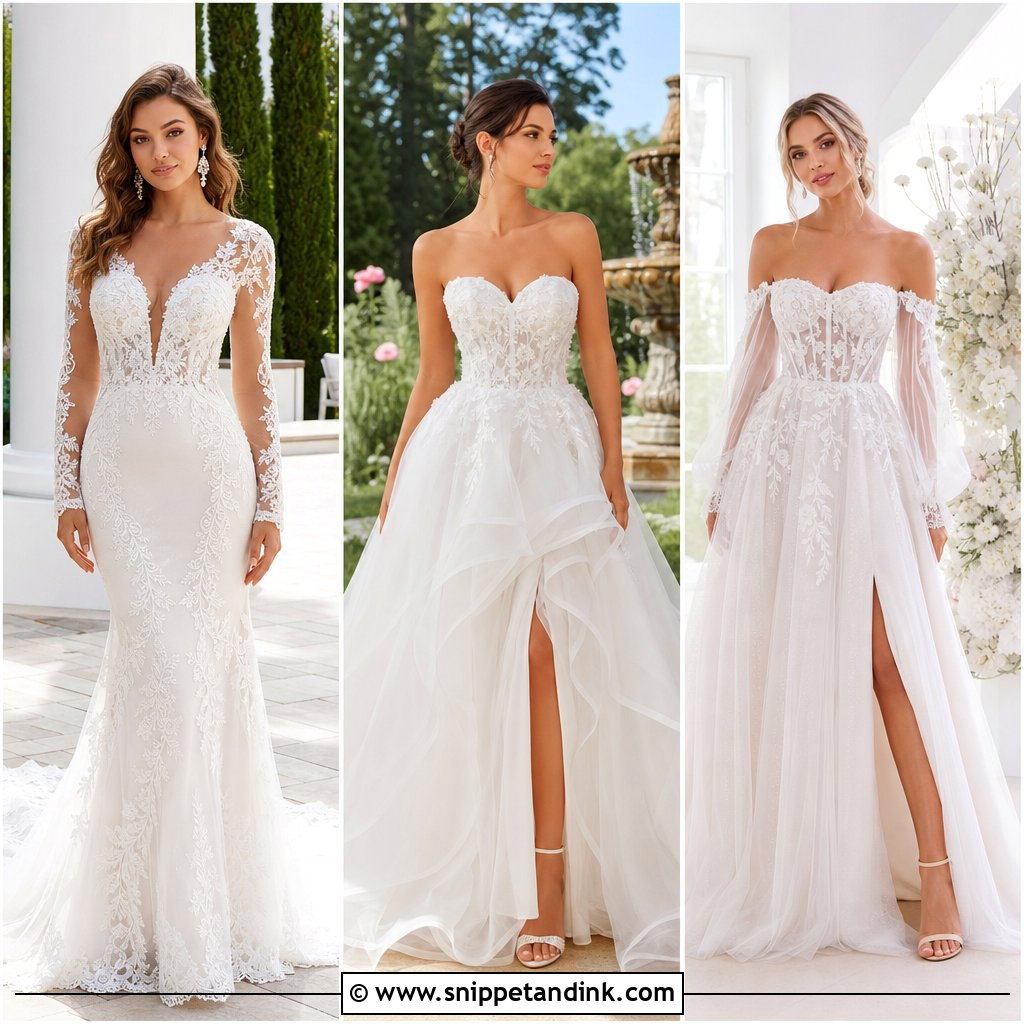
Floral appliqués turn sheer long sleeves from covered into delicate. An illusion neckline, fitted sleeves and embroidery spread across bodice, cuffs and upper skirt suit a soft A-line or fit-and-flare. A plain chapel veil keeps the attention on the sleeves. I’d go with a loose updo here, because long hair down will snag on raised appliqués within the hour. Ask for the sleeve mesh to be matched to your skin tone. The cuffs should sit snug without pressing on the wrist bone, or they’ll leave marks by the reception.
5. Draped Corset Wedding Dress
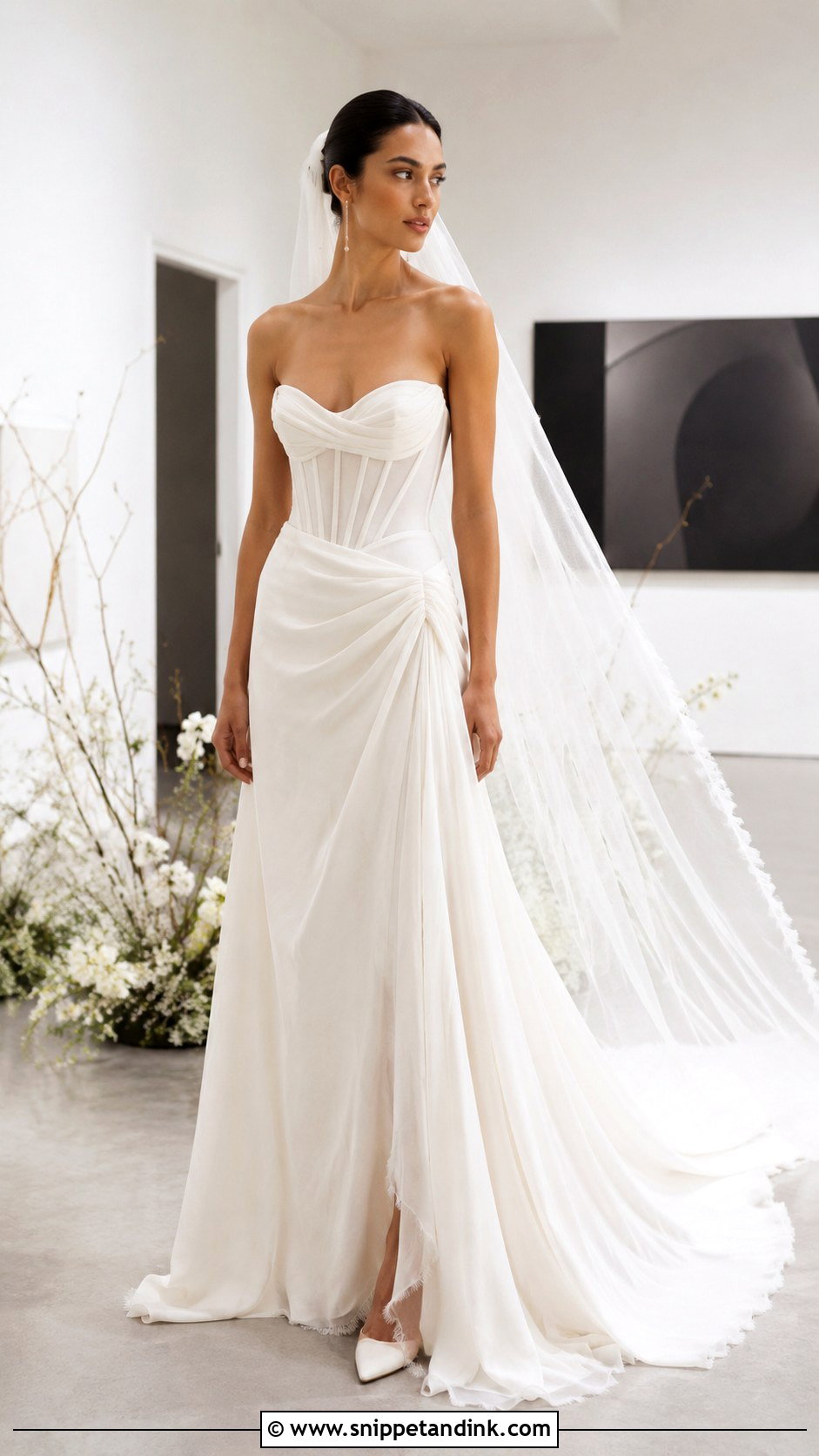
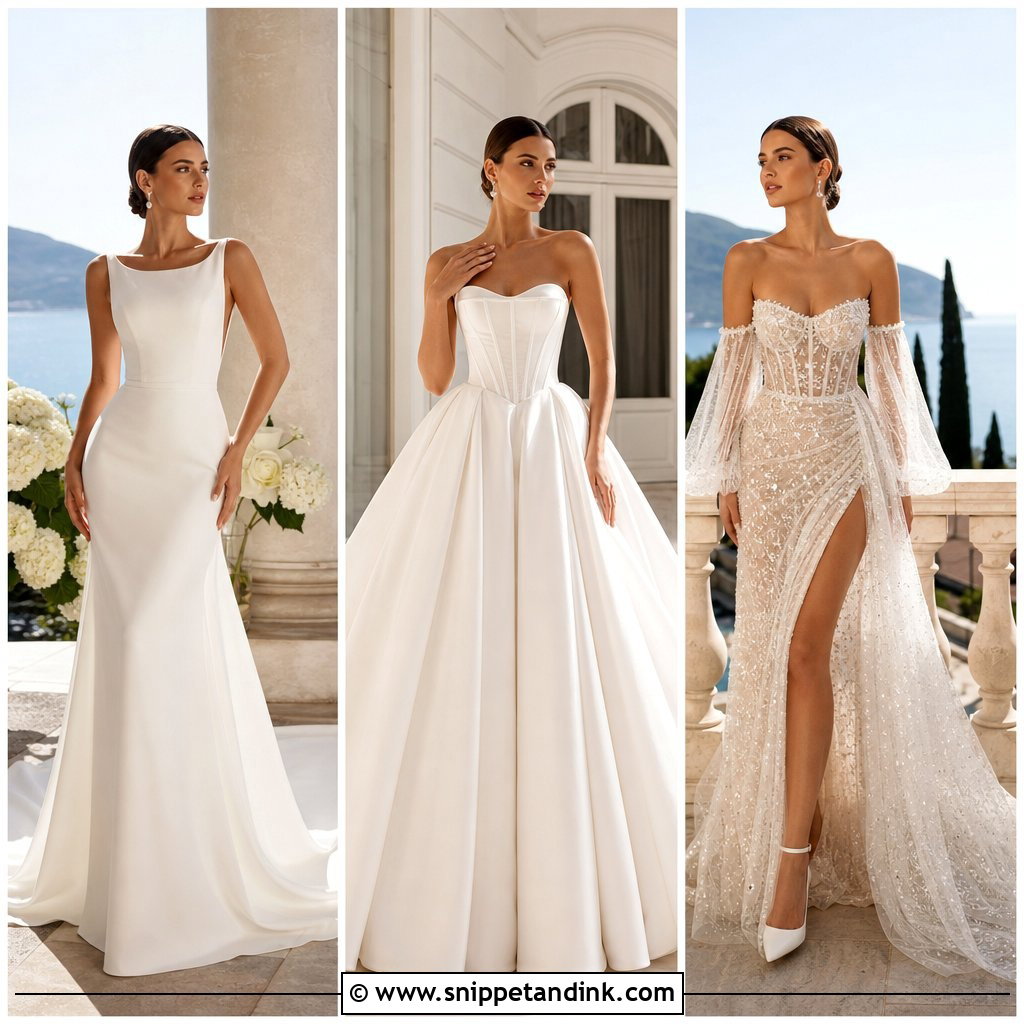
Folds of chiffon, tulle or silk organza wrapped across a corset soften the structure while keeping its shape. The drape should run smoothly across the body and fall into a fluid A-line or a relaxed column. Wear it with a long raw-edge veil, slim drop earrings and minimal pointed heels; a centre-parted bun is a nice contrast to all that softness. My strong advice is not to size down for a tighter waist. A corset cut too small pushes the drape into ridges, and you won’t be able to eat dinner. If boning is visible, a lining close to the gown colour stops it looking too bare.
6. High Neck Lace Column Wedding Dress
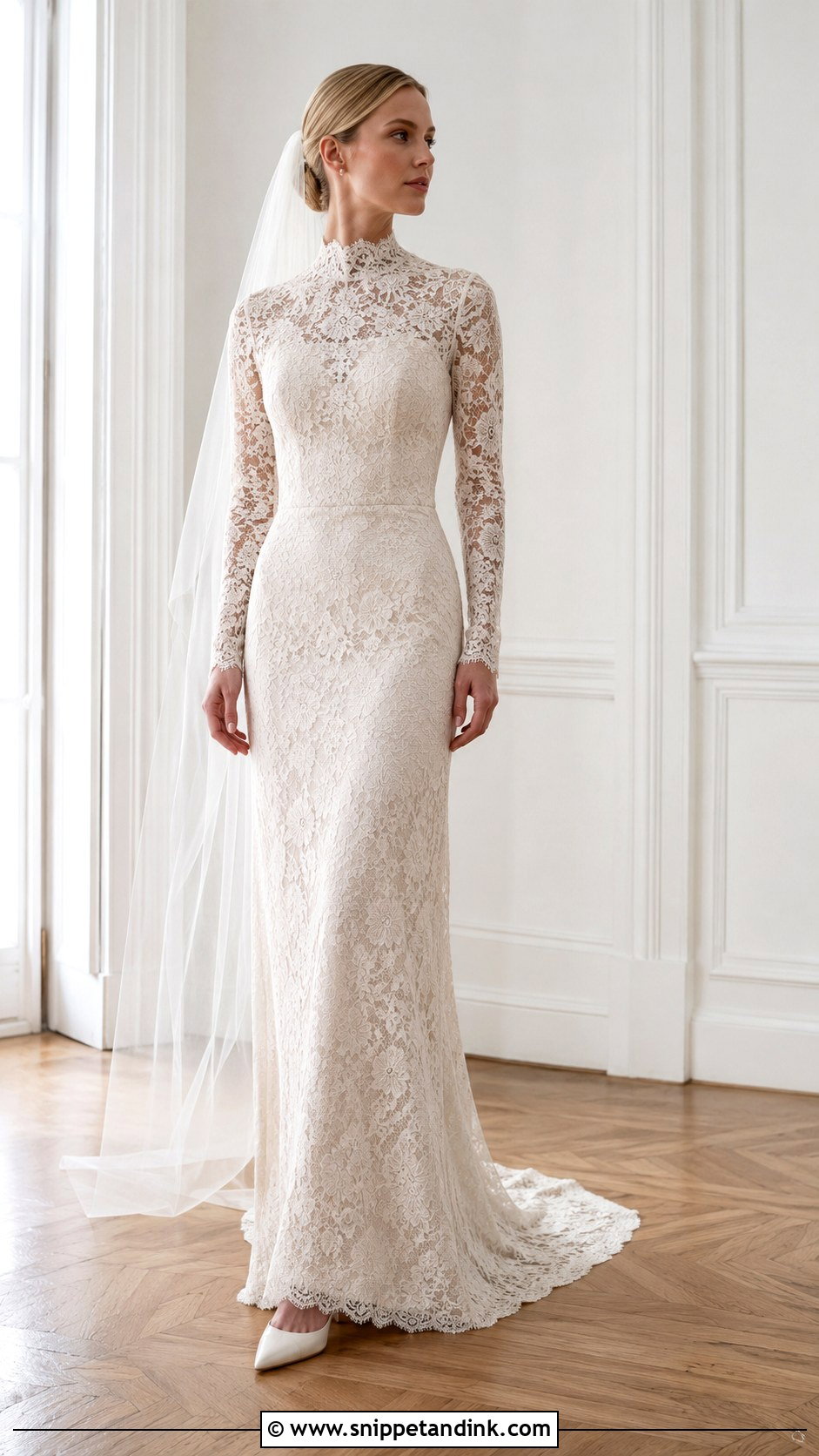
A high-neck lace column draws one long line from shoulder to hem, and it suits a bride who wants romance without volume. Lightweight lace, a narrow skirt and covered buttons down the back are the base. A removable silk slip underneath lets you control coverage. Set a simple tulle veil under a low bun and keep the bouquet small so it doesn’t hide the lace front. Columns are tight to walk in, so ask for a short back slit or a godet, a triangular panel set into the hem, which adds room to step without changing the outline.
7. Strapless Drop Waist Wedding Dress
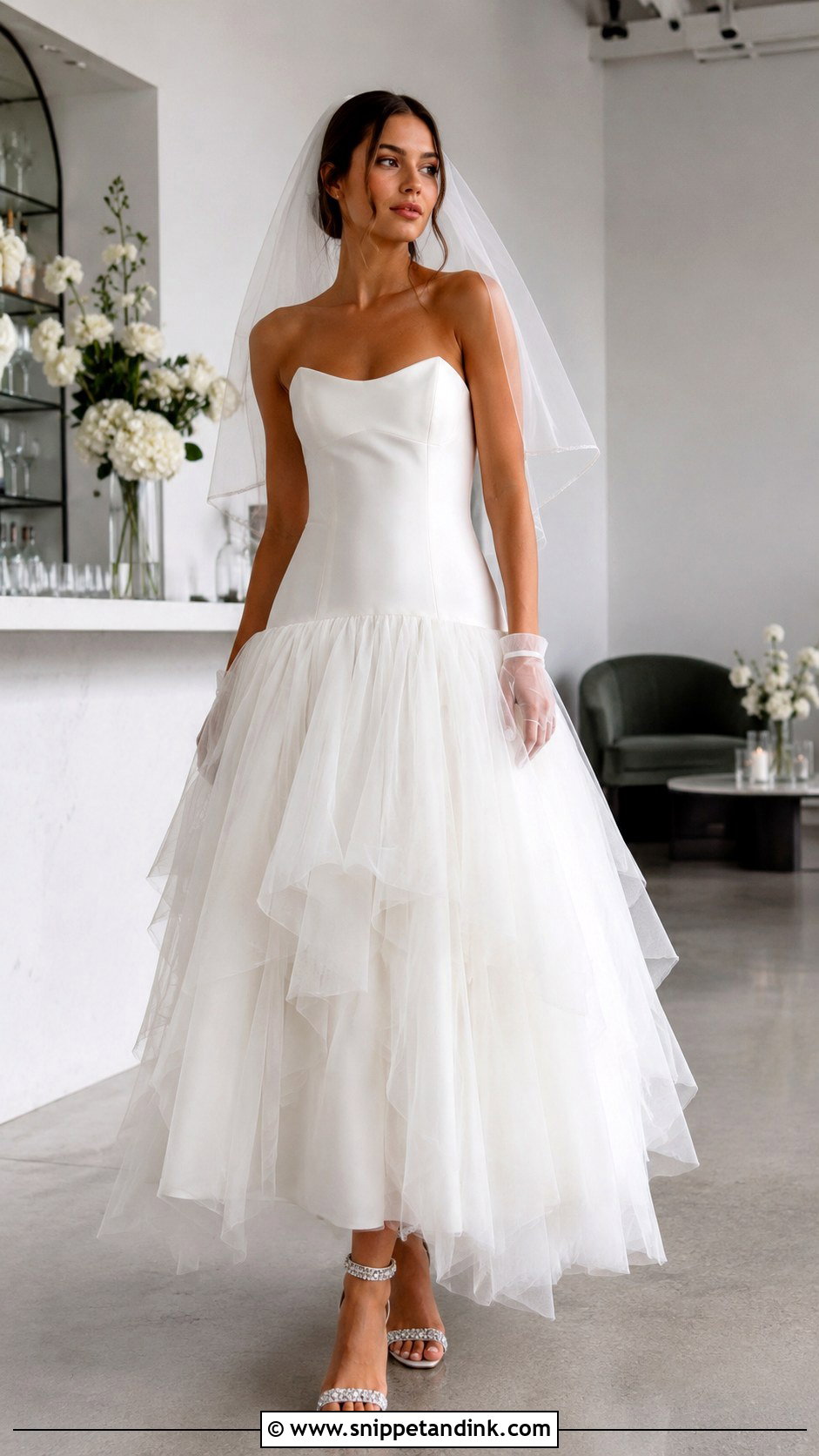
A dropped waist lengthens the torso before the skirt opens out, so it suits shorter waists and anyone who likes a long, sculpted bodice. Satin makes it architectural; layered tulle makes it lighter and more ethereal. A shoulder-length veil, short sheer gloves and crystal-accented heels give it a modern romantic finish. No necklace. The seam has to suit your actual proportions. If it sits too low on a short torso, the skirt starts at the thigh and you’ll feel it every time you sit.
8. Organza Ruffle Wedding Dress
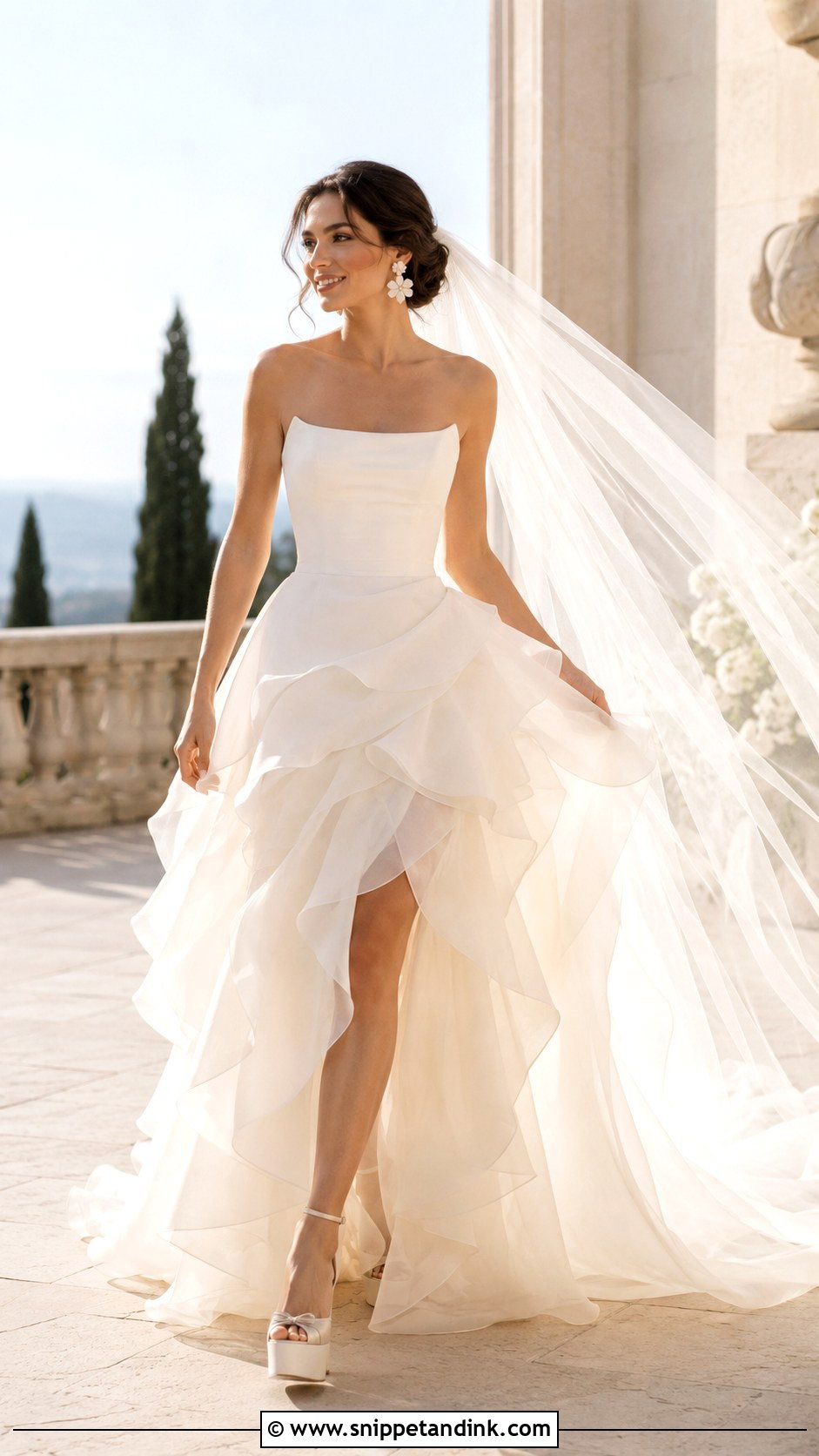
Organza ruffles give a skirt movement and volume while staying light, which is why they work outdoors. I keep the bodice clean and the neckline plain, so the tiers are the only texture. Asymmetrical tiers look more current than even, stacked ones. A plain cathedral veil, small floral studs and satin platform sandals hidden under the hem suit it, with a sleek bun or smooth half-up style. Raise the bustle question at the first appointment, not the last. Ruffled trains need several bustle points, otherwise the tiers crush into one bulky lump behind you.
9. Pearl Embellished Slip Wedding Dress
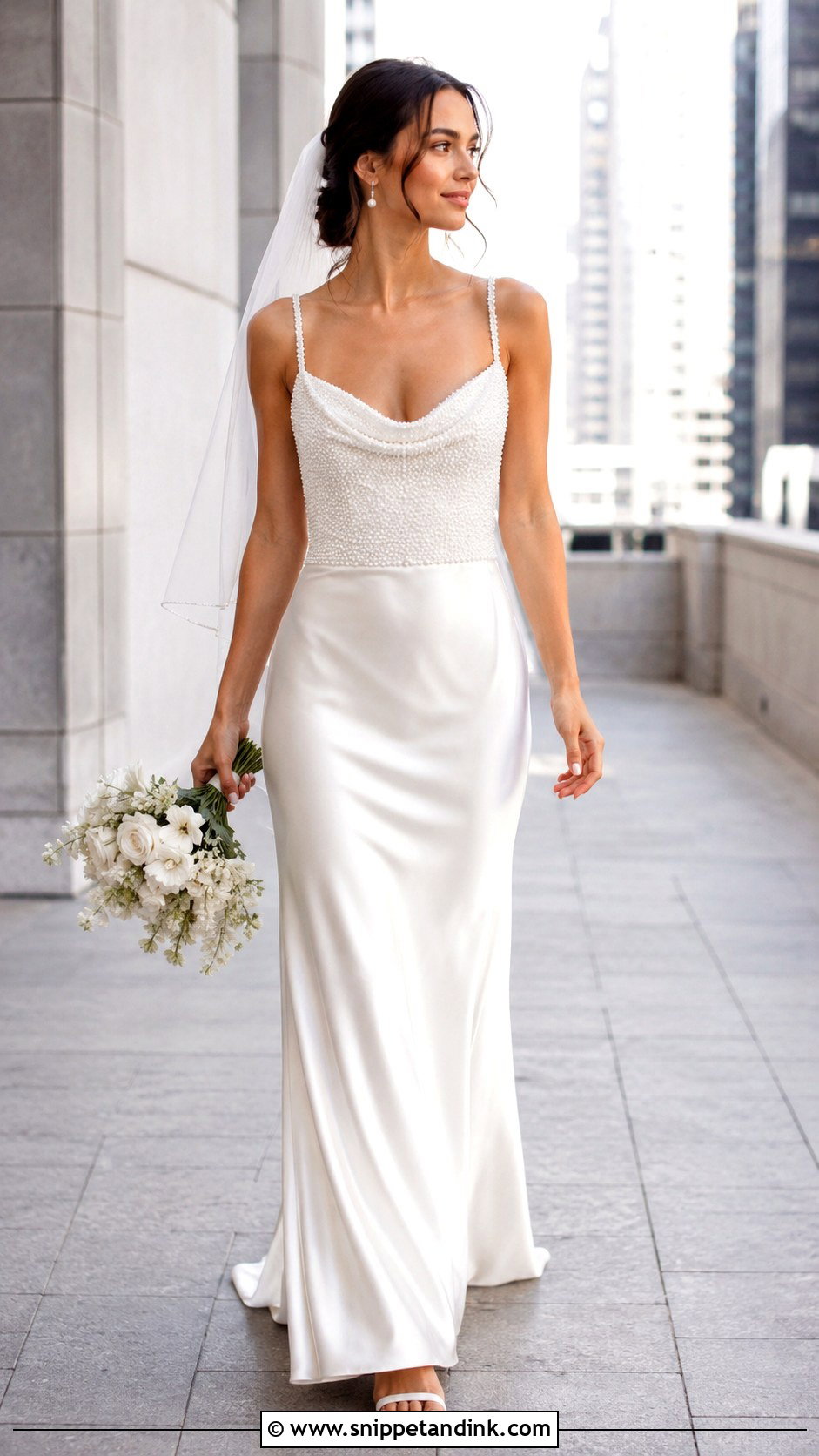
A bias-cut slip with pearls along the straps, bodice or open back catches light softly without heavy beading. Keep the pearls off the hips if you want the silk to drape properly; weight there pulls the fabric into lines. A sheer elbow-length veil, pearl drops and white leather sandals suit it. Slip dresses show everything underneath, so choose bonded-edge underwear and ask about built-in cups. Set the hem to barely touch the floor in your wedding shoes. Too long and the bias skirt wraps around your ankles as you walk.
10. 3D Floral Wedding Dress
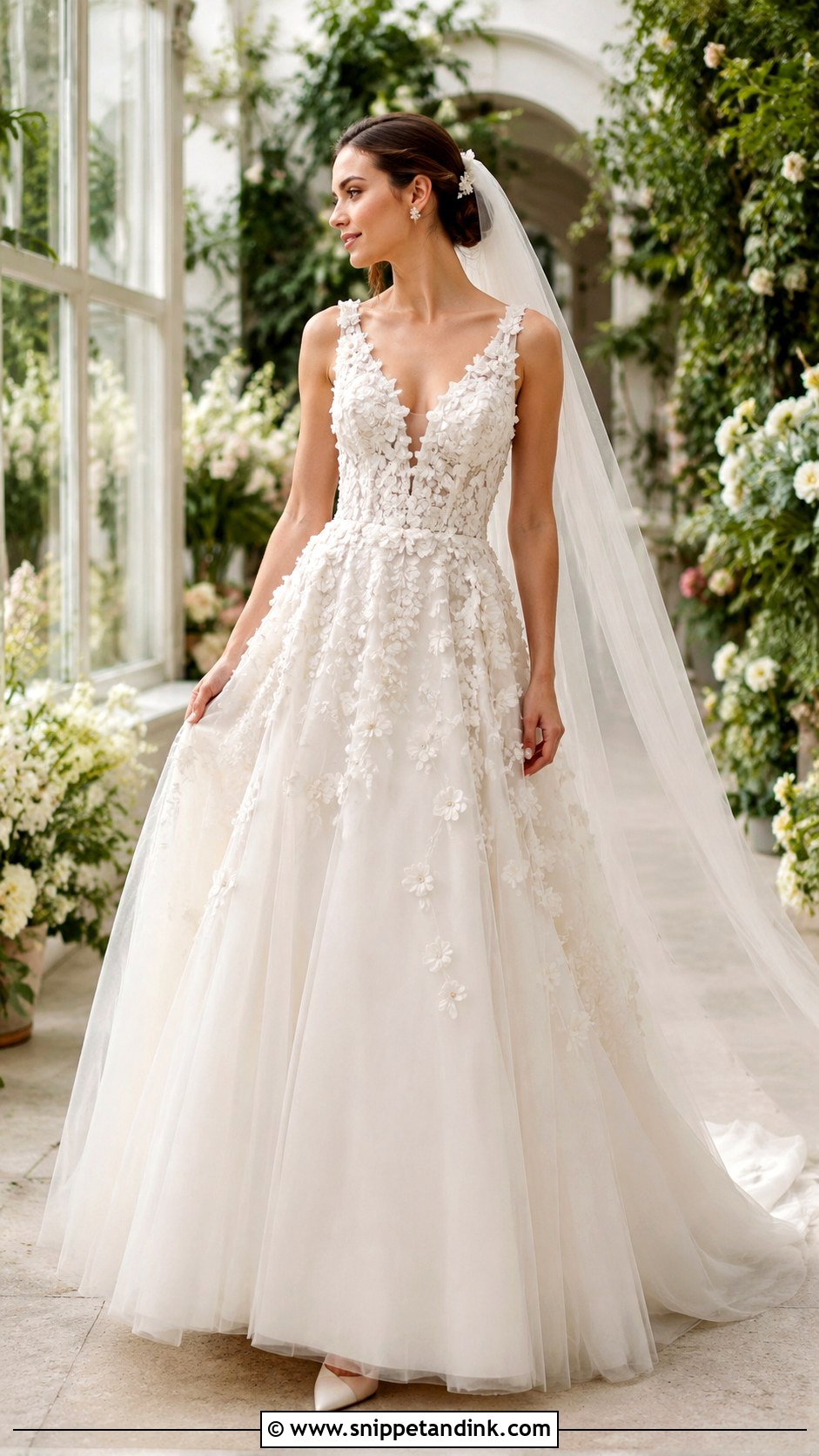
Raised flowers make a plain gown feel romantic in a single detail. I prefer them gathered at the neckline, waist and upper skirt, with gaps between, rather than covering the dress. Close-packed 3D petals look heavy and flatten in photos. A plain veil, small flower earrings and ivory pumps leave the appliqués room. Check every flower for sharp edges or wire that catches on a tulle veil. On a long train, a bustle that lifts the flowers clear of the floor keeps them from being crushed under heels.
11. Cape Sleeve Crepe Wedding Dress
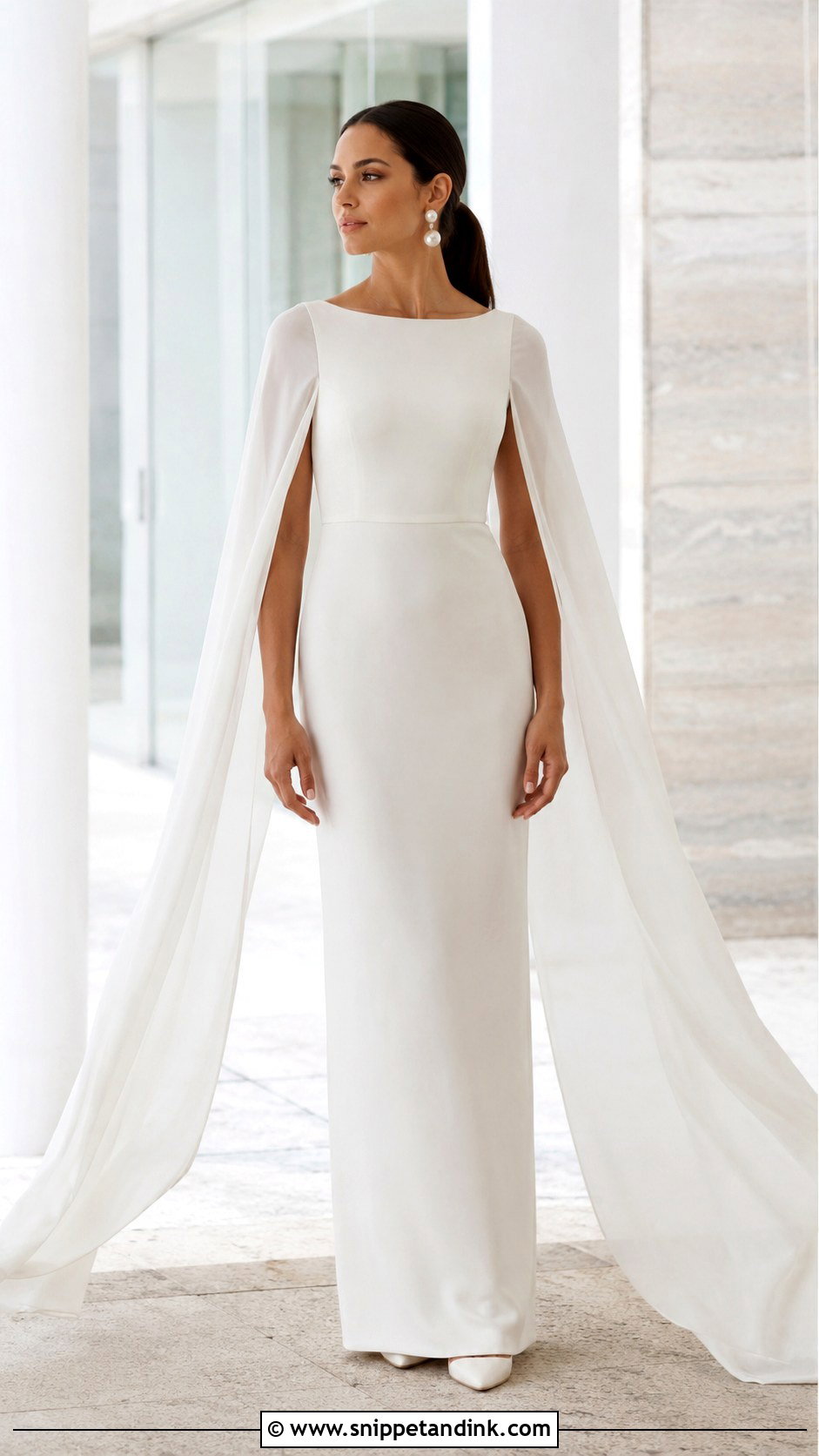
A crepe gown with a chiffon cape gives you the floating movement of a veil while keeping your hair on show. Start with a fitted column or a gentle fit-and-flare and a clean bateau, scoop or V-neck, then add a detachable cape that falls from the shoulders to the train. Sculptural pearl earrings and a low ponytail suit it. Skip the veil, or keep it tiny, so two floating layers don’t fight each other. Test it outside: chiffon catches the slightest breeze. With the cape off, the crepe gown underneath is easy to dance in.
12. Bow Back Mikado Wedding Dress
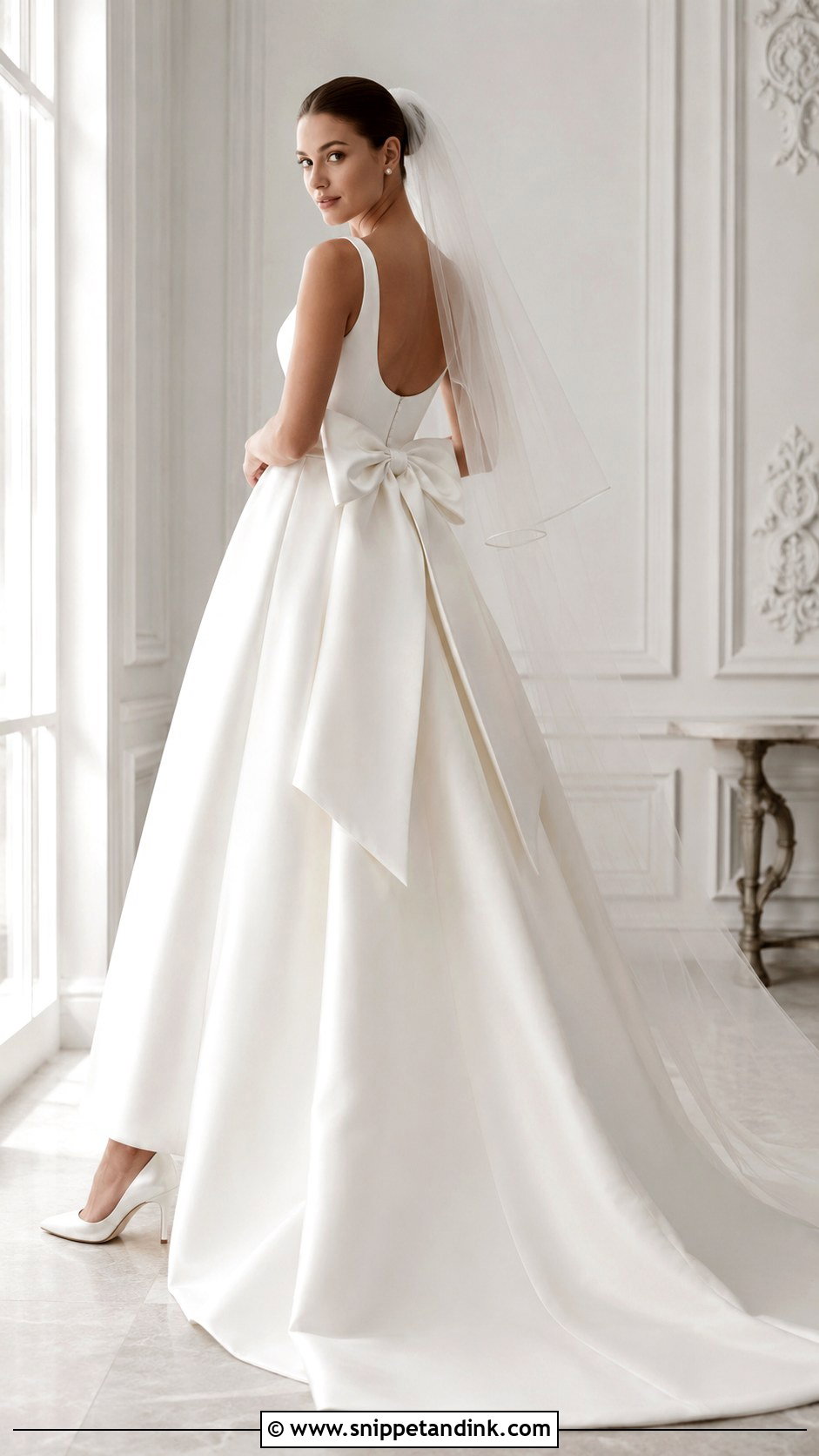
A bow back Mikado wedding dress keeps the front plain and puts the romance behind you. Mikado is stiff enough to hold a crisp bow without wiring. Choose a clean ball gown or A-line with a straight, scoop or square neck, and place the bow at the waist or upper back, where it frames covered buttons and the train. A classic bun keeps it visible. Ask for the bow to be detachable and fixed with hooks along its width, not one central point, or it droops backwards and pulls the bodice with it.
13. One Shoulder Wedding Dress
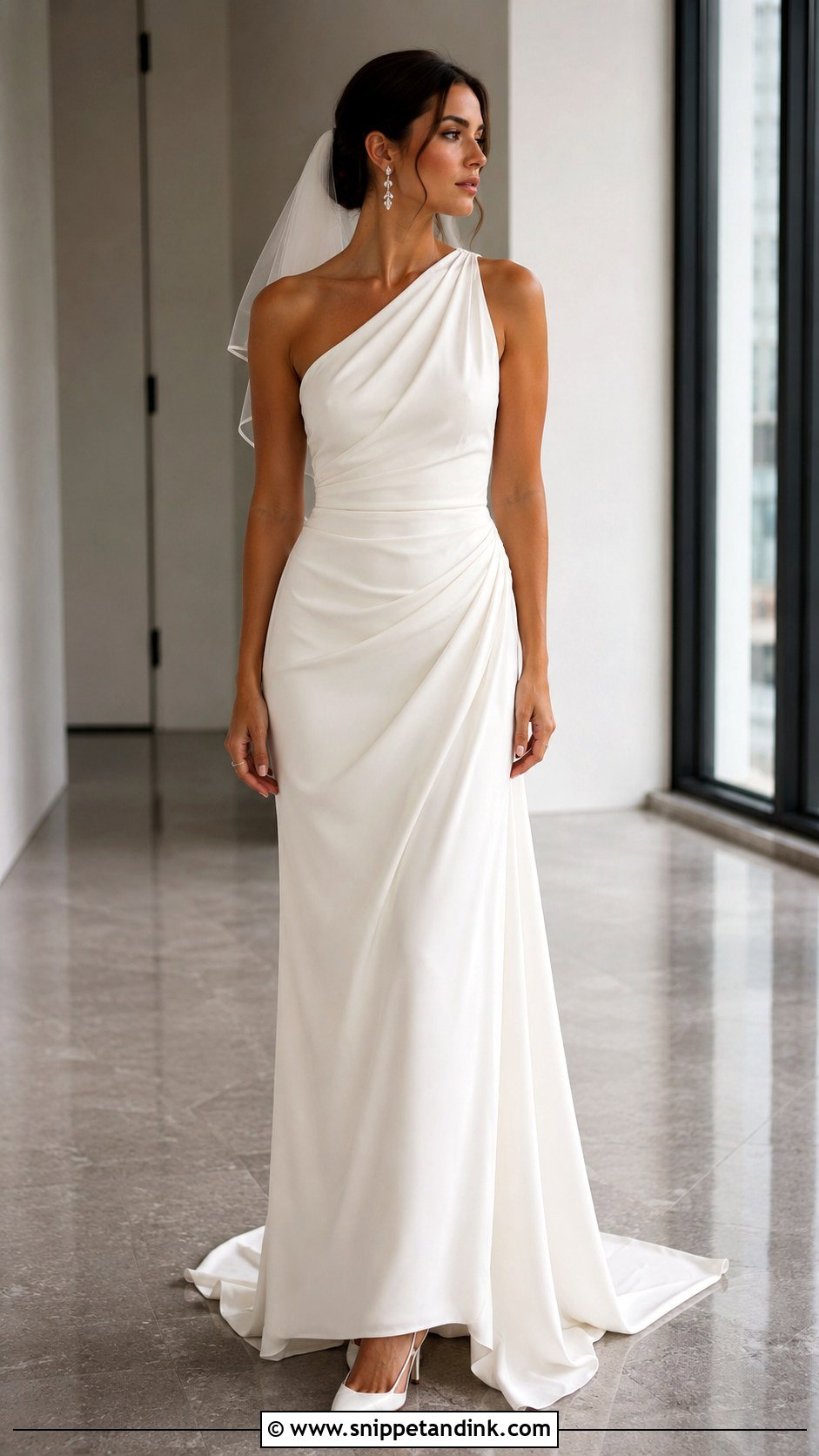
A one-shoulder crepe gown with a draped panel, a gathered waist and a fluid skirt feels contemporary but still soft. A short train gives it enough ceremony. Skip the necklace and put the focus on crystal drop earrings, with a short veil set under a sleek bun. The bare side is where these dresses fail, so ask your tailor to check the opposite edge of the bodice for support and add grip tape or a stay if it lifts when you raise your arm. Hold the bouquet a little lower than feels natural, so the shoulder line stays visible.
14. Tea Length Tulle Wedding Dress
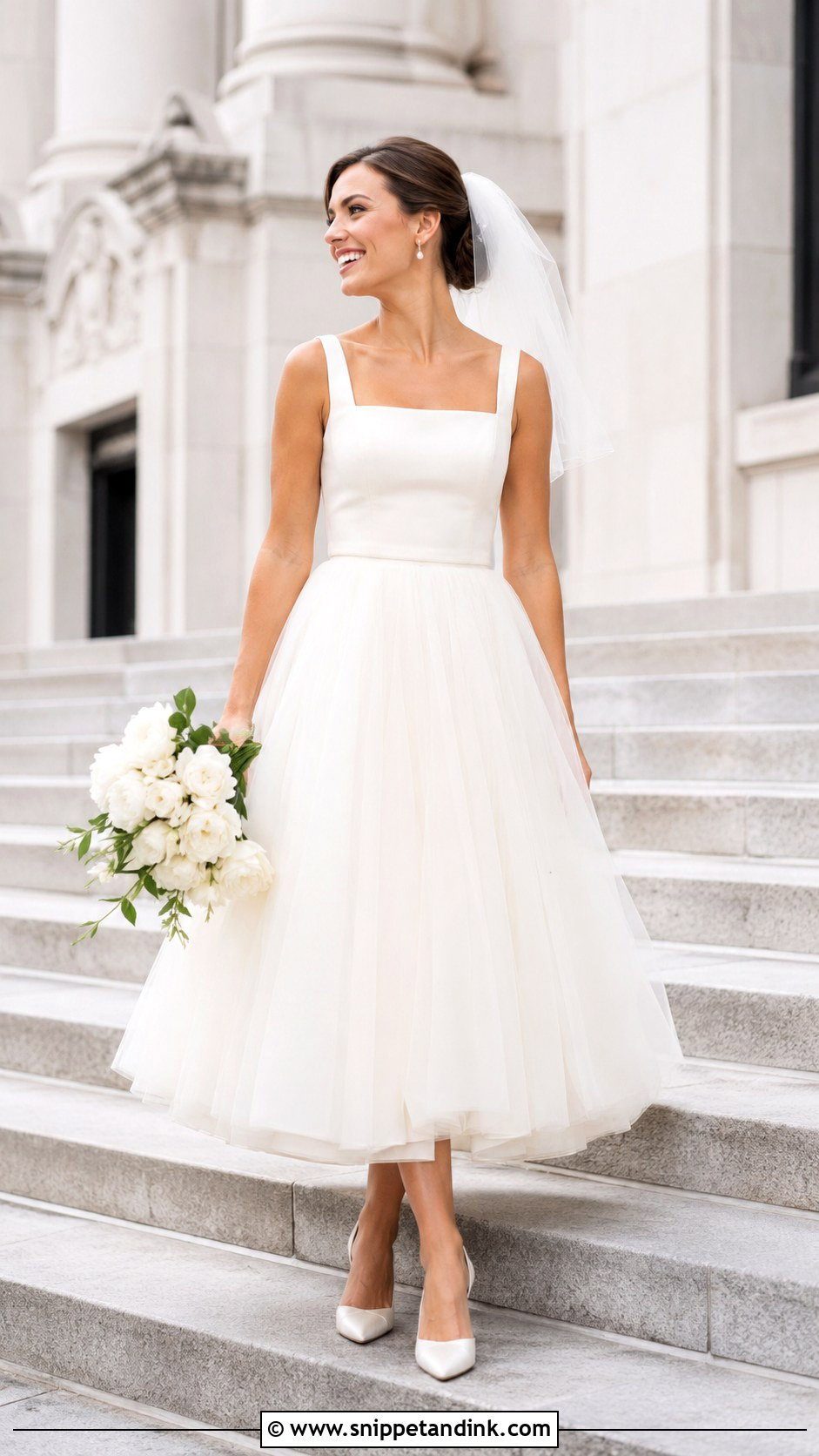
Tulle at tea length is light and joyful, and it puts your shoes in the picture. A fitted bodice with a square, scoop or curved neckline and a layered skirt ending between the knee and ankle is the base. Pointed satin pumps, a birdcage or shoulder-length veil and pearl earrings finish it, and a soft updo or a polished bob suits the shorter proportions. Every tulle layer must be cut evenly, since an uneven hem shows straight away at this length. The hem should land at the slimmest part of the lower calf.

15. Detachable Overskirt Wedding Dress
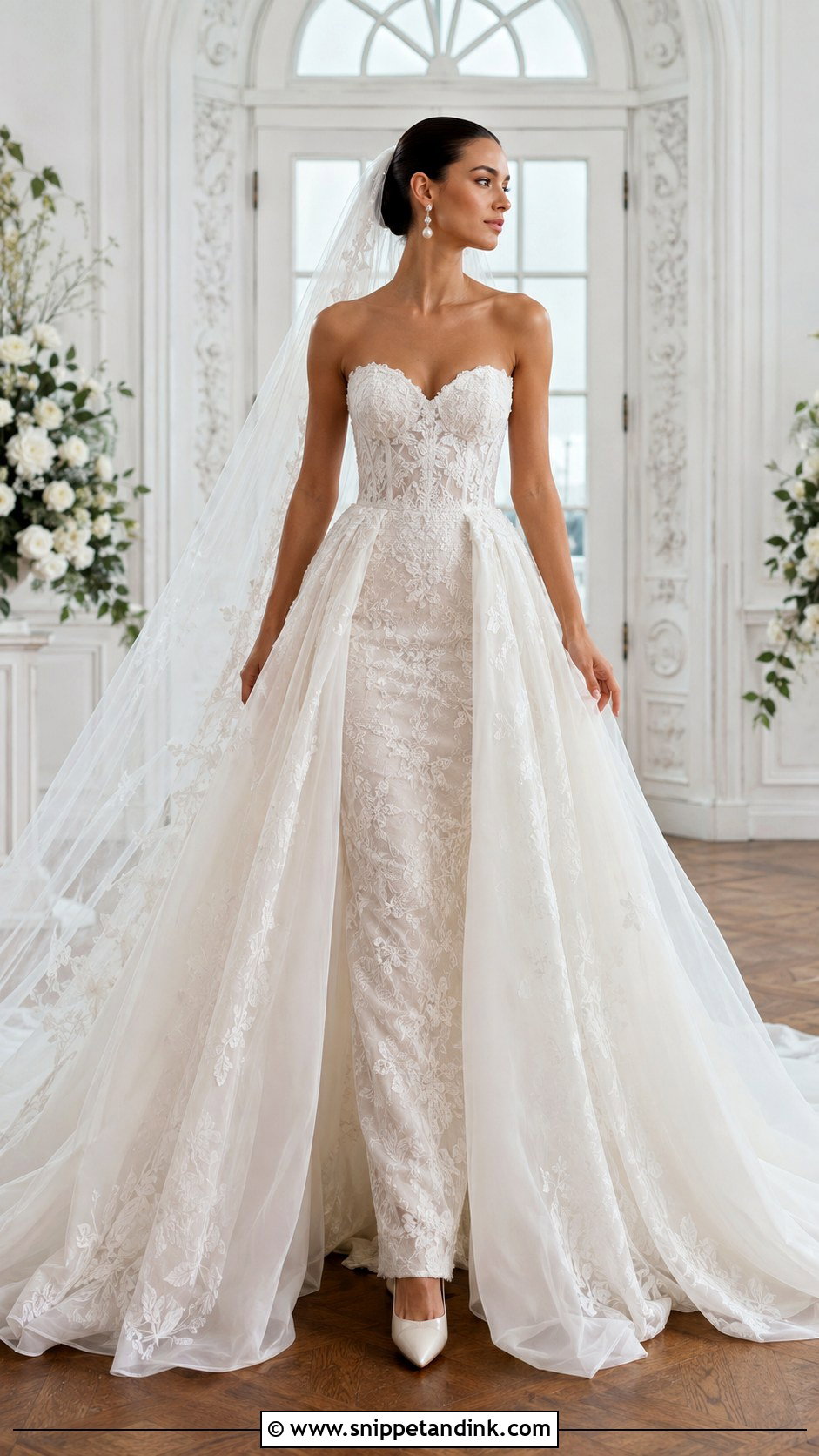
An overskirt gives you two gowns in one, and the trick is that the gown underneath has to be finished in its own right. A fitted lace, satin or crepe column with a full organza overskirt attached at the natural waist works well. Wear a cathedral veil for the ceremony, then switch to a short veil or a comb when the overskirt comes off. The waistband shouldn’t interrupt the bodice line. Practise the change with whoever will help you. Two minutes in a quiet room, hooks undone in order, and the column underneath should come out uncreased.
16. Blush Tulle Wedding Dress
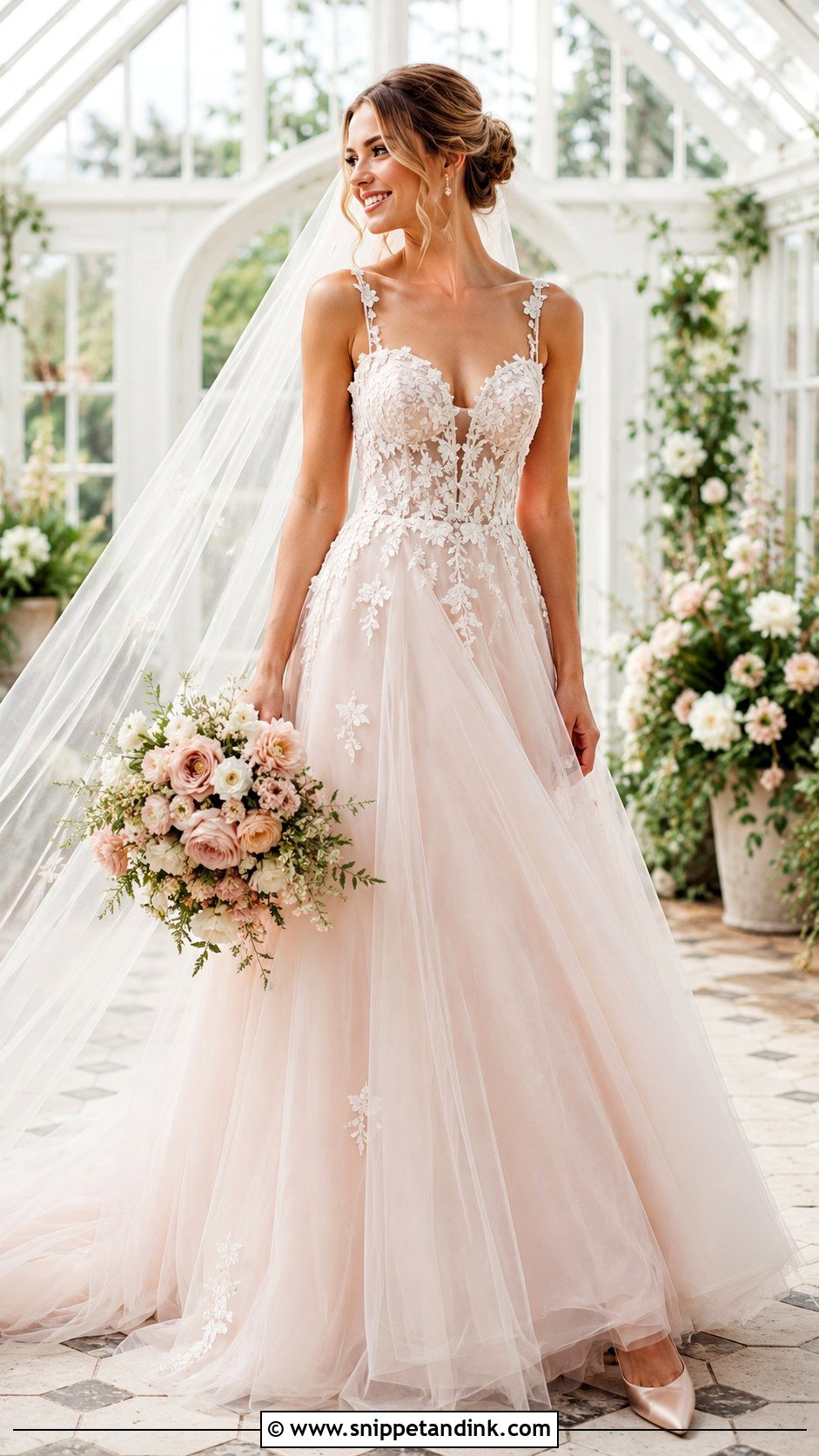
Blush lining under ivory tulle gives colour without losing the bridal look. Soft pink, nude blush or a barely-there peach all work under a fitted floral bodice and a full A-line skirt. Keep the veil ivory and the heels neutral, and don’t try to match your makeup to the dress. Blush is the colour I check most carefully against skin. Hold a swatch by a window and under warm lights: on some complexions it disappears, and on others it turns pink. Take a lining swatch home to show your florist.
17. Cowl Neck Slip Wedding Dress
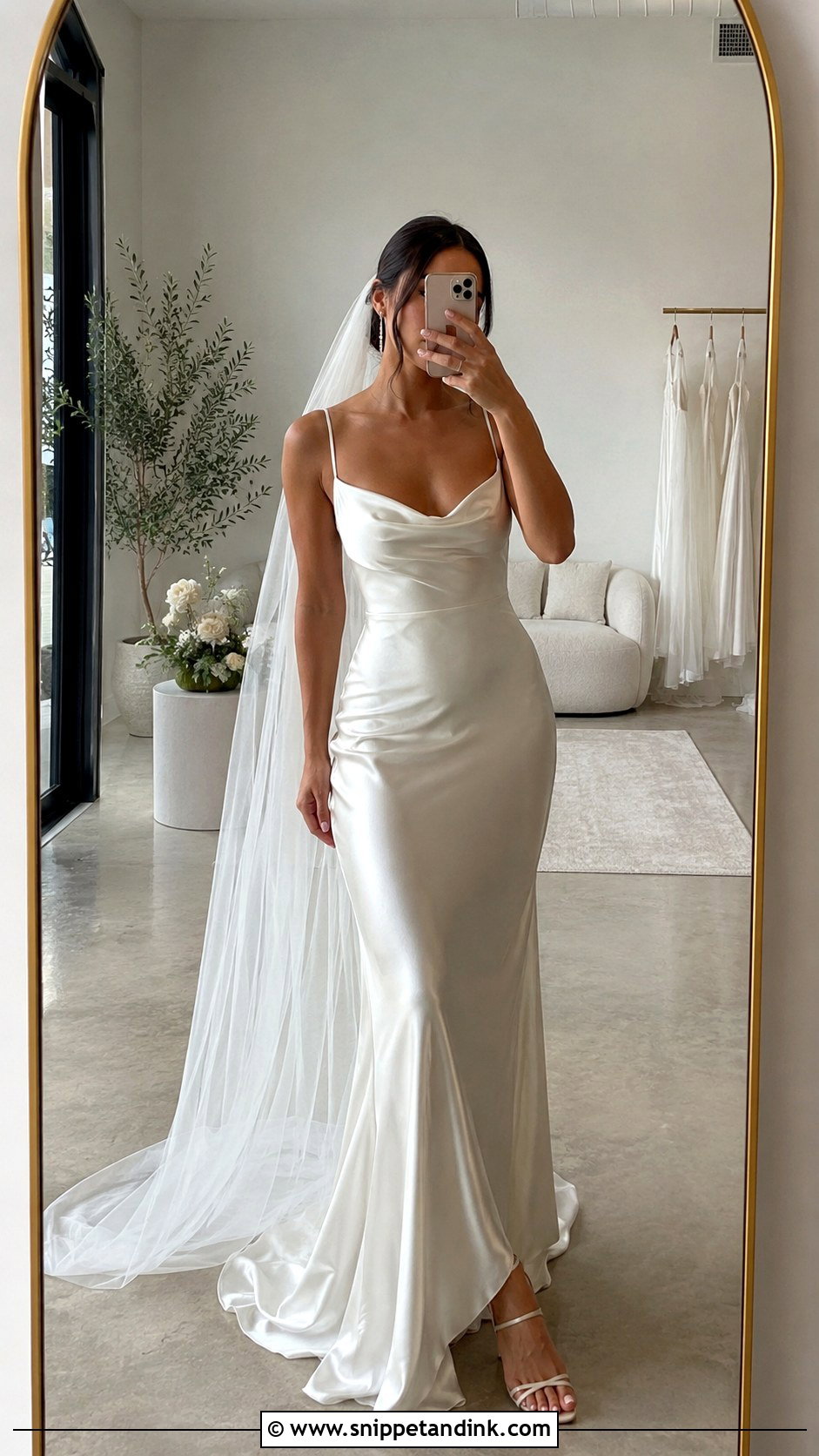
A cowl-neck slip cut on the bias follows the body softly, so it needs real silk or a good satin; cheap polyester satin drapes stiffly and shines too much. Fine straps, a draped neckline and a low back make the base, with a long sheer veil for the ceremony and pearl threaders. Regular bras won’t work under it, so plan built-in support or cups sewn in by your tailor. Walk across tile, carpet and grass in the gown during alterations to see whether the hem twists around your legs.
18. Bell Sleeve Chiffon Wedding Dress
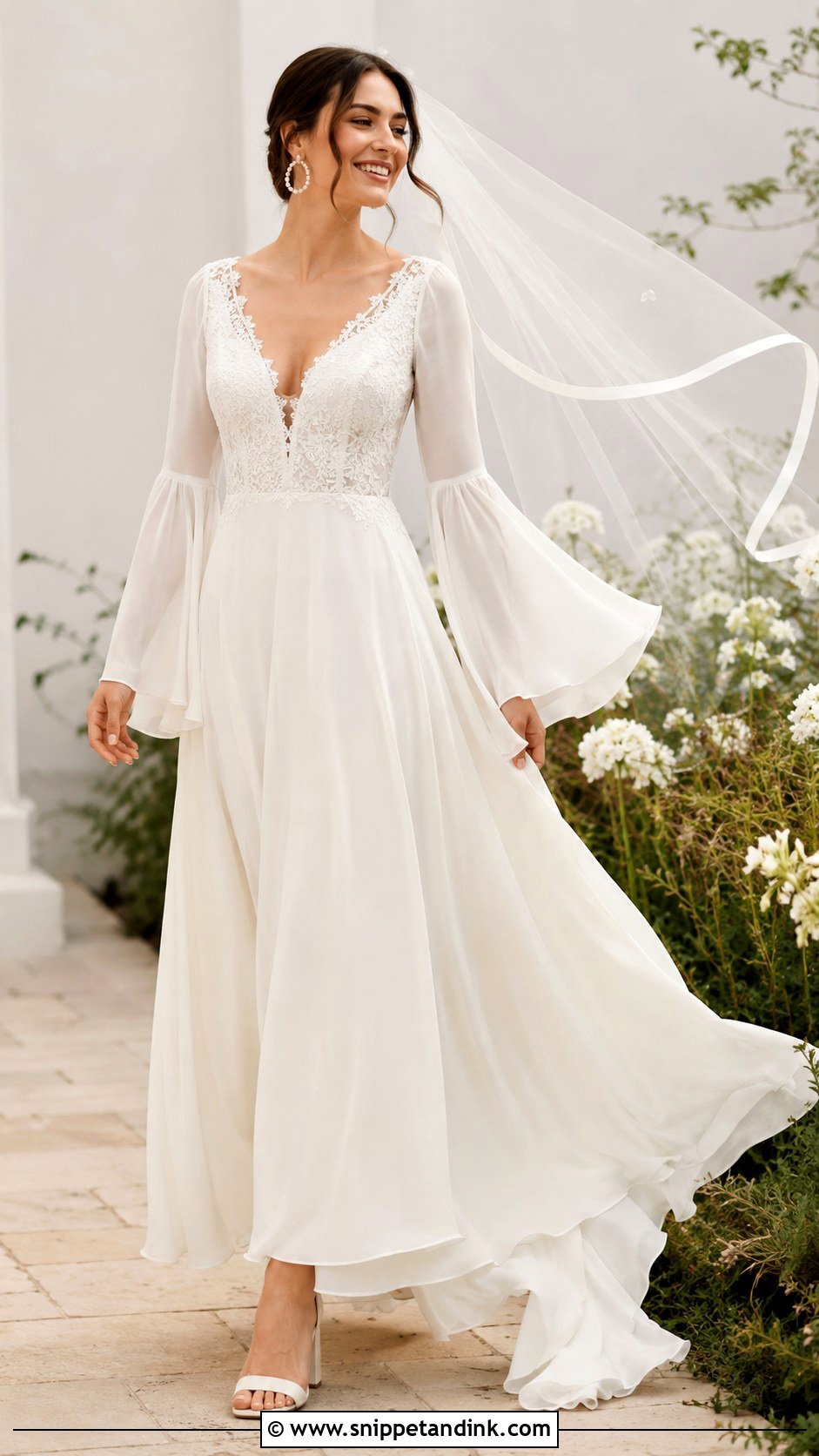
Floating bell sleeves on a chiffon gown come alive when you move. A fitted or lightly gathered bodice, sleeves that open below the elbow and a fluid A-line skirt are the base. Lace-trimmed cuffs add definition; keep the rest plain. A ribbon-edged veil, pearl hoops and a braided low bun suit it. The sleeve hem should clear your fingertips, or it will trail through every plate at dinner. Very full sleeves can take a discreet loop at the wrist to keep them out of the way.
19. Peplum Mermaid Wedding Dress
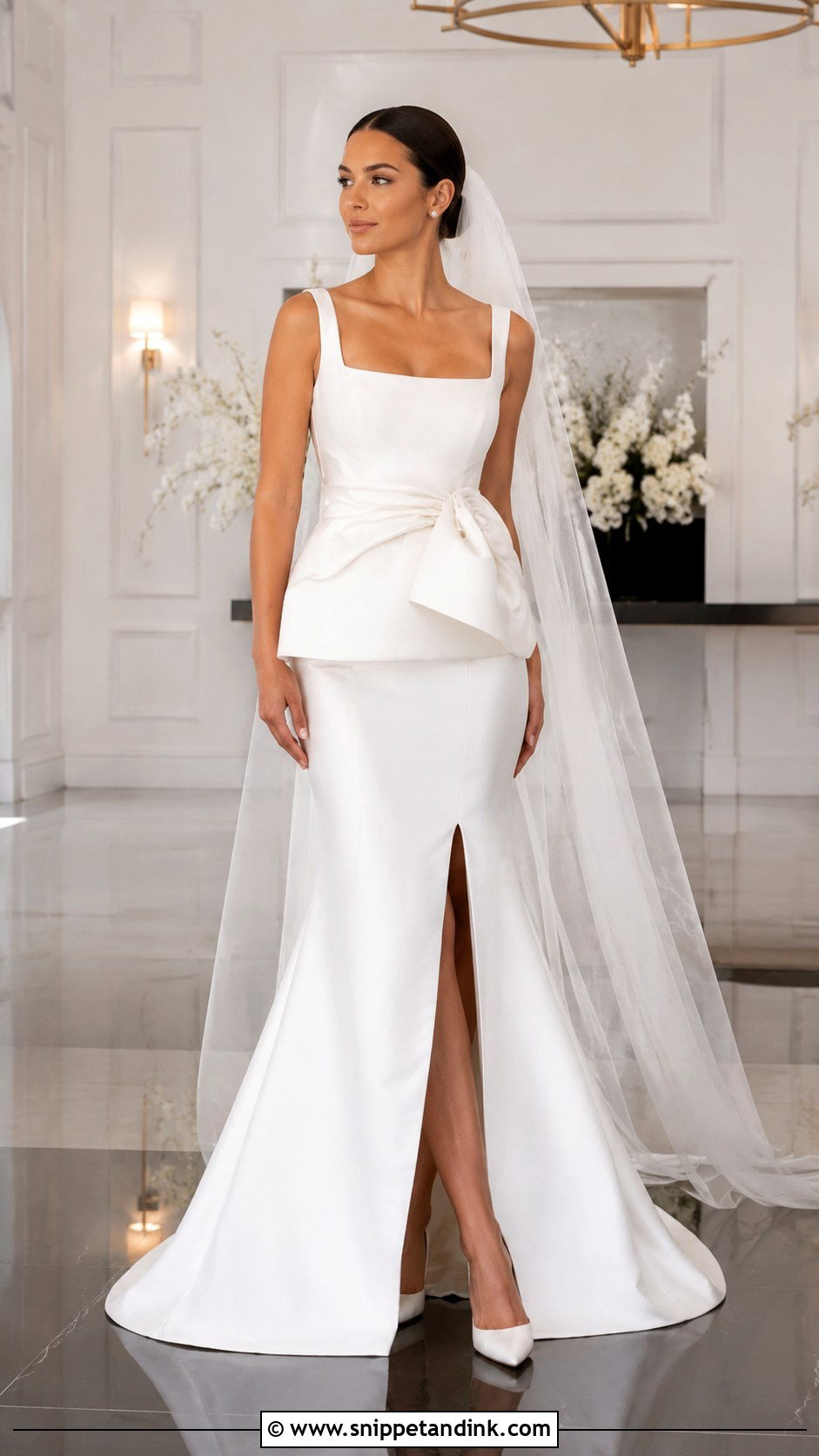
A peplum on a mermaid gown adds a fashion detail at the waist and softens a very fitted shape. A strapless or square-neck bodice, a sculpted peplum sitting just above the hips and a skirt flaring at the knee is the classic version. A plain chapel veil, crystal studs and a sleek updo keep the waist in focus. Peplums vary a lot: curved, asymmetric, softly draped. Try more than one, because the wrong peplum widens the hips. Sit in the sample to check the peplum stays flat and doesn’t flip up.




20. Lace Mini Reception Wedding Dress
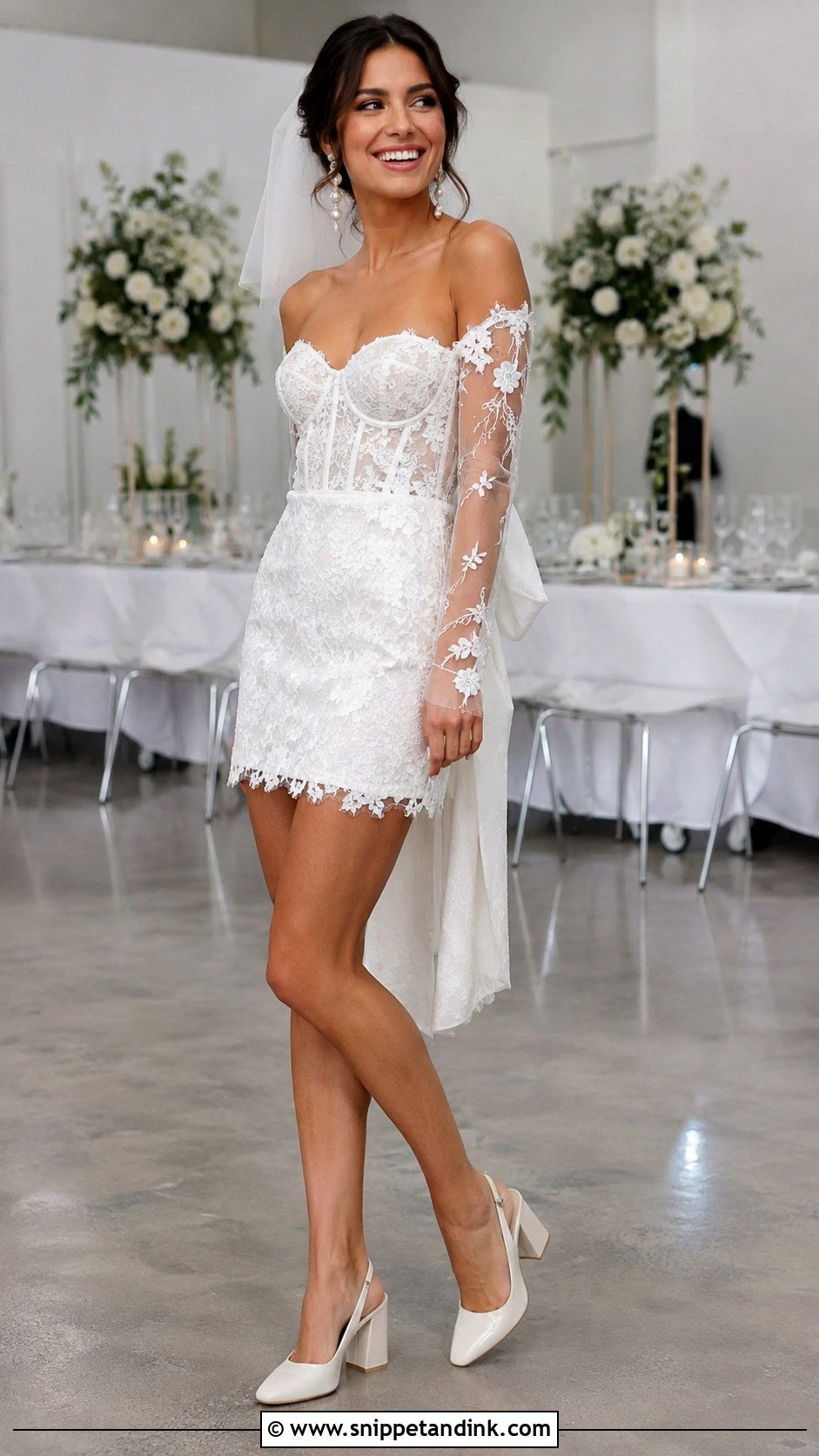
A lace mini is the playful last look of the night. Choose a structured mini with long sheer sleeves, a square neck or a soft corset bodice, and floral lace over an opaque lining so it stays polished. A short veil or pearl headband, statement earrings and low block heels or flats make dancing easier. A small detachable bow at the back adds movement. Raise your arms and sit before you buy; the hem should stay put. If you’re changing after the ceremony, pack the mini and its accessories in one labelled garment bag so nobody has to hunt for anything.
A Made-to-Order Gown Runs on a Longer Clock Than You Think
Most bridal gowns are made after you order them, not taken off a rack. Production commonly takes several months, and alterations usually begin around two to three months before the wedding, so many salons suggest ordering somewhere around eight to ten months ahead. Timings vary a lot between designers, and rush orders are sometimes possible for an extra fee, so ask for a written delivery date when you pay the deposit.
Gowns with a lot of tulle, ruffles or hand-placed appliqués often need more alteration time, because hems and bustles have to be worked layer by layer. Build that into your plan.
How Tulle Hems Cope With Grass and Gravel
Soft romantic fabrics pick up whatever is on the ground. Tulle and organza hems darken quickly on damp grass, and gravel can catch and pull fine layers. For an outdoor ceremony, I’d ask for the hem to sit about half an inch off the ground in your shoes, plan the bustle for straight after the ceremony, and have someone carry a lint roller and a small pair of scissors to trim any loose threads before photos.
Soft Is Good, Comfortable Is Better
The right dress isn’t the most detailed or the most fashionable one. It’s the one you forget you’re wearing because it fits and lets you move. Structured waists, fluid skirts, lace, satin, soft colour and small accessories can all be romantic in different ways. Save the shapes you love, but stay open in the fitting room, since fabric and proportion look different on your body than on a screen. Bring the right shoes and underwear, test how you move, and ask about alterations early.
You'll Like These Ideas:







Leave a Reply