
A small wedding changes what a dress has to do. Nobody is watching you from forty rows back. Guests are sitting across a table from you, hugging you on a sidewalk, standing beside you in a restaurant doorway. That’s why I steer brides planning a backyard ceremony, a courthouse wedding, a private dinner or an elopement toward fabric and fit rather than volume. Slip dresses, columns, tea-length and mini dresses, pearl and lace details, capes and separates all belong here. The point isn’t dressing down. It’s looking like yourself on your best day, in something you can sit, eat and walk a few blocks in.
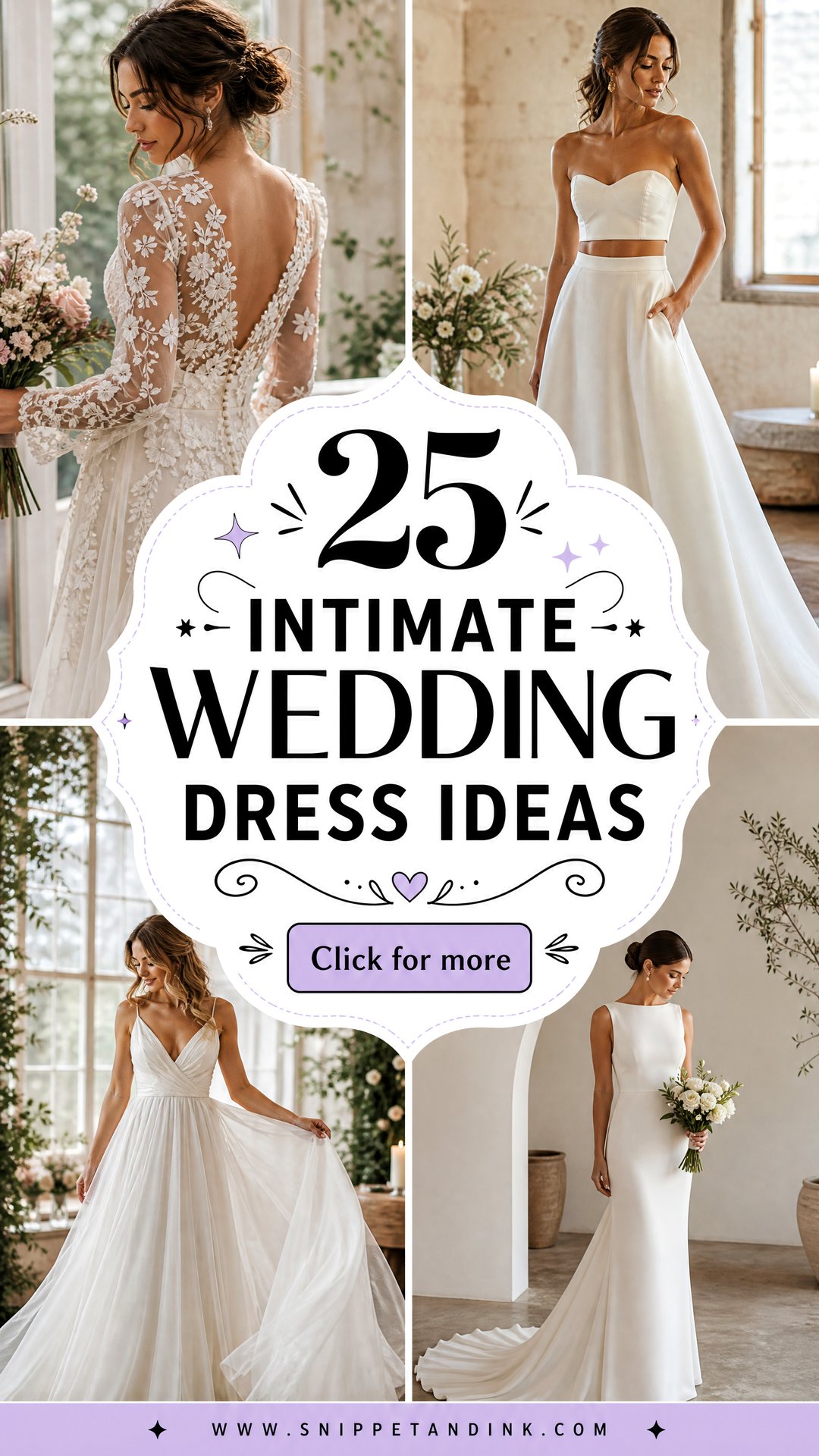
Dressing for a Table of Twelve, Not a Ballroom
In a large venue, a gown is seen from a distance and in motion. At an intimate wedding, guests see your dress at arm’s length, often while you’re seated beside them at dinner. That changes what I look for at a fitting.
- Finishing over volume: clean seams, lace matched at the zip, buttons sewn on properly. People will be close enough to notice.
- The sitting test: sit at a table for a few minutes in the dress. Satin and crepe crease across the lap, while structured fabrics like mikado hold up better.
- Walking distance: courthouse steps, city sidewalks and garden paths all favor a hem you don’t need to hold.
- Weather backup: small weddings are often partly outdoors, so plan the jacket or wrap at the same time as the dress, not the week before.
The venue sets the length more than anything else. Restaurants and city halls suit minis, midis and columns. Gardens and backyards suit tea length and chiffon. A private estate or historic house can take a full-length gown, as long as the skirt fits through the doorways and down the stairs.
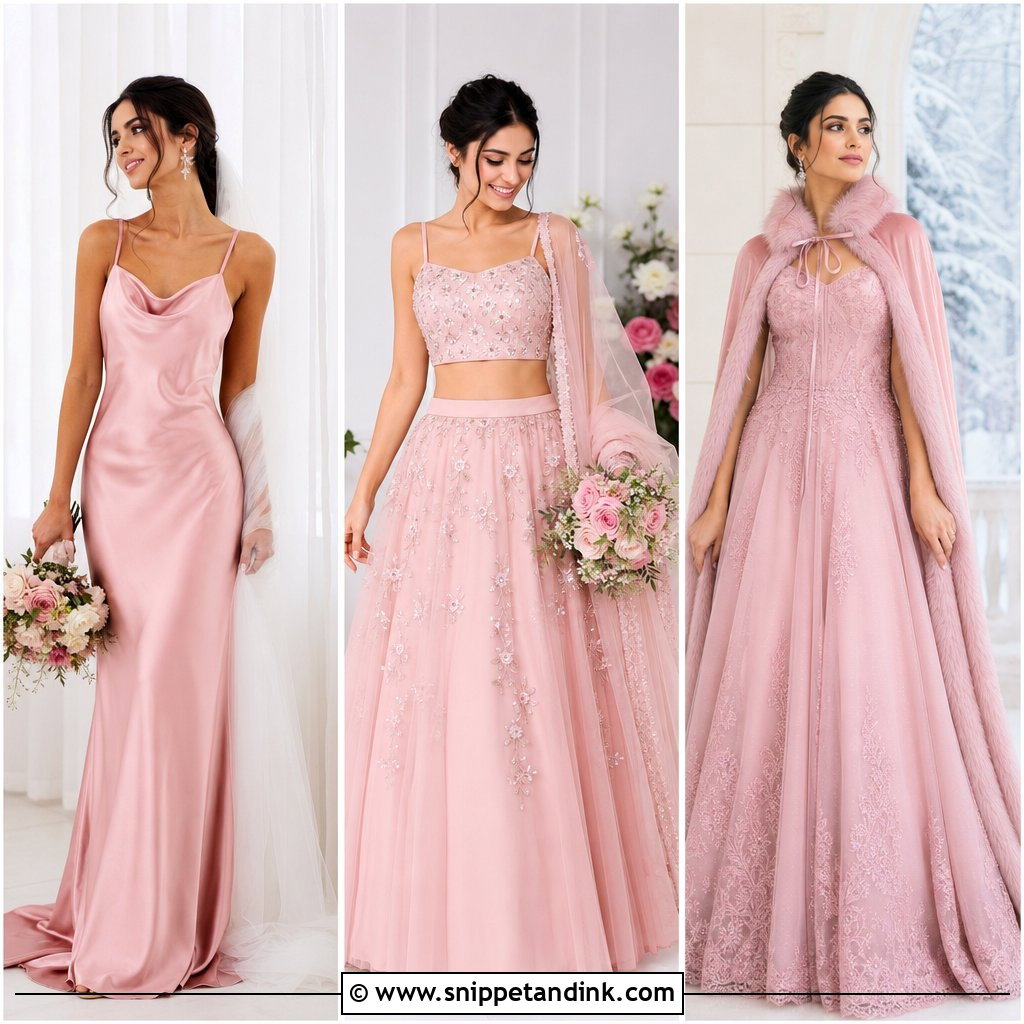
1. Simple Satin Slip Wedding Dress
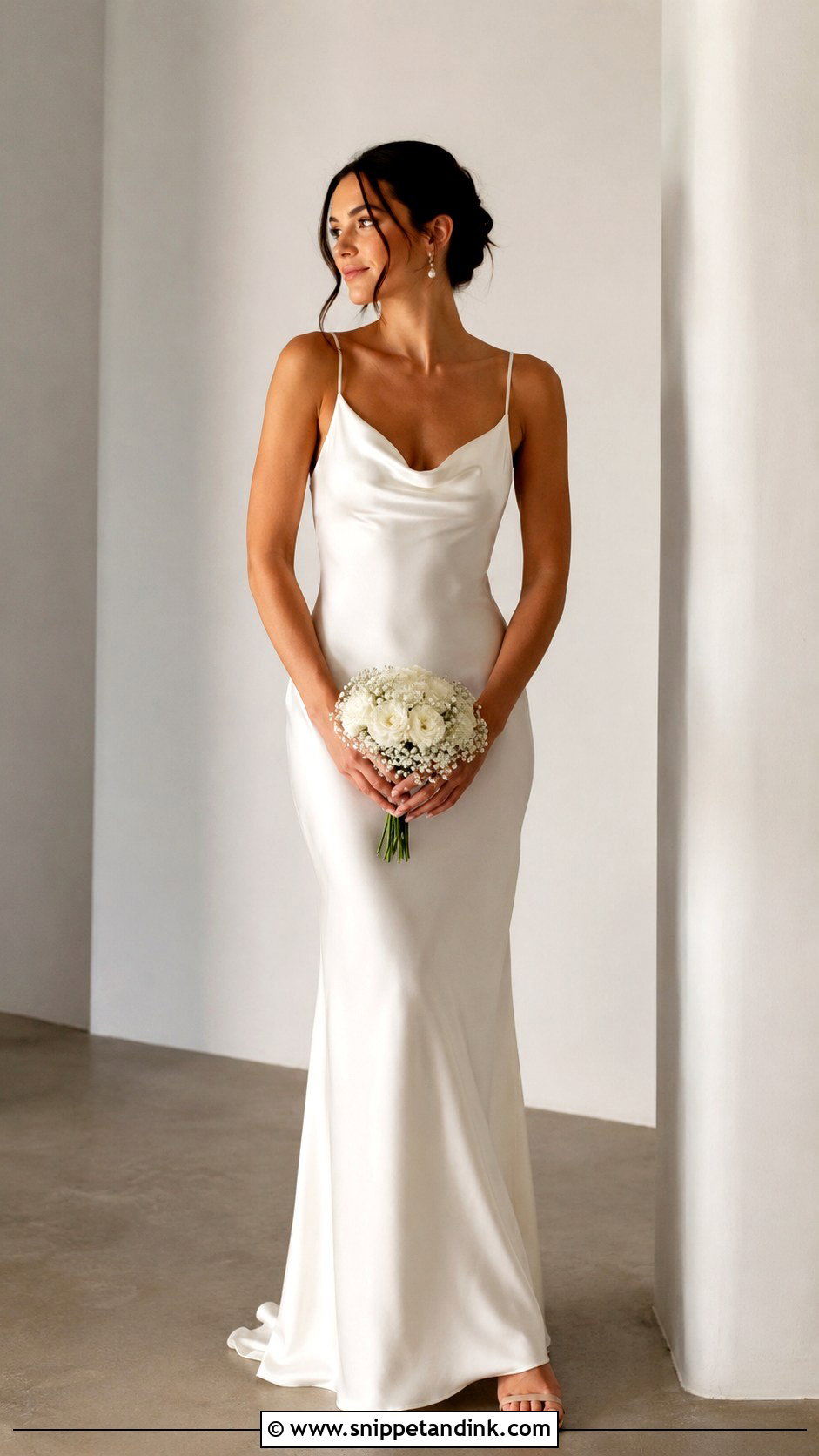
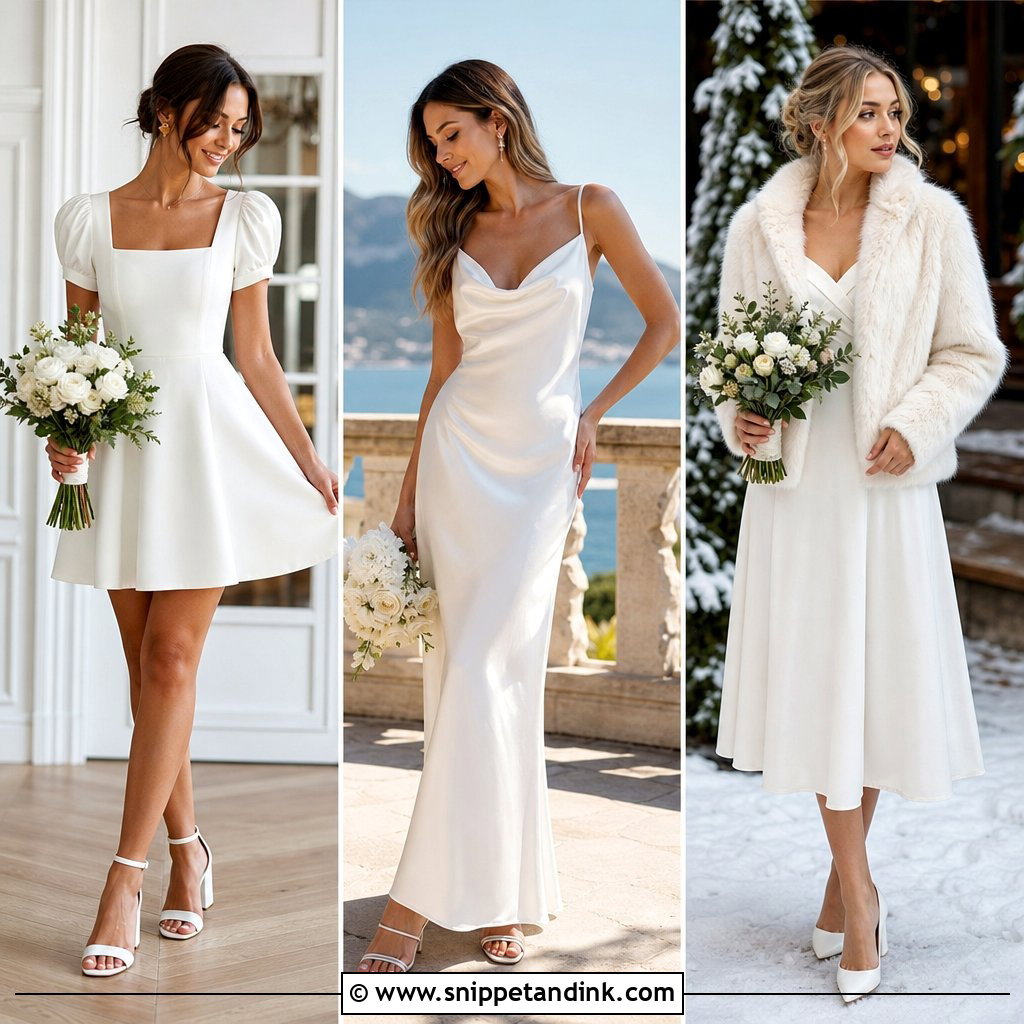
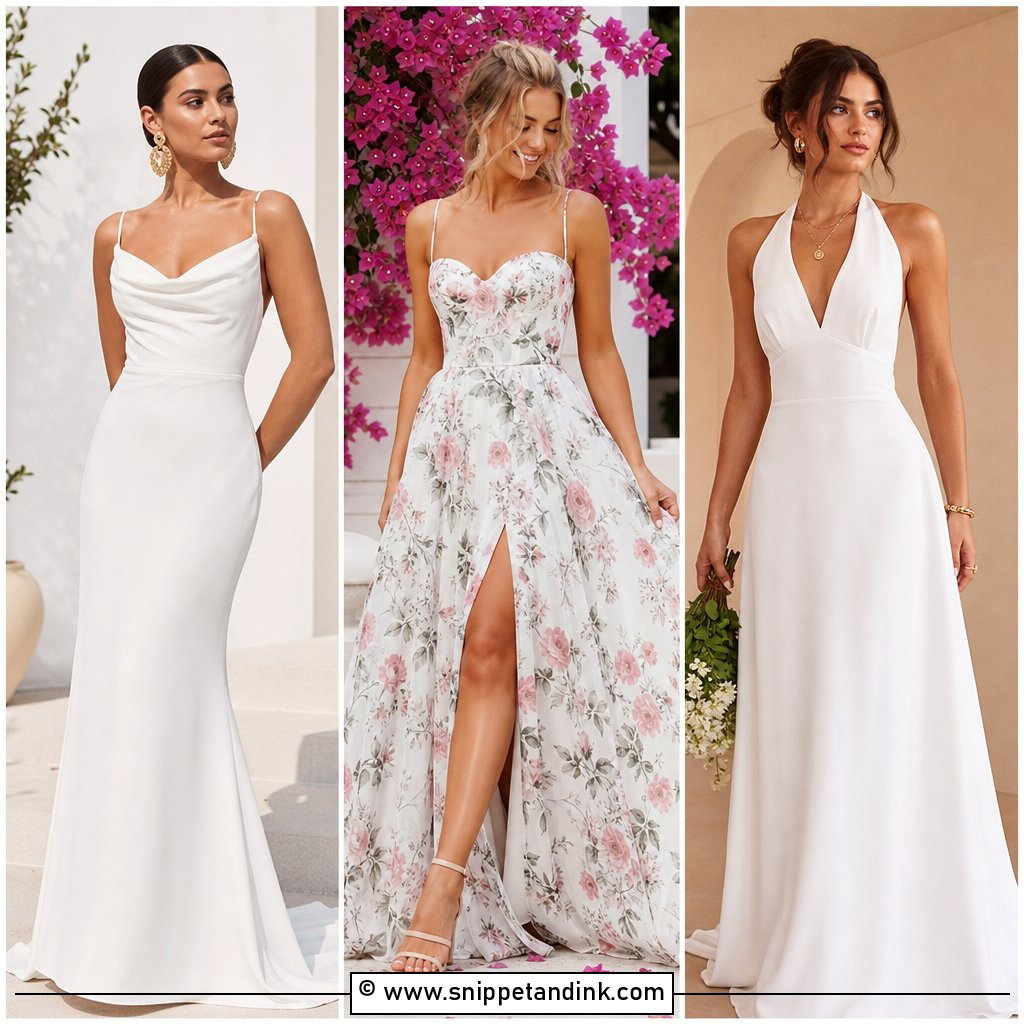
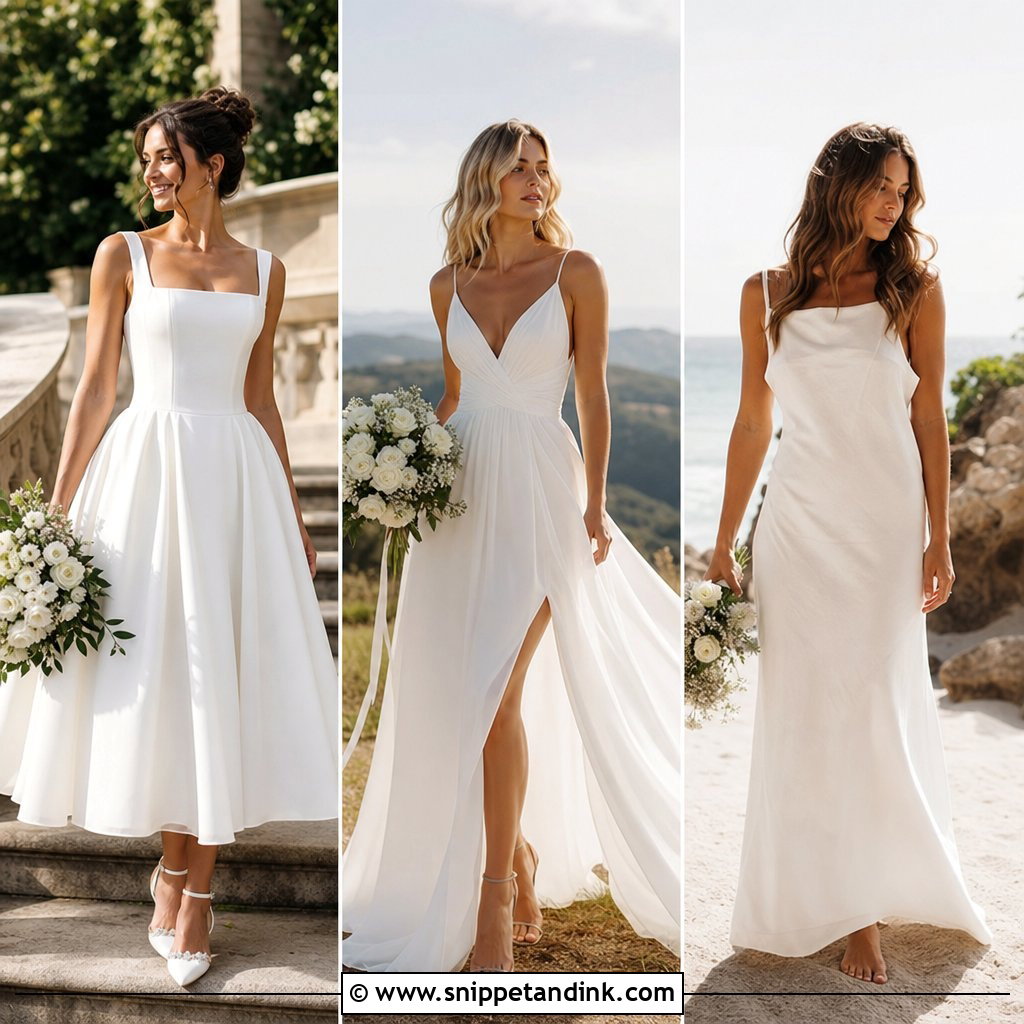
Satin slips are the easiest dress on this list to wear and the hardest to fit. A bias-cut silhouette skims the body, which also means it shows every line underneath, so try it on with smooth, no-line underwear. Ivory, pearl white and champagne glow softly in photos, while stark white satin can read slightly blue. Thin straps or a cowl neck suit a courthouse, a restaurant room or a beach. In cool weather, a cropped cardigan or tailored white blazer is far nicer than goosebumps in your portraits.
2. Lace Midi Wedding Dress
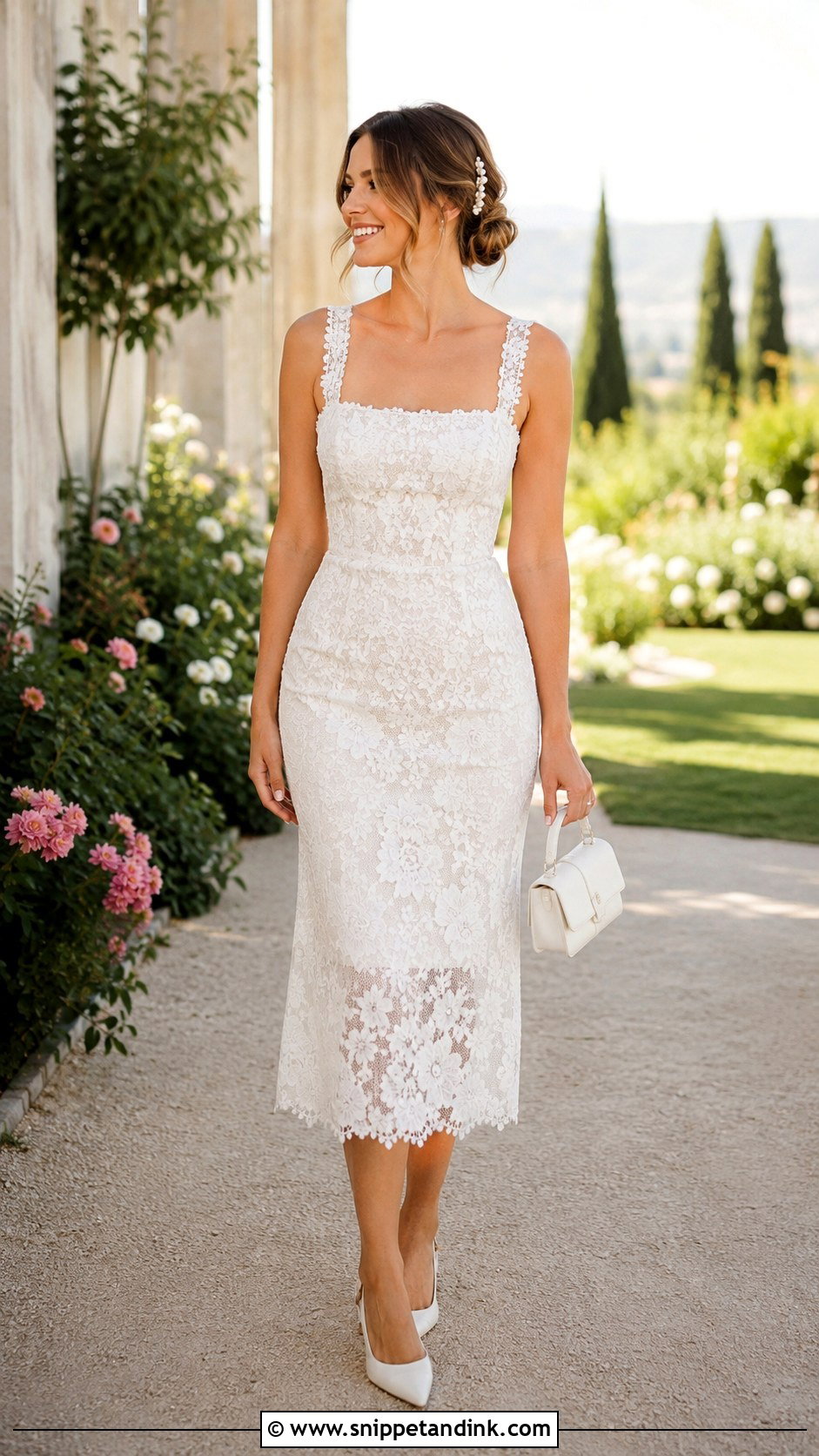
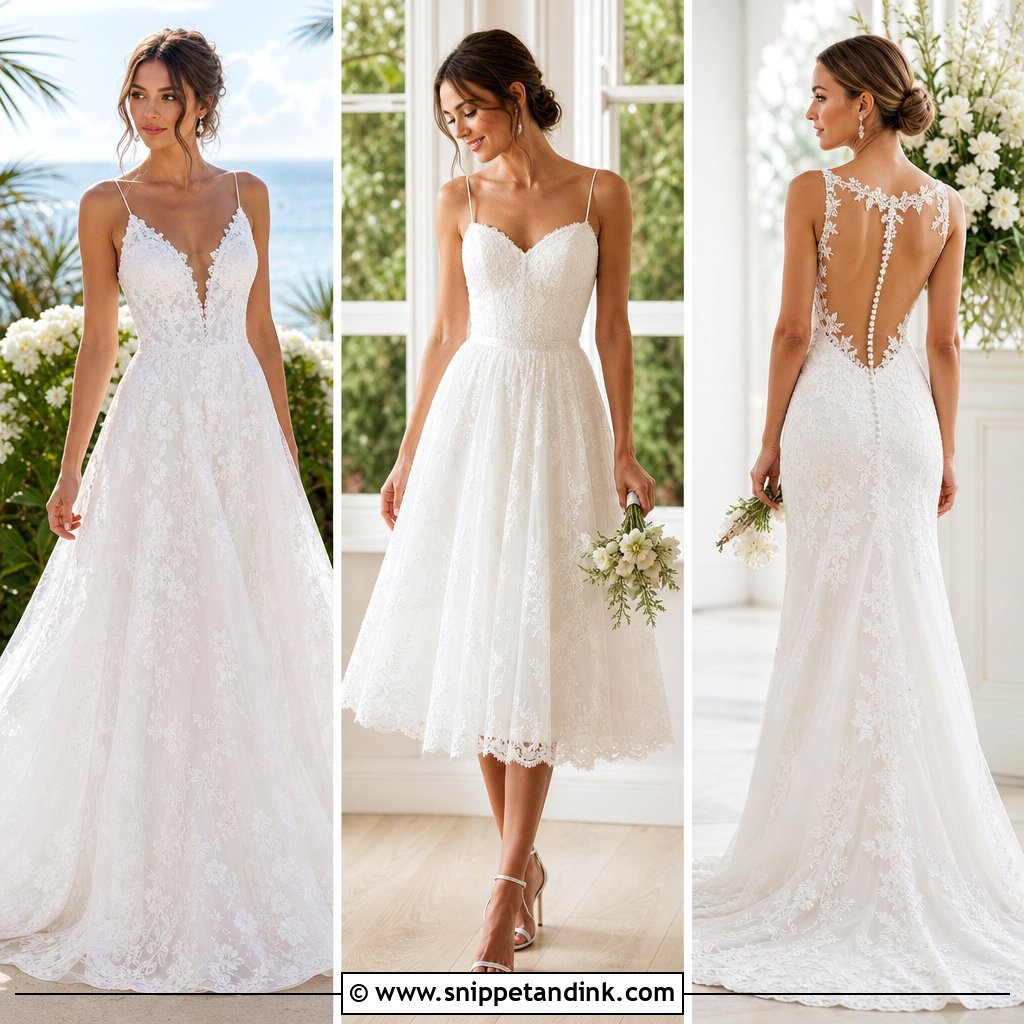
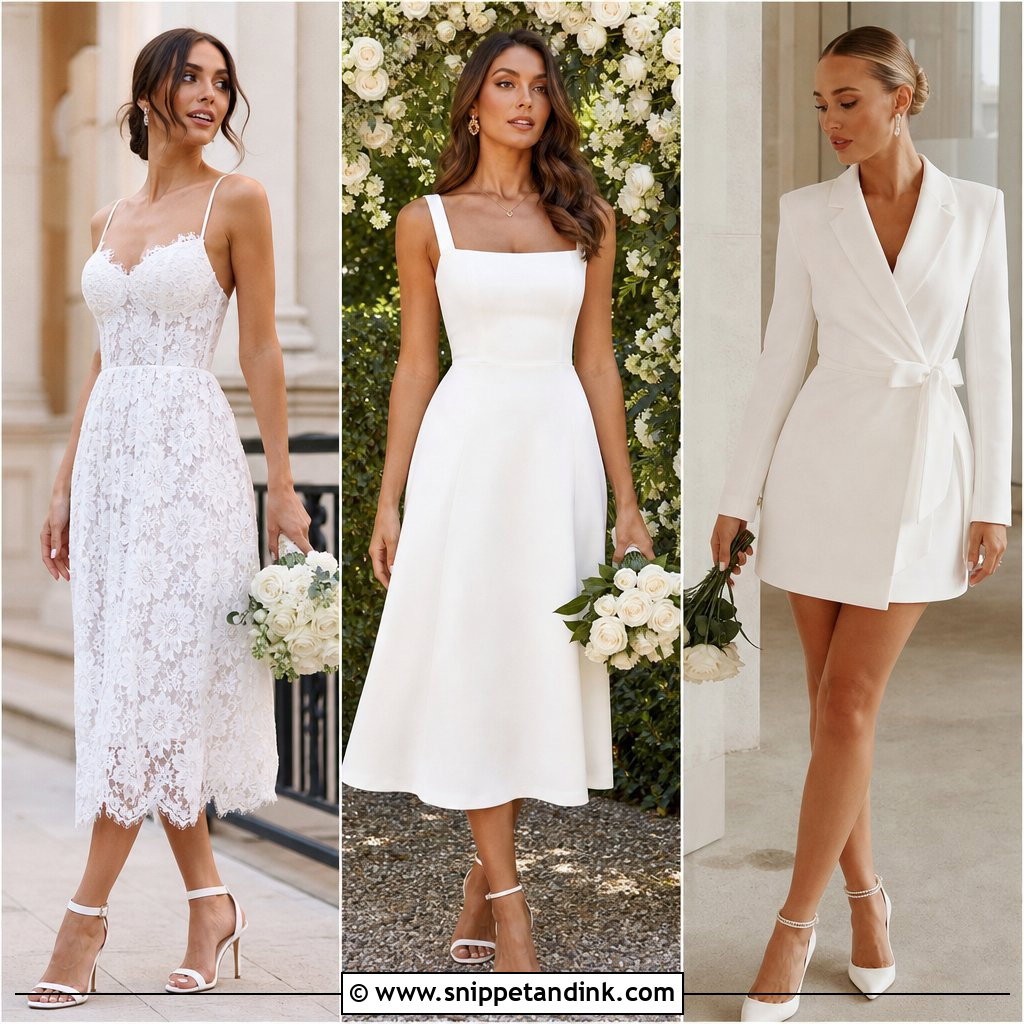
A lace midi wedding dress sits between casual and formal, exactly where a garden lunch or a family afternoon ceremony sits. The shorter hem lets you walk on grass and greet guests without lifting your skirt. Scalloped floral lace looks finished at midi length as long as the scallop sits at the hem rather than being cut straight across, so ask about that if a longer dress is being shortened. A fitted bodice into an A-line skirt marks the waist without clinging. Pointed slingbacks and a pearl hair pin keep it light.
3. Courthouse Wedding Dress With Blazer
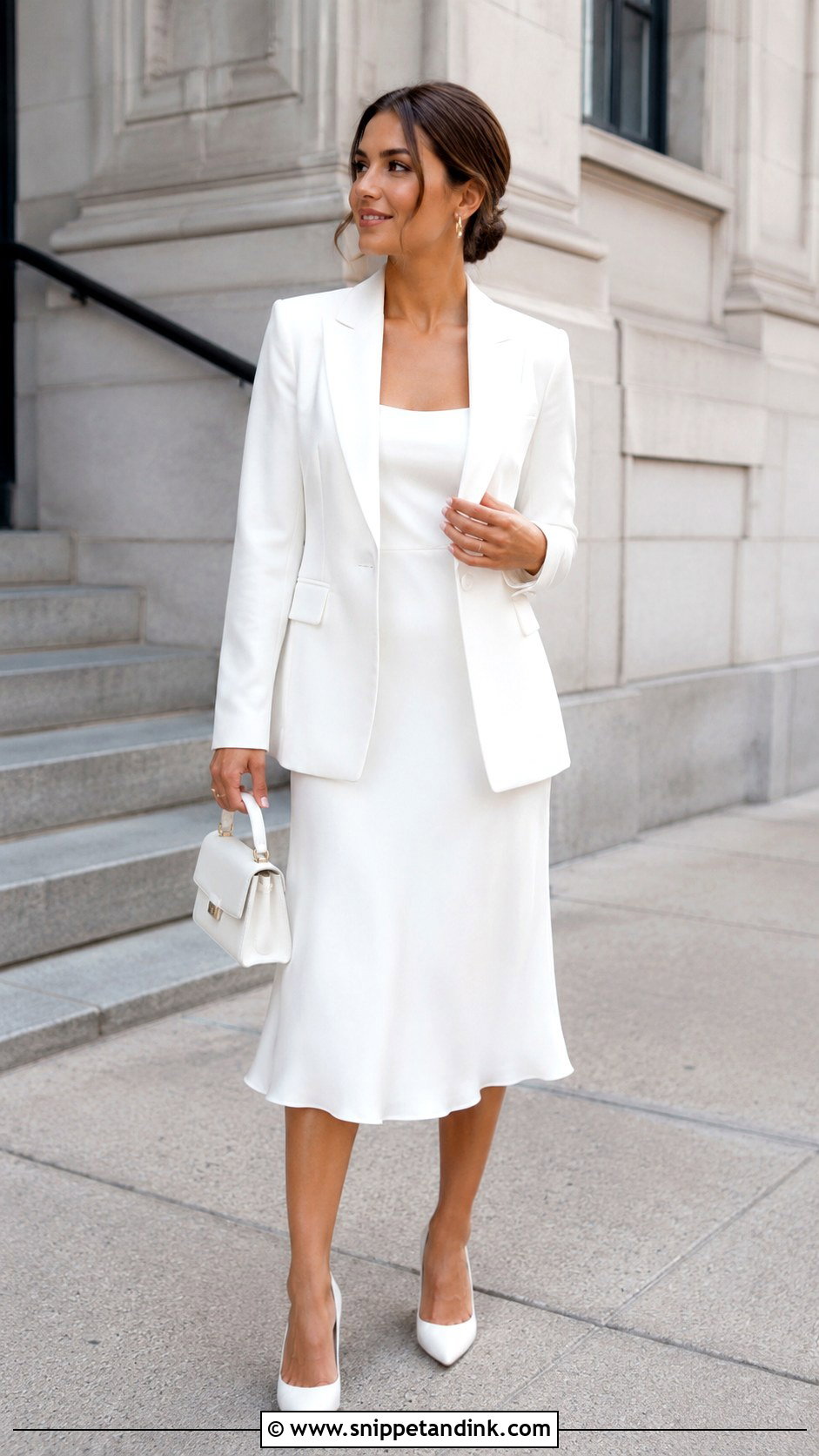
Sharp and quick to pull together, a dress with a blazer suits city hall better than almost anything else. Start with a mini, midi or column in crepe, satin or matte white, then add a tailored white blazer. Check the two whites side by side in daylight, because ivory next to optic white makes one of them look dingy. Keep accessories clean: pointed pumps, small hoops, a top-handle bag. A short veil or bow barrette softens the tailoring, and the blazer goes straight into your everyday wardrobe afterwards.
4. Tea Length Wedding Dress
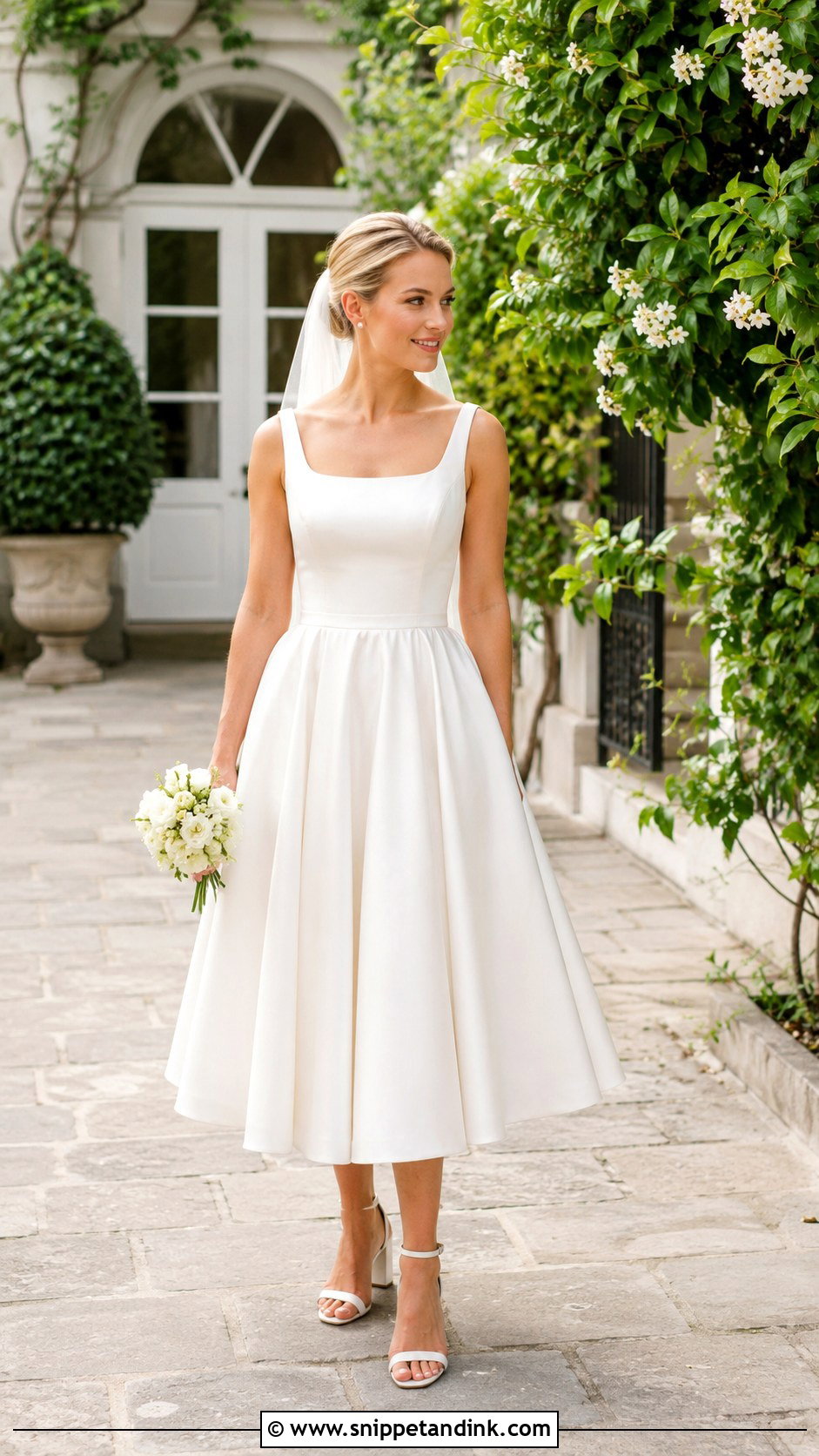
Tea length puts the hem somewhere between the knee and the ankle, and that’s where your shoes become part of the outfit. I’d choose them before the dress is hemmed, not after. A fitted bodice and a soft full skirt is the classic version, in satin, tulle, organza or lace. The risk with tea length is looking like a costume, so keep the neckline clean and skip the full petticoat-and-gloves combination unless that is truly your style. Brunch weddings and garden ceremonies suit it well.
5. Minimal Column Wedding Dress
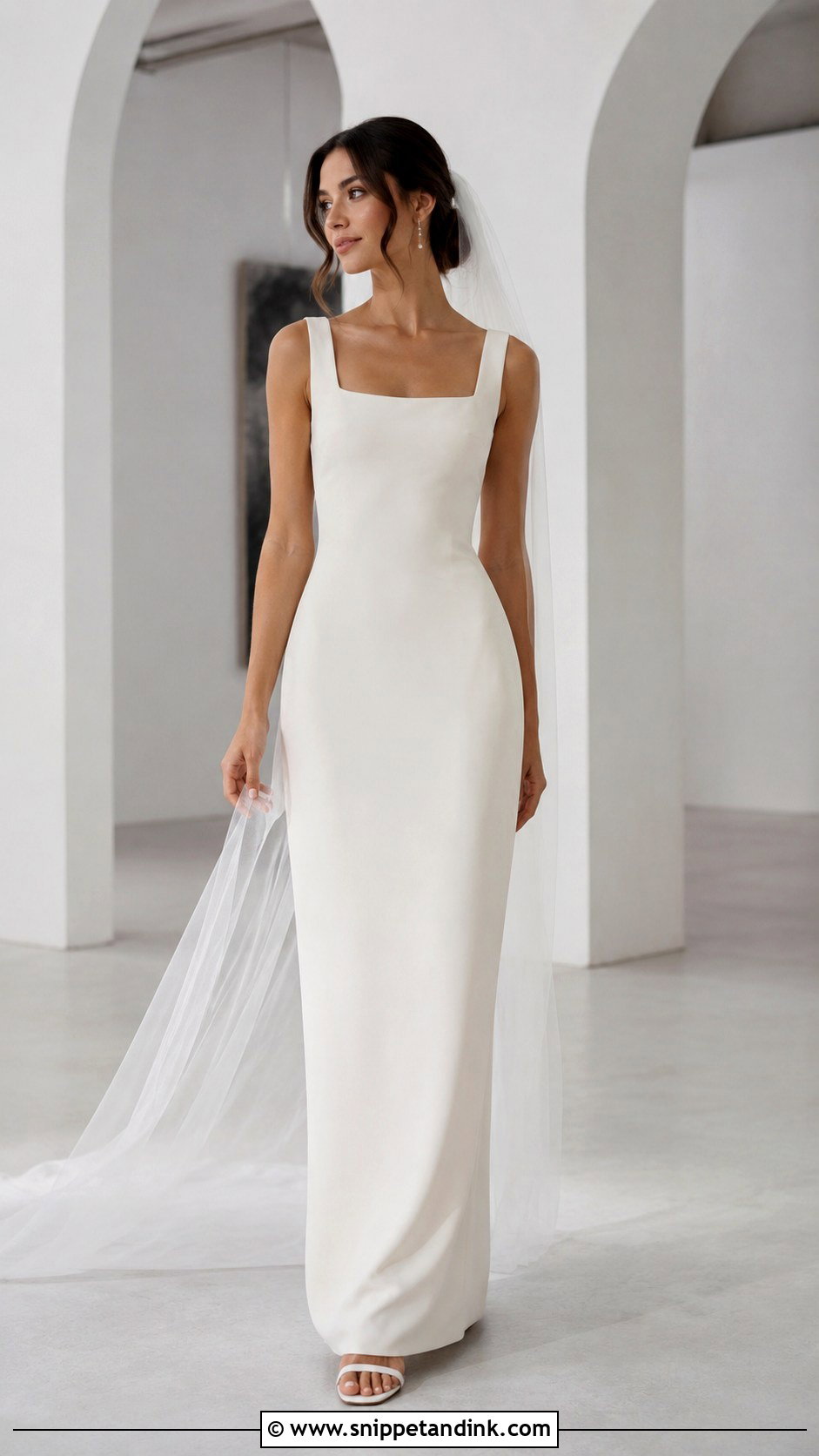
Everything about a column dress depends on tailoring. There’s no volume or beading to distract, so a seam that pulls or a hem that’s slightly uneven shows immediately. Matte crepe, silk and mikado hold the line best. I always suggest a small slit in a straight column; without one, you’ll be taking tiny steps all day. Sleek heels, a low bun and delicate earrings suit a gallery, a rooftop or a private estate.
6. Off Shoulder Wedding Dress
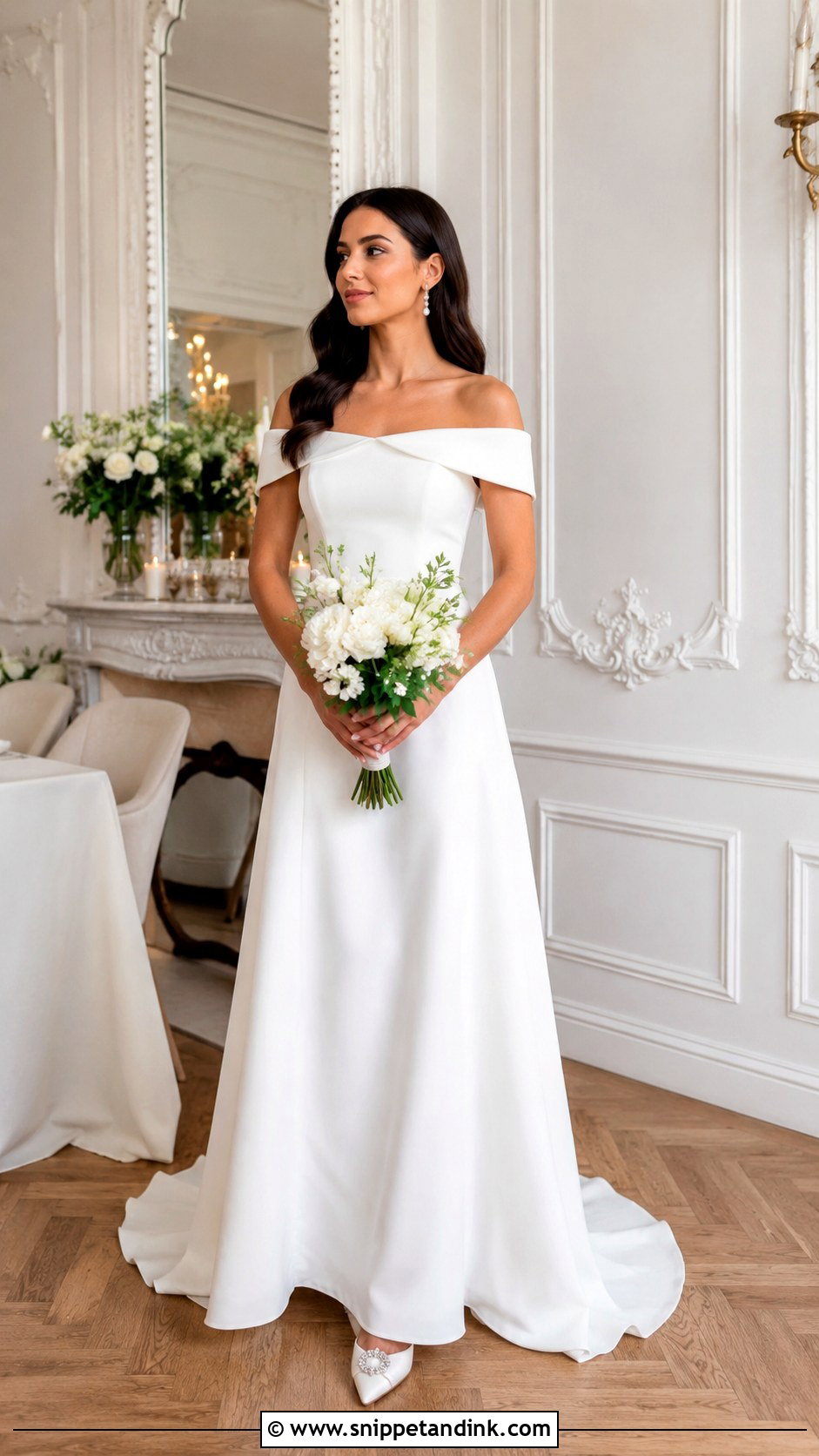
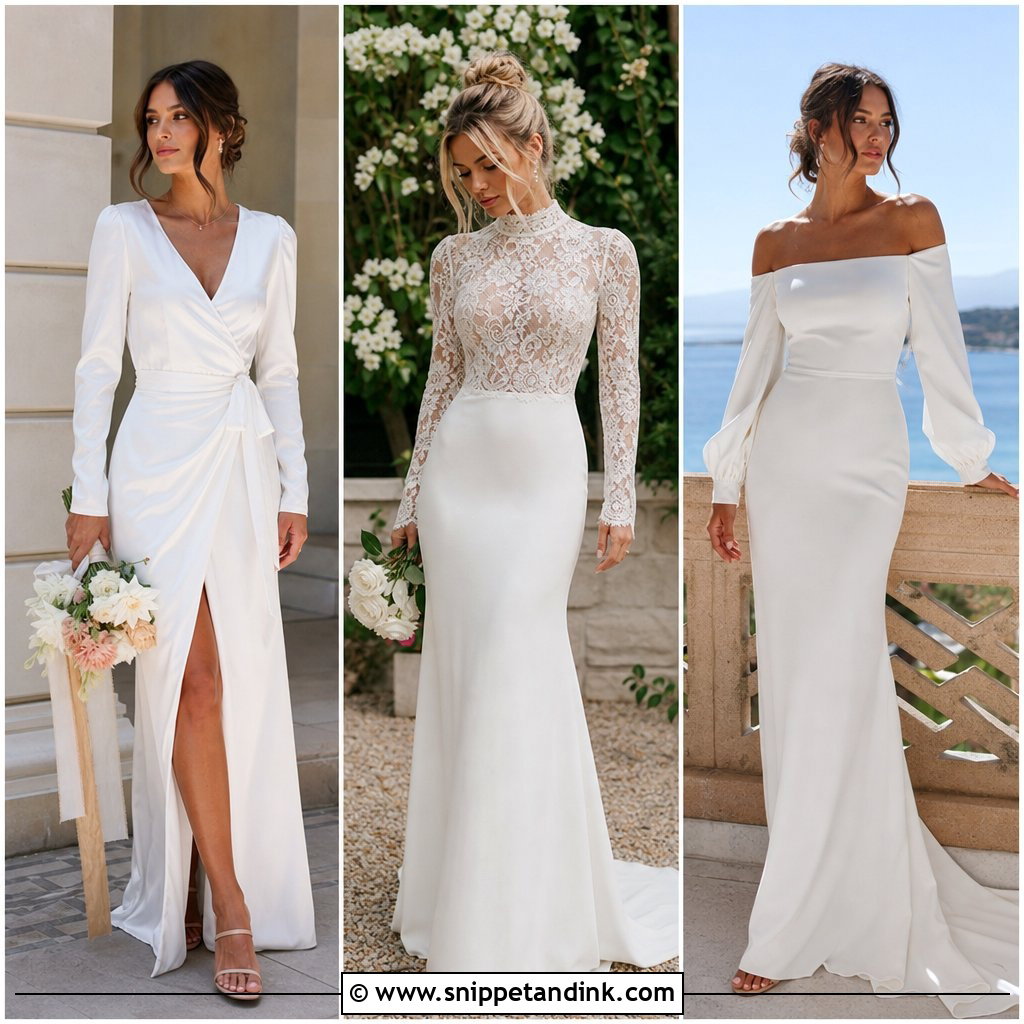
Off the shoulder frames the collarbones and still feels covered enough for a family ceremony. The catch is that you can’t lift your arms very high, because the neckline band holds them down. Do you hug a lot? Try the dress on and hug someone before you buy it. A fitted sheath, a soft A-line or a simple midi length all suit this neckline, in satin, crepe or lace. Drop earrings and soft waves fill the open neck, and a necklace is usually one thing too many.
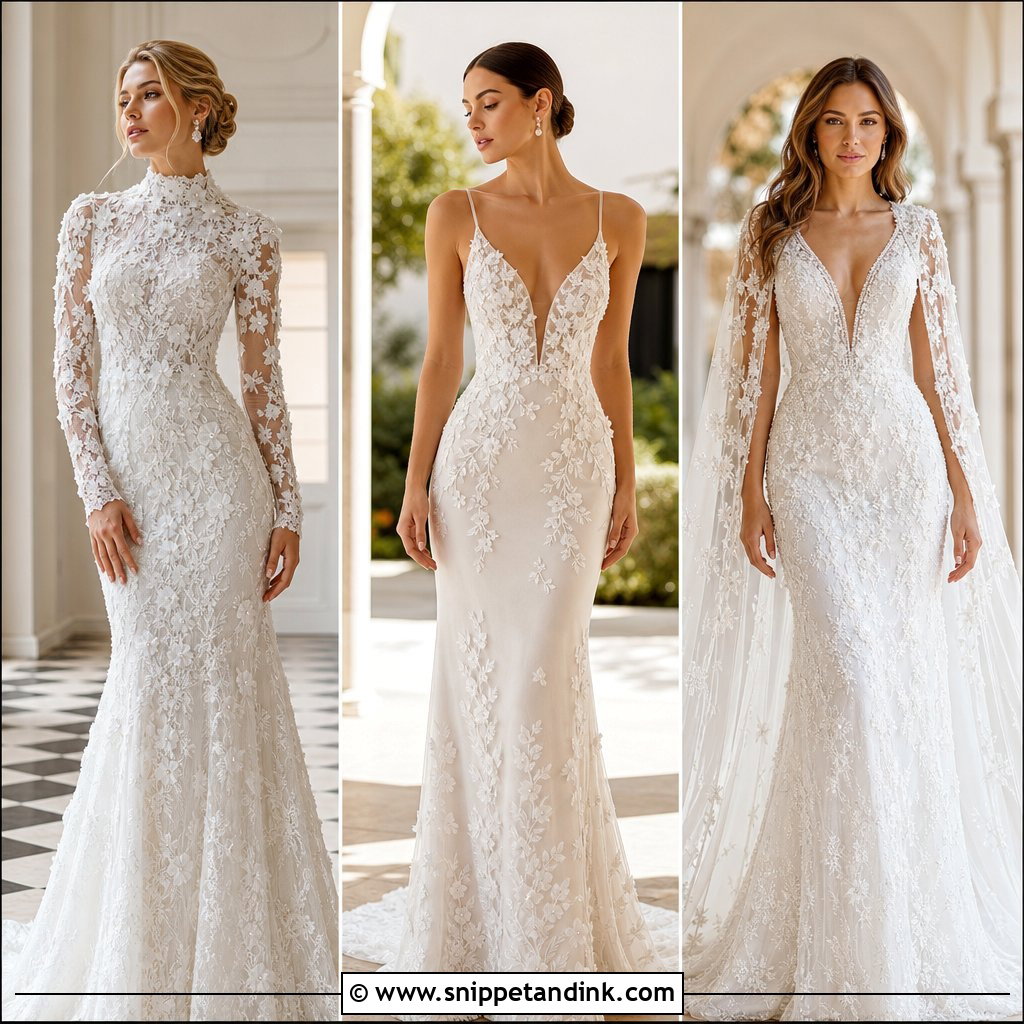
7. Long Sleeve Lace Wedding Dress
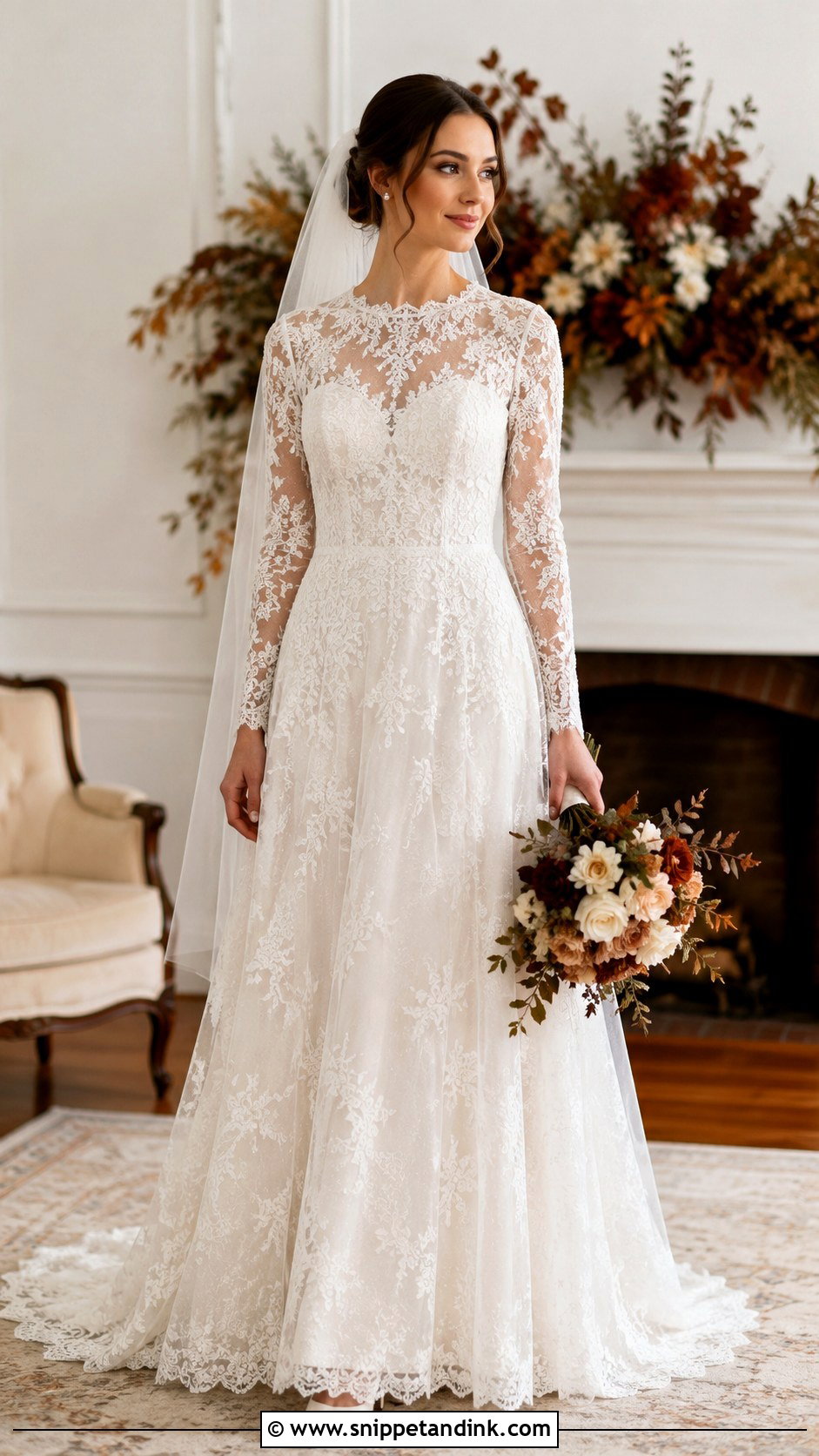
Long lace sleeves suit fall and winter, and they’re my first suggestion when a bride asks for a traditional feel without a big gown. Sheer sleeves need fitting for movement as much as looks, since tight lace sleeves can split at the elbow seam when you raise a glass. A fitted bodice with a flowing skirt reads romantic; a straight lace sheath feels modern. Covered buttons and scalloped cuffs reward close viewing, which is exactly how a small wedding sees them. Closed-toe heels and pearl studs complete it.
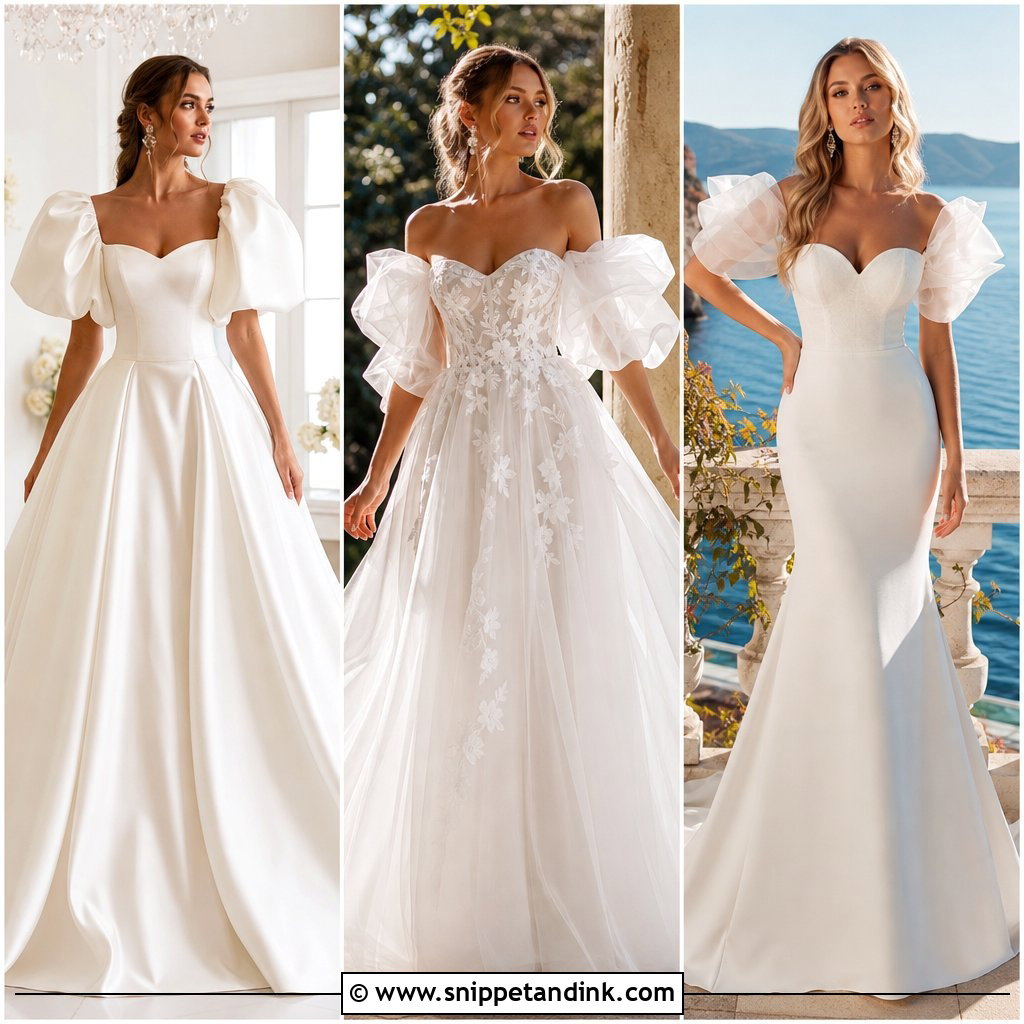
8. Short Sleeve Wedding Dress
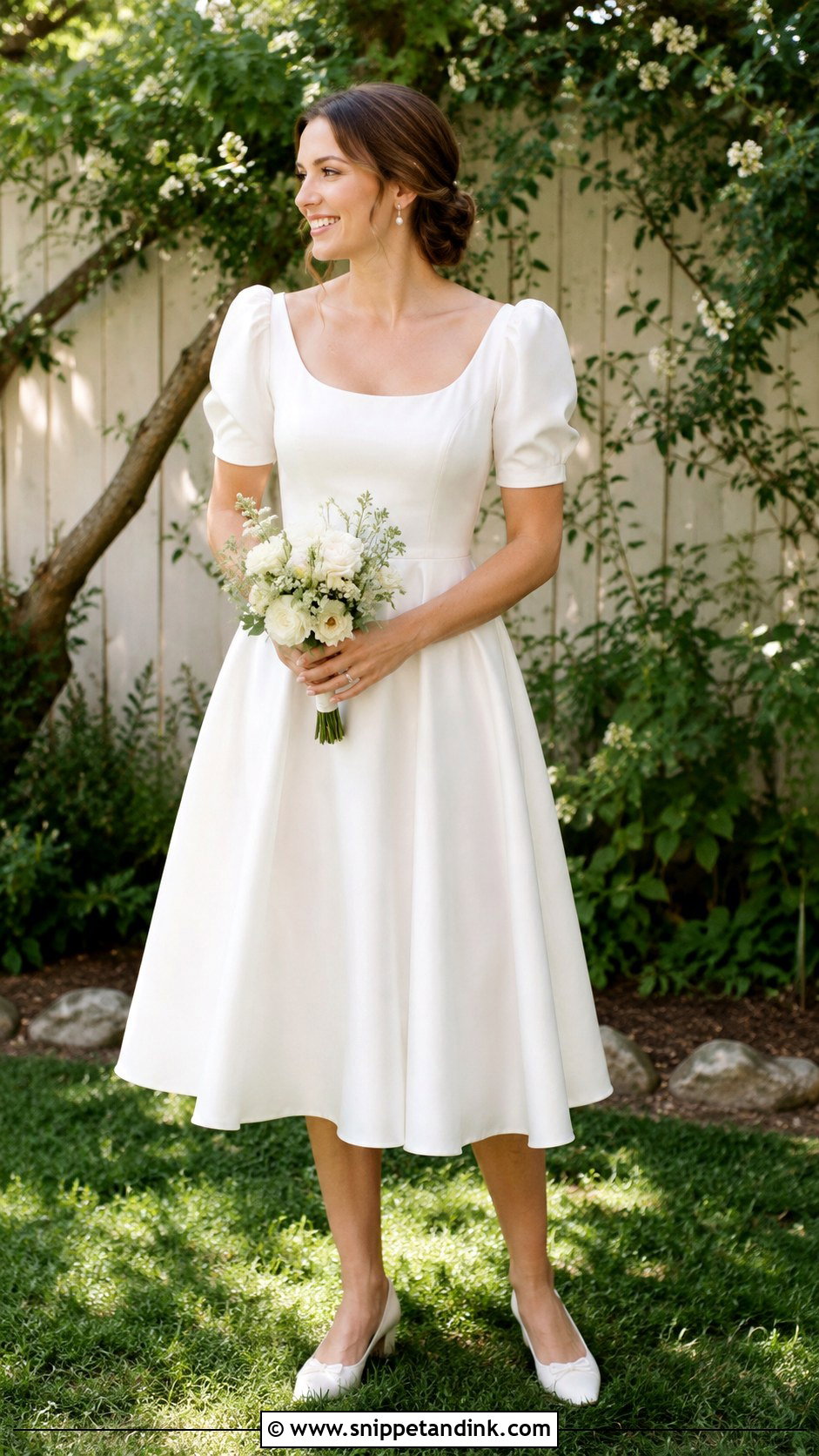
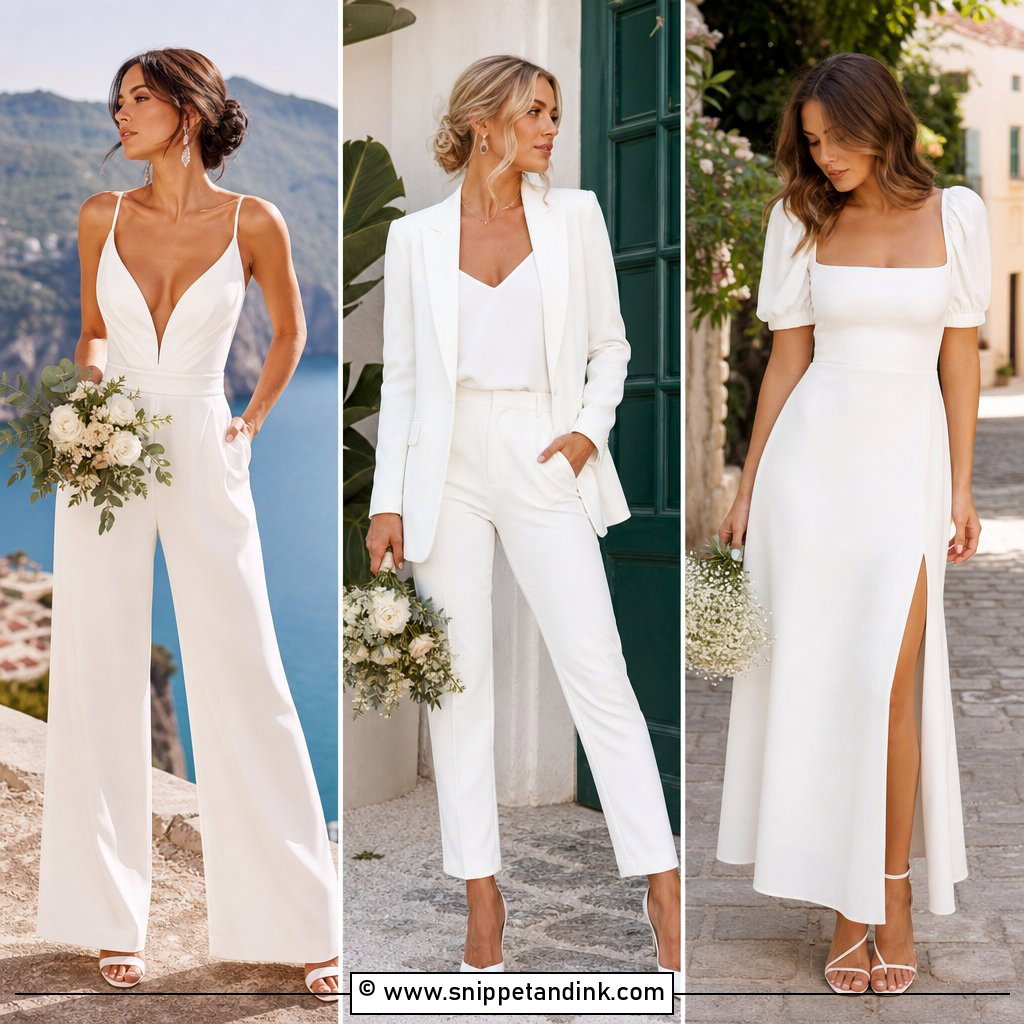
Warm weather, daytime ceremony, relaxed setting: short sleeves cover just enough while keeping you cool. Puff sleeves read romantic, cap sleeves delicate, and tailored short sleeves modern. Linen and cotton blends feel lovely in heat but crease fast, so if you choose one, accept a softer, lived-in look by mid-afternoon. A midi or ankle-length skirt balances the sleeve. Low heels and a small veil suit a backyard or garden.
9. Square Neck Wedding Dress
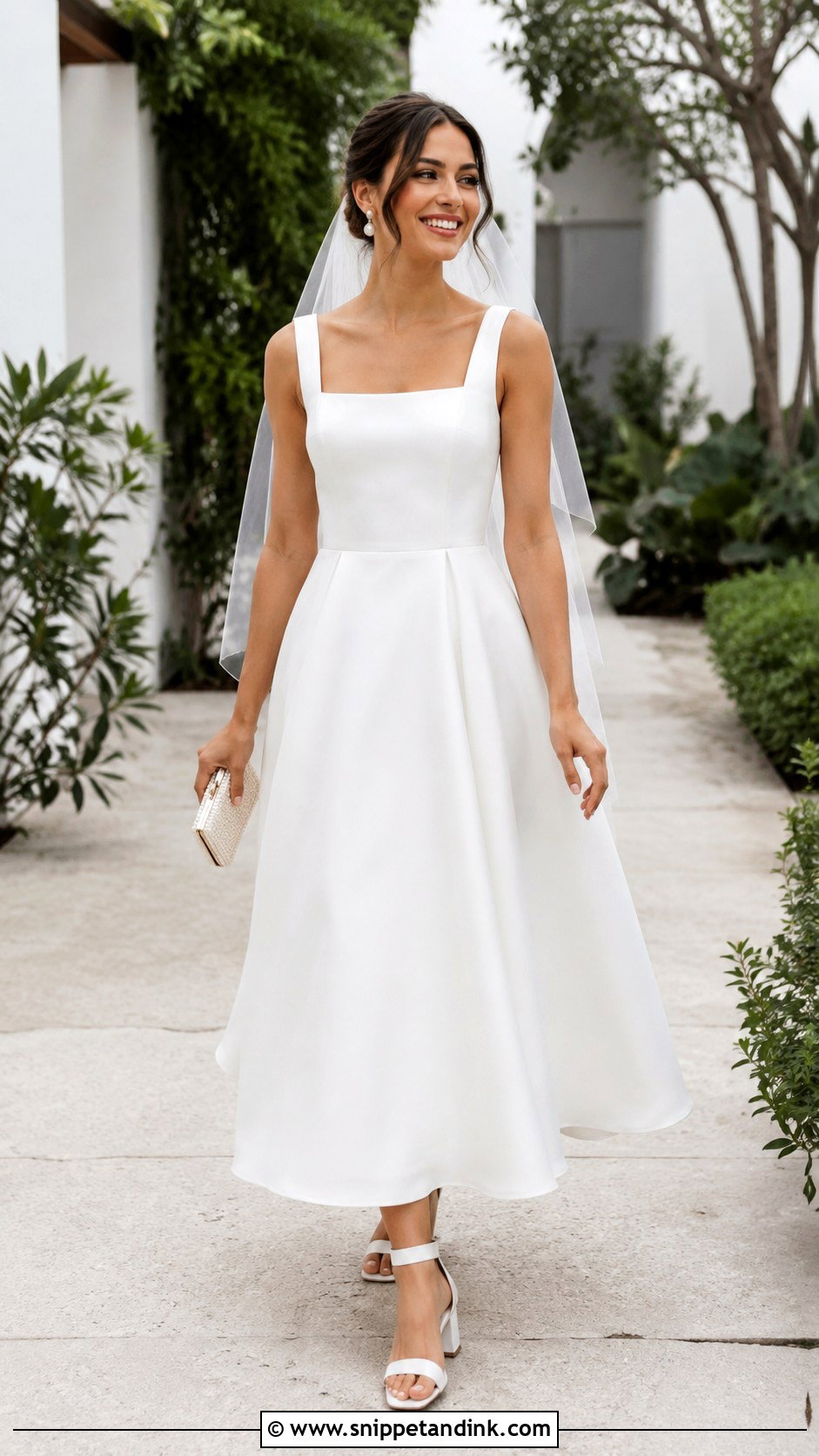
Square necklines are generous to many figures. They can balance a fuller bust, add structure to a small frame and give delicate jewelry a clean frame. Width is the detail to watch: the corners should sit roughly in line with the outer edge of the collarbone, and if the neckline is cut too wide the straps slip all day. A fitted midi, an A-line or a sleek column in satin, crepe or lace all work. Pearl earrings and block heels finish it.
10. High Neck Wedding Dress
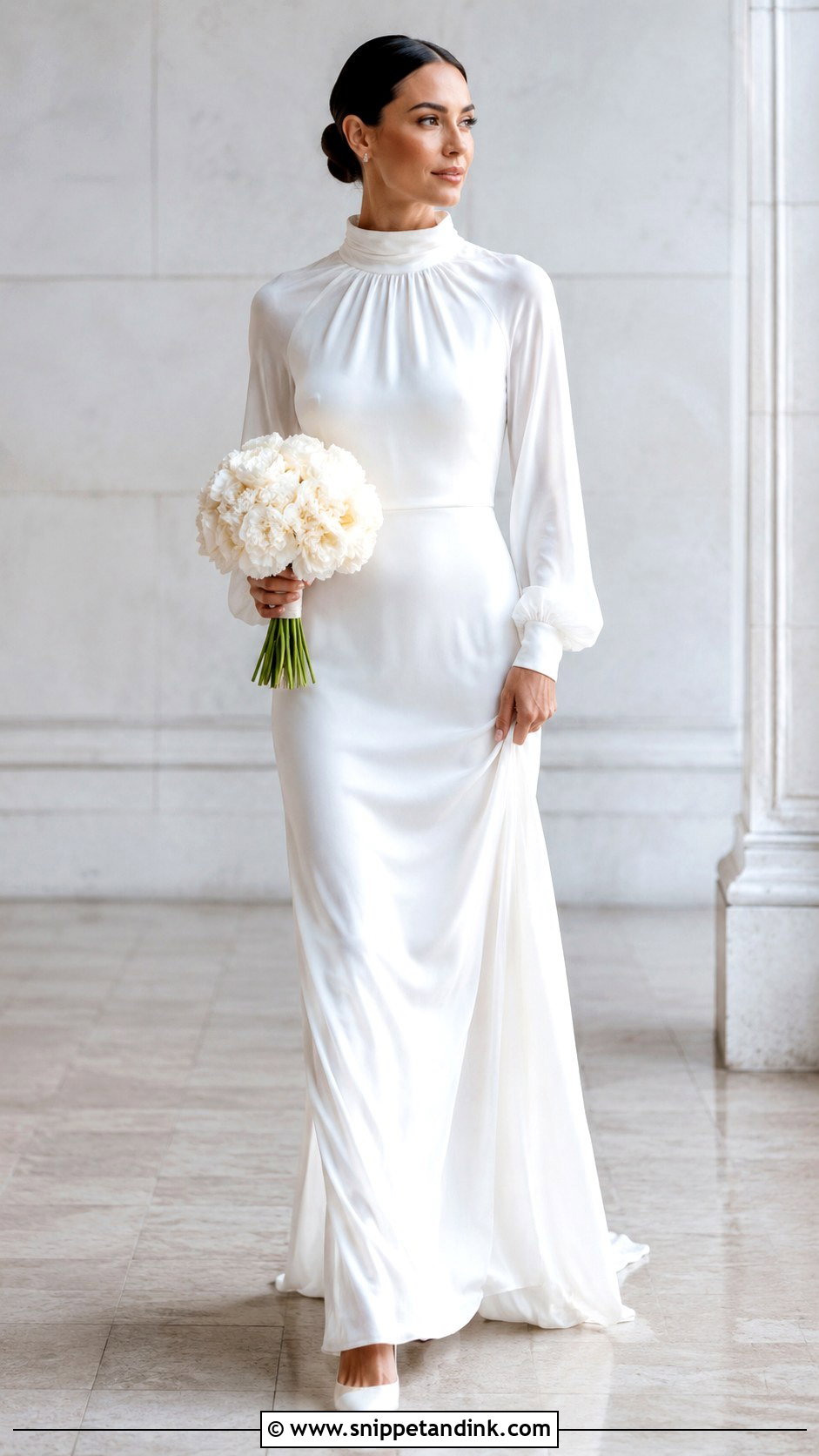
A high neck reads modest and fashion-forward at once. Pair it with a slim column skirt, a soft A-line or a lace overlay, and choose light crepe, satin, chiffon or lace so the dress doesn’t feel severe at a small dinner. The neckline is already doing the work, so keep accessories minimal: a sleek bun, small earrings, pointed heels. One practical note. A high neck traps heat, so for a summer ceremony I’d look for a sleeveless or open-back version.
11. Pearl Detail Wedding Dress
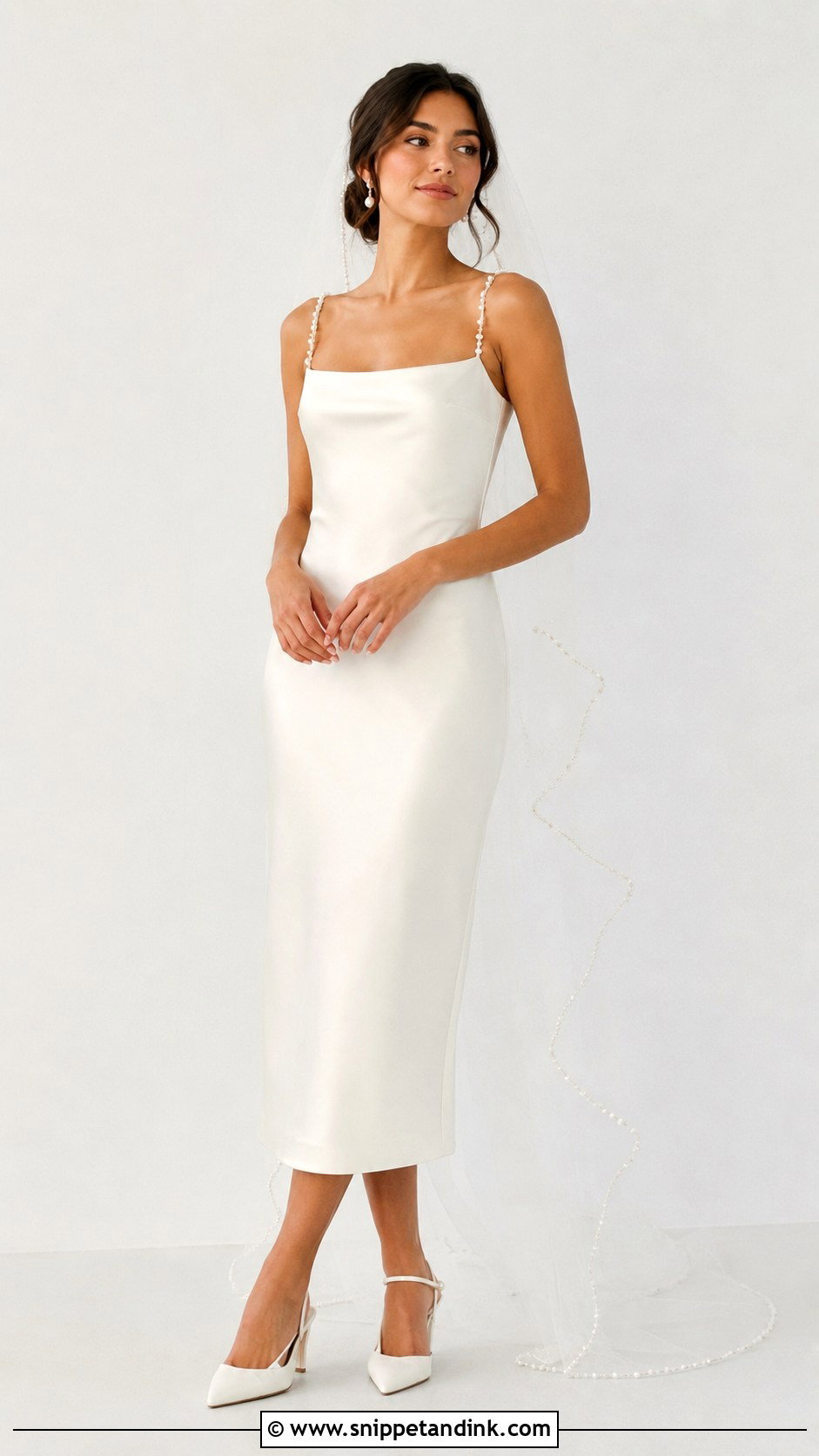
Pearls catch light softly, adding shine without the flash of crystal. They can sit on straps, sleeves, the bodice or a veil edge. If the dress is pearl-embroidered, keep jewelry almost bare; if it’s plain, bring pearls in through shoes, a headband or a veil trim. Check that pearl trim is stitched on rather than glued, because glued pearls tend to pop off as the fabric flexes. A fitted midi, slip or simple column carries the detail well.
12. Bow Back Wedding Dress
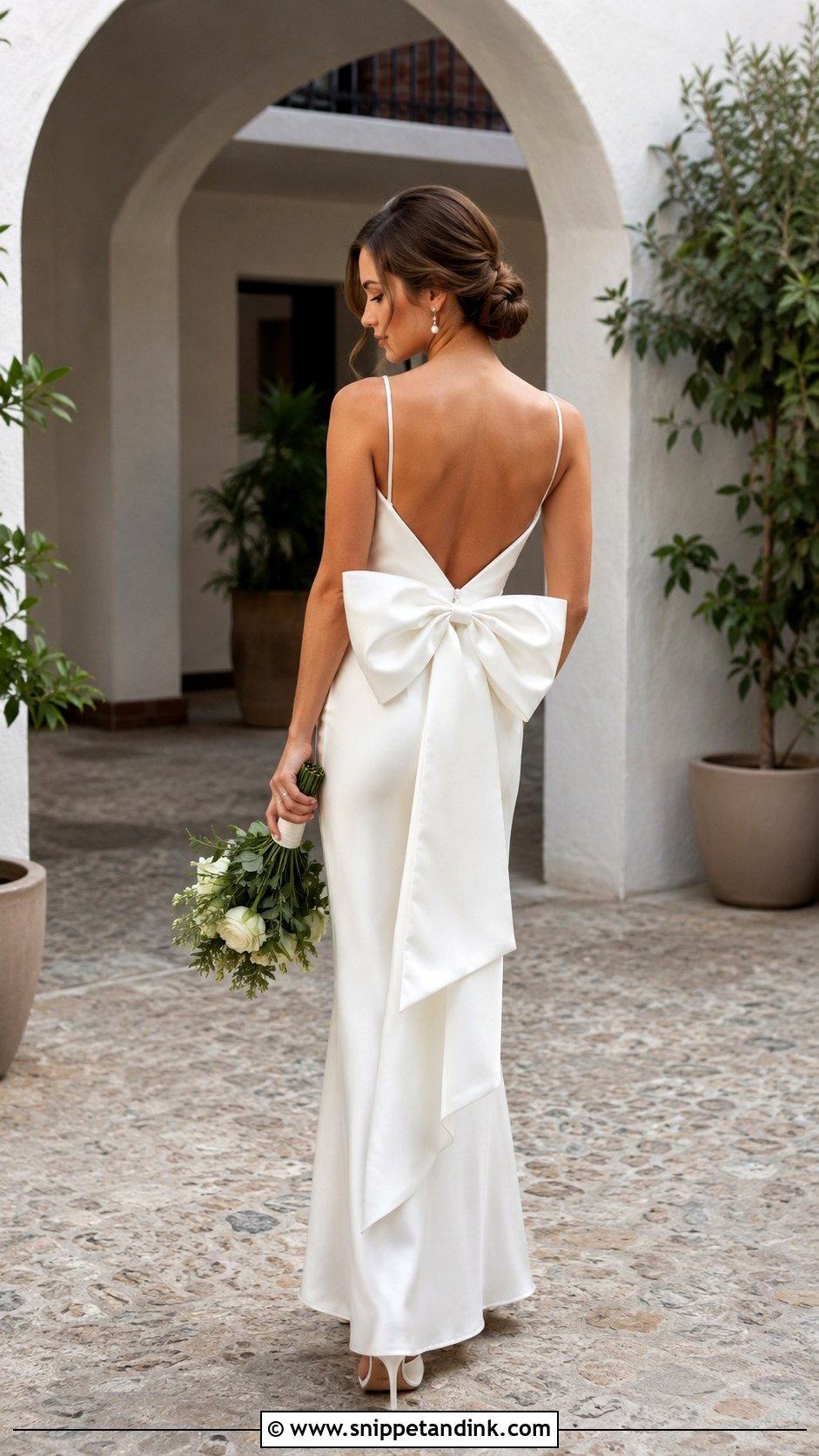
Guests at a small wedding spend a lot of time behind you, during the vows and as you walk out, so a bow back gets more attention here than at a large wedding. A big structured bow is dramatic and a soft narrow one is delicate. Large bows need interfacing inside or they droop by evening, so it’s worth asking how yours is built. Keep the front of the dress simple, and wear a low bun or half-up style so the bow stays visible in exit photos.
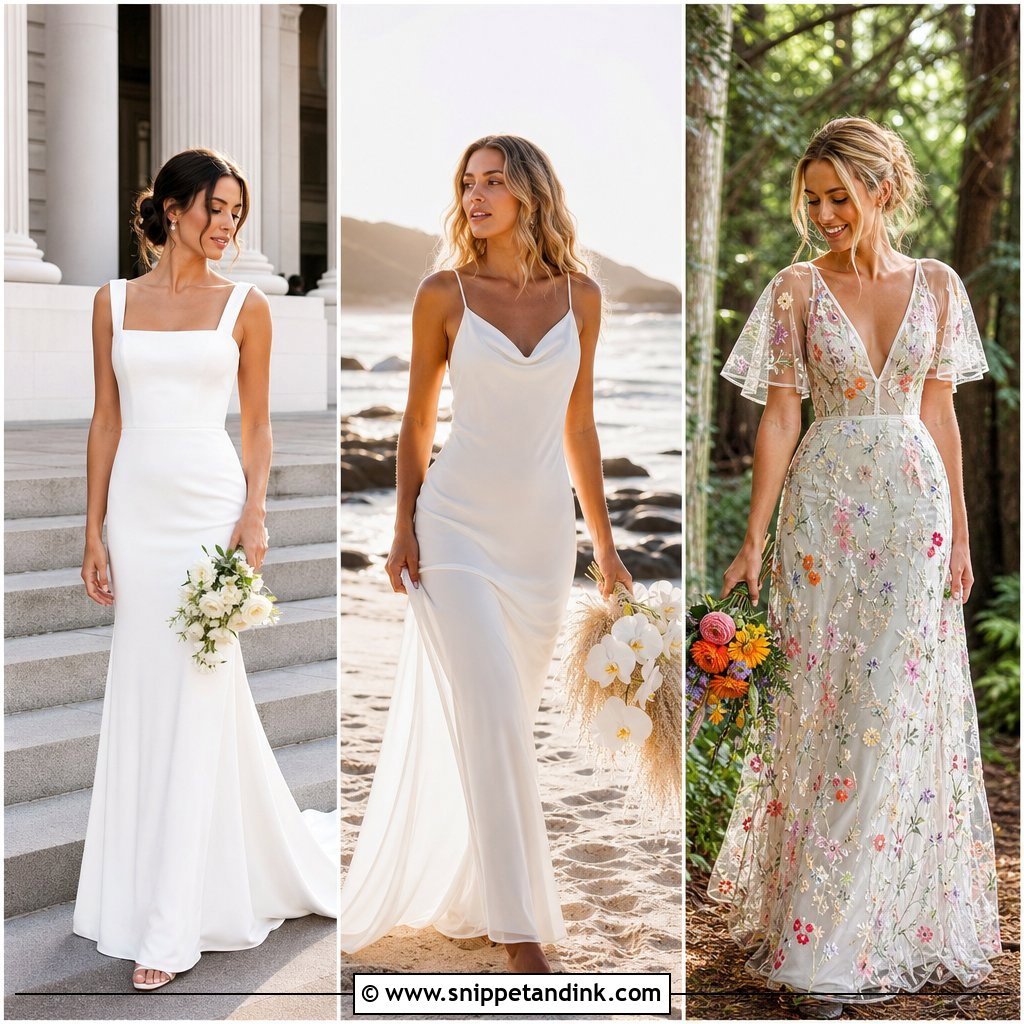
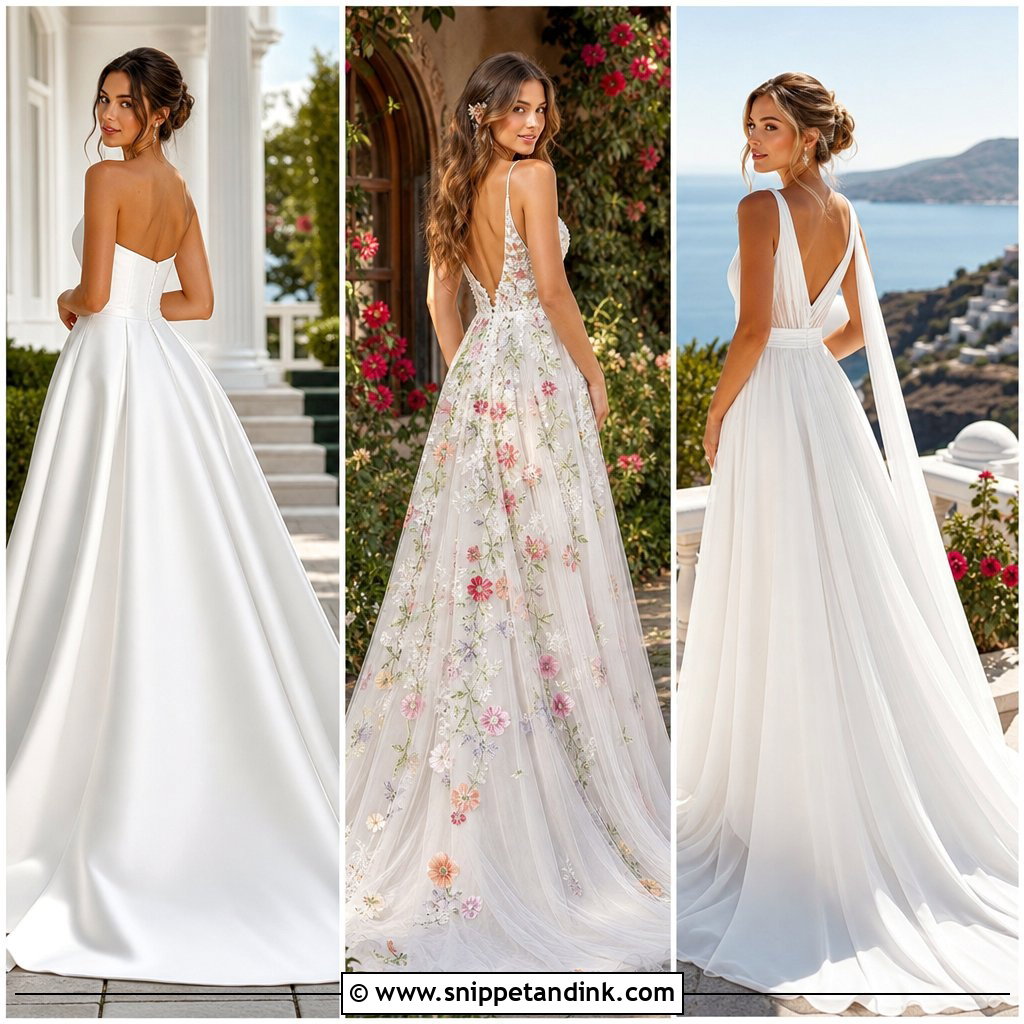
13. Floral Embroidered Wedding Dress
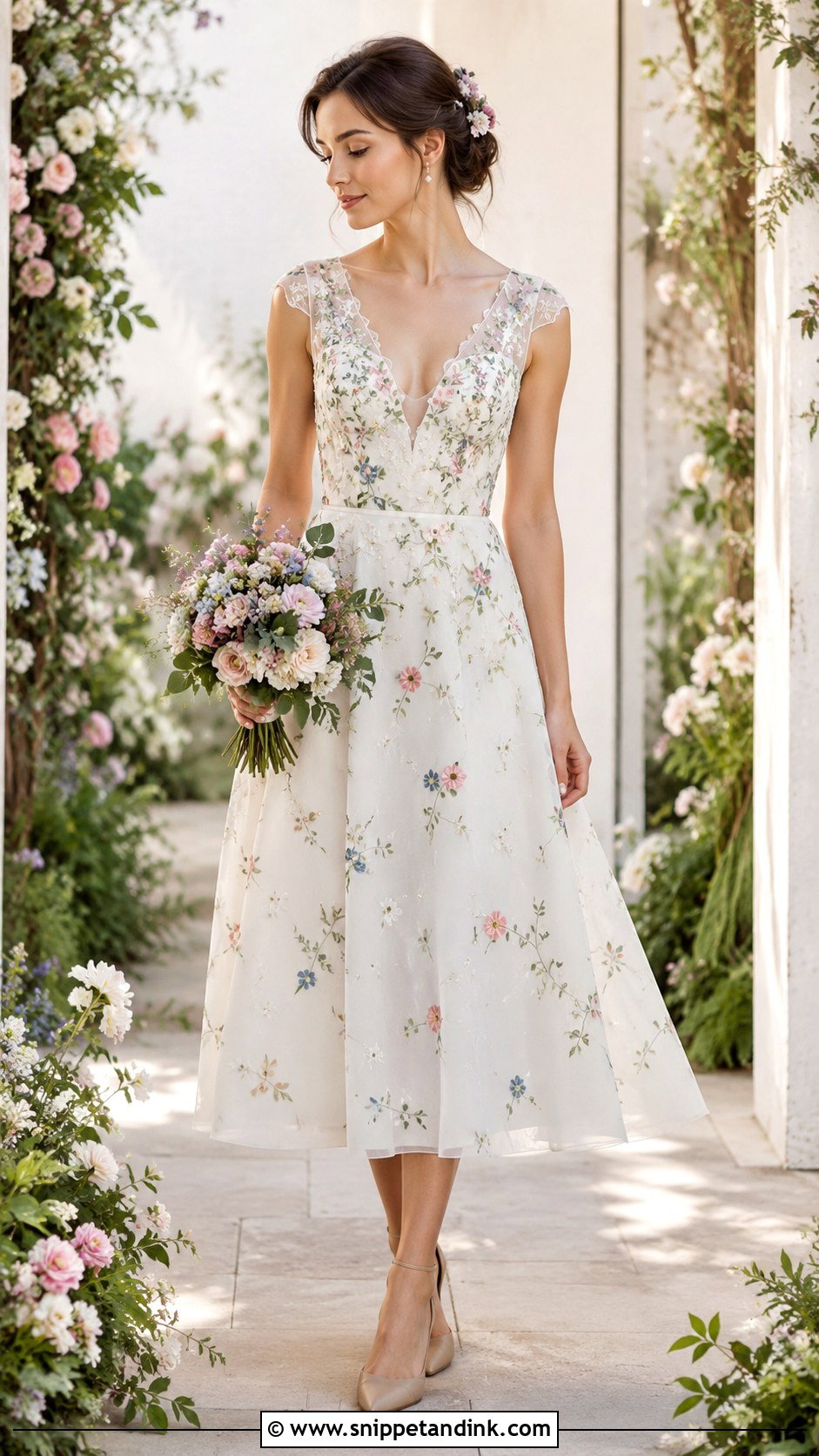
At a small wedding, people actually see the embroidery. White-on-white thread is subtle, while pale blush, blue, green or champagne thread is more playful. Echoing the embroidered flowers in your bouquet or the venue’s garden is a nice touch, though it doesn’t need to be literal. A midi, A-line or relaxed sheath lets the work show without crowding it. Spring and summer garden ceremonies suit it best.
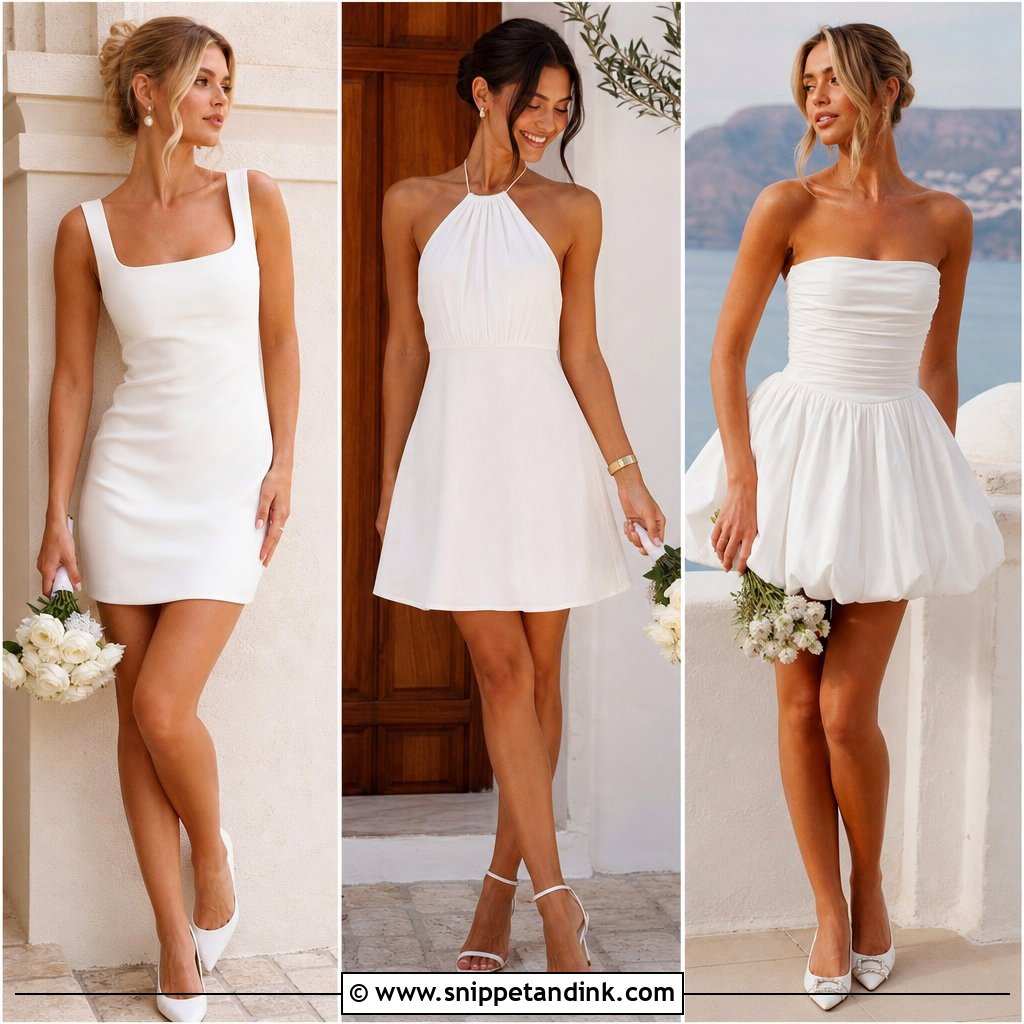
14. Bridal Mini Wedding Dress
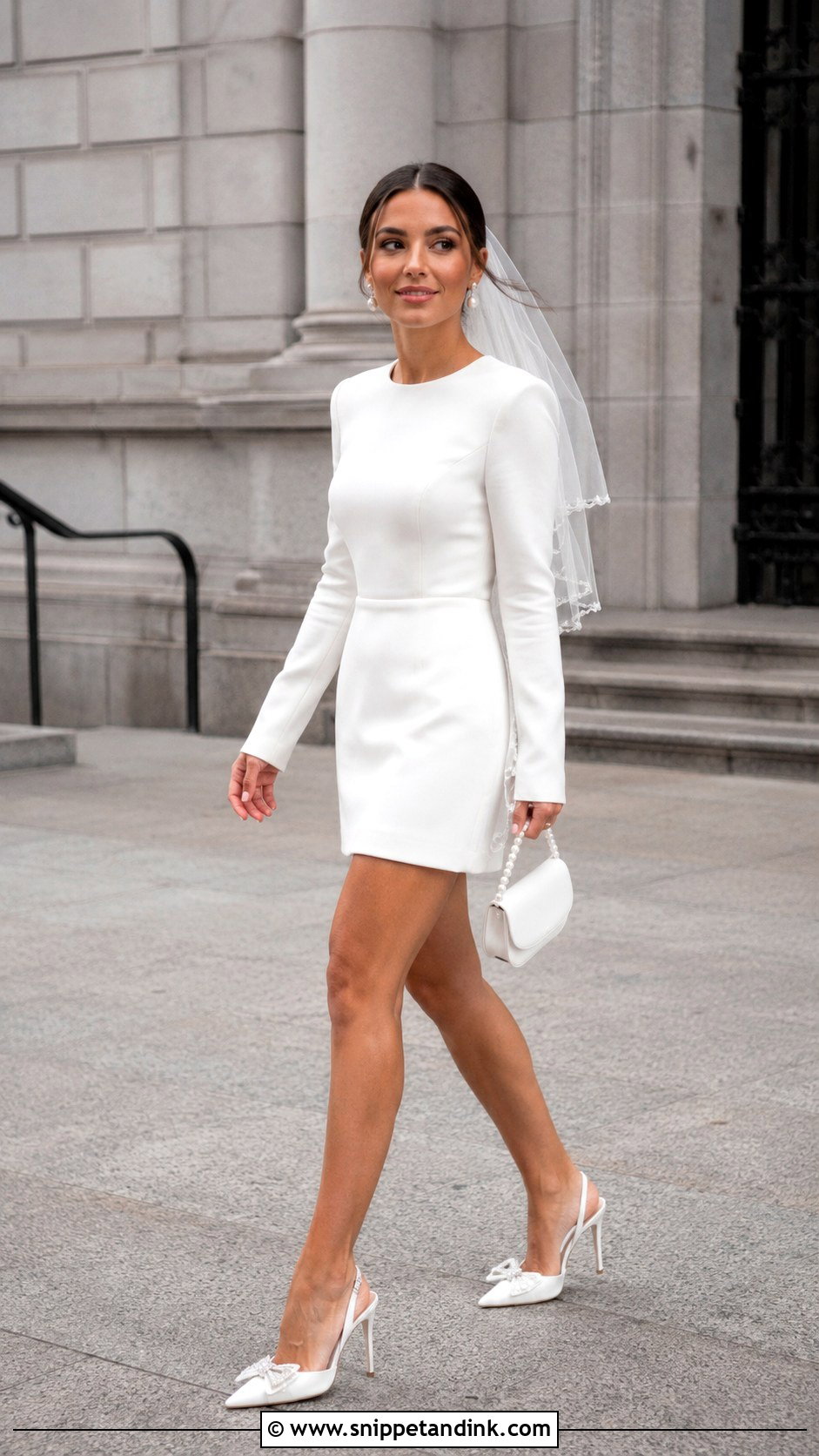
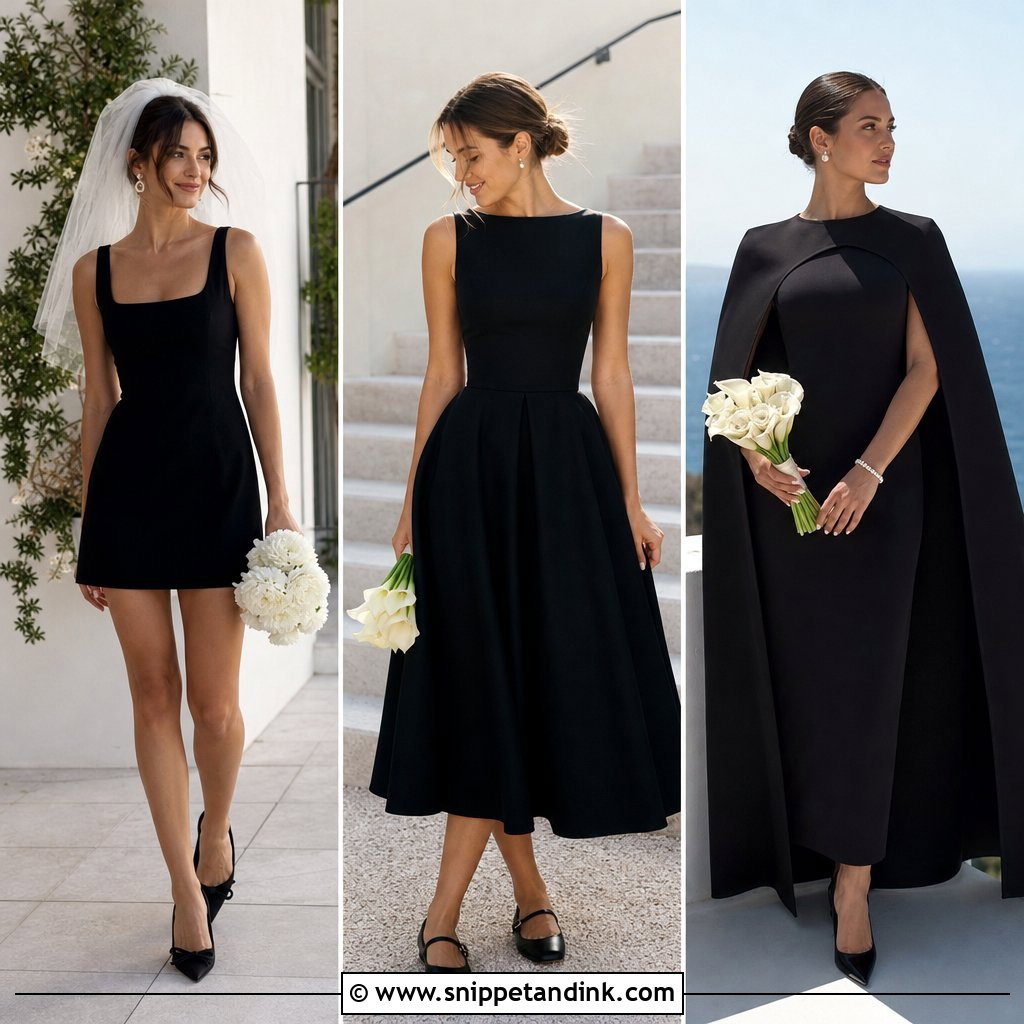
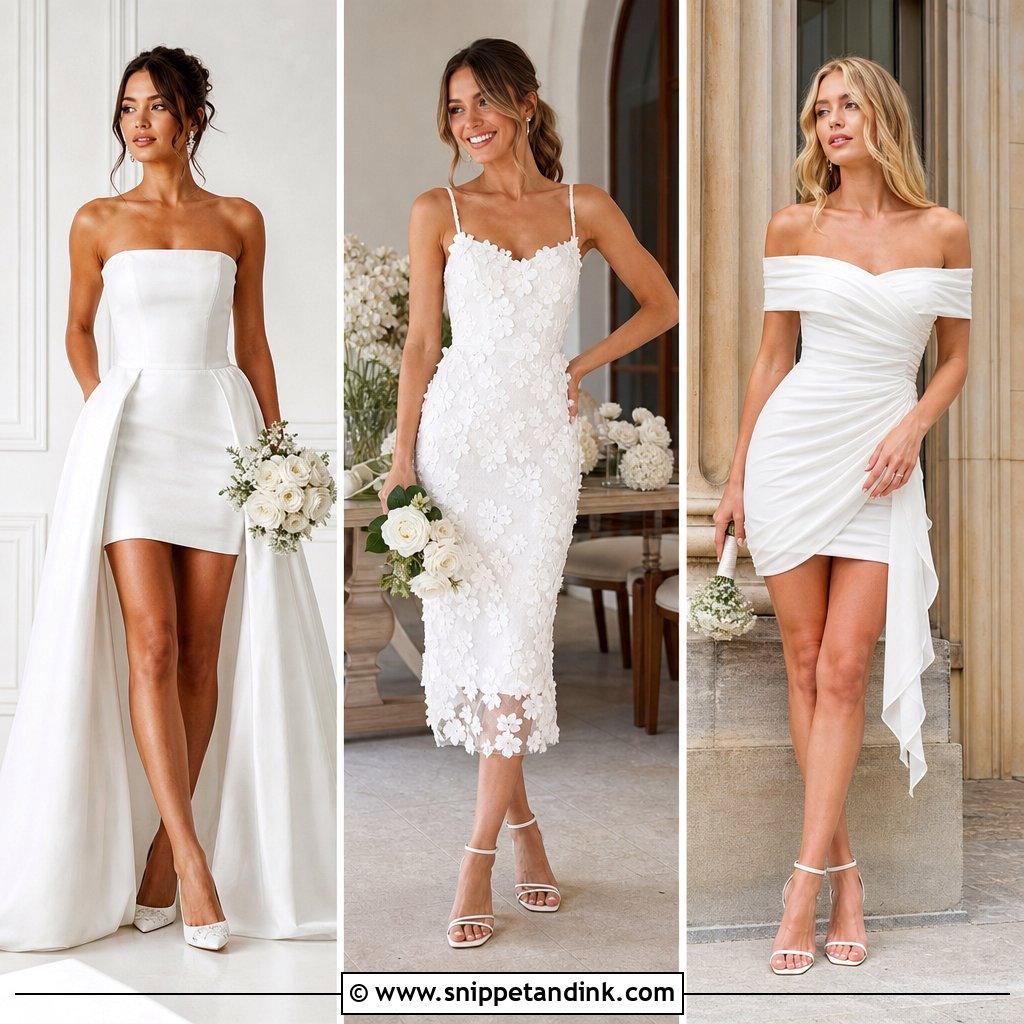
Short dresses need better fabric than long ones, because there’s less of them and every crease shows. Choose structured crepe, satin, lace or mikado over casual cotton. Long sleeves, a high neckline or tailored lines make a mini feel bridal rather than party. Sit down in front of a mirror before you buy; minis ride up more than you’d expect at a dinner table. Statement heels and a short veil suit a courthouse ceremony, an elopement or an after-party, with a long coat if you want cover.
15. Two Piece Wedding Dress
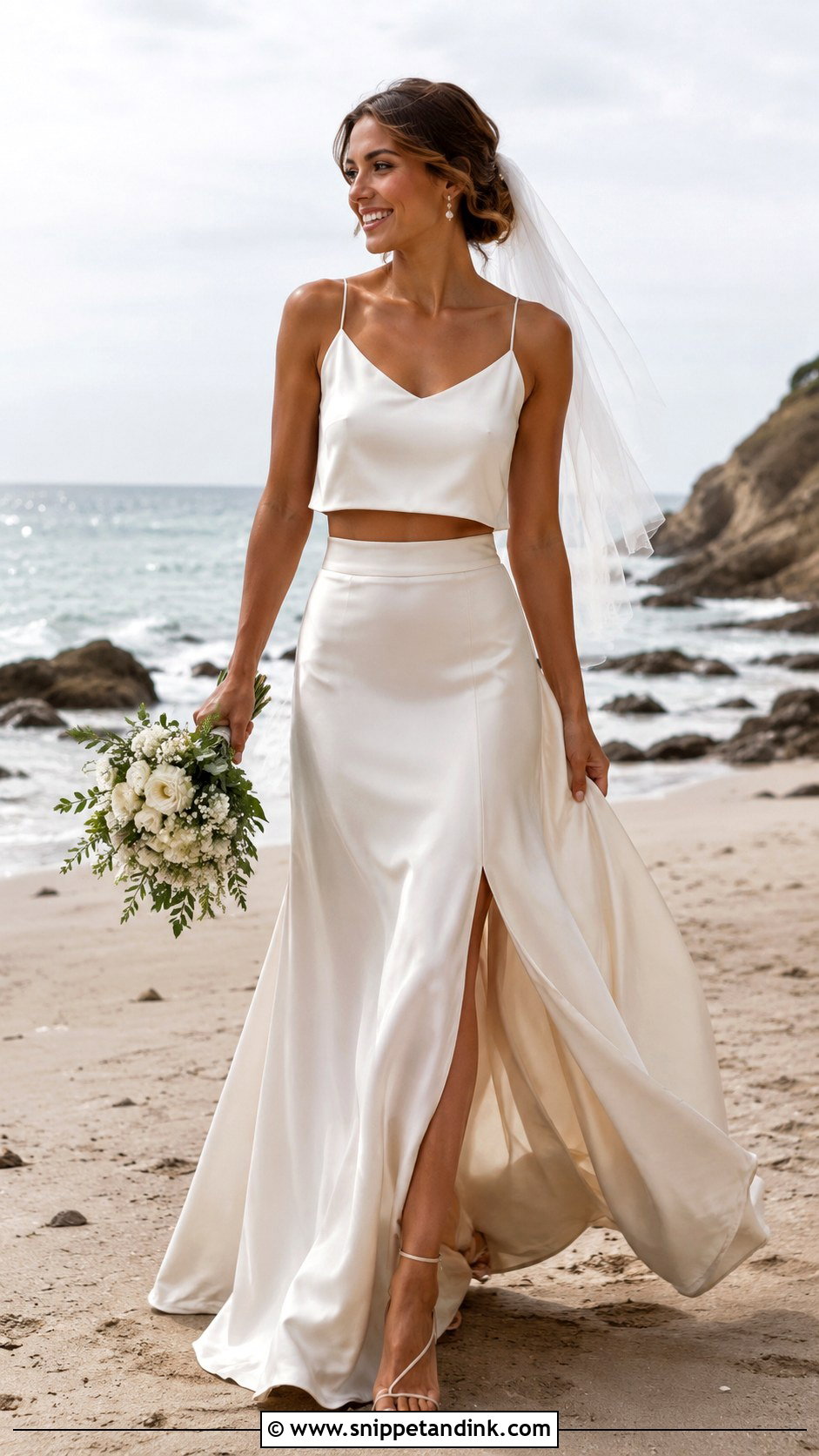
Separates give you flexibility. A cropped top with a high-waisted skirt looks sleek in satin and softer in lace or embroidery. I prefer versions where the top meets the waistband or shows only a sliver of skin, which looks elegant rather than beachy. Raise your arms in the fitting room to make sure the top doesn’t ride up during a first dance or a hug. Strappy heels and a low veil suit beach and garden settings, and both pieces can be worn again.
16. Tulle Skirt Wedding Dress
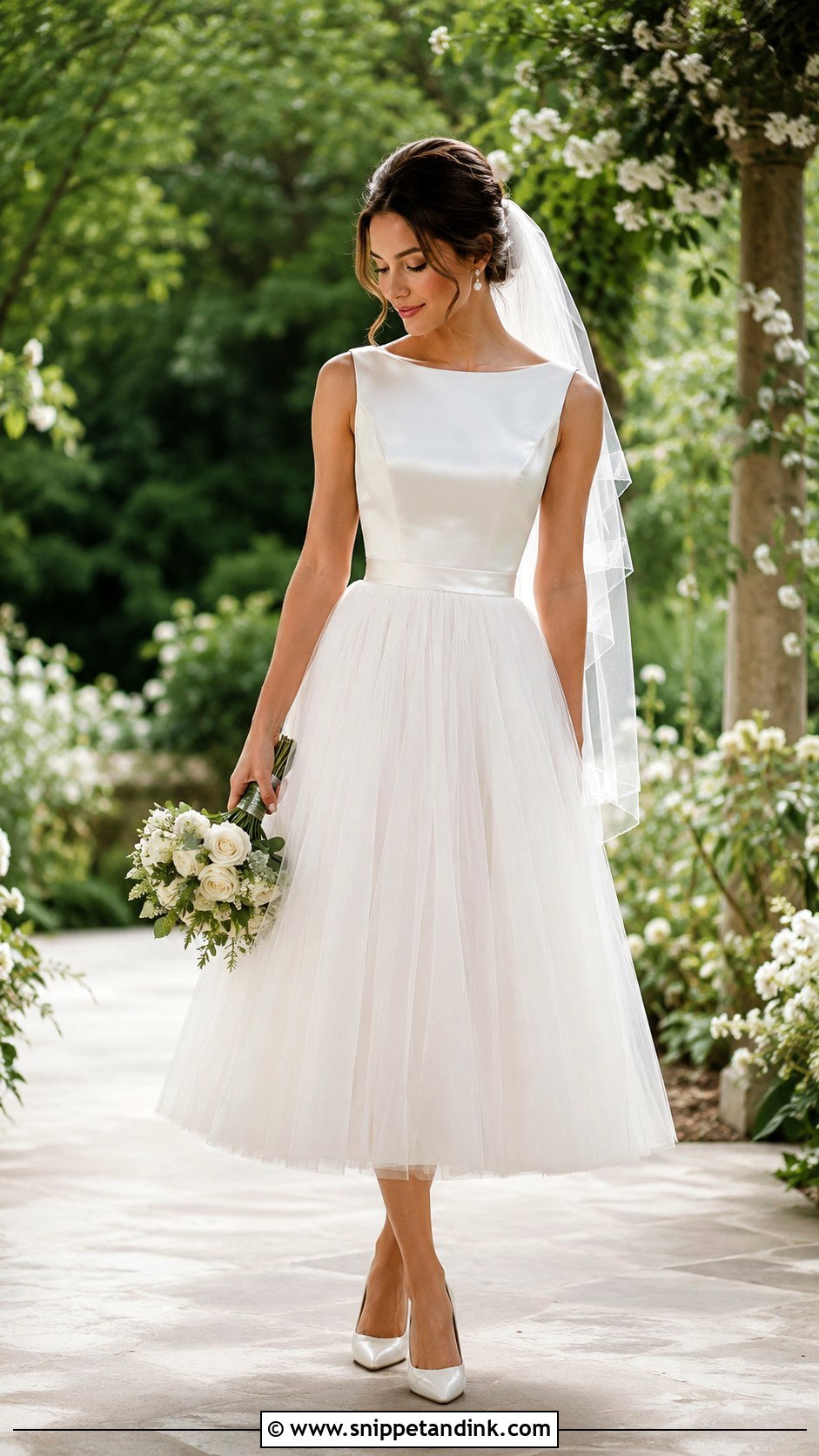
Tulle gives softness without the size of a ball gown, as long as you limit the layers. For a small wedding, a midi, tea-length or slim A-line tulle skirt in a few light layers works better than a full petticoat. Balance it with a fitted bodice, a satin camisole, lace top or a simple corset. Tulle snags on brick walls, wicker chairs and pronged bracelets, which is worth remembering at garden venues. Ballet-style flats or pointed heels with pearl earrings suit it.
17. Chiffon A Line Wedding Dress
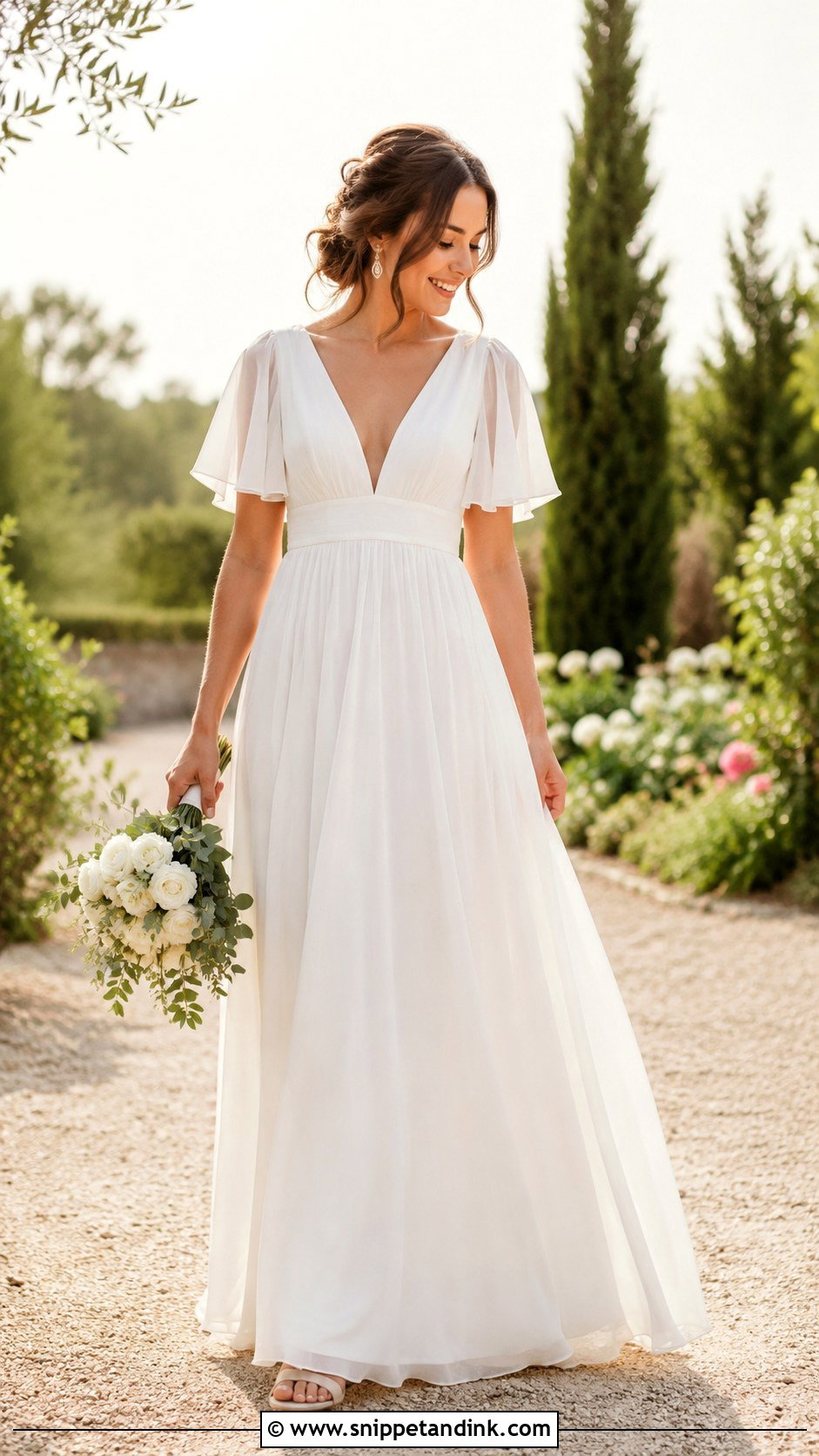
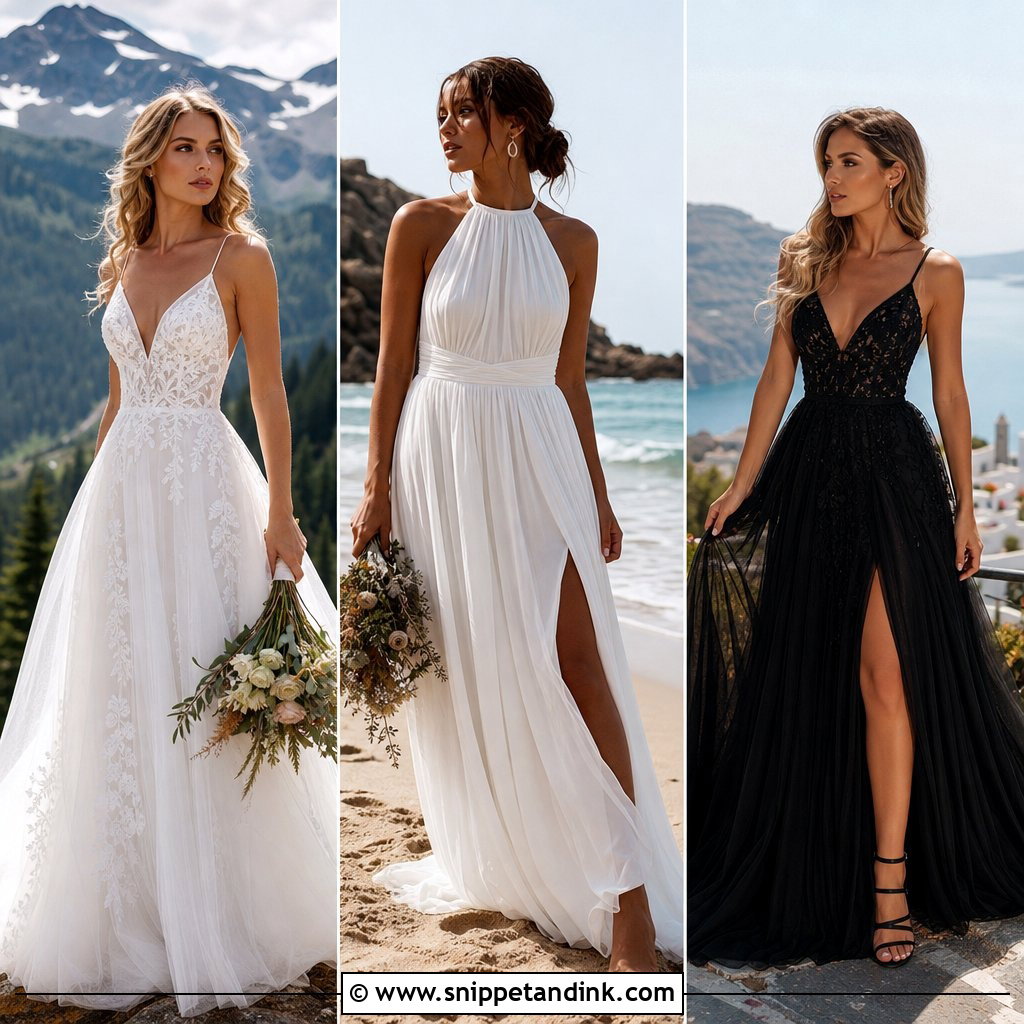
Chiffon moves with every step and weighs almost nothing, so it’s the dress I’d suggest for a warm outdoor ceremony or a beach elopement. The A-line defines the waist and floats away from the hips, which flatters most figures, and a V-neck or flutter sleeves keep it soft. Chiffon frays easily and catches on sandal buckles, so have the hem finished cleanly and set just above the ground. You can sit, walk and hug in it without a second thought.
18. Crepe Sheath Wedding Dress
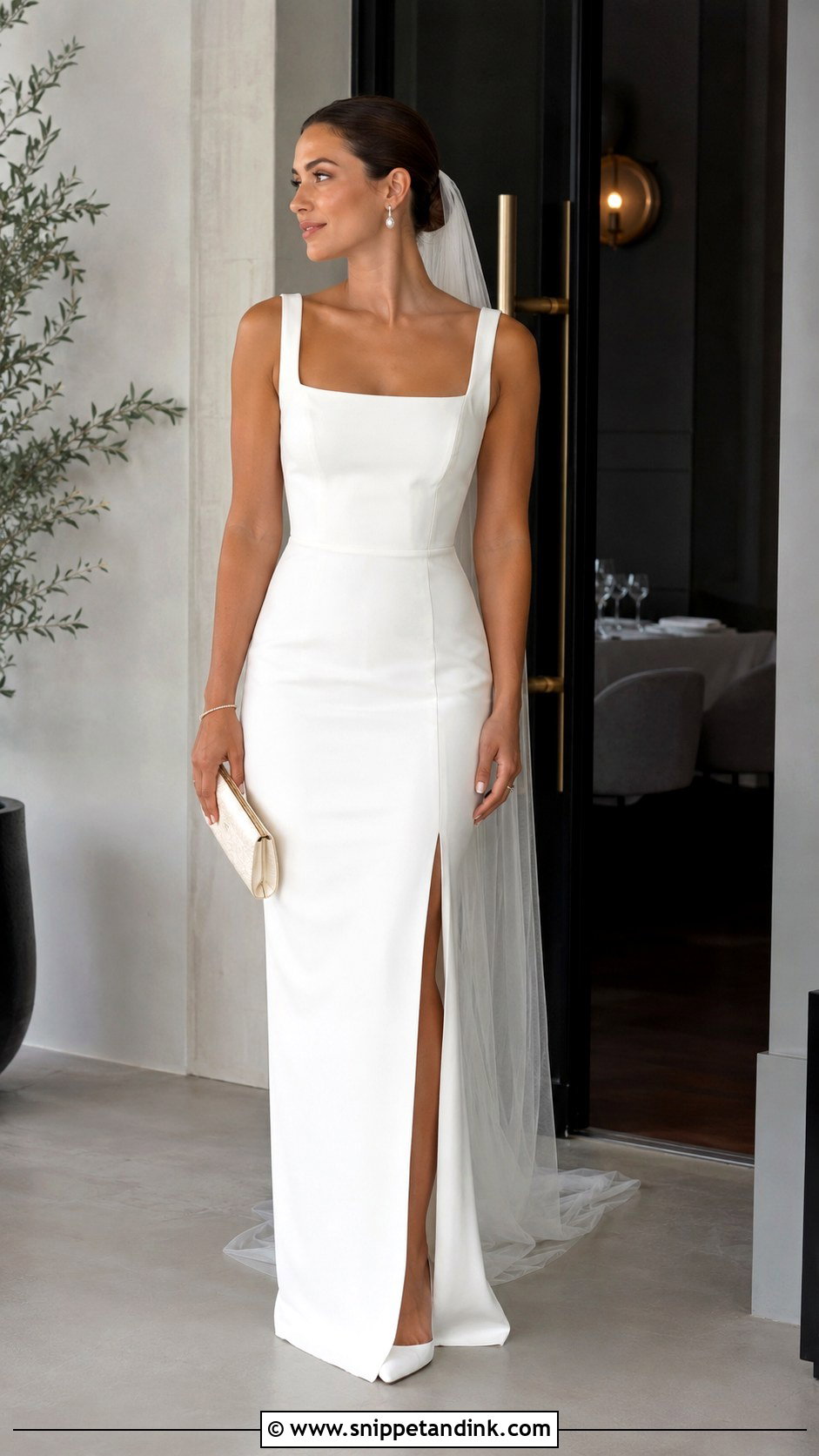
Crepe has enough weight to look smooth but feels far easier to wear than heavy satin or layered tulle. A sheath follows the body without a dramatic skirt, which suits small rooms where volume would crowd the space. A square neckline, low back, side slit or covered buttons give it interest. Crepe is unforgiving of poor fit at the hip, so take your time over that alteration. It suits city weddings, private dining rooms and hotel ceremonies, and won’t date quickly in photos.
19. Strapless Midi Wedding Dress
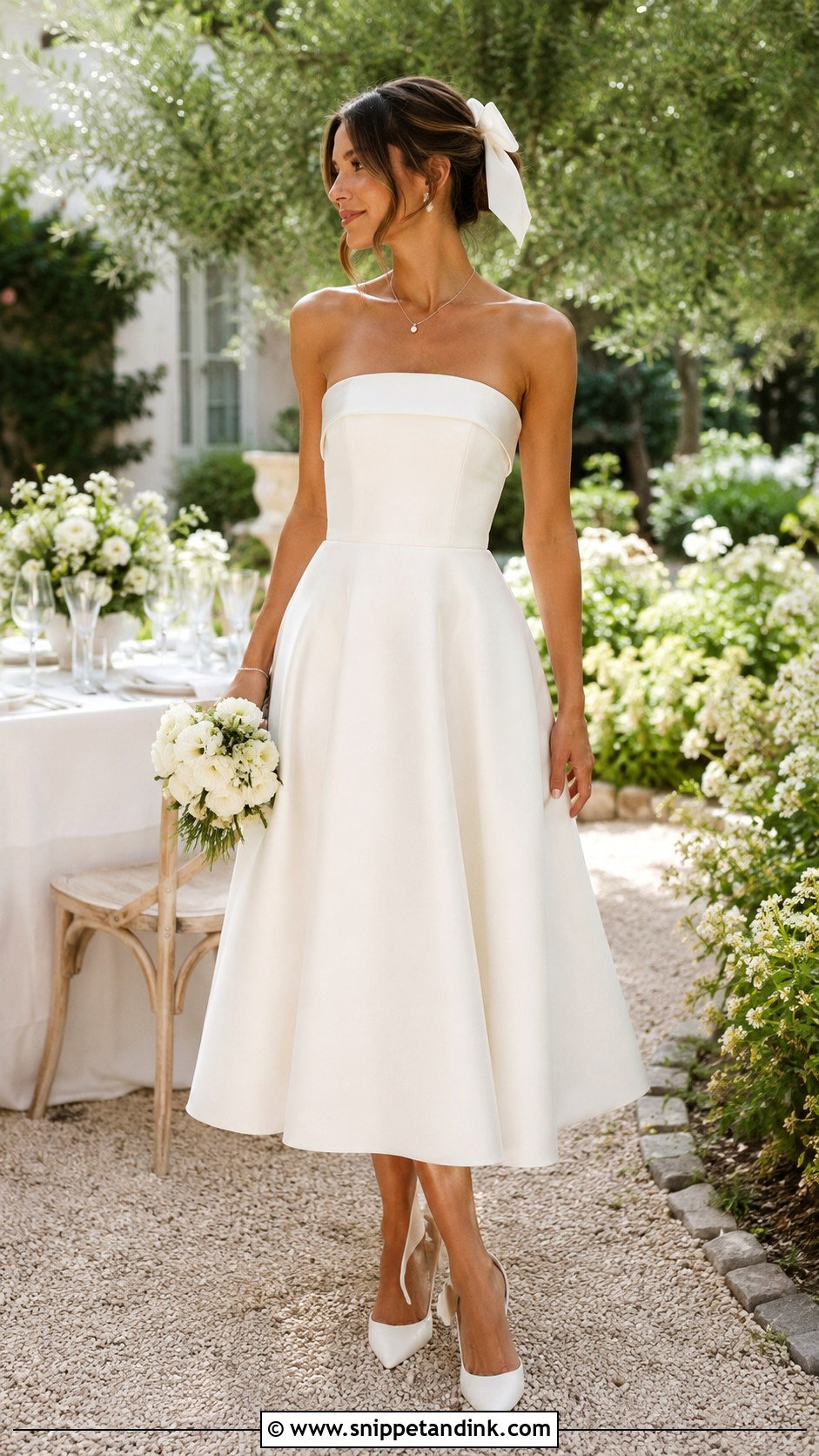
A strapless midi needs real structure inside, meaning boning and a grip strip along the top edge, or you’ll spend the day pulling it up. Structured satin, crepe or mikado holds the shape, and a straight or slight A-line skirt is easy to sit in. Slingback heels and a short veil or bow clip suit it. A cropped jacket or soft wrap adds coverage for a church or a chilly evening. With no train to manage, it works well for restaurant receptions.
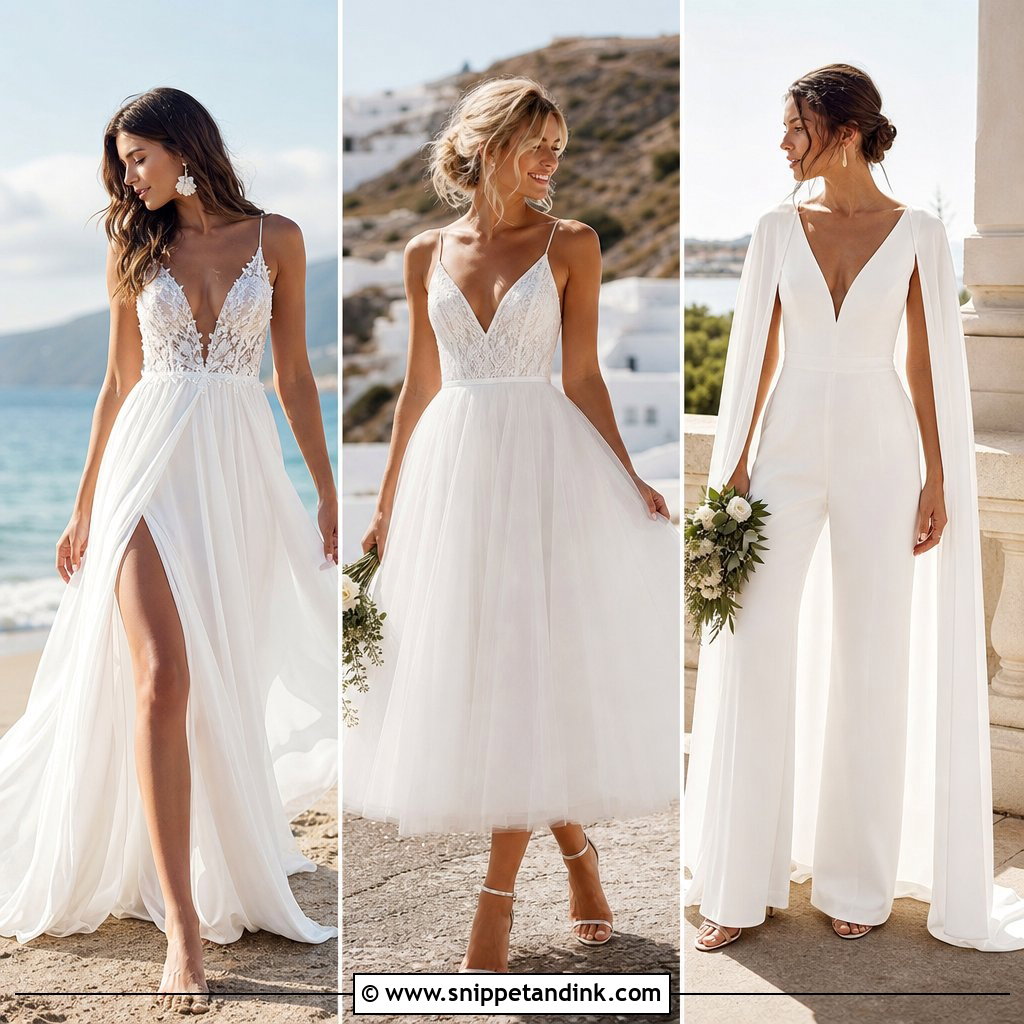

20. Cape Wedding Dress
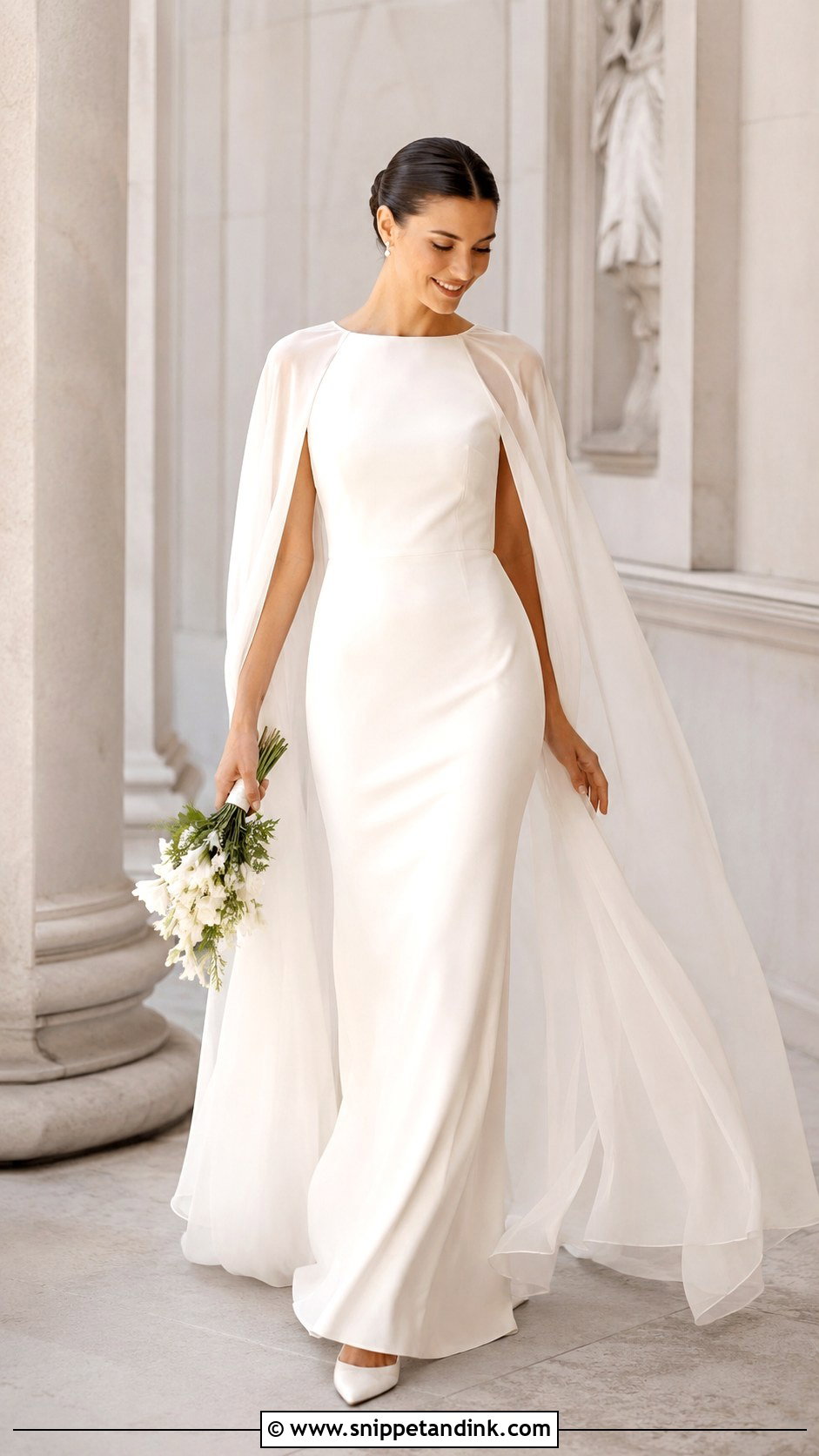
A cape gives the movement of a veil or train without weighing down the dress. Over a simple column, sheath or slip, try a sheer cape, a lace capelet or a detachable shoulder cape. Outdoor walking shots are where it shows off, as it lifts in the air. Make sure the attachment points are hidden and strong; a cape hanging from two small snaps can tear the dress if someone steps on its hem. Take it off after the ceremony for an easier reception look.
21. Colored Wedding Dress
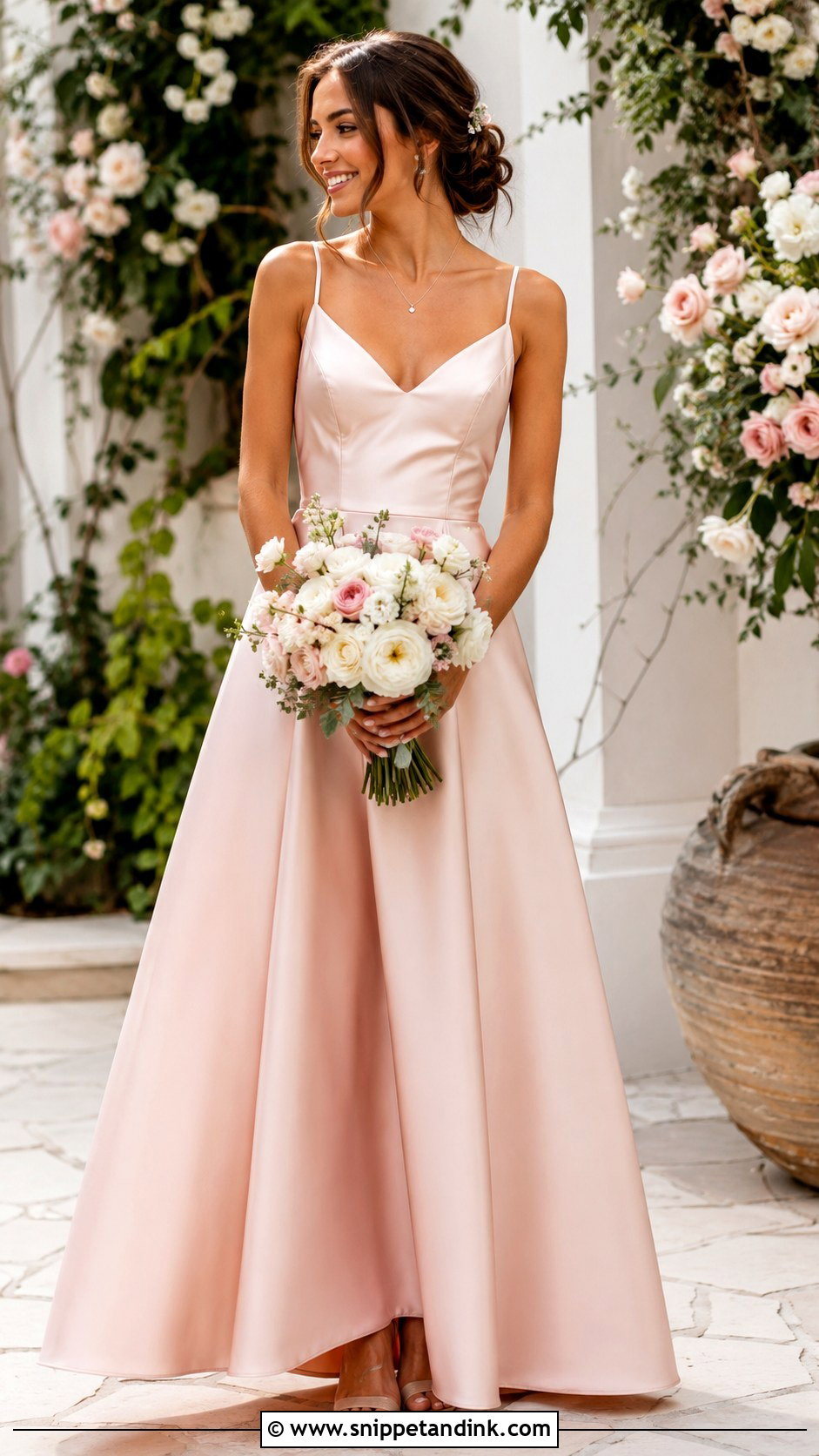
Not every bride feels like herself in white. Blush, champagne, pale blue, buttercream and lavender still read bridal while saying something personal. Keep the silhouette simple, such as a satin slip, chiffon A-line or tea-length dress, so the color looks deliberate. Pastels shift with the light, so look at the fabric outdoors and indoors before buying; pale blue in particular can turn grey in shade. Choose a bouquet that complements the color rather than matching it exactly.
22. Vintage Inspired Wedding Dress
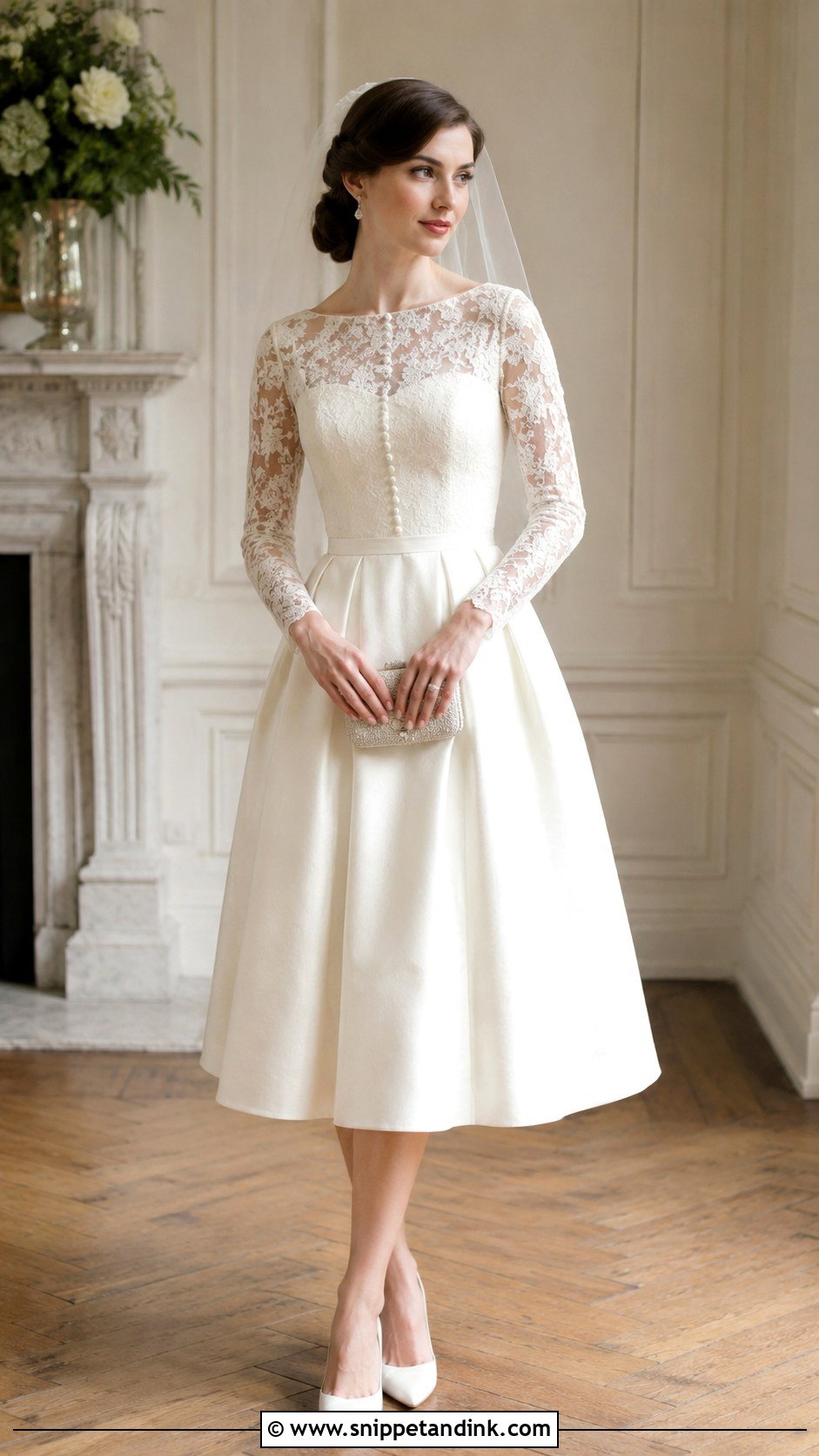
Pick one or two vintage details and keep the rest modern: a tea-length hem, lace sleeves, covered buttons, a square neckline or a small collar. Add all of them and it starts looking like a costume. Genuine vintage dresses are often too fragile or too small to alter much, so if you’re buying a real older piece, show it to a tailor before you commit. Pointed pumps and pearl earrings keep it grounded at a historic home or a restaurant.
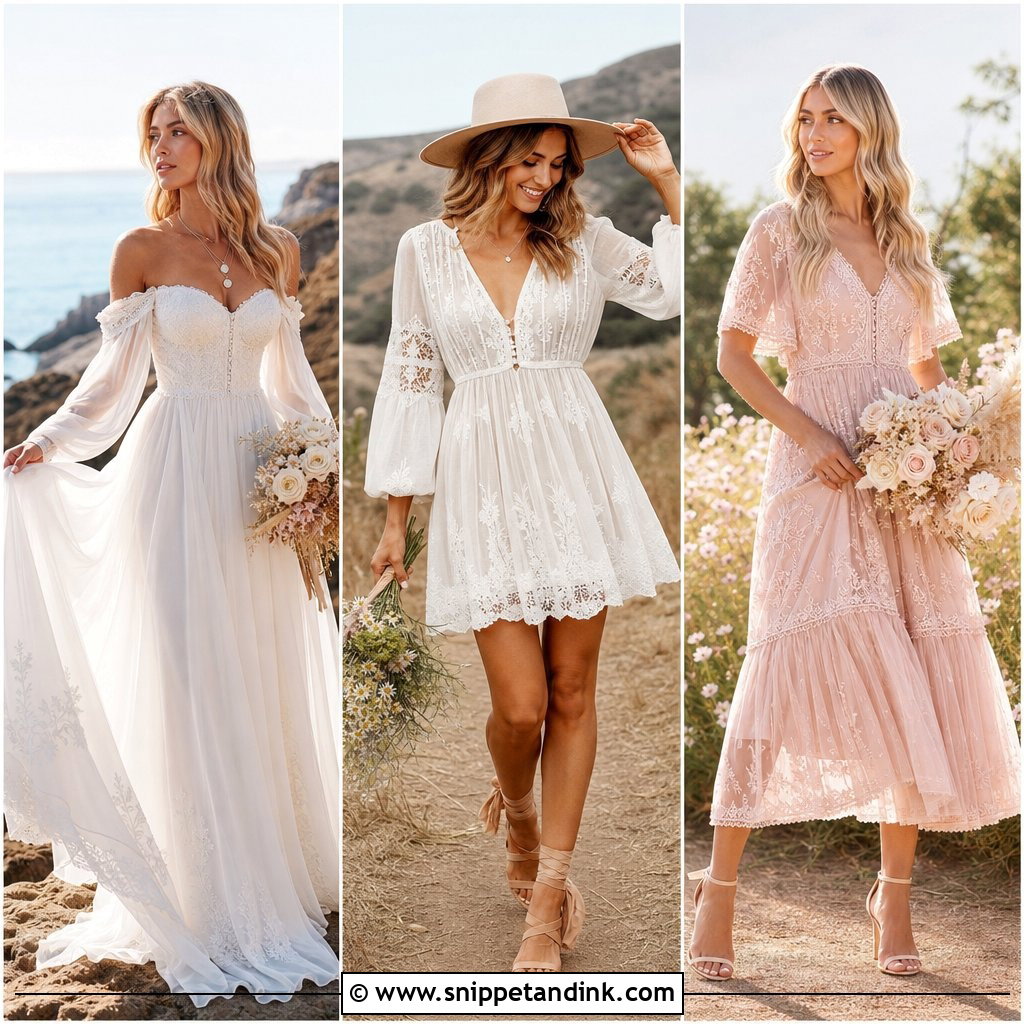
23. Boho Lace Wedding Dress
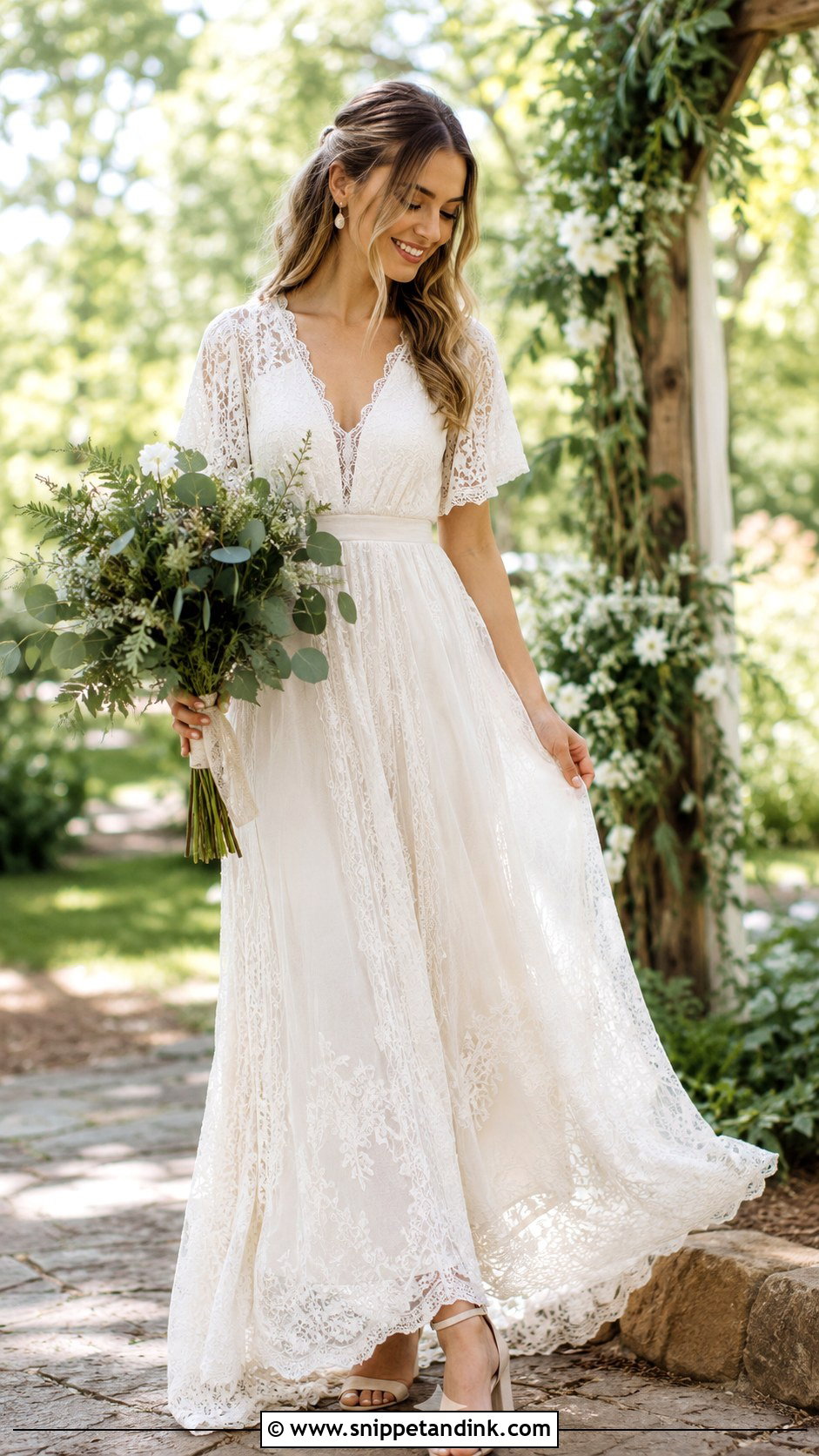
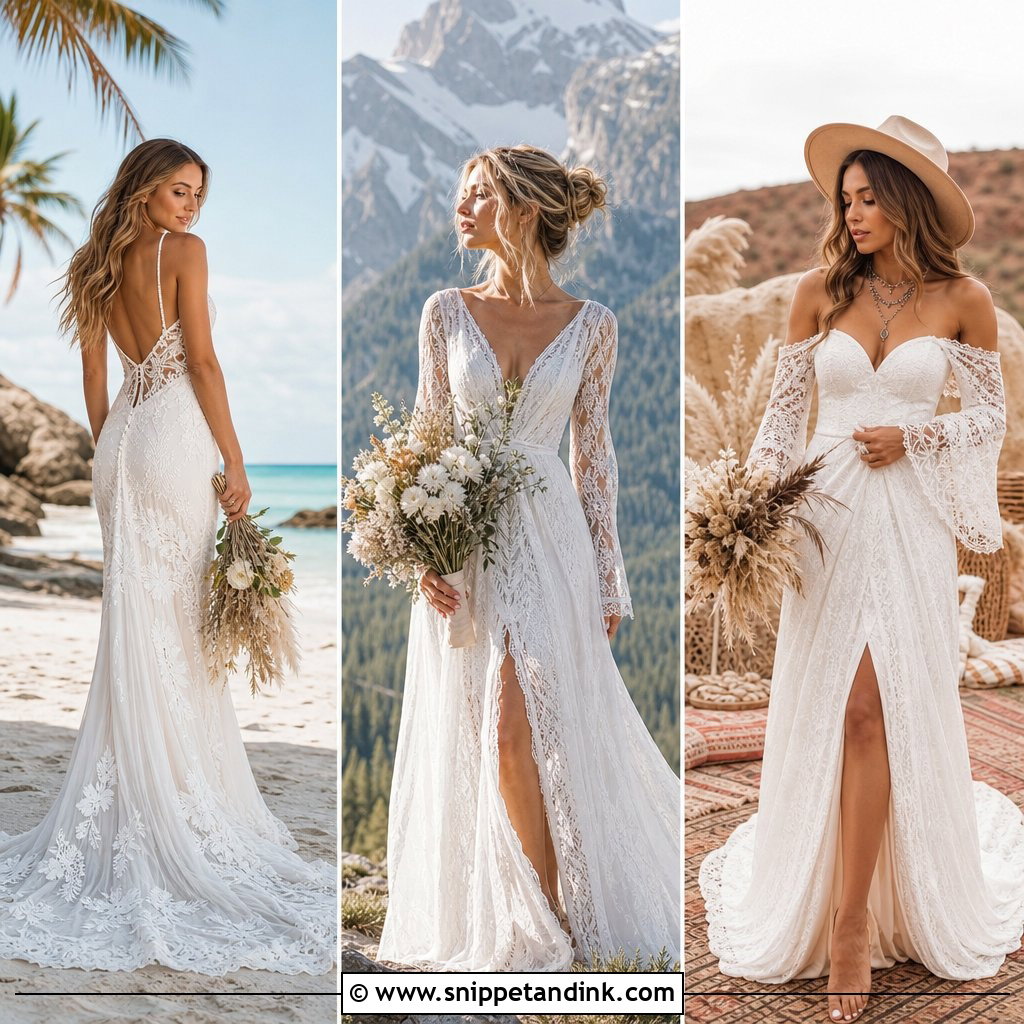
Boho belongs outdoors, and it works best relaxed rather than stiff. Soft lace, easy sleeves, open backs, light skirts and gentle tiers move well on a beach, in a backyard or in the desert. Open backs need support built into the bodice, so ask how the dress is held up if you’d normally wear a bra. Block-heel sandals sink less in sand and grass than stilettos. Keep accessories refined, with loose waves and a greenery bouquet, so it still reads as bridal.
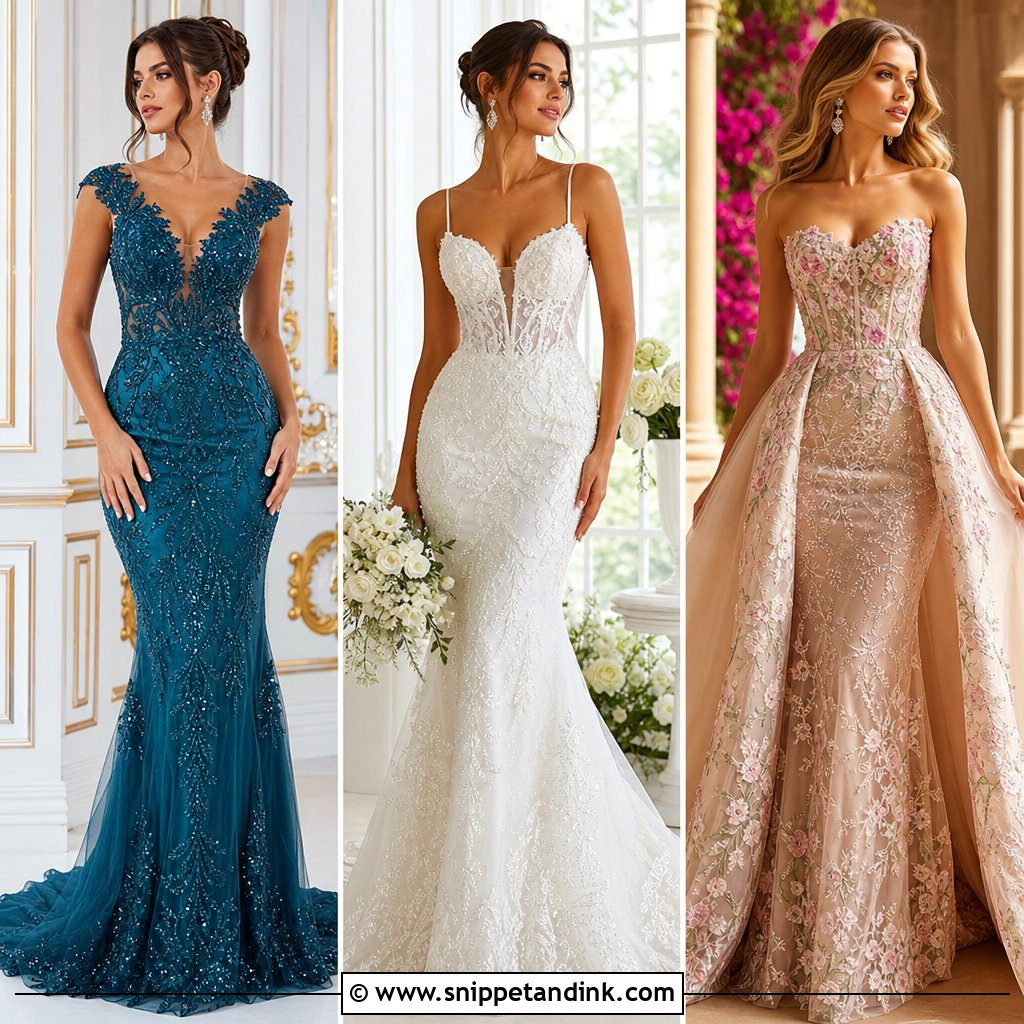
24. Wedding Dress With Detachable Overskirt
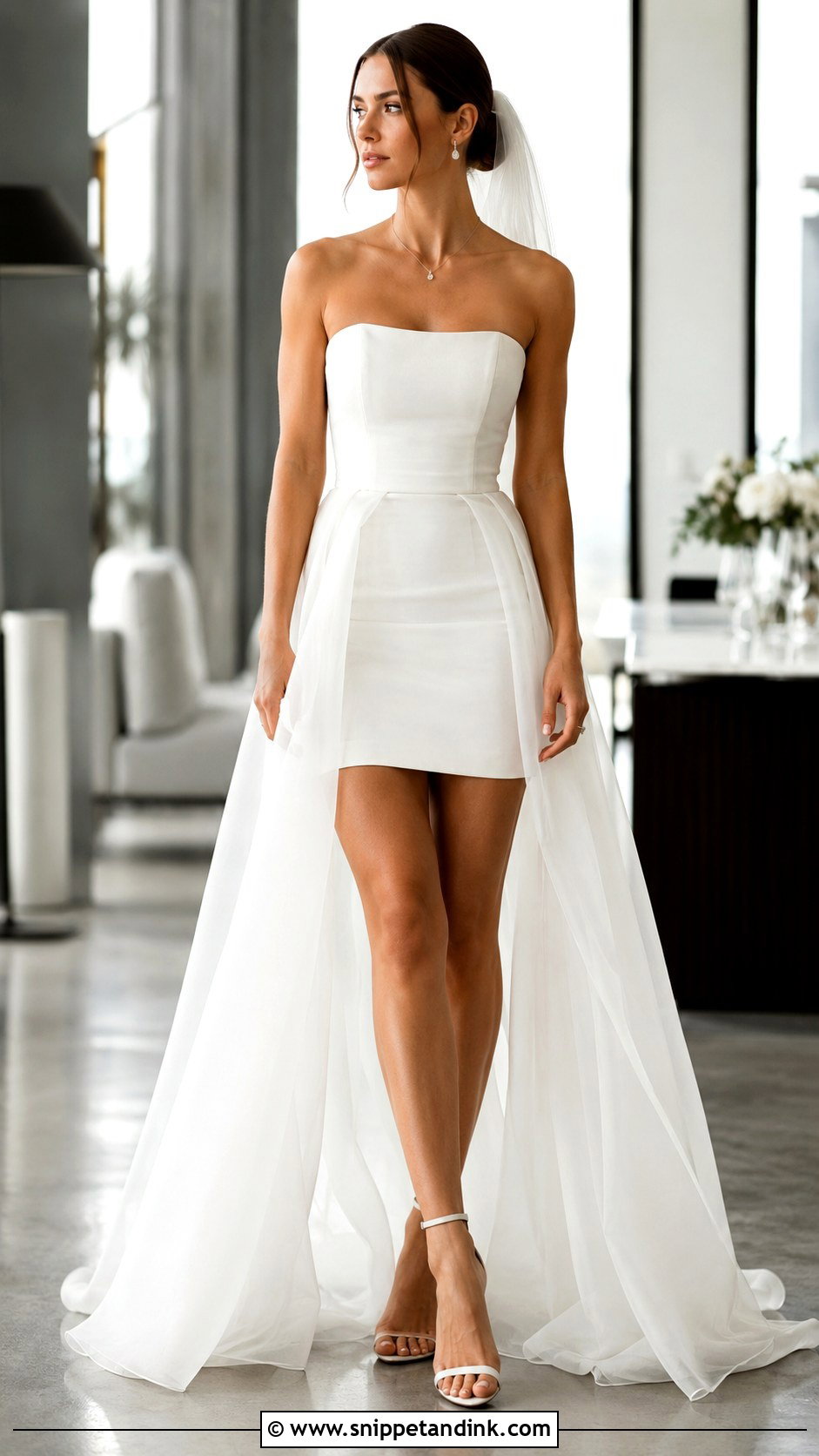
One dress, two looks. The overskirt adds volume and formality for the ceremony, then comes off to reveal a sleek mini, sheath or column for dinner and dancing. Organza, tulle or light satin keeps the overskirt from feeling heavy. Practice taking it off and putting it back on, and decide who will help, because some fasten with hooks at the back that you can’t reach yourself. A simple veil and clean jewelry suit both versions.

25. Bridal Jumpsuit Wedding Dress
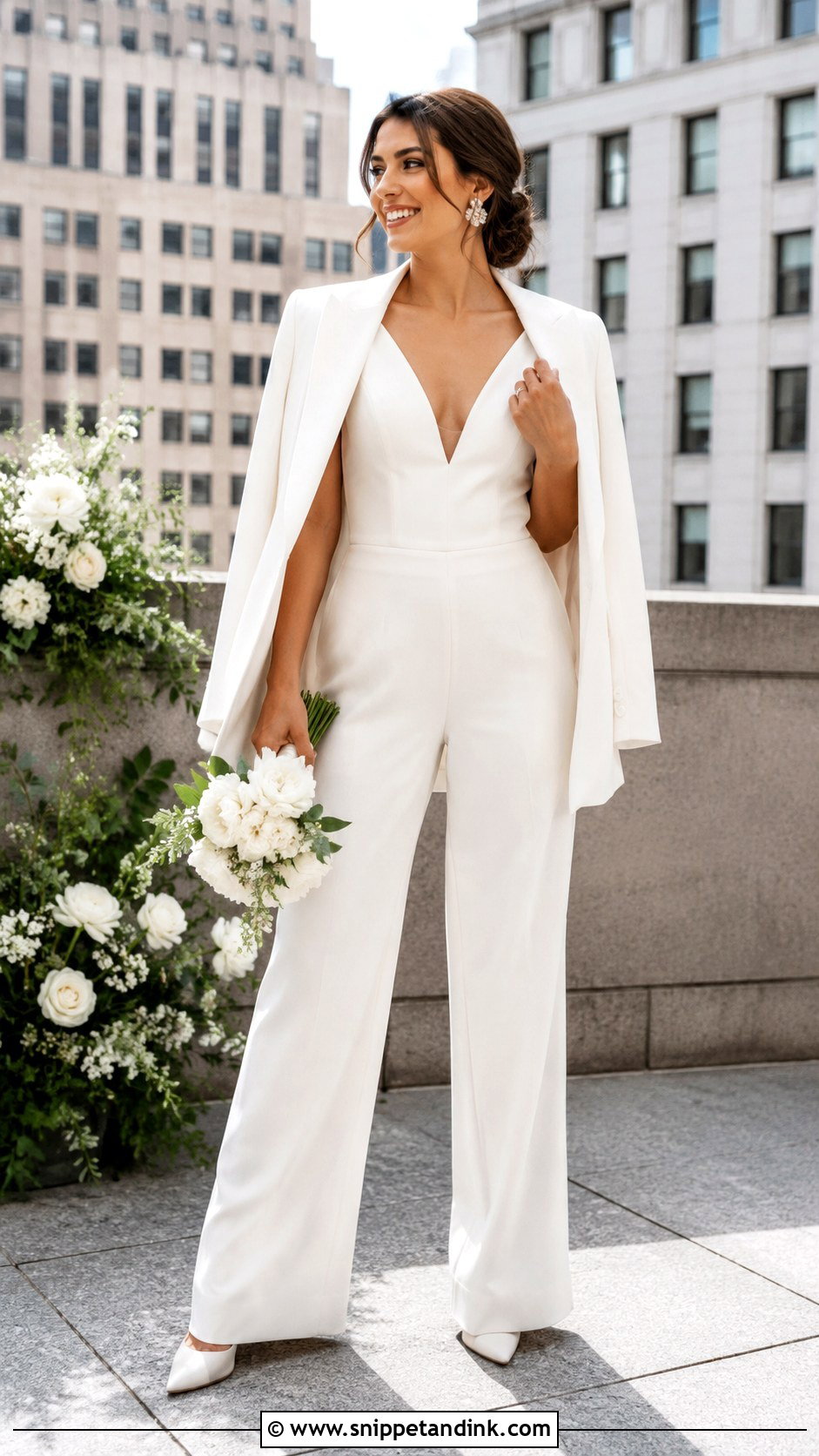
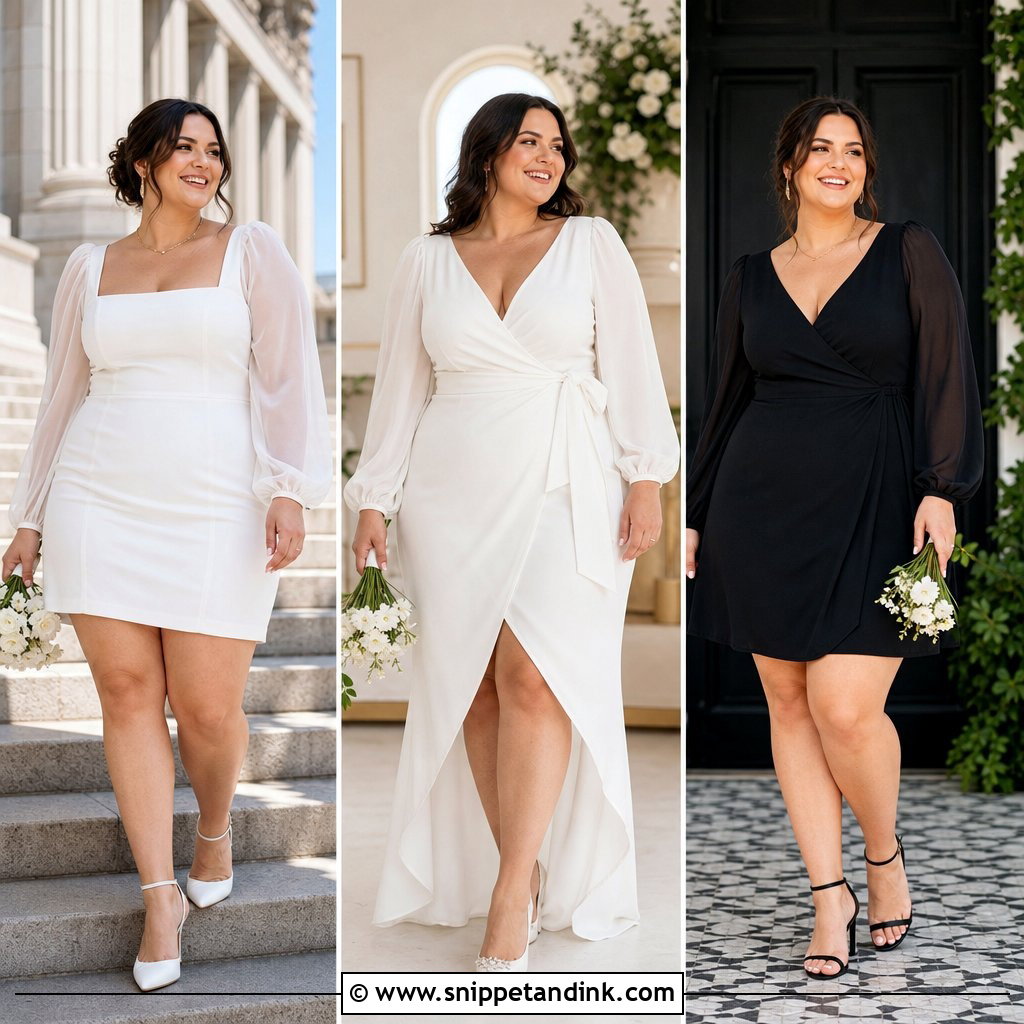
A jumpsuit makes sense for brides who don’t feel at home in a gown. Ivory crepe, satin or a tailored fabric with wide legs, a fitted waist and a clean neckline looks bridal once you add a veil, a cape or a white blazer. Have the legs hemmed with the exact shoes on, because wide legs that are too long drag on city pavement and turn grey at the hem by evening. Check the restroom logistics too. Courthouse weddings, rooftops and city elopements suit it best.
Shopping Outside the Bridal Salon
Many dresses on this list turn up in ready-to-wear and evening collections, not only in bridal stores, and that changes your timeline. Bridal gowns are often made to order and can take several months to arrive. A ready-to-wear dress is available now and usually needs only alterations, which tailors commonly want a few weeks for. Order early enough that you can still return it if the white turns out to be the wrong shade next to your skin.
Lap Creases, Red Wine and a Steamer at the Venue
At a small wedding you’ll probably eat a real meal in your dress. Satin creases where you sit and shows water rings if you rub too hard, so ask someone to carry a clean white cloth and a stain pen for you. For wine or oily food, blot gently and never scrub; leave the proper cleaning to a specialist after the wedding.
A handheld steamer at the venue takes lap creases out before evening portraits. Hold it a little away from the fabric and keep it moving, since steam held in one spot can leave a mark on silk and satin. Test it first on an inside seam or the hem allowance.
When Guests Stand Close, Fabric and Fit Do the Talking
A small wedding makes every detail more visible, so fabric, fit and finishing count for more than size or sparkle. A satin slip, lace midi, bridal mini, crepe column, tea-length dress, colored gown or jumpsuit can all look completely bridal when they suit the setting and suit you. Pick the one you can sit, walk and hug in without thinking about it. That ease shows on your face in every photo.
You'll Like These Ideas:


Leave a Reply