
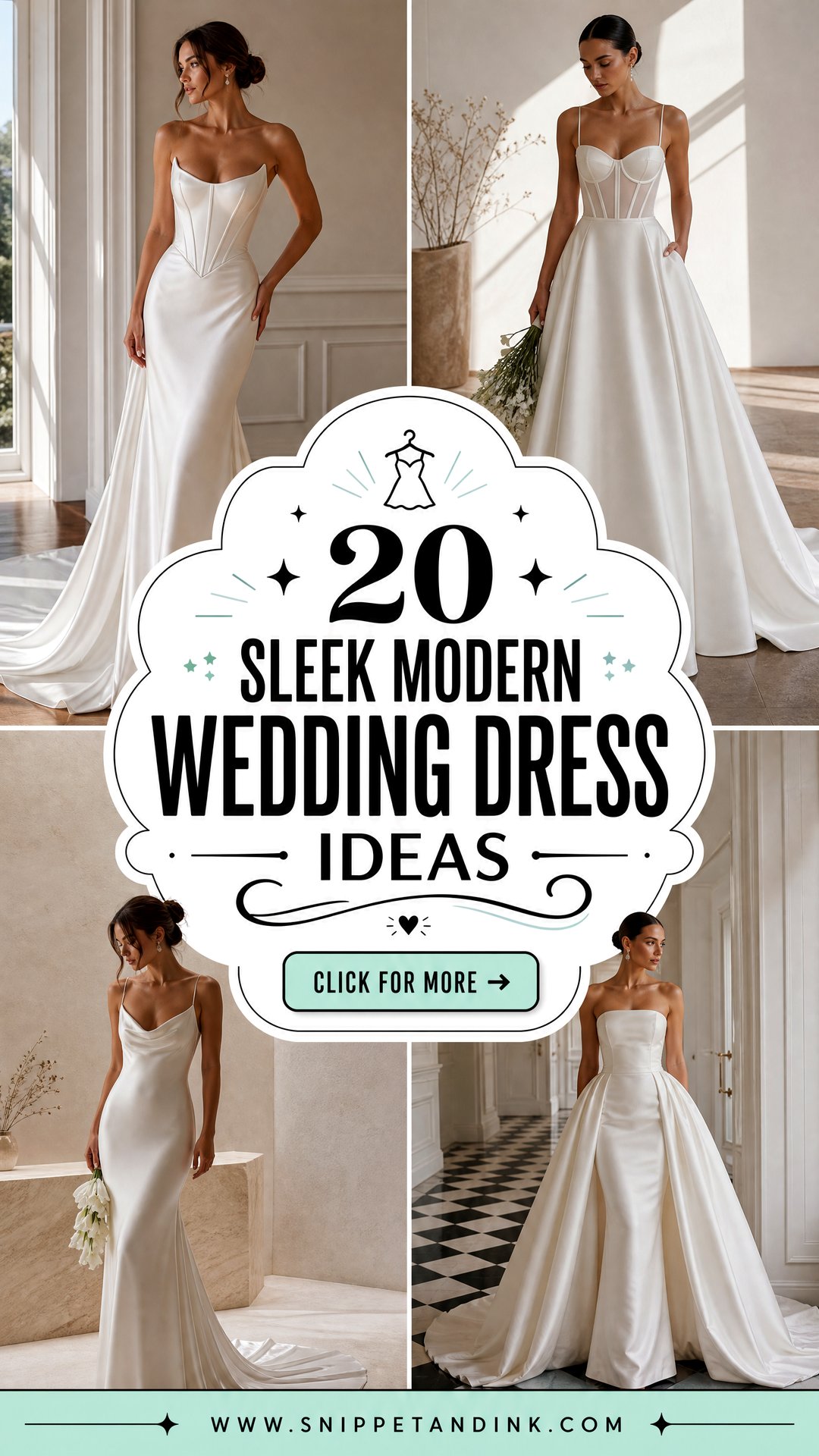
A plain gown has nowhere to hide, and that is exactly why I love styling one. With no lace or beading to distract the eye, the cut, the fabric weight and the fit at the waist carry everything, so a dress that is half an inch off reads as off. The twenty dresses below range from sculpted columns and bias slips to structured bodices and convertible skirts, with a few current shapes such as architectural shapes, bows and basque waists mixed in. For each one I’ve noted the shoes, jewelry, veil and flowers I’d put with it, and where the style tends to let brides down if nobody checks it at a fitting.
What Plain Fabric Gives Away
Lace and beading hide a lot. A smooth gown hides nothing, so before I look at necklines with a bride, I look at what will sit under the dress and how the fabric behaves on her body. These are the details that decide whether a sleek gown looks expensive or just bare.
- Smooth, edge-free underwear in a shade close to your skin, not white. White shows through ivory crepe and silk under bright flash.
- A strapless or low-back bra decision made before the first fitting, since the seamstress fits the bodice around it.
- Satin creases across the lap when you sit, and the creases stay. Crepe recovers far better, which matters if you have a long seated dinner.
- Silk shows water marks and perspiration more readily than synthetic satin. For a hot outdoor wedding, I lean toward a heavier crepe or a good polyester satin.
- Heavier fabrics hang straighter. If you love a column, a fabric with some weight will keep the line from clinging at the hips.
I also ask brides to bring photos of their venue lighting. Shiny satin reads brighter and whiter under direct sun, while matte crepe looks softer and creamier, and that changes which ivory you’ll want.
1. Strapless Satin Column Wedding Dress
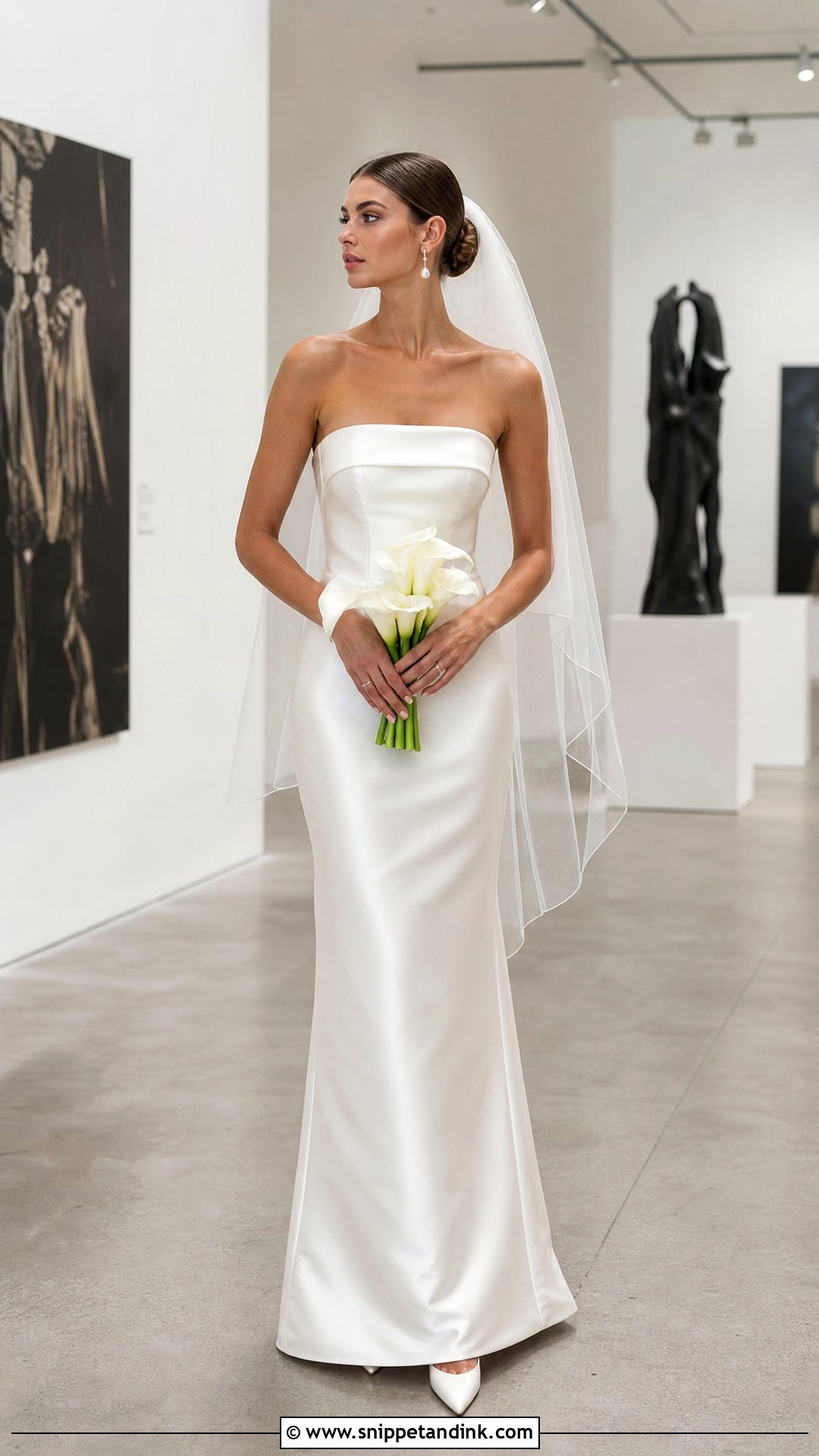
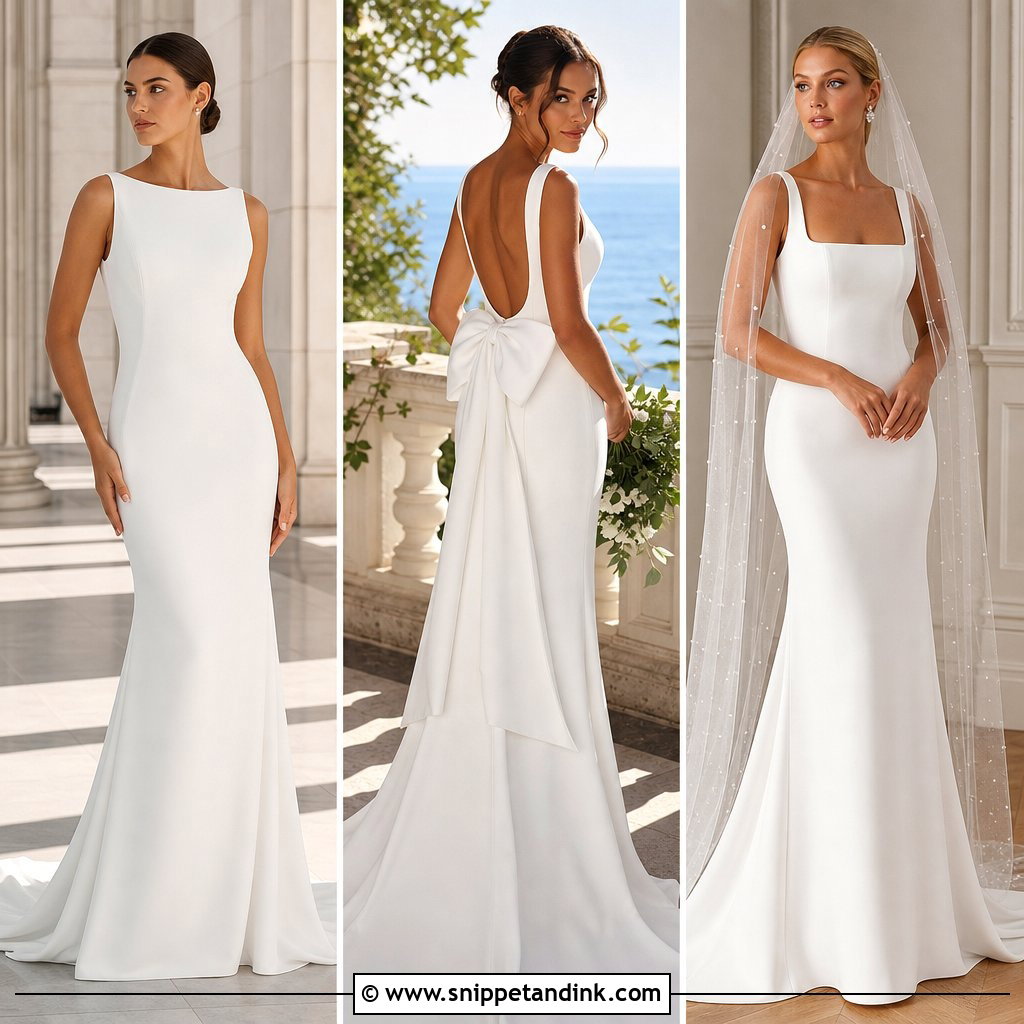
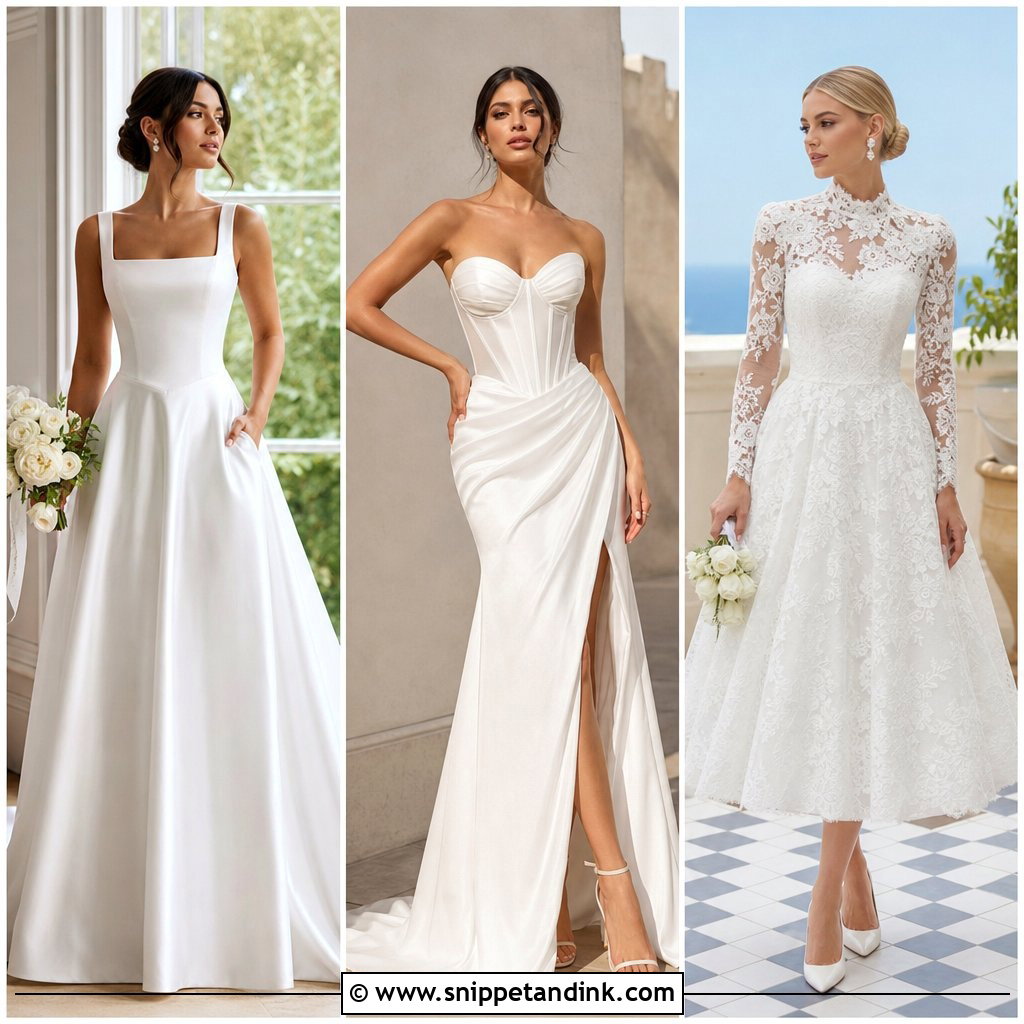
Satin on a straight column shows every seam and every line underneath, so this is the dress where I insist on the right undergarments from the first fitting. Internal boning should hold the strapless neckline up on its own; if you are hitching it after a few steps, the bodice needs taking in, not more tape. Ask for a fit that skims rather than grips, because satin pulls into horizontal creases across the hips when it is tight and you sit down. Pointed ivory pumps, pearl drops and a low bun keep it clean, and a fingertip veil softens the shape without covering it. Calla lilies or a small orchid cluster suit the line, and an art gallery or a pared-back hotel ballroom gives it the plain backdrop it needs.
2. Square Neck Crepe Sheath Wedding Dress
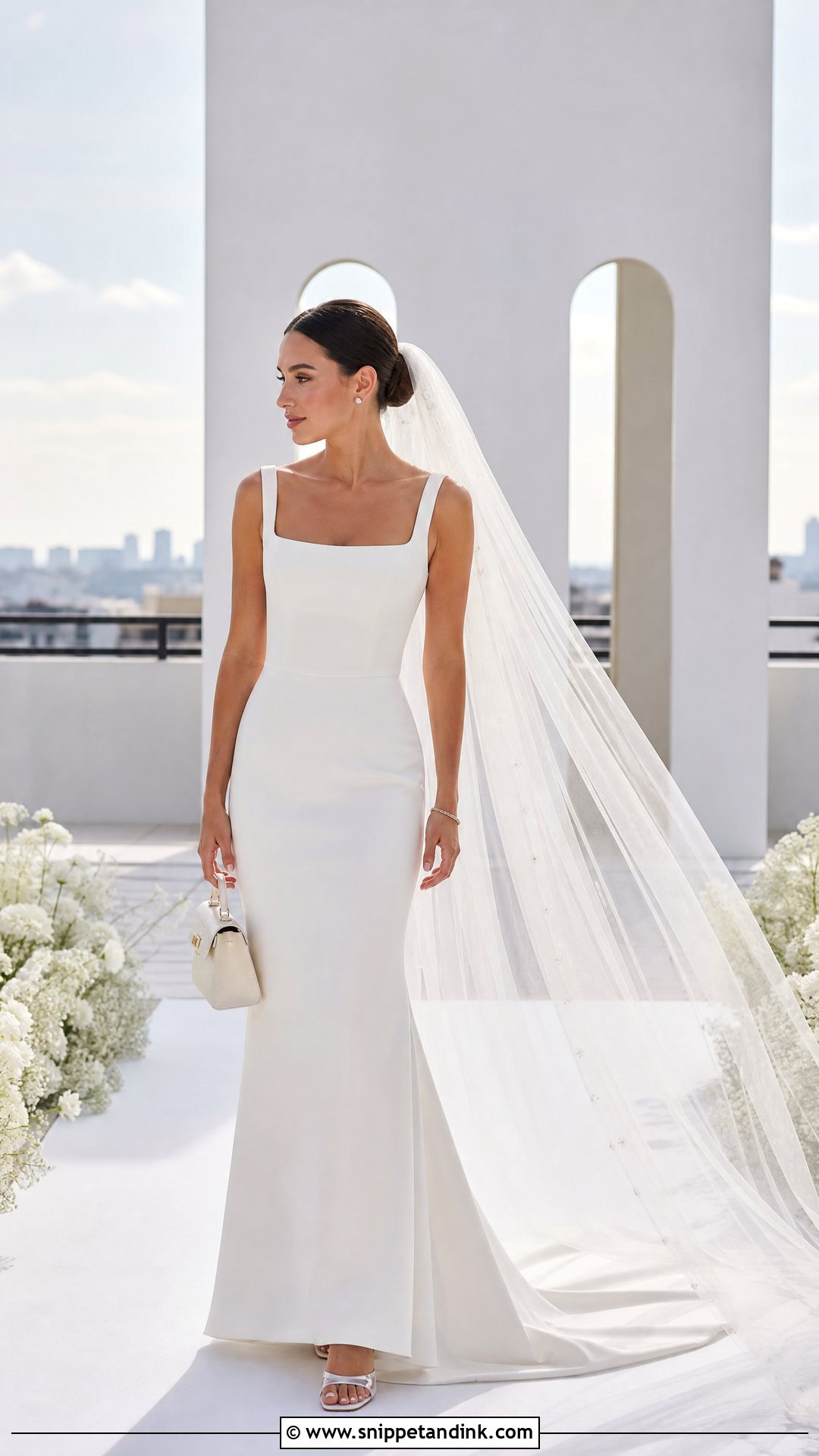
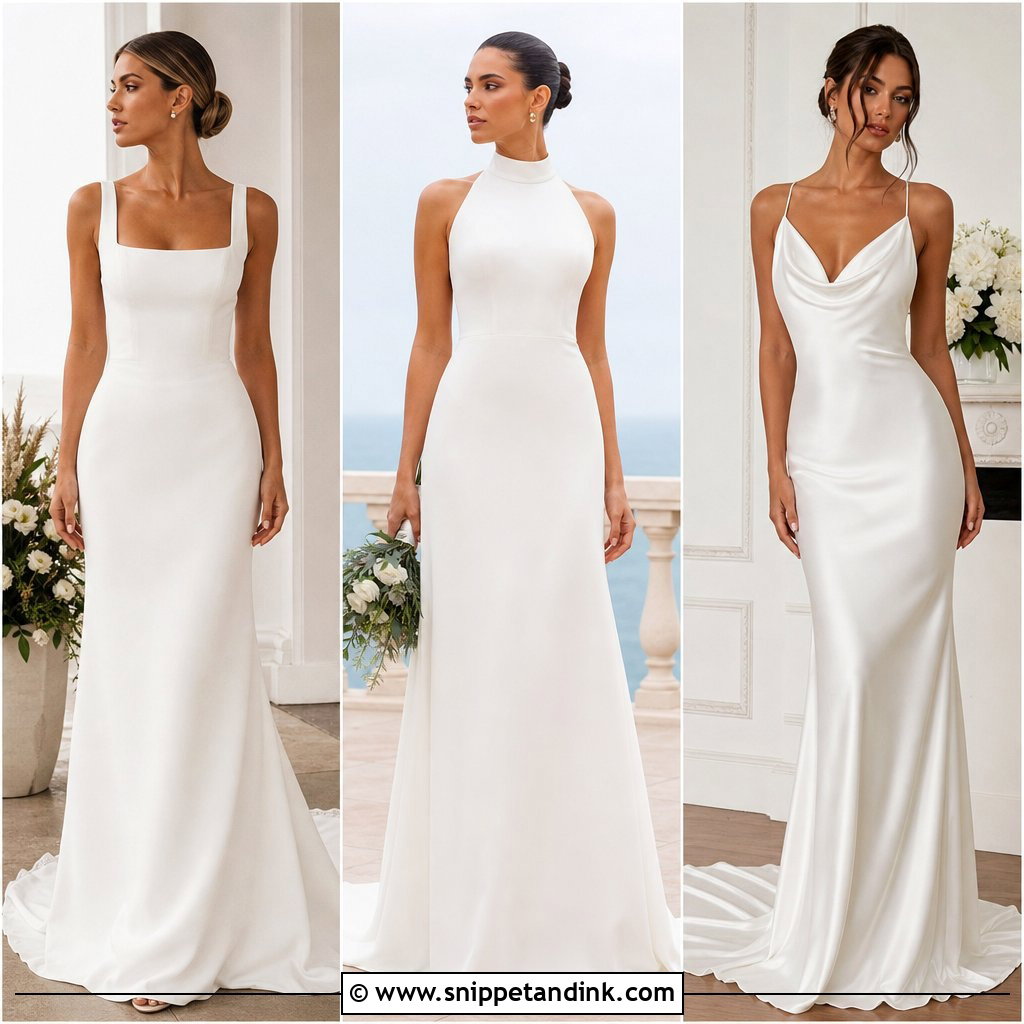
Square necklines are less forgiving than they look in pictures. The corners need to sit flat on the chest, and on a smaller bust they can gape when you lean forward, so I always have brides bend and reach at the fitting before anyone pins. Matte crepe is my pick here because it reads as a solid shape on camera rather than throwing light around. Wider straps help the neckline hold its geometry. Slingbacks, small diamond studs and a center-parted chignon keep the neck clear, and a cathedral veil gives the ceremony some theatre. A narrow self-fabric belt adds waist definition if the sheath feels too straight on you, and a rooftop or restaurant reception suits the crispness.
3. Halter Neck Silk Wedding Dress
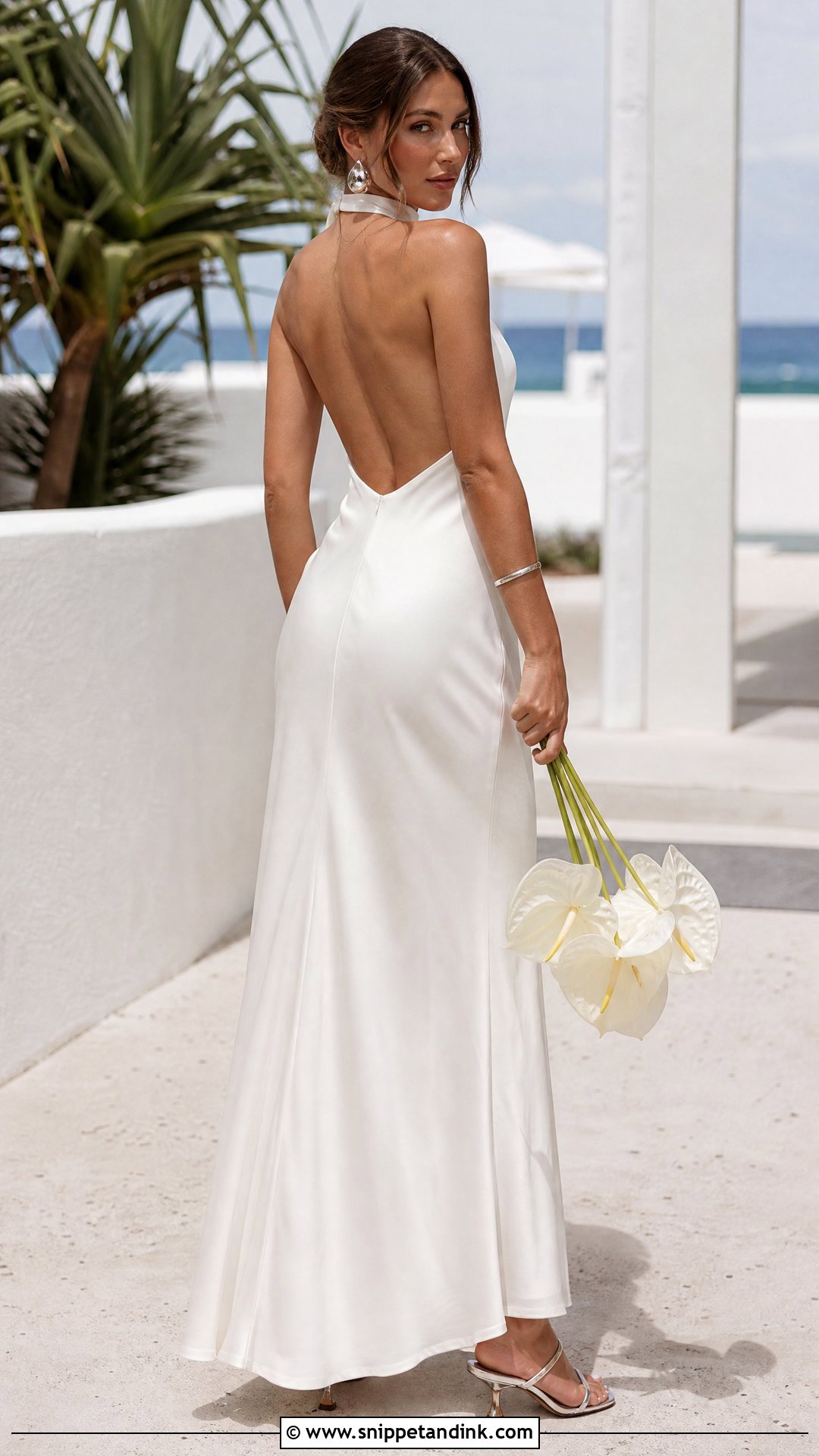
Silk halters move with you, which is lovely in person and tricky at the back of the neck. The tie or clasp carries the weight of the bodice, so I check it after an hour of wear at the fitting, because a heavy skirt can make the strap dig in by the reception. The shape suits strong shoulders and a long neck, and I’m more cautious with it for very full busts unless there is hidden structure in the bodice. A slim waist, open back and slight flare keep the proportions even. I’d pair it with barely-there sandals, small earrings and hair swept up so the strap line stays visible.
4. One Shoulder Draped Wedding Dress
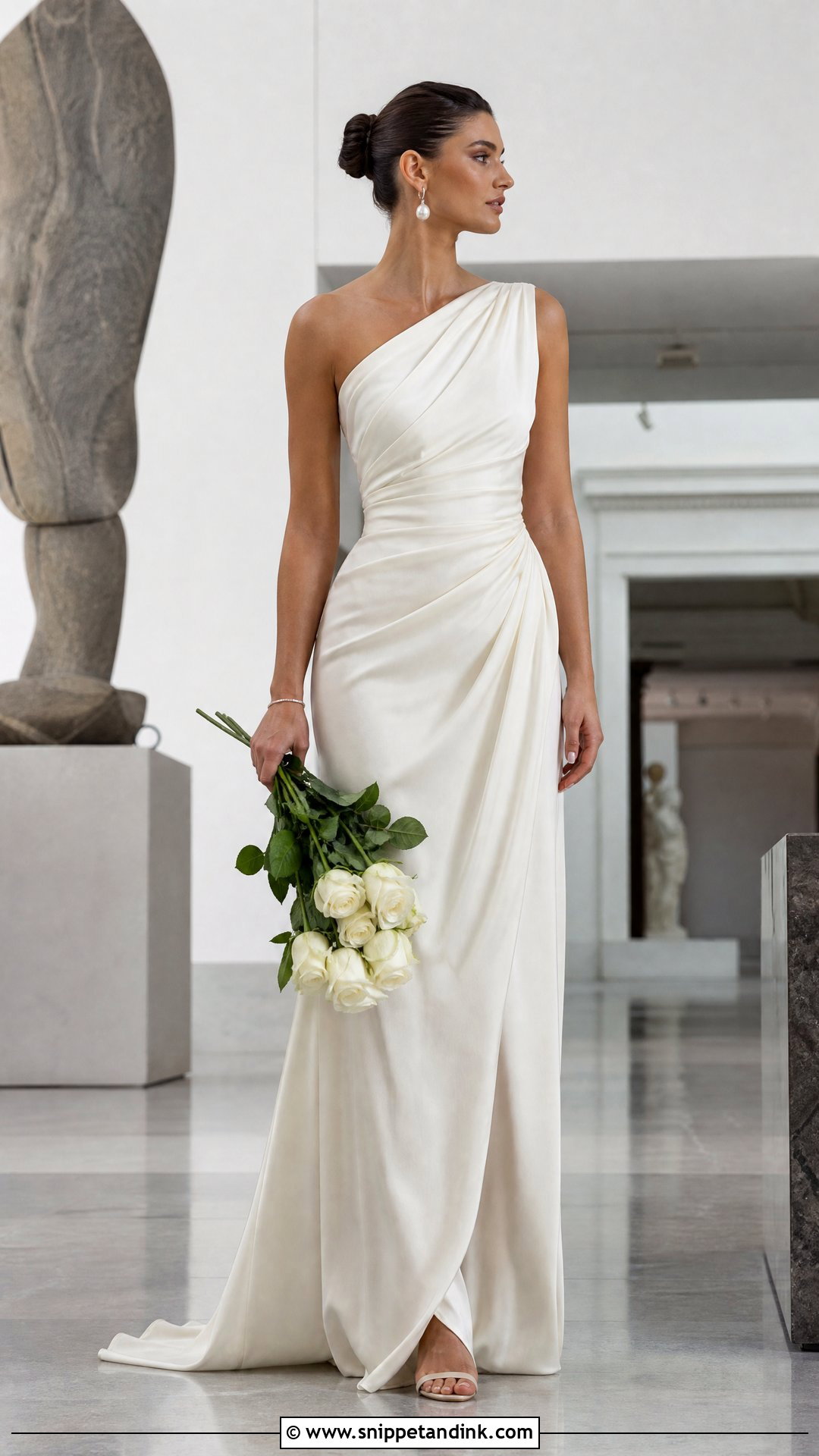
One shoulder means one side carries the whole bodice, so the strap must be anchored into the structure rather than just sewn to the edge. When I fit this style I watch the bare side while the bride raises her arm; if the neckline lifts away from the body, it needs a stay or silicone grip tape on the inside. Soft draping across the bodice should point toward the waist, not pool at the hip. Low ivory heels, a single statement earring on the covered side and a bracelet on the bare arm balance it. I usually swap the long veil for a shoulder-length blusher or a plain comb, because a long veil fights the asymmetry. Long-stem roses suit museums and rooftop venues at night.
5. High Neck Long Sleeve Wedding Dress
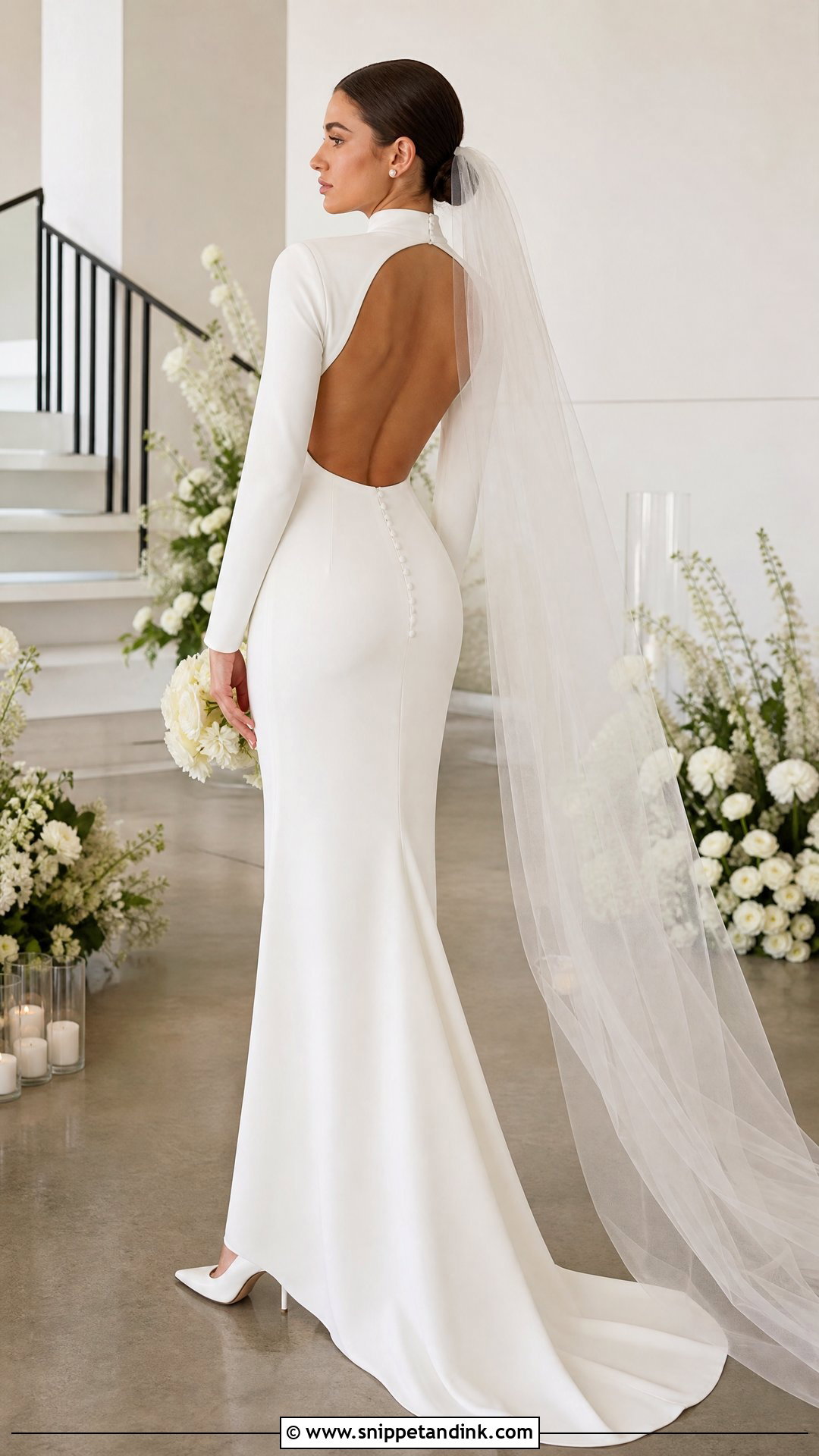
Full coverage reads modern when the cut is exact, and that means the sleeves have to be right. Fitted long sleeves need enough ease at the elbow for you to hug people and raise a glass; I ask brides to cross their arms and lift them overhead before I approve the sleeve. Smooth crepe or stretch satin keeps the line clean where patterned lace would break it up. An open back stops the high neck from looking severe. Pointed pumps, pearl studs and a neat low knot finish it, with the veil comb set below the bun so the back stays visible. It earns its place at cooler times of year and in heavily air-conditioned venues, and white tulips keep it fresh.
6. Off Shoulder Fit And Flare Wedding Dress
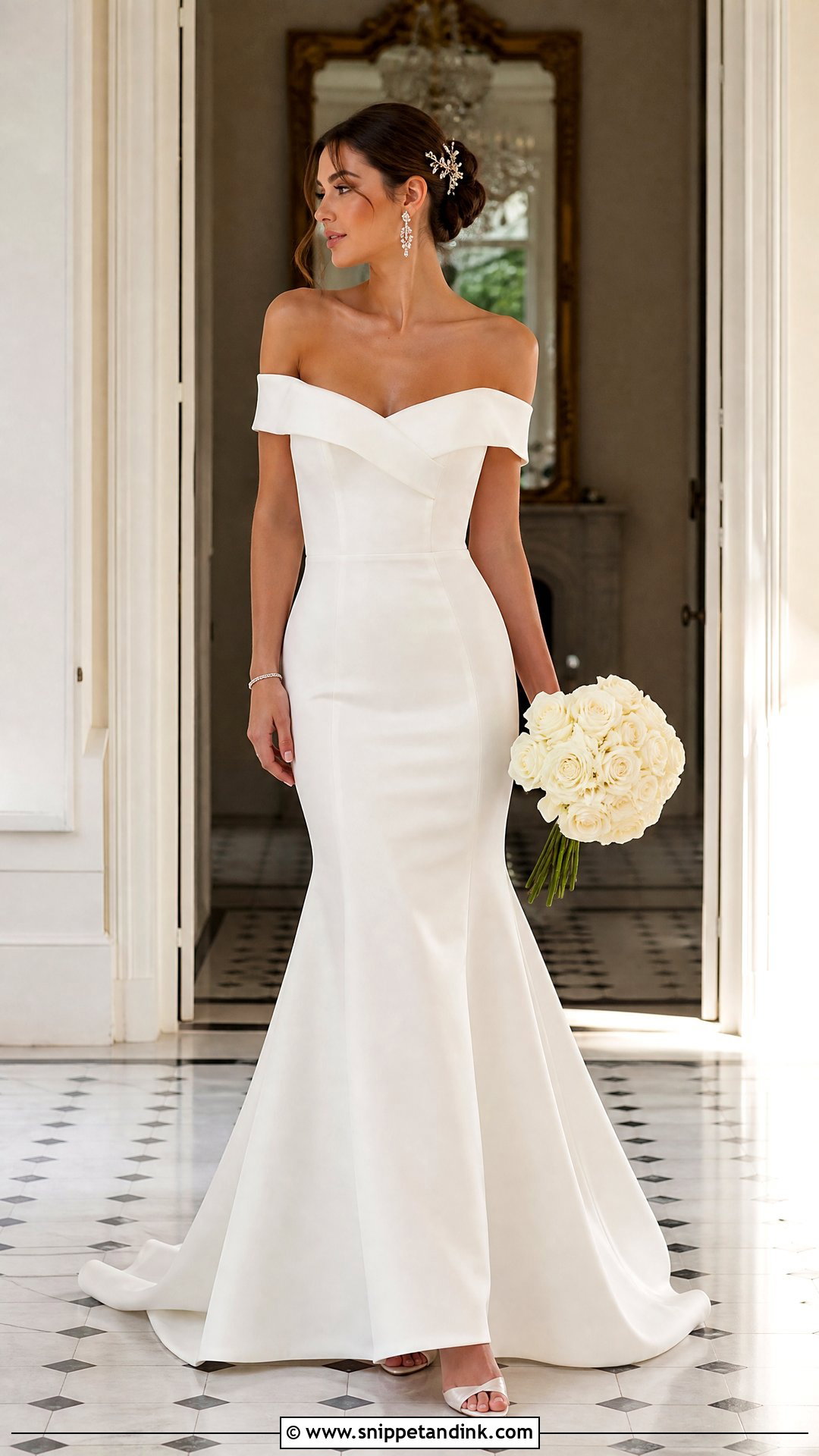
Off-shoulder bands are the detail I see fail most often. If the band is cut too loose, it slides down the arm all evening; too tight, and it pinches and leaves marks for photos. A structured fold-over band with a little elastic or boning at the back is what holds. The subtle flare below the hips gives shape without the volume of a full mermaid, so you can still sit at dinner. Pointed satin heels, short crystal earrings and a tennis bracelet are enough. A softly waved bob or low bun keeps the shoulders open, and a narrow chapel veil or a single sculptural pin finishes it. Ivory roses in a rounded shape suit an evening ballroom.
7. Asymmetrical Neckline Wedding Dress
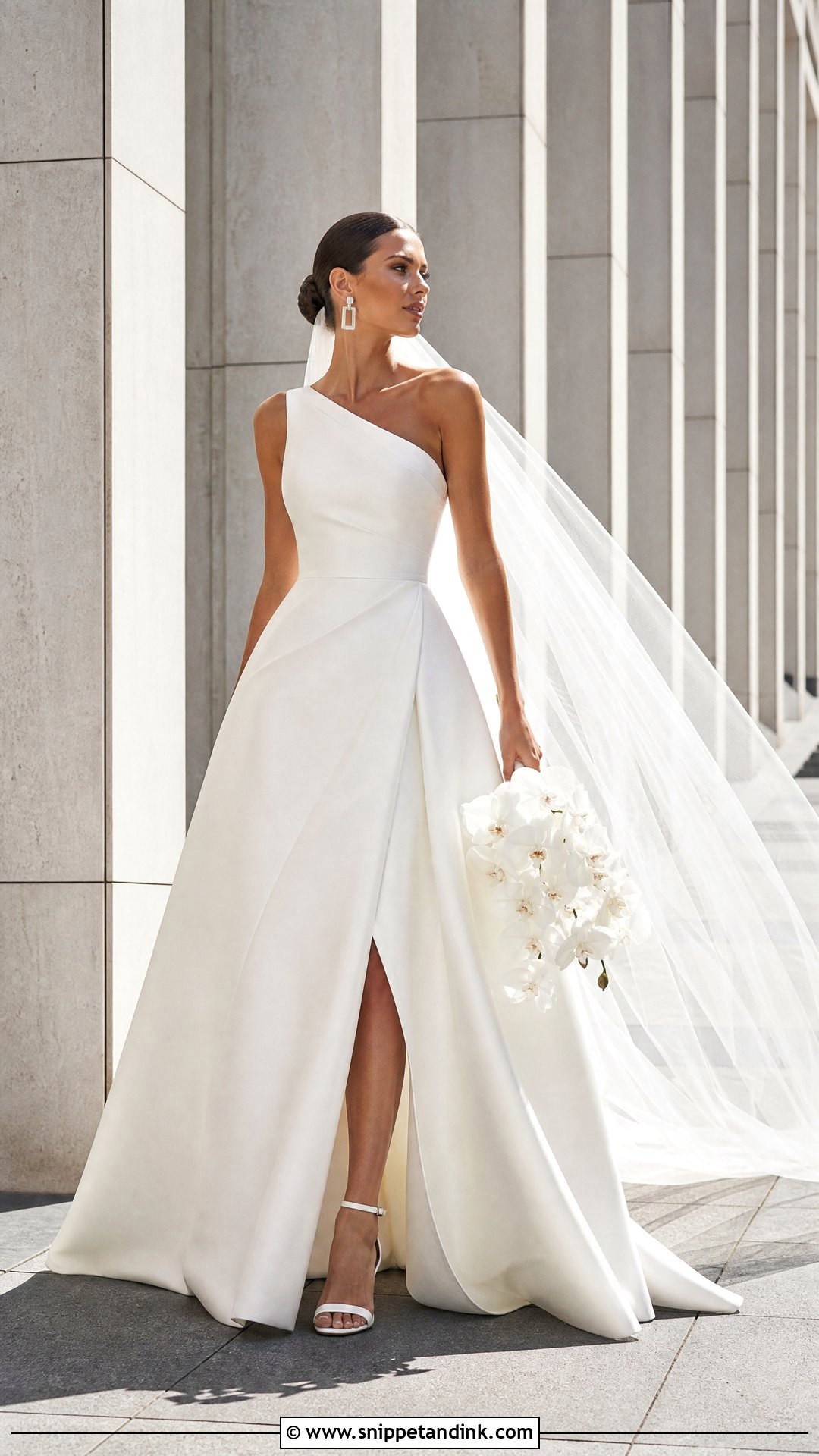
A sharply cut asymmetrical neckline is all about the angle staying flat, and that comes down to fabric weight. Crepe with body or a mikado will hold the line, while a thin satin tends to roll over at the high point by mid-afternoon. I’d skip this on a gown that is too loose through the bodice, since the angled edge is the first place gaping shows. Ankle-strap heels, geometric earrings and a metallic clutch match the hard edges. Keep the hair in a sleek bun so the neckline reads clearly, and let a plain cathedral veil fall behind. White orchids loosely bunched keep the flowers from looking fussy in an urban hotel or gallery.
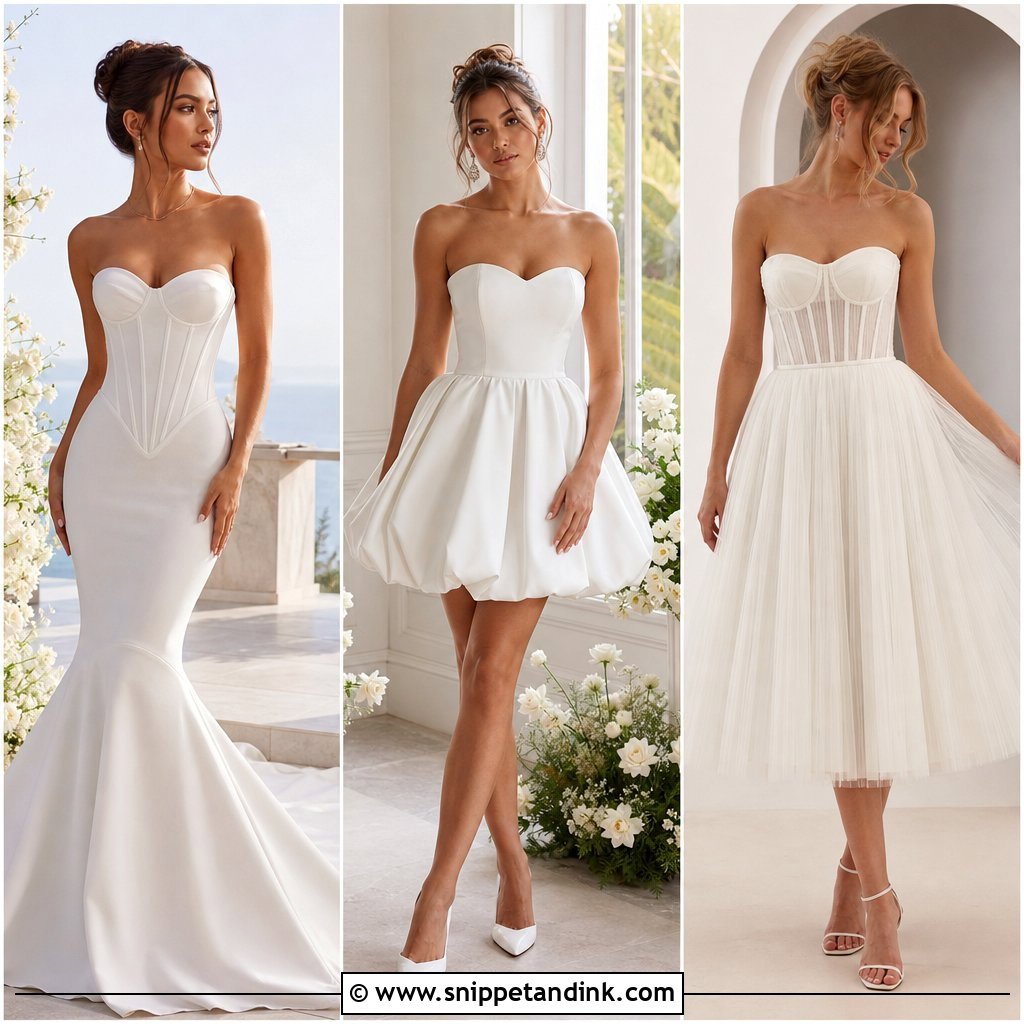
8. Basque Waist Satin Wedding Dress
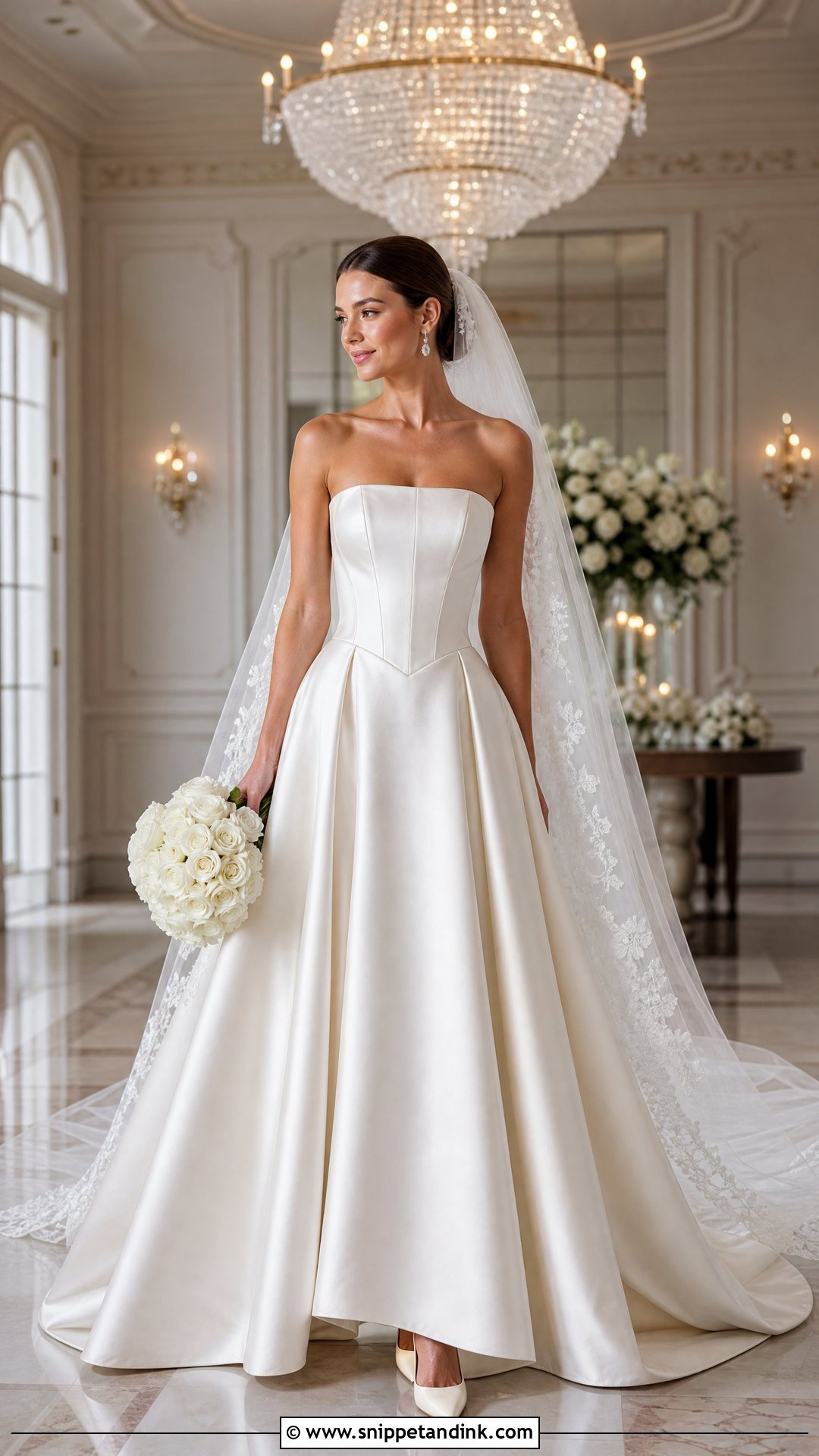
The dropped point of a basque waist has come back into bridal lines, often on plain satin with a structured bodice. It’s a shape I place carefully: the point should land just below your natural waist, and if it drops too far it shortens the legs and digs into the stomach when you sit. A strapless corseted top with a controlled A-line skirt suits it best. Ivory pumps, pearl and diamond earrings and a soft cathedral veil keep the attention on the waist. A neat bun shows off the bodice, and plain white roses settle its strong lines. Formal venues suit it, especially if you want shape and definition without beading.
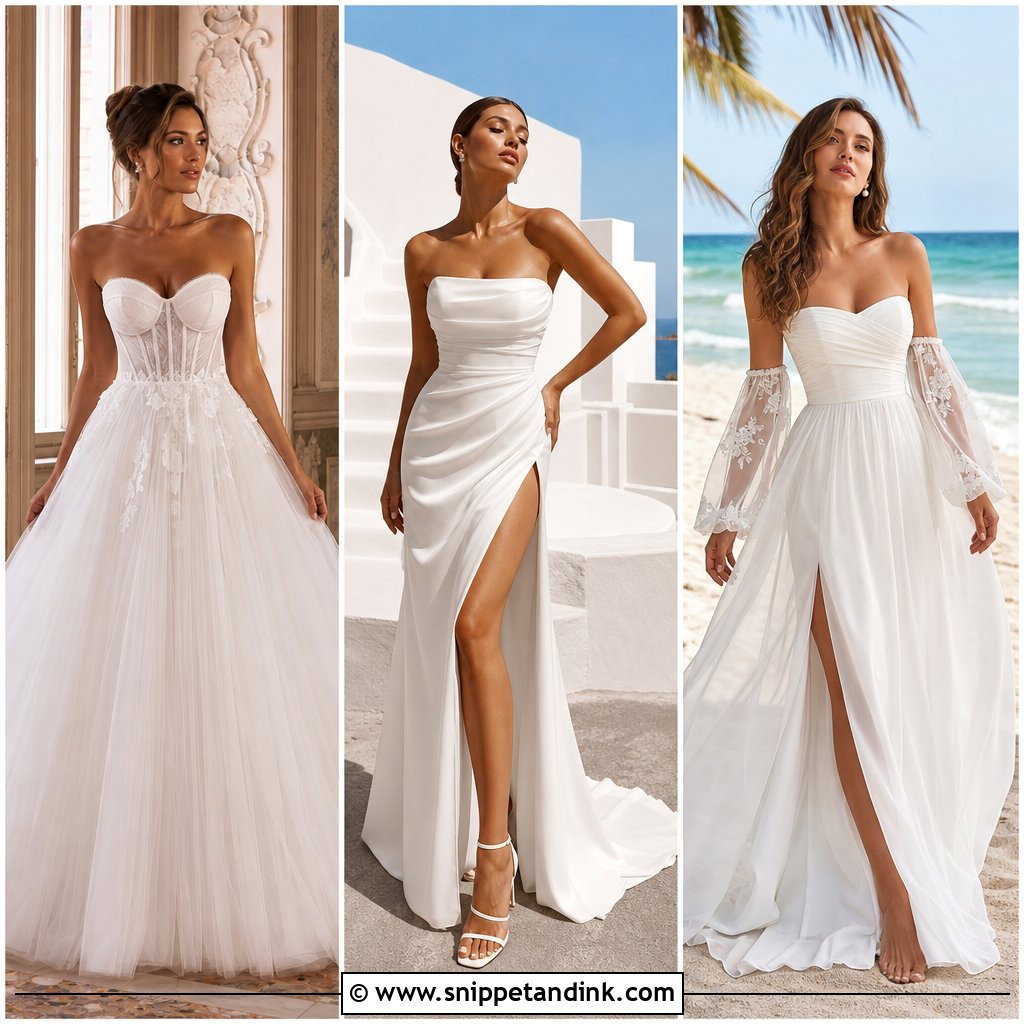
9. Corset Bodice A Line Wedding Dress
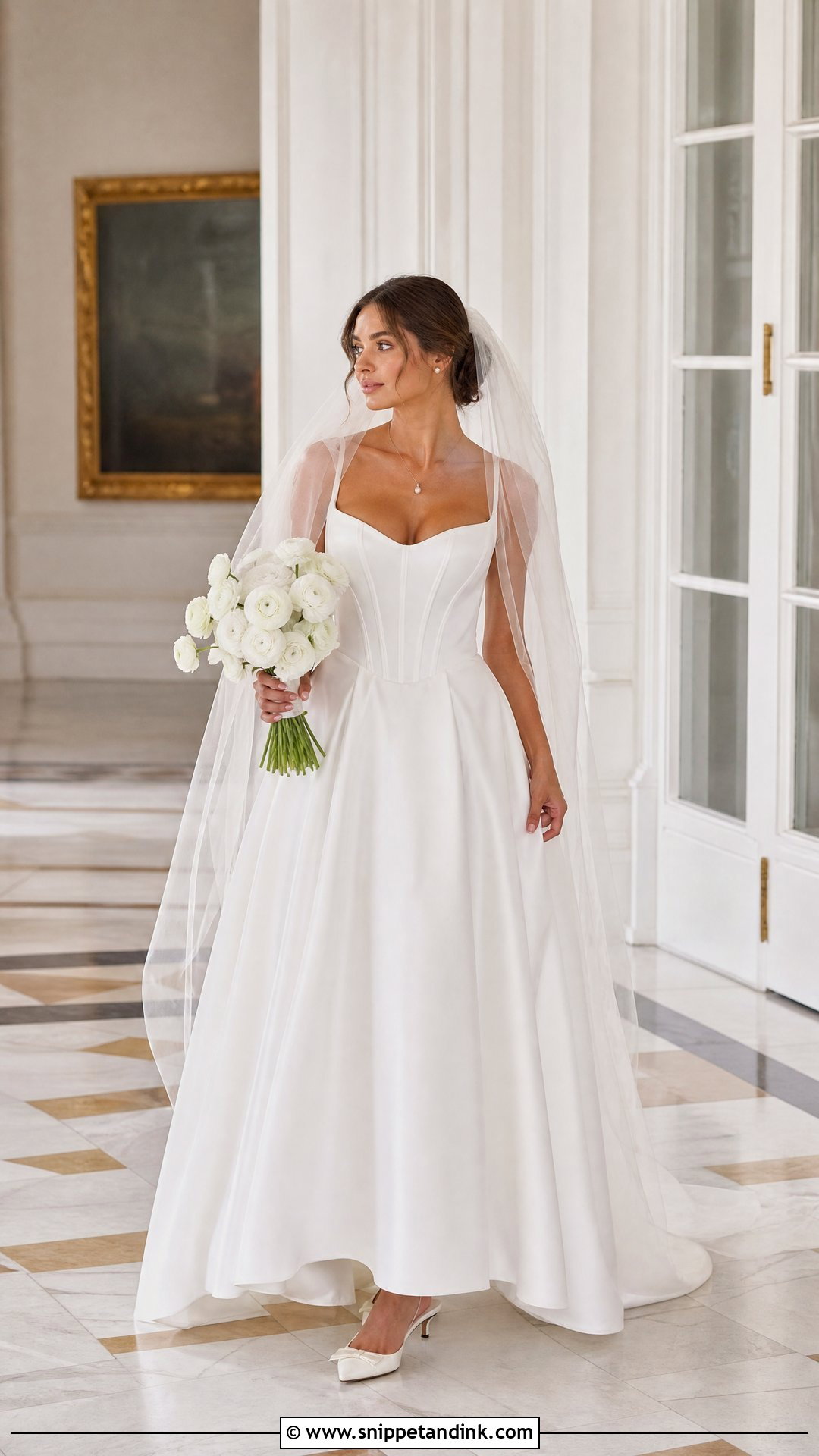
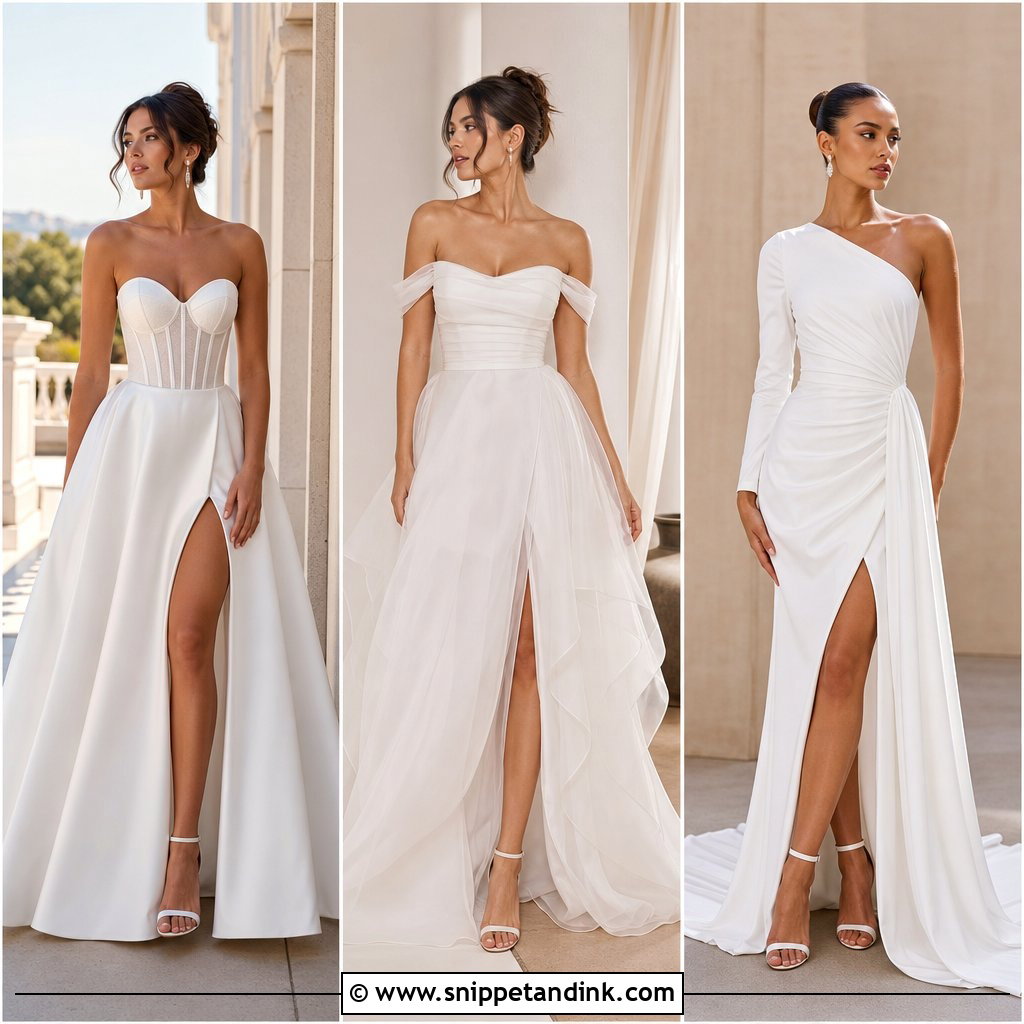
Visible boning looks polished only when the channels lie dead flat. At a fitting I run a hand down each one; any ripple means the bodice is too big or the bones are the wrong length, and both are fixable before the wedding. The lining should sit close enough that you can breathe and eat without the top shifting. A matte satin or mikado A-line skirt keeps the silhouette clean while still moving. Kitten heels are kind on long days, and a fine pendant with pearl studs sits well against the curved neckline. A raw-edge sheer veil adds softness with no extra pattern. Brushed waves or a loose low bun, plus a small ranunculus bouquet, carry it from ceremony to dancing.
10. Minimalist Ball Gown Wedding Dress
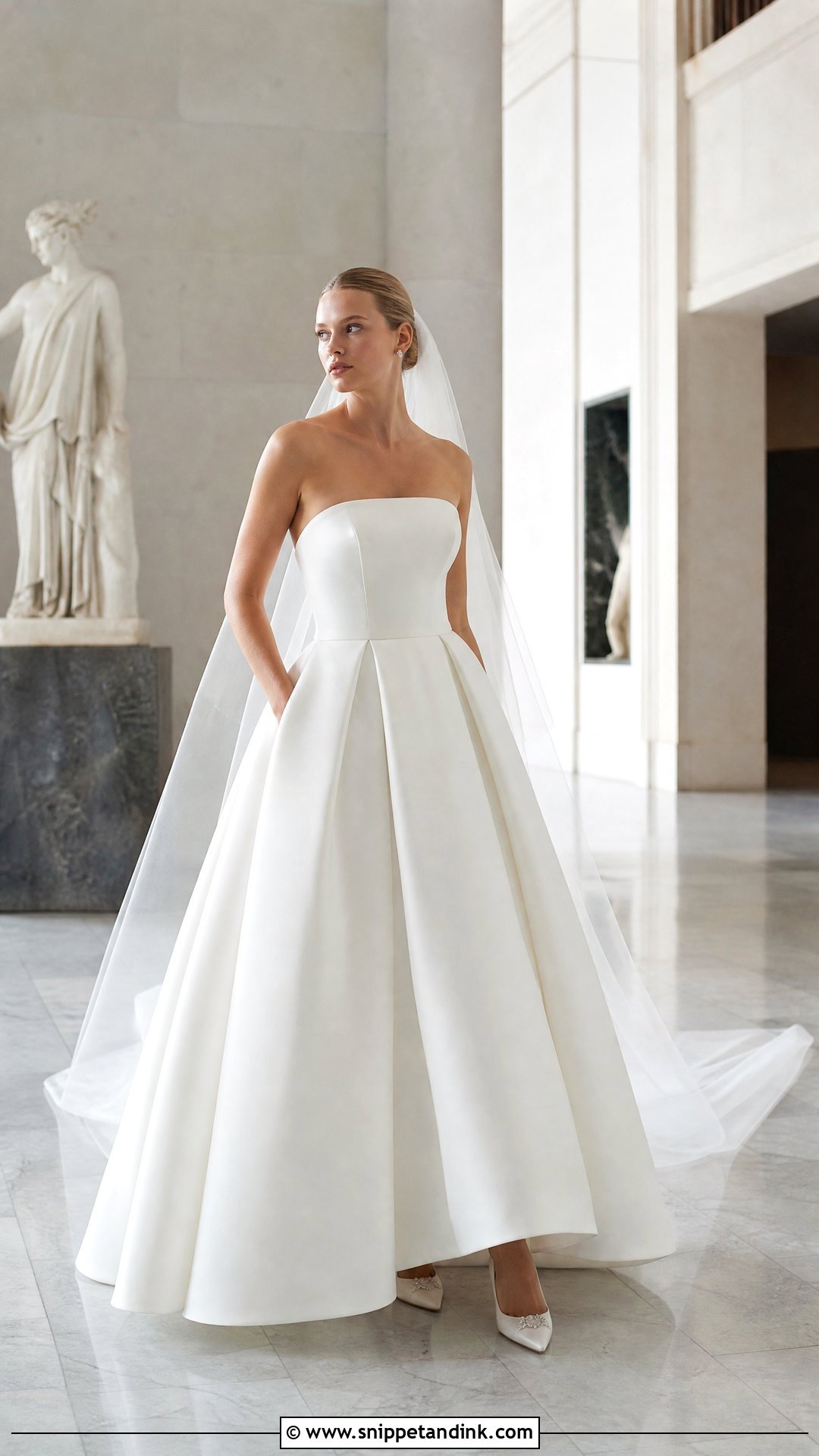
A ball gown stays sleek when its volume comes from the fabric rather than decoration. Mikado and structured satin hold box pleats crisply, and I prefer them to gathered tulle for a modern ball gown because the folds stay architectural. Before you commit, try sitting in one: a full skirt needs a chair without arms, and some brides find the width tiring by the evening. Pointed ivory heels, diamond studs and a slim bracelet are plenty. A long veil gives movement through the aisle, and a polished bun keeps the proportions balanced. Peonies or roses with very little greenery suit a grand ballroom or museum hall, where the shape has room.
11. Silk Slip Wedding Dress
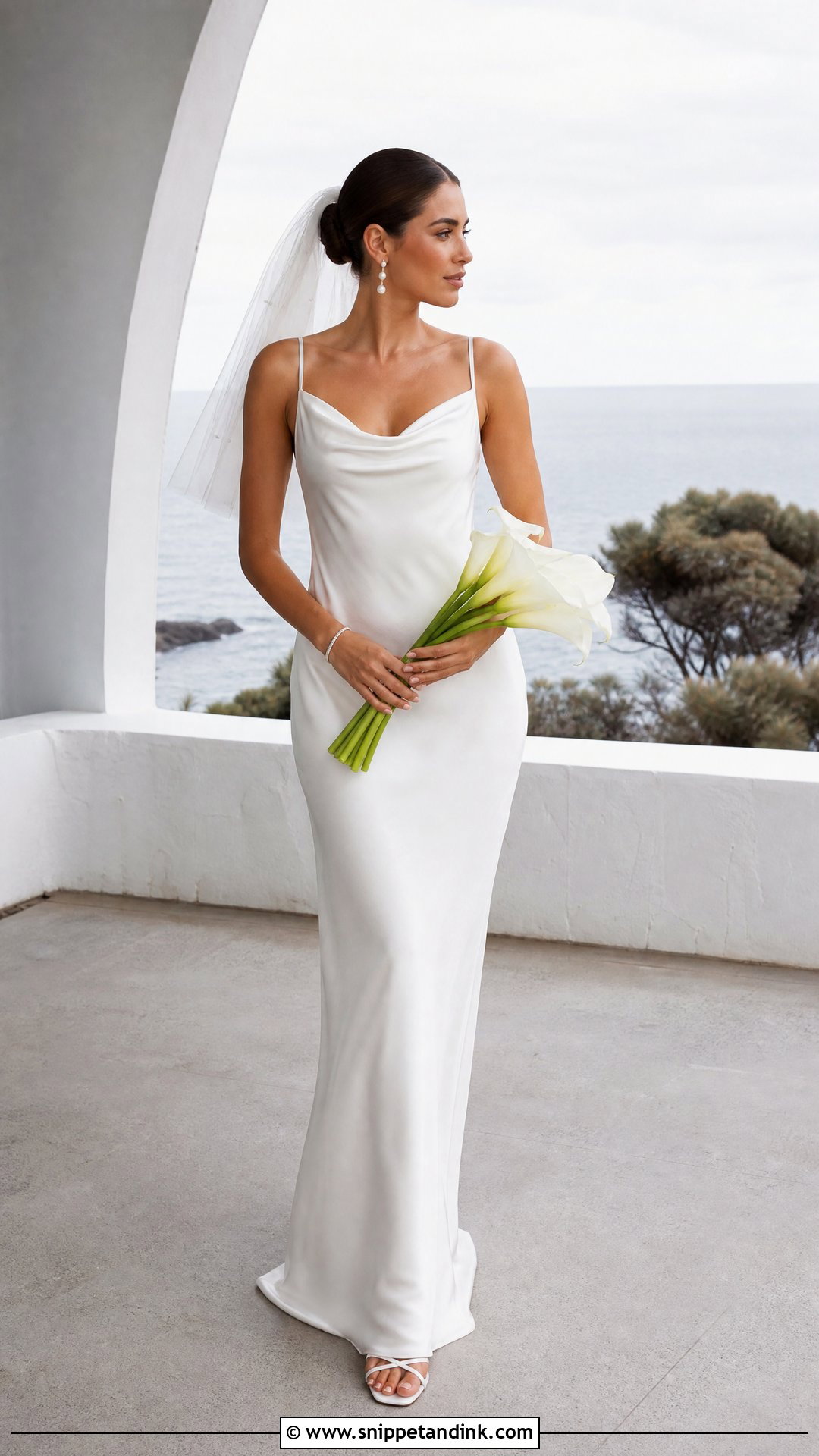
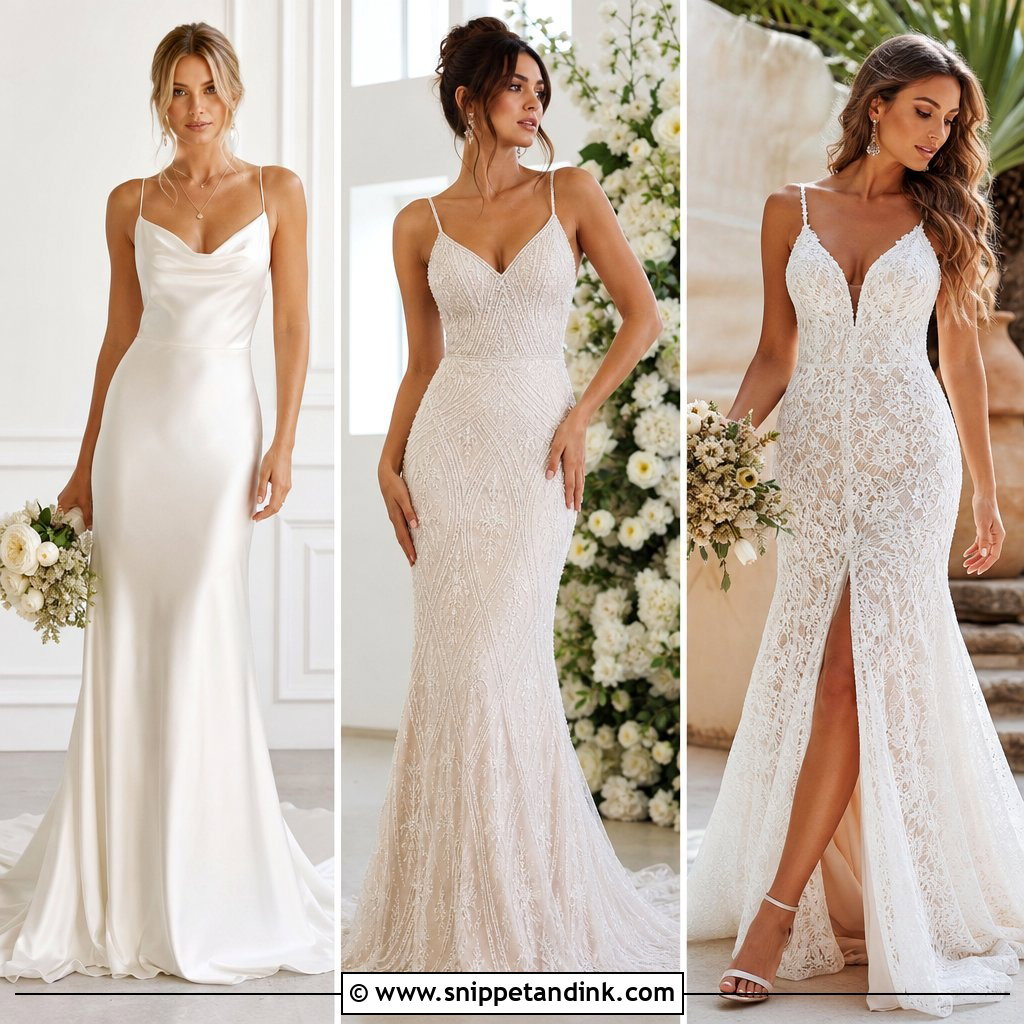
Silk slips move with the body, which also means they show everything underneath, so I treat the lining as non-negotiable. Bias-cut silk stretches along the diagonal and can grow slightly longer after hanging, so I have the hem finalised at the last fitting, in the shoes you’ll wear. Narrow straps and a soft draped neckline keep it relaxed. Strappy sandals, a slim bracelet and small drops suit it, and a short sheer veil marks it as bridal. A glossy low bun or soft waves tucked behind the ears sit well with the neckline. Slip dresses stay a favourite for minimalist weddings, and calla lilies with plain leather heels keep the whole look restrained.
12. Backless Crepe Wedding Dress
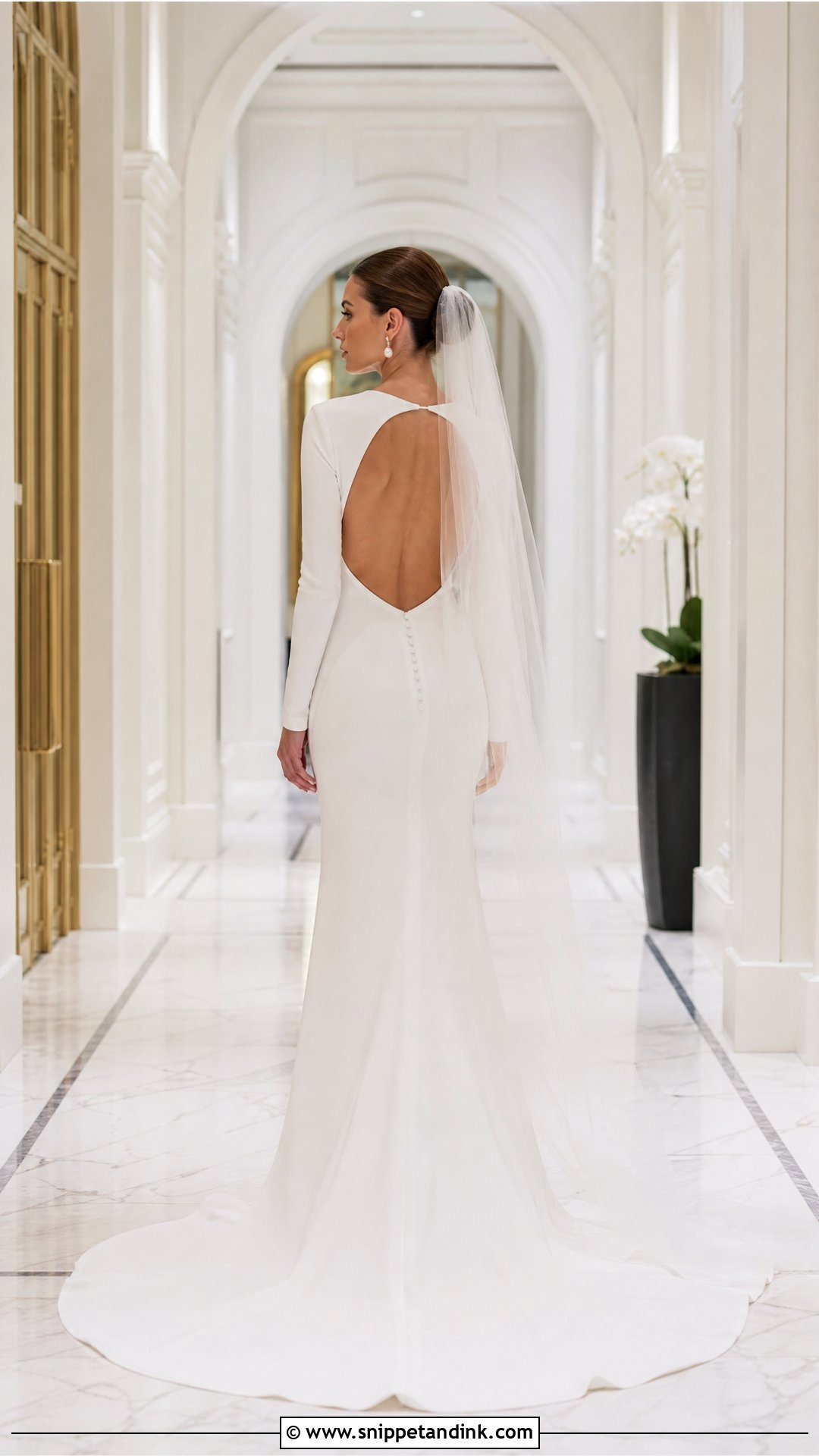
A low open back depends on support you can’t see. I look for a gown with a built-in bra cup or a low-back corselette, because adhesive bras rarely last a full day of dancing in heat. The modest bateau or rounded neckline at the front makes the reveal at the back land. Covered buttons down the center seam add detail without breaking the line. Pearl-backed earrings, pointed pumps and a fine bracelet keep it light. Raise the hair into a bun so photographers can actually see the back, and set a sheer veil beneath it, or use a small hair bow instead. Long-stem orchids suit an evening ceremony in a modern chapel.
13. Cape Sleeve Wedding Dress
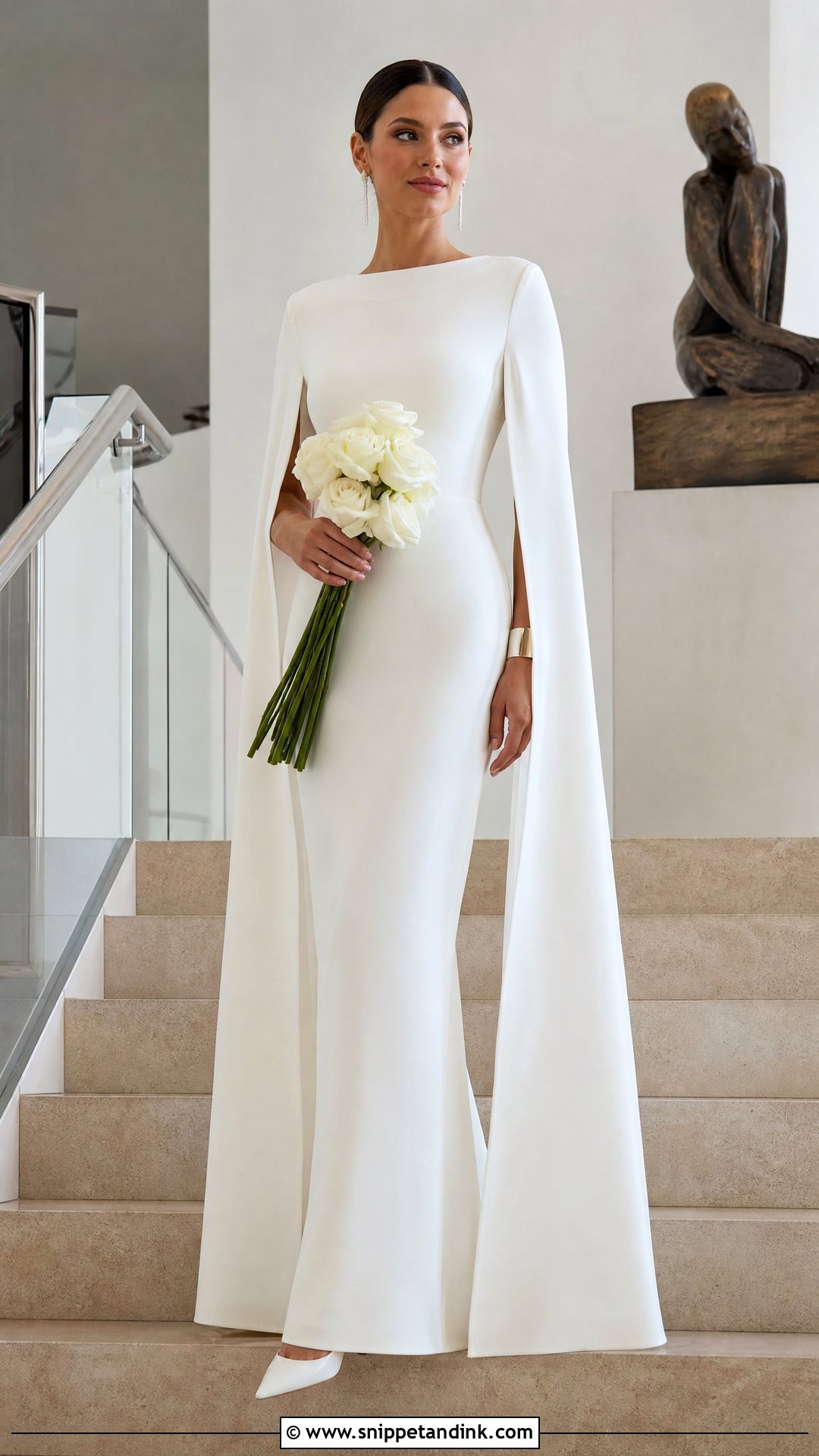
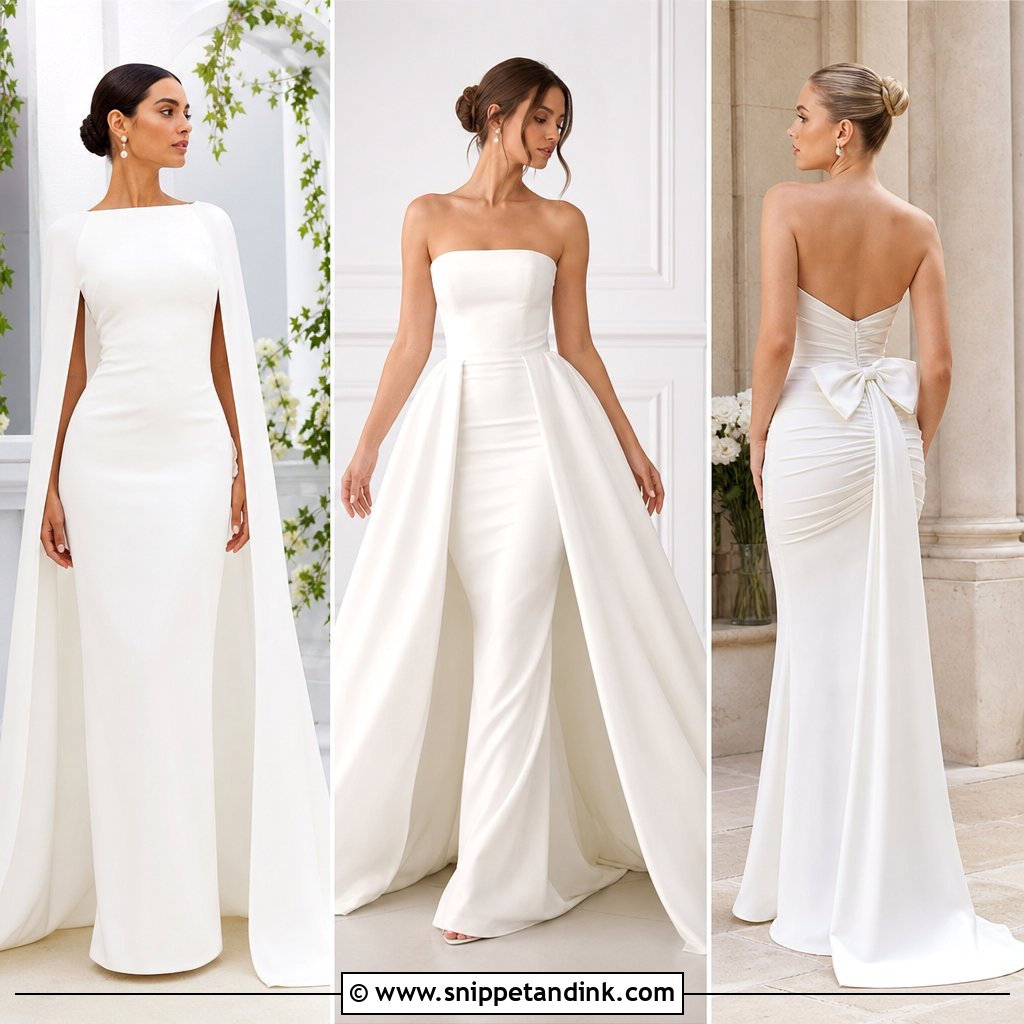
Cape sleeves are pure ceremony drama, and they’re also wind-sensitive. On an outdoor rooftop, a light cape can lift and wrap around you, so I ask about the venue before suggesting chiffon, and lean toward a weightier crepe outdoors. The cape should fall behind the arms and attach firmly at the shoulder seam so it doesn’t drag the neckline back. Since the cape already acts as a veil, I usually leave the veil off. A center-parted bun, streamlined earrings and a narrow cuff keep the eye on the movement. Staircase portraits show it off well, and long-stemmed white roses echo the vertical fall.
14. Bateau Neck Column Wedding Dress
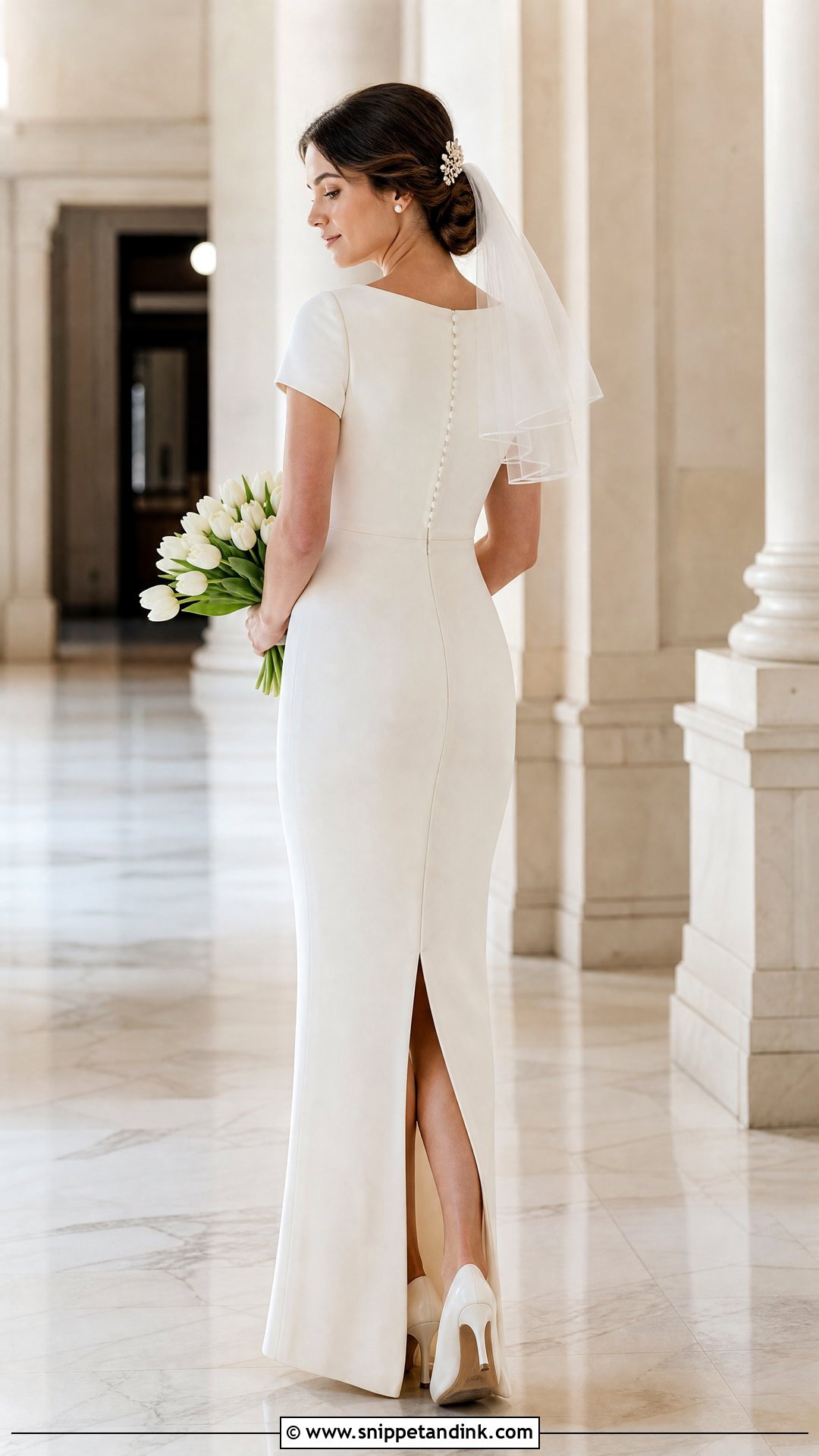
A bateau neckline runs along the collarbone, and it’s flattering on most shoulders as long as it sits level. I check it at the fitting by having the bride lift both arms, since the neckline can ride up toward the throat if the shoulders are cut narrow. Short sleeves or wide shoulder coverage, a defined waist and a slim skirt with a back slit for walking give a clean column. Matte crepe or silk faille has the body this shape needs. Low pointed pumps, pearl studs and a vintage-style hair comb fit the slightly retro feel. A short veil or removable blusher, a low twist and white tulips finish it for a courthouse ceremony or daytime lunch reception.
15. Convertible Overskirt Wedding Dress
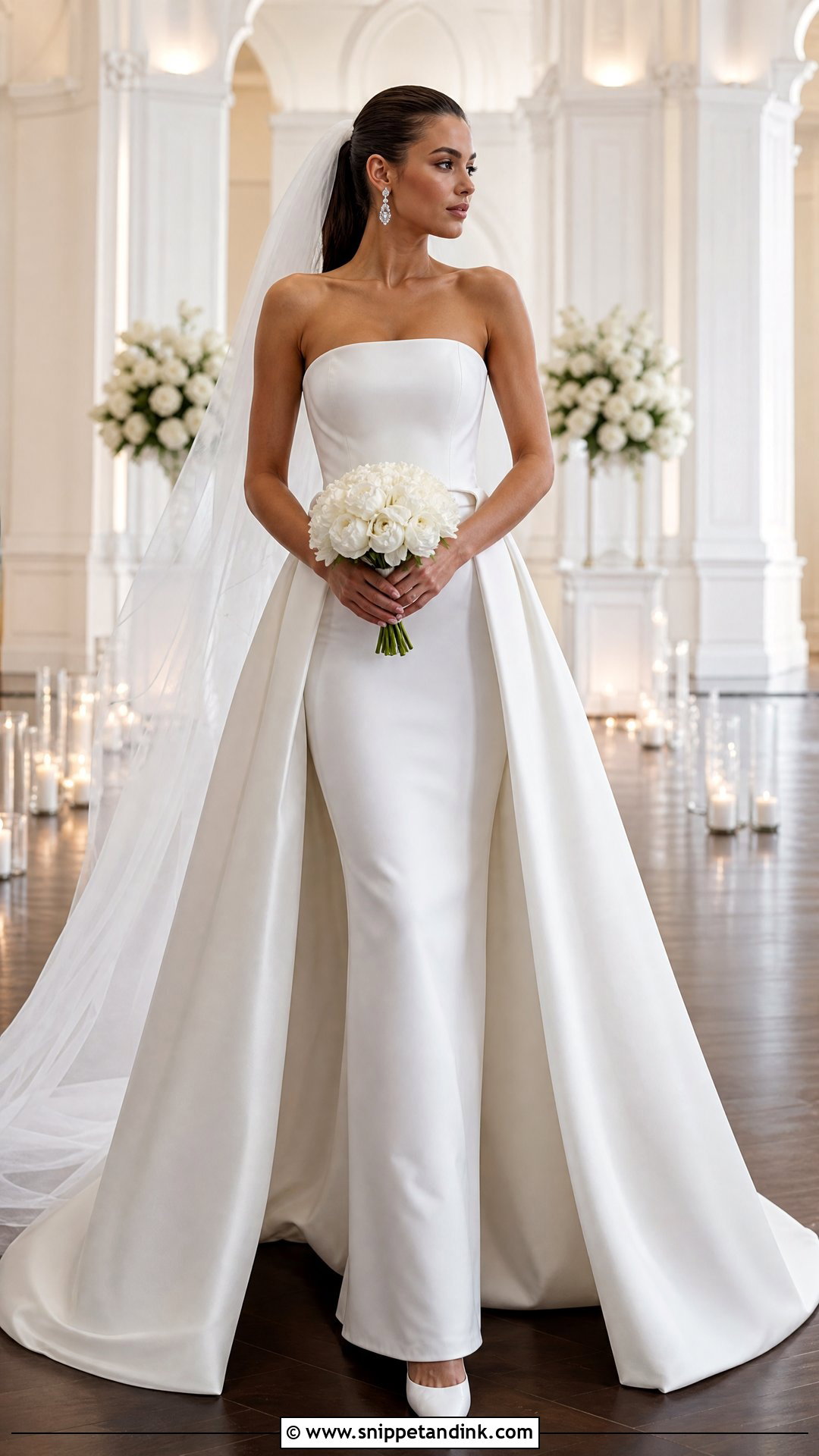
A removable overskirt gives you two silhouettes in one, but the swap needs planning. I time it with brides at the last fitting: who unfastens it, where it goes afterward, and whether the waistband of the underdress looks finished on its own. Discreet hooks or hidden snaps are faster than a row of buttons. Underneath, a strapless column or fit-and-flare keeps things sleek. Pointed pumps, drop earrings and a long veil for the ceremony, then lose the veil and overskirt for dinner. A polished ponytail and a compact white bouquet suit both versions, and you get formal volume at the altar and easy movement on the dance floor.
16. Modern Tea Length Wedding Dress
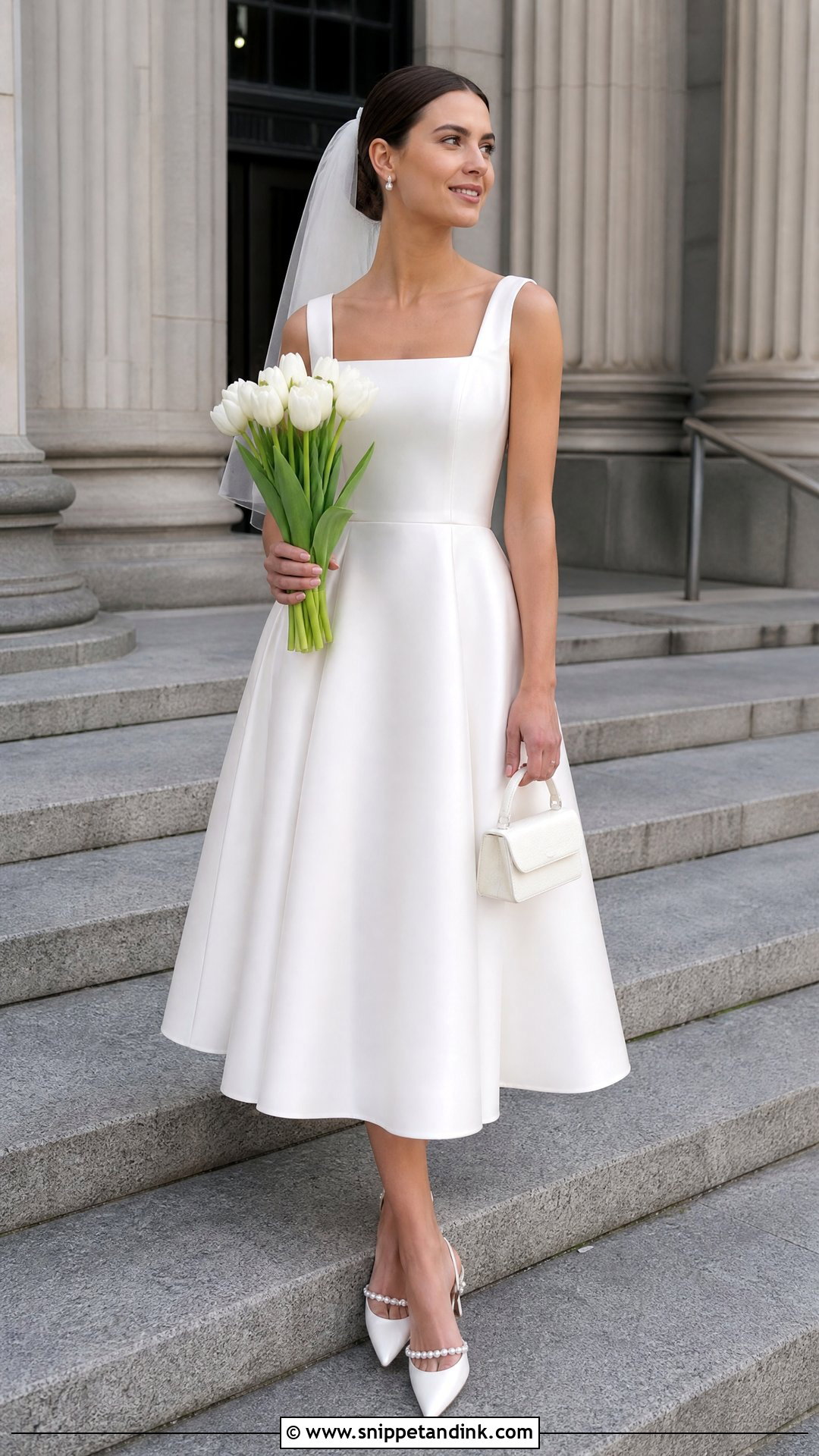
Tea length is practical and a bit playful, and it changes what matters: your shoes become part of the dress. Pointed slingbacks, pearl-trimmed pumps or minimal ankle straps all work, but break them in, because everyone will see them all day. The hem should land between the lower calf and the ankle; I mark it with the bride standing on the venue’s kind of floor in her final shoes. A structured bodice and mikado, satin or crepe give the shorter skirt enough body to hold out. Small earrings, a short veil and a structured mini bag finish it. A sleek bun and white tulips keep it clean for a restaurant or garden wedding.
17. Cowl Neck Wedding Dress
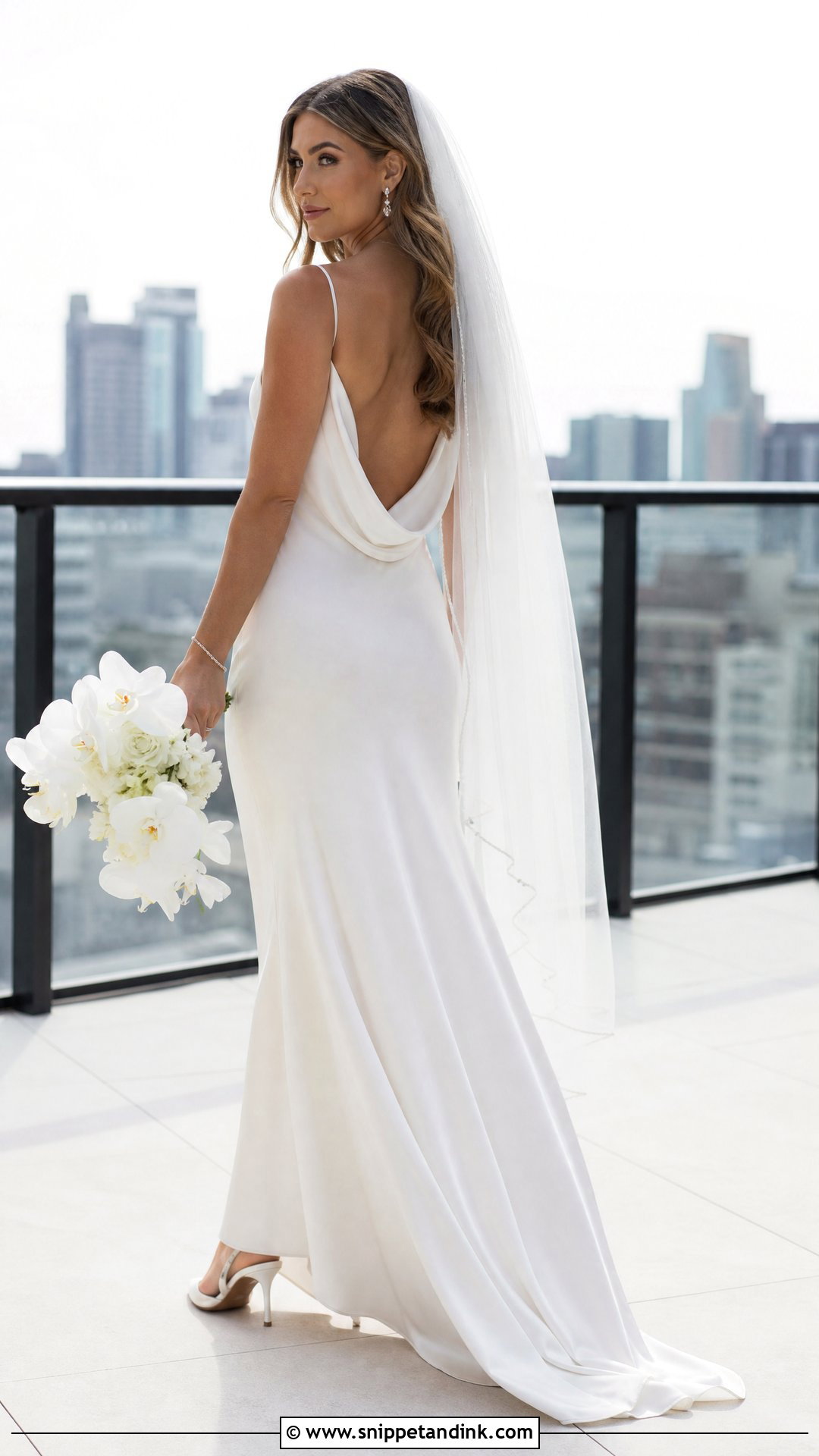
Cowl necklines drape gracefully on a hanger and then shift once someone moves. Bias-cut silk or satin falls into folds across the bust, and without a hidden stitch or weight inside the cowl, it can open further than you’d like when you bend down to hug a grandparent. I always ask the seamstress to tack it. Narrow straps and a low back balance the drape. Slingbacks, small crystal earrings and a fine chain bracelet suit it. Loose waves or a soft twisted bun, a fingertip veil, and sweet peas or orchids carry the same fluid mood to a candlelit coastal reception.
18. High Slit Wedding Dress
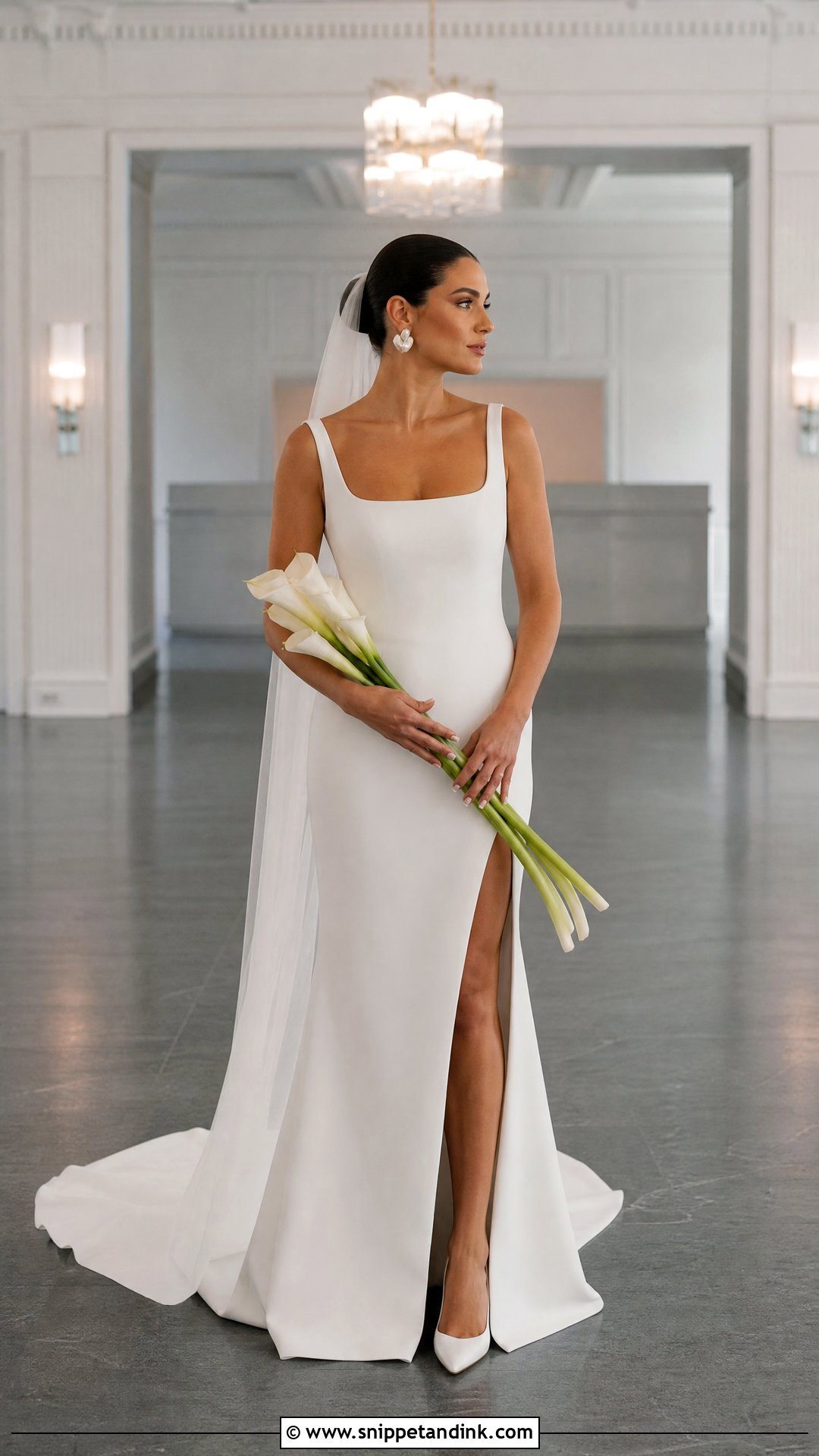
A high slit only looks controlled if the fabric has weight. Substantial crepe holds the opening closed when you stand and opens only when you step, while thinner fabrics flap open at random. I’d have the slit placed slightly off-center, with the bride walking, sitting and climbing a step at the fitting, since this is where nerves set in on the day. Your shoes will be on show, so choose pointed pumps or slim ankle-strap sandals you can stand in. Sculptural earrings, a smooth bun and a plain chapel veil keep the rest quiet. White calla lilies repeat the long, sharp lines.
19. Bow Back Wedding Dress
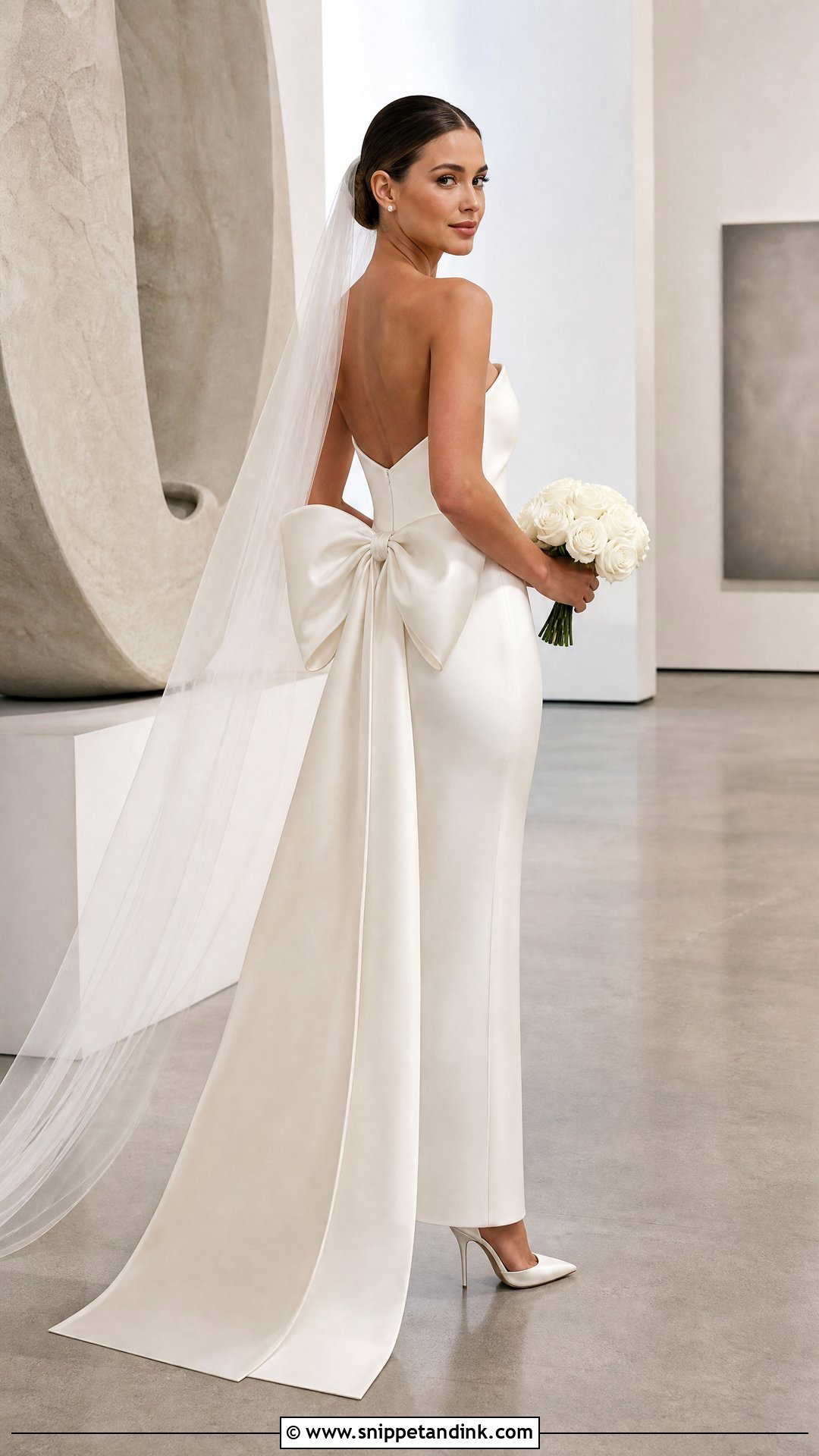
A big bow gives a minimalist gown one clear focal point, and oversized bows are showing up on a lot of clean column and structured satin gowns right now. I strongly prefer a removable one. A bow at the lower back gets crushed every time you sit, so being able to unhook it for dinner keeps it crisp for later photos. Pick where it sits: waist, lower back or shoulder. Pointed ivory heels, tiny studs and a smooth low bun keep everything else restrained. A plain veil can fall over the bow for the ceremony and come off afterward. Compact white roses with no trailing greenery won’t compete with it.

20. Sculptural Draped Wedding Dress
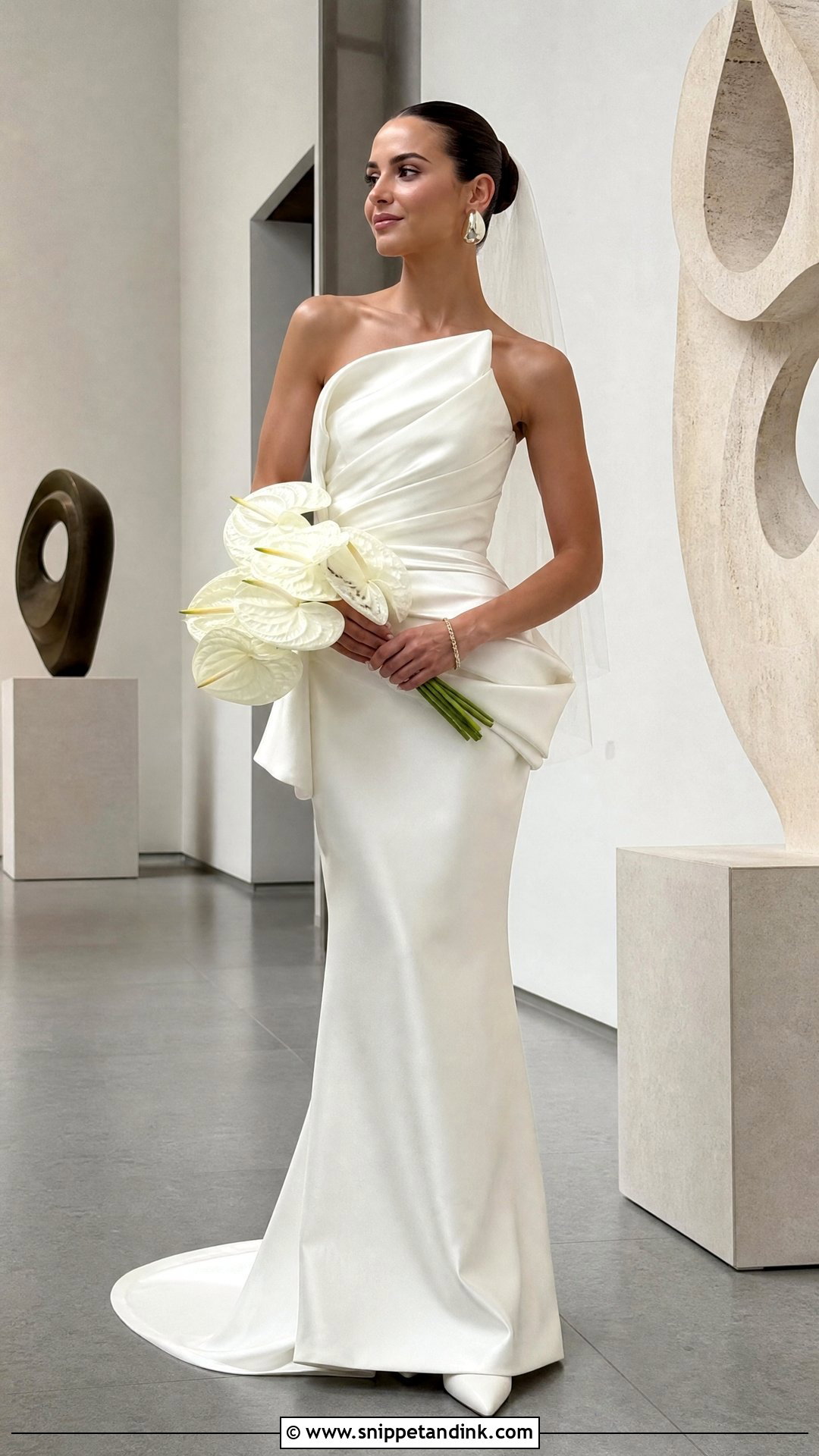
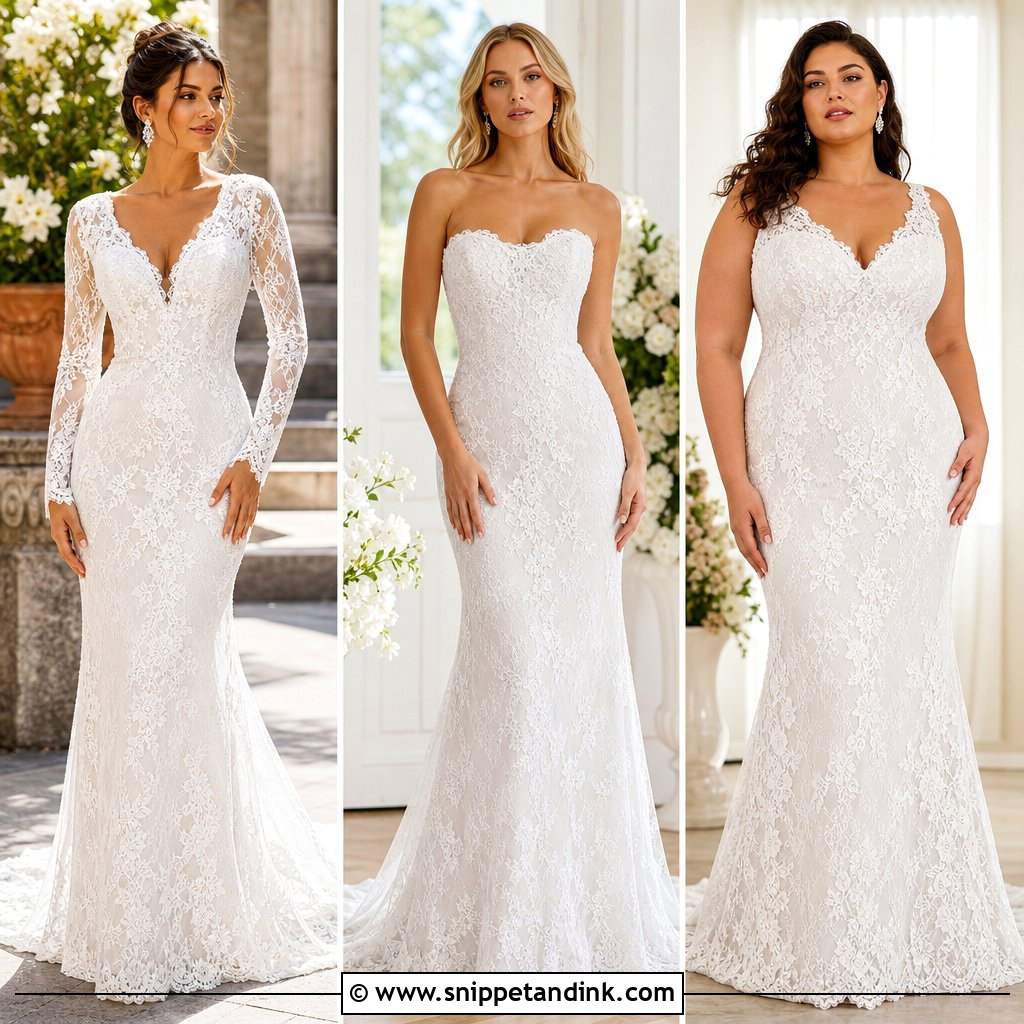
Draped dresses are where you see a dressmaker’s skill. Look for folded fabric across the waist, hip or neckline that is stitched in place underneath, because loose folds flatten after an hour of sitting and look tired by the reception. The fitted column base keeps the silhouette narrow, and a short train adds movement. I keep accessories metallic and geometric: curved earrings, a slim bracelet, minimal heels. A smooth updo avoids competing with the folds, a plain tulle veil softens the structure, and white anthuriums share its sculpted feel. Design-led venues such as museums or modern estates give the craftsmanship a clean backdrop.
A Realistic Timeline From Order to Aisle
Made-to-order gowns from bridal designers usually take several months to arrive, and many shops suggest ordering around eight to ten months before the wedding to leave room for alterations. Timings vary by designer and season, so ask the shop for their actual delivery window in writing.
- First fitting, roughly two to three months out. The seamstress sets the bodice, straps and waist. Bring your exact shoes and undergarments.
- Second fitting a few weeks later, for hem length, bustle placement and any sleeve or strap tweaks.
- Final fitting about two to four weeks before the wedding. This is when I want you to walk, sit, climb a step and dance in the dress, then take it home pressed.
The morning itself
Hang the dress the moment you arrive, ideally from a high door frame so the hem doesn’t touch the floor. A handheld steamer held a few inches away takes out bag creases on crepe and satin; keep it moving and away from silk, which water-spots easily. Get dressed after hair and makeup, step into the gown rather than pulling it over your head, and have one person in charge of the zip and the bustle.
After the wedding, have the gown professionally cleaned within a few weeks, even if it looks clean. Sugar from champagne and cake can turn into yellow marks over time on light fabric.
A Plain Gown Lives or Dies at the Fittings
The best minimalist dress isn’t automatically the simplest one on the rail. It is the one whose construction, proportions and support work for your body and your venue. Treat these twenty ideas as a starting point, then try your shortlist in shoes and undergarments close to what you’ll actually wear. Turn around in the mirror, sit, walk and lift your arms. A silk slip, satin ball gown, sculpted column or convertible design will all look modern if the fit is precise, and none of them will if it isn’t.
You'll Like These Ideas:




Leave a Reply