
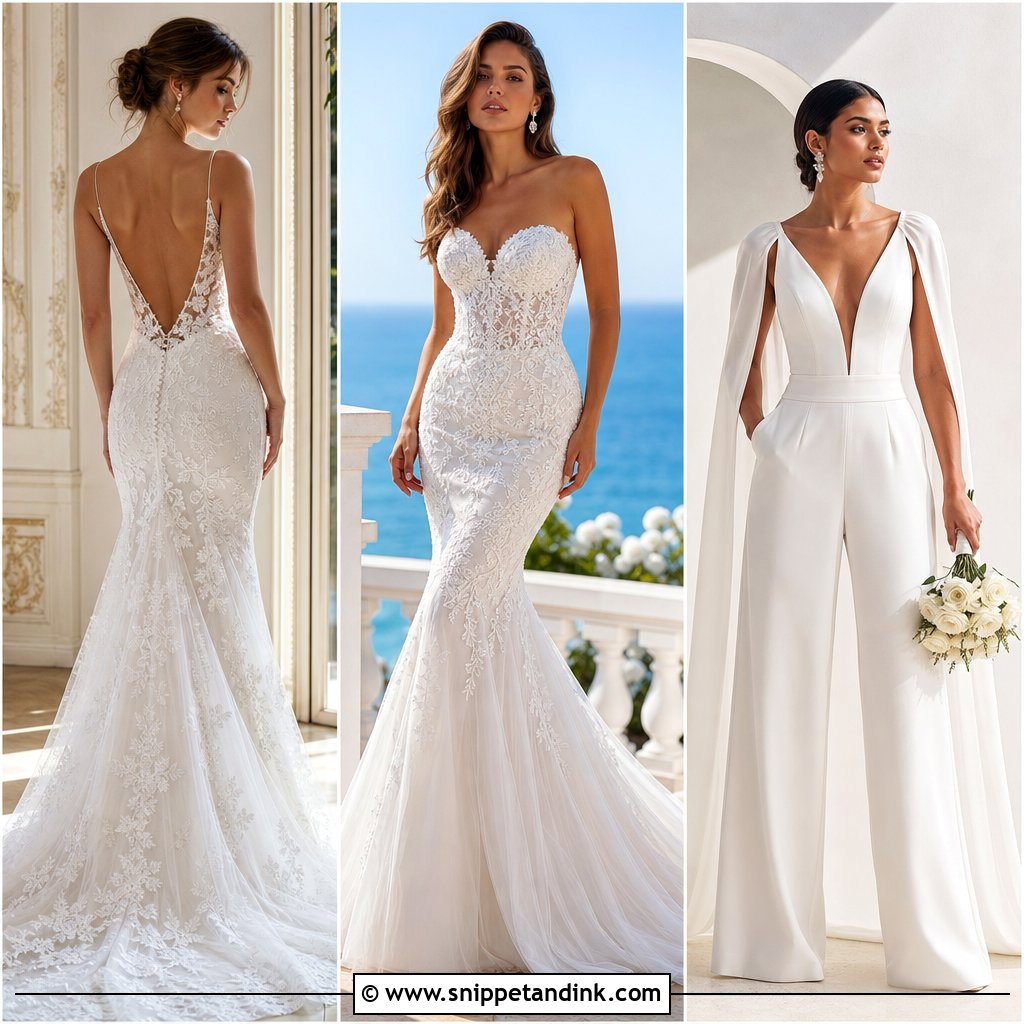
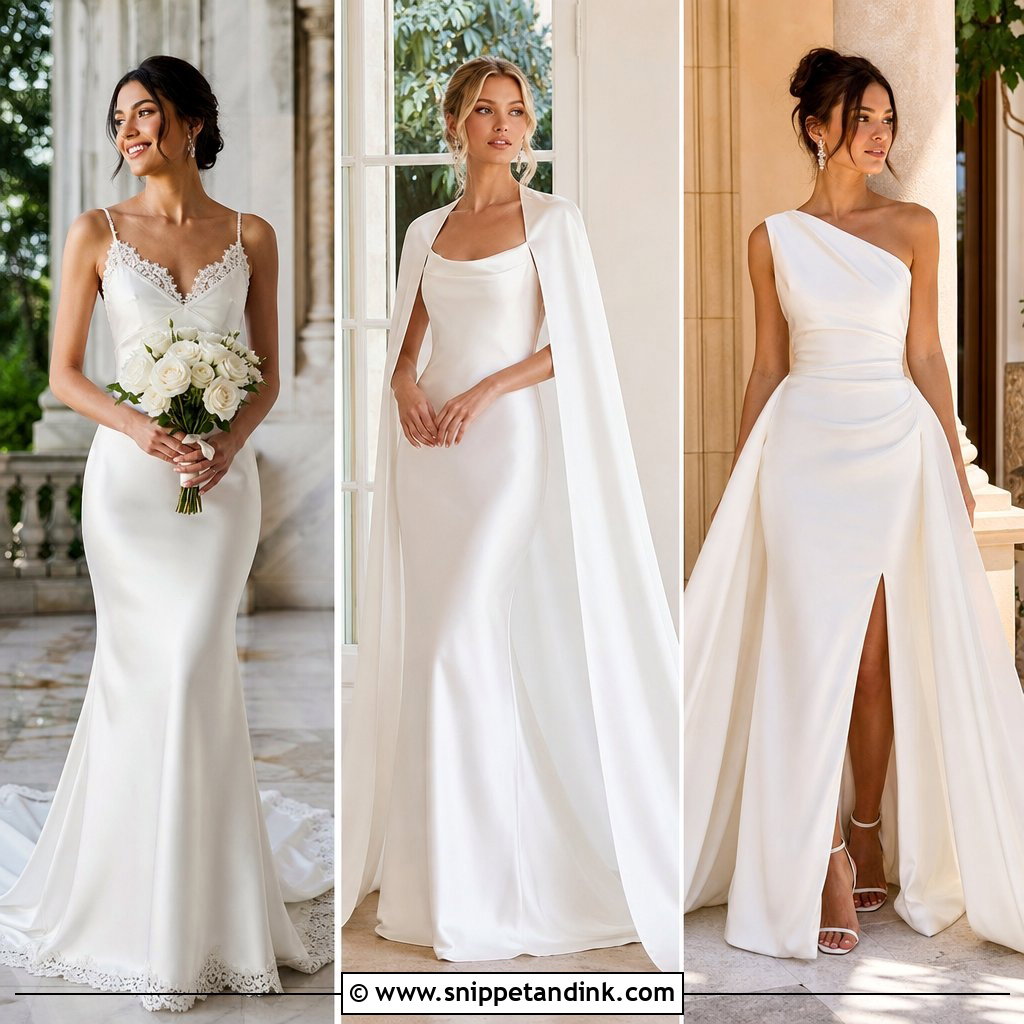
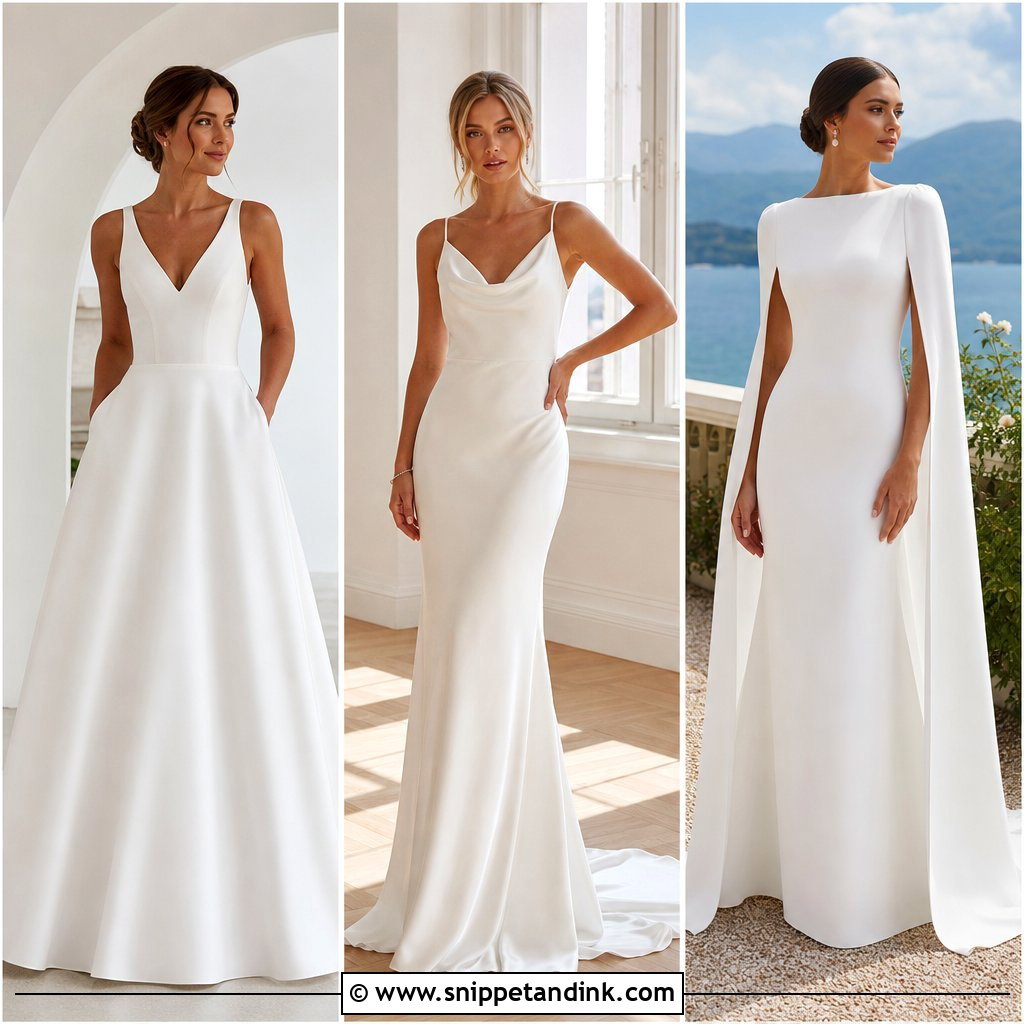
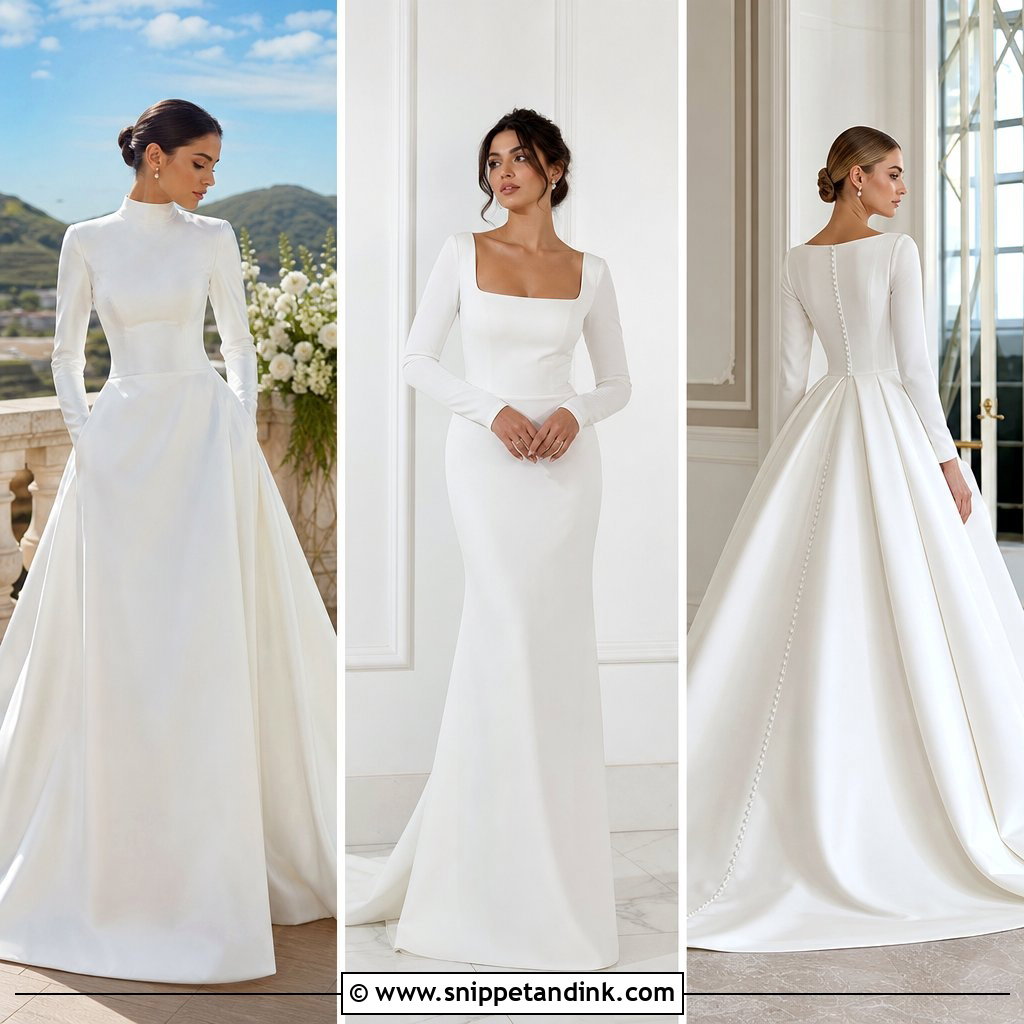
A plain gown is harder to get right than a decorated one. With no lace or beading to distract the eye, the fabric, the cut and the fit carry everything, and a slightly wrong waist seam shows from across the room. That’s also why a well-made minimalist dress looks so strong. The designs below run from bias-cut silk slips and crepe columns to architectural minis and structured ball gowns, each with one or two details doing the work: an open back, a draped neck, a precise waist, a removable cape. I’ve styled each one from shoes to bouquet and added the fitting checks I’d make before saying yes.
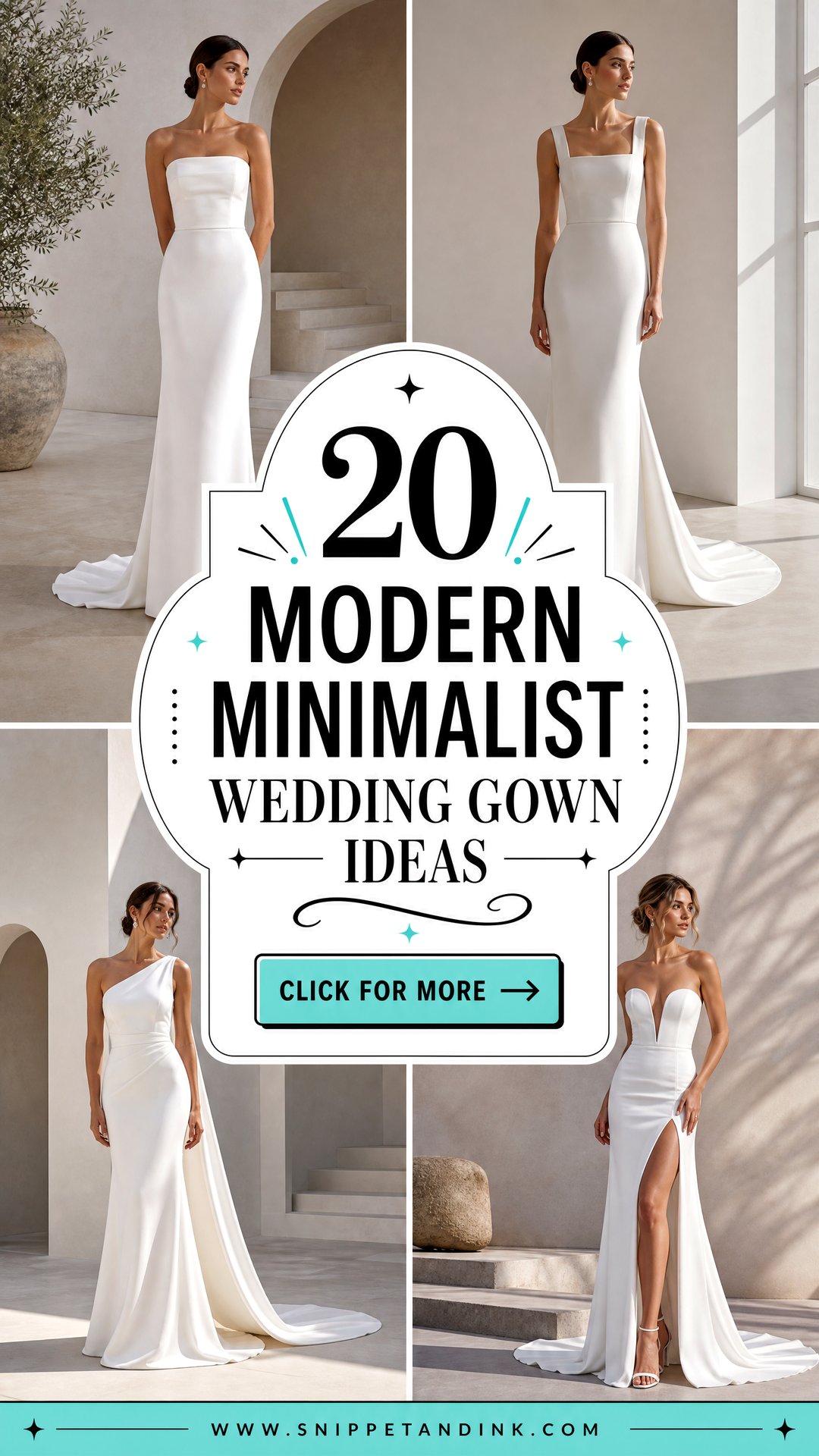
When the Fabric Is the Whole Dress
On a plain gown you are mostly paying for the fabric and how it’s sewn. These are the quick checks I do on a sample before a bride tries it on:
- Scrunch a hidden corner of the skirt in your fist for a few seconds. Good crepe springs back; cheap satin keeps the creases.
- Hold a fold up to the window. If you can see your fingers through it, it will need a heavier lining.
- Look along the side seams in raking light. Puckering or a ripple at the zip is hard to fix and very visible on smooth fabric.
- Feel the weight. Heavier crepe and mikado hang straight; very light fabrics show every line underneath.
As a rough guide, crepe is matte and forgiving, mikado and faille are crisp and sculptural, and silk satin is fluid and reflective. Satin highlights curves and creases; crepe hides more.
1. Strapless Column Wedding Gown
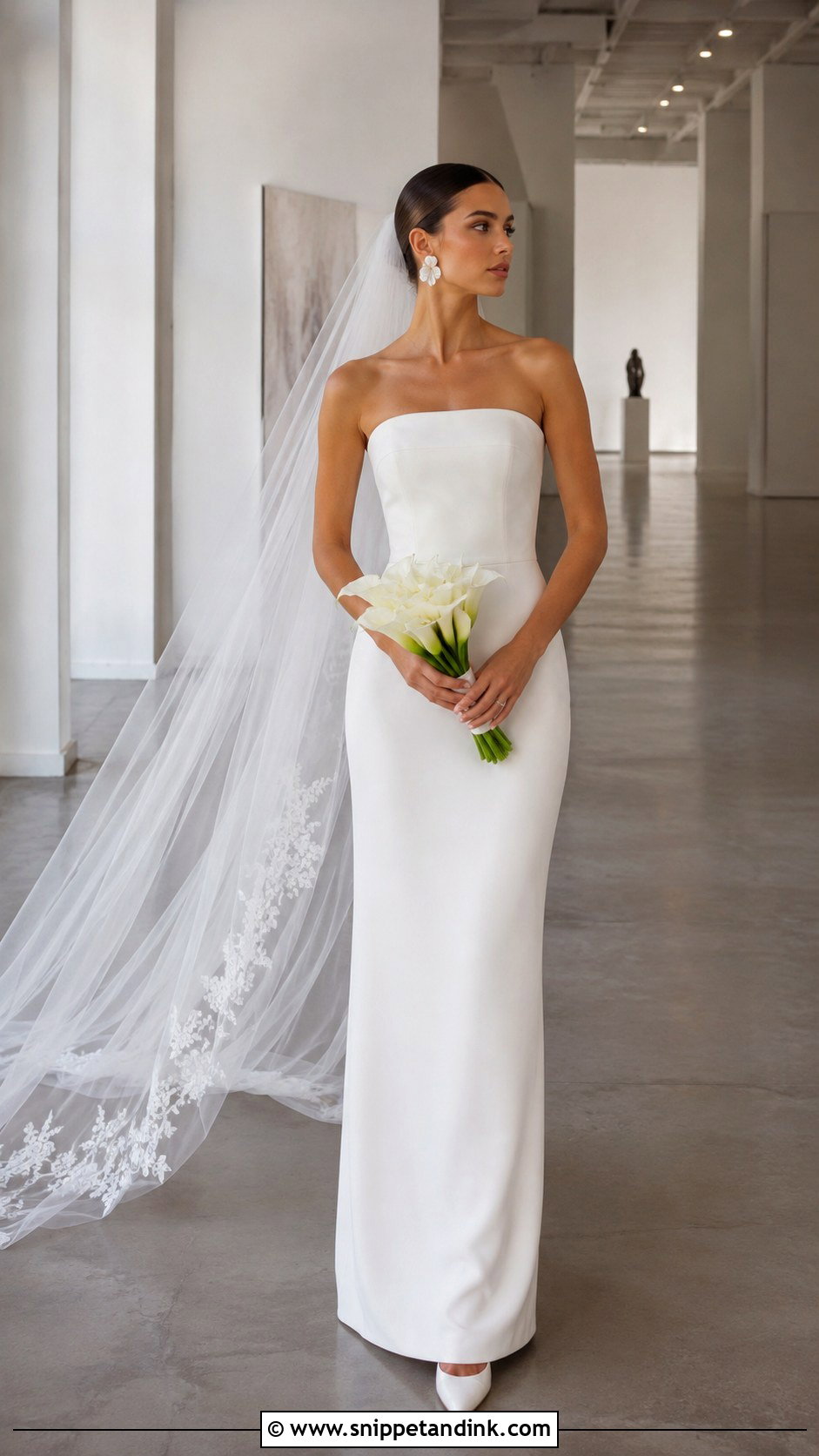
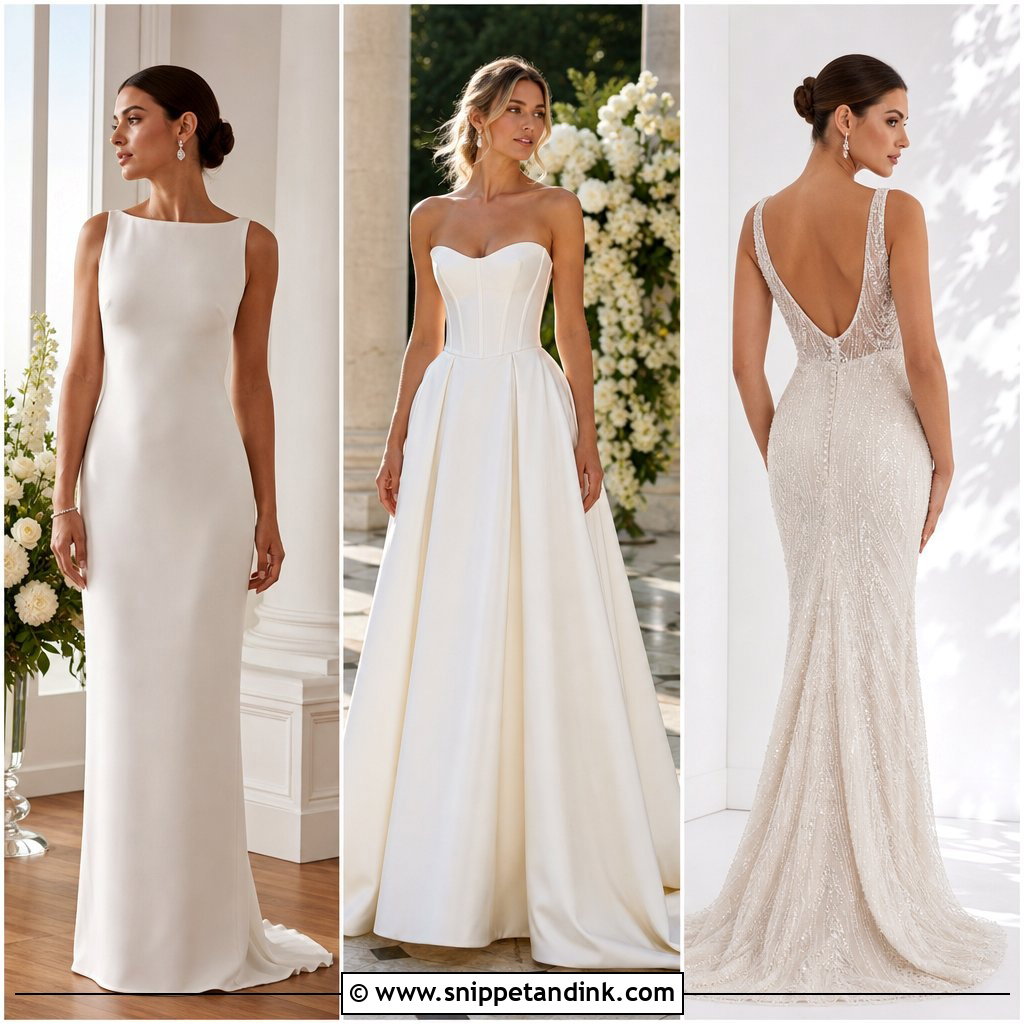
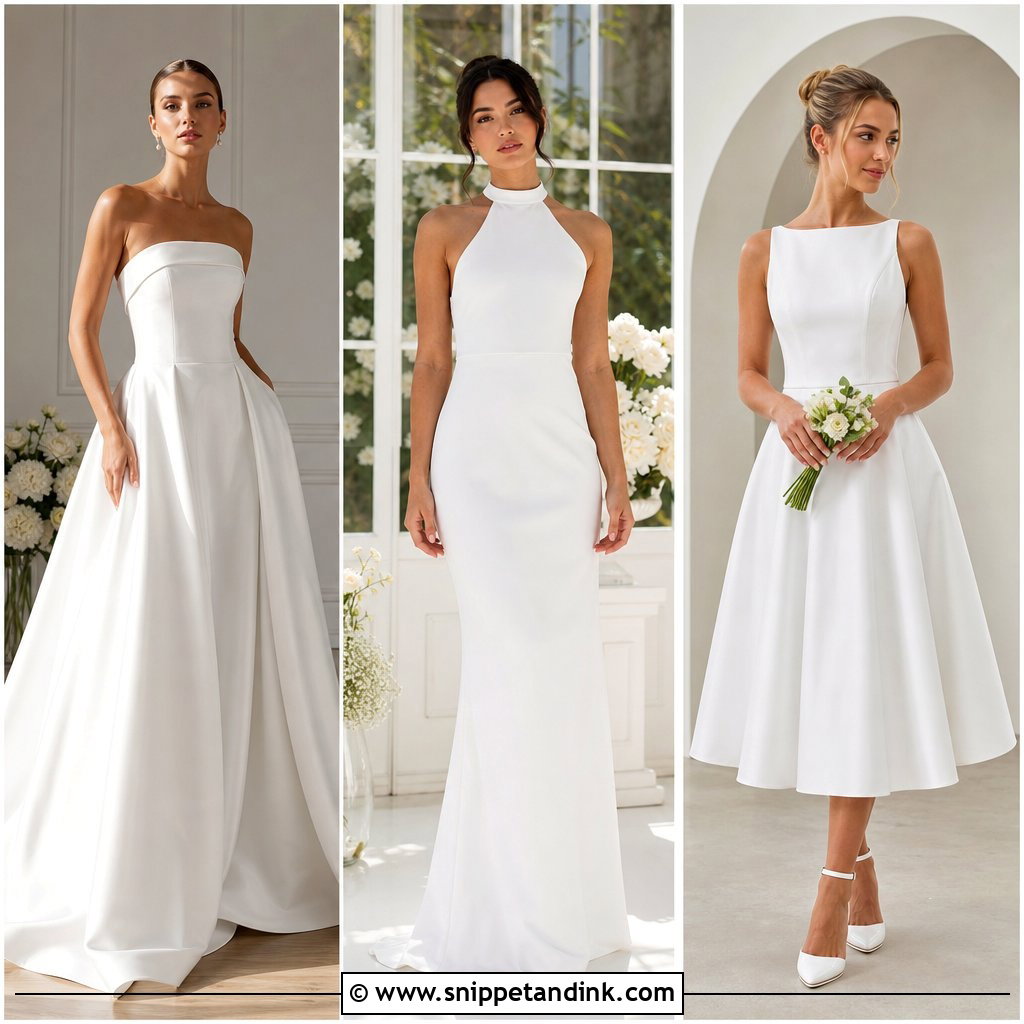
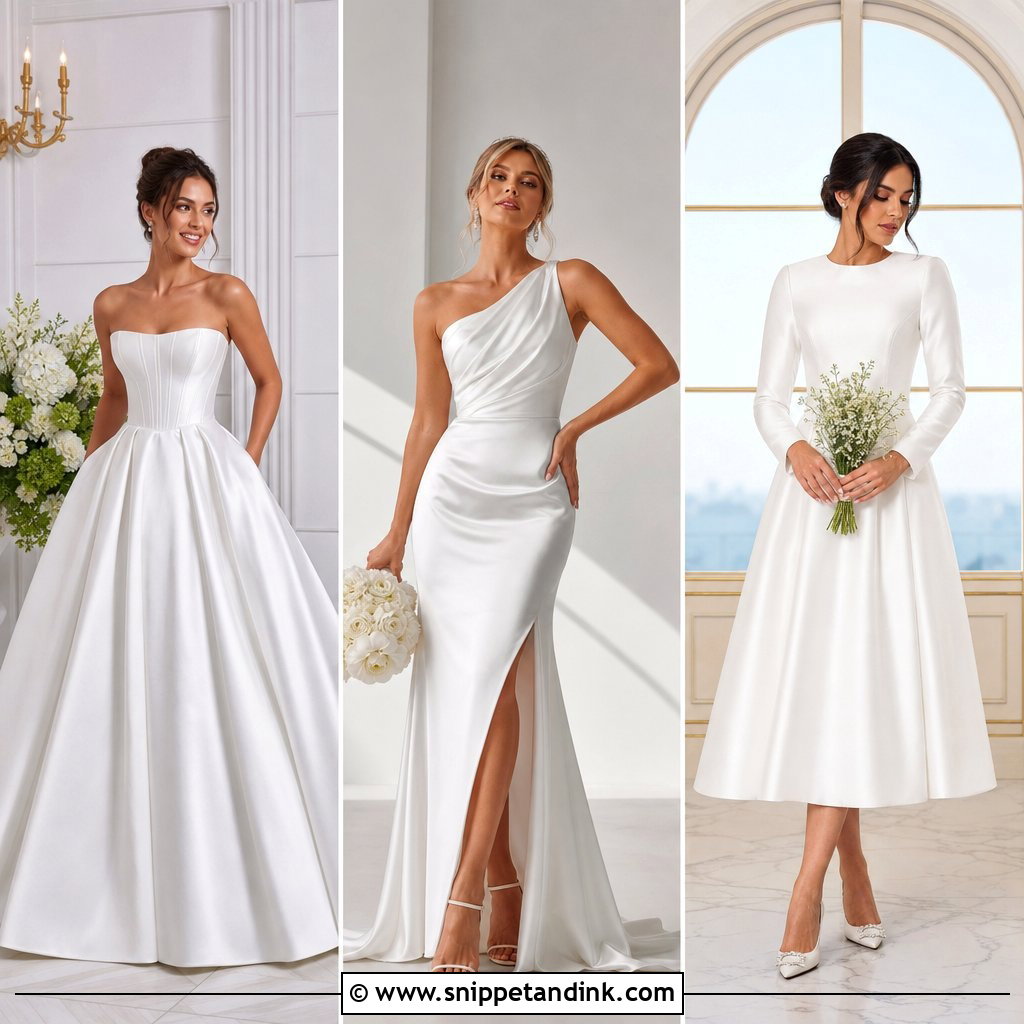
A strapless column has no detail to hide behind, so the fabric choice comes first. Structured crepe, satin, or matte mikado follows the body while holding a clean shape; thin satin will show every bump of the boning. A straight neckline reads most modern. Ask about boning, moulded cups and a waist stay, because the waist stay is what stops a strapless bodice slipping down when you lift your arms. Pointed pumps, sculptural earrings, a slim cathedral veil and a few calla lilies keep it sharp.
2. Square Neck Crepe Wedding Gown
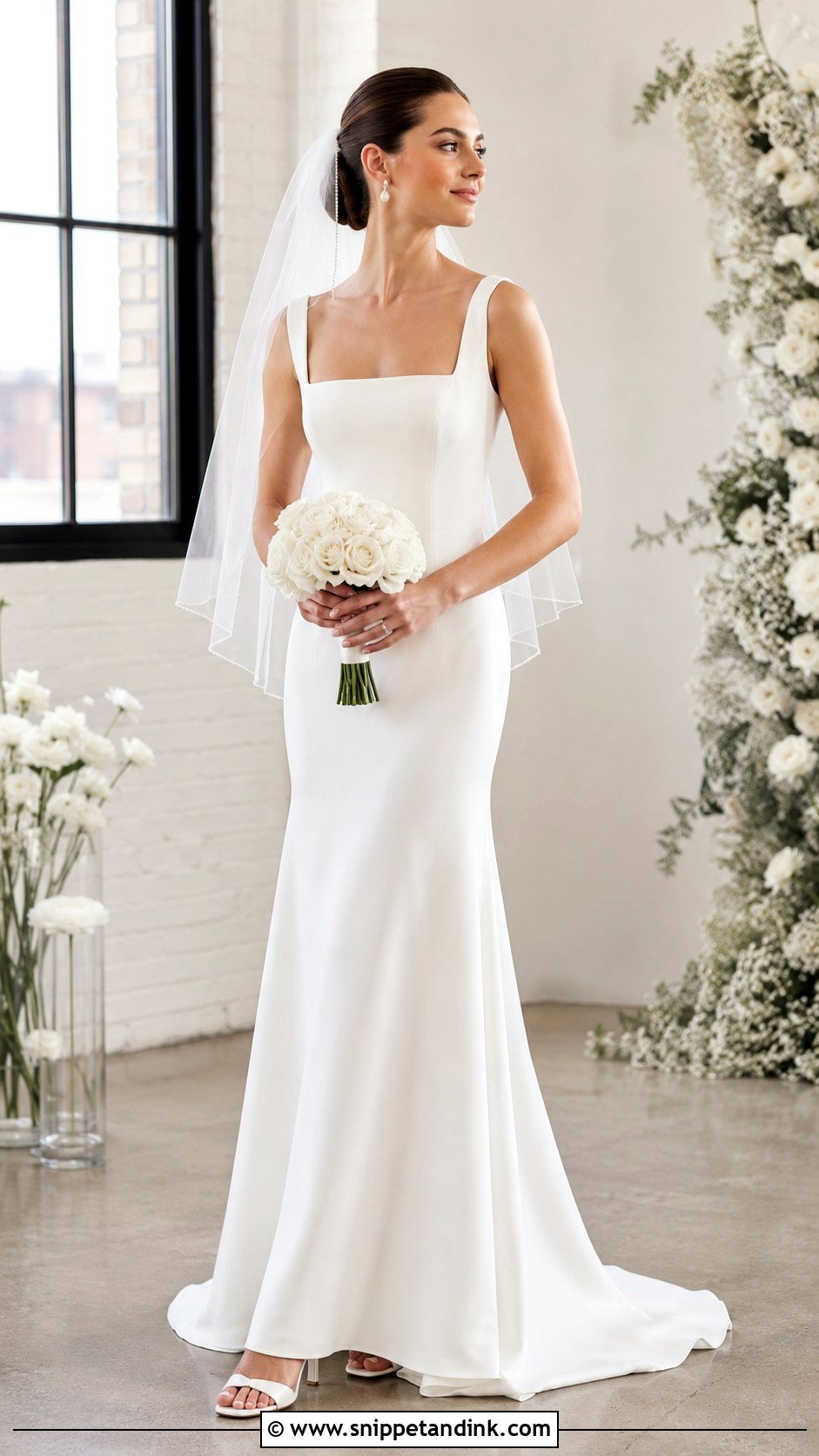
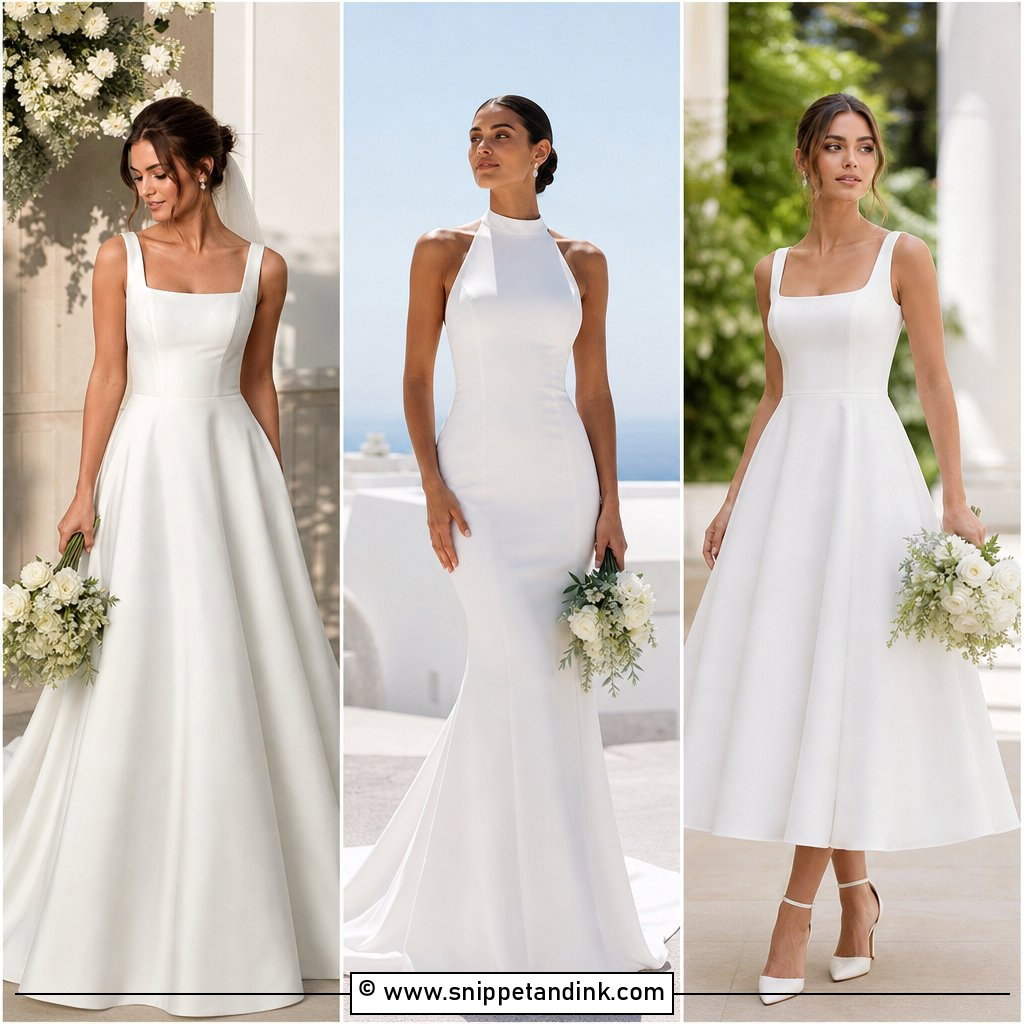
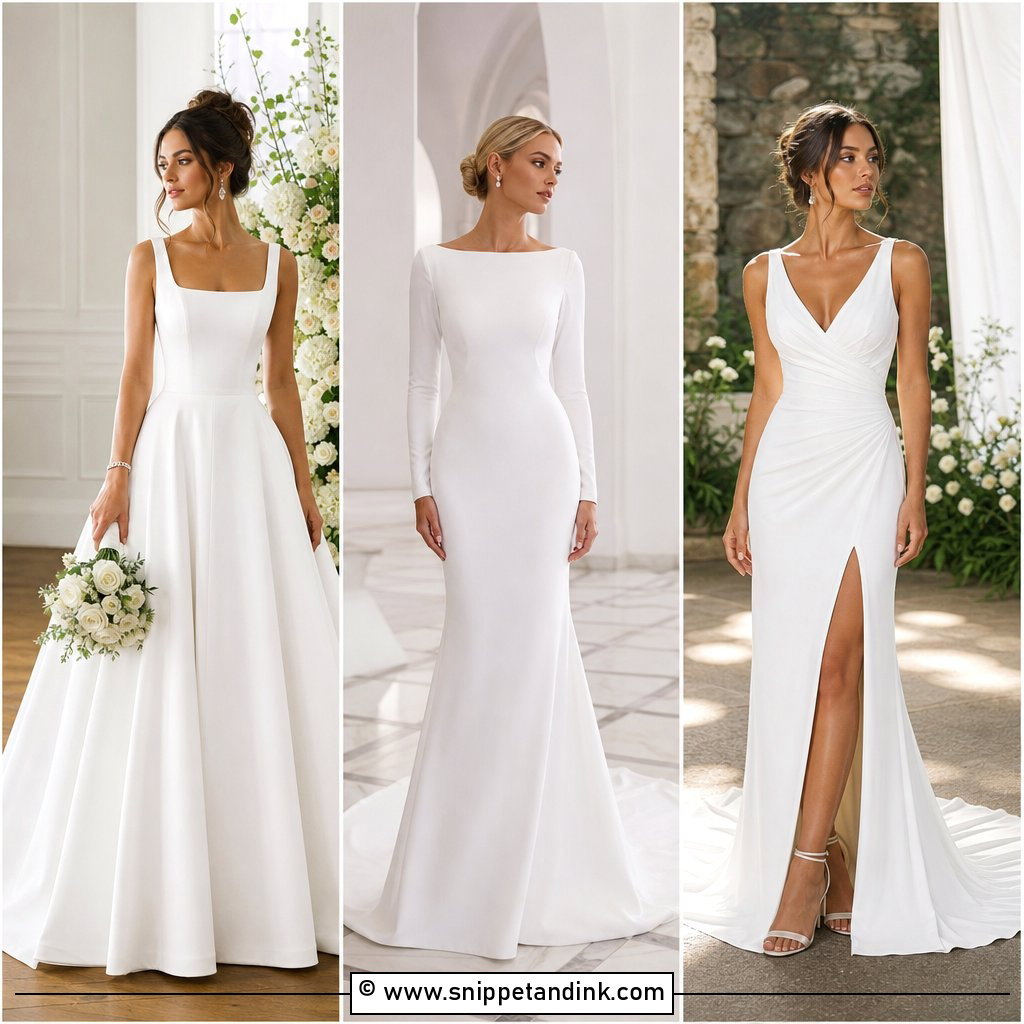
The square neckline and crepe are a natural pair, because crepe holds a crisp corner without puckering. Wide straps and a fitted bodice give real support, and a gently flared skirt lets you move. Add a low square back if you want a second point of interest. Pearl studs, a sleek low bun and leather slingbacks suit it, with a raw-edge fingertip veil rather than an embroidered one. It sits comfortably between formal and relaxed, which makes it one of the more versatile gowns in this list.
3. Silk Slip Wedding Gown
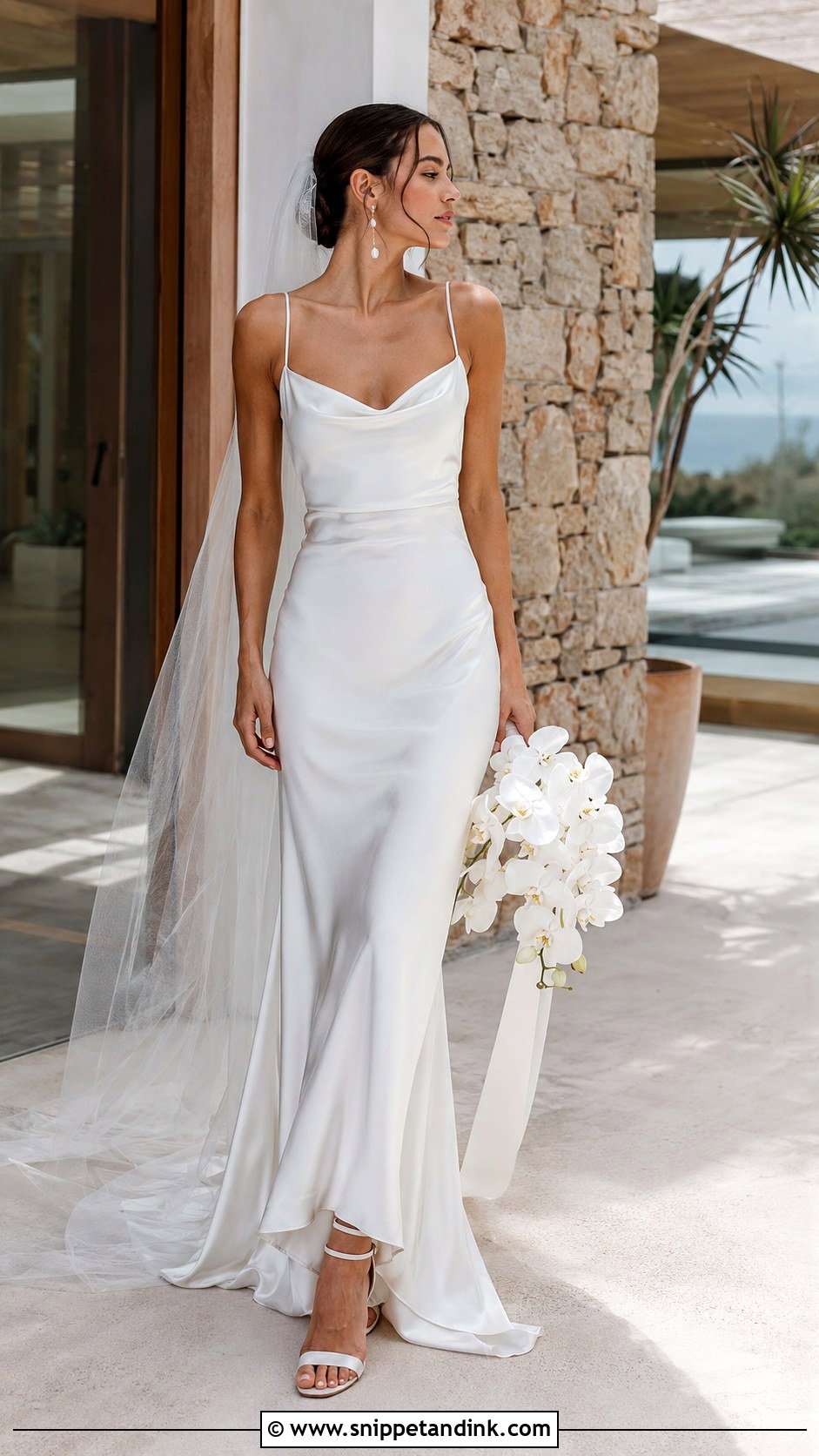
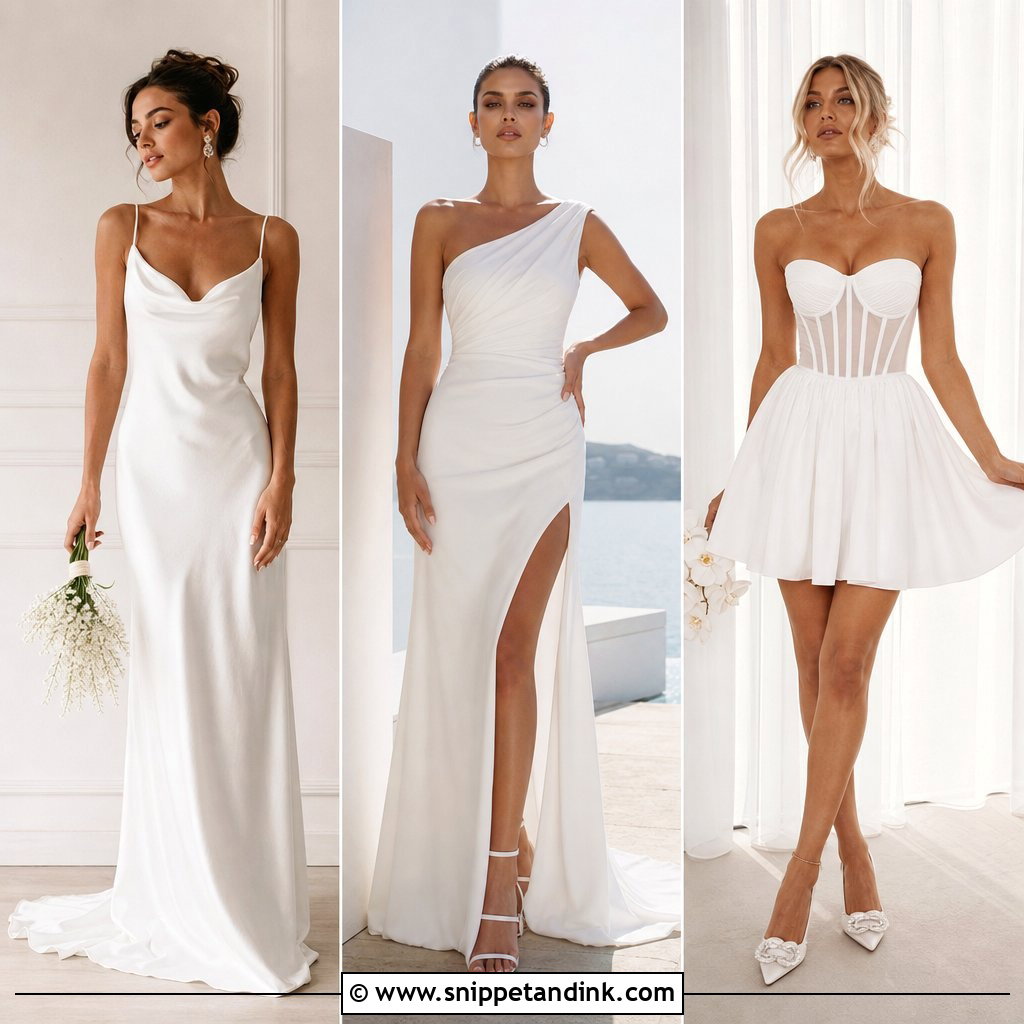
Bias-cut silk is beautiful in motion and unforgiving at rest. Cut on the diagonal of the weave, it stretches slightly and drapes close to the body, so it shows every seam and line underneath. The fabric should skim, not cling; if it pulls across the hips, go up a size and have it taken in. Fine straps, a soft cowl or straight neckline and a short train suit it. Smooth, bonded-edge underwear is a must. Ankle-strap sandals, a whisper of a veil and a small orchid bouquet finish it. I’d choose this for a warm destination or a small dinner.
4. Boat Neck Wedding Gown
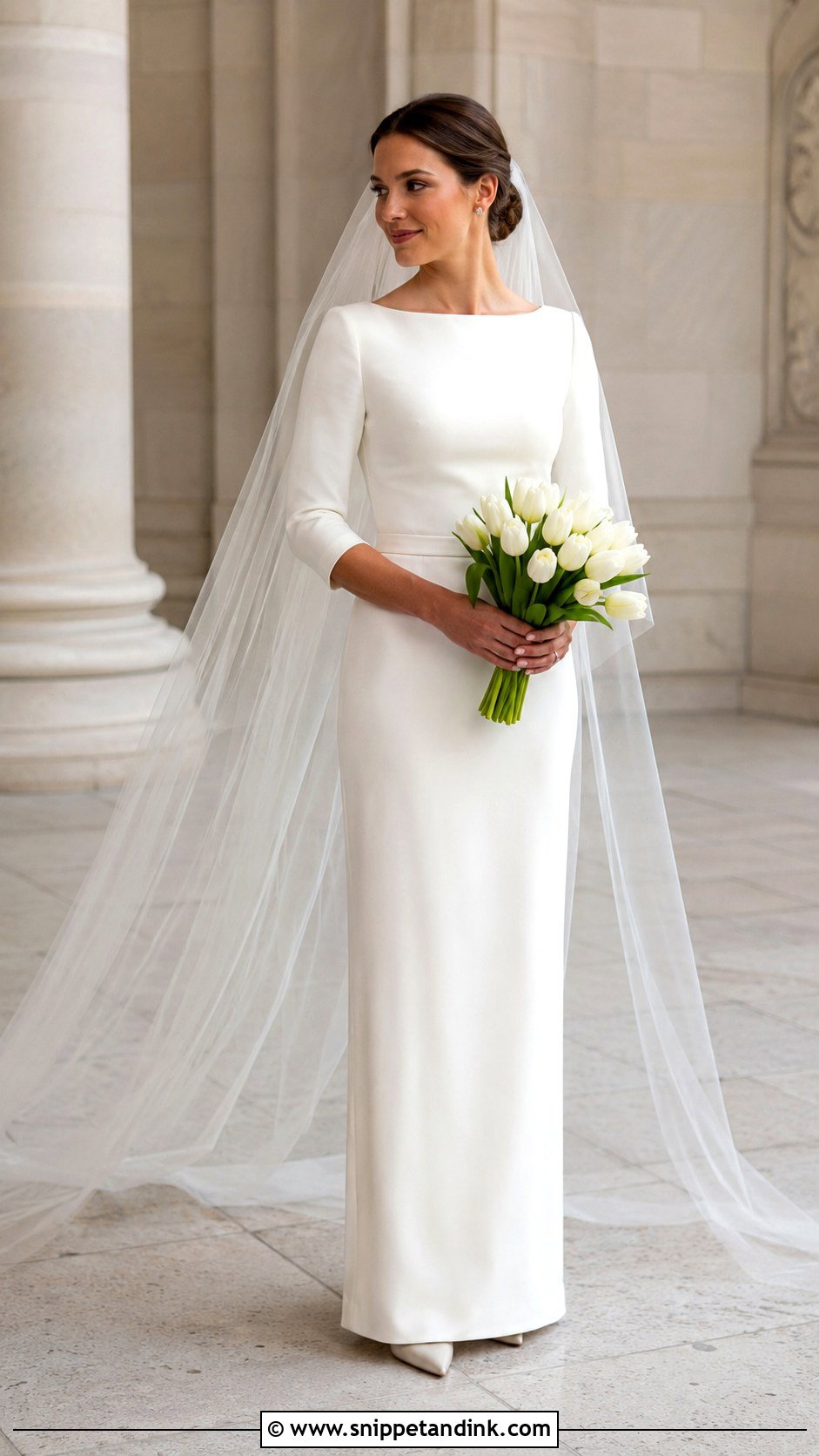
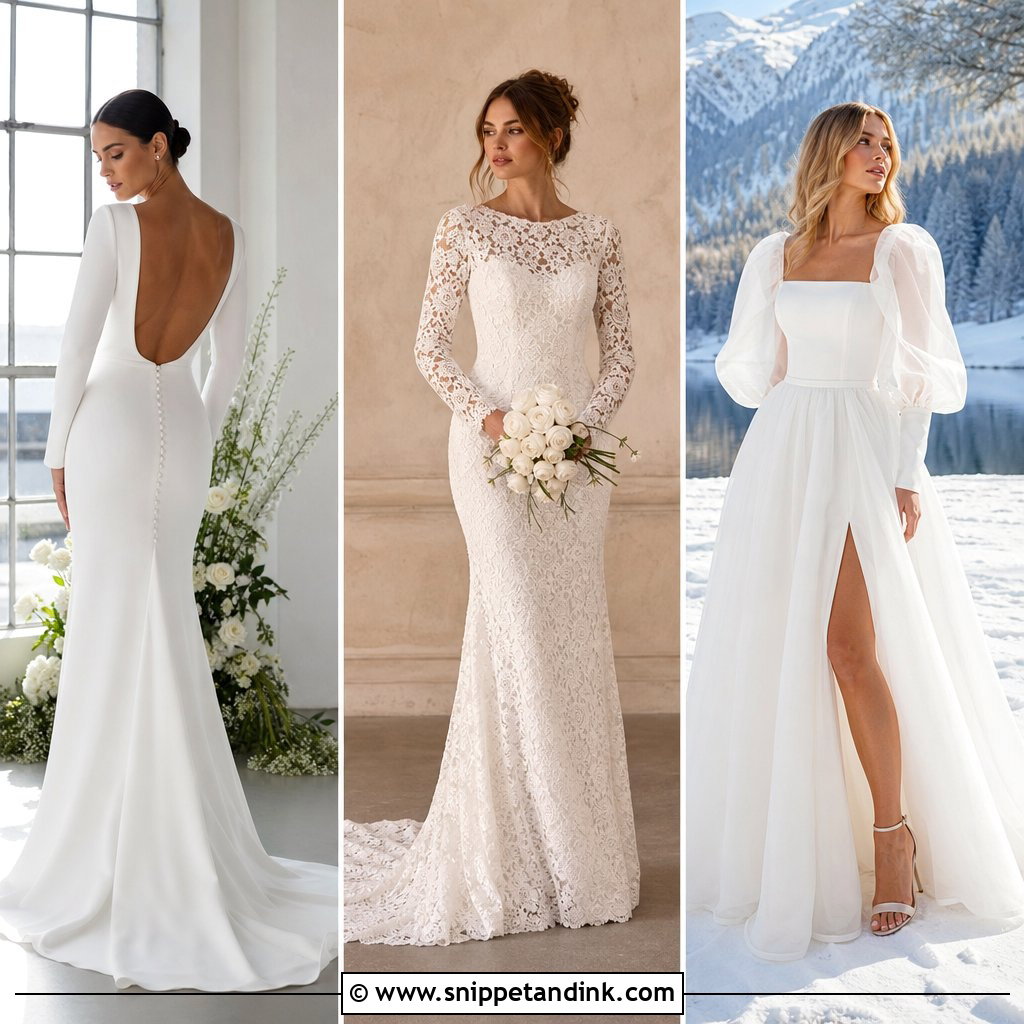
A boat neck runs straight across from shoulder to shoulder, just under the collarbones. It gives coverage and draws the eye wide, which suits narrow shoulders particularly well. On a crepe or silk faille gown with few seams, it looks quietly sophisticated. Three-quarter sleeves feel classic; a sleeveless cut is lighter in summer. The neckline is the jewellery, so studs and a neat chignon are plenty. One thing to check: a boat neck can creep backwards and choke you when you lean forward, so the back neckline needs a small anchor or a hook.
5. Off The Shoulder Wedding Gown
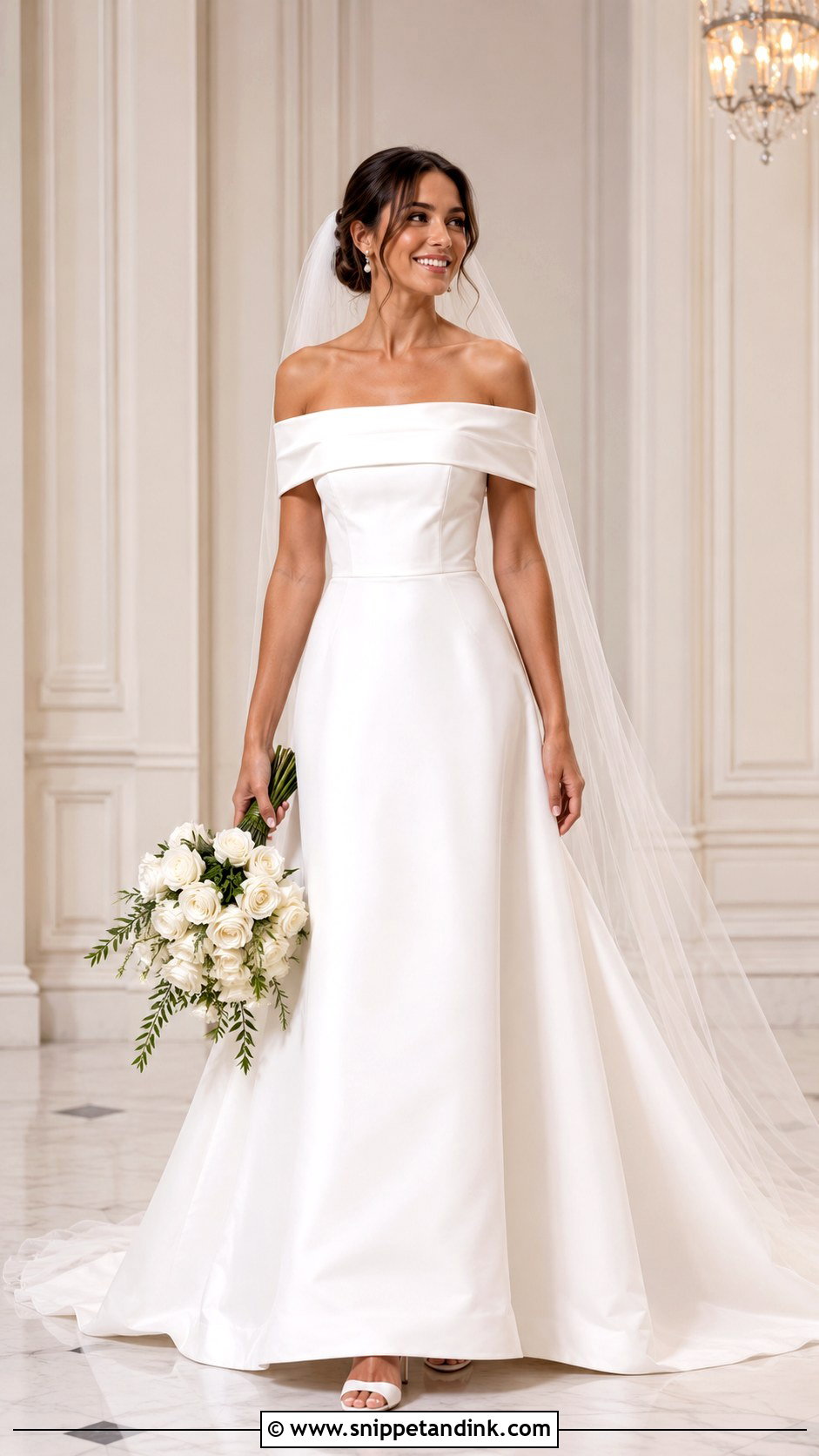
Off the shoulder works in a minimalist gown when the neckline is a smooth folded band or a sculpted edge rather than lace. A fitted bodice and an A-line skirt balance it. These bands are held up by internal structure, not by your arms, so ask your tailor about hidden silicone grip tape or elastic, internal boning and a firm waist. Raise your arms in the fitting room. If the band rides up or slides down, it needs more support. Pearl drops, satin heels and a long plain veil suit it.
6. Halter Neck Wedding Gown
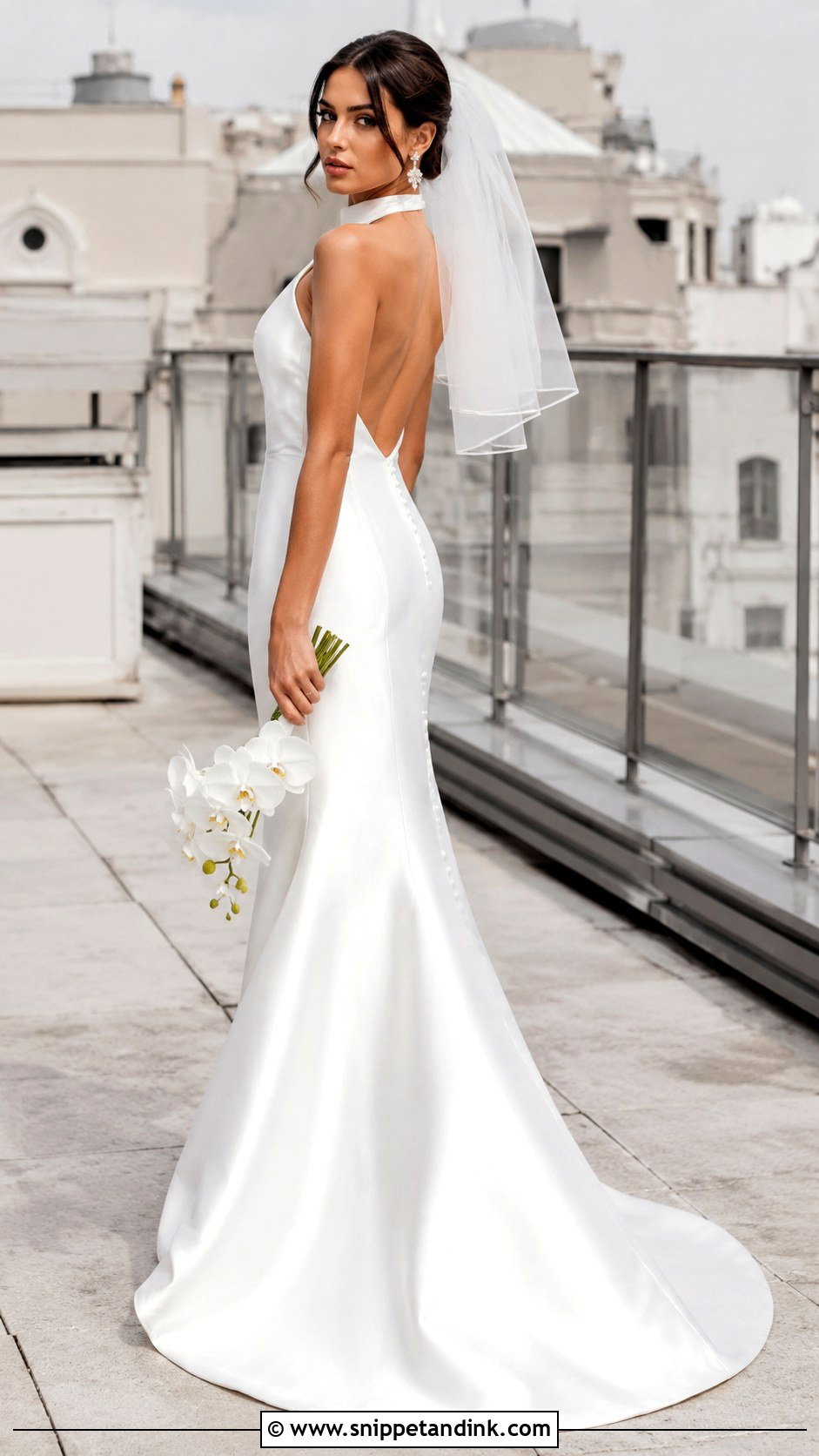
A halter feels confident and a little unexpected. It needs strong, clean shoulder lines, a fitted waist and either satin for shine or crepe for something softer. Most halters have an open back, which balances the high front. No necklace; refined earrings and a sleek ponytail work best. A halter puts weight on the back of the neck, so if the fabric is heavy, ask for the strap to be widened slightly or for an internal bodice to take some of the load. Narrow sandals and a small orchid bouquet complete it.
7. High Neck Open Back Wedding Gown
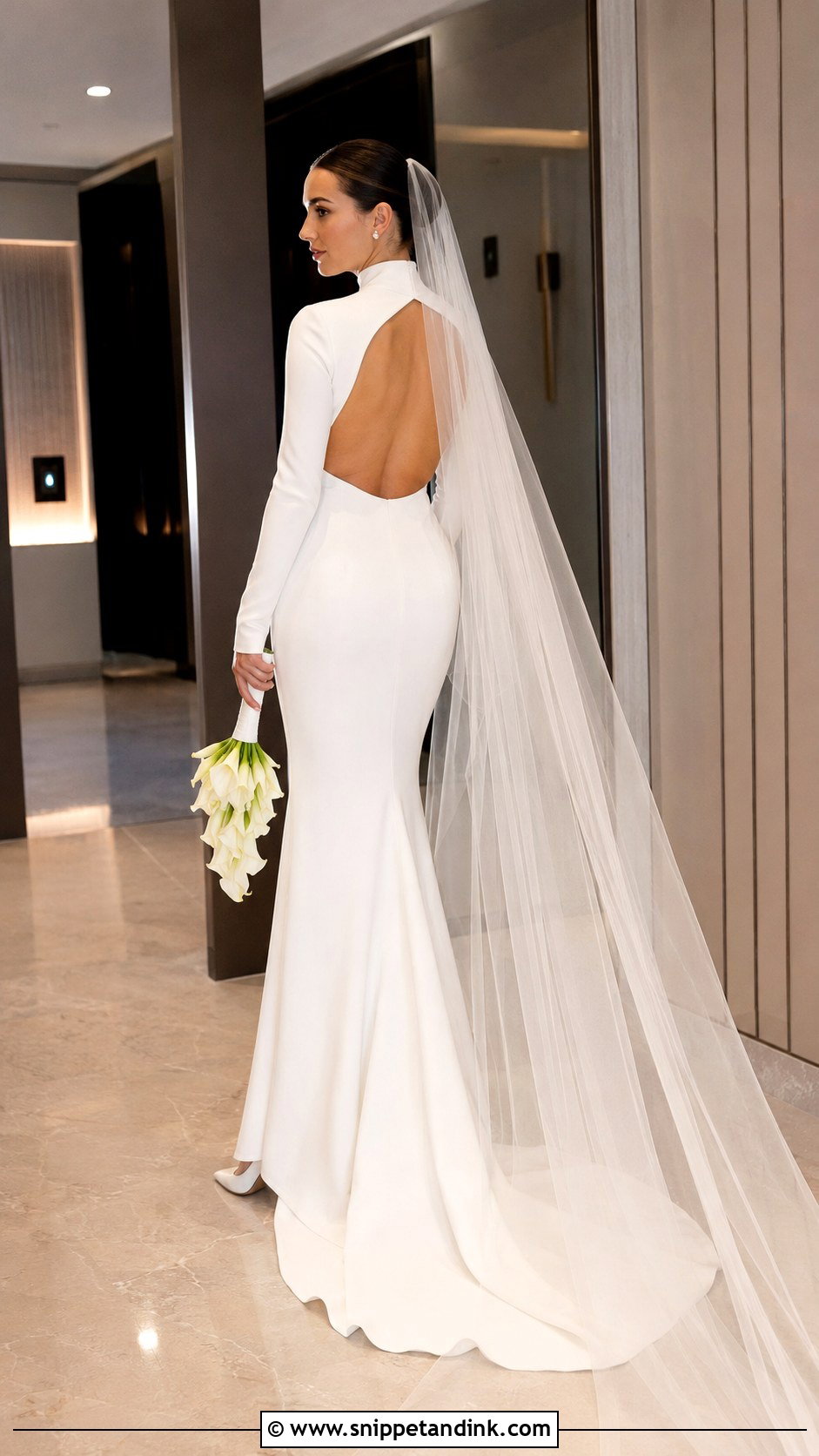
Covered and composed at the front, open at the back: the contrast is the whole design. Heavyweight crepe or a firm satin holds the high neck and the cutout without sagging. Choose an oval, geometric or softly draped back opening, with a column skirt and modest train. Hair goes up so the back is visible. I usually suggest a cathedral veil that comes out after the ceremony, so the reception photos show the back clearly. Because the back is open, built-in cups are worth arranging at the first fitting.
8. One Shoulder Wedding Gown
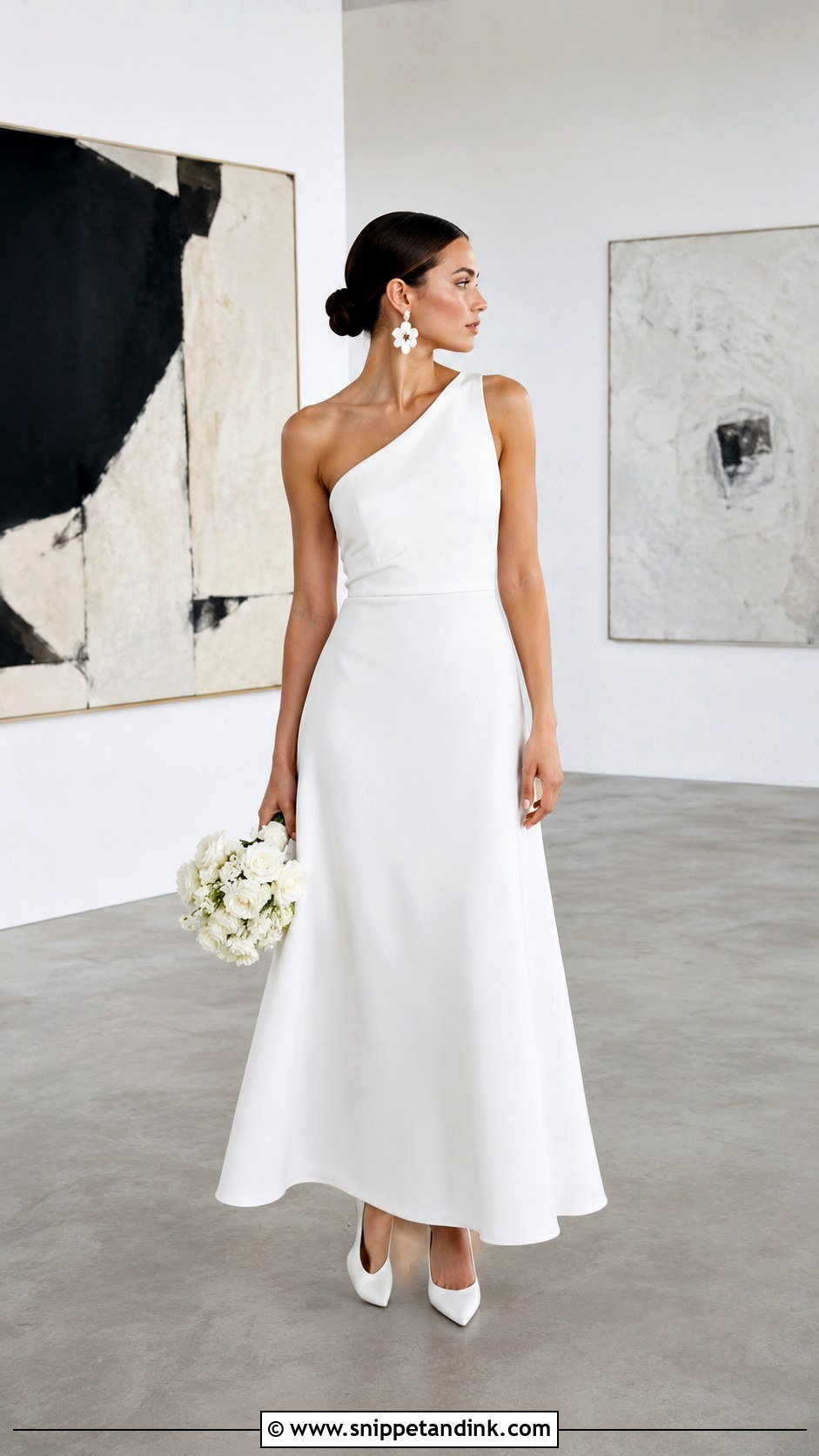
One shoulder gives a minimalist gown an architectural edge, and it is strongest when nothing else competes. Structured crepe, matte satin or mikado on a column or soft A-line. A single draped panel can add movement, but too much gathering clutters the line quickly. Leave the bare shoulder free of a necklace and wear a sculptural earring on that side. Have a one-shoulder bodice checked for slipping toward the bare side when you hug someone; a hidden elastic strip under the arm usually fixes it.
9. Basque Waist Satin Wedding Gown
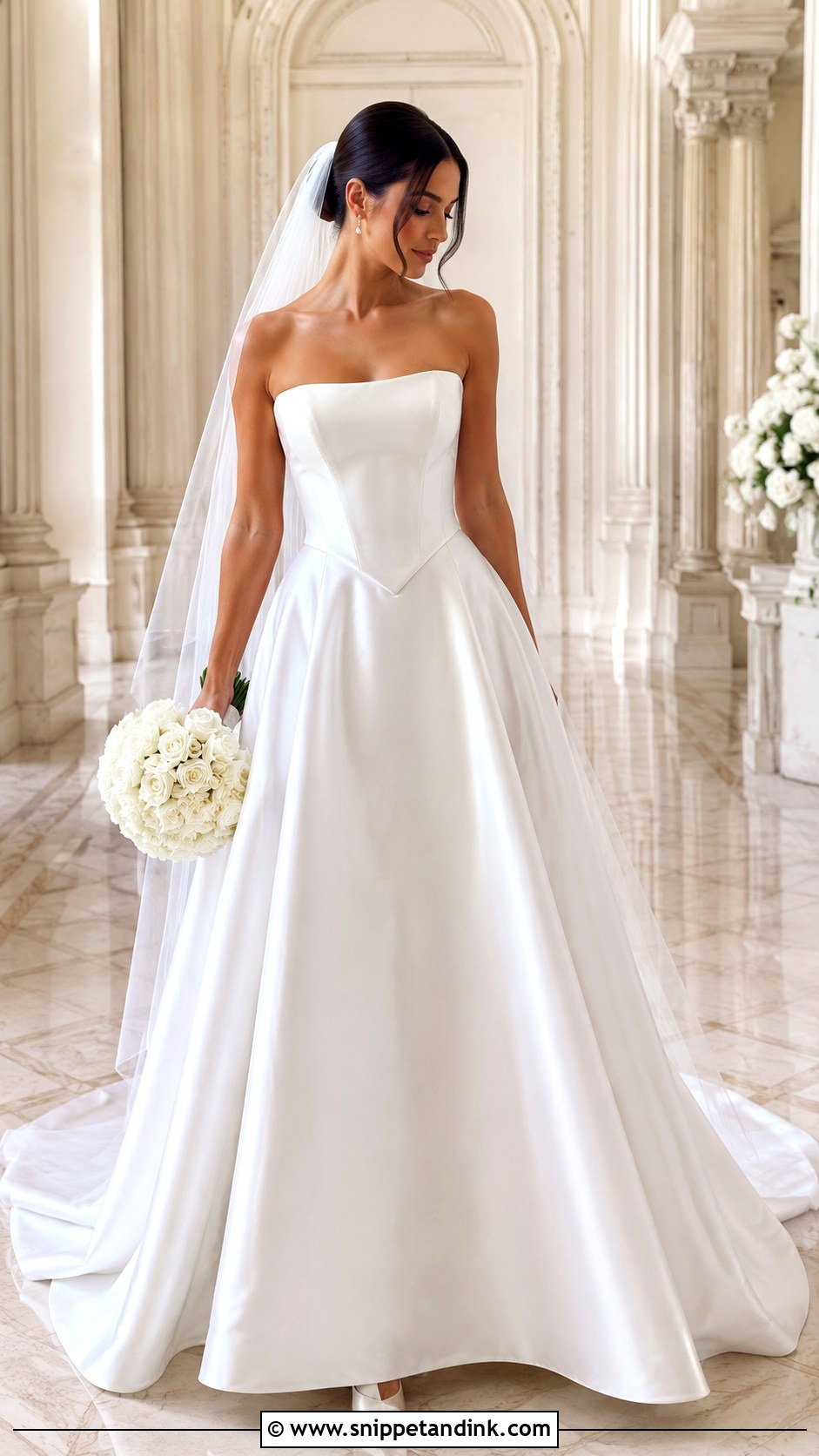
A basque waist drops into a V below the natural waist, which lengthens the bodice and makes the waist look narrower. In smooth satin with very little gathering, it adds structure without any decoration. A strapless or wide square neckline keeps it modern. A full skirt gives formal presence; a narrower A-line is easier to wear all day. The point of the V should sit centred and low enough to flatter but not so low that it digs in when you sit. A plain chapel veil and a neat bun finish it.
10. Minimalist Ball Gown
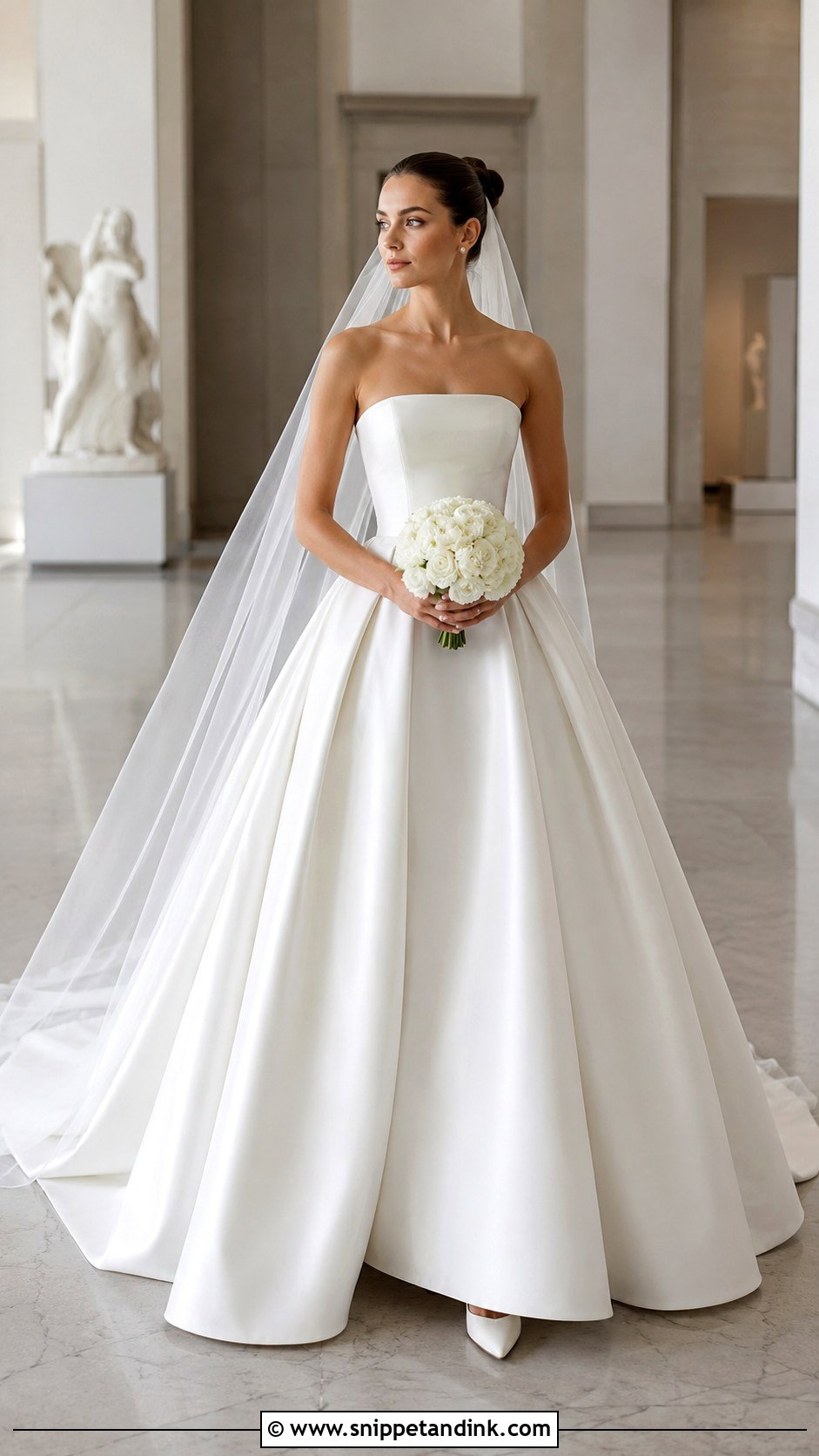
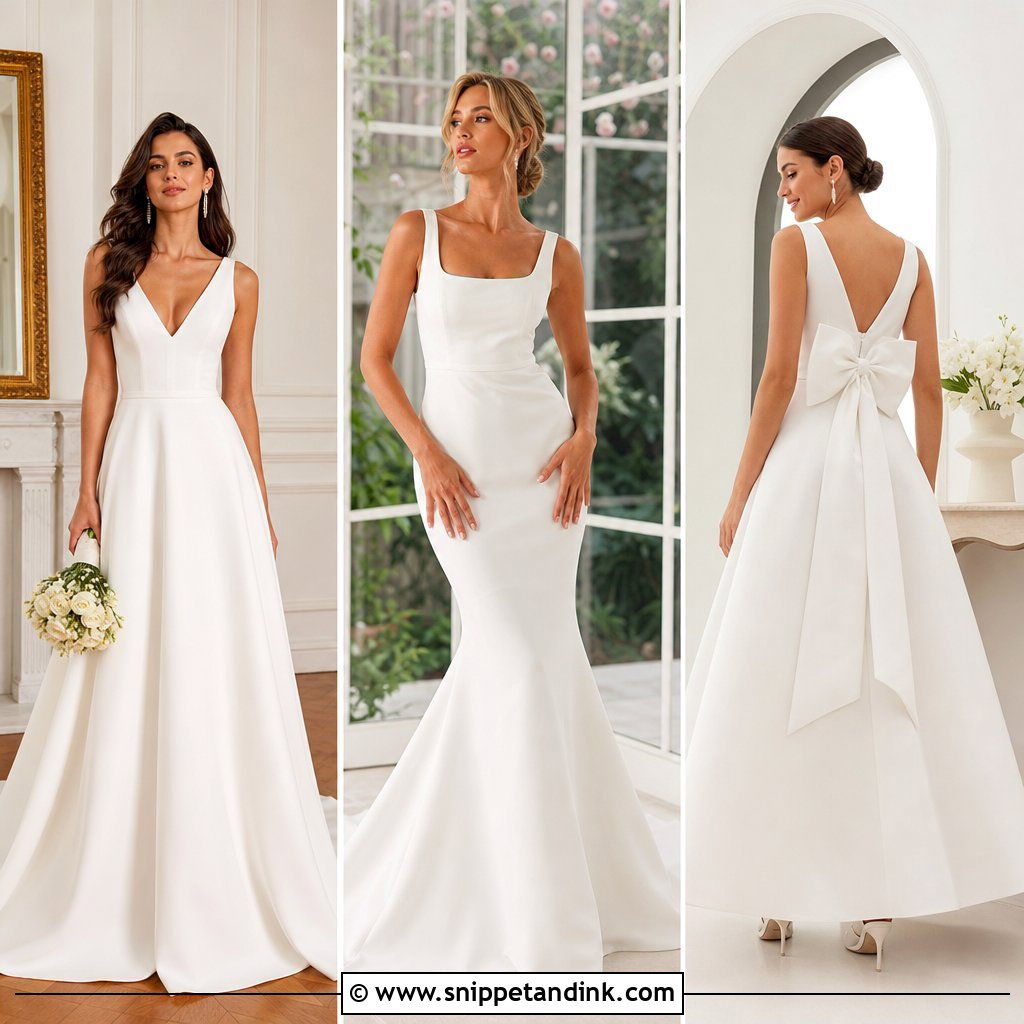
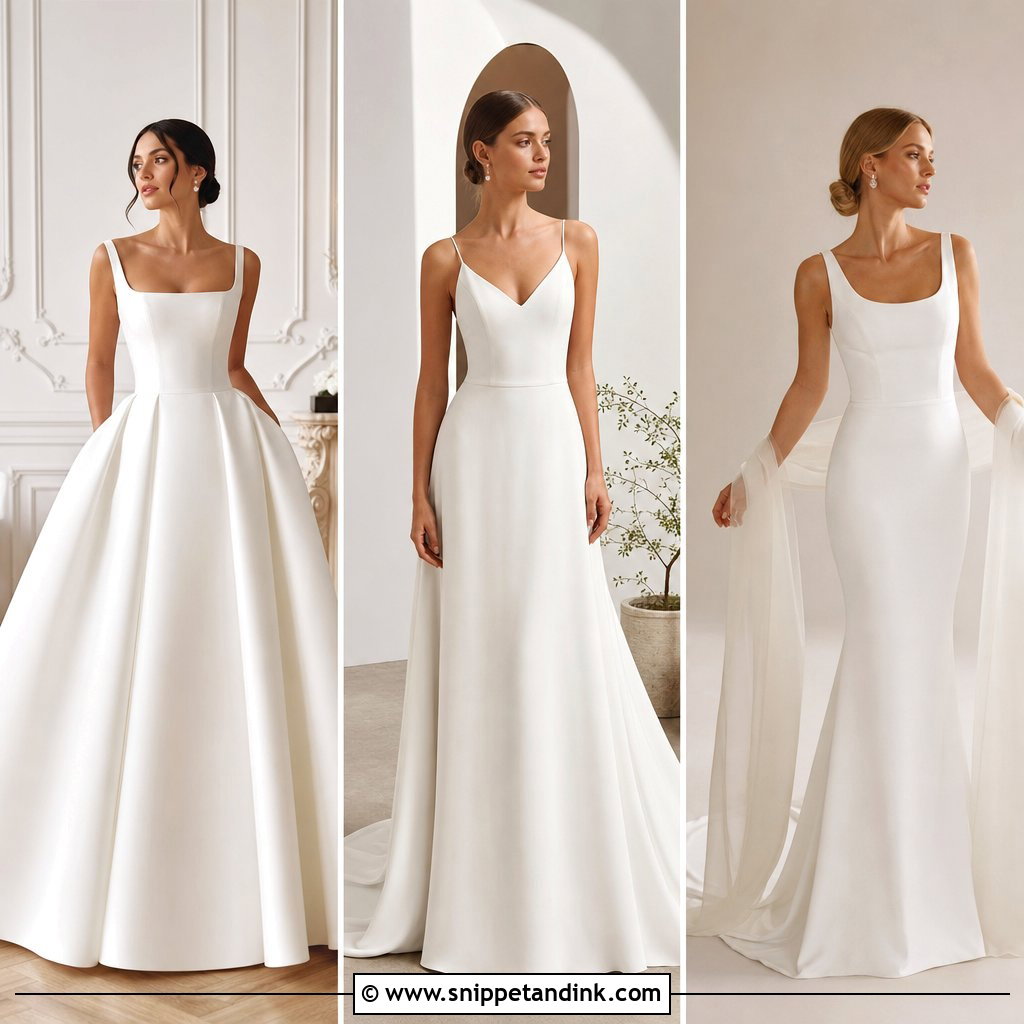
Minimal doesn’t have to mean narrow. A ball gown in smooth mikado or silk faille gets all its drama from shape: a fitted strapless bodice and a full skirt shaped with box pleats or carefully placed gathers. With that much presence, the accessories have to step back: pearl studs, pointed pumps, a raw-edge cathedral veil, a modest bouquet. A sleek bun balances the volume below. Mikado creases sharply when crushed, so ask how the skirt will be packed and steamed before the day.
11. Wedding Gown With Cape
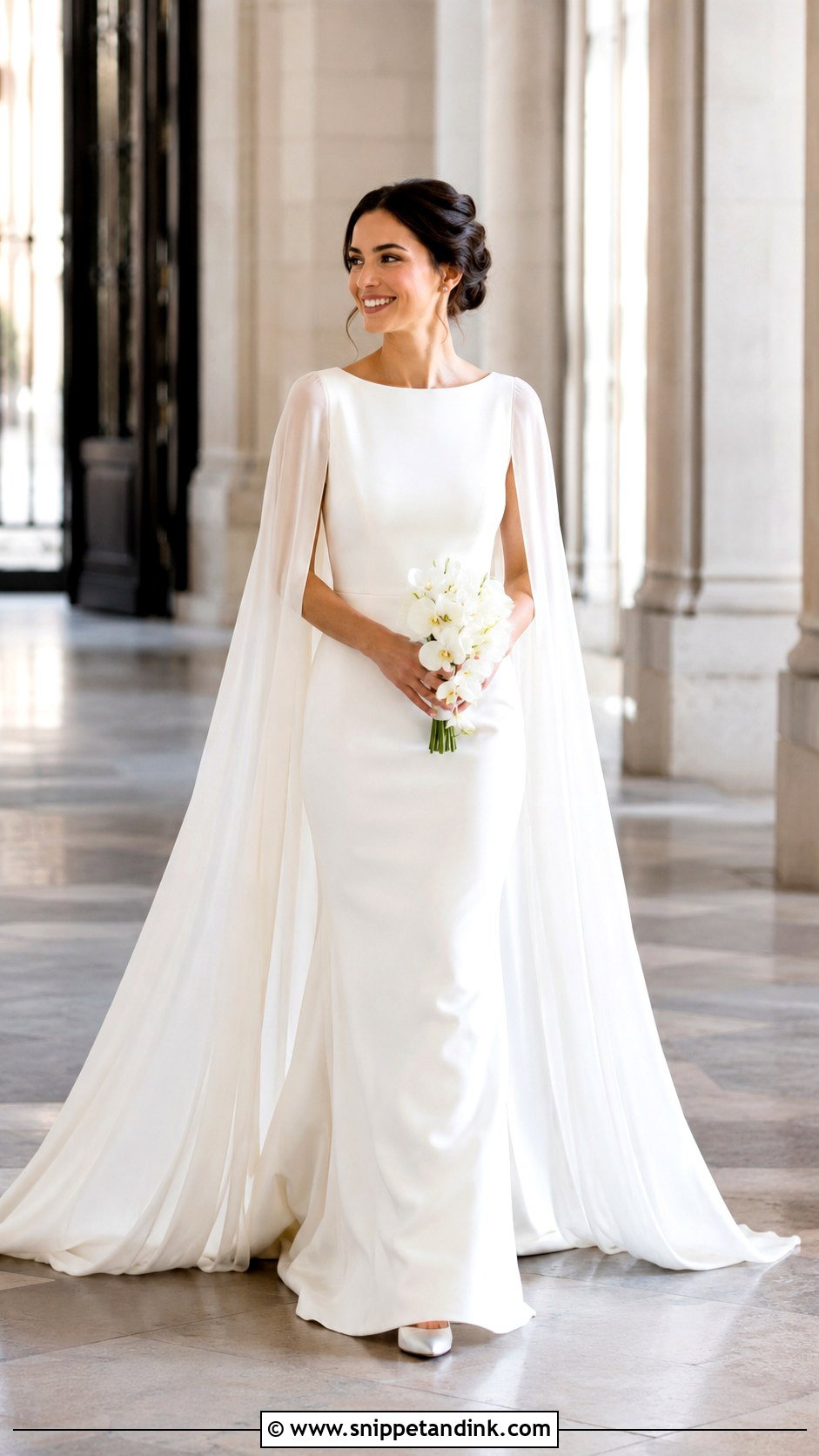
A removable cape turns a simple sheath into a ceremony look and comes off for the party. Start with a clean column in crepe, satin or silk. A sheer cape gives soft movement; a structured fabric gives a sharp, architectural outline. Attach it at the shoulders with hidden hooks or snaps so the gown looks finished when it comes off. Skip the veil; the cape gives length. It suits cooler months, and it’s a good way to get two looks without a second dress.
12. Corset Bodice Wedding Gown
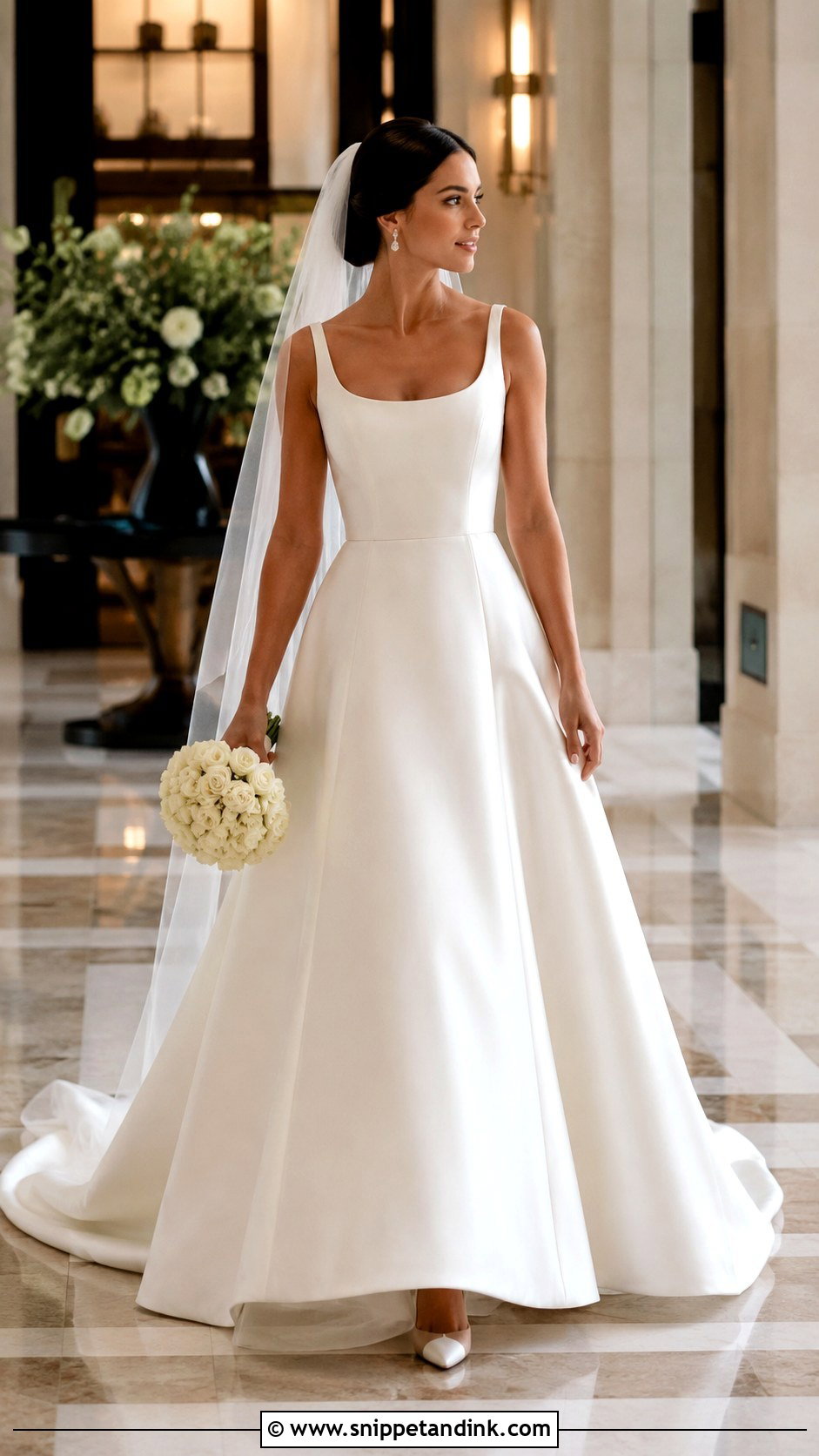
A corset can still be minimal if the structure is smooth. Choose a clean scoop, straight or gently curved neckline, with boning either hidden or finished neatly as part of the design. Pair it with a fluid satin skirt or a crisp A-line. In fittings, sit down, lean forward and twist. The cups and back closure should stay put, and the top edge shouldn’t cut in under the arms. Small earrings, slingbacks and a plain fingertip veil suit it. This is one of the shapes that adapts most easily to different bust sizes.
13. Cowl Neck Wedding Gown
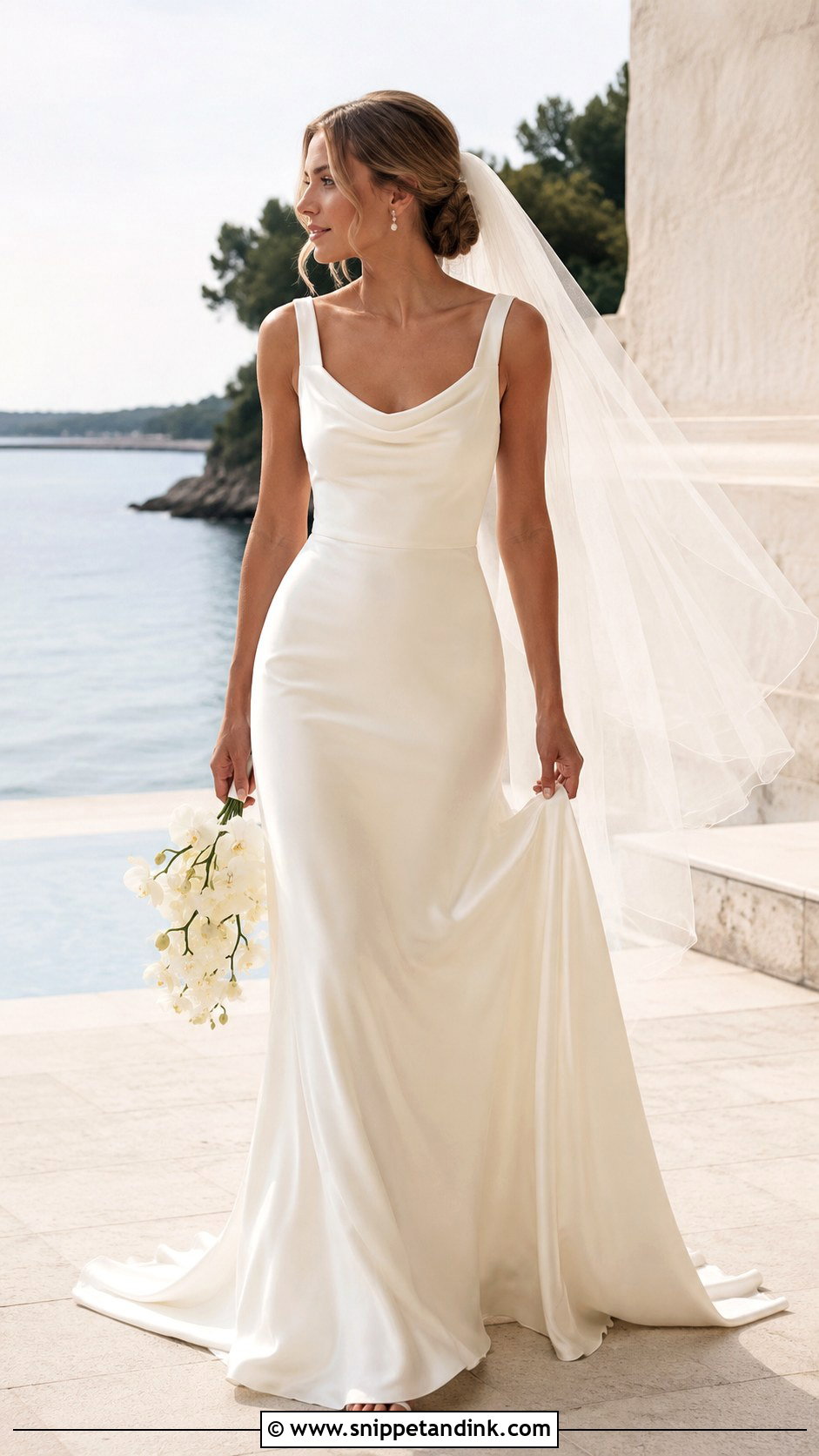
A cowl neck wedding gown drapes in soft folds across the chest, so it needs a fabric that falls on its own: silk satin or lightweight crepe. A bias-cut skirt keeps it fluid; a column skirt gives contrast. The common problem with a cowl is gaping when you bend forward. Ask for the cowl to be weighted slightly or tacked at the centre, and choose straps wide enough to hold it. Delicate earrings, bare sandals, a low twisted bun and a sheer raw-edge veil. I’d put this on the coast or in a restaurant.
14. Minimalist Mermaid Wedding Gown
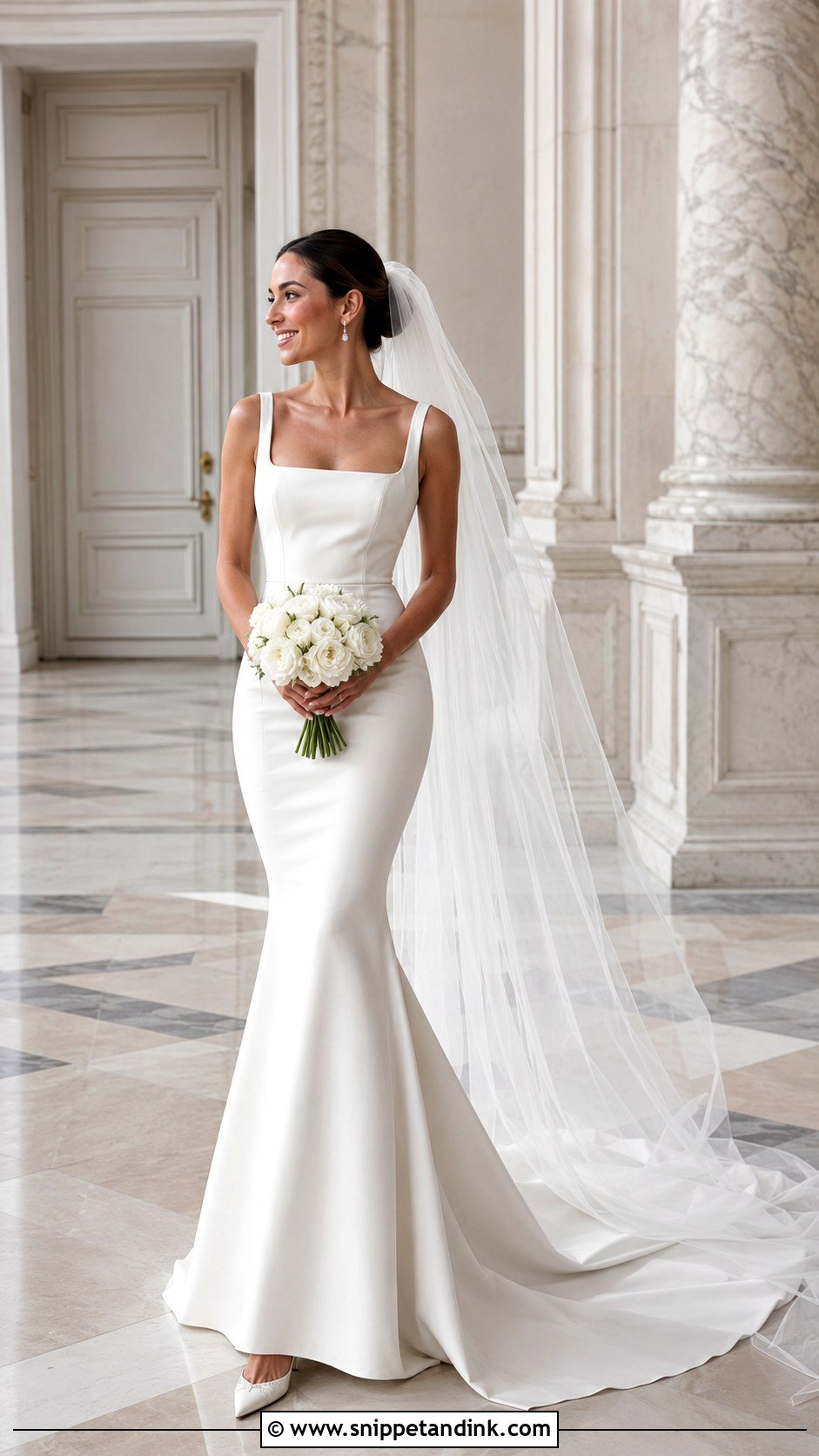
A plain mermaid relies entirely on tailoring. Smooth crepe should follow the torso and hips and then flare gently near the knees. A gradual flare is far easier to walk in than a dramatic one, so test your stride and sit in it at every fitting. A strapless, square or bateau neckline suits it, with pointed pumps to keep the line long and a neat updo. A plain veil that extends just past the train looks polished. If the gown pulls when you sit, the problem is usually the hip line, not the flare.
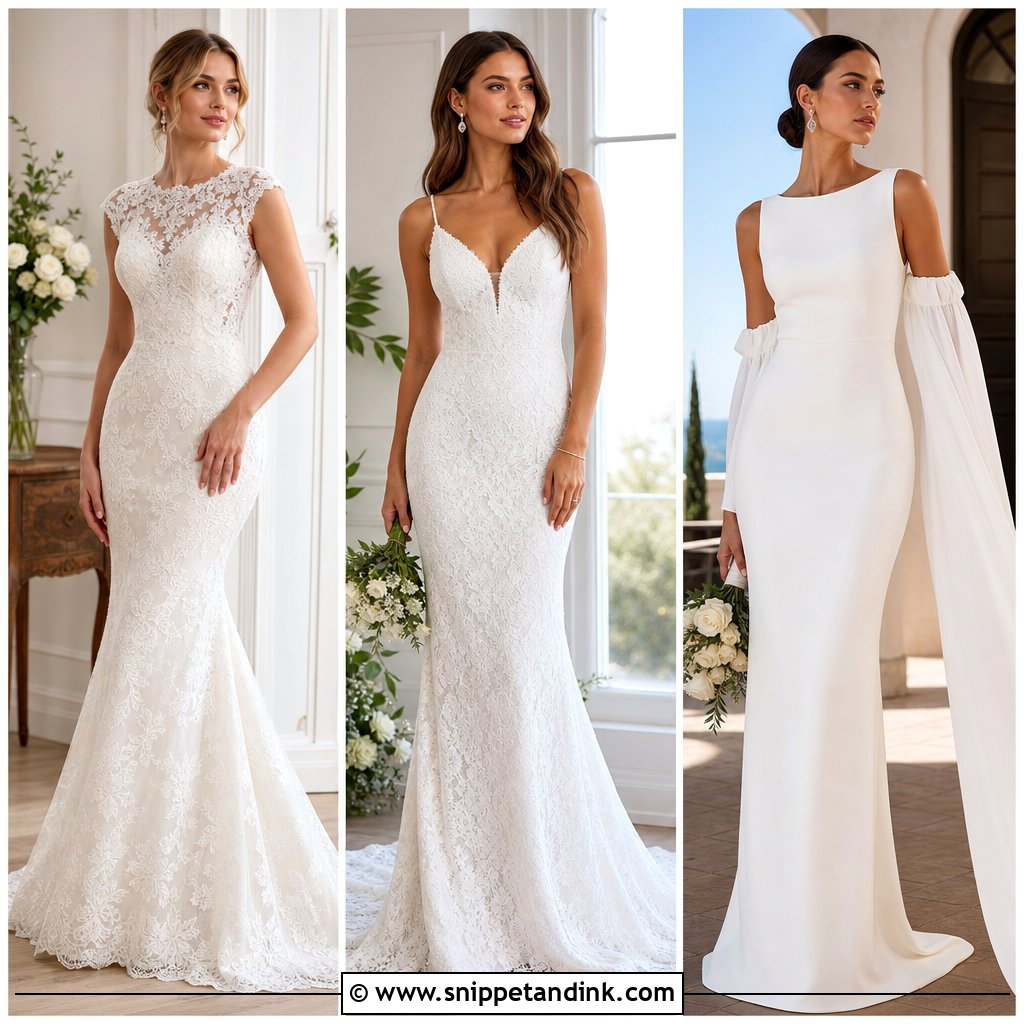
15. Tea Length Wedding Gown
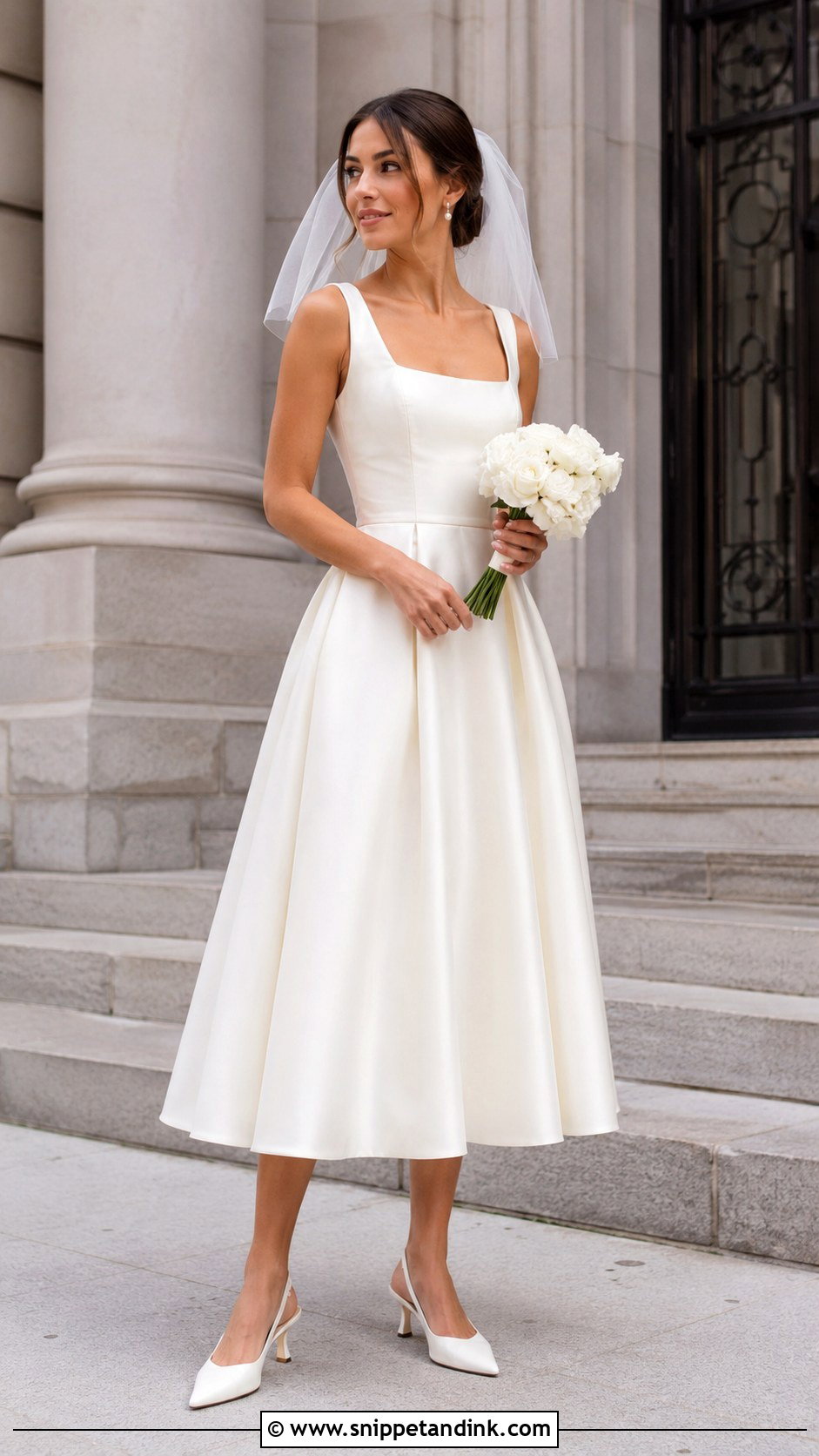
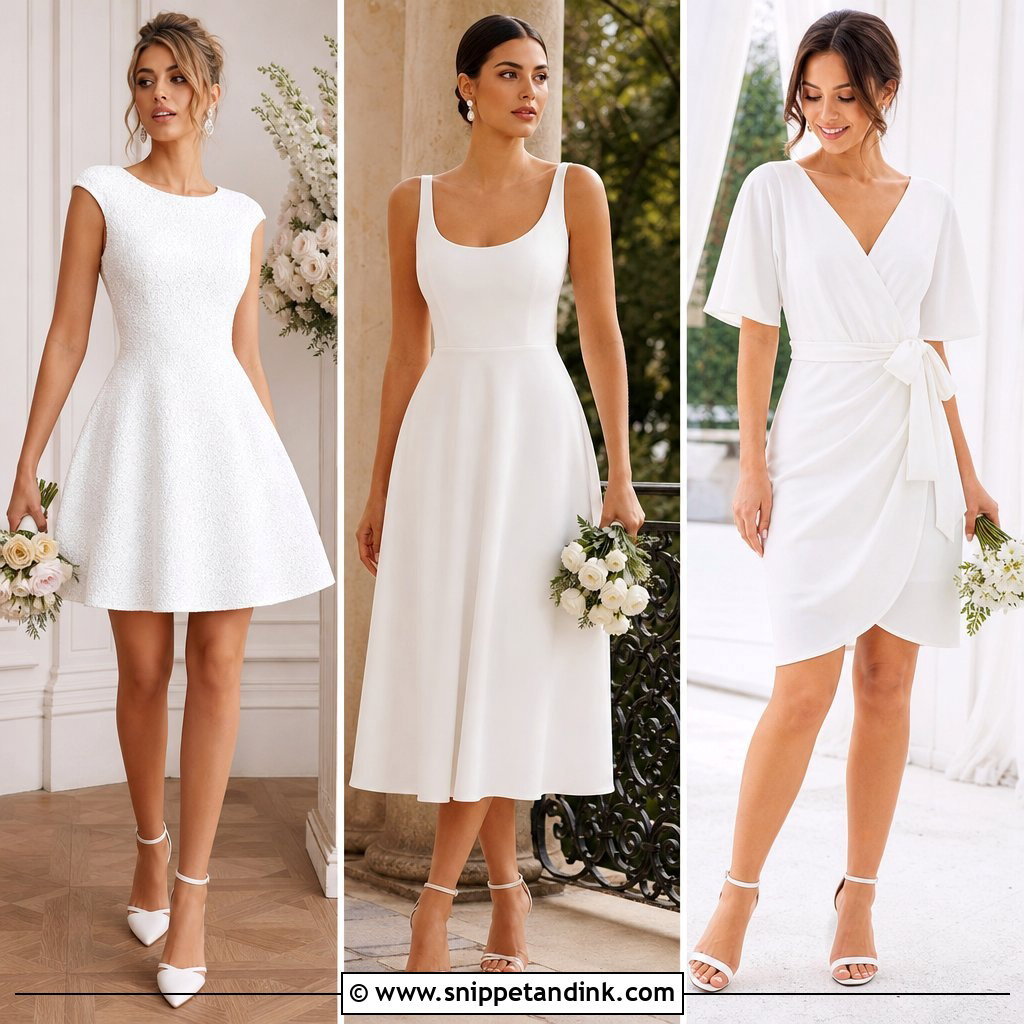
Tea length is lighter and easier to dance in, but a short skirt only looks bridal if it holds a clear shape. Mikado, faille and crisp satin do; soft crepe tends to look like a party dress. A square neckline, sleeveless bodice or boat neck keeps it streamlined. Since the hem shows your shins and ankles, the shoes are part of the outfit: pointed slingbacks, sleek pumps or minimal block-heel sandals. Pearl studs, a short veil and a small structured bouquet finish it.
16. Long Sleeve Column Wedding Gown
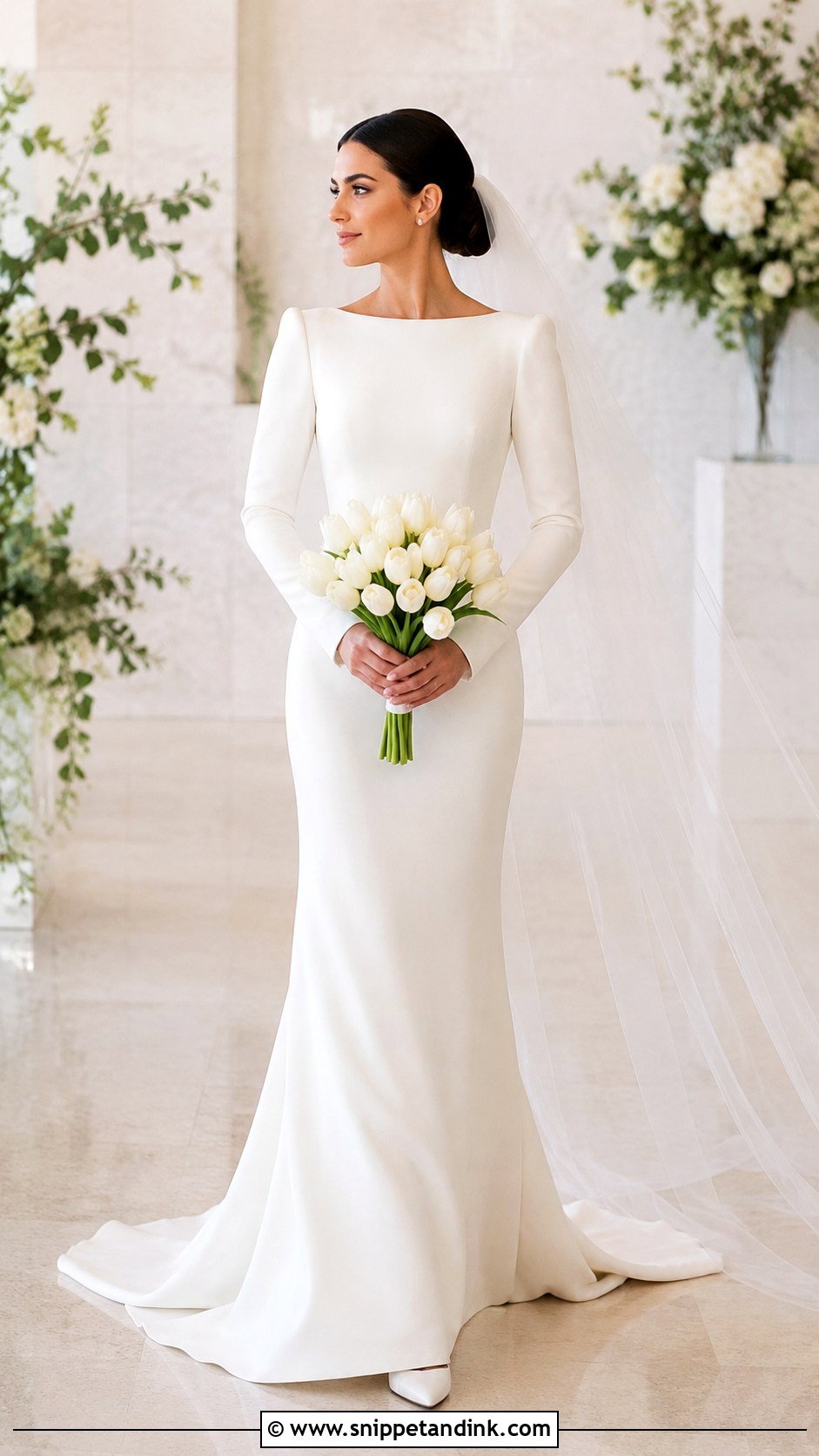
Long sleeves bring a quiet formality to a crepe column, and they suit autumn, winter and churches that ask for coverage. Fitted sleeves, defined shoulders and few seams look the most modern. An open back stops the coverage feeling heavy. The skirt should skim the body with a back vent or a slight flare so you can actually walk. A plain cathedral veil softens it and can come off for the reception. Check the sleeve at the elbow: crepe has little stretch, and a too-narrow forearm makes hugging awkward.
17. Wedding Gown With Back Bow
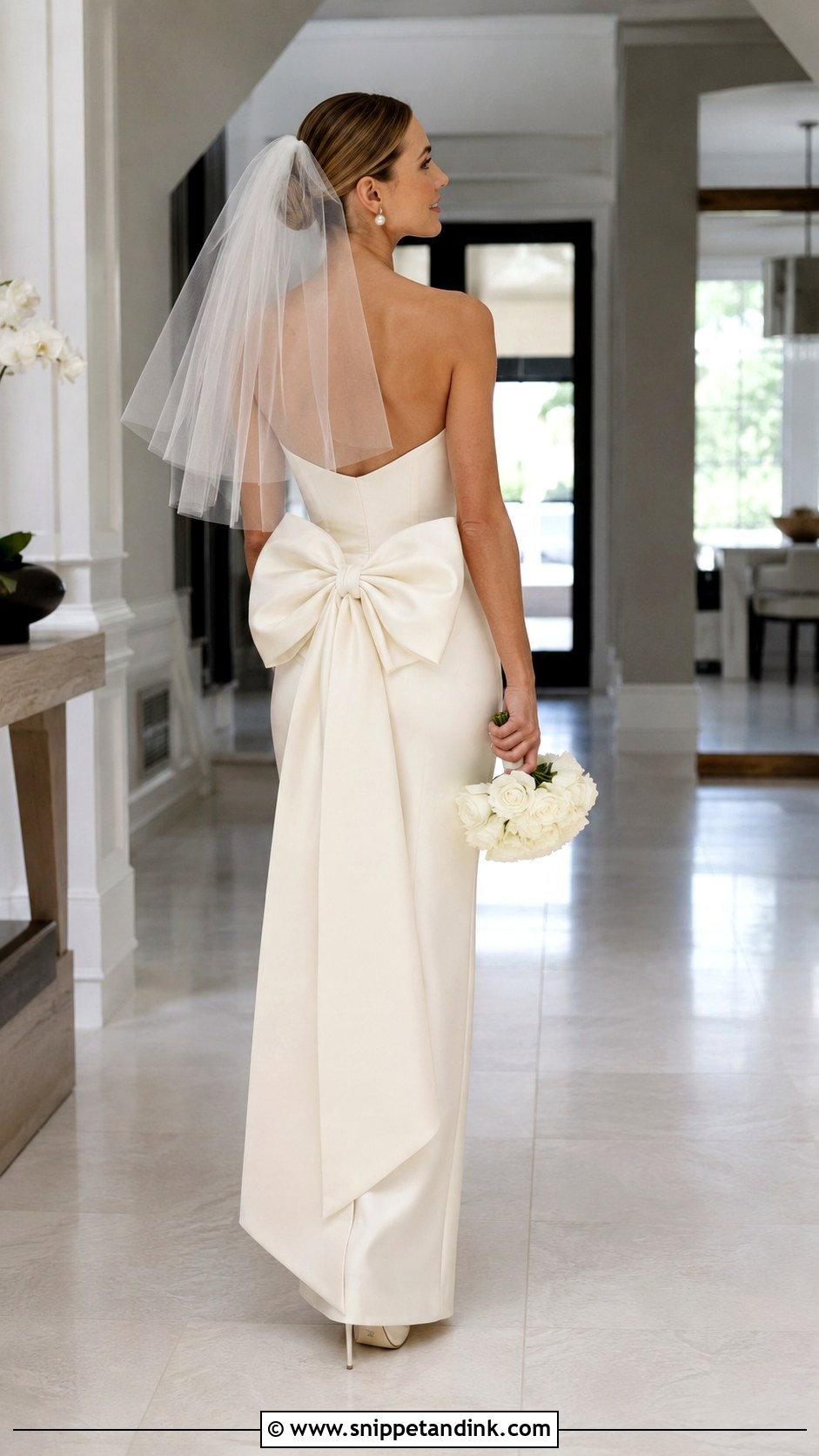
A single oversized bow adds personality from behind while the front stays clean. Put it on a smooth strapless column, sheath or A-line at the lower back or waist. Mikado gives a crisp, sculptural bow; satin gives a softer, drooping one. I always ask for the bow to be detachable. A large bow is uncomfortable against a chair back through a long dinner, and being able to take it off helps. A short raw-edge veil or just a comb leaves it visible.
18. Square Back Mikado Wedding Gown
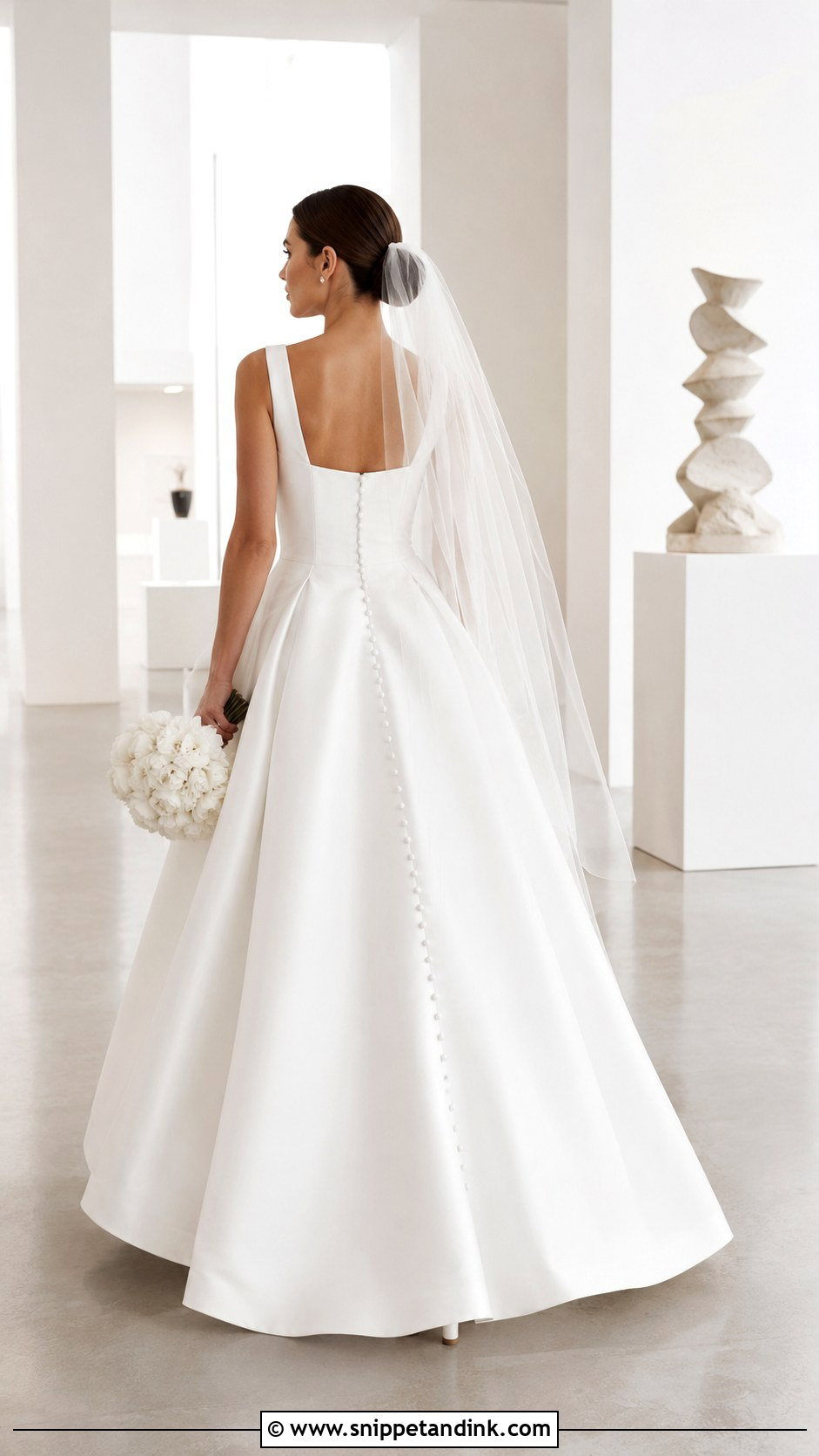
A square back gives a mikado gown strong lines from behind. Mirror it with a square neckline in front, or soften it with a scoop. A fitted bodice and an architectural A-line skirt give structure with no beading at all. Tonal covered buttons down the back are a subtle bridal detail; spaced closely, they look tailored, and widely spaced ones look like an afterthought. A chignon keeps the back visible. Choose a plain veil that you can take out after the ceremony photos.
19. Wedding Gown With Slit
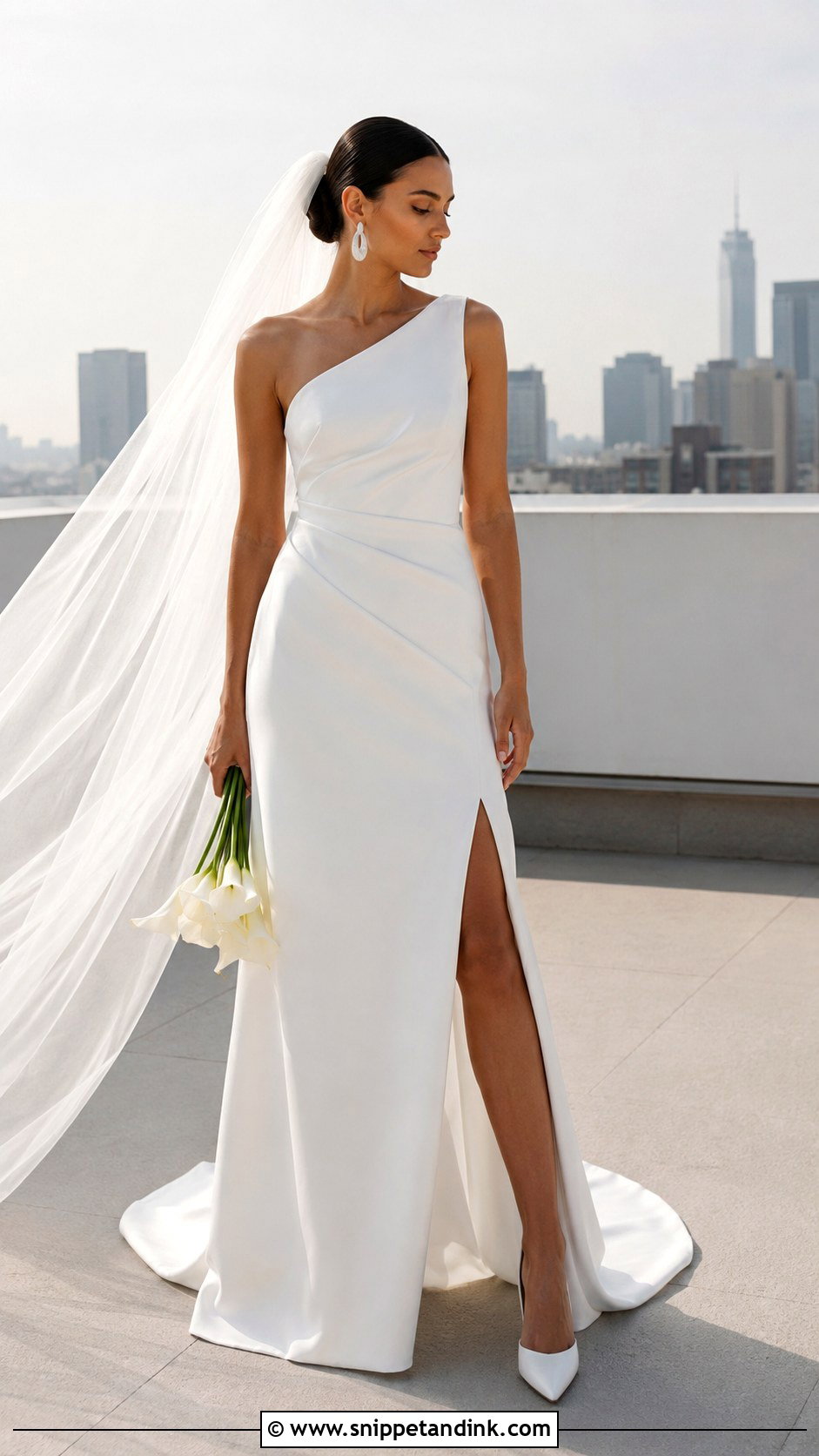
A slit adds movement to a simple column and lets the shoes show. Where it starts matters more than anything else. Mark it while you are seated and while climbing a step; a slit that looks modest standing can open far too high when you sit. A strapless, square or one-shoulder bodice suits it, with pointed pumps or ankle-strap sandals. Remove the plain chapel veil after the ceremony for a sharper evening look. Calla lilies suit the slim shape.

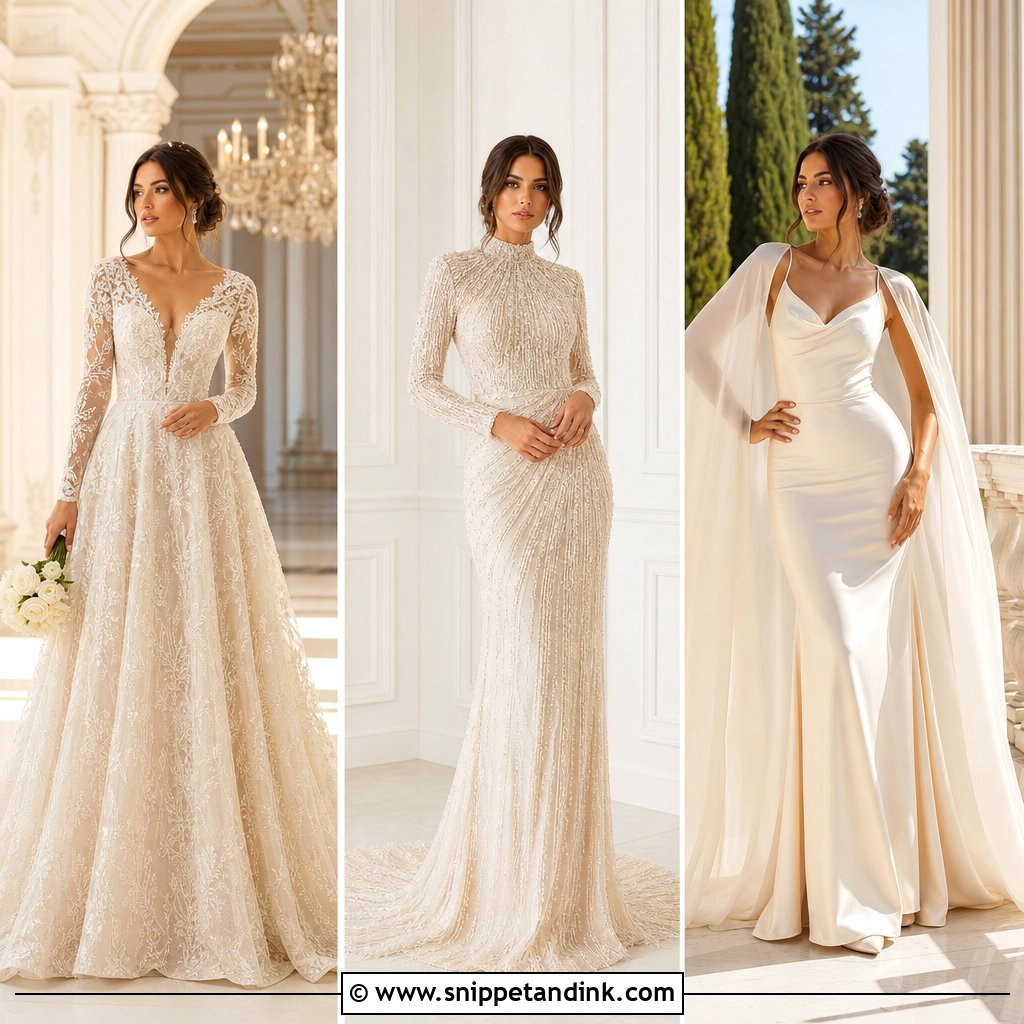
20. Two Piece Wedding Gown
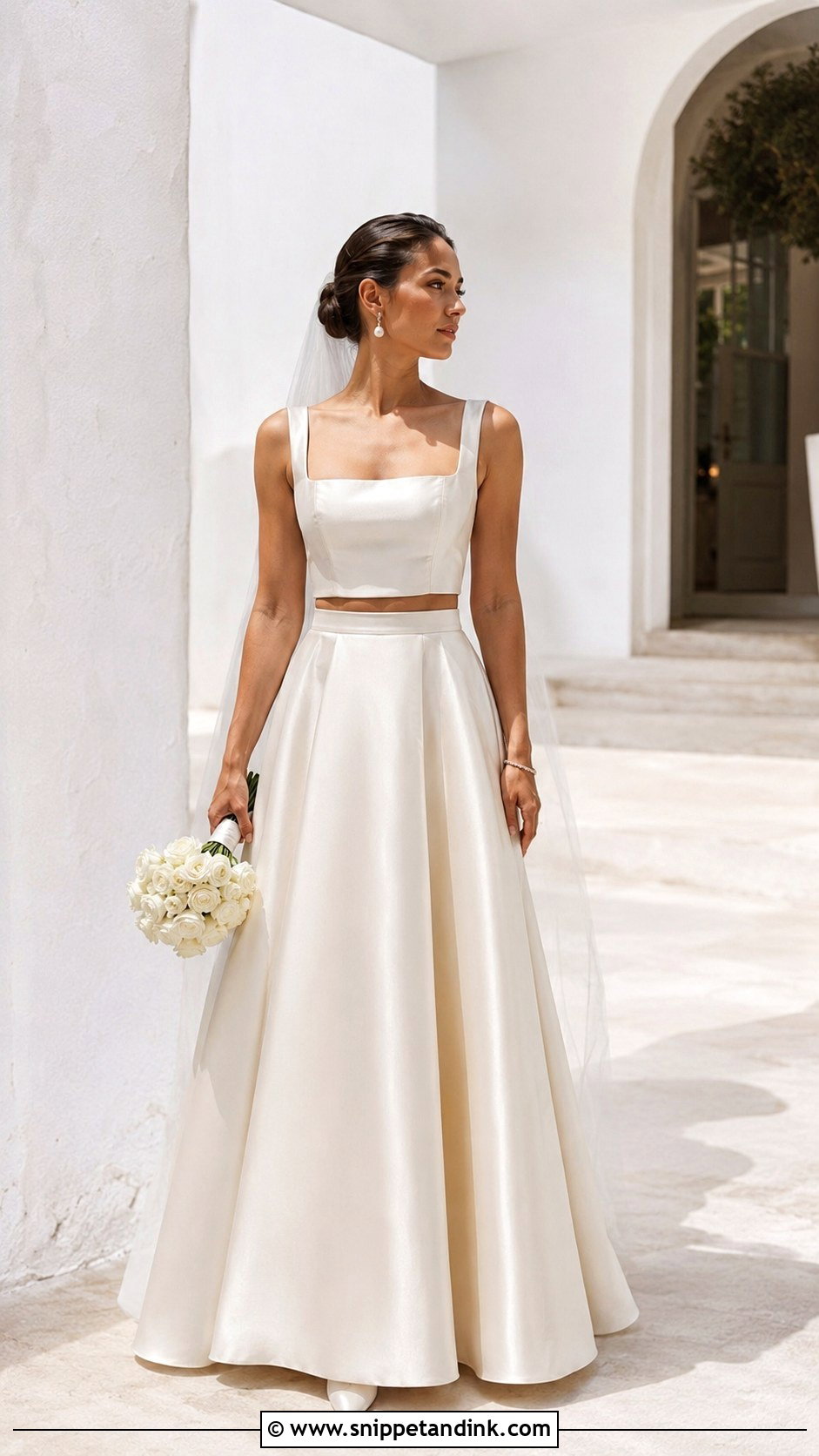
Separates look like a gown when the colour and fabric match exactly, and like a deliberate fashion choice when a sliver of skin shows at the waist. Pair a structured satin corset, square-neck top or high-neck bodice with a floor-length skirt: a column for a sleek line, an A-line for movement. Refined earrings, pointed heels and a plain veil set under a low bun complete it. The practical bonus is that each piece can be altered on its own and reworked after the wedding into something you’ll wear again.
Underwear Lines and Creases Show on a Plain Gown
Without lace or beading, a minimalist gown reveals what most dresses hide. Choose your underwear before the first fitting and wear it to every one, since the fit is built around it. Laser-cut or bonded edges disappear under crepe; a lace bra or seamed shapewear will print through satin, and silk slips show almost everything.
Creasing is the other problem. Satin and mikado wrinkle across the lap after a long seated ceremony or a car ride, and crepe recovers better. Hang the gown in the steamy bathroom the night before or have someone with a handheld steamer at the venue, held a few inches from the fabric and never touching it. Sit on the back of the skirt, not the train, when you’re driven to the ceremony.
Adding Something Personal Without Breaking the Line
If you want sentiment in a plain dress, hide it. An embroidered date inside the hem, a piece of a parent’s fabric sewn into the lining, coloured shoe soles or an heirloom pair of earrings keeps the outline clean and still means something to you.
One Detail, Cut Well, Is Plenty
Minimal works when it looks considered, not plain. Good fabric, exact tailoring and a confident silhouette make more of an impression than layers of decoration. When you compare gowns, weigh comfort, venue, season and the support you need, and sit, walk and raise your arms at every fitting. Choose accessories that sit back rather than compete. Whether your one detail is a sculptural neckline, an open back, a cape or a bow, a carefully edited dress will still feel personal, and unmistakably bridal.
You'll Like These Ideas:





Leave a Reply