
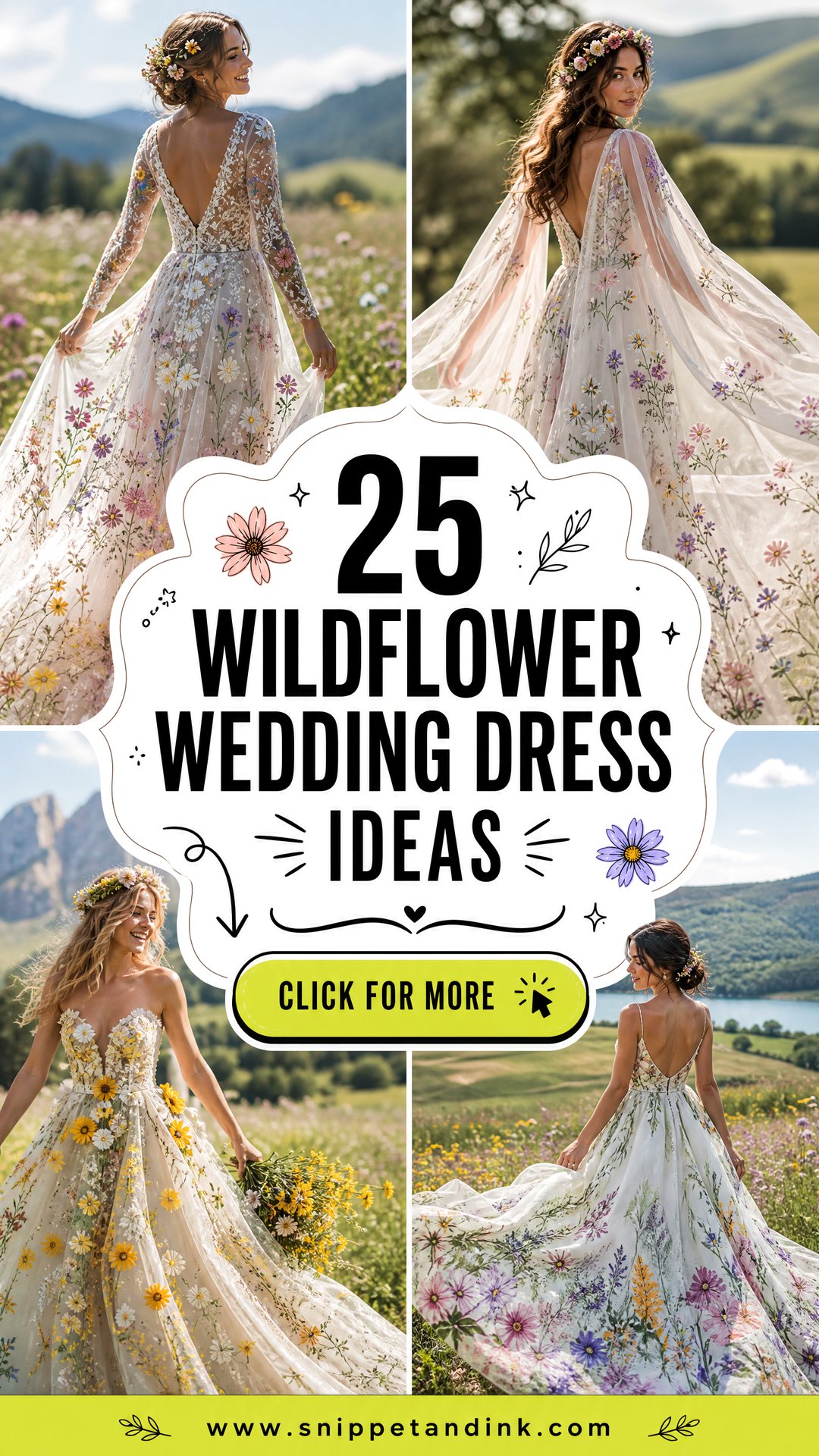
A wildflower dress is one of the few bridal looks that has to survive the place it’s named after. Grass, wind, pollen and soft ground all touch the hem, so I treat these gowns as outdoor clothing first and pretty clothing second. The appeal is obvious: meadow embroidery, botanical lace, watercolor prints and small appliqués make a gown feel connected to nature instead of borrowed from a ballroom. The floral detail can be a scatter of tiny blooms at the hem or a skirt that reads as a whole field of color. Below are 25 ways to wear it, each styled with shoes, veil, bouquet and accessories, with my notes on where each one works and where it struggles.
Turn the Skirt Over and Read the Back of the Embroidery
Photos sell the front of a floral gown. When a bride brings me one to assess, I look at the back of the work first, because that’s where you learn whether it will last a day outdoors. Three things decide it.
The thread and what it’s sewn onto
Colored thread on fine tulle needs a stabilizer behind it, or the base puckers around each flower. Run your hand lightly over the embroidery: it should lie flat, not ripple. Loose jump threads on the reverse catch on jewelry and lining and pull out over the day.
Weight and drape
Heavy embroidery or lots of appliqués add real weight to a skirt. Walk the length of the shop, sit, stand and turn. If the dress drags at the shoulders or the skirt hangs stiffly instead of swinging, it will tire you by the evening, and it will hang worse in humid air.
The hem you’ll walk through grass in
For an outdoor ceremony I ask the seamstress to finish the front hem so it just clears the ground in your wedding shoes. A half inch makes a difference between brushing the grass and soaking up dew. Ask, too, for a bustle you can do up in under a minute, with loops sewn into the seams rather than buttons, which pop under the weight of embroidered tulle.
1. Wildflower Wedding Dress With Embroidered Tulle
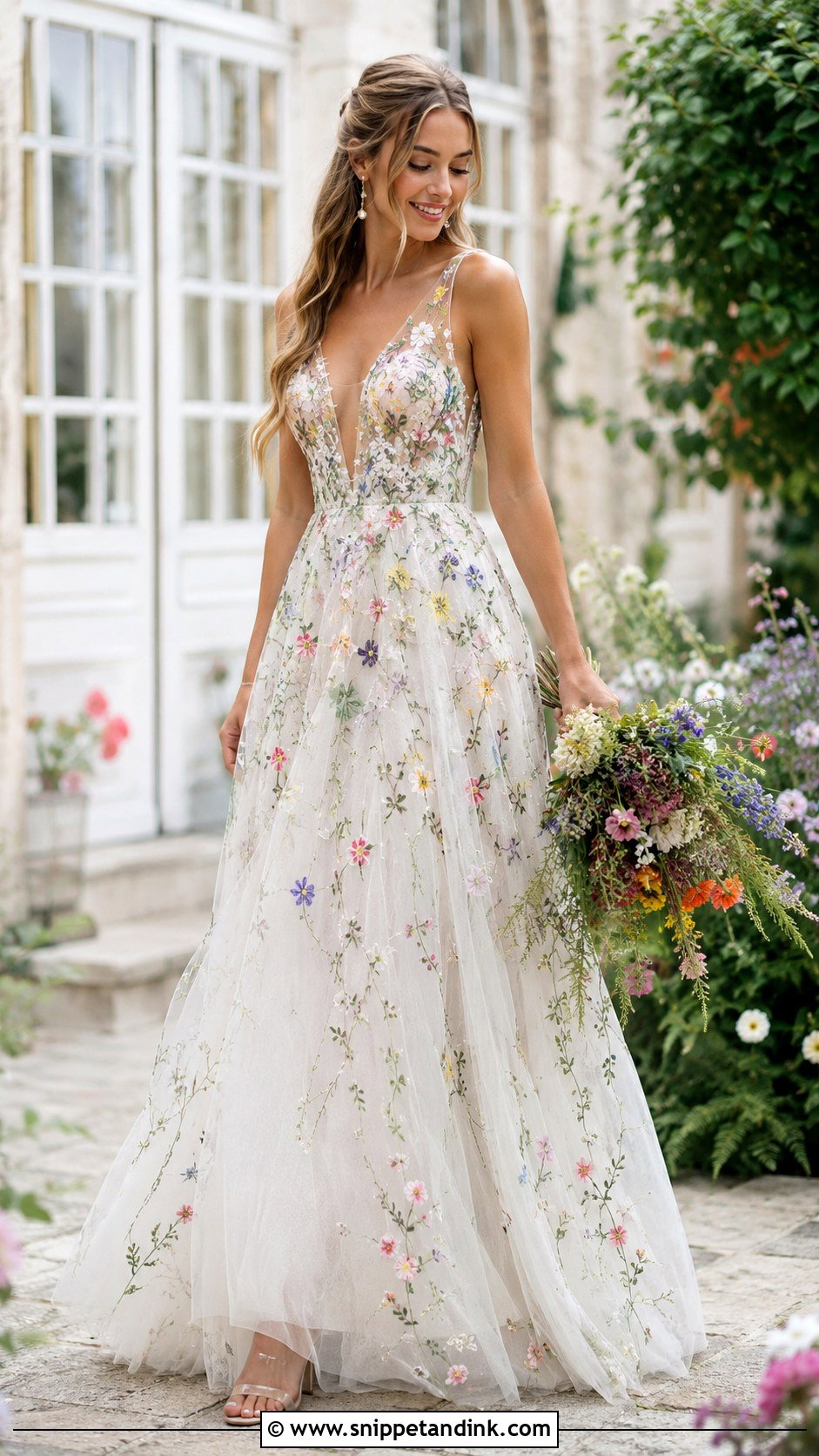
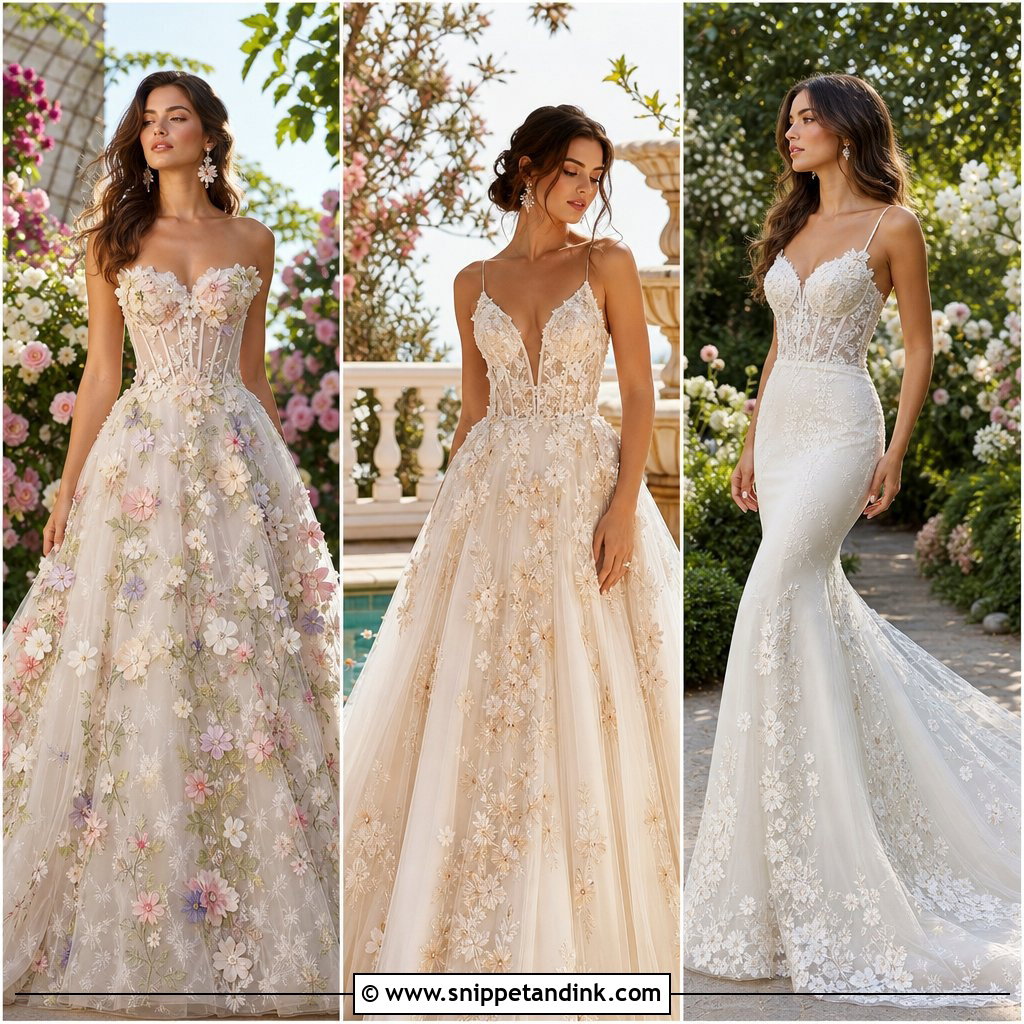
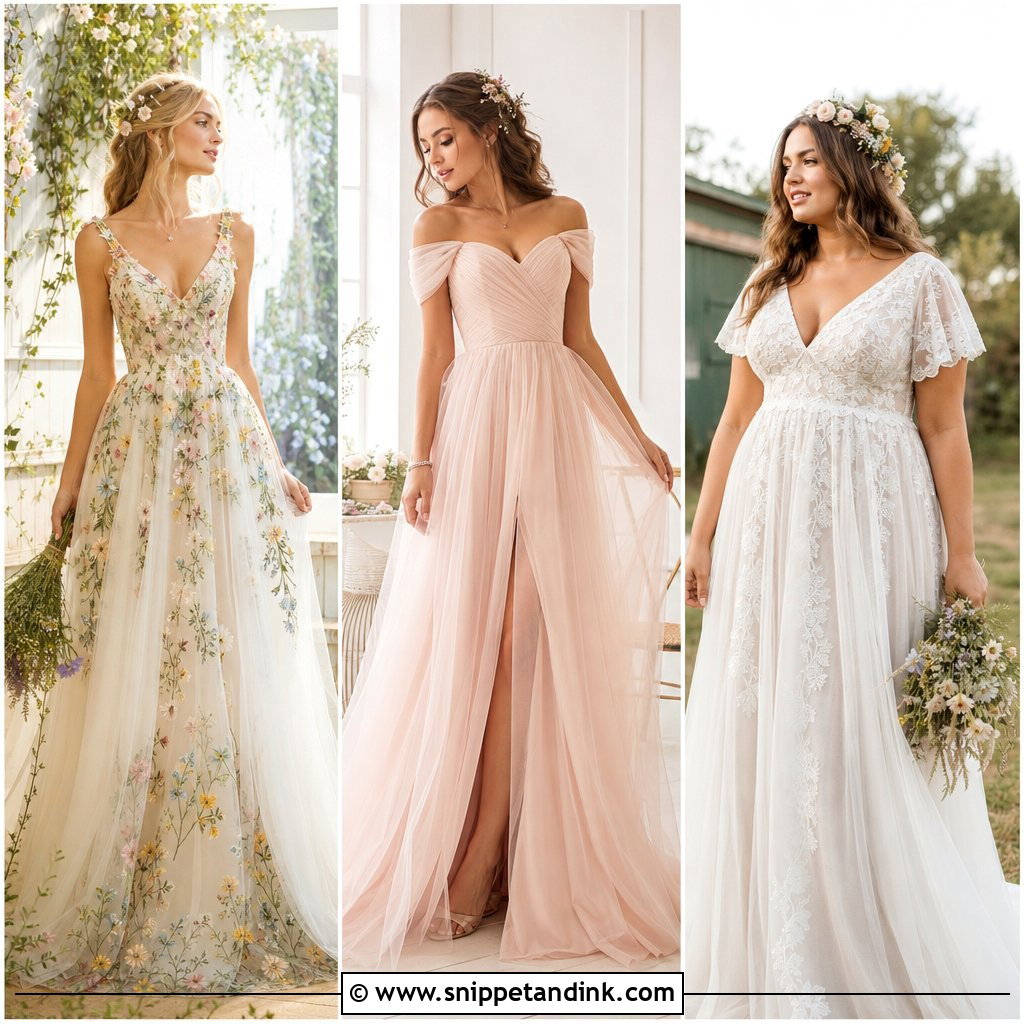
Thread stitched onto a sheer base makes the flowers look as if they’re floating, which is why embroidered tulle is where most brides start. Daisies, lavender stems and poppies scattered across an ivory bodice and train keep the gown unmistakably bridal. At a fitting I always turn the skirt over and look at the back of the work: dense threadwork on fine tulle can pucker the seams or drag a layer down, and you see it the moment you walk. Sheer nude heels, pearl drops and a fingertip veil with a plain edge leave the stitching to do the talking, and a loose meadow bouquet finishes it.
2. Wildflower Wedding Dress With Floral Lace
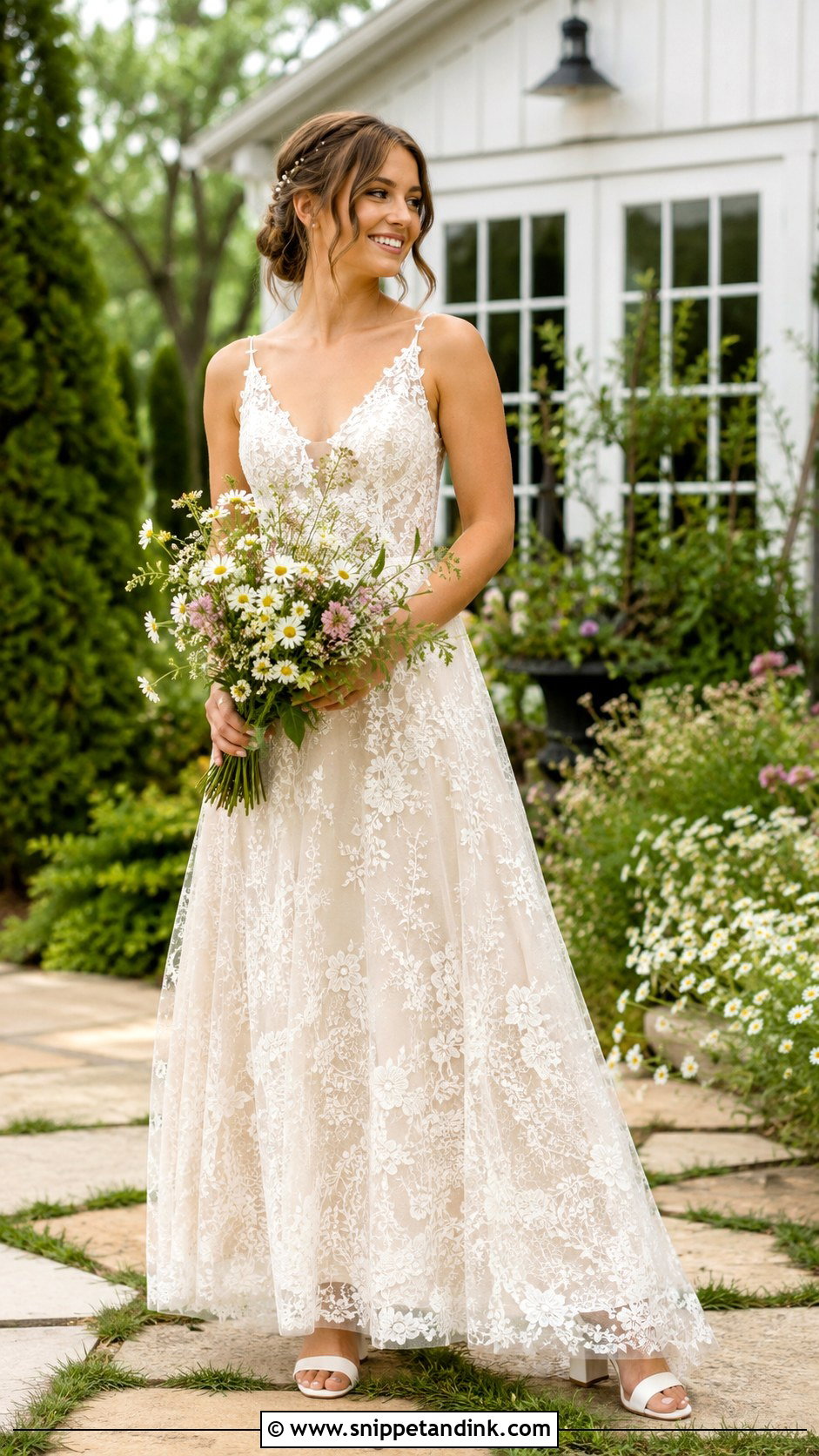
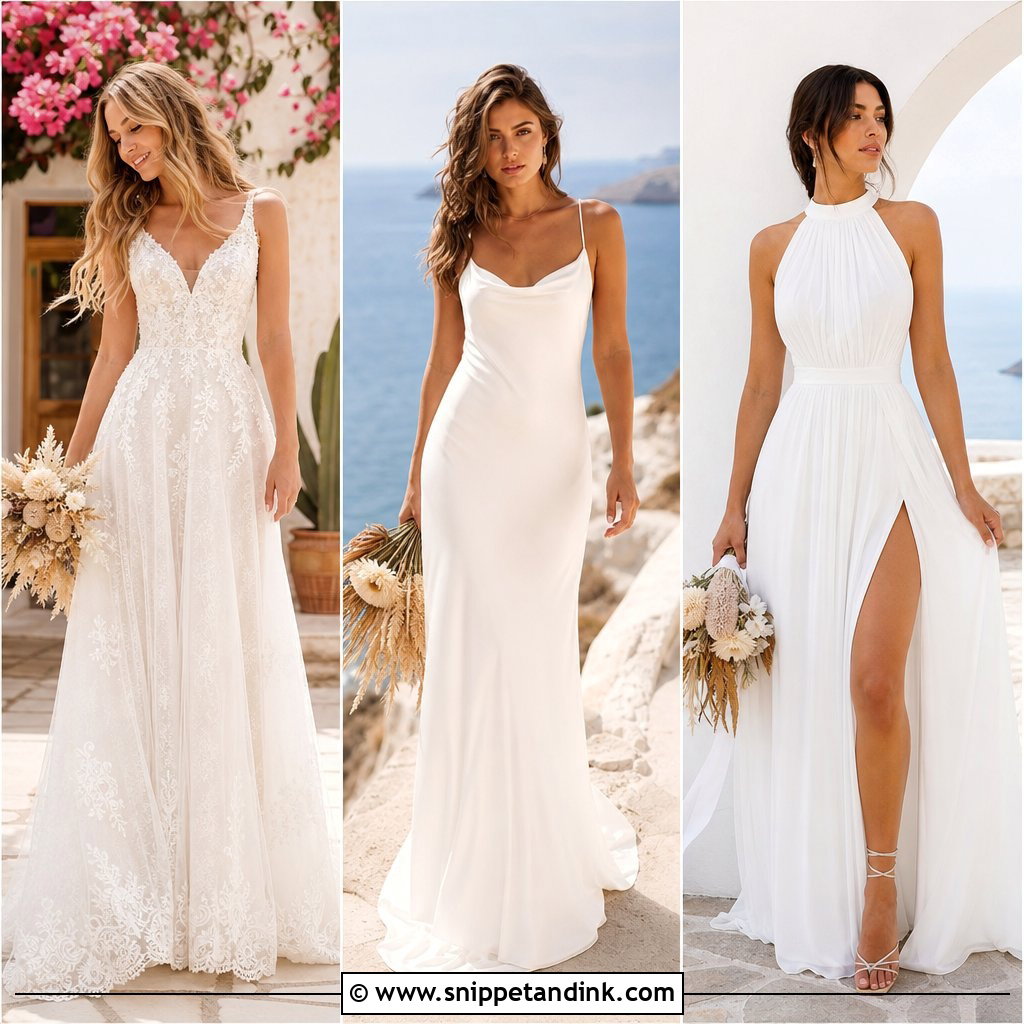
If you want texture without bright color, a floral lace wildflower wedding dress is the quiet route. Hunt for lace with vines, leaves and small clustered blooms rather than the stiff, symmetrical motifs of formal Chantilly. An A-line skirt under a fitted bodice keeps it classic. I pair it with ivory block heels, a low bun with pearl pins and a bouquet of chamomile, cosmos and greenery. One fitting note: botanical lace is often cut around the motifs at the hem, so ask whether the edge is scalloped or finished with a band, because a scalloped edge snags on stubble and twigs.
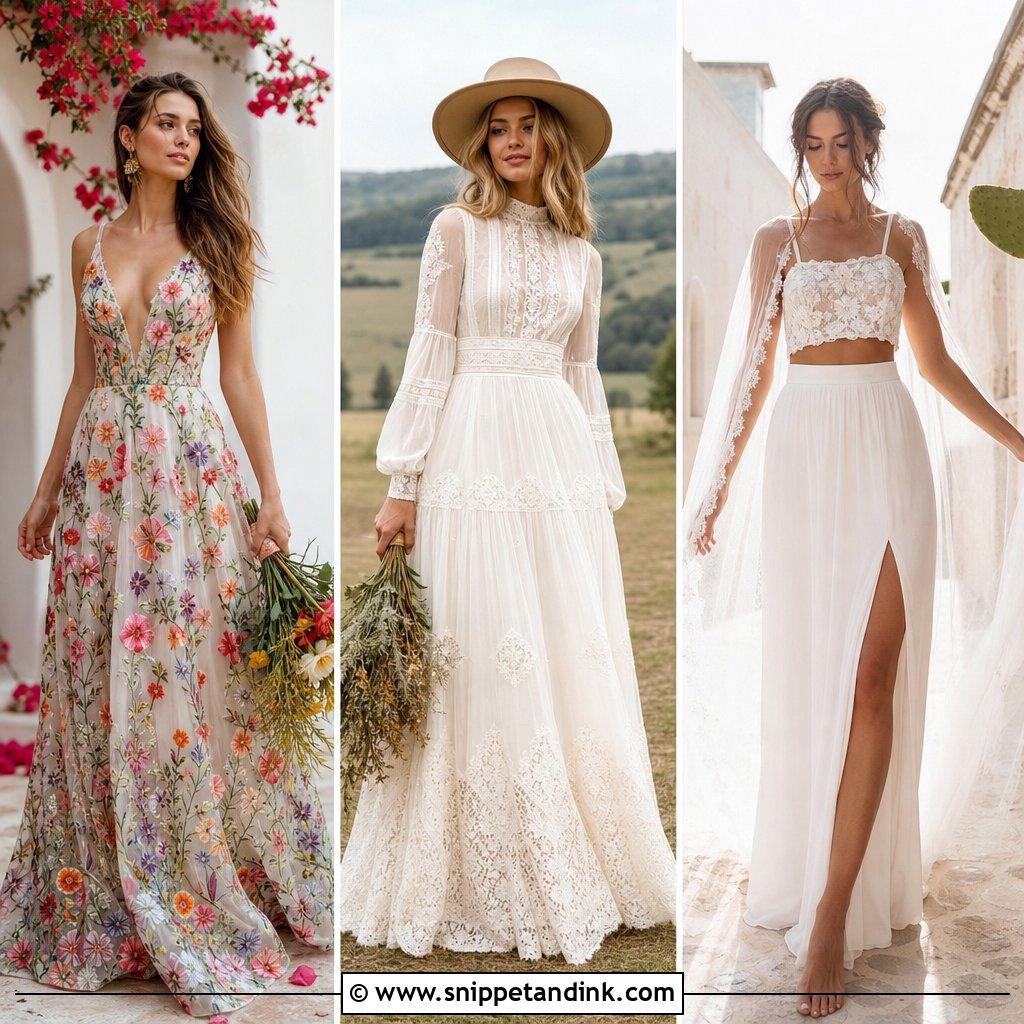
3. Wildflower Wedding Dress With Colorful Embroidery
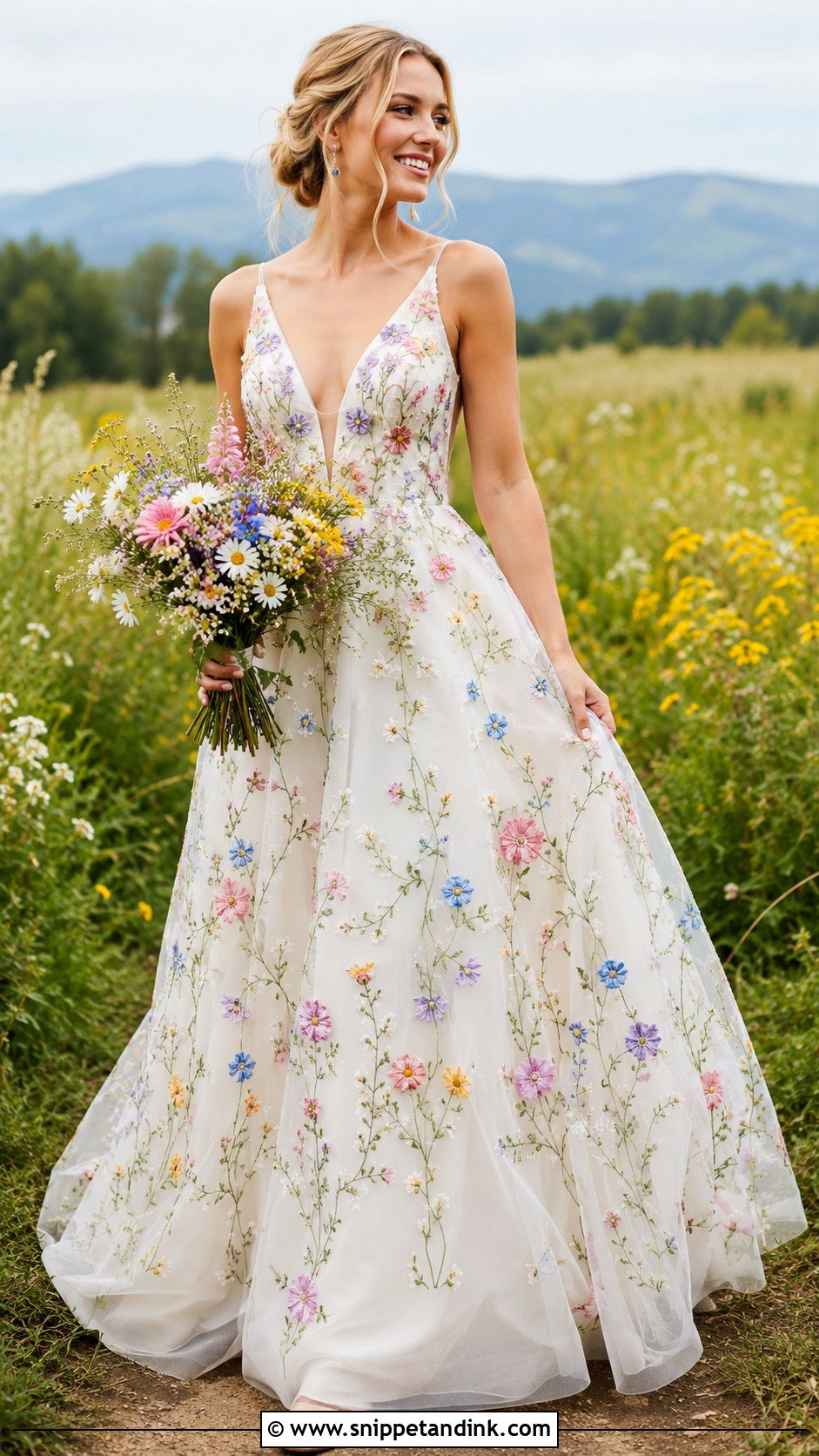
Colorful embroidery is the bold end of this trend. Keep the base ivory, cream or pale blush so pink, blue, yellow, green and lavender threads stand out cleanly across the bodice, sleeves and skirt. Then go almost bare with the rest: plain satin sandals, tiny gemstone studs and a veil with no trim. I like to bring a thread swatch or a photo of the gown to the florist so the bouquet repeats two or three of the dress colors rather than all of them. Echoing a few shades looks deliberate; matching every one looks like a costume.
4. Wildflower Wedding Dress With 3D Flowers
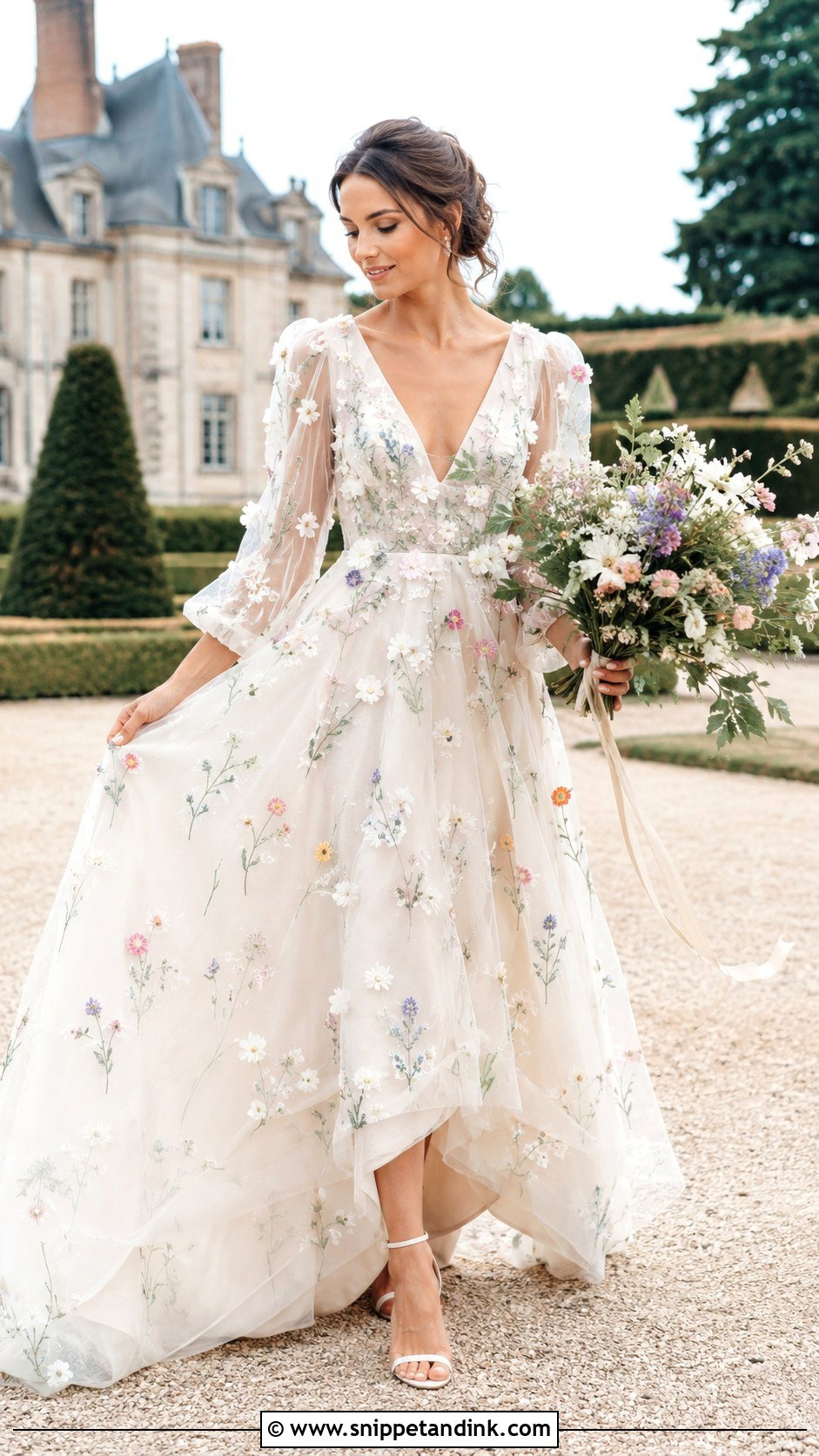
Three-dimensional flowers add shadow and depth that flat embroidery can’t. For a meadow effect, small appliqués scattered over sheer sleeves, the neckline or the skirt work better than a few oversized blooms. The trade-off is weight and wear: raised petals catch on bouquet stems, lace veils and your partner’s cufflinks, so I check how securely each one is tacked before the gown leaves the shop. Keep the rest light, with ankle-strap heels, a sheer veil, simple studs and an airy bouquet that won’t crush the appliqués when you hold it close.
5. Wildflower Wedding Dress With Long Sleeves
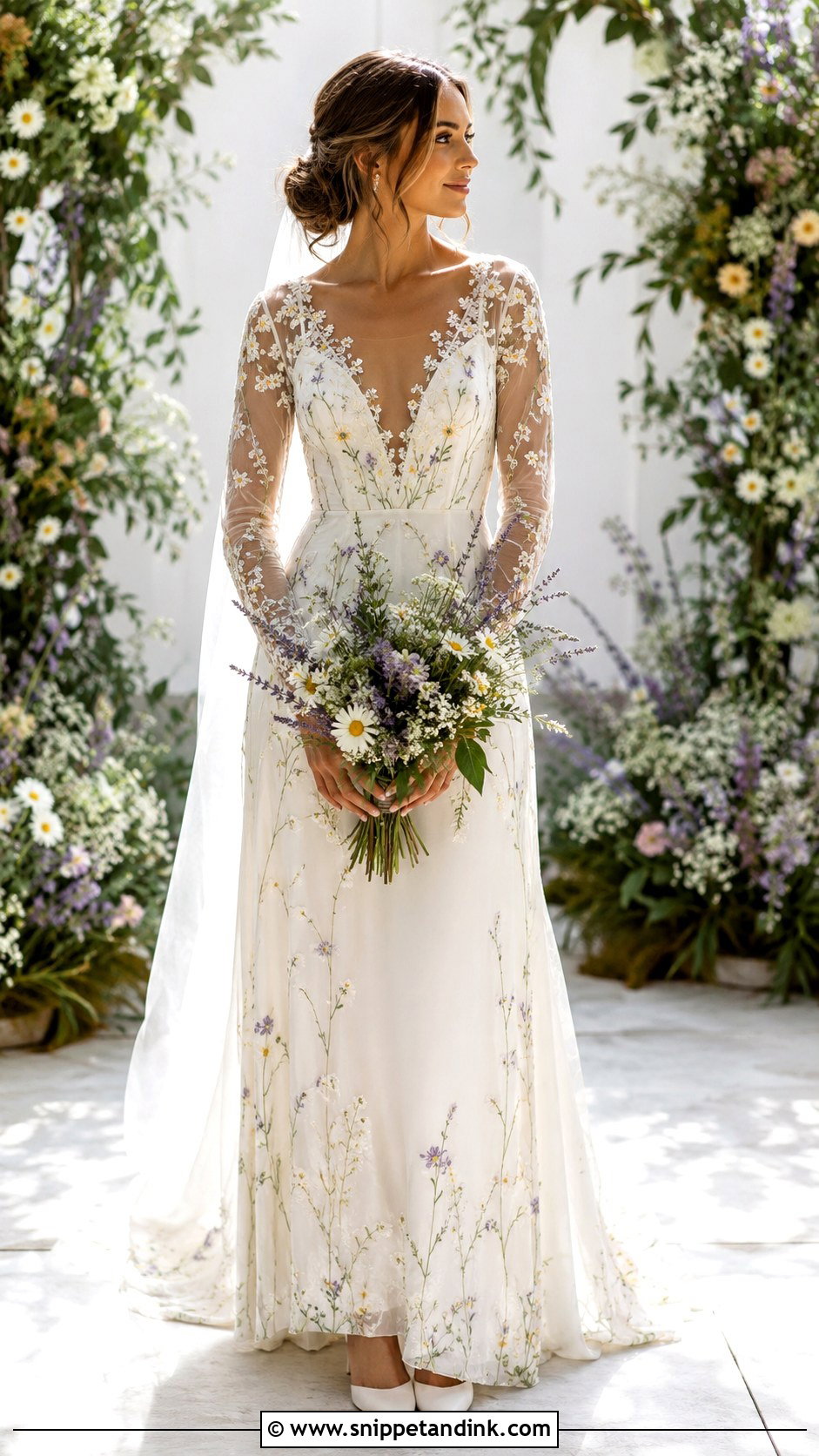
Sheer long sleeves give you coverage without bulk, and embroidered blooms on them show detail every time you lift a hand. Look for a fitted waist, a soft skirt and flowers that trail along the sleeve and neckline rather than covering them solid. Pointed ivory heels, a low twisted updo and a veil tucked under the bun suit the line. Sleeves are the first thing I check for movement: raise your arms as if hugging someone tall, because tight mesh sleeves pull the bodice up. They make sense in early spring, autumn gardens and mountain venues where evenings turn cool fast.
6. Wildflower Wedding Dress With Puff Sleeves
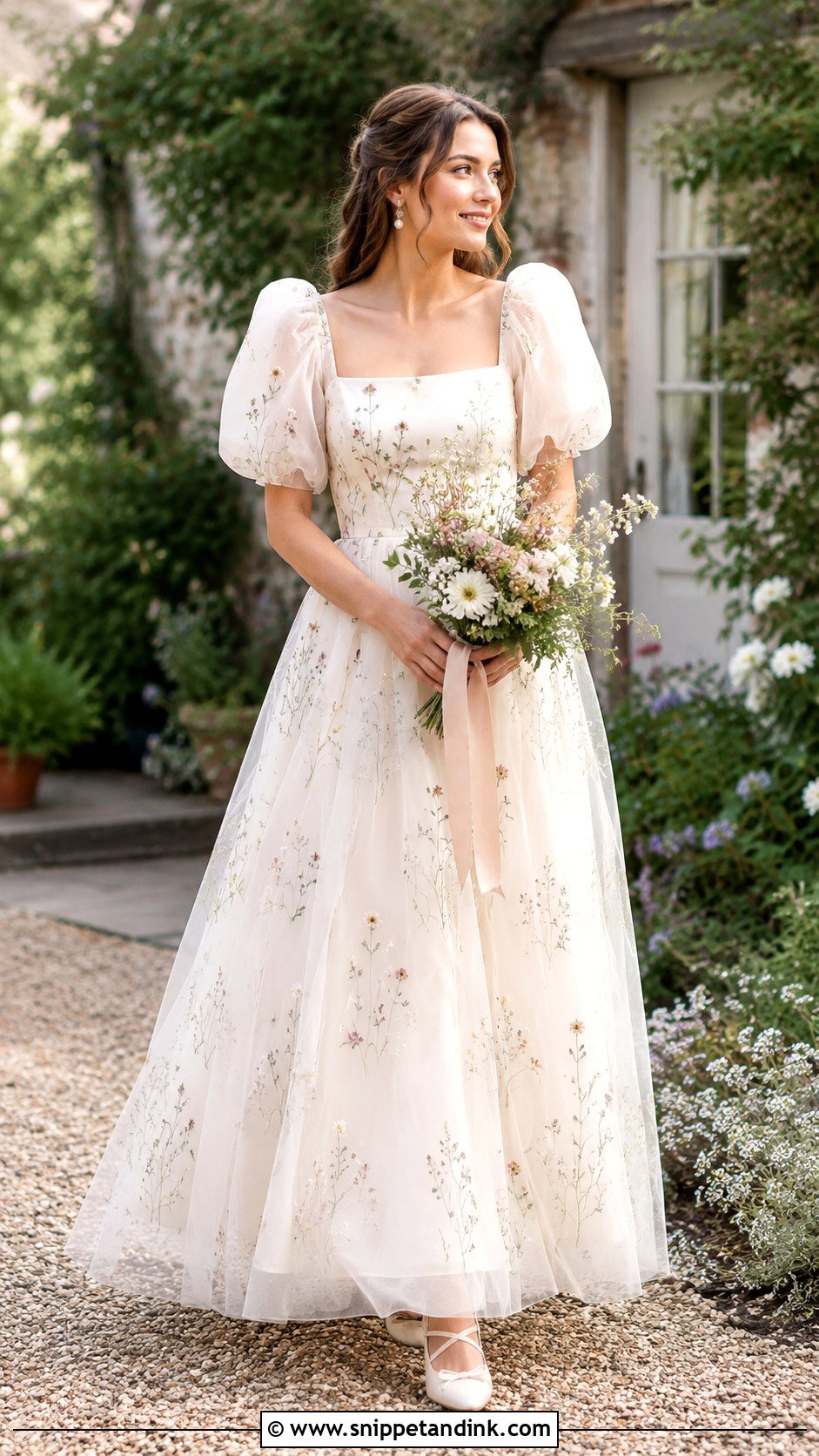
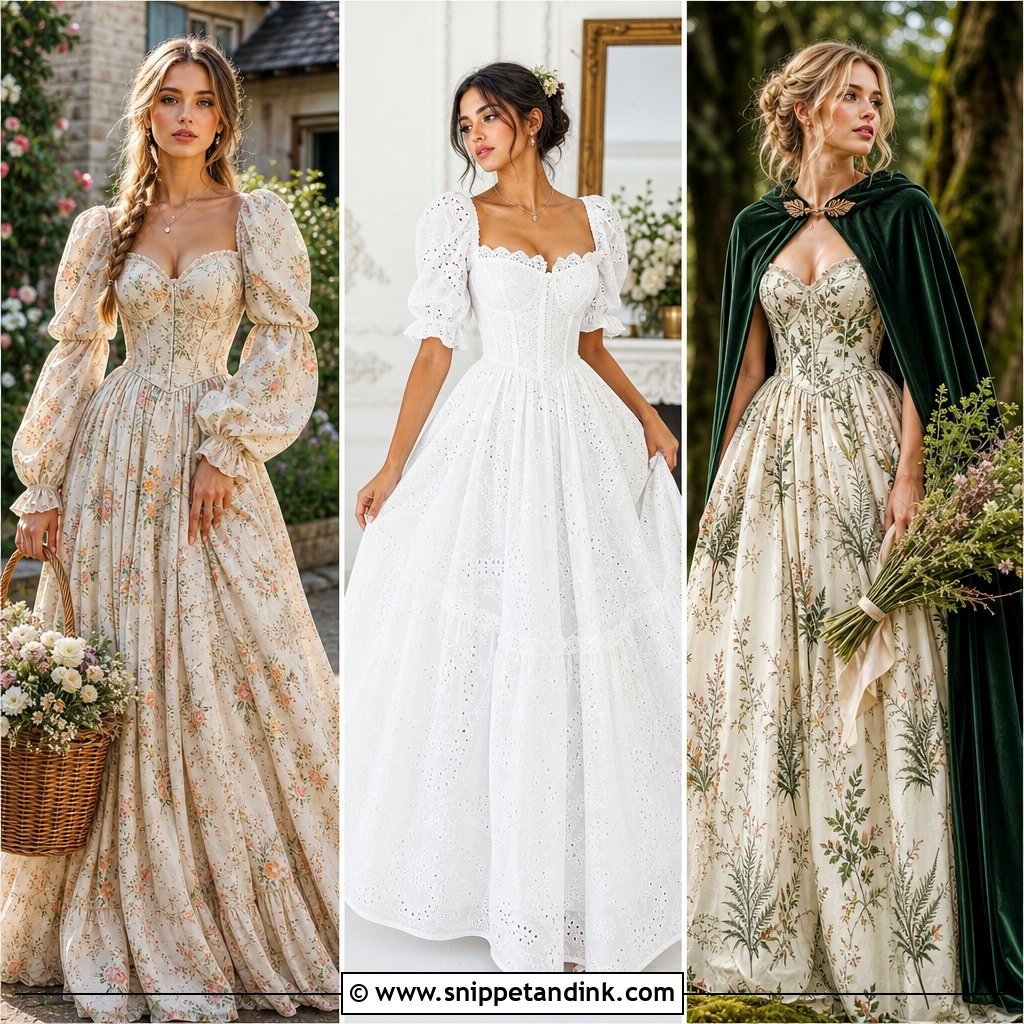
Puff sleeves add a sweet, vintage shape. Organza holds a puff better than soft tulle, which collapses by the evening, so I steer brides toward organza with tiny floral embroidery when they want the volume to last. A square or sweetheart neckline balances the width at the shoulder. Ballet-style heels, small pearl earrings and a ribbon-tied bouquet keep it playful, and a half-up style leaves the sleeve detail visible. If your shoulders are broad, ask for a smaller puff set slightly lower on the arm.
7. Wildflower Wedding Dress With Off Shoulder Neckline
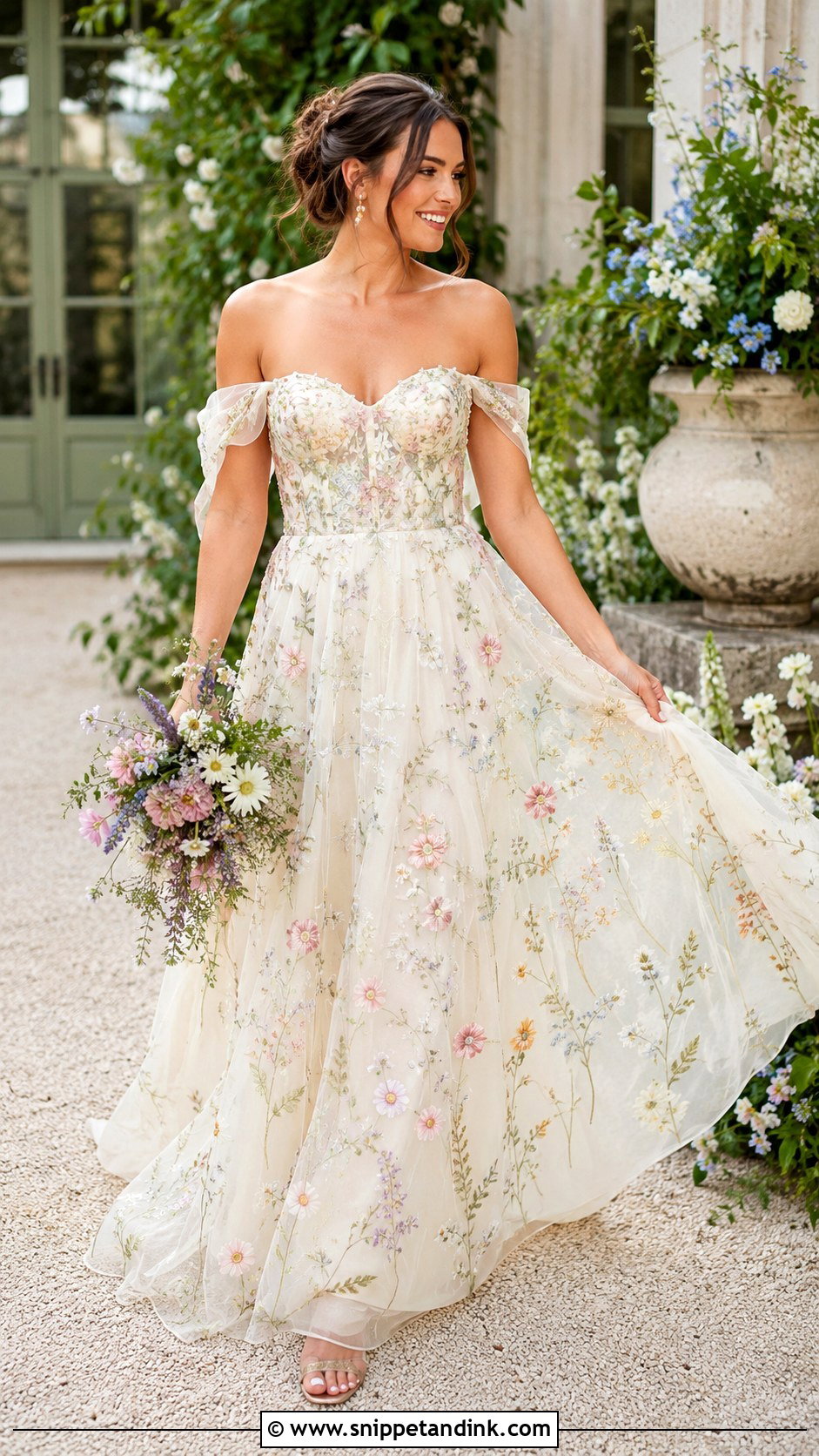
An off shoulder neckline frames the collarbone, and embroidery or lace along the bodice keeps it soft. A flowing A-line or fit-and-flare skirt with wildflower detail suits this cut. Skip the necklace when the neckline itself carries flowers, wear drop earrings instead, and add low-heeled sandals with a loosely gathered pastel bouquet. The practical catch is the band across the upper arms: it limits how high you can lift them, so I always have brides practice a full hug and a bouquet toss at the final fitting. Silicone grip tape inside the band helps it stay put through dancing.
8. Wildflower Wedding Dress With Square Neck
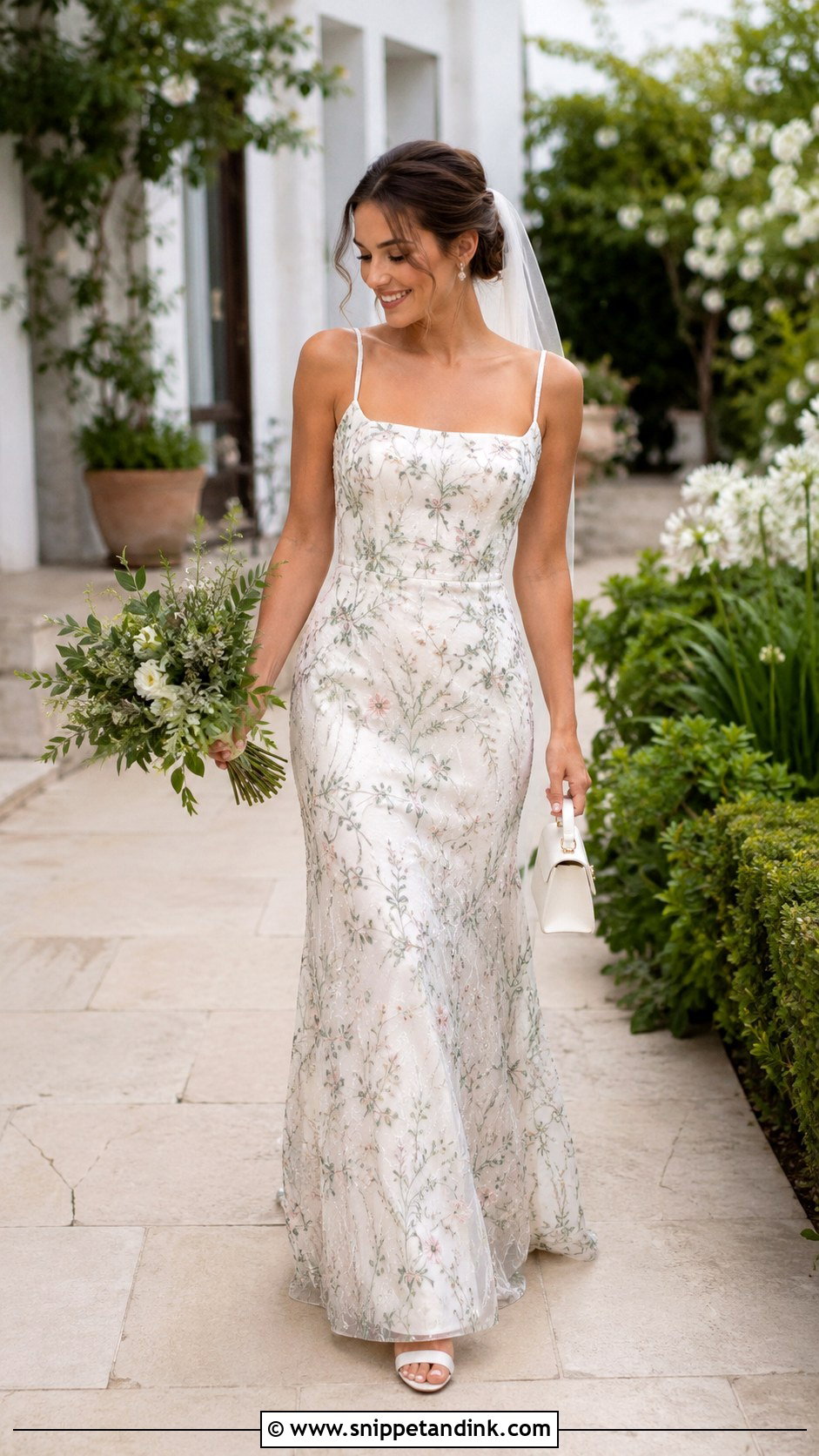
A square neck gives a clean, modern frame to romantic detail, especially with thin straps or soft cap sleeves. Embroidered tulle, floral lace or a delicate printed overlay all supply the wildflower element. Sleek ivory heels, a structured mini bag for photos and a simple veil keep the outfit tidy. Both a center-parted bun and soft waves suit the neckline. My one fit check here is the corners: a square neck should sit flat at both points when you sit down, and if it gapes, a seamstress can take it in at the strap.
9. Wildflower Wedding Dress With Corset Bodice
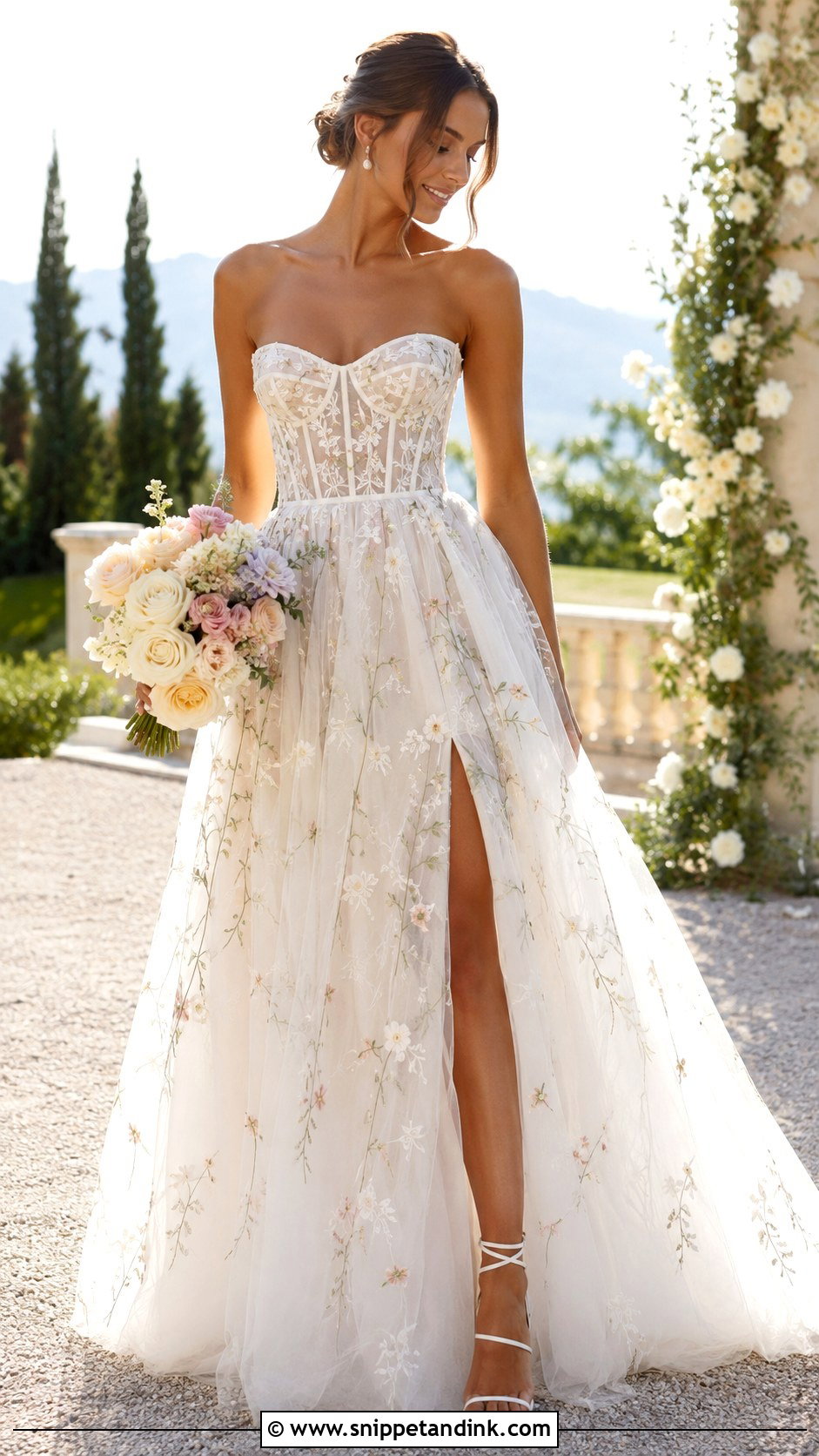
Structure plus delicate flowers is a combination I like a lot. To keep a corset bodice romantic rather than dramatic, look for soft visible boning, sheer floral embroidery over the top and a skirt that flows away from the waist. Fine strap heels, pearl earrings and a sheer untrimmed veil let the bodice lead, with a pastel bouquet to tie it together. A properly fitted corset should let you take a full breath and eat a meal. If you can’t, the boning is cut too short or the lacing too tight, and that only gets worse over a long outdoor day.
10. Wildflower Wedding Dress With A Line Skirt
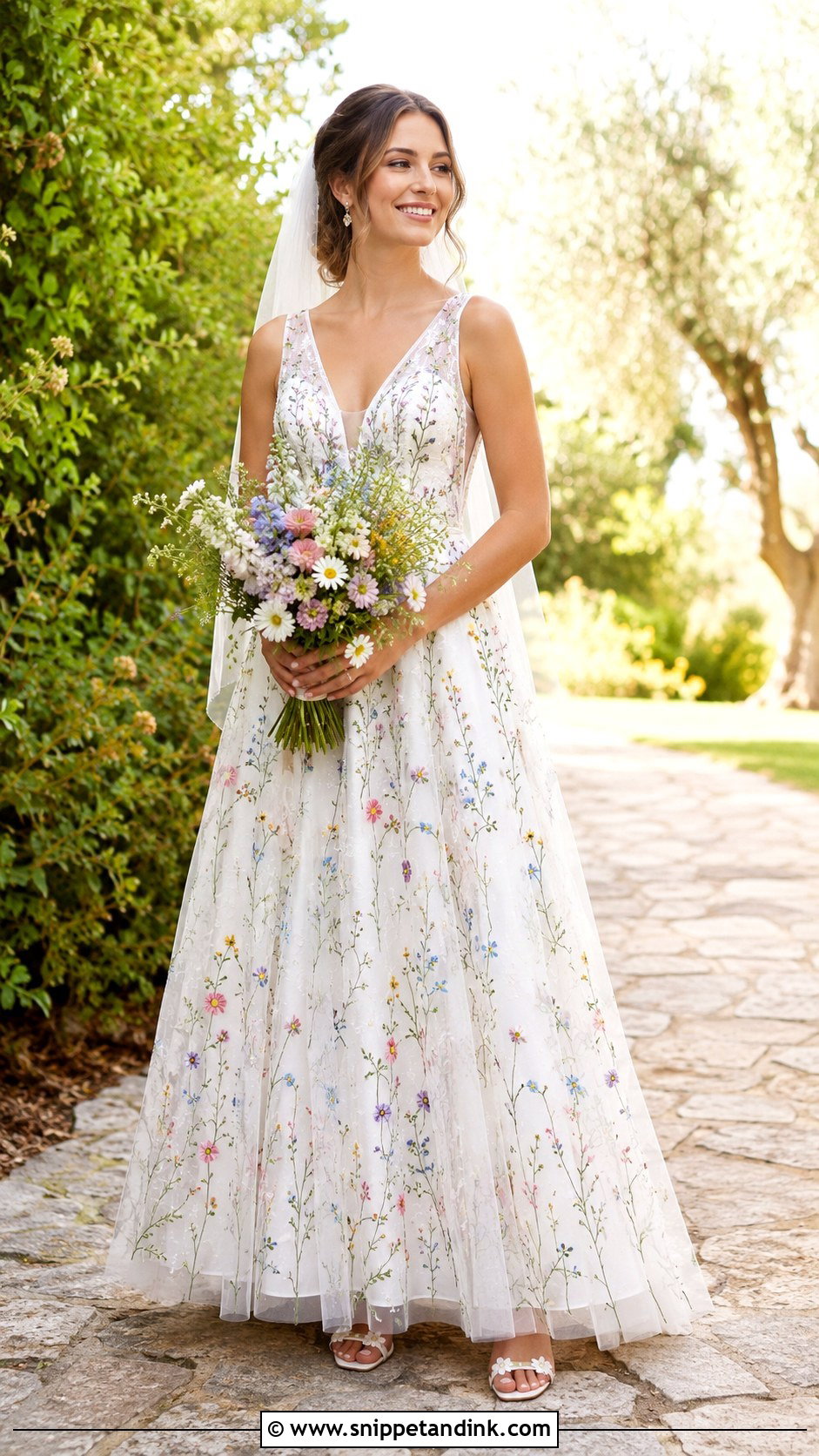
When a bride isn’t sure what suits her, I usually pull an A-line first. The fitted top and gently flared skirt flatter most figures, and embroidery that flows from the bodice down into the skirt gives a natural, grown-in look. Block heels, a light veil and a mixed meadow bouquet suit it. For outdoor ceremonies the A-line is the most practical shape here: it doesn’t trap your knees on a slope, and it moves well in wind without blowing flat against your legs the way a slinky skirt does.
11. Wildflower Wedding Dress With Ball Gown Skirt
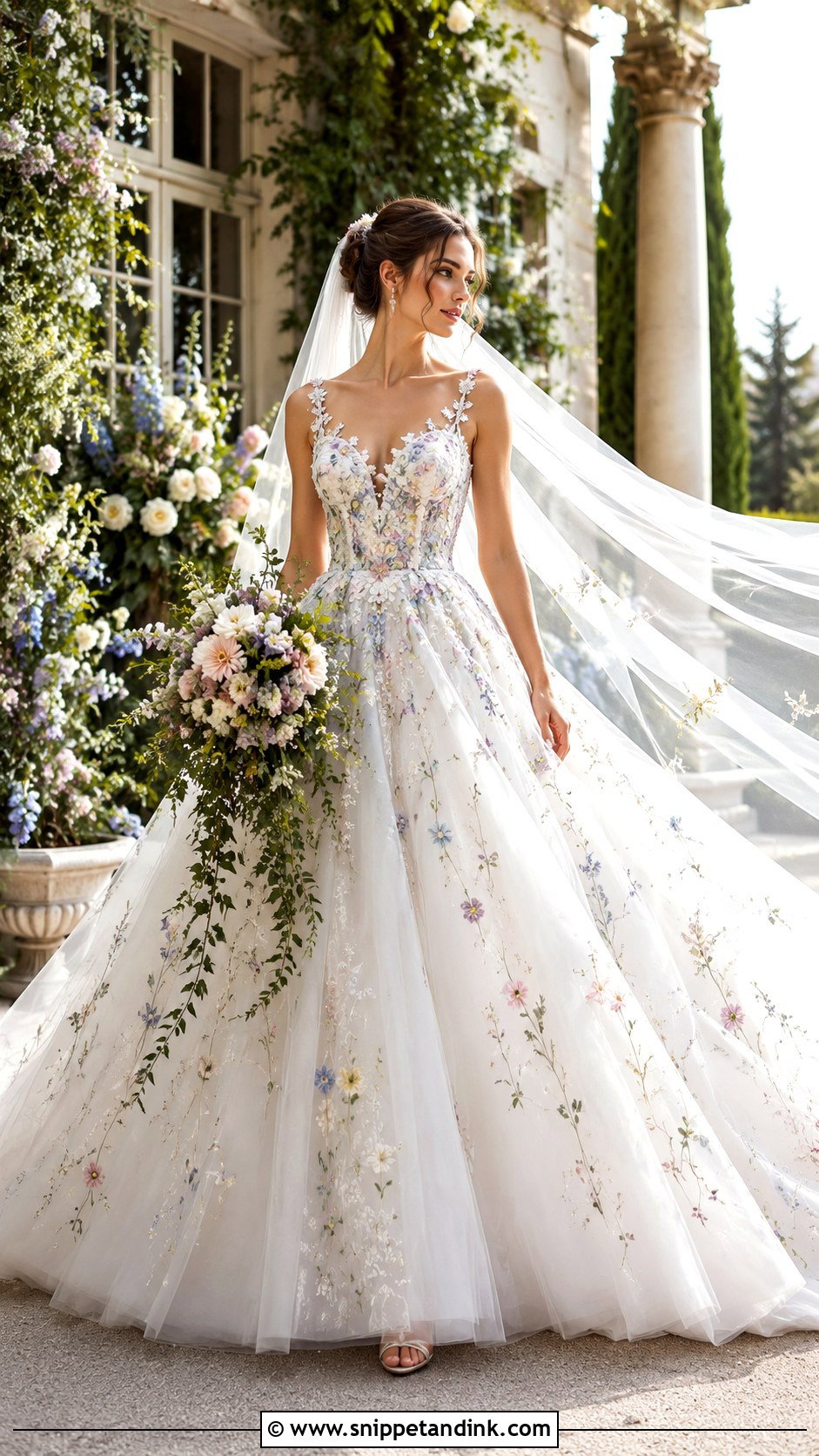
A ball gown skirt with scattered appliqués or colorful embroidery can read like a meadow in full bloom. A fitted bodice balances all that volume, and simple heels, a cathedral veil and delicate earrings keep the top half calm. A bouquet with soft colors and trailing greenery echoes the gown without competing. Be honest about the venue before you fall for one, though. Layers of tulle soak up dew and pick up grass seed, and a full skirt needs wide aisles and a car with room to sit. Large estates and formal garden receptions suit it; a hillside field doesn’t.
12. Wildflower Wedding Dress With Chiffon Skirt
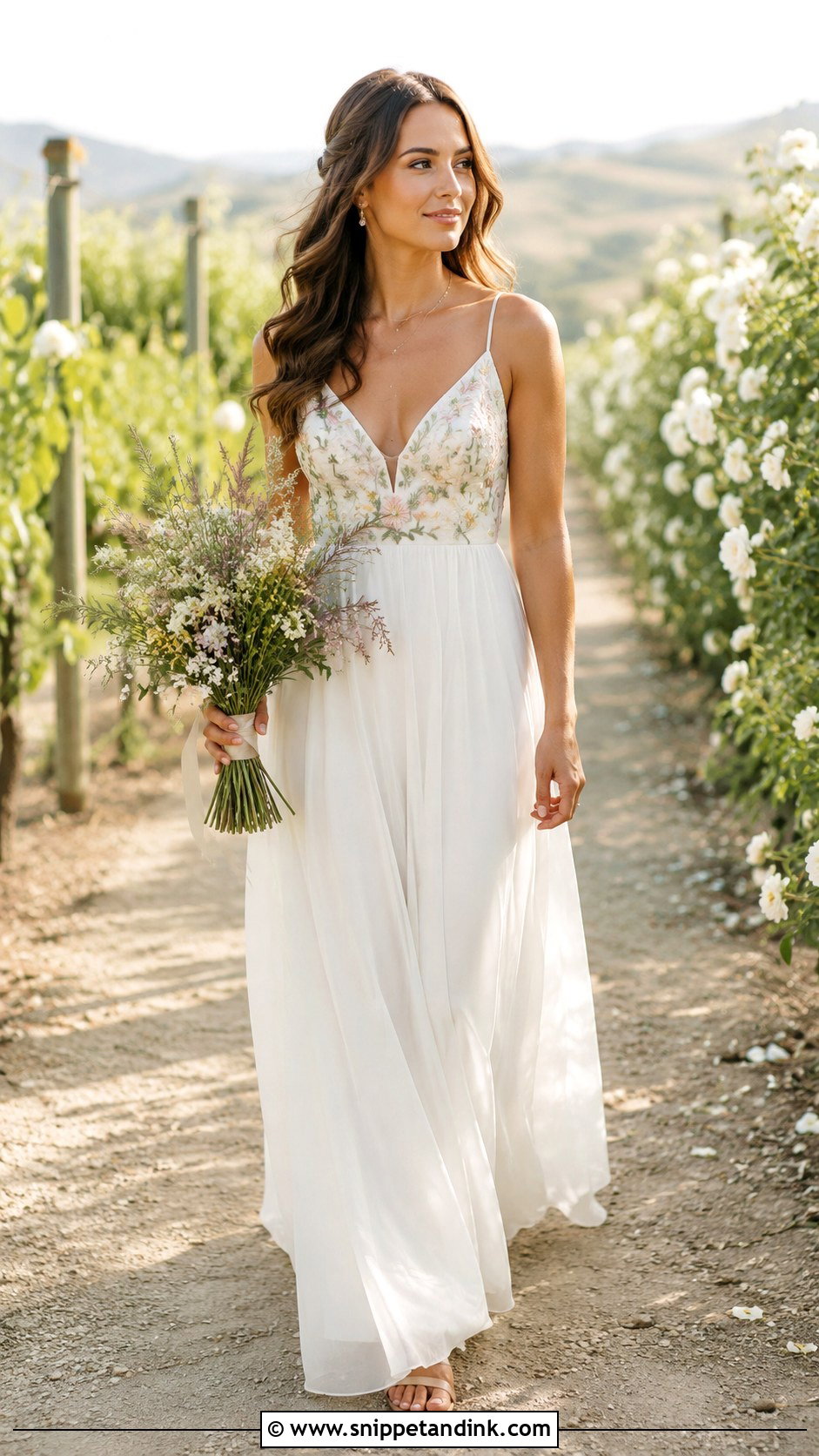
Chiffon is the fabric I reach for in heat. It’s light, breathes better than layered tulle and moves in the slightest breeze, which shows up well in outdoor photos. Look for an embroidered bodice over a soft chiffon skirt, or subtle appliqués around the waistline. Low sandals, dainty jewelry, loose waves and a hand-tied bouquet with small blooms and grasses suit the relaxed mood of beach gardens, vineyards and backyard weddings. One warning: chiffon shows sweat marks and creases easily, so pack a handheld steamer and avoid long car rides seated on the skirt.
13. Wildflower Wedding Dress With Sheer Cape
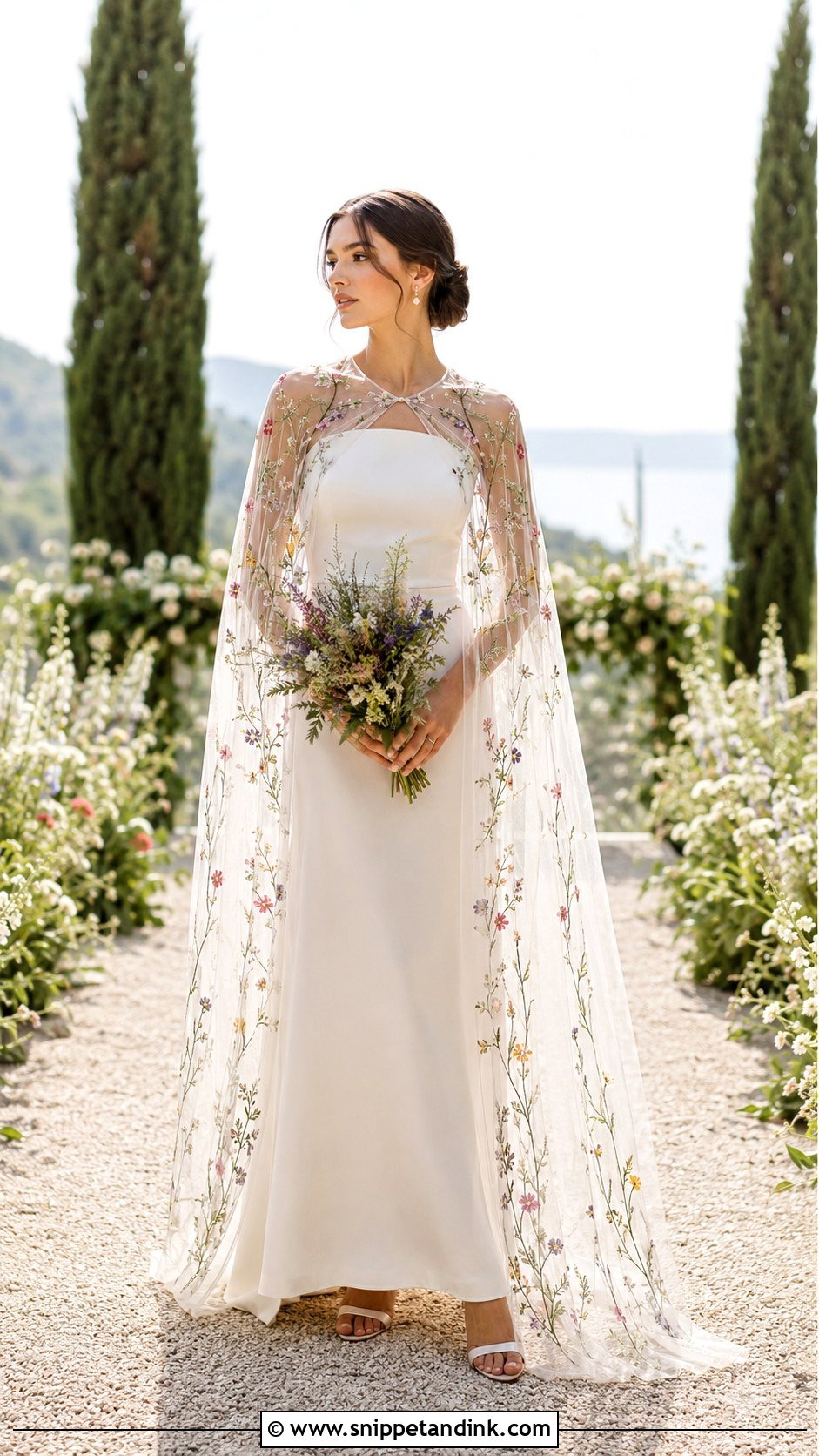
A sheer cape lets a plain ivory gown carry wildflowers without changing the dress itself. Choose one embroidered with tiny meadow flowers, vines or pastel sprigs, and it gives you movement and a strong back view without a heavy veil. Sleek heels, soft earrings and a neat low bun keep the cape visible. Pick a smaller bouquet, since the cape already holds the eye. Before buying, I check how it attaches: capes that hook at the shoulder seams stay put, while ones tied at the neck slide backward in wind and pull on the throat.
14. Wildflower Wedding Dress With Floral Veil
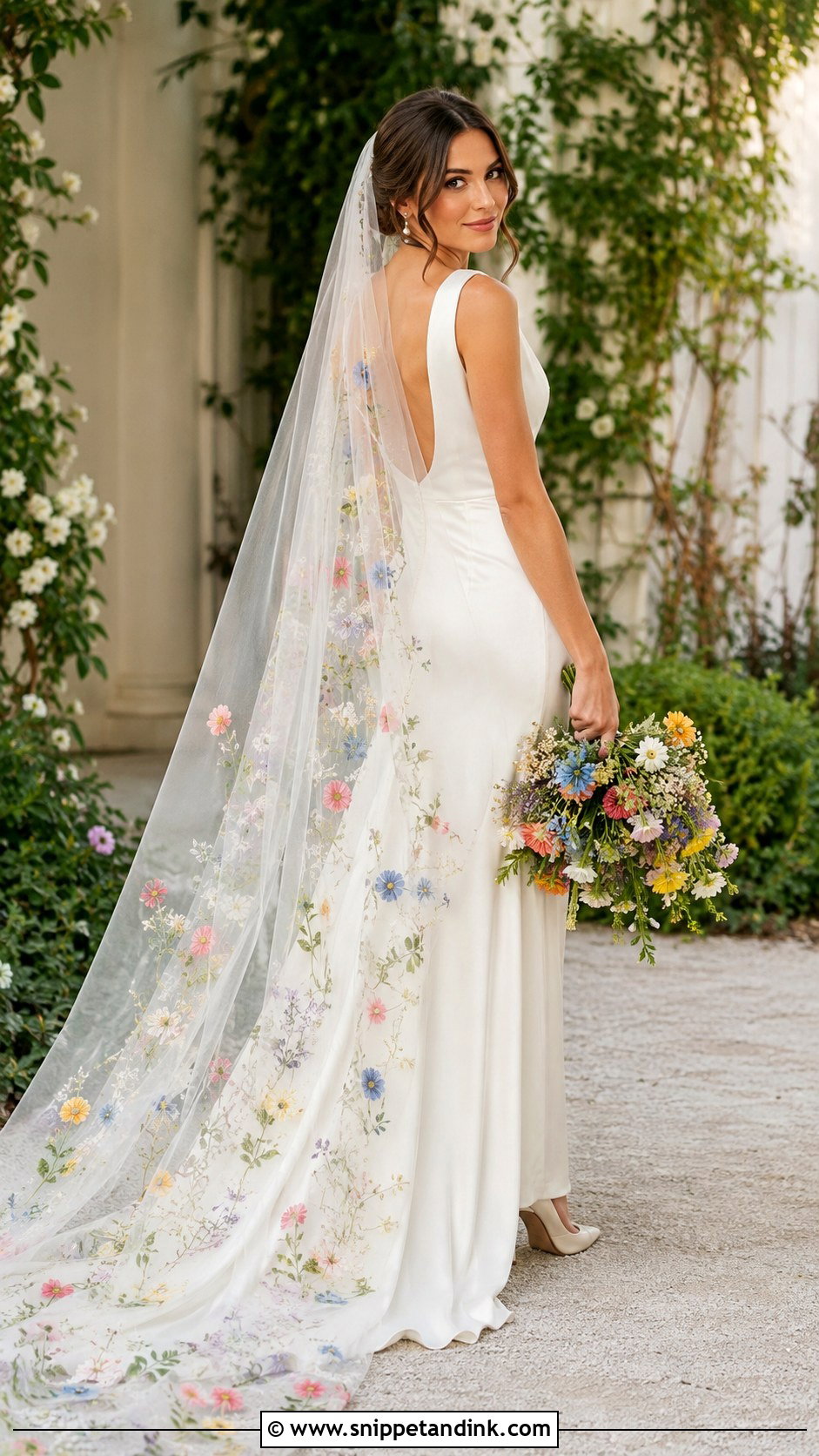
Choosing a plain gown and putting the flowers on the veil is one of the smartest moves in this list. Start with clean satin, crepe or chiffon, then add a veil with colorful embroidered blooms along the edge or scattered through the tulle. Ivory heels, pearl earrings and a bouquet that repeats a few veil colors finish it. The veil comes off for the reception, leaving a minimal dress for dancing. I suggest brides weigh the veil in hand before ordering, since dense embroidery can pull a comb out of fine hair within an hour.
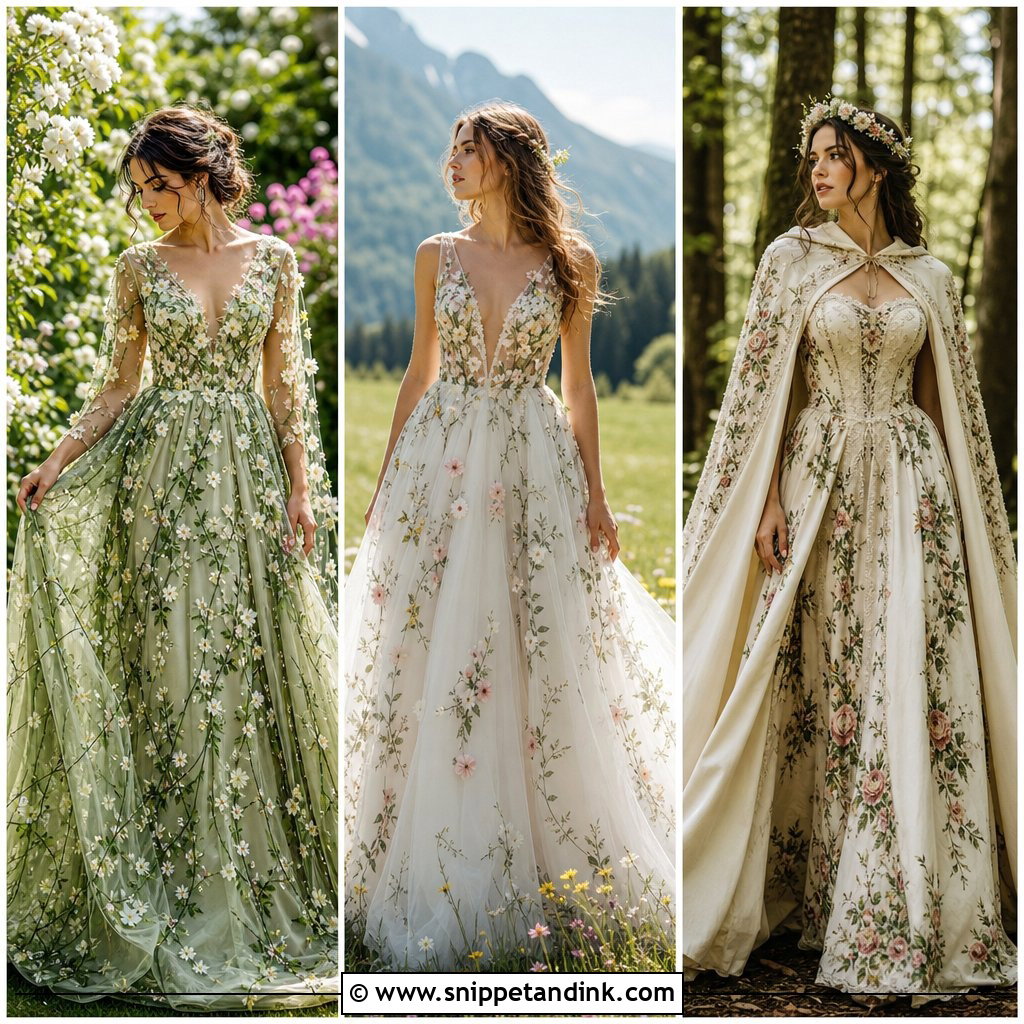
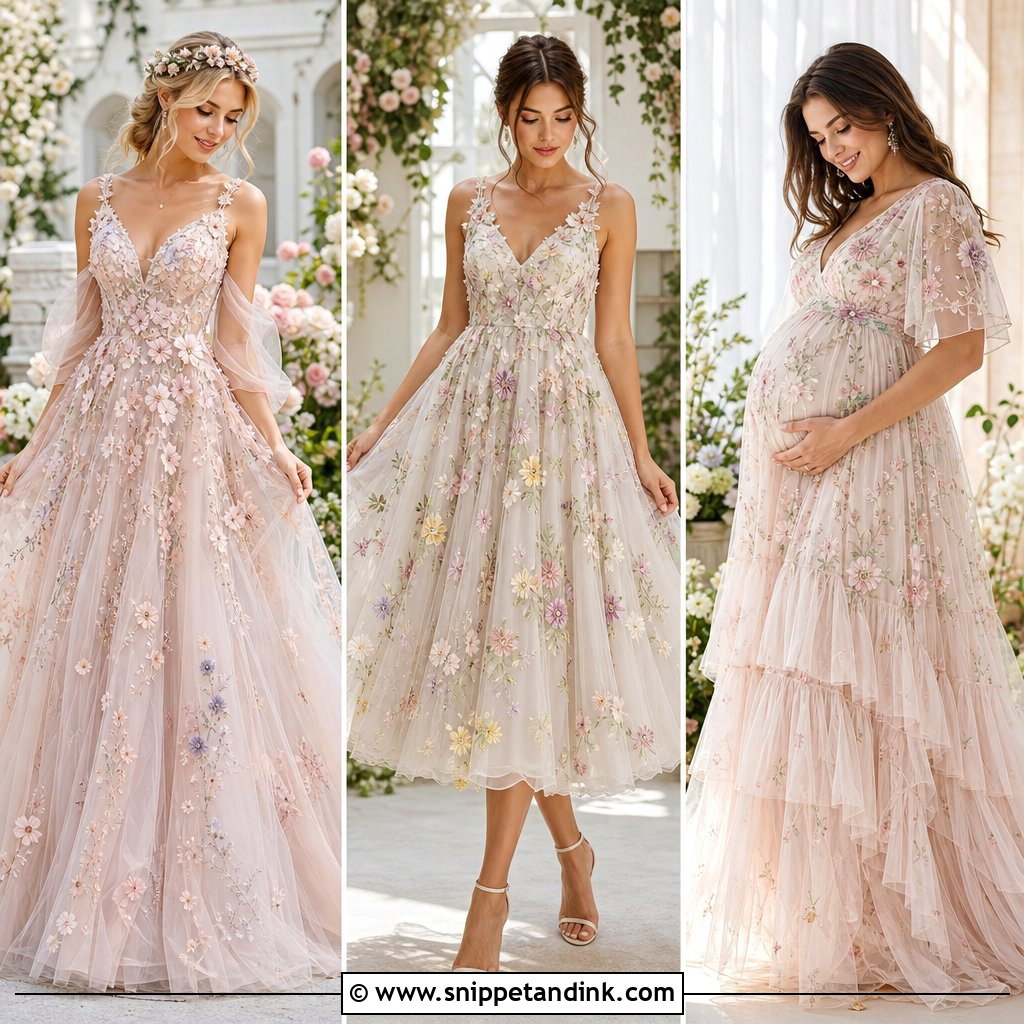
15. Wildflower Wedding Dress With Blush Tulle
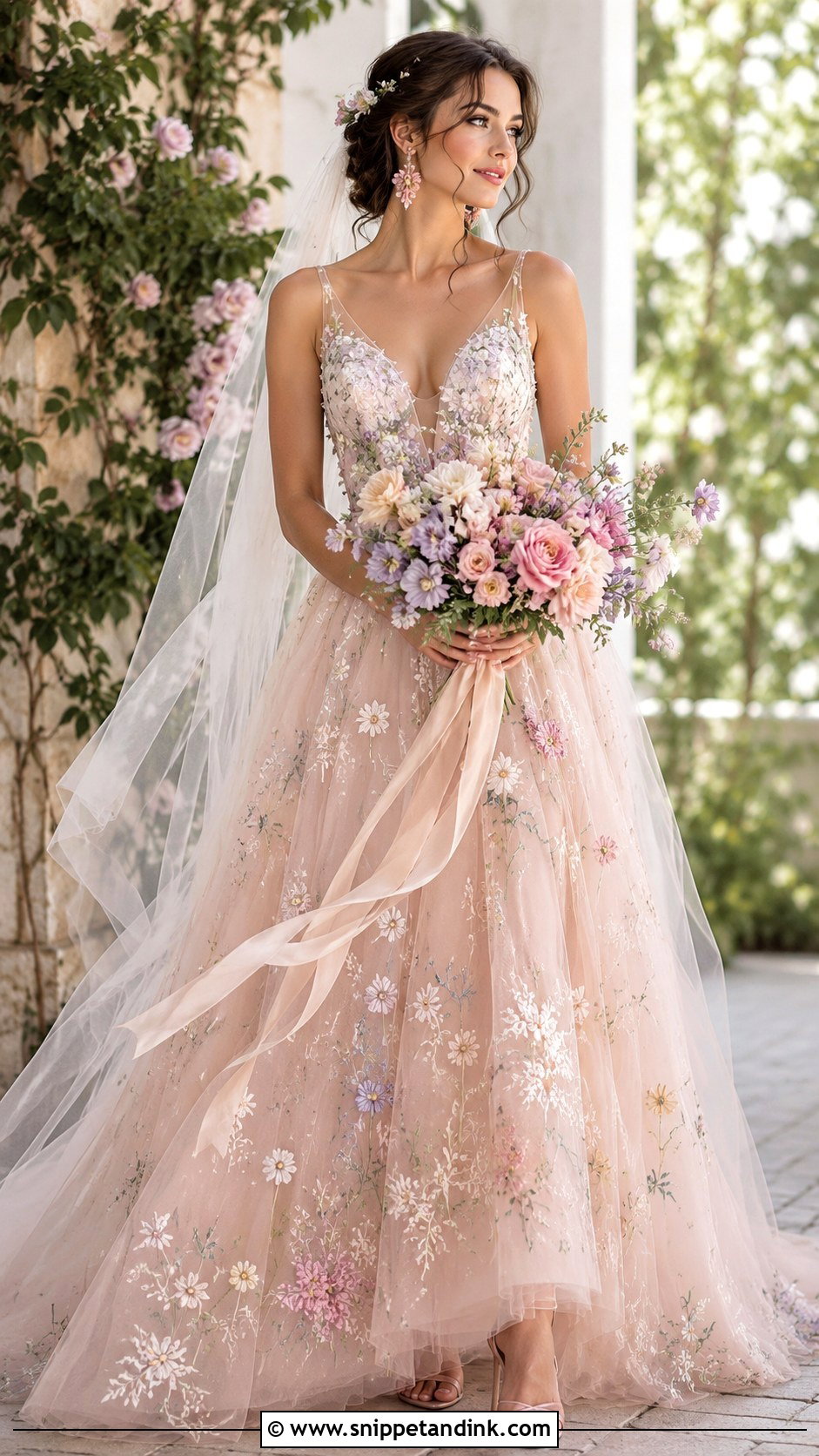
Blush tulle gives a warm glow on camera and still reads as bridal. Ivory or pastel embroidery over a pale pink base keeps it soft. Pair it with nude or blush heels, rose-toned earrings and a bouquet of pink, cream and lavender flowers, with a blush or ivory veil. Skin tone matters more with blush than with any other shade: on very fair skin a cool pink can wash you out, while deeper skin tones often suit a peachier blush. I always ask to see the fabric in daylight before ordering, because shop lighting flatters every pink.
16. Wildflower Wedding Dress With Blue Flowers
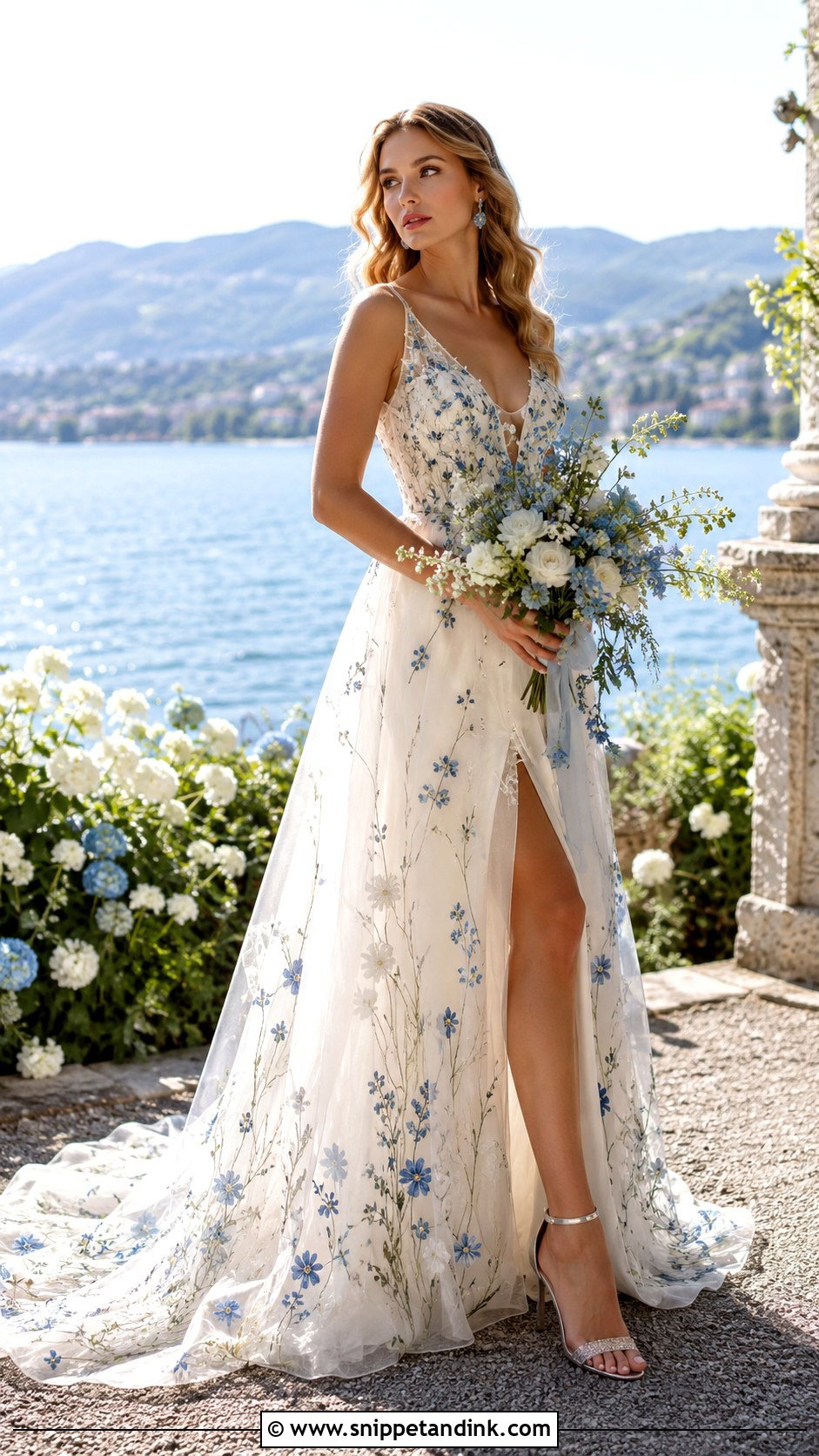
Blue flowers on an ivory gown feel fresh and calm, and they quietly cover your something blue. Pale blue embroidery, blue appliqués or a watercolor print all work. Silver or ivory heels, small blue stones at the ears and a bouquet with delphinium or forget-me-nots carry the color through. Keep hair soft so the outfit stays relaxed. Ask your florist early about blue blooms, since true blue flowers are a short list and some, like delphinium, wilt fast in heat without water.
17. Wildflower Wedding Dress With Yellow Flowers
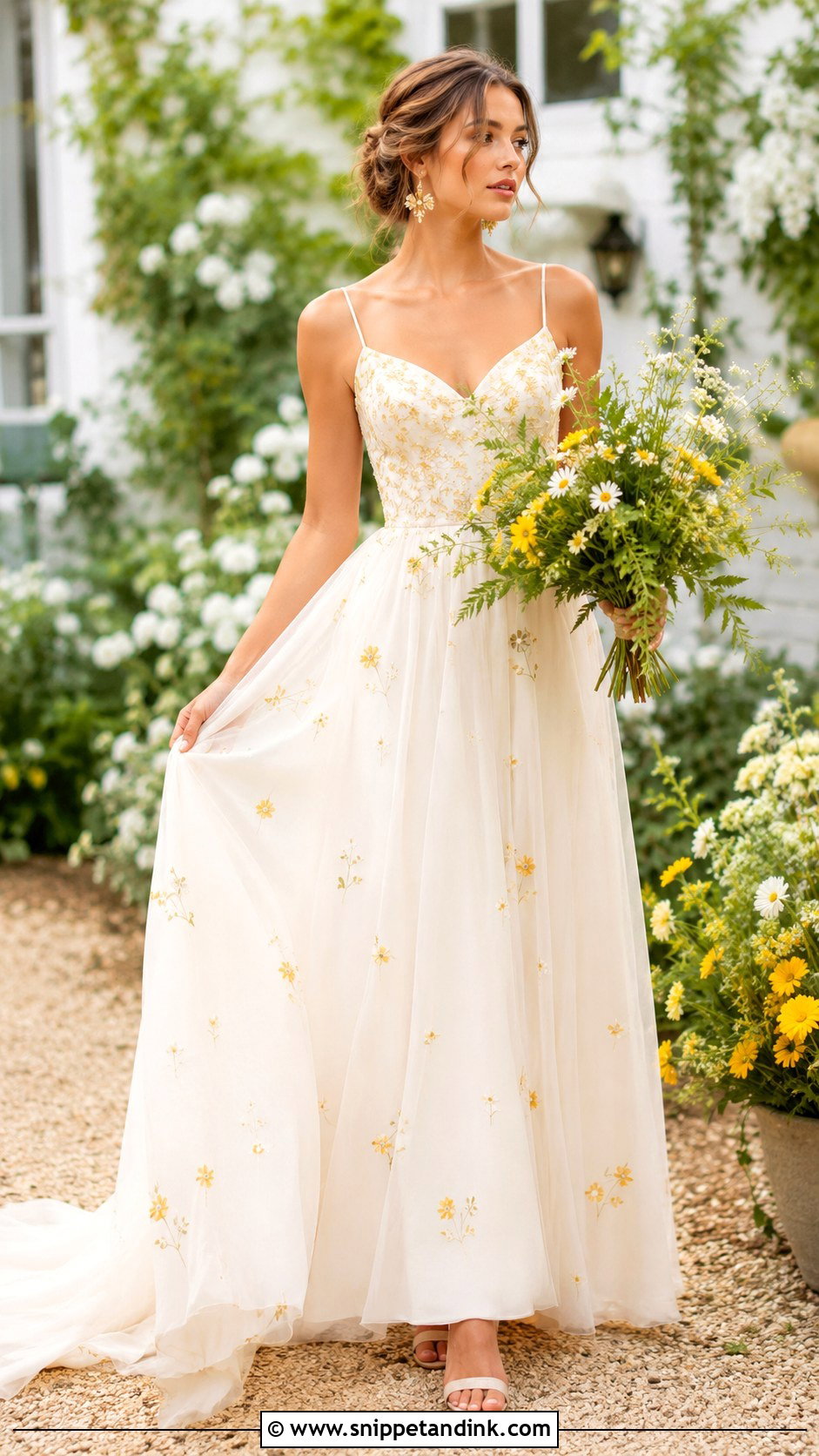
Yellow brings warmth to a dress faster than any other color here. Small embroidered daisies, buttercups or golden meadow flowers on an ivory base keep it cheerful. Ivory sandals, gold earrings and a bouquet of yellow blooms with greenery suit daytime gardens and rustic venues. Go light on accessories, since bold extras can make yellow feel loud. If you’re fair-skinned, test the dress against your face in daylight: a buttery yellow is far kinder than lemon, which can cast a sallow tint near the neckline.
18. Wildflower Wedding Dress With Lavender Flowers
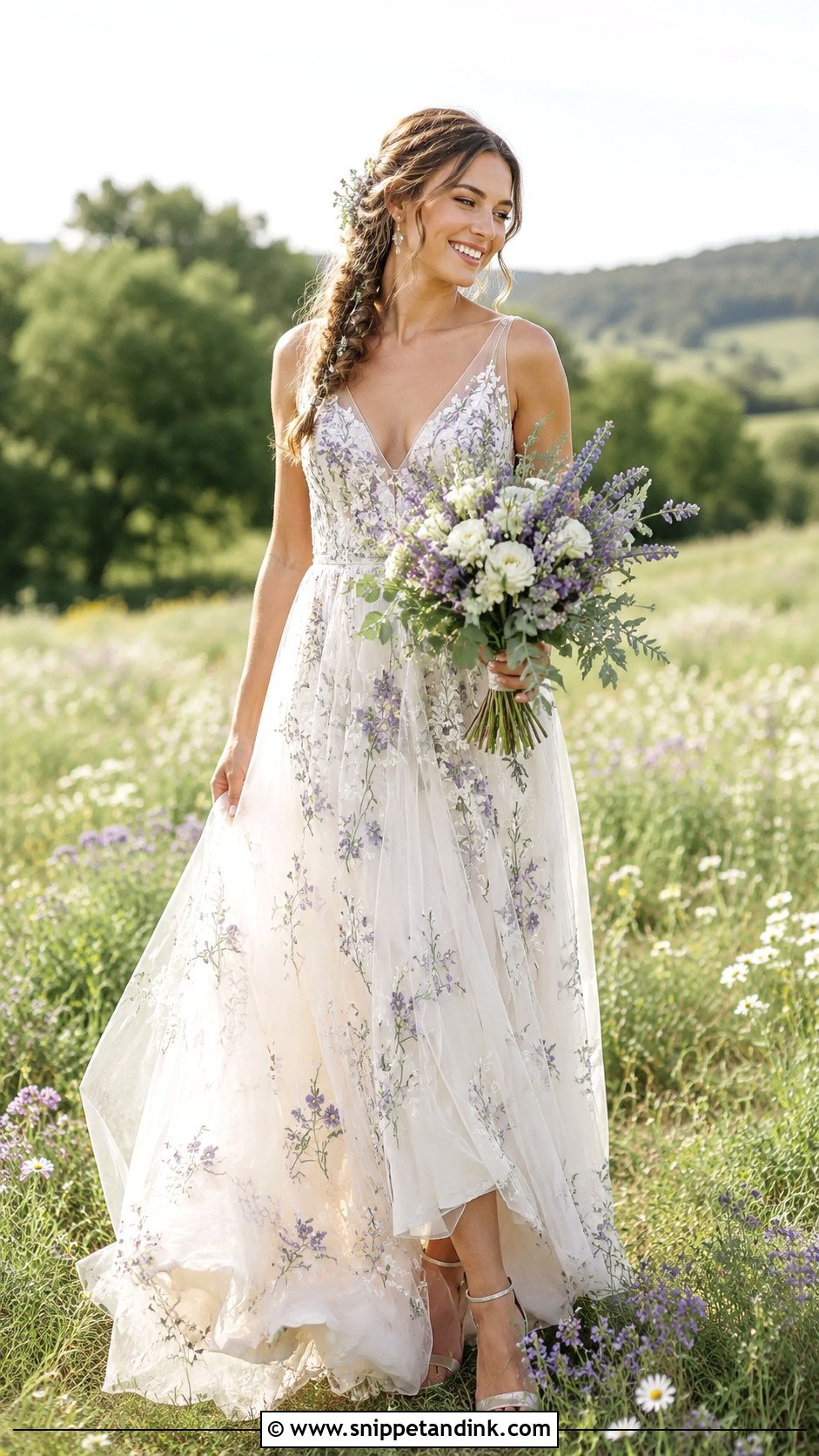
Lavender details add color gently. Look for ivory tulle or lace with lavender embroidery, lilac appliqués or a faint purple print, then pair it with silver heels, delicate earrings and a bouquet of lavender stems, white flowers and soft greenery. A loose braid or half-up style keeps it garden-ready. Purple thread is one I check under the venue’s light, because some lilacs turn grey in shade and almost blue in flash. Spring and early summer venues with plenty of greenery suit this color best.
19. Wildflower Wedding Dress With Meadow Print
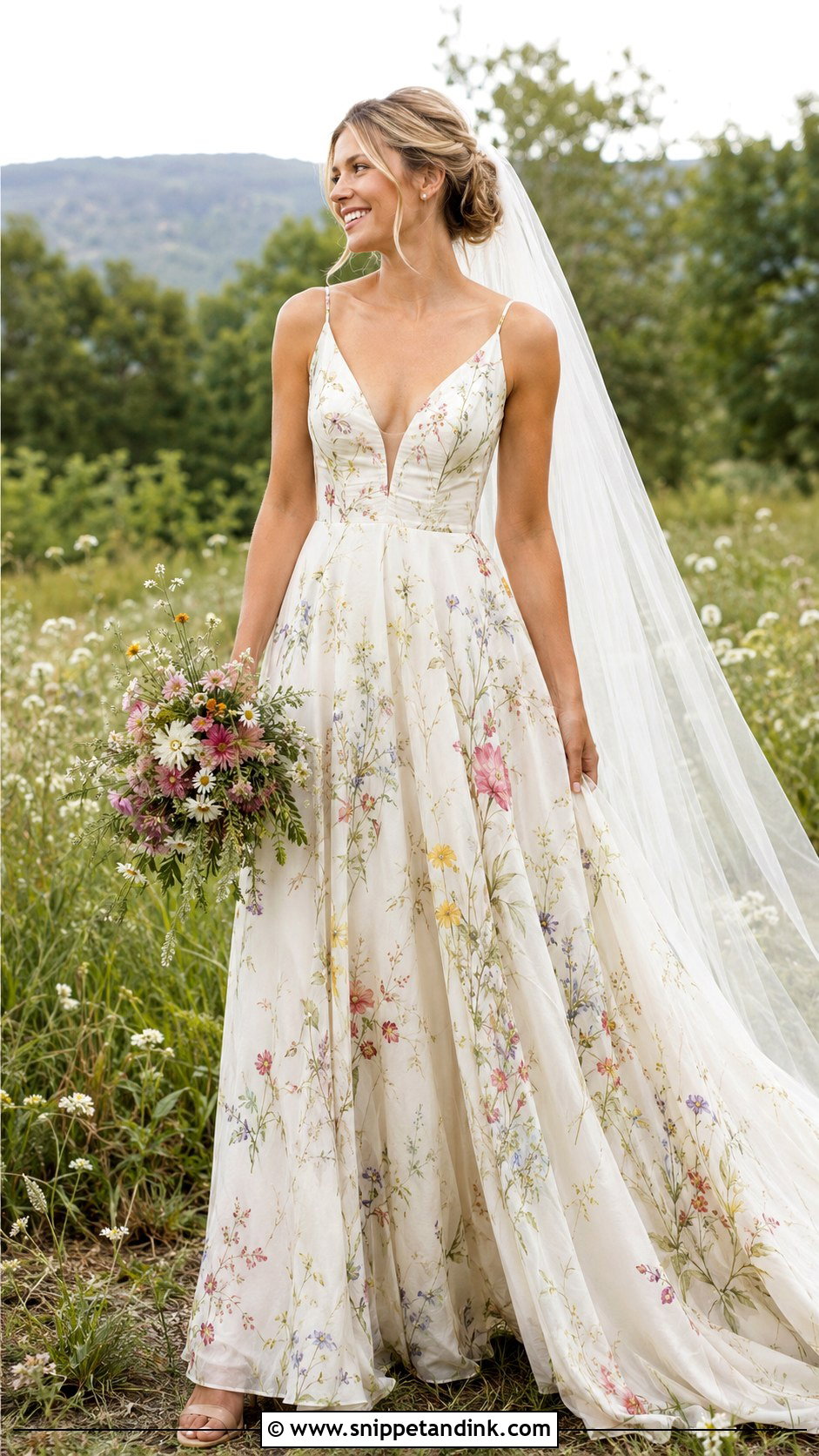
A printed meadow skirt suits brides who want something more like a painting than a gown. Instead of embroidery, choose a soft printed gown with small flowers scattered over the fabric; watercolor florals read as the most bridal. Nude heels, small earrings and a plain veil, or no veil at all, keep it simple, and a bouquet in matching tones makes the print look intentional. Print is also forgiving outdoors: a faint grass mark on a patterned hem disappears where it would glare on plain ivory.
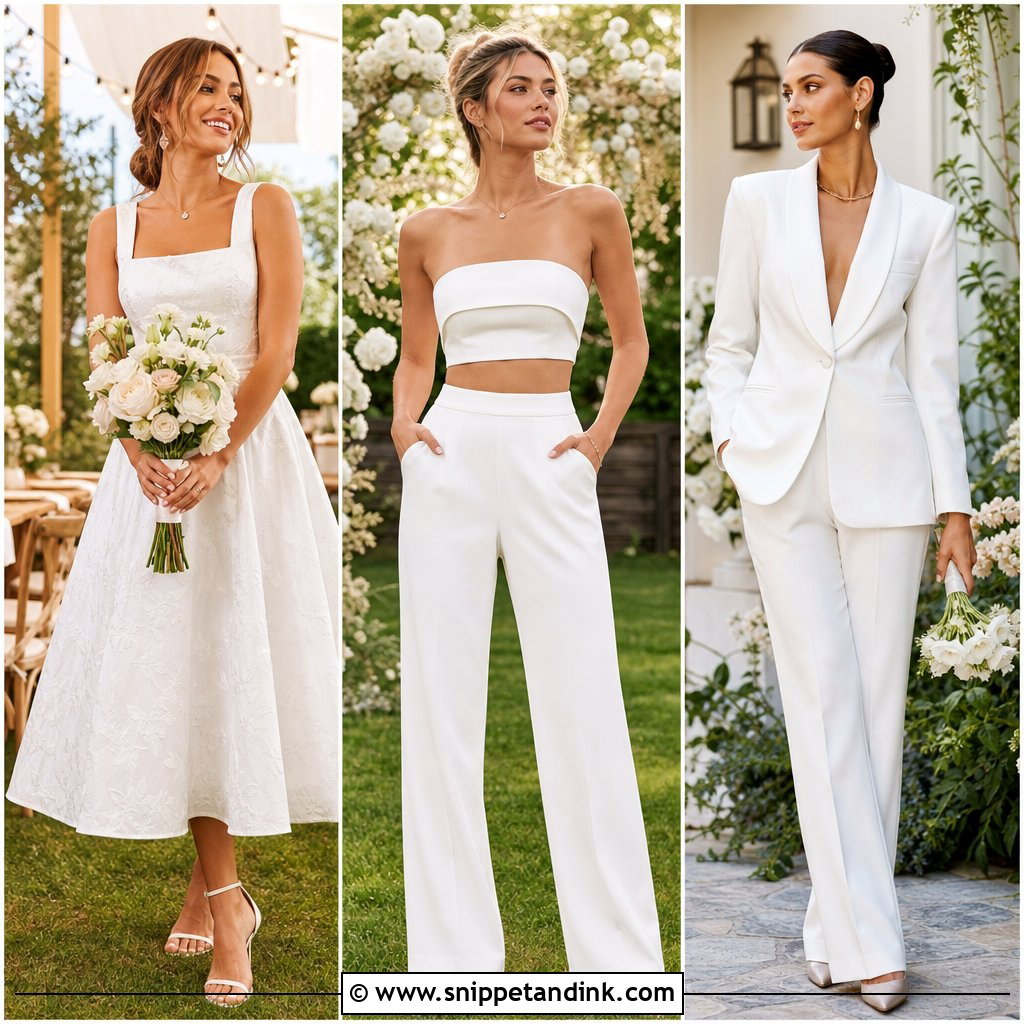
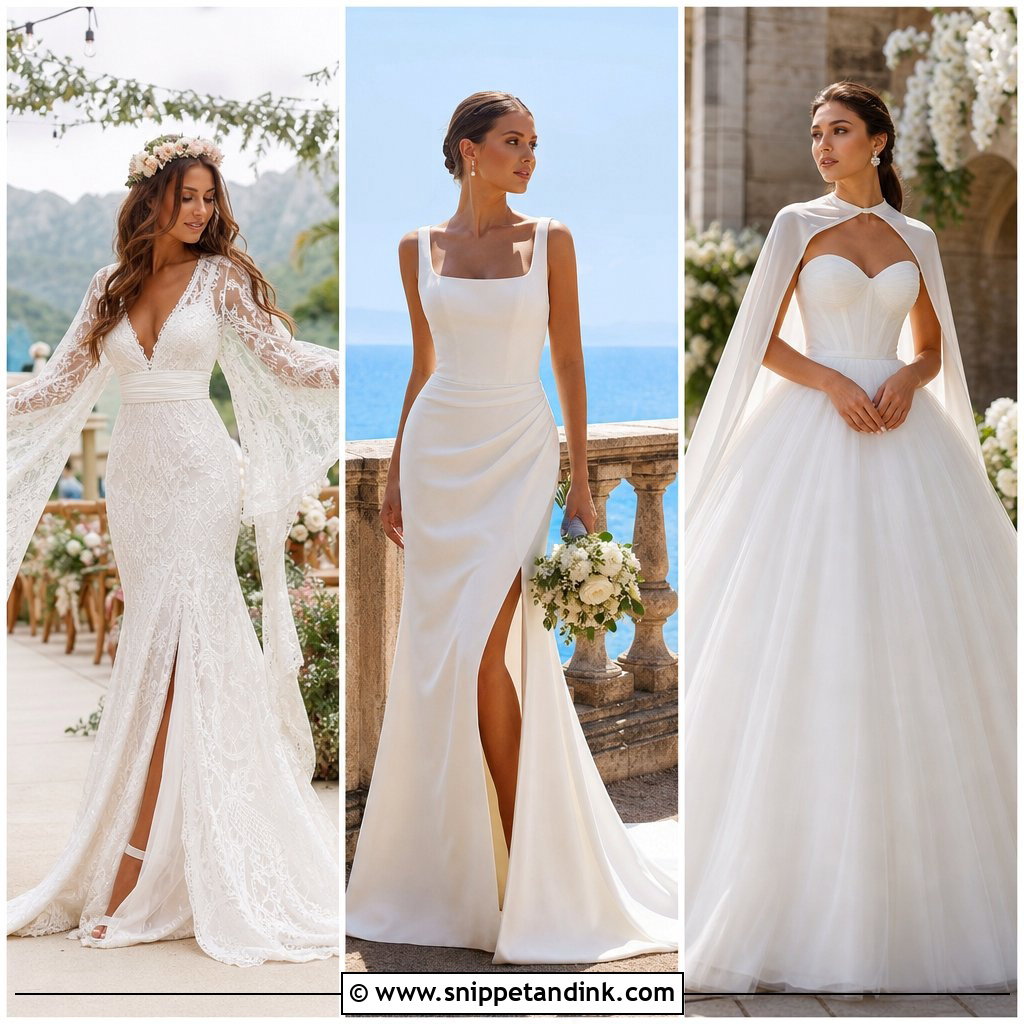

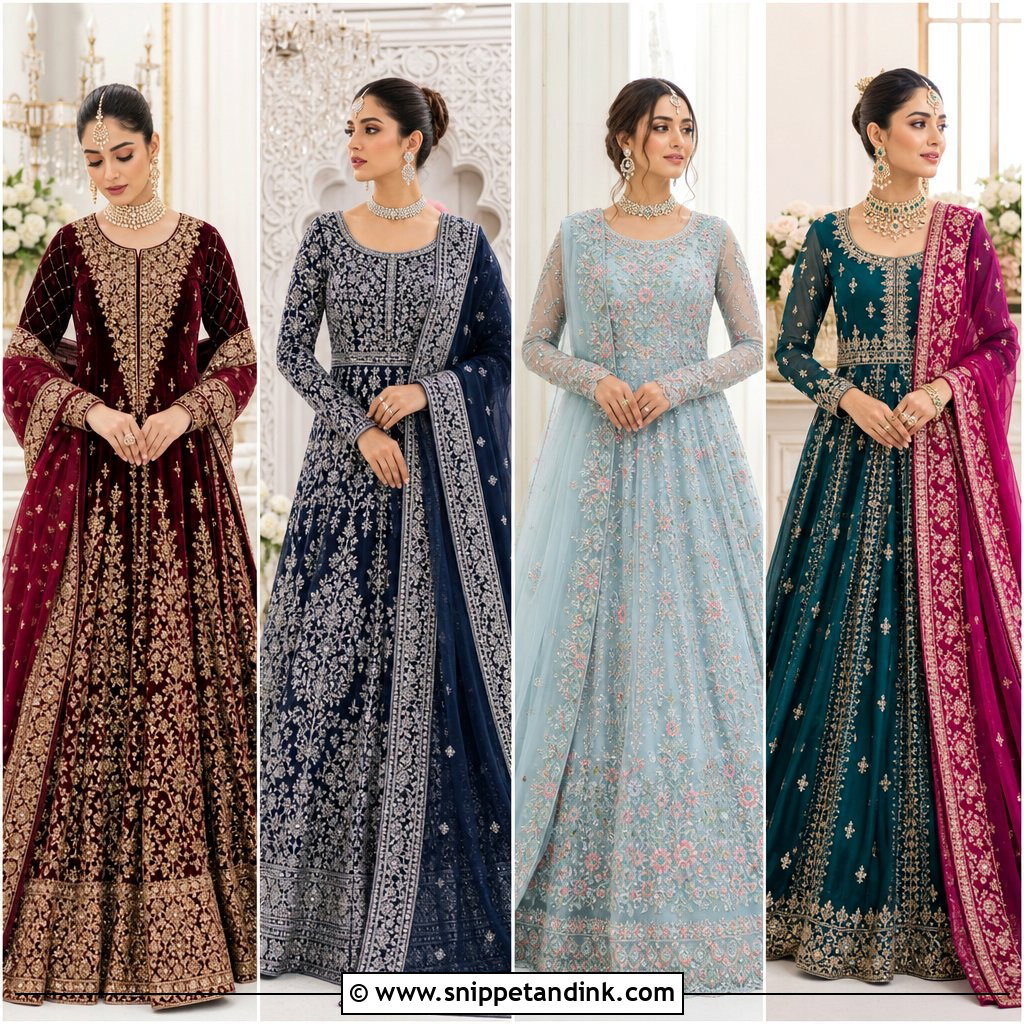
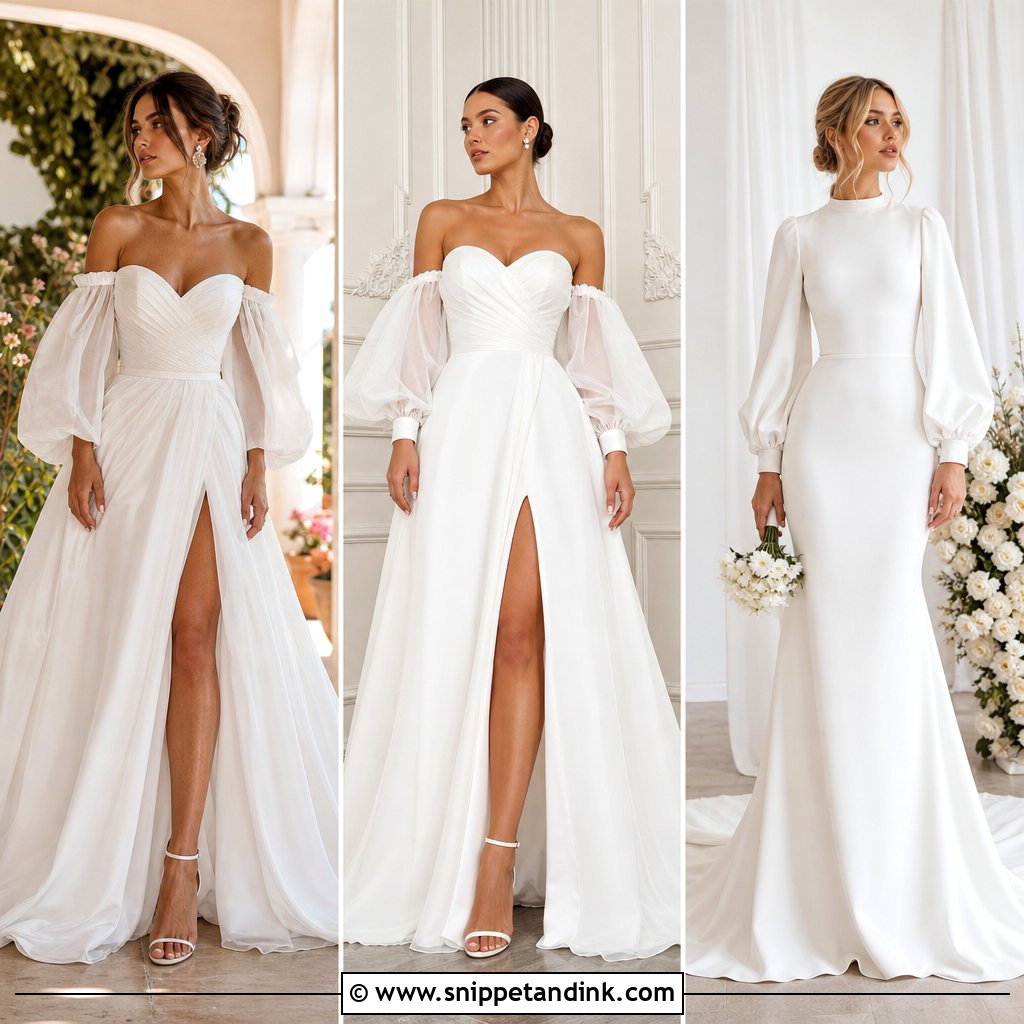
20. Wildflower Wedding Dress With Tea Length Skirt
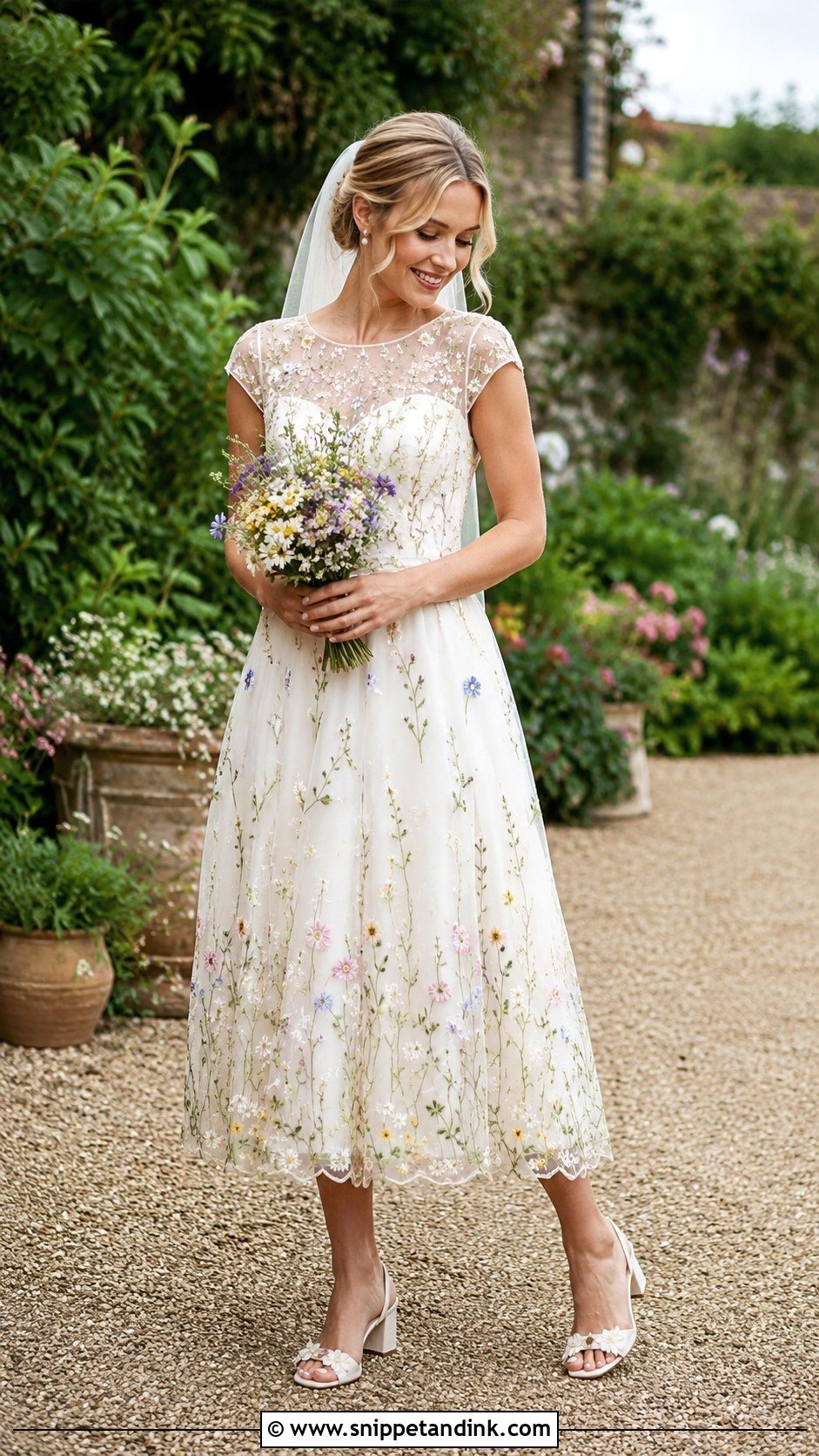
Tea length is the easiest dress here to move in. The skirt hits below the knee or mid-calf, with embroidery, lace or a soft print, and the shorter hem stays out of mud and dew entirely. Because your shoes are on show, they need to earn it: pretty block heels or bridal flats you can stand in for hours. A short veil, pearl studs and a small wildflower bouquet keep the proportions balanced. I find it suits courthouse ceremonies, garden parties and backyard weddings, and it carries a vintage feel without the weight of a full gown.
21. Wildflower Wedding Dress With Mini Dress
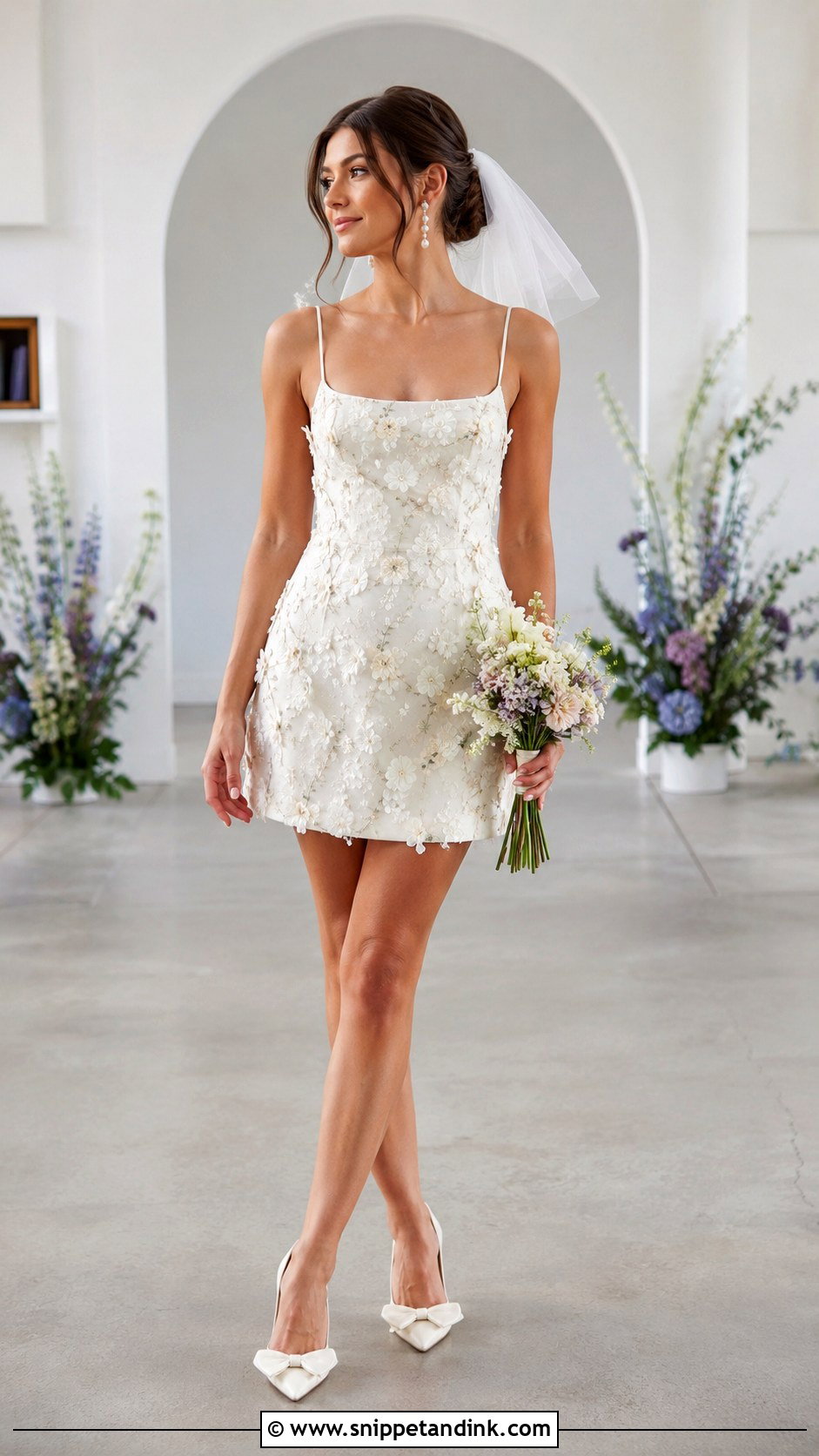
A wildflower mini works for a reception, elopement, bridal shower or second look. Pick a white or ivory mini with appliqués, embroidered organza or a structured bodice with soft flower detail. Bow heels, pearl earrings and a short veil or floral clip make it read as bridal, and a small bouquet stops it looking like party wear. As a second dress, I schedule the change for right after dinner so you’re free for the first dance. Have someone check the hem when you sit, since structured minis ride up more than you’d expect.
22. Wildflower Wedding Dress With Two Piece Set
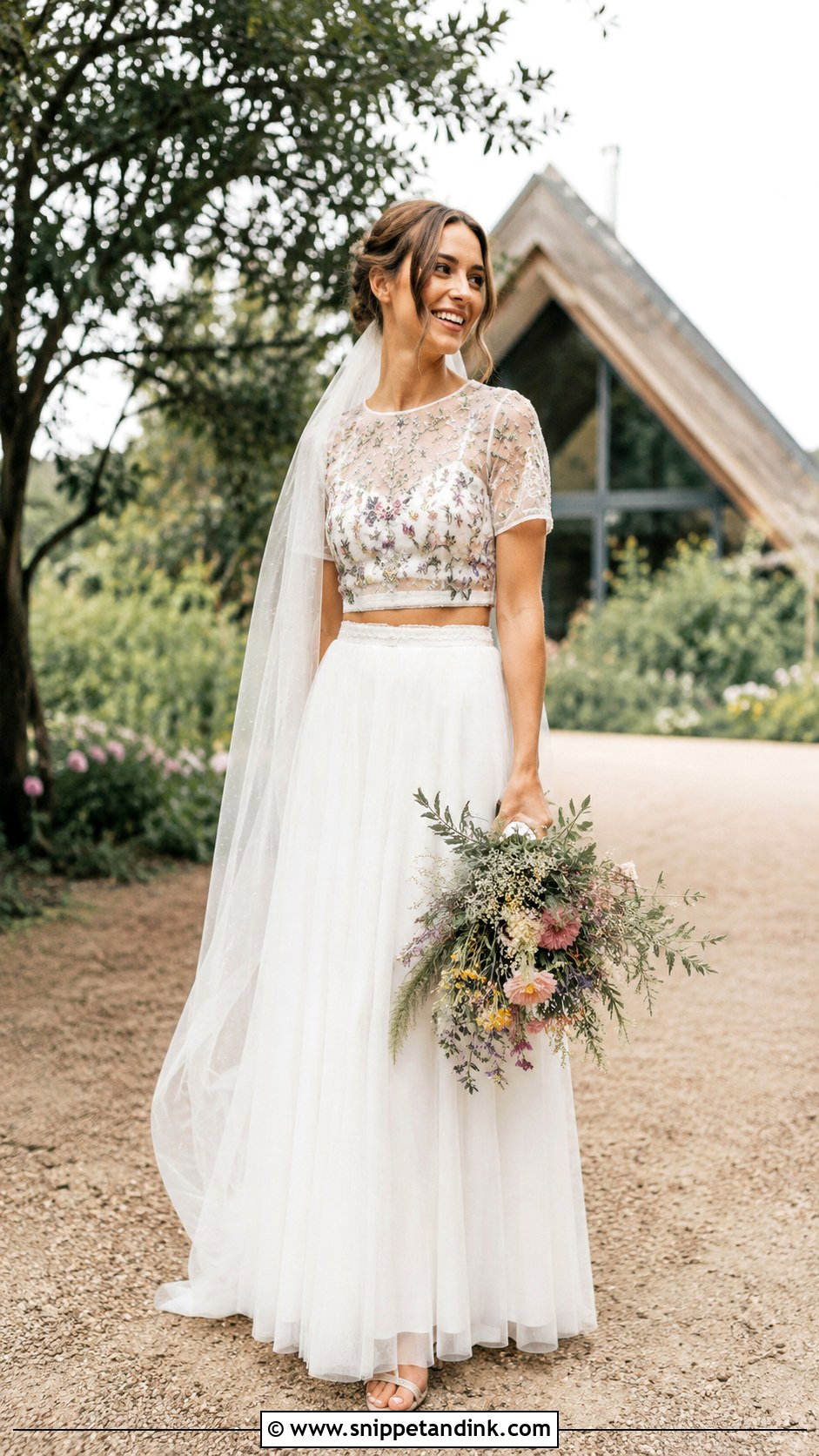
A two piece set pairs a cropped lace or embroidered top with a high-waisted tulle or chiffon skirt. The gap between them can show a sliver of skin or sit closed for a covered look, and that’s the detail to settle at your fitting with your arms raised, not standing still. Simple heels, a soft veil and an airy meadow bouquet complete it. Separates are also kinder to bodies that are a different size top and bottom, because each piece is fitted on its own. You get easier movement for dancing, too.
23. Wildflower Wedding Dress With Bridal Boots
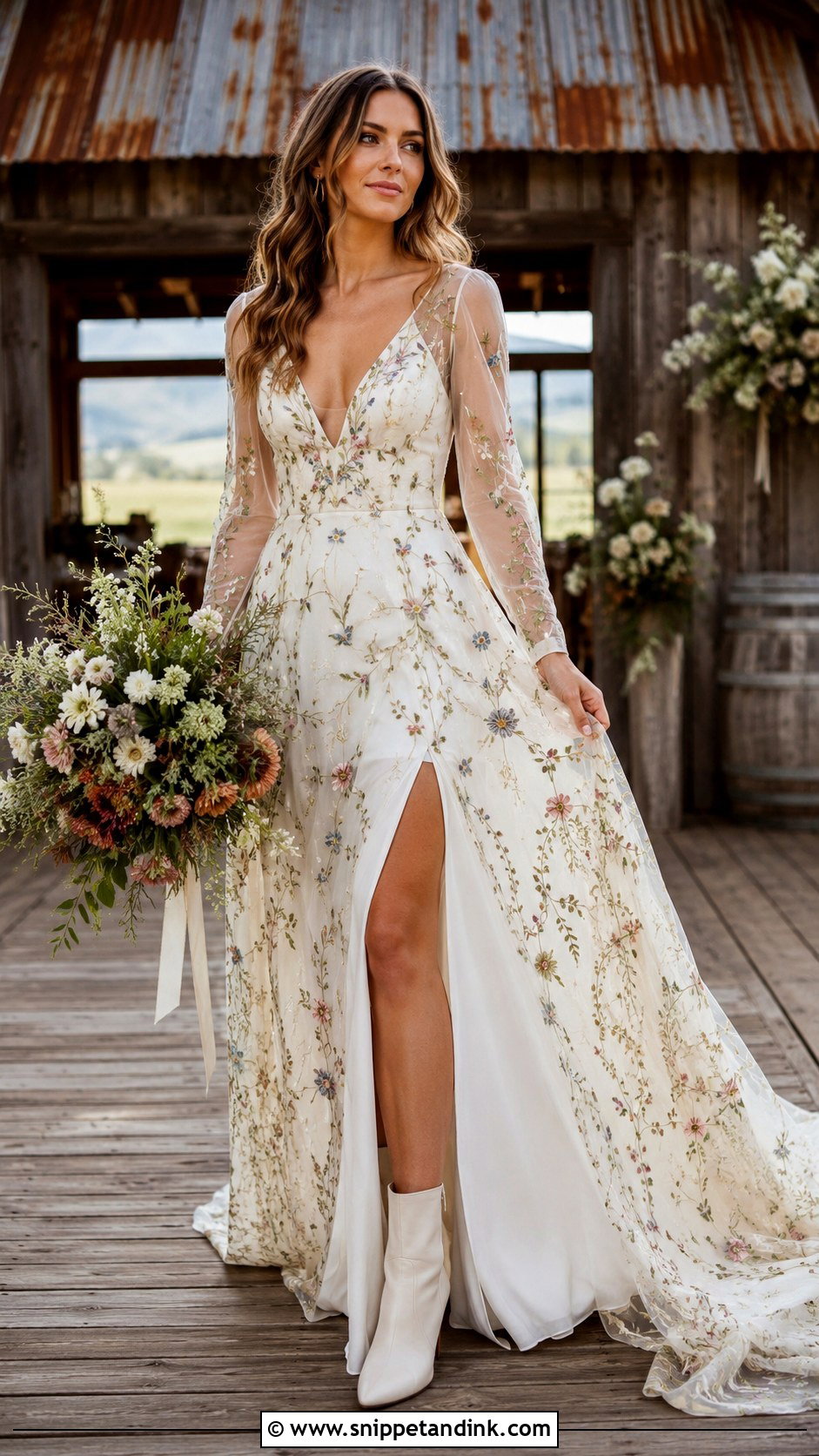
Boots are the honest answer to a field, a barn or a mountain trail, where heels sink and twist. Pick a lace, chiffon or embroidered gown with a slightly shorter front hem or a soft slit so the boots show as you walk. Ivory ankle boots, western-inspired pairs or floral embroidered boots all suit the look. Add simple earrings, loose waves and a meadow bouquet. Break them in for at least a few weeks beforehand; new leather boots rub at the heel, and blisters hurt more than heels by the evening.
24. Wildflower Wedding Dress With Flower Crown
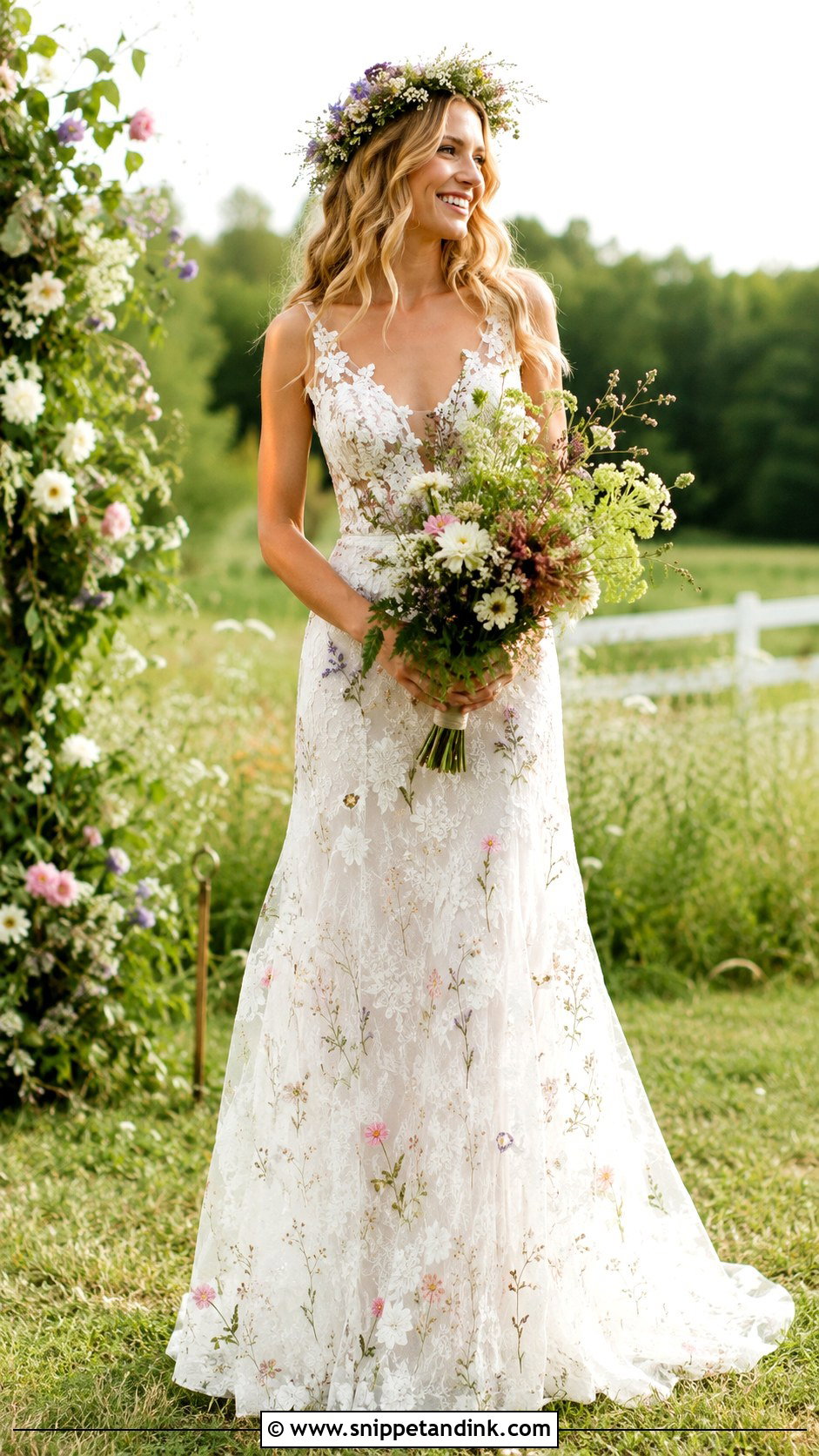
A flower crown ties a floral gown to its surroundings. Go for simple floral lace or light embroidery, and keep the crown small, with tiny blooms and delicate stems rather than an oversized ring. Soft waves, flat sandals or low heels and a hand-tied bouquet finish it. Fresh crowns wilt, so I ask the florist for sturdy stems like waxflower, spray roses or rosemary, and to deliver it in the morning, kept cool until you put it on. Outdoor ceremonies, meadows and relaxed gardens suit it far better than a formal ballroom.


25. Wildflower Wedding Dress With Colorful Shoes
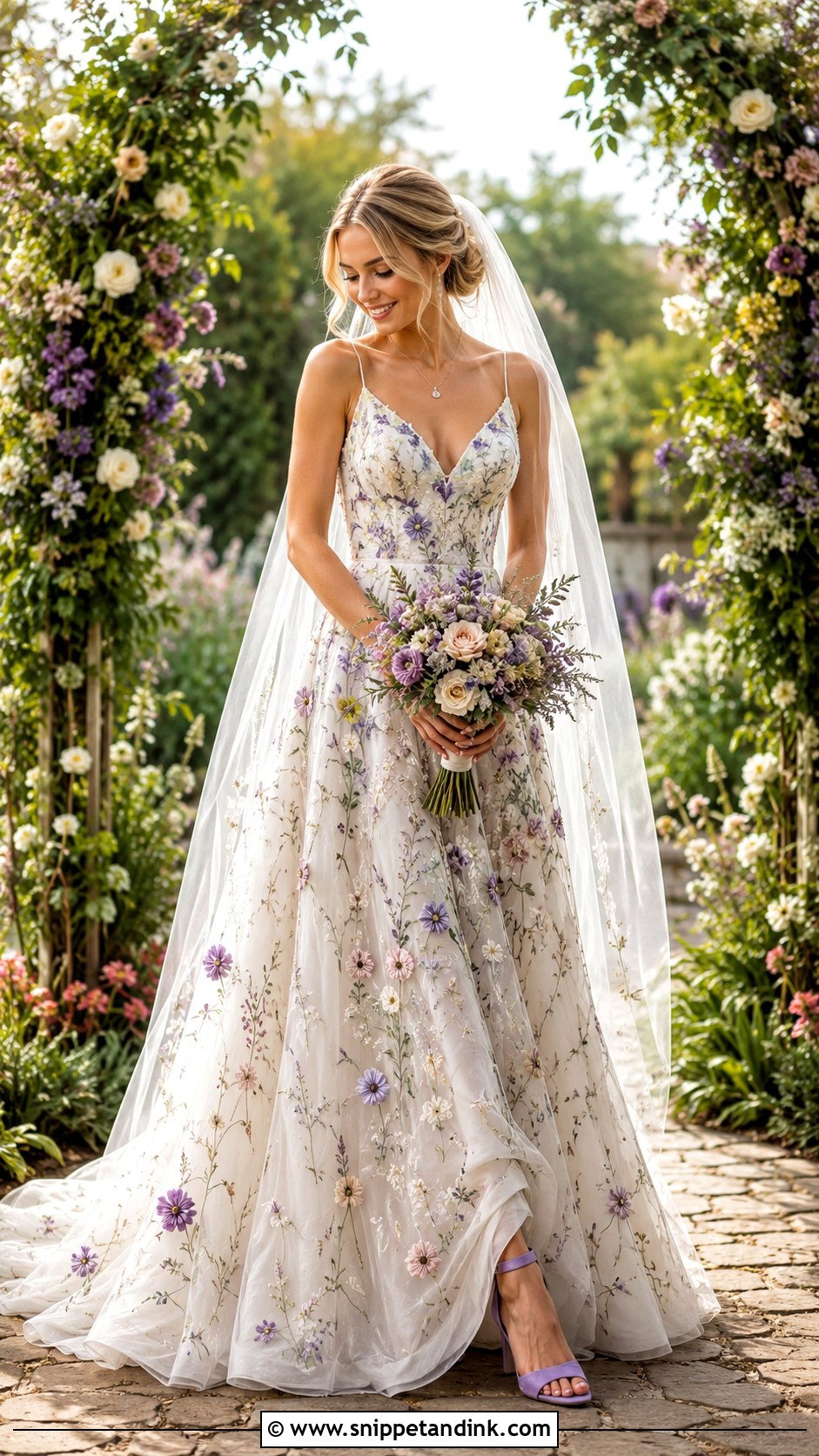
Colored shoes are the low-risk way to add personality. Start with an ivory gown with subtle embroidery or lace, then pick shoes in one color taken from the dress or bouquet: blue, pink, yellow, lavender or green. Simple jewelry, a sheer veil and a bouquet in related tones keep it polished. I prefer this when a bride wants a classic dress for the ceremony and a surprise when she lifts her hem. Bring the shoes to every fitting, because hem length is measured with them on.
Grass, Pollen and Dew Against an Embroidered Hem
Outdoor weddings leave marks, and floral gowns hide some better than others. A little preparation keeps small accidents small.
- Pollen from lilies and some wildflowers stains ivory fabric orange. Never rub it. Lift it off with the sticky side of tape or a soft dry brush, and ask your florist to remove lily stamens before the bouquet arrives.
- Grass marks set with heat. Blot with cold water only, and don’t let anyone near the hem with a steamer until it has been cleaned.
- Morning dew and damp ground travel up tulle layers. Keep the ceremony on a runner or mown path if the ground is wet, and carry the train between photos.
- A small kit in your attendant’s bag saves the day: tape, a white cloth, clear thread, safety pins and fashion tape for necklines.
After the wedding, get the dress to a specialist cleaner within a few weeks, before stains oxidize. Tell them the embroidery is multicolored, because some dyed threads bleed in solvent and they’ll want to test a hidden spot first. At home, store the gown in a breathable cotton bag with acid-free tissue padding the folds through the embroidered areas, never in plastic, and away from light, which fades colored thread long before it yellows the base fabric.
Let the Venue Decide How Much Bloom You Wear
Wildflower details can be bold with colorful embroidery, quiet with lace, modern in a mini or romantic in tulle and appliqués. What separates a dress that works from one that fights the day is how well it suits the place: a tea length hem in a meadow, chiffon in heat, a ball gown only where there’s room for it. Style the whole outfit together, from shoes and veil to bouquet and hair, and test it outdoors before the wedding. Do that, and the flowers on your dress will look like they belong where you’re standing.
You'll Like These Ideas:




Leave a Reply