
A father at an Indian wedding is photographed beside the couple dozens of times, so his clothes need presence without stealing from the groom. The twenty outfits below run from sherwanis and bandhgalas to kurta sets, regional dress and reception suits. When I dress a father, I sort the week by function first, because a haldi kurta and a reception tuxedo have nothing in common except the man wearing them. Daytime events want light cotton-silk; evening ceremonies can carry brocade, jacquard or velvet. Mojaris, stoles, pocket squares and turbans finish each look, and I keep them to two or three per outfit. The ideas work for the bride’s father and the groom’s father alike.

Two Fathers in One Frame
The bride’s father and the groom’s father will stand side by side in more photos than either expects, usually flanking the couple at the stage. I like to get both families talking about colour a few weeks out. They don’t need to match, but two men in near-identical gold sherwanis look like a mix-up, while one in ivory and one in navy frame the couple neatly.
I also ask each father how formal he wants to be. A man who is uneasy in a heavy sherwani will stand stiffly in every frame, and that shows far more than the embroidery does. In that case I’d rather put him in a well-cut bandhgala or an achkan he can forget he’s wearing.
1. Ivory Sherwani for Father of the Bride
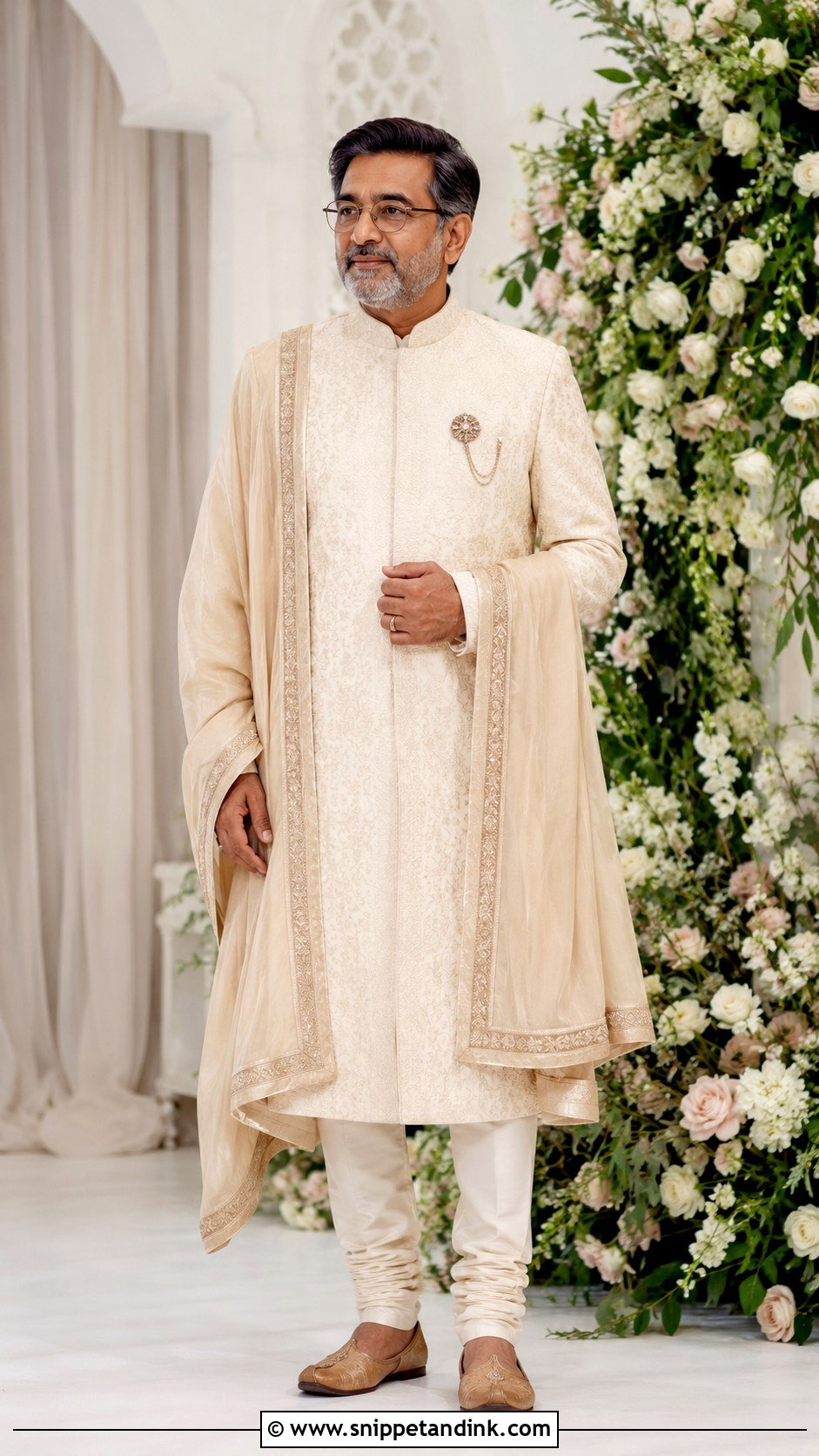
Ivory is my first suggestion for a bride’s father when the bride is in red or deep pink, because it sits quietly beside her in every family frame. I look for a knee-length sherwani in silk, jacquard or cotton-silk with tonal embroidery only at the collar, cuffs and buttons. Cream churidar or straight trousers keep the line long, and tan or antique-gold mojaris keep the palette soft. A muted gold pocket square, a simple brooch and a beige stole are plenty. The fitting point I check first is the shoulder seam: if it sits past the shoulder bone, the whole sherwani looks borrowed. He also needs room in the body to bend for rituals and to hug relatives.
2. Gold Sherwani for Father of the Groom
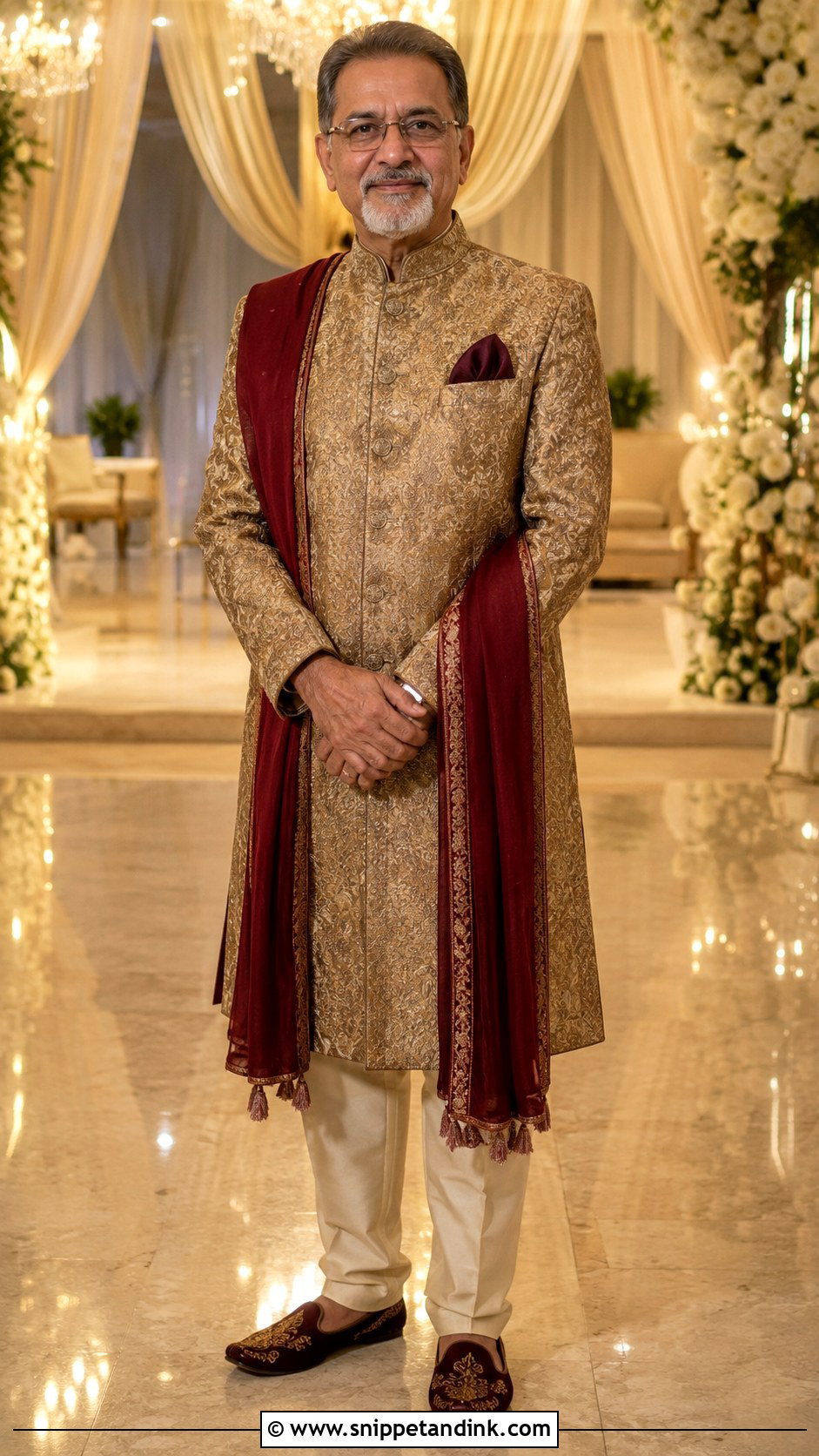
Gold is risky because cheap metallic fabric glares under flash and reads as costume. For the groom’s father I steer toward antique gold, champagne or beige-gold brocade with a subtle paisley or floral weave. Cream straight pants and dark brown embroidered mojaris ground it, and a maroon pocket square or light stole links it to a red wedding palette. One brooch or a simple pearl mala is enough, depending on family preference. Ask what the groom is wearing before you order. If he’s also in gold, the father should go a tone deeper or plainer so the two don’t merge in photos. Evening pheras and ballroom weddings suit this sherwani.
3. Navy Bandhgala Suit for Indian Wedding
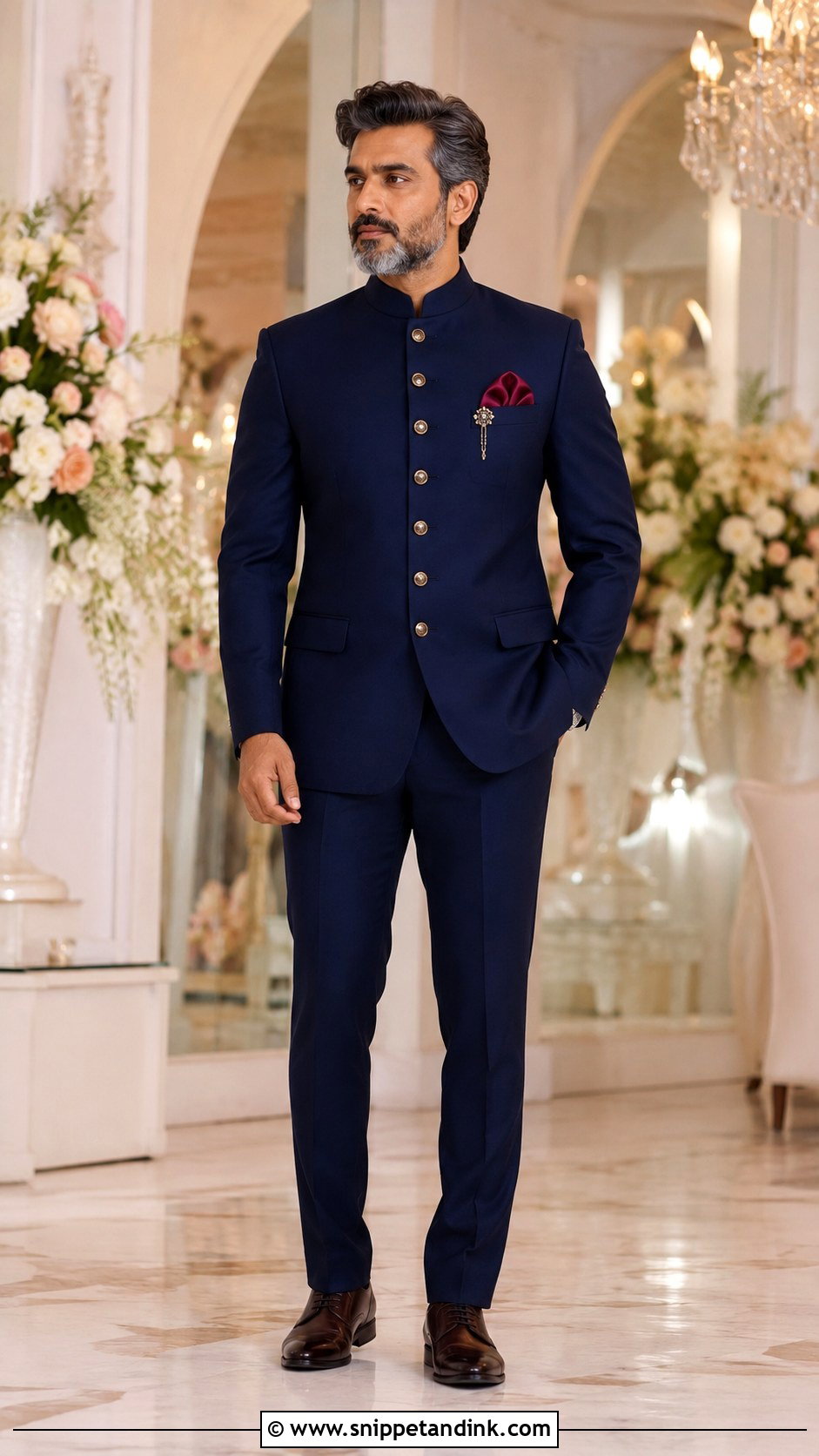
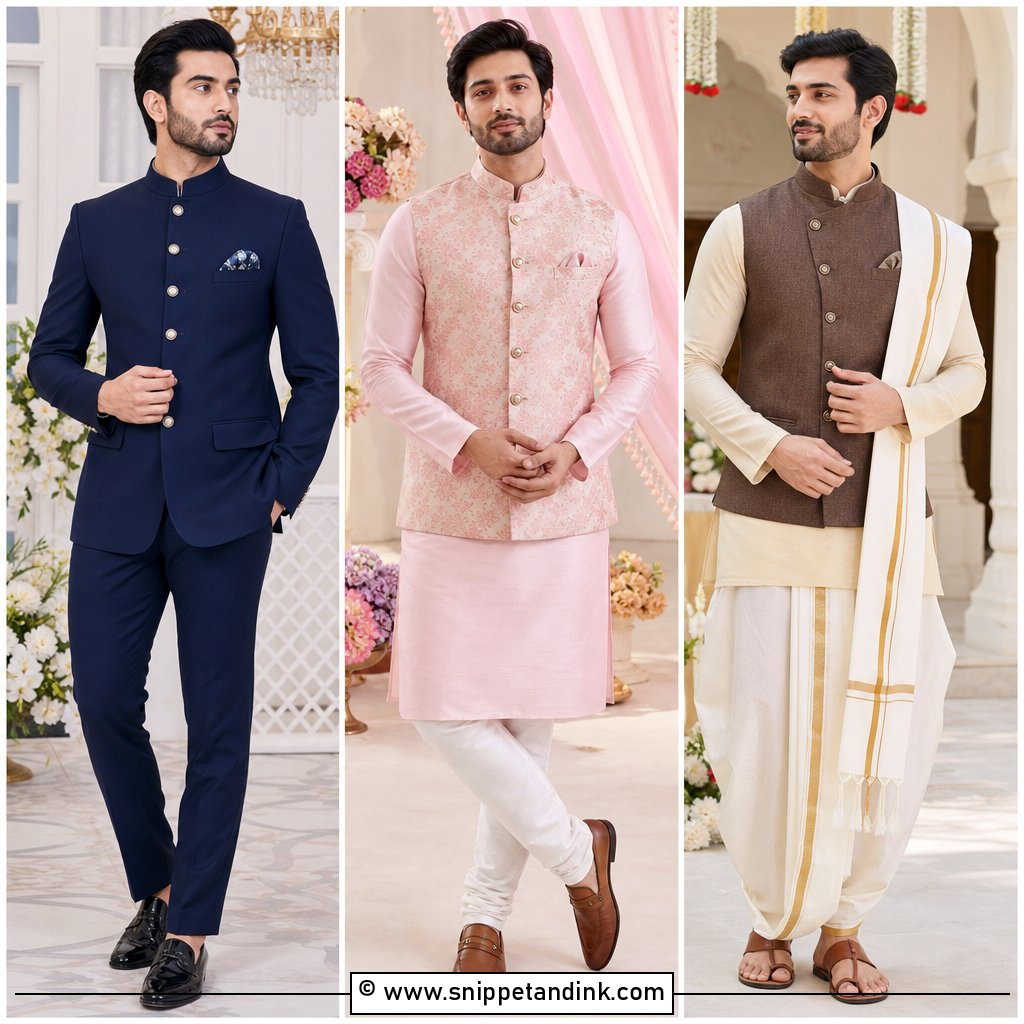
Navy is the colour I trust when a father isn’t sure what suits him. A bandhgala in deep navy with a clean stand collar, covered buttons and restrained embroidery near the collar edge looks formal on almost any build. Matching tapered trousers and black or dark brown formal shoes complete it, with a patterned silk pocket square for colour. For evening, add a small antique-metal brooch; for daytime, leave the jacket plain. Navy sits well beside emerald, wine, magenta and gold saris and lehengas. Because the outfit is so simple, fit is everything. I have sleeves end where the wrist bone starts and the trousers break once at the shoe, no more.
4. Black Jodhpuri Suit for Wedding Reception
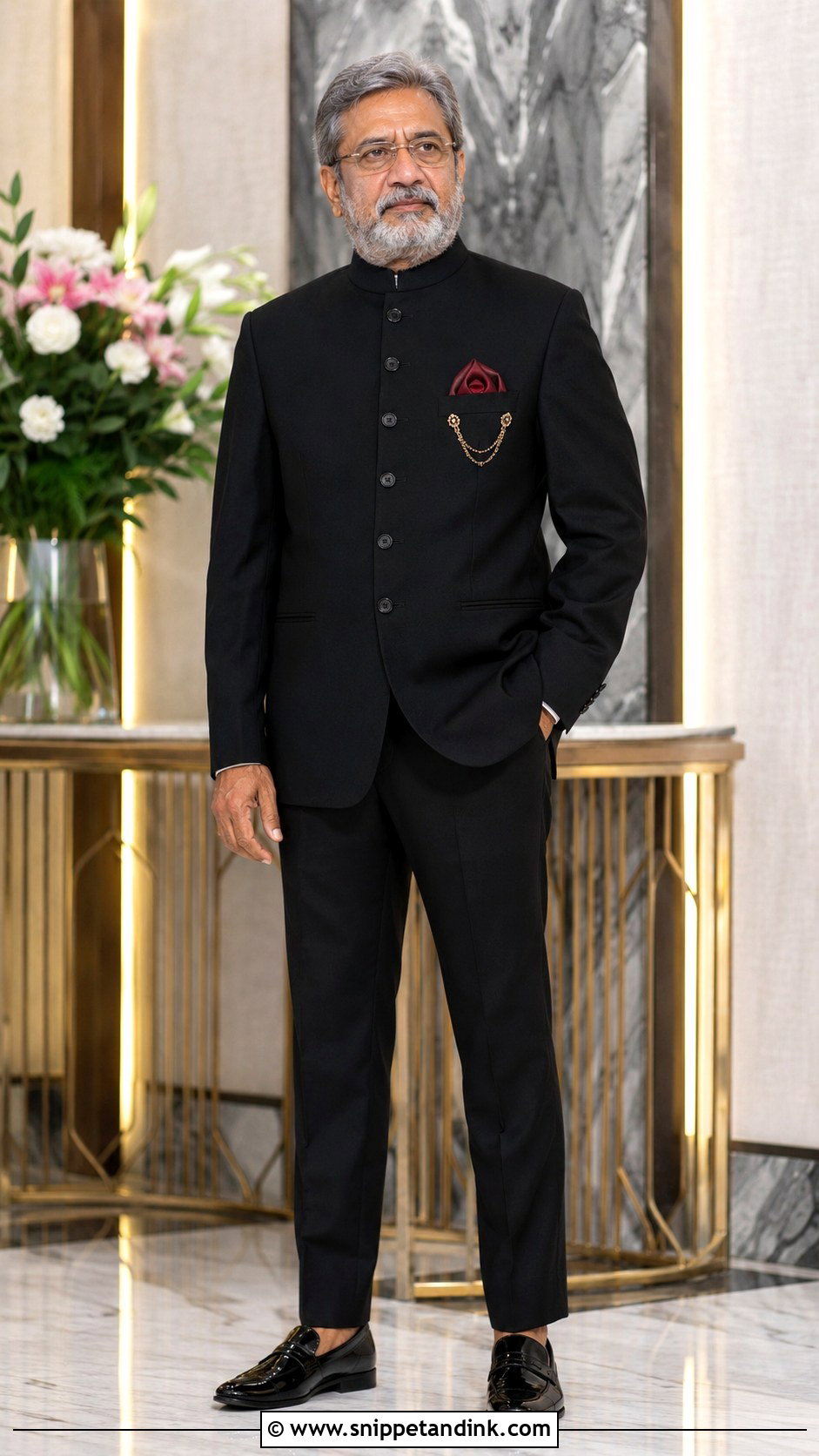
A black Jodhpuri is the reception outfit for a father who likes sharp tailoring. The jacket wants a band collar, a fitted but not tight shape and understated metallic buttons, worn with matching black trousers and glossy loafers or lace-ups. A burgundy, emerald or gold pocket square ties in the family colours, and a fine chain across the jacket or a single brooch suits a very formal room. I stop there; black already carries strong presence. This outfit bridges Indian and Western formalwear well at a multicultural reception. Ask the tailor for a breathable lining and side vents. A father stands, greets and dances for hours, and a closed back with polyester lining gets hot fast.
5. Pastel Kurta With Nehru Jacket
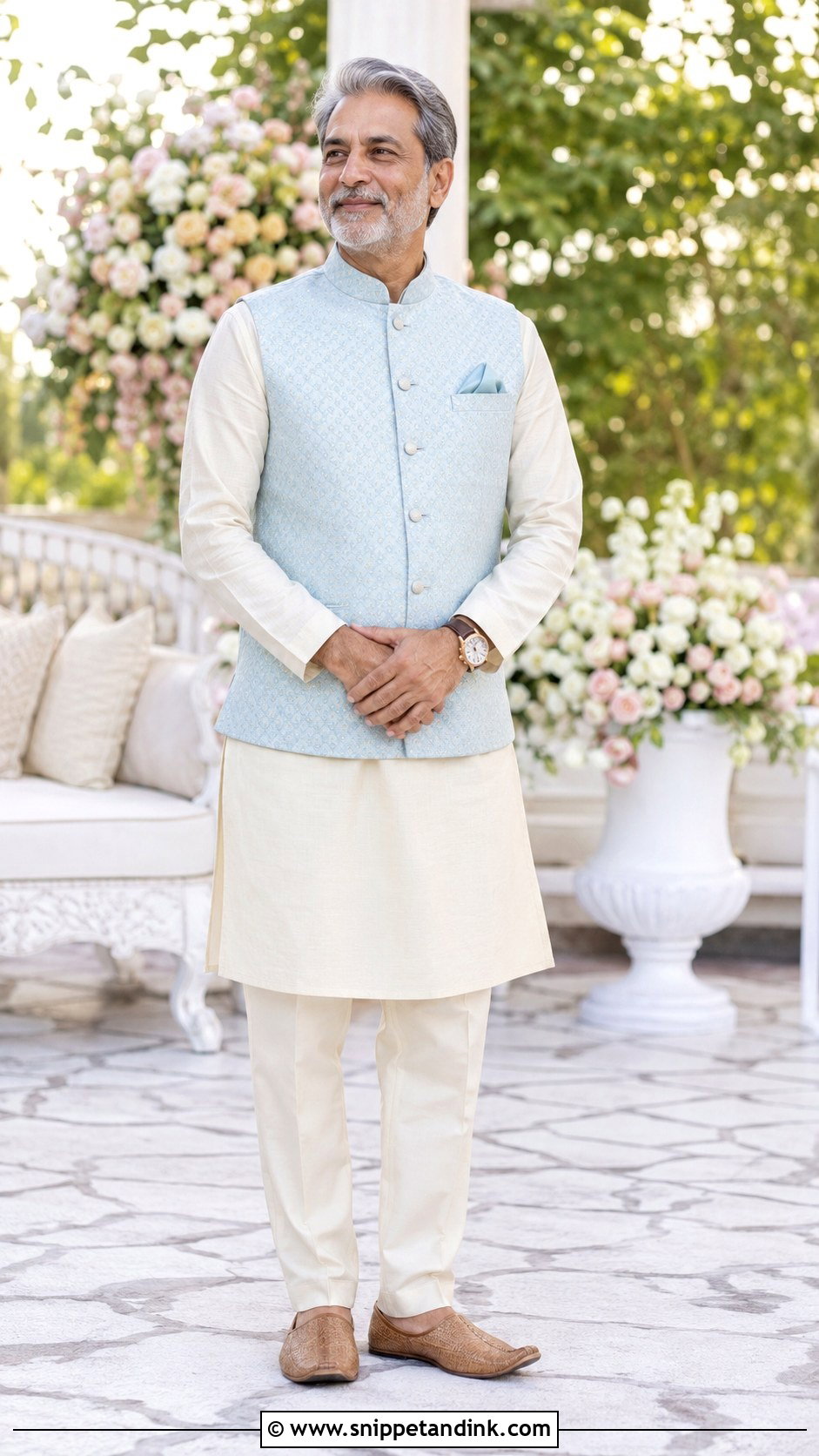
Pastels make a father look approachable at a daytime function, and older men are often surprised how well they wear them. Start with an ivory or white kurta and straight pajama pants, then add a Nehru jacket in powder blue, blush, mint, lavender or peach with a small woven floral or geometric pattern. Tan mojaris, a coordinated pocket square and a classic watch finish it. Check the jacket closed and seated: if the buttons pull across the stomach when he sits, go up a size and take in the shoulders instead. Kurta sleeves should end neatly at the wrist. One shared accent with the mother’s sari looks more natural than an exact match.
6. Maroon Velvet Sherwani for Winter Wedding
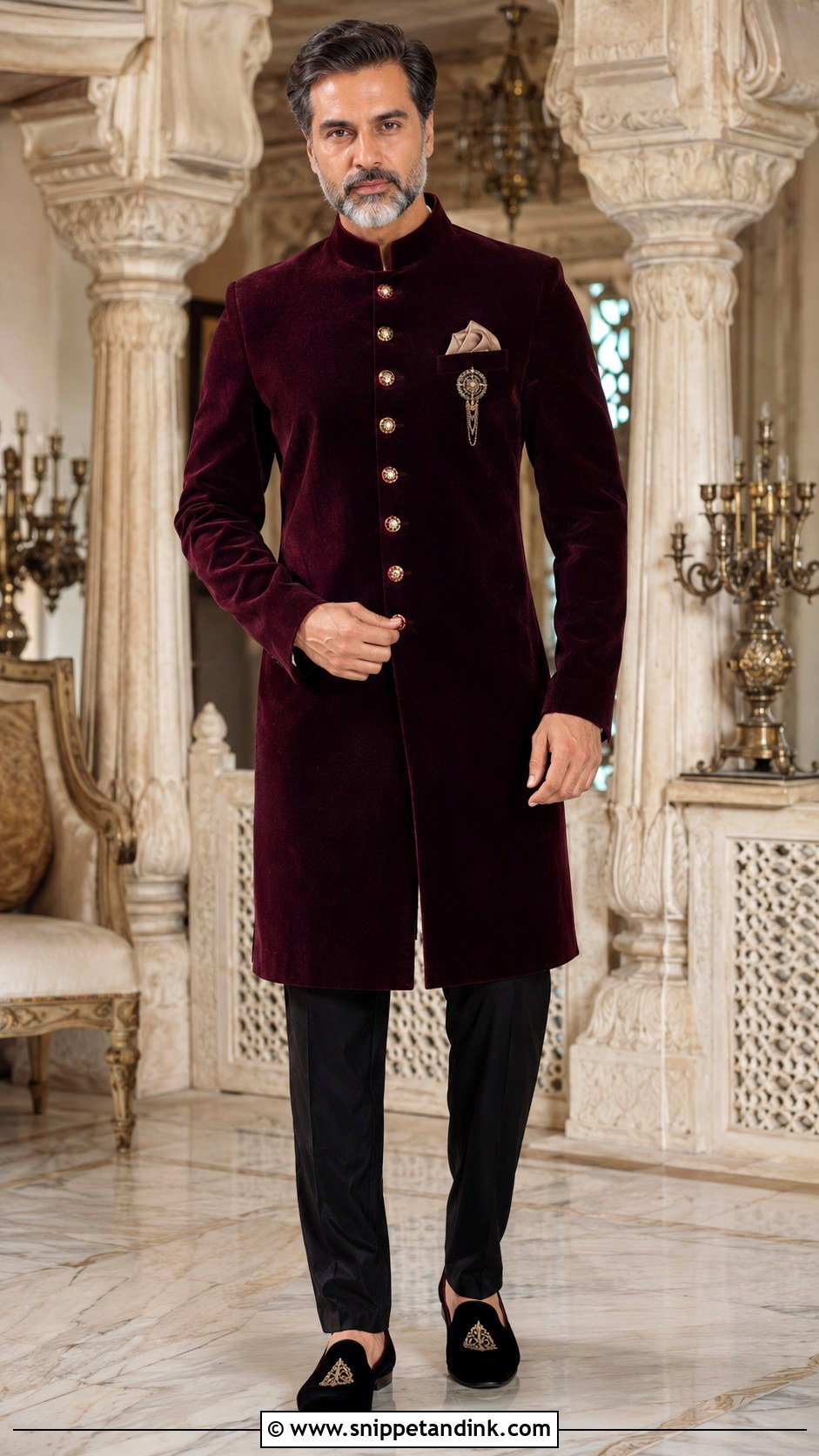
Velvet is for cold months only; in a heated banquet hall it’s still warm, and outdoors in summer it’s unbearable. For winter, a sherwani in burgundy, oxblood or wine reads rich without crowding the couple’s ceremonial red. Antique-gold buttons and light collar embroidery are enough decoration. Choose black trousers for contrast or cream for a softer line, then black velvet mojaris, a neutral pocket square and one vintage-style brooch. Velvet already has visual weight, so I’d never pile a heavy necklace, an elaborate stole and an oversized turban on top. Insist on a smooth, breathable lining; velvet rubs at the neck without it.
7. Sage Green Kurta Pajama for Day Wedding
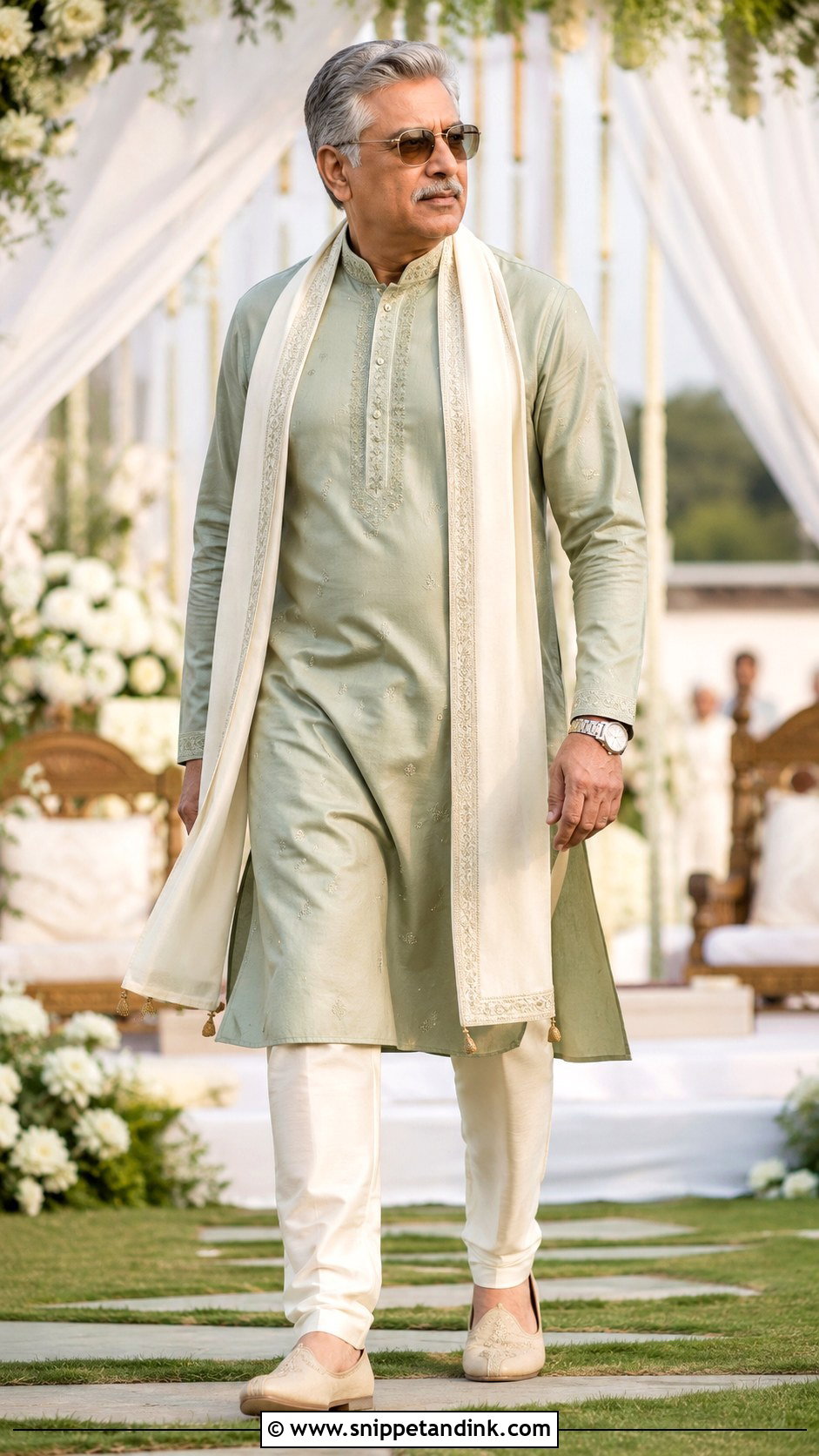
Sage green is colour for a man who doesn’t usually wear colour. I choose a straight-cut silk-blend kurta with fine threadwork at the neckline and cuffs, ivory pajama pants or narrow straight trousers, beige leather mojaris, a cream stole and a simple watch. If he wants more structure, a matching or slightly darker sage Nehru jacket goes over it. Sage sits naturally among flowers and greenery outdoors and pairs with blush, peach, ivory and gold family outfits. In real heat I drop the jacket and pick the most breathable kurta fabric available, since long rituals in the sun are where fathers start to wilt.
8. Yellow Kurta Set for Haldi Ceremony
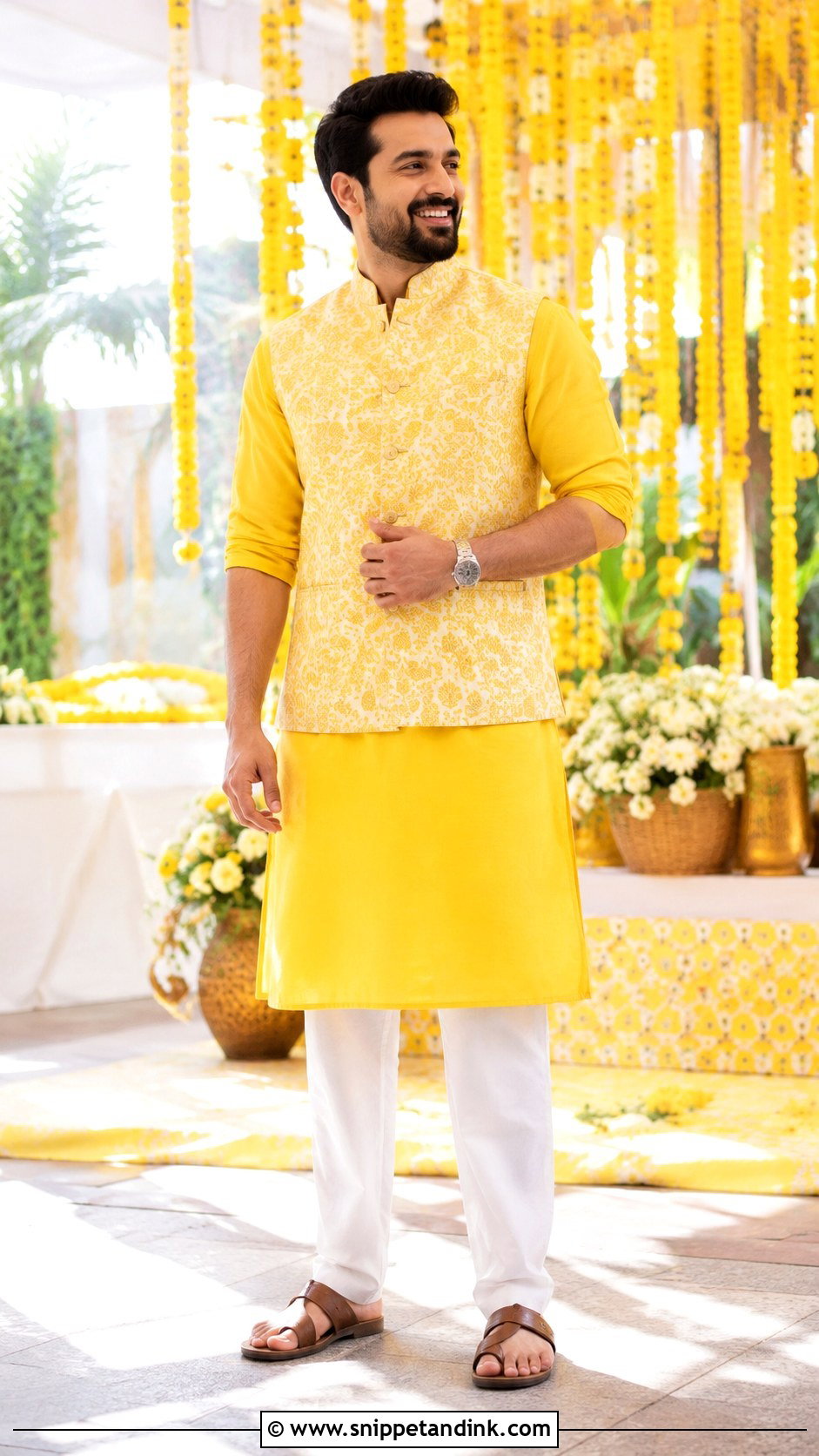
Haldi is the messiest event of the week, and I dress fathers for it accordingly. A yellow kurta set in mustard, marigold, lemon or soft turmeric, cut from cotton, linen or cotton-silk with minimal embroidery, goes with white or cream pajama pants. Brown leather sandals or slip-on mojaris are easy to kick off. Turmeric paste stains cotton and silk alike and rarely washes out fully, so this is not the day for a precious fabric or heirloom embroidery. A printed waistcoat can go on for family photos and come off before the paste starts flying. Use a different print or jacket from other relatives so the family coordinates without looking uniformed.
9. Floral Nehru Jacket for Mehendi
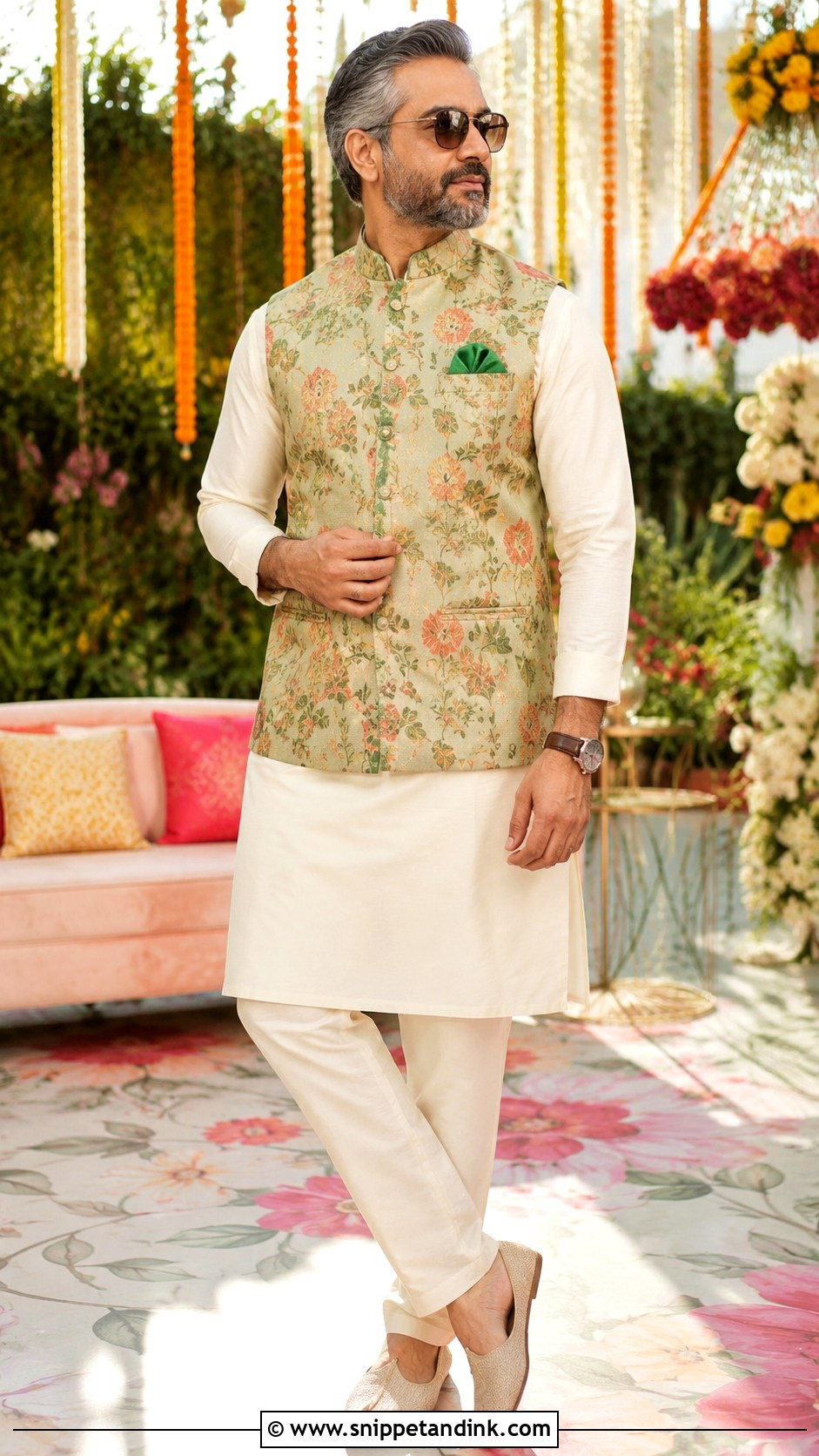
Print scale is what I look at first on a floral Nehru jacket. Large motifs swamp a shorter man, while a medium-scale botanical in greens, blues, coral or muted pink stays refined. Put it over a plain ivory, pale green or sky-blue kurta with matching straight pants, then neutral mojaris, a solid pocket square and a watch on a brown leather strap. The jacket supplies all the interest, so skip extra necklaces or an ornate stole. For an outdoor mehendi, cotton-silk or a linen blend keeps him cool through a long afternoon. It’s an easy outfit for an older father to wear from lunch until the last guest leaves.
10. Emerald Bandhgala for Sangeet Night
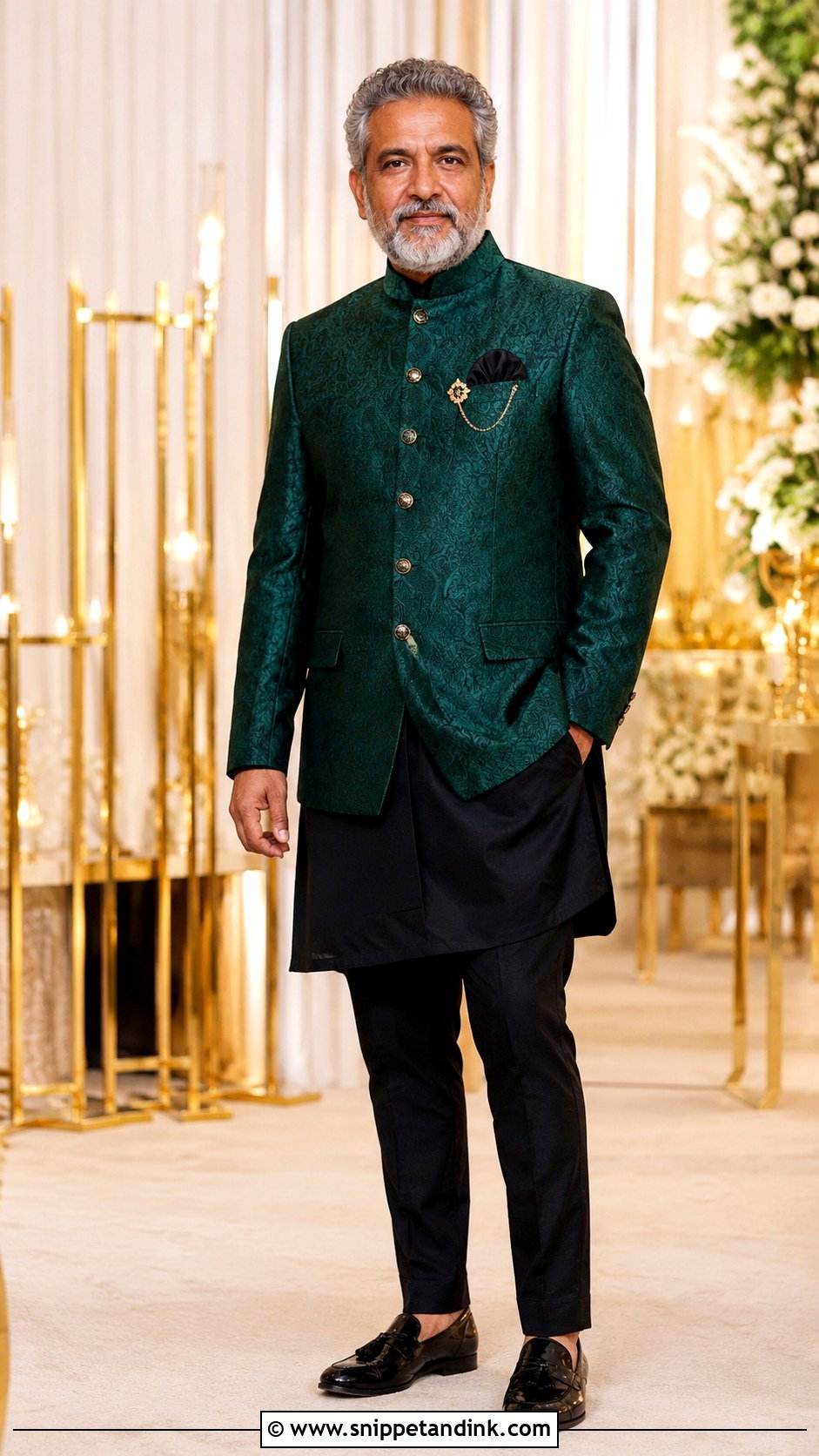
Emerald comes alive under sangeet stage lighting. I look for a silk or jacquard bandhgala with black, gold or tonal detailing, worn with clean black trousers and polished black loafers. A small gold brooch and a black pocket square finish it without extra sparkle. For a more traditional read, wear it over a black kurta instead of a dress shirt. Before a sangeet I ask the father to raise both arms in the jacket, since family performances involve more movement than he expects and a tight armhole will tear or ride up. Emerald works beside navy, maroon, black and magenta family outfits and leaves the heavy embroidery to the groom.
11. Asymmetric Indo Western Outfit for Sangeet
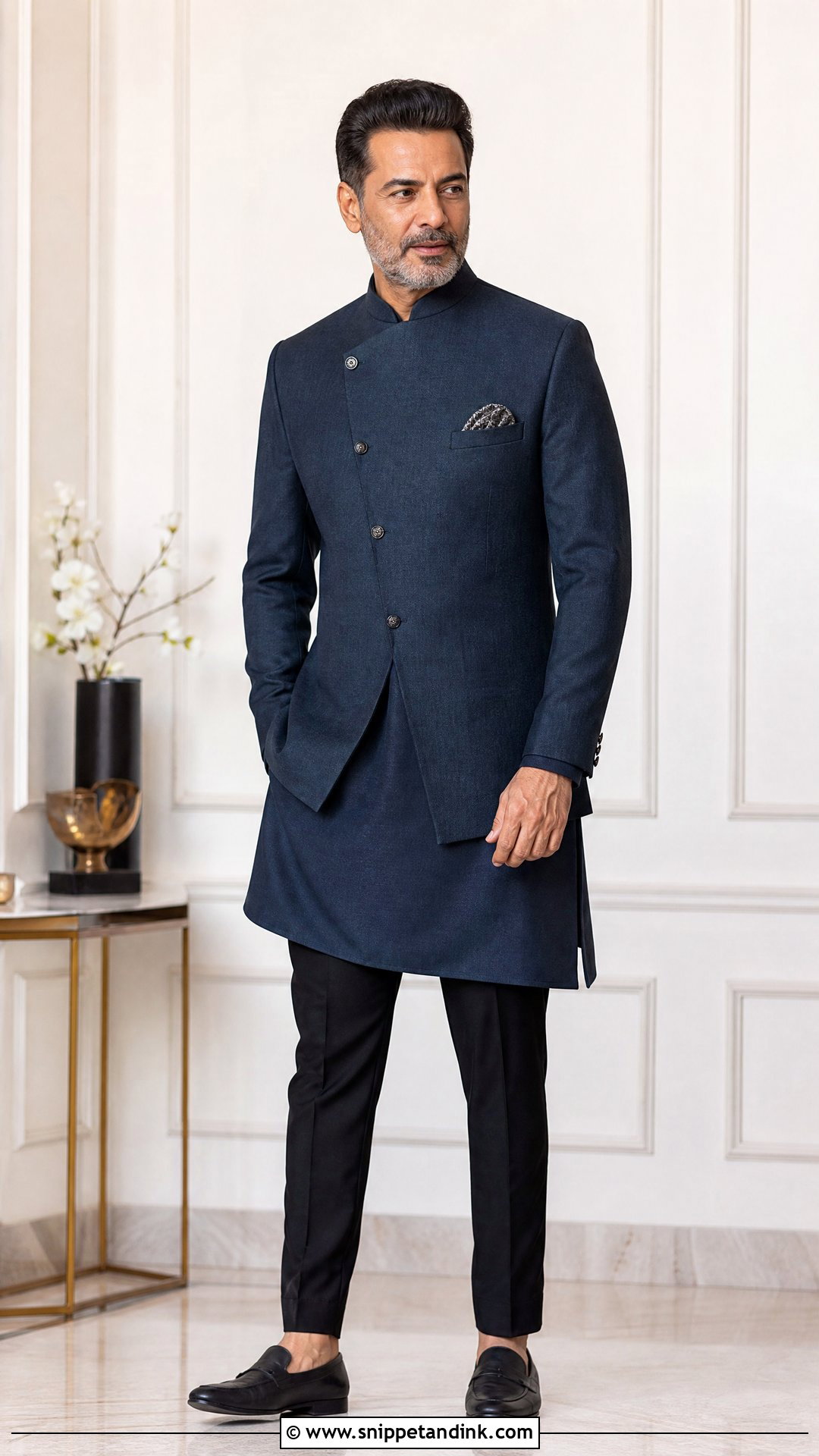
What if he prefers something modern that still feels connected to Indian dress? An asymmetric Indo-Western jacket in charcoal, navy, olive or deep blue, with a diagonal closure and minimal embroidery, layered over a coordinating kurta with tapered black or matching trousers. Sleek loafers and a small pocket square keep it formal. I’d avoid dramatic drapes and extreme hemlines; they get caught when he sits and look dated quickly. A gentle asymmetry is distinctive enough for a hotel sangeet or a fusion wedding and still lets him move freely between guests and the stage.
12. Beige Achkan With Churidar
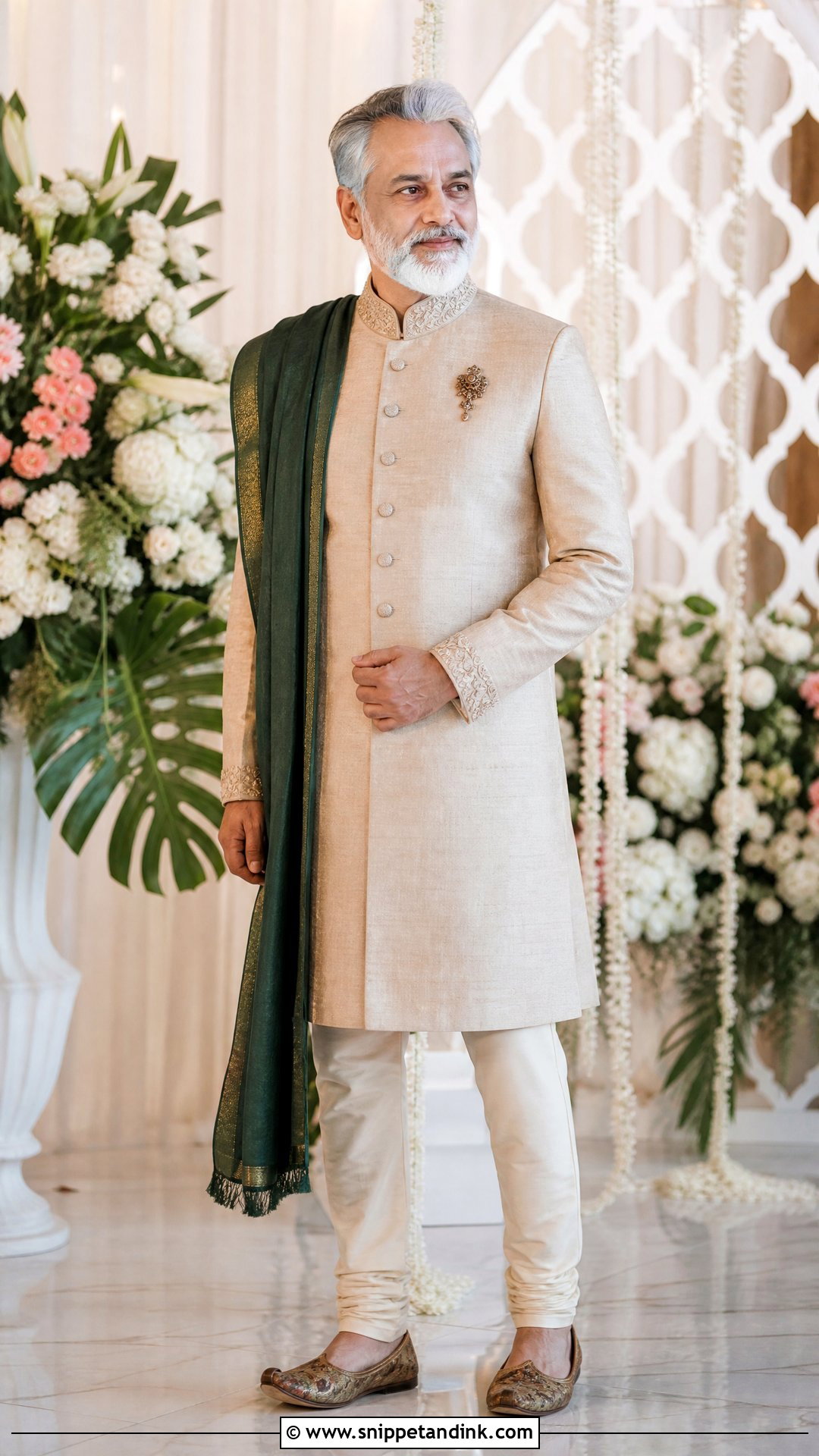
An achkan carries less visual weight than a heavily embroidered sherwani, which is why I like it for fathers who feel overdressed in brocade. A knee-length beige coat in raw silk, jacquard or brocade, with a high collar and a straight front closure, goes over an ivory churidar with tan or bronze mojaris. A rust, maroon or forest-green stole adds contrast and can echo the mother’s outfit. Fine thread embroidery at the collar and buttons is plenty. The coat should skim the waist and hips, not grip them. If the fabric already has a strong woven pattern, I choose either a brooch or a pocket square, never both.
13. Dhoti Kurta With Silk Jacket
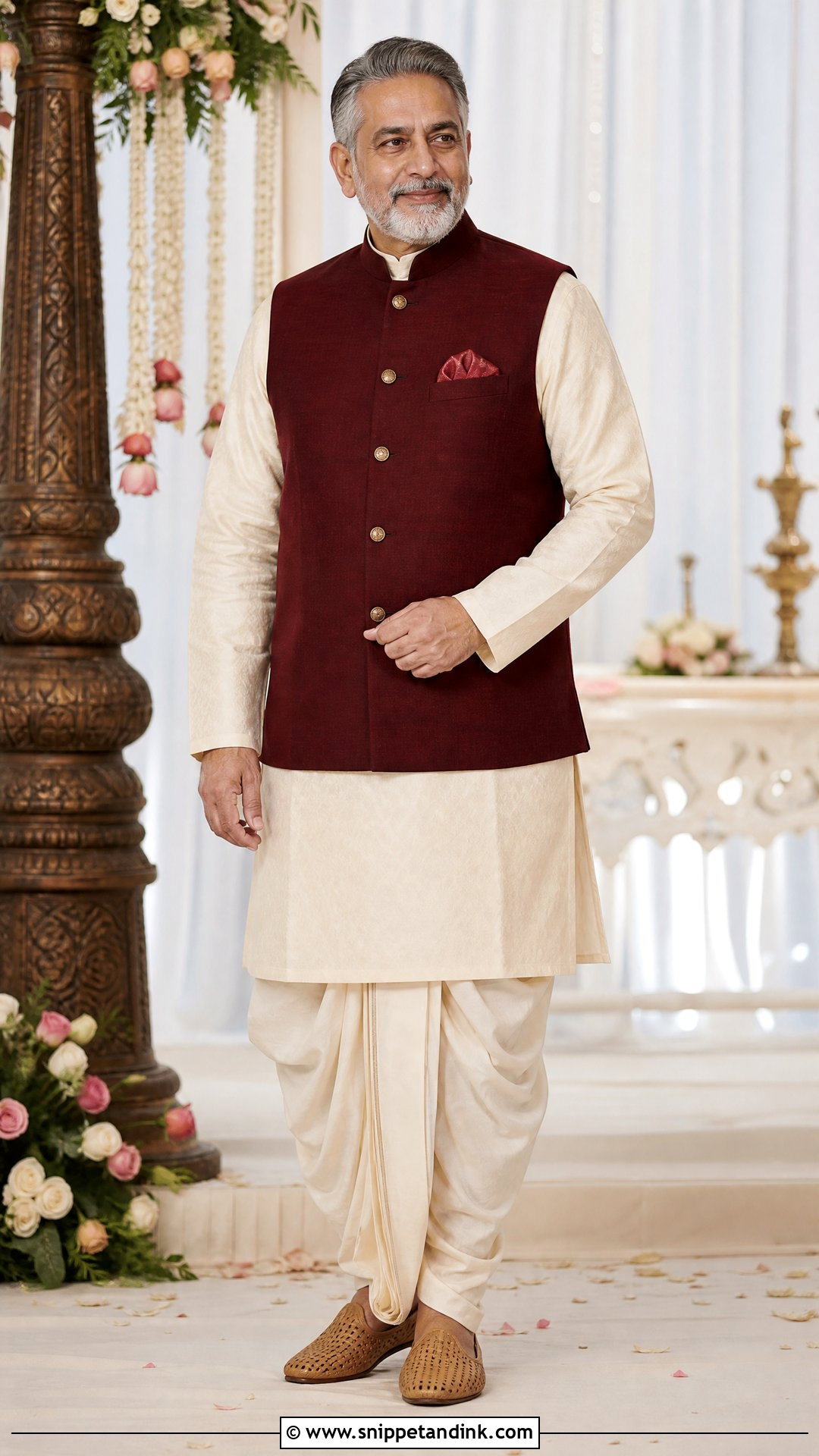
A dhoti-kurta ensemble gives a father a traditional look with strong regional character. I start with a cream, ivory or pastel kurta that falls around the knee, then a pre-stitched dhoti, which saves the anxiety of a drape coming loose during the pheras. A silk Nehru jacket in maroon, gold, bottle green or navy adds structure. Traditional mojaris or leather sandals and a folded pocket square finish it. The dhoti needs enough drape to look intentional but shouldn’t bunch around the shins. Any father who hasn’t worn one recently should practise sitting cross-legged and climbing stairs in it before the day.
14. Pathani Suit With Embroidered Waistcoat
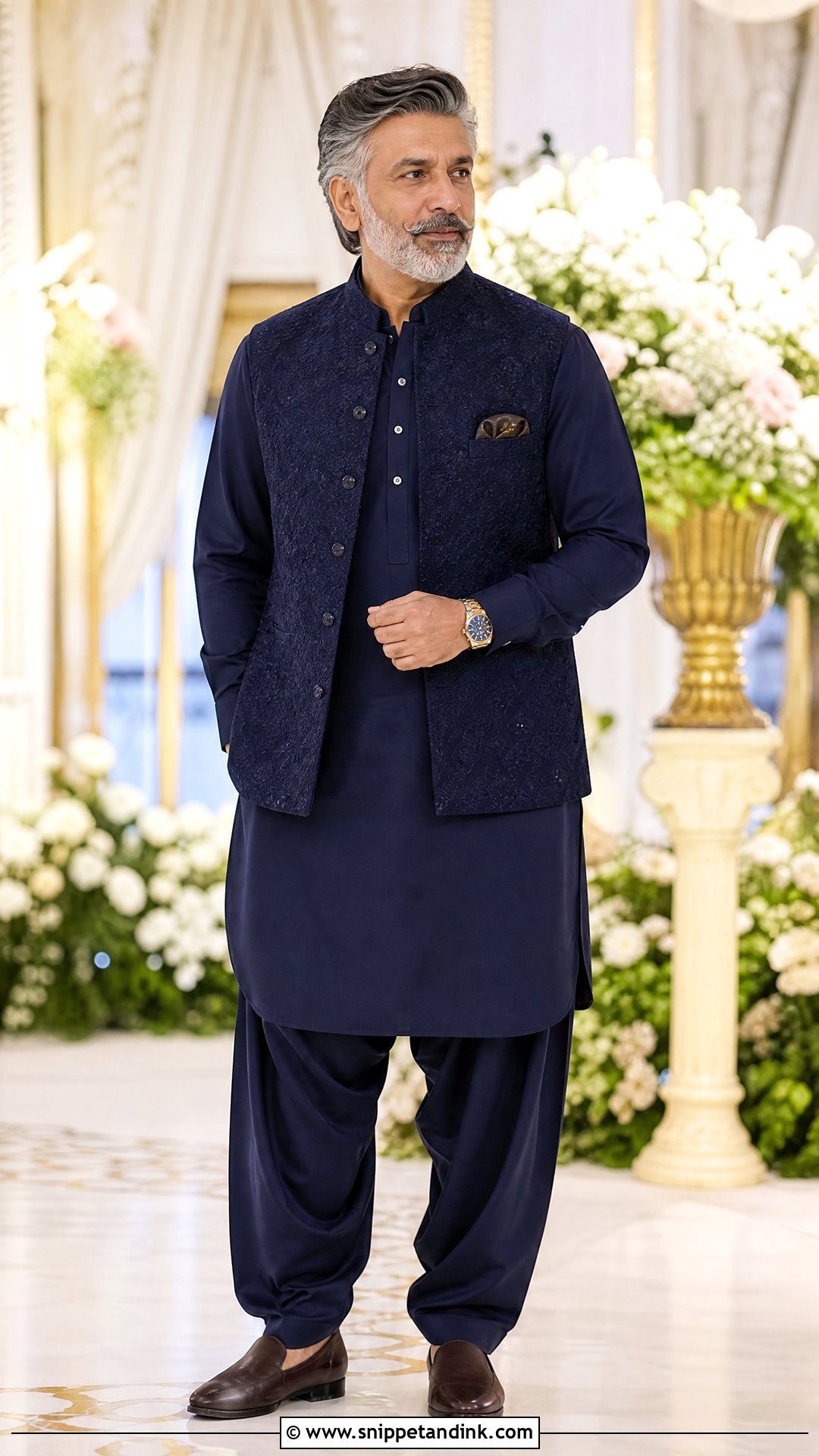
Fathers who hate tight trousers usually thank me for a Pathani suit. A solid kurta and salwar in navy, charcoal, beige, olive or cream, with an embroidered waistcoat in restrained paisley, geometric or tonal threadwork, gets it to wedding level. Dark brown loafers or traditional slip-ons, a simple watch and a folded pocket square complete it. The proportions matter more than the embroidery: the kurta should be relaxed but never oversized, and the salwar needs controlled drape rather than balloon volume, or he looks swallowed by fabric in photos. It suits the mehendi, the sangeet or a less formal ceremony in a breathable fabric.
15. Classic Tuxedo for Indian Wedding Reception
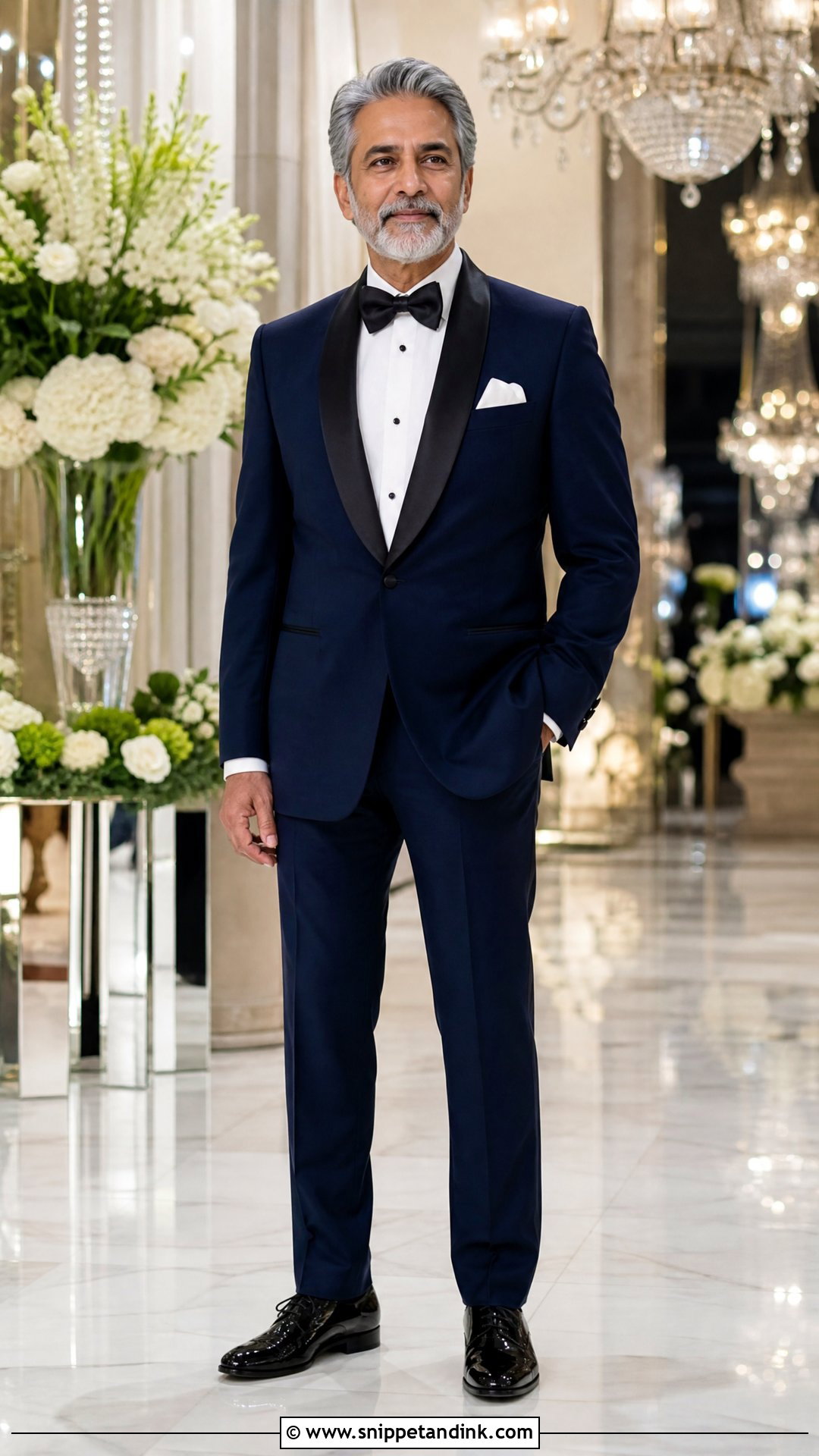
A classic tuxedo fits a reception with a black-tie or Western formal dress code. Black or midnight-blue with satin lapels, matching trousers, a crisp white shirt, black bow tie, polished shoes and a white pocket square. An Indian touch can come through a jewelled button, a small brooch or a pocket square border, as long as the outfit stays clean. Check what the groom is wearing first; two identical tuxedos side by side flatten the photos. On tuxedos I check three points before anything else: the shirt collar meeting the jacket collar, a half-inch of cuff showing, and a slight trouser break.
16. Three Piece Suit for Wedding Reception
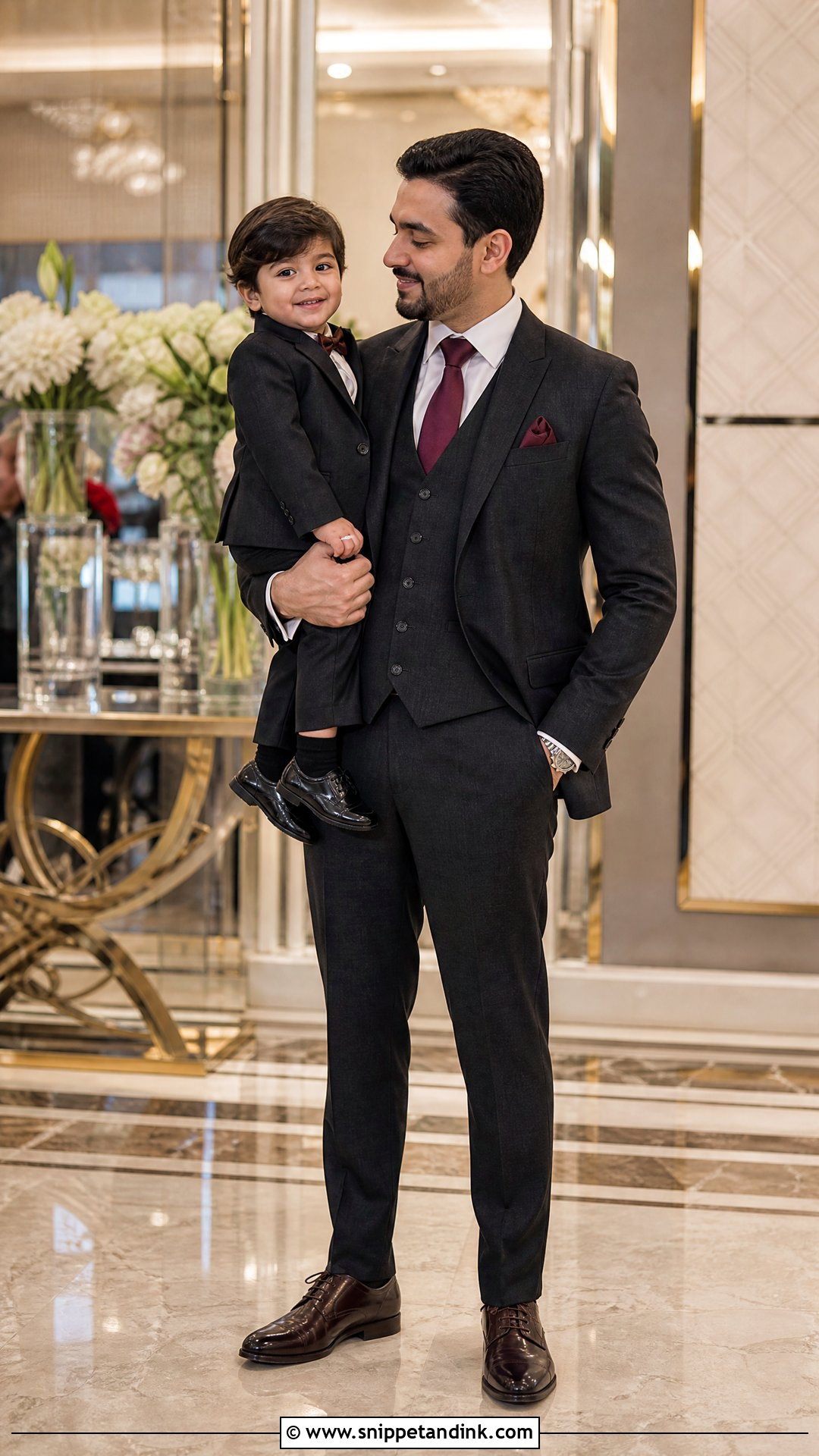
For a reception that’s formal but not black tie, a three-piece suit gives a father the most flexibility. Navy, charcoal and medium gray are dependable; deep brown or forest green suit a more fashion-led family palette. Add a matching waistcoat, white shirt, silk tie and polished leather shoes, and let the tie or pocket square echo the mother’s sari or the wedding colours. A tailored waistcoat keeps him looking finished once the jacket comes off for dancing. I ask the tailor to fit the waistcoat to sit over the trouser waistband with no shirt showing, and I skip the belt for side adjusters so there’s no bulk.
17. Linen Kurta With Straight Pants
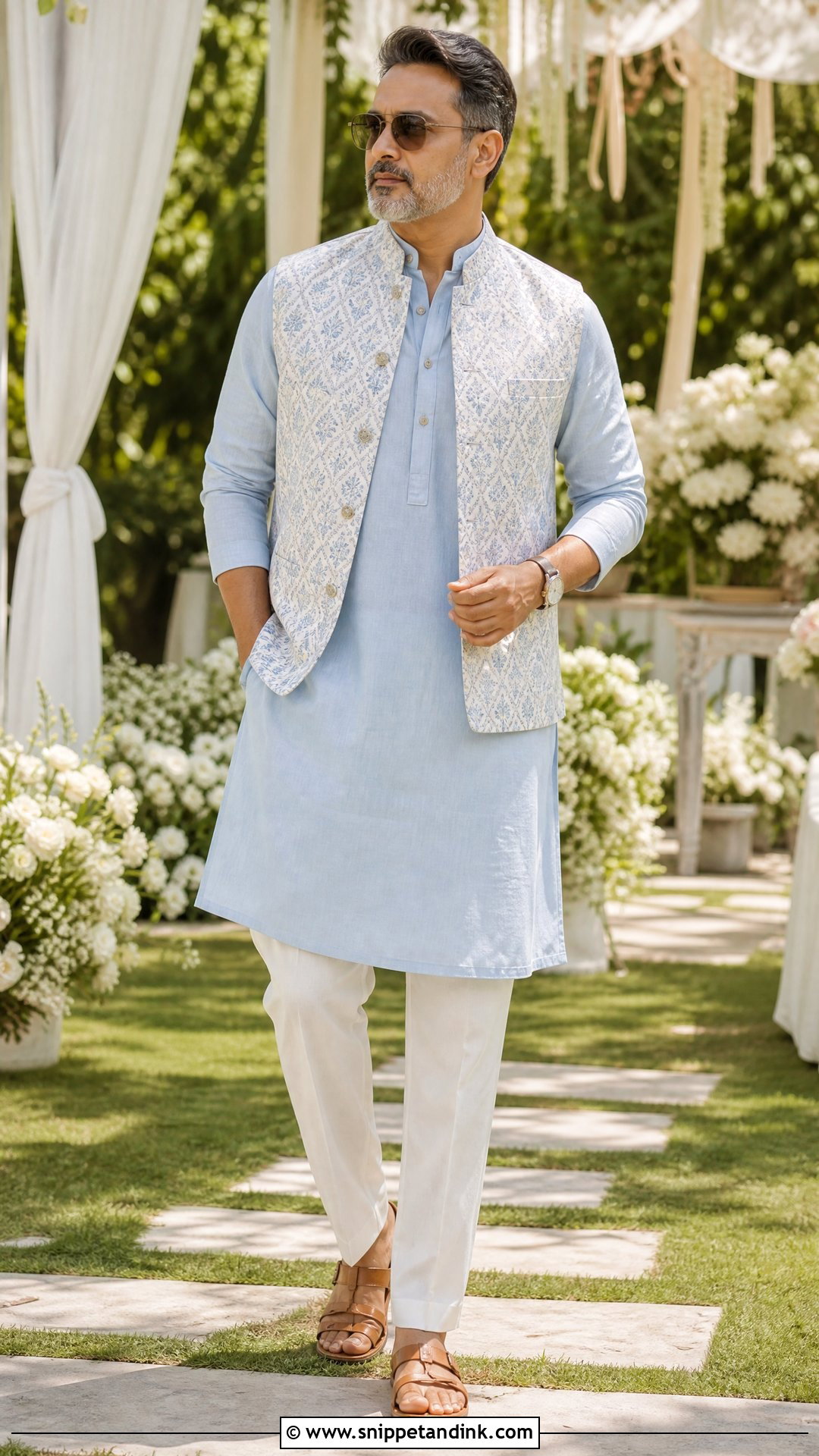
Hot-weather weddings need clothes that breathe and still read ceremonial. I choose a linen-silk or linen-cotton kurta over pure linen, because pure linen creases within an hour and looks rumpled in every group photo. Ivory, stone, pale blue or light gray work, with straight cotton trousers instead of a tight churidar. Tan sandals or lightweight mojaris keep it relaxed. A breathable printed Nehru jacket goes on for the ceremony and comes off outdoors. Keep accessories to a watch and one pocket square. Beach weddings, summer pheras, garden ceremonies and destination events suit it, anywhere a sherwani would be miserable.
18. Brocade Nehru Jacket With Kurta
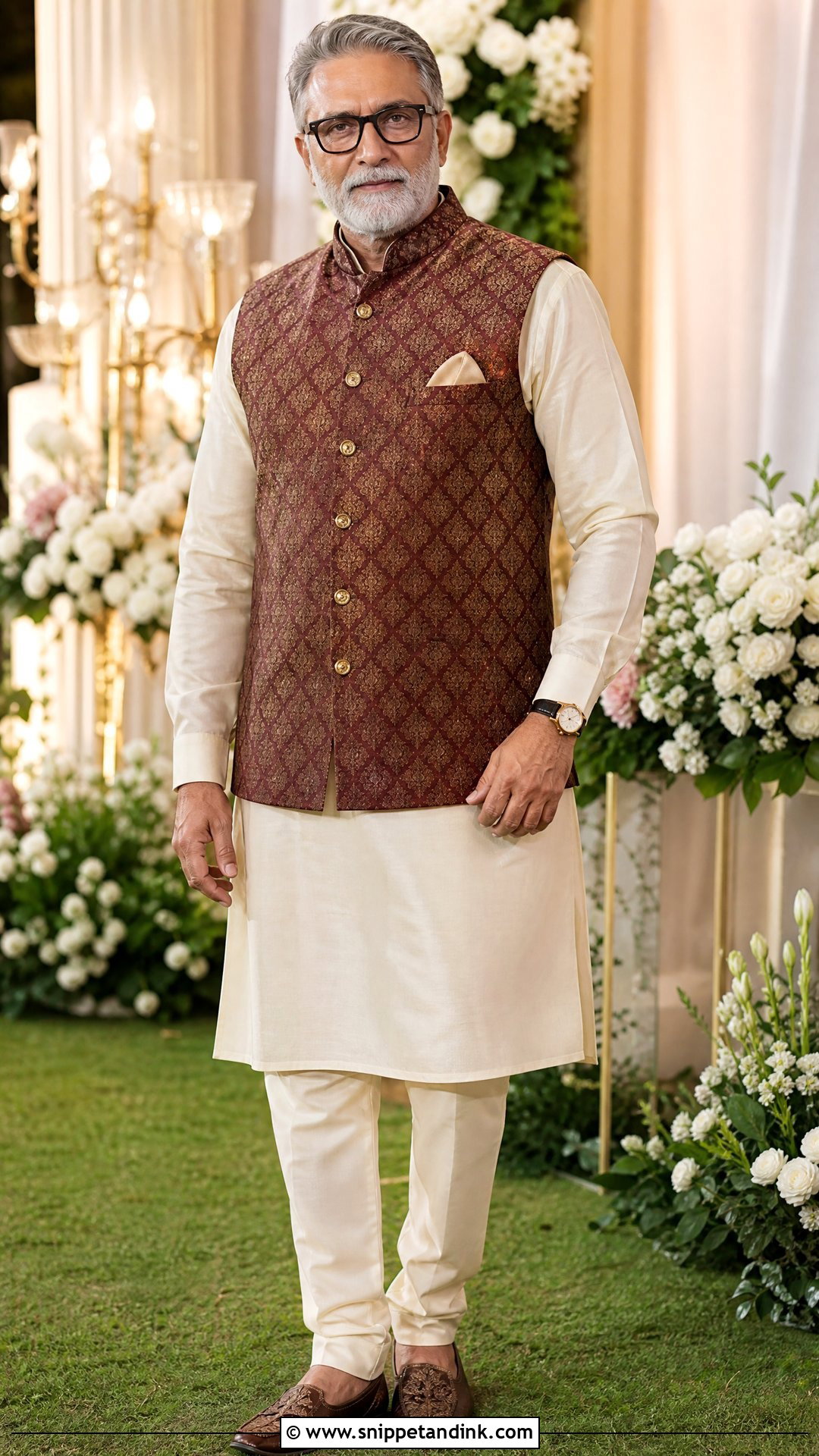
A brocade Nehru jacket turns a plain kurta into a formal outfit, and it’s the piece I most often see re-worn across a wedding week. Take an ivory, black, navy or pastel kurta with matching straight pants and add a jacket woven with gold, silver or tonal motifs in a controlled pattern. Burgundy and gold for evening; pale gold, powder blue or sage by day. Coordinating mojaris, a plain pocket square and a watch, and nothing else, since brocade already brings shine. Two fit checks: the collar sits flat against the neck, and the buttons close without pulling. Fathers who want more than a kurta but less than a sherwani land here.
19. Veshti and Silk Shirt for South Indian Wedding
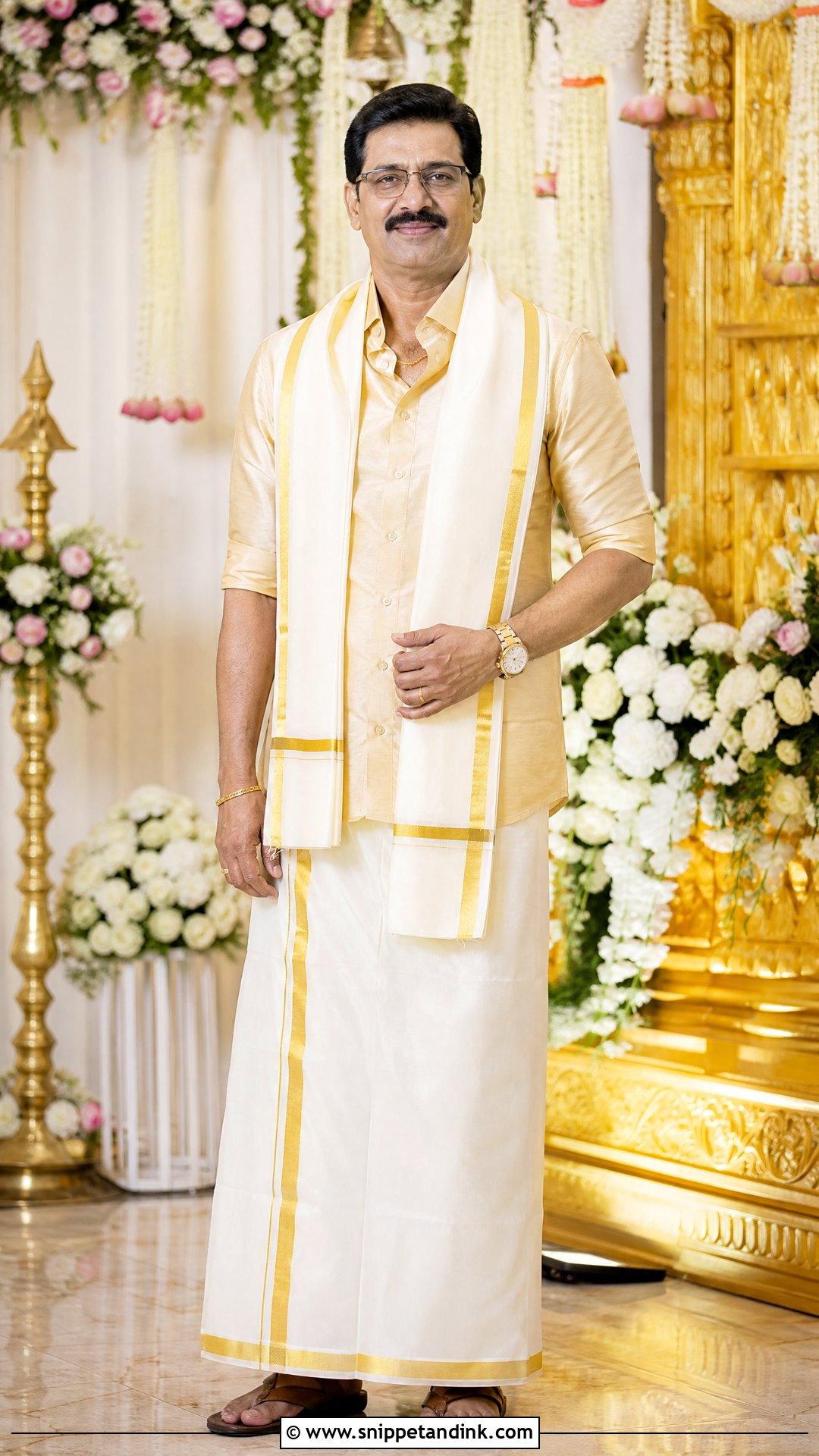
For a South Indian ceremony, a crisp veshti and silk shirt is both correct and comfortable. An ivory or white veshti with a gold zari border goes with a cream, pale gold or soft pastel silk shirt and traditional leather sandals. A coordinating angavastram over one shoulder for the ceremony, with a fine gold chain or classic watch, is all the detail it needs. The tying is where I’d spend time: the veshti must sit securely at the right length so he can walk, sit on the floor and stand up without adjusting it. Some families prefer a silk kurta instead of a shirt, so confirm the custom with close relatives first.
20. Sherwani With Turban for Sikh Wedding
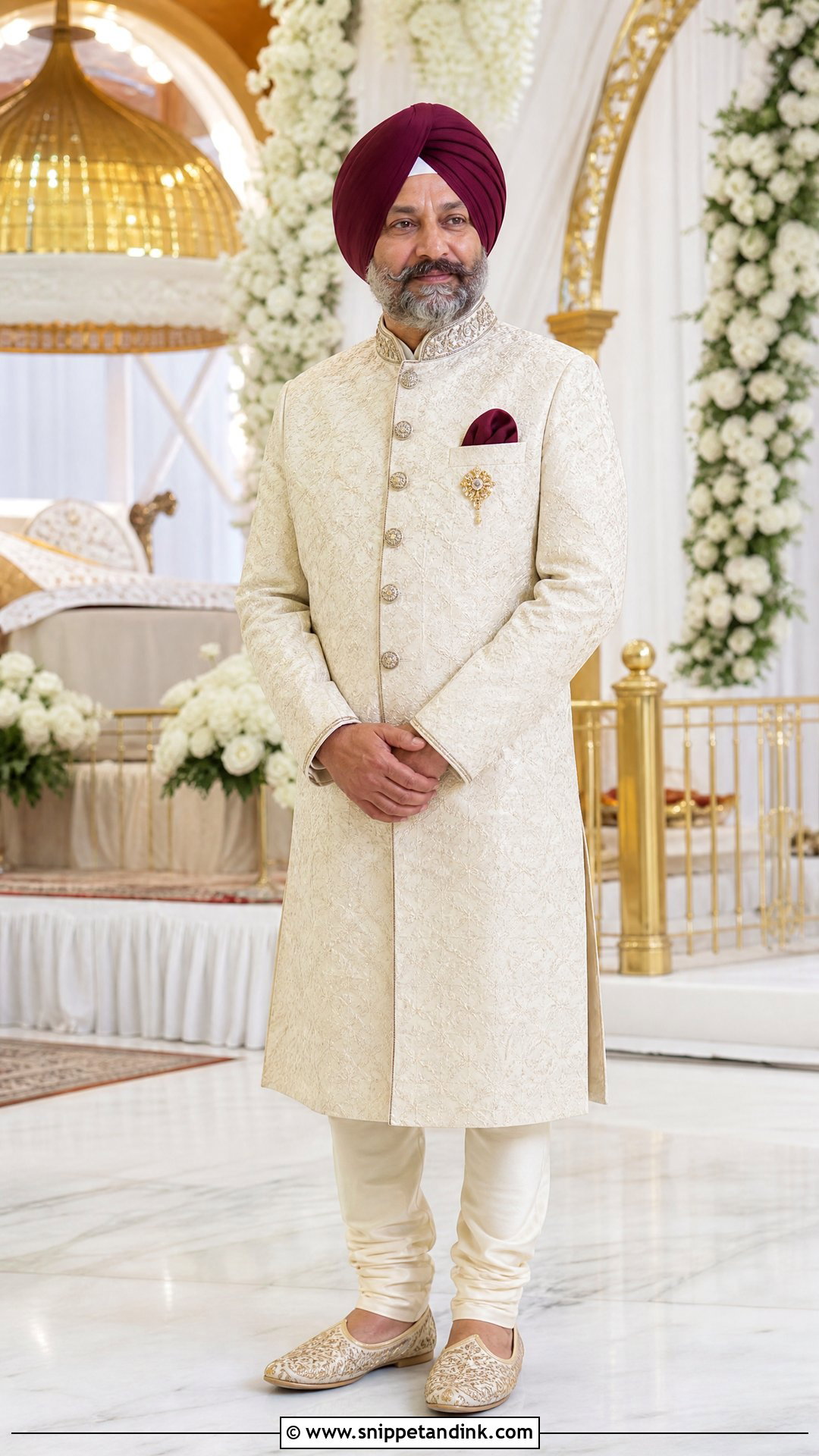
A sherwani and turban suit a Sikh wedding, especially when the family follows a coordinated palette. An ivory, beige, navy or muted gold sherwani with refined embroidery goes with straight trousers or churidar. The turban can bring in maroon, rust, blush, red or another colour from the couple’s clothing; a complementary shade often balances better than an exact match. Add embroidered mojaris, a pocket square and one understated brooch. A father who doesn’t tie a turban daily should have it tied by someone experienced, so it stays comfortable and secure through the Anand Karaj and the photographs. If the sherwani is ornate, skip extra necklaces.
Does a Father Really Need a New Outfit for Every Function?
Rarely. When I plan a father’s week, I map the events first and look for pieces that can do two jobs. A good brocade or silk Nehru jacket over a plain kurta at the mehendi can go over a different kurta at the sangeet, and the photos won’t give it away because the colour around it changes. Kurta sets for haldi and mehendi can be simpler and cheaper, since they get the most wear and tear.
- Spend on the wedding ceremony outfit, which appears in the most formal portraits.
- Pick one jacket that layers over two different kurtas.
- Keep the haldi outfit inexpensive, since turmeric stains are hard to remove.
- Reuse the reception suit or tuxedo for future family weddings.
I also check the bride’s and groom’s colours for each event so the father never accidentally wears the same shade as the couple. A two-line message to the families saves a lot of awkward photographs.
Fittings, Footwear and the Tailor’s Calendar
Made-to-measure sherwanis and bandhgalas take weeks, not days, and wedding season fills every tailor’s calendar. I order formal pieces about two to three months ahead and plan at least two fittings, the last one about a week before the first function. Lead times vary a lot by tailor and season, so ask yours before you choose the design.
At the final fitting, he should sit, bend to touch someone’s feet, raise his arms and walk a flight of stairs in the full outfit, including the shoes. New mojaris are stiff and rub at the heel, so I have fathers wear them around the house for a few evenings first and put a soft insole in if needed. A small kit in the car helps on the day: safety pins, spare buttons, a lint roller, a handkerchief and blister plasters.
One Father, Several Functions, a Handful of Outfits
Every outfit here earns its place at a particular moment of the week: a light kurta and Nehru jacket by day, a sherwani, achkan, bandhgala or tailored suit as the evenings get more formal, and regional dress where family custom asks for it. Before settling anything, I look at the venue, the season, the dress code and the couple’s colours. Then I put money into tailoring and comfortable footwear, and let two or three meaningful accessories finish each look. A father dressed this way looks distinguished in person and in the family albums, and he’s still comfortable at midnight.
You'll Like These Ideas:


Leave a Reply