
The bride’s father spends an Indian wedding on his feet: greeting the baraat, sitting through the kanyadaan, folding his hands for a hundred photos. When I dress a father, I plan for that work first and the look second. A sherwani usually belongs to the pheras, a Nehru jacket set to the mehendi or haldi, and a bandhgala or suit to the reception. Ivory, navy, antique gold and sage all sit well next to a bridal lehenga without competing with it. The 25 outfits below are grouped loosely from most ceremonial to most relaxed.
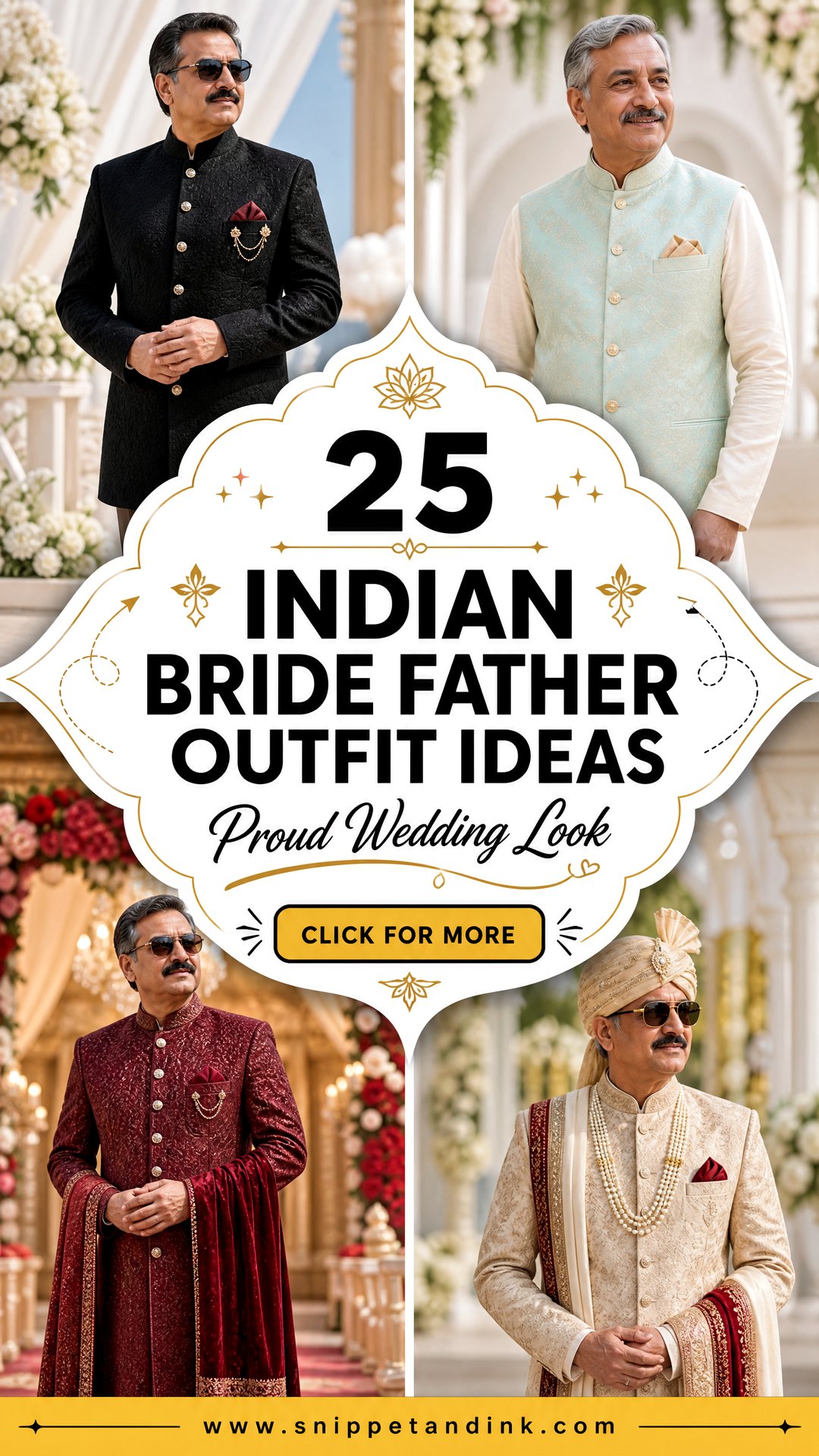
Mapping One Wardrobe Across Haldi, Pheras and the Reception
A father at an Indian wedding often needs four or five outfits, and the mistake I see most is buying them one at a time with no plan. I start with a simple grid: each function, its time of day, indoor or outdoor, and how much he’ll be sitting on the floor. Then I assign the most formal outfit to the ceremony where he has the biggest role, usually the kanyadaan, and work down from there.
- Haldi and mehendi: cotton or linen blends he can get stained or sit cross-legged in.
- Sangeet: something with a free armhole so he can dance.
- Pheras: the sherwani, achkan, dhoti or veshti, cut for long periods of sitting.
- Reception: a bandhgala, Jodhpuri suit or tuxedo, cut for standing and hugging.
Timing matters as much as colour. Made-to-measure sherwanis and bandhgalas usually need several weeks of tailoring plus at least two fittings, so I’d start the ceremonial outfit two to three months out. Ready-made kurta sets can be bought later but still need hemming. And I always ask for the bride’s lehenga colour before choosing his main outfit, never after.
1. Ivory Sherwani For Bride Father
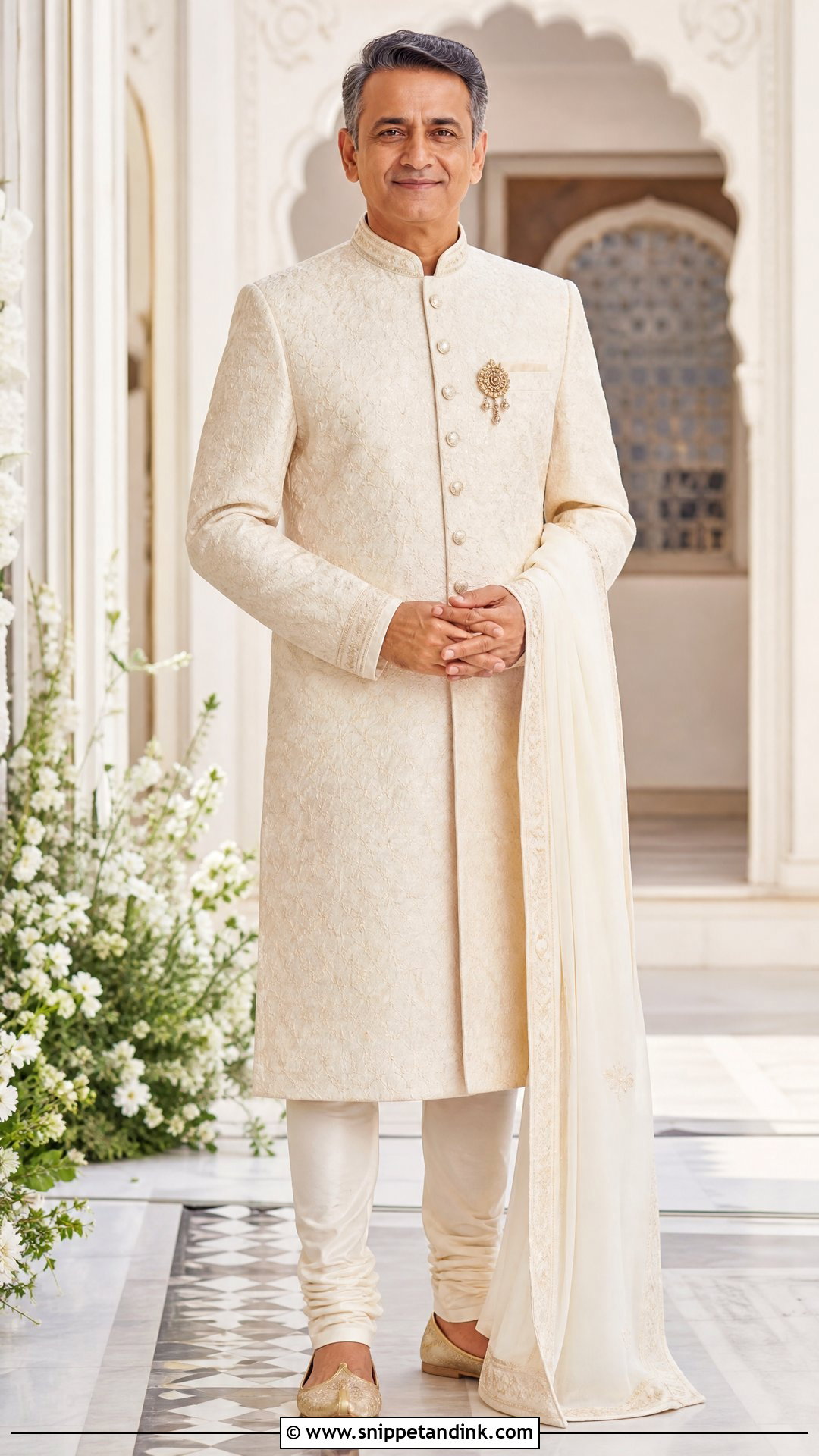
Ivory is the colour I reach for most often for the pheras, because it reads as respectful and it sits quietly beside almost any lehenga, red included. Pick raw silk or a soft brocade with tonal zari rather than contrast work; heavy embroidery on ivory starts to look bridal from a distance. Cream churidar, beige or gold mojaris, and a dupatta only if the ceremony is formal. One warning from fittings: ivory silk shows every crease from the car seat, so he should dress at the venue if he can.
2. Gold Sherwani For Bride Father
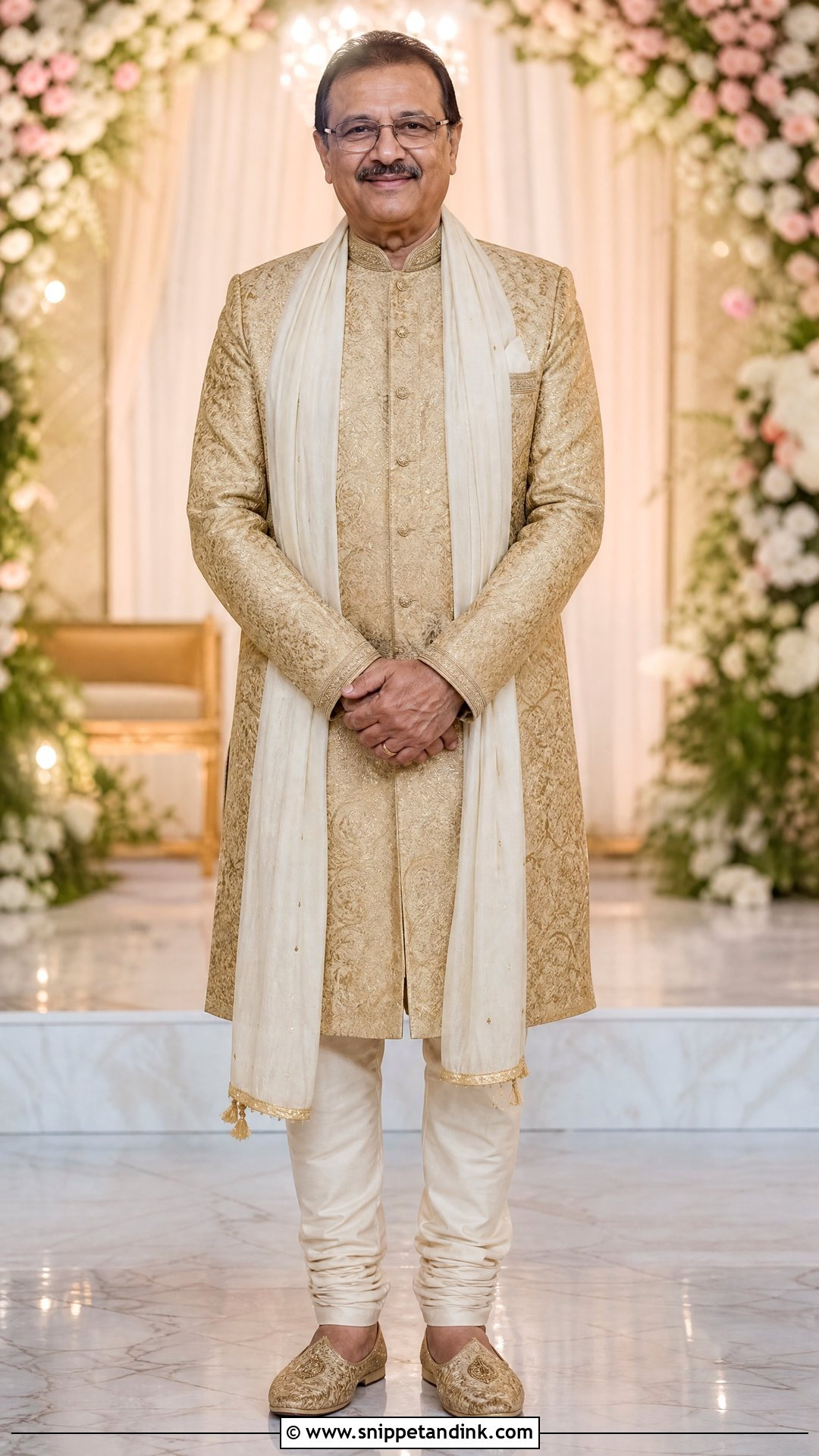
Gold suits an evening wedding or a big indoor hall, but the shade decides everything. Antique or old gold looks dignified on an older man; bright yellow gold under stage lights can turn brassy and swallow his face. I keep the embroidery to the collar, cuffs and placket, pair it with ivory churidar and tan mojaris, and let a cream stole soften the front. A watch and one ring are enough jewellery here.
3. Beige Achkan For Bride Father
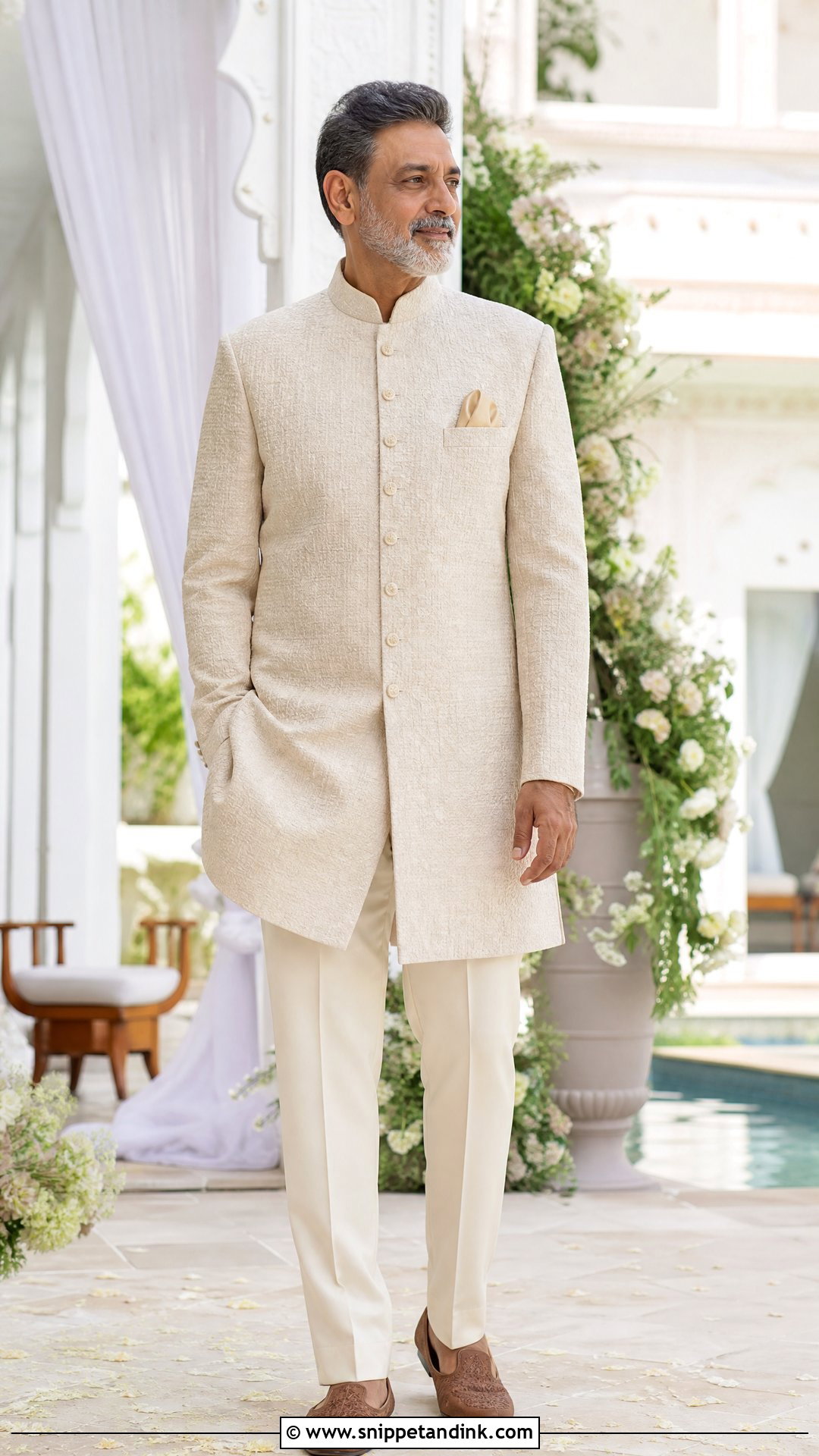
An achkan is cut longer and lighter than most sherwanis, which makes it my usual answer for a father who finds a full sherwani stiff. Matka or linen-silk breathes far better than brocade at a daytime function. Straight pants are more forgiving than churidar if he isn’t used to the bunching at the ankle. Brown juttis and a plain brooch finish it, and beige keeps the whole outfit warm-toned for outdoor light.
4. Navy Bandhgala For Bride Father
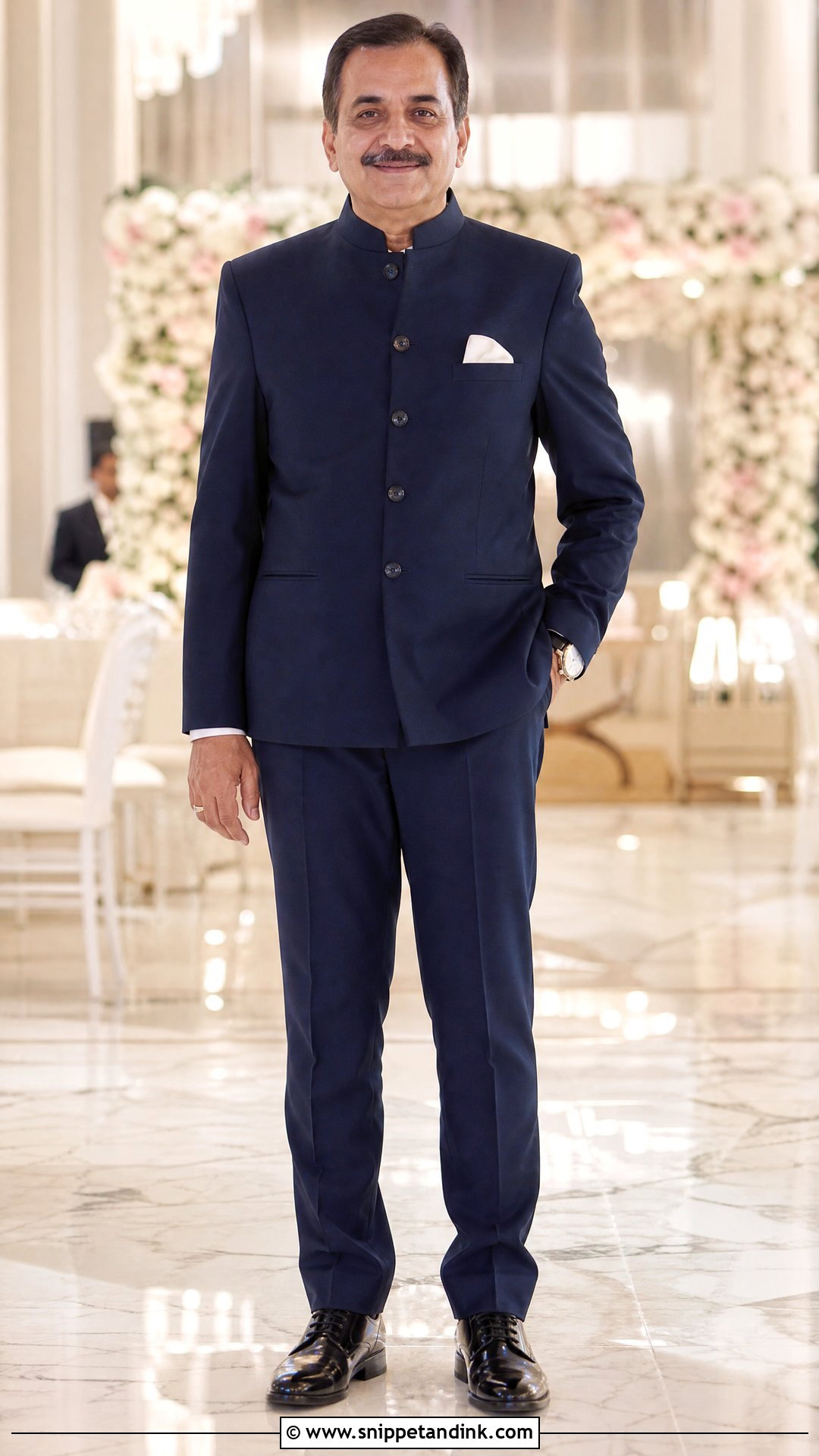
The bandhgala lives or dies on the collar. At the fitting I check that he can turn his head and swallow comfortably with it closed, because a collar that’s tight at noon is unbearable by the reception toast. Navy suits nearly every complexion and age, and it works with matching trousers or ivory ones for contrast. Black or brown shoes both work; I’d choose by the trouser colour, not the jacket.
5. Black Bandhgala For Bride Father
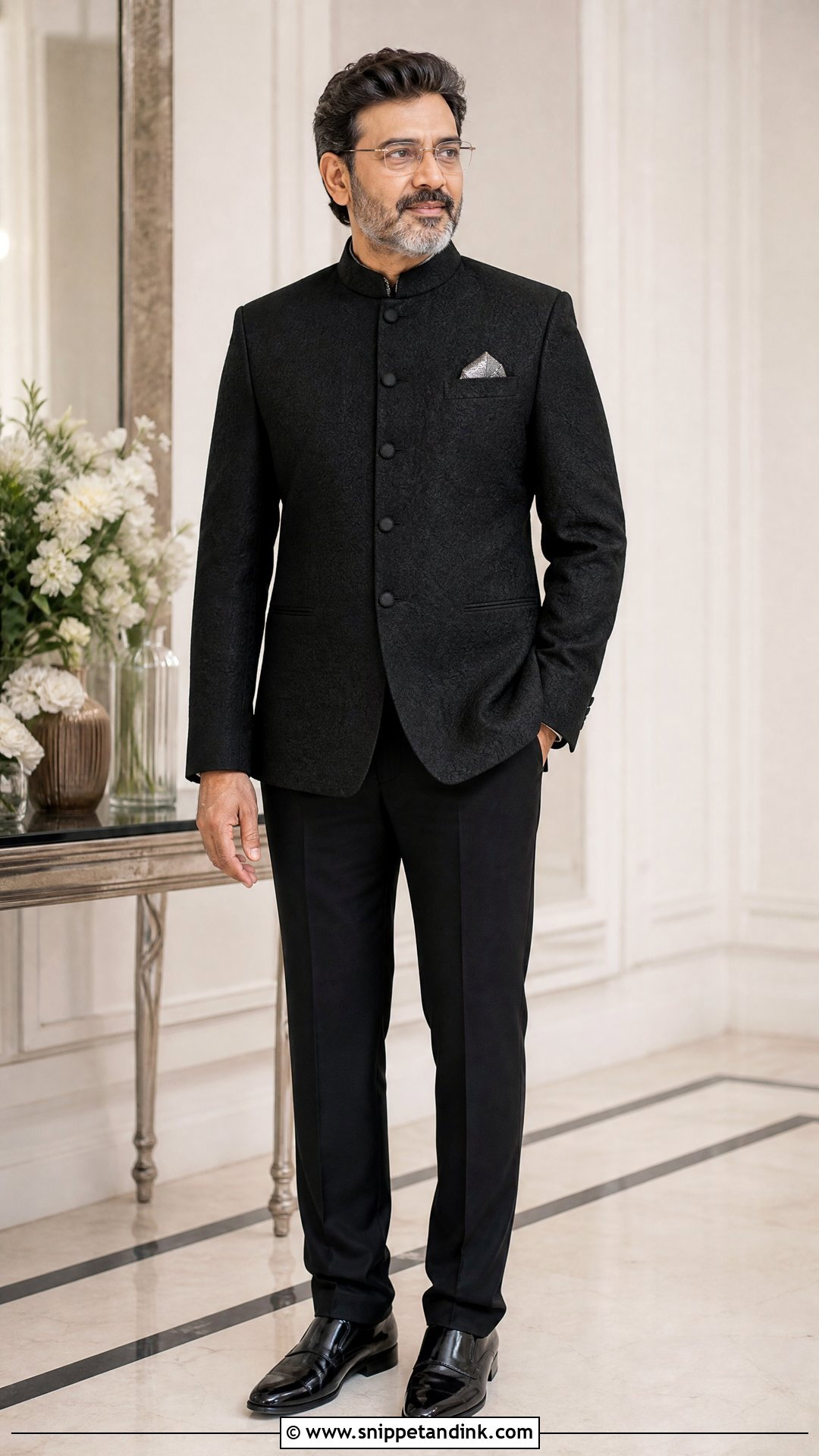
Black is a strong colour on a father, so I soften it with texture: a self-woven jacquard, matte horn buttons, tonal thread at the collar. Heavy sequins on black look like a groom’s outfit. Charcoal trousers take the edge off a full monochrome look. This is the outfit for the father who lives in tailored clothing and would feel costumed in a sherwani.
6. Pastel Nehru Jacket For Bride Father
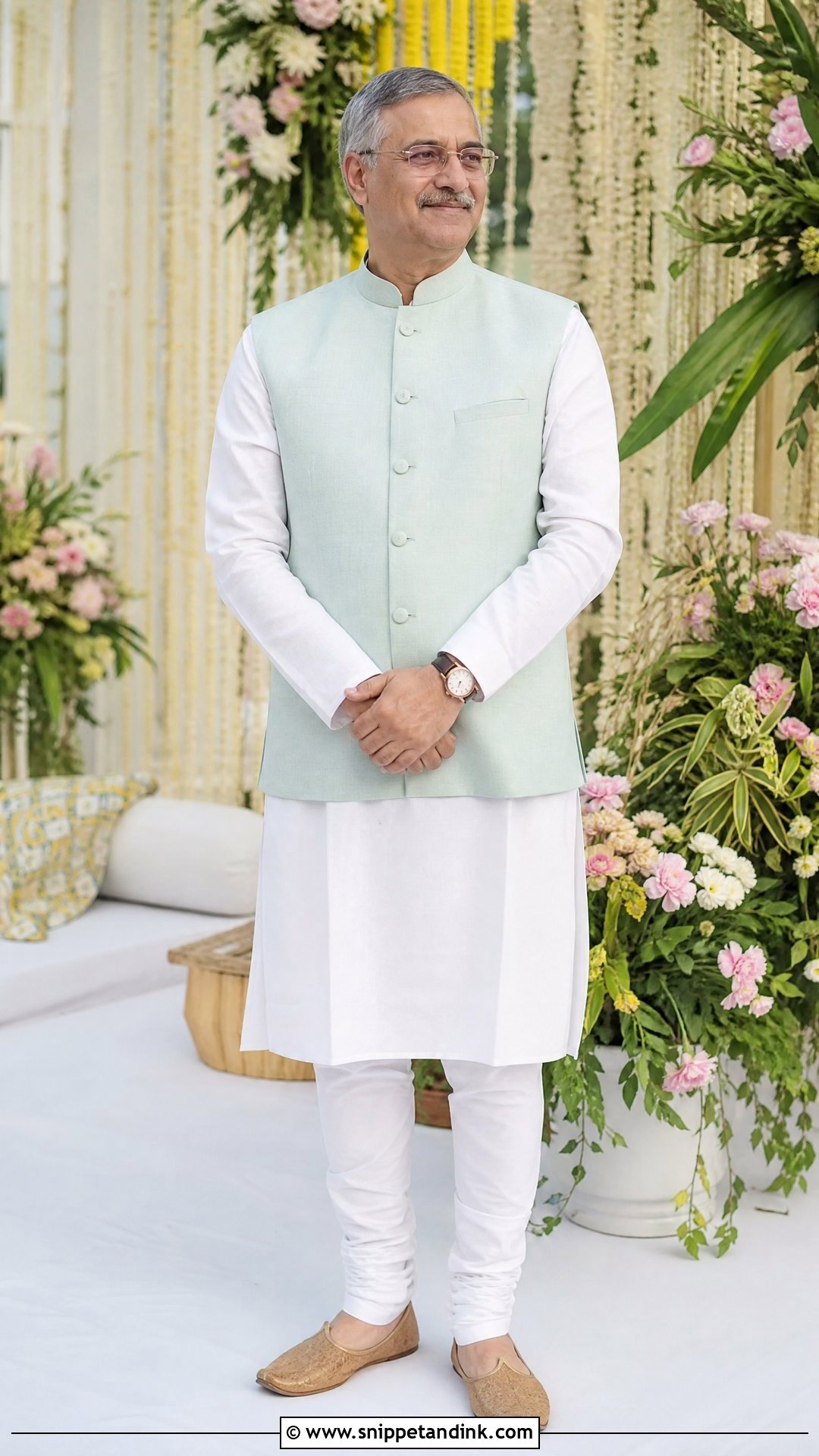
For a haldi or mehendi in daylight, a pastel Nehru jacket over a white kurta is the easiest win I know. Mint, powder blue and peach all lift a tired face in sunlight. Keep in mind that haldi paste stains silk and pale fabrics permanently, so if he’s going to be in the thick of it, choose a cotton jacket he won’t mourn. Simple leather sandals beat embroidered mojaris on wet floors.
7. White Kurta Pajama With Nehru Jacket
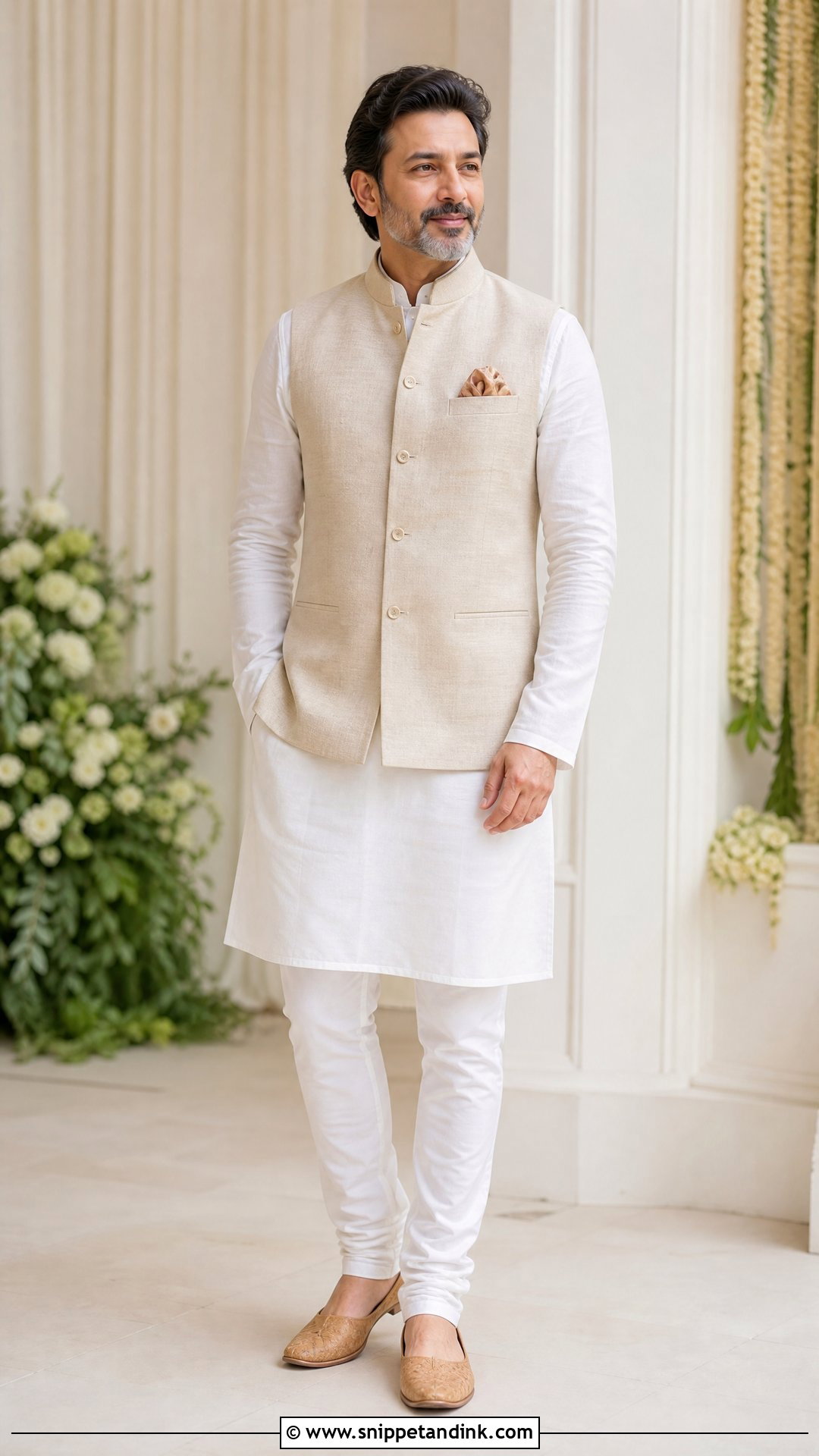
A white kurta pajama under a Nehru jacket is the outfit most fathers end up rewearing, which is a good reason to invest in the jacket. Choose the kurta fabric by season: cotton-silk most of the year, linen in real heat. I like the jacket in beige, olive or navy with a small woven motif so it doesn’t read as office wear. Tan mojaris and a watch, nothing more, for welcome lunches and smaller rituals.
8. Embroidered Kurta Set For Bride Father
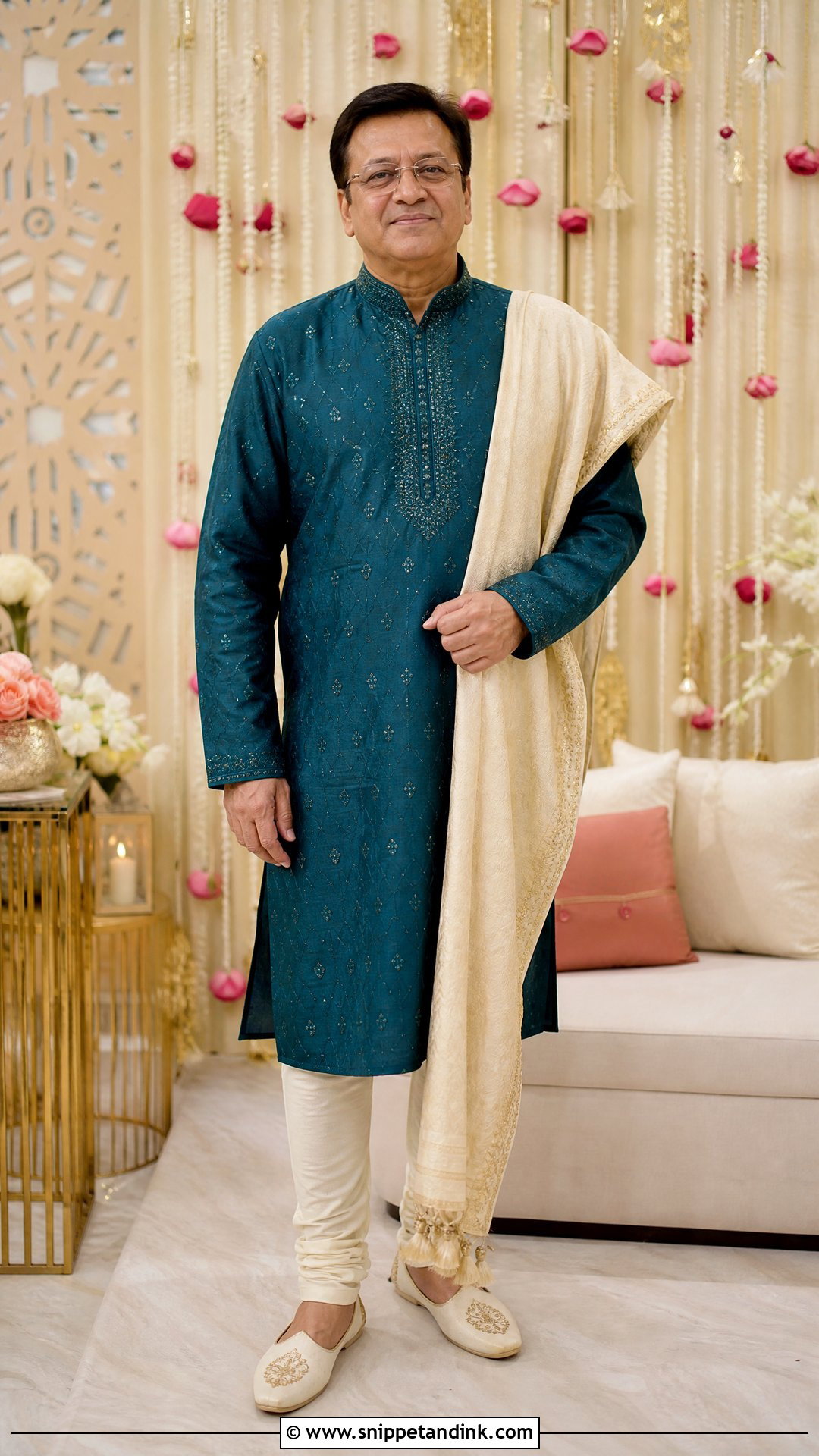
An embroidered kurta set is what I suggest when the father wants to dance at the sangeet. Without a structured jacket he can lift his arms and sit on the floor for the dholki. Keep the embroidery at the neckline, cuffs and hem; all-over work gets heavy and scratchy by the second hour. Teal, rust and deep blue look rich without shouting. Check the armhole at the fitting: a low armhole is what lets him move.
9. Silk Kurta With Churidar For Bride Father
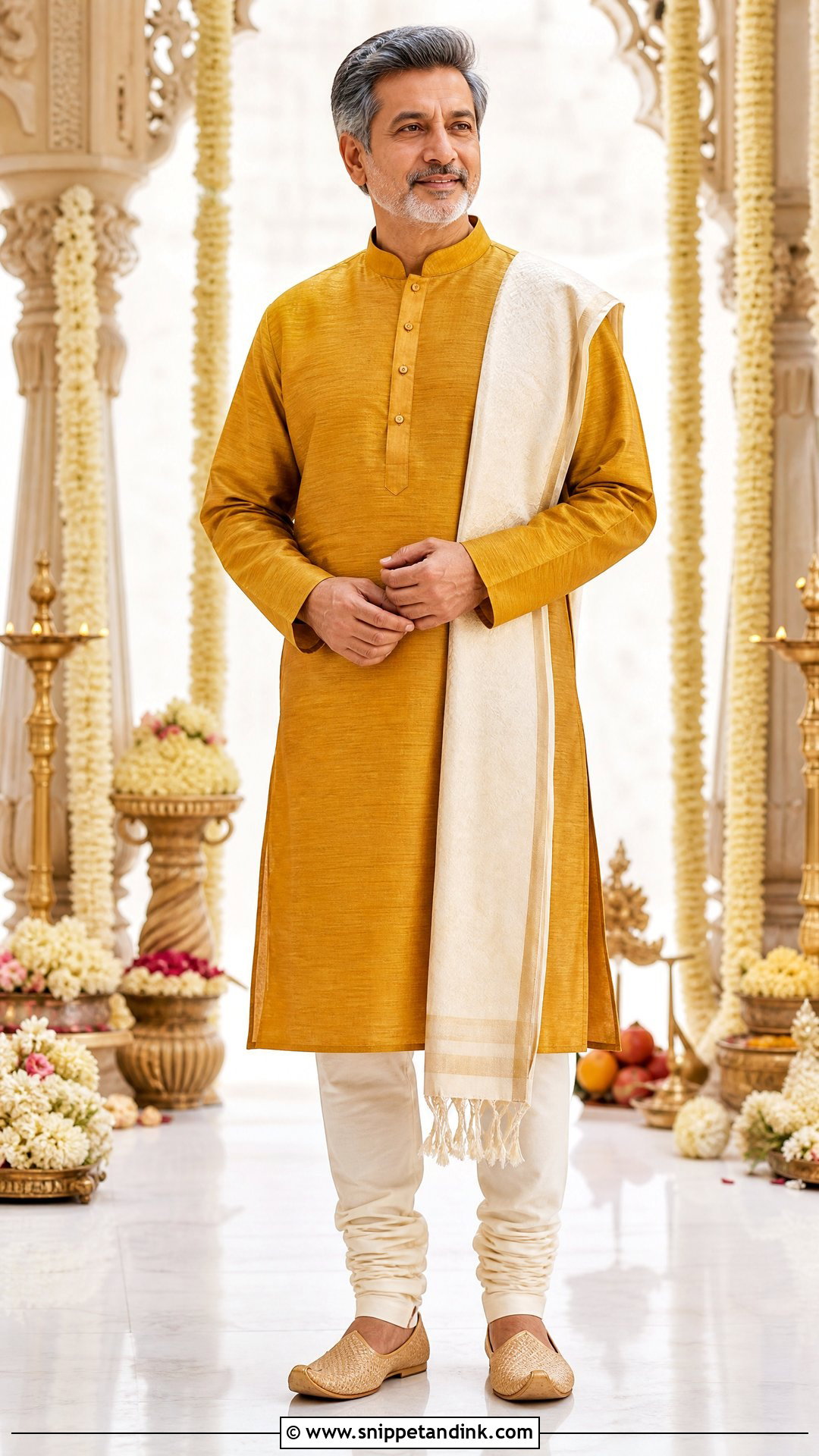
Silk kurta and churidar sits between a cotton kurta and a sherwani in formality, which is useful for a puja or engagement. Raw silk holds its shape; dupion has more sheen but creases into hard lines, so I’d only use it for short events. The churidar needs enough length to gather at the ankle in soft folds; too short and it rides up when he sits. A light stole makes it ceremonial when the event asks for it.
10. Jodhpuri Suit For Bride Father
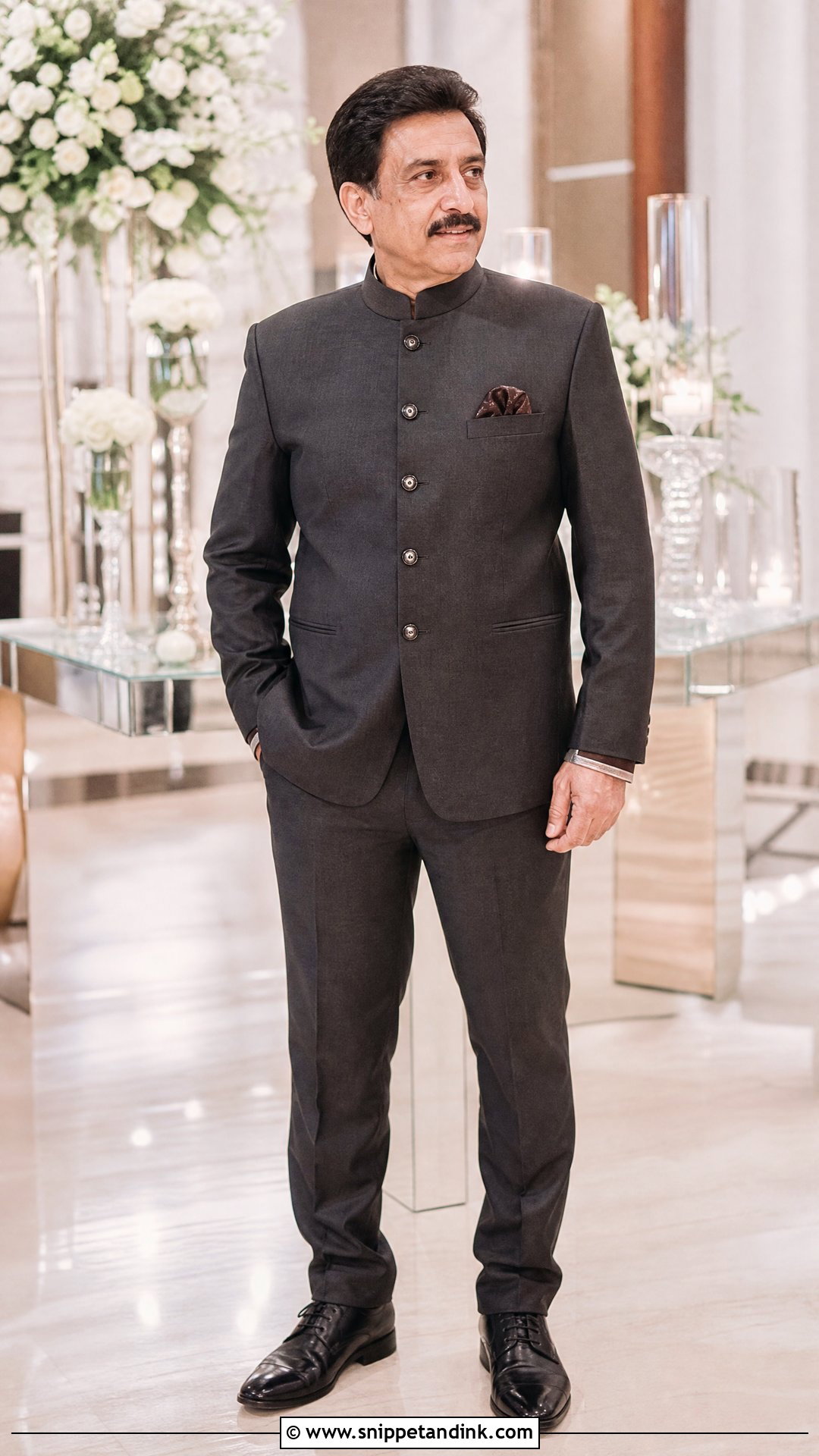
A Jodhpuri suit pairs a bandhgala jacket with matching trousers, so it photographs as a single clean line. That makes it the strongest choice I know for a reception where he’ll stand beside the couple on stage for an hour. Navy, charcoal and bottle green work after dark; beige for a daytime engagement. I’d have the trousers cut with a slight break, since jodhpuri trousers that pool at the shoe look borrowed.
11. Indo Western Jacket For Bride Father
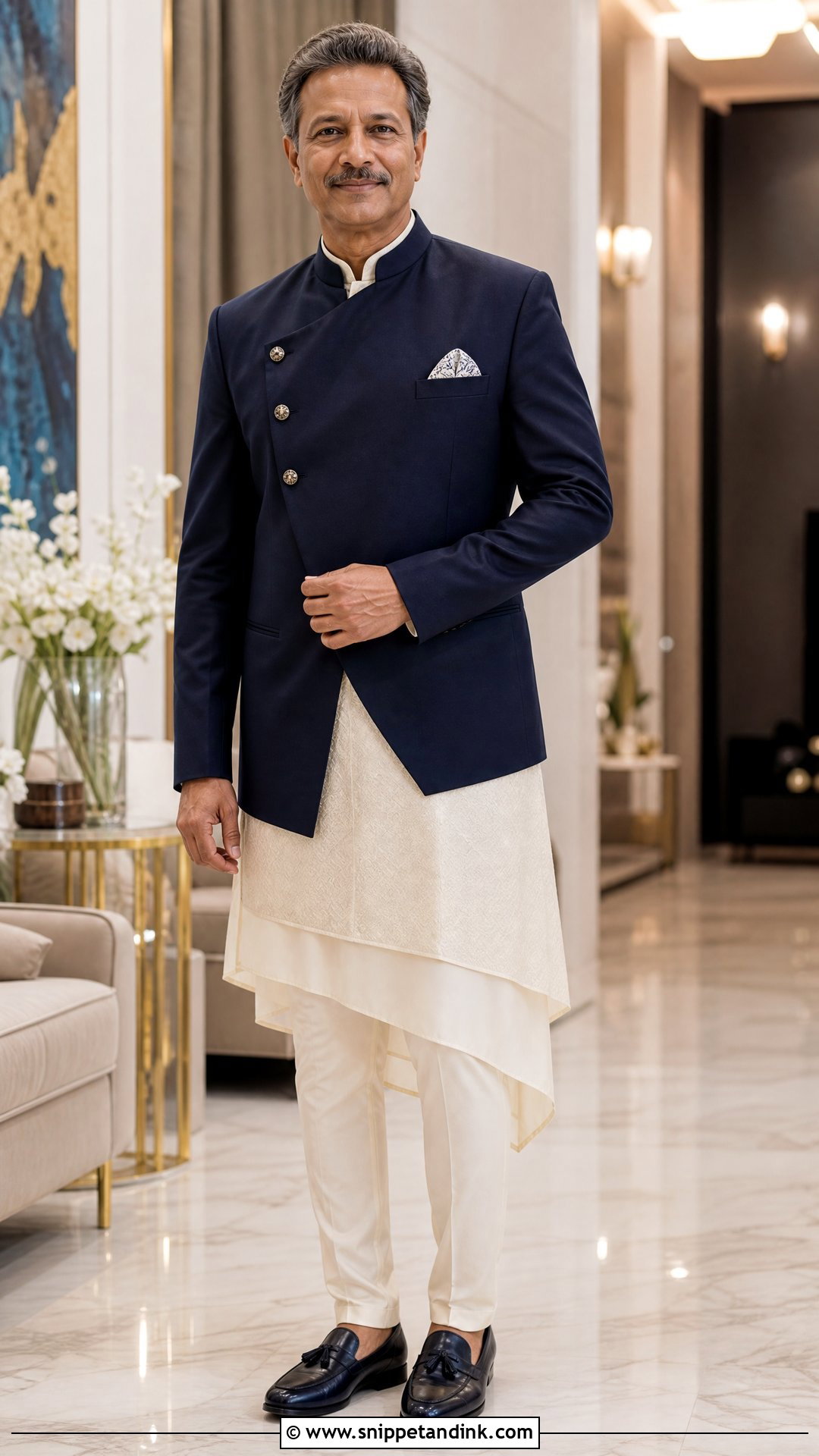
Indo-Western jackets range from asymmetric closures to long layered kurtas, and they suit the father who actually enjoys clothes. I keep the palette quiet, ivory with beige or charcoal with black, because the cut is already doing the talking. It belongs at the sangeet, reception or engagement events rather than the pheras. If the jacket is draped, ask the tailor to tack the drape so it doesn’t shift when he hugs guests.
12. Velvet Bandhgala For Bride Father
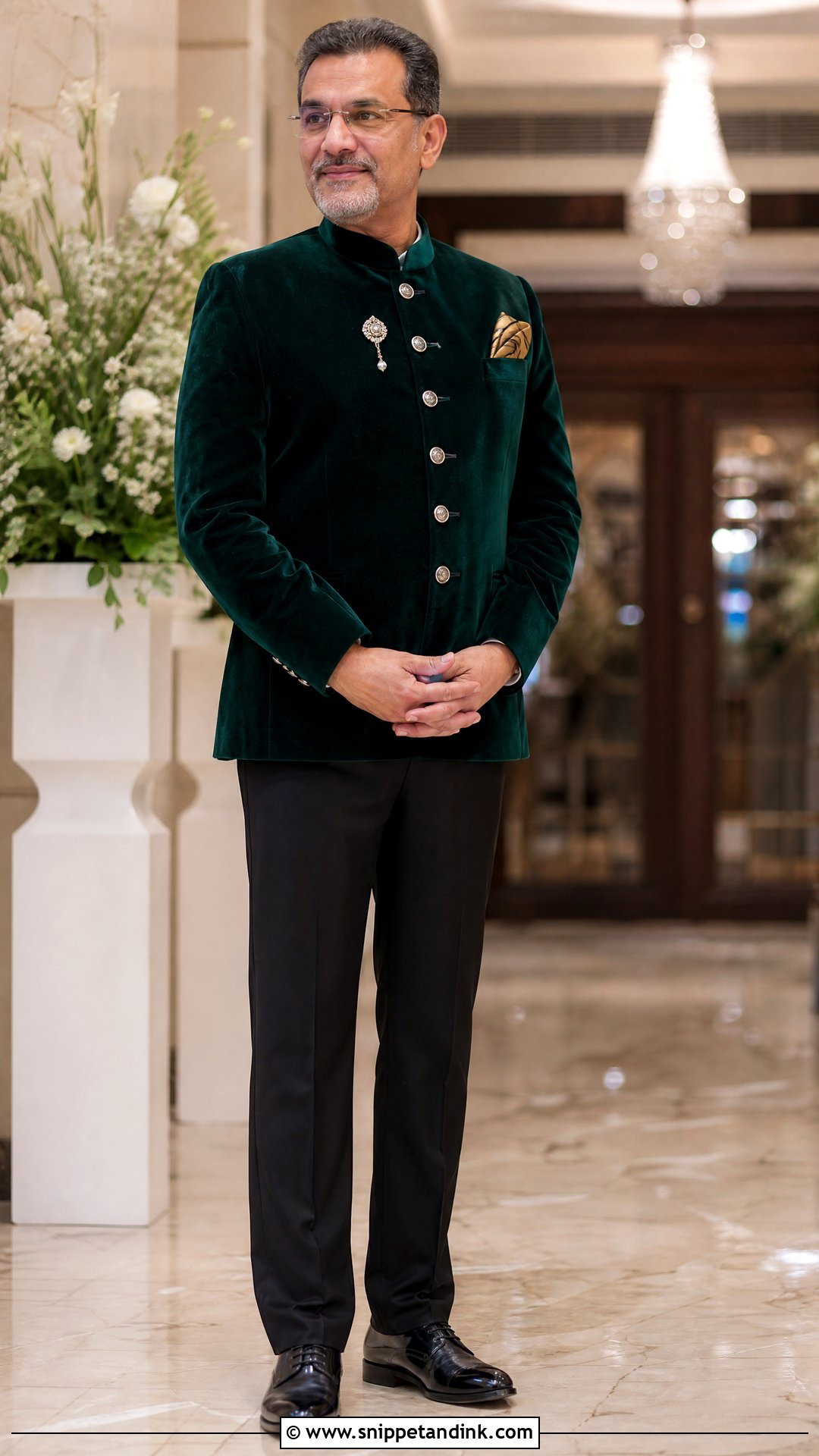
Velvet only makes sense in winter or in a well air-conditioned hall; at an outdoor evening in warm weather he’ll be miserable within an hour. The pile catches light on its own, so I keep embroidery to a minimum. Emerald, maroon and deep navy are the shades that look richest on camera. One practical note: velvet crushes where it’s folded, so it should travel on a hanger, never in a suitcase.
13. Cream Sherwani With Dupatta
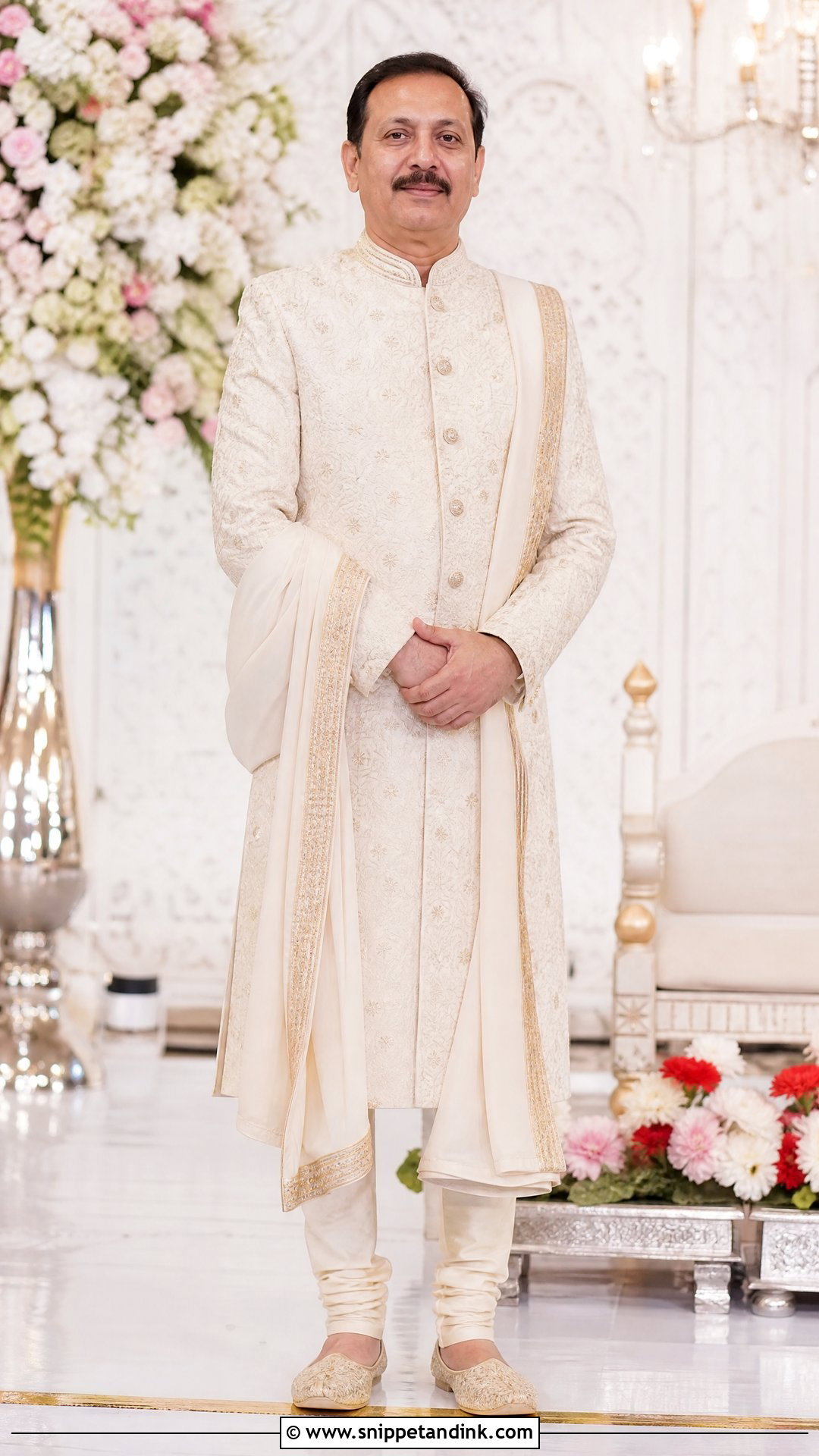
The dupatta is what turns a cream sherwani into ceremonial dress. For rituals I pin it at the left shoulder with a small safety pin hidden under the fold, because a loose dupatta slides off every time he bends to touch feet or pour ghee into the fire. Tonal or light gold embroidery keeps the sherwani from looking bridal. Add a safa only if the family custom calls for one.
14. Dhoti Kurta For Bride Father
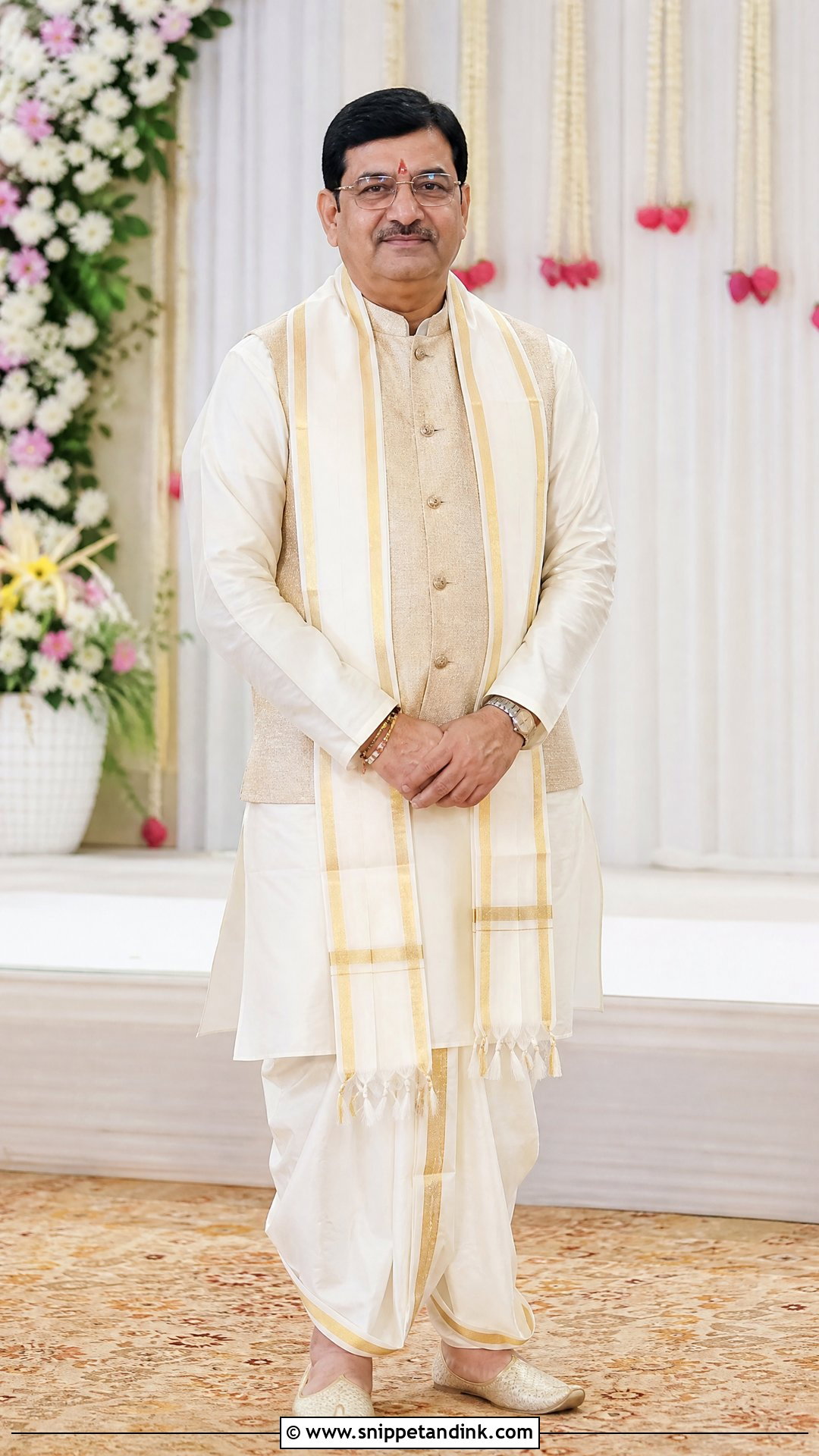
A dhoti kurta honours regional roots in a way nothing else does, and many fathers wear it for the temple ceremony or the pheras. If he hasn’t worn a dhoti since he was young, practise the tie at home or choose a pre-stitched one; an unravelling dhoti is a real risk during long rituals. Silk or cotton-silk in ivory or gold. A Nehru jacket over the kurta gives structure for photos.
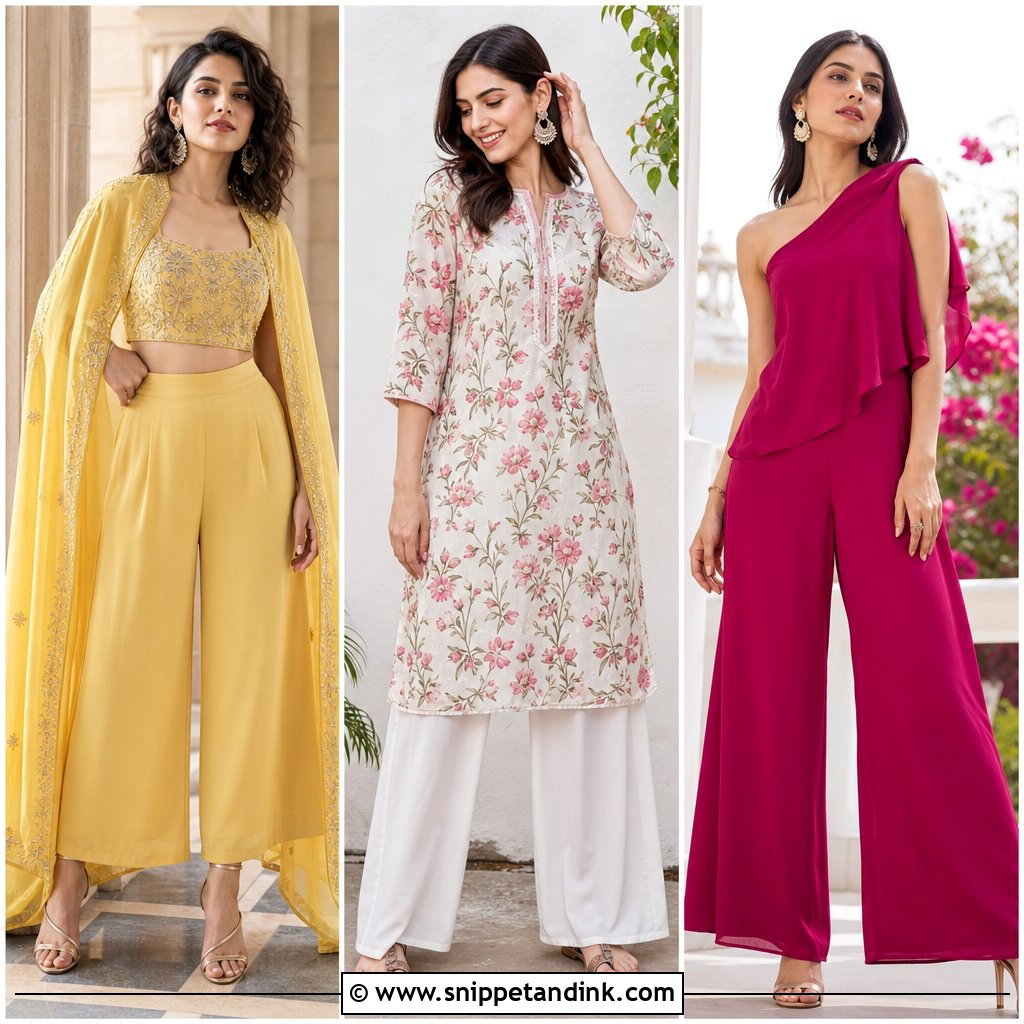
15. South Indian Veshti Shirt For Bride Father
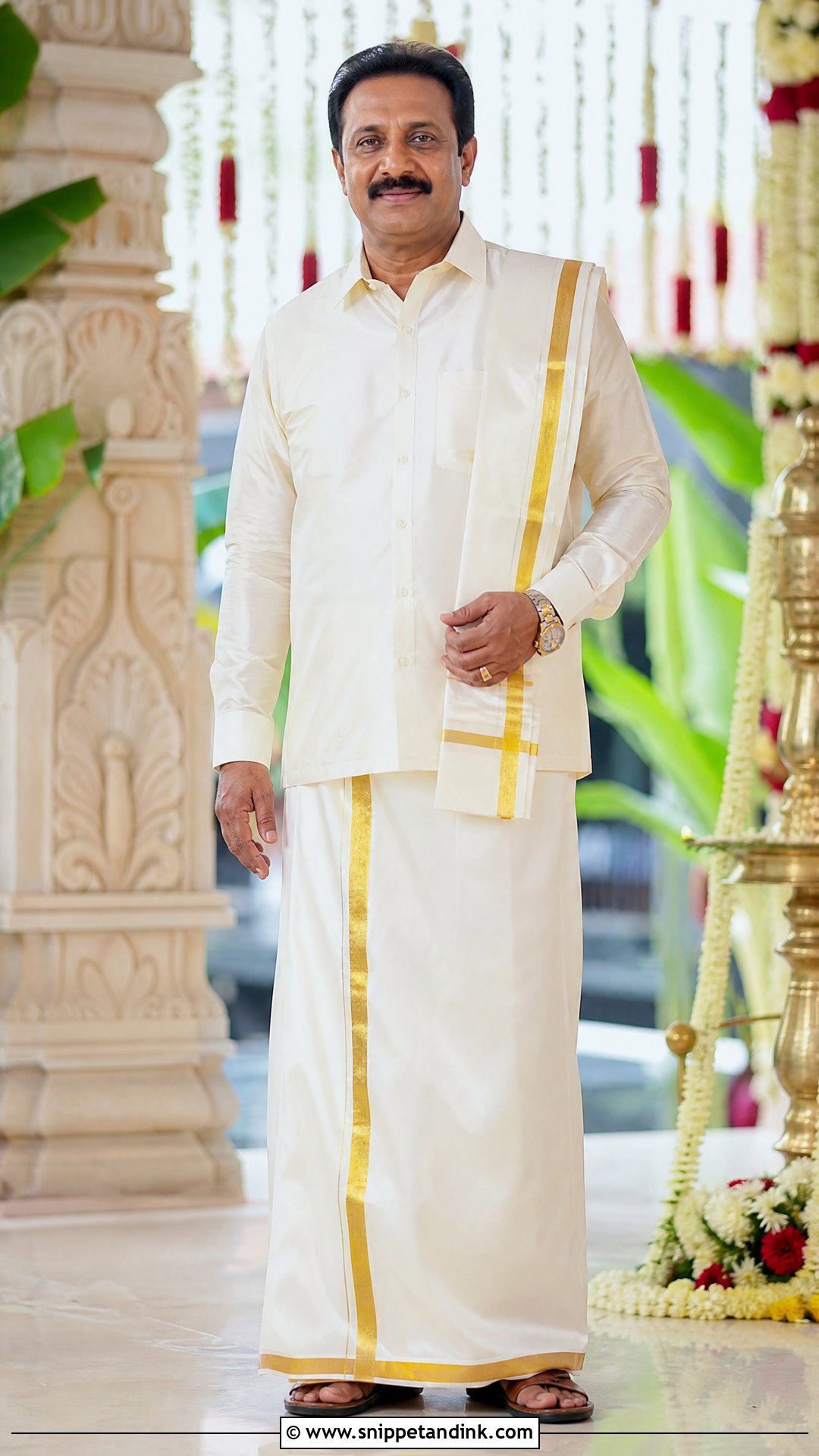
For a Tamil, Telugu, Kannada or Malayali ceremony, a cream veshti with a gold border and a crisp silk shirt is the correct dress, and it carries more weight than any sherwani would. Add an angavastram over the shoulder for the muhurtham. A veshti with a velcro waist is worth considering if he’ll be standing and sitting repeatedly. It also stays cooler in a hot hall than anything structured.
16. Pathani Suit For Bride Father
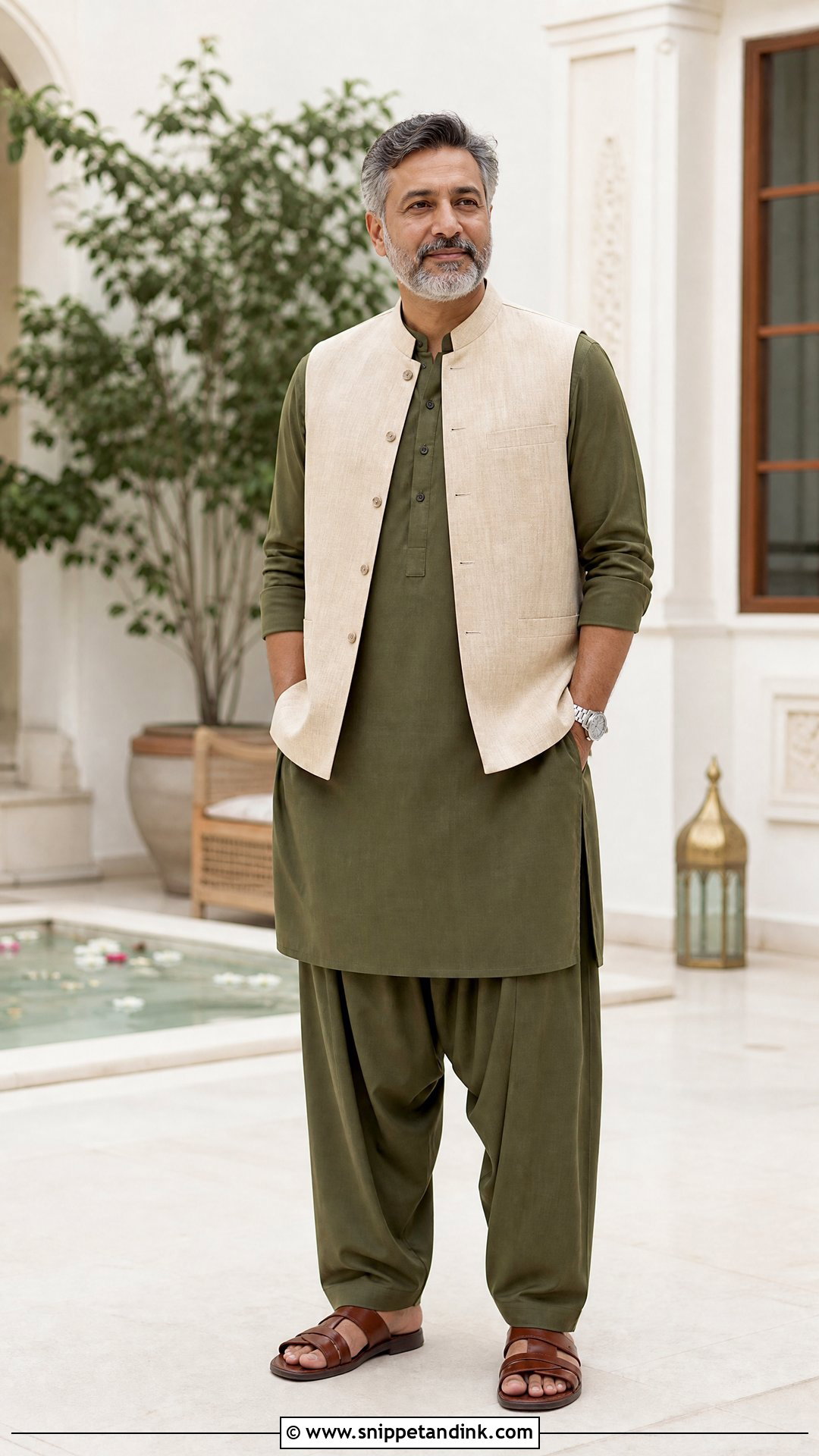
A Pathani suit is roomy through the body, which makes it one of the most comfortable things a father can wear to a long pre-wedding evening. The trick is fabric: cheap cotton makes it look casual, while a cotton-silk or light wool blend looks deliberate. Charcoal, olive and rust feel mature. A waistcoat on top earns it a place at a slightly more formal mehendi.
17. Printed Nehru Jacket Set For Bride Father
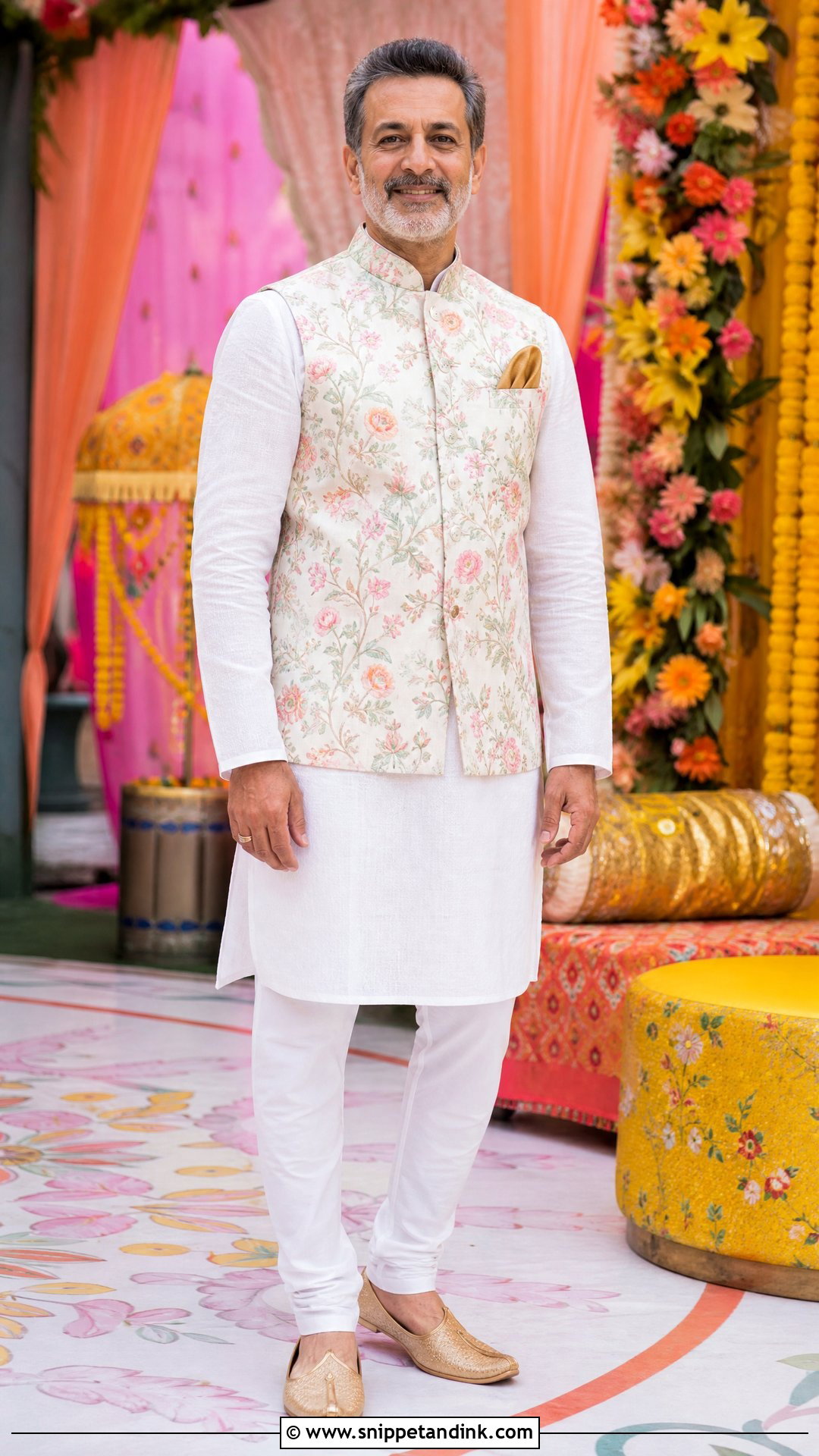
Prints are fun at a haldi, but scale matters on an older man. I’d choose a small paisley, ikat or geometric print over large florals, which can overwhelm a shorter frame in photos. Keep the kurta and pajama plain white or cream so the jacket carries the colour. If the decor is already busy, check a photo of him against the backdrop before the day.
18. Linen Kurta Set For Bride Father
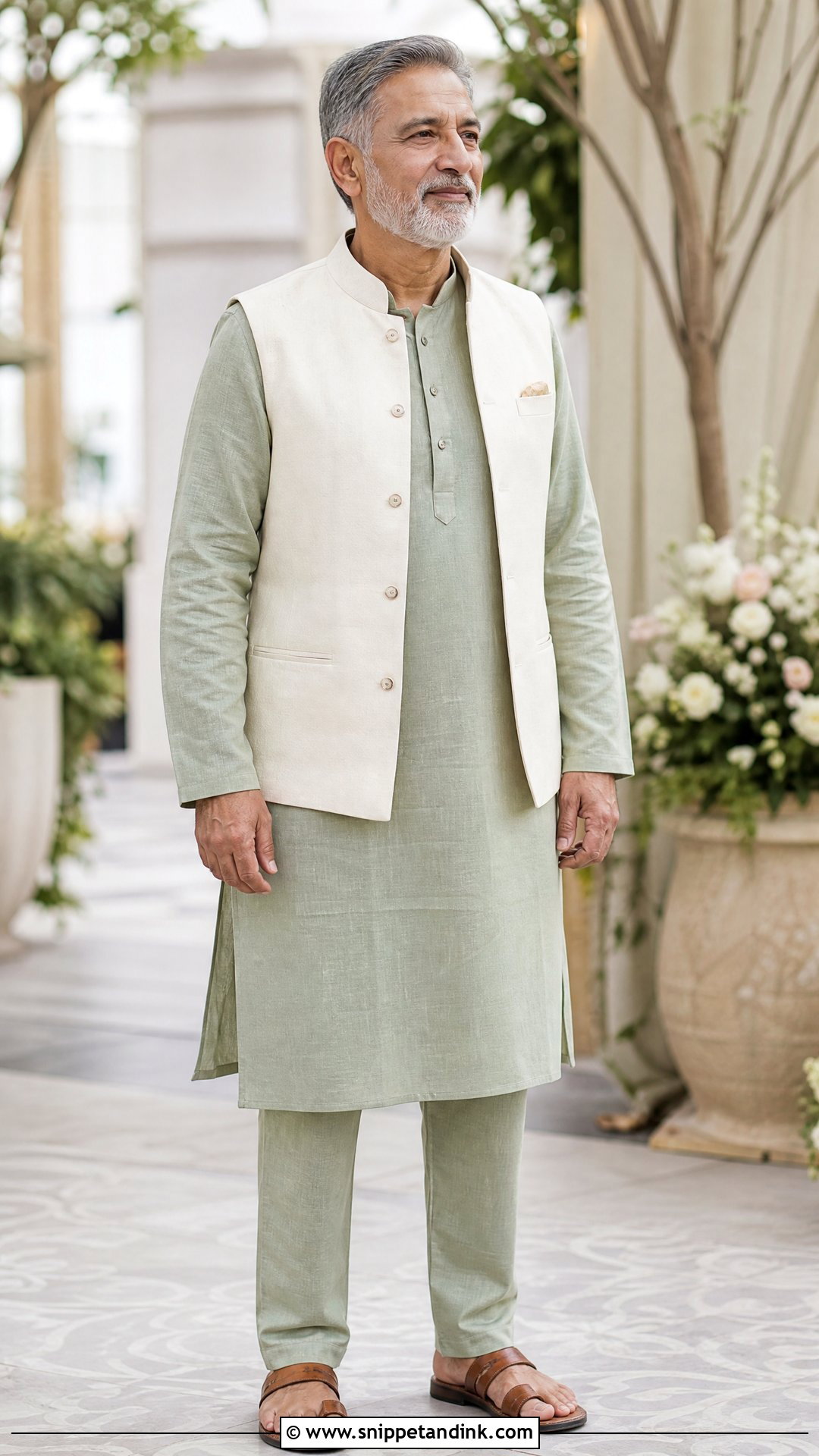
Pure linen creases the minute he sits down, so for a summer or beach function I’d steer him to a linen-cotton or linen-silk blend that holds a crisper line. Ivory, sage and pale grey suit outdoor light. Leather sandals or soft mojaris keep his feet cool. A light Nehru jacket over the top is the easy way to make the same kurta work for a dressier lunch.
19. Maroon Sherwani For Bride Father
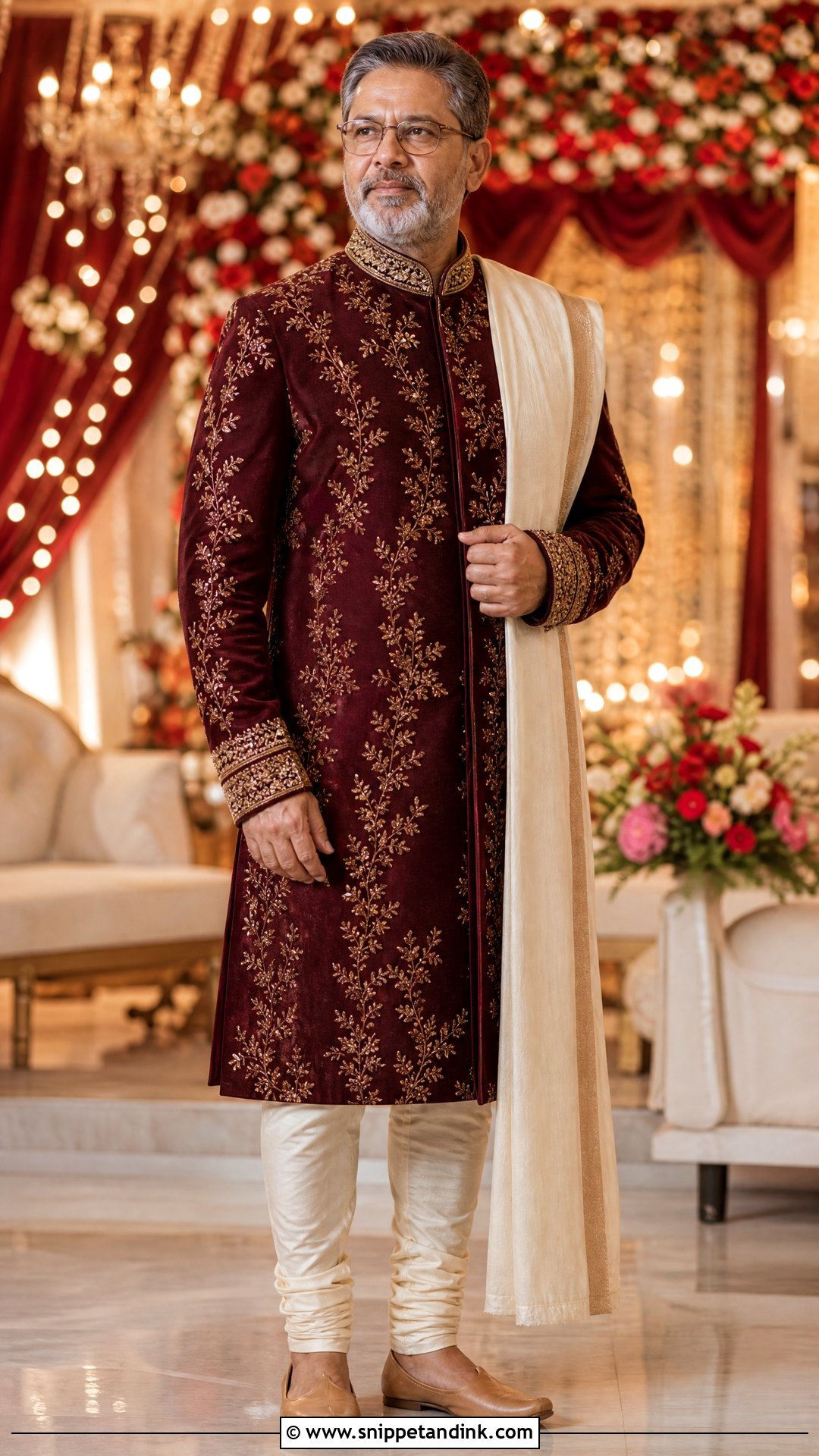
Maroon is festive and warm, but I always ask what the bride is wearing before I agree to it. If she’s in red or maroon, he should go a shade off, toward wine or burgundy, with minimal embroidery, so the two don’t merge into one block in the family portrait. Beige churidar softens the depth of the colour, and antique gold embroidery keeps it restrained.
20. Charcoal Suit For Bride Father
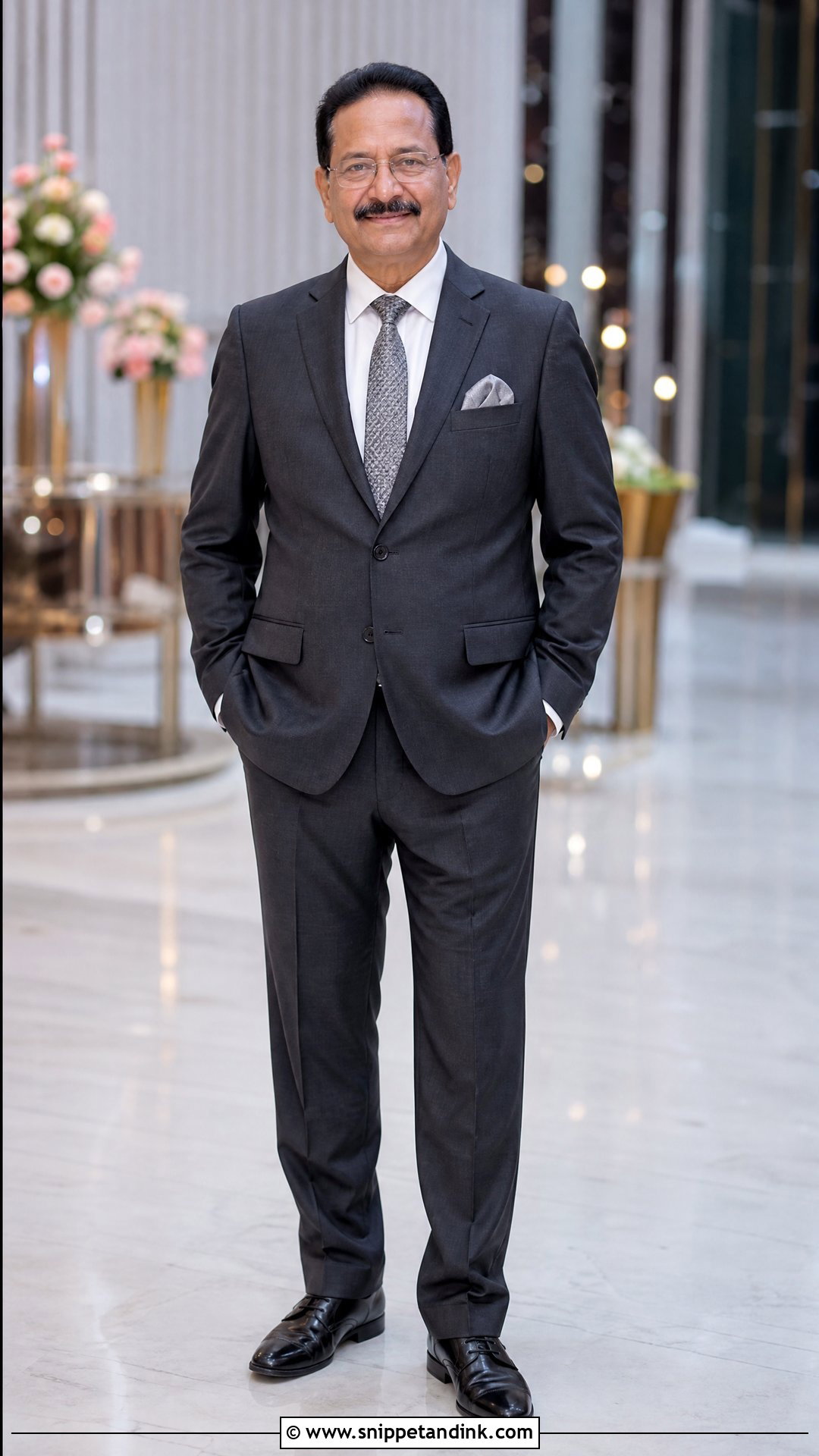
A charcoal suit is the father’s outfit for a fusion wedding or a formal reception dinner. It photographs softer than black under warm lights and he’ll wear it again for years. Two-piece or three-piece depending on the room. A light blue shirt is kinder to most complexions than stark white. Coordinate the tie or pocket square with the wedding palette, not the jacket.
21. Navy Suit For Bride Father
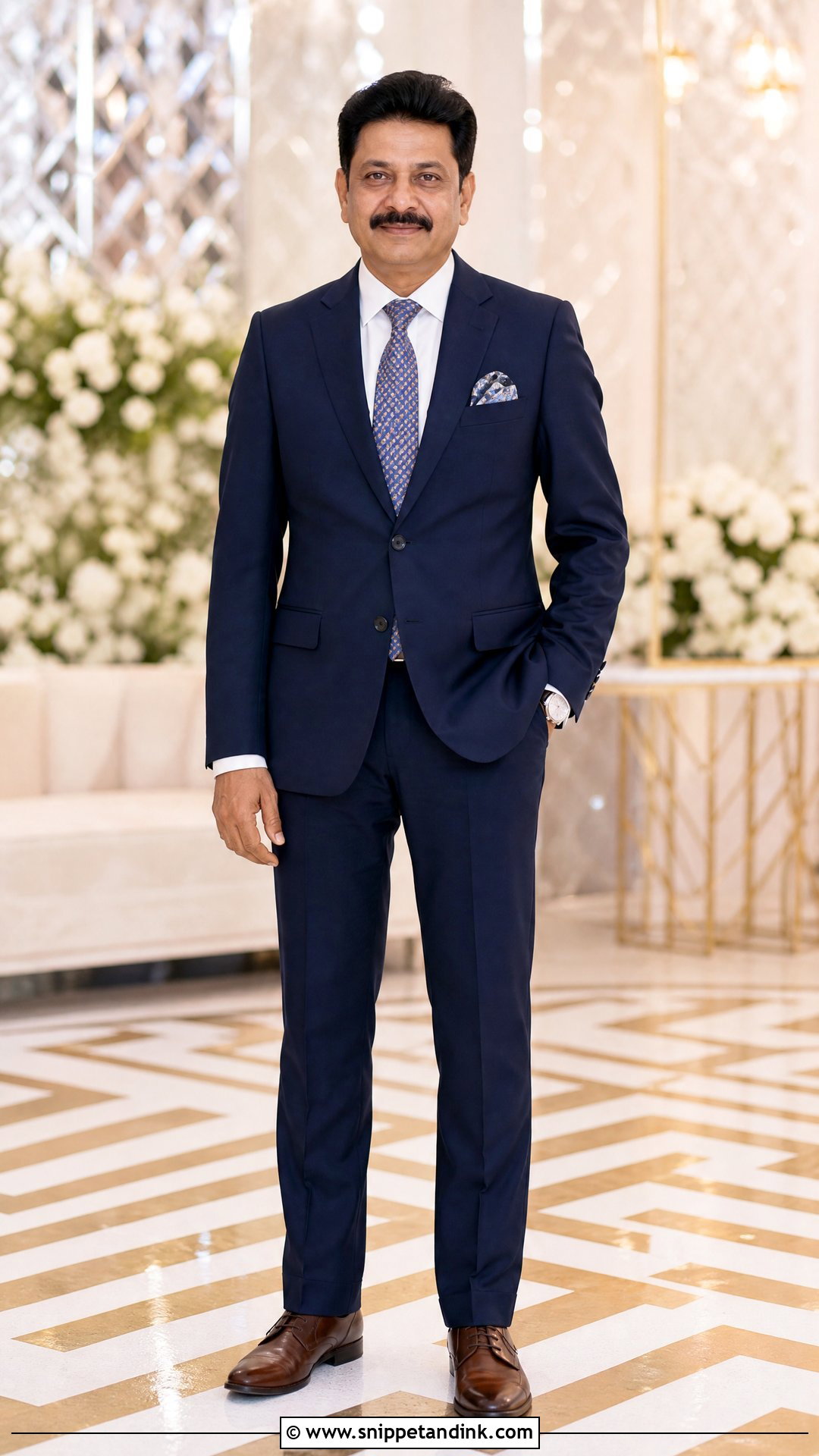
Navy is the most forgiving suit colour I fit. It works at an engagement, a registry signing or a reception, in any season. The fit check I care about is the shoulder: he’ll be hugging guests all evening, and a jacket that’s tight across the back will pull at the button every time. A silk pocket square in the family colour gives it an Indian wedding feel. Brown shoes keep it warm rather than corporate.
22. Tuxedo For Bride Father
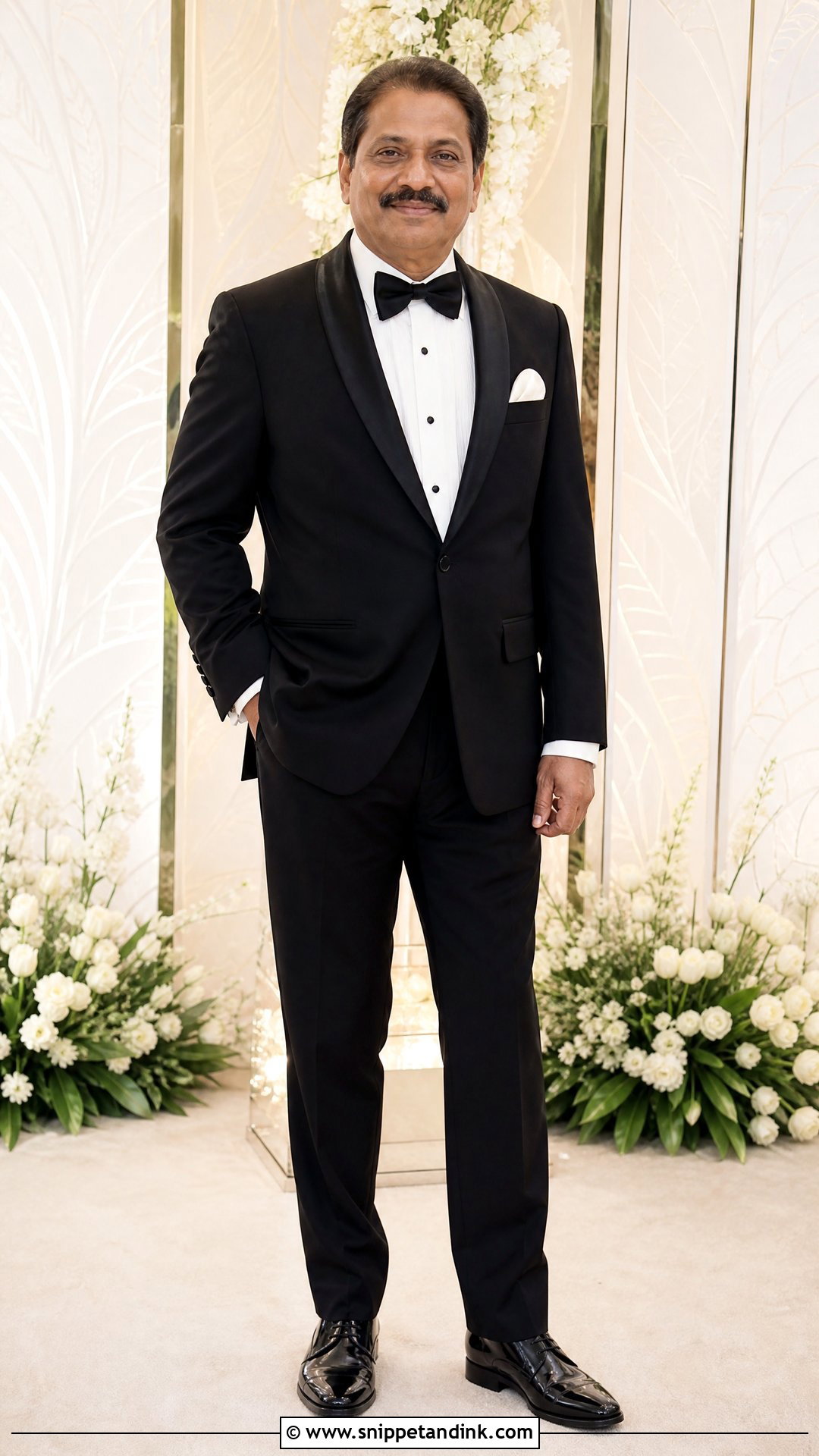
A tuxedo only belongs at the reception when the couple has set a black-tie tone; otherwise he’ll look overdressed next to guests in kurtas. Black with a white shirt and a black bow tie, nothing clever. The shawl collar or peak lapel is a matter of build: shawl softens a broad frame, peak sharpens a slim one. Cut it with a little room, because he’ll be on his feet greeting guests for hours.
23. Matching Family Color Outfit For Bride Father
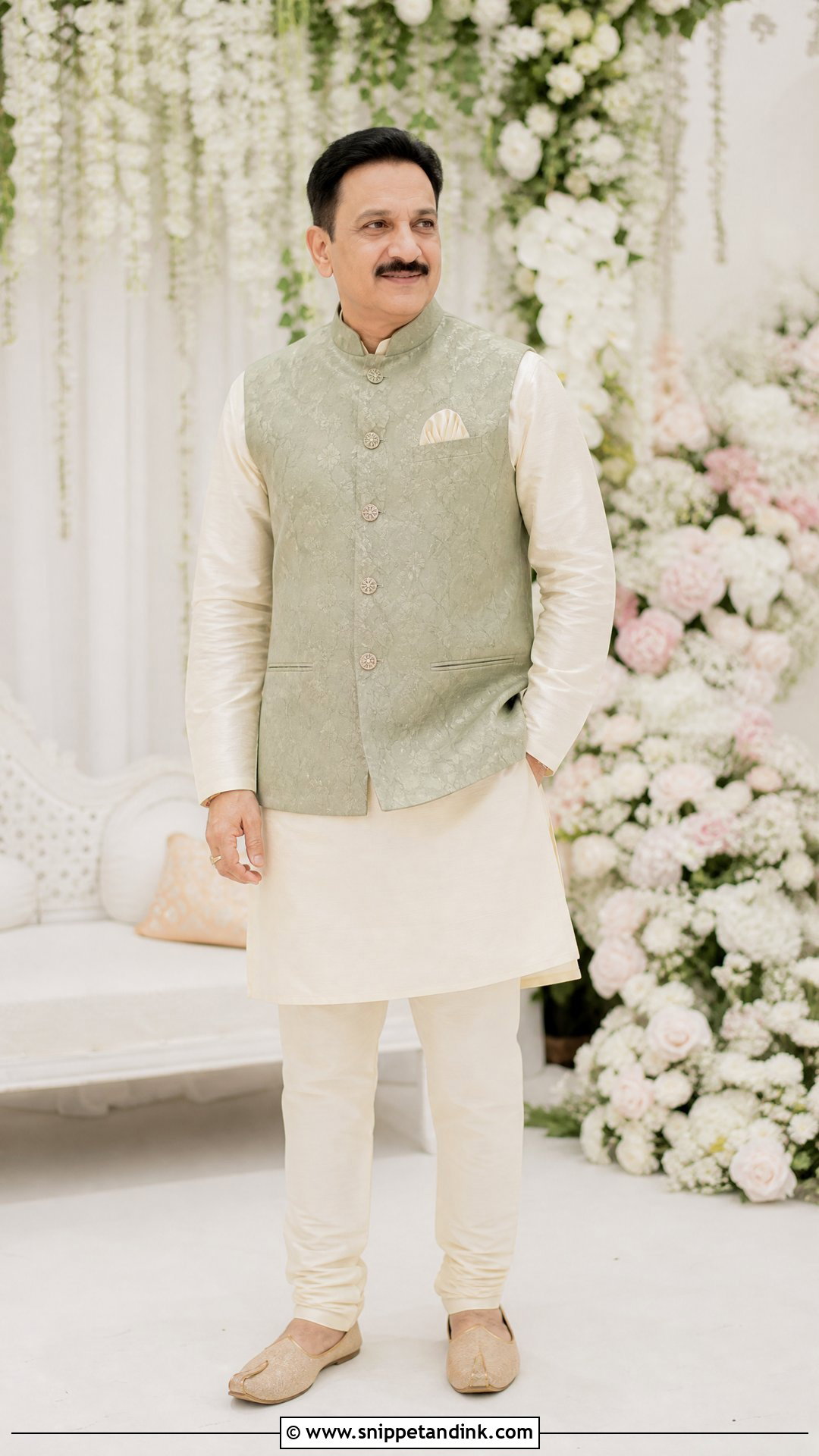
Family colour coordination works when he wears the palette, not the uniform. If the family is in sage, I’d put him in an ivory kurta with a sage Nehru jacket rather than head-to-toe sage. With a gold and cream theme, a cream sherwani with gold buttons does the job. A dupatta border, pocket square or jacket lining can carry the shared colour while the outfit itself still suits his skin tone.
24. Safa Sherwani For Bride Father
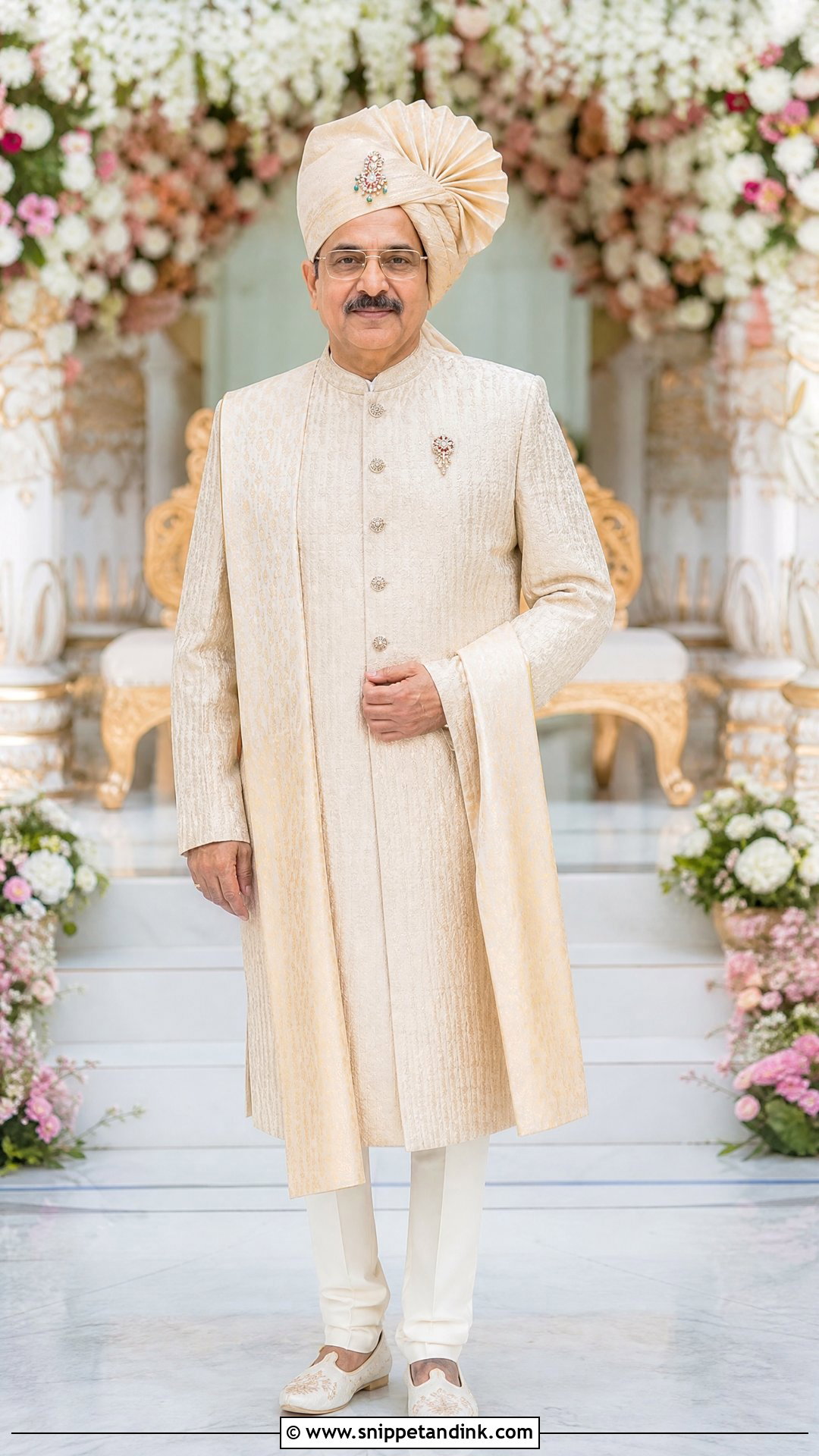
A safa completes the ceremonial look for the baraat welcome and the formal portraits, but it needs someone who knows how to tie it, booked for the morning. Pre-tied safas save time and sit more evenly on fathers who aren’t used to the weight. Match it to the sherwani in a muted jewel tone or ivory, and add a kalgi only if the family custom includes one.

25. Simple Kurta With Waistcoat For Bride Father
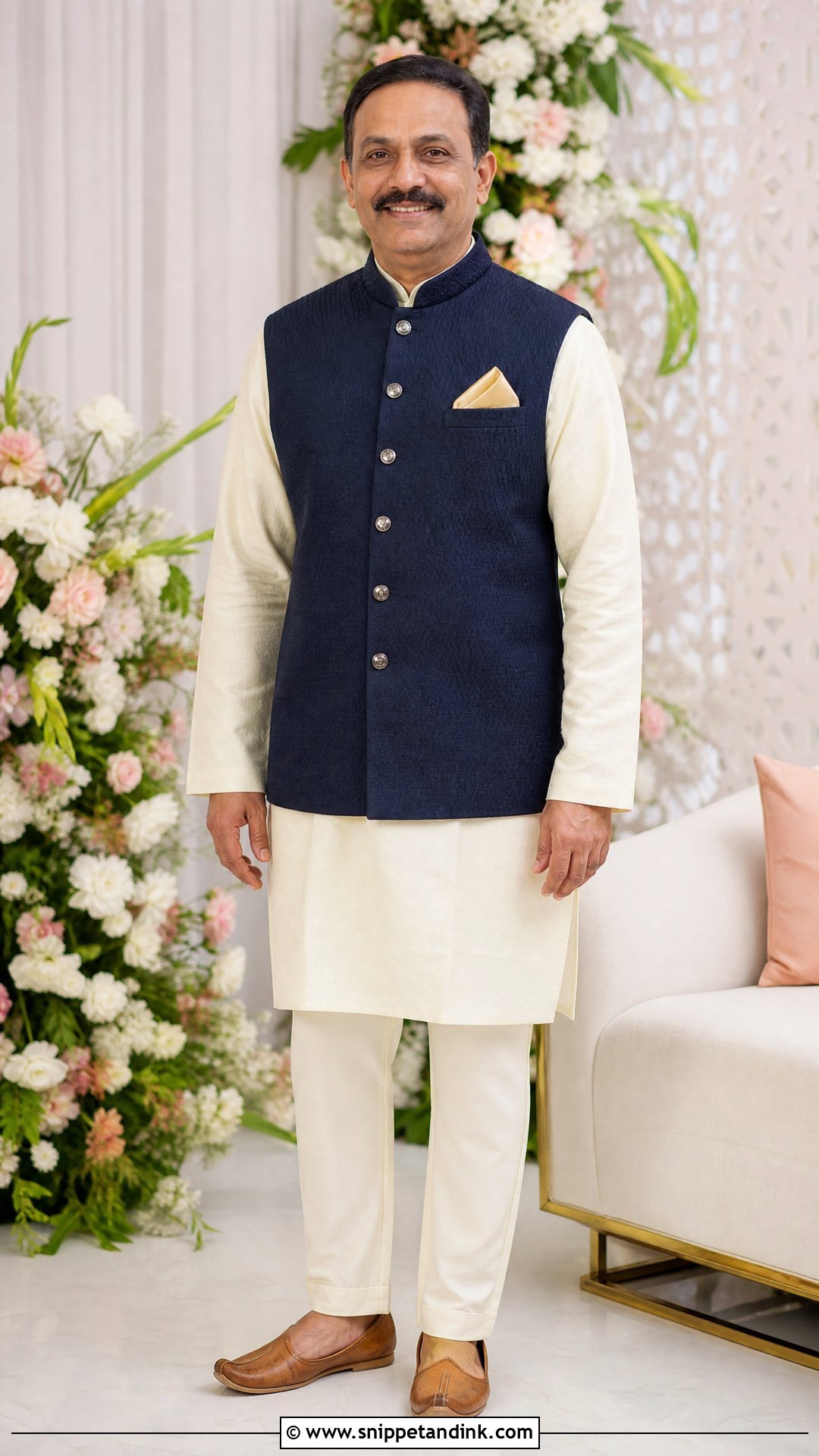
A plain kurta with a waistcoat is the most adjustable outfit on this list. Add a pocket square and it holds up at a family lunch; take it off and he’s dressed for a travel-day ceremony. Ivory or pastel blue under a navy, olive or rust waistcoat. I’d make sure the waistcoat is cut to sit just below the kurta’s waist seam, since a short waistcoat on a long kurta makes a tall man look cut in half.
Will He Survive Two Hours Cross-Legged at the Mandap?
Most fittings happen standing in front of a mirror, and that’s where problems hide. During the pheras and kanyadaan he may sit on a low seat or the floor for a long stretch beside a fire, then stand and bow again and again. So at the final fitting I make him sit cross-legged on the floor for a few minutes and watch what the garment does.
What I check while he is seated
- The sherwani side slits: if they’re too short, the front panel bunches into his lap.
- Churidar or trouser seat: a tight seat seam is the one that splits.
- Collar: a closed collar near a havan fire gets hot fast, so a hook he can quietly open helps.
- Pockets: most sherwanis have none, so plan where the shagun envelopes, phone and reading glasses will go. A small pouch carried by a brother or son works.
Footwear and the small emergencies
New mojaris are stiff and they rub at the heel. He should wear them around the house for a week, and a strip of moleskin inside the heel saves a lot of limping. Shoes come off for the mandap anyway, so his socks or bare feet should be presentable. I’d also pack a kit for the family: safety pins for the dupatta, a lint roller for dark jackets, and a spare shirt button.
A Father Who Looks Like Himself on Every Stage of the Wedding
Across all of these, the outfits that work best are the ones he can forget he’s wearing. I’d plan a sherwani for the pheras, a bandhgala, Jodhpuri suit or tuxedo for the reception, and kurta sets, Nehru jackets, dhotis or a veshti for the daytime rituals. Get the tailoring right, break in the footwear early, and keep accessories to a watch and one meaningful piece. Then he can spend the wedding watching his daughter instead of adjusting his collar.
You'll Like These Ideas:


Leave a Reply