
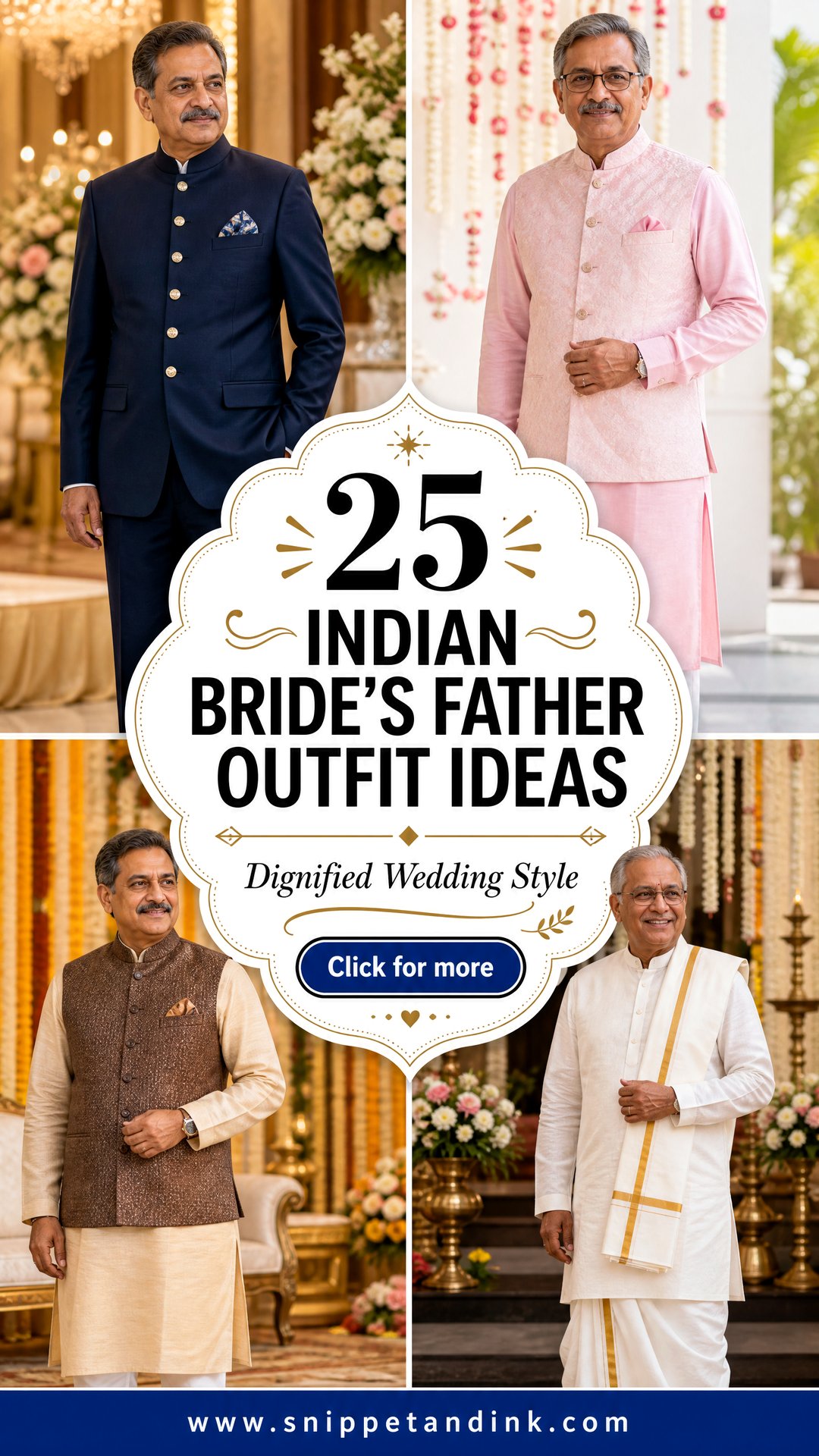
The bride’s father is in nearly every important photograph of an Indian wedding, and he is also working: greeting relatives, managing the caterer, sitting through rituals and walking his daughter in. When I dress a father, comfort across a long and emotional day comes first, and the outfit has to support the bride’s look without competing with it. Sherwanis usually belong at the main ceremony, bandhgalas at the reception, silk kurtas at rituals and Nehru jackets at daytime functions. Raw silk, brocade, linen silk, jacquard and velvet each suit a different season. Mojaris, a pocket square, a safa or a good watch finish the job. Here are twenty-five outfits I’d consider for him, with the fit and fabric notes that make each one work.
Planning His Wardrobe Function by Function
Most Indian weddings have four or more events, and the father often needs a different outfit for each. I map them out before anything is ordered, so the formality climbs toward the wedding and the colours don’t repeat.
Roka, welcome lunch and mehndi
Kurta sets with a light Nehru jacket. These are long, relaxed afternoons, often outdoors, so breathable fabric matters more than embroidery.
Haldi
Something he doesn’t mind ruining. Turmeric paste does not come out of silk easily, so a cotton kurta in yellow or white is the honest choice.
Sangeet
Colour and movement. A jacket he can dance in, with sleeves that lift without the whole garment riding up.
Wedding and reception
The sherwani or achkan for the ceremony, then a bandhgala, Jodhpuri suit or tuxedo for the evening. Order these first; custom tailoring for heavier pieces can take several weeks, and he should have two fittings.
1. Ivory Sherwani With Churidar
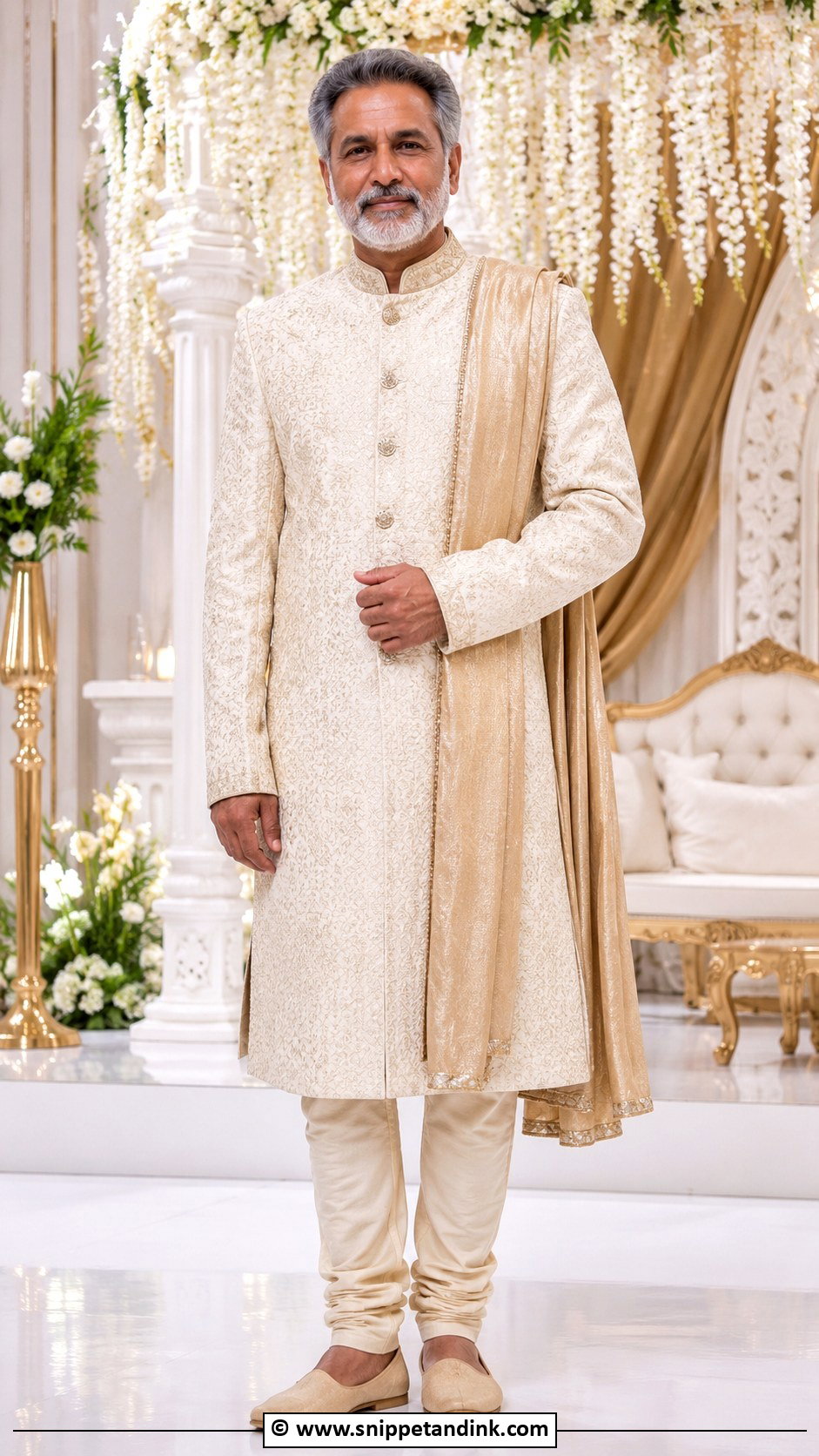
Ivory reads as ceremonial without the visual weight of gold, and it sits calmly beside a bride in red, maroon or pink. I look for tone-on-tone embroidery or light zari rather than heavy work, so the sherwani stays dignified. A cream churidar, beige mojaris and a soft gold stole complete it. Ivory is unforgiving at the collar, though, because foundation and sweat marks show from the first hug, so I ask the tailor for a removable or easily cleaned collar lining. A pearl mala or brooch only if the sherwani itself is plain.
2. Gold Brocade Sherwani With Stole
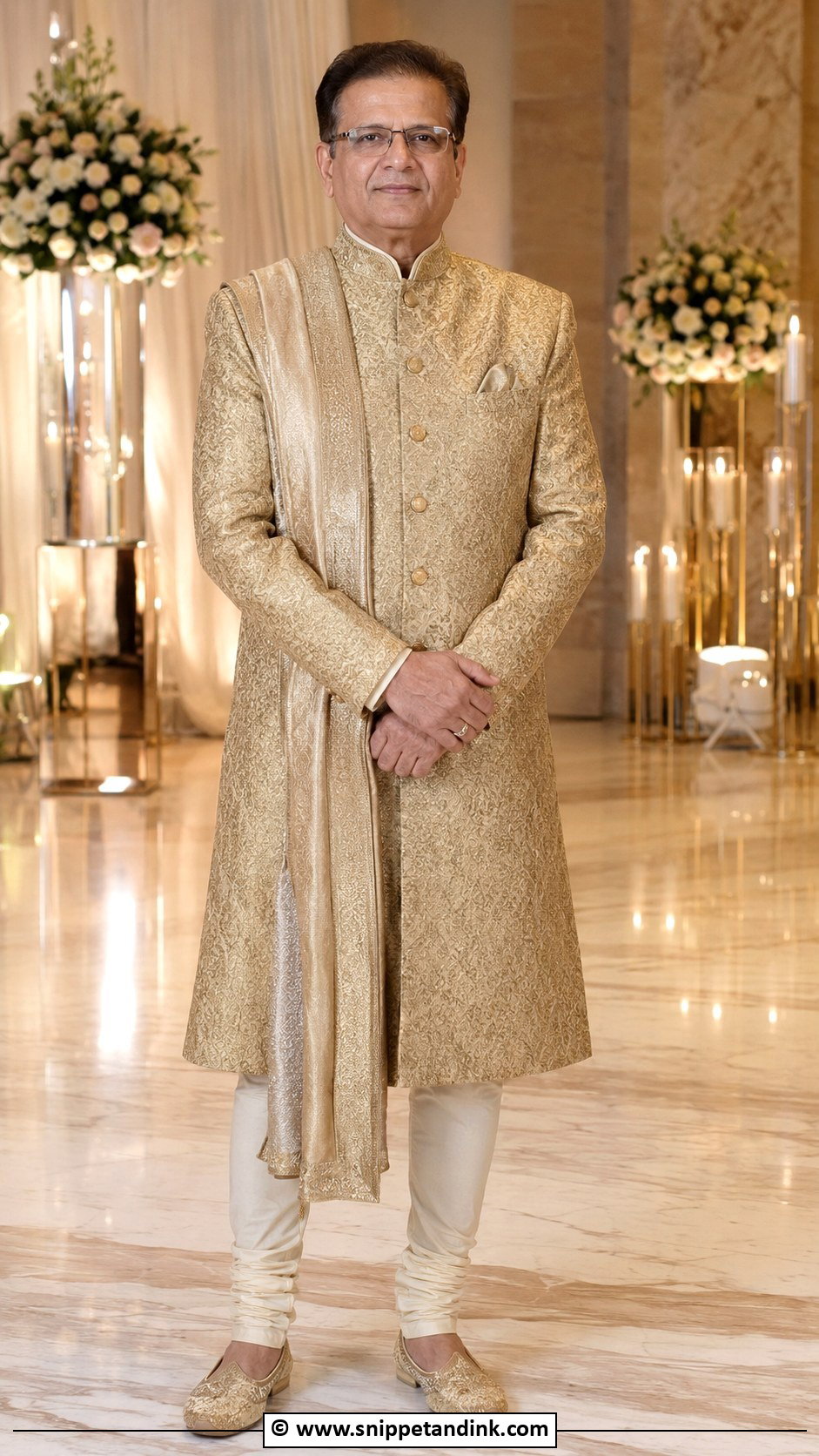
Brocade in antique gold gives the father real presence at the pheras. Bright metallic gold is the trap; it flares under flash and makes him look louder than the groom. Pair it with an off-white churidar, tan or gold mojaris and a stole draped over one shoulder. The high collar has to fit with a finger’s space at the neck, because brocade has no stretch and a tight collar is miserable after three hours. A classic watch or a small brooch is plenty of jewellery for an evening banquet or heritage venue.
3. Cream Achkan With Straight Pants
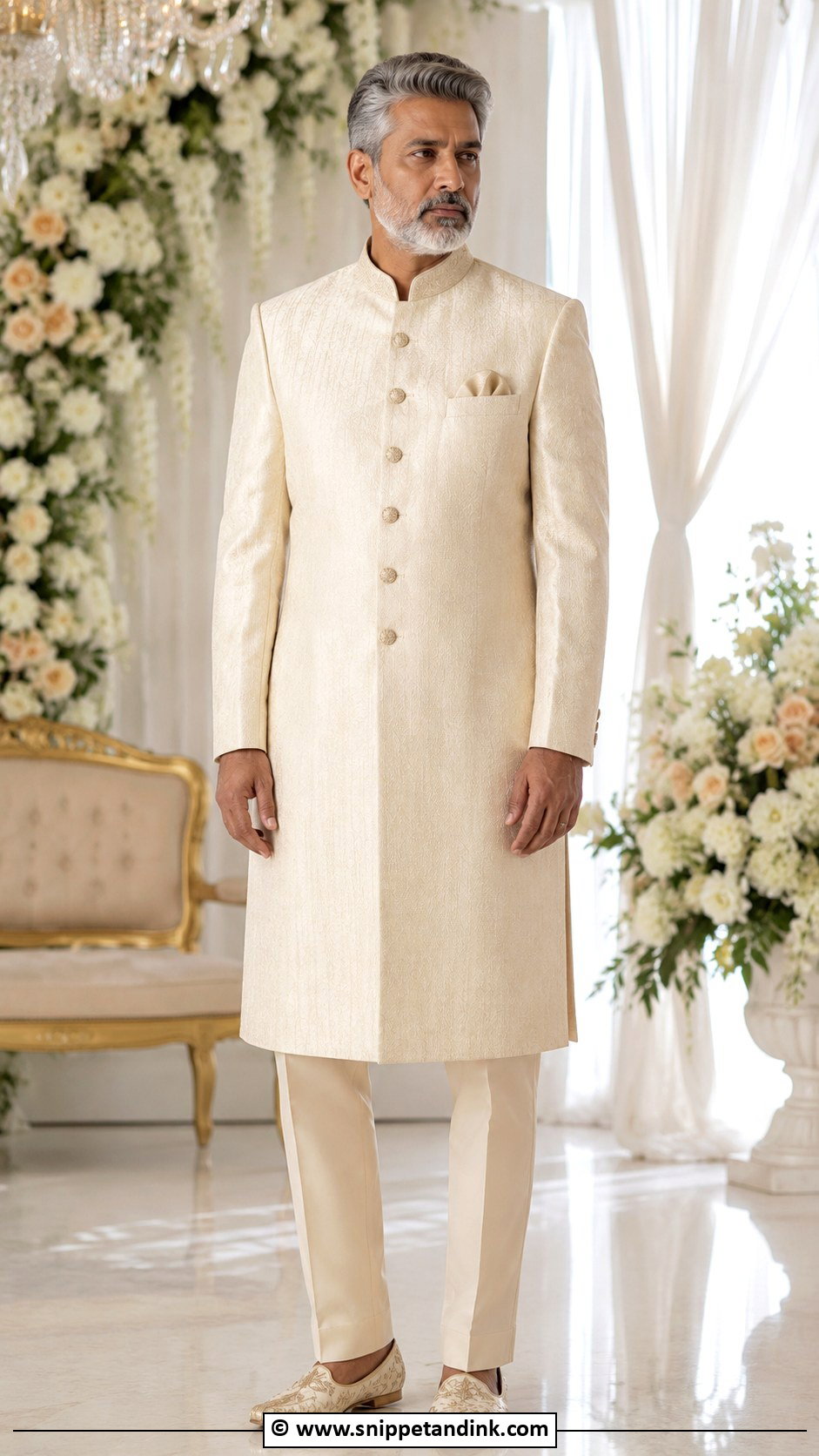
Shorter and lighter than a sherwani, an achkan in cream is the one I suggest to fathers who dislike heavy layers. Raw silk, matka silk or jacquard with a clean mandarin collar and subtle buttons keeps it formal. Straight trousers in ivory or beige and embroidered mojaris finish it. Matka silk has a slightly slubbed texture that hides creases better than smooth silk, which helps when he is getting in and out of cars between venues. A pocket square in the bride’s accent colour is a quiet nod to her.
4. Navy Bandhgala Suit With Trousers
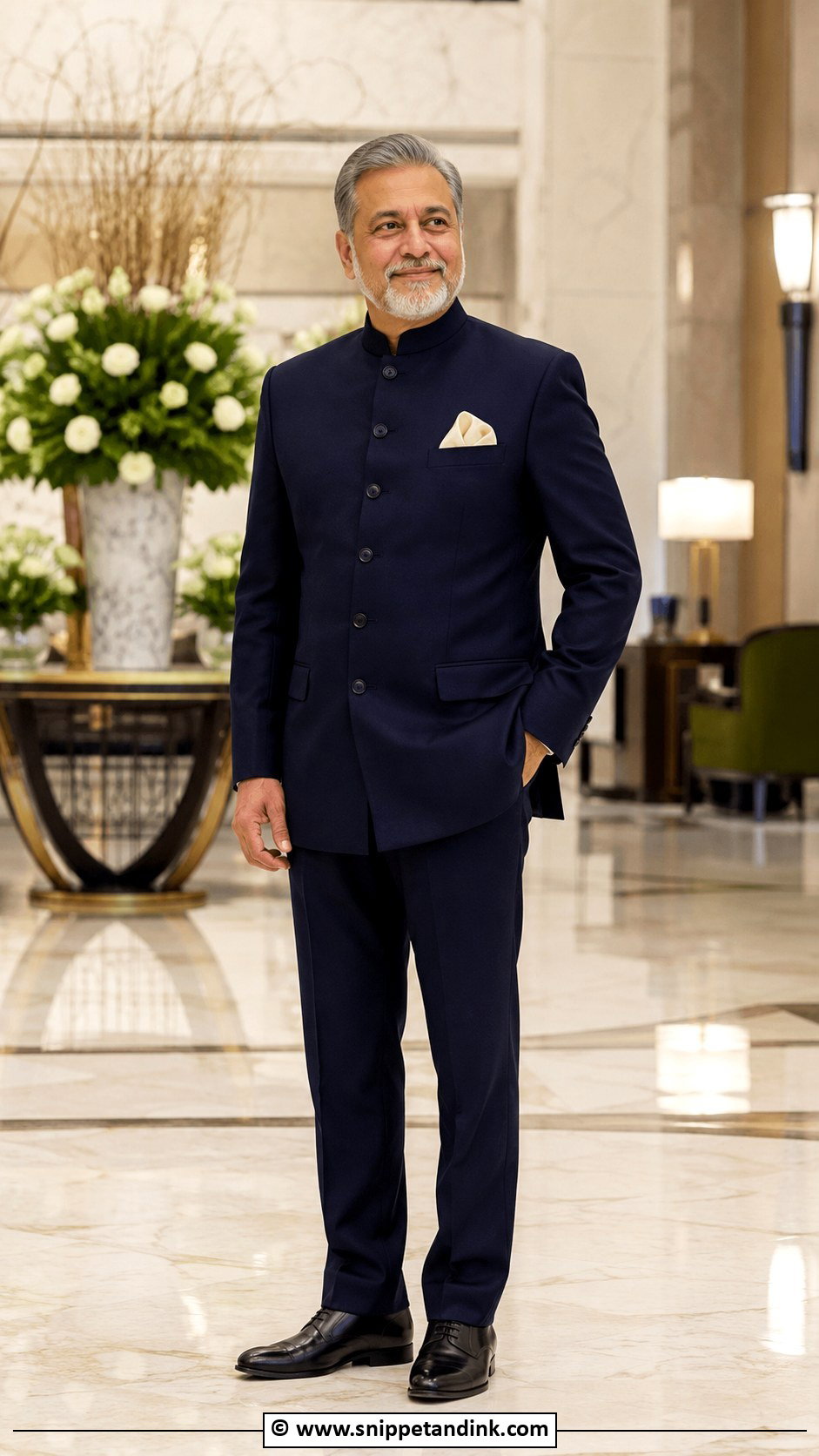
Navy bandhgala is the most useful outfit a father can own, because it works at the reception and at every formal dinner for years afterwards. The closed neck gives it an Indian character while the trousers keep it sharp. Check the shoulders first: a bandhgala has no lapel to hide a poor fit, so any pulling across the chest shows straight away. A subtle textured cloth, matte buttons and black formal shoes or polished loafers finish it. A silver or blush pocket square softens it in photos.
5. Black Jodhpuri Suit With Formal Shoes
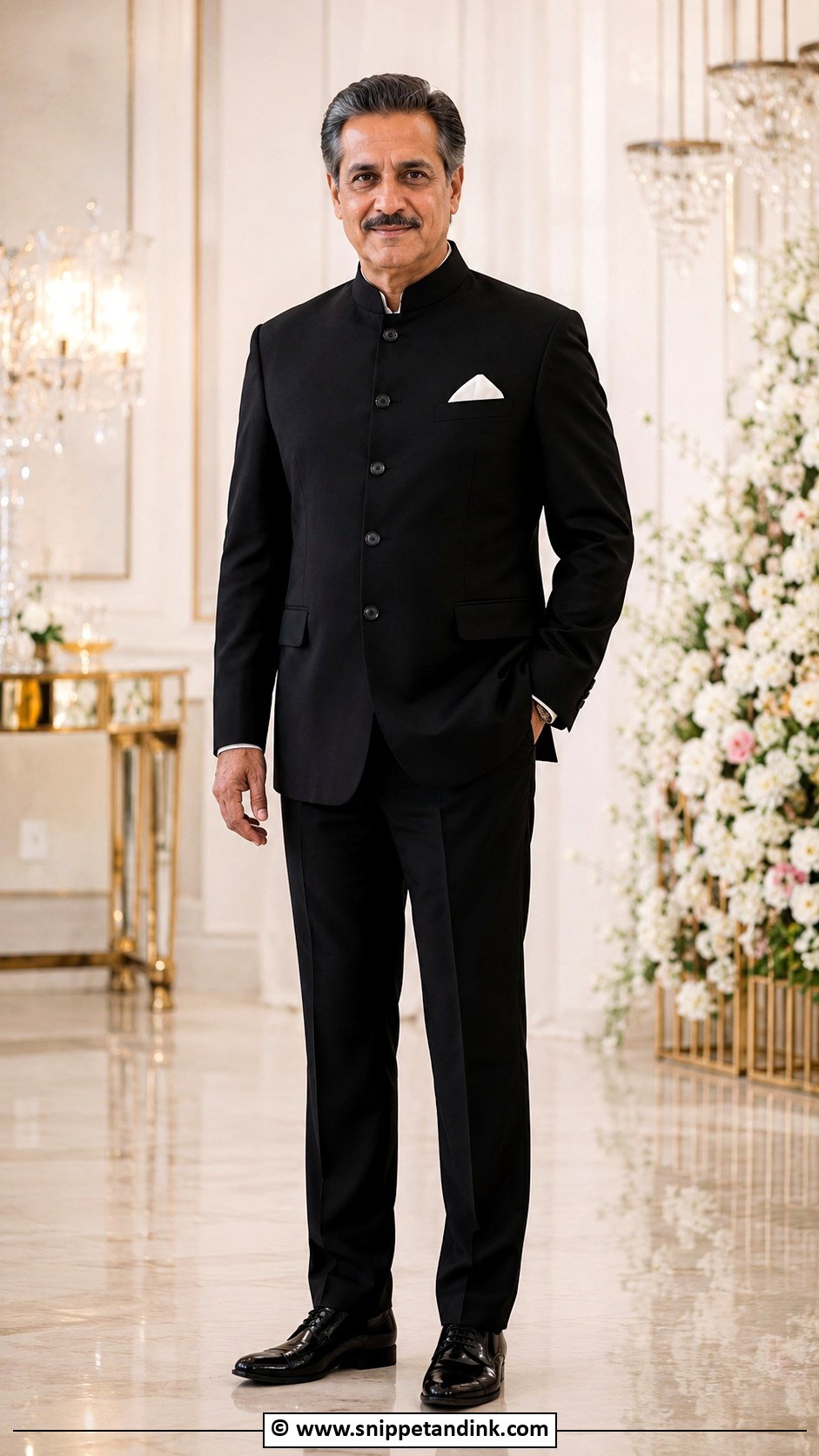
A black Jodhpuri suit is confident and very structured, ideal for a grand evening reception or a hotel ballroom. Choose a fine-weave cloth with a slight sheen so it doesn’t photograph as a flat black shape. Slim trousers, black formal shoes and a white or ivory pocket square are all it needs. I’d steer a father away from black only if the family considers it inauspicious at weddings, which some do, so ask before ordering. Otherwise it is easy to wear again long after the day.
6. Maroon Sherwani With Beige Churidar
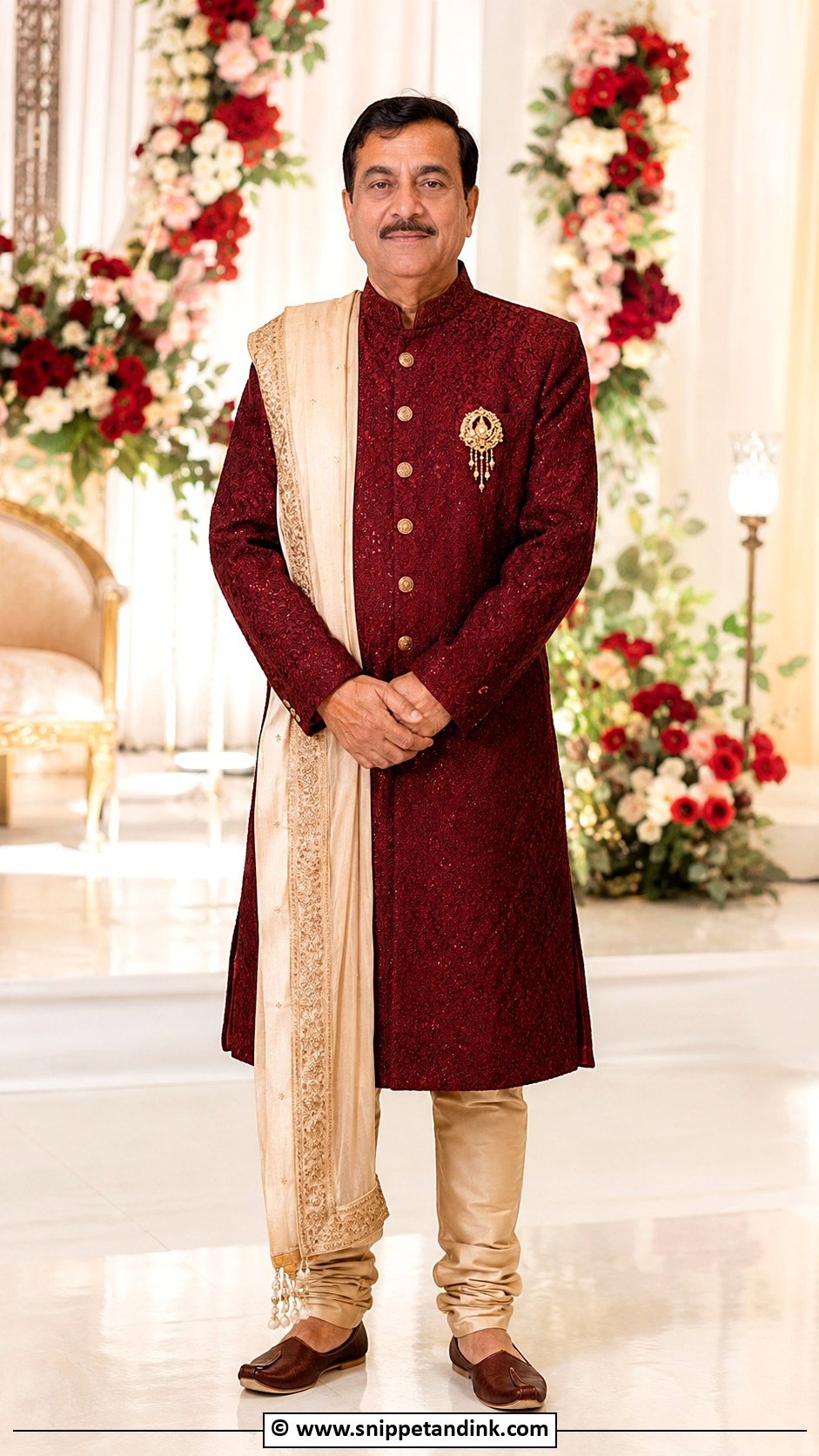
Maroon is warm and festive, best at winter weddings and evening ceremonies. Keep the embroidery controlled, as a busy maroon sherwani starts to look like the groom’s. If the bride is wearing red or maroon herself, I take the father a shade deeper or more muted so the two sit together in photos without matching exactly. Silk or jacquard, a beige churidar, brown mojaris and a cream stole complete it, with a gold brooch or understated buttons as the finishing detail.
7. Pastel Pink Kurta With Nehru Jacket
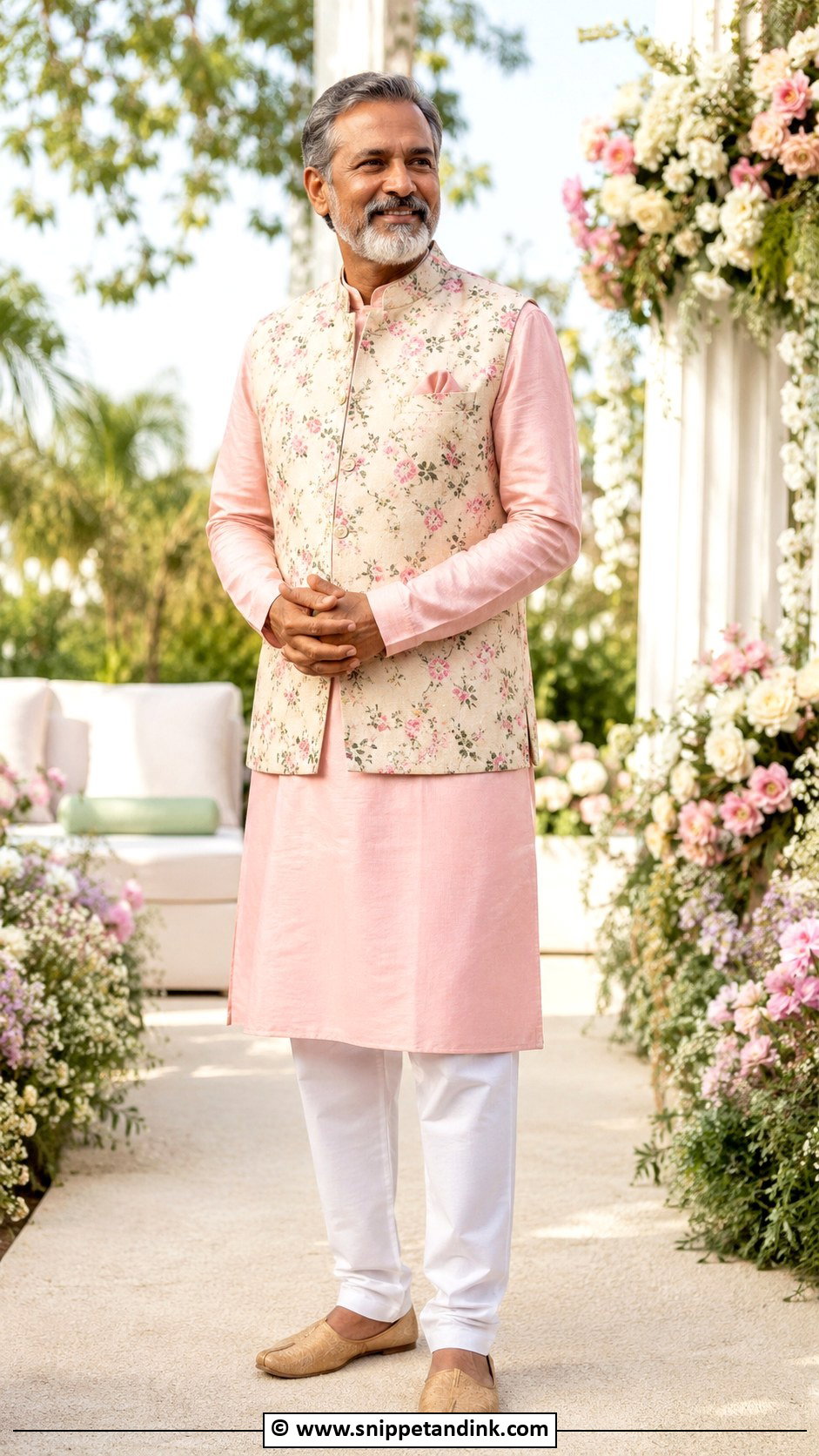
Pink is a colour many fathers refuse at first and then enjoy. In a soft silk or cotton silk with white churidar or straight pants, it reads gentle rather than youthful. A beige, ivory or floral Nehru jacket adds structure. It suits daytime functions like the mehndi or a welcome lunch, and blends naturally if the bride’s palette includes blush or peach. Brown sandals, mojaris or loafers all work depending on the venue. The jacket is what keeps it looking grown-up, so make sure it is well cut.
8. Sage Green Kurta With Embroidered Jacket
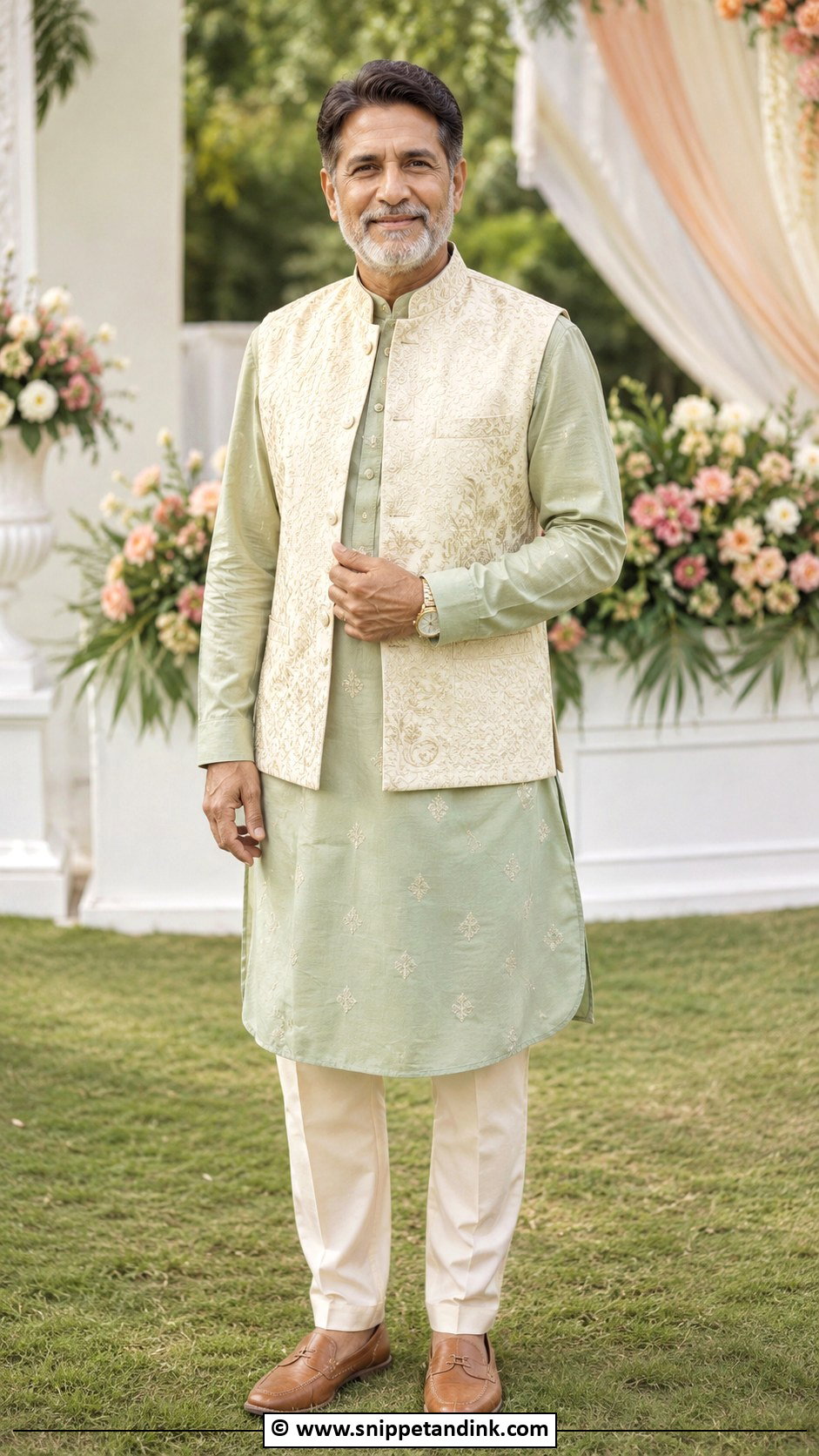
Sage is muted enough to flatter most complexions and photographs well outdoors among plants. Pair the kurta with ivory trousers and a cream or gold embroidered Nehru jacket. I keep the embroidery small, with geometric or paisley motifs, because large-scale work on a jacket makes a man’s torso look wider. Tan mojaris or brown leather sandals finish it. It suits a mehndi, a daytime puja or a garden function.
9. White Kurta Pajama With Printed Nehru Jacket
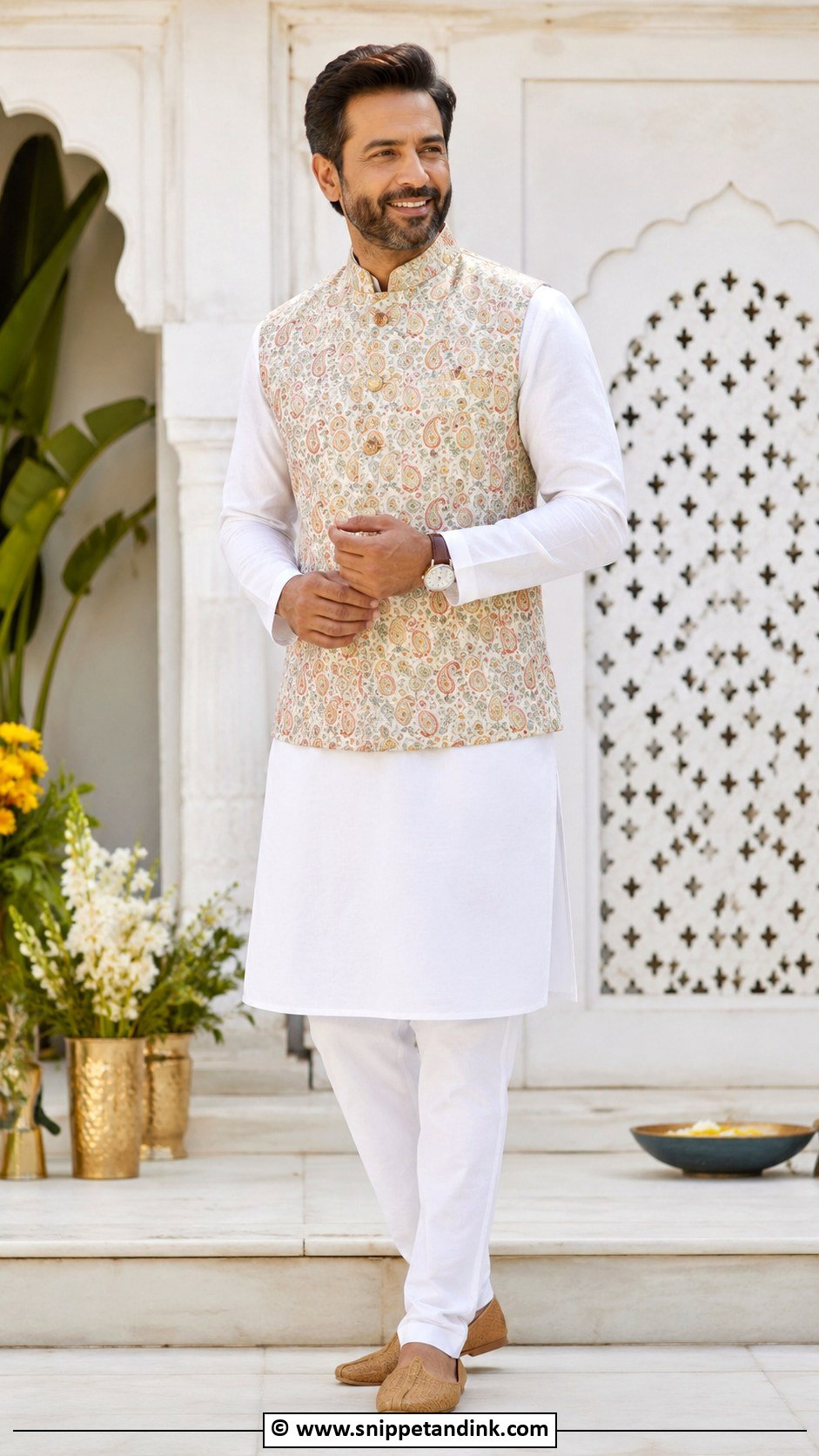
White kurta pajama is the most practical base a father can have, because it takes a different jacket for every pre-wedding function. A printed Nehru jacket in block print, paisley, ikat or soft florals in the wedding colours gives it personality. The jacket should end around the hip and sit neatly at the shoulder; a long jacket on a short man cuts him in half. Tan mojaris and a classic watch complete it. White pajama marks easily when sitting on floor cushions, so keep a spare for the next day.
10. Mustard Kurta With Cream Pajama
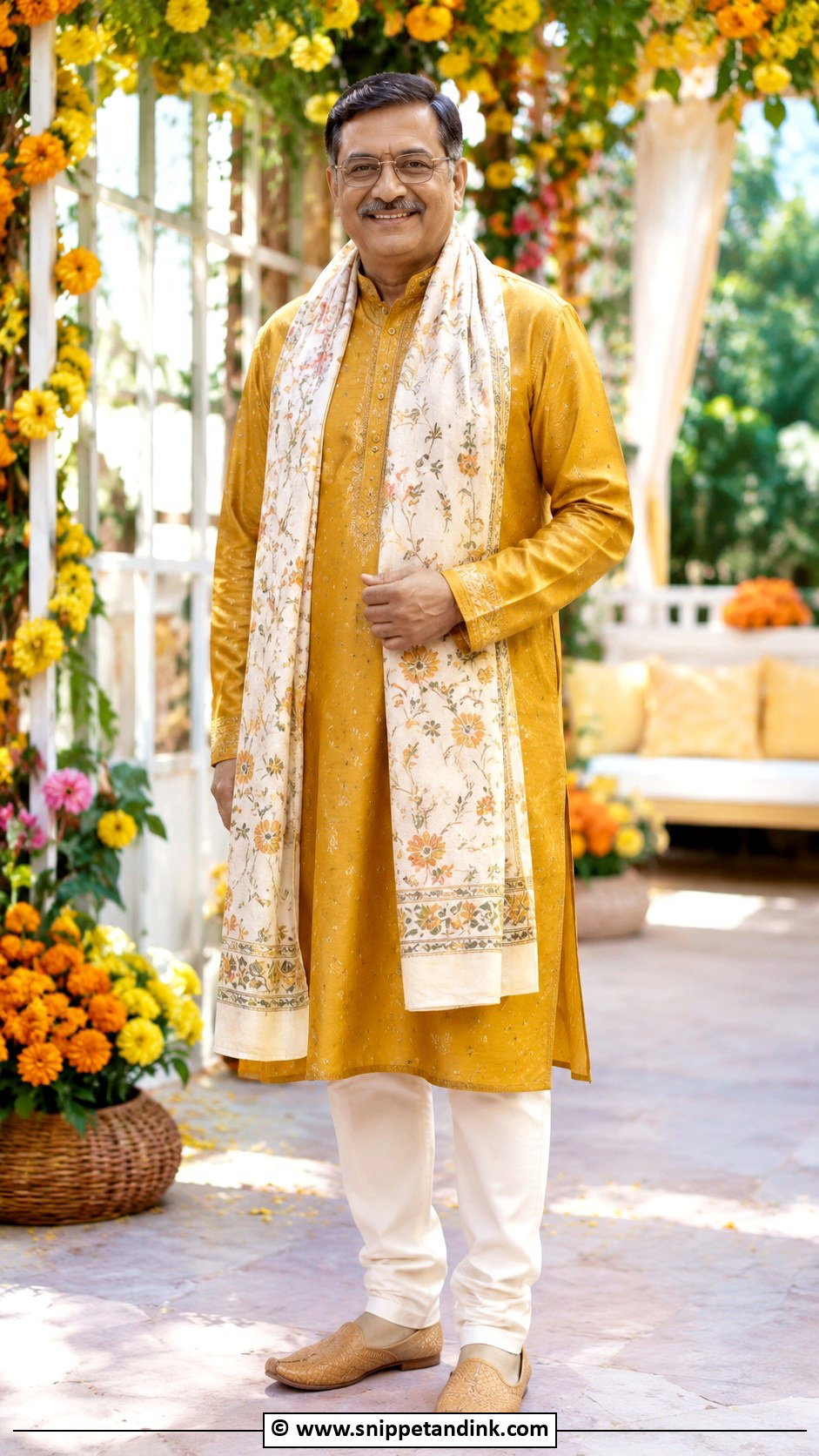
Mustard is the natural haldi colour, and the father is usually in the middle of it. Choose silk, cotton silk or linen silk depending on the heat. Because haldi ceremonies end with turmeric paste on everyone, I advise against delicate fabric or embellishment here; turmeric stains silk and pale cotton badly. Cream pajama or straight trousers, tan mojaris and a light printed stole if it is dressier. A simple kurta with good buttons is enough for this ritual.
11. Beige Kurta With Brown Waistcoat
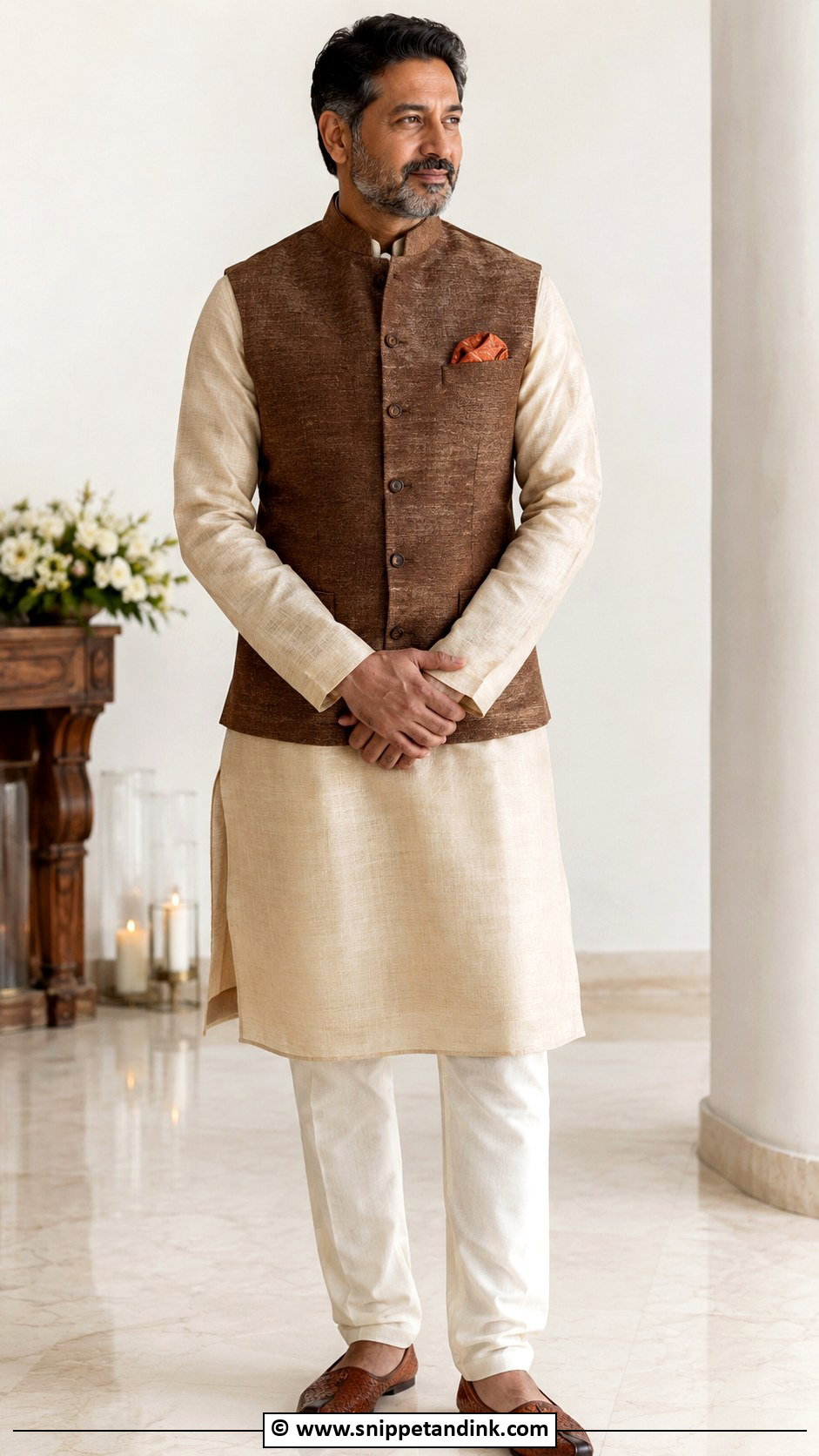
Earthy and mature, a beige kurta with a brown textured waistcoat suits fathers who dislike bright colour. Linen silk or cotton silk for the kurta, raw silk or jacquard for the waistcoat. Ivory trousers and brown mojaris or loafers finish it, and a rust, gold or olive pocket square makes it wedding-ready. The waistcoat should sit flat across the stomach without the buttons pulling; if it strains, I’d go up a size and take in the back rather than leave it tight. It suits smaller ceremonies and destination events.
12. Grey Bandhgala With Black Trousers
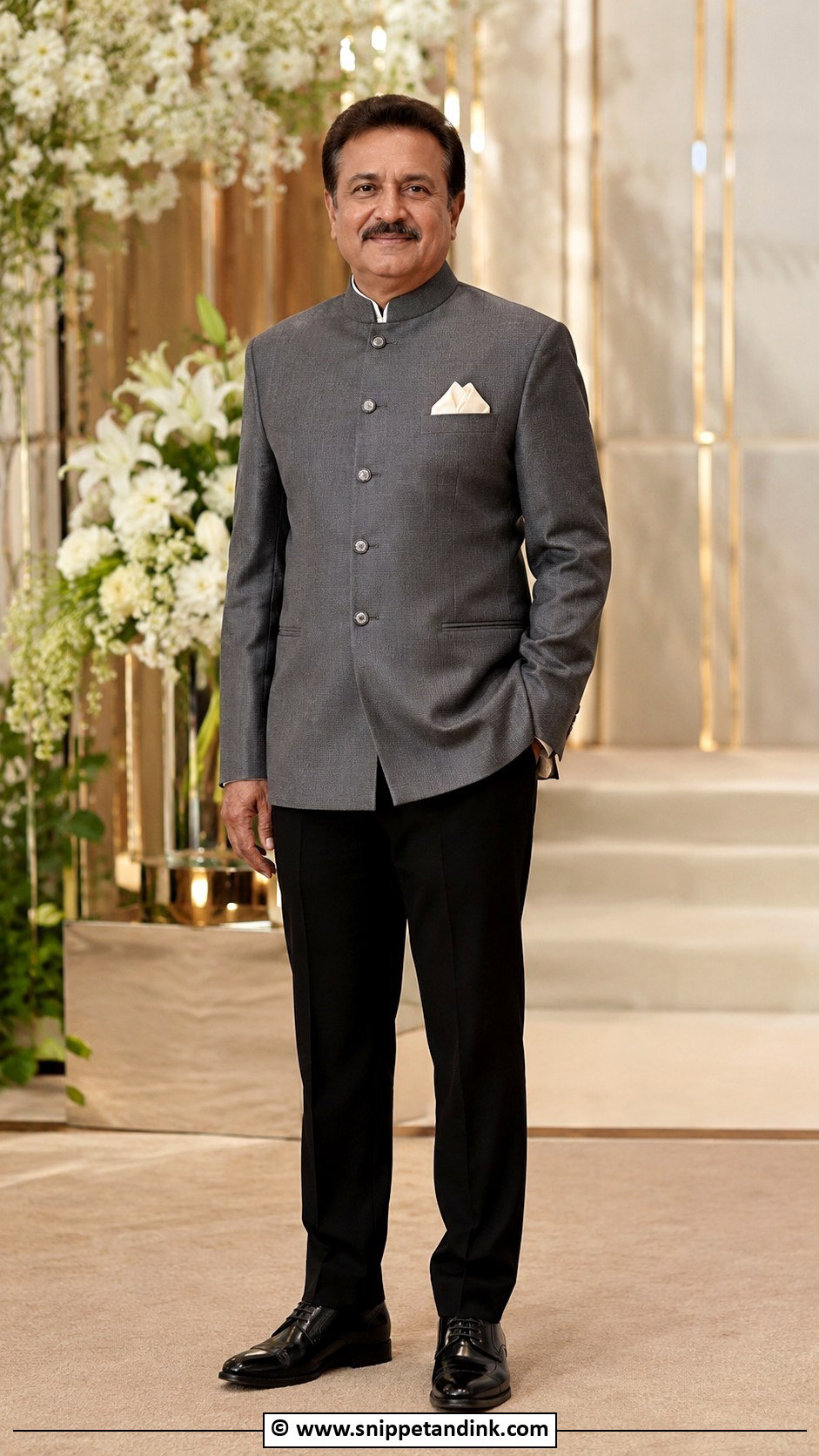
Grey is less severe than black and very forgiving. Charcoal works best in the evening and dove or steel grey in daylight. A textured jacket with matte buttons gives depth without embroidery. Black tailored trousers and black formal shoes, with an ivory or silver pocket square or one in the family’s colour scheme. This is the outfit I’d recommend to a father who feels awkward in heavy Indian wear but still wants something with an Indian collar at the reception or engagement.
13. Bottle Green Bandhgala With Pocket Square
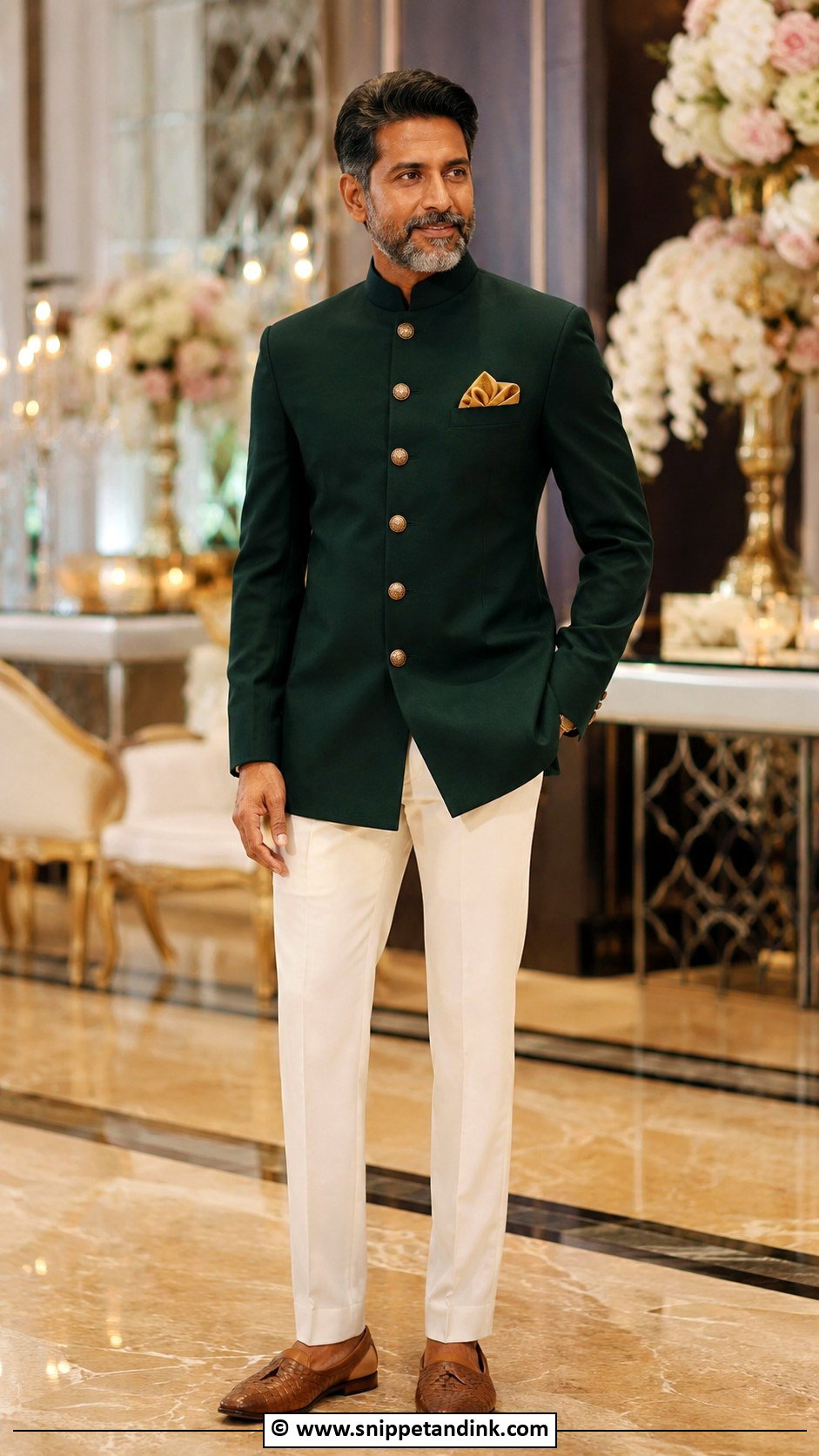
Bottle green is rich without being bright, which makes it a good colour for a father who wants to stand out a little. Black trousers and shoes make it reception-ready, while ivory trousers and mojaris give it a more Indian feel. Add an ivory, gold or maroon pocket square for contrast. Velvet for winter, jacquard for a warmer evening. Bottle green can look almost black under dim banquet lights, so check the shade in the venue’s lighting if you can.
14. Wine Velvet Bandhgala With Trousers
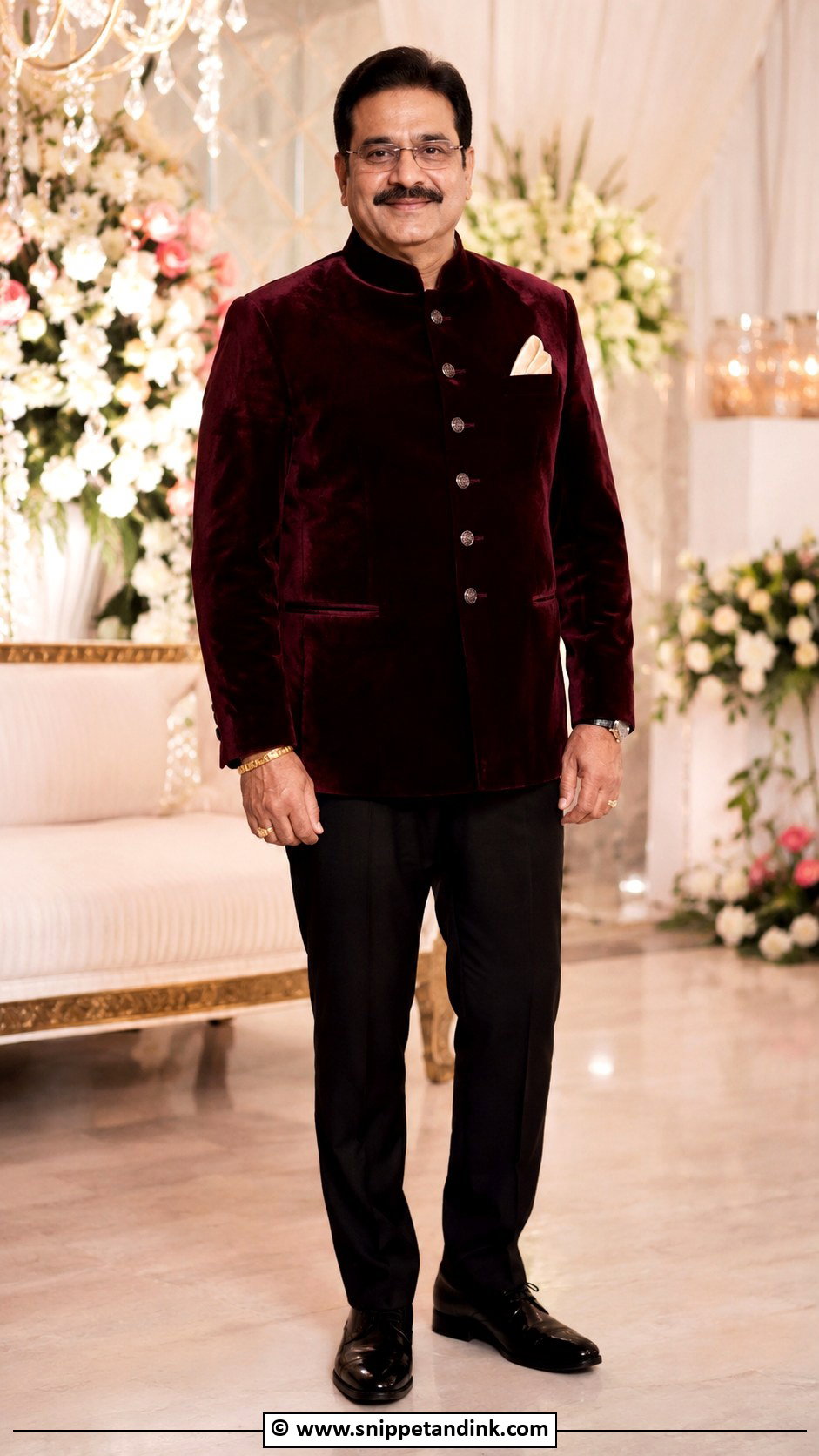
Wine velvet belongs to a winter reception or an indoor sangeet. The pile gives it luxury while the closed collar keeps it formal. Black trousers, black shoes and a simple pocket square; a sleek watch is enough jewellery. Velvet is warm, and I’d never put a father in it for an outdoor summer event, where he will be uncomfortable by the second hour. It sits well beside gold, ivory, blush and emerald palettes.
15. Royal Blue Kurta With Gold Jacket
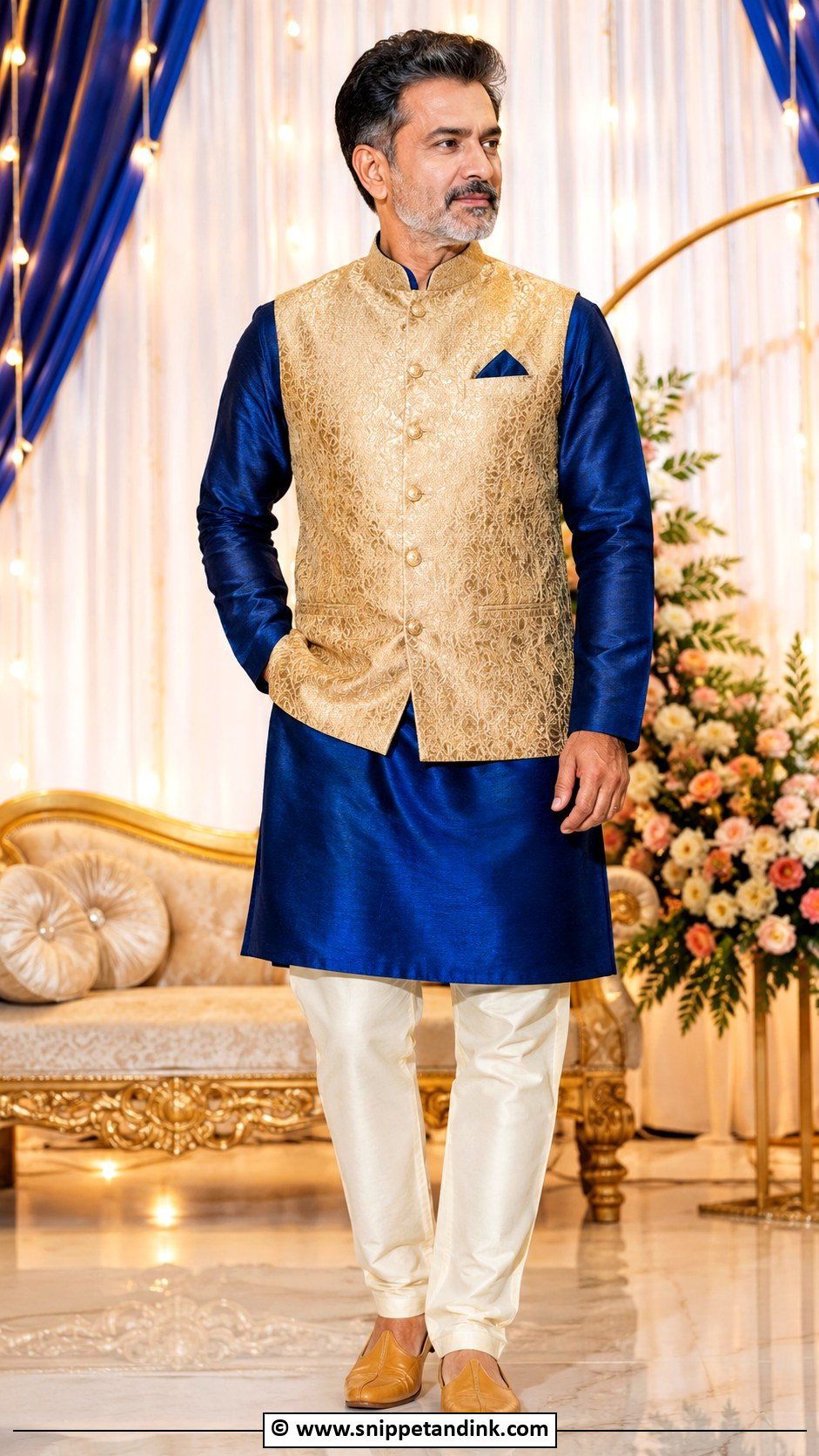
A royal blue kurta with a gold jacket is lively, the kind of outfit fathers wear to dance at the sangeet. Pair royal blue silk with ivory or navy trousers, then add a gold brocade or jacquard Nehru jacket with a neat, tailored shape. The fit is what keeps a strong colour mature; a baggy kurta in royal blue looks careless. Tan or gold mojaris finish it. If the bride’s family is coordinating in jewel tones, it fits right in.
16. Peach Kurta With Ivory Jacket
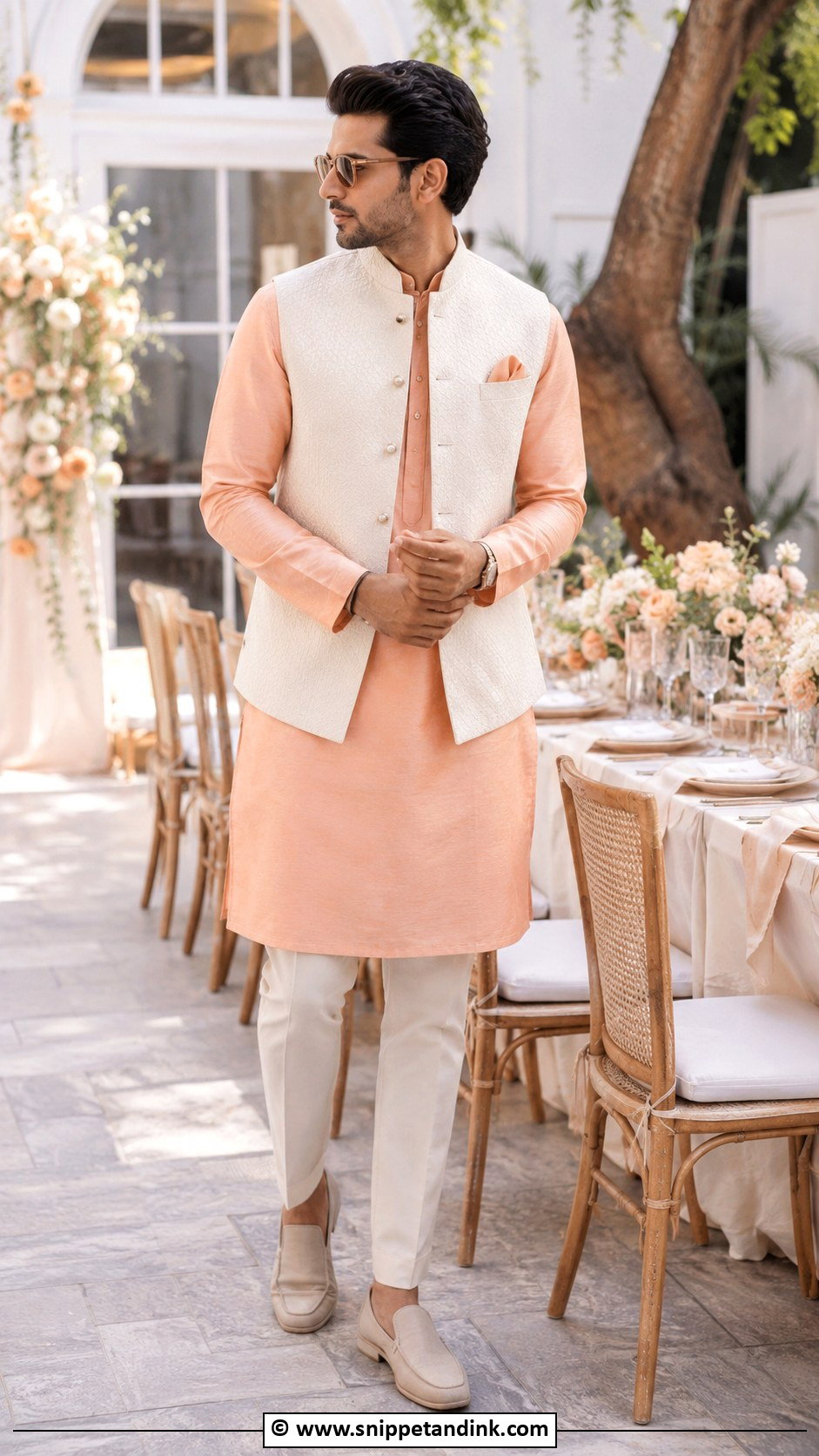
Peach is a quiet celebratory colour that suits spring and summer functions. A silk or cotton silk kurta, ivory straight pants and a textured Nehru jacket with pearl buttons or light weaving make it polished. Tan mojaris or beige loafers keep it balanced. It sits easily beside pastel bridal palettes at a roka, mehndi or family brunch. Peach can drain colour from a very fair face, so I’d hold the fabric against him in daylight before ordering.
17. Powder Blue Kurta With White Pants
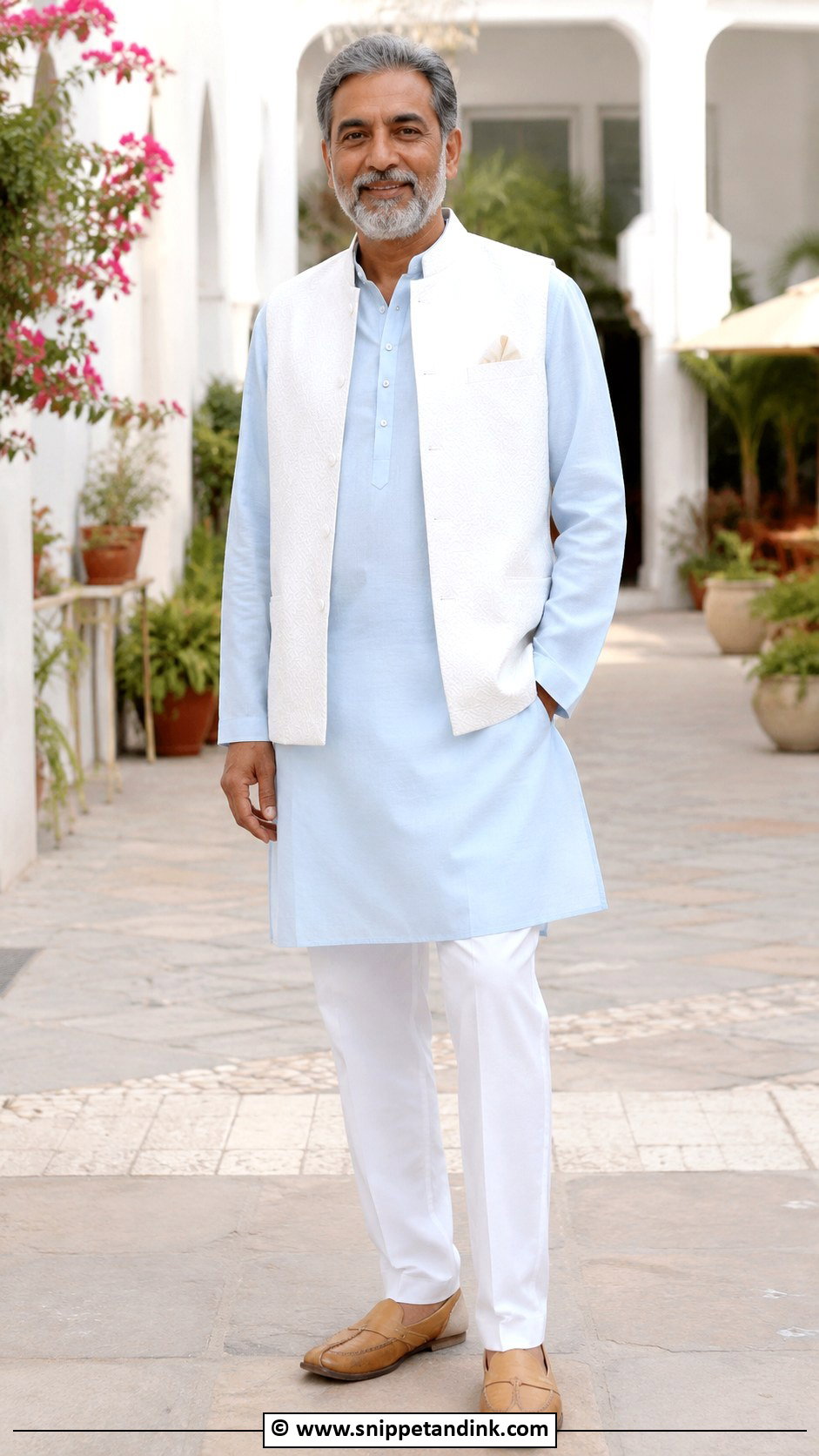
Powder blue is cool and calm, the right colour for outdoor daytime functions and beach weddings. Choose a breathable linen silk, cotton silk or light silk blend, with white straight pants and tan mojaris. A white or silver Nehru jacket makes it more formal if needed. Linen silk keeps its shape better than pure linen, so it still looks pressed after a long ritual. A good choice for a father who likes simple clothes.
18. Printed Silk Kurta With Solid Jacket
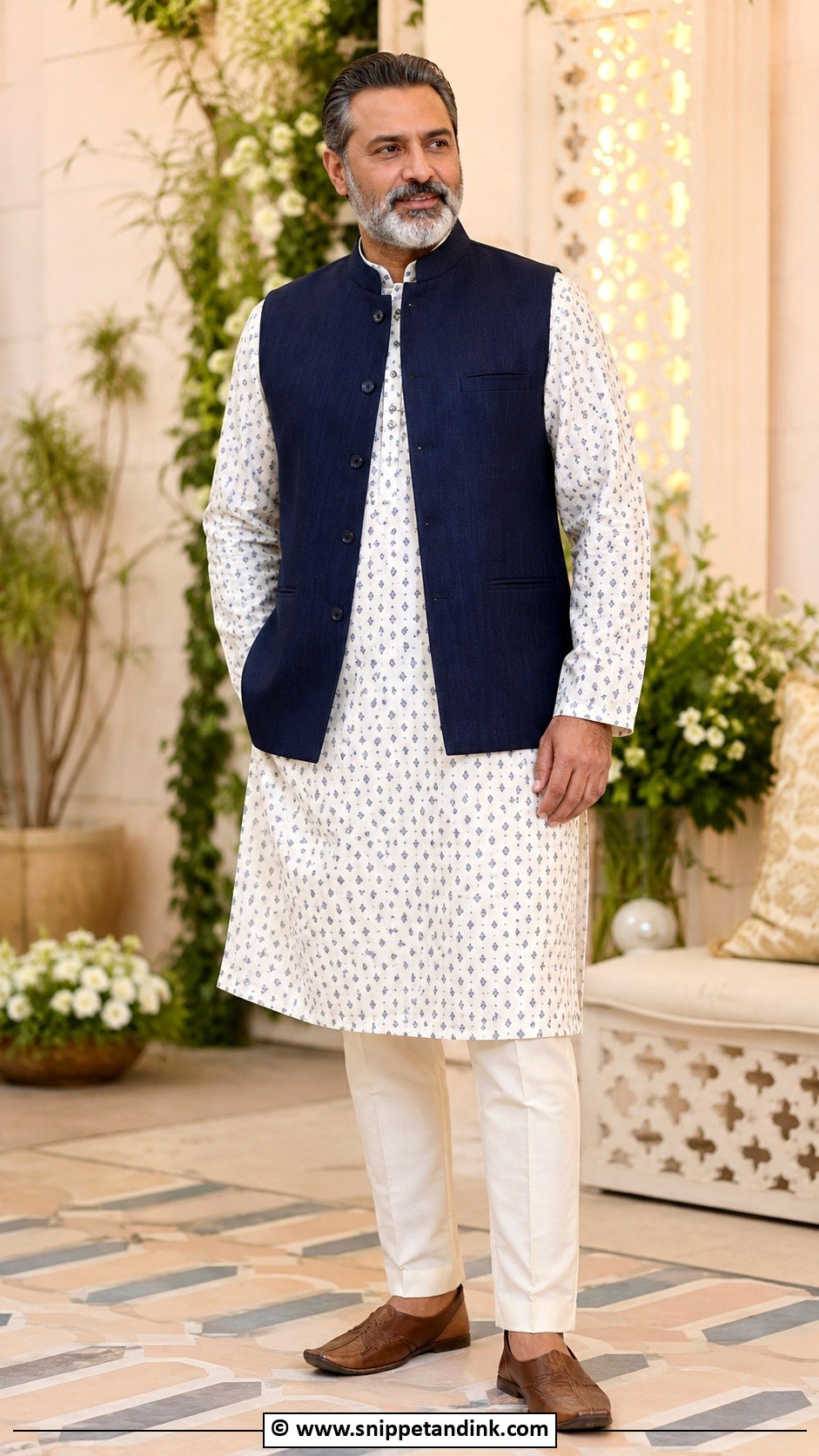
Pattern works for a father when it is small and controlled. A kurta with small motifs, paisley or soft geometric prints, paired with a solid Nehru jacket in one colour taken from the print, such as navy, beige, olive or maroon. Straight pants and mojaris complete it. The rule is simple: if the kurta is printed, the jacket stays plain, and the other way around. It suits the mehndi, sangeet or a welcome dinner.
19. Dhoti Kurta With Angavastram
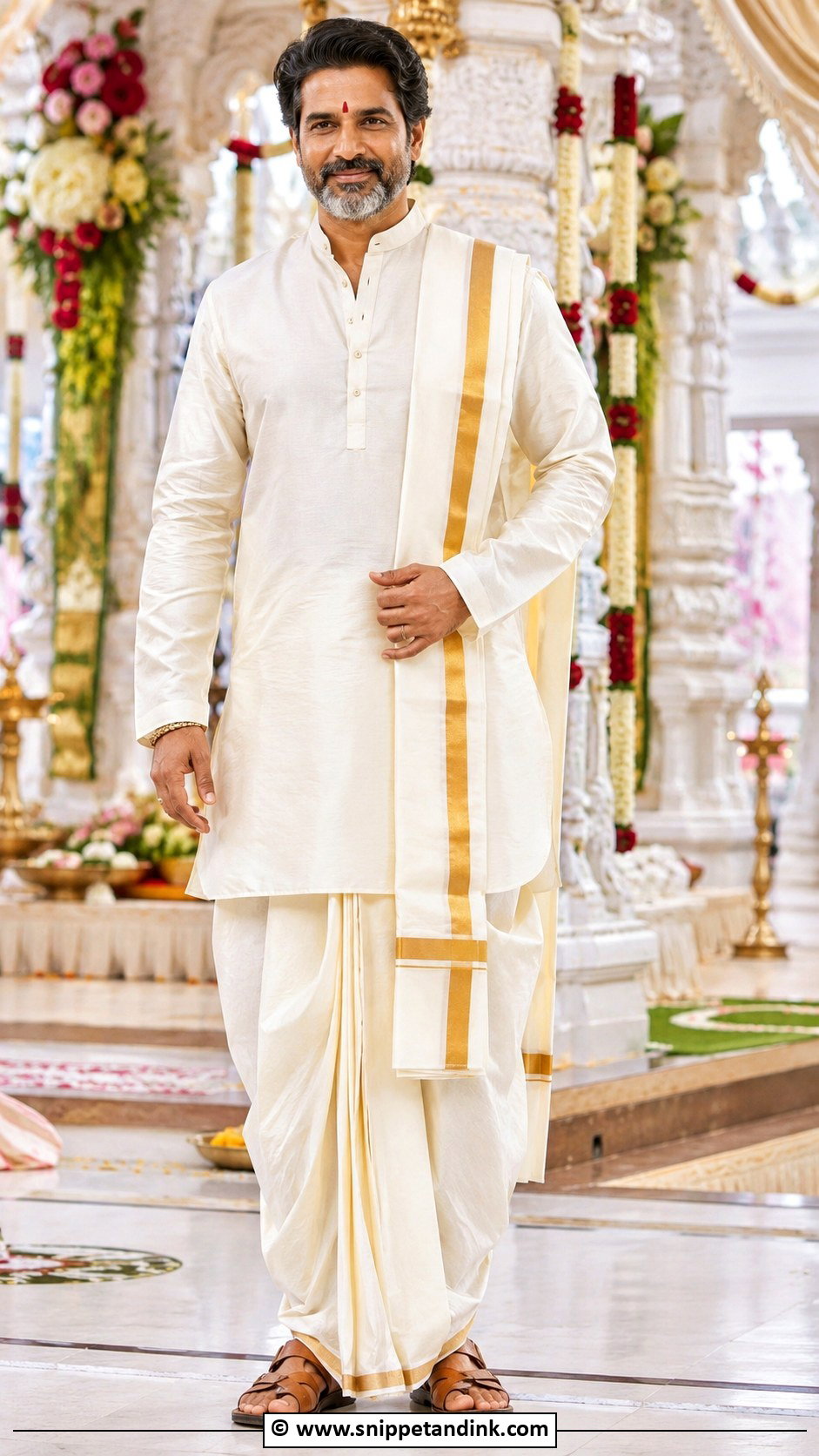
For South Indian and other ritual-focused ceremonies, a dhoti kurta with an angavastram is the most respectful choice. Ivory, cream or pale gold silk for the kurta, a neatly draped dhoti and an angavastram with a gold border. Leather sandals or traditional footwear depending on the venue. If he isn’t used to wearing a dhoti, a pre-stitched one or a professional draper on the morning saves him worry; a dhoti that loosens during the rituals is the last thing a father needs. Simple in shape, powerful in meaning.
20. Silk Mundu With Kurta
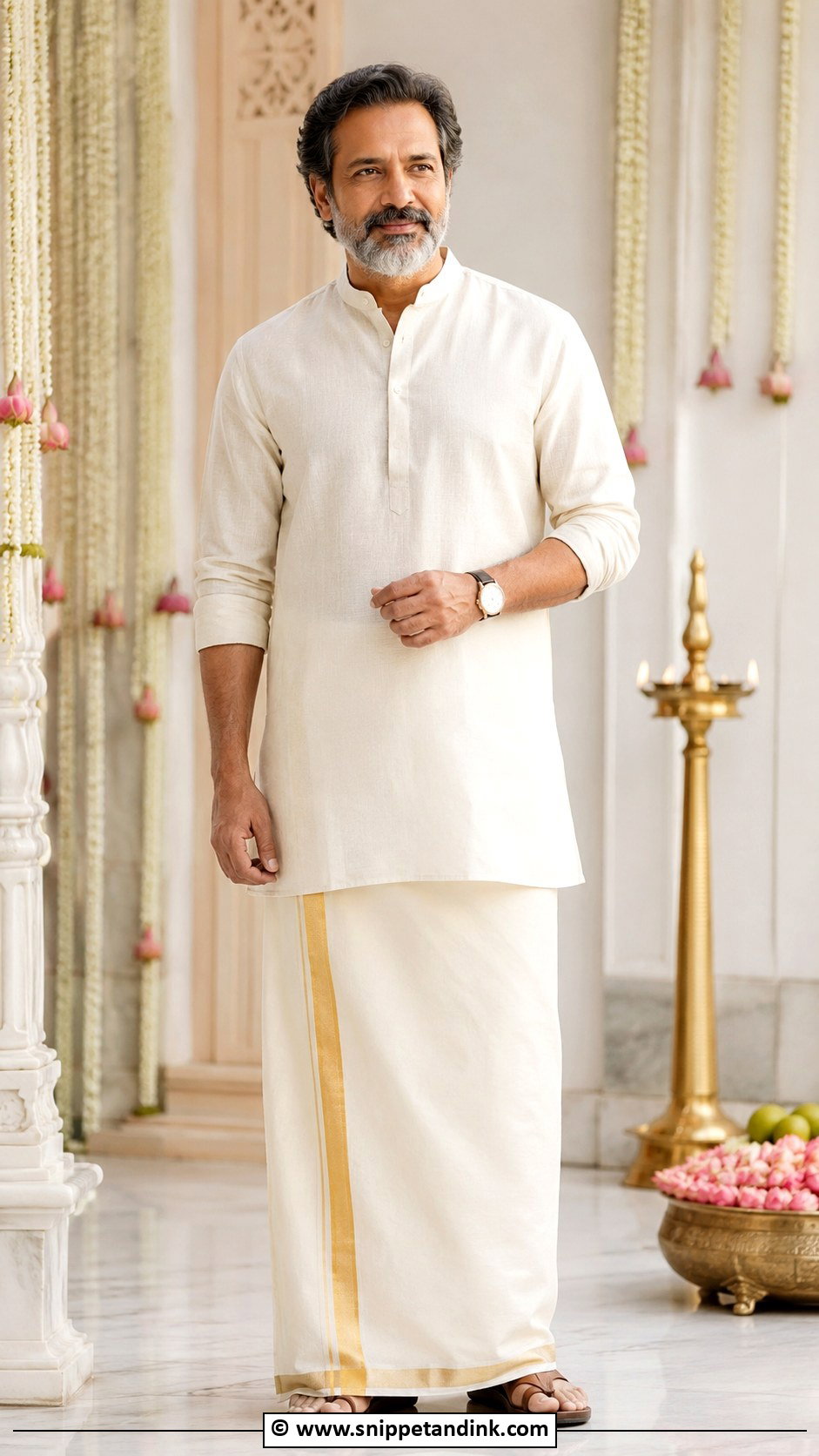
A silk mundu with a kurta is the natural choice for Kerala weddings and temple ceremonies. An ivory or cream mundu with a gold border, paired with a matching or soft pastel kurta. A short Nehru jacket adds formality if the event calls for it. Traditional sandals and a neat watch complete it. Silk mundus can slip at the waist, so I suggest a belt or a well-practised tuck before he walks to the mandapam. Clean lines and good cloth carry this look without any embellishment.
21. Pathani Suit With Waistcoat
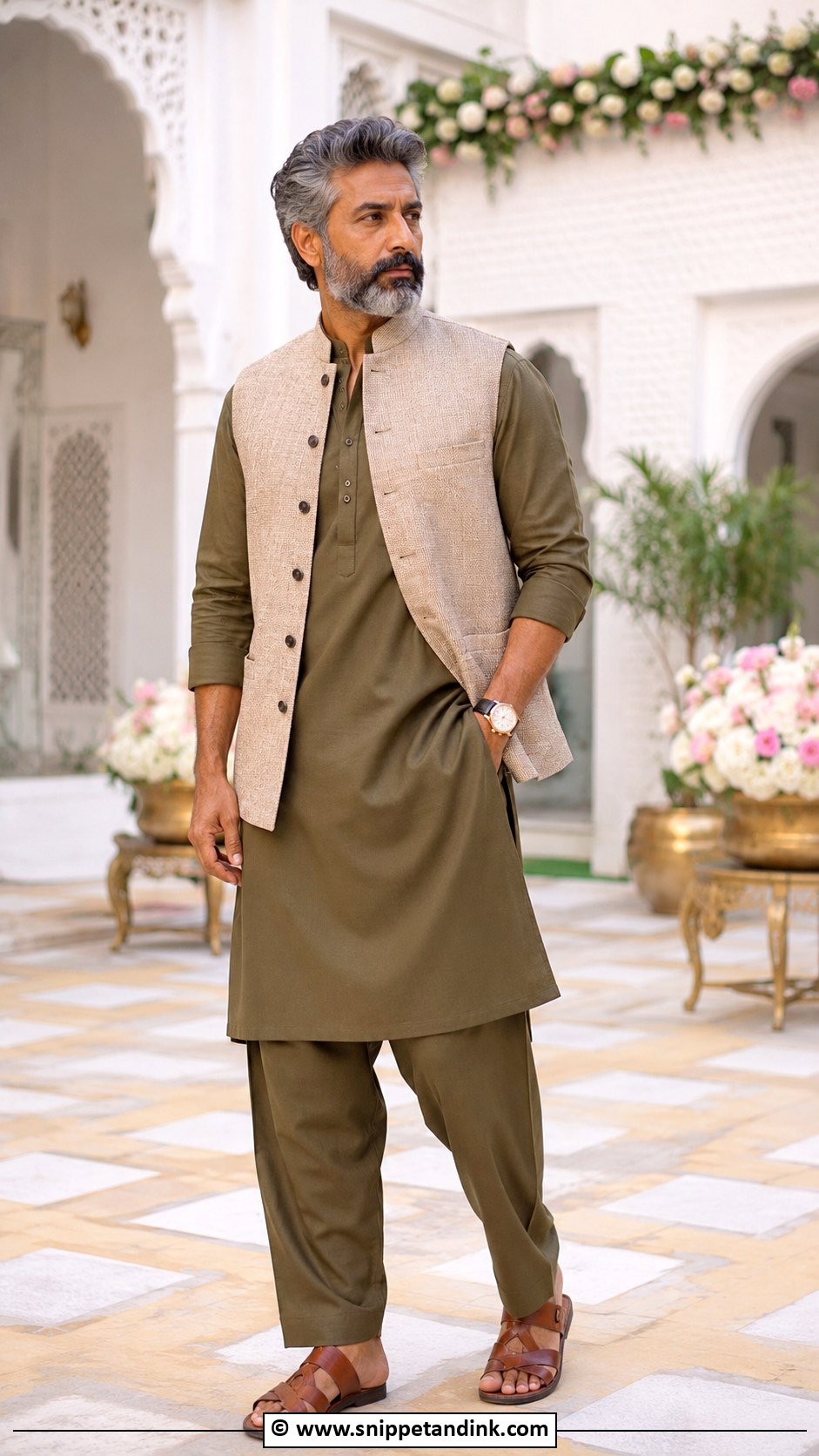
A Pathani suit with a waistcoat is relaxed and masculine, made for mehndi, family dinners and destination events where comfort matters. Beige, navy, olive or charcoal for the Pathani, with a contrast waistcoat in jacquard, raw silk or a subtle print. Leather sandals, mojaris or loafers depending on the venue. Pathanis are cut long and loose, so the waistcoat is what gives shape; without it, the outfit looks like daywear. Keep colours refined.
22. Indo Western Jacket With Draped Kurta
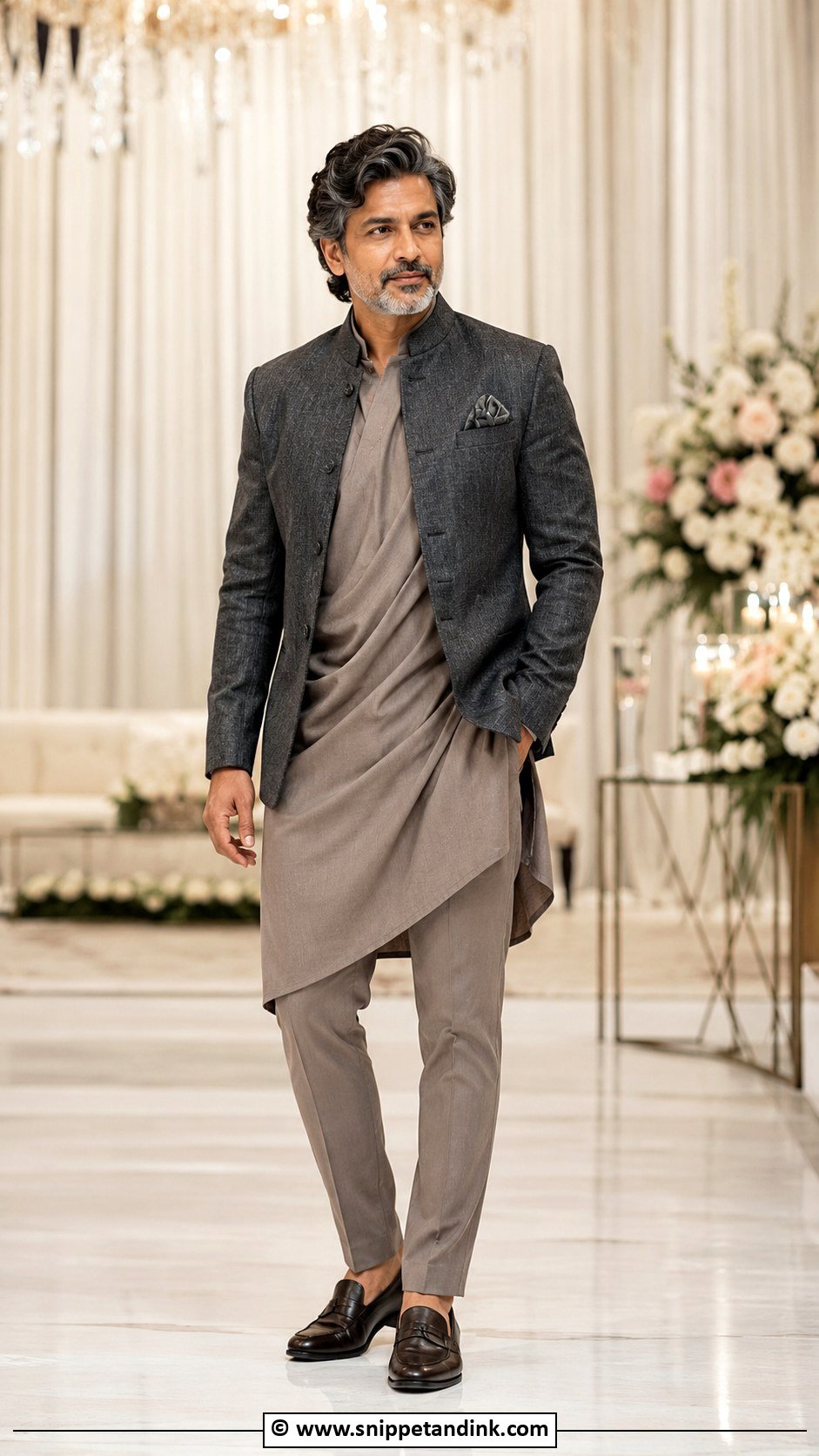
A draped kurta under a structured jacket has movement and suits a father who enjoys fashion. Muted shades like charcoal, taupe, navy or ivory keep it mature. Slim trousers and formal loafers or mojaris. It works at receptions, sangeet nights or destination events. I avoid extreme asymmetric cuts and shiny fabric for the bride’s father, as he will look at these photos for decades and trendy pieces date quickly.
23. Classic Tuxedo With Indian Pocket Square
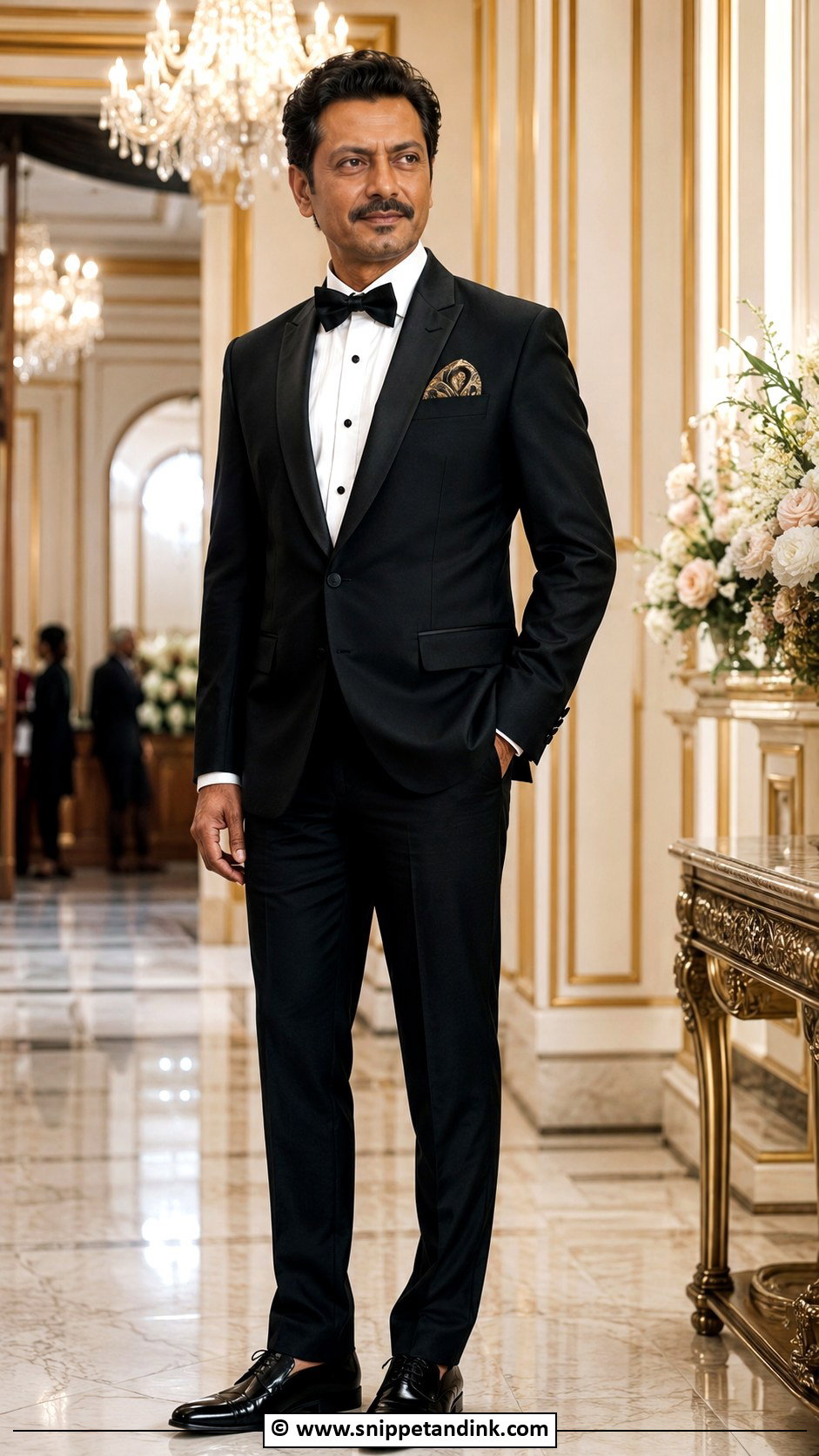
Some fathers simply feel most themselves in Western formalwear, and a black tuxedo at a black-tie reception is the right answer for them. Crisp white shirt, black bow tie and polished formal shoes. The Indian touch comes from a pocket square in silk brocade, paisley or a colour from the bride’s outfit. The tuxedo must fit perfectly through the shoulders, sleeves and trouser length, because a rented tuxedo that is slightly big looks worse than a good bandhgala.
24. Linen Kurta With Tailored Blazer
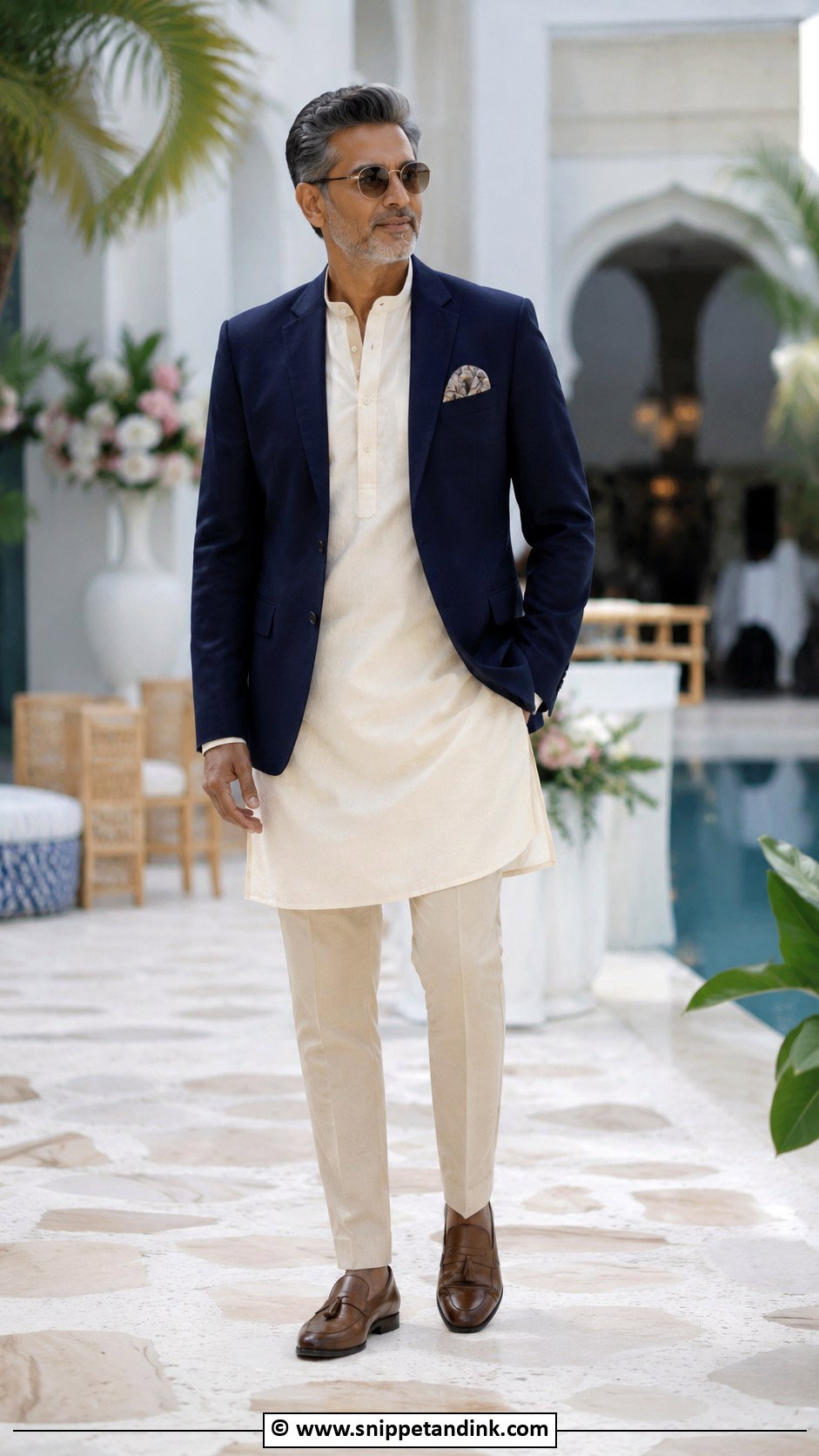
A linen kurta with a tailored blazer is my answer for beach resorts and summer welcome dinners. Neutral linen in ivory, beige or pale blue, with slim trousers and a tailored blazer in navy, tan or grey for structure. Loafers suit it better than heavy traditional shoes. The kurta should be cut shorter than usual, ending around mid-thigh, so it doesn’t hang far below the blazer hem. Keep the blazer plain and let the cloth do the work.
25. Coordinated Father Of The Bride Sherwani
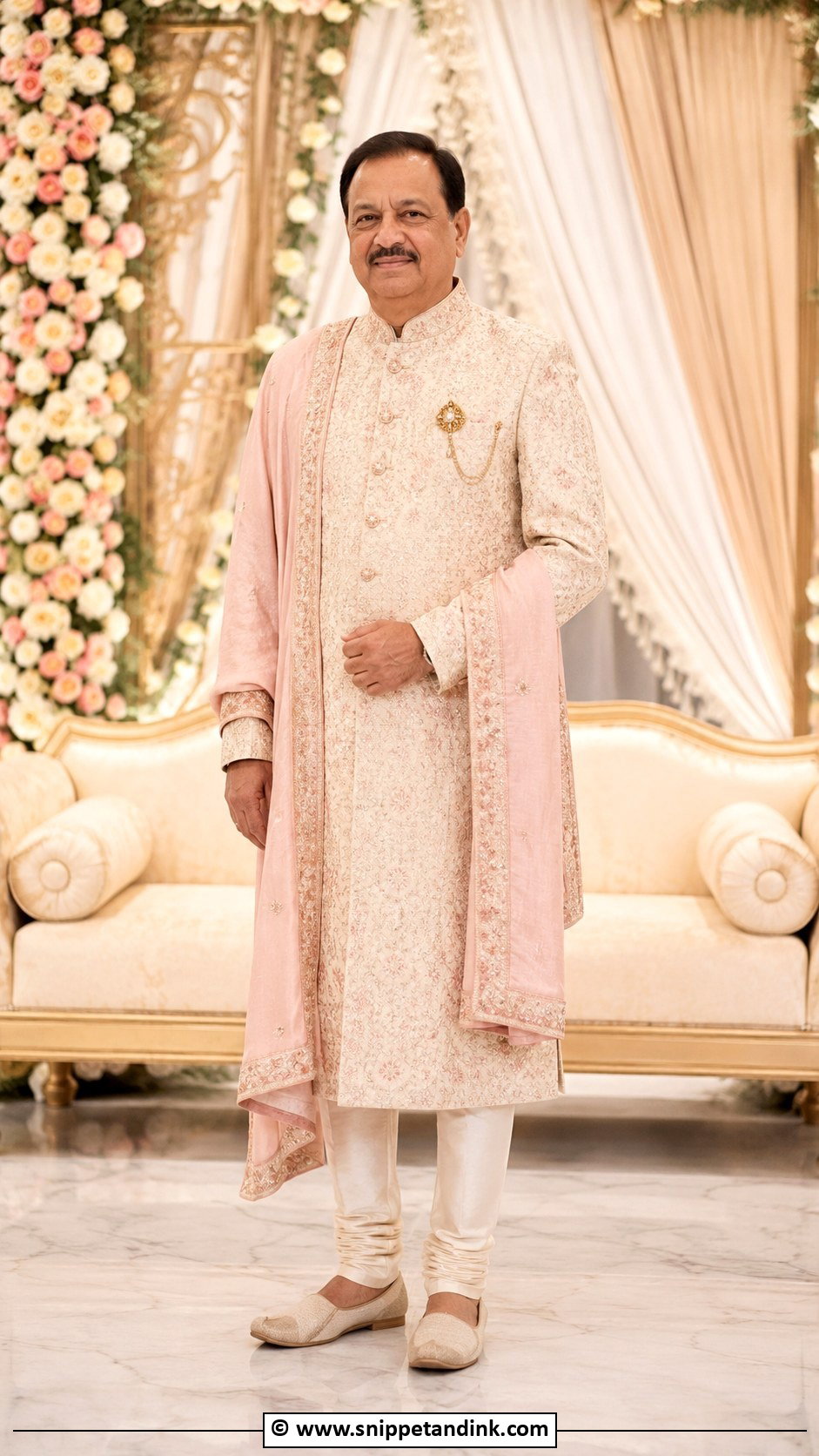
A coordinated sherwani links the father to his daughter without copying the groom. Start with ivory, beige, grey or a pastel, then pick up her colour in the stole, pocket square, safa, buttons or embroidery thread. I bring a fabric swatch from the bride’s lehenga or saree to the tailor so the shade is matched by eye, not from a phone photo. Churidar, mojaris and one refined accessory complete it. Keep it subtle, a shared thread rather than a matching outfit.
The Kanyadaan Is Long, Low and Close to a Fire
In many ceremonies the bride’s parents sit through a large part of the rituals, often cross-legged on a low platform near the sacred fire. Fathers forget to plan for this, and it is where most outfit trouble happens.
A fitted churidar with no stretch can cut into the knee when he sits cross-legged for an hour or more. I’d have him sit on the floor at the final fitting and widen the knee if needed. A stole or angavastram should be pinned so it can’t drift toward the fire, and synthetic stoles are a worse risk near flame than silk or cotton. Heavy brocade traps heat beside the havan, so if the ceremony is in daytime, a lighter achkan may be kinder than a full sherwani.
Older fathers often find getting up from the floor stiff after a long sitting. Side slits on a sherwani give him room to rise without the hem pulling tight, and soft mojaris rather than new, rigid ones save his feet for the vidaai and reception still to come. Break in any new shoes at home in the week before.
For a summer wedding, ask whether the family is happy for him to swap the sherwani for a lighter kurta and jacket after the pheras. Plenty of fathers change before the vidaai and dinner, and a fresh outfit helps him look as composed in the late photos as he did at the start.
Fit and Colour Harmony Over Embellishment
Dressing the bride’s father well is about more than formality. A sherwani suits the main ceremony, a bandhgala or tuxedo the reception, and kurta sets, Nehru jackets, dhoti outfits and Indo-western pieces carry him through the pre-wedding functions. I’d spend on fit and fabric first, settle the colours with the bride’s outfits, and keep accessories restrained. When he is comfortable, it shows in every blessing, every photograph and that walk beside his daughter.
You'll Like These Ideas:


Leave a Reply