
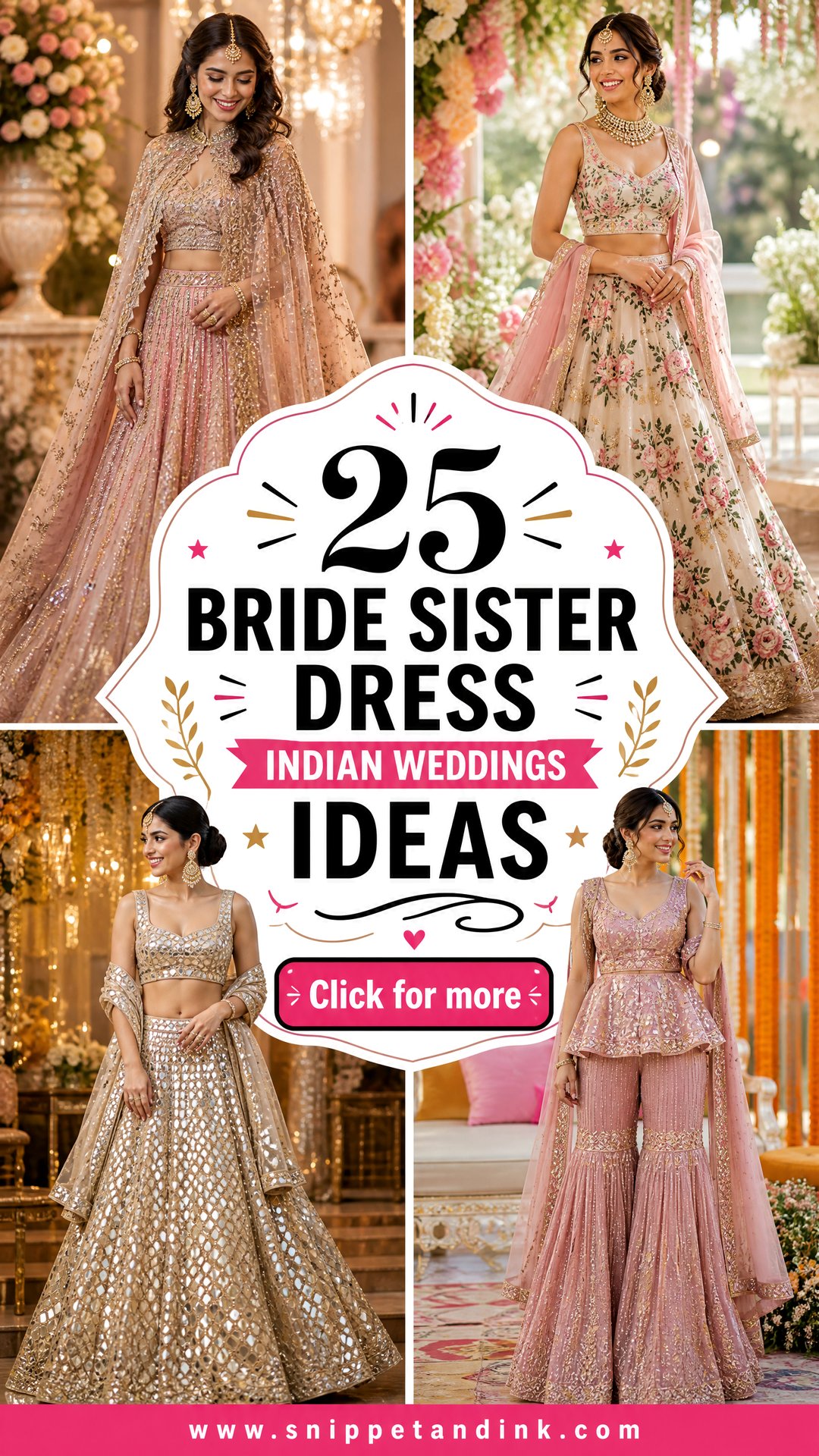
Dressing the bride’s sister is a different job from dressing the bride. She’s in half the family portraits, she’s usually carrying something, and she’s on her feet from the haldi to the vidaai. So when I plan her wardrobe I start with what each function asks of her body: sitting cross-legged at the mandap, dancing at the sangeet, running to fetch the ring at the reception. Lehengas, sarees, shararas, Anarkalis and modern draped sets all have a place. The trick is matching each one to the right event, picking colours that sit next to the bride’s outfits without echoing them, and keeping the embroidery a step below hers. Here are the outfits I’d build that wardrobe from.
A Function-by-Function Plan Before You Buy Anything
Most sisters shop outfit by outfit and end up with three heavy lehengas and nothing for the haldi. I sit down with a list of the functions first and assign a weight to each one: light, medium or full ceremony. That stops the wardrobe from being all one note.
- Haldi: cotton or cotton silk you’re happy to stain. Turmeric is hard to shift from light silk.
- Mehendi: short or three-quarter sleeves, light dupatta, colour. You’ll sit with wet paste on your hands for an hour.
- Sangeet: something you can dance in. Shararas, dhoti sets, pre-draped sarees.
- Wedding ceremony: the richest outfit, a step below the bride, comfortable for sitting on the floor near the mandap.
- Reception: evening fabrics like sequins, velvet in winter, a gown if the dress code allows.
Once that list exists, share it with the bride. She’ll usually have opinions on which colours she wants around her in the main photos, and it’s far easier to agree before you’ve paid for anything.
1. Bride Sister Lehenga For Wedding
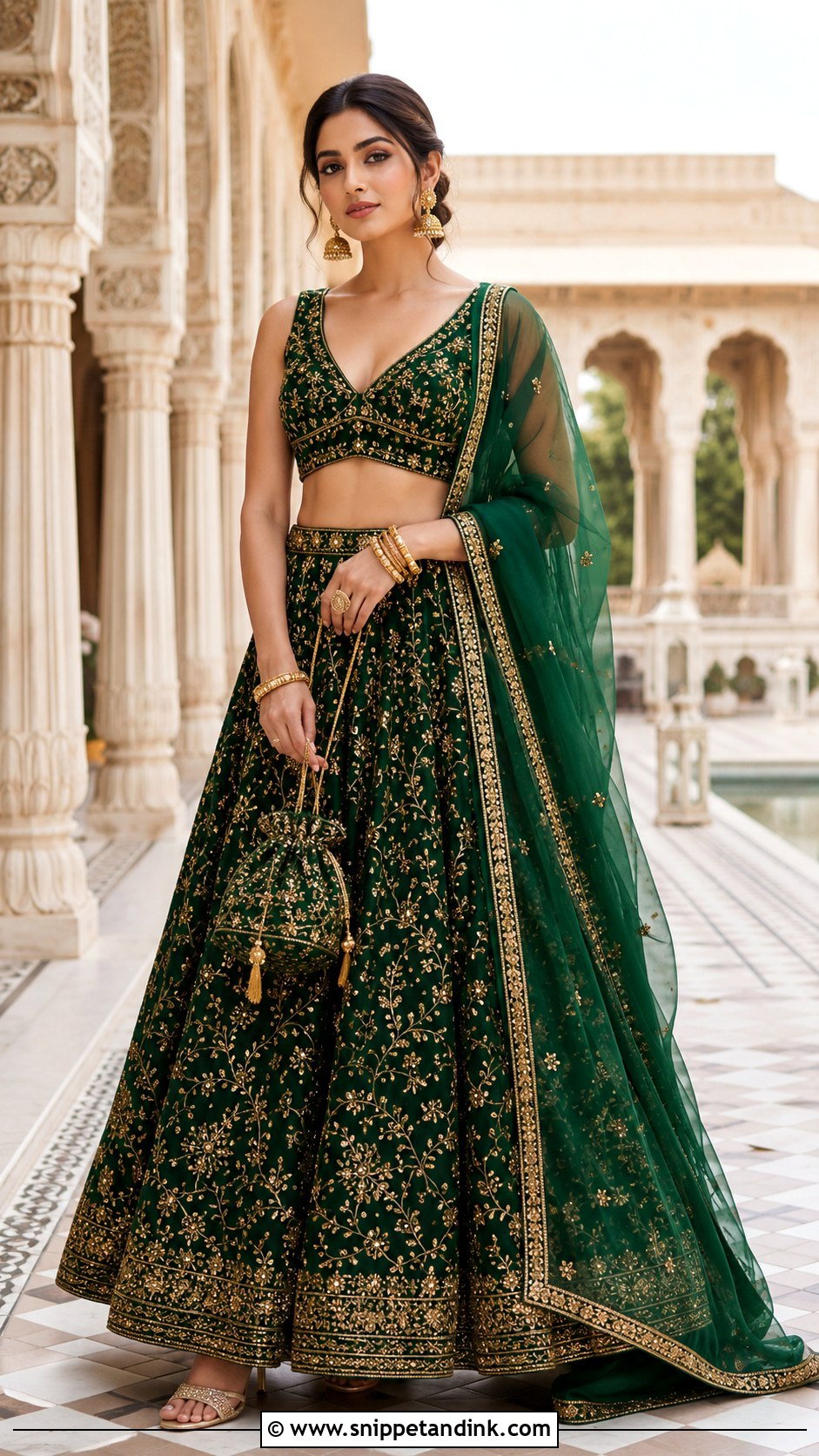
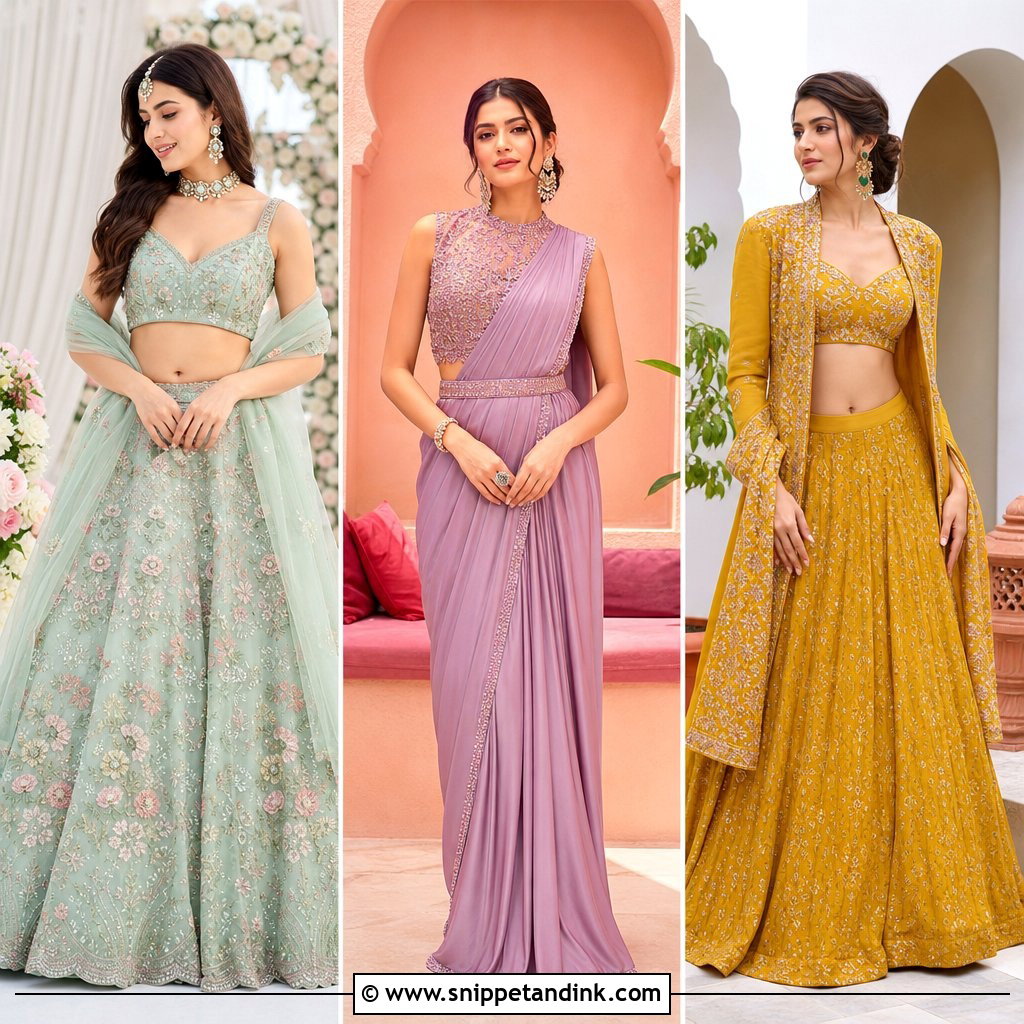
For the main ceremony a lehenga is still the strongest choice, but I keep the work lighter than the bride’s. If her skirt is fully embroidered, the sister’s might carry a heavy border and scattered motifs on the body. Silk, georgette, organza and raw silk all hold that kind of embroidery well. Emerald, royal blue, wine, teal and deep purple stand out in group photos. The rule I never bend: if the bride is in red or maroon, the sister isn’t. Ask what shade the bride’s lehenga is before you buy, not after. A fitted blouse, a dupatta pinned at the shoulder so it doesn’t slide during rituals, statement earrings and bangles complete it.
2. Bride Sister Saree For Indian Wedding
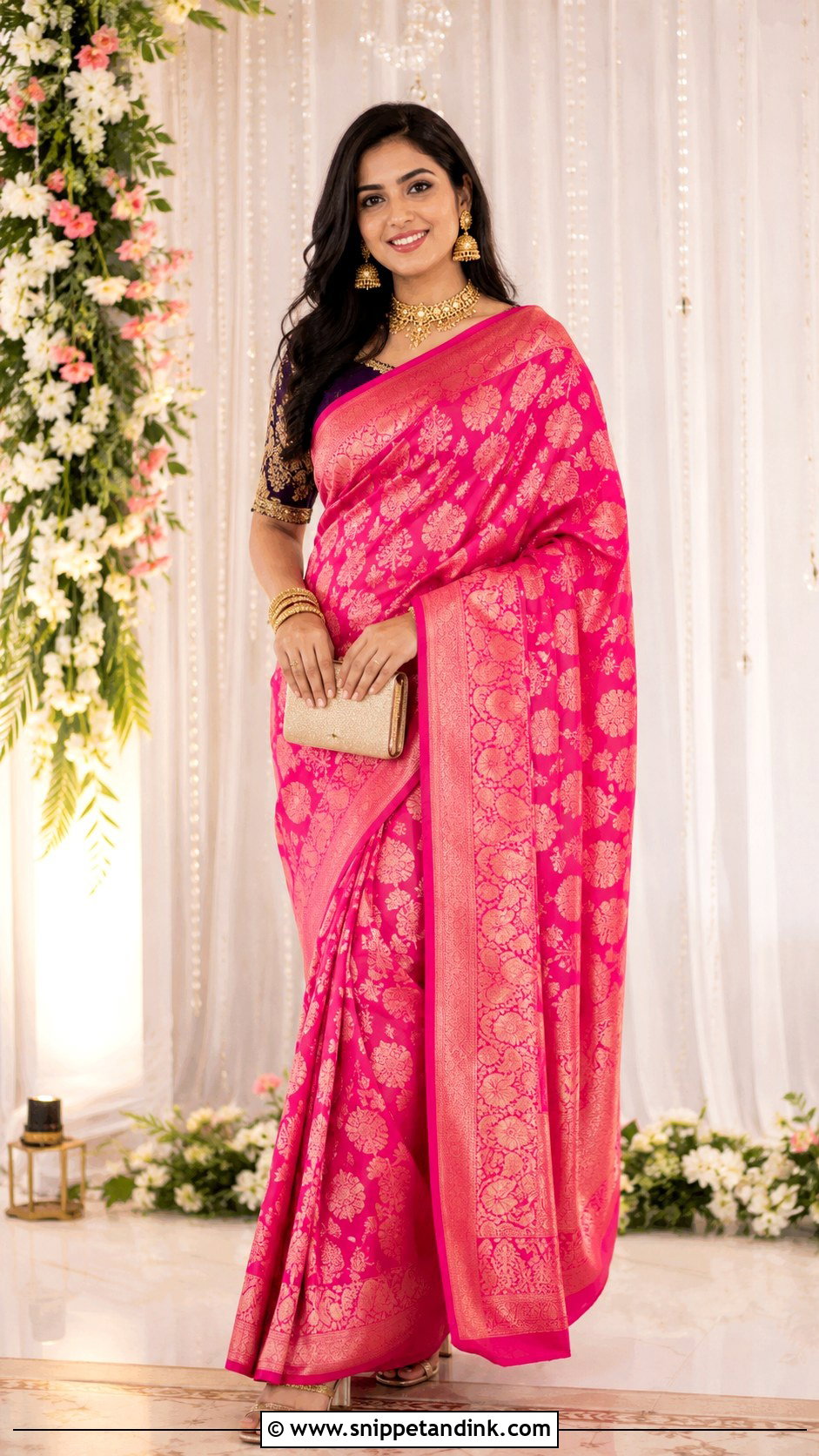
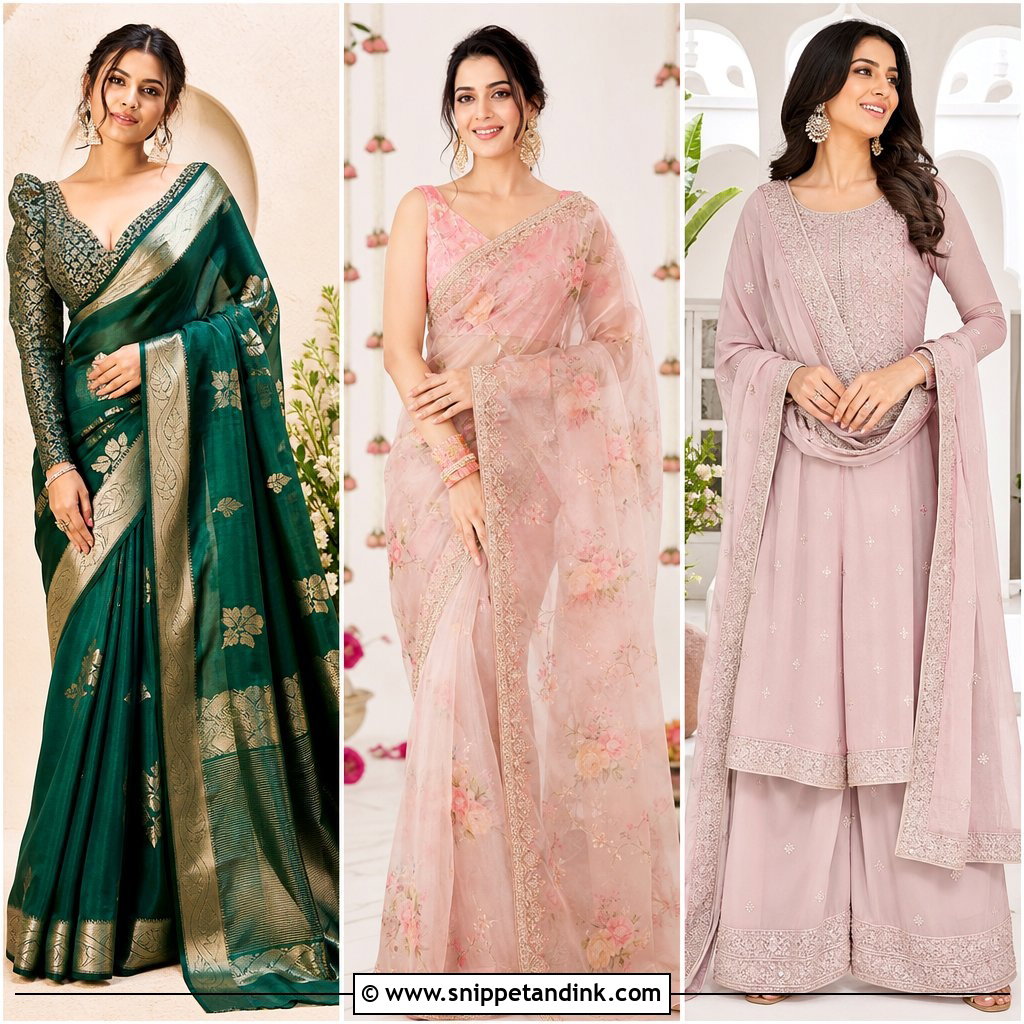
A saree looks graceful on almost every frame, but only if it’s draped well and stays that way. For the sister I like Banarasi silk, tissue, organza or embroidered georgette, in shades like rani pink, mustard gold, bottle green or mauve. The blouse matters more than people expect. Elbow sleeves sit better under a heavy pallu than sleeveless, and a deep back looks great in portraits but needs a blouse that’s properly lined so it doesn’t gape when you lean over to help the bride. A choker, jhumkas and loose waves finish it. If you can’t drape your own, book someone, and ask them to use more pins than feel necessary.
3. Bride Sister Sharara Set
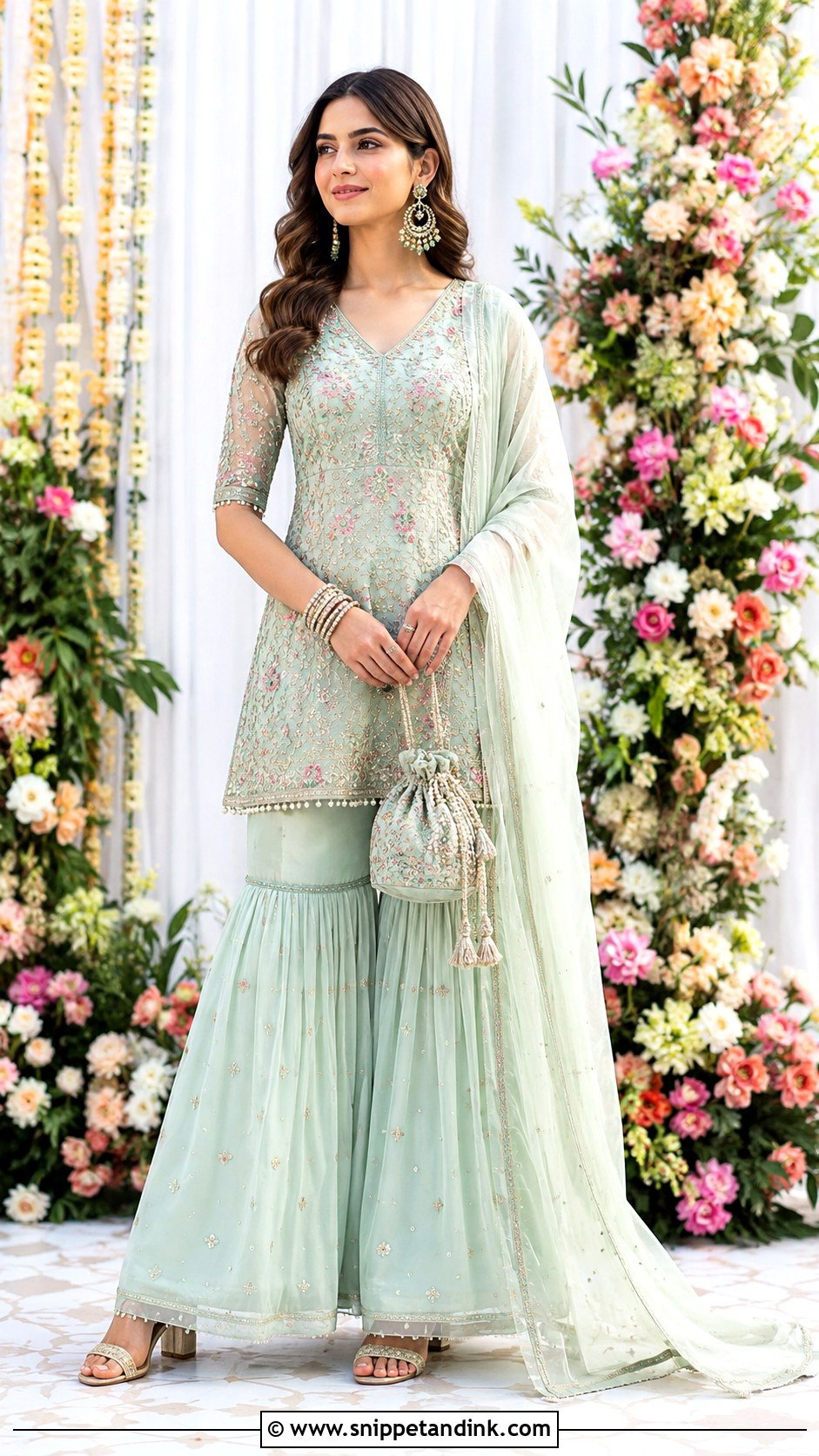
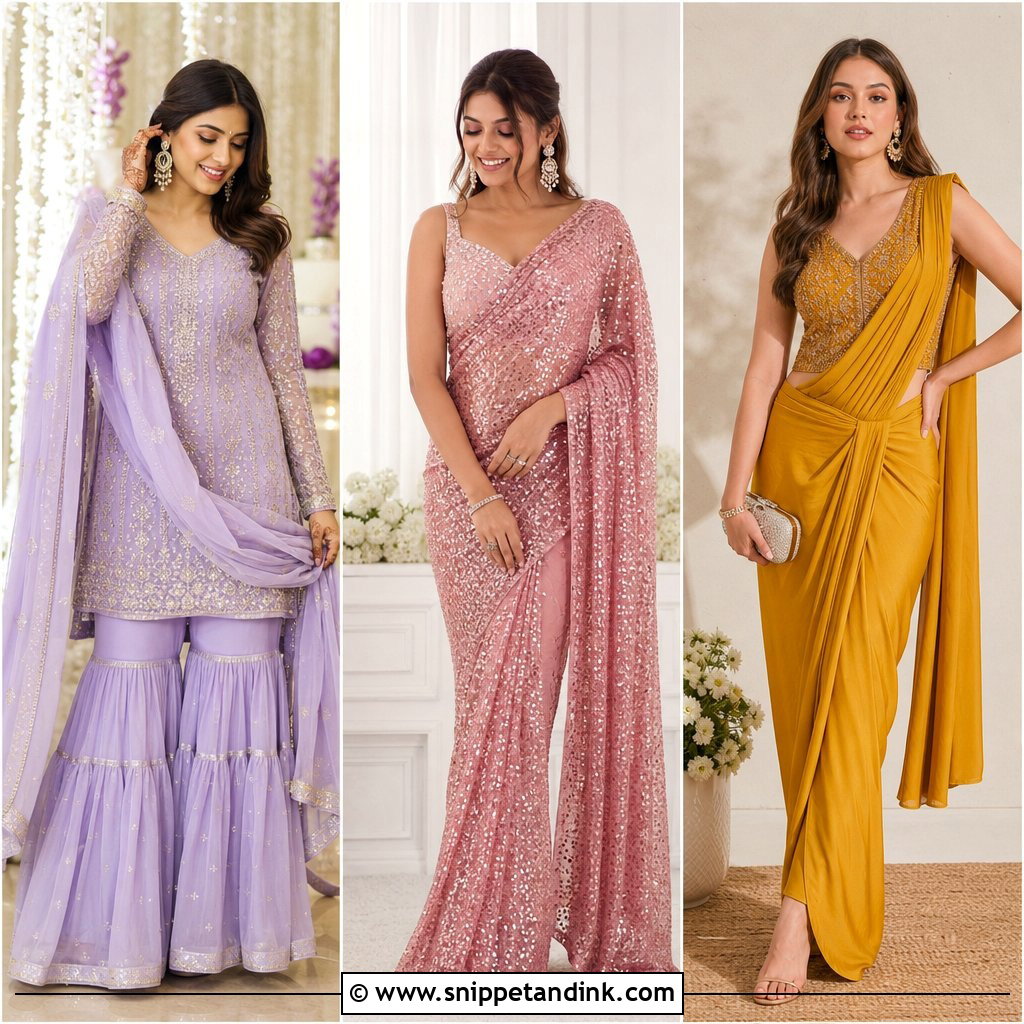
Shararas are the outfit I recommend most to a sister who’ll be helping all day. The flared pants give real movement and you can’t trip over them the way you can a lehenga hem. A short kurti or peplum top balances the width of the pants, and a matching dupatta keeps it traditional. Mirror work, gota patti or thread embroidery read festive. Peach, mint and powder blue suit daytime; navy, emerald and magenta hold up under evening lights. One thing to check: some shararas are cut so wide that they catch on stairs, so walk up a step in them at the trial. Chandbalis, block heels and a potli bag finish it.
4. Bride Sister Anarkali Suit
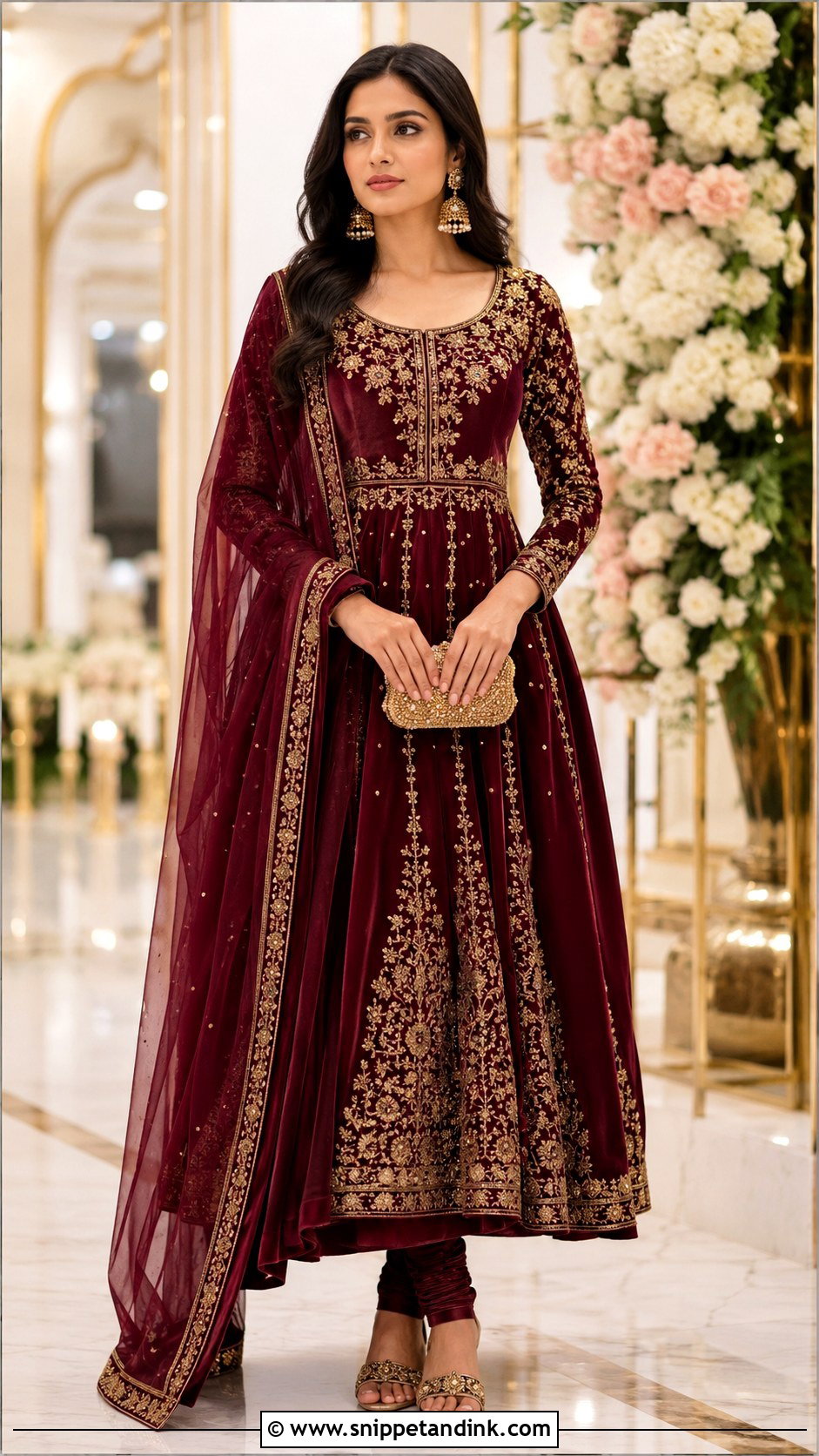
An Anarkali needs almost no adjusting once it’s on, which is why I suggest it to sisters who’ll be busy. The floor-length flare moves well and covers comfortably. Choose fabric by season: chiffon and georgette for summer, silk for spring, velvet for winter evenings. Keep embroidery to the neckline, sleeves and hem so the panels still swing. The fit spot to watch is the bust seam. If it sits too low, the flare starts in the wrong place and the outfit looks shapeless in photos. Pair it with a churidar or slim pants, a light dupatta and jhumkas.
5. Bride Sister Gharara Outfit
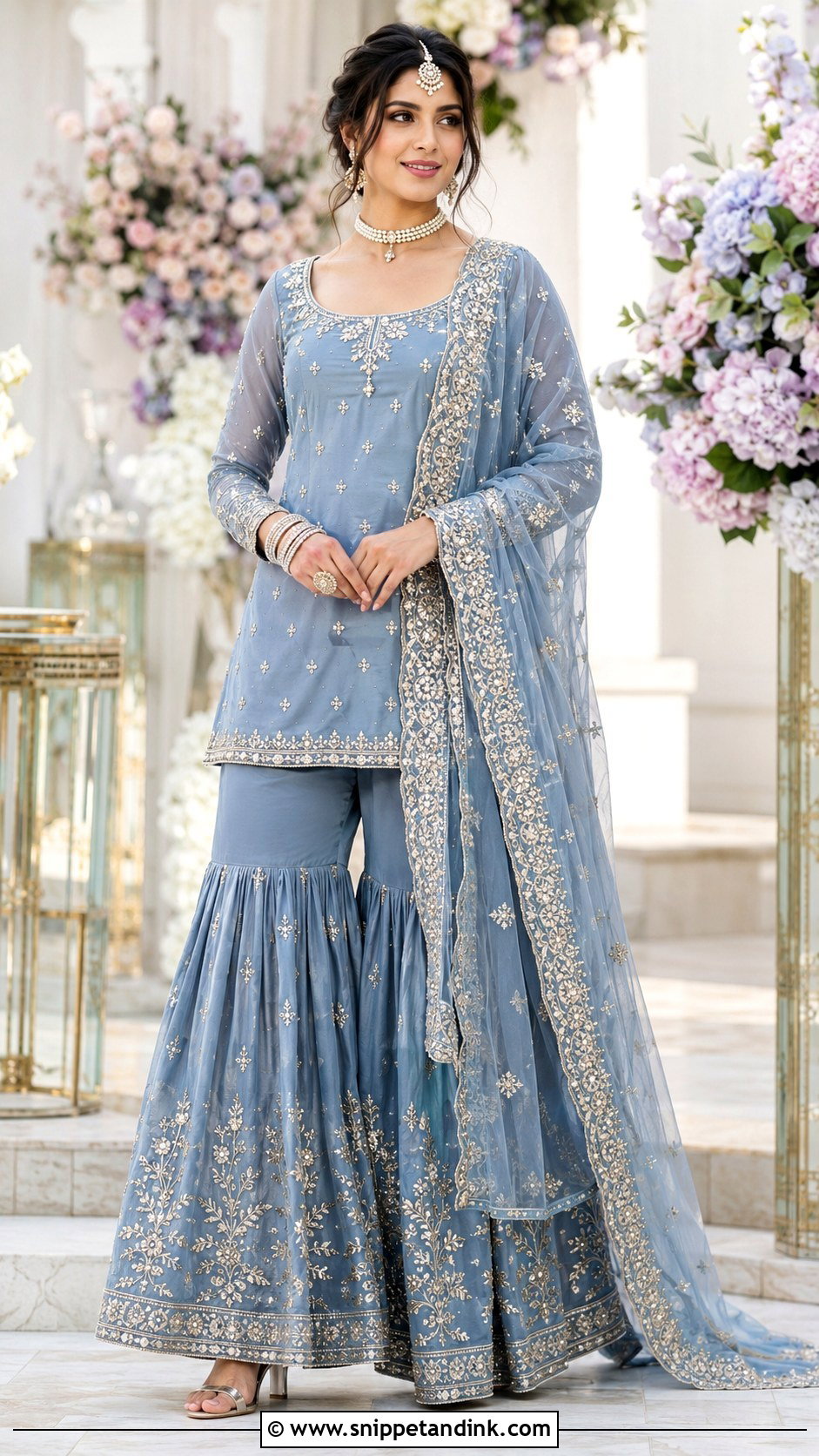
The gharara has a silhouette nobody confuses with a lehenga: fitted through the thigh, then a flare from the knee joint. It suits nikah ceremonies, engagements and sangeet nights, and it carries an old-world, almost courtly feel. Getting the knee joint at your actual knee is the alteration that matters; off-the-rack pairs often place it too low on shorter sisters. A kurti with fine embroidery and a bordered dupatta keep it balanced. Ivory-gold, rose pink, sage and dusty blue look refined. Pearls, a maang tikka and embroidered juttis suit it.
6. Bride Sister Indo Western Lehenga
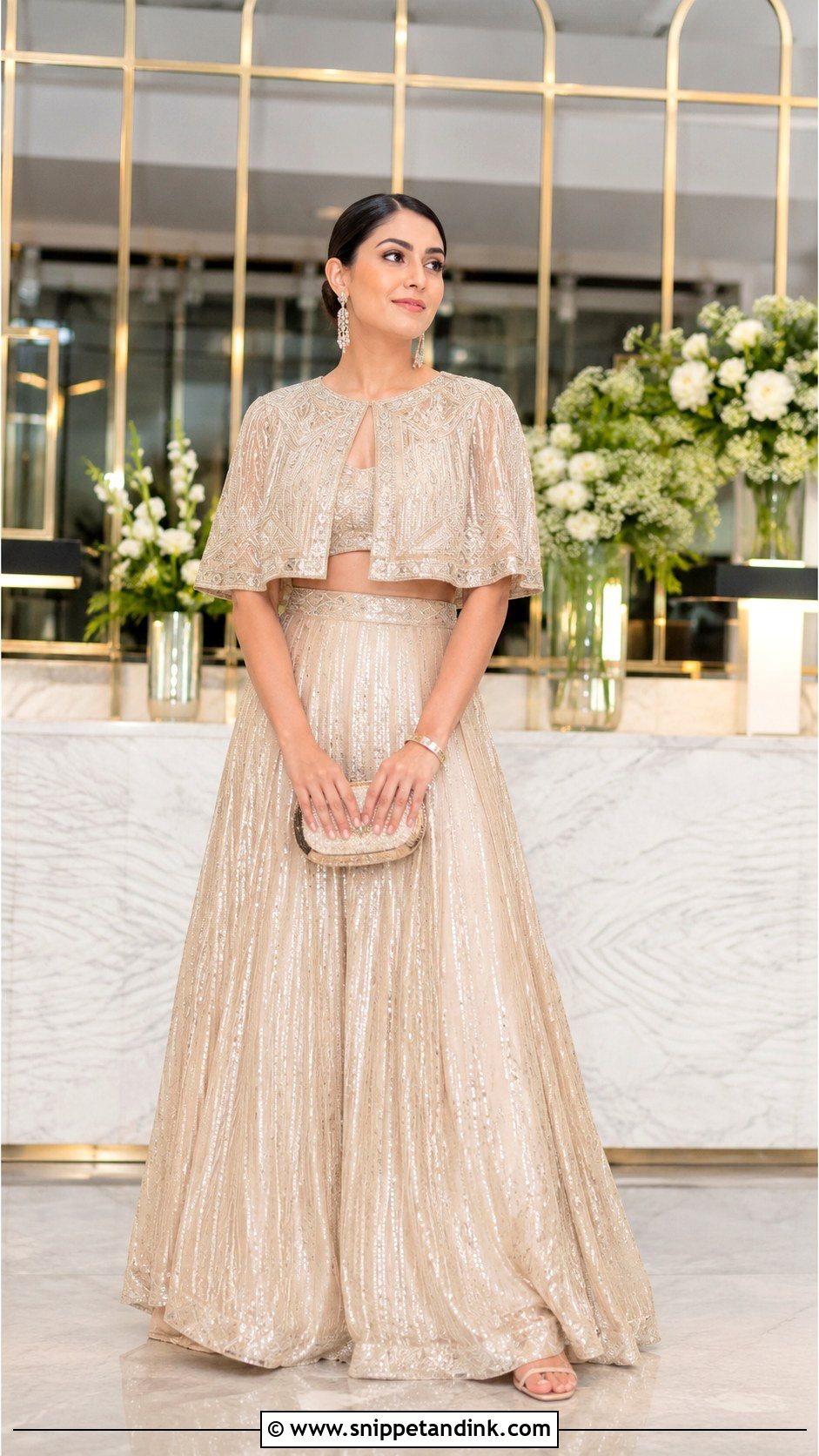
An Indo-western lehenga keeps the skirt but swaps the rest: a cape blouse, a corset top, a structured jacket or a pre-draped dupatta. It works best at cocktail nights, receptions and destination weddings, and it’s rarely right for a traditional ceremony at a grandmother-heavy mandap. Champagne, slate blue, blush and deep plum all look modern. The risk is overdoing it, so I keep one statement piece. With a corset top, fit it sitting down; the boning digs in at the hip if it’s too long. Sleek earrings and strappy heels are enough.
7. Bride Sister Silk Saree
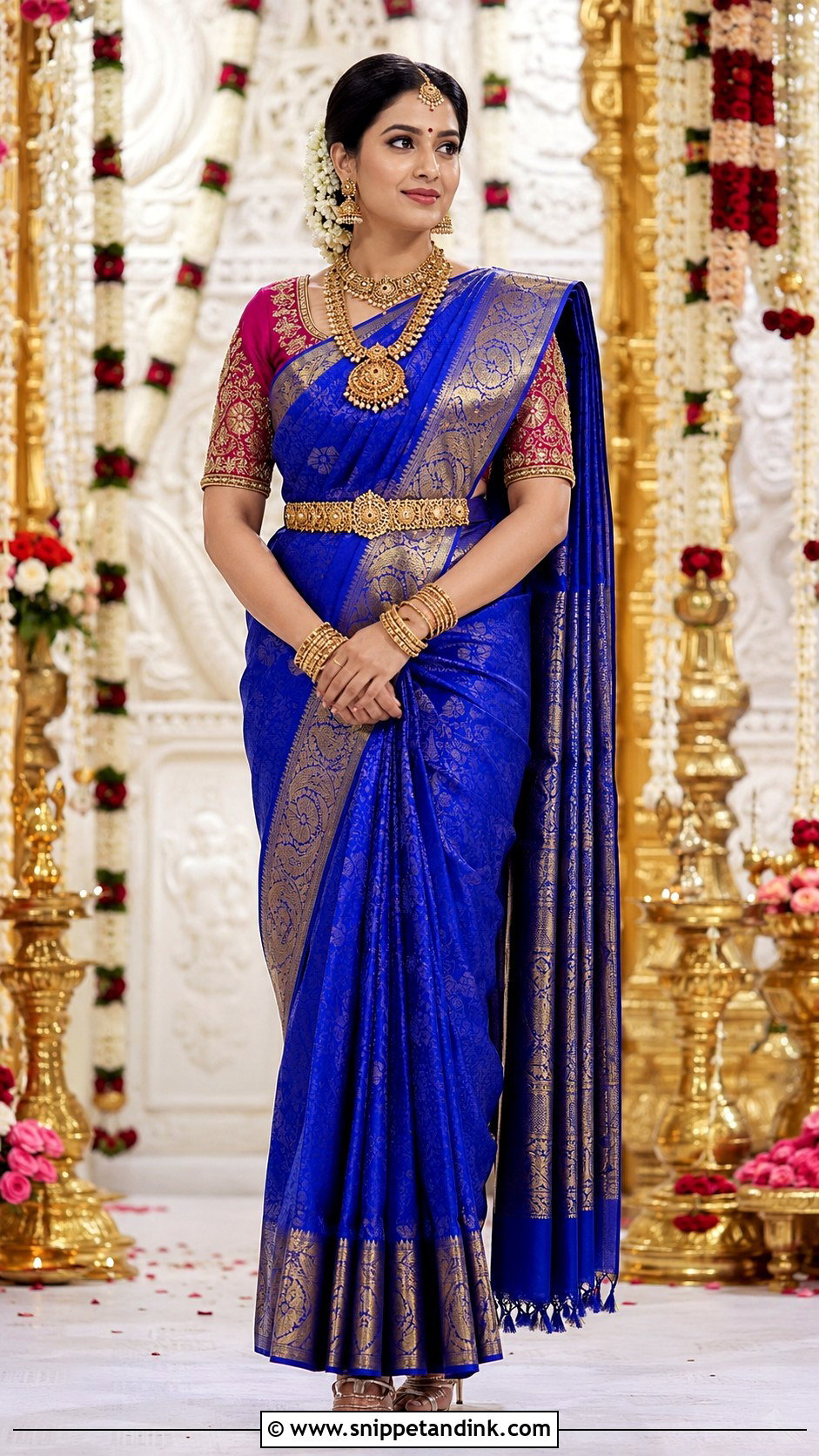
For the pheras and the mandap photos, a silk saree carries the most cultural weight. Kanjivaram, Banarasi, Paithani, Patola and Mysore silk each have their own feel; Kanjivaram is the heaviest and stiffest, Mysore silk the lightest and softest. I’d pick one with a striking border and lighter body motifs rather than an all-over bridal weave. A contrast blouse adds impact. Pure silk is warm and holds sweat marks, so in a hot venue a dress shield in the blouse saves it. Temple jewellery, gold bangles, a neat bun with fresh flowers and a bindi complete the traditional look.
8. Bride Sister Sequin Saree
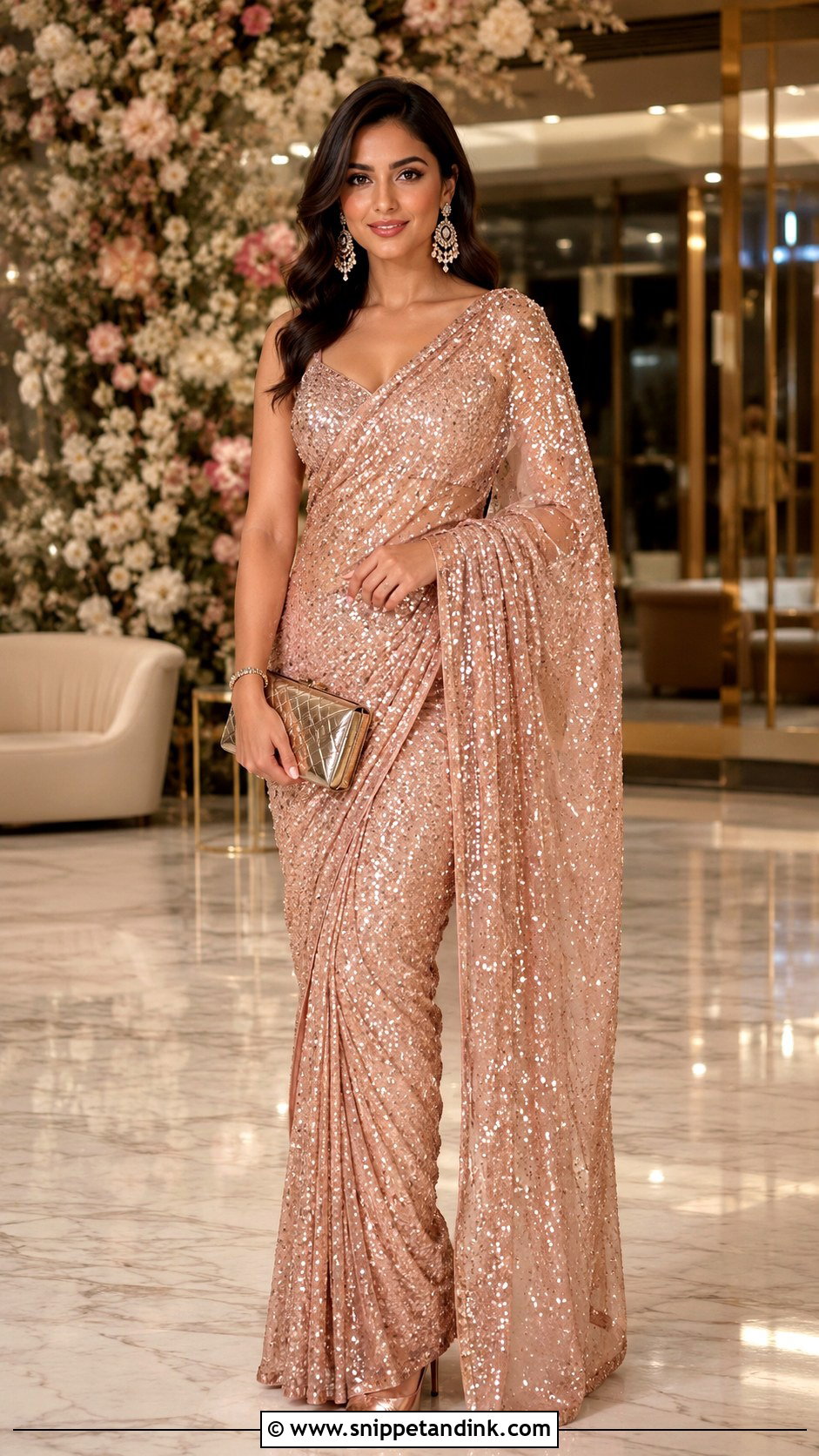
Save the sequin saree for the reception or cocktail night, where it catches the evening lights. Champagne, silver, rose gold, mauve and midnight blue read polished rather than loud. Heavily sequinned sarees are heavier than they look, so the drape needs extra pins at the shoulder, and the pleats should be a little fewer and wider so they don’t stiffen. Keep the blouse fitted and plain. One pair of statement earrings and a small clutch is plenty because the fabric already shines. Waves or a low bun suit it.
9. Bride Sister Cape Lehenga
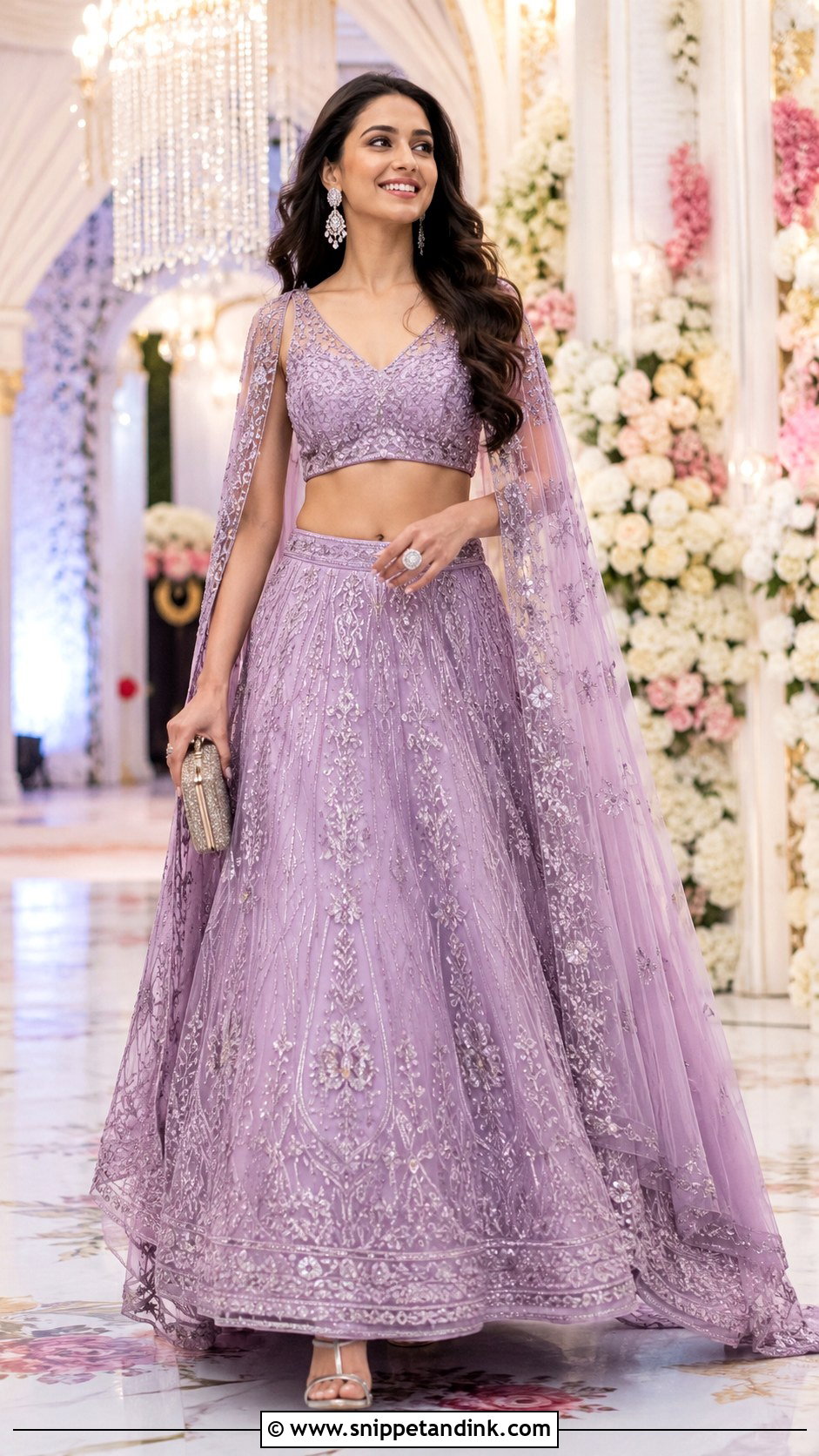
A cape replaces the dupatta, and for a sister who’s carrying plates, gifts and the bride’s clutch, that’s a relief. It can be sheer, embroidered or structured. I’d fit the blouse underneath first, because a cape hides a lot but not a strap that slips. Sangeet, engagement and reception are the natural events. An A-line skirt suits most figures and moves well. With the shoulders already decorated, keep jewellery to earrings and a ring. It’s one of the easiest lehenga styles to dance in.
10. Bride Sister Jacket Lehenga
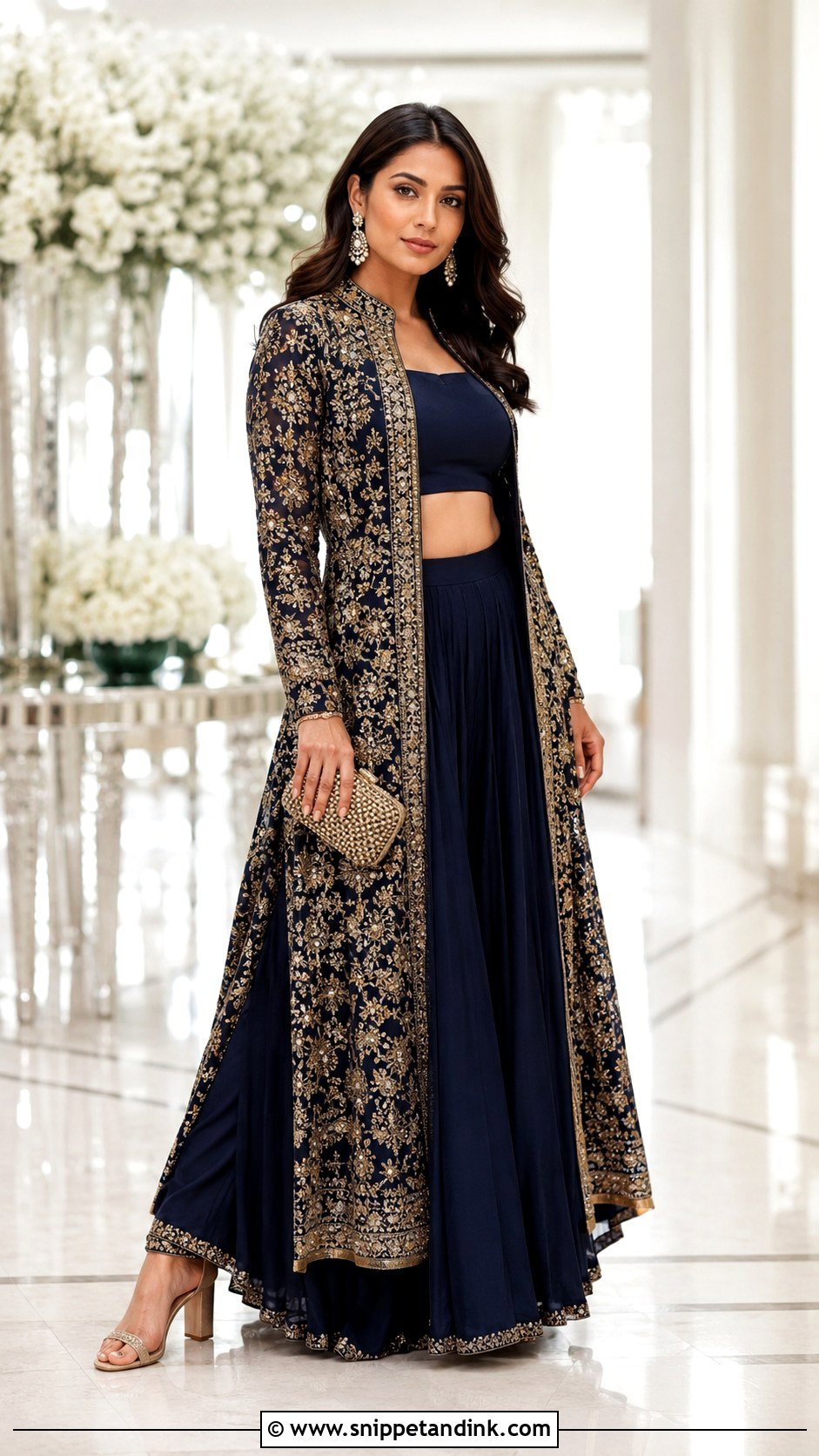
A jacket lehenga gives coverage and warmth, so it’s the one I steer sisters toward for winter weddings and outdoor evening receptions. The jacket can be short, long, embroidered or sheer. Balance is the rule: a plain skirt under a heavily worked jacket, or an embroidered skirt with a cleaner jacket. Long jackets need slits to the hip, or they bunch when you sit. Bronze, emerald, navy, burgundy and ivory-gold all suit it. Drop earrings and block heels keep it practical for a long night.
11. Bride Sister Pre Draped Saree
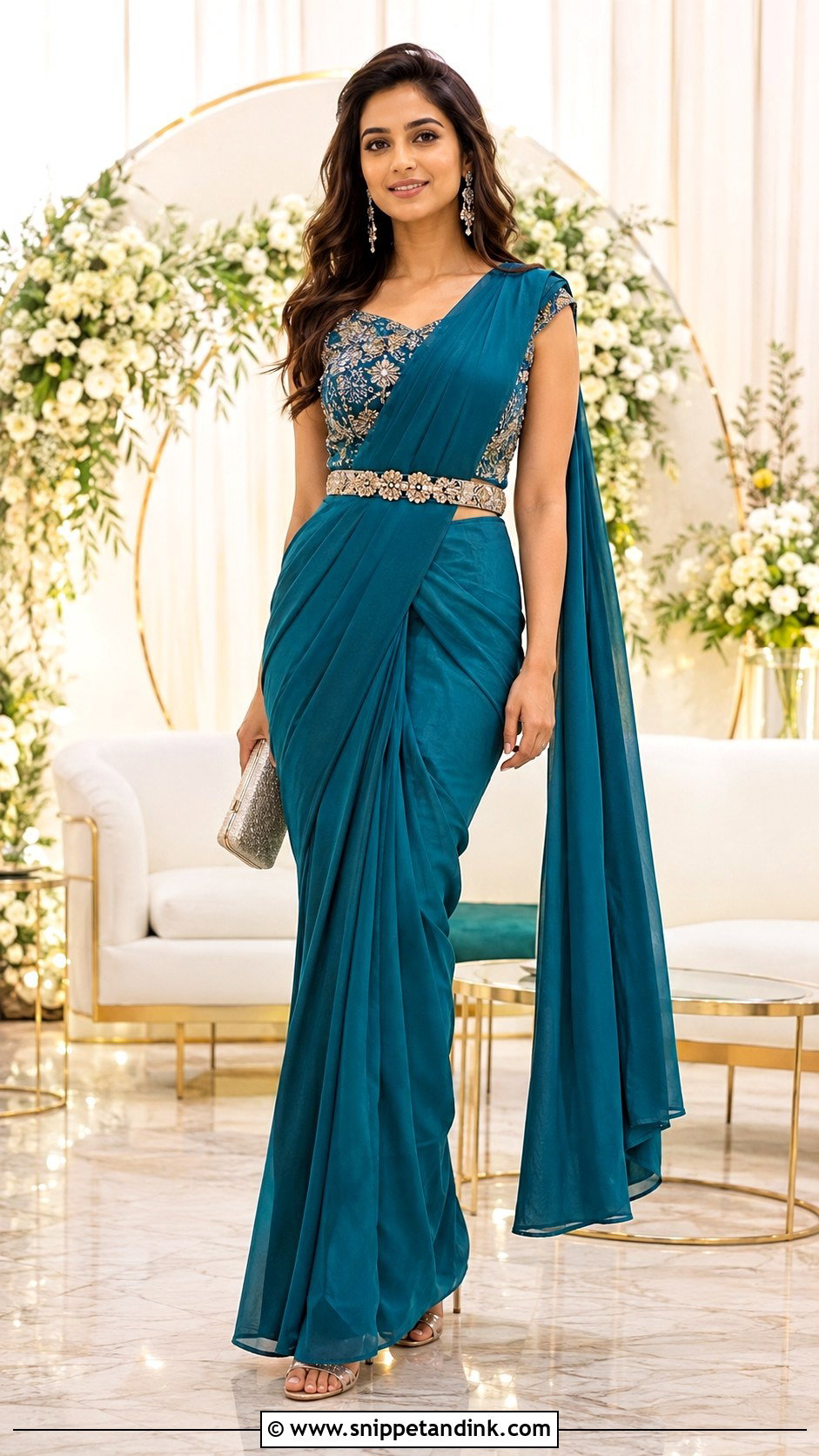
A pre-draped saree is sewn so the pleats and pallu stay put, and you step into it like a skirt. For the sangeet or reception, when you’ll be dancing and moving around, that’s a big advantage. Satin, crepe, georgette and chiffon fall smoothly. I always check the waistband size, since pre-stitched sarees can’t be adjusted much on the day, so try it on with the blouse at least a week before. A belt, an embroidered blouse or a cape-style pallu modernise it. Sleek earrings, heels and a clutch are enough.
12. Bride Sister Floral Lehenga
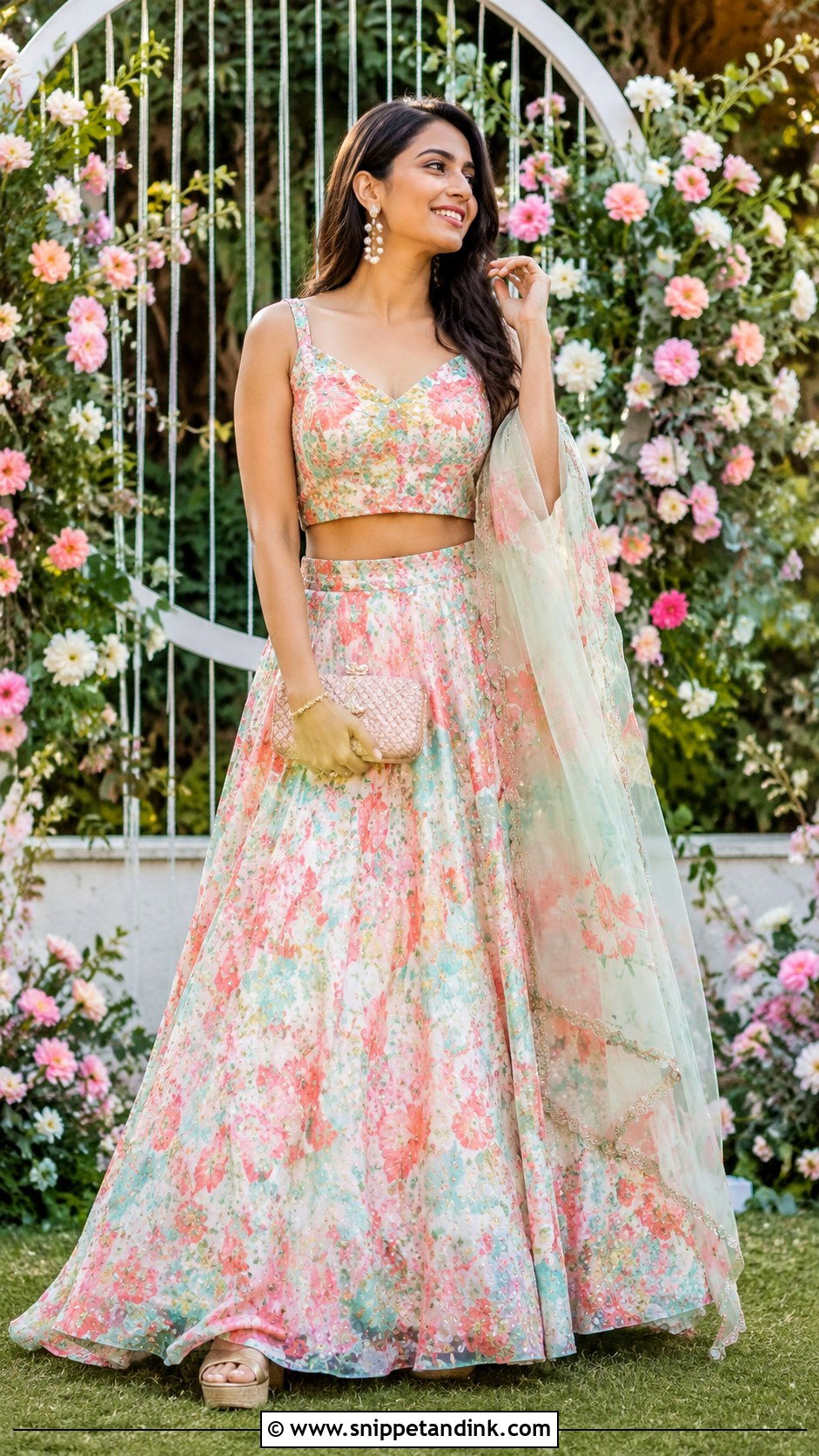
A floral lehenga is a beautiful choice for mehendi, haldi and garden ceremonies, where daylight shows off the colour. Printed florals suit a casual function; embroidered florals feel more formal. Yellow, coral, mint, blush, lavender and aqua all glow in natural light. At a mehendi, I’d keep the dupatta light and the sleeves short or three-quarter, because you’ll be sitting with your hands out drying for an hour and long sleeves smudge wet paste. Floral or pearl jewellery, comfortable wedges and soft makeup with tinted lips suit the mood.
13. Bride Sister Mirror Work Lehenga
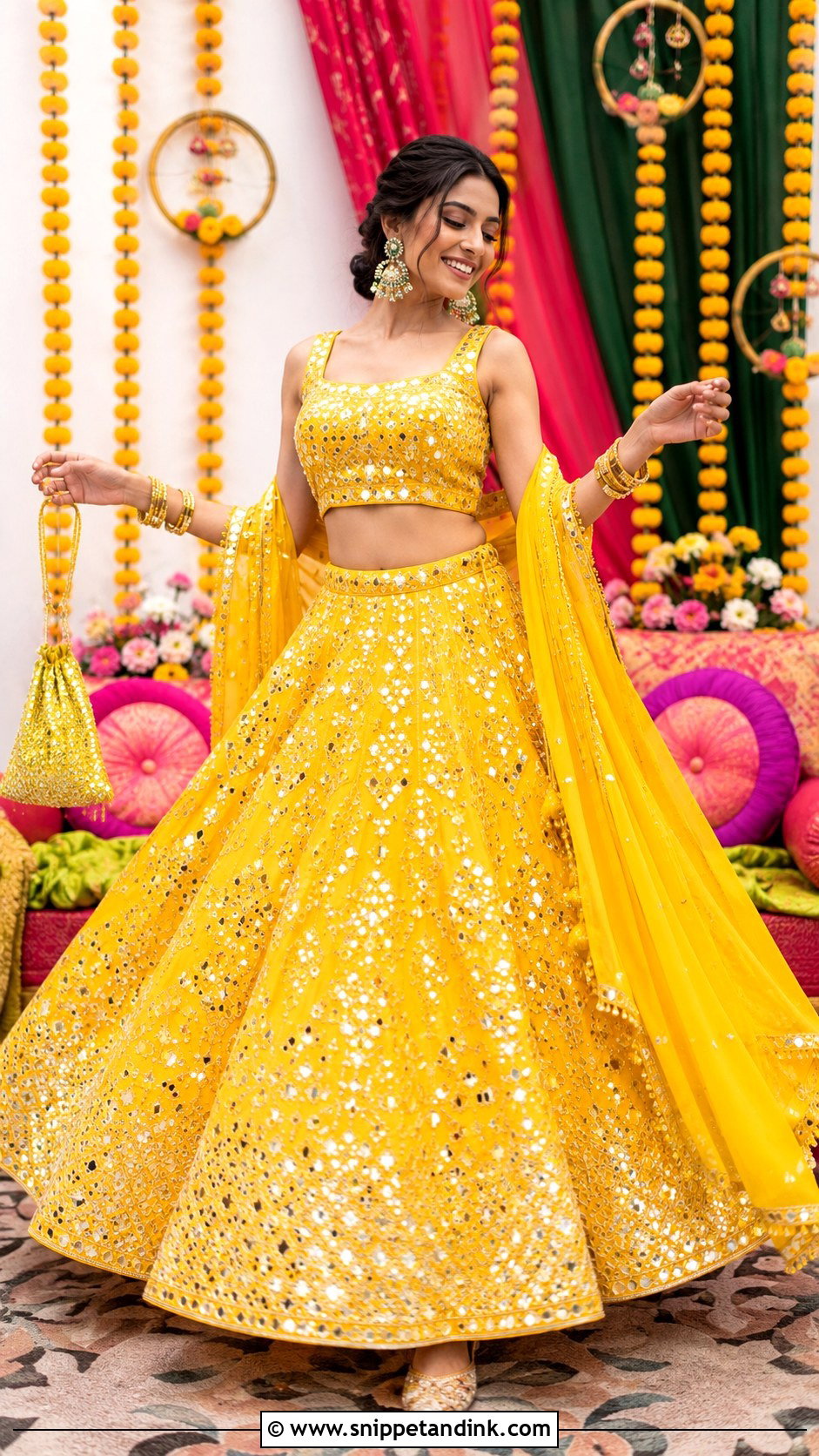
Mirror work bounces light around in a way that suits mehendi and sangeet. A mirror work lehenga in yellow, orange, green, pink or turquoise looks celebratory straight away. Because the work is bold, I keep the silhouette clean and the jewellery restrained. A sleeveless or square-neck blouse suits a full skirt. Real mirror work is heavier than printed foil, and the stitched edges can scratch bare arms when you hug, so a short sleeve helps. It catches the light well during dance performances.
14. Bride Sister Velvet Lehenga
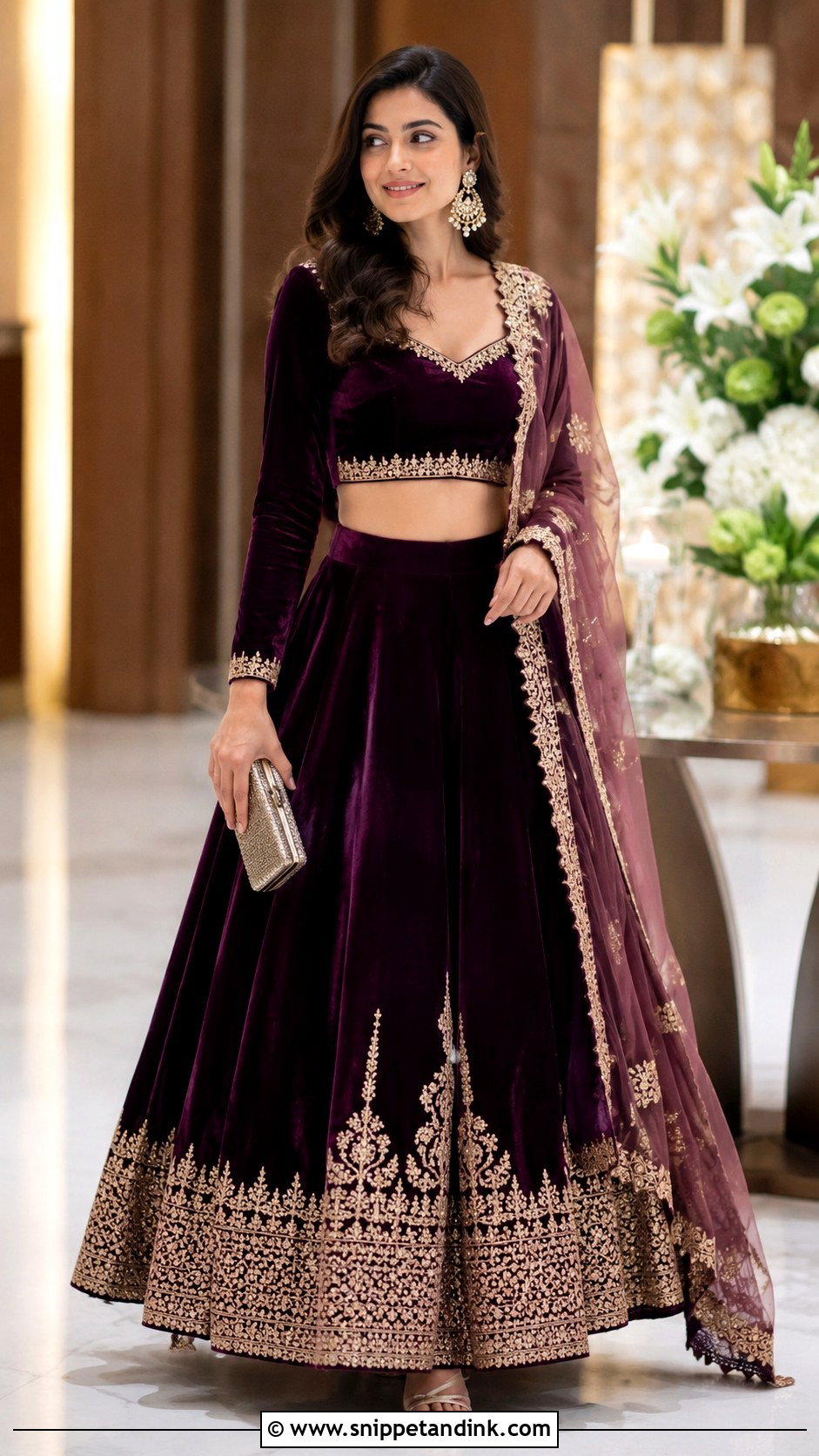
Velvet is for winter weddings and evening receptions; in a hot daytime venue it’s punishing. Maroon, emerald, navy, plum and chocolate look rich in it. Velvet already has presence, so I’d put embroidery on the border, blouse or dupatta rather than covering the whole skirt. Watch the pile: velvet crushes where you sit and shows those marks under flash, so stand for portraits when you can. A soft net or organza dupatta lightens it, and kundan earrings suit the depth of colour.
15. Bride Sister Pastel Lehenga
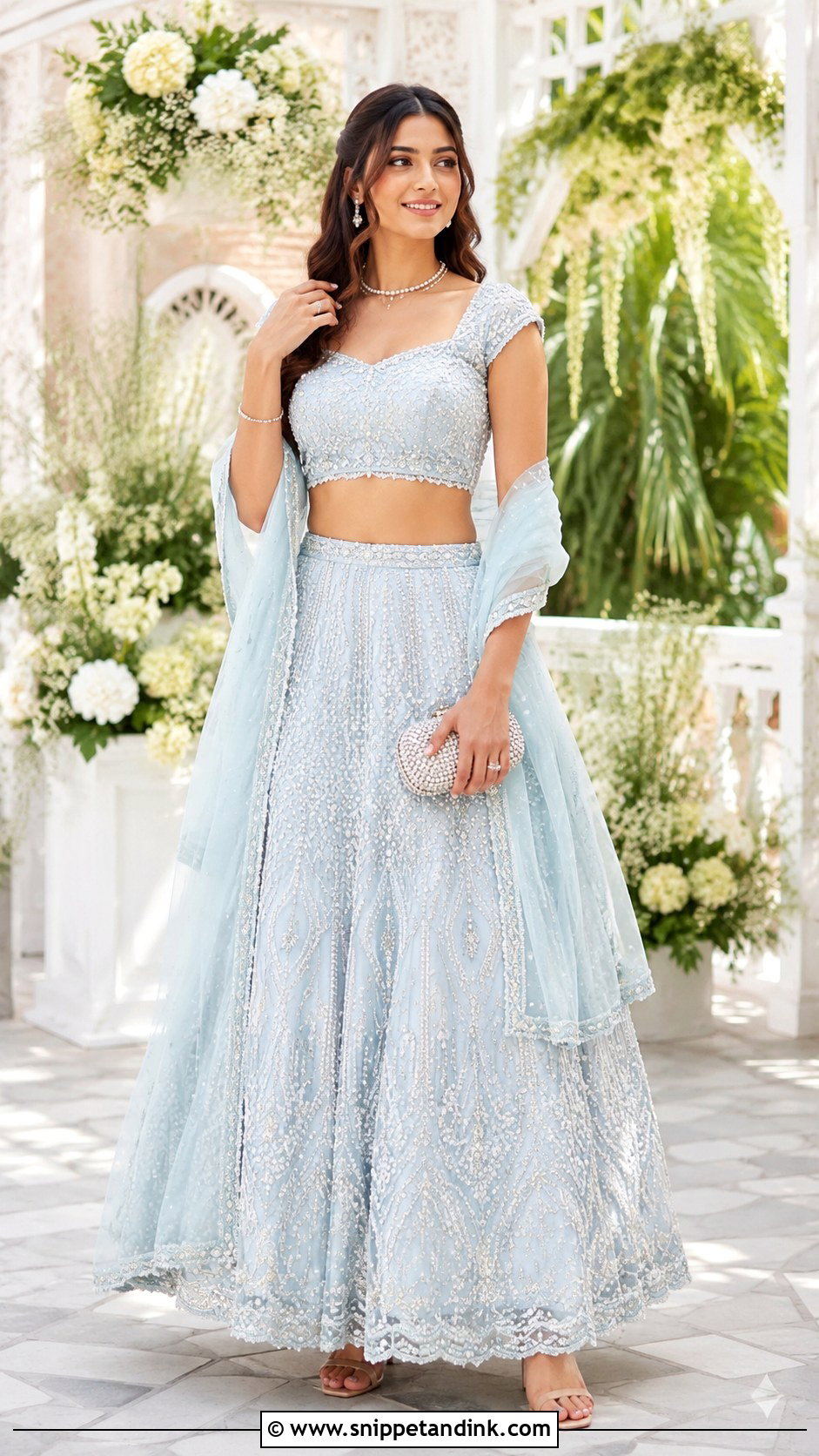
Pastels suit daytime weddings, engagements and summer functions, and they sit well next to a bride in a heavier or brighter outfit. Powder blue, blush, pistachio, lilac and peach all feel fresh. Plain pastels can wash out in photos, so look for pearl work, thread embroidery or a statement blouse to give it some depth. Ivory with coloured embroidery is fine for a sister, but check with the bride first, since some families feel ivory is too close to bridal. Delicate jewellery, soft curls and nude heels complete it.
16. Bride Sister Ruffle Saree
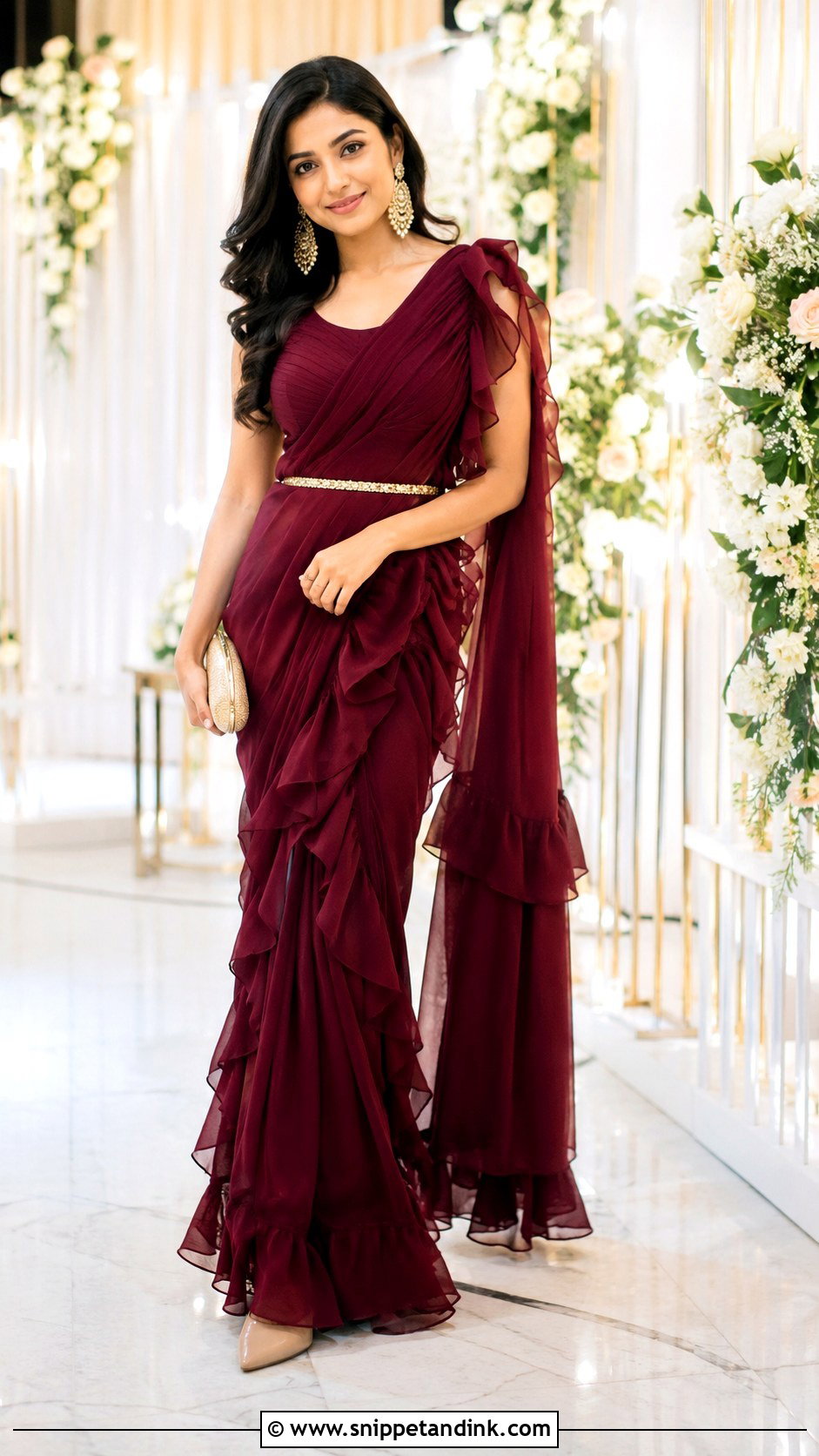
A ruffle saree is a modern, playful choice for cocktail or reception evenings. The fabric has to be light, like organza, chiffon or georgette, or the ruffles turn stiff and stick out instead of falling. Solid colours such as wine, teal, rose and mustard look chic. A slim belt holds the pallu in place and shows the waist. If the blouse neckline is detailed, skip the necklace. Ruffles add bulk at the hem, so I’d go with a pointed heel to keep the line long.
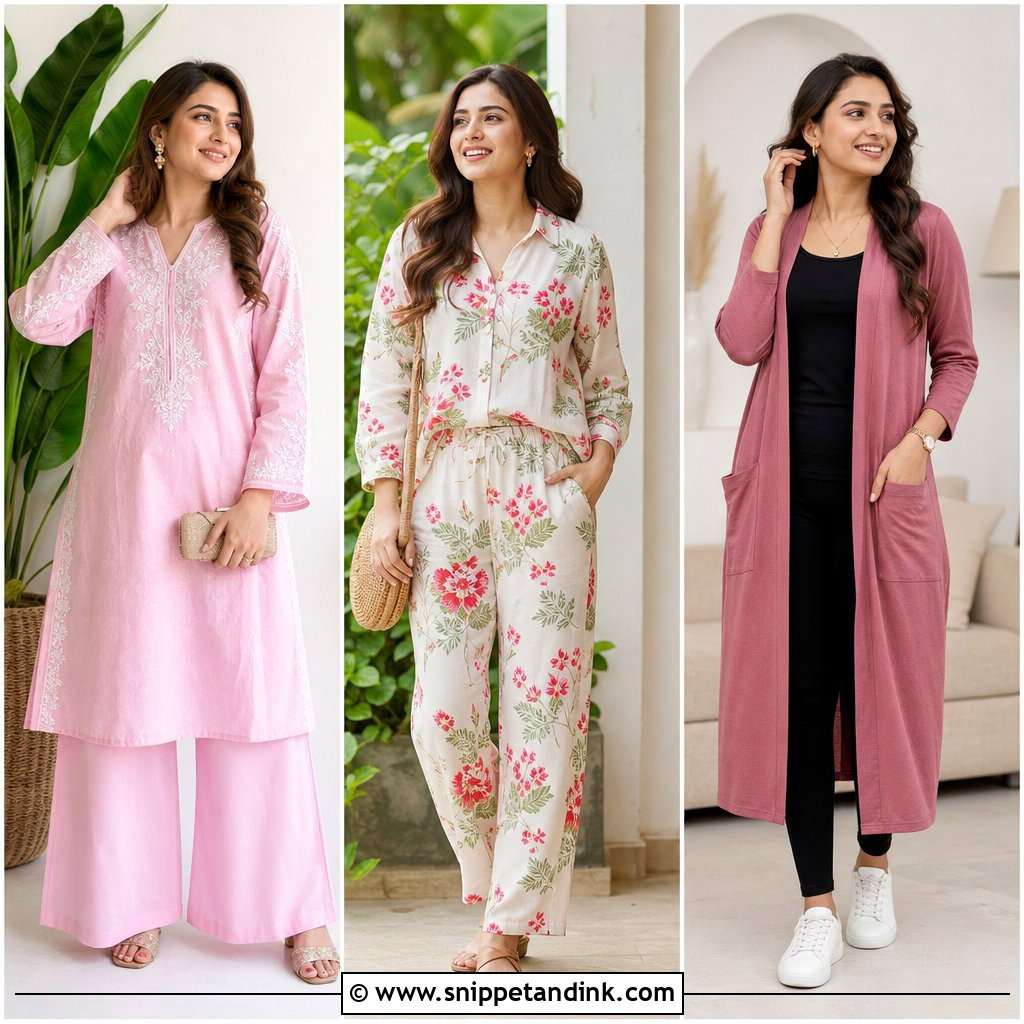
17. Bride Sister Palazzo Suit
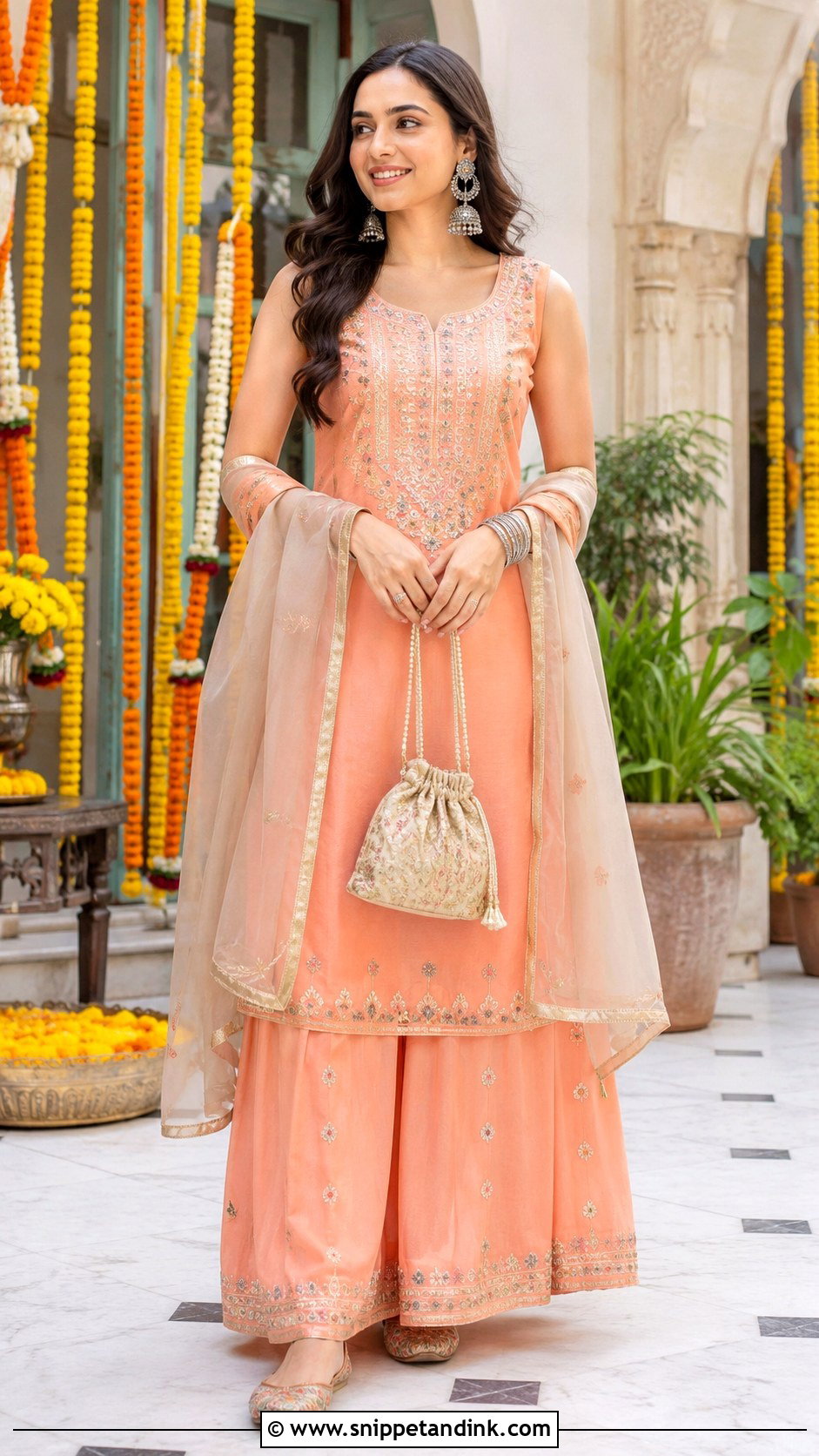
For haldi, mehendi and the welcome lunch, a palazzo suit is my practical pick. It’s breathable and comfortable for sitting on cushions or the floor. A straight kurta or short embroidered top with wide palazzos and a light dupatta is the usual combination. Cotton silk, chanderi, georgette or crepe keep you cool. At a haldi, wear something you don’t mind staining; turmeric marks on light silk rarely wash out fully. Yellow, peach, mint and coral are cheerful by day. Juttis, oxidised earrings and a potli bag finish it.
18. Bride Sister Dhoti Set
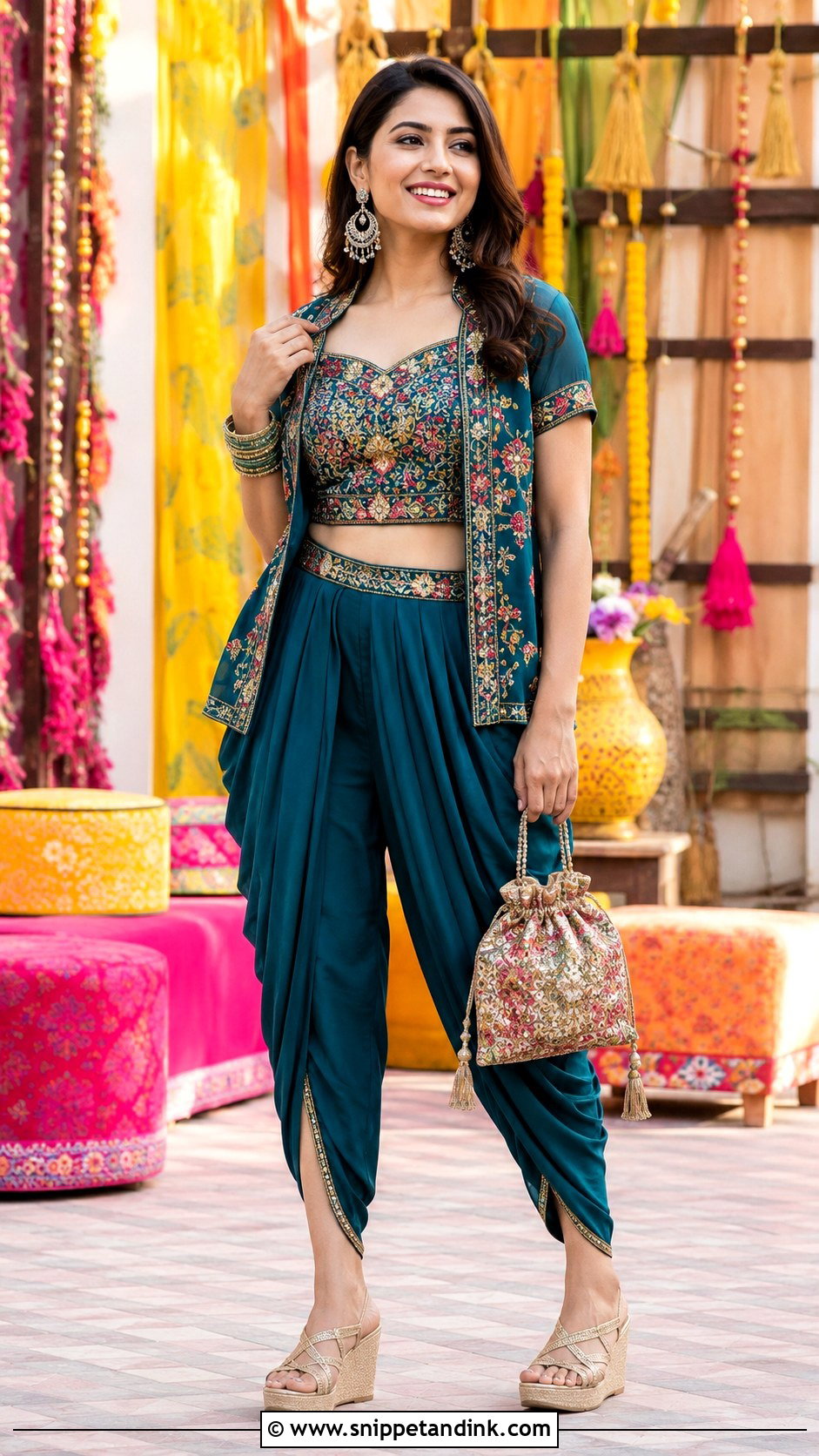
A dhoti set is the fusion choice for a dance-heavy sangeet. Draped dhoti pants with a short kurti, crop top, cape or jacket give you complete freedom to move. Mirror work, thread embroidery or prints keep it festive. The drape at the crotch needs to be generous; too tight and it pulls in every squat and spin, so I always ask sisters to do a few practice dance steps in the trial. Statement earrings, stacked bangles and comfortable wedges suit it. A ponytail or braid keeps hair out of the choreography.
19. Bride Sister Kurta Skirt Set
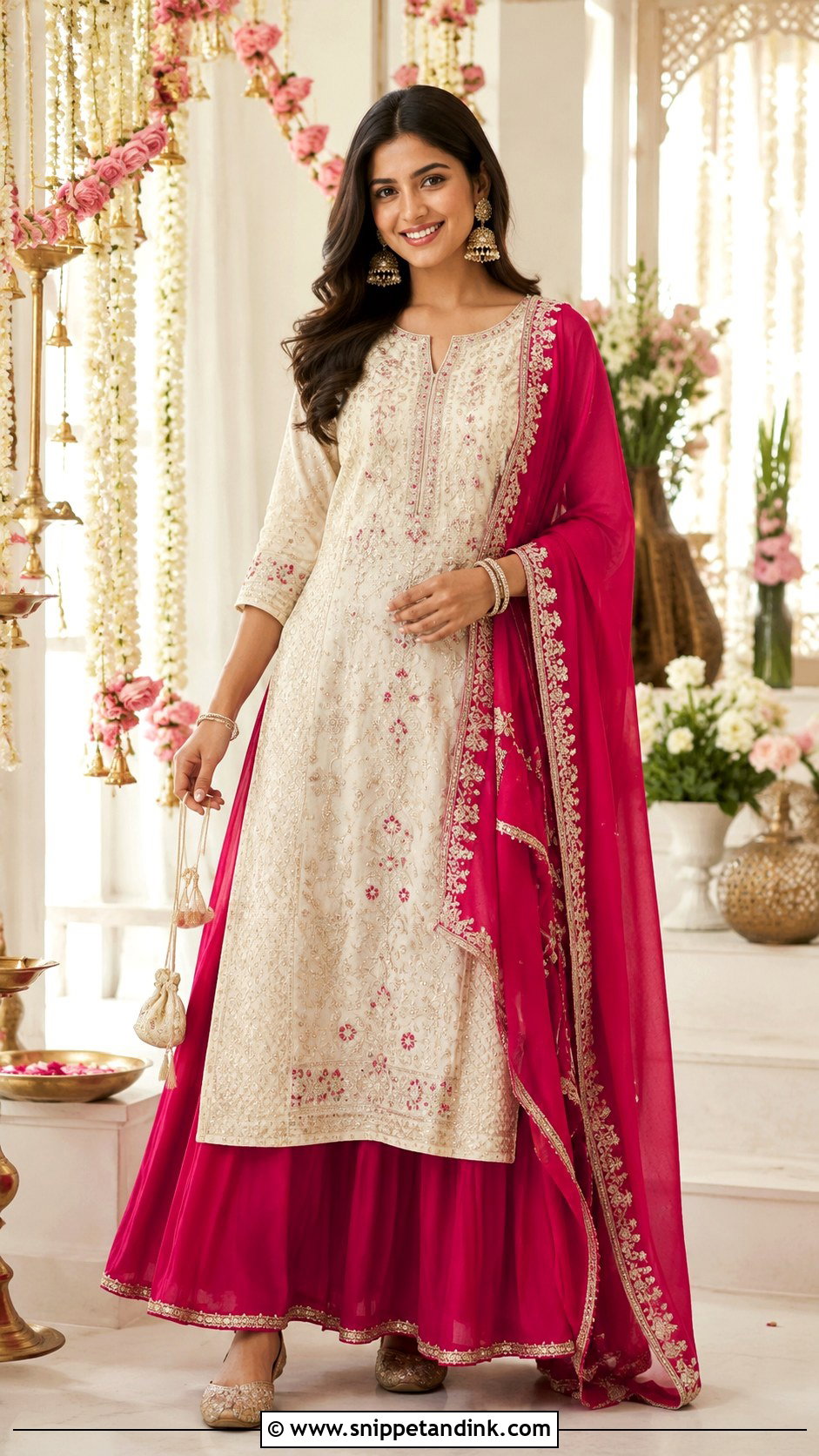
A kurta and skirt set sits between a lehenga and a suit: the flare of a skirt with the coverage of a kurta. A long embroidered kurta over a flowy skirt is elegant; a short kurti with a printed skirt is more casual. Add a matching dupatta for a traditional finish. It’s well suited to mehendi, engagements, family dinners and smaller rituals. The length to watch is the kurta: if it ends at mid-thigh over a full skirt, it can make the outfit look shorter in photos, so knee length or longer usually balances better. Jhumkas, bangles and juttis go with it.
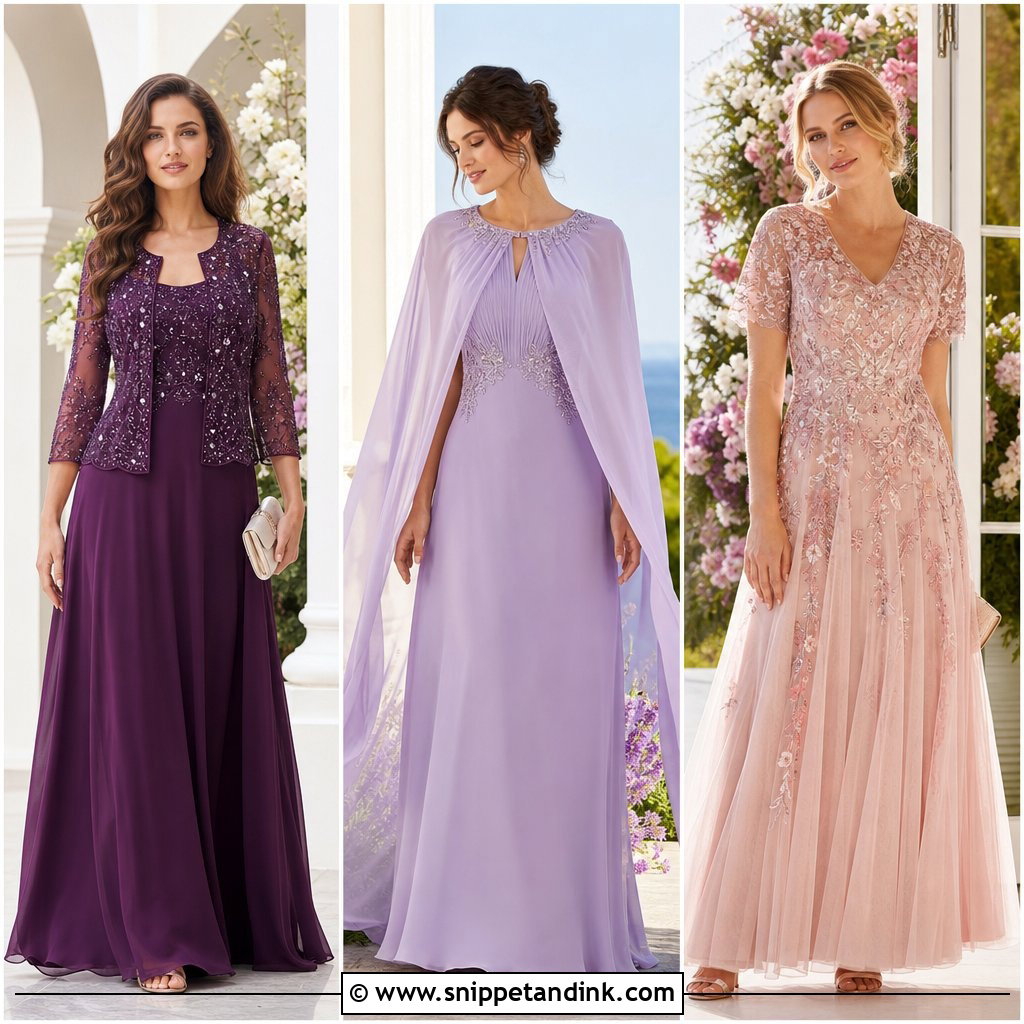
20. Bride Sister Peplum Sharara
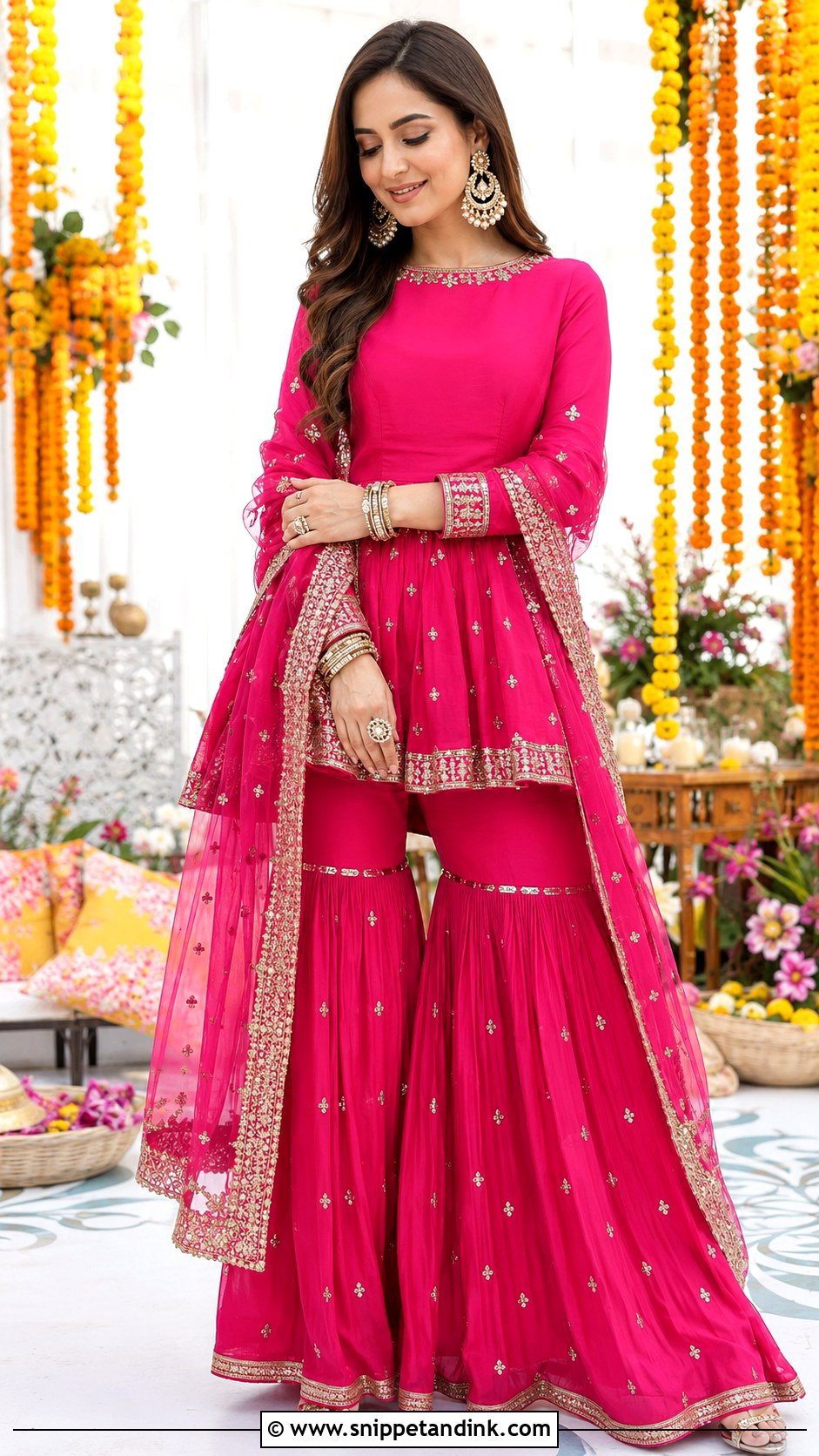
A peplum sharara defines the waist with the peplum while the flared pants carry the volume below. It’s a flattering shape for sangeet, mehendi and engagement functions. Keep embroidery to the neckline, sleeves and hem. Fuchsia, teal, mustard, lavender and emerald all make a strong impression. The peplum should flare from your natural waist; if it starts at the hip, it adds width rather than taking it away. Chandbalis, bangles and embellished heels finish it, and a sleek ponytail keeps it fresh.
21. Bride Sister Organza Saree
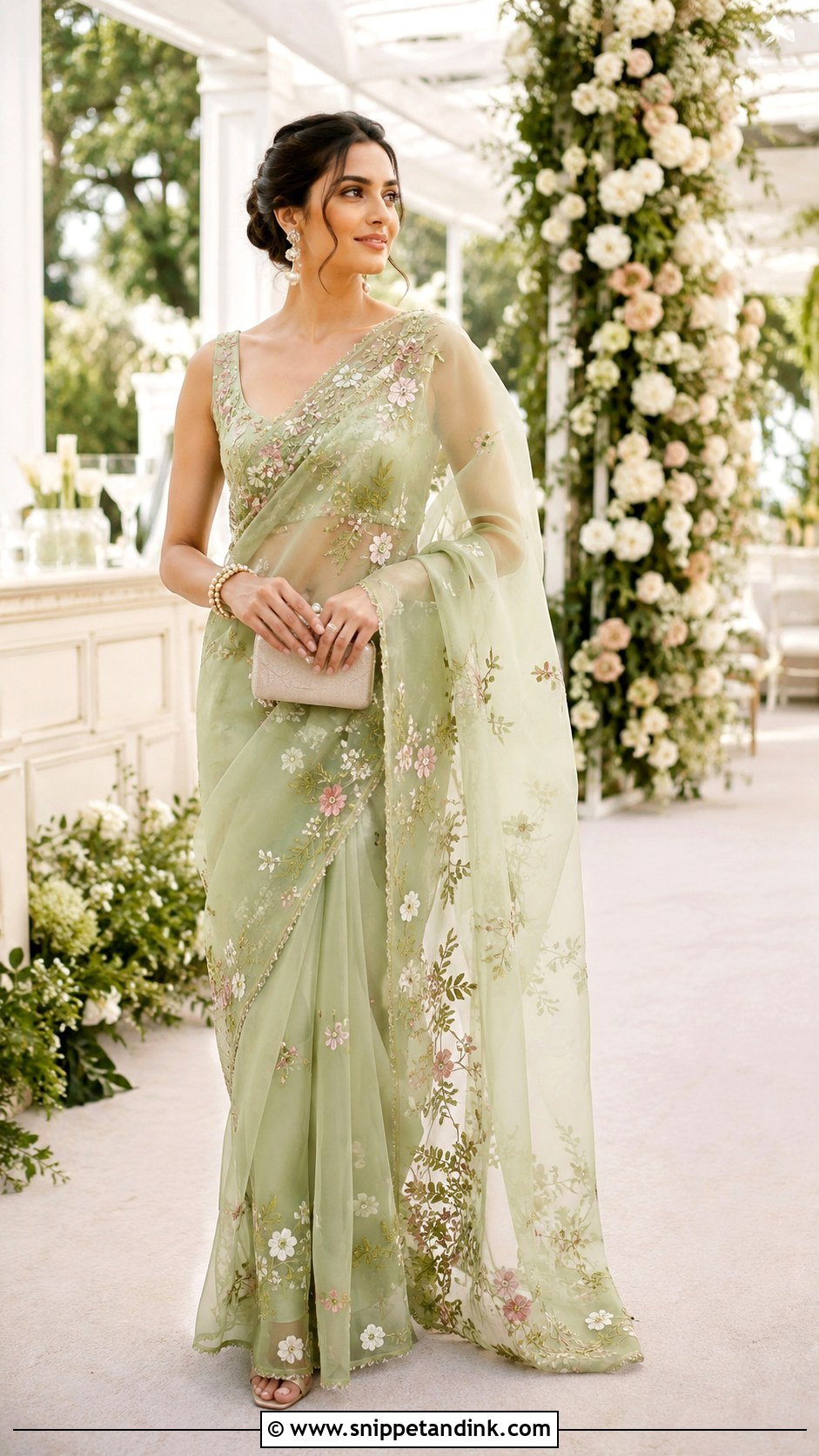
Organza is light and crisp, which makes it a good saree for daytime weddings and engagement ceremonies. It holds its shape more than chiffon, so the pleats look sharp, but it also shows every crease from a suitcase. Steam it on the morning, not the night before. Floral embroidery, pearl details or a zari border make it wedding-ready, and pastels, soft jewel tones and muted metallics all suit the fabric. A tailored blouse, pearl earrings and a delicate bracelet are enough. Organza is slightly sheer, so check the petticoat colour in daylight.
22. Bride Sister Banarasi Lehenga
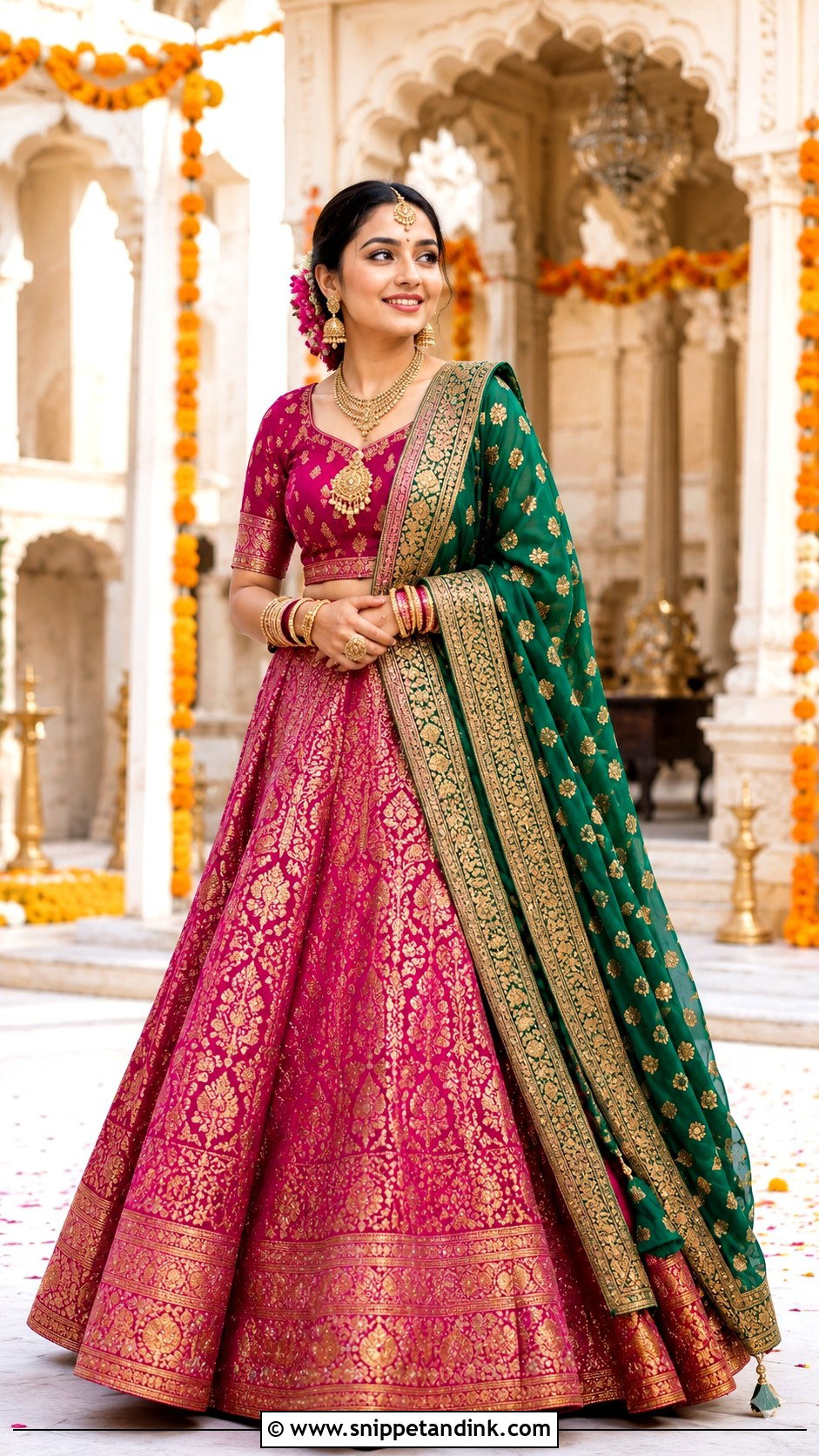
A Banarasi lehenga gives the depth of a woven fabric without draping a saree. The brocade texture photographs richly in ceremony portraits. Magenta, royal blue, emerald, rust and gold all work, with a contrast dupatta to break up the weave. Because Banarasi is already busy, a plain blouse balances it. The fabric is also stiff, so the skirt will stand out more than a georgette one; ask for a can-can only if you want real volume. Temple jewellery, a maang tikka and embroidered heels suit the wedding ceremony or a formal engagement.
23. Bride Sister Chikankari Lehenga
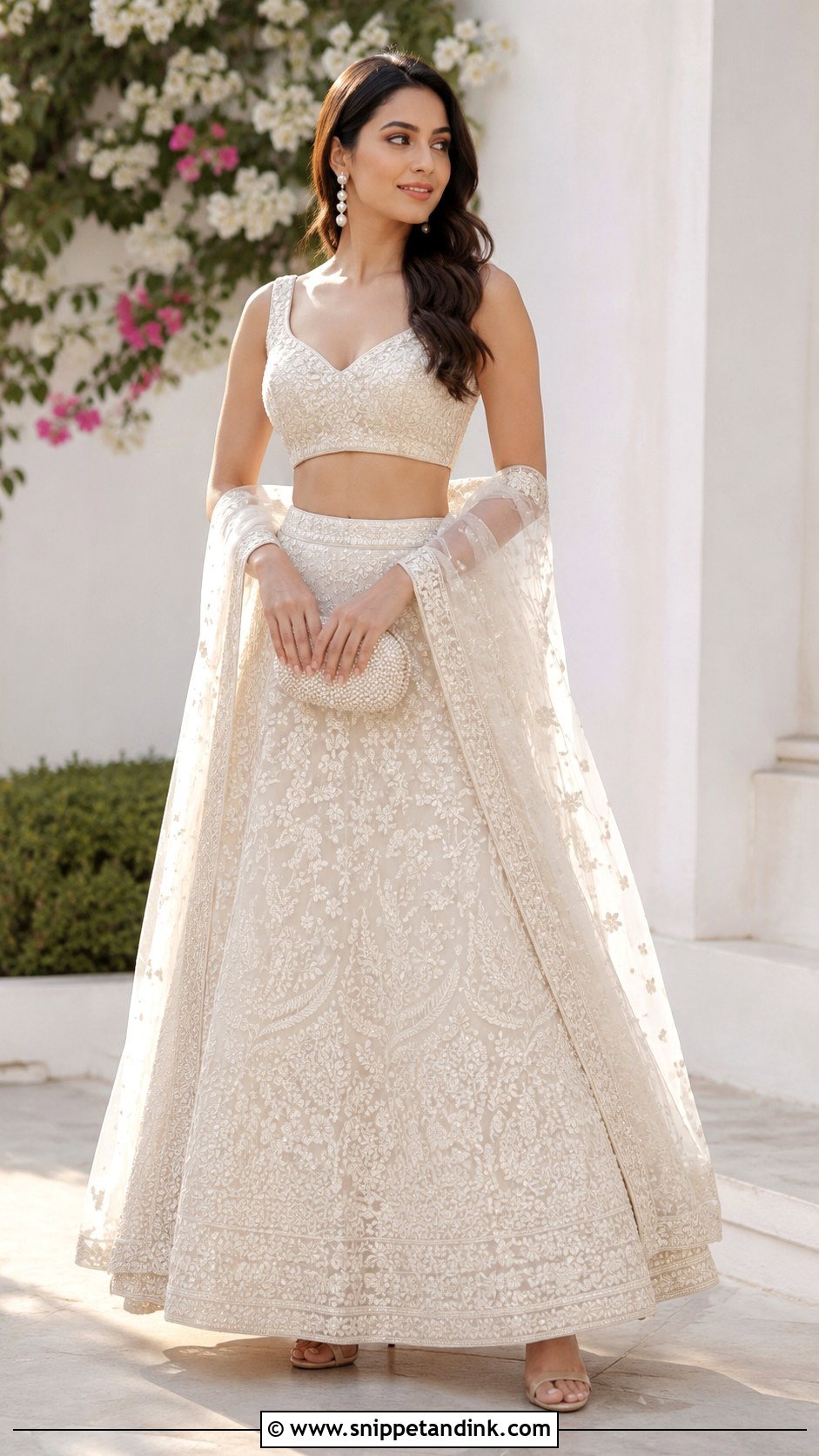
Chikankari is fine white-thread embroidery traditionally done on light cotton or georgette, so a chikankari lehenga feels cool even in summer heat. It suits daytime functions and destination weddings. Ivory, mint, blush, powder blue and lilac are the classic shades; mukaish or sequin work adds a little shine. Fine chikan work snags on bangles and rings, so I’d keep jewellery smooth. A delicate dupatta, pearls and nude heels keep the understated mood. It’s quieter than most outfits here, which is exactly why it works when the bride is in heavy colour.
24. Bride Sister Reception Gown
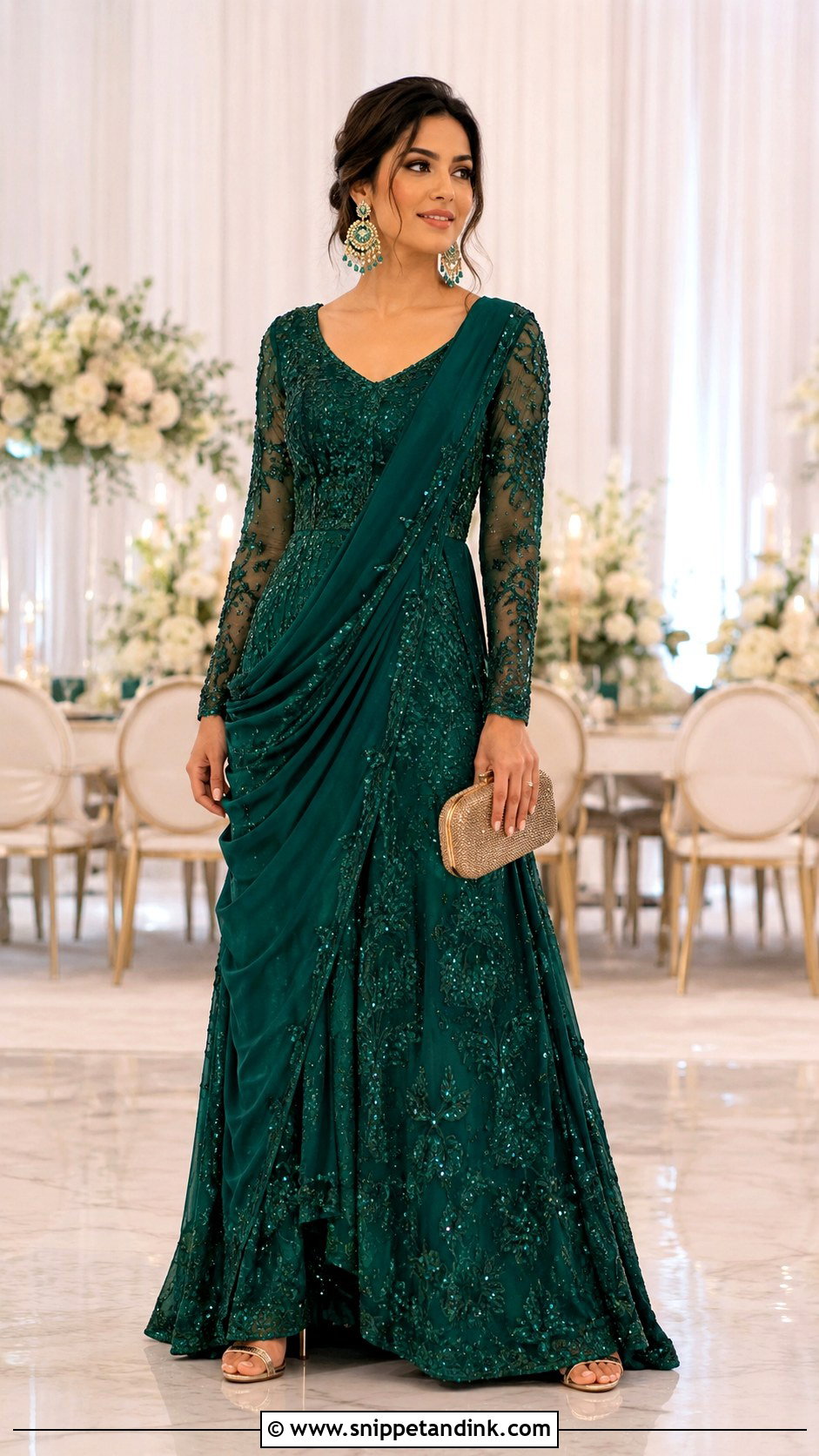
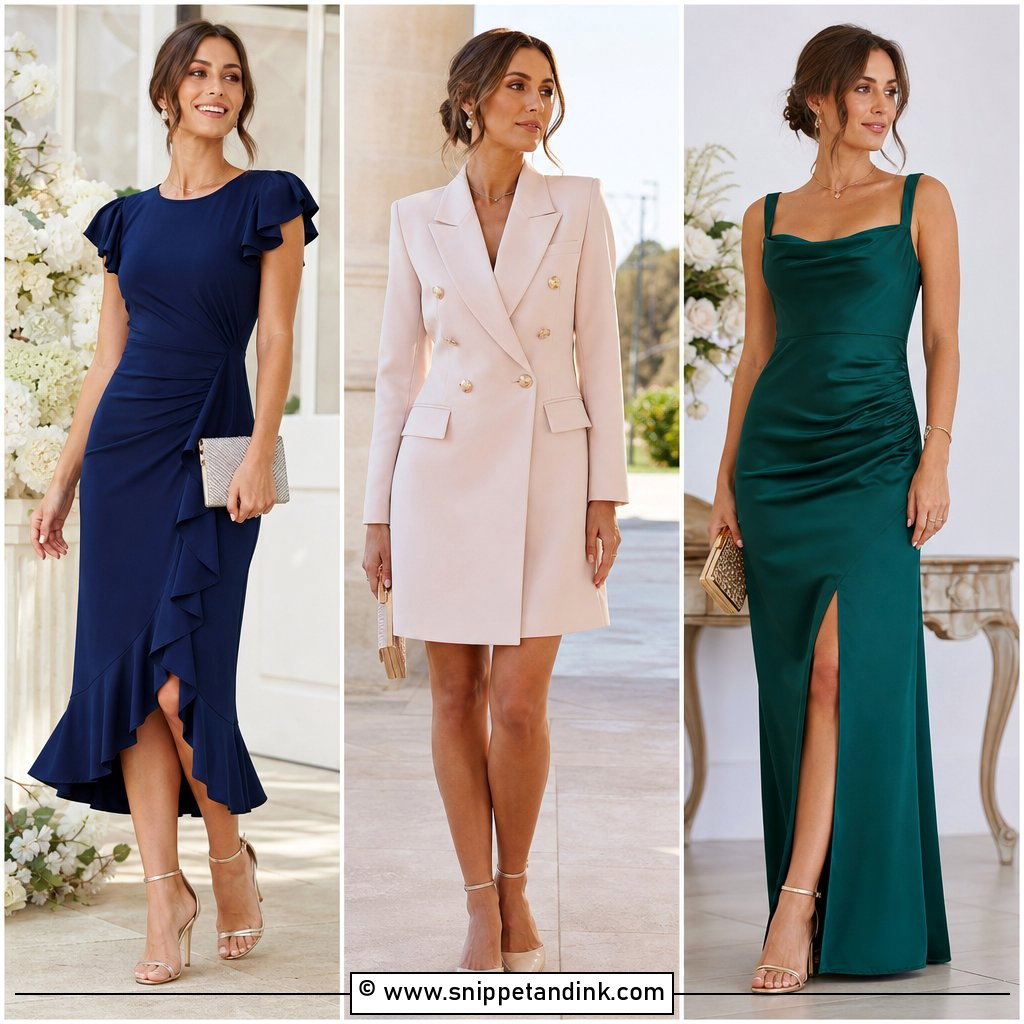
For a formal evening reception, an Indian-inspired gown is polished and easy to manage. Embroidery, draping, cape sleeves or a structured bodice keep it tied to the wedding. Metallics, navy, emerald, plum, champagne and dusty rose all work under reception lights. Fit it for greeting: you’ll be standing, hugging and posing for hours, so a bodice that’s comfortable sitting and standing matters more than a tight waist. With a heavily embellished gown, keep jewellery minimal. Statement earrings and soft glam makeup finish it.
25. Bride Sister Co Ord Set
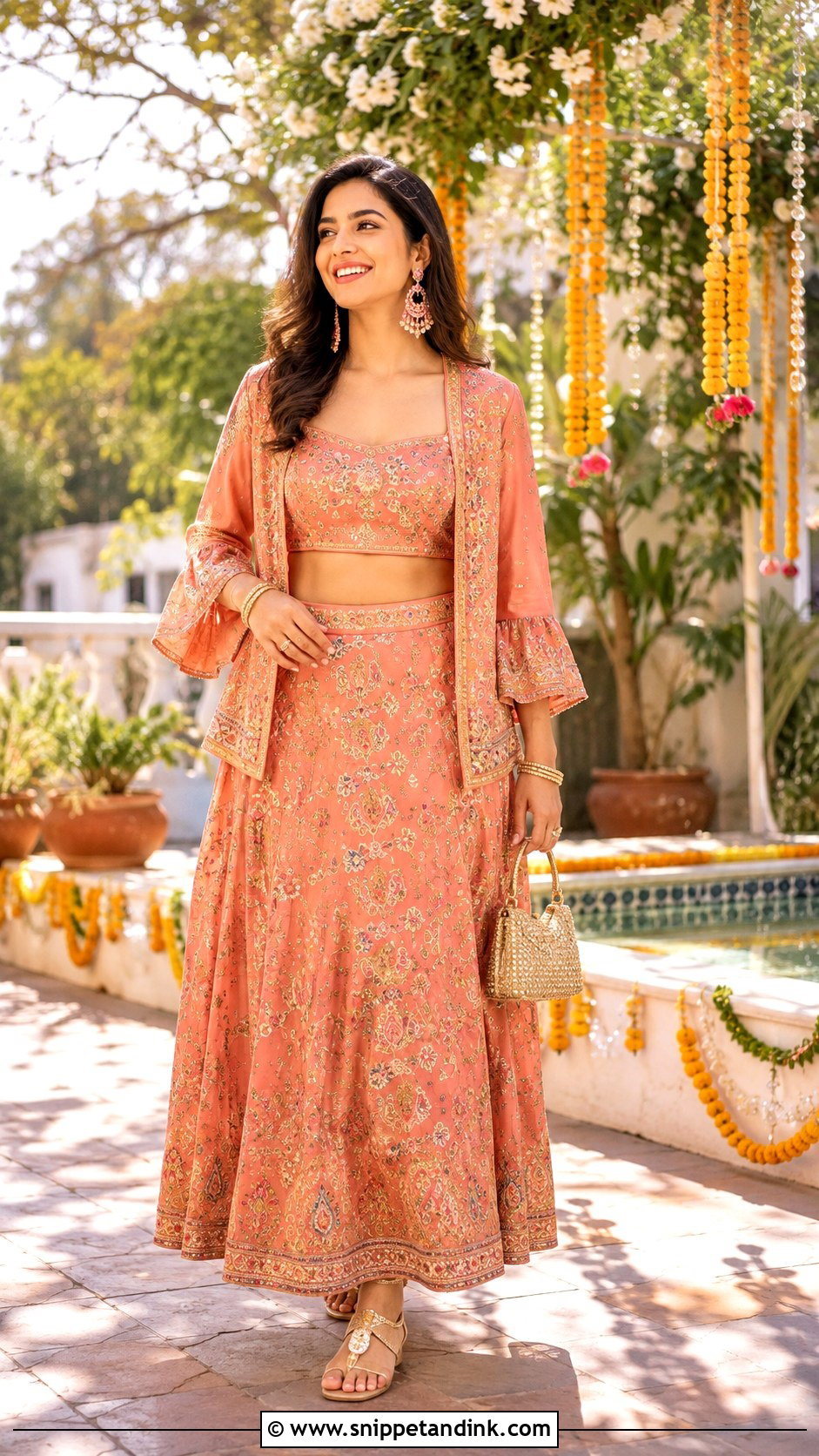
A festive co ord set suits the smaller events: welcome parties, haldi, a post-wedding brunch. A matching crop top and skirt, kurta and pants, or jacket and palazzos all work in festive fabric. Embroidery, prints, mirror work or zari give it a sense of occasion. Lime, coral, turquoise, blush and mustard suit daytime. It’s the outfit most likely to be worn again after the wedding, so I’d buy it in a fabric you’ll actually reach for, like cotton silk or crepe rather than heavy brocade.
Turmeric, Wet Henna and Sitting Cross-Legged at the Mandap
The bride’s sister has jobs, and the jobs decide a lot. You may be holding the thali, helping the bride with her lehenga, carrying gifts, or running between rooms. Here is what I’d think about for each one.
When you’re on the floor
Many rituals are done seated. A lehenga with a lot of can-can or a stiff Banarasi skirt can balloon awkwardly when you sit cross-legged. Practise sitting in it. Sarees with a properly pinned pallu cope better than an unpinned dupatta, which slides into the havan area.
When something spills or stains
For turmeric, blot quickly and don’t rub; it spreads. For henna, let it dry fully and flake it off rather than wiping it wet. Keep a small kit in your potli: safety pins, a few spare blouse hooks, fashion tape, a stain pen and a mini sewing kit. You’ll end up lending most of it.
Steaming Silk Between Functions When You’re Living Out of a Suitcase
Wedding weeks often mean hotel rooms and back-to-back events. Pack heavy lehengas skirt-down in their own fabric bag, rolled rather than folded, with the embroidery facing inward. A handheld steamer is worth bringing. Steam silk and organza from the inside, a little away from the fabric, and never directly on zari or sequins, since heat can tarnish metallic thread and warp sequin film. Hang everything the moment you arrive.
Matching Each Function Without Matching the Bride
Every outfit here has a function it suits best. A lehenga for the main ceremony, a saree or silk for the pheras, shararas, Anarkalis and fusion sets for mehendi through reception. What ties them together is the bride: her colours, her level of embroidery and the family’s dress code. Ask her for photos of her outfits early, keep your shades complementary, and choose shoes you can stand in all day. Then wear each outfit once at home and sit on the floor in it before you pack it.
You'll Like These Ideas:


Leave a Reply