
An updo earns its place on a wedding day because it keeps hair off the face and the neckline in view from the first look to the last song. What has changed is the finish. Most brides I style now want shape and some softness, not a helmet of spray. Below are twenty up styles, from low buns and chignons to braided crowns and curly pinned shapes, with notes on what each one needs from your hair, your dress and the person holding the pins. Brides, bridesmaids, mothers and guests can all borrow from this list.
Pins, Padding and the Base Nobody Sees
Every updo in this list stands on something hidden. Before I shape a single curl, I decide what the style will hang from, and that decision comes from your hair, not from the photo you bring. Here is what I look at first and what it means for you.
Your hair’s grip
Freshly washed, silky hair lets pins slide straight out. I ask most brides to wash the night before or the morning before, with no conditioner on the roots, and I add a dry texture spray before sectioning. Very coarse or curly hair is the opposite case: it has plenty of grip and mainly needs moisture so the finish doesn’t frizz.
The anchor
For most buns I start with a small ponytail or a pair of crossed bobby pins locked into an X. Everything else pins into that point. Without an anchor, the weight of the bun pulls on loose strands at the scalp, and that is where the headache and the slow slide both come from.
Which pins, and how many
- Bobby pins close tightly and lock small sections, so they’re best for securing.
- U-pins (open hairpins) hold larger sections loosely and are better for shaping soft buns and thick hair.
- Match the pin color to your hair, and spray pins lightly before use so they grip.
- A long updo on thick hair can take dozens of pins. That’s normal, and it doesn’t mean the style is overworked.
Padding for fine hair
A mesh bun shaper or a small donut matched to your color lets a fine-haired bride have a full chignon without teasing her hair into knots. I cover it completely with your own hair. If you’d rather not, a couple of clip-in wefts placed low at the nape add similar volume. Either option should be tested at the trial, not introduced on the morning.
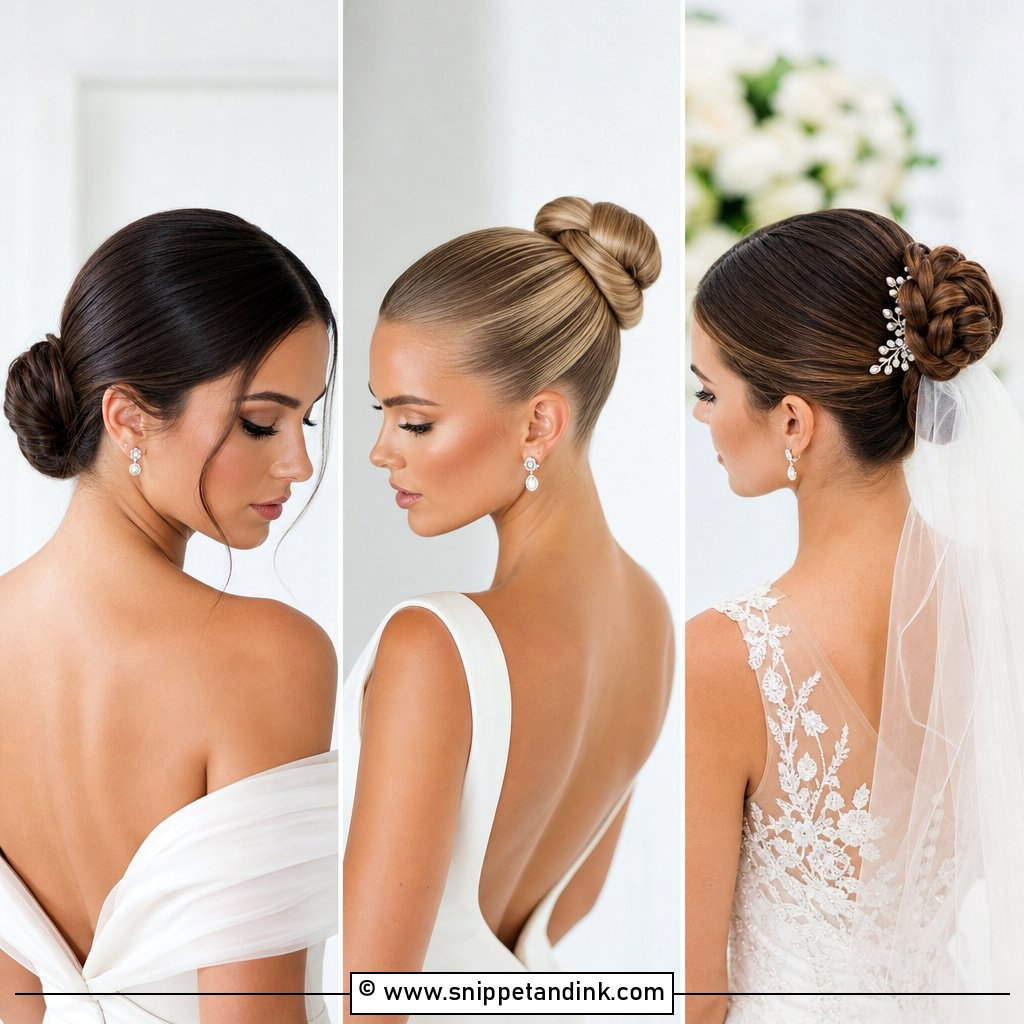
1. Low Bun Wedding Hair
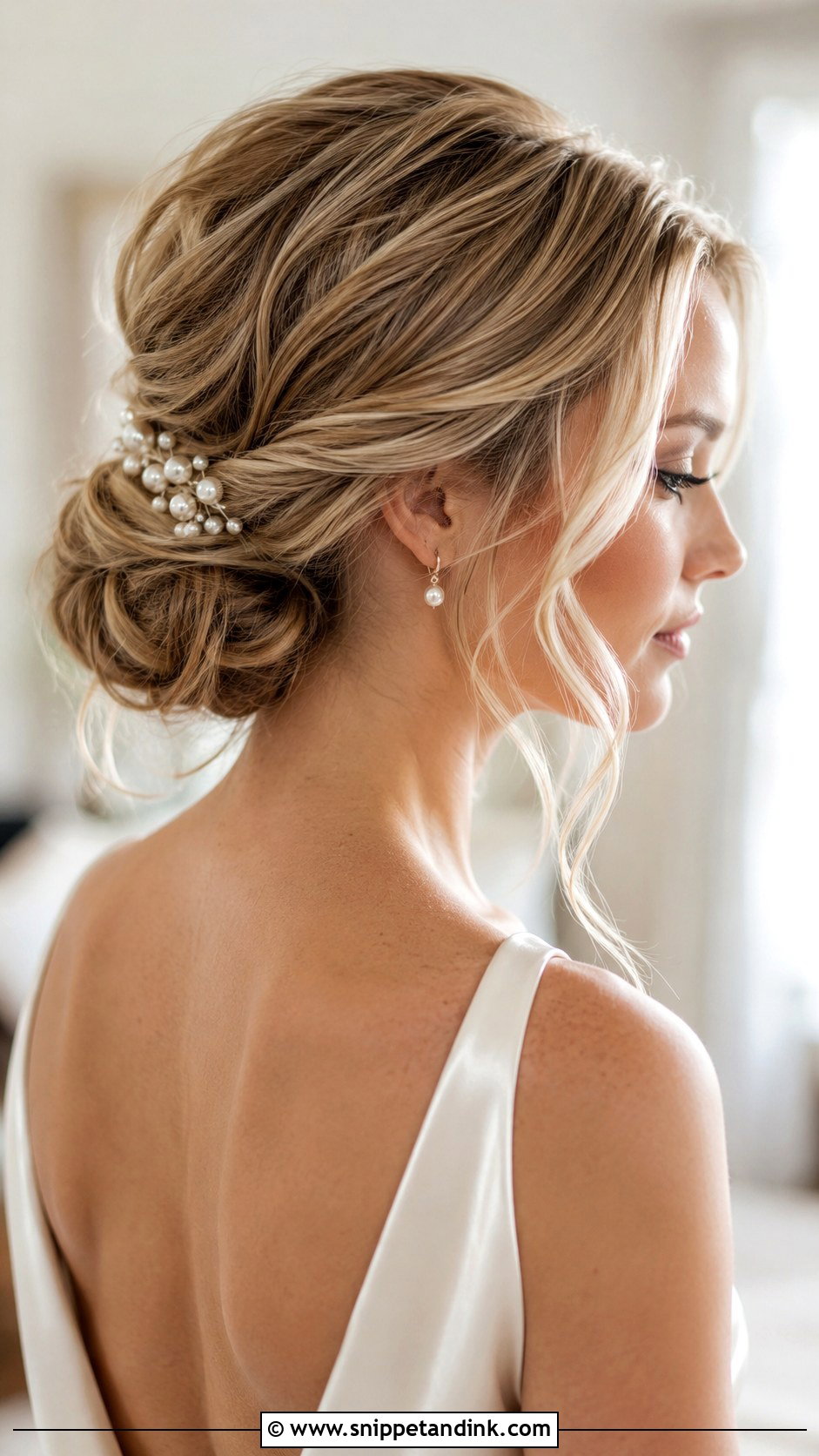
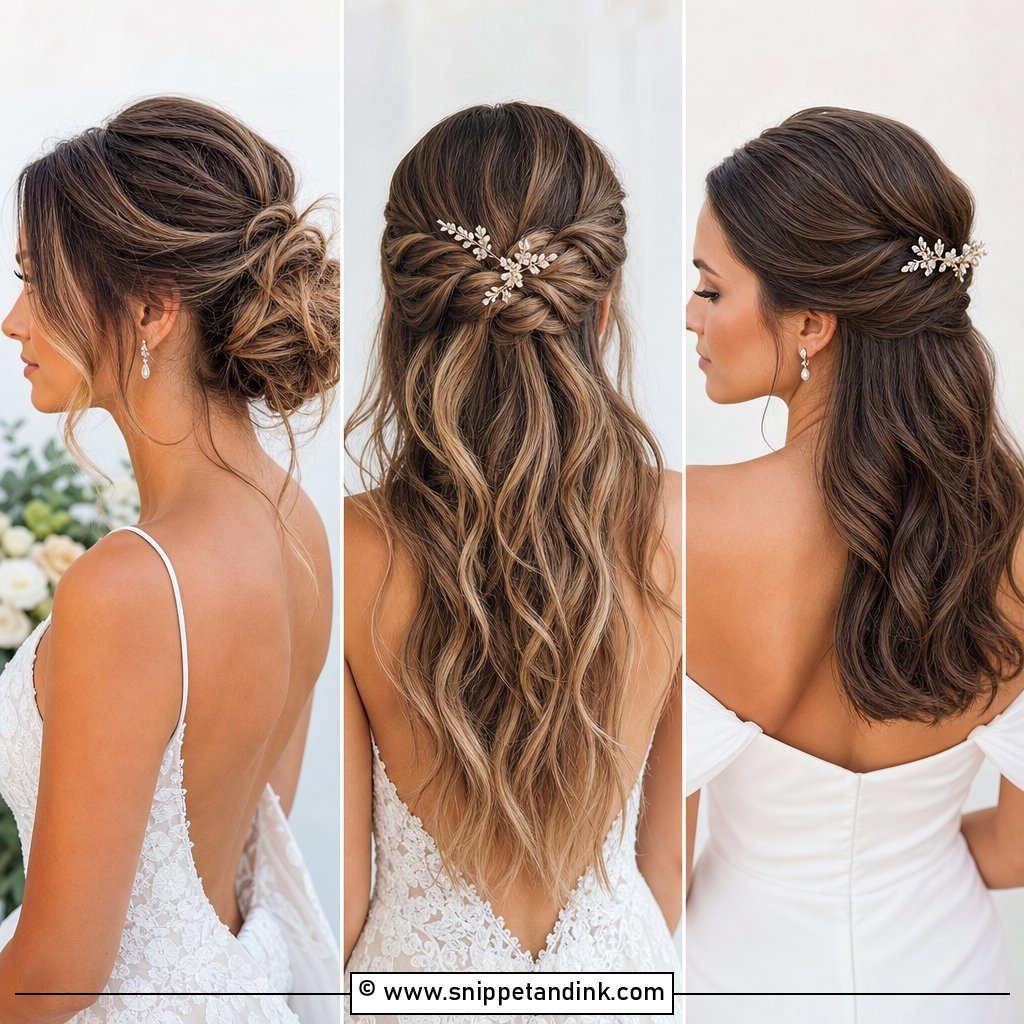
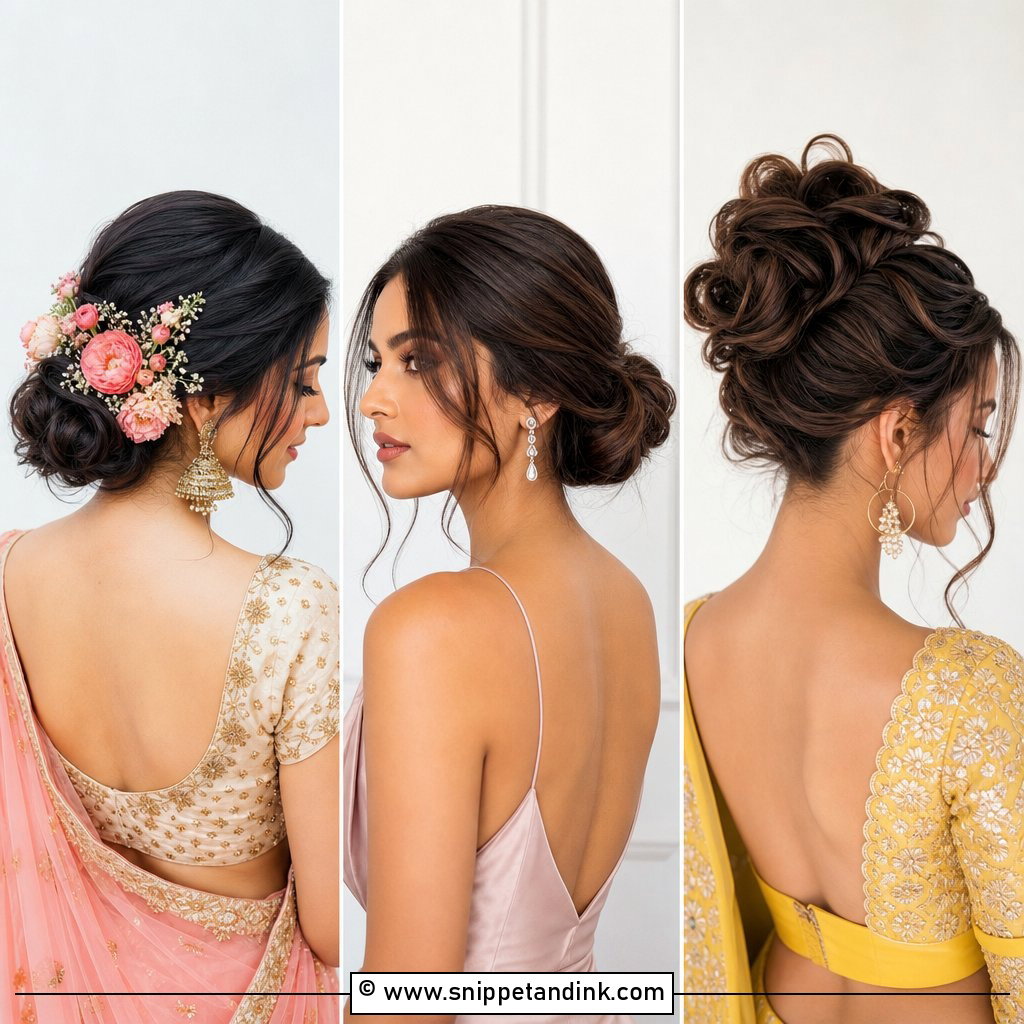
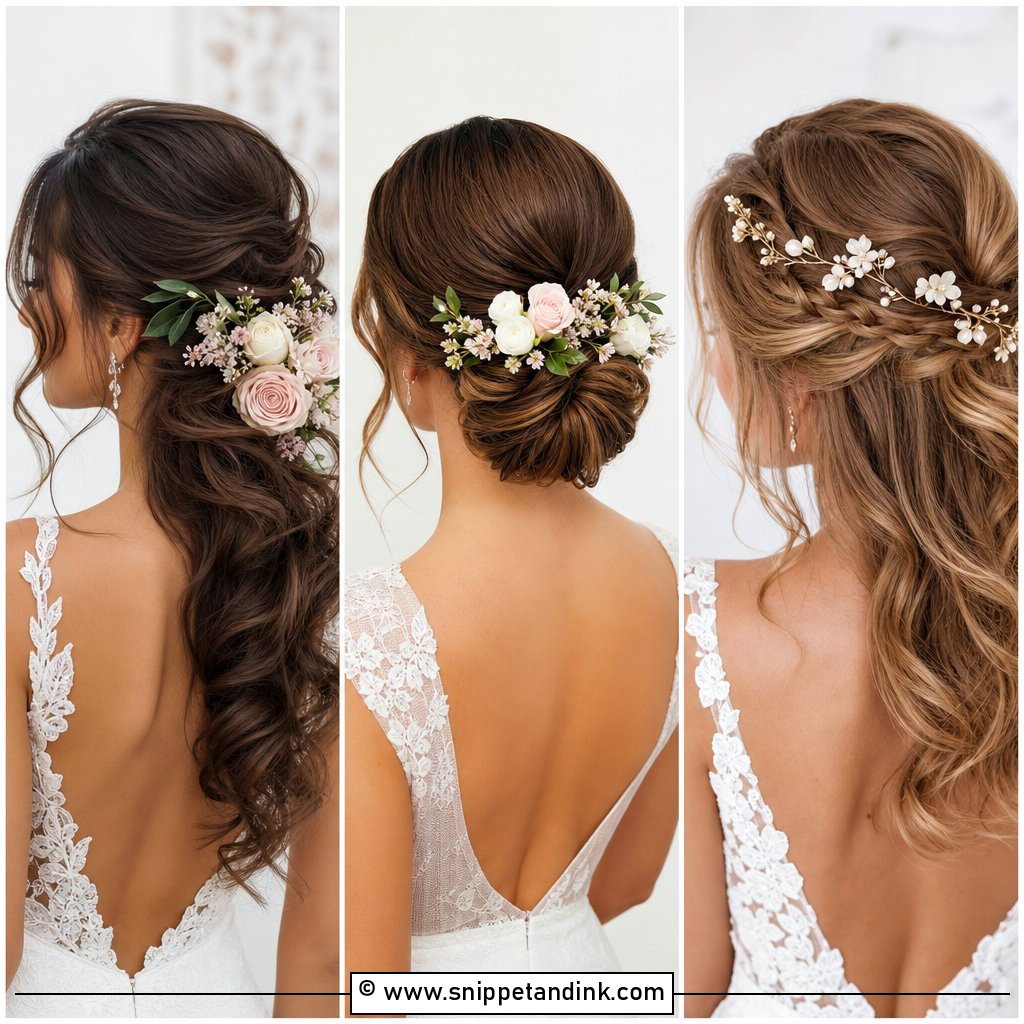
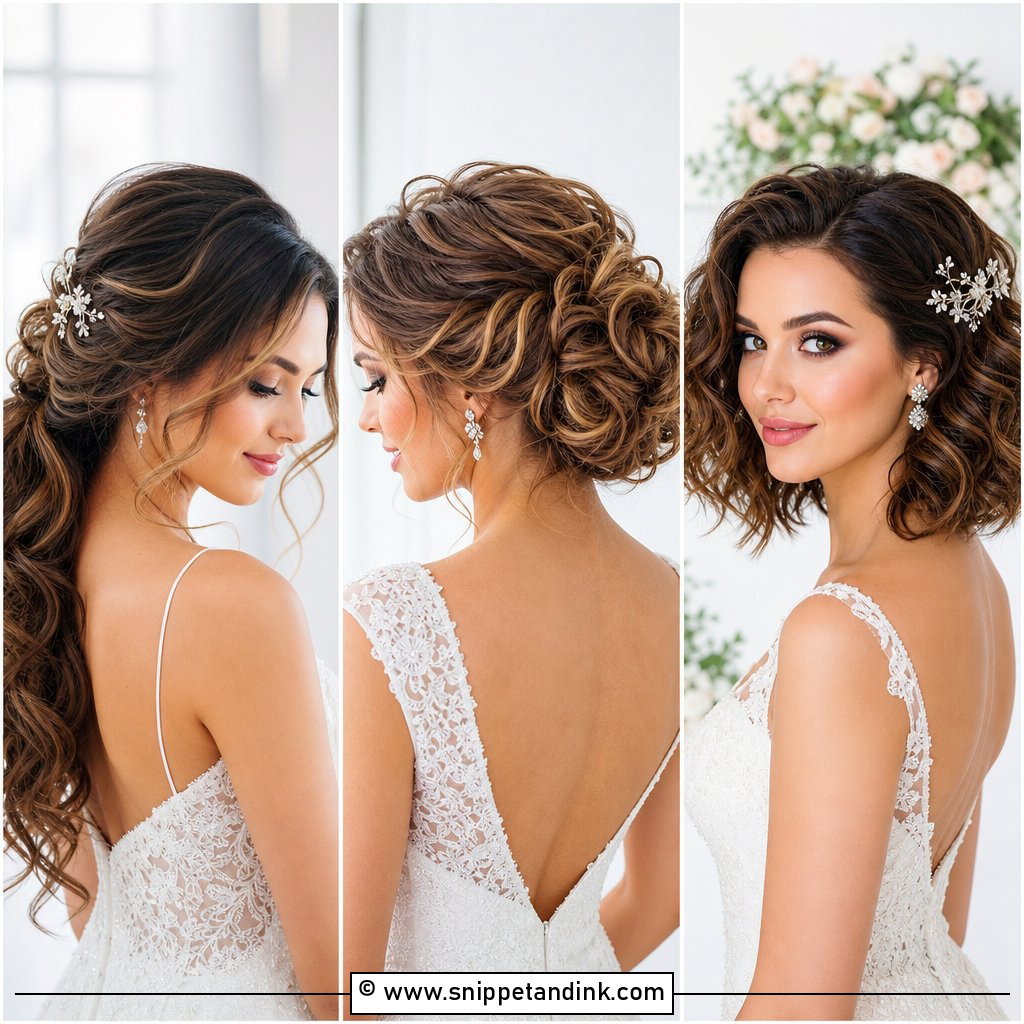
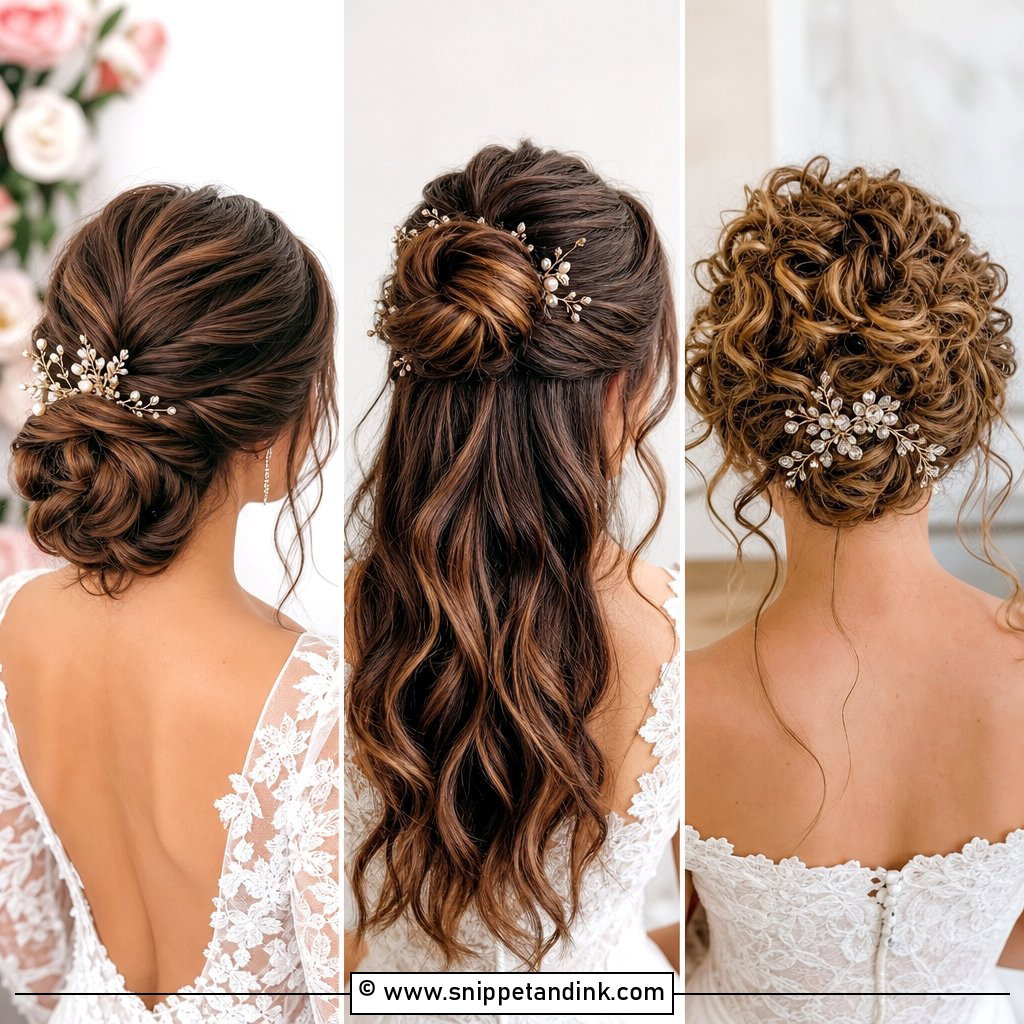
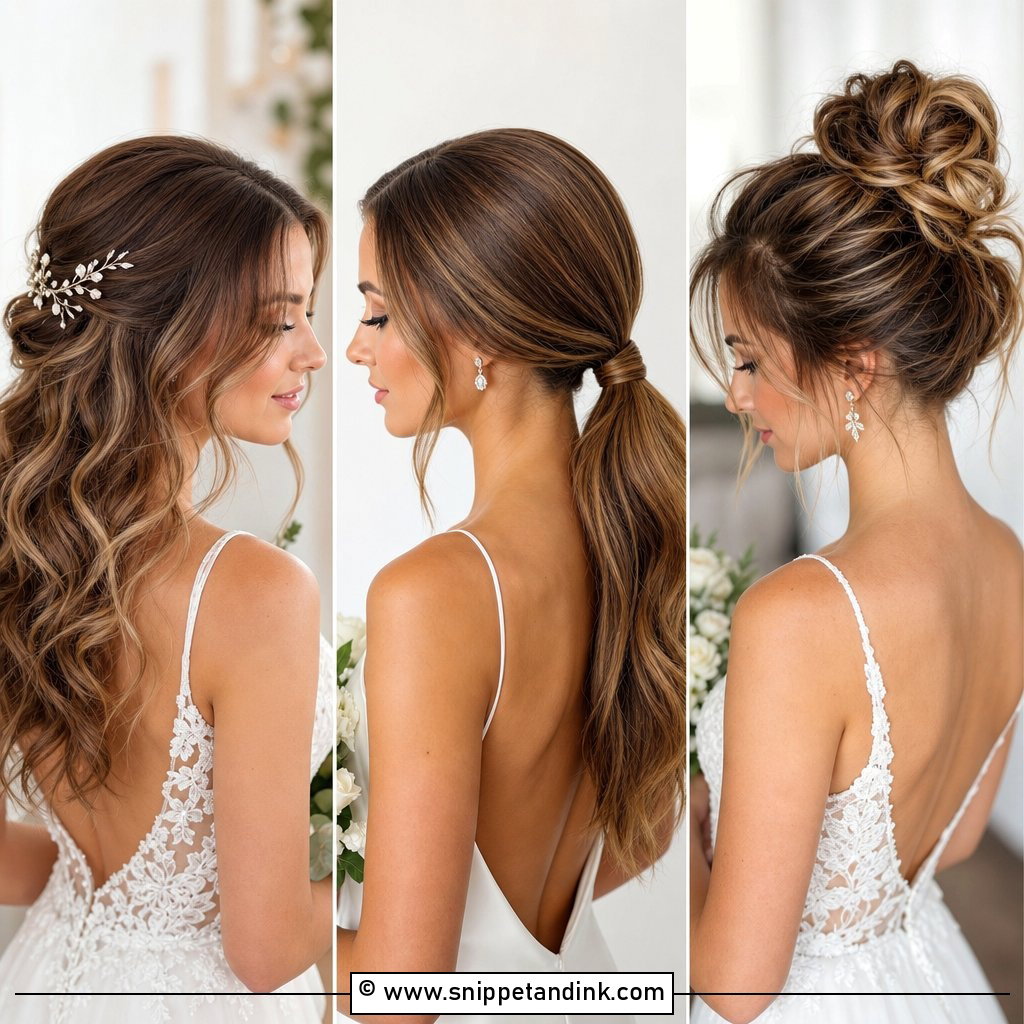
Of everything I pin, the low bun is the style I worry about least. It sits at the nape, so a veil comb, a row of pearl pins or a fresh floral comb all have somewhere solid to sit, and an open back stays clear. Medium to long hair suits it best because there’s enough length to wrap a full shape. I build it on a small anchored ponytail, add a little lift at the crown first, then pin the bun from underneath so nothing shows. Brides tend to forget they’re wearing it by dinner, which is exactly the point.
2. Messy Bun Wedding Hair
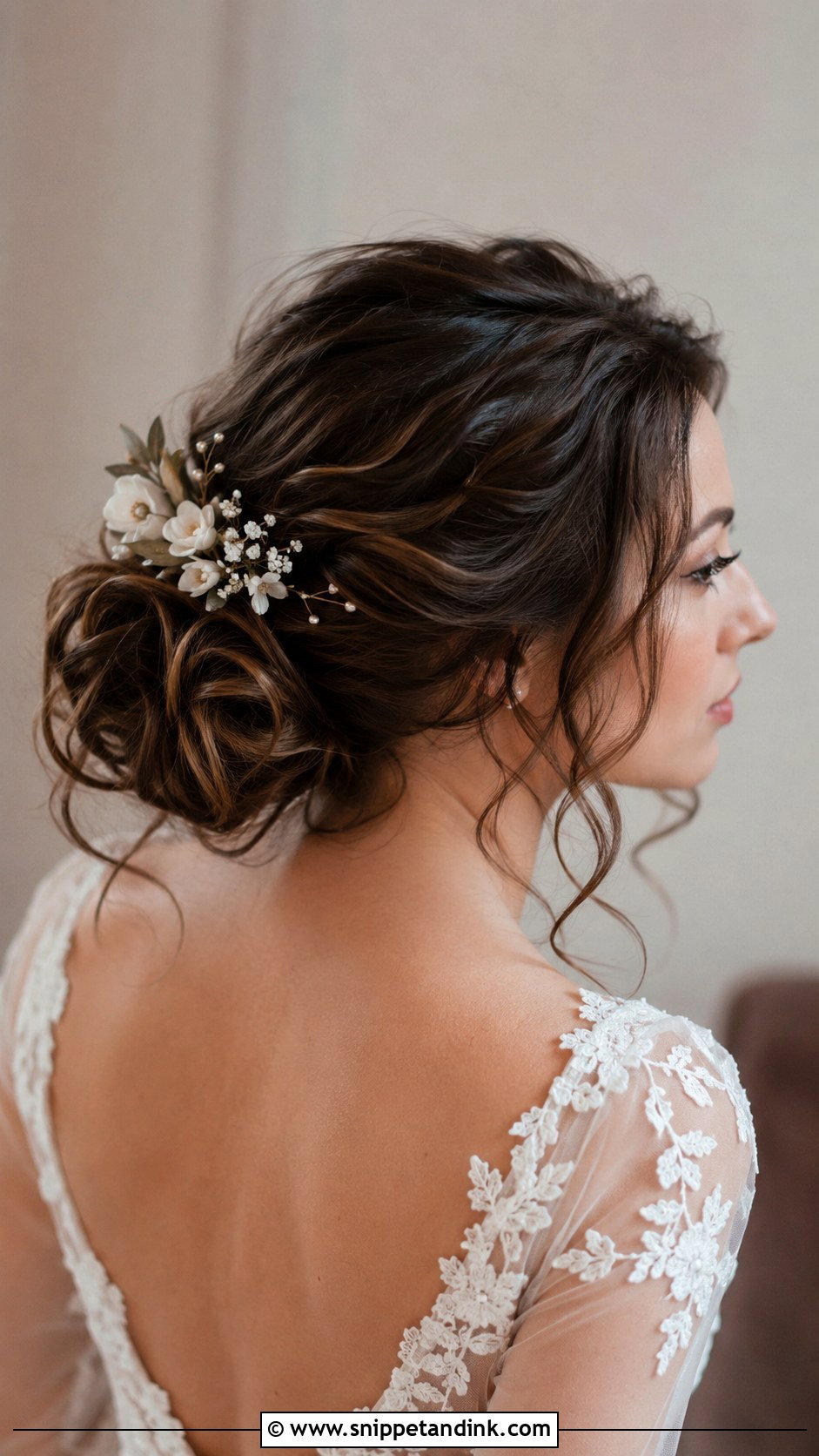
A messy bun only looks careless. In the chair it’s one of the more deliberate styles I do, because every loose bend has to be placed. I curl the whole head first, let the curls cool fully, then pin them into an airy shape and pull out a few face-framing pieces at the end rather than the start. Fine hair gains a lot of body this way. It sits naturally with lace, flowing chiffon and garden or barn venues, and tiny pins or a few small flowers are all it needs to read as bridal.
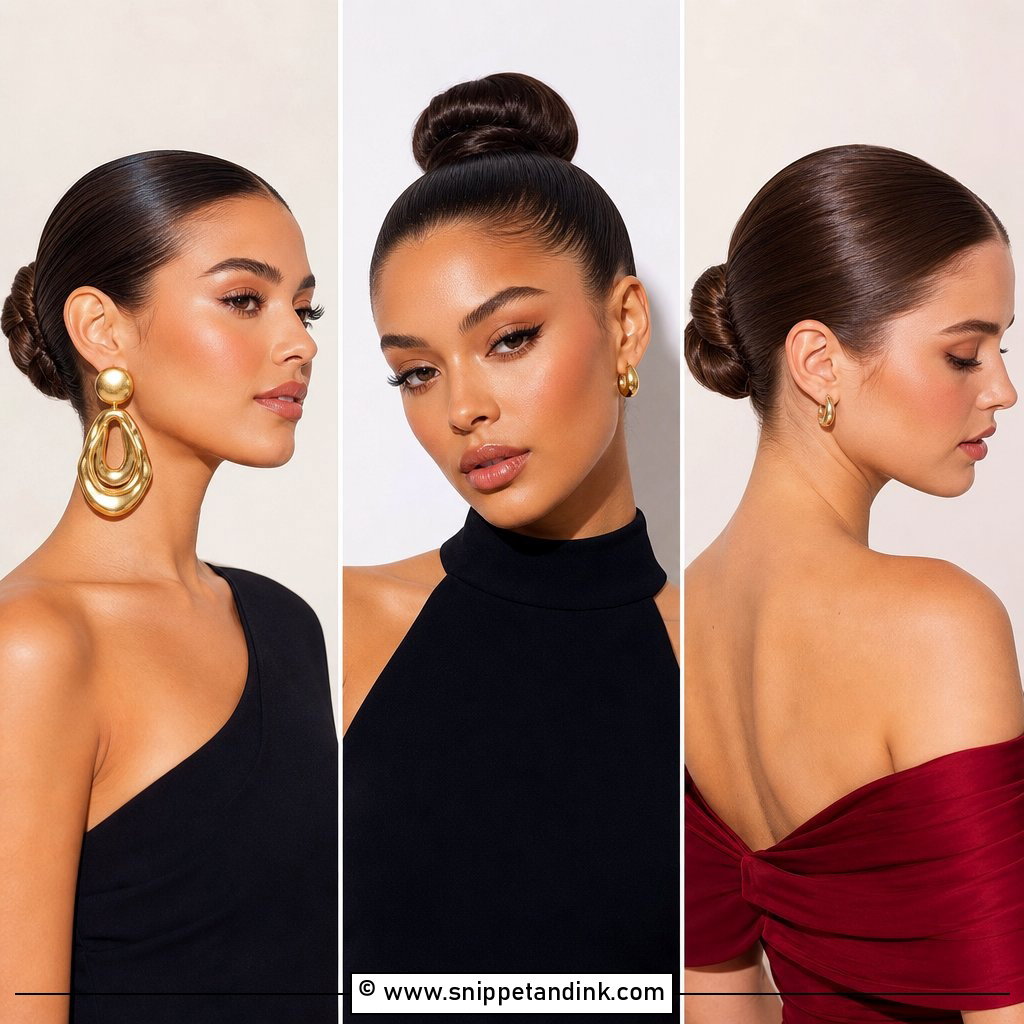
3. Sleek Bun Wedding Hair
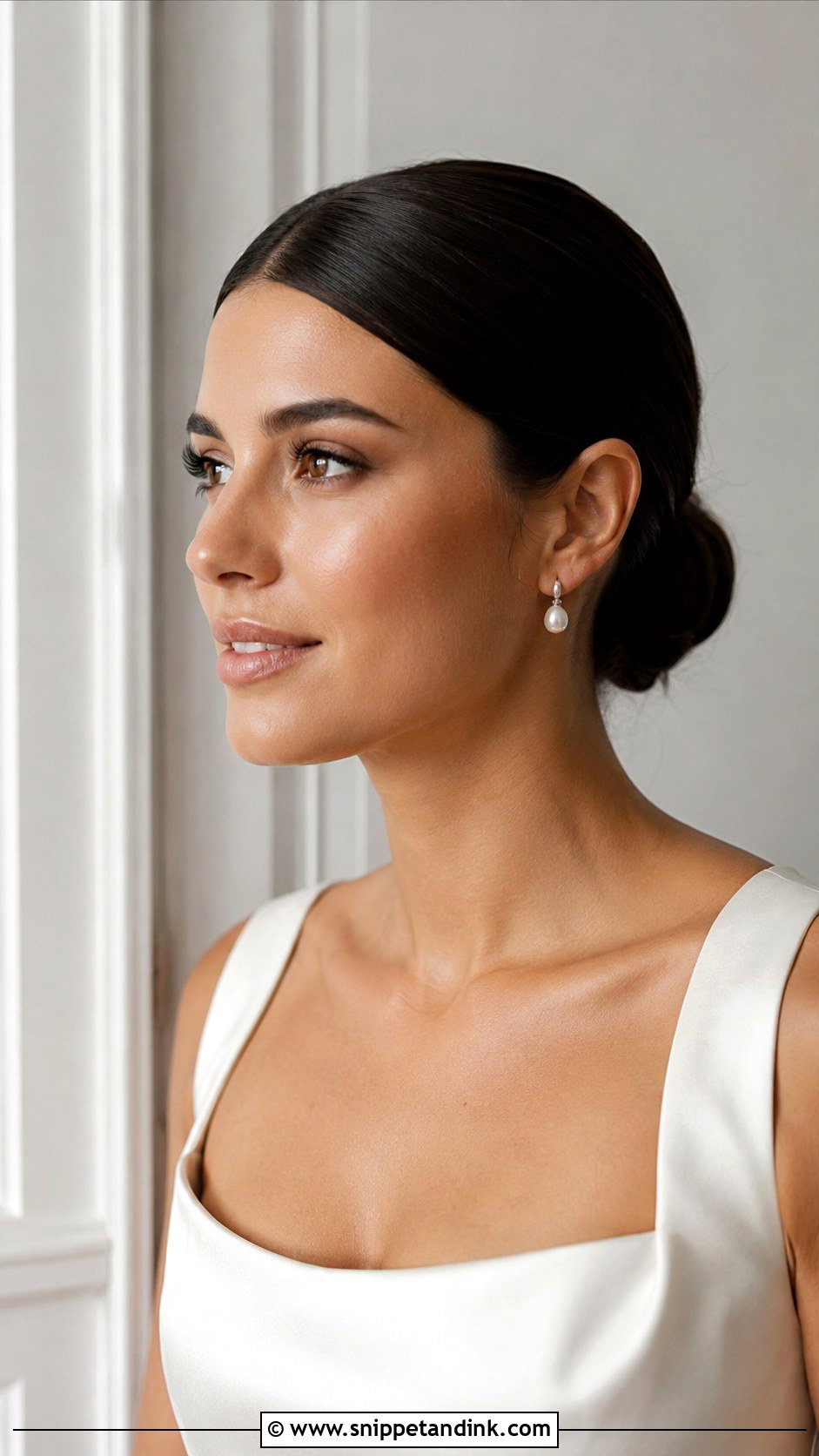
The sleek bun is unforgiving, so I’d only suggest it if you love it. Every bump and every short regrowth hair shows, which means the prep takes longer than the bun itself: a smoothing cream worked through damp hair, a slow blow-dry, then a flexible hold spray brushed in rather than sprayed on top. Center part, side part or no part all work. The payoff is real, though. It holds in humidity better than almost anything soft, and it lets a minimalist satin gown or big earrings carry the look. Aim for glossy, not wet.
4. High Bun Wedding Hair
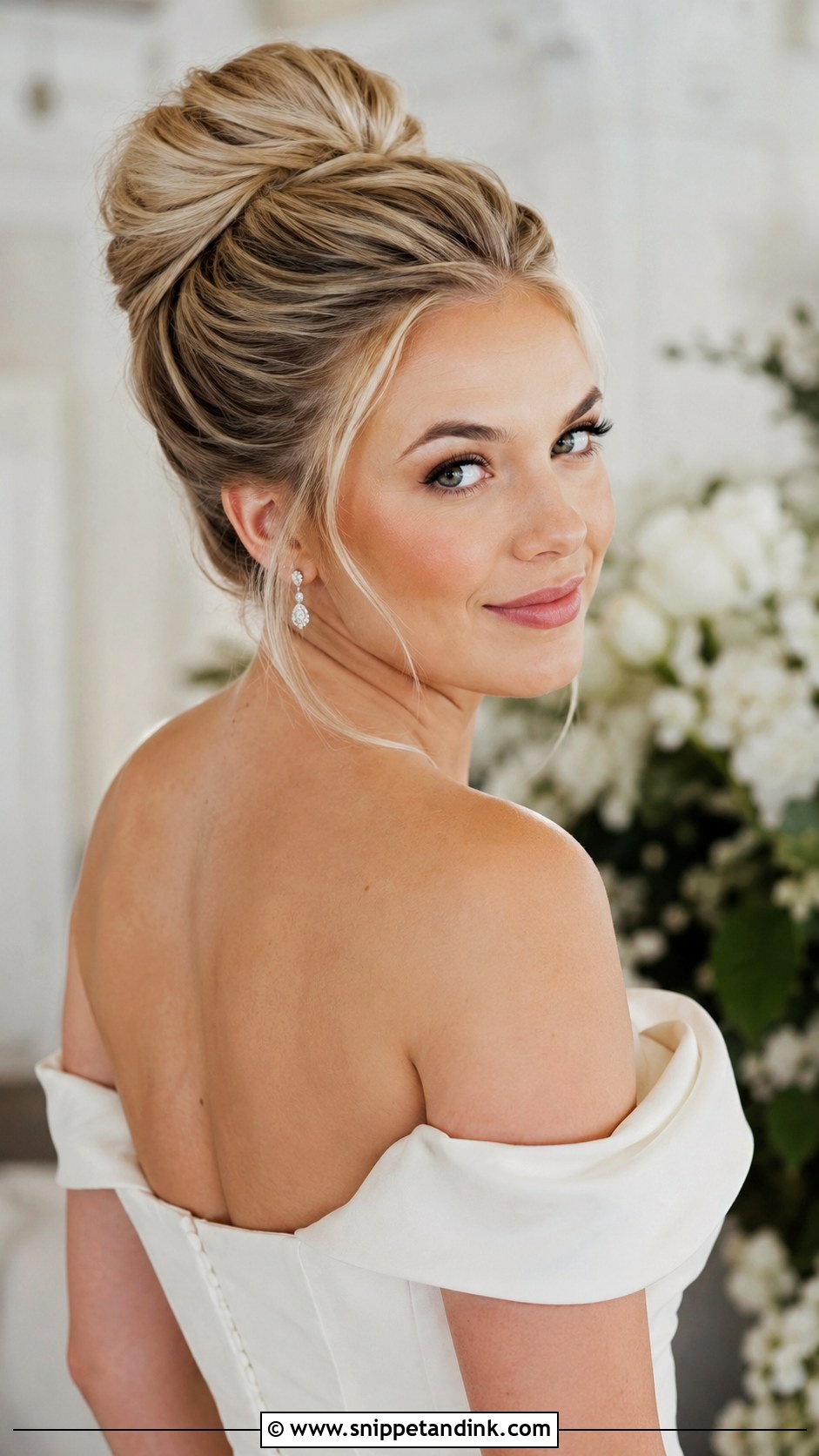
Placing a bun high on the crown lengthens the face and lifts attention to cheekbones and shoulders, which is why it suits ballroom venues and high-neck or heavily detailed bodices. Before committing, check your veil plan: a high bun pushes the comb either above or below it, and both change the silhouette. Thick hair fills the shape on its own. With finer hair I tuck a mesh padding inside so the bun doesn’t look like a small knot. Keep a little softness at the hairline, otherwise a high smooth bun can tip into severe.
5. Braided Bun Wedding Hair
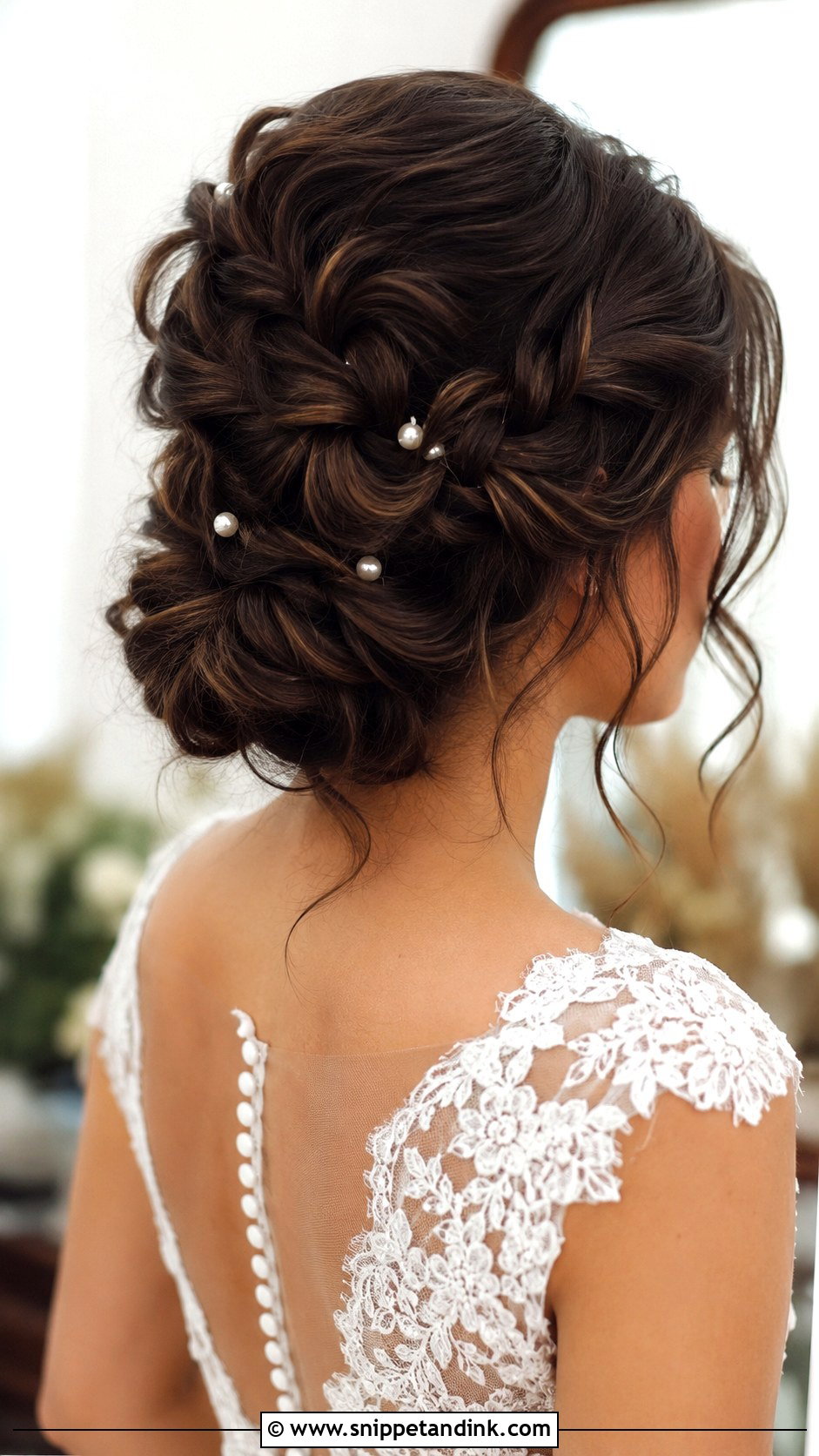
Braids do structural work in an updo, not just decorative work. A braid fed into or wrapped around a bun grips the hair and the pins, so this style stays put through wind and dancing better than loose twists do. Highlighted or dimensional color looks especially good here because each stitch catches a different tone. I usually braid tight, pin, then gently pancake the edges so the finish looks softer than the grip underneath. A few small pearl pins or blooms tucked into the braid are plenty.
6. Chignon Wedding Hair
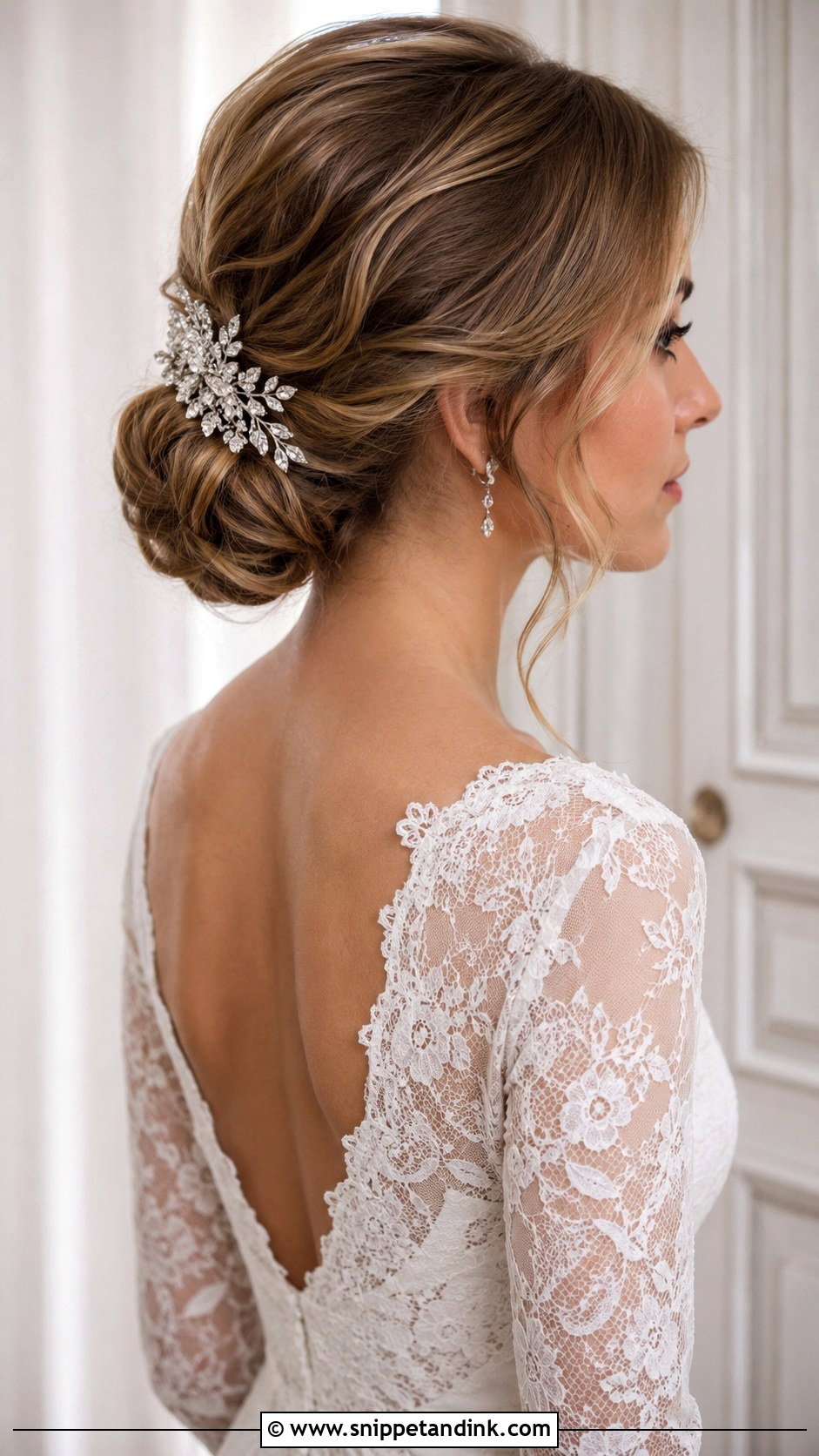
A chignon is the tucked, rounded shape at the nape that never looks dated in photos ten years later. Side portraits and back-of-dress shots are where it really shows off, so I spend extra time on how it looks from the side, not just from the mirror. It sits well under a cathedral veil and with lace or long sleeves. I always leave the crown slightly relaxed. A chignon pulled flat against the scalp gives brides a headache by the second hour, and the tightness reads in pictures too.
7. French Twist Wedding Hair
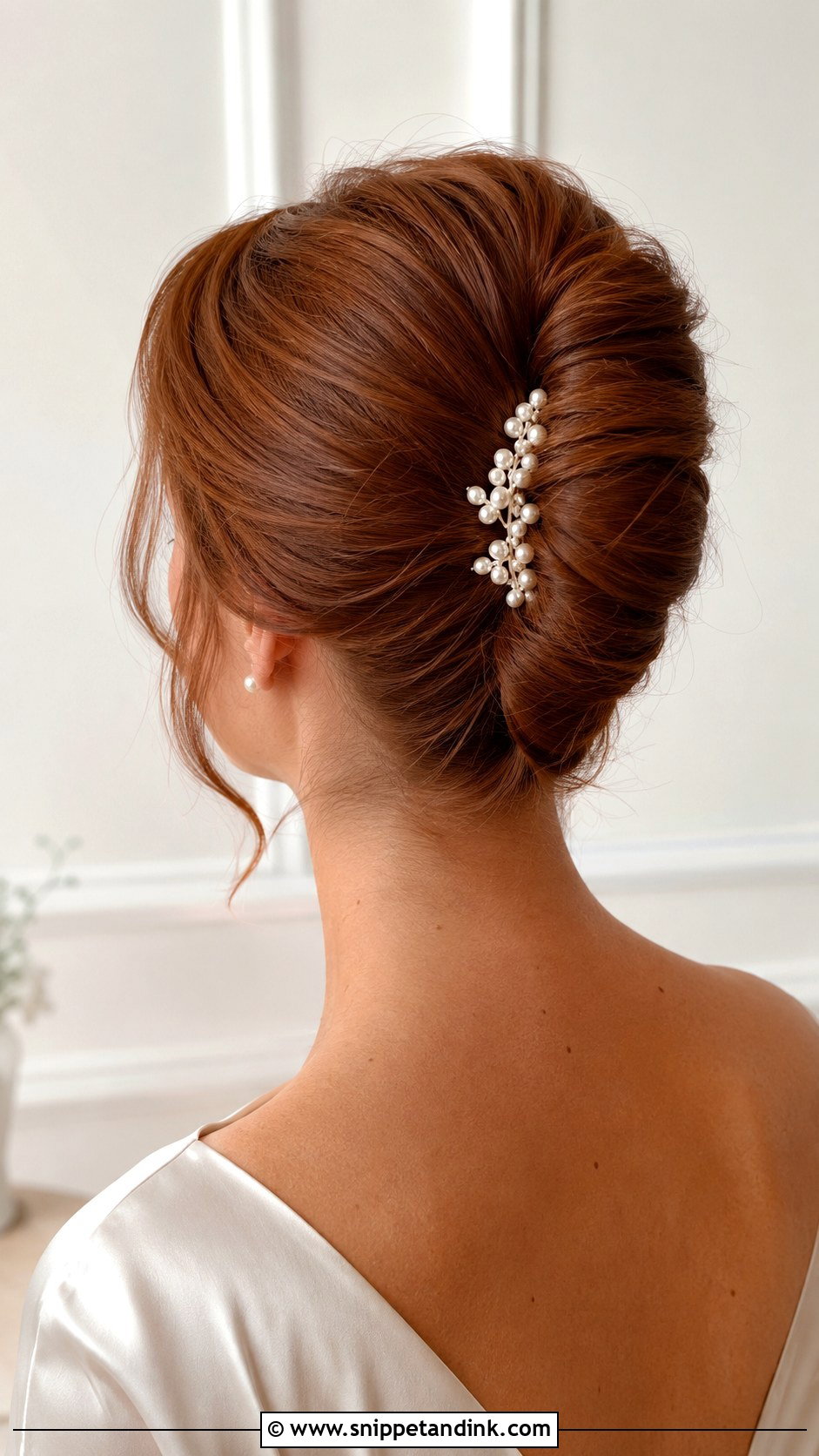
The French twist is a vertical roll swept up the back of the head, and it lifts the whole profile. It keeps hair completely away from strapless, boat neck and high-neck gowns, so nothing catches on beading. To get a twist that holds, I backcomb the inside of the section lightly and lock the roll with crossed pins hidden in the seam, because a single row of pins lets it unwind. Medium to long hair works best; bob-length hair can often be pinned into a shorter version. A crystal comb along the seam suits it perfectly.
8. Curly Updo Wedding Hair
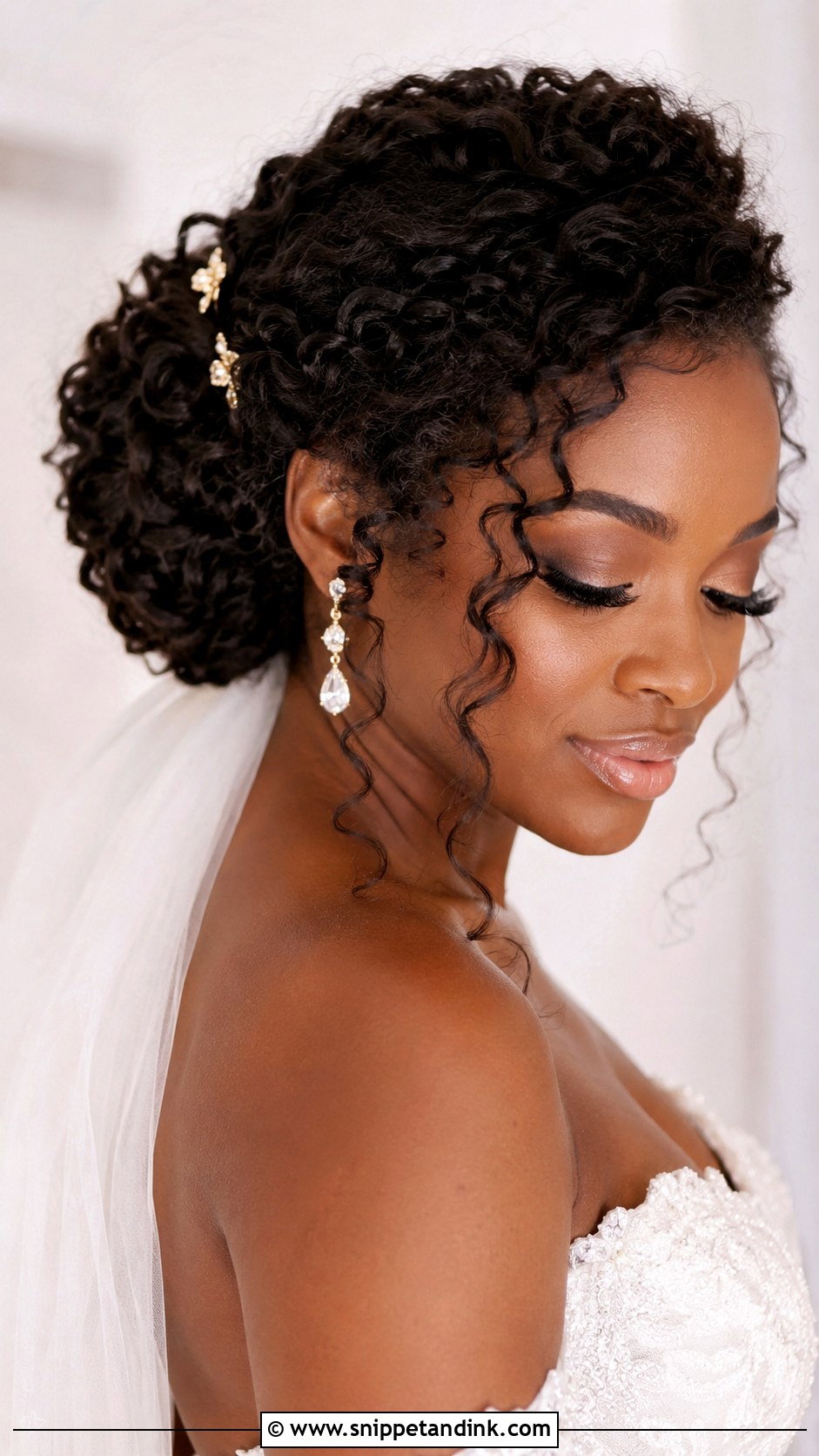
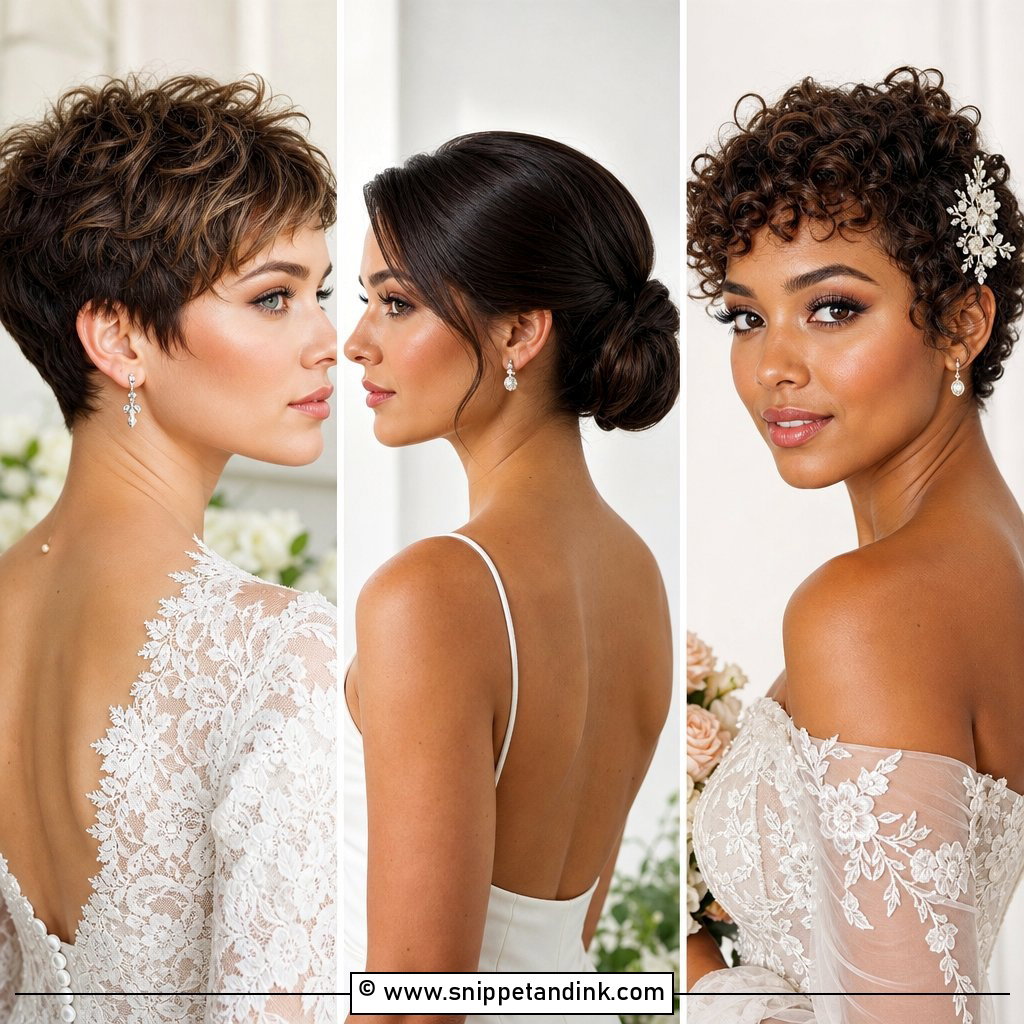
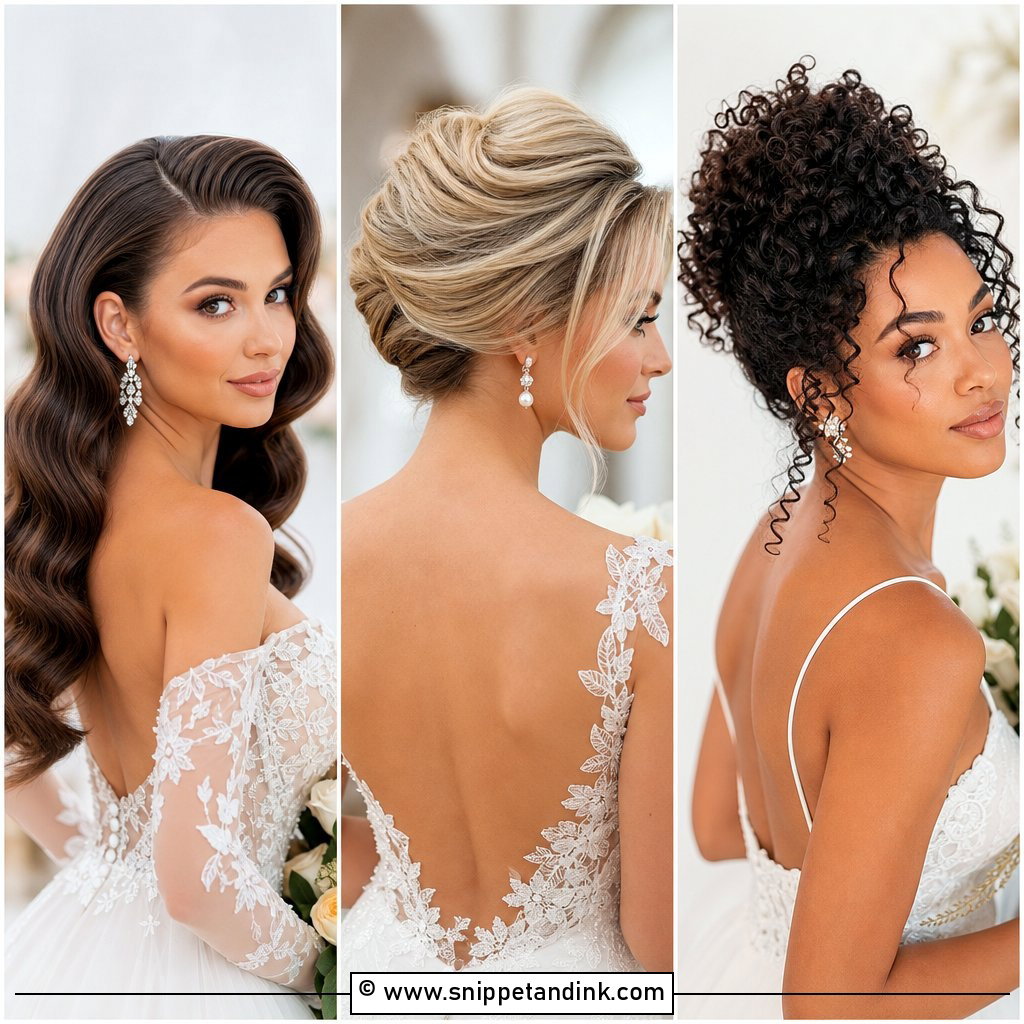
With a curly updo I never try to stretch the curls into a smooth shape. I pin them where they want to sit and let the pattern show. It flatters naturally curly, coily, or spiral hair because the height and fullness come for free. Prep is where it’s won: hydrated, defined curls the day before, a curl cream, then a gentle hold product. Avoid brushing anything out on the morning itself. I pin in clusters rather than strands so the shape survives hugs, and a couple of curls left loose at the face finish it.
9. Side Bun Wedding Hair
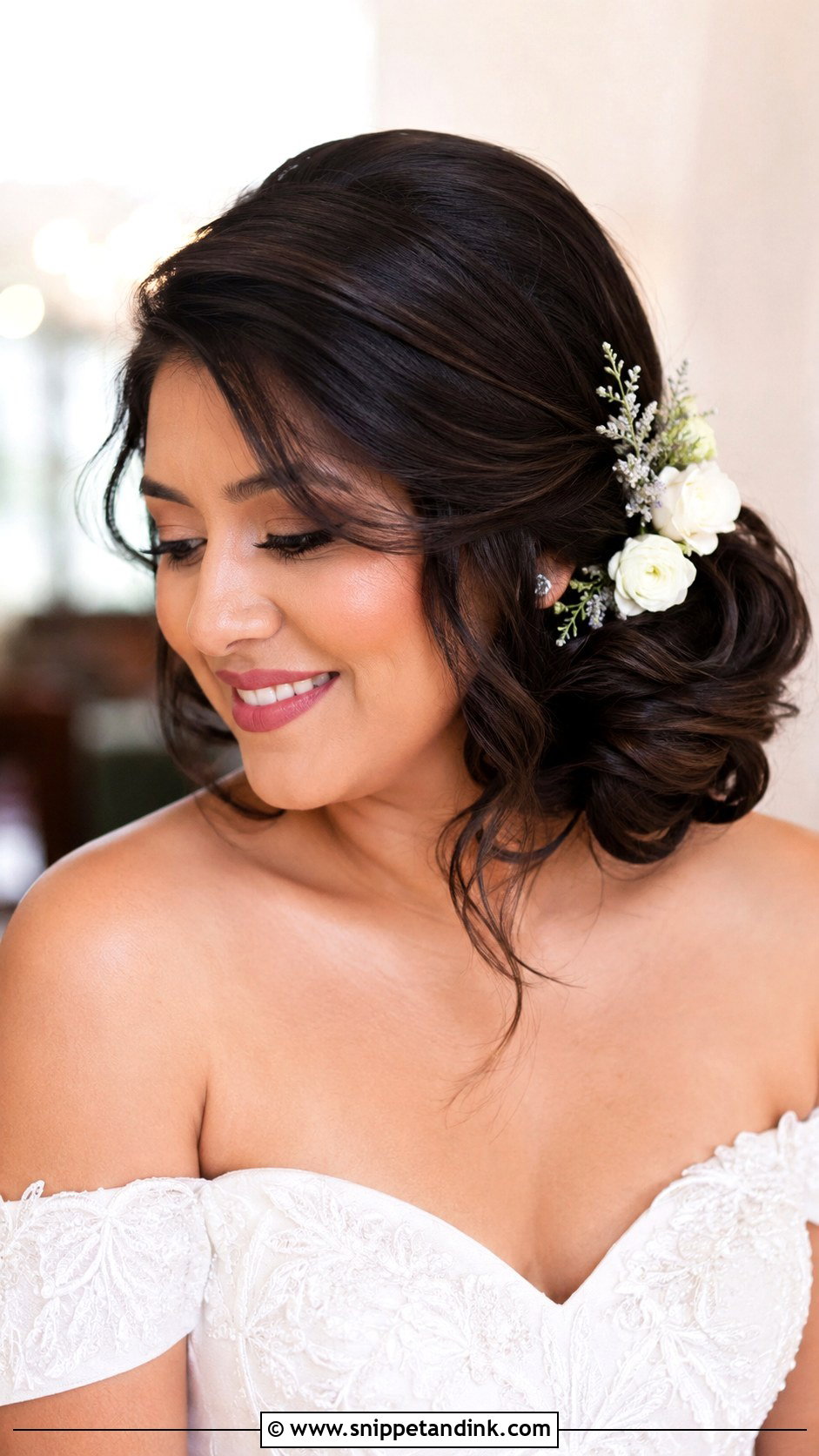
Shifting the bun just off-center softens a formal style without making it casual. It pairs naturally with a one-shoulder dress (put the bun on the bare side so it doesn’t fight the strap) and with a deep side part. Waves swept across the crown into the bun look lovely here. The risk is weight drifting downward on one side through the day, so I anchor it lower than people expect and add a second base of pins. A small floral accent just behind the ear keeps the balance.
10. Twisted Updo Wedding Hair
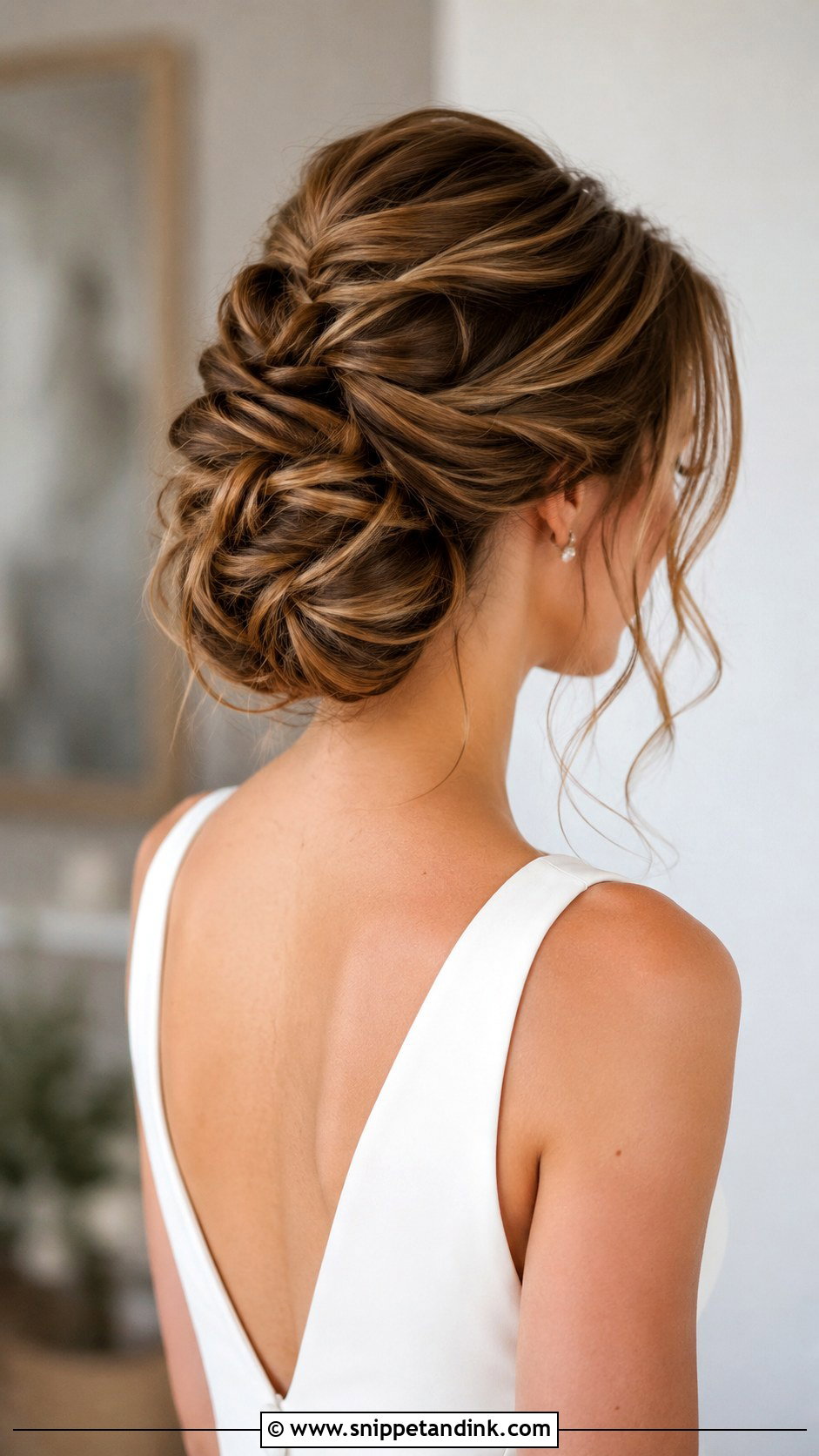
Twists give you texture and pattern without the time a braid takes. Small sections are rolled, then pinned into each other, which shows off balayage or multi-tonal brunette color because each twist turns the light a little differently. I keep the twists loose while placing them and secure everything from underneath at the very end. Tighten too early and the whole shape looks rigid. Done this way it can become a low bun, a tucked roll or a gathered updo, and it’s tidy enough for a black-tie room.
11. Half Up Bun Wedding Hair
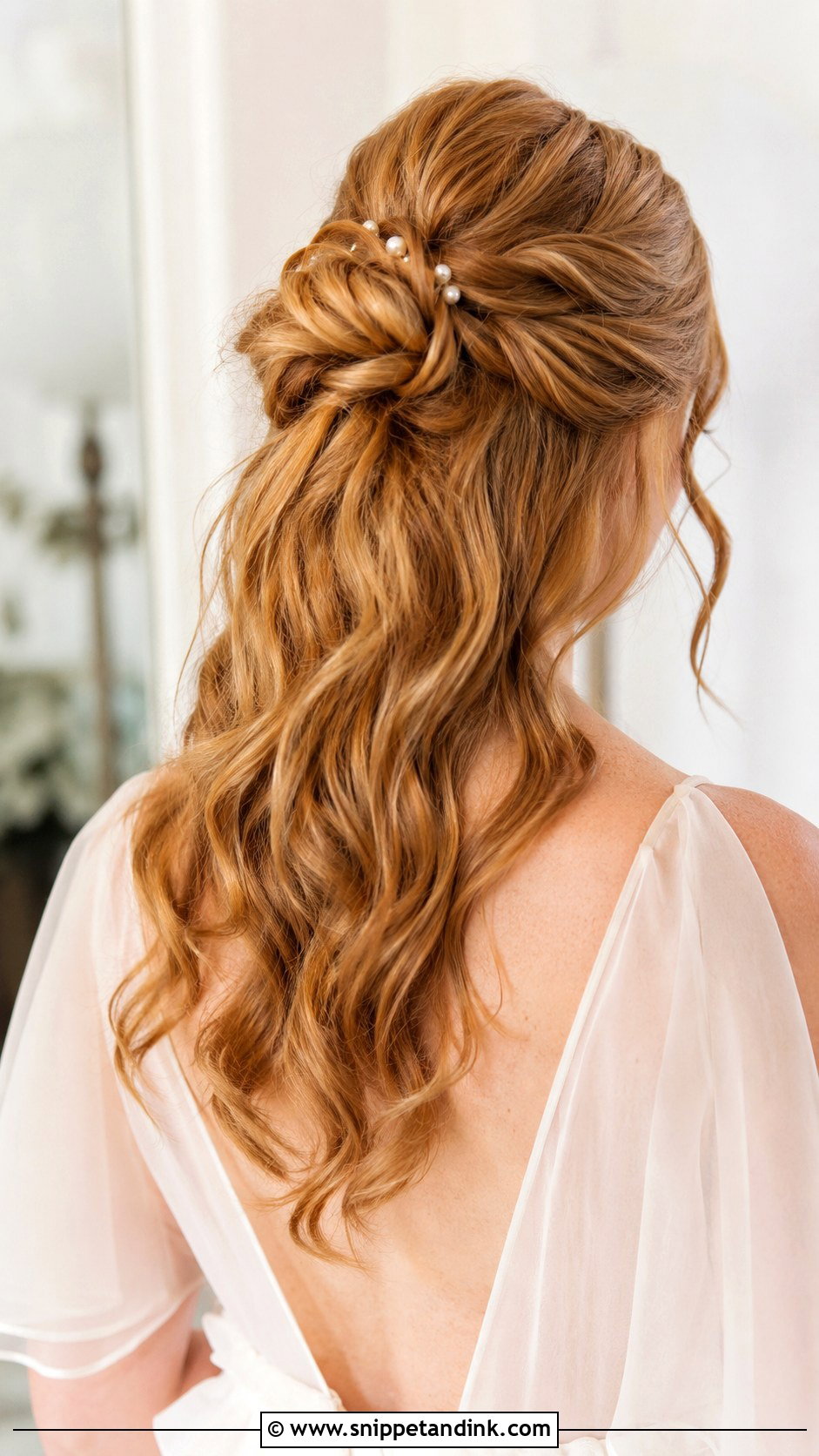
A half up bun gives the lifted feel of an updo while keeping length around the shoulders. The top section becomes a small knot, twist or braid, and the rest falls in curls or smooth bends. Honestly, the loose half is the part that fails first: waves left down will relax faster than anything pinned, especially outdoors, so I set them with a firmer spray than I’d use on a full updo. It’s a natural fit for bridesmaids, guests and relaxed outdoor ceremonies. Two or three small pins near the bun are enough sparkle.
12. Low Ponytail Wedding Hair
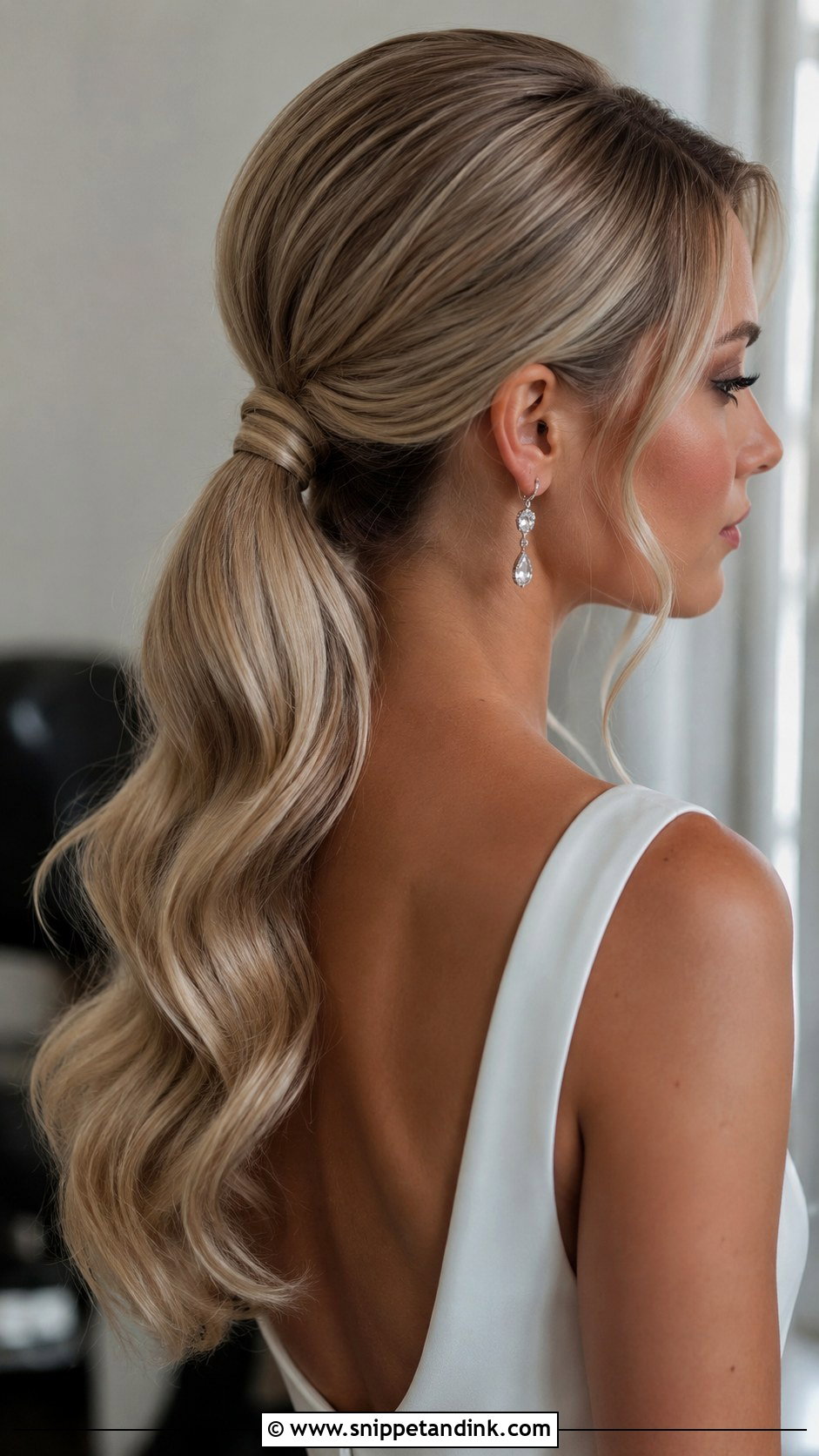
The low ponytail is the comfortable modern option, and it suits backless and minimalist gowns as well as statement earrings. Wrapping a strand of hair around the base hides the elastic and instantly makes it formal. I tie it with two elastics, one tight and one over it to grip, because a single band slides when the hair is heavy. For fullness, I curl the length and brush it into soft waves. With no pins pressing on the scalp, it’s the style brides complain about least at hour ten.
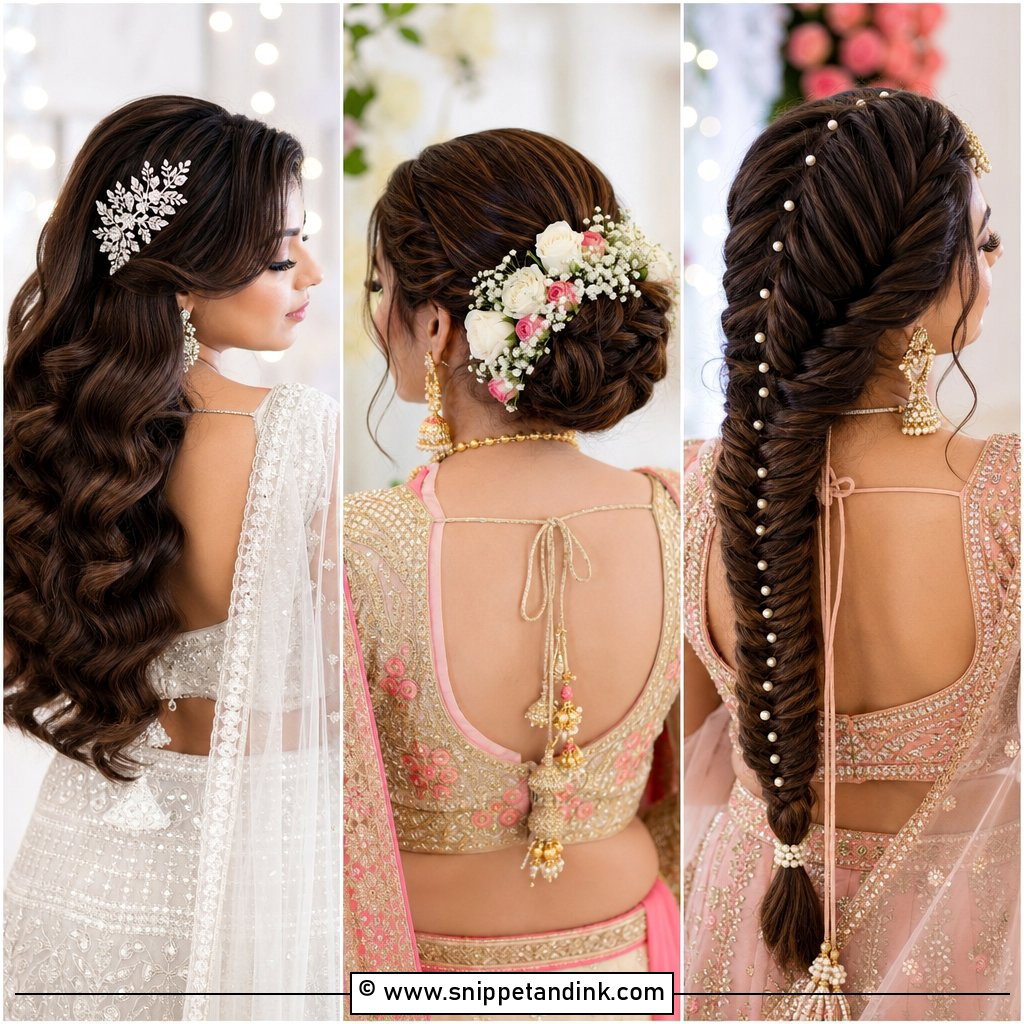
13. Braided Crown Wedding Hair
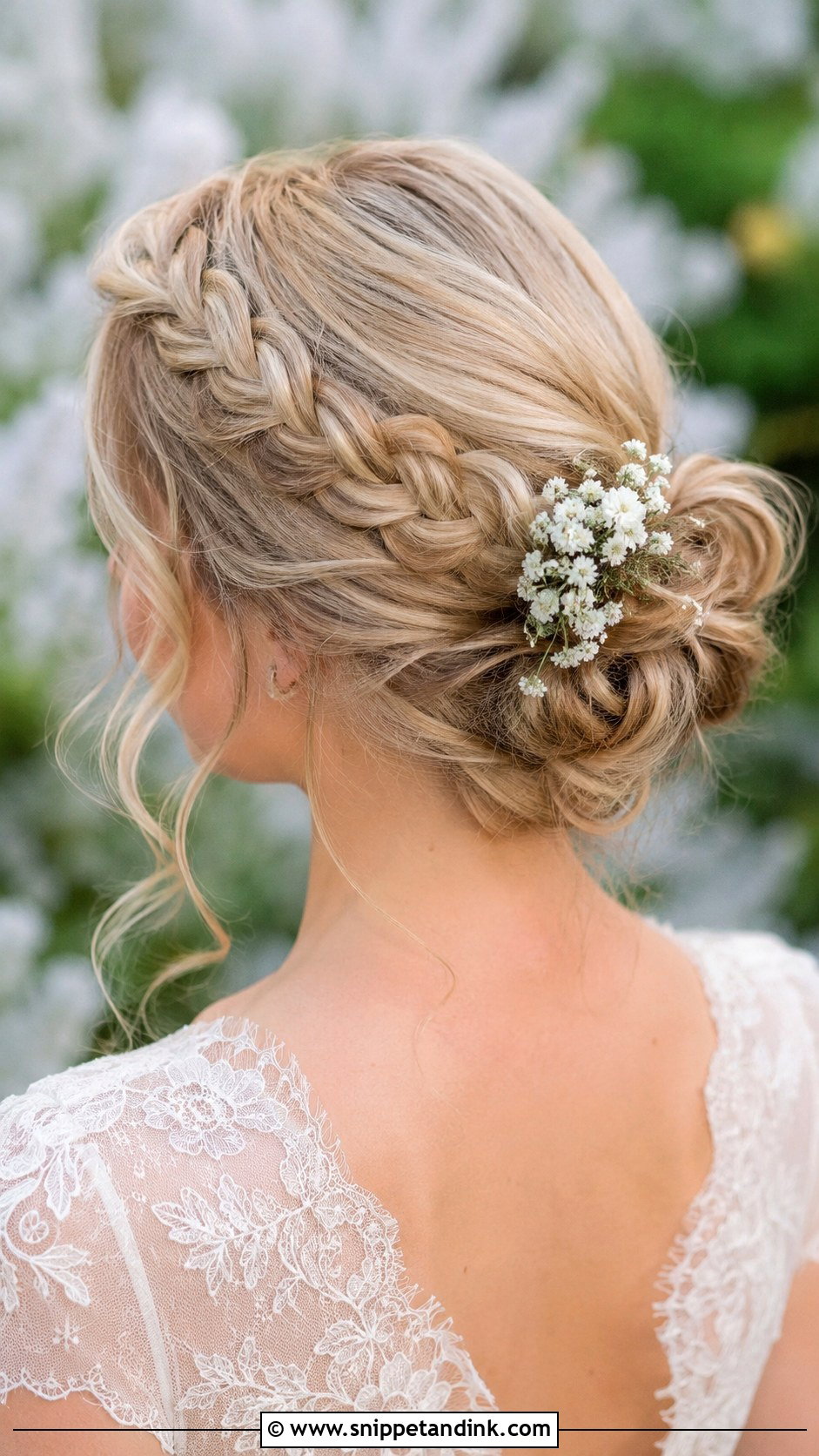
A braided crown wraps the head like a halo and then joins a low bun, a tucked roll or pinned curls. Clean slippery hair is its enemy. I prep with texture spray or style on second-day hair so the braid has grip, and I pin the crown along its underside every couple of inches. It can stay loose and airy for a boho garden wedding or be braided smooth for something classic. Flowers or pearl pins dotted along the braid look sweet; keep them small so they don’t weigh it down.
14. Bun With Veil Wedding Hair
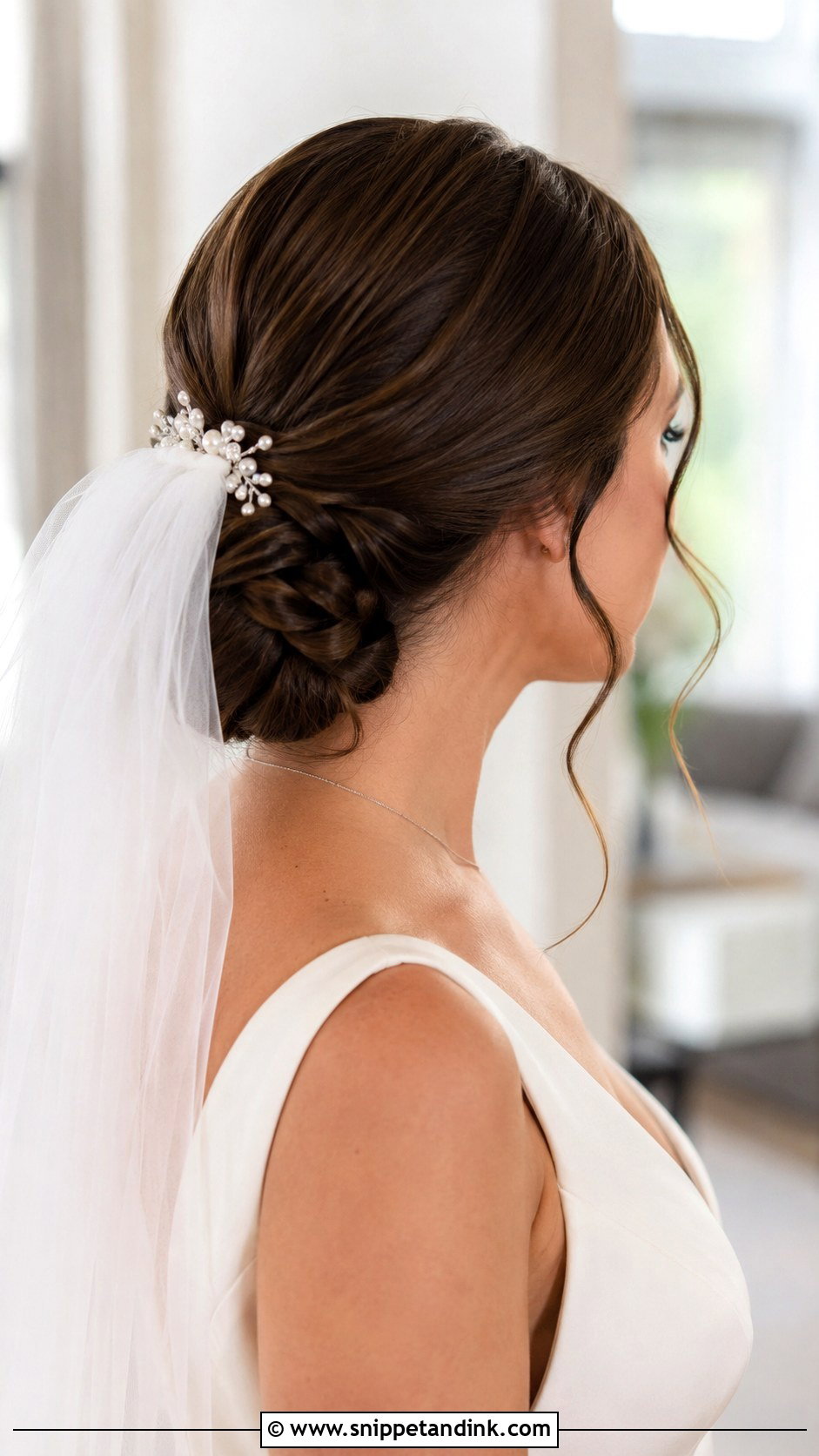
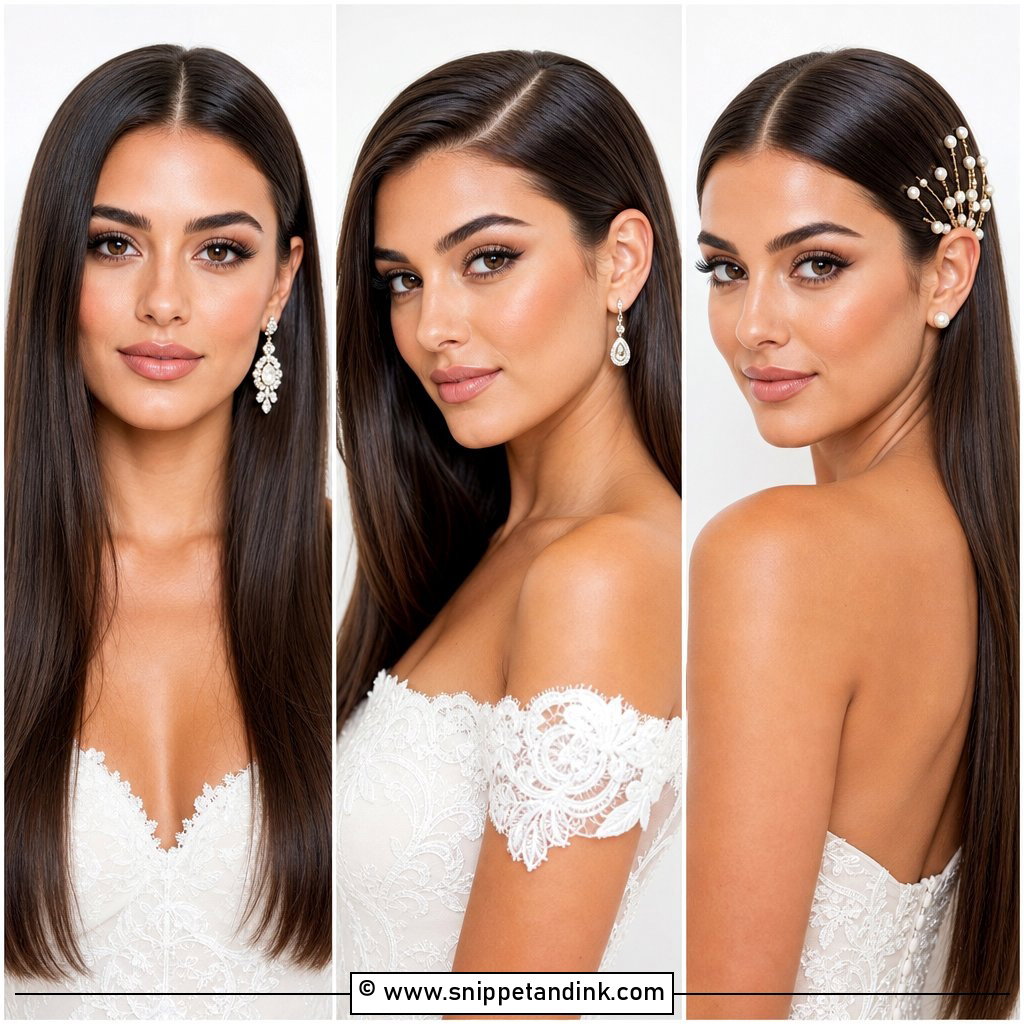
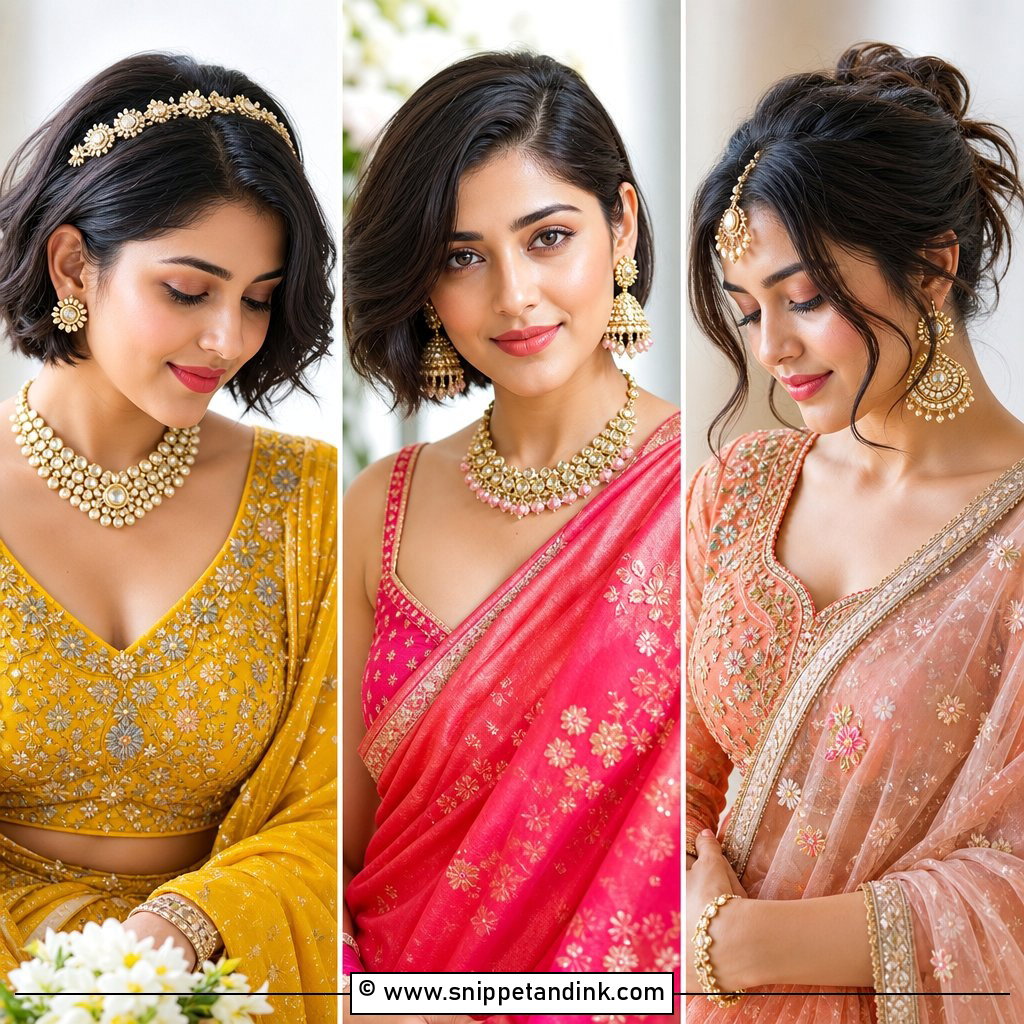
If you’re wearing a veil, building the bun around it is just practical. The comb needs something dense to bite into, and a bun gives it that. Low is most common, but a mid bun or sleek chignon also works. Placing the veil above the bun adds height, while below it lets the tulle fall in a softer line. Test the comb at your trial with the actual veil, because the weight of a long one changes everything. It should sit firm without pulling, and the bun should look finished once the veil comes off for the reception.
15. Bun With Bangs Wedding Hair
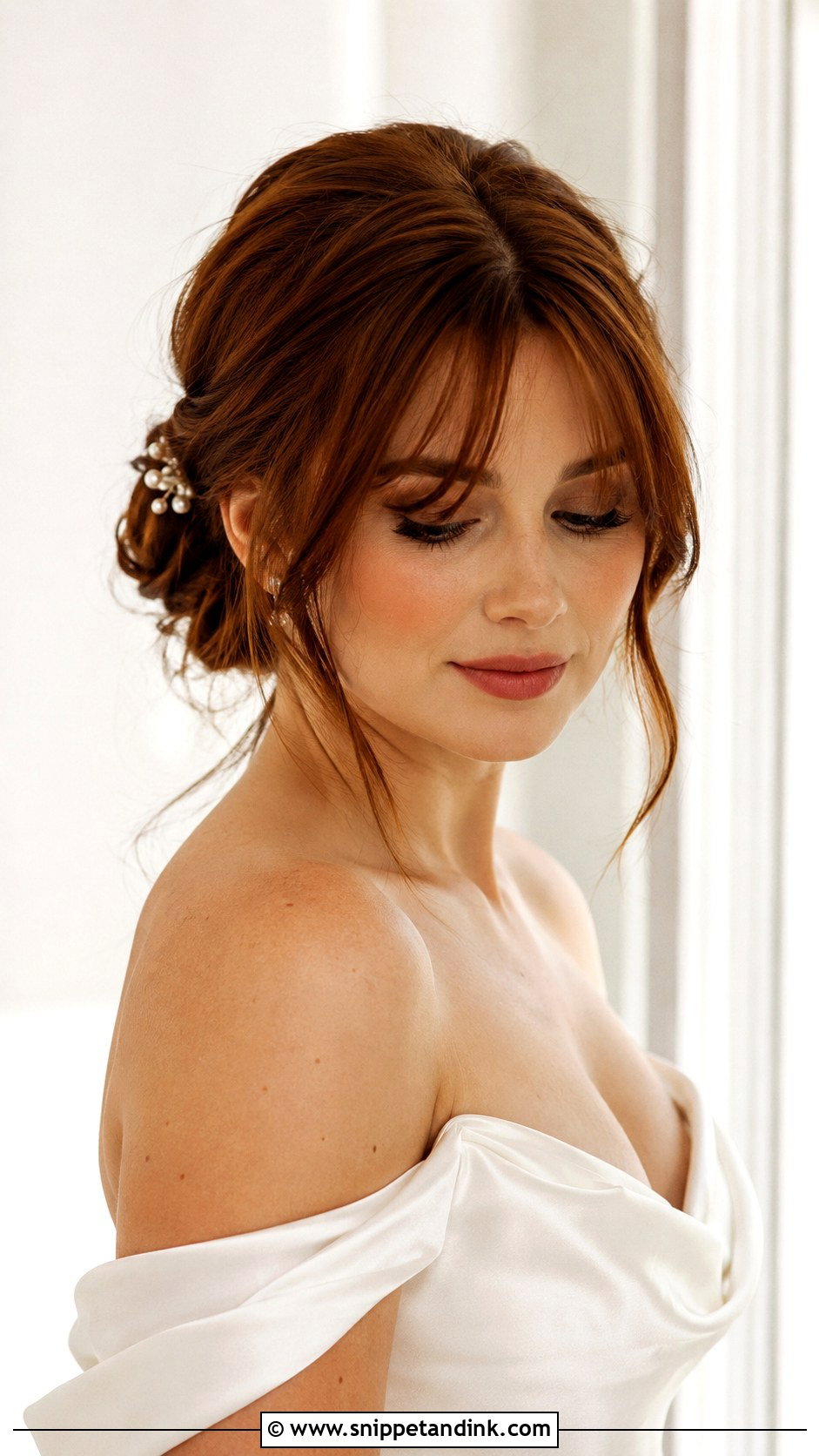
Bun with bangs wedding hair lets you keep the fringe you wear every day, which matters more than people think when they look back at their photos. Curtain, wispy, side or blunt bangs can all work. The usual problem is a fringe that looks separate from the updo, so I style the bangs last, after the bun is in, and blend them into the side sections. A light bend reads soft and current; smooth straight bangs read more classic. Get any trim about a week before, not the day before.
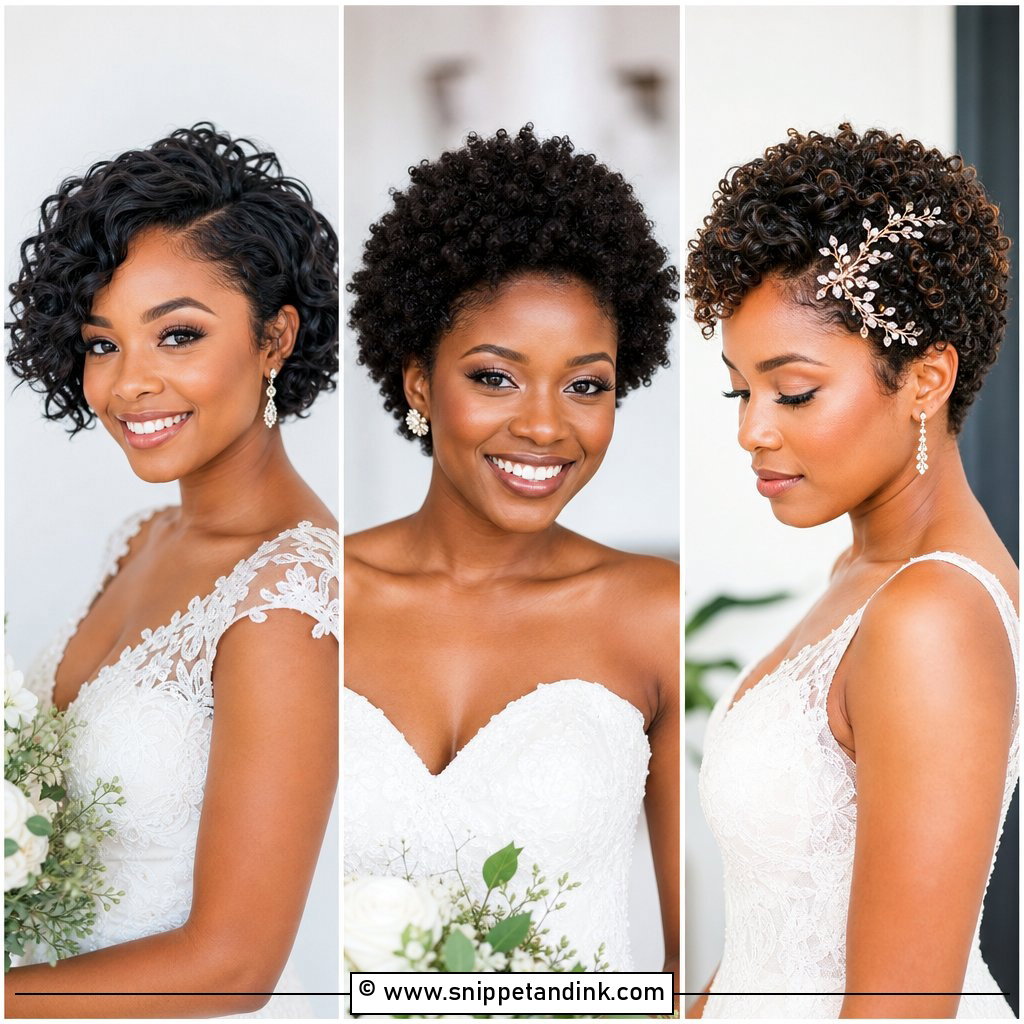
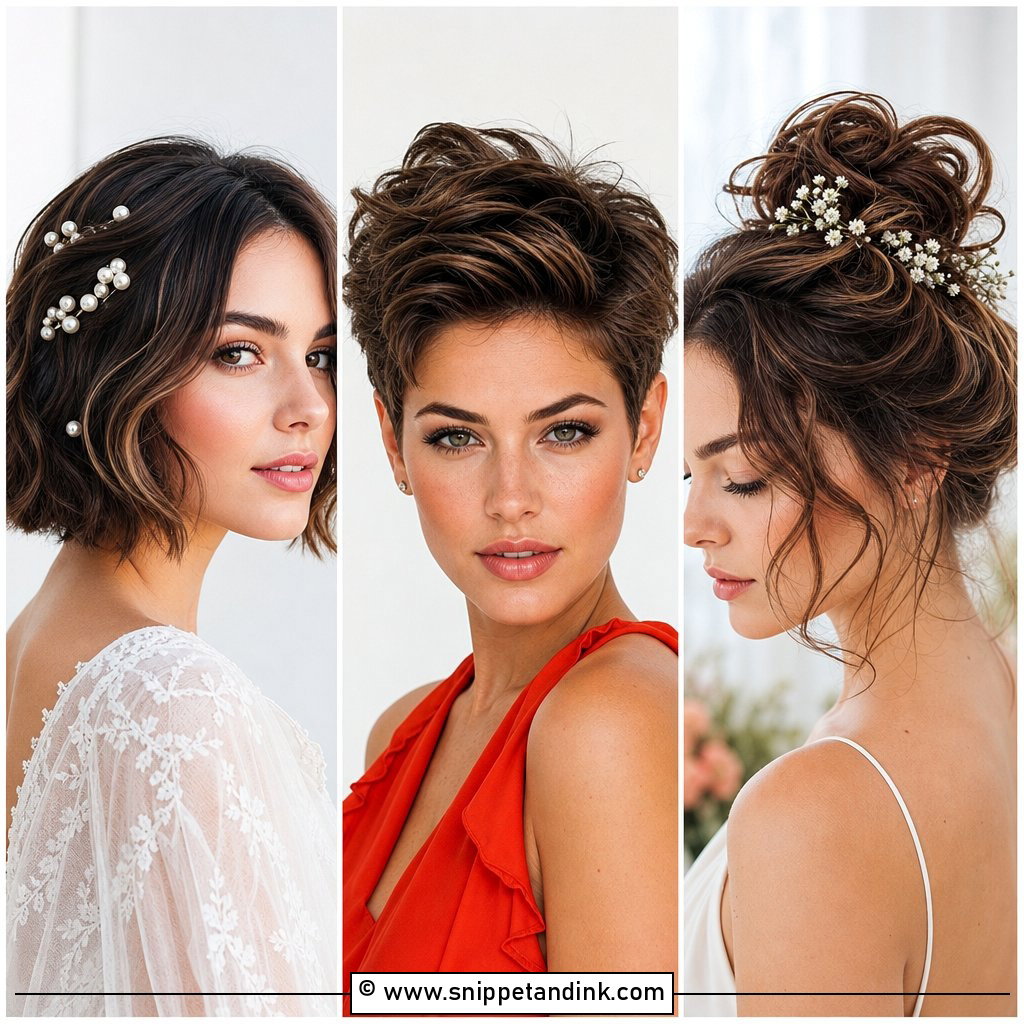
16. Updo For Short Hair Wedding
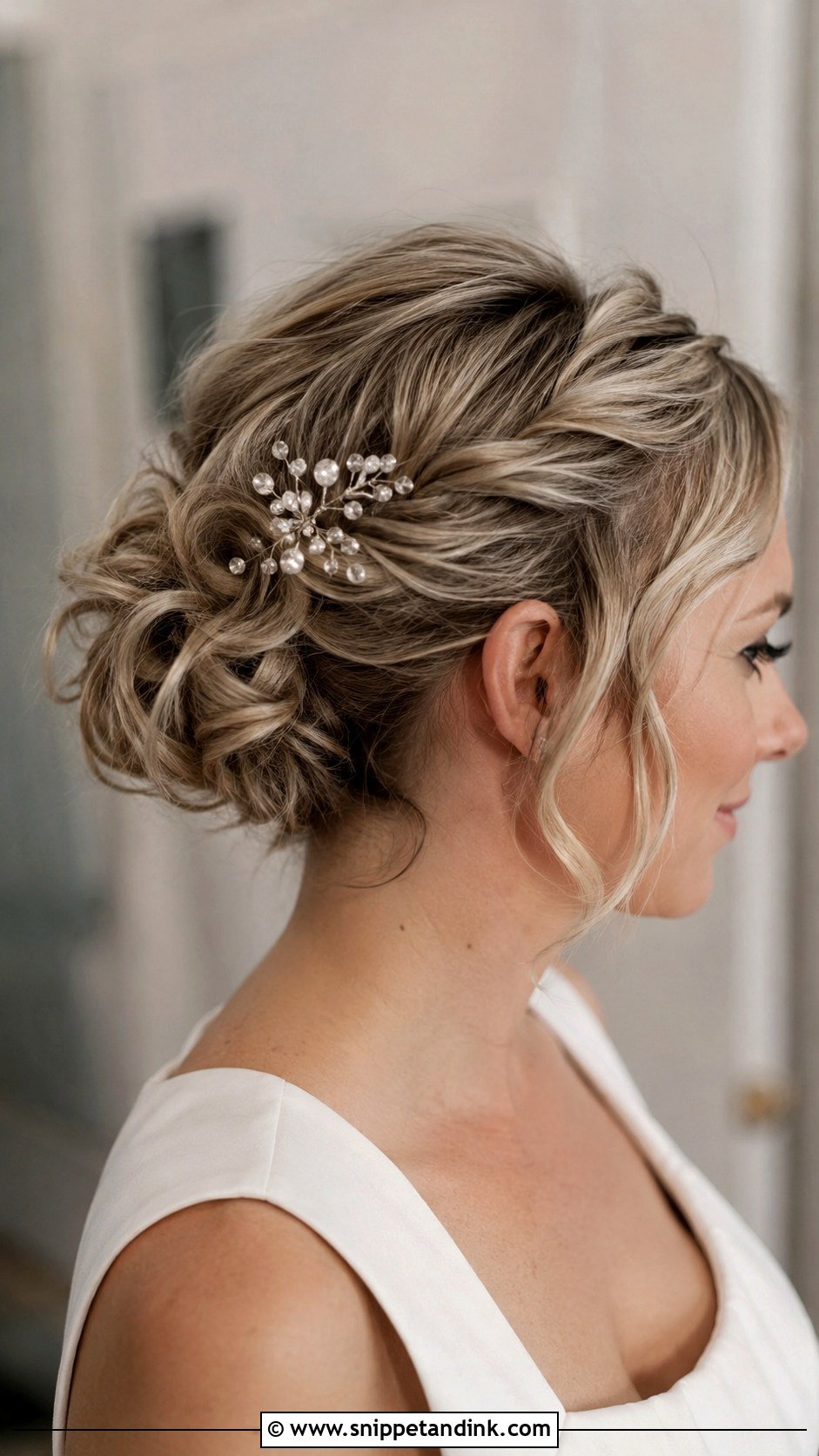
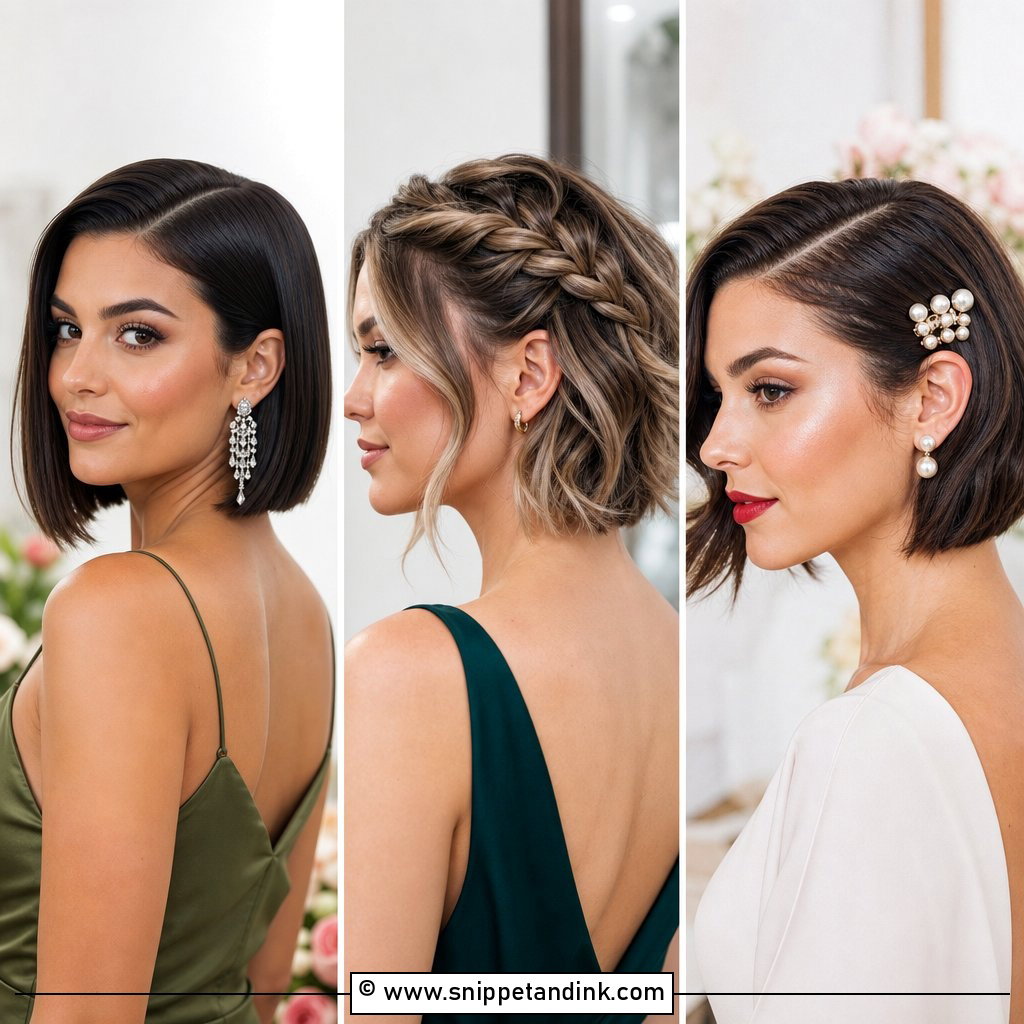
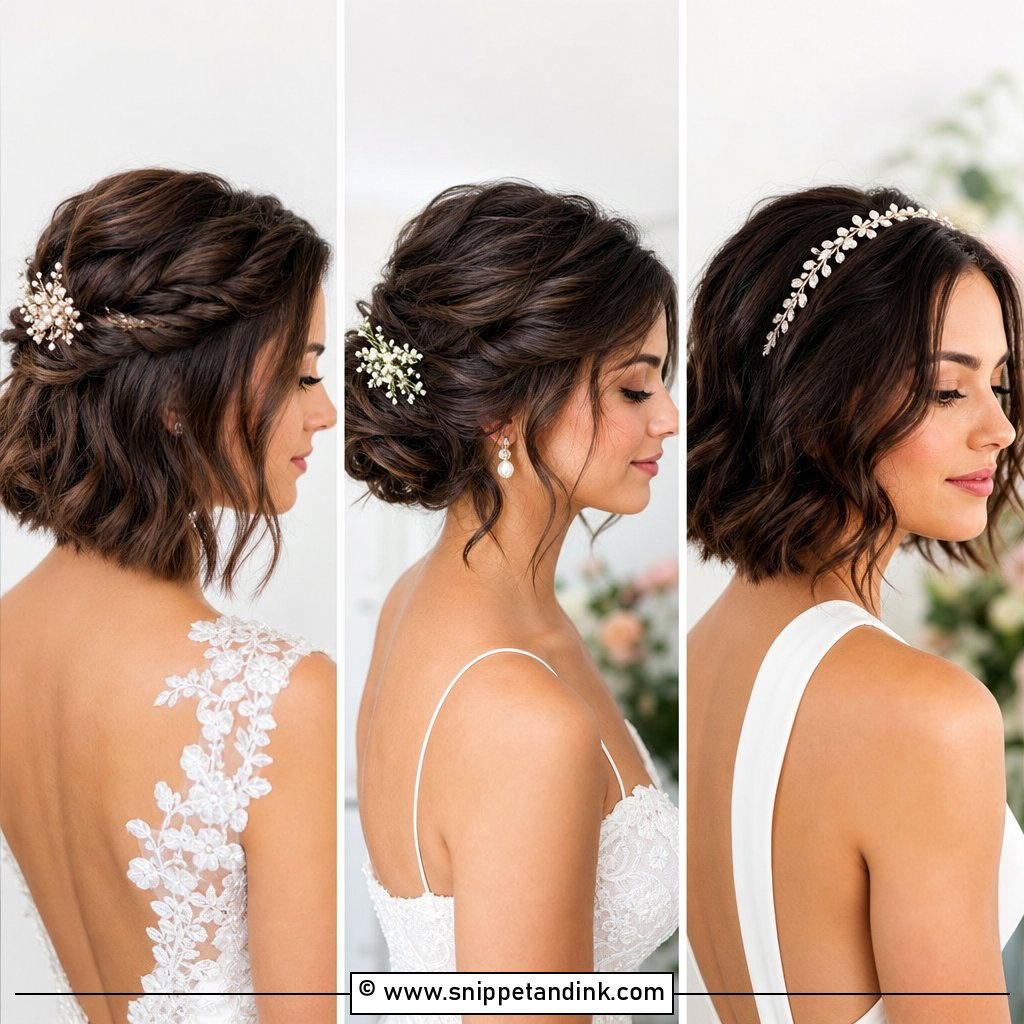
Short hair can absolutely go up. Bob-length or shoulder-length hair can be curled, twisted and pinned into a gathered shape that gives the impression of an updo without a full bun. Small side twists, pinned waves at the back and a comb make it formal enough for a bride and relaxed enough for a guest. Short layers want to spring loose, so I use texture spray for grip and a lot more pins than a long-hair updo needs. Expect a few pieces to escape by evening and plan for that.
17. Updo For Long Hair Wedding
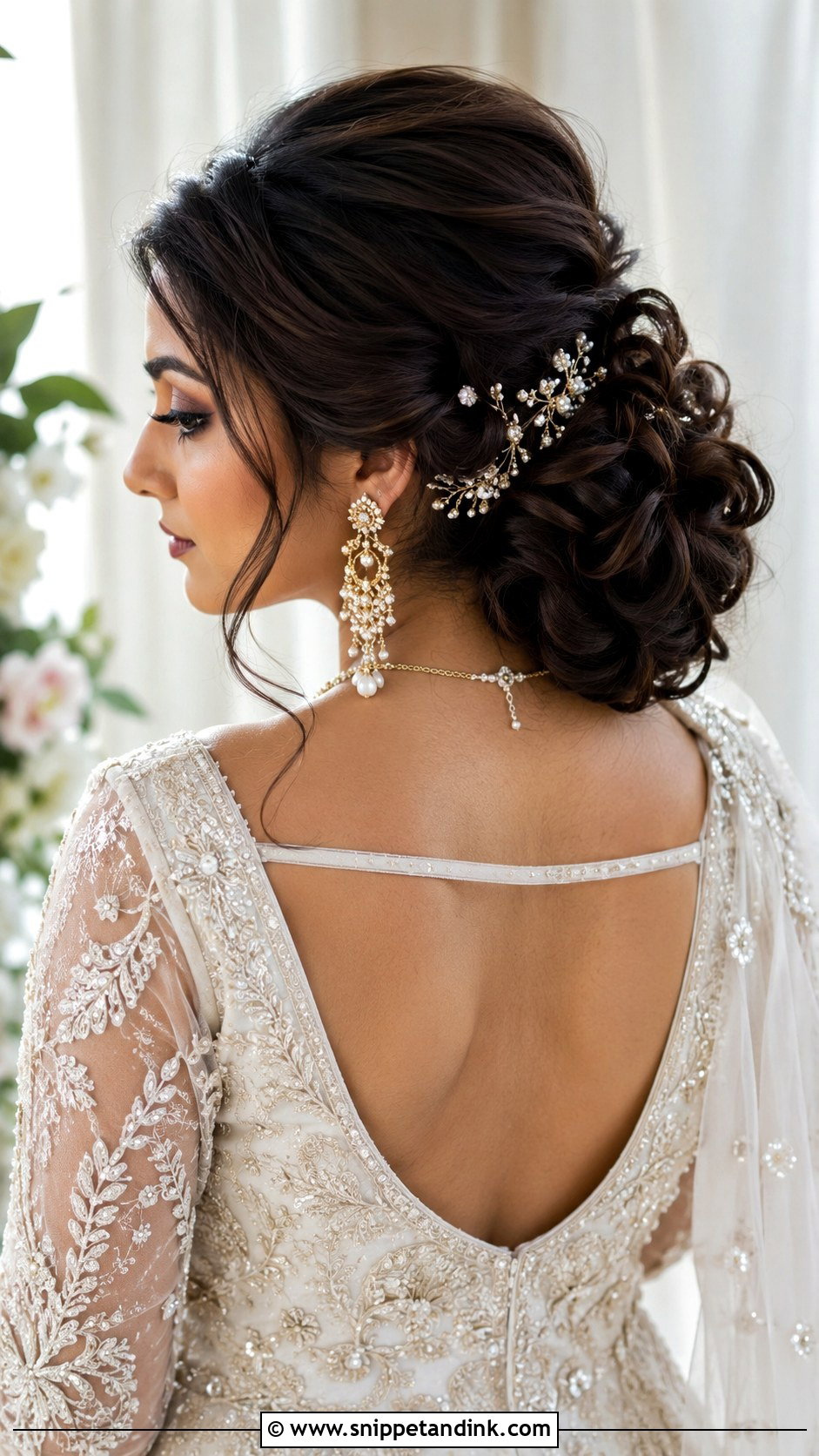
Long hair can become nearly anything on this list, but its weight is the thing I plan around. Without a proper base, a long updo drags and loosens over the day and the pins start to ache. I section the hair, build an anchor, then shape in stages so the weight is shared across several pin points rather than hanging from one. Long hair also suits face-framing tendrils and dimensional curls because there’s natural fullness from every angle.
18. Updo For Thin Hair Wedding
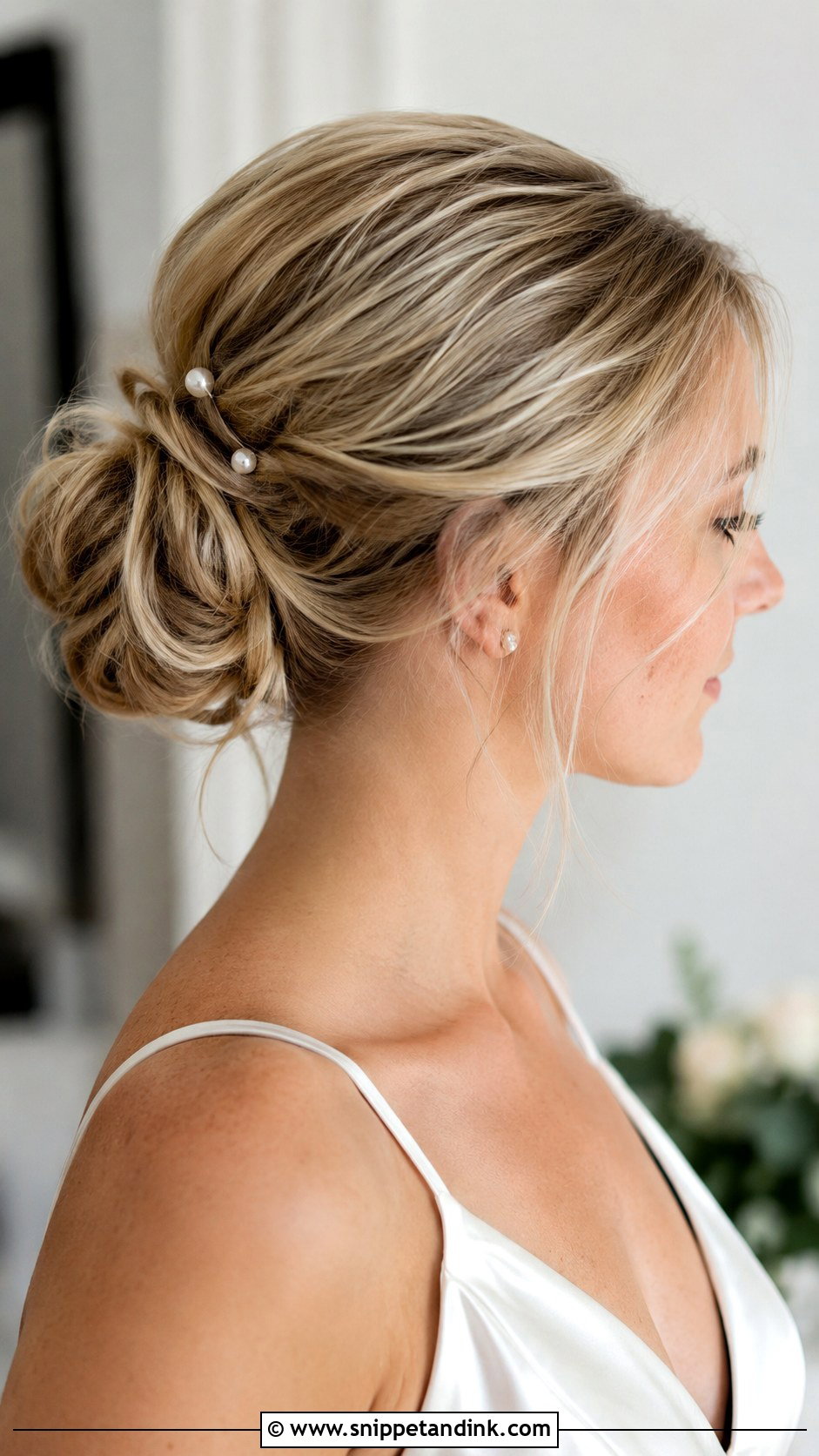
Fine hair needs volume built in before it goes up. I start with root lift and texture spray, curl everything, and then pull the finished bun gently wider rather than wrapping it tight. Low buns, twisted chignons and half up buns create the look of more density. A small padding or a couple of clip-in wefts placed underneath can add real fullness, and nobody sees them. I’d steer you away from very sleek styles unless you love a minimal look, because smoothing fine hair flat shows the scalp under bright light.
19. Updo For Thick Hair Wedding
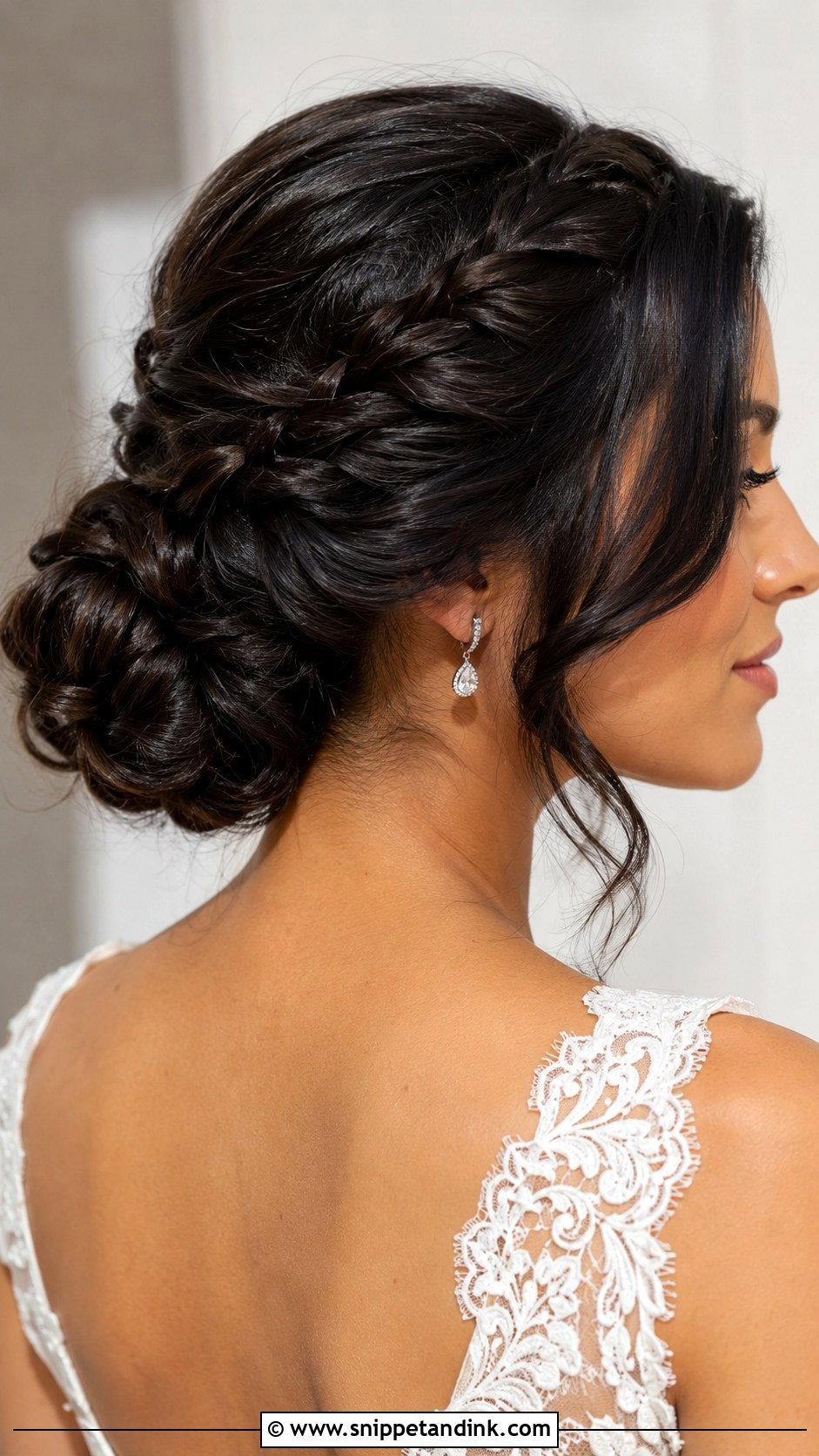
Thick hair holds a shape well, but it gets heavy. A bun made from all of it can feel like a weight hanging off the back of the head by mid-afternoon. I thin out the bulk by braiding or twisting sections before pinning, which spreads the weight, and I use larger U-pins rather than bobby pins because they hold more hair without bending. Low buns, braided buns, French twists and sculpted chignons control it well. A smoothing product handles frizz, and face-framing pieces should stay light.
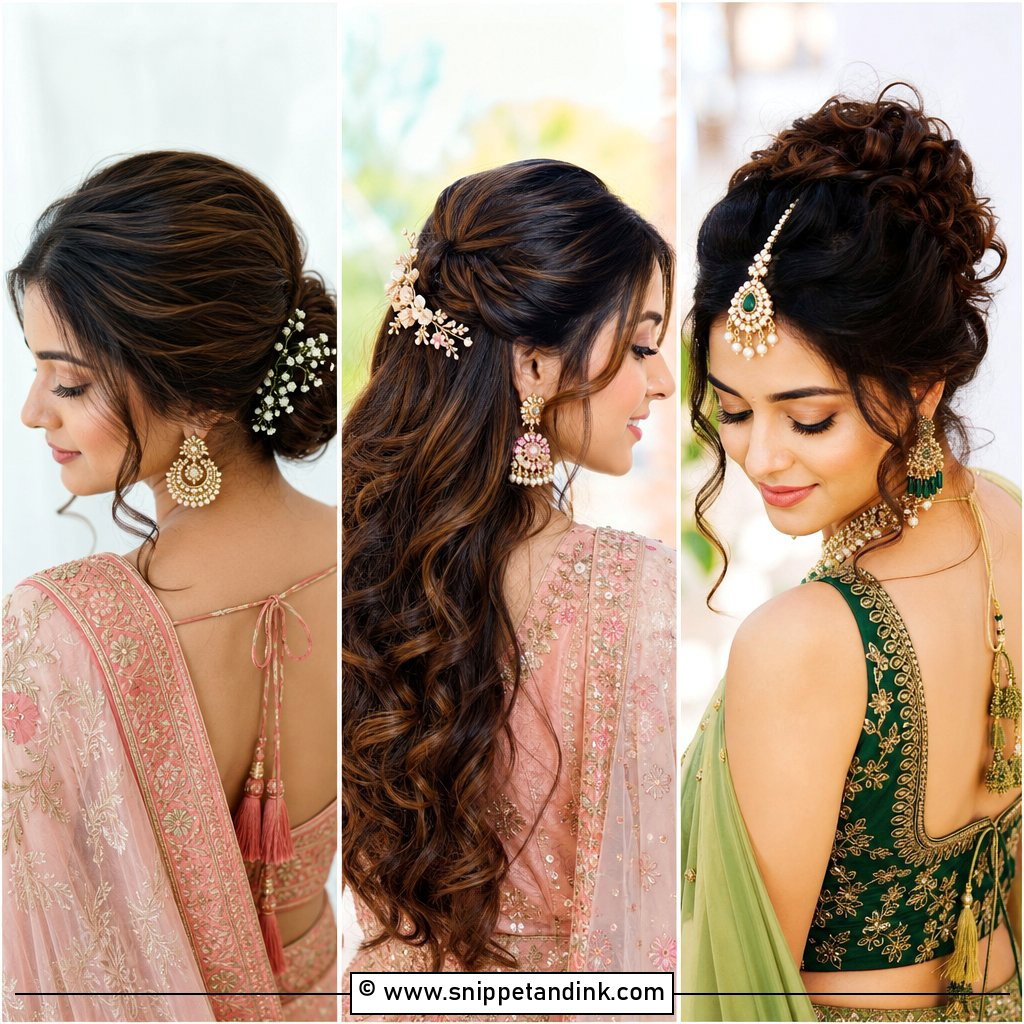
20. Updo For Wedding Guest
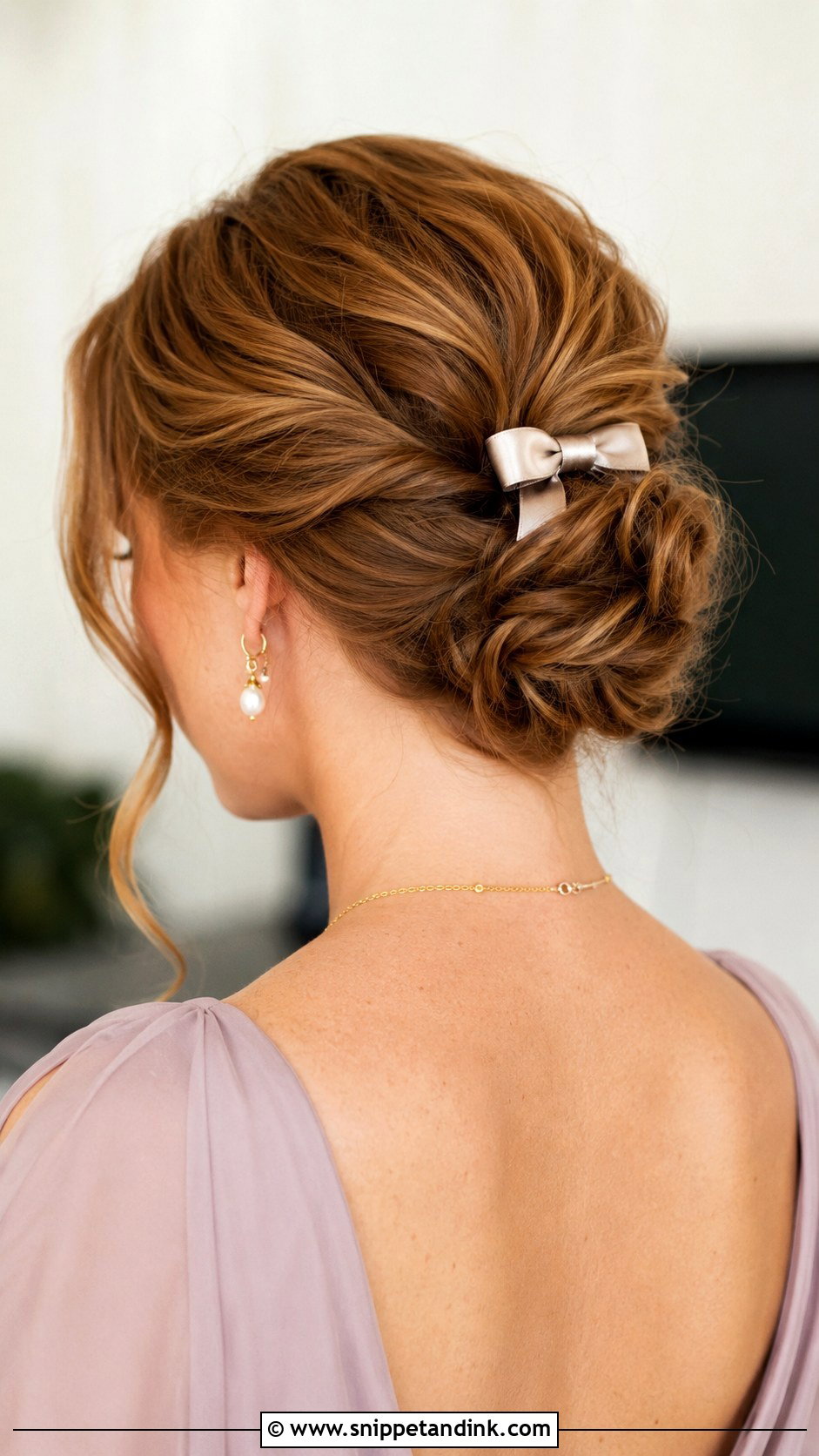
Updo for wedding guest looks should look finished without competing with the bride. A soft low bun, a simple twist, a sleek ponytail or a loose chignon all fit. Match the finish to the dress code: smoother lines for a formal evening, a textured bun or relaxed twist for a garden or beach. Skip the big bridal accessories and veil-like pieces; a single clip or a ribbon is enough. Pin it a little more securely than you would for dinner out, because you’ll be hugging people for hours.
What Happens to Your Updo After the Ceremony
Most updos look their best in the hour after I finish and settle slightly from there. Some loosening is normal. What you want is a plan for the moments that move it more than usual.
Taking the veil out
Ask your stylist to show a bridesmaid how the comb comes out. Lift it straight up and back, never sideways, and have her hold the bun with one hand while she does it. Pulling a comb out at an angle drags pins with it, and that’s the single most common way a perfect bun collapses at the reception.
A small kit for the evening
- Ten or so bobby pins in your hair color
- A travel-size flexible hold spray
- A small tail comb for smoothing flyaways
- A hair tie, in case you decide to switch to a ponytail for dancing
If a section drops, don’t try to re-create it. Twist the loose piece, tuck it under the nearest part of the bun and cross two pins over it. That repair takes a minute and is invisible in candid photos.
Taking it down at the end of the night
Find the pins with your fingertips before you brush anything; brushing over a pin snaps hair. Once they’re out, work conditioner through the lengths and detangle in the shower from the ends upward. Hair that was backcombed or heavily sprayed will tangle if you try to brush it dry.
An Updo Is Only as Good as Its Foundation
Pinterest will show you the prettiest finished shape, but the shape that works on the day is the one your hair can actually carry. Start with length, texture and weight, then let your neckline and veil narrow it down. A low bun suits almost everyone, a curly updo shows off natural texture, and a sleek ponytail sits well with a modern gown. Book a trial if you can, wear it for a few hours afterward, and only then decide.
You'll Like These Ideas:


Leave a Reply