
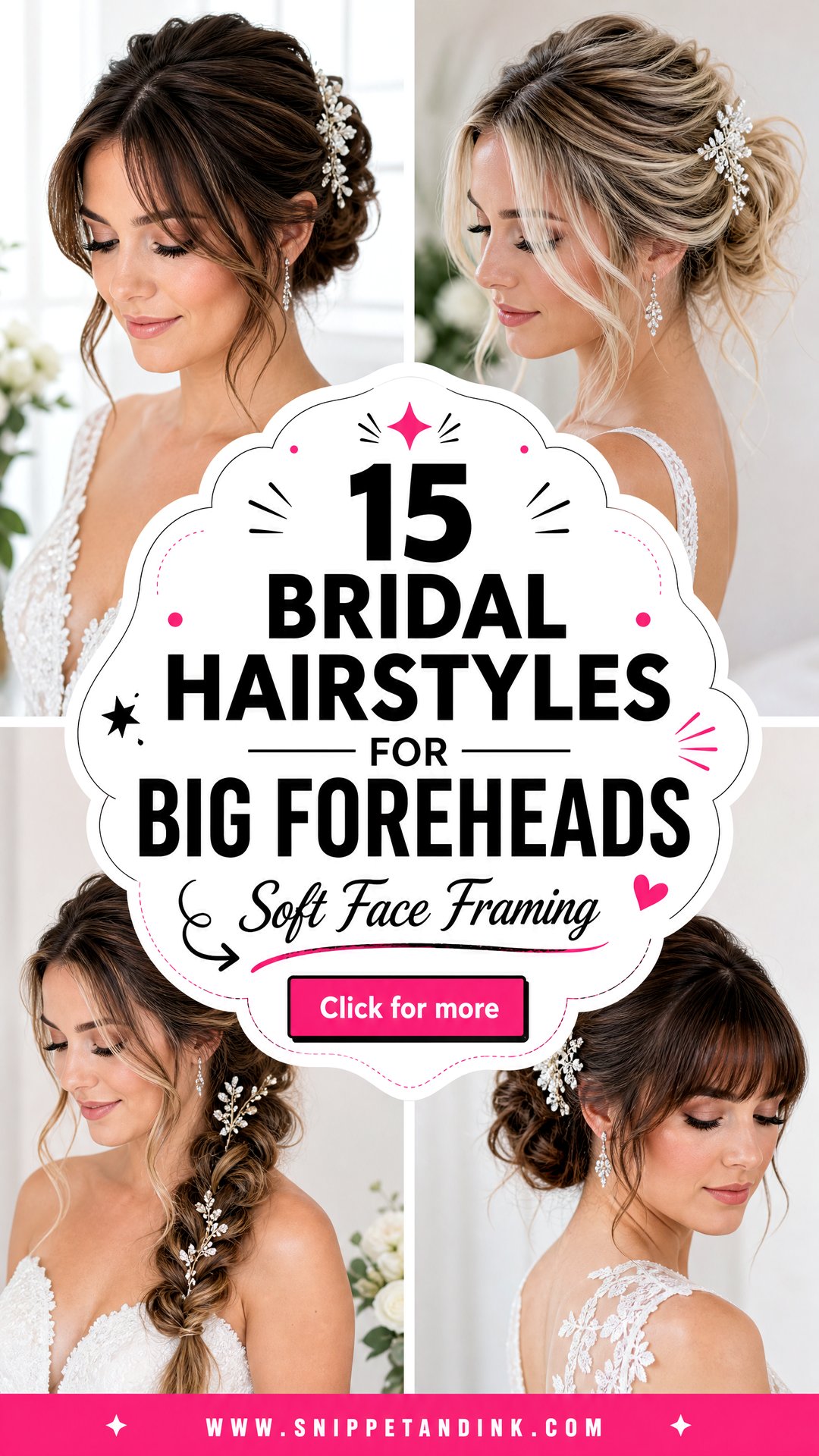
A tall forehead isn’t something I try to hide at a bridal trial. What I change is where the eye lands first. Movement at the hairline, an off-center part, an airy fringe or a few loose tendrils shift attention toward your eyes, cheekbones and earrings, and volume placed at the sides rather than on top keeps the face in proportion. That works across polished, boho and glam styles alike. The bridal hairstyles for big foreheads below each use one of those tools, with notes on how I’d adjust them in the chair.
Where I Put Volume on a Tall Forehead
Three things change how tall a forehead looks in photos, and I adjust all three before choosing a style.
Height on top
Teased crowns and high buns add length to the face. I keep the top close to the head and build fullness at the sides, around the temples and ears, which widens the frame instead of stretching it.
The part
A dead-center part draws a straight line up the middle of the forehead. Moving it even a little off center, or into a deep side part, breaks that line. If your natural part fights the change, I set it while the hair is damp on the morning.
The hairline itself
Scraped-back hair shows every millimeter of hairline. Leaving baby hairs and short front pieces soft, even in a sleek style, makes the edge of the forehead less defined, which is most of what people notice.
Accessories follow the same logic. A veil or comb set high on the crown adds height, so I place it at the back of the head or just above a low bun. A slim headband worn an inch or two behind the hairline can also visually shorten the forehead, which surprises a lot of brides at their trial.
1. Bridal Updo With Curtain Bangs
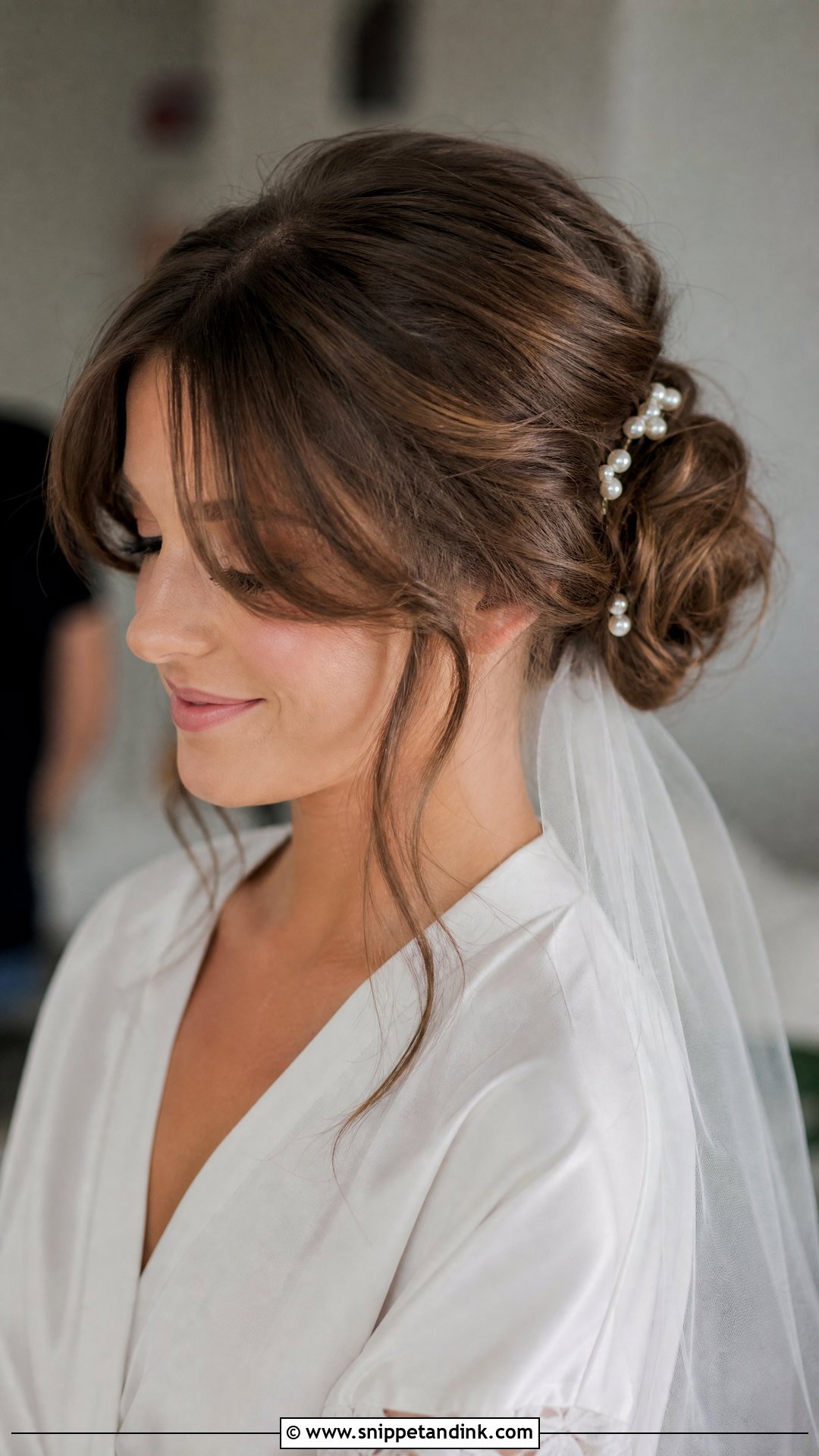
Of all the fringes, curtain bangs do this job most gently. A bridal updo with curtain bangs frames both sides of the face, so the center of the forehead shows a little while the edges are softened. I keep the bun low or mid-height; a high bun adds vertical length, which is the opposite of what we want here. Airy pieces at the temples blend the fringe into the updo. Veils, pearl pins and simple combs all sit comfortably behind it.
2. Bridal Low Bun With Side Bangs
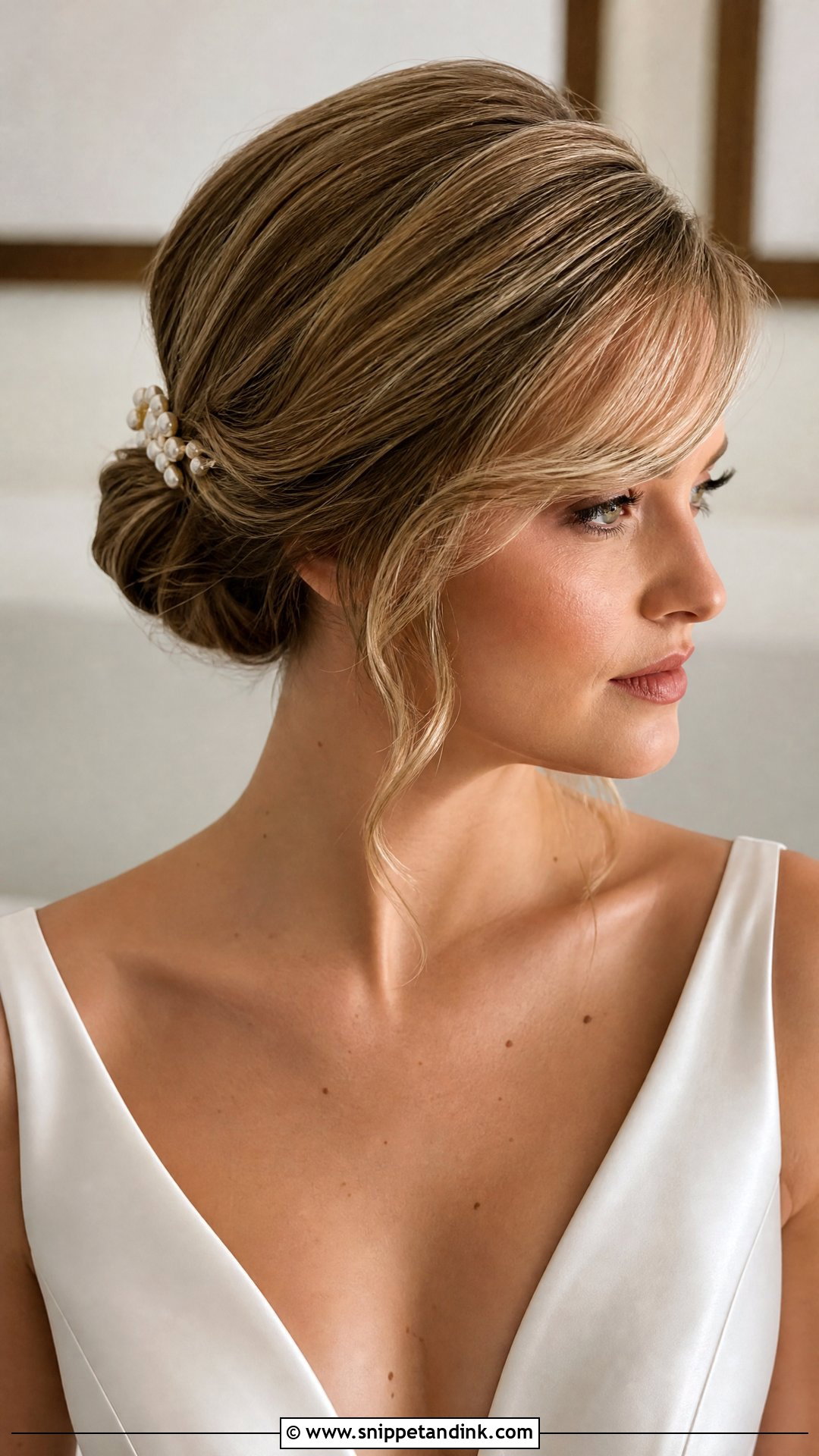
Pairing a low bun with side bangs draws a diagonal across the forehead, and a diagonal breaks up height better than anything horizontal. The bang needs to be light: heavy and sprayed, it looks dated and slides into the eyes. I blow-dry it across with a round brush and set it with a pin at the temple until just before photos. The bun behind can be smooth, twisted or braided, and a couple of loose strands near the jaw keep it from looking severe. Off-shoulder and lace-sleeved gowns suit it.
3. Bridal Half Up Half Down With Face Framing Layers
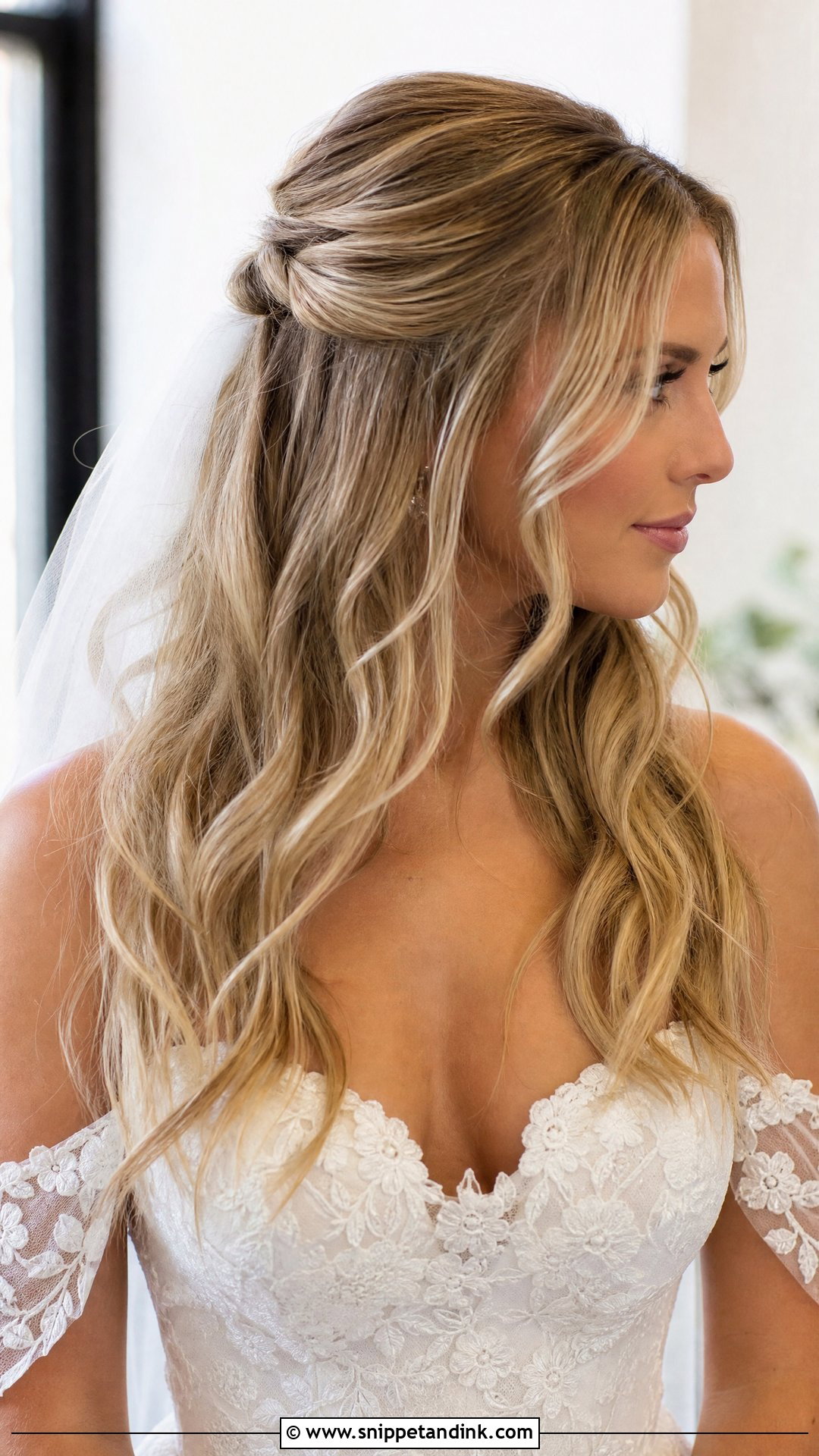
Half up styles are kind to a tall forehead as long as the front isn’t scraped back. I leave the shortest face-framing layers out of the pinned section entirely and curl them away from the face. Waves through the lengths add width at the lower half, which balances a longer face. The pinned crown section also gives a veil or small floral comb somewhere solid to sit.
4. Bridal Side Swept Waves
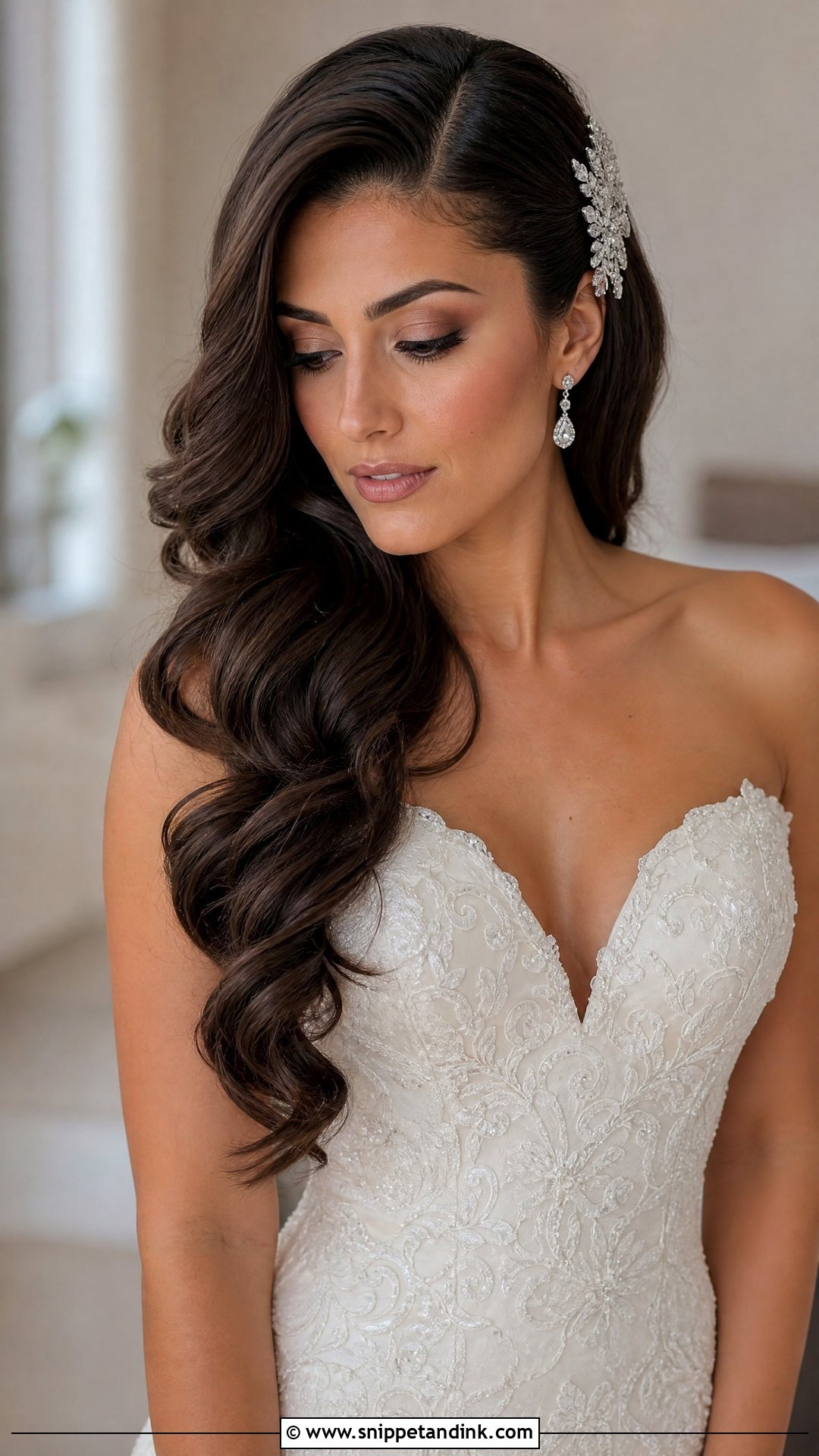
No fringe? A deep side part does much of the same work. It creates an angle across the forehead and moves the focus down to the eyes. One side can be pinned back with a comb, barrette or flowers, while the other falls across the hairline. I set the part while the hair is still damp so it doesn’t spring back to center by the evening, which is a common problem if your natural part is in the middle. Medium to long hair suits it, as do strapless and fitted gowns.
5. Bridal Chignon With Wispy Bangs
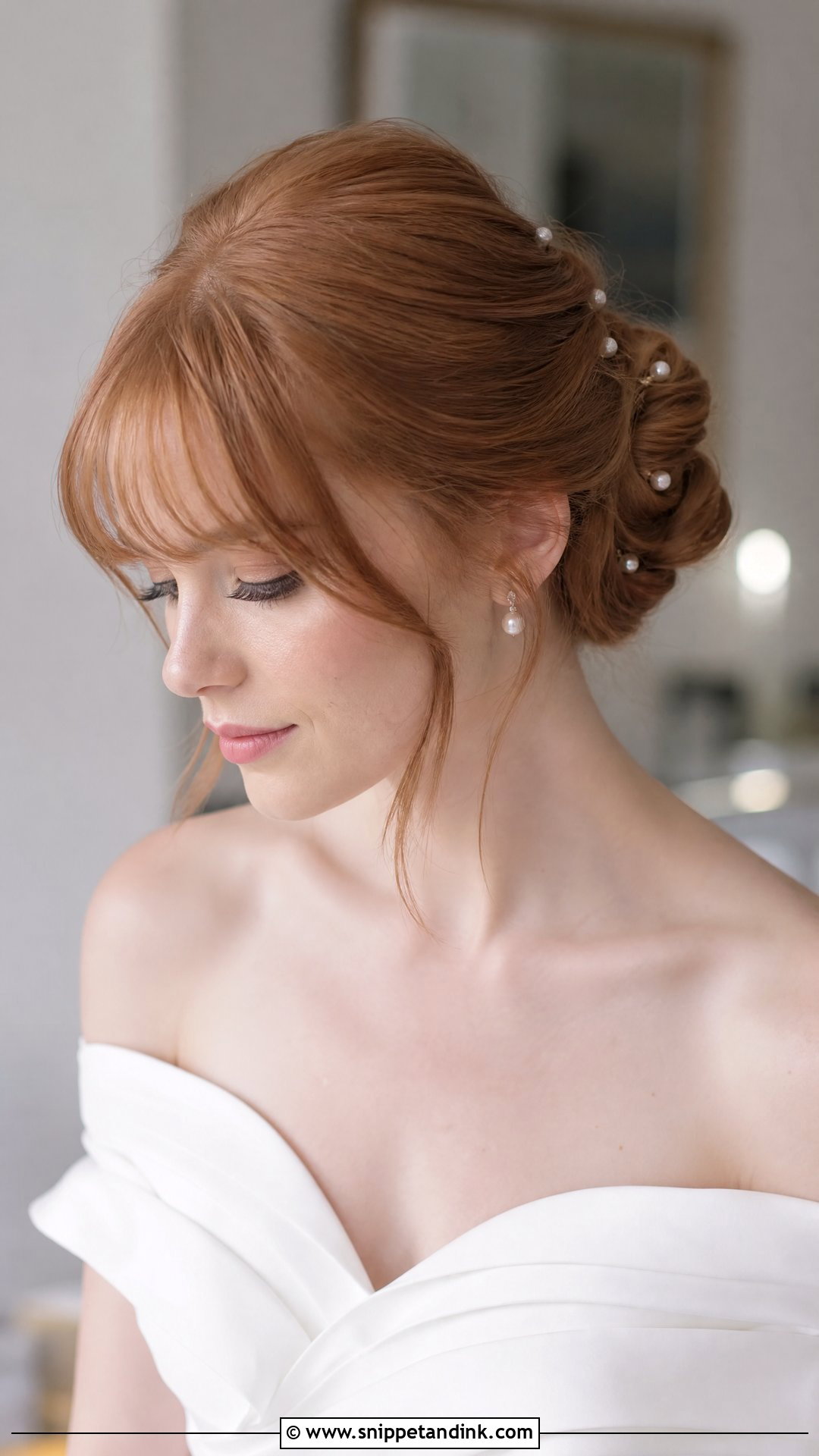
Wispy bangs give coverage without a solid block across the face, which is why I suggest them to brides who find blunt bangs too heavy. A bridal chignon with wispy bangs keeps the back formal and the front soft. The fringe should stay airy and slightly piecey; too much product clumps it and shows skin between the strands, which defeats the purpose. Pearl pins or a small comb finish the low chignon.
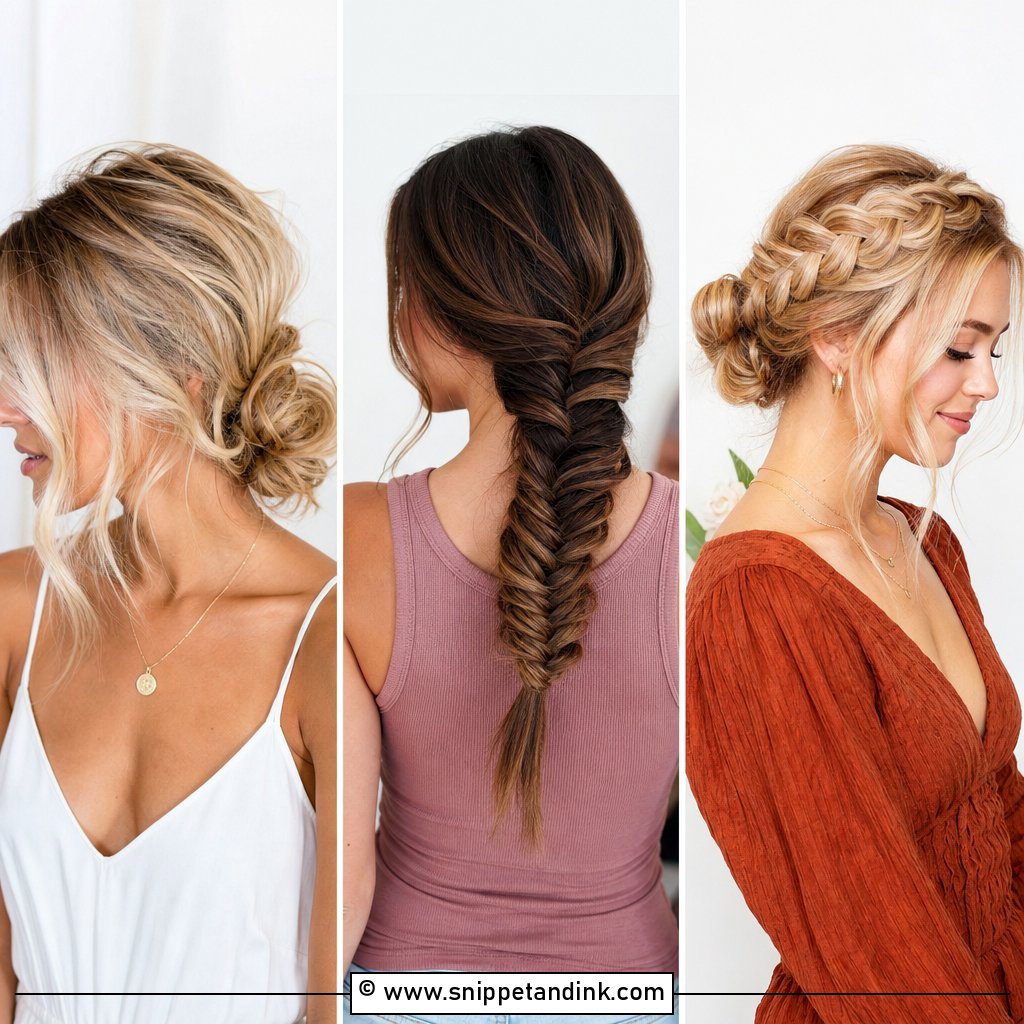
6. Bridal Messy Bun With Loose Tendrils
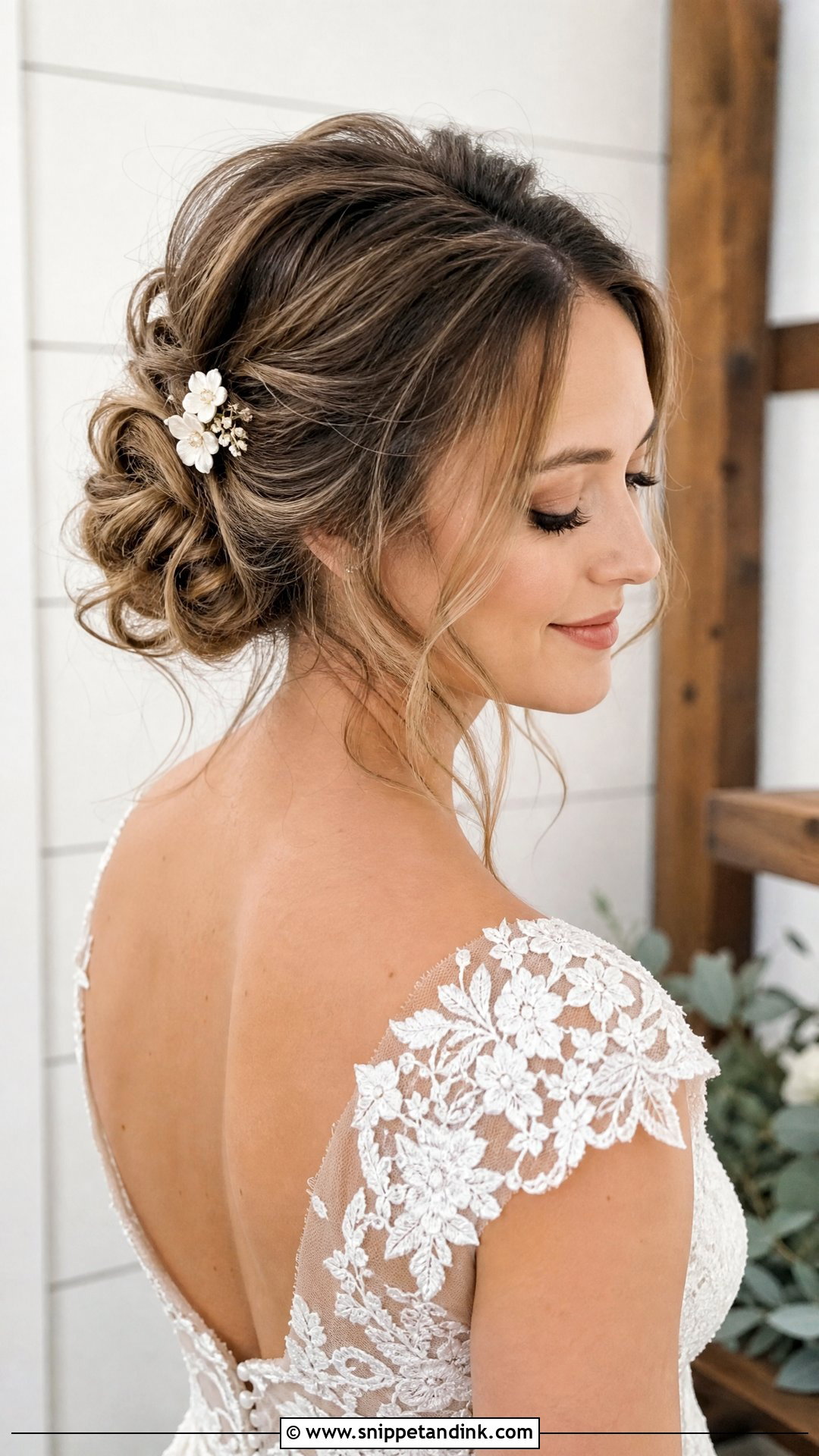
Tendrils only help if they’re placed, not just left out. I curl them away from the face and position them to fall at the temples and cheekbones, where they break up the width of the upper face. Random pieces at the front tend to look like the style is falling apart by the reception. The textured bun adds volume at the back. Garden, beach and boho weddings suit this, with tiny flowers or a sheer veil.
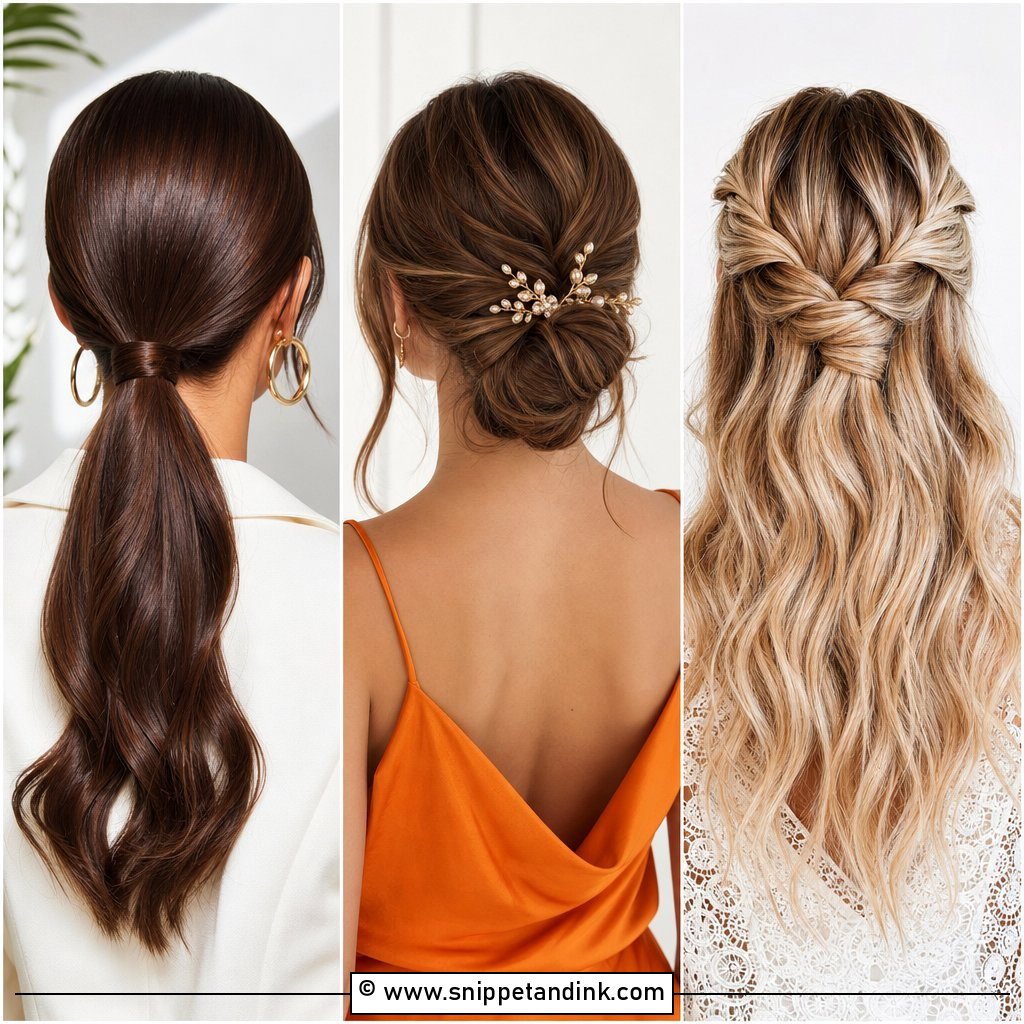
7. Bridal Ponytail With Side Part
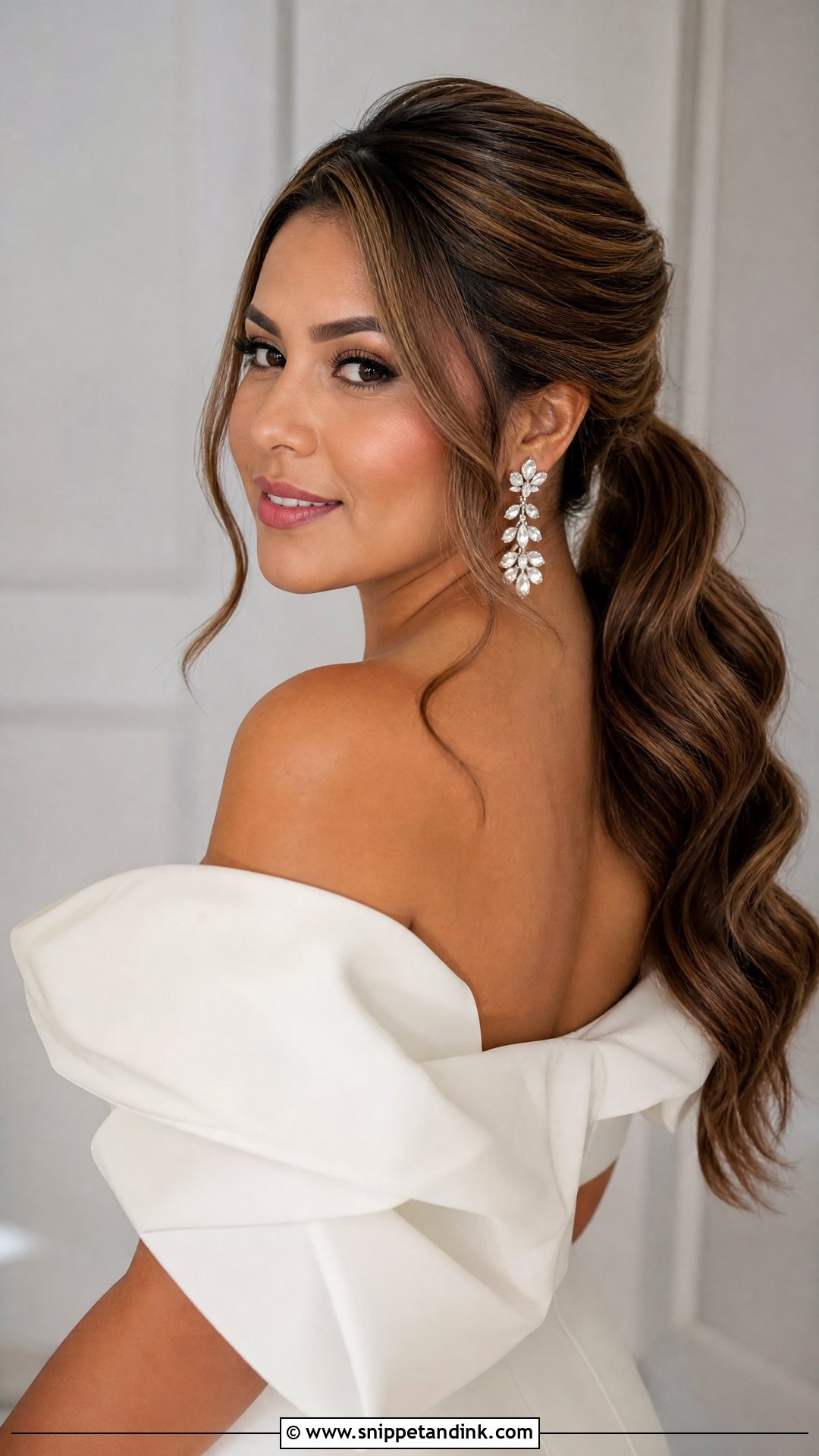
Ponytails are where I’m most careful with a tall forehead. Pulled tight and slicked back, they make the hairline the focal point. A low or mid ponytail with lift at the crown, waves through the tail and a side-swept front section changes that, and the diagonal part does more of the work than the ponytail itself. A wrapped strand hides the elastic. With statement earrings and a clean modern gown, this looks sharp rather than scraped.
8. Bridal Braided Crown With Soft Bangs
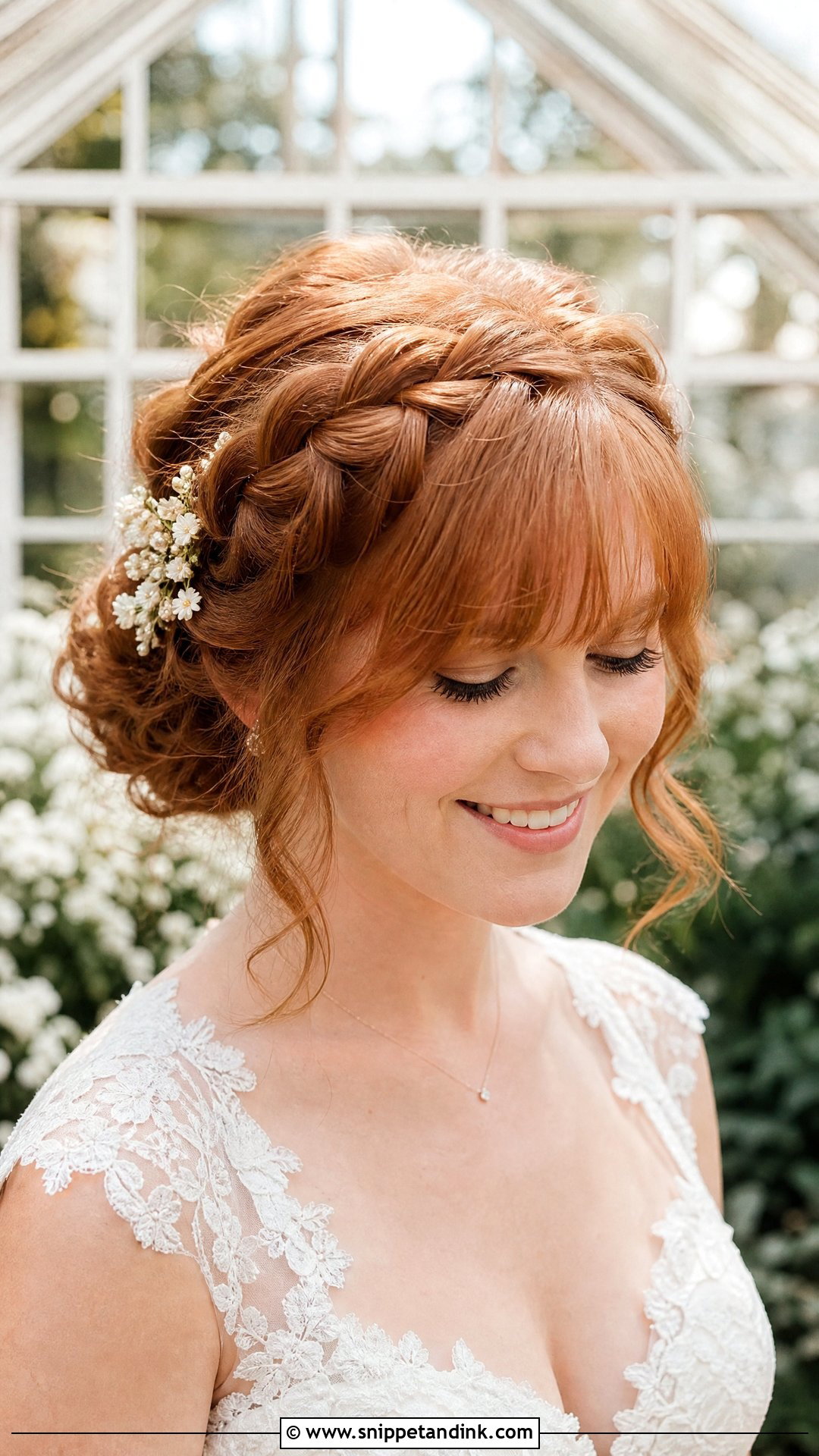
A braided crown puts detail around the sides and top of the head, so the eye travels across rather than straight up the forehead. I start the braids slightly behind the hairline and leave bangs or short front pieces free. It suits a whimsical or garden-inspired look. Keep the braid loose so it doesn’t pull at the temples, and finish the back with waves or a low pinned bun.
9. Bridal Hollywood Waves With Side Part
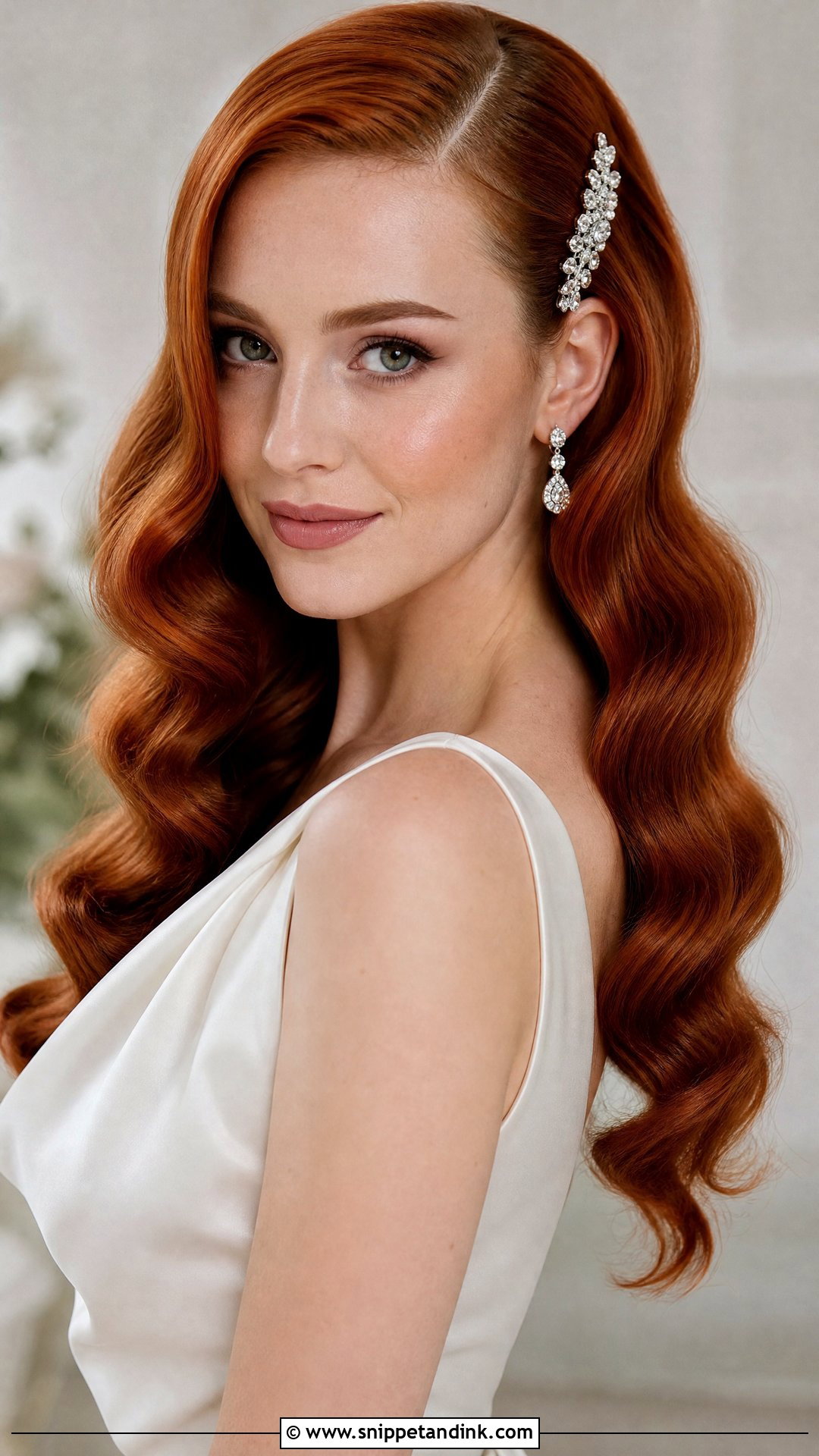
Hollywood waves with a deep side part are a good answer for brides who don’t want bangs at all. The part creates asymmetry, and I start the first wave around eye level so the eye follows it down the face rather than up. The finish needs to be smooth and glossy, with one side tucked or pinned behind the ear. Satin gowns, vintage silhouettes and bold earrings all suit it.
10. Bridal Textured Updo With Face Framing Pieces
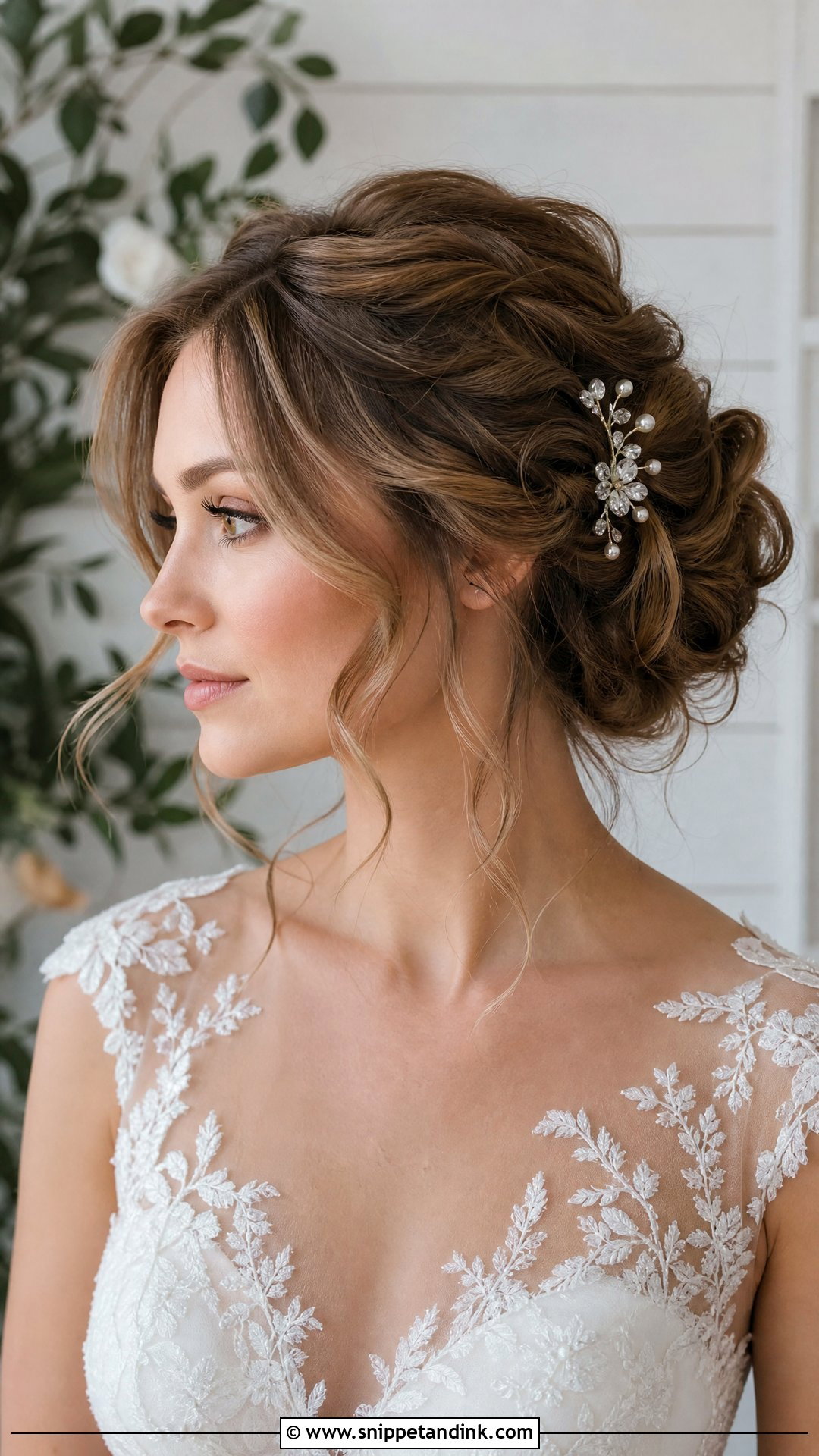
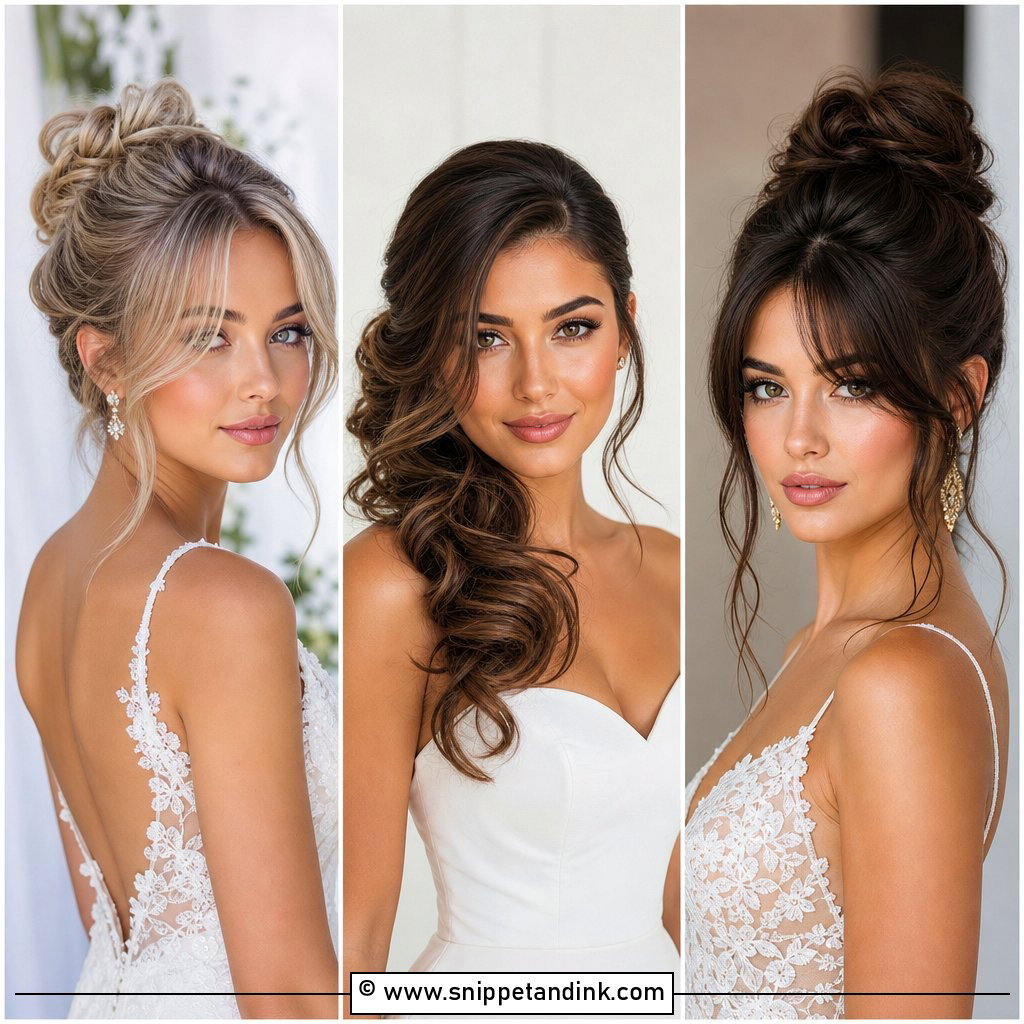
With a textured updo, the most common mistake I see on tall foreheads is height placed directly on top of the head, which adds length to the face. I keep the crown only slightly lifted and put the fullness at the sides, around the temples. Loose front pieces soften the hairline. Waves, curls or twists all work, so this adapts to most hair types. Veils, combs and floral pins all have room behind it.
11. Bridal Loose Curls With Curtain Fringe
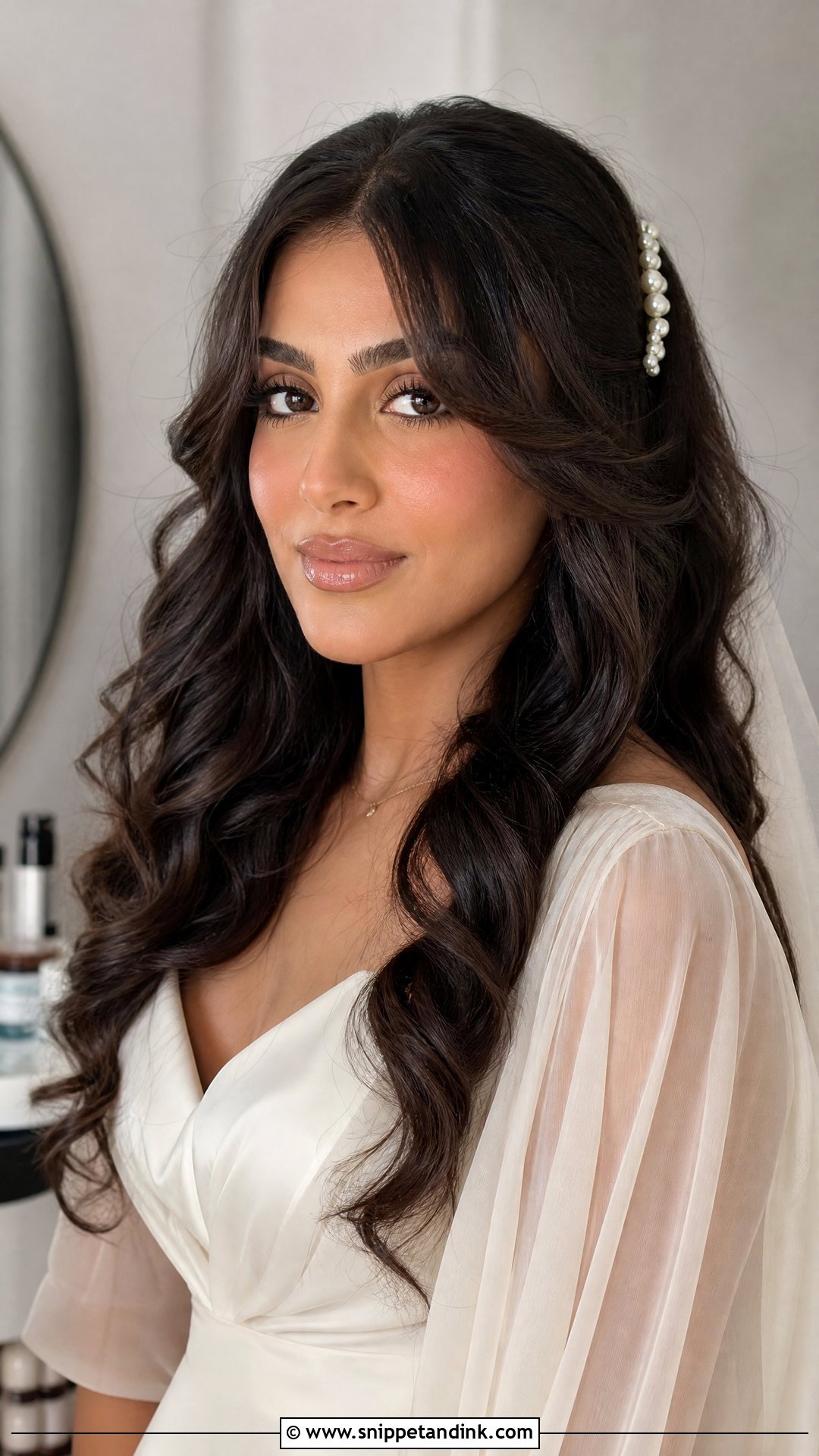
Curtain fringe with loose curls frames the face from both sides while the curls add width lower down, which balances the upper face. I curl the fringe slightly outward so it opens rather than hanging straight. If you’d rather wear your hair down, this gives you a flattering front without pinning anything back. Keep the curls polished rather than stiff, and add a simple veil, floral clip or pearl barrette.
12. Bridal French Twist With Side Bangs
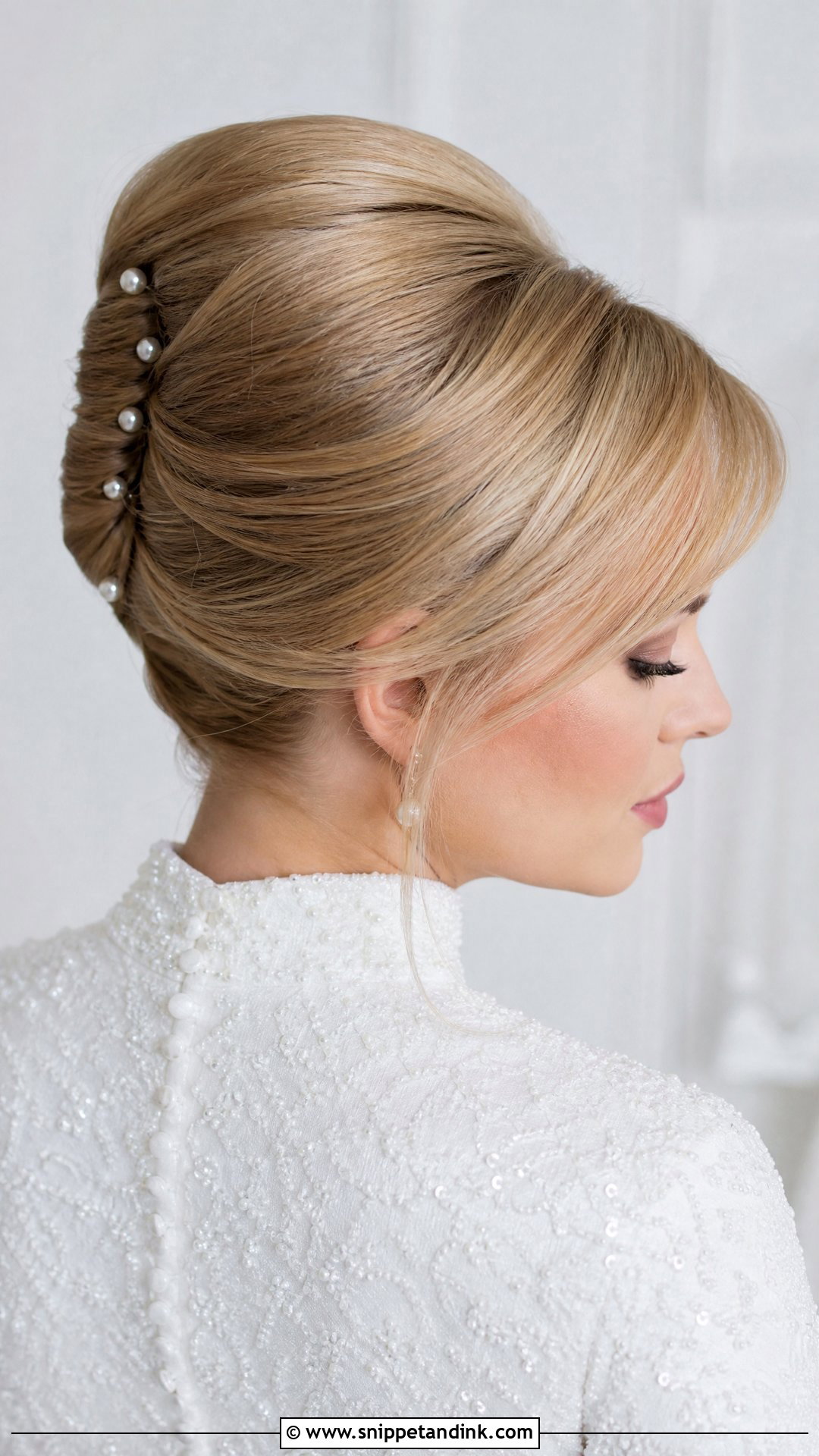
A French twist can look strict on a tall forehead because everything is pulled back. Side bangs fix that. I curve the fringe gently across rather than flattening it into one sharp sweep, and keep crown volume modest so the silhouette stays balanced. The twist gives the back a clean line for formal and city weddings. A crystal comb or pearl pins finish it.
13. Bridal Low Bun With Middle Part And Tendrils
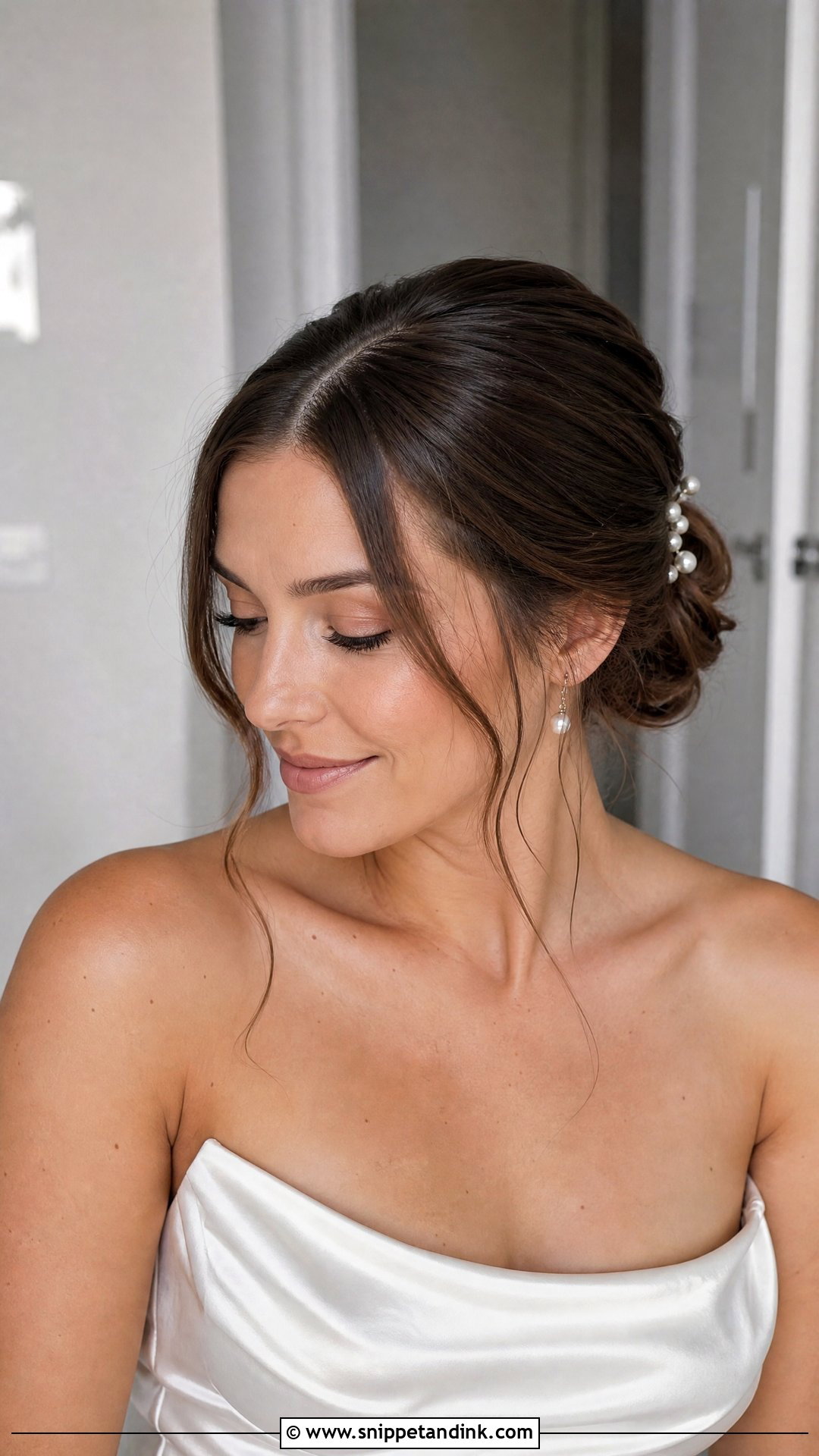
A middle part on its own exposes the full forehead, so this style depends on the tendrils. I cut no new pieces; I simply leave out the shortest front hair and curl it to fall at the temples and cheekbones. The low bun stays slightly textured rather than flat, which adds a little width. It suits minimalist gowns and lace, and takes a veil easily. If your hairline has a widow’s peak, test this one at the trial; a center part sits right on it.
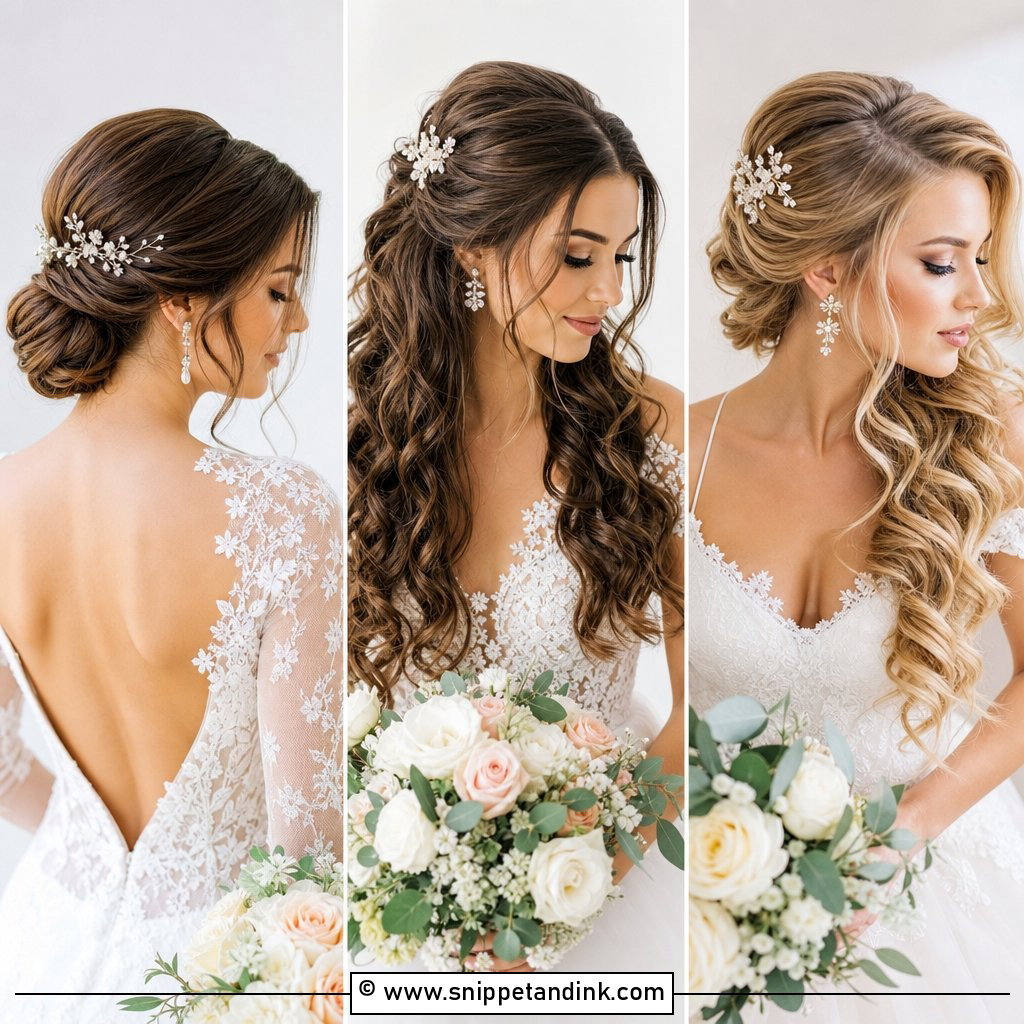
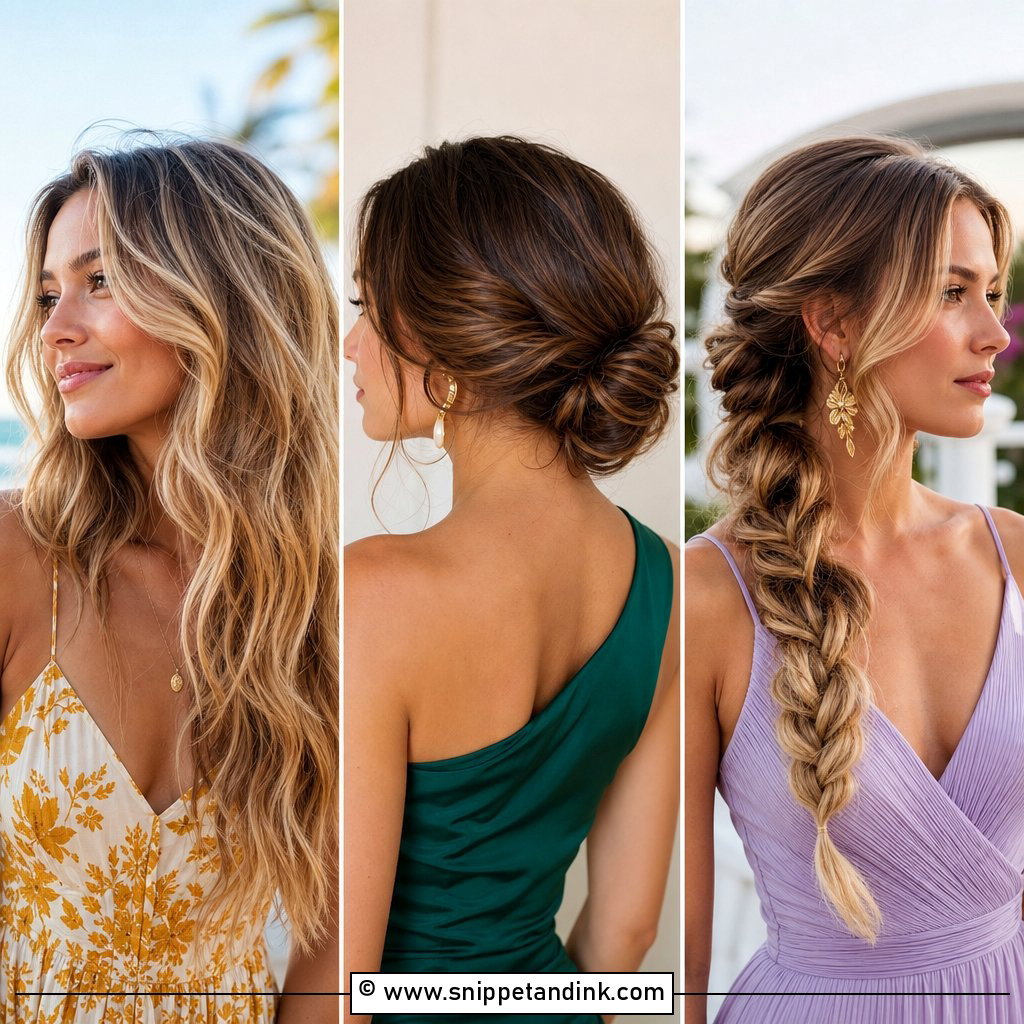
14. Bridal Side Braid With Loose Front Pieces
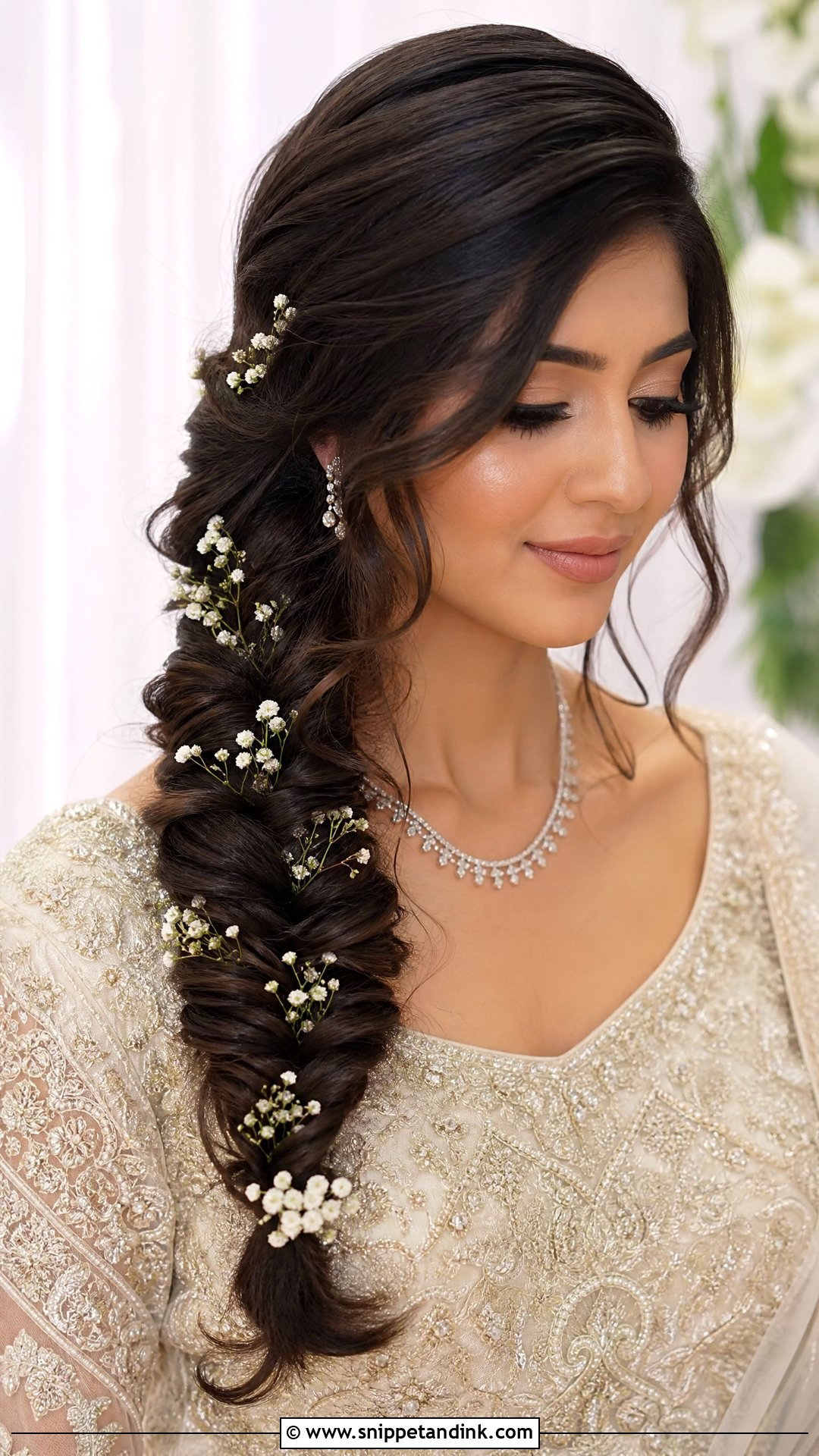
A side braid pulls the eye diagonally, which is exactly what breaks up a tall forehead. Fishtail, Dutch, rope or classic all work. I keep the front pieces light and softly curled so they frame the hairline without weighing it down. Outdoor ceremonies and relaxed receptions suit it, and small flowers or pearl pins woven through add detail.
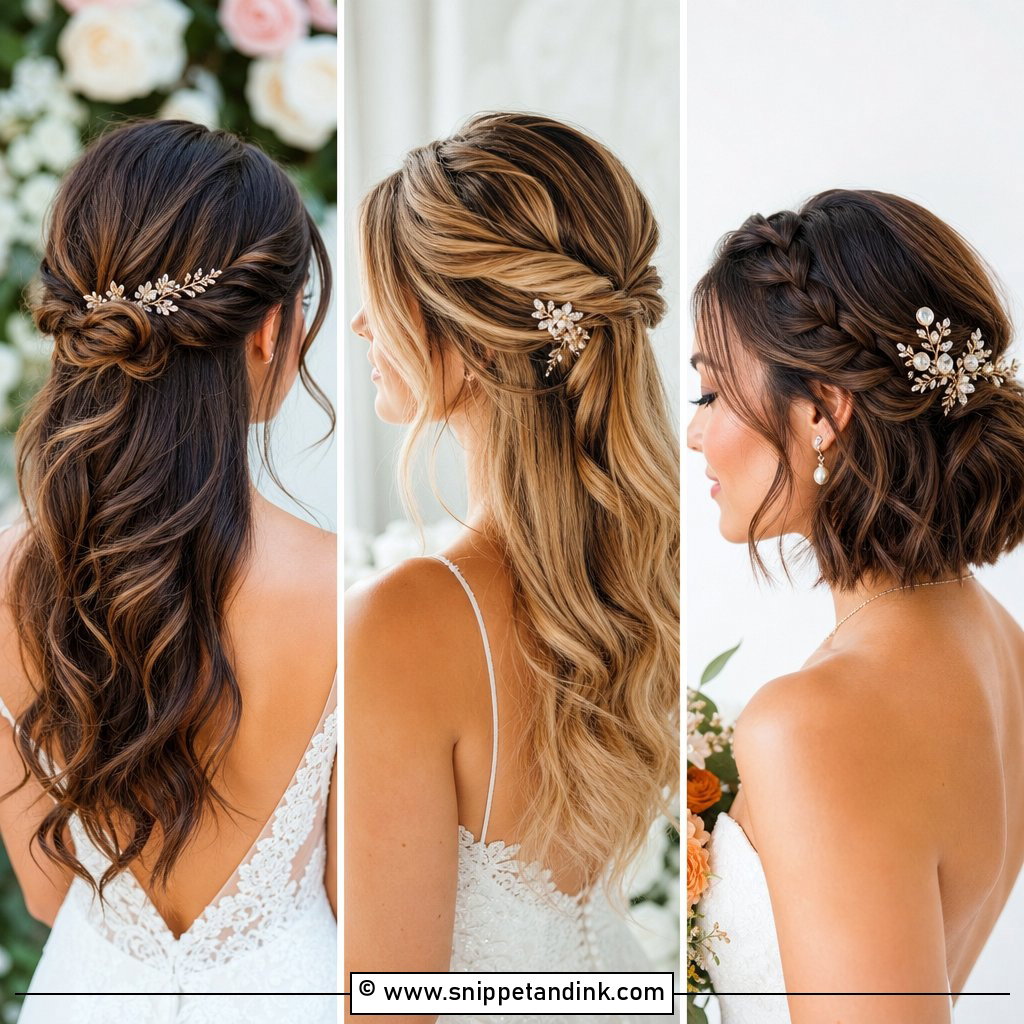
15. Bridal Bun With Blunt Soft Bangs
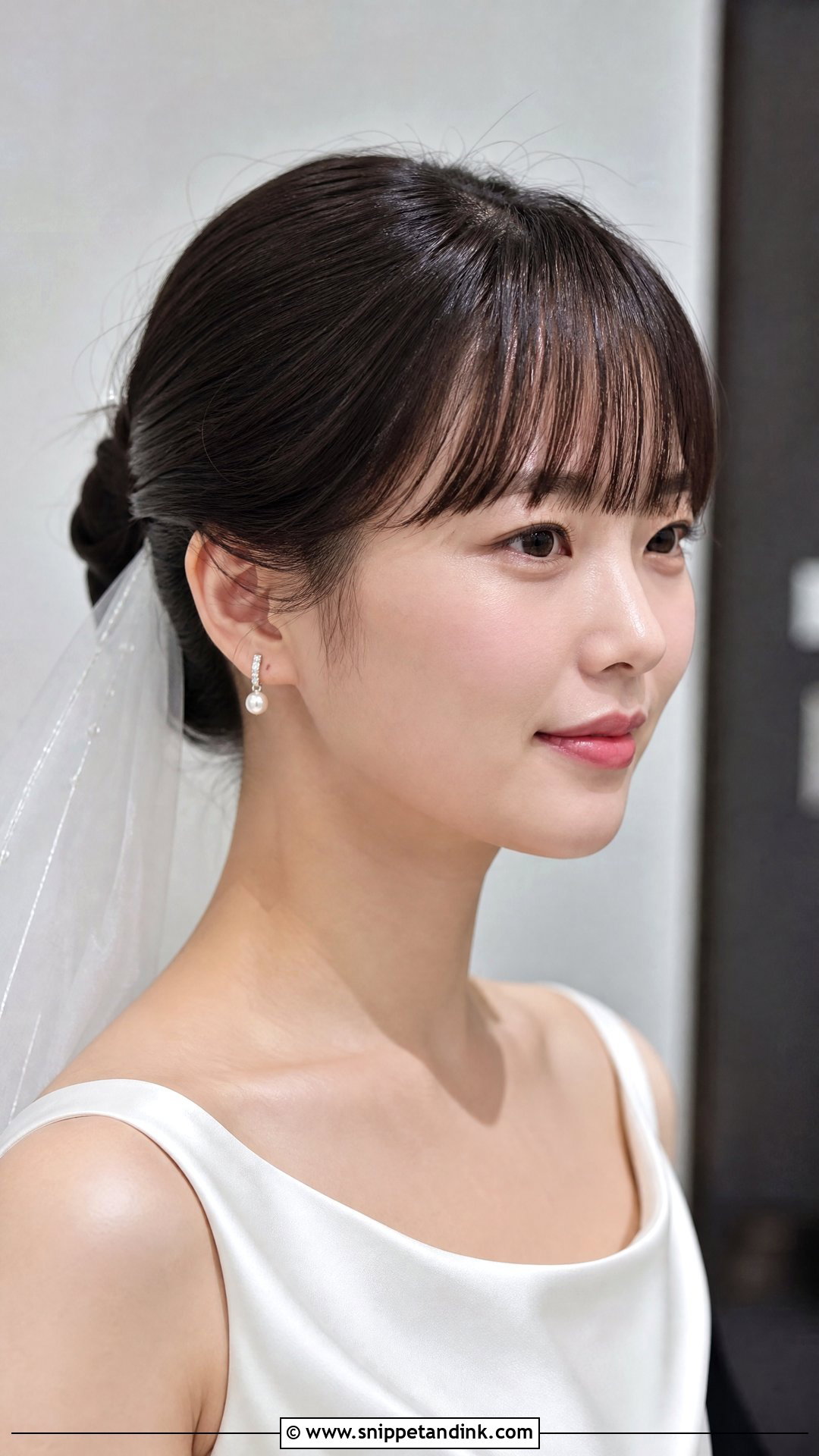
Blunt soft bangs give the most coverage on this list. The trick is in the cut: point-cutting the ends keeps them from looking like a heavy block. A brow-grazing length focuses attention on the eyes. If you already wear bangs, this is easy; if you’d be cutting them new, I’d do it at least two months before so you have time to learn how they fall. Try it at your trial with the bun, and pair it with a sleek veil or a clean satin gown.
Cowlicks, Widow’s Peaks and Thinning Temples
The hairline you actually have decides which of these styles will behave, so tell your stylist about it before the trial.
- A cowlick at the front pushes bangs into a gap or a flip. Side bangs that go with the cowlick’s direction work far better than fighting it with heat.
- A widow’s peak sits awkwardly under a center part. A side part or curtain bangs that start just off the peak look more natural.
- Thinner temples, common after years of tight styles, need gentle handling. I avoid tight braids and heavy pins there and use soft tendrils to cover rather than pulling hair toward the area.
- Fine, short regrowth at the hairline can be smoothed with a soft brush and a little gel, but not slicked so hard that it looks painted on.
Ask your makeup artist to keep shimmer and highlighter off the upper forehead. Shine there reflects flash and makes the area look larger in photos; a matte finish, with any glow kept to the cheekbones, helps the hair do its job.
Check the Photos From Slightly Above, Too
None of these styles hide your face. They use softness at the hairline, off-center parts and width at the sides to keep the eye where you want it. Curtain bangs, side bangs, loose tendrils, side parts, soft waves and textured updos each do this differently. At your trial, wear the veil and earrings, have someone take photos from the front, side and slightly above, and look at them in natural light before you decide.
You'll Like These Ideas:



Leave a Reply