
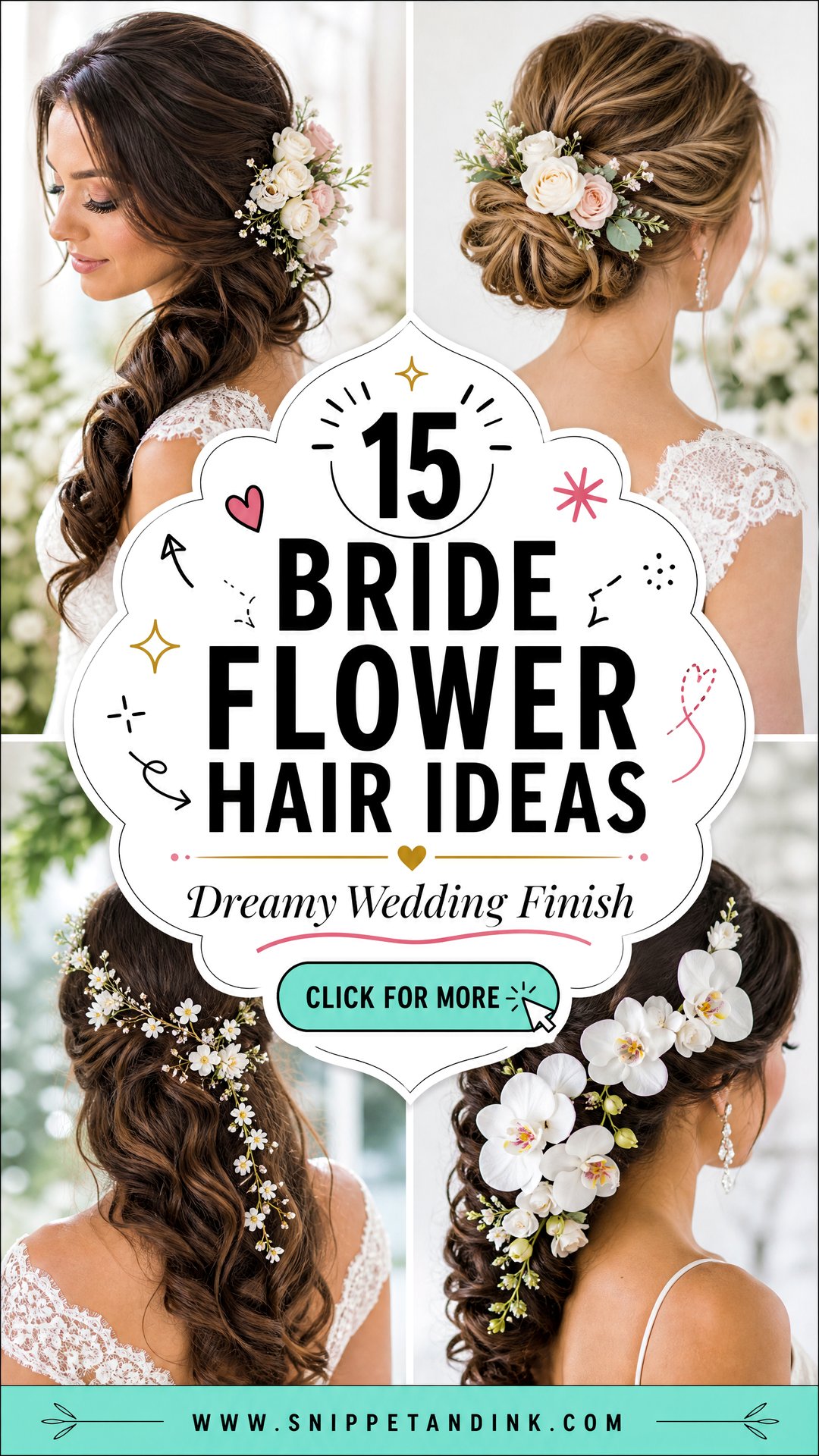
Hair flowers are the smallest pieces I make for a wedding and often the ones I worry about most. A bouquet sits in water until the last minute; a bloom in your hair spends six or more hours out of water, warm against your scalp, getting hugged and photographed. That is why the flower has to suit your hair texture, dress, venue and how much you’ll move, not only the mood board. Some brides want a sprig of baby’s breath in loose waves, others a full crown, a low bun with orchids, or a braid threaded with small blooms. Each idea below comes with what I’d actually put in it, and what I’d steer you away from.
Which Stems Survive Six Hours Out of Water
When a bride brings me a hair photo, my first question is which flowers are in it, because some varieties hold for a whole day against warm skin and some collapse before the first toast. Thick, waxy petals and small heads last; thin petals and big, thirsty heads don’t.
The ones I trust
- Spray roses and small garden roses, conditioned overnight before wiring.
- Dendrobium and cymbidium orchids, which handle heat well.
- Baby’s breath and waxflower, which dry gracefully instead of wilting.
- Dried, preserved or good silk flowers, for very hot venues or long days.
The ones I talk brides out of
Hydrangea goes limp quickly once it’s out of water. Gardenia browns wherever it’s touched, which is hard to avoid in hair. Peonies are too heavy and shed petals. Lilies can drop pollen that stains a gown; if you love them, the stamens must come out first. Tulips keep growing and bending after they’re cut, so they never stay where they were pinned.
Whatever the variety, conditioning matters as much as choice. I cut stems the day before, let them drink in cool water overnight, and only wire them on the morning. A flower that went into your hair fully hydrated lasts hours longer than one wired straight from the delivery box.
1. Flower Crown Wedding Hair
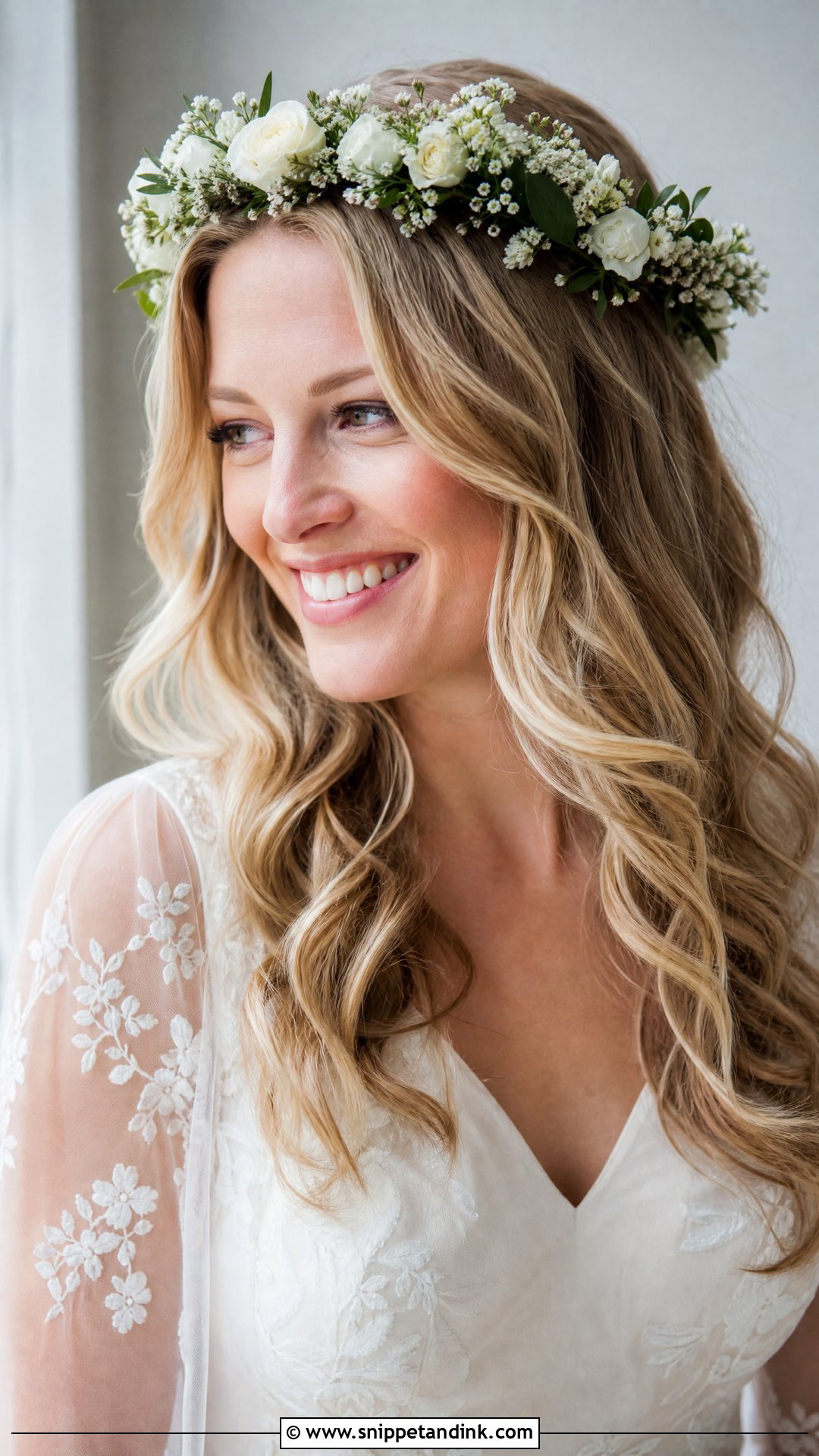
A crown frames the face more than any other floral placement, which is both its charm and its risk. On loose waves, soft curls or lightly textured straight hair it reads romantic; on a busy lace bodice with a long veil, a full crown starts to crowd. For garden weddings I build crowns from small spray roses, baby’s breath, waxflower or tiny daisies, each stem wired and taped onto a bendable base. The detail most people forget is weight. I keep a crown light enough that it doesn’t press on the temples by mid-afternoon, and I always talk to the hairstylist about where the pins will grip.
2. Low Bun With Flowers
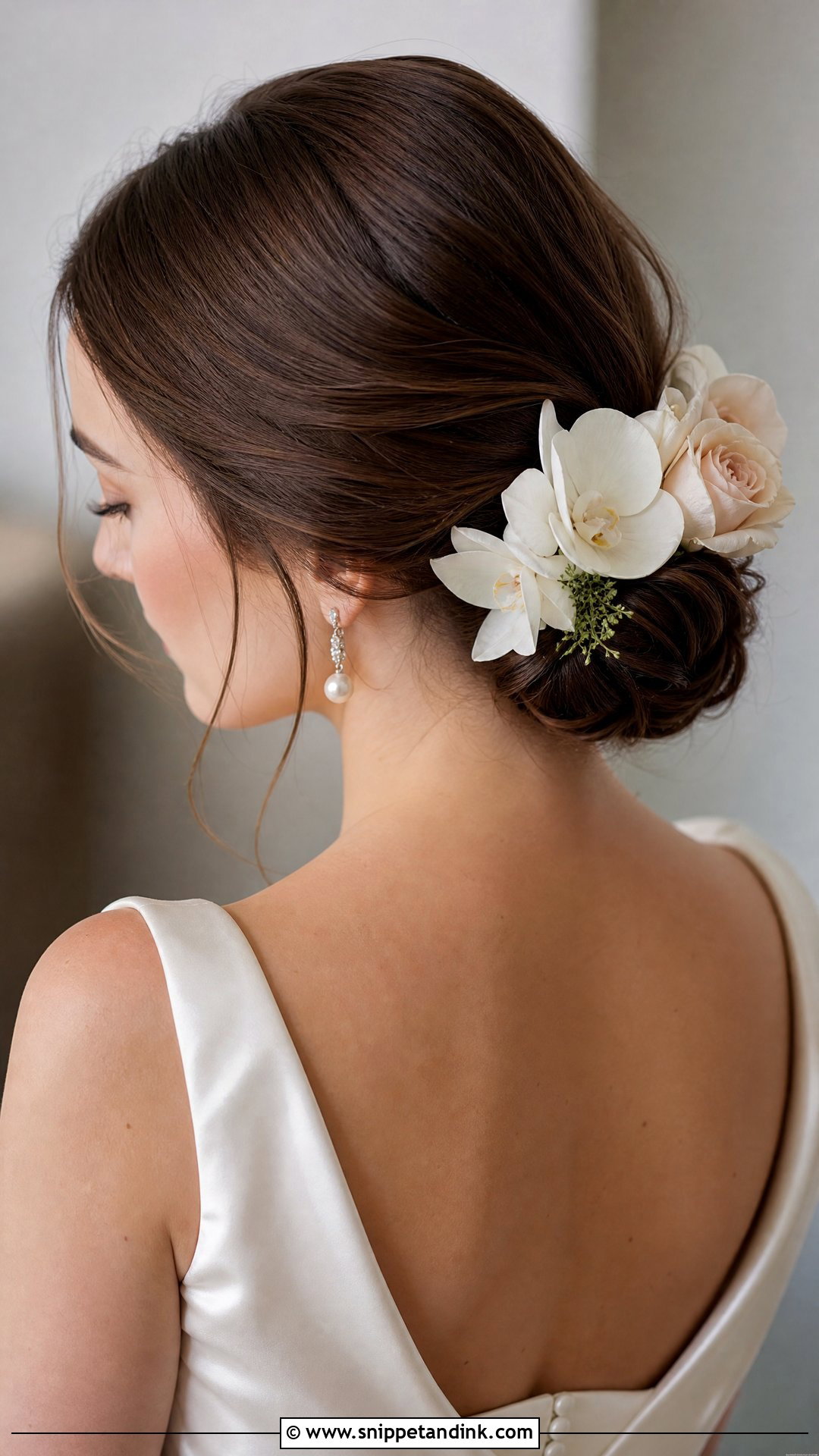
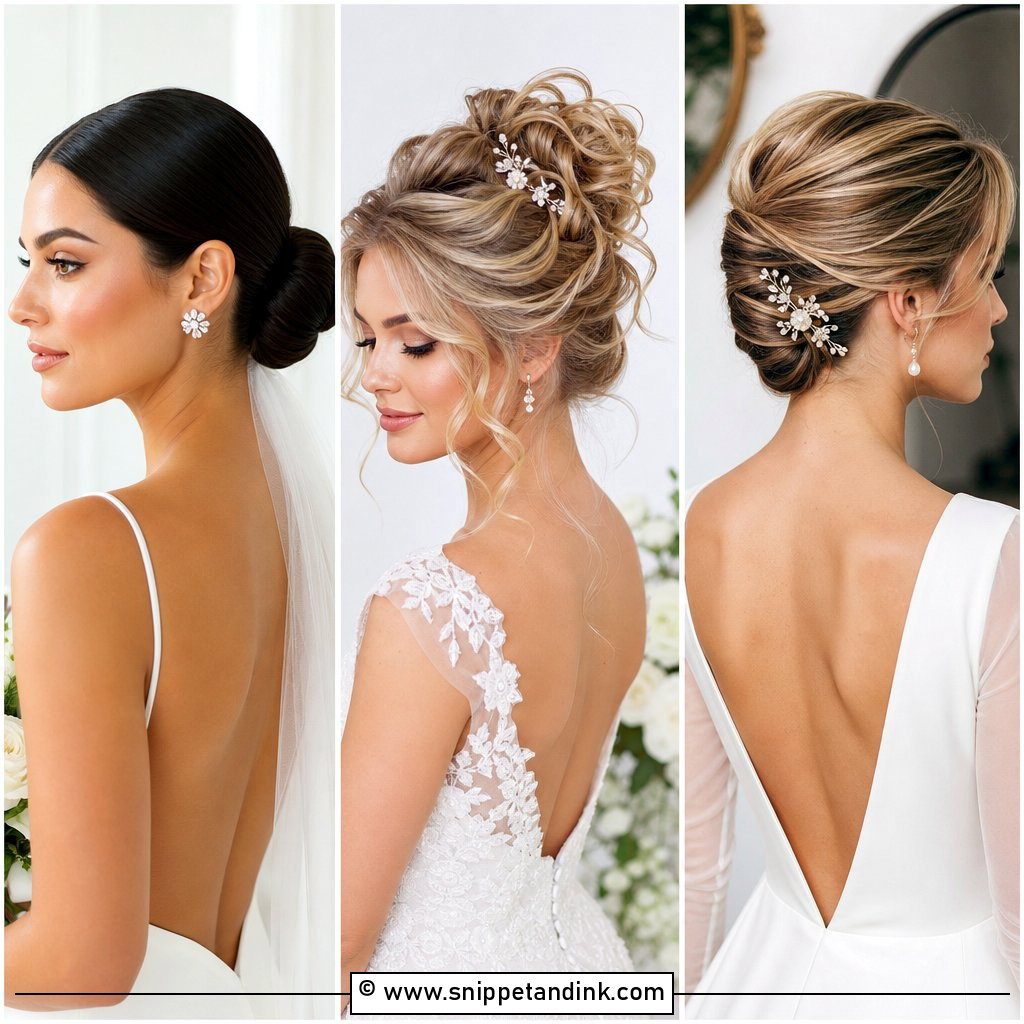
A low bun gives flowers the most stable home in the whole hairstyle, because there’s a solid mass to pin into. The veil can sit above or below it, and the blooms soften what could otherwise look very formal. I like a cluster on one side for an asymmetric shape, or an even ring around the bun for a classic finish. Roses, orchids, stephanotis and baby’s breath all suit it. Stephanotis needs care: the little white trumpets bruise brown where they’re handled, so I wire them with pearl-headed pins and touch them as little as possible.
3. Half Up Wedding Hair With Flowers
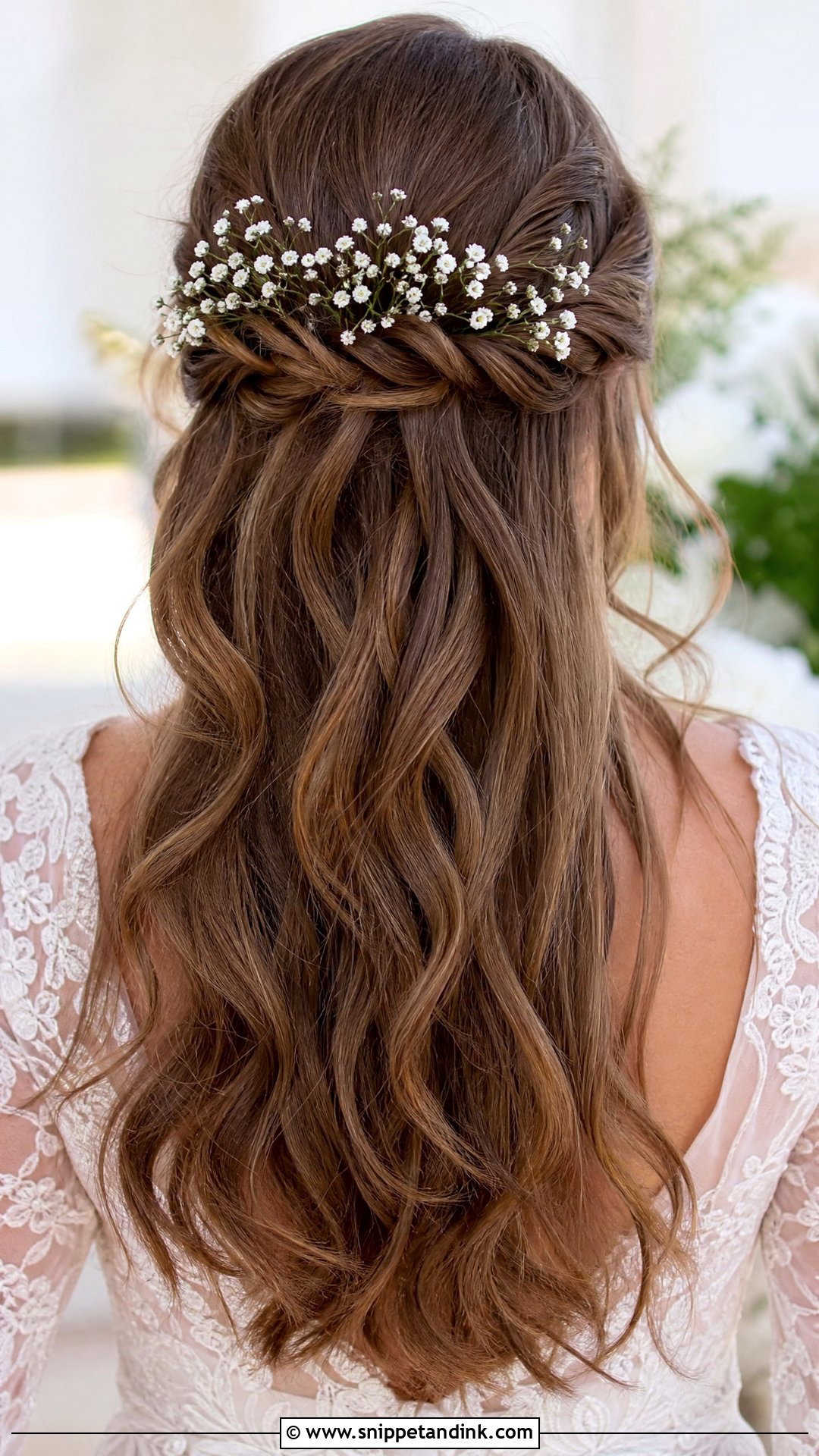
Half up hair is the compromise when you want length down but need the face clear. The pinned section at the back is where the flowers go, along a twist, a small braid or the gathered crown. That spot is visible in ceremony shots, when guests see you from behind, and in the profile shots during the vows. Medium to long hair suits it in waves, curls or a smooth blowout. I keep blooms small here, since the pinned section is thinner than a bun and a heavy flower can drag it down over a few hours.
4. Braided Wedding Hair With Flowers
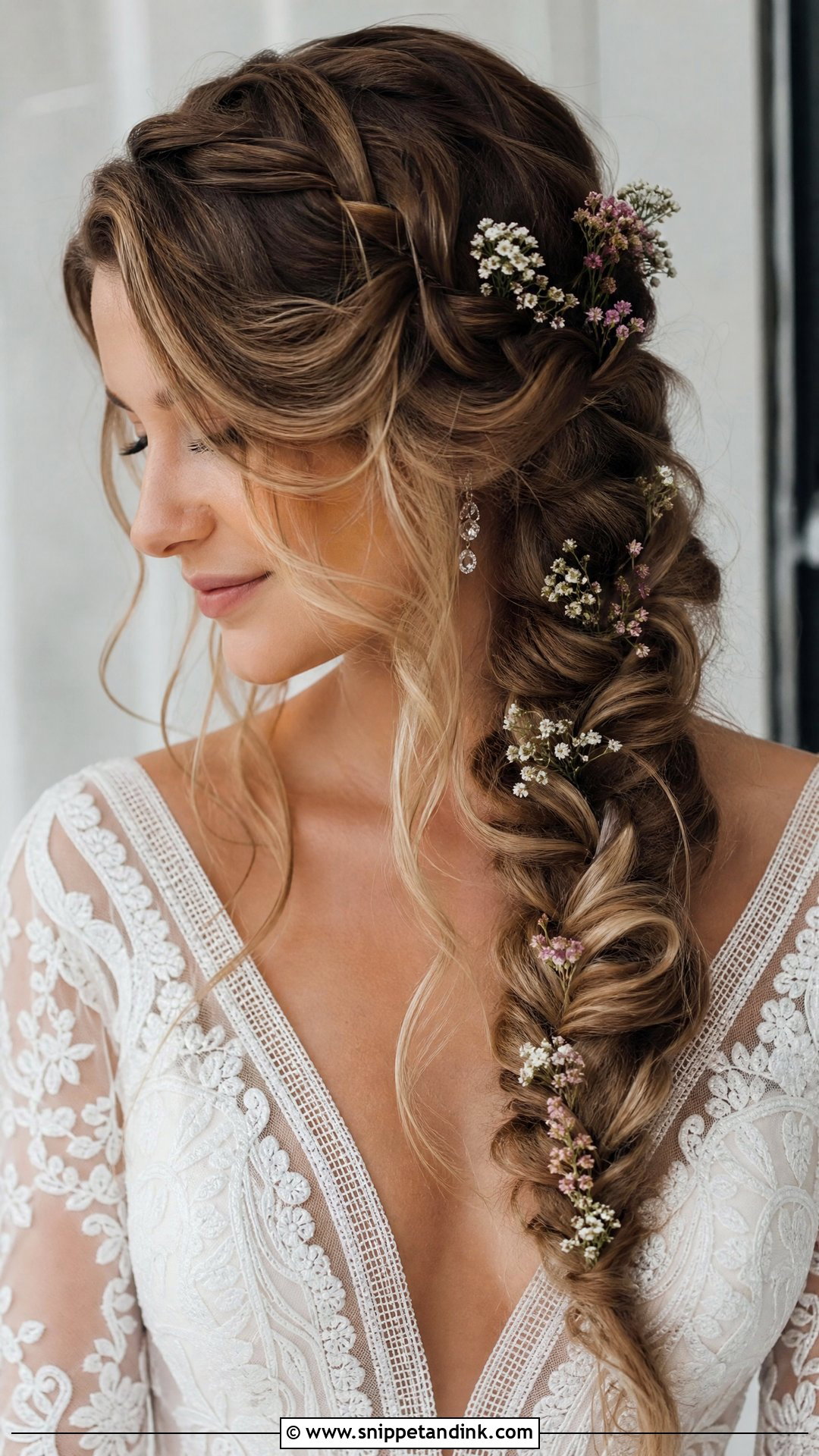
A braid is the most forgiving thing I can tuck flowers into. Every loop of the plait acts like a little holder, so stems stay put through hugging and dancing. A loose side braid feels relaxed and suits outdoor, rustic and beach weddings; a crown braid reads more formal. I either weave tiny blooms all the way along or set a few larger ones near the base where the braid is thickest. Thick hair is the best candidate, since the braid tames the volume and still shows off length. On very fine hair the braid is narrow and larger heads can look perched rather than tucked in.
5. Loose Waves With Flowers
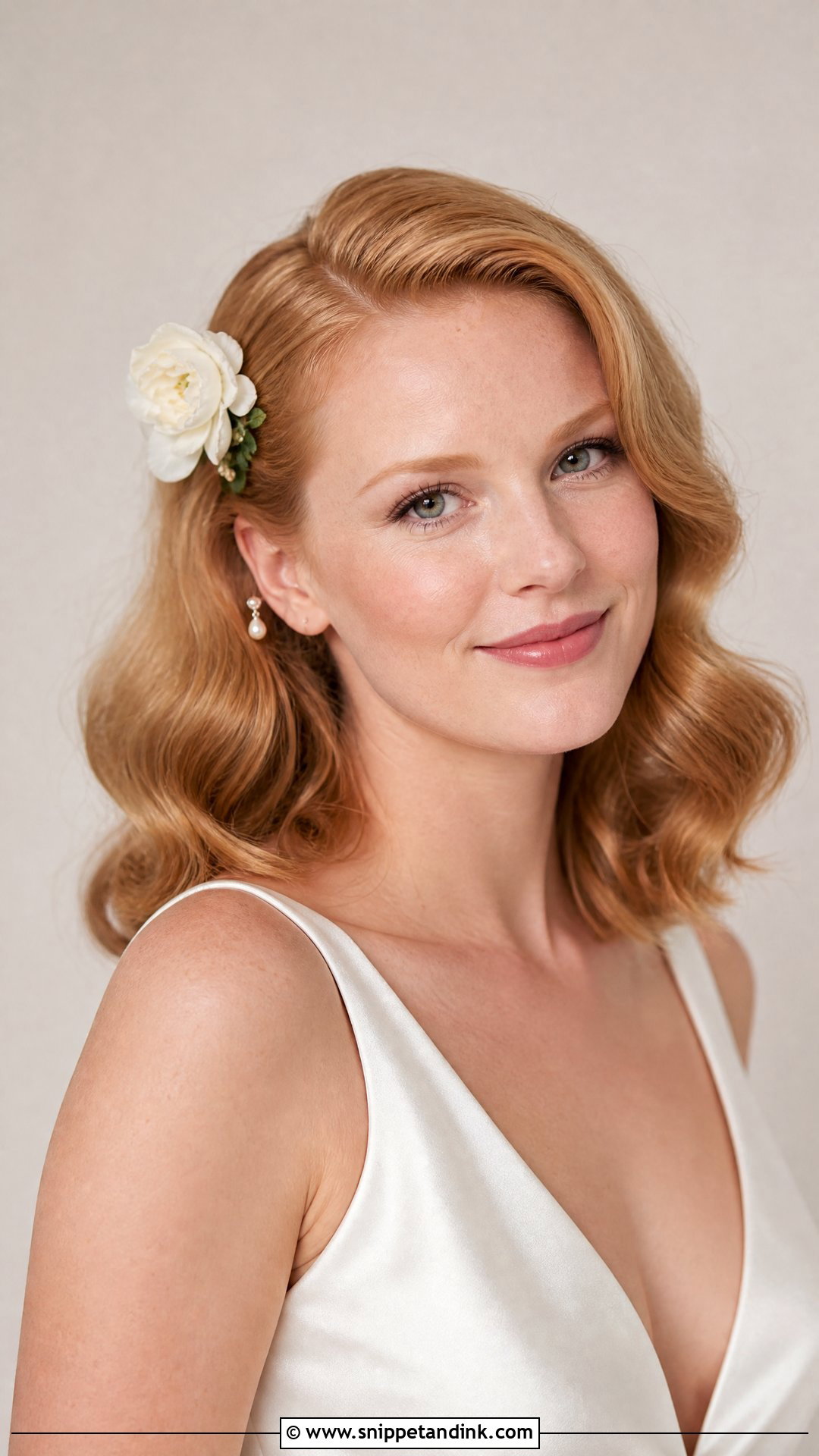
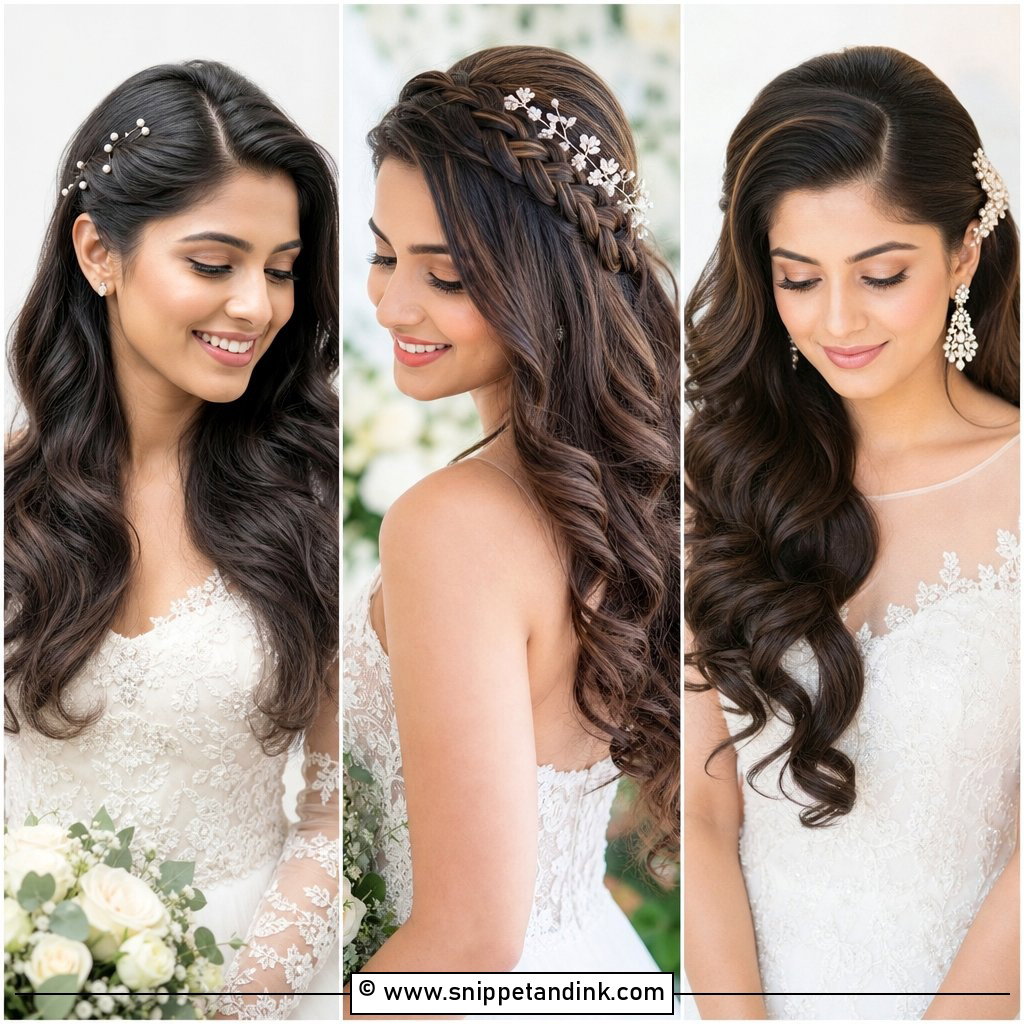
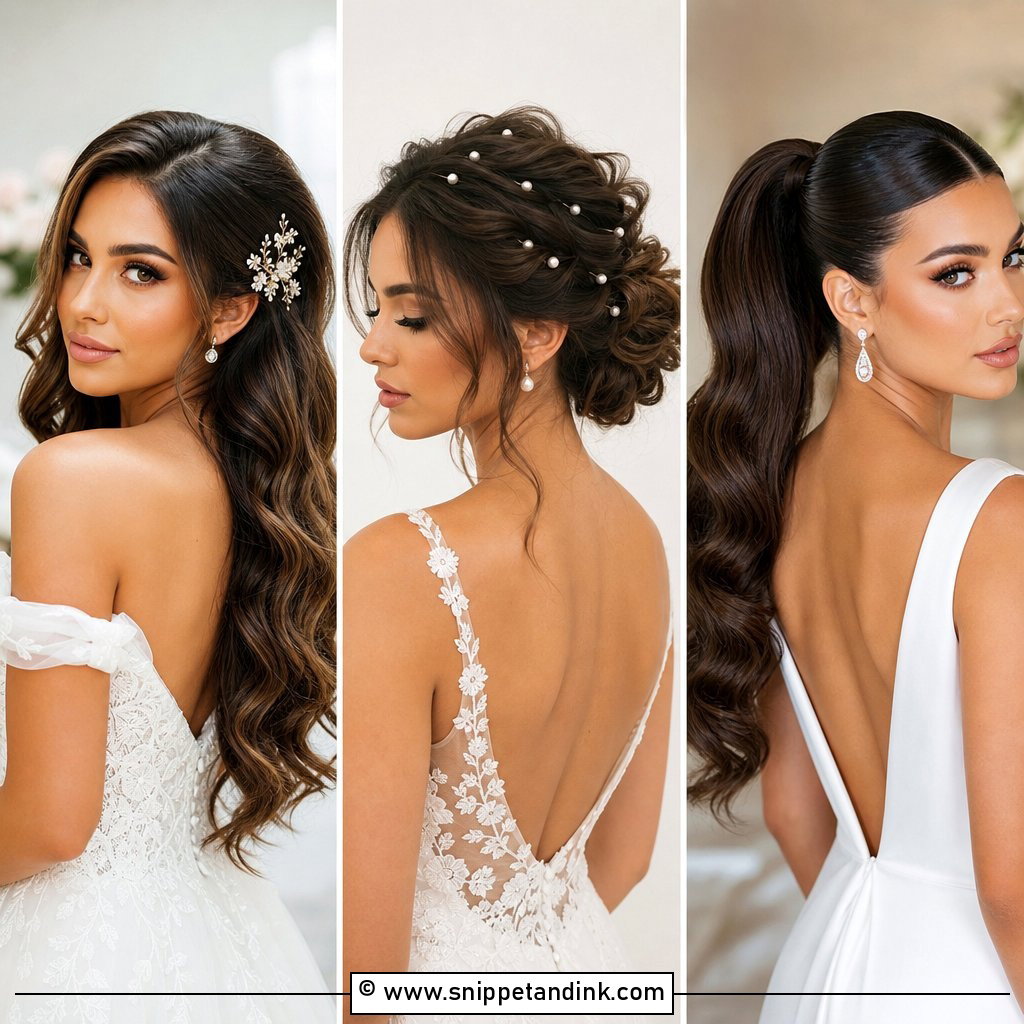
Loose waves give you movement and shine, and flowers add detail without changing the shape. The trouble is there’s nothing to pin into except the hair itself, so I keep pieces light: a small floral comb, scattered baby’s breath, or a single bloom anchored above one ear on a crossed pair of bobby pins hidden underneath. It suits off-the-shoulder gowns, slip dresses and soft lace. Ask for waves brushed out but not frizzy. Flowers sitting on loose hair will shift a little as you move, and that is part of the look.
6. Side Swept Wedding Hair With Flowers
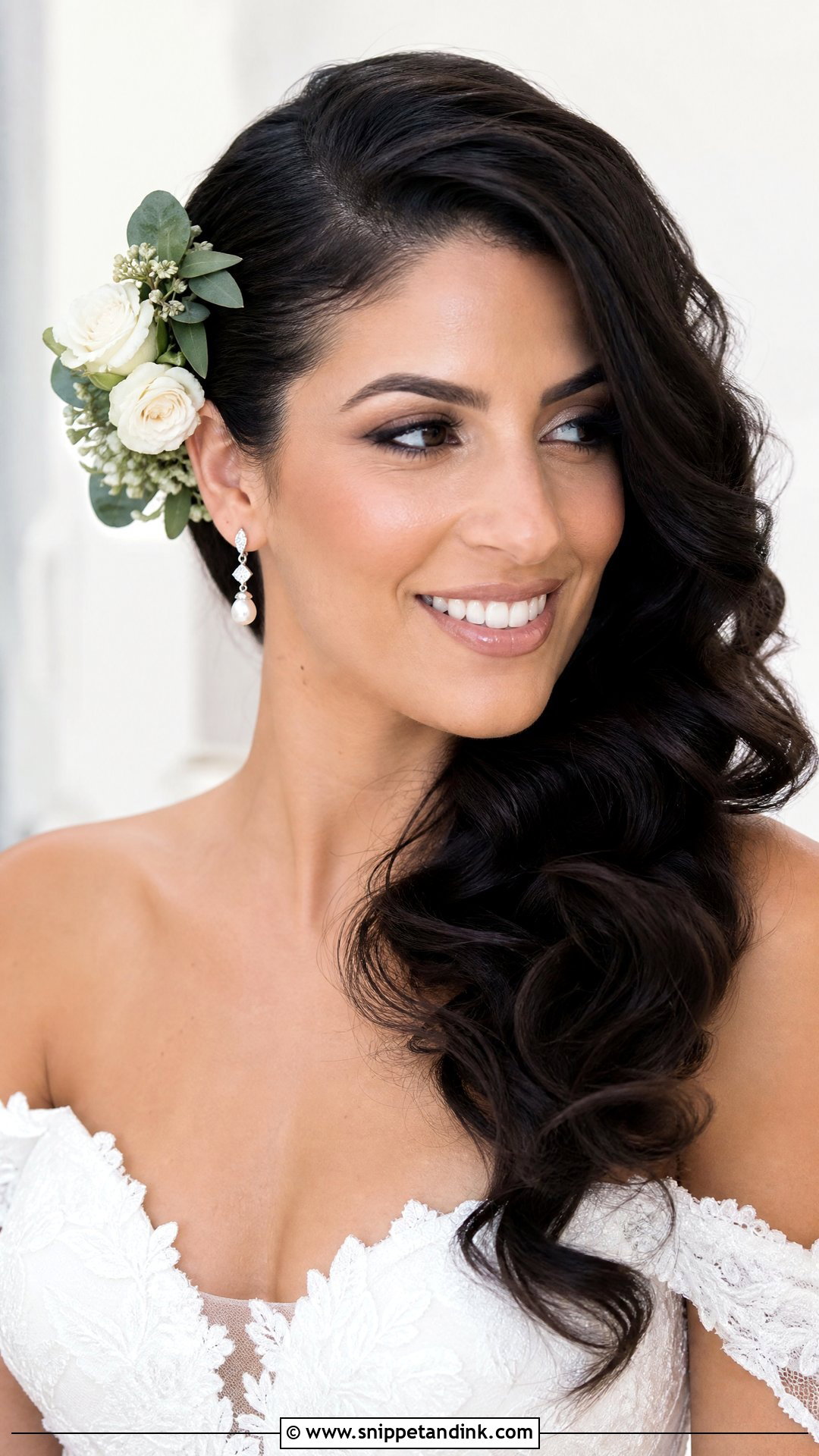
Sweeping the hair to one side creates a clean line from crown to shoulder that I find especially pretty in portraits. The flowers can sit by the ear, at the shoulder or along the pinned section. One-shoulder dresses and big earrings on the open side suit it, and so do veils that don’t need to cover the whole hairstyle. The flaw I watch for is weight on one side: a big cluster plus a mass of curls will slowly pull everything forward. I use lightweight blooms, tape them to a comb, and let the stylist anchor the comb into the gathered section before the curls go over it.
7. Wedding Ponytail With Flowers
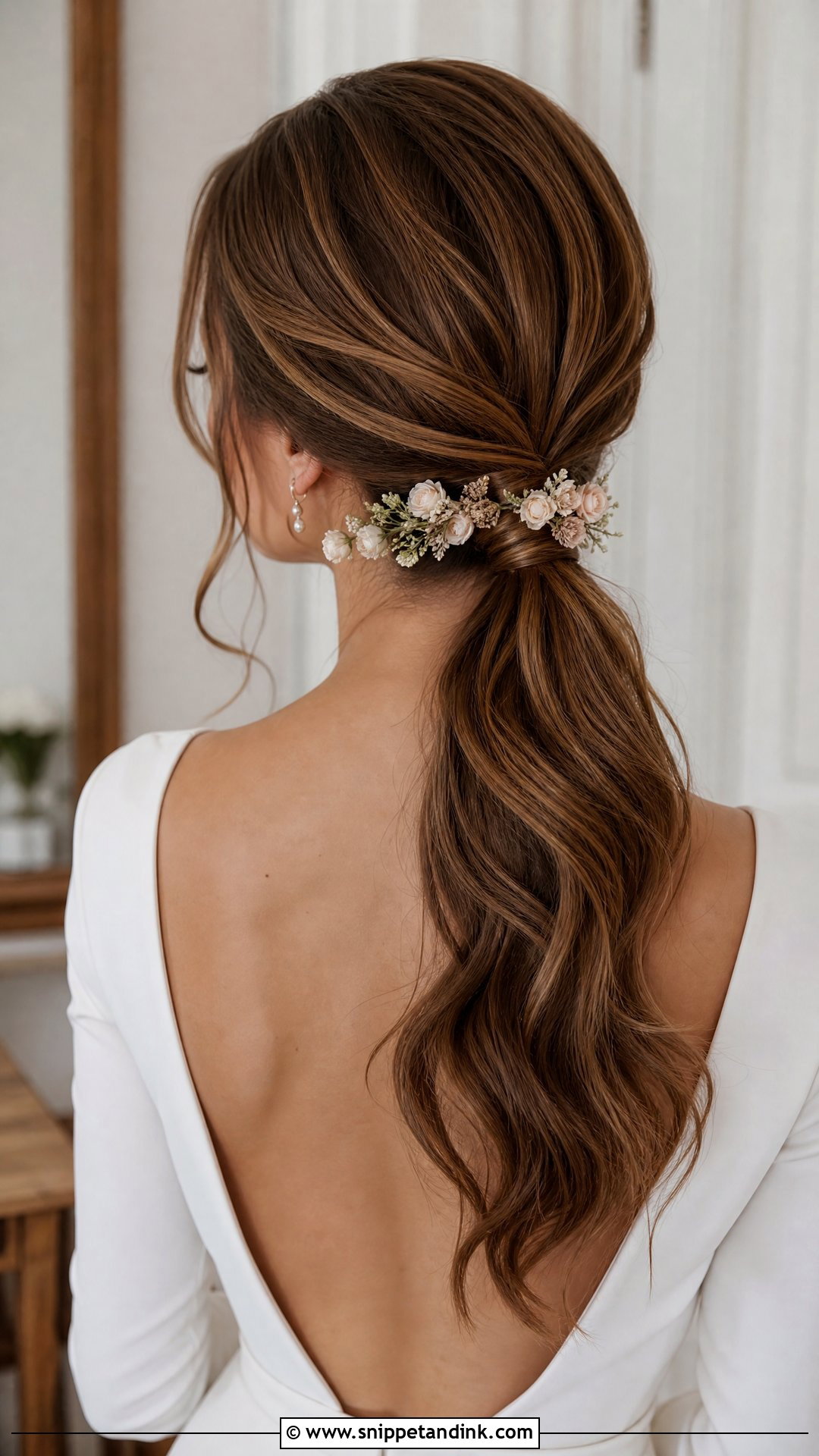
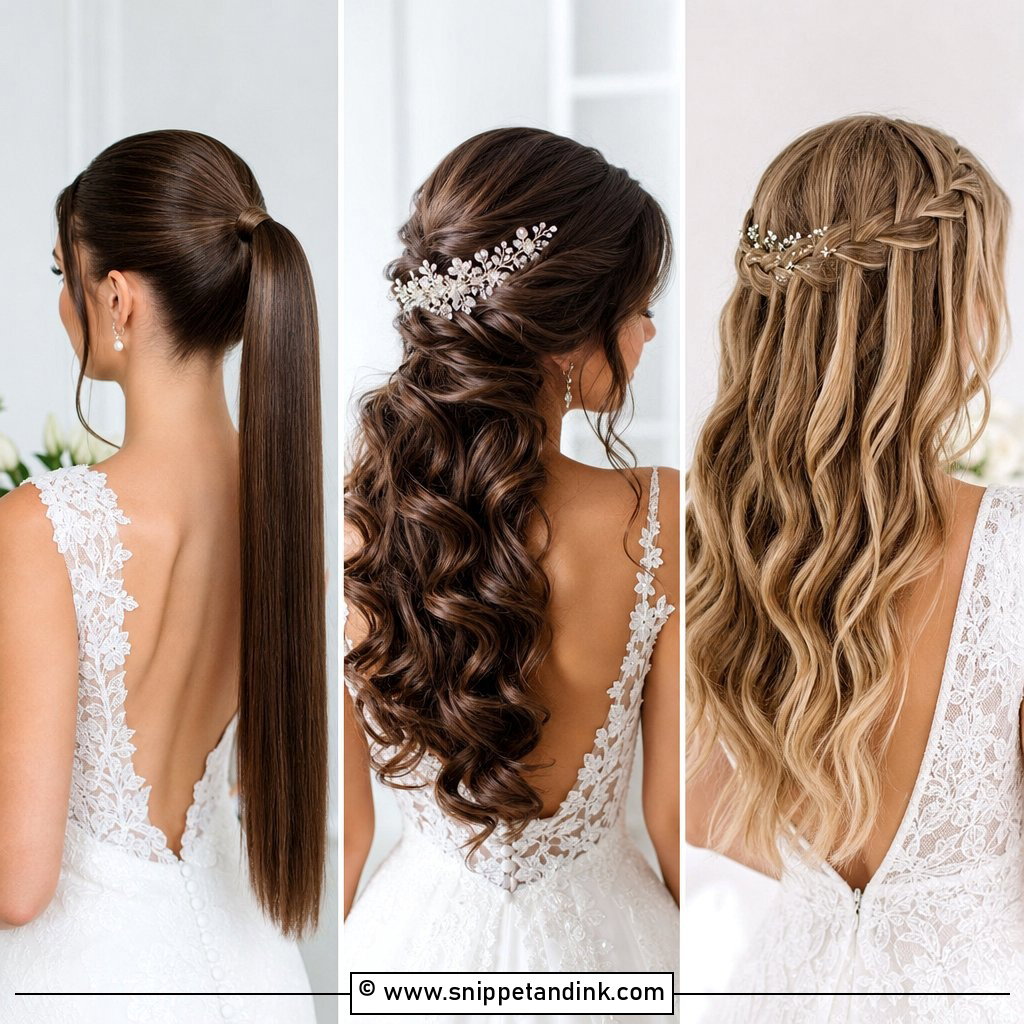
A ponytail with flowers is comfortable, modern and cool on the neck in summer. High, mid or low depends on the neckline: a low wavy pony reads soft, while a sleek pony with blooms around the base looks sharper. I put flowers where the elastic is, wrapping a short garland over the band, or along a braid running inside the ponytail. Flexible hold products keep the tail swinging. Don’t place flowers down the length of the pony itself, though; each time it swings, they swing, and by the reception half of them are on the floor.
8. Chignon With Fresh Flowers
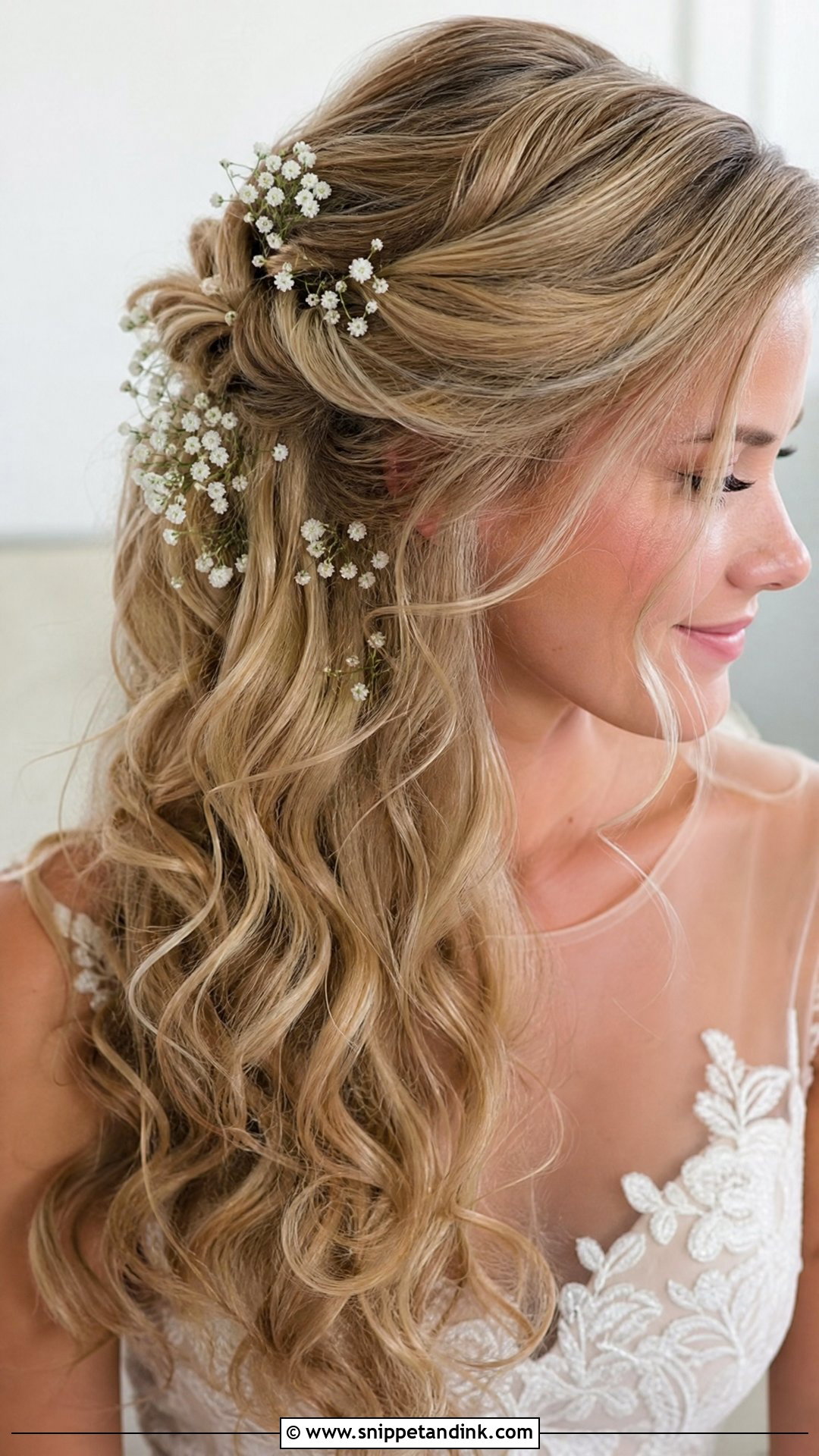
For a formal ceremony this is the floral placement I recommend most often. A chignon sits low at the nape and holds flowers firmly whether they’re placed above it, to one side, or tucked underneath where they peek out only from certain angles. It suits cathedral veils, classic gowns and pearls, and the chignon itself can be smooth, twisted or softly undone, which makes it workable for most hair types. I pick hardy flowers here because a cathedral veil comb often sits right next to them, and fragile petals crease where the tulle rubs.
9. Boho Wedding Hair With Flowers
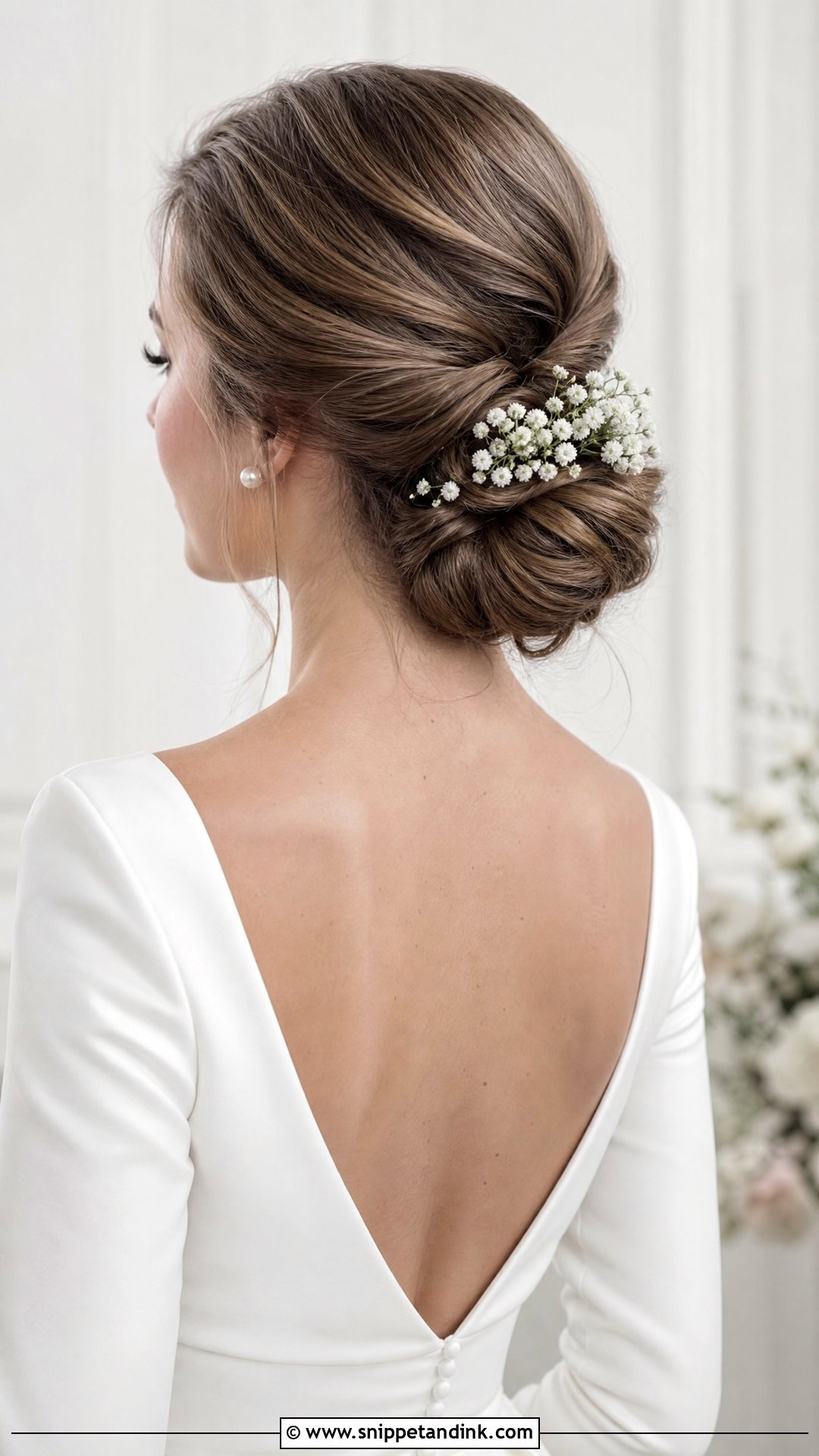
Boho flower hair should look gathered from a meadow, which takes more planning than it seems. The usual base is soft waves, a loose braid and some volume, with flowers placed slightly off pattern. It suits outdoor weddings, lace and flowing sleeves. Dried flowers, tiny roses, baby’s breath and wildflower stems all work, and dried pieces have the advantage of not wilting at all. My rule: a detailed dress takes small flowers; a plain gown can carry a fuller arrangement. Some real wildflowers droop within an hour out of water, so I test any foraged stem the day before.
10. Short Wedding Hair With Flowers
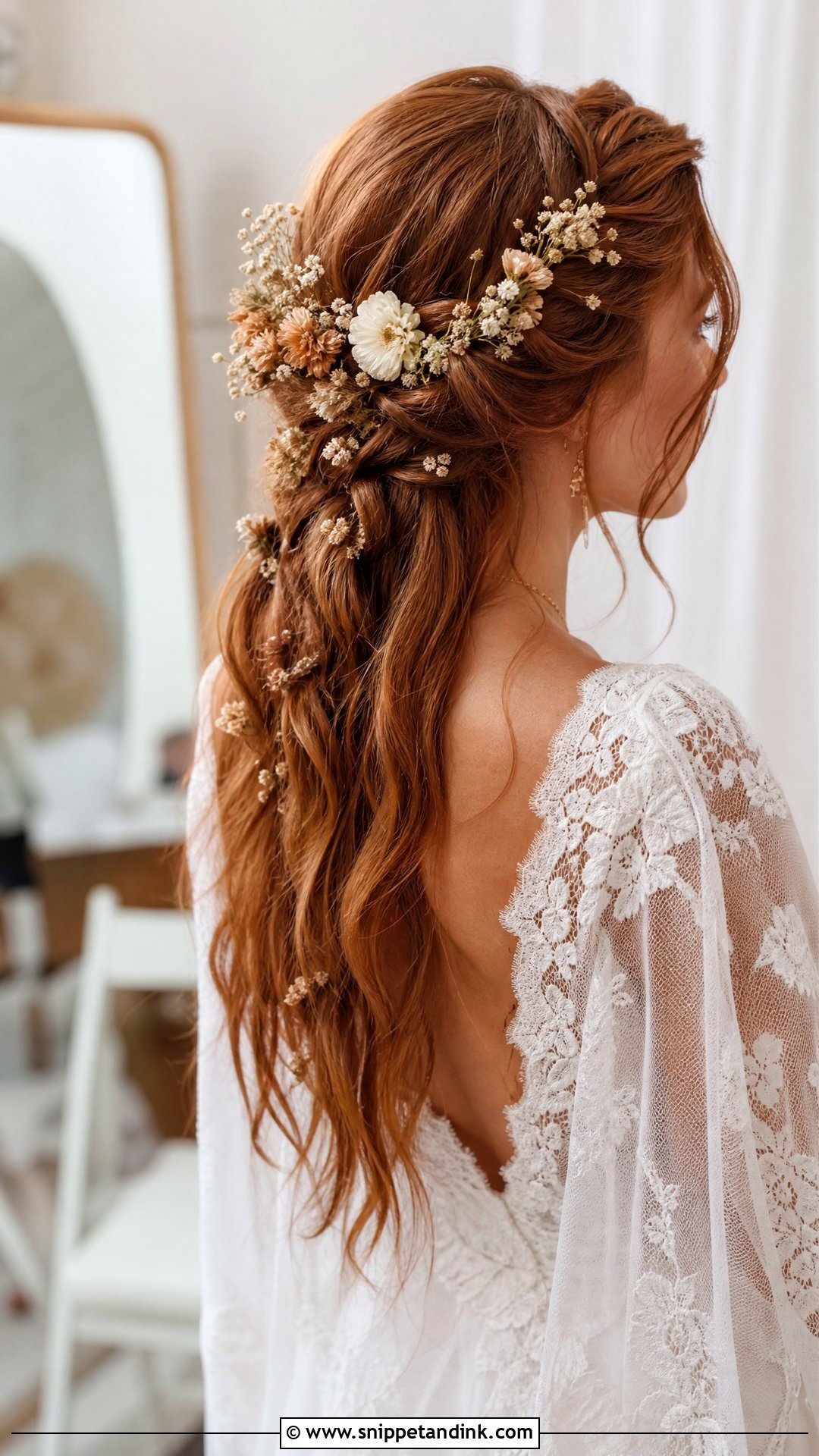
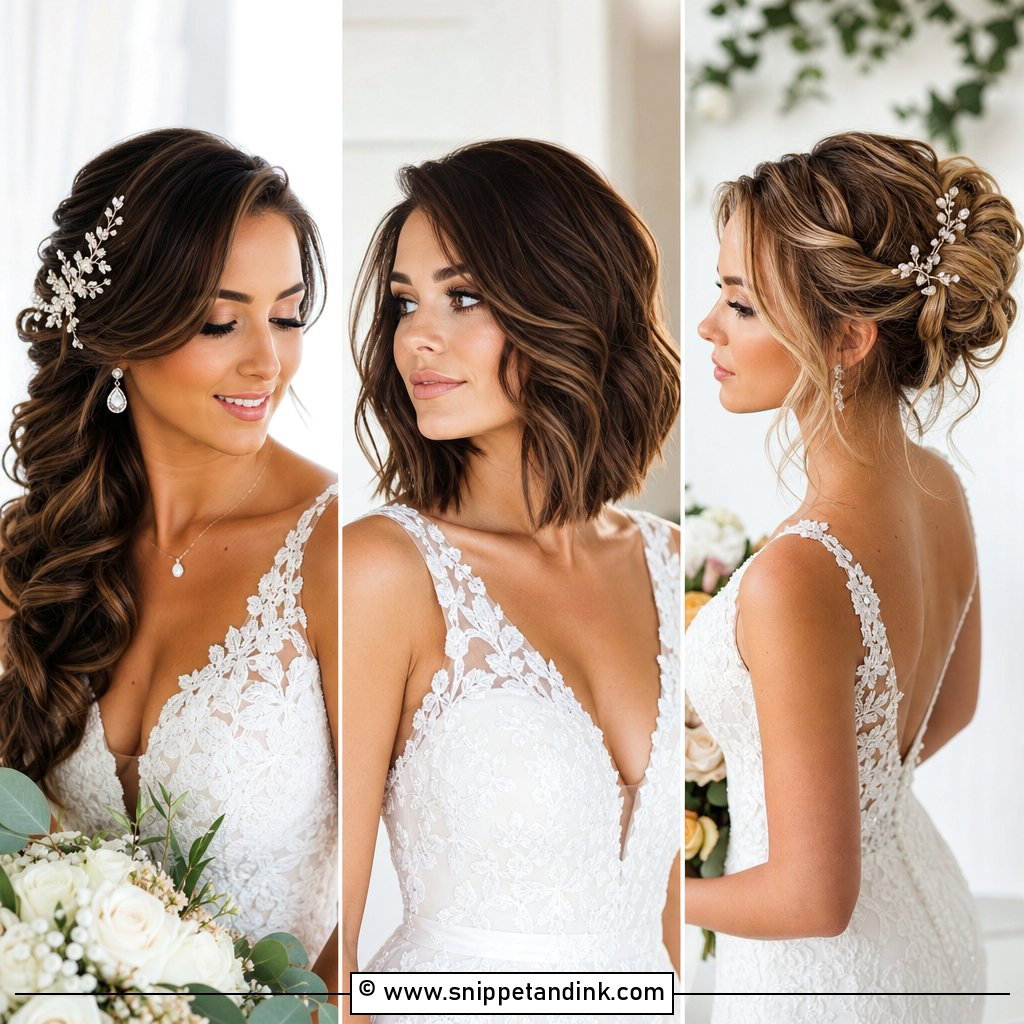
Short hair shows a flower more clearly than long hair does, so placement has to be exact. A pixie, bob, or short wavy cut can take a floral comb, a mini crown, side pins or one bold bloom. A single flower above the ear looks chic; scattered tiny heads through short waves look playful. With a pixie, there’s often too little hair to hold a comb, so I tape blooms onto bobby pins instead and cross them flat against the head. Keep the hair shiny and shaped, and let one or two flowers point to the cut rather than cover it.
11. Curly Wedding Hair With Flowers
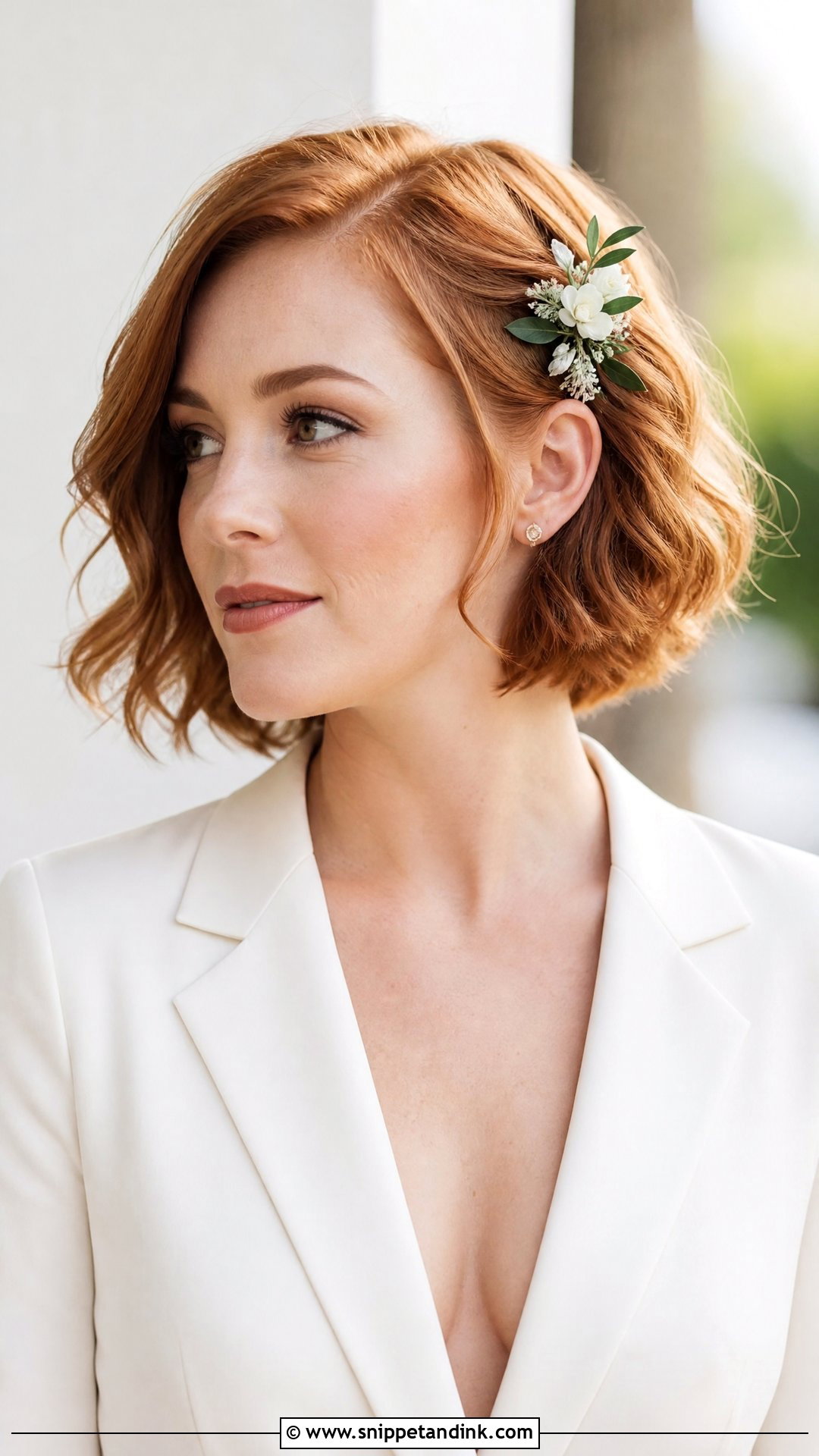
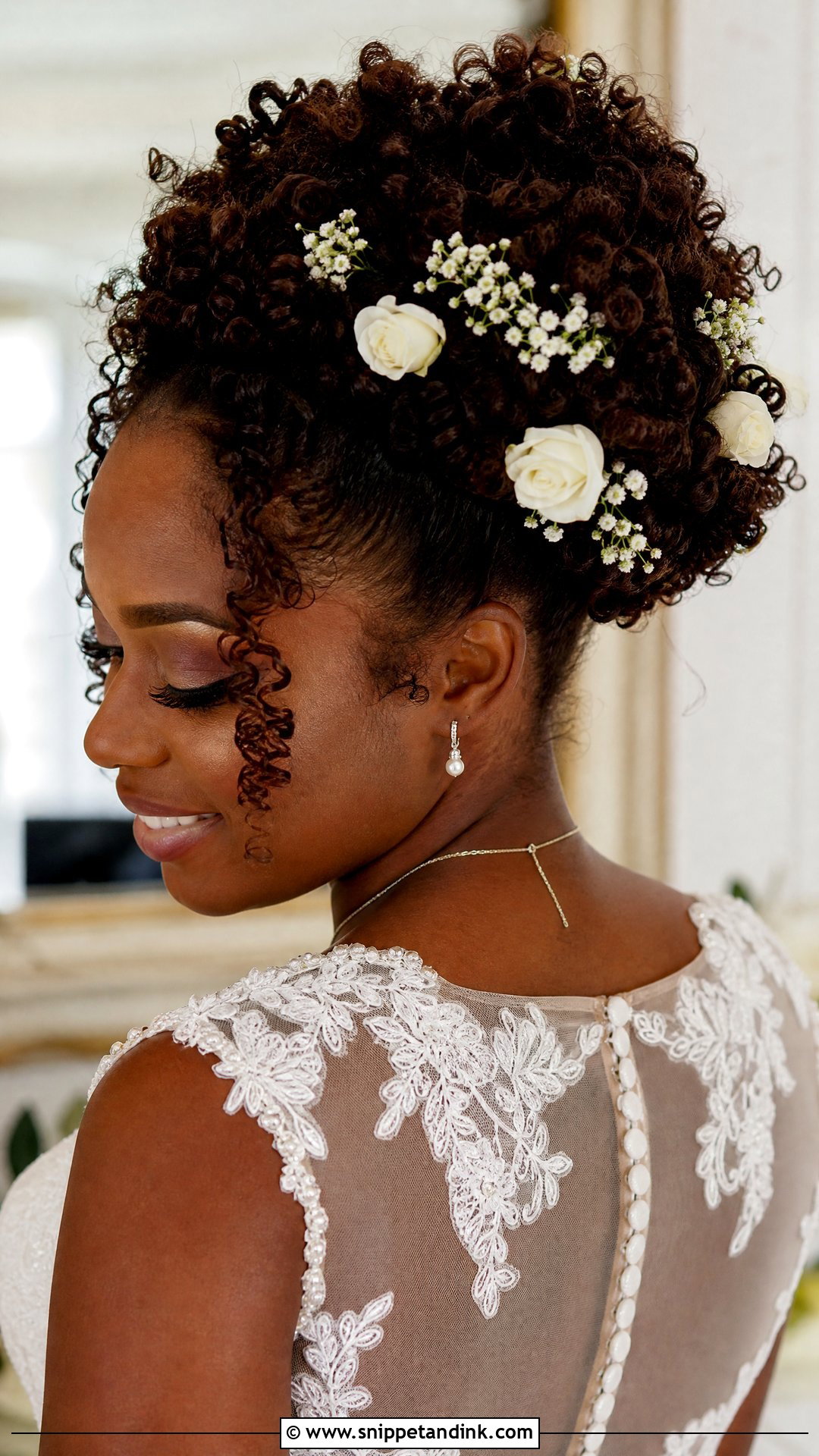
Curls offer volume that can swallow small flowers whole. Blooms can sit in a curly updo, along one side or through a half up shape, but they need a bit of size and contrast to stay visible: small orchids, mini roses, a few sprigs of baby’s breath or floral pins with a pearl center. Ask your stylist to finish the curl pattern first, defined and hydrated, and add flowers last. Pushing stems into set curls disturbs the clumps, so I tape each stem to a pin that slides in without catching.
12. Flower Hair Vine Wedding Hair
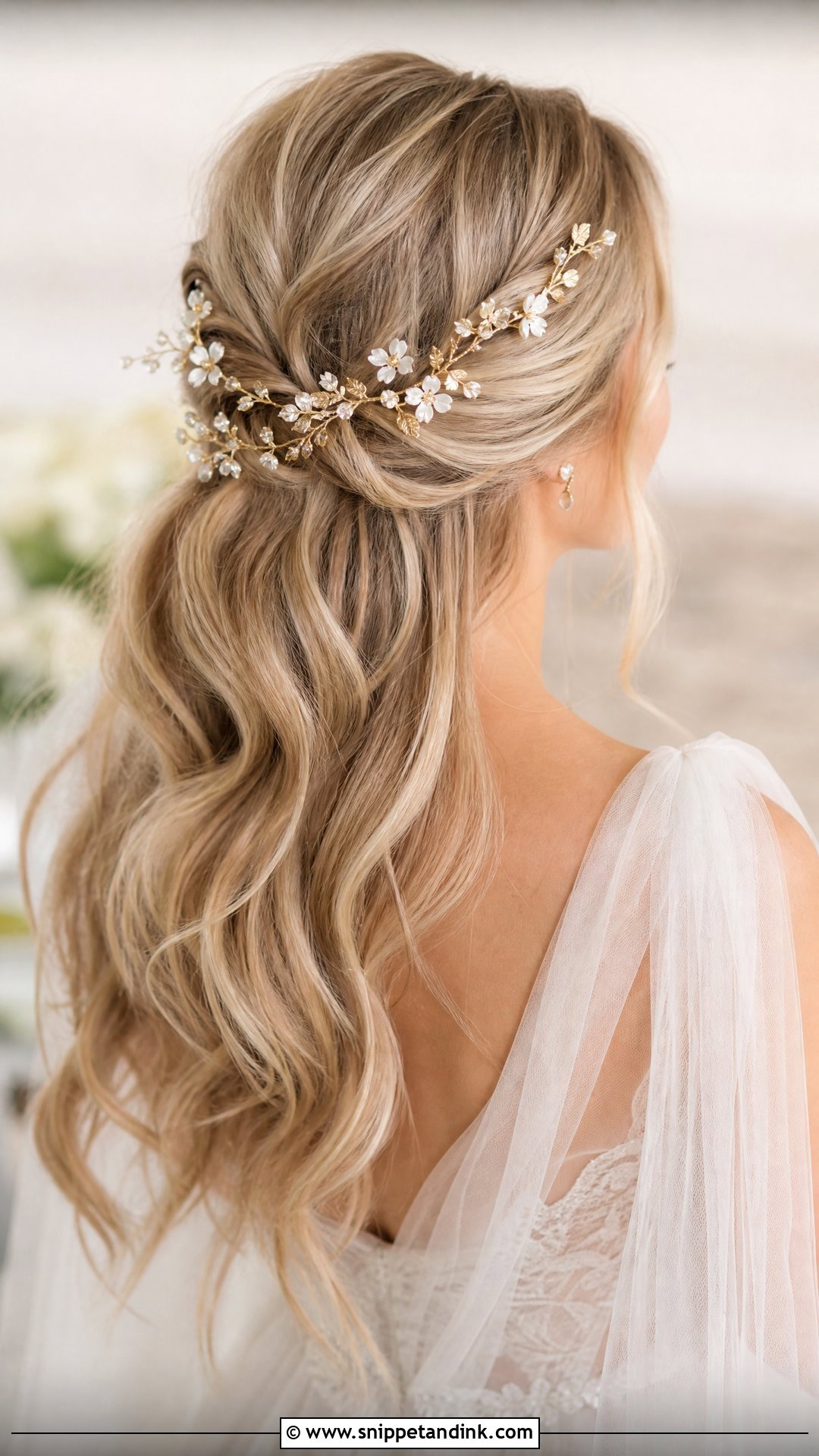
A vine is wire with small flowers, pearls or crystals along it, and it bends around buns, braids, waves and half up styles. It’s lighter and easier to secure than fresh stems, and it won’t wilt, which makes it my suggestion for brides marrying somewhere hot or getting ready very early. Many vines use fabric or preserved petals. They can trace a braid, circle a chignon or sit across the head like a slim crown. Match the metal of the wire to your jewelry; a gold vine next to silver earrings is more noticeable in close-ups than you’d expect.
13. Orchid Wedding Hair
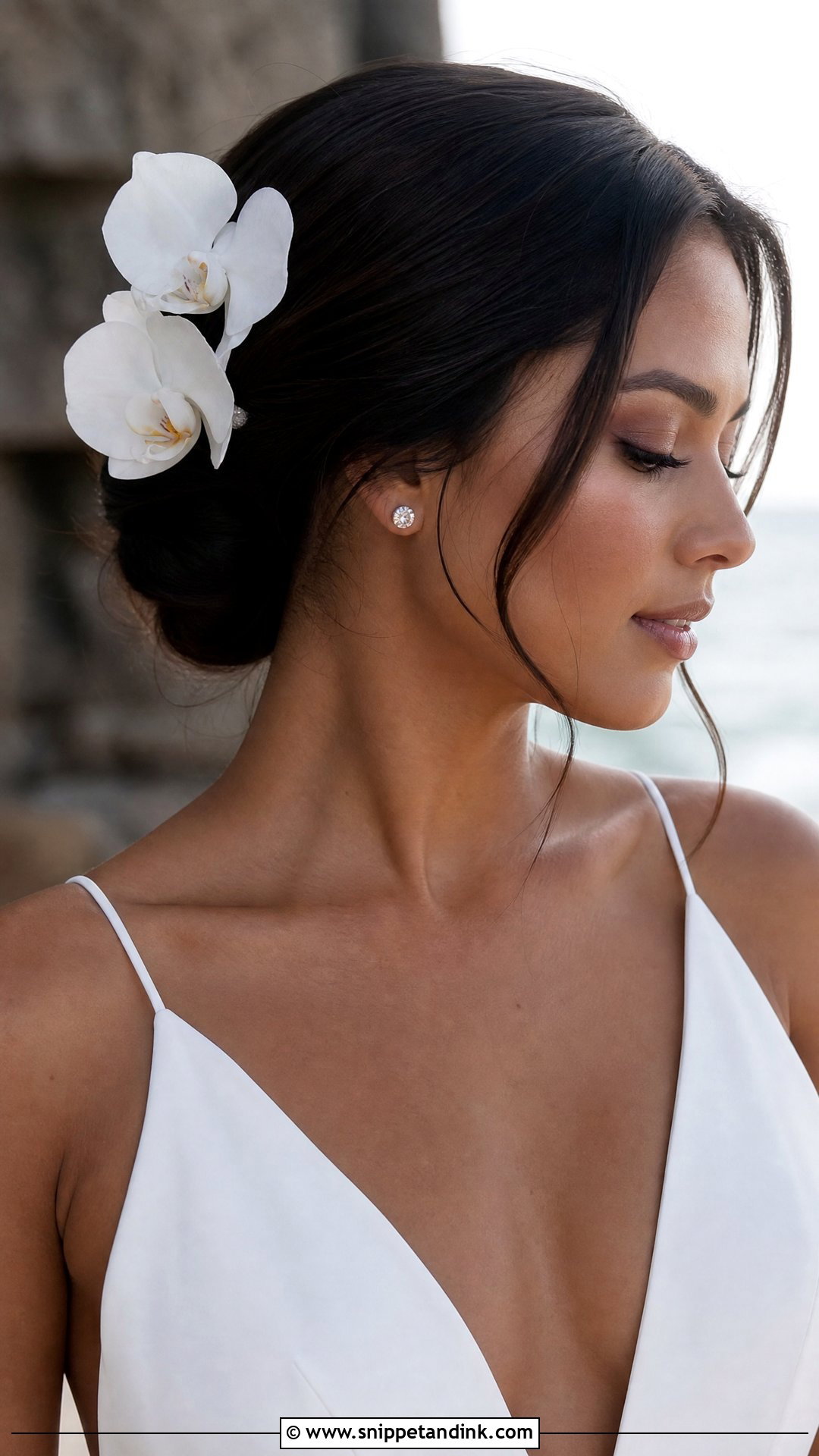
One or two orchids do the work of a dozen smaller flowers because their shape is so clean. Tucked into a low bun, set above the ear, or added to a sleek side style, they read sculptural and slightly tropical. White is the bridal classic; blush or pale yellow warms the face. Orchids suit destination weddings, beach ceremonies and modern gowns. Dendrobium and cymbidium orchids hold up well out of water, which is why I trust them in heat. Keep the rest of the hair smooth or softly waved so the bloom stays the focus.
14. Baby’s Breath Wedding Hair
Baby’s breath is the flower I’d call foolproof in hair. It goes into braids, buns, half up styles, crowns and loose waves, it adds airy texture without weight, and as it dries during the day it barely changes shape. A few sprigs feel minimal; a fuller cluster gives that garden look. I snip it into small pieces and tape each one so no woody stems stick into the scalp. One honest warning: it has a distinctive smell up close that some brides don’t enjoy, so sniff a bunch before committing.
15. Rose Wedding Hair
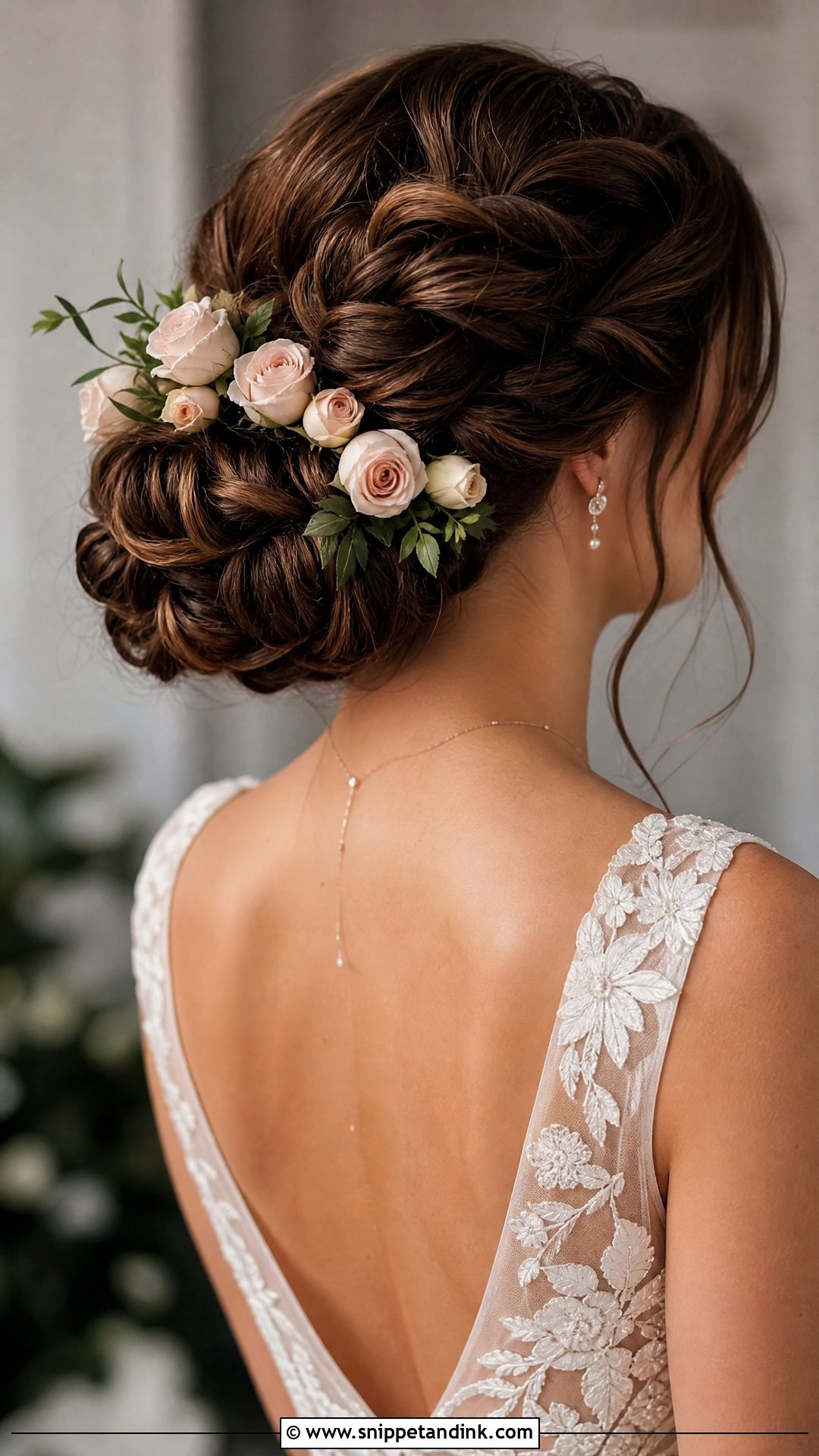
Roses suit almost every theme, but the full-size heads are usually too heavy and too large for hair. Spray roses, with their small heads on short stems, sit neatly in buns, braids and half up styles. White reads traditional, blush is softer, and peach warms the face. One rose beside a chignon makes a clean accent; several tiny ones woven into a braid feel delicate. Rose petals bruise where they’re pressed, so I place them where nothing will lean on them, not under the veil comb. Pair them with soft texture and pin them firmly.
Who Pins What, and When, on the Morning
Hair flowers sit between two vendors, and most problems happen in the gap. I wire and tape each stem, so it bends and holds a pin, then keep the pieces cool, lightly misted, in a box labeled for the stylist. Your stylist pins them in. Flowers go in last, after the final setting spray, since hairspray can spot delicate petals.
- Share your trial photos with the florist so the stem count and sizes match the hairstyle you tested.
- Ask for hair flowers to be delivered with the getting-ready flowers, not with the ceremony arrangements, so they arrive in time.
- Keep the box cool and away from windows until the stylist is ready.
- Ask for two or three spare sprigs; one usually gets crushed during the hugging after the ceremony.
If a flower droops by evening, pull it out rather than trying to revive it. A missing bloom in the reception photos is far less noticeable than a brown one.
Let the Bouquet and the Hair Talk to Each Other
Flower hair should look like part of the wedding, tied to the bouquet and the dress, rather than an accessory added at the last minute. Start with your neckline, veil, season, venue, hair texture and comfort. Fresh blooms need the right variety and careful placement to make it through the day, and good-quality dried, preserved or silk pieces are a real option if your wedding is hot or long. At your hair trial, use stand-in flowers in the same size, test the placement, and photograph it from the front and both sides. Then send those photos to your florist so the real flowers match.
You'll Like These Ideas:


Leave a Reply