
An accessory changes what a hairstyle has to do. A cathedral veil needs a solid anchor, a tiara needs height to sit on, and a fresh flower needs a spot that stays cool and hidden. I plan the hair around the piece rather than the other way round, which is why I ask to see a bride’s accessories before her trial. Below are 20 pairings I’d recommend, each with the practical detail that keeps it secure through the ceremony, the hugs and the dance floor.
Heavy Pieces Need a Base Built Underneath Them
Every accessory puts a load on the hair, and the hairstyle has to be built to carry it. Before I plan a style, I sort the bride’s pieces into rough weight groups.
- Heaviest: long veils, especially cathedral length, metal tiaras and a weighted parandi. These need a solid anchor such as a bun, a pinned crown or a firm braid.
- Middle: decorative combs, headbands, hair chains and clusters of fresh flowers. They need a small pinned section to grip, but not a full updo.
- Lightest: single pearl or crystal pins, barrettes and thin vines. These can go almost anywhere with a little texture spray.
The base under a heavy piece is usually a crisscross of bobby pins locked into a small section of hair and hidden under the top layer. Nobody sees it once the style is finished, and it’s the reason a veil comb stays put when someone steps on the train.
Clean hair is the slippery kind
Freshly washed, silky hair pushes combs and pins straight back out. Washing the day before, or adding a little dry shampoo or texture spray at the root, gives every accessory more to hold on to.
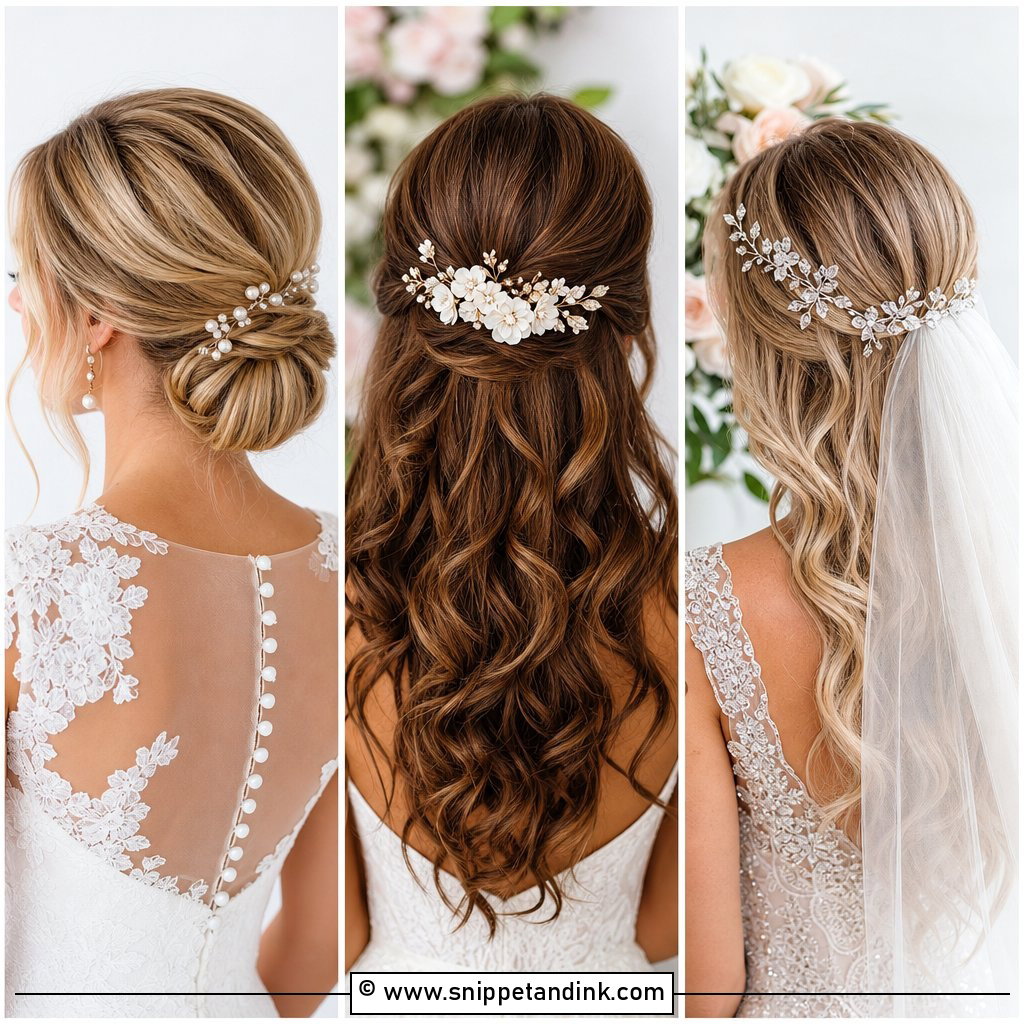
1. Bridal Low Bun With Veil
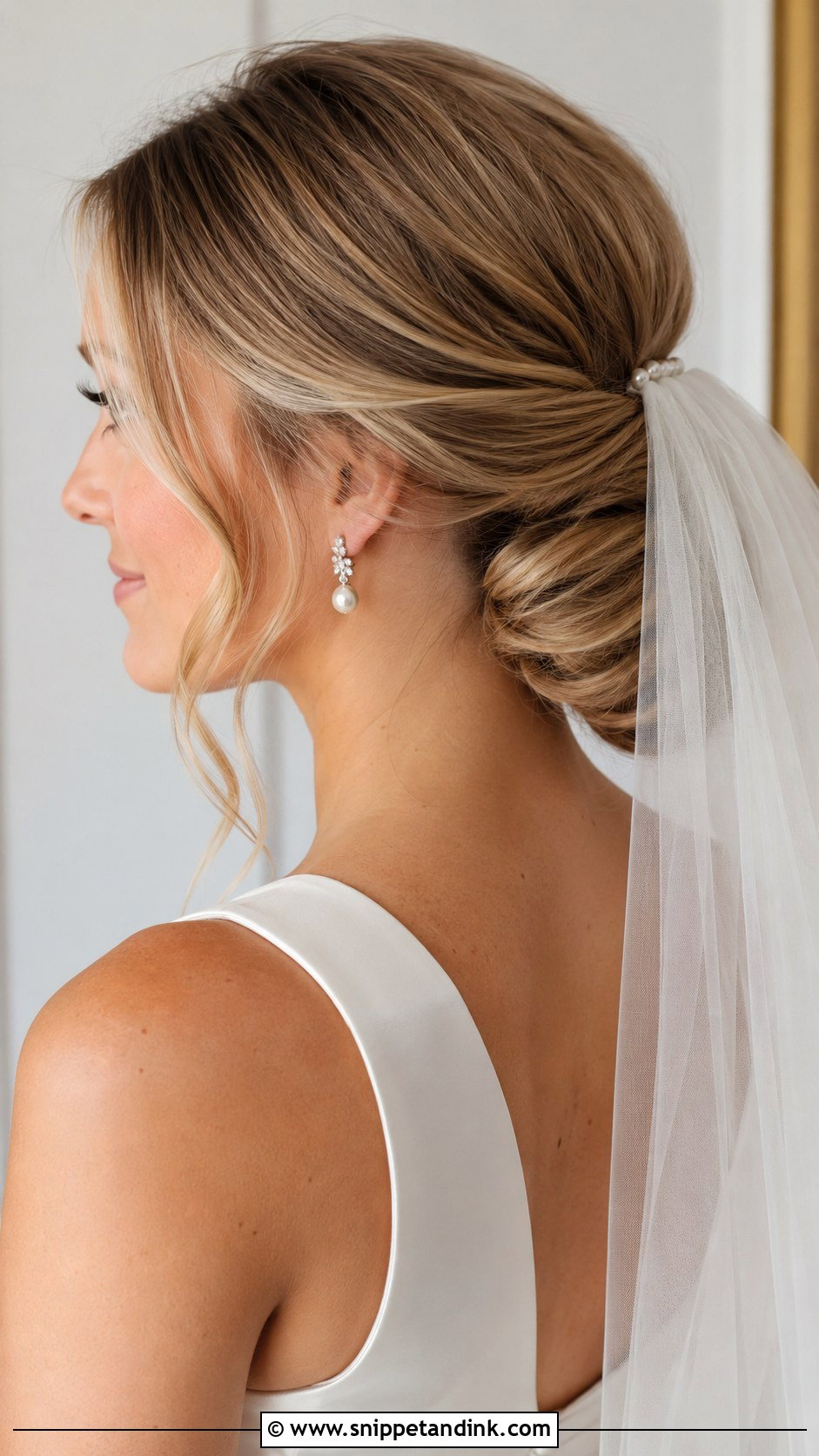
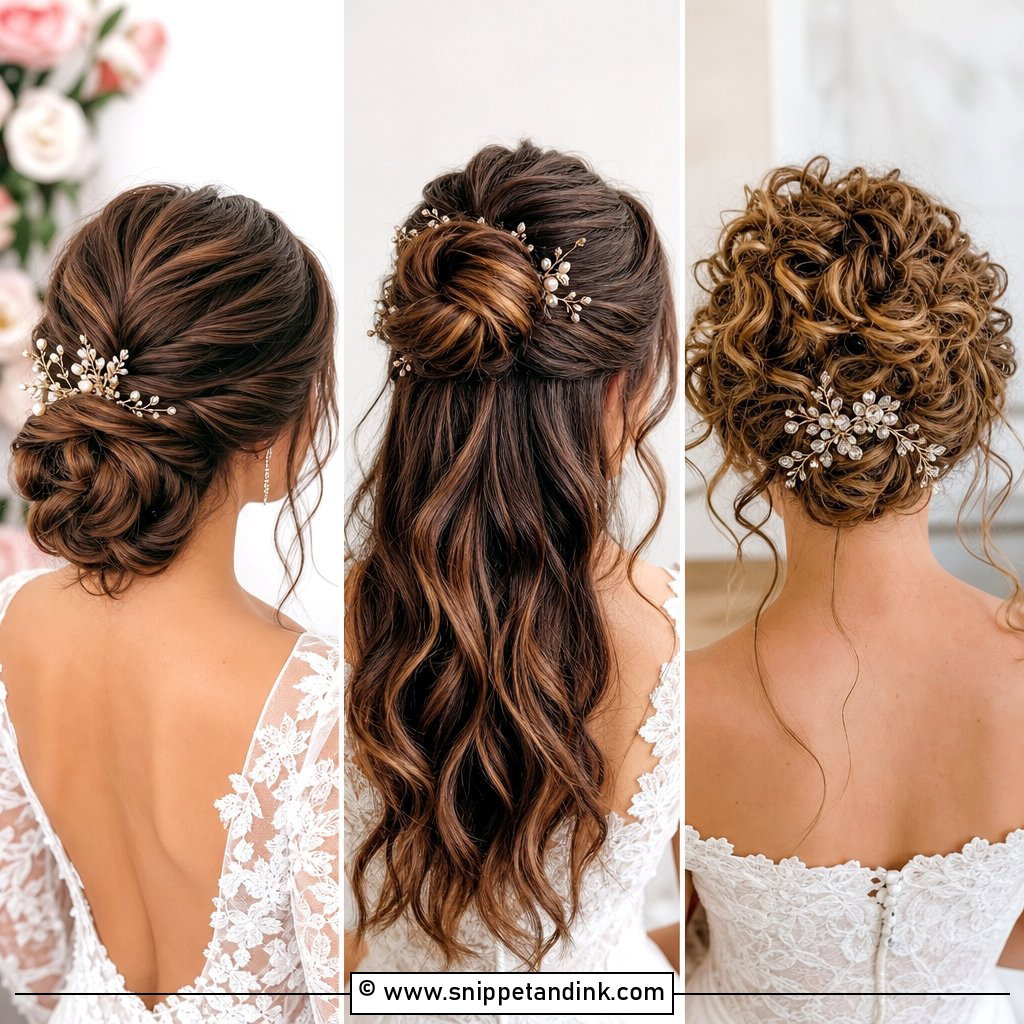
A low bun is the most reliable base a veil can have. The comb slides into the top of the bun or just above it, and the bun’s weight works with the comb instead of against it. For a long cathedral veil I set the bun a little higher than the nape, because a very low bun puts the comb at an angle where the fabric drags it backwards. Some volume at the crown stops the veil lying flat on the head. A few face-framing pieces soften it, and pearl earrings are about all it needs besides.
2. Bridal Updo With Pearl Pins
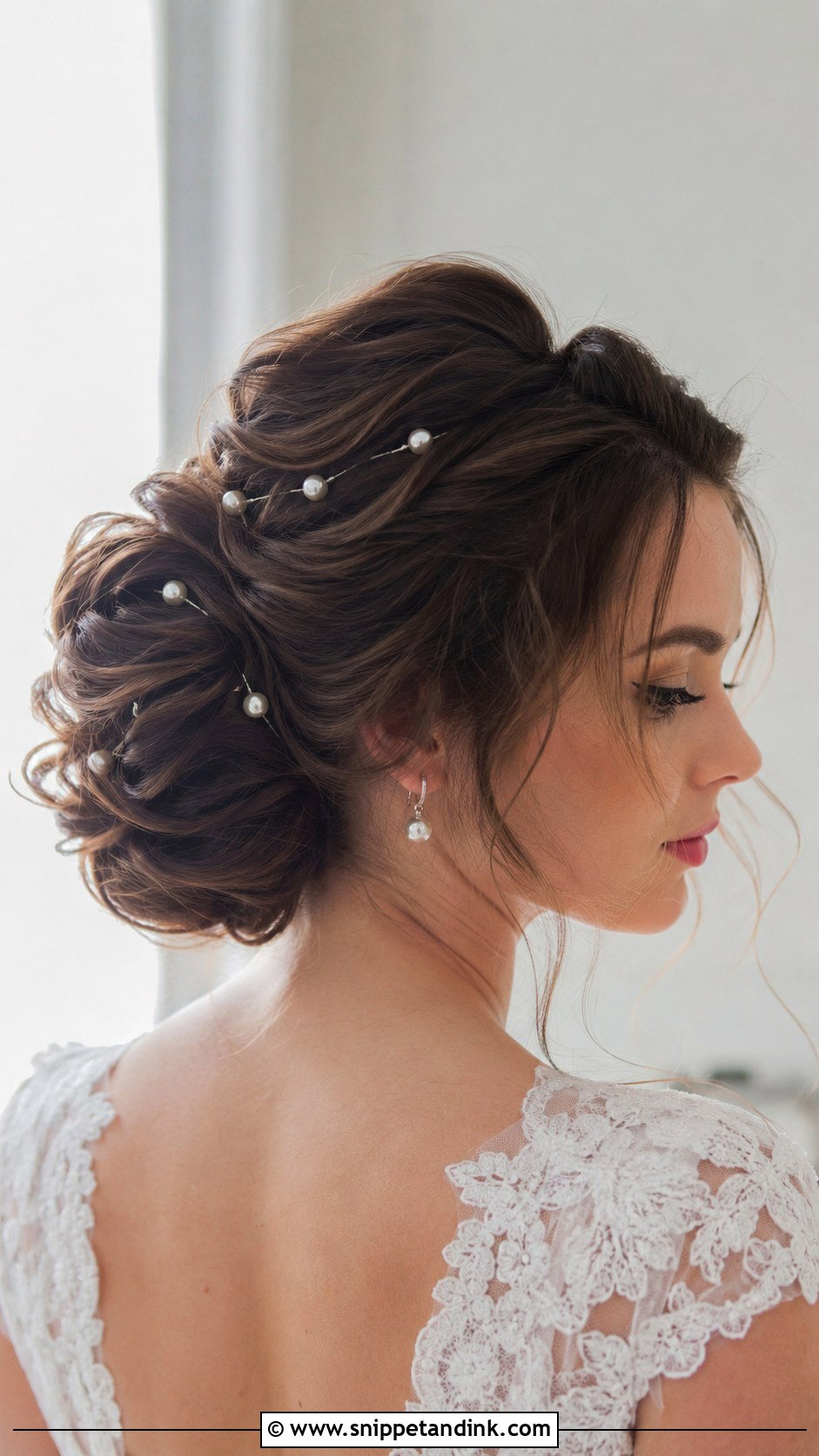
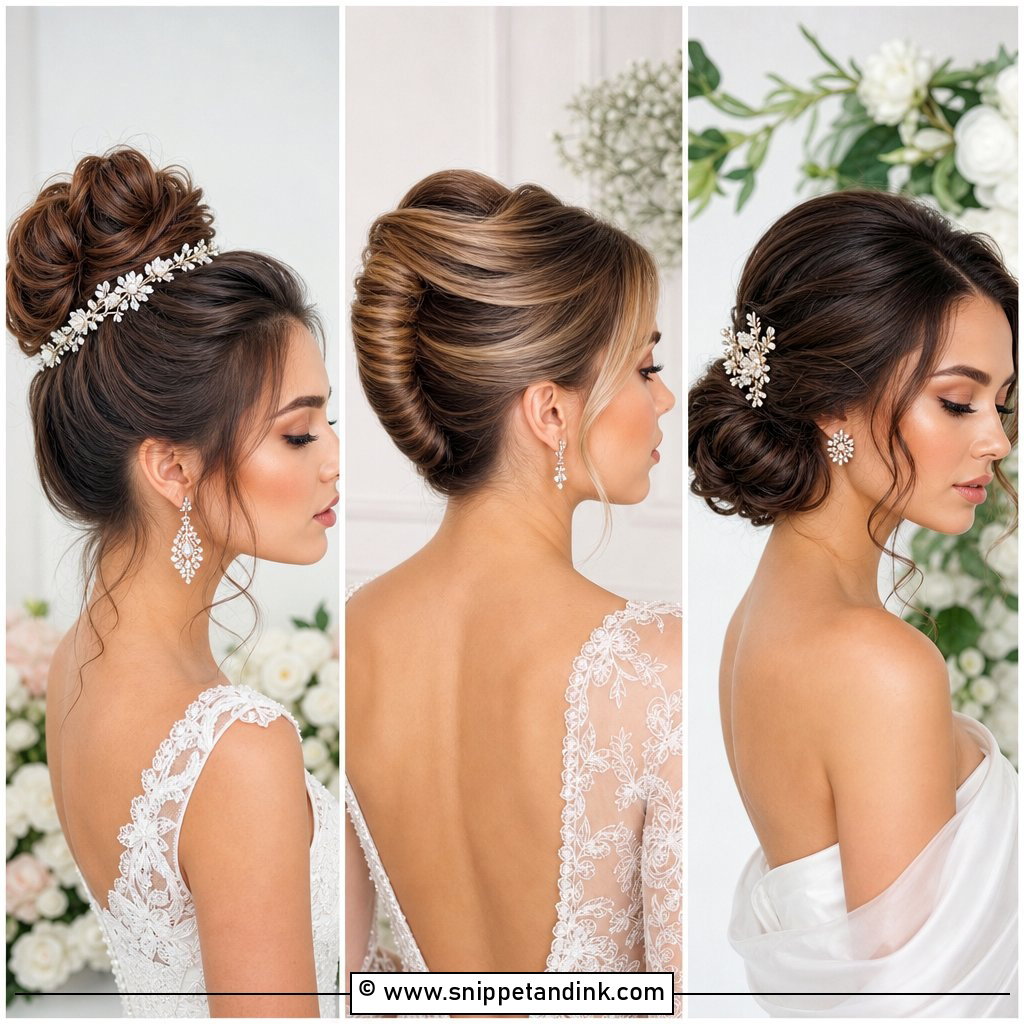
Pearl pins catch soft light without throwing glare, which is why they read so gently in close-up portraits. They suit a twisted bun, a textured chignon or a looser pinned updo. I place them off-balance on purpose, clustered more heavily on one side, because a perfectly even scatter looks printed on. Ivory pearls sit best with ivory gowns and crepe; against bright white they can look faintly yellow. Leave gaps between them so the updo still looks like hair and not a pincushion.
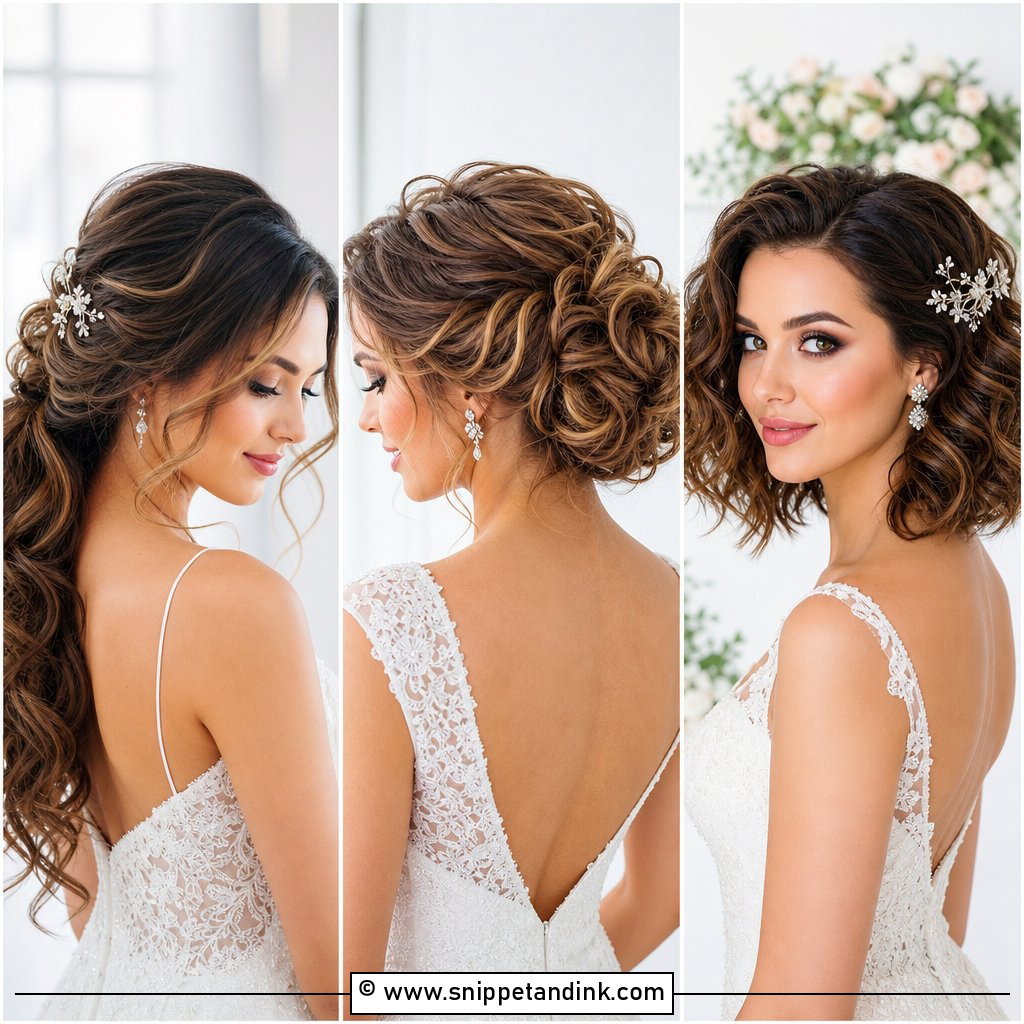
3. Bridal Hollywood Waves With Crystal Comb
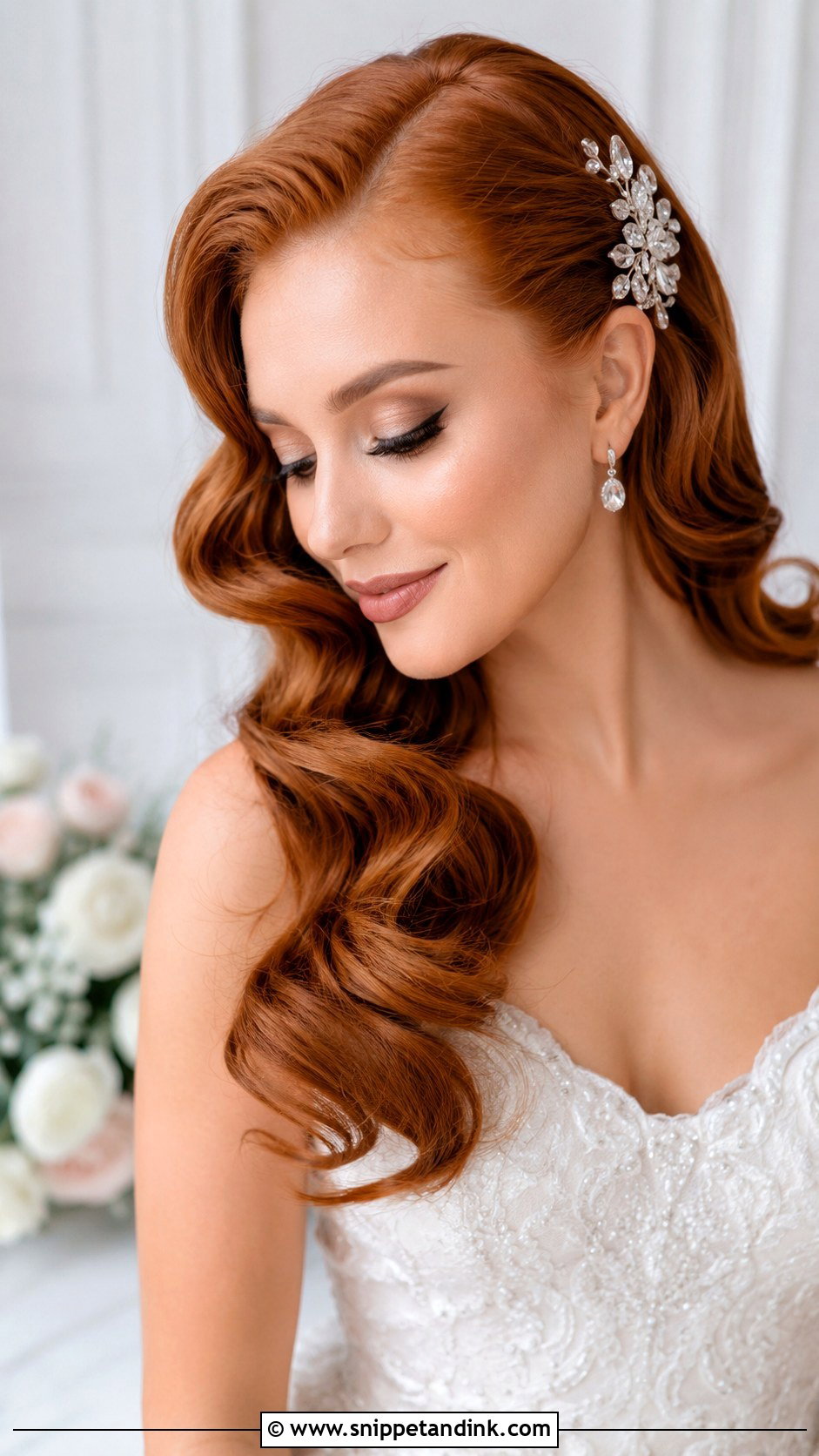
On Hollywood waves, the crystal comb goes above one ear on the side where the wave sweeps back, so it holds the wave rather than interrupting it. The waves are curled in one direction, cooled and brushed out glossy first. A comb grips best when I slide it in against the direction of the hair, flip it back and push it into a small pinned section underneath. This needs medium to long hair, and extensions help if yours sits at the shoulder. Keep the jewellery simple so the comb stays the one point of sparkle.
4. Bridal Chignon With Fresh Flowers
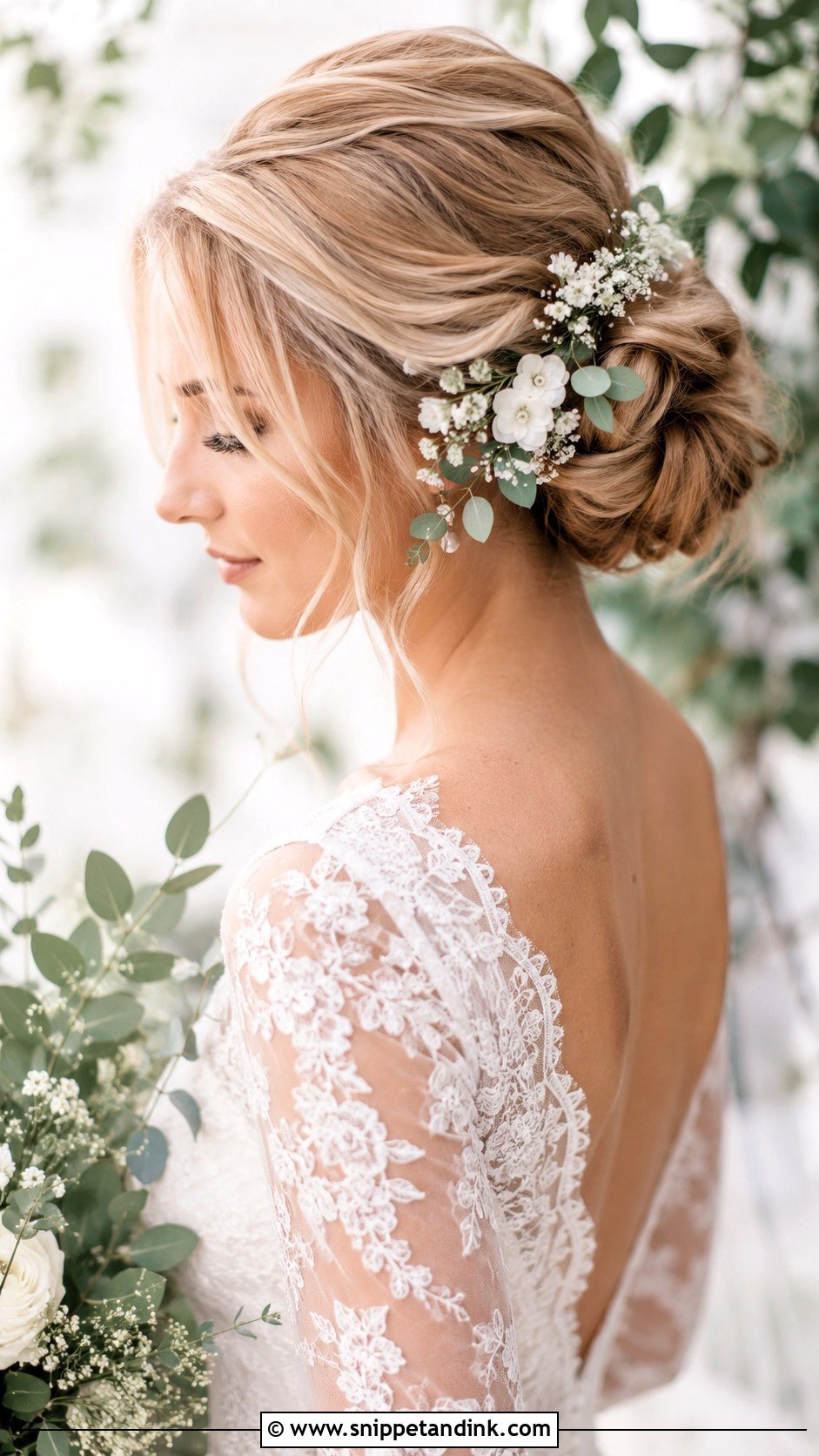
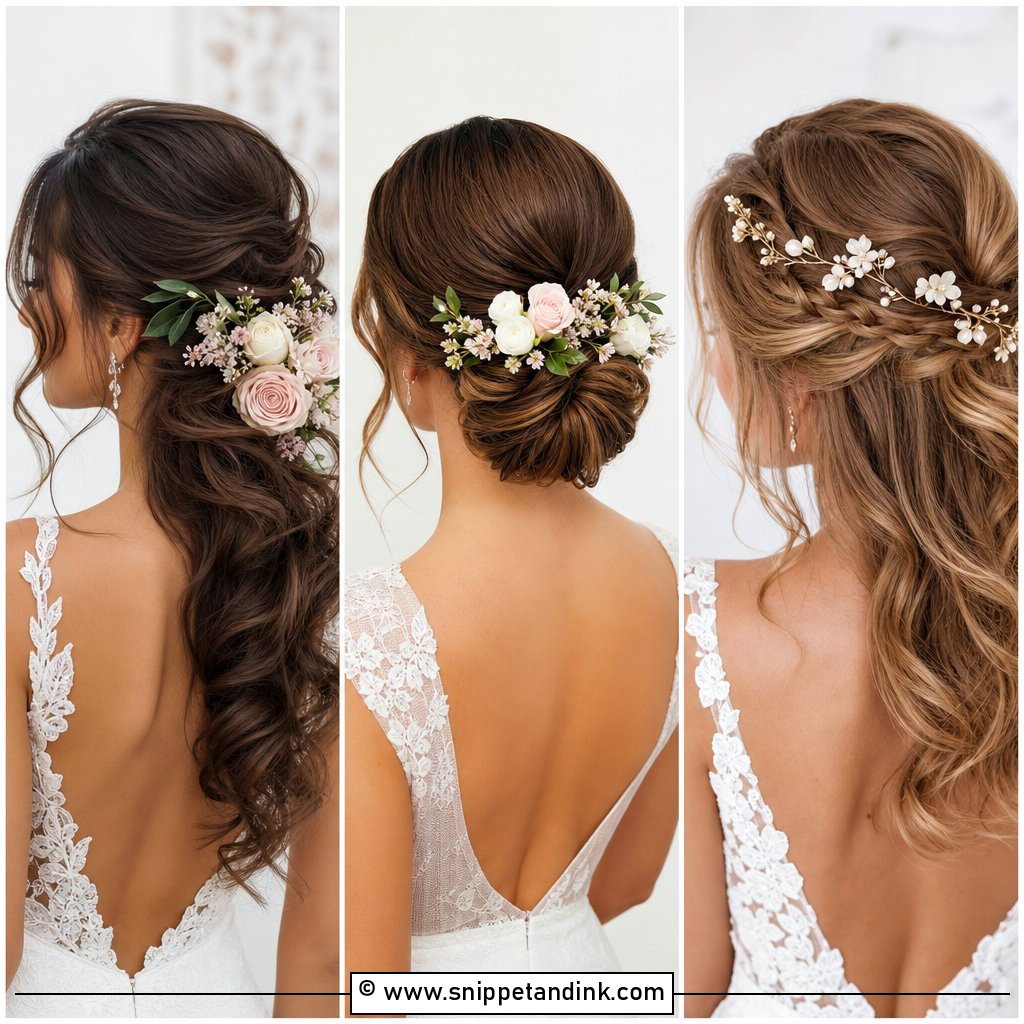
Fresh flowers in a chignon look easy in photos and take a surprising amount of coordination. I ask the florist for blooms that cope out of water, such as spray roses, baby’s breath and waxflower, with stems wired and taped short before they reach me. Soft petals like gardenias bruise as soon as they’re handled. The flowers tuck into the edge of the bun, where pins can catch the wired stems. A smooth chignon suits a formal garden; a looser twisted one suits a field or orchard. Keep two or three spare stems chilled in case one droops by the reception.
5. Bridal Half Up Hair With Tiara
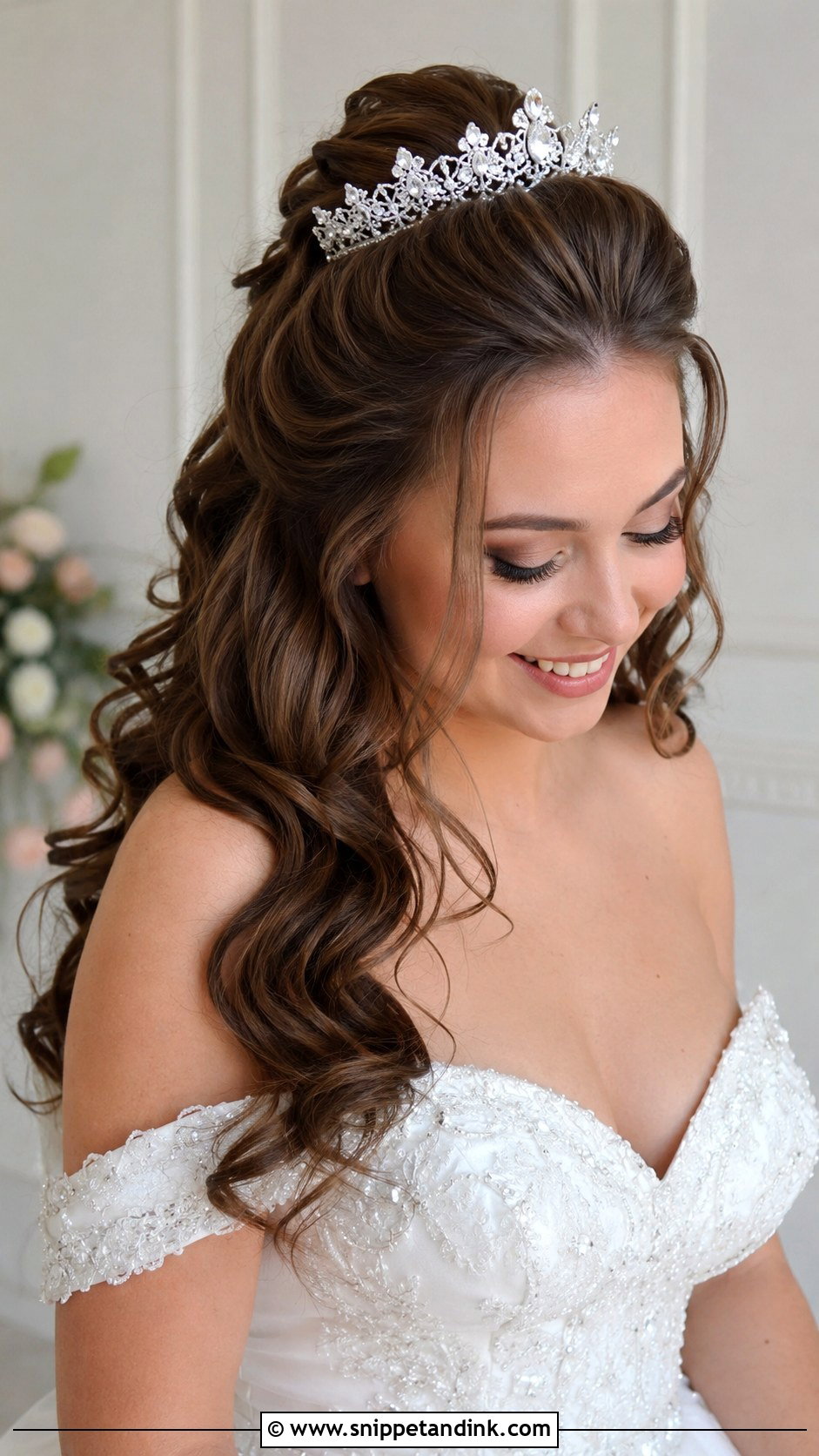
A half up hairstyle with a tiara gives the tiara the one thing it needs, a lifted section to sit against. I tease and pin the crown first, then slide the tiara’s combs into that section so it rests just behind the hairline instead of perched forward like a headband. Loose curls or brushed waves below keep it from looking stiff. A tiara that pinches behind the ears will hurt within a couple of hours, so wear it for a full evening at home before the day. Ball gowns and formal venues are its natural setting.
6. Bridal Braid With Hair Vine
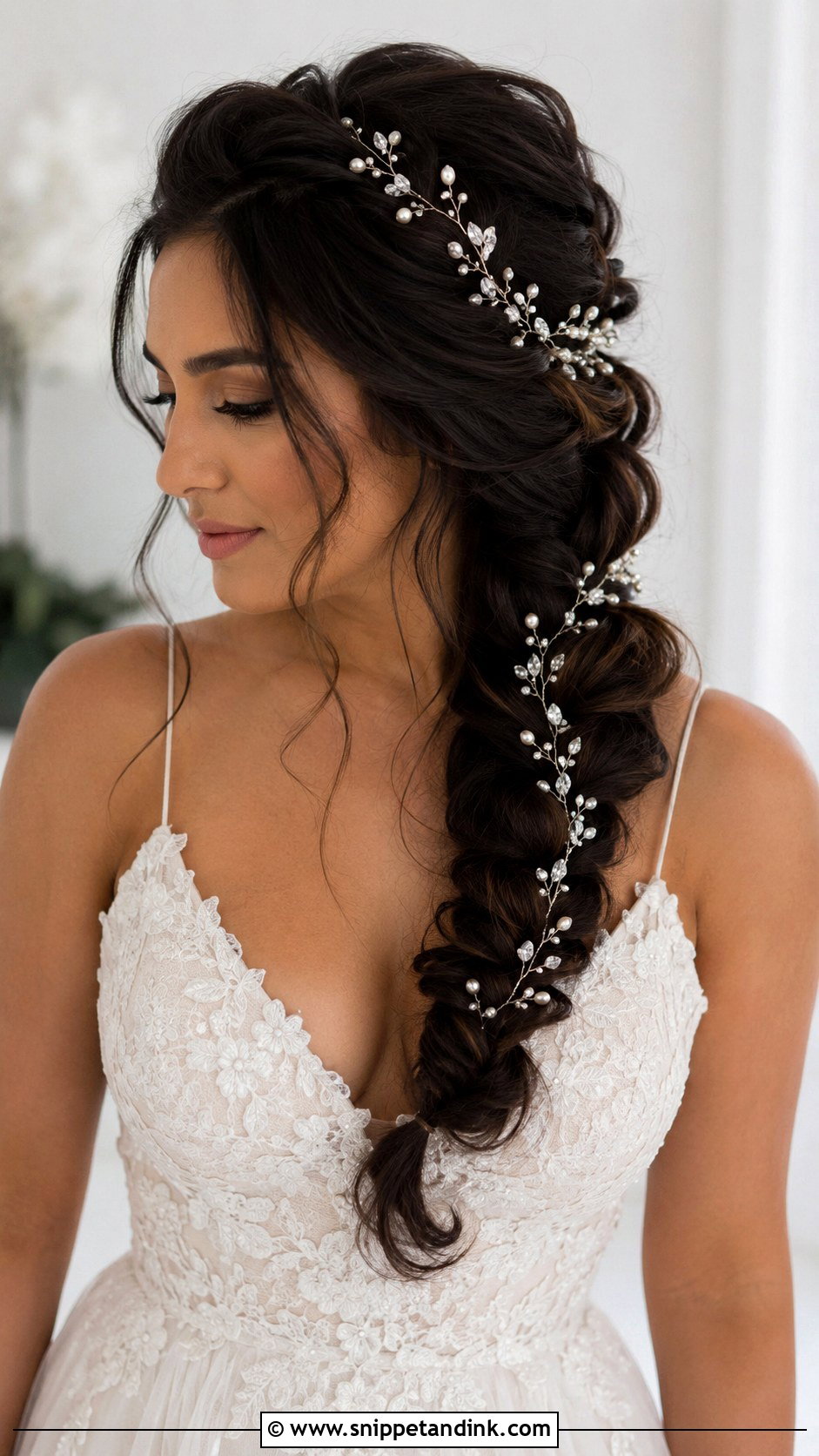
Braids grip wire better than any other base, so a vine woven through a braid is one of the most secure accessories here. A loose fishtail, a side braid or a low braided updo all work, and I thread the vine in while pancaking the braid. That grip is also why I suggest it for outdoor weddings, where wind tugs loose curls apart. A vine can sit beside a veil comb without fighting it. Match its beads or leaves to the dress embroidery rather than to your jewellery, and keep the braid full.
7. Bridal Ponytail With Bow
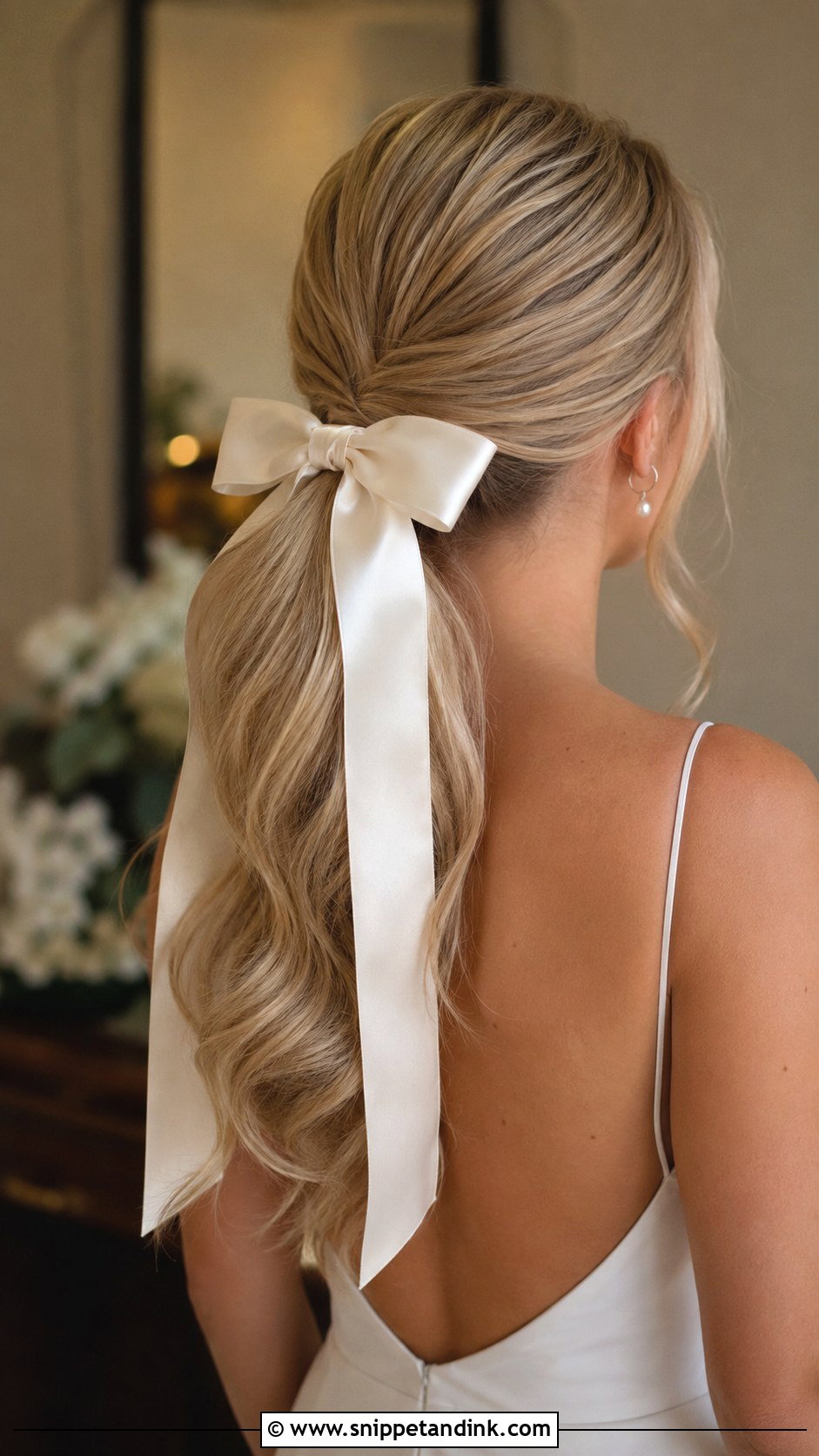
The bow is the easy part. The ponytail underneath has to be secure, because a bow tied round a bare elastic slips down within the hour. I fix the bow to a separate clip, or pin it through the knot from underneath. Satin holds its shape; organza is lighter but crushes if you lean back in a chair. Height changes the mood: high and sleek reads modern, low and wavy reads softer. Build some volume through the lengths, since the back is how most guests see it.
8. Bridal Bob With Birdcage Veil
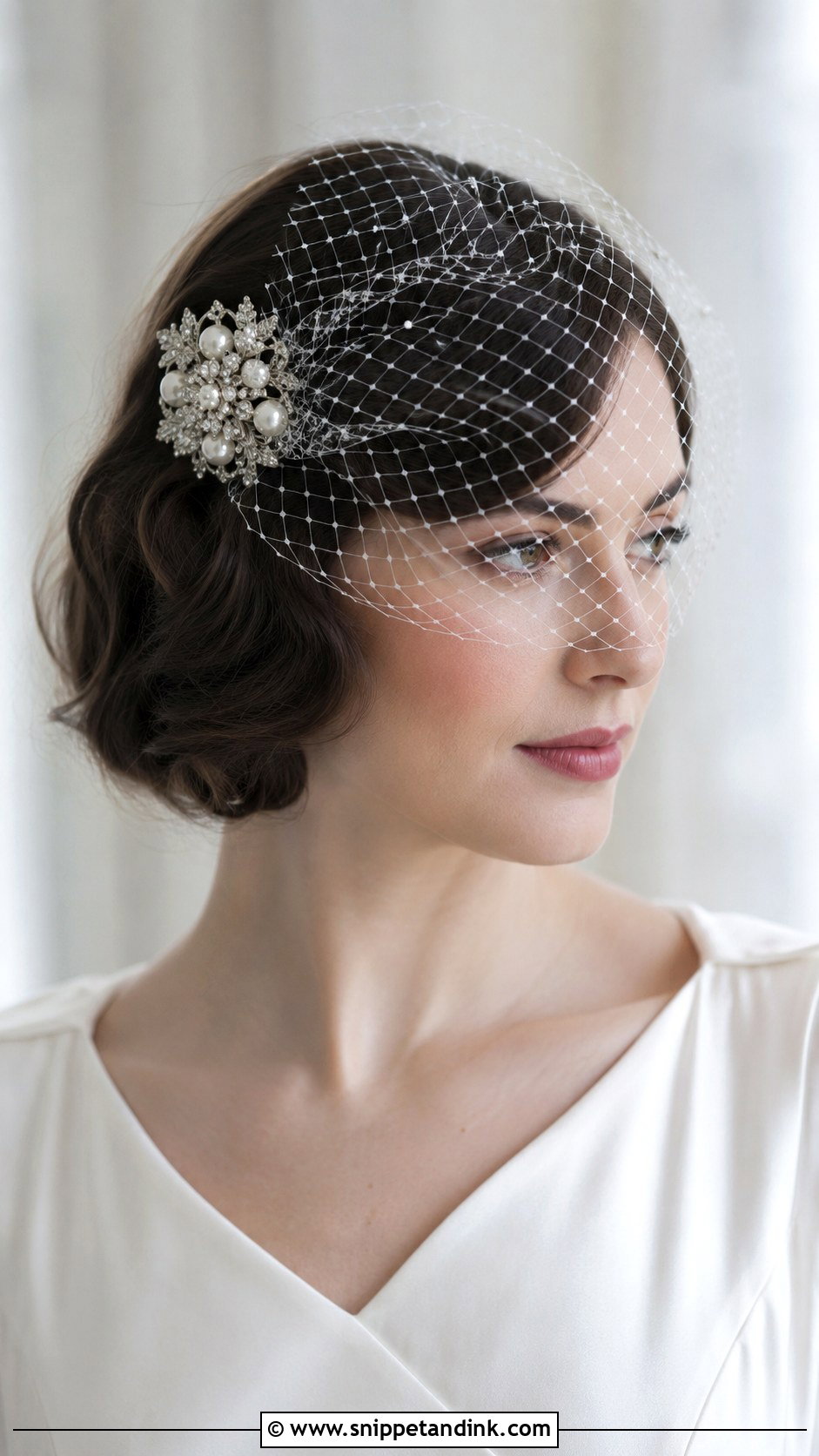
A birdcage veil is made for short hair, because it doesn’t need length to anchor. It usually sits to one side, attached with a comb, clip or small fascinator base, with the net falling from the brow down. I shape the bob smooth or softly waved and set a firm cross of pins exactly where the comb will go. Because the net sits over your eyes, lashes and brows matter more than usual. It suits tea-length dresses, tailored suits and courthouse ceremonies.
9. Bridal Sleek Bun With Headband
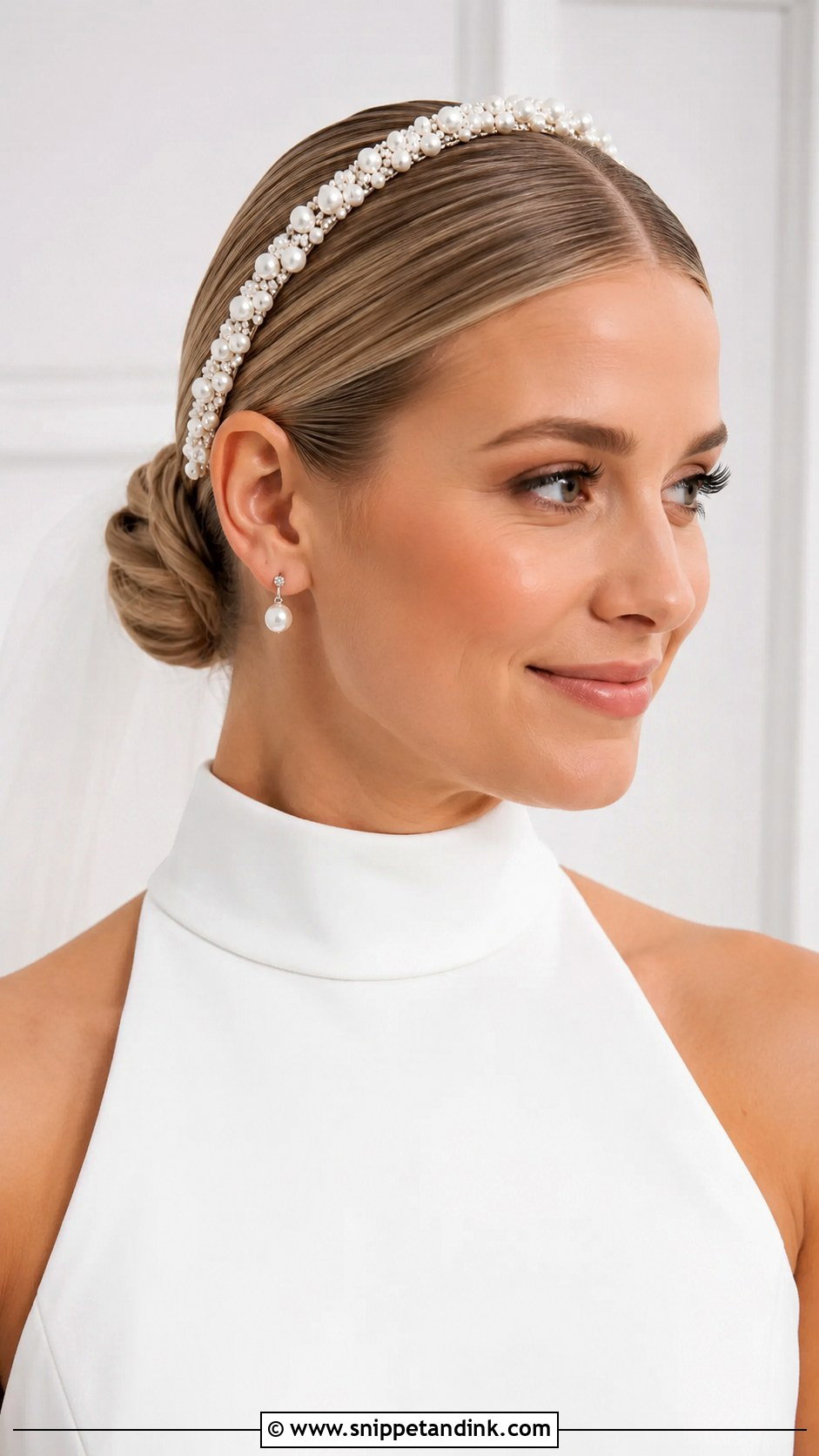
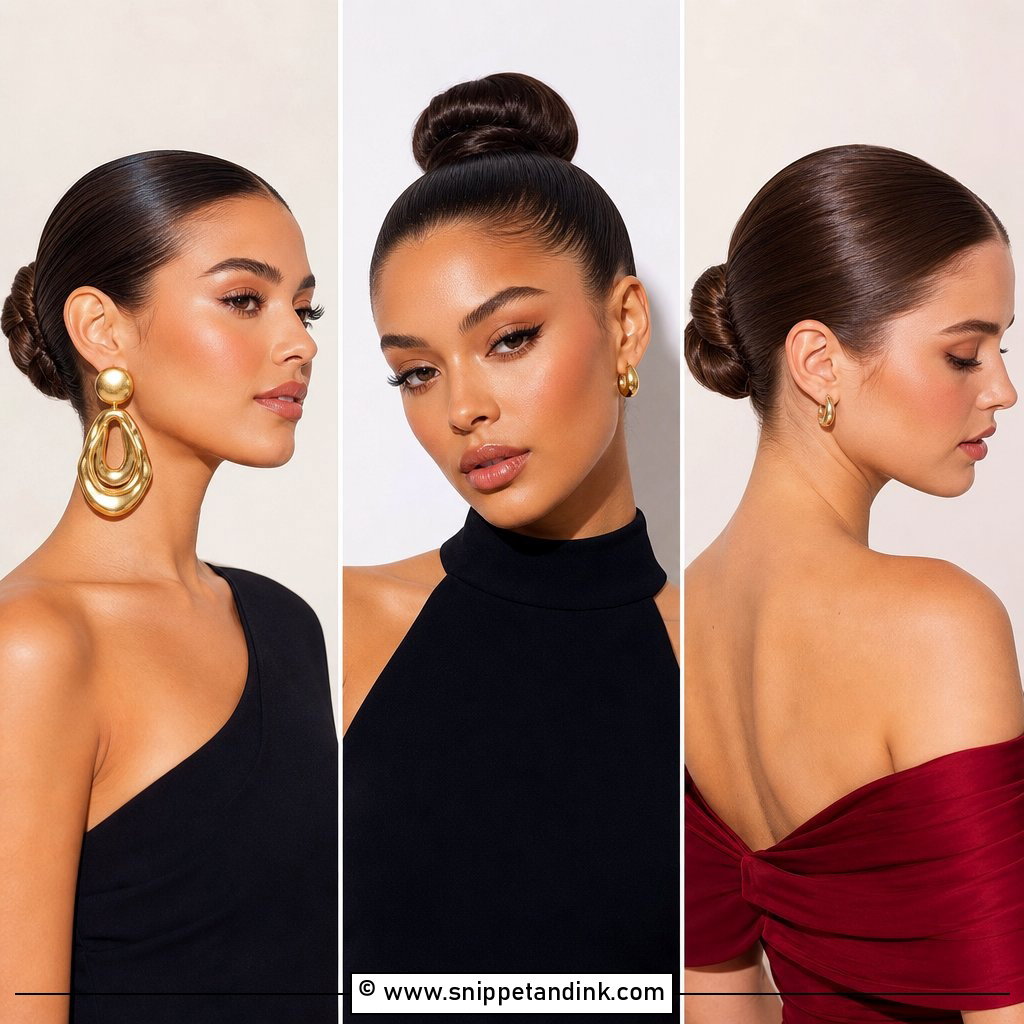
Nothing moves in a sleek bun with a headband, and that’s exactly why I like it for a long day. The hair goes back smooth into a neat bun, and the band sits in front of it, adding structure and a line of shine. Pearl, crystal, satin and thin metal bands all suit it. Go easy with shine product, which looks wet under flash. The real test is comfort: a stiff band behind the ears can bring on a headache within hours, so wear it for an afternoon before committing.
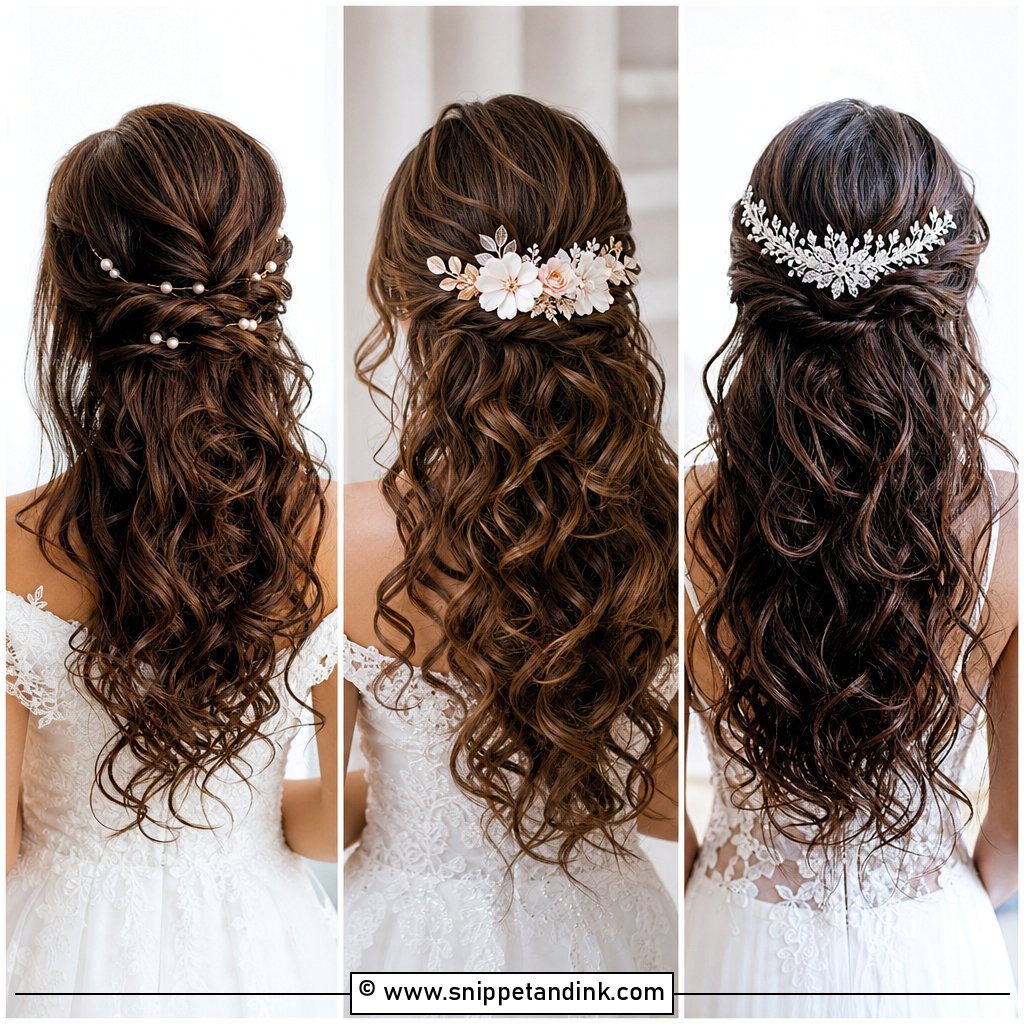
10. Bridal Loose Waves With Pearl Barrette
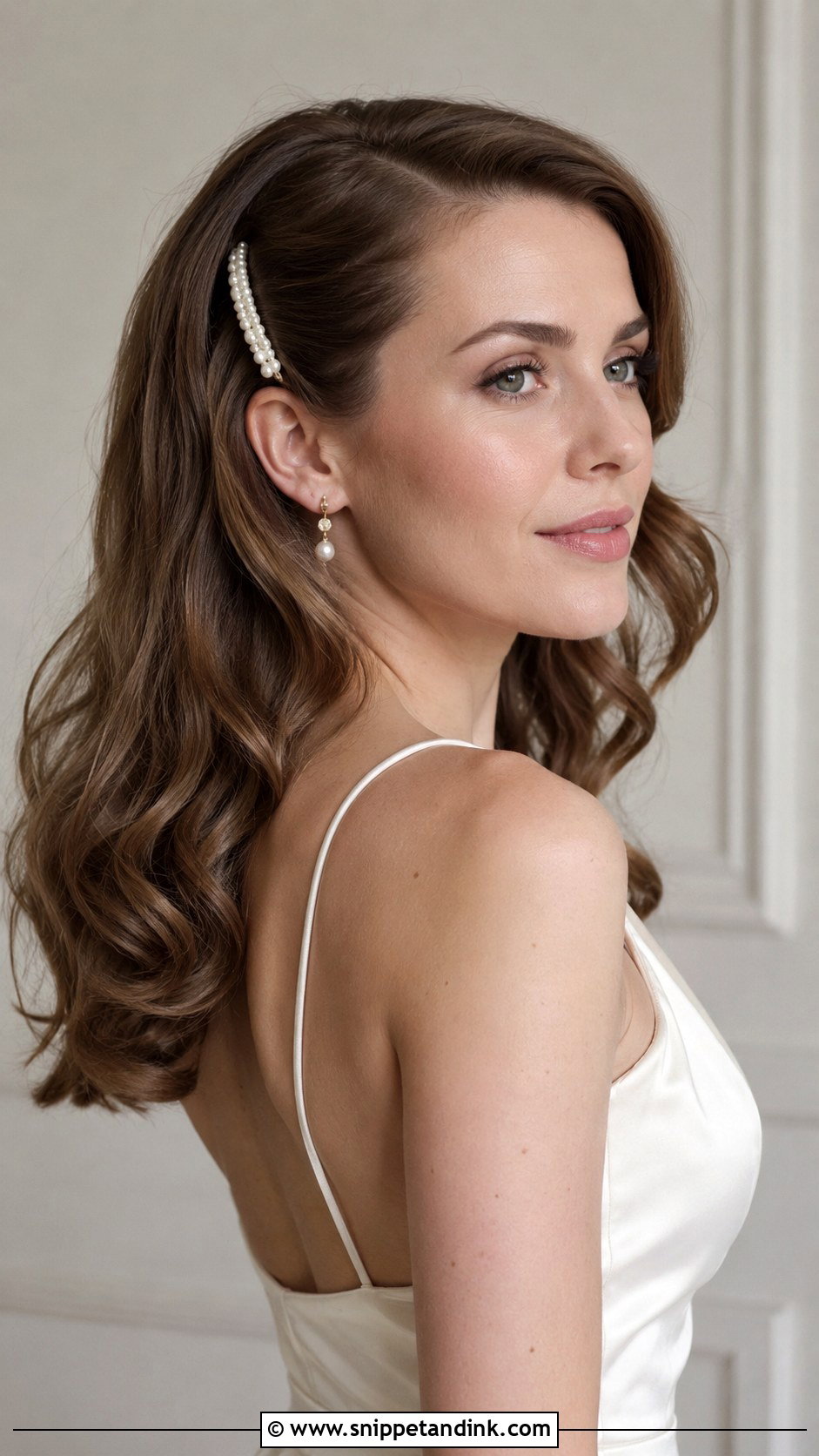
A pearl barrette on loose waves does a quiet job, holding one side back so hair doesn’t fall into your face during the vows. I clip it above the ear over a small pinned twist, because barrettes slide on freshly curled hair without something to bite into. Large pearls show from the back row; tiny ones only show up close. A slip dress, lace or a beach ceremony all suit it. Keep the waves light on product so they still move.
11. Bridal Braided Crown With Flowers
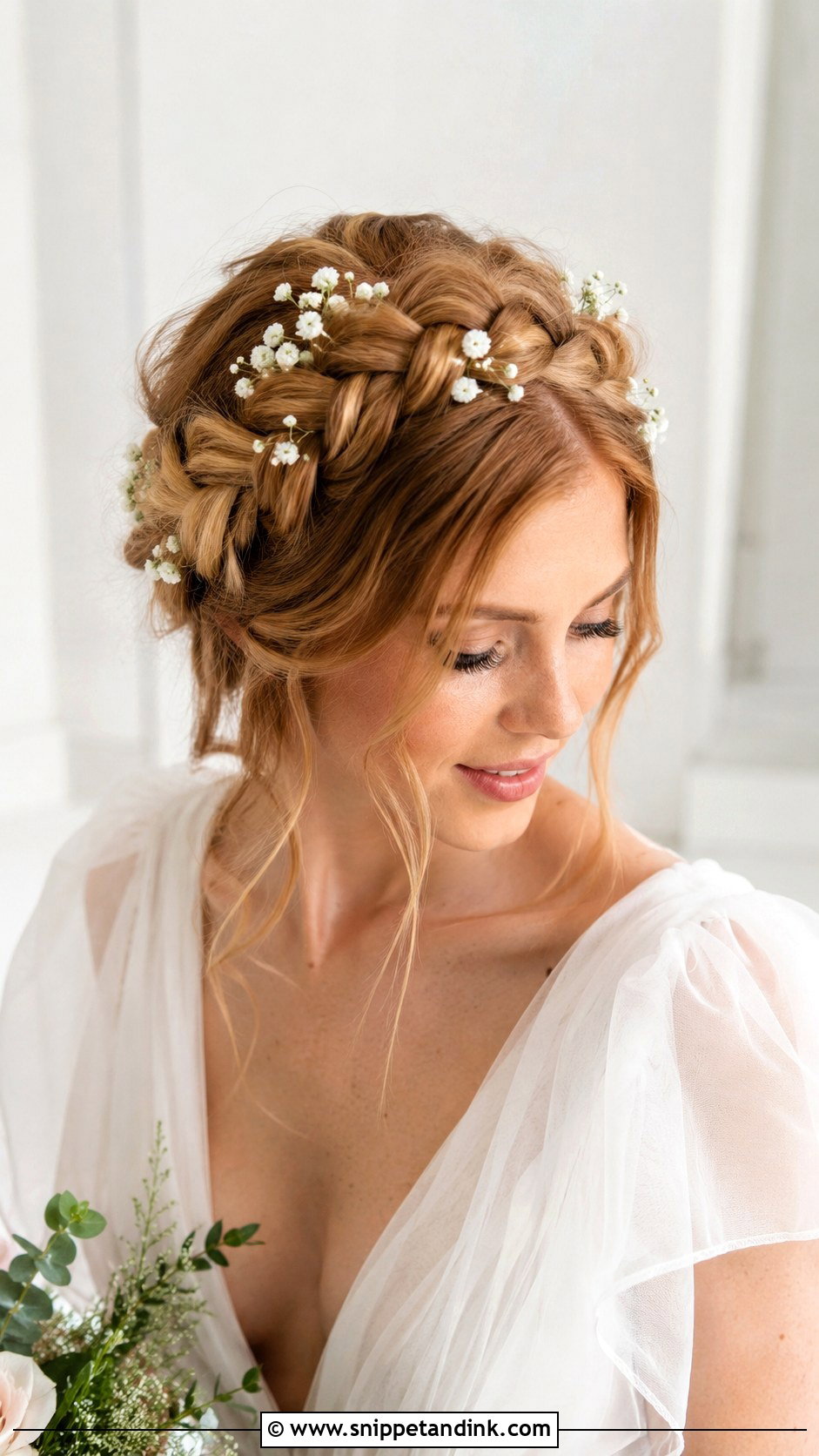
Braided crowns are practical as much as pretty: the braid becomes the anchor, so flowers pin into it with no extra support. I wrap the braid around the head or across the top, pull it gently apart for fullness, then tuck each wired stem into its loops. Medium to long hair works best, and a clip-in weft helps on fine hair. On a hot day I’d pick silk flowers or hardy fresh ones like waxflower over anything with soft petals. Keep the front pieces loose so the crown doesn’t look tight.
12. Bridal Twisted Updo With Gold Pins
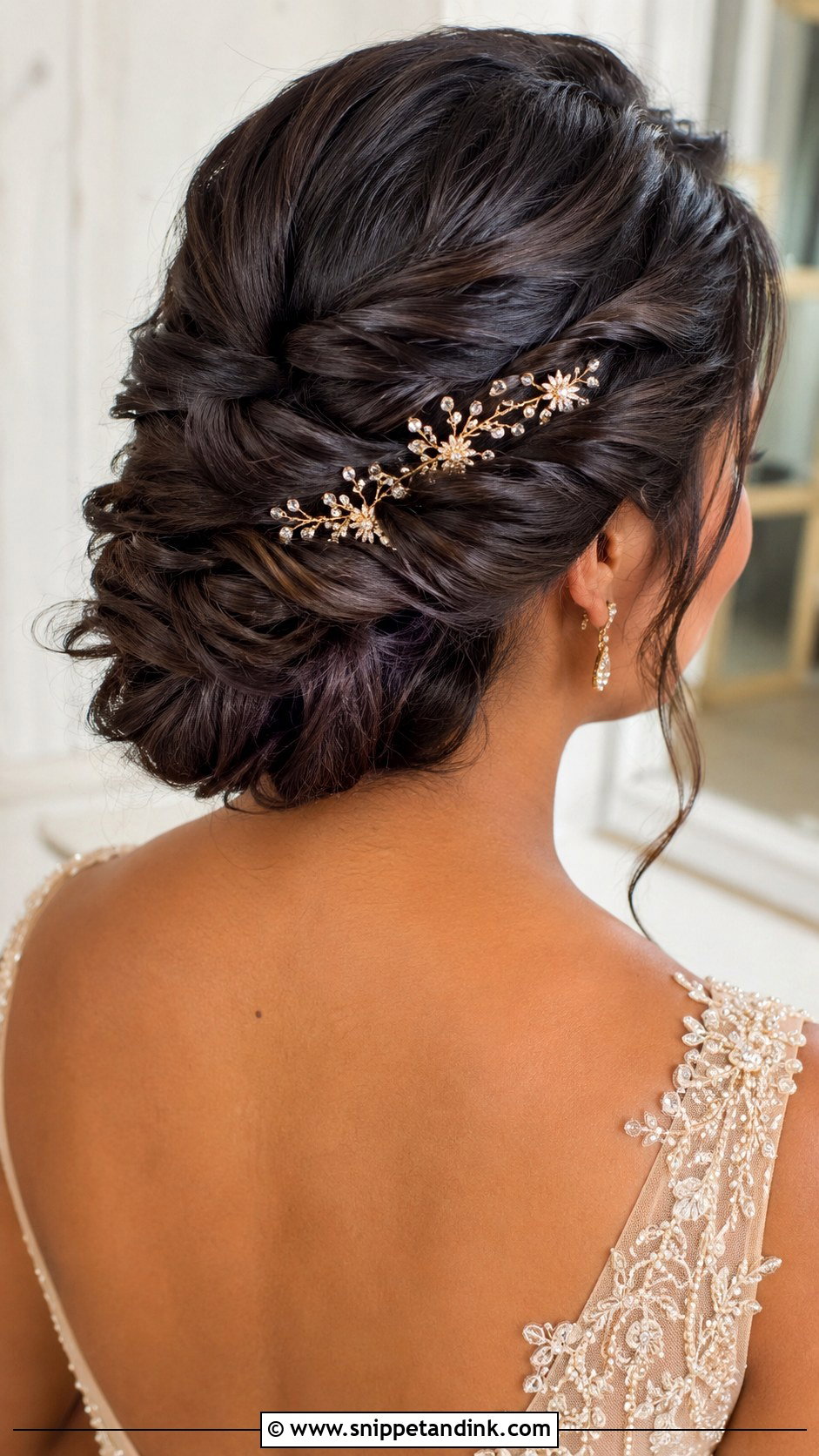
Gold pins warm the whole look and sit naturally with champagne, ivory and warm-white gowns. The updo is built from overlapping twists in a low or mid-height shape, and I place the pins along the edge of each twist so they read as part of the structure. On ash blonde or grey hair, gold can look stronger than you’d expect, so check it in daylight at your trial. Warm-toned makeup and gold jewellery tie it together. The twists should feel soft on top with a firm base beneath.
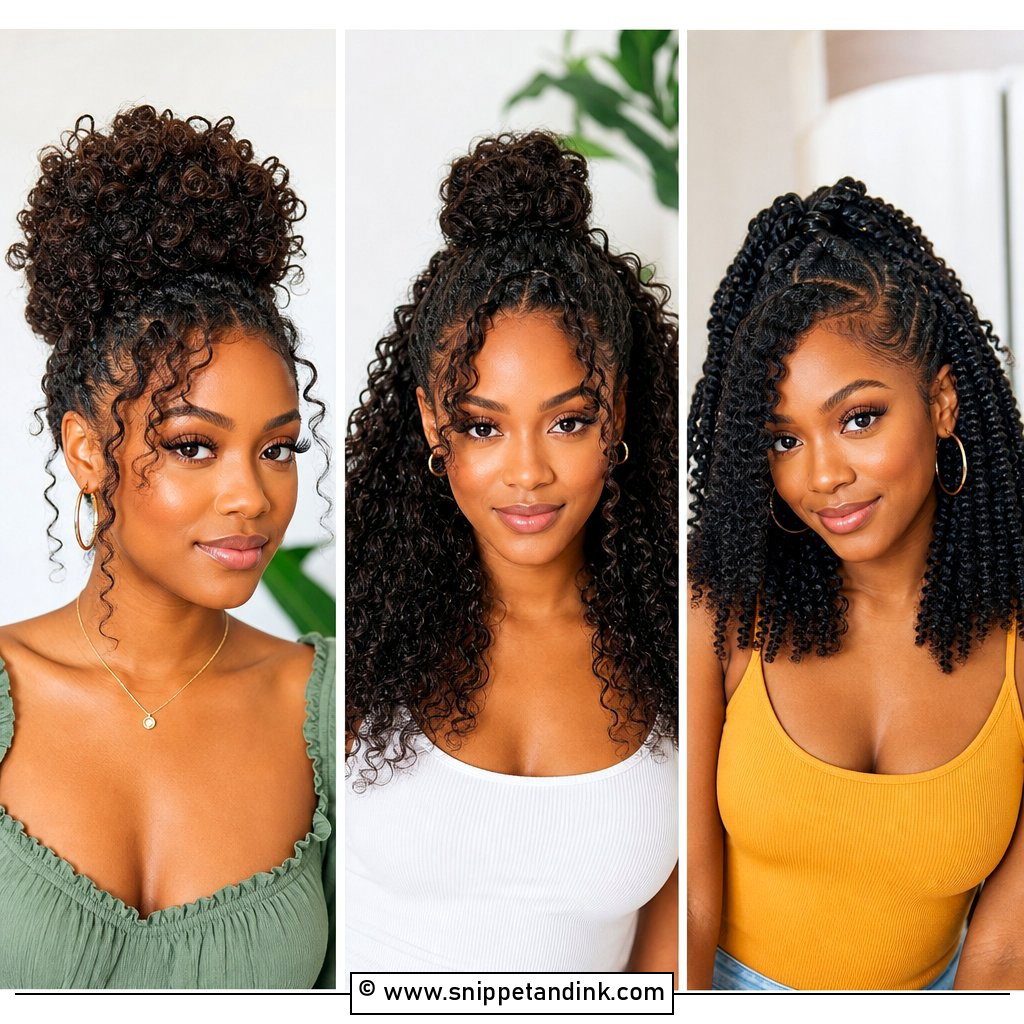
13. Bridal Curly Updo With Crystal Pins
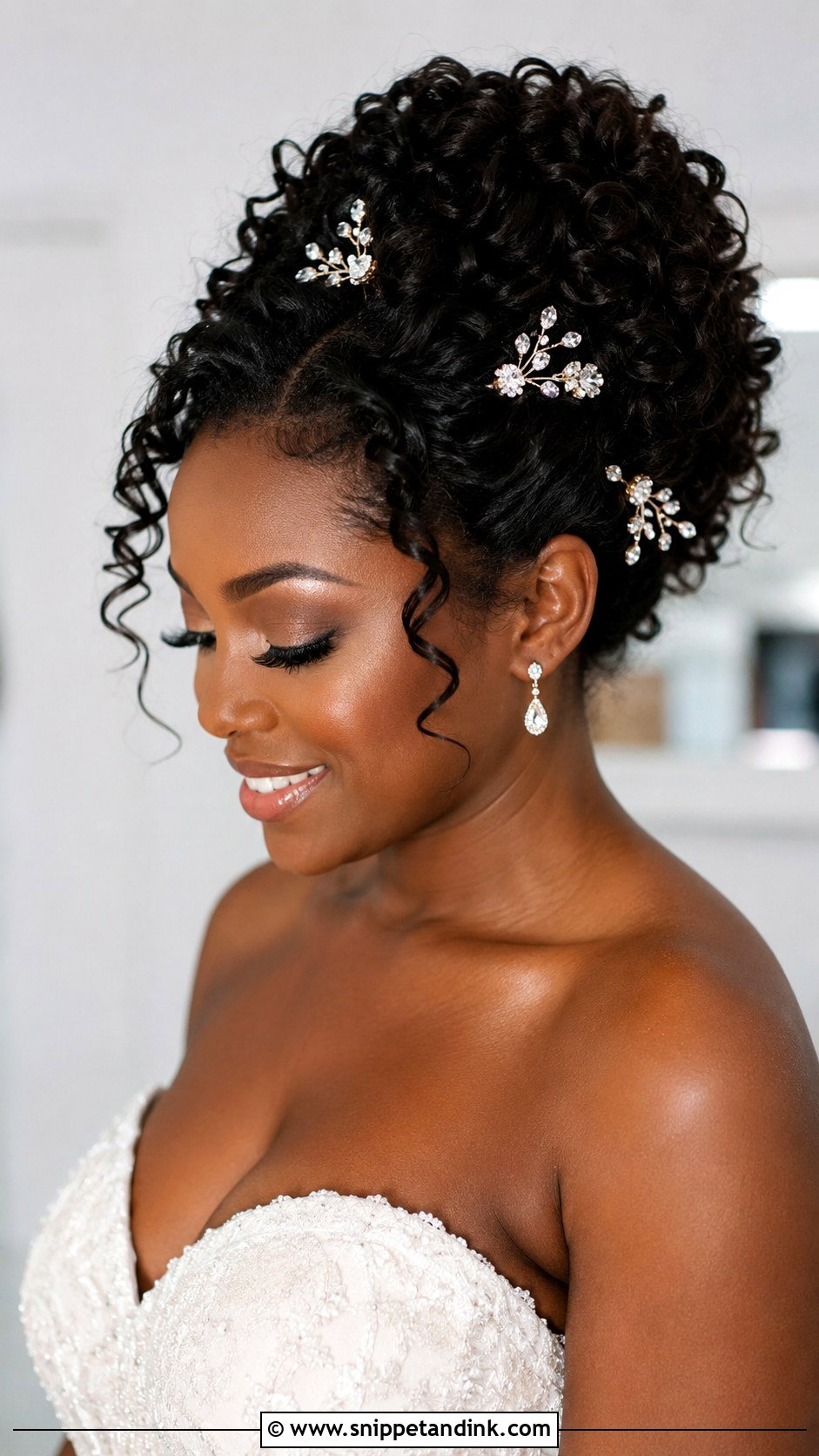
Curls deserve to stay curls, so I never brush them out for an updo. I prep with the bride’s usual leave-in or gel, let the hair dry fully, then gather it into a crown or rounded bun and pin into the coils, which hold pins far better than straight hair does. Crystal pins go near the front and sides, where light reaches them. Bring the exact curl products you use at home to your trial; an unfamiliar product can change how your pattern behaves. The finished shape should feel secure but still springy to the touch.
14. Bridal Side Swept Hair With Comb
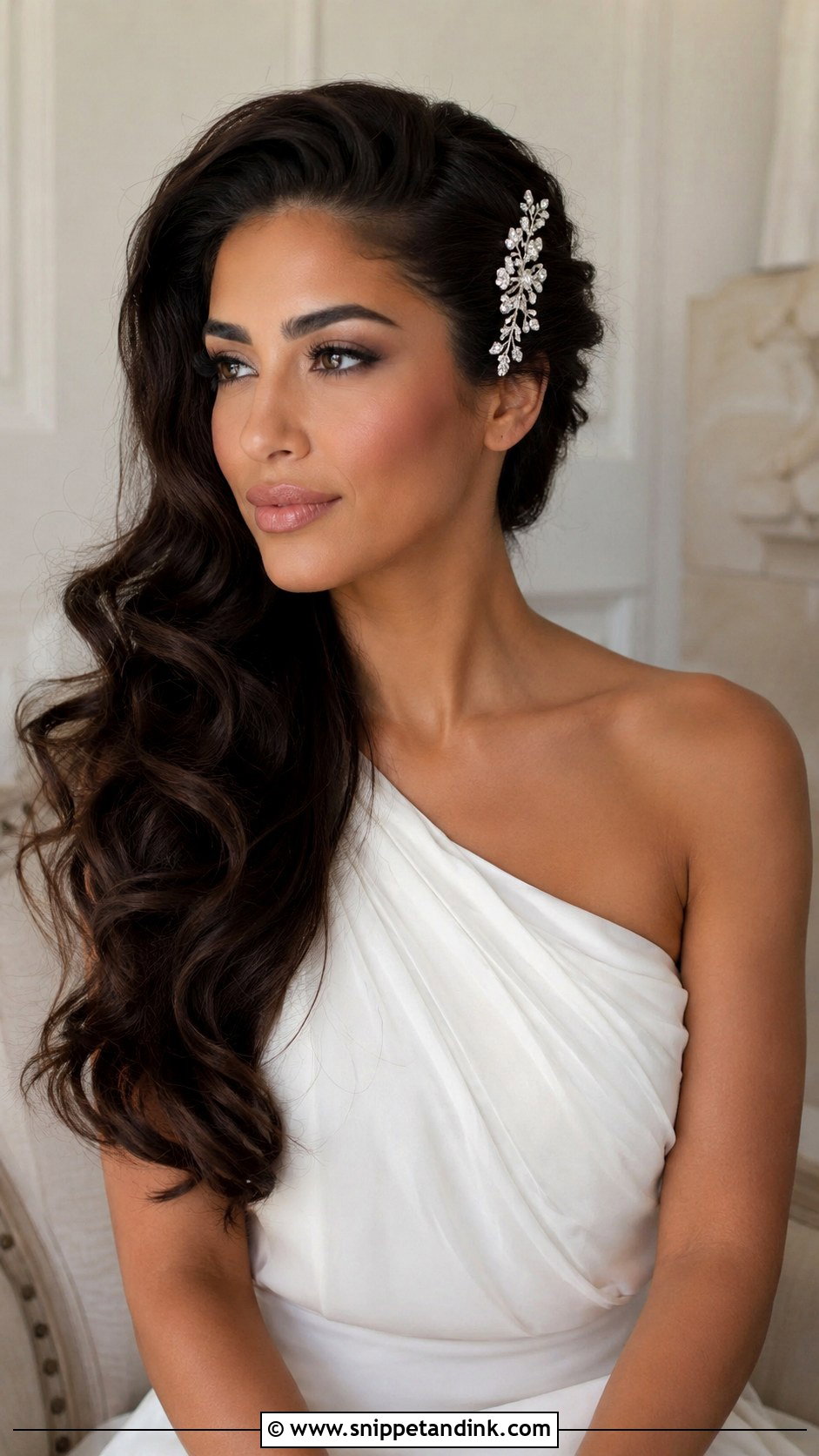
Here the comb does real work. Set on the opposite side to the sweep, it holds the hair back over the ear and keeps the shape from sliding to centre. On thick hair a decorative comb can’t do that alone, so I hide crossed pins under the top layer and set the comb into them. The sweep keeps your hair visible from the front, which suits one-shoulder gowns, open backs and detailed bodices. Curl or wave the hair first, since straight hair simply slips.
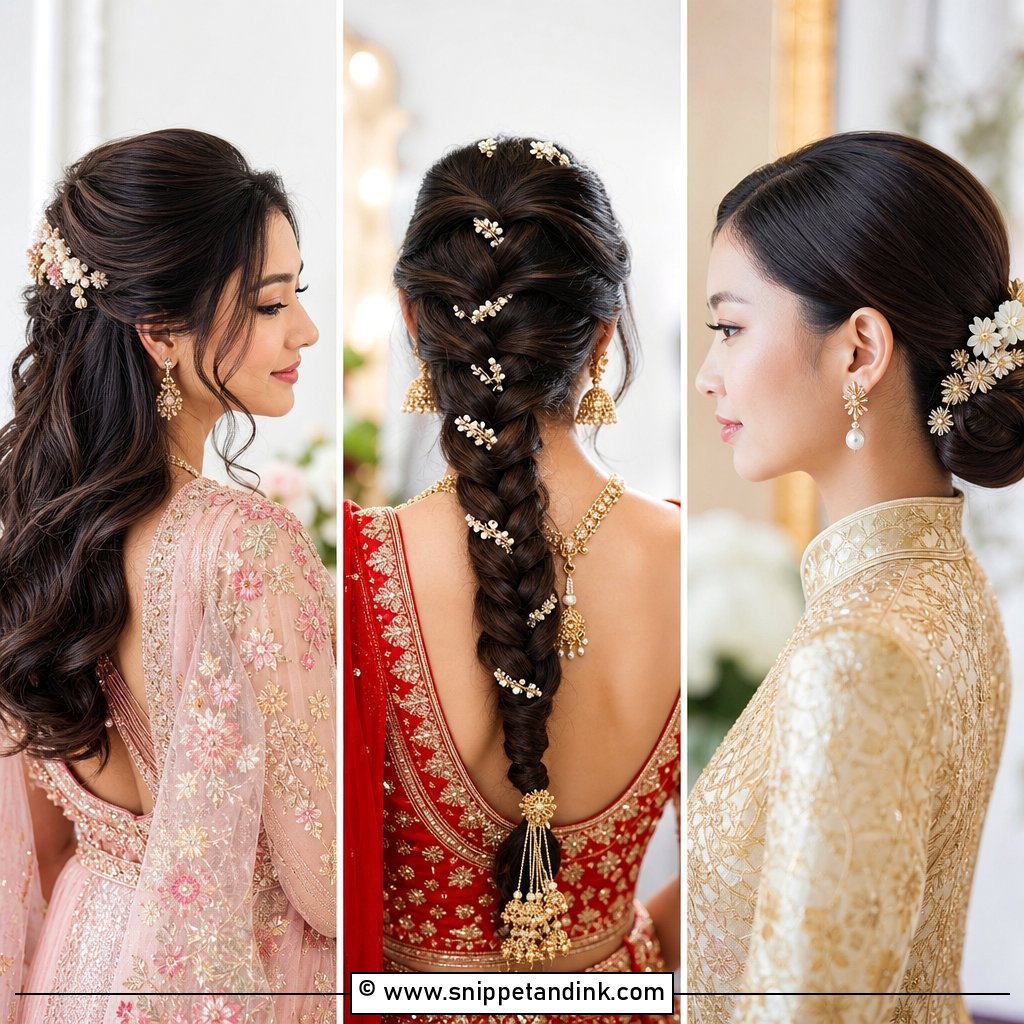
15. Bridal Messy Bun With Pearl Headpiece
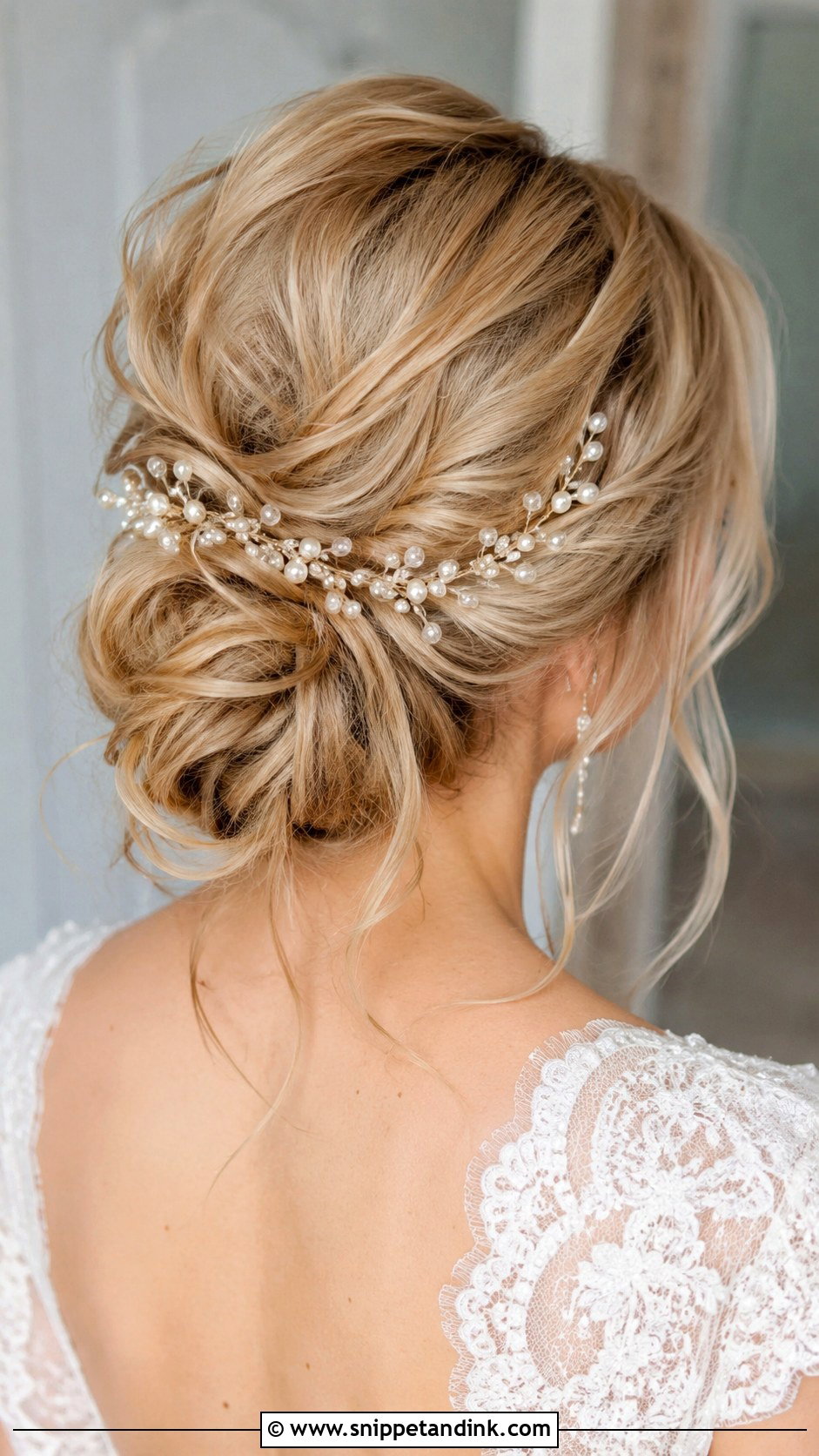
A messy bun with a pearl headpiece lets you keep things relaxed without looking unfinished. The trick is controlled texture: I build the bun with strong pins underneath, then loosen only the pieces that should look undone. The headpiece wraps round the bun, sits above it or curves along one side, and it always pins into the solid base, never the loose strands. Pieces left out at the face and nape keep it airy. Lace gowns, garden venues and a soft veil all sit well with it.
16. Bridal Fishtail Braid With Pearls
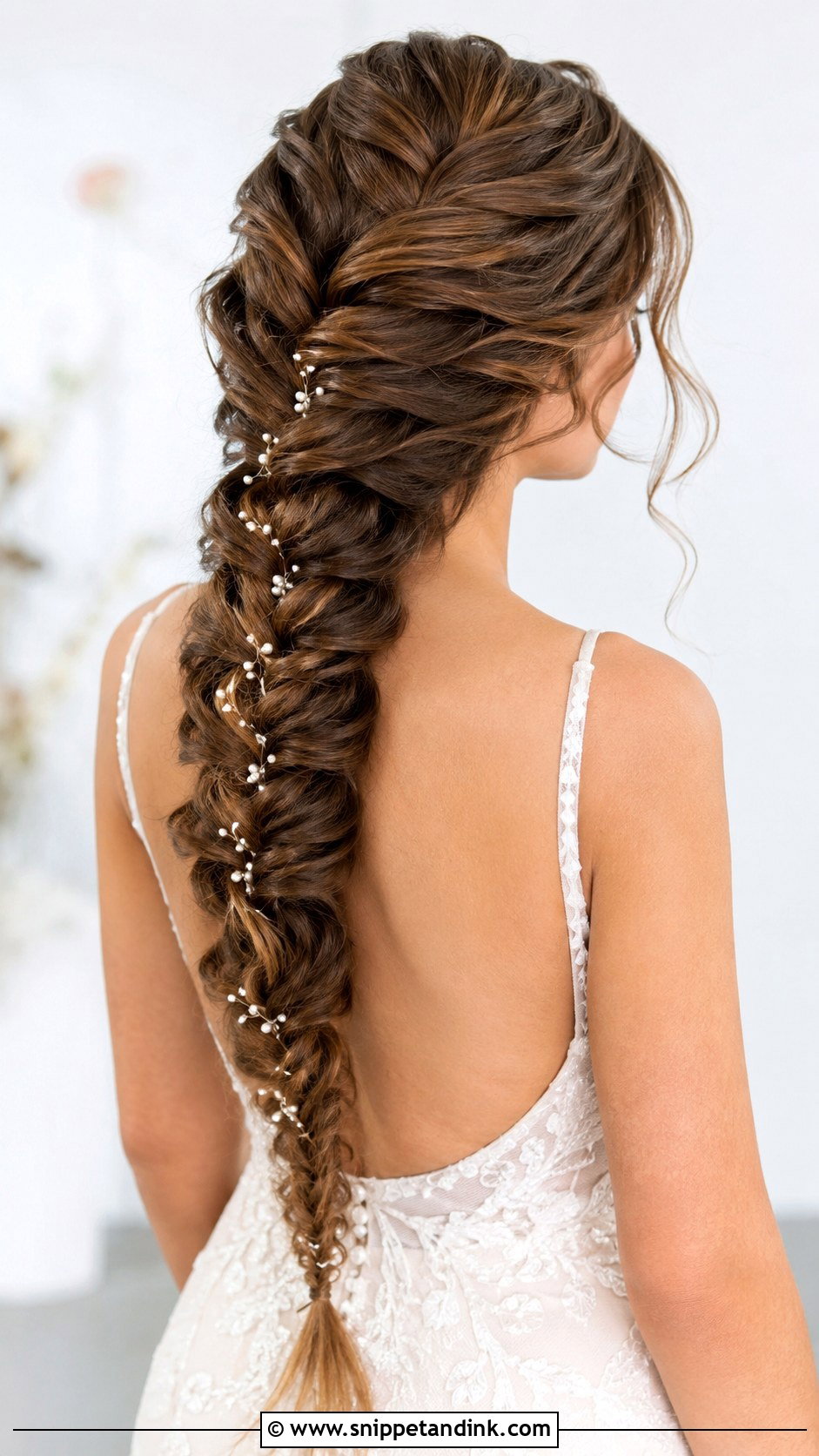
Fishtails show off the back of the hair, so they’re worth choosing if your gown has a low back too. The woven pattern already looks detailed, and pearls tucked into its outer loops add light without changing the shape. Highlighted or dimensional colour looks especially good here, because every crossover shows a slightly different tone. I widen the braid gently once it’s finished and keep the crown lifted so it reads as bridal, not weekend. Pearls can go in as pins, a vine or small clip-on beads.
17. Bridal Short Hair With Crystal Headband
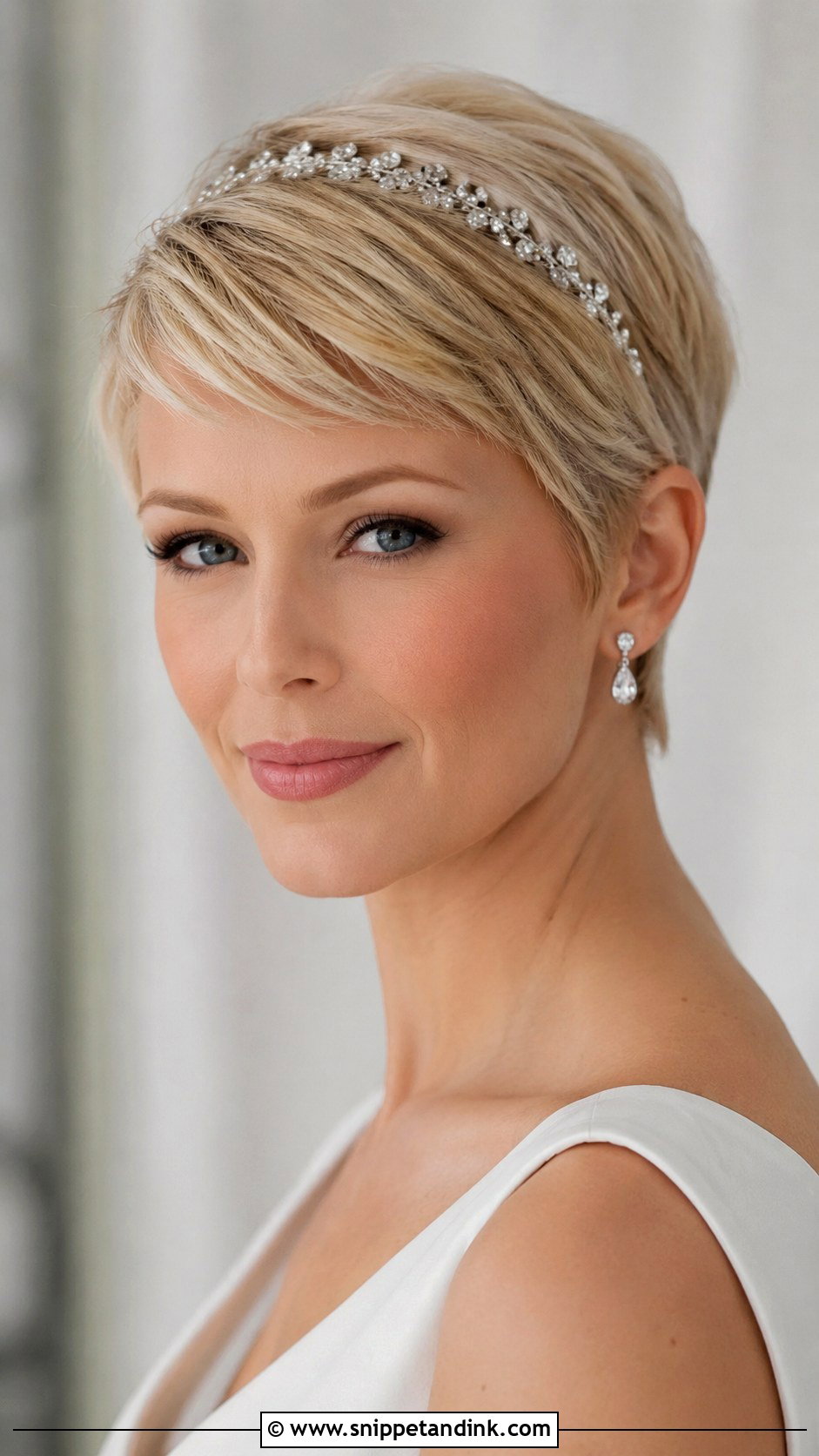
Short hair can’t hide heavy pins or extensions, which makes a headband such a good match for a pixie, cropped bob or short layers. The band does the decorating, and the cut stays on show. I shape the hair with a little texture or bend first, so the band has something to rest against. A thin crystal band reads delicate; a wider embellished one is bolder. Check that the ends don’t press behind your ears, and keep earrings small so the two don’t compete.
18. Bridal Bun With Hair Chain
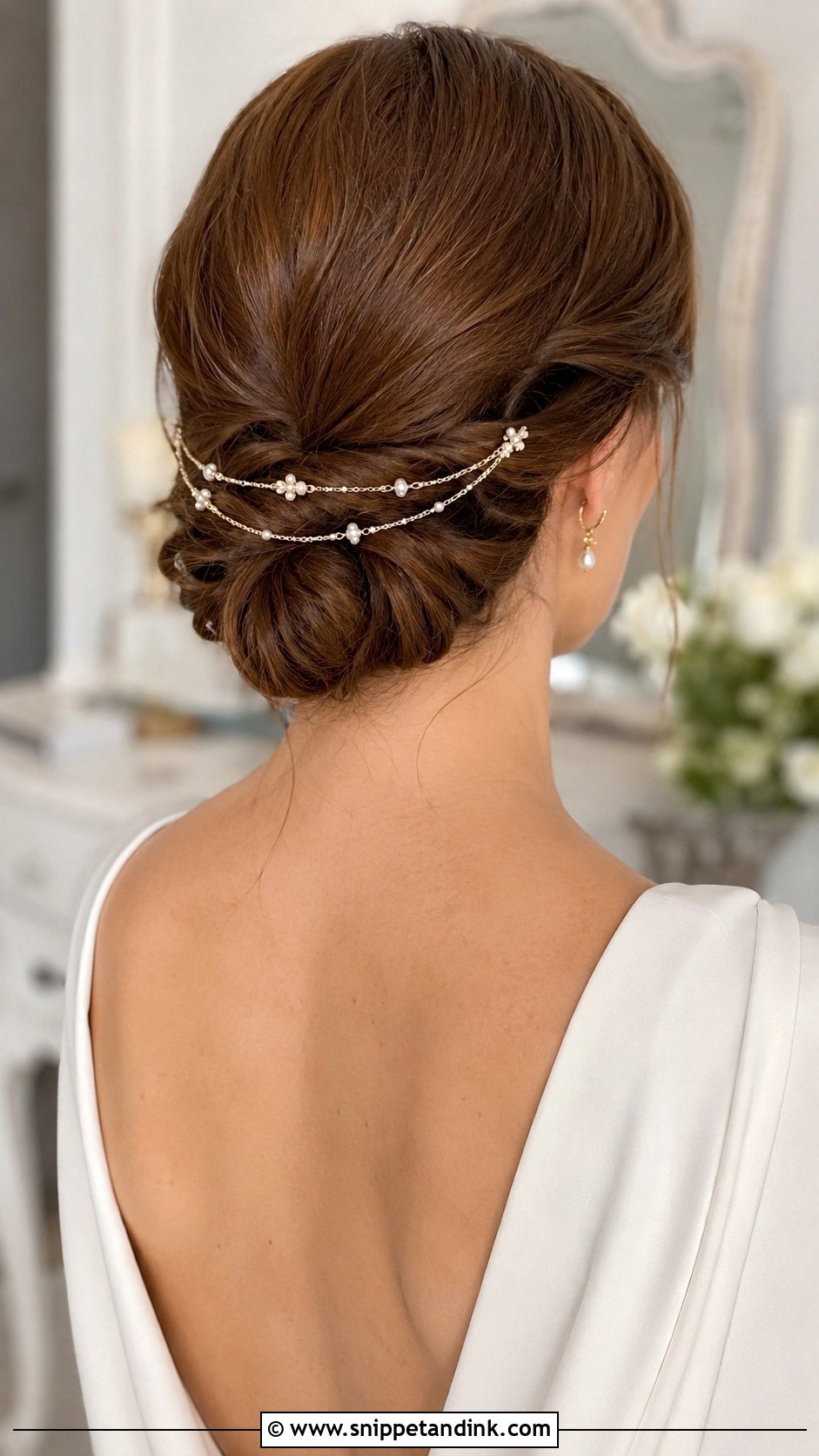
A hair chain over a bun adds movement without a veil’s weight, and it comes into its own in back-view photos. The chain drapes over a low bun, curves across the back of the head or links two small side combs. A chain pulled tight across a bun drags it out of shape, so I let it follow the curve with a little slack. Fine chains with pearls or small crystals suit a sleek or twisted bun. Fasten each end into a pinned section, never into loose hair.
19. Bridal Long Hair With Floral Crown
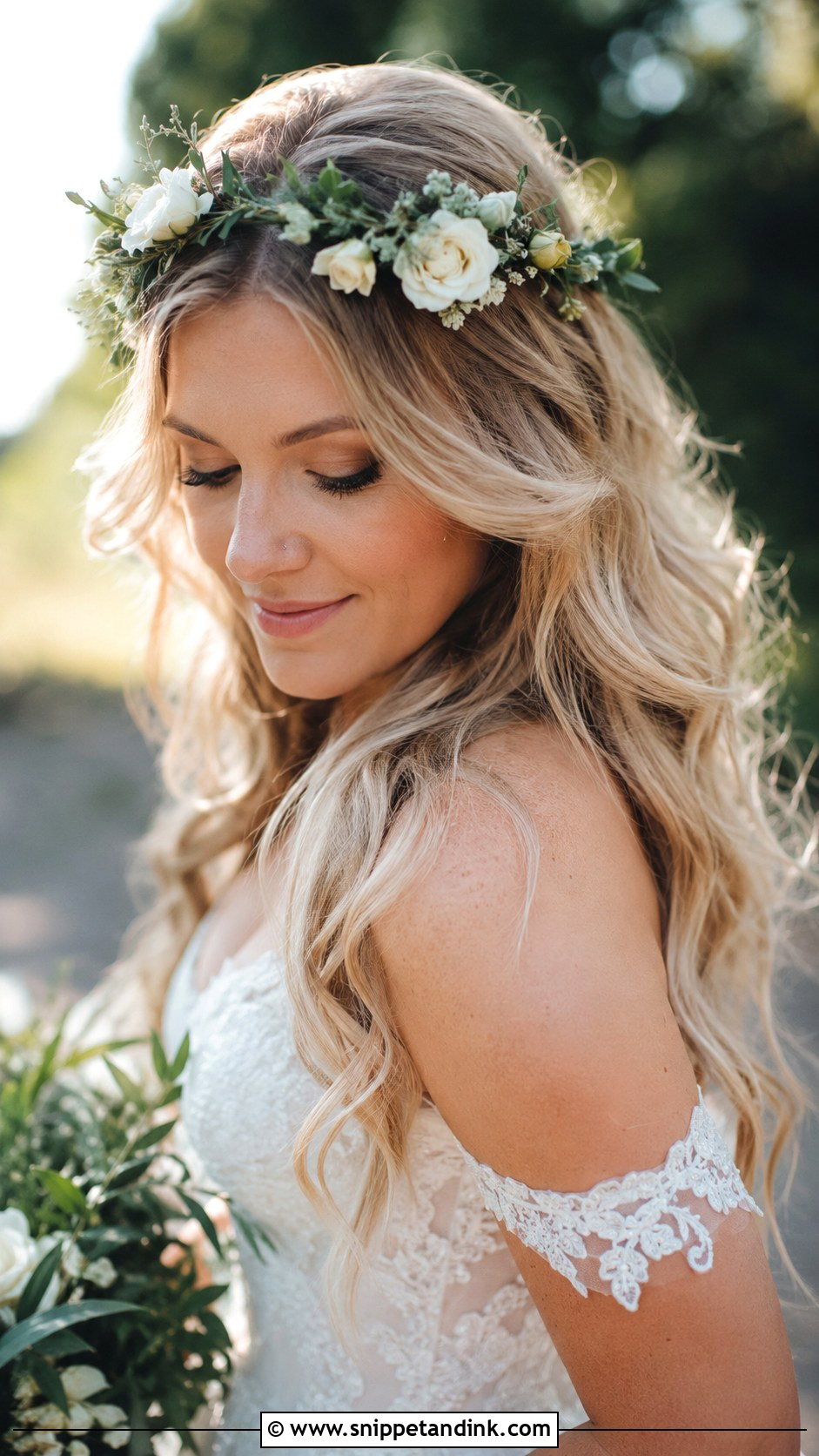
A floral crown on long, loose hair should rest lightly, not press down like a hat. I fit it at the trial, then anchor it with hidden pins at the temples and at the back so it can’t slide forward when you look down at your vows. Smaller blooms and greenery photograph better than oversized flowers, which can dwarf a face. Match the bouquet in colour, not in scale. With a simple gown, the crown carries the detail, and a well-fitted one stays comfortable all day.
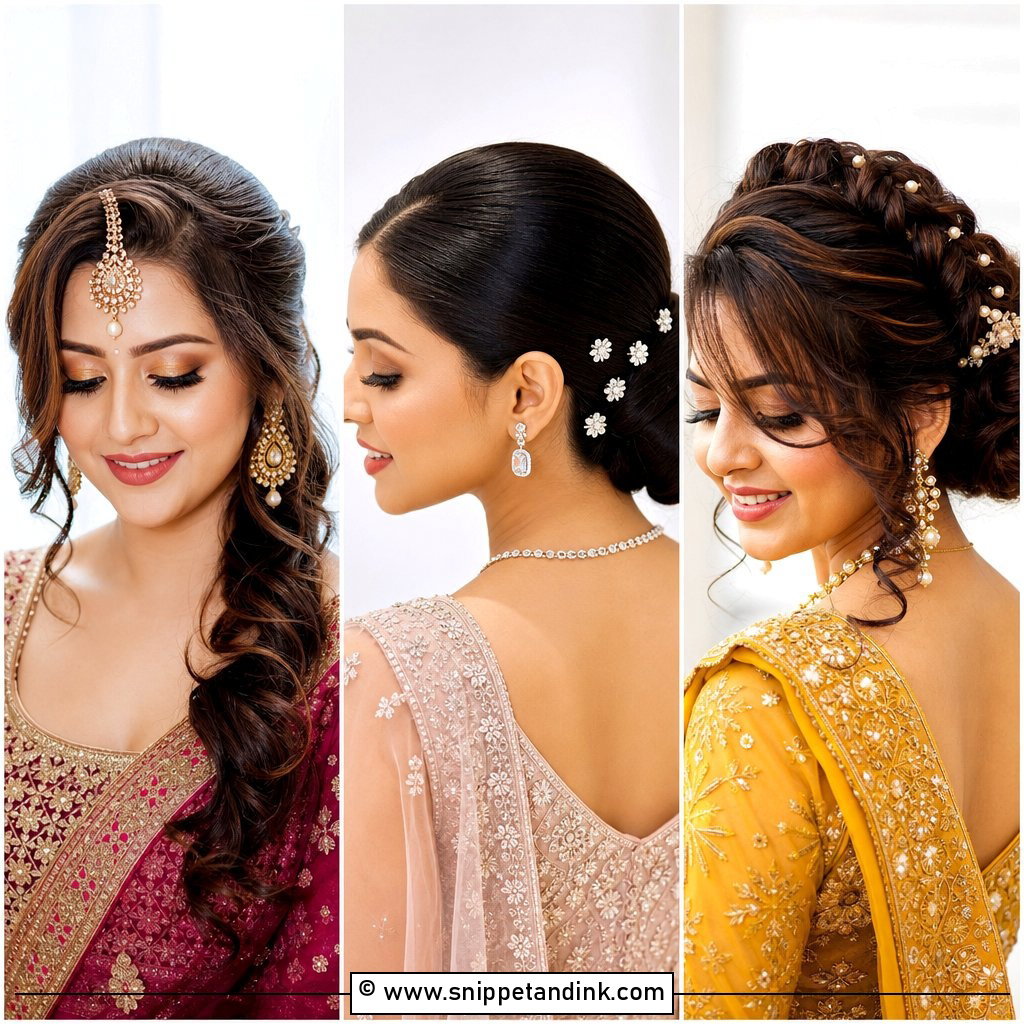
20. Bridal Braid With Parandi
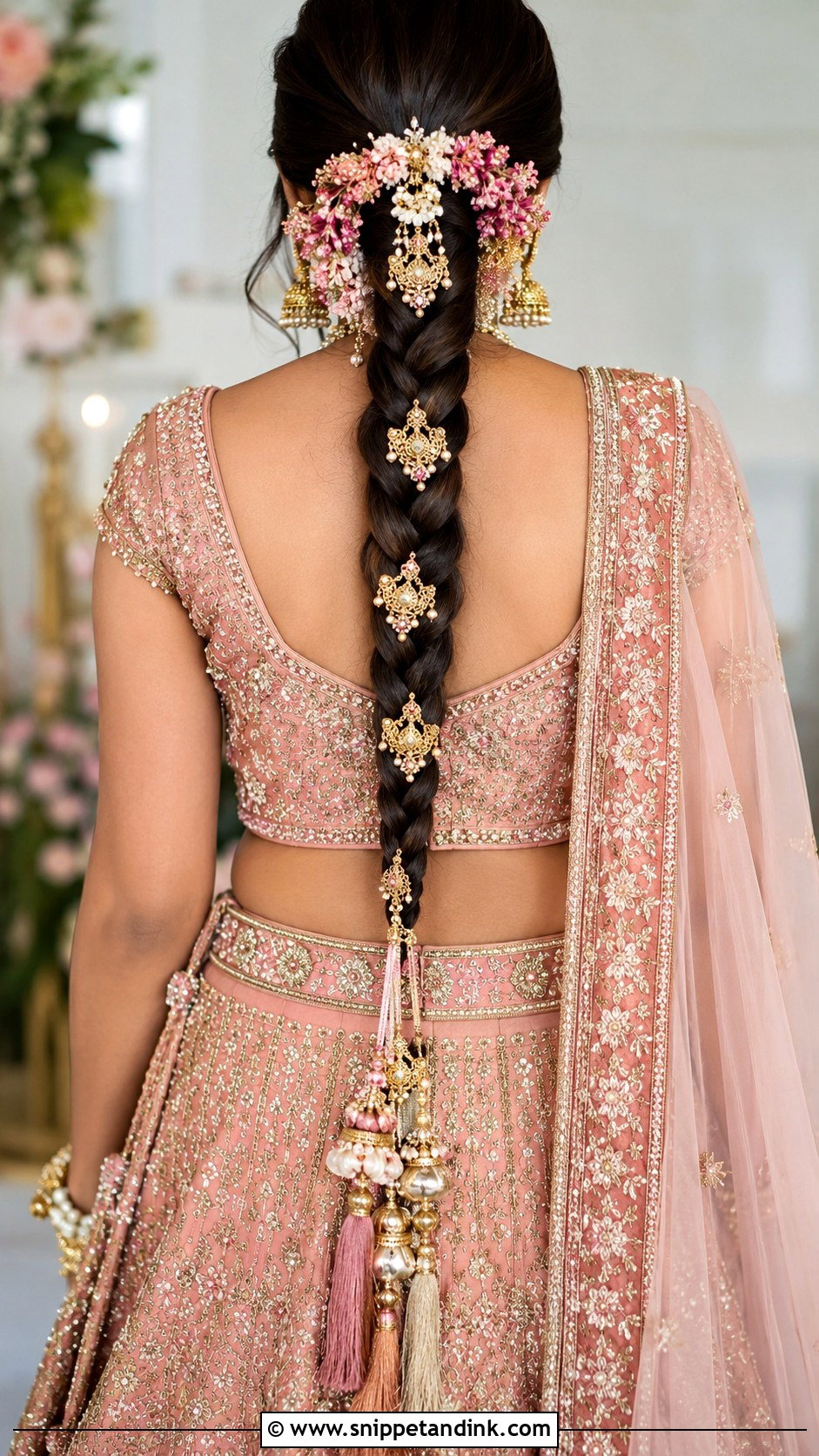
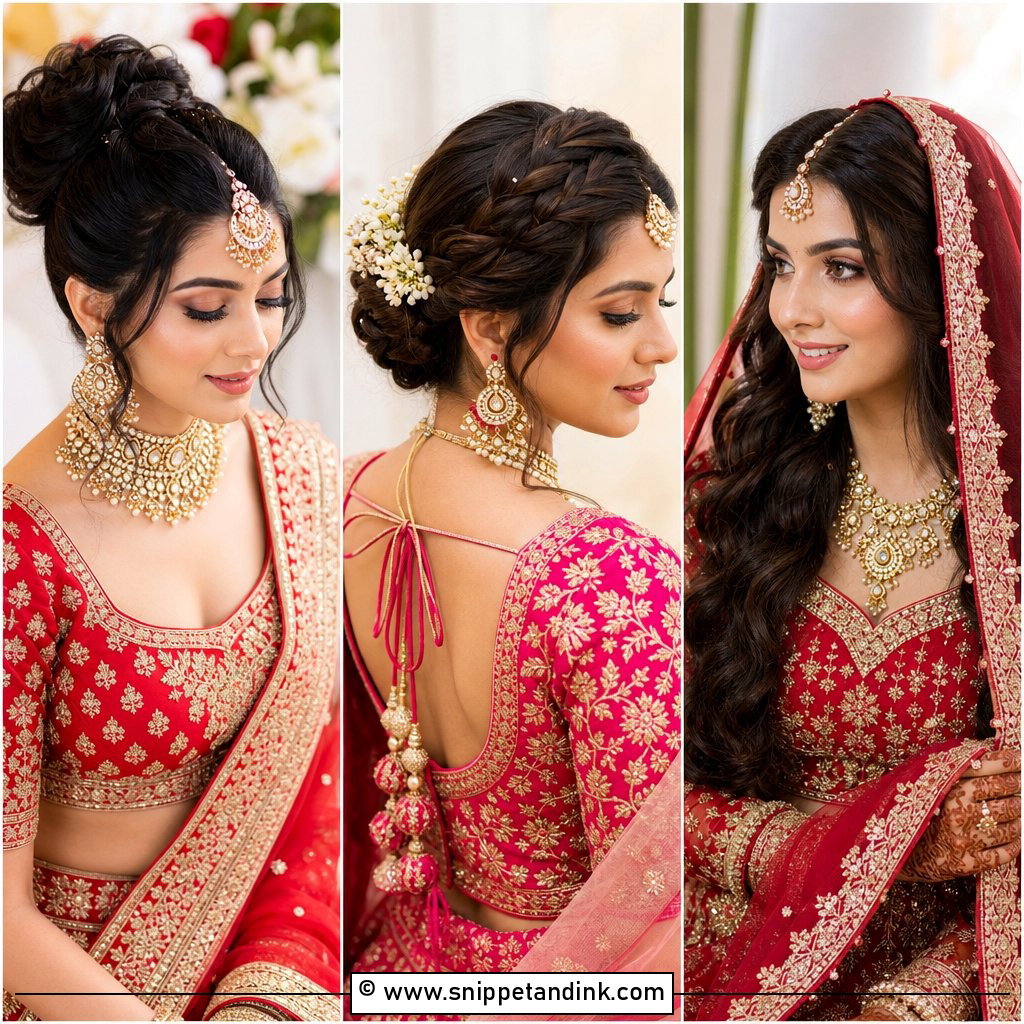
A parandi is plaited into the length of a braid, adding colour, length and decoration with silk threads, tassels, beads or gold accents chosen to match the outfit. It belongs at South Asian wedding events, alongside a lehenga or saree, a dupatta and ornate jewellery. I keep the crown smooth and the braid full, since a heavy parandi on a thin plait pulls at the scalp. Its top cord goes round a small elastic at the start of the braid before plaiting, so the band carries the weight rather than a few strands. If a dupatta will also cover your head, test both together at the trial.
The Order Pieces Go In on the Morning
Accessories go in last, after the hair is finished and sprayed. Hairspray dulls pearls, clouds crystals and can mark delicate petals, so I keep it well away from them.
- Finish the hairstyle and set it with spray.
- Add pins, combs, barrettes and vines, working from the back of the head forward.
- Place a headband or tiara and check the fit behind the ears.
- Add fresh flowers as late as possible, ideally just before you dress.
- Put the veil in once your dress is on, so it can’t catch while you step into the gown.
Taking the veil out for the reception
Decide in advance who will remove your veil, and show them how at the trial. The comb should be eased out from underneath and toward the back while someone steadies the hair around it. Pulled straight up, it drags the style with it. Leave the anchor pins where they are afterward; that spot often makes a good home for a flower or an evening comb.
Wearing two pieces at once
Two accessories can work if one leads and the other supports. A veil with a few pearl pins is easy. A tiara plus a hair chain plus flowers is usually too much, because they all compete for the same area of the head and none of them reads clearly in photos.
One Well-Placed Piece Usually Beats Three
Accessories work best when they support the hair rather than sit on top of it. The biggest piece isn’t always the right one; often a single comb or a few pins placed where the light lands does more than a tiara and a vine together. Bring your dress photos and every accessory you’re considering to your hair trial. Test movement, veil removal and photo angles before you leave the chair, and if the style feels secure and still looks like you, you’ve found it.
You'll Like These Ideas:


Leave a Reply