
Civil wedding hair has a different job from big-wedding hair. The ceremony is often short and early, there’s usually a car ride or a walk through town afterwards, and the same style has to carry you into lunch, a dinner and maybe a small party with nobody around to fix it. So I lean towards shapes that are simple to build and hard to knock out: low buns, sleek ponytails, controlled waves, a well-finished bob. Below are twenty I’d happily do for a registry office or city hall bride, with notes on what each one needs from your hair and where it tends to fail.
Planning the Hair Around a Civil Ceremony Timetable
Registry office and city hall slots are often booked in the morning or around midday, and they run to the minute. That changes how I schedule hair. I want you finished at least an hour before you leave, so a delayed taxi or a last-minute outfit change doesn’t eat into the ceremony. For a single bride with no bridesmaids, most styles on this list take somewhere between forty-five minutes and an hour and a half, longer for curls on very thick hair.
Then think about where you’re going afterwards. A civil wedding often means a ceremony, photos on the steps outside, a drive, and a meal that can last several hours. Nobody from the hair team usually comes along. That’s why I rank styles by how well they hold without help:
- Most secure: braided bun, chignon, crown braid, low bun.
- Hold well with a little care: sleek bun, low ponytail, French twist, bobs.
- Need a calm, dry day: loose curls, Hollywood waves, soft waves worn fully down.
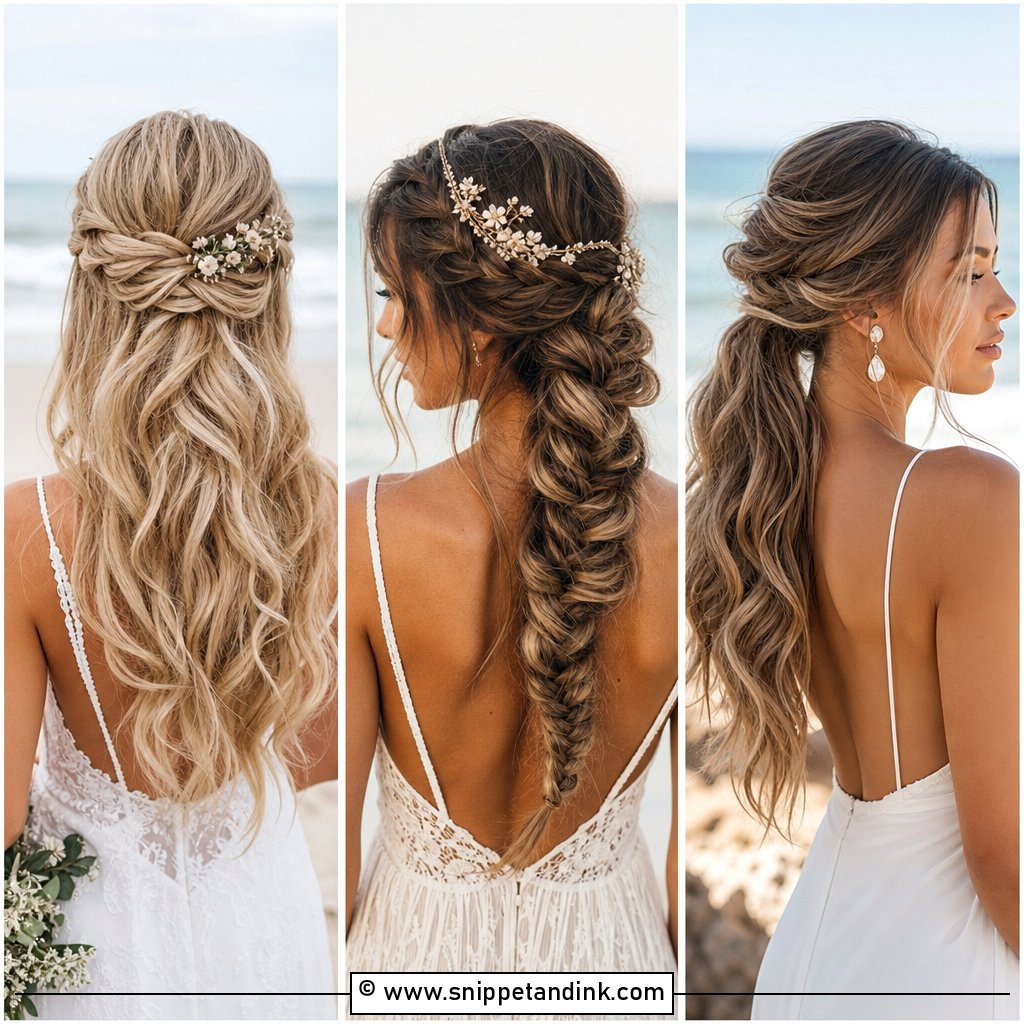
If the steps outside the building face open ground or the sea, expect wind. A down style will be across your face in every group photo. In that case I’d choose something from the first group, or at least pin back the side that faces into the wind.
1. Civil Wedding Low Bun
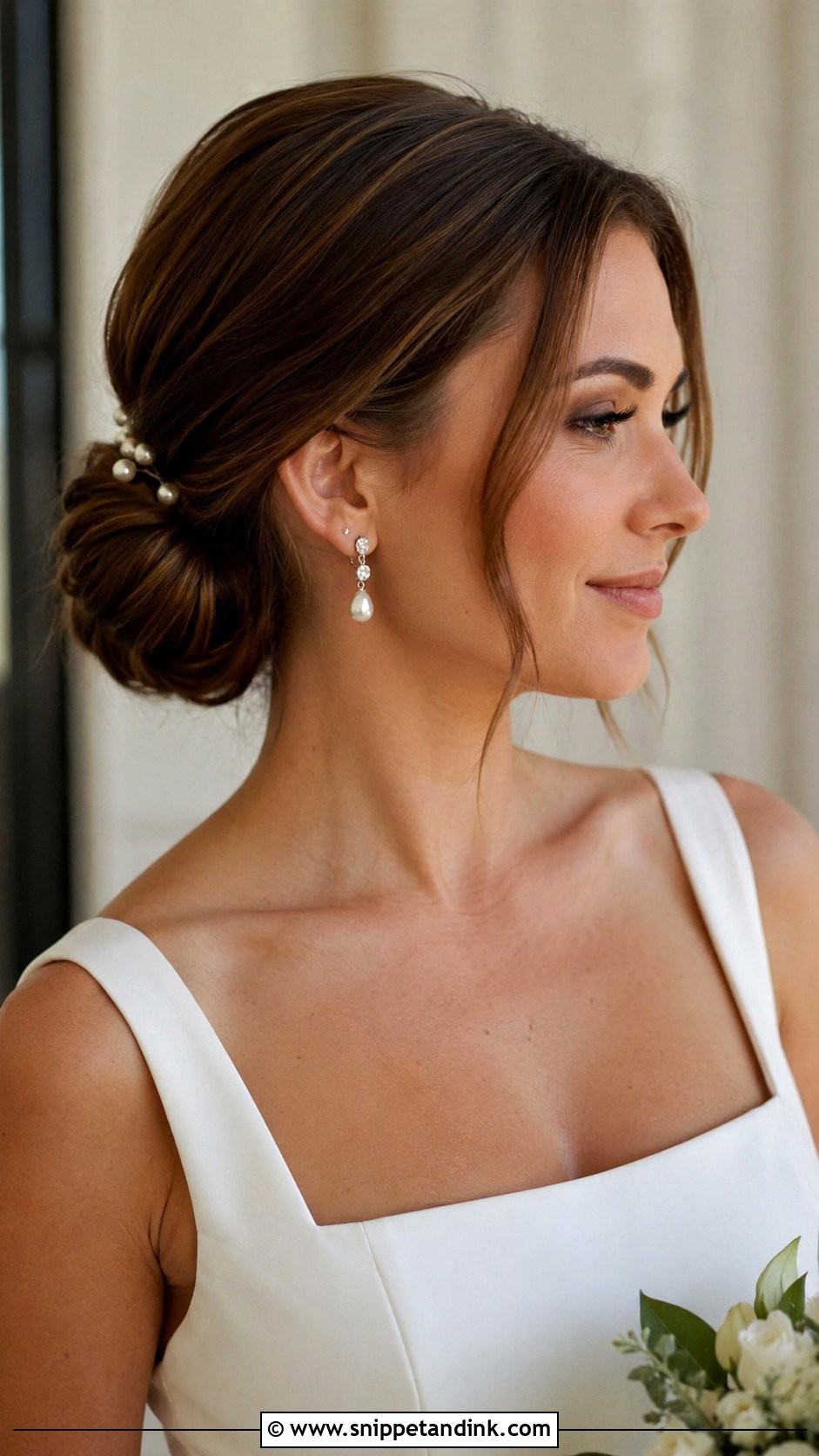
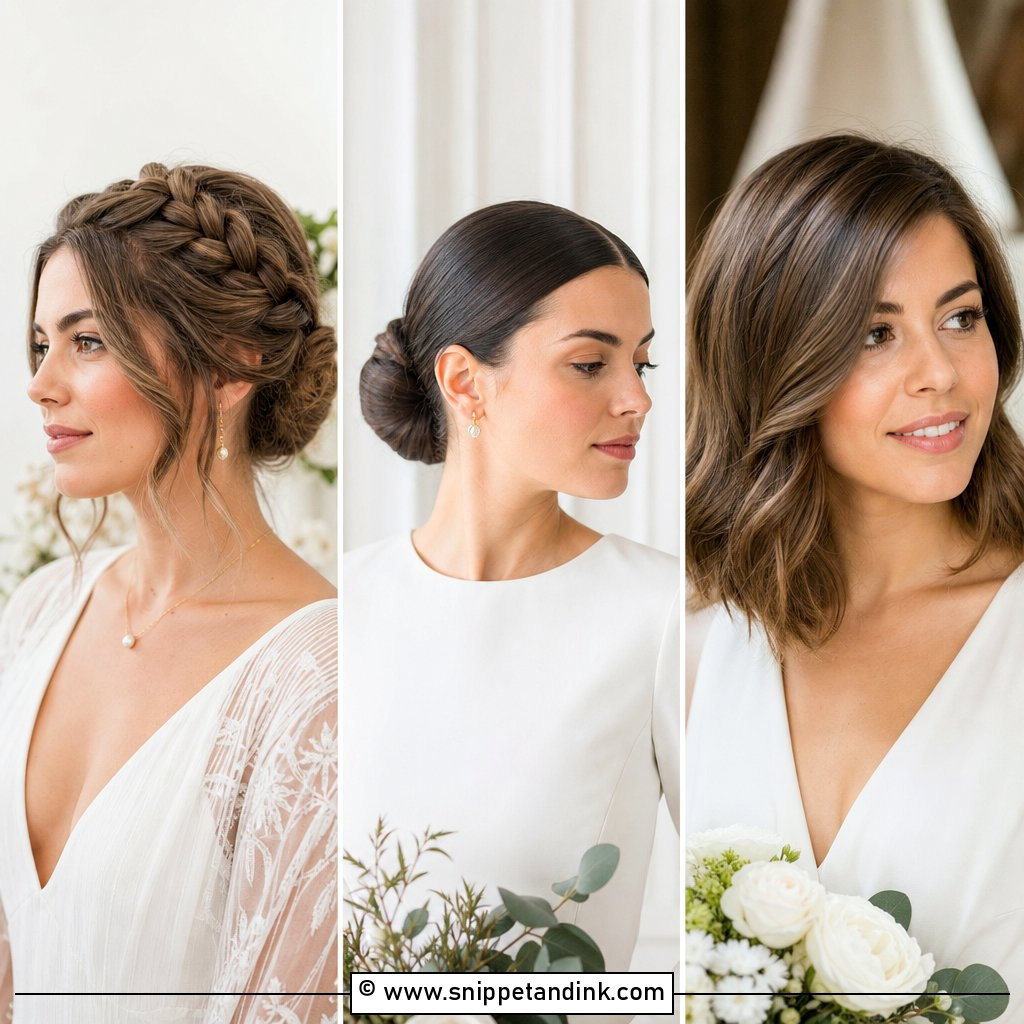
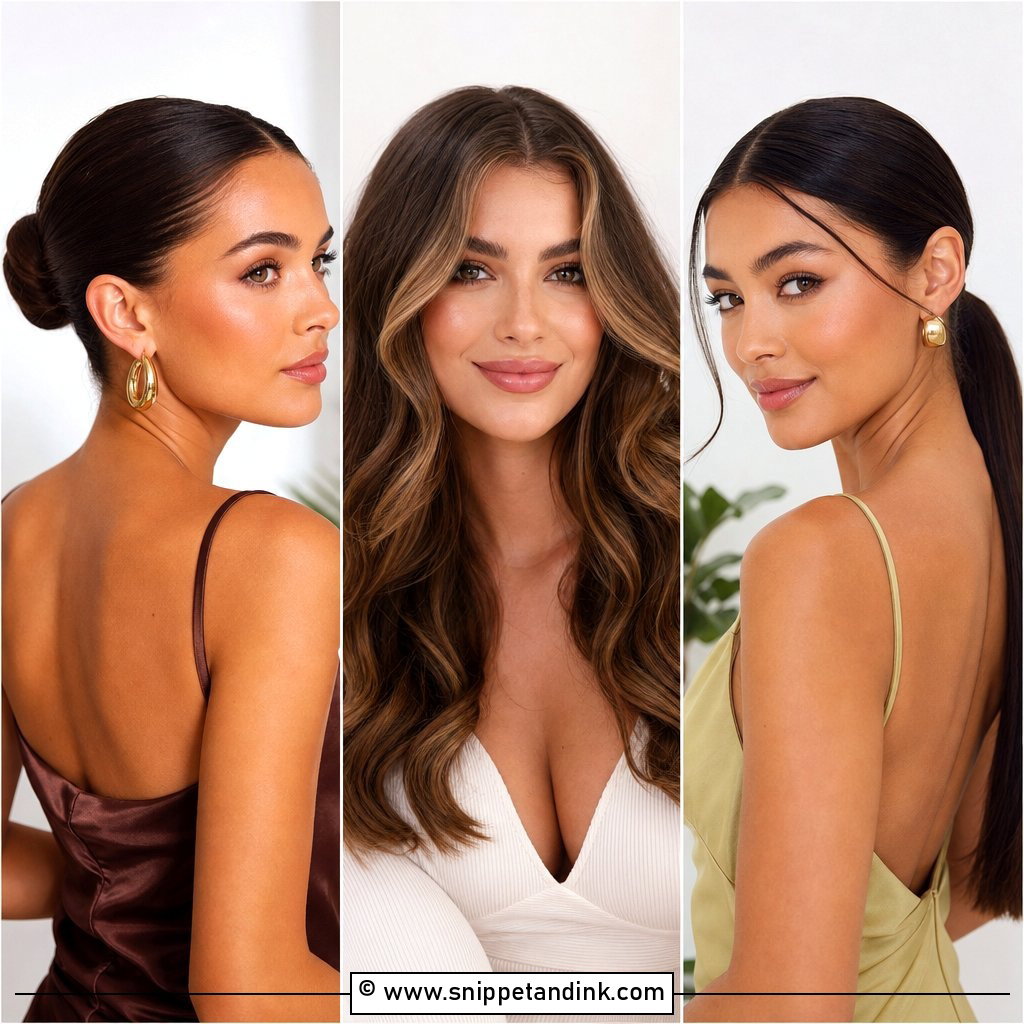
The low bun is the style I trust most for a civil ceremony, because it sits below the line where a car headrest or a hug from an aunt would flatten it. It goes with a blazer dress, satin slip dress, a courthouse suit or a simple white gown. I place it right at the nape and build it on a small ponytail base so the pins have something to grip, rather than pinning loose hair to the scalp. A centre part reads more modern. If you want face-framing pieces, I curl them separately and leave them slightly longer than you think, since they shrink up as the day goes on. Pearl pins, a short veil or a bow all anchor easily into that base.
2. Civil Wedding Sleek Bun
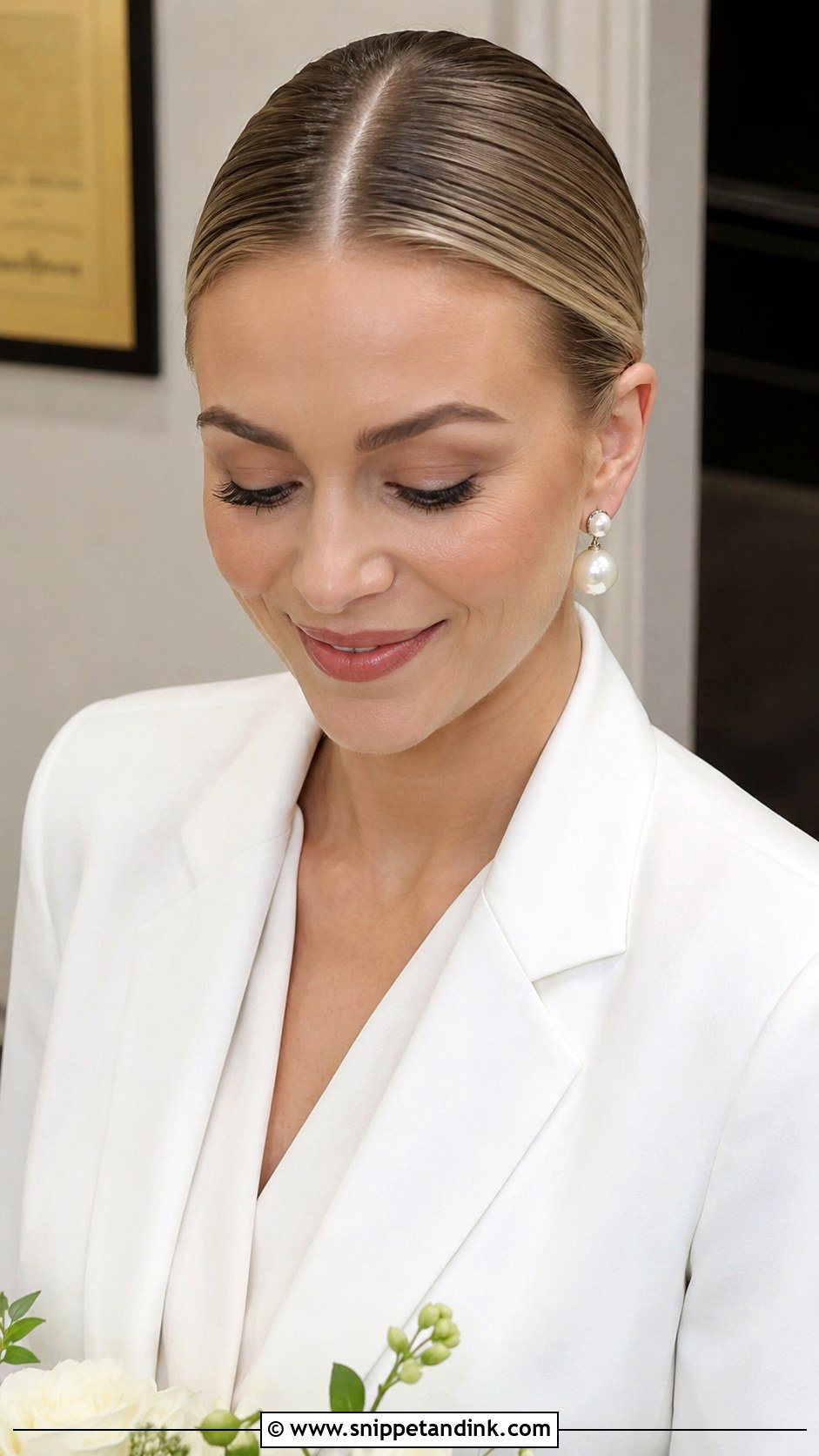
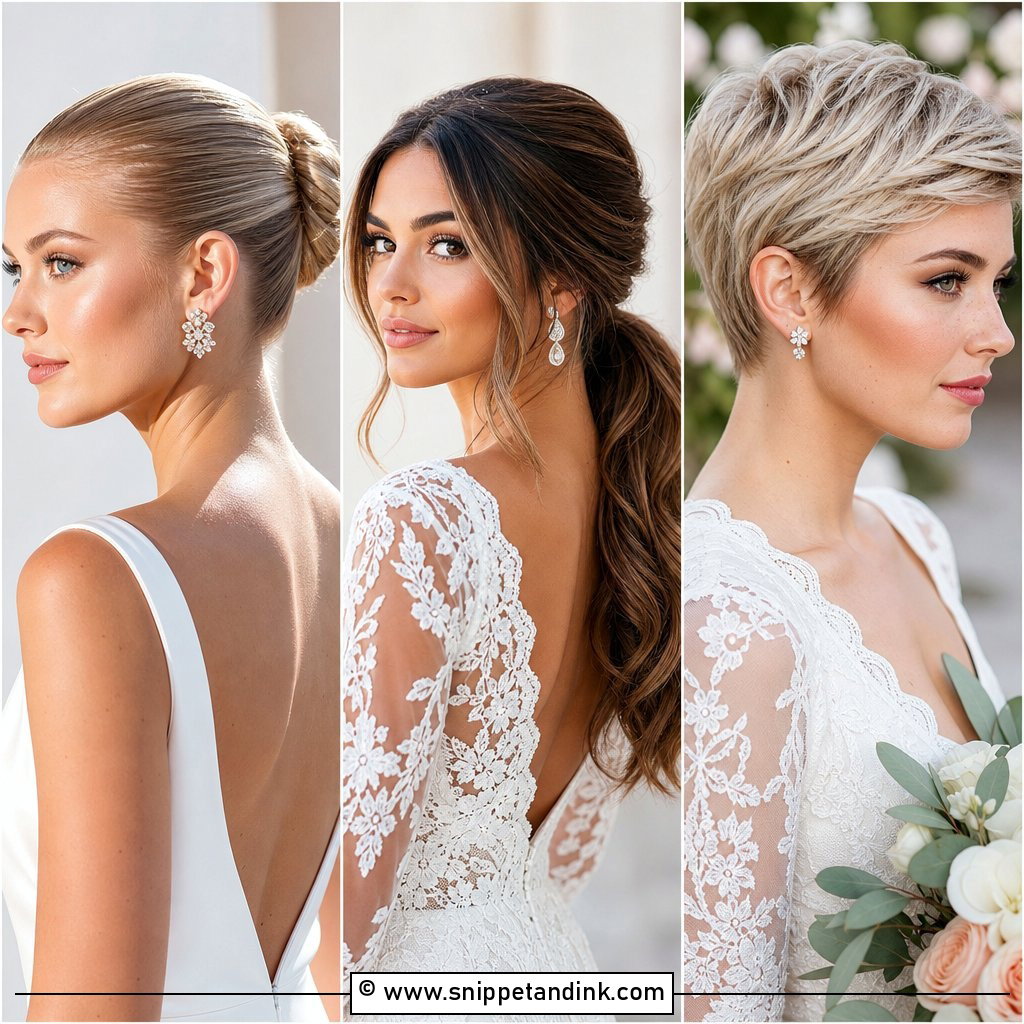
A sleek bun suits a sharp outfit: a structured dress, a bridal suit, a square or off-shoulder neckline. With the hair pulled close to the head, earrings and tailoring do the talking. The hard part is shine without that wet, stiff look. I work smoothing cream through damp hair, blow-dry it flat with a paddle brush, then comb it back with a fine-tooth comb and a tiny amount of wax stick along the hairline for flyaways. I’d steer you away from this one if you have a cowlick at the front hairline you hate, because sleek styles show every growth pattern.
3. Civil Wedding Soft Waves
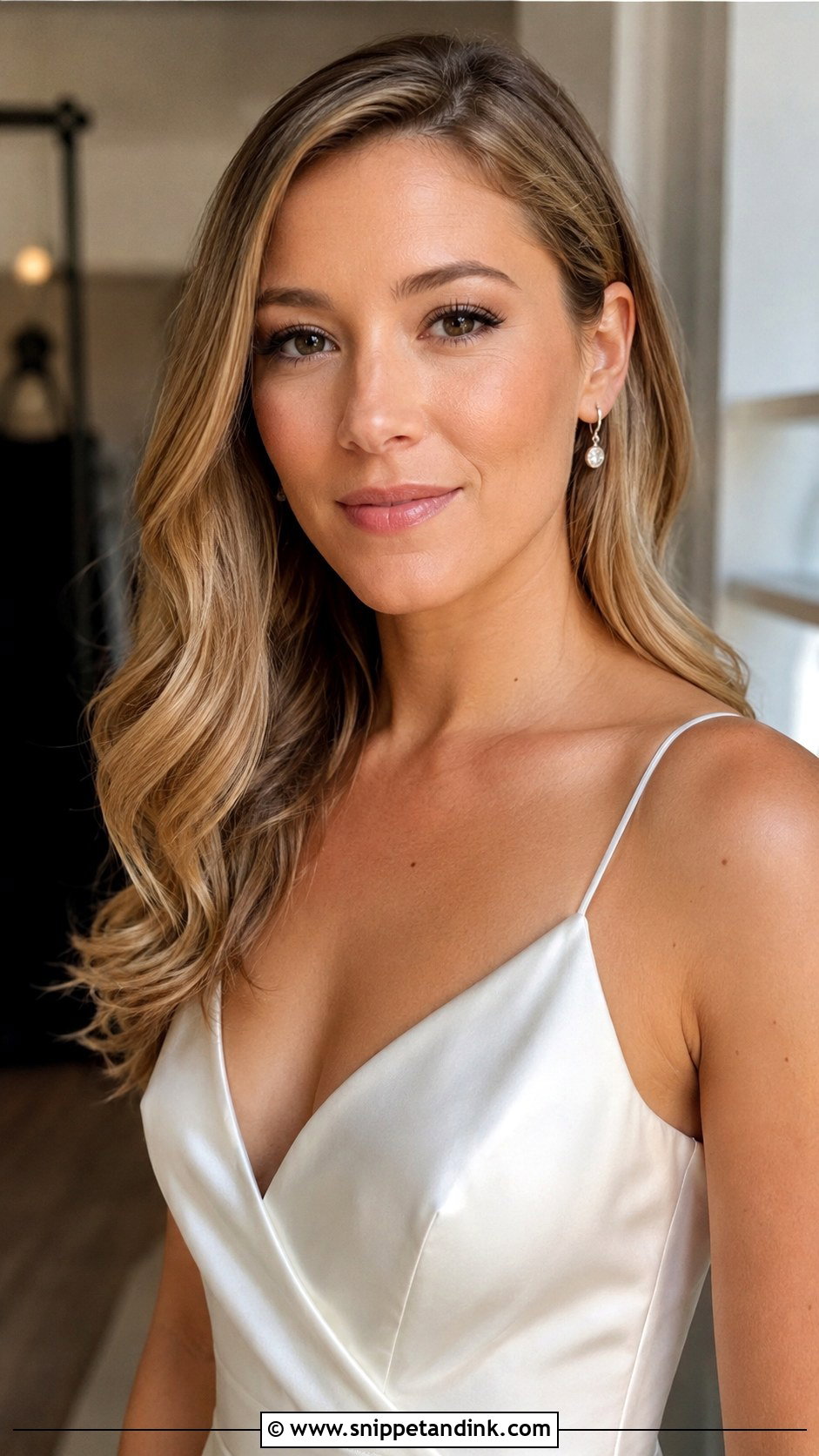
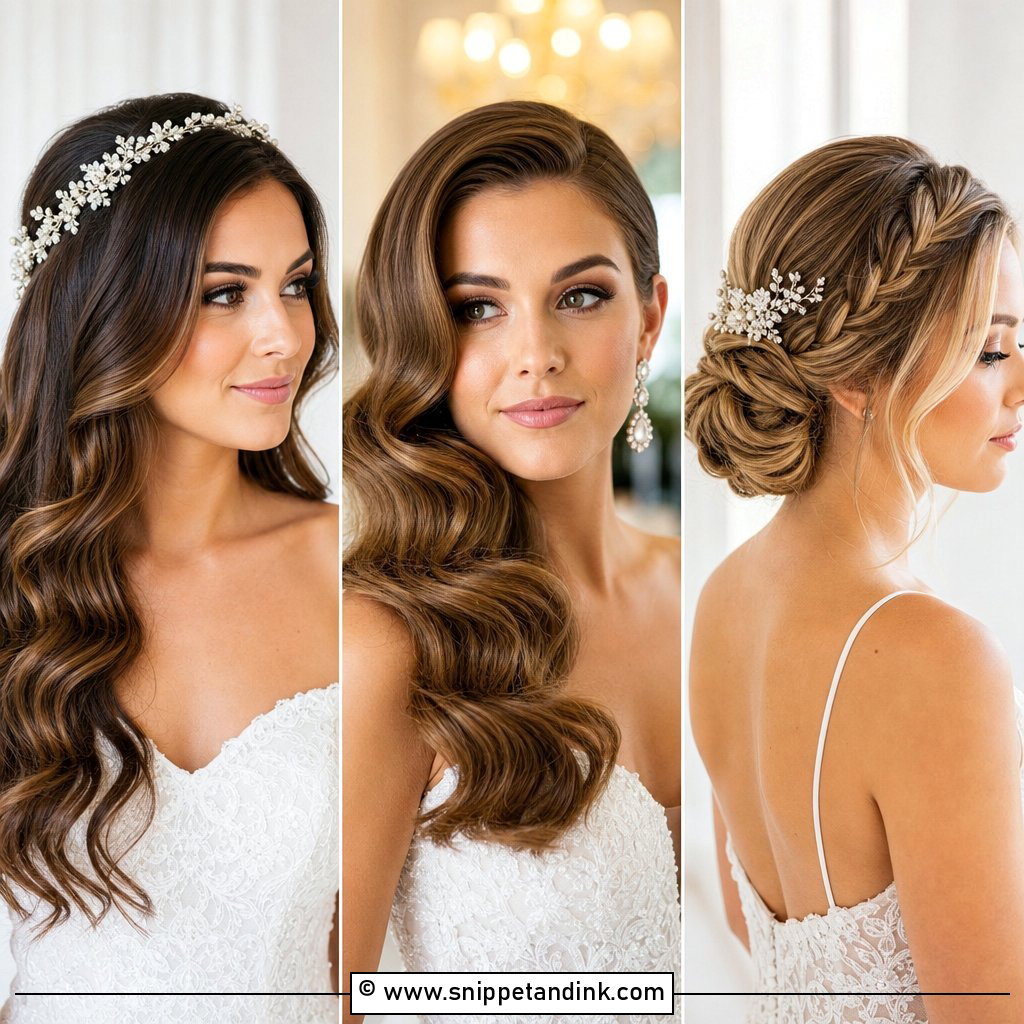
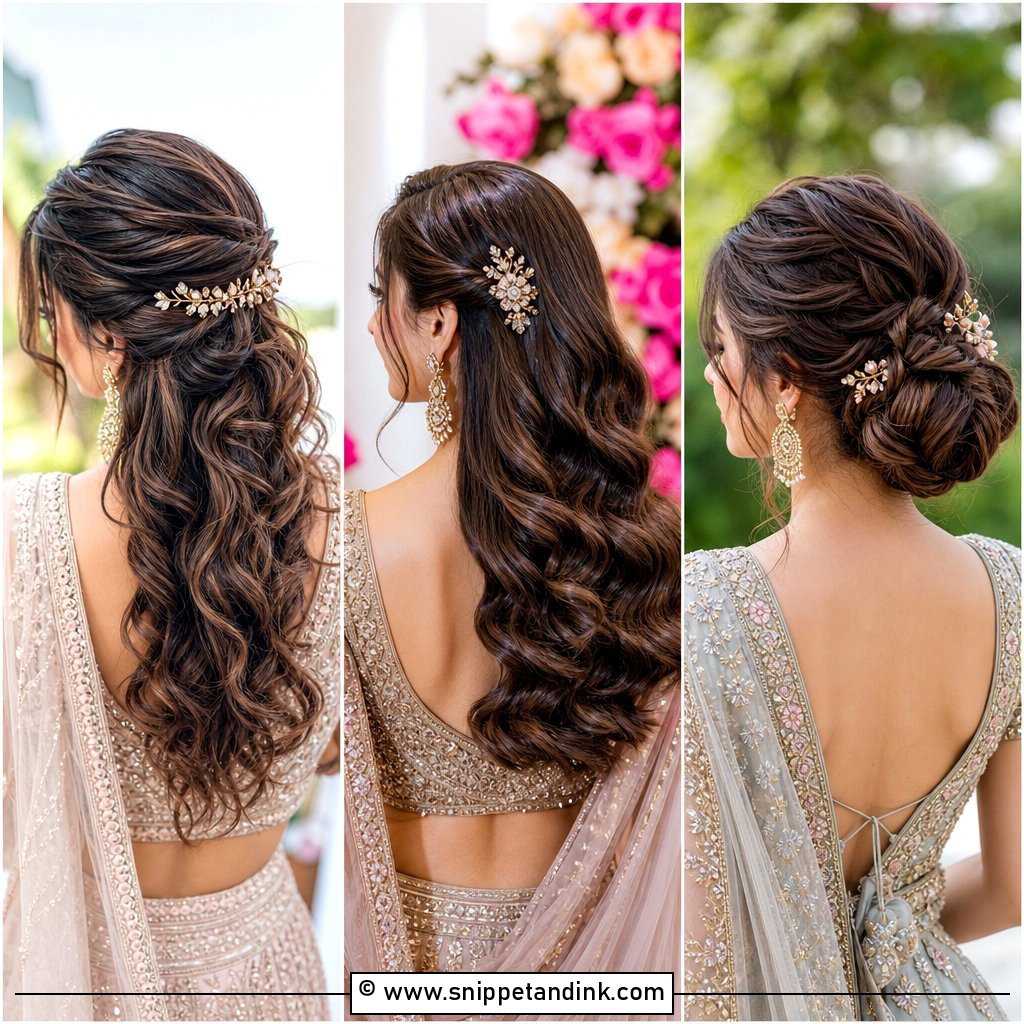
Soft waves are the easiest way to wear your hair down and still look dressed for a ceremony. I keep them smooth and brushed rather than beachy, which suits medium to long hair with both minimal dresses and lace. The problem with waves is that they drop. I set each section in a pin curl while it cools, and only brush out once the whole head is cold, which buys hours of hold. Tucking one side behind the ear shows your earrings and stops you constantly pushing hair off your face while you sign the register.
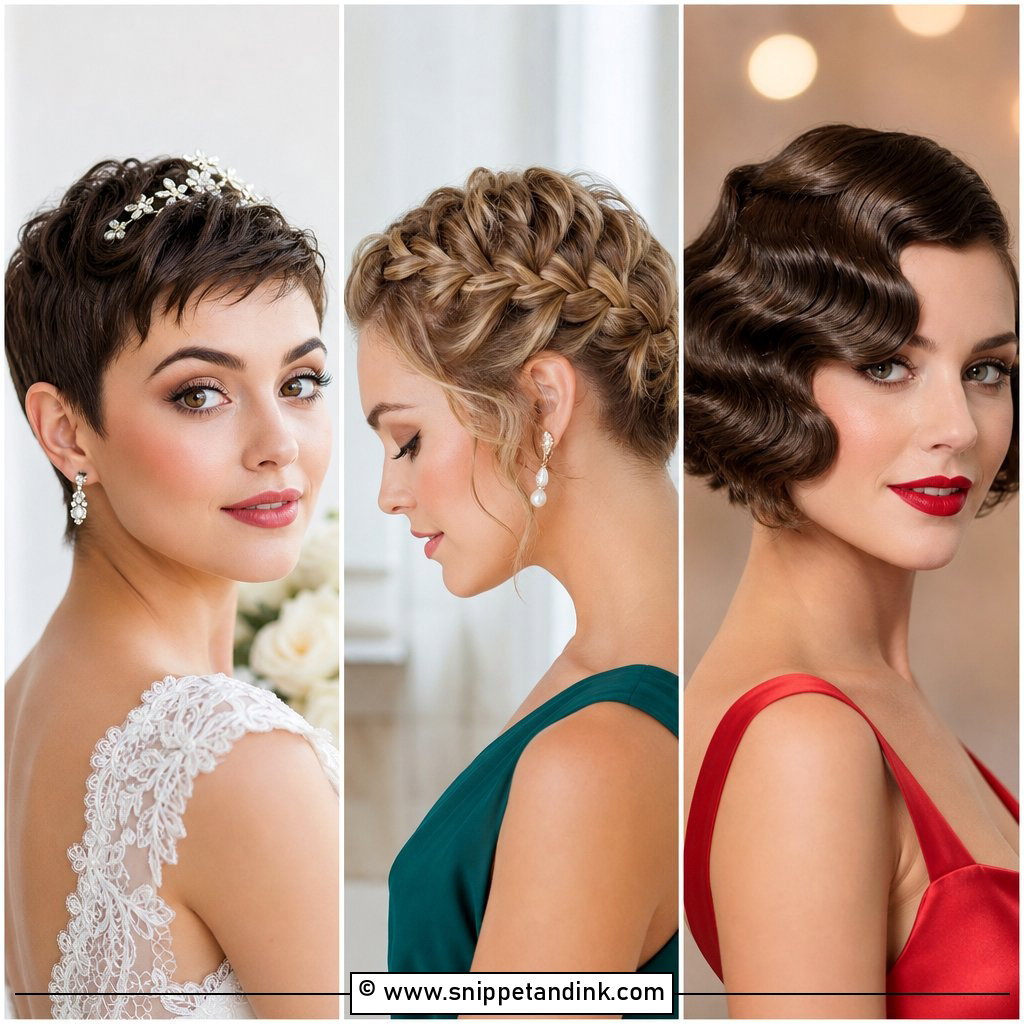
4. Civil Wedding Hollywood Waves
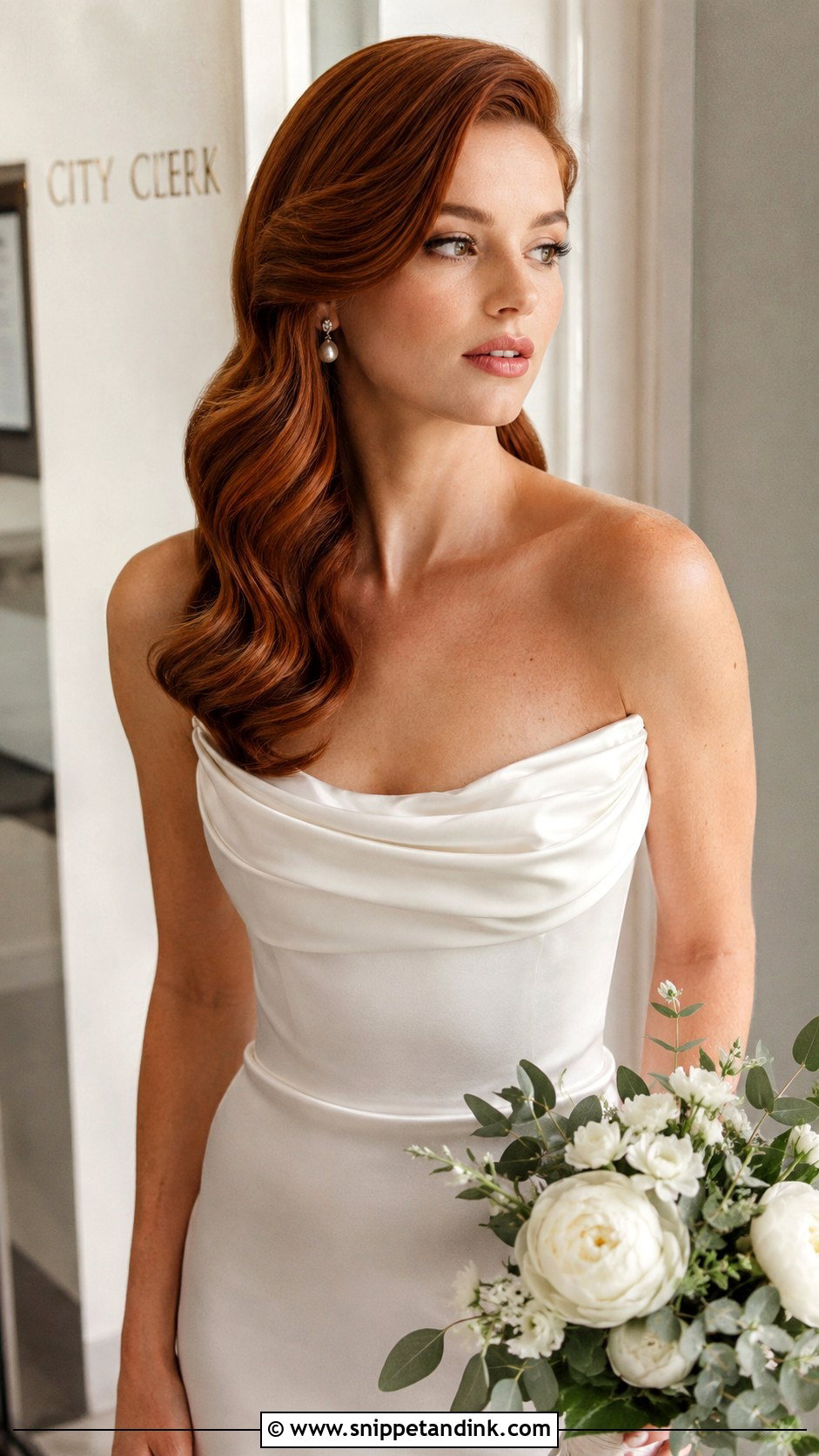
Hollywood waves give a small ceremony a vintage glamour without needing a ballgown. The waves are brushed into one continuous S pattern, so every curl has to be wound in the same direction, away from the face, before brushing. That’s what separates a real Hollywood wave from a head of curls brushed out. A deep side part gives the most drama, and the finish loves satin, gloves, pearls and a red or soft pink lip. I keep a duckbill clip in each dip while it sets. One honest warning: humid outdoor steps will loosen the pattern faster than any other style here, so I add a short birdcage veil or a clip at the side to hold the shape.
5. Civil Wedding Half Up Half Down Hair
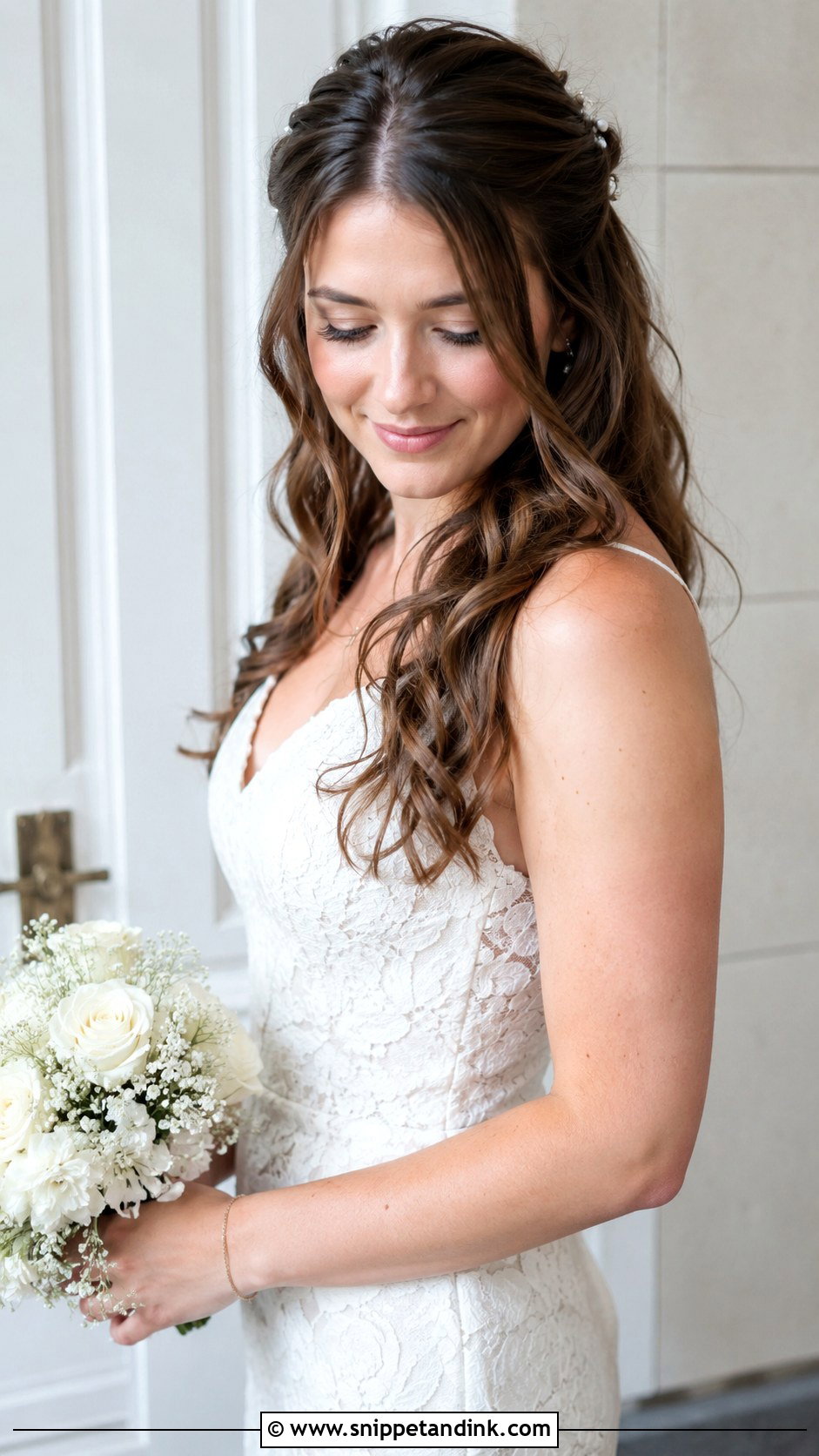
Half up, half down keeps hair off your face while still showing length and movement, so it feels romantic without being formal. I twist or pin the top section and leave the rest in loose waves. The real decision is where the top section is secured. If you’re wearing a veil, I anchor it on a small tight braid under the crown, because a veil comb slips straight out of loose curled hair. Keep the volume modest for a civil setting, and expect the waves underneath to soften by evening, which most brides actually prefer.
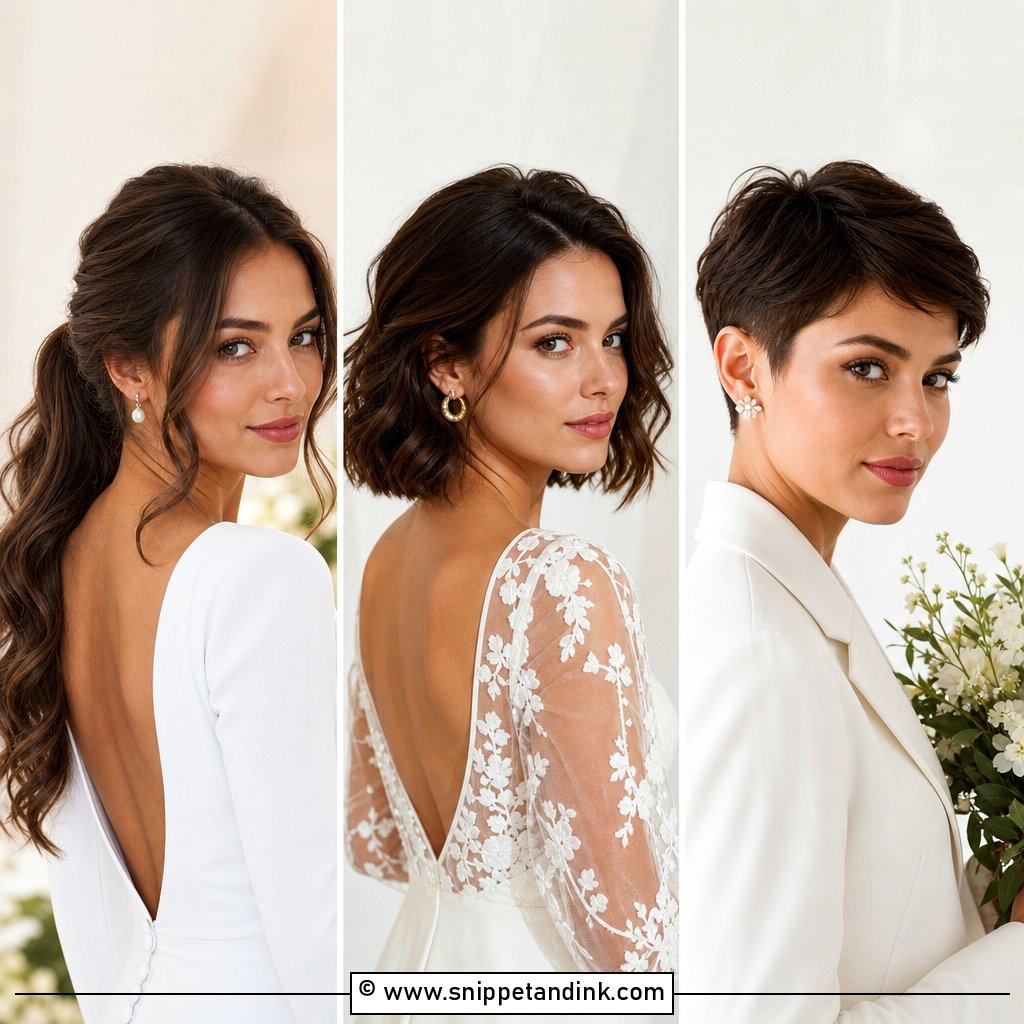
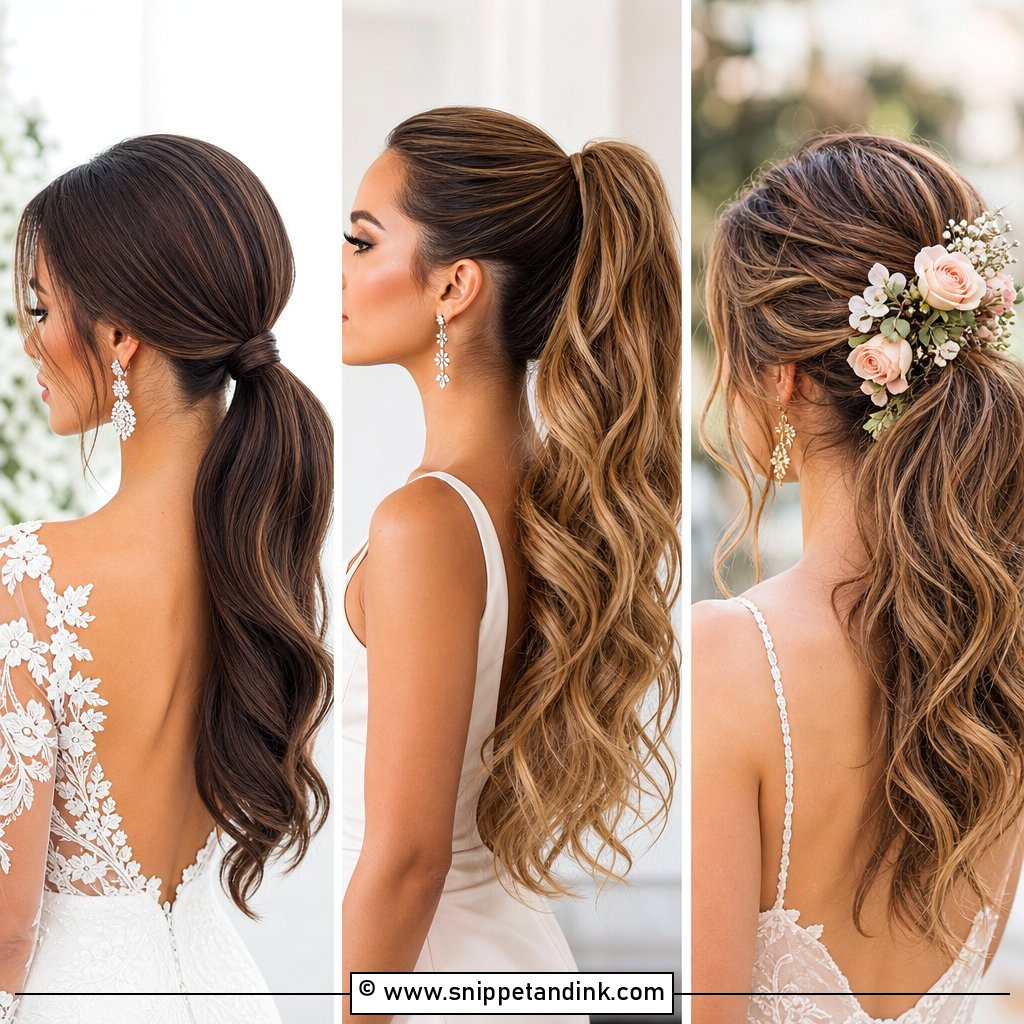
6. Civil Wedding Low Ponytail
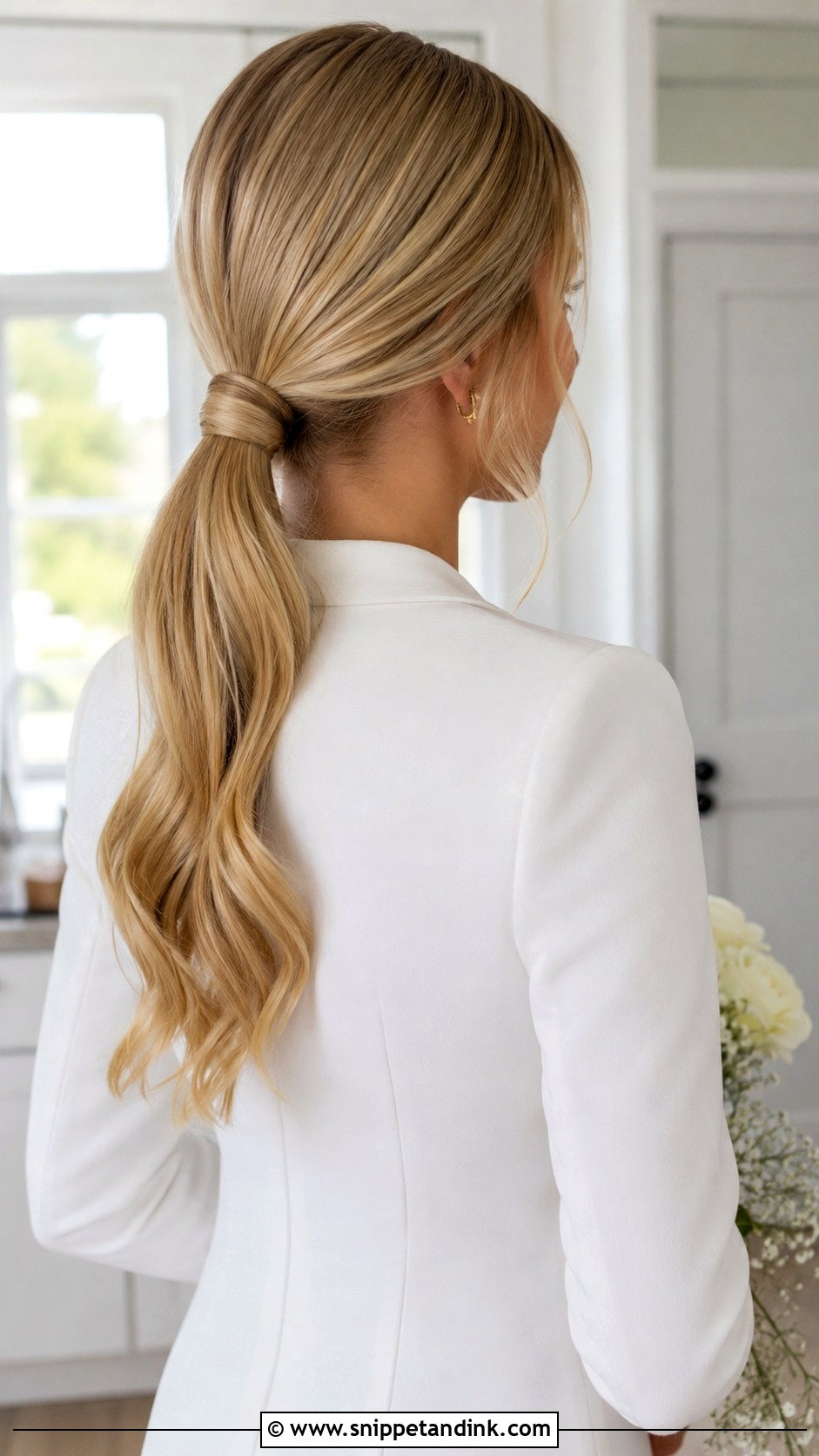
A low ponytail gives clean lines without committing to a bun. It can be sleek from root to tip or waved through the length. I always wrap a small piece of hair around the elastic and hide the end with a pin pointed upwards into the base, otherwise the wrap unwinds by lunch. Look at the back of your outfit before deciding: with backless dresses, halter necklines and suits, a pony that sits in the centre of the back shows off the line of the dress. Put any bow or veil just above the tie, not below it.
7. Civil Wedding Wavy Ponytail
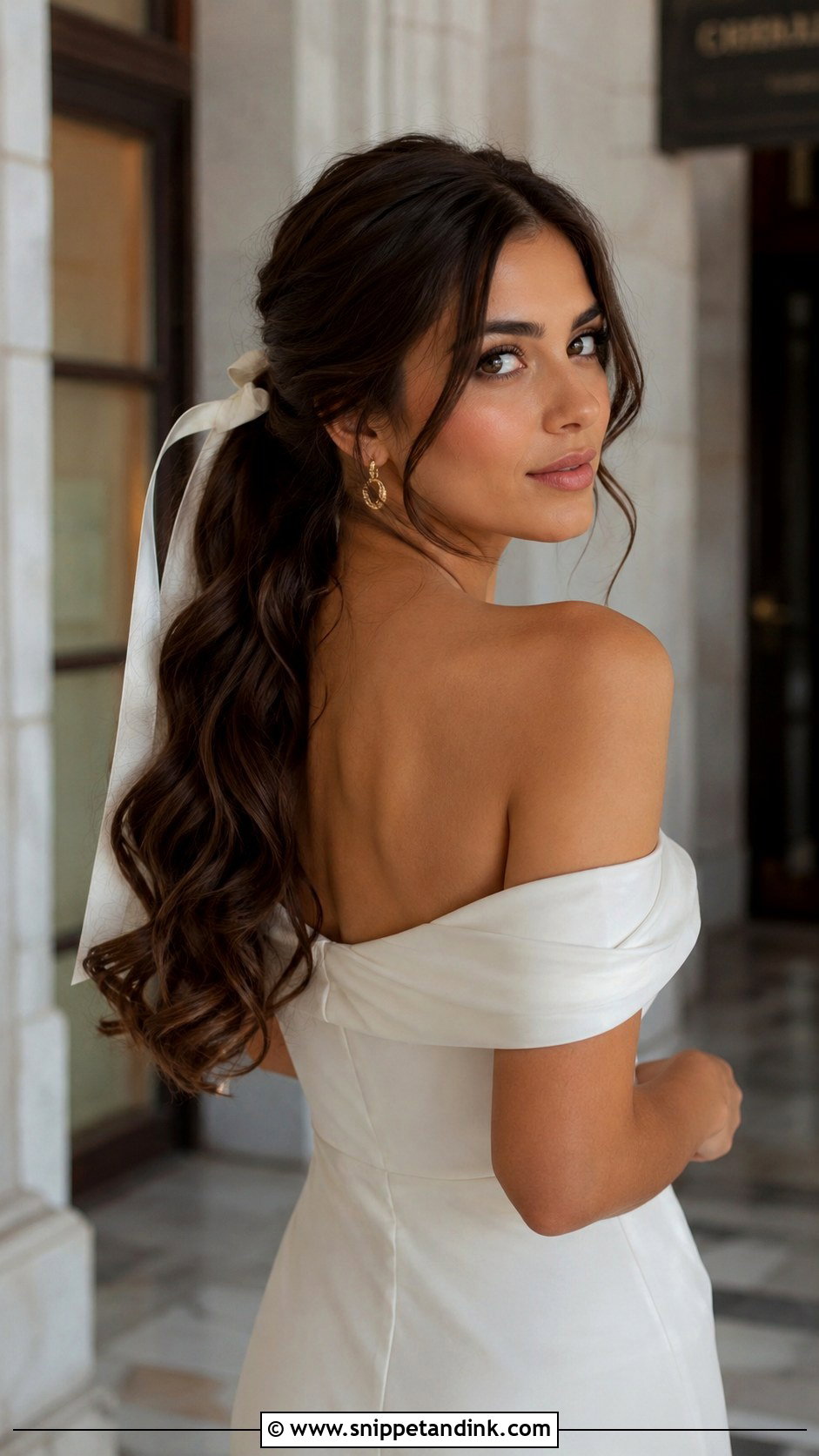
Softer than its sleek cousin, the civil wedding wavy ponytail still looks tidy enough for a courthouse. I build volume at the crown first, then tie the pony and curl the length so the waves fall down the back or over one shoulder. On long hair it’s straightforward; on medium hair I add a clip-in weft under the tie for fullness, which also gives the elastic more to grip. Keep the front pieces curled away from the face, and a satin ribbon or small pearl comb finishes it.
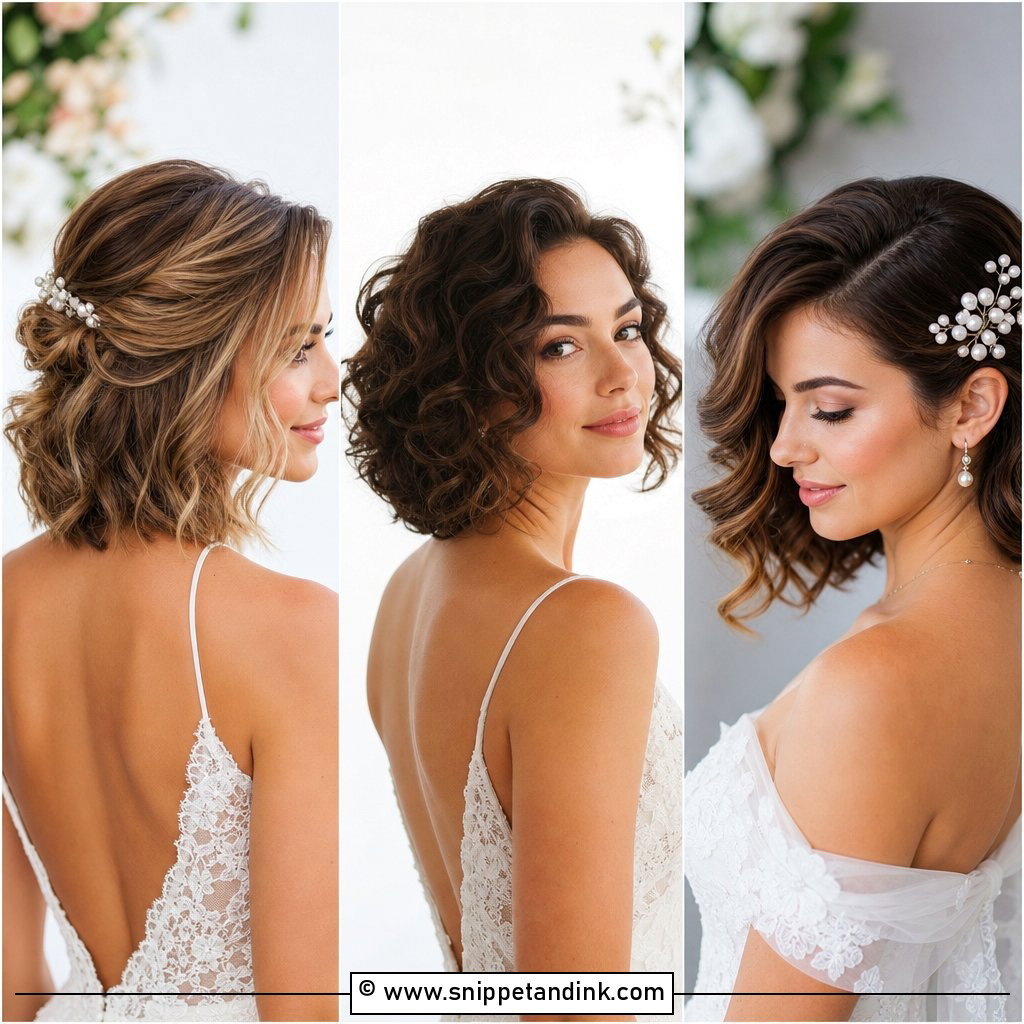
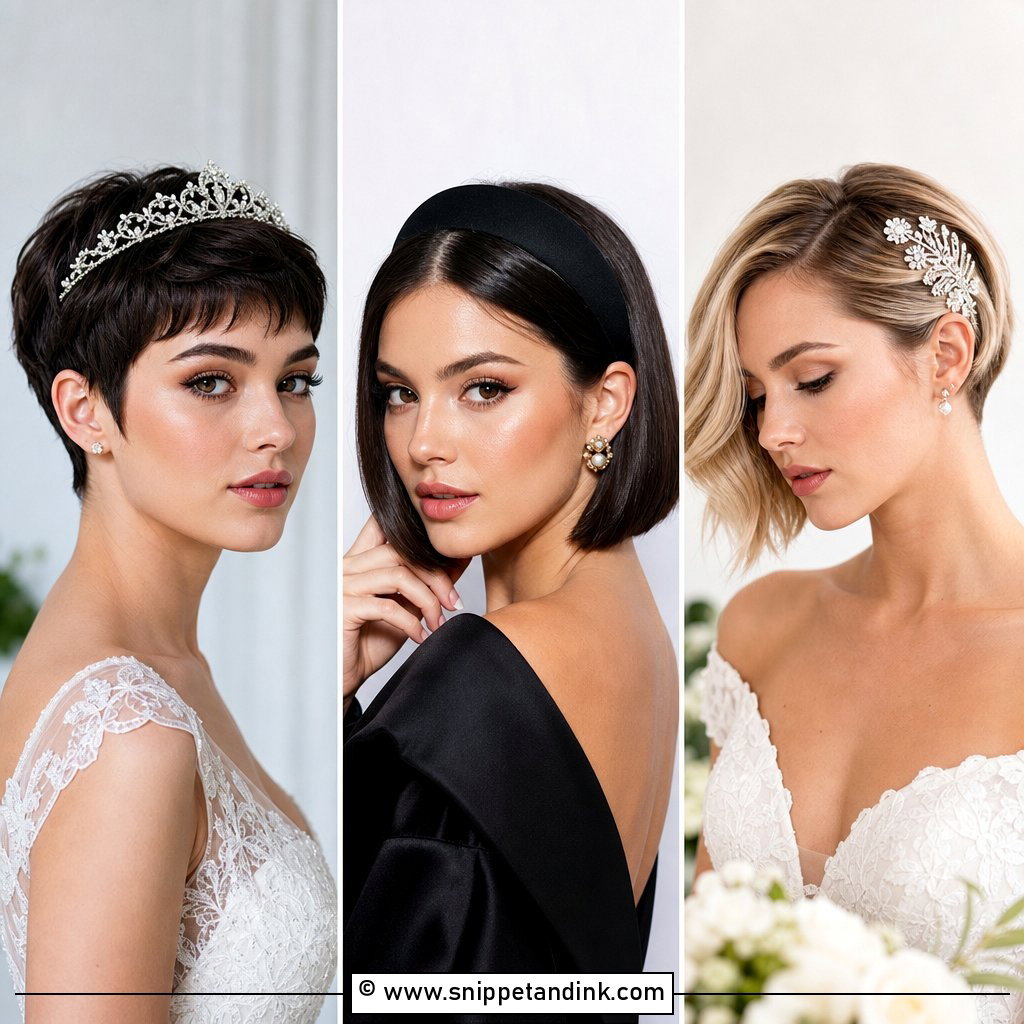
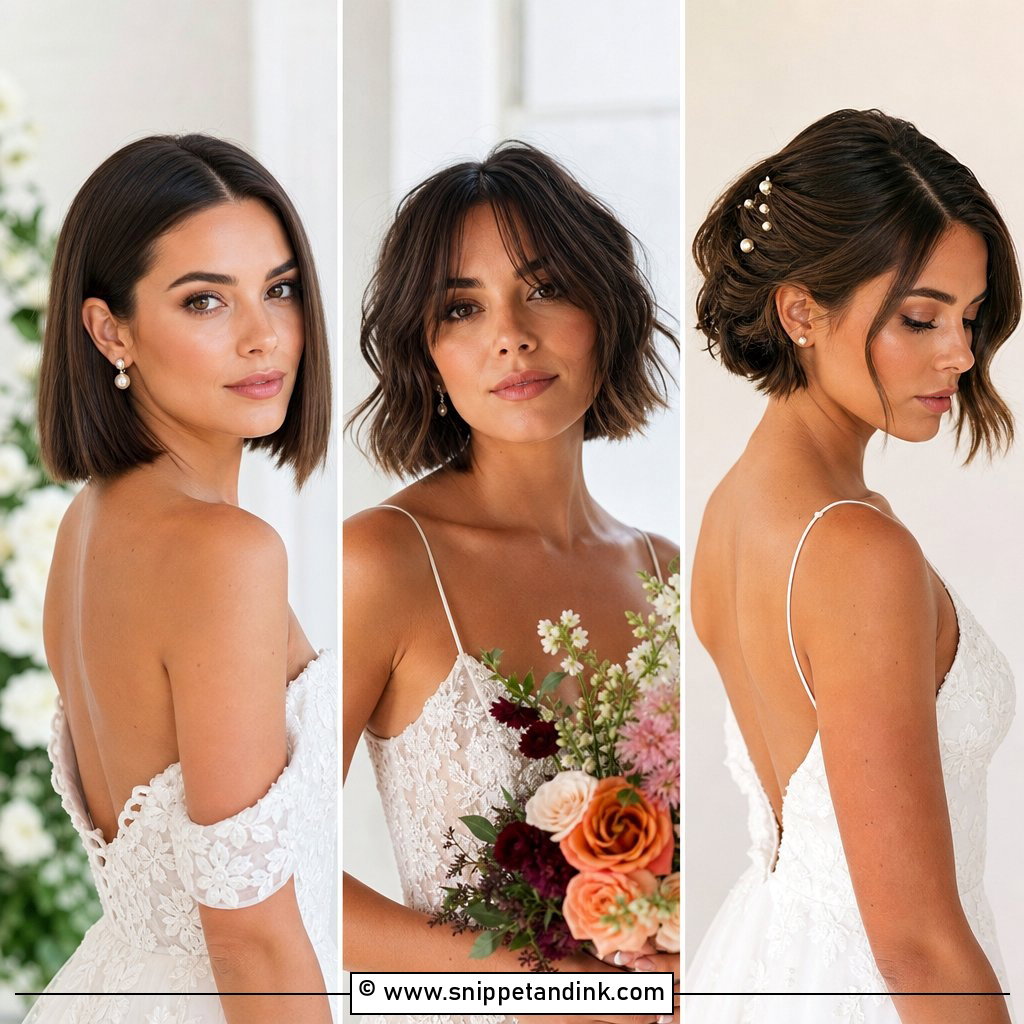
8. Civil Wedding Short Bob
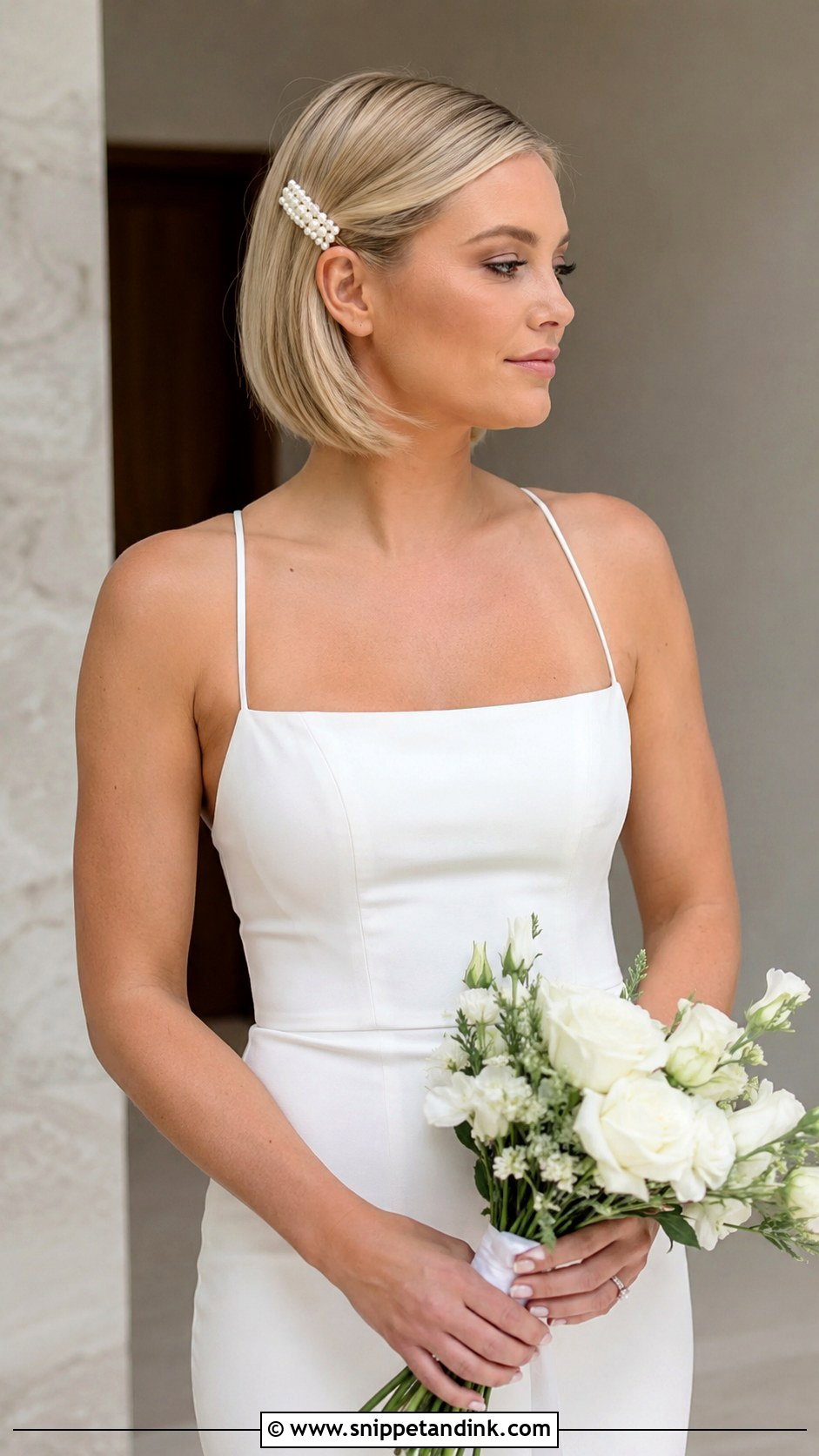
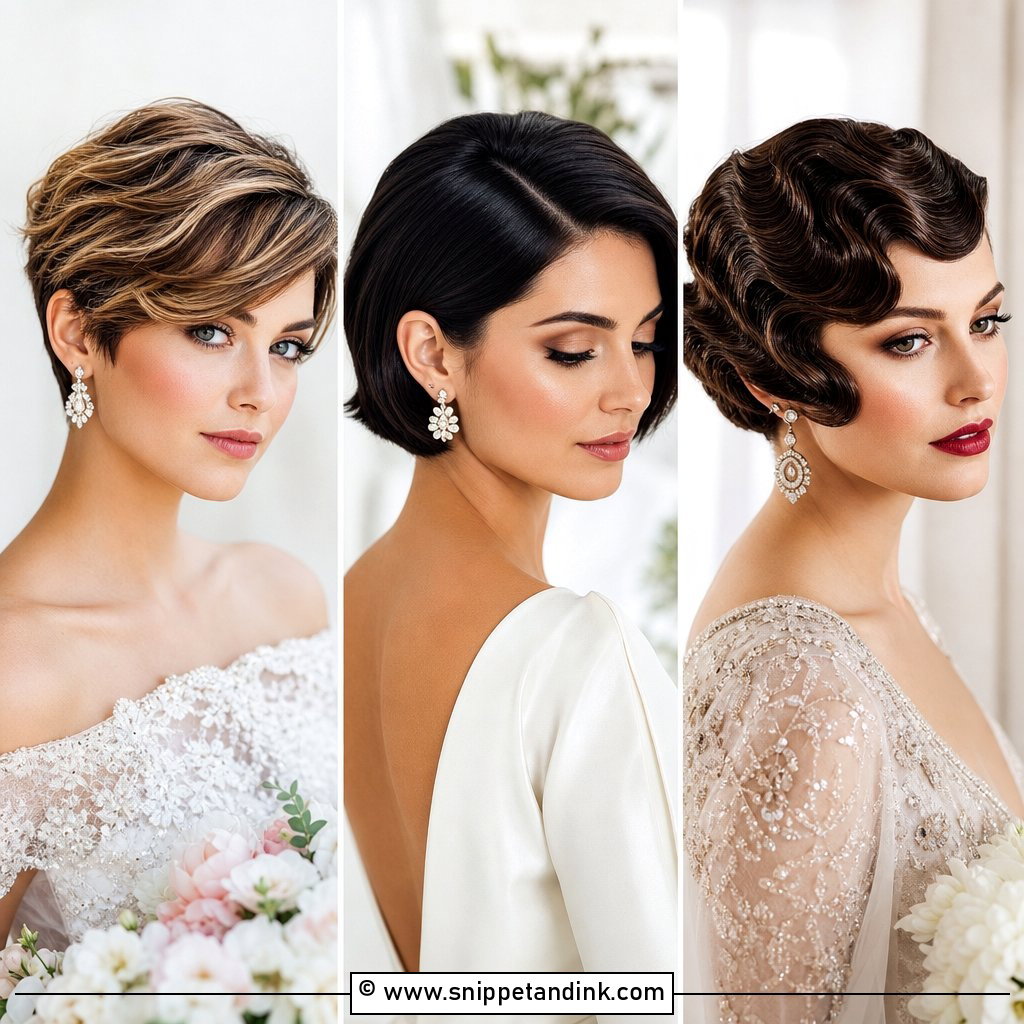
Forcing a bob into a tiny updo usually looks strained, so I’d rather let the cut be the style. A smooth bob with ends turned under is clean; a softly waved one gives more texture. The key is a fresh trim about a week to ten days before the wedding, close enough for crisp ends but with time for the cut to settle. I finish with a flat iron, bending the ends rather than curling them, and a little shine spray. A barrette or a birdcage veil adds the bridal detail with a mini dress or tailored suit.
9. Civil Wedding Wavy Bob
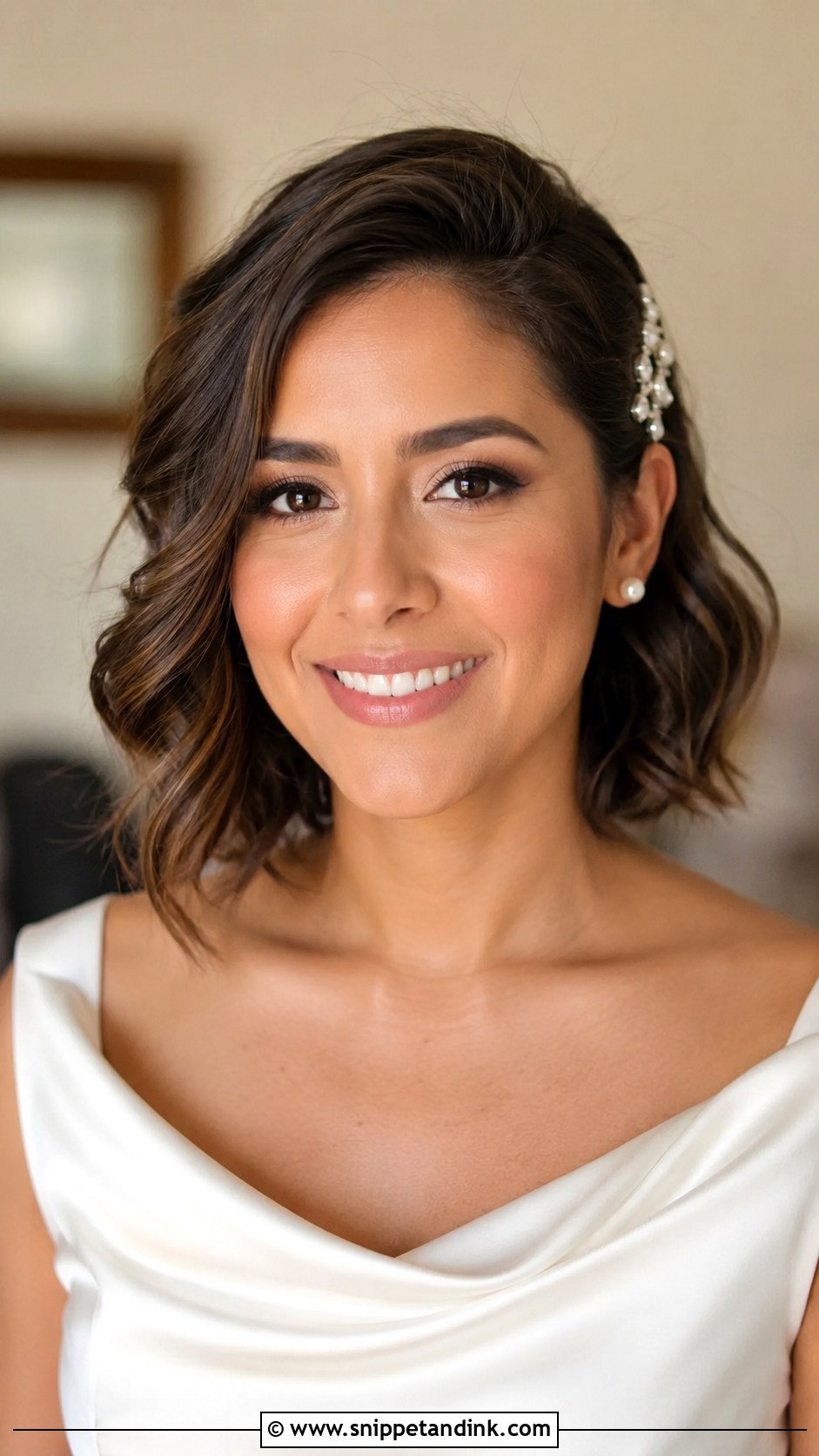
A civil wedding wavy bob gives movement on chin, jaw or collarbone length hair and can soften a structured courthouse outfit. I use a wand on vertical sections and alternate the direction of each wave, then leave the last inch straight so it doesn’t look like a set. Too much curl on short hair adds width at the sides, which is the most common thing brides dislike in photos. A deep side part gives a vintage nod, a centre part keeps it relaxed. Tuck one side and finish with a light texture spray.
10. Civil Wedding Pixie Cut
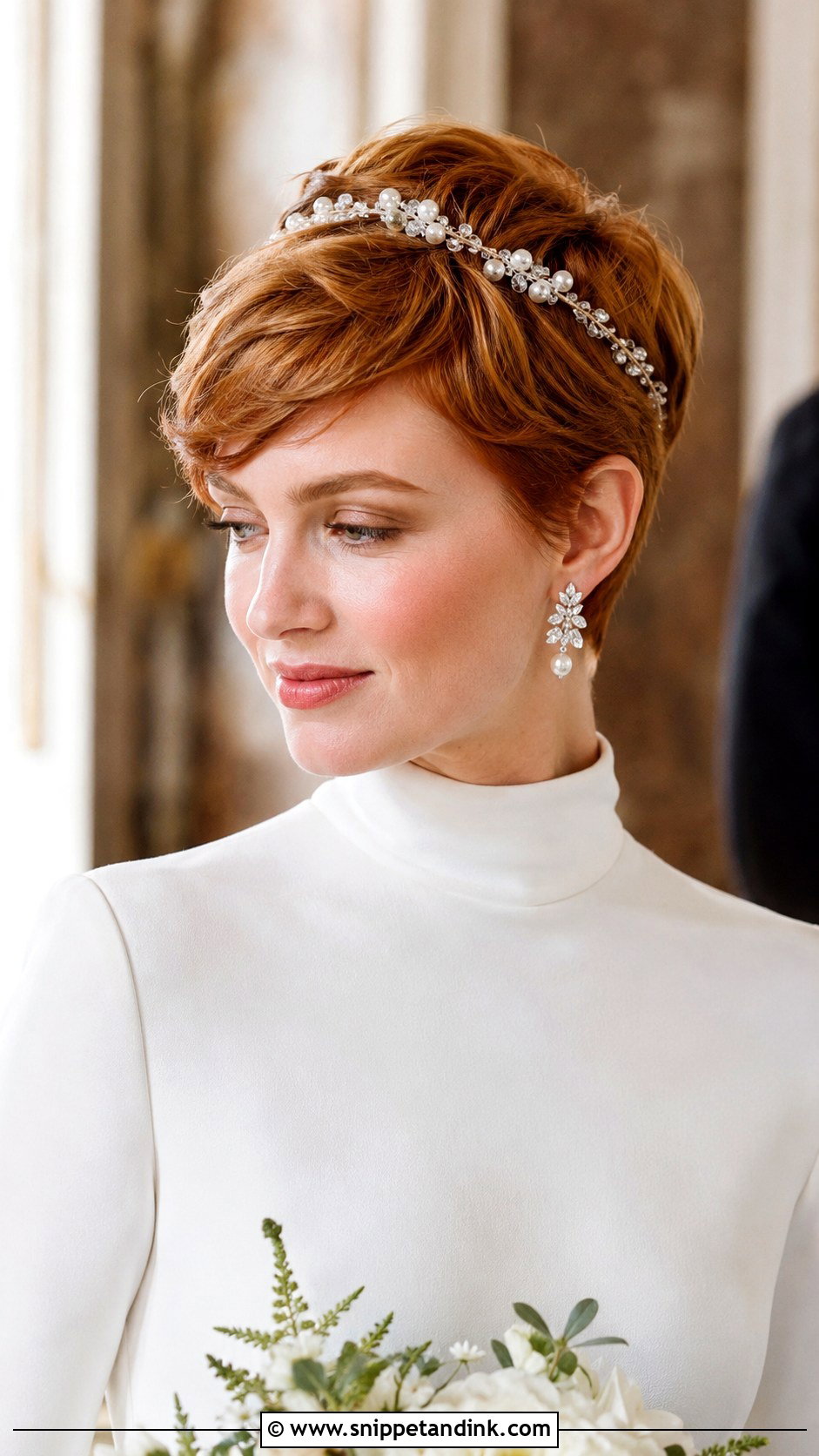
Pixie hair looks bridal when it looks intentional, and a civil wedding pixie cut really only needs shape and shine. A swept fringe, a smooth side part or a little lift at the crown changes the mood entirely. I use a small round brush and a pea of pomade rather than spray, because short hair lifts and separates as the day goes on and pomade lets you reset it with your fingers. Statement earrings, a high neckline or a bridal blazer sit well with it. A slim headband or pearl clip works if you want a detail, but keep it to one.
11. Civil Wedding French Twist
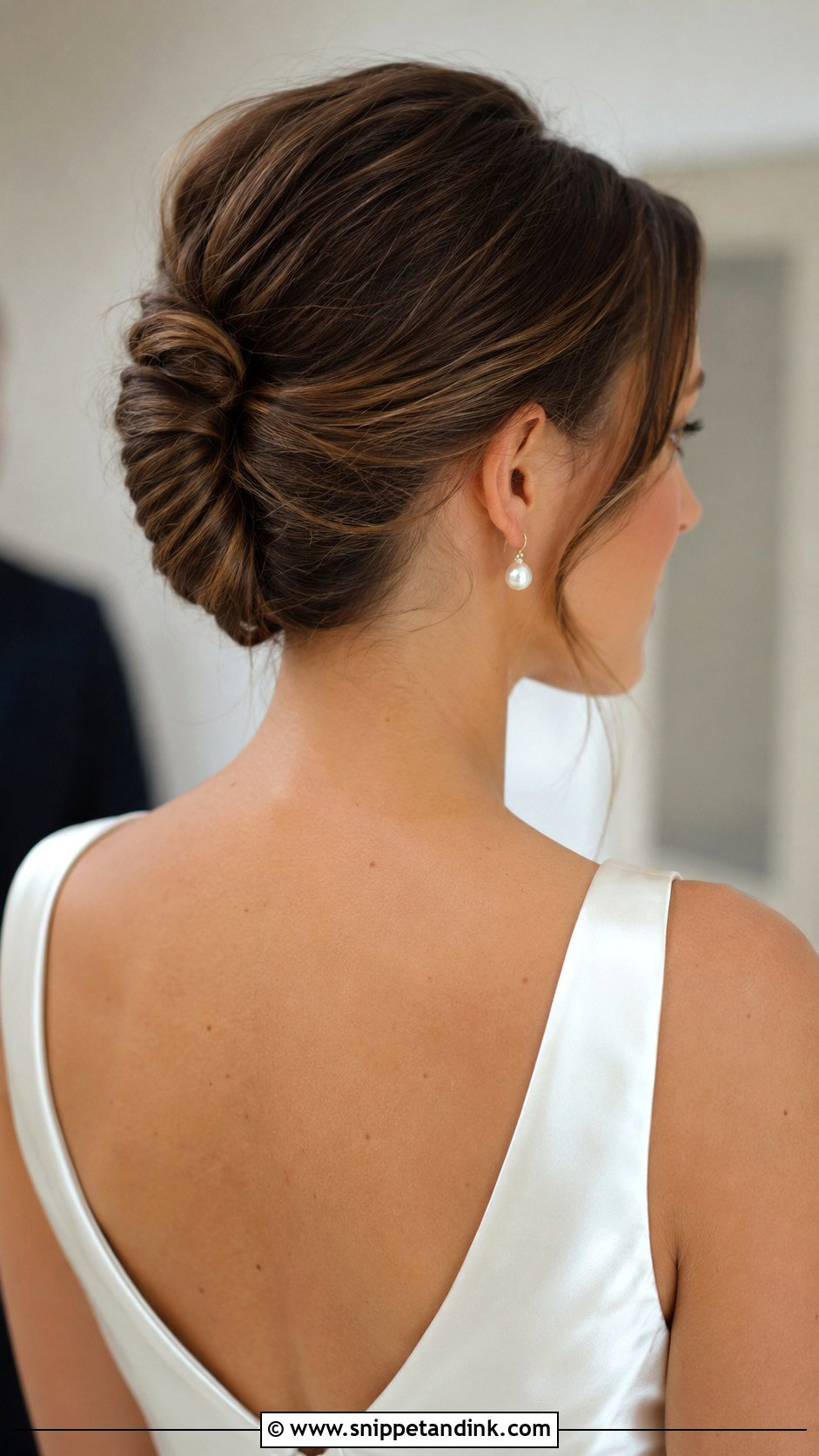
The French twist gives you an updo’s shape without the weight. For a civil ceremony I keep it slightly soft instead of tight, which reads more modern and less formal. It suits medium to long hair and looks right with pearl earrings and satin. The twist holds best on second-day hair or hair prepped with a texture spray, since freshly washed silky hair slides out of the roll. I lock it with a line of crossed pins down the seam, then finish with flexible spray so it survives photos and a few hugs.
12. Civil Wedding Chignon
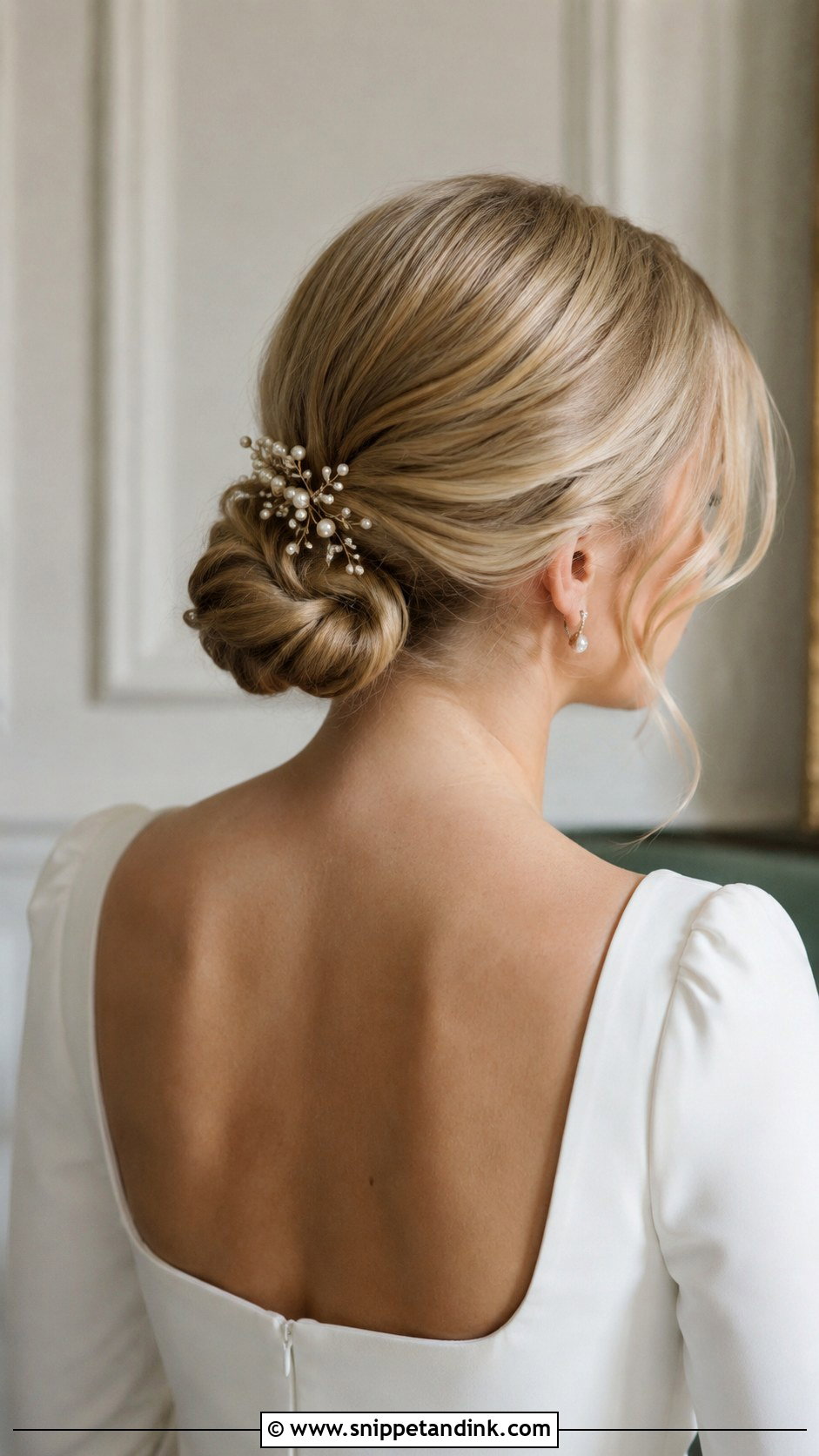
A chignon sits low at the nape and can be smooth, twisted, braided or slightly textured, so it adapts to almost any outfit, from a courthouse dress to a jumpsuit or tailored suit. Its biggest strength is as a base: veils, combs and pins sit securely in it. I check the chignon’s height against your collar or neckline at the trial, because a chignon that rests on a high collar gets pushed up every time you turn your head. Keep the front clean for polish or pull a few strands out for softness.
13. Civil Wedding Side Swept Hair
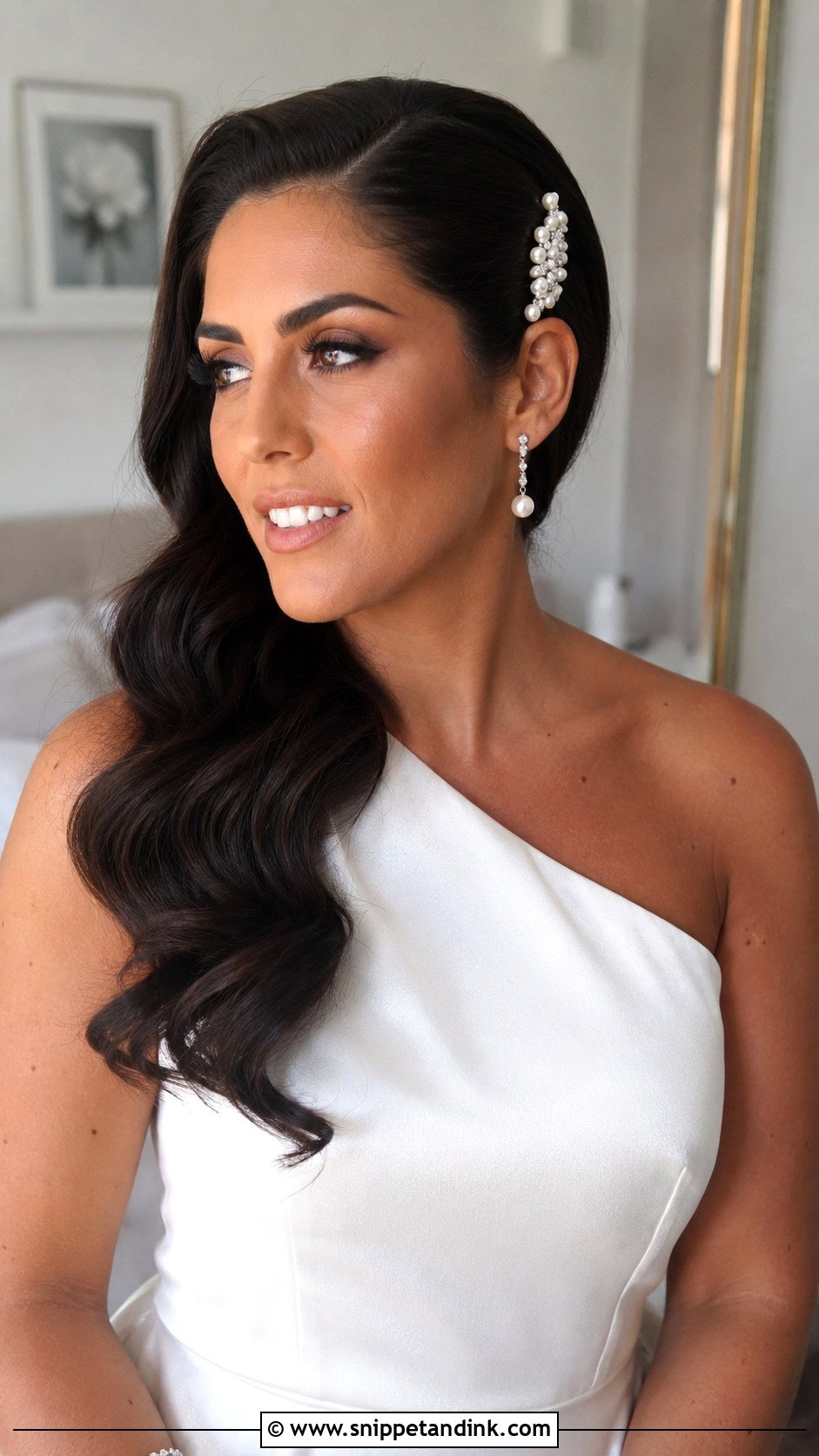
Side swept hair gives glamour without a full updo, and it’s my first suggestion for one-shoulder and strapless necklines. Waves or curls are gathered over one shoulder, which keeps your face open for photos. The hidden work is underneath: I pin a crisscross of bobby pins behind the ear on the swept side to create an anchor, then lay the curls over it. Without that, the hair drifts back to centre within an hour. A pearl clip or comb near the pinned side hides the anchor neatly.
14. Civil Wedding Braided Bun
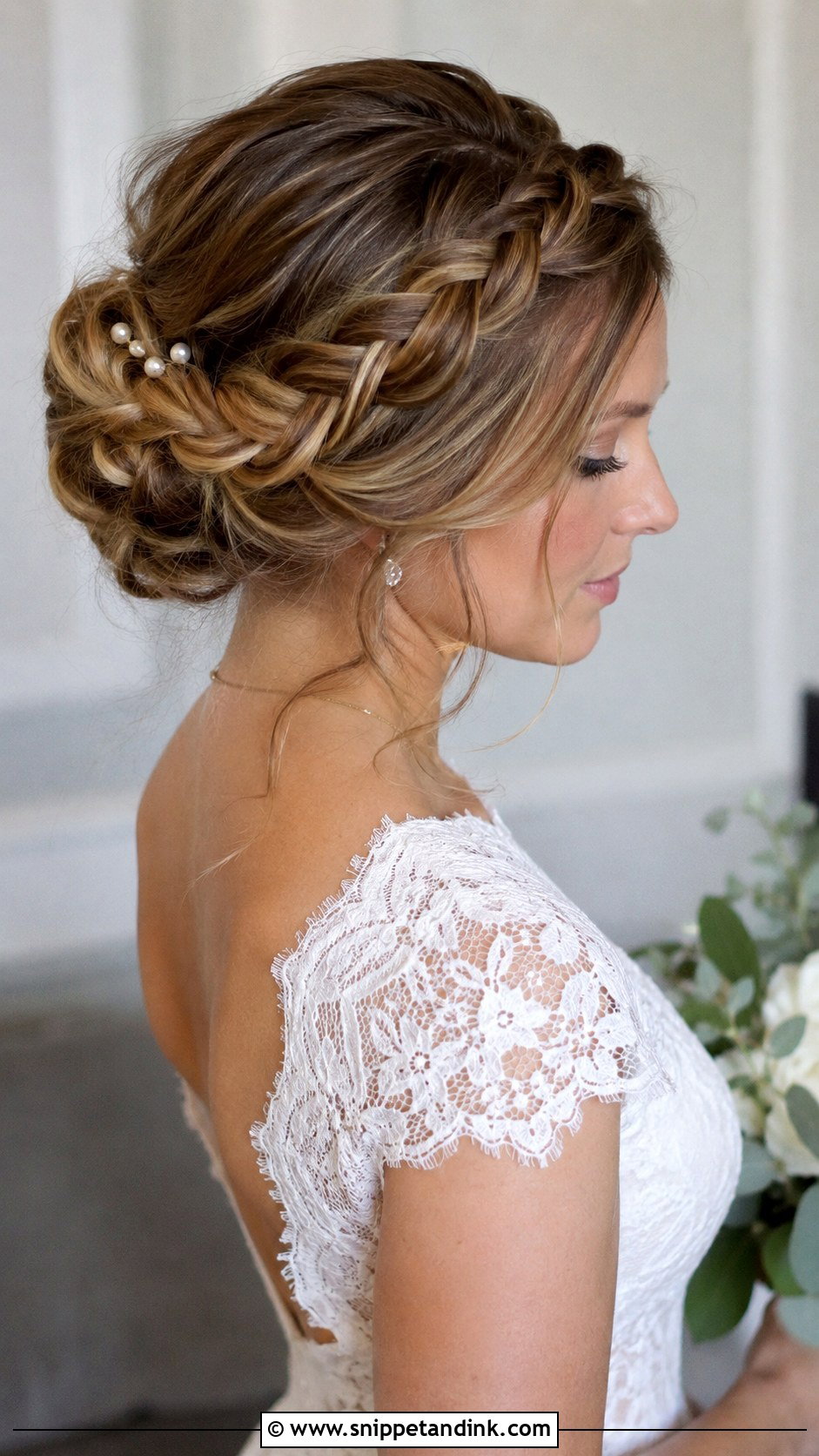
A braided bun gives an updo more texture than a plain bun while staying neat for a legal ceremony. The braid can wrap around the bun, blend into a low chignon or start from one side. It’s one of the most durable styles I do, because the braid itself carries the weight that pins would otherwise hold. I braid it slightly tight and then pancake the edges by gently pulling them, rather than braiding loose, which lets it look soft while staying secure through travel and a long lunch. Pearl accessories and lace dresses sit naturally with it.
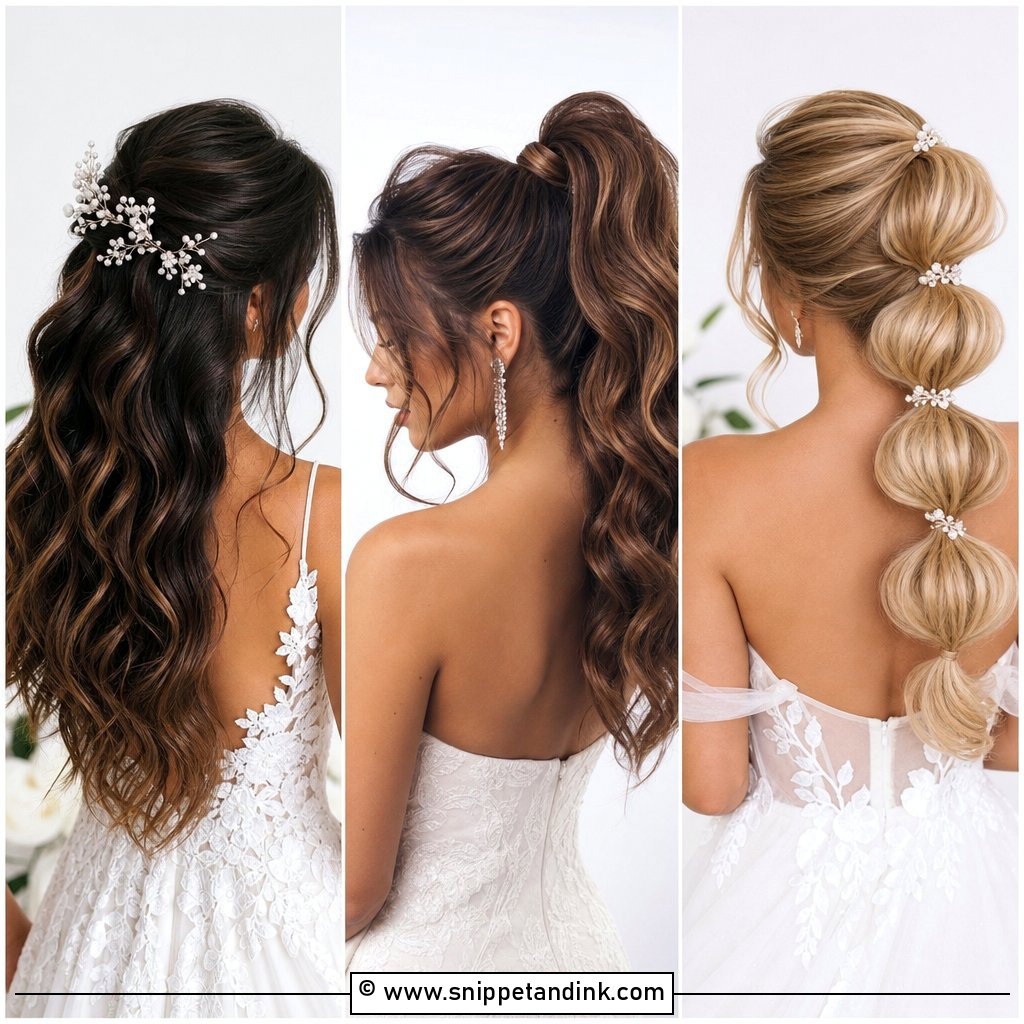
15. Civil Wedding Crown Braid
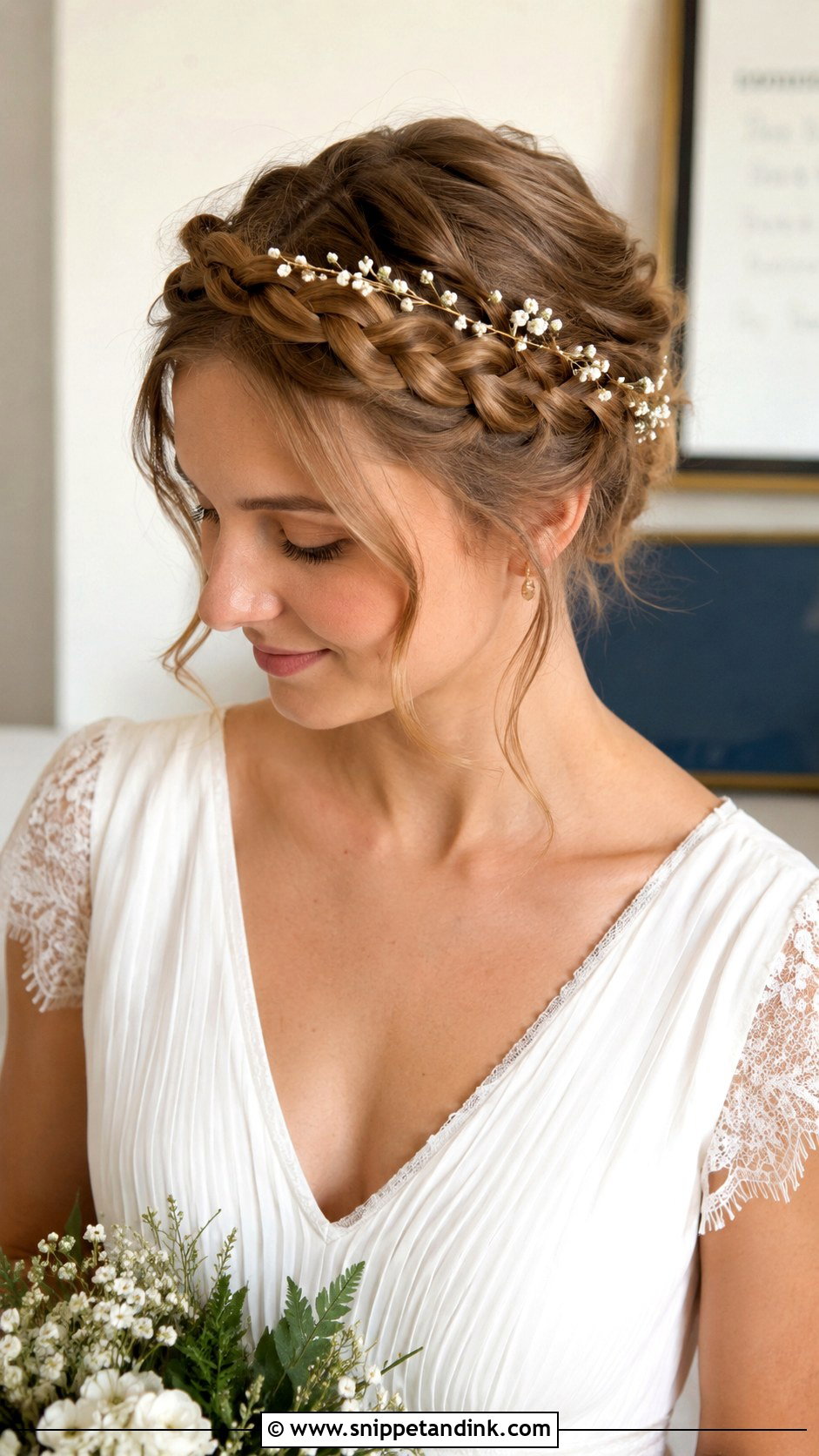
A crown braid works like a natural headband, keeping hair secure and off the face, and it’s a strong choice for outdoor civil ceremonies or garden photos where wind is a concern. It can be neat or loosened. On fine or shoulder-length hair the braid often isn’t long enough to wrap the whole head, so I use two braids, one from each side, pinned to meet at the back. Small pearl pins or tiny white flowers can sit in the braid, but keep them delicate so the plait still shows.
16. Civil Wedding Loose Curls
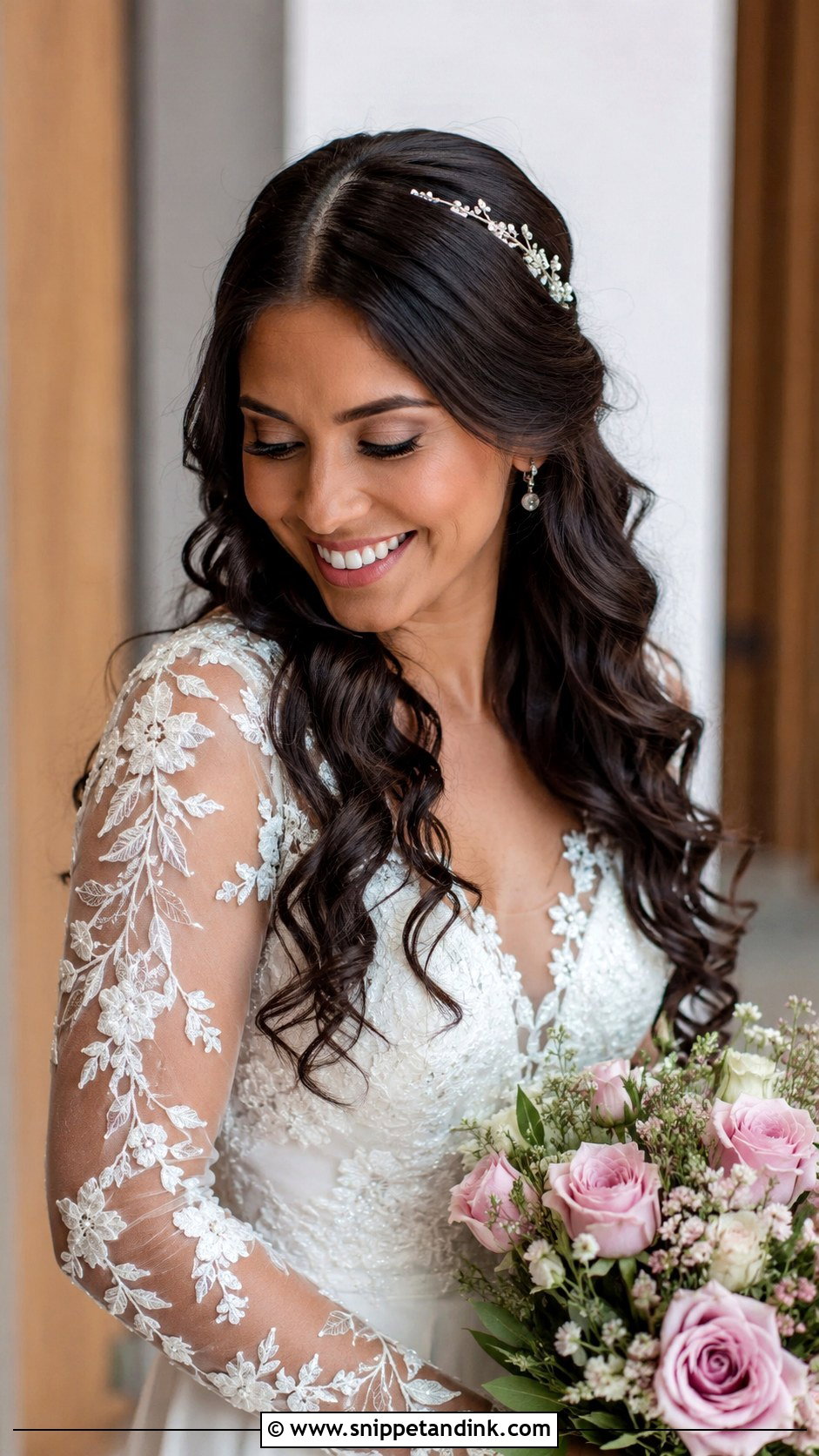
Loose curls are simple and flattering on most lengths, and they let you look bridal while still recognising yourself in the mirror. The curls should be separated and soft, with enough hold to last but not so much product that they feel crunchy. I keep the top smooth and start the curl from mid-length down, which avoids the dated look of curls right from the root. Fine hair needs a mousse at the root and a cooler iron set longer; thick hair needs smaller sections, or the inside layers barely curl. Add a comb or veil if you like.
17. Civil Wedding Curtain Bangs Hair
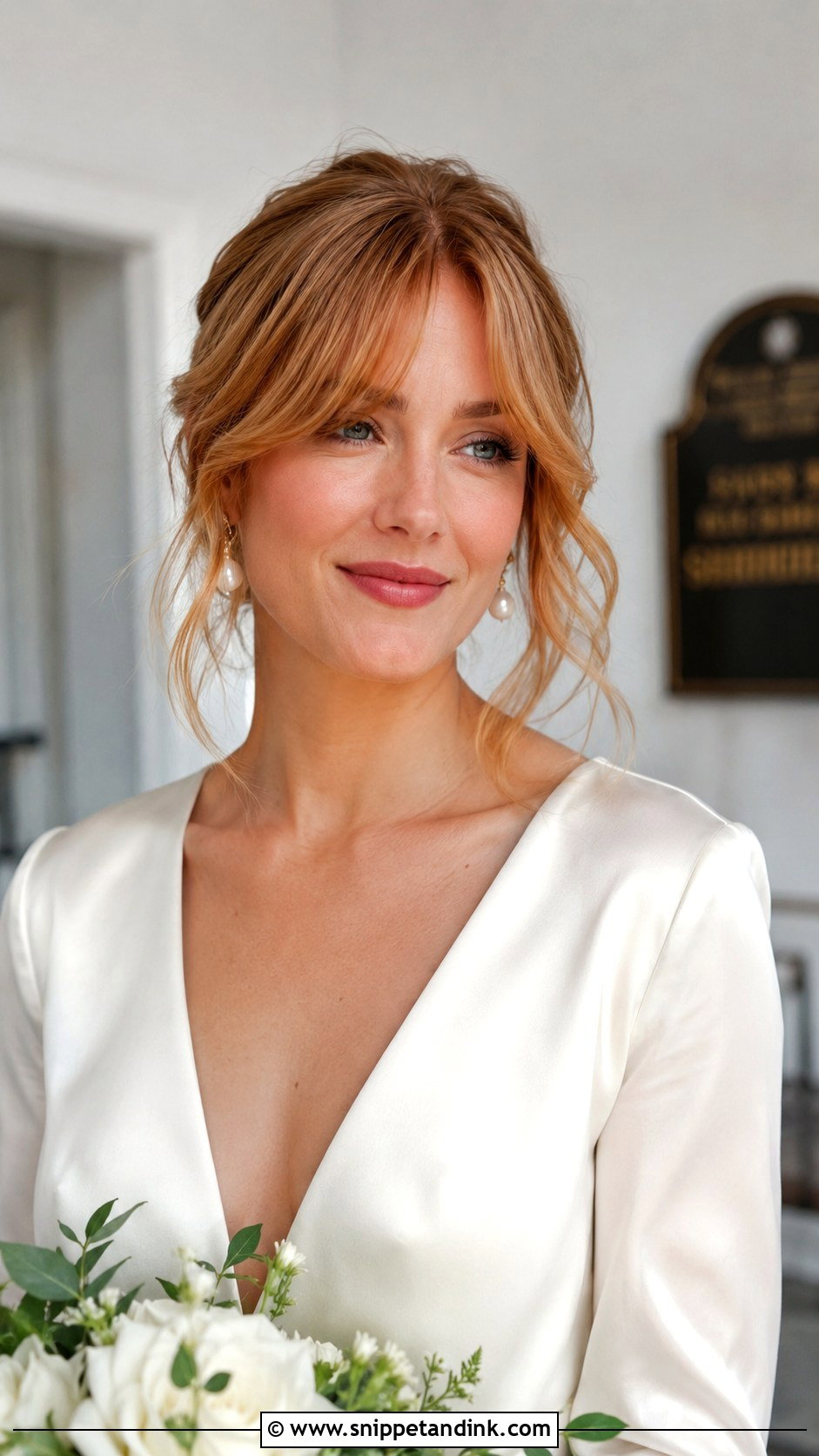
Curtain bangs make even a simple style look finished, and they pair with low buns, half up hair, ponytails or loose curls. For a ceremony I want them smooth and lifted away from the face rather than sitting flat across the eyes. I set them on a large velcro roller while doing your makeup and remove it last. If your bangs are newly cut, give them two or three weeks to grow out of that blunt freshly-trimmed stage before the wedding. The rest of the hair can stay plain so the face frame leads.
18. Civil Wedding Claw Clip Updo
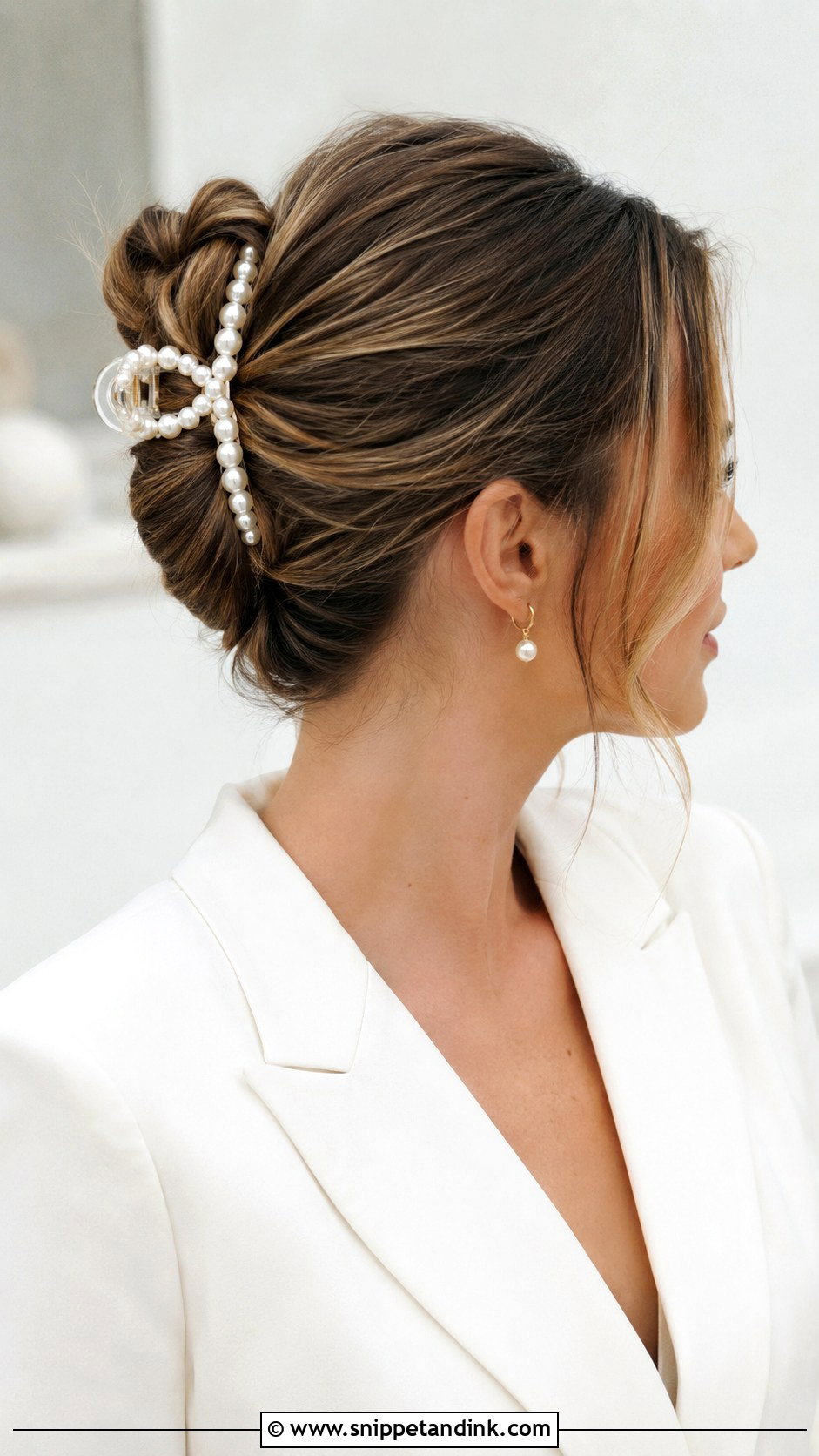
A claw clip updo can look modern and surprisingly elegant when it’s styled with care. Use a bridal clip in pearl, ivory, gold or clear acrylic rather than an everyday one. I twist the hair upwards, clip it, then pin the clip’s teeth to the twist from underneath with two crossed pins, because a clip alone loosens as soon as you lean back in a chair. It suits medium to long hair and relaxed outfits like blazers or satin separates. It’s also the easiest style here to redo yourself if it slips.
19. Civil Wedding Hair With Bow
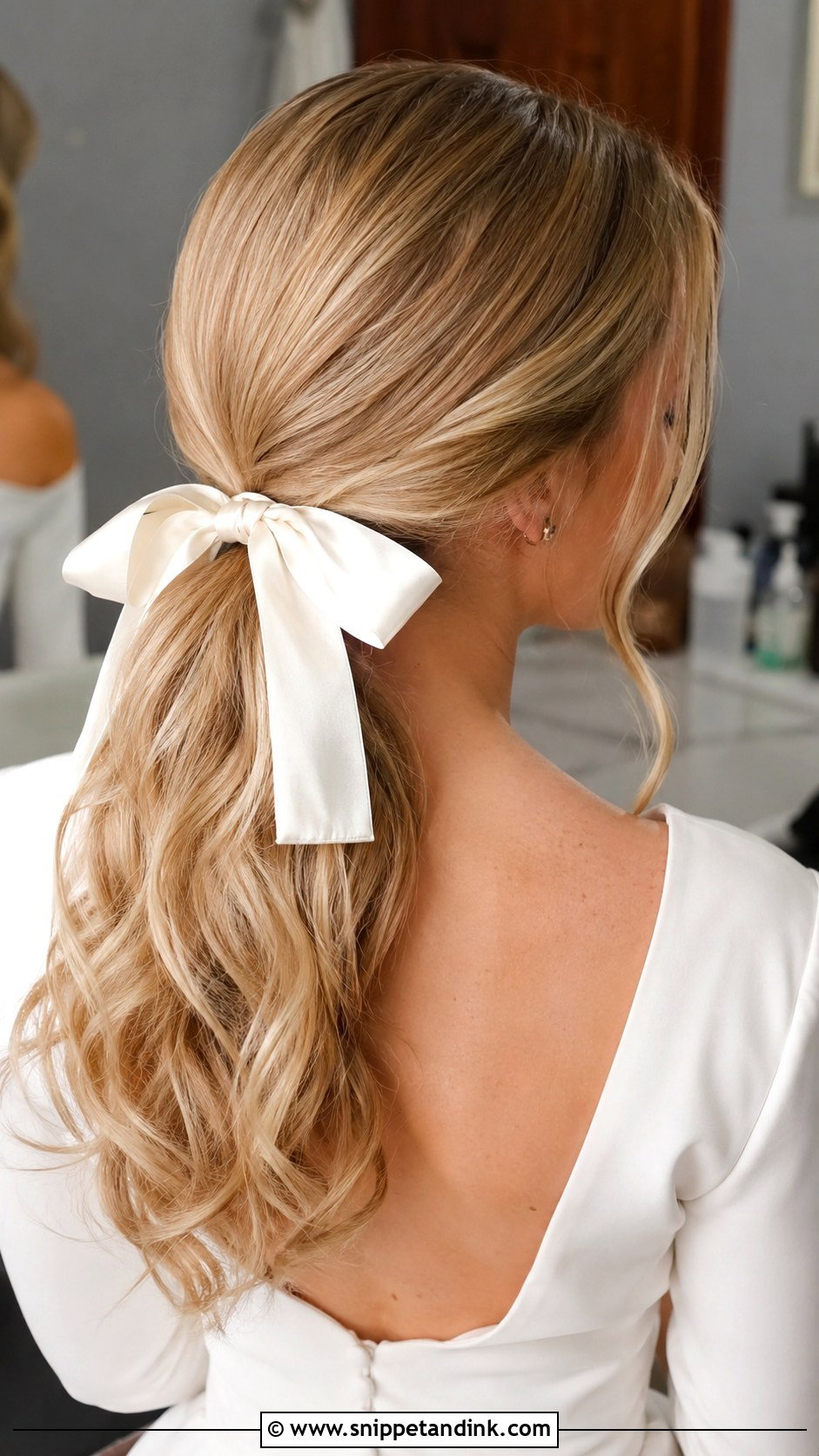
A bow is the sweetest detail on this list and adds charm without heavy jewellery. It can sit on a low ponytail, a half up style, a bun or loose waves. For a civil ceremony I’d look at satin, organza or velvet in white, ivory, cream or pale blush. A smaller bow feels polished; a big one becomes the focus. Big bows are heavy, so I sew or wire them to a small comb or barrette rather than tying them on, and position it on a secure base so it doesn’t tilt over the course of the day.
20. Civil Wedding Hair With Veil
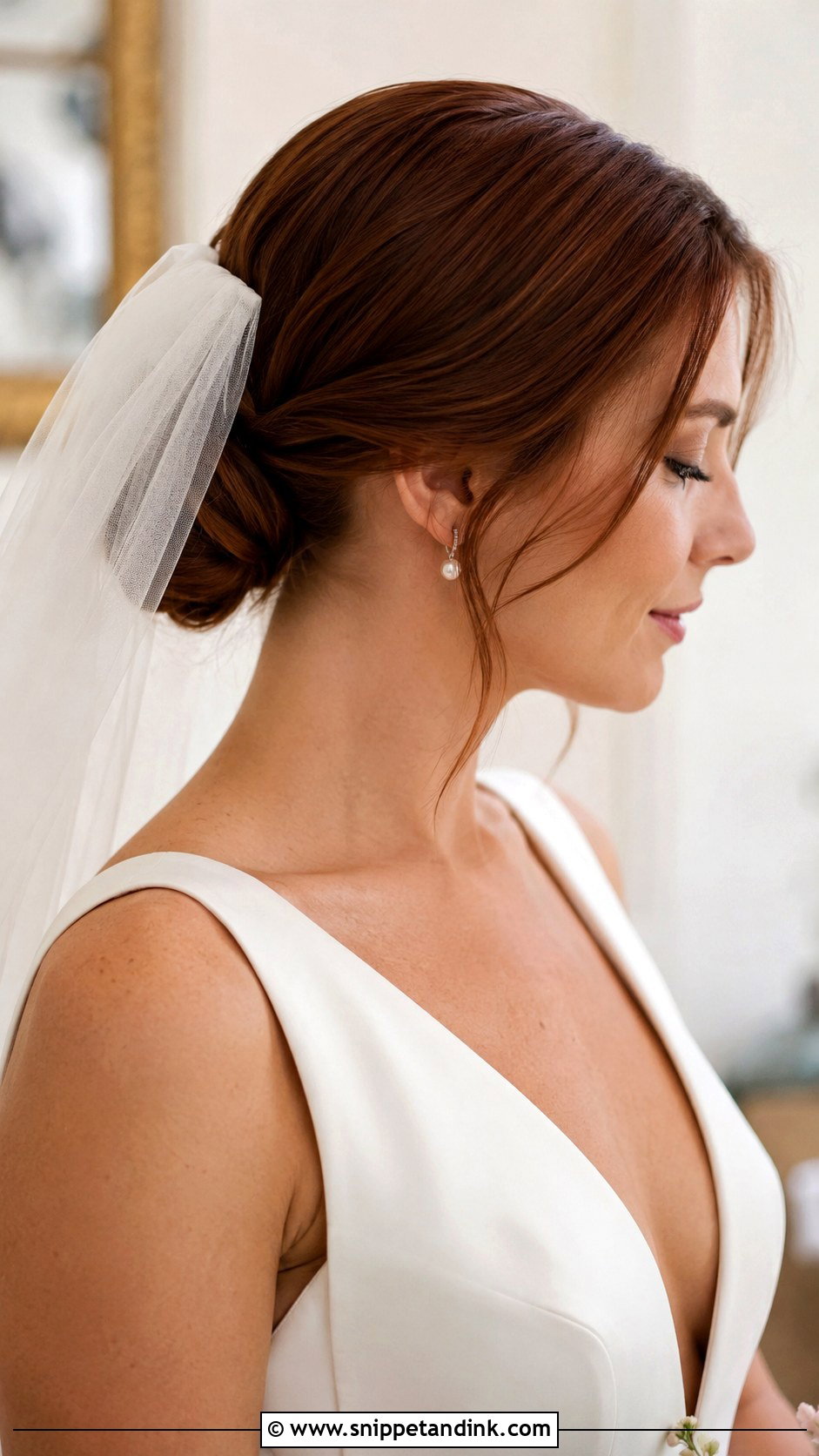
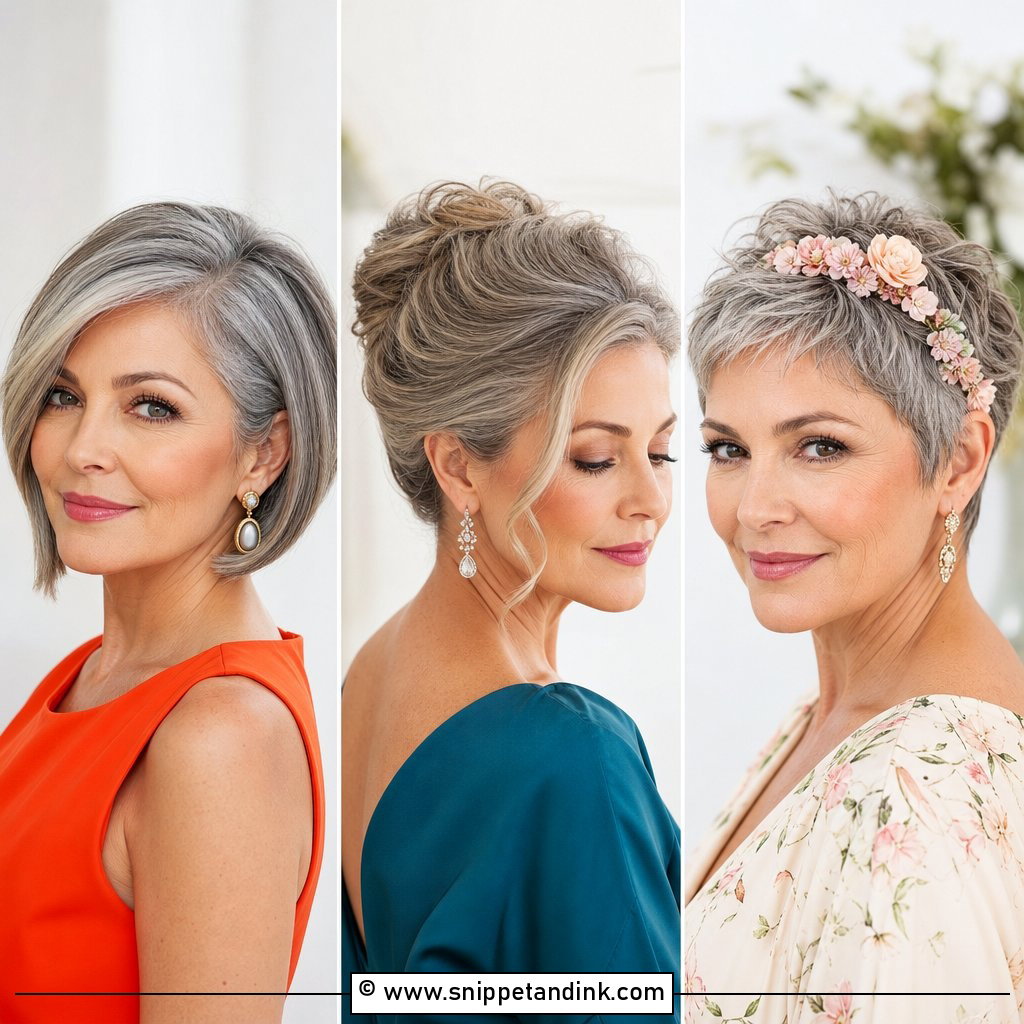
A veil at a civil ceremony can be simple and modern, and a long cathedral length isn’t needed. Short veils, birdcage veils, blushers and shoulder-length veils all suit civil outfits. Low buns, sleek bobs, ponytails and half up styles all take a veil well when the placement is planned. I always fit the veil at the trial, since its comb needs a firm base to grip: a small braid, a bun, or crossed pins. Ask your stylist to show you how to remove it without pulling the style apart, because you’ll usually want it off once you reach the restaurant.
Adjusting These Styles for Fine, Thick or Curly Hair
The same photo can be built very differently depending on your hair, and that’s usually where a trial earns its money.
Fine or slippery hair
Fine hair drops curl and lets pins slide. I prep it with a root mousse and a dry texture spray, then build every updo on a small elastic base. Sleek styles look great on fine hair; big voluminous ones usually need padding or a clip-in weft hidden underneath.
Thick or heavy hair
Heavy hair holds curl but drags updos down. I split a bun into two smaller sections pinned on top of each other, so no single pin carries the full weight. It also takes longer to dry, so wash it the night before rather than the morning of.
Natural curls and coils
Many of these shapes work beautifully on your own texture instead of silk-pressed hair. A defined low bun or a curly side sweep holds better in humid weather than straightened hair, which tends to revert. Tell your stylist early whether you want your texture or a smooth finish, because the prep starts days ahead.
What to Carry When Nobody From the Salon Comes Along
At a civil wedding you’re usually your own touch-up artist after the ceremony, so I pack a small kit into the bride’s bag or a friend’s pocket:
- Six to eight bobby pins matched to your hair colour.
- A travel-size flexible hairspray.
- A small tail comb for smoothing the hairline.
- Two clear elastics in case a ponytail or braid needs retying.
- Blotting papers, since a shiny forehead under a fringe shows more than hair out of place.
Before you leave, ask your stylist which two pins hold the style together. If something drops at lunch, those are the ones to reset first.
One Last Test Before the Registry Office
Pick the style you’ll stop thinking about once you leave the house. A courthouse or city hall ceremony doesn’t mean plain hair, it means hair that suits a shorter, moving day. Before the wedding, test it with your actual outfit, earrings, neckline and any veil or clip, and take a photo in daylight by a window, which is closer to registry office light than a bathroom mirror. Then check it again five or six hours later. Whatever still looks right at that point is your answer.
You'll Like These Ideas:


Leave a Reply