
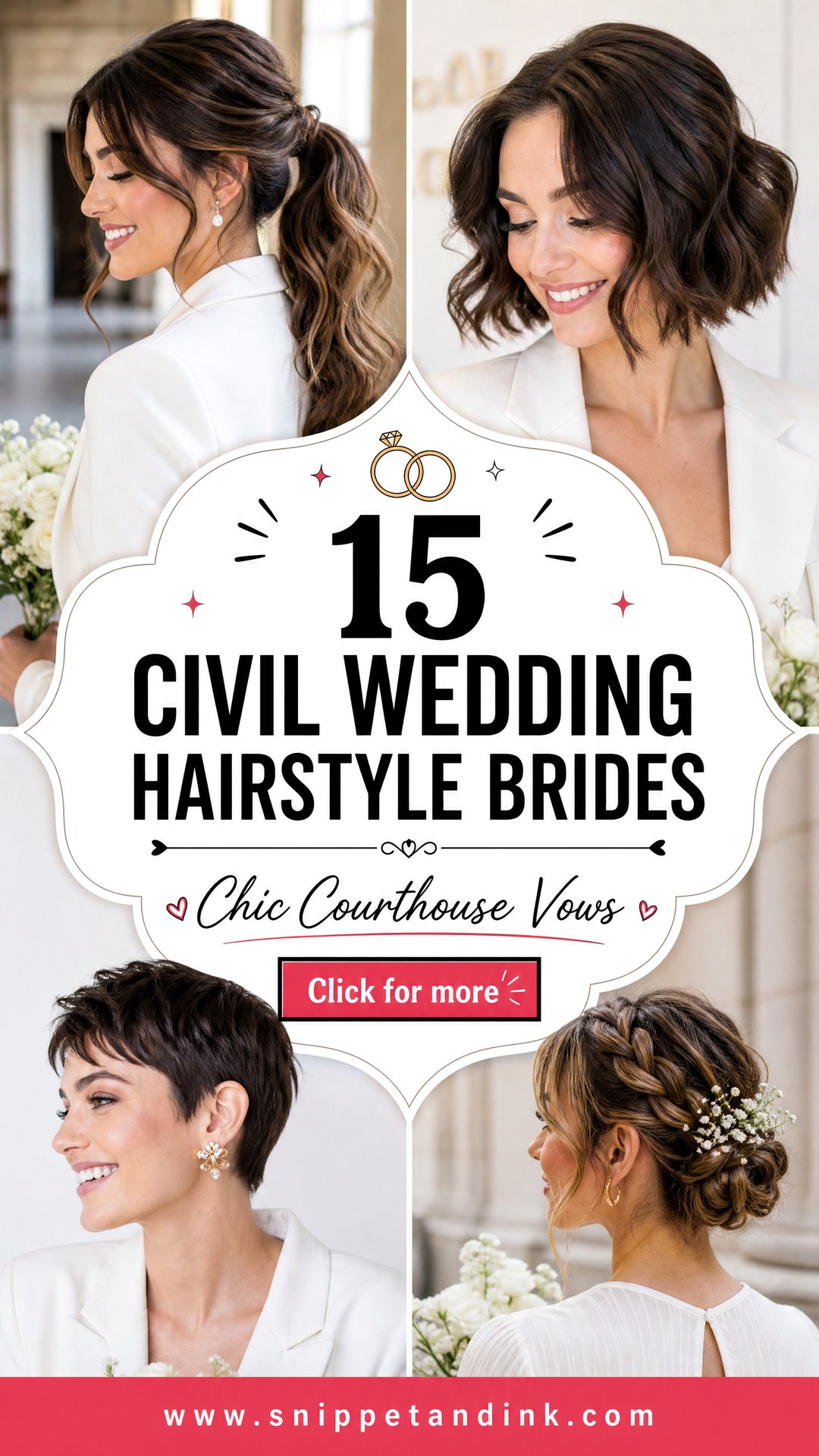
A courthouse wedding is short, but the day around it usually isn’t. You queue in a corridor, say your vows in a ten-minute slot, pose on the steps, then head off to lunch or a small dinner. When I style a civil bride, I plan for that whole stretch, not just the moment in front of the registrar. The hair has to look finished from two feet away in a small room and still hold its shape hours later. Everything below leans clean and grown-up, and the right pick depends on your neckline, your length, the veil (or lack of one) and what the weather is doing outside the building.
A Ten-Minute Ceremony Slot Changes How You Plan Your Hair
Registry offices and courthouses run on appointments, and they rarely have a quiet room where a stylist can set up. Most civil brides end up in one of three situations, and each one pushes you toward slightly different styles.
- Salon first, then travel: I’d choose something sealed and secure, like a sleek bun, low ponytail or braided updo. A car ride, a wait in a corridor and a breezy walk up the steps will flatten loose waves faster than you expect.
- Stylist at home or the hotel: you have more freedom for Hollywood waves or a soft chignon. I aim to finish at least an hour before you need to leave, because civil ceremonies start on the minute and nobody wants to pin a veil in the back of a taxi.
- Doing it yourself: stick to what you already know how to do on a normal day, then upgrade it. A half up style you wear often, plus a pearl comb, looks better than a first attempt at a chignon done under pressure.
Whichever route you take, rehearse it the week before with the actual outfit and accessories. Wear the style for a few hours, sit down, go outside, eat something. I learn more from how a trial looks at four o’clock than from how it looked when it was finished.
1. Civil Wedding Low Bun
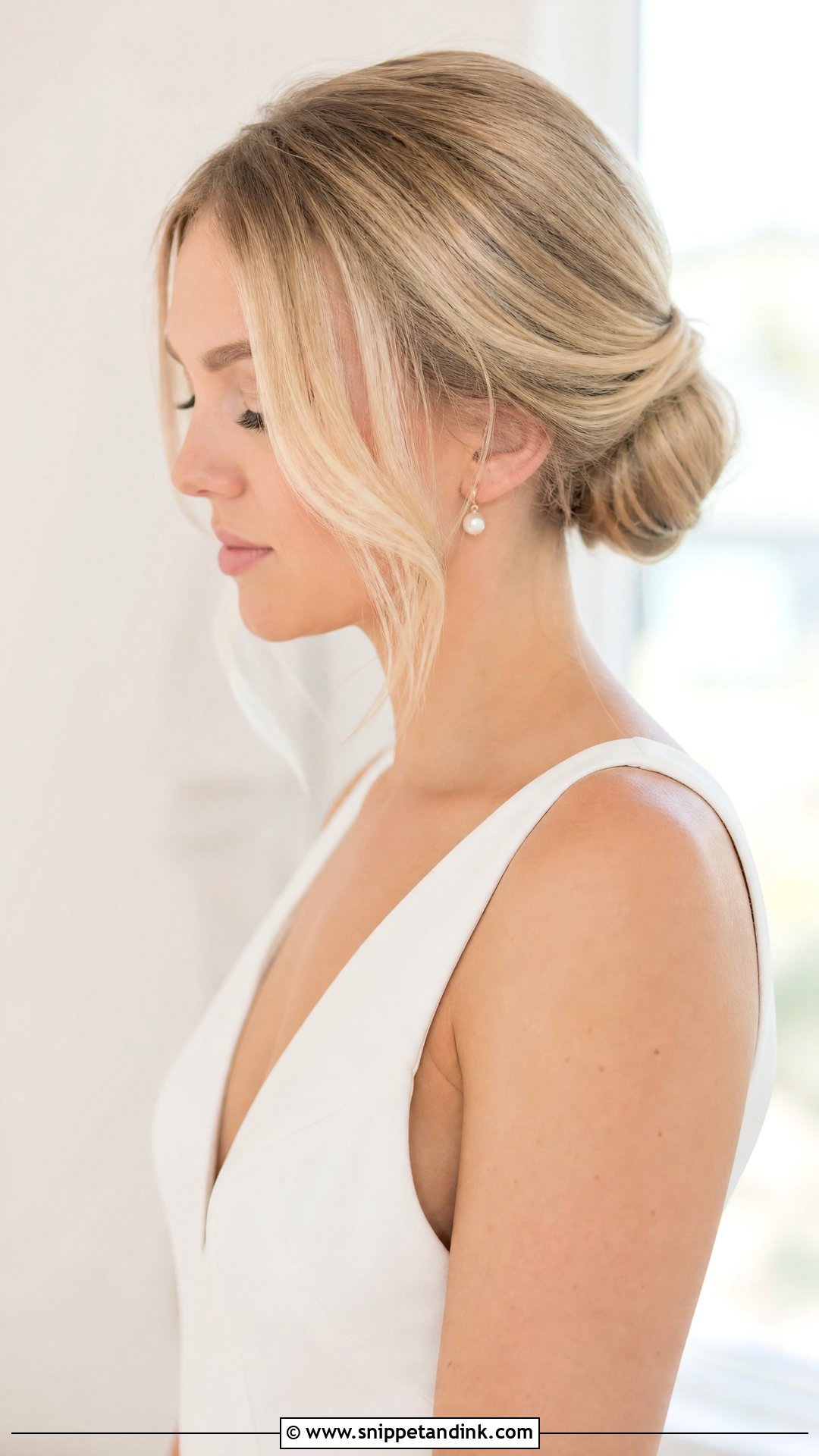
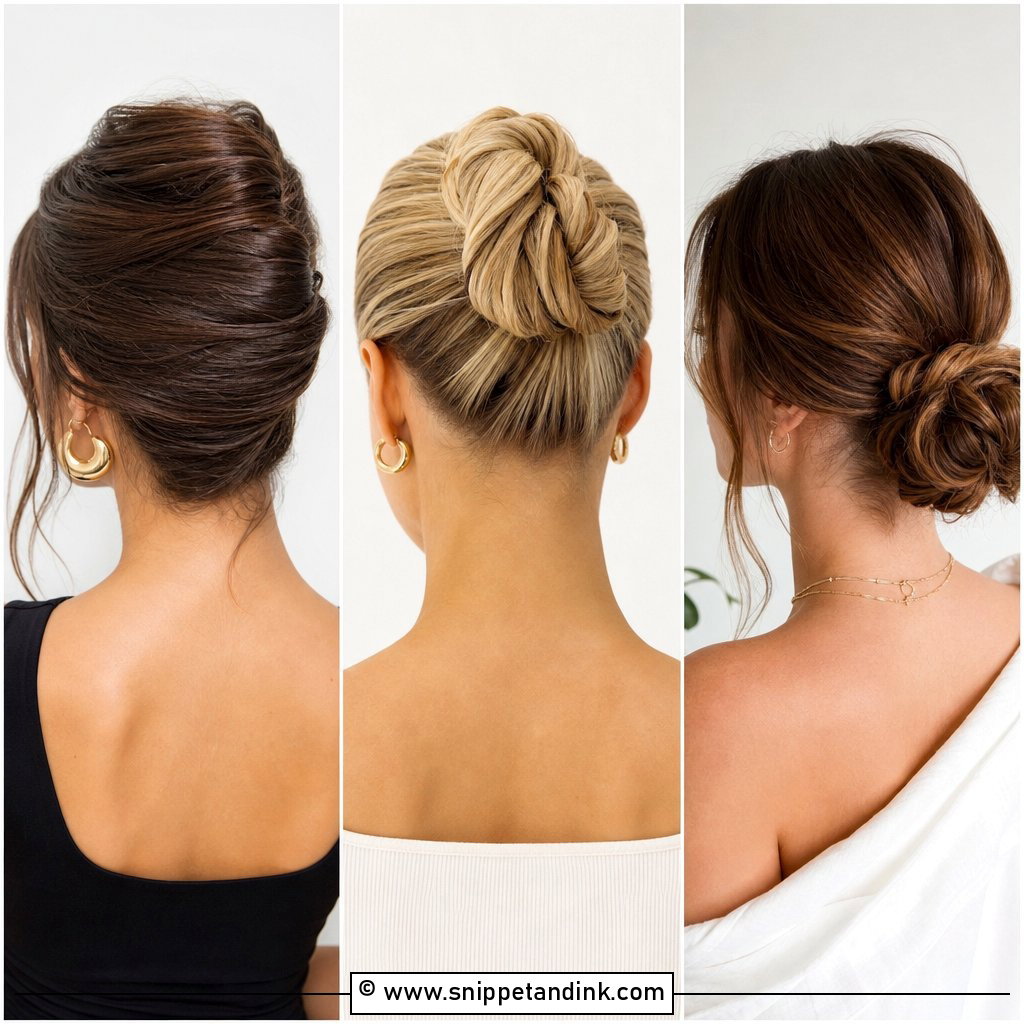
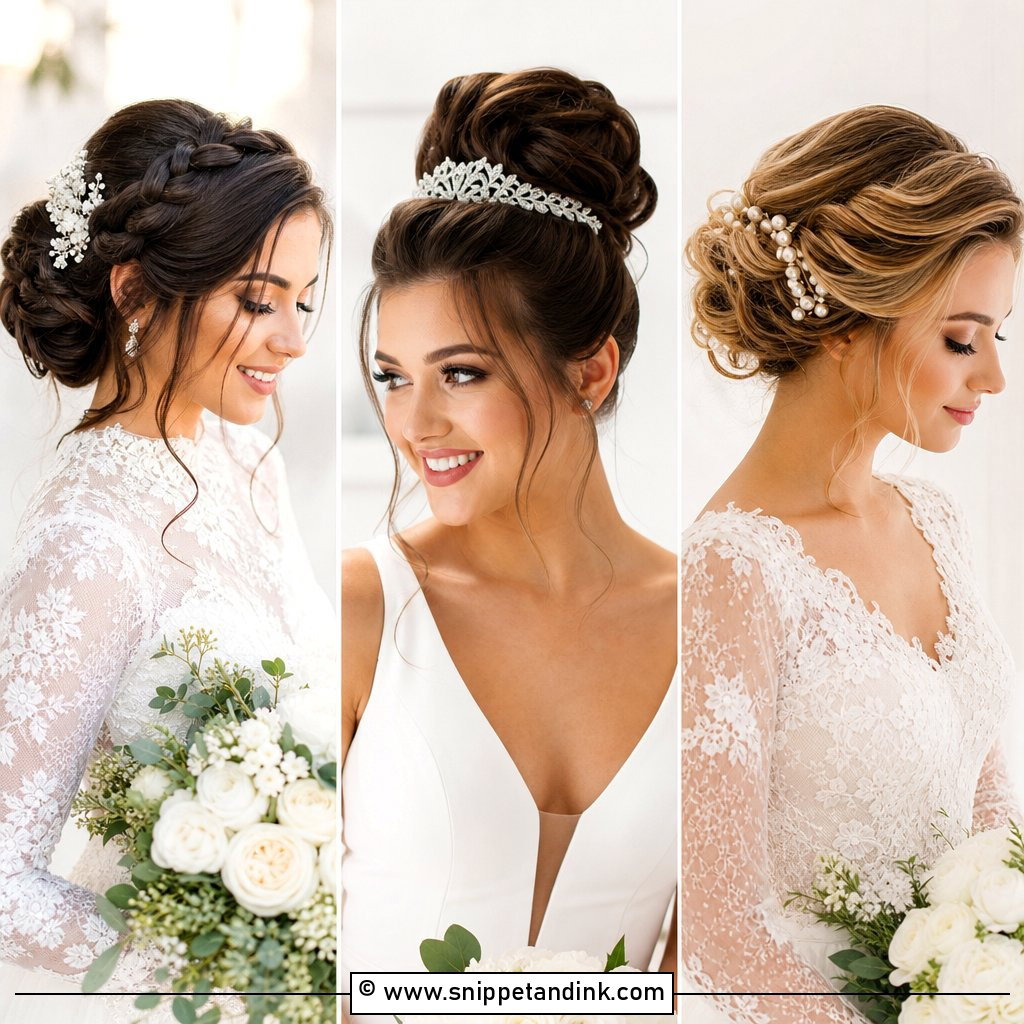
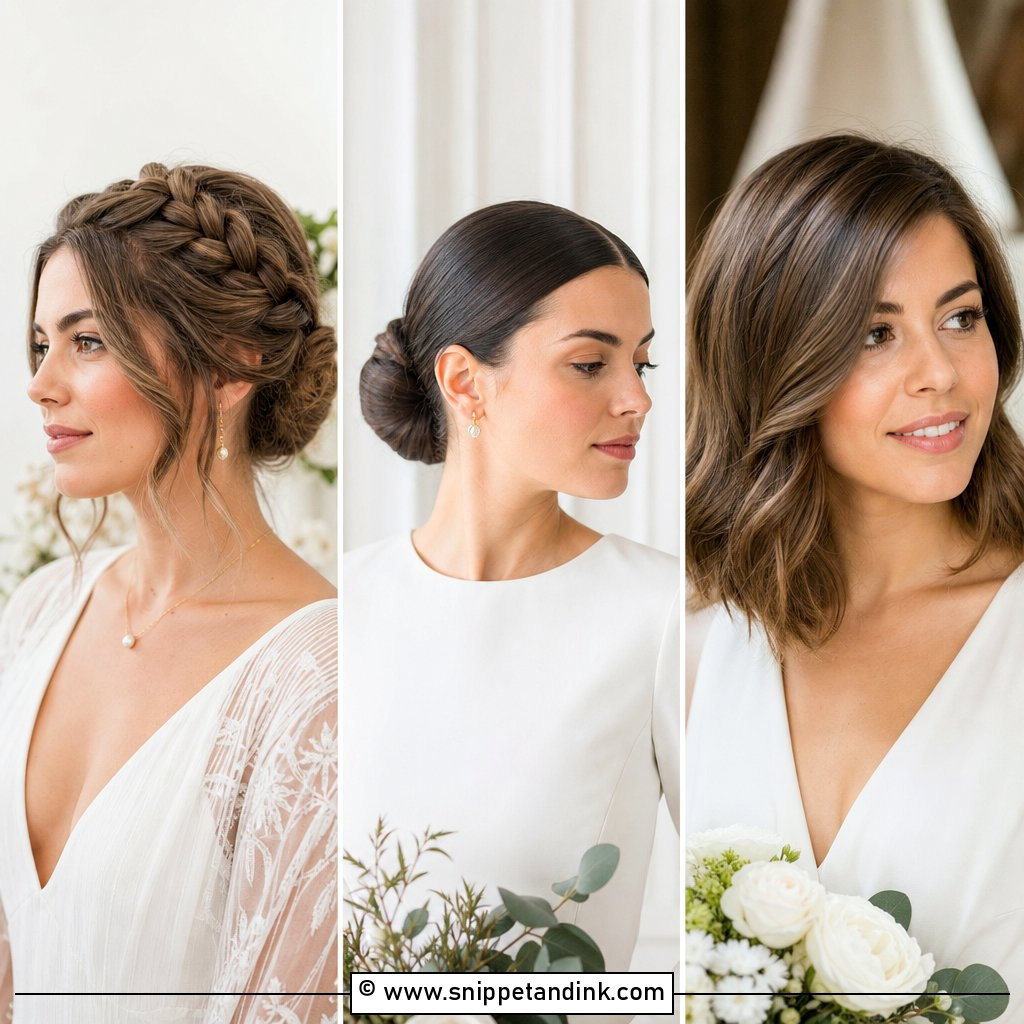
This is the style I reach for most often for registry office brides, because it asks so little of you once it’s in. A bun sitting at the nape stays out of a blazer collar and leaves a high neckline or an open back clear. I build it on a small hidden ponytail first, so the pins have something solid to grip instead of sliding through loose hair. A smooth crown reads modern; two loose pieces by the cheekbones soften it. If your hair is very heavy, tell your stylist early, since a big low bun can drag and start to ache by mid-afternoon.
2. Civil Wedding Sleek Bun
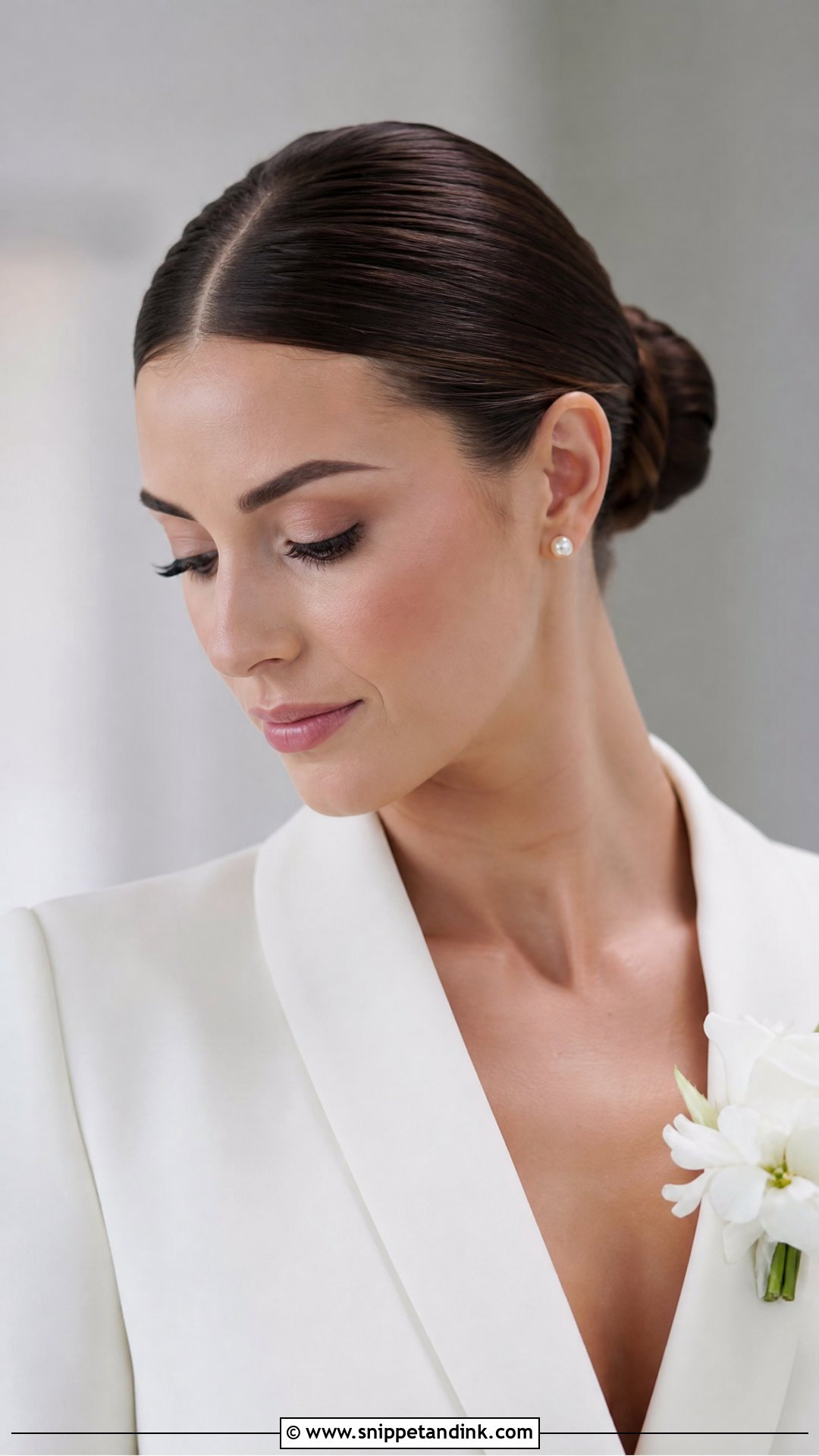
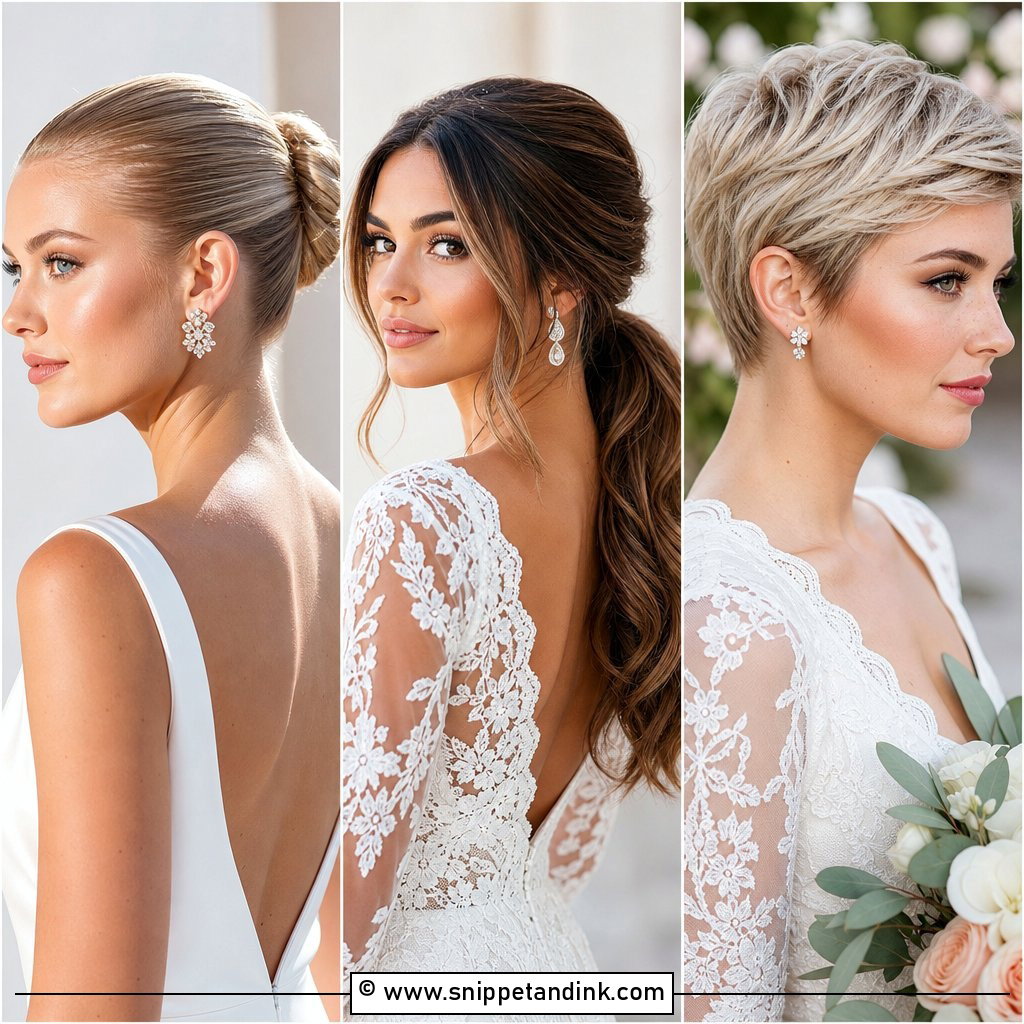
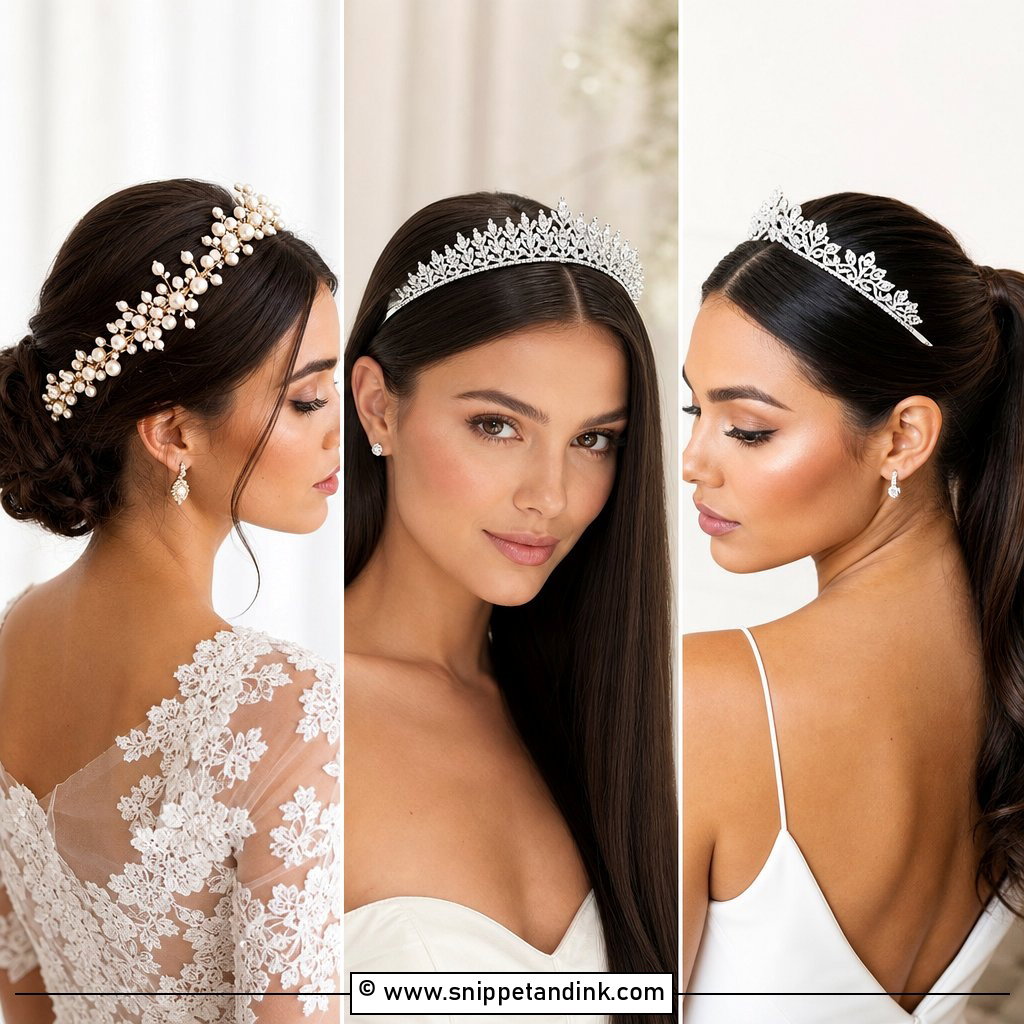
A sleek bun lives or dies on the brushing. I work in a little smoothing cream, blow-dry the hair flat to the head first, then brush it back with a boar bristle brush before it ever meets an elastic. A centre part looks sharpest; a slight side part is kinder if your face is asymmetrical or you have a cowlick at the front. Pair it with pearl studs or a short veil and keep the makeup minimal. Be honest with yourself about flyaways, though. Fine, fluffy hair needs a hold product and a toothbrush pass at the hairline or the polish is gone within the hour.
3. Civil Wedding Soft Chignon
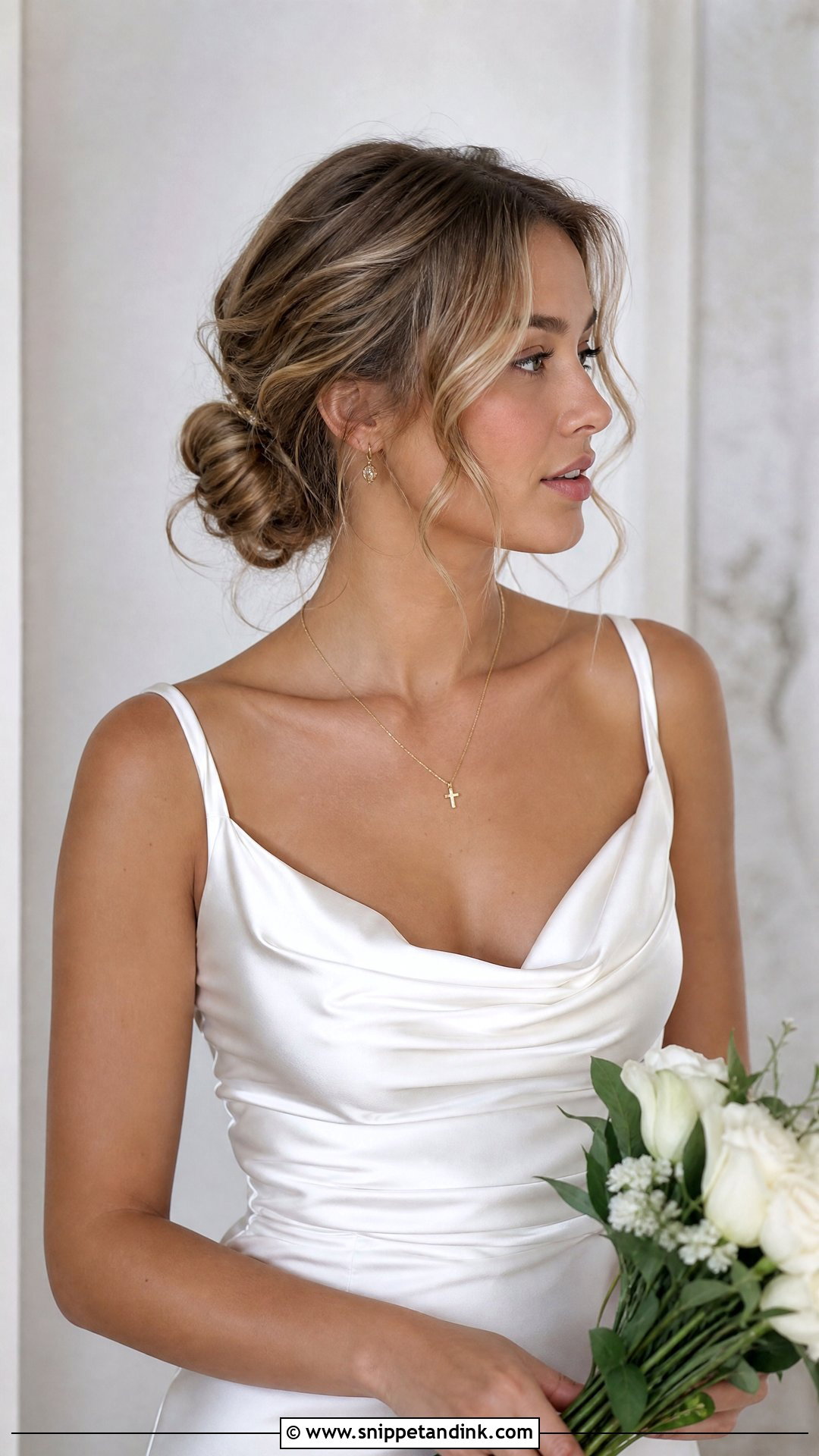
Think of this as the low bun’s relaxed sister. Instead of a tight wrap, I twist and pin loose sections into a shape that sits at the back of the neck, leaving some texture visible. That looseness is what keeps it from feeling too formal for a civil room. It works on medium and long hair and sits nicely above lace, satin or a simple midi dress. The mistake I see most is a front that has been pulled completely flat. Ask for the hairline smooth but with a touch of lift at the root, so the face still has some frame.
4. Civil Wedding Half Up Half Down Hair
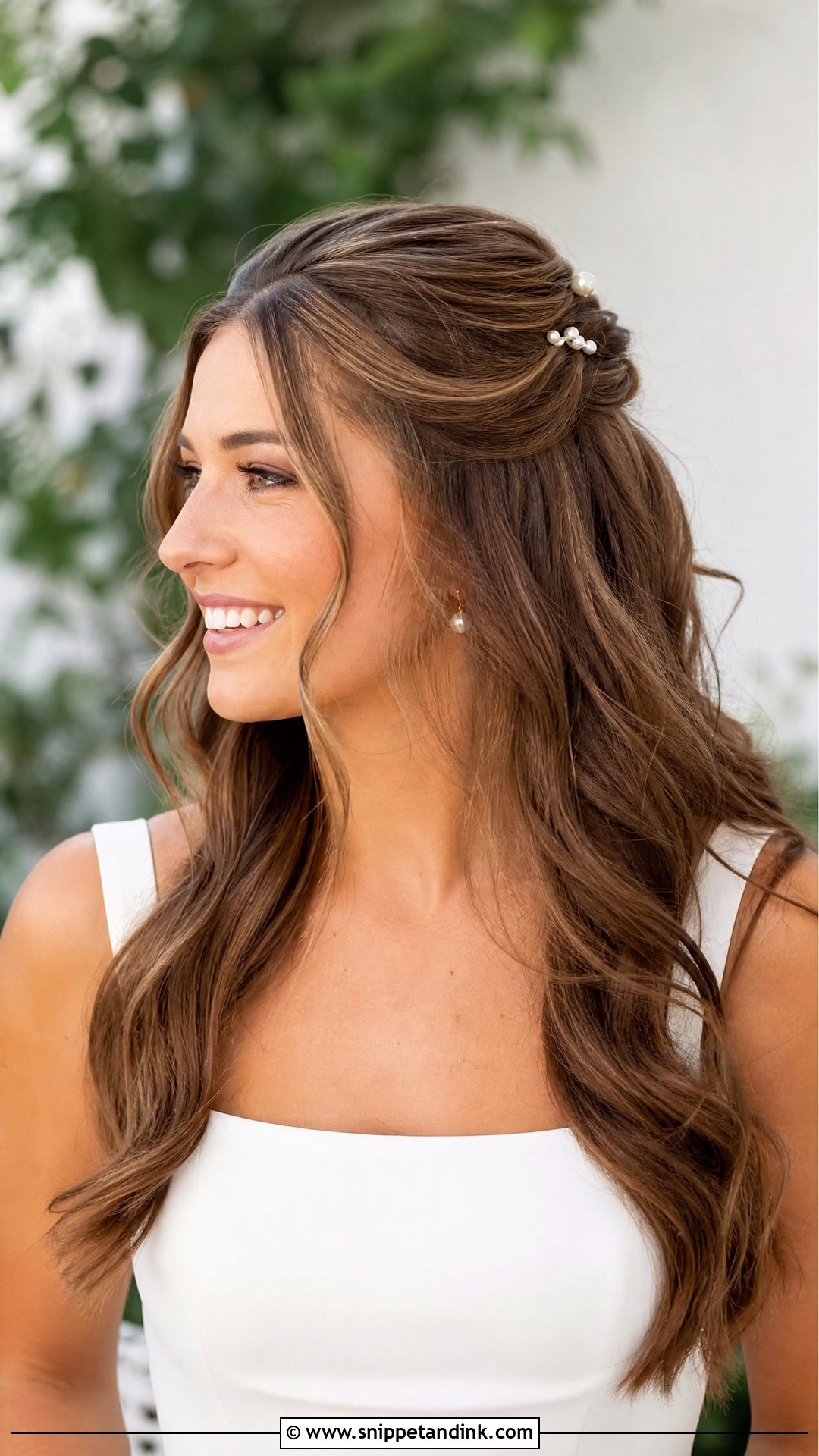
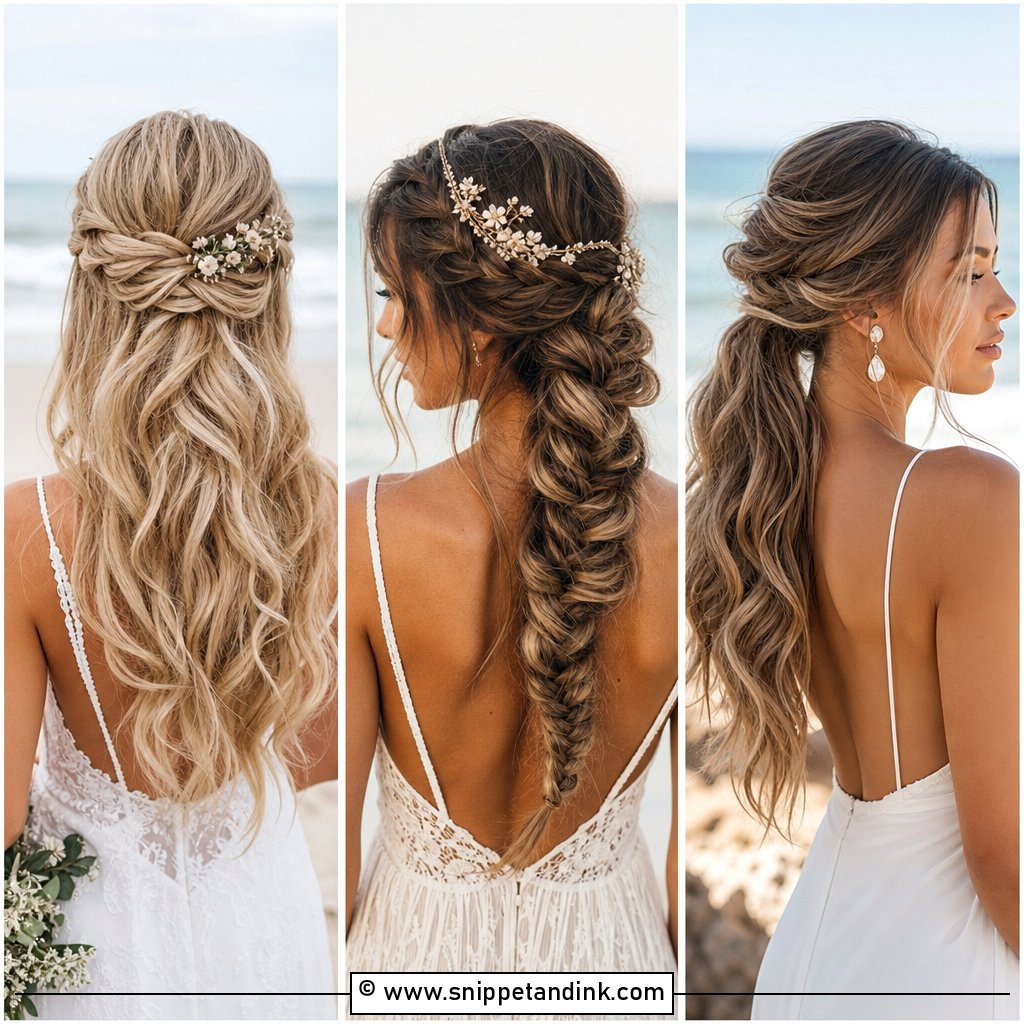
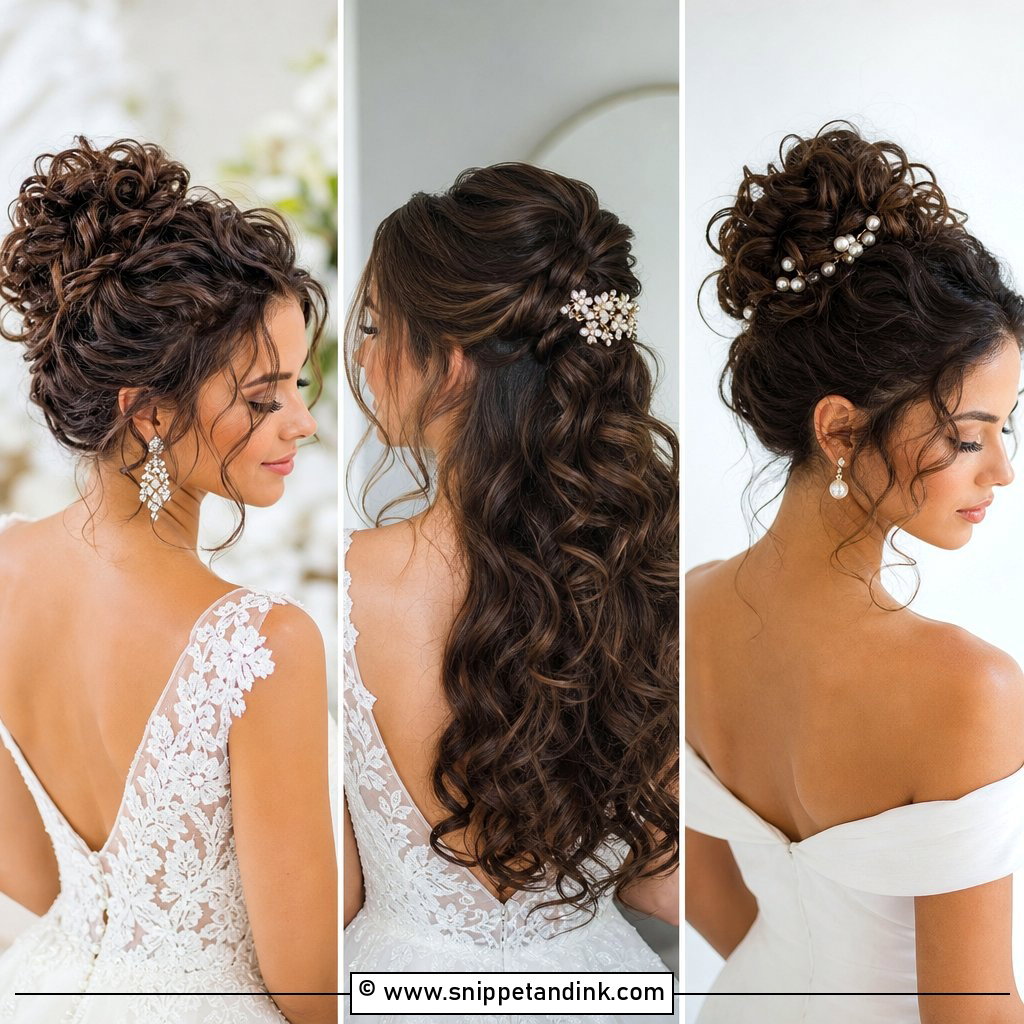
Half up hair gives you the movement of loose lengths while keeping everything off your face for the signing and the kisses. The top section can be twisted, braided or simply lifted and pinned. I always anchor that top section with two crossed bobby pins under a small clear elastic, because a half up style relying on one barrette tends to slip by lunchtime. It suits shoulder length and longer hair, and it sits well with courthouse dresses, tea-length gowns and bridal suits. A small bow or a pearl comb at the join finishes it.
5. Civil Wedding Loose Waves
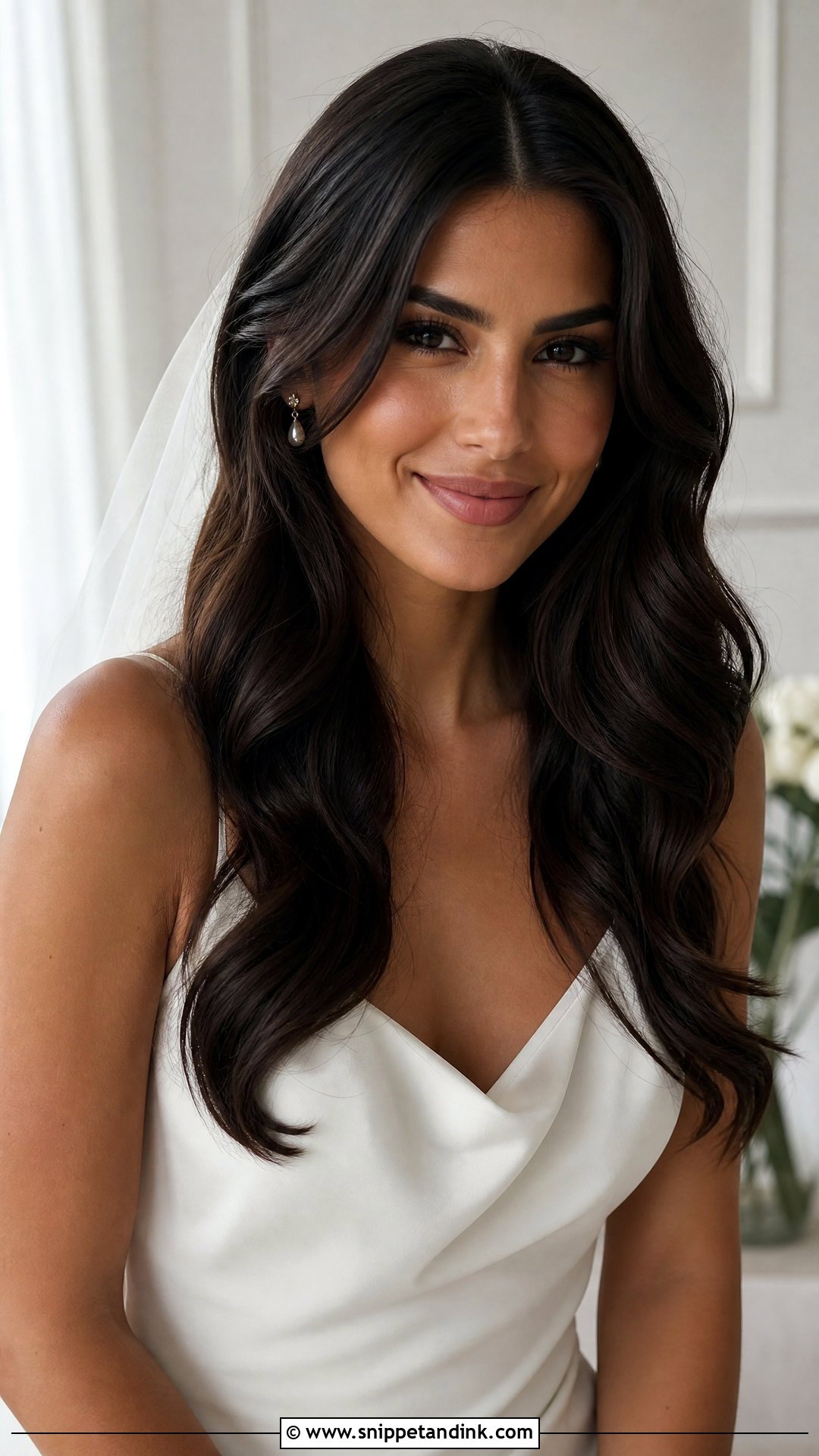
Loose waves are the style most likely to fall flat before the photographer has finished, so I set them more firmly than you’d expect. Each section gets curled, pinned in a loop while it cools, then brushed out about twenty minutes later. What you want is smooth roots, soft bends through the mid-lengths and tidy ends. They suit simple dresses, slip gowns and short veils. If your hair refuses to hold a curl on a normal day, take that seriously. A wavy ponytail or half up version will give you the same mood with far more staying power.
6. Civil Wedding Hollywood Waves
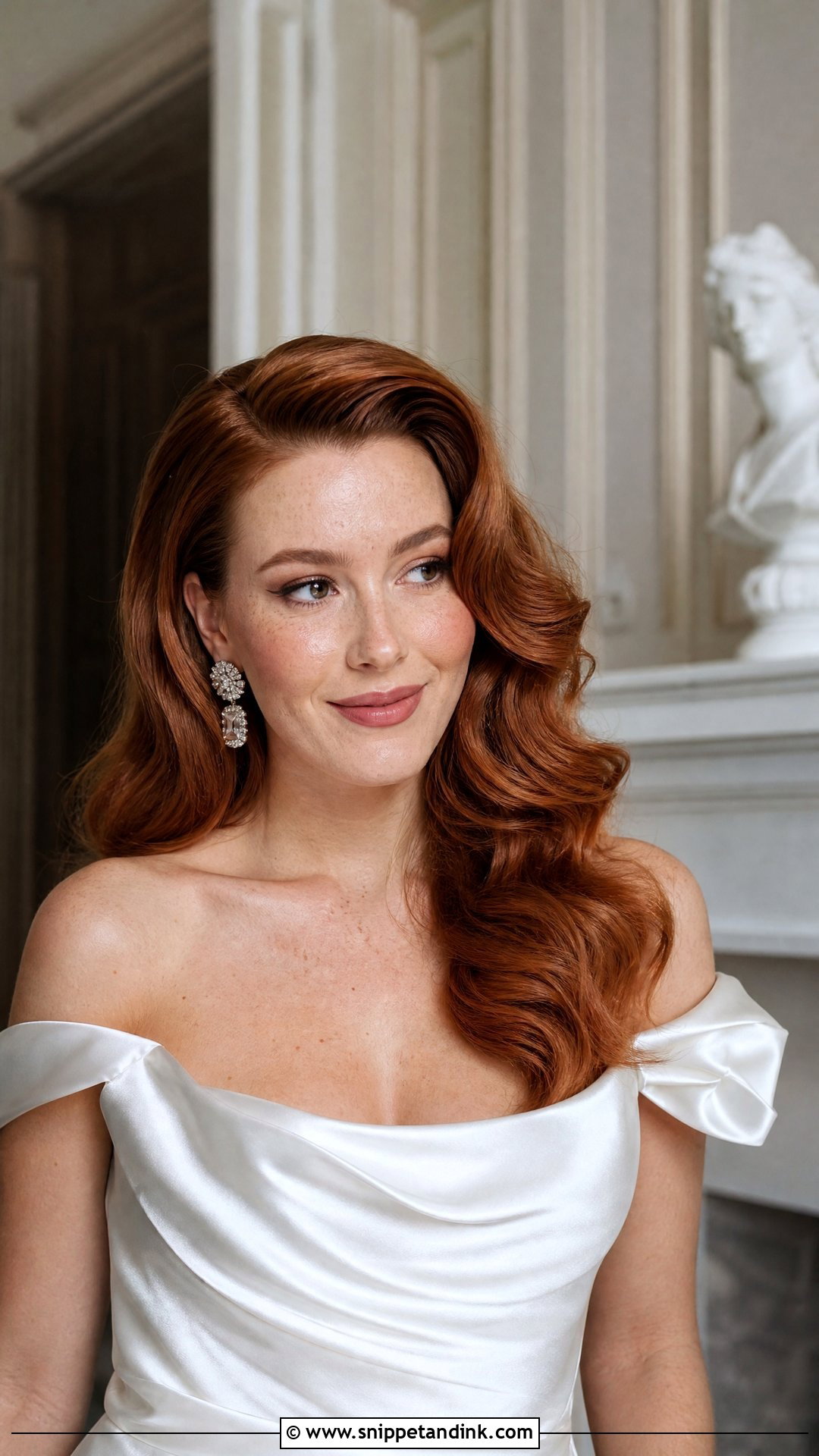
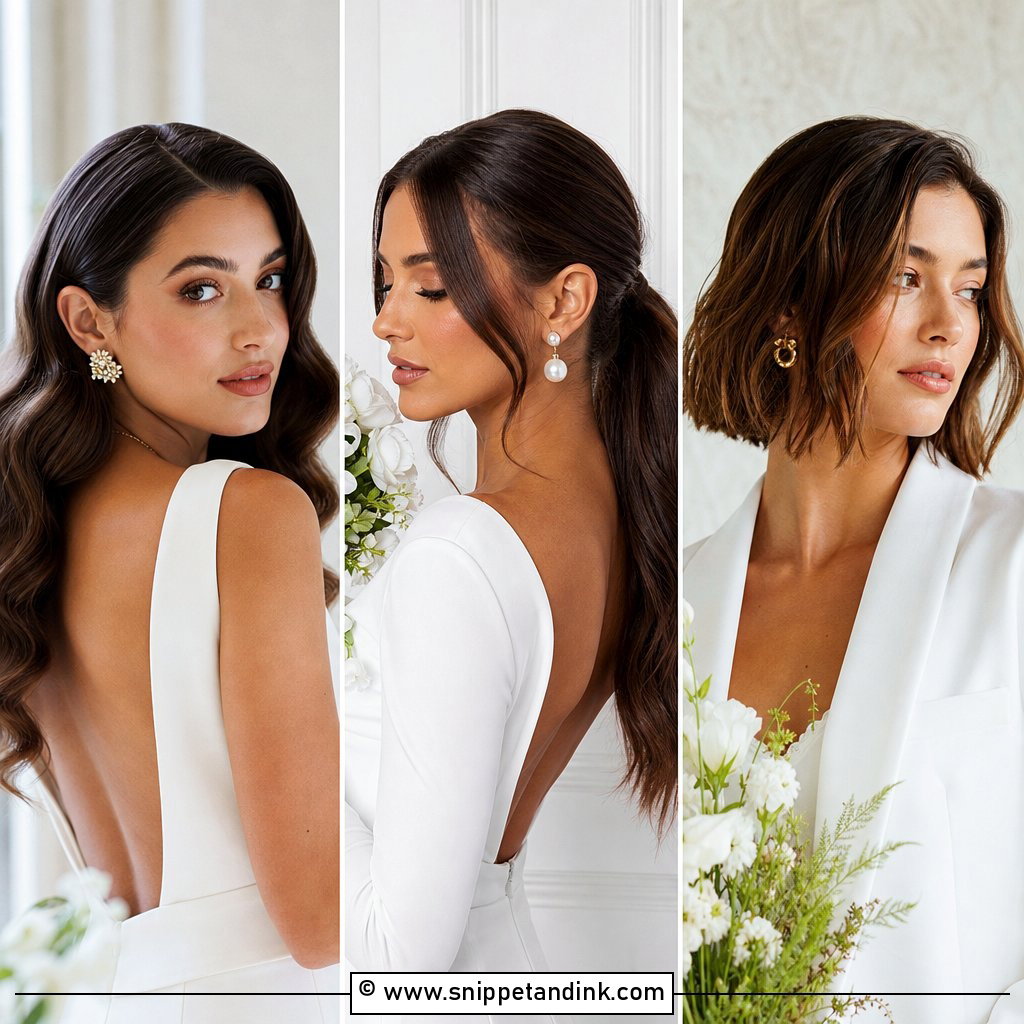
Hollywood waves bring a bit of drama to a plain room, which is exactly why I like them for a minimal outfit. The waves are set in one direction from a deep side part, then brushed until they join into a single glossy ripple. That brushing is where the skill is; skip it and you just have curls. They need medium to long hair and a fair amount of time, so I’d budget at least an hour in the chair. They’re also the least forgiving in wind. If your ceremony includes a walk outside, have the stylist pin the front wave with two hidden clips until you arrive.
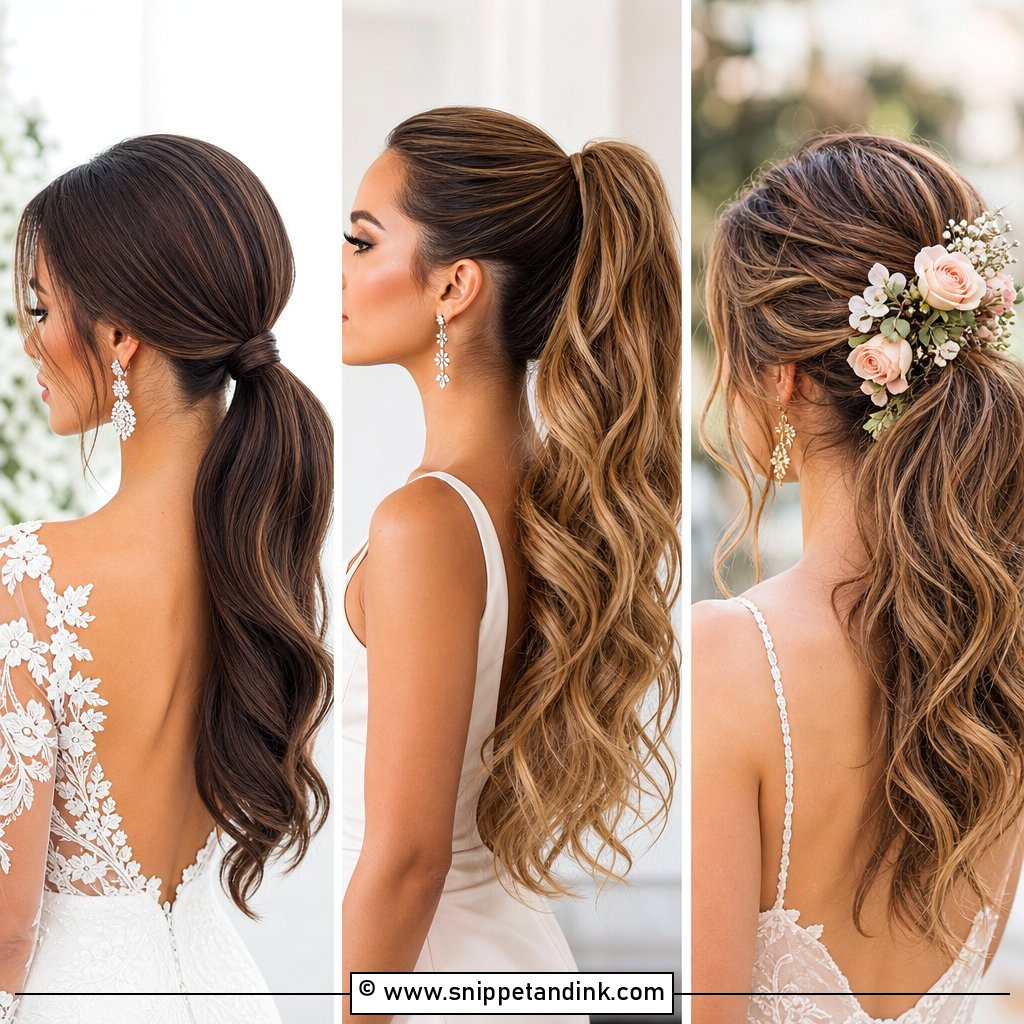
7. Civil Wedding Low Ponytail
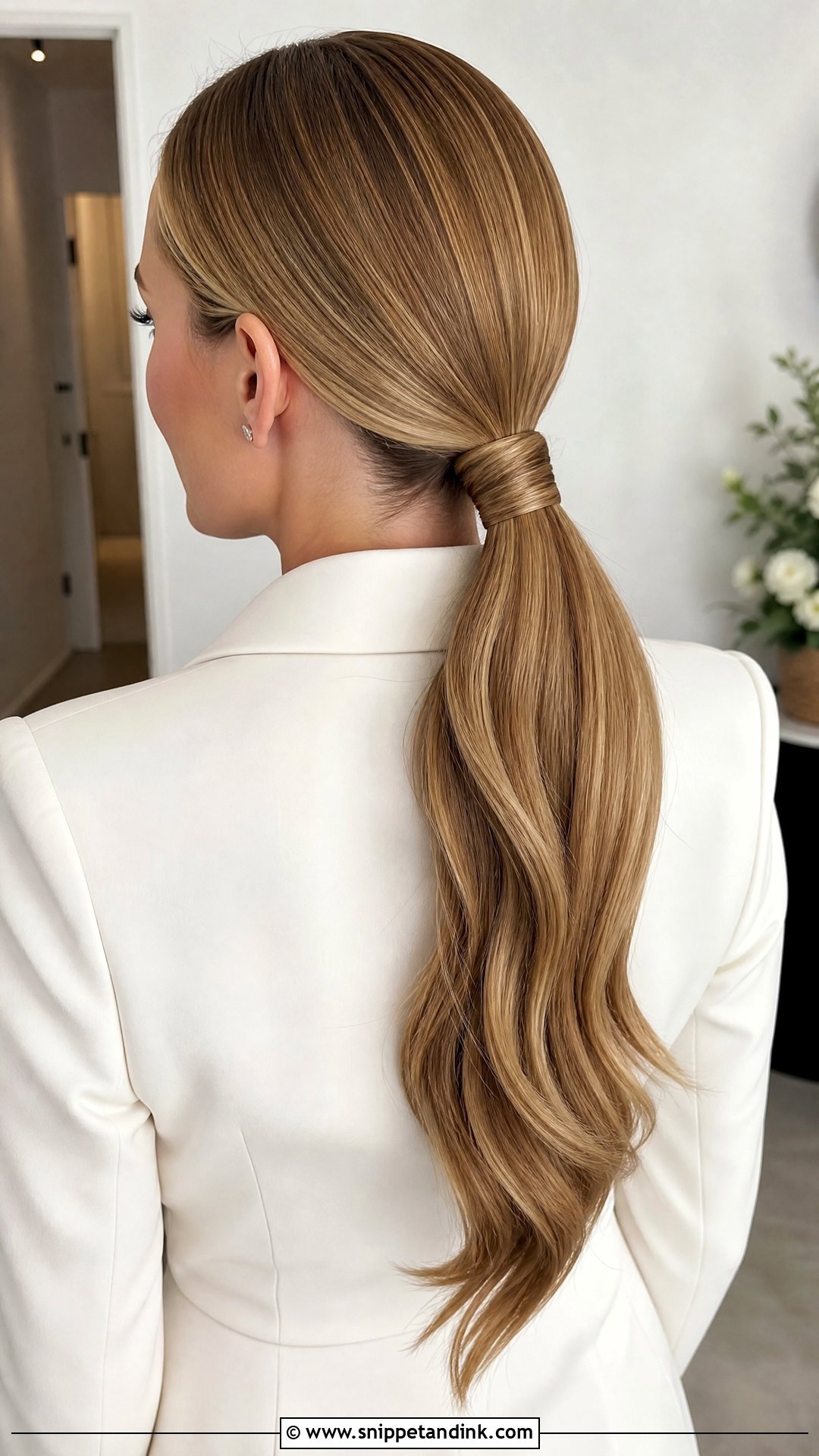
Comfortable, secure and quick to touch up. A low ponytail can be worn straight, softly waved or with a strand wrapped around the base to hide the elastic. It goes with suits, structured dresses and square necklines. On thick hair I’ll often split the hair into two stacked ponytails so the weight sits evenly and the tail looks fuller without pulling at the scalp. Fine hair needs the opposite: a few waves through the lengths and a little backcombing under the top layer so the tail doesn’t look thin in photos. Leave space above it if you’re adding a veil or bow.
8. Civil Wedding Wavy Ponytail
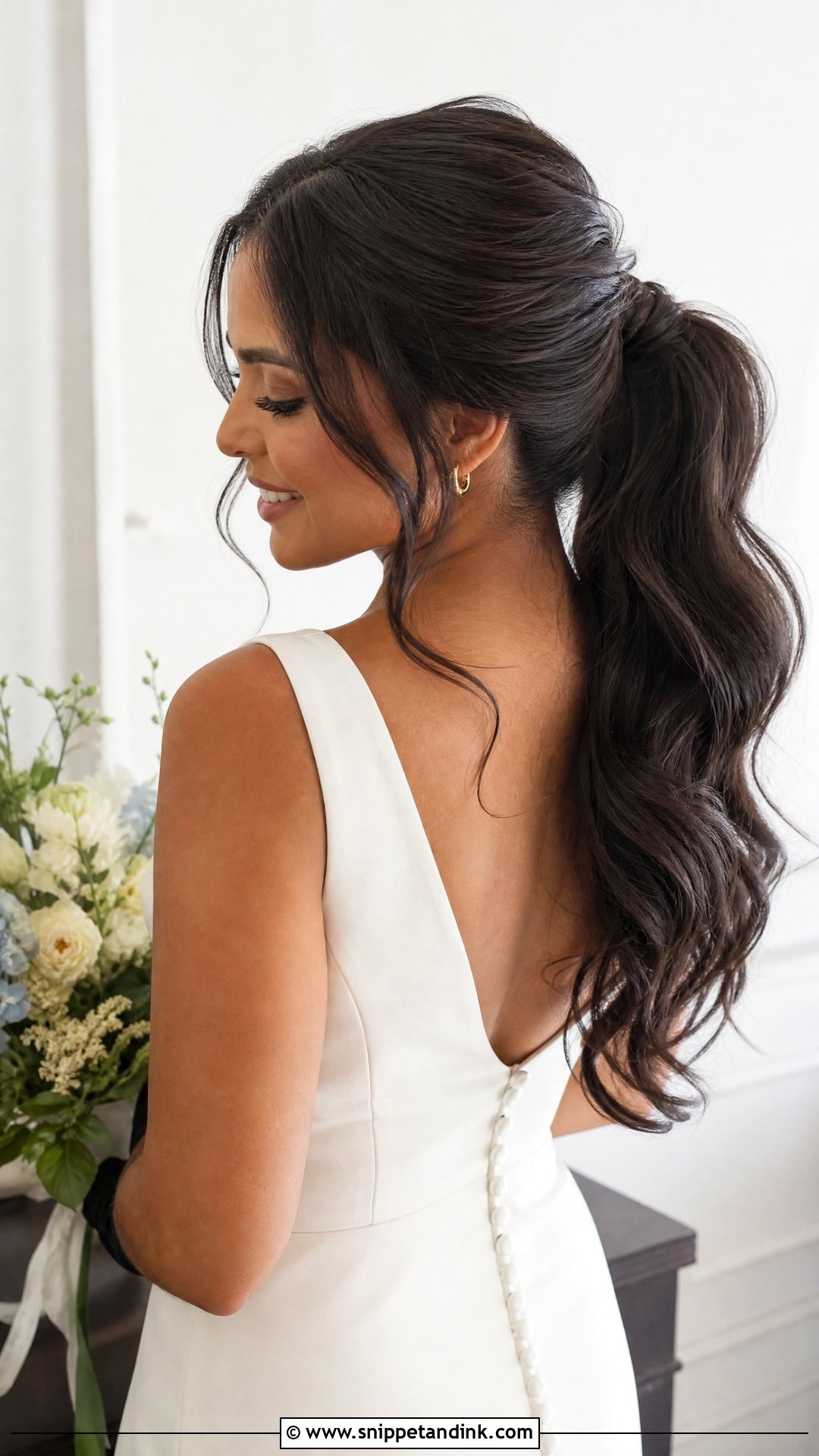
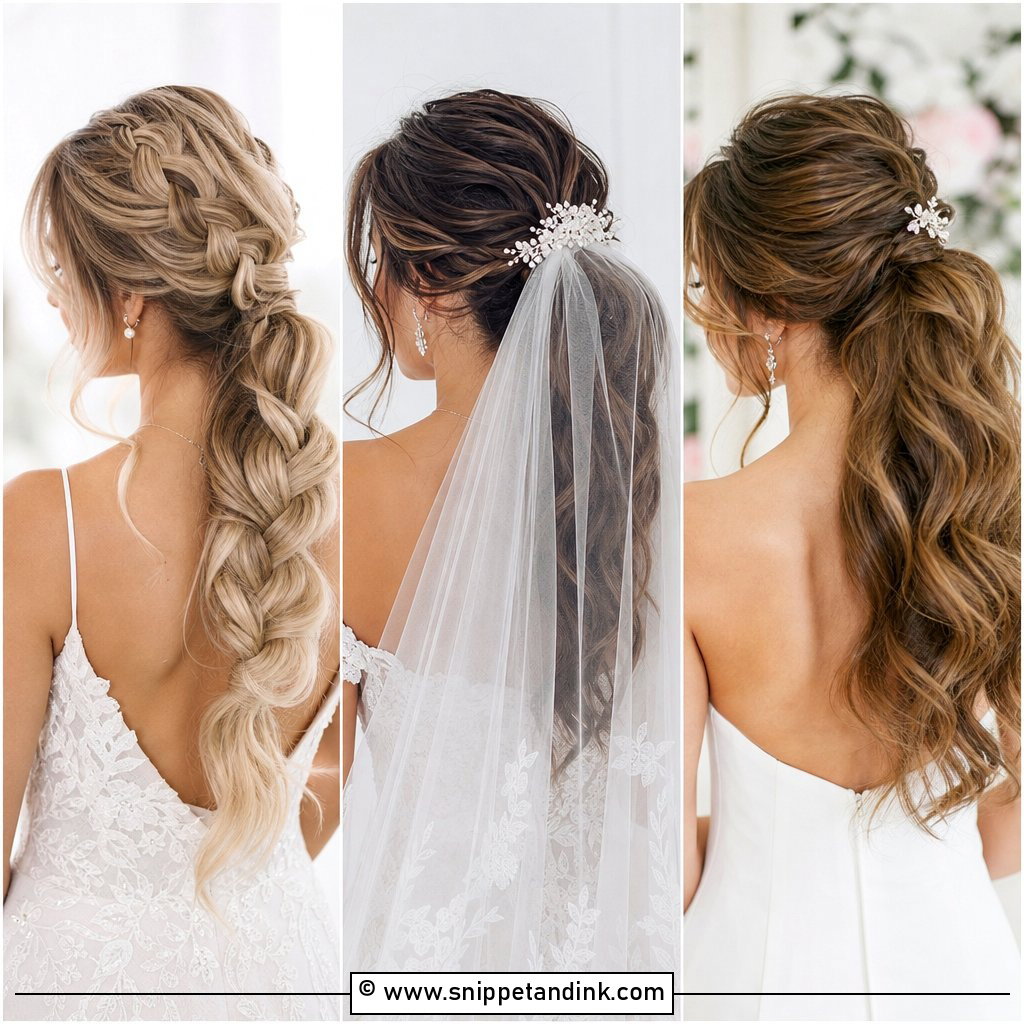
A civil wedding wavy ponytail has more movement than the sleek version and feels a touch more romantic. The crown can be smooth or lightly lifted, with the tail falling in loose waves. I curl the ponytail after it’s tied, not before, because curls put in first get squashed and lose their shape when the hair is gathered. It works best with long hair or clip-in extensions. Medium hair can manage it with some texture spray. Leave a couple of face-framing pieces out, then check them in a mirror outdoors, as they can look stringy in daylight.
9. Civil Wedding Short Bob
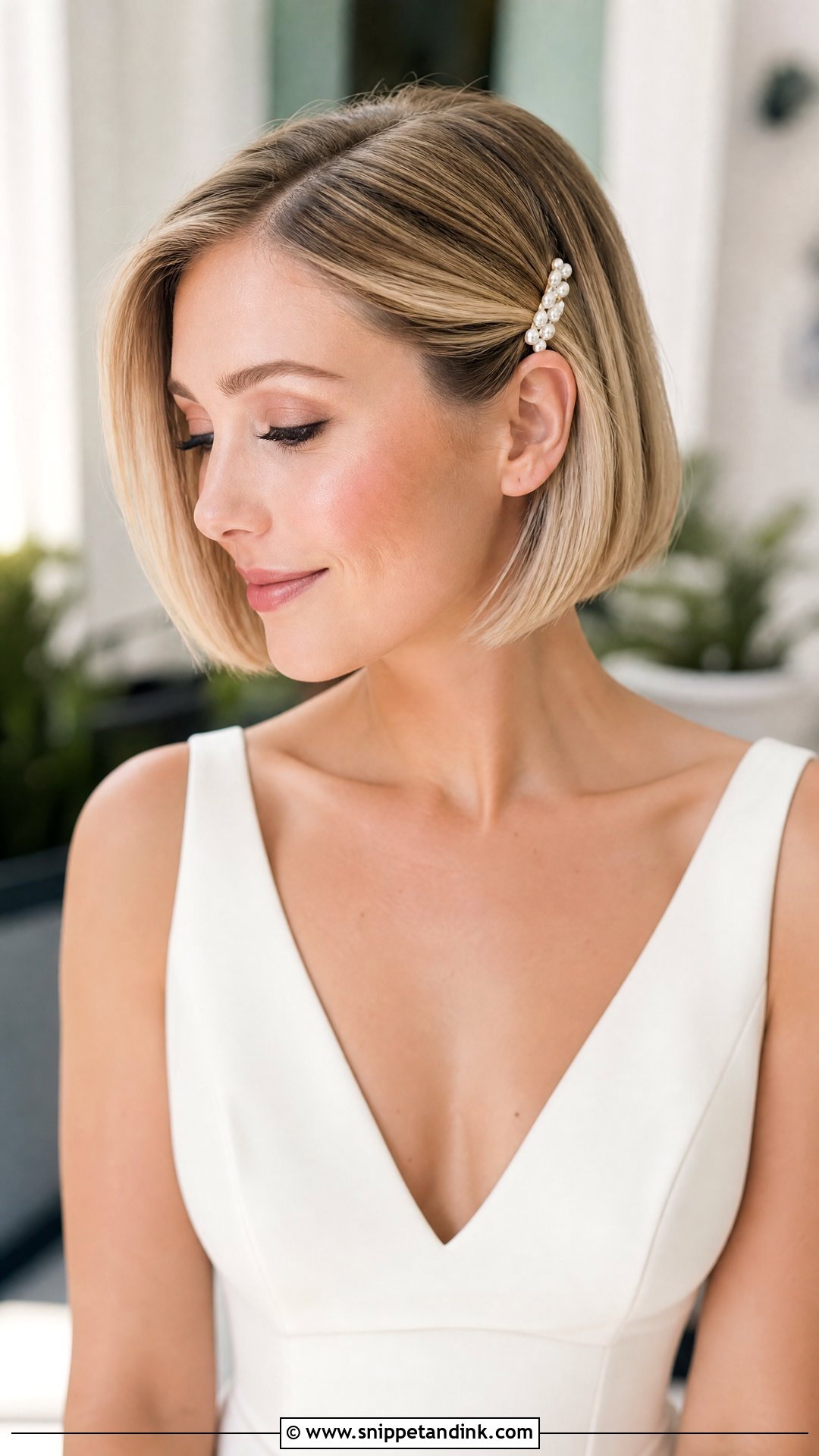
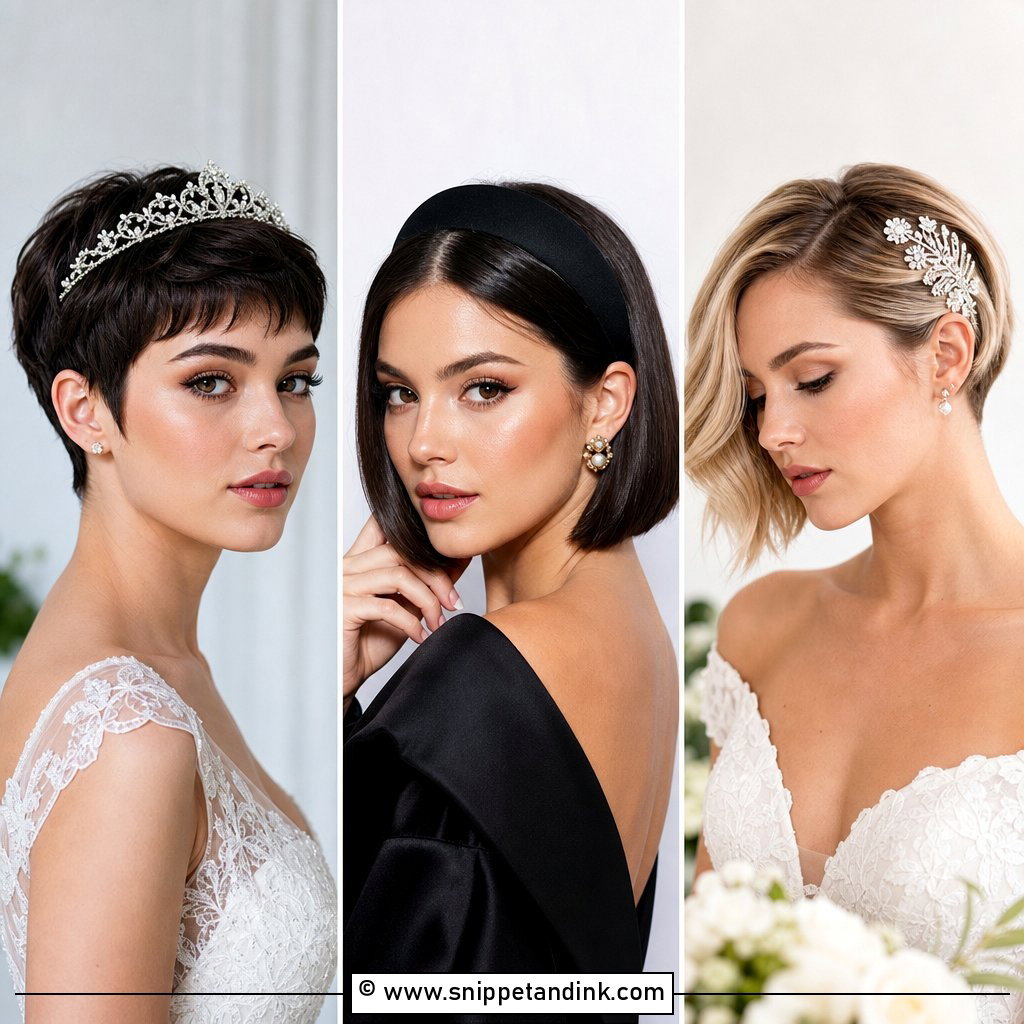
Short hair is easier to make bridal than people think. A civil wedding short bob just needs a clean line and a deliberate part. I smooth the ends with a flat brush and a round brush rather than flat irons, which can leave a bob looking stiff and helmet-like. A little volume at the crown keeps it from lying flat under a birdcage veil or pearl clips. Get the trim done about a week ahead so the edges settle. If you have bangs, keep them soft and slightly pushed to one side; a heavy straight fringe can shadow your eyes in close-up.
10. Civil Wedding Wavy Bob
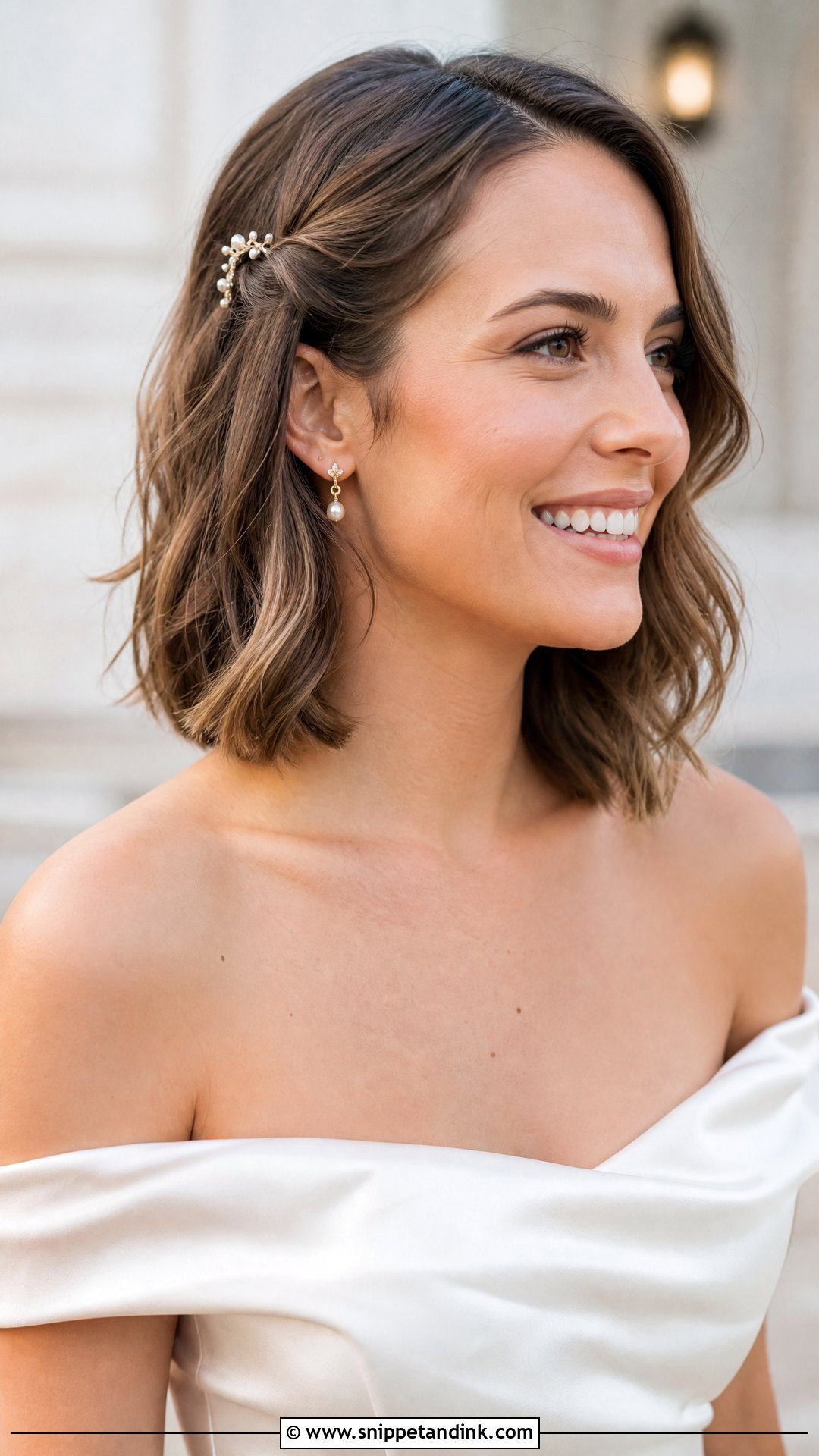
Bobs from chin length to the collarbone take waves well, and the waves make short hair feel softer without looking dated. I use a smaller iron on bobs and alternate the direction of each section, otherwise the whole thing curls into one round shape. Then I brush it out until the curls break into loose bends. A side tuck behind one ear, held with a pearl pin, adds a bridal detail. Keep the product light. Short waves weighed down with serum go flat and greasy much faster than long ones do.
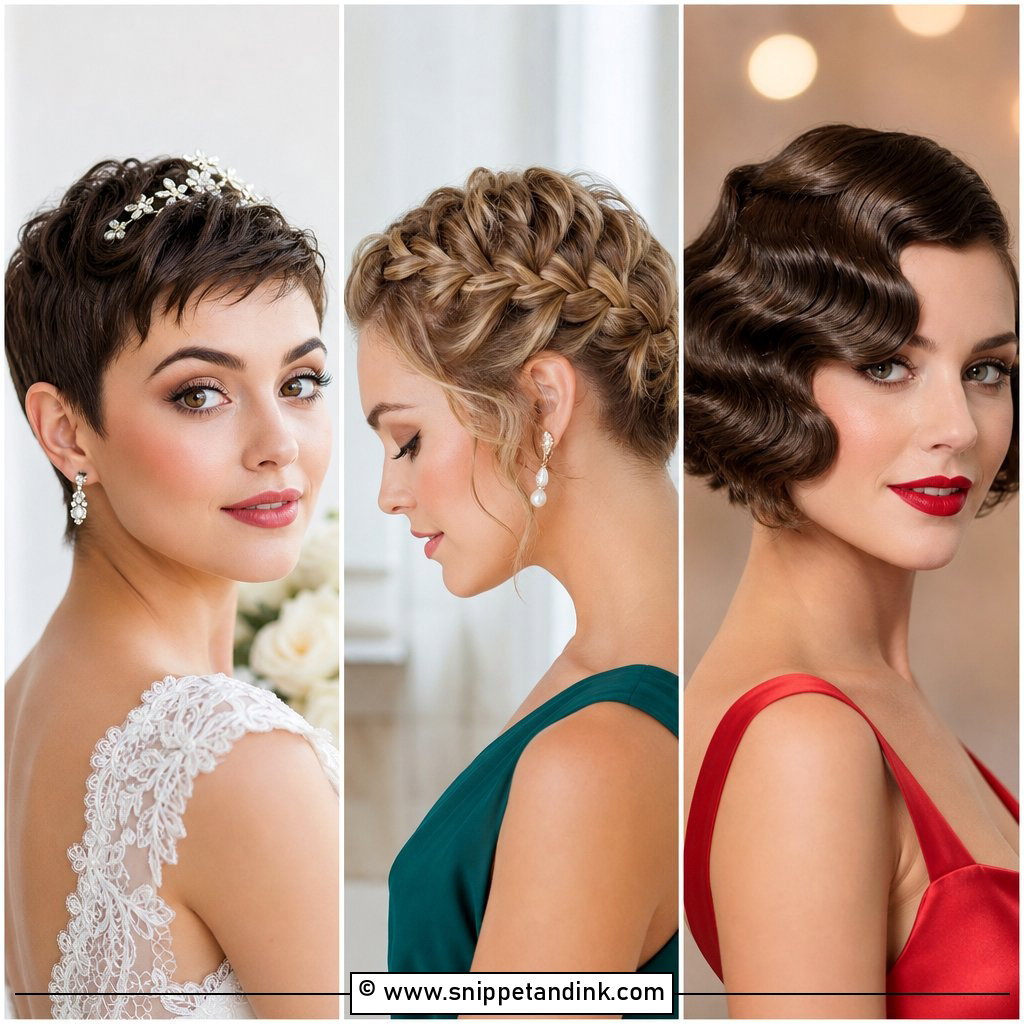
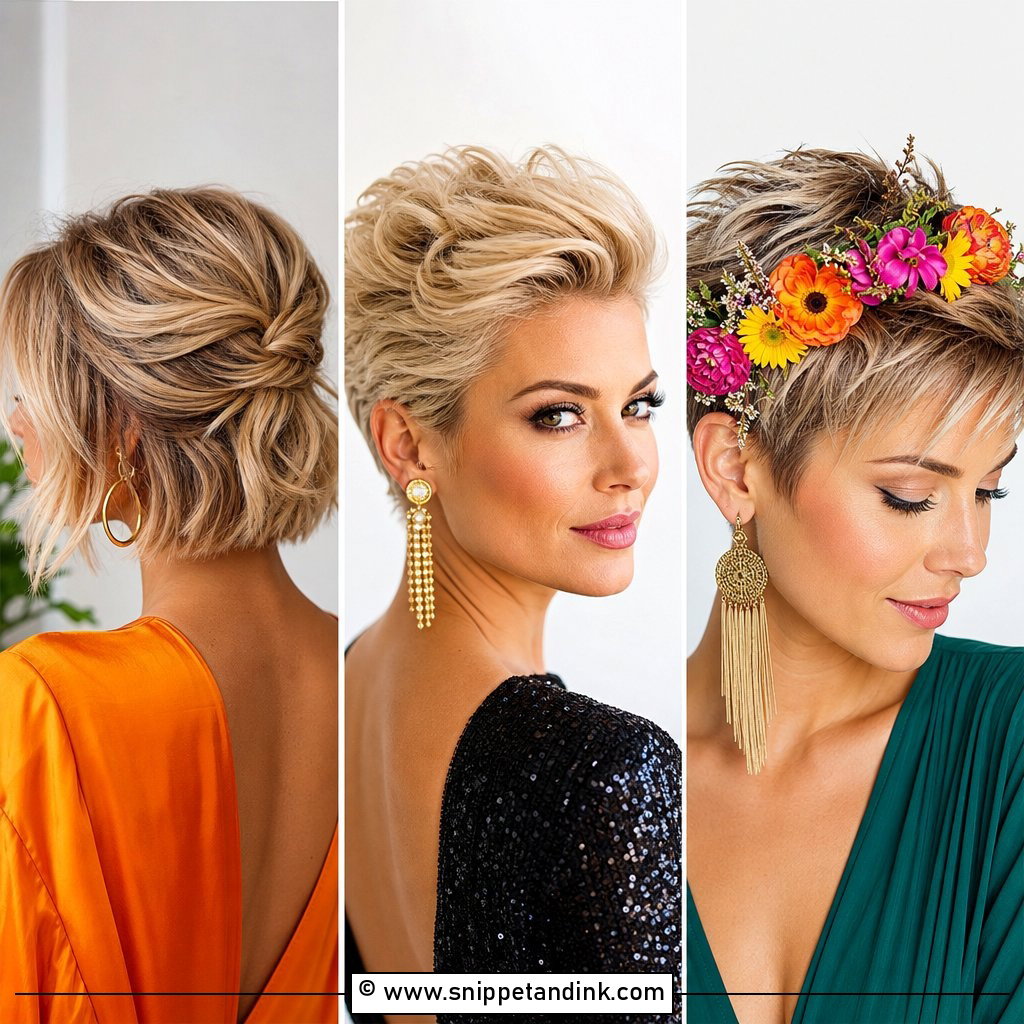
11. Civil Wedding Pixie Cut
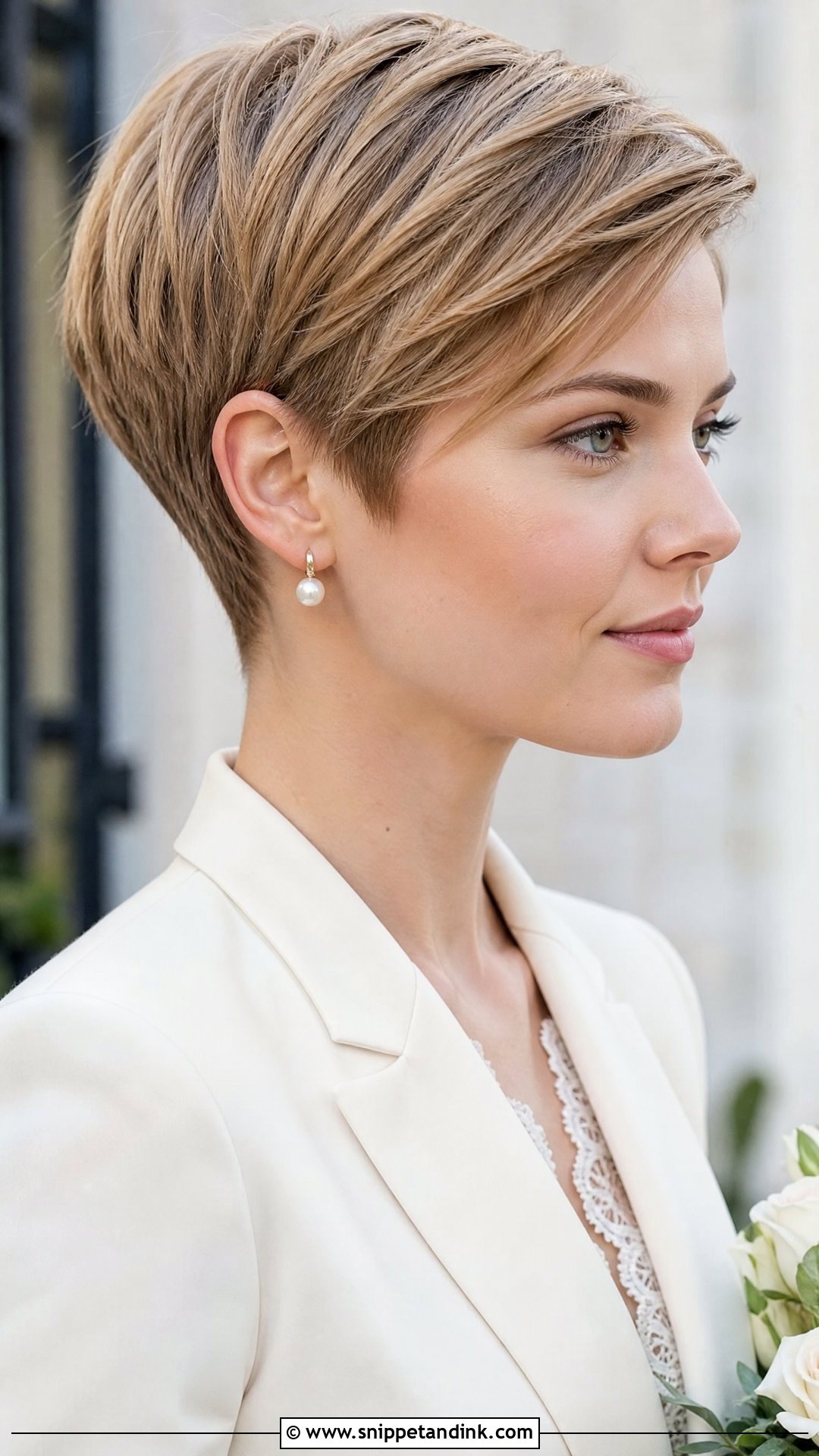
With a pixie, I don’t try to disguise the length; I shape it. Soft texture, a sleek side part or brushed-forward layers all work, and the cut itself does most of the bridal work. Statement earrings matter more here than with any other style on this list, because there’s nothing else framing the face. A short veil or a bridal headband can sit on top. I use a pea-sized amount of shine cream and a light hold, as too much product on very short hair shows as wet patches in photos. Book the cut about a week out, not the day before.
12. Civil Wedding Braided Updo
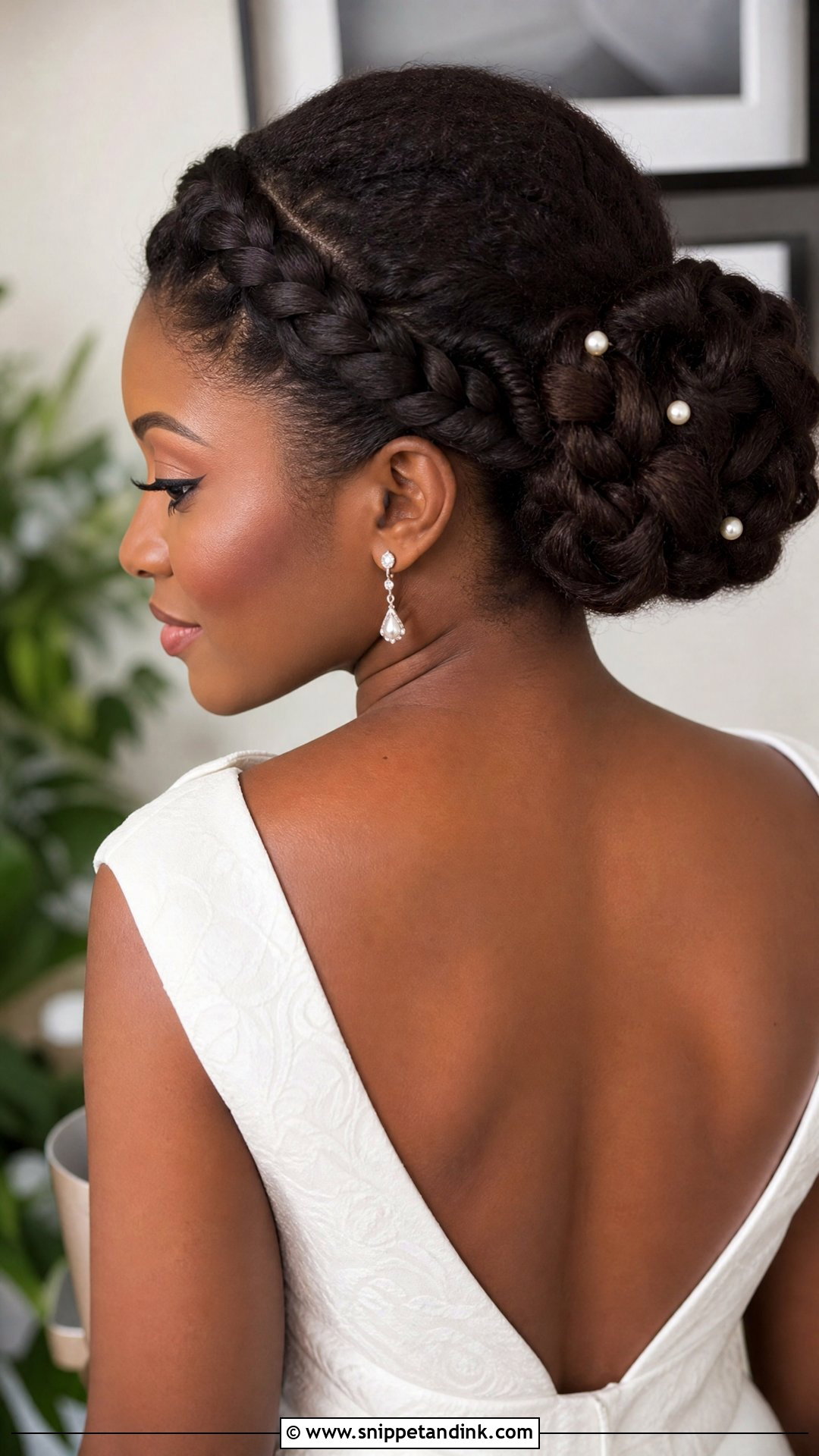
Braids add texture and grip, which is why I suggest them to brides who worry about a plain bun coming loose. The braid can wrap into a low bun, run along the crown or melt into a chignon. On curly or coily hair, braiding is often the most secure option on this list, because the texture holds pins naturally. Medium to long hair works best. Keep the braid soft by gently pulling at the edges once it’s pinned, as a very tight braid can look severe in a small room. A few tiny pins or a slim comb is enough decoration.
13. Civil Wedding Side Part Waves
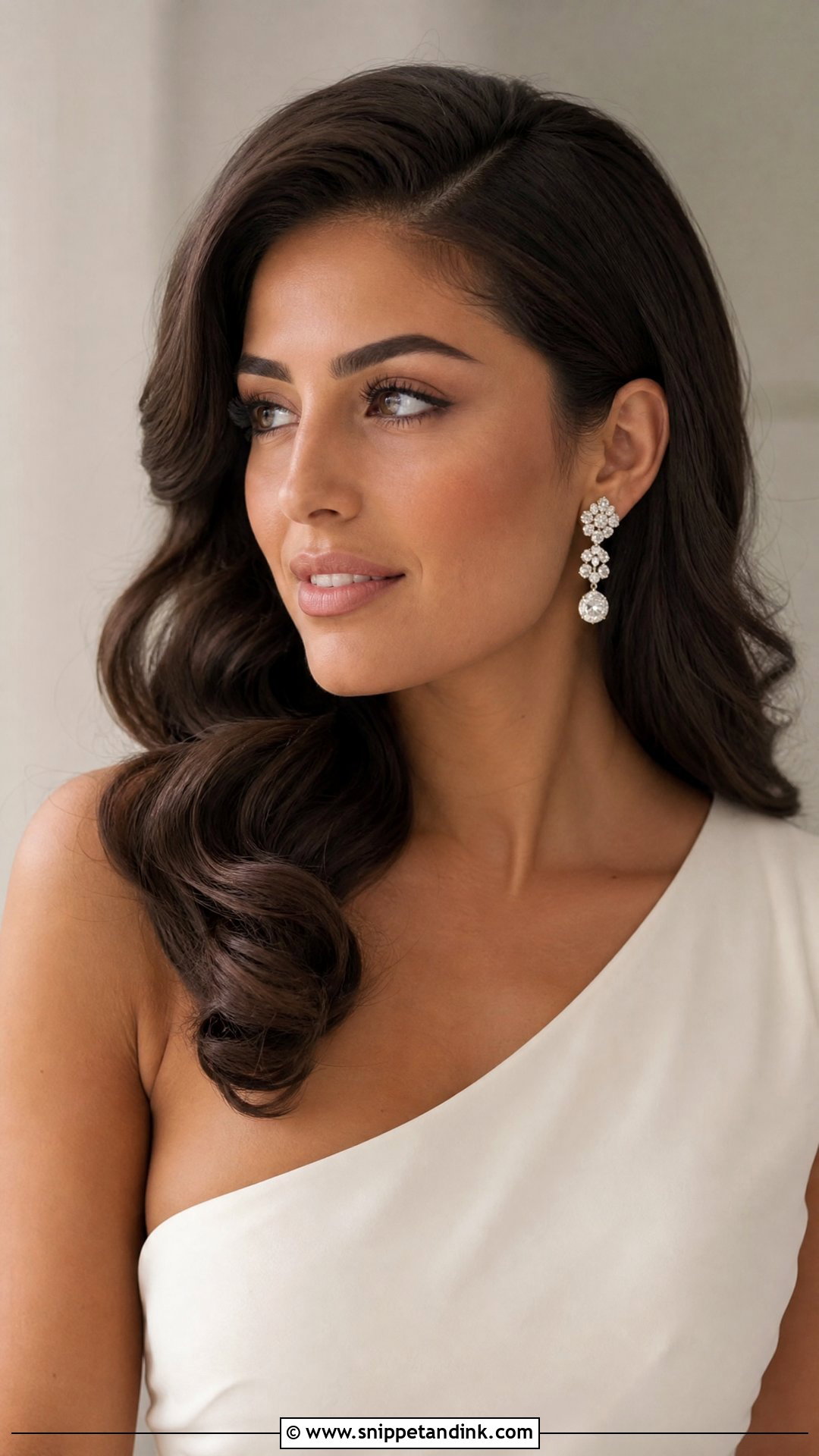
A side part can make plain loose hair look styled in about thirty seconds. Paired with smooth waves and shiny ends, it gives you structure while still wearing your hair down. I set the part while the hair is damp, not after styling, so it doesn’t spring back to your usual side midway through the day. It suits one-shoulder dresses, simple necklines and modern courthouse outfits. Tucking the lighter side behind your ear shows off earrings and keeps the face open. Use a flexible hold spray, not a strong one, so the waves still move.
14. Civil Wedding Bun With Veil
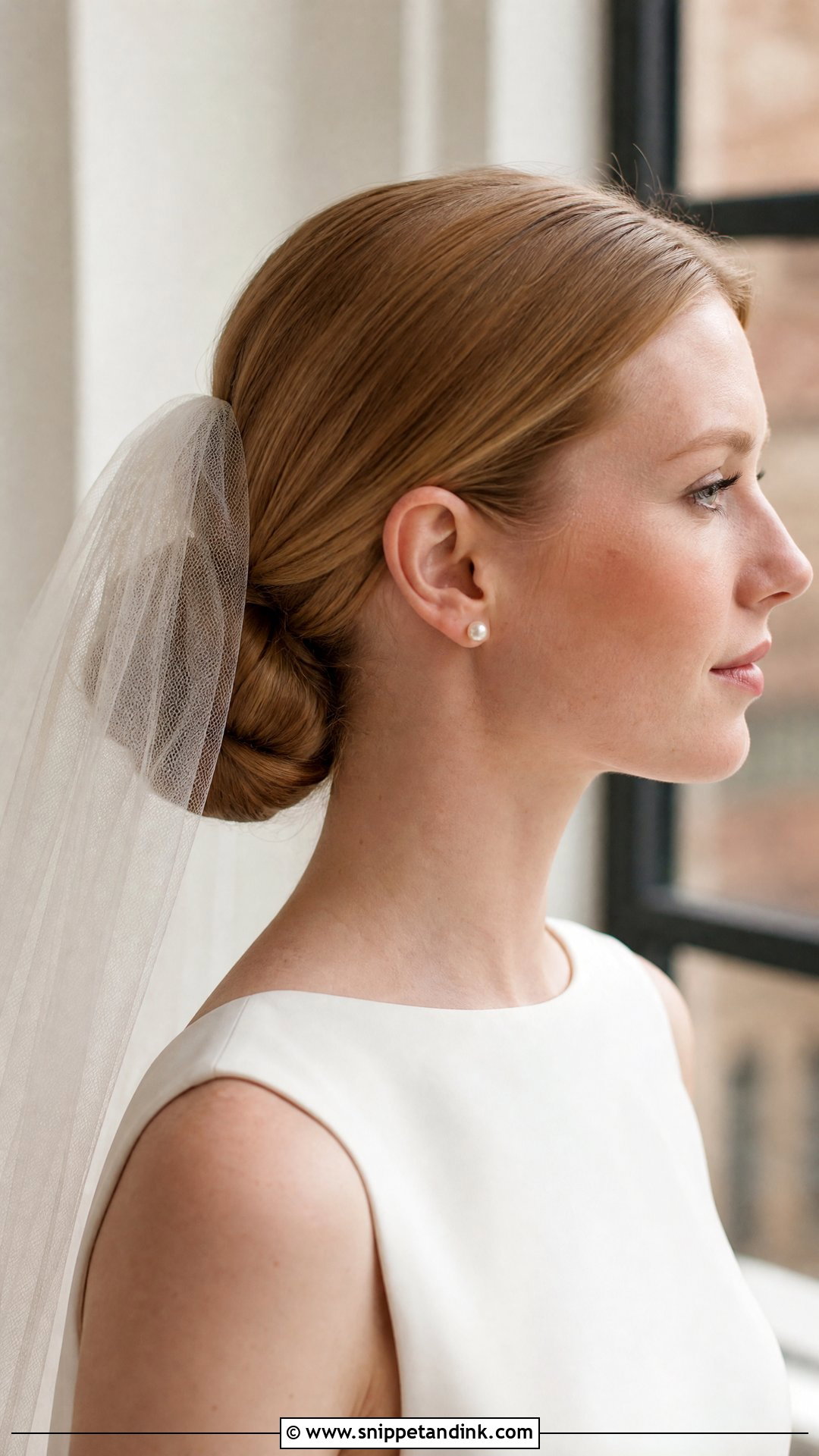
A veil is where many civil brides feel the day become a wedding, and a bun is its best anchor. The bun can be sleek, twisted or textured, with the comb tucked just above or below it. I slide the veil comb in at an angle against the direction of the bun and lock it with two crossed pins, because a comb pushed straight in works itself loose as you turn your head. A low bun gives the steadiest base. For a courthouse, I’d keep the veil to fingertip length or shorter; anything longer tends to catch on doors and chair legs.
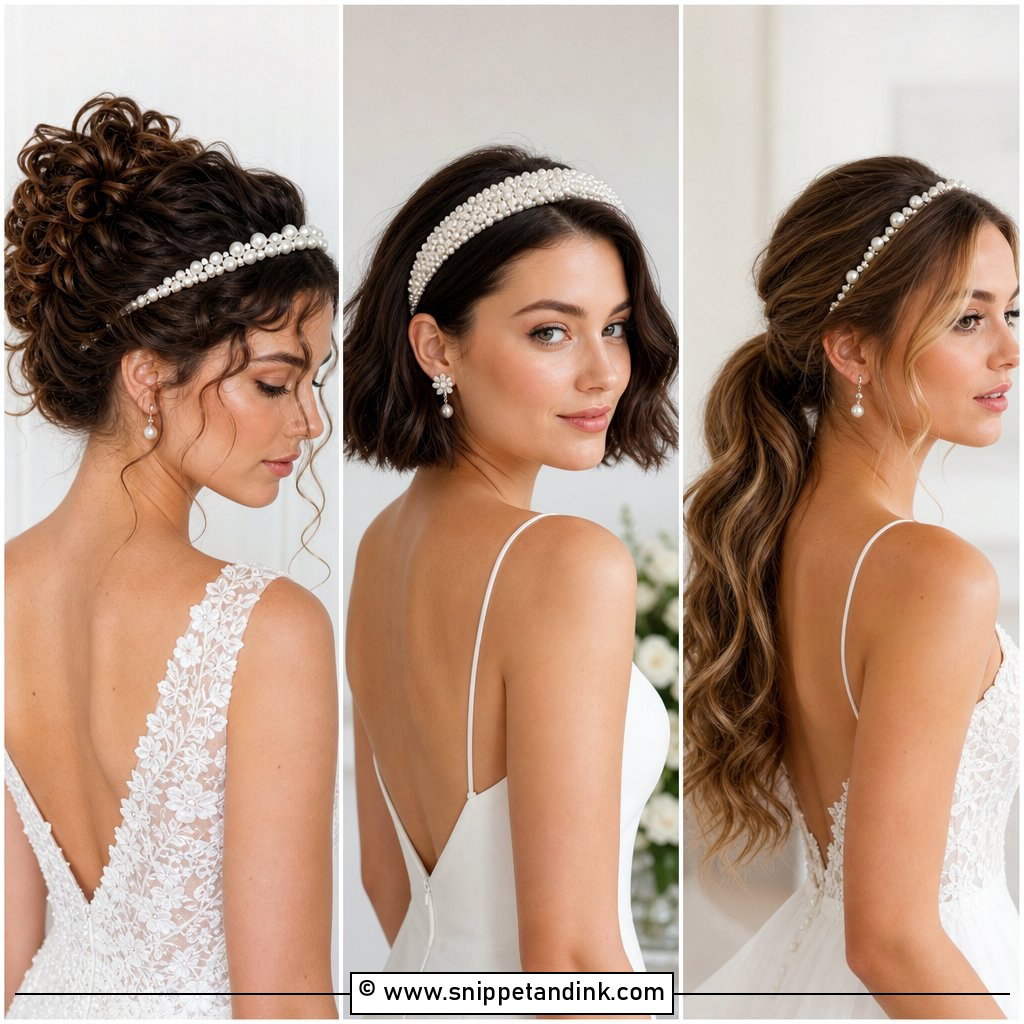
15. Civil Wedding Hair With Headband
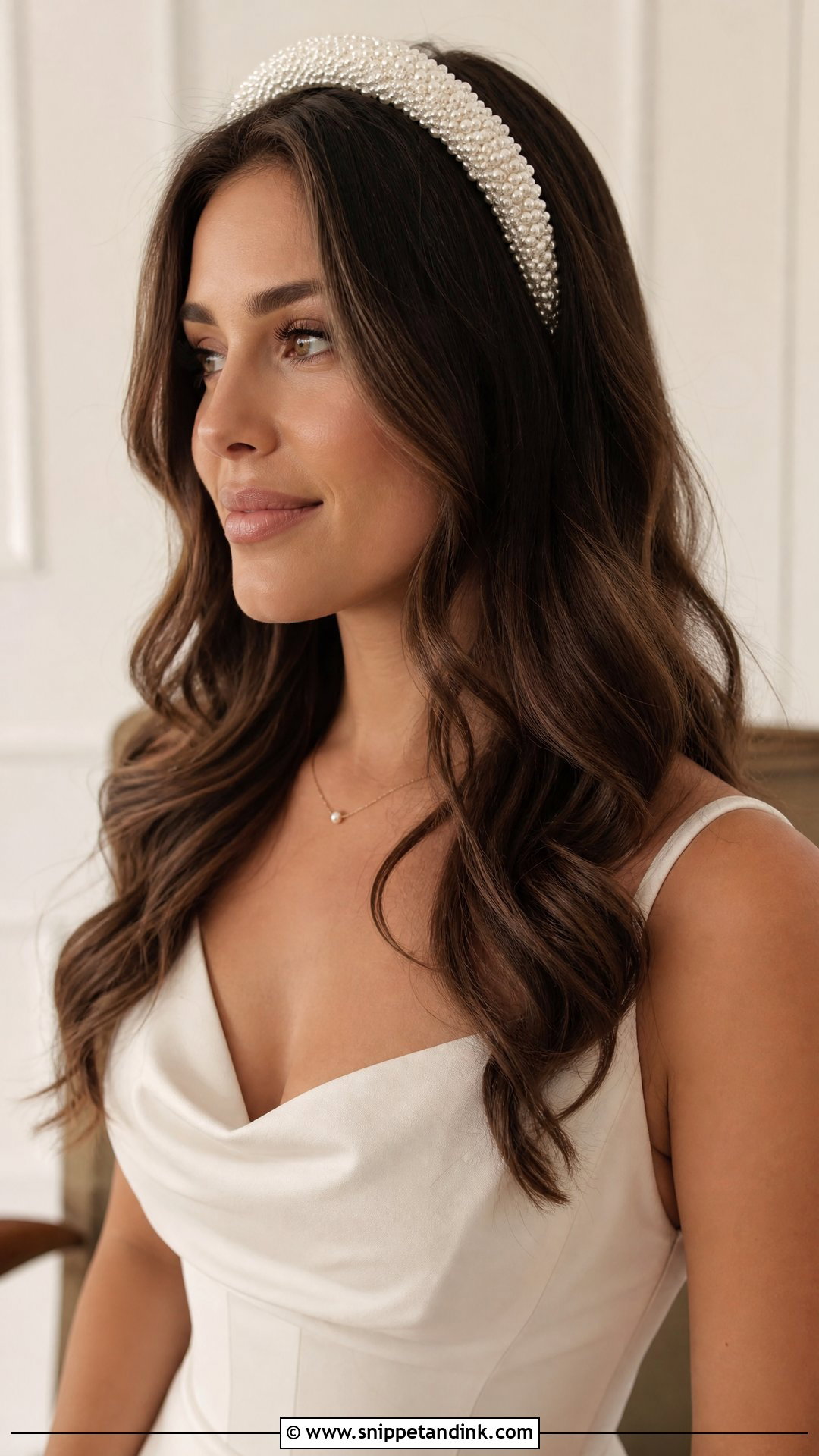
Civil wedding hair with headband is one of the easiest ways to add a finished detail without a complicated style. A headband sits well over loose waves, a bob, a low bun or a soft ponytail. Pearl, satin, crystal and padded bands all do the job. Wear yours for a full afternoon before the wedding. Plenty of headbands pinch behind the ears after an hour, and a headache halfway through lunch is no fun. I smooth the roots underneath with a little cream so the band sits flat rather than riding up.
Fluorescent Ceilings, Stone Steps and a City Breeze
Civil buildings are hard on hair. Many ceremony rooms have flat overhead lighting that shows every flyaway and makes roots look oilier than they are. Then you step outside onto open steps, where wind funnels between buildings. I plan for both.
Under overhead office lighting
I go lighter on shine spray than I would for an evening reception, because strip lights pick it up as grease. The hairline gets smoothed properly, since guests and the photographer will be standing very close. A soft side part usually flatters more than a dead-straight centre part under top lighting, which deepens shadows on the face.
Out on the steps
Wind is the real test. Loose hair and long veils whip across the face in a lot of outdoor courthouse photos, so if your city is breezy, a low bun or ponytail with a short veil is the safer bet. If you’re wearing your hair down, ask for the waves to be pinned while they cool, then brushed out only lightly.
The little bag your witness carries
- Six or so spare pins in your hair colour
- A travel-size flexible hairspray
- A small comb or a clean spoolie for flyaways
- Two clear elastics if you’re wearing a ponytail
- Blotting papers, since your face will shine before your hair does
Hand it to a witness or a friend. You’ll have your hands full signing the register and holding flowers.
What Still Matters Once the Register Is Signed
The vows might take ten minutes, so think about the hours on either side. A style that holds through the queue, the hugs on the steps and a long lunch is worth more than one that only looks perfect in the first photo. If you love your hair down, choose waves with grip. If you want zero fuss, a low bun or sleek ponytail will barely need touching. Short hair just needs a clean shape and one good accessory. My advice is always the same: do one practice run in the actual outfit, wear it for a few hours, and trust what you see at the end of that afternoon.
You'll Like These Ideas:


Leave a Reply