
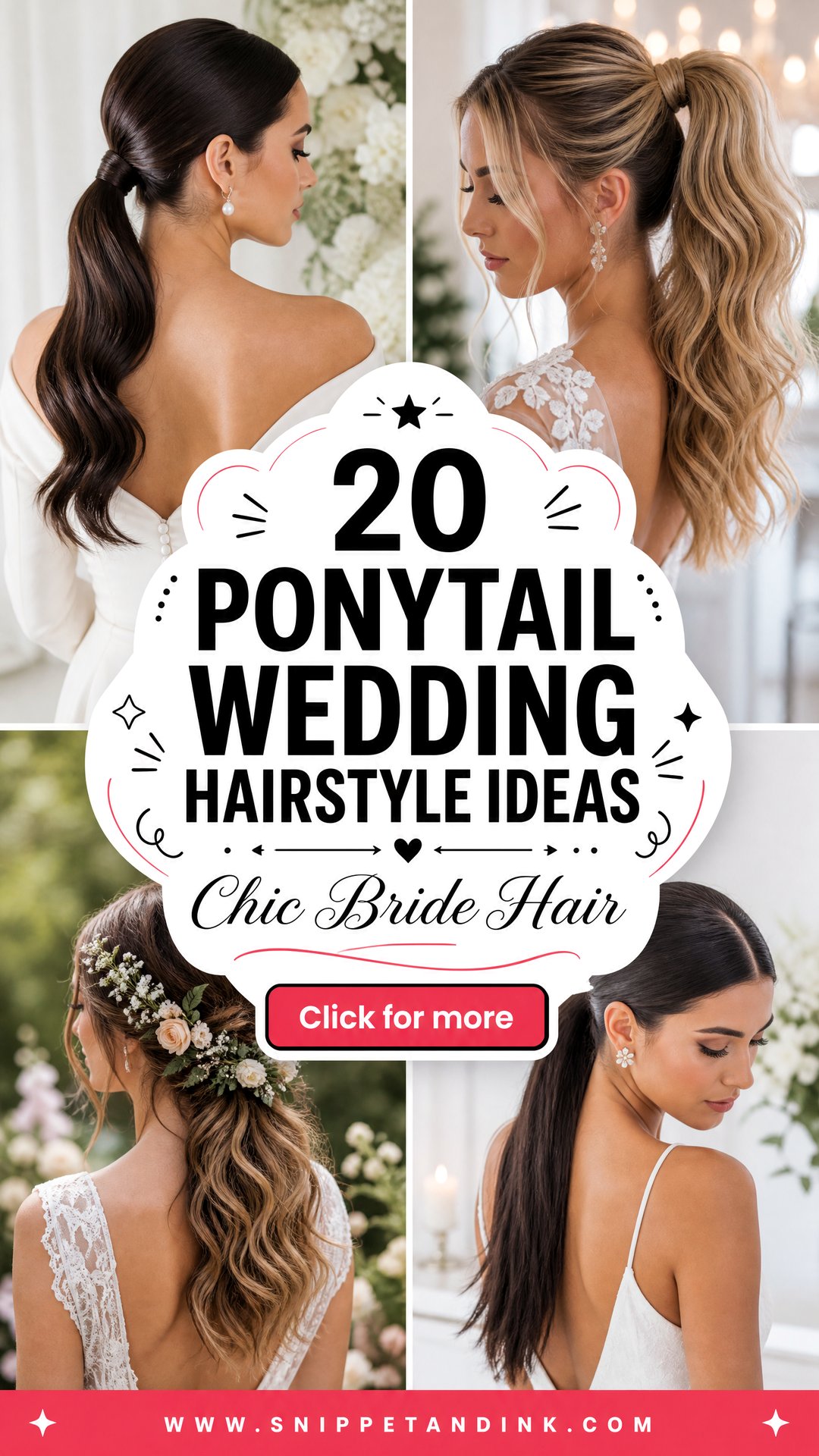
A ponytail is the bridal style I get the fewest panicked texts about at 10 p.m. It keeps hair off your face and neck, leaves earrings and a neckline fully visible, and there’s no hidden pin structure to collapse halfway through the reception. The catch is that a wedding ponytail is built very differently from the one you throw up for the gym. Below are 20 versions I’d happily put on a bride, from glassy and sculpted to loose and braided, with notes on the hair each one needs and where each tends to go wrong.
Where the Elastic Sits Changes the Whole Look
The first decision I make with a ponytail bride isn’t sleek or messy. It’s height. Where the base sits decides how the style works with your neckline, your veil and even your chair at dinner.
- At the crown: lifts the face and shows off a strapless or sweetheart bodice, but it’s the heaviest position to hold and the hardest to anchor a long veil into.
- Mid-back of the head: the most forgiving height. It clears most collars, sits comfortably against a chair, and gives a veil comb a solid base.
- At the nape: the right call for high necklines, lace backs and cathedral veils, because it sits under the veil rather than competing with it.
- Off to one side: best with one-shoulder gowns, and a poor choice if you’ll be hugging a lot of people on that side.
Bring a photo of the back of your dress to the trial, not just the front. A ponytail is seen from behind more than any other style, during the walk down the aisle and the whole ceremony.
1. Sleek Low Ponytail for Brides
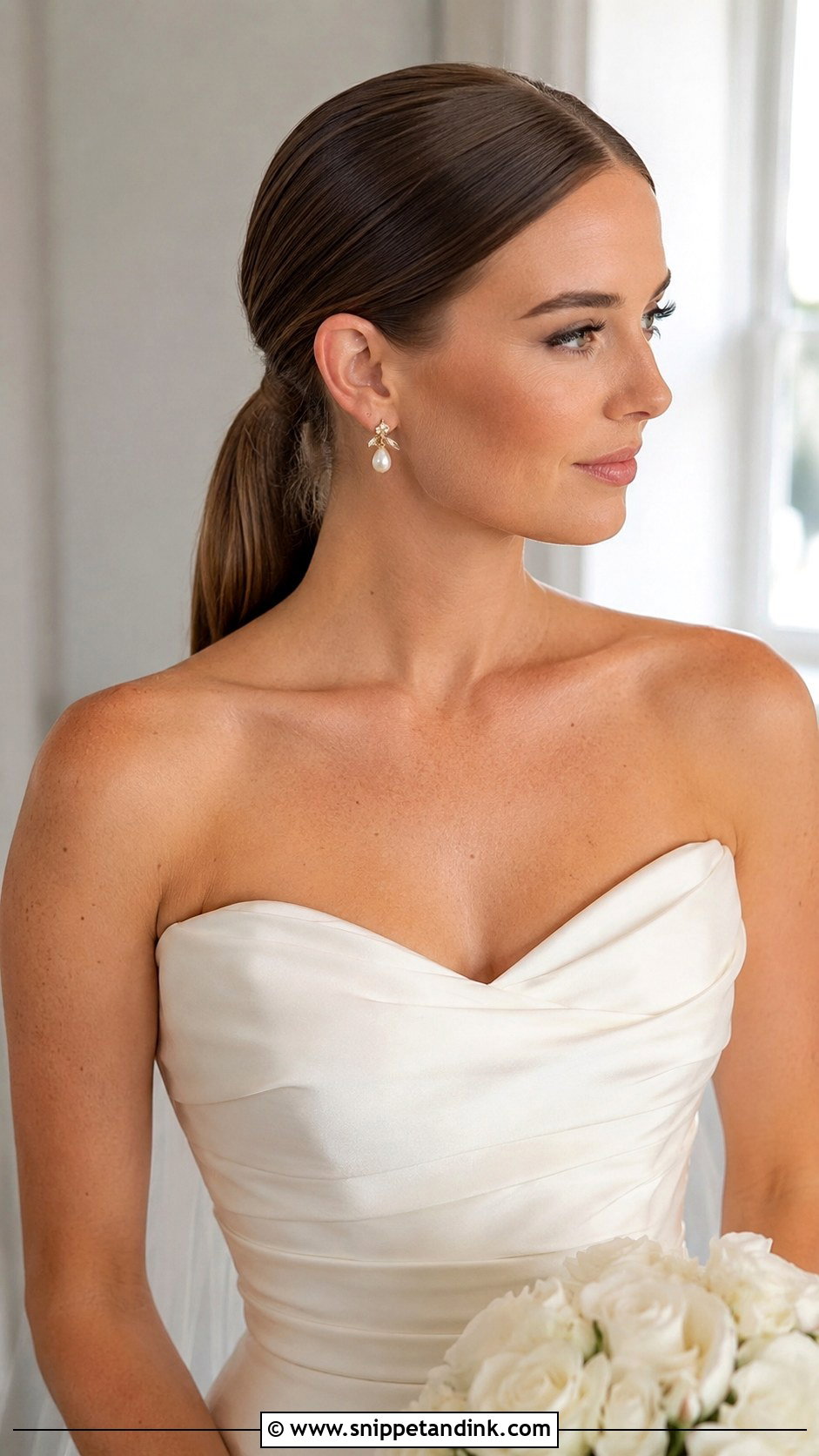
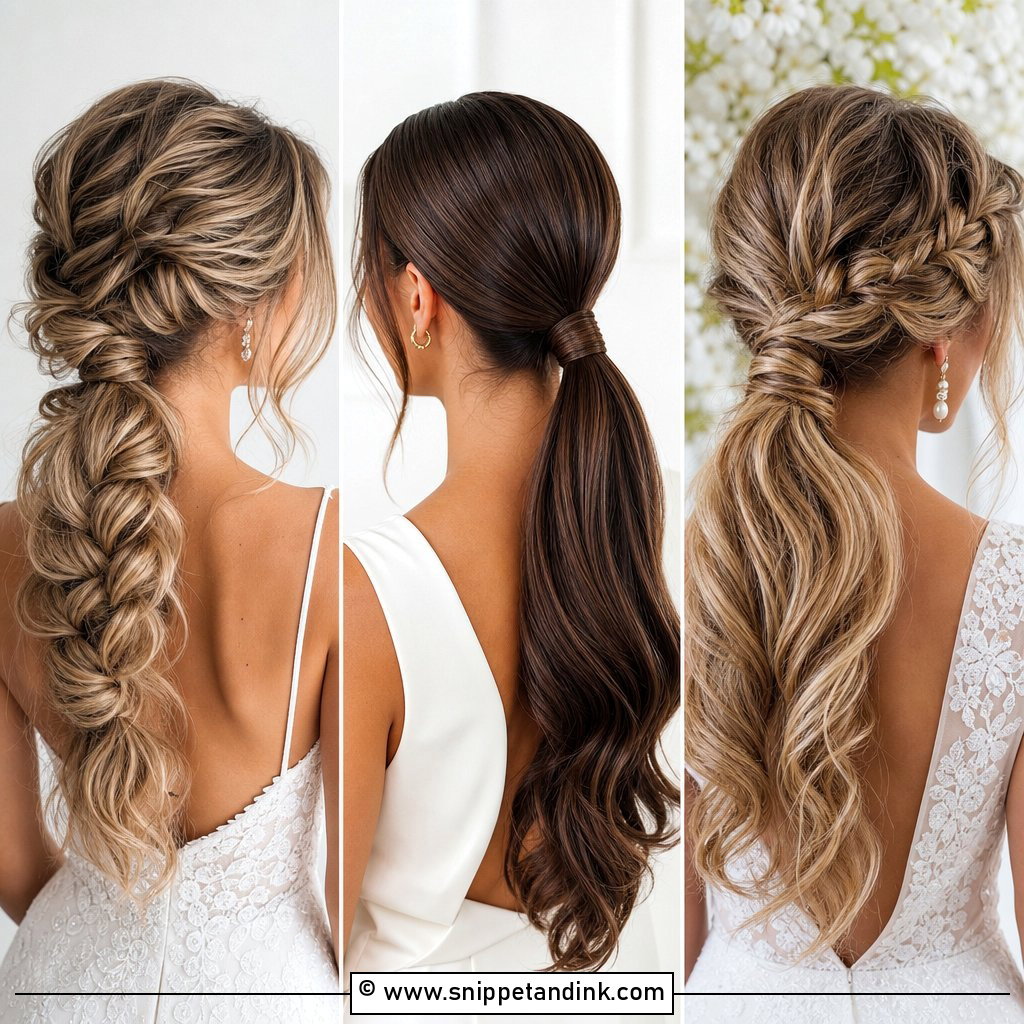
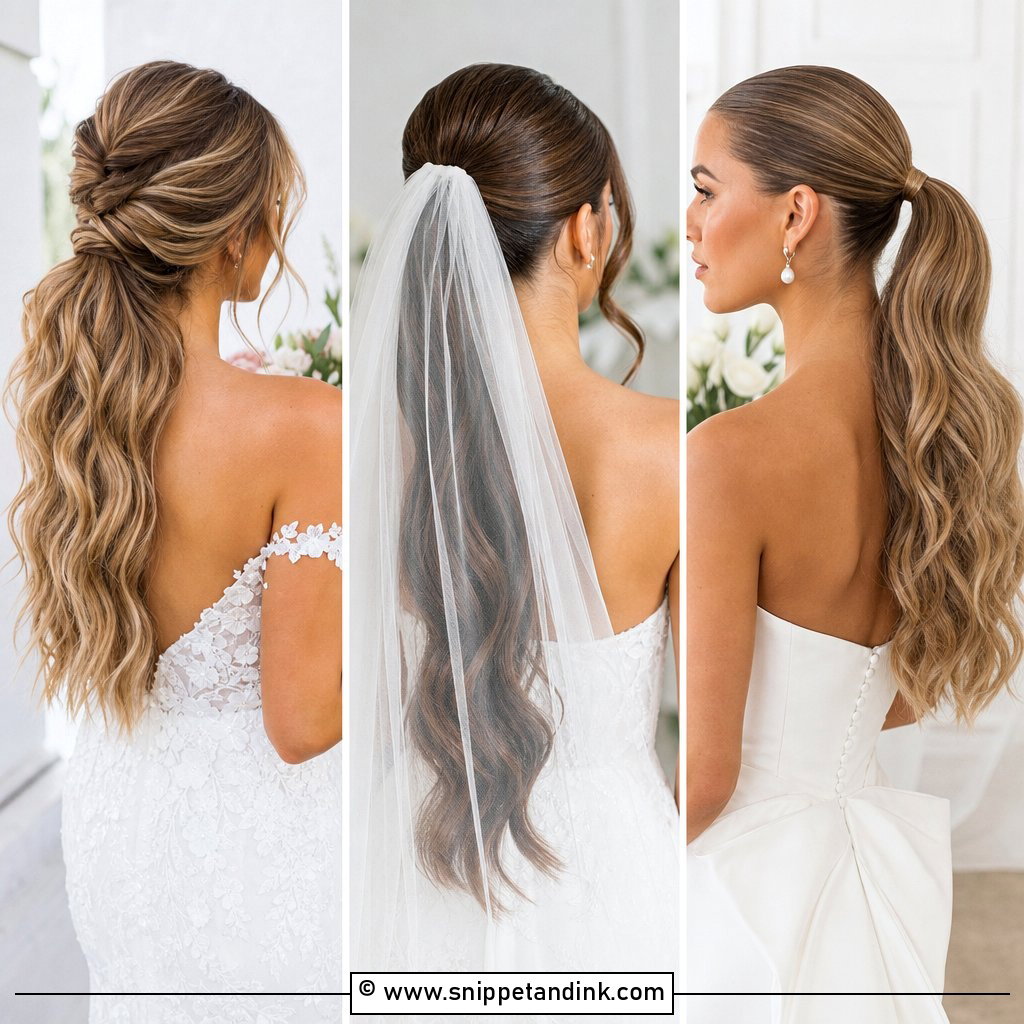
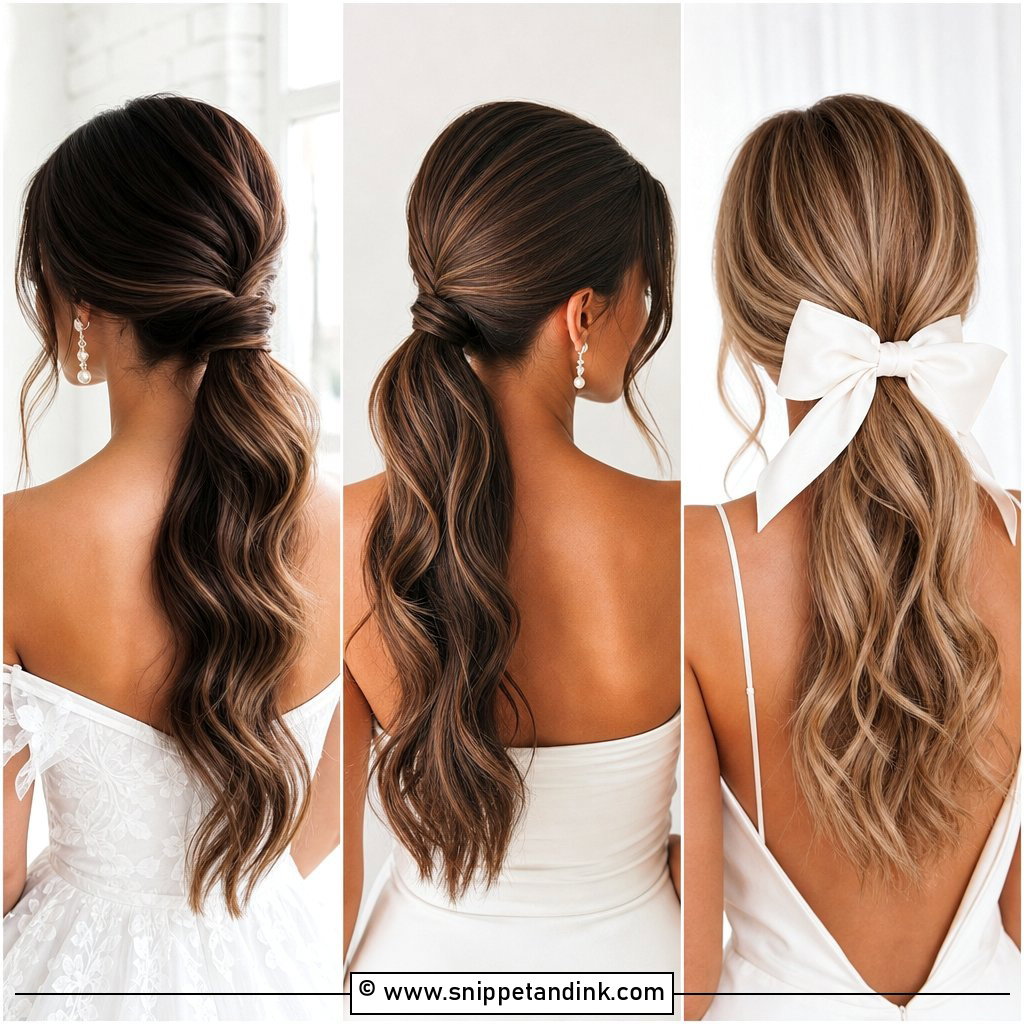
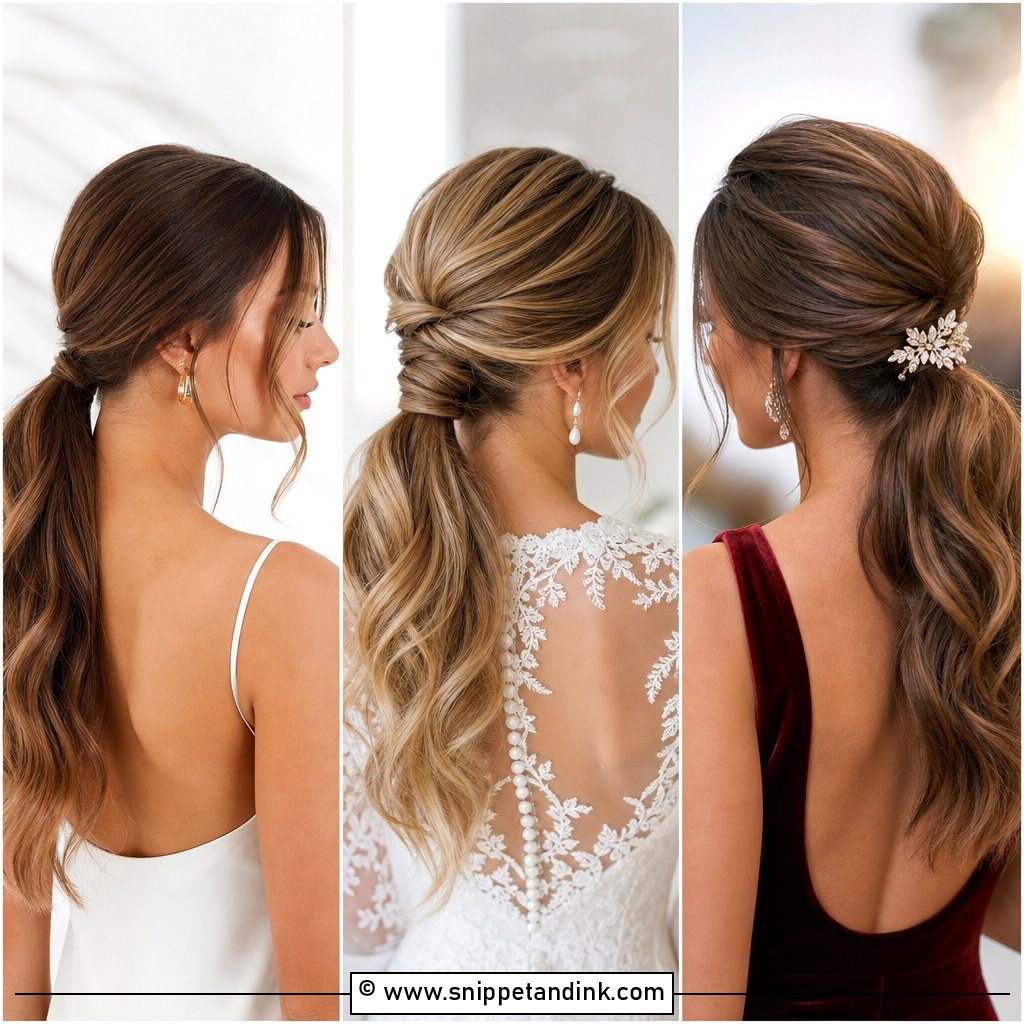
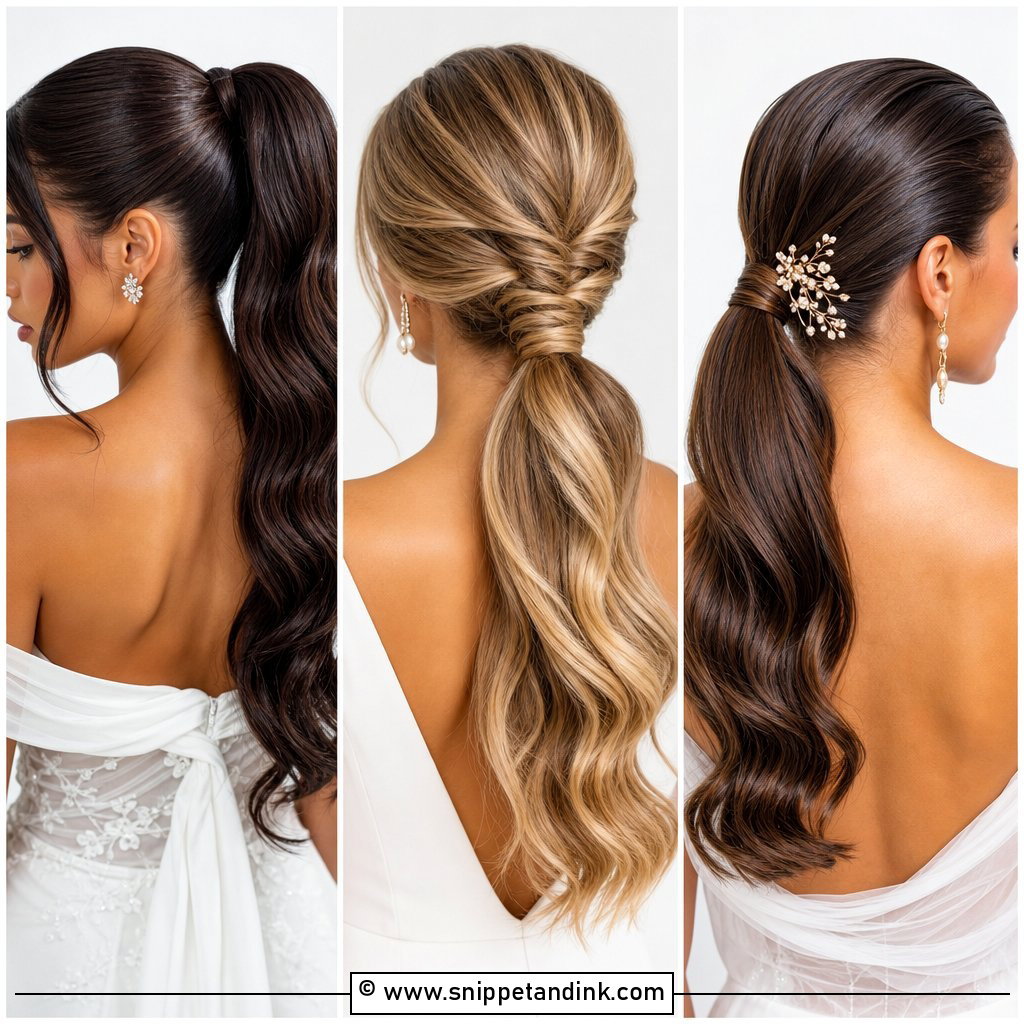
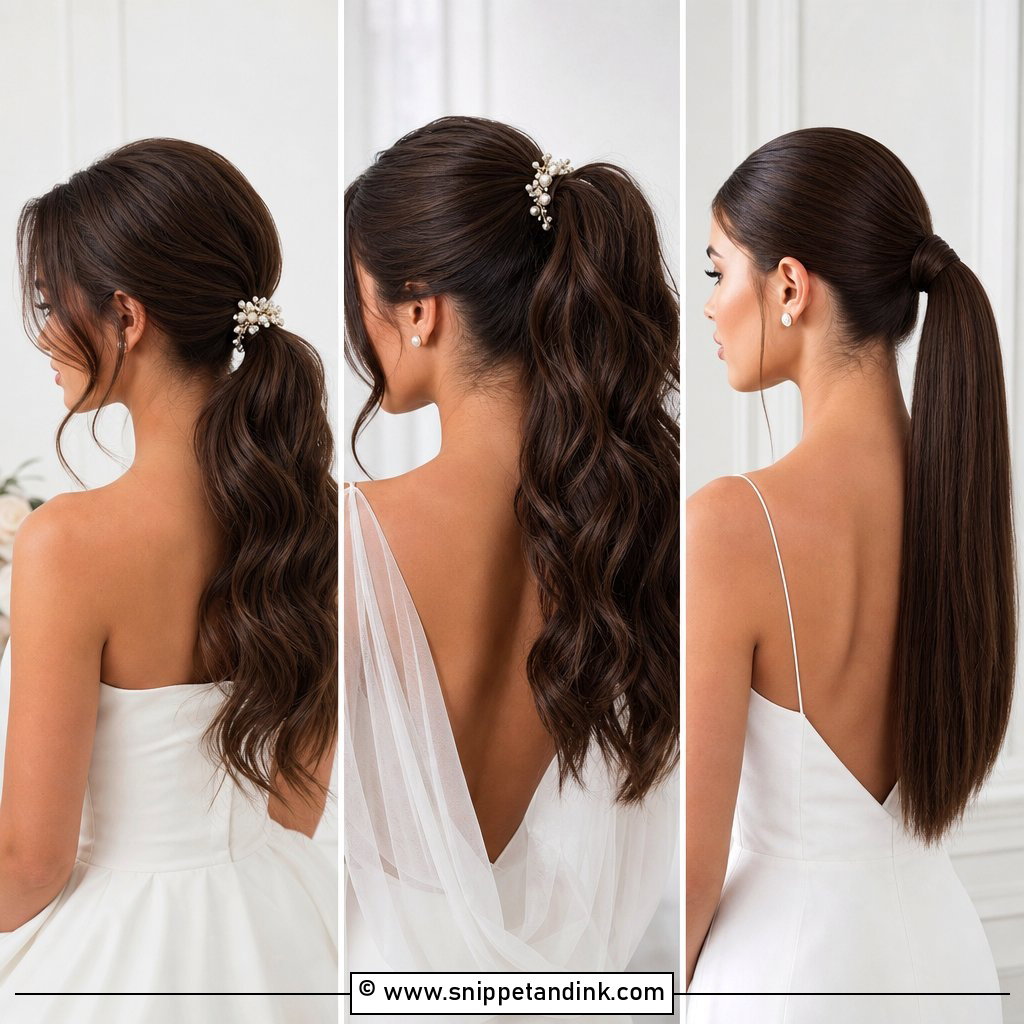
This is the one I’m asked for most by brides wearing clean crepe or satin. The secret is that the shine comes from prep, not from piling on gel at the end: I blow-dry the hair completely smooth first, then use a small amount of product and a fine-toothed brush so the surface doesn’t look wet or crunchy. Placing it at the nape keeps it comfortable against a high-backed chair. A sleek center part sharpens it nicely, but if your hairline has cowlicks we’ll test that at the trial before committing.
2. High Ponytail Wedding Hairstyle
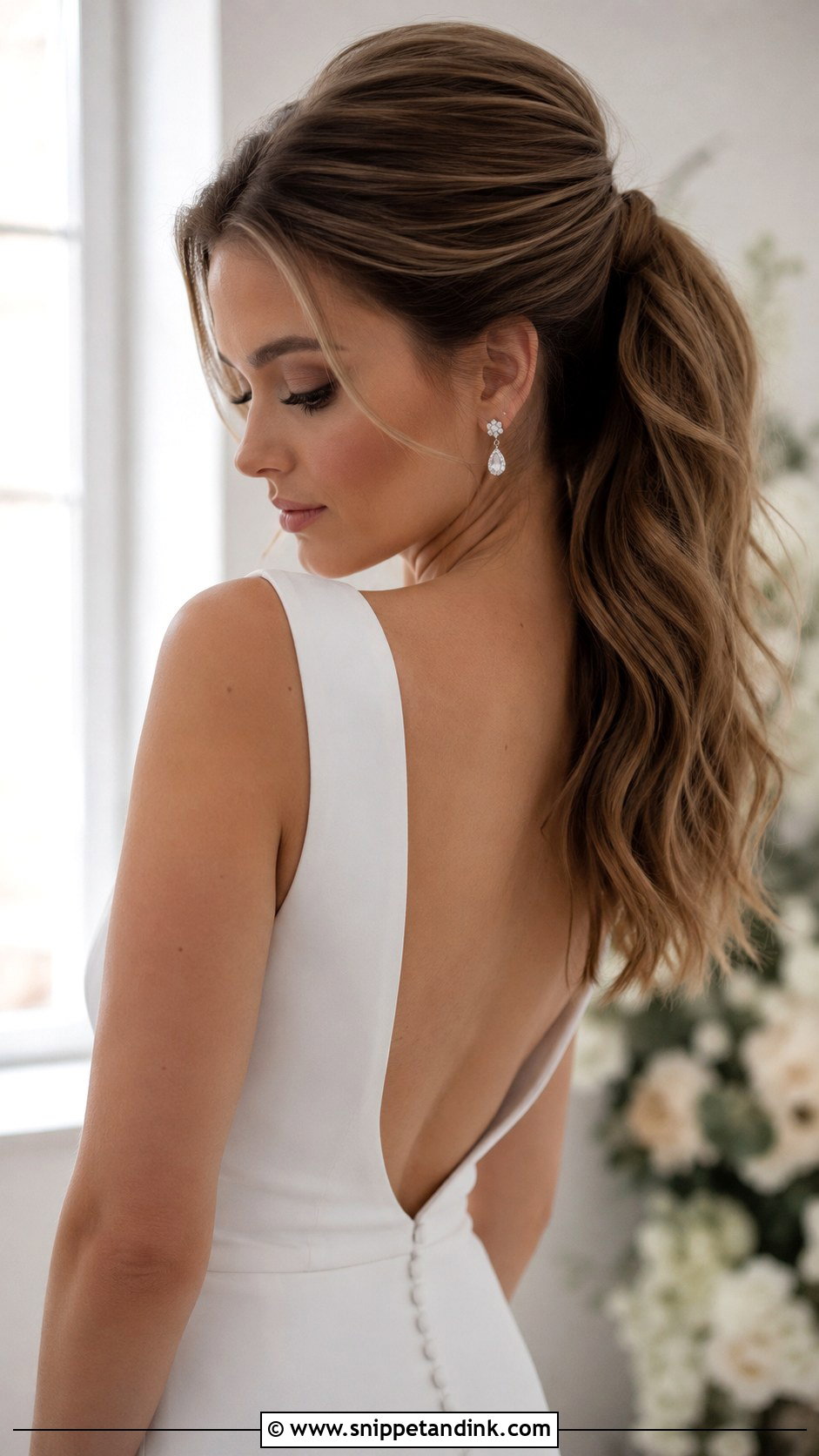
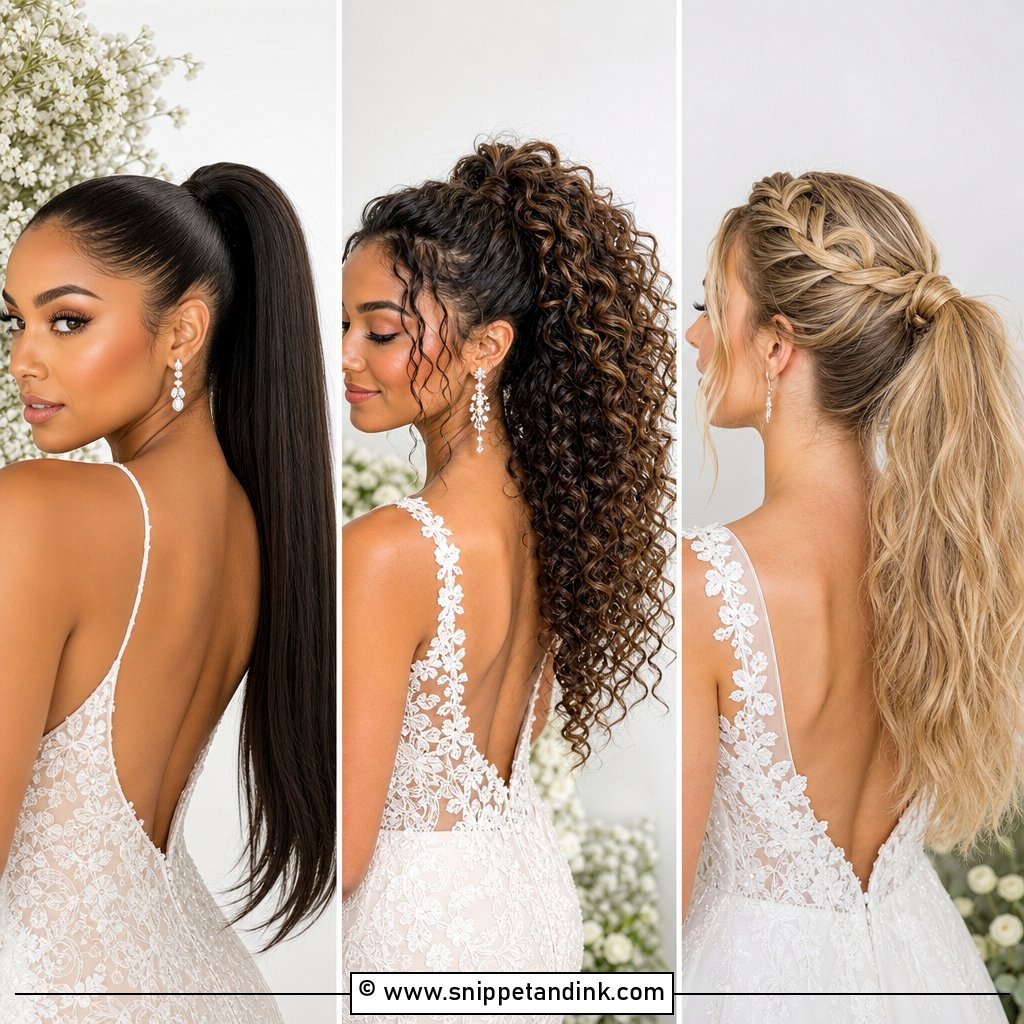
A high ponytail lifts the whole face, which is why so many brides feel instantly awake in it. It also carries the most weight of any position, so on long or heavy hair I anchor it with two elastics and a few crossed bobby pins under the base to stop it sliding back by evening. Smooth sides read more modern; a little lift at the crown softens it. If you plan to wear a veil, we clip it just under the base so the comb isn’t fighting the elastic, and it will hold through plenty of dancing.
3. Curly Ponytail Wedding Updo
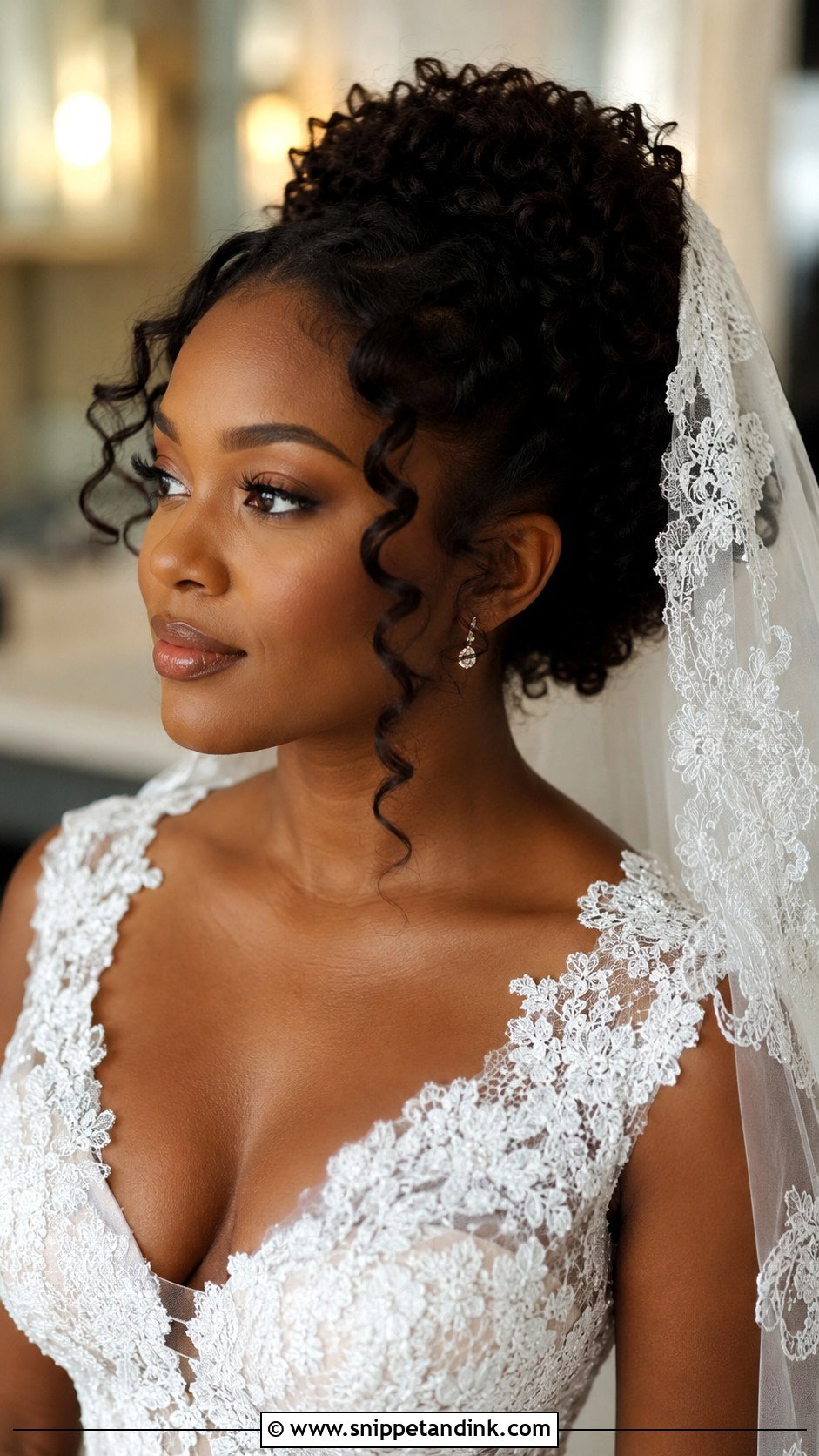
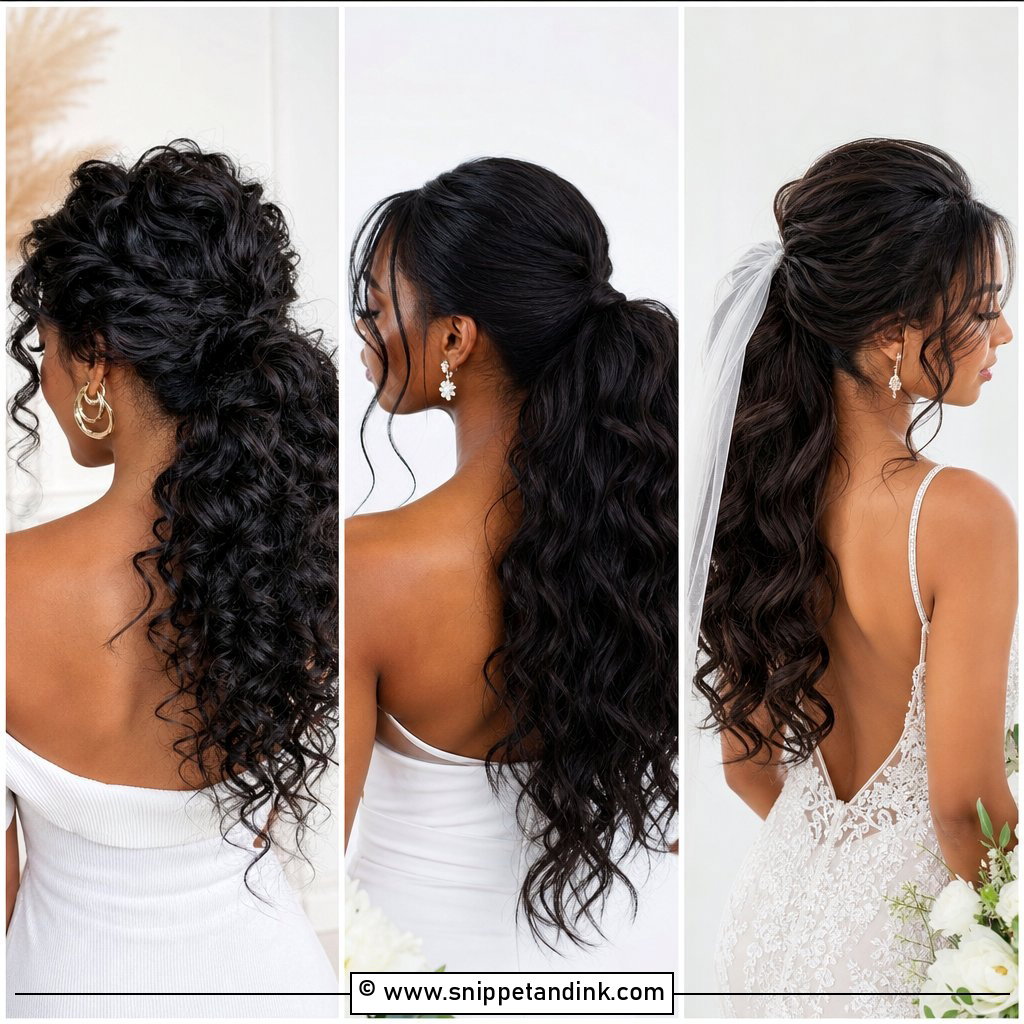
Curly hair makes some of the fullest ponytails I style, as long as nobody brushes it out. I gather curls with my fingers or a wide-tooth comb while they’re still damp with styler, then leave them alone to set so the pattern stays defined instead of turning to frizz. A couple of loose pieces around the face soften the shape. Coils and a mantilla veil work well together because the lace sits on top of the volume rather than flattening it.
4. Bubble Ponytail for Wedding Day
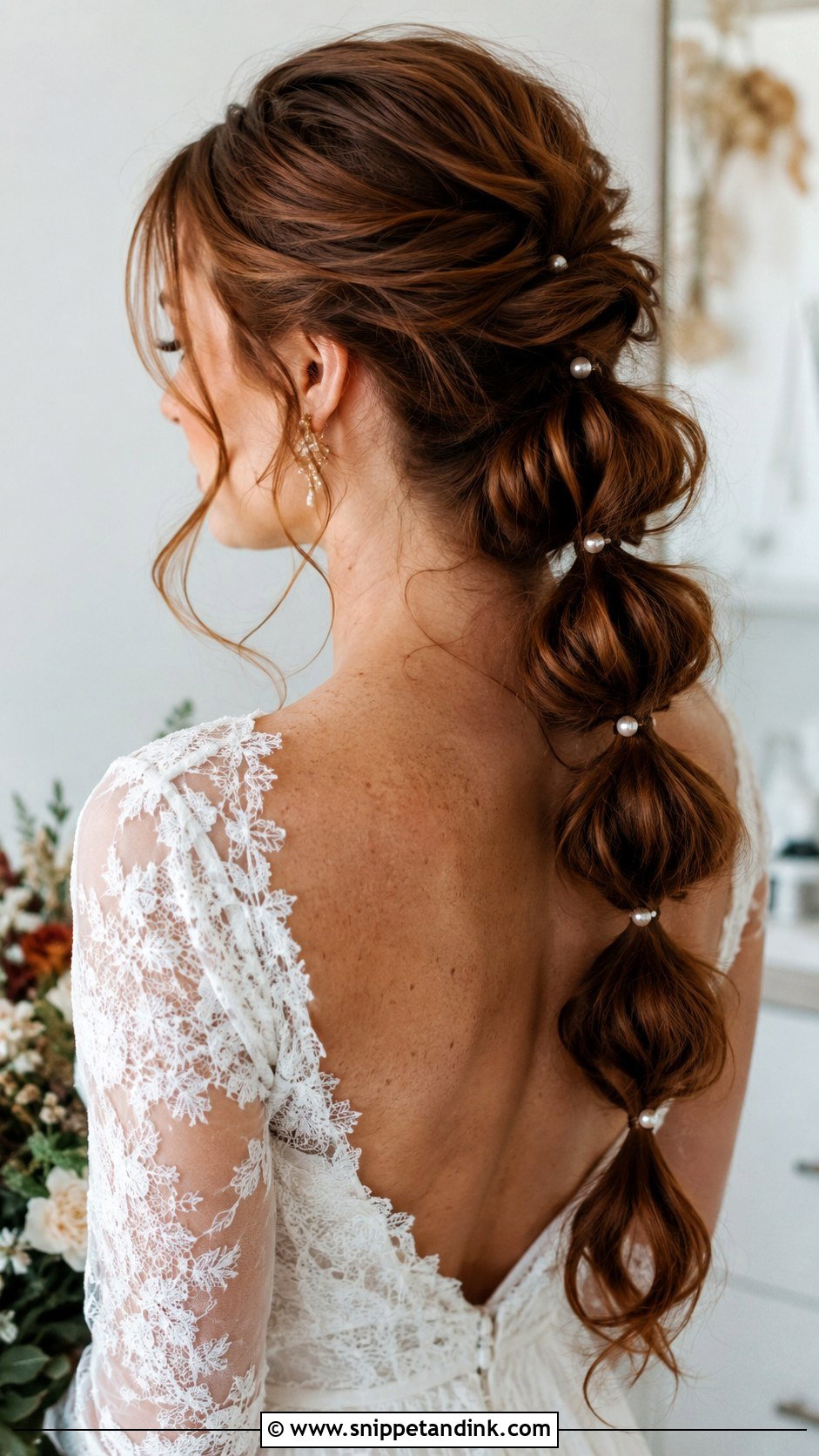
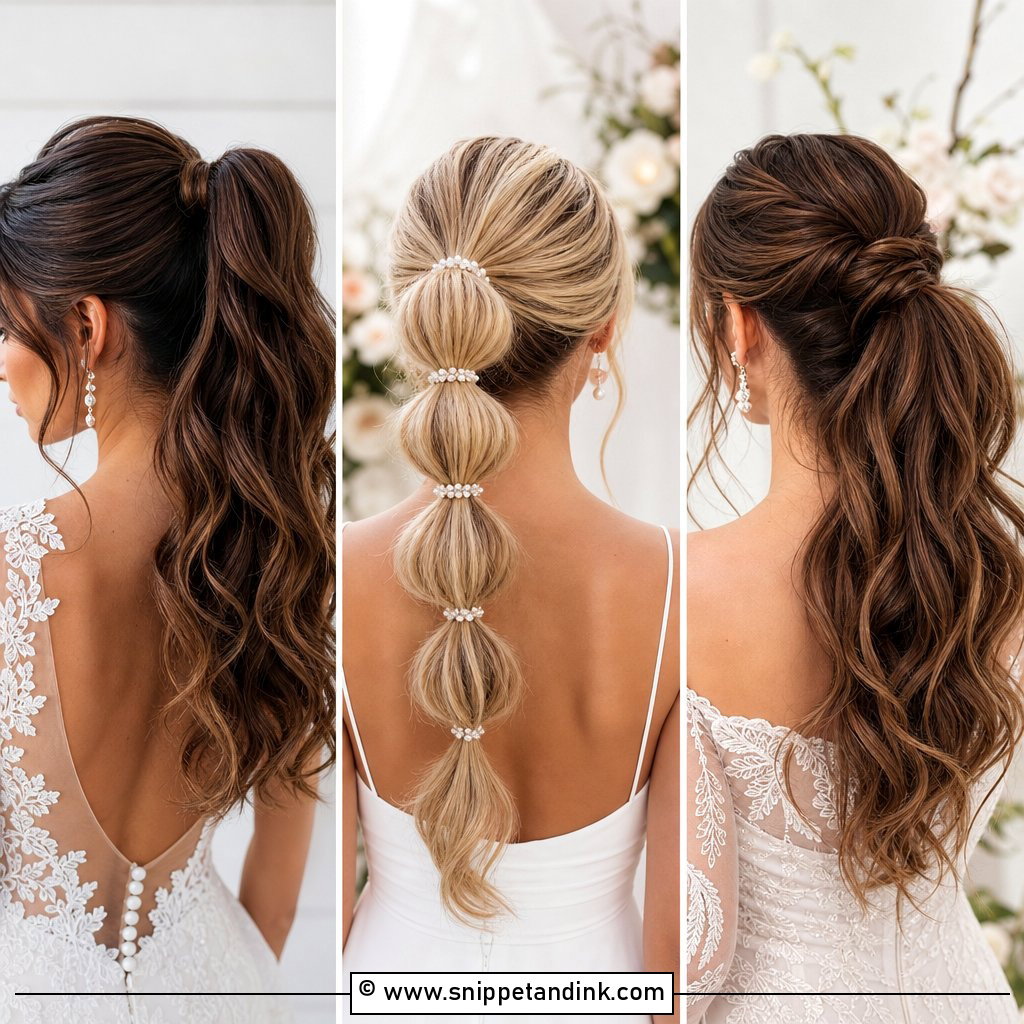
The bubble ponytail is built from a series of small clear elastics spaced down the length, with each section gently pulled wider to make the bubble. Spacing is everything: I usually mark out sections around three fingers apart so the bubbles look even from the back. It’s one of the best options for medium-thickness hair, because pancaking the sections makes the tail look fuller than it is. Very fine hair can show the elastics, so tuck a pearl pin over each one.
5. Braided Ponytail Bridal Hairstyle
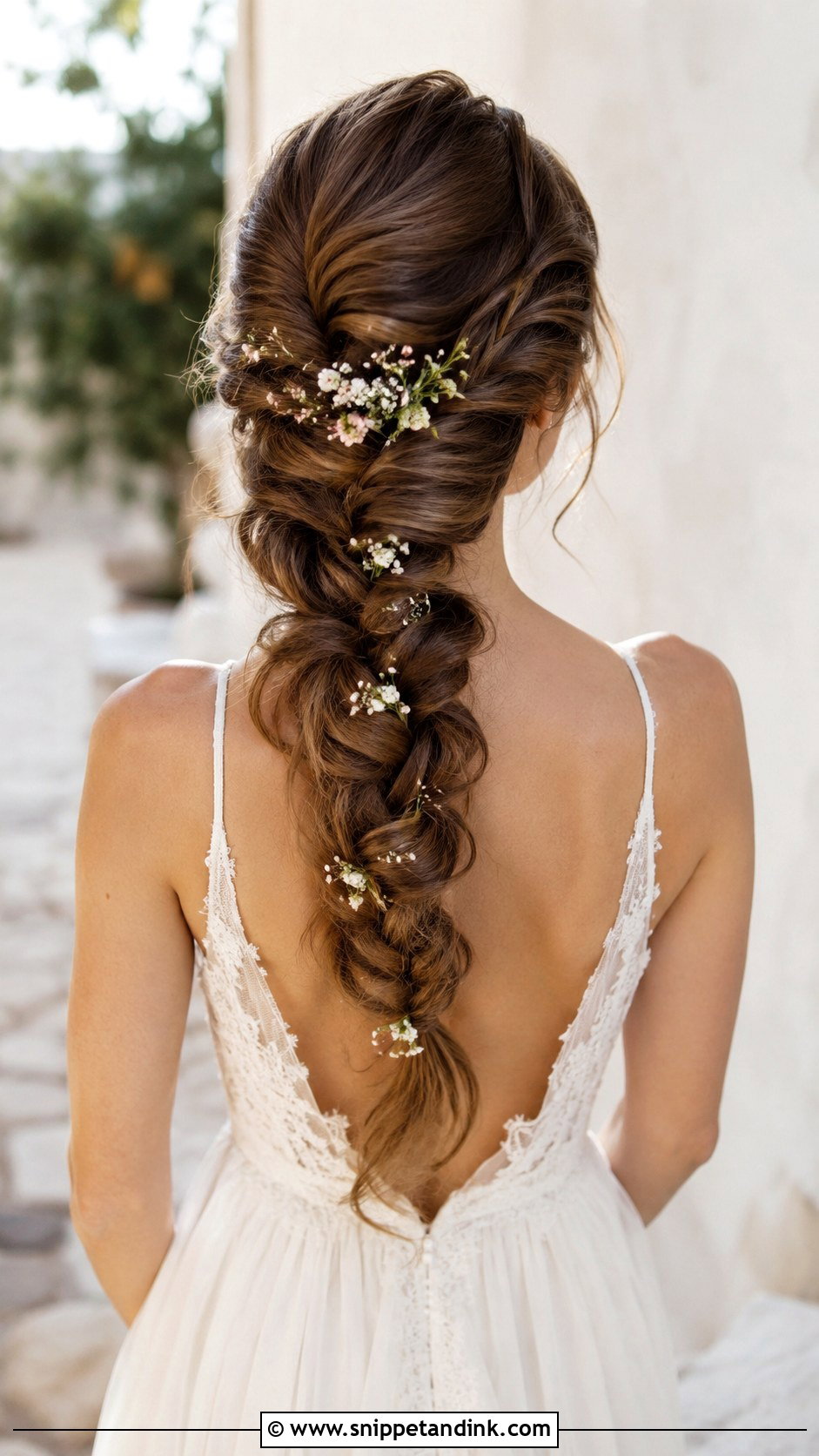
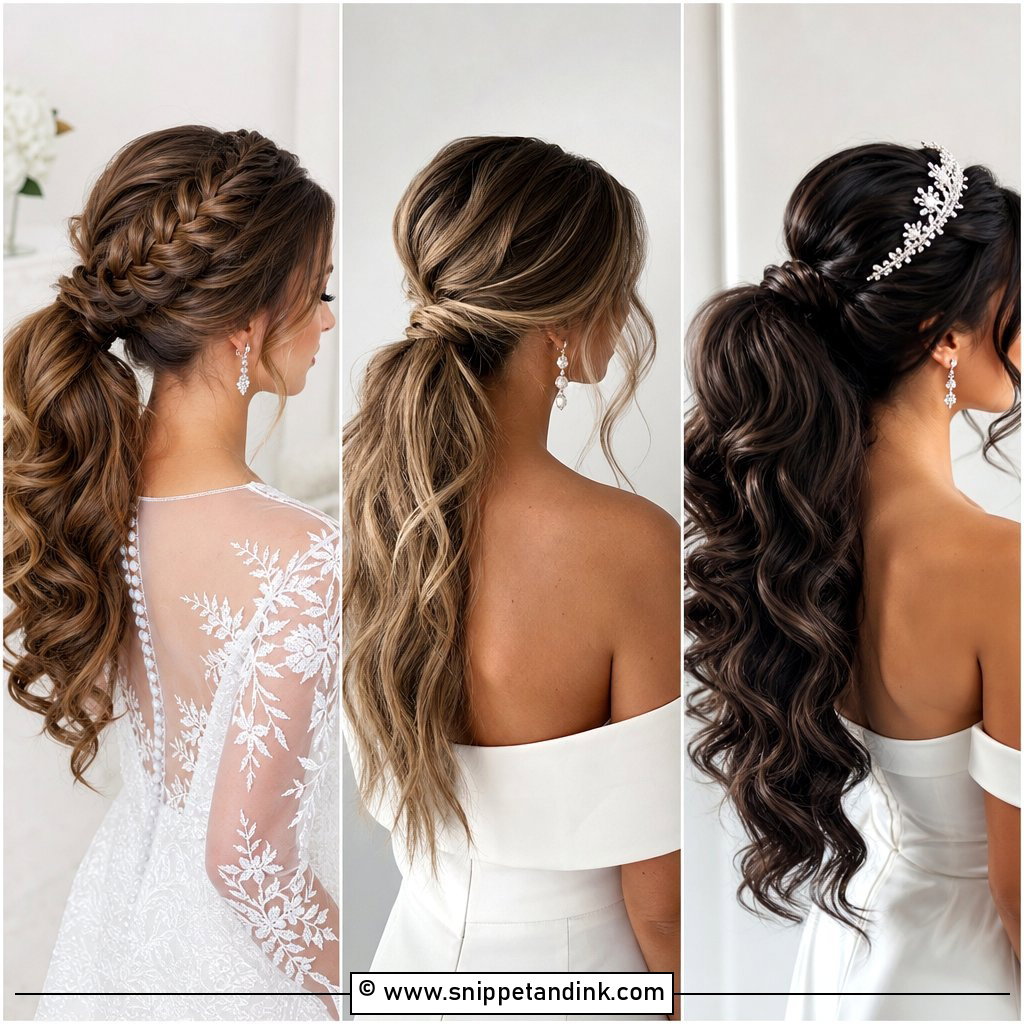
A braid running into the tail gives the ponytail a clear line through the middle and keeps it neat for hours. A three-strand reads simple, a Dutch braid sits raised on top of the hair, and a fishtail looks finer and more detailed. Longer hair shows the pattern best. On layered cuts, shorter ends tend to poke out of the braid by mid-afternoon, so I lightly texturize the hair first and tuck the stragglers back with a little wax. Tiny blooms can go along the braid if you want a garden feel.
6. Low Ponytail With Face-Framing Pieces
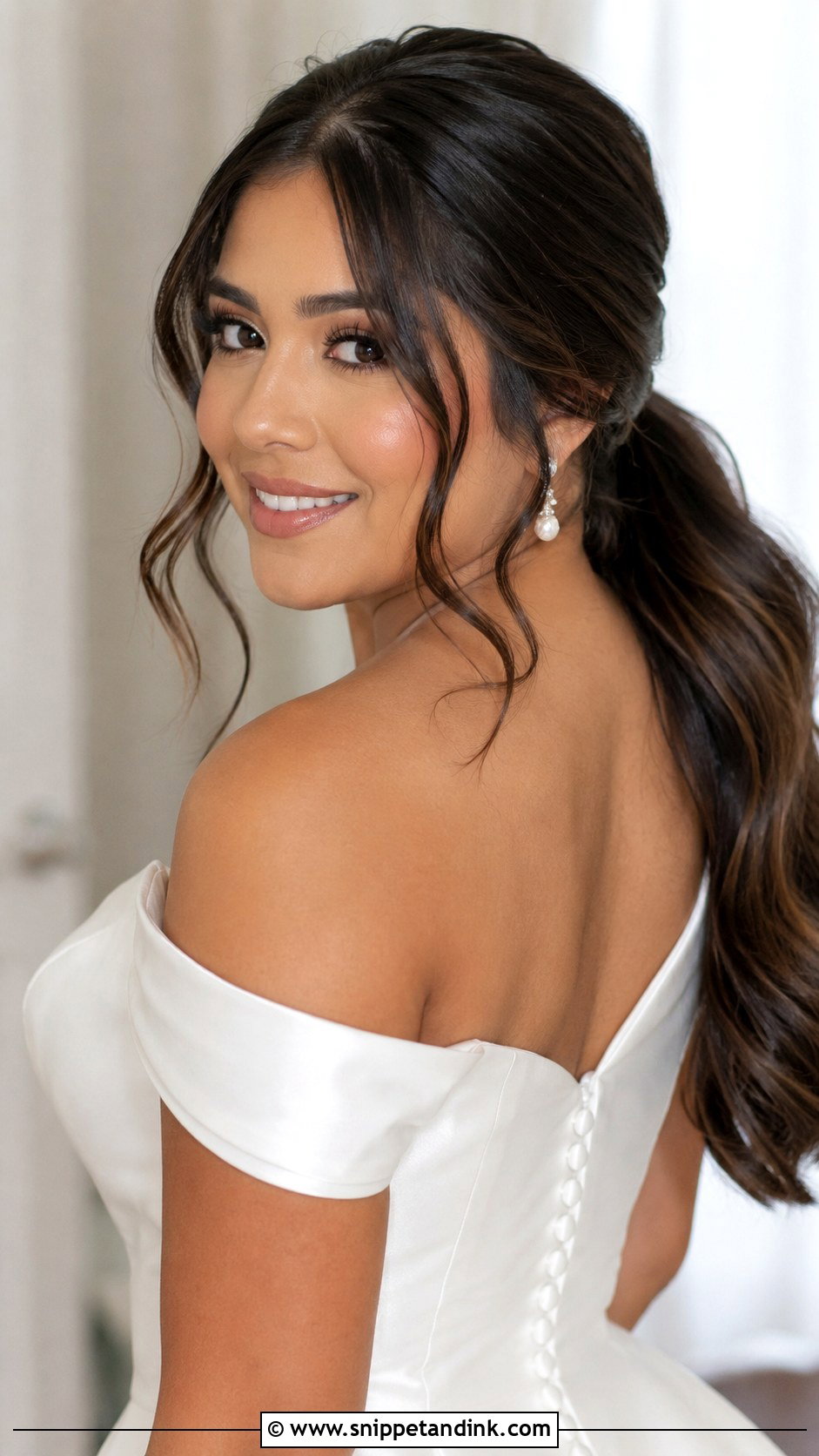
Face-framing pieces are small, but they decide whether a low ponytail looks soft or severe. I pull them out after the ponytail is secured, never before, so they fall from where your hairline actually grows. Thin is better than chunky here: one or two fine sections each side, curled away from the face. The thing I watch for is humidity, since those front strands are the first to frizz or go limp, so I set them with a light spray rather than heavy oil.
7. Sleek High Ponytail With Veil
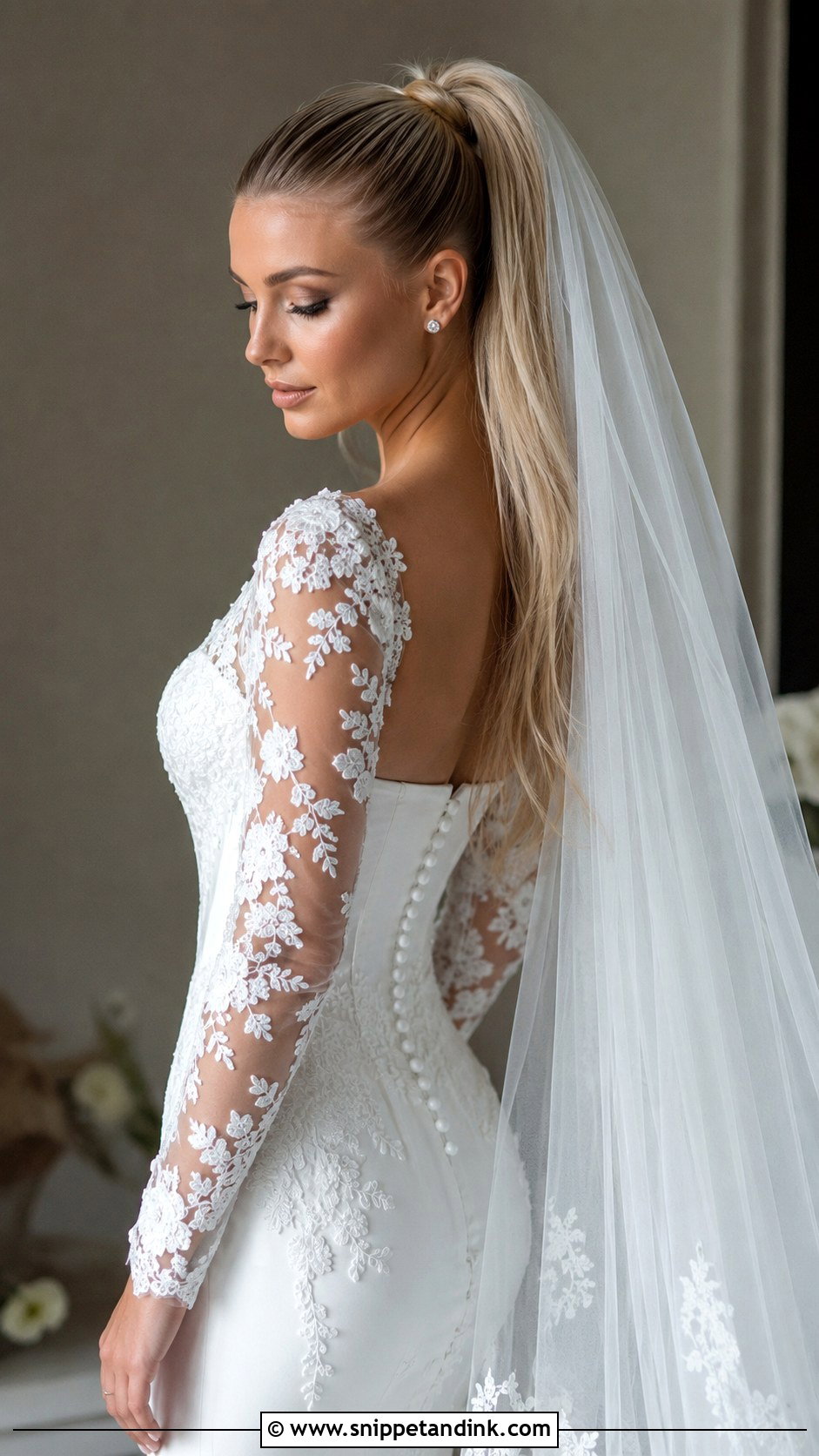
A sleek high ponytail with a veil is dramatic, and the engineering matters. The veil comb slides in just beneath the base, angled upward into the elastic, so the weight of the tulle pulls on something solid. Heavy cathedral veils can drag a high ponytail backward, which is why I often suggest a lighter fingertip length for this style. Once the veil comes out for the reception, the smooth ponytail underneath is still intact, with no dent or flat spot.
8. Textured Messy Ponytail for Brides
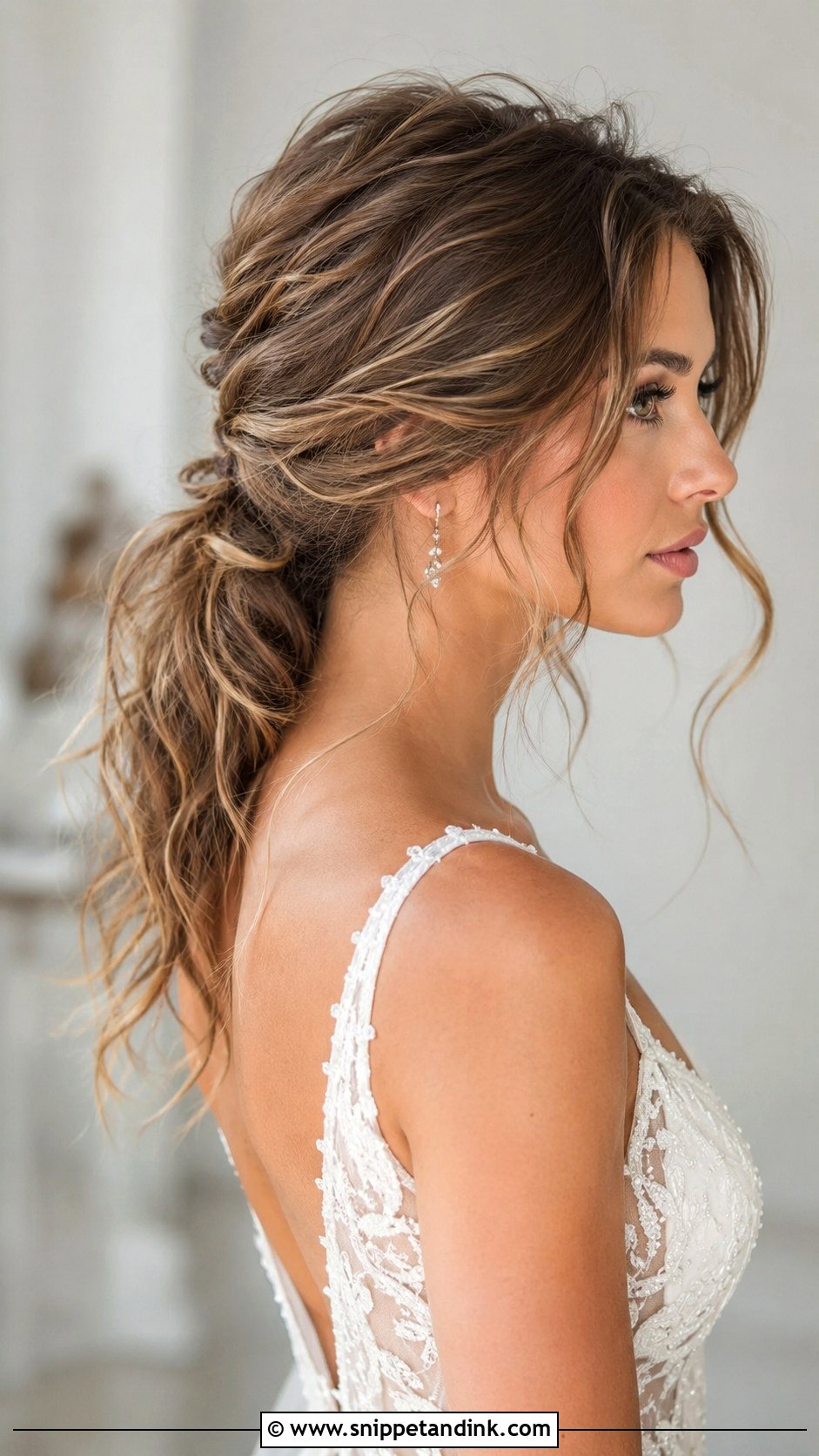
A messy ponytail takes more work than it looks. Undone texture needs grip, so I start with texture spray or dry shampoo through the lengths, create waves, then tease lightly at the crown before gathering everything loosely. Loose strands are chosen and placed, not left to chance. Very silky, straight hair struggles to hold this look and can slip out within a few hours, so it suits second-day or naturally textured hair best, especially at outdoor and beach weddings where some movement is welcome.
9. Ponytail With Hair Accessories
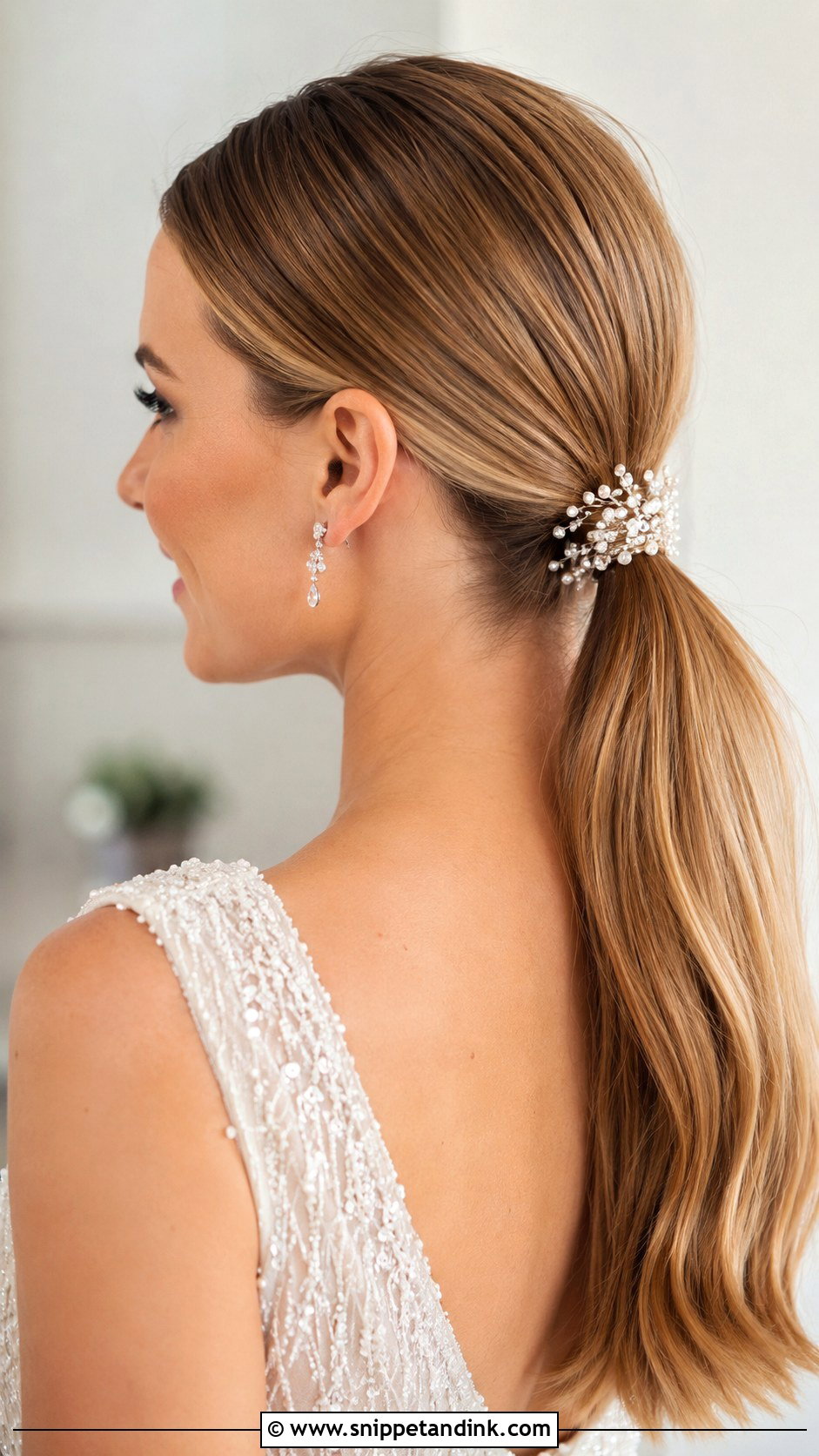
Accessories do two jobs on a ponytail: they add sparkle and they hide the elastic. Pearl or crystal pins look best placed in a loose line down the base rather than in one tight cluster, and a jeweled cuff should be sized to your tail, because a loose cuff slides. I always ask brides to bring their earrings to the trial so the metals and scale match. From vintage-inspired combs to modern metallic pieces, choose one hero piece rather than layering three.
10. Wavy Ponytail Wedding Hairstyle
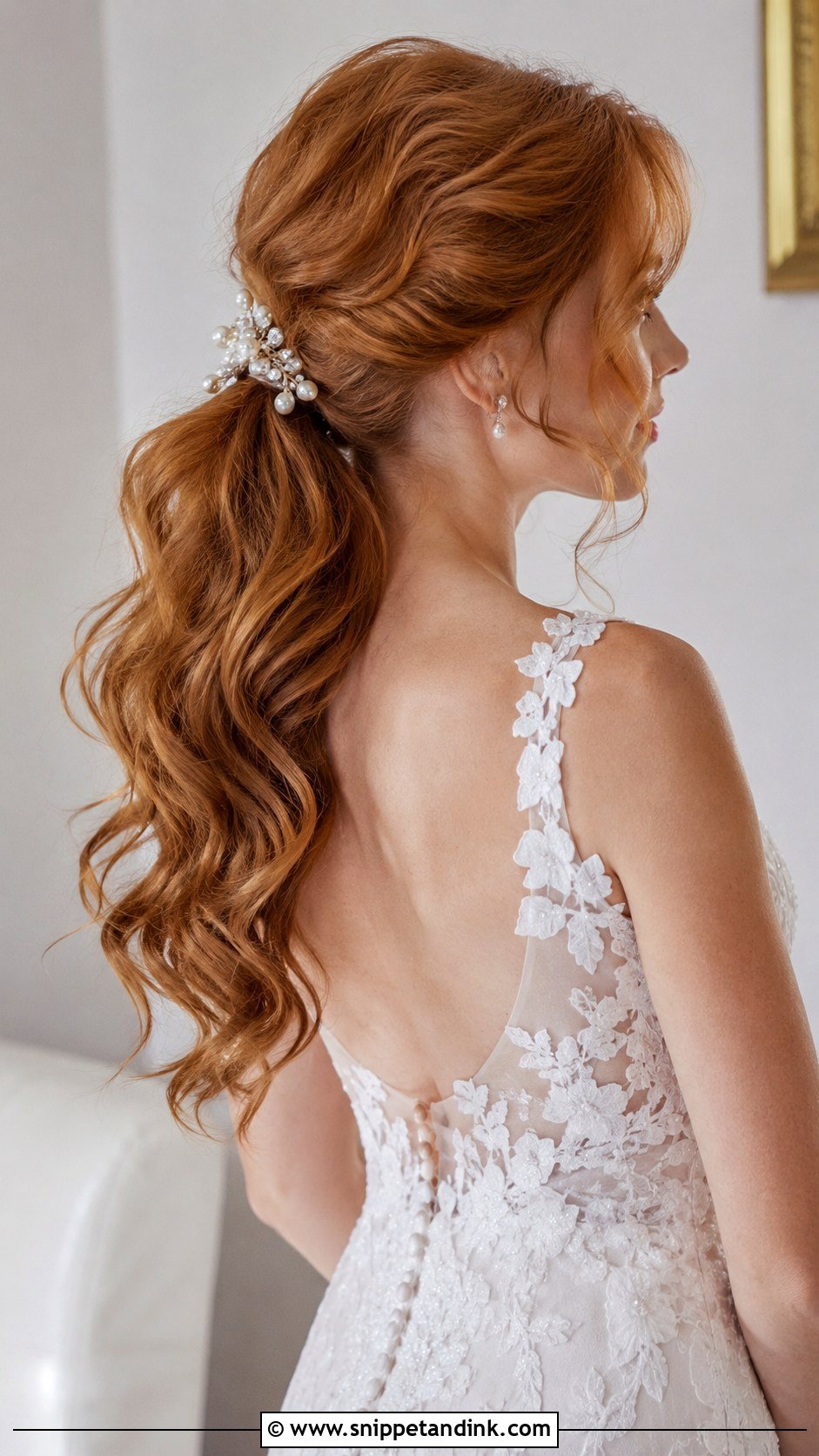
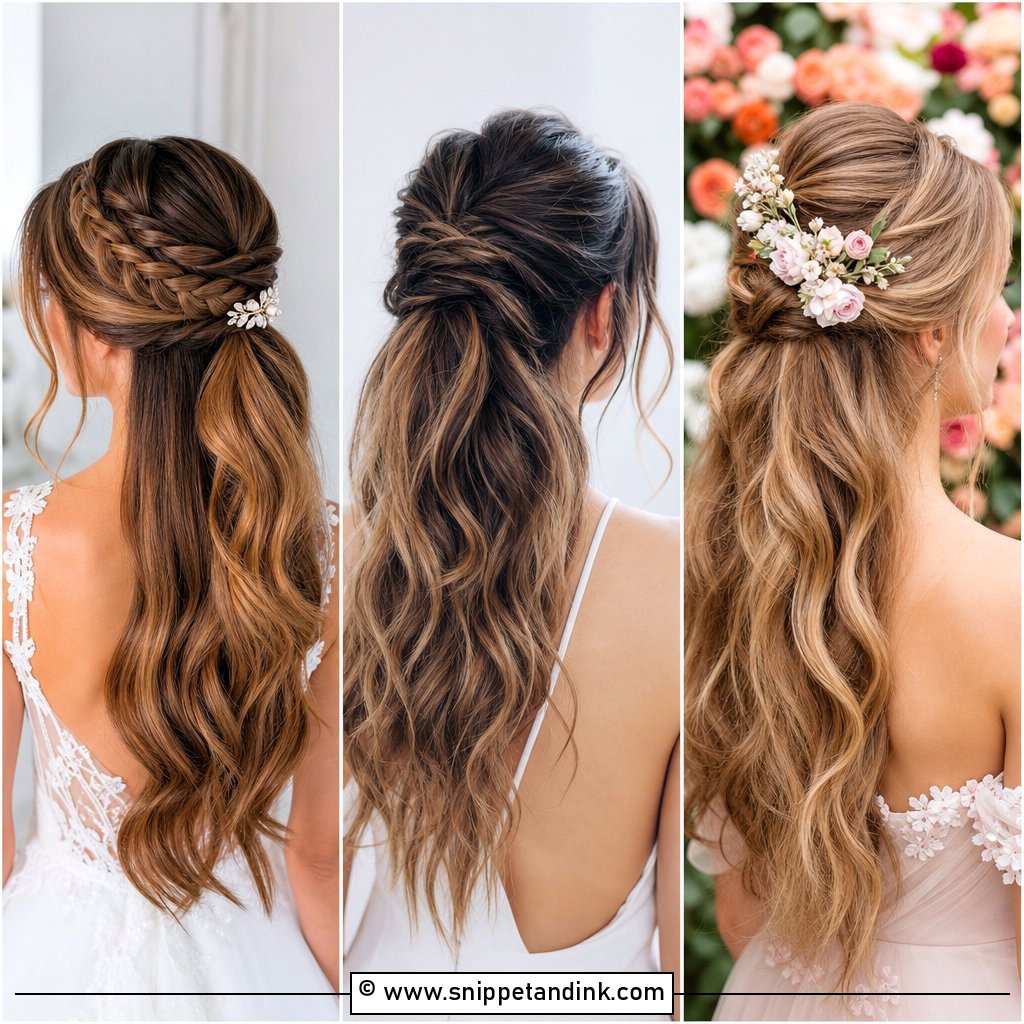
Waves give a ponytail movement and a bit of extra volume. I curl the hair before gathering it, then brush the curls out gently once they’ve cooled so they relax into soft waves rather than ringlets. High works with strapless gowns; low sits better under a high neckline. The ends drop first, so I usually re-curl just the last few inches after the tail is in and finish with a flexible spray, which keeps the shape without making it crunchy for photos.
11. Ponytail With Wrapped Hair Detail
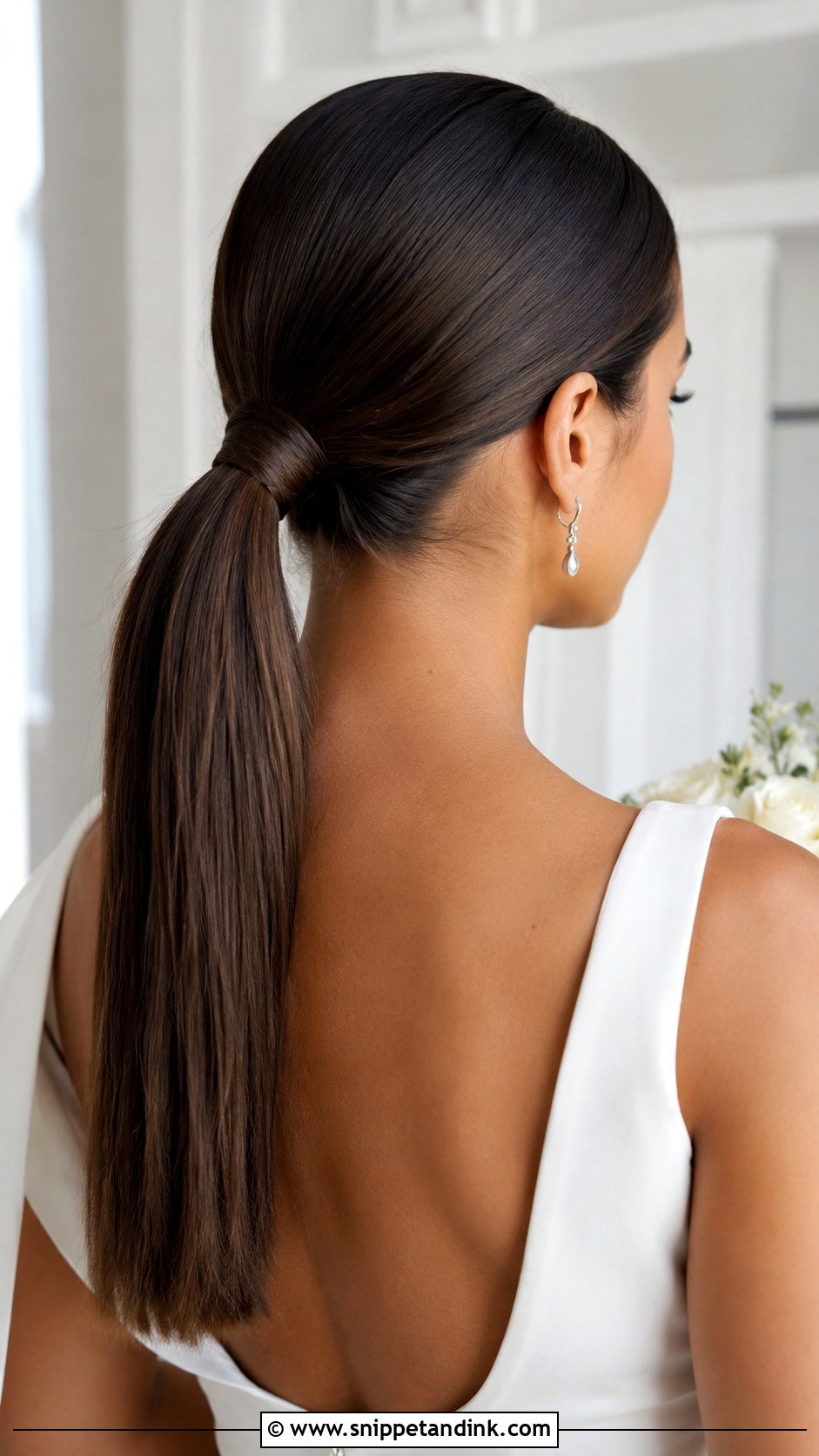
Wrapping hair around the base is the easiest way to make any ponytail look finished. I take a small section from the underside of the tail, wrap it over the elastic, and pin the end through the base so it can’t unravel. Smoothing that section with a touch of cream first stops frizz. It suits both sleek and textured styles, and on very thin hair I’ll borrow the section from an extension so the tail doesn’t lose any of its own fullness.
12. Half-Up Ponytail for Wedding
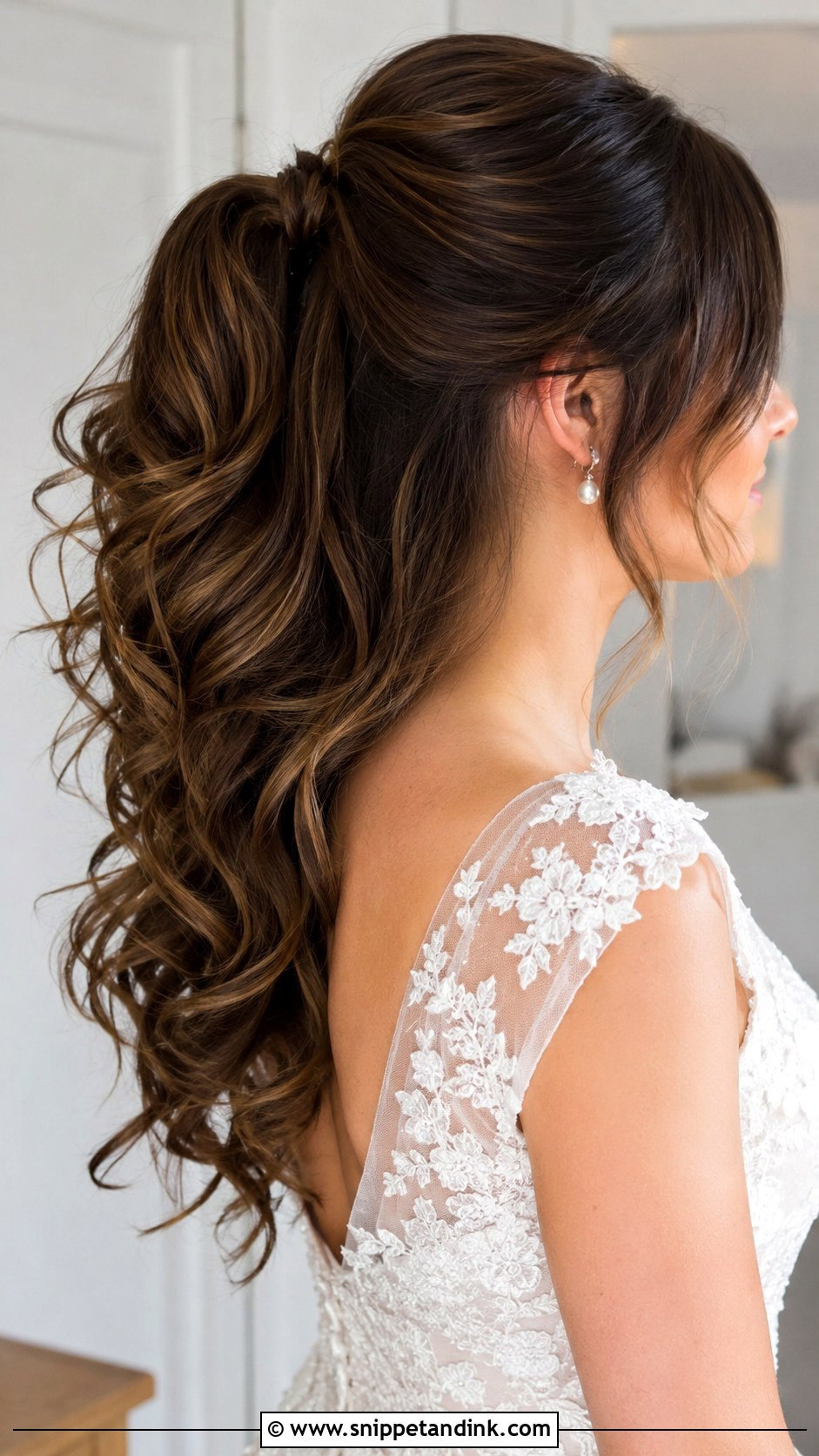
The half-up ponytail is the answer for brides who can’t decide between up and down. Only the top section is gathered back, so the rest of your length stays loose. The loose hair is the part that needs attention, because it carries all the movement and drops first in heat. I set it with a large barrel and let it cool in pin curls before brushing out. A small twist or braid feeding into the half-up section adds detail and helps it grip.
13. Boho Ponytail With Flowers
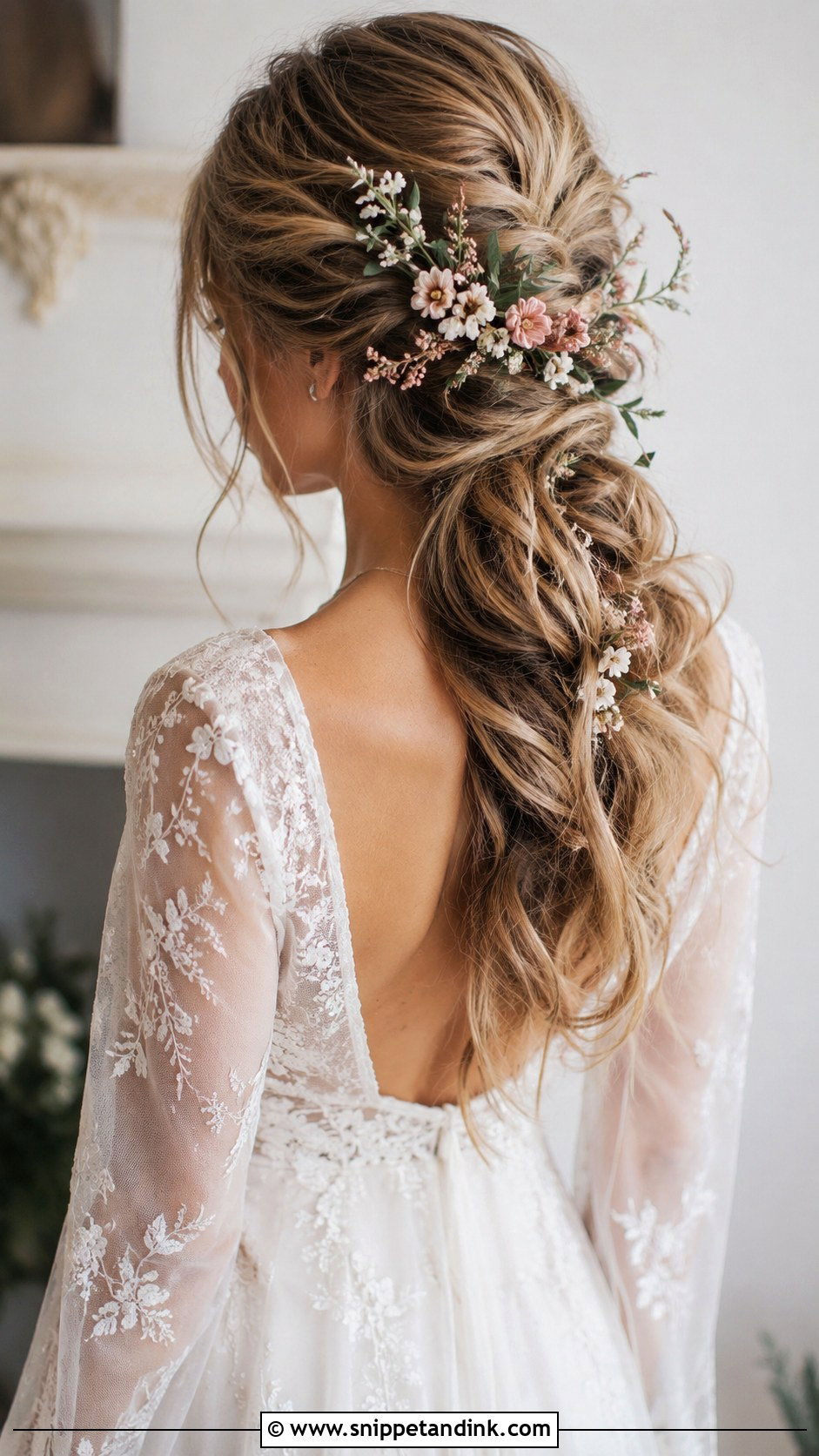
Flowers on a ponytail need to be chosen with your florist, not just bought on the morning. Sturdy blooms such as spray roses, wax flower or baby’s breath last far longer out of water than delicate garden roses. I tuck them in along the base or between sections once the hair is finished, so the stems sit against the elastic rather than in the hair. Silk flowers are a safe swap for very hot days. Pair it with a flowy gown and you have a relaxed outdoor look.
14. Waterfall Ponytail Bridal Look
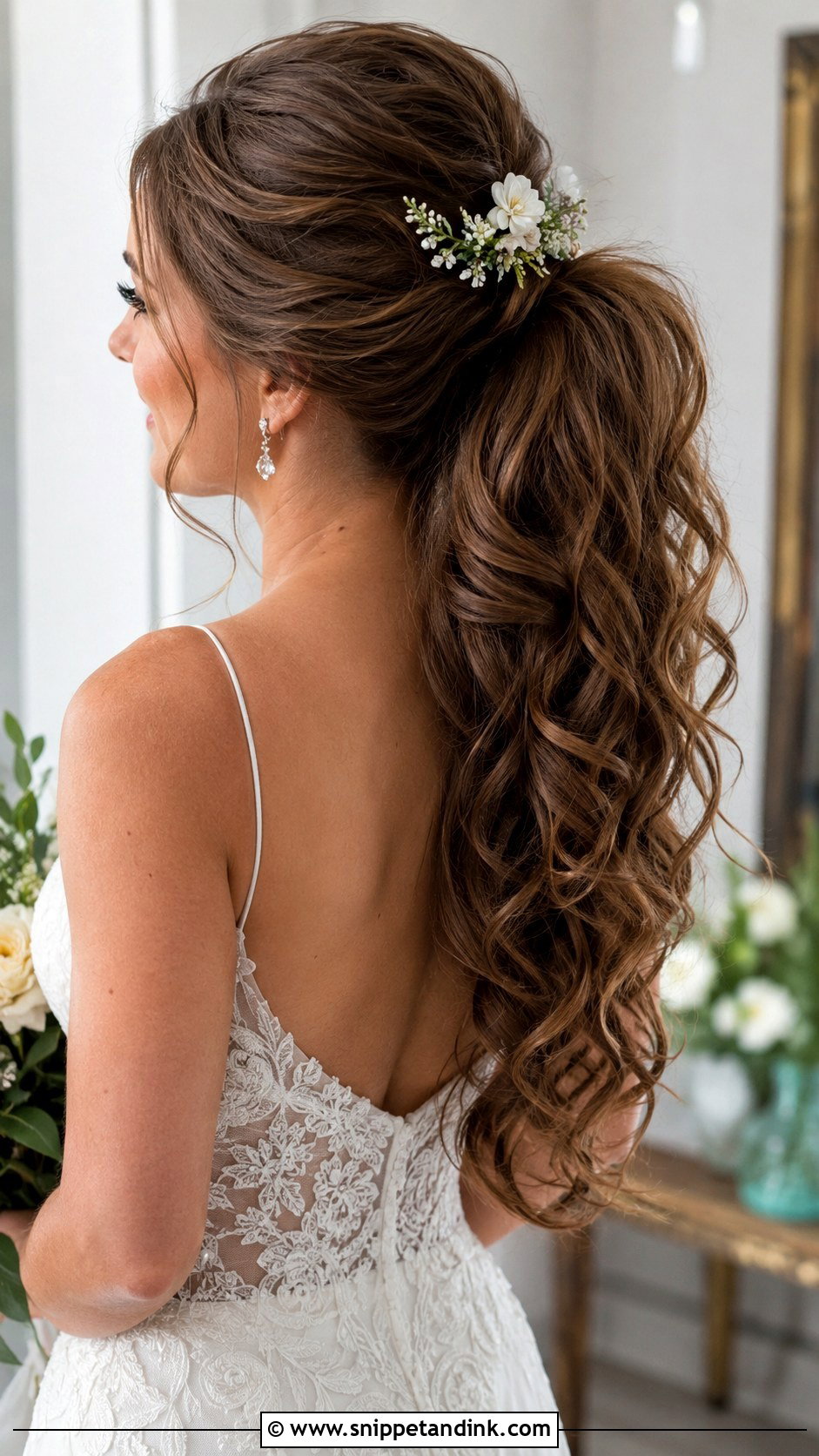
This ponytail gets its layered effect from curling sections at different heights and then breaking them up, so the waves stack on top of each other as they fall. It needs density to look right; with fine or shoulder-length hair the layers look sparse. That’s where clip-in extensions make a big difference, placed under the tail so no tracks show. Expect this style to take longer in the chair than a sleek ponytail.
15. Twisted Ponytail Wedding Hairstyle
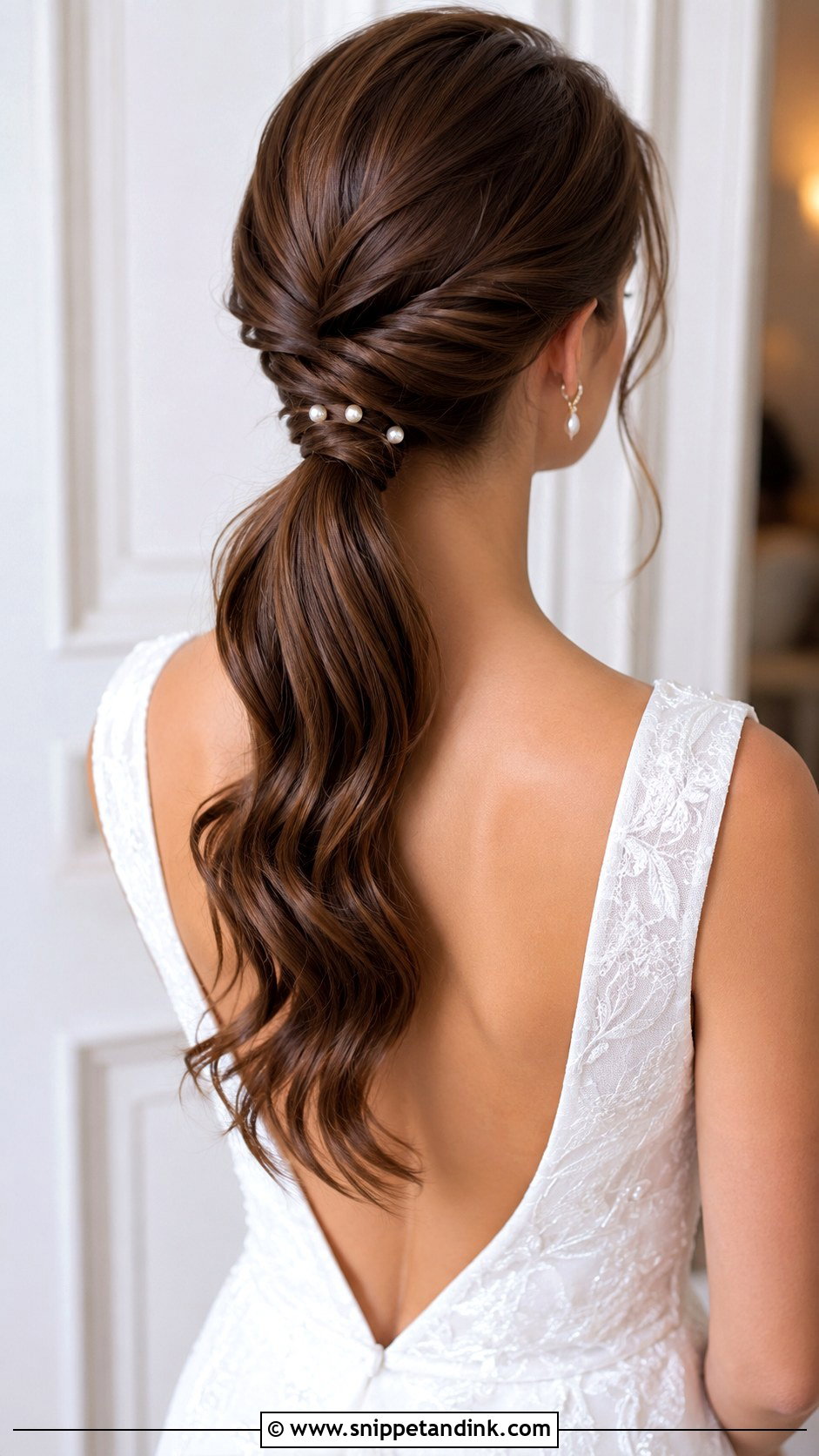
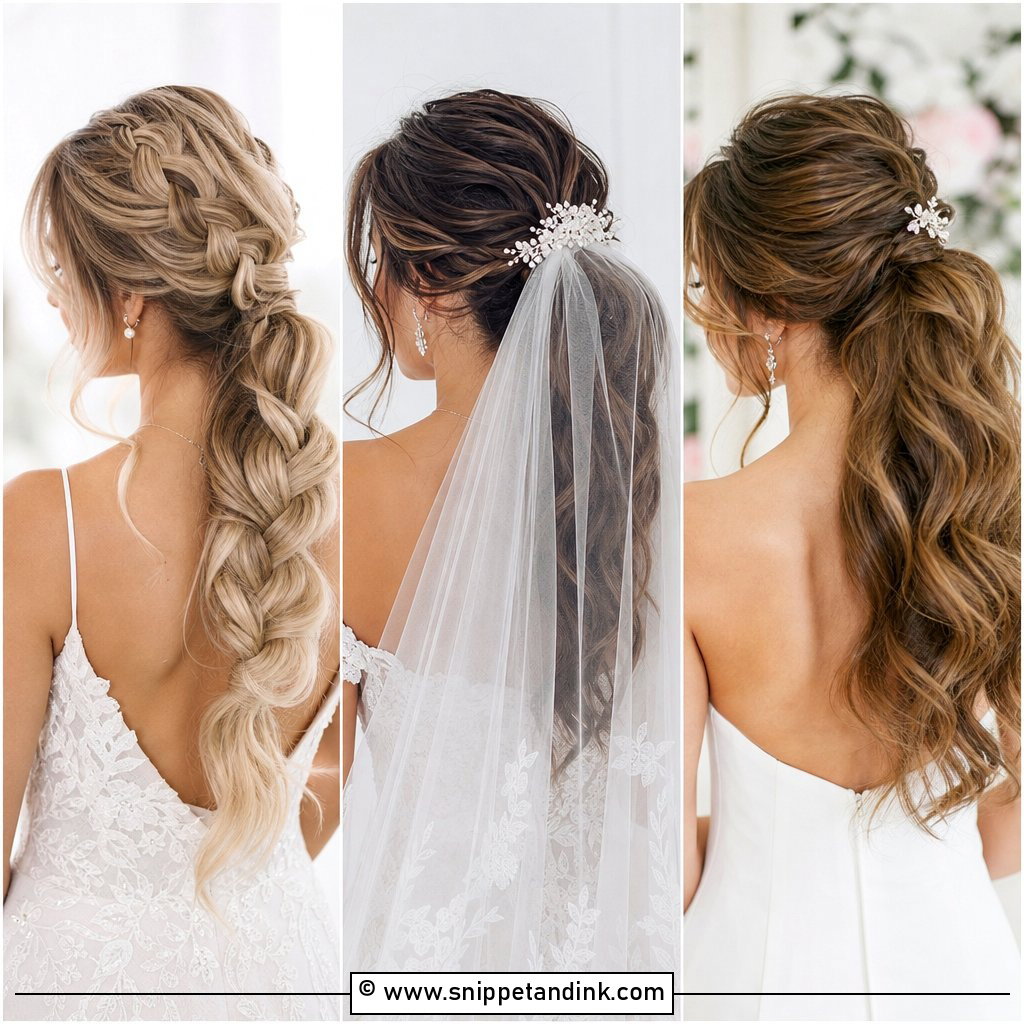
Twists add detail without the time a full braid takes. I usually take two rope twists from the temples and secure them where the tail starts, which also helps hold the sides tight. Twisting in the same direction on both sides is the mistake I see most often in at-home attempts; they need to twist away from the face or they unwind. Small pearl pins tucked along the twists add a little shine. This one is a good choice for medium to thick hair.
16. Sleek Ponytail With Center Part
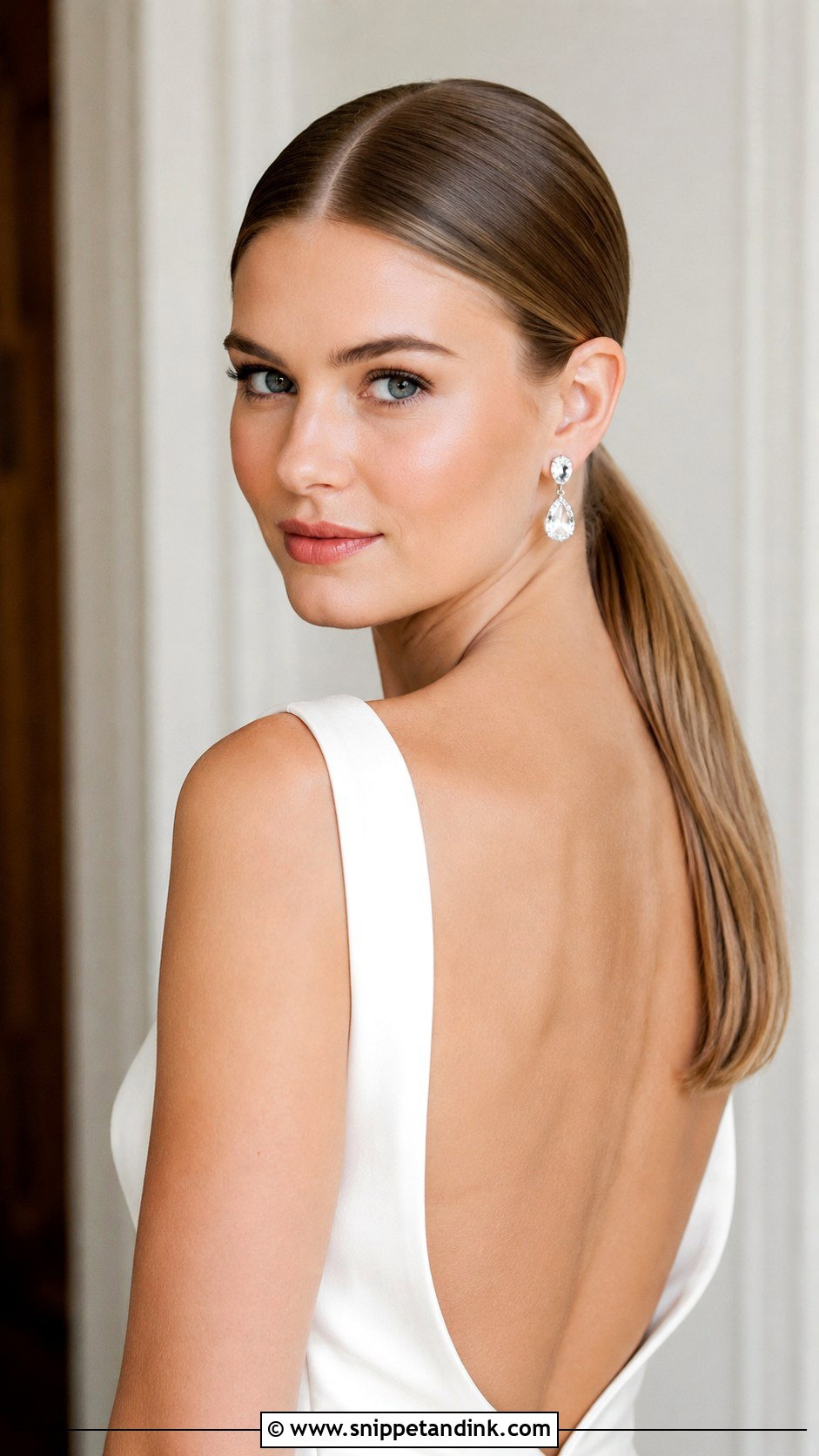
A center part is unforgiving, so it’s a style I always try at the trial first. It needs a straight, natural part and a hairline that lies flat without cowlicks. I set the part while the hair is still damp, then smooth everything into a low tail with a firm brush. Symmetry is the whole point, so the base should sit exactly at the midline behind your head. It looks sharpest with minimal gowns and bold earrings.
17. Voluminous Ponytail for Brides
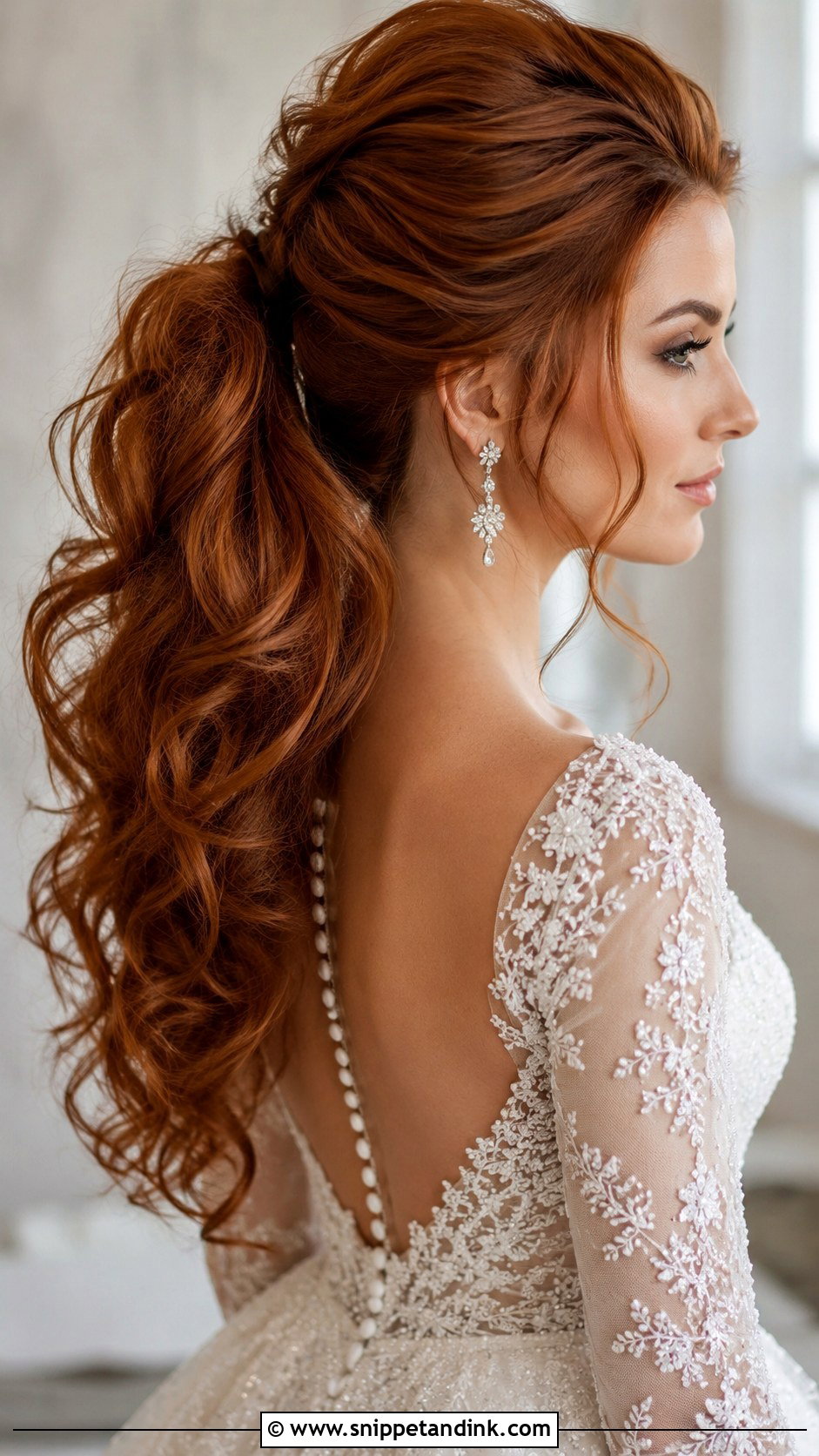
Volume is easier to build than to keep. For a voluminous ponytail, I tease the crown in small sections, smooth the top layer over it, and then add clip-in wefts underneath the tail for fullness. The trick is to pin a small padding of teased hair under the base, so the ponytail sits up from the head instead of drooping down. Expect it to settle a little through the evening. A slight wave on the tail keeps it from looking stiff.
18. Low Ponytail With Pearl Pins
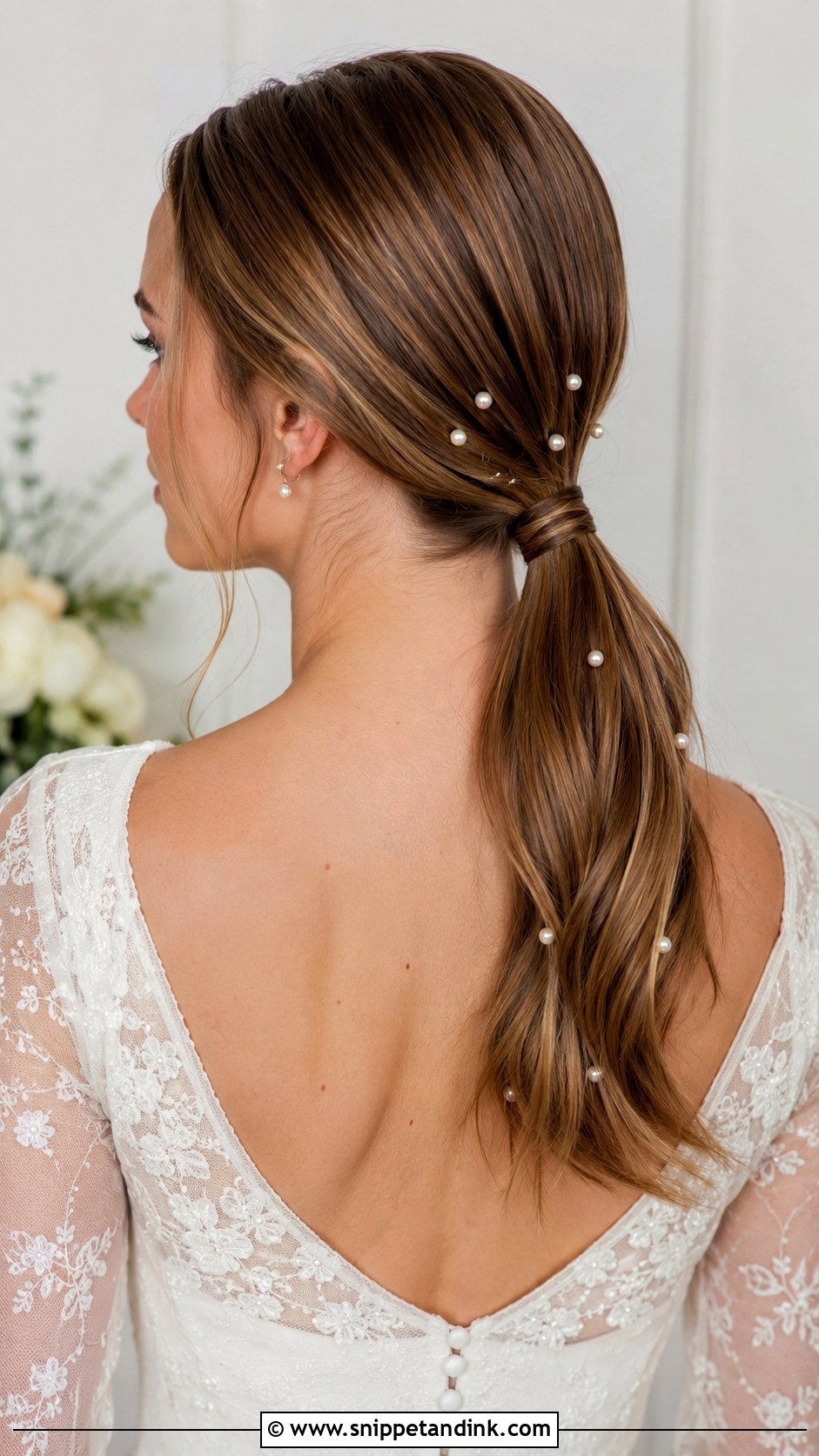
Pearl pins on a low ponytail are subtle, and the placement makes them work. I scatter them in an uneven pattern around the base so they read as a sprinkle rather than a straight row. Use pins with a bend or a small grip, because straight pins slide out of silky hair after a few hours. Match them to the tone of your gown: creamy pearls with ivory, brighter white ones with stark white. They look right with vintage and modern dresses alike.
19. Fishtail Ponytail Wedding Style
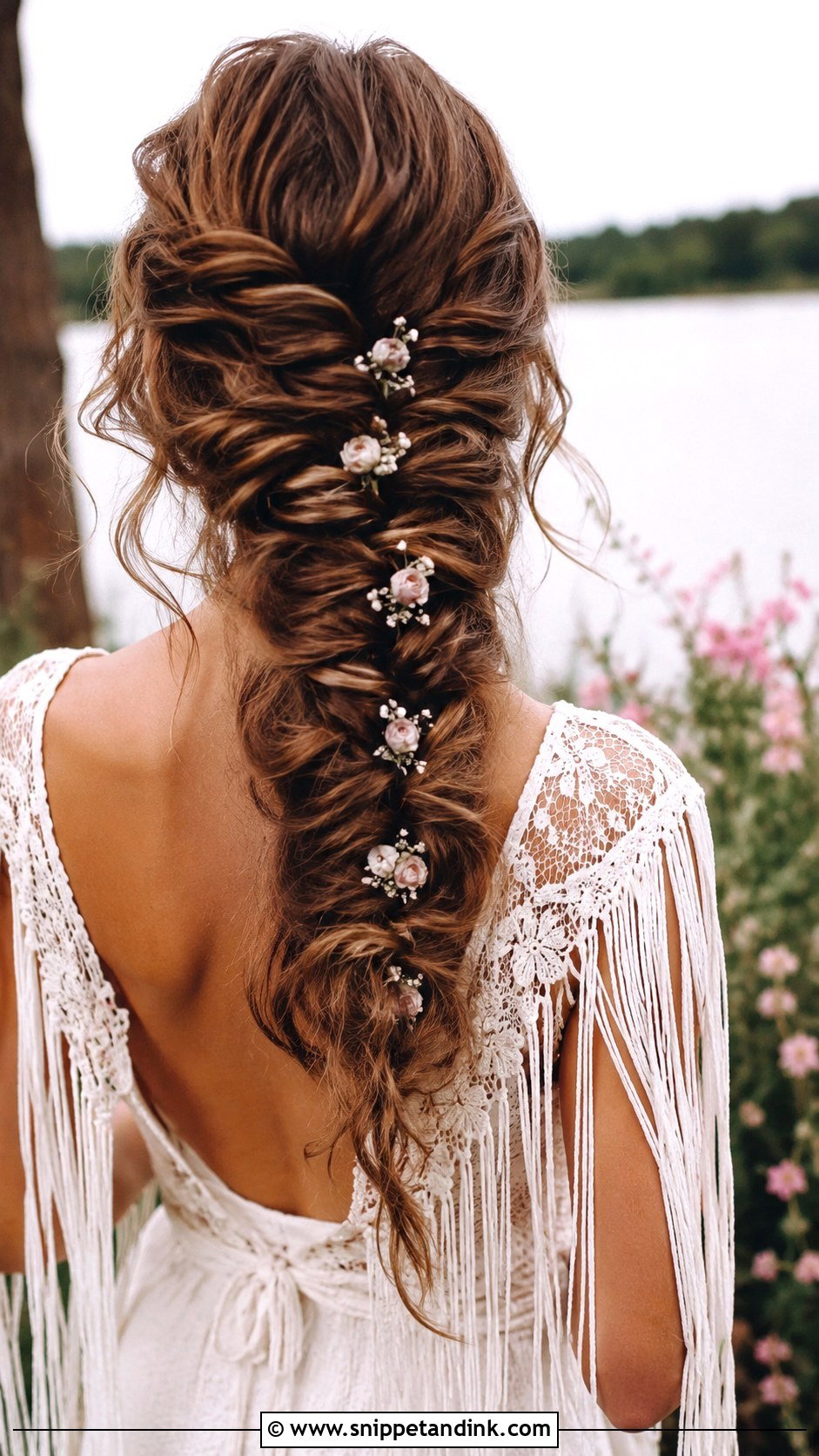
A fishtail takes longer than a regular braid, and it shows. The pattern is made by crossing very small pieces from each side, so the finer you take them, the more intricate the weave. Tight reads polished; pulled loose, it looks softer and fuller, which also hides thinner ends. It suits boho and rustic weddings, and a few small blooms or pearls tucked between the weaves add detail. Layered cuts may need a few pins to hold shorter pieces in.
20. Romantic Side Ponytail for Wedding
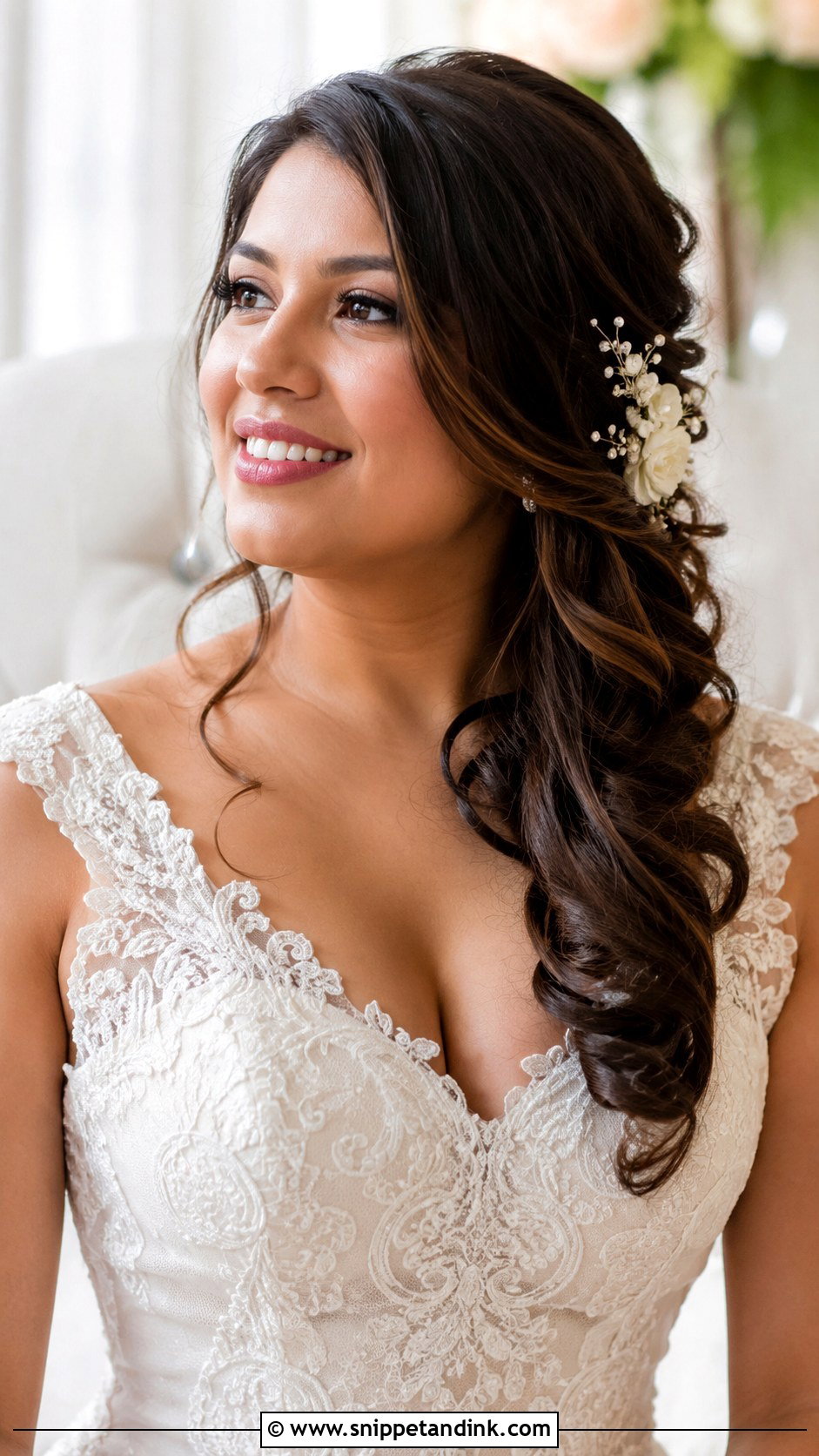
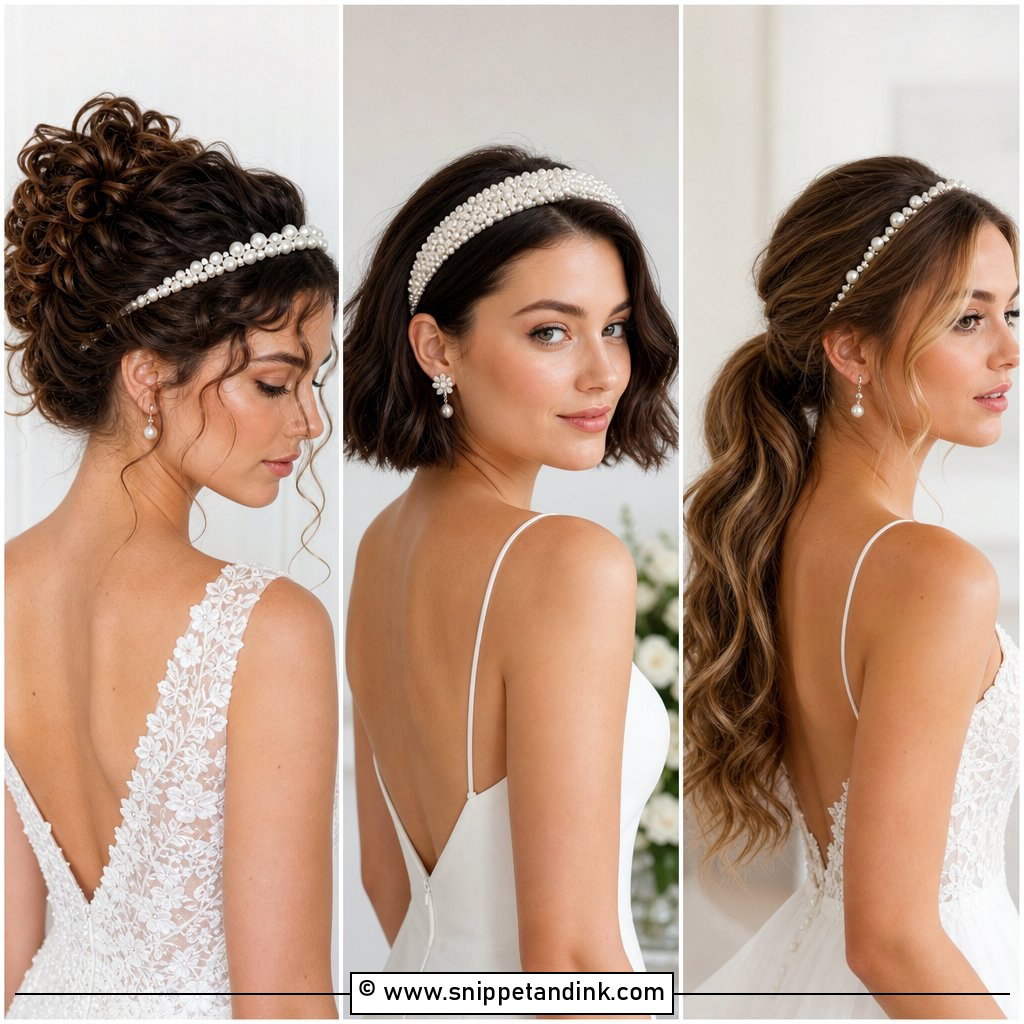
A side ponytail draws attention to the neckline and one shoulder, so check your dress first. It works especially well with one-shoulder or off-the-shoulder gowns. I build it slightly behind the ear instead of directly at the side, so it doesn’t push forward when you turn your head. Loose waves or soft curls cascade naturally over the shoulder. Add a flower, pearl comb or small accessory at the base. Watch out for tangling with a statement earring on that side.
Why a Wedding Ponytail Drops, and How I Stop It
Ponytails rarely fall apart; they sag. The base slides a little lower every time you turn your head, hug someone or lean back in a chair. Most of my prep is aimed at that.
Building the Base
I gather the hair in two stages: first into a small inner ponytail, then the rest of the hair around it into a second elastic. Two bobby pins crossed in an X under the tail lock the elastic against the scalp. Snag-free elastics in your hair color are worth it, since a rubber band will tear hair when it comes out.
Hair That Won’t Grip
Freshly washed, silky hair is the hardest to work with. I prefer hair washed the day before, then given a light texture spray at the roots. If your hair is very fine, a ponytail extension or a few hidden clip-in wefts add weight to the tail so it hangs instead of flipping out.
Your Small Touch-Up Bag
Ask a bridesmaid to carry a spare elastic, six bobby pins, a mini hairspray and a small smoothing brush. With those, almost any sag can be pushed back up and re-pinned in two minutes, usually just before the reception entrance.
Bring Your Favorite Ponytail to the Trial Chair
A ponytail is comfortable, and it keeps your hair out of your face from ceremony to the last song. Save two or three of these ideas and bring them to your trial, along with a photo of your dress and the earrings you plan to wear. Your stylist can then tell you which version your hair will actually hold, and what to change if it won’t. Then it’s just finishing touches: flowers, pearls or a single comb.
You'll Like These Ideas:


Leave a Reply