
A handkerchief hem is a skirt cut from squares or panels whose corners hang down as points, so the hem falls at several lengths at once and flutters when you walk. It suits soft chiffon and lace, but also satin, crepe and structured silk, and it turns up on ball gowns, slip dresses, tea-length dresses and loose boho shapes. Shoes and accessories steer the mood: vintage with T-straps, romantic with pearls, sharp with pointed pumps. What surprises brides is how much the hem changes the practical side, from how a seamstress shortens it to which shoes end up on display. The twenty looks below cover different seasons, venues and figures, with the fitting notes I’d give for each.
Why a Pointed Hem Can’t Be Shortened Like a Straight One
With a normal skirt, a seamstress measures from the floor and cuts a level line. A handkerchief skirt has no level line to cut, because each point is a corner of a panel that was designed to fall at its own length. Snip the tips off and you lose the points; you’re left with a wavy hem that looks like a mistake.
How it’s usually done
The cleanest method is to take the skirt up at the waist seam, lifting every panel by the same amount so the points keep their shape. On a multi-layer skirt, each layer may be adjusted separately so the points stay staggered. Light chiffon points are finished with a tiny rolled hem, which is slow handwork, so expect this alteration to cost more and take longer than a standard hem.
What to ask at the first fitting
- Whether the dress can be shortened from the waist, or whether the bodice design prevents it.
- How long the shortest point will sit above your shoes, and how close the longest gets to the floor.
- Whether the points are bias-cut. Bias edges stretch over time, so a seamstress may let the dress hang for a day before finishing the hem.
1. Strapless Chiffon Handkerchief Wedding Dress
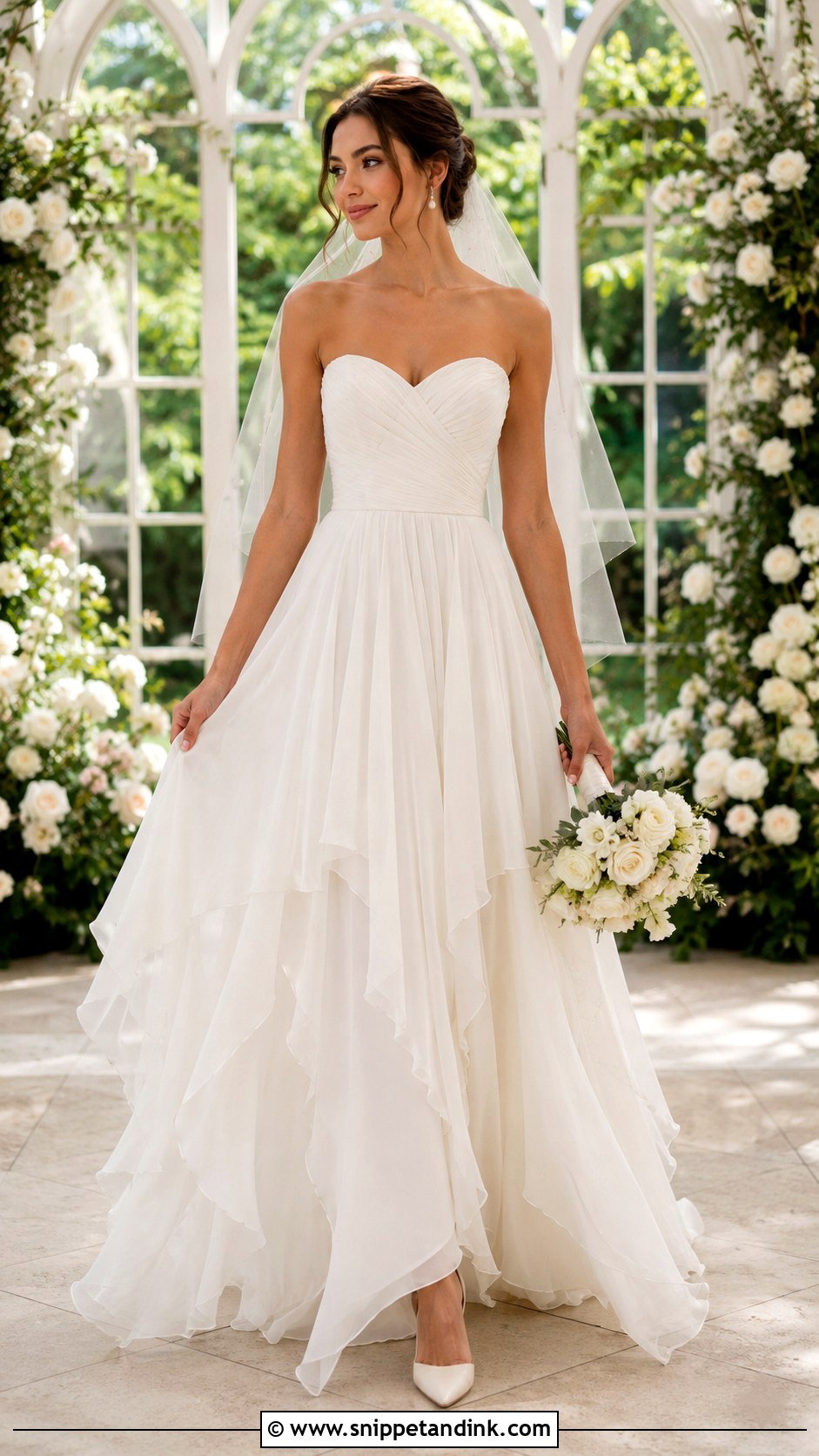
Chiffon is where the handkerchief hem feels most natural, because the points float rather than hang. A strapless sweetheart bodice with structure on top and a layered handkerchief skirt reaching the floor in fine points balances firm and soft. Pearl drops, a slim crystal bracelet and ivory pointed pumps are enough, with a fingertip veil that stops above the points and a loose bouquet of garden roses and trailing greenery. Strapless bodices drop a little over a long day, and every centimetre they slip shows at the hem points. I always have the seamstress check the points with the bride in her wedding shoes and the bodice properly anchored.
2. Long Sleeve Lace Handkerchief Wedding Dress
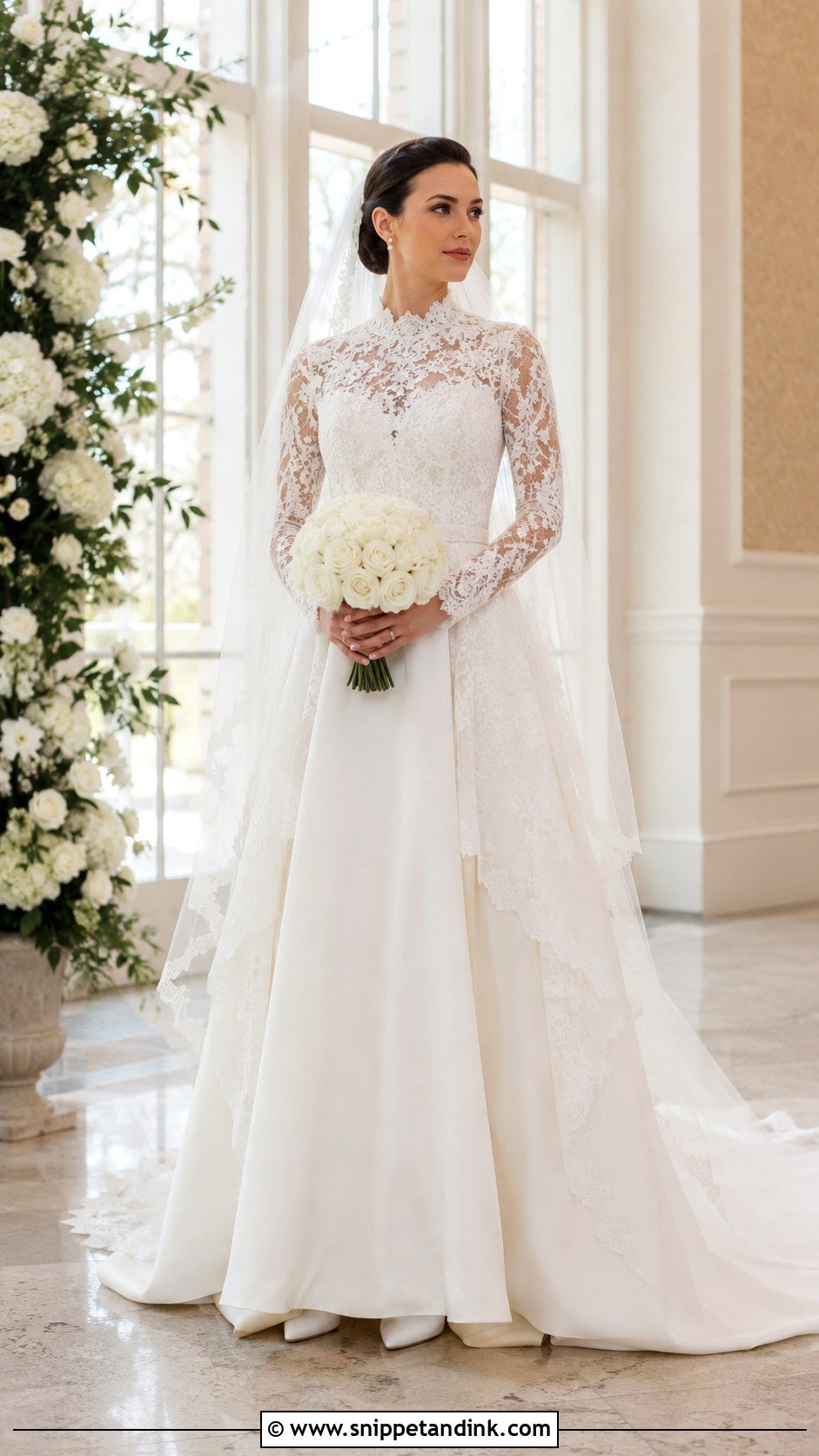
Long lace sleeves and a pointed skirt make a good cold-weather pairing. Sheer sleeves, covered buttons and a softly defined waist give the top a classic bridal feel, and the handkerchief skirt keeps it from looking traditional. Closed-toe ivory heels, pearl studs and a smooth low bun suit it, with a chapel veil edged in narrow lace and a structured bouquet of white roses and ranunculus. If the lace is busy, keep everything else plain. One practical point for winter: lace sleeves aren’t warm, so plan a wrap that can go over them without crushing the lace at the shoulder.
3. One Shoulder Tulle Handkerchief Wedding Dress
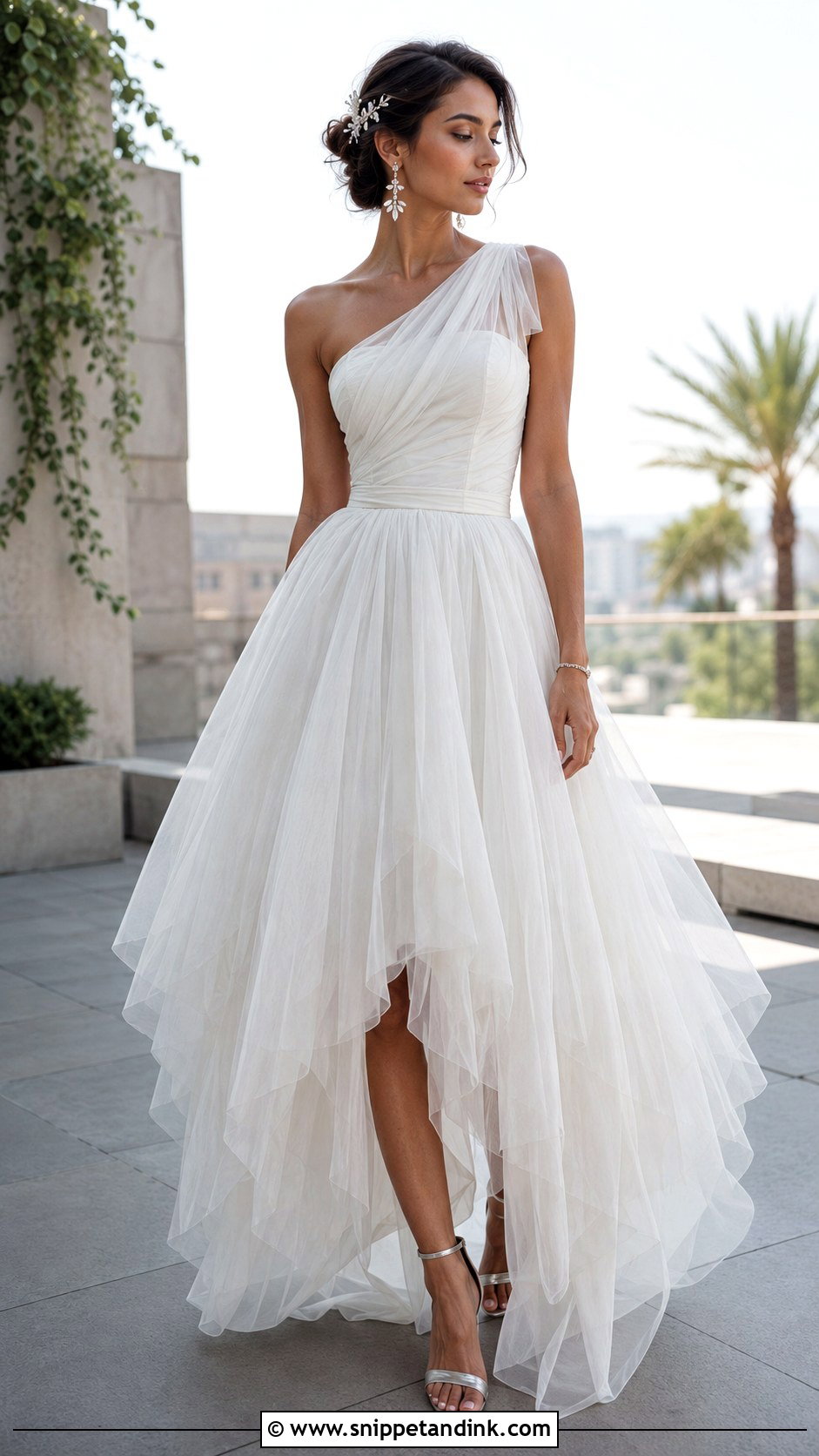
Here the asymmetry starts at the neckline and runs all the way to the hem, which is why a one-shoulder bodice and handkerchief points look so deliberate together. A draped tulle bodice needs firm inner construction, since a single strap carries the whole front. A sleek updo, one statement earring and a bracelet on the bare-shoulder side keep the balance. Silver or ivory ankle straps work because the shorter points show the shoes. Skip the necklace; add a light short veil or a comb. Lift your arm on the strap side at the fitting. If the bodice rises at the opposite underarm, it needs more support before it’ll stay put all evening.
4. Silk Satin Handkerchief Wedding Dress
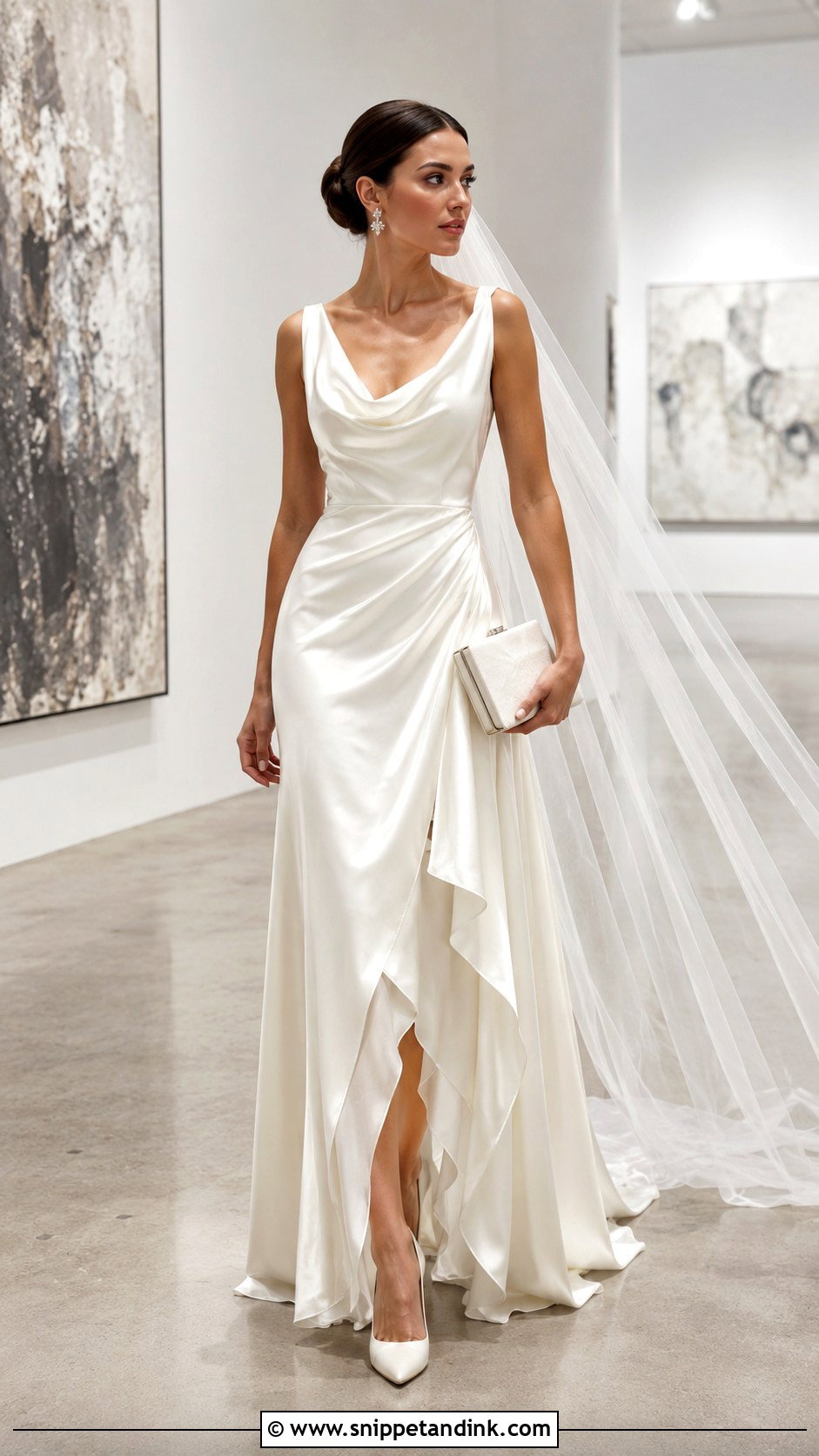
Satin gives the uneven hem weight, so the points swing instead of flutter. A fluid gown with a draped neckline, a defined waist and long panels that move close to the body is all you need; satin looks better plain than busy. Pointed satin pumps, small studs and a structured ivory clutch suit it, along with a polished chignon and a sheer cathedral veil that comes off after the ceremony. Satin shows every line beneath it, so smooth, edge-free underwear matters. The hem on satin points is usually a narrow turned edge, which can ripple if it’s pressed badly, so steam rather than iron.
5. Tea Length Handkerchief Wedding Dress
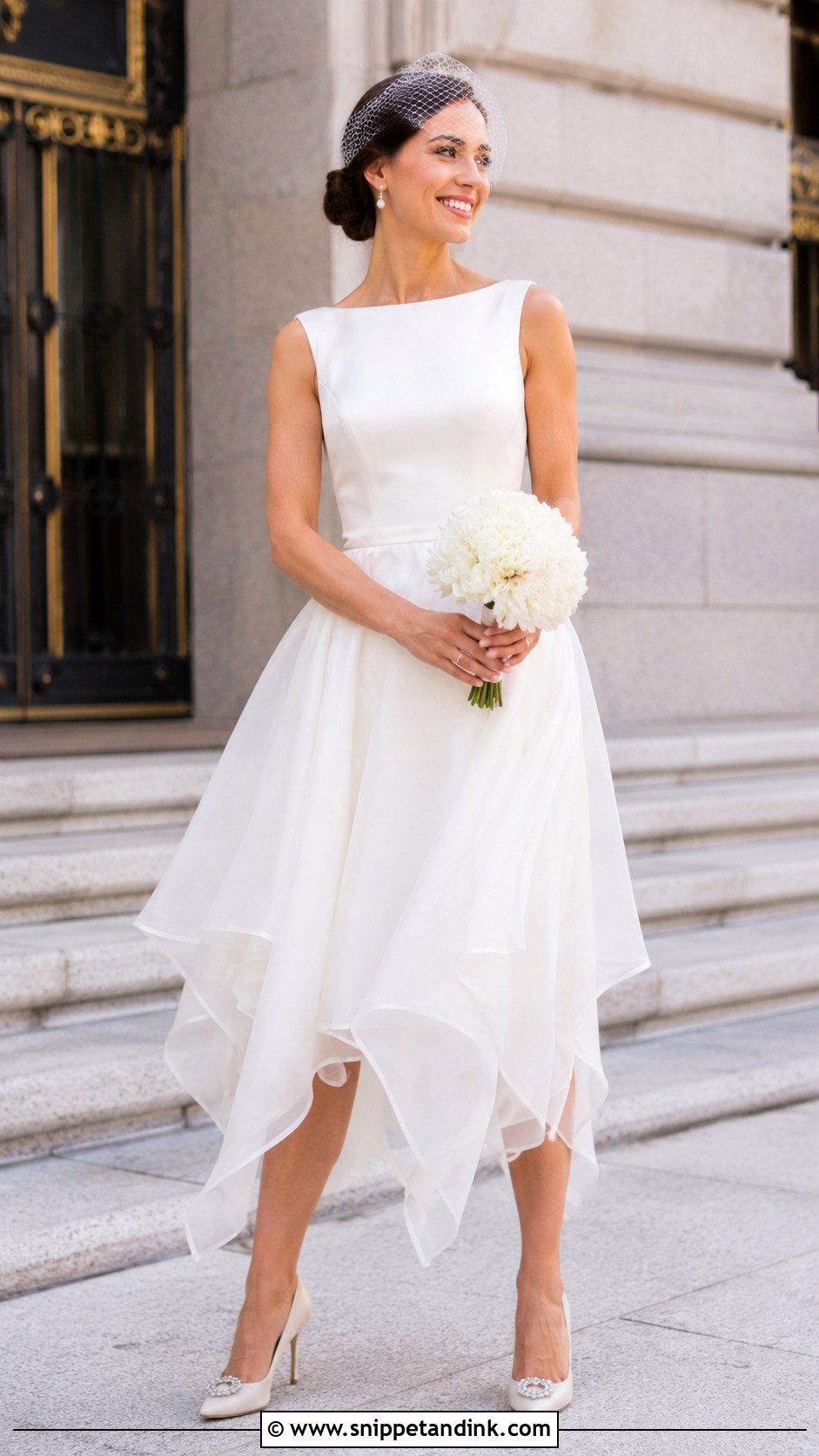
At tea length the points become a playful frame for your shoes. A fitted bodice with wide straps or short sleeves over an airy skirt ending between knee and ankle is the shape, with embellished ivory pumps, a birdcage veil, pearl earrings and a small bouquet. A defined waist keeps several layers of tulle or organza from looking puffy. It’s an easy fit for city hall ceremonies, daytime parties and vintage-style venues, and it’s far easier to dance in than a full-length gown. Make sure the longest point still clears your heel by a couple of centimetres, or you’ll step on it going downstairs.
6. High Low Handkerchief Wedding Dress
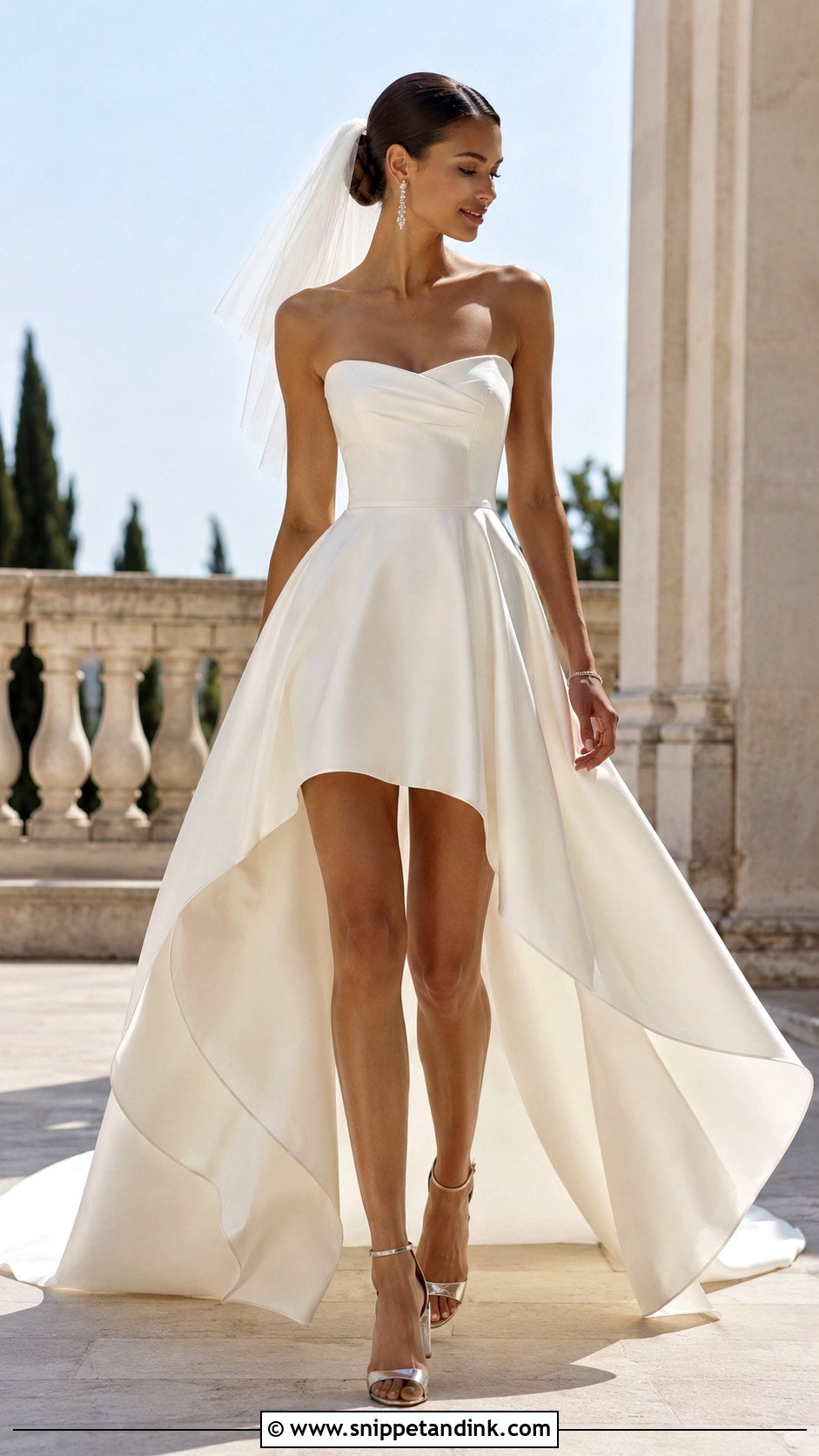
High-low versions open the front and keep length at the sides and back, so you get a train and a view of your shoes in the same dress. I’d choose a skirt where the length steps down gradually rather than dropping sharply from knee to floor, which can look like two dresses stitched together. Metallic block heels or embellished pumps become a feature; crystal earrings, a tennis bracelet and a short veil that leaves the back visible complete it, with a clean ponytail or textured bun. Outdoors, the shorter front makes walking on grass easier. In alterations, walk, turn and climb a few steps to see how each panel swings around your legs.
7. Boho Lace Handkerchief Wedding Dress
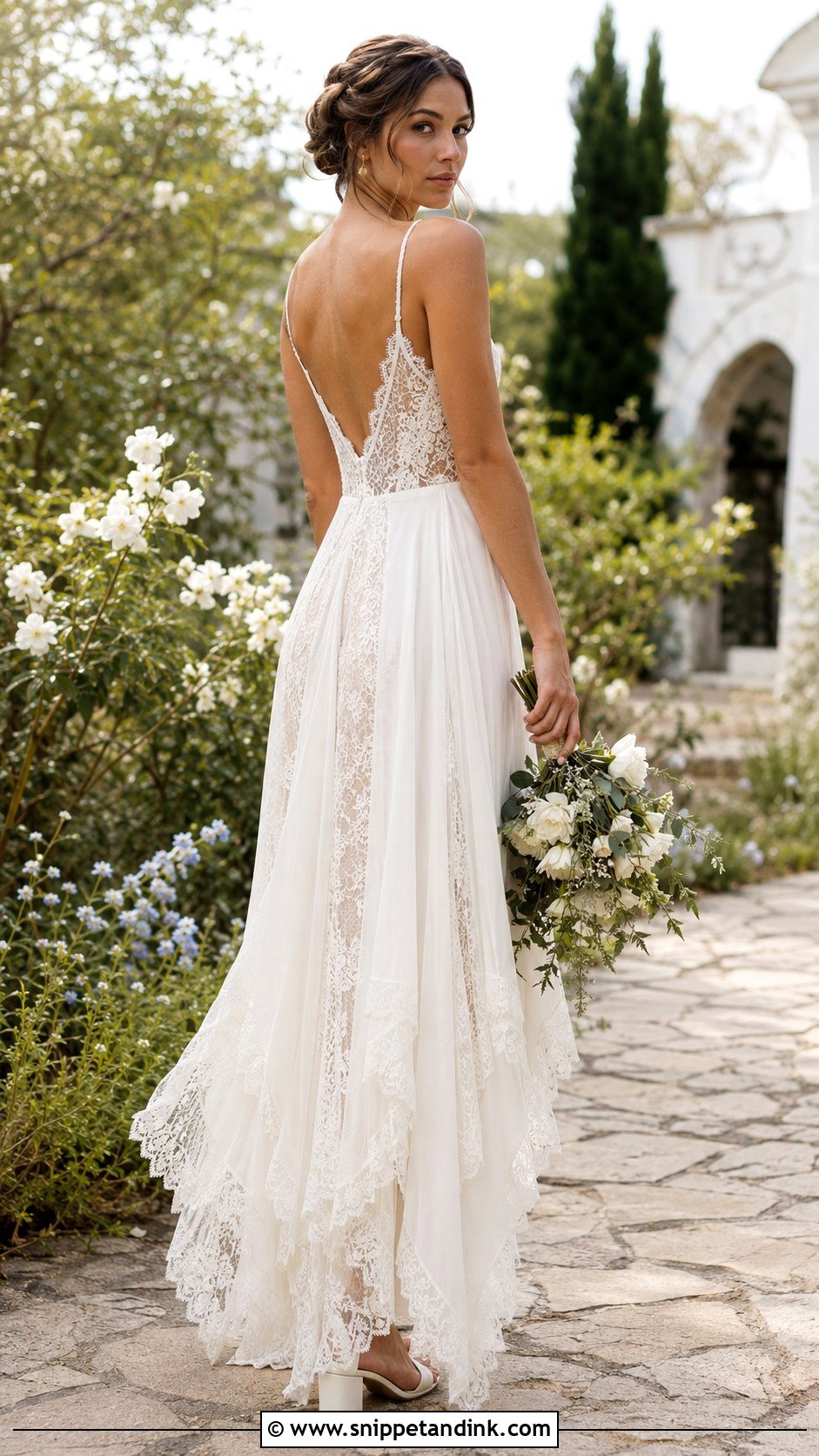
Lace with an irregular skirt feels relaxed and textured. A soft A-line with a lined bodice, narrow straps and lace or light chiffon panels suits it, and a modest open back adds interest. Ivory block-heel sandals, small gold earrings and a loose braided updo fit. Choose either a plain chapel veil or a floral comb; both together look busy over patterned lace. A gathered bouquet with white flowers and eucalyptus finishes it. On sand or uneven paths, stable heels matter, and lace points pick up grit and grass, so a quick brush-down with a soft cloth before photos is worth it.
8. Minimal Crepe Handkerchief Wedding Dress
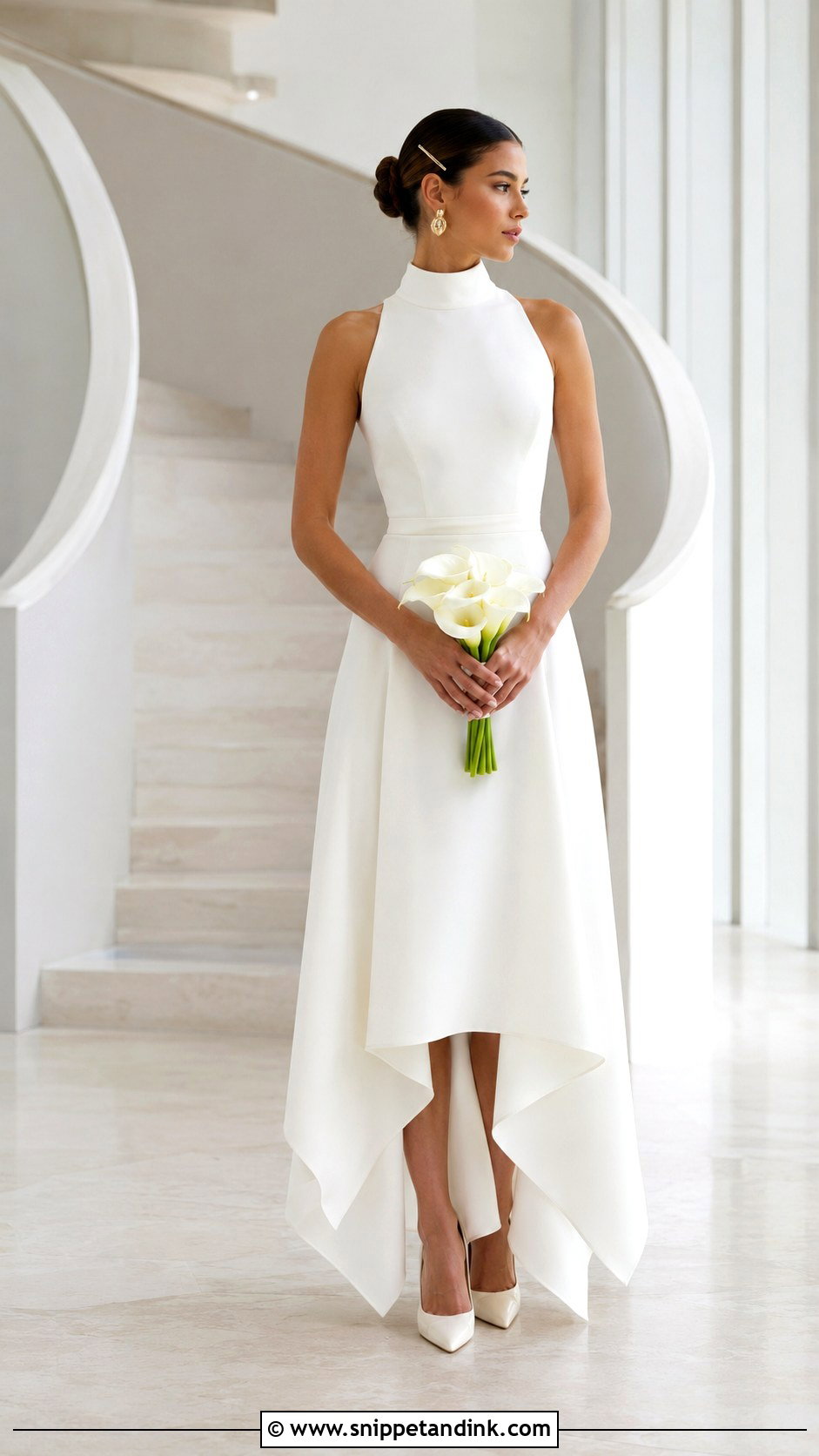
Crepe strips the look back to shape. A sleeveless column or soft A-line with a high neck, a fitted waist and two or four long points is the minimalist version. The first thing I check is the crepe weight: it needs enough to hang in clean lines without going stiff, and very light crepe makes the points curl. Sculptural earrings, pointed pumps and a slim metallic hairpin suit it, with a single-layer veil and a compact bouquet of calla lilies or tulips. Plain fabric shows every seam and proportion, so plan careful tailoring. Architectural venues and modern hotels are where this one feels at home.
9. Beaded Bodice Handkerchief Wedding Dress
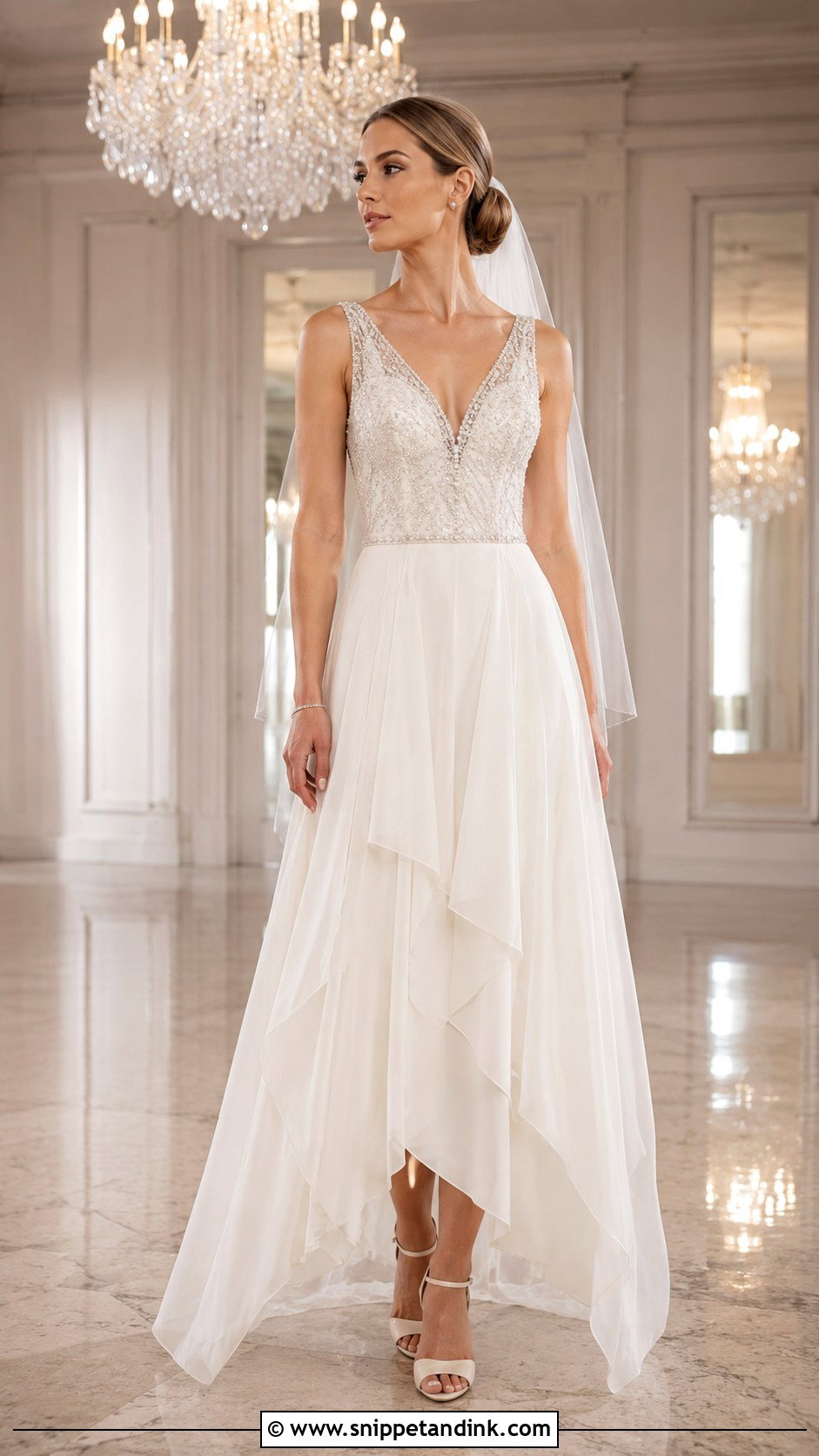
Beading on the bodice gives sparkle while the skirt stays light. A fitted V or scoop neck with embellishment concentrated around the waist, then chiffon or tulle points below, keeps the weight up top. Stopping the beads at the hip is what stops it looking busy. Simple ivory heels, crystal studs and a narrow bracelet that echoes the beadwork suit it, with a smooth bun and sheer fingertip veil. No necklace. The skirt moves easily from ceremony to dance floor, but ask for a bustle if any back panels trail, since beaded bodices are heavy and a pulled panel strains the waist seam.
10. Square Neck Handkerchief Wedding Dress
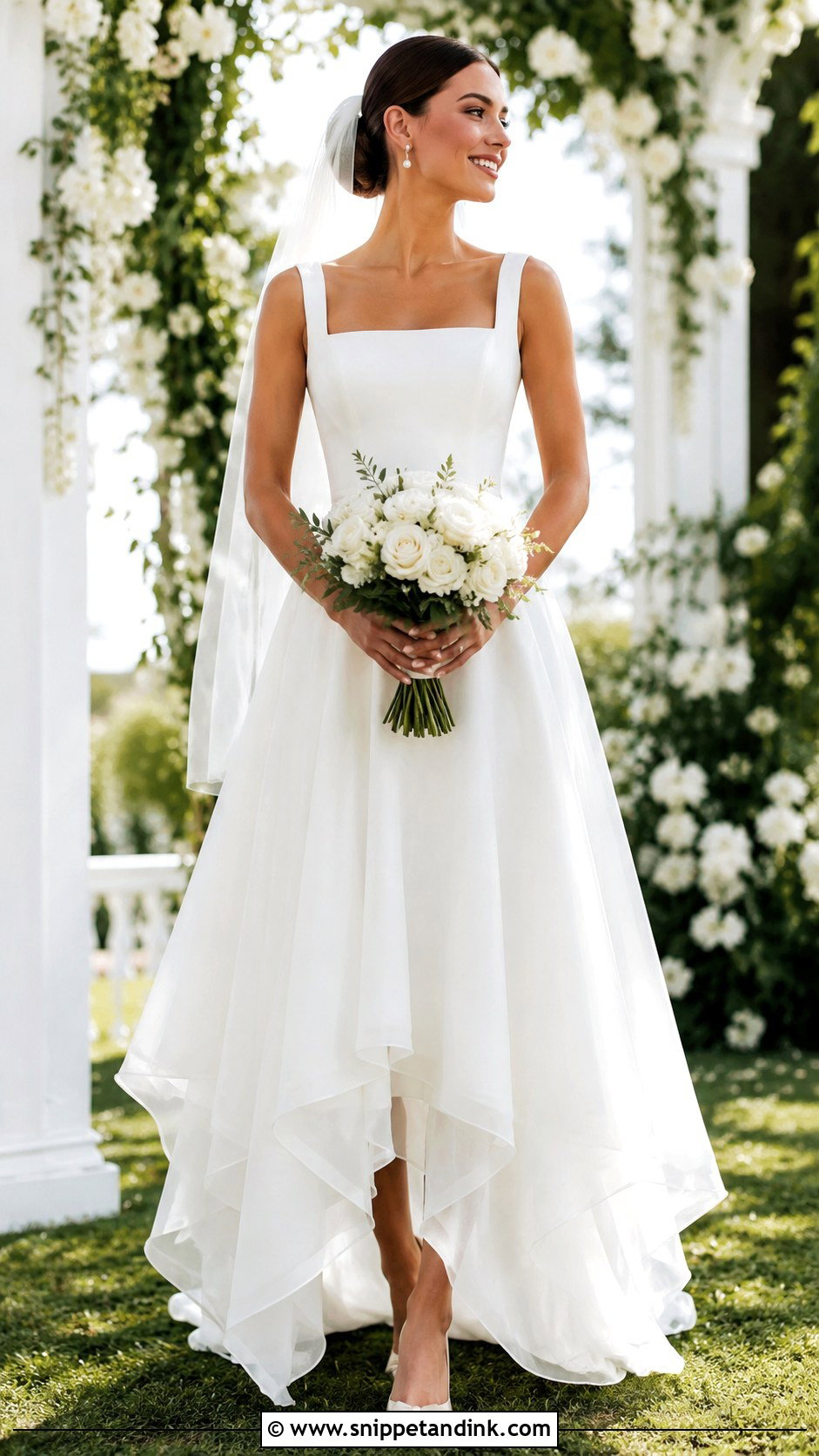
A square neck gives the soft skirt some architecture. Wide supportive straps, a fitted waist and light panels that add length rather than width keep the shape balanced and modern. Pearl drops, low ivory heels and a neat bun or waved bob suit it. A short necklace can sit inside the neckline, though earrings alone usually look cleaner. Add a simple waist-length veil. It works in a garden or a formal room. If you’d like more coverage, choose a square-neck bodice with short sleeves or an illusion panel across the chest.
11. Off Shoulder Handkerchief Wedding Dress
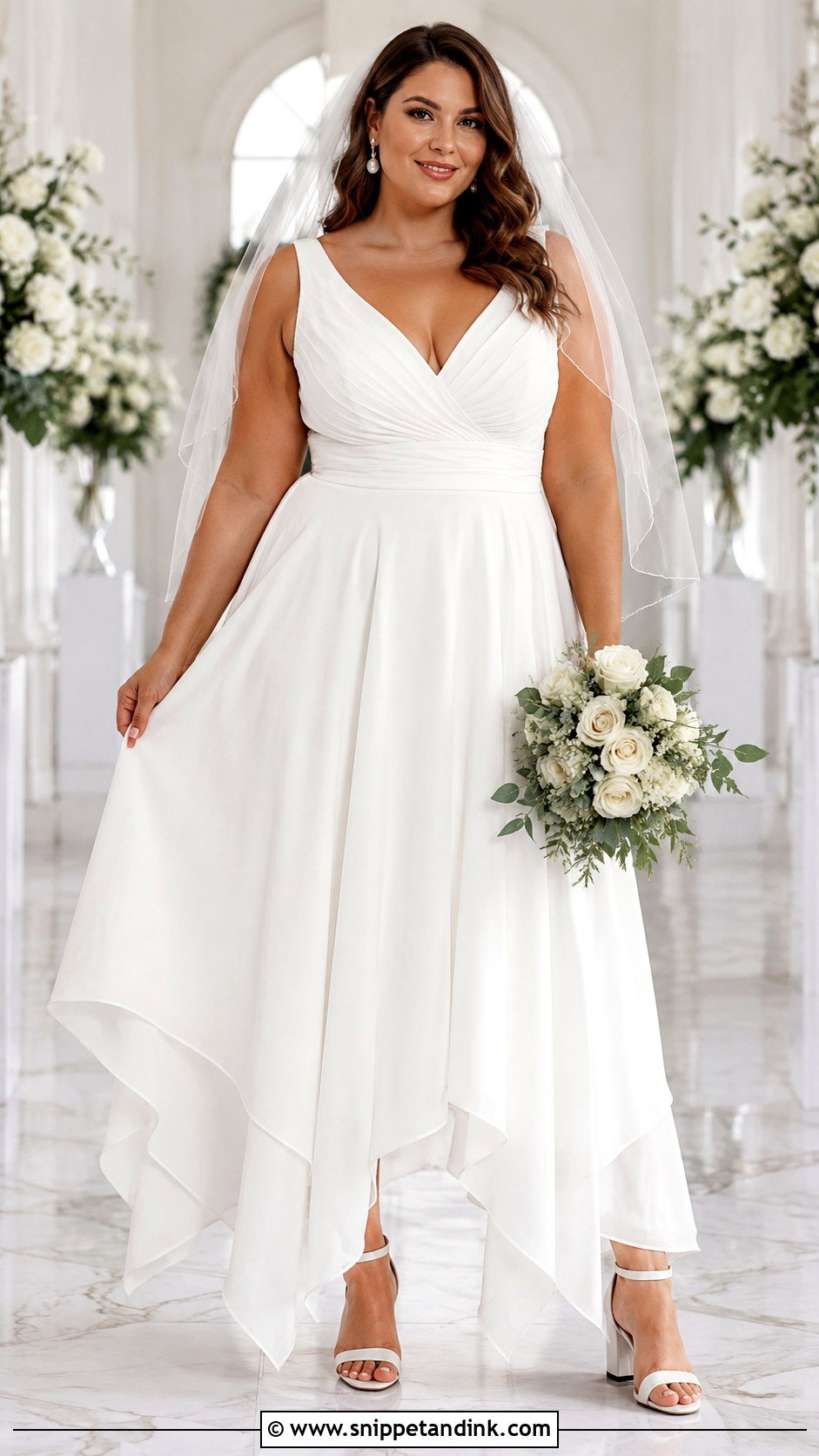
Off-shoulder sleeves frame the collarbones above a flowing pointed skirt. Draped or pleated necklines pair well with chiffon, organza or soft tulle panels. A collarbone-length pendant, pearl earrings and comfortable block-heel pumps suit it, with a low bun or side-swept waves and a sheer veil fixed below the bun. The weak spot of every off-shoulder dress is arm movement. Lift your arms, hug someone and sit down at the fitting; if the sleeves dig in or ride up, ask for a little elastic or a stay inside the band. It suits spring gardens and romantic indoor ceremonies.
12. Corset Bodice Handkerchief Wedding Dress
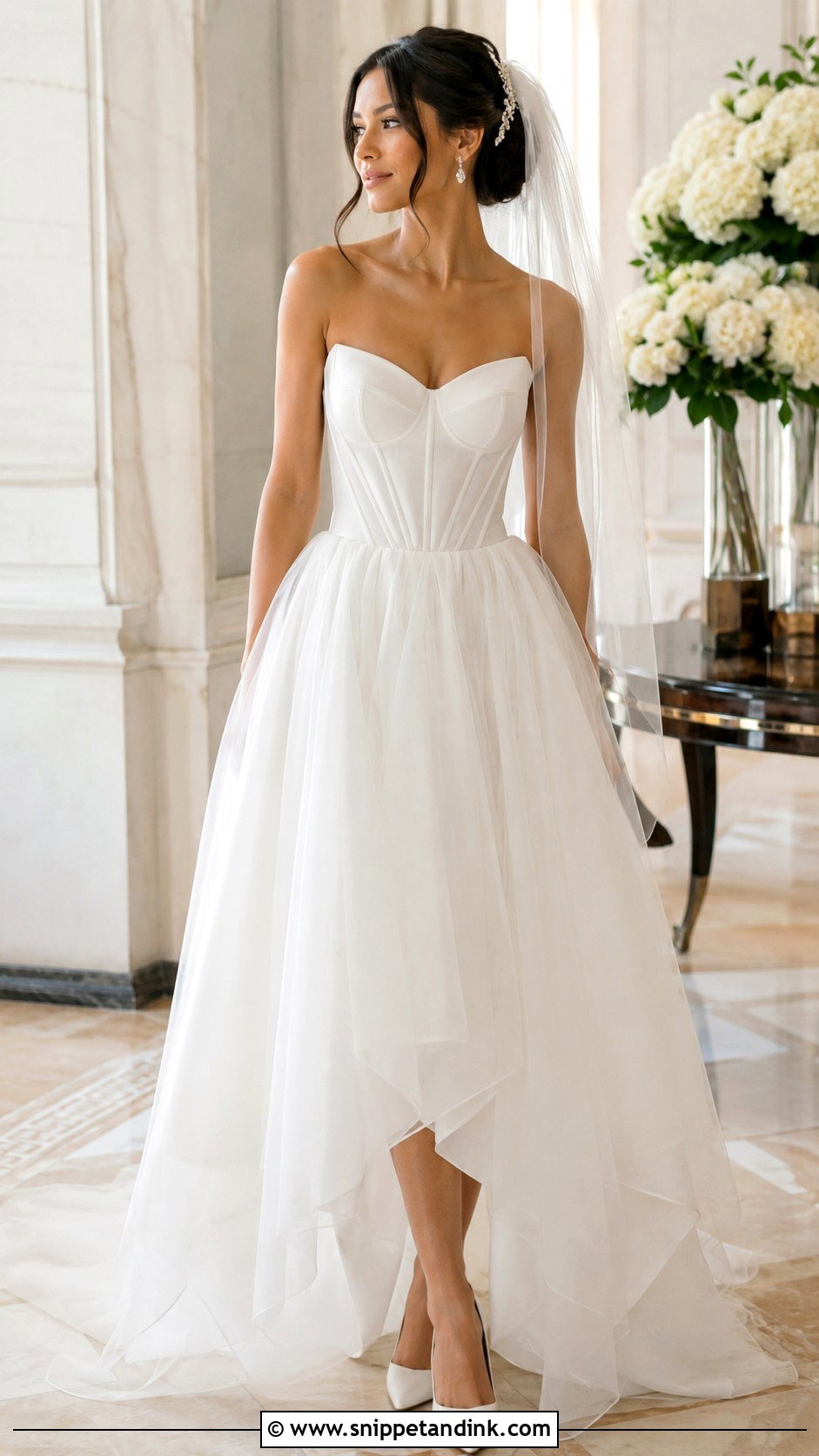
A corset gives definition and support against the airy volume of the points. Look for visible seam lines, a gently curved neckline and boning that holds you without pinching. The skirt can start at the natural waist and fall in organza or tulle points. Delicate drops, satin pumps and a smooth updo with a small crystal comb suit it, with a plain fingertip veil. For more coverage, choose lined corset panels or add removable sheer sleeves. I ask brides to sit and move during fittings, because a corset that feels fine standing can press on the ribs when seated at dinner, and that is worth fixing early.
13. Halter Neck Handkerchief Wedding Dress
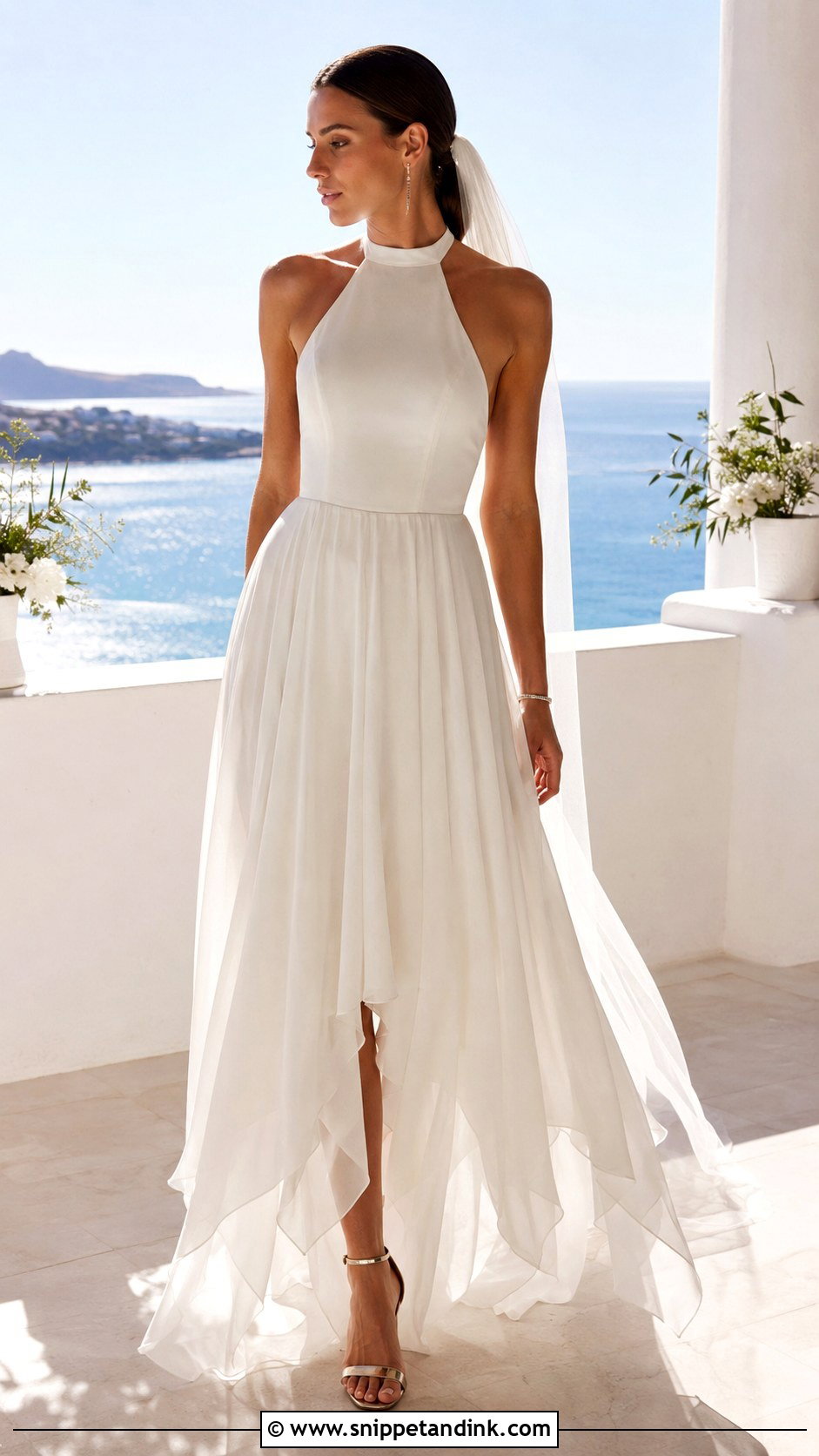
A halter draws a long vertical line from neck to hem, which suits points that fall at different lengths. A softly fitted bodice with bare shoulders and chiffon or silk panels skimming the hips before widening is the shape. Sleek earrings, metallic or ivory sandals and a low ponytail keep it clean; skip the necklace and wear a slim bracelet or ring instead. Fix the veil beneath the hair so the back stays visible. It’s good for warm weather and destination ceremonies. Check the halter fastening carefully if the back is open, so the bodice supports you without pulling on your neck.
14. Plus Size A-Line Handkerchief Wedding Dress
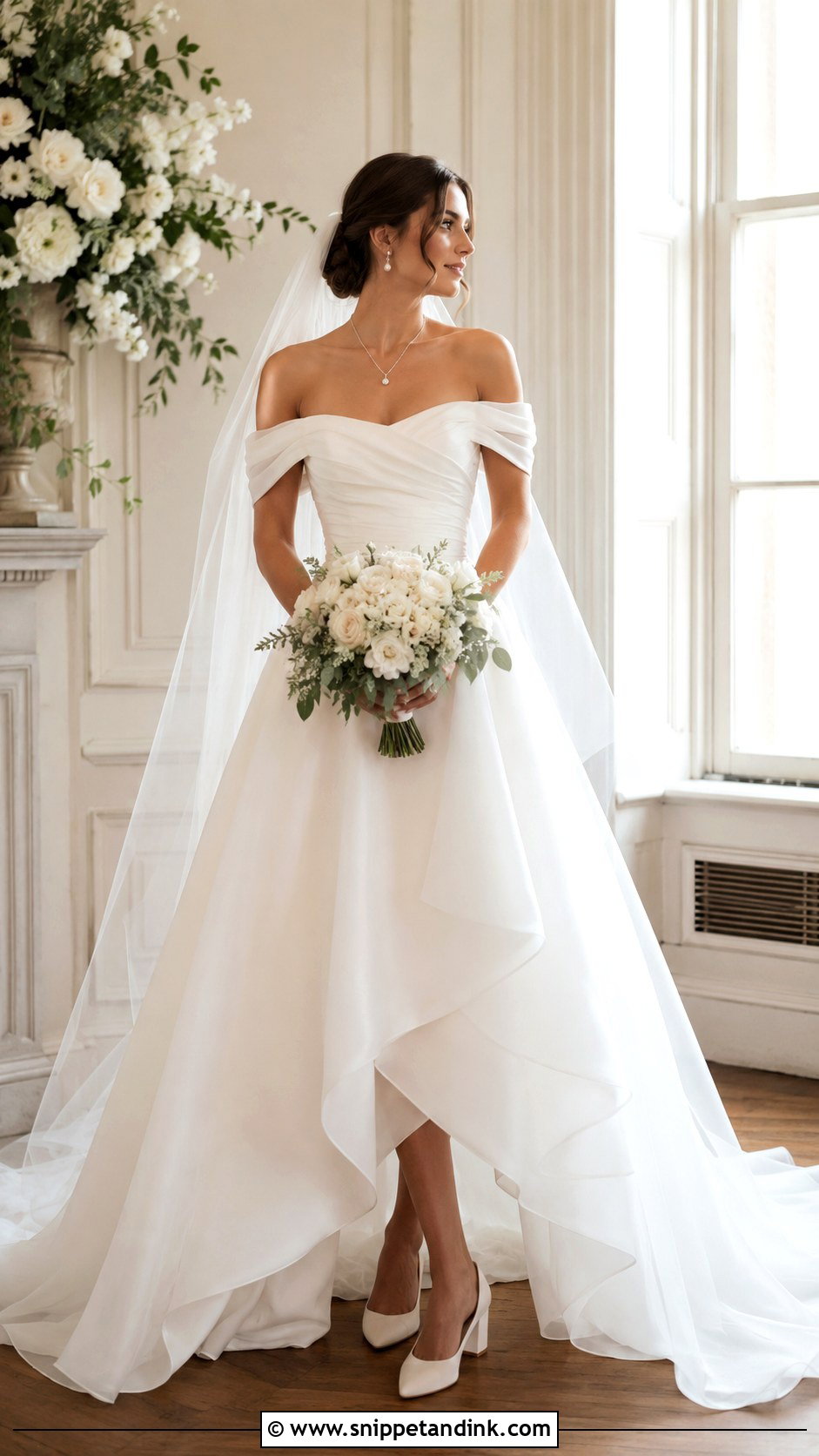
An A-line handkerchief skirt defines the waist and still gives you room to move. Look for supportive straps, a structured lining and panels that start below a smooth waistband. A V, scoop or square neck frames the face and leaves room for a well-fitted bra or built-in cups. Cushioned block heels, pearl or crystal earrings and a fingertip veil suit it, with a bouquet that has a slightly trailing shape to echo the points. Ignore body-type rules and focus on fit and how much movement you like. Ask the salon to clip and pin the sample to your size; it’s the only way to see how the finished gown will sit.
15. Petite Handkerchief Wedding Dress
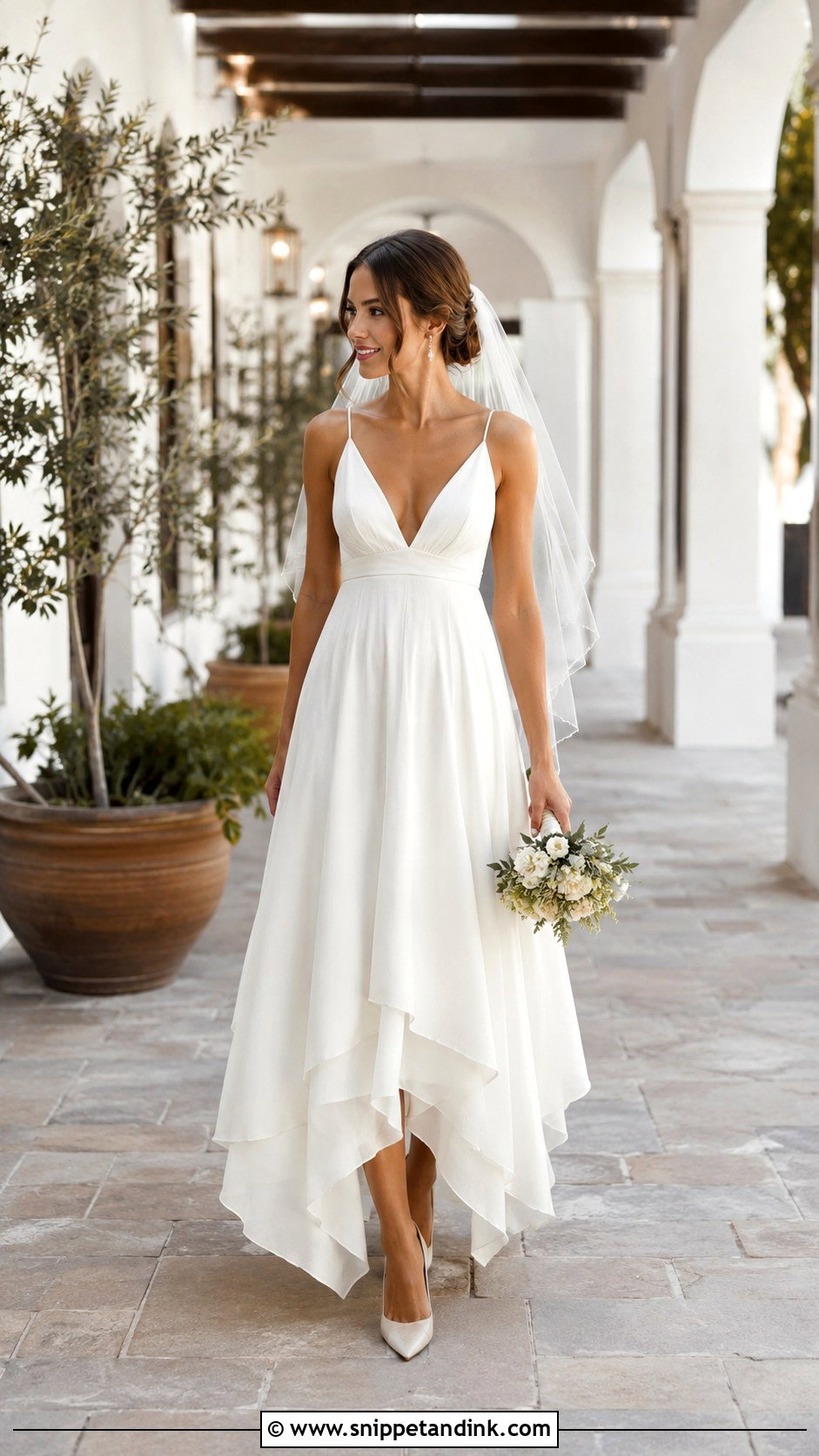
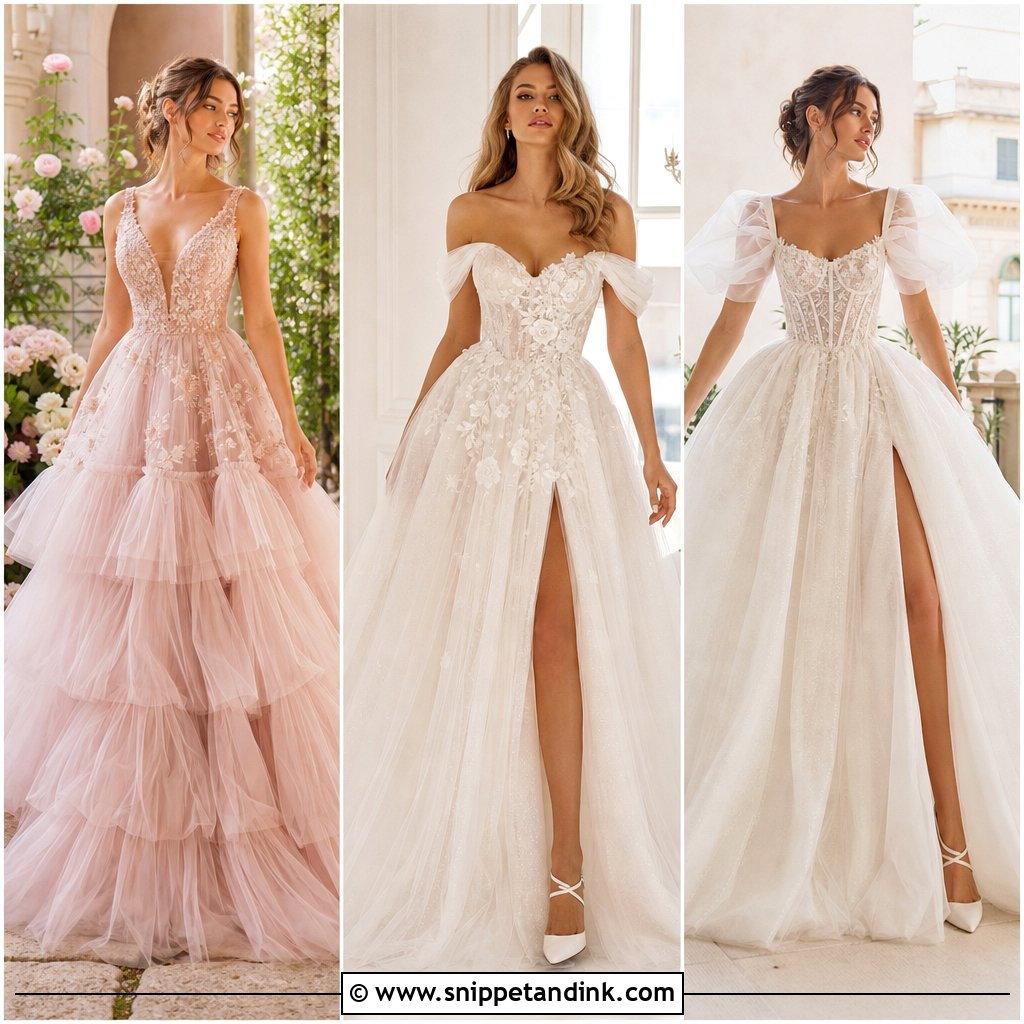
On a petite frame the hem has to be scaled down, not just shortened. A tea-length or narrow A-line with fewer layers and shorter points keeps you from disappearing into fabric. A slightly raised waist, open neckline and one continuous fabric through the bodice lengthen the line. Pointed heels, small drops and a narrow veil suit it, and shoes close to the dress colour keep the leg line unbroken. Avoid very wide panels unless they can be narrowed. II’d look for a seamstress who adjusts each layer individually, since that keeps the original shape. Either way, allow extra fitting time for hemming and proportion work.
16. Empire Waist Handkerchief Wedding Dress
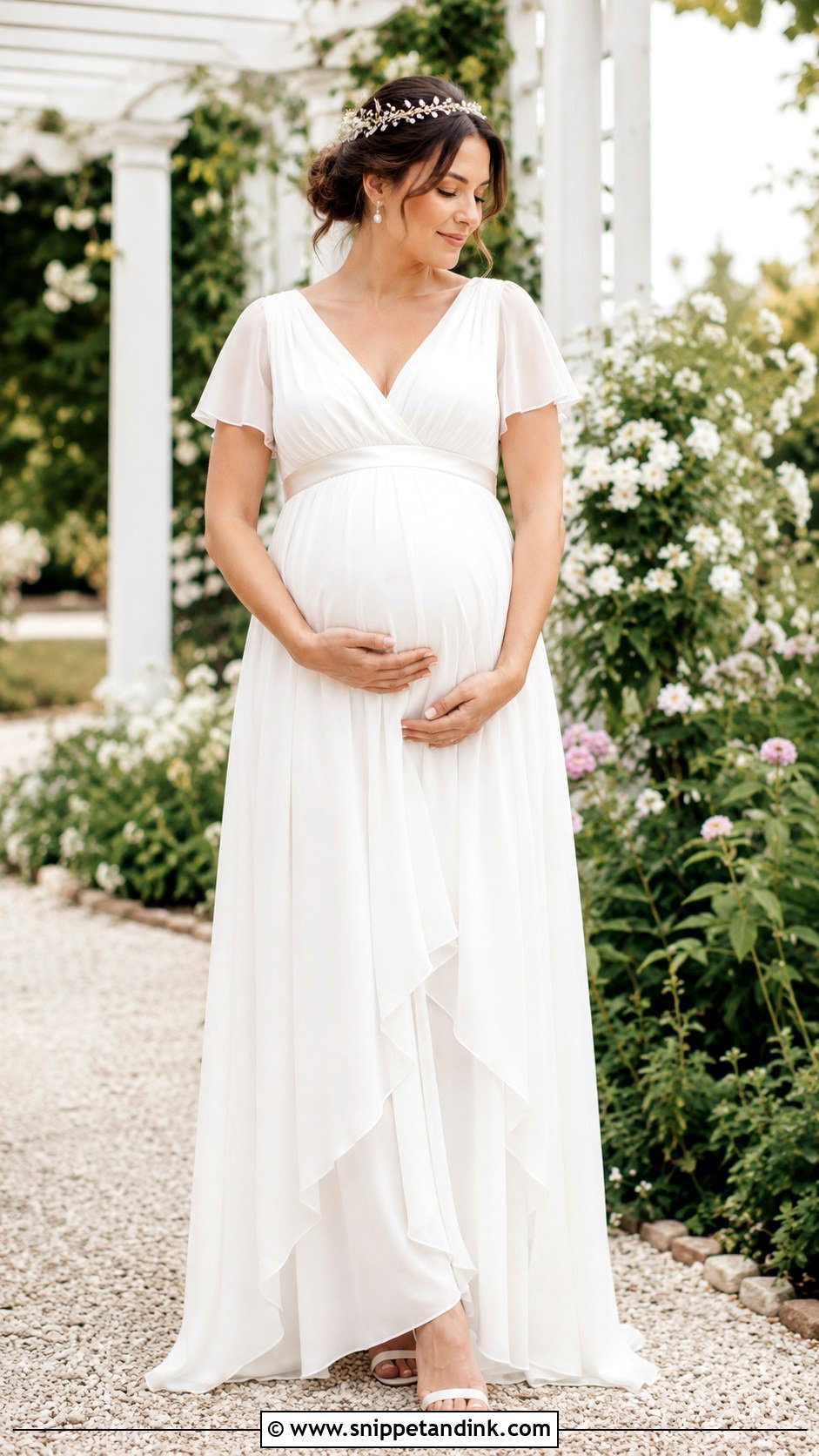
An empire waist sits just below the bust and lets chiffon panels fall freely over the midsection and hips. Flutter sleeves, wide straps or a draped V-neck complete the relaxed shape. Low block heels, pearl earrings and a loose low bun suit it, with a light veil or a fine hair vine. This cut is often comfortable for pregnant brides, though measurements can change quickly, so book the final fitting as close to the date as your seamstress allows. Keep heavy beading off the empire seam if you need flexibility; a narrow satin band or light beading defines it without stiffening it.
17. Vintage 1920s Handkerchief Wedding Dress
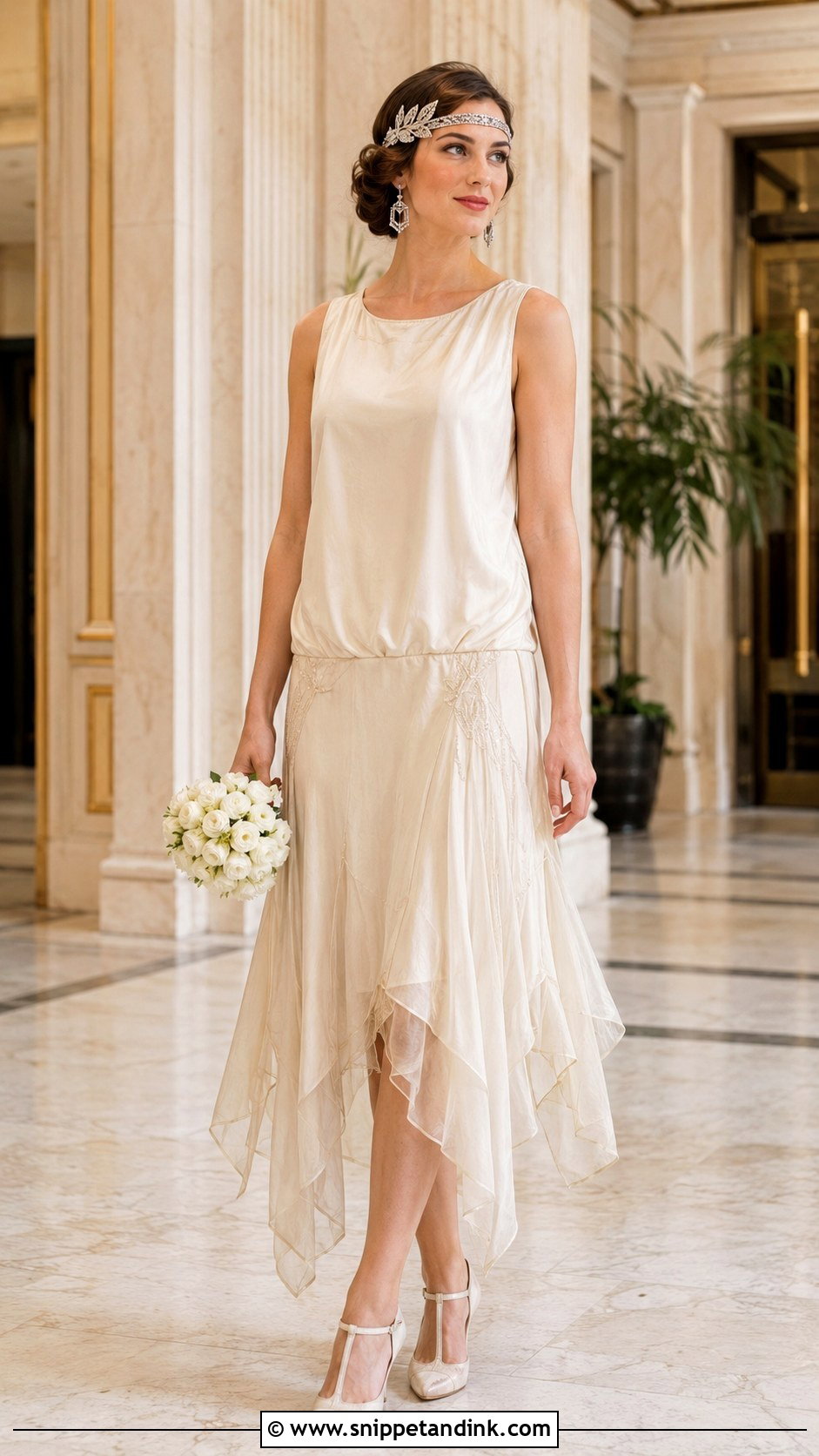
The 1920s are where the handkerchief hem really belongs. A dropped waist and fluttering points in light silk, chiffon or beaded fabric, with a relaxed bodice and movement starting around the upper hips, capture it. It should feel loose, not tight. Low T-strap heels, art deco-inspired earrings and a small beaded clutch fit, with a jewelled comb or narrow headband over soft waves. Choose one or two period touches and keep modern tailoring underneath, or it tips into fancy dress. Beaded twenties-style fabric is heavy on thin straps, so check the lining and support. Historic venues and evening dinners suit it best.
18. Floral Applique Handkerchief Wedding Dress
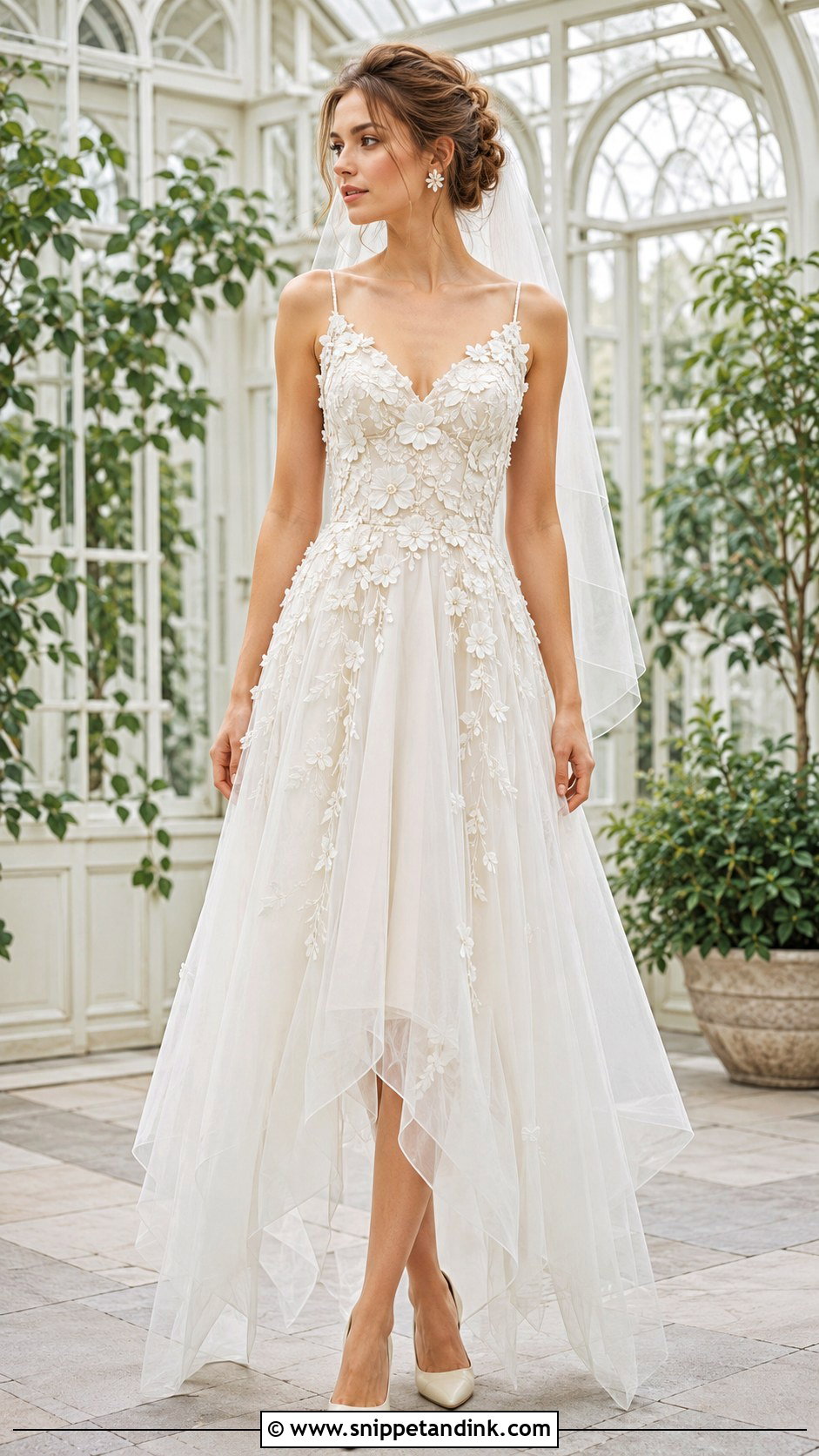
Raised flowers can follow the movement of the points if they’re placed well. Concentrate them on the bodice and waist, then scatter a few onto a handful of skirt panels. Plain ivory pumps, floral studs and a simple tulle veil suit it, along with a softly gathered updo. Keep the bouquet to one or two flower types. The mistake I see most is appliqués placed right at the tips of the points. They add weight to the lightest part of the skirt, so the points hang straight instead of floating and can twist. Spring gardens and bright rooms show it off.
19. Blush Handkerchief Wedding Dress
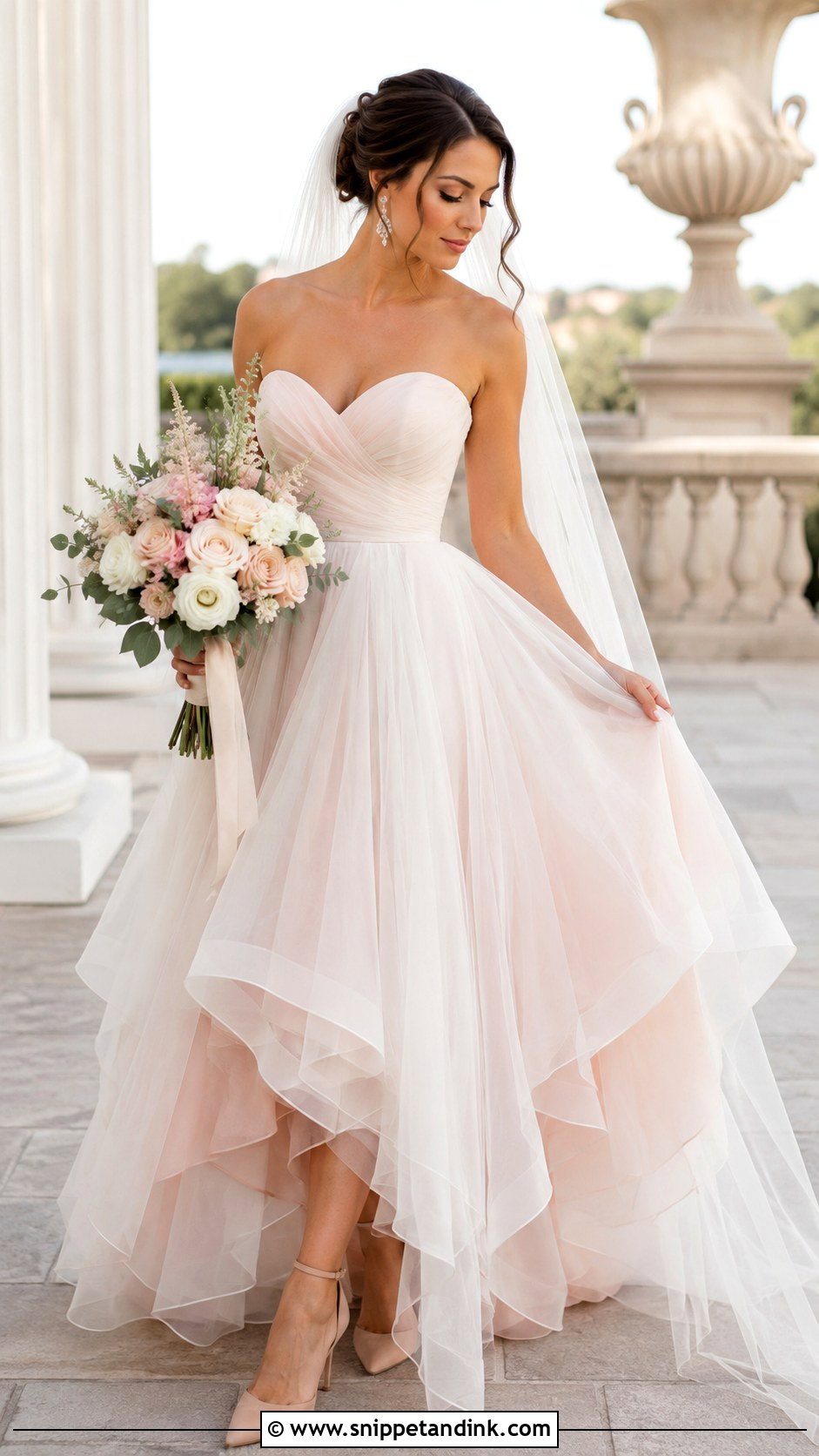
Blush is a softer step away from white. A pale rose lining under ivory tulle, chiffon or lace gives a subtle tint rather than a pink dress, and the layered points show the contrast as they move. Neutral blush pumps, rose-gold earrings and a sheer ivory veil fit, with cream, pale pink and greenery in the bouquet. Look at the dress in daylight and indoor light before buying; blush can read peach under warm bulbs and almost grey in shade. Pick the tone that suits your skin, and make sure any illusion mesh matches the lining.
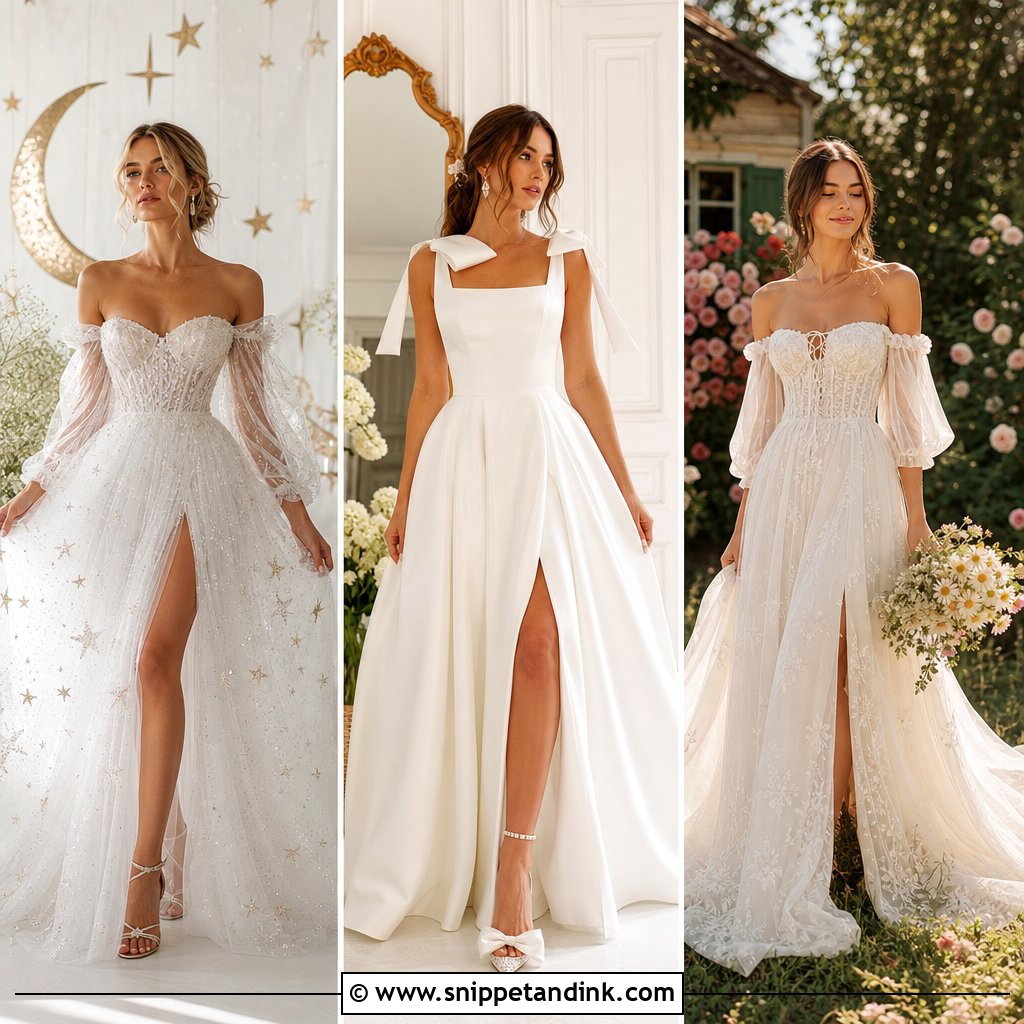
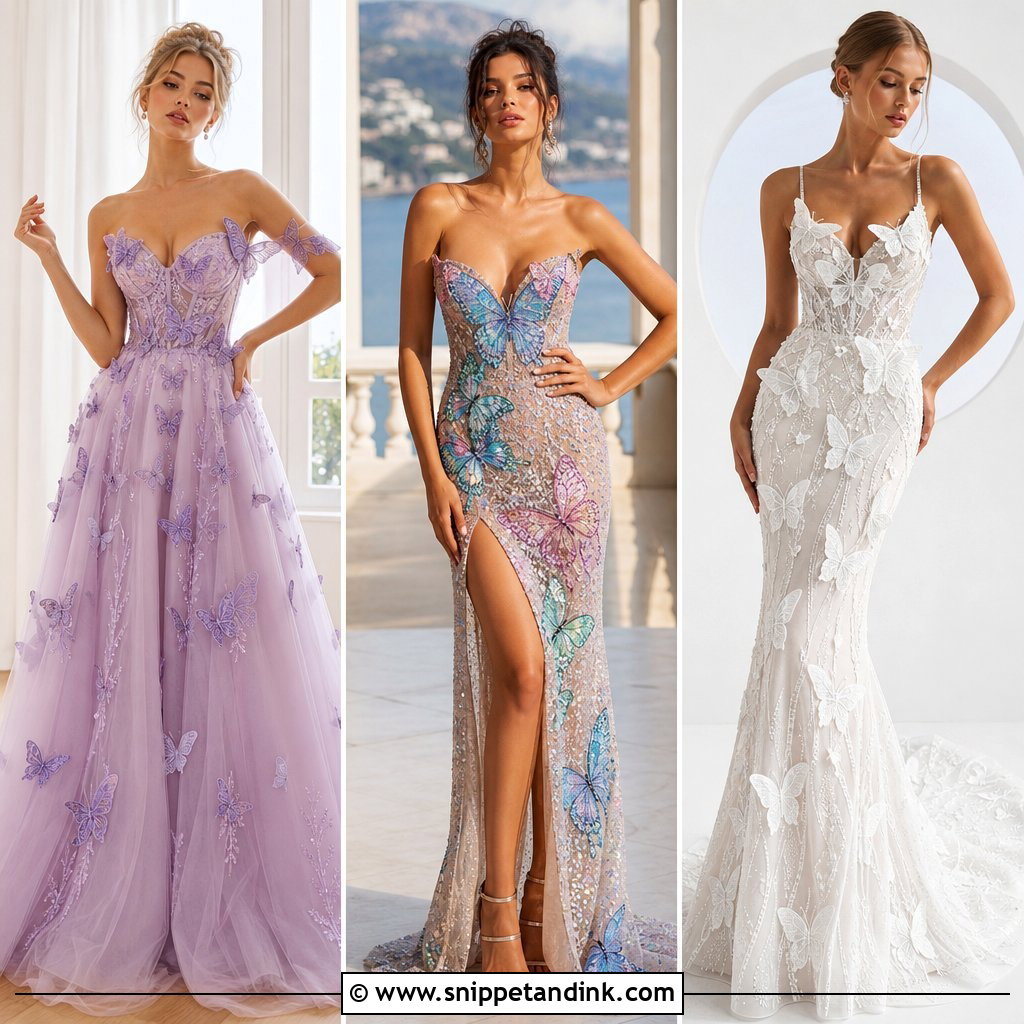
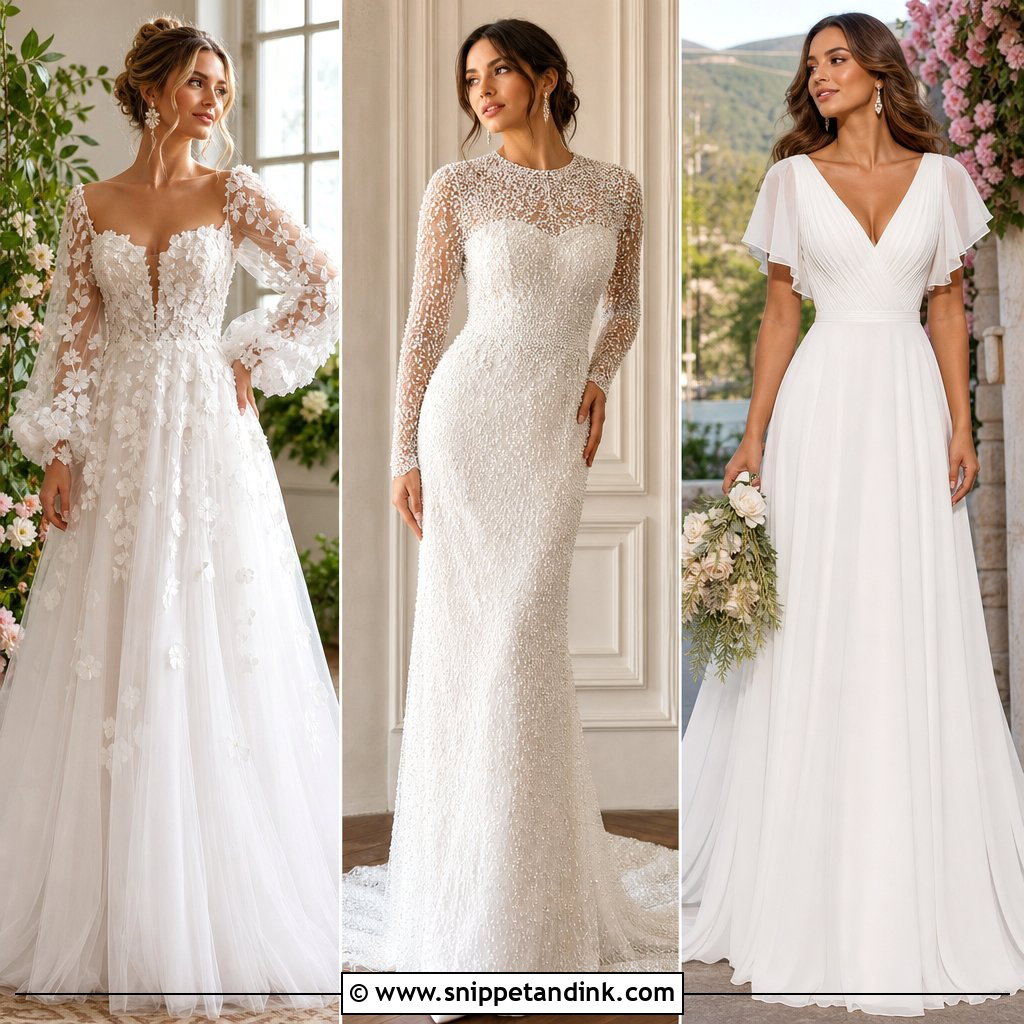
20. Handkerchief Wedding Reception Dress
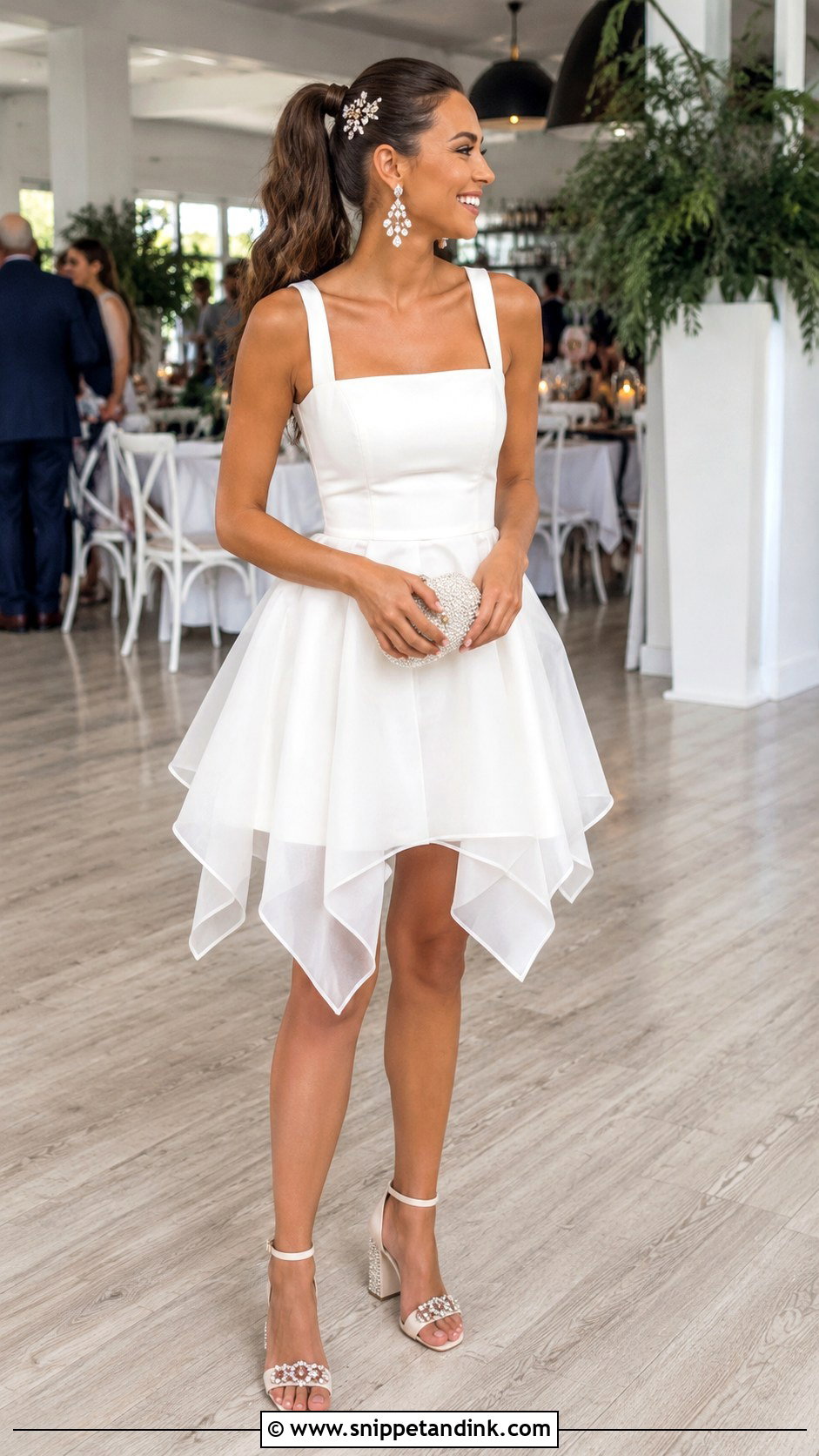
A short handkerchief dress is an easy second look that still links back to the ceremony. A knee-length or midi design with a fitted bodice and chiffon, satin or organza points moves well on a dance floor. A halter, strapless or square top keeps it modern. Cushioned block heels or embellished flats, statement earrings and a small clutch suit it, and a crystal comb, satin bow or sleek ponytail replaces the veil. Test a few spins to make sure the longest points can’t catch under your shoes. It also works for a courthouse ceremony or a send-off. Keep one bridal link, such as pearls or ivory satin shoes.
The Shoes Will Show Between the Points
With a floor-length straight skirt you can hide comfortable flats. With a handkerchief hem, the gaps between points put your shoes on display every time you take a step, and in photos the hem often lifts in the wind. That changes how I plan the feet:
- Treat shoes as part of the look, not an afterthought. Pick them before alterations, since every point is measured against that heel height.
- Match the shoe to the hem’s mood: T-straps for vintage, ankle straps or metallic sandals for boho and beach, pointed pumps for satin and crepe.
- Avoid shoes with buckles, open ties or chunky heels that hook the lightest points. A smooth heel lets chiffon slide off.
- Practise stairs. Lift the front points slightly with one hand going down, because the longest panel is the one you’ll step on.
- If you’ll change into flats later, check the hem in those too. Losing a few centimetres of heel can make the longest points drag.
Windy venues are worth one more thought. Light points can blow up and wrap around your legs, which looks charming in a photo and less so during vows. A few small weights sewn into the tips of the longest panels keep them under control without stopping the movement.
A Hem That Keeps Moving After the Aisle
A handkerchief hem earns its place by moving, so the rest of the dress should let it. Chiffon and tulle float, satin and crepe swing, lace and organza add texture. Necklines, sleeves, waist placement and the length of each panel change the effect more than you’d expect. Shoes matter more than usual because they show between the points. Wear your actual wedding pair to every fitting and ask the seamstress to check each point from all sides. Whether you lean vintage tea length or modern satin, the version that feels right is the one you can walk, sit and dance in without thinking about the hem at all.
You'll Like These Ideas:



Leave a Reply