
A skirt built in layers moves differently from any single piece of fabric. Each tier catches air on its own, so the dress keeps swaying for a beat after you stop walking, and that movement is what most brides fall for in the fitting room. Tulle gives soft, cloudy volume; organza holds a crisp ruffle; chiffon falls close and floats. The twenty gowns here run from ball gowns and A-lines to mermaid cuts, tea-length dresses and convertible gowns, each with the shoes, veil and jewellery I’d put with it. I’ve also flagged the fitting checks that matter with this much fabric, because layers that look weightless on a hanger still have to be sat in, walked in and bustled for dancing.

Tiers, Petticoats and the Weight Nobody Mentions
A layered skirt is rarely just the layers you see. Under a full ball gown there’s often a built-in petticoat, a hoop, or extra crinoline net sewn into the lining to hold the shape. That structure is why the skirt stays round instead of collapsing, and it’s also why some gowns feel surprisingly heavy by evening.
At a first appointment I ask a bride to stand in a full skirt for ten minutes before deciding. Weight sits on the hips and waist, and a gown that feels fine for a quick twirl can drag once you’ve been standing through photos. Lighter options exist: soft tulle without a hoop, or a slimmer skirt with fewer tiers, still gives you movement.
Questions worth asking the shop
- Is the volume built into the dress, or does it rely on a separate petticoat that adds cost?
- Can a layer or two be removed during alterations to lighten the skirt without spoiling the shape?
- How does the skirt behave in a car seat? Ask to sit in a chair with arms to get a rough idea.
- Is there a bustle plan for this many tiers, and how many points will it need?
One practical note that brides rarely think about until the day: bathroom trips. Big tulle skirts usually need a helper to gather the layers up, so pick someone you trust and practise once at the final fitting.
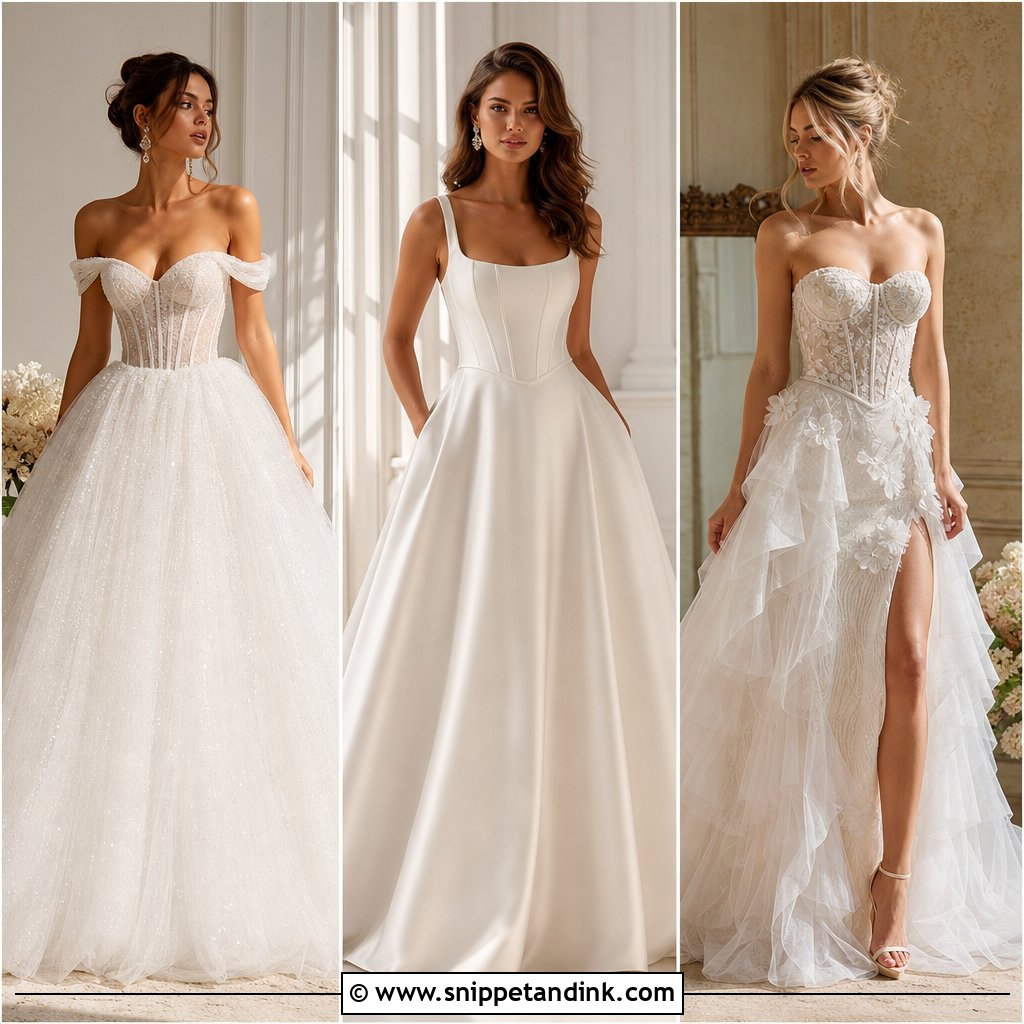
1. Strapless Tulle Layered Skirt Wedding Dress
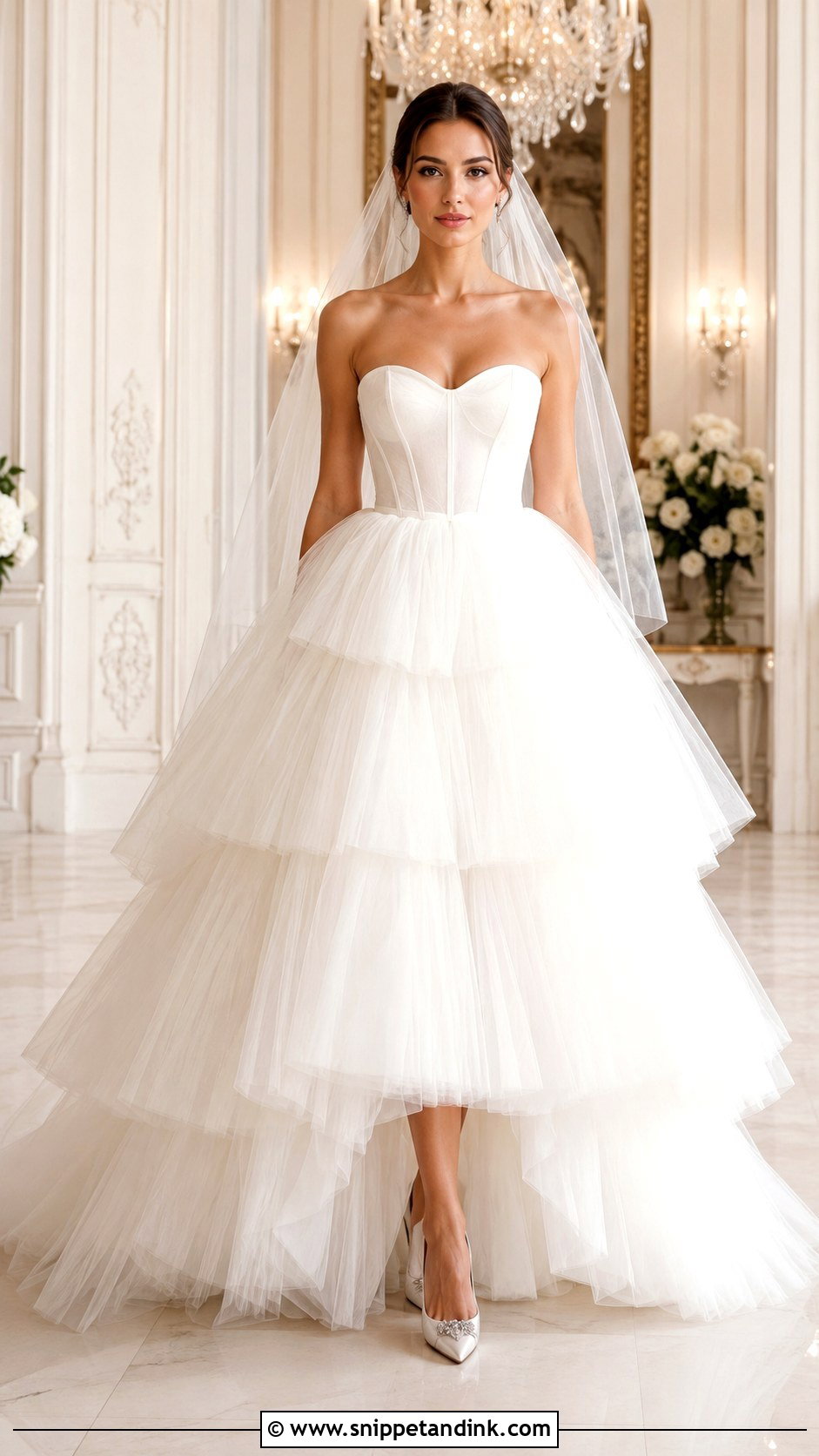
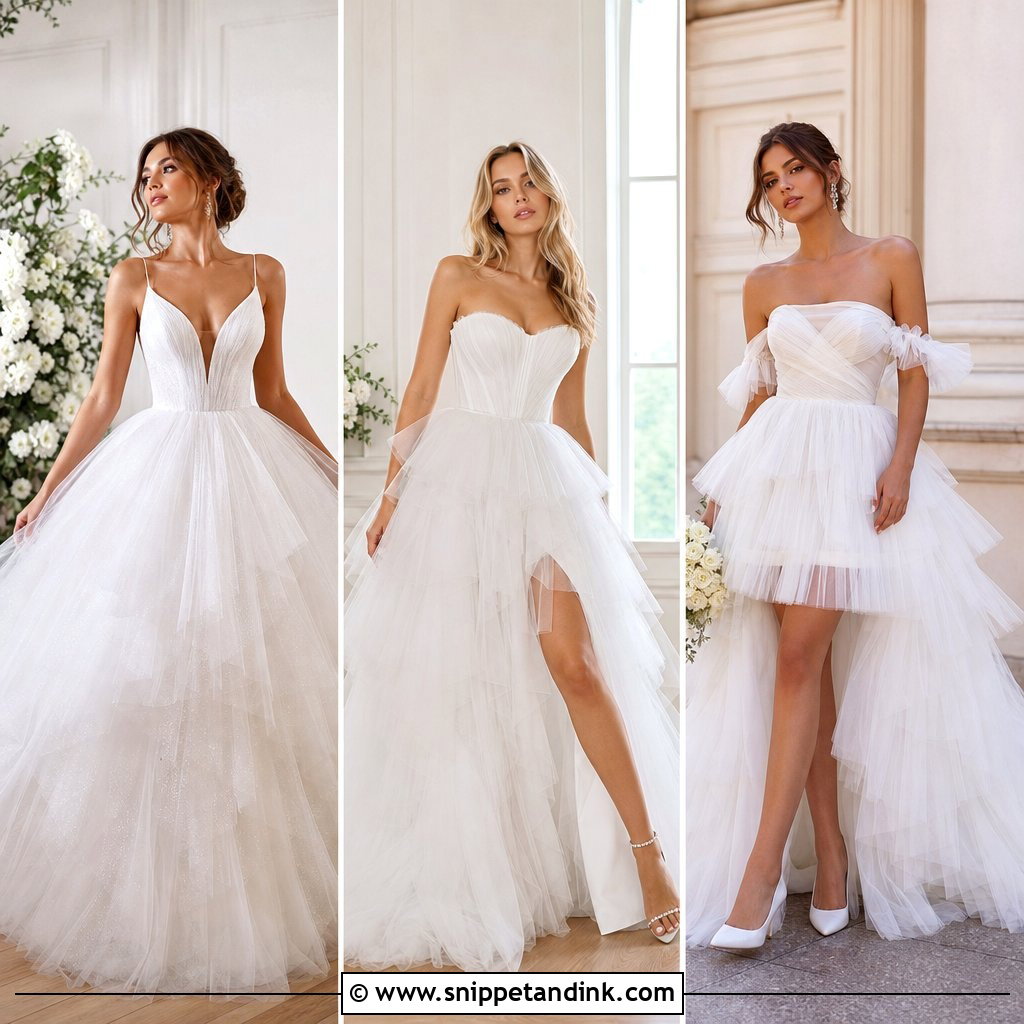
This is the outline most people picture when they hear the words wedding dress, and it earns that place. Internal boning in the bodice does the holding up, so a gently curved neckline sits flat without you tugging at it. Graduated tulle below builds volume from many light layers rather than a few heavy ones. Raw-edge tiers look soft and slightly undone; horsehair-trimmed edges give each layer a firmer, rounder shape. A fingertip veil, crystal studs and ivory pointed pumps are all it needs, with a neat low bun. Nobody sees your shoes under this much skirt, so choose a heel you can stand in for portraits. A ballroom or estate gives the width room to breathe.
2. Sweetheart Organza Layered Skirt Wedding Dress
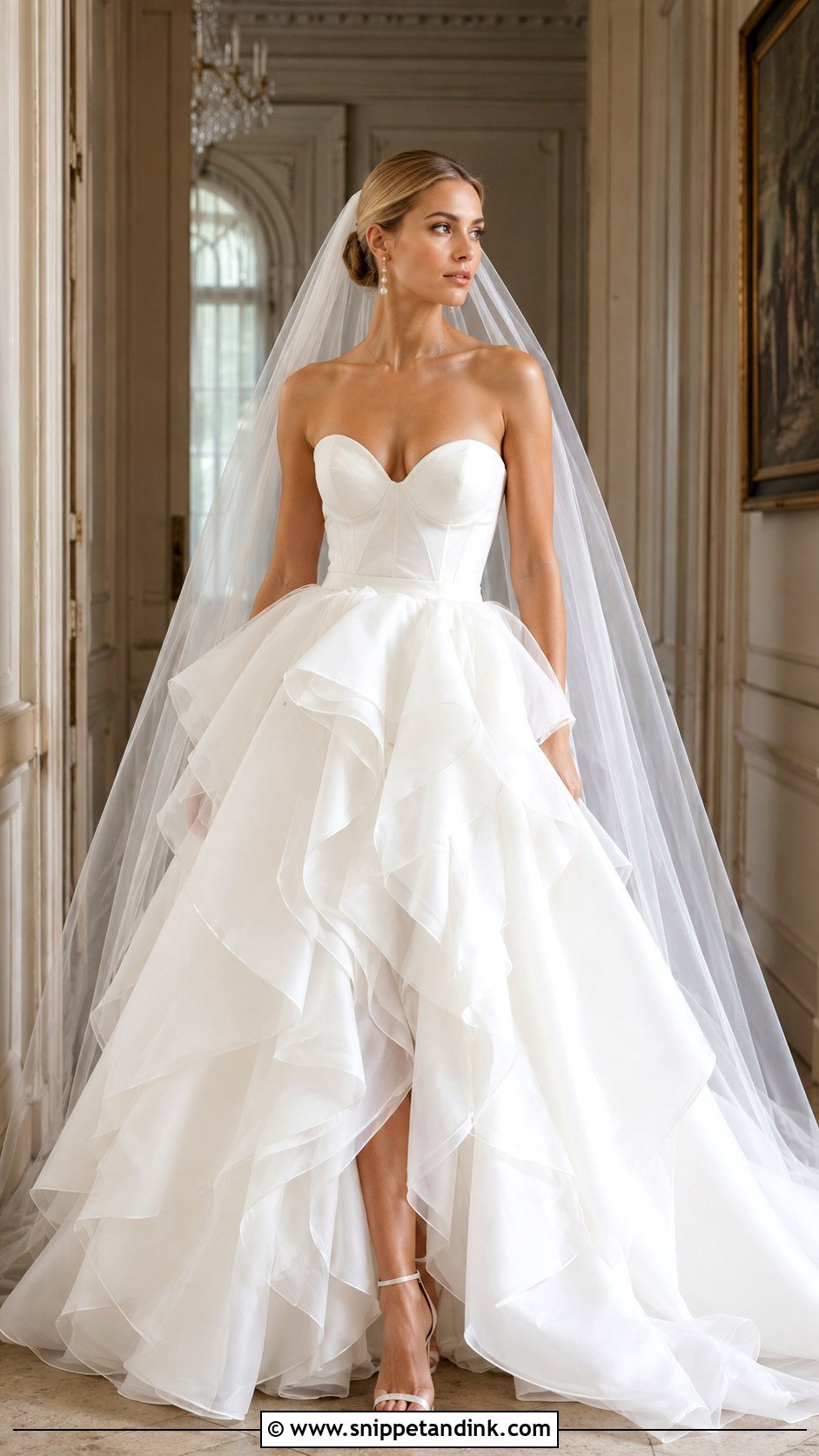
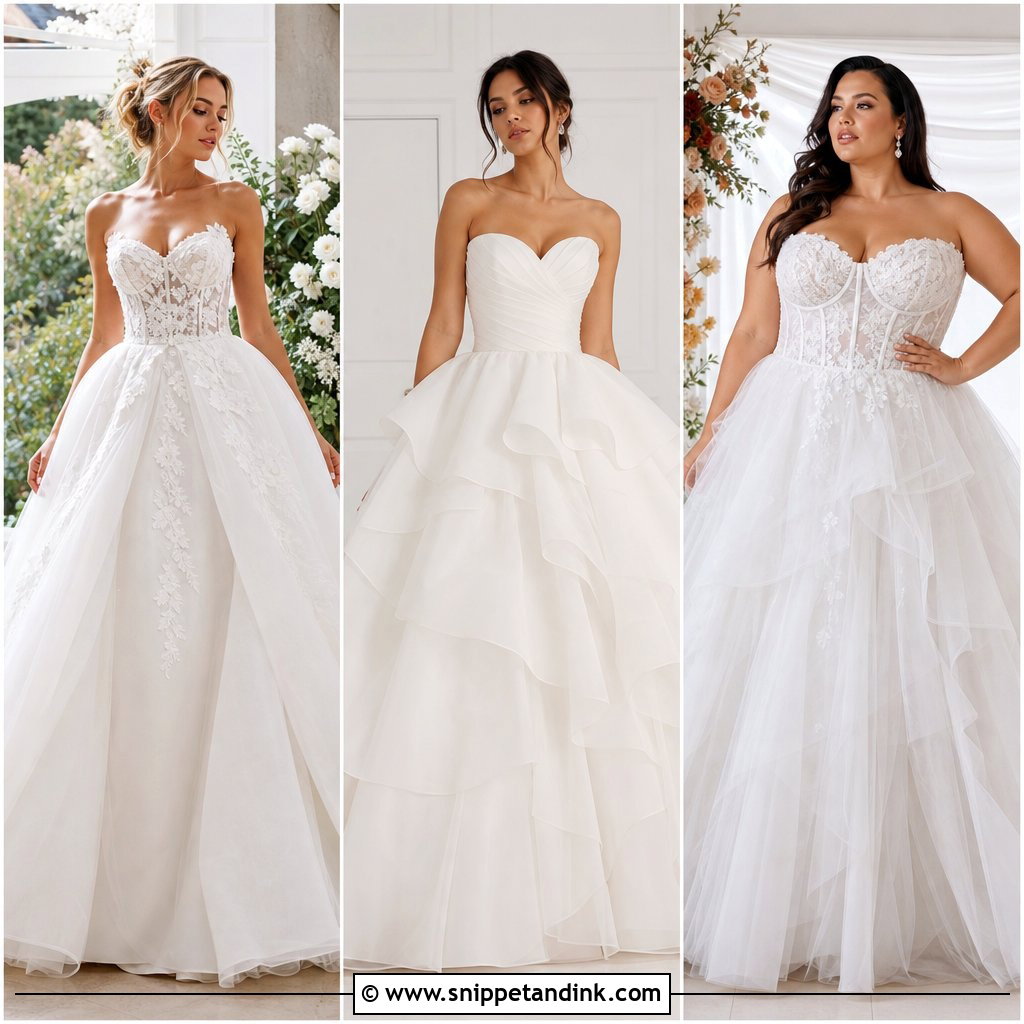
Organza is stiffer than tulle, so a ruffle made from it keeps a sharp, sculpted edge instead of melting into the next tier. On a sweetheart bodice that contrast is the whole point: smooth and fitted above, architectural below. If symmetrical rows feel too formal, look for ruffles that cascade on the diagonal. Pearl drops, a plain cathedral veil and satin block-heel sandals keep it romantic, and soft waves or a polished half-up style suit the neckline. Organza is lighter than it looks but it creases where it’s crushed. Practise sitting and turning before the final alterations, and watch that the lowest ruffle doesn’t fold under your toes on the first step.
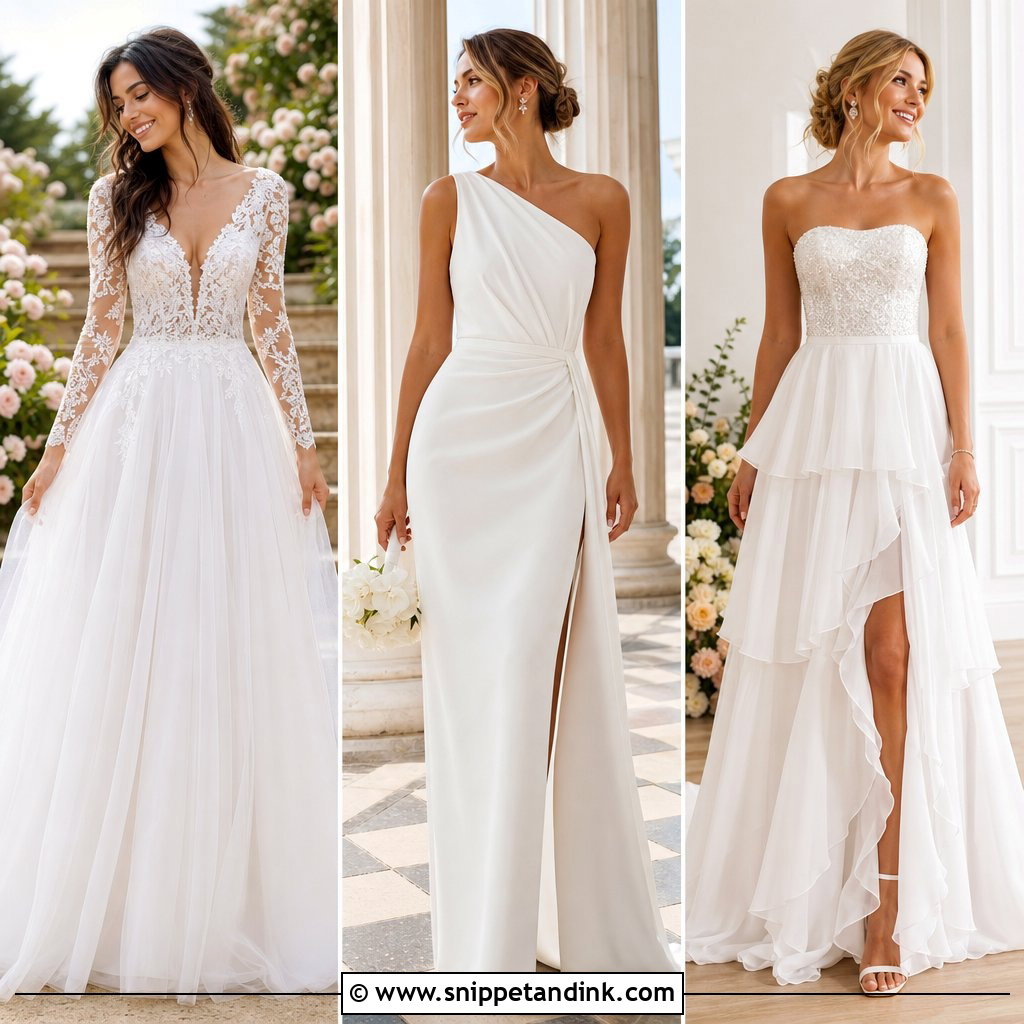
3. Lace Bodice A-Line Layered Skirt Wedding Dress
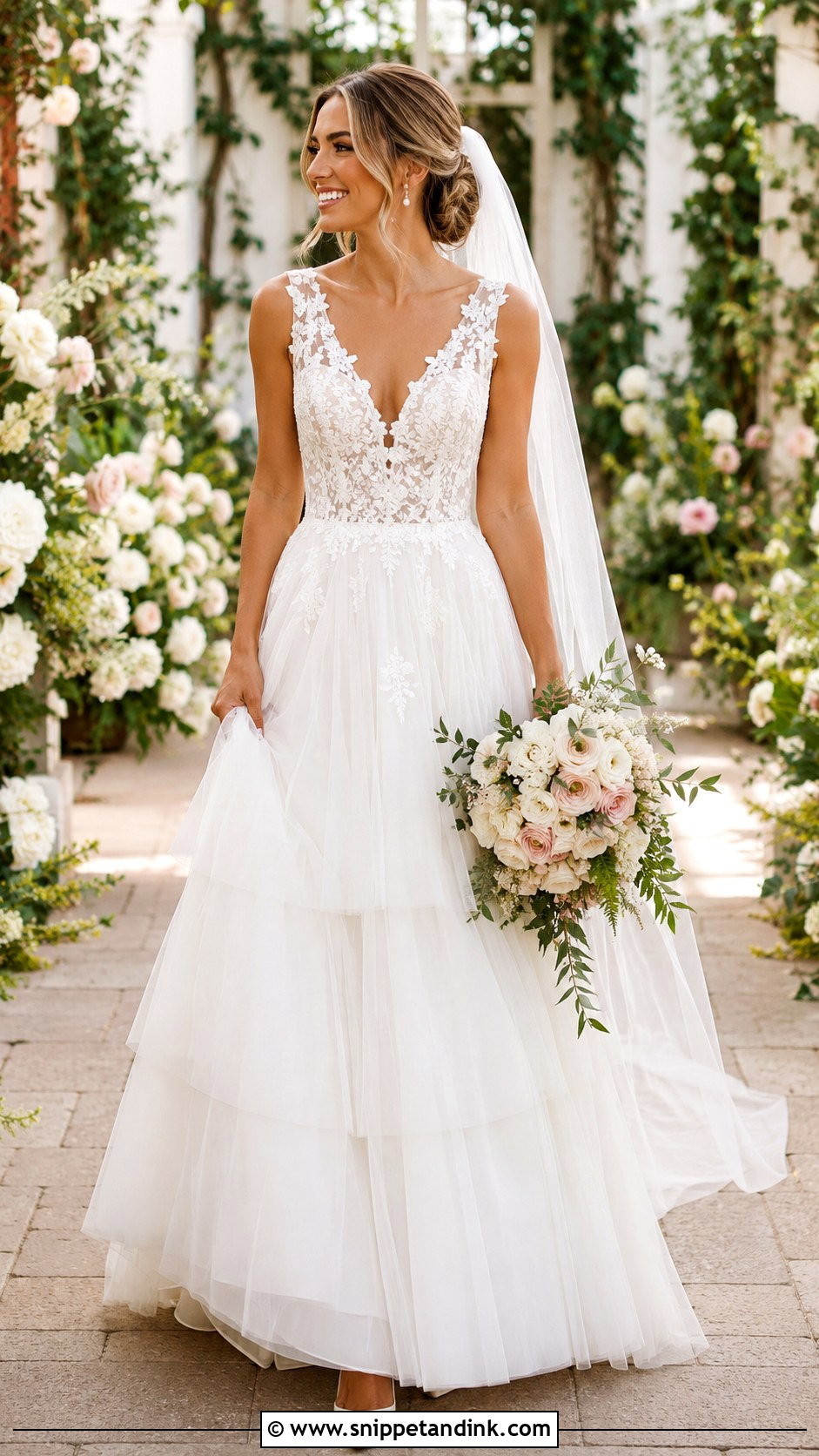
Here the layering is quiet. A floral lace bodice with a modest V and wide straps sits over tulle tiers that fall gradually from the natural waist instead of flaring out hard, which keeps the gown easy to wear for hours. The detail I’d ask for: lace appliqués that spill a little onto the first skirt layer, so there’s no hard line where bodice meets skirt. Finish with a narrow chapel veil, small pearl earrings and almond-toe pumps you can actually walk in, plus a loose chignon. It suits a garden or a traditional church, anywhere graceful movement matters more than sheer size.
4. Corset Basque Waist Layered Skirt Wedding Dress
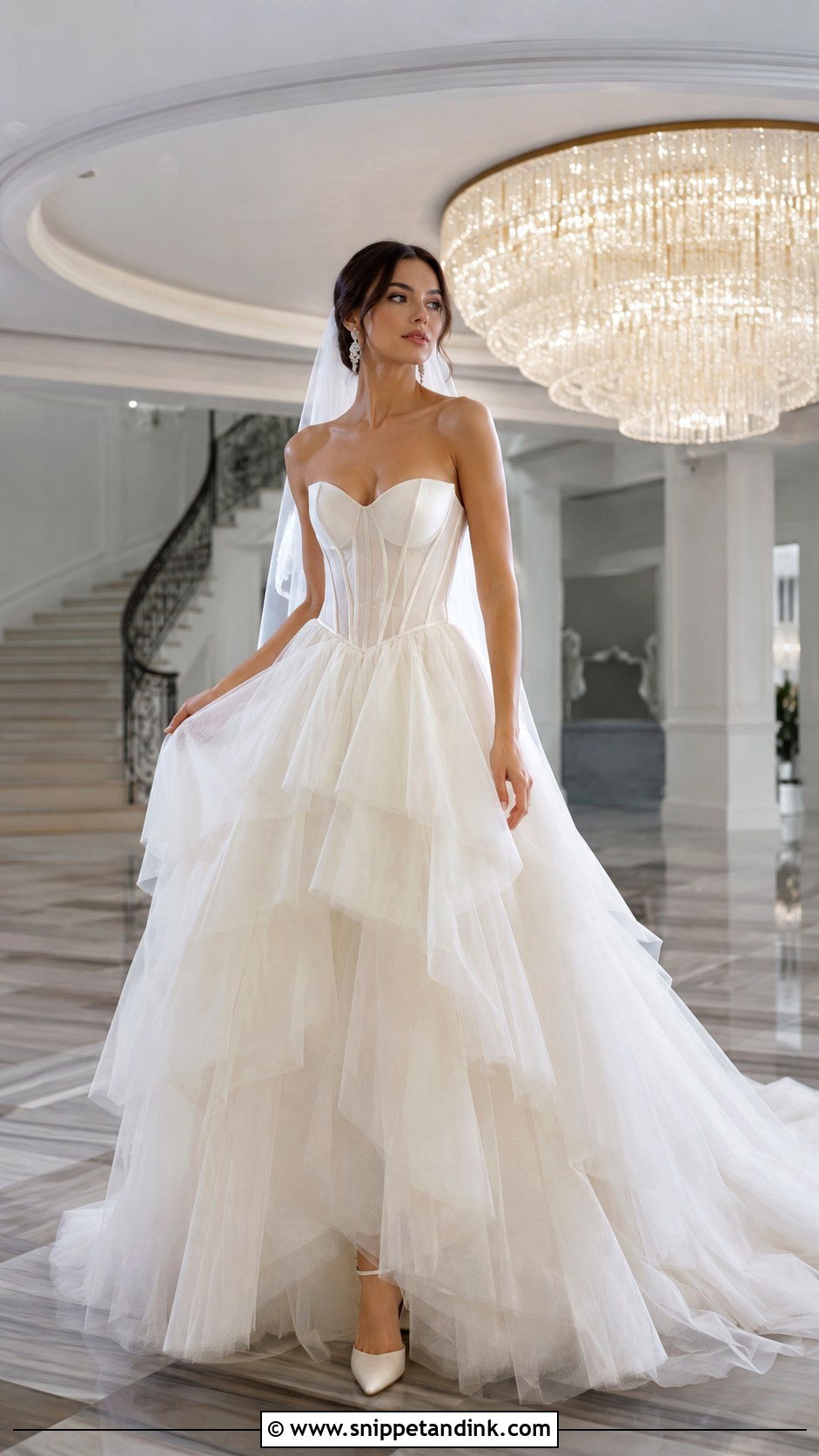
The pointed Basque waist dips below your natural waistline, which makes the torso look longer before the tiers open out underneath. That’s the effect, and it’s a strong one. It also means the corset has to be properly built: secure boning, shaped cups and a smooth lining, or the point will dig in when you sit. Starting the tulle or organza just beneath the dip sharpens the outline. Long crystal earrings, a plain tulle veil, closed satin heels and a sleek updo let the construction speak. I’d sit through a whole mock dinner in it at the final fitting. If you can’t breathe deeply after twenty minutes in a chair, the waist needs letting out.
5. Off-Shoulder Layered Skirt Wedding Dress
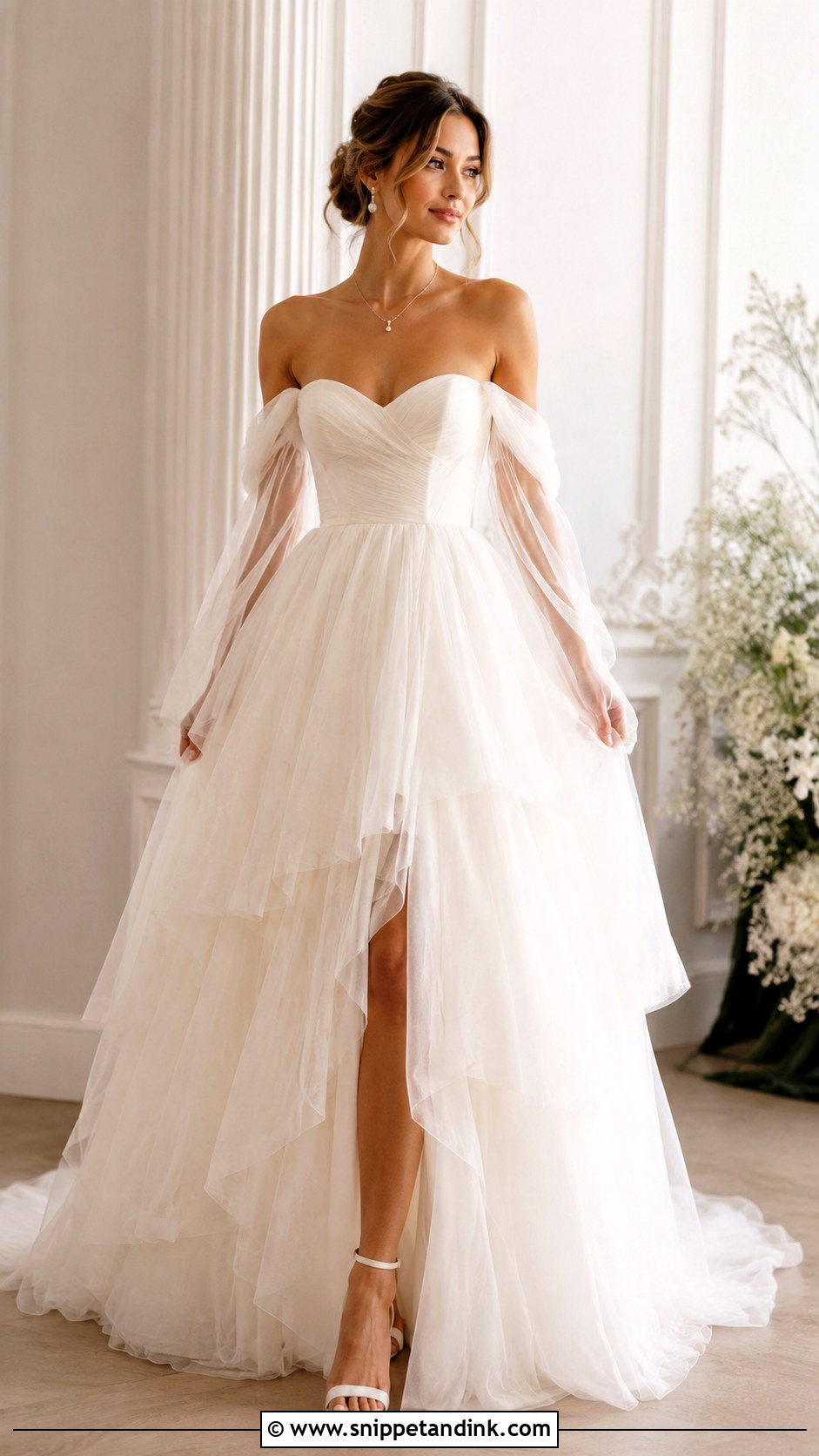
Bare shoulders soften a big skirt nicely, but the sleeves can’t be doing any of the holding up. Draped sleeves or detachable tulle bands should frame the shoulders while the bodice underneath stays secure by itself. Wide, flowing layers in an A-line or ball gown skirt suit this neckline; stiff ruffles packed close to the waist chop the line in half. A fine necklace, pearl studs and ivory heels with an ankle strap complete it, and a low textured bun keeps hair off the neckline. Detachable bands are worth having, since slipping them off for the reception frees your arms and gives you a quiet second look. Hug your fitter. If the sleeves bite into your upper arms, they need adjusting.
6. Long Sleeve Lace Layered Skirt Wedding Dress
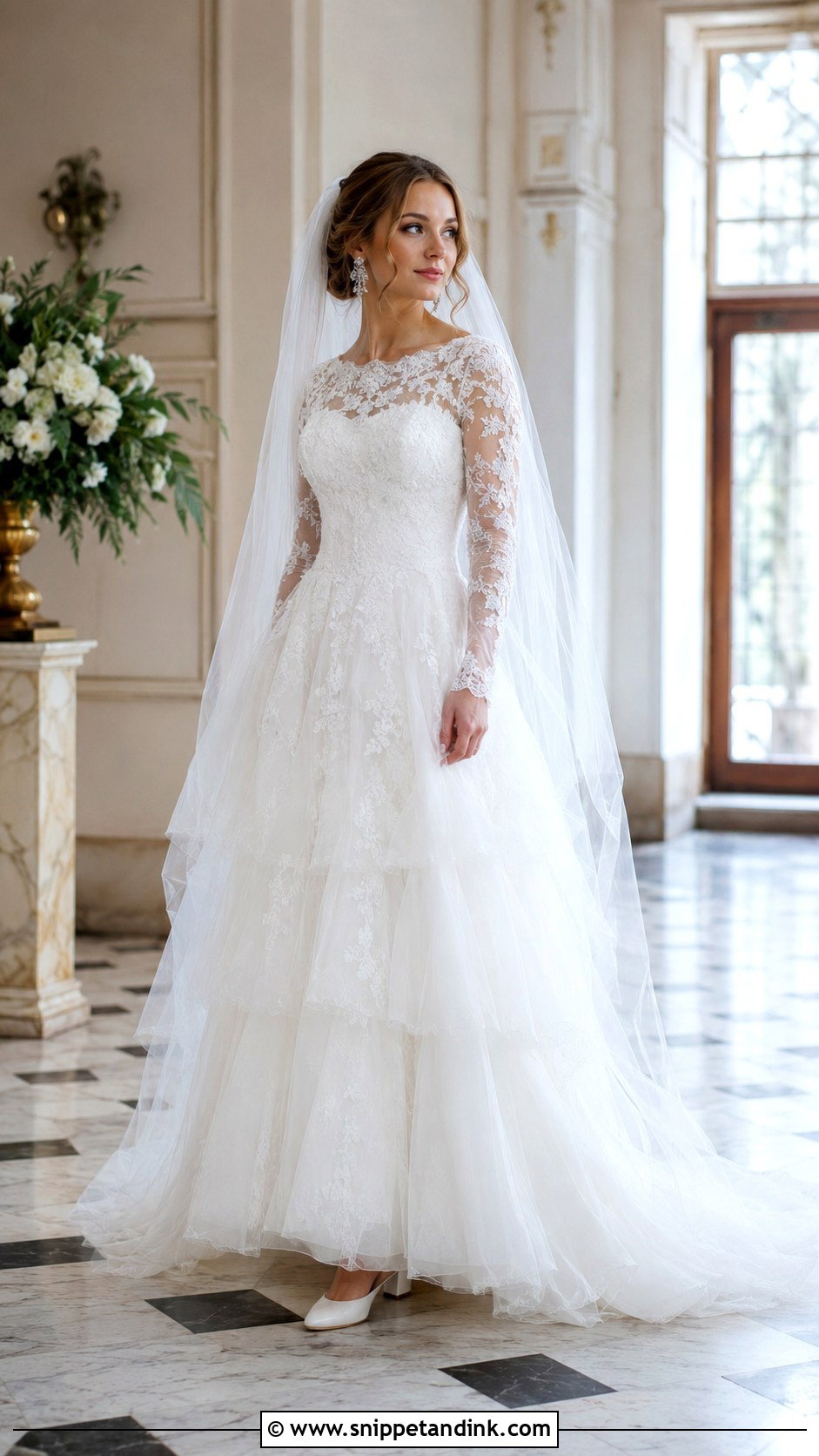
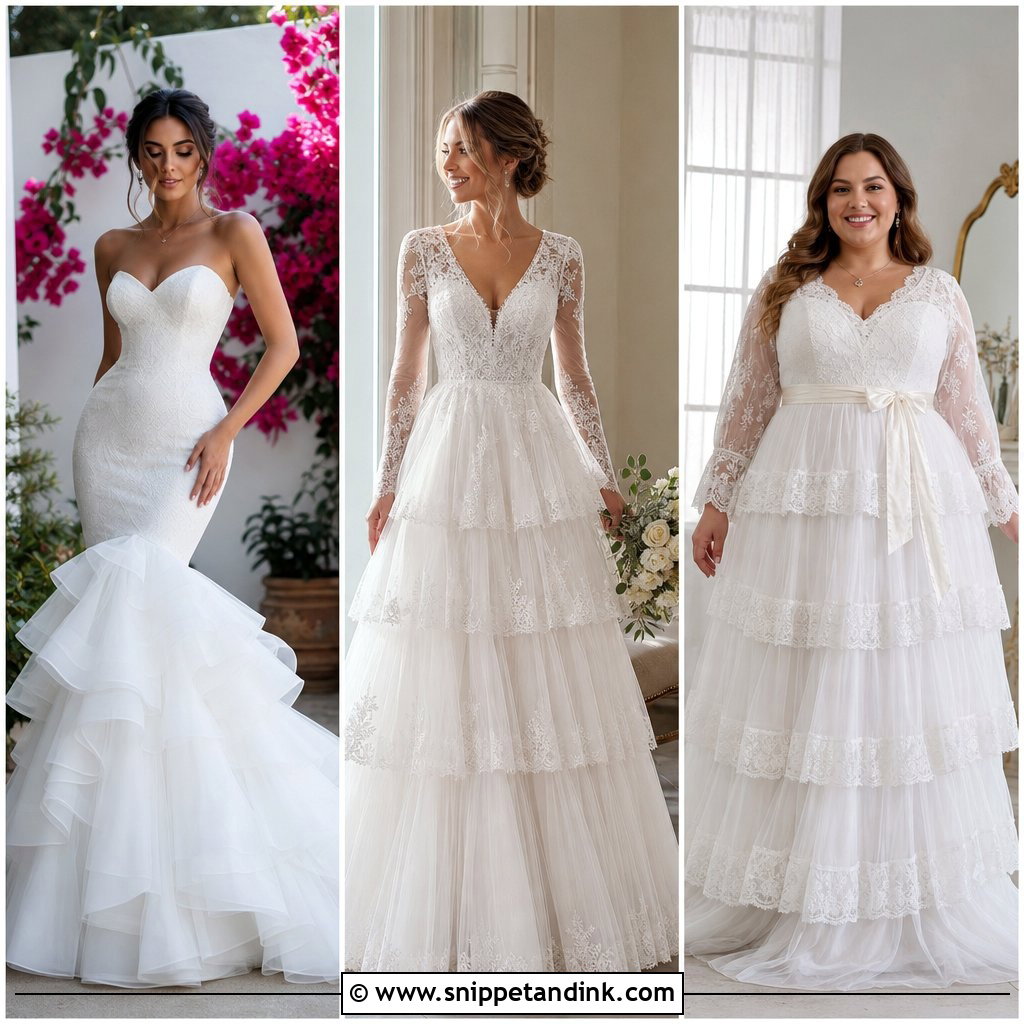
For a winter wedding, the long lace sleeve gives coverage without weight, as long as the skirt stays light. Fitted illusion sleeves with appliqués placed carefully along the arm look delicate, and a lined bodice adds a little more cover. Pair them with a layered tulle skirt so the whole gown doesn’t tip into heavy. A chapel-length veil with a minimal edge, crystal earrings and closed block heels suit it, with a sleek chignon or soft side-parted waves. Bring an ivory wrap in a smooth fabric for cold outdoor portraits; fluffy knits catch on lace and pull threads. Check the cuffs too. If you can’t wriggle your fingers into a glove or hold a bouquet comfortably, they’re too tight.
7. Halter Neck Layered Skirt Wedding Dress
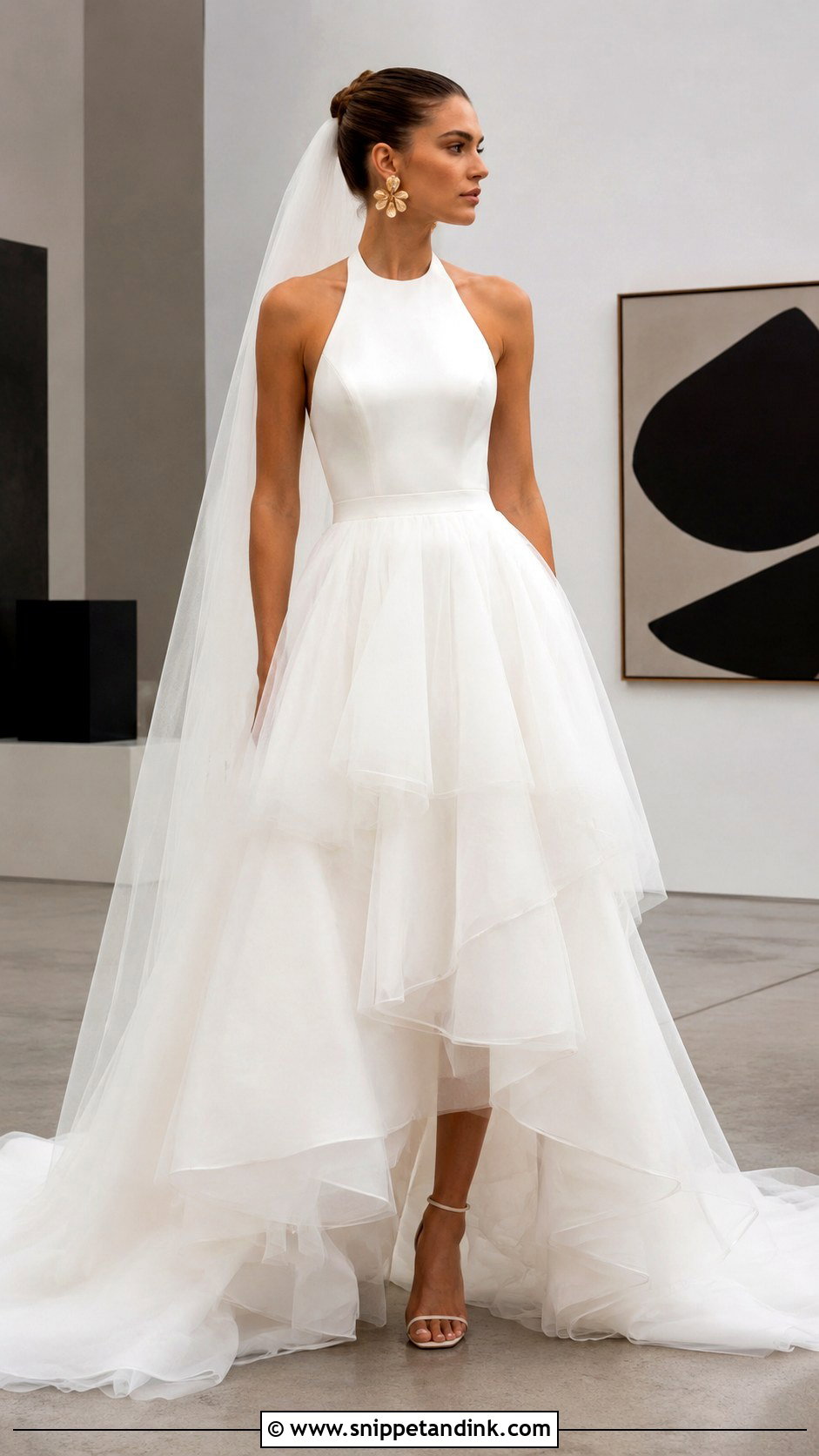
A halter is a cleaner, sportier counterpoint to a big skirt, and it pulls attention up to the face and shoulders. Choose soft tulle tiers for an airy feel or crisp organza for runway-inspired drama. The neckline does the work a necklace would, so I skip one and go straight to sculptural earrings, a sleek bun with a cathedral veil anchored beneath it, and minimal ivory sandals. If you need real bust support, the bodice has to have its own structure. A halter that relies on the neck strap alone will give you a headache by the speeches, because all that weight hangs from the back of your neck.
8. Square Neck Layered Skirt Wedding Dress
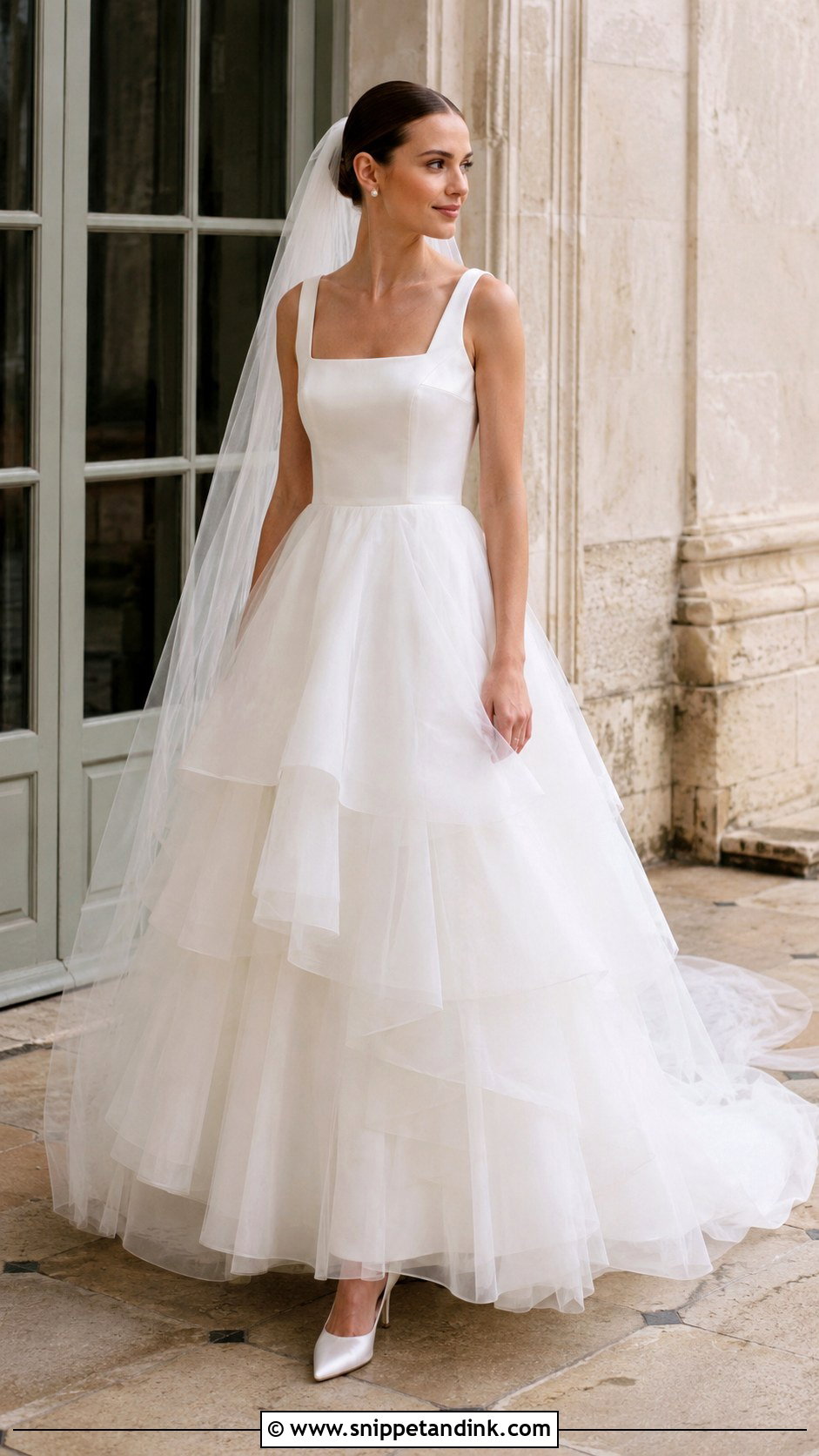
Square necklines are steady and graphic, and they balance a tiered skirt well. Wide straps and a structured bodice frame the top; a smooth Mikado or satin bodice with fine tulle starting at the waist gives you contrast without any beading at all. Pearl button earrings, a narrow-edged veil, pointed satin pumps and a centre-parted low bun echo that clean geometry. A practical bonus: wide straps mean a supportive bra is much easier to work in than with a strapless or plunging cut. The waist seam is the line to obsess over at fittings, since where the layers begin decides how long or short your torso looks.
9. Asymmetrical Organza Layered Skirt Wedding Dress
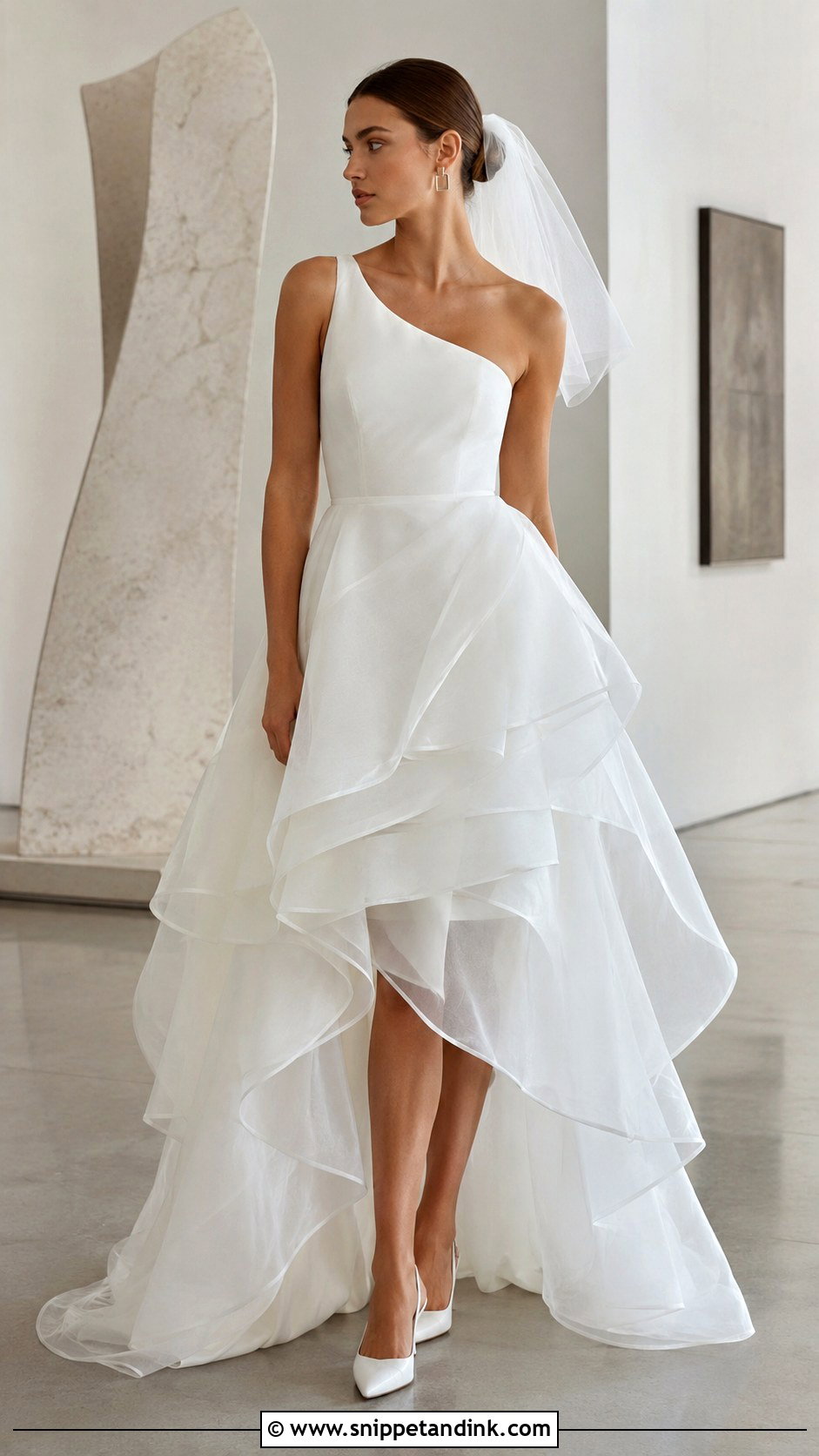
Uneven organza tiers turn a white gown into something closer to sculpture. The best versions sweep across the skirt on a diagonal or cascade toward one hip rather than stacking in straight rows. Keep the bodice plain, strapless or one-shoulder, so the skirt carries the design. Geometric earrings, a smooth bun and pointed heels match the modern feel, and I’d lean toward a shoulder-length veil, since a long one draped over asymmetry can make the skirt look messy from behind. Look at this gown from every side during alterations. The shortest panels must still cover you when you climb stairs, and the longest ones need to clear the floor in your real shoes.
10. Mermaid Ruffle Layered Skirt Wedding Dress
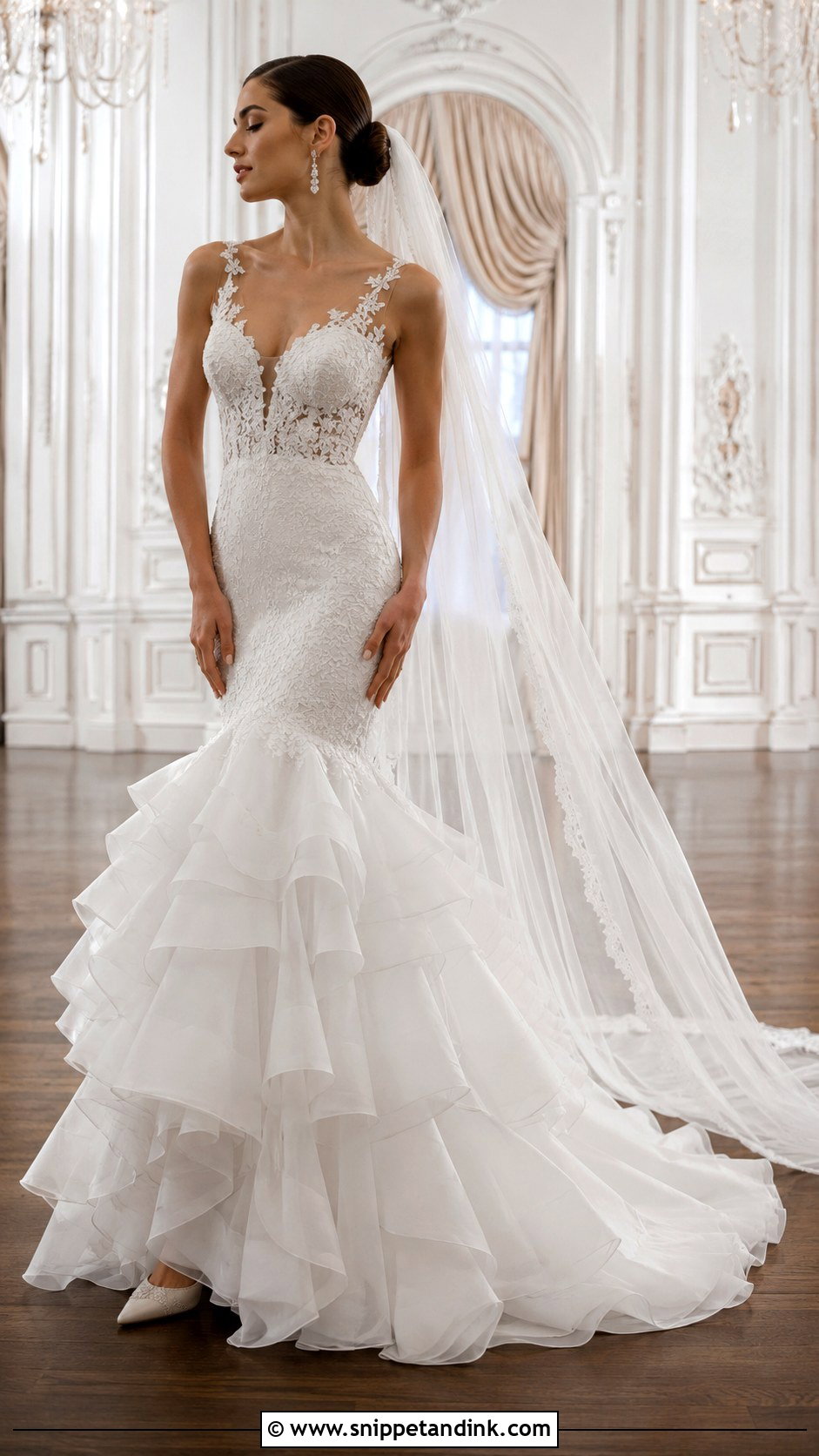
Fitted to the knee, then a burst of ruffles: a mermaid with layered flare gives you shape and movement in one dress. A lace or crepe bodice follows the body closely before the tulle or organza opens out. Where that flare starts changes everything. Higher reads more dramatic; lower gives a longer, leaner line. Style it with a narrow cathedral veil, drop earrings, supportive pointed pumps and a side-parted updo. Be honest with yourself about stairs and stride. Mermaid cuts shorten your step, so walk the length of the shop at every fitting, and ask for a secure bustle, because ruffled trains are heavy to lift by hand all evening.
11. Drop Waist Tulle Layered Skirt Wedding Dress
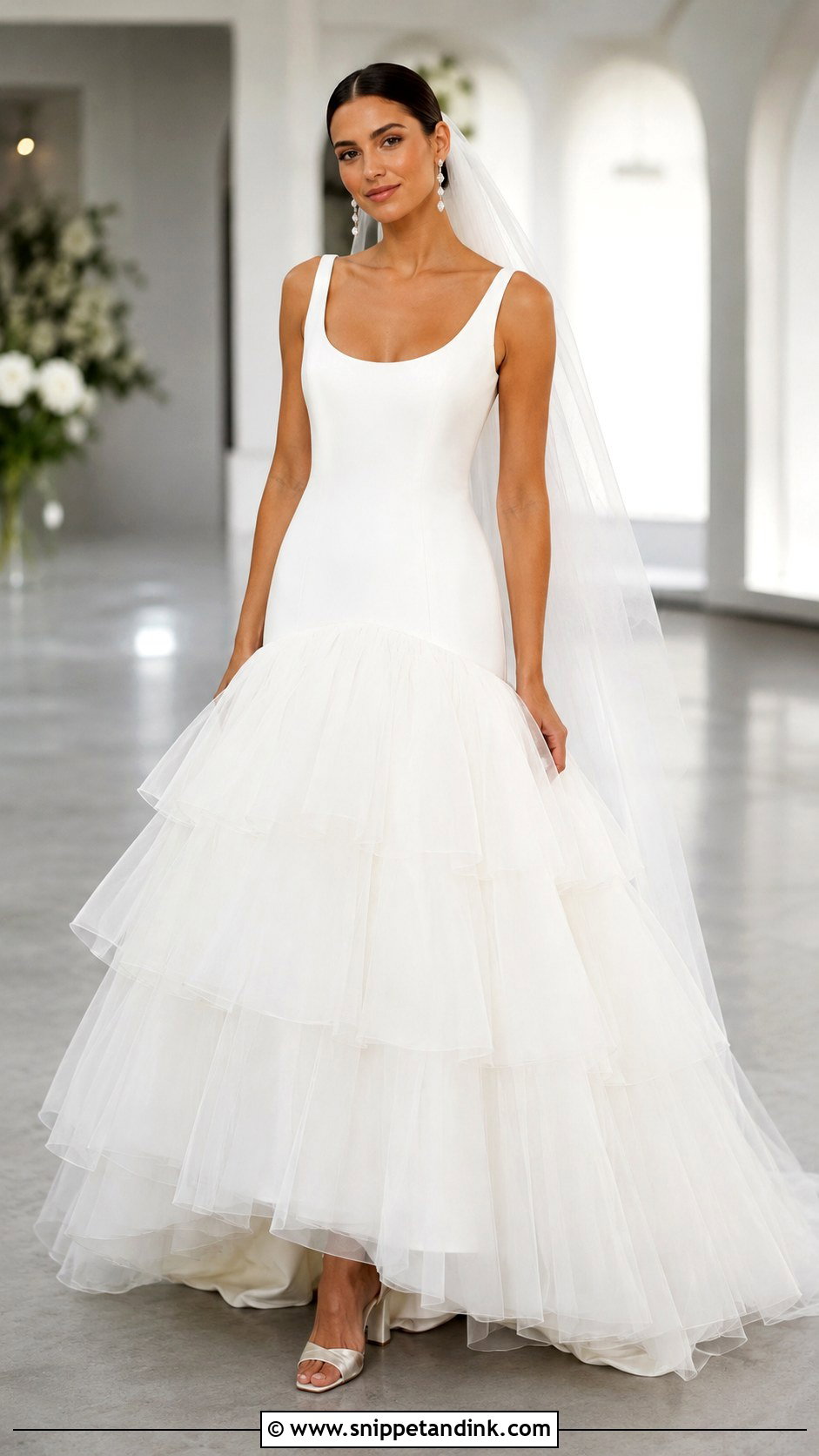
With the waist seam lowered to the upper hip, the bodice runs long and smooth before the tulle releases, so the volume starts lower and feels more modern. Scoop, strapless or softly curved necklines all sit well with it. Long earrings, a sleek veil and plain satin heels keep the proportions clean, and hair should stay close to the head. Here’s who I’d steer away from it: if your hips are much fuller than your waist, a drop waist can pull and leave horizontal creases across the seat. Sit down and climb a few steps at fittings. Well-placed layers should give you fullness without breaking that long line.
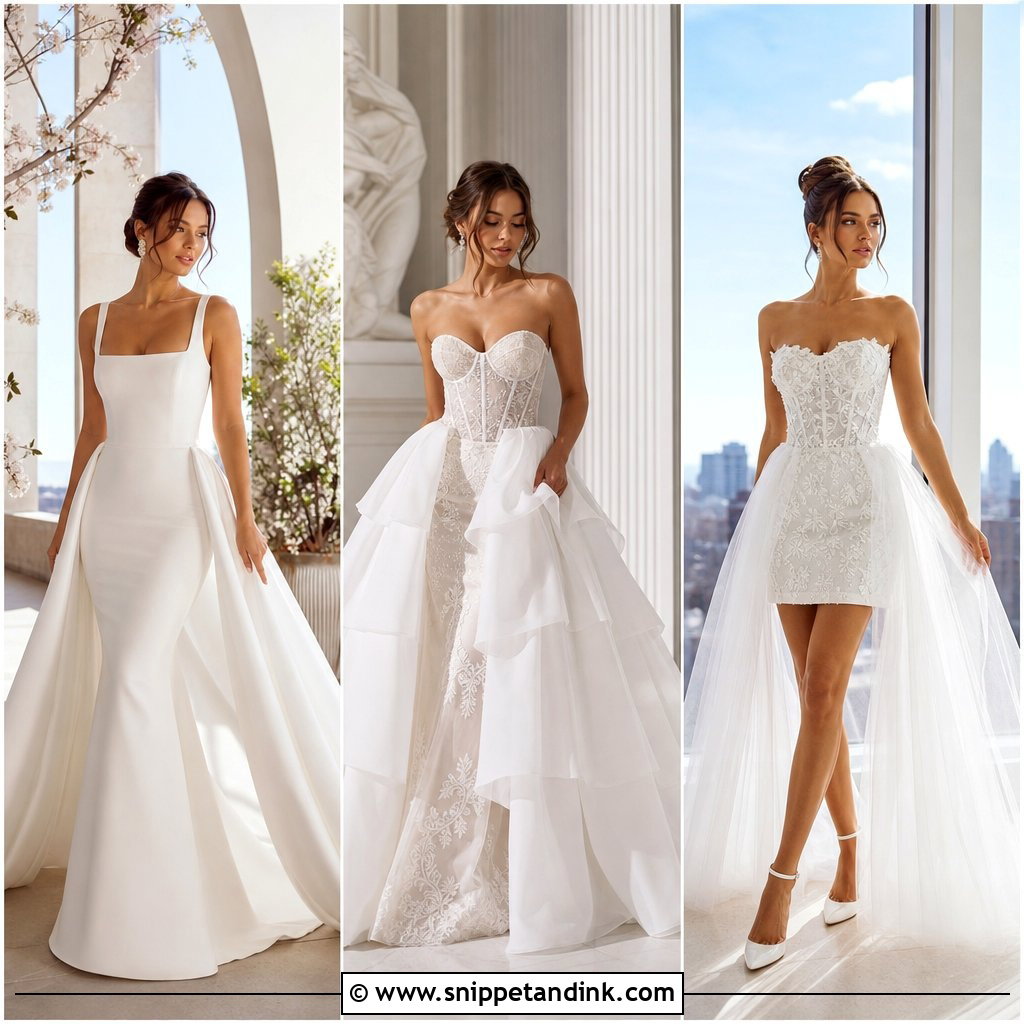
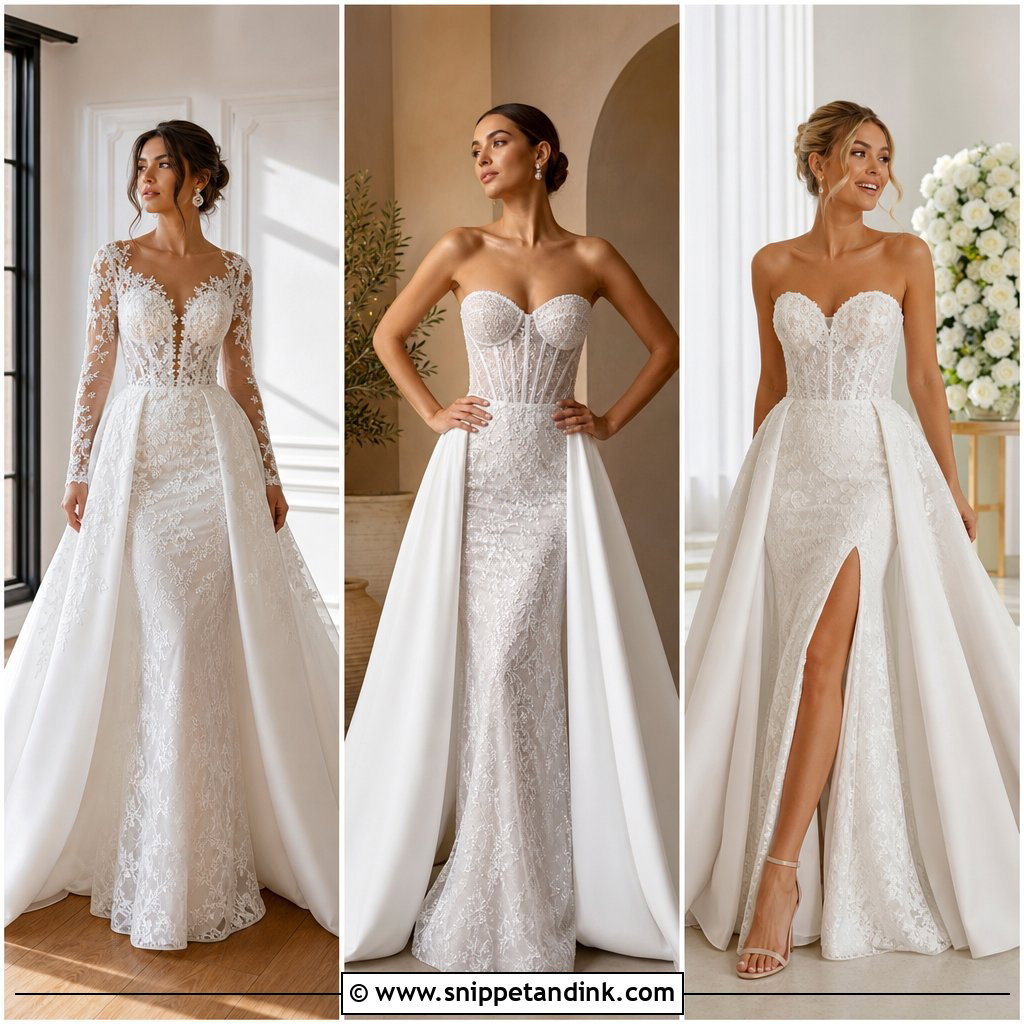
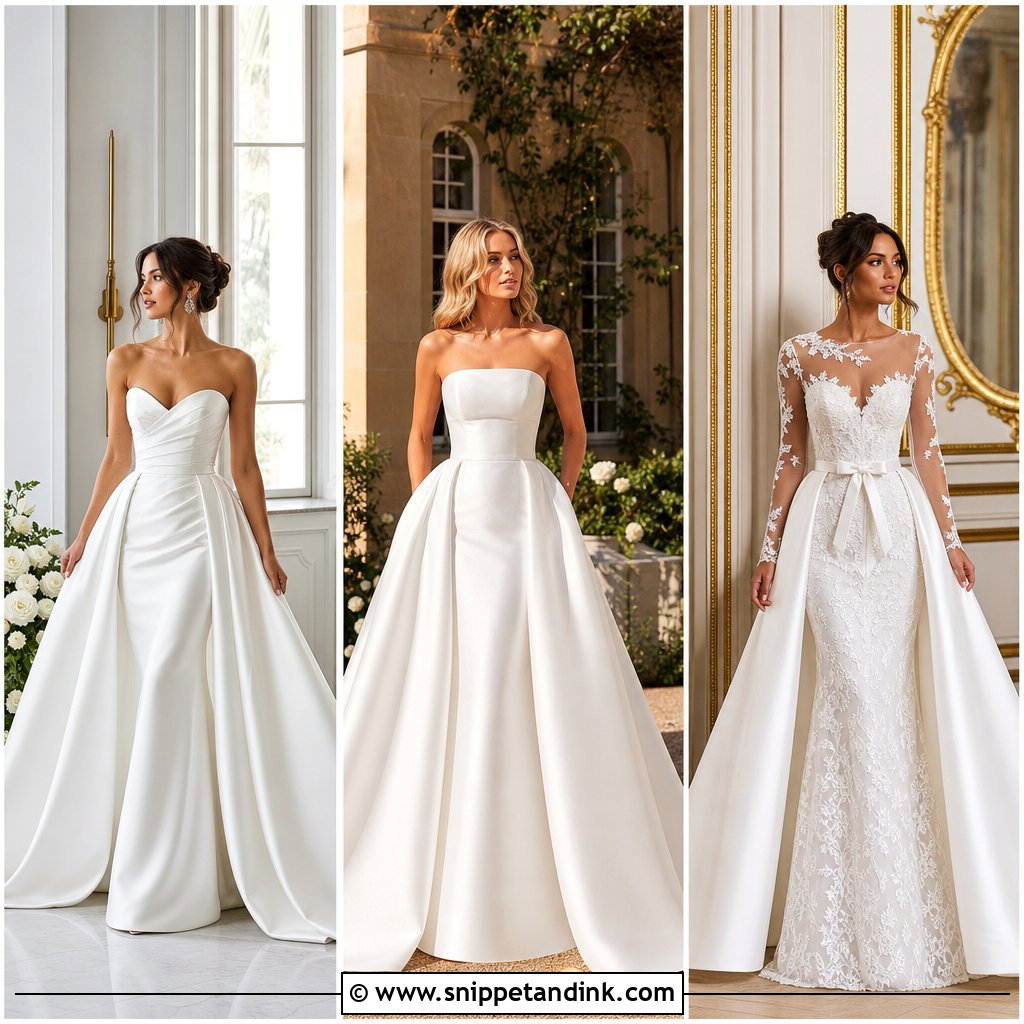
12. Detachable Layered Overskirt Wedding Dress
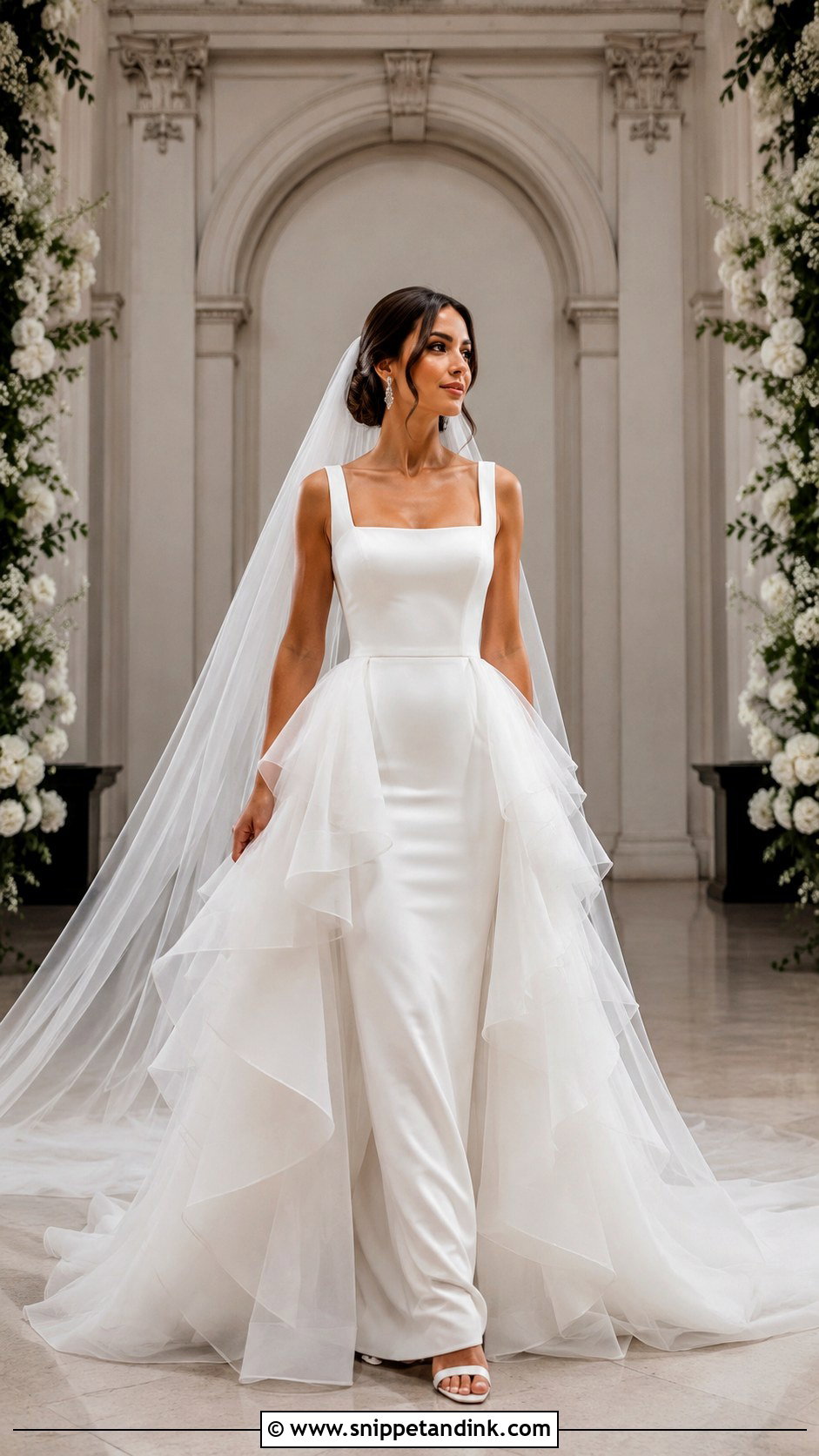
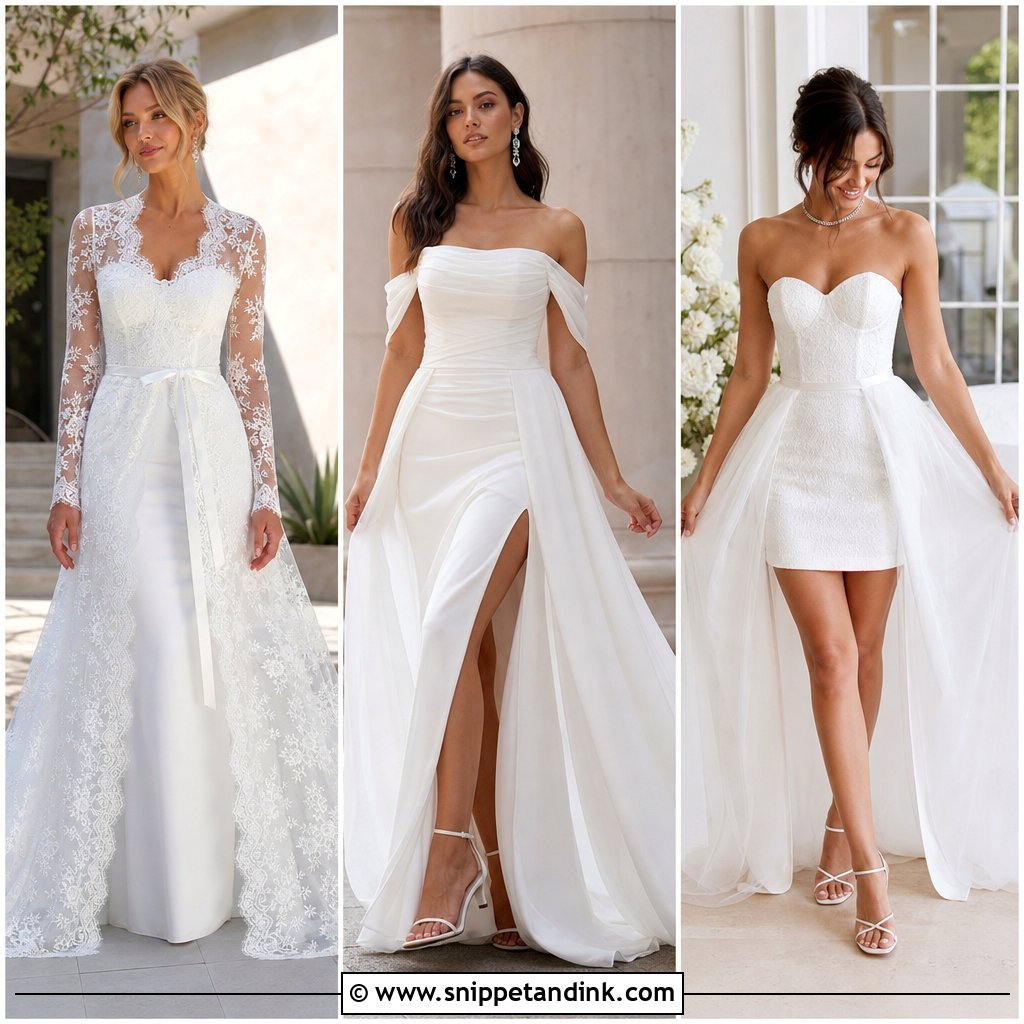
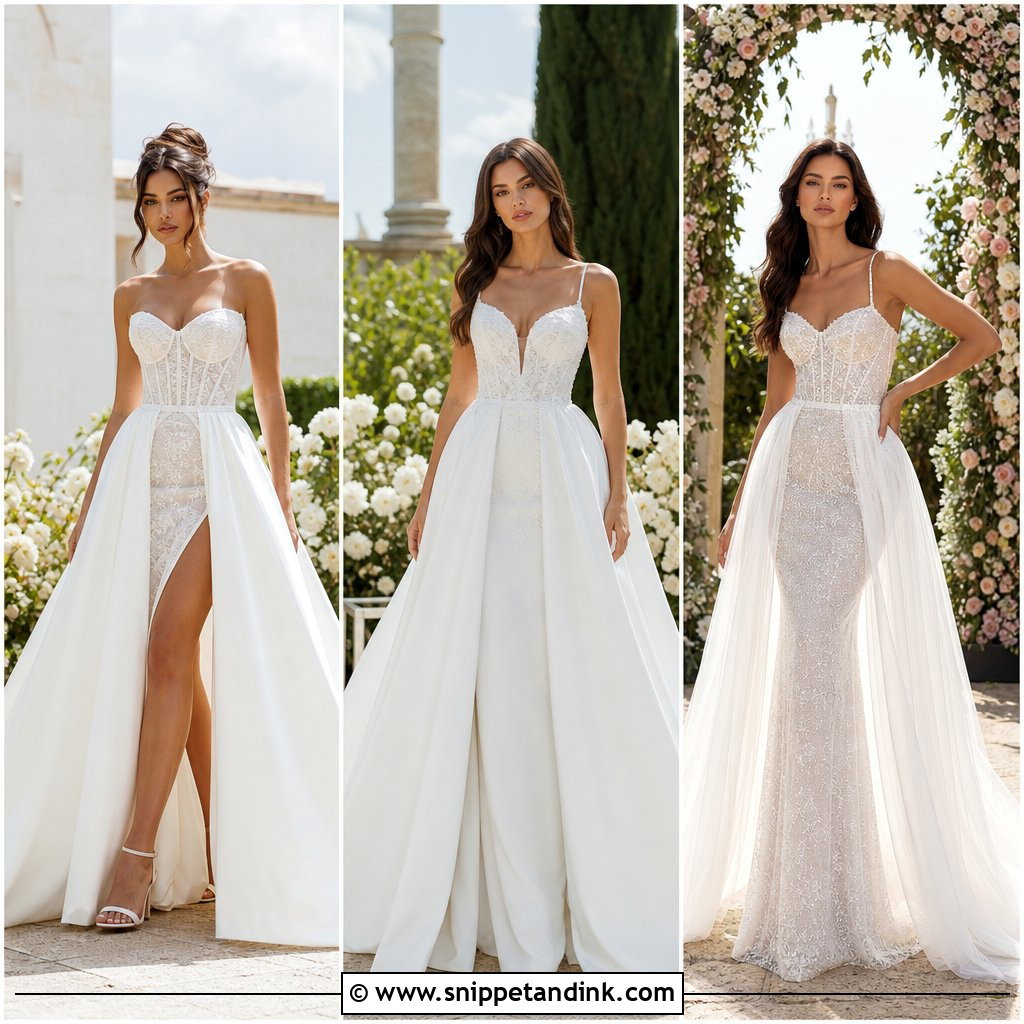
Two looks, one gown, no disappearing for twenty minutes to change. A fitted crepe, lace or satin dress sits under a full tulle or organza overskirt for the ceremony; at the reception the outer layer comes off and you’re left with something slimmer to dance in. The join should hide under a narrow belt, a band of appliqué or concealed hooks. A cathedral veil, crystal earrings and elegant block heels suit the ceremony version; afterward, swap to bolder earrings or a shorter veil. Rehearse the removal with whoever will help you. They also need a plan for where the overskirt goes, since a heap of tulle on a chair is a magnet for spilled wine.
13. Floral Appliqué Layered Skirt Wedding Dress
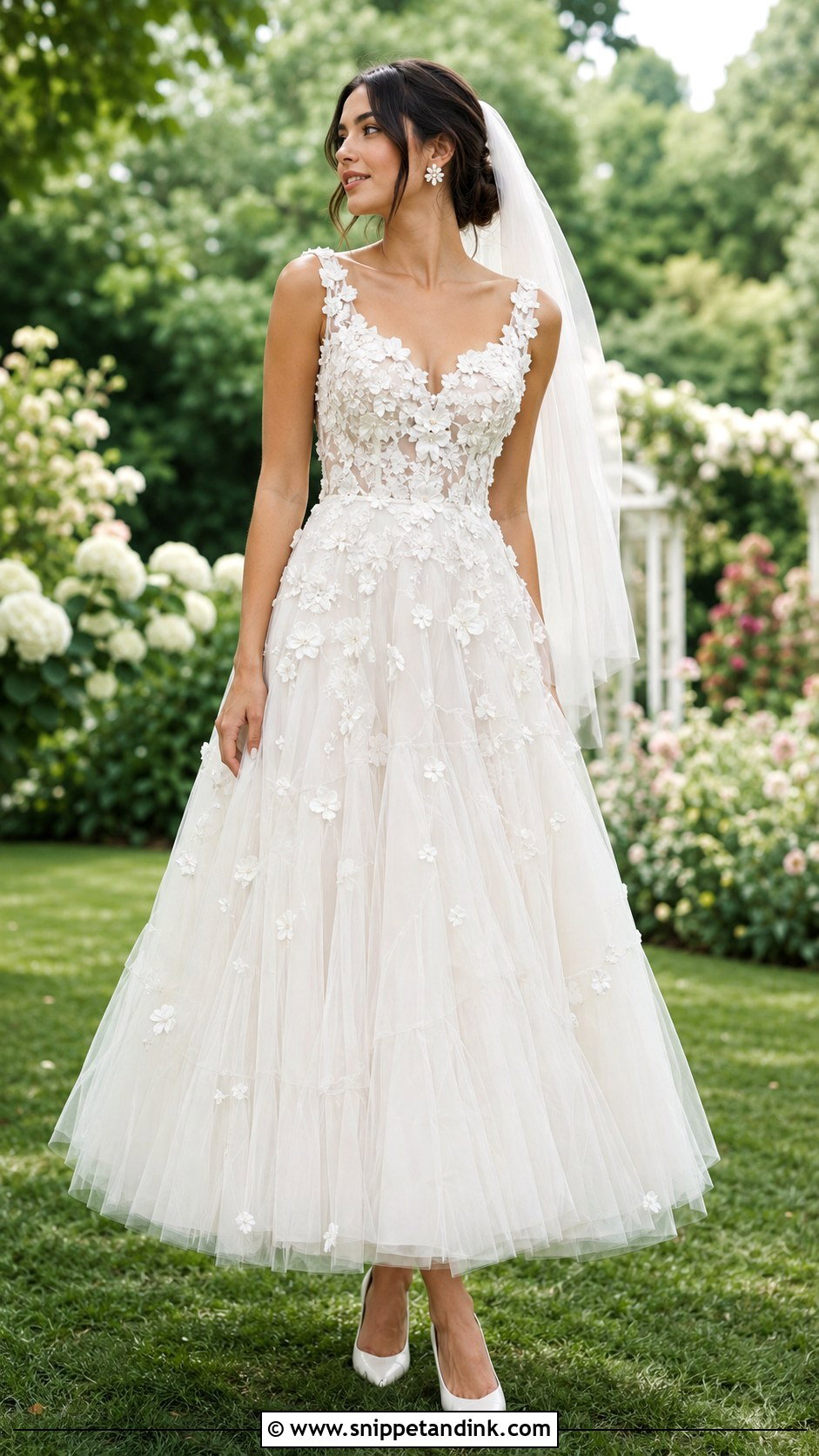
Three-dimensional flowers give a layered skirt depth without glitter or heavy beading. I like them clustered on the bodice and thinning out across the top tiers, so the lower layers can move freely. Mixed sizes look more natural than a dense, even pattern. Floral studs, a plain veil and closed pumps with a low block heel suit the dress, and a softly pinned updo fits the organic feel. Leave the flower crown at home if the gown is already heavily decorated. Before the day, look closely at every appliqué near the hem and the seat. Loose edges catch on shoes, chair legs and bracelets, and a dangling petal is easy to stitch down now and hard to fix at the reception.
14. Pleated Organza Layered Skirt Wedding Dress
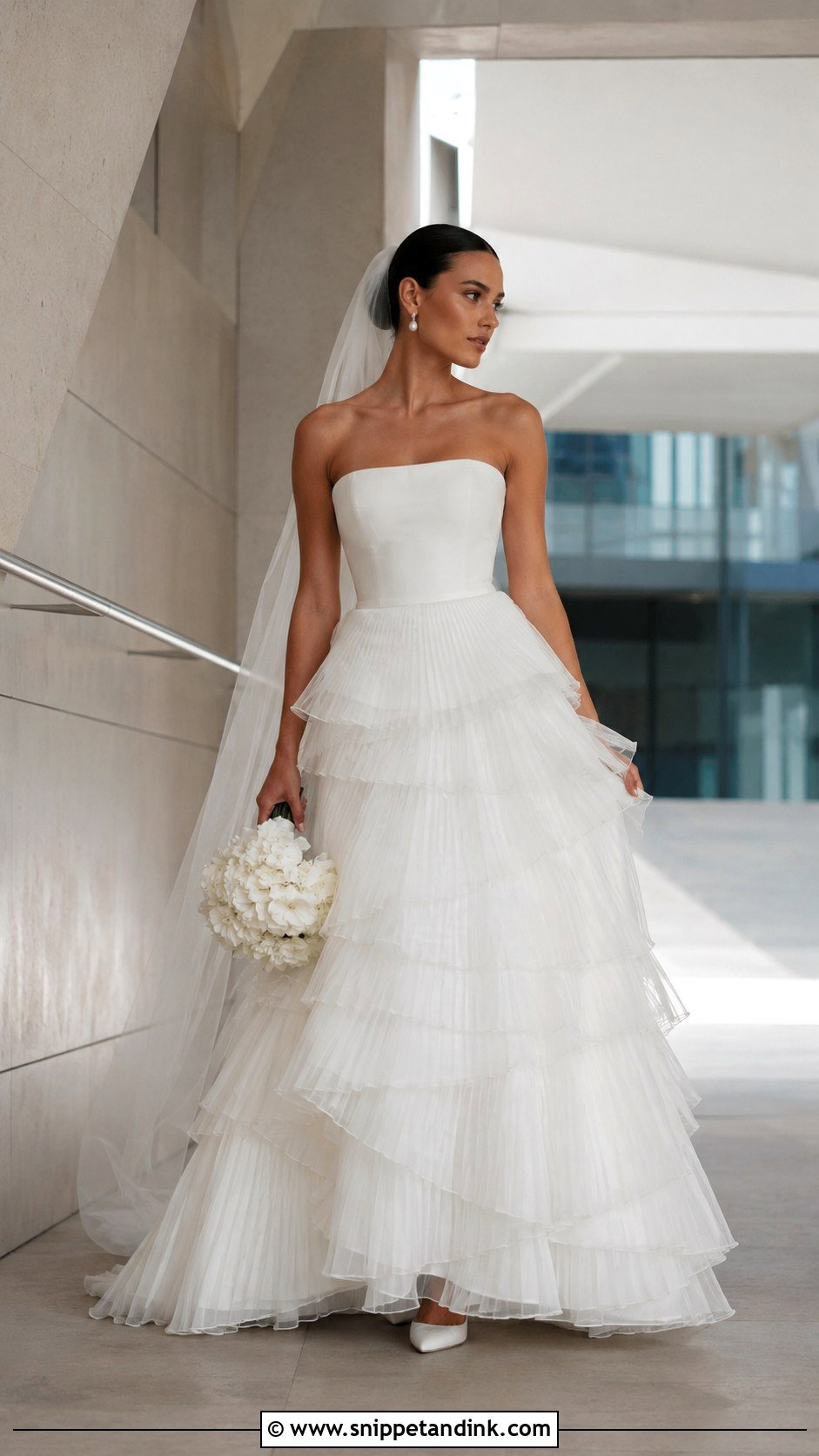
Pleated organza is the answer for a bride who wants layers but hates fluff. Stacked pleats, folded panels or tiers set in precise lines give the skirt a defined, almost architectural shape. A clean scoop-neck or strapless bodice and a narrow waist seam keep the top simple next to it. Polished pearl earrings, a single-layer veil, sleek pointed heels and straight hair tucked behind the ears or a smooth bun suit the minimal mood. Pleats are fragile in one specific way: a careless steamer flattens them, and they rarely recover fully. Ask the shop exactly how they want it stored and pressed, and hang it by the loops so the folds keep their memory.

15. Handkerchief Hem Layered Skirt Wedding Dress
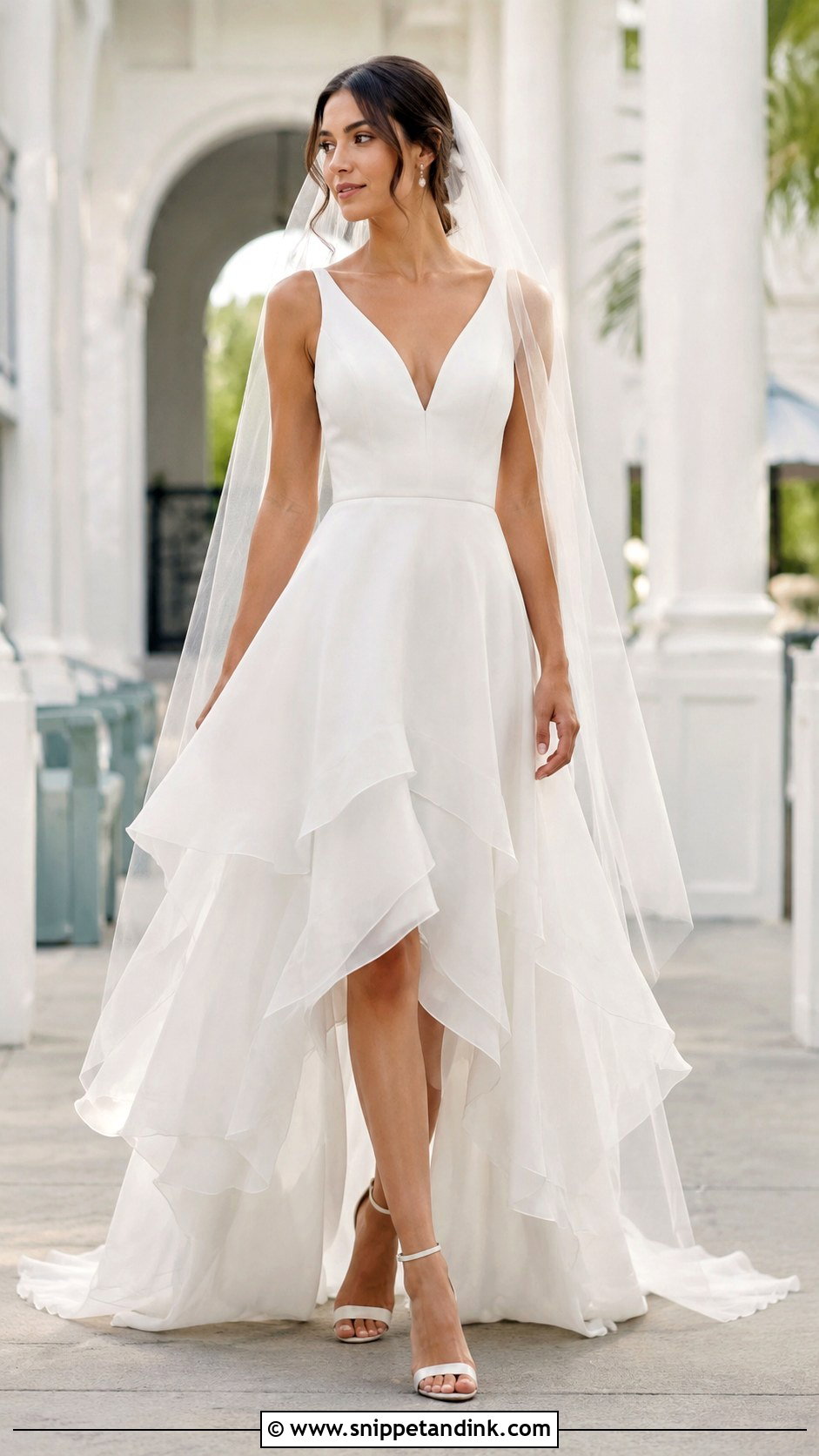
A handkerchief hem cuts the skirt into pointed panels that flutter as you walk. Soft tulle, chiffon or light organza make the corners move best. Balance all that loose hem with a fitted V-neck or sweetheart bodice. Delicate drops, ankle-strap heels and a simple fingertip veil finish it, with a half-up style for a relaxed feel. Because glimpses of your shoes show between the points, they need to look neat from the front and the side. At alterations I check each point separately. They should step down in length on purpose, not look like one panel was simply cut too long.
16. Chiffon Tiered Layered Skirt Wedding Dress
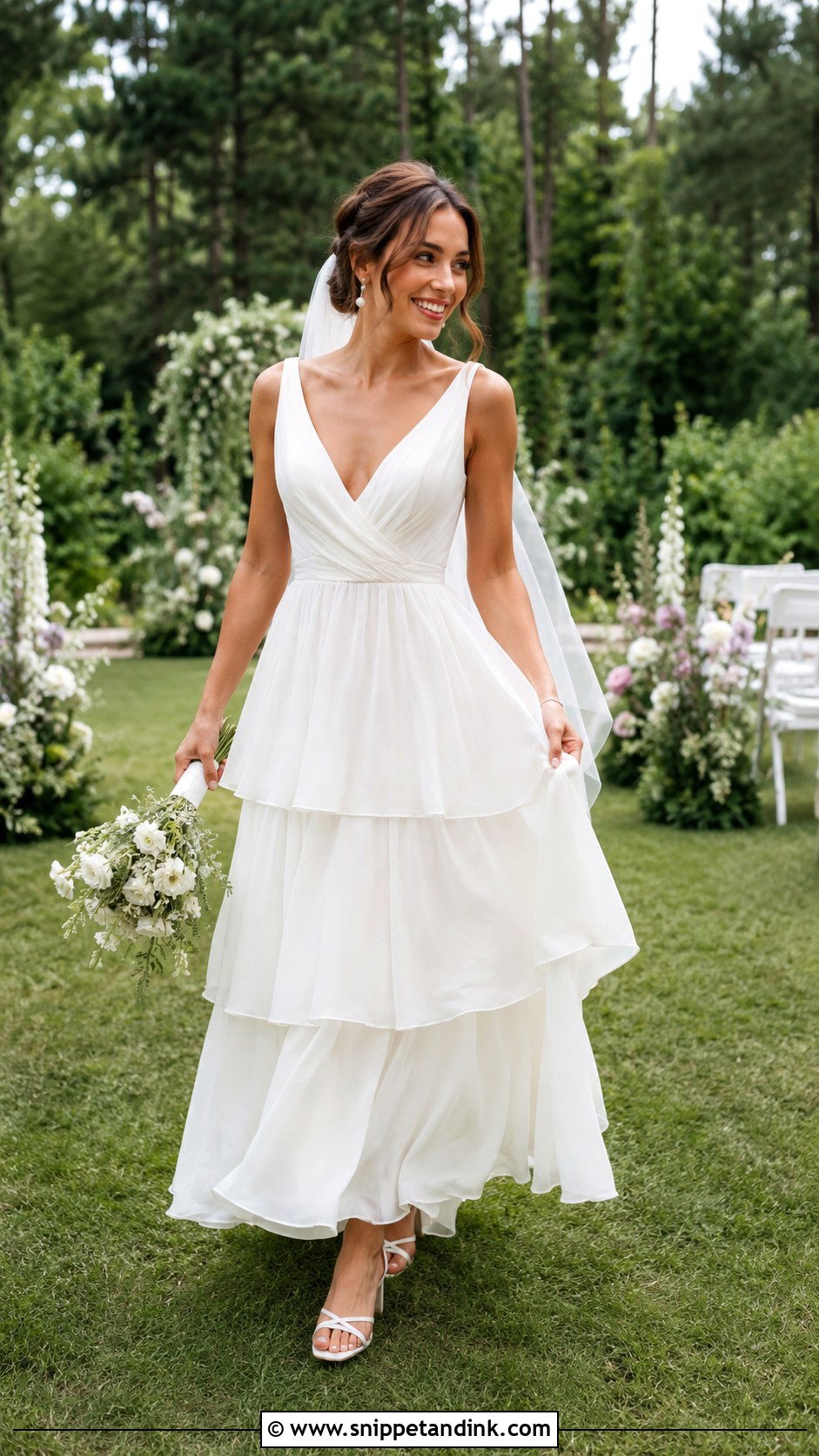
Chiffon tiers hang close to the body, so you get visible layering without a ball gown’s width. That makes it one of the easiest layered dresses to wear outdoors and to travel in. A softly draped V-neck, flutter sleeves or wide straps suit it. Pearl earrings, low block-heel sandals and a veil that can move in a breeze keep it light, with a loose braided bun. Chiffon is slightly sheer, so step into sunlight at the shop and check the lining actually covers you. The lowest tier should sit just clear of grass or sand, and a wrist loop or bustle will keep the train off the ground after the ceremony.
17. Sparkle Tulle Layered Skirt Wedding Dress
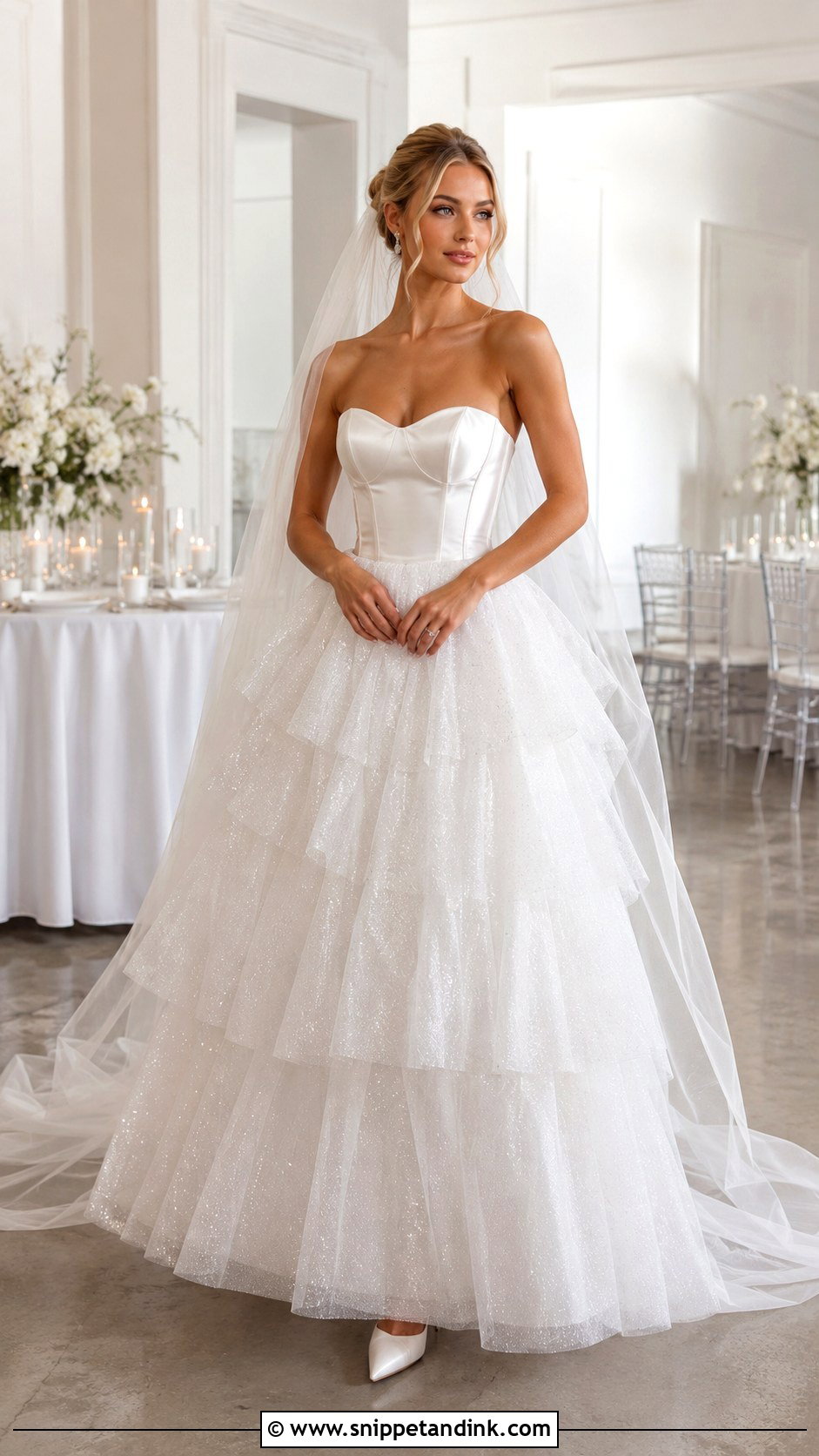
Glitter woven into the tulle catches light everywhere without a single crystal being sewn on. I like a softly shimmering skirt over a clean corset or satin bodice, with several sheer layers over a solid lining so the sparkle looks deep rather than flat. Crystal studs, silver or ivory heels and a plain veil keep it balanced, with a sleek ponytail or low bun. Two tests before buying: look at it by a window and under warm indoor light, because sparkle can go from subtle to disco depending on the bulbs, and rub a fold against your forearm. Good glitter tulle stays put. Cheap versions shed on your skin, your partner’s suit and every chair you sit on.
18. Blush Layered Skirt Wedding Dress
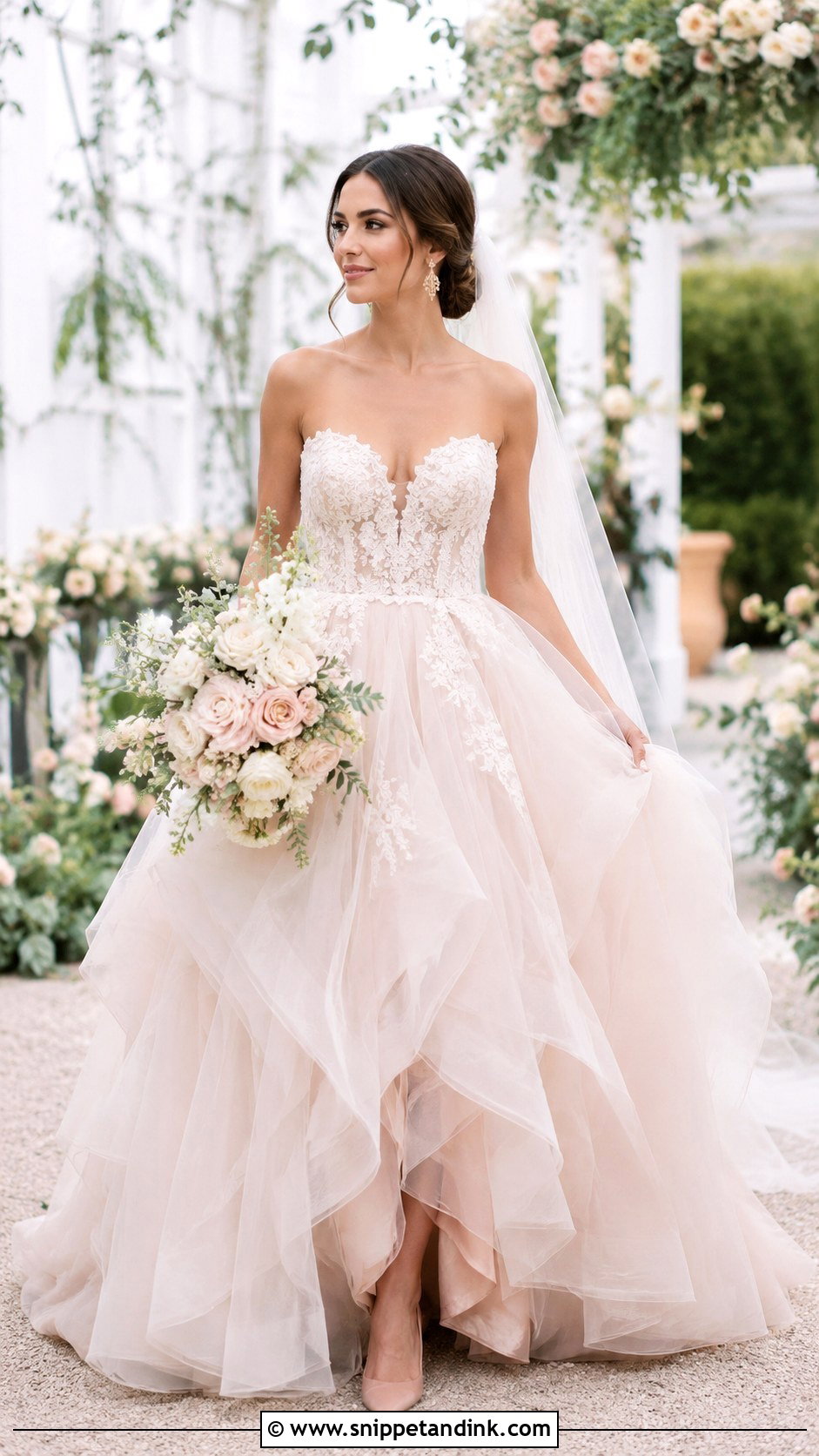
Blush gives you colour without leaving bridal behind. A pale rose, nude or champagne lining under ivory tulle tints the whole skirt and makes lace stand out more clearly. A sweetheart bodice with fine appliqués over a full A-line skirt keeps it romantic. Rose-gold earrings, neutral satin pumps and an ivory veil that lets the undertone show are what I’d pair, with soft waves or a loose low bun. Blush varies a lot from one skin tone to another, and some versions vanish against fair skin, so look at it in daylight before deciding. Bring a swatch when shopping for the veil and shoes. They should sit well beside it, not match it.
19. Tea-Length Layered Skirt Wedding Dress
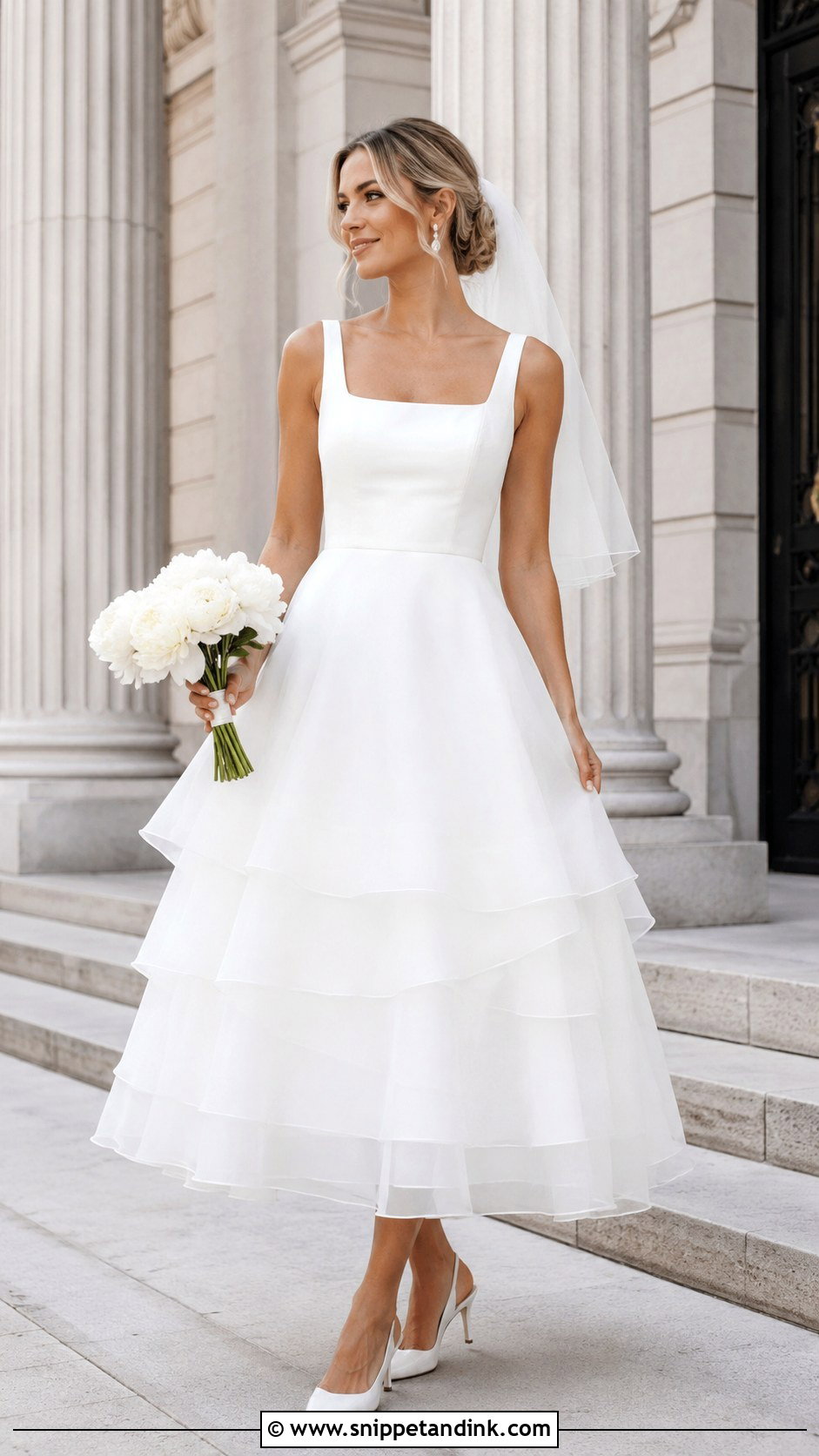
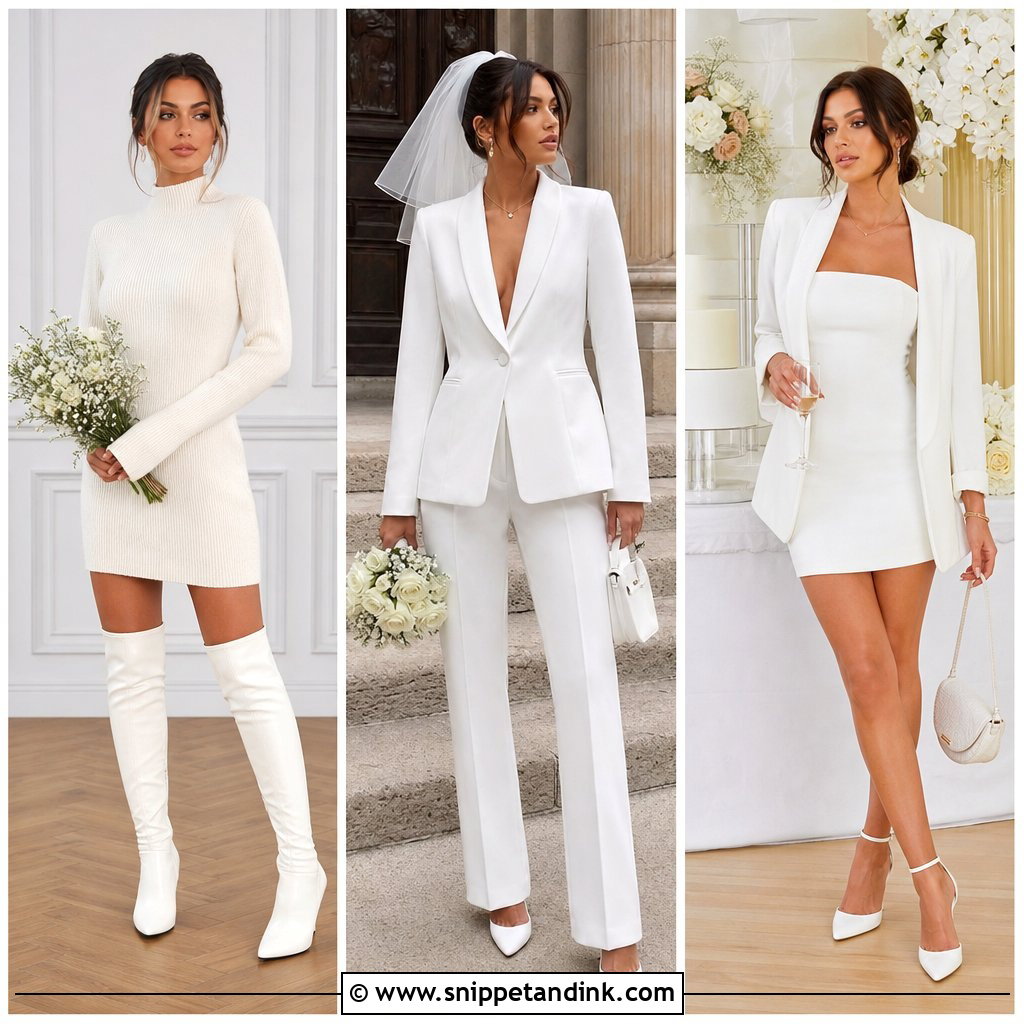
Shorter hems still get volume. A tea-length dress ends somewhere between knee and ankle, with structured tulle or organza tiers under a fitted square-neck, scoop or strapless bodice. Your shoes are on show, so slingback pumps, pearl earrings and a short veil keep the proportions right, with a polished ponytail or soft waves to the shoulder. It’s at home at a courthouse, a daytime party or a reception where you want to move freely. Where the hem lands matters: just below the widest part of the calf flatters most legs, right across it doesn’t. Wear your actual shoes to every fitting, because heel height changes where that line falls.
20. Minimal Satin Layered Skirt Wedding Dress
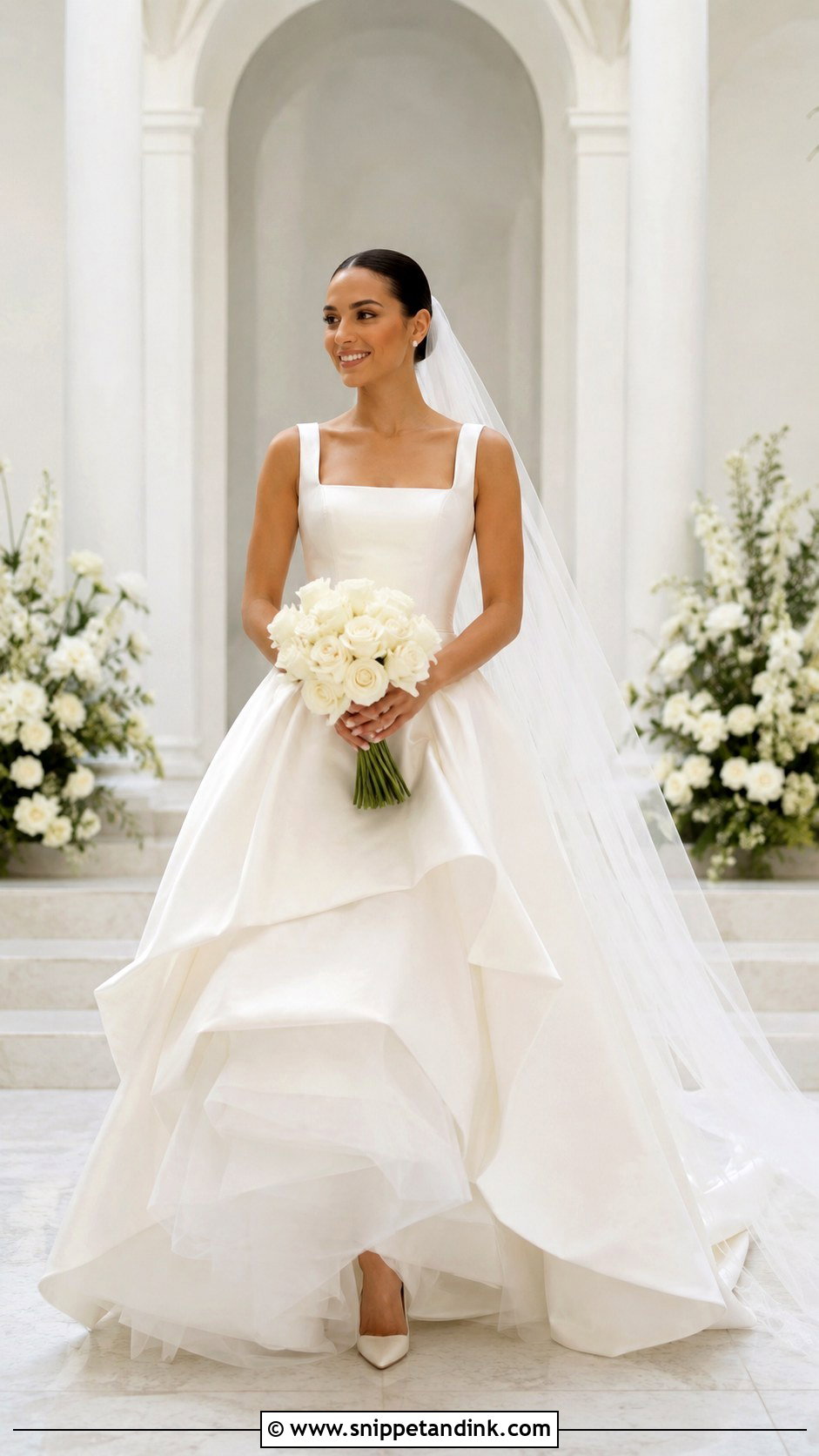
Not every layered gown needs lace, glitter or giant ruffles. The minimal version pairs a smooth satin bodice with broad, softly gathered layers and lets the shape do everything. A strapless, square-neck or wide-strap top with clean seams and solid internal structure suits it, and tulle under a light organza skin adds fullness while keeping the surface smooth. Pearl studs, a long plain veil, simple pointed pumps and a neat bun finish it. With no decoration to hide behind, every seam shows. I’d ask for careful hemming, an invisible bustle and a waist seam that sits dead level, since any wobble is visible from the back pew.
Getting the Fluff Back After the Car Ride
Layers crush. Tulle pancakes in a garment bag, organza creases where it’s folded, and a skirt that sat in the back of a car for an hour arrives looking tired. None of that is permanent, but it does need planning.
- Unpack the gown the night before and hang it high from its hanging loops so the skirt falls freely. Gravity alone removes many light creases from tulle overnight.
- Use a handheld steamer, held a little away from the fabric. Organza and silk can spot if water drips on them, so empty any condensation first.
- Work from the lining outward. Fluffing the underlayers restores volume faster than steaming the top tier alone.
- In the car, sit on the back of the dress, not the full skirt, and gather the front layers loosely over your lap. A clean sheet on the seat protects the hem from grit.
- Ask your planner or a bridesmaid to give the layers a shake once you’re out, before you walk anywhere near the aisle.
For a destination wedding, carry the gown on board if the airline allows it rather than checking it. A crushed tulle skirt can be revived; a lost one can’t.
How Much Volume Is Right for Your Day?
Layers are about movement, but the gown still has to work for a long day. Tulle builds airy volume, organza adds definition, chiffon softens everything, and pleated fabric gives an architectural edge. Neckline, waist position, the direction the tiers fall and the length of the skirt all change how the silhouette looks and how it feels to wear. Think about your venue, the season, your shoes and how much drama you really want. Take your wedding shoes to every alteration, and sit, walk, turn and dance in the dress before the day. Pick the layers that feel like you, then make sure they’re fitted well enough that you forget about them by the first dance.
You'll Like These Ideas:



Leave a Reply