
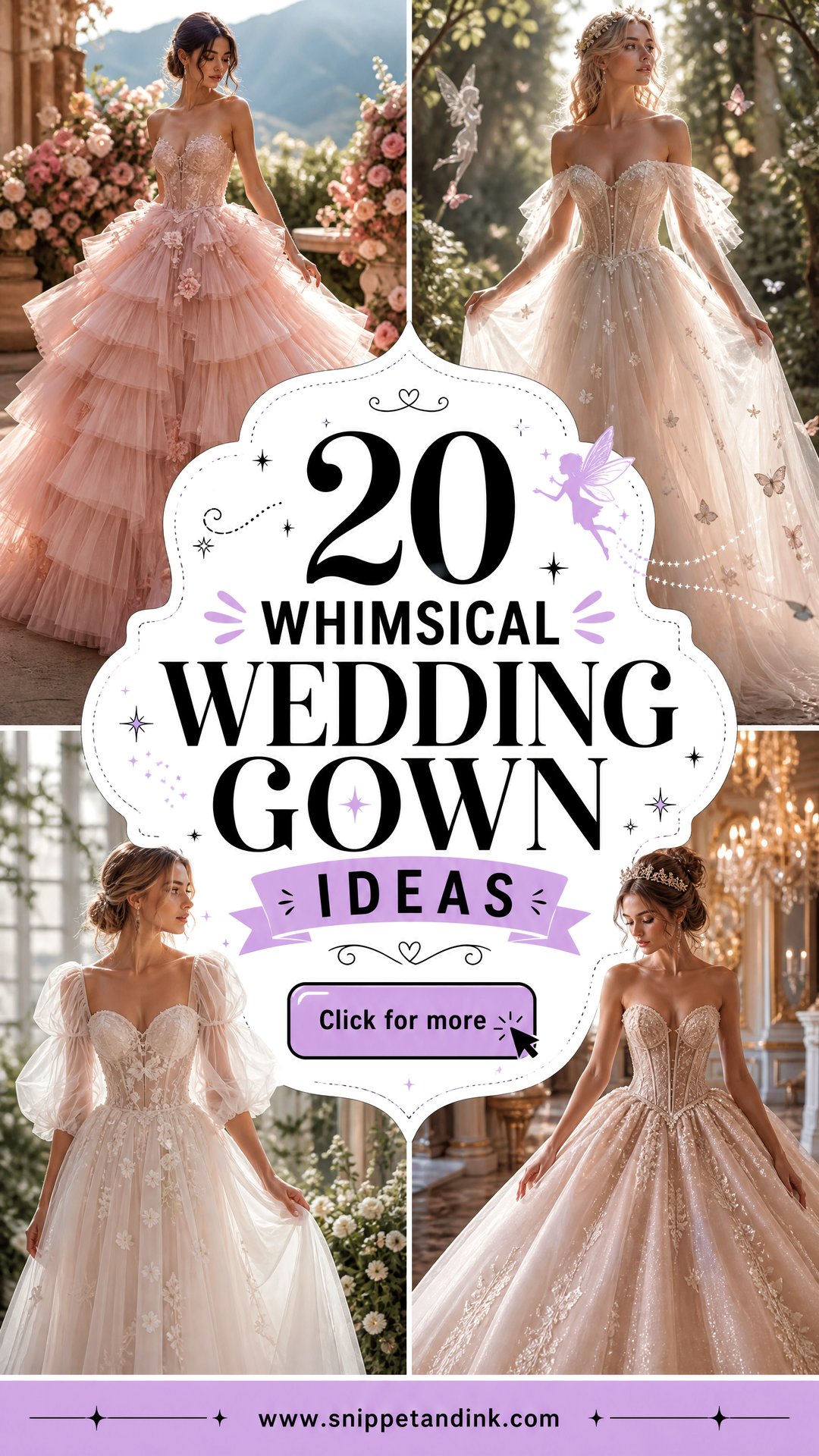
Whimsical bridal fashion is the most fun I have in a fitting room, and also where brides most often get carried away. Embroidered flowers, celestial beading, floating sleeves, a wash of colour, layers of tulle: any one of them can carry a gown, but stack four together and the bride disappears behind the decoration. What I look for is a single idea that suits the venue and the way the bride moves. Delicate embroidery and long trains behave very differently on a lawn than in a ballroom. Below are twenty gowns, from woodland lace to modern pearl work, each with the shoes, jewelry and hair that let the main detail breathe, plus the practical catches I’d flag at a first appointment.
Giving the Fantasy One Place to Live
The first question I ask a bride who wants something whimsical is where she wants people to look. A gown can carry its magic in the bodice, the sleeves, the skirt, the veil or the colour, and the strongest looks commit to one of those zones. Once that’s decided, everything else gets quieter to support it.
- Bodice: embroidery or appliques here frame your face and show in every close-up and portrait.
- Sleeves: sheer, puffed or belled sleeves are the most visible detail in candid shots, since your arms are always moving.
- Skirt and train: tiers, ombre and scattered flowers come alive in the aisle and on the dance floor, but are hidden at a seated dinner.
- Veil or cape: a decorated veil gives a dramatic ceremony and leaves a simpler, cooler gown for the reception.
At the shop, I’d try at least one gown where your chosen detail is the only decoration. It tells you very quickly whether you love the idea itself or just the overall feeling of being covered in pretty things.
1. Floral Applique Tulle Wedding Gown
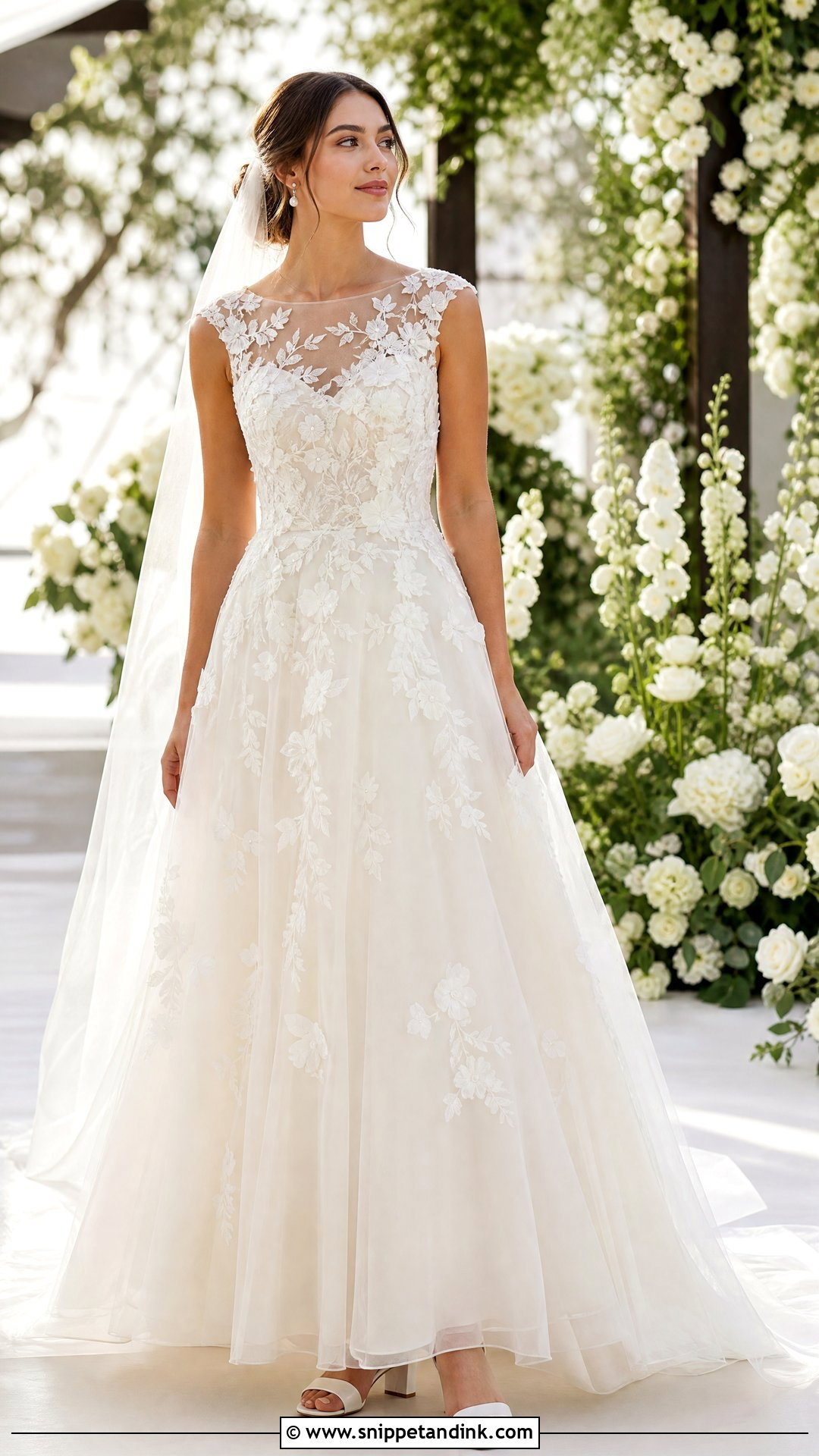
Appliqued flowers on tulle look light only when there’s space between them. I like an A-line where the blooms cluster at the waist and thin out down the skirt, with an illusion neckline so the top flowers appear to float on skin. On grass, ivory pointed flats or a low block heel will keep you upright; stilettos sink into a lawn within minutes. Small pearl earrings, a loose updo and a narrow tulle veil are plenty. For colour, pale pink, lavender or soft green appliques work, as long as the bouquet stays quiet enough that it doesn’t fight the flowers on the dress.
2. Celestial Star Wedding Gown
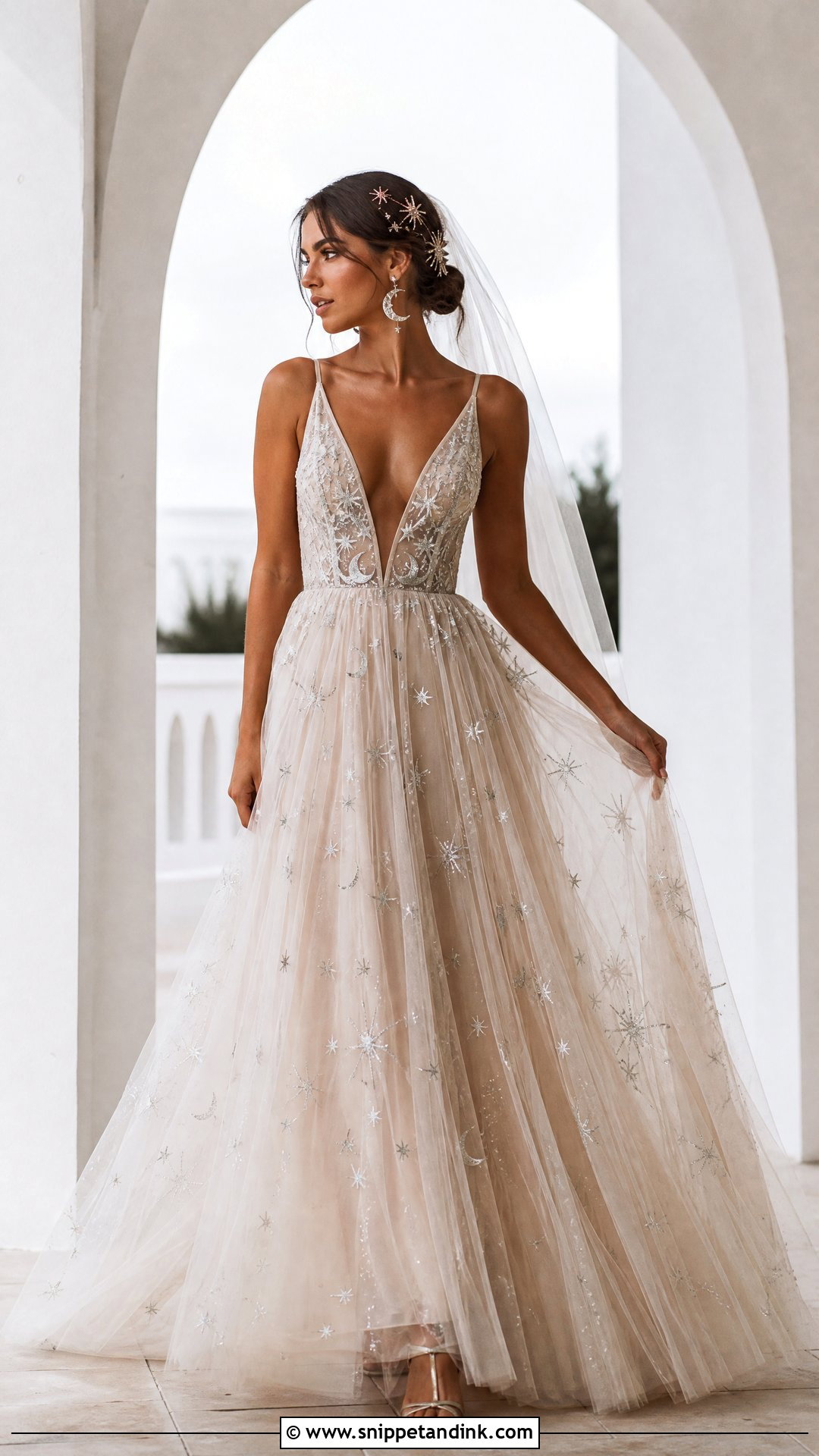
Stars and moons can turn a plain A-line into a celestial star wedding gown, and the base colour decides how it reads. Silver embroidery on ivory tulle feels crisp and wintry; the same stars on champagne look warmer and more vintage. A deep V-neck keeps the pattern from looking childlike. Metallic silver sandals, a single star pin above a low bun and plain fingertip tulle let the motifs show from behind. Skip the sparkly necklace. Crystal constellations already catch the camera flash, and a second glittering element at the throat makes the neckline look cluttered in close-ups.
3. Butterfly Embroidered Wedding Gown
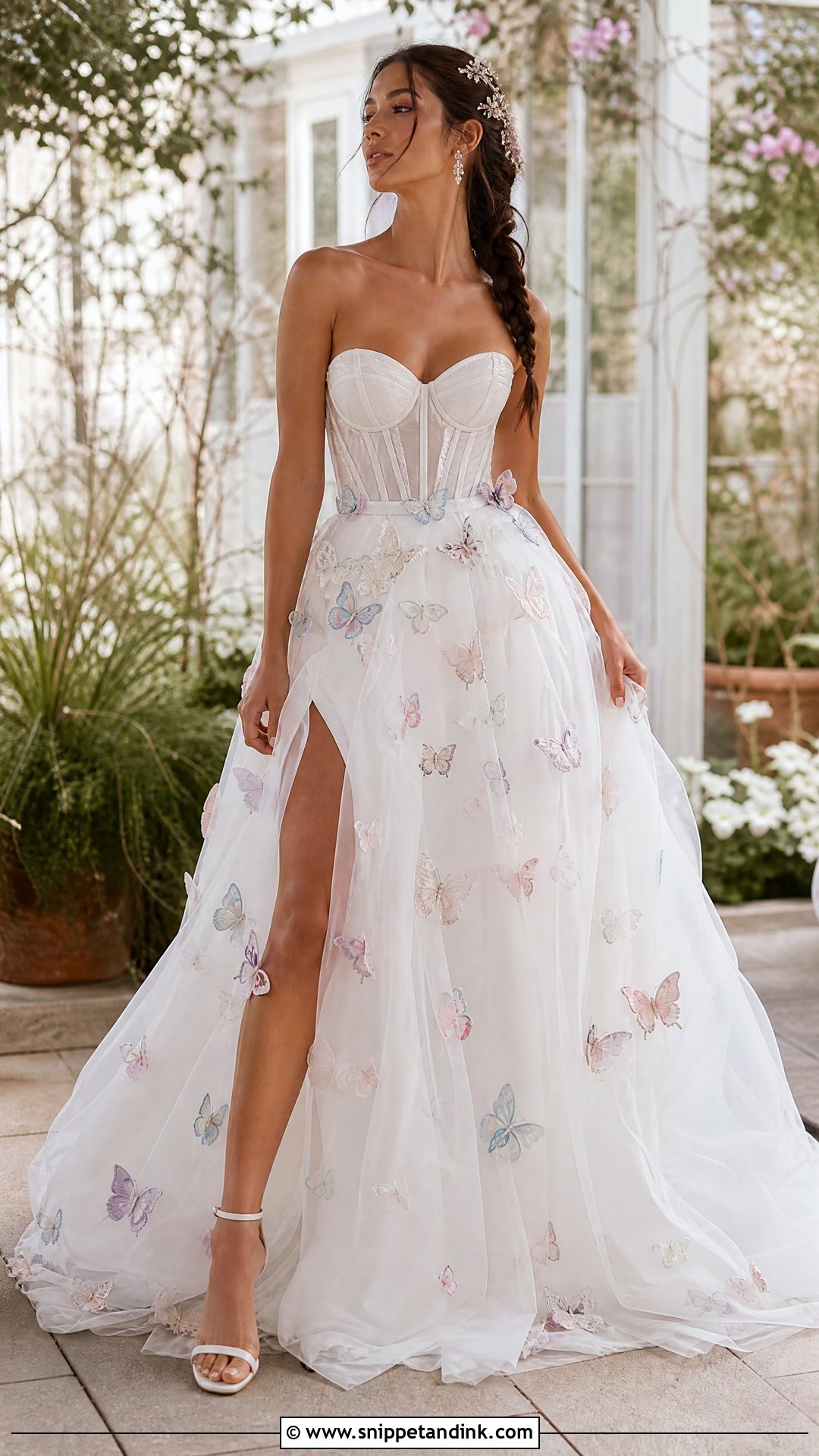
Butterflies are the motif I’m most careful with, because the line between romantic and costume is thin. Ivory embroidery placed around the bodice, waist and train gives texture you notice up close; pastel butterflies are more playful and need a calmer everything-else. A fitted corset top gives the light organza or tulle skirt something to hang from. Satin ankle-strap heels, crystal drops and a loose braid suit it, and a small floral comb continues the garden idea without adding more wings. If the embroidery is coloured, let the bouquet repeat only one or two of those shades.
4. Blush Pink Tiered Tulle Wedding Gown
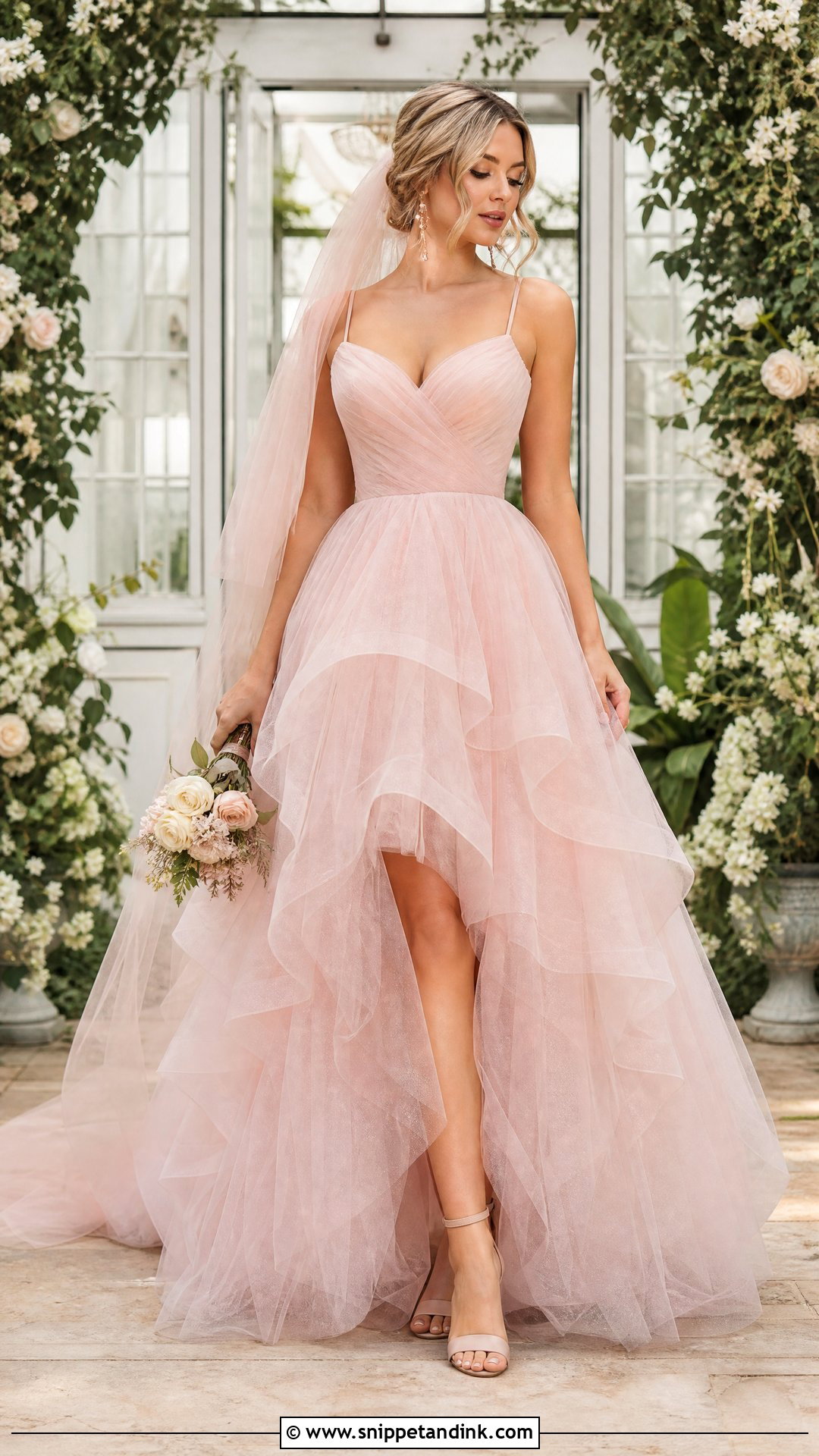
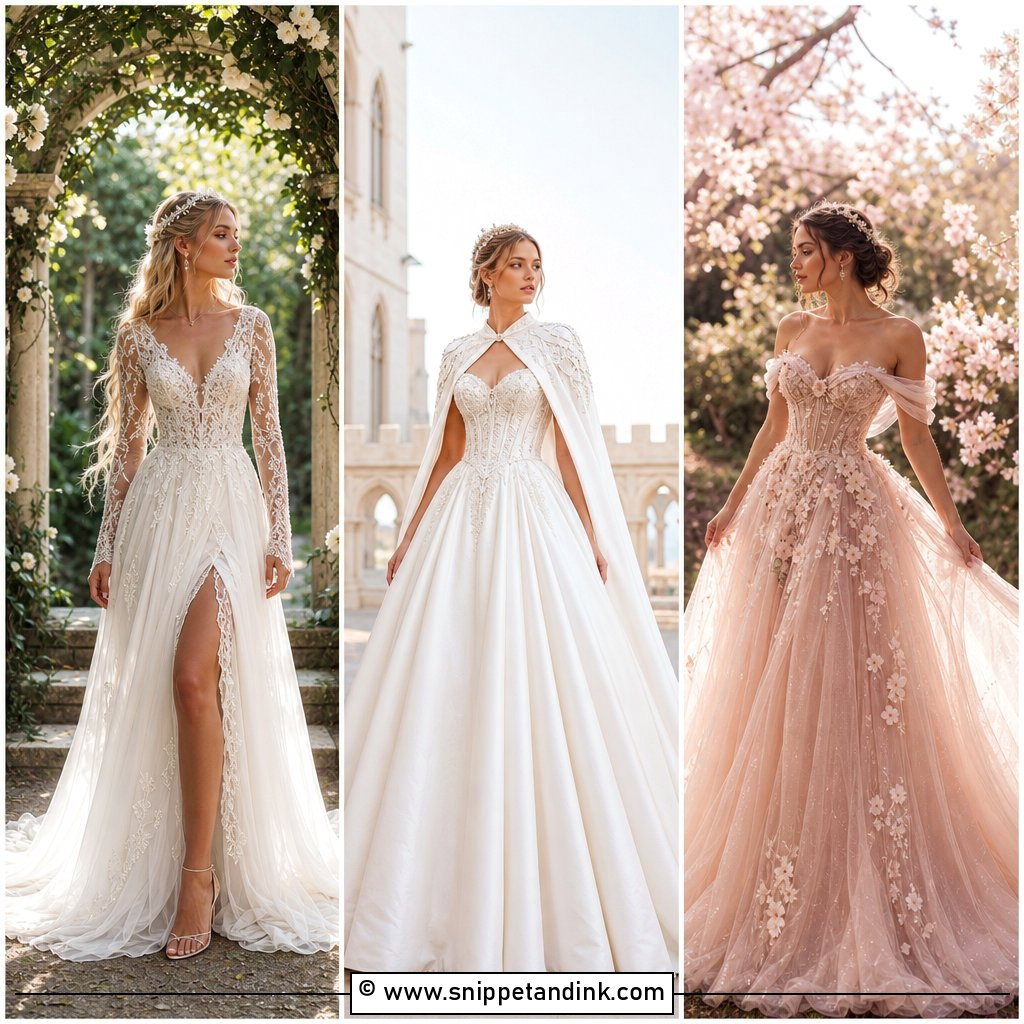
Tiered tulle in blush is warmer in photographs than ivory and kinder to many skin tones. Irregular, raw-edged tiers look loose and garden-like, while evenly spaced tiers feel more polished, so decide which mood you want before you shop. A fitted bodice in ivory, nude or matching blush keeps all that volume anchored. My one practical note is about veils: a blush veil makes the whole look one continuous colour, while an ivory veil adds a gentle contrast that reads better against a pale sky. Nude block heels, rose-gold earrings, soft waves and a small pale bouquet with trailing greenery keep the volume in proportion. It suits garden and outdoor venues best.
5. Off Shoulder Fairy Wedding Gown
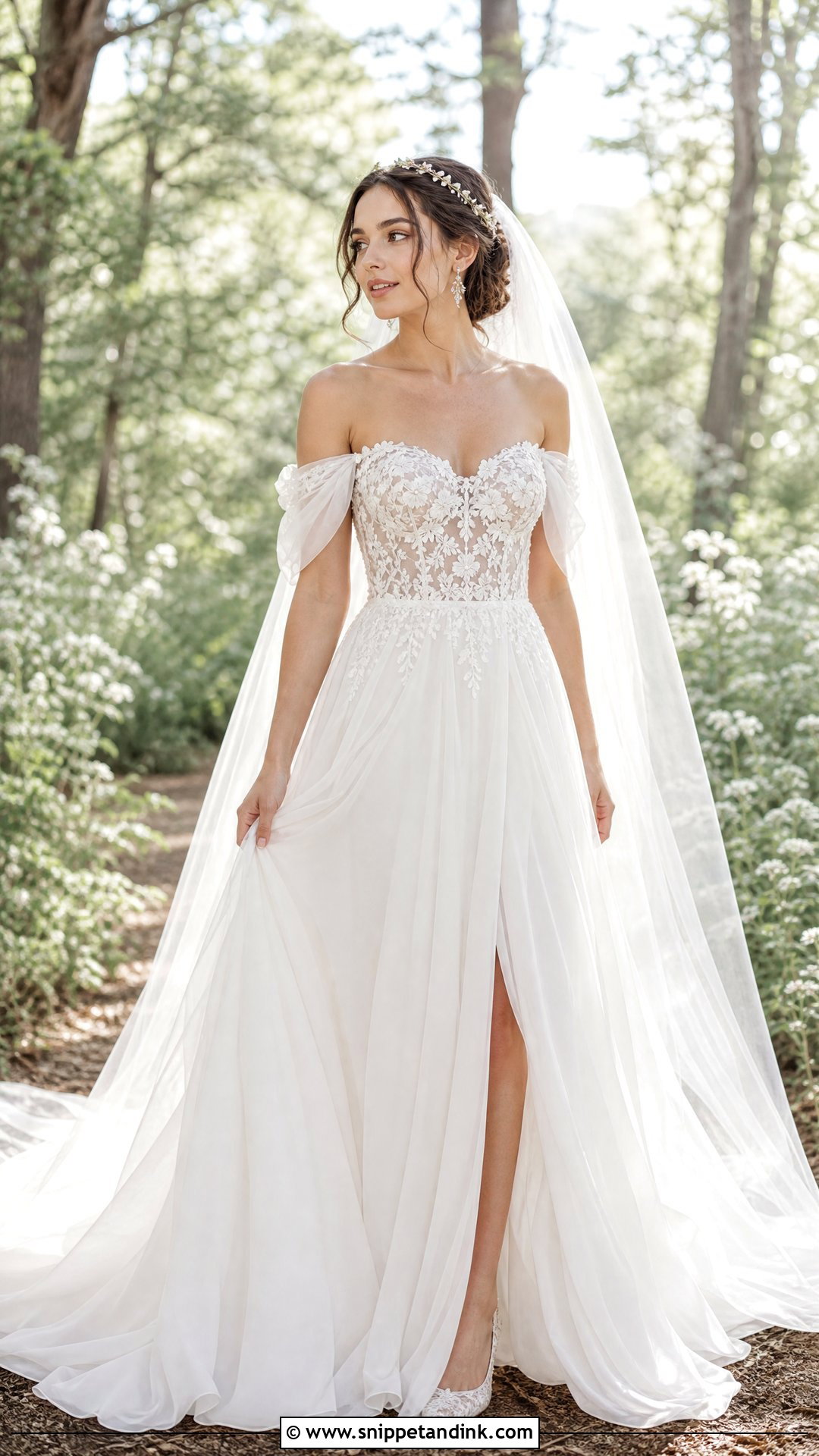
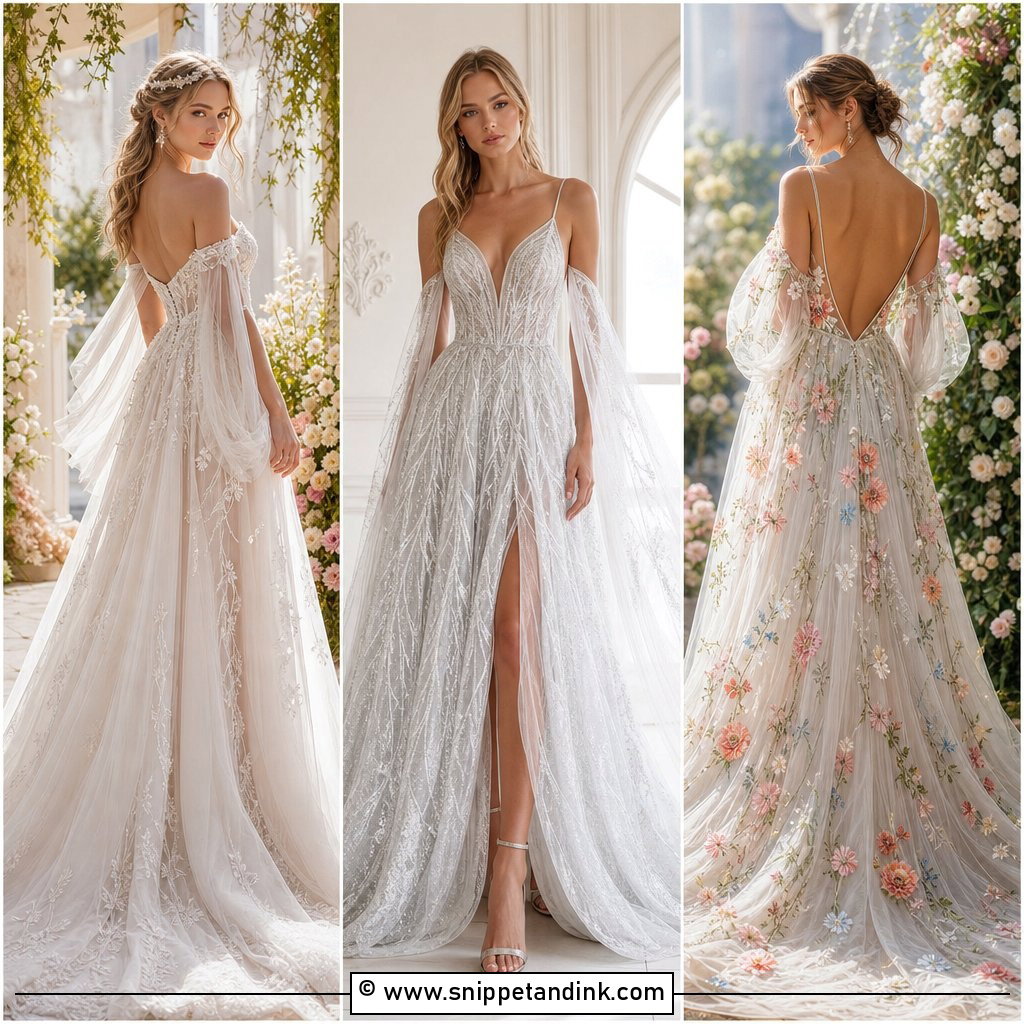
The fairy feel comes from fabric that moves on its own. I pair a fitted lace bodice with sheer draped sleeves resting across the upper arms and a chiffon or tulle skirt with no heavy structure, so it lifts when you walk. Off-shoulder sleeves restrict how high you can raise your arms, which matters for hugging and dancing, so test that at your fitting. Detachable sleeves solve it, and they also give you more coverage for a religious ceremony. Delicate drops, lace-covered flats and a slim vine hairpiece in a half-up style leave the neckline clear. A narrow cathedral veil or a lightweight cape adds movement behind you.
6. Woodland Lace Wedding Gown
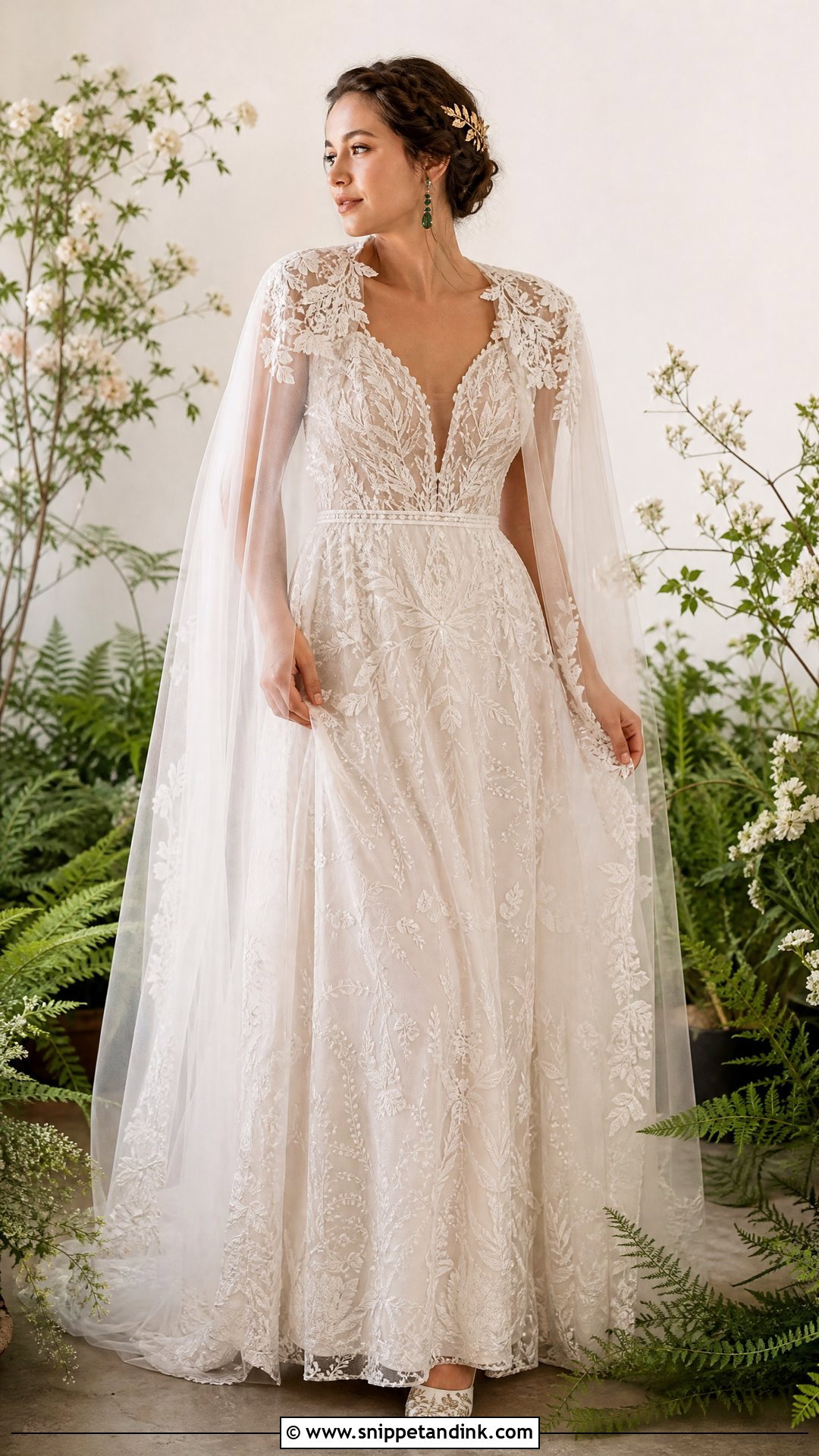
A woodland lace wedding gown relies on botanical lace: leaves, winding vines, ferns, rather than the usual roses. I’d steer you toward an A-line or relaxed sheath, because a structured ball gown makes the woodland idea look staged. Footwear depends on the ground. Embroidered flats or low suede block heels work on dry paths, and ivory boots are honest about a cold autumn forest. A gold leaf comb in a loosely braided updo and small green gemstone earrings are enough. A tulle cape edged in matching lace gives coverage without hiding the pattern, and a bouquet of white flowers with ferns finishes it.
7. Puff Sleeve Organza Wedding Gown
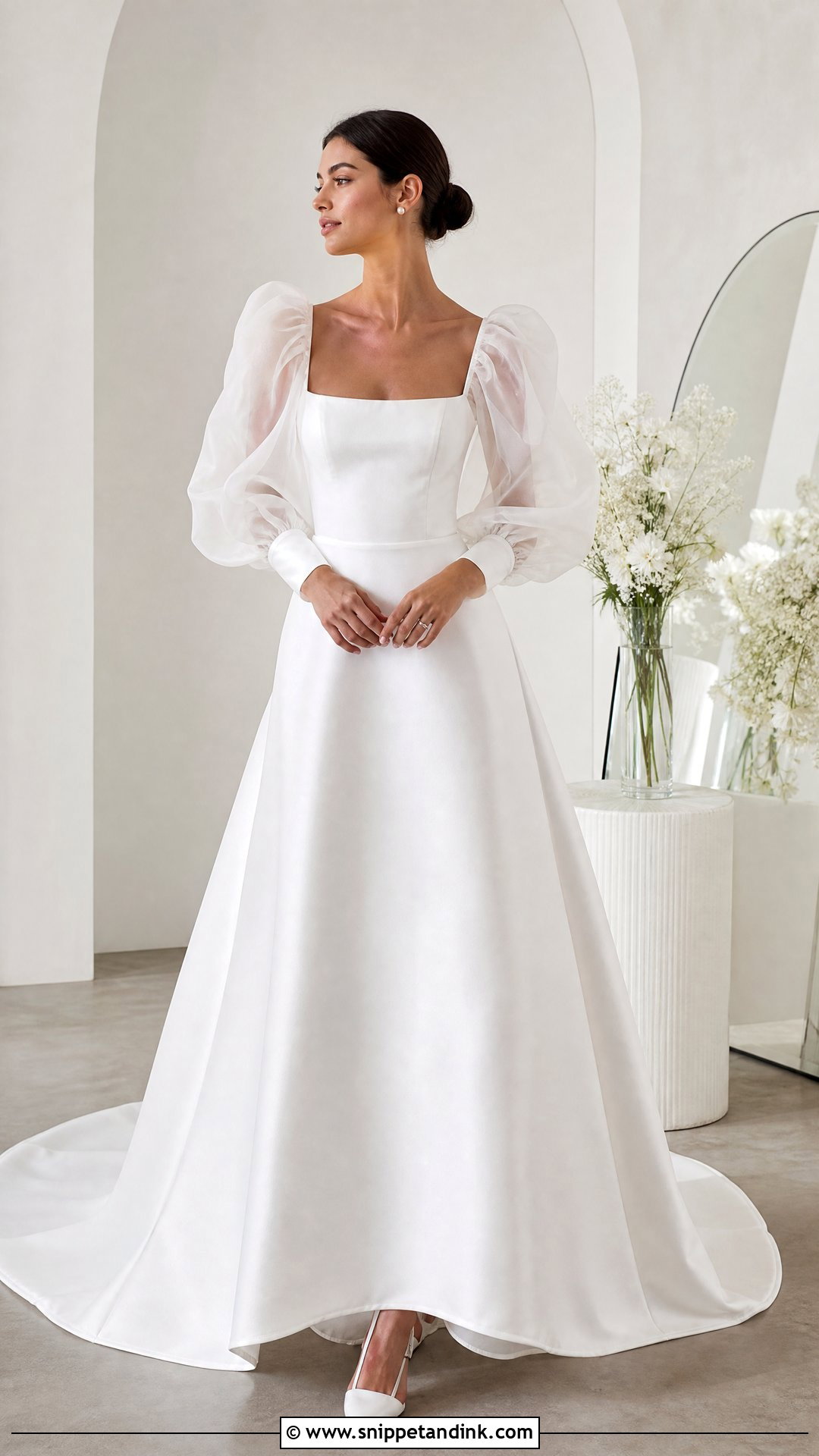
Puff sleeves have presence, and organza is the right fabric for them because it holds volume while letting light through. A fitted square neckline balances the shoulders, and either a smooth A-line or a ball gown skirt works underneath. I almost always suggest detachable sleeves here. You get the big ceremony silhouette, then take them off for dancing, when puffed sleeves crush against a partner’s shoulder. Pearl studs, a sleek low bun and satin pointed heels keep everything else simple. A short veil, or just a minimal headband, means the sleeves remain visible in photographs taken from behind.
8. Colorful Wildflower Wedding Gown
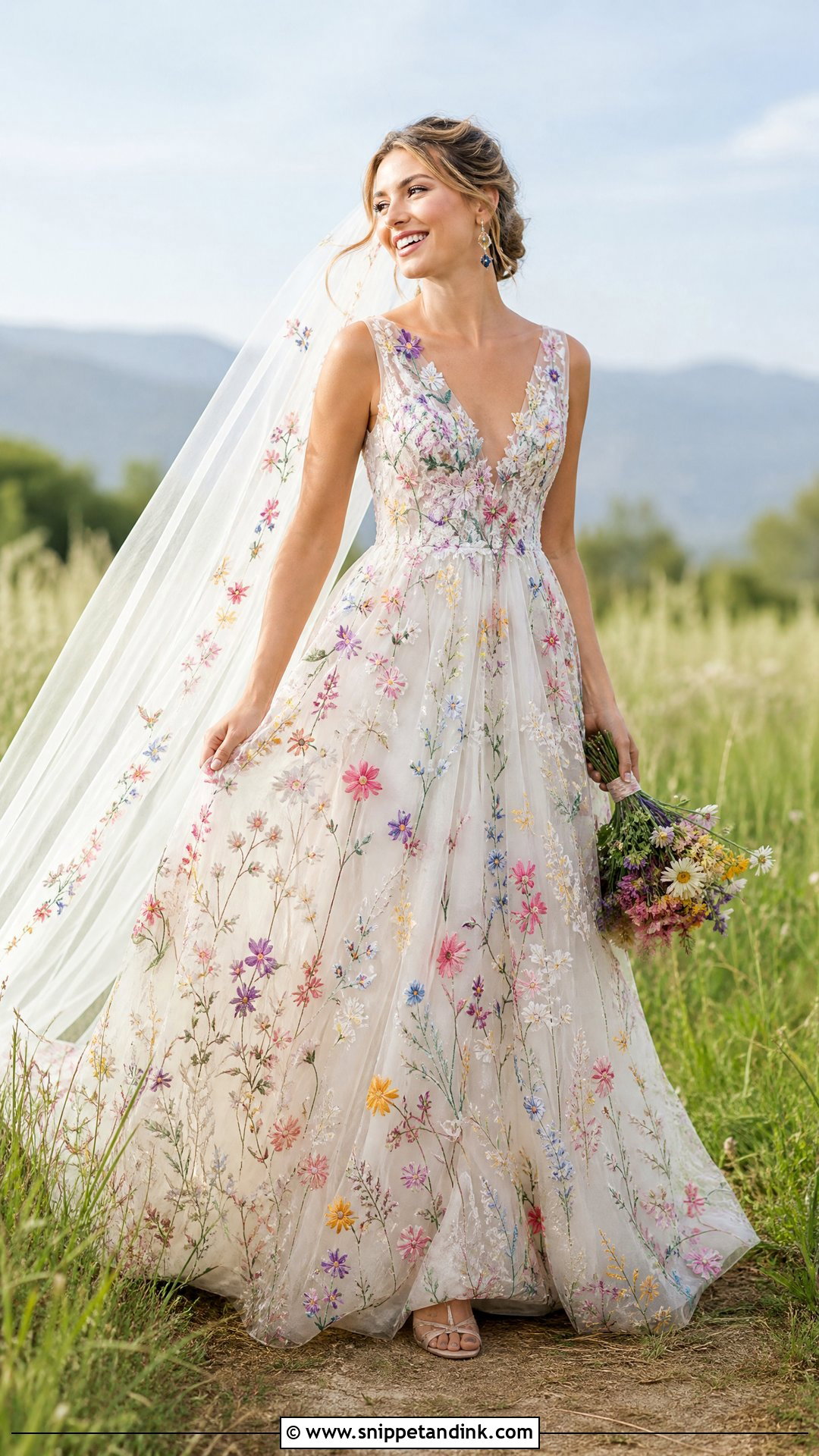
Coloured wildflower embroidery turns an ivory gown cheerful straight away. Pink, blue, yellow and lavender stems on a sheer overlay look as if they’re scattered on the skin. Where the embroidery sits changes the effect: heavier at the hem grounds the look, while concentrated on the bodice draws the eye up to your face. Keep shoes neutral, earrings small and coloured, and the veil plain or edged with a few matching flowers. My firm advice is about the bouquet. Use only colours that already appear on the gown, or the whole picture starts looking themed rather than personal.
9. Pearl Beaded Wedding Gown
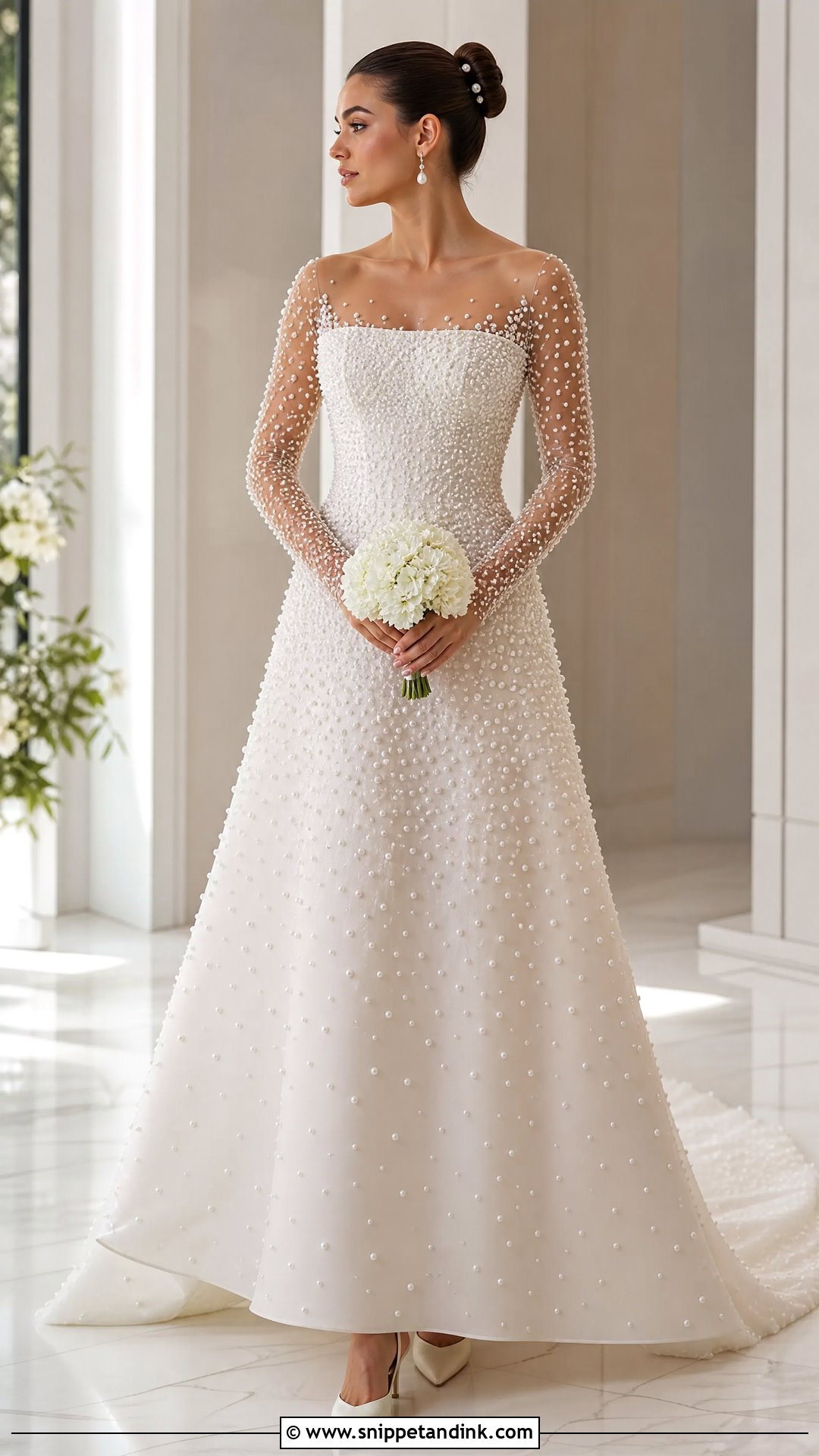
Pearls give a soft glow rather than sparkle, which is why they suit brides who find crystals too loud. They may be scattered over sheer sleeves, worked into a structured bodice or spread across a full tulle overlay. I like graduated beading: denser at the waist, lighter toward the hem. Pearls are heavy, though. A fully beaded overlay needs a fitted A-line with proper internal structure, otherwise the skirt drags and the bodice slips. Check the sleeves too, as beads on the inner arm rub after hours of hugging. Pearl drops, ivory slingbacks, a smooth bun with pearl pins, a plain veil and a small white bouquet finish it.
10. Detachable Cape Wedding Gown
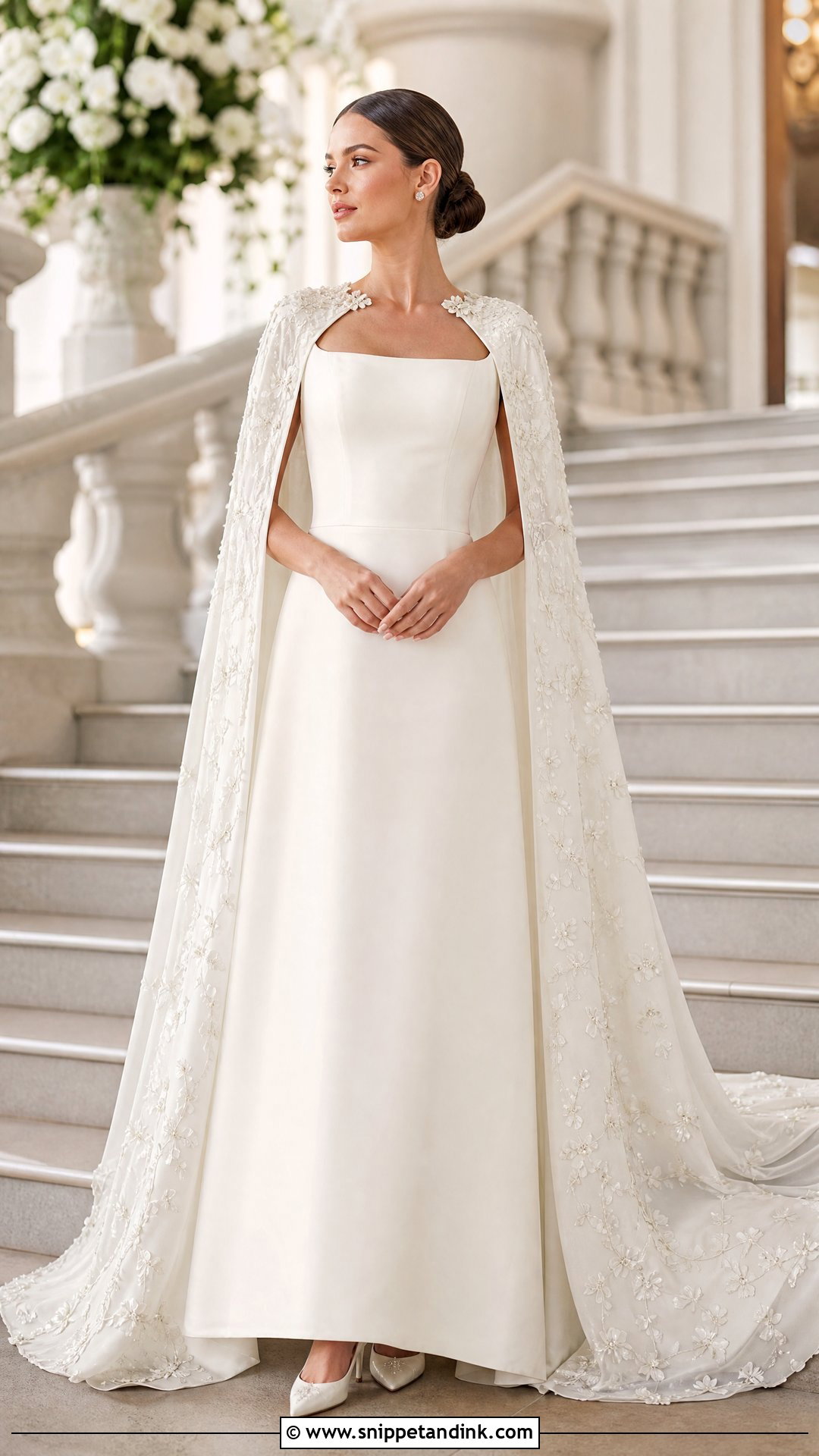
A detachable cape gives you a ceremony entrance and a reception dress in one outfit. Start with a clean crepe, chiffon or lightly embellished A-line, then add a cathedral-length tulle cape with floral embroidery or a scattering of crystals. The plainer the gown, the better the cape shows. Fastening is the part I check most closely: covered buttons or clasps at the shoulder need to bear the weight of a long train without pulling the neckline. Pointed pumps, small studs and a low bun support the long vertical line. Many brides choose a cape instead of a veil, and once it’s removed the gown underneath should still feel finished.
11. High Low Tulle Wedding Gown
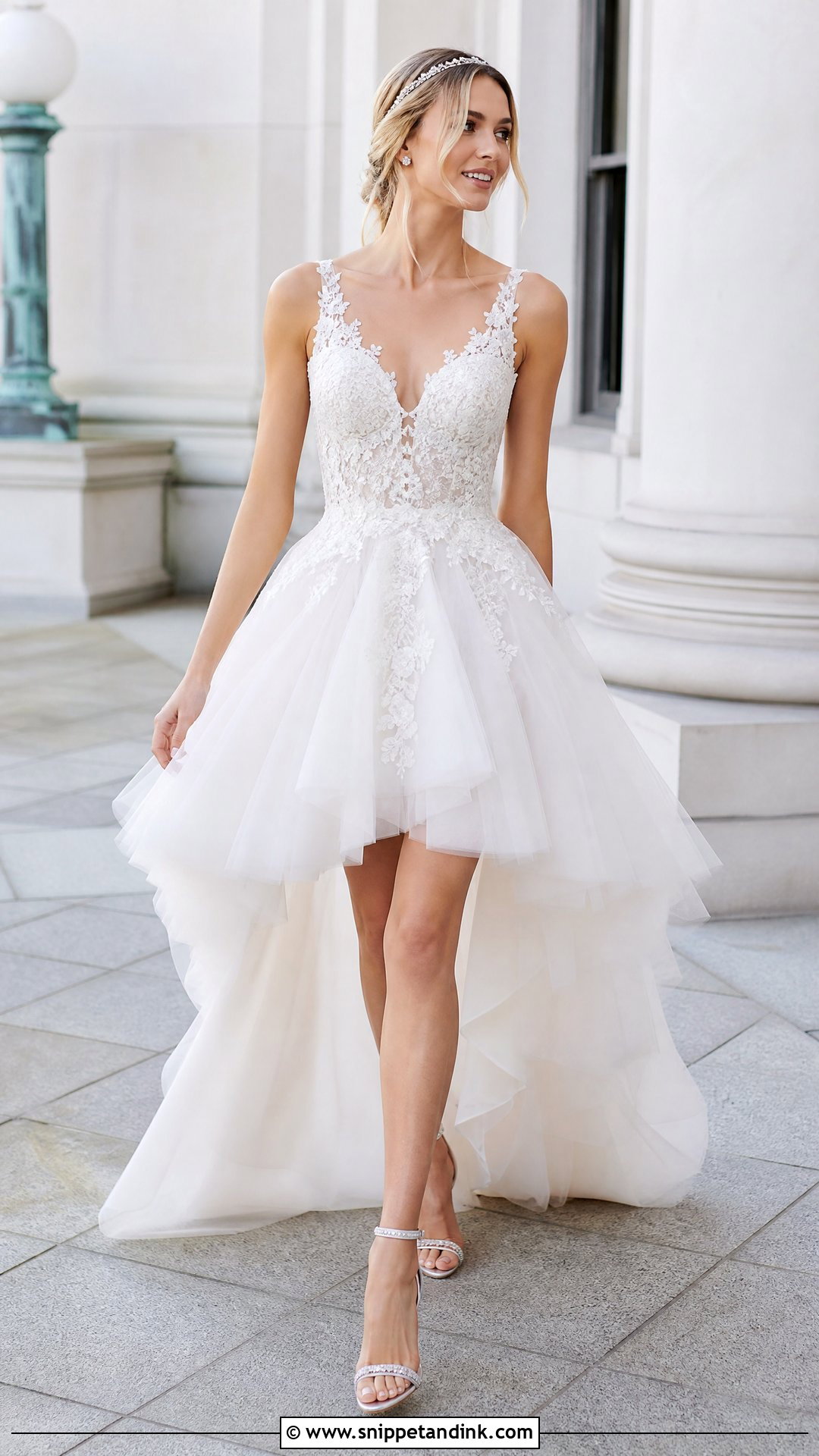
Short in front, long at the back, a high-low skirt puts your shoes in every photograph, so choose them as carefully as the dress. The front usually falls at the knee or mid-calf, with soft layers or a short train behind. A fitted lace or satin bodice makes the uneven hem look intentional. Embellished pumps, bow heels or metallic ankle straps all suit it, though you’ll be walking and dancing in them, so test them on a hard floor. I’d keep the veil short or swap it for a birdcage or decorative band. It’s practical for courthouse ceremonies and outdoor venues, where a full-length train only gathers dirt.
12. Corset Ball Wedding Gown
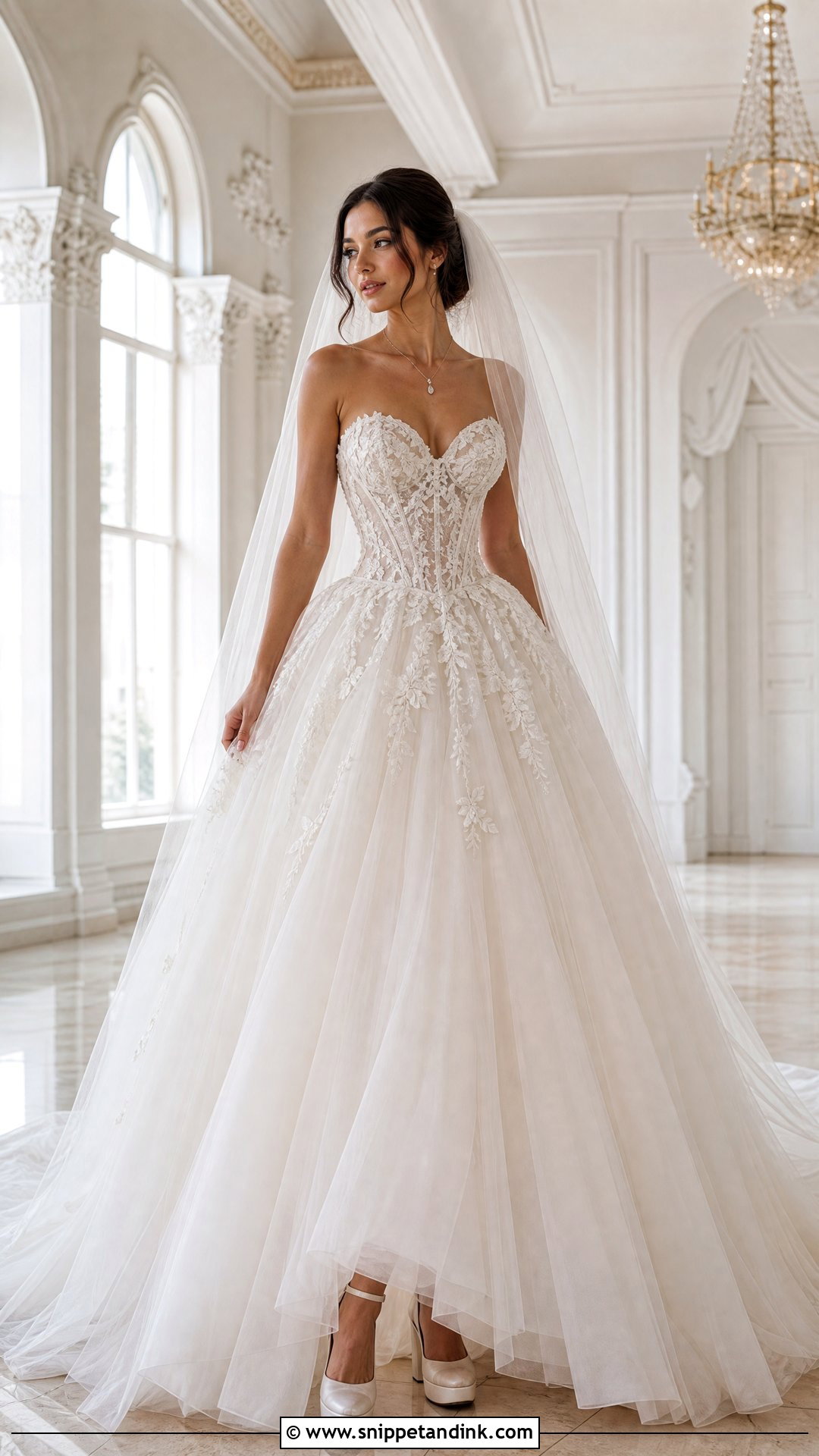
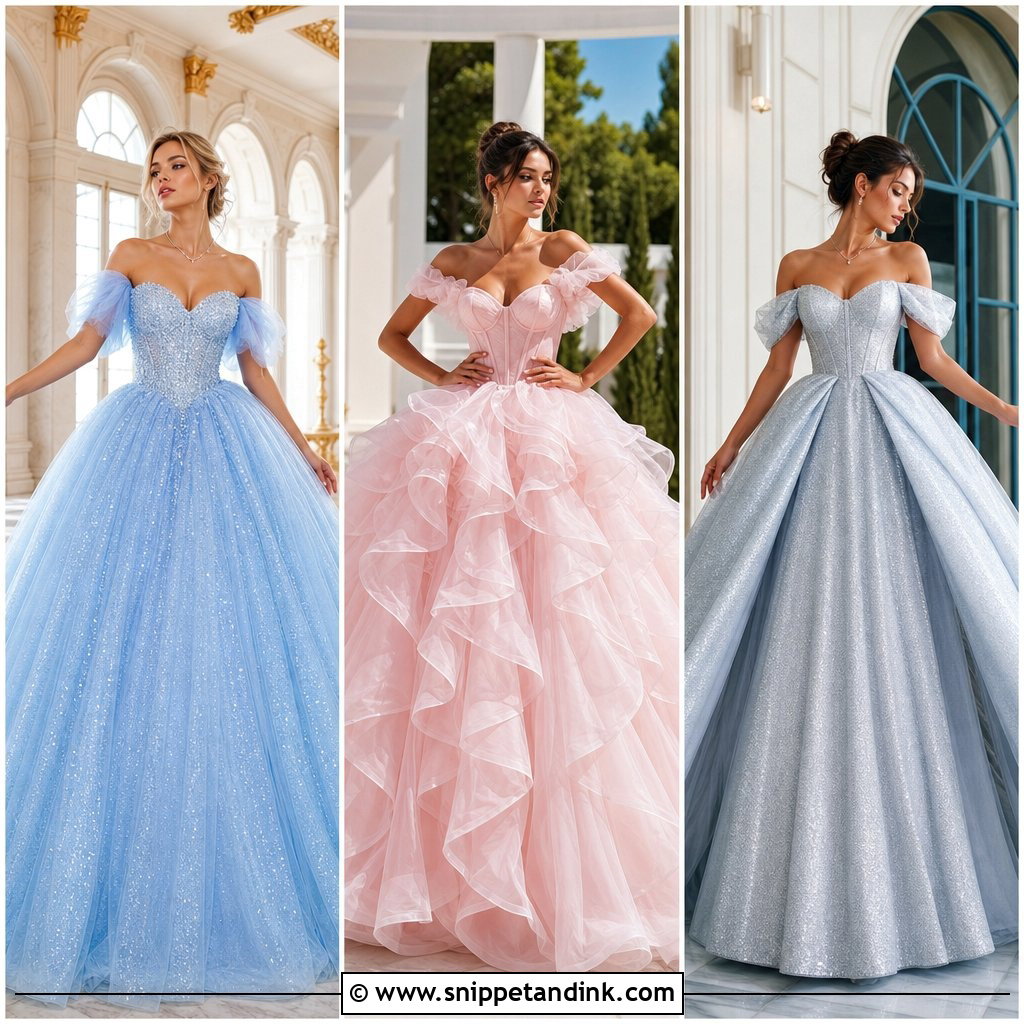
Corset bodices are back for good reason: visible boning gives a sharp waist that the old strapless styles never quite managed. Pair it with a full skirt in light tulle, not stiff satin, so the gown feels like a fairytale rather than a costume. Floral lace or a subtle shimmer helps the structured top blend into the skirt. Fit is everything here. A corset that’s too tight shows in your shoulders by the speeches, and one that’s too loose collapses when you sit. Plan for proper alterations and practise breathing and sitting in it. Platform heels or block heels hide under the hem, and a delicate pendant with a long veil set below a polished bun completes it.
13. Blue Ombre Wedding Gown
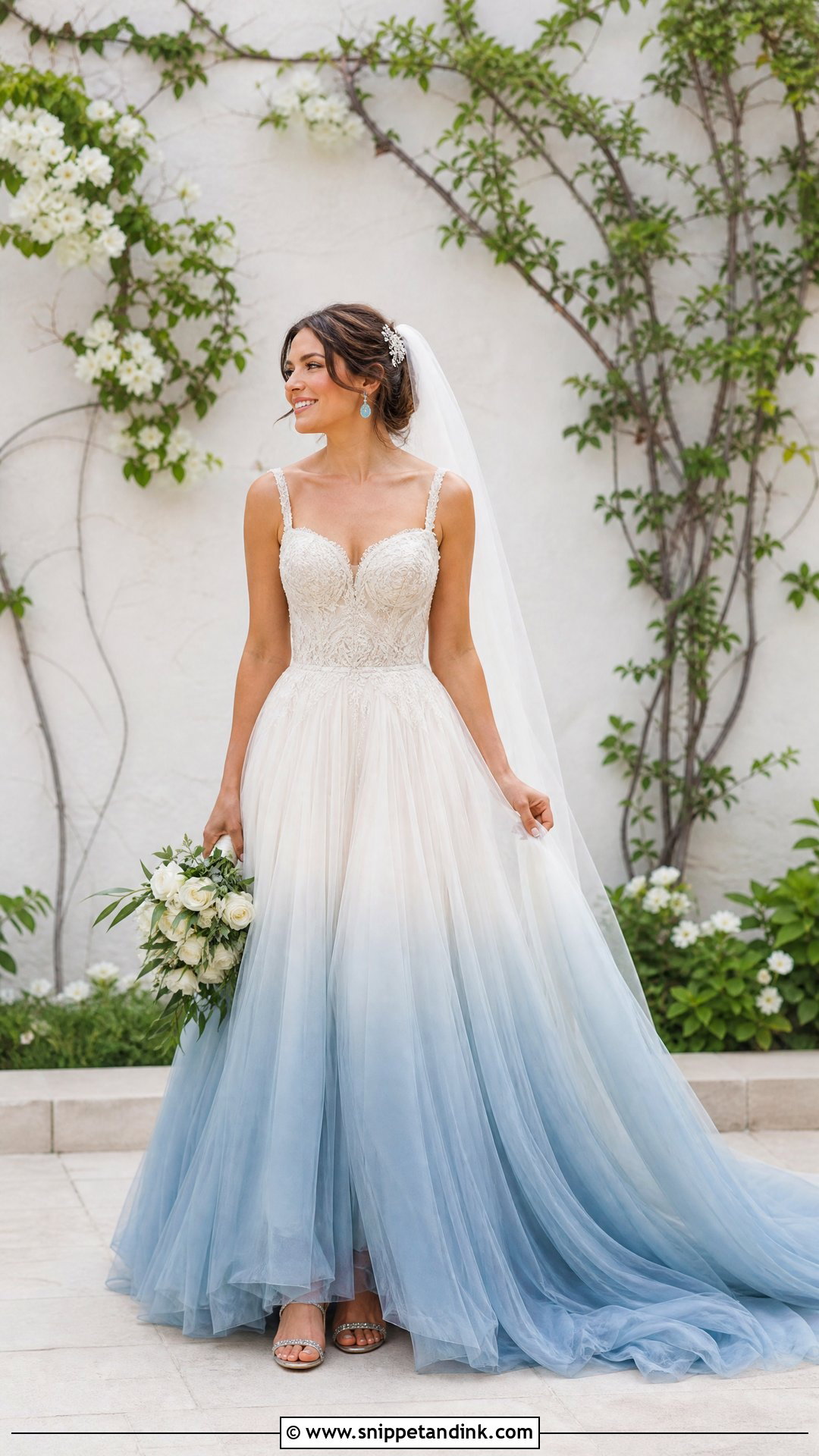
Pale blue fading into ivory looks like sky at the hem. The fade should be gradual across tulle or organza; a hard line of colour reads as two fabrics sewn together. An ivory bodice keeps the gown clearly bridal. Silver sandals, aquamarine earrings and a crystal comb suit the cool tones, and I’d keep the veil ivory and nearly plain. A sheer cape is another option, since the colour stays visible through it. Blue ombre shows best outdoors against greenery or pale stone. Under warm, yellowish indoor lighting, pale blue can shift toward grey, so check the dress in daylight and in the venue’s light if you can.
14. Bell Sleeve Chiffon Wedding Gown
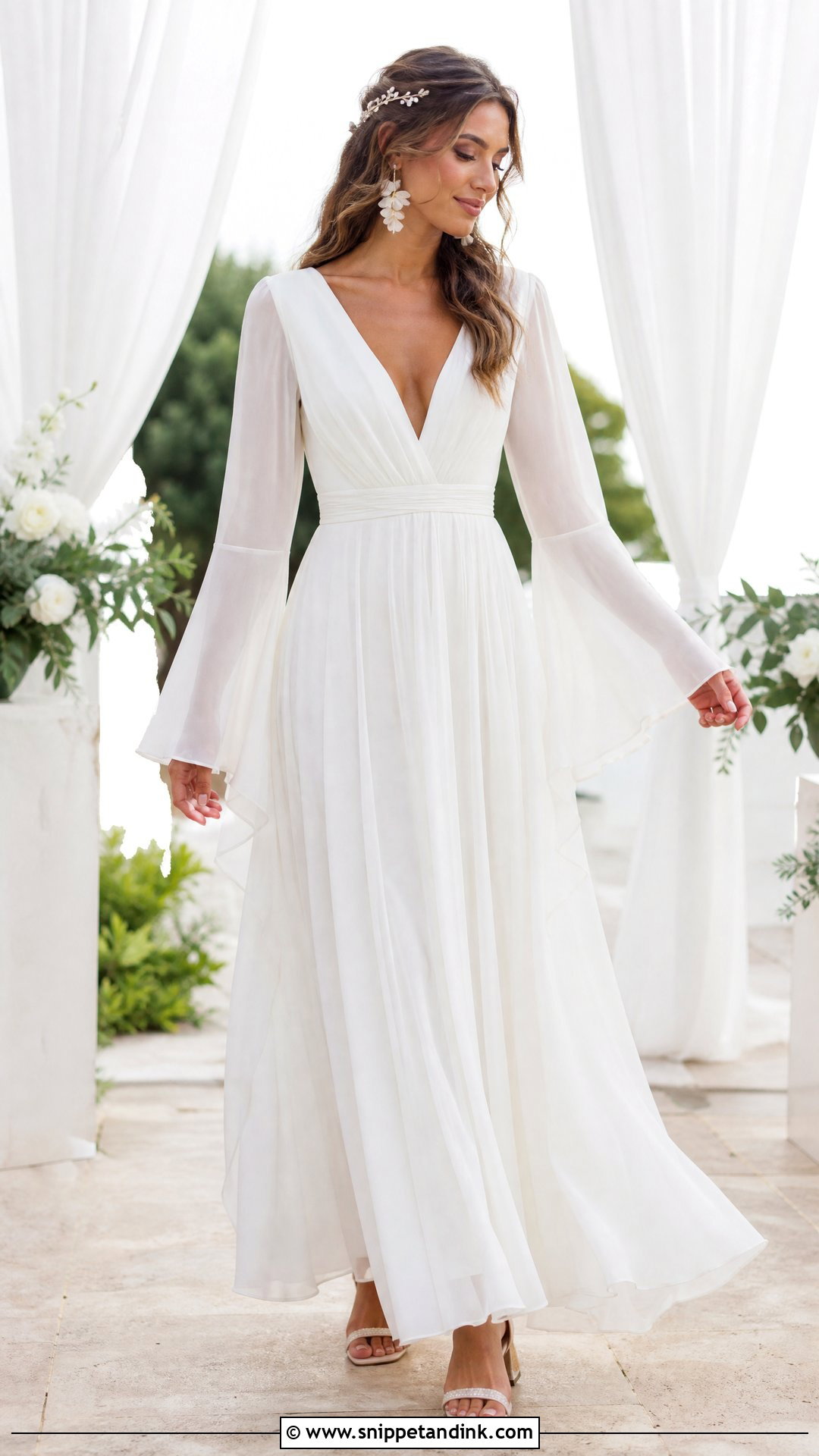
Long bell sleeves give chiffon a drifting, fluid quality. The best versions fit closely above the elbow, then widen toward the wrist; sleeves that are full from the shoulder can swamp a smaller frame. A V-neck and gently defined waist pair with either an A-line or a column. Bell sleeves catch on everything: bouquet stems, cake knives, the edges of tables. I’d skip bracelets entirely and practise holding the bouquet, so you know where the fabric falls. Loose waves or a half-up braid with a narrow hair vine suit the shape, and a comb or light shoulder cape replaces a heavy veil for breezy outdoor ceremonies.
15. Ruffled Organza Wedding Gown
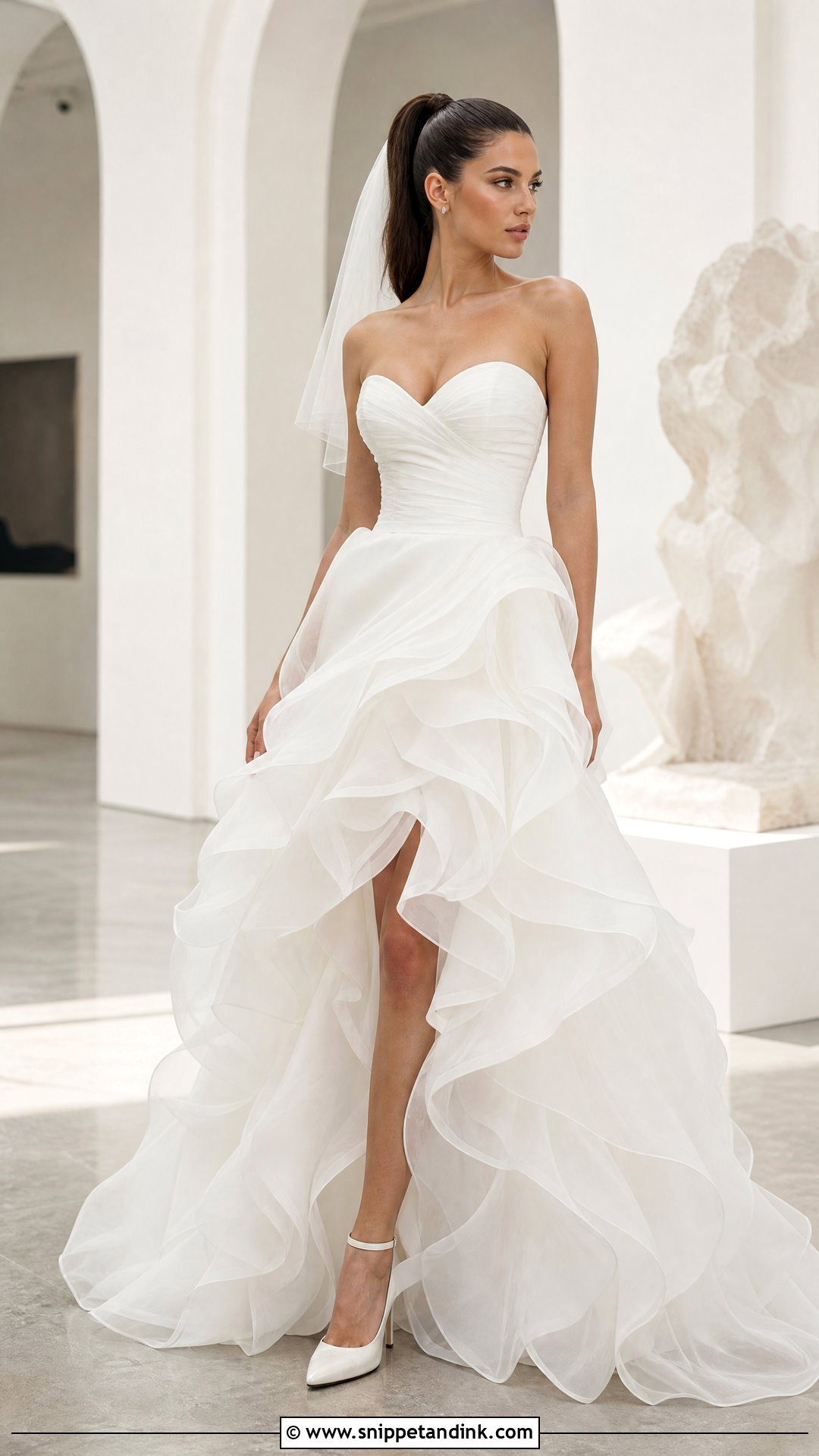
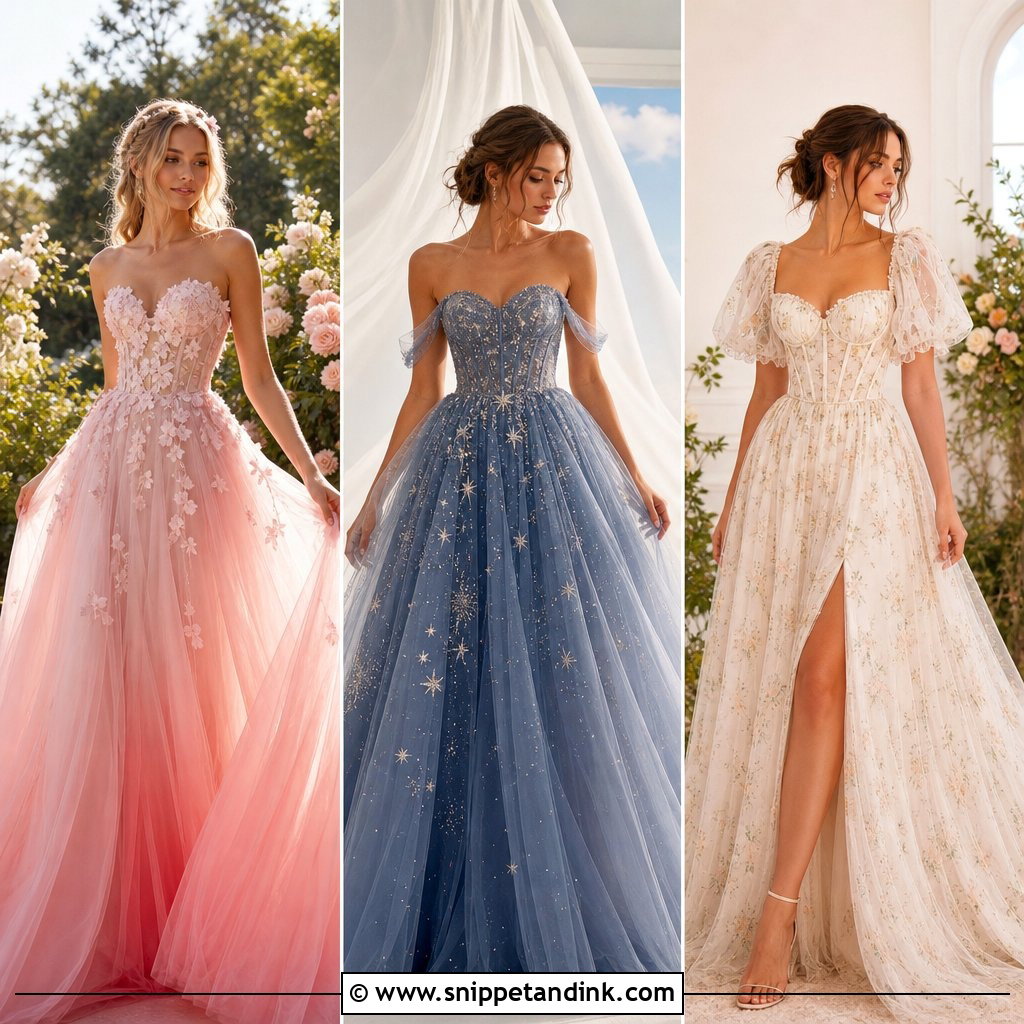
Organza ruffles create drama with no beading at all. Cascading tiers, asymmetric layers or petal-shaped panels all add depth, and a sweetheart or straight neckline gives a clean contrast above them. Organza is crisp, which also means it creases. After a long car ride, the ruffles may need a gentle steam before the ceremony, so I’d have a handheld steamer packed. Keep the rest neat: studs, smooth satin heels, a bun or a high ponytail. A belt should match the gown rather than add a new decoration. If you wear a veil, end it above the fullest ruffles so it doesn’t flatten them.
16. Vintage Tea Length Wedding Gown
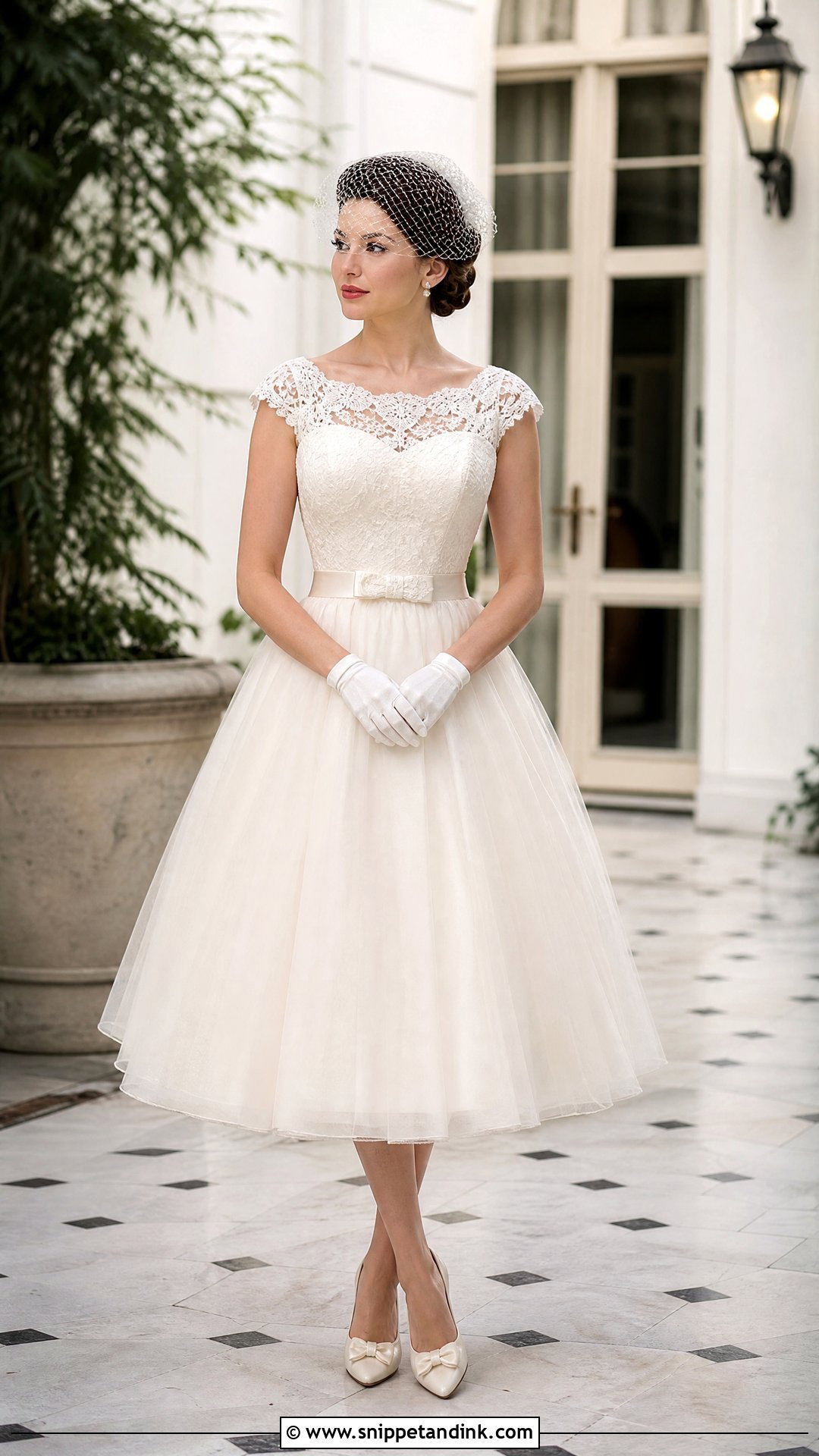
Tea length is the freest way to wear a full skirt. A fitted lace bodice, natural waist and skirt ending between knee and ankle give the vintage outline, with soft tulle layers underneath for movement. Because your shoes are always on show, they count: bow pumps, pearl-trimmed heels or embellished flats. Pearl earrings, short gloves if you like them, and a birdcage veil or small floral headpiece suit the era; a simple waist-length veil also works. A compact round bouquet keeps the proportions right. I’d recommend it for intimate ceremonies and receptions with lots of dancing, where a long hem is just something to trip over.
17. Gold Embroidered Wedding Gown
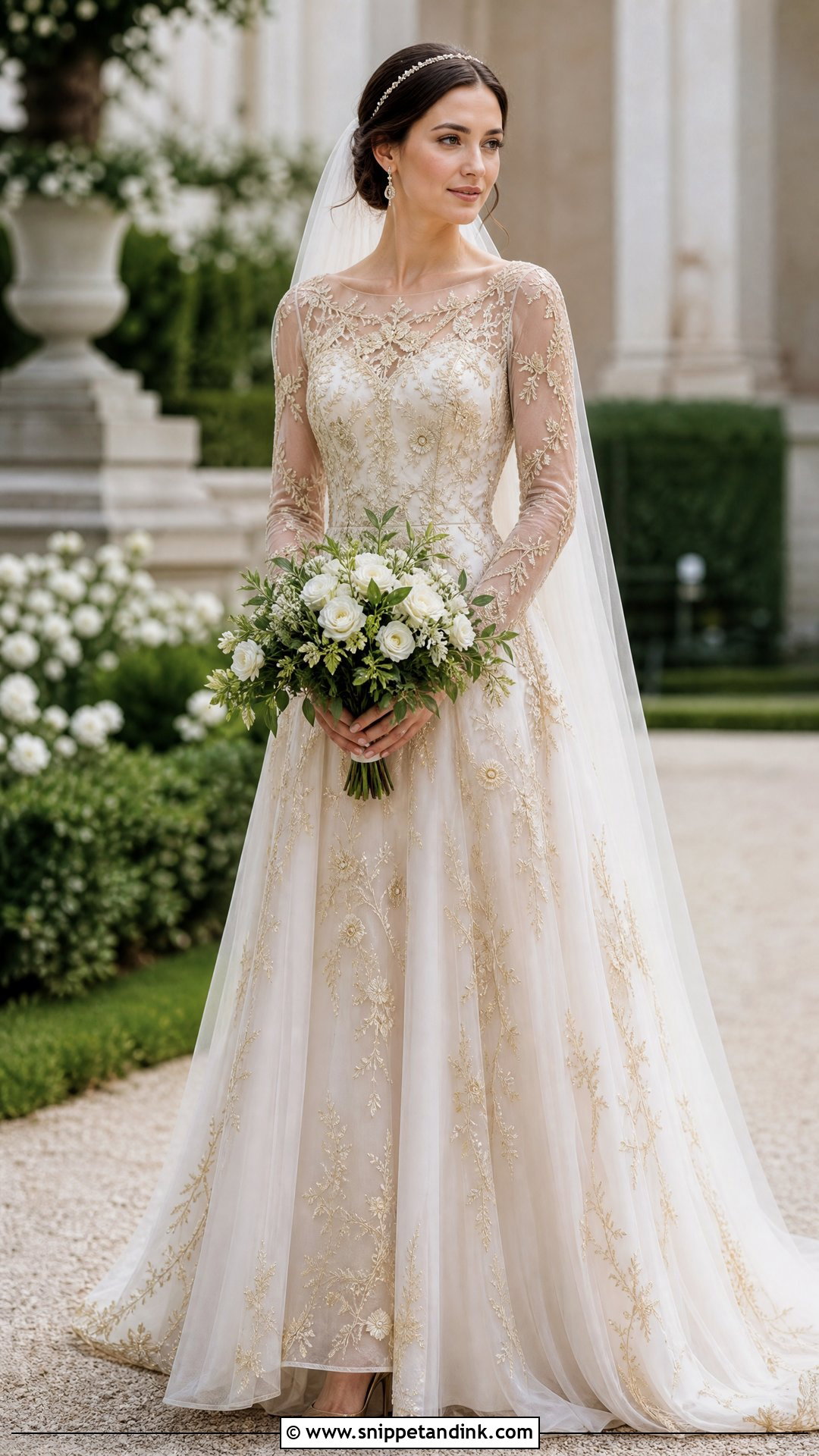
Gold embroidery adds warmth to an ivory or champagne base, and fine threadwork in vines, leaves, stars or flowers looks regal without being heavy. Denser stitching around the bodice shapes the waist, while scattered motifs on the skirt keep it light. Sheer sleeves or an illusion neckline balance the structured gold. Accessory metals matter more than people think. Bright yellow gold makes muted metallic thread look dull beside it, so choose soft or antique gold for shoes, earrings and a slim headband. A plain ivory veil lets the embroidery show from behind, and white blooms tied with ivory ribbon complete the look.
18. 3D Floral Mermaid Wedding Gown
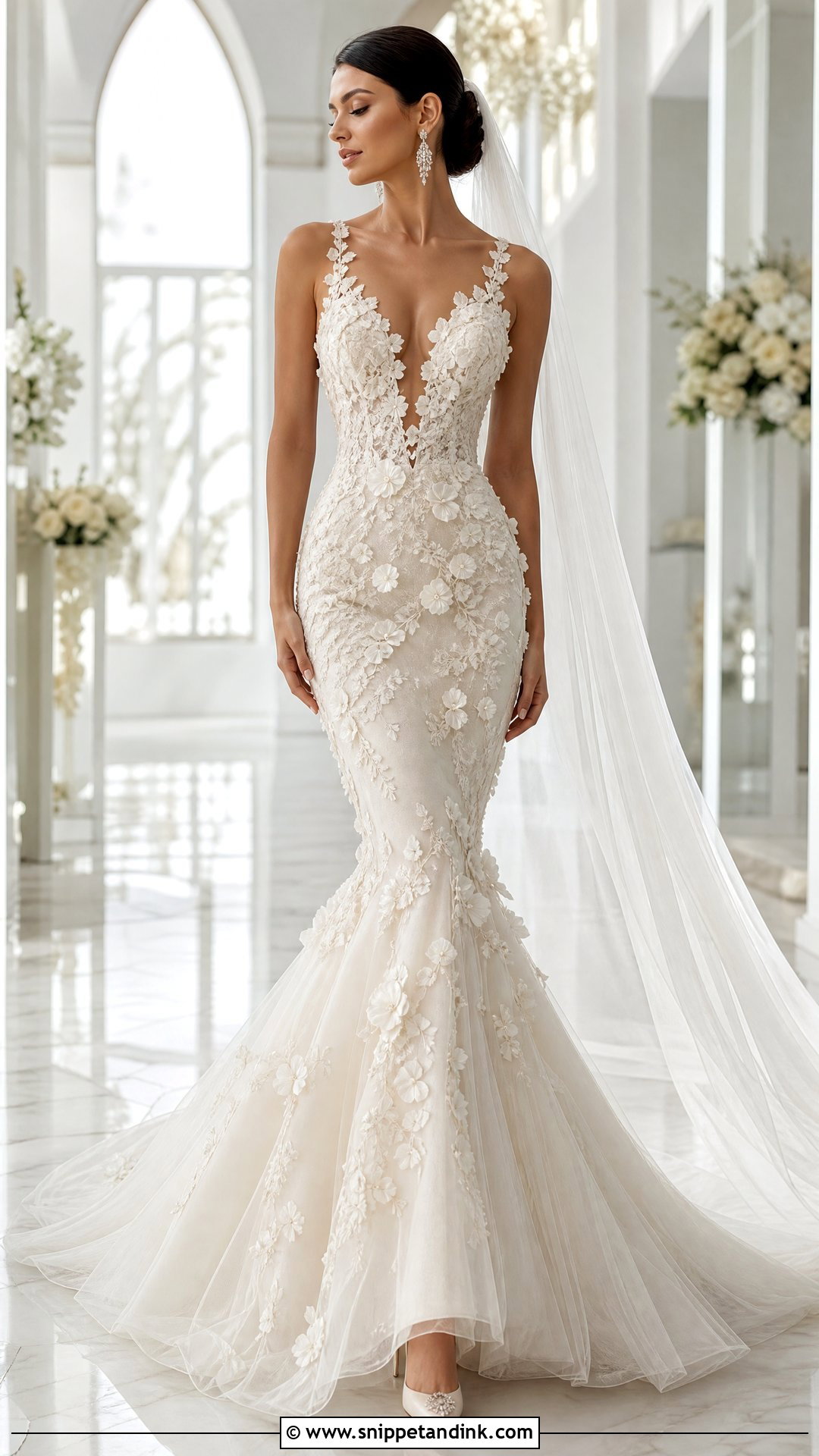
Mermaid gowns are the least forgiving shape in a bridal shop, and 3D flowers make them more so. The appliques should sit across the bodice and hips, then thin out toward the flared hem, so the curve of the silhouette still shows. Ivory flowers keep it cohesive, while pale blush petals add a hint of colour. My main concern with this style is the knee. If the flare starts too low, you’ll shuffle rather than walk, and sitting becomes awkward, so take proper steps and sit down in it before you commit. Pointed heels, small crystal earrings and a sleek updo leave the neckline clear, with a long, plain veil behind.
19. Sheer Sleeve A-Line Wedding Gown
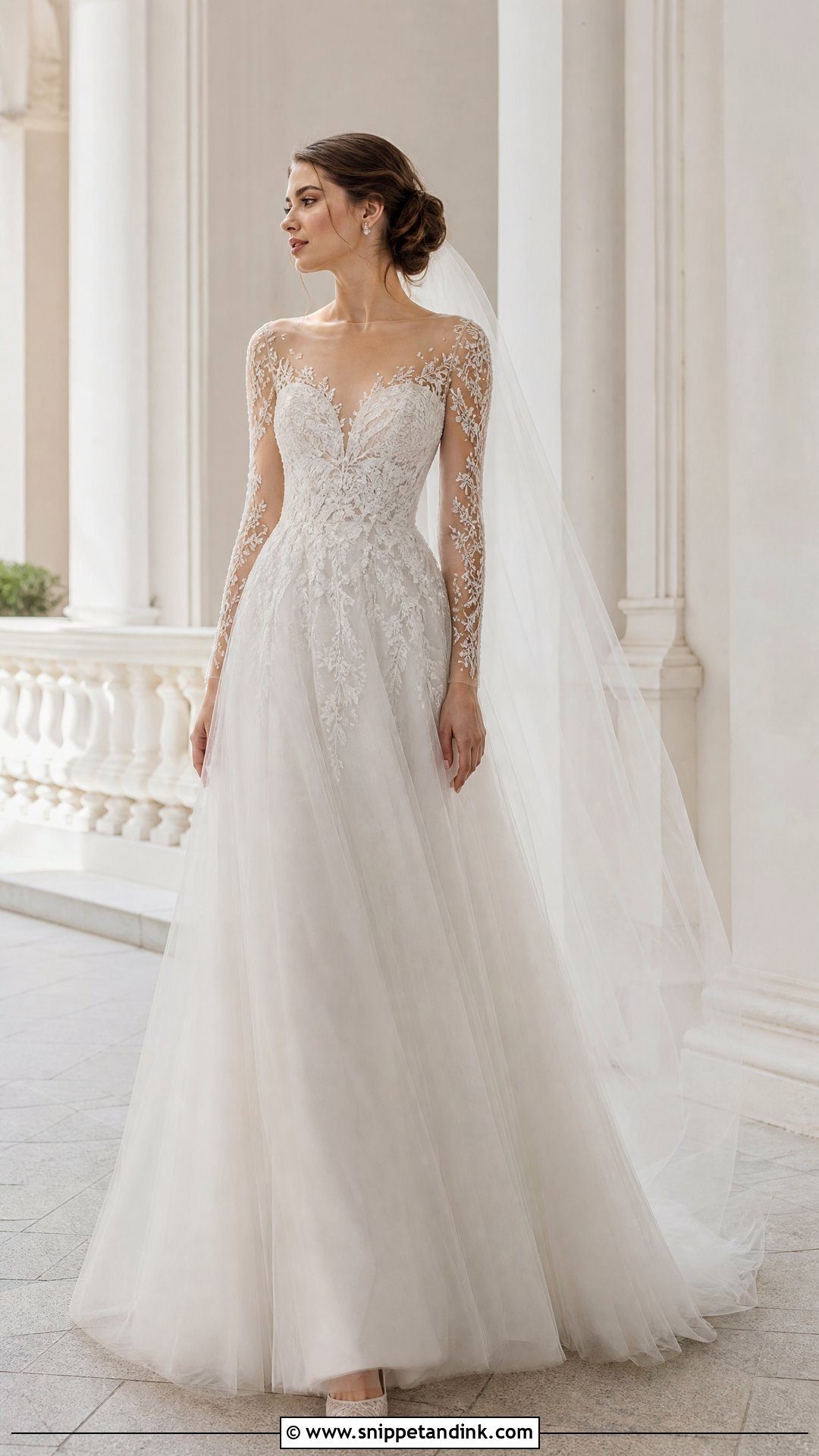
Sheer sleeves are the quickest way to give a classic A-line a lighter, more imaginative feel. The illusion mesh can carry lace leaves, tiny pearls, embroidered stars or small flowers, but the decoration should continue a little onto the bodice so the sleeves look part of the dress. Matching the mesh to your skin tone makes the motifs look as if they’re painted on, and a good bridal shop can order different shades. For a winter wedding, densely embroidered sleeves and a slightly heavier lining add warmth. Lace pumps, quiet earrings, a low bun and a plain fingertip veil complete it.

20. Simple Wedding Gown With Floral Veil
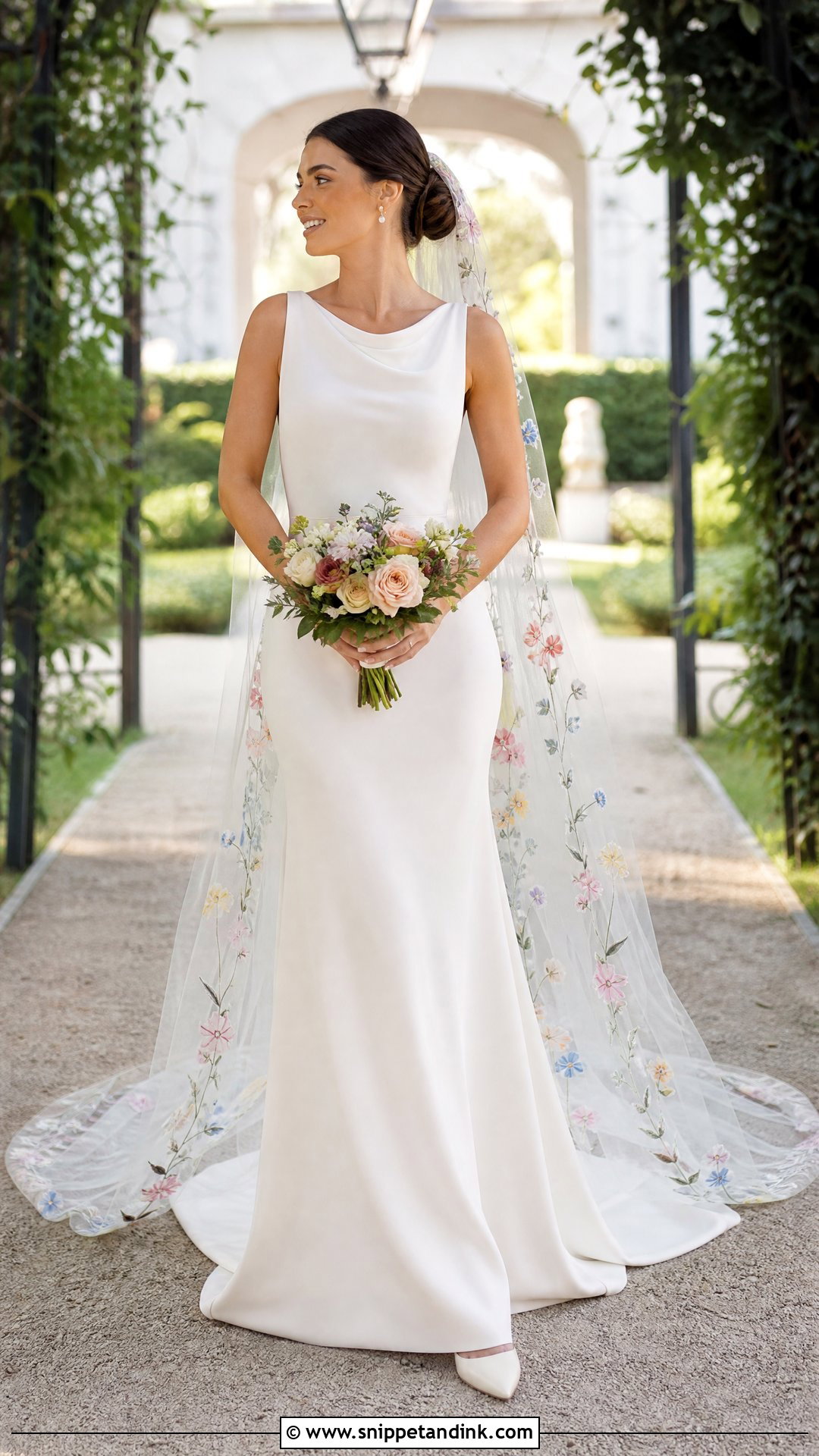
Sometimes the whimsy belongs on the veil. A clean satin, crepe or chiffon gown with an understated neckline becomes something else entirely under a chapel or cathedral veil embroidered with flowers along the edge and train. Coloured flowers feel playful and garden-like; ivory lace flowers are quieter. Embroidered veils are heavier than plain tulle, so ask for a comb that’s sewn in securely and a low bun to anchor it, or it will drag your hairstyle back. Sleek pumps and small earrings are enough. Let the bouquet echo a few of the veil’s flowers, and after the ceremony you have a clean, comfortable gown for the party.
Altering a Gown Covered in Flowers, Pearls or Stars
Detailed gowns take longer to make and longer to alter. Most bridal gowns are ordered several months ahead, and heavily embroidered or appliqued styles can sit at the slower end of that range, so I’d start shopping early. Alterations usually begin a couple of months before the wedding with two or three fittings.
Hemming is the expensive surprise. When appliques or beading run along the edge of the skirt, the seamstress has to unpick them, shorten the layers and sew every piece back by hand. The same goes for taking in a beaded bodice. Ask for an alterations quote before you buy, not after.
- Bring your actual wedding shoes to every fitting so the hem is set at the right height.
- Ask for spare appliques, pearls or sequins to be kept in a small bag for repairs on the day.
- Have a bustle fitted for any train you’ll dance in, and practise fastening it with whoever is helping you dress.
What Tulle and Organza Look Like at Midnight
Soft fabrics wear differently over a long day, and it helps to know what to expect. Tulle snags on rough stone, rose thorns and the hook side of hook-and-loop fastenings, so watch for those at outdoor venues and keep velcro-closing bags away from the skirt. Organza crumples where you sit; a few minutes of steam fixes it, but a vigorous rub does not. Raised appliques can lift at the edges after many hugs, which is where those spare pieces and a needle in the emergency kit come in.
Light fabrics also pick up dirt at the hem. If the ceremony is on grass or a dusty path, I’d lift the skirt for walking between locations and have the bustle done before the outdoor portraits rather than after.
One Magical Detail, Worn All Day
A whimsical gown should still let you walk, sit, hug and dance without thinking about it. The ideas above run from coloured wildflowers and celestial beading to simple dresses made magical by a cape or an embroidered veil. Start with the silhouette you feel most yourself in, then add one imaginative element: texture, colour, sleeves or an accessory. Check the season, your venue’s floor, your shoes and the alterations you’ll need before you sign. Whether you lean toward woodland romance, vintage charm or modern fairytale glamour, I’d always rather see one clear idea worn well than five competing for attention.
You'll Like These Ideas:



Leave a Reply