
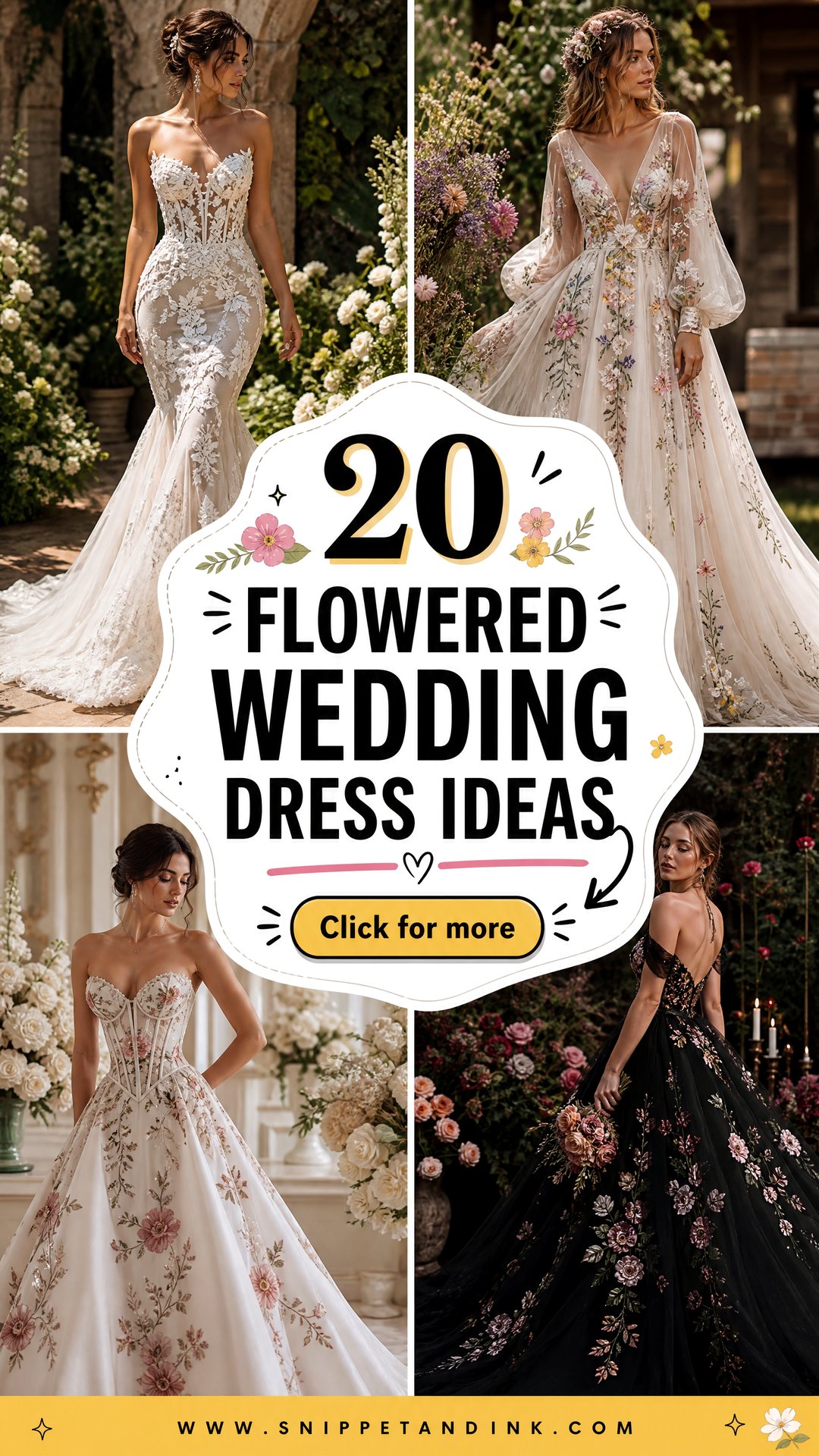
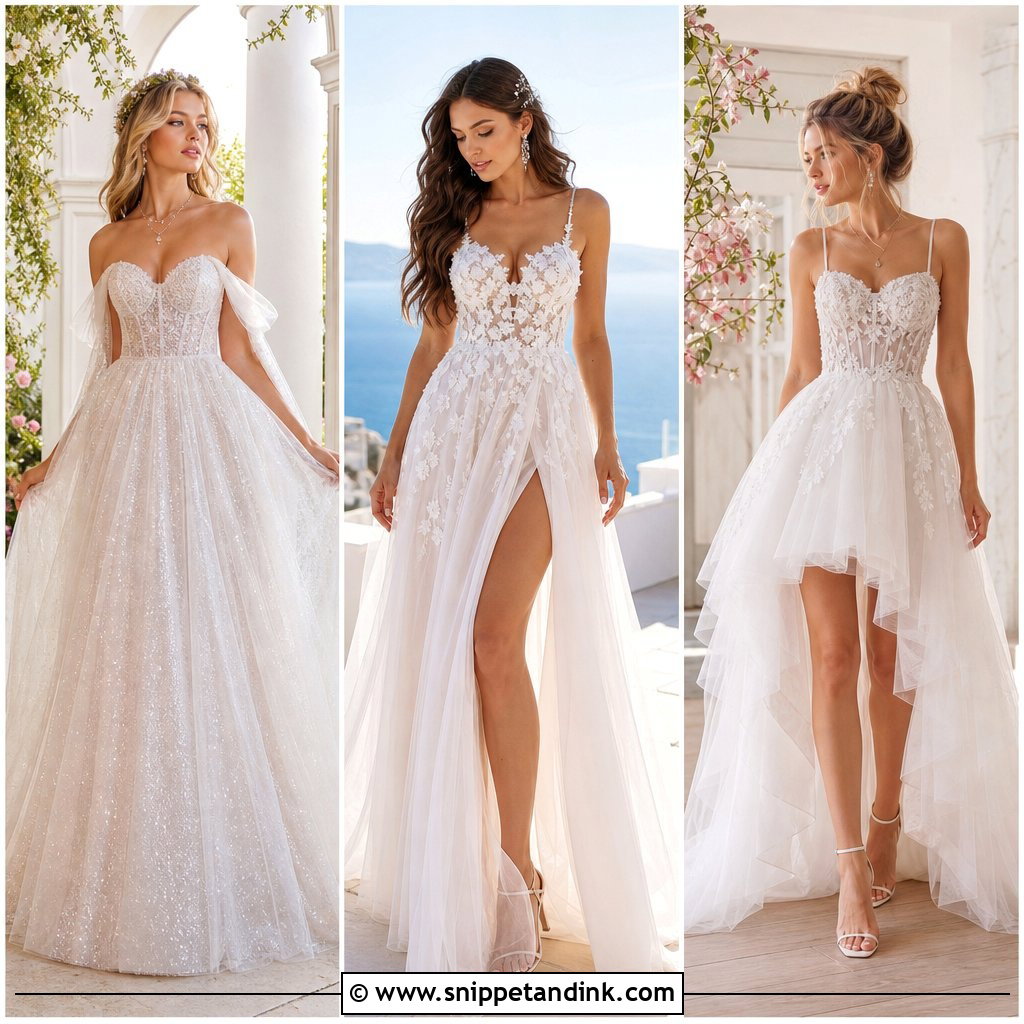
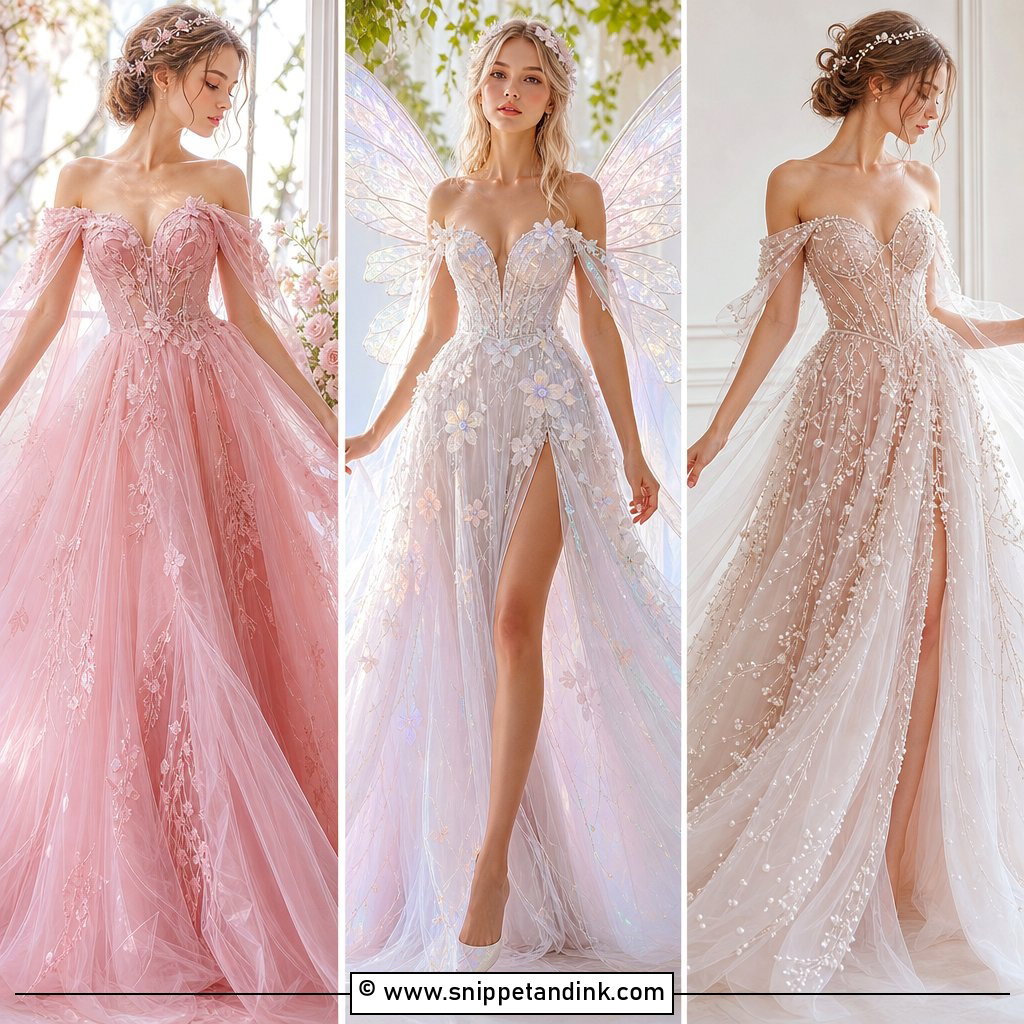
A dress with flowers on it lets a bride be a little playful without giving up anything bridal. The range here is wide: quiet ivory lace, wildflower embroidery in five colors, sculpted petals, printed organza, even a black gown. Raised appliqués, embroidered blooms and corset bodices keep turning up in new collections, which means more choice than ever. I start every styling session by asking how loud you want the flowers to be. Tonal and delicate, or the whole point of the outfit? Once that’s settled, the venue, season and comfort narrow things fast, and the accessories get chosen to back the pattern up.
Bridesmaids, Flowers and Linens When the Gown Is Already Colorful
A white dress goes with everything. A dress embroidered in blue, peach and sage doesn’t, and it quietly sets the palette for the whole wedding. I’d sort this out before the bridesmaid dresses and the florist’s mood board are fixed, not after.
- Take a fabric swatch or a close daylight photo of the embroidery, not a screenshot from the website. Thread colors on screens are rarely accurate.
- Pick one or two thread colors to repeat across the wedding and leave the rest only on the dress. That way your gown stays the most detailed thing in the room.
- Give bridesmaids a solid color from the dress, or a neutral. Patterned bridesmaid dresses next to a patterned gown look busy in group photos.
- Brief the florist with the swatch. A bouquet in the exact same shades as the embroidery makes the dress disappear against it; a slightly lighter or deeper tone frames it.
- Keep linens and the cake neutral or tonal. A table of competing flowers behind you in every reception photo pulls focus from the gown.
If you’ve bought a black or strongly colored floral dress, tell your photographer and planner early. It changes how they light the room and how they style the details.
1. 3D Floral Appliqué Ball Gown Wedding Dress
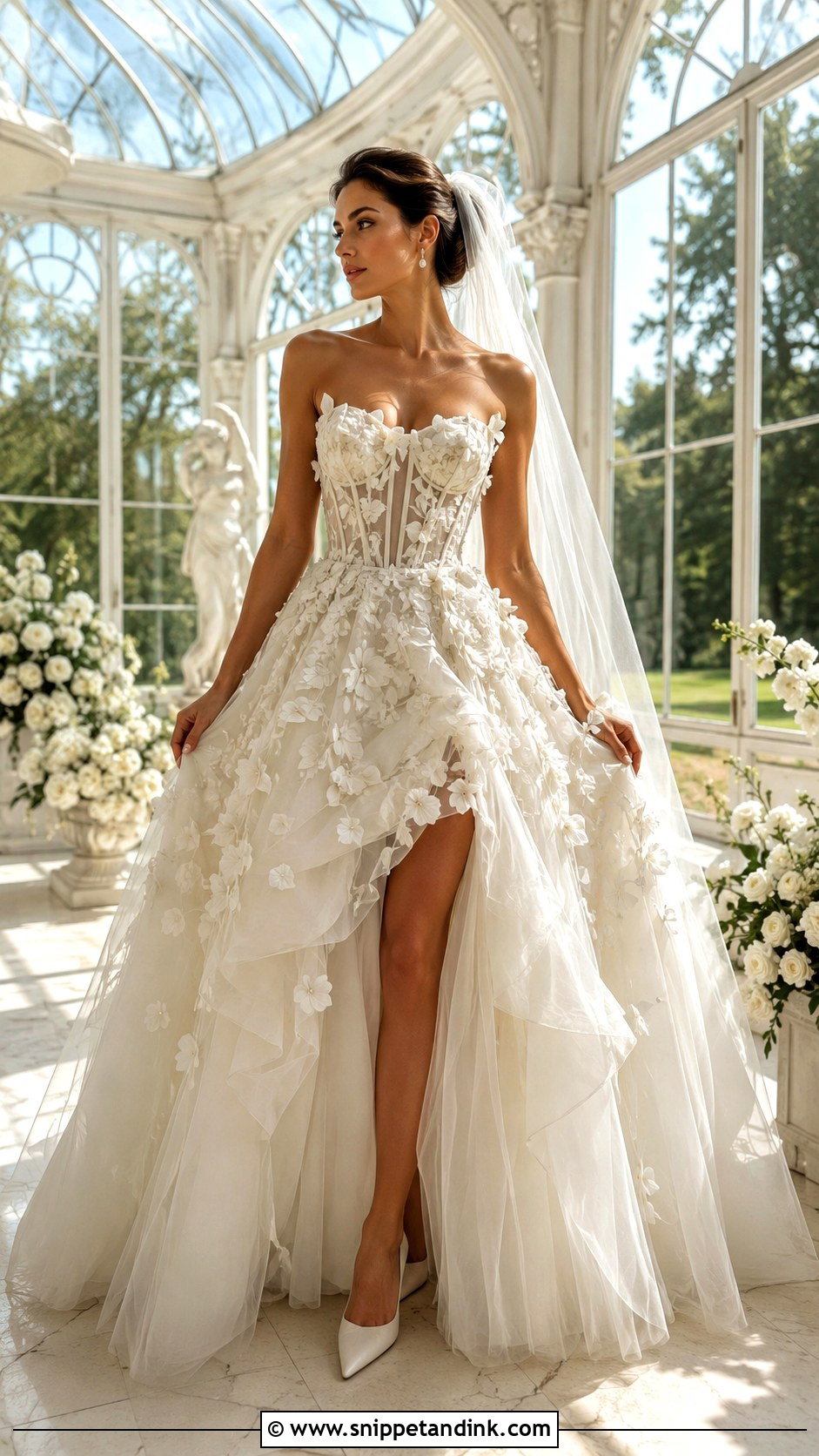
Petals instead of sparkle. Hand-cut flowers that start at the neckline and tumble onto a full tulle skirt give the drama, and a nude or blush lining under ivory appliqués makes every one of them visible. Pearl drops, pointed ivory pumps and a low bun are enough; a plain fingertip veil keeps the sculpted texture from getting crowded. Conservatories and formal gardens suit it best. At alterations I look hard at the waist and hips, since a cluster of raised flowers in the wrong spot adds bulk exactly where most brides want a smooth line.
2. Colorful Embroidered A-Line Wedding Dress
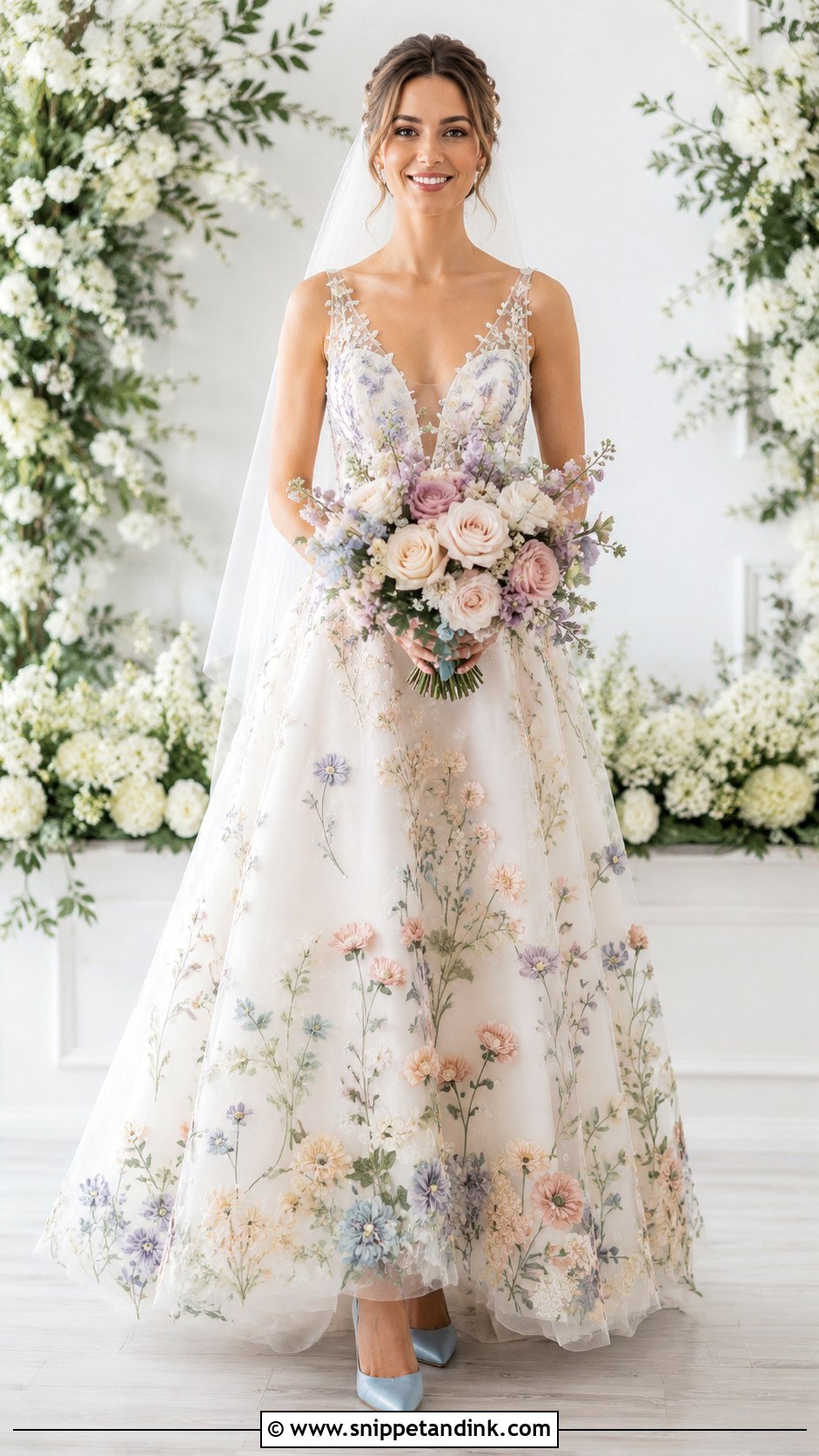
Muted thread colors age better than bright ones. Look for botanical threadwork in dusty pink, blue, lavender, sage and soft yellow on an A-line with a fitted bodice. I’d pick only two of those colors for the bouquet and let the rest stay on the dress. Pale blue heels, small studs and a loose chignon suit it. With embroidery covering the whole gown, skip the necklace and keep the veil clean. A champagne or light blush lining shifts the dress further from traditional white, if that appeals. Spring and outdoor venues bring it to life.
3. White Floral Lace Mermaid Wedding Dress
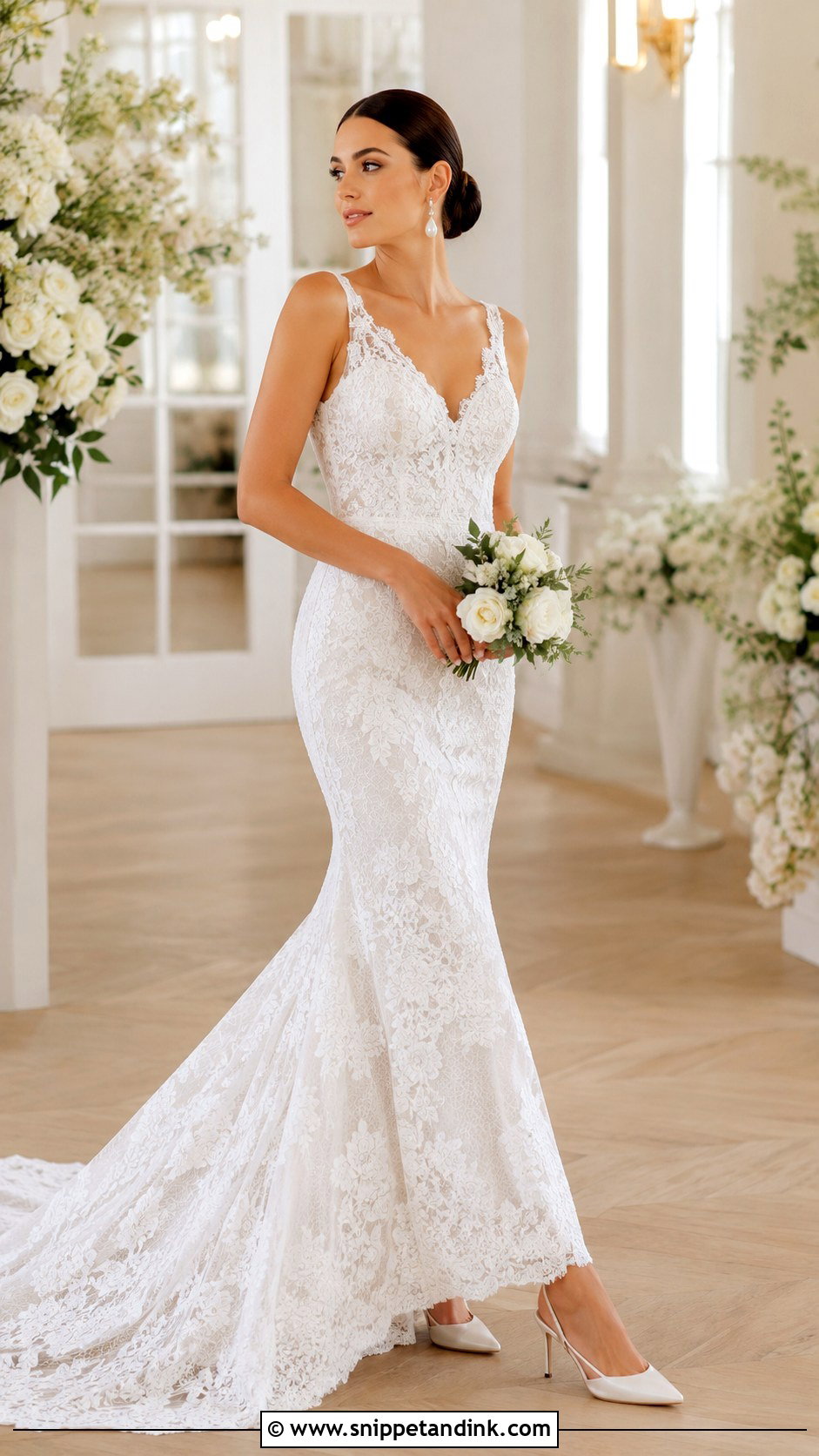
Lace scale decides the mood of a mermaid. Large flowers look modern and graphic; small repeating blossoms look delicate and more classic. The cut itself follows the body through the hips and flares lower down, so I have brides walk the length of the salon before deciding on the flare point. Ivory slingbacks, crystal or pearl earrings and a sleek bun suit it. If you want coverage, an illusion lining matched closely to your skin keeps the lace looking like it floats. Plan a practical bustle, wear a plain veil and keep the jewelry minimal; the shape is already doing plenty.
4. Blush Floral Tulle Wedding Dress
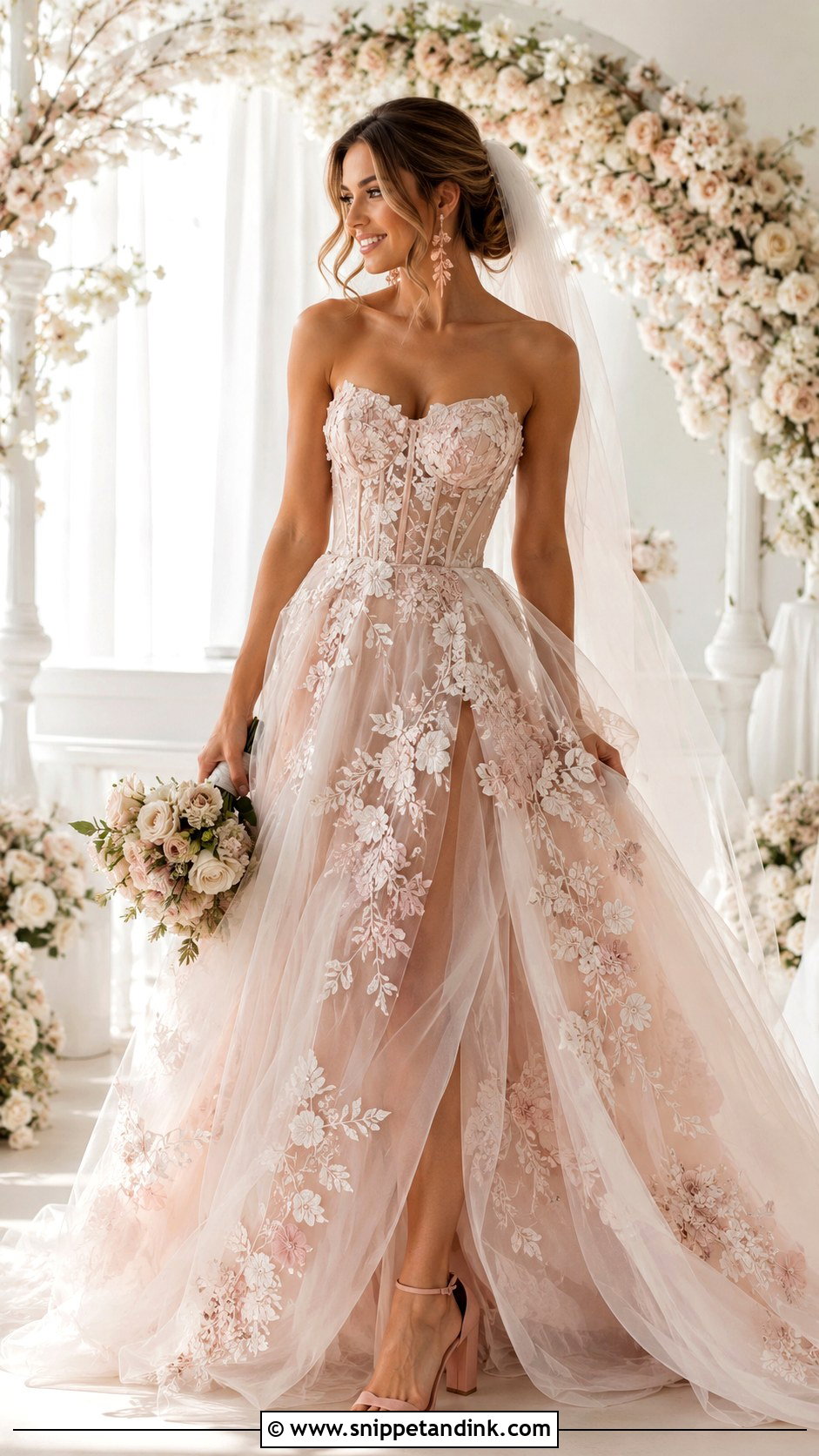
Blush under ivory flowers gives a soft wash of color that still looks clearly bridal. An A-line or soft ball gown with a corset-style bodice and several light tulle layers moves without dragging. Nude or blush block heels, rose-gold earrings and a sheer ivory veil fit the palette, with fresh makeup and a neutral lip. Here’s what catches people out: blush changes with light. Under warm indoor bulbs it can look beige; in shade outdoors it can turn slightly grey. I always view it by a window and under room lighting before anyone commits.
5. Wildflower Embroidered Boho Wedding Dress
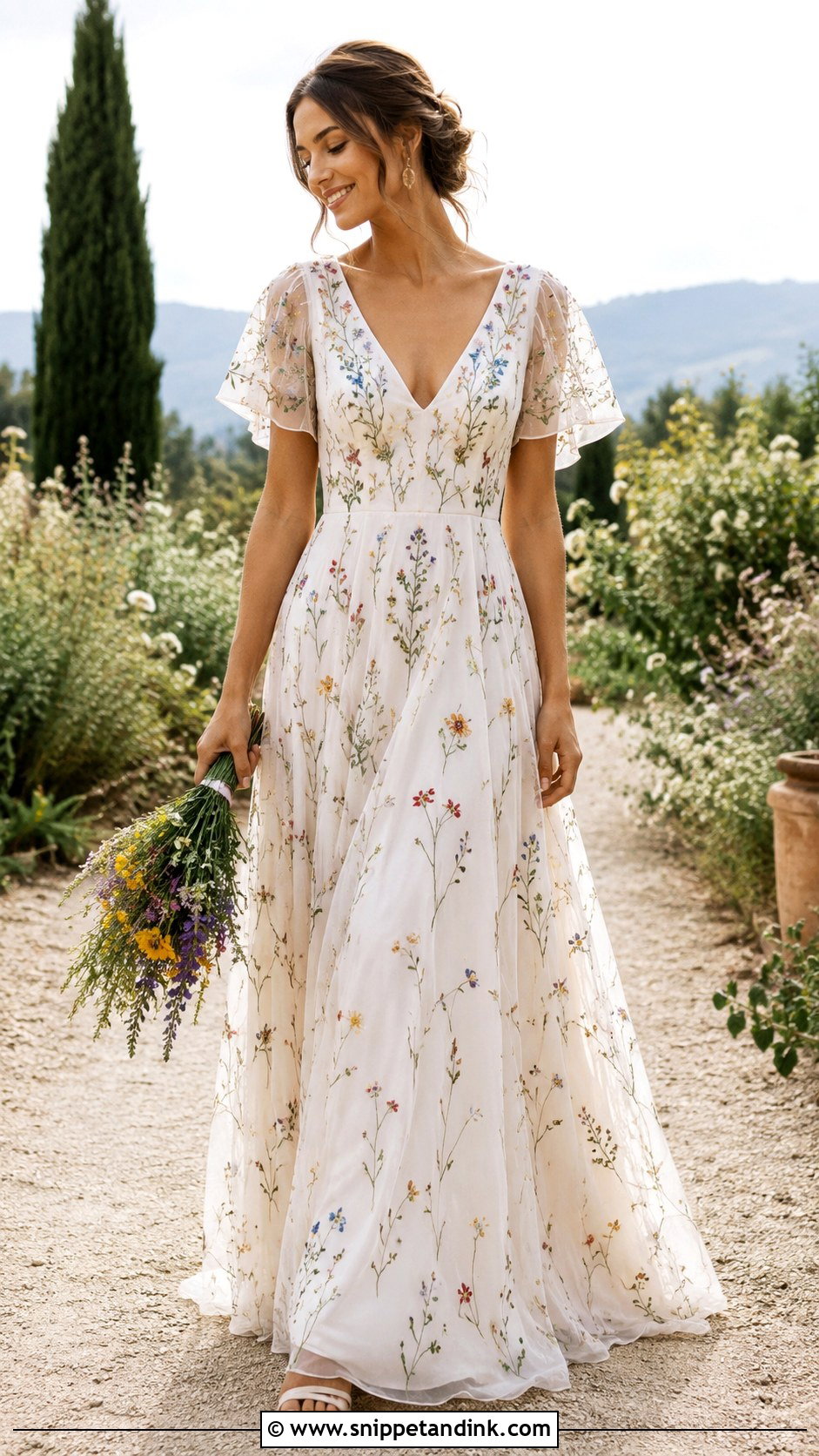
Ground conditions matter more than anything else for this one. A wildflower embroidered boho wedding dress is made for outdoor weddings, and its hem will meet grass, gravel or dust. I’d keep it floor-skimming rather than long, and add a discreet wrist loop and a secure bustle so the embroidery isn’t dragged across the ground all evening. A light A-line with flowers scattered from bodice to hem, flutter sleeves and a keyhole back keep it easygoing. Ankle-strap sandals, small gold earrings and textured hair suit it, and a sheer veil or a floral comb beats anything heavily decorated.
6. Floral Corset Basque Waist Wedding Dress
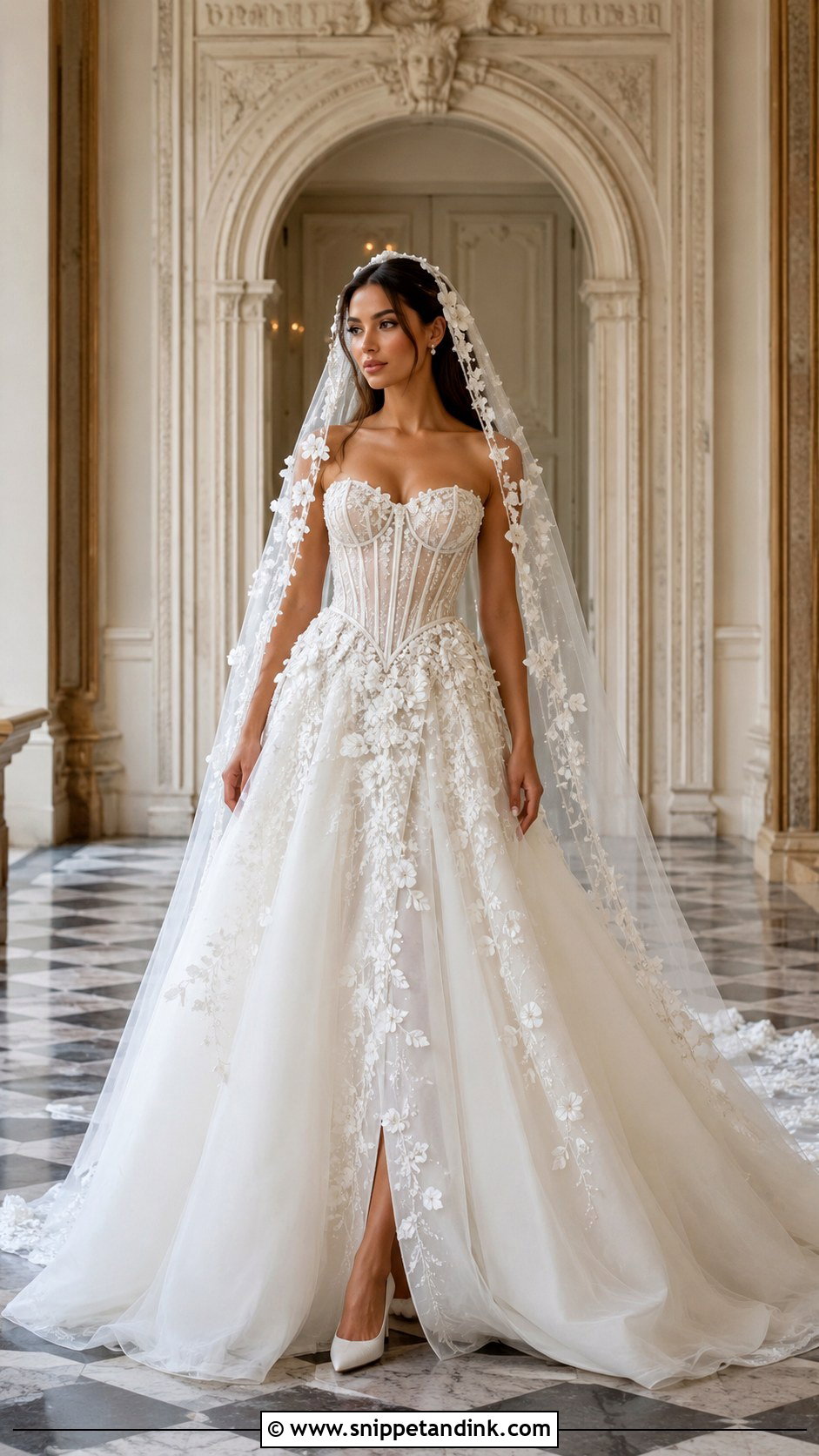
The pointed basque waist draws the eye to the center of the body and lengthens the torso, and supportive boning keeps that point crisp. Floral appliqués starting at the neckline and scattering across a full satin, organza or tulle skirt soften all that structure. Pointed pumps, pearl studs, a smooth cathedral veil and a polished updo keep attention on the bodice. The fitting check is specific: sit, walk and bend, and watch the point. If it folds or presses into your stomach when seated, it needs adjusting. Grand indoor rooms and estates give it the scale it deserves.
7. Off-Shoulder Flowered Wedding Dress
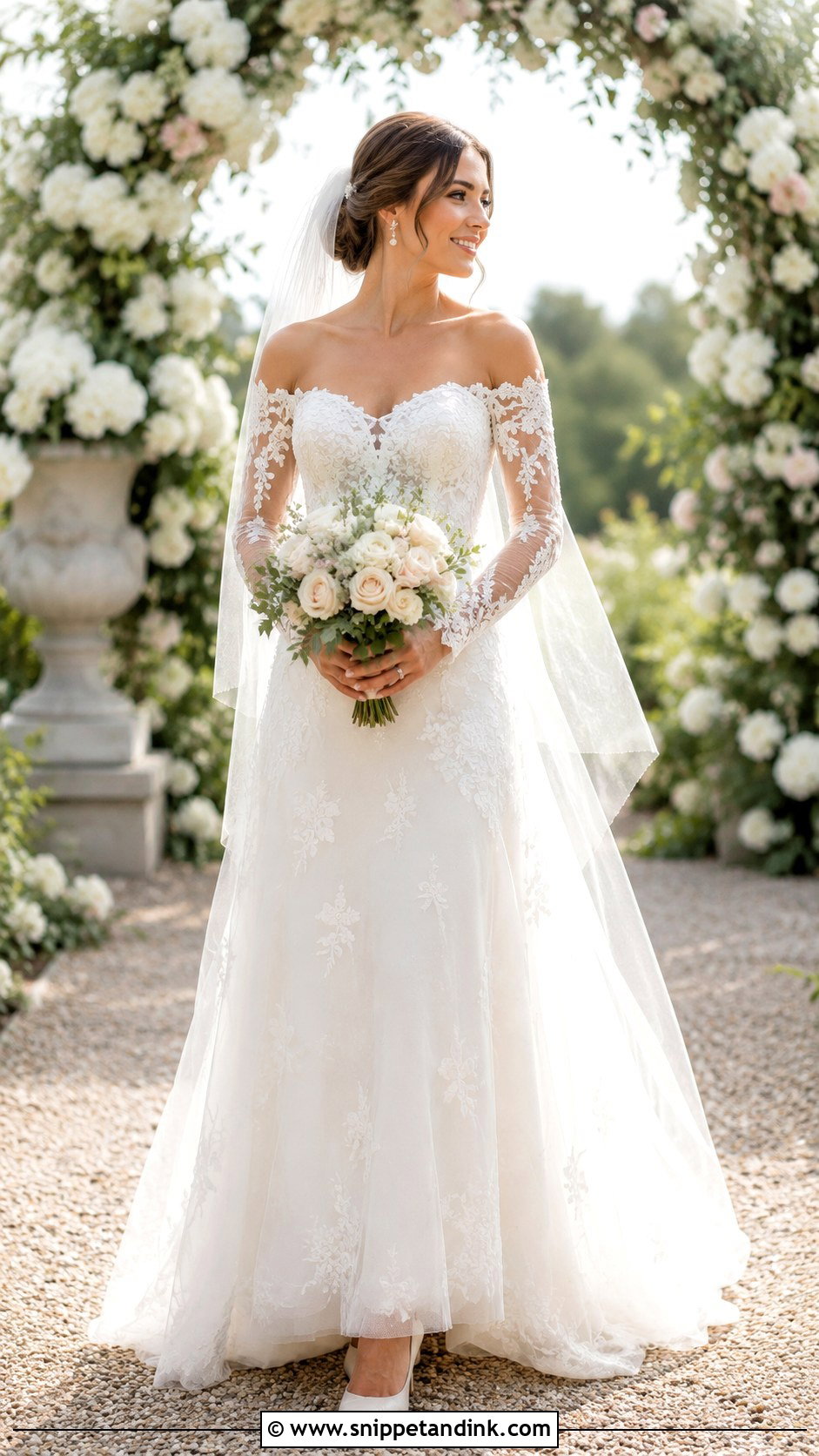
Lace that runs over the shoulders and onto the sleeves makes the neckline look like one continuous piece instead of two halves. An A-line skirt under a fitted bodice keeps it balanced. Pearl drops, ivory pumps and a low bun are plenty; I’d leave out the necklace, because the open shoulders are already the feature. Attach the veil under the hairstyle so the floral neckline stays in view. In fittings, raise your arms, hug, sit and dance. Fashion tape and hidden elastic help, but good tailoring of the strap is what stops it slipping.
8. Long Sleeve Floral Wedding Dress
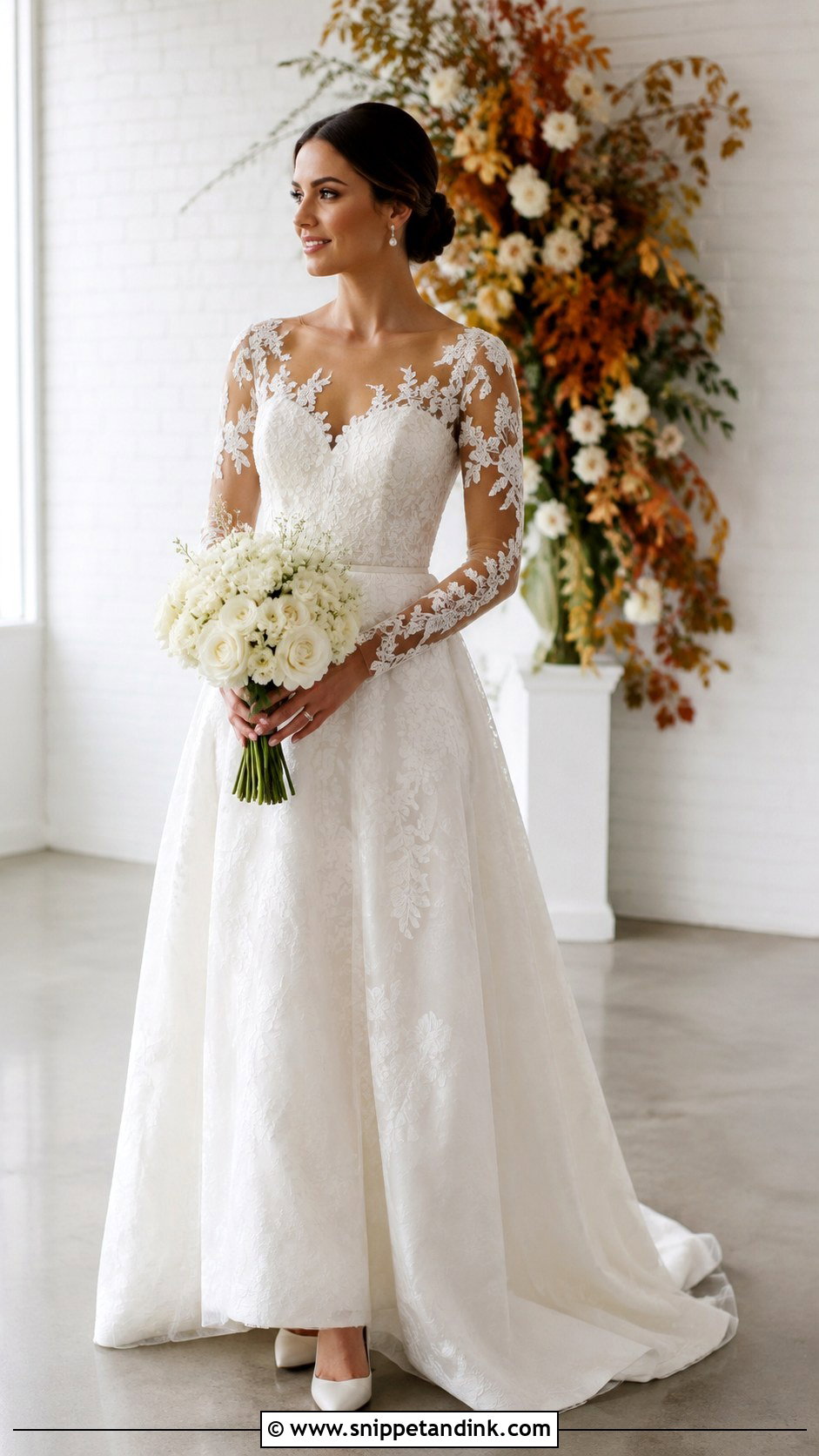
Sheer illusion sleeves with lace flowers feel lighter; lined sleeves read more modest. Either way, a defined waist and a flowing skirt stop the gown from looking over-covered. Closed-toe heels, small pearl earrings and a low chignon or smooth tucked waves suit it, with a softly structured bouquet. Dense embroidered sleeves and bracelets don’t mix, since the clasp catches the threads, so I leave the wrists bare. The elbow and shoulder fit is the real test. If reaching forward pulls the bodice, the sleeve is too tight and the strain will show at the appliqué seams.
9. Strapless Floral Organza Wedding Dress
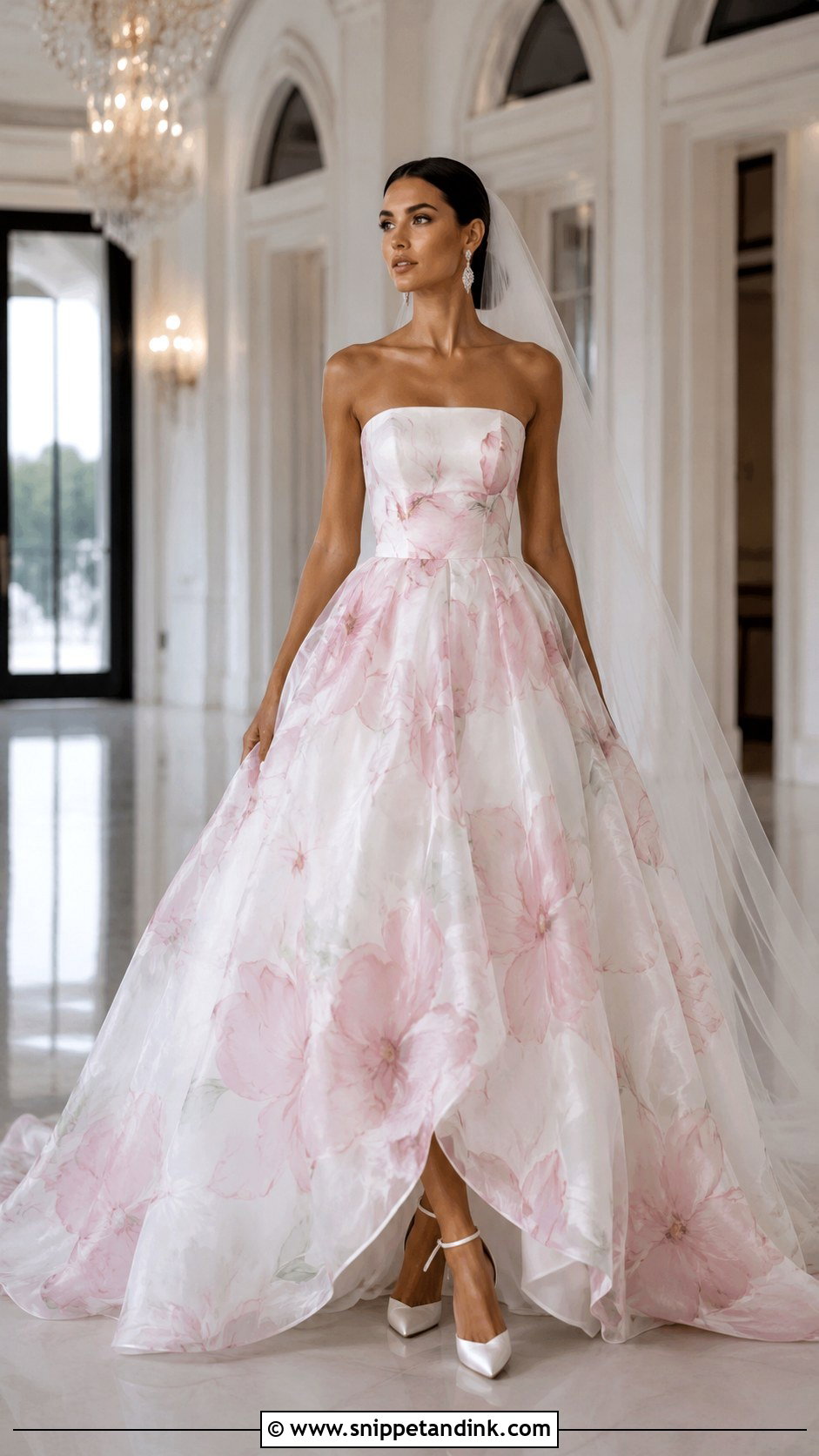
Organza has a crispness that tulle doesn’t. It holds volume with fewer layers and makes a strapless floral gown look clean and modern. Oversized printed or appliquéd flowers suit it: tonal ivory for understated, pale blue or pink for something more expressive. Choose statement earrings and a slim bracelet with pointed satin heels. A structured updo shows the neckline, while shoulder-length waves soften it. Wear a cathedral veil for the ceremony and lose it at the reception. Two cautions from fittings: organza creases where you sit, and the light outer layer folds under your shoe if the hem is even slightly long.
10. Square Neck Floral Wedding Dress
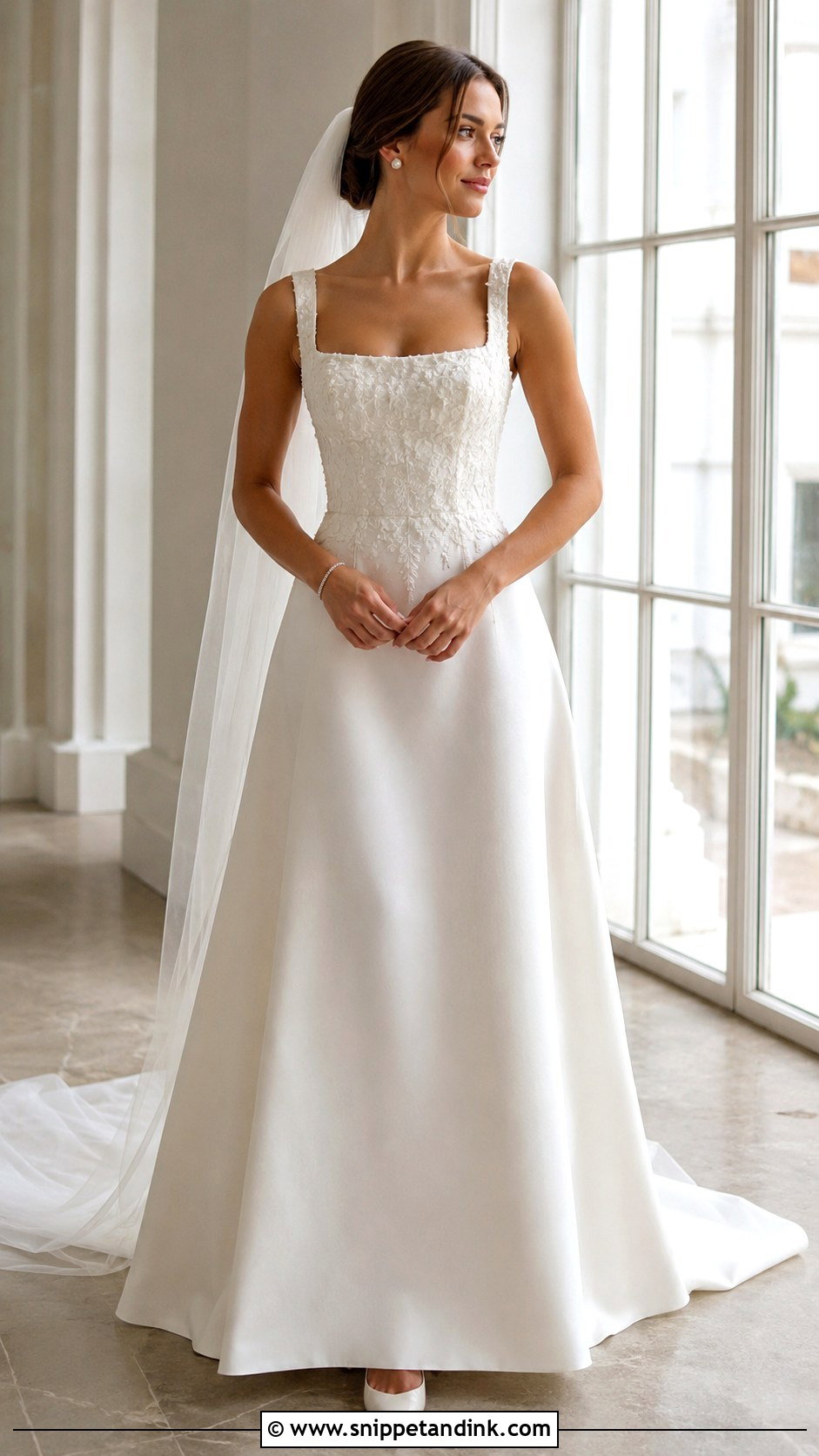
A square neckline brings order to romantic lace or embroidery. Wide straps, a fitted bodice and an A-line or column skirt balance the geometric shape. I prefer the flowers to frame the neckline and waist rather than cover everything, so the silhouette stays readable. Pearl studs, a sleek bun and low pointed heels finish it, with a plain-edged chapel veil. A fine tennis bracelet adds a little shine if you want it. The neckline should sit flat to the chest; if it gapes, shortening the straps slightly usually fixes it.
11. Tea-Length Flowered Wedding Dress
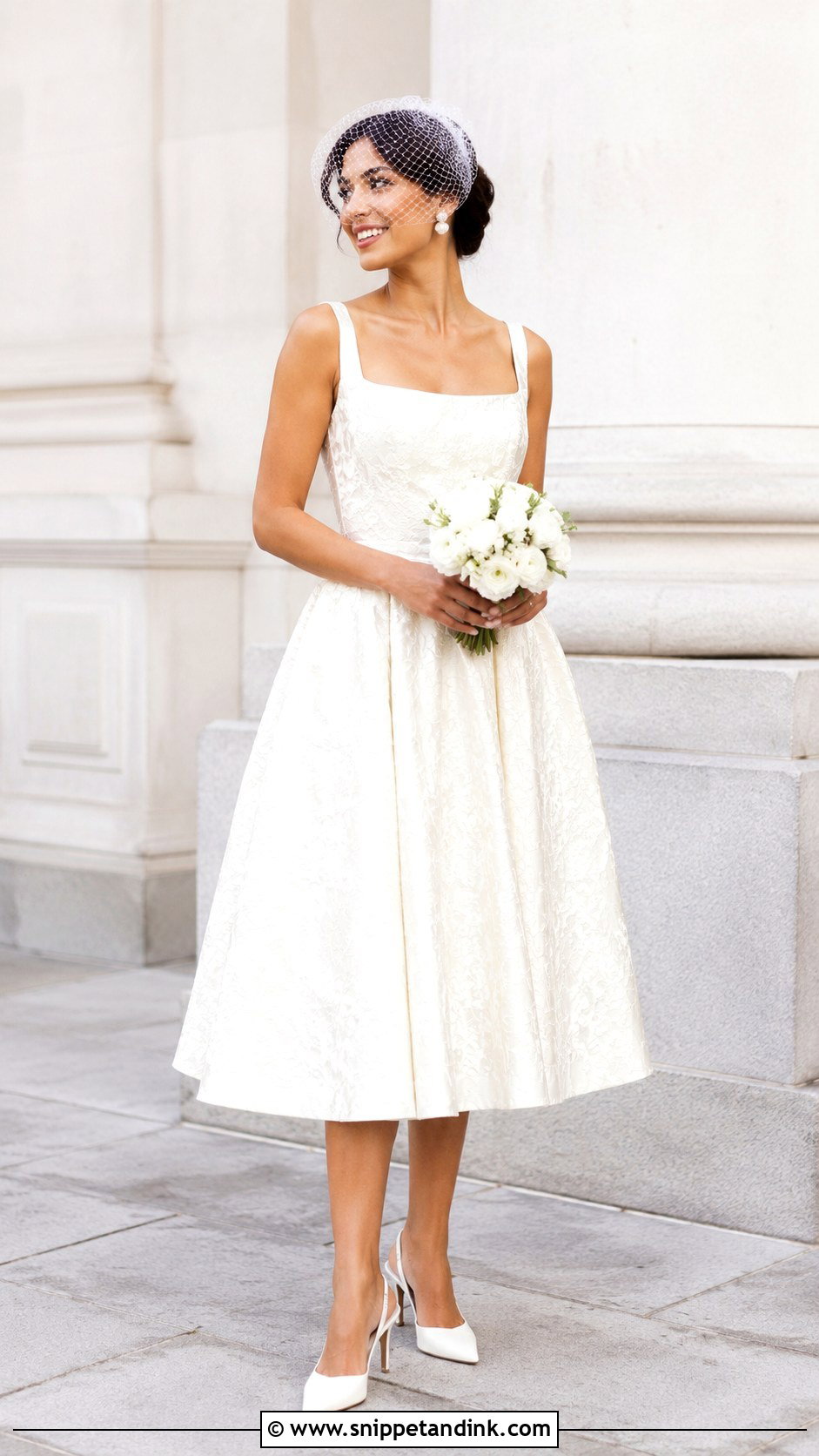
Shoes are half the look when the skirt stops between knee and ankle. That’s my first question with tea length: which pair, and can you stand in them for six hours? Padded insoles help. Floral jacquard, embroidered tulle or raised ivory appliqués make the shorter dress feel ceremonial. Add pointed slingbacks, a small structured bag and pearl button earrings. A birdcage veil or short sheer veil suits the proportions far better than a long one, and a compact bouquet keeps the scale right. Courthouse ceremonies, daytime weddings and relaxed receptions are where it fits.
12. Floral Mini Reception Wedding Dress
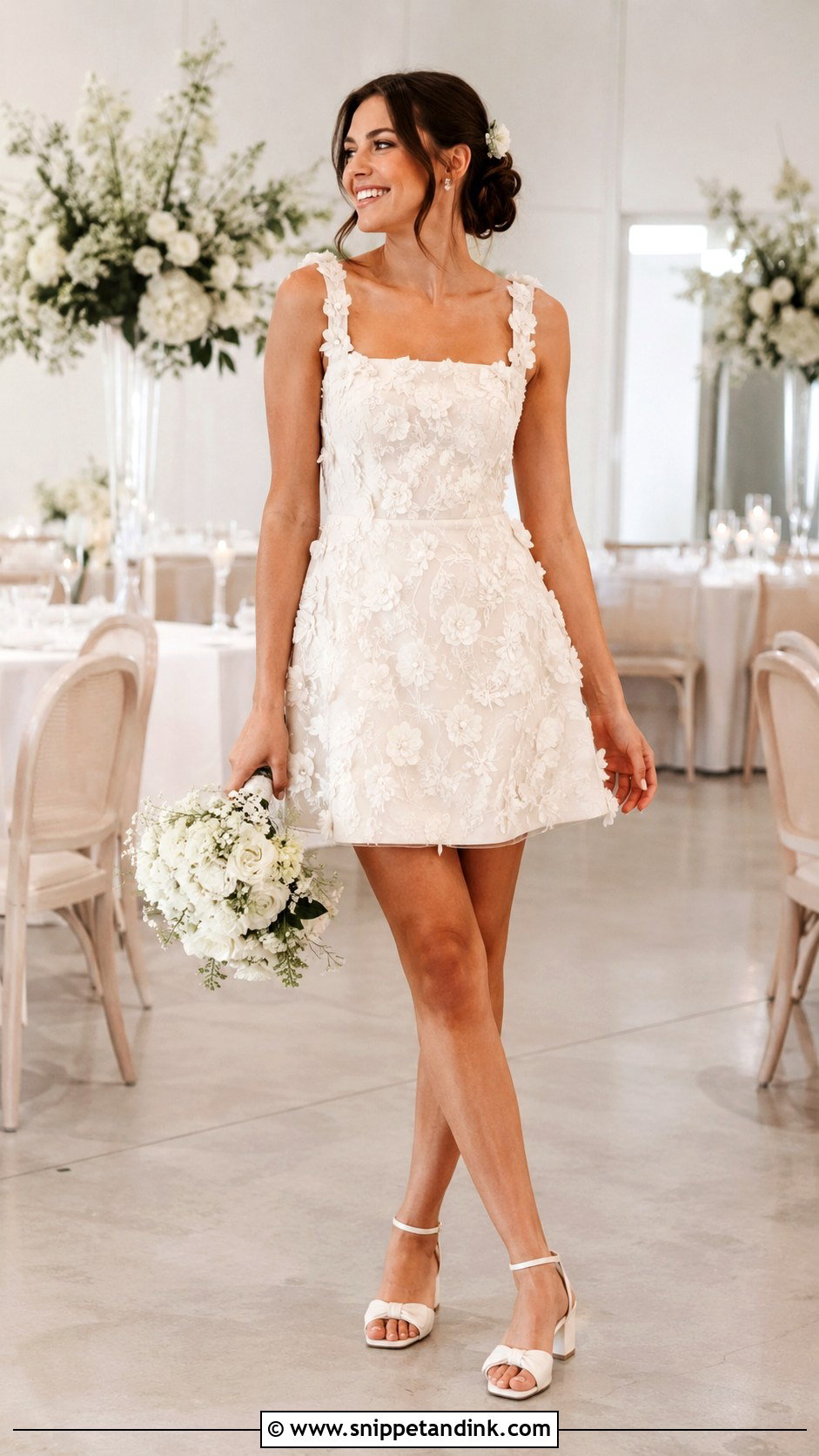
A mini for the party keeps the ceremony look connected while letting you dance properly. A structured mini with 3D flowers, a square neckline or a fitted corset bodice works; a detachable overskirt can give you a full entrance and reveal the short hem later. Comfortable block heels, crystal studs and a small bow or floral clip finish it. With heavy texture, keep everything else tonal. Check the hem from behind while you sit and dance. I usually suggest tailored shorts or a smooth bodysuit underneath, which add coverage without changing the line.
13. Blue Floral Embroidered Wedding Dress
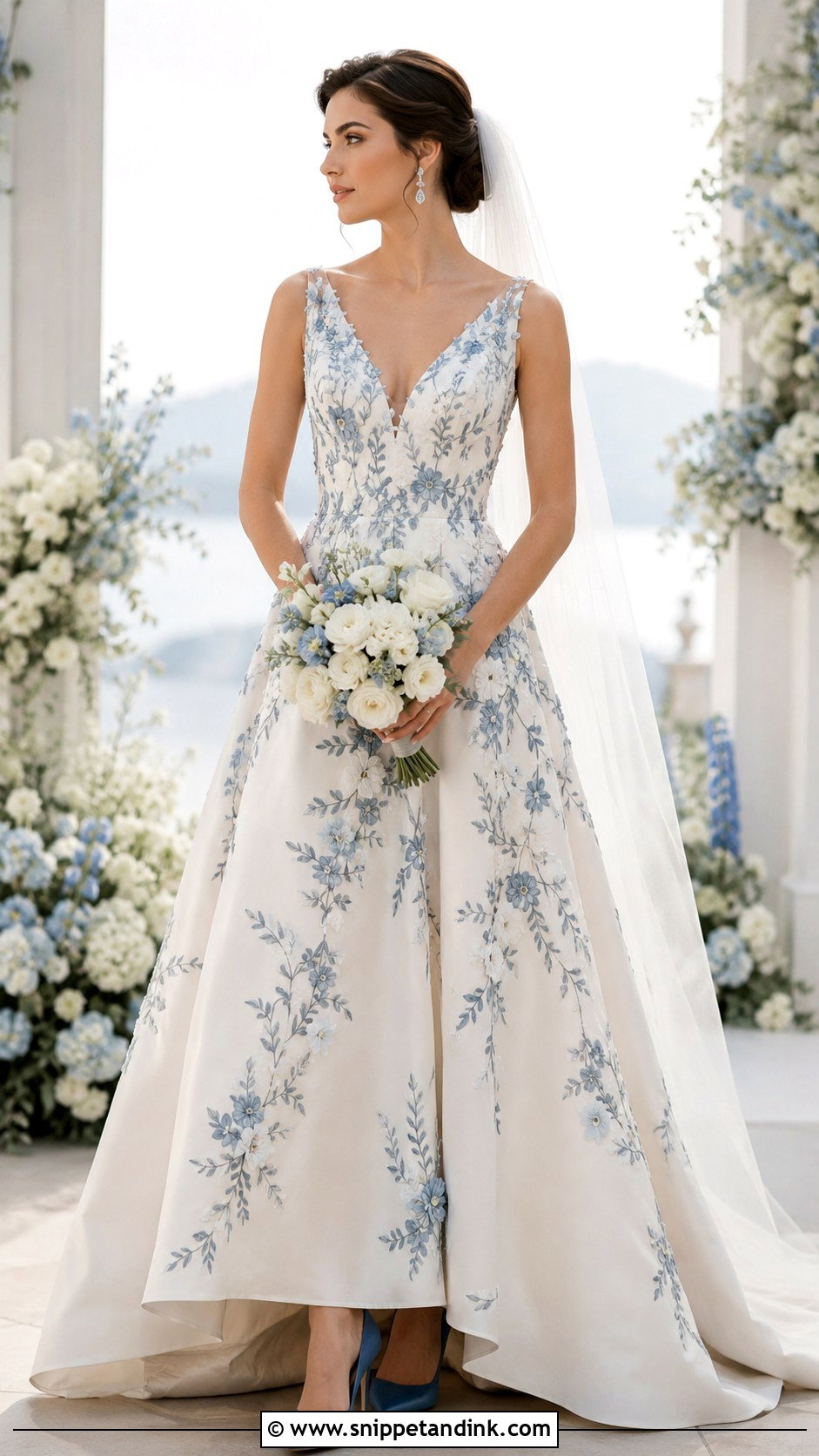
Blue embroidery brings color with meaning, and the trick is staying in one family of blue. Dusty blue, cornflower or pale navy threadwork on an ivory A-line looks deliberate; mixing cool and warm blues looks accidental. Flowers concentrated at bodice and hem balance the gown, while scattered embroidery feels lighter. Blue satin pumps, silver earrings and a plain ivory veil suit it, and a mostly white bouquet with a few blue accents. I also hold the thread next to the bridesmaid fabric, because two slightly different blues side by side look wrong in group photos.
14. Pastel Floral Garden Wedding Dress
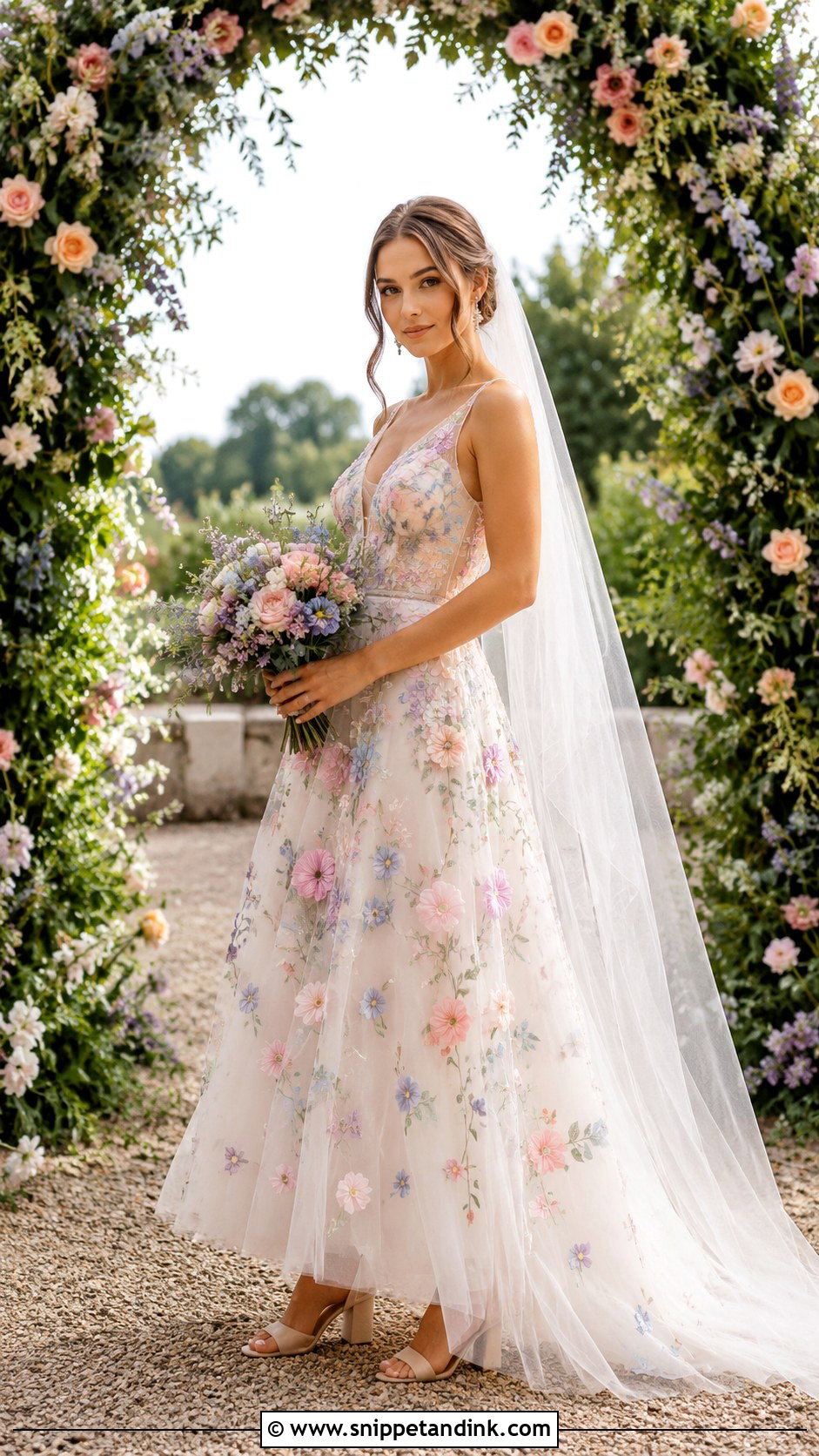
Pink, lavender, peach and blue flowers on airy tulle or organza can look like a garden, or like a confused one. What keeps it calm is embroidery that thins toward the hem and a bouquet of white flowers and greenery, which gives the eye somewhere to rest. Neutral block heels, a sheer fingertip veil and small drop earrings finish it, with fresh makeup and softly pinned hair. For outdoor venues ask for a practical bustle and skip a long train that’s hard to lift. Heel protectors stop narrow heels sinking into lawn.
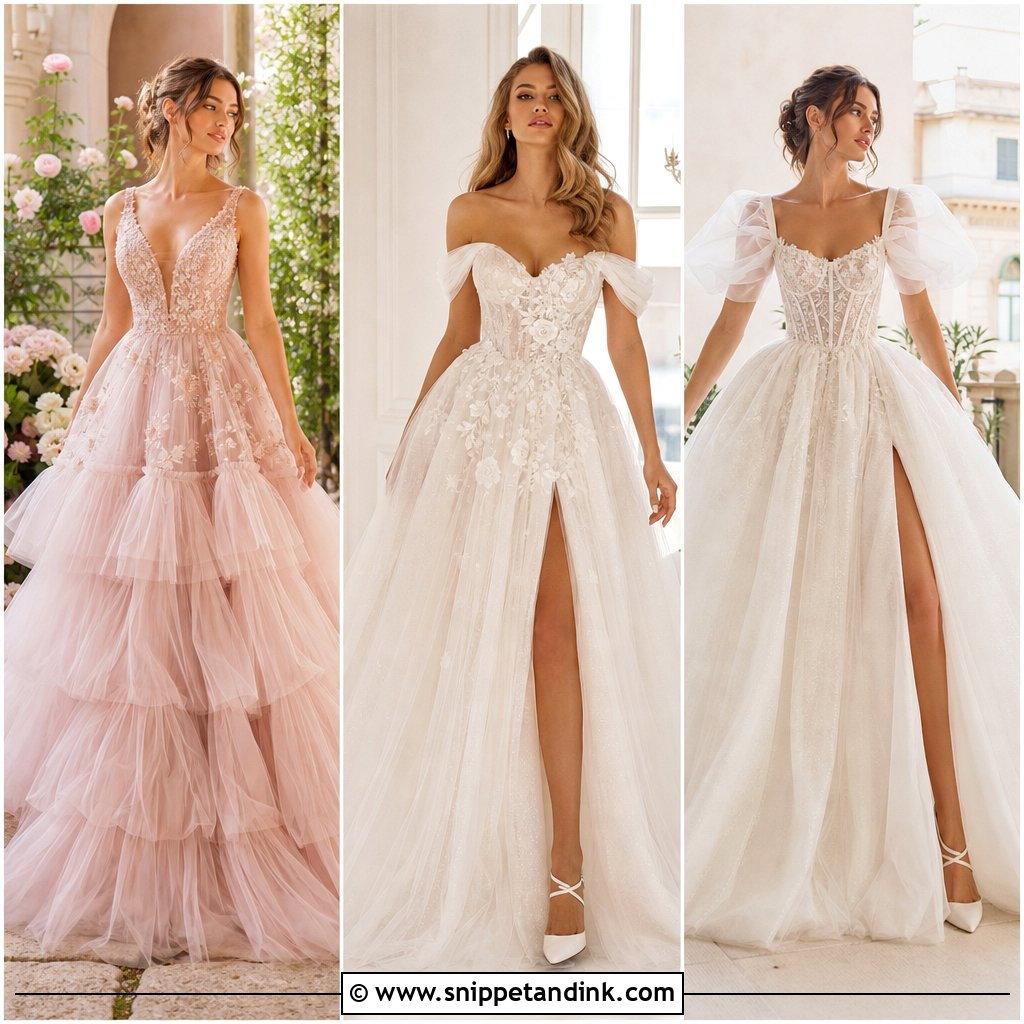
15. Black Floral Wedding Dress
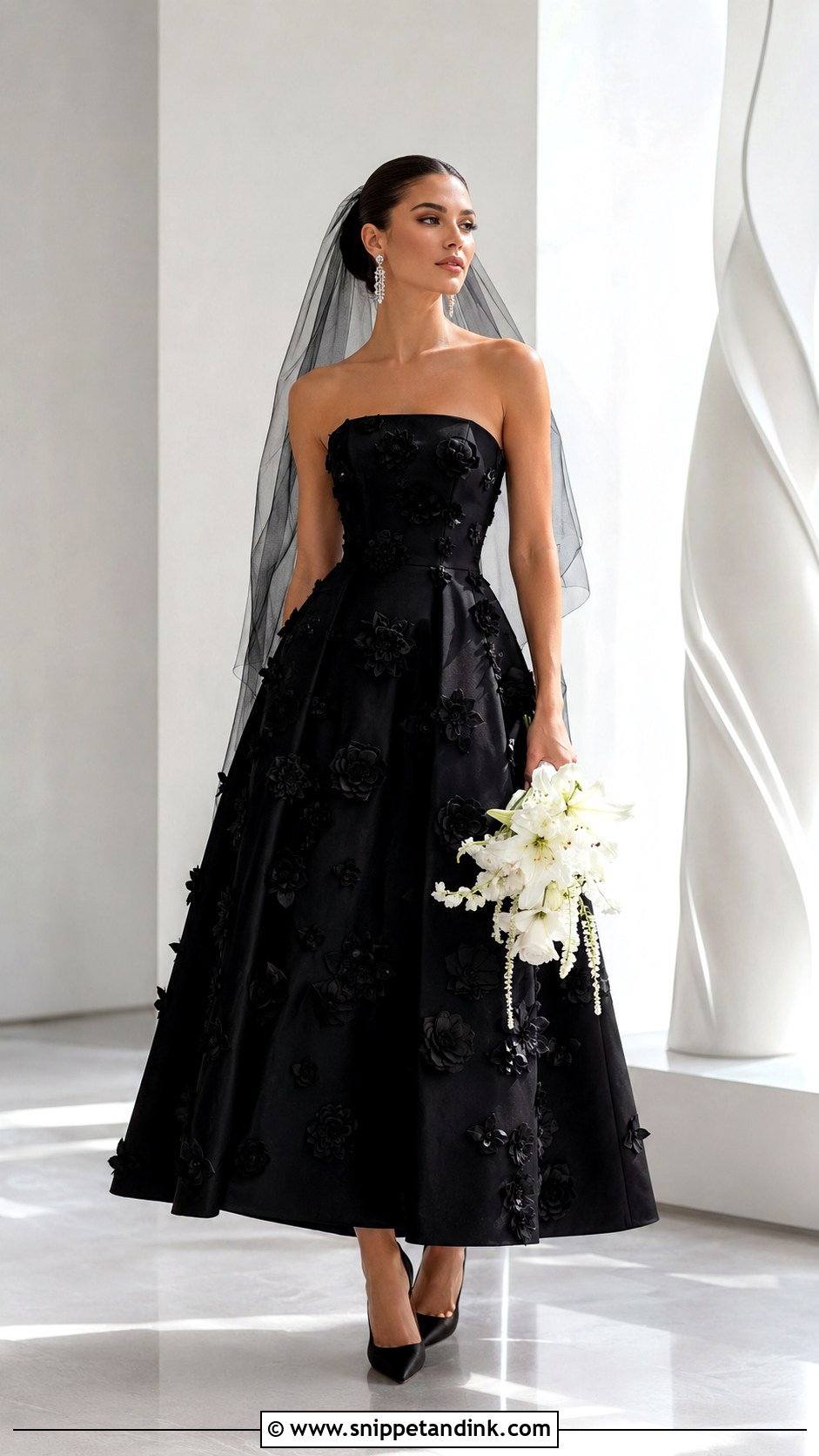
Black flowers turn the whole bridal idea on its head. Tonal black appliqués on black tulle give a dramatic monochrome; colored embroidery on black lets the flowers jump out. A fitted bodice and full A-line skirt keep it formal and celebratory. Black pointed heels, crystal earrings and a sleek low bun suit it. A sheer black veil commits to the drama, while an ivory one creates deliberate contrast. Carry white flowers to lift the palette. Black swallows detail in dim rooms, so I test it under the actual venue lighting. Textured flowers and a lighter lining help keep the design visible in photos.
16. Floral Cape Wedding Dress
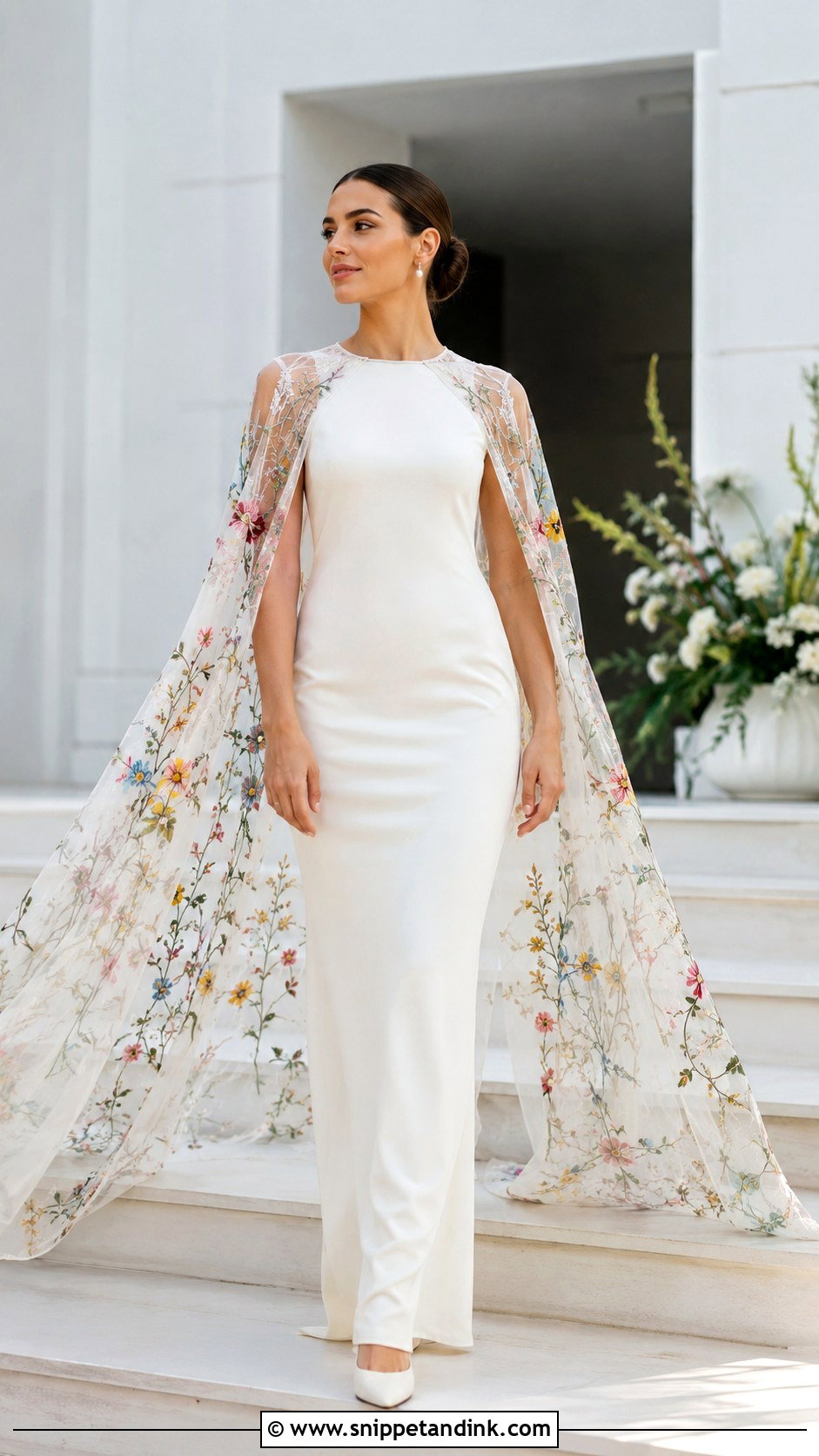
A cape gives you layers without sleeves or a standard veil. Start with a plain crepe, satin or mikado column or A-line, then add a sheer cape embroidered at the shoulders, back and hem. The simpler the dress, the more the cape shows. Pointed ivory pumps, quiet earrings and a polished updo suit it. The cape must be anchored at the shoulders so it doesn’t drag the neckline backward, and a detachable one comes off for dinner. I match its length to the train so the two don’t fight. Colored embroidery on ivory, or tonal flowers over a contrasting lining, gives the clearest effect.
17. Floral Veil With Simple Wedding Dress
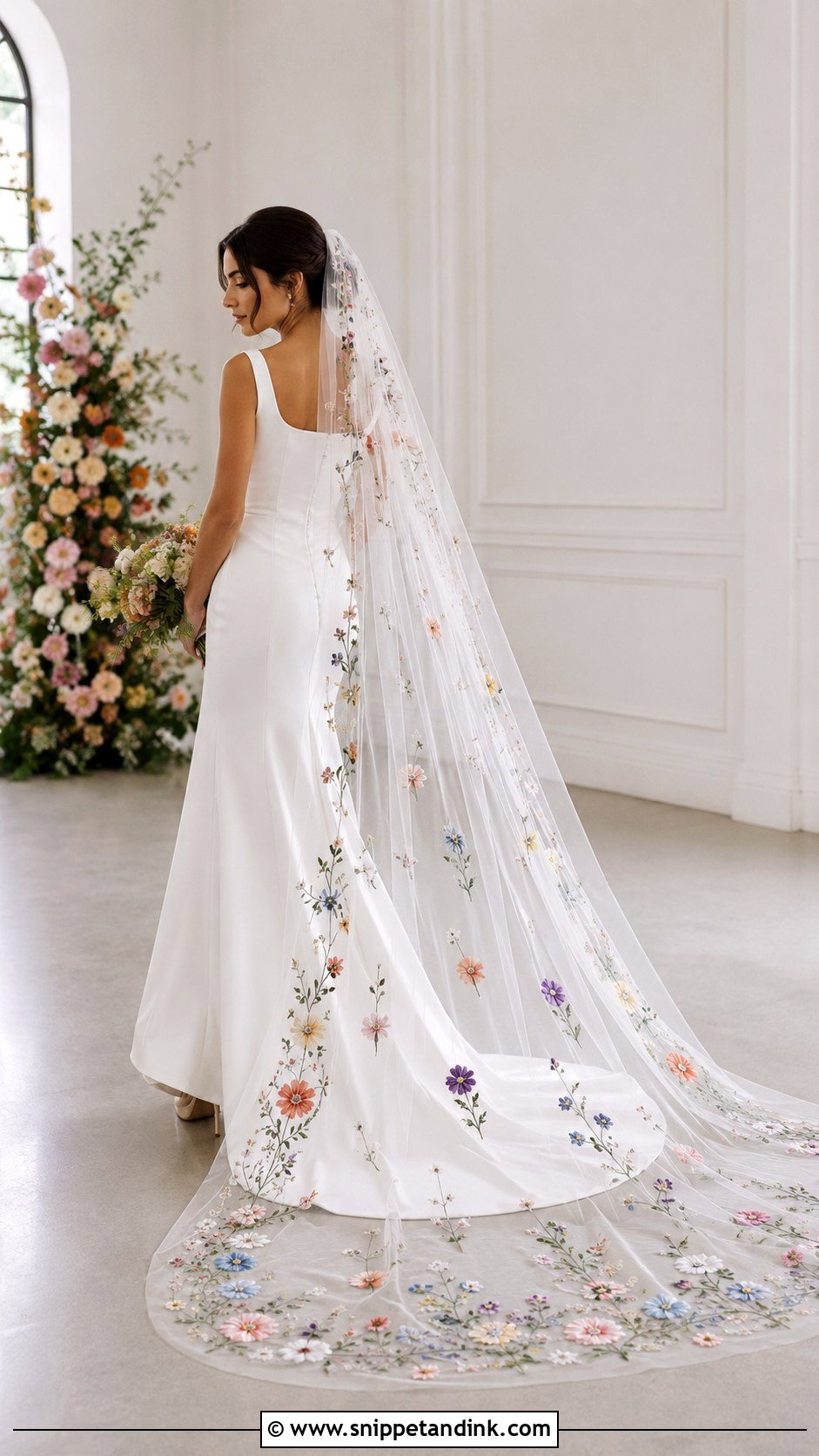
Sometimes the flowers belong on the veil, not the dress. A clean satin or crepe gown with a square, scoop, or strapless neckline pairs well with a long veil embroidered around the edge or scattered along its length. Colorful blooms feel playful; ivory lace motifs feel traditional. Pearl earrings, pointed heels and a smooth chignon give the veil a firm base, since a heavy embroidered veil needs a comb anchored into a solid bun. Keep the bouquet simple. Bring the veil to your final fitting to check that it doesn’t hide covered buttons, a bow or the line of the train.
18. Plus Size Floral A-Line Wedding Dress
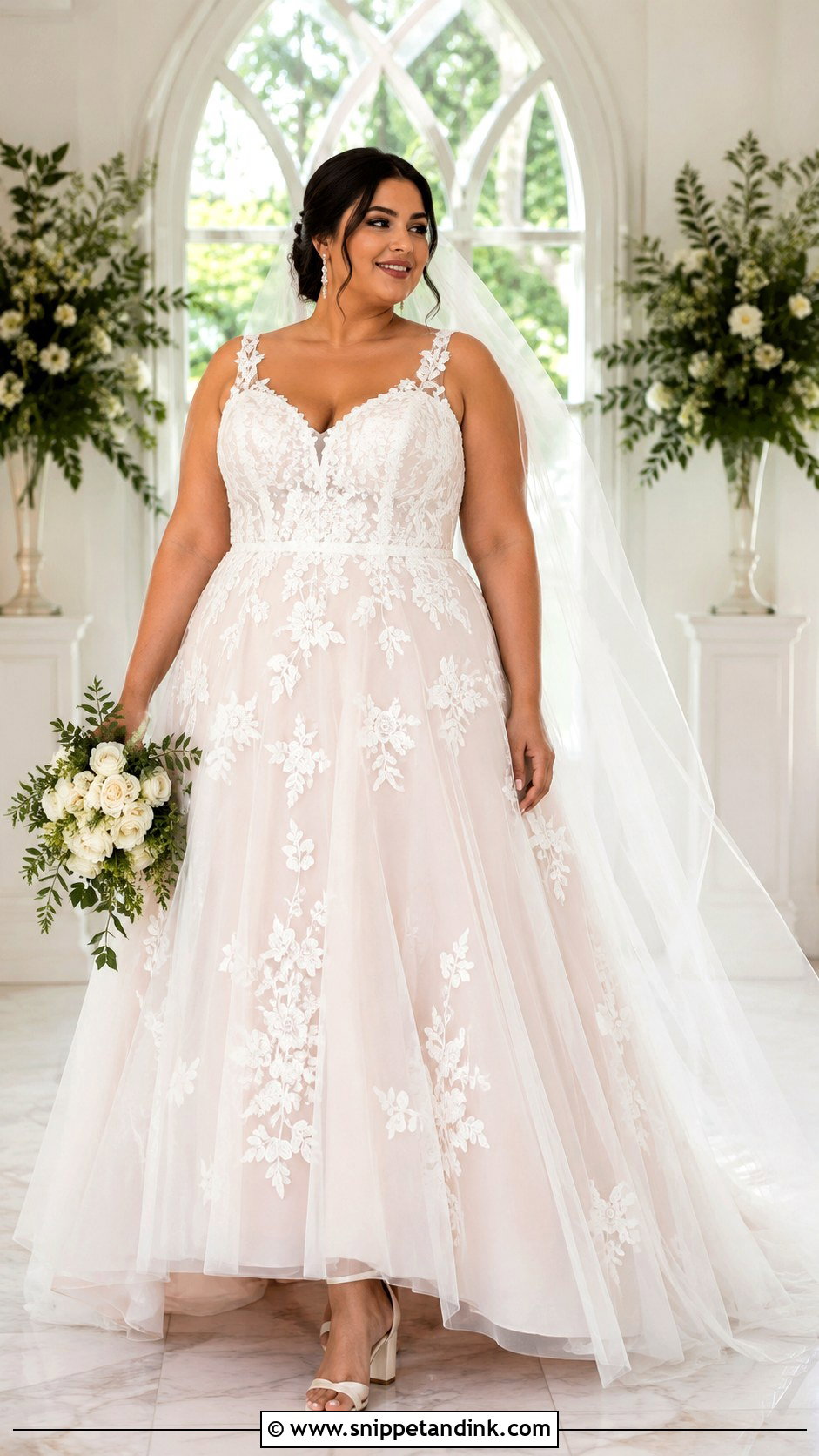
Structure is what makes this dress comfortable. A bodice with wider or adjustable straps, a secure waist seam and a skirt that falls smoothly over the hips gives dependable support. Floral lace laid diagonally or in spaced clusters leads the eye through the whole silhouette. Pick a lining shade that shows the appliqués clearly without harsh contrast. Stable block heels, drop earrings, a soft updo and a plain chapel veil finish it. I insist alterations happen in the exact undergarments and shoes for the day. Good bust support, balanced straps and an easy bustle do far more than shapewear ever will.
19. Modest Floral High Neck Wedding Dress
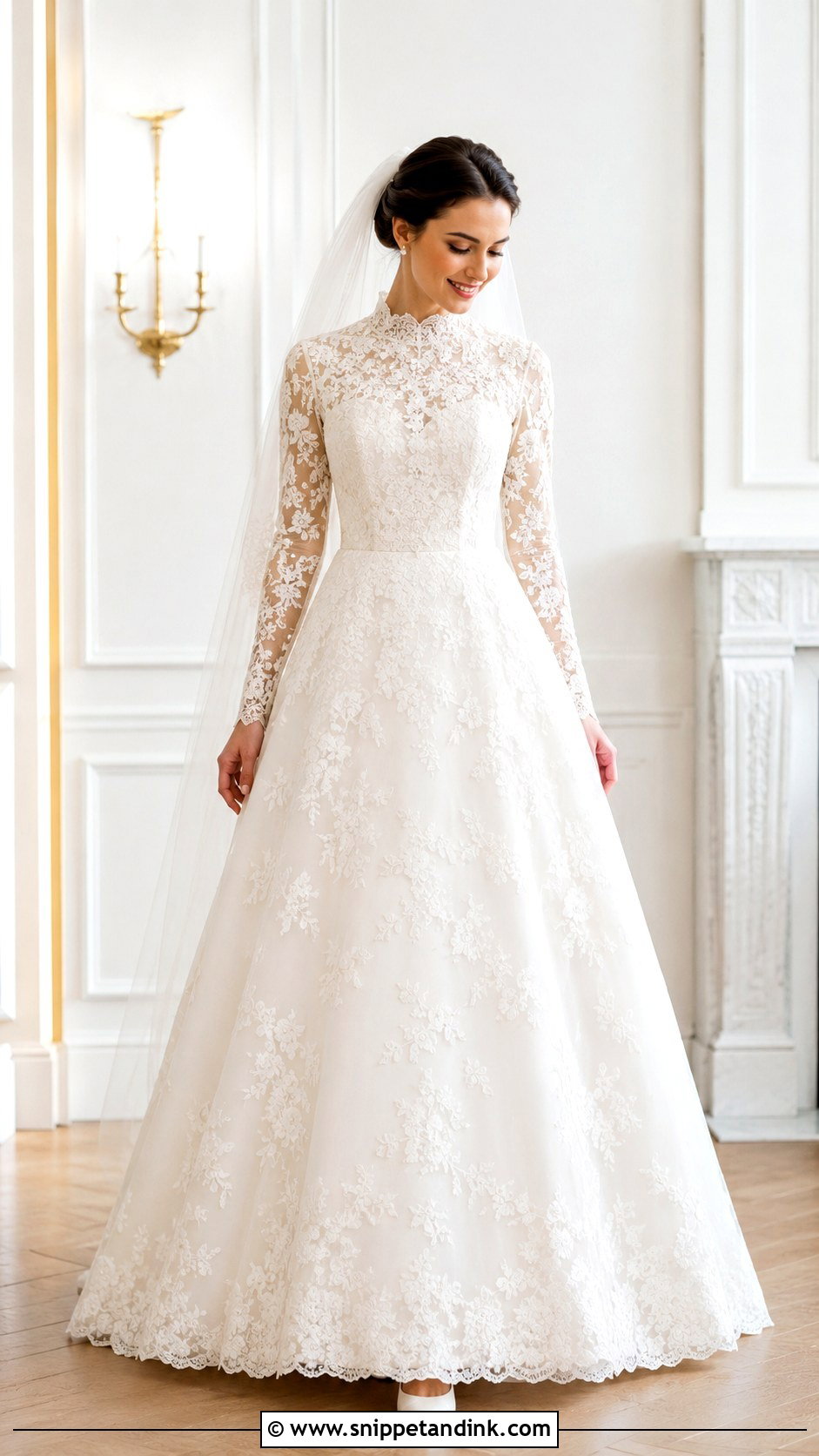
Coverage and softness can sit together. An illusion or lined high neck with delicate flowers running onto long sleeves, a natural waist and an A-line skirt keep it balanced. Closed-toe shoes, pearl studs and a neat low bun suit it, with a plain veil worn under the hairstyle so layers don’t pile up at the throat. Keep the bouquet simple if the lace is busy. The collar is my main check: turn your head both ways and look down at your phone. If it rubs or pulls, ask for a softer lining. A row of covered buttons down the back is a quiet finishing touch.
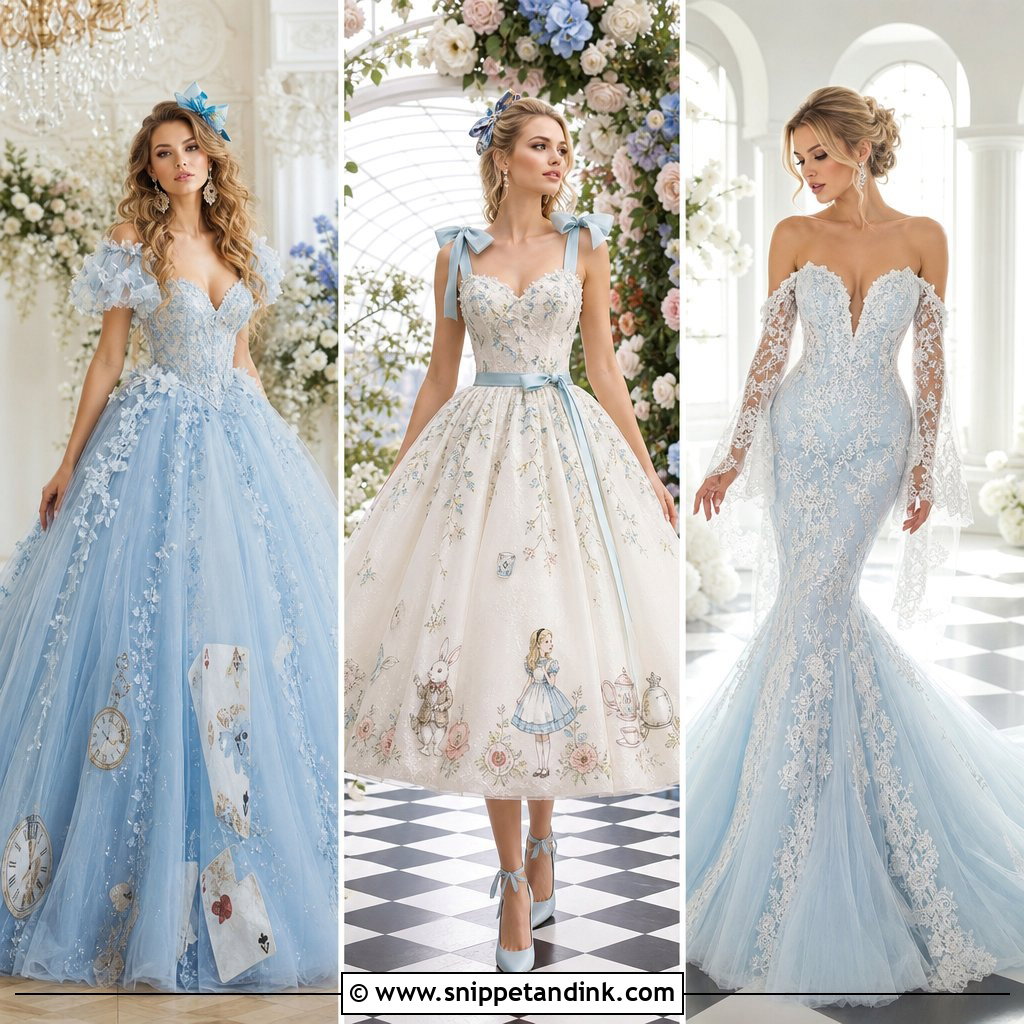
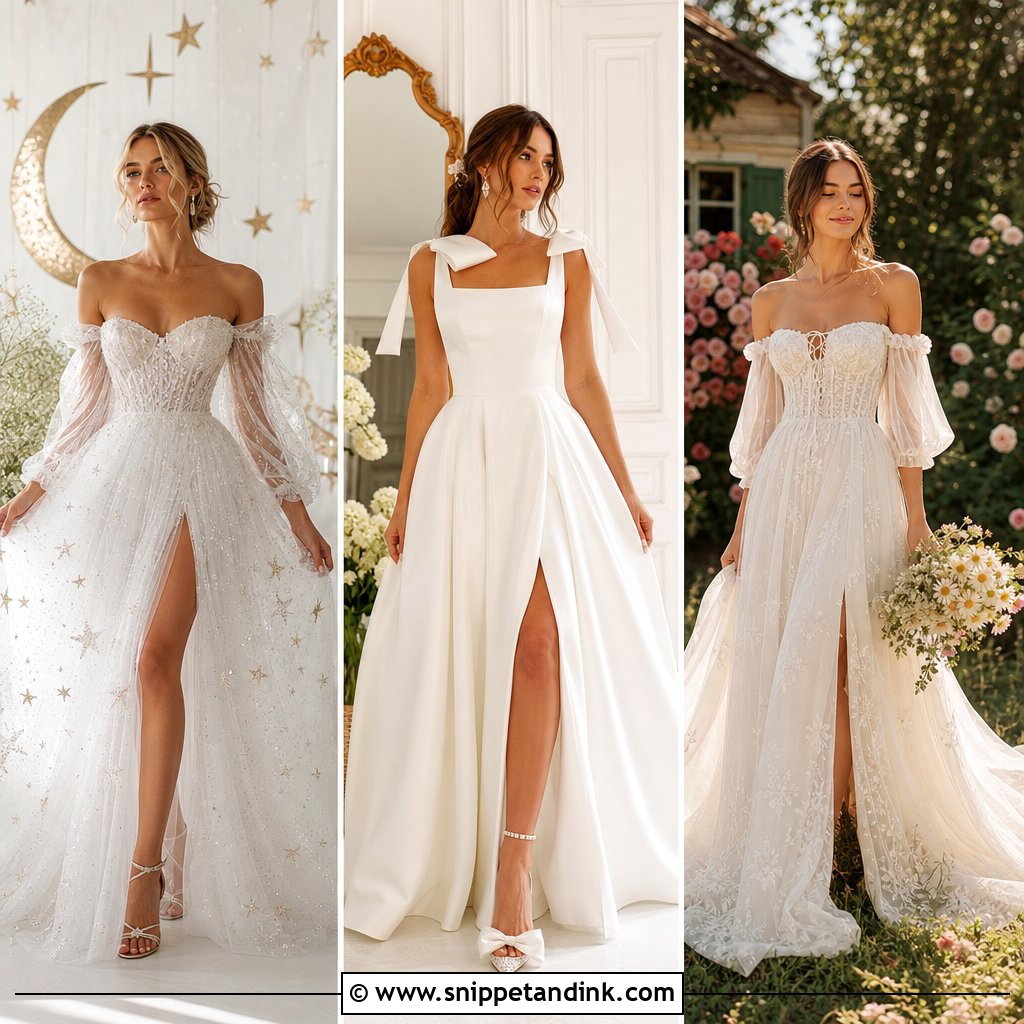
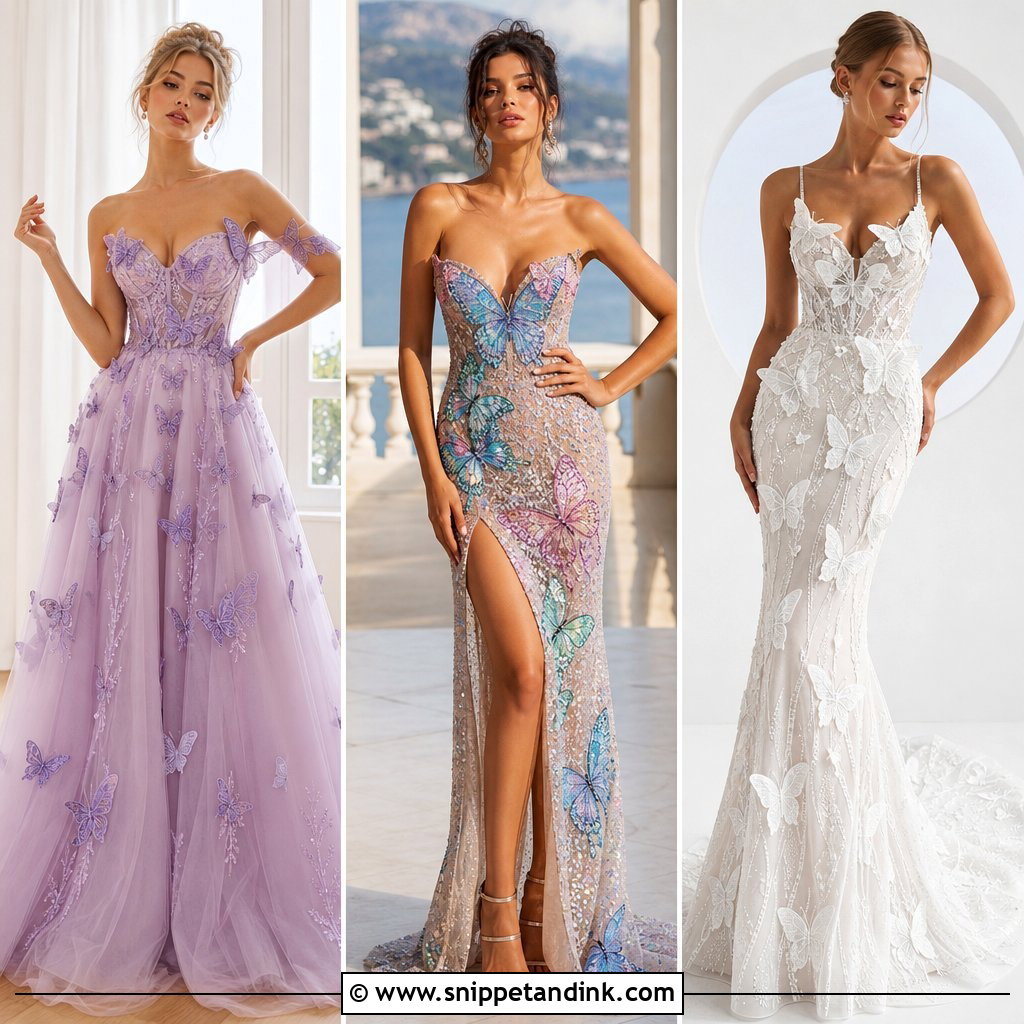
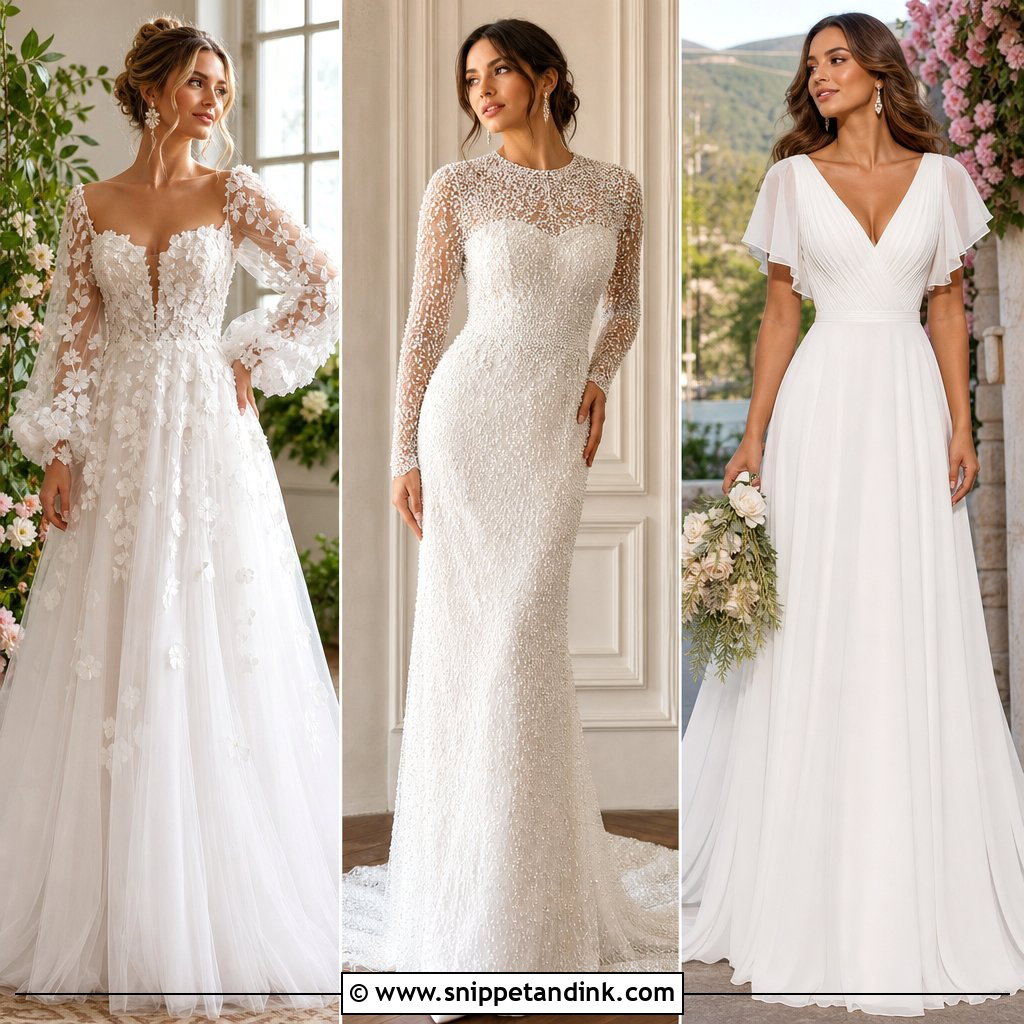
20. Vintage Floral Jacquard Wedding Dress
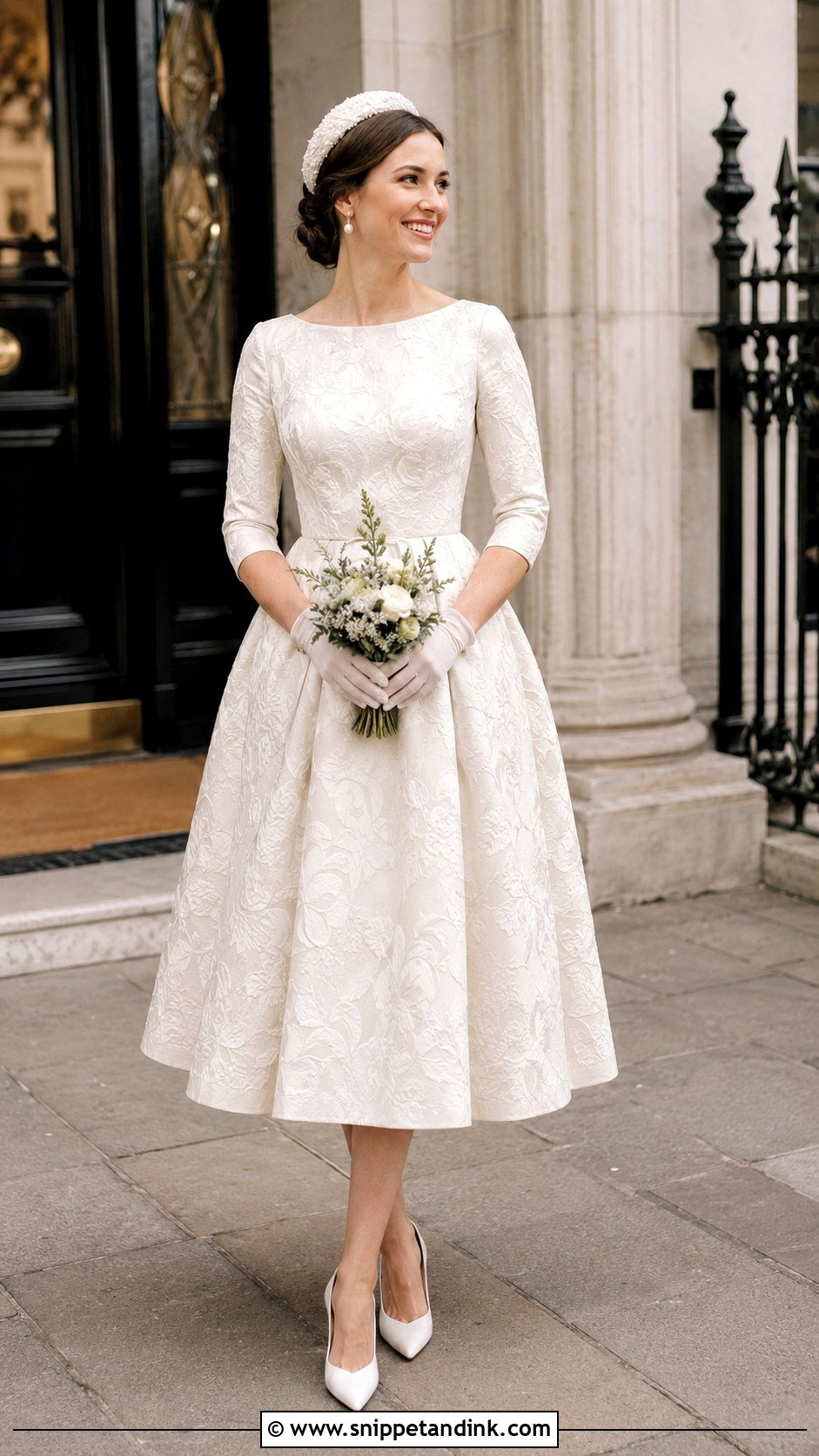
Floral jacquard weaves the pattern into the cloth, so the flowers appear as raised texture that catches light without lace, sequins or thread color. It has body, which suits structured shapes: tea length, A-line or a full ball gown with a defined waist. Pointed pumps, pearl earrings and a compact bouquet keep it vintage; elbow gloves work if the event is formal. Short veils suit tea length, cathedral veils the full gown. Because jacquard is stiffer than tulle, the waist tailoring must be precise. I steam it from inside and hang it with space around it, since a crushed jacquard crease is slow to release.
Ivory Petals, Bright Sun and the Camera
Flowered dresses photograph differently from plain ones, and a few minutes of planning with your photographer protects the detail you paid for.
White on white
Ivory appliqués on an ivory dress can wash out in hard midday sun, because the bright exposure flattens the small shadows that make petals readable. Open shade, a covered porch or late afternoon light keep the texture. A nude or blush lining helps too, which is why I steer people toward it when the flowers are tonal.
Color and dark gowns
Warm reception lighting pushes colored embroidery toward yellow and orange, so pale blue can look green after dark. Black gowns need light on them or the flowers vanish. Ask for a set of detail shots of the dress before you put it on, hung by a window, and a few close portraits in good light before the ceremony. Those are the photos that show the flowers properly.
Wear the Flowers, Then Forget About Them
Flowers work best when you can forget you’re wearing them and just enjoy the day. Settle the silhouette first, then decide between ivory lace, colored embroidery, printed organza or dimensional petals. Let venue and season guide you without ruling out a design that feels right. Bring your veil, shoes and undergarments to fittings so everything is judged together, and look at the gown from every side, in daylight and in the evening. That’s how you end up with a flowered outfit that feels personal and complete.
You'll Like These Ideas:



Leave a Reply