
A jellyfish gown is about how fabric moves. The bell-shaped top, the translucent layers and the trailing strands only work if the cloth floats when you walk and settles when you stop. Done well, it reads sculptural rather than fancy dress; done badly, it looks like a party costume. Designers usually build the effect with rippled organza, airy tulle, raised embroidery or cascading ruffles, and the idea fits ball gowns, slim columns, minis and soft beach dresses alike. Pearls, iridescent finishes and pale sea colors push the theme further, while plain ivory keeps it quiet. For each of the twenty looks below I’ve added shoes, jewelry and veil choices, plus what I’d watch for at the fitting.
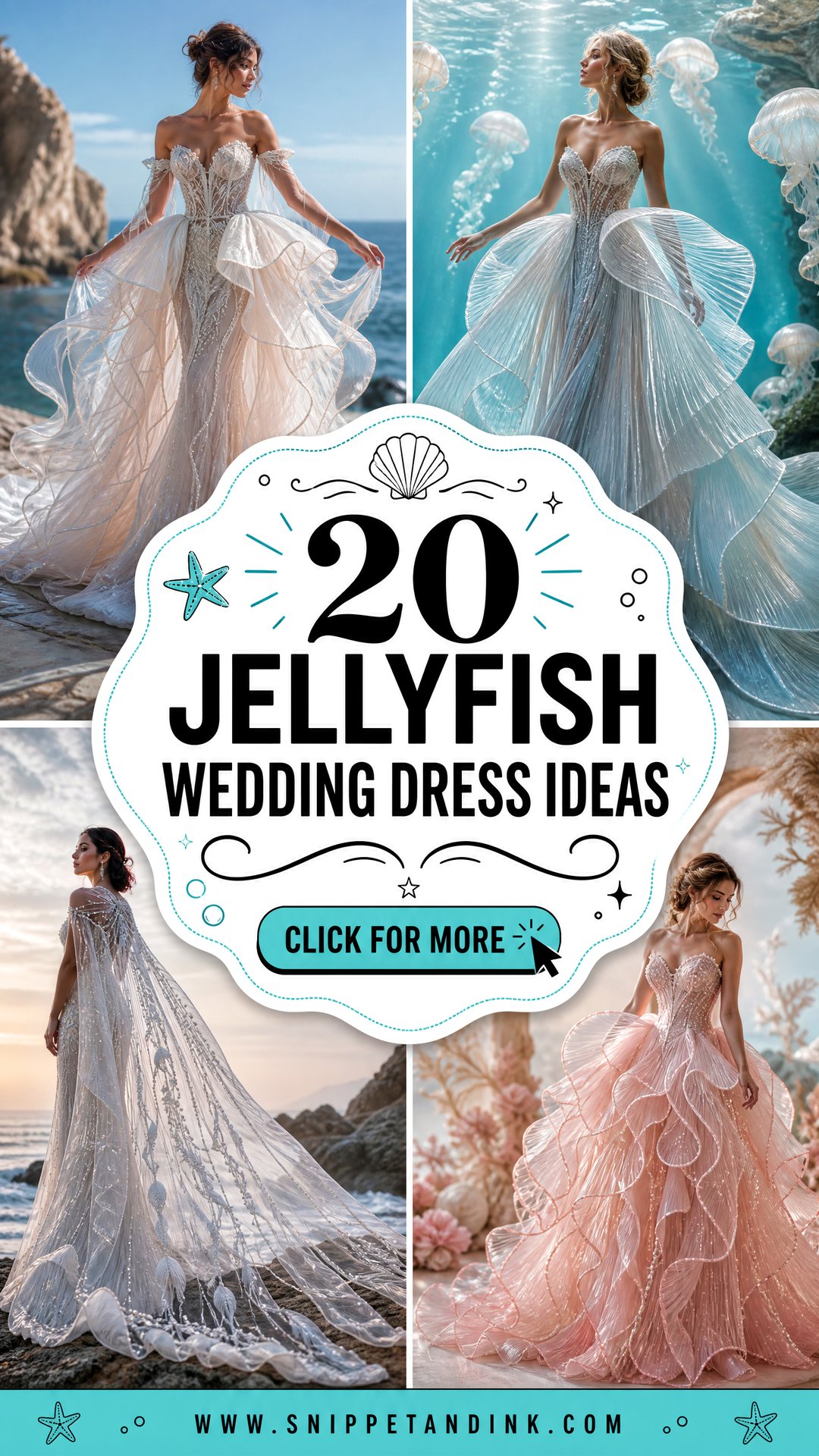
Organza, Tulle and Chiffon Float in Very Different Ways
The fabric decides whether a jellyfish gown drifts or just sits there, so I talk about cloth before I talk about silhouette. Each of the three main fabrics gives a different kind of movement and has its own problems.
Organza
Crisp and slightly stiff, organza holds a rounded bell and sculpted ruffles better than anything else. The trade-off is creasing: it takes sharp folds when packed or sat on, and it rustles audibly. Silk organza drapes more softly than polyester, which can look glassy in flash photographs.
Tulle
Soft and cloudlike, tulle gives the gentlest float and the most volume for its weight. It crushes in a car but recovers with steam. Fine bridal tulle snags on jewelry, bouquet wire and rough walls, so I keep bracelets smooth with this fabric.
Chiffon
Chiffon is the most fluid of the three and moves in the faintest breeze, which is why it suits beach versions. It can’t hold a sculpted shape by itself, and its cut edges fray, so streamers need a fine rolled hem.
If you can, ask for a swatch of the actual fabric and hold it in front of a fan or an open window. Thirty seconds of watching it move tells you more than any sample photo.
1. Sculptural Organza Jellyfish Wedding Dress
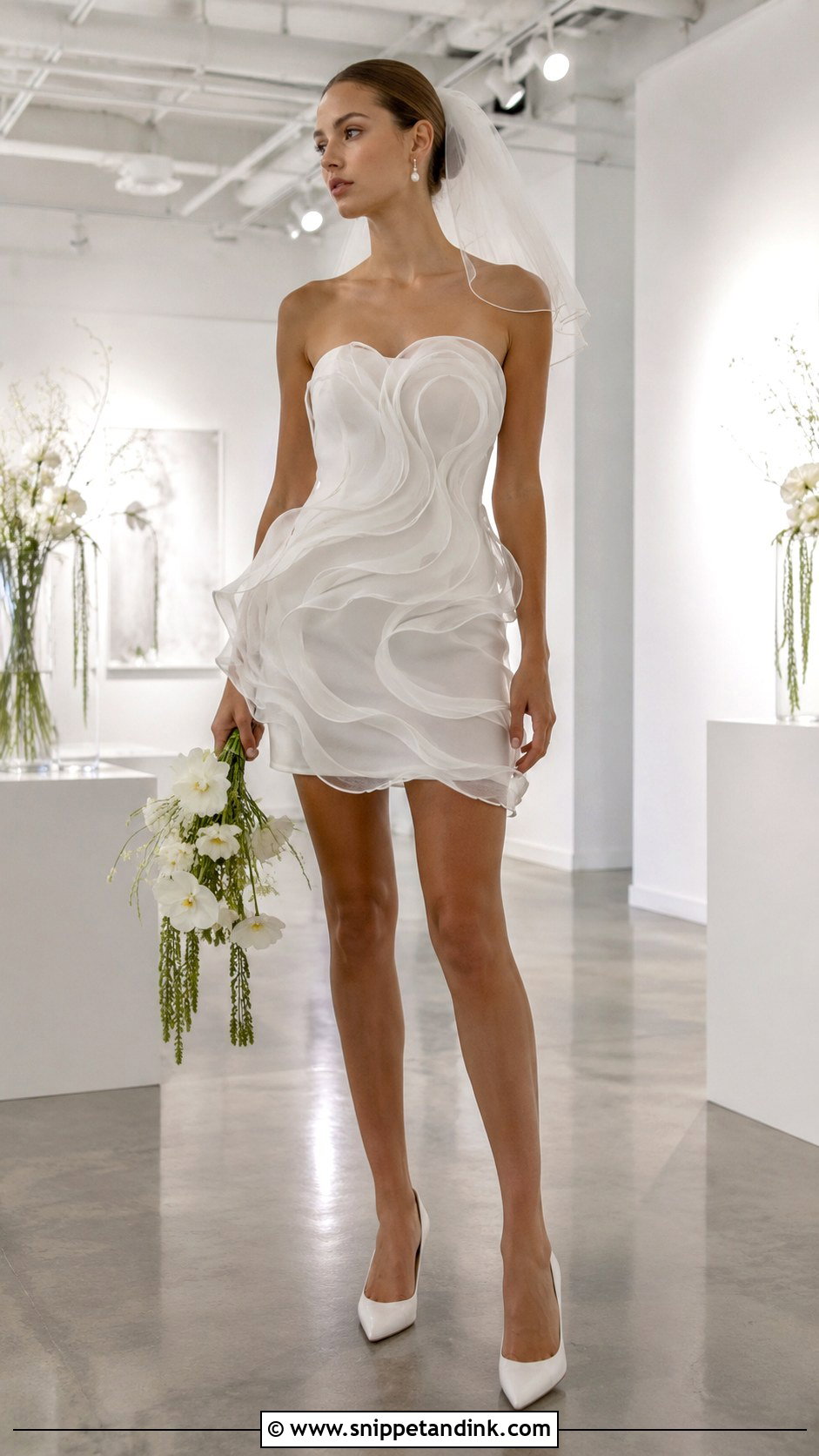
Curved organza panels over a fitted mini or column base give the rounded jellyfish bell. The panels sprout from the waist and shoulders, and they should look like they’re floating, not starched; organza that’s too heavy reads as cardboard. I ask brides to walk the length of the salon in it, because the panels should sway a beat behind each step. White pointed pumps, pearl drops, a compact satin clutch and a sleek bun or low ponytail keep the volume in check. Skip the long veil for a short transparent blusher in the same weight of fabric. It suits a modern ceremony, a courthouse wedding or a reception change.
2. Layered Tulle Jellyfish Wedding Dress
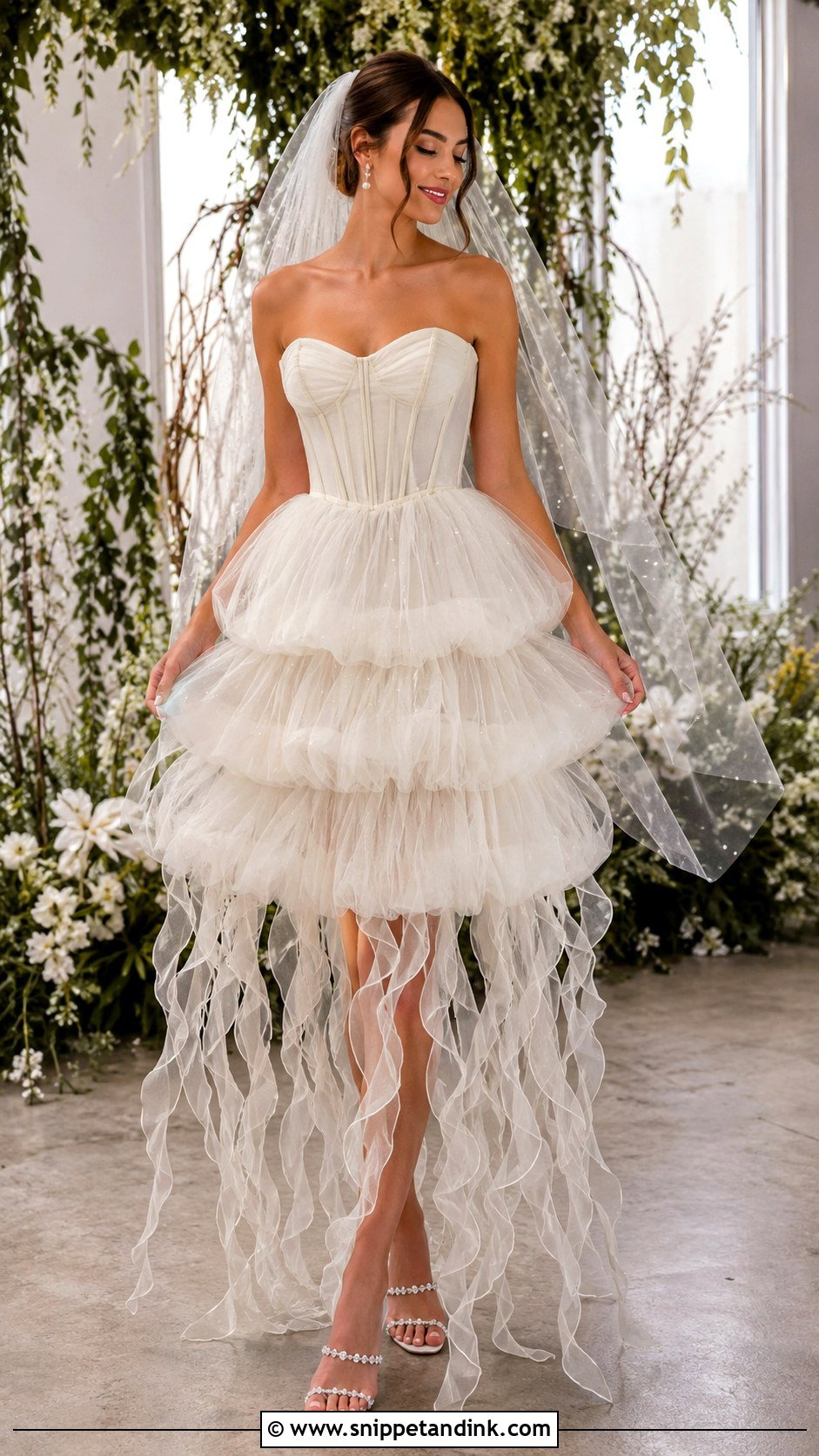
Tulle is the softest version of the idea: a fitted bodice falling into circular tiers, with a few narrow ruffles hanging below the main skirt like tendrils. Ivory, soft white and pale gray-blue show the construction without tipping into theater. Crystal sandals, a thin silver bracelet and a fingertip veil scattered with pearls finish it, with loose waves or a soft twisted updo. Layered tulle builds a lot of width, so I keep the bouquet small and compact. One warning: those hanging ruffles catch on chair legs and heels, so ask for them to be tacked lightly at intervals if you’ll be seated for a long dinner.
3. Pearl Beaded Jellyfish Wedding Dress
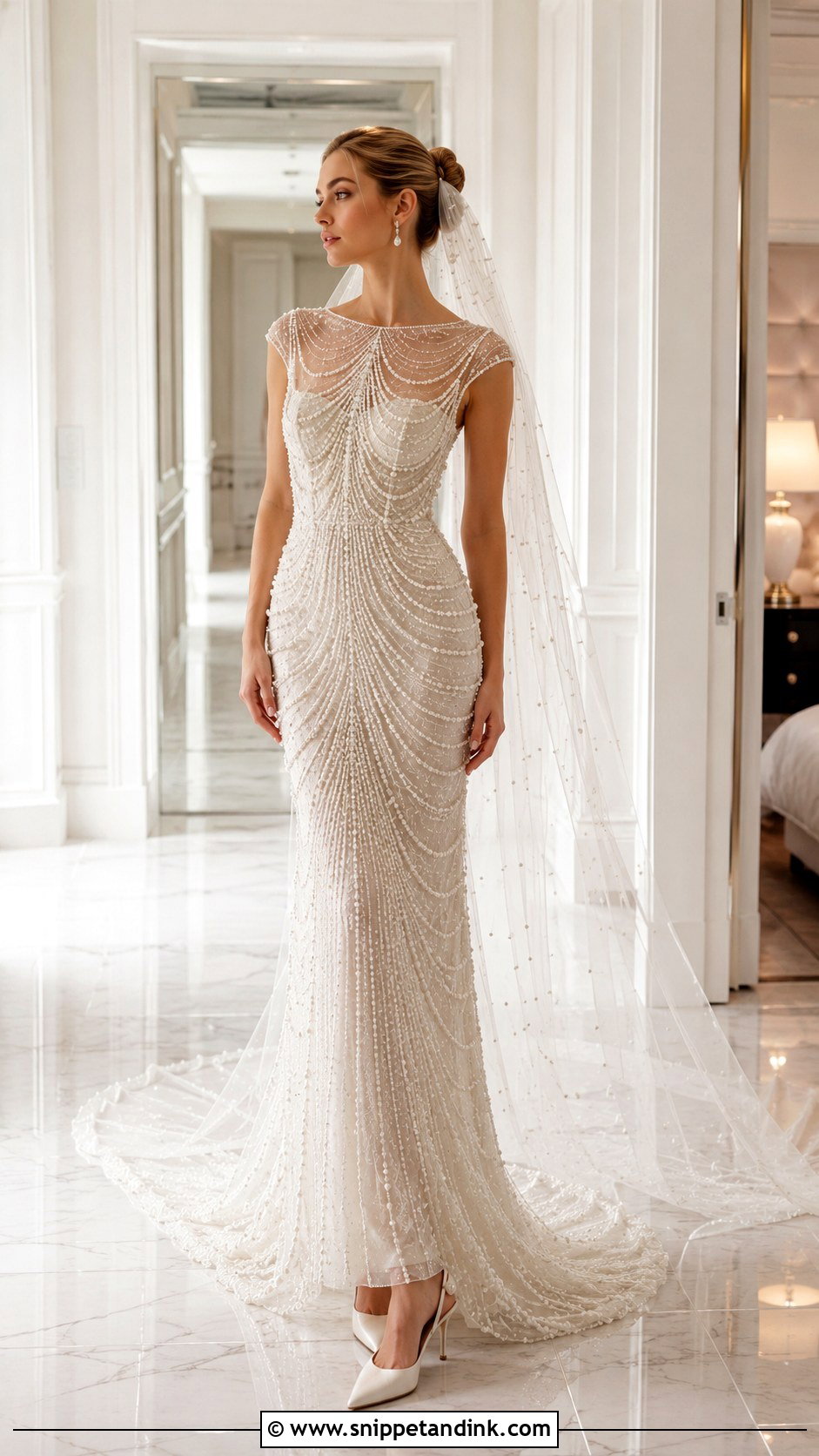
Pearls scattered over a flowing gown look like tiny bubbles. On a slim sheath or gentle fit-and-flare, pearl strands that lengthen toward the skirt and train create movement without big ruffles. Over a lightly lined illusion neckline, the beads seem to hang in the air against the skin. Pearl earrings, ivory slingbacks and a plain satin clutch are enough; a busy necklace would fight the bodice. A sheer cathedral veil with widely spaced pearls ties the front and back together. Hanging strands do add weight, and loose strands snag, so I’d check every anchor point at the last fitting and pack a few spare pearls and a needle in the emergency kit.
4. Blue Ombre Jellyfish Wedding Dress
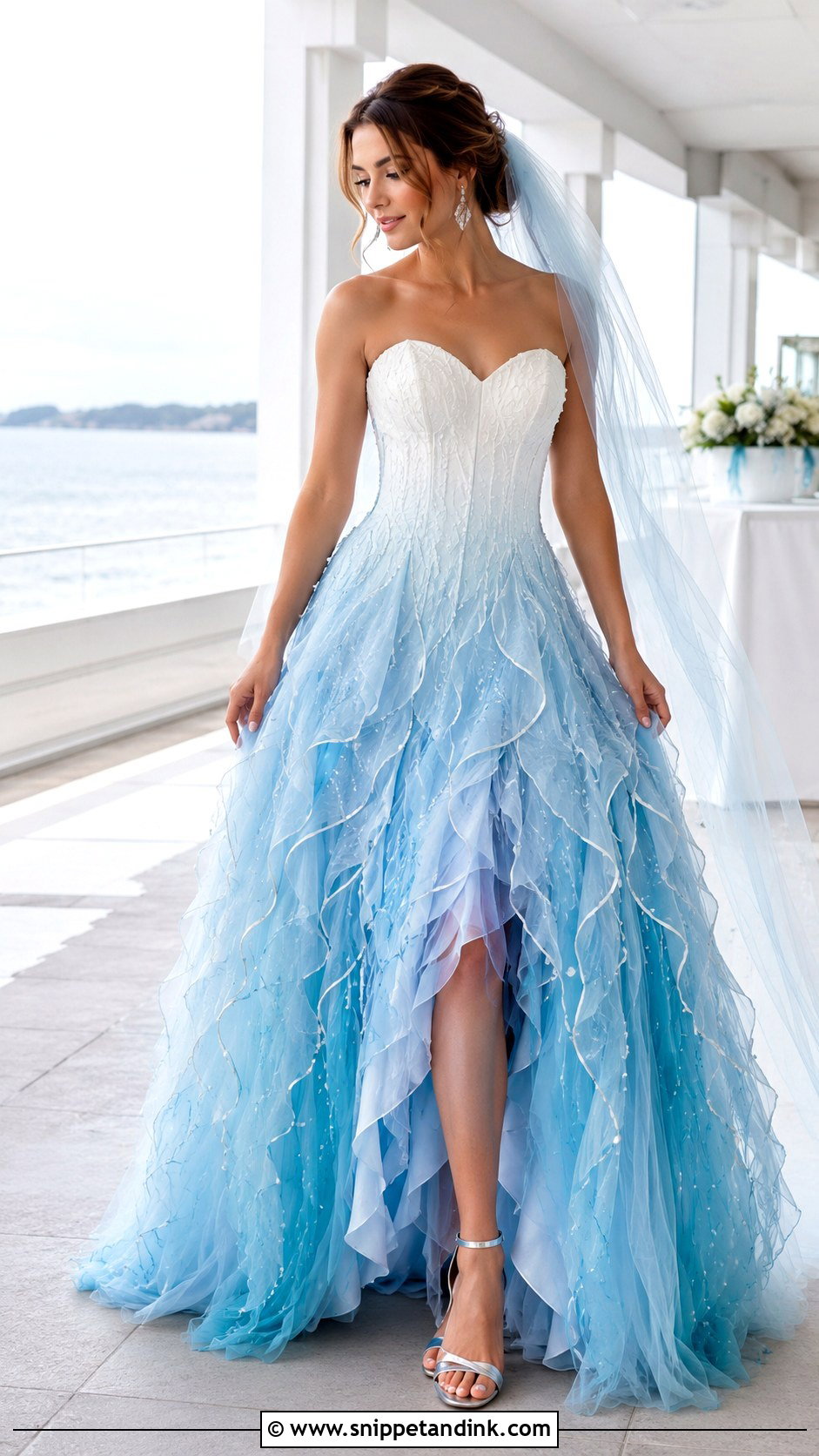
Color is the quickest way to say sea, and a blue ombre gown does it while staying bridal. The bodice starts white or icy silver and deepens through powder blue and aqua to muted ocean blue at the hem. Tulle or chiffon blends the shades best because the layers overlap. Cascading strips on the skirt can suggest tentacles without getting in the way. Silver sandals, aquamarine earrings, a pale blue comb and a clear or barely tinted veil leave the gradient visible. I wouldn’t match the makeup to the dress: fresh skin and a soft rose lip keep blue from draining the face. A coastal venue, an aquarium or a summer reception suits it.
5. Sheer Corset Jellyfish Wedding Dress
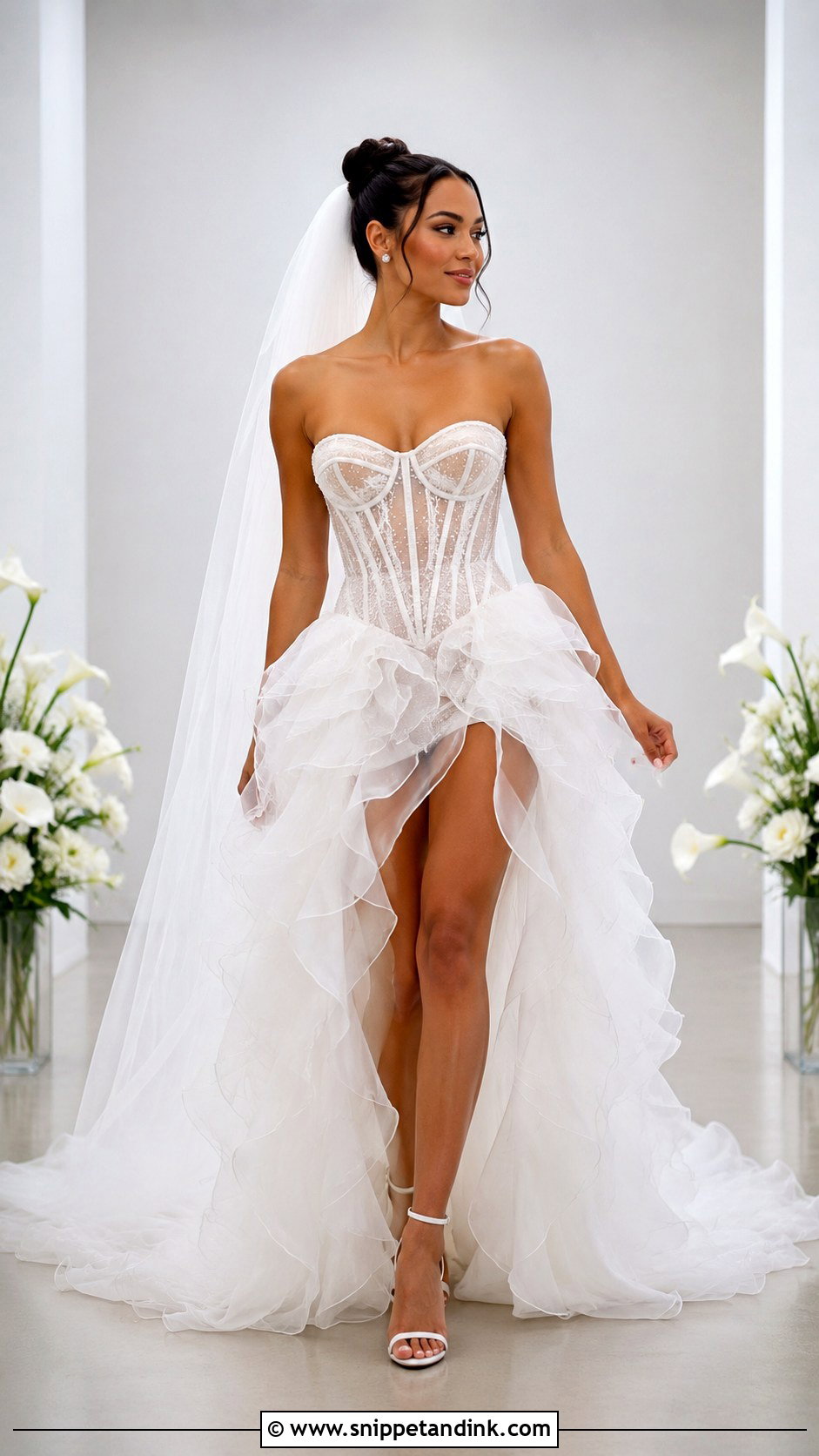
A boned sheer bodice gives the flowing skirt something firm to push against. Lace or organza appliques placed over the boning, with the skirt releasing into soft ruffles at the hip or knee, sets defined against drifting. Coverage under a sheer corset varies a lot between brands, and matching linings or added appliques can usually be arranged at the fitting. Satin ankle-strap heels, crystal studs, a fine bracelet, a long plain veil and a center-parted bun keep it uncluttered, with a small white bouquet trailing a little greenery. Galleries and evening receptions suit it.
6. Floral Applique Jellyfish Wedding Dress
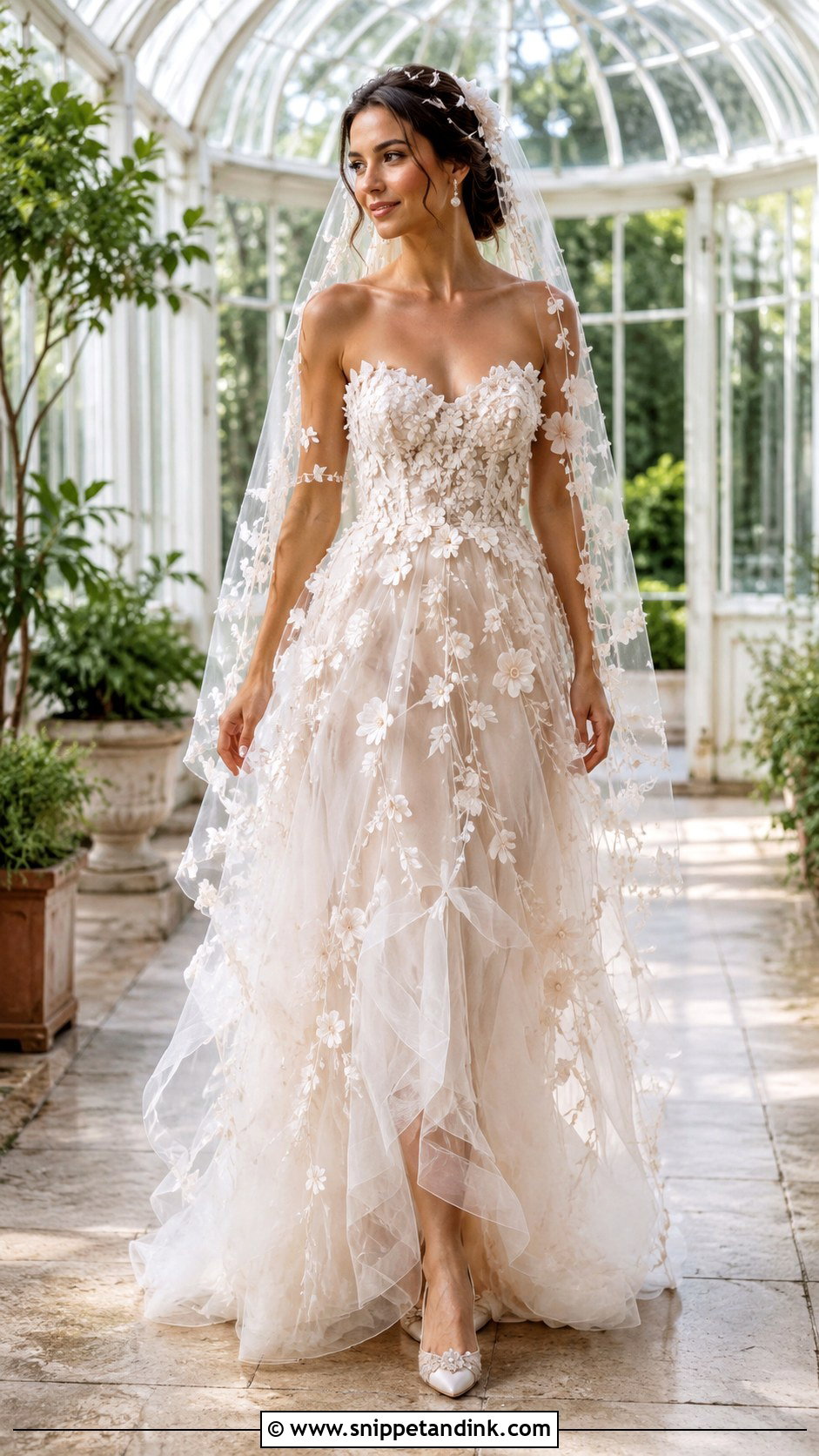
Floral appliques make an unusual shape feel familiar. Concentrate the petals on the bodice and let them thin into vines and trailing motifs down the skirt, over curved tulle flounces that give the floating shape. Ivory flowers keep it classic; a little blue or lavender pushes the ocean idea. Low embellished heels, small pearl earrings and a sheer veil edged in the same appliques finish it, with a loose low bun and a few face-framing pieces. Three-dimensional flowers crush when you sit or hug, so I’d steam and fluff them before portraits rather than after the meal. Gardens, conservatories and waterfront ceremonies suit it.
7. High Low Jellyfish Wedding Dress
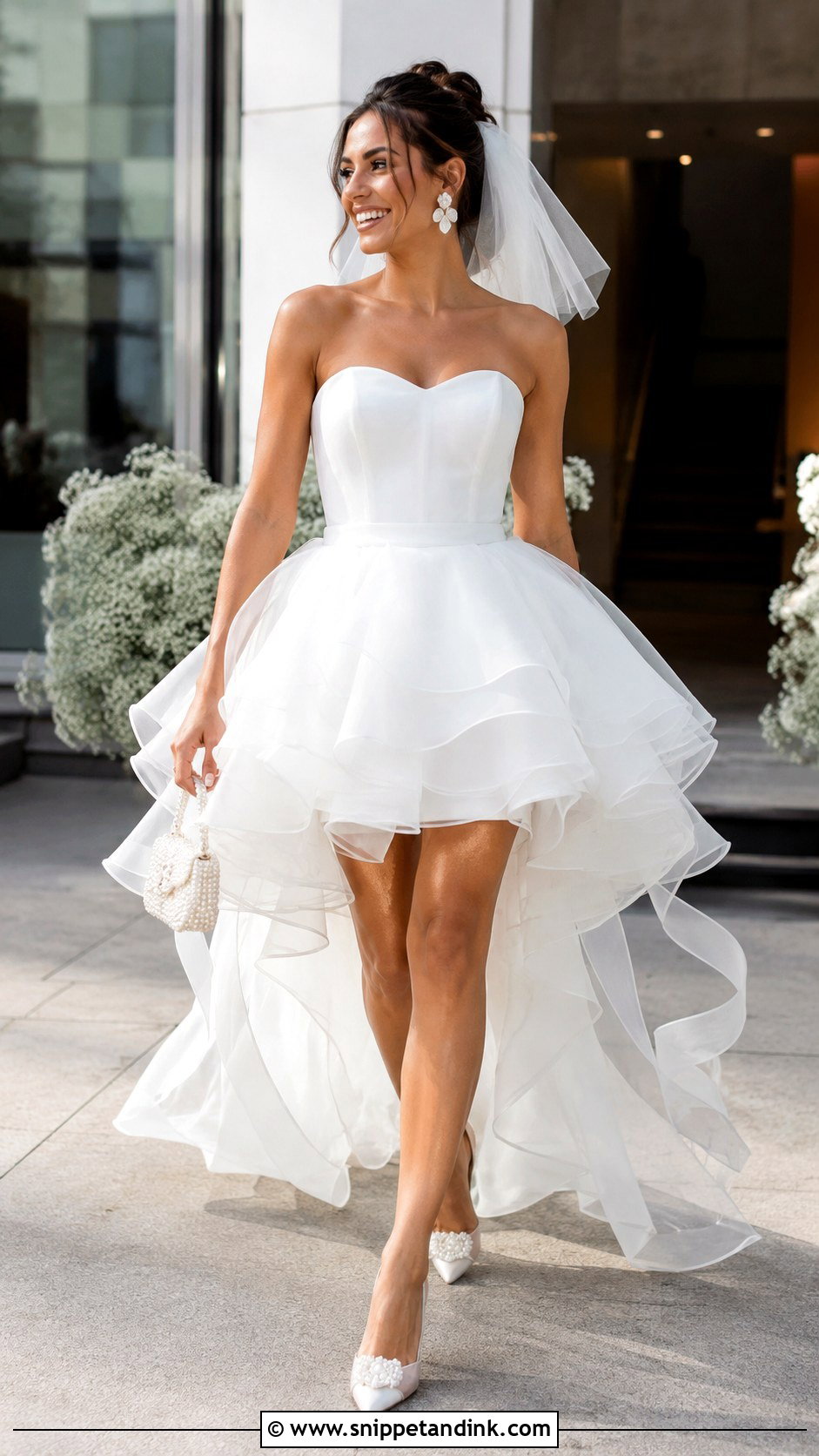
Short in front and long behind, a high-low jellyfish dress puts your shoes on show. Rounded organza or tulle layers cascade into the back, with narrow ribbon pieces beneath the overskirt that flick as you walk. Wear shoes worth looking at, such as decorated white pumps or metallic sandals, plus a structured mini bag and sculptural earrings. The veil should end above the longest skirt layer, or the two will tangle. A polished ponytail keeps it young. With an uneven hem already doing the talking, I’d leave the jewelry minimal and the bouquet small. It’s a strong second look or a city wedding dress.
8. Detachable Overskirt Jellyfish Wedding Dress
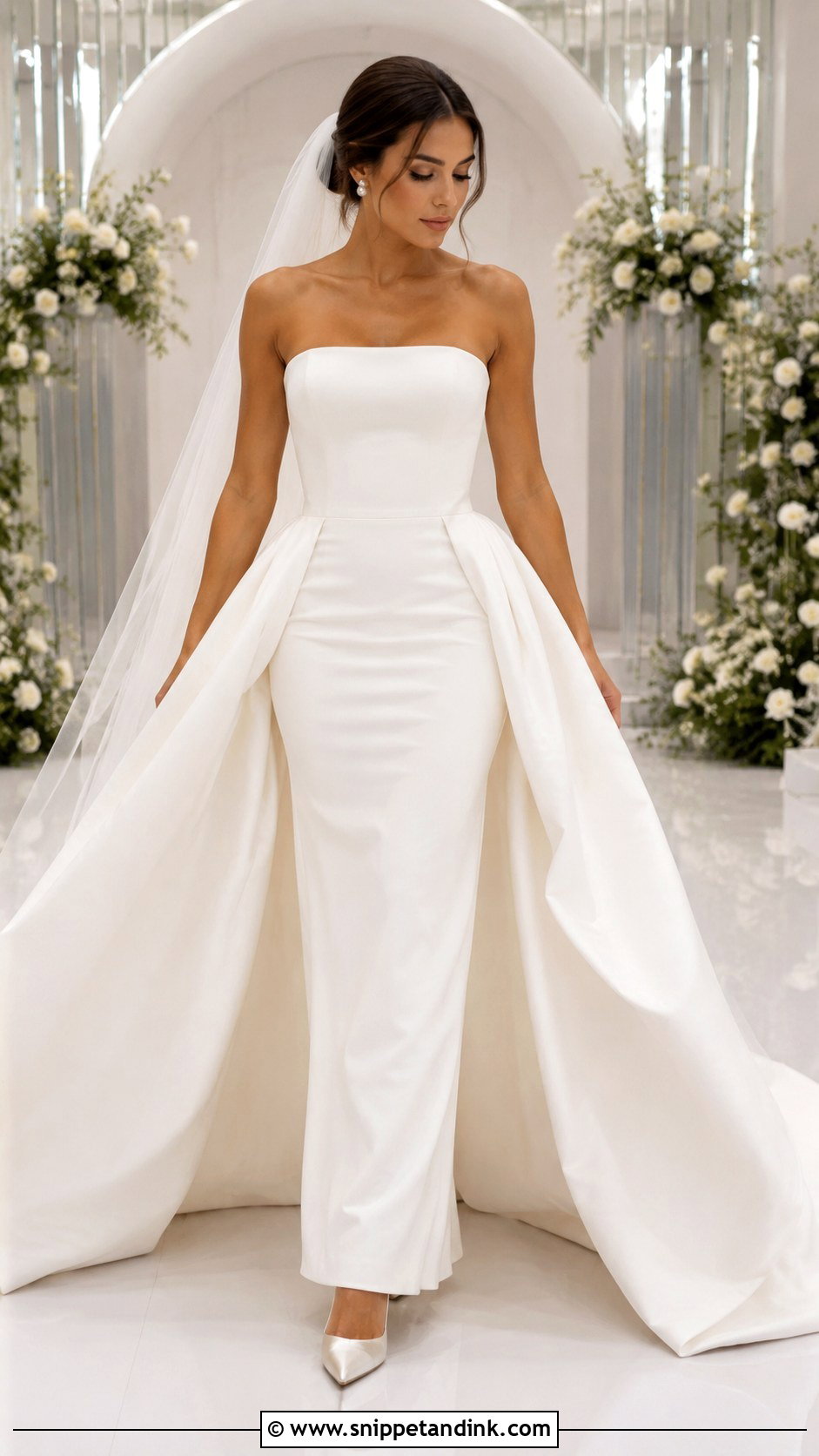
An overskirt gives you two looks from one dress. Start with a fitted crepe, satin or lace gown comfortable enough for the whole day, then add a voluminous organza overskirt with curved tiers, translucent flounces or floating ribbons. Pointed satin heels, modern pearl earrings and a long plain veil suit the ceremony; once the overskirt is off, a jeweled comb and a small wrist bag take over. The attachment must sit flat at the waist and come away quickly. I have brides practice removing it with the person who’ll help them, timed, because a fiddly fastening can eat into the first dance.
9. Column Jellyfish Wedding Dress With Train
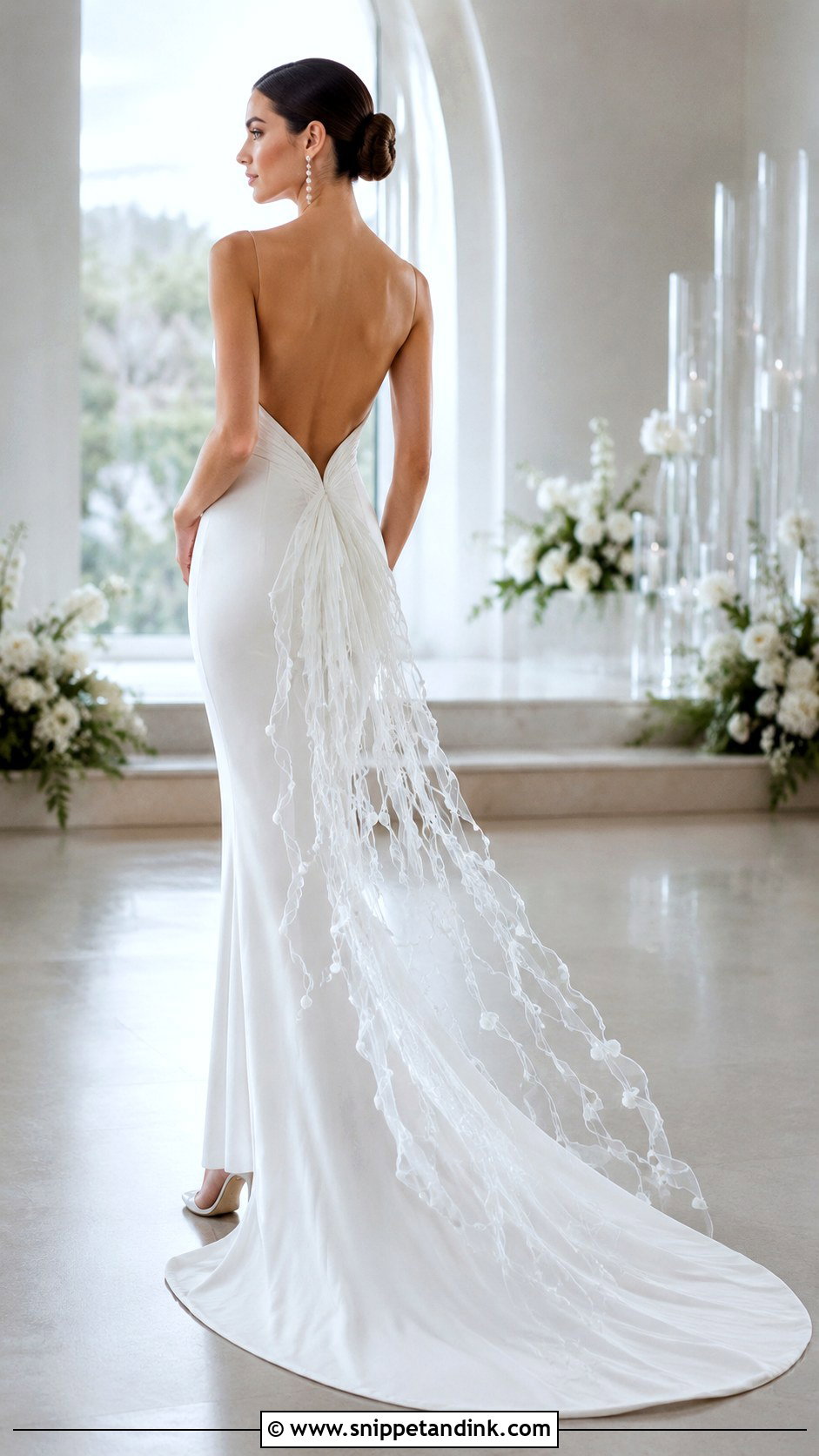
Here the front stays plain and the back does all the work. A slim crepe or silk column has narrow organza strips, pleated tulle or embroidered tendrils starting at the lower back and drifting into a train. Minimal white pumps, long drop earrings, a narrow cathedral veil and a sleek chignon keep the focus behind you, with a small architectural bouquet in front. Loose strips tangle when they’re bustled, so ask your seamstress to group them into a few bustle points rather than hooking each one. For a minimalist, one imaginative detail like this beats embellishment everywhere.
10. Pleated Jellyfish Wedding Dress
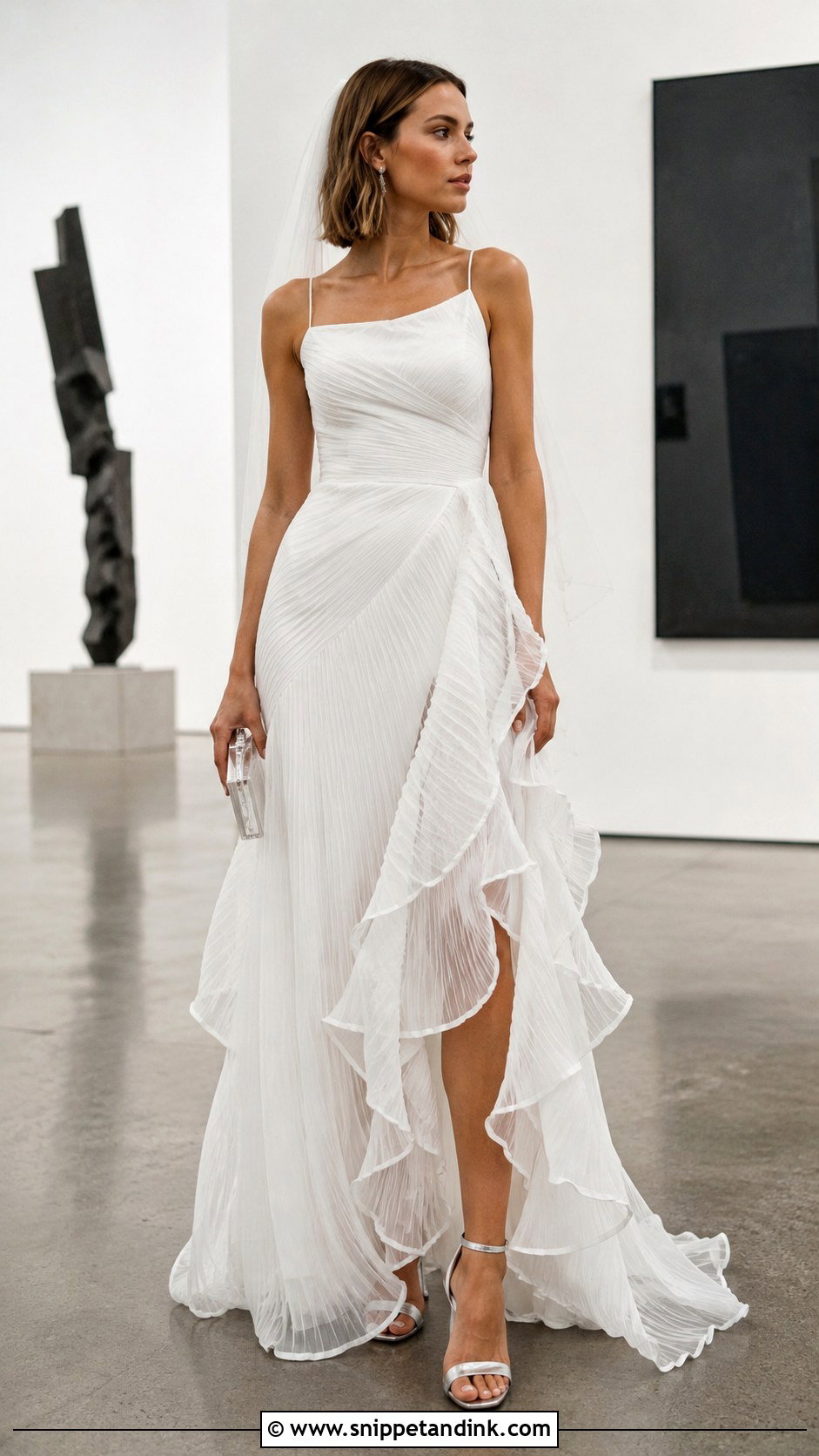
Fine pleats look like ripples in water. A fitted or softly draped bodice with pleated organza panels circling the skirt, cut to uneven lengths, gives tendrils while staying controlled. White keeps it bridal, and a faint lavender or blue lining can glow through the pleats. Silver block-heel sandals, slim crystal earrings, a translucent wrist bag, a shoulder-length veil and smooth waves tucked behind the ears suit it. Pleats are heat-set, so tell whoever steams your gown to hold the steamer away from them; direct steam can flatten pleats permanently on some fabrics. Museums, contemporary hotels and waterside venues suit it.
11. Long Sleeve Jellyfish Wedding Dress
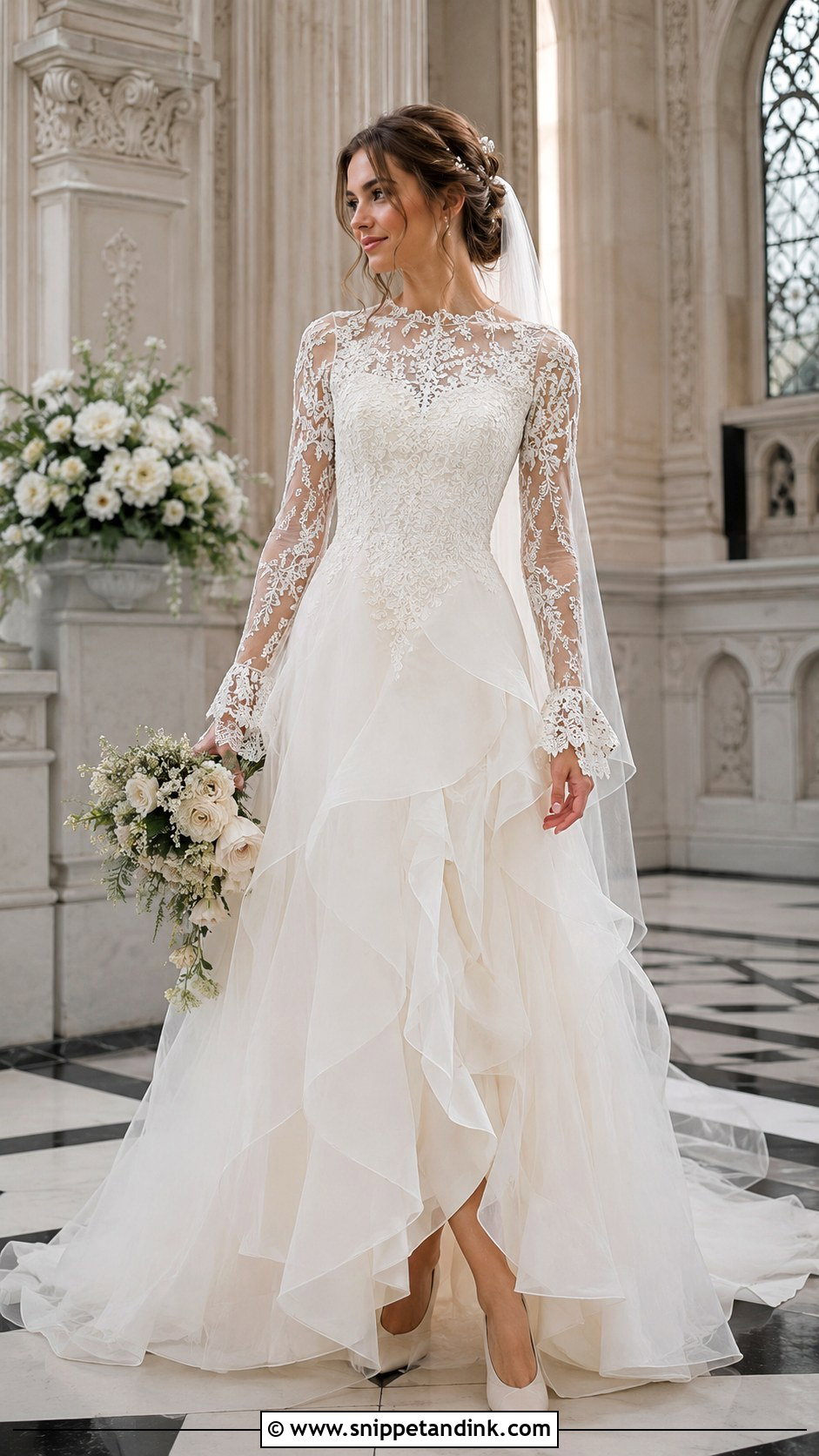
Long sleeves balance a skirt full of floating volume. Choose a fitted lace or illusion bodice with sleeves ending in narrow flared cuffs, over a layered organza skirt that widens gently from the hips rather than ballooning. Embroidered lines running from bodice into skirt join the two halves. Closed-toe ivory heels, a fine pendant and pearl hairpins finish it; a chapel veil works if it has no lace border to compete. Flared cuffs dip into things, so I’d keep them above the knuckle. Brides who want more coverage can ask for a lined bodice and opaque sleeve panels. Cooler months and historic venues suit it.
12. Satin Drop Waist Jellyfish Wedding Dress
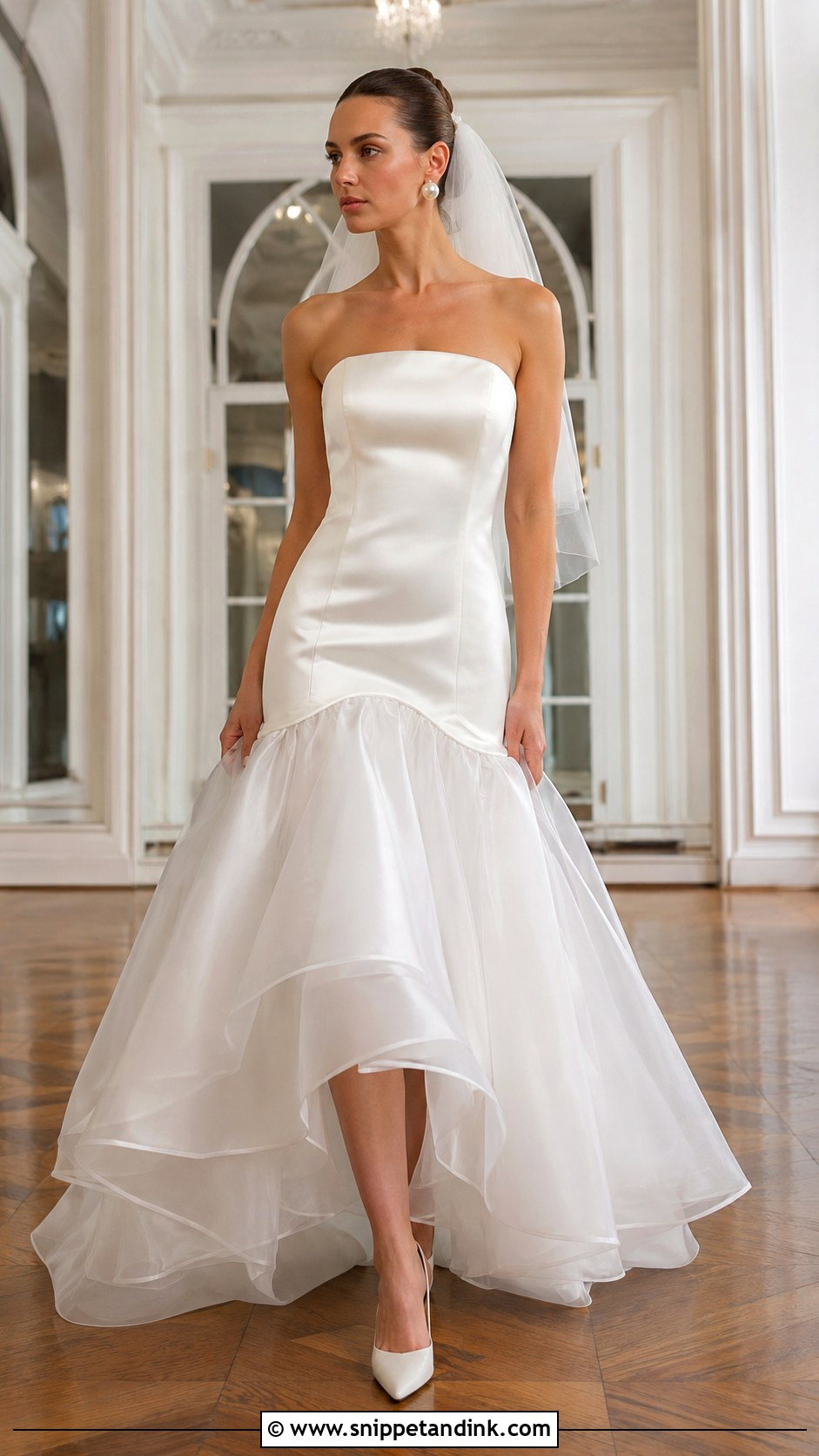
A satin drop waist moves the volume down to the hips, which is closer to the shape of a real jellyfish bell. The bodice follows the torso to the upper hip, where organza, chiffon or tulle layers begin to spread, ideally from curved seams that echo the rounded bell. Satin pumps, bold pearl studs, a clean elbow-length veil and a low sculpted bun keep the lines sleek, with a narrow, slightly elongated bouquet. Sit down at every fitting: a dropped seam can dig into the hips when seated if it’s cut too snug. It suits ballrooms, modern estates and editorial-style wedding photography.
13. Jellyfish Wedding Dress With Cape
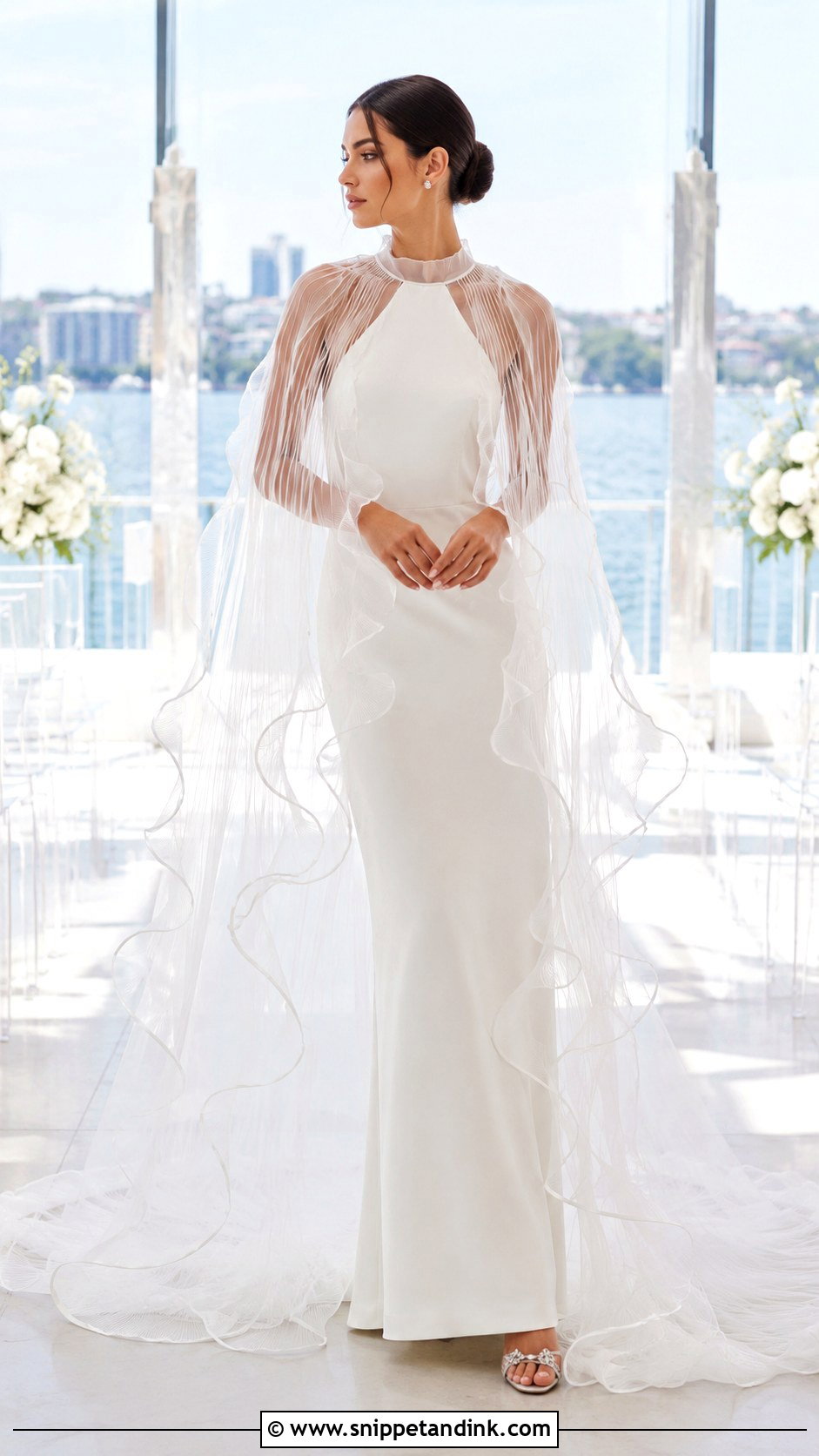
A transparent cape is the lightest way to add drift. Over a simple fitted or A-line gown, a cape with narrow pleats, rippled edges or flowing embroidered lines attaches at the shoulders and runs into a soft train. Crystal heels, small studs and a polished updo that keeps the neckline clear finish it, and you can skip the veil since the cape does the same job. For the reception, take the cape off and add statement earrings or a jeweled headband. Capes slip backward when they’re attached at a single point, so I ask for hidden snaps at both the shoulder seam and the back neckline.
14. Tea Length Jellyfish Wedding Dress
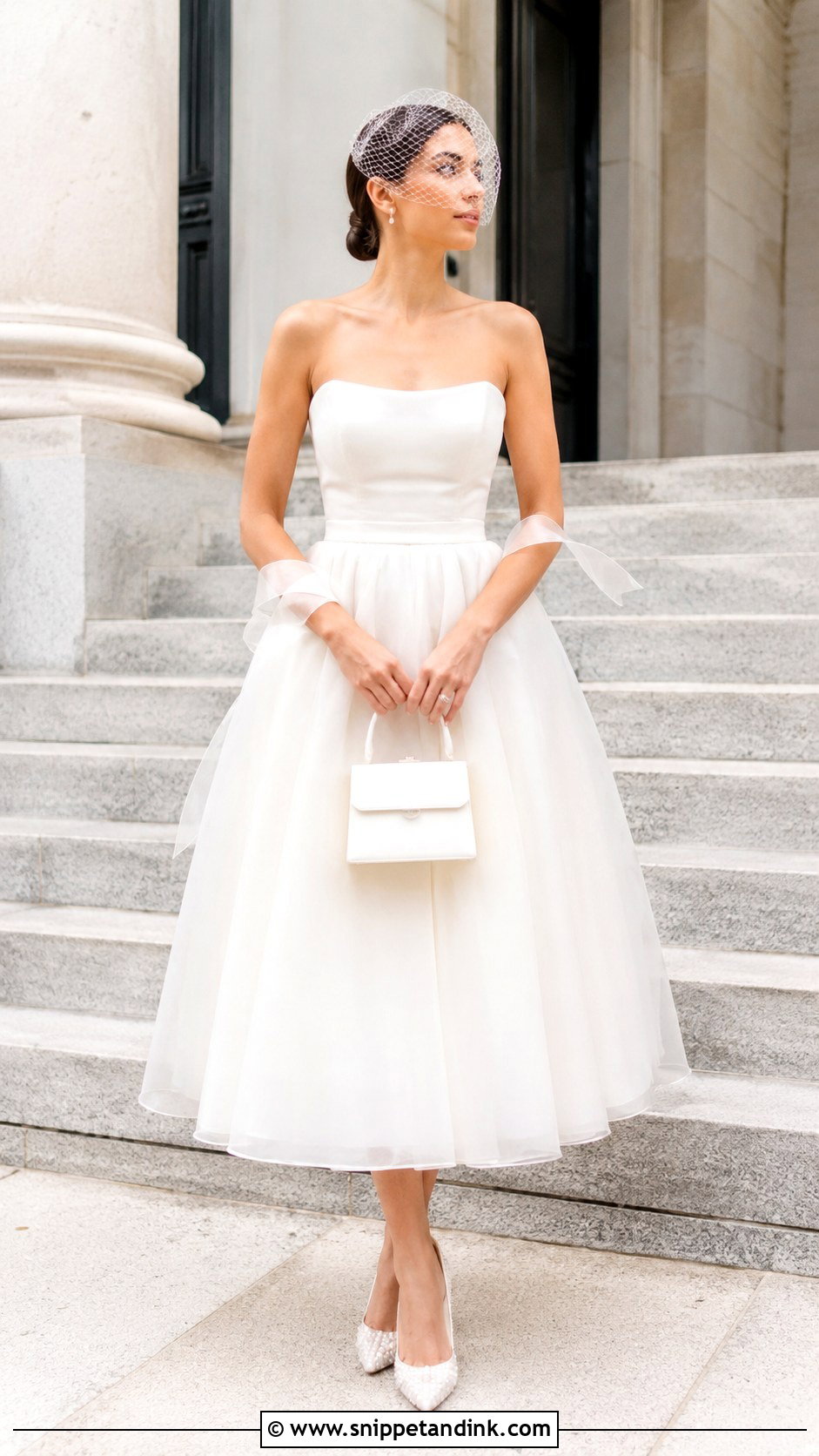
Shorter hems suit smaller rooms, and a tea-length jellyfish wedding dress feels whimsical rather than grand. The skirt ends between knee and ankle, with rounded organza tiers making a bell and a few longer translucent ribbons for movement. Your shoes are on show, so pick ones that add something: pearl-covered pumps, silver slingbacks or white ankle straps. A birdcage veil or short blusher, simple earrings and a tiny structured bag complete it, with a neat bob, soft curls or a low bun. I’d hem the ribbons to clear the ankle so they don’t wrap around your legs when you dance. Courthouses, restaurants and daytime receptions suit it.
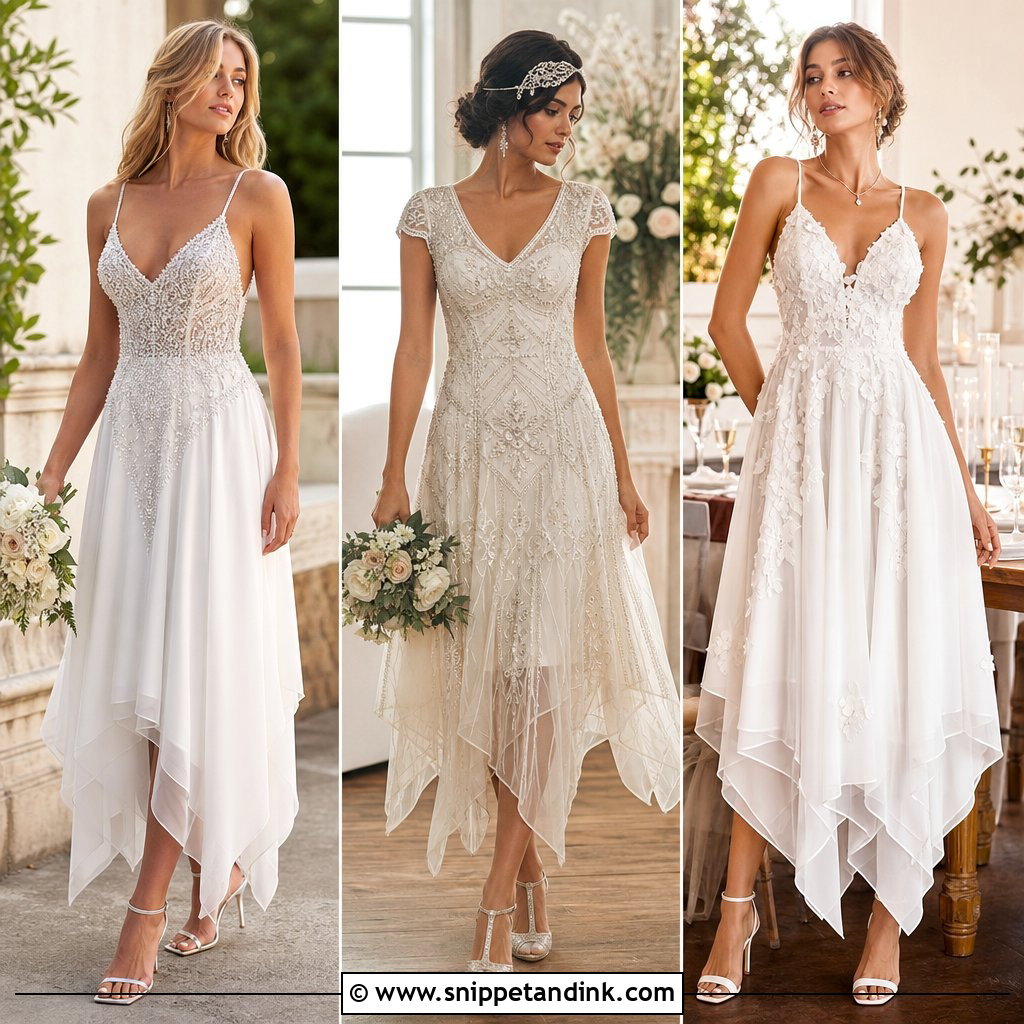
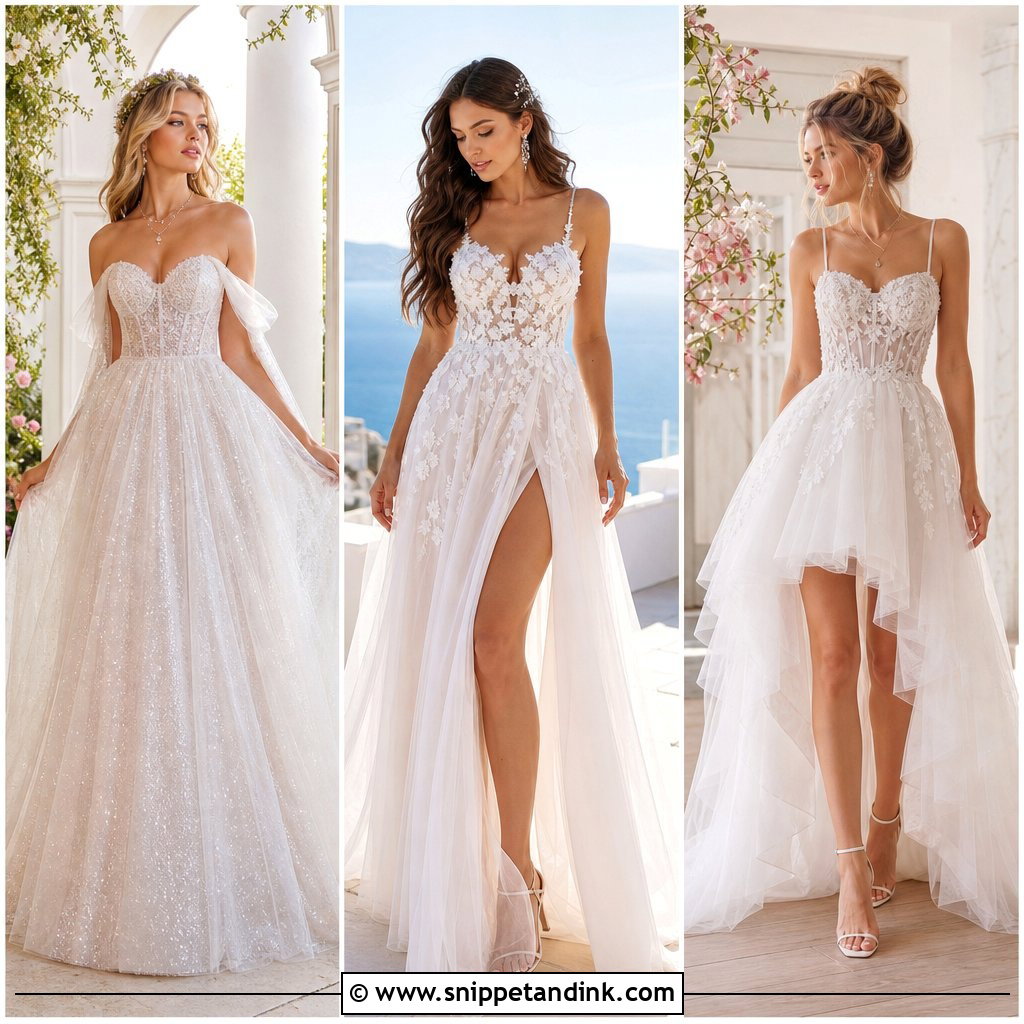
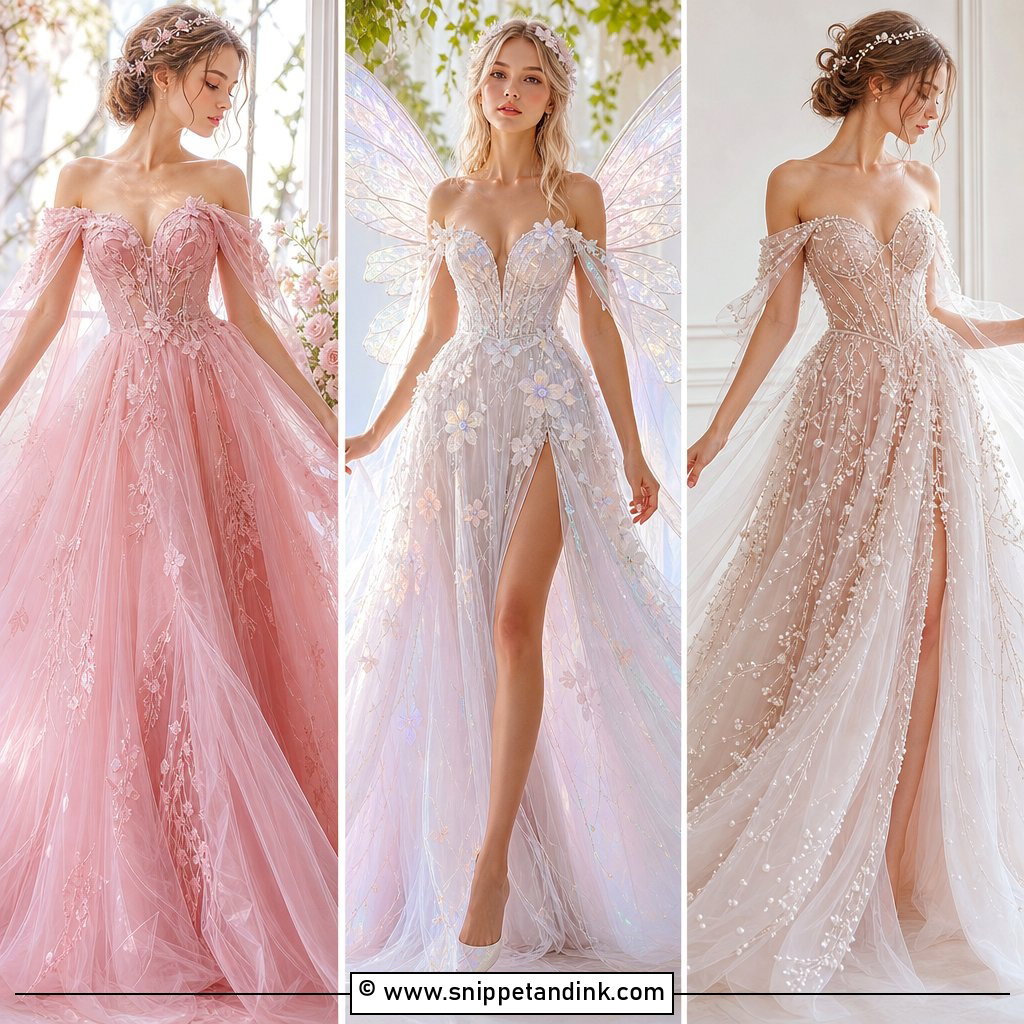
15. One Shoulder Jellyfish Wedding Dress
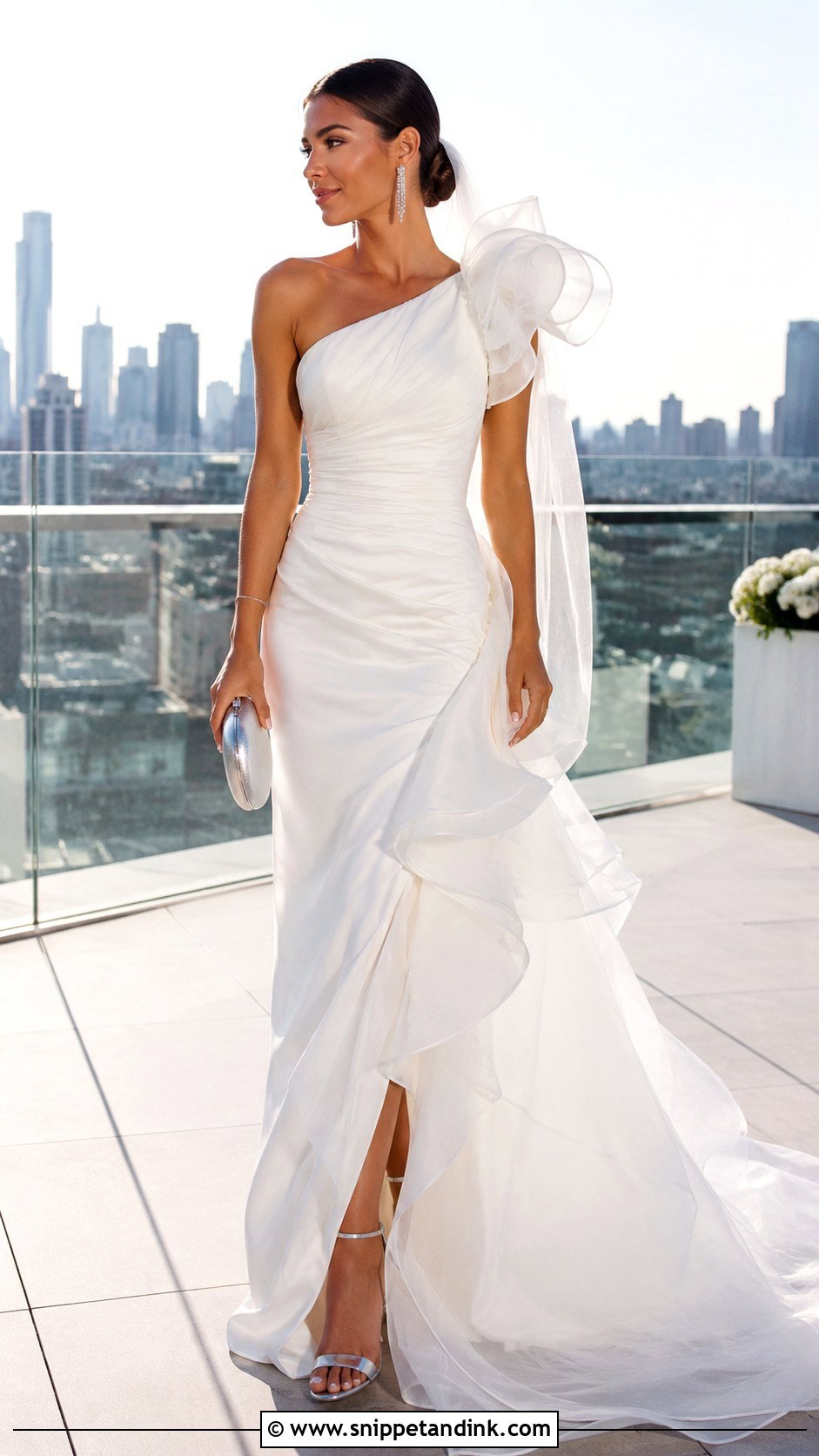
Nothing under the sea is symmetrical, which is why a one-shoulder neckline suits this theme. A sculptural organza ruffle starts at the shoulder and sweeps diagonally across the bodice, then continues into a flared skirt or trailing side panel. Wear one statement earring, or simple crystal drops, and no necklace. Metallic sandals and a smooth clutch finish it, with a side-parted low bun placed away from the ruffle and a narrow veil tucked beneath it. The ruffle has to be anchored firmly along the strap, or it slowly pulls the neckline down on the bare side; I test that by having the bride raise her arm and hug.
16. Iridescent Jellyfish Wedding Dress
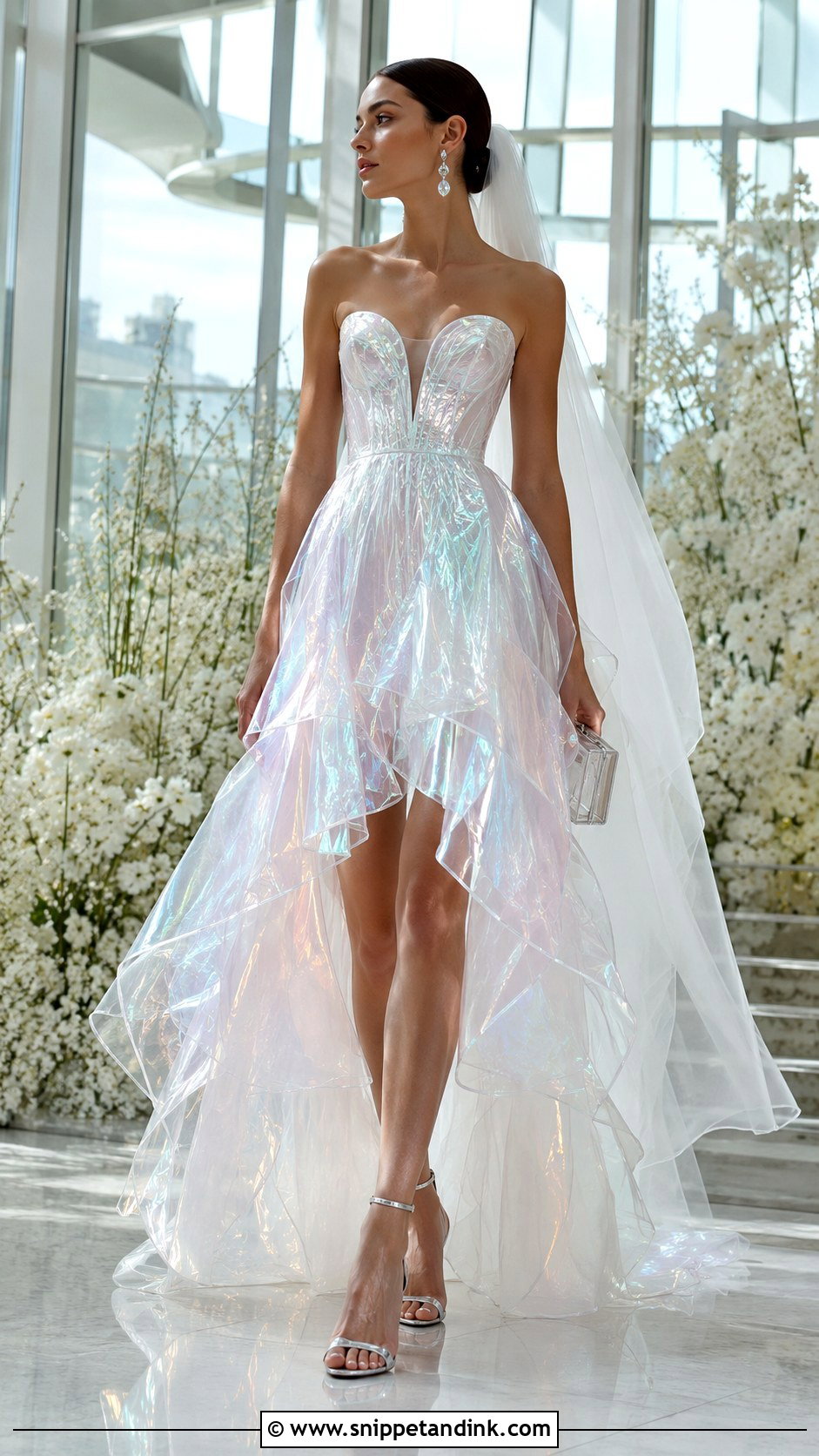
Light passing through translucent sea creatures picks up faint shifting color, and an iridescent finish borrows that. Choose a white, pearl or pale silver gown with subtle reflective threads rather than multicolored sequins. Layered chiffon and organza catch light as they move. A fitted bodice and soft flared skirt finished with uneven translucent panels, silver heels, opal earrings and a clear acrylic clutch complete it, with a plain veil. Iridescent fabric changes with the light source, so I’d look at it in daylight and under warm bulbs before buying. Bright rooms, glass venues and clean white evening light show it best.
17. Plus Size Jellyfish Wedding Dress
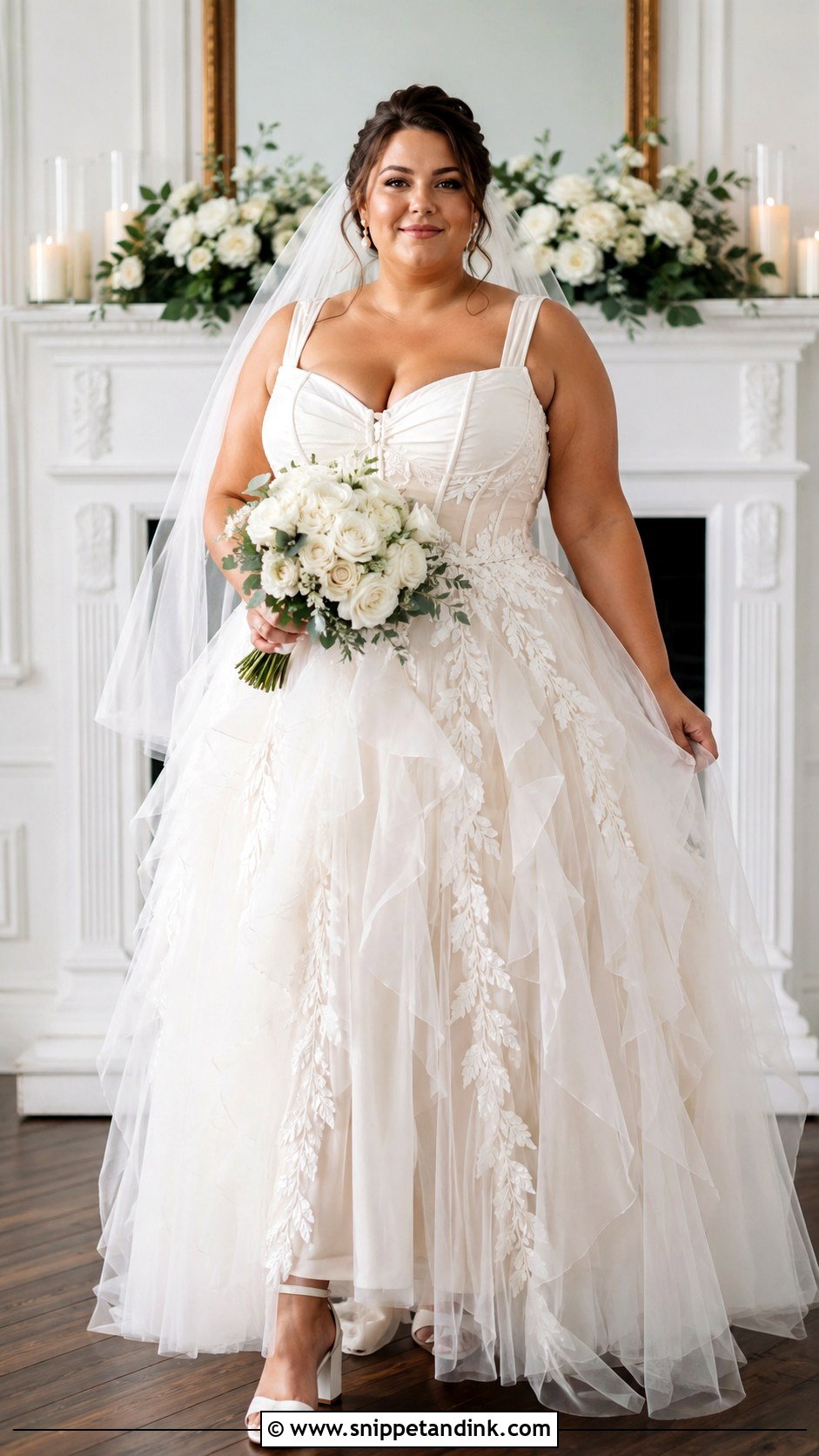
For a plus-size jellyfish gown, support comes first and the drama follows. A structured corset bodice, wide supportive straps or an off-the-shoulder neckline can all carry a layered skirt, and where that skirt begins should depend on where you feel best, not on a rule. Vertical appliques and long tulle panels create a fluid line. Stable block heels, statement pearl earrings and a medium-length veil on a strong comb finish it. Choose undergarments to suit the neckline and lining before your first fitting, not after. Ask the salon to let you sit, walk and dance at every appointment; volume that feels light standing can feel very different in a chair.
18. Modest Jellyfish Wedding Dress
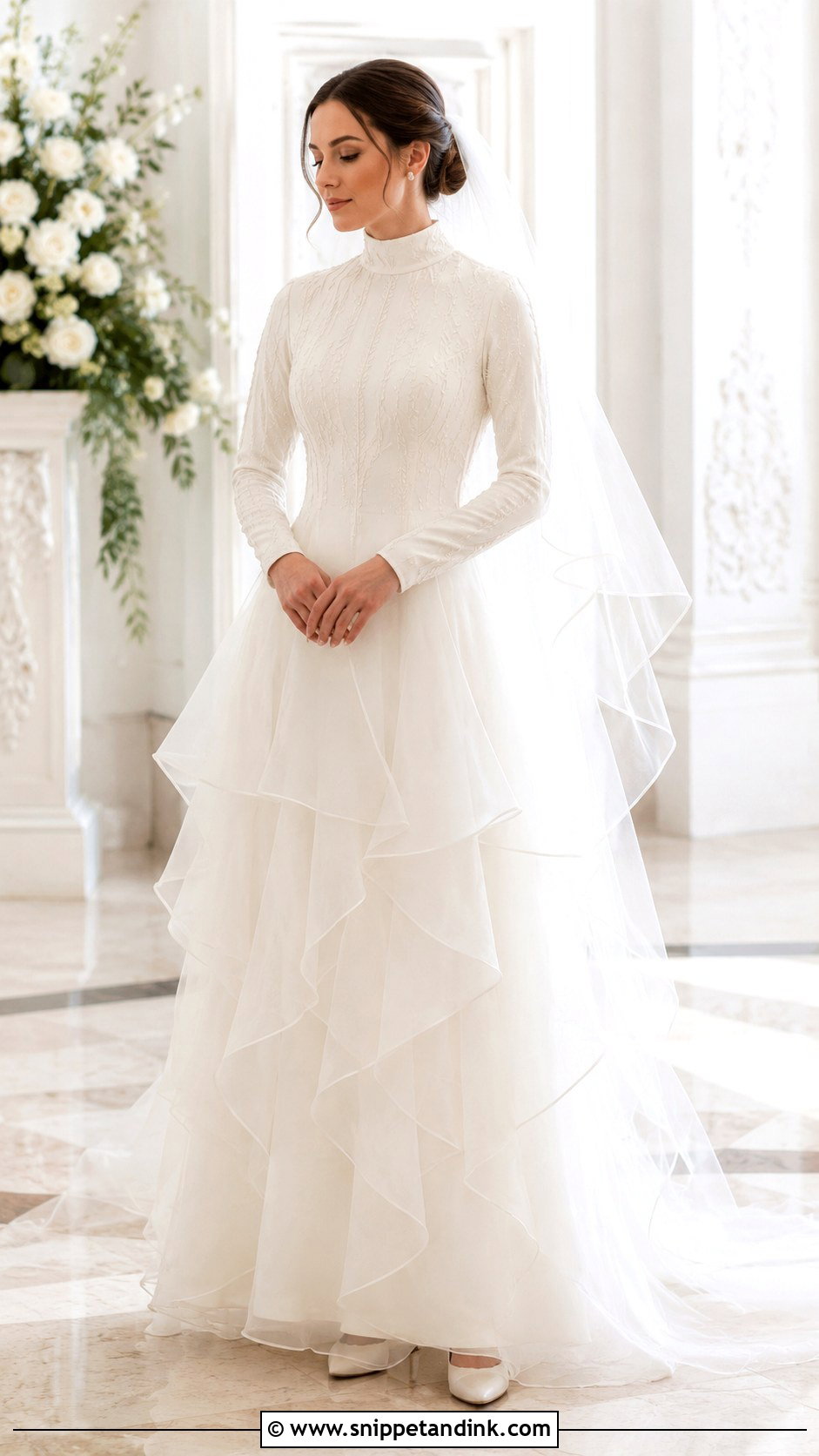
Coverage and float can live in the same gown. Start with a high neckline, an opaque bodice and full sleeves in smooth crepe or lined lace, then let organza tiers float from the waist or hips. Fine embroidery running vertically down the dress can break into tendril-like lines near the hem. Closed-toe pumps, pearl studs and a long veil over a neat low bun finish it; a subtle wave embroidery on the veil edge is a nice touch. I’d keep the shoulders clear of extra layers so the high neck stays clean. It works for formal ceremonies where coverage is expected.
19. Beach Jellyfish Wedding Dress
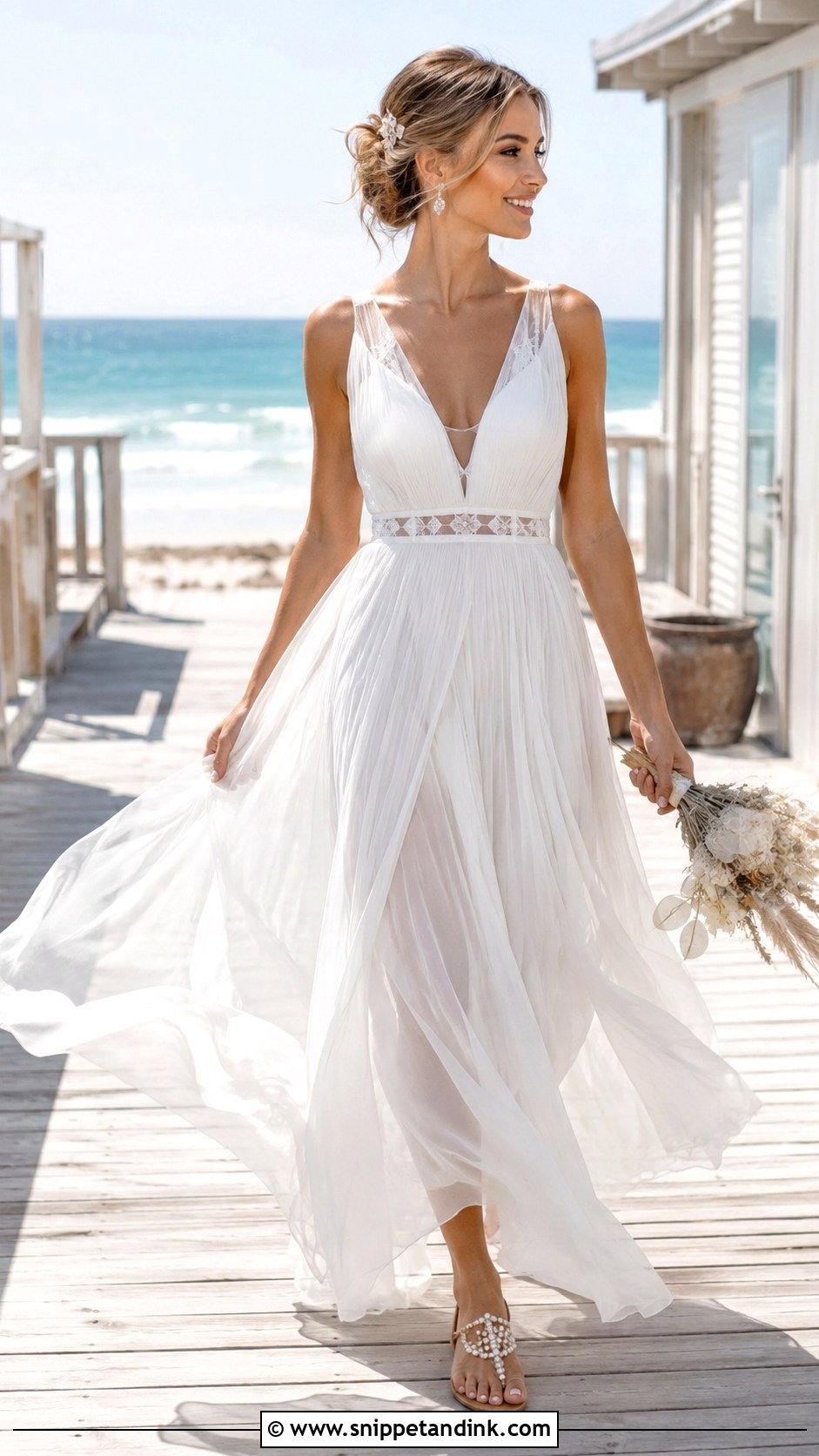
Chiffon is the right fabric for a beach jellyfish wedding dress, because it moves with sea air instead of fighting it. Choose a light A-line or empire-waist gown with layered panels that drift without dragging through the sand, and narrow pleats or translucent streamers for the tendril effect. Flat pearl sandals, small shell-shaped earrings and a simple comb are better than a long veil, which turns into a sail in coastal wind. A loose braided updo keeps hair under control. Keep the train short and ask for a wrist loop. Wet sand stains chiffon, so I’d stand on a mat or boardwalk for the vows if you can.
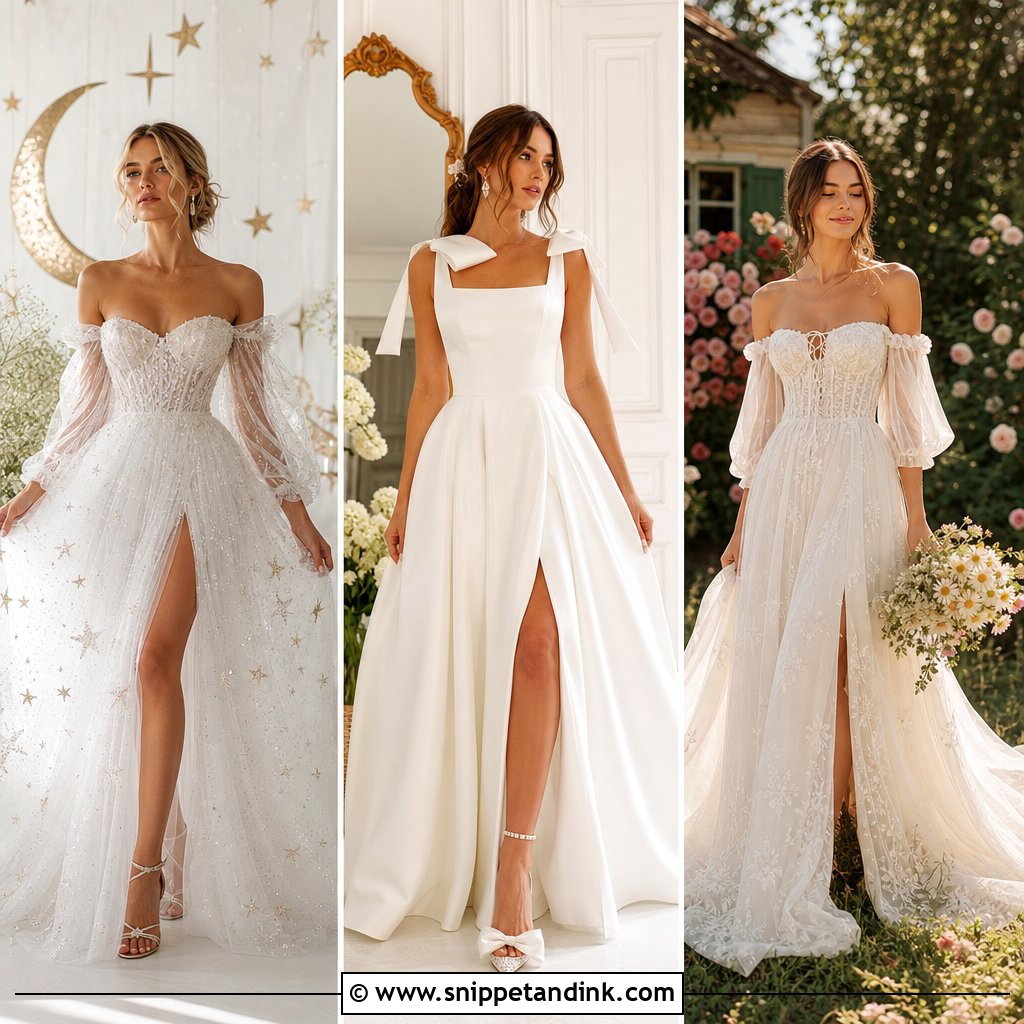
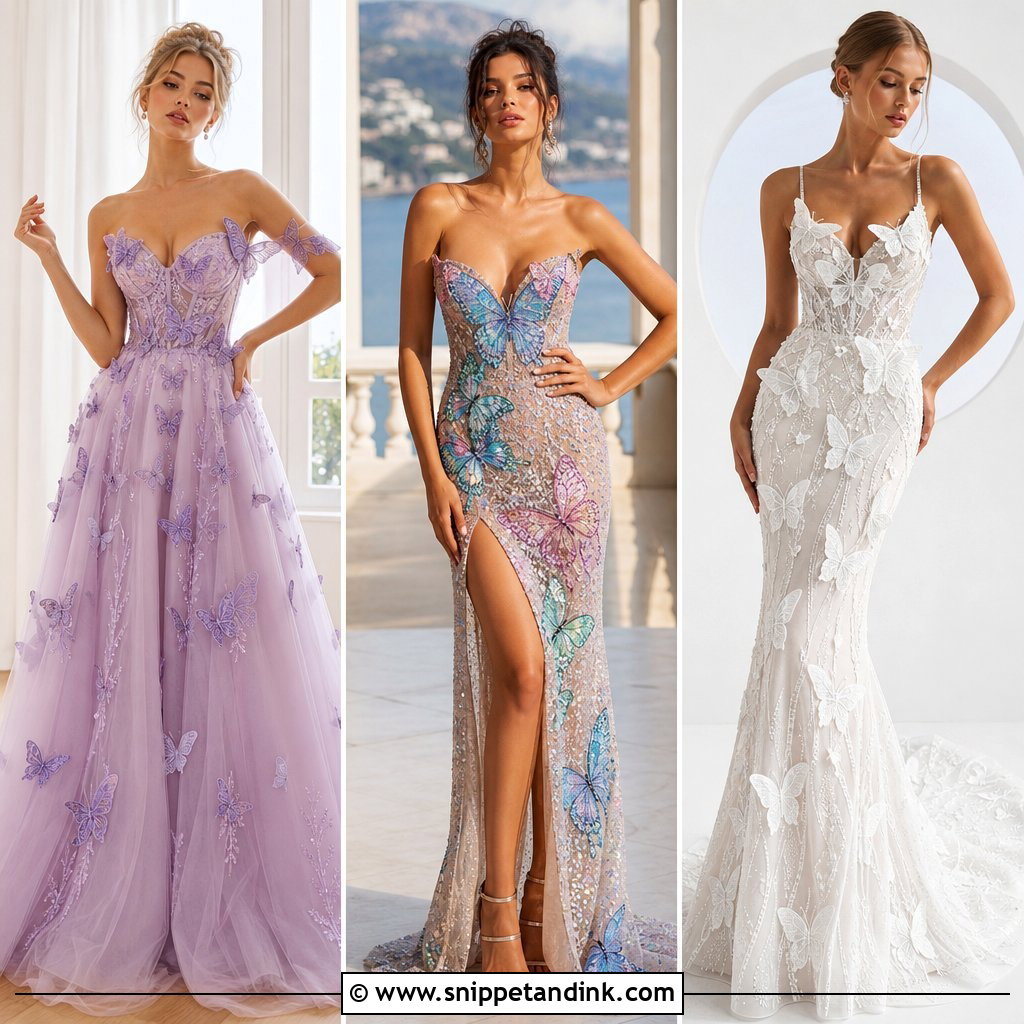
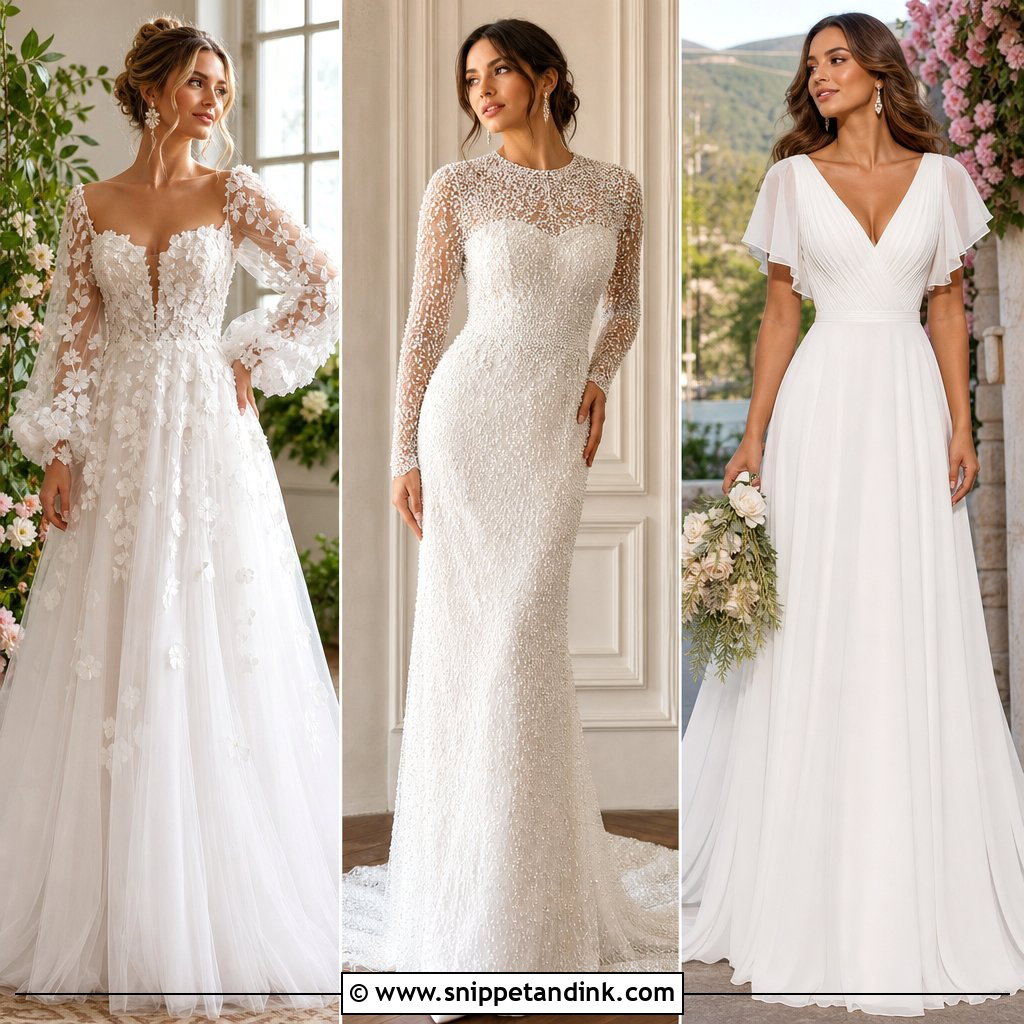
20. Blush Jellyfish Wedding Dress
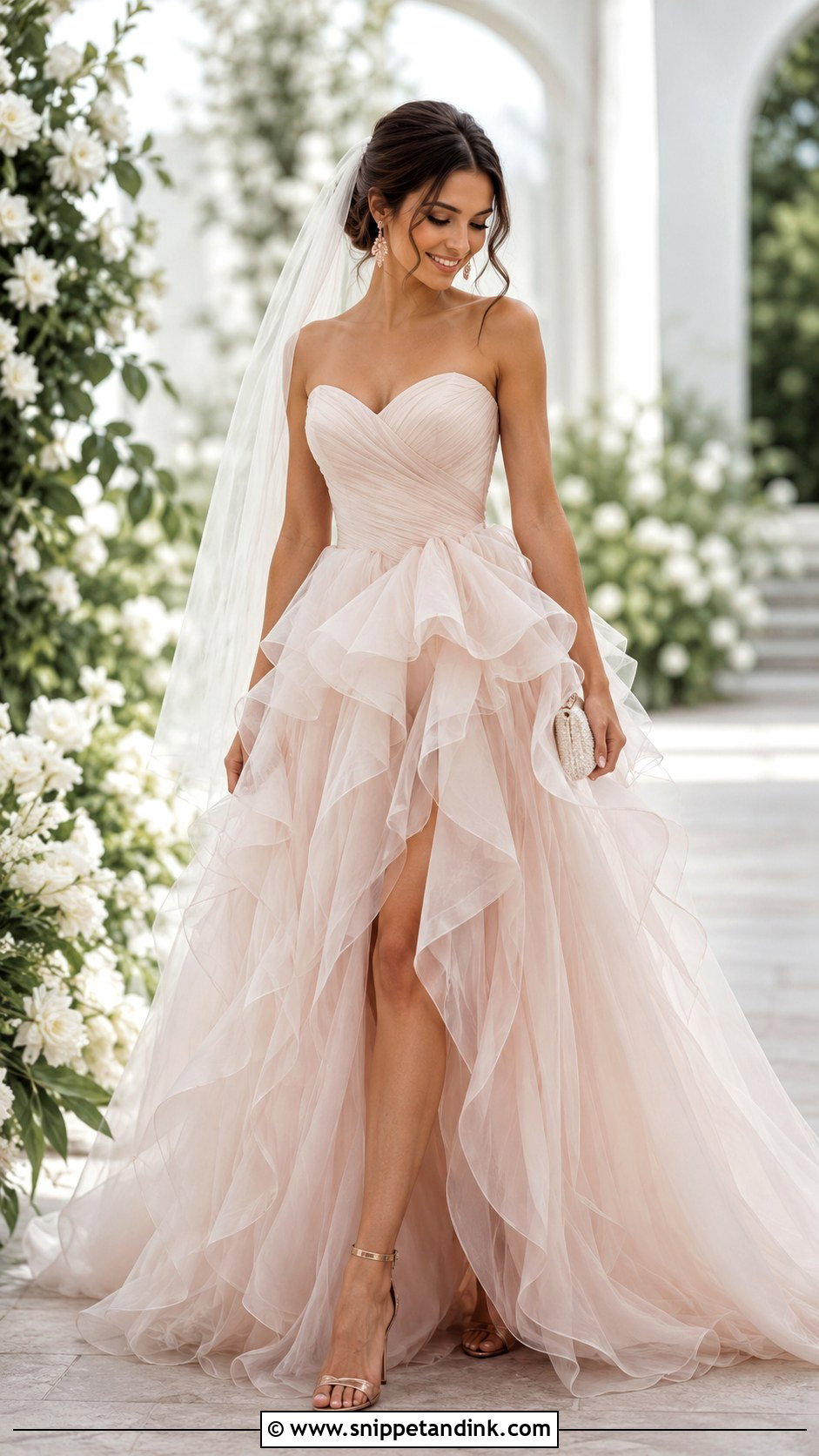
Blush is an easy alternative to white, and it makes the layering show. A pale blush base under translucent ivory or rose-tinted organza lets the rounded tiers, rippled ruffles and cascading panels stand out, because the slight difference in tone outlines each layer. Champagne heels, rose-gold earrings, an ivory clutch and a barely tinted veil complete it, with soft waves or a relaxed twisted bun with pearl pins. Ivory and muted pink flowers suit it. Blush can disappear against fair skin, so I hold the fabric against the bride’s face in daylight before ordering. Gardens and indoor ceremonies with soft light suit it.
Getting Loose Tendrils From the Car to the Aisle Untangled
Every hanging strip, ribbon and pearl strand is something that can twist, knot or catch. None of that is a reason to avoid this style, but it does change how the dress travels and who helps you on the day.
- Transport the gown hanging at full length in a long garment bag, with tissue between the tendril layers. Folding is what creates tangles.
- Steam it at the venue, not at home the night before, and keep the steamer moving and away from beading and heat-set pleats.
- Give one person the job of arranging the train and strands before you walk in and again before portraits. A twisted strand is invisible to you and obvious in every photo from behind.
- Check your shoe buckles and any heel decoration; a sharp edge will catch fine tulle the first time you turn.
- Pack a small kit: safety pins, clear thread, a needle, and a lint roller for the ivory layers.
There are also places I’d talk you out of the long-tendril versions: a windy clifftop, a barn with rough wooden floors, or a venue where you’ll be climbing several flights of stairs. For those, a cape you can take off or a shorter skirt gives you the same idea with far less to manage.
Sea Creature or Sculpture? Deciding How Literal to Go
A jellyfish gown works when the imaginative detail sits on a dress you can wear comfortably for hours. Rippled organza, drifting chiffon, layered tulle, pearls, pleats and translucent embroidery all create the underwater movement, and the idea adapts to ball gowns, columns, minis, modest dresses and beach styles. Before deciding, think about how each layer will move, bustle, photograph and feel by evening. Let the accessories support the theme rather than spell it out, or the look tips into costume. Some brides want a faint ocean hint; others want full sculpture. The twenty options above cover both ends.
You'll Like These Ideas:



Leave a Reply