
A high neckline already frames your face, so the hair’s job is to stop competing with it. When a bride books a trial in a high neck gown, the first thing I look at is the gap between her collar and her hairline, because that small strip of neck decides whether a bun reads as clean or crowded. Pulled-back styles are the usual answer since they show the lace, beading or collar structure and lengthen the profile. They aren’t the only answer, though. A sharp bob, waves pinned to one side and a sleek ponytail can all work when the hair is placed with the collar in mind. Your texture, the veil, the weather and how long you can tolerate pins matter as much as the dress. Below are twenty styles I’d genuinely pair with a high neck, and what I watch for with each.
Measure the Strip of Neck Your Collar Leaves Bare
Before I suggest any style for a high neck, I want to know how much neck the collar actually leaves. A mock neck that stops at the base of the throat and a lace collar that climbs to just under the jaw need very different hair, and a photo of the dress on a hanger won’t tell me which one you have.
- Bring the gown to the trial if your fitting schedule allows. If not, wear a turtleneck or mock-neck top that reaches the same height on your neck.
- Look at the back as well as the front. Many high collars dip lower behind or close with a row of buttons, and that changes where a bun can sit.
- Tip your head down as if you’re looking at your bouquet. If the hair or bun touches the collar in that position, it will rub all day.
- Notice the fabric right at the edge. Beading and corded lace snag pins and fine hair, while plain crepe and satin don’t.
Once I know the gap, the decision gets simple. A gap of two or three fingers lets a low bun or chignon sit comfortably at the nape. A tight gap pushes the hair higher, up toward the back of the crown, or toward short styles that end well above the fabric.
1. Low Bun For High Neck Wedding Dress
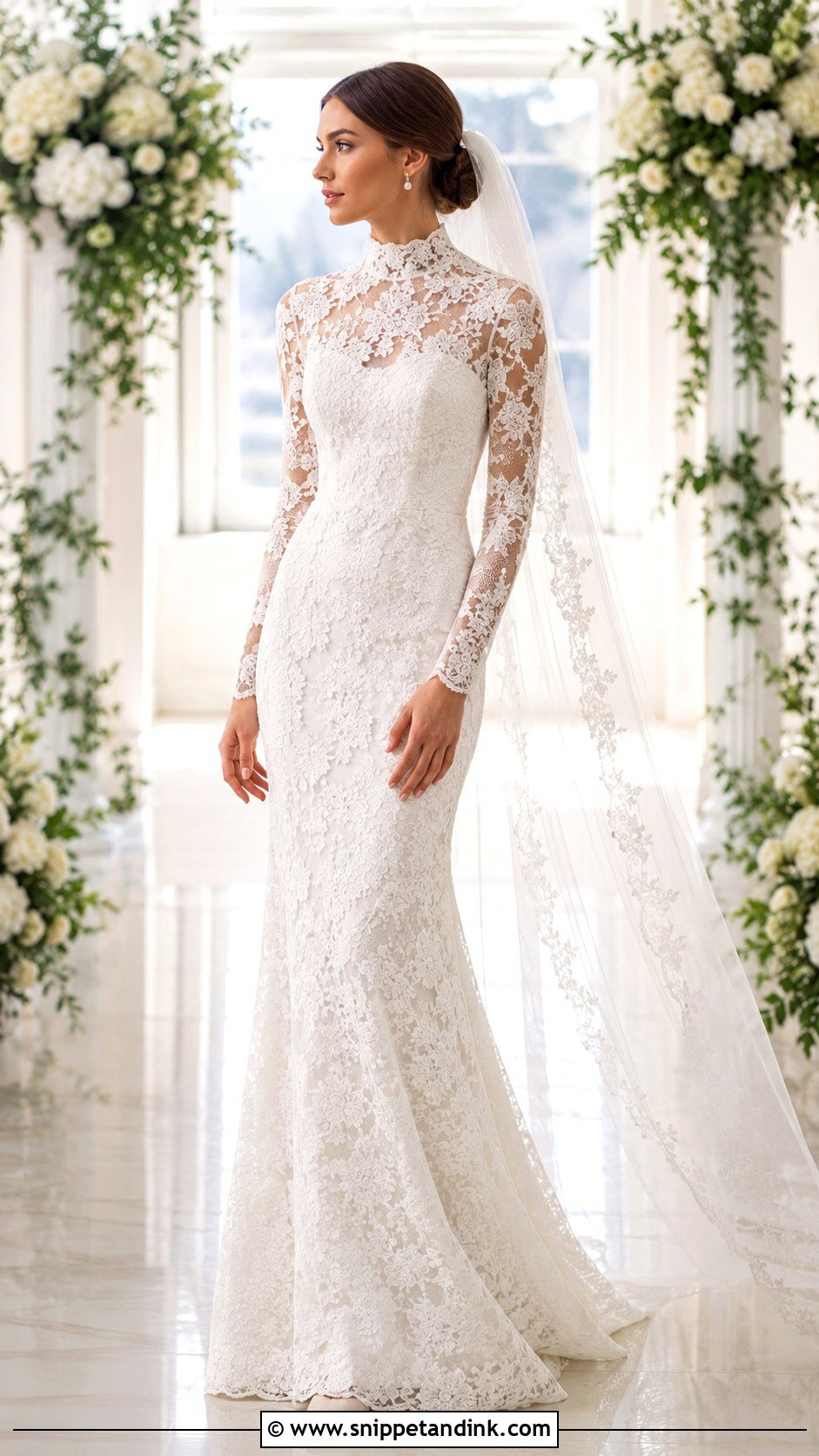
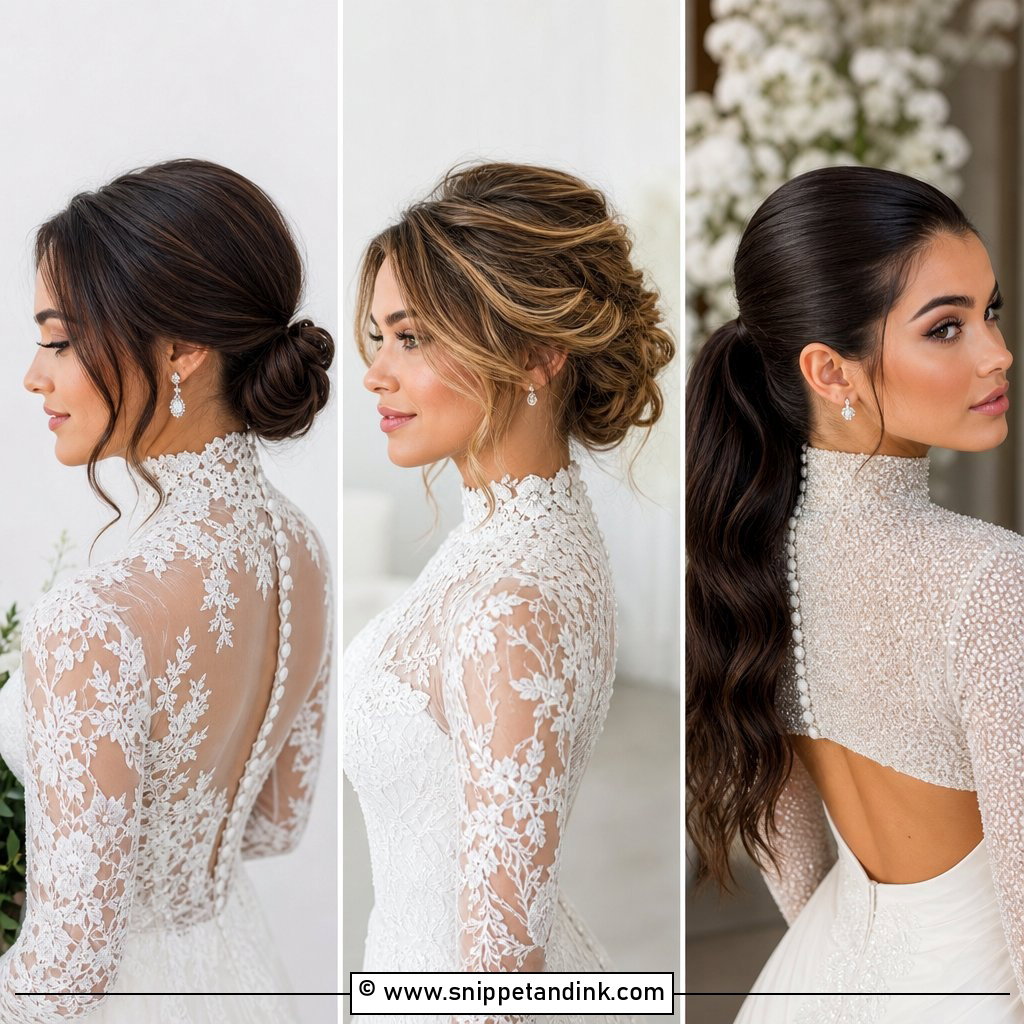
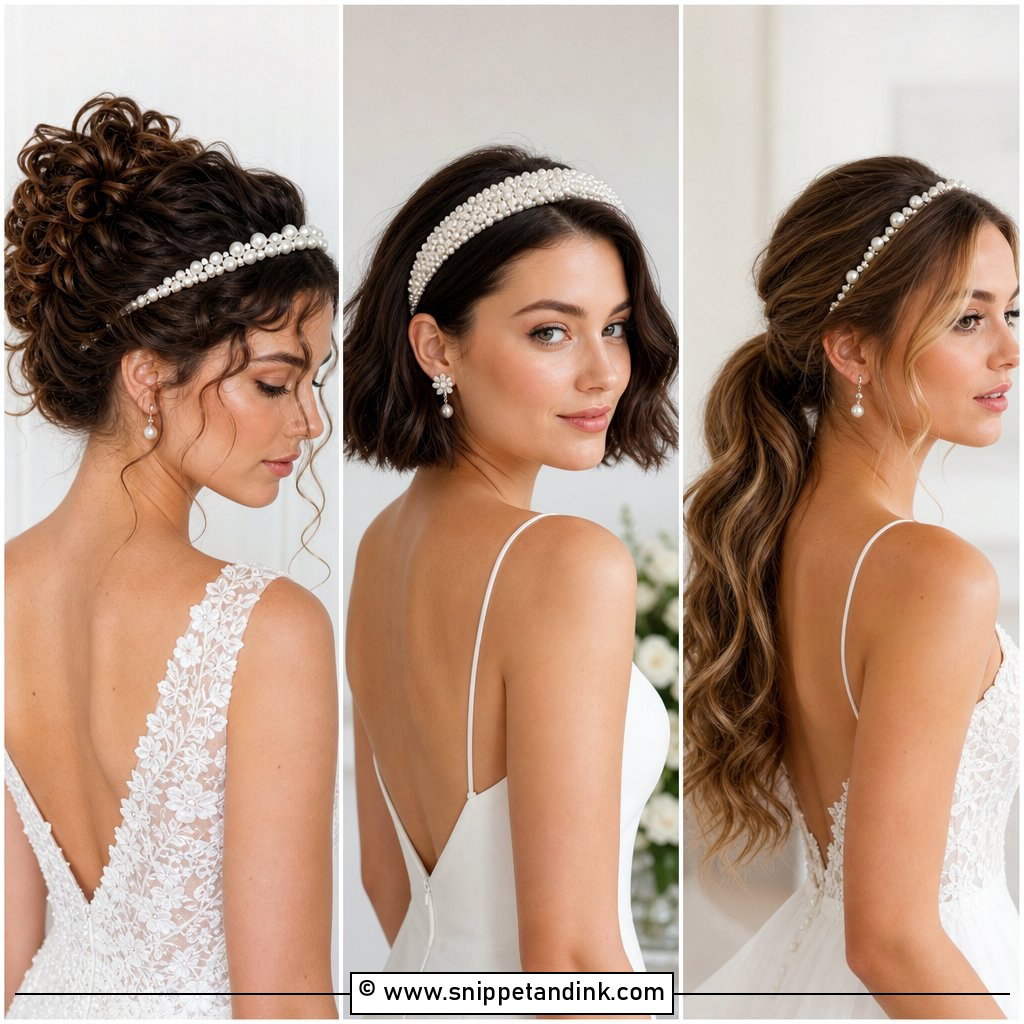
Sitting at the nape, a low bun leaves the whole collar on show and adds no height, which is why I reach for it first with most high necks. The catch is the gap: if the collar rides up close to the hairline, I set the bun a finger’s width higher so it doesn’t press into the lace every time she turns her head. Smooth it for satin and leave it textured for floral lace or an outdoor ceremony. On fine hair I build the shape over a small donut or a clip-in weft. On thick hair I split it into three twisted sections pinned separately, because one huge knot gets heavy and starts to sag by the speeches. A few pearl pins or one comb is plenty. Whether the veil goes above or below the bun depends on how much of the gown’s back you want people to see.
2. Sleek Chignon For High Neck Wedding Dress
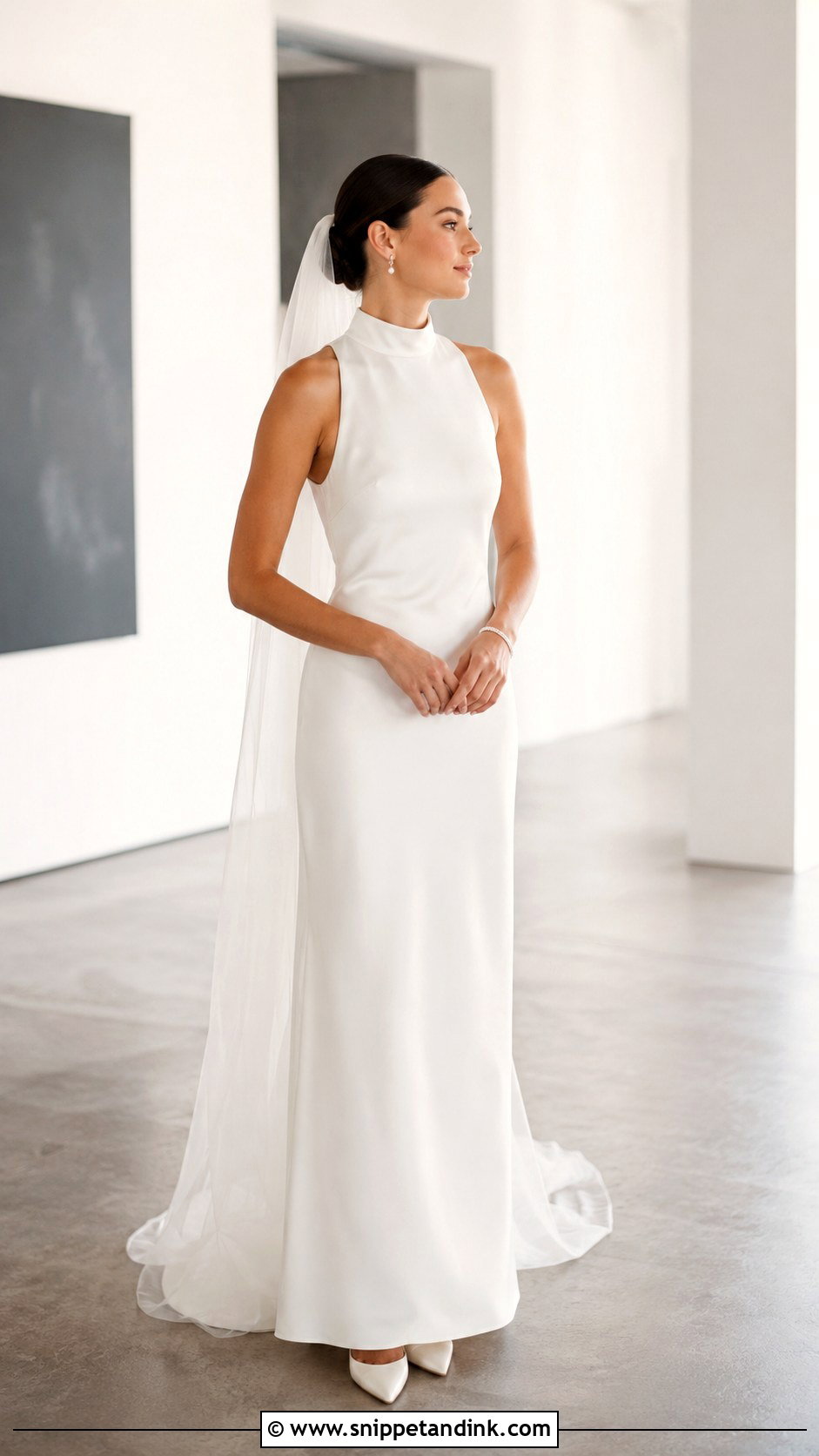
With a minimalist mock neck, I like a sleek chignon because there’s nothing in the hair to fight the clean line of the fabric. I smooth everything close to the head and wrap the knot near the nape. A sharp middle part feels modern; a deep side part softens it. The mistake I see most is hard gel. Under flash it shines like plastic, and it cracks once the hair moves, so I’d rather brush in a cream and a light hold spray in thin layers. Keep the knot compact if the dress has an open back so it doesn’t hang over the cut-out. Statement earrings or a bold lip have room here, and a plain veil or one sculptural pin finishes it.
3. High Bun For High Neck Wedding Dress
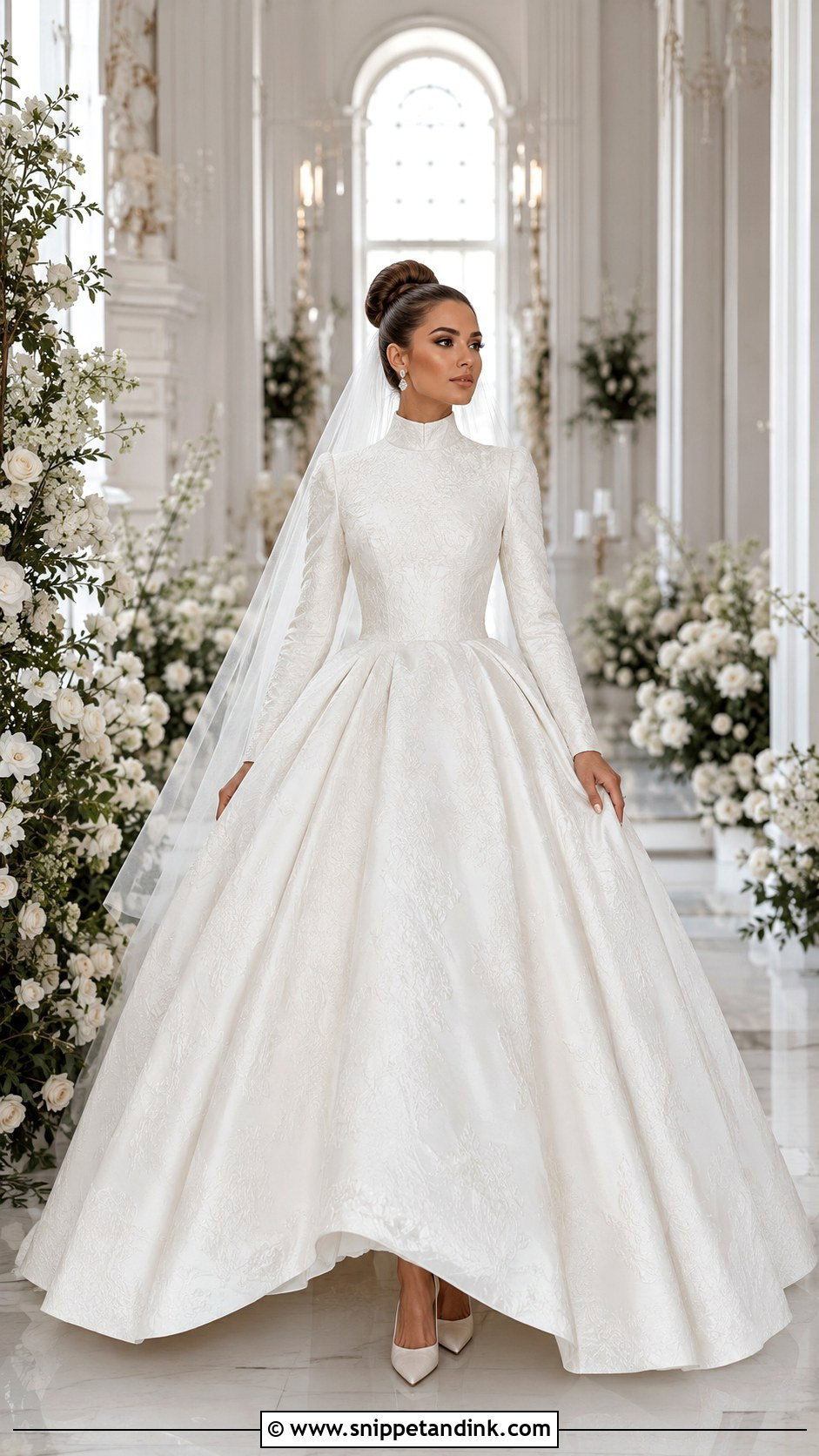
Want height without hiding a single collar detail? A high bun pulls the eye upward and makes the whole silhouette look longer, which suits structured gowns, high collars and long sleeves over a full skirt. I place it at the crown for a classic shape or slightly further forward for something more current. One thing I always check is the veil: a comb pushed in under a high bun drags the knot backward over the evening, so I anchor the veil below the bun on its own crossed pins. Curls and coils can stay textured inside the bun rather than being blown straight. A smooth base reads polished, while a little lift at the crown softens the face. Keep earrings small so the height stays the focus.
4. Textured Bun For High Neck Wedding Dress
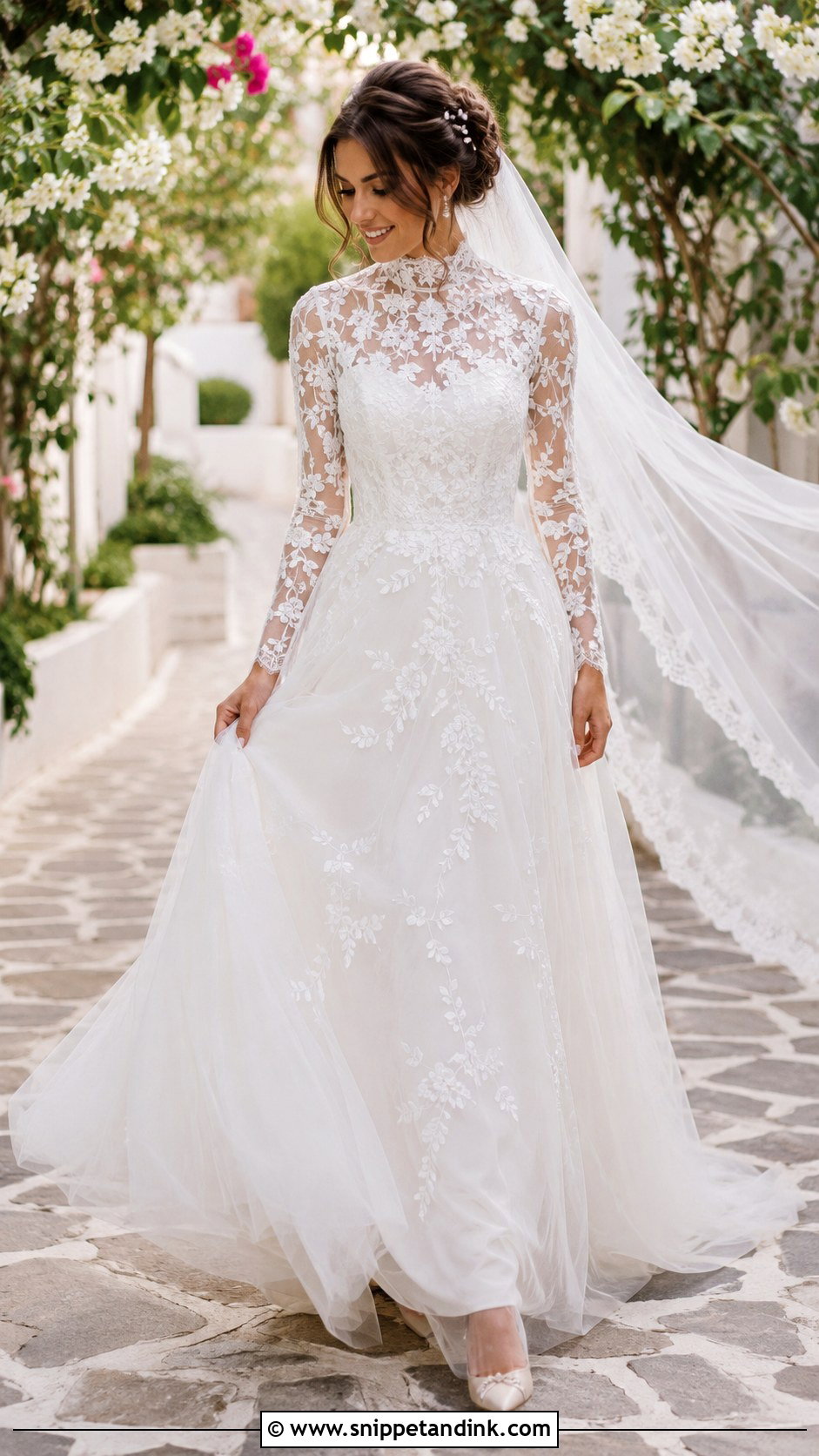
Visible twists suit lace, dotted tulle and chiffon, because the hair picks up the softness of the fabric. I twist each section loosely and pin it on its own before building the bun, so the shape holds even if one pin slips. Face-framing pieces need watching with a high neck. If they hang past the jaw they rest on the collar and get pushed around whenever she turns, so I keep them cheekbone length. Sit it low for something quiet or just above the nape for more volume, and scatter tiny pearl pins unevenly rather than in a neat row. At the trial, take photos from the front, side and back; texture that looks deliberate in the mirror can read as messy from behind.
5. French Twist For High Neck Wedding Dress
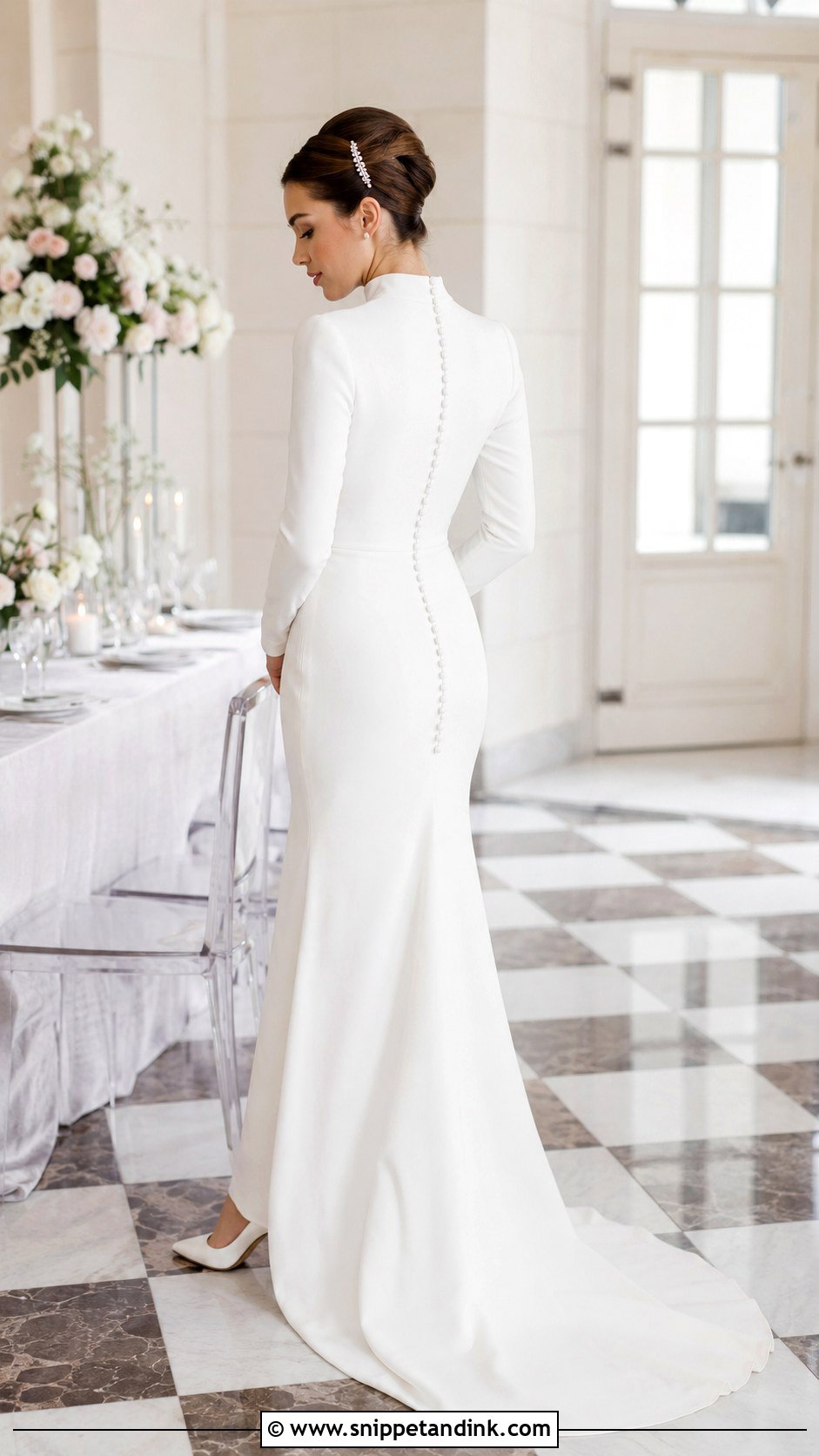
The vertical line of a French twist echoes the column of a high neck, and I like it most with tailored gowns and formal ceremonies. Pinned tight, it’s classic. A looser twist is softer and forgives a little wind. Tuck the ends for polish or leave curled ends at the top. It’s the style I suggest when the back of a gown has a long row of buttons or a lace panel, since the hair is completely off the back. Fine hair needs some backcombing along the seam or the twist collapses into a flat fold by evening. A slim comb along one side is enough decoration, and with that much going on at the neck, skip the necklace and choose pearl studs or drops.
6. Braided Updo For High Neck Wedding Dress
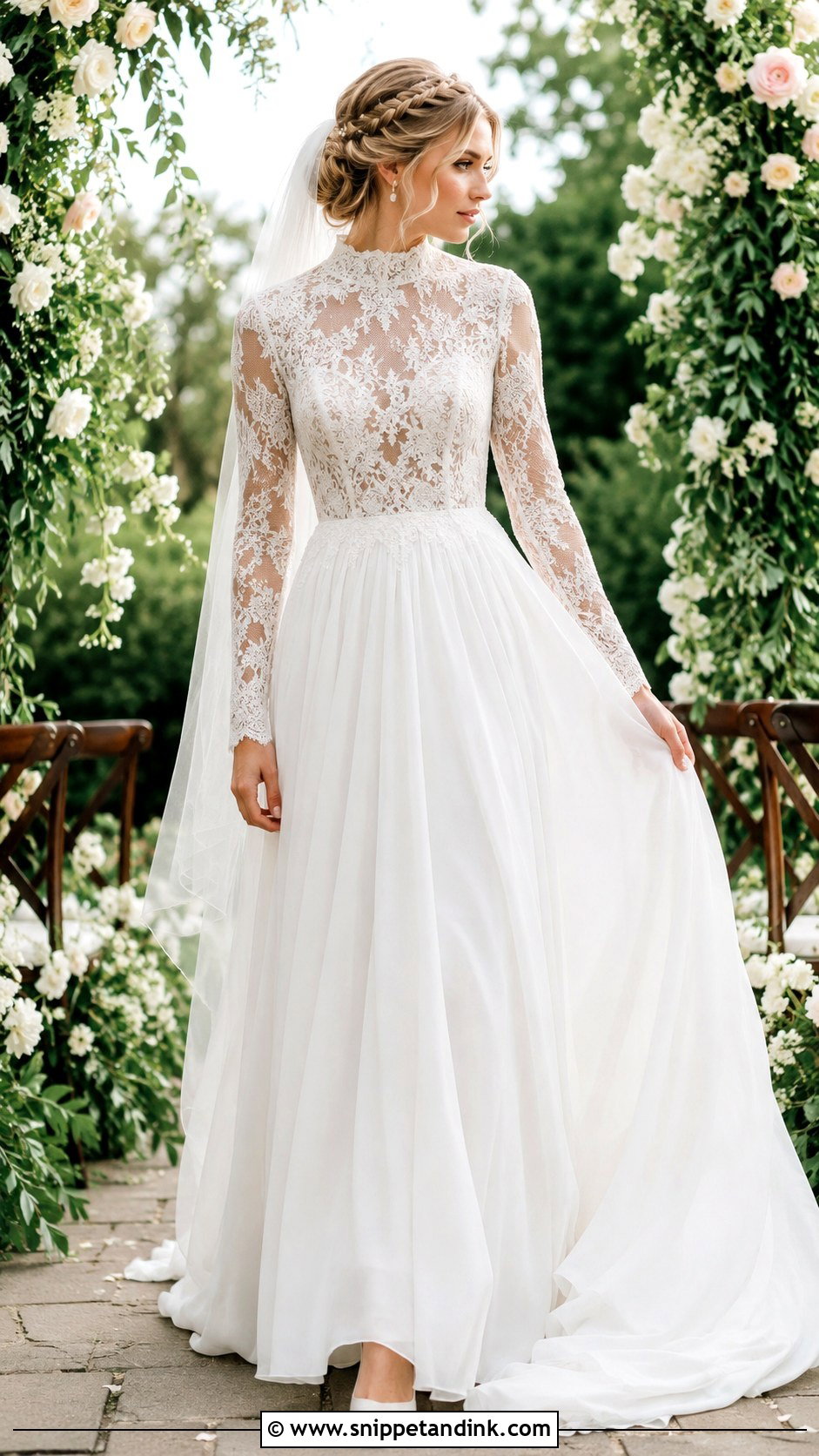
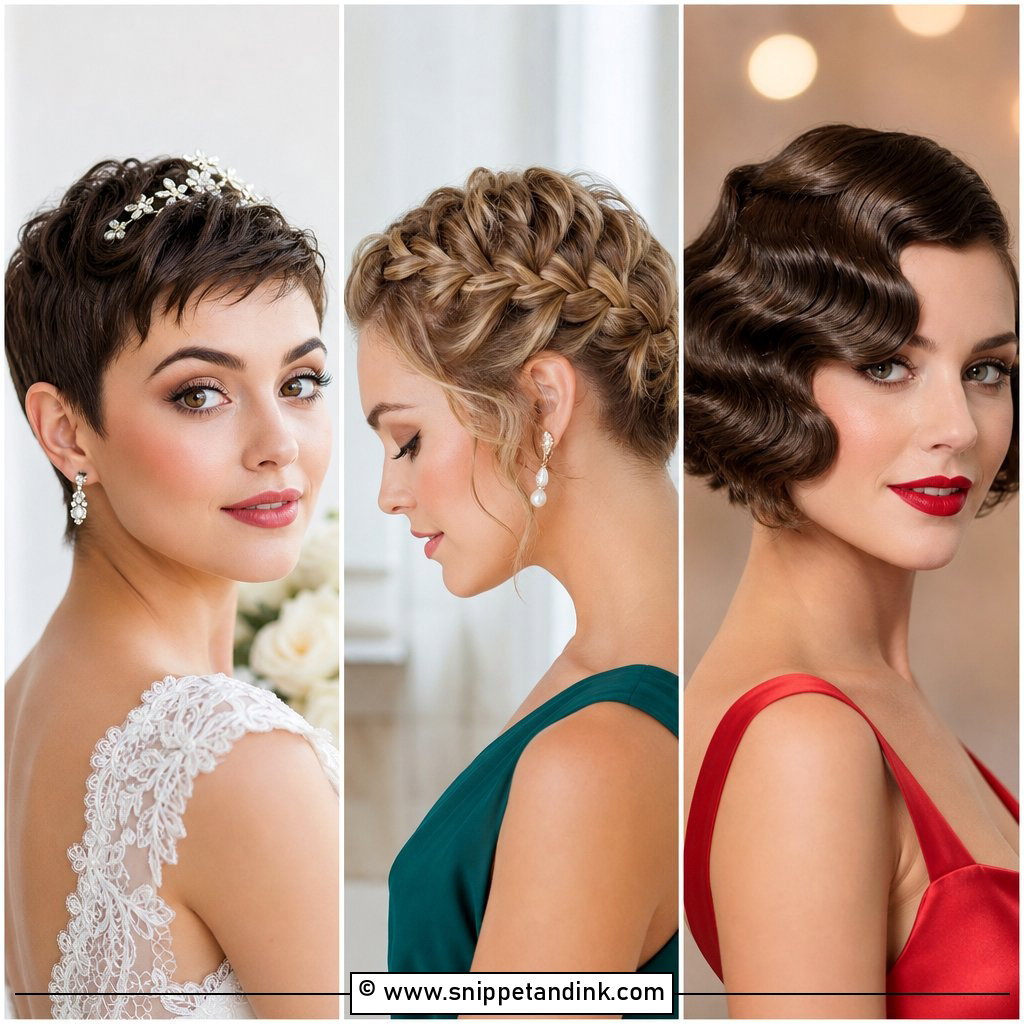
Braids give you texture without loose lengths brushing the collar. The updo can combine Dutch braids, French braids, rope twists or small accent plaits that meet in a bun at the back, and I tend to use it for bohemian lace and garden ceremonies. Pulling the braids out to look full and soft is the fun part, but I do it after every section is pinned, not before, otherwise the whole thing loosens through the reception. Highlighted or dimensional hair shows the weave far more clearly in photos than one solid shade. Tiny white flowers or metallic pins both suit it. I keep the front plain so the back of the head and the collar aren’t both shouting for attention.
7. Crown Braid Updo For High Neck Wedding Dress
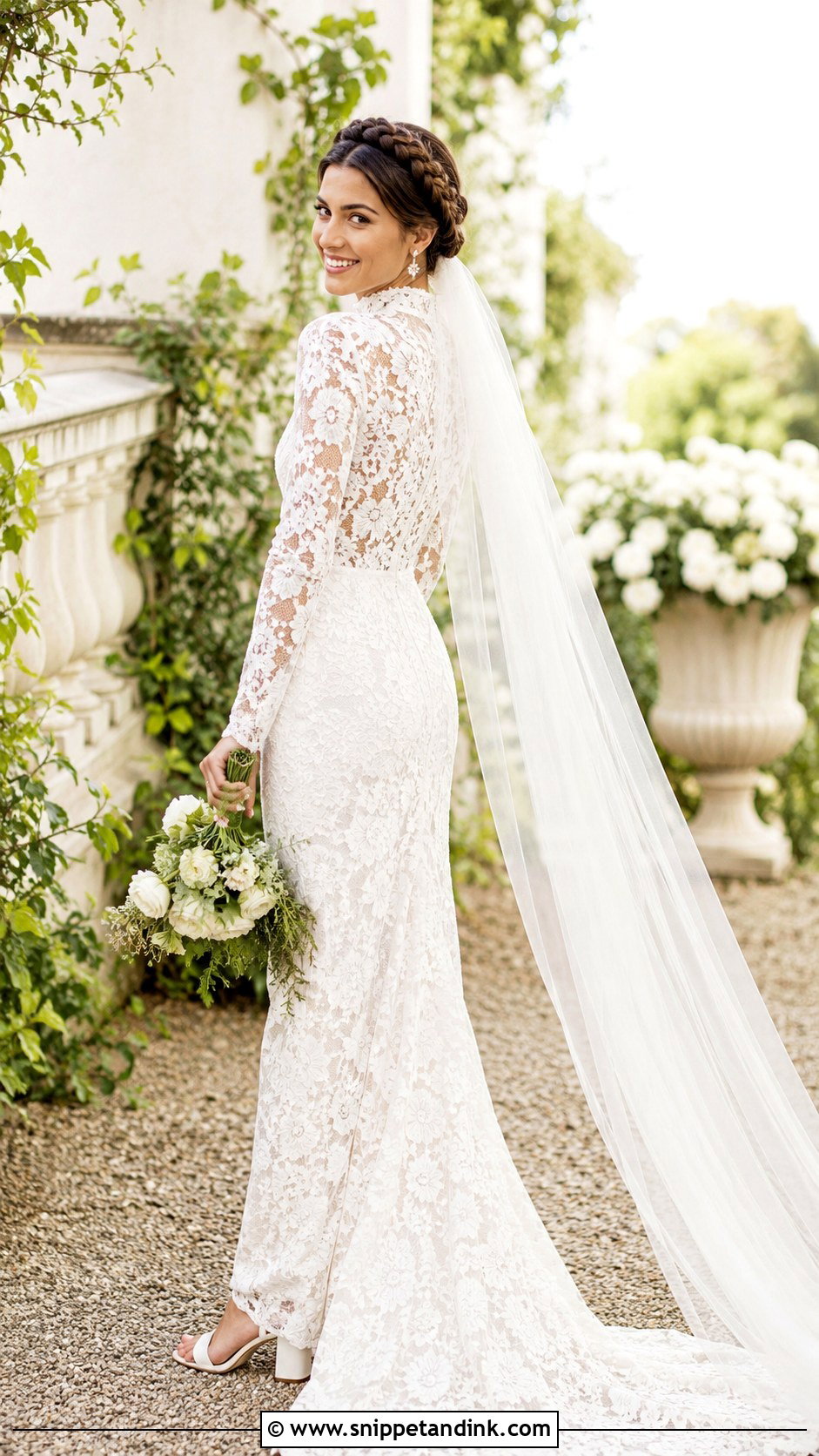
A crown braid is usually my answer for the bride who wants every strand up but finds a sleek bun too severe. The braid wraps over or around the head and the rest of the hair is pinned underneath. I’m honest with anyone who has shoulder-length layers: the shorter pieces poke out of a crown braid, so I may add a clip-in braid to get a clean wrap. Loosen it for a garden wedding, keep it tight for a formal room. Small pearl pins or a few flowers are fine, but a big accessory hides the shape. If you’re wearing a veil, attach it low at the back so the braid is visible as you walk in.
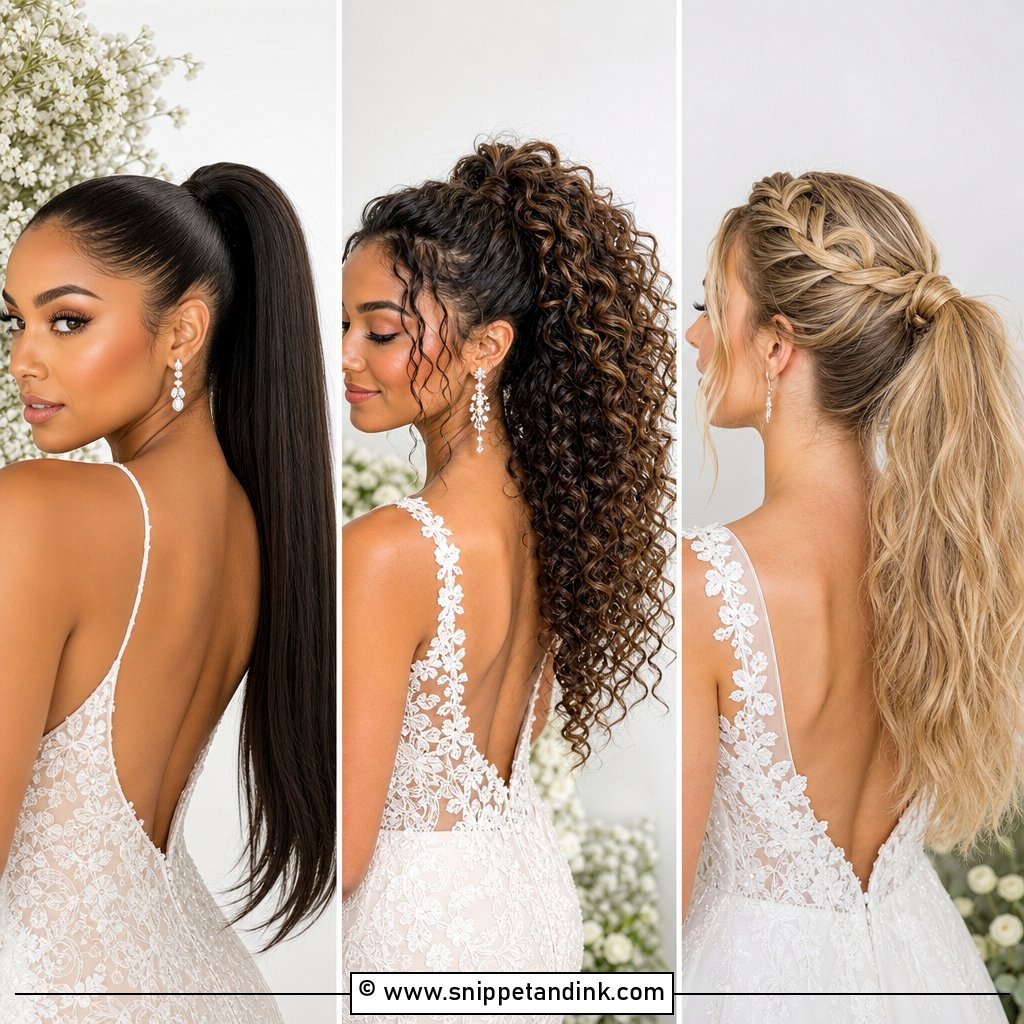
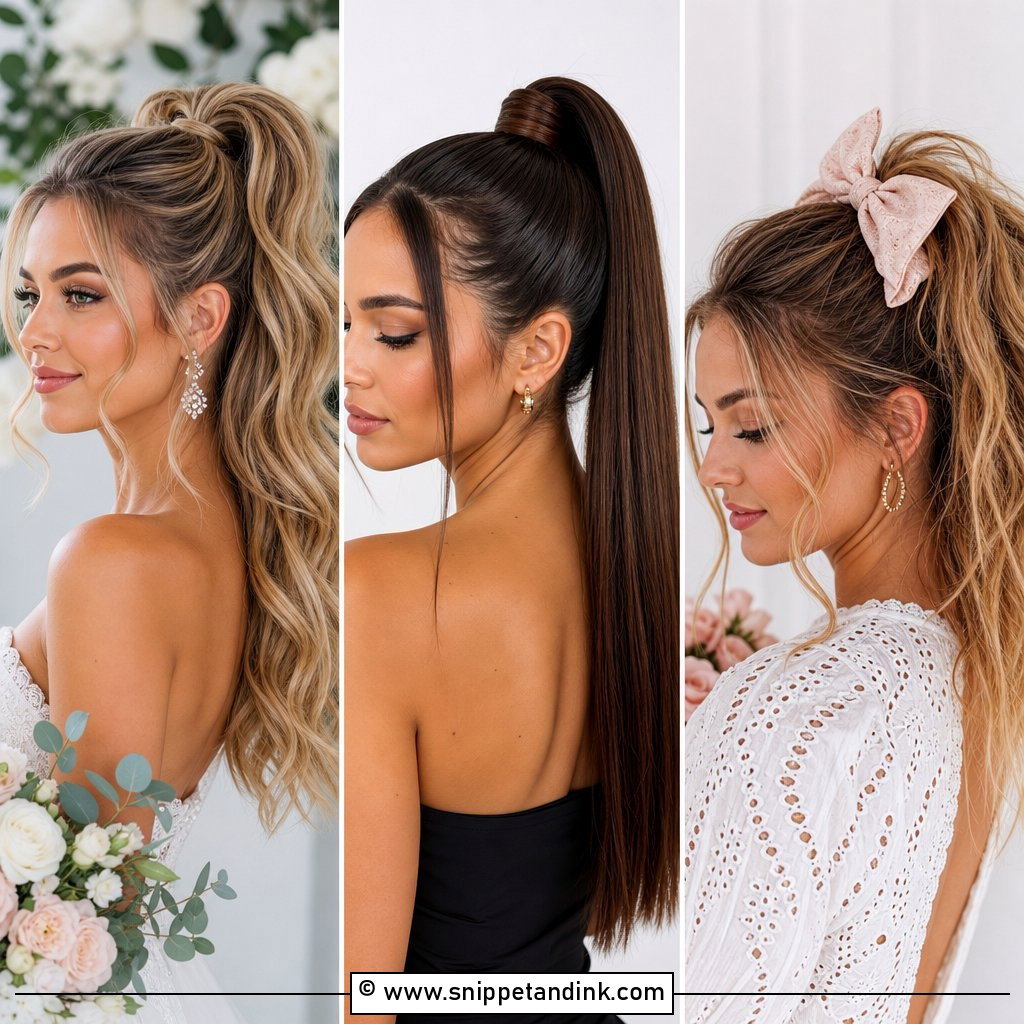
8. High Ponytail For High Neck Wedding Dress
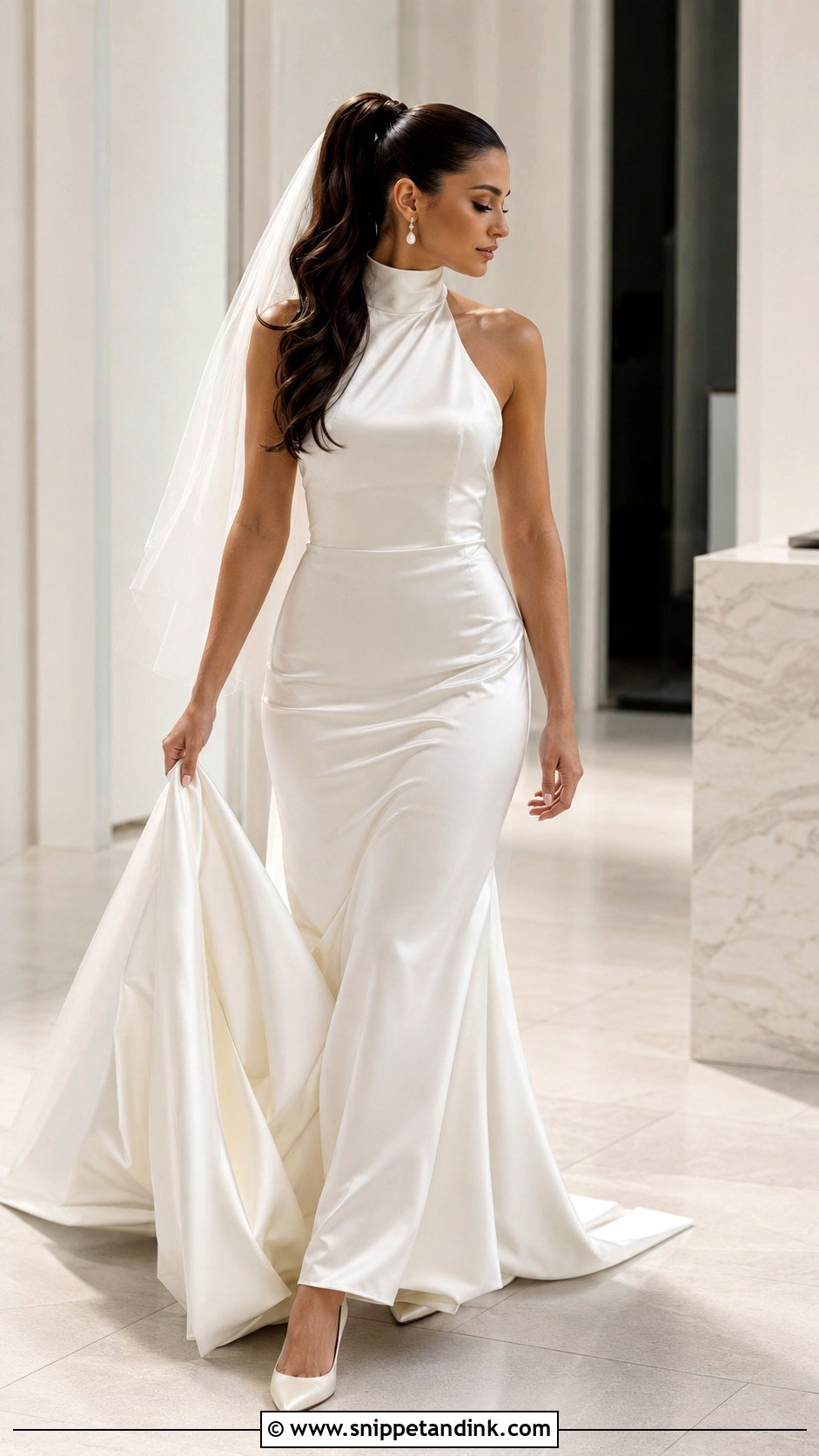
A high ponytail is the most energetic option here, and it keeps every inch of a high collar clear. Sleek suits crepe or satin; curled lengths soften lace and tulle. I wrap a strip of hair around the elastic and pin it underneath. Weight is the real issue. A long, thick pony drags down within a couple of hours and can give you a headache, so I anchor it with two elastics and a criss-cross of pins underneath, or build it from two stacked ponytails. If the dress already has strong shoulders or big sleeves, I keep the crown flatter. A small veil can sit under the pony, and statement earrings carry the sparkle since a necklace has nowhere to go.
9. Low Ponytail For High Neck Wedding Dress
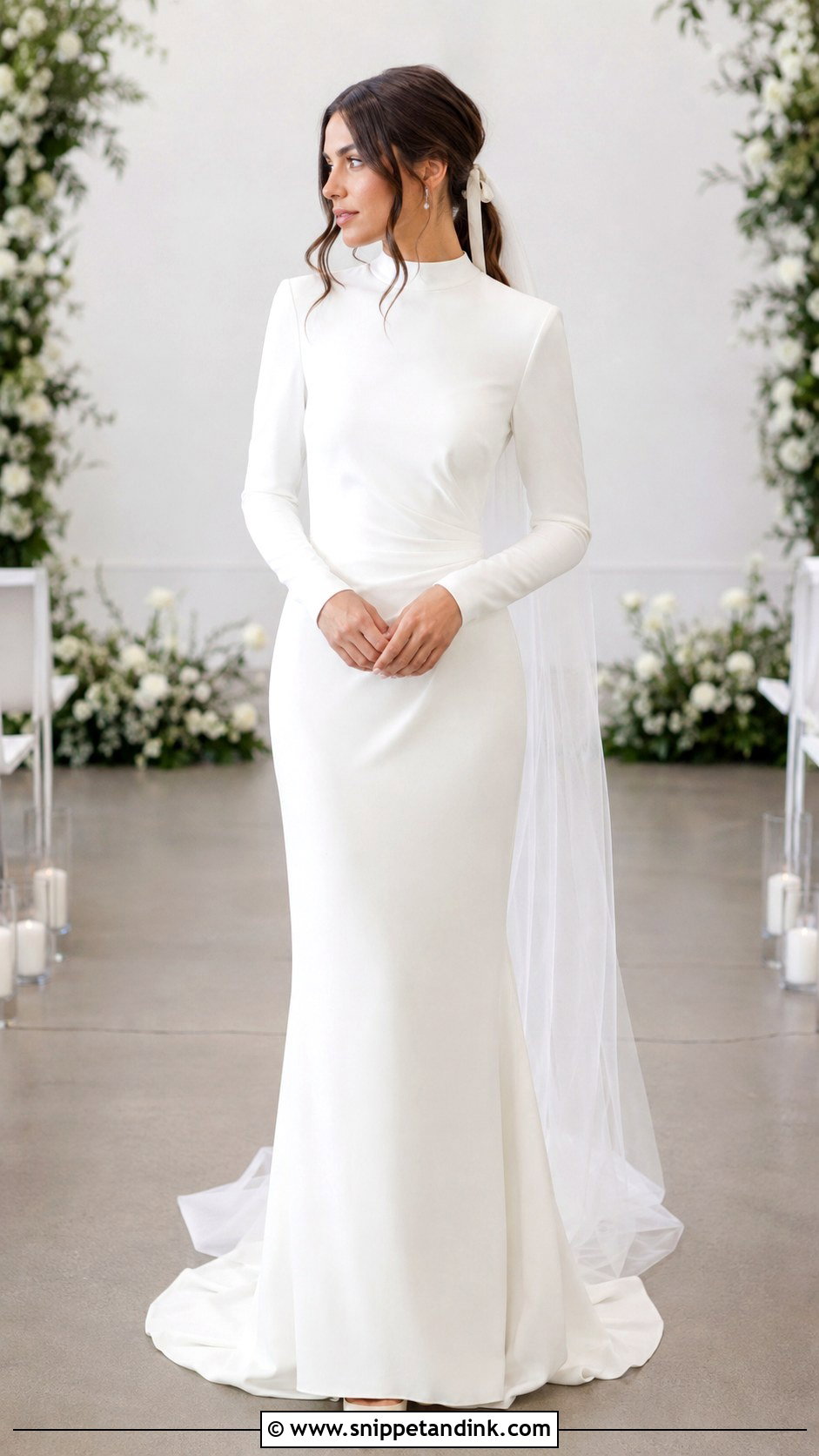
Close to the nape, a low ponytail is comfortable and still shows the collar and shoulder line. Keep it straight and glossy for a minimalist gown, or waved for lace sleeves. A centre part looks current; a side part gives softness at the forehead. Wrap the elastic with hair, velvet ribbon or a small metal cuff that matches your other accessories. Here’s what brides rarely think about: the ends. A long pony swings across the back of the dress all day, and against buttons, beading or appliqué that friction frays the hair and can pull threads. If the back is decorated, I shorten the tail with a loop or shift it slightly to one side for photographs.
10. Half Up Curls For High Neck Wedding Dress
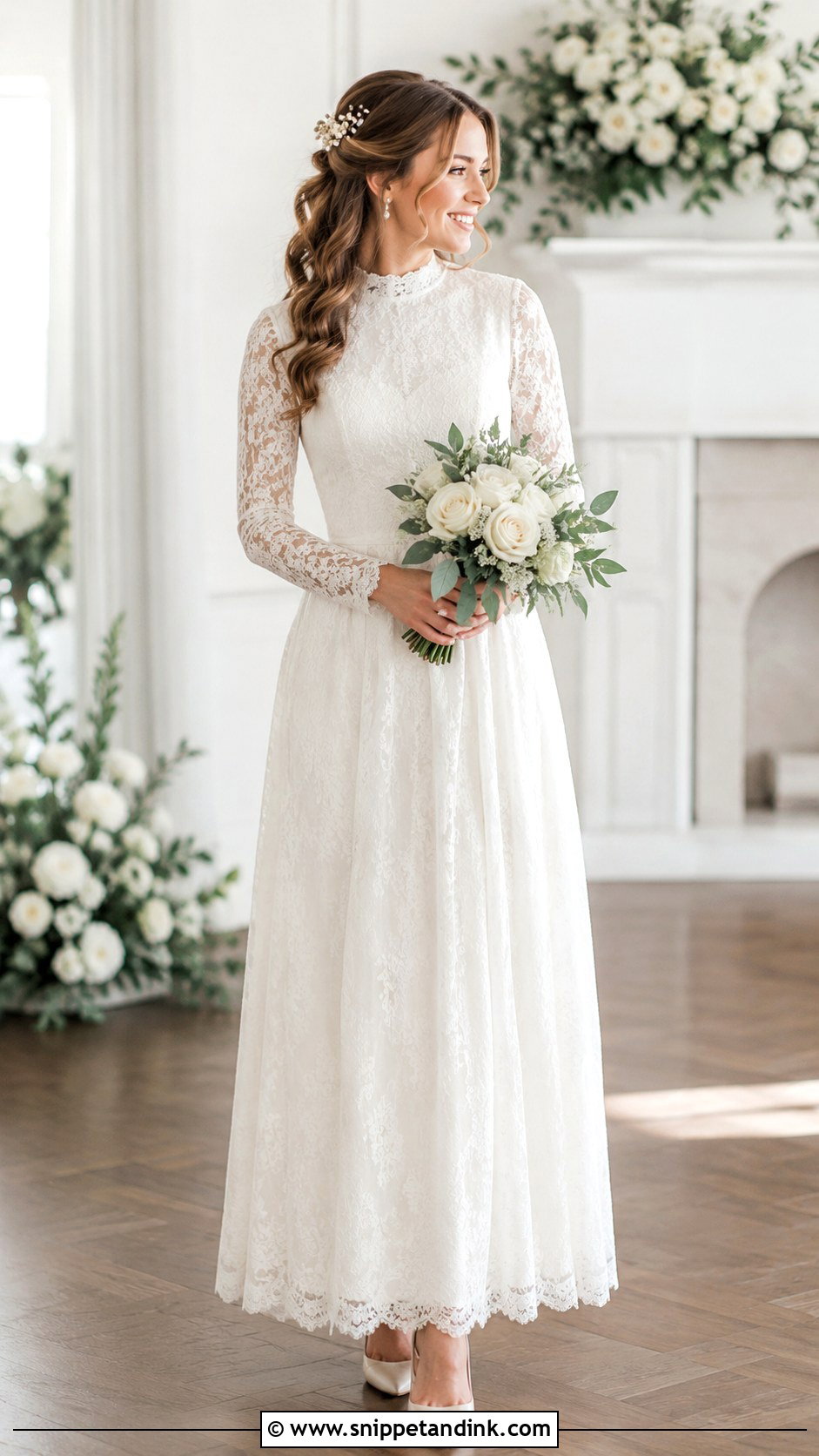
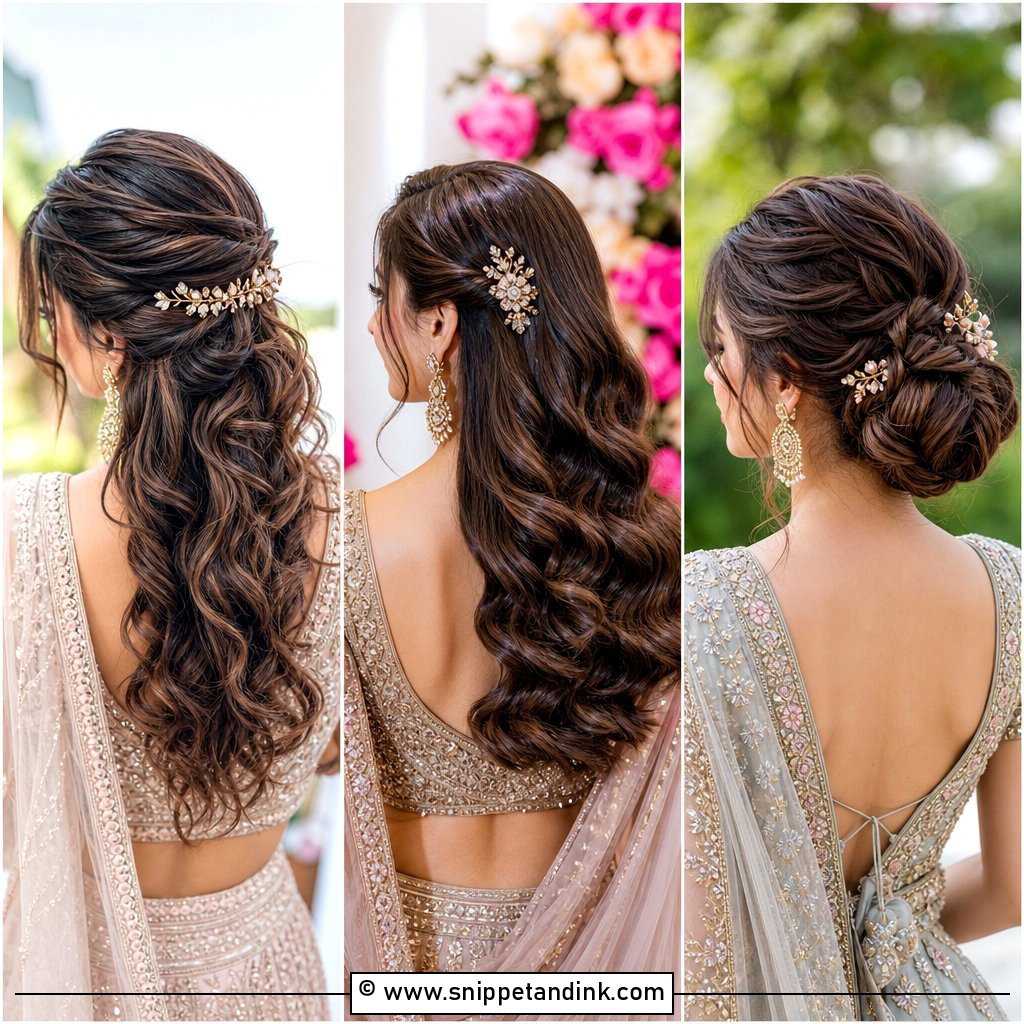
Half-up curls are the compromise I offer the bride who just doesn’t feel like herself with all her hair up. Pulling the top and sides back keeps part of the neckline visible, while the lengths give movement. I’m cautious with it on heavily embellished collars, since curls resting on beading tangle and flatten as the day goes on; a plain collar is the better partner. Wide brushed curls look glamorous, tighter spirals more romantic. A pearl comb or slim bow sits where the sections meet, kept small if the gown has lace. At the trial I always stand behind the bride to check that the curls don’t cover a keyhole opening, a row of buttons or a detailed back panel.
11. Side Swept Waves For High Neck Wedding Dress
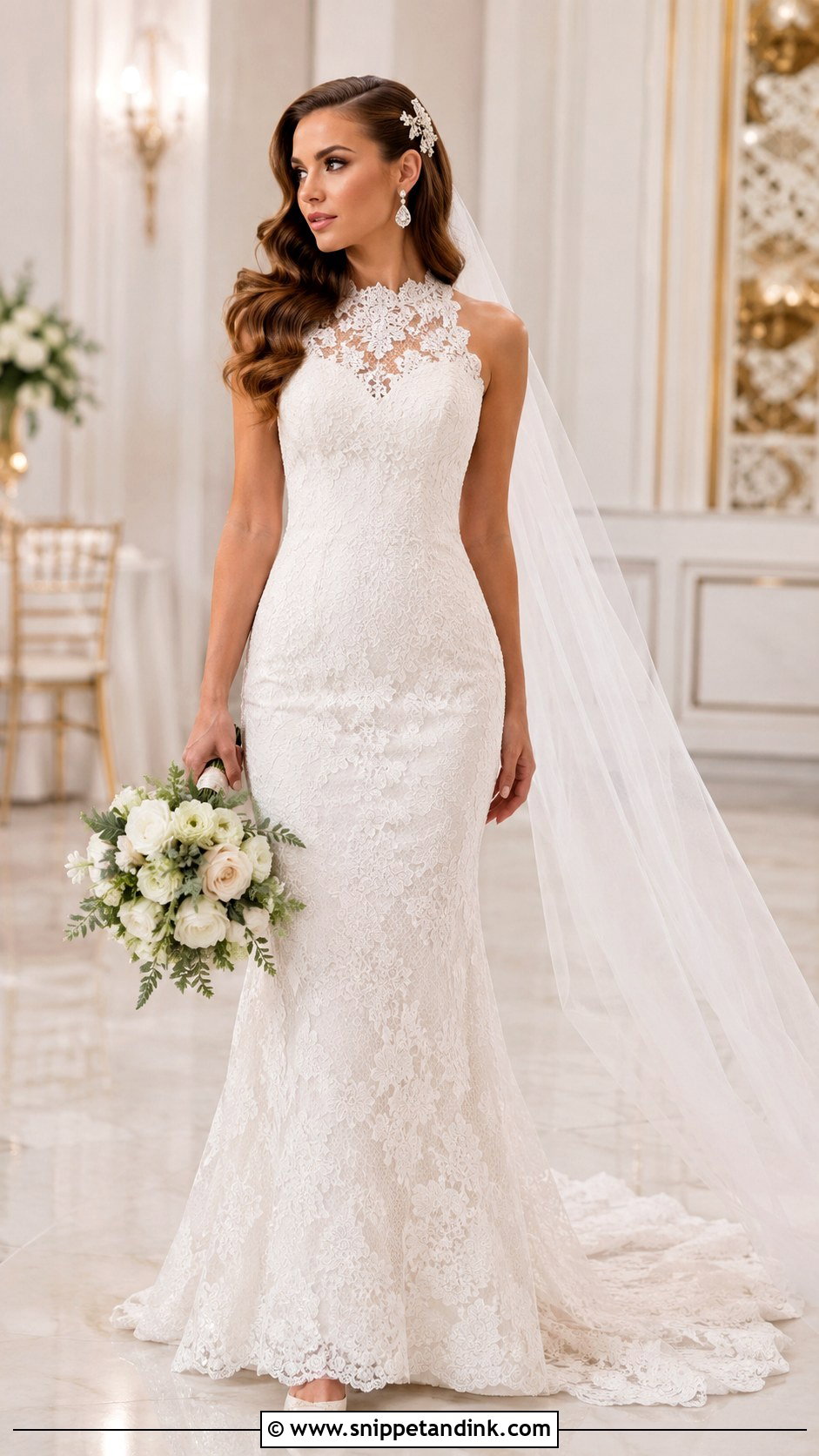
Sweeping glossy waves over one shoulder balances all that coverage at the neck. I pin the other side securely behind the ear so the front of the neckline stays visible. Fitted gowns, vintage lace and open backs suit it. Big uniform waves read as Old Hollywood; looser bends feel modern. Put the hair over the shoulder with the least embellishment, otherwise you’re hiding the part of the dress you loved. On an ornate gown, plain pins on the tucked side look better than a jewelled clip. Side-swept hair is always the first thing to creep back toward the middle, so I hide two crossed pins under the sweep and let the waves cool fully before brushing them out.
12. Pinned Back Curls For High Neck Wedding Dress
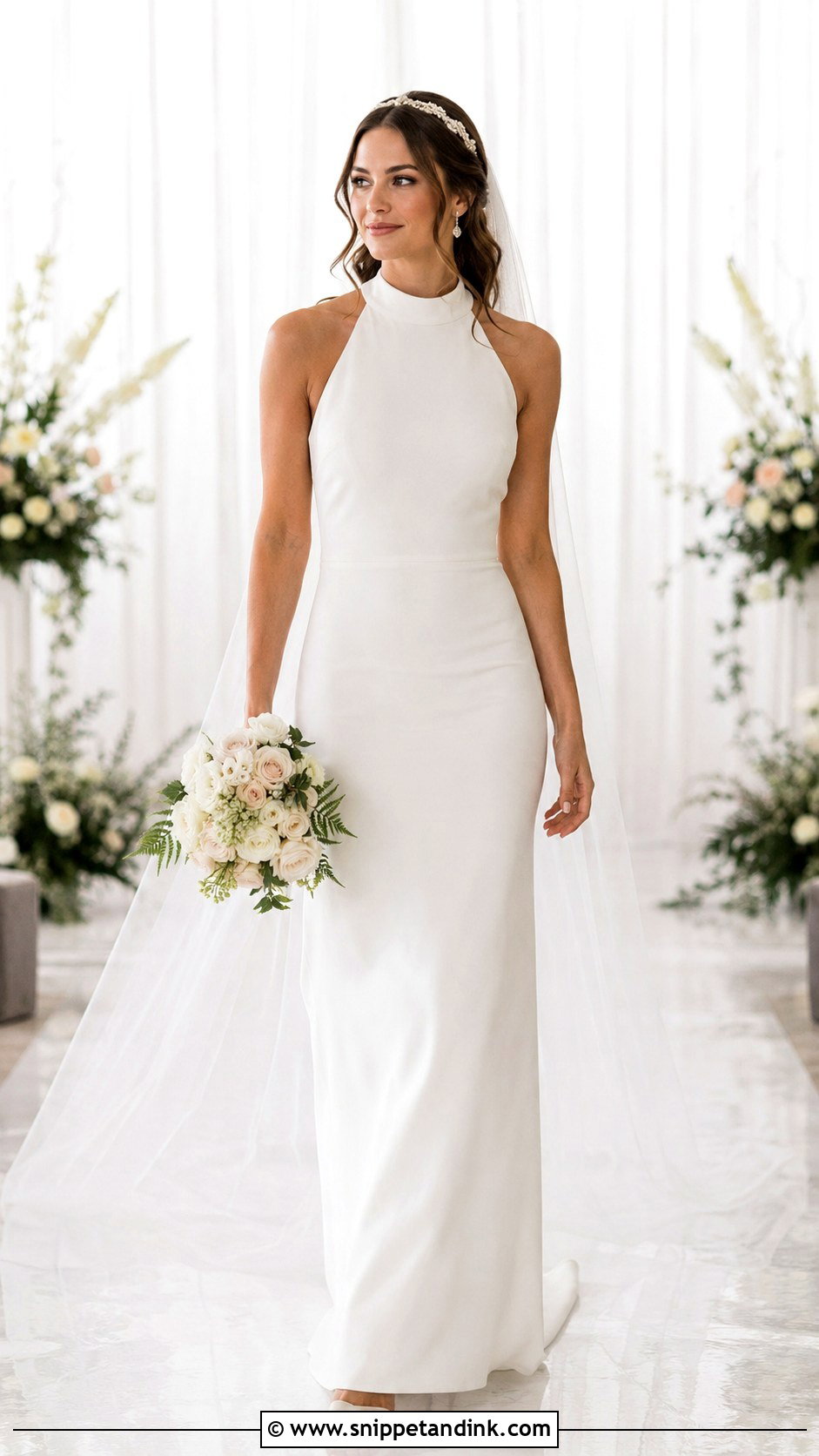
Pinning just the front sections away from the face lets most of the hair hang loose, so you keep the length many brides want to see. Unlike half-up, nothing is gathered at the crown. I ask for the curls to start below the cheekbones so there isn’t a bulk of hair sitting at the collar. Small pins hidden under the hair, or a fine headband, hold the front. Heavy appliqué and loose curls catch on each other, so a streamlined neckline is the safer match. A trick worth telling your photographer: bring the curls forward for some frames and push them behind the shoulders for others, and you get two looks from one style.
13. Natural Curly Updo For High Neck Wedding Dress
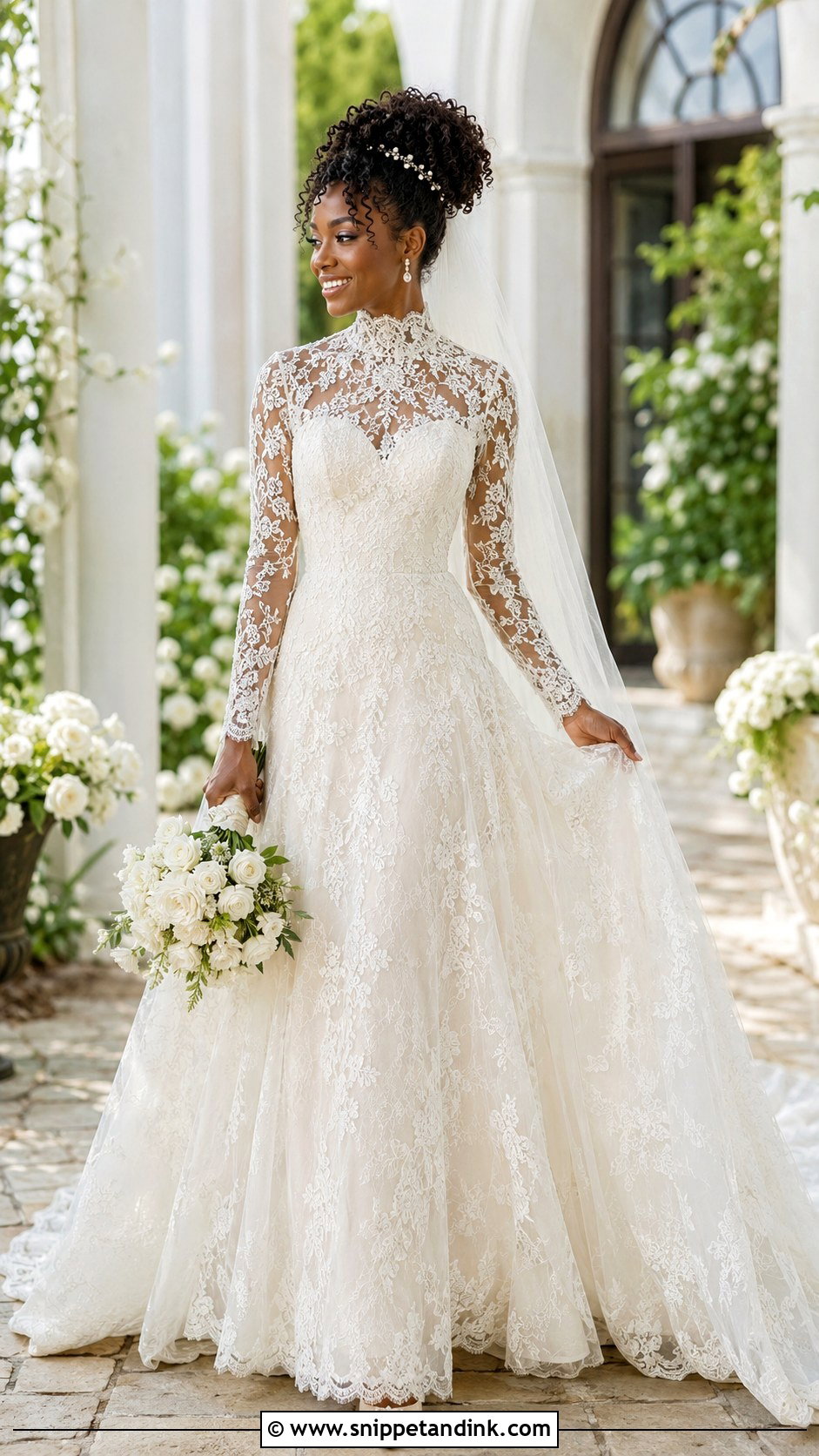
Natural curls already have shape and dimension, and I’d much rather work with that than straighten it into a bun. I pin them loosely at the crown, gather them into a low puff or build an asymmetric shape, keeping definition around the edges and a few chosen curls at the face. Moisture is the foundation. Curls styled on dry, unprepped hair go frizzy against a lace collar within hours, so I start with a leave-in and a curl cream and let them set before I pin anything. Tuck pearl pins, gold accents or a small comb between curls rather than on top. Match the height to the gown: a fitted dress carries more volume, while a full skirt usually looks better with something compact.
14. Braided Bun For High Neck Wedding Dress
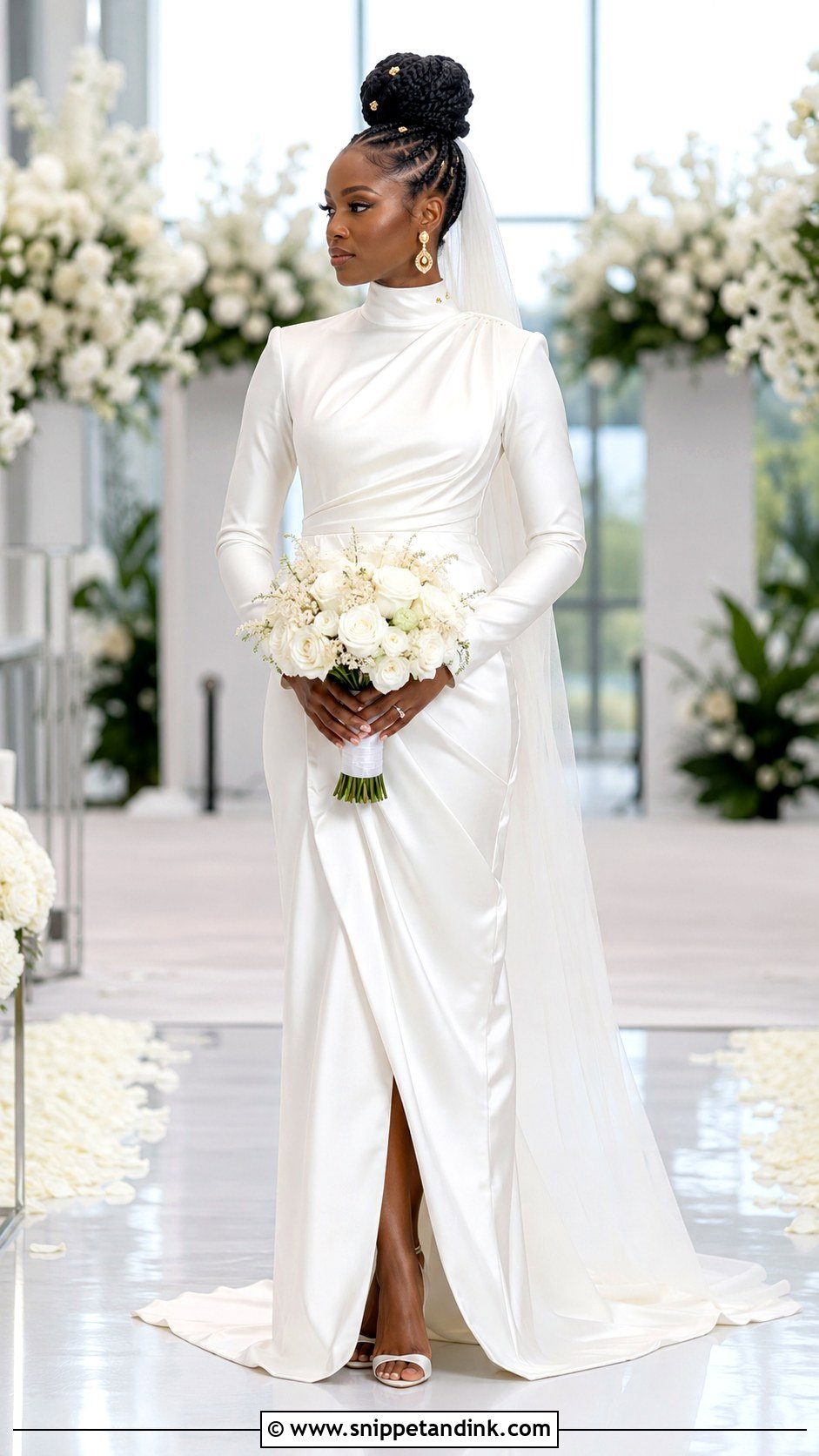
A braided bun shows off natural hair and keeps the neckline clean. Cornrows, flat twists, box braids or individual plaits can be directed up into a high bun for a structured dress, or down into a low one for lace or long sleeves. Edges can be laid sharp or left soft, as long as it looks like you. Gold cuffs or pearl pins on a few braids are enough. Tension is the conversation I have earliest. Braids installed too tight will ache through a long day, which is why many brides have them put in several days ahead so the scalp has time to settle. Agree size, tension and timing with your braider well before the wedding.
15. Sleek Pixie For High Neck Wedding Dress
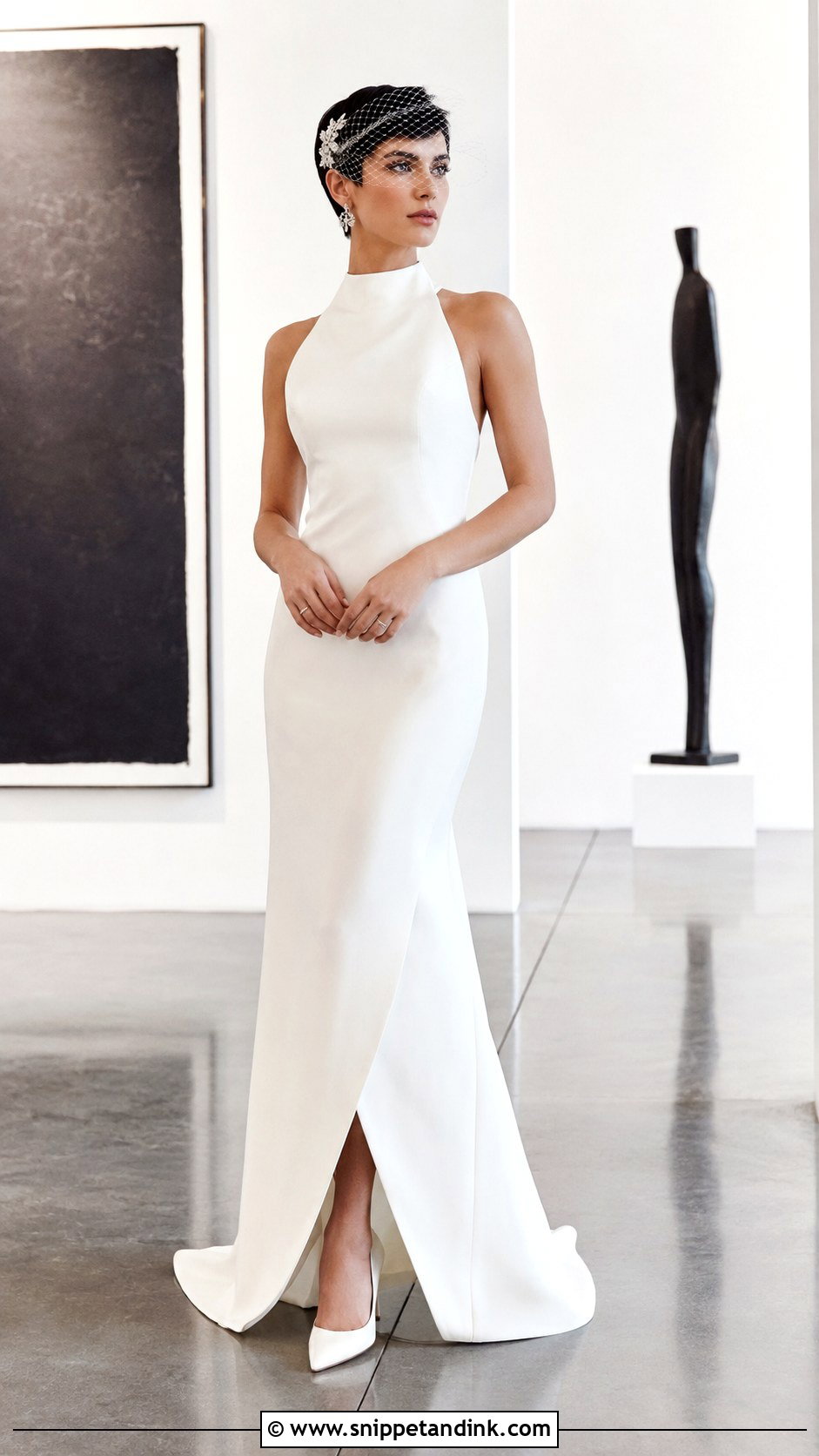
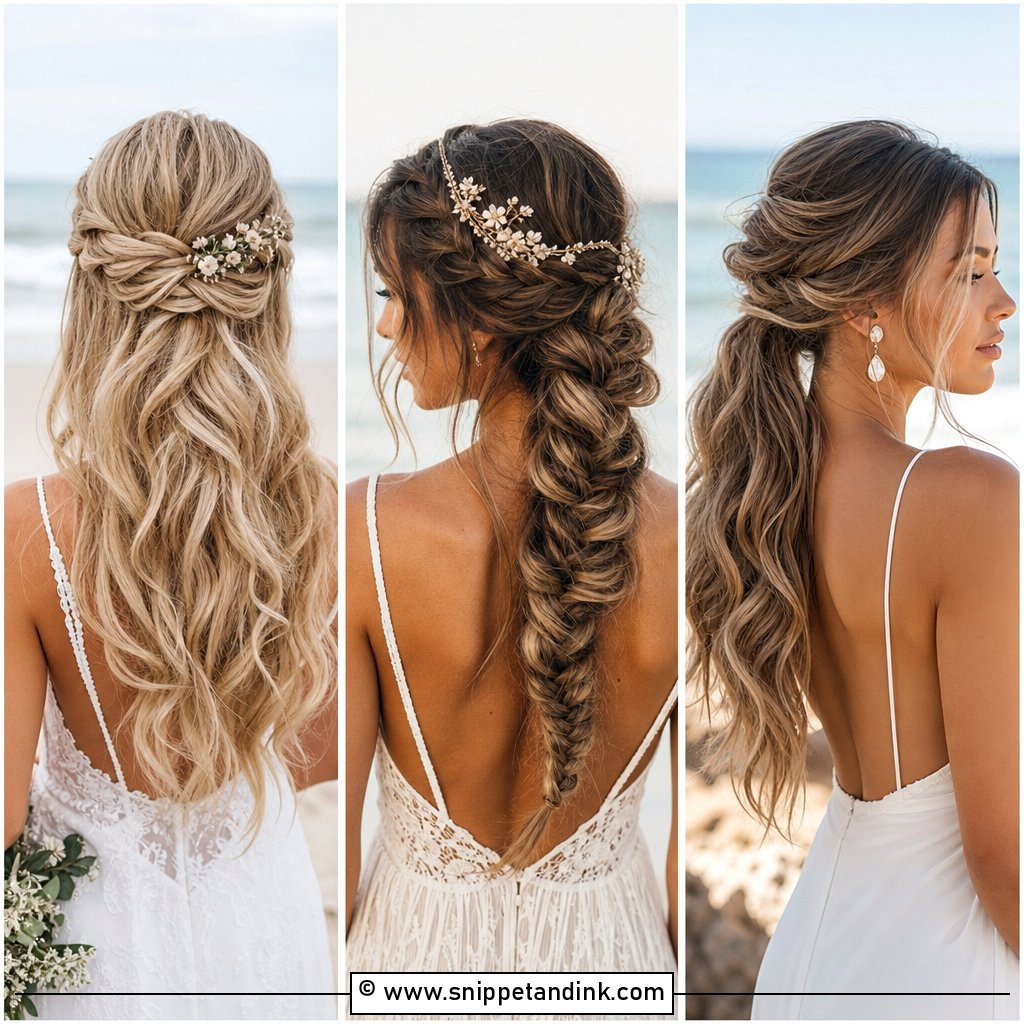
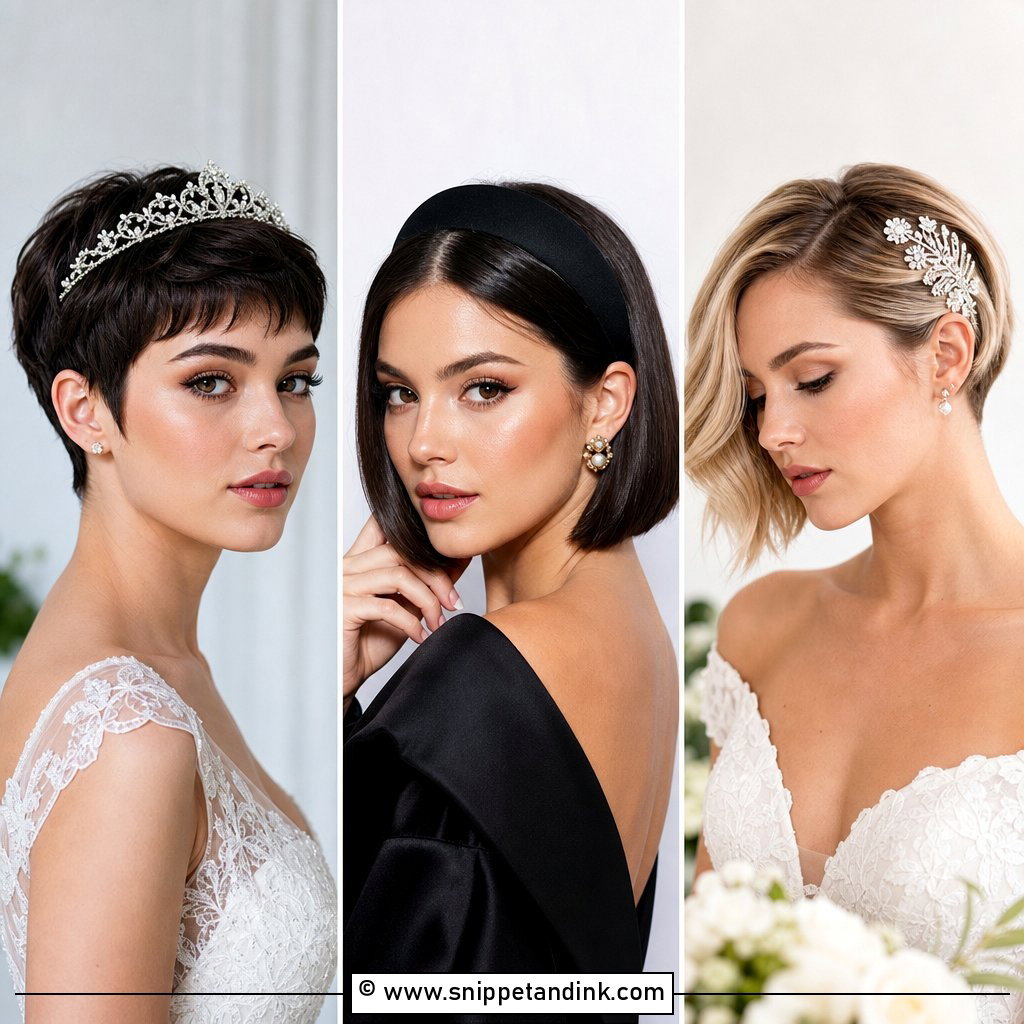
Short hair with a high neck looks sharp, and there’s nothing to pin up. A sleek pixie can take a deep side part, a little lift at the crown, or be brushed straight back off the forehead. All the attention lands on your face, earrings and makeup, which suits minimalist satin and architectural collars. I use a light paste or cream, never a wet-look gel, which can look greasy in close-ups. A narrow headband, a jewelled clip or a small birdcage veil adds the bridal note, but pick one. Get the cut about a week out; a pixie cut the day before can look blunt, and one left a month has lost its shape around the ears.
16. Soft Bob For High Neck Wedding Dress
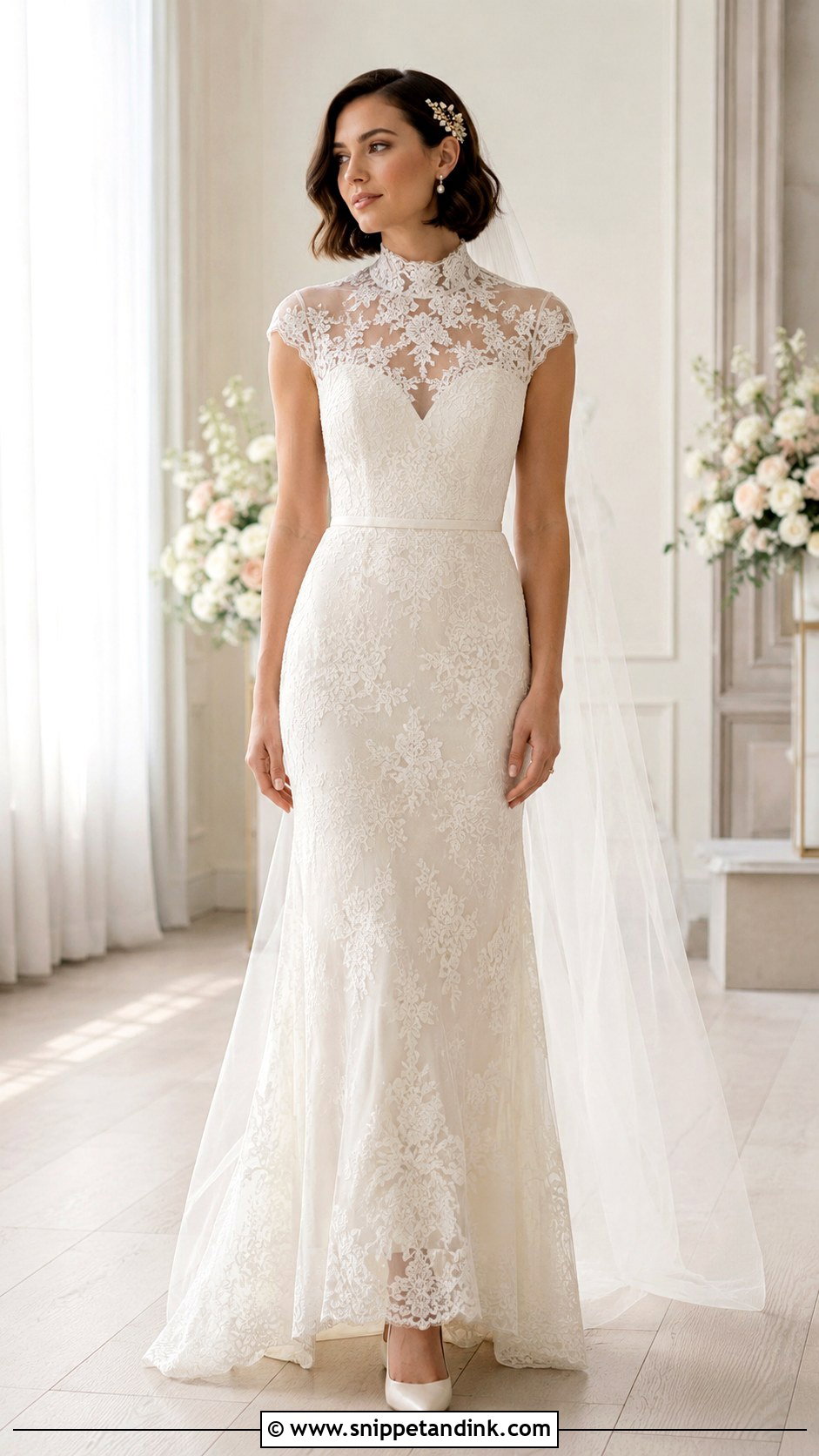
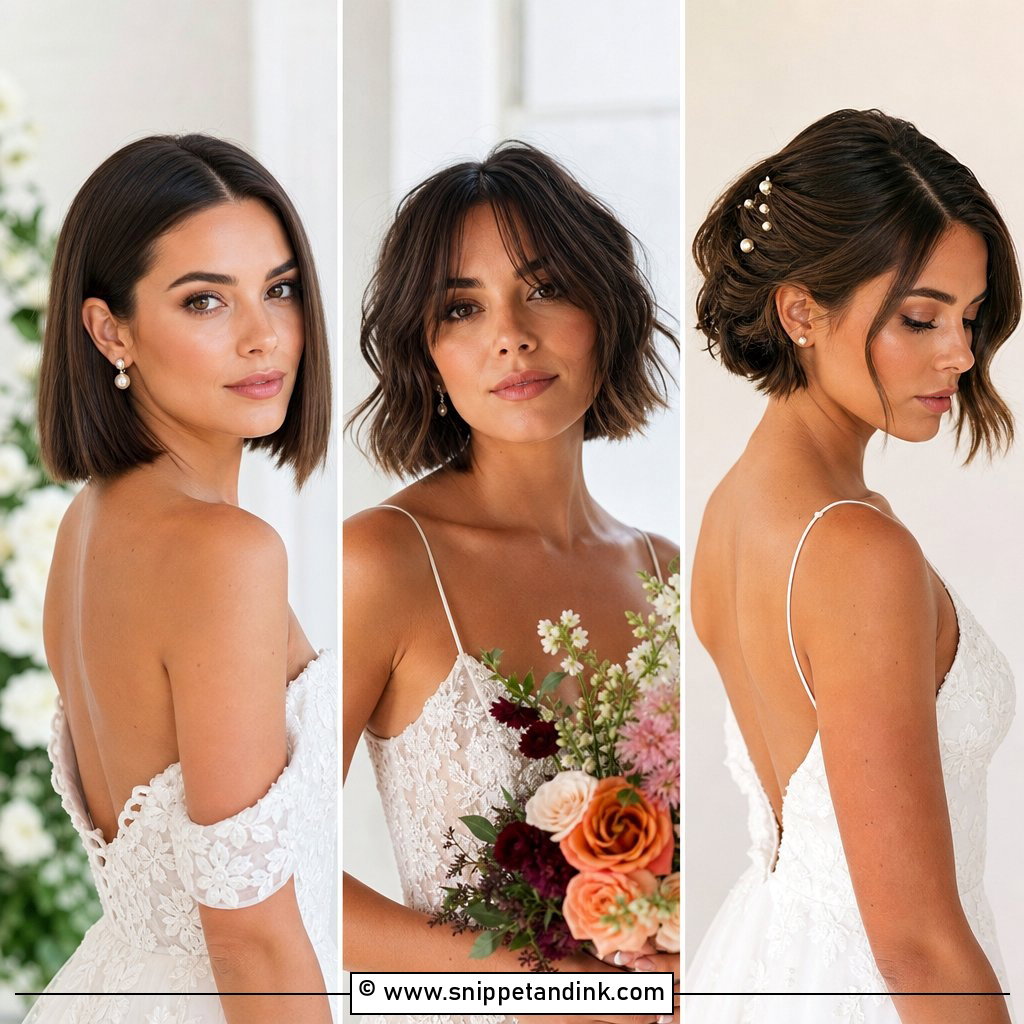
A chin- or jaw-length bob naturally stops above most high collars, which makes it an easy match. Turn the ends under for polish, or add loose bends for something more relaxed. A side part gives volume; a centre part gives symmetry. Plain surfaces, sheer panels and subtle lace all sit well with it. The awkward length is a bob that grazes the shoulder: the ends flick outward when they hit the collar, so I tuck one or both sides behind the ears. A slim band or small clip adds a bit of sparkle. If you’re wearing statement earrings, though, leave the area around the ears clear, because two decorative things in that small space look cluttered.
17. Vintage Finger Waves For High Neck Wedding Dress
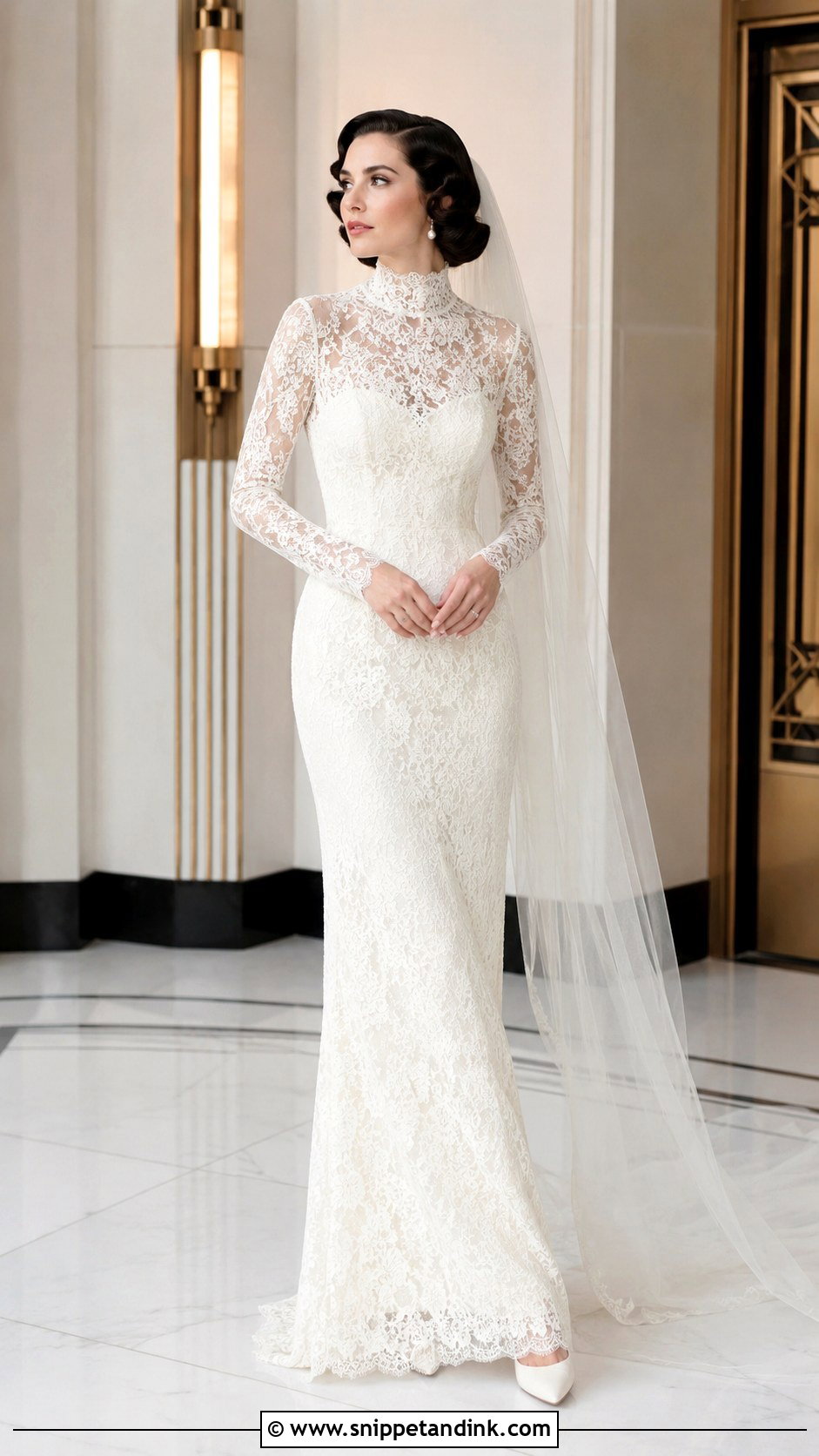
Vintage finger waves sculpt a frame around the face that sits very well with high neck lace and streamlined gowns. They work on short hair, on a bob, or carried into a low bun at the back. A deep side part strengthens the 1920s feel and keeps the forehead open. Traditional finger waves are set wet with gel and a comb and need full drying time, so I build extra minutes into the morning schedule; heat-set waves are quicker but less defined. Gloss is good, a crunchy shell isn’t, especially in close portraits. Art deco pieces, pearl earrings or a simple veil suit it, and since the waves already carry detail, keep jewellery selective. At the trial I check the placement around the ears so nothing sits on the collar.
18. Bubble Ponytail For High Neck Wedding Dress
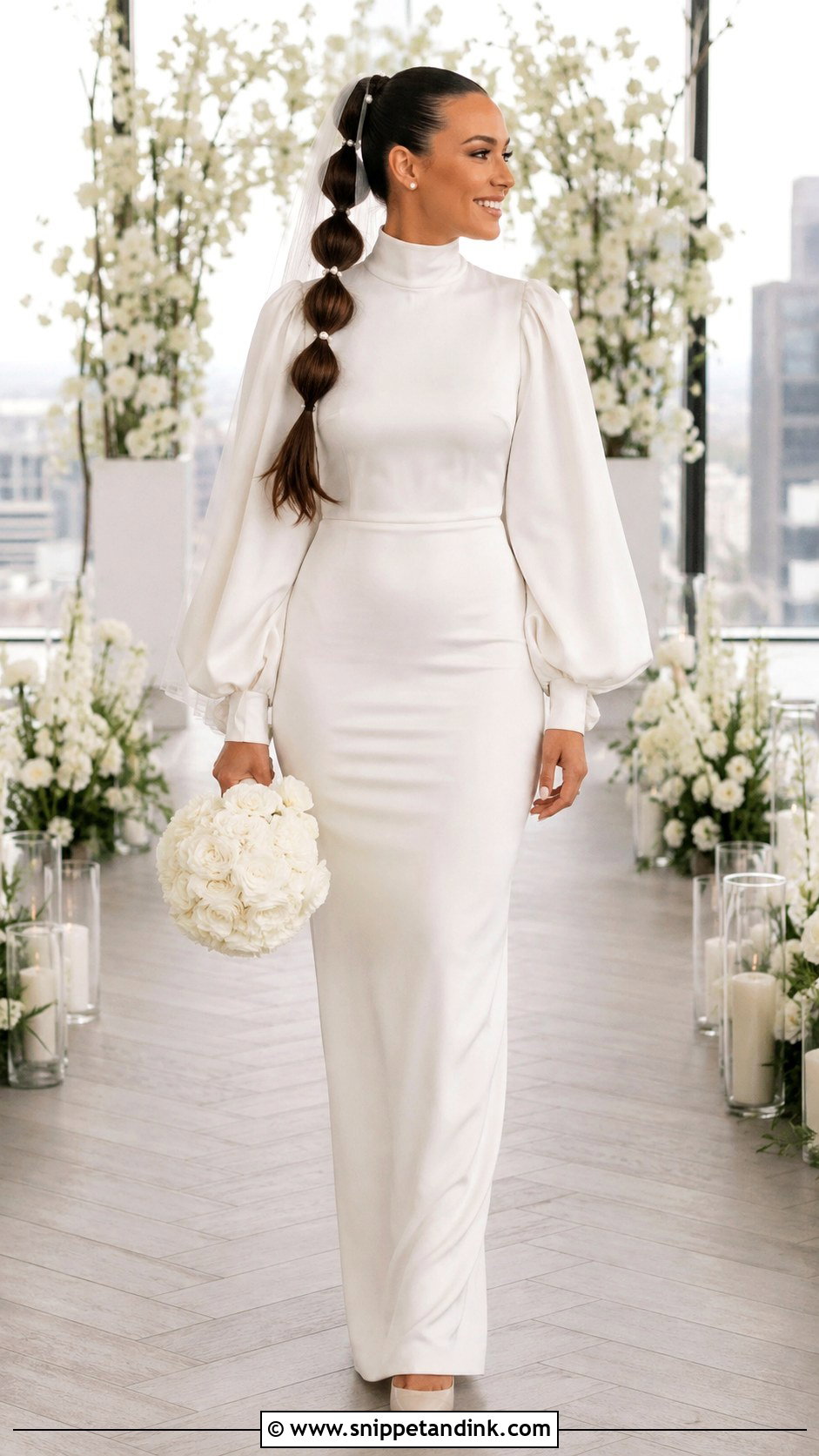
Bubble ponytails are playful and keep hair right away from the neckline. I start with a secure high or mid-level ponytail, add evenly spaced elastics, then gently pull each section out into a round. Even spacing matters more than people expect, because uneven bubbles look accidental in photos. Sleek gowns, sculpted sleeves and city celebrations suit it best. Small pearls between sections are possible, but with a heavily embellished dress I’d leave it plain. Fine hair benefits from a clip-in extension for length and fullness. The last bubble should end above any important back detail, and a neat middle part with simple earrings keeps the whole look calm.
19. Side Swept Updo For High Neck Wedding Dress
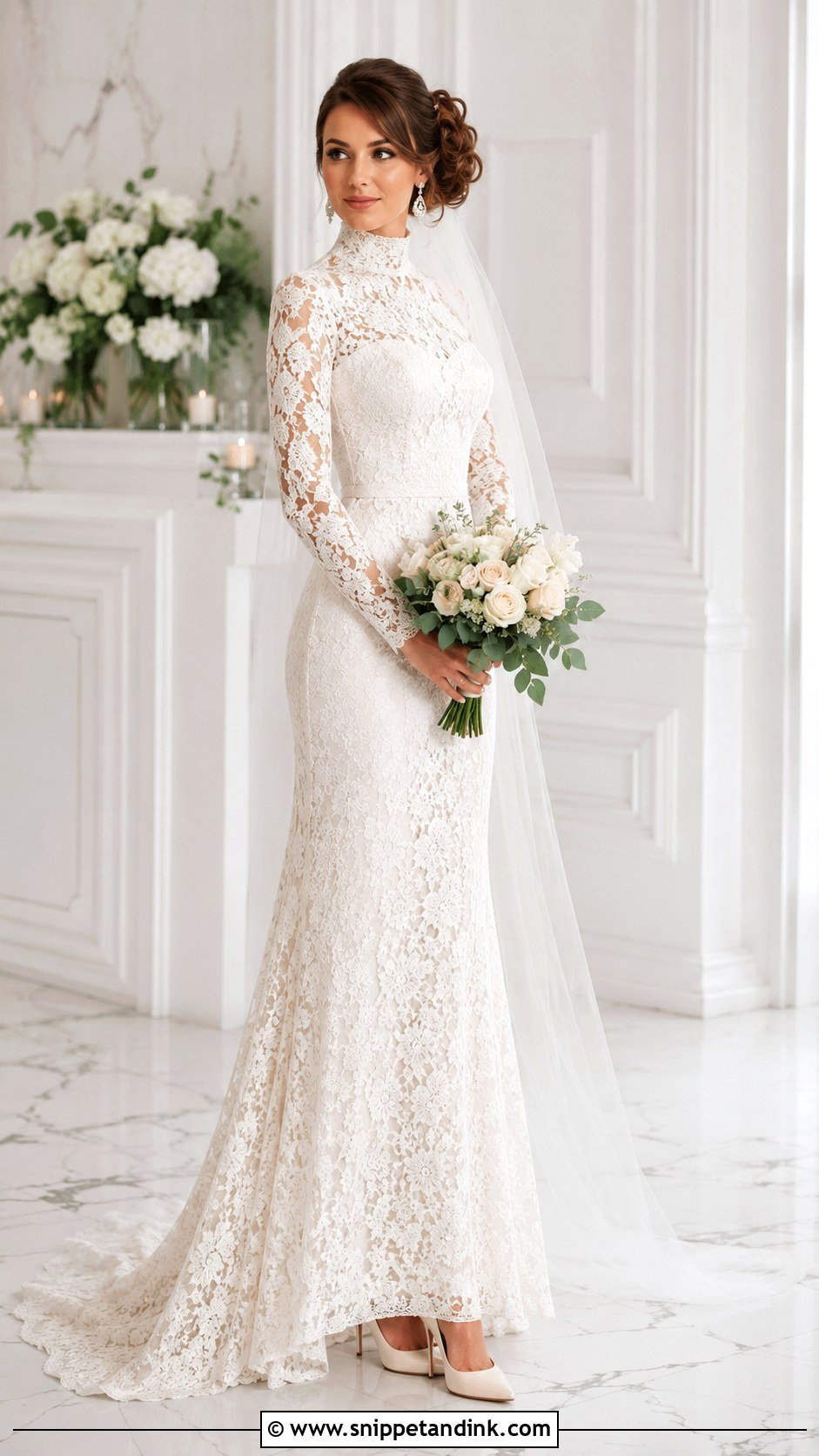
Gathering the hair to one side into curls, loops or a loose bun just behind the ear gives you an interesting profile without covering the collar. It softens angular features, and photographers usually favour the open side. Romantic lace and plain dresses that need one artistic detail both suit it. Keep the updo above the collar line. If it rests on the fabric it rubs, and on lace that means fuzz in the hair by evening. Earrings can be asymmetrical too: small on the fuller side, bolder on the open side. Don’t hang a heavy veil from the off-centre updo, as it tips the whole thing sideways. A low, central attachment is more secure.
20. Curly Top Knot For High Neck Wedding Dress
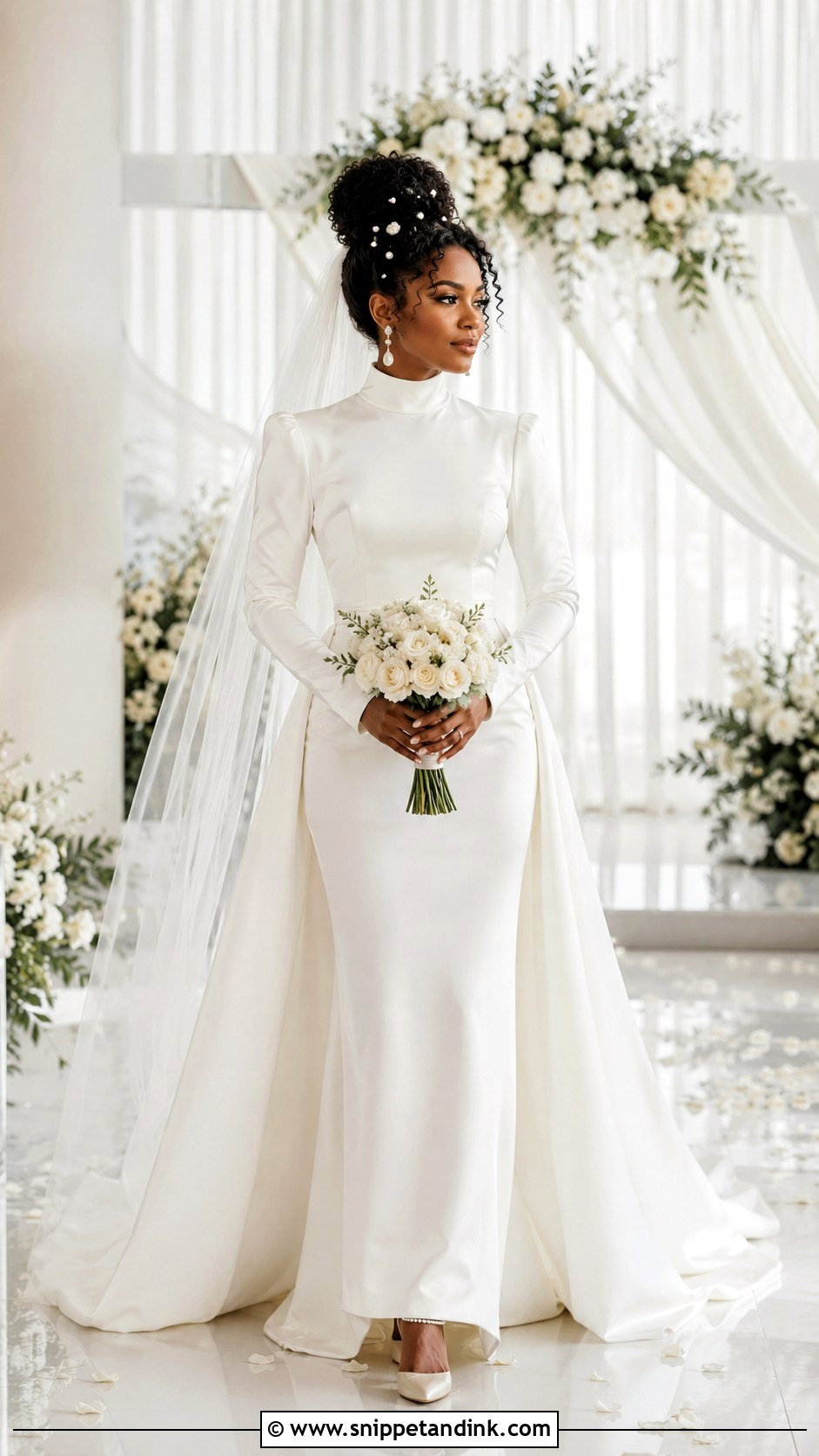
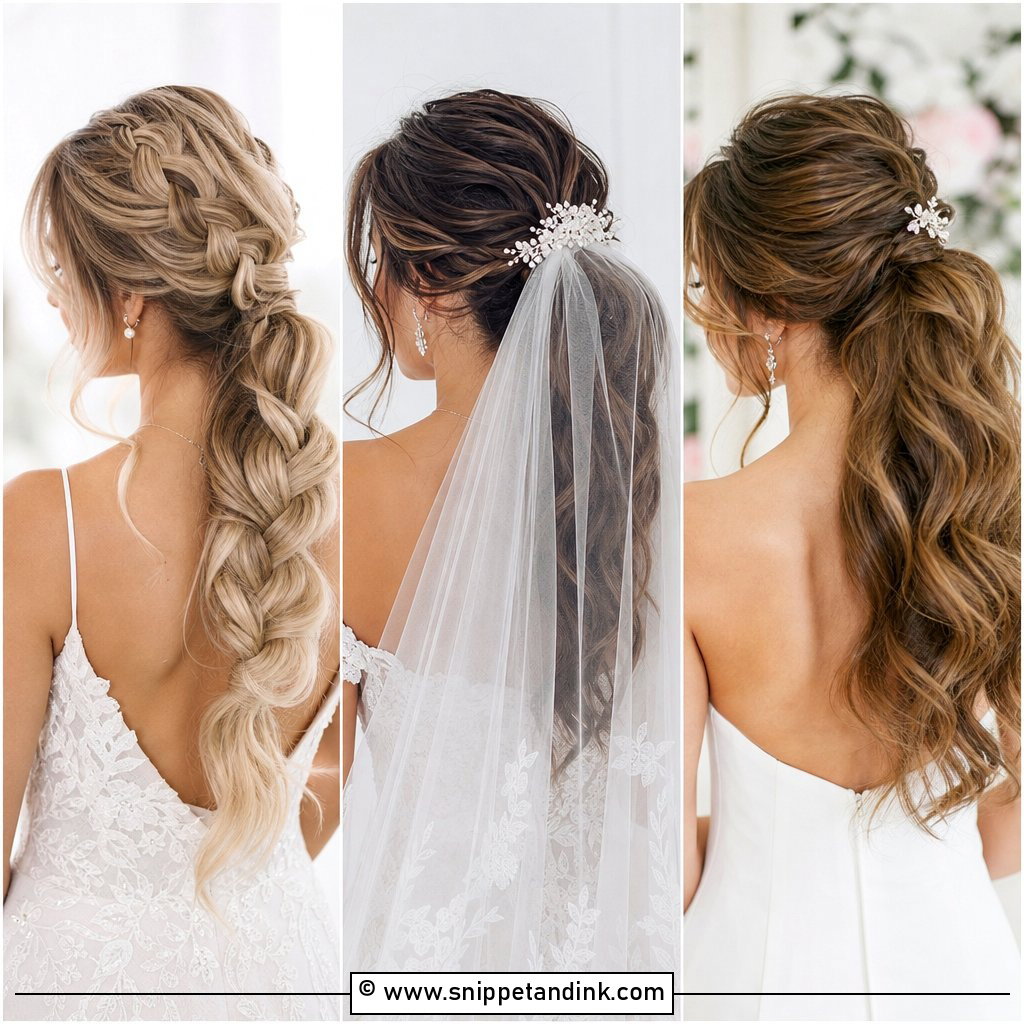
A curly top knot gives a high collar plenty of breathing room and keeps natural volume front and centre. I gather curls or coils to the crown and shape a rounded bun without pressing the texture flat. The height lengthens the line through the collar, shoulders and sleeves. Leave a few defined curls at the hairline or lift everything for a bolder look. Density and curl pattern vary so much that I adapt with extensions, padding or extra pins rather than forcing one method. A small veil can go under the knot, or pearl accents through the curls. Because it sits high, wear it for several hours at your trial; a top knot that feels fine at noon can start pulling at the temples by nine.
What a Lace Collar Does to Hair After Six Hours
A high neck sits against your hair all day in a way a strapless gown never does, and it causes a few problems that only show up once the dancing starts.
Friction at the Ends
Every time you turn your head, any length touching the collar rubs against it. On curls and waves that means frizz at the ends, and on fine lace it can pull a thread. I keep hair worn down shorter than the collar line or tuck it behind the shoulders, and I seal the ends with a drop of smoothing serum.
Pins That Hook Beading
Decorative pins with exposed prongs can catch on beading when you hug people. For low styles I use pins with rounded tips and turn their open ends into the hair, away from the fabric.
Static Under Synthetic Linings
Polyester linings and some tulle build static, especially in dry winter air, and flyaways lift toward the collar. A dryer sheet smoothed lightly over the surface of the hair, or a little hand cream rubbed between your palms first, settles it in seconds.
A Small Kit for Whoever Holds Your Bag
- Six to eight bobby pins in your hair colour
- A travel-size flexible hold spray
- A fine tail comb for fixing the parting
- Two clear elastics if you’re wearing a ponytail
A Trial in the Real Collar Settles It
The right pairing lets the gown and your face share the attention. Low buns, chignons, twists and lifted ponytails show off an ornate collar, while short cuts and pinned curls are the softer route. Weigh your texture, your face shape, the veil and how busy the dress is. Then pick a style you’ll feel secure and recognisable in, not one you’re putting up with. Book a full trial in the gown, or at least in a top with the same neckline height. Photograph it from every side, try the accessories on, and adjust until the whole look balances.
You'll Like These Ideas:


Leave a Reply