
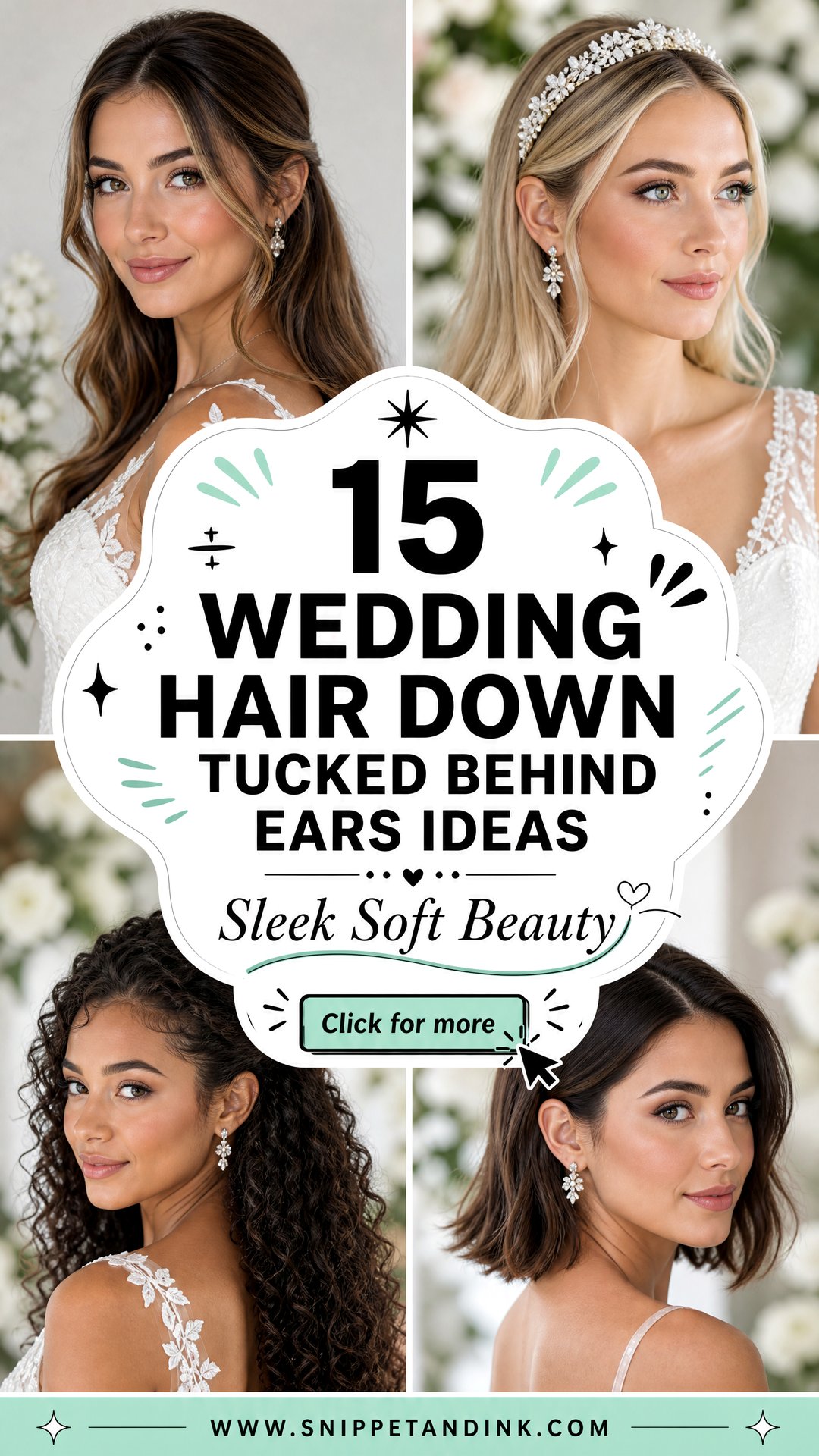
Tucking hair behind the ears looks like the simplest thing in the world, and on an ordinary day it is. On a wedding day, a tuck has to survive a veil going on and off, hugs from every direction, and hours of you instinctively pushing your hair around. Done well, it keeps your length down, shows your earrings and opens your face for the camera. Done casually, it’s undone before the first reading. Underneath every look below there’s a hidden pin, a smooth front section and a light hold spray. The fifteen versions differ in part, texture and finish.
Why a Tuck Slips Out Within the Hour
Hair tucked behind the ear isn’t held by anything except the ear itself. Every time you turn your head, the hair slides forward a little. Smooth, freshly washed or very straight hair slides fastest. So I never rely on the ear alone.
This is how I set a tuck that lasts:
- Smooth the front section first with a little cream, so no short hairs stick out over the top of the ear.
- Tuck the section behind the ear, then take it slightly down and back toward the nape, not straight back.
- Slide a bobby pin upward into the tucked hair just behind the ear, catching some hair close to the scalp.
- Cross a second pin over it in an X. The cross is what locks it.
- Cover the pins with a little hair from above, then mist lightly with flexible spray.
On fine or slippery hair, I spray a touch of dry shampoo into the front section before tucking. It’s invisible, and it gives the pins something to grip.
1. Wedding Hair Down With Middle Part Tucked Behind Ears
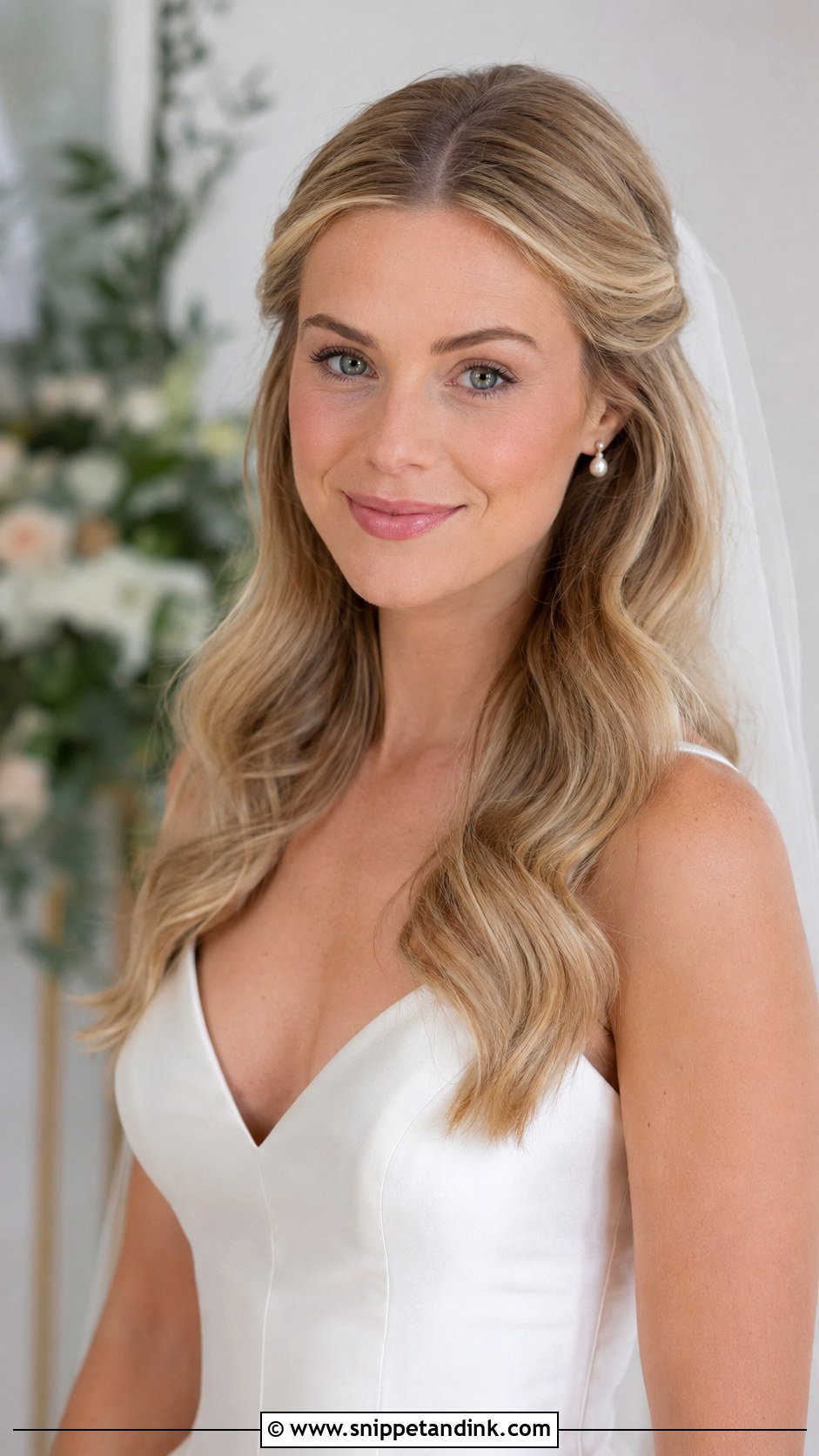
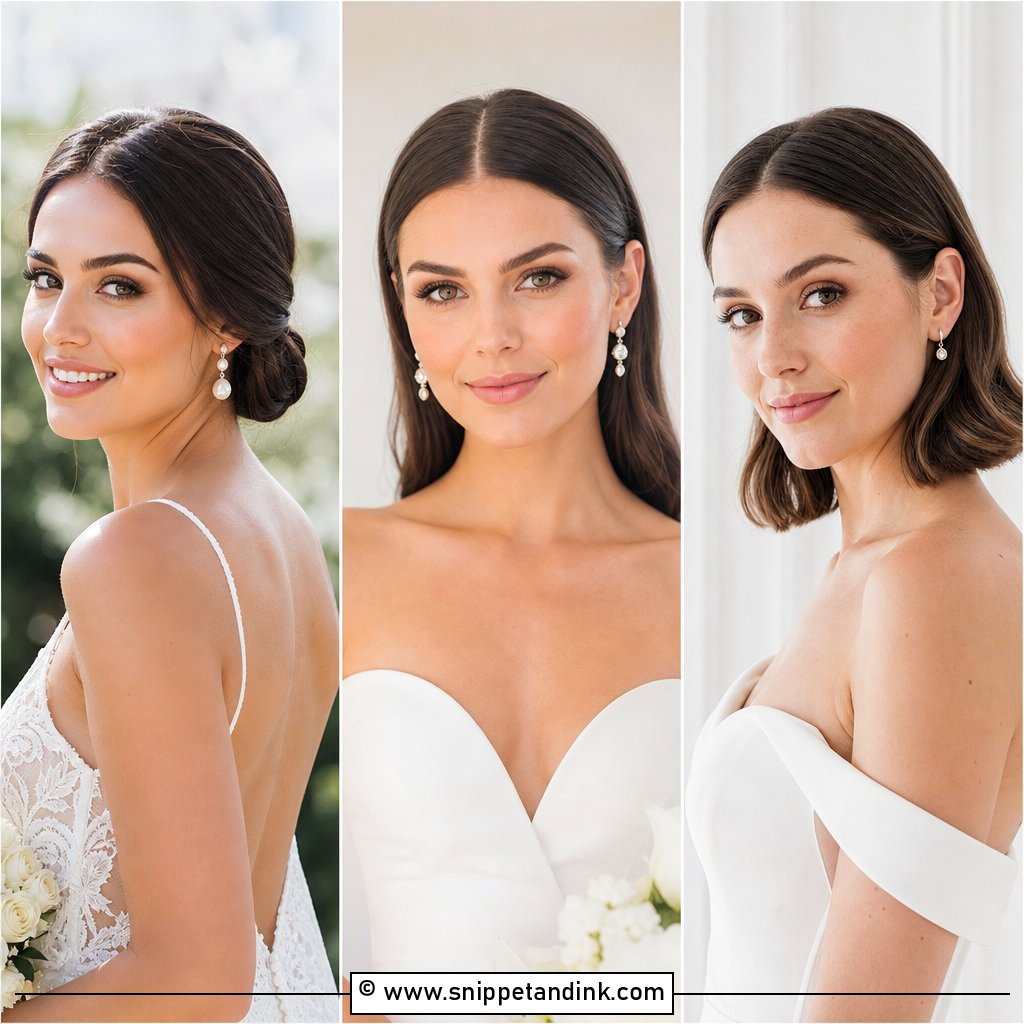
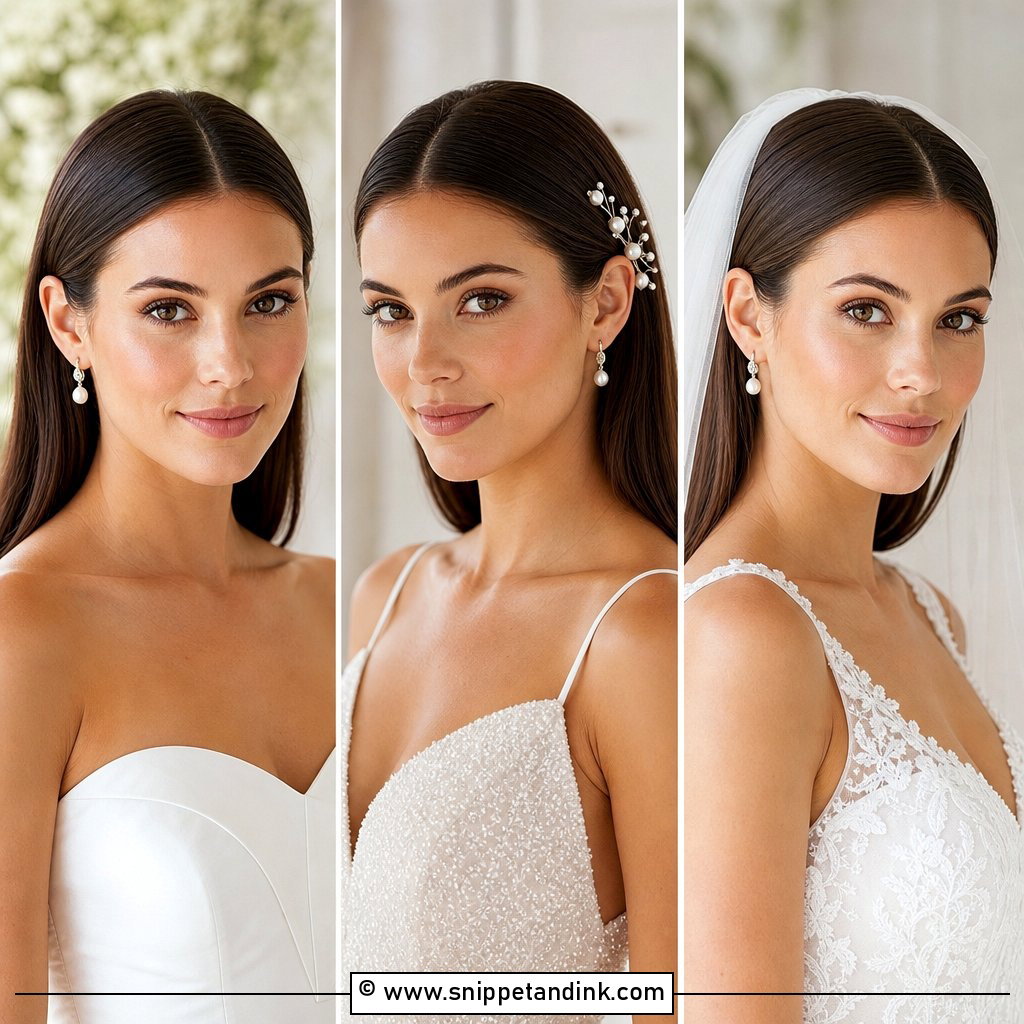
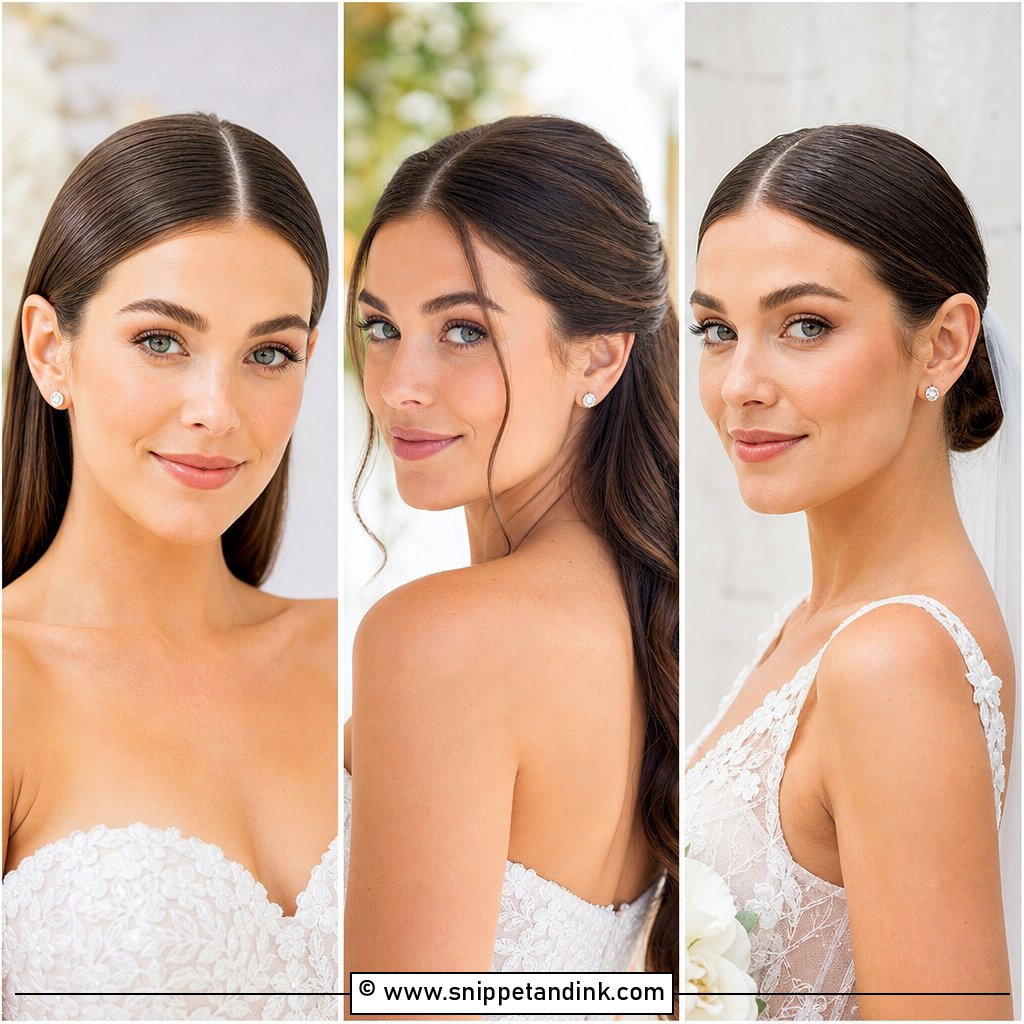
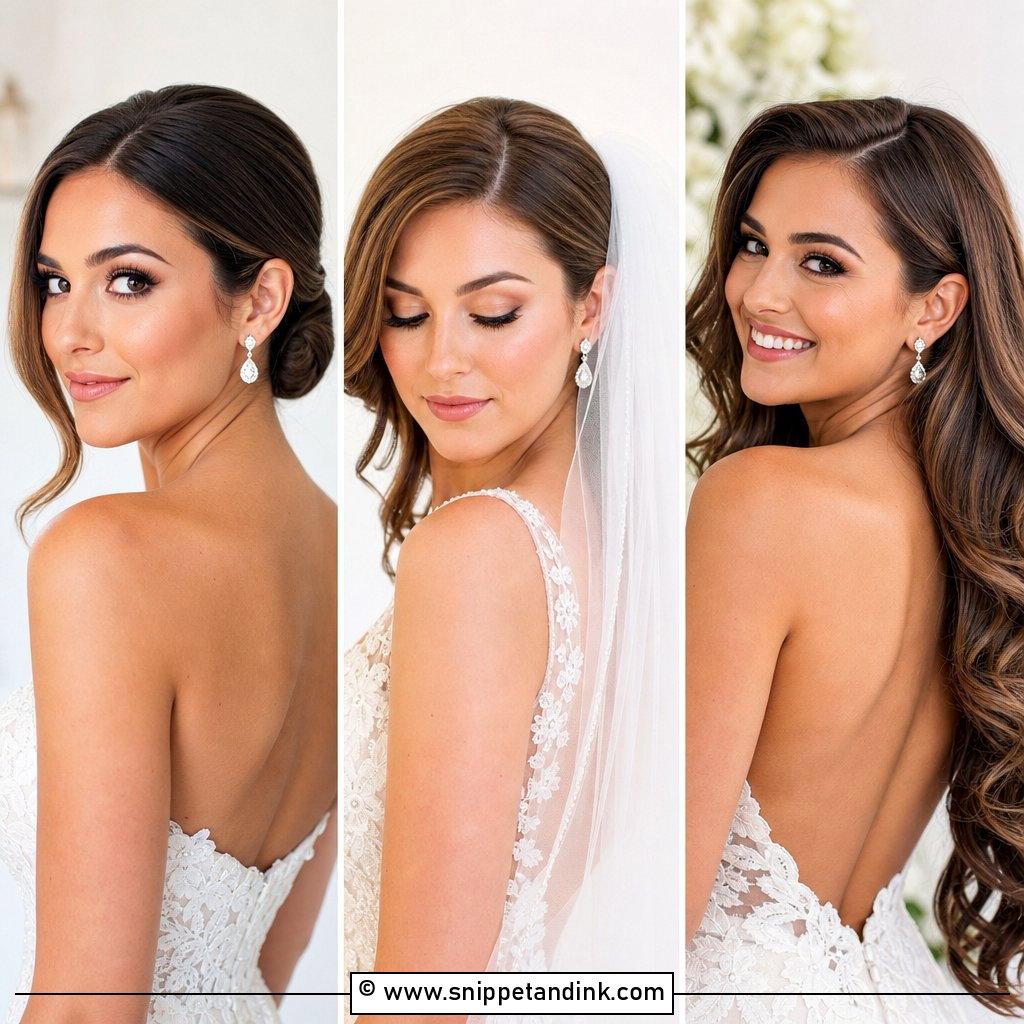
With a centre part, both sides have to be tucked evenly or the face looks lopsided in front-on photos, so I check the two sides in a mirror together. This wedding hair down tucked behind ears look relies on smooth front sections pinned just behind each ear while the rest flows. It suits pearl earrings, simple veils and strapless gowns, where an open neckline matters. A little crown volume stops it going flat by the afternoon. Soft waves through the ends keep it romantic, and shine spray gives the surface some polish.
2. Wedding Hair Down With Side Part Tucked Behind One Ear
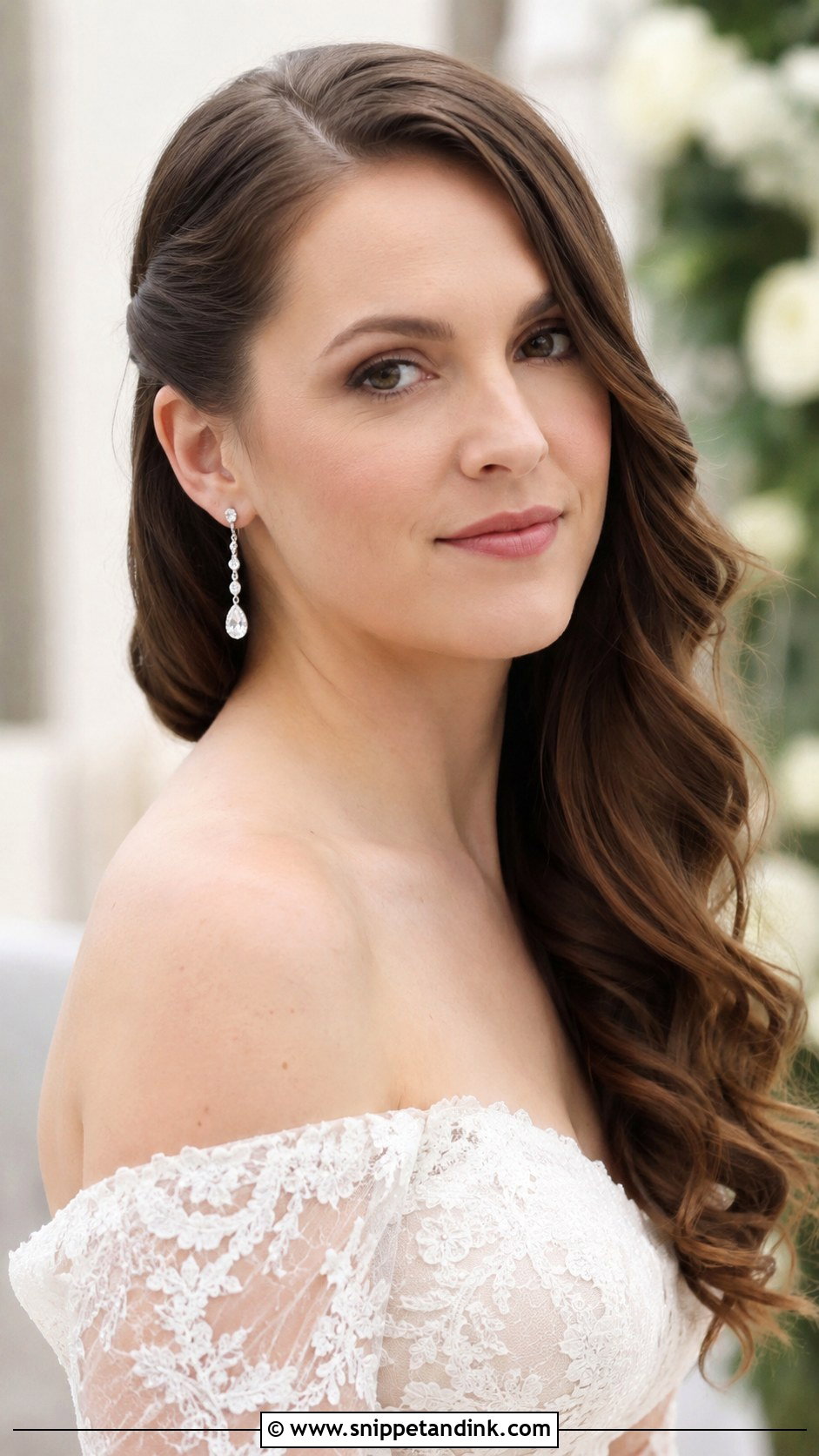
One side tucked, the other left loose to frame the face. It’s an angled, softer shape, and it lets you show off an earring on the open side. Loose curls, brushed waves or smooth bends all work. The tucked side needs real security without looking tight, so I sometimes put a tiny clear elastic under the back layers, joining the tucked section to hair behind it, then cover it. With one-shoulder or off-the-shoulder gowns, I put the tuck on the bare side, and any accessory goes there too.
3. Wedding Hair Down With Hollywood Waves Tucked Behind Ears
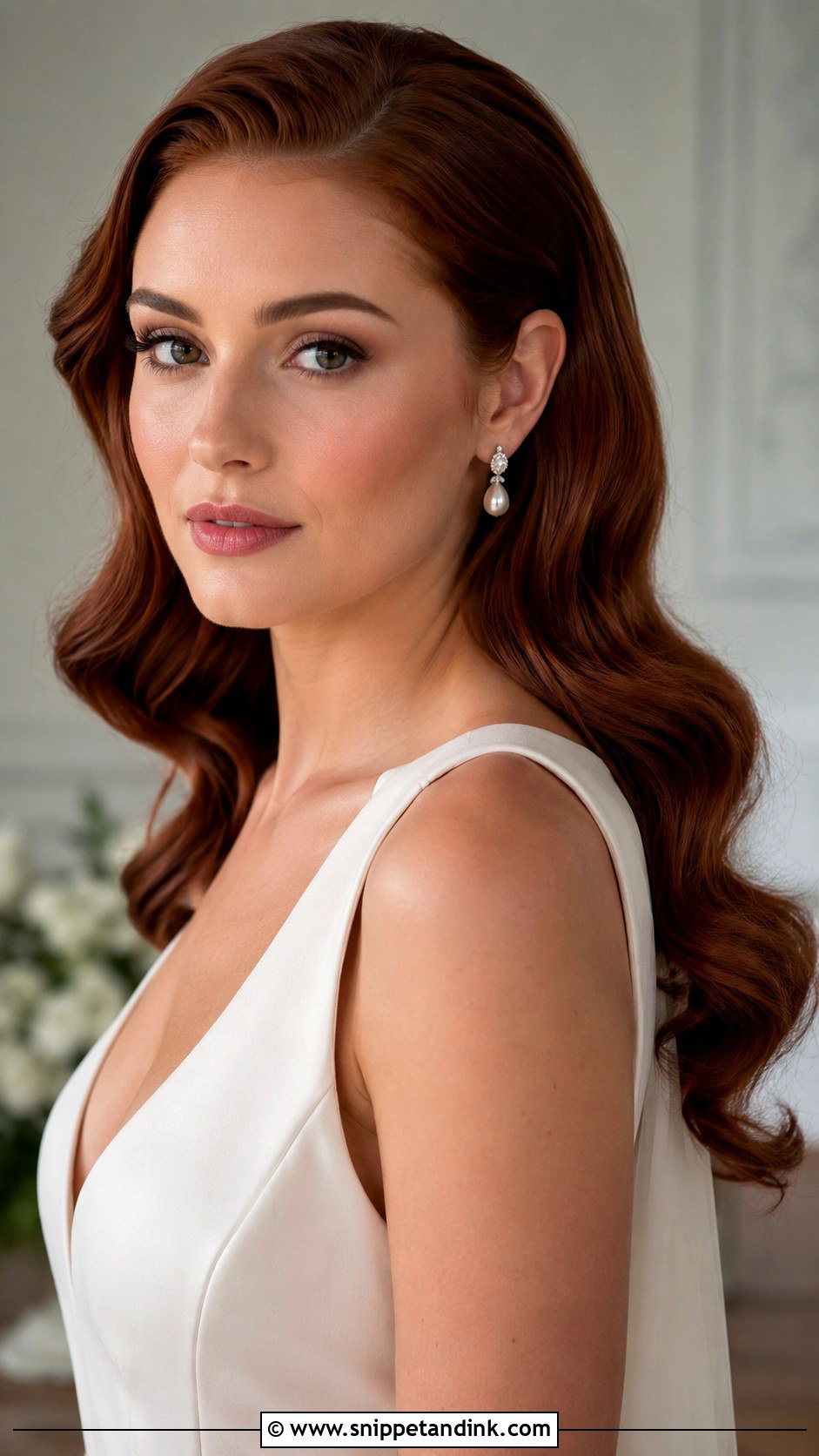
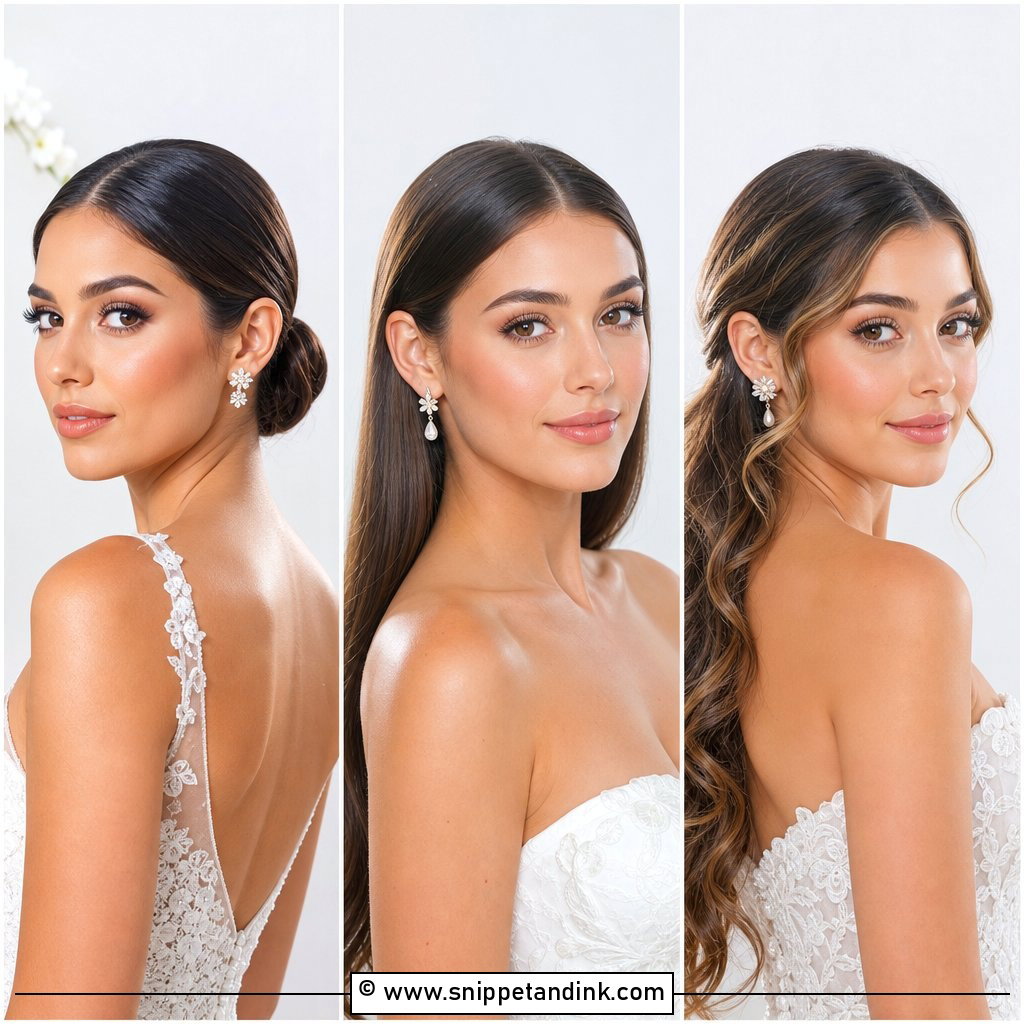
Hollywood waves are brushed into one connected pattern, never left as separate curls, and the tuck is what makes them practical for a wedding. Without it, the first wave tends to fall across the eye. The pattern sets best when each curl is clipped while it cools, then brushed out together. I keep the tuck sleek and tight to the head around the ears and let the waves roll over the shoulders. Hollywood waves bring a red-carpet finish, and statement earrings suit the polish. Just don’t brush them again during the day; they’ll go fluffy.
4. Wedding Hair Down With Soft Waves Tucked Behind Ears
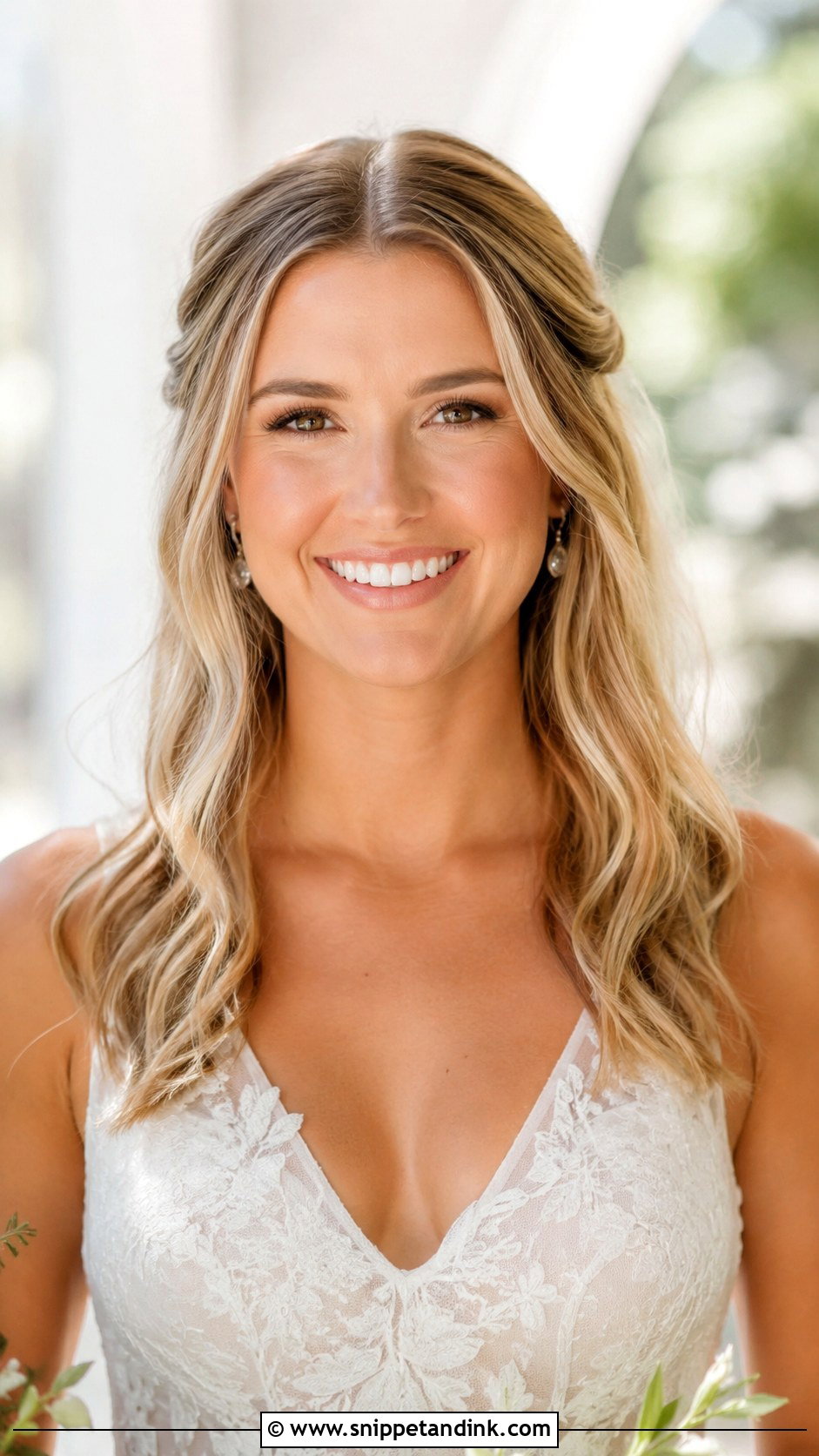
For soft waves, I start the bend at the cheekbone or below. Waves that start high at the root won’t lie flat enough to tuck neatly. The front stays smooth and controlled, and the rest keeps gentle movement. It’s adaptable to beaches, gardens, courthouses and classic indoor rooms, and it doesn’t compete with lace or beading. A little texture spray through the mid-lengths helps the waves last. Expect it to loosen and relax over the evening, which honestly suits this look.
5. Wedding Hair Down With Sleek Straight Hair Tucked Behind Ears
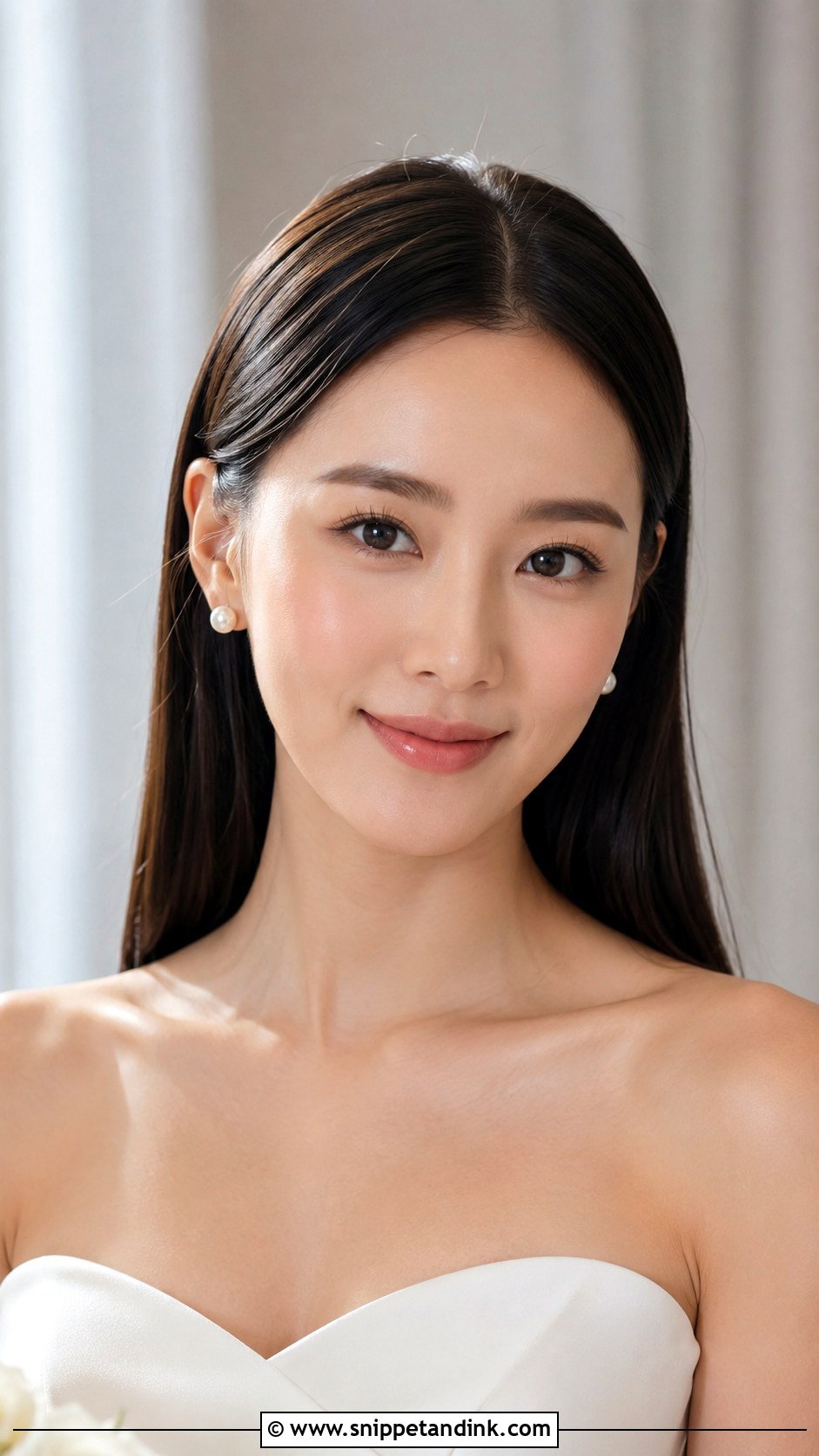
If you never curl your hair, a sleek straight finish can be the version that feels most like you. Straight hair makes the tuck look deliberate, especially with a centre or soft side part. My prep is a smoothing cream, a careful blow-dry and a flat iron in small sections, then an anti-humidity spray, because straight hair shows frizz far more than curls do. The ends can be bevelled under slightly for softness or kept blunt for a sharper look. Minimalist gowns, clean makeup, pearl studs or long drops all pair well.
6. Wedding Hair Down With Loose Curls Tucked Behind Ears
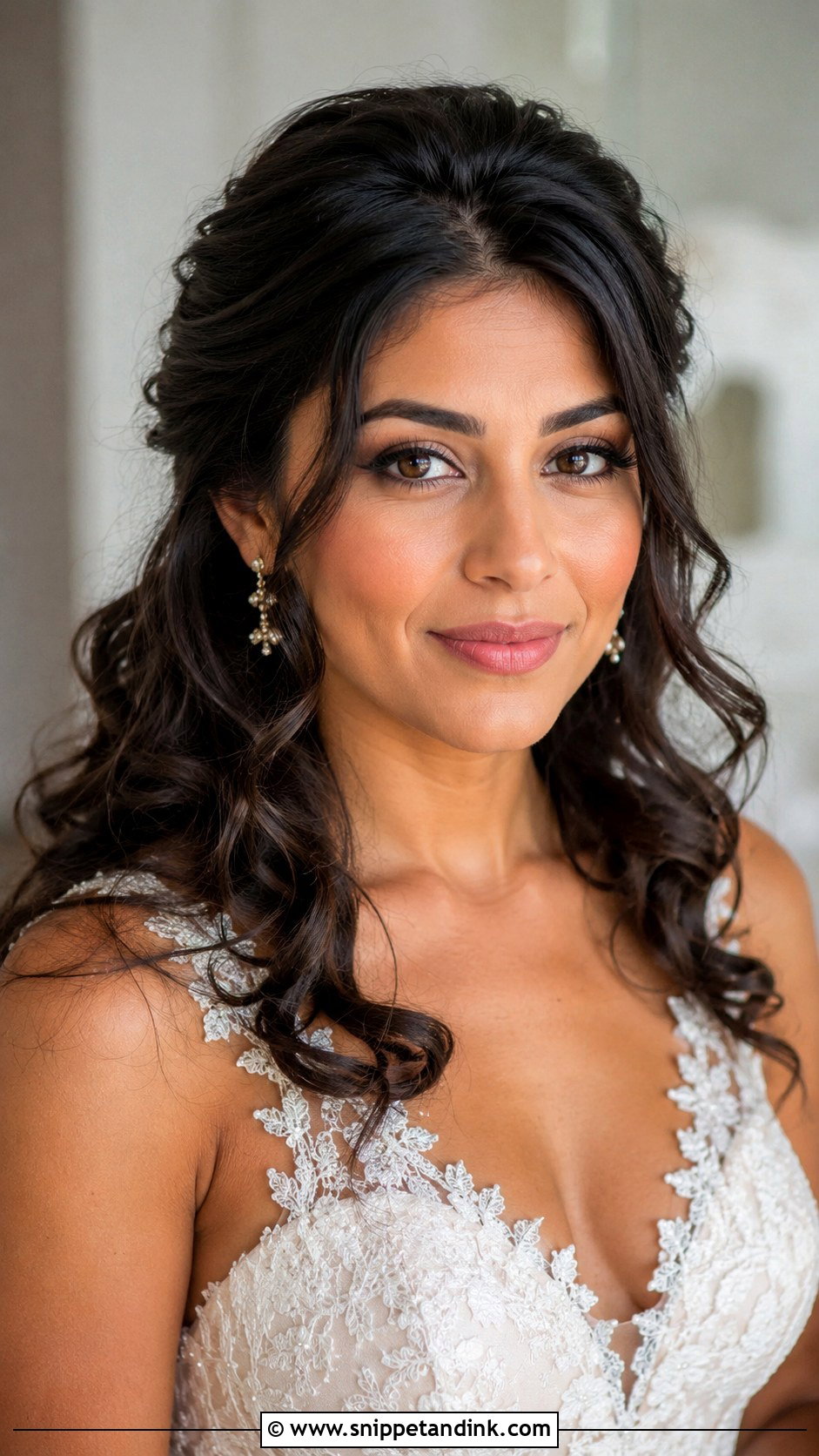
Loose curls add volume, and tucking both sides balances that volume so it doesn’t swallow your face. The curls need to stay soft enough to move when you walk; crunchy curls look stiff in video. Layered hair is easier here than you’d think, because the short pieces get caught by the pins at the tuck. I use a light hold spray and, if your hair needs it, a curl cream before curling. Let the curls cool fully before any tucking or pinning, or the tuck will flatten them.
7. Wedding Hair Down With Long Layers Tucked Behind Ears
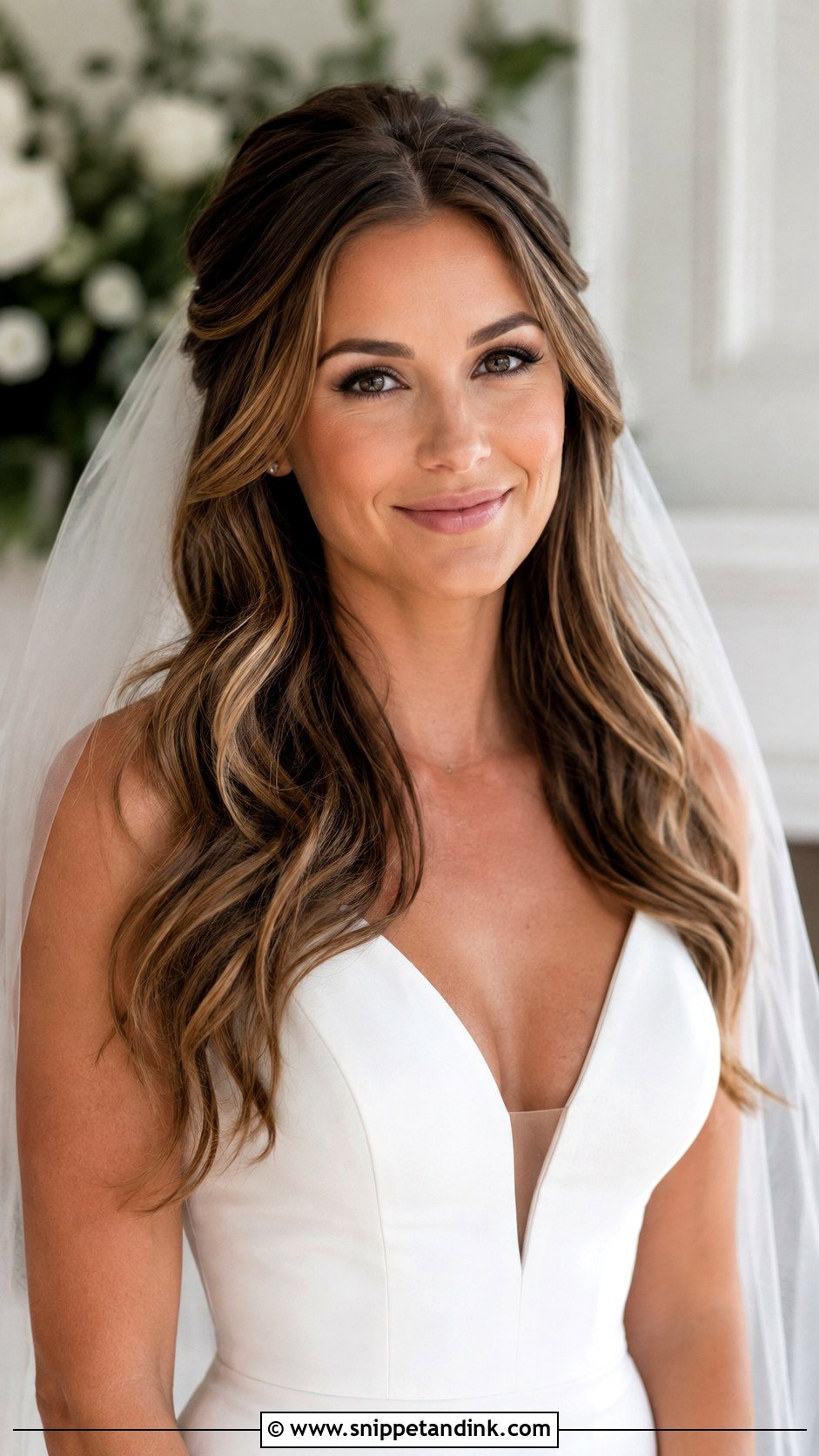
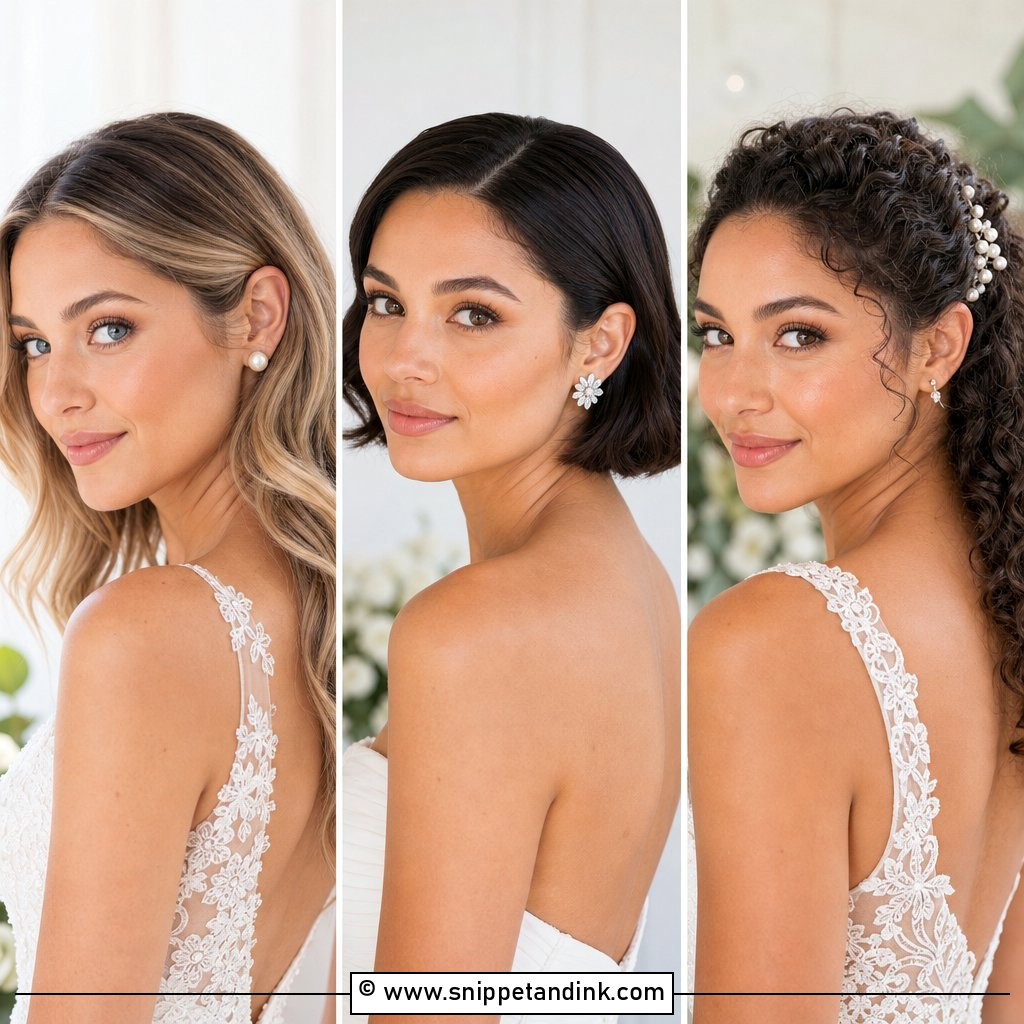
Long layers make the ends move and catch light, especially with balayage or highlights. Thick hair benefits most, since layers take out bulk without losing length. The catch is the front: if your shortest layer sits right at the ear, it pops out of the tuck all day. I ask brides to have the front blended slightly longer at their last cut before the wedding, so the pieces sit behind the ear properly. Loose waves through the layers add lift and shape.
8. Wedding Hair Down With Curtain Bangs Tucked Behind Ears
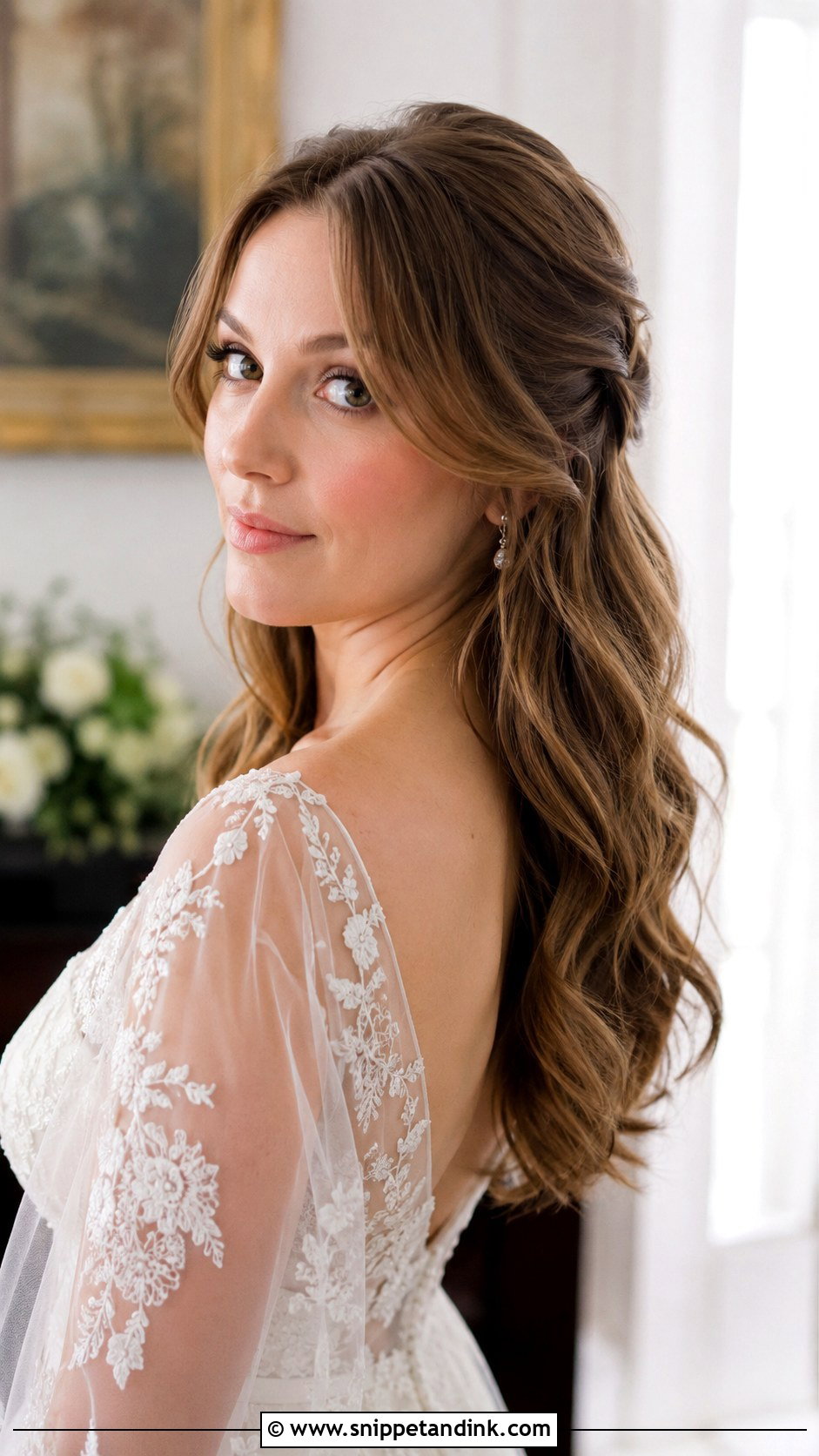
Curtain bangs and a tuck work together surprisingly well. I blow-dry the bangs out and back with a round brush so their longer edges sweep naturally toward the tucked sides and blend in. That gives softness at the cheekbones without flyaways across the face in photos. If you wear curtain bangs every day, this keeps your wedding hair recognisably yours. A small amount of styling cream holds the shape. Avoid trimming them the week of the wedding; freshly cut bangs are always shorter than you planned.
9. Wedding Hair Down With Face Framing Layers Tucked Behind Ears
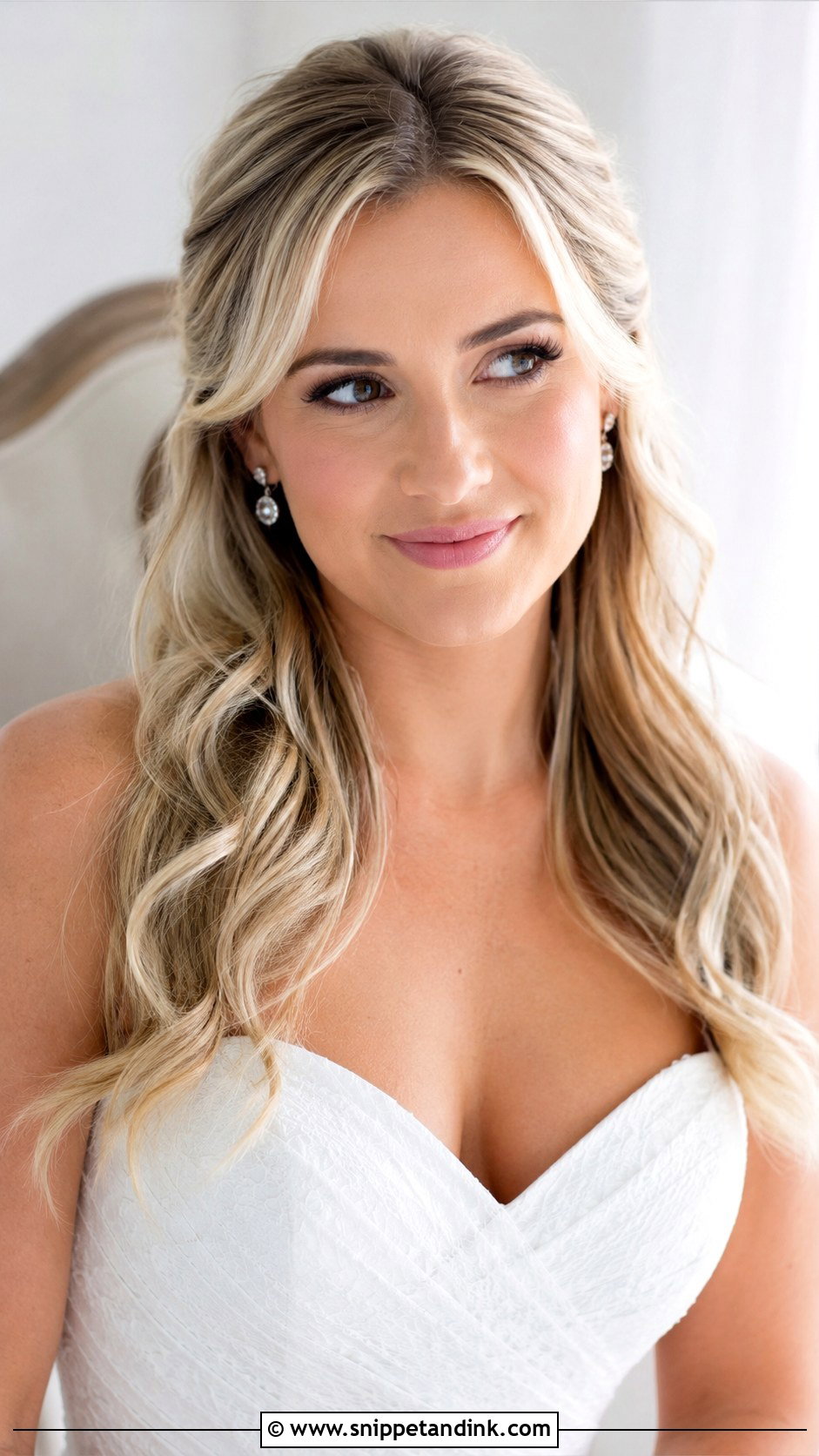
Face-framing layers are usually the first pieces to misbehave on a wedding day. They fall into the eyes and stick to lipstick. Tucking them solves it, but only if the shortest layer is long enough to reach behind the ear or be caught by a pin. If it isn’t, I curl those pieces back and away from the face instead of forcing them. The rest of the hair can be curled, waved or blown out with bounce. It keeps the shape near the jaw while opening the face for portraits.
10. Wedding Hair Down With Pearl Pins Tucked Behind Ears
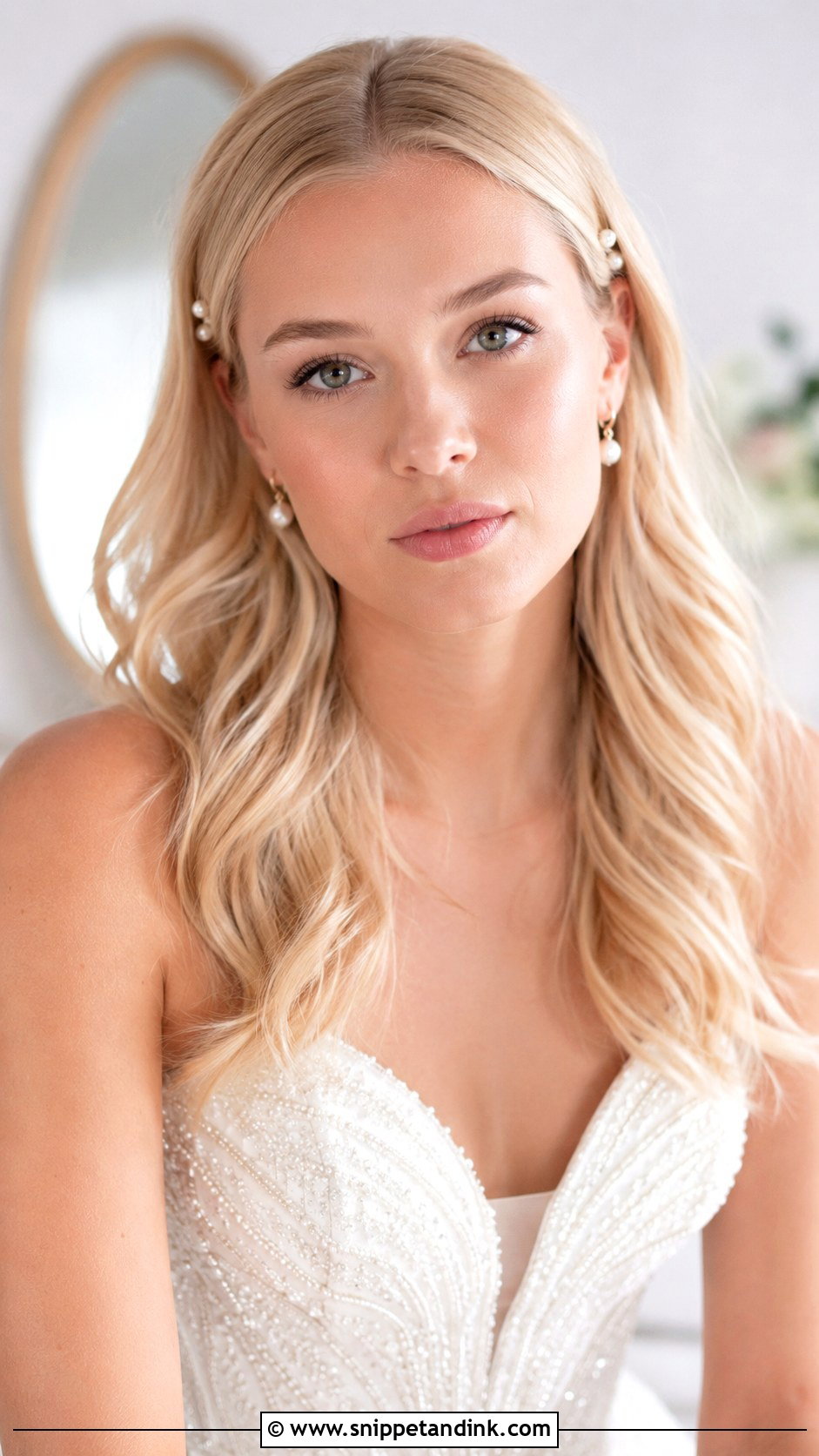
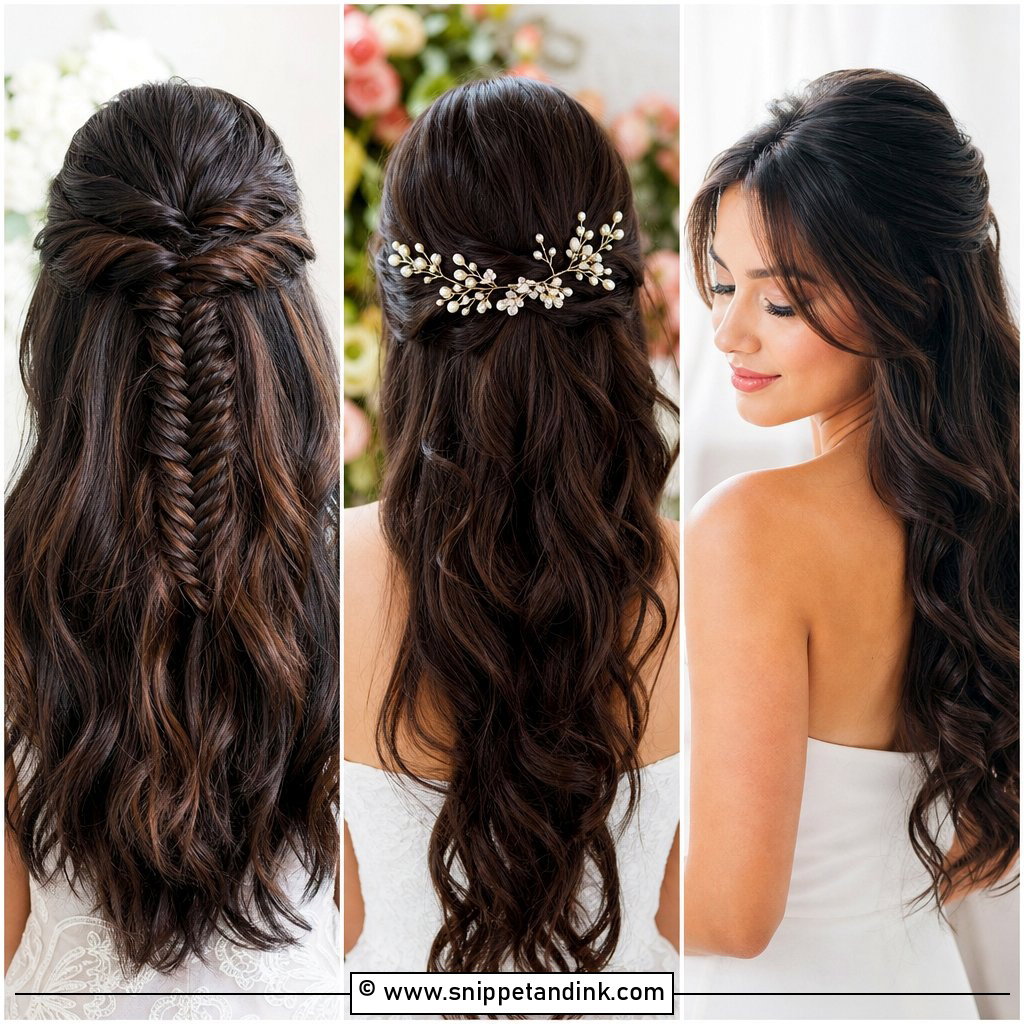
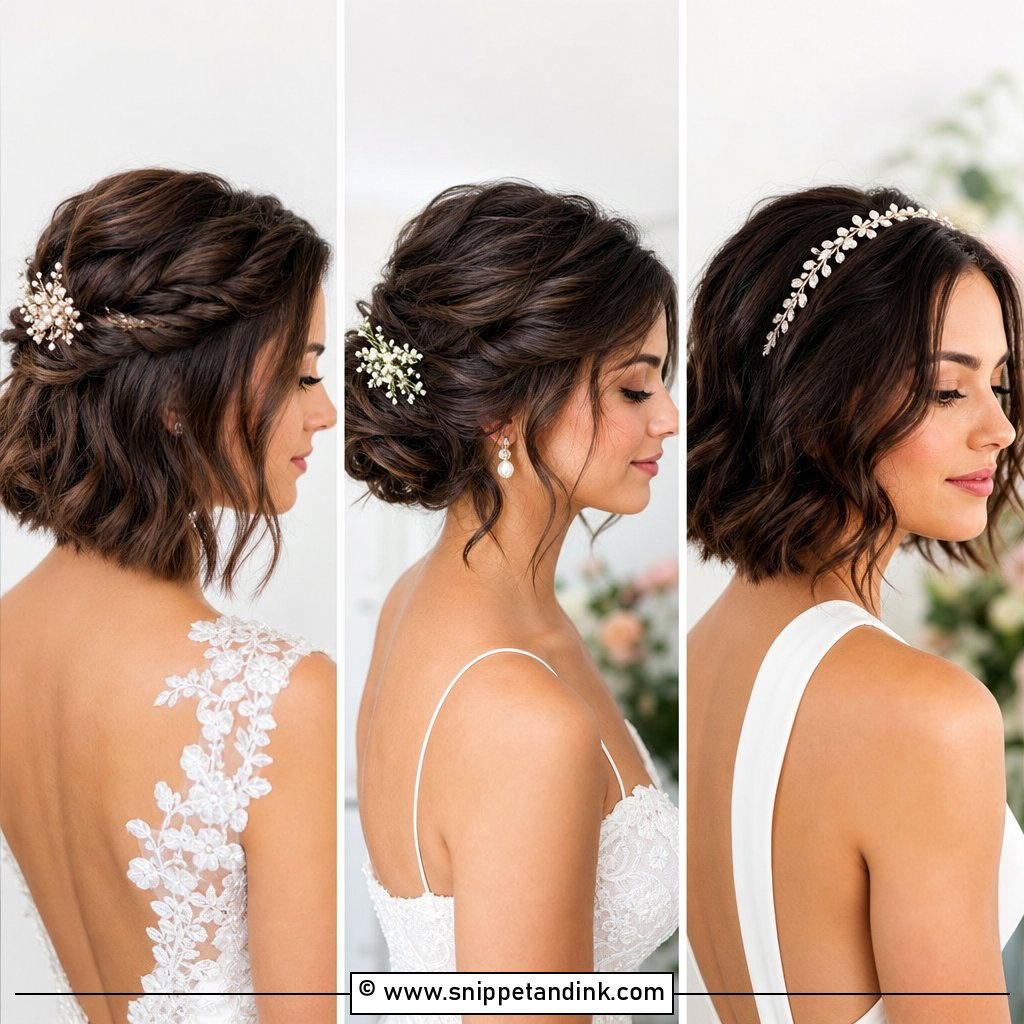
Pearl pins can do two jobs at once, holding the tuck and decorating it. I place them just above the ear or slightly behind it, where the tucked section meets the hair behind. On their own, decorative pins slide in smooth hair, so each one sits over a plain pin. Small pins look delicate; clusters make a bigger statement. Balance them against your earrings. If you’re wearing big drops, two or three tiny pins are plenty.
11. Wedding Hair Down With Veil Tucked Behind Ears
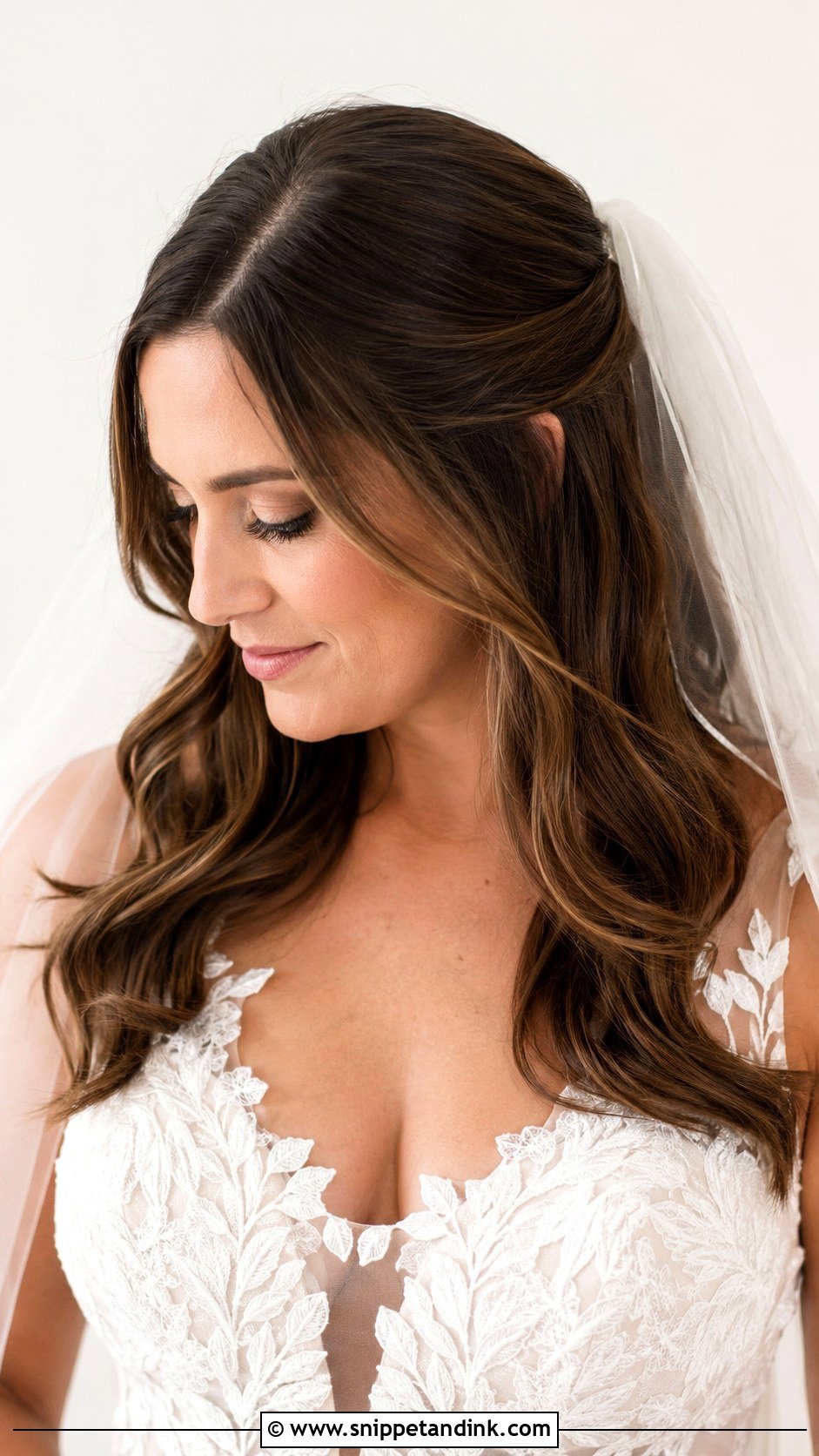
A veil and a tuck work well together if the comb is placed with the tuck in mind. I keep the front smooth and secure, then set the comb at the crown or lower at the back, behind where the tucked sections are pinned. The veil then falls over the loose hair without flattening the front. Soft waves give it something to rest on. For heavy veils, I add a small hidden anchor braid under the top section. The tuck also stops the veil’s edge from catching loose front pieces when it’s lifted.
12. Wedding Hair Down With Headband Tucked Behind Ears
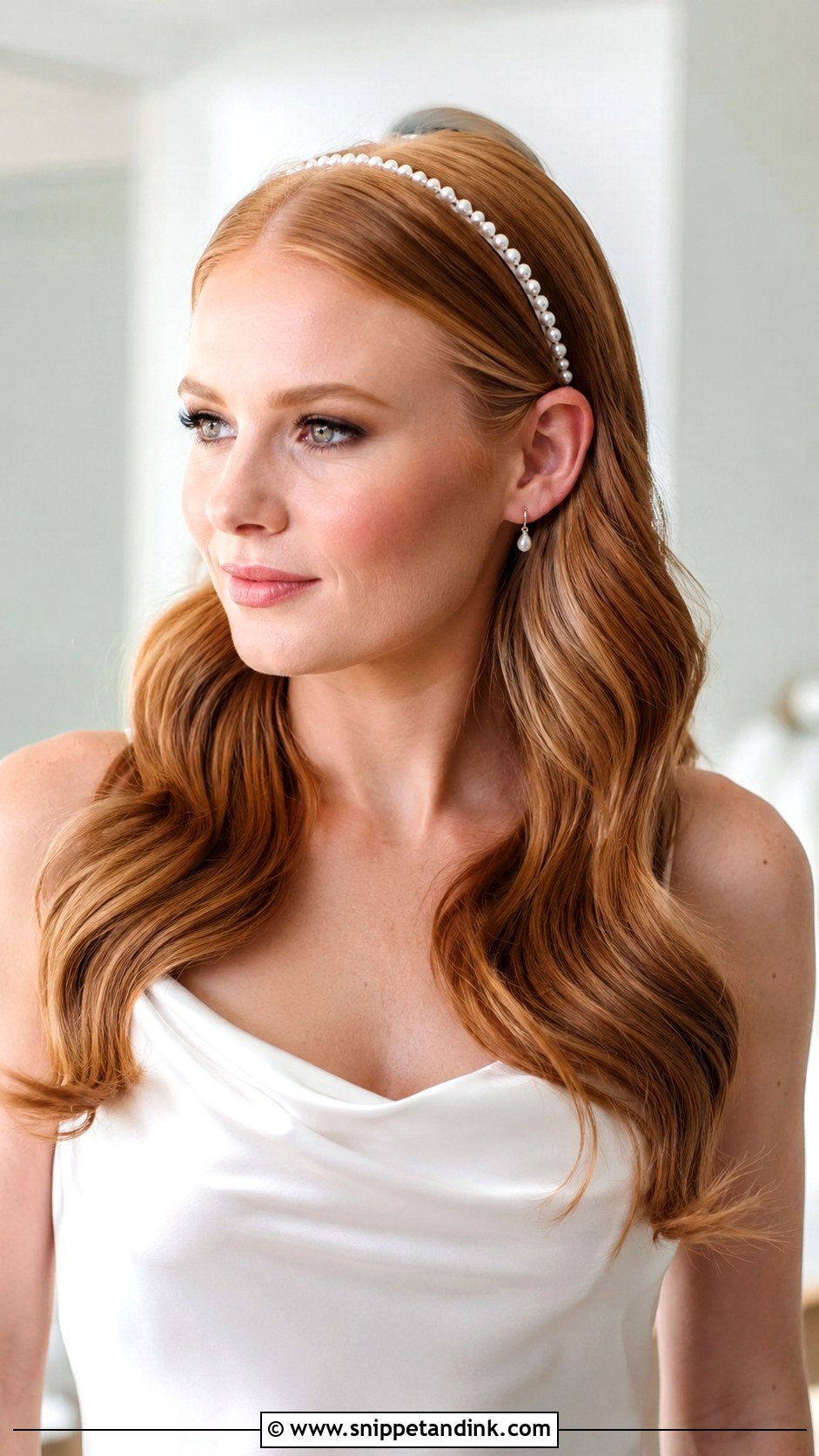
A headband pushes the front back in one sweep, and pins behind the ears take care of the rest. It suits smooth waves and bouncy blow-outs best. A thin pearl band is delicate; padded satin is more modern. For outdoor ceremonies it’s a practical choice, since it holds the front against wind without an updo. Leave a little volume behind the band so the crown doesn’t flatten. If you have sensitive ears, check that the band’s ends don’t press on the backs of them.
13. Wedding Hair Down With Hair Comb Tucked Behind One Ear
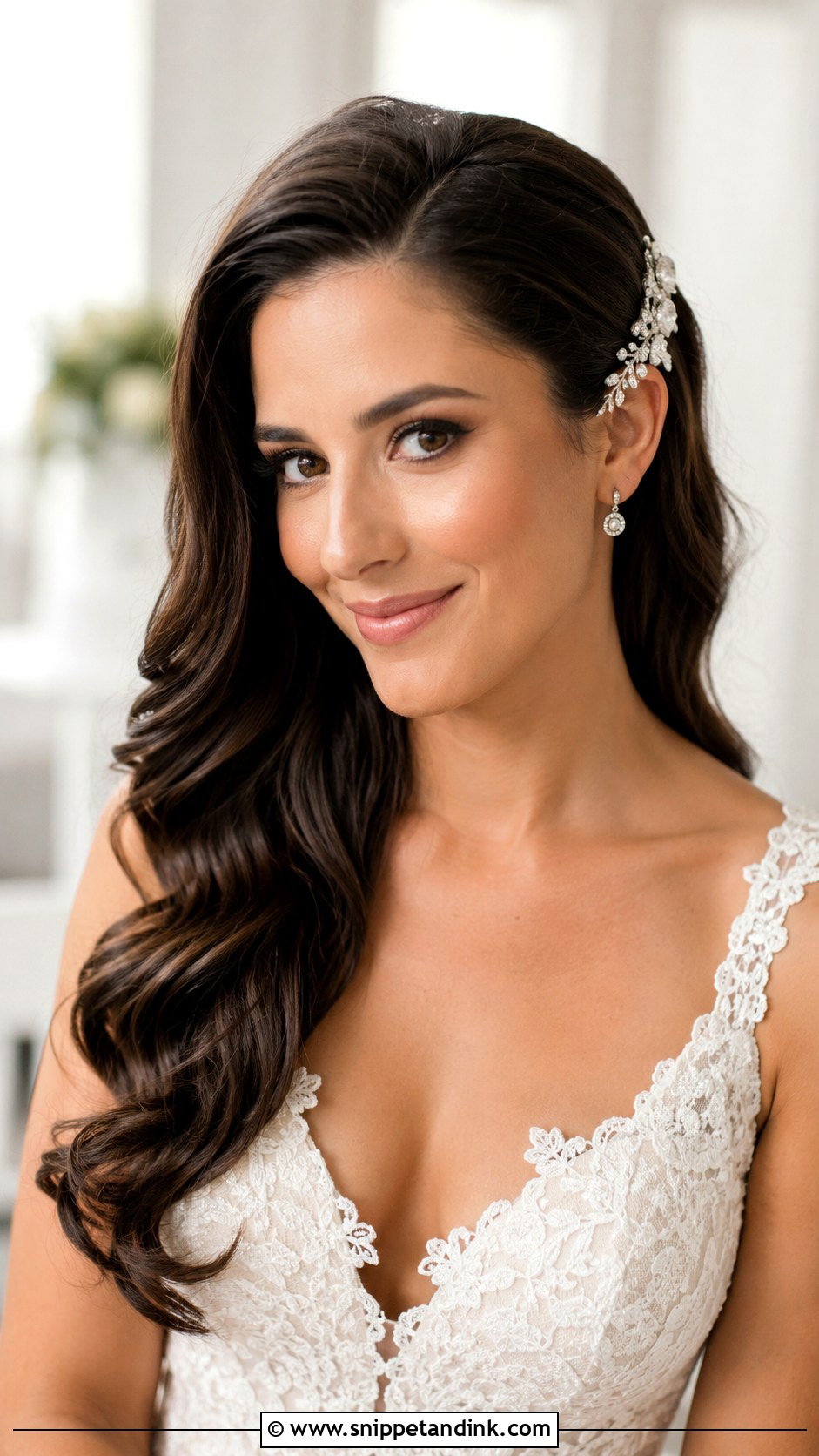
A comb tucked behind one ear turns the tuck into the main decoration. With a side part, I put the comb on the smoother, tucked side so it sits near the open neckline, and let the waves fall over the opposite shoulder. Sparkle, pearls, flowers or metalwork all work here, without the weight of a crown. Combs slide unless they’re anchored with crossed pins beneath them. Lace gowns and soft makeup suit it especially well.
14. Wedding Hair Down With Natural Curls Tucked Behind Ears
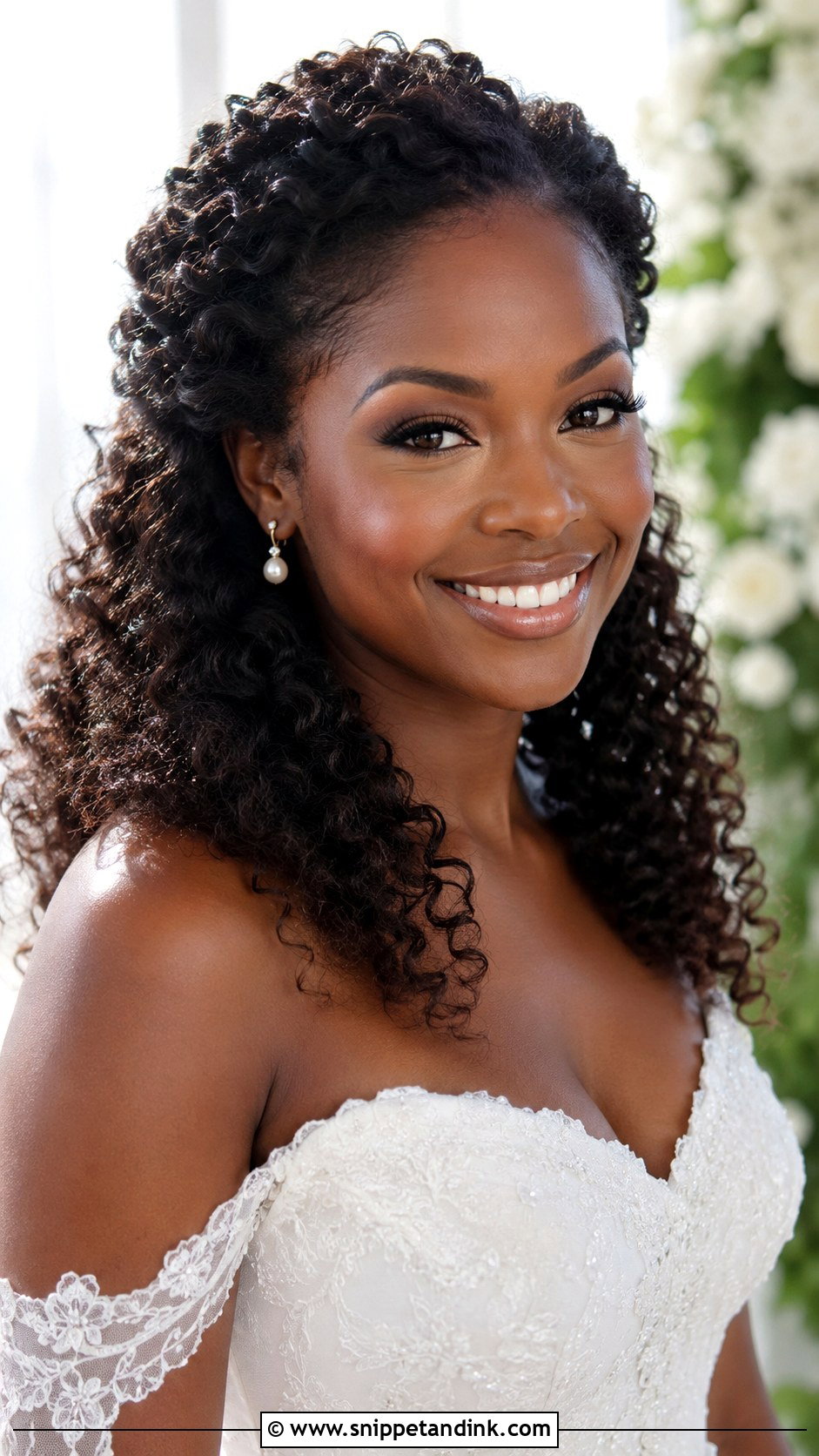
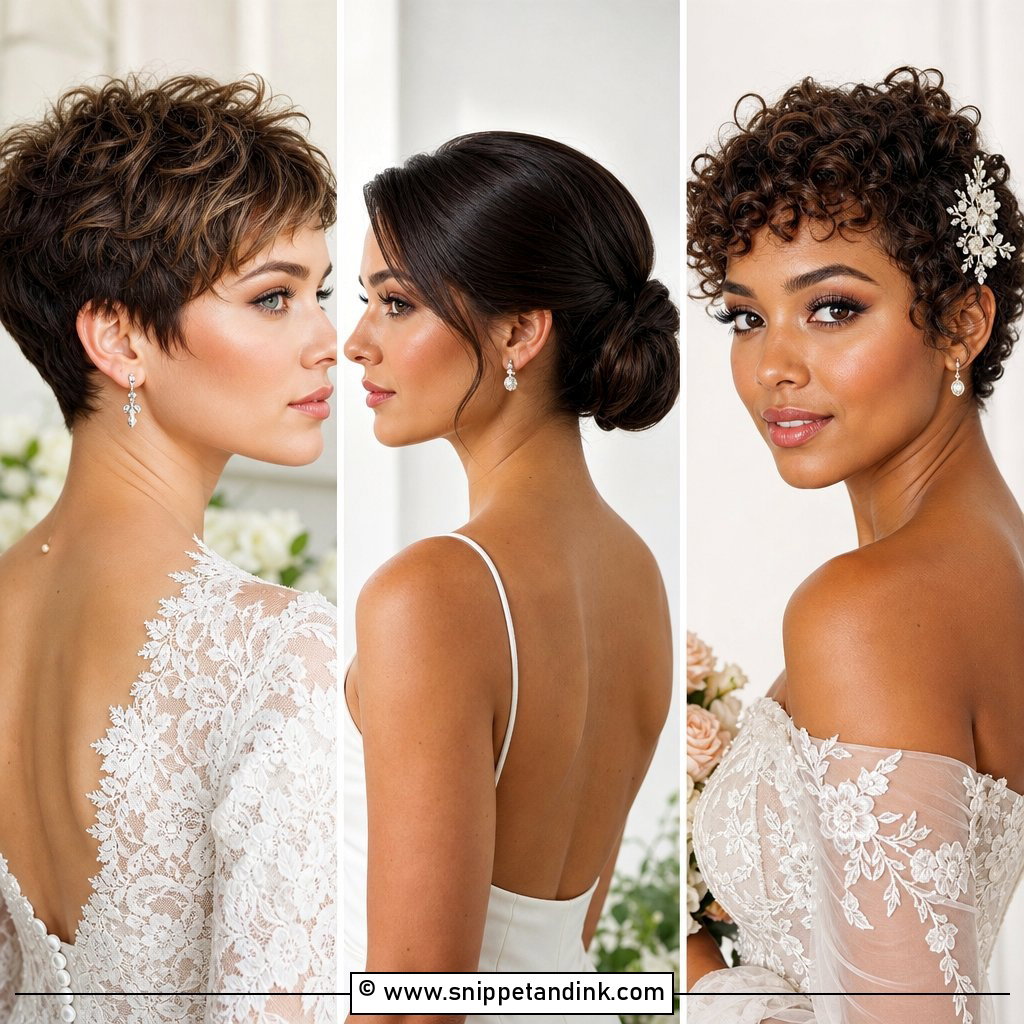
Natural curls don’t need to be flattened at the front to tuck. They need to be guided back. I define the pattern first with curl cream or gel and careful diffusing, then gently smooth just the front sections behind the ears with a little more gel and secure them. Pinning too tight squashes the curls near the ear and breaks the shape. Keep the tuck firm but not tense, so the curls keep their volume. Floral pins, pearl clips or no accessory at all all suit natural texture.
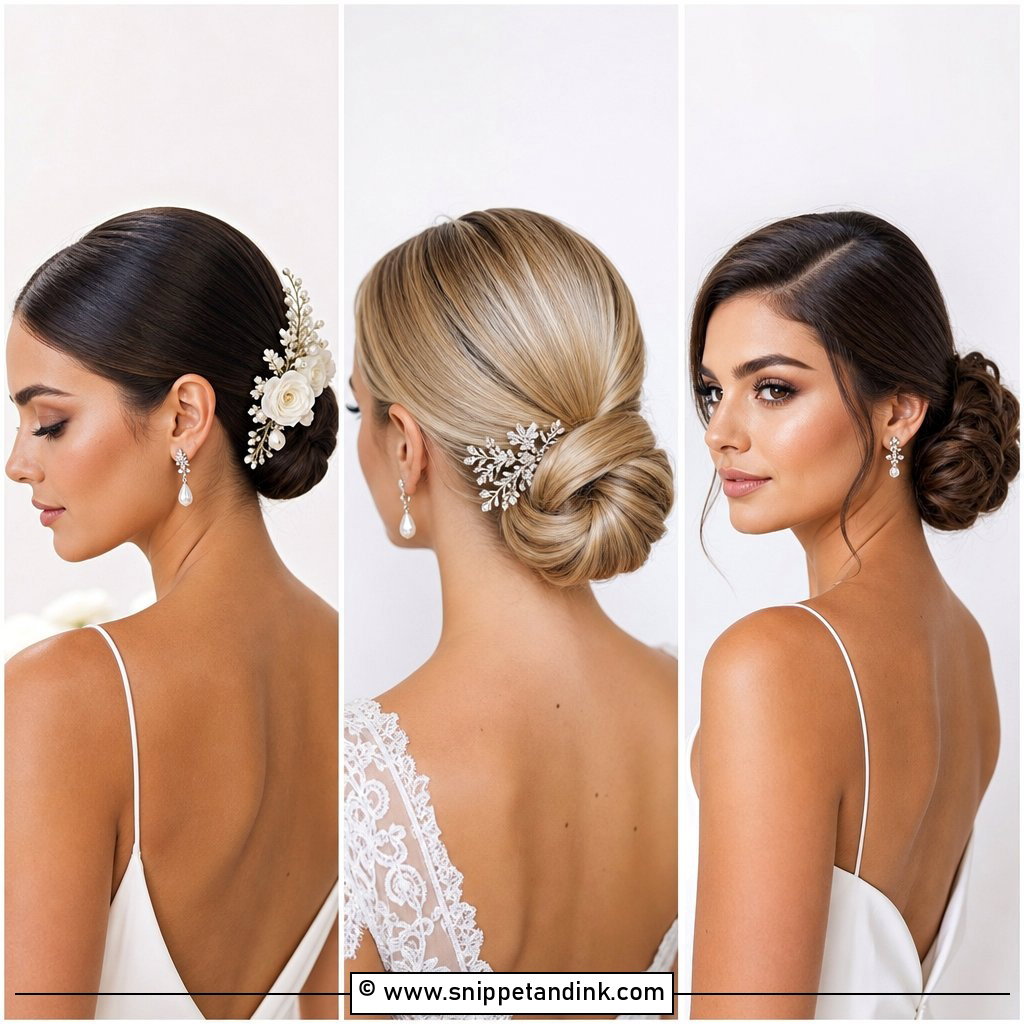
15. Wedding Hair Down With Short Bob Tucked Behind Ears
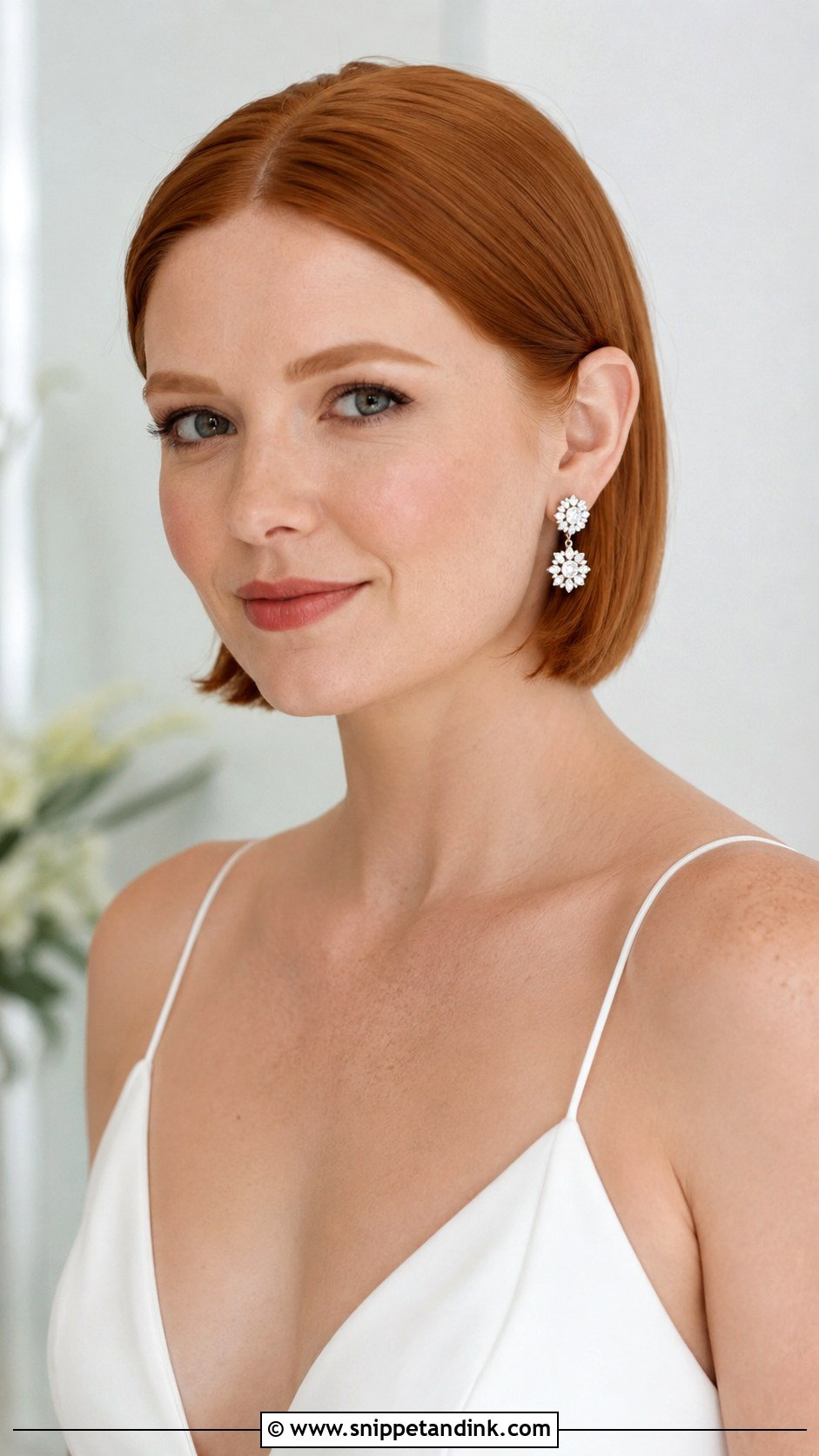
On a bob, a tuck changes the whole cut. A short bob tucked behind the ears opens the face and shows earrings, makeup and neckline, without needing long waves or extensions. Sleek and straight, softly curled or a subtle bend at the ends all suit. A centre part reads modern; a side part, softer. Short hair springs out from behind the ear more than long hair, because there’s less weight to hold it, so I use a tiny bit of pomade before the pin. Strong shine and smooth edges keep it looking deliberate.
Earrings Matter More Once Your Ears Are on Show
With hair tucked behind the ears, your earrings become part of the hairstyle. They’re the first thing seen in every front-on portrait, so I like to see them at the trial, not just in a photo.
Snagging
Chandelier and filigree earrings can catch loose strands at the back of the ear, and every catch pulls the tuck forward. Hooks snag more than posts. If you’re set on an intricate drop, I tuck the hair a little higher and further back so it clears the earring.
Proportion
Sleek or straight tucks can take a bolder earring, because there’s nothing competing near the face. Big curls already carry a lot of volume, so a slimmer drop or a stud is usually enough.
If you’re self-conscious about your ears
Some brides worry about ears that stick out a little. You can still have this look. I’ll tuck only one side, or do a soft tuck that leaves the tops of the ears partly covered with a loose wave. It’s worth trying both at the trial and looking at photos, not just the mirror.
Try the Tuck Before You Commit to It
This look keeps your length down and your face clear for vows, photos, dancing and hugs. Which version suits you comes down to your dress, texture, accessories and taste: sleek straight reads modern, Hollywood waves glamorous, soft curls romantic, natural curls expressive. The one thing I’d insist on is testing the tuck at your trial, especially with layered or slippery front pieces. Wear it for a few hours afterwards. If it’s still behind your ears by dinner, it’ll make it through the wedding.
You'll Like These Ideas:


Leave a Reply