
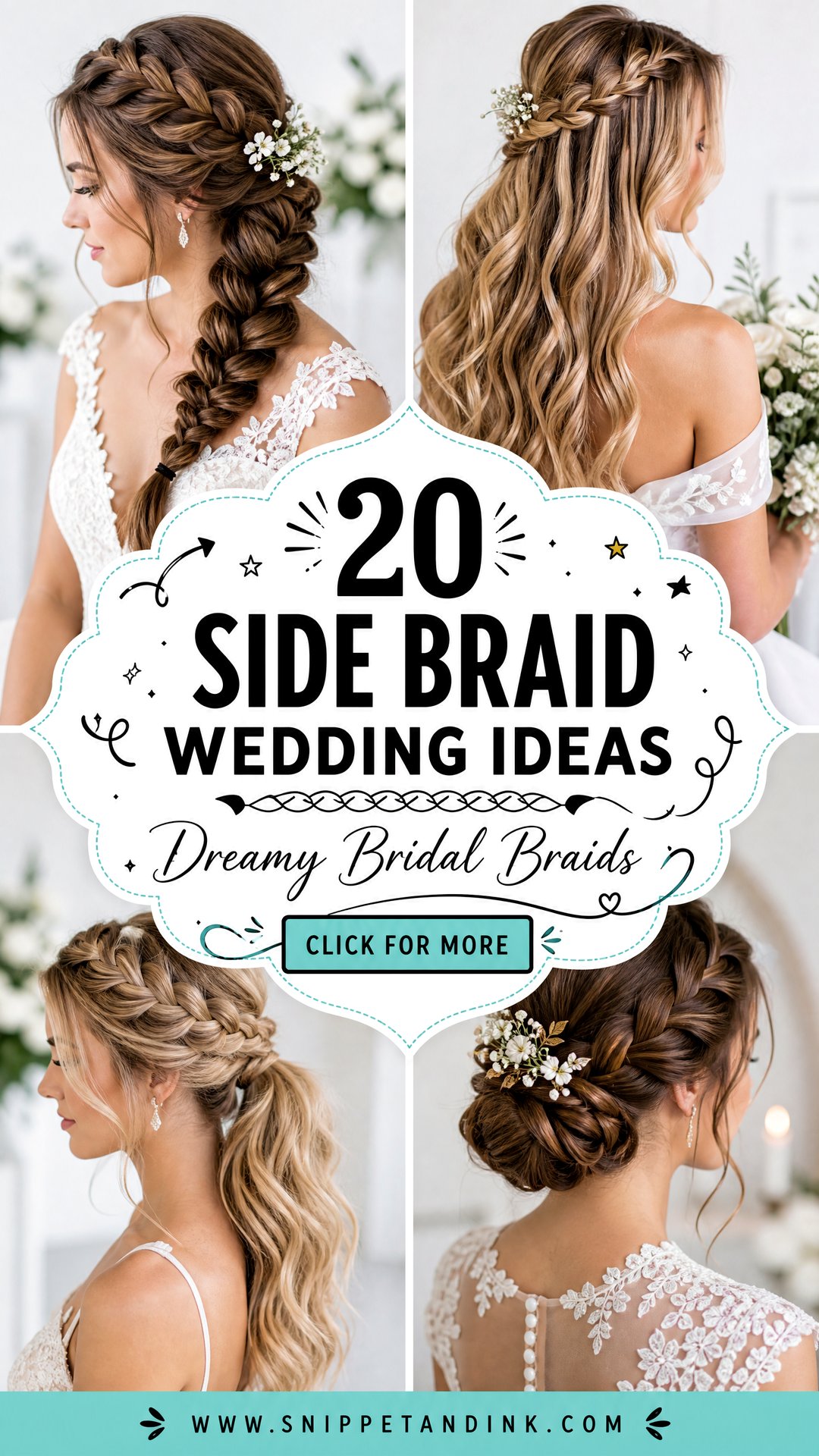
Side braids keep coming up at bridal trials for a practical reason: they hold. The hair is secured close to the head, so a breezy beach ceremony, a garden reception or a long black-tie night doesn’t undo it, and the sweep to one side frames the face while leaving the neckline clear. They range from sleek fishtails to loose, undone twists. I’ve gathered 20 versions below, with notes on which hair and which dresses each one suits and how I’d build it so it lasts.
Three Months of Prep for a Braid That Shows Every Strand
A braid shows the condition of your hair more than loose styles do. Dry ends fray out of every loop, and uneven colour shows as bands along the plait. A little planning fixes both.
- About three months out: book your trial and decide whether you’ll need extensions. Clip-ins take time to colour match, and the trial is where they get blended.
- Four to six weeks out: a trim to take off split ends. It gives the ends time to soften so the braid’s tail doesn’t look freshly chopped.
- One to two weeks out: any colour or gloss, so the tone settles and there’s still time to correct it.
- The night before: wash, and skip heavy masks or oils, which leave hair too slippery for a braid to grip.
If you’re growing your hair for the wedding, a braid is forgiving of uneven lengths. I’d rather tuck a few short layers into the plait than see a dramatic cut a fortnight before.
1. Loose Side Fishtail Braid
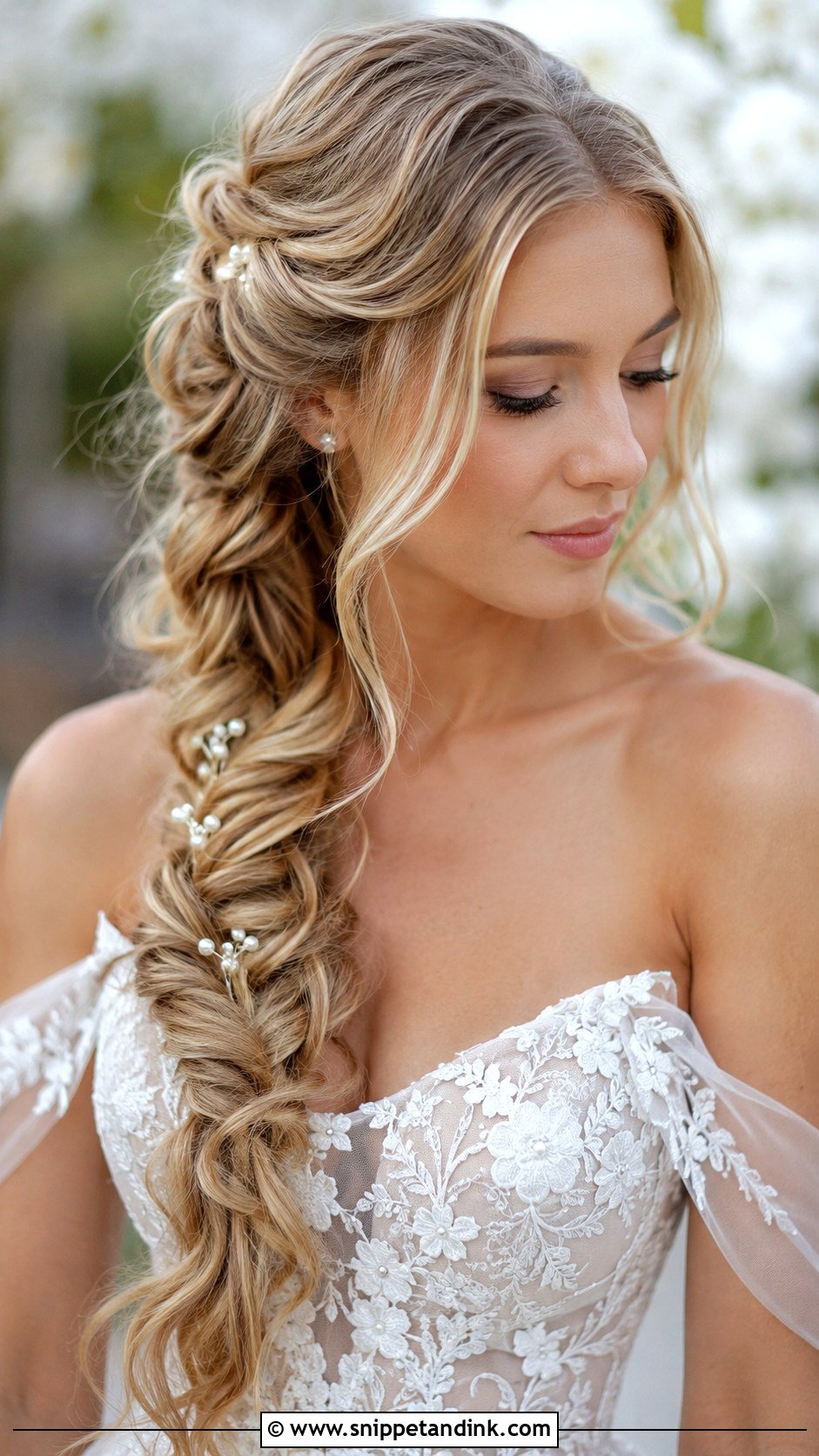
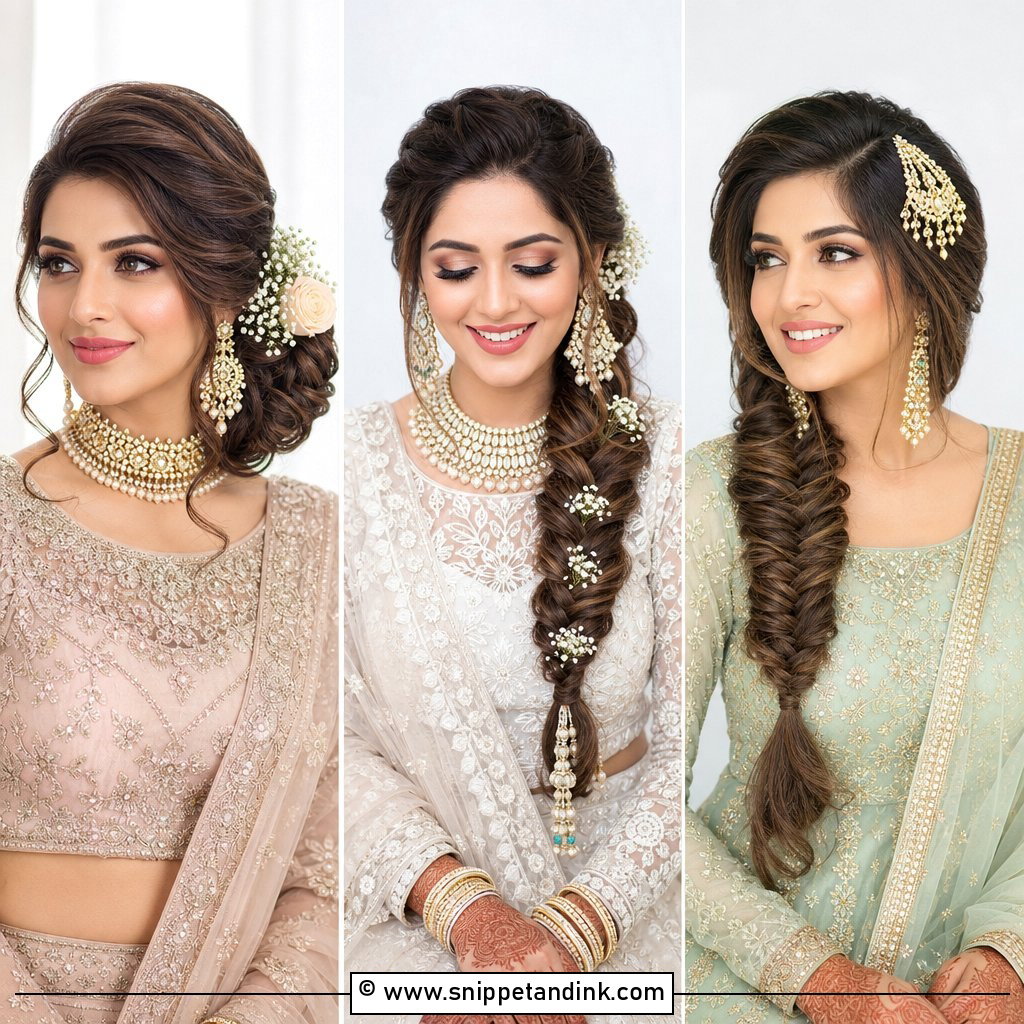
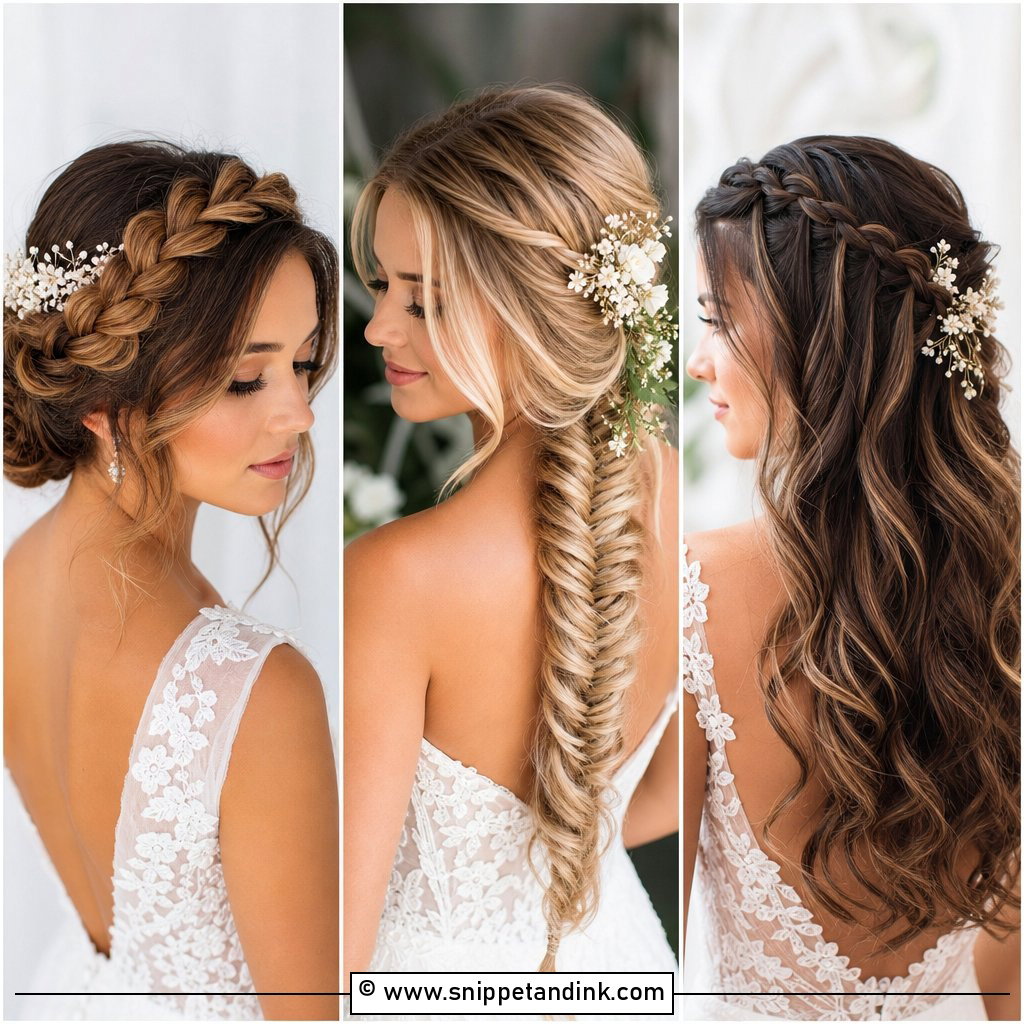
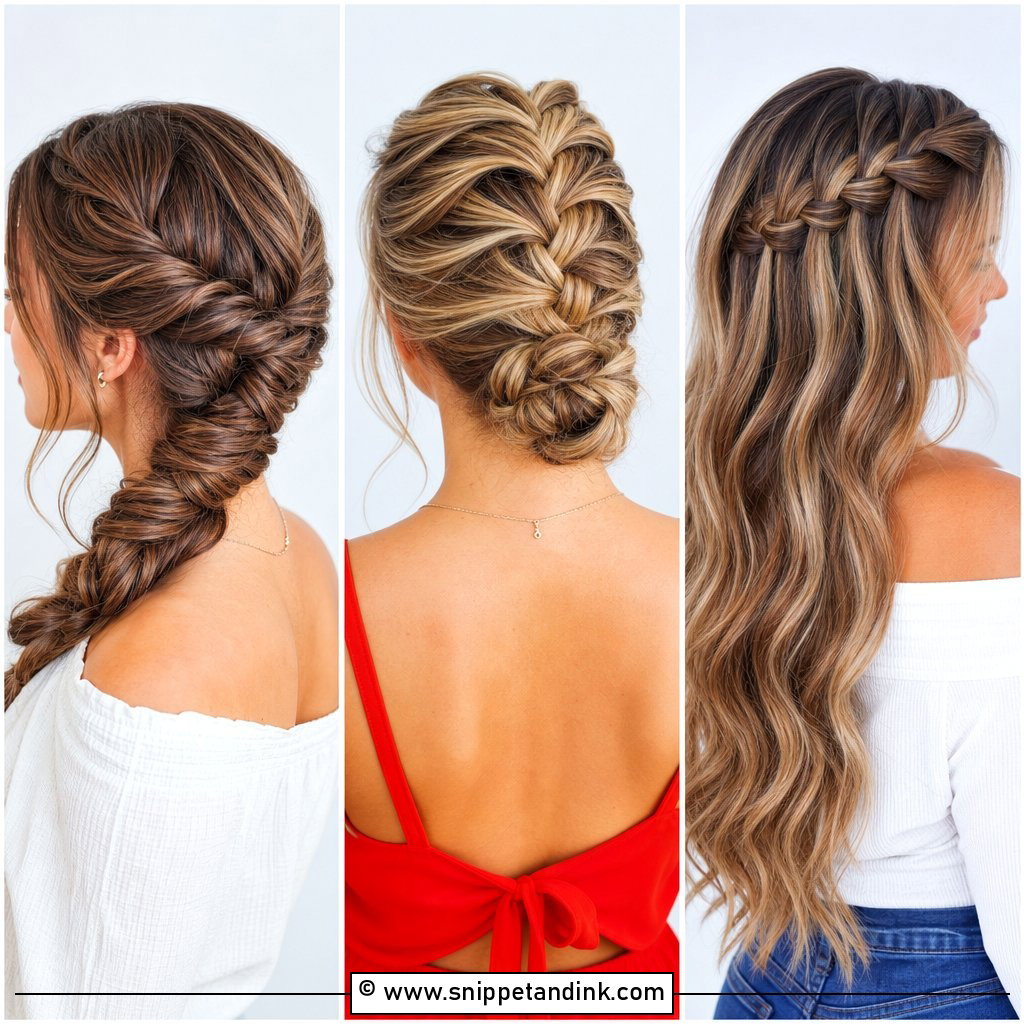
Loose fishtails are kinder to grown-out layers than a three-strand braid, because the thin strands catch shorter pieces as they cross. Drape it over one shoulder and pull the edges apart gently for a fuller, undone look at a boho or garden wedding. Long hair shows the pattern best. Tuck in a few small flowers or pearl pins. I tie the end with a clear elastic and wrap a strand of hair around it, so nothing frays during the dancing.
2. Side French Braid With Loose Waves
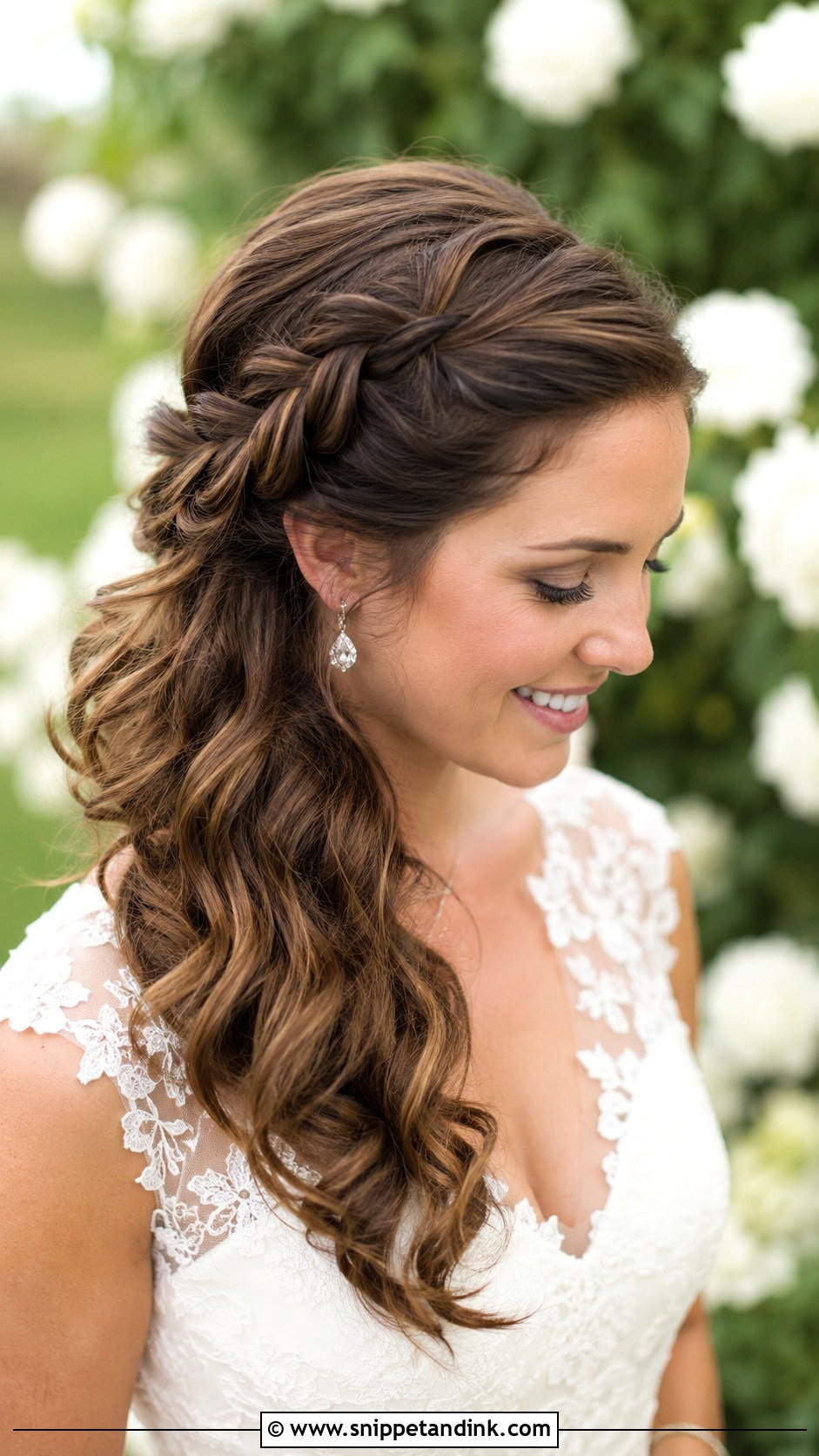
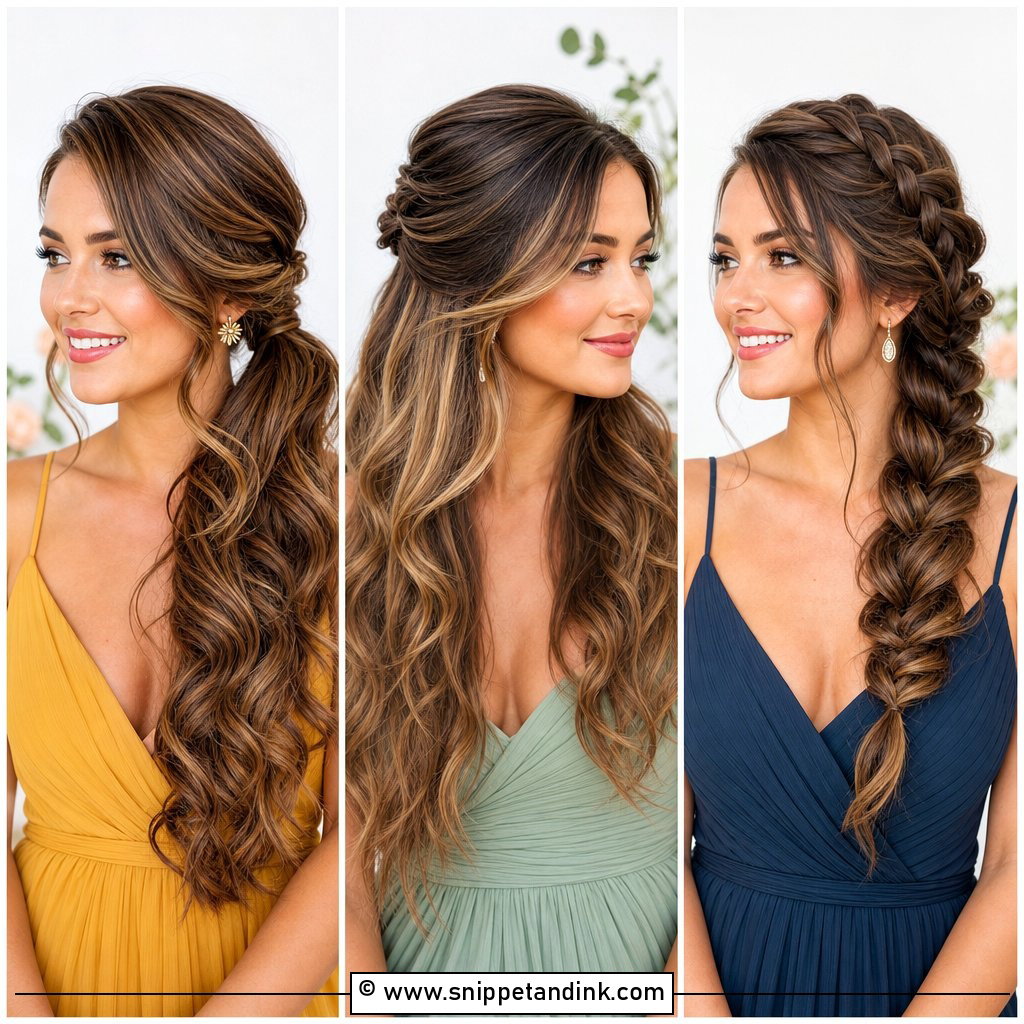
Start a French braid at the temple and sweep it across one side, then let the hair below fall in loose curls over the shoulder. The braid keeps your face clear while the waves bring volume. I curl before braiding, never after, since heat close to a finished braid can loosen it. It suits most face shapes and sits comfortably under a veil or a floral crown. If you want polish without rigidity, it’s a good middle ground.
3. Side Dutch Braid
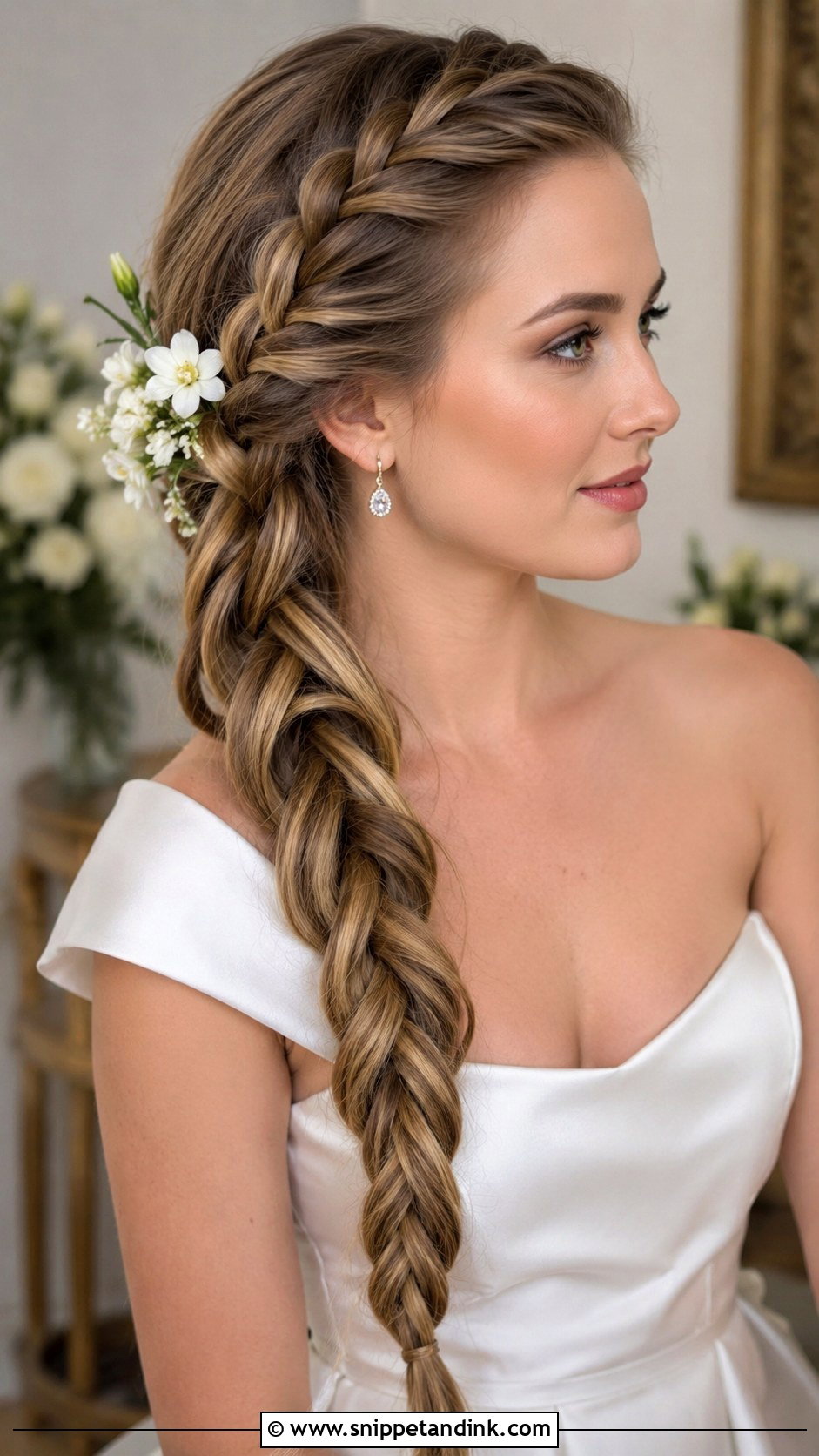
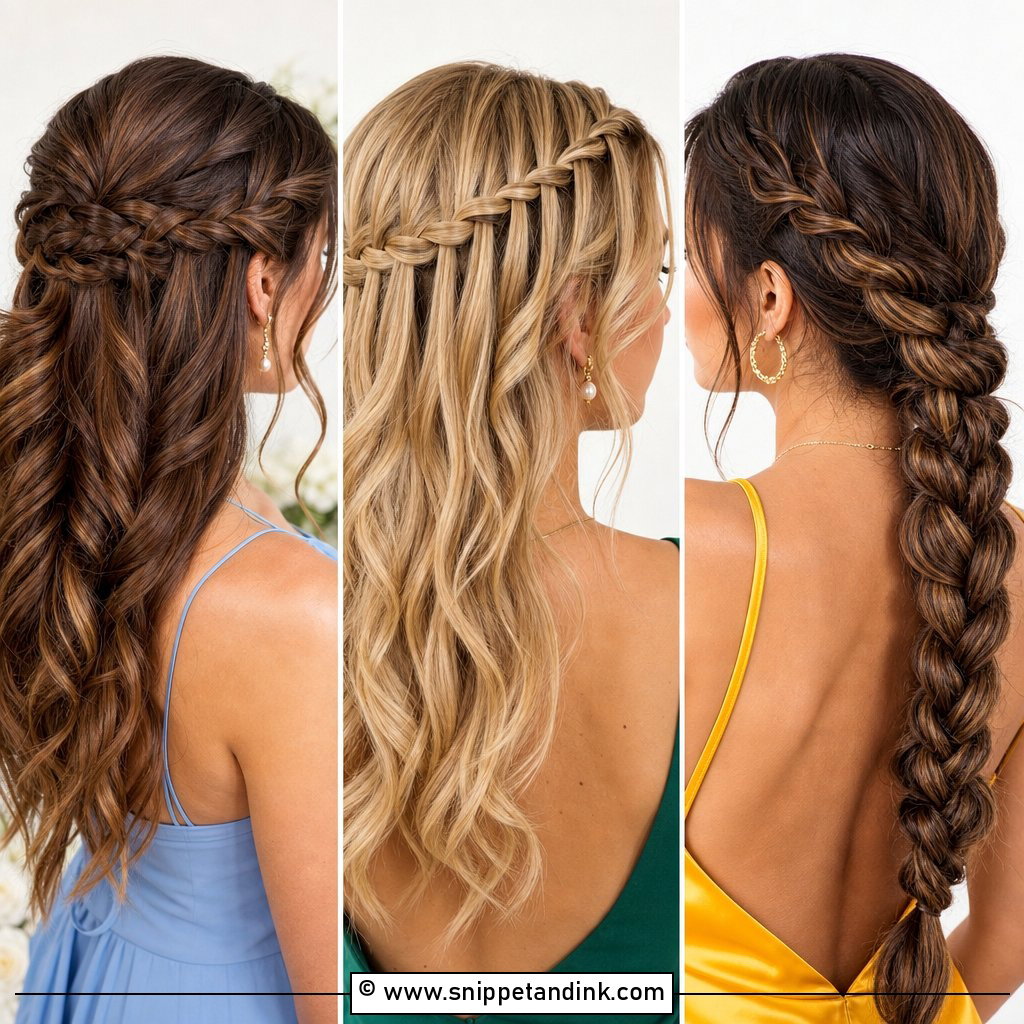
Raised and defined, a Dutch braid is the one to pick if you want the braid itself to be noticed. The strands cross underneath, so the pattern sits on top of the hair. It grips tightly through a long ceremony and reception. Leave the ends loose or coil them into a small bun at the nape. Thick hair shows it off best; with fine hair, I pancake the loops so it looks fuller. Small pins or tiny blooms along the ridge soften it.
4. Side Braid With Loose Curls
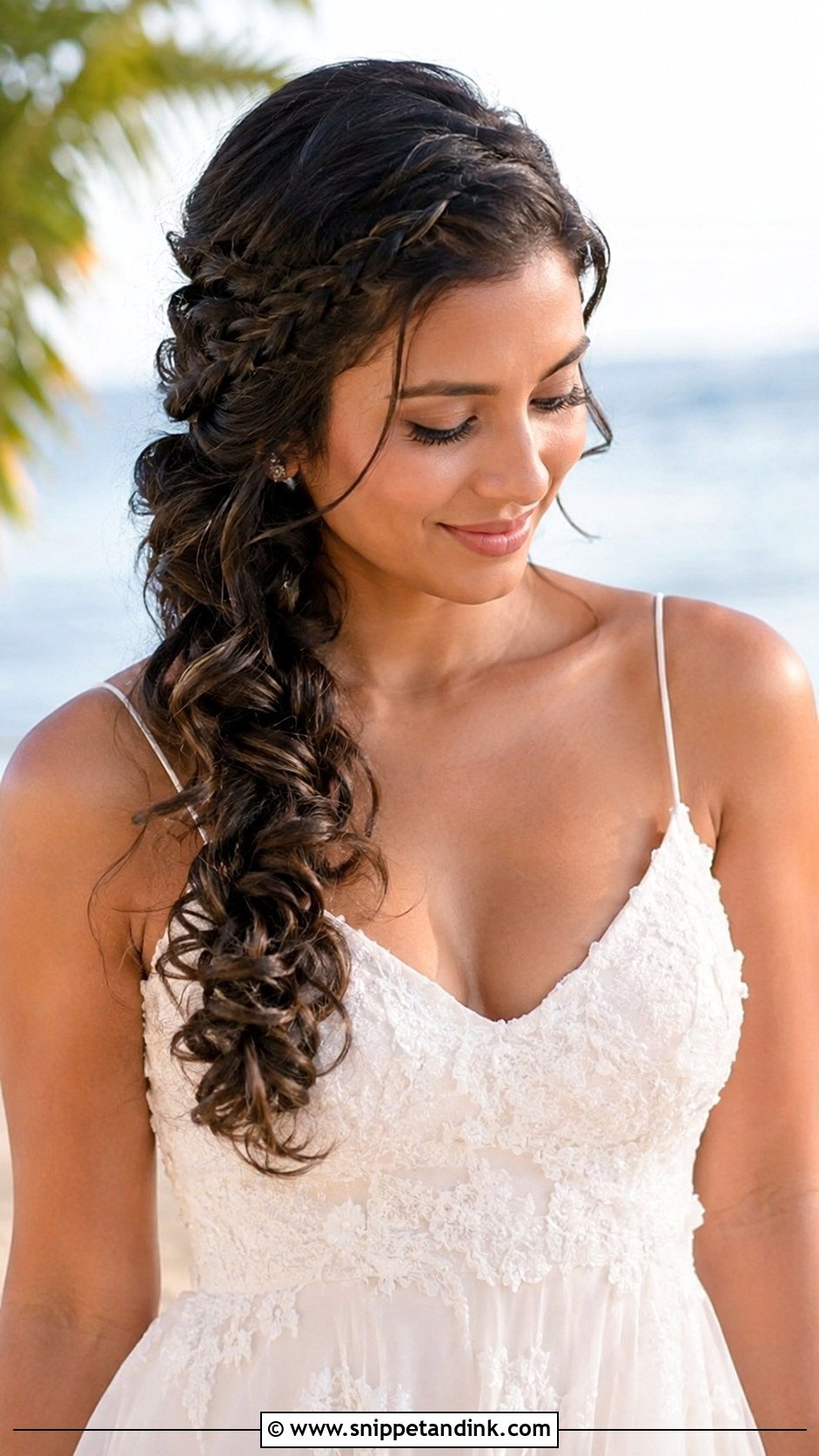
Only part of the hair is braided here, and the rest tumbles over the shoulder in curls. Keep the braid thin for a subtle detail or thicker if you want it to show. Its real job is keeping hair off your face at an outdoor or beach wedding, where loose curls would otherwise blow forward. I set each curl in a pin curl to cool before brushing, which is what stops them dropping by the reception, then finish with a light hairspray.
5. Side Braided Low Bun
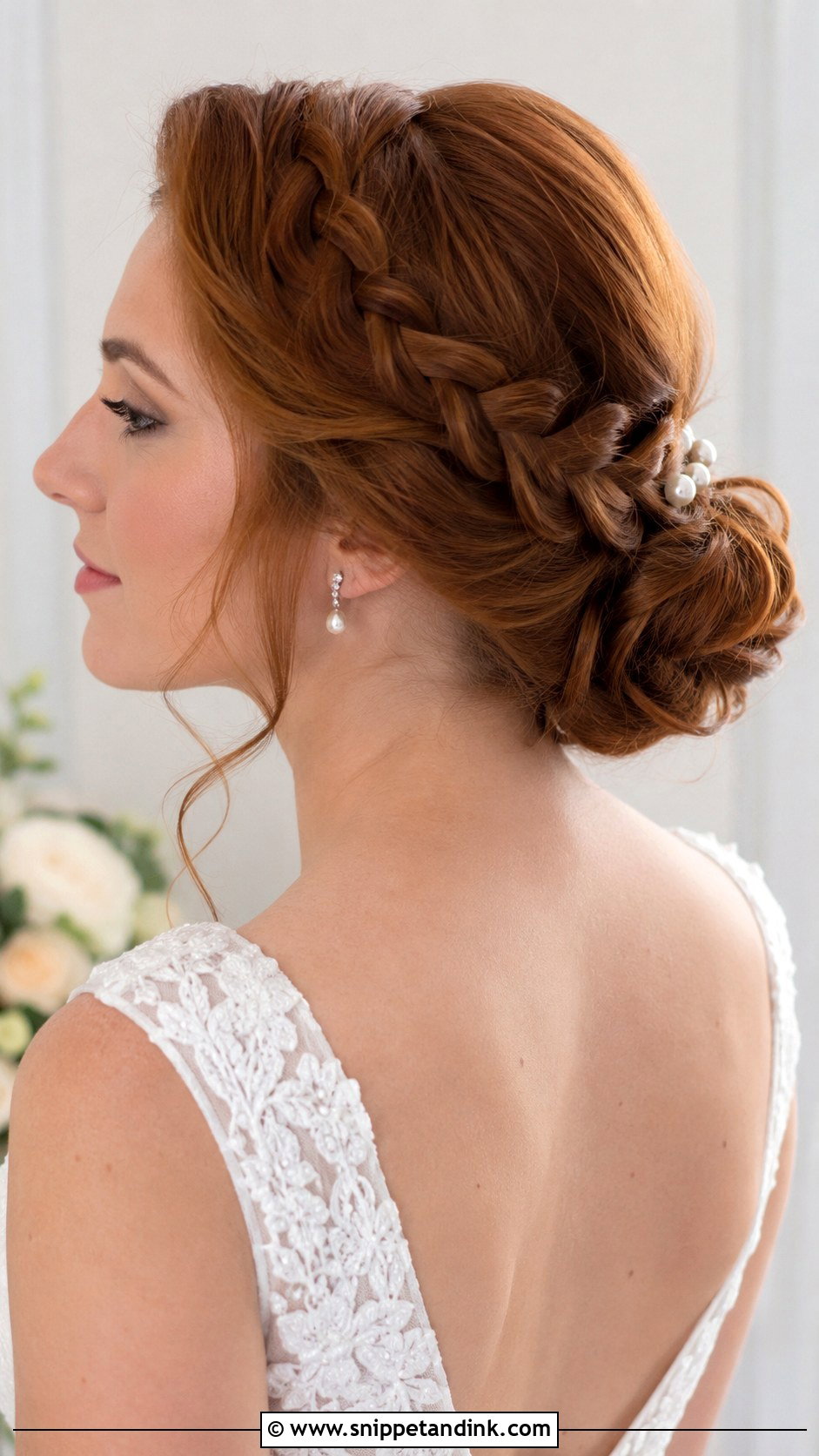
A soft braid wraps around one side and gathers into a bun at the nape. It suits formal and bohemian themes alike and stays neat through a long celebration. Leave a few face-framing strands loose. The low placement leaves room for a veil comb above it, which is why I suggest it to brides wearing a long veil. Pearls, pins or fresh flowers on the bun can pick up the wedding palette.
6. Boho Side Braid With Flowers
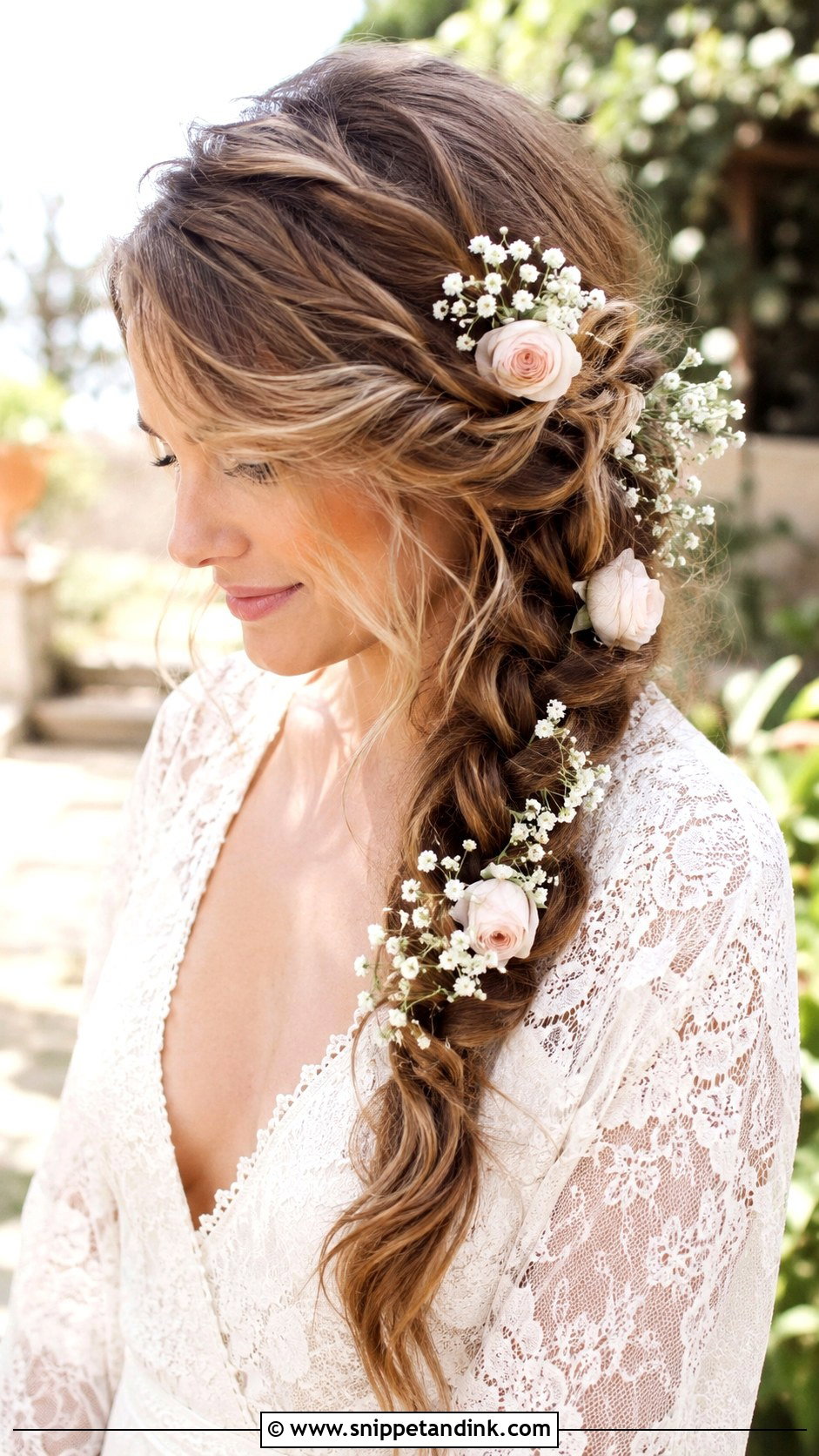
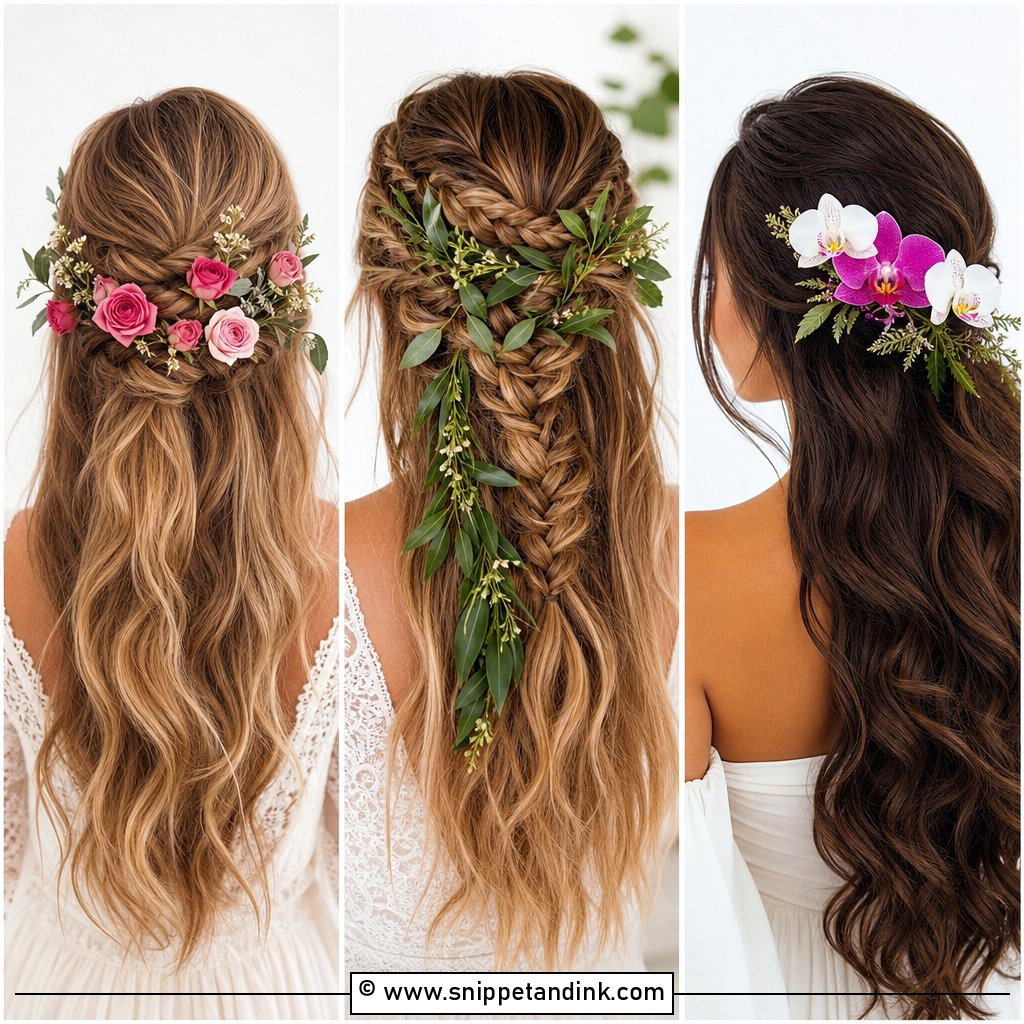
A slightly messy braid scattered with fresh blooms is the garden-wedding classic. Baby’s breath, small roses or wildflowers work, and picking from the bouquet’s own flowers ties the two together. I add the flowers only after pulling the braid apart for fullness, since tugging the loops afterwards knocks blooms loose. Draped over one shoulder, it keeps hair off your face at an outdoor or rustic ceremony in soft, sunny light.
7. Side Waterfall Braid
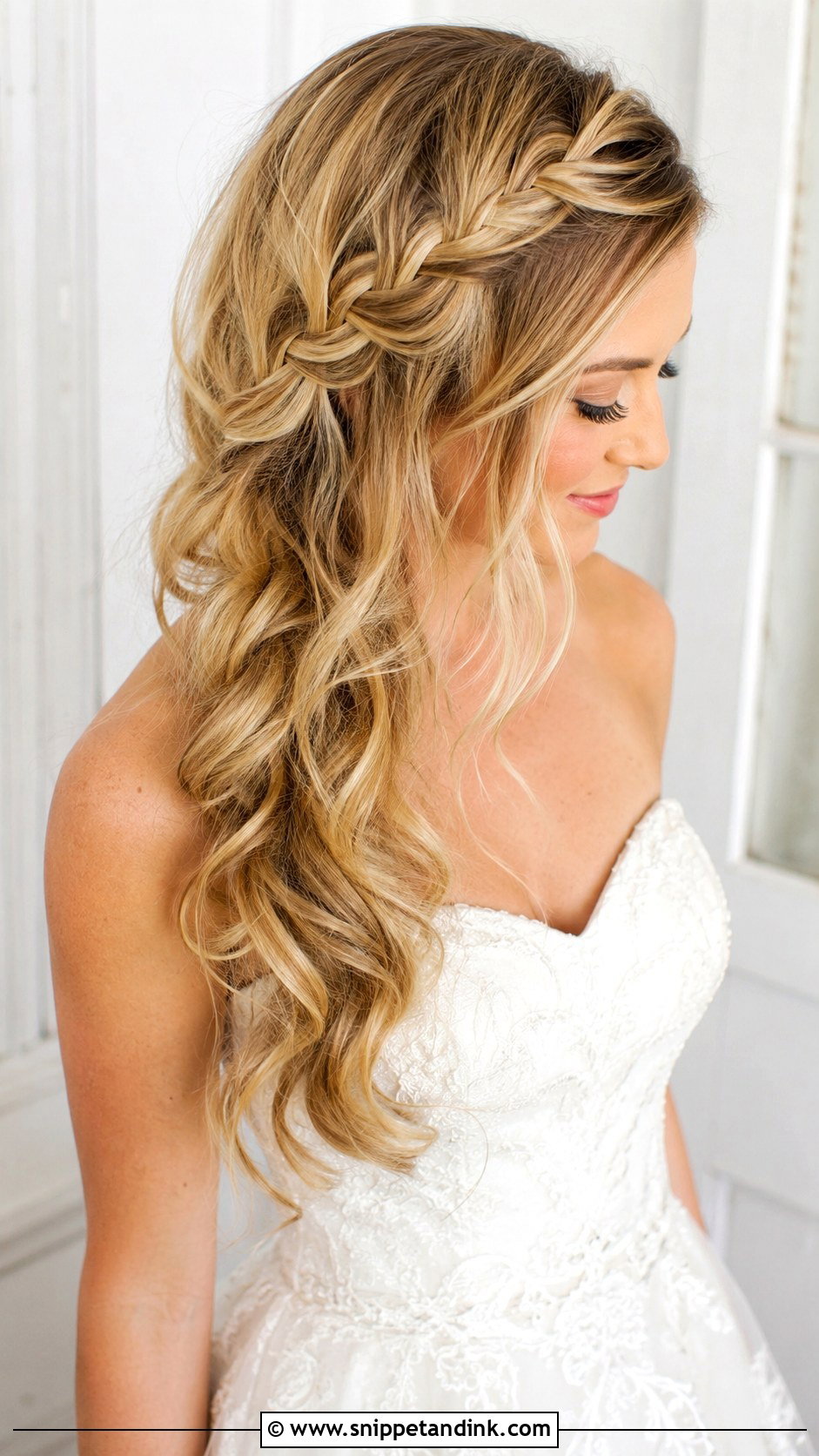
Strands drop out of this braid at every pass, falling below it like water. Worn to one side, it weaves across the head while the released hair tumbles down. It’s at its best with wavy or curly hair, which gives the dropped strands movement. The catch is that it’s delicate, so I’d skip it for a very windy venue. It pairs with veils, crowns or simple pins, and a slightly loosened finish suits formal and boho weddings.
8. Side Braid With Veil
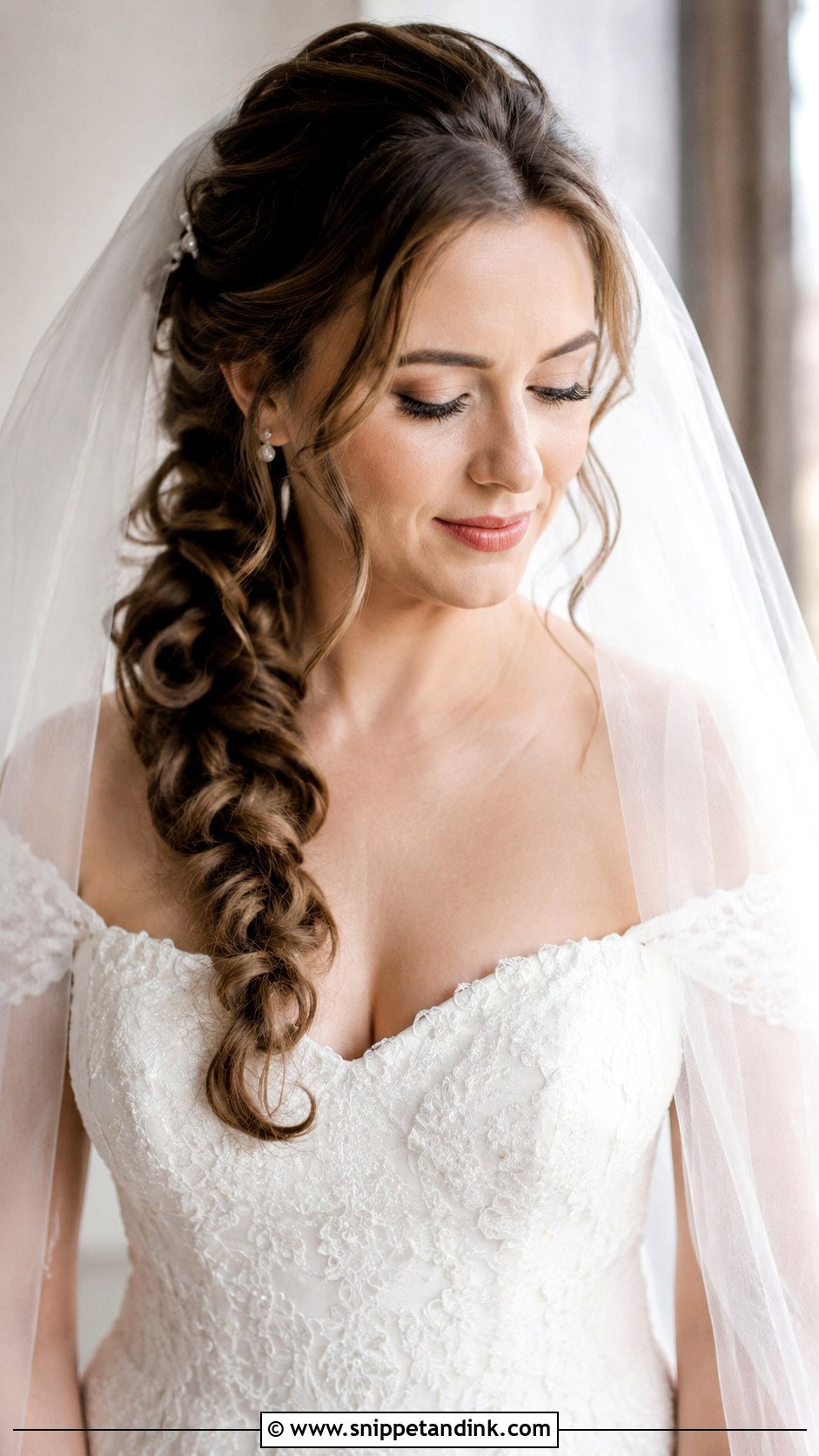
The braid sweeps over one shoulder and the veil flows behind. Place the veil above the braid for a traditional ceremony look, or tuck the comb just under the start of the braid so the tulle falls over it. A loose, textured braid keeps everything soft. I pin the comb into the braid rather than into loose hair, so it doesn’t drag the style backward. Take the veil off after the ceremony and the braid carries on into the reception unchanged.
9. Side Rope Braid
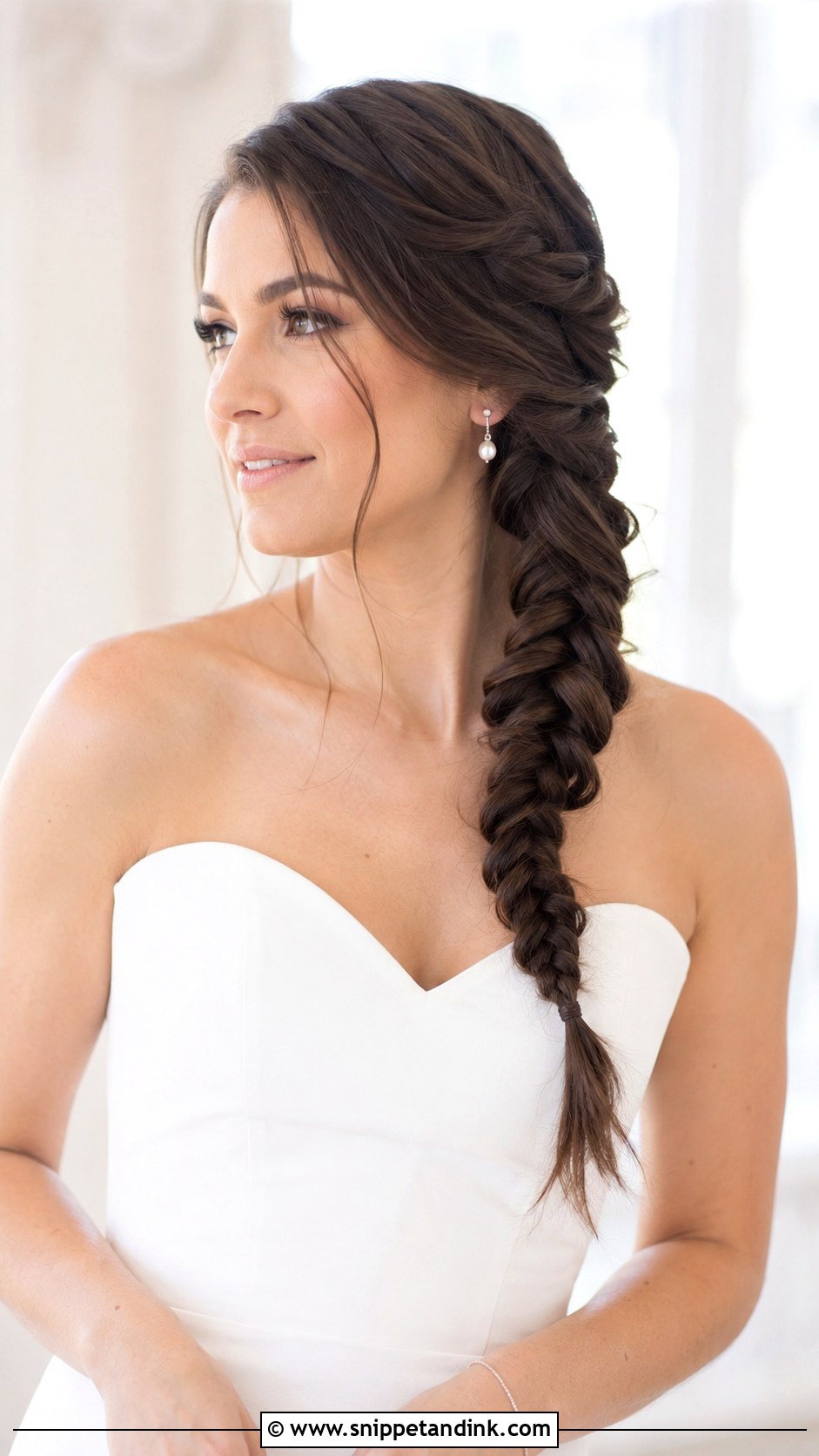
Two sections, each twisted the same way, then wound around each other the opposite way: that counter-direction is what locks a rope braid’s spiral. It looks more intricate than it is and suits most lengths. Keep it sleek for a formal wedding or loosen the spiral for softness. I seal the end with an elastic and a little spray, because silky hair tries to unwind. Small pins or a delicate hair vine add sparkle.
10. Side Braid Half Updo
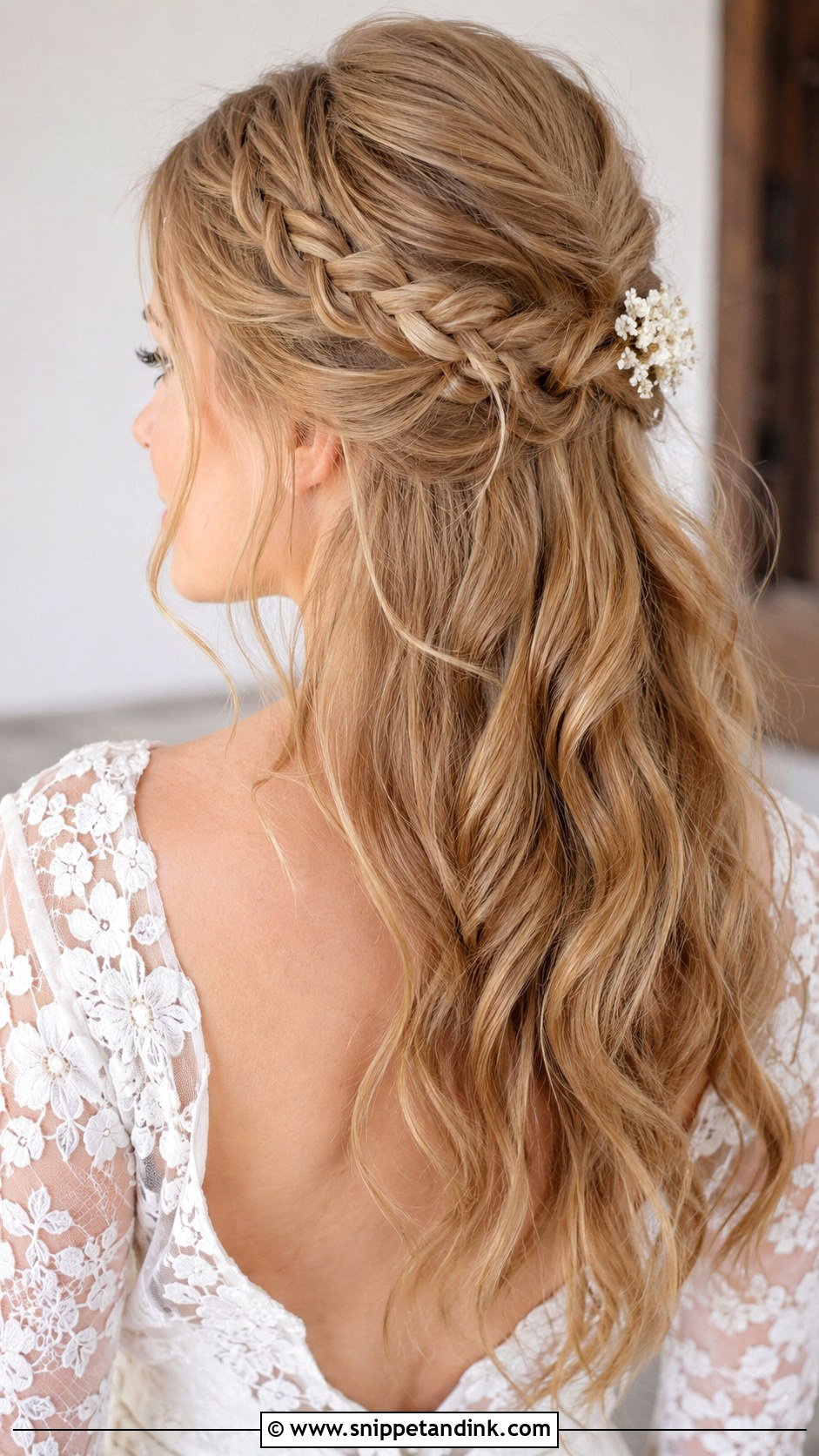
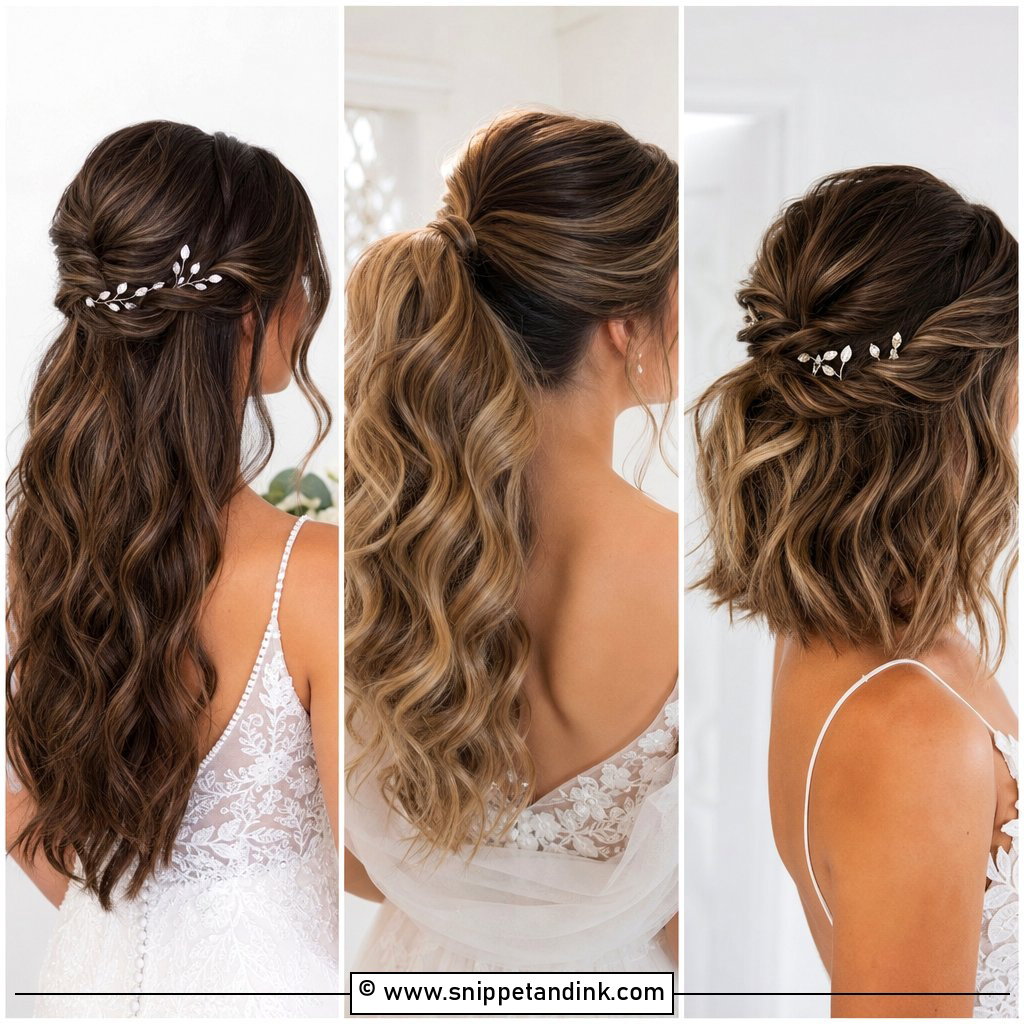
Only the top section is braided and pinned to one side, while the rest flows free, so the back of your dress stays on view. Loose waves underneath give it volume. I check the pin point at the trial, since it holds the braid’s full tension, and cross two pins there. Pins, pearls or flowers can decorate the braided section at a casual or a formal wedding.
11. Side Bubble Braid
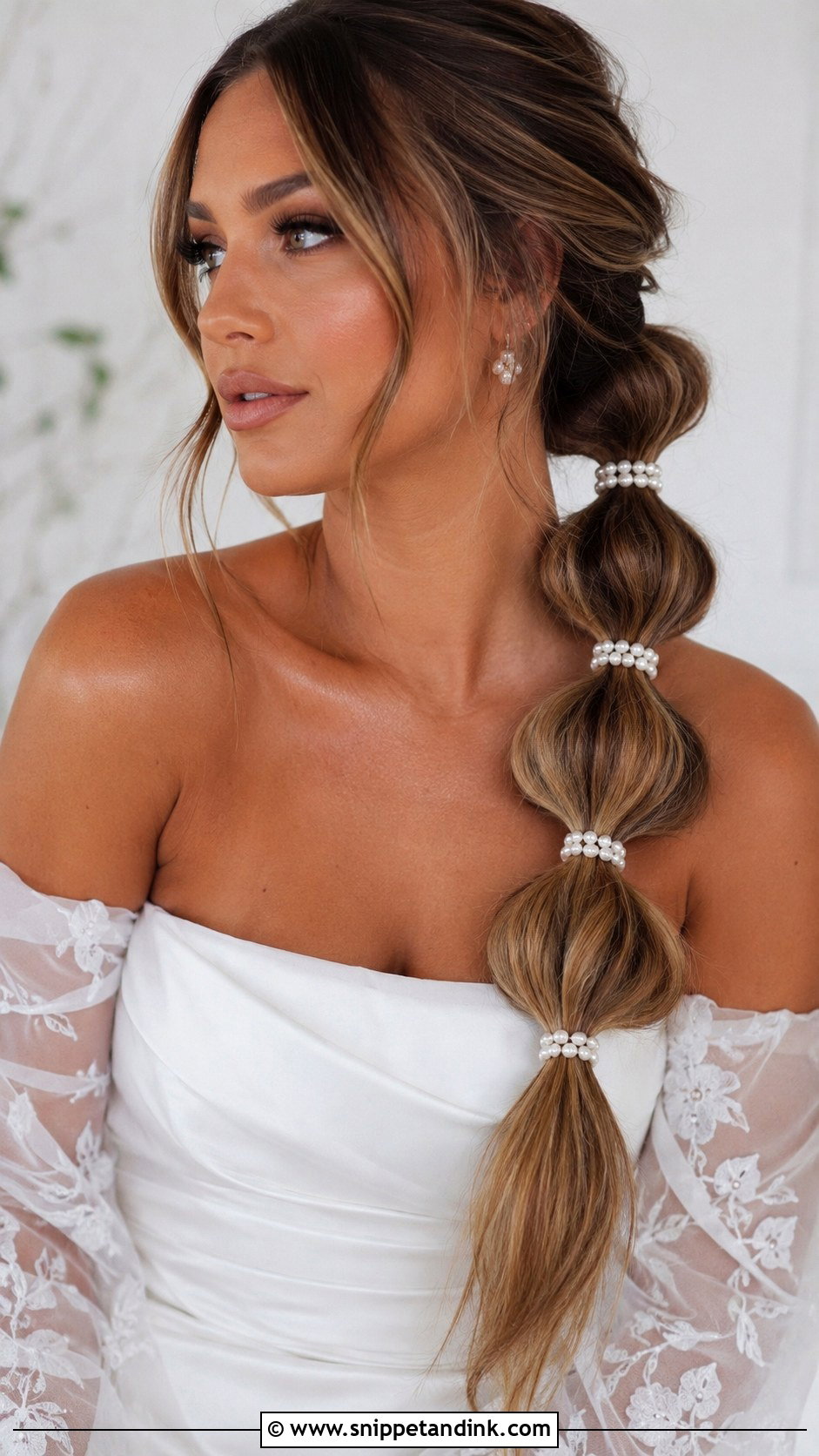
Small elastics tied at intervals down a ponytail, with each segment gently puffed out, make the bubbles. Worn to one side, the result is modern and playful. Wrap each elastic with a thin strand of hair, a ribbon or a string of pearls to hide it. I keep the elastics evenly spaced, because uneven bubbles look accidental. Since every section is tied, it holds well all day, and pulling each bubble slightly gives a fuller shape at a modern or boho wedding.
12. Side Braid With Curtain Bangs
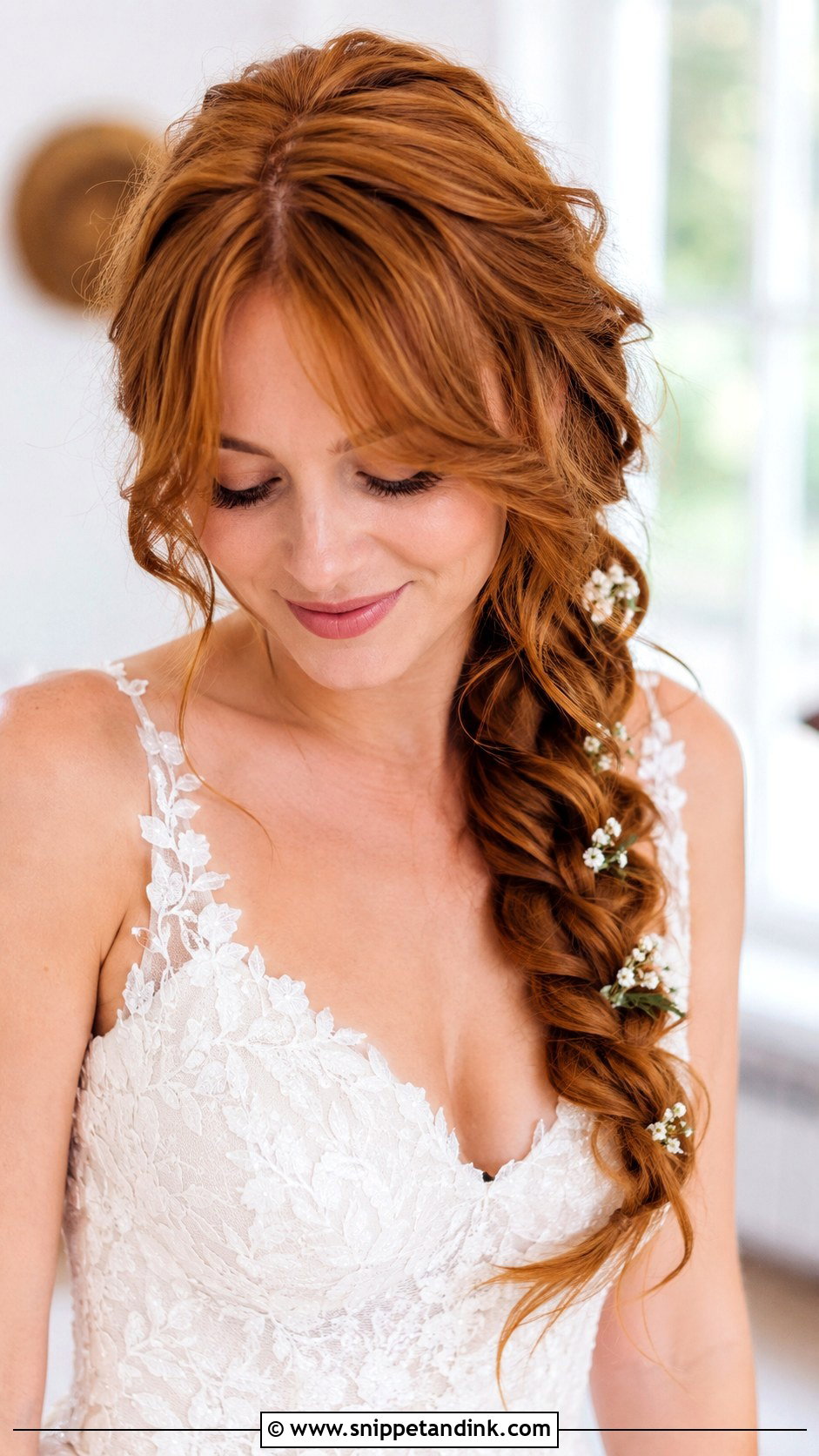
Soft curtain bangs and a side braid are an easy pairing: the bangs frame the face while the braid sweeps over one shoulder. The bangs are the part I watch most on the day, as skin oil and humidity make them separate. I blow-dry them with a round brush, set them with a light spray, and hand you blotting papers for the forehead. It works with straight and wavy textures, indoors or out, and subtle accessories keep the focus on your face.
13. Side Braid Crown
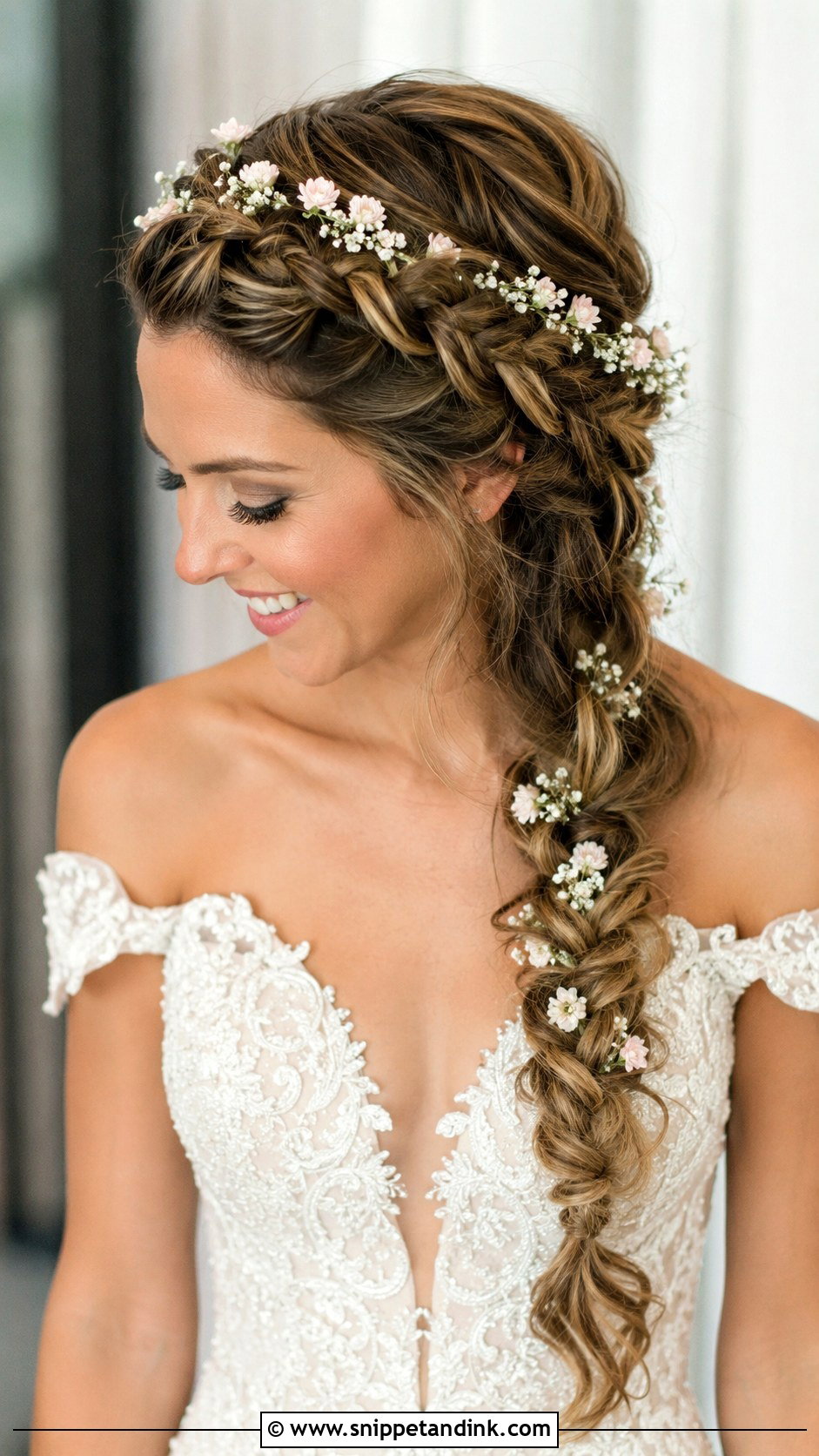
The braid encircles part of the head before draping softly over one shoulder. It keeps hair secure and off the face, with a graceful, queen-like aesthetic for formal or fairytale-themed weddings. Leave a few strands loose, or decorate the crown section with flowers and pins. I braid the crown Dutch-style so it sits raised; a flat French crown can disappear in photos. Veils and statement jewellery sit well with it.
14. Messy Side Braid
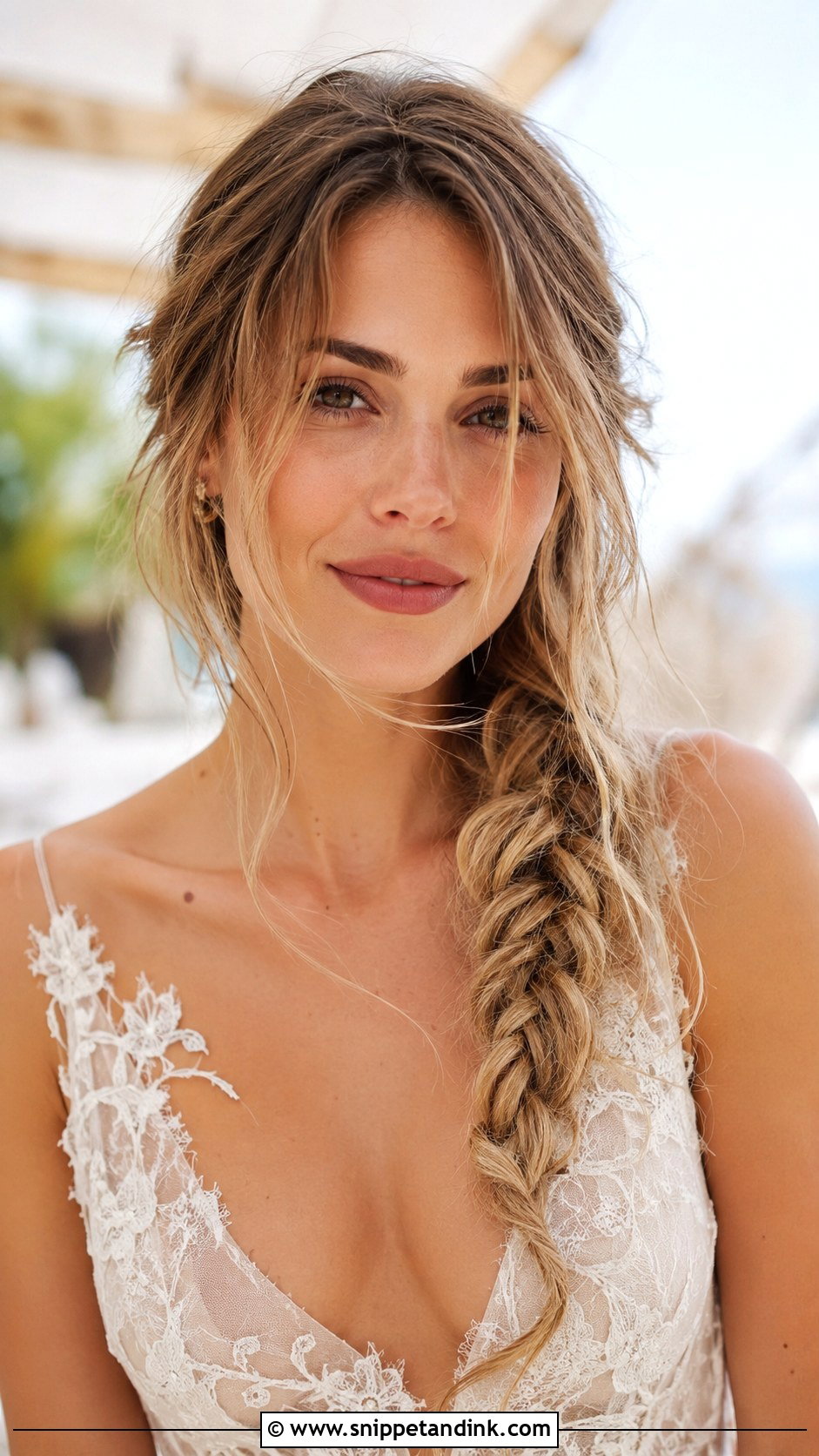
The lived-in version. Braid gently, then pull it apart for volume and a tousled finish, leaving the face-framing pieces loose. Boho, beach and garden weddings suit it, and so do nearly all hair types. I still pin the top of the braid behind the ear so it hangs where you want it instead of shifting backward. Small flowers or delicate pins add charm without making it look polished.
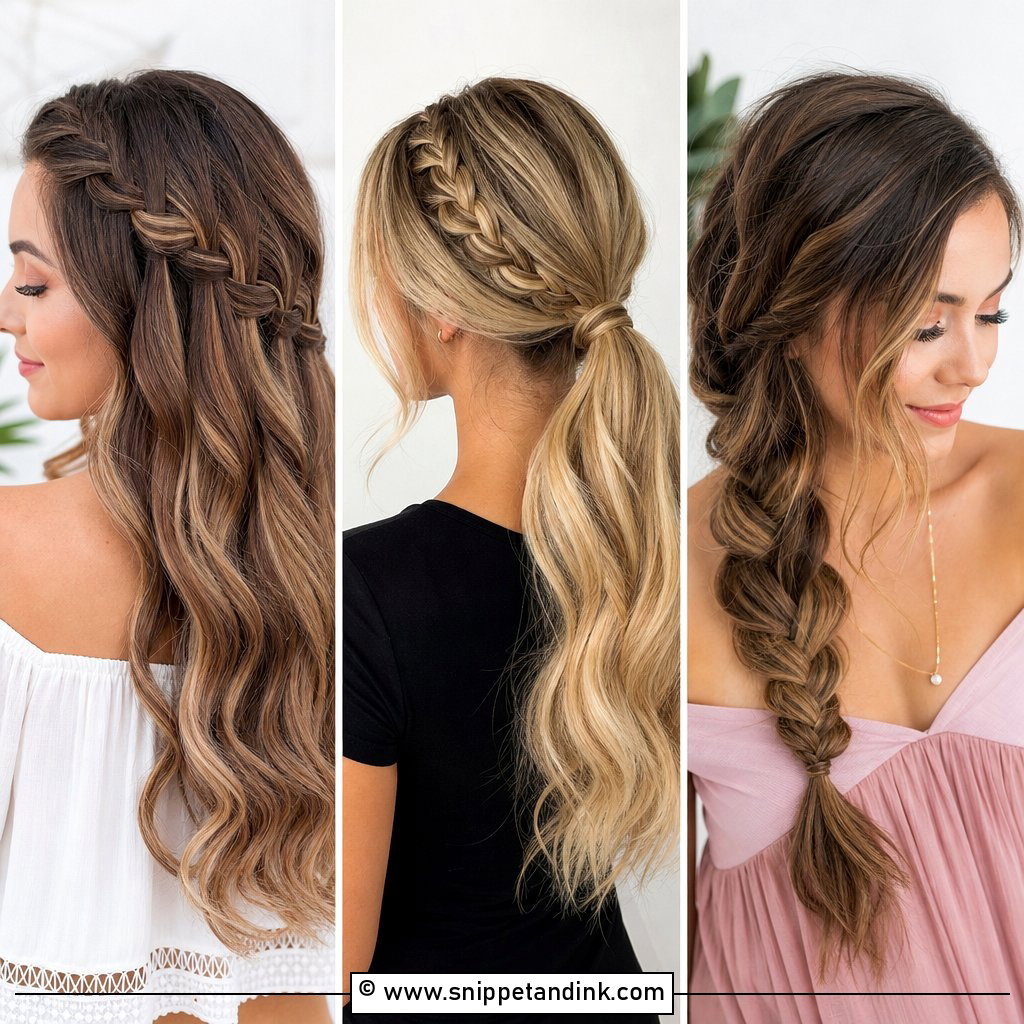
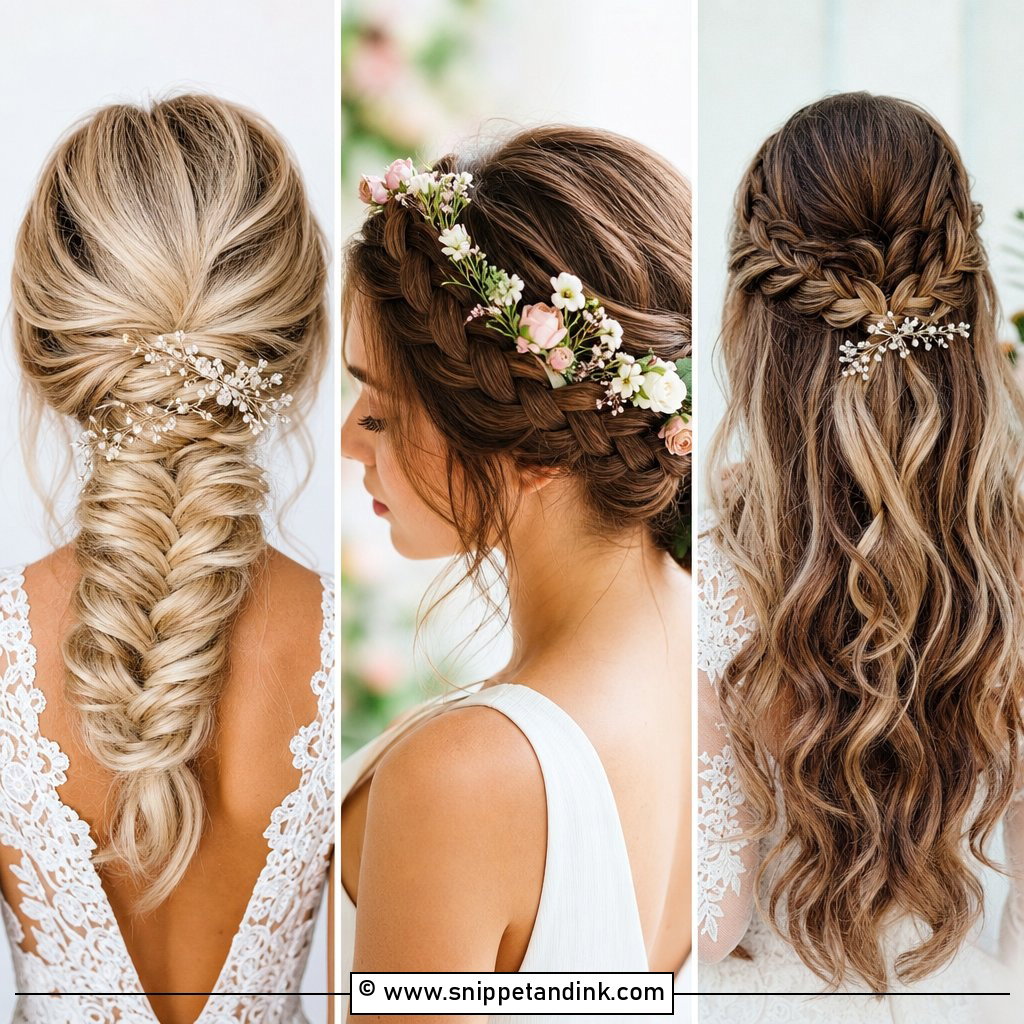
15. Side Braid With Pearls
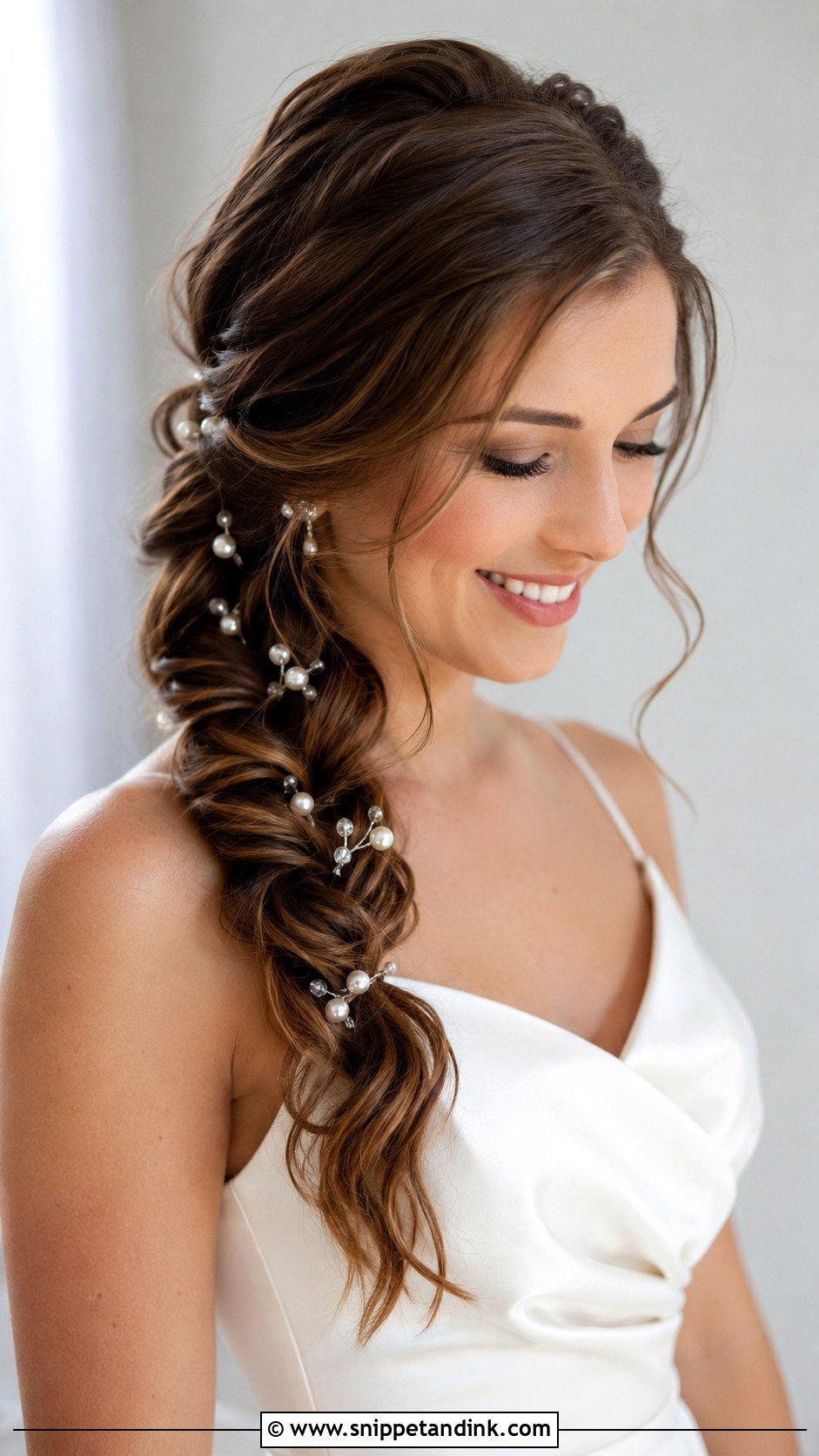
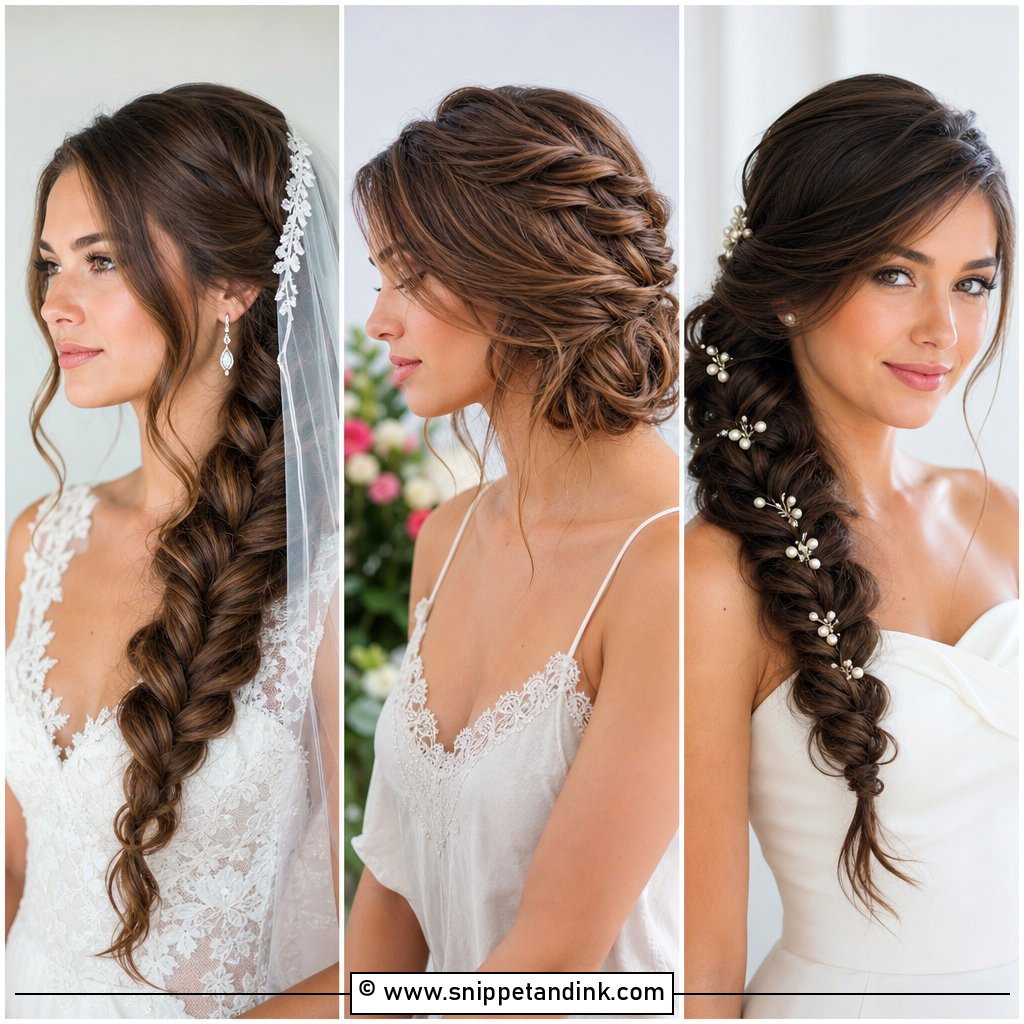
Pearl pins or strands threaded through the braid give it a soft glow. They suit sleek and textured braids alike, and almost any theme from classic to modern. Keep the braid loose for boho or tight for a polished feel. I place the pearls along the outer edge of the braid where the light hits, not inside the folds where they vanish. Simple dresses and minimal jewellery let them show.
16. Side Braid Ponytail
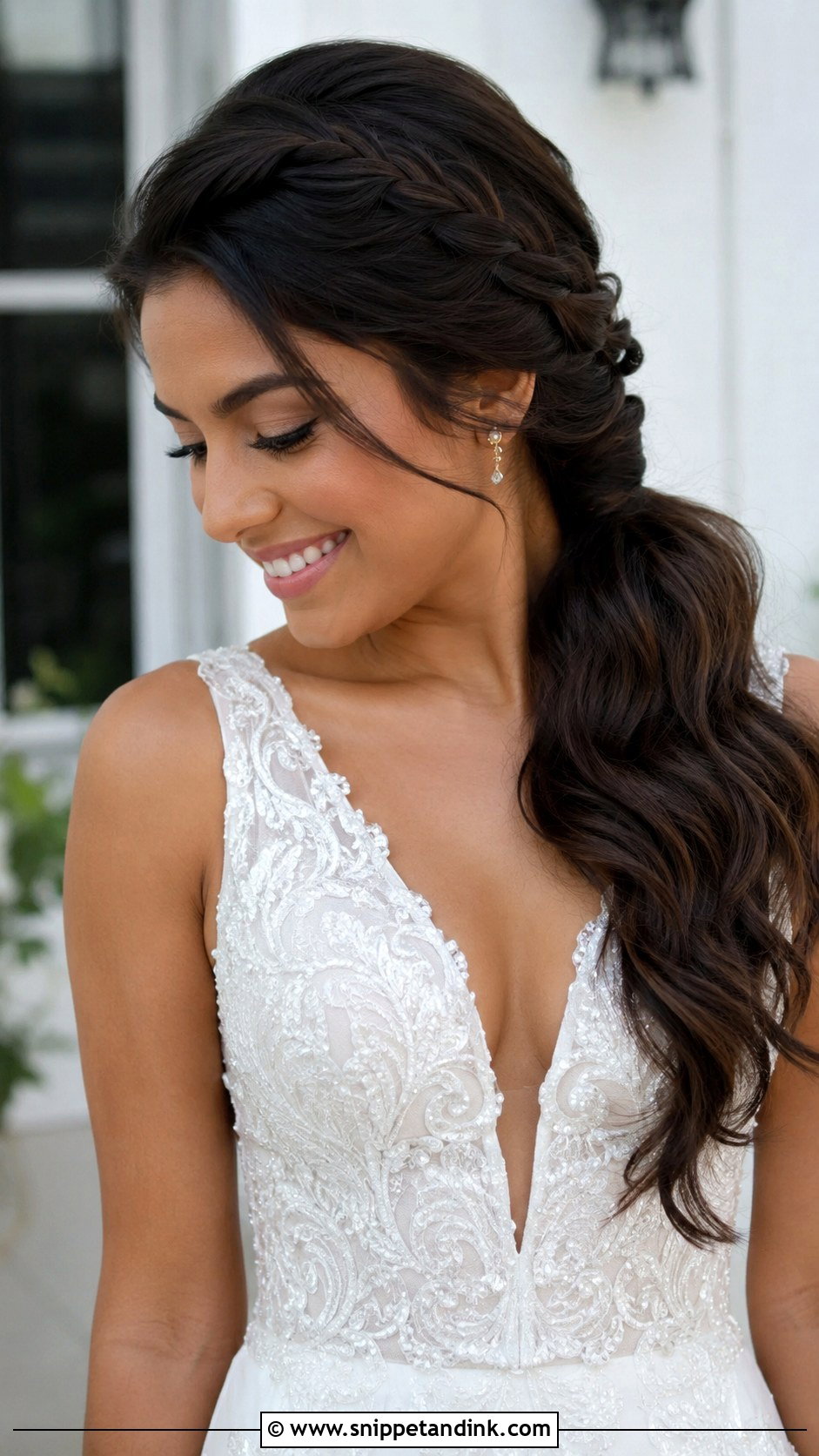
A braid blends into a low ponytail draped over one shoulder. Braid part of the ponytail, or wrap a thin braid around the base to hide the elastic. Long, thick hair suits it best; on finer hair I add a clip-in weft so the tail has some weight. Waves through the ponytail give movement. Pins or a ribbon-wrapped tie finish it for a contemporary wedding.
17. Side Braid With Tendrils
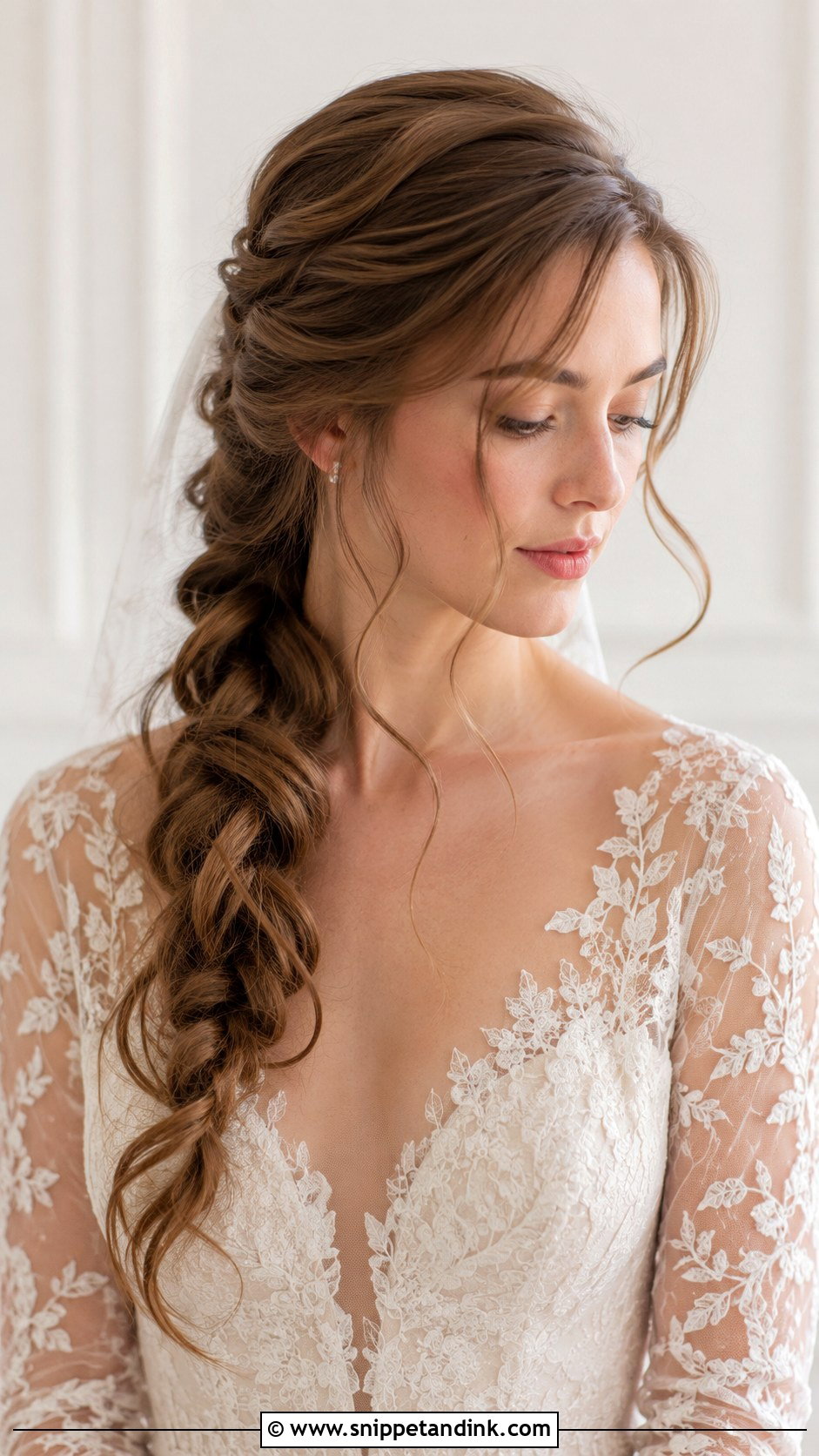
Soft tendrils framing your face make a side braid look gentler. Leave a few wispy strands at the temples and cheeks and let the braid sweep over one shoulder. I curl the tendrils slightly and spray them; left straight, they can look like flyaways rather than a choice. It works on straight and wavy hair, with a floral crown, a veil or simple pins. Decide on the tendrils at your trial so the same pieces are pulled out on the morning.
18. Sleek Side Braid
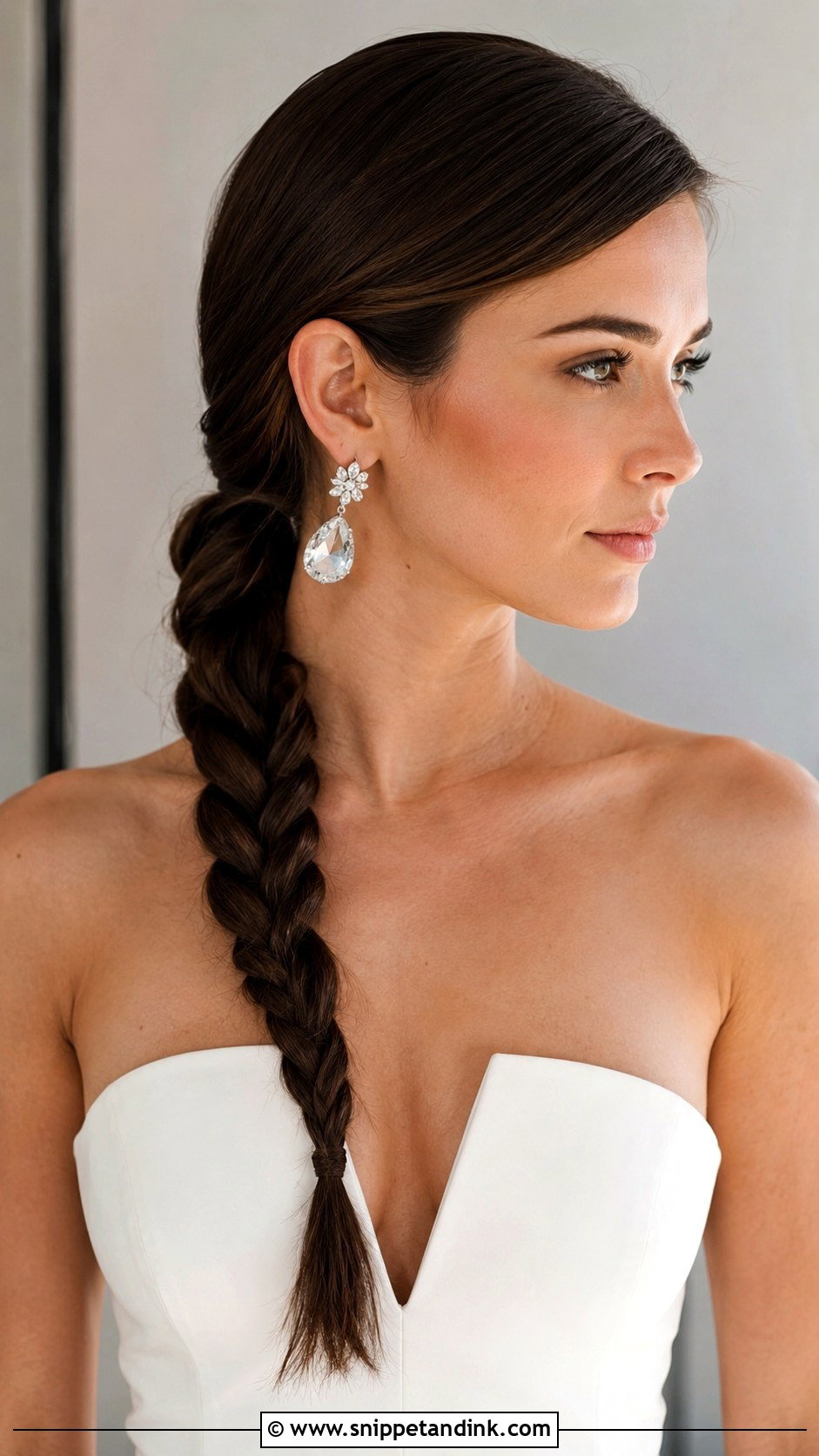
Every strand smooth and tight, lying neatly over one shoulder: this is the formal or modern choice. A smoothing product keeps it sleek and frizz-free all day. Fine and thick hair both work, though fine hair can show scalp through a very tight braid, so I keep the parting soft. Statement earrings and structured dresses suit it. For subtle sparkle, add a thin hair vine or pins.
19. Side Braid With Twists
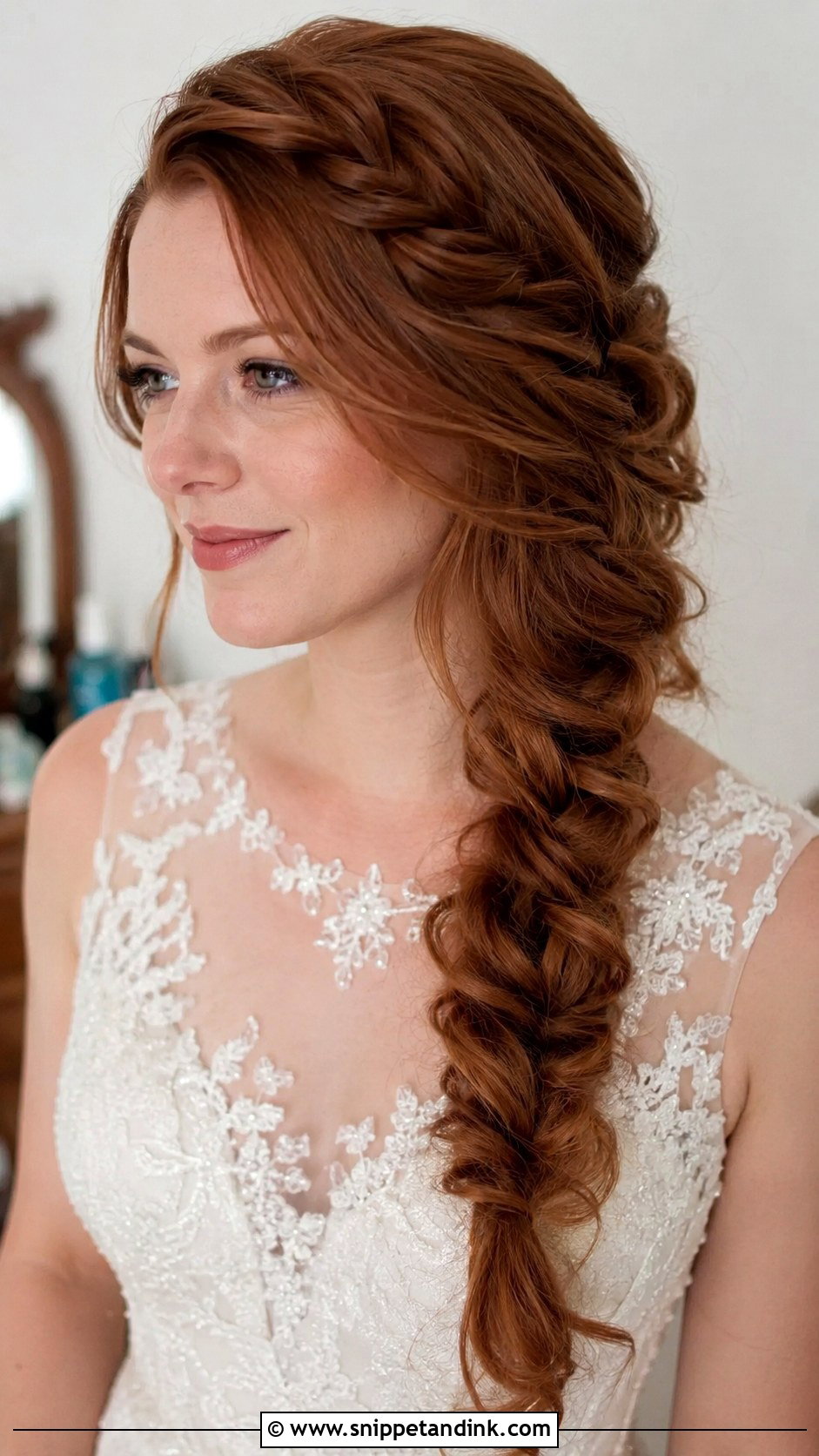
Small twists woven into a side braid add depth if you want something more elaborate. Twisting and braiding together hold securely. Thick or medium hair suits it best; very fine hair struggles to show twists inside a braid. Keep it tight for formal events or loosen it for boho. I spray each twist before it goes into the braid so it doesn’t unwind, and pins, pearls or small flowers can match your theme.
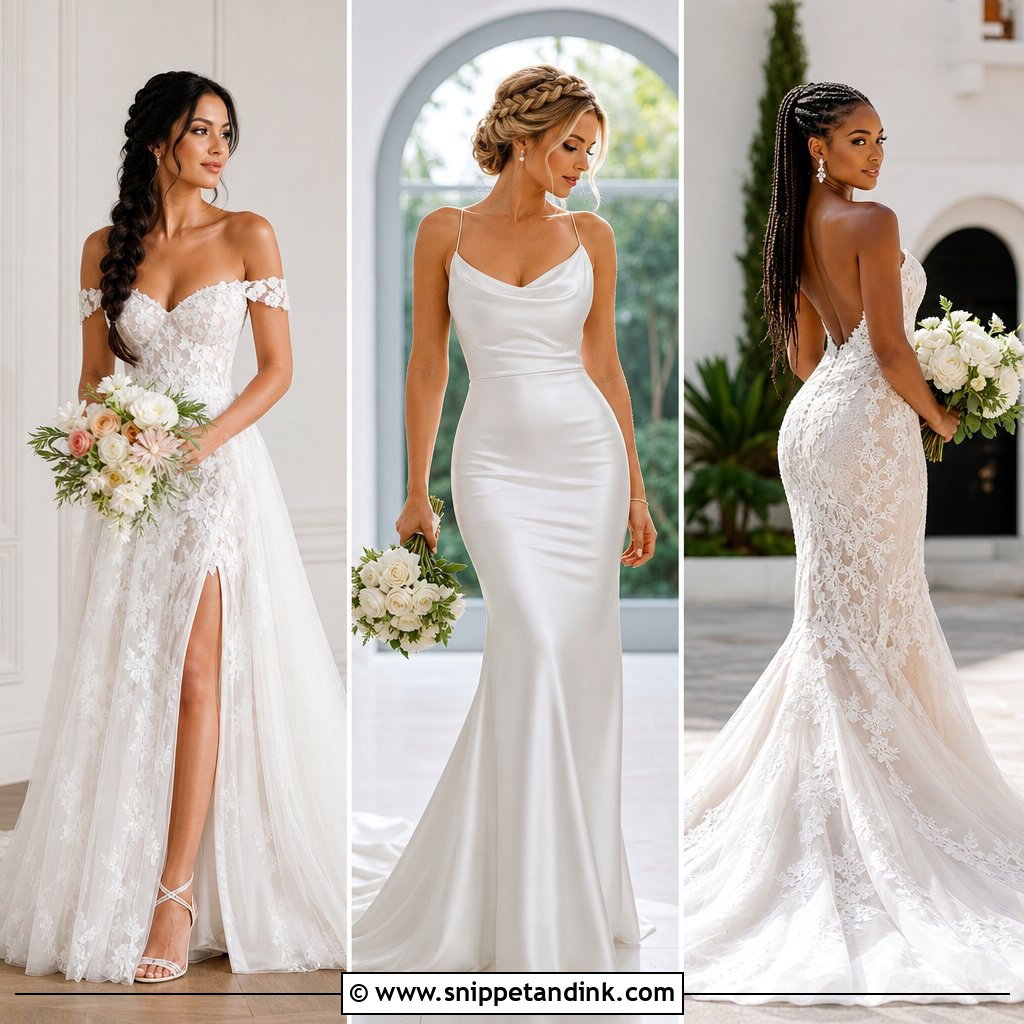
20. Side Braid Updo
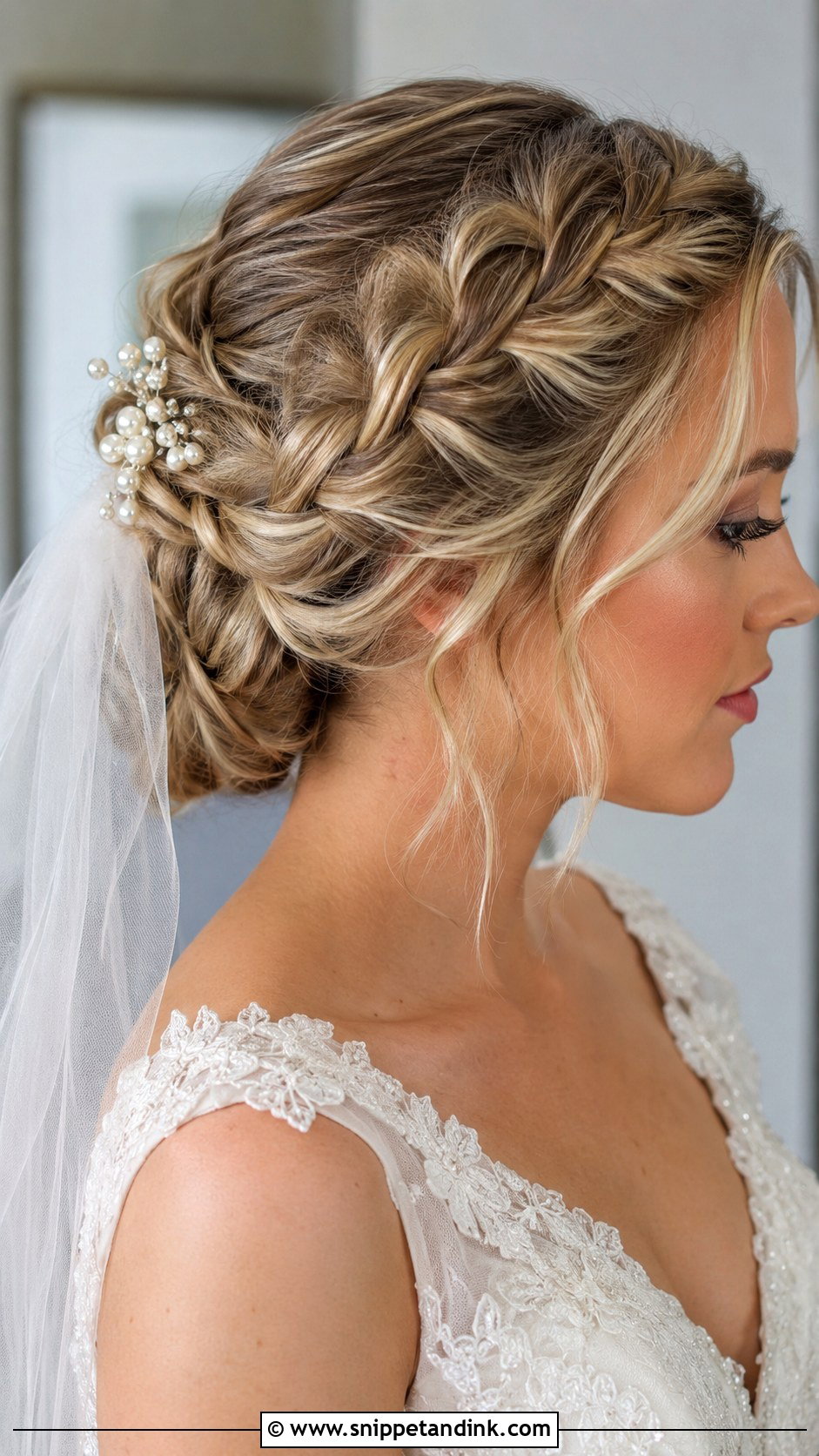
The braid wraps around the head and gathers into an updo, so the hair is completely secure for a long celebration and a lot of dancing. Your neckline and the back of the dress stay on show. Leave a few face-framing strands loose. I build the updo on a hidden anchor ponytail so the braid’s weight is spread evenly. Pins, flowers or pearls can suit the palette, alongside a veil and statement jewellery.
Undoing a Wedding Braid Without Tearing Your Hair
After a day of pins, spray and perhaps flowers, a braid needs a gentle exit. Pulled out in a hurry at midnight, it takes hair with it.
- Remove every pin first. Run your fingers slowly along the braid; I tell brides roughly how many pins went in so they know when they’ve found them all.
- Take out flowers and accessories next, then snip or roll off the clear elastics instead of tugging them.
- Unbraid from the end upward with your fingers, not a brush.
- Work a little conditioner or oil through any stiff sections before you detangle; it softens the hairspray.
- Comb from ends to roots with a wide-tooth comb, then wash. A second shampoo may be needed to clear all the product.
Too tired for any of that? Sleeping in it once is fine. Loosen the elastic, sleep on a satin pillowcase, and take it down in the morning when your hands are steadier.
Your Dress, Your Hair Type, Then the Braid
Sleek or messy, fishtail or waterfall, the braid you choose should follow your dress and your hair type before the photos you’ve saved. Most of these hold from ceremony to last dance once they’re anchored properly, and any of them can take flowers, pearls or a veil. Book a trial, keep the braid in for a few hours afterwards, and notice how it feels by evening. That afternoon tells you more than any picture can.
You'll Like These Ideas:


Leave a Reply