
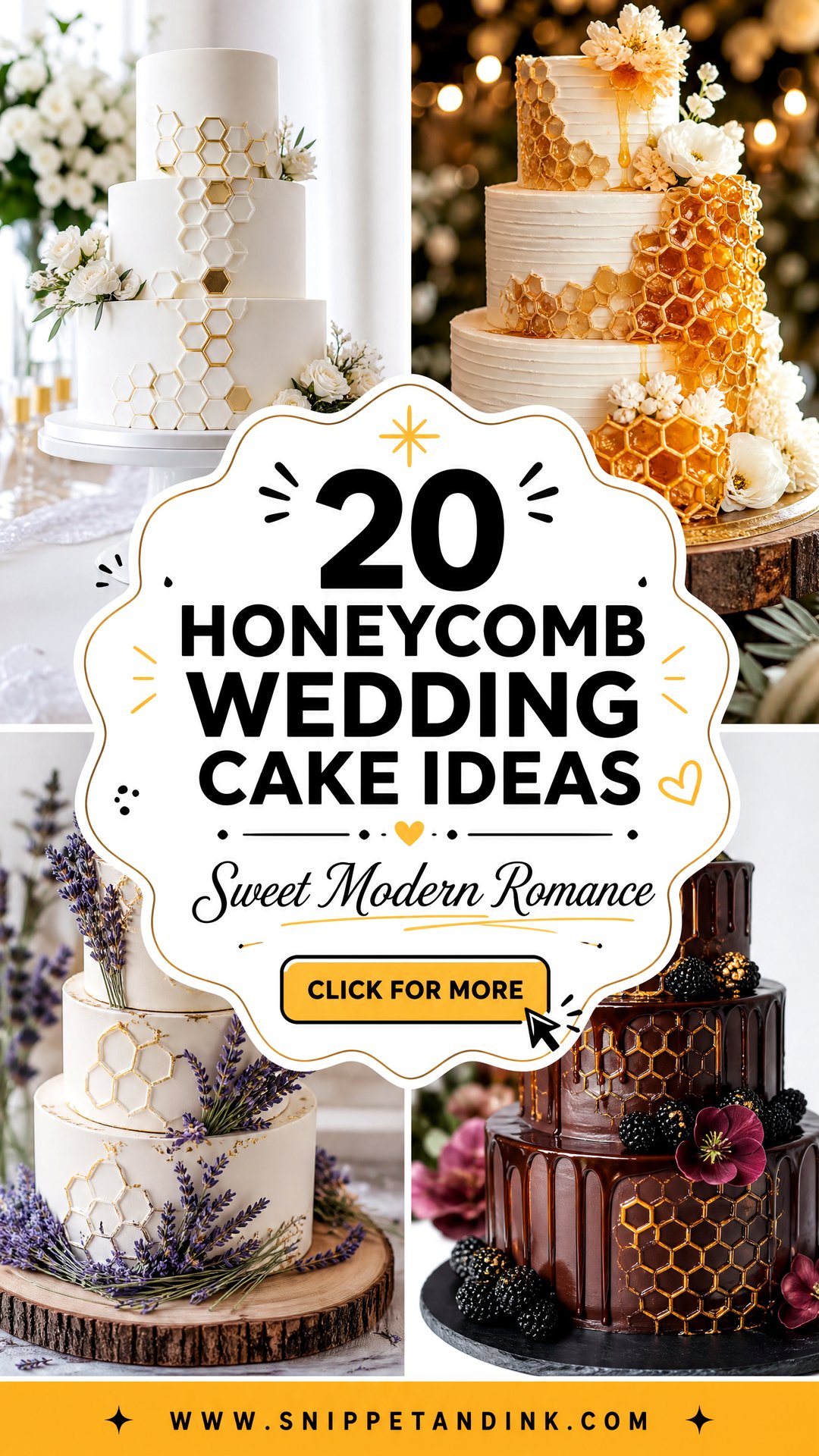
A honeycomb cake is one of the few themes where the decoration can also be the flavor. Hexagon texture, honey tones and delicate bee details all point back to something you can actually taste in the layers, which is why I enjoy designing them. The theme stretches further than people expect: a barn reception can carry a loose honey drip and wildflowers, while a ballroom suits crisp white fondant with a single gold-brushed panel. Below are twenty honeycomb designs I’d happily put on a cake table, with notes on how each one is built and where it can let you down.
Three Ways the Hexagon Pattern Gets Onto a Tier
Before you fall for a photo, it helps to know how the texture was made, because each method looks different up close and costs different hours.
Pressed with a mat
A food-grade silicone mat is pressed into chilled buttercream or rolled onto fondant before it’s laid on the tier. It’s the quickest method and gives the most even grid. On buttercream the cells come out soft-edged; on fondant they’re crisp.
Built cell by cell
Piped or hand-cut hexagons are slower, so they usually appear on one panel rather than a whole tier. The slight unevenness is the point: it looks like comb a bee built, not a print.
Cast in sugar or chocolate
Isomalt or chocolate panels are poured into molds and fixed to the cake. They catch light like real comb and carry gold well, but isomalt is heavy and gets tacky in humid air, so I add these panels on site.
When you brief your baker, say which of these you’re picturing. Saying you want honeycomb texture can mean any of the three, and the quote will vary with it.
1. Honeycomb Wedding Cake With Gold Bees
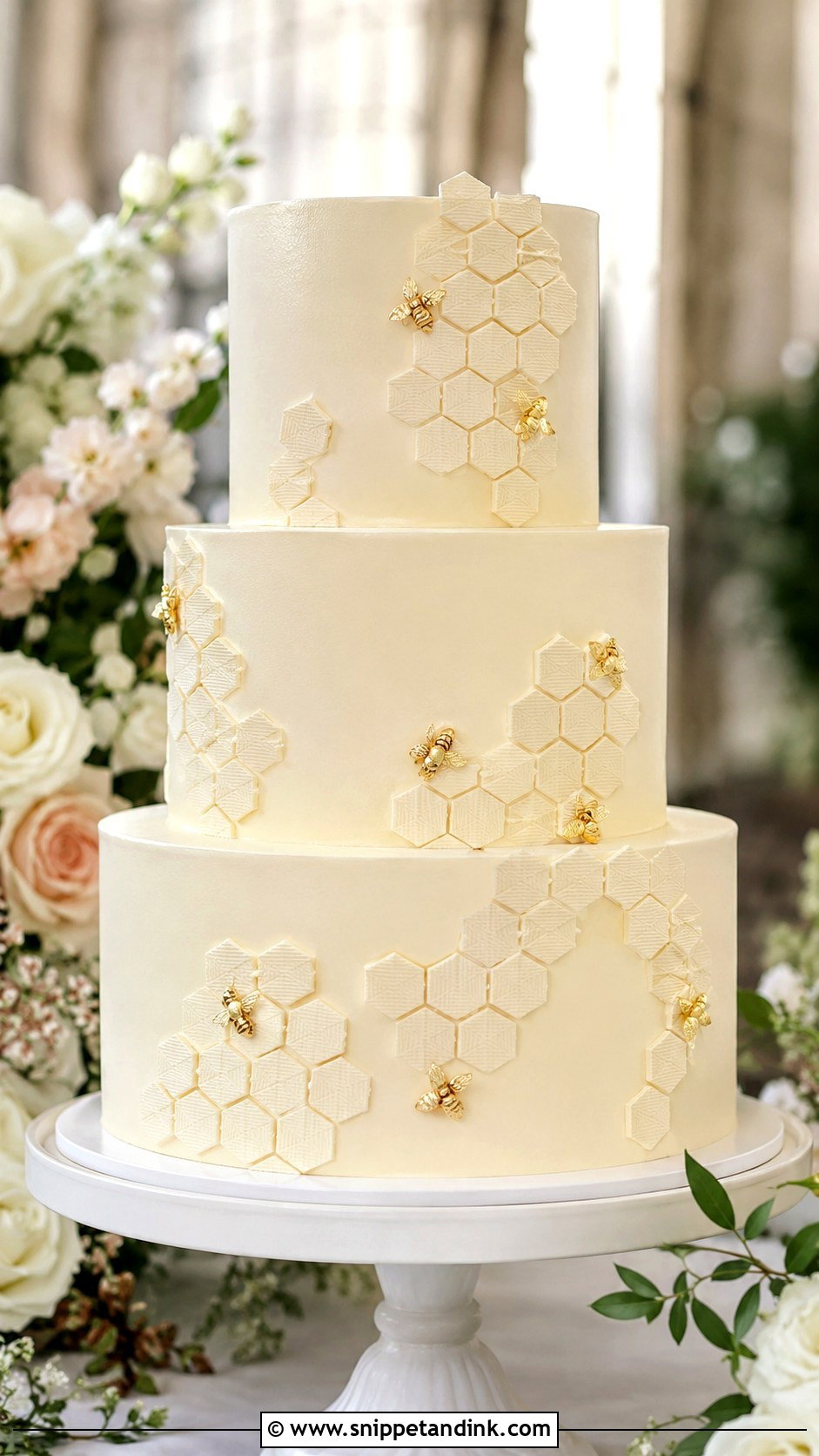
Gold bees on ivory are the safest way into this theme, and safe isn’t a criticism here. I cover the tiers in smooth ivory buttercream or fondant first, press honeycomb panels onto one or two tiers, then scatter the bees loosely so the eye travels. The mistake I see most is lining the bees up evenly around each tier; it reads like wallpaper. Cluster three or four near a panel edge and leave whole stretches bare. A short honey-colored drip on one tier is enough warmth.
2. Honeycomb Wedding Cake With Fresh Flowers
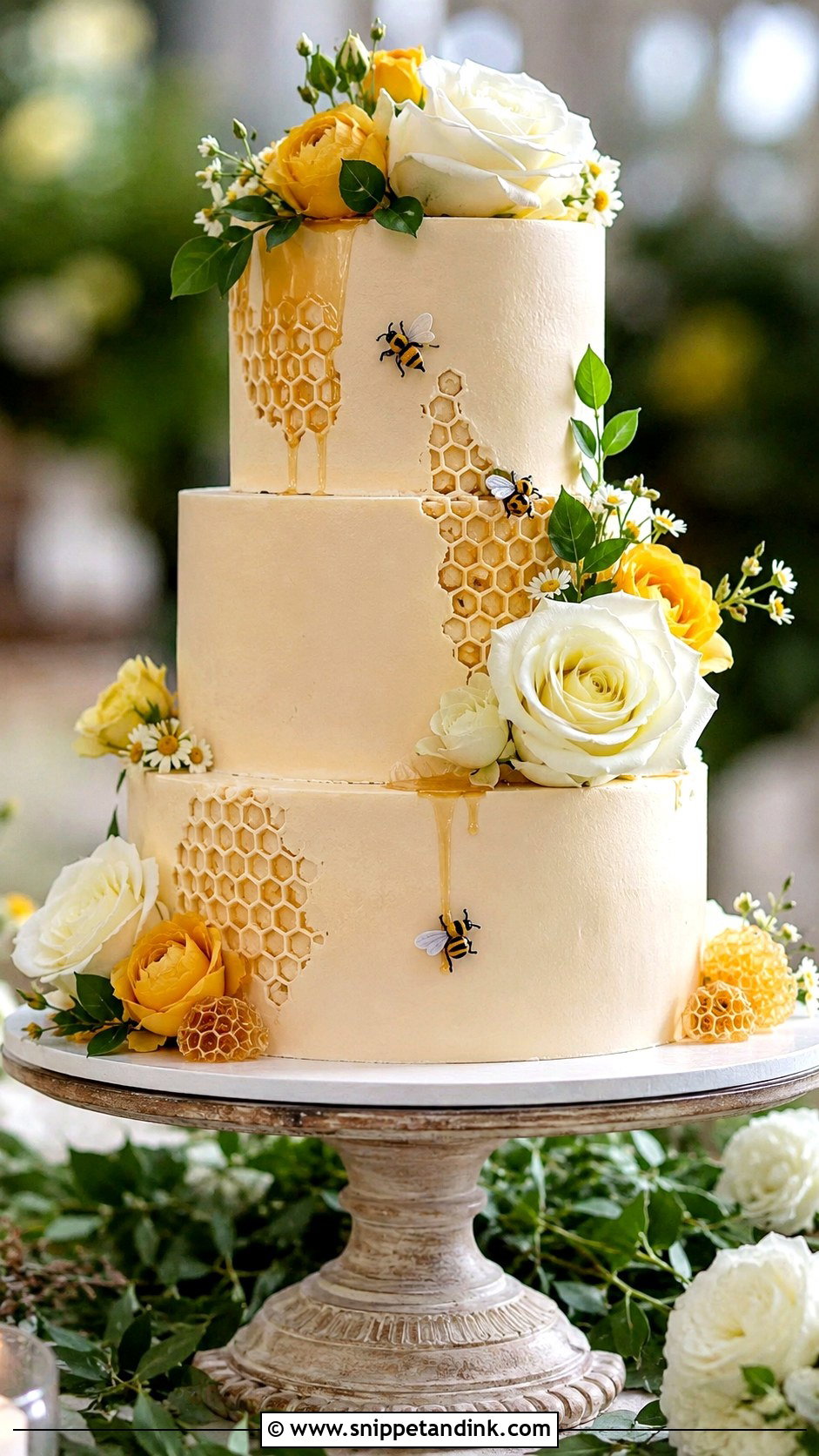
Fresh flowers take the hard edge off the hexagon grid. I’ll texture one side of a white or ivory tier and let roses, ranunculus or chamomile sweep across the plain side, so the pattern sits behind the blooms like a backdrop. In spring and summer this is my most requested version. Every stem gets wrapped in floral tape and set into a posy pick before it goes near the sponge, and I check the variety list with the florist, because some popular wedding flowers are not safe to touch food at all.
3. Honeycomb Wedding Cake With Honey Drip
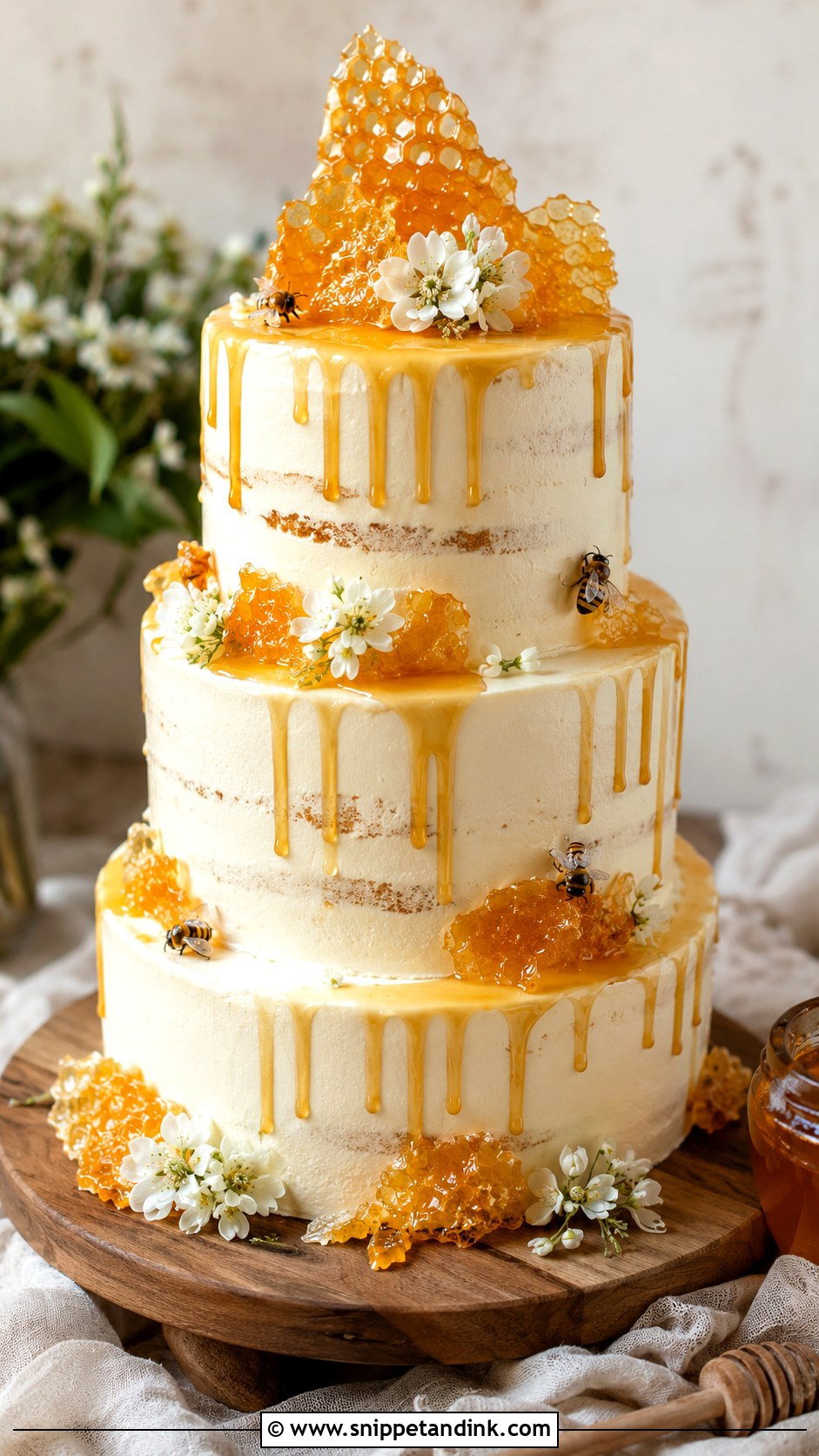
Here’s something couples are surprised to hear: the drip on most honey drip cakes isn’t honey. Real honey never sets, so it keeps creeping down the tier and pools on the board within an hour. I tint a white chocolate ganache to an amber shade and test the flow on a chilled tier before committing, so the drips stop a third of the way down instead of reaching the base. Molded fondant hexagons or a few candy shards around the bottom tier finish it without competing with the drip.
4. Honeycomb Wedding Cake With Buttercream Texture
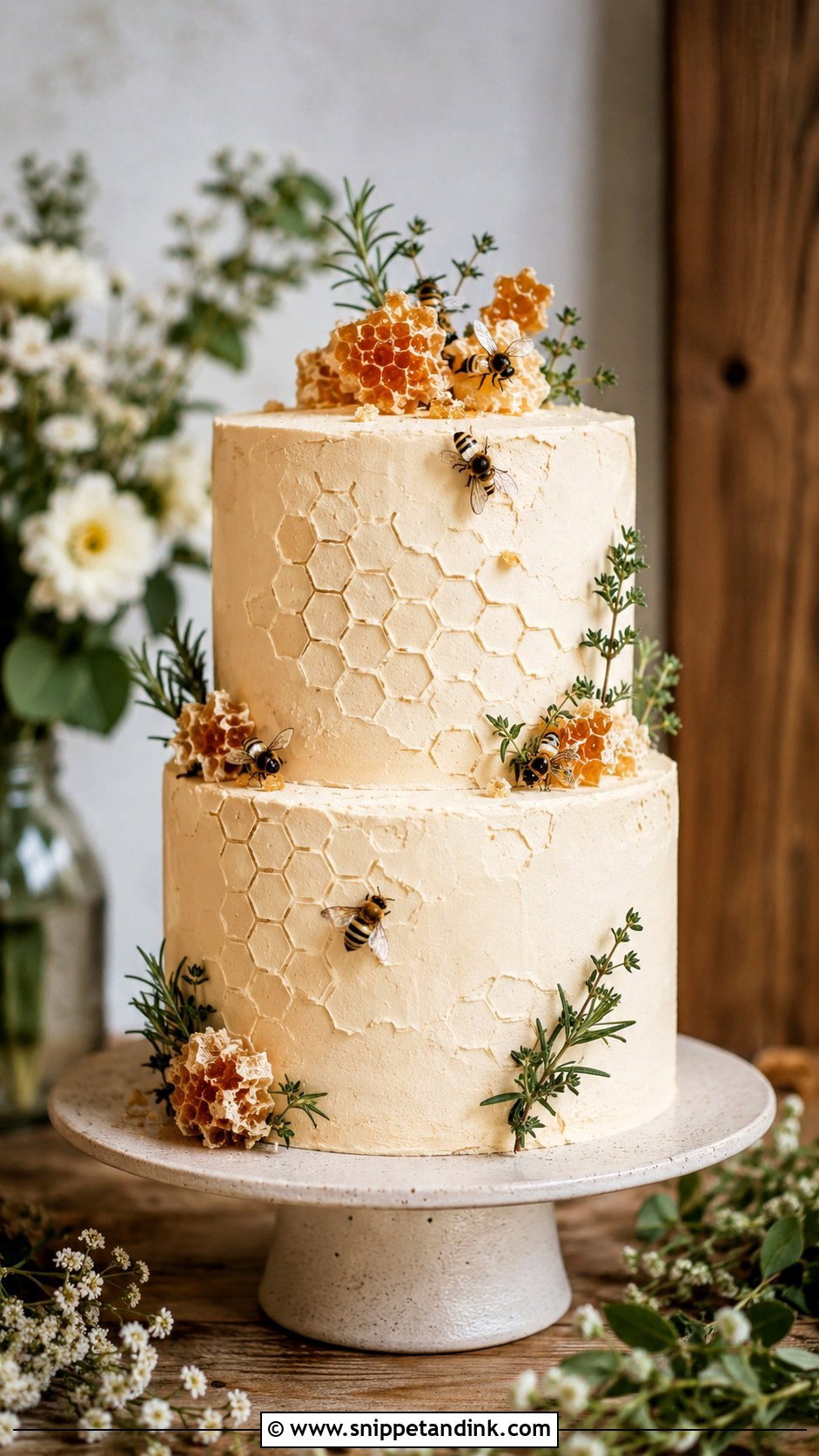
If you prefer cakes that look made by hand rather than machined, ask for buttercream with pressed honeycomb sections instead of a full fondant wrap. I lay a clean food-grade texture mat against the chilled buttercream and lift it straight off, which leaves a soft, slightly irregular cell pattern. It reads well on two-tier and three-tier cakes, where there’s room for both texture and plain surface. Keep the decoration to a few herb sprigs or tiny blooms; anything heavier flattens the impression. The catch: pressed buttercream softens in a warm room, so this one belongs indoors.
5. Honeycomb Wedding Cake With Hexagon Tiers
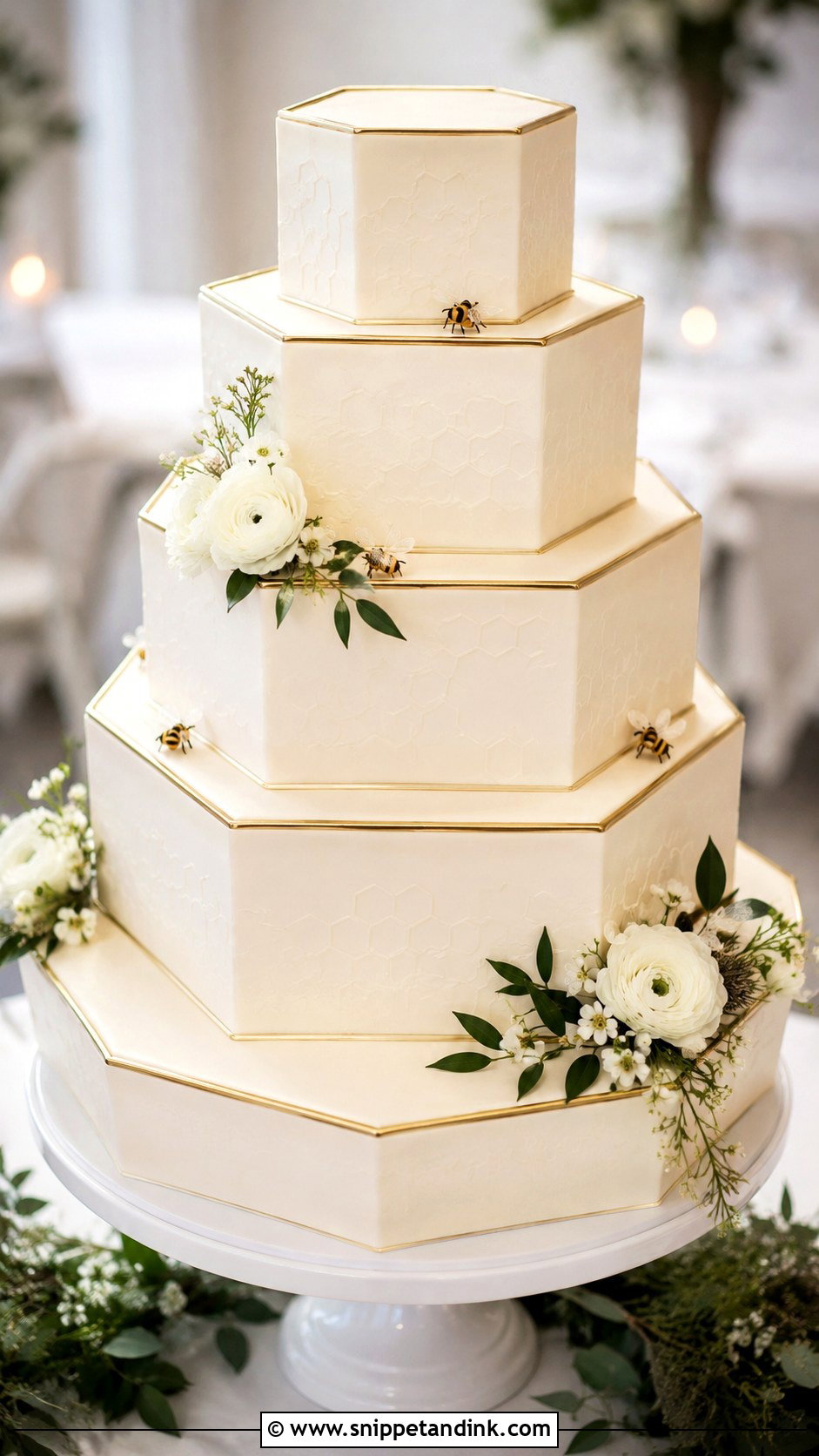
With hexagon tiers the cake itself becomes the honeycomb, so you need very little else on it. Six-sided tiers need cut boards and careful dowelling because the corners carry less support than a round edge, and they take longer to cover cleanly. I keep the surface smooth and add only a little embossing or gold on the corners. Worth knowing before you fall for it: hexagons serve slightly differently from rounds, so confirm the portion count with your baker rather than assuming the same tier sizes feed the same number of guests.
6. Honeycomb Wedding Cake With Wafer Paper Bees
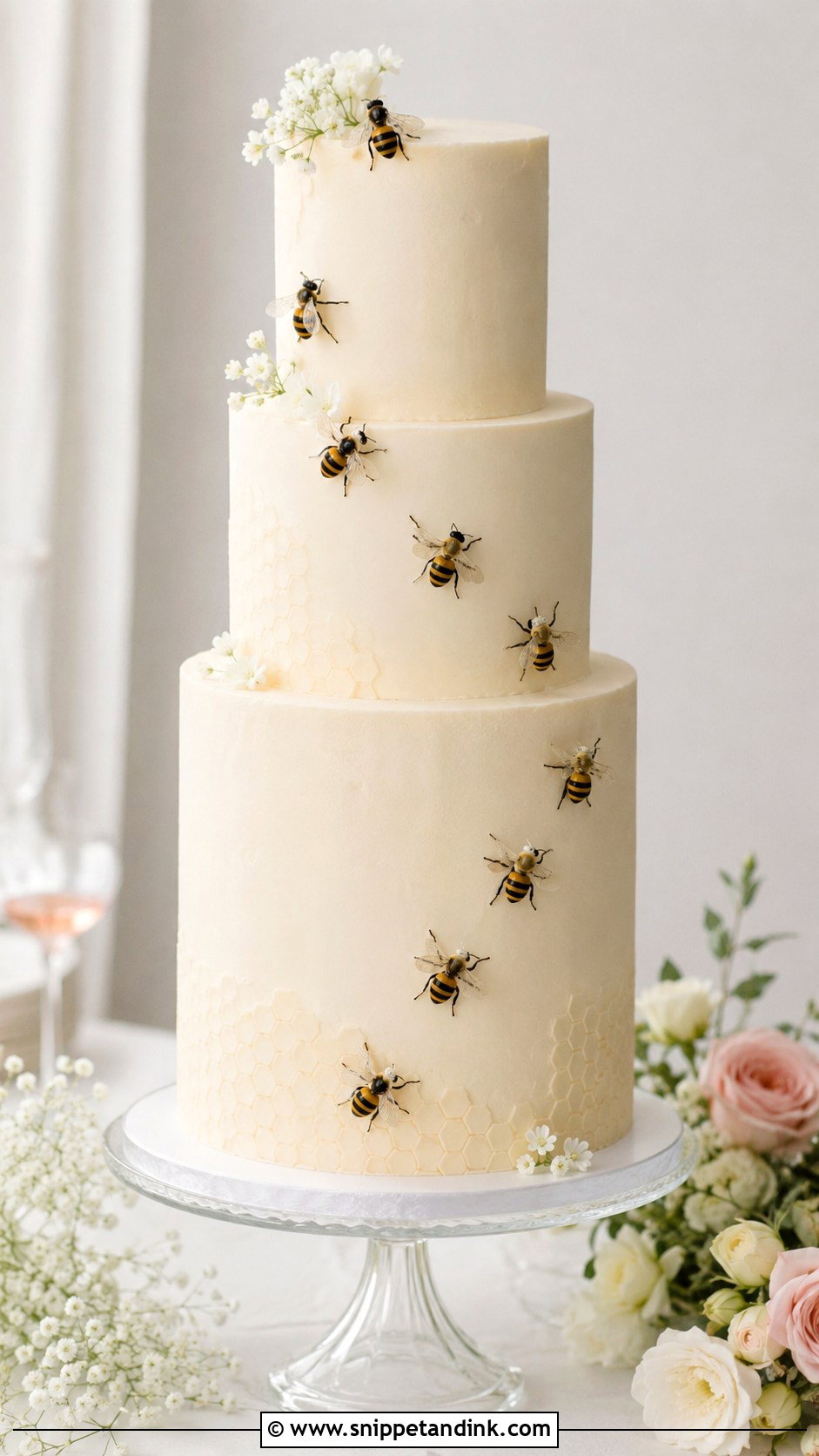
Wafer paper bees have a translucent, papery quality you can’t get from fondant, and they weigh almost nothing, so they can sit on a tier edge without sliding. I cut them a day ahead and attach them with the smallest dot of piping gel. Their weakness is moisture. On fresh buttercream in a humid room the wings start to curl and go limp, so I save them for fondant-covered or chilled tiers and for daytime receptions with dry air and good natural light.
7. Honeycomb Wedding Cake With Sugar Flowers
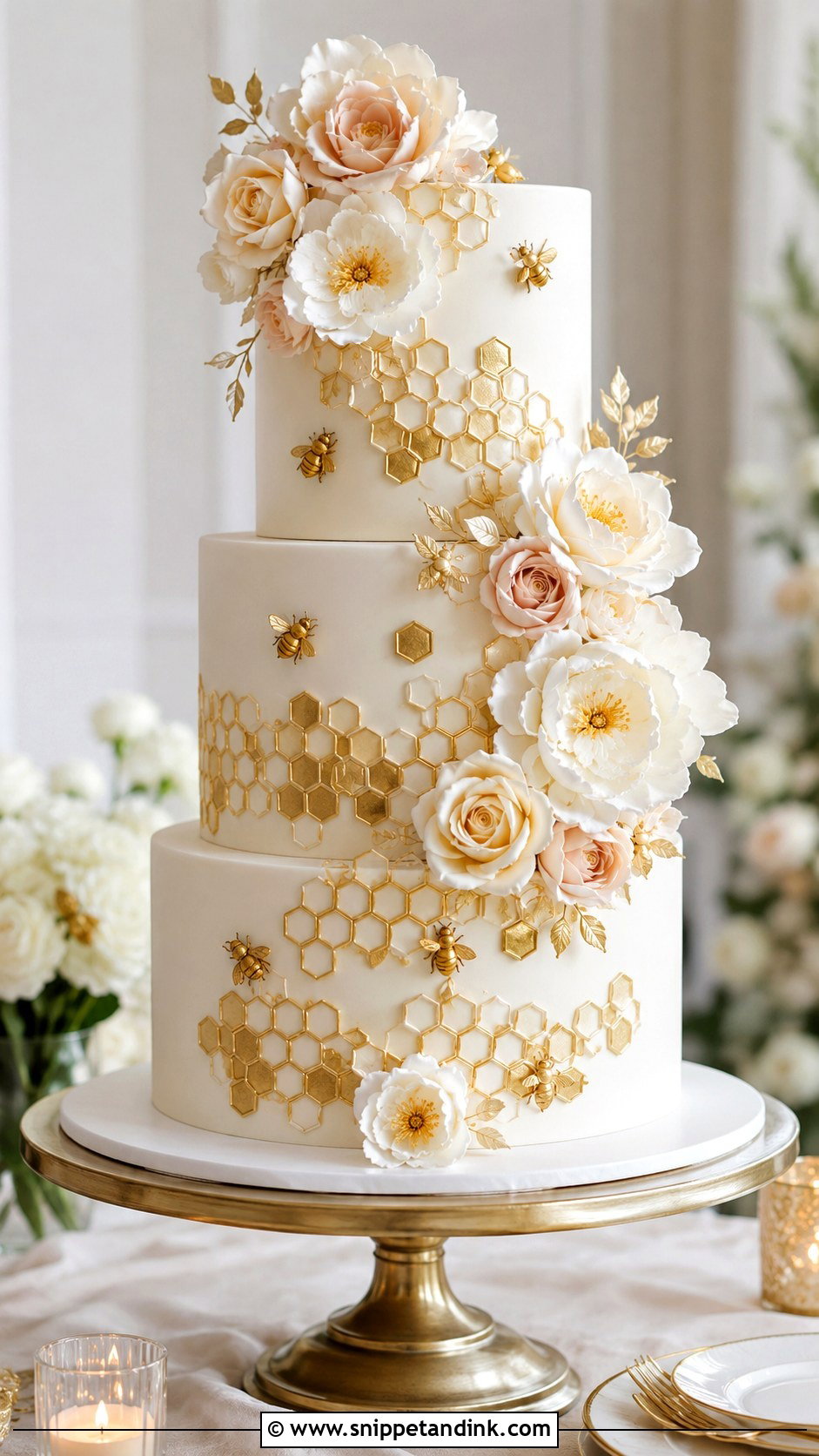
Sugar flowers give you total control: the exact peach of your bouquet roses, daisies in a scale real ones never grow to, no worry about what’s been sprayed on them. A smooth white cake with golden honeycomb texture can carry a cascade down the front or a ring at the base. They’re slow to make, though. A full sugar cascade is days of petal work, and the price reflects it, so they suit formal weddings where the cake is a centerpiece rather than a backdrop to the dessert bar.
8. Honeycomb Wedding Cake With Caramel Drip
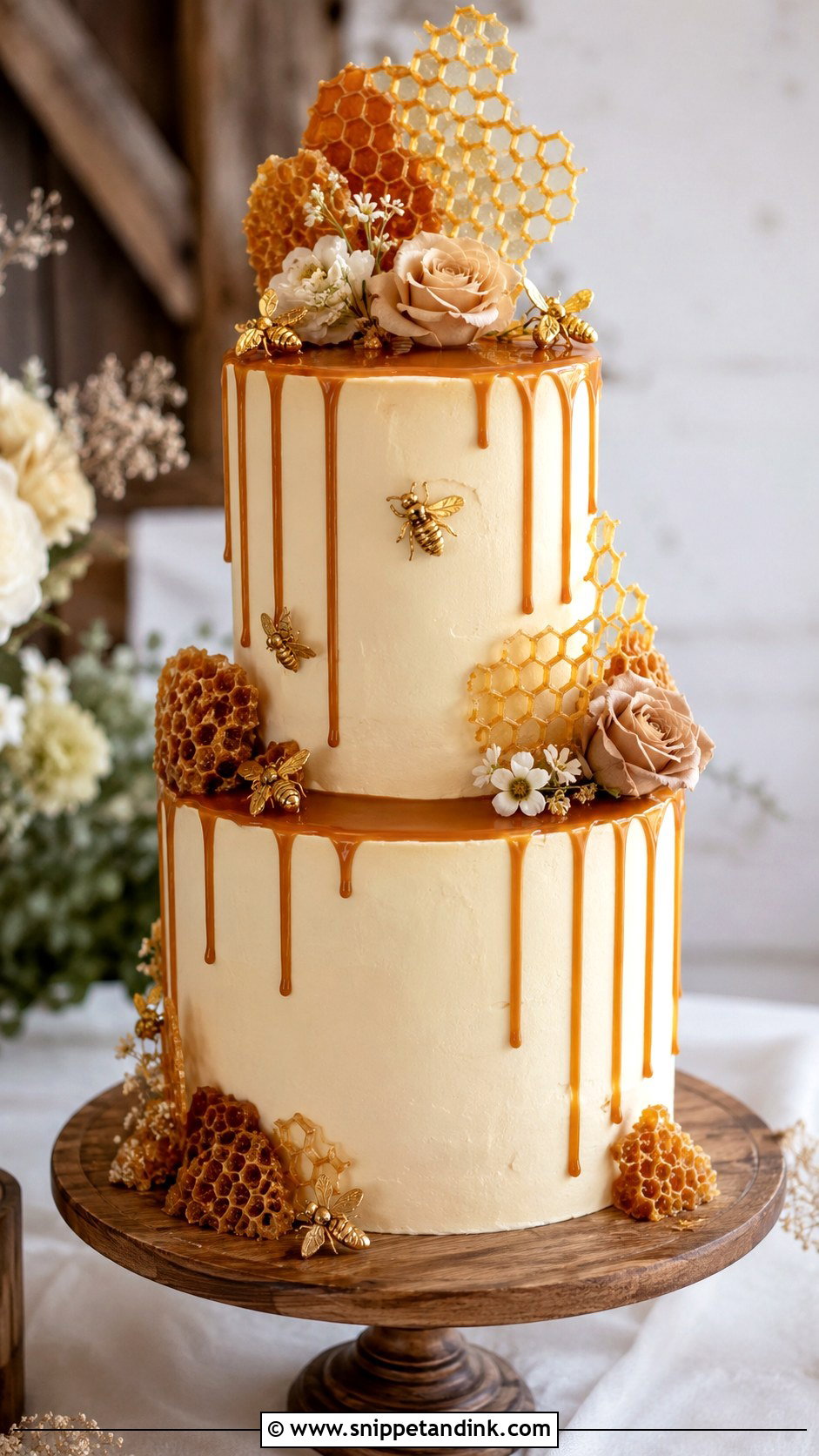
Caramel is darker and more toasted than a honey-toned drip, and I lean toward it for autumn weddings and warm neutral palettes. It sits best on ivory or pale tan buttercream, and the layers underneath matter: brown sugar, spice or honey sponge with a salted caramel filling make the outside honest. I cook the caramel a little firmer than a sauce so it holds a glossy line. Keep the drips thin. Thick caramel draws the eye downward and makes a tall cake look squat.
9. Honeycomb Wedding Cake With White Fondant
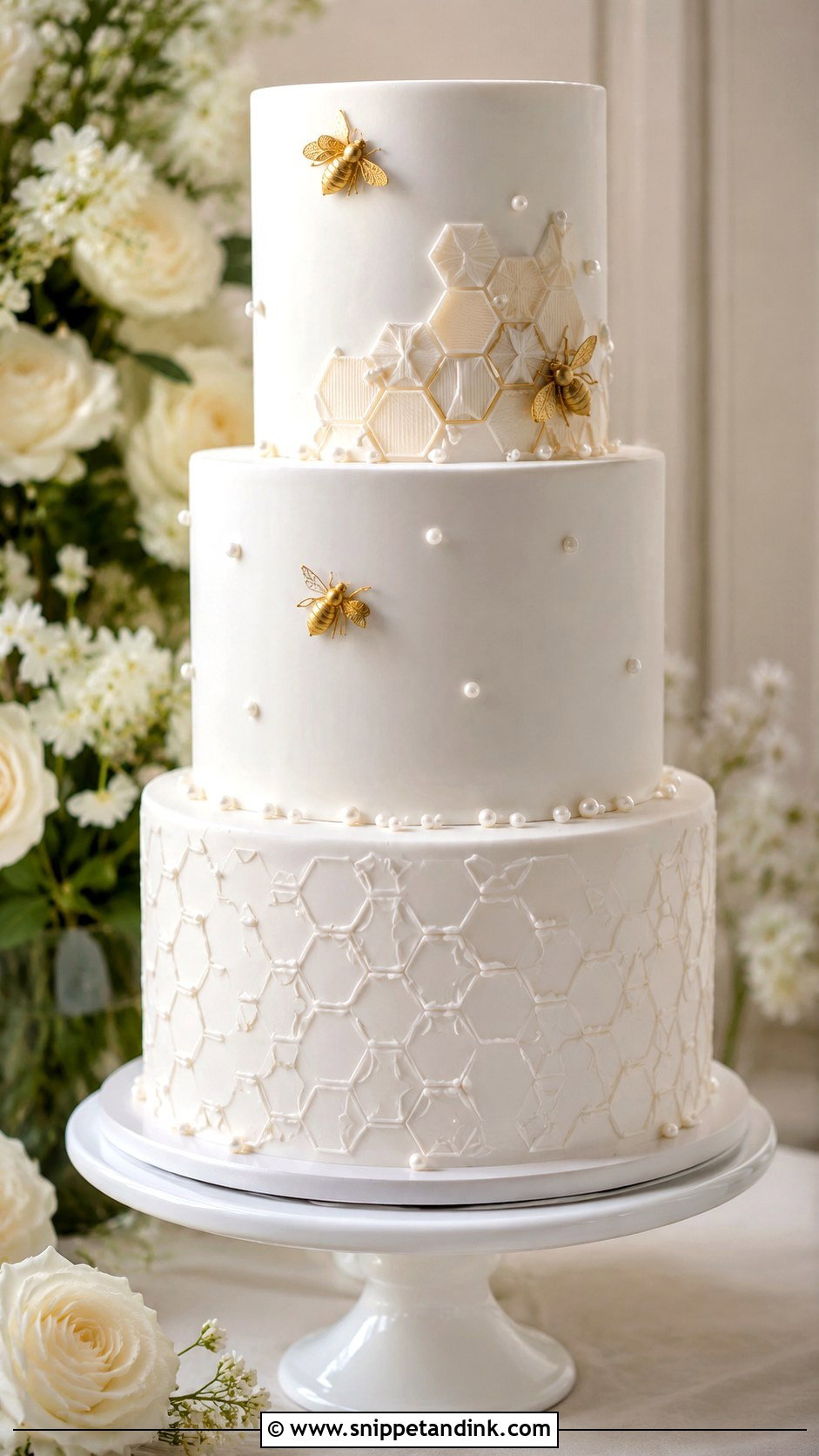
White fondant is where honeycomb looks sharpest, because the cells keep a crisp edge that buttercream can’t hold. I’ll either wrap one tier entirely in raised texture or run a partial panel around the side, then pick out a few cells in gold paint or set tiny pearls in them. This is my answer for formal ballrooms. One honest note: many guests peel fondant off, so I keep it thin and put the flavor effort into the filling.
10. Honeycomb Wedding Cake With Naked Layers
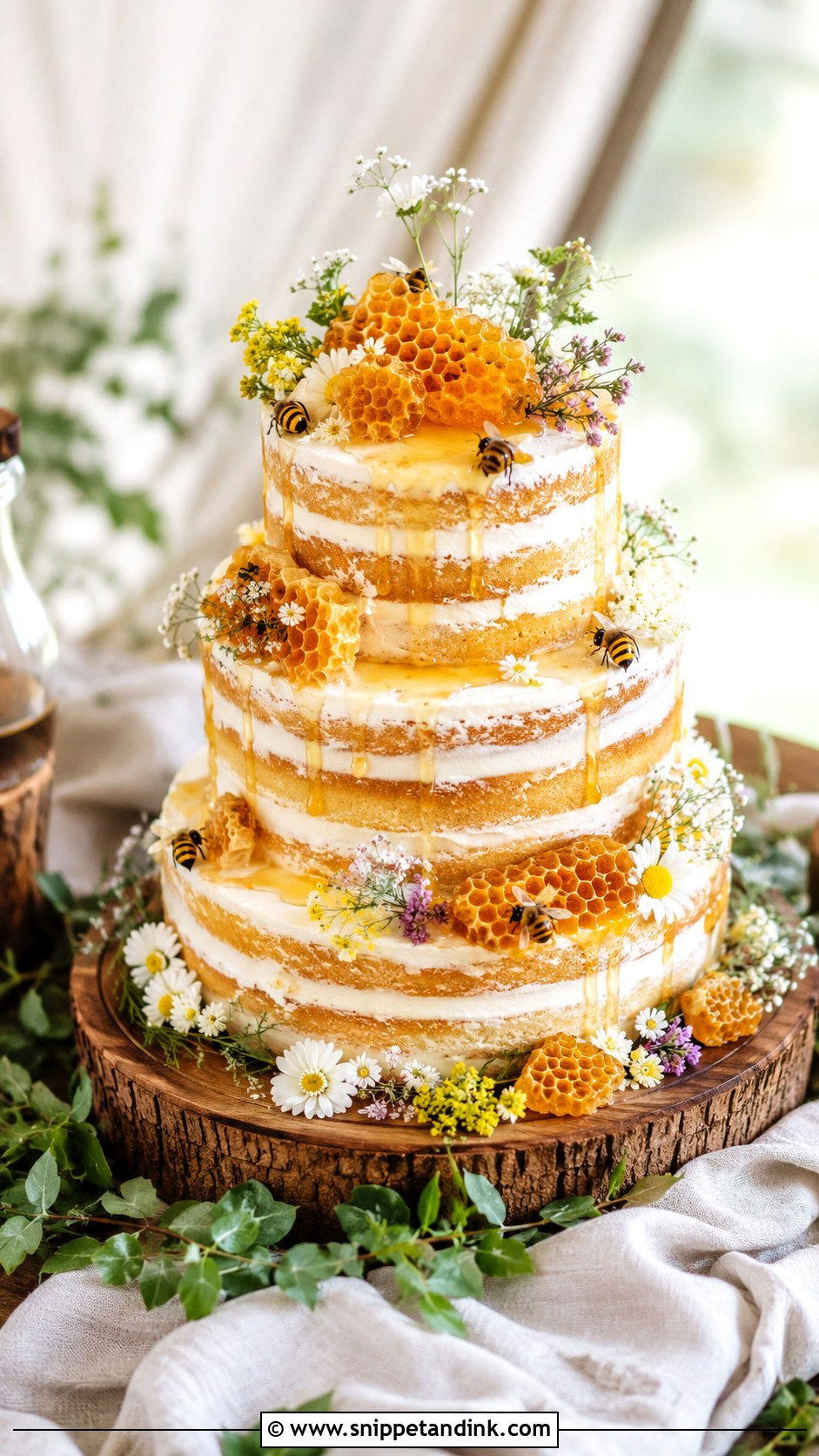
A naked cake shows its layers, so honey, vanilla or spice sponge with a thin buttercream filling has to look as good as it tastes. Exposed sponge dries out faster than a covered tier, which is why I soak it with a light honey syrup and assemble as late as I can. A thin drip, a few blooms and some honeycomb candy on top are all it needs. On a wooden stand at a barn or outdoor reception it fits the setting naturally; for a long hot afternoon in direct sun, I’d talk you into a semi-naked finish instead.
11. Honeycomb Wedding Cake With Pressed Flowers
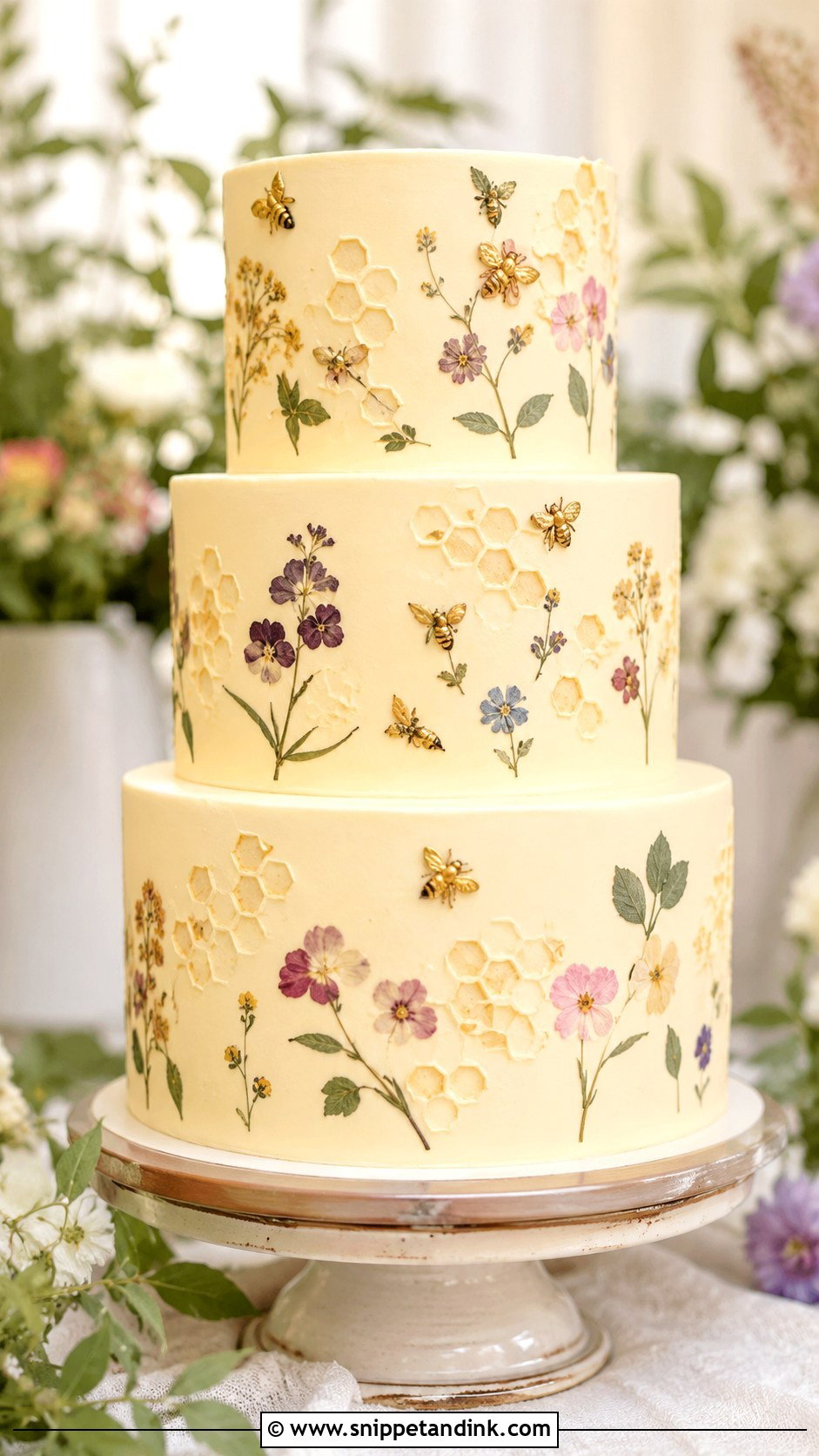
Pressed flowers sit flat against the tier, so they pair with hexagon texture without fighting it for height. I use only edible varieties that have been dried for the purpose, pressed on with a thin brush of piping gel and spaced so the cake still reads as clean. A touch of gold leaf works with them. Pressed petals fade under strong light, so I add them close to delivery rather than days ahead; a garden or backyard reception in shade suits them far better than a sunny marquee.
12. Honeycomb Wedding Cake With Honeycomb Candy
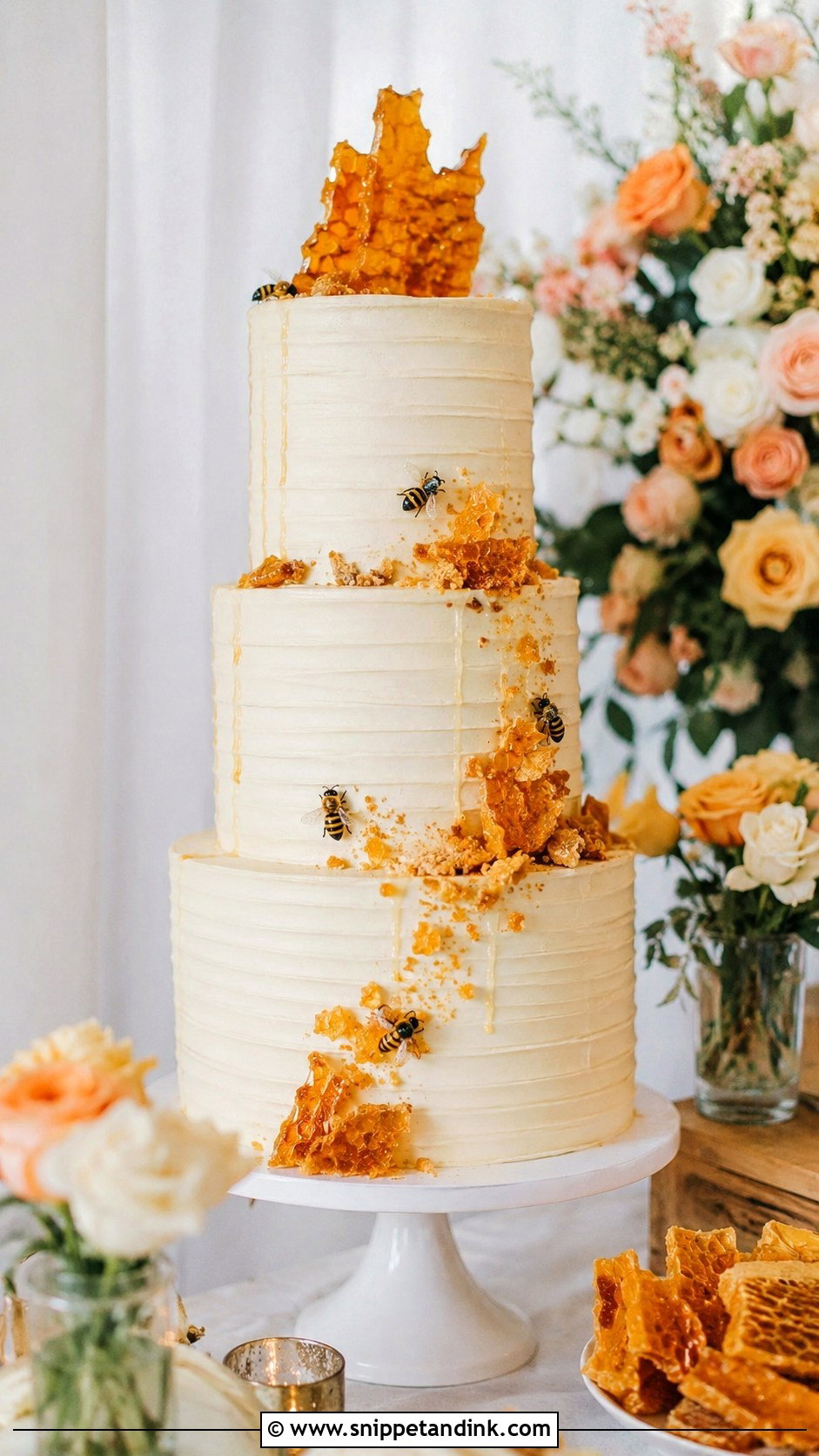
Real honeycomb candy is the most delicious decoration on this list and the most temperamental. It’s essentially aerated sugar, and it pulls moisture from the air and from buttercream, so within a few hours it can turn sticky and start to weep. I break larger shards for the top, use smaller pieces as a base decoration, and dip the bottoms in chocolate to slow the damage. The candy goes on at the venue, never in the kitchen. Honey, caramel, vanilla and chocolate sponges all pair with it.
13. Honeycomb Wedding Cake With Lavender
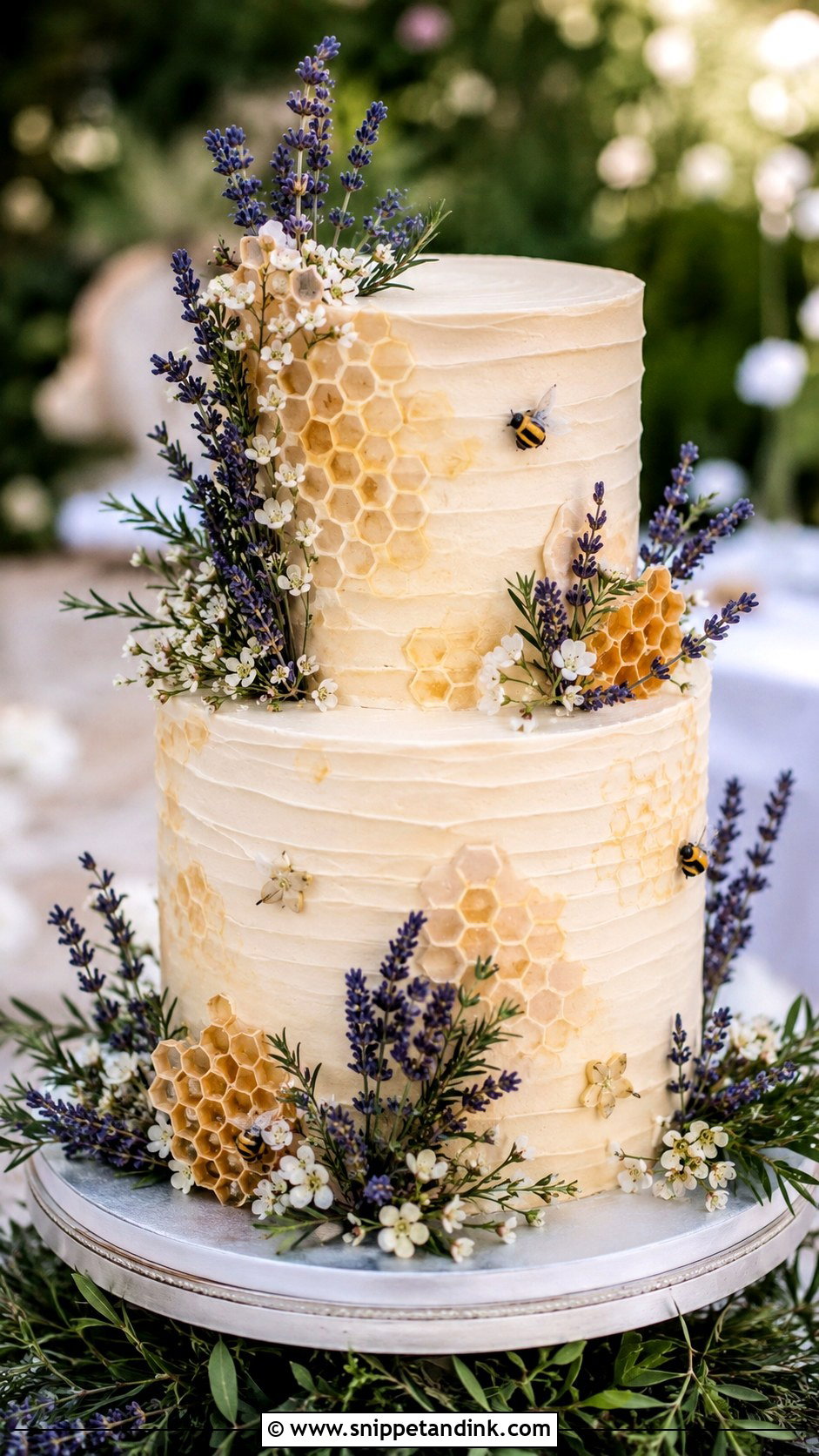
Lavender’s soft purple is the only real color contrast in a palette of gold and ivory, so I keep the honeycomb pattern quiet to let it carry the design. Dried lavender sprigs on the cake should be culinary grade, not cut from a decorative bunch. Inside, honey lavender sponge or a lemon lavender filling ties the look to the taste, but go light: too much lavender tastes soapy, and I’d rather someone ask for a second slice than leave half of one. Countryside and spring garden weddings suit it best.
14. Honeycomb Wedding Cake With Sunflowers
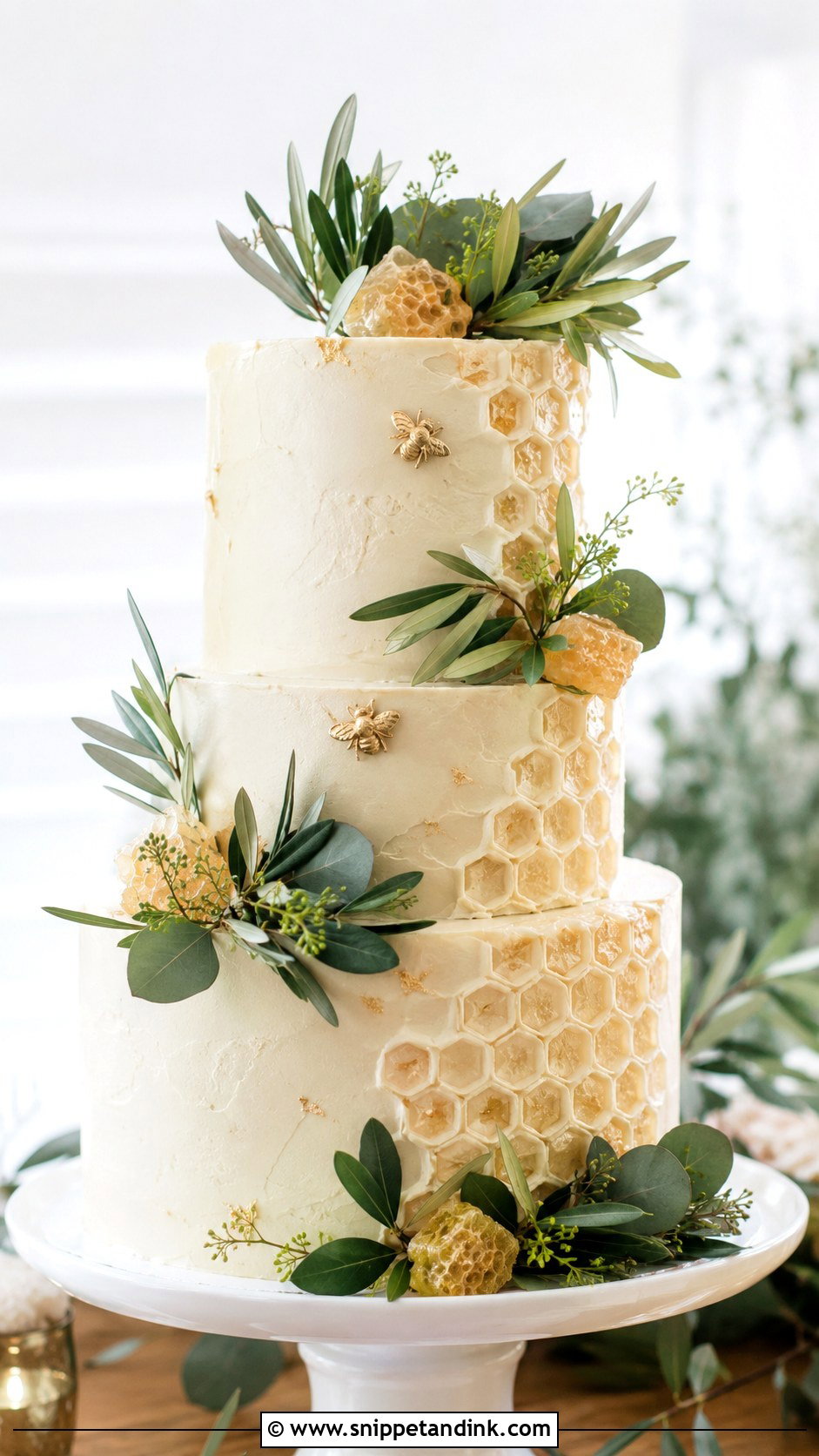
Sunflowers are heavy, and their stems carry a lot of moisture, which affects how I place them. Rather than pushing them into the tiers, I set the big heads at the base or on picks between tiers, then let a few edible bees link the blooms to the honeycomb panels. Because the flowers are so bold, the rest of the cake should stay simple: white or cream buttercream and texture on one tier. Late summer and rustic venues with wood and greenery are where this one feels at home.
15. Honeycomb Wedding Cake With Pearl Details
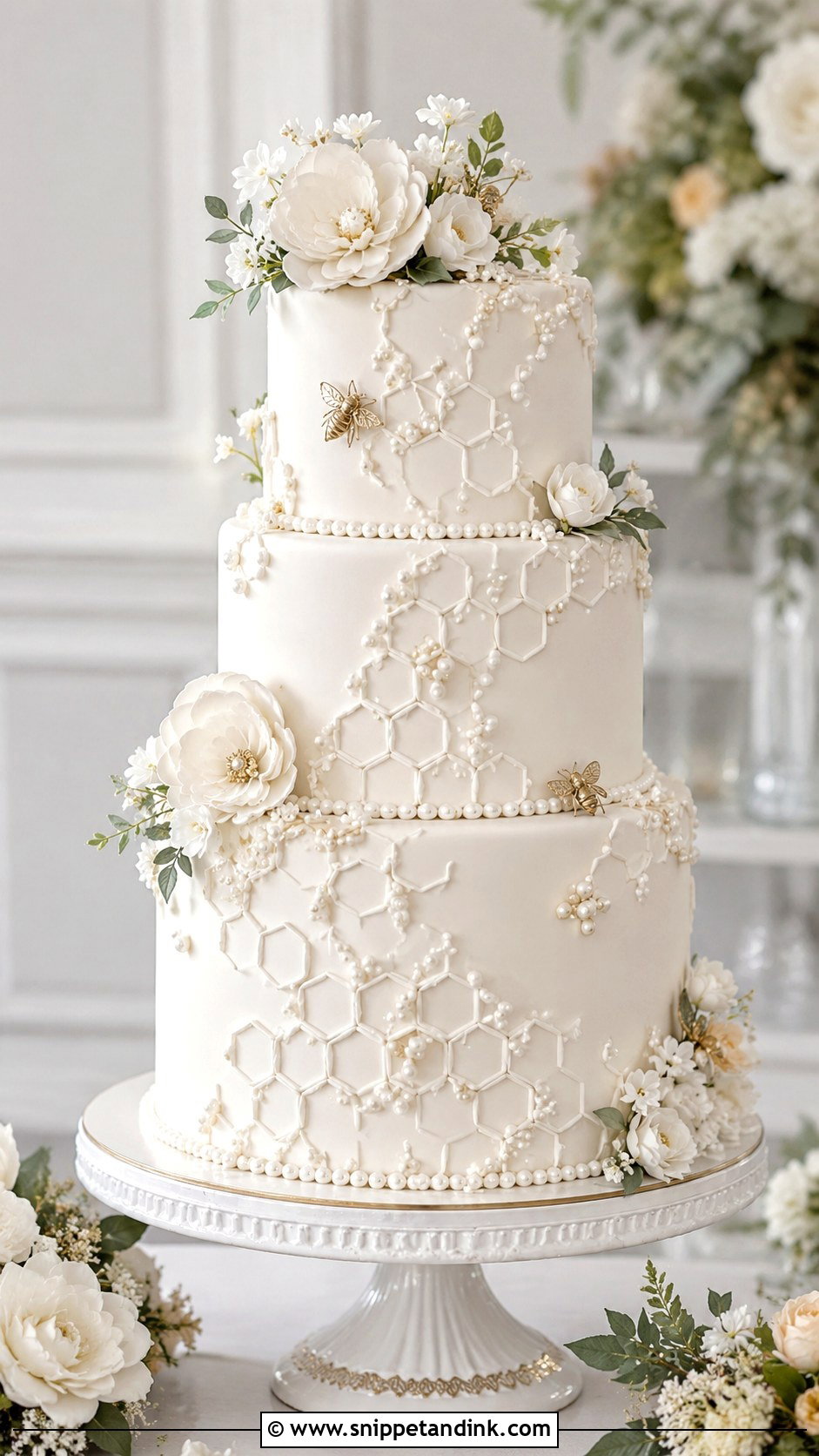
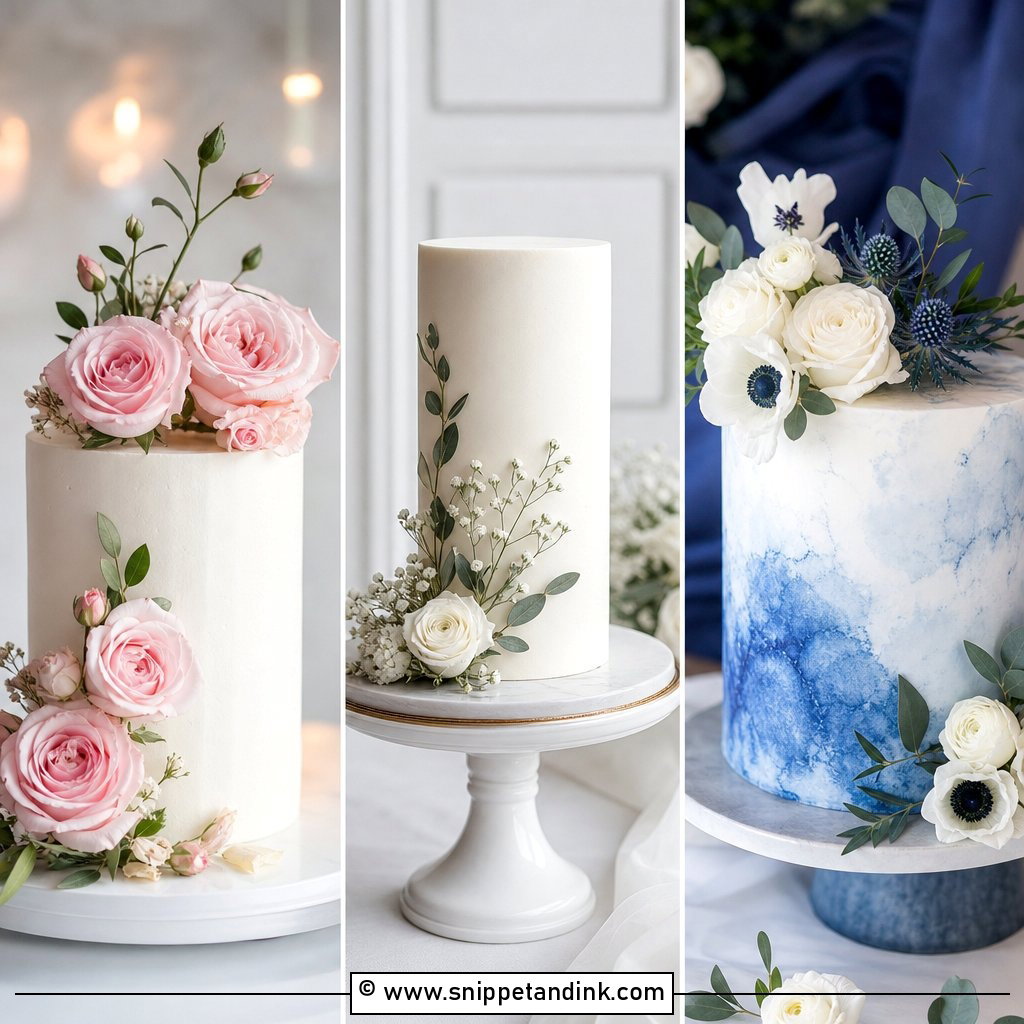
Pearls push a honeycomb cake toward the formal end. I start with smooth white fondant or very sharp buttercream, raise the texture on one tier, and set edible sugar pearls inside a handful of cells and along the tier borders. The pearls need to be truly edible, not craft beads that look similar, and I attach each one by hand, which takes time. White sugar flowers or a couple of gold bees soften it. Couples who like the theme but worry it looks too rustic usually land here.
16. Honeycomb Wedding Cake With Greenery
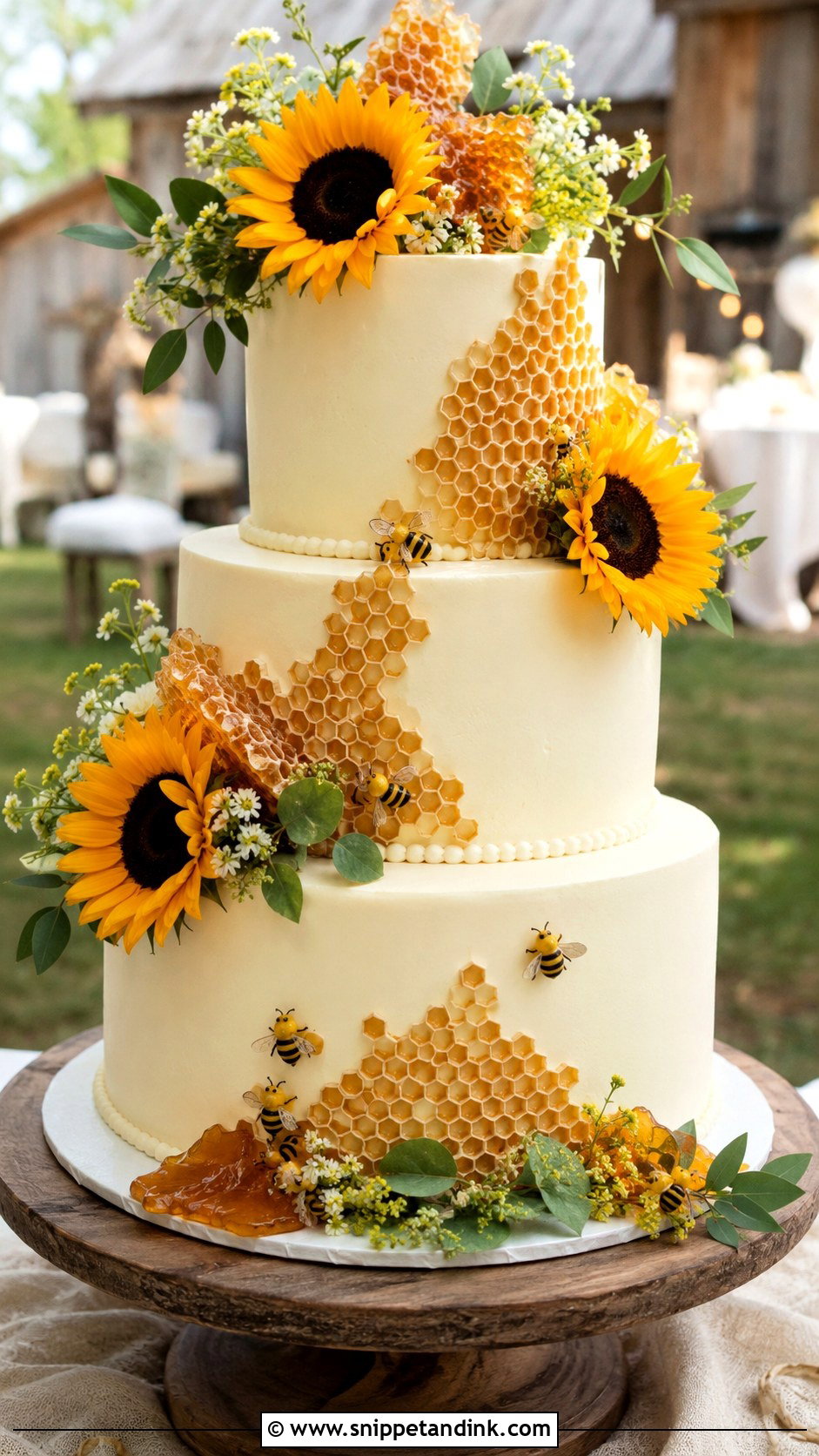
Greenery is the cheapest way to make the gold in the honeycomb look richer, because green sits opposite it and makes it glow. Eucalyptus and olive are the usual choices, set in small clusters at the base and between tiers. Eucalyptus isn’t food safe, so I never let cut stems touch the sponge; they sit on the board or go into picks. Texture one side or one tier of an ivory cake, add a light drip, and the result is fresh and not overly sweet, which greenhouse and outdoor venues suit.
17. Honeycomb Wedding Cake With Metallic Gold
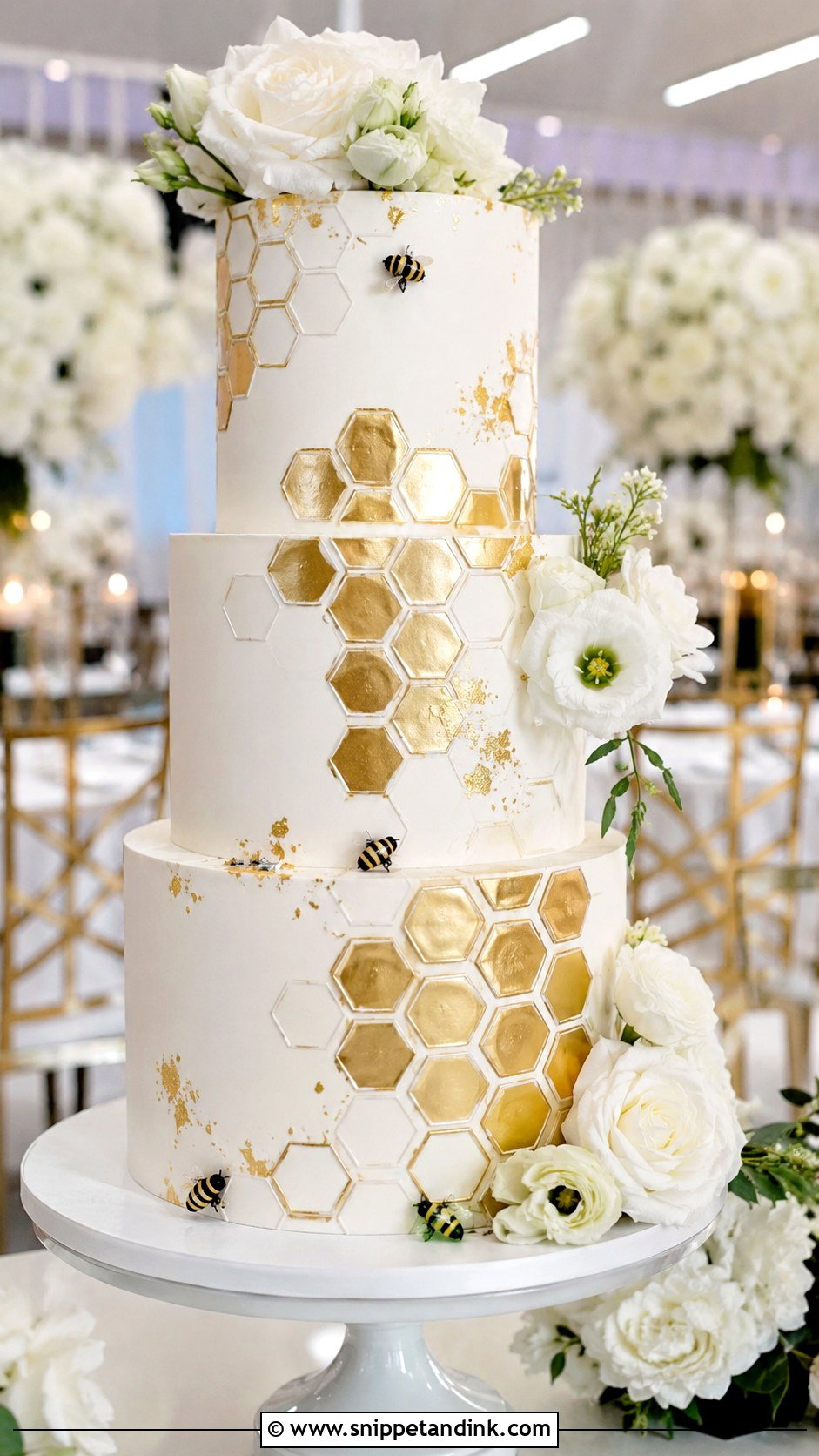
Metallic gold rewards restraint. I either brush edible lustre mixed with a little alcohol onto raised hexagons, or lay gold leaf into the cells by hand, and I keep it to one statement tier or one face of the cake. Check that your baker uses dust labelled edible; some gold powders sold for cakes are only marked non-toxic, meant for decorations you remove. Under candlelight at an evening reception, a single gold tier catches the light well, and white flowers or greenery stop it from tipping into flashy.
18. Honeycomb Wedding Cake With Lemon Flavor
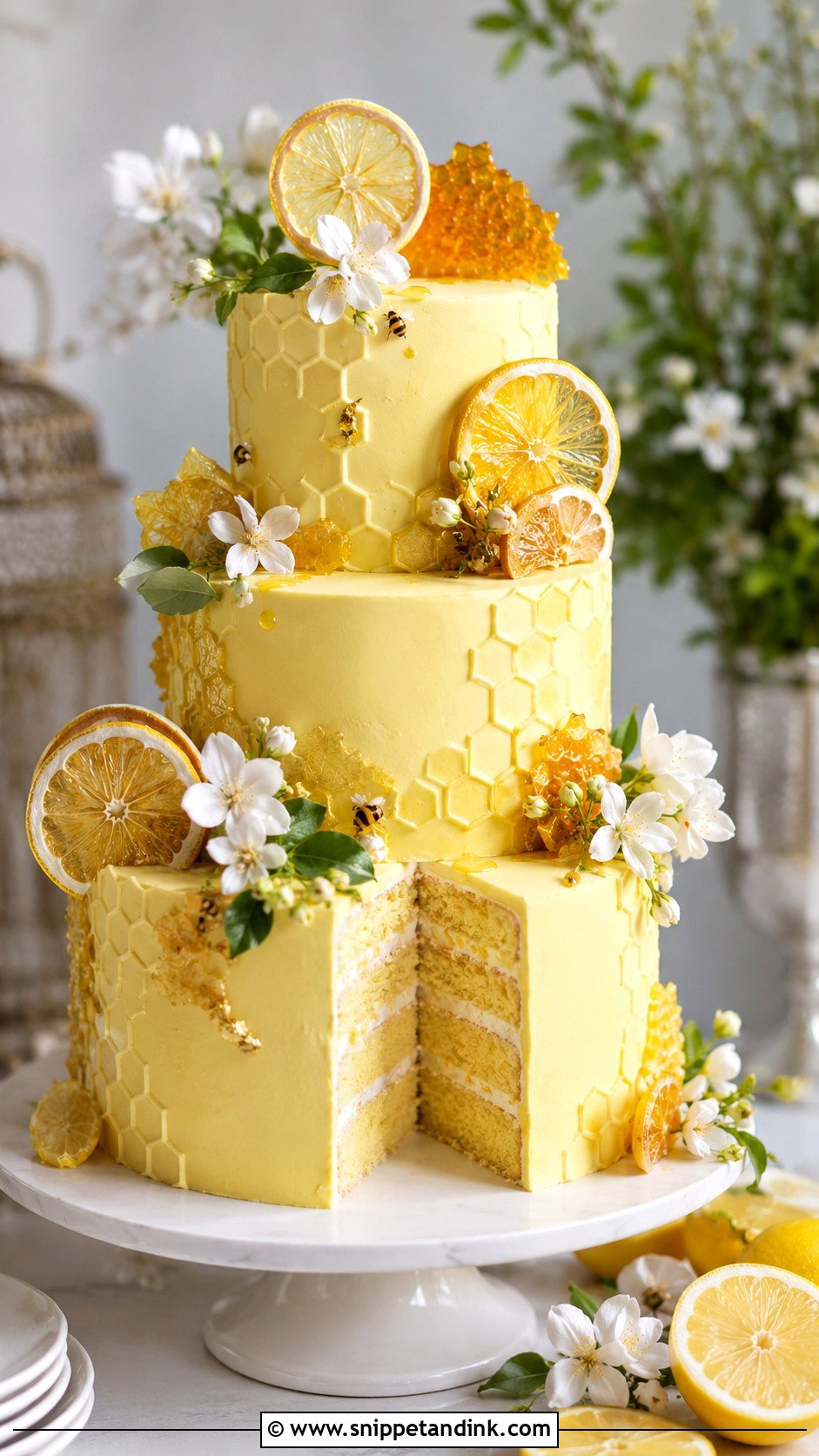
Lemon and honey are an old pairing for a reason: the sharpness cuts the sweetness. The outside can stay pale yellow with white accents and texture, while lemon sponge or lemon curd filling sits under a honey buttercream. Curd is soft, so I pipe a stiff buttercream dam around each layer to keep it from squeezing out under the weight of the tiers, and the cake needs to stay chilled until close to serving. Brunch and garden weddings in warm weather are where guests appreciate a lighter slice.
19. Honeycomb Wedding Cake With Chocolate Ganache
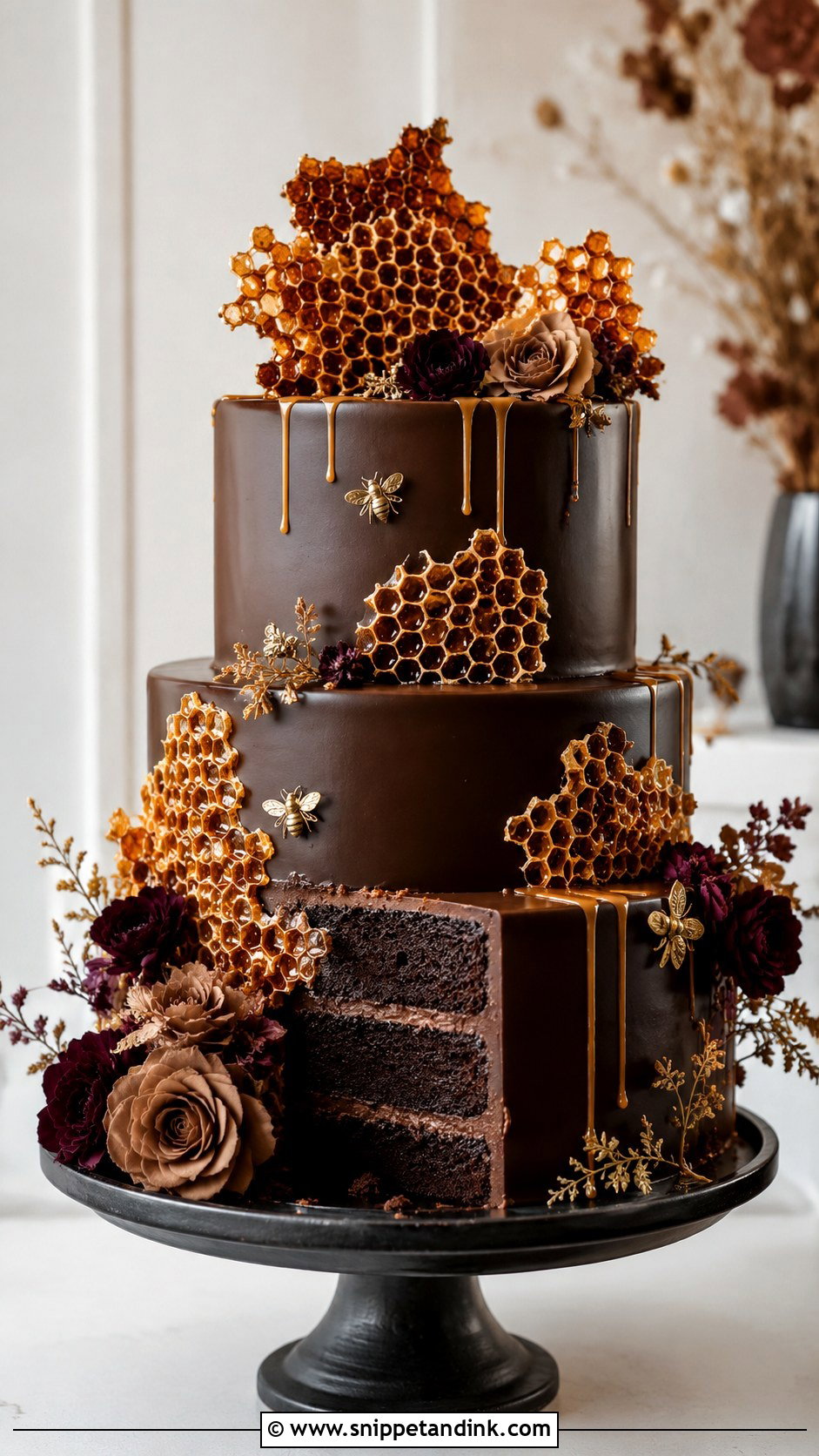
Dark ganache is the moodiest version here, and practically the toughest. A set ganache coat holds up in warm rooms far better than buttercream, which makes it my quiet recommendation for summer evenings. Golden honeycomb candy or patterned panels stand out sharply against the brown, and a caramel drip or a few gold bees is plenty of extra detail. It suits couples who’d choose chocolate over vanilla every time and still want a cake that looks designed.

20. Honeycomb Wedding Cake With Small Two Tiers
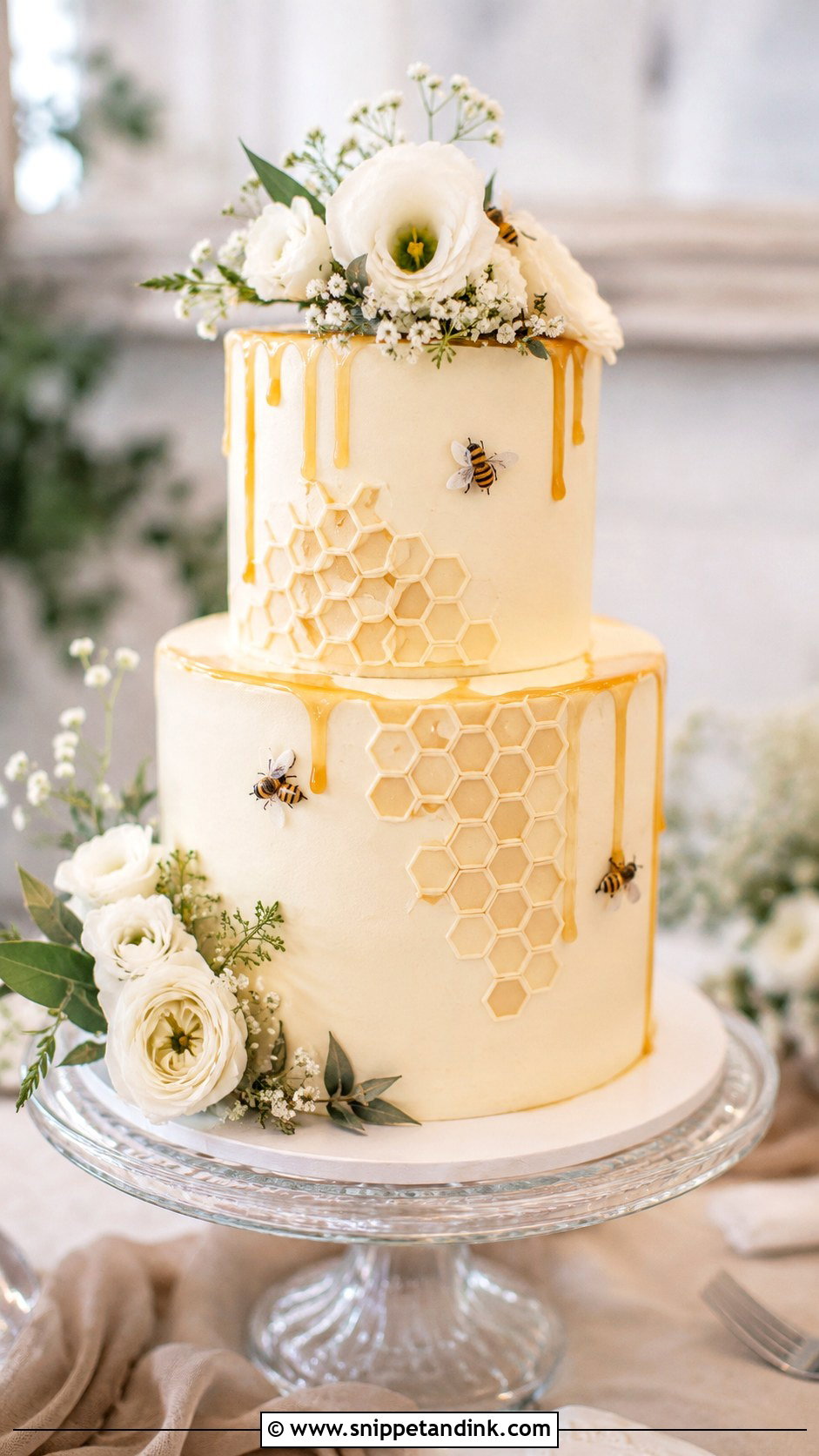
A small two-tier cake suits elopements, intimate dinners, and weddings where a dessert table does the heavy lifting. With fewer surfaces to fill, every detail is seen up close, so focused decoration matters more: one textured tier, a short honey-colored drip, two or three bees. I’d put the budget into better sugar work here rather than spreading it thin. A plain ceramic or glass stand keeps attention on the cake, and if guest numbers outgrow it, a sheet cake in the kitchen makes up the servings.
What Survives a Warm Reception Room and What Doesn’t
Honeycomb cakes carry more sugar work than most themes, and sugar hates humidity. Here’s roughly how the details on this list hold up between delivery and cutting, from toughest to most fragile:
- Ganache coatings and fondant panels. These are fine for hours in a normal room and tolerate a warm one.
- Chocolate-dipped candy shards and cast chocolate comb, as long as the cake stays out of direct sun.
- Pressed buttercream texture and soft drips. Both slump if the room climbs past comfortable or the cake sits near a window.
- Wafer paper bees and uncoated honeycomb candy. Expect these to curl or weep within a few hours in humid air.
If your reception is outdoors in summer, plan the design around the top of that list and let the fragile pieces go on at the very last minute, set by someone who knows what they’re doing. Ask your venue where the cake table sits and when it gets afternoon sun; moving the table a few meters can save the drip.
Putting Real Honey Into the Sponge
A honeycomb cake that tastes of plain vanilla always feels like a missed chance. Honey changes how a sponge bakes: it browns faster and keeps the crumb moist for longer, so most bakers swap only part of the sugar for it rather than all. Mild floral honeys like clover or orange blossom carry best; dark ones such as buckwheat can turn the cake bitter. At your tasting, try a honey buttercream against a plain one and a honey syrup soak on the sponge. Usually one honey element is enough, and three tastes like a candy shop.
Matching the Hive Theme to Your Venue and Season
The honeycomb idea bends a long way: crisp fondant cells for a ballroom, loose drips and candy for a barn, lemon or lavender layers for a garden lunch. Start with the season and the room temperature, because those decide which details survive the afternoon, and then pick the finish. Bring photos of two or three cakes from this list to your tasting and ask your baker which of them they’d trust in your venue. Their answer will tell you a lot.
You'll Like These Ideas:






Leave a Reply