
A plain cake is where I can see a baker’s skill most clearly. There’s no heavy decoration to hide an uneven tier or a bulging filling, so clean shapes, good frosting and one or two well-placed details have to carry the design. Couples are asking me for textured buttercream, fresh flowers, edible pearls, fruit, bows, vintage piping and smaller cakes that feel personal. What I steer them toward is a design that reads clearly from across the room, photographs well and can be made reliably on a busy wedding weekend. Every idea below meets that test, and most of them are kinder to your budget than an elaborate tiered piece.
Working Out Tiers From Your Guest Count First
Before I talk decoration, I ask how many people need cake. A wedding slice is smaller than a party slice, usually about one inch wide by two inches across and four inches tall, so a modest-looking cake feeds more guests than most couples expect. As a rough guide for round tiers of standard height:
- 6 inch: around 12 wedding servings
- 8 inch: around 24
- 10 inch: around 38
- 12 inch: around 56
So a 6 and 8 inch two-tier serves about 36, and adding a 10 inch base takes you past 70. Square tiers give a few more slices than round ones of the same width. Bakers cut differently, so treat these as starting points and confirm with yours.
If the cake you love is too small for your guest list, a plain kitchen cake in the same flavour, cut out of sight, makes up the difference and costs less than adding another decorated tier. Book early too. Popular bakers often fill their summer and autumn weekends many months ahead, and a tasting usually comes before the booking.
1. Simple White Buttercream Wedding Cake
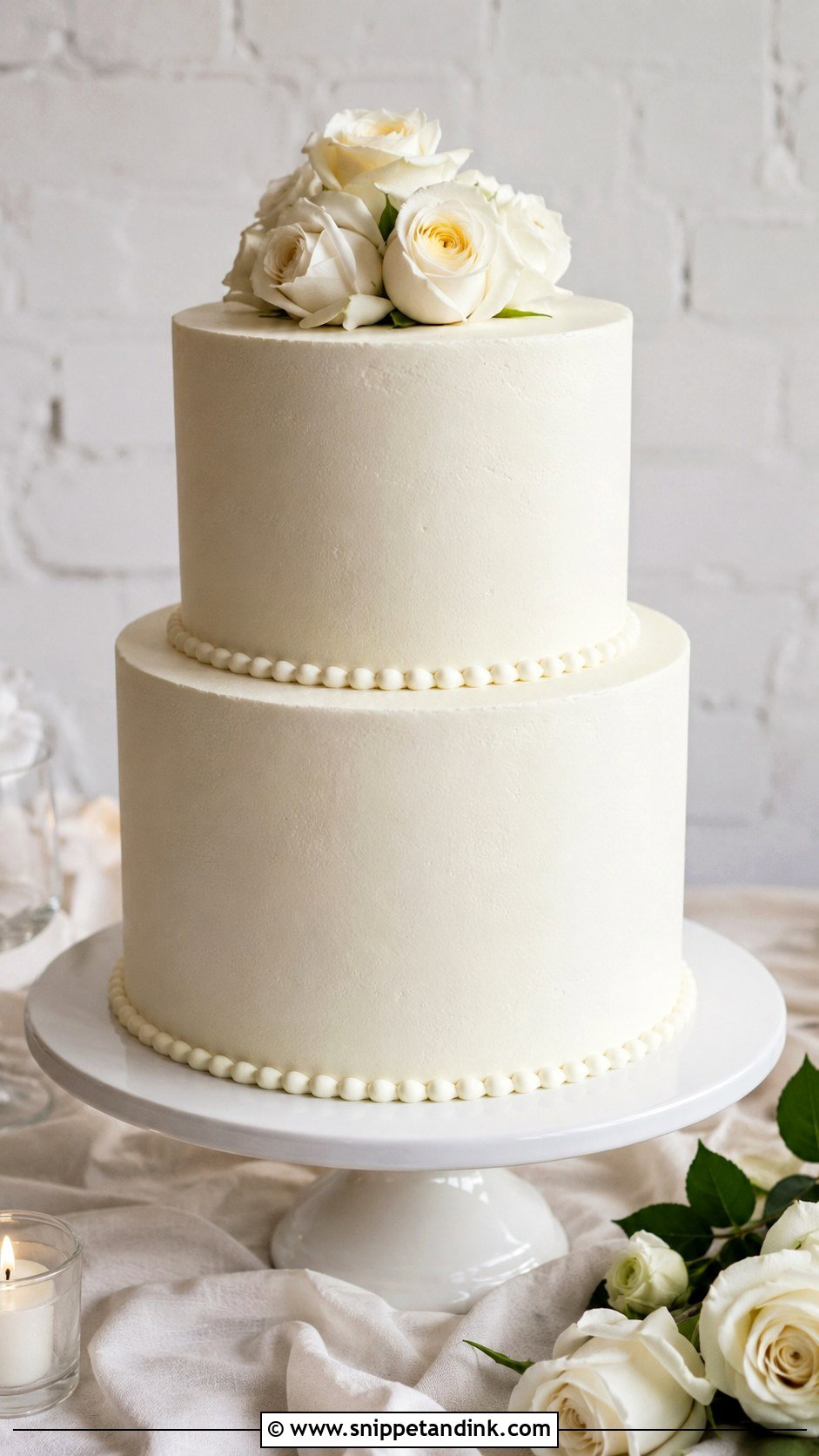
A simple white buttercream wedding cake suits almost any venue, dress or floral palette, and buttercream’s soft edges feel warmer than fondant. A small cluster of fresh flowers, a neat piped border or a ring of pearls at the base is all it needs. One tier fits an intimate wedding, two tiers a classic reception. Be aware that pure white buttercream is hard to achieve with real butter, which tints it ivory; if you want bright white, ask your baker how she gets it, since some use a touch of violet colouring or a shortening blend.
2. Two Tier Wedding Cake With Fresh Flowers
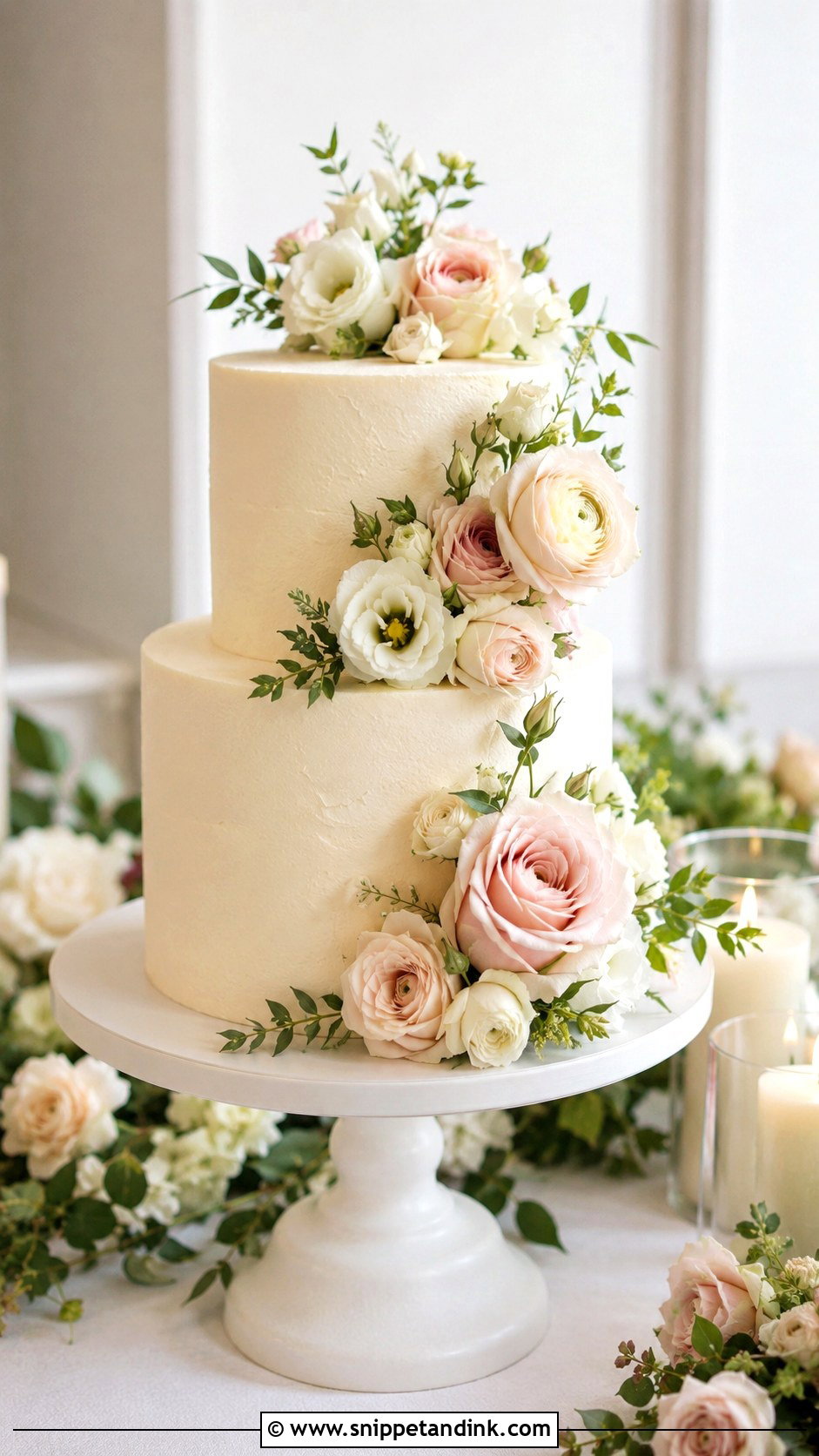
Two tiers give height without the formality or cost of a tall cake, and they’re the middle ground I recommend most for receptions of fifty to a hundred guests. Matching the flowers to the bouquet or ceremony arch ties the cake into the room. Keep the frosting smooth or lightly textured so the blooms lead. Roses, ranunculus, lisianthus and small greenery are reliable, but every stem must be wrapped or set in a food-safe pick, and the flowers should come from a grower who didn’t spray them. I coordinate directly with the florist for this reason.
3. Small Wedding Cake With Greenery
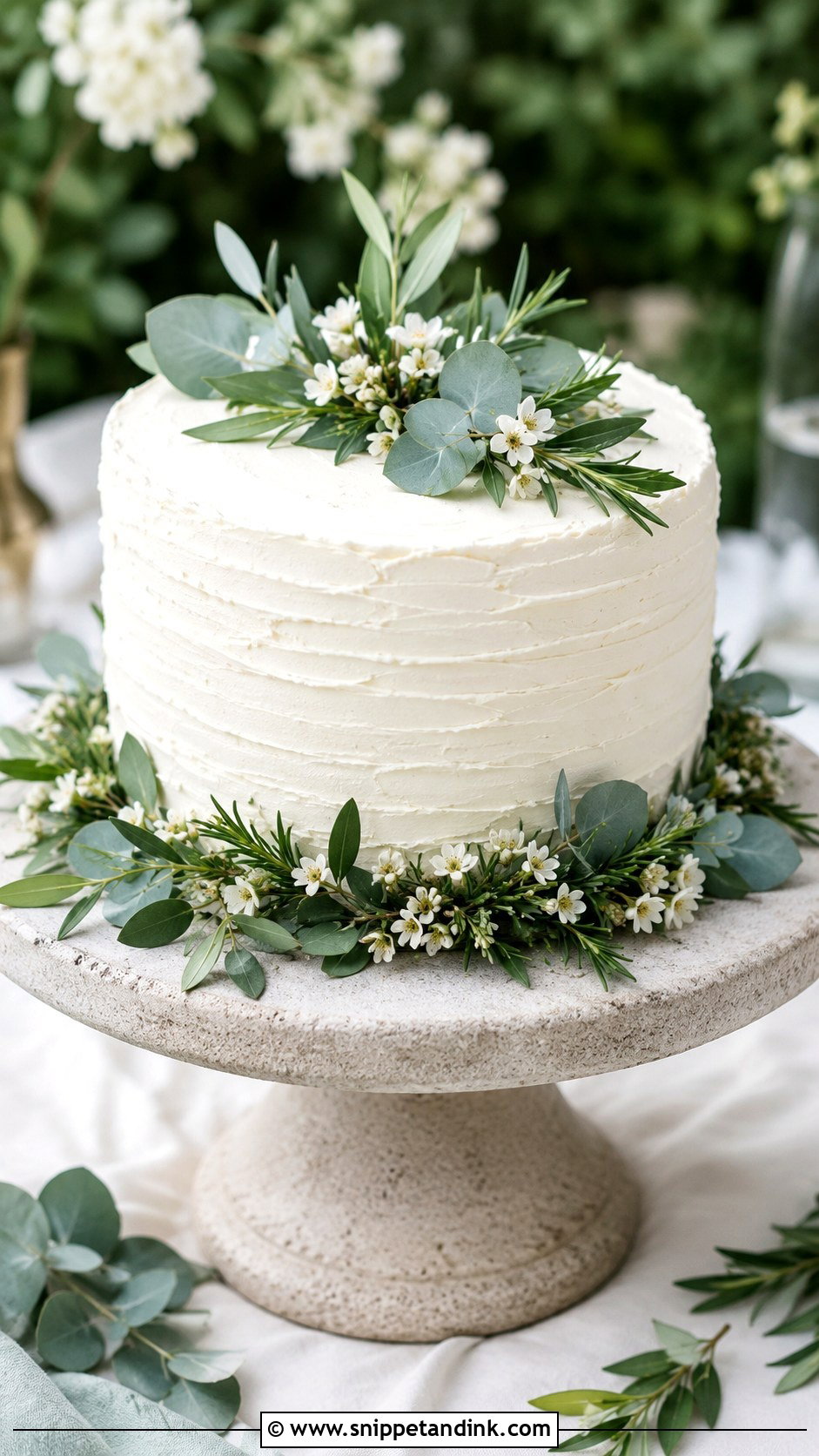
Greenery is the gentlest way to dress a small cake for a garden, barn or backyard. Against white or ivory buttercream, eucalyptus, olive leaves, rosemary or fern give shape and movement, set as a half wreath at the base, a trail down one side or a single sprig on top. Not all greenery is safe near food; eucalyptus and some ferns shouldn’t touch frosting directly, so I place them on a barrier or keep them on the stand. A wooden board or stone pedestal underneath suits the look.
4. Naked Wedding Cake With Berries
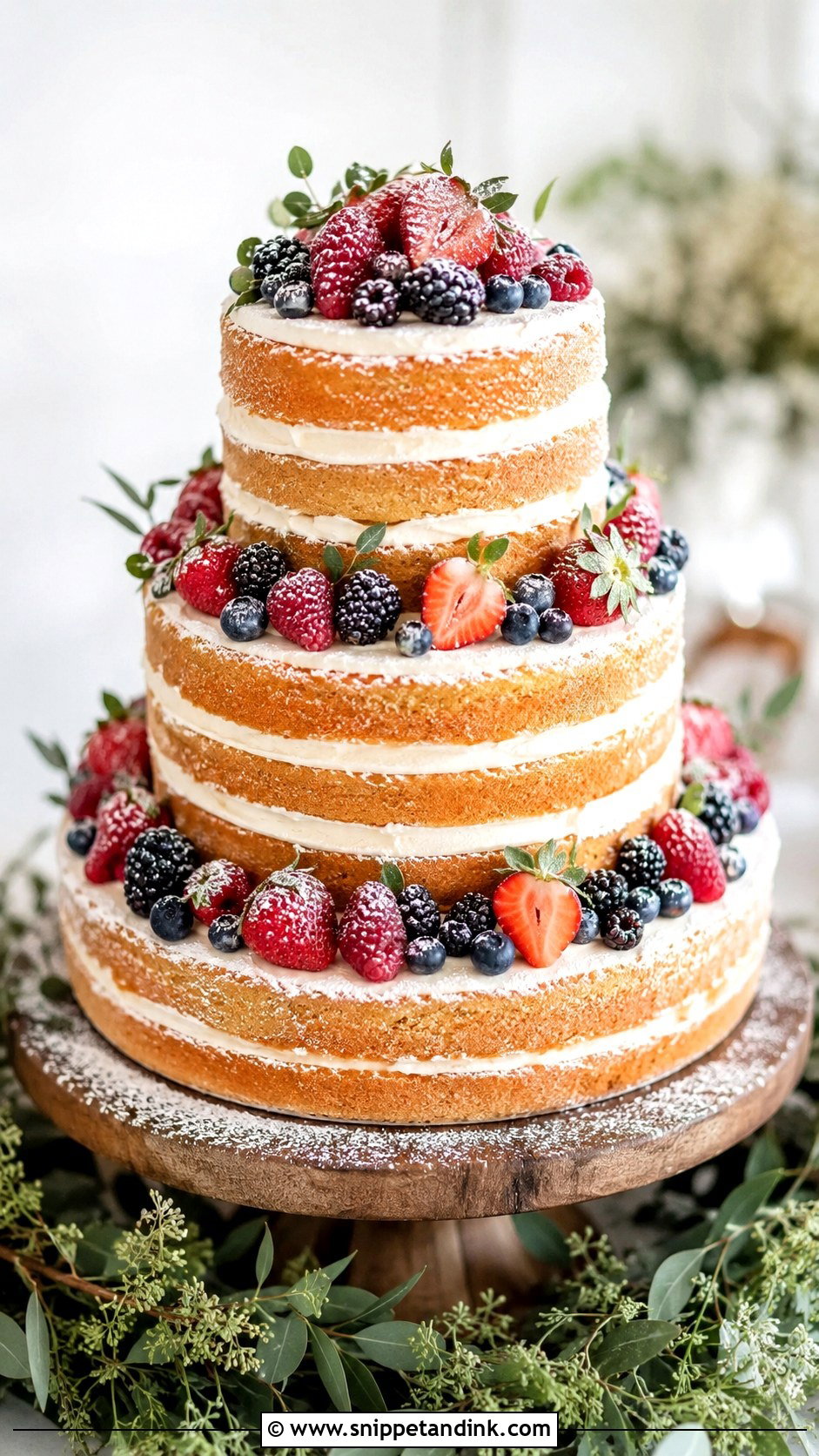
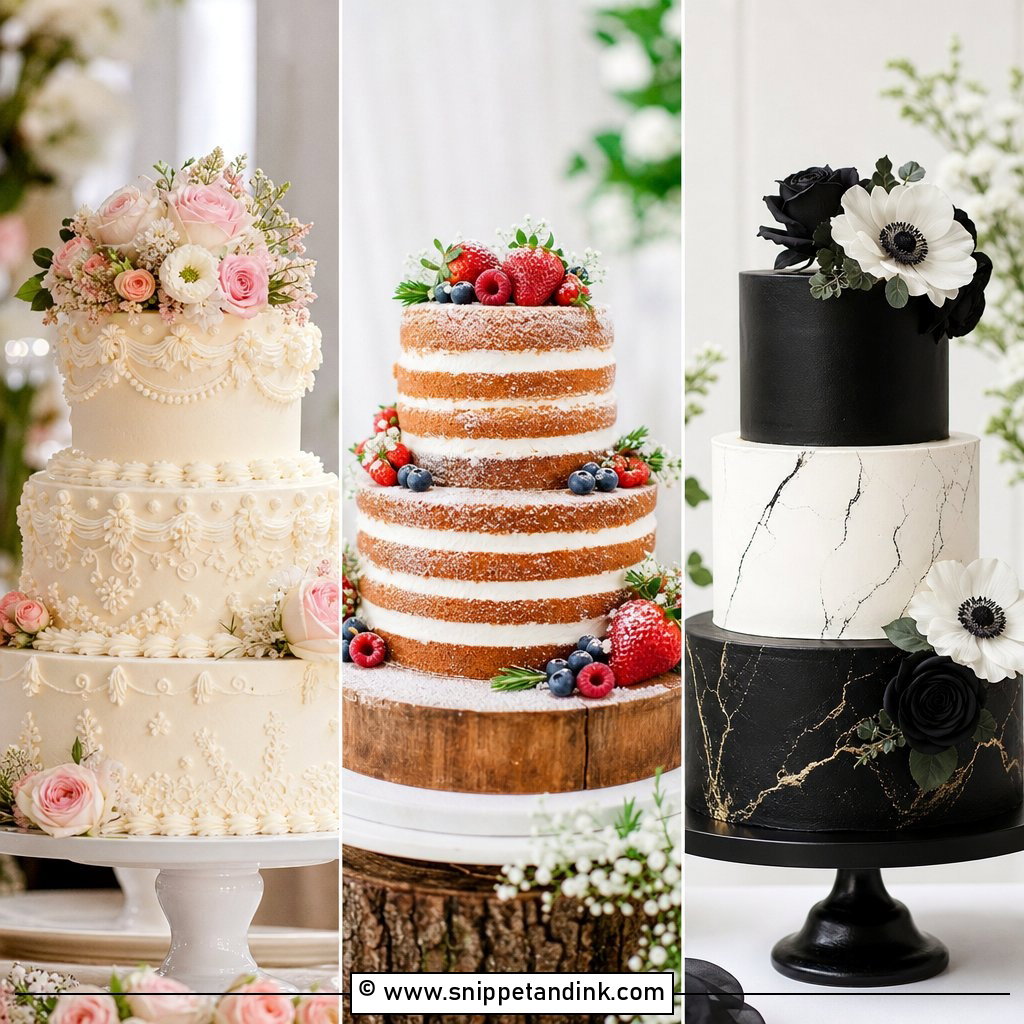
A naked cake shows its layers through a very thin scrape of frosting, which gives it a homemade warmth. Strawberries, blueberries, raspberries and blackberries add colour, tucked between layers and scattered loosely on top, and the sponge pairs well with vanilla, lemon, almond or brown butter and a berry filling. The trade-off is that exposed sponge dries out faster than frosted cake. I bake and assemble naked cakes as close to the event as I can, and I’d keep this one out of direct sun at an outdoor summer wedding.
5. Semi Naked Wedding Cake With Flowers
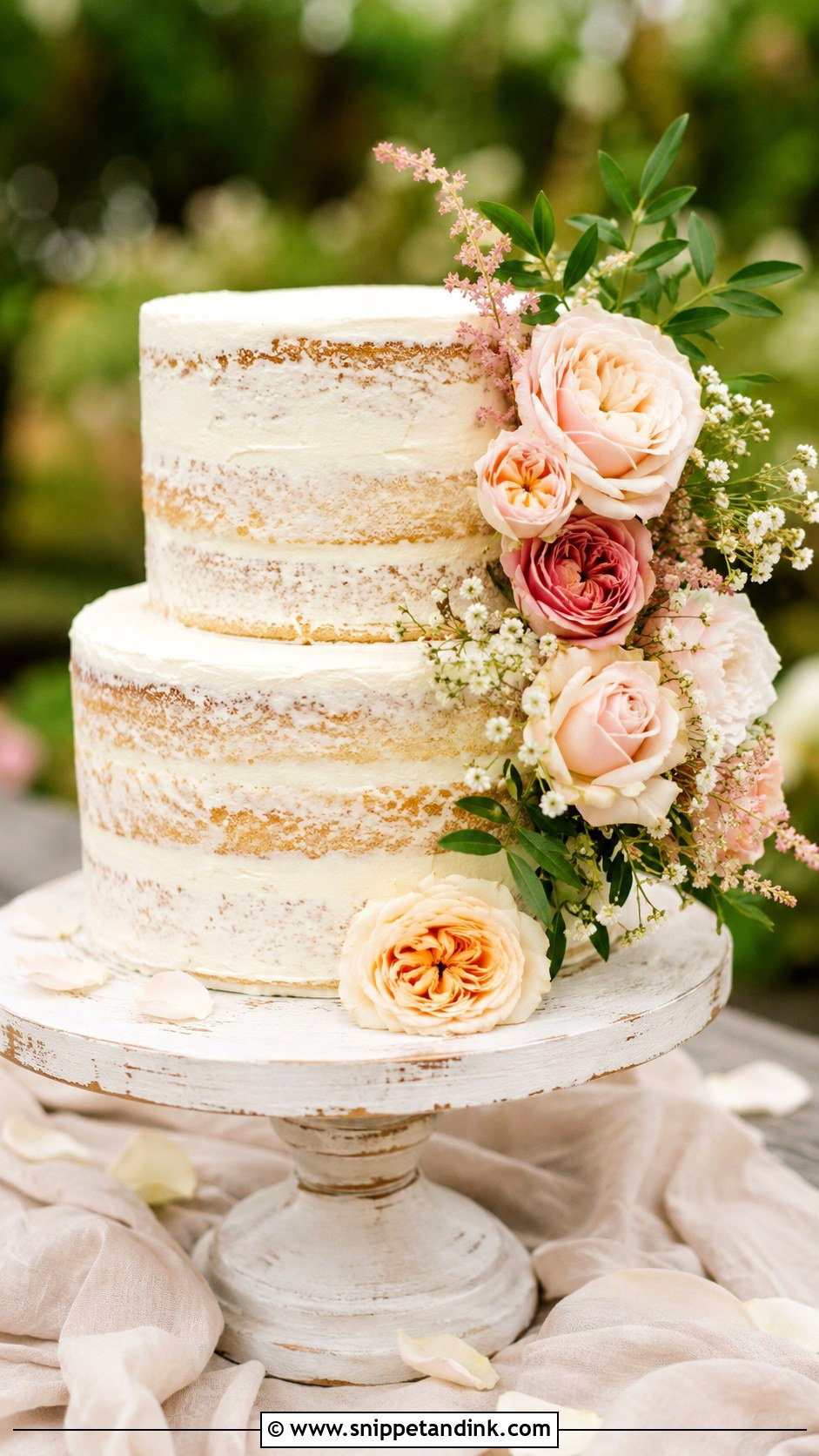
The semi-naked finish keeps a thin veil of frosting over the sides so hints of cake show through, but the edges stay neat enough for formal photos. Flowers can sit in one corner, across the top tier or on a gentle diagonal, and blush, ivory, peach or soft yellow blooms look warm against vanilla buttercream. I scrape the sides deliberately unevenly, so it reads as a choice rather than a rushed finish. It suits couples who want rustic but not scruffy, and it keeps a little better than a fully naked cake.
6. One Tier Wedding Cake With Piped Border
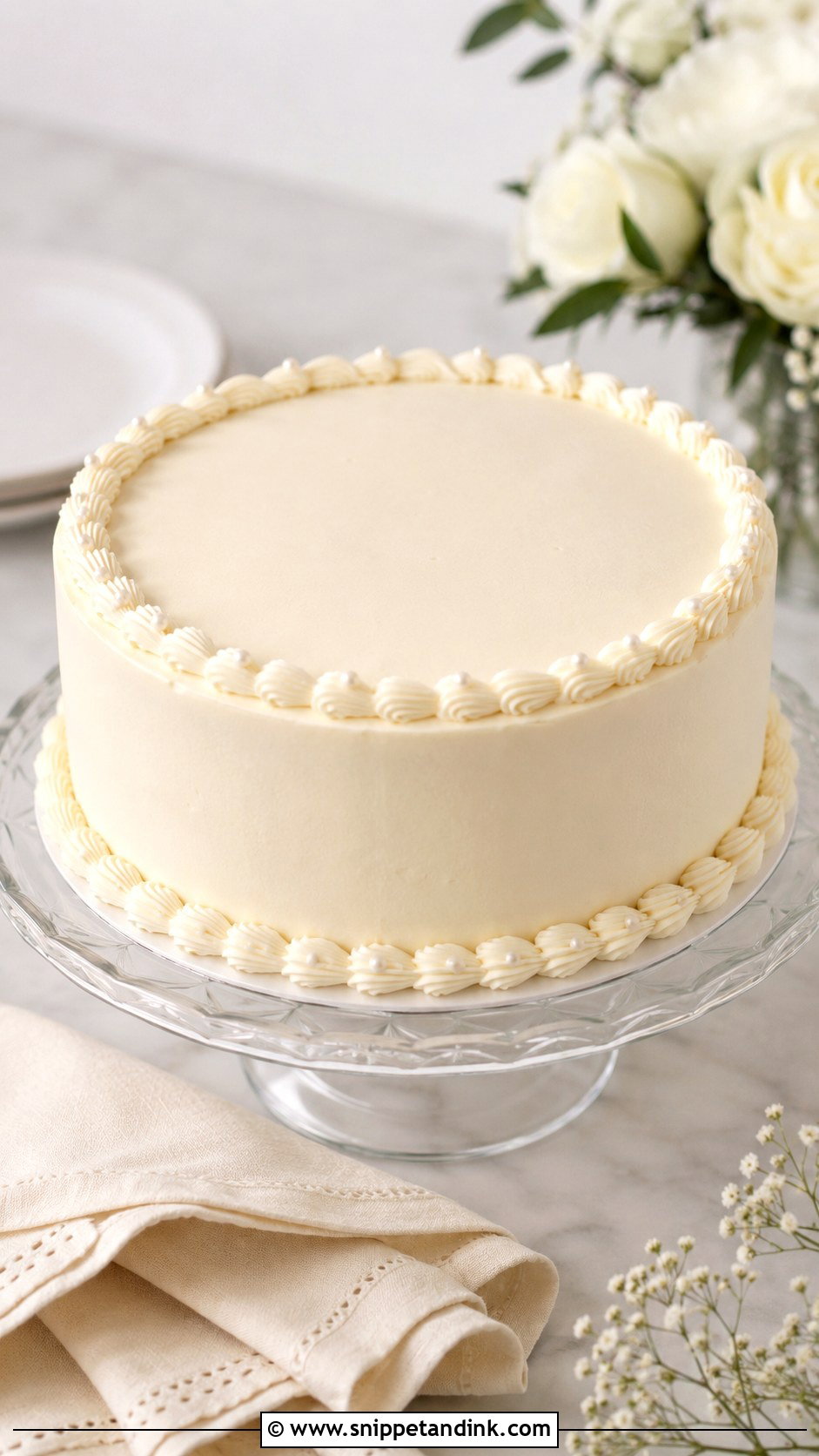
A single tier with a piped border is affordable and still feels like a wedding cake. I’ll pipe tiny pearls, a shell border, small rosettes or a rope around the top and bottom edges, and the border hides the joins where the cake meets the board. Round reads classic; a heart shape gives a vintage feel. It’s sized for an elopement, a courthouse ceremony, a micro wedding or the centre of a dessert table, and a small topper or a fresh bloom adds height if the table needs it.
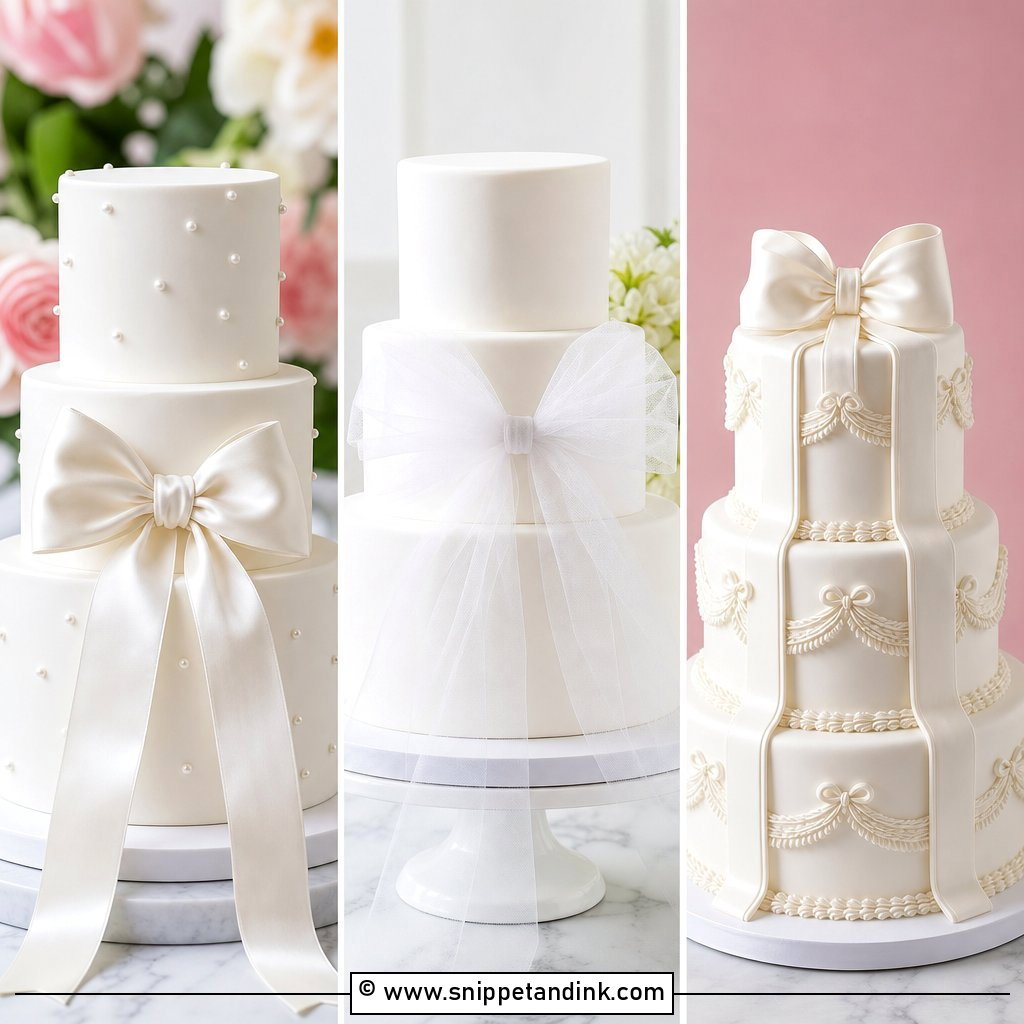
7. Vintage Wedding Cake With Pearls
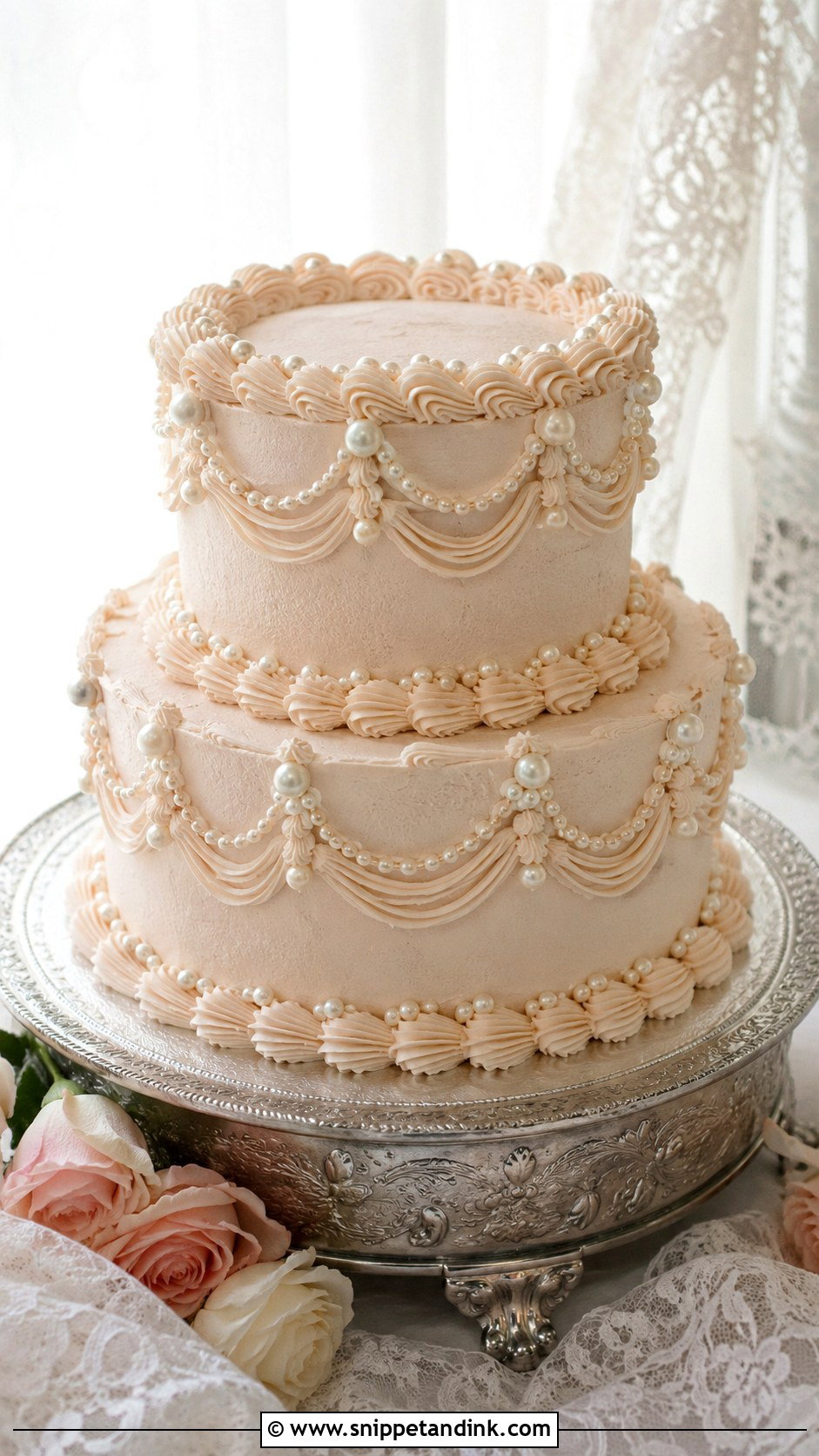
Vintage cakes come from piping, not from piling on decoration. On a white, ivory, blush or soft blue base, I pipe shell borders, small swags and delicate dots, then set edible pearls along the curves or around each tier. The pearls go on while the buttercream is still slightly tacky so they hold. It’s a softer modern take on old-fashioned cakes, and it sits well with satin bows, lace tablecloths and silver stands. Over-piping is the risk; leave enough plain frosting between motifs that the shapes read.
8. Wedding Cake With Satin Bow
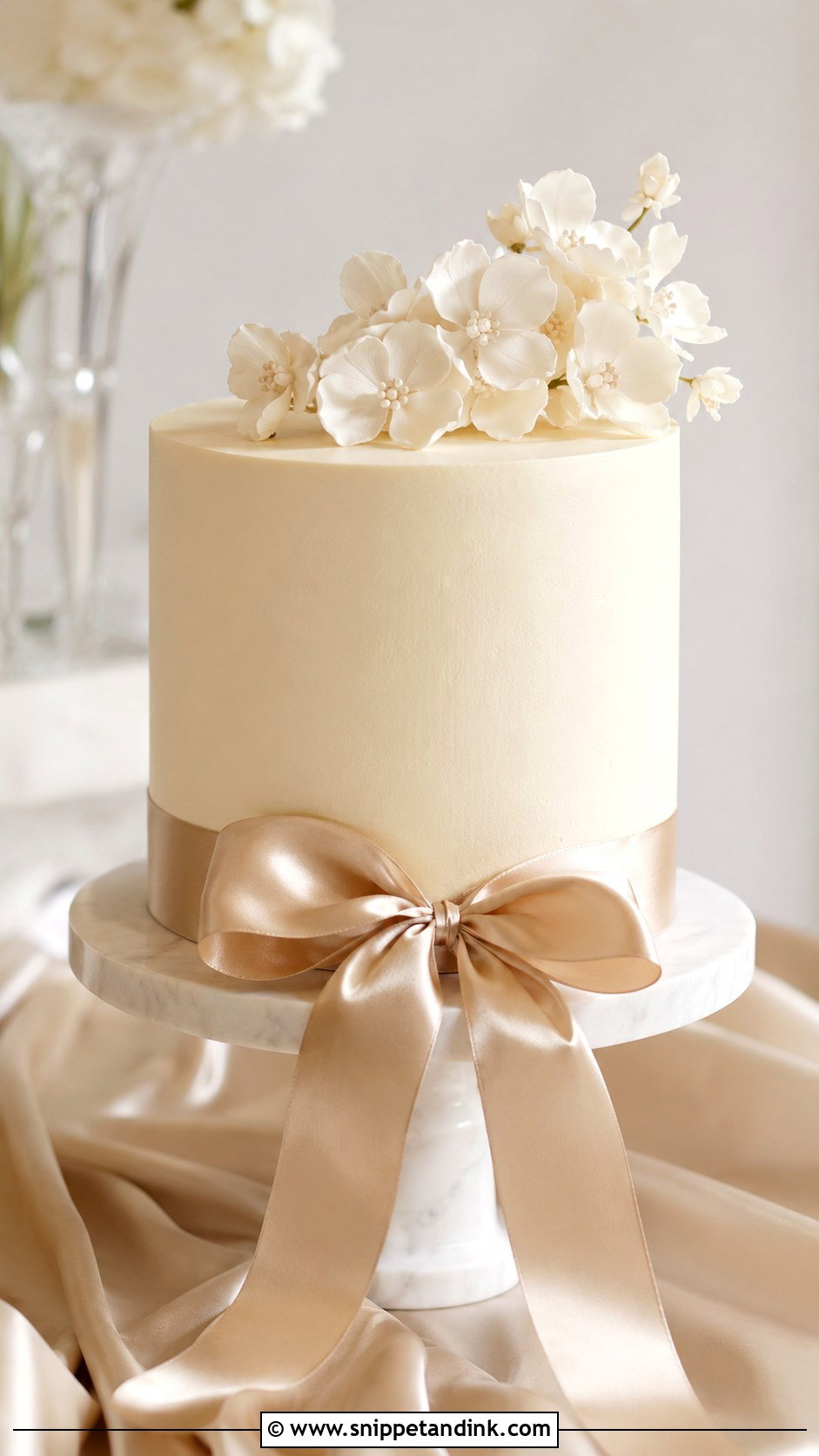
A satin bow is a small detail that does a lot. Tie one around the base of a tier, let the tails fall down the front, or set a large bow on top. White, ivory, champagne, blush and soft blue ribbons are easiest to style. Real ribbon soaks up butter and leaves a greasy line, so I back it with a strip of acetate or tape where it touches frosting, or I make the bow in fondant instead. Smooth buttercream or fondant suits it best; bows look accidental on rough textures.
9. Minimalist Wedding Cake With Single Flower
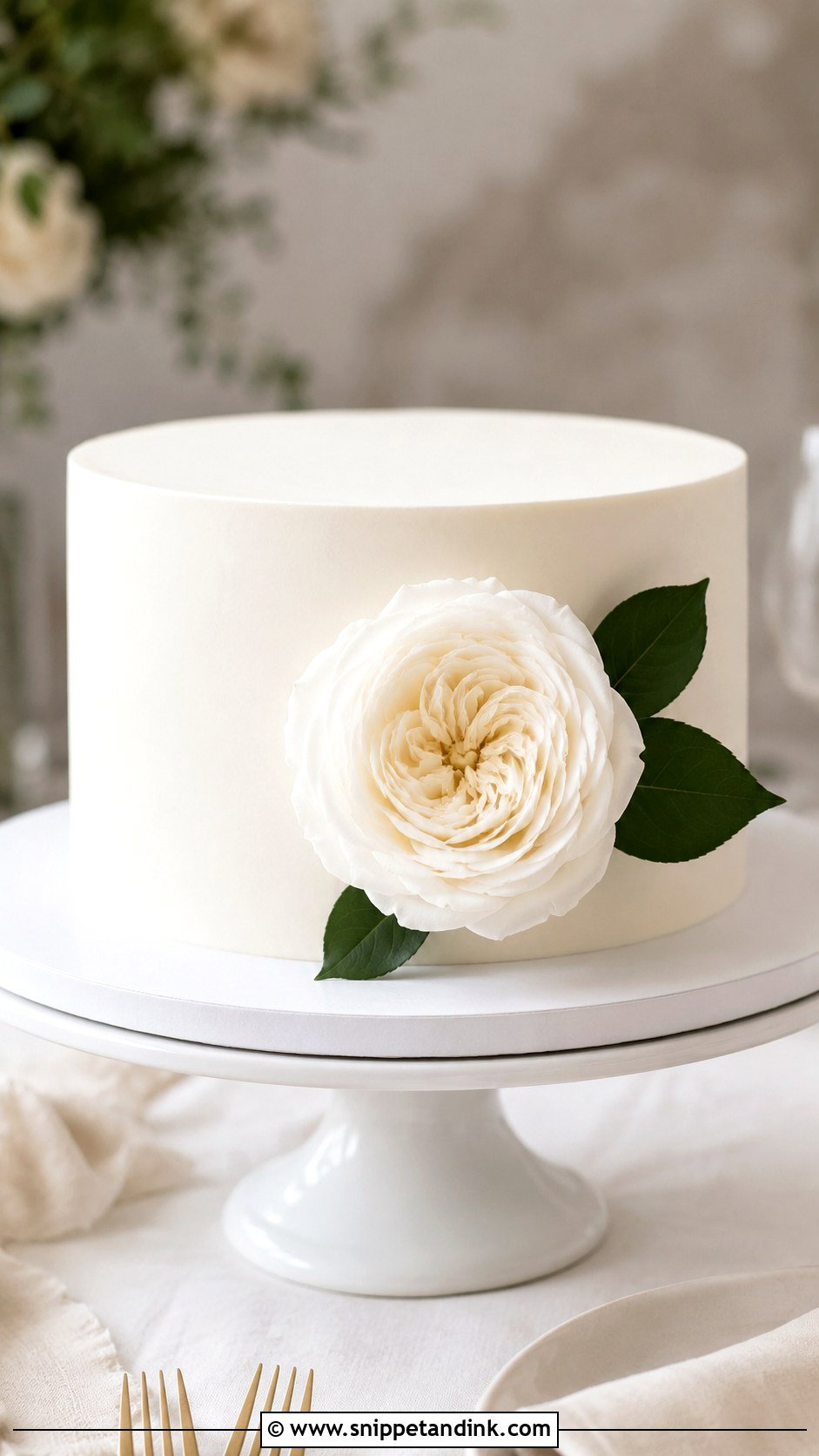
One flower can be enough when the frosting is clean and the placement is deliberate. I’ll set a large garden rose, a peony-style sugar flower, an orchid or a ranunculus on the top or the side, often off-centre, and keep everything else plain. The flower carries the whole design, so it has to be perfect; a fresh bloom that wilts or bruises can’t hide behind others. That’s why I often suggest a sugar flower for single-bloom designs at long receptions. Echoing the bouquet or bridesmaid colour links the cake to the rest of the wedding.
10. Textured Buttercream Wedding Cake
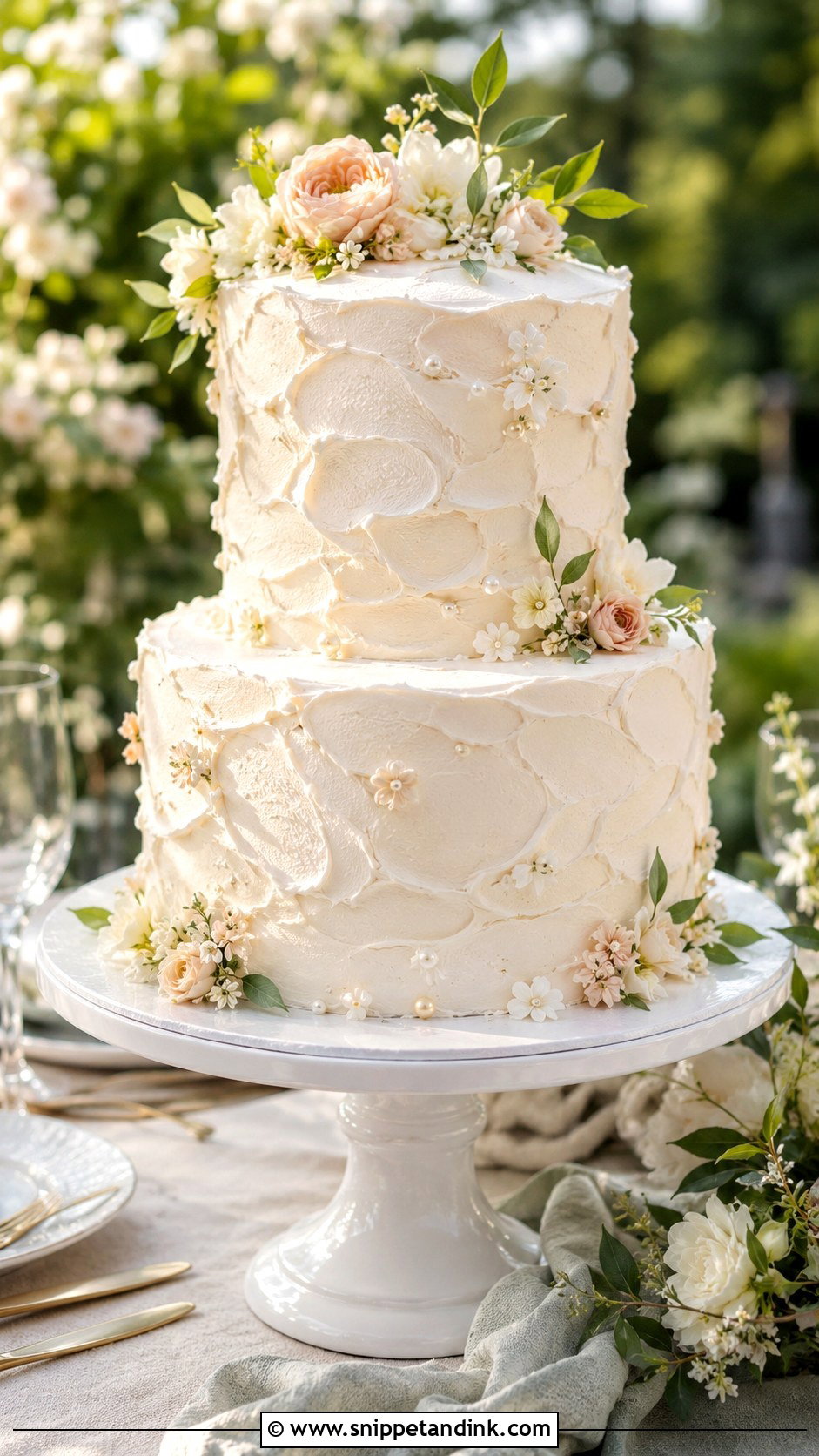
Texture turns an all-white cake into something with depth. I pull the buttercream with a palette knife or a comb into swoops, ridges or waves, and those edges catch light in photos. It’s also forgiving: small dents from transport disappear in a textured finish, which is a real advantage for outdoor or long-distance deliveries. Keep it plain or add a few flowers, pearls or gold flecks. Vanilla bean or lemon elderflower suit the light look, particularly at garden or coastal weddings.
11. Wedding Cake With Edible Pearls
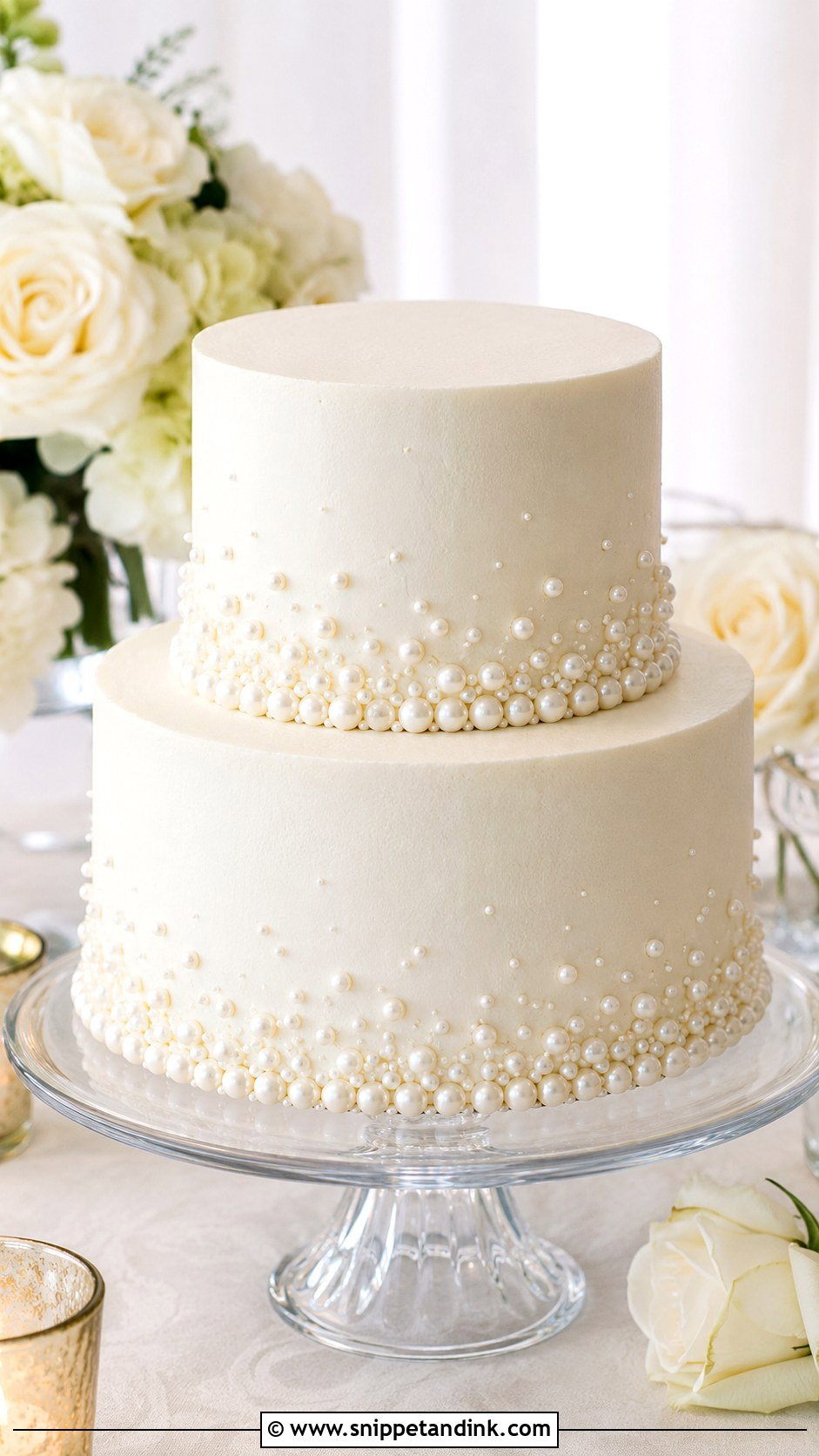
Edible pearls are the easiest way to make a plain cake look bridal. I use them lightly along the bottom edge, or scatter them across the tiers like small beads, in white, ivory or soft champagne against smooth white frosting. They work on one tier or five because they don’t change the cake’s silhouette. Hard sugar pearls can crack a tooth if they’re large, so for anything bigger than a few millimetres I use soft fondant pearls instead. They combine well with bows, lace piping or a few fresh flowers.
12. Wedding Cake With Gold Leaf
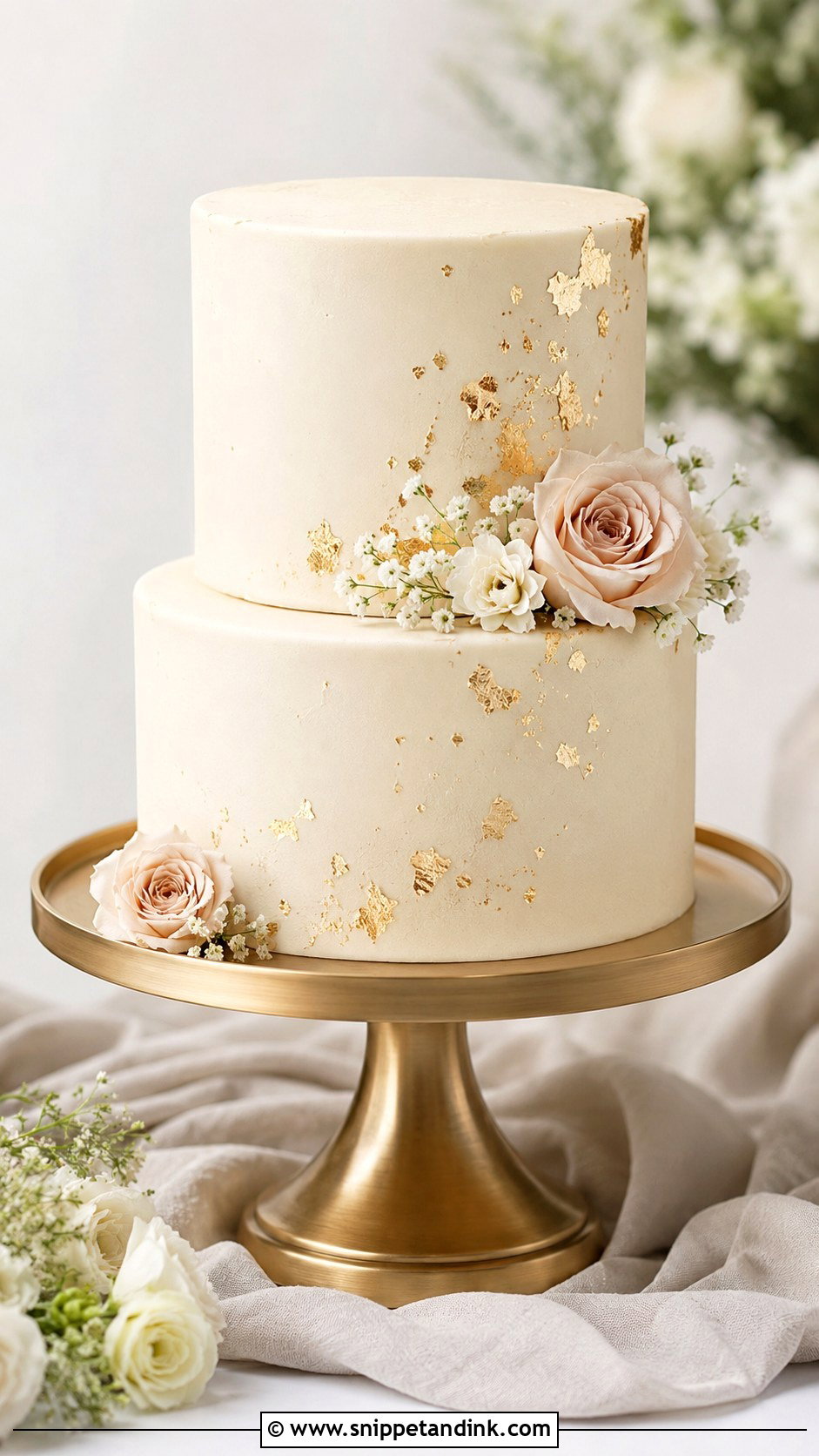
Gold leaf adds shine without making the cake loud, as long as it’s used sparingly. I tear small pieces of edible gold and press them around edges, brush them into textured buttercream or tuck them near flowers. A few touches look expensive; too many look heavy. It suits white, ivory, blush, sage or champagne frosting. Check that the leaf is sold as edible, not craft gilding, and keep it away from damp areas, since it won’t stick to a sweating surface and will crumple.
13. Wedding Cake With Pressed Flowers
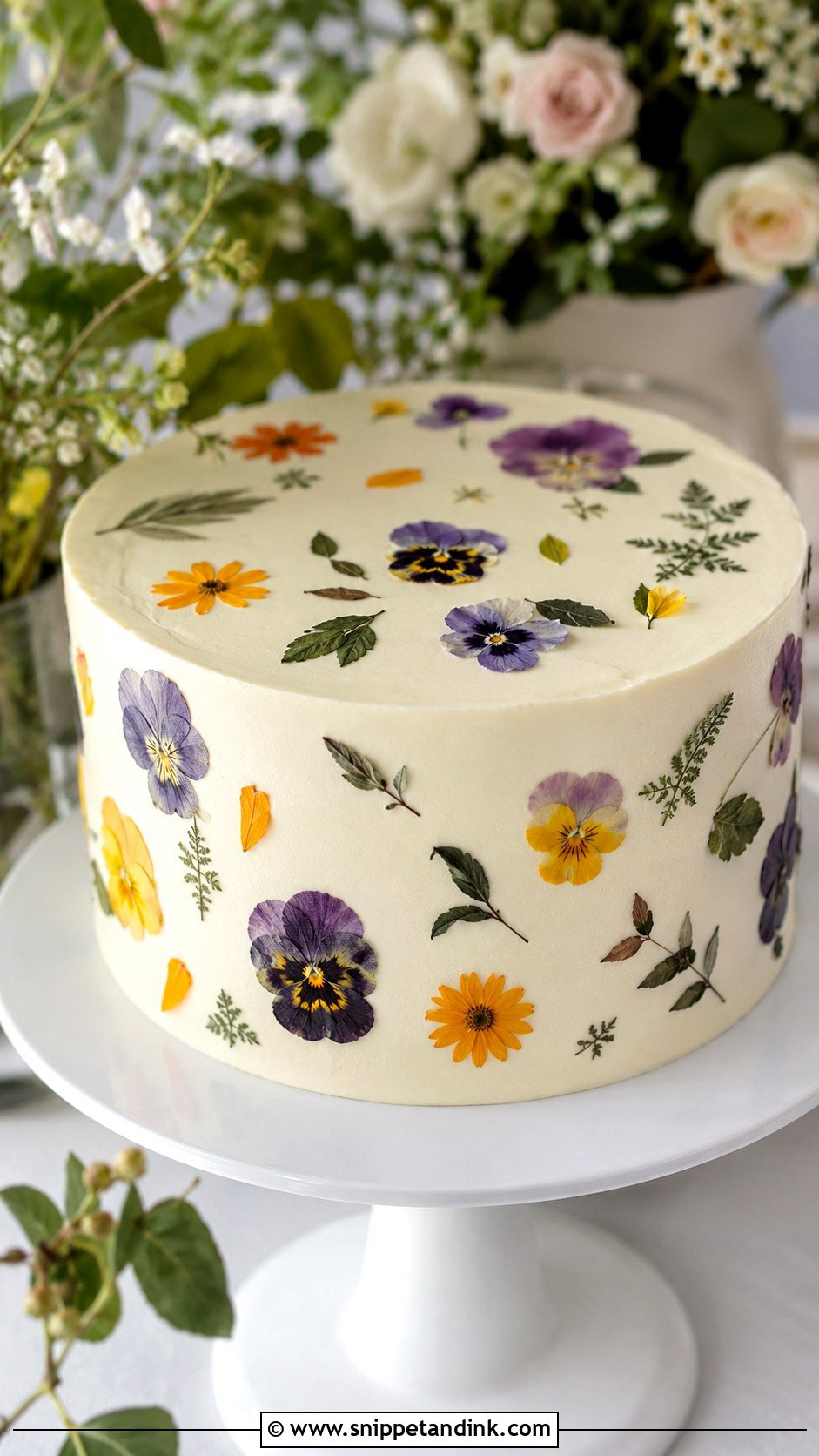
Pressed flowers lie flat against smooth buttercream, so they need edible or food-safe blooms like pansies, violas, calendula petals and small herb leaves. A controlled palette keeps it from looking busy, and a white or pale ivory base lets every petal show. I press them onto chilled frosting so they don’t smear, and add them on the day of delivery, because they curl and darken if they sit in the fridge overnight. It’s a light floral option for spring and outdoor receptions.
14. Wedding Cake With Fruit Topping
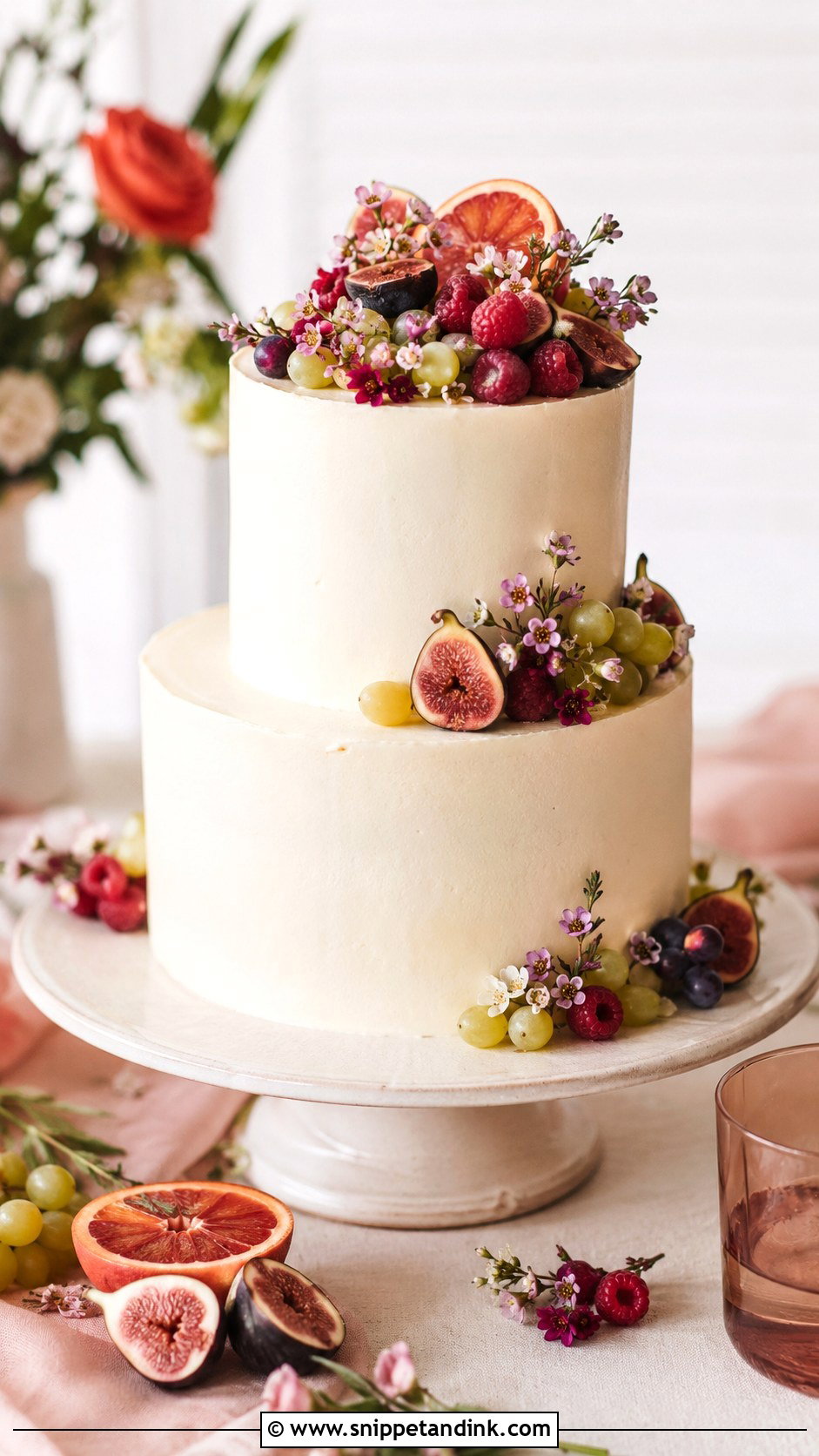
Fruit brings colour, texture and flavour in one go. Berries suit spring and summer; figs, pears, grapes and citrus slices fit late summer and autumn. I place fruit in small clusters rather than covering the cake, against smooth buttercream or a semi-naked finish. Cut fruit weeps juice onto frosting within a few hours, so I use whole berries and glaze any cut fruit lightly with a clear jelly to slow that down. A light dusting of sugar or a few edible flowers can finish it, but dust only just before serving, as sugar melts in humidity.

15. Wedding Cake With Sugar Flowers
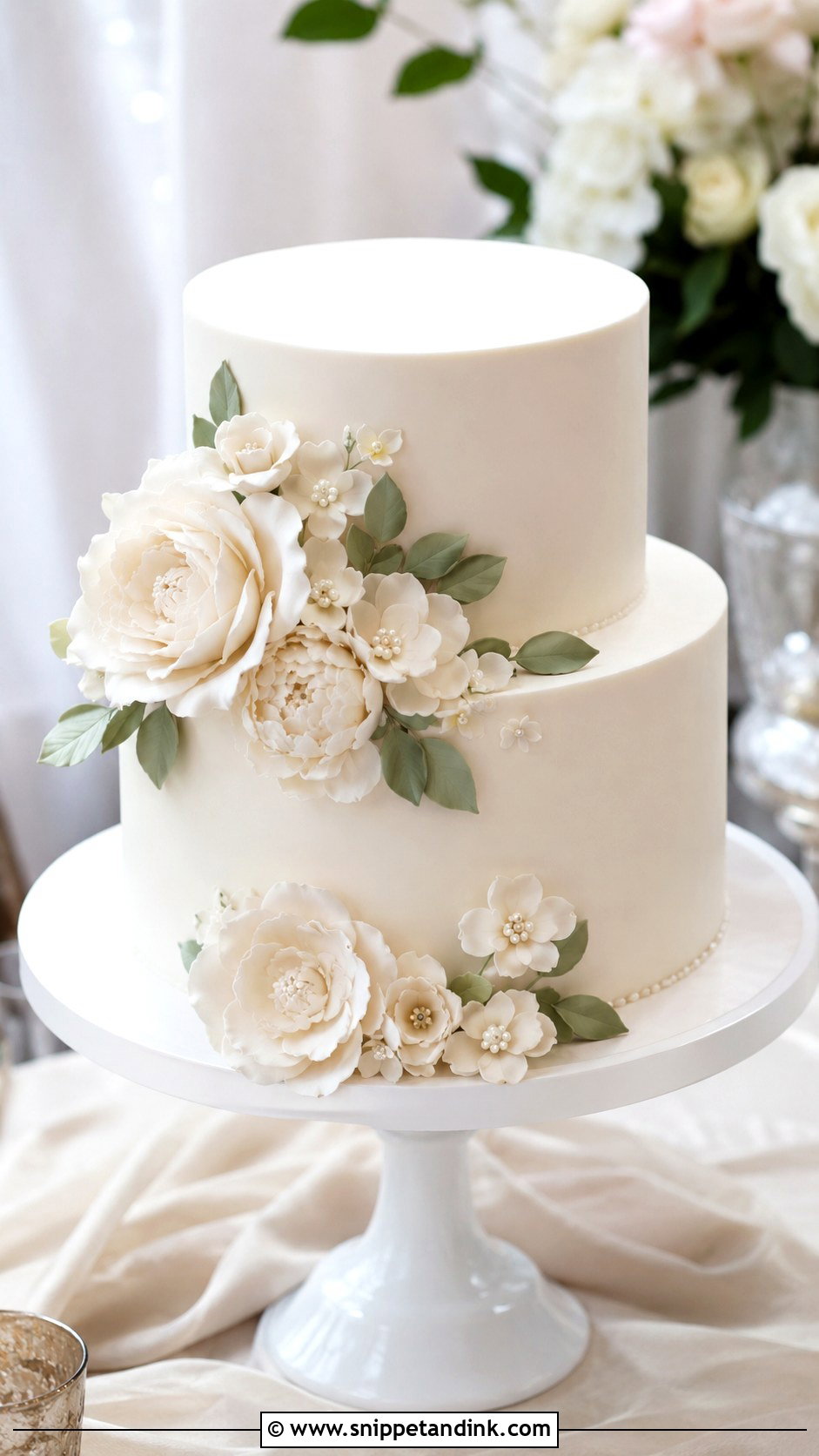
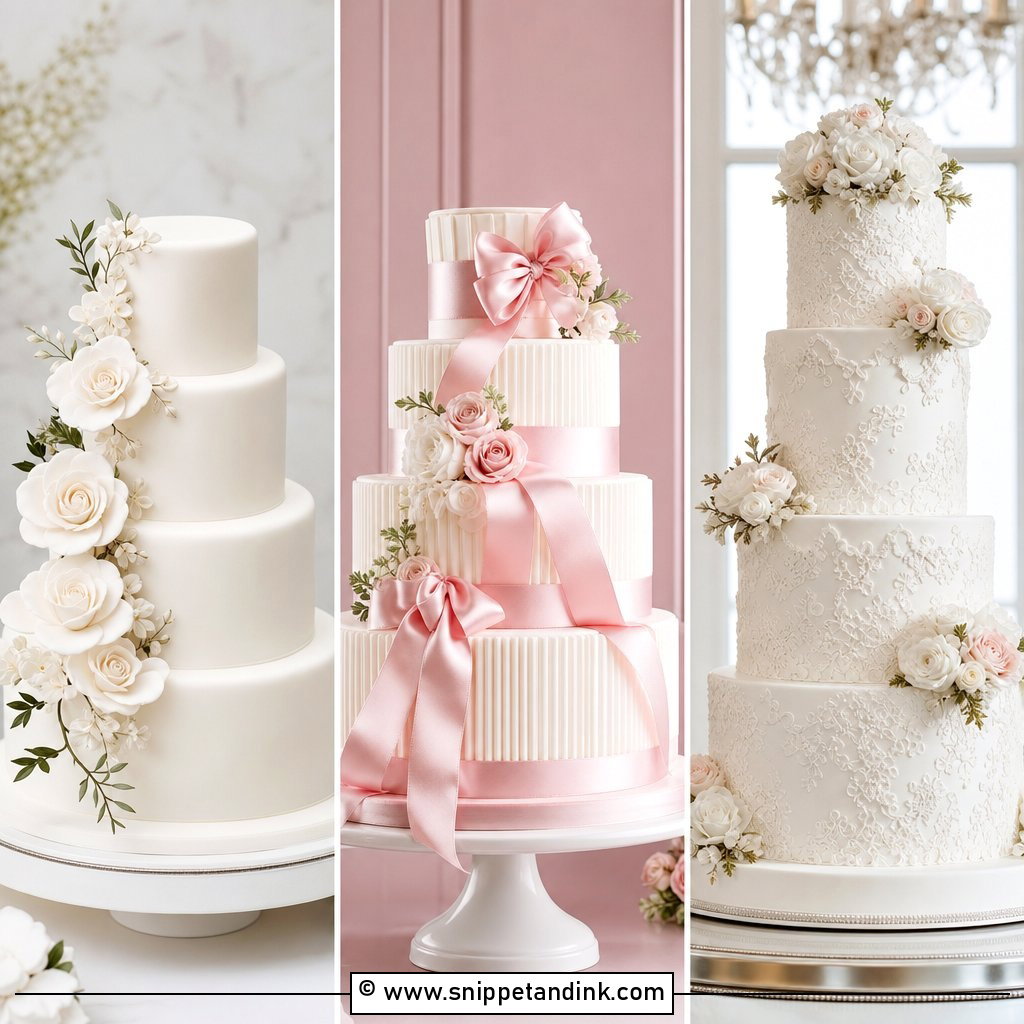
Sugar flowers are made petal by petal, so they can match your colours exactly and they don’t wilt during a long reception. One large bloom with a few leaves gives a minimal look; a small cluster across the front adds movement. They need no water, stems or barriers, and they sit on smooth buttercream, fondant or light texture. Two practical notes: they’re time-consuming, so they cost more, and they’re inedible (wired), so they come off before cutting. Many couples keep them afterward as a keepsake.
16. Wedding Cake With Buttercream Flowers
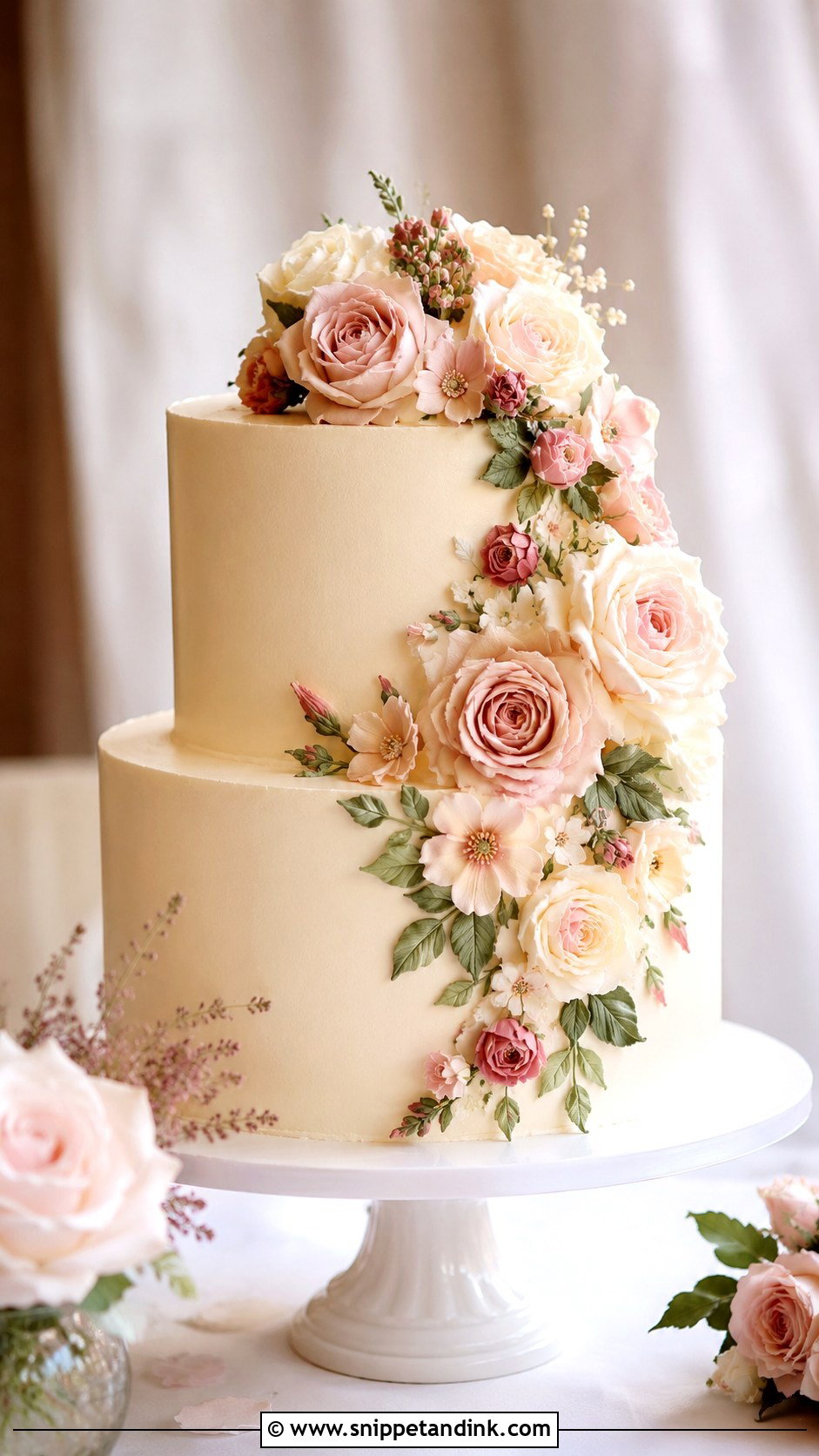
Piped buttercream flowers are made from the same frosting as the cake, so everything is edible and the design stays cohesive. Rosettes, blossoms, leaves and buds can trail down one side or cluster on top, in ivory, blush, peach, lavender or soft green. They’re softer and less lifelike than sugar flowers, which some couples prefer. They are also the most heat-sensitive decoration on this list; in a warm tent, petal edges lose definition quickly, so I’d keep the cake shaded and cool until it’s cut.
17. Wedding Cake With Simple Drip
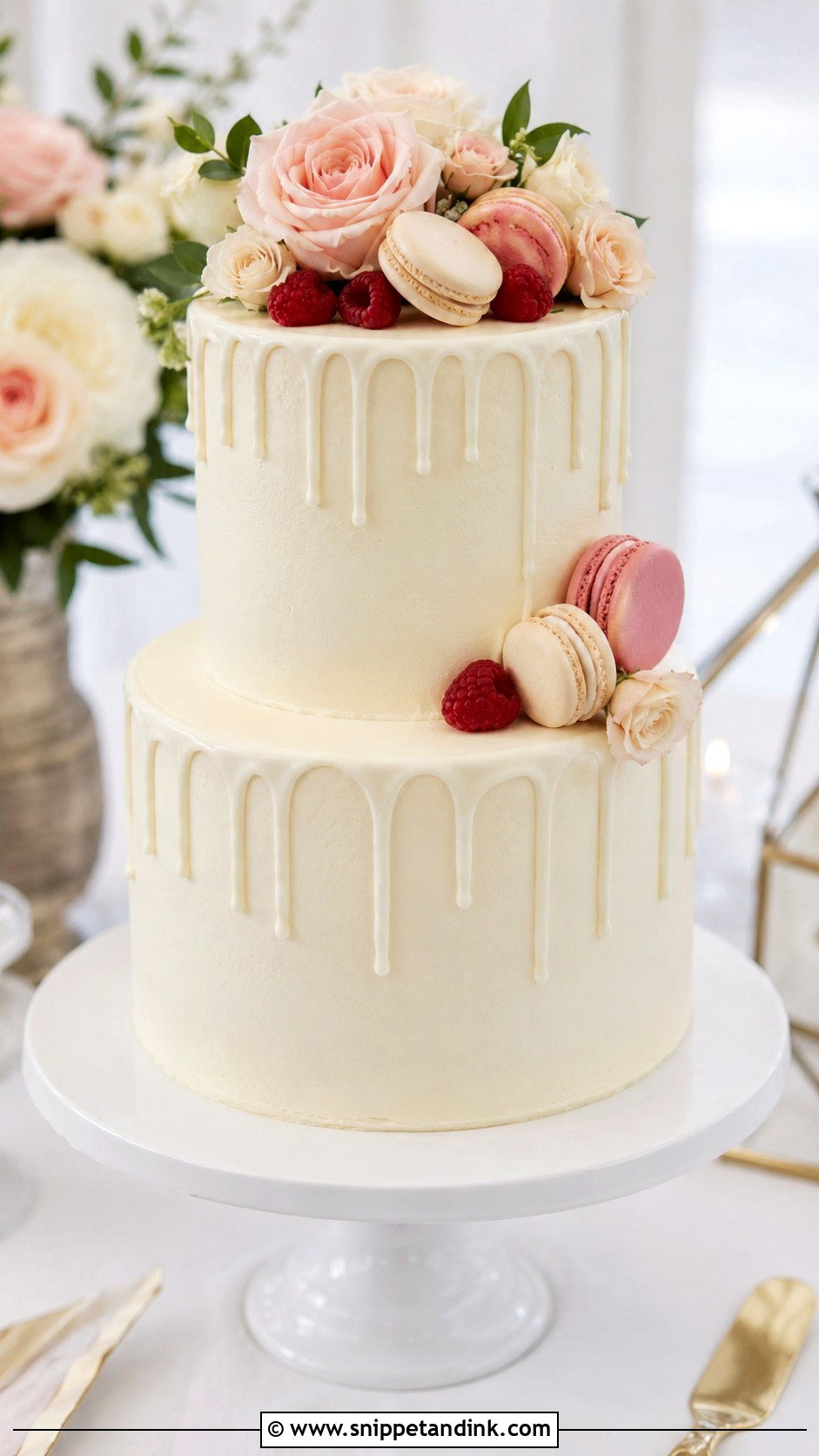
A simple drip adds movement without much decoration. White chocolate, caramel, a blush glaze or a light gold finish all work. Thin, controlled drips look elegant; long uneven drips look like an accident. The ganache temperature controls that, so I test the first drip on a chilled cake and adjust before going round. A small cluster of flowers, berries or macarons on top completes it. It suits semi-formal receptions and dessert tables, with vanilla, almond, chocolate or caramel inside.
18. Square Wedding Cake With Clean Edges
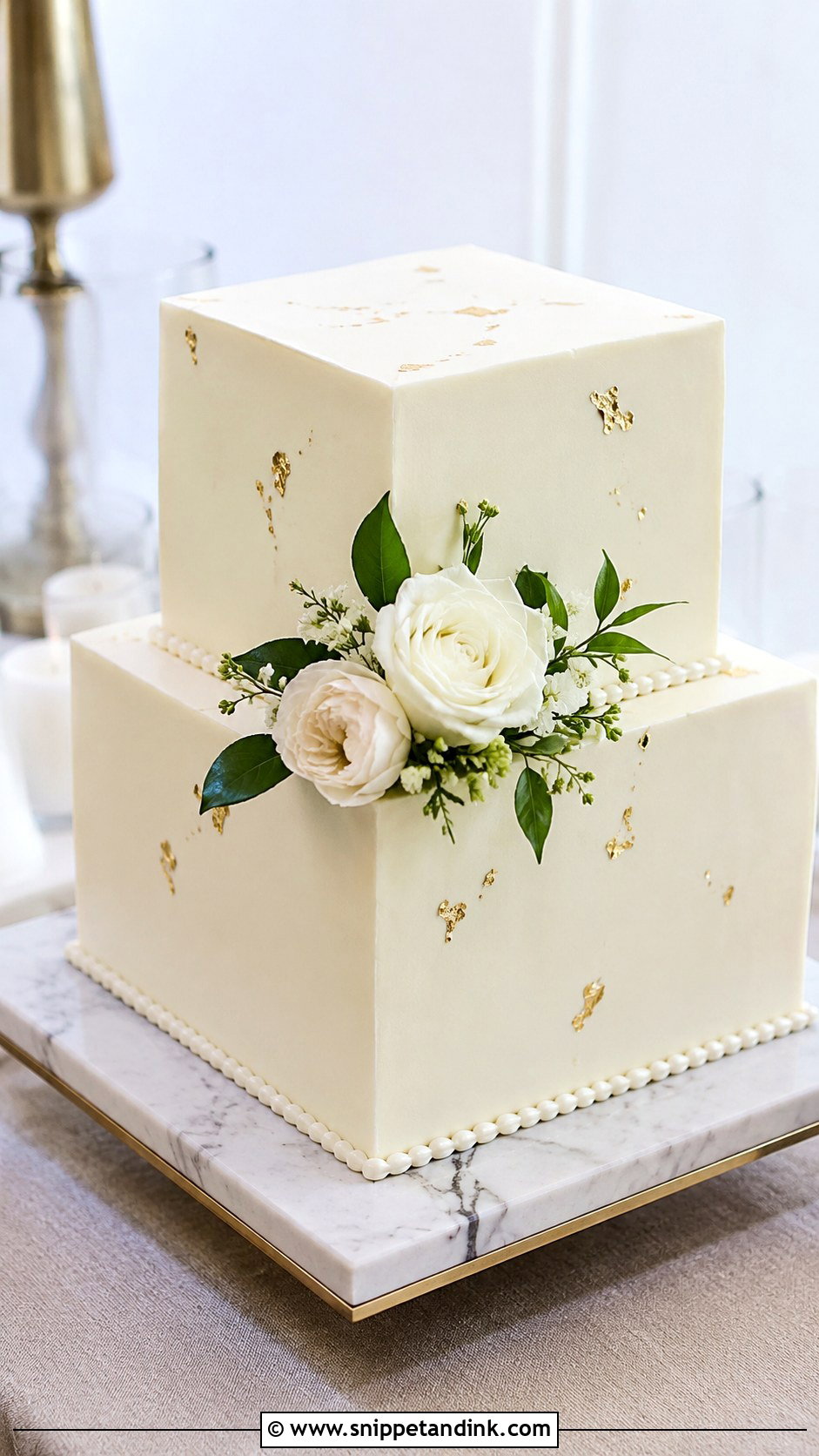
Square tiers look modern even with minimal decoration, but they’re the hardest shape to ice cleanly. Sharp corners need a firm buttercream or fondant, a well-chilled cake and patient scraping. One floral cluster or a ribbon detail stops it from feeling plain, and white, ivory, taupe or soft grey frosting suits city venues. Square tiers also cut into more servings than round ones of the same width, which helps if you’re feeding a lot of guests from a smaller-looking cake.
19. Oval Wedding Cake With Flowers
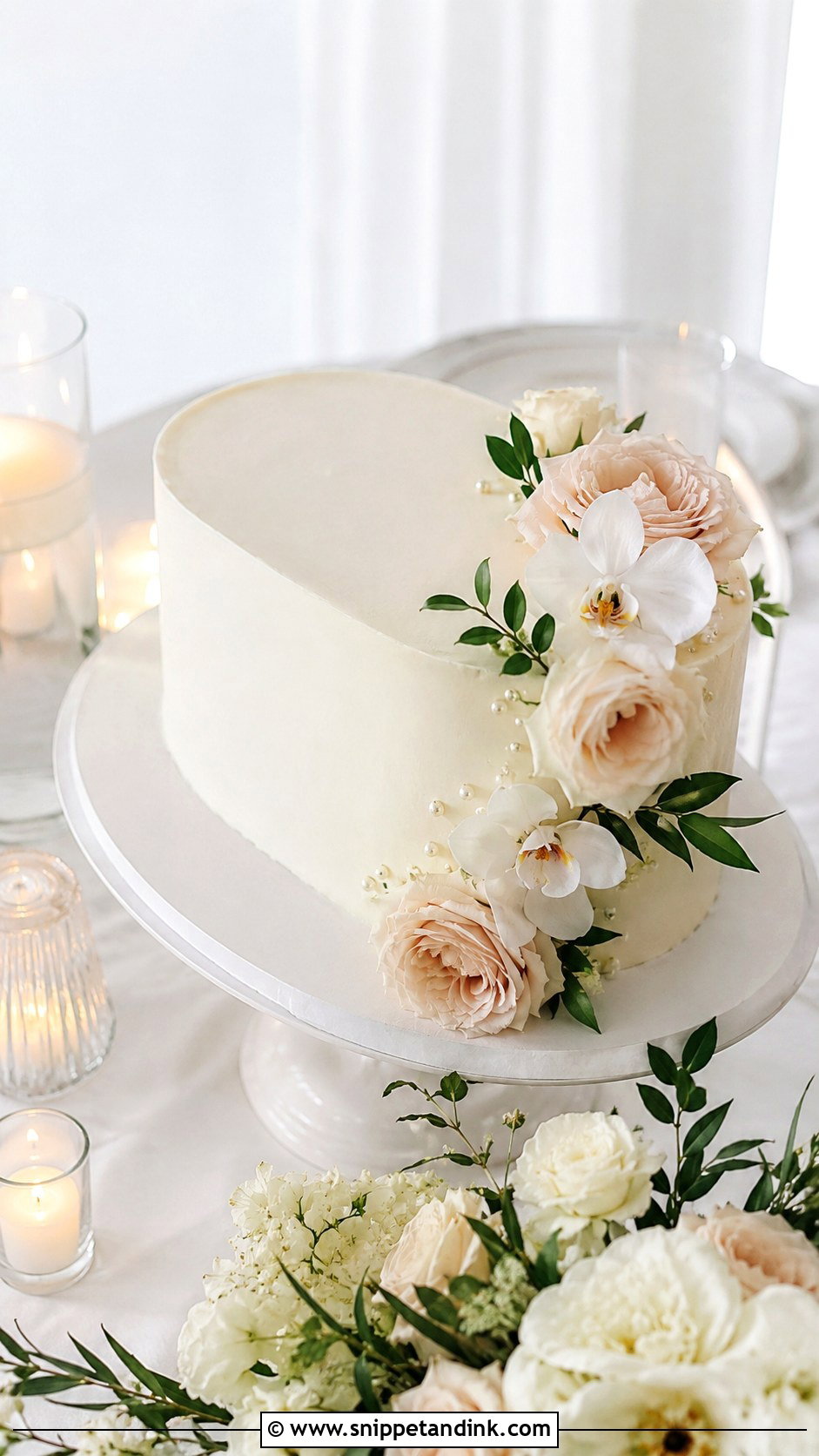
An oval is familiar but rarely seen at weddings, which is why it catches the eye. Its rounded length looks graceful as a single tier, and smooth buttercream keeps the shape clear, with flowers along the top ridge or around one side. Ivory with blush roses, lemon with white flowers or almond with soft greenery all work. Ovals need a custom board and box, so ask your baker if she has the pans before you fall for one. It sits nicely on a long table with candles and low florals.




20. Heart Wedding Cake With Piping
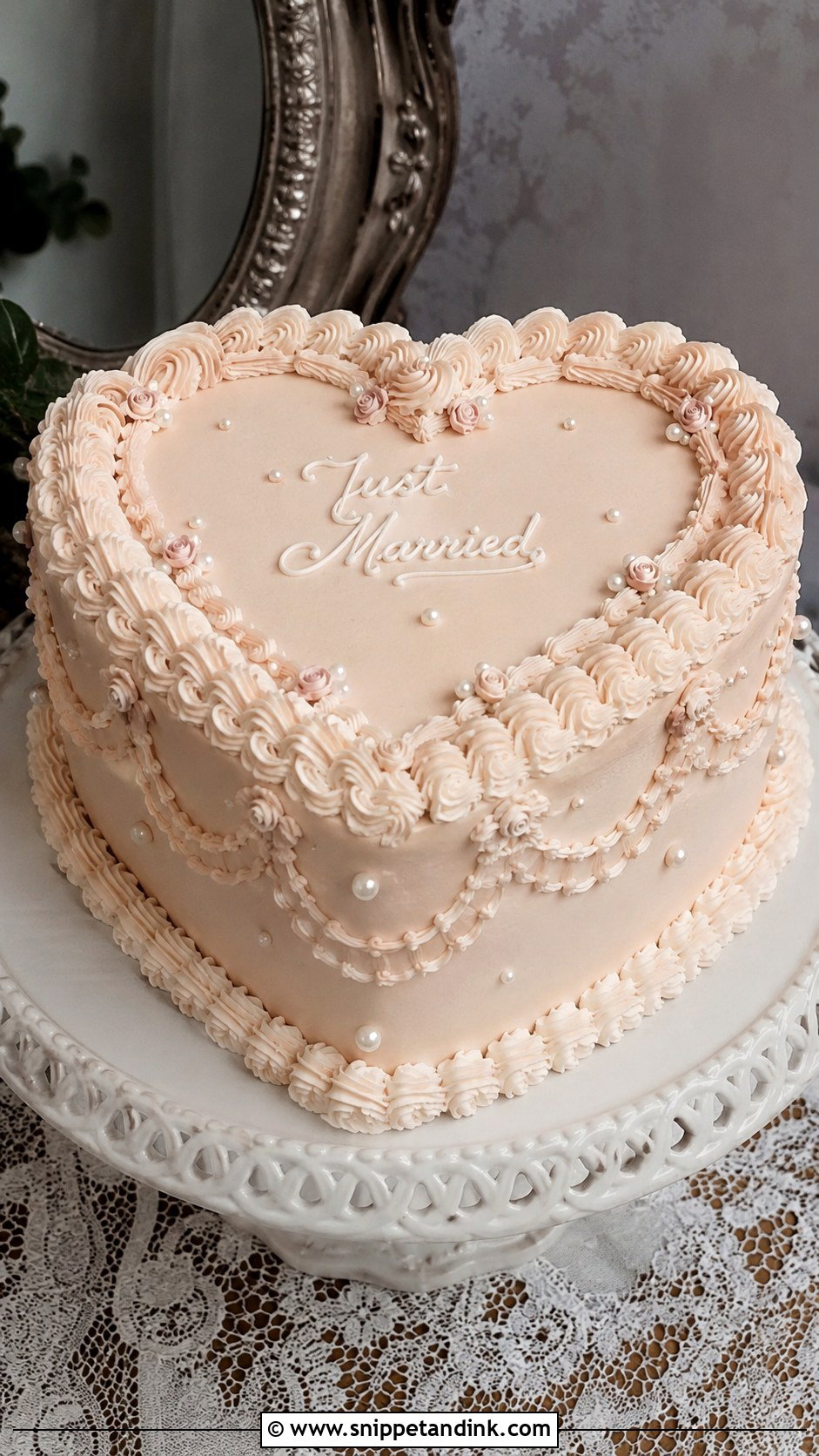
The heart shape gives personality straight away, and piped borders make it a wedding cake rather than a valentine. I keep the palette soft (white, ivory, blush, butter yellow or pale blue) and add tiny pearls, mini rosettes or a short piped message on top. Heart cakes can tip into kitsch; finer piping and a plain cake stand keep them on the elegant side. They fit elopements, bridal showers and micro weddings, and they’re popular as a second, smaller cake beside the main one.
21. Rustic Wedding Cake With Fresh Herbs
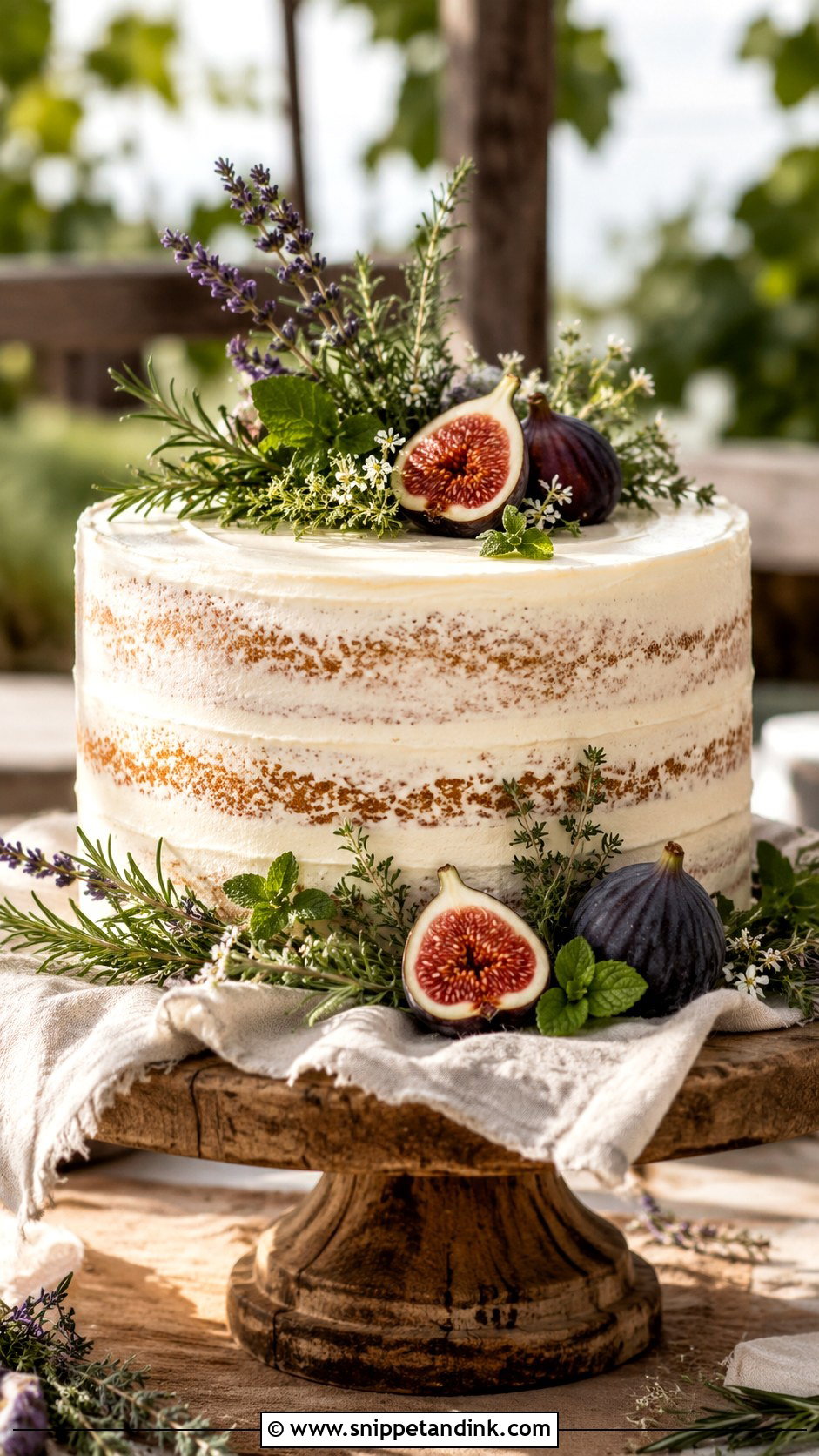
Herbs like rosemary, thyme, mint and lavender give a rustic cake fragrance and texture without crowding it. I pair them with a semi-naked or textured finish and add a few berries, figs or small white flowers for colour. Herbs are among the safer greens to use near food, but they wilt quickly in heat, so I add them on site. Lemon, olive oil, honey or vanilla sponge suit the earthy look. It’s a natural match for farm weddings, garden receptions and family-style dinners.
22. Modern Wedding Cake With Asymmetrical Flowers
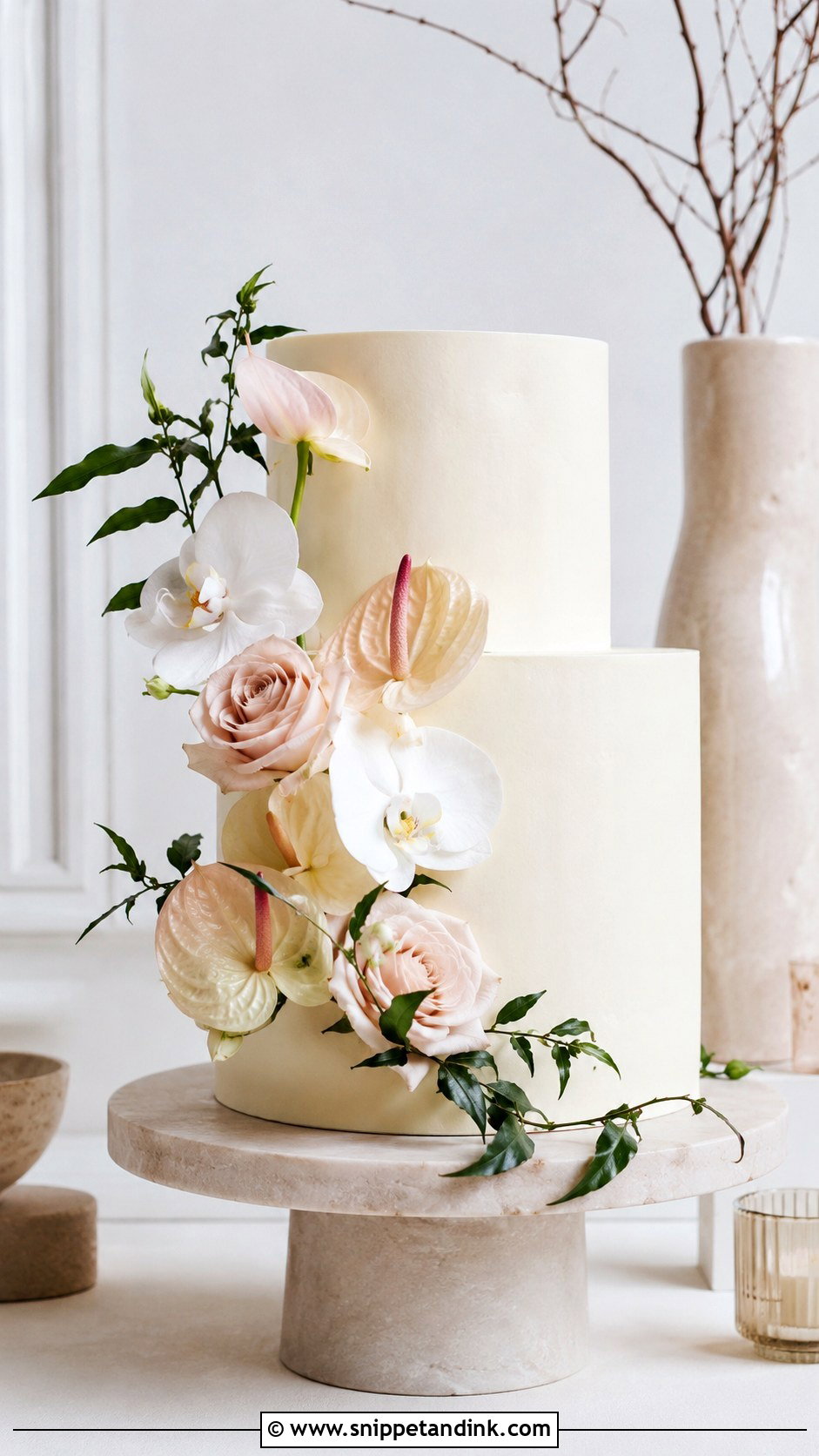
Asymmetry is what makes this cake look designed rather than decorated. Instead of evenly spaced flowers on every tier, I set blooms off-centre or trail them on a diagonal, then keep the base smooth and neutral so the placement reads. White orchids, roses, anthuriums or small seasonal flowers work, depending on the wedding. Fewer blooms look more modern. The diagonal line should flow toward the side guests will see first, so I ask where the cake table sits in the room before I place anything.
23. Wedding Cake With Lace Piping
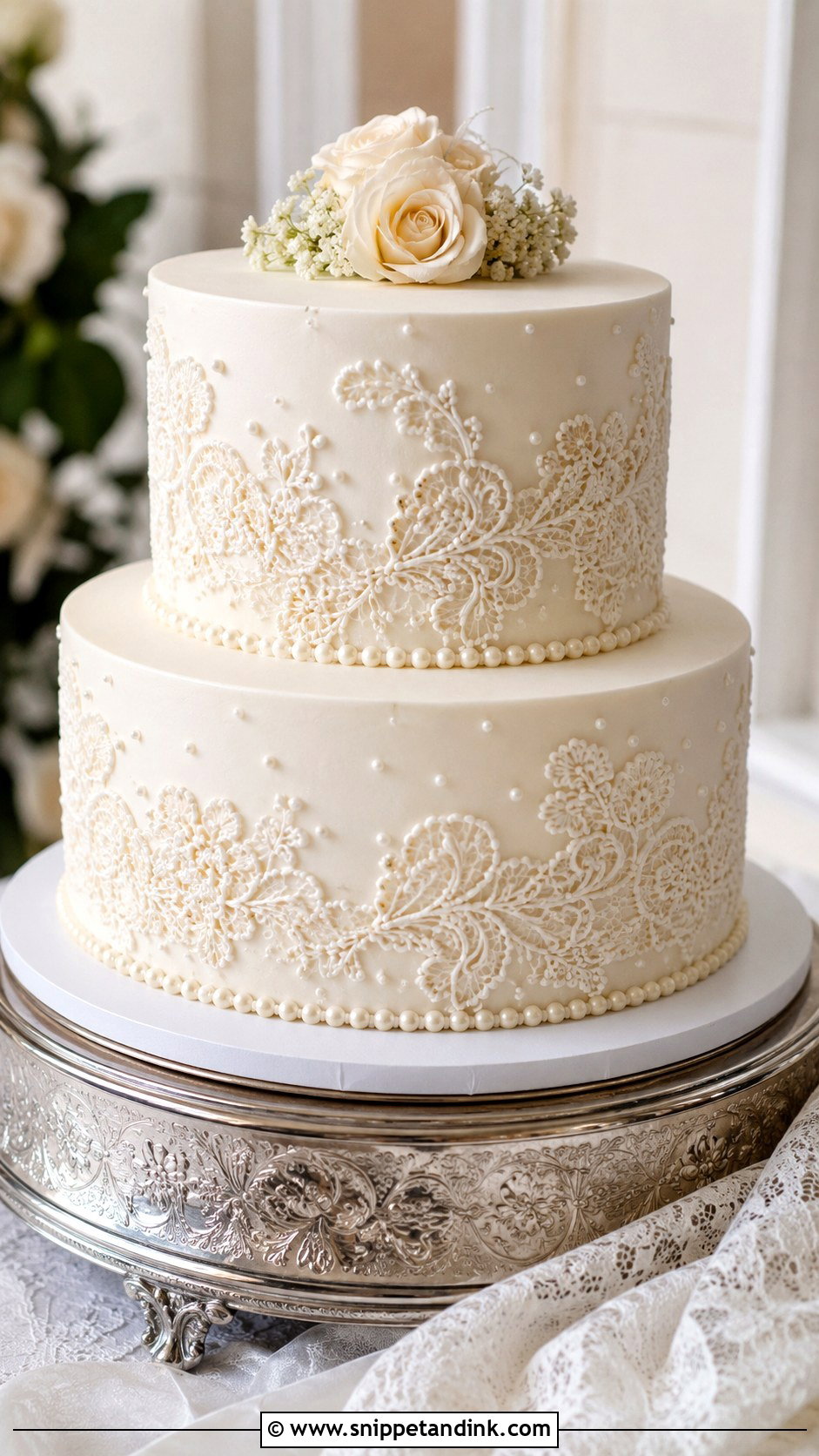
Lace piping echoes a dress without copying it. I pipe a narrow lace band around one tier, a few scrolls or a soft pattern on the front, rather than covering the whole cake. White on white is the classic; ivory on blush is warmer. If your gown has a specific lace pattern, bring a close-up photo or a fabric swatch, and I can borrow one motif from it. Pearl accents, satin ribbon or a small flower topper sit well alongside. Lace piping takes time, so it’s a skill to see in a baker’s portfolio first.
24. Wedding Cake With Monogram Topper
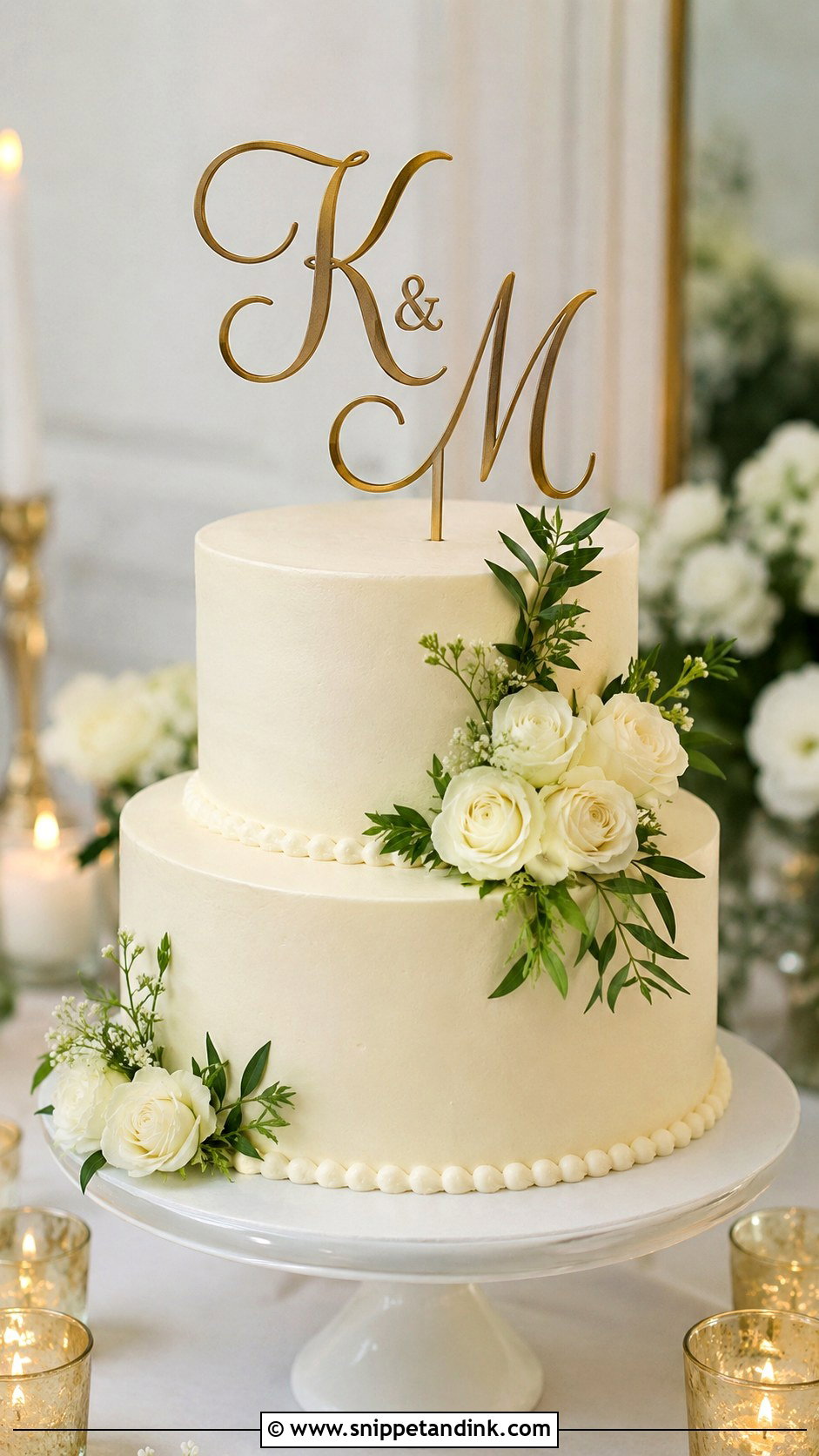
A monogram topper is personal and needs very little else around it. Acrylic, wood, metal or edible fondant toppers all work; gold, silver, white or clear acrylic suits most palettes. Keep the cake itself simple so the initials stay clear in photos, with smooth buttercream, a piped border or a small flower cluster. Large non-edible toppers need a food-safe stake or a protective base where they enter the cake, so tell your baker the size and weight in advance.



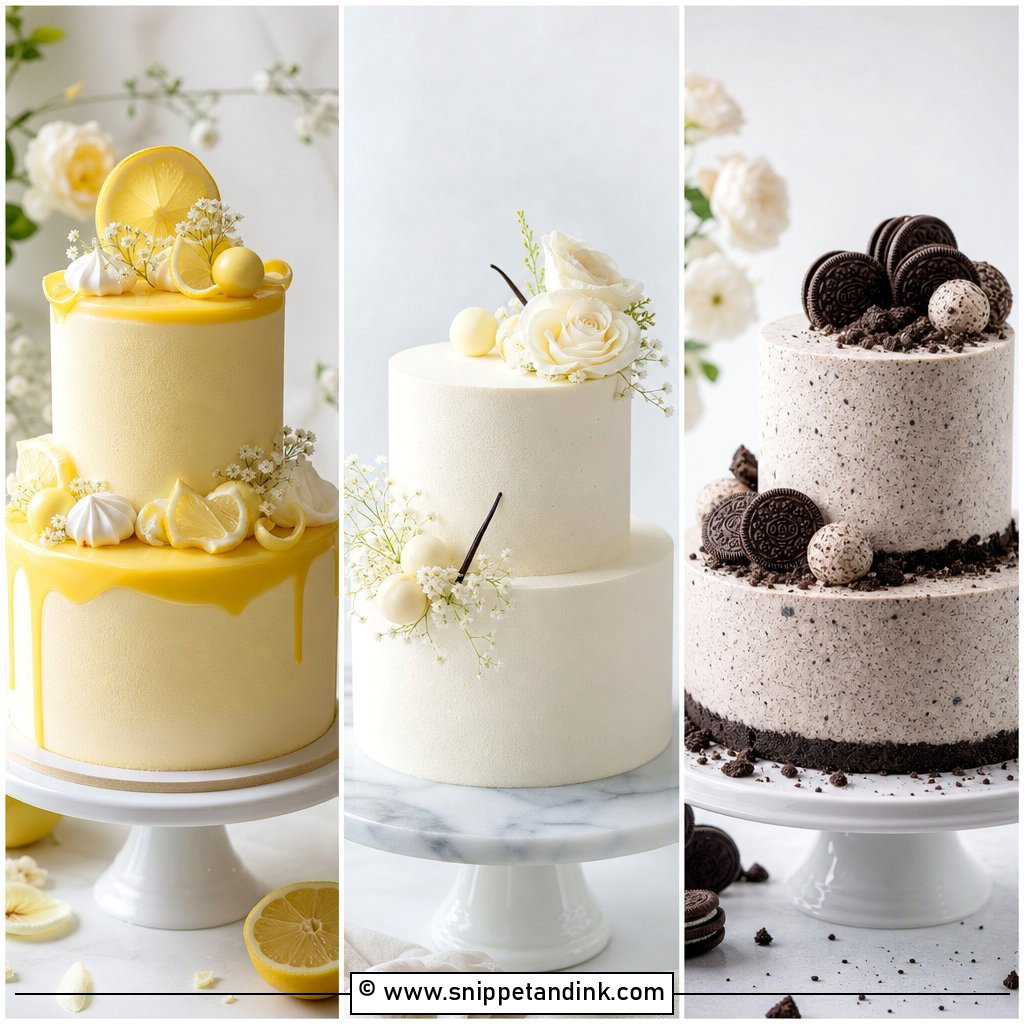
25. Simple Wedding Cupcake Cake
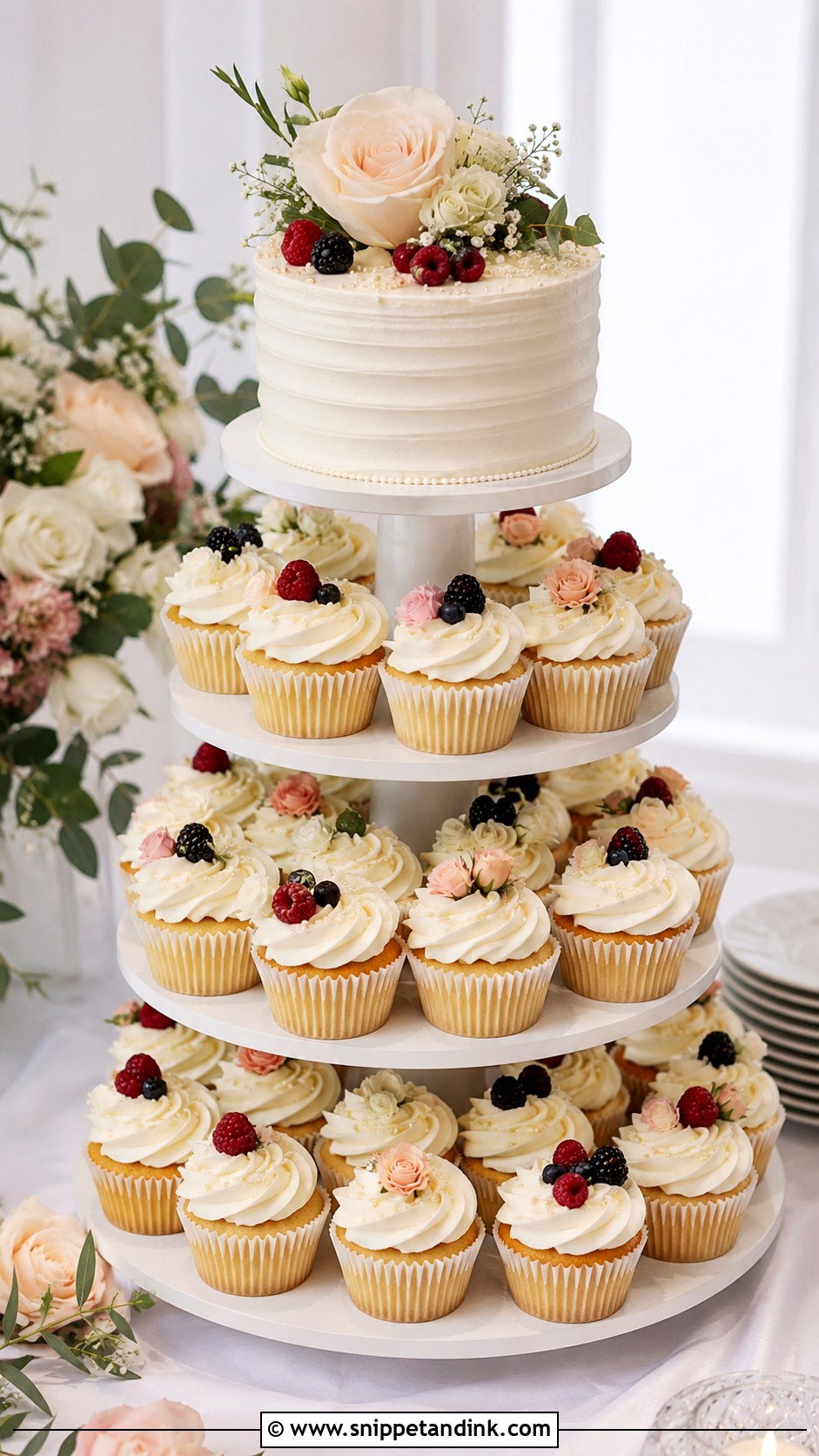
A simple wedding cupcake cake sets cupcakes on tiers with a small cutting cake on top. Consistent frosting makes the display read as one design; white buttercream swirls, tiny flowers, pearls or small fruit all work. It makes multiple flavours easy and saves on cutting fees at some venues. The catch is display time: cupcakes dry out faster than a whole cake, so I’d put them out shortly before dessert. You still get the cutting moment on the top tier.
Fresh Flowers That Shouldn’t Go Near Frosting
Florist flowers are grown to look good, not to be eaten, and many are treated with pesticides. Some are toxic outright, including lily of the valley, hydrangea, foxglove, sweet pea and daffodil. I never push a bare stem into a cake. Stems get wrapped in floral tape and set into food-safe picks or a small disc of fondant or wax paper, so nothing touches the sponge. If you want flowers that people could actually eat, ask for culinary edible blooms from a food supplier, or go with sugar or buttercream flowers.
Summer Tents, Delivery Vans and the Hours on Display
Buttercream is mostly butter, and it softens quickly in a warm room or full sun. A cake that looks perfect at delivery can bulge, lean or slide by dessert in an unshaded summer tent. My checklist for warm-weather weddings is short:
- Ask where the cake table will stand and keep it out of direct sun and away from heaters and dance floor lights.
- Plan to set it out as late as the venue allows, rather than first thing in the morning.
- Choose firmer finishes and sturdier decorations if it will be hot; fondant or ganache-coated cakes hold shape longer than soft piped work.
- Tall cakes need internal dowels and a central rod, and they travel assembled only with an experienced baker driving.
A cake moved from a cold van into a humid room can also sweat for a while as condensation forms. It settles on its own; wiping it only makes marks.
One Detail, Done Properly, Is Plenty
The cakes that look best on the day are the ones that commit to a single idea and do it well. Smooth buttercream, fresh flowers, soft piping, greenery, fruit, pearls, bows or a neat topper can each finish a cake on their own, and the right one depends on your venue, season, colours and guest count. Bring two or three inspiration photos to your baker, tell her about the room and the weather, and ask what will hold up best. A simple cake made carefully is often the one guests remember.
You'll Like These Ideas:






Leave a Reply